EP3593795A1 - Combinations and methods for the treatment of neuropathic pain - Google Patents
Combinations and methods for the treatment of neuropathic pain Download PDFInfo
- Publication number
- EP3593795A1 EP3593795A1 EP16923959.7A EP16923959A EP3593795A1 EP 3593795 A1 EP3593795 A1 EP 3593795A1 EP 16923959 A EP16923959 A EP 16923959A EP 3593795 A1 EP3593795 A1 EP 3593795A1
- Authority
- EP
- European Patent Office
- Prior art keywords
- pregabalin
- lipoic acid
- alpha lipoic
- pharmaceutical composition
- neuropathic pain
- Prior art date
- Legal status (The legal status is an assumption and is not a legal conclusion. Google has not performed a legal analysis and makes no representation as to the accuracy of the status listed.)
- Granted
Links
Images


Classifications
-
- A—HUMAN NECESSITIES
- A61—MEDICAL OR VETERINARY SCIENCE; HYGIENE
- A61K—PREPARATIONS FOR MEDICAL, DENTAL OR TOILETRY PURPOSES
- A61K31/00—Medicinal preparations containing organic active ingredients
- A61K31/33—Heterocyclic compounds
- A61K31/38—Heterocyclic compounds having sulfur as a ring hetero atom
- A61K31/385—Heterocyclic compounds having sulfur as a ring hetero atom having two or more sulfur atoms in the same ring
-
- A—HUMAN NECESSITIES
- A61—MEDICAL OR VETERINARY SCIENCE; HYGIENE
- A61K—PREPARATIONS FOR MEDICAL, DENTAL OR TOILETRY PURPOSES
- A61K31/00—Medicinal preparations containing organic active ingredients
- A61K31/185—Acids; Anhydrides, halides or salts thereof, e.g. sulfur acids, imidic, hydrazonic or hydroximic acids
- A61K31/19—Carboxylic acids, e.g. valproic acid
- A61K31/195—Carboxylic acids, e.g. valproic acid having an amino group
- A61K31/197—Carboxylic acids, e.g. valproic acid having an amino group the amino and the carboxyl groups being attached to the same acyclic carbon chain, e.g. gamma-aminobutyric acid [GABA], beta-alanine, epsilon-aminocaproic acid or pantothenic acid
-
- A—HUMAN NECESSITIES
- A61—MEDICAL OR VETERINARY SCIENCE; HYGIENE
- A61K—PREPARATIONS FOR MEDICAL, DENTAL OR TOILETRY PURPOSES
- A61K9/00—Medicinal preparations characterised by special physical form
- A61K9/0012—Galenical forms characterised by the site of application
- A61K9/0053—Mouth and digestive tract, i.e. intraoral and peroral administration
-
- A—HUMAN NECESSITIES
- A61—MEDICAL OR VETERINARY SCIENCE; HYGIENE
- A61P—SPECIFIC THERAPEUTIC ACTIVITY OF CHEMICAL COMPOUNDS OR MEDICINAL PREPARATIONS
- A61P25/00—Drugs for disorders of the nervous system
- A61P25/02—Drugs for disorders of the nervous system for peripheral neuropathies
Definitions
- the present invention belongs to the field of medicine, particularly to a therapeutic treatment of neuropathic pain.
- Neuropathic pain is a chronic pain state which may remain for long time after repairing the damage which caused it.
- neuropathic pain may be defined as that pain caused by any injury or dysfunction located in somatic sensory nervous system.
- Adults with chronic pain in the United States are estimated in about 100 million persons, with an annual cost of 635 billion dollars per year ( Descalzi G, Ikegami D, Ushijima T, Nestler EJ, Zachariou V, Narita M. Epigenetic mechanisms of chronic pain. Trends Neurosci. 2015; 38(4):237-46 ).
- a nerve injury spontaneously generates a constant pain sensation which often is described as burning pain; or an intermittent pain perceived as a shot or electric shock.
- the neuropathic pain is characterized by a remarkable reduction in stimulation thresholds required for inducing pain, so that innocuous stimuli such as touch may cause pain (allodynia) and painful stimuli generate an excessive unpleasant response (hyperalgesia).
- the present invention relates to a method of treatment of neuropathic pain, comprising administering alpha lipoic acid and pregabalin.
- the present invention provides a pharmaceutical composition comprising a combination of alpha lipoic acid and pregabalin.
- the pharmaceutical composition of present invention is useful for treatment of neuropathic pain.
- the present invention is referred to a method of treatment of neuropathic pain, comprising administering pregabalin and alpha lipoic acid in a synergistically effective amount.
- a "synergistically effective amount" as used herein is referred to a pregabalin amount and an alpha lipoic acid amount which therapeutic effect after administered in combination is higher than the sum of therapeutic effects of pregabalin and alpha lipoic acid after administered separately.
- the method of treatment of the invention comprises administering pregabalin and alpha lipoic acid in a weight ratio of pregabalin to alpha lipoic acid from 1:3 to 1:8, preferably 1:5.
- the method of treatment comprises administering pregabalin in an amount from 40 mg to 160 mg, and alpha lipoic acid in an amount from 200 to 800 mg.
- pregabalin is administered in an amount from 65 to 150 mg and alpha lipoic acid is administered in an amount from 400 to 600 mg.
- the method of present invention comprises administering pregabalin and alpha lipoic acid by oral route.
- pregabalin and alpha lipoic acid may occur through a pharmaceutical composition comprising both substances.
- the present invention refers to a pharmaceutical composition
- a pharmaceutical composition comprising alpha lipoic acid and pregabalin in synergistically effective amounts.
- the pharmaceutical composition of the invention comprises pregabalin and alpha lipoic acid in a weight ratio of pregabalin to alpha lipoic acid from 1:1.25 to 1:25, preferably 1:5.
- the pharmaceutical composition according to present invention comprises 40 mg to 160 mg of pregabalin and 200 to 800 mg of alpha lipoic acid. In one particular embodiment, the pharmaceutical composition of the invention comprises 75 to 150 mg of pregabalin and 400 to 600 mg of alpha lipoic acid.
- the pharmaceutical composition according to present invention comprises alpha lipoic acid and pregabalin as active principles, and further comprises pharmaceutically acceptable excipients.
- Active principles of present invention may be in free form or as a pharmaceutically acceptable salt thereof.
- compositions according to present invention include diluents, carriers, solubilizers, emulsifiers, binders, preservatives and/or pharmaceutically acceptable adjuvants.
- the pharmaceutical composition of present invention may be formulated for oral administration.
- Pharmaceutical compositions of present invention may be formulated for delivering active principles in sustained or controlled form. Said formulations will be apparent for any one skilled in the art of pharmaceutical formulations.
- Antineuropathic effect of a combination of pregabalin and alpha lipoic acid through the neuropathic pain model induced by L5/L6 spinal nerve ligation in rat was determined.
- Wistar female rats with a body weight of 120-140 g were used for all experiments. Animals were kept under temperature controlled conditions (22°C) and water and food were given ad-libitum in experimentation rooms. Experiments were carried out according to the guidelines on ethical issues on experimental pain research in animals ( Zimmermann M. 1983. Ethical guidelines for investigations of experimental pain in conscious animals. Pain. 16:109-110 .).
- Both pregabalin and alpha lipoic acid were suspended in a 0.5% carboxymethylcellulose isotonic saline solution. Individual drugs or in combination were prepared and administered just before starting the experiment.
- Rats were prepared according to the method described by Kim SH, Chung JM. 1992. An experimental model for peripheral neuropathy produced by segmental spinal nerve ligation in the rat. Pain. 50(3):355-63 .
- the animal On surgery day, the animal was anesthesized with a mixture of ketamine (45 mg/Kg, i.p.) and xylazine (12 mg/Kg, i.p.). Later, an incision was made just on the left side of backbone at level of vertebrae L4-S1. Spinal nerves were carefully ligated with 6-0 silk thread and muscle was then sutured with absorbable thread while skin was sutured with 6-0 silk thread.
- Tactile allodynia was determined according to the previously described method by Chaplan SR, Bach FW, Pogrel JW, Chung JM, Yaksh TL. 1994. Quantitative assessment of tactile allodynia in the rat paw. J Neurosci Methods. 53(1):55-63 . In this model, rats were placed in observation cages over a metal grid bottom and adapted during 30 min. Paw withdrawal mechanical threshold was measured immediately after and a systemic administration of drugs was carried out. Later, paw withdrawal mechanical threshold was measured at 0.5, 1, 2, 3, 4, 5, 6, 7 and 8 hours. An increase of withdrawal threshold in this model is considered as antinociceptive effect (analgesia). Similarly, the model has a cut value of 15 g and the group of falsely operated rats (sham) determines 100% of antineuropathic effect in the model, while neuropathic rats administered with vehicle represent 0% of antineuropathy.
- % MEP Drug AUC ⁇ Neuropathic AUC / Sham AUC ⁇ Neuropathic AUC ⁇ 100
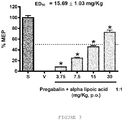
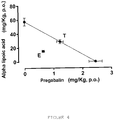
- ED 50 was calculated from dose-response curves for individual drugs ( Figures 1 and 2 ) and theoretical ED 50 for combination according to the method disclosed by Tallarida RJ. 2000. Drug Synergism and Dose-Effect Data Analysis, ed 1. New York, Chapman & Hall/CRC. pp 1-72 . Experimental ED 50 was calculated from the results obtained from the combination dose-response curve ( Figure 3 ). Finally, an isobologram was prepared. The isobologram ( Figure 4 ) graphically demonstrates that the combination produces a synergistic effect. Moreover, interaction index ( ⁇ ) was equal to 0.524, indicating that the combination enhanced 1.9 times the antineuropathic effect of individual drugs.
Landscapes
- Health & Medical Sciences (AREA)
- Public Health (AREA)
- Veterinary Medicine (AREA)
- Chemical & Material Sciences (AREA)
- Medicinal Chemistry (AREA)
- Pharmacology & Pharmacy (AREA)
- Life Sciences & Earth Sciences (AREA)
- Animal Behavior & Ethology (AREA)
- General Health & Medical Sciences (AREA)
- Epidemiology (AREA)
- Nutrition Science (AREA)
- Physiology (AREA)
- Engineering & Computer Science (AREA)
- Bioinformatics & Cheminformatics (AREA)
- Biomedical Technology (AREA)
- Neurology (AREA)
- Neurosurgery (AREA)
- Chemical Kinetics & Catalysis (AREA)
- General Chemical & Material Sciences (AREA)
- Nuclear Medicine, Radiotherapy & Molecular Imaging (AREA)
- Organic Chemistry (AREA)
- Acyclic And Carbocyclic Compounds In Medicinal Compositions (AREA)
- Pharmaceuticals Containing Other Organic And Inorganic Compounds (AREA)
Abstract
Description
- The present invention belongs to the field of medicine, particularly to a therapeutic treatment of neuropathic pain.
- Neuropathic pain is a chronic pain state which may remain for long time after repairing the damage which caused it. According to the International Association for Pain Study, neuropathic pain may be defined as that pain caused by any injury or dysfunction located in somatic sensory nervous system. Adults with chronic pain in the United States are estimated in about 100 million persons, with an annual cost of 635 billion dollars per year (Descalzi G, Ikegami D, Ushijima T, Nestler EJ, Zachariou V, Narita M. Epigenetic mechanisms of chronic pain. Trends Neurosci. 2015; 38(4):237-46). In Mexico, it is estimated that about 2 million persons suffer from neuropathic pain, however, these figures may be underestimated (Guevara-López U, Covarrubias-Gómez A, Garcia-Ramos G, Hernandez-Jimenez S. 2006a. Grupo de Consenso para el Manejo del Dolor Neuropático. Parámetros de práctica para el manejo de dolor neuropático. Rev Invest Clin. 58(2):126-38.). Neuropathic pain is present in various etiology disorders and is often difficult to treat while life quality of the patients who suffer it is enormously affected. In some patients, a nerve injury spontaneously generates a constant pain sensation which often is described as burning pain; or an intermittent pain perceived as a shot or electric shock. Moreover, the neuropathic pain is characterized by a remarkable reduction in stimulation thresholds required for inducing pain, so that innocuous stimuli such as touch may cause pain (allodynia) and painful stimuli generate an excessive unpleasant response (hyperalgesia).
- Current clinical treatment for neuropathic pain includes the use of antidepressants, anticonvulsants and local anesthetics as first line drugs, while opioids are used as second or third line drugs for treatment. However, current therapeutics nowadays results in limited efficacy and is far from being fully safe (Attal N. 2012. Neuropathic pain: mechanisms, therapeutic approach, and interpretation of clinical trials. Continuum (Minneap Minn). 18(1):161-75.; Baron R. 2009. Neuropathic pain: a clinical perspective. Handb Exp Pharmacol. 194:3-30; Dworkin RH. 2007. Pharmacologic management of neuropathic pain: evidence-based recommendations. Pain. 132(3):237-51). Therefore there is a need of searching therapeutic alternatives which allow developing more efficient and safe treatments for neuropathic pain.
-
-
Figure 1 . Dose-response curve showing a percentage of maximum possible anti-neuropathic effect (%MEP) obtained with oral administration of increasing doses of pregabalin in a neuropathic pain model induced by L5/L6 spinal nerve ligation in rats (ED50 = 2.45 ± 0.23 mg/kg). -
Figure 2 . Dose-response curve showing a percentage of maximum possible anti-neuropathic effect (%MEP) obtained with oral administration of increasing doses of alpha lipoic acid in a neuropathic pain model induced by L5/L6 spinal nerve ligation in rats (ED50 = 57.49 ± 5.59 mg/kg). -
Figure 3 . Dose-response curve showing a percentage of maximum possible anti-neuropathic effect (%MEP) obtained with oral administration of increased doses of a combination pregabalin + alpha lipoic acid (0.15 + 3.6, 0.3 + 7.2, 0.6 + 14.4, and 1.2 + 28.8 mg/kg, respectively) in a neuropathic pain model induced by L5/L6 spinal nerve ligation. "Y" axis represents the sum of pregabalin + alpha lipoic acid doses in each combination (ED50 = 15.69 ± 1.03 mg/kg). -
Figure 4 . Isobologram illustrating a synergistic interaction obtained from an orally administered combination of pregabalin + alpha lipoic acid in the neuropathic pain model induced by L5/L6 spinal nerve ligation in rats. Points located over X and Y axes represent experimentally obtained ED50 values for pregabalin and alpha lipoic acid. A diagonal binding ED50 of pregabalin and alpha lipoic acid is the additivity line. Point (T) located halfway in additivity line represents combination theoretical ED50. Point (E) illustrates experimental ED50 for the combination. - In one aspect, the present invention relates to a method of treatment of neuropathic pain, comprising administering alpha lipoic acid and pregabalin.
- In another aspect, the present invention provides a pharmaceutical composition comprising a combination of alpha lipoic acid and pregabalin. The pharmaceutical composition of present invention is useful for treatment of neuropathic pain.
- Accordingly, in one embodiment the present invention is referred to a method of treatment of neuropathic pain, comprising administering pregabalin and alpha lipoic acid in a synergistically effective amount. A "synergistically effective amount" as used herein, is referred to a pregabalin amount and an alpha lipoic acid amount which therapeutic effect after administered in combination is higher than the sum of therapeutic effects of pregabalin and alpha lipoic acid after administered separately.
- In one embodiment, the method of treatment of the invention comprises administering pregabalin and alpha lipoic acid in a weight ratio of pregabalin to alpha lipoic acid from 1:3 to 1:8, preferably 1:5.
- In another embodiment, the method of treatment comprises administering pregabalin in an amount from 40 mg to 160 mg, and alpha lipoic acid in an amount from 200 to 800 mg. Preferably, pregabalin is administered in an amount from 65 to 150 mg and alpha lipoic acid is administered in an amount from 400 to 600 mg.
- In another embodiment, the method of present invention comprises administering pregabalin and alpha lipoic acid by oral route.
- Administration of pregabalin and alpha lipoic acid may occur through a pharmaceutical composition comprising both substances.
- In another aspect, the present invention refers to a pharmaceutical composition comprising alpha lipoic acid and pregabalin in synergistically effective amounts.
- In another embodiment, the pharmaceutical composition of the invention comprises pregabalin and alpha lipoic acid in a weight ratio of pregabalin to alpha lipoic acid from 1:1.25 to 1:25, preferably 1:5.
- In one further embodiment, the pharmaceutical composition according to present invention comprises 40 mg to 160 mg of pregabalin and 200 to 800 mg of alpha lipoic acid. In one particular embodiment, the pharmaceutical composition of the invention comprises 75 to 150 mg of pregabalin and 400 to 600 mg of alpha lipoic acid.
- In one particular embodiment, the pharmaceutical composition according to present invention comprises alpha lipoic acid and pregabalin as active principles, and further comprises pharmaceutically acceptable excipients.
- Active principles of present invention may be in free form or as a pharmaceutically acceptable salt thereof.
- Pharmaceutically acceptable excipients which may be used in the pharmaceutical composition according to present invention include diluents, carriers, solubilizers, emulsifiers, binders, preservatives and/or pharmaceutically acceptable adjuvants. The pharmaceutical composition of present invention may be formulated for oral administration. Pharmaceutical compositions of present invention may be formulated for delivering active principles in sustained or controlled form. Said formulations will be apparent for any one skilled in the art of pharmaceutical formulations.
- Examples shown below have a sole purpose of illustrating and demonstrating some embodiments of the invention. Exemplary embodiments shall not be considered limiting of the present invention. As any one skilled in the art may acknowledge, amendments and variations to embodiments described below may be carried out without altering the essence of the invention.
- Antineuropathic effect of a combination of pregabalin and alpha lipoic acid through the neuropathic pain model induced by L5/L6 spinal nerve ligation in rat was determined.
- Wistar female rats with a body weight of 120-140 g were used for all experiments. Animals were kept under temperature controlled conditions (22°C) and water and food were given ad-libitum in experimentation rooms. Experiments were carried out according to the guidelines on ethical issues on experimental pain research in animals (Zimmermann M. 1983. Ethical guidelines for investigations of experimental pain in conscious animals. Pain. 16:109-110.).
- Both pregabalin and alpha lipoic acid were suspended in a 0.5% carboxymethylcellulose isotonic saline solution. Individual drugs or in combination were prepared and administered just before starting the experiment.
- Rats were prepared according to the method described by Kim SH, Chung JM. 1992. An experimental model for peripheral neuropathy produced by segmental spinal nerve ligation in the rat. Pain. 50(3):355-63. On surgery day, the animal was anesthesized with a mixture of ketamine (45 mg/Kg, i.p.) and xylazine (12 mg/Kg, i.p.). Later, an incision was made just on the left side of backbone at level of vertebrae L4-S1. Spinal nerves were carefully ligated with 6-0 silk thread and muscle was then sutured with absorbable thread while skin was sutured with 6-0 silk thread. In the group of falsely operated rats (sham), surgical procedure was identical to that described above, except that backbone nerves were not ligated. Upon surgery termination, rats were placed in individual cages. All rats were allowed a 14-day recovery before assaying the tactile allodynia model and animals which showed motor deficiencies were discarded from the study.
- Tactile allodynia was determined according to the previously described method by Chaplan SR, Bach FW, Pogrel JW, Chung JM, Yaksh TL. 1994. Quantitative assessment of tactile allodynia in the rat paw. J Neurosci Methods. 53(1):55-63. In this model, rats were placed in observation cages over a metal grid bottom and adapted during 30 min. Paw withdrawal mechanical threshold was measured immediately after and a systemic administration of drugs was carried out. Later, paw withdrawal mechanical threshold was measured at 0.5, 1, 2, 3, 4, 5, 6, 7 and 8 hours. An increase of withdrawal threshold in this model is considered as antinociceptive effect (analgesia). Similarly, the model has a cut value of 15 g and the group of falsely operated rats (sham) determines 100% of antineuropathic effect in the model, while neuropathic rats administered with vehicle represent 0% of antineuropathy.
- Graphs of 50% withdrawal threshold in grams (g) in function of time (minutes) were prepared from data obtained. Area under curve was determined from these graphs through trapezoidal method and % of maximum possible effect (% MEP) was calculated using the following formula:

- Bar graphs and dose-response curves were prepared from % MEP. ED50 was calculated from dose-response curves for individual drugs (
Figures 1 and2 ) and theoretical ED50 for combination according to the method disclosed by Tallarida RJ. 2000. Drug Synergism and Dose-Effect Data Analysis, . Experimental ED50 was calculated from the results obtained from the combination dose-response curve (Figure 3 ). Finally, an isobologram was prepared. The isobologram (Figure 4 ) graphically demonstrates that the combination produces a synergistic effect. Moreover, interaction index (γ) was equal to 0.524, indicating that the combination enhanced 1.9 times the antineuropathic effect of individual drugs. - Treatments were well-tolerated as to safety, however, alpha lipoic acid induced hair bristling in rats at a 300 mg/Kg dose and one rat was convulsed during the sixth hour at the same dose. As to pregabalin, rats showed sedation and motor discoordination at a dose of 30 mg/Kg. There were no any apparent adverse events in any of the doses tested in the combination.
Claims (15)
- A method of treatment of neuropathic pain characterized in that comprises administering pregabalin and alpha lipoic acid at synergistically effective amounts.
- The method according to claim 1, characterized in that pregabalin and alpha lipoic acid are administered at a 1:1.25 to 1:25 ratio.
- The method according to claim 2, characterized in that pregabalin and alpha lipoic acid are administered at a 1:5 ratio.
- The method according to claim 1, characterized in that comprises administering 40 to 160 mg of pregabalin.
- The method according to claim 4, characterized in that comprises administering 75 to 150 mg of pregabalin.
- The method according to claim 1, characterized in that comprises administering 200-800 mg of alpha lipoic acid.
- The method according to claim 6, characterized in that comprises administering 400-600 mg of alpha lipoic acid.
- An analgesic pharmaceutical composition characterized in that comprises pregabalin and alpha lipoic acid in synergistically effective amounts.
- The pharmaceutical composition according to claim 8, characterized in that pregabalin-to-alpha lipoic acid ratio is from 1:1.25 to 1:25.
- The pharmaceutical composition according to claim 10, characterized in that pregabalin-to-alpha lipoic acid ratio is 1:5.
- The pharmaceutical composition according to claim 8, characterized in that comprises from 40 to 160 mg of pregabalin.
- The pharmaceutical composition according to claim 11, characterized in that comprises from 75 to 150 mg of pregabalin.
- The pharmaceutical composition according to claim 8, characterized in that comprises 200-800 mg of alpha lipoic acid.
- The pharmaceutical composition according to claim 13, characterized in that comprises 400-600 mg of alpha lipoic acid.
- The use of the pharmaceutical composition according to claim 8 in manufacturing a medicament for treatment of neuropathic pain.
Applications Claiming Priority (1)
| Application Number | Priority Date | Filing Date | Title |
|---|---|---|---|
| PCT/MX2016/000137 WO2018111060A1 (en) | 2016-12-14 | 2016-12-14 | Combinations and methods for the treatment of neuropathic pain |
Publications (4)
| Publication Number | Publication Date |
|---|---|
| EP3593795A1 true EP3593795A1 (en) | 2020-01-15 |
| EP3593795A4 EP3593795A4 (en) | 2020-05-06 |
| EP3593795B1 EP3593795B1 (en) | 2025-11-12 |
| EP3593795C0 EP3593795C0 (en) | 2025-11-12 |
Family
ID=62559579
Family Applications (1)
| Application Number | Title | Priority Date | Filing Date |
|---|---|---|---|
| EP16923959.7A Active EP3593795B1 (en) | 2016-12-14 | 2016-12-14 | Combinations and methods for the treatment of neuropathic pain |
Country Status (7)
| Country | Link |
|---|---|
| US (1) | US12029727B2 (en) |
| EP (1) | EP3593795B1 (en) |
| BR (1) | BR112019012226A2 (en) |
| CA (1) | CA3047077C (en) |
| ES (1) | ES3061803T3 (en) |
| MX (1) | MX2016017321A (en) |
| WO (1) | WO2018111060A1 (en) |
Families Citing this family (1)
| Publication number | Priority date | Publication date | Assignee | Title |
|---|---|---|---|---|
| WO2022097764A1 (en) * | 2020-11-04 | 2022-05-12 | 전남대학교병원 | Pharmaceutical composition comprising pregabalin and tianeptine for treating neuropathic pain |
Family Cites Families (3)
| Publication number | Priority date | Publication date | Assignee | Title |
|---|---|---|---|---|
| ITMI20072051A1 (en) | 2007-10-23 | 2009-04-24 | Chimico Internaz S P A In Brev | PELLET BASED COMPOSITION OF LIPOIC ACID |
| WO2014168228A1 (en) * | 2013-04-12 | 2014-10-16 | マルホ株式会社 | Composition for topical use |
| US20160058752A1 (en) | 2014-02-04 | 2016-03-03 | Afgin Pharma, Llc | Topical peripheral neuro-affective (tpna) therapy for neuropathic conditions |
-
2016
- 2016-12-14 ES ES16923959T patent/ES3061803T3/en active Active
- 2016-12-14 BR BR112019012226-5A patent/BR112019012226A2/en not_active Application Discontinuation
- 2016-12-14 WO PCT/MX2016/000137 patent/WO2018111060A1/en not_active Ceased
- 2016-12-14 EP EP16923959.7A patent/EP3593795B1/en active Active
- 2016-12-14 CA CA3047077A patent/CA3047077C/en active Active
- 2016-12-14 MX MX2016017321A patent/MX2016017321A/en unknown
- 2016-12-14 US US16/469,277 patent/US12029727B2/en active Active
Also Published As
| Publication number | Publication date |
|---|---|
| BR112019012226A2 (en) | 2019-11-05 |
| CA3047077C (en) | 2024-01-02 |
| US12029727B2 (en) | 2024-07-09 |
| EP3593795A4 (en) | 2020-05-06 |
| ES3061803T3 (en) | 2026-04-07 |
| EP3593795B1 (en) | 2025-11-12 |
| WO2018111060A1 (en) | 2018-06-21 |
| EP3593795C0 (en) | 2025-11-12 |
| CA3047077A1 (en) | 2018-06-21 |
| MX2016017321A (en) | 2018-08-20 |
| US20200101043A1 (en) | 2020-04-02 |
Similar Documents
| Publication | Publication Date | Title |
|---|---|---|
| Gordon et al. | Enhancement of morphine analgesia by the GABAB agonist baclofen | |
| Cui et al. | Effect of spinal cord stimulation on tactile hypersensitivity in mononeuropathic rats is potentiated by simultaneous GABAB and adenosine receptor activation | |
| Shetty et al. | A prospective randomized study to analyze the efficacy of balanced pre-emptive analgesia in spine surgery | |
| Kim et al. | Is magnesium sulfate effective for pain in chronic postherpetic neuralgia patients comparing with ketamine infusion therapy? | |
| US10143685B2 (en) | Parenteral and topical compositions for pain | |
| Youm et al. | Preemptive femoral nerve block could reduce the rebound pain after periarticular injection in total knee arthroplasty | |
| Rédua et al. | The pre-emptive effect of epidural ketamine on wound sensitivity in horses tested by using von Frey filaments | |
| Banwait et al. | Evaluation of single epidural bolus dose of magnesium as an adjuvant to epidural fentanyl for postoperative analgesia: a prospective, randomized, double-blind study | |
| Koo et al. | Influence of high-dose intraoperative remifentanil with intravenous ibuprofen on postoperative morphine consumption in patients undergoing pancreaticoduodenectomy: a randomized trial | |
| Chinachoti et al. | Periarticular infiltration of 0.25% bupivacaine on top of femoral nerve block and intrathecal morphine improves quality of pain control after total knee arthroplasty: a randomized double-blind placebo controlled clinical trial | |
| EP3593795B1 (en) | Combinations and methods for the treatment of neuropathic pain | |
| El Sharnouby et al. | Ultrasound-guided single injection transversus abdominis plane block of isobaric bupivacaine with or without dexamethasone for bariatric patients undergoing laparoscopic vertical banded gastroplasty: a comparative study of different doses | |
| Ding et al. | The antiallodynic action of pregabalin may depend on the suppression of spinal neuronal hyperexcitability in rats with spared nerve injury | |
| Kazmir-Lysak et al. | Intraperitoneal and incisional ropivacaine did not improve postoperative analgesia after multimodal anaesthesia compared with saline in dogs undergoing ovariohysterectomy | |
| KR102927058B1 (en) | Analgesic and itching-relieving pharmaceutical composition and method of application thereof | |
| ES2632544T3 (en) | Treatment of neuropathic pain with the N-methyl-D-aspartate (NMDA) dextromethorphan receptor antagonist | |
| Schmidt et al. | Response of neuropathic trigeminal pain to the combination of low-dose nalbuphine plus naloxone in humans | |
| Premkumar et al. | Effect of preemptive analgesia with Gabapentin on post-operative pain relief after total abdominal hysterectomy | |
| RU2667618C1 (en) | Method for treatment of patients with pain-dysfunction syndrome of temporomandibular joint | |
| Eftekhar et al. | Perspective Chapter: Current Issues in Postoperative Pain Management | |
| Pekcan | How can better anaesthetic combinations be performed? A review of current knowledge | |
| Ghosh et al. | Intrathecal co-administration of morphine facilitated the anti-nociceptive of bupivacaine in a rat model of acute postoperative pain | |
| Singh et al. | Comparison of the Analagesic Efficacy of Transdermally Applied Buprenorphine and Ketoprofen for Postoperative Abdominal Pain in Dogs. | |
| Kennedy et al. | Anesthesia case of the month | |
| Avinash et al. | Comparative study of intrathecal fentanyl mixed with bupivacaine, tramadol mixed with bupivacaine, midazolam mixed with bupivacaine for peri and post-operative pain relief in lower limb and lower abdominal surgery |
Legal Events
| Date | Code | Title | Description |
|---|---|---|---|
| STAA | Information on the status of an ep patent application or granted ep patent |
Free format text: STATUS: THE INTERNATIONAL PUBLICATION HAS BEEN MADE |
|
| PUAI | Public reference made under article 153(3) epc to a published international application that has entered the european phase |
Free format text: ORIGINAL CODE: 0009012 |
|
| STAA | Information on the status of an ep patent application or granted ep patent |
Free format text: STATUS: REQUEST FOR EXAMINATION WAS MADE |
|
| PUAB | Information related to the publication of an a document modified or deleted |
Free format text: ORIGINAL CODE: 0009199EPPU |
|
| PUAI | Public reference made under article 153(3) epc to a published international application that has entered the european phase |
Free format text: ORIGINAL CODE: 0009012 |
|
| 17P | Request for examination filed |
Effective date: 20190710 |
|
| AK | Designated contracting states |
Kind code of ref document: A1 Designated state(s): AL AT BE BG CH CY CZ DE DK EE ES FI FR GB GR HR HU IE IS IT LI LT LU LV MC MK MT NL NO PL PT RO RS SE SI SK SM TR |
|
| AX | Request for extension of the european patent |
Extension state: BA ME |
|
| DAV | Request for validation of the european patent (deleted) | ||
| DAX | Request for extension of the european patent (deleted) | ||
| A4 | Supplementary search report drawn up and despatched |
Effective date: 20200407 |
|
| RIC1 | Information provided on ipc code assigned before grant |
Ipc: A61K 31/197 20060101AFI20200401BHEP Ipc: A61K 31/385 20060101ALI20200401BHEP Ipc: A61P 25/02 20060101ALI20200401BHEP |
|
| STAA | Information on the status of an ep patent application or granted ep patent |
Free format text: STATUS: EXAMINATION IS IN PROGRESS |
|
| 17Q | First examination report despatched |
Effective date: 20220302 |
|
| GRAP | Despatch of communication of intention to grant a patent |
Free format text: ORIGINAL CODE: EPIDOSNIGR1 |
|
| STAA | Information on the status of an ep patent application or granted ep patent |
Free format text: STATUS: GRANT OF PATENT IS INTENDED |
|
| INTG | Intention to grant announced |
Effective date: 20250610 |
|
| GRAS | Grant fee paid |
Free format text: ORIGINAL CODE: EPIDOSNIGR3 |
|
| GRAA | (expected) grant |
Free format text: ORIGINAL CODE: 0009210 |
|
| STAA | Information on the status of an ep patent application or granted ep patent |
Free format text: STATUS: THE PATENT HAS BEEN GRANTED |
|
| AK | Designated contracting states |
Kind code of ref document: B1 Designated state(s): AL AT BE BG CH CY CZ DE DK EE ES FI FR GB GR HR HU IE IS IT LI LT LU LV MC MK MT NL NO PL PT RO RS SE SI SK SM TR |
|
| REG | Reference to a national code |
Ref country code: CH Ref legal event code: F10 Free format text: ST27 STATUS EVENT CODE: U-0-0-F10-F00 (AS PROVIDED BY THE NATIONAL OFFICE) Effective date: 20251112 Ref country code: GB Ref legal event code: FG4D |
|
| REG | Reference to a national code |
Ref country code: IE Ref legal event code: FG4D |
|
| REG | Reference to a national code |
Ref country code: DE Ref legal event code: R096 Ref document number: 602016094095 Country of ref document: DE |
|
| U01 | Request for unitary effect filed |
Effective date: 20251204 |
|
| U07 | Unitary effect registered |
Designated state(s): AT BE BG DE DK EE FI FR IT LT LU LV MT NL PT RO SE SI Effective date: 20251211 |
|
| U20 | Renewal fee for the european patent with unitary effect paid |
Year of fee payment: 10 Effective date: 20251229 |
|
| REG | Reference to a national code |
Ref country code: ES Ref legal event code: FG2A Ref document number: 3061803 Country of ref document: ES Kind code of ref document: T3 Effective date: 20260407 |
|
| PGFP | Annual fee paid to national office [announced via postgrant information from national office to epo] |
Ref country code: ES Payment date: 20260325 Year of fee payment: 10 |
|
| PG25 | Lapsed in a contracting state [announced via postgrant information from national office to epo] |
Ref country code: NO Free format text: LAPSE BECAUSE OF FAILURE TO SUBMIT A TRANSLATION OF THE DESCRIPTION OR TO PAY THE FEE WITHIN THE PRESCRIBED TIME-LIMIT Effective date: 20260212 |
|
| PG25 | Lapsed in a contracting state [announced via postgrant information from national office to epo] |
Ref country code: HR Free format text: LAPSE BECAUSE OF FAILURE TO SUBMIT A TRANSLATION OF THE DESCRIPTION OR TO PAY THE FEE WITHIN THE PRESCRIBED TIME-LIMIT Effective date: 20251112 |
|
| PG25 | Lapsed in a contracting state [announced via postgrant information from national office to epo] |
Ref country code: RS Free format text: LAPSE BECAUSE OF FAILURE TO SUBMIT A TRANSLATION OF THE DESCRIPTION OR TO PAY THE FEE WITHIN THE PRESCRIBED TIME-LIMIT Effective date: 20260212 |
|
| PG25 | Lapsed in a contracting state [announced via postgrant information from national office to epo] |
Ref country code: IS Free format text: LAPSE BECAUSE OF FAILURE TO SUBMIT A TRANSLATION OF THE DESCRIPTION OR TO PAY THE FEE WITHIN THE PRESCRIBED TIME-LIMIT Effective date: 20260312 |
|
| PG25 | Lapsed in a contracting state [announced via postgrant information from national office to epo] |
Ref country code: PL Free format text: LAPSE BECAUSE OF FAILURE TO SUBMIT A TRANSLATION OF THE DESCRIPTION OR TO PAY THE FEE WITHIN THE PRESCRIBED TIME-LIMIT Effective date: 20251112 |