EP3592371B1 - Stabilized protein-bound cannabinoid compositions - Google Patents
Stabilized protein-bound cannabinoid compositions Download PDFInfo
- Publication number
- EP3592371B1 EP3592371B1 EP18763376.3A EP18763376A EP3592371B1 EP 3592371 B1 EP3592371 B1 EP 3592371B1 EP 18763376 A EP18763376 A EP 18763376A EP 3592371 B1 EP3592371 B1 EP 3592371B1
- Authority
- EP
- European Patent Office
- Prior art keywords
- composition
- plasma protein
- cannabinoid
- fatty acid
- thc
- Prior art date
- Legal status (The legal status is an assumption and is not a legal conclusion. Google has not performed a legal analysis and makes no representation as to the accuracy of the status listed.)
- Active
Links
Images


Classifications
-
- A—HUMAN NECESSITIES
- A61—MEDICAL OR VETERINARY SCIENCE; HYGIENE
- A61K—PREPARATIONS FOR MEDICAL, DENTAL OR TOILETRY PURPOSES
- A61K31/00—Medicinal preparations containing organic active ingredients
- A61K31/658—Medicinal preparations containing organic active ingredients o-phenolic cannabinoids, e.g. cannabidiol, cannabigerolic acid, cannabichromene or tetrahydrocannabinol
-
- A—HUMAN NECESSITIES
- A61—MEDICAL OR VETERINARY SCIENCE; HYGIENE
- A61K—PREPARATIONS FOR MEDICAL, DENTAL OR TOILETRY PURPOSES
- A61K31/00—Medicinal preparations containing organic active ingredients
- A61K31/185—Acids; Anhydrides, halides or salts thereof, e.g. sulfur acids, imidic, hydrazonic or hydroximic acids
- A61K31/19—Carboxylic acids, e.g. valproic acid
- A61K31/20—Carboxylic acids, e.g. valproic acid having a carboxyl group bound to a chain of seven or more carbon atoms, e.g. stearic, palmitic, arachidic acids
- A61K31/201—Carboxylic acids, e.g. valproic acid having a carboxyl group bound to a chain of seven or more carbon atoms, e.g. stearic, palmitic, arachidic acids having one or two double bonds, e.g. oleic, linoleic acids
-
- A—HUMAN NECESSITIES
- A61—MEDICAL OR VETERINARY SCIENCE; HYGIENE
- A61K—PREPARATIONS FOR MEDICAL, DENTAL OR TOILETRY PURPOSES
- A61K47/00—Medicinal preparations characterised by the non-active ingredients used, e.g. carriers or inert additives; Targeting or modifying agents chemically bound to the active ingredient
- A61K47/06—Organic compounds, e.g. natural or synthetic hydrocarbons, polyolefins, mineral oil, petrolatum or ozokerite
- A61K47/08—Organic compounds, e.g. natural or synthetic hydrocarbons, polyolefins, mineral oil, petrolatum or ozokerite containing oxygen, e.g. ethers, acetals, ketones, quinones, aldehydes, peroxides
- A61K47/12—Carboxylic acids; Salts or anhydrides thereof
-
- A—HUMAN NECESSITIES
- A61—MEDICAL OR VETERINARY SCIENCE; HYGIENE
- A61K—PREPARATIONS FOR MEDICAL, DENTAL OR TOILETRY PURPOSES
- A61K47/00—Medicinal preparations characterised by the non-active ingredients used, e.g. carriers or inert additives; Targeting or modifying agents chemically bound to the active ingredient
- A61K47/30—Macromolecular organic or inorganic compounds, e.g. inorganic polyphosphates
- A61K47/42—Proteins; Polypeptides; Degradation products thereof; Derivatives thereof, e.g. albumin, gelatin or zein
-
- A—HUMAN NECESSITIES
- A61—MEDICAL OR VETERINARY SCIENCE; HYGIENE
- A61K—PREPARATIONS FOR MEDICAL, DENTAL OR TOILETRY PURPOSES
- A61K47/00—Medicinal preparations characterised by the non-active ingredients used, e.g. carriers or inert additives; Targeting or modifying agents chemically bound to the active ingredient
- A61K47/50—Medicinal preparations characterised by the non-active ingredients used, e.g. carriers or inert additives; Targeting or modifying agents chemically bound to the active ingredient the non-active ingredient being chemically bound to the active ingredient, e.g. polymer-drug conjugates
- A61K47/51—Medicinal preparations characterised by the non-active ingredients used, e.g. carriers or inert additives; Targeting or modifying agents chemically bound to the active ingredient the non-active ingredient being chemically bound to the active ingredient, e.g. polymer-drug conjugates the non-active ingredient being a modifying agent
- A61K47/54—Medicinal preparations characterised by the non-active ingredients used, e.g. carriers or inert additives; Targeting or modifying agents chemically bound to the active ingredient the non-active ingredient being chemically bound to the active ingredient, e.g. polymer-drug conjugates the non-active ingredient being a modifying agent the modifying agent being an organic compound
- A61K47/542—Carboxylic acids, e.g. a fatty acid or an amino acid
-
- A—HUMAN NECESSITIES
- A61—MEDICAL OR VETERINARY SCIENCE; HYGIENE
- A61K—PREPARATIONS FOR MEDICAL, DENTAL OR TOILETRY PURPOSES
- A61K47/00—Medicinal preparations characterised by the non-active ingredients used, e.g. carriers or inert additives; Targeting or modifying agents chemically bound to the active ingredient
- A61K47/50—Medicinal preparations characterised by the non-active ingredients used, e.g. carriers or inert additives; Targeting or modifying agents chemically bound to the active ingredient the non-active ingredient being chemically bound to the active ingredient, e.g. polymer-drug conjugates
- A61K47/51—Medicinal preparations characterised by the non-active ingredients used, e.g. carriers or inert additives; Targeting or modifying agents chemically bound to the active ingredient the non-active ingredient being chemically bound to the active ingredient, e.g. polymer-drug conjugates the non-active ingredient being a modifying agent
- A61K47/62—Medicinal preparations characterised by the non-active ingredients used, e.g. carriers or inert additives; Targeting or modifying agents chemically bound to the active ingredient the non-active ingredient being chemically bound to the active ingredient, e.g. polymer-drug conjugates the non-active ingredient being a modifying agent the modifying agent being a protein, peptide or polyamino acid
- A61K47/64—Drug-peptide, drug-protein or drug-polyamino acid conjugates, i.e. the modifying agent being a peptide, protein or polyamino acid which is covalently bonded or complexed to a therapeutically active agent
-
- A—HUMAN NECESSITIES
- A61—MEDICAL OR VETERINARY SCIENCE; HYGIENE
- A61K—PREPARATIONS FOR MEDICAL, DENTAL OR TOILETRY PURPOSES
- A61K47/00—Medicinal preparations characterised by the non-active ingredients used, e.g. carriers or inert additives; Targeting or modifying agents chemically bound to the active ingredient
- A61K47/50—Medicinal preparations characterised by the non-active ingredients used, e.g. carriers or inert additives; Targeting or modifying agents chemically bound to the active ingredient the non-active ingredient being chemically bound to the active ingredient, e.g. polymer-drug conjugates
- A61K47/51—Medicinal preparations characterised by the non-active ingredients used, e.g. carriers or inert additives; Targeting or modifying agents chemically bound to the active ingredient the non-active ingredient being chemically bound to the active ingredient, e.g. polymer-drug conjugates the non-active ingredient being a modifying agent
- A61K47/62—Medicinal preparations characterised by the non-active ingredients used, e.g. carriers or inert additives; Targeting or modifying agents chemically bound to the active ingredient the non-active ingredient being chemically bound to the active ingredient, e.g. polymer-drug conjugates the non-active ingredient being a modifying agent the modifying agent being a protein, peptide or polyamino acid
- A61K47/64—Drug-peptide, drug-protein or drug-polyamino acid conjugates, i.e. the modifying agent being a peptide, protein or polyamino acid which is covalently bonded or complexed to a therapeutically active agent
- A61K47/643—Albumins, e.g. HSA, BSA, ovalbumin or a Keyhole Limpet Hemocyanin [KHL]
-
- A—HUMAN NECESSITIES
- A61—MEDICAL OR VETERINARY SCIENCE; HYGIENE
- A61K—PREPARATIONS FOR MEDICAL, DENTAL OR TOILETRY PURPOSES
- A61K9/00—Medicinal preparations characterised by special physical form
- A61K9/0012—Galenical forms characterised by the site of application
- A61K9/0019—Injectable compositions; Intramuscular, intravenous, arterial, subcutaneous administration; Compositions to be administered through the skin in an invasive manner
-
- A—HUMAN NECESSITIES
- A61—MEDICAL OR VETERINARY SCIENCE; HYGIENE
- A61K—PREPARATIONS FOR MEDICAL, DENTAL OR TOILETRY PURPOSES
- A61K9/00—Medicinal preparations characterised by special physical form
- A61K9/0012—Galenical forms characterised by the site of application
- A61K9/0043—Nose
-
- A—HUMAN NECESSITIES
- A61—MEDICAL OR VETERINARY SCIENCE; HYGIENE
- A61K—PREPARATIONS FOR MEDICAL, DENTAL OR TOILETRY PURPOSES
- A61K9/00—Medicinal preparations characterised by special physical form
- A61K9/08—Solutions
-
- A—HUMAN NECESSITIES
- A61—MEDICAL OR VETERINARY SCIENCE; HYGIENE
- A61K—PREPARATIONS FOR MEDICAL, DENTAL OR TOILETRY PURPOSES
- A61K9/00—Medicinal preparations characterised by special physical form
- A61K9/14—Particulate form, e.g. powders, Processes for size reducing of pure drugs or the resulting products, Pure drug nanoparticles
- A61K9/19—Particulate form, e.g. powders, Processes for size reducing of pure drugs or the resulting products, Pure drug nanoparticles lyophilised, i.e. freeze-dried, solutions or dispersions
Definitions
- Cannabinoids are compounds active on cannabinoid and other receptors in humans. Cannabinoids of plant origin, also known as phyto-cannabinoids, are abundant in plants of the Cannabis genus.
- One known cannabinoid which is present in relatively high concentrations in Cannabis sativa is tetrahydrocannabinol-acid (THCA) or its decarboxylated product tetrahydracannabinol (THC).
- THCA tetrahydrocannabinol-acid
- THC decarboxylated product tetrahydracannabinol
- Smoking medical cannabis although proven to be beneficial in certain indications, has disadvantages.
- the amounts of active ingredients in the part of the plant being smoked may differ from plant to plant.
- a patient treated using medical cannabis may lack control over proper dosing of active cannabinoids.
- Another disadvantage of smoking medical cannabis is the negative impact of some of the constituents of cannabis smoke.
- the smoke from the plant matter may contain carcinogens in addition to the desired cannabinoids, and heavy cannabis use through smoking has been associated with accelerated pulmonary decline.
- Aqueous compositions of cannabinoids would allow for preparation of quality controlled, accurately dosed pharmaceutical compositions for administration and rapid absorption by humans.
- Patent document US 6,383,513 discloses cannabinoid compositions for nasal delivery.
- the invention relates to a method for producing a fatty acid-cannabinoid-plasma protein (FCP) composition, the method comprising: contacting a plasma protein with a supplemental fatty acid composition comprising linoleic acid; and contacting the plasma protein with a cannabinoid composition comprising at least one cannabinoid, wherein the at least one cannabinoid is one or a combination of two or more of the group consisting of: THCA, THC, CBDA, CBD, CBN, CBG, THCV, CBGA, and CBC,such that a combined composition is prepared, which comprises an FCP complex in which the at least one fatty acid and the at least one cannabinoid is bound to the plasma protein or portion thereof.
- FCP fatty acid-cannabinoid-plasma protein
- Embodiments of the invention provide improved compositions comprising cannabinoids. Methods for making such compositions are also provided herein.
- the compositions described herein below are stabilized when in an aqueous composition.
- the stabilization of the compositions may be determined, by way of example, by observing the stability of the color of the compositions and/or rate of cannabinoid degradation and/or preservation of bioactivity.
- aqueous composition as used herein is a composition having a liquid medium that is at least 50% water.
- An “aqueous” solution as used herein is a solution in which the solvent is at least 50% water.
- FCP fatty acid-cannabinoid-plasma protein
- the fatty acid comprised in the supplemental fatty acid composition provides fatty acid in addition to fatty acid that may be comprised in the cannabinoid composition or may already be complexed with the plasma protein.
- at least a portion of, most of, or essentially all of, the plasma protein in the FCP composition produced in accordance with the above method are non-covalently bound to a fatty acid and a cannabinoid, resulting in the formation of a FCP complex.
- the non-covalent binding is a protein-ligand interaction.
- the non-covalent binding is characterized by non-specific lipophilic and polar interactions, by way of example with hydrophobic protein pockets in the plasma protein.
- contacting the plasma protein with the supplemental fatty acid composition comprises mixing a composition comprising the plasma protein with the supplemental acid composition and incubating the mixture.
- the incubation is at between 25 degrees Celsius (deg. C) and 40 deg. C, at about 25 deg. C, at about 30 deg. C, about 37 deg. C or about 40 deg. C.
- the incubation has a duration of between 30 minutes and 2 hours, about 30 minutes, about 1 hour, or about 2 hours.
- the incubation is in a hydroalcoholic medium in which the initial alcohol concentration of the mixture is between 2% and 10%, or about 5%.
- the alcohol is ethanol.
- contacting the plasma protein with the cannabinoid composition comprises mixing a composition comprising the plasma protein with the cannabinoid composition and incubating the mixture.
- the incubation is at between 25 degrees Celsius (deg. C) and 40 deg. C, at about 25 deg. C, at about 30 deg. C, about 37 deg. C or about 40 deg. C.
- the incubation has a duration of 10 to 24 hours, and 16 to 18 hours.
- the incubation is in a hydroalcoholic medium in which the initial alcohol concentration of the mixture is between 16% and 30%, or about 20%.
- the alcohol is ethanol.
- the method further comprises retaining a plasma protein fraction from a filtration or sieving of the FCP composition, wherein the retained plasma proteins fraction comprises at least one fatty acid and at least one cannabinoid.
- At least 80%, 90% or essentially all of the THC comprised in the fatty acid-cannabinoid-plasma protein composition are bound to a plasma protein.
- the FCP composition is provided in a solution comprising water, and optionally a water-miscible, non-aqueous solvent. In an embodiment of the disclosure, the FCP composition is freeze-dried or dried.
- the supplemental fatty acid composition comprises the at least one fatty acid, a water-miscible, non-aqueous solvent, and optionally water.
- the non-aqueous solvent is ethanol.
- the fatty acid composition consists of the at least one fatty acid.
- the cannabinoid composition comprises a cannabis extract.
- the cannabis extract may be a purified cannabis extract depleted in non-cannabinoid extract constituents, by way of example proteins, lipids, or fatty acids.
- the purified cannabis extract is enriched in cannabinoids.
- the cannabinoid composition is a solution comprising at least one cannabinoid, a water-miscible non-aqueous solvent, and optionally water.
- the water-miscible non-aqueous solvent is ethanol.
- a fatty acid is a carboxylic acid with a hydrocarbon tail. Claimed is a supplemental fatty acid composition comprising linoleic acid.
- the at least one fatty acid comprises one or a mixture of two or more of: long chain length fatty acids (13 or more carbons), short chain length fatty acids (up to 13 carbons); triglycerides; polyisoprenoids, or surfactants.
- the at least one fatty acid comprises linoleic acid.
- the at least one fatty acid consists of linoleic acid.
- the at least one cannabinoid comprises one of or a combination of two or more of a cannabinoid selected from the group consisting of: tetrahydracannabinol-acid (THCA) or its decarboxylated product tetrahydracannabinol (THC) and cannabidiolic acid (CBDA) or its decarboxylated product cannabidiol (CBD), cannabidiolic acid (CBDA), cannabinol (CBN), cannabigerol (CBG), tetrahydrocannabivarin (THCV), cannabigerolic acid CBGA and cannabichromene (CBC).
- the group may comprise synthetic cannabinoids such as HU-210, WIN 55,212-2 and JWH-133.
- a plasma protein refers to proteins that are known to serve as transport vehicles in the bloodstream, by way of example for a variety of hydrophobic compounds, including fatty acids.
- the plasma protein may be derived or purified from blood plasma, or be a recombinant protein produced in a plant, bacteria, a cell line or other microorganism.
- the plasma protein is optionally selected from: an albumin, a lipoprotein, a glycoprotein, and ⁇ , ⁇ , and ⁇ globulins, and mixtures thereof.
- the plasma protein may incorporate a complete plasma protein or a peptide comprising a portion of a plasma protein.
- the portion of the plasma protein may comprise a portion which adsorbs a cannabinoid.
- a plasma protein may be a variant of a naturally occurring plasma protein.
- the FCP composition comprises the at least one fatty acid in sufficient amount in to essentially prevent color alteration of the stabilized composition during at least 1 hour or at least 24 hours. In more preferred embodiments the prevention is for at least 4 months.
- the method comprises: (1) pretreating the plasma protein with the supplemental fatty acid composition to produce a fatty acid-plasma protein composition; and (2) combining the fatty acid-plasma protein composition with the cannabinoid composition to produce a FCP composition.
- the method comprises: (1) pretreating the plasma protein with the cannabinoid composition to produce a cannabinoid-plasma protein composition; and (2) combining the cannabinoid-plasma protein composition with the supplemental fatty acid composition to produce a FCP composition.
- the method comprises: (1) combining the supplemental fatty acid composition with the cannabinoid composition to produce a supplemental fatty acid-cannabinoid composition and (2) contacting the plasma protein with the supplemental fatty acid-cannabinoid composition to produce a FCP composition.
- the at least one cannabinoid is not derived from a cannabis plant.
- At least a portion of the at least one fatty acid is not derived from a cannabis plant.
- adjectives such as “substantially” and “about” modifying a condition or relationship characteristic of a feature or features of an embodiment of the invention are understood to mean that the condition or characteristic is defined to within tolerances that are acceptable for operation of the embodiment for an application for which it is intended.
- the word “or” in the specification and claims is considered to be the inclusive “or” rather than the exclusive or, and indicates at least one of, or any combination of items it conjoins.
- cannabis resin and herbal cannabis as sources for cannabinoids lose potency during storage, the loss of potency being mainly due to loss (through degradation or otherwise) of the cannabinoids, such as THC.
- Plasma proteins are known to serve as transport vehicles in the bloodstream for a variety of hydrophobic compounds, including fatty acids.
- HSA human serum albumin
- Plasma proteins are known to serve as transport vehicles in the bloodstream for a variety of hydrophobic compounds, including fatty acids.
- human serum albumin (HSA) is a primary transporter for delivering fatty acids to tissues and possesses numerous fatty acid binding sites.
- HSA human serum albumin
- binding cannabinoids to plasma proteins improves stability of cannabinoids in aqueous compositions.
- the binding also helps separate the cannabinoids from undesirable impurities carried over from the plant material into the extracts used for preparing the bound cannabinoids.
- the binding process includes incubating cannabinoids and plasma protein together in solution under certain conditions to produce cannabinoid-protein complexes, then concentrating the cannabinoid-protein complexes and washing the complexes to remove undesirable materials that do not bind with the proteins, resulting in aqueous compositions enriched in the cannabinoid-protein complexes.
- aqueous compositions comprising plasma protein and cannabinoids are more stable when the cannabinoids are provided using cannabis extract (for example cannabis smoke extract or cannabis vapor extract), rather than purified cannabinoids.
- cannabis extract for example cannabis smoke extract or cannabis vapor extract
- Fatty acids which are naturally found in cannabis extracts but typically depleted in purified cannabinoid preparations, were initially hypothesized to contribute to the improvement of the stabilization.
- adding fatty acids, as claimed linoleic acid during production of FCP compositions comprising plasma protein and cannabinoids as described hereinbelow, stabilizes the resulting composition when stored in an aqueous medium and reduces cannabinoid degradation.
- Improved stability was, by way of example, demonstrated through reduction in degradation of cannabinoids, reduced appearance of cannabinoid degradation products, reduced sedimentation and reduced flocculation of the aqueous FCP composition. Improved stability was also demonstrated through controlled reduction in the degree of the biological activity of the cannabinoids in the aqueous PFC composition.
- the stabilized preparations are suitable, for example, for pharmaceutical preparations, such as but not limited to solutions for parenteral or intranasal delivery.
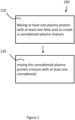
- Figure 1 outlines steps in a method 100 of preparing an FCP composition according to an embodiment of the disclosure.
- the method 100 comprises: mixing at least one plasma protein with at least one fatty acid to create a fatty acid-plasma protein mixture (block 110); and mixing the fatty acid-plasma protein mixture with at least one cannabinoid (block 120).
- the cannabinoids can be first mixed with the plasma protein and subsequently the cannabinoid-plasma protein mixture can be mixed with the fatty acids.
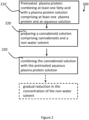
- FIG. 2 outlines steps in a method 200 of preparing an FCP composition according to an embodiment of the disclosure.
- the method 200 comprises: preparing a pre-treated plasma protein solution by adding a fatty acid into a plasma protein solution (block 210); and combining the pre-treated plasma protein solution with a cannabinoid solution comprising a cannabinoid and a non-water solvent (block 220).
- the FCP compositions may be in the form of an aqueous composition or may be freeze-dried or dried to a powder or lyophilized. In some embodiments the dried FCP composition is suspended in a medium such as saline solution for injection or intranasal application, for use for example as an analgesic.
- Cannabinoids are typically provided in the form of an extract from a cannabis plant. Such extracts may contain varying amounts of fatty acids, depending at least partly on if or how much the extract is purified to remove non-cannabinoid compounds. However, in accordance with an embodiment of the disclosure, adding supplementary fatty acid in addition to any fatty acids already comprised in the cannabis extract serves to stabilize the fatty acid-plasma protein-cannabinoid mixture. Plasma protein preparations may also contain varying amounts of fatty acids already complexed to it, depending of if or how much the plasma protein is purified to remove other molecules.
- adding supplementary fatty acid in addition to any fatty acids that may be already complexed to the plasma protein serves to stabilize the cannabinoid-plasma protein complex.
- the stabilizing effect of the supplementary fatty acid persists even after the fatty acid-plasma protein-cannabinoid mixture is purified to remove "loose" fatty acids that are unbound to plasma protein.
- Pure linoleic acid was dissolved in 50% ethanol to a concentration of 150 mM. 1mL of the linoleic acid solution was added to 10 mL of a 100 mg/mL HSA (Human Serum Albumin) aqueous solution. The linoleic acid - HSA solution, which had an ethanol concentration of below 5%, was mixed for a minute and then incubated without stirring for 1 hour at 37°C.
- HSA Human Serum Albumin
- the linoleic acid - HSA solution prepared in step 1.1 was diluted in water to a tenth of the original concentration, so that the HSA concentration was reduced to 10 mg/mL and the ethanol concentration was reduced to about 0.5%.
- THC-linoleic acid-HSA composition had a volume of about 100 mL, a HSA concentration of about 10 mg/mL, and a THC concentration of about 0.4 mg/mL.
- the concentration of alcohol in the solution gradually decreased and the volume of the linoleic acid-HSA-THC composition diminished from the initial volume of about 125 ml to about 100 mL.
- THC gradually binds to the albumin during incubation.
- concentration of free THC gradually decreases, and the concentration of ethanol can accordingly decrease during the incubation, while mitigating the danger of THC coming out of solution and coalescing into sediment or an oil.
- ethanol concentration be above 16.7% helps prevent THC from coming out of solution.
- a THC solution of a higher initial concentration may require a higher initial ethanol concentration for the THC to remain in solution.
- the ethanol should be at an initial concentration of below about 30% to prevent precipitation of albumin. Similar adjustments may be required in manufacture of other cannabinoid-albumin complexes, such as CBD complexes.
- Control THC-HSA compositions (“-L compositions") free of added linoleic acid, were prepared as in steps 1.1 to 1.3 above, but without the step of the addition of linoleic acid in step 1.1.
- the final purified and concentrated THC-HSA composition contained albumin at a concentration of 66 mg/mL and THC at a concentration of 1790 ug/mL.
- Vials containing final purified and concentrated control THC-albumin complexes ("-L", product of step 1.4 above) and separate vials containing final purified and concentrated linoleic acid-THC-albumin complexes ("+L", product of step 1.3 above) were stored under identical conditions, at 4° C and in the dark.
- Table 1 summarizes the appearances of the THC-albumin compositions in the vials over time.
- the +L, and the -L compositions were each treated to unbind the cannabinoid from the albumin.
- the unbound cannabinoid was quantitatively and qualitatively determined by HPLC analysis and the albumin was separately measured, at the time of preparation and 4 months later.
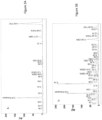
- the chromatograms of the -L composition at 0 months (time of preparation) and 4 months after preparation are shown in Figures 3a and 3b , respectively.
- the chromatograms of the +L composition at 0 months and 4 months after preparation are shown in Figures 4a and 4b , respectively. Note that the chromatograms at 0 months of the -L composition ( Fig. 3a ) and the +L composition ( Fig. 4a ) are essentially identical, as is expected.
- Table 2 summarizes quantitative results from the HPLC analysis. Table 2 21 July 2016 0 months 11 Dec 2016 4 months Analyte ⁇ g/mL in +L ⁇ g/mL in -L ⁇ g/mL in +L ⁇ g/mL in -L ⁇ 9 -THC 1789.809 1770.59 1089 340
- Biological activity of THC in the -L and +L compositions were also compared, in order to assess THC stability in the respective compositions.
- Murine macrophage cell line RAW264.7 obtained from the American Type Culture Collection
- LPS Lipopolysaccharide
- Calcein AM acetomethoxy derivate of calcein was used as a fluorescent dye to determine RAW264.7 cell number for normalization. As luminescence in the model is correlated to activation of NF- ⁇ B, inhibition of expression can be determined by correlation with inhibition of luminescence.
- the transduced RAW264.7 cells were treated with one of two test compositions: +L composition or the -L composition, after 1 week of storage in the dark, sealed, at 4° C.
- a sufficient amount of the test composition was added to the culture medium, such that, if the test composition was added to the culture at the time to test composition was initially made, prior to storage, the cells would have been exposed to THC at a concentration of 1 ⁇ g/ml.
- luminescence was compared to a negative control in which luciferase expression was induced with LPS, without a test composition.
- Fig. 5B The +L and -L compositions were similarly tested after 1 month of storage under the same conditions. It was found that administration of one-month-old -L composition inhibited expression of NF- ⁇ B luciferase reporter by 36.4% compared to negative controls. By contrast, the +L composition inhibited luciferase expression by 56.8% compared to negative controls, indicating that the addition of linoleic acid improved stability of albumin-bound THC, and retarded degradation of the THC during the month of storage.
- the method 200 further comprises 240 incubating the stabilized cannabinoid composition.
- the incubating comprises allowing gradual reduction in the concentration of the non-water solvent in the stabilized cannabinoid composition over time.
- the concentration reduction may be sufficiently slow to essentially minimize or prevent precipitation of cannabinoids out of the stabilized cannabinoid composition.
- the 210 preparing a pre-treated plasma protein solution further comprises incubating the fatty acid with the plasma protein solution.
- the solution is moved as little as possible to minimize upsetting the complexation process, similar to the procedure followed in adsorbing peptides onto plastic vessels in ELISA analyses.
- the method may comprise retaining a plasma protein fraction from a filtration or sieving of the stabilized cannabinoid composition for enriching FCP complexes in solution, wherein the retained plasma proteins fraction comprises cannabinoids bound to the plasma protein and at least one fatty acid.
- the at least one cannabinoid may be selected from the group consisting of: tetrahydracannabinol-acid (THCA) or its decarboxylated product tetrahydracannabinol (THC) and cannabidiolic acid (CBDA) or its decarboxylated product cannabidiol (CBD), cannabidiolic acid (CBDA), cannabinol (CBN), cannabigerol (CBG), tetrahydrocannabivarin (THCV), cannabigerolic acid CBGA and cannabichromene (CBC), and combinations thereof.
- THCA tetrahydracannabinol-acid
- THC cannabidiolic acid
- CBD cannabidiolic acid
- CBD cannabidiolic acid
- CBD cannabinol
- CBG cannabigerol
- THCV tetrahydrocannabivarin
- CBC can
- the group may comprise synthetic cannabinoids such as HU-210, WIN 55,212-2 and JWH-133.
- the cannabinoids are provided as plant extract/s.
- One or more of the plant extracts may comprise a mixture of terpenes and cannabinoids, creating a bouquet of cannabinoid terpenes and optionally additional compounds, which may bind together to one or more albumin-linoleic acid complexes.
- the at least one plasma protein may comprise Human Serum Albumin (HSA).
- the at least one fatty acid may comprise linoleic acid.
- other fatty acids may be as capable of stabilizing the THC-plasma protein or have at least similar capability.
- Such fatty acids are also considered as within the scope of the methods and compositions made thereof.
- THC-albumin compositions As indicated in Table 1 and Table 2, despite no discernible change in the color of the composition from its time of preparation there may be some degradation of THC in the composition during that time. Indeed, the amount of THC may considerably drop over an extended period such as 4 months; and earlier use of the composition may be preferable; however, the stability of THC in THC-albumin compositions is nevertheless profoundly improved by the presence of linoleic acid associated with the THC-albumin complex.
- most of the at least one fatty acid is not derived from a cannabinoid plant.
- the cannabinoids are typically provided as purified extracts containing at least or more than 90% cannabinoids.
- the cannabinoid purified extracts may contain fatty acid traces from the cannabinoid plant source, adding supplemental fatty acids may improve stabilization of the cannabinoid-plasma protein-fatty acid compositions as described above.
- the majority of fatty acids may be from a cannabinoid plant.
- the fatty acids are not merely minor compounds in the cannabinoid extracts, but rather are supplements to the cannabinoid extracts. At present we hold that the particular source of the fatty acids is insignificant to the observed stability effect.
- a stabilized cannabinoid-plasma protein-fatty acid composition comprises: a plasma protein pre-treated with at least one fatty acid, and cannabinoids.
- the pre-treatment may involve providing the plasma protein in an aqueous solution and the fatty acid in a suitable solvent which is miscible with water such as ethanol and mixing together the two solutions.
- the source of the fatty acids used for pre-treatment may be at least in part from a cannabinoid plant, but is generally not from cannabinoid plants.
- the source of the fatty acids in the composition is generally not from cannabinoid plants.
- the cannabinoids are typically provided as an extract, in particular an extract of cannabinoids from cannabinoid plants, wherein the solvent is a non-aqueous solvent which is miscible with water such as ethanol.
- the extract may contain traces of fatty acids, but these traces are not used for pre-treatment.
- the concentration of the at least one fatty acid in the composition is selected to provide the stabilized cannabinoid-plasma protein-fatty acid composition with a color that is different from a color of a non-stabilized cannabinoid composition comprising: the cannabinoids at the same concentration as in the stabilized composition, and the at least one plasma proteins at the same concentration as in the stabilized composition, wherein the stabilized cannabinoid composition and the non-stabilized cannabinoid composition are concomitantly prepared and are concomitantly measured thereafter.
- the concentration the at least one fatty acid in the composition is selected to substantially retard the degradation of the cannabinoids in the composition, for example the degradation of THC, for example to retain at least 50% of the THC in the composition over a 4-month period in a stabilizing environment e.g., under 10°C and in the dark.
- the concentration of the fatty acids, relative to the concentration of cannabinoids, is such that if there is any color alteration of the stabilized composition, the color alteration is imperceptible to the naked eye.
- the color change may be tested by preparing a fresh sample of the composition and comparing the colors of the fresh sample to those of a sample made under the same conditions and concentrations as in the fresh sample but stored for stability testing.
- a method for producing a fatty acid-cannabinoid-plasma protein (FCP) composition comprising: contacting a plasma protein or a peptide portion thereof with a supplemental fatty acid composition comprising at least one fatty acid; and contacting the plasma protein or portion thereof with a cannabinoid composition comprising at least one cannabinoid, such that a combined composition is prepared, which comprises a FCP complex in which the at least one fatty acid and the at least one cannabinoid is bound to the plasma protein or portion thereof.
- the at least one fatty acid comprises linoleic acid.
- at least one fatty acid consists of linoleic acid.
- the cannabinoid composition is essentially free of fatty acids.
- the method further comprises: purifying the combined composition to retain the plasma protein or portion thereof and to remove fatty acid or cannabinoids not bound the plasma protein or portion thereof, such that at least 80% of the fatty acids and at least 80% of the cannabinoids in the combined composition are bound to the plasma protein or portion thereof.
- substantially all the fatty acids and substantially all the cannabinoids in the combined composition are bound to the plasma protein or portion thereof.
- the binding of the fatty acid and/or the cannabinoid to the plasma protein or portion thereof is a non-covalent binding.
- the non-covalent binding is a protein-ligand interaction.
- the non-covalent binding is characterized by non-specific lipophilic and polar interactions with hydrophobic protein pockets in the plasma protein or portion thereof.
- contacting the plasma protein or portion thereof with the supplemental fatty acid composition comprises mixing a composition comprising the plasma protein or portion thereof with the supplemental acid composition and incubating the mixture.
- the incubation is at a temperature between 25 degrees Celsius (deg. C) and 40 deg. C.
- the incubation is in a hydroalcoholic medium.
- the alcohol comprised in the hydroalcoholic medium is ethanol.
- initial alcohol concentration of hydroalcoholic medium is between 2% and 10%.
- contacting the plasma protein or portion thereof with the cannabinoid composition comprises mixing a composition comprising the plasma protein or portion thereof with the cannabinoid composition and incubating the mixture.
- the incubation is at a temperature between 25 degrees Celsius (deg. C) and 40 deg. C.
- the incubation is in a hydroalcoholic medium.
- the alcohol comprised in the hydroalcoholic medium is ethanol.
- initial alcohol concentration of hydroalcoholic medium is between 16% and 30%.
- the combined composition is provided in an aqueous medium.
- the aqueous medium consists of water or a saline solution.
- the method further comprises drying or lyophilizing the combined composition.
- the at least one cannabinoid is one or a combination of two or more of the group consisting of: THCA, THC, CBDA, CBD, CBN, CBG, THCV, CBGA, CBC, HU-210, WIN 55,212-2 and JWH-133. Claimed is that the at least one cannabinoid is one or a combination of two or more of the group consisting of: THCA, THC, CBDA, CBD, CBN, CBG, THCV, CBGA, and CBC.
- the plasma protein or portion thereof is selected from the group consisting of: an albumin, a lipoprotein, a glycoprotein, and ⁇ , ⁇ , and ⁇ globulins, and mixtures of one or more thereof.
- the plasma protein or portion thereof is recombinant.
- each of the verbs, "comprise,” “include” and “have,” and conjugates thereof, are used to indicate that the object or objects of the verb are not necessarily a complete listing of components, elements or parts of the subject or subjects of the verb.
Landscapes
- Health & Medical Sciences (AREA)
- Life Sciences & Earth Sciences (AREA)
- Chemical & Material Sciences (AREA)
- Medicinal Chemistry (AREA)
- Pharmacology & Pharmacy (AREA)
- Epidemiology (AREA)
- Animal Behavior & Ethology (AREA)
- General Health & Medical Sciences (AREA)
- Public Health (AREA)
- Veterinary Medicine (AREA)
- Engineering & Computer Science (AREA)
- Bioinformatics & Cheminformatics (AREA)
- Proteomics, Peptides & Aminoacids (AREA)
- Molecular Biology (AREA)
- General Chemical & Material Sciences (AREA)
- Chemical Kinetics & Catalysis (AREA)
- Oil, Petroleum & Natural Gas (AREA)
- Inorganic Chemistry (AREA)
- Dermatology (AREA)
- Otolaryngology (AREA)
- Peptides Or Proteins (AREA)
- Medicines That Contain Protein Lipid Enzymes And Other Medicines (AREA)
- Acyclic And Carbocyclic Compounds In Medicinal Compositions (AREA)
- Medicinal Preparation (AREA)
- Pharmaceuticals Containing Other Organic And Inorganic Compounds (AREA)
- Enzymes And Modification Thereof (AREA)
Description
- The present application claims the benefit under 35 U.S.C. §119(e) of
US Provisional application 62/469,022 filed on March 09, 2017 - Cannabinoids are compounds active on cannabinoid and other receptors in humans. Cannabinoids of plant origin, also known as phyto-cannabinoids, are abundant in plants of the Cannabis genus. One known cannabinoid which is present in relatively high concentrations in Cannabis sativa is tetrahydrocannabinol-acid (THCA) or its decarboxylated product tetrahydracannabinol (THC). THC has been found to have psychoactive effects, analgesic effects, and antioxidant effects and to increase appetite.
- Smoking medical cannabis, although proven to be beneficial in certain indications, has disadvantages. However, the amounts of active ingredients in the part of the plant being smoked may differ from plant to plant. As a result, a patient treated using medical cannabis may lack control over proper dosing of active cannabinoids.
- Another disadvantage of smoking medical cannabis is the negative impact of some of the constituents of cannabis smoke. The smoke from the plant matter may contain carcinogens in addition to the desired cannabinoids, and heavy cannabis use through smoking has been associated with accelerated pulmonary decline.
- Aqueous compositions of cannabinoids would allow for preparation of quality controlled, accurately dosed pharmaceutical compositions for administration and rapid absorption by humans. Patent document
US 6,383,513 discloses cannabinoid compositions for nasal delivery. - The invention relates to a method for producing a fatty acid-cannabinoid-plasma protein (FCP) composition, the method comprising: contacting a plasma protein with a supplemental fatty acid composition comprising linoleic acid; and contacting the plasma protein with a cannabinoid composition comprising at least one cannabinoid, wherein the at least one cannabinoid is one or a combination of two or more of the group consisting of: THCA, THC, CBDA, CBD, CBN, CBG, THCV, CBGA, and CBC,such that a combined composition is prepared, which comprises an FCP complex in which the at least one fatty acid and the at least one cannabinoid is bound to the plasma protein or portion thereof.
- Embodiments of the invention provide improved compositions comprising cannabinoids. Methods for making such compositions are also provided herein. In particular, the compositions described herein below are stabilized when in an aqueous composition. The stabilization of the compositions may be determined, by way of example, by observing the stability of the color of the compositions and/or rate of cannabinoid degradation and/or preservation of bioactivity.
- An "aqueous" composition as used herein is a composition having a liquid medium that is at least 50% water. An "aqueous" solution as used herein is a solution in which the solvent is at least 50% water.
- According to one aspect of the disclosure, there is provided a method for producing a stabilized fatty acid-cannabinoid-plasma protein ("FCP") composition, the method comprising:
- contacting a plasma protein with a supplemental fatty acid composition comprising at least one fatty acid, which is at least linoleic acid;
- and contacting the plasma protein with a cannabinoid composition comprising at least one cannabinoid, wherein the at least one cannabinoid is one or a combination of two or more of the group consisting of: THCA, THC, CBDA, CBD, CBN, CBG, THCV, CBGA, and CBC.
- Optionally, the fatty acid comprised in the supplemental fatty acid composition provides fatty acid in addition to fatty acid that may be comprised in the cannabinoid composition or may already be complexed with the plasma protein. In an embodiment of the disclosure, at least a portion of, most of, or essentially all of, the plasma protein in the FCP composition produced in accordance with the above method are non-covalently bound to a fatty acid and a cannabinoid, resulting in the formation of a FCP complex. Optionally, the non-covalent binding is a protein-ligand interaction. Optionally, the non-covalent binding is characterized by non-specific lipophilic and polar interactions, by way of example with hydrophobic protein pockets in the plasma protein.
- In an embodiment of the disclosure, contacting the plasma protein with the supplemental fatty acid composition comprises mixing a composition comprising the plasma protein with the supplemental acid composition and incubating the mixture. Optionally the incubation is at between 25 degrees Celsius (deg. C) and 40 deg. C, at about 25 deg. C, at about 30 deg. C, about 37 deg. C or about 40 deg. C. Optionally, the incubation has a duration of between 30 minutes and 2 hours, about 30 minutes, about 1 hour, or about 2 hours. Optionally, the incubation is in a hydroalcoholic medium in which the initial alcohol concentration of the mixture is between 2% and 10%, or about 5%. Optionally, the alcohol is ethanol.
- In an embodiment of the disclosure, contacting the plasma protein with the cannabinoid composition comprises mixing a composition comprising the plasma protein with the cannabinoid composition and incubating the mixture. Optionally the incubation is at between 25 degrees Celsius (deg. C) and 40 deg. C, at about 25 deg. C, at about 30 deg. C, about 37 deg. C or about 40 deg. C. Optionally, the incubation has a duration of 10 to 24 hours, and 16 to 18 hours. Optionally, the incubation is in a hydroalcoholic medium in which the initial alcohol concentration of the mixture is between 16% and 30%, or about 20%. Optionally, the alcohol is ethanol.
- In an embodiment of the disclosure, the method further comprises retaining a plasma protein fraction from a filtration or sieving of the FCP composition, wherein the retained plasma proteins fraction comprises at least one fatty acid and at least one cannabinoid.
- In an embodiment of the disclosure, following the filtration or sieving, at least 80%, 90% or essentially all of the THC comprised in the fatty acid-cannabinoid-plasma protein composition, and at least 80%, 90%, or essentially all of the fatty acid comprised in the fatty acid-cannabinoid-plasma protein composition, are bound to a plasma protein.
- In an embodiment of the disclosure, the FCP composition is provided in a solution comprising water, and optionally a water-miscible, non-aqueous solvent. In an embodiment of the disclosure, the FCP composition is freeze-dried or dried.
- In an embodiment of the disclosure, the supplemental fatty acid composition comprises the at least one fatty acid, a water-miscible, non-aqueous solvent, and optionally water. Optionally, the non-aqueous solvent is ethanol. Optionally, the fatty acid composition consists of the at least one fatty acid.
- In an embodiment of the disclosure, the cannabinoid composition comprises a cannabis extract. The cannabis extract may be a purified cannabis extract depleted in non-cannabinoid extract constituents, by way of example proteins, lipids, or fatty acids. Optionally, the purified cannabis extract is enriched in cannabinoids. In an embodiment of the disclosure, the cannabinoid composition is a solution comprising at least one cannabinoid, a water-miscible non-aqueous solvent, and optionally water.
- In an embodiment of the disclosure, the water-miscible non-aqueous solvent is ethanol.
- A fatty acid is a carboxylic acid with a hydrocarbon tail. Claimed is a supplemental fatty acid composition comprising linoleic acid. In an embodiment of the disclosure, the at least one fatty acid comprises one or a mixture of two or more of: long chain length fatty acids (13 or more carbons), short chain length fatty acids (up to 13 carbons); triglycerides; polyisoprenoids, or surfactants. According to the claims, the at least one fatty acid comprises linoleic acid. In another embodiment the at least one fatty acid consists of linoleic acid.
- Optionally, the at least one cannabinoid comprises one of or a combination of two or more of a cannabinoid selected from the group consisting of: tetrahydracannabinol-acid (THCA) or its decarboxylated product tetrahydracannabinol (THC) and cannabidiolic acid (CBDA) or its decarboxylated product cannabidiol (CBD), cannabidiolic acid (CBDA), cannabinol (CBN), cannabigerol (CBG), tetrahydrocannabivarin (THCV), cannabigerolic acid CBGA and cannabichromene (CBC). Additionally, the group may comprise synthetic cannabinoids such as HU-210, WIN 55,212-2 and JWH-133.
- As used herein, a plasma protein refers to proteins that are known to serve as transport vehicles in the bloodstream, by way of example for a variety of hydrophobic compounds, including fatty acids. The plasma protein may be derived or purified from blood plasma, or be a recombinant protein produced in a plant, bacteria, a cell line or other microorganism. The plasma protein is optionally selected from: an albumin, a lipoprotein, a glycoprotein, and α, β, and γ globulins, and mixtures thereof. The plasma protein may incorporate a complete plasma protein or a peptide comprising a portion of a plasma protein. The portion of the plasma protein may comprise a portion which adsorbs a cannabinoid. A plasma protein may be a variant of a naturally occurring plasma protein.
- In an embodiment of the disclosure, the FCP composition comprises the at least one fatty acid in sufficient amount in to essentially prevent color alteration of the stabilized composition during at least 1 hour or at least 24 hours. In more preferred embodiments the prevention is for at least 4 months.
- In an embodiment of the disclosure, the method comprises: (1) pretreating the plasma protein with the supplemental fatty acid composition to produce a fatty acid-plasma protein composition; and (2) combining the fatty acid-plasma protein composition with the cannabinoid composition to produce a FCP composition.
- Alternatively, the method comprises: (1) pretreating the plasma protein with the cannabinoid composition to produce a cannabinoid-plasma protein composition; and (2) combining the cannabinoid-plasma protein composition with the supplemental fatty acid composition to produce a FCP composition.
- Alternatively, the method comprises: (1) combining the supplemental fatty acid composition with the cannabinoid composition to produce a supplemental fatty acid-cannabinoid composition and (2) contacting the plasma protein with the supplemental fatty acid-cannabinoid composition to produce a FCP composition.
- According to an embodiment of the disclosure, the at least one cannabinoid is not derived from a cannabis plant.
- According to an embodiment of the disclosure, at least a portion of the at least one fatty acid is not derived from a cannabis plant.
- In the discussion unless otherwise stated, adjectives such as "substantially" and "about" modifying a condition or relationship characteristic of a feature or features of an embodiment of the invention, are understood to mean that the condition or characteristic is defined to within tolerances that are acceptable for operation of the embodiment for an application for which it is intended. Unless otherwise indicated, the word "or" in the specification and claims is considered to be the inclusive "or" rather than the exclusive or, and indicates at least one of, or any combination of items it conjoins.
- This summary is provided to introduce a selection of concepts in a simplified form that are further described below in the detailed description. This summary is not intended to identify key features or essential features of the claimed subject matter, nor is it intended to be used to limit the scope of the claimed subject matter.
- Non-limiting examples of embodiments of the invention are described below with reference to figures attached hereto that are listed following this paragraph. Identical structures, elements or parts that appear in more than one figure are generally labelled with a same numeral in all the figures in which they appear.
-
Fig. 1 shows a flow diagram depicting a process of preparing stabilized compositions of cannabinoids according to and embodiment of the disclosure; -
Fig. 2 shows a flow diagram depicting a process of preparing stabilized compositions of cannabinoids according to an embodiment of the disclosure; -
Fig. 3A depicts chromatograms of an FCP composition prepared from THC, albumin and linoleic acid (+L compositions), produced in accordance with an embodiment of the disclosure; -
Fig. 3B depicts chromatograms of cannabinoid-plasma protein prepared from THC and albumin (without linoleic acid) as controls (-L compositions); -
Fig. 4A depicts a chromatogram of the +L composition shown inFig. 3A , after 4 months of storage. -
Fig. 4B depicts a chromatogram of the -L composition shown inFig. 3B , after 4 months of storage. -
Fig 5A shows the results of NF-κB luciferase reporter assays testing the biological activity of THC in the +L and -L composition after a week of storage; and -
Fig 5B shows the results of NF-κB luciferase reporter assays testing the biological activity of THC in the +L and -L composition after a month of storage. - It has long been recognized that cannabis resin and herbal cannabis as sources for cannabinoids lose potency during storage, the loss of potency being mainly due to loss (through degradation or otherwise) of the cannabinoids, such as THC.
- Plasma proteins are known to serve as transport vehicles in the bloodstream for a variety of hydrophobic compounds, including fatty acids. By way of example, human serum albumin (HSA) is a primary transporter for delivering fatty acids to tissues and possesses numerous fatty acid binding sites. We have previously found that binding cannabinoids to plasma proteins improves stability of cannabinoids in aqueous compositions. In addition, when the source of the cannabinoids is plant material, the binding also helps separate the cannabinoids from undesirable impurities carried over from the plant material into the extracts used for preparing the bound cannabinoids. Typically, the binding process includes incubating cannabinoids and plasma protein together in solution under certain conditions to produce cannabinoid-protein complexes, then concentrating the cannabinoid-protein complexes and washing the complexes to remove undesirable materials that do not bind with the proteins, resulting in aqueous compositions enriched in the cannabinoid-protein complexes.
- However, such aqueous compositions have been found to alter their coloration over time, indicating an instability and degradation of the compositions. This degradation might be associated with an undesirable loss of potency of the dissolved cannabinoids, similar to the recognized THC potency loss described above and may be further associated with plasma protein degradation.
- We have surprisingly found that aqueous compositions comprising plasma protein and cannabinoids are more stable when the cannabinoids are provided using cannabis extract (for example cannabis smoke extract or cannabis vapor extract), rather than purified cannabinoids. Fatty acids, which are naturally found in cannabis extracts but typically depleted in purified cannabinoid preparations, were initially hypothesized to contribute to the improvement of the stabilization. We have found that adding fatty acids, as claimed linoleic acid, during production of FCP compositions comprising plasma protein and cannabinoids as described hereinbelow, stabilizes the resulting composition when stored in an aqueous medium and reduces cannabinoid degradation. Improved stability was, by way of example, demonstrated through reduction in degradation of cannabinoids, reduced appearance of cannabinoid degradation products, reduced sedimentation and reduced flocculation of the aqueous FCP composition. Improved stability was also demonstrated through controlled reduction in the degree of the biological activity of the cannabinoids in the aqueous PFC composition. The stabilized preparations are suitable, for example, for pharmaceutical preparations, such as but not limited to solutions for parenteral or intranasal delivery.
-
Figure 1 outlines steps in amethod 100 of preparing an FCP composition according to an embodiment of the disclosure. Themethod 100 comprises: mixing at least one plasma protein with at least one fatty acid to create a fatty acid-plasma protein mixture (block 110); and mixing the fatty acid-plasma protein mixture with at least one cannabinoid (block 120). - Alternatively, the cannabinoids can be first mixed with the plasma protein and subsequently the cannabinoid-plasma protein mixture can be mixed with the fatty acids.
-
Figure 2 outlines steps in amethod 200 of preparing an FCP composition according to an embodiment of the disclosure. Themethod 200 comprises: preparing a pre-treated plasma protein solution by adding a fatty acid into a plasma protein solution (block 210); and combining the pre-treated plasma protein solution with a cannabinoid solution comprising a cannabinoid and a non-water solvent (block 220). The FCP compositions may be in the form of an aqueous composition or may be freeze-dried or dried to a powder or lyophilized. In some embodiments the dried FCP composition is suspended in a medium such as saline solution for injection or intranasal application, for use for example as an analgesic. - Cannabinoids are typically provided in the form of an extract from a cannabis plant. Such extracts may contain varying amounts of fatty acids, depending at least partly on if or how much the extract is purified to remove non-cannabinoid compounds. However, in accordance with an embodiment of the disclosure, adding supplementary fatty acid in addition to any fatty acids already comprised in the cannabis extract serves to stabilize the fatty acid-plasma protein-cannabinoid mixture. Plasma protein preparations may also contain varying amounts of fatty acids already complexed to it, depending of if or how much the plasma protein is purified to remove other molecules. However, in accordance with and embodiment of the disclosure, adding supplementary fatty acid in addition to any fatty acids that may be already complexed to the plasma protein serves to stabilize the cannabinoid-plasma protein complex. Moreover, the stabilizing effect of the supplementary fatty acid persists even after the fatty acid-plasma protein-cannabinoid mixture is purified to remove "loose" fatty acids that are unbound to plasma protein.
- Pure linoleic acid was dissolved in 50% ethanol to a concentration of 150 mM. 1mL of the linoleic acid solution was added to 10 mL of a 100 mg/mL HSA (Human Serum Albumin) aqueous solution. The linoleic acid - HSA solution, which had an ethanol concentration of below 5%, was mixed for a minute and then incubated without stirring for 1 hour at 37°C.
- The linoleic acid - HSA solution prepared in step 1.1 was diluted in water to a tenth of the original concentration, so that the HSA concentration was reduced to 10 mg/mL and the ethanol concentration was reduced to about 0.5%.
- A plant extract of THC of 94-95% purity was diluted in 100% ethanol to a THC concentration of 0.16 mg/mL. 25 mL of the 0.16 mg/mL THC solution was slowly added to 100 mL of the diluted linoleic acid - HSA solution prepared in this step, and incubated for 16-18 hours at 30°C, in an open container to facilitate evaporation of the ethanol, and protected from light. Following incubation, the THC-linoleic acid-HSA composition had a volume of about 100 mL, a HSA concentration of about 10 mg/mL, and a THC concentration of about 0.4 mg/mL.
- During the incubation, the concentration of alcohol in the solution gradually decreased and the volume of the linoleic acid-HSA-THC composition diminished from the initial volume of about 125 ml to about 100 mL.
- THC gradually binds to the albumin during incubation. As a result, the concentration of free THC gradually decreases, and the concentration of ethanol can accordingly decrease during the incubation, while mitigating the danger of THC coming out of solution and coalescing into sediment or an oil. By way of example, given an initial THC concentration 0.32 mg/mL, having the pre-incubation ethanol concentration be above 16.7% helps prevent THC from coming out of solution. A THC solution of a higher initial concentration may require a higher initial ethanol concentration for the THC to remain in solution. However, the ethanol should be at an initial concentration of below about 30% to prevent precipitation of albumin. Similar adjustments may be required in manufacture of other cannabinoid-albumin complexes, such as CBD complexes.
- After the incubation, most of the THC and fatty acid unbound to HSA was removed by dialysis filtration with wash cycles by DI (deionized water) filtration in a Cogent µ scale device of Merck, using Pellicon XL50 cassettes (Ultracel) having a pore size of 10 kD (Pellicon XL Ultra filtration Module Ultracel 10 kDa 0.005 m2, catalog # PXCO10c50). Subsequently, the linoleic acid-THC-HSA complexes were concentrated with the Cogent device from 100 ml to 50 ml. Three 300 mL water washes were performed on the concentrated linoleic acid-THC-HSA complex sample and finally the washed sample was concentrated to a volume of about 20 mL. Samples were drawn from several of the purifications stages to monitor the levels of cannabinoids and plasma protein and determine that three washings sufficed to provide adequate amount of tightly bound complexes.
- Control THC-HSA compositions ("-L compositions") free of added linoleic acid, were prepared as in steps 1.1 to 1.3 above, but without the step of the addition of linoleic acid in step 1.1. The final purified and concentrated THC-HSA composition contained albumin at a concentration of 66 mg/mL and THC at a concentration of 1790 ug/mL.
- Vials containing final purified and concentrated control THC-albumin complexes ("-L", product of step 1.4 above) and separate vials containing final purified and concentrated linoleic acid-THC-albumin complexes ("+L", product of step 1.3 above) were stored under identical conditions, at 4° C and in the dark.
- Table 1 summarizes the appearances of the THC-albumin compositions in the vials over time.
Table 1 Control THC-albumin composition (-L) linoleic acid-THC-albumin composition (+L) Albumin concentration 66.0 mg/mL 62.9 mg/mL THC concentration 1.790 1.771 THC:Albumin ratio (by weight) 0.027:1 0.028:1 Solution color at time = 0 Milky white Milky white Solution color at time = 24h Milky brownish unchanged Solution color at time = 48h Brownish gray unchanged Solution color at time = 5 days Darkens unchanged Solution color at time = 2 weeks Strong brown unchanged Solution color at time = 3 weeks Darkens unchanged Solution color at time = 4 months Darkens unchanged - The +L, and the -L compositions were each treated to unbind the cannabinoid from the albumin. The unbound cannabinoid was quantitatively and qualitatively determined by HPLC analysis and the albumin was separately measured, at the time of preparation and 4 months later. The chromatograms of the -L composition at 0 months (time of preparation) and 4 months after preparation are shown in
Figures 3a and 3b , respectively. The chromatograms of the +L composition at 0 months and 4 months after preparation are shown inFigures 4a and 4b , respectively. Note that the chromatograms at 0 months of the -L composition (Fig. 3a ) and the +L composition (Fig. 4a ) are essentially identical, as is expected. By contrast, at 4 months, the chromatograms of the - L composition (Fig. 3b ) and the +L composition (Fig. 4b ) have substantial differences, with the -L chromatogram exhibiting more peaks, representing impurities arising from increased degradation in the - L composition. - Table 2 summarizes quantitative results from the HPLC analysis.
Table 2 21 July 2016 0 months 11 Dec 2016 4 months Analyte µg/mL in +L µg/mL in -L µg/mL in +L µg/mL in -L Δ9-THC 1789.809 1770.59 1089 340 - Biological activity of THC in the -L and +L compositions were also compared, in order to assess THC stability in the respective compositions. Murine macrophage cell line RAW264.7 (obtained from the American Type Culture Collection) was transduced with an NF-κB luciferase reporter construct. Lipopolysaccharide (LPS) was used to induce the NF-κB luciferase reporter in the transduced RAW264.7 cells, and the test compositions (-L and +L compositions) were added to test for their ability to inhibit LPS-induced luciferase expression. Calcein AM (acetomethoxy derivate of calcein) was used as a fluorescent dye to determine RAW264.7 cell number for normalization. As luminescence in the model is correlated to activation of NF-κB, inhibition of expression can be determined by correlation with inhibition of luminescence.
- It has previously been shown using the RAW264.7 NF-κB luciferase reporter assay that the expression of the NF-κB luciferase reporter is inhibited by administration of albumin-bound THC.
- Reference is made to
Fig. 5A . The transduced RAW264.7 cells were treated with one of two test compositions: +L composition or the -L composition, after 1 week of storage in the dark, sealed, at 4° C. For each test composition, a sufficient amount of the test composition was added to the culture medium, such that, if the test composition was added to the culture at the time to test composition was initially made, prior to storage, the cells would have been exposed to THC at a concentration of 1 µg/ml. For both test compositions, luminescence was compared to a negative control in which luciferase expression was induced with LPS, without a test composition. It was found that administration of one-week-old -L composition inhibited LPS-induced luciferase expression by 50% compared to negative controls. By contrast, the +L composition inhibited luciferase expression by 70.9% compared to negative controls, indicating that the addition of linoleic acid improved stability of albumin-bound THC, and retarded degradation of the THC during the week of storage. - Reference is made to
Fig. 5B . The +L and -L compositions were similarly tested after 1 month of storage under the same conditions. It was found that administration of one-month-old -L composition inhibited expression of NF-κB luciferase reporter by 36.4% compared to negative controls. By contrast, the +L composition inhibited luciferase expression by 56.8% compared to negative controls, indicating that the addition of linoleic acid improved stability of albumin-bound THC, and retarded degradation of the THC during the month of storage. - As discussed by way of example in Example 1, step 1.2, in some embodiments, the
method 200 further comprises 240 incubating the stabilized cannabinoid composition. The incubating comprises allowing gradual reduction in the concentration of the non-water solvent in the stabilized cannabinoid composition over time. The concentration reduction may be sufficiently slow to essentially minimize or prevent precipitation of cannabinoids out of the stabilized cannabinoid composition. - Preferably, as described by way of example in Example 1 step 1.1, the 210 preparing a pre-treated plasma protein solution further comprises incubating the fatty acid with the plasma protein solution. Preferably, the solution is moved as little as possible to minimize upsetting the complexation process, similar to the procedure followed in adsorbing peptides onto plastic vessels in ELISA analyses.
- As discussed by way of example in step 1.3 of Example 1, the method may comprise retaining a plasma protein fraction from a filtration or sieving of the stabilized cannabinoid composition for enriching FCP complexes in solution, wherein the retained plasma proteins fraction comprises cannabinoids bound to the plasma protein and at least one fatty acid.
- The at least one cannabinoid may be selected from the group consisting of: tetrahydracannabinol-acid (THCA) or its decarboxylated product tetrahydracannabinol (THC) and cannabidiolic acid (CBDA) or its decarboxylated product cannabidiol (CBD), cannabidiolic acid (CBDA), cannabinol (CBN), cannabigerol (CBG), tetrahydrocannabivarin (THCV), cannabigerolic acid CBGA and cannabichromene (CBC), and combinations thereof. Alternatively or additionally, the group may comprise synthetic cannabinoids such as HU-210, WIN 55,212-2 and JWH-133. In some embodiments the cannabinoids are provided as plant extract/s. One or more of the plant extracts may comprise a mixture of terpenes and cannabinoids, creating a bouquet of cannabinoid terpenes and optionally additional compounds, which may bind together to one or more albumin-linoleic acid complexes. The at least one plasma protein may comprise Human Serum Albumin (HSA).
- The at least one fatty acid may comprise linoleic acid. However, other fatty acids may be as capable of stabilizing the THC-plasma protein or have at least similar capability. Such fatty acids are also considered as within the scope of the methods and compositions made thereof.
- As indicated in Table 1 and Table 2, despite no discernible change in the color of the composition from its time of preparation there may be some degradation of THC in the composition during that time. Indeed, the amount of THC may considerably drop over an extended period such as 4 months; and earlier use of the composition may be preferable; however, the stability of THC in THC-albumin compositions is nevertheless profoundly improved by the presence of linoleic acid associated with the THC-albumin complex.
- In some embodiments most of the at least one fatty acid is not derived from a cannabinoid plant. Some cannabinoid plants and in particular, some parts of these plants, such as the fruit or seeds, may have appreciable amounts of fatty acids. However, the cannabinoids are typically provided as purified extracts containing at least or more than 90% cannabinoids. Although the cannabinoid purified extracts may contain fatty acid traces from the cannabinoid plant source, adding supplemental fatty acids may improve stabilization of the cannabinoid-plasma protein-fatty acid compositions as described above.
- Nevertheless, in some other embodiments the majority of fatty acids may be from a cannabinoid plant. In such cases the fatty acids are not merely minor compounds in the cannabinoid extracts, but rather are supplements to the cannabinoid extracts. At present we hold that the particular source of the fatty acids is insignificant to the observed stability effect.
- According to an embodiment of the disclosure, a stabilized cannabinoid-plasma protein-fatty acid composition comprises: a plasma protein pre-treated with at least one fatty acid, and cannabinoids.
- The pre-treatment may involve providing the plasma protein in an aqueous solution and the fatty acid in a suitable solvent which is miscible with water such as ethanol and mixing together the two solutions. The source of the fatty acids used for pre-treatment may be at least in part from a cannabinoid plant, but is generally not from cannabinoid plants. The source of the fatty acids in the composition is generally not from cannabinoid plants.
- The cannabinoids are typically provided as an extract, in particular an extract of cannabinoids from cannabinoid plants, wherein the solvent is a non-aqueous solvent which is miscible with water such as ethanol. The extract may contain traces of fatty acids, but these traces are not used for pre-treatment. In some embodiments the concentration of the at least one fatty acid in the composition is selected to provide the stabilized cannabinoid-plasma protein-fatty acid composition with a color that is different from a color of a non-stabilized cannabinoid composition comprising: the cannabinoids at the same concentration as in the stabilized composition, and the at least one plasma proteins at the same concentration as in the stabilized composition, wherein the stabilized cannabinoid composition and the non-stabilized cannabinoid composition are concomitantly prepared and are concomitantly measured thereafter. In other embodiments the concentration the at least one fatty acid in the composition is selected to substantially retard the degradation of the cannabinoids in the composition, for example the degradation of THC, for example to retain at least 50% of the THC in the composition over a 4-month period in a stabilizing environment e.g., under 10°C and in the dark.
- In certain embodiments of the disclosure, the concentration of the fatty acids, relative to the concentration of cannabinoids, is such that if there is any color alteration of the stabilized composition, the color alteration is imperceptible to the naked eye. The color change may be tested by preparing a fresh sample of the composition and comparing the colors of the fresh sample to those of a sample made under the same conditions and concentrations as in the fresh sample but stored for stability testing.
- There is therefore provided, in an embodiment of the disclosure, a method for producing a fatty acid-cannabinoid-plasma protein (FCP) composition, the method comprising: contacting a plasma protein or a peptide portion thereof with a supplemental fatty acid composition comprising at least one fatty acid; and contacting the plasma protein or portion thereof with a cannabinoid composition comprising at least one cannabinoid, such that a combined composition is prepared, which comprises a FCP complex in which the at least one fatty acid and the at least one cannabinoid is bound to the plasma protein or portion thereof. The at least one fatty acid comprises linoleic acid. Optionally, at least one fatty acid consists of linoleic acid. Optionally, the cannabinoid composition is essentially free of fatty acids.
- In an embodiment of the disclosure, the method further comprises: purifying the combined composition to retain the plasma protein or portion thereof and to remove fatty acid or cannabinoids not bound the plasma protein or portion thereof, such that at least 80% of the fatty acids and at least 80% of the cannabinoids in the combined composition are bound to the plasma protein or portion thereof. Optionally, substantially all the fatty acids and substantially all the cannabinoids in the combined composition are bound to the plasma protein or portion thereof.
- In an embodiment of the disclosure, the binding of the fatty acid and/or the cannabinoid to the plasma protein or portion thereof is a non-covalent binding. Optionally, the non-covalent binding is a protein-ligand interaction. Optionally, the non-covalent binding is characterized by non-specific lipophilic and polar interactions with hydrophobic protein pockets in the plasma protein or portion thereof.
- In an embodiment of the disclosure, contacting the plasma protein or portion thereof with the supplemental fatty acid composition comprises mixing a composition comprising the plasma protein or portion thereof with the supplemental acid composition and incubating the mixture. Optionally, the incubation is at a temperature between 25 degrees Celsius (deg. C) and 40 deg. C. Optionally, the incubation is in a hydroalcoholic medium. Optionally, the alcohol comprised in the hydroalcoholic medium is ethanol. Optionally, initial alcohol concentration of hydroalcoholic medium is between 2% and 10%.
- In an embodiment of the disclosure, contacting the plasma protein or portion thereof with the cannabinoid composition comprises mixing a composition comprising the plasma protein or portion thereof with the cannabinoid composition and incubating the mixture. Optionally, the incubation is at a temperature between 25 degrees Celsius (deg. C) and 40 deg. C. Optionally, the incubation is in a hydroalcoholic medium. Optionally, the alcohol comprised in the hydroalcoholic medium is ethanol. Optionally, initial alcohol concentration of hydroalcoholic medium is between 16% and 30%.
- In an embodiment of the disclosure, the combined composition is provided in an aqueous medium. Optionally, the aqueous medium consists of water or a saline solution.
- In an embodiment of the disclosure, the method further comprises drying or lyophilizing the combined composition.
- In an embodiment of the disclosure, the at least one cannabinoid is one or a combination of two or more of the group consisting of: THCA, THC, CBDA, CBD, CBN, CBG, THCV, CBGA, CBC, HU-210, WIN 55,212-2 and JWH-133. Claimed is that the at least one cannabinoid is one or a combination of two or more of the group consisting of: THCA, THC, CBDA, CBD, CBN, CBG, THCV, CBGA, and CBC.
- In an embodiment of the disclosure, the plasma protein or portion thereof is selected from the group consisting of: an albumin, a lipoprotein, a glycoprotein, and α, β, and γ globulins, and mixtures of one or more thereof. Optionally, the plasma protein or portion thereof is recombinant.
- There is also provided an FPC composition produced using a method in accordance with an embodiment of the disclosure.
- There is also provided, but not claimed, a method for improving stability for a cannabinoid bound to a plasma protein, comprising producing the FCP composition using a method in accordance with an embodiment of the disclosure.
- In the description and claims of the present application, each of the verbs, "comprise," "include" and "have," and conjugates thereof, are used to indicate that the object or objects of the verb are not necessarily a complete listing of components, elements or parts of the subject or subjects of the verb.
- Descriptions of embodiments of the invention in the present application are provided by way of example and are not intended to limit the scope of the invention. The described embodiments comprise different features, not all of which are required in all embodiments of the invention. Some embodiments utilize only some of the features or possible combinations of the features. Variations of embodiments of the invention that are described, and embodiments of the invention comprising different combinations of features noted in the described embodiments, will occur to persons of the art. The scope of the invention is limited only by the claims.
Claims (14)
- A method for producing a fatty acid-cannabinoid-plasma protein (FCP) composition, the method comprising:contacting a plasma protein with a supplemental fatty acid composition comprising linoleic acid; andcontacting the plasma protein with a cannabinoid composition comprising at least one cannabinoid, wherein the at least one cannabinoid is one or a combination of two or more of the group consisting of: THCA, THC, CBDA, CBD, CBN, CBG, THCV, CBGA, and CBC,such that a combined composition is prepared, which comprises an FCP complex in which the linoleic acid and the at least one cannabinoid is bound to the plasma protein or portion thereof.
- The method of claim 1, wherein the fatty acid composition consists of linoleic acid.
- The method according to any one of the previous claims, further comprising: purifying the combined composition to retain the plasma protein or portion thereof and to remove fatty acid or cannabinoids not bound the plasma protein or portion thereof, such that at least 80% of the fatty acids and at least 80% of the cannabinoids in the combined composition are bound to the plasma protein or portion thereof.
- The method according to claim 3, wherein substantially all the fatty acids and substantially all the cannabinoids in the combined composition are bound to the plasma protein or portion thereof.
- The method according to claim 3, wherein the binding of the fatty acid and/or the cannabinoid to the plasma protein or portion thereof is a non-covalent binding.
- The method according to claim 1, wherein contacting the plasma protein or portion thereof with the supplemental fatty acid composition comprises mixing a composition comprising the plasma protein or portion thereof with the supplemental acid composition and incubating the mixture in a hydroalcoholic medium.
- The method according to claim 6, wherein the alcohol comprised in the hydroalcoholic medium is ethanol.
- The method according to claim 1, wherein contacting the plasma protein or portion thereof with the cannabinoid composition comprises mixing a composition comprising the plasma protein or portion thereof with the cannabinoid composition and incubating the mixture
wherein the incubation is in a hydroalcoholic medium. - The method according to claim 8, wherein the alcohol comprised in the hydroalcoholic medium is ethanol.
- The method according to claim 8, wherein initial alcohol concentration of hydroalcoholic medium is between 16% and 30%.
- The method according to any one of the previous claims, further comprising drying or lyophilizing the combined composition.
- The method according to any one of the previous claims, wherein the plasma protein or portion thereof is selected from the group consisting of: an albumin, a lipoprotein, a glycoprotein, and α, β, and γ globulins, and mixtures of one or more thereof.
- The method according the any one of the previous claims, wherein the plasma protein or portion thereof is recombinant.
- An FCP composition produced in accordance with claim 1.
Applications Claiming Priority (2)
| Application Number | Priority Date | Filing Date | Title |
|---|---|---|---|
| US201762469022P | 2017-03-09 | 2017-03-09 | |
| PCT/IL2018/050278 WO2018163187A1 (en) | 2017-03-09 | 2018-03-09 | Stabilized protein-bound cannabinoid compositions |
Publications (4)
| Publication Number | Publication Date |
|---|---|
| EP3592371A1 EP3592371A1 (en) | 2020-01-15 |
| EP3592371A4 EP3592371A4 (en) | 2021-01-13 |
| EP3592371B1 true EP3592371B1 (en) | 2023-06-07 |
| EP3592371C0 EP3592371C0 (en) | 2023-06-07 |
Family
ID=63447513
Family Applications (1)
| Application Number | Title | Priority Date | Filing Date |
|---|---|---|---|
| EP18763376.3A Active EP3592371B1 (en) | 2017-03-09 | 2018-03-09 | Stabilized protein-bound cannabinoid compositions |
Country Status (11)
| Country | Link |
|---|---|
| US (1) | US12016838B2 (en) |
| EP (1) | EP3592371B1 (en) |
| JP (1) | JP7045388B2 (en) |
| KR (1) | KR20190122256A (en) |
| CN (1) | CN110545829A (en) |
| AU (1) | AU2018231789B2 (en) |
| BR (1) | BR112019018638A2 (en) |
| CA (1) | CA3055692A1 (en) |
| IL (1) | IL269100B2 (en) |
| RU (1) | RU2019131436A (en) |
| WO (1) | WO2018163187A1 (en) |
Families Citing this family (10)
| Publication number | Priority date | Publication date | Assignee | Title |
|---|---|---|---|---|
| US10239808B1 (en) | 2016-12-07 | 2019-03-26 | Canopy Holdings, LLC | Cannabis extracts |
| CA3089994A1 (en) | 2018-01-31 | 2019-08-08 | Canopy Holdings, LLC | Hemp powder |
| CA3119729A1 (en) | 2018-10-10 | 2020-04-16 | Treehouse Biotech, Inc. | Synthesis of cannabigerol |
| WO2020214220A2 (en) * | 2019-01-15 | 2020-10-22 | Gustin John C | Cannabinoid systems and methods: water-solubility, targeting, and augmentation |
| US20200254104A1 (en) * | 2019-02-11 | 2020-08-13 | John CHANCEY | Methods of making and using phytocannabinoids complexed with a protein, peptide, amino acid, polysaccharide, disacchride, or monosaccharide |
| WO2020257588A1 (en) * | 2019-06-20 | 2020-12-24 | Shaman Naturals, Llc | Compositions for preventing and treating viral infections |
| WO2022070191A1 (en) * | 2020-10-01 | 2022-04-07 | Yissum Research Development Company Of The Hebrew University Of Jerusalem Ltd. | Protein-bound cannabinoid formulations and uses thereof |
| US11666544B1 (en) | 2022-07-05 | 2023-06-06 | Poviva Corp. | Compositions and methods for treating hypertension |
| US11980593B2 (en) | 2022-07-05 | 2024-05-14 | Poviva Corp. | Compositions and methods for treating hypertension |
| US11666543B1 (en) | 2022-07-05 | 2023-06-06 | Poviva Corp. | Pharmaceutical compositions and methods for treating hypertension |
Family Cites Families (14)
| Publication number | Priority date | Publication date | Assignee | Title |
|---|---|---|---|---|
| US4933363A (en) | 1988-08-16 | 1990-06-12 | Elsohly Mahmoud A | Method for effecting systemic delivery of delta-9-tetrahydrocannabinol |
| JPH04208280A (en) * | 1990-11-30 | 1992-07-29 | Matsushita Electric Ind Co Ltd | Cannabinol derivative, its production and cannabinol-protein conjugate |
| HUP9701554D0 (en) | 1997-09-18 | 1997-11-28 | Human Oltoanyagtermeloe Gyogys | Pharmaceutical composition containing plazma proteins |
| GB9726916D0 (en) * | 1997-12-19 | 1998-02-18 | Danbiosyst Uk | Nasal formulation |
| JP2002512188A (en) | 1998-04-21 | 2002-04-23 | ザ ガバメント オブ ザ ユナイテッド ステイツ オブ アメリカ, アズ レプレゼンテッド バイ ザ セクレタリー, デパートメント オブ ヘルス アンド ヒューマン サービシーズ | Cannabinoids as antioxidants and neuroprotective agents |
| US6730330B2 (en) | 2001-02-14 | 2004-05-04 | Gw Pharma Limited | Pharmaceutical formulations |
| GB2377218A (en) | 2001-05-04 | 2003-01-08 | Gw Pharmaceuticals Ltd | Process and apparatus for extraction of active substances and enriched extracts from natural products |
| GB2404023B (en) | 2004-07-02 | 2005-07-06 | Cozart Bioscience Ltd | Delta-9-tetrahydrocannabinol detection method |
| EP2135601A1 (en) | 2008-06-20 | 2009-12-23 | Capsulution Nanoscience AG | Stabilization of amorphous drugs using sponge-like carrier matrices |
| WO2010124280A2 (en) | 2009-04-24 | 2010-10-28 | New Century Pharmaceuticals, Inc. | Human serum albumin-based topical ointment for treatment of acne, psoriasis, egfr-induced toxicity, premature skin aging and other skin conditions |
| US8445034B1 (en) | 2010-11-02 | 2013-05-21 | Albert L Coles, Jr. | Systems and methods for producing organic cannabis tincture |
| PL2844243T3 (en) | 2012-05-03 | 2020-05-18 | Echo Pharmaceuticals B.V. | A method of preparing an isolate from the hemp plant containing delta-9-tetrahydrocannabinol |
| AU2015232994B2 (en) * | 2014-03-18 | 2020-05-28 | Izun Pharmaceuticals Corp. | Protein-bound cannabinoid compositions |
| WO2017137992A1 (en) | 2016-02-11 | 2017-08-17 | Gelpell Ag | Oral solid cannabinoid formulations, methods for producing and using thereof |
-
2018
- 2018-03-09 AU AU2018231789A patent/AU2018231789B2/en not_active Ceased
- 2018-03-09 BR BR112019018638-7A patent/BR112019018638A2/en active Search and Examination
- 2018-03-09 CN CN201880027907.3A patent/CN110545829A/en active Pending
- 2018-03-09 US US16/492,142 patent/US12016838B2/en active Active
- 2018-03-09 JP JP2019548645A patent/JP7045388B2/en not_active Expired - Fee Related
- 2018-03-09 EP EP18763376.3A patent/EP3592371B1/en active Active
- 2018-03-09 KR KR1020197029411A patent/KR20190122256A/en not_active Ceased
- 2018-03-09 CA CA3055692A patent/CA3055692A1/en active Pending
- 2018-03-09 IL IL269100A patent/IL269100B2/en unknown
- 2018-03-09 RU RU2019131436A patent/RU2019131436A/en unknown
- 2018-03-09 WO PCT/IL2018/050278 patent/WO2018163187A1/en not_active Ceased
Also Published As
| Publication number | Publication date |
|---|---|
| US20210128519A1 (en) | 2021-05-06 |
| BR112019018638A2 (en) | 2020-04-07 |
| CA3055692A1 (en) | 2018-09-13 |
| JP7045388B2 (en) | 2022-03-31 |
| AU2018231789A1 (en) | 2019-10-24 |
| CN110545829A (en) | 2019-12-06 |
| RU2019131436A3 (en) | 2021-05-25 |
| EP3592371A1 (en) | 2020-01-15 |
| IL269100A (en) | 2019-11-28 |
| US12016838B2 (en) | 2024-06-25 |
| JP2020510022A (en) | 2020-04-02 |
| AU2018231789B2 (en) | 2024-02-22 |
| EP3592371C0 (en) | 2023-06-07 |
| IL269100B1 (en) | 2024-01-01 |
| RU2019131436A (en) | 2021-04-10 |
| KR20190122256A (en) | 2019-10-29 |
| EP3592371A4 (en) | 2021-01-13 |
| IL269100B2 (en) | 2024-05-01 |
| WO2018163187A1 (en) | 2018-09-13 |
Similar Documents
| Publication | Publication Date | Title |
|---|---|---|
| US12016838B2 (en) | Stabilized protein-bound cannabinoid compositions | |
| Zheng et al. | Free radical grafting of whey protein isolate with tea polyphenol: Synthesis and changes in structural and functional properties | |
| Chen et al. | Quercetin protects the vascular endothelium against iron overload damages via ROS/ADMA/DDAHⅡ/eNOS/NO pathway | |
| Ignarro et al. | Pomegranate juice protects nitric oxide against oxidative destruction and enhances the biological actions of nitric oxide | |
| Kubczak et al. | Hippophae rhamnoides L. leaf and twig extracts as rich sources of nutrients and bioactive compounds with antioxidant activity | |
| Siddiqi et al. | Capreomycin inhibits the initiation of amyloid fibrillation and suppresses amyloid induced cell toxicity | |
| Viera et al. | First‐pass metabolism of chlorophylls in mice | |
| Helal et al. | Adverse effects of mono sodium glutamate, sodium benzoate and chlorophyllins on some physiological parameters in male albino rats | |
| Park et al. | Novel interactions of caffeic acid with different hemoglobins: Effects on discoloration and lipid oxidation in different washed muscles | |
| Ounjaijean et al. | Effect of green tea on iron status and oxidative stress in iron-loaded rats | |
| KR102903284B1 (en) | Gold clusters (AuCs) and compositions for the treatment of liver cirrhosis | |
| Olukanni et al. | Evaluation of Antioxidant and Anti-anaemic Potential of Moringa oleifera Parts on Phenylhydrazine-induced Heamatotoxicity in Male Wistar Albino Rats. | |
| Kumar et al. | Immuno-spin trapping of heme-induced protein radicals: Implications for heme oxygenase-1 induction and heme degradation | |
| CN111004305B (en) | Agaricus blazei small peptide and its preparation method and application | |
| EP2678003A1 (en) | Composition comprising thylakoids for delaying the uptake of molecules | |
| CN114478699A (en) | An oyster active peptide for improving cognitive dysfunction and its preparation method and application | |
| Malla et al. | Healing effects of wheat grass (Triticum aestivum L) extracts on rbc membrane damage | |
| Dobrzynska et al. | Changes in electric charge and phospholipids composition in erythrocyte membrane of ethanol-poisoned rats after administration of teas | |
| Sathyamurthy et al. | Evaluation on antioxidant activity of curry leaf extracts in cisplatin induced wistar rats | |
| 이두희 | Development of N-Acetyl Cysteine encapsulated liposomes to reduce iron overload-induced toxicity in Human Kidney Cells | |
| AU782065B2 (en) | Cardioprotective composition comprising ceruloplasmin and uses thereof | |
| Fomenko et al. | Polyphenols from Vitis vinifera L. grape stems regulate alcohol metabolism and reduce its toxic effects in rats | |
| RU2422916C1 (en) | Method for prevention of rat's liver, myocardium and pancreas injury in chronic alcoholic intoxication modelling | |
| Mahmoud et al. | Ameliorative effect of vitamin C and melatonin on the pancreatic toxicity induced by sodium glutamate in adult male albino rat: histological and immunohistochemical study | |
| CN118561962A (en) | Live scorpion oligopeptide and preparation method and application thereof |
Legal Events
| Date | Code | Title | Description |
|---|---|---|---|
| STAA | Information on the status of an ep patent application or granted ep patent |
Free format text: STATUS: THE INTERNATIONAL PUBLICATION HAS BEEN MADE |
|
| PUAI | Public reference made under article 153(3) epc to a published international application that has entered the european phase |
Free format text: ORIGINAL CODE: 0009012 |
|
| STAA | Information on the status of an ep patent application or granted ep patent |
Free format text: STATUS: REQUEST FOR EXAMINATION WAS MADE |
|
| 17P | Request for examination filed |
Effective date: 20190930 |
|
| AK | Designated contracting states |
Kind code of ref document: A1 Designated state(s): AL AT BE BG CH CY CZ DE DK EE ES FI FR GB GR HR HU IE IS IT LI LT LU LV MC MK MT NL NO PL PT RO RS SE SI SK SM TR |
|
| AX | Request for extension of the european patent |
Extension state: BA ME |
|
| DAV | Request for validation of the european patent (deleted) | ||
| DAX | Request for extension of the european patent (deleted) | ||
| A4 | Supplementary search report drawn up and despatched |
Effective date: 20201214 |
|
| RIC1 | Information provided on ipc code assigned before grant |
Ipc: A61K 36/185 20060101ALI20201208BHEP Ipc: A61K 36/73 20060101AFI20201208BHEP Ipc: A61K 9/19 20060101ALI20201208BHEP Ipc: A61K 9/08 20060101ALI20201208BHEP Ipc: A61K 31/05 20060101ALI20201208BHEP Ipc: A61K 47/42 20170101ALI20201208BHEP Ipc: A61K 31/352 20060101ALI20201208BHEP Ipc: A61K 47/12 20060101ALI20201208BHEP Ipc: A61K 9/00 20060101ALI20201208BHEP Ipc: A61K 31/201 20060101ALI20201208BHEP |
|
| REG | Reference to a national code |
Ref country code: DE Ref legal event code: R079 Ref document number: 602018051156 Country of ref document: DE Free format text: PREVIOUS MAIN CLASS: A61K0036730000 Ipc: A61K0009080000 |
|
| GRAP | Despatch of communication of intention to grant a patent |
Free format text: ORIGINAL CODE: EPIDOSNIGR1 |
|
| STAA | Information on the status of an ep patent application or granted ep patent |
Free format text: STATUS: GRANT OF PATENT IS INTENDED |
|
| RIC1 | Information provided on ipc code assigned before grant |
Ipc: A61K 36/185 20060101ALI20220801BHEP Ipc: A61K 31/05 20060101ALI20220801BHEP Ipc: A61K 31/352 20060101ALI20220801BHEP Ipc: A61K 31/201 20060101ALI20220801BHEP Ipc: A61K 9/19 20060101ALI20220801BHEP Ipc: A61K 9/00 20060101ALI20220801BHEP Ipc: A61K 47/12 20060101ALI20220801BHEP Ipc: A61K 47/42 20170101ALI20220801BHEP Ipc: A61K 36/73 20060101ALI20220801BHEP Ipc: A61K 9/08 20060101AFI20220801BHEP |
|
| INTG | Intention to grant announced |
Effective date: 20220830 |
|
| GRAJ | Information related to disapproval of communication of intention to grant by the applicant or resumption of examination proceedings by the epo deleted |
Free format text: ORIGINAL CODE: EPIDOSDIGR1 |
|
| STAA | Information on the status of an ep patent application or granted ep patent |
Free format text: STATUS: REQUEST FOR EXAMINATION WAS MADE |
|
| GRAP | Despatch of communication of intention to grant a patent |
Free format text: ORIGINAL CODE: EPIDOSNIGR1 |
|
| STAA | Information on the status of an ep patent application or granted ep patent |
Free format text: STATUS: GRANT OF PATENT IS INTENDED |
|
| INTC | Intention to grant announced (deleted) | ||
| INTG | Intention to grant announced |
Effective date: 20221214 |
|
| GRAS | Grant fee paid |
Free format text: ORIGINAL CODE: EPIDOSNIGR3 |
|
| GRAA | (expected) grant |
Free format text: ORIGINAL CODE: 0009210 |
|
| STAA | Information on the status of an ep patent application or granted ep patent |
Free format text: STATUS: THE PATENT HAS BEEN GRANTED |
|
| AK | Designated contracting states |
Kind code of ref document: B1 Designated state(s): AL AT BE BG CH CY CZ DE DK EE ES FI FR GB GR HR HU IE IS IT LI LT LU LV MC MK MT NL NO PL PT RO RS SE SI SK SM TR |
|
| REG | Reference to a national code |
Ref country code: GB Ref legal event code: FG4D |
|
| REG | Reference to a national code |
Ref country code: CH Ref legal event code: EP Ref country code: AT Ref legal event code: REF Ref document number: 1572747 Country of ref document: AT Kind code of ref document: T Effective date: 20230615 |
|
| REG | Reference to a national code |
Ref country code: DE Ref legal event code: R096 Ref document number: 602018051156 Country of ref document: DE |
|
| U01 | Request for unitary effect filed |
Effective date: 20230706 |
|
| U07 | Unitary effect registered |
Designated state(s): AT BE BG DE DK EE FI FR IT LT LU LV MT NL PT SE SI Effective date: 20230718 |
|
| REG | Reference to a national code |
Ref country code: LT Ref legal event code: MG9D |
|
| PG25 | Lapsed in a contracting state [announced via postgrant information from national office to epo] |
Ref country code: NO Free format text: LAPSE BECAUSE OF FAILURE TO SUBMIT A TRANSLATION OF THE DESCRIPTION OR TO PAY THE FEE WITHIN THE PRESCRIBED TIME-LIMIT Effective date: 20230907 Ref country code: ES Free format text: LAPSE BECAUSE OF FAILURE TO SUBMIT A TRANSLATION OF THE DESCRIPTION OR TO PAY THE FEE WITHIN THE PRESCRIBED TIME-LIMIT Effective date: 20230607 |
|
| PG25 | Lapsed in a contracting state [announced via postgrant information from national office to epo] |
Ref country code: RS Free format text: LAPSE BECAUSE OF FAILURE TO SUBMIT A TRANSLATION OF THE DESCRIPTION OR TO PAY THE FEE WITHIN THE PRESCRIBED TIME-LIMIT Effective date: 20230607 Ref country code: HR Free format text: LAPSE BECAUSE OF FAILURE TO SUBMIT A TRANSLATION OF THE DESCRIPTION OR TO PAY THE FEE WITHIN THE PRESCRIBED TIME-LIMIT Effective date: 20230607 Ref country code: GR Free format text: LAPSE BECAUSE OF FAILURE TO SUBMIT A TRANSLATION OF THE DESCRIPTION OR TO PAY THE FEE WITHIN THE PRESCRIBED TIME-LIMIT Effective date: 20230908 |
|
| PG25 | Lapsed in a contracting state [announced via postgrant information from national office to epo] |
Ref country code: SK Free format text: LAPSE BECAUSE OF FAILURE TO SUBMIT A TRANSLATION OF THE DESCRIPTION OR TO PAY THE FEE WITHIN THE PRESCRIBED TIME-LIMIT Effective date: 20230607 |
|
| PG25 | Lapsed in a contracting state [announced via postgrant information from national office to epo] |
Ref country code: IS Free format text: LAPSE BECAUSE OF FAILURE TO SUBMIT A TRANSLATION OF THE DESCRIPTION OR TO PAY THE FEE WITHIN THE PRESCRIBED TIME-LIMIT Effective date: 20231007 |
|
| PG25 | Lapsed in a contracting state [announced via postgrant information from national office to epo] |
Ref country code: SM Free format text: LAPSE BECAUSE OF FAILURE TO SUBMIT A TRANSLATION OF THE DESCRIPTION OR TO PAY THE FEE WITHIN THE PRESCRIBED TIME-LIMIT Effective date: 20230607 Ref country code: SK Free format text: LAPSE BECAUSE OF FAILURE TO SUBMIT A TRANSLATION OF THE DESCRIPTION OR TO PAY THE FEE WITHIN THE PRESCRIBED TIME-LIMIT Effective date: 20230607 Ref country code: RO Free format text: LAPSE BECAUSE OF FAILURE TO SUBMIT A TRANSLATION OF THE DESCRIPTION OR TO PAY THE FEE WITHIN THE PRESCRIBED TIME-LIMIT Effective date: 20230607 Ref country code: IS Free format text: LAPSE BECAUSE OF FAILURE TO SUBMIT A TRANSLATION OF THE DESCRIPTION OR TO PAY THE FEE WITHIN THE PRESCRIBED TIME-LIMIT Effective date: 20231007 Ref country code: CZ Free format text: LAPSE BECAUSE OF FAILURE TO SUBMIT A TRANSLATION OF THE DESCRIPTION OR TO PAY THE FEE WITHIN THE PRESCRIBED TIME-LIMIT Effective date: 20230607 |
|
| PG25 | Lapsed in a contracting state [announced via postgrant information from national office to epo] |
Ref country code: PL Free format text: LAPSE BECAUSE OF FAILURE TO SUBMIT A TRANSLATION OF THE DESCRIPTION OR TO PAY THE FEE WITHIN THE PRESCRIBED TIME-LIMIT Effective date: 20230607 |
|
| REG | Reference to a national code |
Ref country code: DE Ref legal event code: R097 Ref document number: 602018051156 Country of ref document: DE |
|
| PLBE | No opposition filed within time limit |
Free format text: ORIGINAL CODE: 0009261 |
|
| STAA | Information on the status of an ep patent application or granted ep patent |
Free format text: STATUS: NO OPPOSITION FILED WITHIN TIME LIMIT |
|
| PGFP | Annual fee paid to national office [announced via postgrant information from national office to epo] |
Ref country code: GB Payment date: 20240320 Year of fee payment: 7 |
|
| U20 | Renewal fee for the european patent with unitary effect paid |
Year of fee payment: 7 Effective date: 20240325 |
|
| 26N | No opposition filed |
Effective date: 20240308 |
|
| REG | Reference to a national code |
Ref country code: CH Ref legal event code: PL |
|
| PG25 | Lapsed in a contracting state [announced via postgrant information from national office to epo] |
Ref country code: MC Free format text: LAPSE BECAUSE OF FAILURE TO SUBMIT A TRANSLATION OF THE DESCRIPTION OR TO PAY THE FEE WITHIN THE PRESCRIBED TIME-LIMIT Effective date: 20230607 |
|
| PG25 | Lapsed in a contracting state [announced via postgrant information from national office to epo] |
Ref country code: MC Free format text: LAPSE BECAUSE OF FAILURE TO SUBMIT A TRANSLATION OF THE DESCRIPTION OR TO PAY THE FEE WITHIN THE PRESCRIBED TIME-LIMIT Effective date: 20230607 |
|
| PG25 | Lapsed in a contracting state [announced via postgrant information from national office to epo] |
Ref country code: IE Free format text: LAPSE BECAUSE OF NON-PAYMENT OF DUE FEES Effective date: 20240309 |
|
| PG25 | Lapsed in a contracting state [announced via postgrant information from national office to epo] |
Ref country code: IE Free format text: LAPSE BECAUSE OF NON-PAYMENT OF DUE FEES Effective date: 20240309 Ref country code: CH Free format text: LAPSE BECAUSE OF NON-PAYMENT OF DUE FEES Effective date: 20240331 |
|
| PG25 | Lapsed in a contracting state [announced via postgrant information from national office to epo] |
Ref country code: CY Free format text: LAPSE BECAUSE OF FAILURE TO SUBMIT A TRANSLATION OF THE DESCRIPTION OR TO PAY THE FEE WITHIN THE PRESCRIBED TIME-LIMIT; INVALID AB INITIO Effective date: 20180309 |
|
| PG25 | Lapsed in a contracting state [announced via postgrant information from national office to epo] |
Ref country code: HU Free format text: LAPSE BECAUSE OF FAILURE TO SUBMIT A TRANSLATION OF THE DESCRIPTION OR TO PAY THE FEE WITHIN THE PRESCRIBED TIME-LIMIT; INVALID AB INITIO Effective date: 20180309 |
|
| U90 | Renewal fees not paid: noting of loss of rights |
Free format text: RENEWAL FEE NOT PAID FOR YEAR 08 Effective date: 20251017 |
|
| GBPC | Gb: european patent ceased through non-payment of renewal fee |
Effective date: 20250309 |
|
| PG25 | Lapsed in a contracting state [announced via postgrant information from national office to epo] |
Ref country code: TR Free format text: LAPSE BECAUSE OF FAILURE TO SUBMIT A TRANSLATION OF THE DESCRIPTION OR TO PAY THE FEE WITHIN THE PRESCRIBED TIME-LIMIT Effective date: 20230607 |
|
| PG25 | Lapsed in a contracting state [announced via postgrant information from national office to epo] |
Ref country code: GB Free format text: LAPSE BECAUSE OF NON-PAYMENT OF DUE FEES Effective date: 20250309 |
|
| U93 | Unitary patent lapsed |
Free format text: RENEWAL FEE NOT PAID Effective date: 20250331 |