EP3591647A1 - Method for inserting septum into acoustic liner - Google Patents
Method for inserting septum into acoustic liner Download PDFInfo
- Publication number
- EP3591647A1 EP3591647A1 EP19179507.9A EP19179507A EP3591647A1 EP 3591647 A1 EP3591647 A1 EP 3591647A1 EP 19179507 A EP19179507 A EP 19179507A EP 3591647 A1 EP3591647 A1 EP 3591647A1
- Authority
- EP
- European Patent Office
- Prior art keywords
- sidewall
- septum
- panel
- corrugated
- acoustic liner
- Prior art date
- Legal status (The legal status is an assumption and is not a legal conclusion. Google has not performed a legal analysis and makes no representation as to the accuracy of the status listed.)
- Granted
Links
Images



Classifications
-
- G—PHYSICS
- G10—MUSICAL INSTRUMENTS; ACOUSTICS
- G10K—SOUND-PRODUCING DEVICES; METHODS OR DEVICES FOR PROTECTING AGAINST, OR FOR DAMPING, NOISE OR OTHER ACOUSTIC WAVES IN GENERAL; ACOUSTICS NOT OTHERWISE PROVIDED FOR
- G10K11/00—Methods or devices for transmitting, conducting or directing sound in general; Methods or devices for protecting against, or for damping, noise or other acoustic waves in general
- G10K11/16—Methods or devices for protecting against, or for damping, noise or other acoustic waves in general
- G10K11/172—Methods or devices for protecting against, or for damping, noise or other acoustic waves in general using resonance effects
-
- F—MECHANICAL ENGINEERING; LIGHTING; HEATING; WEAPONS; BLASTING
- F04—POSITIVE - DISPLACEMENT MACHINES FOR LIQUIDS; PUMPS FOR LIQUIDS OR ELASTIC FLUIDS
- F04D—NON-POSITIVE-DISPLACEMENT PUMPS
- F04D29/00—Details, component parts, or accessories
- F04D29/66—Combating cavitation, whirls, noise, vibration or the like; Balancing
- F04D29/661—Combating cavitation, whirls, noise, vibration or the like; Balancing especially adapted for elastic fluid pumps
- F04D29/663—Sound attenuation
- F04D29/664—Sound attenuation by means of sound absorbing material
-
- B—PERFORMING OPERATIONS; TRANSPORTING
- B32—LAYERED PRODUCTS
- B32B—LAYERED PRODUCTS, i.e. PRODUCTS BUILT-UP OF STRATA OF FLAT OR NON-FLAT, e.g. CELLULAR OR HONEYCOMB, FORM
- B32B15/00—Layered products comprising a layer of metal
- B32B15/04—Layered products comprising a layer of metal comprising metal as the main or only constituent of a layer, which is next to another layer of the same or of a different material
- B32B15/08—Layered products comprising a layer of metal comprising metal as the main or only constituent of a layer, which is next to another layer of the same or of a different material of synthetic resin
-
- B—PERFORMING OPERATIONS; TRANSPORTING
- B32—LAYERED PRODUCTS
- B32B—LAYERED PRODUCTS, i.e. PRODUCTS BUILT-UP OF STRATA OF FLAT OR NON-FLAT, e.g. CELLULAR OR HONEYCOMB, FORM
- B32B15/00—Layered products comprising a layer of metal
- B32B15/20—Layered products comprising a layer of metal comprising aluminium or copper
-
- B—PERFORMING OPERATIONS; TRANSPORTING
- B32—LAYERED PRODUCTS
- B32B—LAYERED PRODUCTS, i.e. PRODUCTS BUILT-UP OF STRATA OF FLAT OR NON-FLAT, e.g. CELLULAR OR HONEYCOMB, FORM
- B32B3/00—Layered products comprising a layer with external or internal discontinuities or unevennesses, or a layer of non-planar shape; Layered products comprising a layer having particular features of form
- B32B3/10—Layered products comprising a layer with external or internal discontinuities or unevennesses, or a layer of non-planar shape; Layered products comprising a layer having particular features of form characterised by a discontinuous layer, i.e. formed of separate pieces of material
- B32B3/12—Layered products comprising a layer with external or internal discontinuities or unevennesses, or a layer of non-planar shape; Layered products comprising a layer having particular features of form characterised by a discontinuous layer, i.e. formed of separate pieces of material characterised by a layer of regularly- arranged cells, e.g. a honeycomb structure
-
- B—PERFORMING OPERATIONS; TRANSPORTING
- B32—LAYERED PRODUCTS
- B32B—LAYERED PRODUCTS, i.e. PRODUCTS BUILT-UP OF STRATA OF FLAT OR NON-FLAT, e.g. CELLULAR OR HONEYCOMB, FORM
- B32B3/00—Layered products comprising a layer with external or internal discontinuities or unevennesses, or a layer of non-planar shape; Layered products comprising a layer having particular features of form
- B32B3/26—Layered products comprising a layer with external or internal discontinuities or unevennesses, or a layer of non-planar shape; Layered products comprising a layer having particular features of form characterised by a particular shape of the outline of the cross-section of a continuous layer; characterised by a layer with cavities or internal voids ; characterised by an apertured layer
- B32B3/28—Layered products comprising a layer with external or internal discontinuities or unevennesses, or a layer of non-planar shape; Layered products comprising a layer having particular features of form characterised by a particular shape of the outline of the cross-section of a continuous layer; characterised by a layer with cavities or internal voids ; characterised by an apertured layer characterised by a layer comprising a deformed thin sheet, i.e. the layer having its entire thickness deformed out of the plane, e.g. corrugated, crumpled
-
- F—MECHANICAL ENGINEERING; LIGHTING; HEATING; WEAPONS; BLASTING
- F02—COMBUSTION ENGINES; HOT-GAS OR COMBUSTION-PRODUCT ENGINE PLANTS
- F02C—GAS-TURBINE PLANTS; AIR INTAKES FOR JET-PROPULSION PLANTS; CONTROLLING FUEL SUPPLY IN AIR-BREATHING JET-PROPULSION PLANTS
- F02C7/00—Features, components parts, details or accessories, not provided for in, or of interest apart form groups F02C1/00 - F02C6/00; Air intakes for jet-propulsion plants
- F02C7/04—Air intakes for gas-turbine plants or jet-propulsion plants
- F02C7/045—Air intakes for gas-turbine plants or jet-propulsion plants having provisions for noise suppression
-
- F—MECHANICAL ENGINEERING; LIGHTING; HEATING; WEAPONS; BLASTING
- F02—COMBUSTION ENGINES; HOT-GAS OR COMBUSTION-PRODUCT ENGINE PLANTS
- F02C—GAS-TURBINE PLANTS; AIR INTAKES FOR JET-PROPULSION PLANTS; CONTROLLING FUEL SUPPLY IN AIR-BREATHING JET-PROPULSION PLANTS
- F02C7/00—Features, components parts, details or accessories, not provided for in, or of interest apart form groups F02C1/00 - F02C6/00; Air intakes for jet-propulsion plants
- F02C7/24—Heat or noise insulation
-
- F—MECHANICAL ENGINEERING; LIGHTING; HEATING; WEAPONS; BLASTING
- F02—COMBUSTION ENGINES; HOT-GAS OR COMBUSTION-PRODUCT ENGINE PLANTS
- F02K—JET-PROPULSION PLANTS
- F02K1/00—Plants characterised by the form or arrangement of the jet pipe or nozzle; Jet pipes or nozzles peculiar thereto
- F02K1/78—Other construction of jet pipes
- F02K1/82—Jet pipe walls, e.g. liners
- F02K1/827—Sound absorbing structures or liners
-
- G—PHYSICS
- G10—MUSICAL INSTRUMENTS; ACOUSTICS
- G10K—SOUND-PRODUCING DEVICES; METHODS OR DEVICES FOR PROTECTING AGAINST, OR FOR DAMPING, NOISE OR OTHER ACOUSTIC WAVES IN GENERAL; ACOUSTICS NOT OTHERWISE PROVIDED FOR
- G10K11/00—Methods or devices for transmitting, conducting or directing sound in general; Methods or devices for protecting against, or for damping, noise or other acoustic waves in general
- G10K11/16—Methods or devices for protecting against, or for damping, noise or other acoustic waves in general
- G10K11/162—Selection of materials
- G10K11/168—Plural layers of different materials, e.g. sandwiches
-
- B—PERFORMING OPERATIONS; TRANSPORTING
- B32—LAYERED PRODUCTS
- B32B—LAYERED PRODUCTS, i.e. PRODUCTS BUILT-UP OF STRATA OF FLAT OR NON-FLAT, e.g. CELLULAR OR HONEYCOMB, FORM
- B32B2307/00—Properties of the layers or laminate
- B32B2307/10—Properties of the layers or laminate having particular acoustical properties
- B32B2307/102—Insulating
-
- F—MECHANICAL ENGINEERING; LIGHTING; HEATING; WEAPONS; BLASTING
- F01—MACHINES OR ENGINES IN GENERAL; ENGINE PLANTS IN GENERAL; STEAM ENGINES
- F01D—NON-POSITIVE DISPLACEMENT MACHINES OR ENGINES, e.g. STEAM TURBINES
- F01D9/00—Stators
-
- F—MECHANICAL ENGINEERING; LIGHTING; HEATING; WEAPONS; BLASTING
- F05—INDEXING SCHEMES RELATING TO ENGINES OR PUMPS IN VARIOUS SUBCLASSES OF CLASSES F01-F04
- F05D—INDEXING SCHEME FOR ASPECTS RELATING TO NON-POSITIVE-DISPLACEMENT MACHINES OR ENGINES, GAS-TURBINES OR JET-PROPULSION PLANTS
- F05D2220/00—Application
- F05D2220/30—Application in turbines
- F05D2220/32—Application in turbines in gas turbines
-
- F—MECHANICAL ENGINEERING; LIGHTING; HEATING; WEAPONS; BLASTING
- F05—INDEXING SCHEMES RELATING TO ENGINES OR PUMPS IN VARIOUS SUBCLASSES OF CLASSES F01-F04
- F05D—INDEXING SCHEME FOR ASPECTS RELATING TO NON-POSITIVE-DISPLACEMENT MACHINES OR ENGINES, GAS-TURBINES OR JET-PROPULSION PLANTS
- F05D2230/00—Manufacture
- F05D2230/60—Assembly methods
-
- F—MECHANICAL ENGINEERING; LIGHTING; HEATING; WEAPONS; BLASTING
- F05—INDEXING SCHEMES RELATING TO ENGINES OR PUMPS IN VARIOUS SUBCLASSES OF CLASSES F01-F04
- F05D—INDEXING SCHEME FOR ASPECTS RELATING TO NON-POSITIVE-DISPLACEMENT MACHINES OR ENGINES, GAS-TURBINES OR JET-PROPULSION PLANTS
- F05D2250/00—Geometry
- F05D2250/20—Three-dimensional
- F05D2250/28—Three-dimensional patterned
- F05D2250/283—Three-dimensional patterned honeycomb
-
- F—MECHANICAL ENGINEERING; LIGHTING; HEATING; WEAPONS; BLASTING
- F05—INDEXING SCHEMES RELATING TO ENGINES OR PUMPS IN VARIOUS SUBCLASSES OF CLASSES F01-F04
- F05D—INDEXING SCHEME FOR ASPECTS RELATING TO NON-POSITIVE-DISPLACEMENT MACHINES OR ENGINES, GAS-TURBINES OR JET-PROPULSION PLANTS
- F05D2260/00—Function
- F05D2260/96—Preventing, counteracting or reducing vibration or noise
-
- F—MECHANICAL ENGINEERING; LIGHTING; HEATING; WEAPONS; BLASTING
- F05—INDEXING SCHEMES RELATING TO ENGINES OR PUMPS IN VARIOUS SUBCLASSES OF CLASSES F01-F04
- F05D—INDEXING SCHEME FOR ASPECTS RELATING TO NON-POSITIVE-DISPLACEMENT MACHINES OR ENGINES, GAS-TURBINES OR JET-PROPULSION PLANTS
- F05D2260/00—Function
- F05D2260/96—Preventing, counteracting or reducing vibration or noise
- F05D2260/963—Preventing, counteracting or reducing vibration or noise by Helmholtz resonators
-
- F—MECHANICAL ENGINEERING; LIGHTING; HEATING; WEAPONS; BLASTING
- F05—INDEXING SCHEMES RELATING TO ENGINES OR PUMPS IN VARIOUS SUBCLASSES OF CLASSES F01-F04
- F05D—INDEXING SCHEME FOR ASPECTS RELATING TO NON-POSITIVE-DISPLACEMENT MACHINES OR ENGINES, GAS-TURBINES OR JET-PROPULSION PLANTS
- F05D2300/00—Materials; Properties thereof
- F05D2300/10—Metals, alloys or intermetallic compounds
- F05D2300/12—Light metals
- F05D2300/121—Aluminium
-
- F—MECHANICAL ENGINEERING; LIGHTING; HEATING; WEAPONS; BLASTING
- F05—INDEXING SCHEMES RELATING TO ENGINES OR PUMPS IN VARIOUS SUBCLASSES OF CLASSES F01-F04
- F05D—INDEXING SCHEME FOR ASPECTS RELATING TO NON-POSITIVE-DISPLACEMENT MACHINES OR ENGINES, GAS-TURBINES OR JET-PROPULSION PLANTS
- F05D2300/00—Materials; Properties thereof
- F05D2300/10—Metals, alloys or intermetallic compounds
- F05D2300/13—Refractory metals, i.e. Ti, V, Cr, Zr, Nb, Mo, Hf, Ta, W
- F05D2300/133—Titanium
-
- F—MECHANICAL ENGINEERING; LIGHTING; HEATING; WEAPONS; BLASTING
- F05—INDEXING SCHEMES RELATING TO ENGINES OR PUMPS IN VARIOUS SUBCLASSES OF CLASSES F01-F04
- F05D—INDEXING SCHEME FOR ASPECTS RELATING TO NON-POSITIVE-DISPLACEMENT MACHINES OR ENGINES, GAS-TURBINES OR JET-PROPULSION PLANTS
- F05D2300/00—Materials; Properties thereof
- F05D2300/50—Intrinsic material properties or characteristics
- F05D2300/514—Porosity
-
- F—MECHANICAL ENGINEERING; LIGHTING; HEATING; WEAPONS; BLASTING
- F05—INDEXING SCHEMES RELATING TO ENGINES OR PUMPS IN VARIOUS SUBCLASSES OF CLASSES F01-F04
- F05D—INDEXING SCHEME FOR ASPECTS RELATING TO NON-POSITIVE-DISPLACEMENT MACHINES OR ENGINES, GAS-TURBINES OR JET-PROPULSION PLANTS
- F05D2300/00—Materials; Properties thereof
- F05D2300/60—Properties or characteristics given to material by treatment or manufacturing
Definitions
- the present disclosure relates to an acoustic liner and more particularly to a double degree of freedom (DDOF) acoustic liner that extends noise attenuation capability to a wider frequency range.
- DDOF double degree of freedom
- a gas turbine engine may include an acoustic liner for attenuating noise generated during engine operation.
- a typical acoustic liner includes a honeycomb core connected between a solid face sheet and a perforated face sheet, also known as a single degree of freedom (SDOF), locally reacting, liner.
- This honeycomb core includes a plurality of resonating cavities.
- the honeycomb core may have a height that tunes the resonating cavities to a specific target frequency of the noise to be attenuated. It is possible to stack up layers of these resonating cavities by placing a permeable sheet or septum that separates each cavity into two interconnected chambers. This construction is known as a DDOF acoustic liner and has the capability of extending the frequency bandwidth of noise attenuation.
- An acoustic liner includes a first sidewall, a second sidewall, wherein the first sidewall and the second sidewall at least partially define a plurality of cells disposed therebetween, and a pre-cut septum ribbon comprising a plurality of permeable septa coupled together via a plurality of connecting members, with each one of the plurality of permeable septa being generally within a respective one of the plurality of cells.
- each connecting member in the plurality of connecting members is contacting with and coupled between the first sidewall and the second sidewall.
- each septum in the plurality of permeable septa is facing a first direction.
- each connecting member in the plurality of connecting members is facing a second direction.
- the acoustic liner further comprises a first panel and a permeable panel spaced from the first panel, wherein the first sidewall and the second sidewall extend between and engage to the first panel and the permeable panel.
- the first sidewall is engaged to the second sidewall.
- first sidewall and the second sidewall are each one continuous, folded, panel.
- the perimeter of each septum in the plurality of permeable septa interferes with the first sidewall and the second sidewall.
- the first sidewall and the second sidewall are corrugated.
- a method for manufacturing an acoustic liner comprises disposing a pre-cut septum ribbon comprising a plurality of permeable septa between a first sidewall and a second sidewall, coupling the first sidewall to the second sidewall, thereby forming a plurality of cells therebetween, and fixing the pre-cut septum ribbon between the first sidewall and the second sidewall, and twisting each of the plurality of permeable septa with respect to the first sidewall.
- the method further comprises bonding each septum to at least one of the first sidewall and the second sidewall.
- the method further comprises cutting the pre-cut septum ribbon from a mesh sheet.
- the pre-cut septum ribbon is disposed between the first sidewall and the second sidewall such that the pre-cut septum ribbon, the first sidewall, and the second sidewall are parallel to a first axis, and each of the plurality of permeable septa are substantially perpendicular with the first axis in response to being twisted with respect to the first sidewall.
- the method further comprises coupling a first panel to the first sidewall and the second sidewall.
- the method further comprises coupling a second panel to the first sidewall and the second sidewall, wherein the first sidewall and the second sidewall are disposed between the first panel and the second panel.
- An acoustic liner includes a first sidewall, a second sidewall, wherein the first sidewall and the second sidewall define a plurality of cells disposed therebetween, and a pre-cut septum ribbon comprising a plurality of permeable septa coupled together via a plurality of connecting members, with each one of the plurality of permeable septa being generally in a respective one of the plurality of cells.
- the first sidewall and the second sidewall are corrugated.
- each permeable septum in the plurality of permeable septa face a first direction and the plurality of connecting members face a second direction.
- the first sidewall is folded about a plurality of first edges extending along the first direction
- the second sidewall is folded about a plurality of second edges extending along the first direction
- the plurality of first edges are coupled to the plurality of second edges
- each of the plurality of connecting members are disposed between a respective one of the first plurality of edges and the second plurality of edges.
- the first sidewall is at least one of bonded or welded to the second sidewall.
- each septum in the plurality of septa interferes with the first sidewall and the second sidewall.
- references to "a,” “an” or “the” may include one or more than one and that reference to an item in the singular may also include the item in the plural. Further, all ranges may include upper and lower values and all ranges and ratio limits disclosed herein may be combined.
- a turbofan engine 20 is illustrated as one example of an application using an acoustic liner 22 of the present disclosure.
- the engine 20 is centered about an axis A, and includes a nacelle intake cowling 24, a fan section 26 downstream of the intake cowling 24, an annular air bypass flowpath 28 downstream of the fan section 26 and generally defined between radial inner and outer walls 30, 32, an engine core 34 located radially inward of the inner wall 30, and an exhaust nozzle 36 located downstream of the engine core 34.
- the acoustic liner 22 may be carried by a radially inward facing wall of the intake cowling 24, the inner wall 30, the outer wall 32, and/or the exhaust nozzle 36 to suppress noise in the respective vicinities. It is further contemplated and understood that the acoustic liner 22 may be applied to any other application where noise suppression, and particularly lowfrequency noise suppression, is desirable.
- XYZ axes are provided in various figures for ease of illustration.
- the Z-axis is referred to herein as a first axis
- the Y-axis is referred to herein as a second axis
- the X-axis is referred to herein as a third axis.
- the acoustic liner 22 may have a non-permeable back panel (also referred to herein as a first panel) 38 and a permeable panel (also referred to herein as a second panel) 40 that is parallel to and spaced from the panel 38 by a distance (see arrow 42).
- a plurality of corrugated sidewalls 44 extend between and engage to the panels 38, 40.
- the corrugated sidewalls 44 are disposed between non-permeable back panel 38 and permeable panel 40.
- the corrugated sidewalls 44 may be substantially normal to the panels 38, 40.
- a first corrugated sidewall 46 may be coupled to a second corrugated sidewall 48.
- a plurality of cells 52 of the acoustic liner 22 are defined by and between the corrugated sidewalls 46, 48, and between panels 38, 40.
- a plurality of permeable septum 54 extend longitudinally (i.e., along the Y-direction in FIG. 2 ) between the plurality of sidewalls 44 and define a first chamber 56 and a second chamber 58 within each cell 52. The periphery of each permeable septum 54 may be engaged to the corrugated sidewalls 46, 48.
- Each corrugated sidewall 44 may be coupled to an adjacent corrugated sidewall 44.
- a first edge 62 of corrugated sidewall 46 is coupled to a respective second edge 68 of corrugated sidewall 48.
- a second edge 64 of corrugated sidewall 46 may be coupled to a respective first edge of an adjacent corrugated sidewall.
- a first edge 66 of corrugated sidewall 48 may be coupled to a respective first edge of an adjacent corrugated sidewall.
- Each corrugated sidewall 46, 48 may be one continuous fold panel, folded along the respective first edges 62, 66 and again at the respective second edges 64, 68.
- corrugated sidewalls 44 may be formed to define any geometry of cells 52, including hexagonal, octagonal, triangular, or circular, among others.
- the plurality of corrugated sidewalls 44 may be manufactured from a metal, such as aluminum or titanium for example. In various embodiments, the plurality of corrugated sidewalls 44 may be manufactured from composite materials.
- the permeable panel 40 has a plurality of holes 41 with at least one hole communicating with each respective cell 52.
- the permeable septum 54 may have a plurality of holes 70. It is further contemplated and understood that the holes 41, 70 may be, or achieved through, perforations, a mesh layer, a combination of a perforated layer and a mesh layer, a screen or other type of skin that permits the passage of air.
- the acoustic liner 22 may behave as a double degree of freedom (DDOF) liner with the permeable septum 54 being a DDOF septum, and use of the corrugated sidewalls 44 generally make the liner a local reacting liner.
- the permeable septum 54 defines first chamber 56 and second chamber 58 within each cell 52.
- the permeable panel 40 of the acoustic liner 22 is a perforated panel having an outer face 72 that may define, in-part, an air passage such as, for example, the generally cylindrical intake passage 74 of the intake cowling 24.
- the face 72 may define, at least in-part, the bypass flowpath 28 and/or an exhaust channel 76 of the exhaust nozzle 36.
- the physical dimensions of the acoustic liner 22 may be altered or tuned to suppress targeted resonating frequency bandwidths without departing from the novelties of the present disclosure.
- the liner 22 may be tuned to suppress the relatively high frequency bandwidths emitted from a turbine section of the engine core 34, or may be tuned to suppress the lower frequency bandwidths emitted from a combustor section of the engine core 34.
- the permeable septum 54 may be positioned at any height (along the Z-direction) within each cell 52.
- the acoustic liner 22 may be made of any variety of materials depending upon a particular application including metals, composites and ceramics. For instance, if the acoustic liner 22 is applied to the exhaust nozzle 36 of the turbofan engine 20, a liner made of ceramic may be desirable to withstand exposure to high temperatures.
- the liner may be manufactured using any variety and combinations of known manufacturing techniques; and, for more complex liner structures may be manufactured using, at least in-part, an additive manufacturing process, for example powder bed fusion, material extrusion, sheet lamination, and directed energy deposition, among others.
- an airstream flows across the outer face 72 and in a shearing direction (see arrow 78) with respect to the acoustic liner 22.
- Noise from this airstream generally enters each cell 52 along an air/sound path (see arrow 80), through the hole(s) 41 in the permeable panel 40, into the cell 52, and through the holes 70 in the permeable septum 54.
- Method 400 includes cutting a mesh sheet into a plurality of pre-cut septum ribbons comprising a plurality of septa (step 410).
- Method 400 includes disposing the pre-cut septum ribbon comprising the plurality of septa between a first corrugated sidewall and a second corrugated sidewall (step 420).
- Method 400 includes coupling the first corrugated sidewall to the second corrugated sidewall to form a plurality of cells therebetween (step 430).
- Method 400 includes twisting each septum with respect to the first corrugated sidewall and the second corrugated sidewall (step 440).
- Method 400 includes bonding each septum to the first corrugated sidewall and the second corrugated sidewall (step 450).
- Method 400 includes coupling a first panel to the first corrugated sidewall and the second corrugated sidewall (step 460).
- Method 400 includes coupling a second panel to the first corrugated sidewall and the second corrugated sidewall, wherein the first corrugated sidewall and the second corrugated sidewall are disposed between the first panel and the second panel (step 470).
- step 410 may include cutting a mesh sheet 501 into a plurality of ribbons (e.g., pre-cut septum ribbons) 554 comprising a plurality of permeable septum 54.
- a permeable septum 54 may be connected by a connecting member 502.
- the mesh sheet 501 may be comprised of a metal.
- step 420 may include disposing the pre-cut septum ribbon 554 between first corrugated sidewall 46 and a second corrugated sidewall 48.
- pre-cut septum ribbon 554 may be oriented parallel with the YZ-plane.
- the pre-cut septum ribbon 554, the first corrugated sidewall 46, and the second corrugated sidewall 48 may be positioned parallel to the Z-axis.
- step 430 may include coupling corrugated sidewall 46 to corrugated sidewall 48 to form a plurality of cells 52 therebetween.
- corrugated sidewall 46 is welded to corrugated sidewall 48.
- corrugated sidewall 46 is bonded to corrugated sidewall 48.
- the first edge 62 of corrugated sidewall 46 may be coupled to the second edge 68 of corrugated sidewall 48.
- the first edge 62 of corrugated sidewall 46 may be coupled to the second edge 68 of corrugated sidewall 48 along the entire height (see arrow 542) of corrugated sidewalls 46, 48.
- each connecting member 502 may be fixed between corrugated sidewall 46 and corrugated sidewall 48.
- Each septum 54 may remain unsecured from corrugated sidewall 46 and corrugated sidewall 48, other than via each connecting member 502.
- step 440 may include twisting each septum 54 with respect to corrugated sidewall 46 and corrugated sidewall 48 such that the perimeter of each septum 54 interferes with corrugated sidewall 46 and corrugated sidewall 48.
- each septum 54 is twisted individually.
- each septum 54 is twisted simultaneously.
- a tool may be used to reach into each cell 52 to twist the septum 54.
- Each septum 54 may be twisted along centerline axis 590 of pre-cut septum ribbon 554.
- Each septum 54 may be twisted along centerline axis 590 such that each septum 54 is oriented substantially perpendicular to corrugated sidewall 46 and corrugated sidewall 48 (i.e., oriented parallel with the XY-plane). Stated differently, each septum 54 may be rotated substantially perpendicular to their original orientation such that each septum 54 is then defined by planes according to the Y-X axes. As each septum 54 is twisted, the connecting members 502 may remain fixed between corrugated sidewall 46 and corrugated sidewall 48. Stated differently, each septum 54 may twist with respect to the connecting members 502.
- each septum 54 may face a first direction (e.g., Z-direction) and each connecting member 502 may face a second direction (e.g., X-direction).
- pre-cut septum ribbon 554 may be bent, distorted, stretched, torn, severed, or the like, at the location of each connecting member 502 during the twisting process.
- step 450 may include bonding each septum 54 to corrugated sidewall 46 and corrugated sidewall 48.
- each septum 54 may be sized such that the perimeter of the septum 54 interferes with corrugated wall 46 and/ or corrugated wall 48 after being twisted according to step 440.
- Each septum 54 may be sized such that an end 602 of the septum 54 folds against corrugated wall 46 and an opposite end 604 of septum 54 folds against corrugated wall 48 during the twisting process.
- An adhesive 610 may be applied between end 602 and corrugated wall 46 and between end 604 and corrugated wall 48 to secure septum 54 in the installed position. In various embodiments, the adhesive 610 is applied before the twisting process. In various embodiments, the adhesive 610 is applied during the twisting process. In various embodiments, the adhesive 610 is applied after the twisting process.
- step 460 may include coupling panel 38 to corrugated sidewalls 44.
- panel 38 is bonded to corrugated sidewalls 44.
- step 460 may include coupling panel 40 to corrugated sidewalls 44.
- panel 40 is bonded to corrugated sidewalls 44.
- references to "one embodiment”, “an embodiment”, “various embodiments”, etc. indicate that the embodiment described may include a particular feature, structure, or characteristic, but every embodiment may not necessarily include the particular feature, structure, or characteristic. Moreover, such phrases are not necessarily referring to the same embodiment. Further, when a particular feature, structure, or characteristic is described in connection with an embodiment, it is submitted that it is within the knowledge of one skilled in the art to affect such feature, structure, or characteristic in connection with other embodiments whether or not explicitly described. After reading the description, it will be apparent to one skilled in the relevant art(s) how to implement the disclosure in alternative embodiments.
Landscapes
- Engineering & Computer Science (AREA)
- Chemical & Material Sciences (AREA)
- Combustion & Propulsion (AREA)
- Mechanical Engineering (AREA)
- General Engineering & Computer Science (AREA)
- Physics & Mathematics (AREA)
- Acoustics & Sound (AREA)
- Multimedia (AREA)
- Soundproofing, Sound Blocking, And Sound Damping (AREA)
Abstract
Description
- The present disclosure relates to an acoustic liner and more particularly to a double degree of freedom (DDOF) acoustic liner that extends noise attenuation capability to a wider frequency range.
- A gas turbine engine may include an acoustic liner for attenuating noise generated during engine operation. A typical acoustic liner includes a honeycomb core connected between a solid face sheet and a perforated face sheet, also known as a single degree of freedom (SDOF), locally reacting, liner. This honeycomb core includes a plurality of resonating cavities. The honeycomb core may have a height that tunes the resonating cavities to a specific target frequency of the noise to be attenuated. It is possible to stack up layers of these resonating cavities by placing a permeable sheet or septum that separates each cavity into two interconnected chambers. This construction is known as a DDOF acoustic liner and has the capability of extending the frequency bandwidth of noise attenuation.
- An acoustic liner according to one, non-limiting, embodiment of the present disclosure includes a first sidewall, a second sidewall, wherein the first sidewall and the second sidewall at least partially define a plurality of cells disposed therebetween, and a pre-cut septum ribbon comprising a plurality of permeable septa coupled together via a plurality of connecting members, with each one of the plurality of permeable septa being generally within a respective one of the plurality of cells.
- In various embodiments, each connecting member in the plurality of connecting members is contacting with and coupled between the first sidewall and the second sidewall.
- In various embodiments, each septum in the plurality of permeable septa is facing a first direction.
- In various embodiments, each connecting member in the plurality of connecting members is facing a second direction.
- In various embodiments, the acoustic liner further comprises a first panel and a permeable panel spaced from the first panel, wherein the first sidewall and the second sidewall extend between and engage to the first panel and the permeable panel.
- In various embodiments, the first sidewall is engaged to the second sidewall.
- In various embodiments, the first sidewall and the second sidewall are each one continuous, folded, panel.
- In various embodiments, the perimeter of each septum in the plurality of permeable septa interferes with the first sidewall and the second sidewall.
- In various embodiments, the first sidewall and the second sidewall are corrugated.
- A method for manufacturing an acoustic liner according to one, non-limiting, embodiment of the present disclosure comprises disposing a pre-cut septum ribbon comprising a plurality of permeable septa between a first sidewall and a second sidewall, coupling the first sidewall to the second sidewall, thereby forming a plurality of cells therebetween, and fixing the pre-cut septum ribbon between the first sidewall and the second sidewall, and twisting each of the plurality of permeable septa with respect to the first sidewall.
- In various embodiments, the method further comprises bonding each septum to at least one of the first sidewall and the second sidewall.
- In various embodiments, the method further comprises cutting the pre-cut septum ribbon from a mesh sheet.
- In various embodiments, the pre-cut septum ribbon is disposed between the first sidewall and the second sidewall such that the pre-cut septum ribbon, the first sidewall, and the second sidewall are parallel to a first axis, and each of the plurality of permeable septa are substantially perpendicular with the first axis in response to being twisted with respect to the first sidewall.
- In various embodiments, the method further comprises coupling a first panel to the first sidewall and the second sidewall.
- In various embodiments, the method further comprises coupling a second panel to the first sidewall and the second sidewall, wherein the first sidewall and the second sidewall are disposed between the first panel and the second panel.
- An acoustic liner according to one, non-limiting, embodiment of the present disclosure includes a first sidewall, a second sidewall, wherein the first sidewall and the second sidewall define a plurality of cells disposed therebetween, and a pre-cut septum ribbon comprising a plurality of permeable septa coupled together via a plurality of connecting members, with each one of the plurality of permeable septa being generally in a respective one of the plurality of cells.
- In various embodiments, the first sidewall and the second sidewall are corrugated.
- In various embodiments, each permeable septum in the plurality of permeable septa face a first direction and the plurality of connecting members face a second direction.
- In various embodiments, the first sidewall is folded about a plurality of first edges extending along the first direction, the second sidewall is folded about a plurality of second edges extending along the first direction, the plurality of first edges are coupled to the plurality of second edges, and each of the plurality of connecting members are disposed between a respective one of the first plurality of edges and the second plurality of edges.
- In various embodiments, the first sidewall is at least one of bonded or welded to the second sidewall.
- In various embodiments, wherein a perimeter of each septum in the plurality of septa interferes with the first sidewall and the second sidewall.
- The foregoing features and elements may be combined in various combinations without exclusivity, unless expressly indicated otherwise. These features and elements as well as the operation thereof will become more apparent in-light of the following description and the accompanying drawings. It should be understood, however, the following description and figures are intended to be exemplary in nature and non-limiting.
- Various features will become apparent to those skilled m the art from the following detailed description of the disclosed non-limiting embodiments. The drawings that accompany the detailed description can be briefly described as follows:
-
FIG. 1 is a partial cross section of a turbofan engine including at least one acoustic liner of the present disclosure, in accordance with various embodiments; -
FIG. 2 is a partial perspective view of the acoustic liner with a permeable panel removed to show internal detail, in accordance with various embodiments; -
FIG. 3 is a partial cross section of the acoustic liner ofFIG. 2 , in accordance with various embodiments; -
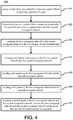
FIG. 4 illustrates a flow chart for a method for manufacturing an acoustic liner, in accordance with various embodiments; -
FIG. 5A illustrates a pre-cut septum ribbon cut from a mesh sheet, in accordance with various embodiments; -
FIG. 5B and FIG. 5C illustrate a pre-cut septum ribbon disposed between a first corrugated panel and a second corrugated panel, in accordance with various embodiments; -
FIG. 5D and FIG. 5E illustrate the first corrugated panel coupled to the second corrugated panel with the pre-cut septum ribbon attached therebetween, in accordance with various embodiments; -
FIG. 5F and FIG. 5G illustrate a plurality of septa of the pre-cut septum ribbon twisted to an installed position with respect to the first corrugated panel and the second corrugated panel, in accordance with various embodiments; and -
FIG. 6 illustrates an oversized septum twisted to an installed position with opposing ends of the septum folded against and bonded to the corresponding corrugated walls, in accordance with various embodiments. - The following detailed description of various embodiments herein makes reference to the accompanying drawings, which show various embodiments by way of illustration. While these various embodiments are described in sufficient detail to enable those skilled in the art to practice the disclosure, it should be understood that other embodiments may be realized and that changes may be made without departing from the scope of the disclosure. Thus, the detailed description herein is presented for purposes of illustration only and not of limitation. Furthermore, any reference to singular includes plural embodiments, and any reference to more than one component or step may include a singular embodiment or step. Also, any reference to attached, fixed, connected, or the like may include permanent, removable, temporary, partial, full or any other possible attachment option. Additionally, any reference to without contact (or similar phrases) may also include reduced contact or minimal contact. It should also be understood that unless specifically stated otherwise, references to "a," "an" or "the" may include one or more than one and that reference to an item in the singular may also include the item in the plural. Further, all ranges may include upper and lower values and all ranges and ratio limits disclosed herein may be combined.
- Referring to
FIG. 1 , aturbofan engine 20 is illustrated as one example of an application using anacoustic liner 22 of the present disclosure. Theengine 20 is centered about an axis A, and includes anacelle intake cowling 24, afan section 26 downstream of theintake cowling 24, an annularair bypass flowpath 28 downstream of thefan section 26 and generally defined between radial inner andouter walls engine core 34 located radially inward of theinner wall 30, and anexhaust nozzle 36 located downstream of theengine core 34. Theacoustic liner 22 may be carried by a radially inward facing wall of theintake cowling 24, theinner wall 30, theouter wall 32, and/or theexhaust nozzle 36 to suppress noise in the respective vicinities. It is further contemplated and understood that theacoustic liner 22 may be applied to any other application where noise suppression, and particularly lowfrequency noise suppression, is desirable. - XYZ axes are provided in various figures for ease of illustration. In various embodiments, the Z-axis is referred to herein as a first axis, the Y-axis is referred to herein as a second axis, and the X-axis is referred to herein as a third axis.
- Referring to
FIGS. 2 and 3 , theacoustic liner 22 may have a non-permeable back panel (also referred to herein as a first panel) 38 and a permeable panel (also referred to herein as a second panel) 40 that is parallel to and spaced from thepanel 38 by a distance (see arrow 42). A plurality ofcorrugated sidewalls 44 extend between and engage to thepanels corrugated sidewalls 44 are disposed between non-permeableback panel 38 andpermeable panel 40. Thecorrugated sidewalls 44 may be substantially normal to thepanels corrugated sidewall 46 may be coupled to a secondcorrugated sidewall 48. A plurality ofcells 52 of theacoustic liner 22 are defined by and between thecorrugated sidewalls panels permeable septum 54 extend longitudinally (i.e., along the Y-direction inFIG. 2 ) between the plurality ofsidewalls 44 and define afirst chamber 56 and asecond chamber 58 within eachcell 52. The periphery of eachpermeable septum 54 may be engaged to thecorrugated sidewalls - Each
corrugated sidewall 44 may be coupled to an adjacentcorrugated sidewall 44. For example, afirst edge 62 ofcorrugated sidewall 46 is coupled to a respectivesecond edge 68 ofcorrugated sidewall 48. Similarly, asecond edge 64 ofcorrugated sidewall 46 may be coupled to a respective first edge of an adjacent corrugated sidewall. Furthermore, afirst edge 66 ofcorrugated sidewall 48 may be coupled to a respective first edge of an adjacent corrugated sidewall. Eachcorrugated sidewall first edges second edges - Although illustrated as
quadrilateral cells 52,corrugated sidewalls 44 may be formed to define any geometry ofcells 52, including hexagonal, octagonal, triangular, or circular, among others. - In various embodiments, the plurality of
corrugated sidewalls 44 may be manufactured from a metal, such as aluminum or titanium for example. In various embodiments, the plurality ofcorrugated sidewalls 44 may be manufactured from composite materials. - The
permeable panel 40 has a plurality ofholes 41 with at least one hole communicating with eachrespective cell 52. Thepermeable septum 54 may have a plurality ofholes 70. It is further contemplated and understood that theholes permeable panel 40 and thepermeable septum 54, theacoustic liner 22 may behave as a double degree of freedom (DDOF) liner with thepermeable septum 54 being a DDOF septum, and use of thecorrugated sidewalls 44 generally make the liner a local reacting liner. Stated differently, thepermeable septum 54 definesfirst chamber 56 andsecond chamber 58 within eachcell 52. - With further regard to the
turbofan engine 20 application (seeFIG. 1 ), thepermeable panel 40 of theacoustic liner 22 is a perforated panel having anouter face 72 that may define, in-part, an air passage such as, for example, the generallycylindrical intake passage 74 of theintake cowling 24. In various embodiments, theface 72 may define, at least in-part, thebypass flowpath 28 and/or anexhaust channel 76 of theexhaust nozzle 36. It should be appreciated to those skilled in the art that the physical dimensions of theacoustic liner 22 may be altered or tuned to suppress targeted resonating frequency bandwidths without departing from the novelties of the present disclosure. For instance, theliner 22 may be tuned to suppress the relatively high frequency bandwidths emitted from a turbine section of theengine core 34, or may be tuned to suppress the lower frequency bandwidths emitted from a combustor section of theengine core 34. In various embodiments, thepermeable septum 54 may be positioned at any height (along the Z-direction) within eachcell 52. - The
acoustic liner 22 may be made of any variety of materials depending upon a particular application including metals, composites and ceramics. For instance, if theacoustic liner 22 is applied to theexhaust nozzle 36 of theturbofan engine 20, a liner made of ceramic may be desirable to withstand exposure to high temperatures. The liner may be manufactured using any variety and combinations of known manufacturing techniques; and, for more complex liner structures may be manufactured using, at least in-part, an additive manufacturing process, for example powder bed fusion, material extrusion, sheet lamination, and directed energy deposition, among others. - In operation, an airstream flows across the
outer face 72 and in a shearing direction (see arrow 78) with respect to theacoustic liner 22. Noise from this airstream generally enters eachcell 52 along an air/sound path (see arrow 80), through the hole(s) 41 in thepermeable panel 40, into thecell 52, and through theholes 70 in thepermeable septum 54. - With reference to
FIG. 4 , amethod 400 for manufacturing an acoustic liner is illustrated, in accordance with various embodiments.Method 400 includes cutting a mesh sheet into a plurality of pre-cut septum ribbons comprising a plurality of septa (step 410).Method 400 includes disposing the pre-cut septum ribbon comprising the plurality of septa between a first corrugated sidewall and a second corrugated sidewall (step 420).Method 400 includes coupling the first corrugated sidewall to the second corrugated sidewall to form a plurality of cells therebetween (step 430).Method 400 includes twisting each septum with respect to the first corrugated sidewall and the second corrugated sidewall (step 440).Method 400 includes bonding each septum to the first corrugated sidewall and the second corrugated sidewall (step 450).Method 400 includes coupling a first panel to the first corrugated sidewall and the second corrugated sidewall (step 460).Method 400 includes coupling a second panel to the first corrugated sidewall and the second corrugated sidewall, wherein the first corrugated sidewall and the second corrugated sidewall are disposed between the first panel and the second panel (step 470). - With combined reference to
FIG. 4 andFIG. 5A , step 410 may include cutting amesh sheet 501 into a plurality of ribbons (e.g., pre-cut septum ribbons) 554 comprising a plurality ofpermeable septum 54. Eachpermeable septum 54 may be connected by a connectingmember 502. In various embodiments, themesh sheet 501 may be comprised of a metal. - With combined reference to
FIG. 4 ,FIG. 5B, and FIG. 5C ,step 420 may include disposing thepre-cut septum ribbon 554 between firstcorrugated sidewall 46 and a secondcorrugated sidewall 48. InFIG. 5B ,pre-cut septum ribbon 554 may be oriented parallel with the YZ-plane. Thepre-cut septum ribbon 554, the firstcorrugated sidewall 46, and the secondcorrugated sidewall 48 may be positioned parallel to the Z-axis. - With combined reference to
FIG. 4 ,FIG. 5D, and FIG. 5E ,step 430 may include coupling corrugatedsidewall 46 tocorrugated sidewall 48 to form a plurality ofcells 52 therebetween. In various embodiments,corrugated sidewall 46 is welded tocorrugated sidewall 48. In various embodiments,corrugated sidewall 46 is bonded tocorrugated sidewall 48. Thefirst edge 62 ofcorrugated sidewall 46 may be coupled to thesecond edge 68 ofcorrugated sidewall 48. Thefirst edge 62 ofcorrugated sidewall 46 may be coupled to thesecond edge 68 ofcorrugated sidewall 48 along the entire height (see arrow 542) ofcorrugated sidewalls member 502 may be fixed betweencorrugated sidewall 46 andcorrugated sidewall 48. Eachseptum 54 may remain unsecured fromcorrugated sidewall 46 andcorrugated sidewall 48, other than via each connectingmember 502. - With combined reference to
FIG. 4 ,FIG. 5F, and FIG. 5G ,step 440 may include twisting eachseptum 54 with respect tocorrugated sidewall 46 andcorrugated sidewall 48 such that the perimeter of eachseptum 54 interferes withcorrugated sidewall 46 andcorrugated sidewall 48. In various embodiments, eachseptum 54 is twisted individually. In various embodiments, eachseptum 54 is twisted simultaneously. A tool may be used to reach into eachcell 52 to twist theseptum 54. Eachseptum 54 may be twisted alongcenterline axis 590 ofpre-cut septum ribbon 554. Eachseptum 54 may be twisted alongcenterline axis 590 such that eachseptum 54 is oriented substantially perpendicular tocorrugated sidewall 46 and corrugated sidewall 48 (i.e., oriented parallel with the XY-plane). Stated differently, eachseptum 54 may be rotated substantially perpendicular to their original orientation such that eachseptum 54 is then defined by planes according to the Y-X axes. As eachseptum 54 is twisted, the connectingmembers 502 may remain fixed betweencorrugated sidewall 46 andcorrugated sidewall 48. Stated differently, eachseptum 54 may twist with respect to the connectingmembers 502. After being twisted to the installed position, eachseptum 54 may face a first direction (e.g., Z-direction) and each connectingmember 502 may face a second direction (e.g., X-direction). In this regard,pre-cut septum ribbon 554 may be bent, distorted, stretched, torn, severed, or the like, at the location of each connectingmember 502 during the twisting process. - With combined reference to
FIG. 4 andFIG. 6 , step 450 may include bonding eachseptum 54 tocorrugated sidewall 46 andcorrugated sidewall 48. In various embodiments, eachseptum 54 may be sized such that the perimeter of theseptum 54 interferes withcorrugated wall 46 and/ orcorrugated wall 48 after being twisted according tostep 440. Eachseptum 54 may be sized such that anend 602 of theseptum 54 folds againstcorrugated wall 46 and anopposite end 604 ofseptum 54 folds againstcorrugated wall 48 during the twisting process. An adhesive 610 may be applied betweenend 602 andcorrugated wall 46 and betweenend 604 andcorrugated wall 48 to secureseptum 54 in the installed position. In various embodiments, the adhesive 610 is applied before the twisting process. In various embodiments, the adhesive 610 is applied during the twisting process. In various embodiments, the adhesive 610 is applied after the twisting process. - With combined reference to
FIG. 4 andFIG. 3 , step 460 may includecoupling panel 38 tocorrugated sidewalls 44. In various embodiments,panel 38 is bonded tocorrugated sidewalls 44. In various embodiments,step 460 may includecoupling panel 40 tocorrugated sidewalls 44. In various embodiments,panel 40 is bonded tocorrugated sidewalls 44. - Benefits, other advantages, and solutions to problems have been described herein with regard to specific embodiments. Furthermore, the connecting lines shown in the various figures contained herein are intended to represent exemplary functional relationships and/or physical couplings between the various elements. It should be noted that many alternative or additional functional relationships or physical connections may be present in a practical system. However, the benefits, advantages, solutions to problems, and any elements that may cause any benefit, advantage, or solution to occur or become more pronounced are not to be construed as critical, required, or essential features or elements of the disclosure. The scope of the disclosure is accordingly to be limited by nothing other than the appended claims, in which reference to an element in the singular is not intended to mean "one and only one" unless explicitly so stated, but rather "one or more." Moreover, where a phrase similar to "at least one of A, B, or C" is used in the claims, it is intended that the phrase be interpreted to mean that A alone may be present in an embodiment, B alone may be present in an embodiment, C alone may be present in an embodiment, or that any combination of the elements A, B and C may be present in a single embodiment; for example, A and B, A and C, B and C, or A and B and C. Different cross-hatching is used throughout the figures to denote different parts but not necessarily to denote the same or different materials.
- Systems, methods and apparatus are provided herein. In the detailed description herein, references to "one embodiment", "an embodiment", "various embodiments", etc., indicate that the embodiment described may include a particular feature, structure, or characteristic, but every embodiment may not necessarily include the particular feature, structure, or characteristic. Moreover, such phrases are not necessarily referring to the same embodiment. Further, when a particular feature, structure, or characteristic is described in connection with an embodiment, it is submitted that it is within the knowledge of one skilled in the art to affect such feature, structure, or characteristic in connection with other embodiments whether or not explicitly described. After reading the description, it will be apparent to one skilled in the relevant art(s) how to implement the disclosure in alternative embodiments.
- It is understood that relative positional terms such as "forward," "aft," "upper," "lower," "above," "below," and the like are with reference to the normal operational attitude and should not be considered otherwise limiting. It is also understood that like reference numerals identify corresponding or similar elements throughout the several drawings. It should be understood that although a particular component arrangement is disclosed in the illustrated embodiment, other arrangements will also benefit. Although particular step sequences may be shown, described, and claimed, it is understood that steps may be performed in any order, separated or combined unless otherwise indicated and will still benefit from the present disclosure.
- The foregoing description is exemplary rather than defined by the limitations described. Various non-limiting embodiments are disclosed; however, one of ordinary skill in the art would recognize that various modifications and variations in light of the above teachings will fall within the scope of the appended claims. It is therefore understood that within the scope of the appended claims, the disclosure may be practiced other than as specifically described. For this reason, the appended claims should be studied to determine true scope and content.
- Furthermore, no element, component, or method step in the present disclosure is intended to be dedicated to the public regardless of whether the element, component, or method step is explicitly recited in the claims. No claim element herein is intended to invoke 35 U.S.C. 112(f) unless the element is expressly recited using the phrase "means for." As used herein, the terms "comprises", "comprising", or any other variation thereof, are intended to cover a non-exclusive inclusion, such that a process, method, article, or apparatus that comprises a list of elements does not include only those elements but may include other elements not expressly listed or inherent to such process, method, article, or apparatus.
Claims (15)
- An acoustic liner comprising:a first sidewall (46);a second sidewall (48), wherein the first sidewall (46) and the second sidewall (48) at least partially define a plurality of cells (52) disposed therebetween; anda pre-cut septum ribbon (554) comprising a plurality of permeable septa (54) coupled together via a plurality of connecting members (502), with each one of the plurality of permeable septa (54) being generally within a respective one of the plurality of cells (52).
- The acoustic liner set forth in claim 1, wherein each connecting member (502) in the plurality of connecting members (502) is contacting with and coupled between the first sidewall (46) and the second sidewall (48).
- The acoustic liner set forth in claim 1 or 2, wherein each septum (54) in the plurality of permeable septa (54) is facing a first direction, and wherein each connecting member (502) in the plurality of connecting members (507) is optionally facing a second direction.
- The acoustic liner set forth in any preceding claim, further comprising:a first panel (38); anda permeable panel (40) spaced from the first panel (38), wherein the first sidewall (46) and the second sidewall (48) extend between and engage to the first panel (38) and the permeable panel (40).
- The acoustic liner set forth in any preceding claim, wherein the first sidewall (46) is engaged to the second sidewall (48).
- The acoustic liner set forth in any preceding claim, wherein the first sidewall (46) and the second sidewall (48) are each one continuous, folded, panel.
- The acoustic liner set forth in any preceding claim, wherein the perimeter of each septum (54) in the plurality of permeable septa (54) interferes with the first sidewall (46) and the second sidewall (48).
- The acoustic liner set forth in any preceding claim, wherein the first sidewall (46) and the second sidewall (48) are corrugated.
- The acoustic liner set forth in any preceding claim, wherein the first sidewall (46) is folded about a plurality of first edges (62) extending along the first direction, the second sidewall (48) is folded about a plurality of second edges (68) extending along the first direction, the plurality of first edges (62) are coupled to the plurality of second edges (68), and each of the plurality of connecting members (502) are disposed between a respective one of the first plurality of edges (62) and the second plurality of edges (68).
- The acoustic liner set forth in any preceding claim, wherein the first sidewall (46) is at least one of bonded or welded to the second sidewall (48).
- A method for manufacturing an acoustic liner, comprising:disposing a pre-cut septum ribbon (554) comprising a plurality of permeable septa (54) between a first sidewall (46) and a second sidewall (48);coupling the first sidewall (46) to the second sidewall (48), thereby forming a plurality of cells (52) therebetween, and fixing the pre-cut septum ribbon (554) between the first sidewall (46) and the second sidewall (48); andtwisting each of the plurality of permeable septa (54) with respect to the first sidewall (46).
- The method set forth in claim 11, further comprising bonding each septum (54) to at least one of the first sidewall (46) and the second sidewall (48).
- The method set forth in claims 11 or 12, further comprising cutting the pre-cut septum ribbon (554) from a mesh sheet (501).
- The method set forth in claims 11, 12 or 13, wherein the pre-cut septum ribbon (554) is disposed between the first sidewall (46) and the second sidewall (48) such that the pre-cut septum ribbon (554), the first sidewall (46), and the second sidewall (48) are parallel to a first axis (Z), and each of the plurality of permeable septa (54) are substantially perpendicular with the first axis (Z) in response to being twisted with respect to the first sidewall (46).
- The method set forth in any of claims 11-14, further comprising:coupling a first panel (38) to the first sidewall (46) and the second sidewall (48); andcoupling a second panel (40) to the first sidewall (46) and the second sidewall (48), wherein the first sidewall (46) and the second sidewall (48) are disposed between the first panel (38) and the second panel (40).
Applications Claiming Priority (1)
| Application Number | Priority Date | Filing Date | Title |
|---|---|---|---|
| US16/025,596 US11286957B2 (en) | 2018-07-02 | 2018-07-02 | Method for inserting septum into acoustic liner |
Publications (2)
| Publication Number | Publication Date |
|---|---|
| EP3591647A1 true EP3591647A1 (en) | 2020-01-08 |
| EP3591647B1 EP3591647B1 (en) | 2022-08-24 |
Family
ID=66821120
Family Applications (1)
| Application Number | Title | Priority Date | Filing Date |
|---|---|---|---|
| EP19179507.9A Active EP3591647B1 (en) | 2018-07-02 | 2019-06-11 | Method for inserting septum into acoustic liner and acoustic liner with septum |
Country Status (2)
| Country | Link |
|---|---|
| US (1) | US11286957B2 (en) |
| EP (1) | EP3591647B1 (en) |
Cited By (1)
| Publication number | Priority date | Publication date | Assignee | Title |
|---|---|---|---|---|
| EP3614373A3 (en) * | 2018-08-22 | 2020-07-29 | Rohr, Inc. | Multi-degree of freedom acoustic panel |
Families Citing this family (6)
| Publication number | Priority date | Publication date | Assignee | Title |
|---|---|---|---|---|
| US11715450B2 (en) | 2020-12-22 | 2023-08-01 | Rohr, Inc. | Acoustic panel core cell with funnel shaped septum |
| US11965465B2 (en) | 2020-12-22 | 2024-04-23 | Rohr, Inc. | Acoustic panel with multiple layer corrugated core |
| US11869472B2 (en) | 2021-08-02 | 2024-01-09 | Rohr, Inc. | Acoustic panel with reconfigurable chamber constrictions |
| EP4206448B1 (en) | 2022-01-04 | 2025-07-09 | Rohr, Inc. | Multi-core acoustic panel for an aircraft propulsion system |
| US12163472B2 (en) | 2022-09-02 | 2024-12-10 | Rohr, Inc. | Engine exhaust nozzle with acoustic attenuation |
| FR3143169B1 (en) * | 2022-12-07 | 2025-02-21 | Safran Nacelles | OPTIMIZED HONEYCOMB SOUL AND ACOUSTIC ATTENUATION PANEL COMPRISING IT FOR AN AIRCRAFT TURBOMACHINE |
Citations (3)
| Publication number | Priority date | Publication date | Assignee | Title |
|---|---|---|---|---|
| US8047329B1 (en) * | 2010-08-13 | 2011-11-01 | Rohr, Inc. | System and method for noise suppression |
| US20130062143A1 (en) * | 2011-09-08 | 2013-03-14 | Hexcel Corporation | Anchoring of septums in acoustic honeycomb |
| US20150290920A1 (en) * | 2014-04-11 | 2015-10-15 | Rohr, Inc. | Method of manufacturing septum cap |
Family Cites Families (9)
| Publication number | Priority date | Publication date | Assignee | Title |
|---|---|---|---|---|
| US4167598A (en) * | 1977-05-24 | 1979-09-11 | Logan Paul A | Heat and sound insulating panel |
| US4500583A (en) * | 1983-09-12 | 1985-02-19 | Owens-Corning Fiberglas Corporation | Honeycomb structure |
| FR2615994B1 (en) * | 1987-05-25 | 1989-07-28 | Alsthom | WALL COVERING ABSORBING ACOUSTIC WAVES IN LIQUID MEDIA |
| US5057176A (en) * | 1988-05-10 | 1991-10-15 | Manville Corporation | Method of forming corrugated paperboard automotive liner |
| FR2781719B1 (en) | 1998-07-30 | 2000-09-08 | Hispano Suiza Sa | HONEYCOMB STRUCTURE, IN PARTICULAR FOR SOUND ABSORPTION, AND MANUFACTURING METHOD THEREOF |
| CN102892576B (en) * | 2010-04-20 | 2016-02-10 | 法伊布拉卡斯特有限公司 | The plate membrane component be shaped and filtration system |
| US8579076B2 (en) * | 2012-02-29 | 2013-11-12 | Hexcel Corporation | Splicing of curved acoustic honeycomb |
| US9931825B2 (en) | 2014-07-09 | 2018-04-03 | The Boeing Company | Septumization of cellular cores |
| US9469985B1 (en) | 2015-05-11 | 2016-10-18 | Hexcel Corporation | Acoustic structures with multiple degrees of freedom |
-
2018
- 2018-07-02 US US16/025,596 patent/US11286957B2/en active Active
-
2019
- 2019-06-11 EP EP19179507.9A patent/EP3591647B1/en active Active
Patent Citations (3)
| Publication number | Priority date | Publication date | Assignee | Title |
|---|---|---|---|---|
| US8047329B1 (en) * | 2010-08-13 | 2011-11-01 | Rohr, Inc. | System and method for noise suppression |
| US20130062143A1 (en) * | 2011-09-08 | 2013-03-14 | Hexcel Corporation | Anchoring of septums in acoustic honeycomb |
| US20150290920A1 (en) * | 2014-04-11 | 2015-10-15 | Rohr, Inc. | Method of manufacturing septum cap |
Cited By (1)
| Publication number | Priority date | Publication date | Assignee | Title |
|---|---|---|---|---|
| EP3614373A3 (en) * | 2018-08-22 | 2020-07-29 | Rohr, Inc. | Multi-degree of freedom acoustic panel |
Also Published As
| Publication number | Publication date |
|---|---|
| EP3591647B1 (en) | 2022-08-24 |
| US20200003230A1 (en) | 2020-01-02 |
| US11286957B2 (en) | 2022-03-29 |
Similar Documents
| Publication | Publication Date | Title |
|---|---|---|
| EP3591647B1 (en) | Method for inserting septum into acoustic liner and acoustic liner with septum | |
| US11828229B2 (en) | Continuous slanted cell septum | |
| EP2960480B1 (en) | Acoustic liner | |
| EP3489947B1 (en) | Acoustic panel with structural septum | |
| US9938852B2 (en) | Noise attenuating lipskin assembly and methods of assembling the same | |
| US10961913B2 (en) | Acoustic liners for use in a turbine engine | |
| US10184398B2 (en) | Acoustic structural panel with slanted core | |
| EP3244038A1 (en) | Acoustic panels comprising large secondary cavities to attenuate low frequencies | |
| US10294815B2 (en) | SPF/DB structure for attenuation of noise from air flow | |
| EP3324401B1 (en) | Acoustic panel with sidewall stringers | |
| US8047326B2 (en) | Method for making an acoustic absorption panel in particular for the nacelle of an aircraft engine | |
| US11092077B2 (en) | Aircraft component and method of manufacture | |
| EP2833356A2 (en) | Acoustic panel | |
| US9200537B2 (en) | Gas turbine exhaust case with acoustic panels | |
| US20160215700A1 (en) | Inner fixed structure acoustic panel with directional perforations | |
| US12078125B2 (en) | Low-frequency acoustic center body | |
| EP3936702B1 (en) | System for dampening noise generated by a gas turbine engine | |
| EP4567265A1 (en) | Acoustic panel for an aircraft propulsion system | |
| EP4579650A1 (en) | Acoustic panel for an aircraft propulsion system | |
| US20250214712A1 (en) | Acoustic panel for an aircraft propulsion system | |
| JP2015535902A (en) | Method and system for making composite containment casings | |
| WO2015094764A1 (en) | Layered ice liner | |
| EP4241898A1 (en) | Metallic structures with additively manufactured metallic articles and methods for fabrication | |
| US20160090916A1 (en) | Inner bypass duct |
Legal Events
| Date | Code | Title | Description |
|---|---|---|---|
| PUAI | Public reference made under article 153(3) epc to a published international application that has entered the european phase |
Free format text: ORIGINAL CODE: 0009012 |
|
| STAA | Information on the status of an ep patent application or granted ep patent |
Free format text: STATUS: THE APPLICATION HAS BEEN PUBLISHED |
|
| AK | Designated contracting states |
Kind code of ref document: A1 Designated state(s): AL AT BE BG CH CY CZ DE DK EE ES FI FR GB GR HR HU IE IS IT LI LT LU LV MC MK MT NL NO PL PT RO RS SE SI SK SM TR |
|
| AX | Request for extension of the european patent |
Extension state: BA ME |
|
| STAA | Information on the status of an ep patent application or granted ep patent |
Free format text: STATUS: REQUEST FOR EXAMINATION WAS MADE |
|
| 17P | Request for examination filed |
Effective date: 20200708 |
|
| RBV | Designated contracting states (corrected) |
Designated state(s): AL AT BE BG CH CY CZ DE DK EE ES FI FR GB GR HR HU IE IS IT LI LT LU LV MC MK MT NL NO PL PT RO RS SE SI SK SM TR |
|
| GRAP | Despatch of communication of intention to grant a patent |
Free format text: ORIGINAL CODE: EPIDOSNIGR1 |
|
| STAA | Information on the status of an ep patent application or granted ep patent |
Free format text: STATUS: GRANT OF PATENT IS INTENDED |
|
| RIC1 | Information provided on ipc code assigned before grant |
Ipc: F02K 1/82 20060101ALN20220301BHEP Ipc: F02C 7/24 20060101ALN20220301BHEP Ipc: F02C 7/045 20060101ALN20220301BHEP Ipc: B32B 3/12 20060101ALN20220301BHEP Ipc: G10K 11/172 20060101AFI20220301BHEP |
|
| INTG | Intention to grant announced |
Effective date: 20220318 |
|
| RIC1 | Information provided on ipc code assigned before grant |
Ipc: F02K 1/82 20060101ALN20220304BHEP Ipc: F02C 7/24 20060101ALN20220304BHEP Ipc: F02C 7/045 20060101ALN20220304BHEP Ipc: B32B 3/12 20060101ALN20220304BHEP Ipc: G10K 11/172 20060101AFI20220304BHEP |
|
| RIN1 | Information on inventor provided before grant (corrected) |
Inventor name: ALONSO-MIRALLES, JOSE S. |
|
| GRAS | Grant fee paid |
Free format text: ORIGINAL CODE: EPIDOSNIGR3 |
|
| GRAA | (expected) grant |
Free format text: ORIGINAL CODE: 0009210 |
|
| STAA | Information on the status of an ep patent application or granted ep patent |
Free format text: STATUS: THE PATENT HAS BEEN GRANTED |
|
| AK | Designated contracting states |
Kind code of ref document: B1 Designated state(s): AL AT BE BG CH CY CZ DE DK EE ES FI FR GB GR HR HU IE IS IT LI LT LU LV MC MK MT NL NO PL PT RO RS SE SI SK SM TR |
|
| REG | Reference to a national code |
Ref country code: CH Ref legal event code: EP |
|
| REG | Reference to a national code |
Ref country code: IE Ref legal event code: FG4D |
|
| REG | Reference to a national code |
Ref country code: AT Ref legal event code: REF Ref document number: 1514207 Country of ref document: AT Kind code of ref document: T Effective date: 20220915 Ref country code: DE Ref legal event code: R096 Ref document number: 602019018554 Country of ref document: DE |
|
| REG | Reference to a national code |
Ref country code: LT Ref legal event code: MG9D |
|
| REG | Reference to a national code |
Ref country code: NL Ref legal event code: MP Effective date: 20220824 |
|
| PG25 | Lapsed in a contracting state [announced via postgrant information from national office to epo] |
Ref country code: SE Free format text: LAPSE BECAUSE OF FAILURE TO SUBMIT A TRANSLATION OF THE DESCRIPTION OR TO PAY THE FEE WITHIN THE PRESCRIBED TIME-LIMIT Effective date: 20220824 Ref country code: RS Free format text: LAPSE BECAUSE OF FAILURE TO SUBMIT A TRANSLATION OF THE DESCRIPTION OR TO PAY THE FEE WITHIN THE PRESCRIBED TIME-LIMIT Effective date: 20220824 Ref country code: PT Free format text: LAPSE BECAUSE OF FAILURE TO SUBMIT A TRANSLATION OF THE DESCRIPTION OR TO PAY THE FEE WITHIN THE PRESCRIBED TIME-LIMIT Effective date: 20221226 Ref country code: NO Free format text: LAPSE BECAUSE OF FAILURE TO SUBMIT A TRANSLATION OF THE DESCRIPTION OR TO PAY THE FEE WITHIN THE PRESCRIBED TIME-LIMIT Effective date: 20221124 Ref country code: NL Free format text: LAPSE BECAUSE OF FAILURE TO SUBMIT A TRANSLATION OF THE DESCRIPTION OR TO PAY THE FEE WITHIN THE PRESCRIBED TIME-LIMIT Effective date: 20220824 Ref country code: LV Free format text: LAPSE BECAUSE OF FAILURE TO SUBMIT A TRANSLATION OF THE DESCRIPTION OR TO PAY THE FEE WITHIN THE PRESCRIBED TIME-LIMIT Effective date: 20220824 Ref country code: LT Free format text: LAPSE BECAUSE OF FAILURE TO SUBMIT A TRANSLATION OF THE DESCRIPTION OR TO PAY THE FEE WITHIN THE PRESCRIBED TIME-LIMIT Effective date: 20220824 Ref country code: FI Free format text: LAPSE BECAUSE OF FAILURE TO SUBMIT A TRANSLATION OF THE DESCRIPTION OR TO PAY THE FEE WITHIN THE PRESCRIBED TIME-LIMIT Effective date: 20220824 |
|
| REG | Reference to a national code |
Ref country code: AT Ref legal event code: MK05 Ref document number: 1514207 Country of ref document: AT Kind code of ref document: T Effective date: 20220824 |
|
| PG25 | Lapsed in a contracting state [announced via postgrant information from national office to epo] |
Ref country code: PL Free format text: LAPSE BECAUSE OF FAILURE TO SUBMIT A TRANSLATION OF THE DESCRIPTION OR TO PAY THE FEE WITHIN THE PRESCRIBED TIME-LIMIT Effective date: 20220824 Ref country code: IS Free format text: LAPSE BECAUSE OF FAILURE TO SUBMIT A TRANSLATION OF THE DESCRIPTION OR TO PAY THE FEE WITHIN THE PRESCRIBED TIME-LIMIT Effective date: 20221224 Ref country code: HR Free format text: LAPSE BECAUSE OF FAILURE TO SUBMIT A TRANSLATION OF THE DESCRIPTION OR TO PAY THE FEE WITHIN THE PRESCRIBED TIME-LIMIT Effective date: 20220824 Ref country code: GR Free format text: LAPSE BECAUSE OF FAILURE TO SUBMIT A TRANSLATION OF THE DESCRIPTION OR TO PAY THE FEE WITHIN THE PRESCRIBED TIME-LIMIT Effective date: 20221125 |
|
| PG25 | Lapsed in a contracting state [announced via postgrant information from national office to epo] |
Ref country code: SM Free format text: LAPSE BECAUSE OF FAILURE TO SUBMIT A TRANSLATION OF THE DESCRIPTION OR TO PAY THE FEE WITHIN THE PRESCRIBED TIME-LIMIT Effective date: 20220824 Ref country code: RO Free format text: LAPSE BECAUSE OF FAILURE TO SUBMIT A TRANSLATION OF THE DESCRIPTION OR TO PAY THE FEE WITHIN THE PRESCRIBED TIME-LIMIT Effective date: 20220824 Ref country code: ES Free format text: LAPSE BECAUSE OF FAILURE TO SUBMIT A TRANSLATION OF THE DESCRIPTION OR TO PAY THE FEE WITHIN THE PRESCRIBED TIME-LIMIT Effective date: 20220824 Ref country code: DK Free format text: LAPSE BECAUSE OF FAILURE TO SUBMIT A TRANSLATION OF THE DESCRIPTION OR TO PAY THE FEE WITHIN THE PRESCRIBED TIME-LIMIT Effective date: 20220824 Ref country code: CZ Free format text: LAPSE BECAUSE OF FAILURE TO SUBMIT A TRANSLATION OF THE DESCRIPTION OR TO PAY THE FEE WITHIN THE PRESCRIBED TIME-LIMIT Effective date: 20220824 Ref country code: AT Free format text: LAPSE BECAUSE OF FAILURE TO SUBMIT A TRANSLATION OF THE DESCRIPTION OR TO PAY THE FEE WITHIN THE PRESCRIBED TIME-LIMIT Effective date: 20220824 |
|
| REG | Reference to a national code |
Ref country code: DE Ref legal event code: R097 Ref document number: 602019018554 Country of ref document: DE |
|
| PG25 | Lapsed in a contracting state [announced via postgrant information from national office to epo] |
Ref country code: SK Free format text: LAPSE BECAUSE OF FAILURE TO SUBMIT A TRANSLATION OF THE DESCRIPTION OR TO PAY THE FEE WITHIN THE PRESCRIBED TIME-LIMIT Effective date: 20220824 Ref country code: EE Free format text: LAPSE BECAUSE OF FAILURE TO SUBMIT A TRANSLATION OF THE DESCRIPTION OR TO PAY THE FEE WITHIN THE PRESCRIBED TIME-LIMIT Effective date: 20220824 |
|
| PG25 | Lapsed in a contracting state [announced via postgrant information from national office to epo] |
Ref country code: AL Free format text: LAPSE BECAUSE OF FAILURE TO SUBMIT A TRANSLATION OF THE DESCRIPTION OR TO PAY THE FEE WITHIN THE PRESCRIBED TIME-LIMIT Effective date: 20220824 |
|
| PLBE | No opposition filed within time limit |
Free format text: ORIGINAL CODE: 0009261 |
|
| STAA | Information on the status of an ep patent application or granted ep patent |
Free format text: STATUS: NO OPPOSITION FILED WITHIN TIME LIMIT |
|
| 26N | No opposition filed |
Effective date: 20230525 |
|
| PG25 | Lapsed in a contracting state [announced via postgrant information from national office to epo] |
Ref country code: SI Free format text: LAPSE BECAUSE OF FAILURE TO SUBMIT A TRANSLATION OF THE DESCRIPTION OR TO PAY THE FEE WITHIN THE PRESCRIBED TIME-LIMIT Effective date: 20220824 |
|
| PG25 | Lapsed in a contracting state [announced via postgrant information from national office to epo] |
Ref country code: MC Free format text: LAPSE BECAUSE OF FAILURE TO SUBMIT A TRANSLATION OF THE DESCRIPTION OR TO PAY THE FEE WITHIN THE PRESCRIBED TIME-LIMIT Effective date: 20220824 |
|
| PG25 | Lapsed in a contracting state [announced via postgrant information from national office to epo] |
Ref country code: MC Free format text: LAPSE BECAUSE OF FAILURE TO SUBMIT A TRANSLATION OF THE DESCRIPTION OR TO PAY THE FEE WITHIN THE PRESCRIBED TIME-LIMIT Effective date: 20220824 |
|
| REG | Reference to a national code |
Ref country code: CH Ref legal event code: PL |
|
| REG | Reference to a national code |
Ref country code: BE Ref legal event code: MM Effective date: 20230630 |
|
| PG25 | Lapsed in a contracting state [announced via postgrant information from national office to epo] |
Ref country code: LU Free format text: LAPSE BECAUSE OF NON-PAYMENT OF DUE FEES Effective date: 20230611 |
|
| REG | Reference to a national code |
Ref country code: IE Ref legal event code: MM4A |
|
| PG25 | Lapsed in a contracting state [announced via postgrant information from national office to epo] |
Ref country code: LU Free format text: LAPSE BECAUSE OF NON-PAYMENT OF DUE FEES Effective date: 20230611 |
|
| PG25 | Lapsed in a contracting state [announced via postgrant information from national office to epo] |
Ref country code: IE Free format text: LAPSE BECAUSE OF NON-PAYMENT OF DUE FEES Effective date: 20230611 |
|
| PG25 | Lapsed in a contracting state [announced via postgrant information from national office to epo] |
Ref country code: IE Free format text: LAPSE BECAUSE OF NON-PAYMENT OF DUE FEES Effective date: 20230611 Ref country code: CH Free format text: LAPSE BECAUSE OF NON-PAYMENT OF DUE FEES Effective date: 20230630 |
|
| PG25 | Lapsed in a contracting state [announced via postgrant information from national office to epo] |
Ref country code: IT Free format text: LAPSE BECAUSE OF FAILURE TO SUBMIT A TRANSLATION OF THE DESCRIPTION OR TO PAY THE FEE WITHIN THE PRESCRIBED TIME-LIMIT Effective date: 20220824 Ref country code: BE Free format text: LAPSE BECAUSE OF NON-PAYMENT OF DUE FEES Effective date: 20230630 |
|
| PG25 | Lapsed in a contracting state [announced via postgrant information from national office to epo] |
Ref country code: BG Free format text: LAPSE BECAUSE OF FAILURE TO SUBMIT A TRANSLATION OF THE DESCRIPTION OR TO PAY THE FEE WITHIN THE PRESCRIBED TIME-LIMIT Effective date: 20220824 |
|
| PG25 | Lapsed in a contracting state [announced via postgrant information from national office to epo] |
Ref country code: BG Free format text: LAPSE BECAUSE OF FAILURE TO SUBMIT A TRANSLATION OF THE DESCRIPTION OR TO PAY THE FEE WITHIN THE PRESCRIBED TIME-LIMIT Effective date: 20220824 |
|
| PGFP | Annual fee paid to national office [announced via postgrant information from national office to epo] |
Ref country code: DE Payment date: 20250520 Year of fee payment: 7 |
|
| PGFP | Annual fee paid to national office [announced via postgrant information from national office to epo] |
Ref country code: GB Payment date: 20250520 Year of fee payment: 7 |
|
| PGFP | Annual fee paid to national office [announced via postgrant information from national office to epo] |
Ref country code: FR Payment date: 20250520 Year of fee payment: 7 |
|
| PG25 | Lapsed in a contracting state [announced via postgrant information from national office to epo] |
Ref country code: CY Free format text: LAPSE BECAUSE OF FAILURE TO SUBMIT A TRANSLATION OF THE DESCRIPTION OR TO PAY THE FEE WITHIN THE PRESCRIBED TIME-LIMIT; INVALID AB INITIO Effective date: 20190611 |
|
| PG25 | Lapsed in a contracting state [announced via postgrant information from national office to epo] |
Ref country code: HU Free format text: LAPSE BECAUSE OF FAILURE TO SUBMIT A TRANSLATION OF THE DESCRIPTION OR TO PAY THE FEE WITHIN THE PRESCRIBED TIME-LIMIT; INVALID AB INITIO Effective date: 20190611 |
|
| PG25 | Lapsed in a contracting state [announced via postgrant information from national office to epo] |
Ref country code: TR Free format text: LAPSE BECAUSE OF FAILURE TO SUBMIT A TRANSLATION OF THE DESCRIPTION OR TO PAY THE FEE WITHIN THE PRESCRIBED TIME-LIMIT Effective date: 20220824 |
|
| P01 | Opt-out of the competence of the unified patent court (upc) registered |
Free format text: CASE NUMBER: UPC_APP_0017990_3591647/2025 Effective date: 20251217 |