EP3591393A1 - Composition for detecting acidic compound - Google Patents
Composition for detecting acidic compound Download PDFInfo
- Publication number
- EP3591393A1 EP3591393A1 EP19744351.8A EP19744351A EP3591393A1 EP 3591393 A1 EP3591393 A1 EP 3591393A1 EP 19744351 A EP19744351 A EP 19744351A EP 3591393 A1 EP3591393 A1 EP 3591393A1
- Authority
- EP
- European Patent Office
- Prior art keywords
- acidic compound
- metal
- composition
- detecting
- pentyl
- Prior art date
- Legal status (The legal status is an assumption and is not a legal conclusion. Google has not performed a legal analysis and makes no representation as to the accuracy of the status listed.)
- Granted
Links
- AENIYYJOYCGWQX-MTSYLFSWSA-N CCCCCCCC(N/N=C/c1cc(-c(cc2/C=N/NC(CCCCCCC)=O)cc(/C=N/NC(CCCCCCC)=O)c2O)cc(/C=N/NC(CCCCCCC)=O)c1O)=O Chemical compound CCCCCCCC(N/N=C/c1cc(-c(cc2/C=N/NC(CCCCCCC)=O)cc(/C=N/NC(CCCCCCC)=O)c2O)cc(/C=N/NC(CCCCCCC)=O)c1O)=O AENIYYJOYCGWQX-MTSYLFSWSA-N 0.000 description 1
Images


Classifications
-
- C—CHEMISTRY; METALLURGY
- C07—ORGANIC CHEMISTRY
- C07C—ACYCLIC OR CARBOCYCLIC COMPOUNDS
- C07C251/00—Compounds containing nitrogen atoms doubly-bound to a carbon skeleton
- C07C251/32—Oximes
- C07C251/50—Oximes having oxygen atoms of oxyimino groups bound to carbon atoms of substituted hydrocarbon radicals
- C07C251/60—Oximes having oxygen atoms of oxyimino groups bound to carbon atoms of substituted hydrocarbon radicals of hydrocarbon radicals substituted by carboxyl groups
-
- G—PHYSICS
- G01—MEASURING; TESTING
- G01N—INVESTIGATING OR ANALYSING MATERIALS BY DETERMINING THEIR CHEMICAL OR PHYSICAL PROPERTIES
- G01N31/00—Investigating or analysing non-biological materials by the use of the chemical methods specified in the subgroup; Apparatus specially adapted for such methods
- G01N31/22—Investigating or analysing non-biological materials by the use of the chemical methods specified in the subgroup; Apparatus specially adapted for such methods using chemical indicators
- G01N31/223—Investigating or analysing non-biological materials by the use of the chemical methods specified in the subgroup; Apparatus specially adapted for such methods using chemical indicators for investigating presence of specific gases or aerosols
-
- C—CHEMISTRY; METALLURGY
- C07—ORGANIC CHEMISTRY
- C07C—ACYCLIC OR CARBOCYCLIC COMPOUNDS
- C07C251/00—Compounds containing nitrogen atoms doubly-bound to a carbon skeleton
- C07C251/02—Compounds containing nitrogen atoms doubly-bound to a carbon skeleton containing imino groups
- C07C251/24—Compounds containing nitrogen atoms doubly-bound to a carbon skeleton containing imino groups having carbon atoms of imino groups bound to carbon atoms of six-membered aromatic rings
-
- C—CHEMISTRY; METALLURGY
- C07—ORGANIC CHEMISTRY
- C07C—ACYCLIC OR CARBOCYCLIC COMPOUNDS
- C07C251/00—Compounds containing nitrogen atoms doubly-bound to a carbon skeleton
- C07C251/02—Compounds containing nitrogen atoms doubly-bound to a carbon skeleton containing imino groups
- C07C251/28—Compounds containing nitrogen atoms doubly-bound to a carbon skeleton containing imino groups having nitrogen atoms of imino groups acylated
-
- C—CHEMISTRY; METALLURGY
- C07—ORGANIC CHEMISTRY
- C07C—ACYCLIC OR CARBOCYCLIC COMPOUNDS
- C07C251/00—Compounds containing nitrogen atoms doubly-bound to a carbon skeleton
- C07C251/32—Oximes
- C07C251/34—Oximes with oxygen atoms of oxyimino groups bound to hydrogen atoms or to carbon atoms of unsubstituted hydrocarbon radicals
- C07C251/48—Oximes with oxygen atoms of oxyimino groups bound to hydrogen atoms or to carbon atoms of unsubstituted hydrocarbon radicals with the carbon atom of at least one of the oxyimino groups bound to a carbon atom of a six-membered aromatic ring
-
- C—CHEMISTRY; METALLURGY
- C07—ORGANIC CHEMISTRY
- C07C—ACYCLIC OR CARBOCYCLIC COMPOUNDS
- C07C251/00—Compounds containing nitrogen atoms doubly-bound to a carbon skeleton
- C07C251/32—Oximes
- C07C251/70—Metal complexes of oximes
-
- C—CHEMISTRY; METALLURGY
- C07—ORGANIC CHEMISTRY
- C07C—ACYCLIC OR CARBOCYCLIC COMPOUNDS
- C07C251/00—Compounds containing nitrogen atoms doubly-bound to a carbon skeleton
- C07C251/72—Hydrazones
- C07C251/86—Hydrazones having doubly-bound carbon atoms of hydrazone groups bound to carbon atoms of six-membered aromatic rings
-
- C—CHEMISTRY; METALLURGY
- C07—ORGANIC CHEMISTRY
- C07D—HETEROCYCLIC COMPOUNDS
- C07D401/00—Heterocyclic compounds containing two or more hetero rings, having nitrogen atoms as the only ring hetero atoms, at least one ring being a six-membered ring with only one nitrogen atom
- C07D401/14—Heterocyclic compounds containing two or more hetero rings, having nitrogen atoms as the only ring hetero atoms, at least one ring being a six-membered ring with only one nitrogen atom containing three or more hetero rings
-
- C—CHEMISTRY; METALLURGY
- C07—ORGANIC CHEMISTRY
- C07F—ACYCLIC, CARBOCYCLIC OR HETEROCYCLIC COMPOUNDS CONTAINING ELEMENTS OTHER THAN CARBON, HYDROGEN, HALOGEN, OXYGEN, NITROGEN, SULFUR, SELENIUM OR TELLURIUM
- C07F1/00—Compounds containing elements of Groups 1 or 11 of the Periodic Table
- C07F1/08—Copper compounds
-
- G—PHYSICS
- G01—MEASURING; TESTING
- G01N—INVESTIGATING OR ANALYSING MATERIALS BY DETERMINING THEIR CHEMICAL OR PHYSICAL PROPERTIES
- G01N31/00—Investigating or analysing non-biological materials by the use of the chemical methods specified in the subgroup; Apparatus specially adapted for such methods
- G01N31/22—Investigating or analysing non-biological materials by the use of the chemical methods specified in the subgroup; Apparatus specially adapted for such methods using chemical indicators
Definitions
- the present invention relates to a composition for detecting an acidic compound and a method for detecting an acidic compound using the same.
- Hybrid materials formed by the formation of a network made of metal-organic hybrid structures can simultaneously realize their respective advantages beyond the limitations of organic or inorganic materials consisting of a single material, thereby having new physical properties.
- organic or inorganic materials consisting of a single material, thereby having new physical properties.
- the structural diversity of the material and the elaboration of the design can be maximized.
- Typical industrial applications of such metal-organic hybrid structures include energy storage, biopharmaceuticals, sensors, semiconductor circuit devices, and the like.
- metallogel has recently begun to be studied in earnest.
- Metallogel is produced through a mechanism in which solvent is trapped in the space between substances in a process in which multidentate ligand and metal ion form a polymer or network.
- Metallogel which is a metal-organic hybrid material, can detect gas molecules using a change in coordination structure, unlike organogel. For example, changes in pH induced by an acidic gas molecule can be detected with a metal gel. When the acidic gas molecules change the pH of the solvent in the gel, the metal dissociates and the network collapses, resulting in a physical change (sol-gel transition) in which the bulk material is changed into solution phase and collapsed. This allows the detection of acidic gas molecules. In addition, detection strategies utilizing oxidation-reduction reactions in which gas molecules coordinate with metal ions and change the oxidation number of the metal have also been actively studied ( T. Pal et al., ACS Appl. Mater. Interfaces 2014, 6, 6308-6316 ).
- the present inventors have found a reactivity showing sol-gel transition in which metallogel, which is a metal-organic hybrid structure, is sensitive to an acidic compound and thus can be visually easily confirmed. Based on this, the composition and weight percent of various metal-ligand combinations were changed to synthesize a metallogel. It has been found that the sensitivity can be controlled in accordance with the kind and weight percent of the metal by measuring the time during which various kinds of gels change into a liquid phase through the sol-gel transition under acidic gas flow. The present invention has been completed on the basis of such finding.
- composition for detecting an acidic compound including a metal-organic hybrid structure formed by coordinate bond between a compound represented by the following Chemical Formula 1 or a salt thereof and a metal ion: in Chemical Formula 1,
- the compound represented by Chemical Formula 1 has a biphenyl skeleton, and it is capable of charge transfer through ⁇ -conjugation.
- the compound represented by Chemical Formula 1 has a hydroxy group on each benzene ring, and has two imine groups at the ortho-positions of the hydroxyl group. It can coordinate to metal ions through such hydroxy groups and imine groups.
- the compound represented by Chemical Formula 1 is characterized in that, in addition to the hydroxyl groups and imine groups, the substituent R on the imine group may have an R 1 substituent, an amide bond (-NH-CO-R 2 ), or an amine group (-NH-R 2 ) that can additionally coordinate with metal ions.
- the substituent R on the imine group may have an R 1 substituent, an amide bond (-NH-CO-R 2 ), or an amine group (-NH-R 2 ) that can additionally coordinate with metal ions.
- additional coordinate bond with metal ions is possible, and thus, the compound represented by Chemical Formula 1 and metal ions form two-dimensional or three-dimensional network structures.
- the compound of Chemical Formula 1 where R is - OH allows phenoxide and imine group and hydroxy group of oxime moieties to coordinate with a plurality of metals.
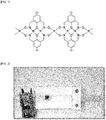
- a coordination network can be formed in the form of a gel, and the expected network structure is shown in FIG. 1 .
- the metal-organic hybrid structure is a metallogel and is characterized in that it is converted into a liquid by reacting with an acidic compound, and this process can be confirmed visually and thus can be used for the detection of acidic compounds.
- the metal-organic hybrid structure exists as a metallogel in which a deprotonated ligand coordinates with a metal under a basic condition to form a network.
- this reacts with the acidic compound and the metal ion is dissociated through the protonation of the ligand, resulting in the collapse of the network and conversion to a liquid phase.
- the metal of the metal ion is not particularly limited, and for example, may include lanthanide metals such as Tb, Eu, Yb, etc., as well as Period 1 transition metals such as Ti, V, Mn, Fe, Co, Ni, Cu, Zn, etc., Period 2 transition metals such as Zr, Mo, Ru, Rh, Pd, Ag, etc., Period 3 transition metals such as Ir, Pt, Au, etc.
- Co, Cu, or Zn is preferable in the aspect of detecting an acidic compound.
- R 1 is -OH or an amino acid residue.
- each R 1 is independently -OH, phenyl, naphthyl, methyl, ethyl, propyl, isopropyl, butyl, isobutyl, tert-butyl, pentyl, tert-pentyl, neopentyl, isopentyl, sec-pentyl, 3-pentyl, or an amino acid residue selected from the group consisting of alanine, cysteine, aspartic acid, glutamic acid, phenylalanine, histidine, isoleucine, lysine, leucine, methionine, asparagine, pyrrolysine, glutamine, arginine, serine, threonine, selenocysteine, valine, tryptophan, and tyrosine.
- the amino acid residue means a structure excluding the amine group in the structure of an amino acid.
- the amine group condenses with aldehyde to form imine.
- the amino acid residue is propionic acid, which is the structure excluding an amine group in the structure of alanine.
- R 2 is methyl, ethyl, propyl, isopropyl, butyl, isobutyl, tert-butyl, pentyl, tert-pentyl, neopentyl, isopentyl, sec-pentyl, 3-pentyl, hexyl, octyl, phenyl, naphthyl, or pyridinyl.
- compound represented by Chemical Formula 1 when compound represented by Chemical Formula 1 includes a carboxy group, it may exist in the form of a salt, wherein the counter ion may be Na + , K + , etc.
- Representative examples of the compound represented by Chemical Formula 1 are any of compounds represented by the following Chemical Formulas 1-1 to 1-5:
- the preparation method includes the steps of: reacting a compound represented by Chemical Formula 1', a compound represented by Chemical Formula 2', and trifluoroacetic acid to prepare a compound represented by Chemical Formula 3' (step 1); and reacting the compound represented by Chemical Formula 3' with a compound represented by Chemical Formula 4' (step 2).
- Step 1 is a Duff reaction, wherein aldehyde groups are substituted at the ortho-positions to the hydroxy groups of the compound represented by Chemical Formula 1'.
- the mole ratio of the compound represented by Chemical Formula 1 and the compound represented by the Chemical Formula 2 is 1:20.
- the trifluoroacetic acid also functions as a solvent, and it is preferably used such that it may dissolve both the compound represented by Chemical Formula 1 and the compound represented by Chemical Formula 2.
- the reaction temperature of step 1 is 100°C to 150°C. Further, preferably, the reaction time of step 1 is 1 day to 10 days.
- a step of obtaining the product may be added.
- the reaction mixture may be added to an excess amount (1 mole to 5 moles) of hydrochloric acid, and stirred for 1 day to 3 days to obtain a precipitate.
- the precipitate may be recrystallized with dimethylsulfoxide to obtain a compound represented by Chemical Formula 3'.
- Step 2 is the reaction of aldehyde and hydroxyamine to form aldoxime, wherein the aldoxime is formed at the aldehyde group of the compound represented by Chemical Formula 3'.
- R is as defined in Chemical Formula 1.
- water, a C 1-4 alcohol, or a mixed solvent thereof may be preferably used, and a water/ethanol mixed solvent or a water/methanol mixed solvent is more preferable.
- a step of obtaining the product may be added.
- an excess amount of water may be added to filter the produced precipitate, followed by sequentially washing with water and acetone, thus obtaining a compound represented by Chemical Formula 1.
- the metal-organic hybrid structure may be prepared by mixing the above-mentioned compound represented by Chemical Formula 1 and the precursor of the metal.
- the molar ratio of the compound represented by Chemical Formula 1 to the metal precursor is 1: 1 to 1: 4, preferably 1: 2 (when a metal having a coordination number of 6 is used) or 1: 3 (when a metal having a coordination number of 4 is used).
- the solvent is preferably dimethylsulfoxide or dimethylformamide, and additionally, it is desirable to use one equivalent or more of a base such as triethylamine or sodium methoxide.
- the above reaction is carried out at 10 to 40°C.
- sonication treatment or heating at 100°C to 140°C for 10 minutes to 10 hours may be added after the reaction.
- the metal-organic hybrid structure is a metallogel and is characterized in that it is converted into a liquid by reacting with an acidic compound, and this process can be confirmed visually and thus can be used for the detection of acidic compounds.
- the acidic compound means a compound which induces the transfer of the metal-organic hybrid structure according to the present invention.
- the acidic compound is in liquid or gaseous form, more preferably in gaseous form.
- specific examples of the acidic compounds include hydrogen chloride, hydrogen fluoride, hydrogen bromide, trifluoroacetic acid, acetic acid, nitrogen oxide (NO x ), nitric acid, sulfur oxide (SO x ) or sulfuric acid.
- the metal-organic hybrid structure according to the present invention has changed into a liquid phase when exposed to hydrogen chloride gas, and there was a difference in the rate of change to liquid depending on the weight percentage and the type of metal ions. Thereby, it has been found that not only the possibility of application as an acid gas sensor was confirmed but also the sensitivity of the gas sensor could be improved by controlling the composition of the metal-organic hybrid structure.
- composition for detecting an acidic compound according to the present invention is characterized in that the detection of the acidic compound can be visually confirmed by utilizing the characteristics of the metal-organic hybrid structure.
- HMTA hexamethylenetetramine, 7.530 g, 53.70 mmol
- TFA trifluoroacetic acid, 50 mL
- biphenyl-4,4'-diol 1.000 g, 5.370 mmol
- the mixture was heated at 120°C for 7 days.
- the product was dark red, and it was poured into 4N HCI (100 mL) to isolate the yellow precipitate.
- the precipitate was recrystallized with hot DMSO to obtain 2.460 g of yellow microcrystals (yield: 65.1%).
- the compound (tetraoxime biphenol, 25 mg) prepared in the previous Preparation Example was dissolved in DMF (0.88 mL). Then, triethylamine (0.02 mL) was added dropwise and mixed to prepare a solution A. In addition, CO(OAc) 2 ⁇ 4H 2 O(35 mg) was dissolved in DMF (3.53 mL) to prepare a solution B. The solution A (0.1 mL) and the solution B (0.4 mL) were mixed to prepare a metallogel, which was then sonicated for 1 minute to increase the strength of the metallogel. The metallogel thus prepared was named "Cobalt metallogel 2 wt%".
- a metallogel was prepared in the same manner as in Example 1-1, except that the amount of DMF used was controlled as shown in Table 1 below during the preparation of the solutions A and B, [Table 1] Amount of DMF used during preparation of solution A Amount of DMF used during preparation of solution B
- Example 1-1 Cobalt metallogel 2 wt% 0.88 mL 3.53 mL
- Example 1-2 Cobalt metallogel 4 wt% 0.43 mL 1.73 mL
- Example 1-3 Cobalt metallogel 6 wt% 0.28 mL 1.13 mL
- the compound (tetraoxime biphenol, 25 mg) prepared in the previous Preparation Example was dissolved in DMF (1.09 mL). Then, triethylamine (0.02 mL) was added dropwise and mixed to prepare a solution A. In addition, Cu(acac) 2 (55 mg) was dissolved in DMF (4.36 mL) to prepare a solution B. The solution A (0.1 mL) and the solution B (0.4 mL) were mixed to prepare a metallogel, which was then sonicated for 1 minute to increase the strength of the metallogel. The metallogel thus prepared was named "Cobalt metallogel 2 wt%".
- a metallogel was prepared in the same manner as in Example 2-1, except that the amount of DMF used was controlled as shown in Table 2 below during the preparation of the solutions A and B, [Table 2] Amount of DMF used during preparation of solution A Amount of DMF used during preparation of solution B
- Example 2-1 Copper metallogel 2 wt% 1.09 mL 4.36 mL
- Example 2-2 Copper metallogel 4 wt% 0.53 mL 2.14 mL
- Example 2-3 Copper metallogel 6 wt% 0.35 mL 1.39 mL
- the compound (tetraoxime biphenol, 25 mg) prepared in the previous Preparation Example was dissolved in DMF (1.04 mL). Then, triethylamine (0.02 mL) was added dropwise and mixed to prepare a solution A.
- Zn(acac) 2 ⁇ H 2 O (50 mg) was dissolved in DMF (4.15 mL) to prepare a solution B.
- the solution A (0.1 mL) and the solution B (0.4 mL) were mixed to prepare a metallogel, which was then sonicated for 1 minute to increase the strength of the metallogel.
- the metallogel thus prepared was named "Zinc metallogel 2 wt%".
- a metallogel was prepared in the same manner as in Example 3-1, except that the amount of DMF used was controlled as shown in Table 3 below during the preparation of the solutions A and B, [Table 3] Amount of DMF used during preparation of solution A Amount of DMF used during preparation of solution B
- Example 3-1 Zinc metallogel 2 wt% 1.04 mL 4.15 mL
- Example 3-2 Zinc metallogel 4 wt% 0.51 mL 2.03 mL
- Example 3-3 Zinc metallogel 6 wt% 0.33 mL 1.33 mL
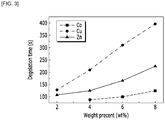
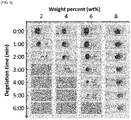
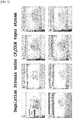
- FIG. 2 a fixed volume of the metallogel of Examples previously prepared was placed inside the cylinder. After an o-ring was attached and the system was isolated from the outside by using a clamp, hydrogen chloride gas was flowed into the cylinder at a constant flow rate and flow rate. Then, the time (second) was measured while observing the degelation state of metallogel. The time required for complete degelation of metallogel is shown in Table 4 below. This graph ( FIG. 3 ) and the image observed based on a fixed time interval are shown in FIGS. 4 to 6 .
- Zinc metallogel (1.2 mL) of Example 3-2 previously prepared was placed inside the cylinder.
- An o-ring was attached to one end of the cylinder and connected to an oil bubbler to check the internal pressure of the cylinder.
- the other end of the cylinder was connected with a round bottom flask containing trifluoroacetic acid and a tygon tube. Nitrogen was poured into a round bottom flask so that the trifluoroacetic acid vapor passed through the cylinder, and the degelation process of metallogel was recorded by digital imaging and captured at a fixed time interval (20 seconds) and shown in FIG. 7 .
Landscapes
- Chemical & Material Sciences (AREA)
- Organic Chemistry (AREA)
- Life Sciences & Earth Sciences (AREA)
- Health & Medical Sciences (AREA)
- Analytical Chemistry (AREA)
- Biophysics (AREA)
- Molecular Biology (AREA)
- Physics & Mathematics (AREA)
- Biochemistry (AREA)
- General Health & Medical Sciences (AREA)
- General Physics & Mathematics (AREA)
- Immunology (AREA)
- Pathology (AREA)
- Dispersion Chemistry (AREA)
- Investigating Or Analyzing Non-Biological Materials By The Use Of Chemical Means (AREA)
- Organic Low-Molecular-Weight Compounds And Preparation Thereof (AREA)
Abstract
Description
- This application claims the benefit of the filing date of Korean Patent Application No.
10-2018-0010273 - The present invention relates to a composition for detecting an acidic compound and a method for detecting an acidic compound using the same.
- Hybrid materials formed by the formation of a network made of metal-organic hybrid structures can simultaneously realize their respective advantages beyond the limitations of organic or inorganic materials consisting of a single material, thereby having new physical properties. In addition, by choosing and combining organic components and inorganic components, the structural diversity of the material and the elaboration of the design can be maximized. Typical industrial applications of such metal-organic hybrid structures include energy storage, biopharmaceuticals, sensors, semiconductor circuit devices, and the like.
- Among the metal-organic hybrid structures, metallogel has recently begun to be studied in earnest. Metallogel is produced through a mechanism in which solvent is trapped in the space between substances in a process in which multidentate ligand and metal ion form a polymer or network. Through coordinate bonds between structurally diverse ligands and various metal ions, it is possible to realize structural diversity, which is an advantage of the metal-organic hybrid structures described above. There is also an advantage that a small amount of gelator molecules can be used to produce a large volume of bulk material and to control physical properties.
- Metallogel, which is a metal-organic hybrid material, can detect gas molecules using a change in coordination structure, unlike organogel. For example, changes in pH induced by an acidic gas molecule can be detected with a metal gel. When the acidic gas molecules change the pH of the solvent in the gel, the metal dissociates and the network collapses, resulting in a physical change (sol-gel transition) in which the bulk material is changed into solution phase and collapsed. This allows the detection of acidic gas molecules. In addition, detection strategies utilizing oxidation-reduction reactions in which gas molecules coordinate with metal ions and change the oxidation number of the metal have also been actively studied (T. Pal et al., ACS Appl. Mater. ).
- The present inventors have found a reactivity showing sol-gel transition in which metallogel, which is a metal-organic hybrid structure, is sensitive to an acidic compound and thus can be visually easily confirmed. Based on this, the composition and weight percent of various metal-ligand combinations were changed to synthesize a metallogel. It has been found that the sensitivity can be controlled in accordance with the kind and weight percent of the metal by measuring the time during which various kinds of gels change into a liquid phase through the sol-gel transition under acidic gas flow. The present invention has been completed on the basis of such finding.
- It is an object of the present invention to provide a composition for detecting an acidic compound and a method for detecting an acidic compound using the same.
- In one aspect of the invention, there is provided a composition for detecting an acidic compound including a metal-organic hybrid structure formed by coordinate bond between a compound represented by the following Chemical Formula 1 or a salt thereof and a metal ion:

- each R is independently -R1, -NH-CO-R2, or -NH-R2,
- each R1 is independently -OH, C6-60 aryl, C1-10 alkyl, or an amino acid residue, and
- R2 is C1-10 alkyl, C6-60 aryl, or C4-60 heteroaryl containing any one of N, O, and S.
- The compound represented by Chemical Formula 1 has a biphenyl skeleton, and it is capable of charge transfer through π-conjugation. In addition, the compound represented by Chemical Formula 1 has a hydroxy group on each benzene ring, and has two imine groups at the ortho-positions of the hydroxyl group. It can coordinate to metal ions through such hydroxy groups and imine groups.
- In particular, the compound represented by Chemical Formula 1 is characterized in that, in addition to the hydroxyl groups and imine groups, the substituent R on the imine group may have an R1 substituent, an amide bond (-NH-CO-R2), or an amine group (-NH-R2) that can additionally coordinate with metal ions. Thus, in addition to the coordinate bonds with metal ions through the hydroxy groups and imine groups, additional coordinate bond with metal ions is possible, and thus, the compound represented by Chemical Formula 1 and metal ions form two-dimensional or three-dimensional network structures.
- As an example, the compound of Chemical Formula 1 where R is - OH allows phenoxide and imine group and hydroxy group of oxime moieties to coordinate with a plurality of metals. When a metal salt is added to this compound under basic conditions, a coordination network can be formed in the form of a gel, and the expected network structure is shown in
FIG. 1 . - The metal-organic hybrid structure is a metallogel and is characterized in that it is converted into a liquid by reacting with an acidic compound, and this process can be confirmed visually and thus can be used for the detection of acidic compounds.
- Specifically, the metal-organic hybrid structure exists as a metallogel in which a deprotonated ligand coordinates with a metal under a basic condition to form a network. Thus, this reacts with the acidic compound and the metal ion is dissociated through the protonation of the ligand, resulting in the collapse of the network and conversion to a liquid phase.
- The metal of the metal ion is not particularly limited, and for example, may include lanthanide metals such as Tb, Eu, Yb, etc., as well as
Period 1 transition metals such as Ti, V, Mn, Fe, Co, Ni, Cu, Zn, etc.,Period 2 transition metals such as Zr, Mo, Ru, Rh, Pd, Ag, etc.,Period 3 transition metals such as Ir, Pt, Au, etc. In particular, Co, Cu, or Zn is preferable in the aspect of detecting an acidic compound. - In
Chemical Formula 1, preferably, R1 is -OH or an amino acid residue. - Preferably, each R1 is independently -OH, phenyl, naphthyl, methyl, ethyl, propyl, isopropyl, butyl, isobutyl, tert-butyl, pentyl, tert-pentyl, neopentyl, isopentyl, sec-pentyl, 3-pentyl, or an amino acid residue selected from the group consisting of alanine, cysteine, aspartic acid, glutamic acid, phenylalanine, histidine, isoleucine, lysine, leucine, methionine, asparagine, pyrrolysine, glutamine, arginine, serine, threonine, selenocysteine, valine, tryptophan, and tyrosine.
- The amino acid residue means a structure excluding the amine group in the structure of an amino acid. The amine group condenses with aldehyde to form imine. For example, in the case of alanine, the amino acid residue is propionic acid, which is the structure excluding an amine group in the structure of alanine.
- Further, preferably, R2 is methyl, ethyl, propyl, isopropyl, butyl, isobutyl, tert-butyl, pentyl, tert-pentyl, neopentyl, isopentyl, sec-pentyl, 3-pentyl, hexyl, octyl, phenyl, naphthyl, or pyridinyl.
- Further, when compound represented by Chemical Formula 1 includes a carboxy group, it may exist in the form of a salt, wherein the counter ion may be Na+, K+, etc.
- Representative examples of the compound represented by Chemical Formula 1 are any of compounds represented by the following Chemical Formulas 1-1 to 1-5:


- Further, according to another embodiment of the invention, there is provided a method for preparing the above-mentioned compound represented by Chemical Formula 1, as shown in the following
Reaction Scheme 1.

- Specifically, the preparation method includes the steps of: reacting a compound represented by Chemical Formula 1', a compound represented by Chemical Formula 2', and trifluoroacetic acid to prepare a compound represented by Chemical Formula 3' (step 1); and reacting the compound represented by Chemical Formula 3' with a compound represented by Chemical Formula 4' (step 2).
-
Step 1 is a Duff reaction, wherein aldehyde groups are substituted at the ortho-positions to the hydroxy groups of the compound represented by Chemical Formula 1'. - Preferably, the mole ratio of the compound represented by Chemical Formula 1 and the compound represented by the Chemical Formula 2 is 1:20. Further, the trifluoroacetic acid also functions as a solvent, and it is preferably used such that it may dissolve both the compound represented by Chemical Formula 1 and the compound represented by Chemical Formula 2.
- Preferably, the reaction temperature of
step 1 is 100°C to 150°C. Further, preferably, the reaction time ofstep 1 is 1 day to 10 days. - After the reaction of
step 1, a step of obtaining the product may be added. As an example, the reaction mixture may be added to an excess amount (1 mole to 5 moles) of hydrochloric acid, and stirred for 1 day to 3 days to obtain a precipitate. For the purification thereof, the precipitate may be recrystallized with dimethylsulfoxide to obtain a compound represented by Chemical Formula 3'. -
Step 2 is the reaction of aldehyde and hydroxyamine to form aldoxime, wherein the aldoxime is formed at the aldehyde group of the compound represented by Chemical Formula 3'. In the compound represented by Chemical Formula 4', R is as defined in Chemical Formula 1. - As the solvent of the reaction of
step 2, water, a C1-4 alcohol, or a mixed solvent thereof may be preferably used, and a water/ethanol mixed solvent or a water/methanol mixed solvent is more preferable. - After the reaction of
step 2, a step of obtaining the product may be added. As an example, an excess amount of water may be added to filter the produced precipitate, followed by sequentially washing with water and acetone, thus obtaining a compound represented by Chemical Formula 1. - Further, the metal-organic hybrid structure may be prepared by mixing the above-mentioned compound represented by Chemical Formula 1 and the precursor of the metal.
- Preferably, the molar ratio of the compound represented by Chemical Formula 1 to the metal precursor is 1: 1 to 1: 4, preferably 1: 2 (when a metal having a coordination number of 6 is used) or 1: 3 (when a metal having a coordination number of 4 is used). Further, the solvent is preferably dimethylsulfoxide or dimethylformamide, and additionally, it is desirable to use one equivalent or more of a base such as triethylamine or sodium methoxide.
- Preferably, the above reaction is carried out at 10 to 40°C. Alternatively, sonication treatment or heating at 100°C to 140°C for 10 minutes to 10 hours may be added after the reaction.
- As described above, the metal-organic hybrid structure is a metallogel and is characterized in that it is converted into a liquid by reacting with an acidic compound, and this process can be confirmed visually and thus can be used for the detection of acidic compounds.
- The acidic compound means a compound which induces the transfer of the metal-organic hybrid structure according to the present invention. Preferably, the acidic compound is in liquid or gaseous form, more preferably in gaseous form. In addition, specific examples of the acidic compounds include hydrogen chloride, hydrogen fluoride, hydrogen bromide, trifluoroacetic acid, acetic acid, nitrogen oxide (NOx), nitric acid, sulfur oxide (SOx) or sulfuric acid.
- As in Examples described below, it has been found that the metal-organic hybrid structure according to the present invention has changed into a liquid phase when exposed to hydrogen chloride gas, and there was a difference in the rate of change to liquid depending on the weight percentage and the type of metal ions. Thereby, it has been found that not only the possibility of application as an acid gas sensor was confirmed but also the sensitivity of the gas sensor could be improved by controlling the composition of the metal-organic hybrid structure.
- As described above, the composition for detecting an acidic compound according to the present invention is characterized in that the detection of the acidic compound can be visually confirmed by utilizing the characteristics of the metal-organic hybrid structure.
-
-
FIG. 1 schematically shows a network structure of metal-organic frameworks of the present invention. -
FIG. 2 shows a state in which the composition for detecting an acidic compound of the present invention is mounted in a cylinder. -
FIG. 3 is a graph showing the time (seconds) required for the metal-organic hybrid structure of the present invention to change to a liquid. -
FIG. 4 shows a state in which cobalt metallogel changes to a liquid with time by weight percentage in Experimental Example of the present invention. -
FIG. 5 shows a state in which copper metallogel changes to a liquid with time by weight percentage in Experimental Example of the present invention. -
FIG. 6 shows a state in which zinc metallogel changes to a liquid with time by weight percentage in Experimental Example of the present invention. -
FIG. 7 shows the results of expressing the degelation process of zinc metallogel by trifluoroacetic acid in units of time. - Hereinafter, preferred examples will be presented to facilitate understanding of the present invention. However, these examples are provided for a better understanding of the present invention only, and are not intended to limit the scope of the invention.
-
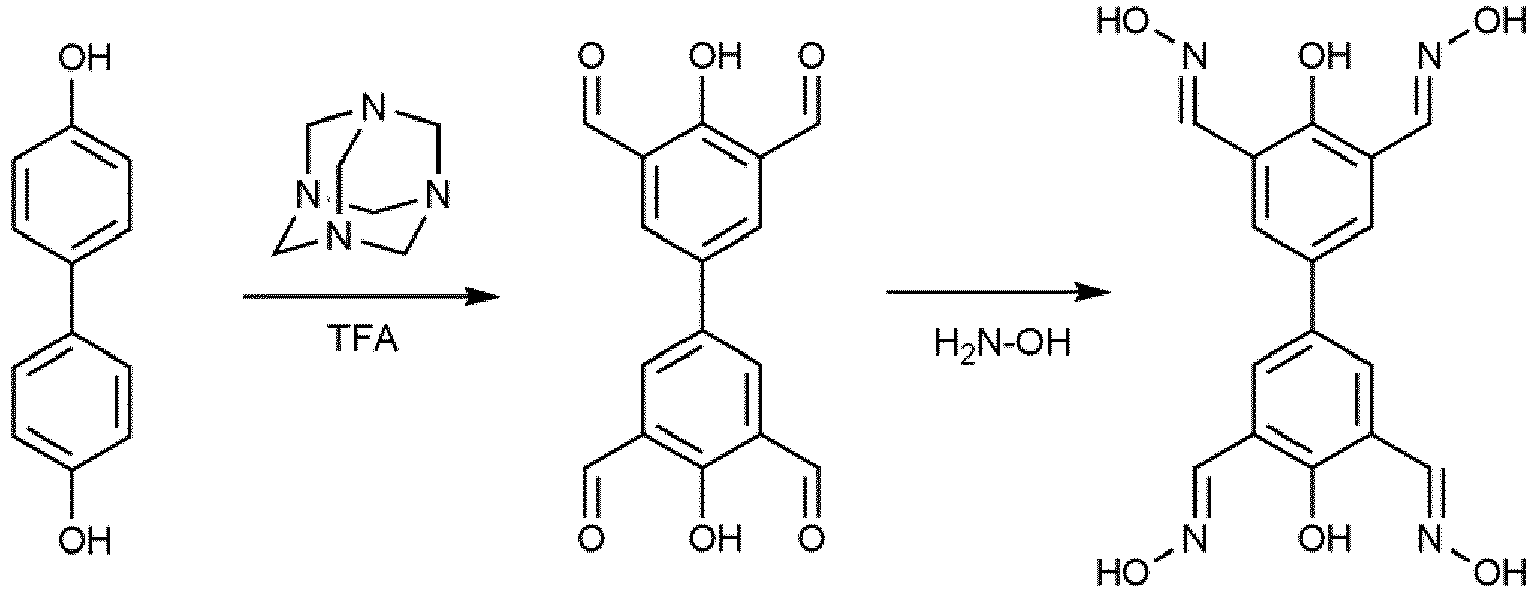
- HMTA (hexamethylenetetramine, 7.530 g, 53.70 mmol) was added into a dried round-bottom flask. The flask was purged with argon, and TFA (trifluoroacetic acid, 50 mL) was added. After completely dissolving HMTA, biphenyl-4,4'-diol (1.000 g, 5.370 mmol) was rapidly added. After confirming that the mixture turned to an orange color, the mixture was heated at 120°C for 7 days. The product was dark red, and it was poured into 4N HCI (100 mL) to isolate the yellow precipitate. The precipitate was recrystallized with hot DMSO to obtain 2.460 g of yellow microcrystals (yield: 65.1%).
- The compound (0.296 g, 1.000 mmol) prepared in
step 1 and NH2OH-HCl (0.420 g, 6.0 mmol) were added into a reactor. After adding water (7 mL), the mixture was heated to 80°C. Methanol was added dropwise until the mixture became transparent. After tightly sealing the reactor, the mixture was heated to 100°C for 1 hour. After cooling to room temperature, water was added to induce precipitation. The solid material was isolated by filtration, and washed with water to obtain a light yellow product (powder, 0.360 g).
1H NMR (300 MHz, DMSO-d) δ 11.60 (s, 4H), 10.88 (s, 2H), 8.45 (s, 4H), 7.83 (s, s) - The compound (tetraoxime biphenol, 25 mg) prepared in the previous Preparation Example was dissolved in DMF (0.88 mL). Then, triethylamine (0.02 mL) was added dropwise and mixed to prepare a solution A. In addition, CO(OAc)2·4H2O(35 mg) was dissolved in DMF (3.53 mL) to prepare a solution B. The solution A (0.1 mL) and the solution B (0.4 mL) were mixed to prepare a metallogel, which was then sonicated for 1 minute to increase the strength of the metallogel. The metallogel thus prepared was named "Cobalt metallogel 2 wt%".
- A metallogel was prepared in the same manner as in Example 1-1, except that the amount of DMF used was controlled as shown in Table 1 below during the preparation of the solutions A and B,
[Table 1] Amount of DMF used during preparation of solution A Amount of DMF used during preparation of solution B Example 1-1 Cobalt metallogel 2 wt%0.88 mL 3.53 mL Example 1-2 Cobalt metallogel 4 wt%0.43 mL 1.73 mL Example 1-3 Cobalt metallogel 6 wt%0.28 mL 1.13 mL Example 1-4 Cobalt metallogel 8 wt%0.21 mL 0.83 mL - The compound (tetraoxime biphenol, 25 mg) prepared in the previous Preparation Example was dissolved in DMF (1.09 mL). Then, triethylamine (0.02 mL) was added dropwise and mixed to prepare a solution A. In addition, Cu(acac)2 (55 mg) was dissolved in DMF (4.36 mL) to prepare a solution B. The solution A (0.1 mL) and the solution B (0.4 mL) were mixed to prepare a metallogel, which was then sonicated for 1 minute to increase the strength of the metallogel. The metallogel thus prepared was named "Cobalt metallogel 2 wt%".
- A metallogel was prepared in the same manner as in Example 2-1, except that the amount of DMF used was controlled as shown in Table 2 below during the preparation of the solutions A and B,
[Table 2] Amount of DMF used during preparation of solution A Amount of DMF used during preparation of solution B Example 2-1 Copper metallogel 2 wt%1.09 mL 4.36 mL Example 2-2 Copper metallogel 4 wt%0.53 mL 2.14 mL Example 2-3 Copper metallogel 6 wt%0.35 mL 1.39 mL Example 2-4 Copper metallogel 8 wt%0.26 mL 1.02 mL - The compound (tetraoxime biphenol, 25 mg) prepared in the previous Preparation Example was dissolved in DMF (1.04 mL). Then, triethylamine (0.02 mL) was added dropwise and mixed to prepare a solution A. In addition, Zn(acac)2·H2O (50 mg) was dissolved in DMF (4.15 mL) to prepare a solution B. The solution A (0.1 mL) and the solution B (0.4 mL) were mixed to prepare a metallogel, which was then sonicated for 1 minute to increase the strength of the metallogel. The metallogel thus prepared was named "
Zinc metallogel 2 wt%". - A metallogel was prepared in the same manner as in Example 3-1, except that the amount of DMF used was controlled as shown in Table 3 below during the preparation of the solutions A and B,
[Table 3] Amount of DMF used during preparation of solution A Amount of DMF used during preparation of solution B Example 3-1 Zinc metallogel 2 wt%1.04 mL 4.15 mL Example 3-2 Zinc metallogel 4 wt%0.51 mL 2.03 mL Example 3-3 Zinc metallogel 6 wt%0.33 mL 1.33 mL Example 3-4 Zinc metallogel 8 wt%0.24 mL 0.98 mL - As shown in
FIG. 2 , a fixed volume of the metallogel of Examples previously prepared was placed inside the cylinder. After an o-ring was attached and the system was isolated from the outside by using a clamp, hydrogen chloride gas was flowed into the cylinder at a constant flow rate and flow rate. Then, the time (second) was measured while observing the degelation state of metallogel. The time required for complete degelation of metallogel is shown in Table 4 below. This graph (FIG. 3 ) and the image observed based on a fixed time interval are shown inFIGS. 4 to 6 .[Table 4] 2 wt % 4 wt % 6 wt % 8 wt % Copper metallogel 128 s 210 s 310 s 397 s Cobalt metallogel - 88 s 100 s 124 s Zinc metallogel 107 s 125 s 166 s 225 s - As described above, it was confirmed that hydrogen chloride gas could be detected within a short time, and the metallogel exhibited a time difference according to the metal and weight% thereof. Therefore, it can be confirmed that the above-mentioned characteristics can be used to control the detection of the acidic compound and its sensitivity.
- As shown in
FIG. 2 ,4 wt% of Zinc metallogel (1.2 mL) of Example 3-2 previously prepared was placed inside the cylinder. An o-ring was attached to one end of the cylinder and connected to an oil bubbler to check the internal pressure of the cylinder. The other end of the cylinder was connected with a round bottom flask containing trifluoroacetic acid and a tygon tube. Nitrogen was poured into a round bottom flask so that the trifluoroacetic acid vapor passed through the cylinder, and the degelation process of metallogel was recorded by digital imaging and captured at a fixed time interval (20 seconds) and shown inFIG. 7 .
Claims (8)
- A composition for detecting an acidic compound comprising a metal-organic hybrid structure formed by coordinate bond between a compound represented by the following Chemical Formula 1 or a salt thereof and a metal ion:
 each R is independently -R1, -NH-CO-R2, or -NH-R2,each R1 is independently -OH, C6-60 aryl, C1-10 alkyl, or an amino acid residue, andR2 is C1-10 alkyl, C6-60 aryl, or C4-60 heteroaryl containing any one of N, O, and S.
 - The composition for detecting an acidic compound according to claim 1, wherein each R1 is independently -OH, phenyl, naphthyl, methyl, ethyl, propyl, isopropyl, butyl, isobutyl, tert-butyl, pentyl, tert-pentyl, neopentyl, isopentyl, sec-pentyl, 3-pentyl, or an amino acid residue selected from the group consisting of alanine, cysteine, aspartic acid, glutamic acid, phenylalanine, histidine, isoleucine, lysine, leucine, methionine, asparagine, pyrrolysine, glutamine, arginine, serine, threonine, selenocysteine, valine, tryptophan, and tyrosine.
- The composition for detecting an acidic compound according to claim 1, wherein R2 is methyl, ethyl, propyl, isopropyl, butyl, isobutyl, tert-butyl, pentyl, tert-pentyl, neopentyl, isopentyl, sec-pentyl, 3-pentyl, hexyl, octyl, phenyl, naphthyl, or pyridinyl.
- The composition for detecting an acidic compound according to claim 1, wherein the compound represented by Chemical Formula 1 are compounds represented by the following Chemical Formulas 1-1 to 1-5:


- The composition for detecting an acidic compound according to claim 1, wherein the metal of the metal ion is Period 1 transition metal, Period 2 transition metal, Period 3 transition metal, or lanthanide metal.
- The composition for detecting an acidic compound according to claim 1, wherein the metal of the metal ion is Ti, V, Mn, Fe, Co, Ni, Cu, Zn, Zr, Mo, Ru, Rh, Pd, Ag, Ir, Pt, Au, Tb, Eu, or Yb.
- The composition for detecting an acidic compound according to claim 1, wherein the acidic compound is a liquid or a gas.
- The composition for detecting an acidic compound according to claim 1, wherein the acidic compound is hydrogen chloride, hydrogen fluoride, hydrogen bromide, trifluoroacetic acid, acetic acid, nitrogen oxide, nitric acid, sulfur oxide or sulfuric acid.
Applications Claiming Priority (2)
| Application Number | Priority Date | Filing Date | Title |
|---|---|---|---|
| KR1020180010273A KR102234520B1 (en) | 2018-01-26 | 2018-01-26 | Composition for detecting acidic chemicals |
| PCT/KR2019/000714 WO2019146961A1 (en) | 2018-01-26 | 2019-01-17 | Composition for detecting acidic compound |
Publications (3)
| Publication Number | Publication Date |
|---|---|
| EP3591393A1 true EP3591393A1 (en) | 2020-01-08 |
| EP3591393A4 EP3591393A4 (en) | 2020-06-24 |
| EP3591393B1 EP3591393B1 (en) | 2022-03-02 |
Family
ID=67395406
Family Applications (1)
| Application Number | Title | Priority Date | Filing Date |
|---|---|---|---|
| EP19744351.8A Active EP3591393B1 (en) | 2018-01-26 | 2019-01-17 | Use of a composition for detecting acidic compound |
Country Status (6)
| Country | Link |
|---|---|
| US (1) | US11465962B2 (en) |
| EP (1) | EP3591393B1 (en) |
| JP (1) | JP6896321B2 (en) |
| KR (1) | KR102234520B1 (en) |
| CN (1) | CN110621997B (en) |
| WO (1) | WO2019146961A1 (en) |
Families Citing this family (2)
| Publication number | Priority date | Publication date | Assignee | Title |
|---|---|---|---|---|
| CN110551068B (en) * | 2019-08-28 | 2023-03-28 | 齐鲁工业大学 | Acid-base indicator prepared from vanillin and synthesis method thereof |
| CN112174883B (en) * | 2020-10-29 | 2022-05-03 | 西北师范大学 | Synthesis and application of fluorescent sensor capable of singly and selectively identifying L-arginine |
Family Cites Families (10)
| Publication number | Priority date | Publication date | Assignee | Title |
|---|---|---|---|---|
| GB9108221D0 (en) * | 1991-04-18 | 1991-06-05 | Ici Plc | Compound preparation and use |
| US20060040139A1 (en) * | 2004-08-18 | 2006-02-23 | Norman Herron | Electronic devices made with metal Schiff base complexes |
| US8362463B2 (en) | 2004-12-30 | 2013-01-29 | E. I. Du Pont De Nemours And Company | Organometallic complexes |
| US9828557B2 (en) * | 2010-09-22 | 2017-11-28 | Auterra, Inc. | Reaction system, methods and products therefrom |
| US9115164B2 (en) * | 2011-03-10 | 2015-08-25 | National University Corporation Shizuoka University | Substituted aromatic compound, hydrogelation agent, hydrogel, and method for gelating aqueous sample |
| CN102503966B (en) * | 2011-10-25 | 2015-04-01 | 中国科学院上海有机化学研究所 | Schiff-base ligand-based rare-earth metal complex, preparation method and applications |
| KR101653901B1 (en) * | 2015-01-02 | 2016-09-02 | 충남대학교산학협력단 | Compounds for detecting hrdofluoric acid, fluoride ion or both, and method for manufacturing the same |
| KR20170080865A (en) | 2015-12-30 | 2017-07-11 | 중앙대학교 산학협력단 | Composition for detecting trichlorocyanuric acid and detecting method of trichlorocyanuric acid using the same |
| KR101841667B1 (en) | 2016-07-29 | 2018-03-23 | 주식회사 엘지화학 | Multi-directional polydentate lig-ands for metal-organic hybrid structures |
| JP6625768B2 (en) | 2016-07-29 | 2019-12-25 | エルジー・ケム・リミテッド | Organometallic complexes based on multidirectional ligands |
-
2018
- 2018-01-26 KR KR1020180010273A patent/KR102234520B1/en active Active
-
2019
- 2019-01-17 WO PCT/KR2019/000714 patent/WO2019146961A1/en not_active Ceased
- 2019-01-17 US US16/500,152 patent/US11465962B2/en active Active
- 2019-01-17 JP JP2019565026A patent/JP6896321B2/en active Active
- 2019-01-17 EP EP19744351.8A patent/EP3591393B1/en active Active
- 2019-01-17 CN CN201980002232.1A patent/CN110621997B/en active Active
Also Published As
| Publication number | Publication date |
|---|---|
| JP2020520979A (en) | 2020-07-16 |
| US20200317607A1 (en) | 2020-10-08 |
| CN110621997B (en) | 2022-04-15 |
| KR102234520B1 (en) | 2021-03-30 |
| WO2019146961A9 (en) | 2019-12-05 |
| WO2019146961A1 (en) | 2019-08-01 |
| KR20190091166A (en) | 2019-08-05 |
| EP3591393A4 (en) | 2020-06-24 |
| JP6896321B2 (en) | 2021-06-30 |
| EP3591393B1 (en) | 2022-03-02 |
| US11465962B2 (en) | 2022-10-11 |
| CN110621997A (en) | 2019-12-27 |
Similar Documents
| Publication | Publication Date | Title |
|---|---|---|
| US10556886B2 (en) | Metal-organic hybrid structures built with multi-directional polydentate ligands | |
| Thompson et al. | Reactions of coordinated ligands. VI. Metal ion control in the synthesis of planar nickel (II) complexes of α-diketo-bis-mercaptoimines | |
| KR101841667B1 (en) | Multi-directional polydentate lig-ands for metal-organic hybrid structures | |
| EP3591393B1 (en) | Use of a composition for detecting acidic compound | |
| Harris et al. | Spectroscopic behavior of bis (. pi.-cyclopentadienyl) tricarbonyl (triethyl phosphite) diiron and related compounds on protonation of the metal-metal bond | |
| CN105669429B (en) | A kind of preparation method of rhodium caprylate | |
| CN109503604A (en) | Benzimidazole benzimidazole derivative and its synthetic method | |
| Shimazaki et al. | Effects of a side chain aromatic ring on the reactivity of copper (I) complexes with dioxygen | |
| Zhang et al. | Synthesis and characterization of glycine Schiff base complexes of the light lanthanide elements | |
| KR102418587B1 (en) | Catalyst composition for carbon dioxide fixation | |
| Bai et al. | Structural transformations from a 1-D chain to two 3-D supramolecular isomers via crystal disassembly and reassembly | |
| Panyarat et al. | A series of new microporous lanthanide frameworks [Ln (C8H3NO6)(L) 0.5 (H2O)]· 3H2O (Ln= Pr, Nd, Sm and Gd, and L= C8H4O4 or C8H4O4/C8H3NO6): Syntheses, characterization and photoluminescence properties | |
| CN110358106B (en) | Anionic framework metal-organic framework material for sensing p-nitroarene explosives, and preparation method and application thereof | |
| Davydenko et al. | Synthesis, structural and spectroscopic characterizations, hirshfeld surface analysis of two coordination compounds assembled from copper and carboxylates, 3, 5-dimethyl-1h-pyrazole | |
| Tašner et al. | Dinuclear copper (II) acetate complex with caffeine, a fast mechanochemical synthesis | |
| Segl′ a et al. | FORMATION OF N-HYDROXYALKYLPYRIDINE-2-CARBOX-AMIDINES AND 2-PYRIDINYL-2-OXAZOLINES IN THE COORDINATION SPHERE OF NICKEL (II) | |
| CN106634967A (en) | Method for preparing manganese complex blue fluorescent material in dimer form | |
| Velázquez | Metallo-gelators Directed by Family of Tris | |
| Gutierrez et al. | Synthesis and characterization of Schiff bases derived from 1: 1 and 1: 2 condensations of benzoylacetylacetone with N-benzylethylenediamine. Complexes with some divalent metal ions |
Legal Events
| Date | Code | Title | Description |
|---|---|---|---|
| STAA | Information on the status of an ep patent application or granted ep patent |
Free format text: STATUS: THE INTERNATIONAL PUBLICATION HAS BEEN MADE |
|
| PUAI | Public reference made under article 153(3) epc to a published international application that has entered the european phase |
Free format text: ORIGINAL CODE: 0009012 |
|
| STAA | Information on the status of an ep patent application or granted ep patent |
Free format text: STATUS: REQUEST FOR EXAMINATION WAS MADE |
|
| 17P | Request for examination filed |
Effective date: 20190930 |
|
| AK | Designated contracting states |
Kind code of ref document: A1 Designated state(s): AL AT BE BG CH CY CZ DE DK EE ES FI FR GB GR HR HU IE IS IT LI LT LU LV MC MK MT NL NO PL PT RO RS SE SI SK SM TR |
|
| A4 | Supplementary search report drawn up and despatched |
Effective date: 20200526 |
|
| RIC1 | Information provided on ipc code assigned before grant |
Ipc: G01N 31/22 20060101AFI20200518BHEP Ipc: C07C 251/70 20060101ALI20200518BHEP Ipc: C07C 201/00 20060101ALI20200518BHEP Ipc: C07F 15/06 20060101ALI20200518BHEP Ipc: C07F 3/06 20060101ALI20200518BHEP Ipc: C07F 1/08 20060101ALI20200518BHEP Ipc: C07C 251/48 20060101ALI20200518BHEP Ipc: C07C 251/86 20060101ALI20200518BHEP Ipc: C07C 251/24 20060101ALI20200518BHEP |
|
| GRAP | Despatch of communication of intention to grant a patent |
Free format text: ORIGINAL CODE: EPIDOSNIGR1 |
|
| STAA | Information on the status of an ep patent application or granted ep patent |
Free format text: STATUS: GRANT OF PATENT IS INTENDED |
|
| RIC1 | Information provided on ipc code assigned before grant |
Ipc: C07F 15/06 20060101ALI20210930BHEP Ipc: C07F 3/06 20060101ALI20210930BHEP Ipc: C07F 1/08 20060101ALI20210930BHEP Ipc: C07C 251/86 20060101ALI20210930BHEP Ipc: C07C 251/70 20060101ALI20210930BHEP Ipc: C07C 251/60 20060101ALI20210930BHEP Ipc: C07C 251/48 20060101ALI20210930BHEP Ipc: C07C 251/28 20060101ALI20210930BHEP Ipc: G01N 31/22 20060101AFI20210930BHEP |
|
| INTG | Intention to grant announced |
Effective date: 20211025 |
|
| GRAS | Grant fee paid |
Free format text: ORIGINAL CODE: EPIDOSNIGR3 |
|
| GRAA | (expected) grant |
Free format text: ORIGINAL CODE: 0009210 |
|
| STAA | Information on the status of an ep patent application or granted ep patent |
Free format text: STATUS: THE PATENT HAS BEEN GRANTED |
|
| AK | Designated contracting states |
Kind code of ref document: B1 Designated state(s): AL AT BE BG CH CY CZ DE DK EE ES FI FR GB GR HR HU IE IS IT LI LT LU LV MC MK MT NL NO PL PT RO RS SE SI SK SM TR |
|
| REG | Reference to a national code |
Ref country code: GB Ref legal event code: FG4D |
|
| REG | Reference to a national code |
Ref country code: CH Ref legal event code: EP Ref country code: AT Ref legal event code: REF Ref document number: 1472665 Country of ref document: AT Kind code of ref document: T Effective date: 20220315 |
|
| REG | Reference to a national code |
Ref country code: DE Ref legal event code: R096 Ref document number: 602019012197 Country of ref document: DE |
|
| REG | Reference to a national code |
Ref country code: IE Ref legal event code: FG4D |
|
| REG | Reference to a national code |
Ref country code: LT Ref legal event code: MG9D |
|
| REG | Reference to a national code |
Ref country code: NL Ref legal event code: MP Effective date: 20220302 |
|
| PG25 | Lapsed in a contracting state [announced via postgrant information from national office to epo] |
Ref country code: SE Free format text: LAPSE BECAUSE OF FAILURE TO SUBMIT A TRANSLATION OF THE DESCRIPTION OR TO PAY THE FEE WITHIN THE PRESCRIBED TIME-LIMIT Effective date: 20220302 Ref country code: RS Free format text: LAPSE BECAUSE OF FAILURE TO SUBMIT A TRANSLATION OF THE DESCRIPTION OR TO PAY THE FEE WITHIN THE PRESCRIBED TIME-LIMIT Effective date: 20220302 Ref country code: NO Free format text: LAPSE BECAUSE OF FAILURE TO SUBMIT A TRANSLATION OF THE DESCRIPTION OR TO PAY THE FEE WITHIN THE PRESCRIBED TIME-LIMIT Effective date: 20220602 Ref country code: LT Free format text: LAPSE BECAUSE OF FAILURE TO SUBMIT A TRANSLATION OF THE DESCRIPTION OR TO PAY THE FEE WITHIN THE PRESCRIBED TIME-LIMIT Effective date: 20220302 Ref country code: HR Free format text: LAPSE BECAUSE OF FAILURE TO SUBMIT A TRANSLATION OF THE DESCRIPTION OR TO PAY THE FEE WITHIN THE PRESCRIBED TIME-LIMIT Effective date: 20220302 Ref country code: ES Free format text: LAPSE BECAUSE OF FAILURE TO SUBMIT A TRANSLATION OF THE DESCRIPTION OR TO PAY THE FEE WITHIN THE PRESCRIBED TIME-LIMIT Effective date: 20220302 Ref country code: BG Free format text: LAPSE BECAUSE OF FAILURE TO SUBMIT A TRANSLATION OF THE DESCRIPTION OR TO PAY THE FEE WITHIN THE PRESCRIBED TIME-LIMIT Effective date: 20220602 |
|
| REG | Reference to a national code |
Ref country code: AT Ref legal event code: MK05 Ref document number: 1472665 Country of ref document: AT Kind code of ref document: T Effective date: 20220302 |
|
| PG25 | Lapsed in a contracting state [announced via postgrant information from national office to epo] |
Ref country code: PL Free format text: LAPSE BECAUSE OF FAILURE TO SUBMIT A TRANSLATION OF THE DESCRIPTION OR TO PAY THE FEE WITHIN THE PRESCRIBED TIME-LIMIT Effective date: 20220302 Ref country code: LV Free format text: LAPSE BECAUSE OF FAILURE TO SUBMIT A TRANSLATION OF THE DESCRIPTION OR TO PAY THE FEE WITHIN THE PRESCRIBED TIME-LIMIT Effective date: 20220302 Ref country code: GR Free format text: LAPSE BECAUSE OF FAILURE TO SUBMIT A TRANSLATION OF THE DESCRIPTION OR TO PAY THE FEE WITHIN THE PRESCRIBED TIME-LIMIT Effective date: 20220603 Ref country code: FI Free format text: LAPSE BECAUSE OF FAILURE TO SUBMIT A TRANSLATION OF THE DESCRIPTION OR TO PAY THE FEE WITHIN THE PRESCRIBED TIME-LIMIT Effective date: 20220302 |
|
| PG25 | Lapsed in a contracting state [announced via postgrant information from national office to epo] |
Ref country code: NL Free format text: LAPSE BECAUSE OF FAILURE TO SUBMIT A TRANSLATION OF THE DESCRIPTION OR TO PAY THE FEE WITHIN THE PRESCRIBED TIME-LIMIT Effective date: 20220302 |
|
| PG25 | Lapsed in a contracting state [announced via postgrant information from national office to epo] |
Ref country code: SM Free format text: LAPSE BECAUSE OF FAILURE TO SUBMIT A TRANSLATION OF THE DESCRIPTION OR TO PAY THE FEE WITHIN THE PRESCRIBED TIME-LIMIT Effective date: 20220302 Ref country code: SK Free format text: LAPSE BECAUSE OF FAILURE TO SUBMIT A TRANSLATION OF THE DESCRIPTION OR TO PAY THE FEE WITHIN THE PRESCRIBED TIME-LIMIT Effective date: 20220302 Ref country code: RO Free format text: LAPSE BECAUSE OF FAILURE TO SUBMIT A TRANSLATION OF THE DESCRIPTION OR TO PAY THE FEE WITHIN THE PRESCRIBED TIME-LIMIT Effective date: 20220302 Ref country code: PT Free format text: LAPSE BECAUSE OF FAILURE TO SUBMIT A TRANSLATION OF THE DESCRIPTION OR TO PAY THE FEE WITHIN THE PRESCRIBED TIME-LIMIT Effective date: 20220704 Ref country code: EE Free format text: LAPSE BECAUSE OF FAILURE TO SUBMIT A TRANSLATION OF THE DESCRIPTION OR TO PAY THE FEE WITHIN THE PRESCRIBED TIME-LIMIT Effective date: 20220302 Ref country code: CZ Free format text: LAPSE BECAUSE OF FAILURE TO SUBMIT A TRANSLATION OF THE DESCRIPTION OR TO PAY THE FEE WITHIN THE PRESCRIBED TIME-LIMIT Effective date: 20220302 Ref country code: AT Free format text: LAPSE BECAUSE OF FAILURE TO SUBMIT A TRANSLATION OF THE DESCRIPTION OR TO PAY THE FEE WITHIN THE PRESCRIBED TIME-LIMIT Effective date: 20220302 |
|
| PG25 | Lapsed in a contracting state [announced via postgrant information from national office to epo] |
Ref country code: IS Free format text: LAPSE BECAUSE OF FAILURE TO SUBMIT A TRANSLATION OF THE DESCRIPTION OR TO PAY THE FEE WITHIN THE PRESCRIBED TIME-LIMIT Effective date: 20220702 Ref country code: AL Free format text: LAPSE BECAUSE OF FAILURE TO SUBMIT A TRANSLATION OF THE DESCRIPTION OR TO PAY THE FEE WITHIN THE PRESCRIBED TIME-LIMIT Effective date: 20220302 |
|
| REG | Reference to a national code |
Ref country code: DE Ref legal event code: R097 Ref document number: 602019012197 Country of ref document: DE |
|
| PLBE | No opposition filed within time limit |
Free format text: ORIGINAL CODE: 0009261 |
|
| STAA | Information on the status of an ep patent application or granted ep patent |
Free format text: STATUS: NO OPPOSITION FILED WITHIN TIME LIMIT |
|
| PG25 | Lapsed in a contracting state [announced via postgrant information from national office to epo] |
Ref country code: DK Free format text: LAPSE BECAUSE OF FAILURE TO SUBMIT A TRANSLATION OF THE DESCRIPTION OR TO PAY THE FEE WITHIN THE PRESCRIBED TIME-LIMIT Effective date: 20220302 |
|
| 26N | No opposition filed |
Effective date: 20221205 |
|
| PG25 | Lapsed in a contracting state [announced via postgrant information from national office to epo] |
Ref country code: SI Free format text: LAPSE BECAUSE OF FAILURE TO SUBMIT A TRANSLATION OF THE DESCRIPTION OR TO PAY THE FEE WITHIN THE PRESCRIBED TIME-LIMIT Effective date: 20220302 |
|
| PG25 | Lapsed in a contracting state [announced via postgrant information from national office to epo] |
Ref country code: IT Free format text: LAPSE BECAUSE OF FAILURE TO SUBMIT A TRANSLATION OF THE DESCRIPTION OR TO PAY THE FEE WITHIN THE PRESCRIBED TIME-LIMIT Effective date: 20220302 |
|
| REG | Reference to a national code |
Ref country code: CH Ref legal event code: PL |
|
| PG25 | Lapsed in a contracting state [announced via postgrant information from national office to epo] |
Ref country code: LU Free format text: LAPSE BECAUSE OF NON-PAYMENT OF DUE FEES Effective date: 20230117 |
|
| REG | Reference to a national code |
Ref country code: BE Ref legal event code: MM Effective date: 20230131 |
|
| PG25 | Lapsed in a contracting state [announced via postgrant information from national office to epo] |
Ref country code: LI Free format text: LAPSE BECAUSE OF NON-PAYMENT OF DUE FEES Effective date: 20230131 Ref country code: CH Free format text: LAPSE BECAUSE OF NON-PAYMENT OF DUE FEES Effective date: 20230131 |
|
| PG25 | Lapsed in a contracting state [announced via postgrant information from national office to epo] |
Ref country code: BE Free format text: LAPSE BECAUSE OF NON-PAYMENT OF DUE FEES Effective date: 20230131 |
|
| PG25 | Lapsed in a contracting state [announced via postgrant information from national office to epo] |
Ref country code: IE Free format text: LAPSE BECAUSE OF NON-PAYMENT OF DUE FEES Effective date: 20230117 |
|
| PG25 | Lapsed in a contracting state [announced via postgrant information from national office to epo] |
Ref country code: MC Free format text: LAPSE BECAUSE OF FAILURE TO SUBMIT A TRANSLATION OF THE DESCRIPTION OR TO PAY THE FEE WITHIN THE PRESCRIBED TIME-LIMIT Effective date: 20220302 |
|
| PG25 | Lapsed in a contracting state [announced via postgrant information from national office to epo] |
Ref country code: MC Free format text: LAPSE BECAUSE OF FAILURE TO SUBMIT A TRANSLATION OF THE DESCRIPTION OR TO PAY THE FEE WITHIN THE PRESCRIBED TIME-LIMIT Effective date: 20220302 |
|
| PG25 | Lapsed in a contracting state [announced via postgrant information from national office to epo] |
Ref country code: CY Free format text: LAPSE BECAUSE OF FAILURE TO SUBMIT A TRANSLATION OF THE DESCRIPTION OR TO PAY THE FEE WITHIN THE PRESCRIBED TIME-LIMIT; INVALID AB INITIO Effective date: 20190117 |
|
| PG25 | Lapsed in a contracting state [announced via postgrant information from national office to epo] |
Ref country code: HU Free format text: LAPSE BECAUSE OF FAILURE TO SUBMIT A TRANSLATION OF THE DESCRIPTION OR TO PAY THE FEE WITHIN THE PRESCRIBED TIME-LIMIT; INVALID AB INITIO Effective date: 20190117 |
|
| PG25 | Lapsed in a contracting state [announced via postgrant information from national office to epo] |
Ref country code: TR Free format text: LAPSE BECAUSE OF FAILURE TO SUBMIT A TRANSLATION OF THE DESCRIPTION OR TO PAY THE FEE WITHIN THE PRESCRIBED TIME-LIMIT Effective date: 20220302 |
|
| PGFP | Annual fee paid to national office [announced via postgrant information from national office to epo] |
Ref country code: GB Payment date: 20251222 Year of fee payment: 8 |
|
| PGFP | Annual fee paid to national office [announced via postgrant information from national office to epo] |
Ref country code: FR Payment date: 20251223 Year of fee payment: 8 |
|
| PGFP | Annual fee paid to national office [announced via postgrant information from national office to epo] |
Ref country code: DE Payment date: 20251222 Year of fee payment: 8 |