EP3585792B1 - Radiolabeled beta-galactosidase substrate for pet imaging of senescence - Google Patents
Radiolabeled beta-galactosidase substrate for pet imaging of senescence Download PDFInfo
- Publication number
- EP3585792B1 EP3585792B1 EP18707677.3A EP18707677A EP3585792B1 EP 3585792 B1 EP3585792 B1 EP 3585792B1 EP 18707677 A EP18707677 A EP 18707677A EP 3585792 B1 EP3585792 B1 EP 3585792B1
- Authority
- EP
- European Patent Office
- Prior art keywords
- radioactive
- senescence
- present
- cells
- compound
- Prior art date
- Legal status (The legal status is an assumption and is not a legal conclusion. Google has not performed a legal analysis and makes no representation as to the accuracy of the status listed.)
- Active
Links
Images

Classifications
-
- C—CHEMISTRY; METALLURGY
- C07—ORGANIC CHEMISTRY
- C07H—SUGARS; DERIVATIVES THEREOF; NUCLEOSIDES; NUCLEOTIDES; NUCLEIC ACIDS
- C07H15/00—Compounds containing hydrocarbon or substituted hydrocarbon radicals directly attached to hetero atoms of saccharide radicals
- C07H15/20—Carbocyclic rings
- C07H15/203—Monocyclic carbocyclic rings other than cyclohexane rings; Bicyclic carbocyclic ring systems
-
- A—HUMAN NECESSITIES
- A61—MEDICAL OR VETERINARY SCIENCE; HYGIENE
- A61K—PREPARATIONS FOR MEDICAL, DENTAL OR TOILETRY PURPOSES
- A61K51/00—Preparations containing radioactive substances for use in therapy or testing in vivo
- A61K51/02—Preparations containing radioactive substances for use in therapy or testing in vivo characterised by the carrier, i.e. characterised by the agent or material covalently linked or complexing the radioactive nucleus
- A61K51/04—Organic compounds
- A61K51/0491—Sugars, nucleosides, nucleotides, oligonucleotides, nucleic acids, e.g. DNA, RNA, nucleic acid aptamers
-
- C—CHEMISTRY; METALLURGY
- C07—ORGANIC CHEMISTRY
- C07B—GENERAL METHODS OF ORGANIC CHEMISTRY; APPARATUS THEREFOR
- C07B59/00—Introduction of isotopes of elements into organic compounds ; Labelled organic compounds per se
- C07B59/005—Sugars; Derivatives thereof; Nucleosides; Nucleotides; Nucleic acids
-
- C—CHEMISTRY; METALLURGY
- C07—ORGANIC CHEMISTRY
- C07H—SUGARS; DERIVATIVES THEREOF; NUCLEOSIDES; NUCLEOTIDES; NUCLEIC ACIDS
- C07H17/00—Compounds containing heterocyclic radicals directly attached to hetero atoms of saccharide radicals
- C07H17/02—Heterocyclic radicals containing only nitrogen as ring hetero atoms
-
- G—PHYSICS
- G01—MEASURING; TESTING
- G01N—INVESTIGATING OR ANALYSING MATERIALS BY DETERMINING THEIR CHEMICAL OR PHYSICAL PROPERTIES
- G01N33/00—Investigating or analysing materials by specific methods not covered by groups G01N1/00 - G01N31/00
- G01N33/48—Biological material, e.g. blood, urine; Haemocytometers
- G01N33/50—Chemical analysis of biological material, e.g. blood, urine; Testing involving biospecific ligand binding methods; Immunological testing
- G01N33/5005—Chemical analysis of biological material, e.g. blood, urine; Testing involving biospecific ligand binding methods; Immunological testing involving human or animal cells
- G01N33/5091—Chemical analysis of biological material, e.g. blood, urine; Testing involving biospecific ligand binding methods; Immunological testing involving human or animal cells for testing the pathological state of an organism
Definitions
- the present invention relates to compounds useful for visualizing cell senescence in vitro and in vivo, the preparation of said compounds and their use.
- the present invention pertains to novel hexose and particularly galactose derivatives which are useful as senescence tracers in vitro and in vivo.
- Cell senescence is the biological process by which cells exit the growth cycle. Cell senescence was first characterized in fibroblasts, which could only be subjected to a limited number of passages, before growth became permanently arrested. This phenomenon is named the Hayflick limit and serves to explain the physiological course of aging. It is accompanied by distinct change in metabolic pathways ( Roninson, E.B., Tumor Cell Senescence in Cancer Treatment, Cancer Res., 2003, 63:2705-2715 ).
- Senescent cells exhibit a senescence associated secretory phenotype, containing pro-inflammatory cytokines and growth factors. In certain instances, the removal of senescent tissues can convey great benefits to a patient. Senescence is recognized to play an important role in cancer treatment and therapy resistance. Treatment-associated senescence marks as stable clinical end point, and thus can be a measurement of chemotherapeutic success. The detection of senescence cells might also offer diagnostic opportunities for detecting pre-neoplastic lesions ( Roninson, E.B., Tumor Cell Senescence in Cancer Treatment, Cancer Res., 2003, 63:2705-2715 ;and Campisi, J. and d'Adda di Fagagna, F., Cellular Senescence: when bad things happen to good cells, Nature Reviews Molecular Cell Biology, 2007, 8:729-740 ).
- beta-galactosidase substrates have, however, the drawback that they merely may be used ex vivo and in vitro for following beta-galactosidase expression. Sofie Gelen et al: "Synthesis and Evaluation of 18F- and 11C-Labeled Phenyl-Galactopyranosides as Potential Probes for in Vivo Visualization of LacZ Gene Expression using Positron Emission Tomography", BIOCONJUGATE CHEMISTRY, vol. 19, no.
- WO 2012/174285 A2 discloses radiolabeled tracers for binding to sodium/glucose co-transporters (SGLTs) and their synthesis.
- the present invention seeks to overcome the problems associated with prior art compounds.
- a further objective of the present invention resides in alternative methods for selectively eliminating senescent cells in vivo. Still a further objective of the present invention is the provision of alternative means for determining the efficiency of cancer treatment.
- the present invention is based on the finding that hexose derivatives, preferably galactoside derivatives and more preferably beta galactoside derivatives, carrying radioactive labels accumulate in senescent cells and can be used to reliably mark and detect said senescent cells both in vitro and in vivo. In vivo detection of senescent cells offers in turn improved access to such cells by surgery or therapy.
- the present invention therefore provides a compound of the formula: G - S - L, wherein
- the present compounds are highly and selectively enriched in senescent cells.
- radioactive detectable labels in comparison to conventional non-radioactive labels, which is often based on the detection of bulky enzymes, such as horseradish peroxidase, alkaline phosphatase, or bulky dye compounds, offers improved access of the present compounds to the cells and the beta-galactosidase's binding site.
- bulky enzymes such as horseradish peroxidase, alkaline phosphatase, or bulky dye compounds
- the use of radioactive labels confers the advantage of highly enhanced sensitivity versus conventional labeling strategies. This is in part due to the high tissue penetration of the resulting gamma photons and very high sensitivity of the radio detectors used.
- the present compounds thereby offer the possibility to quantitatively, selectively and sensitively detect senescent cells, particularly tumors, in vivo.
- This highly selective enrichment in senescent cells may be used in diagnosis or treatment of senescence related disorders by employing radioactive detectable labels or radioactive therapeutic residues in the present compounds.
- Another advantage resides in the possibility to treat tumors with non-invasive techniques, i.e. by administering the present compounds exhibiting a radioactive therapeutic residue, which are almost exclusively incorporated in tumor tissue.
- Another advantage of the use of the present compounds resides in that they may be easily adapted to the changing requirements in the clinical field since the present compound may be easily provided with another radioactive detectable label or radioactive therapeutic residue.
- the compounds of the invention may, depending on their structure, exist in stereoisomeric forms (enantiomers, diastereomers).
- the invention therefore also encompasses the enantiomers or diastereomers and respective mixtures thereof.
- the stereoisomerically uniform constituents can be isolated in a known manner from such mixtures of enantiomers and/or diastereomers.
- salts preferred for the purposes of the present invention are pharmaceutically acceptable salts of the compounds of the invention.
- Salts in general are composed of related numbers of cations and anions so that the product is electrically neutral. It will be appreciated that a respective counterion is subject to the preparation process of the salt and needs not to be expressively mentioned.
- compositions as well as the preparation thereof are well-known in the art. Types and preparation of such pharmaceutically acceptable salts may be derived from Stahl, P.H. and Wermuth, C.G., Handbook of Pharmaceutical Salts: Properties, Selection and Use, Weinheim/Zürich: Wiley-VCH/VHCA, 2002 .
- Examples of pharmaceutically acceptable salts of the present compounds include salts of inorganic basis like ammonium salts, alkali metal salts, alkaline earth metal salts, salts of organic basis, or salts with basic amino acids. Also included are inorganic acids or salts with acidic amino acids. Preferred pharmaceutically acceptable salts encompass
- the compounds of the present invention as well as the salts thereof may be present in form of solvates.
- the present compounds or salts, particularly the pharmaceutically acceptable salts, thereof form in the solid or liquid state a complex by coordination with solvent molecules.
- Hydrates are a specific form of solvates in which the coordination displays with water.
- the compounds of the present invention may occur in tautomeric forms, the present invention encompasses all tautomeric forms.
- C 1 -C 5 alkyl generally refers to branched or straight-chain alkyl, preferably (C 1 -C 4 )-alkyl, such as in particular methyl, ethyl, propyl, butyl, isopropyl, isobutyl and tert.-butyl.
- C 1 -C 10 cycloalkyl generally refers to saturated or partially unsaturated monocyclic or polycyclic ring comprising carbon and hydrogen atoms.
- C 1 -C 10 heterocycloalkyl means a non-aromatic monocyclic or polycyclic ring comprising carbon and hydrogen atoms and at least one heteroatom, preferably, 1 to 4 heteroatoms selected from nitrogen, oxygen, and sulfur.
- a heterocycloalkyl group can have one or more carbon-carbon double bonds or carbon-heteroatoms double bonds in the ring as long as the ring is not rendered aromatic by their presence.
- heterocycloalkyl groups include aziridinyl, pyrrolidinyl, pyrrolidino, piperidinyl, piperidino, piperazinyl, piperazino, morpholinyl, morpholino, thiomorpholinyl, thiomorpholino, tetrahydrofuranyl, tetrahydrothiofuranyl, tetrahydropyranyl, and pyranyl.
- the heterocycloalkyl group is a monocyclic or bicyclic ring, more preferably, a monocyclic ring, wherein the ring comprises from 2 to 6 carbon atoms and from 1 to 3 heteroatoms. More preferably the molecular weight of a heterocycloalkyl residue has a molecular weight of ⁇ 200 g/mol, such as ⁇ 150 g/mol, ⁇ 120 g/mol or ⁇ 100 g/mol.
- substituted refers to one or more residues connected to C 1 -C 6 alkyl, C 1 -C 10 cycloalkyl and C 1 -C 10 heterocycloalkyl and/or a modification to the carbon chain by introducing one or more heteroatoms, such as N; S or O.
- a residue may be furthermore selected from the group consisting of halogen, methyl, ethyl or functional groups, such as a hydroxyl group, amino group or carboxyl group.
- the overall molecular weight of residues connected to particular C 1 -C 5 alkyl, C 1 -C 10 cycloalkyl or C 1 -C 10 heterocycloalkyl is preferably ⁇ 250 g/mol, more preferably ⁇ 150 g/mol or ⁇ 100 g/mol.
- Examples of preferred substituted to C 1 -C 5 alkyl residues encompass compounds such as CH 2 -O-CH 2 , C 2 H 4 -O-CH 2 , CH 2 -O-CH 2 -O-CH 2 , CH 2 -O-CH 2 -O-CH 2 , C 2 H 4 -O-CH 2 -O-CH 2 , CH 2 -O-C 2 H 4 -O-CH 2 , C 2 H 4 -O-CH 2 -O- C 2 H 4 , CH 2 -O-CH 2 -O-CH 2 , CH 2 -O-CH 2 -O-CH 2 -O-CH 2 , C 2 H 4 -O-CH 2 -O-CH 2 -O-CH 2 , and CH 2 -O- C 2 H 4 -O-CH 2 -O-CH 2 .
- halogen refers to fluorine, chlorine, bromine or iodine; preferably fluorine, chlorine or bromine. In some embodiments the term halogen or halo preferably refers to 76 Br, 75 Br, 19 F and 18 F.
- methyl halogen refers to a methyl group having a single fluorine, chlorine, bromine or iodine, or two or three halogens which are independently selected from fluorine, chlorine, bromine or iodine. In some embodiments the methyl halogen exhibits preferably 76 Br, 75 Br, 19 F and 18 F.
- radioactive detectable label encompasses for instance 11 C, 40 K, 13 N, 15 O, 18 F, 75 Br, 76 Br, 82 Rb, 68 Ga, 64 Cu, 62 Cu, 123 I, 124 I, 125 I, 131 I, 210 At, 211 At and 111 In.
- Preferred radioactive detectable labels are 11 C, 18 F, 68 Ga, 64 Cu, and 124 I. More preferred is 18 F.
- the radioactive detectable label allows quantitatively and/or qualitatively assessment of senescent cells as well as their location particularly in vivo. Hence, senescent tissue may be properly identified and for instance surgically removed with high selectivity.
- a complex containing such an atom in a coordinated form is encompassed.
- the complex may be also denominated a chelator coordinating a radioactive detectable label.
- a (coordination) complex consists of a central atom or ion, which is usually metallic, and a surrounding array of ligands or complexing agents. Usually the central atom or ion is the radioactive detectable label. Residue Z therefore encompasses the central atom or ion as well as the surrounding array of ligands or complexing agents. Examples of such chelators coordinating a radioactive detectable label are well known to the skilled person.
- a chelator is an amino acid, preferably a proteinogenic/ natural amino acid, such as histidine.
- suitable examples of chelators comprise DOTA, NOTA, NODAGA and desferrioxamine, such as desferrioxamine B.
- radioactive therapeutic residue refers to an atom, such as 32 P, 60 Co, 89 Sr, 186 Re and 153 Sm.
- Other examples of radioactive therapeutic residues encompass 125 I and 131 I, which have been already mentioned as examples for radioactive detectable labels, as well as 86 Y, 111 In, 177 Lu and 67 Cu.
- a complex containing such an atom in a coordinated form is encompassed. In such a case the complex may be also denominated a chelator coordinating a radioactive therapeutic residue.
- the use of the present compounds with therapeutic residues in treatment of disorders associated with cell senescence, particularly cancer combines the advantage of target selectivity with that of being systemic, as with chemotherapy, and it may be used as part of a therapeutic strategy with curative intent or for disease control and palliation.
- radioactive therapeutic residues may be generated and attached to the present compounds in the same manner as radioactive detectable labels.
- therapeutic residue and detectable label are identical permitting diagnosis and treatment of disorders associated with cell senescence, particularly cancer.
- the group which is represented by G is not a carbon atom or a CH 2 group but rather a component of the bond to the atom to which G is attached.
- group G having the formula may be also denominated hexose derivative including allose, altrose, glucose, mannose gulose, idose, galactose or talose derivatives having residue R, respectively.
- the hexose derivatives are preferably D-isomers.
- the most preferred hexose derivative is a beta-D-galactopyranoside.
- R is selected from H, substituted or unsubstituted C 1 to C 5 alkyl, substituted or unsubstituted C 1 to C 10 cycloalkyl, or substituted or unsubstituted C 1 to C 10 heterocycloalkyl, as indicated above.
- R is substituted or unsubstituted C 1 to C 5 alkyl, preferably unsubstituted C 1 to C 5 alkyl, more preferably methyl
- the group which is represented by S is not a carbon atom or a CH 2 group but rather a component of the bond to the atom to which S is attached.
- Residue L may be either Z, wherein Z is a radioactive detectable label, a radioactive therapeutic residue, a chelator coordinating a radioactive detectable label or a chelator coordinating a radioactive therapeutic residue.
- Z is directly attached to S.
- residue Z attached via a spacer to S. In this case the spacer has the formula
- the expression “essentially consists of” or “essentially consisting of” designates a partially closed enumeration and designates preparations which apart from the named components only have such further components as do not materially alter the character of the preparation according to the invention.
- Radiology refers to any kind of apparatus or device, capable of producing a visual signal or an image upon detecting the present residue Z, i.e. a radioactive detectable label, a radioactive therapeutic residue, a chelator coordinating a radioactive detectable label or a chelator coordinating a radioactive therapeutic residue.
- the apparatus permits localization of residue Z within a mammal.
- radiology include positron-emissions-tomography (PET), which produces a three-dimensional image or map of functional processes in the body.
- the system detects pairs of gamma rays emitted indirectly by a positron-emitting radioisotope, which is introduced into the body on a metabolically active molecule, i.e. a substrate to beta-galactosidase. Images of metabolic activity in space are then reconstructed by computer analysis, which may be supported by a CT X-ray scan performed on the patient in the same session, preferably at the same time, and in the same device in order to obtain a three dimensional image enabling localization of tissue in which the prodrug is enriched. In positron emission a proton is converted via the weak force to a neutron, a positron and a neutrino.
- Radionuclides which undergo this so called beta plus decay, thereby emit positrons.
- Suitable positron-emitting radionuclides for this purpose include 11 C, 40 K, 13 N, 15 O, 18 F, 75 Br, 76 Br, 89 Zr, 82 Rb, 68 Ga, 62 Cu and 64 Cu, of which 11 C and 18 F are preferred.
- Other useful radionuclides include 123 I, 124 I, 125 I, 131 I, 210 At, 211 At and 111 In.
- the present compounds may be also labeled with technetium and rhenium isotopes using known chelating complexes. Methods for the generation of radionuclides as well as radio labeling of compounds are well known to the skilled person. US 2007/0273308 and WO 2007/122488 pertain e.g. to the production of radionuclides. Radiolabeling is for example outlined in WO 2007/148089 and WO 2007/148083 .
- PET is preferably coupled with a computer tomography (CT).
- CT computer tomography
- Such PET/CT devices enable quantitative detection and allocation of the signals detected to particular tissues, i.e. a localization of the radionuclides employed and hence of the prodrugs attached thereto.
- Function and operation of PET/CT as well as devices are well known to the skilled person.
- Other suitable techniques comprise single photon emission computed tomography (SPECT) and techniques based on nuclear magnetic resonance (NMR) wherein the quantum mechanical magnetic properties of an atom's nucleus is detected.
- SPECT single photon emission computed tomography
- NMR nuclear magnetic resonance
- the radiology device employed is preferably a PET device, more preferably a PET/CT device or a PET/MR device.
- G is R is H, thereby defining a beta-D-galactose residue, in particular a beta-D-galactopyranoside, which is the best possible sugar moiety for cleavage by beta-galactosidase.
- R is H, S is selected from the group consisting of and In said compounds, L is as indiacted above. Z is preferably 18 F.
- R is H
- S is selected from the group consisting of and In said compounds
- G is wherein R is H.
- L is More preferably, Z is 18 F.
- the radioactive detectable label is selected from the group consisting of 11 C, 18 F, 68 Ga, 64 Cu, and 124 I, preferably 18 F.
- the present compound is for use in surgery.
- the present compound is preferably employed in combination with at least one inert, non-toxic, pharmaceutically suitable excipient.
- the present compound is for use as a medicament.
- the present compound is preferably employed in combination with at least one inert, non-toxic, pharmaceutically suitable excipient.
- the present compound for use in a method for detecting cell senescence.
- the present compound is for use in a method of determining the efficiency of cancer treatment.
- the cancer to be diagnosed and/or treated by the present compounds may be selected from prostate carcinoma, colorectal carcinoma, breast cancer, lung tumors, tumors of the male or female genitourinary system, malign melanoma, cervix and throat tumor /cervical tumor, malign lymphoma, neoplasia of the hematopoietic system and musculoskeletal tumors.
- the method for detecting cell senescence comprises contacting cells with the present compound, the method is performed in vitro.
- the method for determining the efficiency of cancer treatment comprises contacting cells with the present compound, the method is performed in vitro.
- the above methods can be performed both in vivo, e.g. in a human patient for monitoring the efficiency of cancer treatment, or in vitro, e.g. for screening for new medicaments.
- the present compound will preferably be administered parenterally.
- the present compounds may be administered in suitable administration forms.
- Parenteral administration can take place with avoiding of an absorption step (e.g. intravenous, intraarterial, intracardiac, intraspinal or intralumbar) or with inclusion of an absorption step (e.g. intramuscular, subcutaneous, intracutaneous, percutaneous or intraperitoneal).
- Administration forms suitable for parenteral administration are, inter alia, preparations for injection and infusion in the form of solutions, suspensions, emulsions, lyophilisates or sterile powders.
- the present compounds may be converted into the stated administration forms. This can take place in a manner known per se by mixing with inert, non-toxic, pharmaceutically acceptable excipients.
- excipients include inter alia carriers (for example microcrystalline cellulose, lactose, mannitol), solvents (e.g. liquid polyethylene glycols), emulsifiers and dispersants or wetting agents (for example sodium dodecyl sulfate, polyoxysorbitan oleate), binders (for example polyvinylpyrrolidone), synthetic and natural polymers (for example albumin), stabilizers (e.g. antioxidants such as, for example, ascorbic acid), colors (e.g. inorganic pigments such as, for example, iron oxides) and taste and/or odor corrigents.
- carriers for example microcrystalline cellulose, lactose, mannitol
- solvents e.g. liquid polyethylene glycols
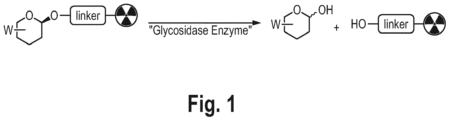
- a radiolabelled glycosidase substrate i.e. a compound of the present invention
- a glycosidase in particular beta-galactosidase
- the present compound is shown with residue W indicative of the moieties forming a hexose derivative, such as a galactose derivative, preferably beta-D-galactose.
- the glycosidase, particularly the beta-galactosidase is overexpressed and accumulated in senescent cells.
- the radiolabelled alcohol in turn is accumulated in acidic lysosomes and may be detected by a radiology device, such as a PET/CT device.
- the compounds of the present invention may be generally prepared by the route indicated in reaction scheme I.
- reaction scheme I generation of compound 5 is shown.
- Compound 5 does not exhibit a radioactive label, i.e. F is 19 F.
- Reaction I is conducted with HBF 4 , NaNO 2 at a temperature of 0°C.
- the yield of compound 2 is 63% w/w.
- Reaction II is conducted with Ag 2 CO 3 and at a temperature of 0°C.
- the yield of compound 4 is between 40 to 60% w/w.
- Reaction III is conducted with NaOMe and MeOH at a temperature in the range from 20 to 25°C followed by reaction IV in presence of amberlite IR 120 .
- reaction II is conducted with Ag 2 CO 3 at a temperature of 0°C.
- Reaction VI is conducted with Ag 2 CO 3 at a temperature of 0°C.
- Reaction V is conducted with 18 F - and DMSO at a temperature of 150°C for 5 min.
- Reaction VI is conducted with NaOMe/ MeOH, or MeOH, Et 3 N, H 2 O (10:1 :1)
- the compounds of the present invention show a valuable range of pharmalogical effects which could not have been predicted. They are capable of marking senescent cells in vitro and in vivo. Particularly, in vivo marking is made to such an extent that senescent cells may be unambiguously identified in course of a surgical procedure which in turn allows targeted elimination of such cells, particularly cancer cells.
- Optimized radio synthesis utilizes a TRACERlab FX N Pro (GE). 18 F is produced as hydrofluoric acid (HF) using a PETtrace cyclotron (GE). 18 F labelling relied on the nucleophilic substitution of an aromatic nitro group. The synthetic route is described in reaction scheme I.
- the following subcutaneous animal models are used for tracer evaluation.
- HCT116 colorectal cancer cell line
- doxorubicin is used as a chemotherapeutic.
- Senescence is induced in HCT116 xenograft tumors by intravenous (i.v.) administration of doxorubicin (10 mg/kg).
- i.v. intravenous
- doxorubicin 10 mg/kg
- tail vain of the mice 5 days later dynamic PET/MRT scans (1 h) with compound 9 are performed.
- transgenic liver progenitor cell line (Hras) was used for subcutaneous allografts in nude mice.
- the cell line expresses Hras G12V and p53shRNA under doxycycline (doxy) conditions. After the removal of doxycycline, the p53 mRNA can be restored and translated to p53 protein. The high amount of p53 triggers senescence.
- the animals bearing Hras tumors received doxy-water (0,2 mg/ml) for tumor development and 14 days, after removal of doxy-water, the PET/MRT scans are performed with compound 9.
- Example 1 discloses synthesis of compounds according to reaction scheme I.
- TLC analysis indicates the complete consumption of the starting bromide and the formation of a new nonpolar product.
- the solution is filtered through a celite, which is rinsed with DCM (3 x 10 mL). After removing the solvent under reduced pressure, the crude residue is purified directly using silica gel column chromatography, using an increasing gradient of EtOAc in PE. The product 7 afforded is a colorless solid (0.7 g, 63 %).
- Radiolabeling of 7 proceeds readily in DMSO at 150°C. Azeotropically dried [K.2.2.2] + 18 F - fluoride complex is used, producing the acetylated 18 F-labelled intermediate, which is purified using semi-preperative HPLC.
- the tracer was concentrated by trapping onto a C 18 -SPE cartridge, deprotected with NaOH (185 ⁇ L, 2.0 M) to produce tracer 9 and eluted with 10% ethanol in water (3 mL). It is appropriately formulated with HCl (195 ⁇ L, 2.0 M), NaHCO 3 (500 ⁇ L, 1.0 M) and water (5 mL) to ensure subisotonic sodium concentration (0.1 M) and a final pH (7.5) that is biologically tolerated.
- tracer 9 is a substrate of beta-galactosidase
- citrate buffer of pH 5.5 containing commercially available beta-galactosidase (Sigma).
- the reaction is stopped by adding 2 volume equivalents of acetonitrile, followed by 5 minutes of centrifugation.
- the supernatant is examined directly using radio-HPLC.
- the reaction produces the radioactive metabolite with the same retention time as the non-radioactive 2-fluoropyridinol.
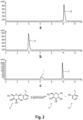
- the expected radioactive metabolite is compared with the authentic non-radioactive standard ( Fig. 2 ).
- compound 10 is radioactive 2-fluoropyridinol ( Fig. 2a )
- compound 9 is tracer 9 ( Fig. 2b )
- compounds 1 and 2 are other compounds of reaction scheme I ( Fig. 2c ).
- Compound 11 is galactose.
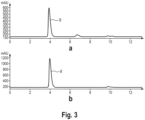
- the tracer 9 is incubated at 37°C in mouse serum to asses its stability. After 1 hour, 2 volume equivalents of acetonitrile are added and the mixture is centrifuged for 5 minutes. The supernatant is examined directly using radio-HPLC. Serum stability of tracer 9 after 1 h ( Fig. 3a ) vs tracer 9 ( Fig. 3b ) is derivable from Fig. 3 . The experiment reveals a few minor radioactive metabolites, but tracer's integrity remains largely intact.
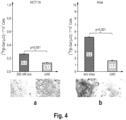
- HCT116 Fig. 4a
- Hras cells Fig. 4b
- the cells are measured in a gamma-counter, with the activity normalized to the number of cells used. In both cases, the senescent cells show significantly higher uptake compared to the controls.
- the PET-tracer is tested in two different models in vitro.
- HCT116 cells senescence is induced by overnight incubation with doxorubicin, followed by 4 days of culture under normal conditions. Senescence in a HRas driven liver progenitor cell line with a doxycycline regulatable p53-specific shRNA. After induction of senescence, both cell lines are incubated with 3.7 - 7.4 MBq of tracer for 50 minutes. The cells are then washed, counted and measured in a gamma counter. The activity taken up by the cells is analyzed and normalized to a million cells.
- mice bearing s.c. HCT116 or HRas driven liver progenitor cells are treated with doxorubicin (10 mg/Kg bodyweight) and imaged 4 days after the onset of senescence.
- Mice bearing Hras driven tumor are supplied with doxycycline in their drinking water, which has been later removed to induce senescence. After induction of senescence, the tracer is administered i.v. and PET scans are performed. The %ID/cc and tumor-to-muscle ratios are determined through quantitative analysis of the PET data, permitting evaluation of the tracers.
- Fig. 5 indicates that tracer 9 shows higher uptake in senescent vs control HCT116 tumors. Both %ID/cc and TMR are higher in senescent vs control tumors.
- the excised tumors are subjected to ex vivo analyses. Autoradiography confirmed findings, showing higher tracer uptake in the senescent tumor section vs control. Senescent tumor slices also showed higher X-Gal staining than control sections.
- Fig. 6 indicates that tracer 9 shows higher uptake in senescent vs control HRas tumors. Both %ID/cc and TMR are higher in senescent vs control tumors.
- the excised tumors are subjected to ex vivo analyses. Autoradiography confirmed findings, showing higher tracer uptake in the senescent tumor section vs control. Senescent tumor slices also show higher X-Gal staining than control sections. The nonsenescent tumor expresses GFP, which can be visualized with optical imaging.
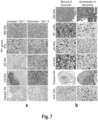
- Fig. 7 shows immunohistochemical staining from HCT116 ( Fig. 7a ) and HRas ( Fig. 7b ) driven tumor models. In both cases, immunohistochemical analysis was performed and reveals an increase of the expected senescence markers HP1 ⁇ and p53. The Hras driven tumors also show high expression of ki67. The low abundance of caspase-3 in both tumor models suggests that apoptosis is not a key contributor to the tumors status and confirms assertion of senescence.
Landscapes
- Chemical & Material Sciences (AREA)
- Health & Medical Sciences (AREA)
- Life Sciences & Earth Sciences (AREA)
- Organic Chemistry (AREA)
- Molecular Biology (AREA)
- Engineering & Computer Science (AREA)
- General Health & Medical Sciences (AREA)
- Biochemistry (AREA)
- Biotechnology (AREA)
- Immunology (AREA)
- Physics & Mathematics (AREA)
- Medicinal Chemistry (AREA)
- Genetics & Genomics (AREA)
- Hematology (AREA)
- Biomedical Technology (AREA)
- Urology & Nephrology (AREA)
- Proteomics, Peptides & Aminoacids (AREA)
- Public Health (AREA)
- Veterinary Medicine (AREA)
- Animal Behavior & Ethology (AREA)
- Epidemiology (AREA)
- Pharmacology & Pharmacy (AREA)
- Optics & Photonics (AREA)
- Analytical Chemistry (AREA)
- Food Science & Technology (AREA)
- Tropical Medicine & Parasitology (AREA)
- Pathology (AREA)
- General Physics & Mathematics (AREA)
- Microbiology (AREA)
- Physiology (AREA)
- Cell Biology (AREA)
- Medicines Containing Antibodies Or Antigens For Use As Internal Diagnostic Agents (AREA)
- Pharmaceuticals Containing Other Organic And Inorganic Compounds (AREA)
- Nuclear Medicine (AREA)
- Investigating Or Analysing Biological Materials (AREA)
- Saccharide Compounds (AREA)
Description
- The present invention relates to compounds useful for visualizing cell senescence in vitro and in vivo, the preparation of said compounds and their use. In particular, the present invention pertains to novel hexose and particularly galactose derivatives which are useful as senescence tracers in vitro and in vivo.
- Cell senescence is the biological process by which cells exit the growth cycle. Cell senescence was first characterized in fibroblasts, which could only be subjected to a limited number of passages, before growth became permanently arrested. This phenomenon is named the Hayflick limit and serves to explain the physiological course of aging. It is accompanied by distinct change in metabolic pathways (Roninson, E.B., Tumor Cell Senescence in Cancer Treatment, Cancer Res., 2003, 63:2705-2715).
- Senescent cells exhibit a senescence associated secretory phenotype, containing pro-inflammatory cytokines and growth factors. In certain instances, the removal of senescent tissues can convey great benefits to a patient. Senescence is recognized to play an important role in cancer treatment and therapy resistance. Treatment-associated senescence marks as stable clinical end point, and thus can be a measurement of chemotherapeutic success. The detection of senescence cells might also offer diagnostic opportunities for detecting pre-neoplastic lesions (Roninson, E.B., Tumor Cell Senescence in Cancer Treatment, Cancer Res., 2003, 63:2705-2715;and Campisi, J. and d'Adda di Fagagna, F., Cellular Senescence: when bad things happen to good cells, Nature Reviews Molecular Cell Biology, 2007, 8:729-740).
- The most widely used surrogate marker for senescence cells is the senescence-associated beta-galactosidase (Roninson, E.B., Tumor Cell Senescence in Cancer Treatment, Cancer Res., 2003, 63:2705-2715). Such beta-galactosidase substrates have, however, the drawback that they merely may be used ex vivo and in vitro for following beta-galactosidase expression. Sofie Gelen et al: "Synthesis and Evaluation of 18F- and 11C-Labeled Phenyl-Galactopyranosides as Potential Probes for in Vivo Visualization of LacZ Gene Expression using Positron Emission Tomography", BIOCONJUGATE CHEMISTRY, vol. 19, no. 2, 1 February 2008, pages 441-449 discloses inter alia the compound 3-(2'-[18F]fluoroethoxy)-2-nitrophenyl beta-D-galactopyranoside.
WO 2012/174285 A2 discloses radiolabeled tracers for binding to sodium/glucose co-transporters (SGLTs) and their synthesis. - The present invention seeks to overcome the problems associated with prior art compounds.
- There exists therefore an unmet need for further compounds that can act as tracers for cell senescence which may be used in vitro and in vivo at the same time. There is also a need in developing improved methods in the treatment of disorders related to cell senescence, such as cancer. A further objective of the present invention resides in alternative methods for selectively eliminating senescent cells in vivo. Still a further objective of the present invention is the provision of alternative means for determining the efficiency of cancer treatment.
- The present invention is based on the finding that hexose derivatives, preferably galactoside derivatives and more preferably beta galactoside derivatives, carrying radioactive labels accumulate in senescent cells and can be used to reliably mark and detect said senescent cells both in vitro and in vivo. In vivo detection of senescent cells offers in turn improved access to such cells by surgery or therapy.
- The present invention therefore provides a compound of the formula:
G - S - L,
wherein - G is

and wherein * represents the binding site between G and S, - S is selected from the group consisting of


- L is

- wherein Z is a radioactive detectable label, a radioactive therapeutic residue;
- or a salt thereof, wherein the radioactive detectable label is selected from the group consisting of 11C, 40K, 13N, 15O, 18F, 75Br, 76Br, 82Rb, 68Ga, 64Cu, 62Cu, 89Zr, 123I, 124I, 125I, 131I, 210At, 211At and 111In,
- wherein the radioactive therapeutic residue is selected from the group consisting of 32P, 60Co, 64Cu, 89Sr, 90Y, 177Lu,186Re and 153Sm.
- It has been surprisingly found that the present compounds are highly and selectively enriched in senescent cells. Without wishing to be bound by theory, it is assumed that the rather small size of radioactive detectable labels in comparison to conventional non-radioactive labels, which is often based on the detection of bulky enzymes, such as horseradish peroxidase, alkaline phosphatase, or bulky dye compounds, offers improved access of the present compounds to the cells and the beta-galactosidase's binding site. Furthermore, the use of radioactive labels confers the advantage of highly enhanced sensitivity versus conventional labeling strategies. This is in part due to the high tissue penetration of the resulting gamma photons and very high sensitivity of the radio detectors used. This in turn allows for the denoted compounds to be translatable, in vivo, making them superior to nonradioactive alternatives. The present compounds thereby offer the possibility to quantitatively, selectively and sensitively detect senescent cells, particularly tumors, in vivo. This highly selective enrichment in senescent cells may be used in diagnosis or treatment of senescence related disorders by employing radioactive detectable labels or radioactive therapeutic residues in the present compounds.
- Another advantage resides in the possibility to treat tumors with non-invasive techniques, i.e. by administering the present compounds exhibiting a radioactive therapeutic residue, which are almost exclusively incorporated in tumor tissue. Another advantage of the use of the present compounds resides in that they may be easily adapted to the changing requirements in the clinical field since the present compound may be easily provided with another radioactive detectable label or radioactive therapeutic residue.
- The compounds of the invention may, depending on their structure, exist in stereoisomeric forms (enantiomers, diastereomers). The invention therefore also encompasses the enantiomers or diastereomers and respective mixtures thereof. The stereoisomerically uniform constituents can be isolated in a known manner from such mixtures of enantiomers and/or diastereomers.
- It is clear that the salts preferred for the purposes of the present invention are pharmaceutically acceptable salts of the compounds of the invention. However, also encompassed are salts which are themselves not suitable for pharmaceutical applications but can be used for example for the isolation or purification of the compounds of the invention.
- Salts in general are composed of related numbers of cations and anions so that the product is electrically neutral. It will be appreciated that a respective counterion is subject to the preparation process of the salt and needs not to be expressively mentioned.
- Pharmaceutically acceptable salts as well as the preparation thereof are well-known in the art. Types and preparation of such pharmaceutically acceptable salts may be derived from Stahl, P.H. and Wermuth, C.G., Handbook of Pharmaceutical Salts: Properties, Selection and Use, Weinheim/Zürich: Wiley-VCH/VHCA, 2002.
- Examples of pharmaceutically acceptable salts of the present compounds include salts of inorganic basis like ammonium salts, alkali metal salts, alkaline earth metal salts, salts of organic basis, or salts with basic amino acids. Also included are inorganic acids or salts with acidic amino acids. Preferred pharmaceutically acceptable salts encompass
- It will be appreciated that the compounds of the present invention as well as the salts thereof may be present in form of solvates. In such a case, the present compounds or salts, particularly the pharmaceutically acceptable salts, thereof form in the solid or liquid state a complex by coordination with solvent molecules. Hydrates are a specific form of solvates in which the coordination displays with water.
- If the compounds of the present invention may occur in tautomeric forms, the present invention encompasses all tautomeric forms.
- The term "C1-C5 alkyl" generally refers to branched or straight-chain alkyl, preferably (C1-C4)-alkyl, such as in particular methyl, ethyl, propyl, butyl, isopropyl, isobutyl and tert.-butyl.
- The term "C1-C10 cycloalkyl" generally refers to saturated or partially unsaturated monocyclic or polycyclic ring comprising carbon and hydrogen atoms.
- The term "C1-C10 heterocycloalkyl" means a non-aromatic monocyclic or polycyclic ring comprising carbon and hydrogen atoms and at least one heteroatom, preferably, 1 to 4 heteroatoms selected from nitrogen, oxygen, and sulfur. A heterocycloalkyl group can have one or more carbon-carbon double bonds or carbon-heteroatoms double bonds in the ring as long as the ring is not rendered aromatic by their presence. Examples of heterocycloalkyl groups include aziridinyl, pyrrolidinyl, pyrrolidino, piperidinyl, piperidino, piperazinyl, piperazino, morpholinyl, morpholino, thiomorpholinyl, thiomorpholino, tetrahydrofuranyl, tetrahydrothiofuranyl, tetrahydropyranyl, and pyranyl. Preferably, the heterocycloalkyl group is a monocyclic or bicyclic ring, more preferably, a monocyclic ring, wherein the ring comprises from 2 to 6 carbon atoms and from 1 to 3 heteroatoms. More preferably the molecular weight of a heterocycloalkyl residue has a molecular weight of ≤ 200 g/mol, such as ≤ 150 g/mol, ≤ 120 g/mol or ≤ 100 g/mol.
- The term "substituted" as used herein refers to one or more residues connected to C1-C6 alkyl, C1-C10 cycloalkyl and C1-C10 heterocycloalkyl and/or a modification to the carbon chain by introducing one or more heteroatoms, such as N; S or O. A residue may be furthermore selected from the group consisting of halogen, methyl, ethyl or functional groups, such as a hydroxyl group, amino group or carboxyl group. The overall molecular weight of residues connected to particular C1-C5 alkyl, C1-C10 cycloalkyl or C1-C10 heterocycloalkyl is preferably ≤ 250 g/mol, more preferably ≤ 150 g/mol or ≤ 100 g/mol. Examples of preferred substituted to C1-C5 alkyl residues encompass compounds such as CH2-O-CH2, C2H4-O-CH2, CH2-O-CH2-O-CH2, CH2-O-CH2-O-CH2, C2H4-O-CH2-O-CH2, CH2-O- C2H4-O-CH2, C2H4-O-C2H4-O-CH2, C2H4-O-CH2-O- C2H4, CH2-O-CH2-O-CH2-O-CH2, C2H4-O-CH2-O-CH2-O-CH2, and CH2-O- C2H4-O-CH2-O-CH2.
- The term "halogen" or halo refers to fluorine, chlorine, bromine or iodine; preferably fluorine, chlorine or bromine. In some embodiments the term halogen or halo preferably refers to 76Br, 75Br, 19F and 18F.
- The term "methyl halogen" refers to a methyl group having a single fluorine, chlorine, bromine or iodine, or two or three halogens which are independently selected from fluorine, chlorine, bromine or iodine. In some embodiments the methyl halogen exhibits preferably 76Br, 75Br, 19F and 18F.
- The term "radioactive detectable label" encompasses for instance 11C, 40K, 13N, 15O, 18F, 75Br, 76Br, 82Rb, 68Ga, 64Cu, 62Cu, 123I, 124I, 125I, 131I, 210At, 211At and 111In. Preferred radioactive detectable labels are 11C, 18F, 68Ga, 64Cu, and 124I. More preferred is 18F. The radioactive detectable label allows quantitatively and/or qualitatively assessment of senescent cells as well as their location particularly in vivo. Hence, senescent tissue may be properly identified and for instance surgically removed with high selectivity.
- Alternatively, a complex containing such an atom in a coordinated form is encompassed. In such a case the complex may be also denominated a chelator coordinating a radioactive detectable label. A (coordination) complex consists of a central atom or ion, which is usually metallic, and a surrounding array of ligands or complexing agents. Usually the central atom or ion is the radioactive detectable label. Residue Z therefore encompasses the central atom or ion as well as the surrounding array of ligands or complexing agents. Examples of such chelators coordinating a radioactive detectable label are well known to the skilled person. Preferably such a chelator is an amino acid, preferably a proteinogenic/ natural amino acid, such as histidine. Other suitable examples of chelators comprise DOTA, NOTA, NODAGA and desferrioxamine, such as desferrioxamine B.
- The term "radioactive therapeutic residue" as used herein refers to an atom, such as 32P, 60Co, 89Sr, 186Re and 153Sm. Other examples of radioactive therapeutic residues encompass 125I and 131I, which have been already mentioned as examples for radioactive detectable labels, as well as 86Y, 111In, 177Lu and 67Cu. Alternatively, a complex containing such an atom in a coordinated form is encompassed. In such a case the complex may be also denominated a chelator coordinating a radioactive therapeutic residue. The use of the present compounds with therapeutic residues in treatment of disorders associated with cell senescence, particularly cancer, combines the advantage of target selectivity with that of being systemic, as with chemotherapy, and it may be used as part of a therapeutic strategy with curative intent or for disease control and palliation.
- It will be appreciated that respective radioactive therapeutic residues may be generated and attached to the present compounds in the same manner as radioactive detectable labels. Preferably, therapeutic residue and detectable label are identical permitting diagnosis and treatment of disorders associated with cell senescence, particularly cancer.
- In formulae, the group which is represented by G, the end point of the line adjacent to which there is a *, is not a carbon atom or a CH2 group but rather a component of the bond to the atom to which G is attached.
- In its broadest form, group G having the formula

- R is selected from H, substituted or unsubstituted C1 to C5 alkyl, substituted or unsubstituted C1 to C10 cycloalkyl, or substituted or unsubstituted C1 to C10 heterocycloalkyl, as indicated above. In case R is substituted or unsubstituted C1 to C5 alkyl, preferably unsubstituted C1 to C5 alkyl, more preferably methyl, prolonged retention time of the present compound in comparison to R = H may be expected due to an impeded enzymatic cleavage. Said compounds may be therefore present in higher levels within senescent cells.
- In formulae, the group which is represented by S, the end point of the line adjacent to which there is a * or #, is not a carbon atom or a CH2 group but rather a component of the bond to the atom to which S is attached.
- In formulae, the group which is represented by L, the end point of the line adjacent to which there is a #, is not a carbon atom or a CH2 group but rather a component of the bond to the atom to which L is attached. Residue L may be either Z, wherein Z is a radioactive detectable label, a radioactive therapeutic residue, a chelator coordinating a radioactive detectable label or a chelator coordinating a radioactive therapeutic residue. In said case, Z is directly attached to S. Alternatively, residue Z attached via a spacer to S. In this case the spacer has the formula

- In the context of the present invention, the expression "have/contain" or "having/containing" designates an open enumeration and does not exclude other components apart from the expressly named components.
- In the context of the present invention, the expression "consists of" or "consisting of" designates a closed enumeration and excludes any other components apart from the expressly named components.
- In the context of the present invention, the expression "essentially consists of" or "essentially consisting of" designates a partially closed enumeration and designates preparations which apart from the named components only have such further components as do not materially alter the character of the preparation according to the invention.
- When in the context of the present invention a preparation is described with the use of the expression "have" or "having", this expressly includes preparations which consist of said components or essentially consist of said components.
- Radiology as used herein refers to any kind of apparatus or device, capable of producing a visual signal or an image upon detecting the present residue Z, i.e. a radioactive detectable label, a radioactive therapeutic residue, a chelator coordinating a radioactive detectable label or a chelator coordinating a radioactive therapeutic residue. Preferably the apparatus permits localization of residue Z within a mammal. Non limiting examples of radiology include positron-emissions-tomography (PET), which produces a three-dimensional image or map of functional processes in the body. The system detects pairs of gamma rays emitted indirectly by a positron-emitting radioisotope, which is introduced into the body on a metabolically active molecule, i.e. a substrate to beta-galactosidase. Images of metabolic activity in space are then reconstructed by computer analysis, which may be supported by a CT X-ray scan performed on the patient in the same session, preferably at the same time, and in the same device in order to obtain a three dimensional image enabling localization of tissue in which the prodrug is enriched. In positron emission a proton is converted via the weak force to a neutron, a positron and a neutrino. Isotopes, which undergo this so called beta plus decay, thereby emit positrons. Suitable positron-emitting radionuclides for this purpose include 11C, 40K, 13N, 15O, 18F, 75Br, 76Br, 89Zr, 82Rb, 68Ga, 62Cu and 64Cu, of which 11C and 18F are preferred. Other useful radionuclides include 123I, 124I, 125I, 131I, 210At, 211At and 111In. The present compounds may be also labeled with technetium and rhenium isotopes using known chelating complexes. Methods for the generation of radionuclides as well as radio labeling of compounds are well known to the skilled person.
US 2007/0273308 andWO 2007/122488 pertain e.g. to the production of radionuclides. Radiolabeling is for example outlined inWO 2007/148089 andWO 2007/148083 . - PET is preferably coupled with a computer tomography (CT). Such PET/CT devices enable quantitative detection and allocation of the signals detected to particular tissues, i.e. a localization of the radionuclides employed and hence of the prodrugs attached thereto. Function and operation of PET/CT as well as devices are well known to the skilled person. Other suitable techniques comprise single photon emission computed tomography (SPECT) and techniques based on nuclear magnetic resonance (NMR) wherein the quantum mechanical magnetic properties of an atom's nucleus is detected.
- The radiology device employed is preferably a PET device, more preferably a PET/CT device or a PET/MR device.
- In the Figures
-
Fig. 1 shows a motive explaining functioning of a radio-labelled hexose substrate; -
Fig. 2 shows thetracer 9 as a substrate of commercially available beta-galactosidase; -
Fig. 3 shows stability of thetracer 9 under in-vivo conditions; -
Fig. 4 shows in vitro validation of tracer in HCT116 and Hras cells; -
Fig. 5 shows uptake oftracer 9 in senescent versus control HCT116 tumors; -
Fig. 6 showstracer 9 uptake in senescent versus control Hras tumors; and -
Fig. 7 shows immunohistochemical staining from (a) HCT116 and (b) Hras driven tumor models. - G is

- R is H, S is selected from the group consisting of


Z is preferably 18F. - R is H, S is selected from the group consisting of


L is
- According to a preferred embodiment of the present invention the compound is

- According to another preferred embodiment of the present invention the radioactive detectable label is selected from the group consisting of 11C, 18F, 68Ga, 64Cu, and 124I, preferably 18F.
- According to a preferred embodiment of the present invention the present compound is for use in surgery. The present compound is preferably employed in combination with at least one inert, non-toxic, pharmaceutically suitable excipient.
- According to a preferred embodiment of the present invention the present compound is for use as a medicament. The present compound is preferably employed in combination with at least one inert, non-toxic, pharmaceutically suitable excipient.
- According to another preferred embodiment of the present invention the present compound for use in a method for detecting cell senescence.
- According to another preferred embodiment of the present invention the present compound is for use in a method of determining the efficiency of cancer treatment.
- The cancer to be diagnosed and/or treated by the present compounds may be selected from prostate carcinoma, colorectal carcinoma, breast cancer, lung tumors, tumors of the male or female genitourinary system, malign melanoma, cervix and throat tumor /cervical tumor, malign lymphoma, neoplasia of the hematopoietic system and musculoskeletal tumors.
- According to still another preferred embodiment of the present invention the method for detecting cell senescence comprises contacting cells with the present compound, the method is performed in vitro.
- According to still another preferred embodiment of the present invention the method for determining the efficiency of cancer treatment comprises contacting cells with the present compound, the method is performed in vitro.
- The above methods can be performed both in vivo, e.g. in a human patient for monitoring the efficiency of cancer treatment, or in vitro, e.g. for screening for new medicaments.
- The present compound will preferably be administered parenterally.
- For this administration route, the present compounds may be administered in suitable administration forms. Parenteral administration can take place with avoiding of an absorption step (e.g. intravenous, intraarterial, intracardiac, intraspinal or intralumbar) or with inclusion of an absorption step (e.g. intramuscular, subcutaneous, intracutaneous, percutaneous or intraperitoneal). Administration forms suitable for parenteral administration are, inter alia, preparations for injection and infusion in the form of solutions, suspensions, emulsions, lyophilisates or sterile powders.
- The present compounds may be converted into the stated administration forms. This can take place in a manner known per se by mixing with inert, non-toxic, pharmaceutically acceptable excipients. These excipients include inter alia carriers (for example microcrystalline cellulose, lactose, mannitol), solvents (e.g. liquid polyethylene glycols), emulsifiers and dispersants or wetting agents (for example sodium dodecyl sulfate, polyoxysorbitan oleate), binders (for example polyvinylpyrrolidone), synthetic and natural polymers (for example albumin), stabilizers (e.g. antioxidants such as, for example, ascorbic acid), colors (e.g. inorganic pigments such as, for example, iron oxides) and taste and/or odor corrigents.
- The principle underlying the present invention is generally shown in
Fig. 1 . A radiolabelled glycosidase substrate, i.e. a compound of the present invention, is converted by a glycosidase, in particular beta-galactosidase, to the corresponding sugar and the radiolabelled alcohol. The present compound is shown with residue W indicative of the moieties forming a hexose derivative, such as a galactose derivative, preferably beta-D-galactose. The glycosidase, particularly the beta-galactosidase, is overexpressed and accumulated in senescent cells. The radiolabelled alcohol in turn is accumulated in acidic lysosomes and may be detected by a radiology device, such as a PET/CT device. - The compounds of the present invention may be generally prepared by the route indicated in reaction scheme I.

- In the upper row of reaction scheme I, generation of
compound 5 is shown.Compound 5 does not exhibit a radioactive label, i.e. F is 19F. Reaction I is conducted with HBF4, NaNO2 at a temperature of 0°C. The yield ofcompound 2 is 63% w/w. Reaction II is conducted with Ag2CO3 and at a temperature of 0°C. The yield ofcompound 4 is between 40 to 60% w/w. Reaction III is conducted with NaOMe and MeOH at a temperature in the range from 20 to 25°C followed by reaction IV in presence of amberlite IR120. - In the lower row of reaction scheme I, generation of compound 9 (tracer 9), a compound according to the present invention, is shown. Reaction II is conducted with Ag2CO3 at a temperature of 0°C. Reaction VI is conducted with Ag2CO3 at a temperature of 0°C. Reaction V is conducted with 18F- and DMSO at a temperature of 150°C for 5 min. Reaction VI is conducted with NaOMe/ MeOH, or MeOH, Et3N, H2O (10:1 :1)
- The compounds of the present invention show a valuable range of pharmalogical effects which could not have been predicted. They are capable of marking senescent cells in vitro and in vivo. Particularly, in vivo marking is made to such an extent that senescent cells may be unambiguously identified in course of a surgical procedure which in turn allows targeted elimination of such cells, particularly cancer cells.
- It is to be understood that the above description is intended to be illustrative only and not restrictive. Many embodiments will be apparent to those skilled in the art upon reviewing the above description. By way of example, the invention has been described preliminarily with reference to synthesis as well as diagnosis of
tracer 9. It should be clear that all kinds of suitable detectable labels and therapeutic residues may be synthesized and attached to the present compounds. The scope of the invention should, therefore, be determined not with reference to the above description, but should instead be determined with reference to the appended claims, along with the full scope of equivalents to which such claims are entitled. - The percentage data in the following tests and examples are, unless indicated otherwise, percentages by weight; parts are parts by weight. Solvent ratios, dilution ratios and concentration data of liquid/liquid solutions are based in each case on volume. The statement "w/v" means "weight/volume". Thus, for example, "10% w/v" means: 100 ml of solution or suspension contain 10 g of substance.
- Optimized radio synthesis utilizes a TRACERlab FX N Pro (GE). 18F is produced as hydrofluoric acid (HF) using a PETtrace cyclotron (GE). 18F labelling relied on the nucleophilic substitution of an aromatic nitro group. The synthetic route is described in reaction scheme I.
- The following subcutaneous animal models are used for tracer evaluation.
- A xenograft model of colorectal cancer cell line (HCT116) with therapy induced senescence, doxorubicin is used as a chemotherapeutic. Senescence is induced in HCT116 xenograft tumors by intravenous (i.v.) administration of doxorubicin (10 mg/kg). Through tail vain of the mice, 5 days later dynamic PET/MRT scans (1 h) with
compound 9 are performed. - As the second model, transgenic liver progenitor cell line (Hras) was used for subcutaneous allografts in nude mice. The cell line expresses HrasG12V and p53shRNA under doxycycline (doxy) conditions. After the removal of doxycycline, the p53 mRNA can be restored and translated to p53 protein. The high amount of p53 triggers senescence. The animals bearing Hras tumors received doxy-water (0,2 mg/ml) for tumor development and 14 days, after removal of doxy-water, the PET/MRT scans are performed with
compound 9. - Example 1 discloses synthesis of compounds according to reaction scheme I.
- (2R,3S, 4S, 5R,6S)-2-(acetoxymethyl)-6-((2-fluoropyridin-3-yl)oxy)tetrahydro-2H-pyran-3,4,5-triyl triacetate, 4: A solution comprising 2,3,4,6-Tetra-O-acetyl-α-D-galactopyranosyl bromide 3 (1.0 g, 2.4 mmol), Ag2CO3 (0.74 g, 2.7 mmol), MS-4Å (5 g) and 2-fluoro-pyridin-3-ol 5 (0.33 g, 2.9 mmol) in anhydrous DCM (15 mL) is stirred overnight, in the dark, at room temperature, under an argon atmosphere. TLC analysis indicated the complete consumption of the starting bromide and the formation of a new nonpolar product. The solution is filtered through a celite, which was rinsed with DCM (3 x 10 mL). After removing the solvent under reduced pressure, the crude residue is purified directly using silica gel column chromatography, using an increasing gradient of EtOAc in PE. The product afforded is a colorless solid (0.51 g, 51 %).
- TLC: R f = 0.5 (EtOAc: PE = 1: 1); 1H NMR (600 MHz, Chloroform-d) δ 7.94 (d, J = 4.6 Hz, 1H, ArH), 7.58 (t, J = 7.8 Hz, 1H, ArH), 7.13 (dd, J = 7.8, 4.8 Hz, 1H, ArH), 5.50 (dd, J = 10.5, 7.9 Hz, 1H), 5.45 (d, J = 3.4 Hz, 1H), 5.10 (dd, J = 10.5, 3.4 Hz, 1H), 4.96 (d, J = 7.9 Hz, 1H), 4.22 (dd, J = 11.4, 6.8 Hz, 1H), 4.15 (dd, J = 11.4, 6.3 Hz, 1H), 4.01 (td, J = 6.8, 1.1 Hz, 1H), 2.19 (s, 3H, OAc), 2.11 (s, 3H, OAc), 2.04 (s, 3H, OAc), 2.02 (s, 3H, OAc); 13C NMR (151 MHz, CDCl3) δ 170.26 (COquart), 170.13 (COquart), 170.04 (COquart), 169.44 (COquart), 154.75 (d, J = 239.9 Hz), 141.59 (d, J = 13.4 Hz, ArC), 139.49 (d, J = 25.5 Hz, ArC), 130.22 (d, J = 3.5 Hz, ArC), 121.85 (d, J = 4.3 Hz, ArC), 121.23 (CH), 101.12 (CH), 71.38 (CH), 70.5 (CH), 68.29 (CH), 66.70 (CH), 61.17 (CH2), 21.03 (OAc), 20.63 (OAc), 20.61 (OAc), 20.55 (OAc).
- (2S,3R,4S,5R,6R)-2-((2-fluoropyridin-3-yl)oxy)-6-(hydroxyl-methyl)tetrahydro-2H-pyran-3,4,5-triol, 5: Catalytic sodium methoxide is added to a solution of 4 (0.5 g, 1.1 mmol) in dry methanol (5 mL). The solution is stirred at room temperature until TLC analysis revealed that the hydrolysis of the acetylated sugar is complete. Acetic acid (0.2 mL) is added, after which the solvents are removed under reduced pressure. The remaining solid was of high purity, but subsequent recrystallization from methanol afforded 6 as a highly pure crystalline solid (225 mg, 73 %).
- TLC: R f = 0.25 (EtOAc: MeOH = 9: 1); 1H NMR (600 MHz, Deuterium Oxide) δ 7.79 (dd, J = 8.1, 5.0 Hz, 1H, ArH), 7.72 (t, J = 8.9, 8.1 Hz, 1H, ArH), 7.26 (dd, J = 8.0, 5.0 Hz, 1H, ArH), 5.06 (d, J = 7.8 Hz, 1H), 3.95 (dd, J = 3.4, 1.8 Hz, 1H), 3.84 - 3.78 (m, 2H), 3.75 - 3.70 (m, 3H), 1.85 (dd, J = 2.3, 1.1 Hz, 1H); 13C NMR (151 MHz, Deuterium Oxide) δ 153.70 (d, J = 238.5 Hz, CF), 141.49, 139.72 (d, J = 23.9 Hz, ArC), 139.29 (d, J = 11.6 Hz, ArC), 128.11 (d, J = 3.7 Hz, ArC), 122.75 (d, J = 4.2 Hz, ArC), 101.24 (CH), 75.68 (CH), 72.41 (CH), 70.31 (CH), 68.36 (CH), 60.68 (CH2); HRMS (ESI): [M + Na ]+ (theor.) = 298,06974, measured = 298,06998
- (2R,3S,4S,5R,6S)-2-(acetoxymethyl)-6-((2-nitropyridin-3-yl)oxy)tetrahydro-2H-pyran-3,4,5-triyl triacetate, 7: A solution comprising 2,3,4,6-Tetra-O-acetyl-α-D-galactopyranosyl bromide 3 (1.0 g, 2.4 mmol), Ag2CO3 (1.3 g, 4.8 mmol), MS-4Å (5 g) and 2-nitro-pyridin-3-ol 6 (1.4 g, 9.7 mmol) in anhydrous DCM (10 mL) is stirred over night, in the dark, at room temperature, under an argon atmosphere. TLC analysis indicates the complete consumption of the starting bromide and the formation of a new nonpolar product. The solution is filtered through a celite, which is rinsed with DCM (3 x 10 mL). After removing the solvent under reduced pressure, the crude residue is purified directly using silica gel column chromatography, using an increasing gradient of EtOAc in PE. The
product 7 afforded is a colorless solid (0.7 g, 63 %). - TLC: R f = 0.65 (EtOAc: PE = 4: 1); 1H NMR (600 MHz, Chloroform-d) δ 8.26 (dd, J = 4.6, 1.4 Hz, 1H, ArH), 7.82 (dd, J = 8.4, 1.4 Hz, 1H, ArH), 7.54 (dd, J = 8.4, 4.6 Hz, 1H, ArH), 5.51 (dd, J = 10.5, 7.9 Hz, 1H), 5.47 (dd, J = 3.4, 1.2 Hz, 1H), 5.10 (dd, J = 10.5, 3.4 Hz, 1H), 5.06 (d, J = 7.9 Hz, 1H), 4.25 (dd, J = 11.4, 6.1 Hz, 1H), 4.16 (dd, J = 11.4, 6.1 Hz, 1H), 4.06 (ddd, J = 6.1, 6.1, 1.3 Hz, 1H), 2.19 (s, 3H, OAc), 2.14 (s, 3H, OAc), 2.06 (s, 3H, OAc), 2.01 (s, 3H, OAc); 13C NMR (151 MHz, CDCl3) δ 170.21 (COquart), 170.04 (COquart), 170.01 (COquart), 169.32 (COquart), 150.42 (ArCquart), 144.25 (ArCquart), 142.91 (ArC), 129.86 (ArC), 128.29 (ArC), 100.94 (CH), 71.65 (CH), 70.31 (CH), 67.64 (CH), 66.58 (CH), 61.26 (CH2), 20.62 (OAc), 20.60 (OAc), 20.56 (OAc), 20.51 (OAc); HRMS (ESI): [M + Na]+ (theor.) = 493,10649 measured = 493,10686.
- Radiolabeling of 7 proceeds readily in DMSO at 150°C. Azeotropically dried [K.2.2.2]+ 18F- fluoride complex is used, producing the acetylated 18F-labelled intermediate, which is purified using semi-preperative HPLC. The tracer was concentrated by trapping onto a C18 -SPE cartridge, deprotected with NaOH (185 µL, 2.0 M) to produce
tracer 9 and eluted with 10% ethanol in water (3 mL). It is appropriately formulated with HCl (195 µL, 2.0 M), NaHCO3 (500 µL, 1.0 M) and water (5 mL) to ensure subisotonic sodium concentration (0.1 M) and a final pH (7.5) that is biologically tolerated. The tracer is produced with a radiochemical purity of >98%, the decay corrected yield was 18.6+/- 2.5% (n=10) with a molar radioactivity of 18.8±3.5 GBq*µmole-1 (n=5). - To assess whether
tracer 9 is a substrate of beta-galactosidase, it is incubated at 30°C for 30 minutes in citrate buffer of pH 5.5 containing commercially available beta-galactosidase (Sigma). The reaction is stopped by adding 2 volume equivalents of acetonitrile, followed by 5 minutes of centrifugation. The supernatant is examined directly using radio-HPLC. The reaction produces the radioactive metabolite with the same retention time as the non-radioactive 2-fluoropyridinol. The expected radioactive metabolite is compared with the authentic non-radioactive standard (Fig. 2 ). In particular,compound 10 is radioactive 2-fluoropyridinol (Fig. 2a ),compound 9 is tracer 9 (Fig. 2b ), and compounds 1 and 2 are other compounds of reaction scheme I (Fig. 2c ). Compound 11 is galactose. - The
tracer 9 is incubated at 37°C in mouse serum to asses its stability. After 1 hour, 2 volume equivalents of acetonitrile are added and the mixture is centrifuged for 5 minutes. The supernatant is examined directly using radio-HPLC. Serum stability oftracer 9 after 1 h (Fig. 3a ) vs tracer 9 (Fig. 3b ) is derivable fromFig. 3 . The experiment reveals a few minor radioactive metabolites, but tracer's integrity remains largely intact. - In-vitro evaluation of
compound 9 is shown inFig. 4 . HCT116 (Fig. 4a ) and Hras cells (Fig. 4b ) are treated with 100-200 µCi of tracer and incubated for 50 minutes. The cells are measured in a gamma-counter, with the activity normalized to the number of cells used. In both cases, the senescent cells show significantly higher uptake compared to the controls. - The PET-tracer is tested in two different models in vitro. In HCT116 cells senescence is induced by overnight incubation with doxorubicin, followed by 4 days of culture under normal conditions. Senescence in a HRas driven liver progenitor cell line with a doxycycline regulatable p53-specific shRNA. After induction of senescence, both cell lines are incubated with 3.7 - 7.4 MBq of tracer for 50 minutes. The cells are then washed, counted and measured in a gamma counter. The activity taken up by the cells is analyzed and normalized to a million cells.
- In vivo tests are performed in nude mice bearing s.c. HCT116 or HRas driven liver progenitor cells. Mice bearing HCT116 tumors are treated with doxorubicin (10 mg/Kg bodyweight) and imaged 4 days after the onset of senescence. Mice bearing Hras driven tumor are supplied with doxycycline in their drinking water, which has been later removed to induce senescence. After induction of senescence, the tracer is administered i.v. and PET scans are performed. The %ID/cc and tumor-to-muscle ratios are determined through quantitative analysis of the PET data, permitting evaluation of the tracers.
- In vitro senescent HCT116 cells show an uptake of 11 kBq/1 mio cells, while the uptake in non-senescent control cells is only 4 kBq/1 mio cells. In the HRas driven liver progenitor model senescent cells show an uptake of 192 kBq/1 mio cells and is significantly increased in comparison to non-senescent cells (63 kBq/1 mio cells).
- The in vivo tracer uptake in senescent and non-senescent HCT116 tumors (
Fig. 5 ) is 1.7+/-0.7 (n=7) vs 1.1+/-0.4 (n=5) %ID/cc respectively; the respective TMR values are 1.7 and 1.1. In particular,Fig. 5 indicates thattracer 9 shows higher uptake in senescent vs control HCT116 tumors. Both %ID/cc and TMR are higher in senescent vs control tumors. The excised tumors are subjected to ex vivo analyses. Autoradiography confirmed findings, showing higher tracer uptake in the senescent tumor section vs control. Senescent tumor slices also showed higher X-Gal staining than control sections. - In the HRas driven model (
Fig. 6 ), the tracer uptake in senescent tumors is significantly increased to that of control tumors (1.5+/-0.3 (n=16) vs 0.9+/-0.3 (n=11) %ID/cc); the TMR is subject to a similar trend, with respective values of 2.1 and 1.2.Fig. 6 indicates thattracer 9 shows higher uptake in senescent vs control HRas tumors. Both %ID/cc and TMR are higher in senescent vs control tumors. The excised tumors are subjected to ex vivo analyses. Autoradiography confirmed findings, showing higher tracer uptake in the senescent tumor section vs control. Senescent tumor slices also show higher X-Gal staining than control sections. The nonsenescent tumor expresses GFP, which can be visualized with optical imaging. - Induction of senescence is confirmed by ex vivo beta-gal staining and immunohistology of Ki67, Caspase3, HP1γ, p53 and p16 (
Fig. 7). Fig. 7 shows immunohistochemical staining from HCT116 (Fig. 7a ) and HRas (Fig. 7b ) driven tumor models. In both cases, immunohistochemical analysis was performed and reveals an increase of the expected senescence markers HP1γ and p53. The Hras driven tumors also show high expression of ki67. The low abundance of caspase-3 in both tumor models suggests that apoptosis is not a key contributor to the tumors status and confirms assertion of senescence.
Claims (9)
- A compound of the formula:
G - S - L,
whereinG is and wherein * represents the binding site between G and S,S is selected from the group consisting of

 L is
L is wherein Z is a radioactive detectable label, a radioactive therapeutic residue; or a salt thereof,wherein the radioactive detectable label is selected from the group consisting of 11C, 40K, 13N, 15O, 18F , 75Br, 76Br, 82Rb, 68Ga, 64Cu, 62Cu, 89Zr, 123I, 124I, 125I, 131I, 210At, 211At and 111In,wherein the radioactive therapeutic residue is selected from the group consisting of 32P, 60Co, 64Cu, 89Sr, 90Y, 177Lu, 186Re and 153Sm.
 - The compound according to claim 1, wherein the compound is

- The compound according to any of the preceding claims, wherein the radioactive detectable label is selected from the group consisting of 11C, 18F, 68Ga, 64Cu, and 124I, preferably 18F.
- The compound according to claim 1, for use in surgery, wherein Z is the radioactive detectable label; or the salt thereof.
- The compound according to claim 4 for use as a medicament, wherein Z is the radioactive therapeutic residue; or the salt thereof.
- The compound according to claims 1 to 3 for use in a method for detecting cell senescence.
- The compound according to any one of claims 1 to 3 for use in a method of determining the efficiency of cancer treatment.
- Method for detecting cell senescence comprising contacting cells with a compound according to any one of claims 1 to 3, characterised in that the method is performed in vitro.
- Method for determining the efficiency of cancer treatment comprising contacting cells with a compound according to any one of claims 1 to 3, characterised in that the method is performed in vitro.
Applications Claiming Priority (2)
| Application Number | Priority Date | Filing Date | Title |
|---|---|---|---|
| DE102017103600.8A DE102017103600A1 (en) | 2017-02-22 | 2017-02-22 | Radioactively labeled beta-galactosidase substrate for PET imaging of senescence |
| PCT/EP2018/054356 WO2018153966A1 (en) | 2017-02-22 | 2018-02-22 | Radiolabeled beta-galactosidase substrate for pet imaging of senescence |
Publications (3)
| Publication Number | Publication Date |
|---|---|
| EP3585792A1 EP3585792A1 (en) | 2020-01-01 |
| EP3585792B1 true EP3585792B1 (en) | 2023-06-21 |
| EP3585792C0 EP3585792C0 (en) | 2023-06-21 |
Family
ID=61386829
Family Applications (1)
| Application Number | Title | Priority Date | Filing Date |
|---|---|---|---|
| EP18707677.3A Active EP3585792B1 (en) | 2017-02-22 | 2018-02-22 | Radiolabeled beta-galactosidase substrate for pet imaging of senescence |
Country Status (7)
| Country | Link |
|---|---|
| US (1) | US20190381198A1 (en) |
| EP (1) | EP3585792B1 (en) |
| JP (1) | JP6878608B2 (en) |
| CN (1) | CN110382513B (en) |
| DE (1) | DE102017103600A1 (en) |
| ES (1) | ES2956105T3 (en) |
| WO (1) | WO2018153966A1 (en) |
Families Citing this family (1)
| Publication number | Priority date | Publication date | Assignee | Title |
|---|---|---|---|---|
| DE102023106170A1 (en) * | 2023-03-13 | 2024-09-19 | Eberhard Karls Universität Tübingen, Körperschaft des öffentlichen Rechts | New generation of senescence tracers |
Family Cites Families (8)
| Publication number | Priority date | Publication date | Assignee | Title |
|---|---|---|---|---|
| EP1329513B1 (en) * | 1998-08-25 | 2011-12-07 | University of Washington | Rapid quantitative analysis of proteins or protein function in complex mixtures |
| US7781229B2 (en) * | 2004-04-14 | 2010-08-24 | Michigan Diagnostics, Llc | Ultra-sensitive chemiluminescent substrates for enzymes and their conjugates |
| DE102005061560A1 (en) | 2005-12-22 | 2007-07-05 | Siemens Ag | Process for the production of radioactive isotopes for positron emission tomography |
| WO2007122488A2 (en) | 2006-04-20 | 2007-11-01 | Hammersmith Imanet Limited | Radiofluorinated compounds and their preparation |
| EP2368580A1 (en) | 2006-06-21 | 2011-09-28 | Ge Healthcare As | Stabilisation of fluorothymidine precursors |
| EP2029179A2 (en) | 2006-06-21 | 2009-03-04 | Hammersmith Imanet, Ltd | Radiolabelling methods |
| US20080248512A1 (en) * | 2006-09-12 | 2008-10-09 | Genzyme Corporation | Methods for detection of lysosomal storage disease |
| US20140271474A1 (en) * | 2011-06-14 | 2014-09-18 | The Regents Of The University Of California | Inhibitor probes for imaging sodium-glucose cotransporters in health and disease |
-
2017
- 2017-02-22 DE DE102017103600.8A patent/DE102017103600A1/en not_active Ceased
-
2018
- 2018-02-22 EP EP18707677.3A patent/EP3585792B1/en active Active
- 2018-02-22 WO PCT/EP2018/054356 patent/WO2018153966A1/en not_active Ceased
- 2018-02-22 CN CN201880012884.9A patent/CN110382513B/en active Active
- 2018-02-22 JP JP2019546037A patent/JP6878608B2/en active Active
- 2018-02-22 ES ES18707677T patent/ES2956105T3/en active Active
-
2019
- 2019-08-21 US US16/547,450 patent/US20190381198A1/en not_active Abandoned
Also Published As
| Publication number | Publication date |
|---|---|
| EP3585792A1 (en) | 2020-01-01 |
| ES2956105T3 (en) | 2023-12-13 |
| JP6878608B2 (en) | 2021-05-26 |
| CN110382513B (en) | 2023-04-14 |
| CN110382513A (en) | 2019-10-25 |
| WO2018153966A1 (en) | 2018-08-30 |
| US20190381198A1 (en) | 2019-12-19 |
| EP3585792C0 (en) | 2023-06-21 |
| JP2020510004A (en) | 2020-04-02 |
| DE102017103600A1 (en) | 2018-08-23 |
Similar Documents
| Publication | Publication Date | Title |
|---|---|---|
| EP2864329B1 (en) | 18f-labelled folate/antifolate analogues | |
| KR20140052027A (en) | Folate conjugates of albumin-binding entities | |
| Lu et al. | Synthesis and preliminary evaluation of 18F-icotinib for EGFR-targeted PET imaging of lung cancer | |
| Li et al. | Syntheses and evaluations of the methoxy modified 99mTc-labeled triphenyl phosphonium cations: Potential radiometallic probes for multidrug resistance detection | |
| EP3058960B1 (en) | Diagnostic agent for therapeutic effect on cancer | |
| US20190381198A1 (en) | Radiolabeled beta-galactosidase substrate for pet imaging of senescence | |
| CN106008339B (en) | A kind of radioactivity C-MET targets affine micromolecular compound and its application | |
| US10039844B2 (en) | Imaging tumor glycolysis by non-invasive measurement of pyruvate kinase M2 | |
| WO2024189080A1 (en) | New senescence tracer generation | |
| Chang et al. | Synthesis and evaluation of 123/131I-Iochlonicotinamide as a novel SPECT probe for malignant melanoma | |
| Singh et al. | Synthesis and preliminary evaluation of a 99m Tc labelled deoxyglucose complex {[99m Tc] DTPA-bis (DG)} as a potential SPECT based probe for tumor imaging | |
| Baguet et al. | Radiosynthesis, in vitro and preliminary in vivo evaluation of the novel glutamine derived PET tracers [18F] fluorophenylglutamine and [18F] fluorobiphenylglutamine | |
| Lo et al. | Radiolabelling Pt-based quadruplex DNA binders via click chemistry | |
| CN100506822C (en) | [*F] fluoraro-marked purine compound, its production and use | |
| US10081630B2 (en) | Radioactive halogen-labeled pyrido [1,2-A] benzimidazole derivative compound | |
| KR20200031977A (en) | Composition for cross talk between estrogen receptors and cannabinoid receptor | |
| Feng et al. | Development of a novel 99mTc-labeled folate derivative containing phenyl isonitrile to target folate receptor with reduced renal uptake | |
| US20210196655A1 (en) | Composition for cross talk between estrogen receptors and cannabinoid receptors | |
| Wang et al. | The Preparation and Execution of Exploratory Human Studies on Novel 99mTc-Labeled Glucosamine Derivatives Containing Different Phenyl Isonitriles as Promising Tumor Imaging Agents | |
| CN111407900B (en) | A kind of estrogen receptor targeting radiotracer, preparation method and application | |
| Hina et al. | Preparation, quality control and biological characterization of 99mTc-vincristine | |
| US20180064742A1 (en) | Pet imaging tracer for imaging prostate cancer | |
| Uppal et al. | Design, synthesis and biological evaluation of choline based SPECT imaging agent: Ga (III)-DO3A-EA-Choline | |
| CN115925687B (en) | EGFR-targeting compounds, PET molecular probes and their preparation methods and applications | |
| Yeşilağaç et al. | Enzymatic synthesis of 125/131I labeled 8-hydroxyquinoline glucuronide and in vitro/in vivo evaluation of biological influence |
Legal Events
| Date | Code | Title | Description |
|---|---|---|---|
| STAA | Information on the status of an ep patent application or granted ep patent |
Free format text: STATUS: UNKNOWN |
|
| STAA | Information on the status of an ep patent application or granted ep patent |
Free format text: STATUS: THE INTERNATIONAL PUBLICATION HAS BEEN MADE |
|
| PUAI | Public reference made under article 153(3) epc to a published international application that has entered the european phase |
Free format text: ORIGINAL CODE: 0009012 |
|
| STAA | Information on the status of an ep patent application or granted ep patent |
Free format text: STATUS: REQUEST FOR EXAMINATION WAS MADE |
|
| 17P | Request for examination filed |
Effective date: 20190913 |
|
| AK | Designated contracting states |
Kind code of ref document: A1 Designated state(s): AL AT BE BG CH CY CZ DE DK EE ES FI FR GB GR HR HU IE IS IT LI LT LU LV MC MK MT NL NO PL PT RO RS SE SI SK SM TR |
|
| AX | Request for extension of the european patent |
Extension state: BA ME |
|
| DAV | Request for validation of the european patent (deleted) | ||
| DAX | Request for extension of the european patent (deleted) | ||
| RIN1 | Information on inventor provided before grant (corrected) |
Inventor name: KUEHN, ANNA Inventor name: ZENDER, LARS Inventor name: COTTON, JONATHAN Inventor name: PICHLER, BERND Inventor name: KRUEGER, MARCEL ANDRE Inventor name: FUCHS, KERSTIN Inventor name: MAURER, ANDREAS Inventor name: SCHULZE-OSTHOFF, KLAUS |
|
| GRAP | Despatch of communication of intention to grant a patent |
Free format text: ORIGINAL CODE: EPIDOSNIGR1 |
|
| STAA | Information on the status of an ep patent application or granted ep patent |
Free format text: STATUS: GRANT OF PATENT IS INTENDED |
|
| INTG | Intention to grant announced |
Effective date: 20220506 |
|
| GRAJ | Information related to disapproval of communication of intention to grant by the applicant or resumption of examination proceedings by the epo deleted |
Free format text: ORIGINAL CODE: EPIDOSDIGR1 |
|
| STAA | Information on the status of an ep patent application or granted ep patent |
Free format text: STATUS: REQUEST FOR EXAMINATION WAS MADE |
|
| INTC | Intention to grant announced (deleted) | ||
| GRAP | Despatch of communication of intention to grant a patent |
Free format text: ORIGINAL CODE: EPIDOSNIGR1 |
|
| STAA | Information on the status of an ep patent application or granted ep patent |
Free format text: STATUS: GRANT OF PATENT IS INTENDED |
|
| INTG | Intention to grant announced |
Effective date: 20230104 |
|
| GRAS | Grant fee paid |
Free format text: ORIGINAL CODE: EPIDOSNIGR3 |
|
| GRAA | (expected) grant |
Free format text: ORIGINAL CODE: 0009210 |
|
| STAA | Information on the status of an ep patent application or granted ep patent |
Free format text: STATUS: THE PATENT HAS BEEN GRANTED |
|
| AK | Designated contracting states |
Kind code of ref document: B1 Designated state(s): AL AT BE BG CH CY CZ DE DK EE ES FI FR GB GR HR HU IE IS IT LI LT LU LV MC MK MT NL NO PL PT RO RS SE SI SK SM TR |
|
| REG | Reference to a national code |
Ref country code: CH Ref legal event code: EP |
|
| REG | Reference to a national code |
Ref country code: DE Ref legal event code: R096 Ref document number: 602018052067 Country of ref document: DE |
|
| REG | Reference to a national code |
Ref country code: AT Ref legal event code: REF Ref document number: 1580844 Country of ref document: AT Kind code of ref document: T Effective date: 20230715 |
|
| REG | Reference to a national code |
Ref country code: IE Ref legal event code: FG4D |
|
| U01 | Request for unitary effect filed |
Effective date: 20230720 |
|
| U07 | Unitary effect registered |
Designated state(s): AT BE BG DE DK EE FI FR IT LT LU LV MT NL PT SE SI Effective date: 20230726 |
|
| REG | Reference to a national code |
Ref country code: LT Ref legal event code: MG9D |
|
| PG25 | Lapsed in a contracting state [announced via postgrant information from national office to epo] |
Ref country code: NO Free format text: LAPSE BECAUSE OF FAILURE TO SUBMIT A TRANSLATION OF THE DESCRIPTION OR TO PAY THE FEE WITHIN THE PRESCRIBED TIME-LIMIT Effective date: 20230921 |
|
| PG25 | Lapsed in a contracting state [announced via postgrant information from national office to epo] |
Ref country code: RS Free format text: LAPSE BECAUSE OF FAILURE TO SUBMIT A TRANSLATION OF THE DESCRIPTION OR TO PAY THE FEE WITHIN THE PRESCRIBED TIME-LIMIT Effective date: 20230621 Ref country code: HR Free format text: LAPSE BECAUSE OF FAILURE TO SUBMIT A TRANSLATION OF THE DESCRIPTION OR TO PAY THE FEE WITHIN THE PRESCRIBED TIME-LIMIT Effective date: 20230621 Ref country code: GR Free format text: LAPSE BECAUSE OF FAILURE TO SUBMIT A TRANSLATION OF THE DESCRIPTION OR TO PAY THE FEE WITHIN THE PRESCRIBED TIME-LIMIT Effective date: 20230922 |
|
| REG | Reference to a national code |
Ref country code: ES Ref legal event code: FG2A Ref document number: 2956105 Country of ref document: ES Kind code of ref document: T3 Effective date: 20231213 |
|
| PG25 | Lapsed in a contracting state [announced via postgrant information from national office to epo] |
Ref country code: SK Free format text: LAPSE BECAUSE OF FAILURE TO SUBMIT A TRANSLATION OF THE DESCRIPTION OR TO PAY THE FEE WITHIN THE PRESCRIBED TIME-LIMIT Effective date: 20230621 |
|
| PG25 | Lapsed in a contracting state [announced via postgrant information from national office to epo] |
Ref country code: IS Free format text: LAPSE BECAUSE OF FAILURE TO SUBMIT A TRANSLATION OF THE DESCRIPTION OR TO PAY THE FEE WITHIN THE PRESCRIBED TIME-LIMIT Effective date: 20231021 |
|
| PG25 | Lapsed in a contracting state [announced via postgrant information from national office to epo] |
Ref country code: SM Free format text: LAPSE BECAUSE OF FAILURE TO SUBMIT A TRANSLATION OF THE DESCRIPTION OR TO PAY THE FEE WITHIN THE PRESCRIBED TIME-LIMIT Effective date: 20230621 Ref country code: SK Free format text: LAPSE BECAUSE OF FAILURE TO SUBMIT A TRANSLATION OF THE DESCRIPTION OR TO PAY THE FEE WITHIN THE PRESCRIBED TIME-LIMIT Effective date: 20230621 Ref country code: RO Free format text: LAPSE BECAUSE OF FAILURE TO SUBMIT A TRANSLATION OF THE DESCRIPTION OR TO PAY THE FEE WITHIN THE PRESCRIBED TIME-LIMIT Effective date: 20230621 Ref country code: IS Free format text: LAPSE BECAUSE OF FAILURE TO SUBMIT A TRANSLATION OF THE DESCRIPTION OR TO PAY THE FEE WITHIN THE PRESCRIBED TIME-LIMIT Effective date: 20231021 Ref country code: CZ Free format text: LAPSE BECAUSE OF FAILURE TO SUBMIT A TRANSLATION OF THE DESCRIPTION OR TO PAY THE FEE WITHIN THE PRESCRIBED TIME-LIMIT Effective date: 20230621 |
|
| PG25 | Lapsed in a contracting state [announced via postgrant information from national office to epo] |
Ref country code: PL Free format text: LAPSE BECAUSE OF FAILURE TO SUBMIT A TRANSLATION OF THE DESCRIPTION OR TO PAY THE FEE WITHIN THE PRESCRIBED TIME-LIMIT Effective date: 20230621 |
|
| REG | Reference to a national code |
Ref country code: DE Ref legal event code: R097 Ref document number: 602018052067 Country of ref document: DE |
|
| U20 | Renewal fee for the european patent with unitary effect paid |
Year of fee payment: 7 Effective date: 20240222 |
|
| PLBE | No opposition filed within time limit |
Free format text: ORIGINAL CODE: 0009261 |
|
| STAA | Information on the status of an ep patent application or granted ep patent |
Free format text: STATUS: NO OPPOSITION FILED WITHIN TIME LIMIT |
|
| 26N | No opposition filed |
Effective date: 20240322 |
|
| PG25 | Lapsed in a contracting state [announced via postgrant information from national office to epo] |
Ref country code: MC Free format text: LAPSE BECAUSE OF FAILURE TO SUBMIT A TRANSLATION OF THE DESCRIPTION OR TO PAY THE FEE WITHIN THE PRESCRIBED TIME-LIMIT Effective date: 20230621 |
|
| PG25 | Lapsed in a contracting state [announced via postgrant information from national office to epo] |
Ref country code: IE Free format text: LAPSE BECAUSE OF NON-PAYMENT OF DUE FEES Effective date: 20240222 |
|
| PG25 | Lapsed in a contracting state [announced via postgrant information from national office to epo] |
Ref country code: IE Free format text: LAPSE BECAUSE OF NON-PAYMENT OF DUE FEES Effective date: 20240222 |
|
| U20 | Renewal fee for the european patent with unitary effect paid |
Year of fee payment: 8 Effective date: 20250226 |
|
| PGFP | Annual fee paid to national office [announced via postgrant information from national office to epo] |
Ref country code: ES Payment date: 20250331 Year of fee payment: 8 |
|
| PG25 | Lapsed in a contracting state [announced via postgrant information from national office to epo] |
Ref country code: CY Free format text: LAPSE BECAUSE OF FAILURE TO SUBMIT A TRANSLATION OF THE DESCRIPTION OR TO PAY THE FEE WITHIN THE PRESCRIBED TIME-LIMIT; INVALID AB INITIO Effective date: 20180222 |
|
| PG25 | Lapsed in a contracting state [announced via postgrant information from national office to epo] |
Ref country code: HU Free format text: LAPSE BECAUSE OF FAILURE TO SUBMIT A TRANSLATION OF THE DESCRIPTION OR TO PAY THE FEE WITHIN THE PRESCRIBED TIME-LIMIT; INVALID AB INITIO Effective date: 20180222 |
|
| PG25 | Lapsed in a contracting state [announced via postgrant information from national office to epo] |
Ref country code: TR Free format text: LAPSE BECAUSE OF FAILURE TO SUBMIT A TRANSLATION OF THE DESCRIPTION OR TO PAY THE FEE WITHIN THE PRESCRIBED TIME-LIMIT Effective date: 20230621 |
|
| REG | Reference to a national code |
Ref country code: CH Ref legal event code: U11 Free format text: ST27 STATUS EVENT CODE: U-0-0-U10-U11 (AS PROVIDED BY THE NATIONAL OFFICE) Effective date: 20260301 |
|
| U20 | Renewal fee for the european patent with unitary effect paid |
Year of fee payment: 9 Effective date: 20260224 |
|
| PGFP | Annual fee paid to national office [announced via postgrant information from national office to epo] |
Ref country code: GB Payment date: 20260219 Year of fee payment: 9 |
|
| PGFP | Annual fee paid to national office [announced via postgrant information from national office to epo] |
Ref country code: CH Payment date: 20260301 Year of fee payment: 9 |