EP3584261A1 - Method for producing modified conjugated diene polymer, modified conjugated diene polymer, rubber composition and tire - Google Patents
Method for producing modified conjugated diene polymer, modified conjugated diene polymer, rubber composition and tire Download PDFInfo
- Publication number
- EP3584261A1 EP3584261A1 EP18754034.9A EP18754034A EP3584261A1 EP 3584261 A1 EP3584261 A1 EP 3584261A1 EP 18754034 A EP18754034 A EP 18754034A EP 3584261 A1 EP3584261 A1 EP 3584261A1
- Authority
- EP
- European Patent Office
- Prior art keywords
- group
- conjugated diene
- based polymer
- compound
- modified conjugated
- Prior art date
- Legal status (The legal status is an assumption and is not a legal conclusion. Google has not performed a legal analysis and makes no representation as to the accuracy of the status listed.)
- Withdrawn
Links
- 229920000642 polymer Polymers 0.000 title claims abstract description 194
- 150000001993 dienes Chemical class 0.000 title claims abstract description 156
- 239000000203 mixture Substances 0.000 title claims abstract description 107
- 229920001971 elastomer Polymers 0.000 title claims abstract description 75
- 239000005060 rubber Substances 0.000 title claims abstract description 75
- 238000004519 manufacturing process Methods 0.000 title description 11
- 238000000034 method Methods 0.000 claims abstract description 137
- 230000008569 process Effects 0.000 claims abstract description 96
- 150000002736 metal compounds Chemical class 0.000 claims abstract description 63
- 238000006116 polymerization reaction Methods 0.000 claims abstract description 59
- 239000003795 chemical substances by application Substances 0.000 claims abstract description 52
- 239000002685 polymerization catalyst Substances 0.000 claims abstract description 52
- 238000006011 modification reaction Methods 0.000 claims abstract description 36
- 239000000178 monomer Substances 0.000 claims abstract description 21
- 230000000379 polymerizing effect Effects 0.000 claims abstract description 5
- 238000006243 chemical reaction Methods 0.000 claims description 66
- 125000001183 hydrocarbyl group Chemical group 0.000 claims description 58
- 125000004432 carbon atom Chemical group C* 0.000 claims description 51
- 229910052751 metal Inorganic materials 0.000 claims description 41
- 239000002184 metal Substances 0.000 claims description 41
- 125000004435 hydrogen atom Chemical group [H]* 0.000 claims description 27
- 238000001816 cooling Methods 0.000 claims description 19
- 125000002915 carbonyl group Chemical group [*:2]C([*:1])=O 0.000 claims description 8
- 125000004093 cyano group Chemical group *C#N 0.000 claims description 7
- 125000003700 epoxy group Chemical group 0.000 claims description 7
- 125000005740 oxycarbonyl group Chemical group [*:1]OC([*:2])=O 0.000 claims description 5
- 244000043261 Hevea brasiliensis Species 0.000 claims description 4
- 229920003052 natural elastomer Polymers 0.000 claims description 4
- 229920001194 natural rubber Polymers 0.000 claims description 4
- 230000000737 periodic effect Effects 0.000 claims description 4
- -1 2-phenyl indenyl Chemical group 0.000 description 147
- 150000001875 compounds Chemical class 0.000 description 102
- 150000001768 cations Chemical class 0.000 description 29
- YBYIRNPNPLQARY-UHFFFAOYSA-N 1H-indene Chemical compound C1=CC=C2CC=CC2=C1 YBYIRNPNPLQARY-UHFFFAOYSA-N 0.000 description 28
- SIPUZPBQZHNSDW-UHFFFAOYSA-N bis(2-methylpropyl)aluminum Chemical compound CC(C)C[Al]CC(C)C SIPUZPBQZHNSDW-UHFFFAOYSA-N 0.000 description 27
- ZSWFCLXCOIISFI-UHFFFAOYSA-N cyclopentadiene Chemical compound C1C=CC=C1 ZSWFCLXCOIISFI-UHFFFAOYSA-N 0.000 description 27
- 230000004048 modification Effects 0.000 description 26
- 238000012986 modification Methods 0.000 description 26
- 239000003054 catalyst Substances 0.000 description 23
- 229910052761 rare earth metal Inorganic materials 0.000 description 22
- 150000008040 ionic compounds Chemical class 0.000 description 20
- 150000002738 metalloids Chemical group 0.000 description 20
- 238000002360 preparation method Methods 0.000 description 20
- 239000000243 solution Substances 0.000 description 20
- 230000003197 catalytic effect Effects 0.000 description 19
- 239000002879 Lewis base Substances 0.000 description 18
- 125000003368 amide group Chemical group 0.000 description 18
- 230000000052 comparative effect Effects 0.000 description 18
- 150000007527 lewis bases Chemical class 0.000 description 18
- 239000011572 manganese Substances 0.000 description 18
- 239000000945 filler Substances 0.000 description 17
- MCULRUJILOGHCJ-UHFFFAOYSA-N triisobutylaluminium Chemical compound CC(C)C[Al](CC(C)C)CC(C)C MCULRUJILOGHCJ-UHFFFAOYSA-N 0.000 description 17
- NIHNNTQXNPWCJQ-UHFFFAOYSA-N fluorene Chemical compound C1=CC=C2CC3=CC=CC=C3C2=C1 NIHNNTQXNPWCJQ-UHFFFAOYSA-N 0.000 description 16
- 229910052727 yttrium Inorganic materials 0.000 description 16
- YXFVVABEGXRONW-UHFFFAOYSA-N Toluene Chemical compound CC1=CC=CC=C1 YXFVVABEGXRONW-UHFFFAOYSA-N 0.000 description 15
- HRFMZHBXTDWTJD-UHFFFAOYSA-N dihexyltin Chemical compound CCCCCC[Sn]CCCCCC HRFMZHBXTDWTJD-UHFFFAOYSA-N 0.000 description 15
- 239000003431 cross linking reagent Substances 0.000 description 14
- YNLAOSYQHBDIKW-UHFFFAOYSA-M diethylaluminium chloride Chemical compound CC[Al](Cl)CC YNLAOSYQHBDIKW-UHFFFAOYSA-M 0.000 description 14
- 125000003454 indenyl group Chemical group C1(C=CC2=CC=CC=C12)* 0.000 description 13
- 229920002554 vinyl polymer Polymers 0.000 description 13
- 125000000524 functional group Chemical group 0.000 description 12
- 229910052747 lanthanoid Inorganic materials 0.000 description 12
- 150000002602 lanthanoids Chemical class 0.000 description 12
- 125000002496 methyl group Chemical group [H]C([H])([H])* 0.000 description 12
- 230000007935 neutral effect Effects 0.000 description 12
- 230000035484 reaction time Effects 0.000 description 12
- 229910052717 sulfur Inorganic materials 0.000 description 12
- FFNVQNRYTPFDDP-UHFFFAOYSA-N 2-cyanopyridine Chemical compound N#CC1=CC=CC=N1 FFNVQNRYTPFDDP-UHFFFAOYSA-N 0.000 description 11
- 125000005843 halogen group Chemical group 0.000 description 11
- VLKZOEOYAKHREP-UHFFFAOYSA-N n-Hexane Chemical compound CCCCCC VLKZOEOYAKHREP-UHFFFAOYSA-N 0.000 description 11
- 125000001997 phenyl group Chemical group [H]C1=C([H])C([H])=C(*)C([H])=C1[H] 0.000 description 11
- 238000011191 terminal modification Methods 0.000 description 11
- 229910052782 aluminium Inorganic materials 0.000 description 10
- 239000003446 ligand Substances 0.000 description 10
- 229940049920 malate Drugs 0.000 description 10
- BJEPYKJPYRNKOW-UHFFFAOYSA-L malate(2-) Chemical compound [O-]C(=O)C(O)CC([O-])=O BJEPYKJPYRNKOW-UHFFFAOYSA-L 0.000 description 10
- 125000004430 oxygen atom Chemical group O* 0.000 description 10
- 229910052706 scandium Inorganic materials 0.000 description 10
- SIXSYDAISGFNSX-UHFFFAOYSA-N scandium atom Chemical compound [Sc] SIXSYDAISGFNSX-UHFFFAOYSA-N 0.000 description 10
- 239000002904 solvent Substances 0.000 description 10
- 125000004434 sulfur atom Chemical group 0.000 description 10
- VWQVUPCCIRVNHF-UHFFFAOYSA-N yttrium atom Chemical compound [Y] VWQVUPCCIRVNHF-UHFFFAOYSA-N 0.000 description 10
- VZSRBBMJRBPUNF-UHFFFAOYSA-N 2-(2,3-dihydro-1H-inden-2-ylamino)-N-[3-oxo-3-(2,4,6,7-tetrahydrotriazolo[4,5-c]pyridin-5-yl)propyl]pyrimidine-5-carboxamide Chemical compound C1C(CC2=CC=CC=C12)NC1=NC=C(C=N1)C(=O)NCCC(N1CC2=C(CC1)NN=N2)=O VZSRBBMJRBPUNF-UHFFFAOYSA-N 0.000 description 9
- RTZKZFJDLAIYFH-UHFFFAOYSA-N Diethyl ether Chemical compound CCOCC RTZKZFJDLAIYFH-UHFFFAOYSA-N 0.000 description 9
- 230000000694 effects Effects 0.000 description 9
- 150000003839 salts Chemical class 0.000 description 9
- BTBUEUYNUDRHOZ-UHFFFAOYSA-N Borate Chemical compound [O-]B([O-])[O-] BTBUEUYNUDRHOZ-UHFFFAOYSA-N 0.000 description 8
- KAKZBPTYRLMSJV-UHFFFAOYSA-N Butadiene Chemical compound C=CC=C KAKZBPTYRLMSJV-UHFFFAOYSA-N 0.000 description 8
- KFZMGEQAYNKOFK-UHFFFAOYSA-N Isopropanol Chemical compound CC(C)O KFZMGEQAYNKOFK-UHFFFAOYSA-N 0.000 description 8
- WYURNTSHIVDZCO-UHFFFAOYSA-N Tetrahydrofuran Chemical compound C1CCOC1 WYURNTSHIVDZCO-UHFFFAOYSA-N 0.000 description 8
- OBETXYAYXDNJHR-UHFFFAOYSA-N alpha-ethylcaproic acid Natural products CCCCC(CC)C(O)=O OBETXYAYXDNJHR-UHFFFAOYSA-N 0.000 description 8
- 238000002425 crystallisation Methods 0.000 description 8
- 230000008025 crystallization Effects 0.000 description 8
- 125000000058 cyclopentadienyl group Chemical group C1(=CC=CC1)* 0.000 description 8
- 125000001495 ethyl group Chemical group [H]C([H])([H])C([H])([H])* 0.000 description 8
- 150000002366 halogen compounds Chemical class 0.000 description 8
- 125000004433 nitrogen atom Chemical group N* 0.000 description 8
- 239000000047 product Substances 0.000 description 8
- 125000003808 silyl group Chemical group [H][Si]([H])([H])[*] 0.000 description 8
- RRHGJUQNOFWUDK-UHFFFAOYSA-N Isoprene Chemical compound CC(=C)C=C RRHGJUQNOFWUDK-UHFFFAOYSA-N 0.000 description 7
- 150000001338 aliphatic hydrocarbons Chemical class 0.000 description 7
- 125000000217 alkyl group Chemical group 0.000 description 7
- 150000001450 anions Chemical class 0.000 description 7
- 150000004945 aromatic hydrocarbons Chemical class 0.000 description 7
- 239000006229 carbon black Substances 0.000 description 7
- 238000009826 distribution Methods 0.000 description 7
- 229910052736 halogen Inorganic materials 0.000 description 7
- 150000002367 halogens Chemical class 0.000 description 7
- 229910052757 nitrogen Inorganic materials 0.000 description 7
- 125000001181 organosilyl group Chemical group [SiH3]* 0.000 description 7
- 239000000126 substance Substances 0.000 description 7
- 150000007944 thiolates Chemical group 0.000 description 7
- QTBSBXVTEAMEQO-UHFFFAOYSA-N Acetic acid Chemical compound CC(O)=O QTBSBXVTEAMEQO-UHFFFAOYSA-N 0.000 description 6
- UHOVQNZJYSORNB-UHFFFAOYSA-N Benzene Chemical compound C1=CC=CC=C1 UHOVQNZJYSORNB-UHFFFAOYSA-N 0.000 description 6
- TWRXJAOTZQYOKJ-UHFFFAOYSA-L Magnesium chloride Chemical compound [Mg+2].[Cl-].[Cl-] TWRXJAOTZQYOKJ-UHFFFAOYSA-L 0.000 description 6
- NBIIXXVUZAFLBC-UHFFFAOYSA-N Phosphoric acid Chemical compound OP(O)(O)=O NBIIXXVUZAFLBC-UHFFFAOYSA-N 0.000 description 6
- XBDQKXXYIPTUBI-UHFFFAOYSA-M Propionate Chemical compound CCC([O-])=O XBDQKXXYIPTUBI-UHFFFAOYSA-M 0.000 description 6
- 238000004458 analytical method Methods 0.000 description 6
- 125000003118 aryl group Chemical group 0.000 description 6
- 229920001577 copolymer Polymers 0.000 description 6
- 230000007423 decrease Effects 0.000 description 6
- 239000011256 inorganic filler Substances 0.000 description 6
- 229910003475 inorganic filler Inorganic materials 0.000 description 6
- 238000005259 measurement Methods 0.000 description 6
- 230000009467 reduction Effects 0.000 description 6
- 229910052710 silicon Inorganic materials 0.000 description 6
- JIAARYAFYJHUJI-UHFFFAOYSA-L zinc dichloride Chemical compound [Cl-].[Cl-].[Zn+2] JIAARYAFYJHUJI-UHFFFAOYSA-L 0.000 description 6
- YLZOPXRUQYQQID-UHFFFAOYSA-N 3-(2,4,6,7-tetrahydrotriazolo[4,5-c]pyridin-5-yl)-1-[4-[2-[[3-(trifluoromethoxy)phenyl]methylamino]pyrimidin-5-yl]piperazin-1-yl]propan-1-one Chemical compound N1N=NC=2CN(CCC=21)CCC(=O)N1CCN(CC1)C=1C=NC(=NC=1)NCC1=CC(=CC=C1)OC(F)(F)F YLZOPXRUQYQQID-UHFFFAOYSA-N 0.000 description 5
- NJXPYZHXZZCTNI-UHFFFAOYSA-N 3-aminobenzonitrile Chemical compound NC1=CC=CC(C#N)=C1 NJXPYZHXZZCTNI-UHFFFAOYSA-N 0.000 description 5
- IJGRMHOSHXDMSA-UHFFFAOYSA-N Atomic nitrogen Chemical compound N#N IJGRMHOSHXDMSA-UHFFFAOYSA-N 0.000 description 5
- XDTMQSROBMDMFD-UHFFFAOYSA-N Cyclohexane Chemical compound C1CCCCC1 XDTMQSROBMDMFD-UHFFFAOYSA-N 0.000 description 5
- 229910052688 Gadolinium Inorganic materials 0.000 description 5
- AFCARXCZXQIEQB-UHFFFAOYSA-N N-[3-oxo-3-(2,4,6,7-tetrahydrotriazolo[4,5-c]pyridin-5-yl)propyl]-2-[[3-(trifluoromethoxy)phenyl]methylamino]pyrimidine-5-carboxamide Chemical compound O=C(CCNC(=O)C=1C=NC(=NC=1)NCC1=CC(=CC=C1)OC(F)(F)F)N1CC2=C(CC1)NN=N2 AFCARXCZXQIEQB-UHFFFAOYSA-N 0.000 description 5
- XUIMIQQOPSSXEZ-UHFFFAOYSA-N Silicon Chemical group [Si] XUIMIQQOPSSXEZ-UHFFFAOYSA-N 0.000 description 5
- BTGRAWJCKBQKAO-UHFFFAOYSA-N adiponitrile Chemical compound N#CCCCCC#N BTGRAWJCKBQKAO-UHFFFAOYSA-N 0.000 description 5
- 150000004703 alkoxides Chemical group 0.000 description 5
- 125000002947 alkylene group Chemical group 0.000 description 5
- 125000001797 benzyl group Chemical group [H]C1=C([H])C([H])=C(C([H])=C1[H])C([H])([H])* 0.000 description 5
- KEJQTHYHDVZLMT-UHFFFAOYSA-N bis(2-methylpropyl)tin Chemical compound CC(C)C[Sn]CC(C)C KEJQTHYHDVZLMT-UHFFFAOYSA-N 0.000 description 5
- SHZIWNPUGXLXDT-UHFFFAOYSA-N caproic acid ethyl ester Natural products CCCCCC(=O)OCC SHZIWNPUGXLXDT-UHFFFAOYSA-N 0.000 description 5
- 229910052799 carbon Inorganic materials 0.000 description 5
- 239000007795 chemical reaction product Substances 0.000 description 5
- 238000004040 coloring Methods 0.000 description 5
- SVSRQMUJHHQAAX-UHFFFAOYSA-N dibenzyltin Chemical compound C=1C=CC=CC=1C[Sn]CC1=CC=CC=C1 SVSRQMUJHHQAAX-UHFFFAOYSA-N 0.000 description 5
- DWBGKZPDTNQNDA-UHFFFAOYSA-N dioctadecyltin Chemical compound CCCCCCCCCCCCCCCCCC[Sn]CCCCCCCCCCCCCCCCCC DWBGKZPDTNQNDA-UHFFFAOYSA-N 0.000 description 5
- HGQSXVKHVMGQRG-UHFFFAOYSA-N dioctyltin Chemical compound CCCCCCCC[Sn]CCCCCCCC HGQSXVKHVMGQRG-UHFFFAOYSA-N 0.000 description 5
- KUCPUSUXIGWHFB-UHFFFAOYSA-N diphenyltin Chemical compound C=1C=CC=CC=1[Sn]C1=CC=CC=C1 KUCPUSUXIGWHFB-UHFFFAOYSA-N 0.000 description 5
- DWKKTAOVESMDCE-UHFFFAOYSA-N ditert-butyltin Chemical compound CC(C)(C)[Sn]C(C)(C)C DWKKTAOVESMDCE-UHFFFAOYSA-N 0.000 description 5
- 238000011156 evaluation Methods 0.000 description 5
- 125000003983 fluorenyl group Chemical group C1(=CC=CC=2C3=CC=CC=C3CC12)* 0.000 description 5
- UIWYJDYFSGRHKR-UHFFFAOYSA-N gadolinium atom Chemical compound [Gd] UIWYJDYFSGRHKR-UHFFFAOYSA-N 0.000 description 5
- 238000005227 gel permeation chromatography Methods 0.000 description 5
- 229910052732 germanium Inorganic materials 0.000 description 5
- 150000004820 halides Chemical class 0.000 description 5
- ZMHZSHHZIKJFIR-UHFFFAOYSA-N octyltin Chemical compound CCCCCCCC[Sn] ZMHZSHHZIKJFIR-UHFFFAOYSA-N 0.000 description 5
- UMGDCJDMYOKAJW-UHFFFAOYSA-N thiourea group Chemical group NC(=S)N UMGDCJDMYOKAJW-UHFFFAOYSA-N 0.000 description 5
- 229910052718 tin Inorganic materials 0.000 description 5
- VOITXYVAKOUIBA-UHFFFAOYSA-N triethylaluminium Chemical compound CC[Al](CC)CC VOITXYVAKOUIBA-UHFFFAOYSA-N 0.000 description 5
- JLTRXTDYQLMHGR-UHFFFAOYSA-N trimethylaluminium Chemical compound C[Al](C)C JLTRXTDYQLMHGR-UHFFFAOYSA-N 0.000 description 5
- UYPYRKYUKCHHIB-UHFFFAOYSA-N trimethylamine N-oxide Chemical compound C[N+](C)(C)[O-] UYPYRKYUKCHHIB-UHFFFAOYSA-N 0.000 description 5
- 125000000026 trimethylsilyl group Chemical group [H]C([H])([H])[Si]([*])(C([H])([H])[H])C([H])([H])[H] 0.000 description 5
- XSQUKJJJFZCRTK-UHFFFAOYSA-N urea group Chemical group NC(=O)N XSQUKJJJFZCRTK-UHFFFAOYSA-N 0.000 description 5
- NIXOWILDQLNWCW-UHFFFAOYSA-M Acrylate Chemical compound [O-]C(=O)C=C NIXOWILDQLNWCW-UHFFFAOYSA-M 0.000 description 4
- CURLTUGMZLYLDI-UHFFFAOYSA-N Carbon dioxide Chemical compound O=C=O CURLTUGMZLYLDI-UHFFFAOYSA-N 0.000 description 4
- VYPSYNLAJGMNEJ-UHFFFAOYSA-N Silicium dioxide Chemical compound O=[Si]=O VYPSYNLAJGMNEJ-UHFFFAOYSA-N 0.000 description 4
- PPBRXRYQALVLMV-UHFFFAOYSA-N Styrene Chemical compound C=CC1=CC=CC=C1 PPBRXRYQALVLMV-UHFFFAOYSA-N 0.000 description 4
- ATJFFYVFTNAWJD-UHFFFAOYSA-N Tin Chemical group [Sn] ATJFFYVFTNAWJD-UHFFFAOYSA-N 0.000 description 4
- YRKCREAYFQTBPV-UHFFFAOYSA-N acetylacetone Chemical compound CC(=O)CC(C)=O YRKCREAYFQTBPV-UHFFFAOYSA-N 0.000 description 4
- 150000008065 acid anhydrides Chemical class 0.000 description 4
- WPYMKLBDIGXBTP-UHFFFAOYSA-N benzoic acid Chemical compound OC(=O)C1=CC=CC=C1 WPYMKLBDIGXBTP-UHFFFAOYSA-N 0.000 description 4
- 150000001732 carboxylic acid derivatives Chemical class 0.000 description 4
- 238000004132 cross linking Methods 0.000 description 4
- MWKFXSUHUHTGQN-UHFFFAOYSA-N decan-1-ol Chemical compound CCCCCCCCCCO MWKFXSUHUHTGQN-UHFFFAOYSA-N 0.000 description 4
- KFMCZBCLYDJLJZ-UHFFFAOYSA-N di(propan-2-yl)tin Chemical compound CC(C)[Sn]C(C)C KFMCZBCLYDJLJZ-UHFFFAOYSA-N 0.000 description 4
- WCRDXYSYPCEIAK-UHFFFAOYSA-N dibutylstannane Chemical compound CCCC[SnH2]CCCC WCRDXYSYPCEIAK-UHFFFAOYSA-N 0.000 description 4
- HJXBDPDUCXORKZ-UHFFFAOYSA-N diethylalumane Chemical compound CC[AlH]CC HJXBDPDUCXORKZ-UHFFFAOYSA-N 0.000 description 4
- MGDOJPNDRJNJBK-UHFFFAOYSA-N ethylaluminum Chemical compound [Al].C[CH2] MGDOJPNDRJNJBK-UHFFFAOYSA-N 0.000 description 4
- GNPVGFCGXDBREM-UHFFFAOYSA-N germanium atom Chemical group [Ge] GNPVGFCGXDBREM-UHFFFAOYSA-N 0.000 description 4
- 125000003800 germyl group Chemical group [H][Ge]([H])([H])[*] 0.000 description 4
- 239000011521 glass Substances 0.000 description 4
- 125000000959 isobutyl group Chemical group [H]C([H])([H])C([H])(C([H])([H])[H])C([H])([H])* 0.000 description 4
- KWGKDLIKAYFUFQ-UHFFFAOYSA-M lithium chloride Chemical compound [Li+].[Cl-] KWGKDLIKAYFUFQ-UHFFFAOYSA-M 0.000 description 4
- 229910003002 lithium salt Inorganic materials 0.000 description 4
- 159000000002 lithium salts Chemical class 0.000 description 4
- 230000014759 maintenance of location Effects 0.000 description 4
- 229910052752 metalloid Inorganic materials 0.000 description 4
- 125000000538 pentafluorophenyl group Chemical group FC1=C(F)C(F)=C(*)C(F)=C1F 0.000 description 4
- XYFCBTPGUUZFHI-UHFFFAOYSA-O phosphonium Chemical compound [PH4+] XYFCBTPGUUZFHI-UHFFFAOYSA-O 0.000 description 4
- 229910052698 phosphorus Inorganic materials 0.000 description 4
- XAEFZNCEHLXOMS-UHFFFAOYSA-M potassium benzoate Chemical compound [K+].[O-]C(=O)C1=CC=CC=C1 XAEFZNCEHLXOMS-UHFFFAOYSA-M 0.000 description 4
- FZHAPNGMFPVSLP-UHFFFAOYSA-N silanamine Chemical compound [SiH3]N FZHAPNGMFPVSLP-UHFFFAOYSA-N 0.000 description 4
- 125000003638 stannyl group Chemical group [H][Sn]([H])([H])* 0.000 description 4
- AYVFJPRMOZTEOZ-UHFFFAOYSA-N trihexyltin Chemical compound CCCCCC[Sn](CCCCCC)CCCCCC AYVFJPRMOZTEOZ-UHFFFAOYSA-N 0.000 description 4
- YWWDBCBWQNCYNR-UHFFFAOYSA-N trimethylphosphine Chemical compound CP(C)C YWWDBCBWQNCYNR-UHFFFAOYSA-N 0.000 description 4
- QTBSBXVTEAMEQO-UHFFFAOYSA-M Acetate Chemical compound CC([O-])=O QTBSBXVTEAMEQO-UHFFFAOYSA-M 0.000 description 3
- WFDIJRYMOXRFFG-UHFFFAOYSA-N Acetic anhydride Chemical compound CC(=O)OC(C)=O WFDIJRYMOXRFFG-UHFFFAOYSA-N 0.000 description 3
- WKBOTKDWSSQWDR-UHFFFAOYSA-N Bromine atom Chemical group [Br] WKBOTKDWSSQWDR-UHFFFAOYSA-N 0.000 description 3
- QGJOPFRUJISHPQ-UHFFFAOYSA-N Carbon disulfide Chemical compound S=C=S QGJOPFRUJISHPQ-UHFFFAOYSA-N 0.000 description 3
- 239000004593 Epoxy Substances 0.000 description 3
- XEKOWRVHYACXOJ-UHFFFAOYSA-N Ethyl acetate Chemical compound CCOC(C)=O XEKOWRVHYACXOJ-UHFFFAOYSA-N 0.000 description 3
- 239000002841 Lewis acid Substances 0.000 description 3
- 229910021380 Manganese Chloride Inorganic materials 0.000 description 3
- GLFNIEUTAYBVOC-UHFFFAOYSA-L Manganese chloride Chemical compound Cl[Mn]Cl GLFNIEUTAYBVOC-UHFFFAOYSA-L 0.000 description 3
- ISWSIDIOOBJBQZ-UHFFFAOYSA-N Phenol Chemical compound OC1=CC=CC=C1 ISWSIDIOOBJBQZ-UHFFFAOYSA-N 0.000 description 3
- 235000021355 Stearic acid Nutrition 0.000 description 3
- NINIDFKCEFEMDL-UHFFFAOYSA-N Sulfur Chemical compound [S] NINIDFKCEFEMDL-UHFFFAOYSA-N 0.000 description 3
- ZMANZCXQSJIPKH-UHFFFAOYSA-N Triethylamine Chemical compound CCN(CC)CC ZMANZCXQSJIPKH-UHFFFAOYSA-N 0.000 description 3
- 239000007983 Tris buffer Substances 0.000 description 3
- 239000002253 acid Substances 0.000 description 3
- 125000002723 alicyclic group Chemical group 0.000 description 3
- 125000001931 aliphatic group Chemical group 0.000 description 3
- AZDRQVAHHNSJOQ-UHFFFAOYSA-N alumane Chemical compound [AlH3] AZDRQVAHHNSJOQ-UHFFFAOYSA-N 0.000 description 3
- XAGFODPZIPBFFR-UHFFFAOYSA-N aluminium Chemical compound [Al] XAGFODPZIPBFFR-UHFFFAOYSA-N 0.000 description 3
- 229910000147 aluminium phosphate Inorganic materials 0.000 description 3
- 238000010539 anionic addition polymerization reaction Methods 0.000 description 3
- 125000002029 aromatic hydrocarbon group Chemical group 0.000 description 3
- 238000011088 calibration curve Methods 0.000 description 3
- 150000001721 carbon Chemical group 0.000 description 3
- 239000003153 chemical reaction reagent Substances 0.000 description 3
- 229910052801 chlorine Inorganic materials 0.000 description 3
- ORTQZVOHEJQUHG-UHFFFAOYSA-L copper(II) chloride Chemical compound Cl[Cu]Cl ORTQZVOHEJQUHG-UHFFFAOYSA-L 0.000 description 3
- POULHZVOKOAJMA-UHFFFAOYSA-M dodecanoate Chemical compound CCCCCCCCCCCC([O-])=O POULHZVOKOAJMA-UHFFFAOYSA-M 0.000 description 3
- 238000010438 heat treatment Methods 0.000 description 3
- 230000003993 interaction Effects 0.000 description 3
- 229940070765 laurate Drugs 0.000 description 3
- 150000007517 lewis acids Chemical class 0.000 description 3
- 229910001629 magnesium chloride Inorganic materials 0.000 description 3
- 239000011565 manganese chloride Substances 0.000 description 3
- 235000002867 manganese chloride Nutrition 0.000 description 3
- 229940099607 manganese chloride Drugs 0.000 description 3
- 229910001507 metal halide Inorganic materials 0.000 description 3
- 150000005309 metal halides Chemical class 0.000 description 3
- 238000002156 mixing Methods 0.000 description 3
- QIQXTHQIDYTFRH-UHFFFAOYSA-N octadecanoic acid Chemical compound CCCCCCCCCCCCCCCCCC(O)=O QIQXTHQIDYTFRH-UHFFFAOYSA-N 0.000 description 3
- OQCDKBAXFALNLD-UHFFFAOYSA-N octadecanoic acid Natural products CCCCCCCC(C)CCCCCCCCC(O)=O OQCDKBAXFALNLD-UHFFFAOYSA-N 0.000 description 3
- 125000004437 phosphorous atom Chemical group 0.000 description 3
- 239000002243 precursor Substances 0.000 description 3
- 239000008117 stearic acid Substances 0.000 description 3
- 239000011593 sulfur Substances 0.000 description 3
- YLQBMQCUIZJEEH-UHFFFAOYSA-N tetrahydrofuran Natural products C=1C=COC=1 YLQBMQCUIZJEEH-UHFFFAOYSA-N 0.000 description 3
- 229910052723 transition metal Inorganic materials 0.000 description 3
- SQBBHCOIQXKPHL-UHFFFAOYSA-N tributylalumane Chemical compound CCCC[Al](CCCC)CCCC SQBBHCOIQXKPHL-UHFFFAOYSA-N 0.000 description 3
- 238000004073 vulcanization Methods 0.000 description 3
- 239000011592 zinc chloride Substances 0.000 description 3
- 235000005074 zinc chloride Nutrition 0.000 description 3
- OBETXYAYXDNJHR-SSDOTTSWSA-M (2r)-2-ethylhexanoate Chemical compound CCCC[C@@H](CC)C([O-])=O OBETXYAYXDNJHR-SSDOTTSWSA-M 0.000 description 2
- CYSGHNMQYZDMIA-UHFFFAOYSA-N 1,3-Dimethyl-2-imidazolidinon Chemical compound CN1CCN(C)C1=O CYSGHNMQYZDMIA-UHFFFAOYSA-N 0.000 description 2
- JSDBKAHWADVXFU-UHFFFAOYSA-N 1,3-dimethyluracil Chemical compound CN1C=CC(=O)N(C)C1=O JSDBKAHWADVXFU-UHFFFAOYSA-N 0.000 description 2
- VXNZUUAINFGPBY-UHFFFAOYSA-N 1-Butene Chemical compound CCC=C VXNZUUAINFGPBY-UHFFFAOYSA-N 0.000 description 2
- 239000005968 1-Decanol Substances 0.000 description 2
- NBHBNYRLTADHQY-UHFFFAOYSA-N 1-benzyl-1h-indene Chemical compound C1=CC2=CC=CC=C2C1CC1=CC=CC=C1 NBHBNYRLTADHQY-UHFFFAOYSA-N 0.000 description 2
- LIKMAJRDDDTEIG-UHFFFAOYSA-N 1-hexene Chemical compound CCCCC=C LIKMAJRDDDTEIG-UHFFFAOYSA-N 0.000 description 2
- 238000001644 13C nuclear magnetic resonance spectroscopy Methods 0.000 description 2
- 238000005160 1H NMR spectroscopy Methods 0.000 description 2
- MVMYJQKKCVQHEN-UHFFFAOYSA-N 2,6-bis(2,2-dimethylpropyl)aniline Chemical group CC(C)(C)CC1=CC=CC(CC(C)(C)C)=C1N MVMYJQKKCVQHEN-UHFFFAOYSA-N 0.000 description 2
- WKBALTUBRZPIPZ-UHFFFAOYSA-N 2,6-di(propan-2-yl)aniline Chemical group CC(C)C1=CC=CC(C(C)C)=C1N WKBALTUBRZPIPZ-UHFFFAOYSA-N 0.000 description 2
- RZSUJIUTUGMZPG-UHFFFAOYSA-N 2,6-ditert-butylaniline Chemical group CC(C)(C)C1=CC=CC(C(C)(C)C)=C1N RZSUJIUTUGMZPG-UHFFFAOYSA-N 0.000 description 2
- YIWUKEYIRIRTPP-UHFFFAOYSA-N 2-ethylhexan-1-ol Chemical compound CCCCC(CC)CO YIWUKEYIRIRTPP-UHFFFAOYSA-N 0.000 description 2
- CMAOLVNGLTWICC-UHFFFAOYSA-N 2-fluoro-5-methylbenzonitrile Chemical compound CC1=CC=C(F)C(C#N)=C1 CMAOLVNGLTWICC-UHFFFAOYSA-N 0.000 description 2
- KTOQRRDVVIDEAA-UHFFFAOYSA-N 2-methylpropane Chemical compound [CH2]C(C)C KTOQRRDVVIDEAA-UHFFFAOYSA-N 0.000 description 2
- LQIIEHBULBHJKX-UHFFFAOYSA-N 2-methylpropylalumane Chemical compound CC(C)C[AlH2] LQIIEHBULBHJKX-UHFFFAOYSA-N 0.000 description 2
- KUQVFOOAIOMQOT-UHFFFAOYSA-N 2-methylpropyltin Chemical compound CC(C)C[Sn] KUQVFOOAIOMQOT-UHFFFAOYSA-N 0.000 description 2
- CSJQUZQDQFTZEM-UHFFFAOYSA-N 2-tert-butyl-6-propan-2-ylaniline Chemical group CC(C)C1=CC=CC(C(C)(C)C)=C1N CSJQUZQDQFTZEM-UHFFFAOYSA-N 0.000 description 2
- VZEZONWRBFJJMZ-UHFFFAOYSA-N 3-allyl-2-[2-(diethylamino)ethoxy]benzaldehyde Chemical compound CCN(CC)CCOC1=C(CC=C)C=CC=C1C=O VZEZONWRBFJJMZ-UHFFFAOYSA-N 0.000 description 2
- BGLQFLIZWKWFBT-UHFFFAOYSA-N 3-benzyl-1h-indene Chemical compound C=1CC2=CC=CC=C2C=1CC1=CC=CC=C1 BGLQFLIZWKWFBT-UHFFFAOYSA-N 0.000 description 2
- VVBLNCFGVYUYGU-UHFFFAOYSA-N 4,4'-Bis(dimethylamino)benzophenone Chemical compound C1=CC(N(C)C)=CC=C1C(=O)C1=CC=C(N(C)C)C=C1 VVBLNCFGVYUYGU-UHFFFAOYSA-N 0.000 description 2
- OAOABCKPVCUNKO-UHFFFAOYSA-N 8-methyl Nonanoic acid Chemical compound CC(C)CCCCCCC(O)=O OAOABCKPVCUNKO-UHFFFAOYSA-N 0.000 description 2
- QGZKDVFQNNGYKY-UHFFFAOYSA-O Ammonium Chemical compound [NH4+] QGZKDVFQNNGYKY-UHFFFAOYSA-O 0.000 description 2
- PAYRUJLWNCNPSJ-UHFFFAOYSA-N Aniline Chemical group NC1=CC=CC=C1 PAYRUJLWNCNPSJ-UHFFFAOYSA-N 0.000 description 2
- XKRFYHLGVUSROY-UHFFFAOYSA-N Argon Chemical compound [Ar] XKRFYHLGVUSROY-UHFFFAOYSA-N 0.000 description 2
- 239000005711 Benzoic acid Substances 0.000 description 2
- MTNOHTZGQTZQKE-UHFFFAOYSA-N C(C)(C)[Sn] Chemical compound C(C)(C)[Sn] MTNOHTZGQTZQKE-UHFFFAOYSA-N 0.000 description 2
- NGWLEYYPJWKJLB-UHFFFAOYSA-N CC(C)(C)CC1=CC=CC(C(C)(C)C)=C1N Chemical group CC(C)(C)CC1=CC=CC(C(C)(C)C)=C1N NGWLEYYPJWKJLB-UHFFFAOYSA-N 0.000 description 2
- RQBRNZBPHWRRMI-UHFFFAOYSA-N CC(C)C1=CC=CC(CC(C)(C)C)=C1N Chemical group CC(C)C1=CC=CC(CC(C)(C)C)=C1N RQBRNZBPHWRRMI-UHFFFAOYSA-N 0.000 description 2
- VLTIIWDDWCBHEO-UHFFFAOYSA-N CCCCC(CC)C[Sn] Chemical compound CCCCC(CC)C[Sn] VLTIIWDDWCBHEO-UHFFFAOYSA-N 0.000 description 2
- FJPVCRKAJACYRV-UHFFFAOYSA-N CCCCCC[Sn] Chemical compound CCCCCC[Sn] FJPVCRKAJACYRV-UHFFFAOYSA-N 0.000 description 2
- VTYYLEPIZMXCLO-UHFFFAOYSA-L Calcium carbonate Chemical compound [Ca+2].[O-]C([O-])=O VTYYLEPIZMXCLO-UHFFFAOYSA-L 0.000 description 2
- UXVMQQNJUSDDNG-UHFFFAOYSA-L Calcium chloride Chemical compound [Cl-].[Cl-].[Ca+2] UXVMQQNJUSDDNG-UHFFFAOYSA-L 0.000 description 2
- 229910052684 Cerium Inorganic materials 0.000 description 2
- ROSDSFDQCJNGOL-UHFFFAOYSA-N Dimethylamine Chemical group CNC ROSDSFDQCJNGOL-UHFFFAOYSA-N 0.000 description 2
- 229920000181 Ethylene propylene rubber Polymers 0.000 description 2
- 229910052689 Holmium Inorganic materials 0.000 description 2
- JLTDJTHDQAWBAV-UHFFFAOYSA-N N,N-dimethylaniline Chemical compound CN(C)C1=CC=CC=C1 JLTDJTHDQAWBAV-UHFFFAOYSA-N 0.000 description 2
- SECXISVLQFMRJM-UHFFFAOYSA-N N-Methylpyrrolidone Chemical compound CN1CCCC1=O SECXISVLQFMRJM-UHFFFAOYSA-N 0.000 description 2
- NIPNSKYNPDTRPC-UHFFFAOYSA-N N-[2-oxo-2-(2,4,6,7-tetrahydrotriazolo[4,5-c]pyridin-5-yl)ethyl]-2-[[3-(trifluoromethoxy)phenyl]methylamino]pyrimidine-5-carboxamide Chemical compound O=C(CNC(=O)C=1C=NC(=NC=1)NCC1=CC(=CC=C1)OC(F)(F)F)N1CC2=C(CC1)NN=N2 NIPNSKYNPDTRPC-UHFFFAOYSA-N 0.000 description 2
- 229910052779 Neodymium Inorganic materials 0.000 description 2
- 229920000459 Nitrile rubber Polymers 0.000 description 2
- CTQNGGLPUBDAKN-UHFFFAOYSA-N O-Xylene Chemical compound CC1=CC=CC=C1C CTQNGGLPUBDAKN-UHFFFAOYSA-N 0.000 description 2
- OFBQJSOFQDEBGM-UHFFFAOYSA-N Pentane Chemical compound CCCCC OFBQJSOFQDEBGM-UHFFFAOYSA-N 0.000 description 2
- 239000005062 Polybutadiene Substances 0.000 description 2
- 239000004793 Polystyrene Substances 0.000 description 2
- 229910052777 Praseodymium Inorganic materials 0.000 description 2
- 229910052772 Samarium Inorganic materials 0.000 description 2
- YSMRWXYRXBRSND-UHFFFAOYSA-N TOTP Chemical compound CC1=CC=CC=C1OP(=O)(OC=1C(=CC=CC=1)C)OC1=CC=CC=C1C YSMRWXYRXBRSND-UHFFFAOYSA-N 0.000 description 2
- KKEYFWRCBNTPAC-UHFFFAOYSA-N Terephthalic acid Chemical compound OC(=O)C1=CC=C(C(O)=O)C=C1 KKEYFWRCBNTPAC-UHFFFAOYSA-N 0.000 description 2
- 229910021627 Tin(IV) chloride Inorganic materials 0.000 description 2
- XLOMVQKBTHCTTD-UHFFFAOYSA-N Zinc monoxide Chemical compound [Zn]=O XLOMVQKBTHCTTD-UHFFFAOYSA-N 0.000 description 2
- 235000011054 acetic acid Nutrition 0.000 description 2
- WNLRTRBMVRJNCN-UHFFFAOYSA-N adipic acid Chemical compound OC(=O)CCCCC(O)=O WNLRTRBMVRJNCN-UHFFFAOYSA-N 0.000 description 2
- 150000008431 aliphatic amides Chemical group 0.000 description 2
- 150000001336 alkenes Chemical class 0.000 description 2
- 125000003545 alkoxy group Chemical group 0.000 description 2
- 125000000129 anionic group Chemical group 0.000 description 2
- WDIHJSXYQDMJHN-UHFFFAOYSA-L barium chloride Chemical compound [Cl-].[Cl-].[Ba+2] WDIHJSXYQDMJHN-UHFFFAOYSA-L 0.000 description 2
- 229910001626 barium chloride Inorganic materials 0.000 description 2
- TZCXTZWJZNENPQ-UHFFFAOYSA-L barium sulfate Chemical compound [Ba+2].[O-]S([O-])(=O)=O TZCXTZWJZNENPQ-UHFFFAOYSA-L 0.000 description 2
- HUMNYLRZRPPJDN-UHFFFAOYSA-N benzaldehyde Chemical compound O=CC1=CC=CC=C1 HUMNYLRZRPPJDN-UHFFFAOYSA-N 0.000 description 2
- 235000010233 benzoic acid Nutrition 0.000 description 2
- XCTMSCBHFJLFCT-UHFFFAOYSA-N benzyltin Chemical compound [Sn]CC1=CC=CC=C1 XCTMSCBHFJLFCT-UHFFFAOYSA-N 0.000 description 2
- LWBPNIJBHRISSS-UHFFFAOYSA-L beryllium dichloride Chemical compound Cl[Be]Cl LWBPNIJBHRISSS-UHFFFAOYSA-L 0.000 description 2
- ICKSOVDWLBHVCG-UHFFFAOYSA-N bis(4-methylpentyl)alumane Chemical compound C(CCC(C)C)[AlH]CCCC(C)C ICKSOVDWLBHVCG-UHFFFAOYSA-N 0.000 description 2
- 229910052796 boron Inorganic materials 0.000 description 2
- FAOSYNUKPVJLNZ-UHFFFAOYSA-N butylstannane Chemical compound CCCC[SnH3] FAOSYNUKPVJLNZ-UHFFFAOYSA-N 0.000 description 2
- KPWJBEFBFLRCLH-UHFFFAOYSA-L cadmium bromide Chemical compound Br[Cd]Br KPWJBEFBFLRCLH-UHFFFAOYSA-L 0.000 description 2
- YKYOUMDCQGMQQO-UHFFFAOYSA-L cadmium dichloride Chemical compound Cl[Cd]Cl YKYOUMDCQGMQQO-UHFFFAOYSA-L 0.000 description 2
- OKIIEJOIXGHUKX-UHFFFAOYSA-L cadmium iodide Chemical compound [Cd+2].[I-].[I-] OKIIEJOIXGHUKX-UHFFFAOYSA-L 0.000 description 2
- 239000001110 calcium chloride Substances 0.000 description 2
- 229910001628 calcium chloride Inorganic materials 0.000 description 2
- 235000013877 carbamide Nutrition 0.000 description 2
- 239000001569 carbon dioxide Substances 0.000 description 2
- 229910002092 carbon dioxide Inorganic materials 0.000 description 2
- JJWKPURADFRFRB-UHFFFAOYSA-N carbonyl sulfide Chemical compound O=C=S JJWKPURADFRFRB-UHFFFAOYSA-N 0.000 description 2
- GWXLDORMOJMVQZ-UHFFFAOYSA-N cerium Chemical compound [Ce] GWXLDORMOJMVQZ-UHFFFAOYSA-N 0.000 description 2
- 239000007810 chemical reaction solvent Substances 0.000 description 2
- 125000001309 chloro group Chemical group Cl* 0.000 description 2
- IJOOHPMOJXWVHK-UHFFFAOYSA-N chlorotrimethylsilane Chemical compound C[Si](C)(C)Cl IJOOHPMOJXWVHK-UHFFFAOYSA-N 0.000 description 2
- 229920003193 cis-1,4-polybutadiene polymer Polymers 0.000 description 2
- 238000009833 condensation Methods 0.000 description 2
- 230000005494 condensation Effects 0.000 description 2
- 238000012718 coordination polymerization Methods 0.000 description 2
- DDRJAANPRJIHGJ-UHFFFAOYSA-N creatinine Chemical compound CN1CC(=O)NC1=N DDRJAANPRJIHGJ-UHFFFAOYSA-N 0.000 description 2
- OJOSABWCUVCSTQ-UHFFFAOYSA-N cyclohepta-2,4,6-trienylium Chemical compound C1=CC=C[CH+]=C[CH]1 OJOSABWCUVCSTQ-UHFFFAOYSA-N 0.000 description 2
- RJGHQTVXGKYATR-UHFFFAOYSA-L dibutyl(dichloro)stannane Chemical compound CCCC[Sn](Cl)(Cl)CCCC RJGHQTVXGKYATR-UHFFFAOYSA-L 0.000 description 2
- VTZJFPSWNQFPCQ-UHFFFAOYSA-N dibutylaluminum Chemical compound CCCC[Al]CCCC VTZJFPSWNQFPCQ-UHFFFAOYSA-N 0.000 description 2
- FLKPEMZONWLCSK-UHFFFAOYSA-N diethyl phthalate Chemical compound CCOC(=O)C1=CC=CC=C1C(=O)OCC FLKPEMZONWLCSK-UHFFFAOYSA-N 0.000 description 2
- JJSGABFIILQOEY-UHFFFAOYSA-M diethylalumanylium;bromide Chemical compound CC[Al](Br)CC JJSGABFIILQOEY-UHFFFAOYSA-M 0.000 description 2
- HPNMFZURTQLUMO-UHFFFAOYSA-N diethylamine Chemical group CCNCC HPNMFZURTQLUMO-UHFFFAOYSA-N 0.000 description 2
- CPDVHGLWIFENDJ-UHFFFAOYSA-N dihexylalumane Chemical compound C(CCCCC)[AlH]CCCCCC CPDVHGLWIFENDJ-UHFFFAOYSA-N 0.000 description 2
- UAOMVDZJSHZZME-UHFFFAOYSA-N diisopropylamine Chemical group CC(C)NC(C)C UAOMVDZJSHZZME-UHFFFAOYSA-N 0.000 description 2
- WOZVHXUHUFLZGK-UHFFFAOYSA-N dimethyl terephthalate Chemical compound COC(=O)C1=CC=C(C(=O)OC)C=C1 WOZVHXUHUFLZGK-UHFFFAOYSA-N 0.000 description 2
- GNPSMYTXIPVJDU-UHFFFAOYSA-N dioctylalumane Chemical compound C(CCCCCCC)[AlH]CCCCCCCC GNPSMYTXIPVJDU-UHFFFAOYSA-N 0.000 description 2
- USIUVYZYUHIAEV-UHFFFAOYSA-N diphenyl ether Chemical compound C=1C=CC=CC=1OC1=CC=CC=C1 USIUVYZYUHIAEV-UHFFFAOYSA-N 0.000 description 2
- XOCWTYIVWYOSGQ-UHFFFAOYSA-N dipropylalumane Chemical compound C(CC)[AlH]CCC XOCWTYIVWYOSGQ-UHFFFAOYSA-N 0.000 description 2
- LQZZUXJYWNFBMV-UHFFFAOYSA-N dodecan-1-ol Chemical compound CCCCCCCCCCCCO LQZZUXJYWNFBMV-UHFFFAOYSA-N 0.000 description 2
- JBKVHLHDHHXQEQ-UHFFFAOYSA-N epsilon-caprolactam Chemical compound O=C1CCCCCN1 JBKVHLHDHHXQEQ-UHFFFAOYSA-N 0.000 description 2
- 125000004185 ester group Chemical group 0.000 description 2
- MVLVMROFTAUDAG-UHFFFAOYSA-N ethyl octadecanoate Chemical compound CCCCCCCCCCCCCCCCCC(=O)OCC MVLVMROFTAUDAG-UHFFFAOYSA-N 0.000 description 2
- JFICPAADTOQAMU-UHFFFAOYSA-L ethylaluminum(2+);dibromide Chemical compound CC[Al](Br)Br JFICPAADTOQAMU-UHFFFAOYSA-L 0.000 description 2
- UAIZDWNSWGTKFZ-UHFFFAOYSA-L ethylaluminum(2+);dichloride Chemical compound CC[Al](Cl)Cl UAIZDWNSWGTKFZ-UHFFFAOYSA-L 0.000 description 2
- 125000000623 heterocyclic group Chemical group 0.000 description 2
- 125000004051 hexyl group Chemical group [H]C([H])([H])C([H])([H])C([H])([H])C([H])([H])C([H])([H])C([H])([H])* 0.000 description 2
- KJZYNXUDTRRSPN-UHFFFAOYSA-N holmium atom Chemical compound [Ho] KJZYNXUDTRRSPN-UHFFFAOYSA-N 0.000 description 2
- 239000012948 isocyanate Substances 0.000 description 2
- IQPQWNKOIGAROB-UHFFFAOYSA-N isocyanate group Chemical group [N-]=C=O IQPQWNKOIGAROB-UHFFFAOYSA-N 0.000 description 2
- 238000002955 isolation Methods 0.000 description 2
- QQVIHTHCMHWDBS-UHFFFAOYSA-N isophthalic acid Chemical compound OC(=O)C1=CC=CC(C(O)=O)=C1 QQVIHTHCMHWDBS-UHFFFAOYSA-N 0.000 description 2
- 229920003049 isoprene rubber Polymers 0.000 description 2
- 150000003951 lactams Chemical class 0.000 description 2
- FPYJFEHAWHCUMM-UHFFFAOYSA-N maleic anhydride Chemical compound O=C1OC(=O)C=C1 FPYJFEHAWHCUMM-UHFFFAOYSA-N 0.000 description 2
- YDSWCNNOKPMOTP-UHFFFAOYSA-N mellitic acid Chemical compound OC(=O)C1=C(C(O)=O)C(C(O)=O)=C(C(O)=O)C(C(O)=O)=C1C(O)=O YDSWCNNOKPMOTP-UHFFFAOYSA-N 0.000 description 2
- QPJVMBTYPHYUOC-UHFFFAOYSA-N methyl benzoate Chemical compound COC(=O)C1=CC=CC=C1 QPJVMBTYPHYUOC-UHFFFAOYSA-N 0.000 description 2
- 125000005609 naphthenate group Chemical group 0.000 description 2
- QEFYFXOXNSNQGX-UHFFFAOYSA-N neodymium atom Chemical compound [Nd] QEFYFXOXNSNQGX-UHFFFAOYSA-N 0.000 description 2
- SLCVBVWXLSEKPL-UHFFFAOYSA-N neopentyl glycol Chemical compound OCC(C)(C)CO SLCVBVWXLSEKPL-UHFFFAOYSA-N 0.000 description 2
- 229940117969 neopentyl glycol Drugs 0.000 description 2
- GLDOVTGHNKAZLK-UHFFFAOYSA-N octadecan-1-ol Chemical compound CCCCCCCCCCCCCCCCCCO GLDOVTGHNKAZLK-UHFFFAOYSA-N 0.000 description 2
- AYOLAXLMNGHJRT-UHFFFAOYSA-N octadecyltin Chemical compound CCCCCCCCCCCCCCCCCC[Sn] AYOLAXLMNGHJRT-UHFFFAOYSA-N 0.000 description 2
- WWZKQHOCKIZLMA-UHFFFAOYSA-N octanoic acid Chemical compound CCCCCCCC(O)=O WWZKQHOCKIZLMA-UHFFFAOYSA-N 0.000 description 2
- 238000005580 one pot reaction Methods 0.000 description 2
- 150000002894 organic compounds Chemical class 0.000 description 2
- NFHFRUOZVGFOOS-UHFFFAOYSA-N palladium;triphenylphosphane Chemical compound [Pd].C1=CC=CC=C1P(C=1C=CC=CC=1)C1=CC=CC=C1.C1=CC=CC=C1P(C=1C=CC=CC=1)C1=CC=CC=C1.C1=CC=CC=C1P(C=1C=CC=CC=1)C1=CC=CC=C1.C1=CC=CC=C1P(C=1C=CC=CC=1)C1=CC=CC=C1 NFHFRUOZVGFOOS-UHFFFAOYSA-N 0.000 description 2
- ODOPKAJVFRHHGM-UHFFFAOYSA-N phenyltin Chemical compound [Sn]C1=CC=CC=C1 ODOPKAJVFRHHGM-UHFFFAOYSA-N 0.000 description 2
- FAIAAWCVCHQXDN-UHFFFAOYSA-N phosphorus trichloride Chemical compound ClP(Cl)Cl FAIAAWCVCHQXDN-UHFFFAOYSA-N 0.000 description 2
- XNGIFLGASWRNHJ-UHFFFAOYSA-N phthalic acid Chemical compound OC(=O)C1=CC=CC=C1C(O)=O XNGIFLGASWRNHJ-UHFFFAOYSA-N 0.000 description 2
- 229920002223 polystyrene Polymers 0.000 description 2
- PUDIUYLPXJFUGB-UHFFFAOYSA-N praseodymium atom Chemical compound [Pr] PUDIUYLPXJFUGB-UHFFFAOYSA-N 0.000 description 2
- OBRKWFIGZSMARO-UHFFFAOYSA-N propylalumane Chemical compound [AlH2]CCC OBRKWFIGZSMARO-UHFFFAOYSA-N 0.000 description 2
- 239000003223 protective agent Substances 0.000 description 2
- 238000000746 purification Methods 0.000 description 2
- CYIDZMCFTVVTJO-UHFFFAOYSA-N pyromellitic acid Chemical compound OC(=O)C1=CC(C(O)=O)=C(C(O)=O)C=C1C(O)=O CYIDZMCFTVVTJO-UHFFFAOYSA-N 0.000 description 2
- 239000002994 raw material Substances 0.000 description 2
- 238000005096 rolling process Methods 0.000 description 2
- KZUNJOHGWZRPMI-UHFFFAOYSA-N samarium atom Chemical compound [Sm] KZUNJOHGWZRPMI-UHFFFAOYSA-N 0.000 description 2
- 238000000926 separation method Methods 0.000 description 2
- 239000000377 silicon dioxide Substances 0.000 description 2
- 238000003756 stirring Methods 0.000 description 2
- 230000001629 suppression Effects 0.000 description 2
- GZJSPMSGXOFHFT-UHFFFAOYSA-N tert-butyltin Chemical compound CC(C)(C)[Sn] GZJSPMSGXOFHFT-UHFFFAOYSA-N 0.000 description 2
- 125000005068 thioepoxy group Chemical group S(O*)* 0.000 description 2
- NONOKGVFTBWRLD-UHFFFAOYSA-N thioisocyanate group Chemical group S(N=C=O)N=C=O NONOKGVFTBWRLD-UHFFFAOYSA-N 0.000 description 2
- HPGGPRDJHPYFRM-UHFFFAOYSA-J tin(iv) chloride Chemical compound Cl[Sn](Cl)(Cl)Cl HPGGPRDJHPYFRM-UHFFFAOYSA-J 0.000 description 2
- 150000003623 transition metal compounds Chemical class 0.000 description 2
- 150000003624 transition metals Chemical class 0.000 description 2
- JNZRDLWZFWFSBK-UHFFFAOYSA-N tribenzyltin Chemical compound C=1C=CC=CC=1C[Sn](CC=1C=CC=CC=1)CC1=CC=CC=C1 JNZRDLWZFWFSBK-UHFFFAOYSA-N 0.000 description 2
- ZIYNWDQDHKSRCE-UHFFFAOYSA-N tricyclohexylalumane Chemical compound C1CCCCC1[Al](C1CCCCC1)C1CCCCC1 ZIYNWDQDHKSRCE-UHFFFAOYSA-N 0.000 description 2
- ZMANZCXQSJIPKH-UHFFFAOYSA-O triethylammonium ion Chemical compound CC[NH+](CC)CC ZMANZCXQSJIPKH-UHFFFAOYSA-O 0.000 description 2
- RXJKFRMDXUJTEX-UHFFFAOYSA-N triethylphosphine Chemical compound CCP(CC)CC RXJKFRMDXUJTEX-UHFFFAOYSA-N 0.000 description 2
- ORYGRKHDLWYTKX-UHFFFAOYSA-N trihexylalumane Chemical compound CCCCCC[Al](CCCCCC)CCCCCC ORYGRKHDLWYTKX-UHFFFAOYSA-N 0.000 description 2
- ARCGXLSVLAOJQL-UHFFFAOYSA-N trimellitic acid Chemical compound OC(=O)C1=CC=C(C(O)=O)C(C(O)=O)=C1 ARCGXLSVLAOJQL-UHFFFAOYSA-N 0.000 description 2
- GETQZCLCWQTVFV-UHFFFAOYSA-O trimethylammonium Chemical compound C[NH+](C)C GETQZCLCWQTVFV-UHFFFAOYSA-O 0.000 description 2
- LFXVBWRMVZPLFK-UHFFFAOYSA-N trioctylalumane Chemical compound CCCCCCCC[Al](CCCCCCCC)CCCCCCCC LFXVBWRMVZPLFK-UHFFFAOYSA-N 0.000 description 2
- JOJQVUCWSDRWJE-UHFFFAOYSA-N tripentylalumane Chemical compound CCCCC[Al](CCCCC)CCCCC JOJQVUCWSDRWJE-UHFFFAOYSA-N 0.000 description 2
- RIOQSEWOXXDEQQ-UHFFFAOYSA-N triphenylphosphine Chemical compound C1=CC=CC=C1P(C=1C=CC=CC=1)C1=CC=CC=C1 RIOQSEWOXXDEQQ-UHFFFAOYSA-N 0.000 description 2
- CNWZYDSEVLFSMS-UHFFFAOYSA-N tripropylalumane Chemical compound CCC[Al](CCC)CCC CNWZYDSEVLFSMS-UHFFFAOYSA-N 0.000 description 2
- GIIXTFIYICRGMZ-UHFFFAOYSA-N tris(2,3-dimethylphenyl)phosphane Chemical compound CC1=CC=CC(P(C=2C(=C(C)C=CC=2)C)C=2C(=C(C)C=CC=2)C)=C1C GIIXTFIYICRGMZ-UHFFFAOYSA-N 0.000 description 2
- COIOYMYWGDAQPM-UHFFFAOYSA-N tris(2-methylphenyl)phosphane Chemical compound CC1=CC=CC=C1P(C=1C(=CC=CC=1)C)C1=CC=CC=C1C COIOYMYWGDAQPM-UHFFFAOYSA-N 0.000 description 2
- RTAKQLTYPVIOBZ-UHFFFAOYSA-N tritert-butylalumane Chemical compound CC(C)(C)[Al](C(C)(C)C)C(C)(C)C RTAKQLTYPVIOBZ-UHFFFAOYSA-N 0.000 description 2
- XLYOFNOQVPJJNP-UHFFFAOYSA-N water Substances O XLYOFNOQVPJJNP-UHFFFAOYSA-N 0.000 description 2
- 239000008096 xylene Substances 0.000 description 2
- VNDYJBBGRKZCSX-UHFFFAOYSA-L zinc bromide Chemical compound Br[Zn]Br VNDYJBBGRKZCSX-UHFFFAOYSA-L 0.000 description 2
- UAYWVJHJZHQCIE-UHFFFAOYSA-L zinc iodide Chemical compound I[Zn]I UAYWVJHJZHQCIE-UHFFFAOYSA-L 0.000 description 2
- APPOKADJQUIAHP-GGWOSOGESA-N (2e,4e)-hexa-2,4-diene Chemical compound C\C=C\C=C\C APPOKADJQUIAHP-GGWOSOGESA-N 0.000 description 1
- AHAREKHAZNPPMI-AATRIKPKSA-N (3e)-hexa-1,3-diene Chemical compound CC\C=C\C=C AHAREKHAZNPPMI-AATRIKPKSA-N 0.000 description 1
- ALSTYHKOOCGGFT-KTKRTIGZSA-N (9Z)-octadecen-1-ol Chemical compound CCCCCCCC\C=C/CCCCCCCCO ALSTYHKOOCGGFT-KTKRTIGZSA-N 0.000 description 1
- PMJHHCWVYXUKFD-SNAWJCMRSA-N (E)-1,3-pentadiene Chemical compound C\C=C\C=C PMJHHCWVYXUKFD-SNAWJCMRSA-N 0.000 description 1
- WRIDQFICGBMAFQ-UHFFFAOYSA-N (E)-8-Octadecenoic acid Natural products CCCCCCCCCC=CCCCCCCC(O)=O WRIDQFICGBMAFQ-UHFFFAOYSA-N 0.000 description 1
- DPZSNGJNFHWQDC-ARJAWSKDSA-N (z)-2,3-diaminobut-2-enedinitrile Chemical compound N#CC(/N)=C(/N)C#N DPZSNGJNFHWQDC-ARJAWSKDSA-N 0.000 description 1
- DELJOESCKJGFML-RQOWECAXSA-N (z)-3-aminobut-2-enenitrile Chemical compound C\C(N)=C\C#N DELJOESCKJGFML-RQOWECAXSA-N 0.000 description 1
- ZLYYJUJDFKGVKB-UPHRSURJSA-N (z)-but-2-enedioyl dichloride Chemical compound ClC(=O)\C=C/C(Cl)=O ZLYYJUJDFKGVKB-UPHRSURJSA-N 0.000 description 1
- VNPQQEYMXYCAEZ-UHFFFAOYSA-N 1,2,3,4-tetramethylcyclopenta-1,3-diene Chemical compound CC1=C(C)C(C)=C(C)C1 VNPQQEYMXYCAEZ-UHFFFAOYSA-N 0.000 description 1
- UDATXMIGEVPXTR-UHFFFAOYSA-N 1,2,4-triazolidine-3,5-dione Chemical compound O=C1NNC(=O)N1 UDATXMIGEVPXTR-UHFFFAOYSA-N 0.000 description 1
- YTFXKURWTLWPKK-UHFFFAOYSA-N 1,3,5-triazinane-2,4-dione Chemical compound O=C1NCNC(=O)N1 YTFXKURWTLWPKK-UHFFFAOYSA-N 0.000 description 1
- TWPANJWDAFEXBJ-UHFFFAOYSA-N 1,3-bis(2-methylaziridin-1-yl)propane-1,3-dione Chemical compound CC1CN1C(=O)CC(=O)N1C(C)C1 TWPANJWDAFEXBJ-UHFFFAOYSA-N 0.000 description 1
- YDXIRQCZYKCIMI-UHFFFAOYSA-N 1,3-bis(aziridin-1-yl)propane-1,3-dione Chemical compound C1CN1C(=O)CC(=O)N1CC1 YDXIRQCZYKCIMI-UHFFFAOYSA-N 0.000 description 1
- QUQZYDAVOUBILO-UHFFFAOYSA-N 1,3-bis(n-phenylanilino)propan-2-one Chemical compound C=1C=CC=CC=1N(C=1C=CC=CC=1)CC(=O)CN(C=1C=CC=CC=1)C1=CC=CC=C1 QUQZYDAVOUBILO-UHFFFAOYSA-N 0.000 description 1
- NYCCIHSMVNRABA-UHFFFAOYSA-N 1,3-diethylimidazolidin-2-one Chemical compound CCN1CCN(CC)C1=O NYCCIHSMVNRABA-UHFFFAOYSA-N 0.000 description 1
- XOPFZQOZMDFEOJ-UHFFFAOYSA-N 1,4-bis(2-methylaziridin-1-yl)butane-1,4-dione Chemical compound CC1CN1C(=O)CCC(=O)N1C(C)C1 XOPFZQOZMDFEOJ-UHFFFAOYSA-N 0.000 description 1
- UMWAQAVYKMLZFX-UHFFFAOYSA-N 1,4-bis(aziridin-1-yl)butane-1,4-dione Chemical compound C1CN1C(=O)CCC(=O)N1CC1 UMWAQAVYKMLZFX-UHFFFAOYSA-N 0.000 description 1
- MSTAUVDAWNKAFG-UHFFFAOYSA-N 1,5-bis(2-methylaziridin-1-yl)pentane-1,5-dione Chemical compound CC1CN1C(=O)CCCC(=O)N1C(C)C1 MSTAUVDAWNKAFG-UHFFFAOYSA-N 0.000 description 1
- YEHHXQNOPAZGOL-UHFFFAOYSA-N 1,5-bis(aziridin-1-yl)pentane-1,5-dione Chemical compound C1CN1C(=O)CCCC(=O)N1CC1 YEHHXQNOPAZGOL-UHFFFAOYSA-N 0.000 description 1
- RSQNMYNYLYWHIP-UHFFFAOYSA-N 1,6-bis(2-methylaziridin-1-yl)hexane-1,6-dione Chemical compound CC1CN1C(=O)CCCCC(=O)N1C(C)C1 RSQNMYNYLYWHIP-UHFFFAOYSA-N 0.000 description 1
- XTVPIUWNQXSVQE-UHFFFAOYSA-N 1,6-bis(aziridin-1-yl)hexane-1,6-dione Chemical compound C1CN1C(=O)CCCCC(=O)N1CC1 XTVPIUWNQXSVQE-UHFFFAOYSA-N 0.000 description 1
- KTTUOEDORYKFIS-UHFFFAOYSA-N 1,6-bis(isocyanatosulfanyl)hexane Chemical compound O=C=NSCCCCCCSN=C=O KTTUOEDORYKFIS-UHFFFAOYSA-N 0.000 description 1
- OONICZUIBDVEBM-UHFFFAOYSA-N 1,7-bis(aziridin-1-yl)heptane-1,7-dione Chemical compound C1CN1C(=O)CCCCCC(=O)N1CC1 OONICZUIBDVEBM-UHFFFAOYSA-N 0.000 description 1
- GGFFPCJSGABICG-UHFFFAOYSA-N 1,7-bis[ethyl(methyl)amino]heptan-4-one Chemical compound CCN(C)CCCC(=O)CCCN(C)CC GGFFPCJSGABICG-UHFFFAOYSA-N 0.000 description 1
- VHBWYFJXWZBLHD-UHFFFAOYSA-N 1-(2-methylaziridin-1-yl)butan-1-one Chemical compound CCCC(=O)N1CC1C VHBWYFJXWZBLHD-UHFFFAOYSA-N 0.000 description 1
- OHCDWNRYBLLYIR-UHFFFAOYSA-N 1-(2-methylaziridin-1-yl)ethanone Chemical compound CC1CN1C(C)=O OHCDWNRYBLLYIR-UHFFFAOYSA-N 0.000 description 1
- STVAWHRQKCIJOX-UHFFFAOYSA-N 1-(2-methylaziridin-1-yl)pentan-1-one Chemical compound CCCCC(=O)N1CC1C STVAWHRQKCIJOX-UHFFFAOYSA-N 0.000 description 1
- QXXDNZMXBNSIAD-UHFFFAOYSA-N 1-(2-methylaziridin-1-yl)propan-1-one Chemical compound CCC(=O)N1CC1C QXXDNZMXBNSIAD-UHFFFAOYSA-N 0.000 description 1
- HJORCZCMNWLHMB-UHFFFAOYSA-N 1-(3-aminopropyl)pyrrolidin-2-one Chemical compound NCCCN1CCCC1=O HJORCZCMNWLHMB-UHFFFAOYSA-N 0.000 description 1
- ZPSOJZAKNAQQRQ-UHFFFAOYSA-N 1-(aziridin-1-yl)-2,2-dimethylpropan-1-one Chemical compound CC(C)(C)C(=O)N1CC1 ZPSOJZAKNAQQRQ-UHFFFAOYSA-N 0.000 description 1
- ZCYVBYQBOWLNBU-UHFFFAOYSA-N 1-(aziridin-1-yl)-2-methylpropan-1-one Chemical compound CC(C)C(=O)N1CC1 ZCYVBYQBOWLNBU-UHFFFAOYSA-N 0.000 description 1
- BBORIVJAFPWPPH-UHFFFAOYSA-N 1-(aziridin-1-yl)-3-methylbutan-1-one Chemical compound CC(C)CC(=O)N1CC1 BBORIVJAFPWPPH-UHFFFAOYSA-N 0.000 description 1
- UFWIDNCIQKQRIJ-UHFFFAOYSA-N 1-(aziridin-1-yl)butan-1-one Chemical compound CCCC(=O)N1CC1 UFWIDNCIQKQRIJ-UHFFFAOYSA-N 0.000 description 1
- OTIXUSNHAKOJBX-UHFFFAOYSA-N 1-(aziridin-1-yl)ethanone Chemical compound CC(=O)N1CC1 OTIXUSNHAKOJBX-UHFFFAOYSA-N 0.000 description 1
- ZFKPJODVPGDYEZ-UHFFFAOYSA-N 1-(aziridin-1-yl)pentan-1-one Chemical compound CCCCC(=O)N1CC1 ZFKPJODVPGDYEZ-UHFFFAOYSA-N 0.000 description 1
- HHDIWCIHRBUAPZ-UHFFFAOYSA-N 1-(aziridin-1-yl)propan-1-one Chemical compound CCC(=O)N1CC1 HHDIWCIHRBUAPZ-UHFFFAOYSA-N 0.000 description 1
- HMIBQFXWSUBFTG-UHFFFAOYSA-N 1-[4-(diethylamino)phenyl]ethanone Chemical compound CCN(CC)C1=CC=C(C(C)=O)C=C1 HMIBQFXWSUBFTG-UHFFFAOYSA-N 0.000 description 1
- HUDYANRNMZDQGA-UHFFFAOYSA-N 1-[4-(dimethylamino)phenyl]ethanone Chemical compound CN(C)C1=CC=C(C(C)=O)C=C1 HUDYANRNMZDQGA-UHFFFAOYSA-N 0.000 description 1
- UJPKMTDFFUTLGM-UHFFFAOYSA-N 1-aminoethanol Chemical compound CC(N)O UJPKMTDFFUTLGM-UHFFFAOYSA-N 0.000 description 1
- UZXXRFKXXJEKJA-UHFFFAOYSA-N 1-ethyl-3-methylimidazolidin-2-one Chemical compound CCN1CCN(C)C1=O UZXXRFKXXJEKJA-UHFFFAOYSA-N 0.000 description 1
- QOEUNLQGZBSTBB-UHFFFAOYSA-N 1-methylazetidin-2-one Chemical compound CN1CCC1=O QOEUNLQGZBSTBB-UHFFFAOYSA-N 0.000 description 1
- GGYVTHJIUNGKFZ-UHFFFAOYSA-N 1-methylpiperidin-2-one Chemical compound CN1CCCCC1=O GGYVTHJIUNGKFZ-UHFFFAOYSA-N 0.000 description 1
- PPBBOELSIAPOOU-UHFFFAOYSA-N 1-phenylazepan-2-one Chemical compound O=C1CCCCCN1C1=CC=CC=C1 PPBBOELSIAPOOU-UHFFFAOYSA-N 0.000 description 1
- OPISVEPYALEQJT-UHFFFAOYSA-N 1-phenylazetidin-2-one Chemical compound O=C1CCN1C1=CC=CC=C1 OPISVEPYALEQJT-UHFFFAOYSA-N 0.000 description 1
- CVBUKMMMRLOKQR-UHFFFAOYSA-N 1-phenylbutane-1,3-dione Chemical compound CC(=O)CC(=O)C1=CC=CC=C1 CVBUKMMMRLOKQR-UHFFFAOYSA-N 0.000 description 1
- NKOGCJIYHZVBDR-UHFFFAOYSA-N 1-phenylpiperidin-2-one Chemical compound O=C1CCCCN1C1=CC=CC=C1 NKOGCJIYHZVBDR-UHFFFAOYSA-N 0.000 description 1
- JMVIVASFFKKFQK-UHFFFAOYSA-N 1-phenylpyrrolidin-2-one Chemical compound O=C1CCCN1C1=CC=CC=C1 JMVIVASFFKKFQK-UHFFFAOYSA-N 0.000 description 1
- LUVQSCCABURXJL-UHFFFAOYSA-N 1-tert-butylpyrrolidin-2-one Chemical compound CC(C)(C)N1CCCC1=O LUVQSCCABURXJL-UHFFFAOYSA-N 0.000 description 1
- IGGDKDTUCAWDAN-UHFFFAOYSA-N 1-vinylnaphthalene Chemical compound C1=CC=C2C(C=C)=CC=CC2=C1 IGGDKDTUCAWDAN-UHFFFAOYSA-N 0.000 description 1
- RNFJDJUURJAICM-UHFFFAOYSA-N 2,2,4,4,6,6-hexaphenoxy-1,3,5-triaza-2$l^{5},4$l^{5},6$l^{5}-triphosphacyclohexa-1,3,5-triene Chemical compound N=1P(OC=2C=CC=CC=2)(OC=2C=CC=CC=2)=NP(OC=2C=CC=CC=2)(OC=2C=CC=CC=2)=NP=1(OC=1C=CC=CC=1)OC1=CC=CC=C1 RNFJDJUURJAICM-UHFFFAOYSA-N 0.000 description 1
- NOGFHTGYPKWWRX-UHFFFAOYSA-N 2,2,6,6-tetramethyloxan-4-one Chemical compound CC1(C)CC(=O)CC(C)(C)O1 NOGFHTGYPKWWRX-UHFFFAOYSA-N 0.000 description 1
- YKEGOEUSKXVSPN-UHFFFAOYSA-N 2,2-bis[3-(2-methylaziridin-1-yl)propanoyloxymethyl]butyl 3-(2-methylaziridin-1-yl)propanoate Chemical compound C1C(C)N1CCC(=O)OCC(COC(=O)CCN1C(C1)C)(CC)COC(=O)CCN1CC1C YKEGOEUSKXVSPN-UHFFFAOYSA-N 0.000 description 1
- KDRBAEZRIDZKRP-UHFFFAOYSA-N 2,2-bis[3-(aziridin-1-yl)propanoyloxymethyl]butyl 3-(aziridin-1-yl)propanoate Chemical compound C1CN1CCC(=O)OCC(COC(=O)CCN1CC1)(CC)COC(=O)CCN1CC1 KDRBAEZRIDZKRP-UHFFFAOYSA-N 0.000 description 1
- LTMRRSWNXVJMBA-UHFFFAOYSA-L 2,2-diethylpropanedioate Chemical compound CCC(CC)(C([O-])=O)C([O-])=O LTMRRSWNXVJMBA-UHFFFAOYSA-L 0.000 description 1
- OEKGKXZPTFCSBP-UHFFFAOYSA-N 2,2-dimethyl-1-(2-methylaziridin-1-yl)propan-1-one Chemical compound CC1CN1C(=O)C(C)(C)C OEKGKXZPTFCSBP-UHFFFAOYSA-N 0.000 description 1
- PQLKMSIDXTTWSV-UHFFFAOYSA-L 2,2-dioctadecyl-1,3,2-dioxastannonane-4,9-dione Chemical compound [O-]C(=O)CCCCC([O-])=O.CCCCCCCCCCCCCCCCCC[Sn++]CCCCCCCCCCCCCCCCCC PQLKMSIDXTTWSV-UHFFFAOYSA-L 0.000 description 1
- LHXHDQJZVZUSBV-UHFFFAOYSA-N 2,3-dimethylbuta-1,3-diene Chemical compound CC(C(=C)C)=C.CC(C(=C)C)=C LHXHDQJZVZUSBV-UHFFFAOYSA-N 0.000 description 1
- GVBHCMNXRKOJRH-UHFFFAOYSA-N 2,4,5,6-tetrachloropyrimidine Chemical compound ClC1=NC(Cl)=C(Cl)C(Cl)=N1 GVBHCMNXRKOJRH-UHFFFAOYSA-N 0.000 description 1
- JCGGPCDDFXIVQB-UHFFFAOYSA-N 2,4,5-tribromo-1h-imidazole Chemical compound BrC1=NC(Br)=C(Br)N1 JCGGPCDDFXIVQB-UHFFFAOYSA-N 0.000 description 1
- DPVIABCMTHHTGB-UHFFFAOYSA-N 2,4,6-trichloropyrimidine Chemical compound ClC1=CC(Cl)=NC(Cl)=N1 DPVIABCMTHHTGB-UHFFFAOYSA-N 0.000 description 1
- XAISOFWICDNOQB-UHFFFAOYSA-N 2,4-bis(isocyanatosulfanyl)-1-methylbenzene Chemical compound CC1=CC=C(SN=C=O)C=C1SN=C=O XAISOFWICDNOQB-UHFFFAOYSA-N 0.000 description 1
- BTLKROSJMNFSQZ-UHFFFAOYSA-N 2,4-dichloro-6-methylpyrimidine Chemical compound CC1=CC(Cl)=NC(Cl)=N1 BTLKROSJMNFSQZ-UHFFFAOYSA-N 0.000 description 1
- ZHXUWDPHUQHFOV-UHFFFAOYSA-N 2,5-dibromopyridine Chemical compound BrC1=CC=C(Br)N=C1 ZHXUWDPHUQHFOV-UHFFFAOYSA-N 0.000 description 1
- LSEAAPGIZCDEEH-UHFFFAOYSA-N 2,6-dichloropyrazine Chemical compound ClC1=CN=CC(Cl)=N1 LSEAAPGIZCDEEH-UHFFFAOYSA-N 0.000 description 1
- STMDPCBYJCIZOD-UHFFFAOYSA-N 2-(2,4-dinitroanilino)-4-methylpentanoic acid Chemical compound CC(C)CC(C(O)=O)NC1=CC=C([N+]([O-])=O)C=C1[N+]([O-])=O STMDPCBYJCIZOD-UHFFFAOYSA-N 0.000 description 1
- SMZOUWXMTYCWNB-UHFFFAOYSA-N 2-(2-methoxy-5-methylphenyl)ethanamine Chemical compound COC1=CC=C(C)C=C1CCN SMZOUWXMTYCWNB-UHFFFAOYSA-N 0.000 description 1
- NYPUQGQAHUBBMM-UHFFFAOYSA-N 2-(3-aminopropyl)cyclopentan-1-one Chemical compound NCCCC1CCCC1=O NYPUQGQAHUBBMM-UHFFFAOYSA-N 0.000 description 1
- PLXBWEPPAAQASG-UHFFFAOYSA-N 2-(Dimethylamino)acetonitrile Chemical compound CN(C)CC#N PLXBWEPPAAQASG-UHFFFAOYSA-N 0.000 description 1
- FALRKNHUBBKYCC-UHFFFAOYSA-N 2-(chloromethyl)pyridine-3-carbonitrile Chemical compound ClCC1=NC=CC=C1C#N FALRKNHUBBKYCC-UHFFFAOYSA-N 0.000 description 1
- IZXIZTKNFFYFOF-UHFFFAOYSA-N 2-Oxazolidone Chemical compound O=C1NCCO1 IZXIZTKNFFYFOF-UHFFFAOYSA-N 0.000 description 1
- NIXOWILDQLNWCW-UHFFFAOYSA-N 2-Propenoic acid Natural products OC(=O)C=C NIXOWILDQLNWCW-UHFFFAOYSA-N 0.000 description 1
- NGNBDVOYPDDBFK-UHFFFAOYSA-N 2-[2,4-di(pentan-2-yl)phenoxy]acetyl chloride Chemical compound CCCC(C)C1=CC=C(OCC(Cl)=O)C(C(C)CCC)=C1 NGNBDVOYPDDBFK-UHFFFAOYSA-N 0.000 description 1
- HXRVWHNGLWRGGJ-UHFFFAOYSA-N 2-[3-(2-methylaziridin-1-yl)propanoyloxy]ethyl 3-(2-methylaziridin-1-yl)propanoate Chemical compound CC1CN1CCC(=O)OCCOC(=O)CCN1C(C)C1 HXRVWHNGLWRGGJ-UHFFFAOYSA-N 0.000 description 1
- PORWAZNYUPGJIW-UHFFFAOYSA-N 2-[3-(aziridin-1-yl)propanoyloxy]ethyl 3-(aziridin-1-yl)propanoate Chemical compound C1CN1CCC(=O)OCCOC(=O)CCN1CC1 PORWAZNYUPGJIW-UHFFFAOYSA-N 0.000 description 1
- GRPFZJNUYXIVSL-UHFFFAOYSA-N 2-[3-(cyanomethyl)phenyl]acetonitrile Chemical compound N#CCC1=CC=CC(CC#N)=C1 GRPFZJNUYXIVSL-UHFFFAOYSA-N 0.000 description 1
- NPTGVVKPLWFPPX-UHFFFAOYSA-N 2-amino-4-chloro-6-methylpyrimidine Chemical compound CC1=CC(Cl)=NC(N)=N1 NPTGVVKPLWFPPX-UHFFFAOYSA-N 0.000 description 1
- JTPXVCKCLBROOJ-UHFFFAOYSA-N 2-amino-6-chloropyrazine Chemical compound NC1=CN=CC(Cl)=N1 JTPXVCKCLBROOJ-UHFFFAOYSA-N 0.000 description 1
- HLCPWBZNUKCSBN-UHFFFAOYSA-N 2-aminobenzonitrile Chemical compound NC1=CC=CC=C1C#N HLCPWBZNUKCSBN-UHFFFAOYSA-N 0.000 description 1
- JKFYKCYQEWQPTM-UHFFFAOYSA-N 2-azaniumyl-2-(4-fluorophenyl)acetate Chemical compound OC(=O)C(N)C1=CC=C(F)C=C1 JKFYKCYQEWQPTM-UHFFFAOYSA-N 0.000 description 1
- ANIJFZVZXZQFDH-UHFFFAOYSA-N 2-bromo-5-nitro-1,3-thiazole Chemical compound [O-][N+](=O)C1=CN=C(Br)S1 ANIJFZVZXZQFDH-UHFFFAOYSA-N 0.000 description 1
- RXNOYRCWKRFNIM-UHFFFAOYSA-N 2-carbonochloridoylbenzoic acid Chemical compound OC(=O)C1=CC=CC=C1C(Cl)=O RXNOYRCWKRFNIM-UHFFFAOYSA-N 0.000 description 1
- BSQLQMLFTHJVKS-UHFFFAOYSA-N 2-chloro-1,3-benzothiazole Chemical compound C1=CC=C2SC(Cl)=NC2=C1 BSQLQMLFTHJVKS-UHFFFAOYSA-N 0.000 description 1
- BBVQDWDBTWSGHQ-UHFFFAOYSA-N 2-chloro-1,3-benzoxazole Chemical compound C1=CC=C2OC(Cl)=NC2=C1 BBVQDWDBTWSGHQ-UHFFFAOYSA-N 0.000 description 1
- ZPHLQJFYCYTLLX-UHFFFAOYSA-N 2-chloro-4,6-bis(methylsulfanyl)-1,3,5-triazine Chemical compound CSC1=NC(Cl)=NC(SC)=N1 ZPHLQJFYCYTLLX-UHFFFAOYSA-N 0.000 description 1
- UNCQVRBWJWWJBF-UHFFFAOYSA-N 2-chloropyrimidine Chemical compound ClC1=NC=CC=N1 UNCQVRBWJWWJBF-UHFFFAOYSA-N 0.000 description 1
- NAZDLMABXHCSPQ-UHFFFAOYSA-N 2-diphenylphosphanyl-n-(2-diphenylphosphanylphenyl)aniline Chemical compound C=1C=CC=C(P(C=2C=CC=CC=2)C=2C=CC=CC=2)C=1NC1=CC=CC=C1P(C=1C=CC=CC=1)C1=CC=CC=C1 NAZDLMABXHCSPQ-UHFFFAOYSA-N 0.000 description 1
- KSGGOSVCSFBIJB-UHFFFAOYSA-M 2-ethylhexanoate;tri(propan-2-yl)stannanylium Chemical compound CCCCC(CC)C([O-])=O.CC(C)[Sn+](C(C)C)C(C)C KSGGOSVCSFBIJB-UHFFFAOYSA-M 0.000 description 1
- NJBLMKDJCMZEJZ-UHFFFAOYSA-M 2-ethylhexanoate;tributylstannanylium Chemical compound CCCCC(CC)C(=O)O[Sn](CCCC)(CCCC)CCCC NJBLMKDJCMZEJZ-UHFFFAOYSA-M 0.000 description 1
- XKTMWUOWXPEZTQ-UHFFFAOYSA-M 2-ethylhexanoate;trioctylstannanylium Chemical compound CCCCC(CC)C([O-])=O.CCCCCCCC[Sn+](CCCCCCCC)CCCCCCCC XKTMWUOWXPEZTQ-UHFFFAOYSA-M 0.000 description 1
- BVSWDPFGOZEVAV-UHFFFAOYSA-M 2-ethylhexanoate;triphenylstannanylium Chemical compound CCCCC(CC)C([O-])=O.C1=CC=CC=C1[Sn+](C=1C=CC=CC=1)C1=CC=CC=C1 BVSWDPFGOZEVAV-UHFFFAOYSA-M 0.000 description 1
- WNWWOTQXUPAWOF-UHFFFAOYSA-M 2-ethylhexanoate;tris(2-methylpropyl)stannanylium Chemical compound CCCCC(CC)C([O-])=O.CC(C)C[Sn+](CC(C)C)CC(C)C WNWWOTQXUPAWOF-UHFFFAOYSA-M 0.000 description 1
- FECNWBFZBIEFIR-UHFFFAOYSA-M 2-ethylhexanoate;tritert-butylstannanylium Chemical compound CCCCC(CC)C([O-])=O.CC(C)(C)[Sn+](C(C)(C)C)C(C)(C)C FECNWBFZBIEFIR-UHFFFAOYSA-M 0.000 description 1
- AOTMLACMVUYOQV-UHFFFAOYSA-K 2-ethylhexyltin(3+);triacetate Chemical compound CC([O-])=O.CC([O-])=O.CC([O-])=O.CCCCC(CC)C[Sn+3] AOTMLACMVUYOQV-UHFFFAOYSA-K 0.000 description 1
- FXKCALOBAMXVQQ-UHFFFAOYSA-N 2-methyl-1-(2-methylaziridin-1-yl)propan-1-one Chemical compound CC(C)C(=O)N1CC1C FXKCALOBAMXVQQ-UHFFFAOYSA-N 0.000 description 1
- RCJMVGJKROQDCB-UHFFFAOYSA-N 2-methylpenta-1,3-diene Chemical compound CC=CC(C)=C RCJMVGJKROQDCB-UHFFFAOYSA-N 0.000 description 1
- FPPLREPCQJZDAQ-UHFFFAOYSA-N 2-methylpentanedinitrile Chemical compound N#CC(C)CCC#N FPPLREPCQJZDAQ-UHFFFAOYSA-N 0.000 description 1
- DGMOBVGABMBZSB-UHFFFAOYSA-N 2-methylpropanoyl chloride Chemical compound CC(C)C(Cl)=O DGMOBVGABMBZSB-UHFFFAOYSA-N 0.000 description 1
- LEGQOXOXTWFFFW-UHFFFAOYSA-K 2-methylpropyltin(3+) prop-2-enoate Chemical compound CC(C)C[Sn+3].[O-]C(=O)C=C.[O-]C(=O)C=C.[O-]C(=O)C=C LEGQOXOXTWFFFW-UHFFFAOYSA-K 0.000 description 1
- BTRVFBRPBJVVQT-UHFFFAOYSA-K 2-methylpropyltin(3+);triacetate Chemical compound CC([O-])=O.CC([O-])=O.CC([O-])=O.CC(C)C[Sn+3] BTRVFBRPBJVVQT-UHFFFAOYSA-K 0.000 description 1
- MBNVSWHUJDDZRH-UHFFFAOYSA-N 2-methylthiirane Chemical compound CC1CS1 MBNVSWHUJDDZRH-UHFFFAOYSA-N 0.000 description 1
- BSBXLZYWGGAVHD-UHFFFAOYSA-N 2-phenyl-1h-indene Chemical compound C=1C2=CC=CC=C2CC=1C1=CC=CC=C1 BSBXLZYWGGAVHD-UHFFFAOYSA-N 0.000 description 1
- AQKLQANMJQEQNC-UHFFFAOYSA-N 2-phenylethenethione Chemical compound S=C=CC1=CC=CC=C1 AQKLQANMJQEQNC-UHFFFAOYSA-N 0.000 description 1
- RZGZTQYTDRQOEY-UHFFFAOYSA-N 2-phenylethenone Chemical compound O=C=CC1=CC=CC=C1 RZGZTQYTDRQOEY-UHFFFAOYSA-N 0.000 description 1
- OQOIYECUXDNABI-UHFFFAOYSA-N 2-phenylthiirane Chemical compound C1SC1C1=CC=CC=C1 OQOIYECUXDNABI-UHFFFAOYSA-N 0.000 description 1
- GPNYZBKIGXGYNU-UHFFFAOYSA-N 2-tert-butyl-6-[(3-tert-butyl-5-ethyl-2-hydroxyphenyl)methyl]-4-ethylphenol Chemical compound CC(C)(C)C1=CC(CC)=CC(CC=2C(=C(C=C(CC)C=2)C(C)(C)C)O)=C1O GPNYZBKIGXGYNU-UHFFFAOYSA-N 0.000 description 1
- LQJBNNIYVWPHFW-UHFFFAOYSA-N 20:1omega9c fatty acid Natural products CCCCCCCCCCC=CCCCCCCCC(O)=O LQJBNNIYVWPHFW-UHFFFAOYSA-N 0.000 description 1
- GBAOOJAWDCNOGO-UHFFFAOYSA-N 3,4,5-trichloropyridazine Chemical compound ClC1=CN=NC(Cl)=C1Cl GBAOOJAWDCNOGO-UHFFFAOYSA-N 0.000 description 1
- YGCXQTYRSKMILM-UHFFFAOYSA-N 3,4-diaminobenzohydrazide Chemical compound NNC(=O)C1=CC=C(N)C(N)=C1 YGCXQTYRSKMILM-UHFFFAOYSA-N 0.000 description 1
- ROYHWGZNGMXQEU-UHFFFAOYSA-N 3,6-dichloro-4-methylpyridazine Chemical compound CC1=CC(Cl)=NN=C1Cl ROYHWGZNGMXQEU-UHFFFAOYSA-N 0.000 description 1
- SBAJRGRUGUQKAF-UHFFFAOYSA-N 3-(2-cyanoethylamino)propanenitrile Chemical compound N#CCCNCCC#N SBAJRGRUGUQKAF-UHFFFAOYSA-N 0.000 description 1
- HNNQYHFROJDYHQ-UHFFFAOYSA-N 3-(4-ethylcyclohexyl)propanoic acid 3-(3-ethylcyclopentyl)propanoic acid Chemical compound CCC1CCC(CCC(O)=O)C1.CCC1CCC(CCC(O)=O)CC1 HNNQYHFROJDYHQ-UHFFFAOYSA-N 0.000 description 1
- VTHRQKSLPFJQHN-UHFFFAOYSA-N 3-[2-(2-cyanoethoxy)ethoxy]propanenitrile Chemical compound N#CCCOCCOCCC#N VTHRQKSLPFJQHN-UHFFFAOYSA-N 0.000 description 1
- JSGBMBUQOFDHDN-UHFFFAOYSA-N 3-benzyl-2-phenyl-1h-indene Chemical compound C=1C=CC=CC=1CC(C1=CC=CC=C1C1)=C1C1=CC=CC=C1 JSGBMBUQOFDHDN-UHFFFAOYSA-N 0.000 description 1
- VWIIJDNADIEEDB-UHFFFAOYSA-N 3-methyl-1,3-oxazolidin-2-one Chemical compound CN1CCOC1=O VWIIJDNADIEEDB-UHFFFAOYSA-N 0.000 description 1
- IUJVWFXPYWSFGL-UHFFFAOYSA-N 3-methyl-1-(2-methylaziridin-1-yl)butan-1-one Chemical compound CC(C)CC(=O)N1CC1C IUJVWFXPYWSFGL-UHFFFAOYSA-N 0.000 description 1
- JKPZFTZOIXITST-UHFFFAOYSA-N 3-methyl-2-phenyl-1h-indene Chemical compound C1C2=CC=CC=C2C(C)=C1C1=CC=CC=C1 JKPZFTZOIXITST-UHFFFAOYSA-N 0.000 description 1
- FREZLSIGWNCSOQ-UHFFFAOYSA-N 3-methylbutanoyl 3-methylbutanoate Chemical compound CC(C)CC(=O)OC(=O)CC(C)C FREZLSIGWNCSOQ-UHFFFAOYSA-N 0.000 description 1
- AYKYXWQEBUNJCN-UHFFFAOYSA-N 3-methylfuran-2,5-dione Chemical compound CC1=CC(=O)OC1=O AYKYXWQEBUNJCN-UHFFFAOYSA-N 0.000 description 1
- IGLWCQMNTGCUBB-UHFFFAOYSA-N 3-methylidenepent-1-ene Chemical compound CCC(=C)C=C IGLWCQMNTGCUBB-UHFFFAOYSA-N 0.000 description 1
- DFATXMYLKPCSCX-UHFFFAOYSA-N 3-methylsuccinic anhydride Chemical compound CC1CC(=O)OC1=O DFATXMYLKPCSCX-UHFFFAOYSA-N 0.000 description 1
- ANLQHFYDQPMDJY-UHFFFAOYSA-N 3-oxo-3-piperidin-1-ylpropanenitrile Chemical compound N#CCC(=O)N1CCCCC1 ANLQHFYDQPMDJY-UHFFFAOYSA-N 0.000 description 1
- GZPHSAQLYPIAIN-UHFFFAOYSA-N 3-pyridinecarbonitrile Chemical compound N#CC1=CC=CN=C1 GZPHSAQLYPIAIN-UHFFFAOYSA-N 0.000 description 1
- LVACOMKKELLCHJ-UHFFFAOYSA-N 3-trimethoxysilylpropylurea Chemical compound CO[Si](OC)(OC)CCCNC(N)=O LVACOMKKELLCHJ-UHFFFAOYSA-N 0.000 description 1
- UPMLOUAZCHDJJD-UHFFFAOYSA-N 4,4'-Diphenylmethane Diisocyanate Chemical compound C1=CC(N=C=O)=CC=C1CC1=CC=C(N=C=O)C=C1 UPMLOUAZCHDJJD-UHFFFAOYSA-N 0.000 description 1
- JPZOAVGMSDSWSW-UHFFFAOYSA-N 4,6-dichloropyrimidin-2-amine Chemical compound NC1=NC(Cl)=CC(Cl)=N1 JPZOAVGMSDSWSW-UHFFFAOYSA-N 0.000 description 1
- BGNGWHSBYQYVRX-UHFFFAOYSA-N 4-(dimethylamino)benzaldehyde Chemical compound CN(C)C1=CC=C(C=O)C=C1 BGNGWHSBYQYVRX-UHFFFAOYSA-N 0.000 description 1
- UESSERYYFWCTBU-UHFFFAOYSA-N 4-(n-phenylanilino)benzaldehyde Chemical compound C1=CC(C=O)=CC=C1N(C=1C=CC=CC=1)C1=CC=CC=C1 UESSERYYFWCTBU-UHFFFAOYSA-N 0.000 description 1
- DPBWFNDFMCCGGJ-UHFFFAOYSA-N 4-Piperidine carboxamide Chemical compound NC(=O)C1CCNCC1 DPBWFNDFMCCGGJ-UHFFFAOYSA-N 0.000 description 1
- VXEGSRKPIUDPQT-UHFFFAOYSA-N 4-[4-(4-methoxyphenyl)piperazin-1-yl]aniline Chemical compound C1=CC(OC)=CC=C1N1CCN(C=2C=CC(N)=CC=2)CC1 VXEGSRKPIUDPQT-UHFFFAOYSA-N 0.000 description 1
- NUJPCEFRNSNDOL-UHFFFAOYSA-N 4-[bis(ethenyl)amino]benzaldehyde Chemical compound C=CN(C=C)C1=CC=C(C=O)C=C1 NUJPCEFRNSNDOL-UHFFFAOYSA-N 0.000 description 1
- FXUDMQXADIQKFJ-UHFFFAOYSA-N 4-amino-6-chloro-1h-pyrimidine-2-thione Chemical compound NC1=CC(Cl)=NC(S)=N1 FXUDMQXADIQKFJ-UHFFFAOYSA-N 0.000 description 1
- YBAZINRZQSAIAY-UHFFFAOYSA-N 4-aminobenzonitrile Chemical compound NC1=CC=C(C#N)C=C1 YBAZINRZQSAIAY-UHFFFAOYSA-N 0.000 description 1
- JHNRTJRDRWKAIW-UHFFFAOYSA-N 4-chloro-2,6-dimethoxypyrimidine Chemical compound COC1=CC(Cl)=NC(OC)=N1 JHNRTJRDRWKAIW-UHFFFAOYSA-N 0.000 description 1
- OBHKONRNYCDRKM-UHFFFAOYSA-N 4-chloro-2-phenylquinazoline Chemical compound N=1C2=CC=CC=C2C(Cl)=NC=1C1=CC=CC=C1 OBHKONRNYCDRKM-UHFFFAOYSA-N 0.000 description 1
- ISARNQWKABTJEY-UHFFFAOYSA-N 4-ethyl-4-methyl-2,6-dioxopiperidine-3,5-dicarbonitrile Chemical compound CCC1(C)C(C#N)C(=O)NC(=O)C1C#N ISARNQWKABTJEY-UHFFFAOYSA-N 0.000 description 1
- LJSMGWBQOFWAPJ-UHFFFAOYSA-N 4-methoxy-3-(naphthalen-1-ylmethyl)-4-oxobutanoic acid Chemical compound C1=CC=C2C(CC(CC(O)=O)C(=O)OC)=CC=CC2=C1 LJSMGWBQOFWAPJ-UHFFFAOYSA-N 0.000 description 1
- CJSBUWDGPXGFGA-UHFFFAOYSA-N 4-methylpenta-1,3-diene Chemical compound CC(C)=CC=C CJSBUWDGPXGFGA-UHFFFAOYSA-N 0.000 description 1
- NQEZDDPEJMKMOS-UHFFFAOYSA-N 4-trimethylsilylbut-3-yn-2-one Chemical compound CC(=O)C#C[Si](C)(C)C NQEZDDPEJMKMOS-UHFFFAOYSA-N 0.000 description 1
- LQLQRFGHAALLLE-UHFFFAOYSA-N 5-bromouracil Chemical compound BrC1=CNC(=O)NC1=O LQLQRFGHAALLLE-UHFFFAOYSA-N 0.000 description 1
- VKSABXHARNALNR-UHFFFAOYSA-N 5-methyl-1-phenylpyrrolidin-2-one Chemical compound CC1CCC(=O)N1C1=CC=CC=C1 VKSABXHARNALNR-UHFFFAOYSA-N 0.000 description 1
- VMAQYKGITHDWKL-UHFFFAOYSA-N 5-methylimidazolidine-2,4-dione Chemical compound CC1NC(=O)NC1=O VMAQYKGITHDWKL-UHFFFAOYSA-N 0.000 description 1
- AEVMBQIIZGKQRB-UHFFFAOYSA-N 5-oxohexanenitrile Chemical compound CC(=O)CCCC#N AEVMBQIIZGKQRB-UHFFFAOYSA-N 0.000 description 1
- OBYJTLDIQBWBHM-UHFFFAOYSA-N 6-chloropyridin-2-amine Chemical compound NC1=CC=CC(Cl)=N1 OBYJTLDIQBWBHM-UHFFFAOYSA-N 0.000 description 1
- ZCYVEMRRCGMTRW-UHFFFAOYSA-N 7553-56-2 Chemical group [I] ZCYVEMRRCGMTRW-UHFFFAOYSA-N 0.000 description 1
- QSBYPNXLFMSGKH-UHFFFAOYSA-N 9-Heptadecensaeure Natural products CCCCCCCC=CCCCCCCCC(O)=O QSBYPNXLFMSGKH-UHFFFAOYSA-N 0.000 description 1
- ZVEJRZRAUYJYCO-UHFFFAOYSA-N 9-methyl-9h-fluorene Chemical compound C1=CC=C2C(C)C3=CC=CC=C3C2=C1 ZVEJRZRAUYJYCO-UHFFFAOYSA-N 0.000 description 1
- LNQAPPHSMZHLOR-UHFFFAOYSA-N 9h-fluoren-1-yl(trimethyl)silane Chemical compound C12=CC=CC=C2CC2=C1C=CC=C2[Si](C)(C)C LNQAPPHSMZHLOR-UHFFFAOYSA-N 0.000 description 1
- NLHHRLWOUZZQLW-UHFFFAOYSA-N Acrylonitrile Chemical compound C=CC#N NLHHRLWOUZZQLW-UHFFFAOYSA-N 0.000 description 1
- 239000005995 Aluminium silicate Substances 0.000 description 1
- NOWKCMXCCJGMRR-UHFFFAOYSA-N Aziridine Chemical group C1CN1 NOWKCMXCCJGMRR-UHFFFAOYSA-N 0.000 description 1
- JEXICTWFYOPDII-UHFFFAOYSA-N C(C1=CC=CC=C1)OC(C(O)CC(=O)OCC1=CC=CC=C1)=O.C(C(C)C)[Sn]CC(C)C Chemical compound C(C1=CC=CC=C1)OC(C(O)CC(=O)OCC1=CC=CC=C1)=O.C(C(C)C)[Sn]CC(C)C JEXICTWFYOPDII-UHFFFAOYSA-N 0.000 description 1
- MMUBBQNBTKKTBP-UHFFFAOYSA-N C(C1=CC=CC=C1)OC(C(O)CC(=O)OCC1=CC=CC=C1)=O.C(C1=CC=CC=C1)[Sn]CC1=CC=CC=C1 Chemical compound C(C1=CC=CC=C1)OC(C(O)CC(=O)OCC1=CC=CC=C1)=O.C(C1=CC=CC=C1)[Sn]CC1=CC=CC=C1 MMUBBQNBTKKTBP-UHFFFAOYSA-N 0.000 description 1
- XEWDHRTWFOELEM-UHFFFAOYSA-N C(C1=CC=CC=C1)OC(C(O)CC(=O)OCC1=CC=CC=C1)=O.C(CCC)[Sn]CCCC Chemical compound C(C1=CC=CC=C1)OC(C(O)CC(=O)OCC1=CC=CC=C1)=O.C(CCC)[Sn]CCCC XEWDHRTWFOELEM-UHFFFAOYSA-N 0.000 description 1
- NBVZZIFRAMOVOS-UHFFFAOYSA-N C(C1=CC=CC=C1)OC(C(O)CC(=O)OCC1=CC=CC=C1)=O.C(CCCCCCC)[Sn]CCCCCCCC Chemical compound C(C1=CC=CC=C1)OC(C(O)CC(=O)OCC1=CC=CC=C1)=O.C(CCCCCCC)[Sn]CCCCCCCC NBVZZIFRAMOVOS-UHFFFAOYSA-N 0.000 description 1
- SXXACZZATQALPA-UHFFFAOYSA-N C(C1=CC=CC=C1)OC(C(O)CC(=O)OCC1=CC=CC=C1)=O.C1(=CC=CC=C1)[Sn]C1=CC=CC=C1 Chemical compound C(C1=CC=CC=C1)OC(C(O)CC(=O)OCC1=CC=CC=C1)=O.C1(=CC=CC=C1)[Sn]C1=CC=CC=C1 SXXACZZATQALPA-UHFFFAOYSA-N 0.000 description 1
- NUQDHQXGOVJAIS-UHFFFAOYSA-N C(C1=CC=CC=C1)OC(CCCCC(=O)OCC1=CC=CC=C1)=O.C(C(C)C)[Sn]CC(C)C Chemical compound C(C1=CC=CC=C1)OC(CCCCC(=O)OCC1=CC=CC=C1)=O.C(C(C)C)[Sn]CC(C)C NUQDHQXGOVJAIS-UHFFFAOYSA-N 0.000 description 1
- QQYSKXBPOYZFFS-UHFFFAOYSA-N C(C1=CC=CC=C1)OC(CCCCC(=O)OCC1=CC=CC=C1)=O.C(C)(C)(C)[Sn]C(C)(C)C Chemical compound C(C1=CC=CC=C1)OC(CCCCC(=O)OCC1=CC=CC=C1)=O.C(C)(C)(C)[Sn]C(C)(C)C QQYSKXBPOYZFFS-UHFFFAOYSA-N 0.000 description 1
- XLNNCQGGRVKJMQ-UHFFFAOYSA-N C(C1=CC=CC=C1)OC(CCCCC(=O)OCC1=CC=CC=C1)=O.C(CCC)[Sn]CCCC Chemical compound C(C1=CC=CC=C1)OC(CCCCC(=O)OCC1=CC=CC=C1)=O.C(CCC)[Sn]CCCC XLNNCQGGRVKJMQ-UHFFFAOYSA-N 0.000 description 1
- JFAOKFVOTBZKOV-UHFFFAOYSA-N C(CCCCCCC)OC(C(O)CC(=O)OCCCCCCCC)=O.C(C(C)C)[Sn]CC(C)C Chemical compound C(CCCCCCC)OC(C(O)CC(=O)OCCCCCCCC)=O.C(C(C)C)[Sn]CC(C)C JFAOKFVOTBZKOV-UHFFFAOYSA-N 0.000 description 1
- SONSOESZRBQZOS-UHFFFAOYSA-N C(CCCCCCC)OC(C(O)CC(=O)OCCCCCCCC)=O.C(C)(C)(C)[Sn]C(C)(C)C Chemical compound C(CCCCCCC)OC(C(O)CC(=O)OCCCCCCCC)=O.C(C)(C)(C)[Sn]C(C)(C)C SONSOESZRBQZOS-UHFFFAOYSA-N 0.000 description 1
- IYEBXIHSUMBHJL-UHFFFAOYSA-N C(CCCCCCC)OC(C(O)CC(=O)OCCCCCCCC)=O.C(C)(C)[Sn]C(C)C Chemical compound C(CCCCCCC)OC(C(O)CC(=O)OCCCCCCCC)=O.C(C)(C)[Sn]C(C)C IYEBXIHSUMBHJL-UHFFFAOYSA-N 0.000 description 1
- PMJFLVXXBNNJRO-UHFFFAOYSA-N C(CCCCCCC)OC(C(O)CC(=O)OCCCCCCCC)=O.C(C1=CC=CC=C1)[Sn]CC1=CC=CC=C1 Chemical compound C(CCCCCCC)OC(C(O)CC(=O)OCCCCCCCC)=O.C(C1=CC=CC=C1)[Sn]CC1=CC=CC=C1 PMJFLVXXBNNJRO-UHFFFAOYSA-N 0.000 description 1
- JREGSDCUDWZKHB-UHFFFAOYSA-N C(CCCCCCC)OC(C(O)CC(=O)OCCCCCCCC)=O.C(CCC)[Sn]CCCC Chemical compound C(CCCCCCC)OC(C(O)CC(=O)OCCCCCCCC)=O.C(CCC)[Sn]CCCC JREGSDCUDWZKHB-UHFFFAOYSA-N 0.000 description 1
- MYZZZLMMHUYQQQ-UHFFFAOYSA-N C(CCCCCCC)OC(C(O)CC(=O)OCCCCCCCC)=O.C(CCCCCCC)[Sn]CCCCCCCC Chemical compound C(CCCCCCC)OC(C(O)CC(=O)OCCCCCCCC)=O.C(CCCCCCC)[Sn]CCCCCCCC MYZZZLMMHUYQQQ-UHFFFAOYSA-N 0.000 description 1
- DOOGGBCNBWRBSN-UHFFFAOYSA-N C(CCCCCCC)OC(C(O)CC(=O)OCCCCCCCC)=O.C1(=CC=CC=C1)[Sn]C1=CC=CC=C1 Chemical compound C(CCCCCCC)OC(C(O)CC(=O)OCCCCCCCC)=O.C1(=CC=CC=C1)[Sn]C1=CC=CC=C1 DOOGGBCNBWRBSN-UHFFFAOYSA-N 0.000 description 1
- PRIUNIWFLZMCTK-UHFFFAOYSA-N C(CCCCCCC)OC(CCCCC(=O)OCCCCCCCC)=O.C(C(C)C)[Sn]CC(C)C Chemical compound C(CCCCCCC)OC(CCCCC(=O)OCCCCCCCC)=O.C(C(C)C)[Sn]CC(C)C PRIUNIWFLZMCTK-UHFFFAOYSA-N 0.000 description 1
- SAUHWOMSJNGCLR-UHFFFAOYSA-N C(CCCCCCC)OC(CCCCC(=O)OCCCCCCCC)=O.C(C)(C)[Sn]C(C)C Chemical compound C(CCCCCCC)OC(CCCCC(=O)OCCCCCCCC)=O.C(C)(C)[Sn]C(C)C SAUHWOMSJNGCLR-UHFFFAOYSA-N 0.000 description 1
- YEBFVTBPDKDFAO-UHFFFAOYSA-N C(CCCCCCC)OC(CCCCC(=O)OCCCCCCCC)=O.C(CCC)[Sn]CCCC Chemical compound C(CCCCCCC)OC(CCCCC(=O)OCCCCCCCC)=O.C(CCC)[Sn]CCCC YEBFVTBPDKDFAO-UHFFFAOYSA-N 0.000 description 1
- ROACSOYDEZTWBE-UHFFFAOYSA-N C(CCCCCCC)OC(CCCCC(=O)OCCCCCCCC)=O.C(CCCCCCCCCCCCCCCCC)[Sn]CCCCCCCCCCCCCCCCCC Chemical compound C(CCCCCCC)OC(CCCCC(=O)OCCCCCCCC)=O.C(CCCCCCCCCCCCCCCCC)[Sn]CCCCCCCCCCCCCCCCCC ROACSOYDEZTWBE-UHFFFAOYSA-N 0.000 description 1
- XGBLLZMCLBLMOH-UHFFFAOYSA-N C=C=S.C=C Chemical compound C=C=S.C=C XGBLLZMCLBLMOH-UHFFFAOYSA-N 0.000 description 1
- OAIYPPAXNDLSLQ-UHFFFAOYSA-N COC(C(O)CC(=O)OC)=O.C(C)(C)(C)[Sn]C(C)(C)C Chemical compound COC(C(O)CC(=O)OC)=O.C(C)(C)(C)[Sn]C(C)(C)C OAIYPPAXNDLSLQ-UHFFFAOYSA-N 0.000 description 1
- CYNBKGVJUWQMTH-UHFFFAOYSA-N COC(C(O)CC(=O)OC)=O.C(C)(C)[Sn]C(C)C Chemical compound COC(C(O)CC(=O)OC)=O.C(C)(C)[Sn]C(C)C CYNBKGVJUWQMTH-UHFFFAOYSA-N 0.000 description 1
- FZGBMUNSAKBIFU-UHFFFAOYSA-N COC(C(O)CC(=O)OC)=O.C1(=CC=CC=C1)[Sn]C1=CC=CC=C1 Chemical compound COC(C(O)CC(=O)OC)=O.C1(=CC=CC=C1)[Sn]C1=CC=CC=C1 FZGBMUNSAKBIFU-UHFFFAOYSA-N 0.000 description 1
- NORUQMOKJDYEAO-UHFFFAOYSA-N COC(CCCCC(=O)OC)=O.C(C(C)C)[Sn]CC(C)C Chemical compound COC(CCCCC(=O)OC)=O.C(C(C)C)[Sn]CC(C)C NORUQMOKJDYEAO-UHFFFAOYSA-N 0.000 description 1
- FQMPNKNMGCXDOU-UHFFFAOYSA-N COC(CCCCC(=O)OC)=O.C(C)(C)(C)[Sn]C(C)(C)C Chemical compound COC(CCCCC(=O)OC)=O.C(C)(C)(C)[Sn]C(C)(C)C FQMPNKNMGCXDOU-UHFFFAOYSA-N 0.000 description 1
- DJEXMPNDAWVTCH-UHFFFAOYSA-N COC(CCCCC(=O)OC)=O.C(C1=CC=CC=C1)[Sn]CC1=CC=CC=C1 Chemical compound COC(CCCCC(=O)OC)=O.C(C1=CC=CC=C1)[Sn]CC1=CC=CC=C1 DJEXMPNDAWVTCH-UHFFFAOYSA-N 0.000 description 1
- BKTPSXLAMPZVNW-UHFFFAOYSA-N COC(CCCCC(=O)OC)=O.C(CCC)[Sn]CCCC Chemical compound COC(CCCCC(=O)OC)=O.C(CCC)[Sn]CCCC BKTPSXLAMPZVNW-UHFFFAOYSA-N 0.000 description 1
- RZNRQDOBNVNIHT-UHFFFAOYSA-N COC(CCCCC(=O)OC)=O.C(CCCCCCCCCCCCCCCCC)[Sn]CCCCCCCCCCCCCCCCCC Chemical compound COC(CCCCC(=O)OC)=O.C(CCCCCCCCCCCCCCCCC)[Sn]CCCCCCCCCCCCCCCCCC RZNRQDOBNVNIHT-UHFFFAOYSA-N 0.000 description 1
- UNMYWSMUMWPJLR-UHFFFAOYSA-L Calcium iodide Chemical compound [Ca+2].[I-].[I-] UNMYWSMUMWPJLR-UHFFFAOYSA-L 0.000 description 1
- OKTJSMMVPCPJKN-UHFFFAOYSA-N Carbon Chemical compound [C] OKTJSMMVPCPJKN-UHFFFAOYSA-N 0.000 description 1
- 229920000049 Carbon (fiber) Polymers 0.000 description 1
- BVKZGUZCCUSVTD-UHFFFAOYSA-L Carbonate Chemical compound [O-]C([O-])=O BVKZGUZCCUSVTD-UHFFFAOYSA-L 0.000 description 1
- ZAMOUSCENKQFHK-UHFFFAOYSA-N Chlorine atom Chemical compound [Cl] ZAMOUSCENKQFHK-UHFFFAOYSA-N 0.000 description 1
- VIZORQUEIQEFRT-UHFFFAOYSA-N Diethyl adipate Chemical compound CCOC(=O)CCCCC(=O)OCC VIZORQUEIQEFRT-UHFFFAOYSA-N 0.000 description 1
- OIFBSDVPJOWBCH-UHFFFAOYSA-N Diethyl carbonate Chemical compound CCOC(=O)OCC OIFBSDVPJOWBCH-UHFFFAOYSA-N 0.000 description 1
- 229910052692 Dysprosium Inorganic materials 0.000 description 1
- 229920002943 EPDM rubber Polymers 0.000 description 1
- 229910052691 Erbium Inorganic materials 0.000 description 1
- LFQSCWFLJHTTHZ-UHFFFAOYSA-N Ethanol Chemical compound CCO LFQSCWFLJHTTHZ-UHFFFAOYSA-N 0.000 description 1
- JIGUQPWFLRLWPJ-UHFFFAOYSA-N Ethyl acrylate Chemical compound CCOC(=O)C=C JIGUQPWFLRLWPJ-UHFFFAOYSA-N 0.000 description 1
- IAYPIBMASNFSPL-UHFFFAOYSA-N Ethylene oxide Chemical compound C1CO1 IAYPIBMASNFSPL-UHFFFAOYSA-N 0.000 description 1
- 229910052693 Europium Inorganic materials 0.000 description 1
- 229910003767 Gold(III) bromide Inorganic materials 0.000 description 1
- 239000005057 Hexamethylene diisocyanate Substances 0.000 description 1
- 239000005063 High cis polybutadiene Substances 0.000 description 1
- ONIBWKKTOPOVIA-BYPYZUCNSA-N L-Proline Chemical compound OC(=O)[C@@H]1CCCN1 ONIBWKKTOPOVIA-BYPYZUCNSA-N 0.000 description 1
- JHWNWJKBPDFINM-UHFFFAOYSA-N Laurolactam Chemical compound O=C1CCCCCCCCCCCN1 JHWNWJKBPDFINM-UHFFFAOYSA-N 0.000 description 1
- 229910052765 Lutetium Inorganic materials 0.000 description 1
- CERQOIWHTDAKMF-UHFFFAOYSA-N Methacrylic acid Chemical compound CC(=C)C(O)=O CERQOIWHTDAKMF-UHFFFAOYSA-N 0.000 description 1
- WRQNANDWMGAFTP-UHFFFAOYSA-N Methylacetoacetic acid Chemical compound COC(=O)CC(C)=O WRQNANDWMGAFTP-UHFFFAOYSA-N 0.000 description 1
- FXHOOIRPVKKKFG-UHFFFAOYSA-N N,N-Dimethylacetamide Chemical compound CN(C)C(C)=O FXHOOIRPVKKKFG-UHFFFAOYSA-N 0.000 description 1
- VIHYIVKEECZGOU-UHFFFAOYSA-N N-acetylimidazole Chemical compound CC(=O)N1C=CN=C1 VIHYIVKEECZGOU-UHFFFAOYSA-N 0.000 description 1
- ZWXPDGCFMMFNRW-UHFFFAOYSA-N N-methylcaprolactam Chemical compound CN1CCCCCC1=O ZWXPDGCFMMFNRW-UHFFFAOYSA-N 0.000 description 1
- RHYBFKMFHLPQPH-UHFFFAOYSA-N N-methylhydantoin Chemical compound CN1CC(=O)NC1=O RHYBFKMFHLPQPH-UHFFFAOYSA-N 0.000 description 1
- 238000005481 NMR spectroscopy Methods 0.000 description 1
- 239000006057 Non-nutritive feed additive Substances 0.000 description 1
- 239000005642 Oleic acid Substances 0.000 description 1
- ZQPPMHVWECSIRJ-UHFFFAOYSA-N Oleic acid Natural products CCCCCCCCC=CCCCCCCCC(O)=O ZQPPMHVWECSIRJ-UHFFFAOYSA-N 0.000 description 1
- LGRFSURHDFAFJT-UHFFFAOYSA-N Phthalic anhydride Natural products C1=CC=C2C(=O)OC(=O)C2=C1 LGRFSURHDFAFJT-UHFFFAOYSA-N 0.000 description 1
- 229920002845 Poly(methacrylic acid) Polymers 0.000 description 1
- ONIBWKKTOPOVIA-UHFFFAOYSA-N Proline Natural products OC(=O)C1CCCN1 ONIBWKKTOPOVIA-UHFFFAOYSA-N 0.000 description 1
- 229910052773 Promethium Inorganic materials 0.000 description 1
- OFOBLEOULBTSOW-UHFFFAOYSA-N Propanedioic acid Natural products OC(=O)CC(O)=O OFOBLEOULBTSOW-UHFFFAOYSA-N 0.000 description 1
- GOOHAUXETOMSMM-UHFFFAOYSA-N Propylene oxide Chemical compound CC1CO1 GOOHAUXETOMSMM-UHFFFAOYSA-N 0.000 description 1
- XZQYTGKSBZGQMO-UHFFFAOYSA-I Rhenium(V) chloride Inorganic materials Cl[Re](Cl)(Cl)(Cl)Cl XZQYTGKSBZGQMO-UHFFFAOYSA-I 0.000 description 1
- 239000006087 Silane Coupling Agent Substances 0.000 description 1
- 229910021607 Silver chloride Inorganic materials 0.000 description 1
- 229910021612 Silver iodide Inorganic materials 0.000 description 1
- 229920002125 Sokalan® Chemical class 0.000 description 1
- AWMVMTVKBNGEAK-UHFFFAOYSA-N Styrene oxide Chemical compound C1OC1C1=CC=CC=C1 AWMVMTVKBNGEAK-UHFFFAOYSA-N 0.000 description 1
- 229910052771 Terbium Inorganic materials 0.000 description 1
- FZWLAAWBMGSTSO-UHFFFAOYSA-N Thiazole Chemical compound C1=CSC=N1 FZWLAAWBMGSTSO-UHFFFAOYSA-N 0.000 description 1
- 229910052775 Thulium Inorganic materials 0.000 description 1
- GWEVSGVZZGPLCZ-UHFFFAOYSA-N Titan oxide Chemical compound O=[Ti]=O GWEVSGVZZGPLCZ-UHFFFAOYSA-N 0.000 description 1
- GCTFWCDSFPMHHS-UHFFFAOYSA-M Tributyltin chloride Chemical compound CCCC[Sn](Cl)(CCCC)CCCC GCTFWCDSFPMHHS-UHFFFAOYSA-M 0.000 description 1
- ISAKRJDGNUQOIC-UHFFFAOYSA-N Uracil Chemical compound O=C1C=CNC(=O)N1 ISAKRJDGNUQOIC-UHFFFAOYSA-N 0.000 description 1
- 229920006311 Urethane elastomer Polymers 0.000 description 1
- XTXRWKRVRITETP-UHFFFAOYSA-N Vinyl acetate Chemical compound CC(=O)OC=C XTXRWKRVRITETP-UHFFFAOYSA-N 0.000 description 1
- 229910052769 Ytterbium Inorganic materials 0.000 description 1
- FXEDRSGUZBCDMO-PHEQNACWSA-N [(e)-3-phenylprop-2-enoyl] (e)-3-phenylprop-2-enoate Chemical compound C=1C=CC=CC=1/C=C/C(=O)OC(=O)\C=C\C1=CC=CC=C1 FXEDRSGUZBCDMO-PHEQNACWSA-N 0.000 description 1
- REUQOSNMSWLNPD-UHFFFAOYSA-N [2-(diethylamino)phenyl]-phenylmethanone Chemical compound CCN(CC)C1=CC=CC=C1C(=O)C1=CC=CC=C1 REUQOSNMSWLNPD-UHFFFAOYSA-N 0.000 description 1
- BMZDQTBTSKXGTQ-UHFFFAOYSA-K [2-ethylhexyl-di(prop-2-enoyloxy)stannyl] prop-2-enoate Chemical compound [O-]C(=O)C=C.[O-]C(=O)C=C.[O-]C(=O)C=C.CCCCC(CC)C[Sn+3] BMZDQTBTSKXGTQ-UHFFFAOYSA-K 0.000 description 1
- BEUGBYXJXMVRFO-UHFFFAOYSA-N [4-(dimethylamino)phenyl]-phenylmethanone Chemical compound C1=CC(N(C)C)=CC=C1C(=O)C1=CC=CC=C1 BEUGBYXJXMVRFO-UHFFFAOYSA-N 0.000 description 1
- YKFPGHIHVARIQT-UHFFFAOYSA-N [4-(ditert-butylamino)phenyl]-phenylmethanone Chemical compound C1=CC(N(C(C)(C)C)C(C)(C)C)=CC=C1C(=O)C1=CC=CC=C1 YKFPGHIHVARIQT-UHFFFAOYSA-N 0.000 description 1
- RSSULSYPLUEZDY-UHFFFAOYSA-K [O-]C(=O)C=C.[O-]C(=O)C=C.[O-]C(=O)C=C.[Sn+3]Cc1ccccc1 Chemical compound [O-]C(=O)C=C.[O-]C(=O)C=C.[O-]C(=O)C=C.[Sn+3]Cc1ccccc1 RSSULSYPLUEZDY-UHFFFAOYSA-K 0.000 description 1
- QCOLKPSZVHGAHV-UHFFFAOYSA-K [O-]C(=O)C=C.[O-]C(=O)C=C.[O-]C(=O)C=C.[Sn+3]c1ccccc1 Chemical compound [O-]C(=O)C=C.[O-]C(=O)C=C.[O-]C(=O)C=C.[Sn+3]c1ccccc1 QCOLKPSZVHGAHV-UHFFFAOYSA-K 0.000 description 1
- DSNVDMXSHOQBIH-UHFFFAOYSA-L [acetyloxy(dibenzyl)stannyl] acetate Chemical compound C=1C=CC=CC=1C[Sn](OC(C)=O)(OC(=O)C)CC1=CC=CC=C1 DSNVDMXSHOQBIH-UHFFFAOYSA-L 0.000 description 1
- JJLKTTCRRLHVGL-UHFFFAOYSA-L [acetyloxy(dibutyl)stannyl] acetate Chemical compound CC([O-])=O.CC([O-])=O.CCCC[Sn+2]CCCC JJLKTTCRRLHVGL-UHFFFAOYSA-L 0.000 description 1
- QUOKIJAUWOOXAP-UHFFFAOYSA-L [acetyloxy(dioctadecyl)stannyl] acetate Chemical compound CC([O-])=O.CC([O-])=O.CCCCCCCCCCCCCCCCCC[Sn++]CCCCCCCCCCCCCCCCCC QUOKIJAUWOOXAP-UHFFFAOYSA-L 0.000 description 1
- CQQXCSFSYHAZOO-UHFFFAOYSA-L [acetyloxy(dioctyl)stannyl] acetate Chemical compound CCCCCCCC[Sn](OC(C)=O)(OC(C)=O)CCCCCCCC CQQXCSFSYHAZOO-UHFFFAOYSA-L 0.000 description 1
- VXPYSZQGFPMWQU-UHFFFAOYSA-L [acetyloxy(diphenyl)stannyl] acetate Chemical compound CC([O-])=O.CC([O-])=O.C=1C=CC=CC=1[Sn+2]C1=CC=CC=C1 VXPYSZQGFPMWQU-UHFFFAOYSA-L 0.000 description 1
- SBRQYVYPHCFSDQ-UHFFFAOYSA-L [acetyloxy(ditert-butyl)stannyl] acetate Chemical compound CC(=O)O[Sn](C(C)(C)C)(C(C)(C)C)OC(C)=O SBRQYVYPHCFSDQ-UHFFFAOYSA-L 0.000 description 1
- IMWWTTWBHUQEHU-UHFFFAOYSA-L [bis(2-methylpropyl)-prop-2-enoyloxystannyl] prop-2-enoate Chemical compound C=CC(=O)O[Sn](CC(C)C)(CC(C)C)OC(=O)C=C IMWWTTWBHUQEHU-UHFFFAOYSA-L 0.000 description 1
- FKXJWELJXMKBDI-UHFFFAOYSA-K [butyl-di(dodecanoyloxy)stannyl] dodecanoate Chemical compound CCCCCCCCCCCC(=O)O[Sn](CCCC)(OC(=O)CCCCCCCCCCC)OC(=O)CCCCCCCCCCC FKXJWELJXMKBDI-UHFFFAOYSA-K 0.000 description 1
- NOWZQKDJJKGTGD-UHFFFAOYSA-K [di(dodecanoyloxy)-(2-ethylhexyl)stannyl] dodecanoate Chemical compound CCCCC(CC)C[Sn+3].CCCCCCCCCCCC([O-])=O.CCCCCCCCCCCC([O-])=O.CCCCCCCCCCCC([O-])=O NOWZQKDJJKGTGD-UHFFFAOYSA-K 0.000 description 1
- FOZKAQMRLKYHQF-UHFFFAOYSA-K [di(dodecanoyloxy)-hexylstannyl] dodecanoate Chemical compound CCCCCC[Sn+3].CCCCCCCCCCCC([O-])=O.CCCCCCCCCCCC([O-])=O.CCCCCCCCCCCC([O-])=O FOZKAQMRLKYHQF-UHFFFAOYSA-K 0.000 description 1
- KRJRCGDNLHOKME-UHFFFAOYSA-K [di(dodecanoyloxy)-octadecylstannyl] dodecanoate Chemical compound CCCCCCCCCCCC([O-])=O.CCCCCCCCCCCC([O-])=O.CCCCCCCCCCCC([O-])=O.CCCCCCCCCCCCCCCCCC[Sn+3] KRJRCGDNLHOKME-UHFFFAOYSA-K 0.000 description 1
- CGZFZXZFUZPZHE-UHFFFAOYSA-K [di(dodecanoyloxy)-propan-2-ylstannyl] dodecanoate Chemical compound CC(C)[Sn+3].CCCCCCCCCCCC([O-])=O.CCCCCCCCCCCC([O-])=O.CCCCCCCCCCCC([O-])=O CGZFZXZFUZPZHE-UHFFFAOYSA-K 0.000 description 1
- IXXIBGMPEZXJFE-UHFFFAOYSA-K [diacetyloxy(hexyl)stannyl] acetate Chemical compound CC([O-])=O.CC([O-])=O.CC([O-])=O.CCCCCC[Sn+3] IXXIBGMPEZXJFE-UHFFFAOYSA-K 0.000 description 1
- AAFQDPRABOKQFY-UHFFFAOYSA-K [diacetyloxy(octadecyl)stannyl] acetate Chemical compound CC([O-])=O.CC([O-])=O.CC([O-])=O.CCCCCCCCCCCCCCCCCC[Sn+3] AAFQDPRABOKQFY-UHFFFAOYSA-K 0.000 description 1
- LVIAVDPYLHRLNQ-UHFFFAOYSA-L [dibenzyl(dodecanoyloxy)stannyl] dodecanoate Chemical compound C=1C=CC=CC=1C[Sn](OC(=O)CCCCCCCCCCC)(OC(=O)CCCCCCCCCCC)CC1=CC=CC=C1 LVIAVDPYLHRLNQ-UHFFFAOYSA-L 0.000 description 1
- GPDWNEFHGANACG-UHFFFAOYSA-L [dibutyl(2-ethylhexanoyloxy)stannyl] 2-ethylhexanoate Chemical compound CCCCC(CC)C(=O)O[Sn](CCCC)(CCCC)OC(=O)C(CC)CCCC GPDWNEFHGANACG-UHFFFAOYSA-L 0.000 description 1
- UKLDJPRMSDWDSL-UHFFFAOYSA-L [dibutyl(dodecanoyloxy)stannyl] dodecanoate Chemical compound CCCCCCCCCCCC(=O)O[Sn](CCCC)(CCCC)OC(=O)CCCCCCCCCCC UKLDJPRMSDWDSL-UHFFFAOYSA-L 0.000 description 1
- YVHDRFKHKGNLNW-UHFFFAOYSA-L [dibutyl(octadecanoyloxy)stannyl] octadecanoate Chemical compound CCCCCCCCCCCCCCCCCC(=O)O[Sn](CCCC)(CCCC)OC(=O)CCCCCCCCCCCCCCCCC YVHDRFKHKGNLNW-UHFFFAOYSA-L 0.000 description 1
- PTXVMRHAGBKZAC-UHFFFAOYSA-L [dibutyl(prop-2-enoyloxy)stannyl] prop-2-enoate Chemical compound CCCC[Sn](CCCC)(OC(=O)C=C)OC(=O)C=C PTXVMRHAGBKZAC-UHFFFAOYSA-L 0.000 description 1
- MHUDGIOLNJTCMB-UHFFFAOYSA-L [dioctadecyl(prop-2-enoyloxy)stannyl] prop-2-enoate Chemical compound [O-]C(=O)C=C.[O-]C(=O)C=C.CCCCCCCCCCCCCCCCCC[Sn++]CCCCCCCCCCCCCCCCCC MHUDGIOLNJTCMB-UHFFFAOYSA-L 0.000 description 1
- MQNWAKVHGCIHPV-UHFFFAOYSA-L [dodecanoyloxy(dioctadecyl)stannyl] dodecanoate Chemical compound CCCCCCCCCCCC([O-])=O.CCCCCCCCCCCC([O-])=O.CCCCCCCCCCCCCCCCCC[Sn++]CCCCCCCCCCCCCCCCCC MQNWAKVHGCIHPV-UHFFFAOYSA-L 0.000 description 1
- XQBCVRSTVUHIGH-UHFFFAOYSA-L [dodecanoyloxy(dioctyl)stannyl] dodecanoate Chemical compound CCCCCCCCCCCC(=O)O[Sn](CCCCCCCC)(CCCCCCCC)OC(=O)CCCCCCCCCCC XQBCVRSTVUHIGH-UHFFFAOYSA-L 0.000 description 1
- KJLDTYUGZVCMRD-UHFFFAOYSA-L [dodecanoyloxy(diphenyl)stannyl] dodecanoate Chemical compound C=1C=CC=CC=1[Sn+2]C1=CC=CC=C1.CCCCCCCCCCCC([O-])=O.CCCCCCCCCCCC([O-])=O KJLDTYUGZVCMRD-UHFFFAOYSA-L 0.000 description 1
- LIQZZAPDGRFJIP-UHFFFAOYSA-L [dodecanoyloxy-bis(2-methylpropyl)stannyl] dodecanoate Chemical compound CC(C)C[Sn+2]CC(C)C.CCCCCCCCCCCC([O-])=O.CCCCCCCCCCCC([O-])=O LIQZZAPDGRFJIP-UHFFFAOYSA-L 0.000 description 1
- NSAKJTXJPXJSFS-UHFFFAOYSA-K [hexyl-di(prop-2-enoyloxy)stannyl] prop-2-enoate Chemical compound [O-]C(=O)C=C.[O-]C(=O)C=C.[O-]C(=O)C=C.CCCCCC[Sn+3] NSAKJTXJPXJSFS-UHFFFAOYSA-K 0.000 description 1
- YUEWGNLALACFQT-UHFFFAOYSA-L [octadecanoyloxy(dioctadecyl)stannyl] octadecanoate Chemical compound CCCCCCCCCCCCCCCCCC([O-])=O.CCCCCCCCCCCCCCCCCC([O-])=O.CCCCCCCCCCCCCCCCCC[Sn++]CCCCCCCCCCCCCCCCCC YUEWGNLALACFQT-UHFFFAOYSA-L 0.000 description 1
- UZFVQGTYOXJWTF-UHFFFAOYSA-L [octadecanoyloxy(dioctyl)stannyl] octadecanoate Chemical compound CCCCCCCCCCCCCCCCCC(=O)O[Sn](CCCCCCCC)(CCCCCCCC)OC(=O)CCCCCCCCCCCCCCCCC UZFVQGTYOXJWTF-UHFFFAOYSA-L 0.000 description 1
- OFXUJIDFKDJSNU-UHFFFAOYSA-K [octadecyl-di(prop-2-enoyloxy)stannyl] prop-2-enoate Chemical compound [O-]C(=O)C=C.[O-]C(=O)C=C.[O-]C(=O)C=C.CCCCCCCCCCCCCCCCCC[Sn+3] OFXUJIDFKDJSNU-UHFFFAOYSA-K 0.000 description 1
- MIWSVIJYYWISEK-UHFFFAOYSA-K [propan-2-yl-di(prop-2-enoyloxy)stannyl] prop-2-enoate Chemical compound CC(C)[Sn+3].[O-]C(=O)C=C.[O-]C(=O)C=C.[O-]C(=O)C=C MIWSVIJYYWISEK-UHFFFAOYSA-K 0.000 description 1
- RMZILGAAIJSXHL-UHFFFAOYSA-K [tert-butyl-di(dodecanoyloxy)stannyl] dodecanoate Chemical compound CC(C)(C)[Sn+3].CCCCCCCCCCCC([O-])=O.CCCCCCCCCCCC([O-])=O.CCCCCCCCCCCC([O-])=O RMZILGAAIJSXHL-UHFFFAOYSA-K 0.000 description 1
- WPHDJLFZPHGGAQ-UHFFFAOYSA-K [tert-butyl-di(prop-2-enoyloxy)stannyl] prop-2-enoate Chemical compound CC(C)(C)[Sn+3].[O-]C(=O)C=C.[O-]C(=O)C=C.[O-]C(=O)C=C WPHDJLFZPHGGAQ-UHFFFAOYSA-K 0.000 description 1
- 238000005299 abrasion Methods 0.000 description 1
- 238000002835 absorbance Methods 0.000 description 1
- IPBVNPXQWQGGJP-UHFFFAOYSA-N acetic acid phenyl ester Natural products CC(=O)OC1=CC=CC=C1 IPBVNPXQWQGGJP-UHFFFAOYSA-N 0.000 description 1
- WETWJCDKMRHUPV-UHFFFAOYSA-N acetyl chloride Chemical compound CC(Cl)=O WETWJCDKMRHUPV-UHFFFAOYSA-N 0.000 description 1
- LEKJTGQWLAUGQA-UHFFFAOYSA-N acetyl iodide Chemical compound CC(I)=O LEKJTGQWLAUGQA-UHFFFAOYSA-N 0.000 description 1
- HFBMWMNUJJDEQZ-UHFFFAOYSA-N acryloyl chloride Chemical compound ClC(=O)C=C HFBMWMNUJJDEQZ-UHFFFAOYSA-N 0.000 description 1
- 230000004913 activation Effects 0.000 description 1
- 238000007259 addition reaction Methods 0.000 description 1
- WNLRTRBMVRJNCN-UHFFFAOYSA-L adipate(2-) Chemical compound [O-]C(=O)CCCCC([O-])=O WNLRTRBMVRJNCN-UHFFFAOYSA-L 0.000 description 1
- 239000001361 adipic acid Substances 0.000 description 1
- 235000011037 adipic acid Nutrition 0.000 description 1
- 230000002411 adverse Effects 0.000 description 1
- 125000003158 alcohol group Chemical group 0.000 description 1
- 150000001299 aldehydes Chemical class 0.000 description 1
- 125000004450 alkenylene group Chemical group 0.000 description 1
- PQLAYKMGZDUDLQ-UHFFFAOYSA-K aluminium bromide Chemical compound Br[Al](Br)Br PQLAYKMGZDUDLQ-UHFFFAOYSA-K 0.000 description 1
- WNROFYMDJYEPJX-UHFFFAOYSA-K aluminium hydroxide Chemical compound [OH-].[OH-].[OH-].[Al+3] WNROFYMDJYEPJX-UHFFFAOYSA-K 0.000 description 1
- PNEYBMLMFCGWSK-UHFFFAOYSA-N aluminium oxide Inorganic materials [O-2].[O-2].[O-2].[Al+3].[Al+3] PNEYBMLMFCGWSK-UHFFFAOYSA-N 0.000 description 1
- 235000012211 aluminium silicate Nutrition 0.000 description 1
- 150000001408 amides Chemical class 0.000 description 1
- 125000003277 amino group Chemical group 0.000 description 1
- VMPVEPPRYRXYNP-UHFFFAOYSA-I antimony(5+);pentachloride Chemical compound Cl[Sb](Cl)(Cl)(Cl)Cl VMPVEPPRYRXYNP-UHFFFAOYSA-I 0.000 description 1
- 239000003963 antioxidant agent Substances 0.000 description 1
- 230000003078 antioxidant effect Effects 0.000 description 1
- VEQOALNAAJBPNY-UHFFFAOYSA-N antipyrine Chemical compound CN1C(C)=CC(=O)N1C1=CC=CC=C1 VEQOALNAAJBPNY-UHFFFAOYSA-N 0.000 description 1
- 239000002216 antistatic agent Substances 0.000 description 1
- 229910052786 argon Inorganic materials 0.000 description 1
- 125000003710 aryl alkyl group Chemical group 0.000 description 1
- 125000000732 arylene group Chemical group 0.000 description 1
- 239000012298 atmosphere Substances 0.000 description 1
- QVGXLLKOCUKJST-UHFFFAOYSA-N atomic oxygen Chemical compound [O] QVGXLLKOCUKJST-UHFFFAOYSA-N 0.000 description 1
- 125000004069 aziridinyl group Chemical group 0.000 description 1
- NKQIMNKPSDEDMO-UHFFFAOYSA-L barium bromide Chemical compound [Br-].[Br-].[Ba+2] NKQIMNKPSDEDMO-UHFFFAOYSA-L 0.000 description 1
- 229910001620 barium bromide Inorganic materials 0.000 description 1
- SGUXGJPBTNFBAD-UHFFFAOYSA-L barium iodide Chemical compound [I-].[I-].[Ba+2] SGUXGJPBTNFBAD-UHFFFAOYSA-L 0.000 description 1
- 229910001638 barium iodide Inorganic materials 0.000 description 1
- 229940075444 barium iodide Drugs 0.000 description 1
- 239000011324 bead Substances 0.000 description 1
- RWCCWEUUXYIKHB-UHFFFAOYSA-N benzophenone Chemical compound C=1C=CC=CC=1C(=O)C1=CC=CC=C1 RWCCWEUUXYIKHB-UHFFFAOYSA-N 0.000 description 1
- 239000012965 benzophenone Substances 0.000 description 1
- PASDCCFISLVPSO-UHFFFAOYSA-N benzoyl chloride Chemical compound ClC(=O)C1=CC=CC=C1 PASDCCFISLVPSO-UHFFFAOYSA-N 0.000 description 1
- HPMLGNIUXVXALD-UHFFFAOYSA-N benzoyl fluoride Chemical compound FC(=O)C1=CC=CC=C1 HPMLGNIUXVXALD-UHFFFAOYSA-N 0.000 description 1
- WPCXDBCEDWUSOU-UHFFFAOYSA-N benzoyl iodide Chemical compound IC(=O)C1=CC=CC=C1 WPCXDBCEDWUSOU-UHFFFAOYSA-N 0.000 description 1
- KCXMKQUNVWSEMD-UHFFFAOYSA-N benzyl chloride Chemical compound ClCC1=CC=CC=C1 KCXMKQUNVWSEMD-UHFFFAOYSA-N 0.000 description 1
- 229940073608 benzyl chloride Drugs 0.000 description 1
- DAMJCWMGELCIMI-UHFFFAOYSA-N benzyl n-(2-oxopyrrolidin-3-yl)carbamate Chemical compound C=1C=CC=CC=1COC(=O)NC1CCNC1=O DAMJCWMGELCIMI-UHFFFAOYSA-N 0.000 description 1
- HIFVAOIJYDXIJG-UHFFFAOYSA-N benzylbenzene;isocyanic acid Chemical class N=C=O.N=C=O.C=1C=CC=CC=1CC1=CC=CC=C1 HIFVAOIJYDXIJG-UHFFFAOYSA-N 0.000 description 1
- LCOOCAQLSLWVSO-UHFFFAOYSA-K benzyltin(3+) dodecanoate Chemical compound [Sn+3]Cc1ccccc1.CCCCCCCCCCCC([O-])=O.CCCCCCCCCCCC([O-])=O.CCCCCCCCCCCC([O-])=O LCOOCAQLSLWVSO-UHFFFAOYSA-K 0.000 description 1
- ULOWGVUCPONKDN-UHFFFAOYSA-K benzyltin(3+) triacetate Chemical compound CC([O-])=O.CC([O-])=O.CC([O-])=O.[Sn+3]Cc1ccccc1 ULOWGVUCPONKDN-UHFFFAOYSA-K 0.000 description 1
- PBKYCFJFZMEFRS-UHFFFAOYSA-L beryllium bromide Chemical compound [Be+2].[Br-].[Br-] PBKYCFJFZMEFRS-UHFFFAOYSA-L 0.000 description 1
- 229910001621 beryllium bromide Inorganic materials 0.000 description 1
- 229910001627 beryllium chloride Inorganic materials 0.000 description 1
- JUCWKFHIHJQTFR-UHFFFAOYSA-L beryllium iodide Chemical compound [Be+2].[I-].[I-] JUCWKFHIHJQTFR-UHFFFAOYSA-L 0.000 description 1
- 229910001639 beryllium iodide Inorganic materials 0.000 description 1
- VJSOVPRMJMBQHG-UHFFFAOYSA-N bis(2-methylpropyl)tin dimethyl 2-hydroxybutanedioate Chemical compound COC(C(O)CC(=O)OC)=O.C(C(C)C)[Sn]CC(C)C VJSOVPRMJMBQHG-UHFFFAOYSA-N 0.000 description 1
- DNMABHRFVTUDNR-UHFFFAOYSA-L bis(2-methylpropyl)tin(2+);diacetate Chemical compound CC(C)C[Sn](CC(C)C)(OC(C)=O)OC(C)=O DNMABHRFVTUDNR-UHFFFAOYSA-L 0.000 description 1
- DIWZEYQEGXUAPF-UHFFFAOYSA-L bis(2-methylpropyl)tin(2+);hexanedioate Chemical compound CC(C)C[Sn+2]CC(C)C.[O-]C(=O)CCCCC([O-])=O DIWZEYQEGXUAPF-UHFFFAOYSA-L 0.000 description 1
- LMTLCYDONZJNRE-UHFFFAOYSA-L bis(2-methylpropyl)tin(2+);octadecanoate Chemical compound CC(C)C[Sn+2]CC(C)C.CCCCCCCCCCCCCCCCCC([O-])=O.CCCCCCCCCCCCCCCCCC([O-])=O LMTLCYDONZJNRE-UHFFFAOYSA-L 0.000 description 1
- VYHBFRJRBHMIQZ-UHFFFAOYSA-N bis[4-(diethylamino)phenyl]methanone Chemical compound C1=CC(N(CC)CC)=CC=C1C(=O)C1=CC=C(N(CC)CC)C=C1 VYHBFRJRBHMIQZ-UHFFFAOYSA-N 0.000 description 1
- CKWRKMQGPPYFQH-UHFFFAOYSA-N bis[4-(n-phenylanilino)phenyl]methanone Chemical compound C=1C=C(N(C=2C=CC=CC=2)C=2C=CC=CC=2)C=CC=1C(=O)C(C=C1)=CC=C1N(C=1C=CC=CC=1)C1=CC=CC=C1 CKWRKMQGPPYFQH-UHFFFAOYSA-N 0.000 description 1
- DBDNZCBRIPTLJF-UHFFFAOYSA-N boron(1-) monohydride Chemical compound [BH-] DBDNZCBRIPTLJF-UHFFFAOYSA-N 0.000 description 1
- GDTBXPJZTBHREO-UHFFFAOYSA-N bromine Substances BrBr GDTBXPJZTBHREO-UHFFFAOYSA-N 0.000 description 1
- 229910052794 bromium Inorganic materials 0.000 description 1
- DKRDVQXZJNVXDP-UHFFFAOYSA-M bromo(dibutyl)alumane Chemical compound [Br-].CCCC[Al+]CCCC DKRDVQXZJNVXDP-UHFFFAOYSA-M 0.000 description 1
- NZIXICKPQWIFAU-UHFFFAOYSA-K bromo(dimethyl)alumane;dibromo(methyl)alumane Chemical compound C[Al](C)Br.C[Al](Br)Br NZIXICKPQWIFAU-UHFFFAOYSA-K 0.000 description 1
- ODWXUNBKCRECNW-UHFFFAOYSA-M bromocopper(1+) Chemical compound Br[Cu+] ODWXUNBKCRECNW-UHFFFAOYSA-M 0.000 description 1
- 238000012662 bulk polymerization Methods 0.000 description 1
- JSEMCPMTAXQTJN-UHFFFAOYSA-N but-1-en-1-one Chemical compound CCC=C=O JSEMCPMTAXQTJN-UHFFFAOYSA-N 0.000 description 1
- IUWVALYLNVXWKX-UHFFFAOYSA-N butamben Chemical compound CCCCOC(=O)C1=CC=C(N)C=C1 IUWVALYLNVXWKX-UHFFFAOYSA-N 0.000 description 1
- 229960000400 butamben Drugs 0.000 description 1
- JHIWVOJDXOSYLW-UHFFFAOYSA-N butyl 2,2-difluorocyclopropane-1-carboxylate Chemical compound CCCCOC(=O)C1CC1(F)F JHIWVOJDXOSYLW-UHFFFAOYSA-N 0.000 description 1
- BDMFYHHLDXQFQD-UHFFFAOYSA-N butyl(trichloro)germane Chemical compound CCCC[Ge](Cl)(Cl)Cl BDMFYHHLDXQFQD-UHFFFAOYSA-N 0.000 description 1
- FQEKAFQSVPLXON-UHFFFAOYSA-N butyl(trichloro)silane Chemical compound CCCC[Si](Cl)(Cl)Cl FQEKAFQSVPLXON-UHFFFAOYSA-N 0.000 description 1
- QQHRHLXGCZWTDK-UHFFFAOYSA-L butylaluminum(2+);dibromide Chemical compound [Br-].[Br-].CCCC[Al+2] QQHRHLXGCZWTDK-UHFFFAOYSA-L 0.000 description 1
- SHOVVTSKTTYFGP-UHFFFAOYSA-L butylaluminum(2+);dichloride Chemical compound CCCC[Al](Cl)Cl SHOVVTSKTTYFGP-UHFFFAOYSA-L 0.000 description 1
- YMLFYGFCXGNERH-UHFFFAOYSA-K butyltin trichloride Chemical compound CCCC[Sn](Cl)(Cl)Cl YMLFYGFCXGNERH-UHFFFAOYSA-K 0.000 description 1
- MZWLYVNZBPFPOQ-UHFFFAOYSA-K butyltin(3+) prop-2-enoate Chemical compound CCCC[Sn+3].[O-]C(=O)C=C.[O-]C(=O)C=C.[O-]C(=O)C=C MZWLYVNZBPFPOQ-UHFFFAOYSA-K 0.000 description 1
- DVECBJCOGJRVPX-UHFFFAOYSA-N butyryl chloride Chemical compound CCCC(Cl)=O DVECBJCOGJRVPX-UHFFFAOYSA-N 0.000 description 1
- 229940075417 cadmium iodide Drugs 0.000 description 1
- 229910001622 calcium bromide Inorganic materials 0.000 description 1
- 229910000019 calcium carbonate Inorganic materials 0.000 description 1
- WGEFECGEFUFIQW-UHFFFAOYSA-L calcium dibromide Chemical compound [Ca+2].[Br-].[Br-] WGEFECGEFUFIQW-UHFFFAOYSA-L 0.000 description 1
- AXCZMVOFGPJBDE-UHFFFAOYSA-L calcium dihydroxide Chemical compound [OH-].[OH-].[Ca+2] AXCZMVOFGPJBDE-UHFFFAOYSA-L 0.000 description 1
- 239000000920 calcium hydroxide Substances 0.000 description 1
- 229910001861 calcium hydroxide Inorganic materials 0.000 description 1
- 229910001640 calcium iodide Inorganic materials 0.000 description 1
- 229940046413 calcium iodide Drugs 0.000 description 1
- DKVNPHBNOWQYFE-UHFFFAOYSA-N carbamodithioic acid Chemical compound NC(S)=S DKVNPHBNOWQYFE-UHFFFAOYSA-N 0.000 description 1
- 239000004917 carbon fiber Substances 0.000 description 1
- 150000001728 carbonyl compounds Chemical class 0.000 description 1
- 125000003178 carboxy group Chemical group [H]OC(*)=O 0.000 description 1
- 150000001244 carboxylic acid anhydrides Chemical class 0.000 description 1
- 239000000460 chlorine Substances 0.000 description 1
- HYZXMVILOKSUKA-UHFFFAOYSA-K chloro(dimethyl)alumane;dichloro(methyl)alumane Chemical compound C[Al](C)Cl.C[Al](Cl)Cl HYZXMVILOKSUKA-UHFFFAOYSA-K 0.000 description 1
- GTPDFCLBTFKHNH-UHFFFAOYSA-N chloro(phenyl)silicon Chemical compound Cl[Si]C1=CC=CC=C1 GTPDFCLBTFKHNH-UHFFFAOYSA-N 0.000 description 1
- WZQSBCHNVPAYOC-UHFFFAOYSA-N chloro(trihexyl)silane Chemical compound CCCCCC[Si](Cl)(CCCCCC)CCCCCC WZQSBCHNVPAYOC-UHFFFAOYSA-N 0.000 description 1
- HZSATSWHBKSURR-UHFFFAOYSA-N chloro(trioctyl)silane Chemical compound CCCCCCCC[Si](Cl)(CCCCCCCC)CCCCCCCC HZSATSWHBKSURR-UHFFFAOYSA-N 0.000 description 1
- ONQMBYVVEVFYRP-UHFFFAOYSA-N chloro(triphenyl)germane Chemical compound C=1C=CC=CC=1[Ge](C=1C=CC=CC=1)(Cl)C1=CC=CC=C1 ONQMBYVVEVFYRP-UHFFFAOYSA-N 0.000 description 1
- MNKYQPOFRKPUAE-UHFFFAOYSA-N chloro(triphenyl)silane Chemical compound C=1C=CC=CC=1[Si](C=1C=CC=CC=1)(Cl)C1=CC=CC=C1 MNKYQPOFRKPUAE-UHFFFAOYSA-N 0.000 description 1
- RCTYPNKXASFOBE-UHFFFAOYSA-M chloromercury Chemical compound [Hg]Cl RCTYPNKXASFOBE-UHFFFAOYSA-M 0.000 description 1
- FXEDRSGUZBCDMO-UHFFFAOYSA-N cinnamic acid anhydride Natural products C=1C=CC=CC=1C=CC(=O)OC(=O)C=CC1=CC=CC=C1 FXEDRSGUZBCDMO-UHFFFAOYSA-N 0.000 description 1
- 239000004927 clay Substances 0.000 description 1
- 229910052570 clay Inorganic materials 0.000 description 1
- 239000003086 colorant Substances 0.000 description 1
- 238000013329 compounding Methods 0.000 description 1
- 230000021615 conjugation Effects 0.000 description 1
- GBRBMTNGQBKBQE-UHFFFAOYSA-L copper;diiodide Chemical compound I[Cu]I GBRBMTNGQBKBQE-UHFFFAOYSA-L 0.000 description 1
- 230000008878 coupling Effects 0.000 description 1
- 238000010168 coupling process Methods 0.000 description 1
- 238000005859 coupling reaction Methods 0.000 description 1
- MGNCLNQXLYJVJD-UHFFFAOYSA-N cyanuric chloride Chemical compound ClC1=NC(Cl)=NC(Cl)=N1 MGNCLNQXLYJVJD-UHFFFAOYSA-N 0.000 description 1
- ZWAJLVLEBYIOTI-UHFFFAOYSA-N cyclohexene oxide Chemical compound C1CCCC2OC21 ZWAJLVLEBYIOTI-UHFFFAOYSA-N 0.000 description 1
- FWFSEYBSWVRWGL-UHFFFAOYSA-N cyclohexene oxide Natural products O=C1CCCC=C1 FWFSEYBSWVRWGL-UHFFFAOYSA-N 0.000 description 1
- 230000003247 decreasing effect Effects 0.000 description 1
- 230000002950 deficient Effects 0.000 description 1
- 238000007872 degassing Methods 0.000 description 1
- 238000004807 desolvation Methods 0.000 description 1
- IHQTVGQQCHPMFO-UHFFFAOYSA-L di(propan-2-yl)tin(2+);2-ethylhexanoate Chemical compound CC(C)[Sn+2]C(C)C.CCCCC(CC)C([O-])=O.CCCCC(CC)C([O-])=O IHQTVGQQCHPMFO-UHFFFAOYSA-L 0.000 description 1
- QYIQRHGZOPNRKD-UHFFFAOYSA-L di(propan-2-yl)tin(2+);diacetate Chemical compound CC([O-])=O.CC([O-])=O.CC(C)[Sn+2]C(C)C QYIQRHGZOPNRKD-UHFFFAOYSA-L 0.000 description 1
- LXEMWOPQLGUDCY-UHFFFAOYSA-L di(propan-2-yl)tin(2+);dodecanoate Chemical compound CC(C)[Sn+2]C(C)C.CCCCCCCCCCCC([O-])=O.CCCCCCCCCCCC([O-])=O LXEMWOPQLGUDCY-UHFFFAOYSA-L 0.000 description 1
- KVMQFSZGNDXYGM-UHFFFAOYSA-L di(propan-2-yl)tin(2+);hexanedioate Chemical compound CC(C)[Sn+2]C(C)C.[O-]C(=O)CCCCC([O-])=O KVMQFSZGNDXYGM-UHFFFAOYSA-L 0.000 description 1
- NXEWKTBGORIORK-UHFFFAOYSA-L di(propan-2-yl)tin(2+);octadecanoate Chemical compound CC(C)[Sn+2]C(C)C.CCCCCCCCCCCCCCCCCC([O-])=O.CCCCCCCCCCCCCCCCCC([O-])=O NXEWKTBGORIORK-UHFFFAOYSA-L 0.000 description 1
- MURQBASFQWFGIT-UHFFFAOYSA-L di(propan-2-yl)tin(2+);prop-2-enoate Chemical compound [O-]C(=O)C=C.[O-]C(=O)C=C.CC(C)[Sn+2]C(C)C MURQBASFQWFGIT-UHFFFAOYSA-L 0.000 description 1
- DIVTWACHZOQOBF-UHFFFAOYSA-K diacetyloxy(butyl)stannanylium;acetate Chemical compound CCCC[Sn](OC(C)=O)(OC(C)=O)OC(C)=O DIVTWACHZOQOBF-UHFFFAOYSA-K 0.000 description 1
- 125000004386 diacrylate group Chemical group 0.000 description 1
- TWEZBYRRGUFXPF-UHFFFAOYSA-N dibenzyl 2-hydroxybutanedioate di(propan-2-yl)tin Chemical compound C(C1=CC=CC=C1)OC(C(O)CC(=O)OCC1=CC=CC=C1)=O.C(C)(C)[Sn]C(C)C TWEZBYRRGUFXPF-UHFFFAOYSA-N 0.000 description 1
- HOUVDQPWKRGPGF-UHFFFAOYSA-N dibenzyl 2-hydroxybutanedioate dioctadecyltin Chemical compound C(C1=CC=CC=C1)OC(C(O)CC(=O)OCC1=CC=CC=C1)=O.C(CCCCCCCCCCCCCCCCC)[Sn]CCCCCCCCCCCCCCCCCC HOUVDQPWKRGPGF-UHFFFAOYSA-N 0.000 description 1
- KDMFJSIQDFGNLM-UHFFFAOYSA-N dibenzyl 2-hydroxybutanedioate ditert-butyltin Chemical compound C(C1=CC=CC=C1)OC(C(O)CC(=O)OCC1=CC=CC=C1)=O.C(C)(C)(C)[Sn]C(C)(C)C KDMFJSIQDFGNLM-UHFFFAOYSA-N 0.000 description 1
- WAJJCQZHNGJMHS-UHFFFAOYSA-N dibenzyl hexanedioate di(propan-2-yl)tin Chemical compound C(C1=CC=CC=C1)OC(CCCCC(=O)OCC1=CC=CC=C1)=O.C(C)(C)[Sn]C(C)C WAJJCQZHNGJMHS-UHFFFAOYSA-N 0.000 description 1
- KMNDGOMZXZTCGX-UHFFFAOYSA-N dibenzyl hexanedioate dibenzyltin Chemical compound C(C1=CC=CC=C1)OC(CCCCC(=O)OCC1=CC=CC=C1)=O.C(C1=CC=CC=C1)[Sn]CC1=CC=CC=C1 KMNDGOMZXZTCGX-UHFFFAOYSA-N 0.000 description 1
- LOQHIMOLTCHWKE-UHFFFAOYSA-N dibenzyl hexanedioate dioctadecyltin Chemical compound C(C1=CC=CC=C1)OC(CCCCC(=O)OCC1=CC=CC=C1)=O.C(CCCCCCCCCCCCCCCCC)[Sn]CCCCCCCCCCCCCCCCCC LOQHIMOLTCHWKE-UHFFFAOYSA-N 0.000 description 1
- WPLNINVMTMKGGC-UHFFFAOYSA-N dibenzyl hexanedioate dioctyltin Chemical compound C(C1=CC=CC=C1)OC(CCCCC(=O)OCC1=CC=CC=C1)=O.C(CCCCCCC)[Sn]CCCCCCCC WPLNINVMTMKGGC-UHFFFAOYSA-N 0.000 description 1
- IPTZMVILISEJAF-UHFFFAOYSA-N dibenzyl hexanedioate diphenyltin Chemical compound C(C1=CC=CC=C1)OC(CCCCC(=O)OCC1=CC=CC=C1)=O.C1(=CC=CC=C1)[Sn]C1=CC=CC=C1 IPTZMVILISEJAF-UHFFFAOYSA-N 0.000 description 1
- ATBLTPXBLVVIDH-UHFFFAOYSA-N dibenzyltin dimethyl 2-hydroxybutanedioate Chemical compound COC(C(O)CC(=O)OC)=O.C(C1=CC=CC=C1)[Sn]CC1=CC=CC=C1 ATBLTPXBLVVIDH-UHFFFAOYSA-N 0.000 description 1
- QWBNSLHFAXYSJG-UHFFFAOYSA-N dibenzyltin dioctyl hexanedioate Chemical compound C(CCCCCCC)OC(CCCCC(=O)OCCCCCCCC)=O.C(C1=CC=CC=C1)[Sn]CC1=CC=CC=C1 QWBNSLHFAXYSJG-UHFFFAOYSA-N 0.000 description 1
- BNADHZBWFBSFQB-UHFFFAOYSA-L dibenzyltin(2+);hexanedioate Chemical compound [O-]C(=O)CCCCC([O-])=O.C=1C=CC=CC=1C[Sn+2]CC1=CC=CC=C1 BNADHZBWFBSFQB-UHFFFAOYSA-L 0.000 description 1
- NTEABVBMFIONGY-UHFFFAOYSA-L dibenzyltin(2+);octadecanoate Chemical compound C=1C=CC=CC=1C[Sn+2]CC1=CC=CC=C1.CCCCCCCCCCCCCCCCCC([O-])=O.CCCCCCCCCCCCCCCCCC([O-])=O NTEABVBMFIONGY-UHFFFAOYSA-L 0.000 description 1
- BICGXRPXWBQYHU-UHFFFAOYSA-L dibenzyltin(2+);prop-2-enoate Chemical compound [O-]C(=O)C=C.[O-]C(=O)C=C.C=1C=CC=CC=1C[Sn+2]CC1=CC=CC=C1 BICGXRPXWBQYHU-UHFFFAOYSA-L 0.000 description 1
- RJYMRRJVDRJMJW-UHFFFAOYSA-L dibromomanganese Chemical compound Br[Mn]Br RJYMRRJVDRJMJW-UHFFFAOYSA-L 0.000 description 1
- VKMPTHGEGBKPBQ-UHFFFAOYSA-N dibutyl(dichloro)germane Chemical compound CCCC[Ge](Cl)(Cl)CCCC VKMPTHGEGBKPBQ-UHFFFAOYSA-N 0.000 description 1
- NJKDOKBDBHYMAH-UHFFFAOYSA-N dibutyl(dichloro)silane Chemical compound CCCC[Si](Cl)(Cl)CCCC NJKDOKBDBHYMAH-UHFFFAOYSA-N 0.000 description 1
- VJRUISVXILMZSL-UHFFFAOYSA-M dibutylalumanylium;chloride Chemical compound CCCC[Al](Cl)CCCC VJRUISVXILMZSL-UHFFFAOYSA-M 0.000 description 1
- BZPQWSADDIRASD-UHFFFAOYSA-N dibutyltin dimethyl 2-hydroxybutanedioate Chemical compound COC(C(O)CC(=O)OC)=O.C(CCC)[Sn]CCCC BZPQWSADDIRASD-UHFFFAOYSA-N 0.000 description 1
- SGIBEPSSERDAHS-UHFFFAOYSA-L dibutyltin(2+);hexanedioate Chemical compound CCCC[Sn+2]CCCC.[O-]C(=O)CCCCC([O-])=O SGIBEPSSERDAHS-UHFFFAOYSA-L 0.000 description 1
- NRAYZPGATNMOSB-UHFFFAOYSA-N dichloro(dihexyl)silane Chemical compound CCCCCC[Si](Cl)(Cl)CCCCCC NRAYZPGATNMOSB-UHFFFAOYSA-N 0.000 description 1
- CVAGYCLEIYGJQT-UHFFFAOYSA-N dichloro(dioctyl)silane Chemical compound CCCCCCCC[Si](Cl)(Cl)CCCCCCCC CVAGYCLEIYGJQT-UHFFFAOYSA-N 0.000 description 1
- PFPTYRFVUHDUIN-UHFFFAOYSA-N dichloro(diphenyl)germane Chemical compound C=1C=CC=CC=1[Ge](Cl)(Cl)C1=CC=CC=C1 PFPTYRFVUHDUIN-UHFFFAOYSA-N 0.000 description 1
- OSXYHAQZDCICNX-UHFFFAOYSA-N dichloro(diphenyl)silane Chemical compound C=1C=CC=CC=1[Si](Cl)(Cl)C1=CC=CC=C1 OSXYHAQZDCICNX-UHFFFAOYSA-N 0.000 description 1
- ISXUHJXWYNONDI-UHFFFAOYSA-L dichloro(diphenyl)stannane Chemical compound C=1C=CC=CC=1[Sn](Cl)(Cl)C1=CC=CC=C1 ISXUHJXWYNONDI-UHFFFAOYSA-L 0.000 description 1
- KTQYJQFGNYHXMB-UHFFFAOYSA-N dichloro(methyl)silicon Chemical compound C[Si](Cl)Cl KTQYJQFGNYHXMB-UHFFFAOYSA-N 0.000 description 1
- 229920003244 diene elastomer Polymers 0.000 description 1
- MBWXLICVQZUJOW-UHFFFAOYSA-N diethyl 1h-pyrazole-3,5-dicarboxylate Chemical compound CCOC(=O)C=1C=C(C(=O)OCC)NN=1 MBWXLICVQZUJOW-UHFFFAOYSA-N 0.000 description 1
- VKNUORWMCINMRB-UHFFFAOYSA-N diethyl malate Chemical compound CCOC(=O)CC(O)C(=O)OCC VKNUORWMCINMRB-UHFFFAOYSA-N 0.000 description 1
- OKQDSOXFNBWWJL-UHFFFAOYSA-N dihexyl carbonate Chemical compound CCCCCCOC(=O)OCCCCCC OKQDSOXFNBWWJL-UHFFFAOYSA-N 0.000 description 1
- AXQSJCWCXATTNE-UHFFFAOYSA-L dihexyltin(2+);dichloride Chemical compound CCCCCC[Sn](Cl)(Cl)CCCCCC AXQSJCWCXATTNE-UHFFFAOYSA-L 0.000 description 1
- 239000000539 dimer Substances 0.000 description 1
- UMNHQTKRGAABCN-UHFFFAOYSA-N dimethyl 2-hydroxybutanedioate dioctadecyltin Chemical compound COC(C(O)CC(=O)OC)=O.C(CCCCCCCCCCCCCCCCC)[Sn]CCCCCCCCCCCCCCCCCC UMNHQTKRGAABCN-UHFFFAOYSA-N 0.000 description 1
- VLMGYUSIOLJEOR-UHFFFAOYSA-N dimethyl 2-hydroxybutanedioate dioctyltin Chemical compound COC(C(O)CC(=O)OC)=O.C(CCCCCCC)[Sn]CCCCCCCC VLMGYUSIOLJEOR-UHFFFAOYSA-N 0.000 description 1
- IEJIGPNLZYLLBP-UHFFFAOYSA-N dimethyl carbonate Chemical compound COC(=O)OC IEJIGPNLZYLLBP-UHFFFAOYSA-N 0.000 description 1
- ACEMFGSKUVRXCD-UHFFFAOYSA-N dimethyl hexanedioate di(propan-2-yl)tin Chemical compound COC(CCCCC(=O)OC)=O.C(C)(C)[Sn]C(C)C ACEMFGSKUVRXCD-UHFFFAOYSA-N 0.000 description 1
- RBFOEDXZLCNYFA-UHFFFAOYSA-N dimethyl hexanedioate dioctyltin Chemical compound COC(CCCCC(=O)OC)=O.C(CCCCCCC)[Sn]CCCCCCCC RBFOEDXZLCNYFA-UHFFFAOYSA-N 0.000 description 1
- KNAFYXKDOOJJDH-UHFFFAOYSA-N dimethyl hexanedioate diphenyltin Chemical compound COC(CCCCC(=O)OC)=O.C1(=CC=CC=C1)[Sn]C1=CC=CC=C1 KNAFYXKDOOJJDH-UHFFFAOYSA-N 0.000 description 1
- BEPAFCGSDWSTEL-UHFFFAOYSA-N dimethyl malonate Chemical compound COC(=O)CC(=O)OC BEPAFCGSDWSTEL-UHFFFAOYSA-N 0.000 description 1
- ZGMHEOLLTWPGQX-UHFFFAOYSA-M dimethylalumanylium;bromide Chemical compound C[Al](C)Br ZGMHEOLLTWPGQX-UHFFFAOYSA-M 0.000 description 1
- JGHYBJVUQGTEEB-UHFFFAOYSA-M dimethylalumanylium;chloride Chemical compound C[Al](C)Cl JGHYBJVUQGTEEB-UHFFFAOYSA-M 0.000 description 1
- LIKFHECYJZWXFJ-UHFFFAOYSA-N dimethyldichlorosilane Chemical compound C[Si](C)(Cl)Cl LIKFHECYJZWXFJ-UHFFFAOYSA-N 0.000 description 1
- 229910001873 dinitrogen Inorganic materials 0.000 description 1
- FKDLFJNXMQGILH-UHFFFAOYSA-N dioctadecyltin dioctyl 2-hydroxybutanedioate Chemical compound C(CCCCCCC)OC(C(O)CC(=O)OCCCCCCCC)=O.C(CCCCCCCCCCCCCCCCC)[Sn]CCCCCCCCCCCCCCCCCC FKDLFJNXMQGILH-UHFFFAOYSA-N 0.000 description 1
- LIUGDKVMUHPJRZ-UHFFFAOYSA-N dioctyl hexanedioate dioctyltin Chemical compound C(CCCCCCC)OC(CCCCC(=O)OCCCCCCCC)=O.C(CCCCCCC)[Sn]CCCCCCCC LIUGDKVMUHPJRZ-UHFFFAOYSA-N 0.000 description 1
- UHLNUPDUTYHXJZ-UHFFFAOYSA-N dioctyl hexanedioate diphenyltin Chemical compound C(CCCCCCC)OC(CCCCC(=O)OCCCCCCCC)=O.C1(=CC=CC=C1)[Sn]C1=CC=CC=C1 UHLNUPDUTYHXJZ-UHFFFAOYSA-N 0.000 description 1
- SBOSGIJGEHWBKV-UHFFFAOYSA-L dioctyltin(2+);dichloride Chemical compound CCCCCCCC[Sn](Cl)(Cl)CCCCCCCC SBOSGIJGEHWBKV-UHFFFAOYSA-L 0.000 description 1
- JWCQOXYFNYUQLD-UHFFFAOYSA-L dioctyltin(2+);hexanedioate Chemical compound [O-]C(=O)CCCCC([O-])=O.CCCCCCCC[Sn+2]CCCCCCCC JWCQOXYFNYUQLD-UHFFFAOYSA-L 0.000 description 1
- PWRPYOJPQUDGJK-UHFFFAOYSA-L dioctyltin(2+);prop-2-enoate Chemical compound [O-]C(=O)C=C.[O-]C(=O)C=C.CCCCCCCC[Sn+2]CCCCCCCC PWRPYOJPQUDGJK-UHFFFAOYSA-L 0.000 description 1
- ROORDVPLFPIABK-UHFFFAOYSA-N diphenyl carbonate Chemical compound C=1C=CC=CC=1OC(=O)OC1=CC=CC=C1 ROORDVPLFPIABK-UHFFFAOYSA-N 0.000 description 1
- HCWOVPZEAFLXPL-UHFFFAOYSA-N diphenyl propanedioate Chemical compound C=1C=CC=CC=1OC(=O)CC(=O)OC1=CC=CC=C1 HCWOVPZEAFLXPL-UHFFFAOYSA-N 0.000 description 1
- OVKPJPPQHUVZFT-UHFFFAOYSA-L diphenyltin(2+);hexanedioate Chemical compound [O-]C(=O)CCCCC([O-])=O.C=1C=CC=CC=1[Sn+2]C1=CC=CC=C1 OVKPJPPQHUVZFT-UHFFFAOYSA-L 0.000 description 1
- JGFLFFUYGIKOFQ-UHFFFAOYSA-L diphenyltin(2+);octadecanoate Chemical compound C=1C=CC=CC=1[Sn+2]C1=CC=CC=C1.CCCCCCCCCCCCCCCCCC([O-])=O.CCCCCCCCCCCCCCCCCC([O-])=O JGFLFFUYGIKOFQ-UHFFFAOYSA-L 0.000 description 1
- KKRFFVRNPLZAMN-UHFFFAOYSA-L diphenyltin(2+);prop-2-enoate Chemical compound [O-]C(=O)C=C.[O-]C(=O)C=C.C=1C=CC=CC=1[Sn+2]C1=CC=CC=C1 KKRFFVRNPLZAMN-UHFFFAOYSA-L 0.000 description 1
- NJLLQSBAHIKGKF-UHFFFAOYSA-N dipotassium dioxido(oxo)titanium Chemical compound [K+].[K+].[O-][Ti]([O-])=O NJLLQSBAHIKGKF-UHFFFAOYSA-N 0.000 description 1
- VUPKGFBOKBGHFZ-UHFFFAOYSA-N dipropyl carbonate Chemical compound CCCOC(=O)OCCC VUPKGFBOKBGHFZ-UHFFFAOYSA-N 0.000 description 1
- 238000004821 distillation Methods 0.000 description 1
- IECVLACESRMBLK-UHFFFAOYSA-N ditert-butyltin dioctyl hexanedioate Chemical compound C(CCCCCCC)OC(CCCCC(=O)OCCCCCCCC)=O.C(C)(C)(C)[Sn]C(C)(C)C IECVLACESRMBLK-UHFFFAOYSA-N 0.000 description 1
- KMLAKVKRWRDDJH-UHFFFAOYSA-L ditert-butyltin(2+);dodecanoate Chemical compound CC(C)(C)[Sn+2]C(C)(C)C.CCCCCCCCCCCC([O-])=O.CCCCCCCCCCCC([O-])=O KMLAKVKRWRDDJH-UHFFFAOYSA-L 0.000 description 1
- PRXGVBJSDFKMKX-UHFFFAOYSA-L ditert-butyltin(2+);hexanedioate Chemical compound CC(C)(C)[Sn+2]C(C)(C)C.[O-]C(=O)CCCCC([O-])=O PRXGVBJSDFKMKX-UHFFFAOYSA-L 0.000 description 1
- CRYGPYMWXULWNZ-UHFFFAOYSA-L ditert-butyltin(2+);octadecanoate Chemical compound CC(C)(C)[Sn+2]C(C)(C)C.CCCCCCCCCCCCCCCCCC([O-])=O.CCCCCCCCCCCCCCCCCC([O-])=O CRYGPYMWXULWNZ-UHFFFAOYSA-L 0.000 description 1
- ZOFXHUKERLILFB-UHFFFAOYSA-L ditert-butyltin(2+);prop-2-enoate Chemical compound [O-]C(=O)C=C.[O-]C(=O)C=C.CC(C)(C)[Sn+2]C(C)(C)C ZOFXHUKERLILFB-UHFFFAOYSA-L 0.000 description 1
- 239000012990 dithiocarbamate Substances 0.000 description 1
- MAMLKBIXVZLKRV-UHFFFAOYSA-K dodecanoate 2-methylpropyltin(3+) Chemical compound CC(C)C[Sn+3].CCCCCCCCCCCC([O-])=O.CCCCCCCCCCCC([O-])=O.CCCCCCCCCCCC([O-])=O MAMLKBIXVZLKRV-UHFFFAOYSA-K 0.000 description 1
- UPZLDBJSYQCGBS-UHFFFAOYSA-K dodecanoate phenyltin(3+) Chemical compound [Sn+3]c1ccccc1.CCCCCCCCCCCC([O-])=O.CCCCCCCCCCCC([O-])=O.CCCCCCCCCCCC([O-])=O UPZLDBJSYQCGBS-UHFFFAOYSA-K 0.000 description 1
- PHZJTAZSZDCYOY-UHFFFAOYSA-M dodecanoate;tri(propan-2-yl)stannanylium Chemical compound CC(C)[Sn+](C(C)C)C(C)C.CCCCCCCCCCCC([O-])=O PHZJTAZSZDCYOY-UHFFFAOYSA-M 0.000 description 1
- BXBGKRLDIOAPGH-UHFFFAOYSA-M dodecanoate;tris(2-methylpropyl)stannanylium Chemical compound CC(C)C[Sn+](CC(C)C)CC(C)C.CCCCCCCCCCCC([O-])=O BXBGKRLDIOAPGH-UHFFFAOYSA-M 0.000 description 1
- DCVZIHIIXXRDAS-UHFFFAOYSA-M dodecanoate;tritert-butylstannanylium Chemical compound CC(C)(C)[Sn+](C(C)(C)C)C(C)(C)C.CCCCCCCCCCCC([O-])=O DCVZIHIIXXRDAS-UHFFFAOYSA-M 0.000 description 1
- AOMUALOCHQKUCD-UHFFFAOYSA-N dodecyl 4-chloro-3-[[3-(4-methoxyphenyl)-3-oxopropanoyl]amino]benzoate Chemical compound CCCCCCCCCCCCOC(=O)C1=CC=C(Cl)C(NC(=O)CC(=O)C=2C=CC(OC)=CC=2)=C1 AOMUALOCHQKUCD-UHFFFAOYSA-N 0.000 description 1
- KBQHZAAAGSGFKK-UHFFFAOYSA-N dysprosium atom Chemical compound [Dy] KBQHZAAAGSGFKK-UHFFFAOYSA-N 0.000 description 1
- 239000012156 elution solvent Substances 0.000 description 1
- 238000007720 emulsion polymerization reaction Methods 0.000 description 1
- 238000004134 energy conservation Methods 0.000 description 1
- 230000007613 environmental effect Effects 0.000 description 1
- UYAHIZSMUZPPFV-UHFFFAOYSA-N erbium Chemical compound [Er] UYAHIZSMUZPPFV-UHFFFAOYSA-N 0.000 description 1
- YCUBDDIKWLELPD-UHFFFAOYSA-N ethenyl 2,2-dimethylpropanoate Chemical compound CC(C)(C)C(=O)OC=C YCUBDDIKWLELPD-UHFFFAOYSA-N 0.000 description 1
- BNKAXGCRDYRABM-UHFFFAOYSA-N ethenyl dihydrogen phosphate Chemical compound OP(O)(=O)OC=C BNKAXGCRDYRABM-UHFFFAOYSA-N 0.000 description 1
- FWDBOZPQNFPOLF-UHFFFAOYSA-N ethenyl(triethoxy)silane Chemical compound CCO[Si](OCC)(OCC)C=C FWDBOZPQNFPOLF-UHFFFAOYSA-N 0.000 description 1
- GCSJLQSCSDMKTP-UHFFFAOYSA-N ethenyl(trimethyl)silane Chemical compound C[Si](C)(C)C=C GCSJLQSCSDMKTP-UHFFFAOYSA-N 0.000 description 1
- 125000001033 ether group Chemical group 0.000 description 1
- 125000001301 ethoxy group Chemical group [H]C([H])([H])C([H])([H])O* 0.000 description 1
- ZOOODBUHSVUZEM-UHFFFAOYSA-N ethoxymethanedithioic acid Chemical compound CCOC(S)=S ZOOODBUHSVUZEM-UHFFFAOYSA-N 0.000 description 1
- SUPCQIBBMFXVTL-UHFFFAOYSA-N ethyl 2-methylprop-2-enoate Chemical compound CCOC(=O)C(C)=C SUPCQIBBMFXVTL-UHFFFAOYSA-N 0.000 description 1
- JNDRGMOAZPBWCA-UHFFFAOYSA-N ethyl 3-(2-methylaziridin-1-yl)propanoate Chemical compound CCOC(=O)CCN1CC1C JNDRGMOAZPBWCA-UHFFFAOYSA-N 0.000 description 1
- GQQQULCEHJQUJT-UHFFFAOYSA-N ethyl 4-aminopiperidine-1-carboxylate Chemical compound CCOC(=O)N1CCC(N)CC1 GQQQULCEHJQUJT-UHFFFAOYSA-N 0.000 description 1
- XYIBRDXRRQCHLP-UHFFFAOYSA-N ethyl acetoacetate Chemical compound CCOC(=O)CC(C)=O XYIBRDXRRQCHLP-UHFFFAOYSA-N 0.000 description 1
- SZIKRGHFZTYTIT-UHFFFAOYSA-N ethyl piperidine-2-carboxylate Chemical compound CCOC(=O)C1CCCCN1 SZIKRGHFZTYTIT-UHFFFAOYSA-N 0.000 description 1
- RUJPPJYDHHAEEK-UHFFFAOYSA-N ethyl piperidine-4-carboxylate Chemical compound CCOC(=O)C1CCNCC1 RUJPPJYDHHAEEK-UHFFFAOYSA-N 0.000 description 1
- WUOIAOOSKMHJOV-UHFFFAOYSA-N ethyl(diphenyl)phosphane Chemical compound C=1C=CC=CC=1P(CC)C1=CC=CC=C1 WUOIAOOSKMHJOV-UHFFFAOYSA-N 0.000 description 1
- 125000000816 ethylene group Chemical group [H]C([H])([*:1])C([H])([H])[*:2] 0.000 description 1
- OGPBJKLSAFTDLK-UHFFFAOYSA-N europium atom Chemical compound [Eu] OGPBJKLSAFTDLK-UHFFFAOYSA-N 0.000 description 1
- WDQNIWFZKXZFAY-UHFFFAOYSA-M fentin acetate Chemical compound CC([O-])=O.C1=CC=CC=C1[Sn+](C=1C=CC=CC=1)C1=CC=CC=C1 WDQNIWFZKXZFAY-UHFFFAOYSA-M 0.000 description 1
- NJVOZLGKTAPUTQ-UHFFFAOYSA-M fentin chloride Chemical compound C=1C=CC=CC=1[Sn](C=1C=CC=CC=1)(Cl)C1=CC=CC=C1 NJVOZLGKTAPUTQ-UHFFFAOYSA-M 0.000 description 1
- 239000003063 flame retardant Substances 0.000 description 1
- 238000009408 flooring Methods 0.000 description 1
- 229910052731 fluorine Inorganic materials 0.000 description 1
- 125000001153 fluoro group Chemical group F* 0.000 description 1
- 229920001973 fluoroelastomer Polymers 0.000 description 1
- 239000004088 foaming agent Substances 0.000 description 1
- 238000010528 free radical solution polymerization reaction Methods 0.000 description 1
- 238000004108 freeze drying Methods 0.000 description 1
- 239000000446 fuel Substances 0.000 description 1
- 239000007789 gas Substances 0.000 description 1
- 238000012685 gas phase polymerization Methods 0.000 description 1
- VANNPISTIUFMLH-UHFFFAOYSA-N glutaric anhydride Chemical compound O=C1CCCC(=O)O1 VANNPISTIUFMLH-UHFFFAOYSA-N 0.000 description 1
- FDWREHZXQUYJFJ-UHFFFAOYSA-M gold monochloride Chemical compound [Cl-].[Au+] FDWREHZXQUYJFJ-UHFFFAOYSA-M 0.000 description 1
- OVWPJGBVJCTEBJ-UHFFFAOYSA-K gold tribromide Chemical compound Br[Au](Br)Br OVWPJGBVJCTEBJ-UHFFFAOYSA-K 0.000 description 1
- 230000020169 heat generation Effects 0.000 description 1
- ILPNRWUGFSPGAA-UHFFFAOYSA-N heptane-2,4-dione Chemical compound CCCC(=O)CC(C)=O ILPNRWUGFSPGAA-UHFFFAOYSA-N 0.000 description 1
- 150000002391 heterocyclic compounds Chemical class 0.000 description 1
- ASPJAOCDHIRGAK-UHFFFAOYSA-N hex-1-ene-1-thione Chemical compound CCCCC=C=S ASPJAOCDHIRGAK-UHFFFAOYSA-N 0.000 description 1
- RRAMGCGOFNQTLD-UHFFFAOYSA-N hexamethylene diisocyanate Chemical compound O=C=NCCCCCCN=C=O RRAMGCGOFNQTLD-UHFFFAOYSA-N 0.000 description 1
- 125000004836 hexamethylene group Chemical group [H]C([H])([*:2])C([H])([H])C([H])([H])C([H])([H])C([H])([H])C([H])([H])[*:1] 0.000 description 1
- LNLFLMCWDHZINJ-UHFFFAOYSA-N hexane-1,3,6-tricarbonitrile Chemical compound N#CCCCC(C#N)CCC#N LNLFLMCWDHZINJ-UHFFFAOYSA-N 0.000 description 1
- 229920001519 homopolymer Polymers 0.000 description 1
- WJRBRSLFGCUECM-UHFFFAOYSA-N hydantoin Chemical compound O=C1CNC(=O)N1 WJRBRSLFGCUECM-UHFFFAOYSA-N 0.000 description 1
- 229940091173 hydantoin Drugs 0.000 description 1
- 230000007062 hydrolysis Effects 0.000 description 1
- 238000006460 hydrolysis reaction Methods 0.000 description 1
- YAMHXTCMCPHKLN-UHFFFAOYSA-N imidazolidin-2-one Chemical compound O=C1NCCN1 YAMHXTCMCPHKLN-UHFFFAOYSA-N 0.000 description 1
- 125000000879 imine group Chemical group 0.000 description 1
- 230000001771 impaired effect Effects 0.000 description 1
- 239000012535 impurity Substances 0.000 description 1
- 239000011261 inert gas Substances 0.000 description 1
- 230000010354 integration Effects 0.000 description 1
- 229910052740 iodine Inorganic materials 0.000 description 1
- 125000002510 isobutoxy group Chemical group [H]C([H])([H])C([H])(C([H])([H])[H])C([H])([H])O* 0.000 description 1
- LSACYLWPPQLVSM-UHFFFAOYSA-N isobutyric acid anhydride Chemical compound CC(C)C(=O)OC(=O)C(C)C LSACYLWPPQLVSM-UHFFFAOYSA-N 0.000 description 1
- HBEFVZMJESQFJR-UHFFFAOYSA-N isocyanatosulfanylbenzene Chemical compound O=C=NSC1=CC=CC=C1 HBEFVZMJESQFJR-UHFFFAOYSA-N 0.000 description 1
- 125000002462 isocyano group Chemical group *[N+]#[C-] 0.000 description 1
- VFQXVTODMYMSMJ-UHFFFAOYSA-N isonicotinamide Chemical compound NC(=O)C1=CC=NC=C1 VFQXVTODMYMSMJ-UHFFFAOYSA-N 0.000 description 1
- QXJSBBXBKPUZAA-UHFFFAOYSA-N isooleic acid Natural products CCCCCCCC=CCCCCCCCCC(O)=O QXJSBBXBKPUZAA-UHFFFAOYSA-N 0.000 description 1
- 125000001449 isopropyl group Chemical group [H]C([H])([H])C([H])(*)C([H])([H])[H] 0.000 description 1
- NLYAJNPCOHFWQQ-UHFFFAOYSA-N kaolin Chemical compound O.O.O=[Al]O[Si](=O)O[Si](=O)O[Al]=O NLYAJNPCOHFWQQ-UHFFFAOYSA-N 0.000 description 1
- 125000000468 ketone group Chemical group 0.000 description 1
- 150000002576 ketones Chemical class 0.000 description 1
- 238000004898 kneading Methods 0.000 description 1
- 150000002603 lanthanum Chemical class 0.000 description 1
- 229910052746 lanthanum Inorganic materials 0.000 description 1
- FZLIPJUXYLNCLC-UHFFFAOYSA-N lanthanum atom Chemical compound [La] FZLIPJUXYLNCLC-UHFFFAOYSA-N 0.000 description 1
- 239000007791 liquid phase Substances 0.000 description 1
- 150000002642 lithium compounds Chemical class 0.000 description 1
- 239000000314 lubricant Substances 0.000 description 1
- OHSVLFRHMCKCQY-UHFFFAOYSA-N lutetium atom Chemical compound [Lu] OHSVLFRHMCKCQY-UHFFFAOYSA-N 0.000 description 1
- OTCKOJUMXQWKQG-UHFFFAOYSA-L magnesium bromide Chemical compound [Mg+2].[Br-].[Br-] OTCKOJUMXQWKQG-UHFFFAOYSA-L 0.000 description 1
- 229910001623 magnesium bromide Inorganic materials 0.000 description 1
- ZLNQQNXFFQJAID-UHFFFAOYSA-L magnesium carbonate Chemical compound [Mg+2].[O-]C([O-])=O ZLNQQNXFFQJAID-UHFFFAOYSA-L 0.000 description 1
- 239000001095 magnesium carbonate Substances 0.000 description 1
- 229910000021 magnesium carbonate Inorganic materials 0.000 description 1
- 235000011147 magnesium chloride Nutrition 0.000 description 1
- VTHJTEIRLNZDEV-UHFFFAOYSA-L magnesium dihydroxide Chemical compound [OH-].[OH-].[Mg+2] VTHJTEIRLNZDEV-UHFFFAOYSA-L 0.000 description 1
- 239000000347 magnesium hydroxide Substances 0.000 description 1
- 229910001862 magnesium hydroxide Inorganic materials 0.000 description 1
- BLQJIBCZHWBKSL-UHFFFAOYSA-L magnesium iodide Chemical compound [Mg+2].[I-].[I-] BLQJIBCZHWBKSL-UHFFFAOYSA-L 0.000 description 1
- 229910001641 magnesium iodide Inorganic materials 0.000 description 1
- 239000000395 magnesium oxide Substances 0.000 description 1
- CPLXHLVBOLITMK-UHFFFAOYSA-N magnesium oxide Inorganic materials [Mg]=O CPLXHLVBOLITMK-UHFFFAOYSA-N 0.000 description 1
- AXZKOIWUVFPNLO-UHFFFAOYSA-N magnesium;oxygen(2-) Chemical compound [O-2].[Mg+2] AXZKOIWUVFPNLO-UHFFFAOYSA-N 0.000 description 1
- VZCYOOQTPOCHFL-UPHRSURJSA-N maleic acid Chemical compound OC(=O)\C=C/C(O)=O VZCYOOQTPOCHFL-UPHRSURJSA-N 0.000 description 1
- 239000011976 maleic acid Substances 0.000 description 1
- QWYFOIJABGVEFP-UHFFFAOYSA-L manganese(ii) iodide Chemical compound [Mn+2].[I-].[I-] QWYFOIJABGVEFP-UHFFFAOYSA-L 0.000 description 1
- 239000000463 material Substances 0.000 description 1
- NGYIMTKLQULBOO-UHFFFAOYSA-L mercury dibromide Chemical compound Br[Hg]Br NGYIMTKLQULBOO-UHFFFAOYSA-L 0.000 description 1
- QKEOZZYXWAIQFO-UHFFFAOYSA-M mercury(1+);iodide Chemical compound [Hg]I QKEOZZYXWAIQFO-UHFFFAOYSA-M 0.000 description 1
- VNWKTOKETHGBQD-UHFFFAOYSA-N methane Chemical compound C VNWKTOKETHGBQD-UHFFFAOYSA-N 0.000 description 1
- 125000000956 methoxy group Chemical group [H]C([H])([H])O* 0.000 description 1
- 229940095102 methyl benzoate Drugs 0.000 description 1
- 239000005055 methyl trichlorosilane Substances 0.000 description 1
- XBKBZMOLSULOEA-UHFFFAOYSA-L methylaluminum(2+);dibromide Chemical compound C[Al](Br)Br XBKBZMOLSULOEA-UHFFFAOYSA-L 0.000 description 1
- YSTQWZZQKCCBAY-UHFFFAOYSA-L methylaluminum(2+);dichloride Chemical compound C[Al](Cl)Cl YSTQWZZQKCCBAY-UHFFFAOYSA-L 0.000 description 1
- 239000005048 methyldichlorosilane Substances 0.000 description 1
- 125000001570 methylene group Chemical group [H]C([H])([*:1])[*:2] 0.000 description 1
- JLUFWMXJHAVVNN-UHFFFAOYSA-N methyltrichlorosilane Chemical compound C[Si](Cl)(Cl)Cl JLUFWMXJHAVVNN-UHFFFAOYSA-N 0.000 description 1
- 239000010445 mica Substances 0.000 description 1
- 229910052618 mica group Inorganic materials 0.000 description 1
- FEKRFYZGYUTGRY-UHFFFAOYSA-N n'-ethylmethanediimine Chemical compound CCN=C=N FEKRFYZGYUTGRY-UHFFFAOYSA-N 0.000 description 1
- CMESPBFFDMPSIY-UHFFFAOYSA-N n,n'-diphenylmethanediimine Chemical compound C1=CC=CC=C1N=C=NC1=CC=CC=C1 CMESPBFFDMPSIY-UHFFFAOYSA-N 0.000 description 1
- TWMFGCHRALXDAR-UHFFFAOYSA-N n-[3-(dimethylamino)propyl]dodecanamide Chemical compound CCCCCCCCCCCC(=O)NCCCN(C)C TWMFGCHRALXDAR-UHFFFAOYSA-N 0.000 description 1
- 125000006606 n-butoxy group Chemical group 0.000 description 1
- 125000004108 n-butyl group Chemical group [H]C([H])([H])C([H])([H])C([H])([H])C([H])([H])* 0.000 description 1
- GOQYKNQRPGWPLP-UHFFFAOYSA-N n-heptadecyl alcohol Natural products CCCCCCCCCCCCCCCCCO GOQYKNQRPGWPLP-UHFFFAOYSA-N 0.000 description 1
- 125000004123 n-propyl group Chemical group [H]C([H])([H])C([H])([H])C([H])([H])* 0.000 description 1
- 125000001624 naphthyl group Chemical group 0.000 description 1
- 125000001971 neopentyl group Chemical group [H]C([*])([H])C(C([H])([H])[H])(C([H])([H])[H])C([H])([H])[H] 0.000 description 1
- 239000012299 nitrogen atmosphere Substances 0.000 description 1
- 229910017464 nitrogen compound Inorganic materials 0.000 description 1
- 150000002830 nitrogen compounds Chemical class 0.000 description 1
- QJGQUHMNIGDVPM-UHFFFAOYSA-N nitrogen group Chemical group [N] QJGQUHMNIGDVPM-UHFFFAOYSA-N 0.000 description 1
- 238000000655 nuclear magnetic resonance spectrum Methods 0.000 description 1
- WTBAHSZERDXKKZ-UHFFFAOYSA-N octadecanoyl chloride Chemical compound CCCCCCCCCCCCCCCCCC(Cl)=O WTBAHSZERDXKKZ-UHFFFAOYSA-N 0.000 description 1
- GJYXGIIWJFZCLN-UHFFFAOYSA-N octane-2,4-dione Chemical compound CCCCC(=O)CC(C)=O GJYXGIIWJFZCLN-UHFFFAOYSA-N 0.000 description 1
- REEZZSHJLXOIHL-UHFFFAOYSA-N octanoyl chloride Chemical compound CCCCCCCC(Cl)=O REEZZSHJLXOIHL-UHFFFAOYSA-N 0.000 description 1
- 125000002347 octyl group Chemical group [H]C([*])([H])C([H])([H])C([H])([H])C([H])([H])C([H])([H])C([H])([H])C([H])([H])C([H])([H])[H] 0.000 description 1
- ZQPPMHVWECSIRJ-KTKRTIGZSA-N oleic acid Chemical compound CCCCCCCC\C=C/CCCCCCCC(O)=O ZQPPMHVWECSIRJ-KTKRTIGZSA-N 0.000 description 1
- 235000021313 oleic acid Nutrition 0.000 description 1
- 229940055577 oleyl alcohol Drugs 0.000 description 1
- XMLQWXUVTXCDDL-UHFFFAOYSA-N oleyl alcohol Natural products CCCCCCC=CCCCCCCCCCCO XMLQWXUVTXCDDL-UHFFFAOYSA-N 0.000 description 1
- 150000001451 organic peroxides Chemical class 0.000 description 1
- 125000002524 organometallic group Chemical group 0.000 description 1
- 229910052760 oxygen Inorganic materials 0.000 description 1
- 239000001301 oxygen Substances 0.000 description 1
- QNGNSVIICDLXHT-UHFFFAOYSA-N para-ethylbenzaldehyde Natural products CCC1=CC=C(C=O)C=C1 QNGNSVIICDLXHT-UHFFFAOYSA-N 0.000 description 1
- WQIQNKQYEUMPBM-UHFFFAOYSA-N pentamethylcyclopentadiene Chemical compound CC1C(C)=C(C)C(C)=C1C WQIQNKQYEUMPBM-UHFFFAOYSA-N 0.000 description 1
- 125000004817 pentamethylene group Chemical group [H]C([H])([*:2])C([H])([H])C([H])([H])C([H])([H])C([H])([H])[*:1] 0.000 description 1
- PNJWIWWMYCMZRO-UHFFFAOYSA-N pent‐4‐en‐2‐one Natural products CC(=O)CC=C PNJWIWWMYCMZRO-UHFFFAOYSA-N 0.000 description 1
- 125000000951 phenoxy group Chemical group [H]C1=C([H])C([H])=C(O*)C([H])=C1[H] 0.000 description 1
- PFENPVAFZTUOOM-UHFFFAOYSA-N phenyl 3-oxobutanoate Chemical compound CC(=O)CC(=O)OC1=CC=CC=C1 PFENPVAFZTUOOM-UHFFFAOYSA-N 0.000 description 1
- DGTNSSLYPYDJGL-UHFFFAOYSA-N phenyl isocyanate Chemical compound O=C=NC1=CC=CC=C1 DGTNSSLYPYDJGL-UHFFFAOYSA-N 0.000 description 1
- WVDDGKGOMKODPV-ZQBYOMGUSA-N phenyl(114C)methanol Chemical compound O[14CH2]C1=CC=CC=C1 WVDDGKGOMKODPV-ZQBYOMGUSA-N 0.000 description 1
- QNRCTABAMPXVIP-UHFFFAOYSA-N phenyl-[4-(n-phenylanilino)phenyl]methanone Chemical compound C=1C=C(N(C=2C=CC=CC=2)C=2C=CC=CC=2)C=CC=1C(=O)C1=CC=CC=C1 QNRCTABAMPXVIP-UHFFFAOYSA-N 0.000 description 1
- WLJVXDMOQOGPHL-UHFFFAOYSA-M phenylacetate Chemical compound [O-]C(=O)CC1=CC=CC=C1 WLJVXDMOQOGPHL-UHFFFAOYSA-M 0.000 description 1
- 229940049953 phenylacetate Drugs 0.000 description 1
- YBYMIDSMHLZYJX-UHFFFAOYSA-K phenyltin(3+);triacetate Chemical compound CC([O-])=O.CC([O-])=O.CC([O-])=O.[Sn+3]C1=CC=CC=C1 YBYMIDSMHLZYJX-UHFFFAOYSA-K 0.000 description 1
- UBOGEXSQACVGEC-UHFFFAOYSA-K phenyltin(3+);trichloride Chemical compound Cl[Sn](Cl)(Cl)C1=CC=CC=C1 UBOGEXSQACVGEC-UHFFFAOYSA-K 0.000 description 1
- 239000011574 phosphorus Substances 0.000 description 1
- UHZYTMXLRWXGPK-UHFFFAOYSA-N phosphorus pentachloride Chemical compound ClP(Cl)(Cl)(Cl)Cl UHZYTMXLRWXGPK-UHFFFAOYSA-N 0.000 description 1
- 230000000704 physical effect Effects 0.000 description 1
- XUWHAWMETYGRKB-UHFFFAOYSA-N piperidin-2-one Chemical compound O=C1CCCCN1 XUWHAWMETYGRKB-UHFFFAOYSA-N 0.000 description 1
- JSPCTNUQYWIIOT-UHFFFAOYSA-N piperidine-1-carboxamide Chemical compound NC(=O)N1CCCCC1 JSPCTNUQYWIIOT-UHFFFAOYSA-N 0.000 description 1
- PMJHHCWVYXUKFD-UHFFFAOYSA-N piperylene Natural products CC=CC=C PMJHHCWVYXUKFD-UHFFFAOYSA-N 0.000 description 1
- 239000004014 plasticizer Substances 0.000 description 1
- 229920000212 poly(isobutyl acrylate) Polymers 0.000 description 1
- 229920003229 poly(methyl methacrylate) Polymers 0.000 description 1
- 239000004584 polyacrylic acid Chemical class 0.000 description 1
- 229920000768 polyamine Polymers 0.000 description 1
- 229920000647 polyepoxide Polymers 0.000 description 1
- 229920000120 polyethyl acrylate Polymers 0.000 description 1
- 239000004926 polymethyl methacrylate Substances 0.000 description 1
- 229920001021 polysulfide Polymers 0.000 description 1
- 239000005077 polysulfide Substances 0.000 description 1
- 150000008117 polysulfides Polymers 0.000 description 1
- 229960002429 proline Drugs 0.000 description 1
- VQMWBBYLQSCNPO-UHFFFAOYSA-N promethium atom Chemical compound [Pm] VQMWBBYLQSCNPO-UHFFFAOYSA-N 0.000 description 1
- HVYQSISIEKRMMS-UHFFFAOYSA-M prop-2-enoate;tri(propan-2-yl)stannanylium Chemical compound [O-]C(=O)C=C.CC(C)[Sn+](C(C)C)C(C)C HVYQSISIEKRMMS-UHFFFAOYSA-M 0.000 description 1
- KUXAVHWJOKKQMP-UHFFFAOYSA-M prop-2-enoate;trioctylstannanylium Chemical compound CCCCCCCC[Sn](CCCCCCCC)(CCCCCCCC)OC(=O)C=C KUXAVHWJOKKQMP-UHFFFAOYSA-M 0.000 description 1
- ZBOZYQUPHVWBCE-UHFFFAOYSA-M prop-2-enoate;triphenylstannanylium Chemical compound [O-]C(=O)C=C.C1=CC=CC=C1[Sn+](C=1C=CC=CC=1)C1=CC=CC=C1 ZBOZYQUPHVWBCE-UHFFFAOYSA-M 0.000 description 1
- DWHOVWMLHDYUQV-UHFFFAOYSA-M prop-2-enoate;tris(2-methylpropyl)stannanylium Chemical compound [O-]C(=O)C=C.CC(C)C[Sn+](CC(C)C)CC(C)C DWHOVWMLHDYUQV-UHFFFAOYSA-M 0.000 description 1
- CTEZLEMQAAZCCD-UHFFFAOYSA-M prop-2-enoate;tritert-butylstannanylium Chemical compound [O-]C(=O)C=C.CC(C)(C)[Sn+](C(C)(C)C)C(C)(C)C CTEZLEMQAAZCCD-UHFFFAOYSA-M 0.000 description 1
- WBQJDWSFGOXPOI-UHFFFAOYSA-K propan-2-yltin(3+);triacetate Chemical compound CC(C)[Sn+3].CC([O-])=O.CC([O-])=O.CC([O-])=O WBQJDWSFGOXPOI-UHFFFAOYSA-K 0.000 description 1
- RZWZRACFZGVKFM-UHFFFAOYSA-N propanoyl chloride Chemical compound CCC(Cl)=O RZWZRACFZGVKFM-UHFFFAOYSA-N 0.000 description 1
- WYVAMUWZEOHJOQ-UHFFFAOYSA-N propionic anhydride Chemical compound CCC(=O)OC(=O)CC WYVAMUWZEOHJOQ-UHFFFAOYSA-N 0.000 description 1
- 125000002572 propoxy group Chemical group [*]OC([H])([H])C(C([H])([H])[H])([H])[H] 0.000 description 1
- IGZOODALTDXLPX-UHFFFAOYSA-N propyl 3-(2-methylaziridin-1-yl)propanoate Chemical compound CCCOC(=O)CCN1CC1C IGZOODALTDXLPX-UHFFFAOYSA-N 0.000 description 1
- 125000001436 propyl group Chemical group [H]C([*])([H])C([H])([H])C([H])([H])[H] 0.000 description 1
- QQONPFPTGQHPMA-UHFFFAOYSA-N propylene Natural products CC=C QQONPFPTGQHPMA-UHFFFAOYSA-N 0.000 description 1
- 125000004805 propylene group Chemical group [H]C([H])([H])C([H])([*:1])C([H])([H])[*:2] 0.000 description 1
- HNJBEVLQSNELDL-UHFFFAOYSA-N pyrrolidin-2-one Chemical compound O=C1CCCN1 HNJBEVLQSNELDL-UHFFFAOYSA-N 0.000 description 1
- 150000002910 rare earth metals Chemical class 0.000 description 1
- 230000009257 reactivity Effects 0.000 description 1
- 230000002787 reinforcement Effects 0.000 description 1
- 239000011347 resin Substances 0.000 description 1
- 229920005989 resin Polymers 0.000 description 1
- 125000005920 sec-butoxy group Chemical group 0.000 description 1
- 125000002914 sec-butyl group Chemical group [H]C([H])([H])C([H])([H])C([H])(*)C([H])([H])[H] 0.000 description 1
- 239000005049 silicon tetrachloride Substances 0.000 description 1
- 229920002379 silicone rubber Polymers 0.000 description 1
- 239000004945 silicone rubber Substances 0.000 description 1
- ADZWSOLPGZMUMY-UHFFFAOYSA-M silver bromide Chemical compound [Ag]Br ADZWSOLPGZMUMY-UHFFFAOYSA-M 0.000 description 1
- 229940045105 silver iodide Drugs 0.000 description 1
- HKZLPVFGJNLROG-UHFFFAOYSA-M silver monochloride Chemical compound [Cl-].[Ag+] HKZLPVFGJNLROG-UHFFFAOYSA-M 0.000 description 1
- 239000007790 solid phase Substances 0.000 description 1
- 238000003746 solid phase reaction Methods 0.000 description 1
- 235000012424 soybean oil Nutrition 0.000 description 1
- 239000003549 soybean oil Substances 0.000 description 1
- 230000000087 stabilizing effect Effects 0.000 description 1
- 229920003048 styrene butadiene rubber Polymers 0.000 description 1
- 238000006467 substitution reaction Methods 0.000 description 1
- 229940014800 succinic anhydride Drugs 0.000 description 1
- QAZLUNIWYYOJPC-UHFFFAOYSA-M sulfenamide Chemical compound [Cl-].COC1=C(C)C=[N+]2C3=NC4=CC=C(OC)C=C4N3SCC2=C1C QAZLUNIWYYOJPC-UHFFFAOYSA-M 0.000 description 1
- 150000003464 sulfur compounds Chemical class 0.000 description 1
- 238000010557 suspension polymerization reaction Methods 0.000 description 1
- 239000000454 talc Substances 0.000 description 1
- 229910052623 talc Inorganic materials 0.000 description 1
- GZCRRIHWUXGPOV-UHFFFAOYSA-N terbium atom Chemical compound [Tb] GZCRRIHWUXGPOV-UHFFFAOYSA-N 0.000 description 1
- 125000004213 tert-butoxy group Chemical group [H]C([H])([H])C(O*)(C([H])([H])[H])C([H])([H])[H] 0.000 description 1
- RIECPYZYOLVSJK-UHFFFAOYSA-N tert-butyl 2-dimethylsilyl-5-methylindole-1-carboxylate Chemical compound C[SiH](C)c1cc2cc(C)ccc2n1C(=O)OC(C)(C)C RIECPYZYOLVSJK-UHFFFAOYSA-N 0.000 description 1
- KLKBCNDBOVRQIJ-UHFFFAOYSA-N tert-butyl 4-(aminomethyl)piperidine-1-carboxylate Chemical compound CC(C)(C)OC(=O)N1CCC(CN)CC1 KLKBCNDBOVRQIJ-UHFFFAOYSA-N 0.000 description 1
- 125000000999 tert-butyl group Chemical group [H]C([H])([H])C(*)(C([H])([H])[H])C([H])([H])[H] 0.000 description 1
- SVZLBOYDEUIDKB-UHFFFAOYSA-K tert-butyltin(3+);triacetate Chemical compound CC([O-])=O.CC([O-])=O.CC([O-])=O.CC(C)(C)[Sn+3] SVZLBOYDEUIDKB-UHFFFAOYSA-K 0.000 description 1
- 125000001302 tertiary amino group Chemical group 0.000 description 1
- 238000012360 testing method Methods 0.000 description 1
- KXLQKNLVPVYVKX-UHFFFAOYSA-J tetrabromorhenium Chemical compound Br[Re](Br)(Br)Br KXLQKNLVPVYVKX-UHFFFAOYSA-J 0.000 description 1
- IEXRMSFAVATTJX-UHFFFAOYSA-N tetrachlorogermane Chemical compound Cl[Ge](Cl)(Cl)Cl IEXRMSFAVATTJX-UHFFFAOYSA-N 0.000 description 1
- UXMRNSHDSCDMLG-UHFFFAOYSA-J tetrachlororhenium Chemical compound Cl[Re](Cl)(Cl)Cl UXMRNSHDSCDMLG-UHFFFAOYSA-J 0.000 description 1
- KGKLLWHEYDUTBF-UHFFFAOYSA-J tetraiodorhenium Chemical compound I[Re](I)(I)I KGKLLWHEYDUTBF-UHFFFAOYSA-J 0.000 description 1
- 125000000383 tetramethylene group Chemical group [H]C([H])([*:1])C([H])([H])C([H])([H])C([H])([H])[*:2] 0.000 description 1
- CTJJGIVJOBVMEO-UHFFFAOYSA-N tetraoctyl benzene-1,2,4,5-tetracarboxylate Chemical compound CCCCCCCCOC(=O)C1=CC(C(=O)OCCCCCCCC)=C(C(=O)OCCCCCCCC)C=C1C(=O)OCCCCCCCC CTJJGIVJOBVMEO-UHFFFAOYSA-N 0.000 description 1
- VOVUARRWDCVURC-UHFFFAOYSA-N thiirane Chemical compound C1CS1 VOVUARRWDCVURC-UHFFFAOYSA-N 0.000 description 1
- 125000001391 thioamide group Chemical group 0.000 description 1
- 125000002813 thiocarbonyl group Chemical group *C(*)=S 0.000 description 1
- 150000003571 thiolactams Chemical class 0.000 description 1
- KUAZQDVKQLNFPE-UHFFFAOYSA-N thiram Chemical compound CN(C)C(=S)SSC(=S)N(C)C KUAZQDVKQLNFPE-UHFFFAOYSA-N 0.000 description 1
- 229960002447 thiram Drugs 0.000 description 1
- 150000003606 tin compounds Chemical class 0.000 description 1
- OGIDPMRJRNCKJF-UHFFFAOYSA-N titanium oxide Inorganic materials [Ti]=O OGIDPMRJRNCKJF-UHFFFAOYSA-N 0.000 description 1
- XJDNKRIXUMDJCW-UHFFFAOYSA-J titanium tetrachloride Chemical compound Cl[Ti](Cl)(Cl)Cl XJDNKRIXUMDJCW-UHFFFAOYSA-J 0.000 description 1
- DVKJHBMWWAPEIU-UHFFFAOYSA-N toluene 2,4-diisocyanate Chemical compound CC1=CC=C(N=C=O)C=C1N=C=O DVKJHBMWWAPEIU-UHFFFAOYSA-N 0.000 description 1
- RUELTTOHQODFPA-UHFFFAOYSA-N toluene 2,6-diisocyanate Chemical compound CC1=C(N=C=O)C=CC=C1N=C=O RUELTTOHQODFPA-UHFFFAOYSA-N 0.000 description 1
- 125000003944 tolyl group Chemical group 0.000 description 1
- VZCYOOQTPOCHFL-UHFFFAOYSA-N trans-butenedioic acid Natural products OC(=O)C=CC(O)=O VZCYOOQTPOCHFL-UHFFFAOYSA-N 0.000 description 1
- 238000012546 transfer Methods 0.000 description 1
- DDFYIVSQEDKSGY-UHFFFAOYSA-M tri(propan-2-yl)stannanylium;chloride Chemical compound CC(C)[Sn](Cl)(C(C)C)C(C)C DDFYIVSQEDKSGY-UHFFFAOYSA-M 0.000 description 1
- QFJYGGLSJCYKQK-UHFFFAOYSA-M tri(propan-2-yl)stannyl acetate Chemical compound CC(C)[Sn](C(C)C)(C(C)C)OC(C)=O QFJYGGLSJCYKQK-UHFFFAOYSA-M 0.000 description 1
- ILJSQTXMGCGYMG-UHFFFAOYSA-N triacetic acid Chemical compound CC(=O)CC(=O)CC(O)=O ILJSQTXMGCGYMG-UHFFFAOYSA-N 0.000 description 1
- LNANSYMQXPWAEI-UHFFFAOYSA-M tribenzylstannyl acetate Chemical compound C=1C=CC=CC=1C[Sn](CC=1C=CC=CC=1)(OC(=O)C)CC1=CC=CC=C1 LNANSYMQXPWAEI-UHFFFAOYSA-M 0.000 description 1
- LNDJHRZUMNSRAV-UHFFFAOYSA-M tribenzylstannyl dodecanoate Chemical compound C=1C=CC=CC=1C[Sn](CC=1C=CC=CC=1)(OC(=O)CCCCCCCCCCC)CC1=CC=CC=C1 LNDJHRZUMNSRAV-UHFFFAOYSA-M 0.000 description 1
- RJIFVNWOLLIBJV-UHFFFAOYSA-N tributyl benzene-1,2,4-tricarboxylate Chemical compound CCCCOC(=O)C1=CC=C(C(=O)OCCCC)C(C(=O)OCCCC)=C1 RJIFVNWOLLIBJV-UHFFFAOYSA-N 0.000 description 1
- STCOOQWBFONSKY-UHFFFAOYSA-N tributyl phosphate Chemical compound CCCCOP(=O)(OCCCC)OCCCC STCOOQWBFONSKY-UHFFFAOYSA-N 0.000 description 1
- JSQJUDVTRRCSRU-UHFFFAOYSA-N tributyl(chloro)silane Chemical compound CCCC[Si](Cl)(CCCC)CCCC JSQJUDVTRRCSRU-UHFFFAOYSA-N 0.000 description 1
- IMFACGCPASFAPR-UHFFFAOYSA-N tributylamine Chemical compound CCCCN(CCCC)CCCC IMFACGCPASFAPR-UHFFFAOYSA-N 0.000 description 1
- TUQOTMZNTHZOKS-UHFFFAOYSA-N tributylphosphine Chemical compound CCCCP(CCCC)CCCC TUQOTMZNTHZOKS-UHFFFAOYSA-N 0.000 description 1
- HFFZSMFXOBHQLV-UHFFFAOYSA-M tributylstannyl dodecanoate Chemical compound CCCCCCCCCCCC(=O)O[Sn](CCCC)(CCCC)CCCC HFFZSMFXOBHQLV-UHFFFAOYSA-M 0.000 description 1
- YSUXTNDMKYYZPR-UHFFFAOYSA-M tributylstannyl prop-2-enoate Chemical compound CCCC[Sn](CCCC)(CCCC)OC(=O)C=C YSUXTNDMKYYZPR-UHFFFAOYSA-M 0.000 description 1
- RCHUVCPBWWSUMC-UHFFFAOYSA-N trichloro(octyl)silane Chemical compound CCCCCCCC[Si](Cl)(Cl)Cl RCHUVCPBWWSUMC-UHFFFAOYSA-N 0.000 description 1
- INTLMJZQCBRQAT-UHFFFAOYSA-K trichloro(octyl)stannane Chemical compound CCCCCCCC[Sn](Cl)(Cl)Cl INTLMJZQCBRQAT-UHFFFAOYSA-K 0.000 description 1
- BNHGNFYPZNDLAF-UHFFFAOYSA-N tricyanoaminopropene Chemical compound N#CCC(N)=C(C#N)C#N BNHGNFYPZNDLAF-UHFFFAOYSA-N 0.000 description 1
- JFRDMMAVFUOTMP-UHFFFAOYSA-M trihexylstannanylium;chloride Chemical compound CCCCCC[Sn](Cl)(CCCCCC)CCCCCC JFRDMMAVFUOTMP-UHFFFAOYSA-M 0.000 description 1
- GCZKMPJFYKFENV-UHFFFAOYSA-K triiodogold Chemical compound I[Au](I)I GCZKMPJFYKFENV-UHFFFAOYSA-K 0.000 description 1
- 125000000025 triisopropylsilyl group Chemical group C(C)(C)[Si](C(C)C)(C(C)C)* 0.000 description 1
- BPSIOYPQMFLKFR-UHFFFAOYSA-N trimethoxy-[3-(oxiran-2-ylmethoxy)propyl]silane Chemical compound CO[Si](OC)(OC)CCCOCC1CO1 BPSIOYPQMFLKFR-UHFFFAOYSA-N 0.000 description 1
- 239000005051 trimethylchlorosilane Substances 0.000 description 1
- 125000003258 trimethylene group Chemical group [H]C([H])([*:2])C([H])([H])C([H])([H])[*:1] 0.000 description 1
- HJNBKKMVQZKRNU-UHFFFAOYSA-M trioctylstannyl acetate Chemical compound CCCCCCCC[Sn](CCCCCCCC)(CCCCCCCC)OC(C)=O HJNBKKMVQZKRNU-UHFFFAOYSA-M 0.000 description 1
- RPTNMYZVDLLWGJ-UHFFFAOYSA-M trioctylstannyl dodecanoate Chemical compound CCCCCCCCCCCC(=O)O[Sn](CCCCCCCC)(CCCCCCCC)CCCCCCCC RPTNMYZVDLLWGJ-UHFFFAOYSA-M 0.000 description 1
- XZZNDPSIHUTMOC-UHFFFAOYSA-N triphenyl phosphate Chemical compound C=1C=CC=CC=1OP(OC=1C=CC=CC=1)(=O)OC1=CC=CC=C1 XZZNDPSIHUTMOC-UHFFFAOYSA-N 0.000 description 1
- NRWZCOMOLSKCEM-UHFFFAOYSA-M triphenylstannyl dodecanoate Chemical compound CCCCCCCCCCCC([O-])=O.C1=CC=CC=C1[Sn+](C=1C=CC=CC=1)C1=CC=CC=C1 NRWZCOMOLSKCEM-UHFFFAOYSA-M 0.000 description 1
- ANEFWEBMQHRDLH-UHFFFAOYSA-N tris(2,3,4,5,6-pentafluorophenyl) borate Chemical compound FC1=C(F)C(F)=C(F)C(F)=C1OB(OC=1C(=C(F)C(F)=C(F)C=1F)F)OC1=C(F)C(F)=C(F)C(F)=C1F ANEFWEBMQHRDLH-UHFFFAOYSA-N 0.000 description 1
- POHPFVPVRKJHCR-UHFFFAOYSA-N tris(2,3,4,5,6-pentafluorophenyl)alumane Chemical compound FC1=C(F)C(F)=C(F)C(F)=C1[Al](C=1C(=C(F)C(F)=C(F)C=1F)F)C1=C(F)C(F)=C(F)C(F)=C1F POHPFVPVRKJHCR-UHFFFAOYSA-N 0.000 description 1
- DOOPOMANTWCTIB-UHFFFAOYSA-M tris(2-methylpropyl)stannanylium;acetate Chemical compound CC([O-])=O.CC(C)C[Sn+](CC(C)C)CC(C)C DOOPOMANTWCTIB-UHFFFAOYSA-M 0.000 description 1
- HNNRLZSRQKKMIY-UHFFFAOYSA-M tritert-butylstannanylium;acetate Chemical compound CC([O-])=O.CC(C)(C)[Sn+](C(C)(C)C)C(C)(C)C HNNRLZSRQKKMIY-UHFFFAOYSA-M 0.000 description 1
- KPGXUAIFQMJJFB-UHFFFAOYSA-H tungsten hexachloride Chemical compound Cl[W](Cl)(Cl)(Cl)(Cl)Cl KPGXUAIFQMJJFB-UHFFFAOYSA-H 0.000 description 1
- 239000003981 vehicle Substances 0.000 description 1
- 125000000391 vinyl group Chemical group [H]C([*])=C([H])[H] 0.000 description 1
- 238000012982 x-ray structure analysis Methods 0.000 description 1
- 239000012991 xanthate Substances 0.000 description 1
- NAWDYIZEMPQZHO-UHFFFAOYSA-N ytterbium Chemical compound [Yb] NAWDYIZEMPQZHO-UHFFFAOYSA-N 0.000 description 1
- 229940102001 zinc bromide Drugs 0.000 description 1
- 229960001939 zinc chloride Drugs 0.000 description 1
- 239000011787 zinc oxide Substances 0.000 description 1
Images
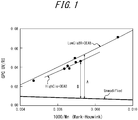
Classifications
-
- C—CHEMISTRY; METALLURGY
- C08—ORGANIC MACROMOLECULAR COMPOUNDS; THEIR PREPARATION OR CHEMICAL WORKING-UP; COMPOSITIONS BASED THEREON
- C08C—TREATMENT OR CHEMICAL MODIFICATION OF RUBBERS
- C08C19/00—Chemical modification of rubber
- C08C19/22—Incorporating nitrogen atoms into the molecule
-
- C—CHEMISTRY; METALLURGY
- C08—ORGANIC MACROMOLECULAR COMPOUNDS; THEIR PREPARATION OR CHEMICAL WORKING-UP; COMPOSITIONS BASED THEREON
- C08L—COMPOSITIONS OF MACROMOLECULAR COMPOUNDS
- C08L15/00—Compositions of rubber derivatives
-
- B—PERFORMING OPERATIONS; TRANSPORTING
- B60—VEHICLES IN GENERAL
- B60C—VEHICLE TYRES; TYRE INFLATION; TYRE CHANGING; CONNECTING VALVES TO INFLATABLE ELASTIC BODIES IN GENERAL; DEVICES OR ARRANGEMENTS RELATED TO TYRES
- B60C1/00—Tyres characterised by the chemical composition or the physical arrangement or mixture of the composition
-
- C—CHEMISTRY; METALLURGY
- C08—ORGANIC MACROMOLECULAR COMPOUNDS; THEIR PREPARATION OR CHEMICAL WORKING-UP; COMPOSITIONS BASED THEREON
- C08F—MACROMOLECULAR COMPOUNDS OBTAINED BY REACTIONS ONLY INVOLVING CARBON-TO-CARBON UNSATURATED BONDS
- C08F136/00—Homopolymers of compounds having one or more unsaturated aliphatic radicals, at least one having two or more carbon-to-carbon double bonds
- C08F136/02—Homopolymers of compounds having one or more unsaturated aliphatic radicals, at least one having two or more carbon-to-carbon double bonds the radical having only two carbon-to-carbon double bonds
- C08F136/04—Homopolymers of compounds having one or more unsaturated aliphatic radicals, at least one having two or more carbon-to-carbon double bonds the radical having only two carbon-to-carbon double bonds conjugated
- C08F136/06—Butadiene
-
- C—CHEMISTRY; METALLURGY
- C08—ORGANIC MACROMOLECULAR COMPOUNDS; THEIR PREPARATION OR CHEMICAL WORKING-UP; COMPOSITIONS BASED THEREON
- C08F—MACROMOLECULAR COMPOUNDS OBTAINED BY REACTIONS ONLY INVOLVING CARBON-TO-CARBON UNSATURATED BONDS
- C08F136/00—Homopolymers of compounds having one or more unsaturated aliphatic radicals, at least one having two or more carbon-to-carbon double bonds
- C08F136/02—Homopolymers of compounds having one or more unsaturated aliphatic radicals, at least one having two or more carbon-to-carbon double bonds the radical having only two carbon-to-carbon double bonds
- C08F136/04—Homopolymers of compounds having one or more unsaturated aliphatic radicals, at least one having two or more carbon-to-carbon double bonds the radical having only two carbon-to-carbon double bonds conjugated
- C08F136/08—Isoprene
-
- C—CHEMISTRY; METALLURGY
- C08—ORGANIC MACROMOLECULAR COMPOUNDS; THEIR PREPARATION OR CHEMICAL WORKING-UP; COMPOSITIONS BASED THEREON
- C08L—COMPOSITIONS OF MACROMOLECULAR COMPOUNDS
- C08L7/00—Compositions of natural rubber
-
- C—CHEMISTRY; METALLURGY
- C08—ORGANIC MACROMOLECULAR COMPOUNDS; THEIR PREPARATION OR CHEMICAL WORKING-UP; COMPOSITIONS BASED THEREON
- C08F—MACROMOLECULAR COMPOUNDS OBTAINED BY REACTIONS ONLY INVOLVING CARBON-TO-CARBON UNSATURATED BONDS
- C08F2810/00—Chemical modification of a polymer
Definitions
- the present disclosure relates to a method of producing a modified conjugated diene-based polymer, a modified conjugated diene-based polymer, a rubber composition, and a tire.
- a high cis-1,4 polybutadiene, obtained by polymerization using a catalyst that includes a rare earth element, is a linear polymer that typically has few branched structures, has a high cis content as compared to conventional high cis polybutadiene, and has excellent wear resistance, heat resistance, fatigue resistance, and the like as a rubber component.
- a high cis-1,4 polybutadiene is used as one rubber component of the aforementioned rubber composition.
- PTL patent literature
- Disclosed examples of this method include (i) a method of using carbon black in the filler and modifying an active terminal of the polymer with a tin compound, and (ii) a method of similarly using carbon black and introducing an amino group into the active terminal of the polymer. For example, see PTL 2.
- a method of producing a modified conjugated diene-based polymer that allows easy production of a modified conjugated diene-based polymer that has a high modification rate and a high cis-1,4 bond content, without performing complicated steps, has not yet been sufficiently developed and is in high demand.
- a method, according to the present disclosure, of producing a modified conjugated diene-based polymer includes:
- the present disclosure can provide a method of producing a modified conjugated diene-based polymer that allows easy production of a modified conjugated diene-based polymer that has a high modification rate and a high 1,4-cis bond content.
- the present disclosure can also provide a modified conjugated diene-based polymer that has a high modification rate and a high 1,4-cis bond content.
- the present disclosure can also provide a rubber composition that achieves the effects of the modified conjugated diene-based polymer of the present disclosure.
- the present disclosure can also provide a tire that achieves the effects of the modified conjugated diene-based polymer of the present disclosure.
- the following describes a method of producing a modified conjugated diene-based polymer, a modified conjugated diene-based polymer, a rubber composition, a crosslinked rubber composition, and a tire of the present disclosure in detail on the basis of embodiments thereof.
- the method of producing a modified conjugated diene-based polymer according to an embodiment of the present disclosure includes at least a polymerization reaction process, an organic metal compound adding process, and a modification reaction process.
- the method may, as necessary, include a monomer preparation process, a catalyst system preparation process, a cooling process, and other processes.
- the polymerization reaction process is a process of polymerizing a conjugated diene monomer in the presence of a polymerization catalyst composition to obtain a conjugated diene-based polymer.
- the first polymerization catalyst composition needs to include the following.
- the first polymerization catalyst composition may further include one or more of the following.
- the first polymerization catalyst composition preferably has high solubility in aliphatic hydrocarbons and preferably becomes a homogenous solution in aliphatic hydrocarbons.
- aliphatic hydrocarbons include hexane, cyclohexane, and pentane.
- the first polymerization catalyst composition preferably does not include an aromatic hydrocarbon.
- aromatic hydrocarbon include benzene, toluene, and xylene.
- does not include an aromatic hydrocarbon refers to the ratio of aromatic hydrocarbons included in the polymerization catalyst composition being less than 0.1 wt.%.
- the first polymerization catalyst composition may optionally include the ionic compound (component (F)) described below.
- the ionic compound has high solubility in aromatic hydrocarbons and low solubility in aliphatic hydrocarbons. Therefore, non-inclusion of ionic compounds in the polymerization catalyst composition allows production of the modified conjugated diene-based polymer while further reducing production costs and the burden on the environment.
- does not include an ionic compound refers to the ratio of ionic compounds included in the polymerization catalyst composition being less than 0.01 wt.%.
- the second polymerization catalyst composition needs to include the following.
- the second polymerization catalyst composition may further include one or more of the following.
- the third polymerization catalyst composition needs to include the following.
- the third polymerization catalyst composition may further include one or more of the following.
- the fourth polymerization catalyst composition needs to include the following.
- the fourth polymerization catalyst composition may further include one or more of the following.
- the fifth polymerization catalyst composition needs to include the following.
- the fifth polymerization catalyst composition may further include one or more of the following.
- the above-described polymerization catalyst compositions preferably include an organic metal compound (component (C)). Inclusion of component (C) can further improve the modification rate of the modified conjugated diene-based polymer that is produced.
- Component (A-1) can be a compound containing a rare earth element or a reaction product of a reaction between such a compound and a Lewis base.
- Examples of the compound containing a rare earth element include compounds that contain scandium, yttrium, or lanthanoid elements constituted by elements with an atomic number of 57 to 71.
- lanthanoid elements are lanthanum, cerium, praseodymium, neodymium, promethium, samarium, europium, gadolinium, terbium, dysprosium, holmium, erbium, thulium, ytterbium, and lutetium.
- Lewis base examples include tetrahydrofuran, diethyl ether, dimethylaniline, trimethylphosphine, lithium chloride, neutral olefins, and neutral diolefins.
- the compound containing a rare earth element or the reaction product of a reaction between the compound and a Lewis base preferably does not have a bond between the rare earth element and carbon.
- the reaction product of a reaction between the compound containing a rare earth element and a Lewis base does not have a rare earth element-carbon bond, the reaction product is stable and is easy to handle.
- components (A-1) may be used alone or in a combination of two or more types.
- component (A-1) examples include compounds represented by general formula (S1). M-(NQ 1 )(NQ 2 )(NQ 3 ) ... (S1) (Here, M represents at least one element selected from the group consisting of scandium, yttrium, and lanthanoid elements; NQ 1 , NQ 2 , and NQ 3 represent the same or different amide groups; and 3 M-N bonds are present.)
- component (A-1) can be a component having 3 M-N bonds. Each bond is chemically equivalent, stabilizing the structure of the compound and facilitating handling.
- this configuration can further increase the catalytic activity in the reaction system. Therefore, the reaction time can be further shortened, and the reaction temperature can be further increased.
- M is preferably gadolinium, in particular to increase the catalytic activity and the reaction controllability.
- Examples of the amide group represented by NQ 1 , NQ 2 , and NQ 3 include aliphatic amide groups such as a dimethyl amide group, a diethyl amide group, and a diisopropyl amide group; arylamide groups such as a phenyl amide group, a 2,6-di-tert-butylphenyl amide group, a 2,6-diisopropylphenyl amide group, a 2,6-dineopentylphenyl amide group, a 2-tert-butyl-6-isopropylphenyl amide group, a 2-tert-butyl-6-neopentylphenyl amide group, a 2-isopropyl-6-neopentylphenyl amide group, and a 2,4,6-tert-butylphenyl amide group; and bistrialkylsilyl amide groups such as a bistrimethylsilyl amide group.
- the metallocene complex or the like needs to include at least one complex selected from the group consisting of metallocene complexes represented by general formula (X), metallocene complexes represented by general formula (Y), and half metallocene cation complexes represented by general formula (Z).
- the metallocene complex is a complex compound in which two or more cyclopentadienyl groups, or derivatives thereof, are bonded to a central metal.
- the half metallocene cation complex is a complex compound in which one cyclopentadienyl group, or a derivative thereof, is bonded to a central metal.
- Cp R represents unsubstituted or substituted indenyl.
- Cp R having an indenyl ring as a basic skeleton is represented by C 9 H 7-X R X or C 9 H 11-X R X .
- X represents an integer of 0 to 7 or 0 to 11.
- each R preferably independently represents a hydrocarbyl group or a metalloid group.
- the hydrocarbyl group preferably has 1 to 20 carbon atoms, more preferably 1 to 10 carbon atoms, and still more preferably 1 to 8 carbon atoms.
- the hydrocarbyl group examples include a methyl group, an ethyl group, a phenyl group, and a benzyl group.
- the metalloid in the metalloid group examples include germyl (Ge), stannyl (Sn), and silyl (Si).
- the metalloid group preferably has a hydrocarbyl group, and the hydrocarbyl group is preferably similar to the hydrocarbyl group described above.
- Specific examples of the metalloid group include a trimethylsilyl group.
- Specific examples of the substituted indenyl include 2-phenyl indenyl and 2-methyl indenyl.
- the two Cp R in general formulas (X) and (Y) may be the same or different.
- Cp R' represents unsubstituted or substituted cyclopentadienyl, indenyl or fluorenyl. Among these, unsubstituted or substituted indenyl is preferable.
- Cp R' having a cyclopentadienyl ring as a basic skeleton is represented by C 5 H 5-X R X .
- X represents an integer of 0 to 5.
- each R preferably independently represents a hydrocarbyl group or a metalloid group.
- the hydrocarbyl group preferably has 1 to 20 carbon atoms, more preferably 1 to 10 carbon atoms, and still more preferably 1 to 8 carbon atoms.
- hydrocarbyl group examples include a methyl group, an ethyl group, a phenyl group, and a benzyl group.
- the metalloid in the metalloid group examples include germyl (Ge), stannyl (Sn), and silyl (Si).
- the metalloid group preferably has a hydrocarbyl group, and the hydrocarbyl group is preferably similar to the hydrocarbyl group described above.
- Specific examples of the metalloid group include a trimethylsilyl group.
- Cp R' having a cyclopentadienyl ring as a basic skeleton is specifically exemplified as follows. (Here, R represents a hydrogen atom, a methyl group, or an ethyl group.)
- Cp R' having an indenyl ring as a basic skeleton is defined in the same way as Cp R in general formula (X), and preferred examples thereof are also the same.
- Cp R' that has the fluorenyl ring as a basic skeleton may be represented by C 13 H 9-X R X or C 13 H 17-X R X .
- X represents an integer of 0 to 9 or 0 to 17.
- each R preferably independently represents a hydrocarbyl group or a metalloid group.
- the hydrocarbyl group preferably has 1 to 20 carbon atoms, more preferably 1 to 10 carbon atoms, and still more preferably 1 to 8 carbon atoms.
- Preferred specific examples of the hydrocarbyl group include a methyl group, an ethyl group, a phenyl group, and a benzyl group.
- the metalloid in the metalloid group examples include germyl (Ge), stannyl (Sn), and silyl (Si).
- the metalloid group preferably has a hydrocarbyl group, and the hydrocarbyl group is preferably similar to the hydrocarbyl group described above. Specific examples of the metalloid group include a trimethylsilyl group.
- the central metal M in general formulas (X), (Y), and (Z) is a lanthanoid element, scandium, or yttrium.
- Lanthanoid elements include 15 elements with atomic numbers 57 to 71, and the aforementioned lanthanoid element may be any one of them.
- Preferred examples of the central metal M include samarium (Sm), neodymium (Nd), praseodymium (Pr), gadolinium (Gd), cerium (Ce), holmium (Ho), scandium (Sc), and yttrium (Y).
- the metallocene complex represented by general formula (X) includes a silyl amide ligand [-N(SiR 3 ) 2 ].
- Each of the R groups (R a to R f in general formula (X)) included in the silyl amide ligand independently represents a hydrogen atom or an alkyl group having 1 to 3 carbon atoms.
- At least one of R a to R f preferably represents a hydrogen atom.
- the catalyst can be synthesized with ease, and the steric hinderance of the silyl amide ligand decreases, allowing a conjugated diene monomer to be coordinated to the central metal M selectively from the silyl amide ligand side.
- a methyl group is preferred as the alkyl group.
- the metallocene complex represented by general formula (Y) includes a silyl ligand [-SiX' 3 ].
- X' in the silyl ligand [-SiX' 3 ] is a group defined in the same way as X in general formula (Z) described below, and preferred groups are also the same.
- X represents a group selected from the group consisting of a hydrogen atom, a halogen atom, an alkoxide group, a thiolate group, an amide group, a silyl group, and a hydrocarbon group having 1 to 20 carbon atoms.
- alkoxide group examples include aliphatic alkoxy groups such as a methoxy group, an ethoxy group, a propoxy group, an n-butoxy group, an isobutoxy group, a sec-butoxy group, and a tert-butoxy group; and aryl oxide groups such as a phenoxy group, a 2,6-di-tert-butylphenoxy group, a 2,6-diisopropylphenoxy group, a 2,6-dineopentylphenoxy group, a 2-tert-butyl-6-isopropylphenoxy group, a 2-tert-butyl-6-neopentylphenoxy group, and a 2-isopropyl-6-neopentylphenoxy group.
- the 2,6-di-tert-butylphenoxy group is preferred.
- Examples of the thiolate group represented by X in general formula (Z) include aliphatic thiolate groups such as a thiomethoxy group, a thioethoxy group, a thiopropoxy group, a thio-n-butoxy group, a thioisobutoxy group, a thio-sec-butoxy group, and a thio-tert-butoxy group; and aryl thiolate groups such as a thiophenoxy group, a 2,6-di-tert-butylthiophenoxy group, a 2,6-diisopropylthiophenoxy group, a 2,6-dineopentylthiophenoxy group, a 2-tert-butyl-6-isopropylthiophenoxy group, a 2-tert-butyl-6-thioneopentylphenoxy group, a 2-isopropyl-6-thioneopentylphenoxy group, and a 2,4,6-triis
- Examples of the amide group represented by X in general formula (X) include aliphatic amide groups such as a dimethyl amide group, a diethyl amide group, and a diisopropyl amide group; arylamide groups such as a phenyl amide group, a 2,6-di-tert-butylphenyl amide group, a 2,6-diisopropylphenyl amide group, a 2,6-dineopentylphenyl amide group, a 2-tert-butyl-6-isopropylphenyl amide group, a 2-tert-butyl-6-neopentylphenyl amide group, a 2-isopropyl-6-neopentylphenyl amide group, and a 2,4,6-tert-butylphenyl amide group; and bistrialkylsilyl amide groups such as a bistrimethylsilyl amide group.
- Examples of the silyl group represented by X in general formula (Z) include a trimethylsilyl group, a tris(trimethylsilyl)silyl group, a bis(trimethylsilyl)methylsilyl group, a trimethylsilyl(dimethyl)silyl group, and a triisopropylsilyl(bistrimethylsilyl)silyl group.
- the tris(trimethylsilyl)silyl group is preferred.
- the halogen atom represented by X may be any one of a fluorine atom, a chlorine atom, a bromine atom, and an iodine atom, with the chlorine atom and the bromine atom being preferred.
- hydrocarbon group having 1 to 20 carbon atoms represented by X examples include linear or branched aliphatic hydrocarbon groups such as a methyl group, an ethyl group, an n-propyl group, an isopropyl group, an n-butyl group, an isobutyl group, a sec-butyl group, a tert-butyl group, a neopentyl group, a hexyl group, and an octyl group; aromatic hydrocarbon groups such as a phenyl group, a tolyl group, and a naphthyl group; aralkyl groups such as a benzyl group; and hydrocarbon groups containing a silicon atom, such as a trimethylsilylmethyl group and a bistrimethylsilylmethyl group.
- the methyl group, the ethyl group, the isobutyl group, the trimethylsilylmethyl group, and the like are preferred.
- X is preferably the bistrimethylsilyl amide group or the hydrocarbon group having 1 to 20 carbon atoms.
- examples of the non-coordinating anion represented by [B] - include tetravalent boron anions.
- tetravalent boron anions include tetraphenyl borate, tetrakis(monofluorophenyl)borate, tetrakis(difluorophenyl)borate, tetrakis(trifluorophenyl)borate, tetrakis(tetrafluorophenyl)borate, tetrakis(pentafluorophenyl)borate, tetrakis(tetrafluoromethylphenyl)borate, tetra(tolyl)borate, tetra(xylyl)borate, (tripheyl, pentafluorophenyl)borate, [tris(pentafluorophenyl), phenyl]borate, and tridecahydride-7,8-dicarbaundecaborate
- the metallocene complexes represented by general formulas (X) and (Y) and the half metallocene cation complexes represented by general formula (Z) may further include 0 to 3, preferably 0 or 1, neutral Lewis bases L.
- neutral Lewis base L include tetrahydrofuran, diethyl ether, dimethylaniline, trimethylphosphine, lithium chloride, neutral olefins, and neutral diolefins.
- the neutral Lewis bases L may be the same or different.
- the metallocene complexes represented by general formulas (X) and (Y) and the half metallocene cation complex represented by general formula (Z) may be present as a monomer, a dimer, or a multimer.
- the metallocene complexes represented by general formula (X) can be obtained by, for example, reacting a lanthanoid trishalide, a scandium trishalide, or a yttrium trishalide with a salt of indenyl (for example, a potassium salt or a lithium salt) and a salt of bis(trialkylsilyl)amide (for example, a potassium salt or a lithium salt) in a solvent.
- the reaction temperature is approximately room temperature, and thus the complex can be produced under mild conditions.
- the reaction time is arbitrary and may be set approximately between several hours and several tens of hours.
- the reaction solvent which is not restricted, is preferably a solvent that dissolves the raw material and the product. Toluene, for example, may be used.
- a reaction example for obtaining a metallocene complex represented by general formula (X) is illustrated below. (Here, X" represents a halide.)
- the metallocene complexes represented by general formula (Y) can be obtained by, for example, reacting a lanthanoid trishalide, a scandium trishalide, or a yttrium trishalide with a salt of indenyl (for example, a potassium salt or a lithium salt) and a salt of silyl (for example, a potassium salt or a lithium salt) in a solvent.
- a salt of indenyl for example, a potassium salt or a lithium salt
- silyl for example, a potassium salt or a lithium salt
- the reaction time is arbitrary and may be set approximately between several hours and several tens of hours.
- the reaction solvent which is not restricted, is preferably a solvent that dissolves the raw material and the product. Toluene, for example, may be used.
- a reaction example for obtaining a metallocene complex represented by general formula (Y) is illustrated below. (Here, X" represents a halide.)
- the half metallocene cation complex represented by the general formula (Z) may, for example, be obtained by the following reaction.
- M represents a lanthanoid element, scandium, or yttrium; each Cp R' independently represents unsubstituted or substituted cyclopentadienyl, indenyl, or fluorenyl; X represents a hydrogen atom, a halogen atom, an alkoxide group, a thiolate group, an amide group, a silyl group, or a hydrocarbon group having 1 to 20 carbon atoms; L represents a neutral Lewis base; and w represents an integer of 0 to 3. Furthermore, in the general formula [A] + [B] - representing an ionic compound, [A] + represents a cation, and [B] - represents a non-coordinating anion.
- Examples of the cation represented by [A] + include a carbonium cation, an oxonium cation, an amine cation, a phosphonium cation, a cycloheptatrienyl cation, and a ferrocenium cation containing a transition metal.
- Examples of the carbonium cation include trisubstituted carbonium cations such as a triphenylcarbonium cation and a tri(substituted phenyl)carbonium cation. More specifically, examples of the tri(substituted phenyl)carbonium cation include a tri(methylphenyl)carbonium cation.
- Examples of the amine cation include trialkylammonium cations such as a trimethylammonium cation, a triethylammonium cation, a tripropylammonium cation, and a tributylammonium cation; N,N-dialkylanilinium cations such as a N,N-dimethylanilinium cation, a N,N-diethylanilinium cation, and a N,N-2,4,6-pentamethylanilinium cation; and dialkylammonium cations such as a diisopropylammonium cation and a dicyclohexylammonium cation.
- trialkylammonium cations such as a trimethylammonium cation, a triethylammonium cation, a tripropylammonium cation, and a tributylammonium cation
- Examples of the phosphonium cation include triarylphosphonium cations such as a triphenylphosphonium cation, a tri(methylphenyl)phosphonium cation, and a tri(dimethylphenyl)phosphonium cation. Of these cations, the N,N-dialkylanilinium cations or the carbonium cations are preferred, and the N,N-dialkylanilinium cations are particularly preferred.
- the ionic compound, represented by the general formula [A] + [B] - , to be used in the aforementioned reaction is a compound obtained by combining any one selected from the aforementioned non-coordinating anions and any one selected from the aforementioned cations. N,N-dimethylanilinium tetrakis(pentafluorophenyl)borate, triphenylcarbonium tetrakis(pentafluorophenyl)borate, and the like are preferred.
- the ionic compound represented by the general formula [A] + [B] - is preferably added in an amount of 0.1-fold mol to 10-fold mol, more preferably about 1-fold mol, with respect to the metallocene complex.
- the half metallocene cation complex represented by general formula (Z) may be directly supplied to the polymerization system.
- the compounds used in the aforementioned reaction i.e. the compound represented by general formula (IV) and the ionic compound represented by general formula [A] + [B] - , may be separately supplied to the polymerization system to form the half metallocene cation complex represented by general formula (Z) in the reaction system.
- the half metallocene cation complex represented by general formula (Z) may be formed in the reaction system by using the metallocene complex represented by general formula (X) or (Y) and the ionic compound represented by the general formula [A] + [B] - in combination.
- the structure of the metallocene complexes represented by general formulas (X) and (Y) and the half metallocene cation complexes represented by general formula (Z) can be determined by X-ray structure analysis.
- Component (B-1) is selected from the group consisting of substituted or unsubstituted cyclopentadiene, indene, and fluorene, i.e. cyclopentadiene, a substituted cyclopentadiene compound, indene, a substituted indene compound, fluorene, and a substituted fluorene compound.
- Examples of the substituted cyclopentadiene compound, substituted indene compound, and substituted fluorene compound include hydrocarbyl groups and metalloid groups.
- the hydrocarbyl group preferably has 1 to 20 carbon atoms, more preferably 1 to 10, and even more preferably 1 to 8.
- Preferred specific examples of the hydrocarbyl group include a methyl group, an ethyl group, a phenyl group, and a benzyl group.
- Examples of the metalloid in the metalloid group include germyl (Ge), stannyl (Sn), and silyl (Si).
- the metalloid group preferably has a hydrocarbyl group, and the hydrocarbyl group is preferably similar to the hydrocarbyl group described above. Specific examples of the metalloid group include a trimethylsilyl group.
- the cyclopentadiene and substituted cyclopentadiene compound include a cyclopentadienyl group.
- Examples of the substituted cyclopentadiene compound include tetramethylcyclopentadiene and pentamethylcyclopentadiene.
- the indene and substituted indene compound include an indenyl group.
- Examples of the substituted indene compound include 2-phenyl-1H-indene, 3-benzyl-1H-indene, 3-methyl-2-phenyl-1H-indene, 3-benzyl-2-phenyl-1H-indene, and 1-benzyl-1H-indene.
- 3-benzyl-1H-indene and 1-benzyl-1H-indene are preferable for decreasing the molecular weight distribution.
- the fluorene and the substituted fluorene compound include a fluorenyl group.
- Examples of the substituted fluorene compound include trimethylsilyl fluorene and 9-methyl-9H-fluorene.
- This configuration can increase the number of conjugated electrons with which component (B-1) is provided and can further increase the catalytic activity in the polymerization system. Therefore, the reaction time can be further shortened, and the reaction temperature can be further increased.
- the content of component (B-1) in the first and second polymerization catalyst compositions is preferably more than 0 mol, more preferably 0.5 mol or more, and particularly preferably 1 mol or more, per 1 mol of the rare earth element compound (component (A-1)).
- the content of component (B-1) is preferably 3 mol or less, more preferably 2.5 mol or less, and particularly preferably 2.2 mol or less per 1 mol of the rare earth element compound (component (A-1)).
- This configuration can increase the number of conjugated electrons with which the cyclopentadiene, indene, or fluorene is provided and can further increase the catalytic activity in the polymerization system. Therefore, the reaction time can be further shortened, and the reaction temperature can be further increased.
- anionic tridentate ligand precursor examples include compounds represented by general formula (III). Such compounds can, for example, be produced by referring to Organometallics, 23, p. 47784787 (2004 ). (Here, R represents an alkyl group or an aryl group, and Y represents a hydrogen atom, an alkyl group, a halogeno group, a silyl group, or the like.)
- a PNP ligand such as bis(2-diphenylphosphinophenyl)amine may be used.
- component (B-2) When component (B-2) is included in the fourth polymerization catalyst composition, the content of component (B-2) is preferably 0.5 mol or more, more preferably 1.0 mol or more, per 1 mol of component (A-1) to increase the catalytic activity in the reaction system and is preferably 1.5 mol or less, more preferably 1.2 mol or less, per 1 mol of component (A-1) to suppress a reduction in catalytic activity in the reaction system.
- component (C) examples include organic metal compounds represented by general formula (I). YR 1 a R 2 b R 3 c ... (I) (Here, Y represents a metal element selected from the group consisting of elements of groups 1, 2, 12, and 13 of the periodic table; R 1 and R 2 each represent a hydrogen atom or a hydrocarbon group having 1 to 10 carbon atoms; R 3 represents a hydrocarbon group having 1 to 10 carbon atoms; R 1 , R 2 , and R 3 are identical or different; a is 1 and b and c are 0 when Y represents a metal element of group 1; a and b are 1 and c is 0 when Y represents a metal element of group 2 or group 12; and a, b, and c are 1 when Y represents a metal element of group 13.)
- R 1 , R 2 , and R 3 are preferably not all identical in general formula (I).
- component (C) is preferably an organic aluminum compound represented by general formula (I').
- AlR 4 R 5 R 6 ... (I') (Here, R 4 and R 5 represent a hydrogen atom or a hydrocarbon group having 1 to 10 carbon atoms; R 6 represents a hydrocarbon group having 1 to 10 carbon atoms; and R 4 , R 5 , and R 6 may be the same or different.)
- organic aluminum compound examples include a trimethyl aluminum, a triethyl aluminum, a tri-n-propyl aluminum, a triisopropyl aluminum, a tri-n-butyl aluminum, a triisobutyl aluminum, a tri-t-butyl aluminum, a tripentyl aluminum, a trihexyl aluminum, a tricyclohexyl aluminum, a trioctyl aluminum; a diethylaluminum hydride, a di-n-propyl aluminum hydride, a di-n-butyl aluminum hydride, a diisobutyl aluminum hydride, a dihexyl aluminum hydride, a diisohexyl aluminum hydride, a dioctyl aluminum hydride, a diisooctyl aluminum hydride; and an ethyl aluminum dihydride, a n-propyl aluminum dihydride, and an isobutyl aluminum dihydride
- the triethyl aluminum, the triisobutyl aluminum, the diethylaluminum hydride, and the diisobutyl aluminum hydride are particularly preferable, and the diisobutyl aluminum hydride is even more particularly preferable.
- organic aluminum compounds may be used alone or in a combination of two or more types.
- component (C) organic metal compound
- the content of component (C) is preferably 1 mol or more, more preferably 5 mol or more, per 1 mol of component (A-1) or (A-2) to increase the catalytic activity in the reaction system and is preferably 100 mol or less, more preferably 50 mol or less, and even more preferably 30 mol or less per 1 mol of component (A-1) or (A-2) to suppress a reduction in catalytic activity in the reaction system.
- Component (D) is a compound obtainable by placing an organic aluminum compound and a condensation agent in contact.
- component (D) can further increase the catalytic activity in the polymerization system. Therefore, the reaction time can be further shortened, the reaction temperature can be further increased, and the activation and modification rate can be improved.
- organic aluminum compound examples include trialkyl aluminum such as trimethyl aluminum, triethyl aluminum, and triisobutyl aluminum, and mixtures thereof. Trimethyl aluminum, and a mixture of trimethyl aluminum and tributyl aluminum are particularly preferable.
- condensation agent examples include water.
- component (D) examples include aluminoxane that has a repeating unit represented by general formula (S4). -(Al(R 10 )O) n - ... (S4) (Here, R 10 represents a hydrocarbon group having 1 to 10 carbon atoms; a portion of the hydrocarbon group may be substituted by a halogen and/or an alkoxy group; R 10 may be the same or differ between repeating units; and n is 5 or more.)
- the molecular structure of the aforementioned aluminoxane may be linear or a ring.
- n is preferably 10 or more.
- hydrocarbon group of R 10 examples include a methyl group, an ethyl group, a propyl group, and an isobutyl group.
- a methyl group is particularly preferable.
- These hydrocarbon groups may be used alone or in a combination of two or more types.
- a combination of a methyl group and an isobutyl group is preferable as the hydrocarbon group of R 10 .
- the aluminoxane preferably has high solubility in aliphatic hydrocarbons and preferably has low solubility in aromatic hydrocarbons.
- commercially available aluminoxane is preferable as a hexane solution.
- aliphatic hydrocarbons examples include hexane and cyclohexane.
- Component (D) may, in particular, be a modified aluminoxane (TMAO®) (TMAO is a registered trademark in Japan, other countries, or both) represented by formula (S5). -(Al(CH 3 ) x (iso-C 4 H 9 ) y O) m - ... (S5) (Here, x + y is 1, and m is 5 or more.)
- TMAO® modified aluminoxane
- TMAO examples include TMAO-341 manufactured by Tosoh Finechem Corporation.
- Component (D) may, in particular, be a modified aluminoxane (MMAO) represented by formula (S6). -(Al(CH 3 ) 0.7 (iso-C 4 H 9 ) 0.3 O) k - ... (S6) (Here, k is 5 or more.)
- MMAO modified aluminoxane
- MMAO examples include MMAO-3A manufactured by Tosoh Finechem Corporation.
- component (D) may, in particular, be a modified aluminoxane (PMAO) represented by formula (S7). -[(CH 3 )AlO] i - ... (S7) (Here, i is 5 or more.)
- PMAO modified aluminoxane
- PMAO examples include TMAO-211 manufactured by Tosoh Finechem Corporation.
- component (D) is preferably MMAO or TMAO to heighten the effect of increasing catalytic activity.
- component (D) aluminoxane compound
- the content of component (D) is preferably 10 mol or more, more preferably 100 mol or more, per 1 mol of the rare earth element in component (A-1) or (A-2) to increase the catalytic activity in the reaction system and is preferably 1000 mol or less, more preferably 800 mol or less, per 1 mol of the rare earth element in component (A-1) or (A-2) to suppress a reduction in catalytic activity in the reaction system.
- component (E) examples include at least one compound selected from the group consisting of a halogen containing compound that functions as a Lewis acid (component (E-1)), a complex compound of a metal halide and a Lewis base (component (E-2)), and an organic compound including an active halogen (component (E-3)).
- These compounds react with a rare earth element containing compound that has an M-N bond (such as component (A-1) or component (A-2)), or reacts with the reaction product of the rare earth element containing compound and a Lewis base, to yield a cationic transition metal compound, a halogenated transition metal compound, and/or a transition metal compound in which electrons are deficient in the transition metal center.
- a rare earth element containing compound that has an M-N bond such as component (A-1) or component (A-2)
- component (E) can improve the cis-1,4 bond content of the conjugated diene-based polymer.
- component (E-1) examples include halogen containing compounds containing an element of groups 3, 4, 5, 6, 8, 13, 14, or 15.
- An aluminum halide or an organometallic halide is particularly preferable.
- halogen containing compound that is a Lewis acid examples include titanium tetrachloride, tungsten hexachloride, tri(pentafluorophenyl)borate, methyl aluminum dibromide, methyl aluminum dichloride, ethyl aluminum dibromide, ethyl aluminum dichloride, butyl aluminum dibromide, butyl aluminum dichloride, dimethyl aluminum bromide, dimethyl aluminum chloride, diethyl aluminum bromide, diethyl aluminum chloride, dibutyl aluminum bromide, dibutyl aluminum chloride, methyl aluminum sesquibromide, methyl aluminum sesquichloride, ethyl aluminum sesquibromide, ethyl aluminum sesquichloride, aluminum tribromide, tri(pentafluorophenyl)aluminum, dibutyltin dichloride, tin tetrachloride, phosphorus trichloride, phosphorus pentachloride,
- Ethyl aluminum dichloride, ethyl aluminum dibromide, diethyl aluminum chloride, diethyl aluminum bromide, ethyl aluminum sesquichloride, and ethyl aluminum sesquibromide are particularly preferable.
- Chlorine or bromine is preferable as a halogen.
- halogen containing compounds that are Lewis acids may be used alone or in a combination of two or more types.
- Examples of the metal halide used in component (E-2) include beryllium chloride, beryllium bromide, beryllium iodide, magnesium chloride, magnesium bromide, magnesium iodide, calcium chloride, calcium bromide, calcium iodide, barium chloride, barium bromide, barium iodide, zinc chloride, zinc bromide, zinc iodide, cadmium chloride, cadmium bromide, cadmium iodide, mercury chloride, mercury bromide, mercury iodide, manganese chloride, manganese bromide, manganese iodide, rhenium chloride, rhenium bromide, rhenium iodide, copper chloride, copper bromide, copper iodide, silver chloride, silver bromide, silver iodide, gold chloride, gold iodide, and gold bromide.
- the Lewis base used in component (E-2) is preferably a phosphorus compound, a carbonyl compound, a nitrogen compound, an ether compound, or alcohol.
- Examples include tributyl phosphate, tri-2-ethylhexyl phosphate, triphenyl phosphate, tricresyl phosphate, triethylphosphine, tributylphosphine, triphenylphosphine, diethylphosphinoethane, diphenylphosphinoethane, acetylacetone, benzoylacetone, propionitrileacetone, valerylacetone, ethylacetylacetone, methyl acetoacetate, ethyl acetoacetate, phenyl acetoacetate, dimethyl malonate, diethyl malonate, diphenyl malonate, acetic acid, octanoic acid, 2-ethylhexanoic acid, oleic acid, stearic acid, benzoic acid, naphthenic acid, versatic acid, triethylamine, N,N-dimethylacetamide
- Tri-2-ethylhexyl phosphate, tricresyl phosphate, acetylacetone, 2-ethylhexanoic acid, versatic acid, 2-ethylhexyl alcohol, 1-decanol, and lauryl alcohol are particularly preferable.
- the Lewis base is reacted in a proportion of 0.01 mol to 30 mol, preferably 0.5 mol to 10 mol, per 1 mol of the metal halide.
- the use of the product of the reaction with this Lewis base can reduce the metal remaining in the polymer.
- component (E-3) examples include benzyl chloride.
- component (E) halogen compound
- the content of component (E) is preferably over 0 mol, more preferably 0.5 mol or more, and particularly preferably 1.0 mol or more, per 1 mol of component (A-1) or (A-2) to increase the catalytic activity and is preferably 20 mol or less, more preferably 10 mol or less, per 1 mol of component (A-1) or (A-2) to maintain solubility of component (E) and suppress a reduction in catalytic activity.
- the ionic compound (component (F)) is, for example, an ionic compound that is made up of a non-coordinating anion and a cation and can generate a cationic transition metal compound by reacting with the rare earth element compound that is component (A-1) or the product of its reaction with a Lewis base.
- non-coordinating anion examples include tetraphenyl borate, tetrakis(monofluorophenyl)borate, tetrakis(difluorophenyl)borate, tetrakis(trifluorophenyl)borate, tetrakis(tetrafluorophenyl)borate, tetrakis(pentafluorophenyl)borate, tetrakis(tetrafluoromethylphenyl)borate, tetra(tolyl)borate, tetra(xylyl)borate, (tripheyl, pentafluorophenyl)borate, [tris(pentafluorophenyl), phenyl]borate, and tridecahydride-7,8-dicarbaundecaborate.
- Examples of the cation include a carbonium cation, an oxonium cation, an ammonium cation, a phosphonium cation, a cycloheptatrienyl cation, and a ferrocenium cation including a transition metal.
- the carbonium cation include trisubstituted carbonium cations such as a triphenylcarbonium cation and a tri(substituted phenyl)carbonium cation, and more specific examples of the tri(substituted phenyl)carbonium cation include a tri(methylphenyl)carbonium cation and a tri(dimethylphenyl)carbonium cation.
- ammonium cation examples include trialkylammonium cations such as a trimethylammonium cation, a triethylammonium cation, a tripropylammonium cation, and a tributylammonium cation (such as a tri(n-butyl)ammonium cation); N,N-dialkylanilinium cations such as a N,N-dimethylanilinium cation, N,N-diethylanilinium cation, and a N,N-2,4,6-pentamethylanilinium cation; and dialkylammonium cations such as a diisopropylammonium cation and a dicyclohexylammonium cation.
- trialkylammonium cations such as a trimethylammonium cation, a triethylammonium cation, a tripropylammonium cation, and
- phosphonium cation examples include triarylphosphonium cations such as a triphenylphosphonium cation, a tri(methylphenyl)phosphonium cation, and a tri(dimethylphenyl)phosphonium cation.
- the ionic compound (component (F)) is preferably a compound obtained by combining any one of the above-described non-coordinating anions and any one of the above-described cations. Specifically, a N,N-dimethylanilinium tetrakis(pentafluorophenyl)borate and a triphenylcarbonium tetrakis(pentafluorophenyl)borate are preferred.
- component (F) may be used alone, or a mixture of two or more types may be used.
- the content of component (F) is preferably 0.1 mol to 10 mol, more preferably approximately 1 mol, per 1 mol of component (A-1) or (A-2) to increase the catalytic activity.
- the conjugated diene monomer is not restricted and may be appropriately selected according to the purpose.
- Examples include 1,3-butadiene, isoprene, 1,3-pentadiene, 2-ethyl-1,3-butadiene, 2,3-dimethylbutadiene (2,3-dimethyl-1,3-butadiene), 2-methylpentadiene, 4-methylpentadiene, 2,4-hexadiene, and 1,3-hexadiene. These may be used alone or in a combination of two or more types.
- 1,3-butadiene and isoprene are preferable for improving the various types of performance of a rubber composition, a tire, and the like.
- the solvent used in the polymerization reaction process is not restricted, as long as the solvent is inactive in the polymerization reaction, and may be appropriately selected according to the purpose.
- Examples include n-hexane, cyclohexane, aromatic hydrocarbons (benzene, toluene, xylene, and the like), and mixtures thereof.
- any widely-known method in the relevant technical field can be used in the polymerization reaction process, such as solution polymerization, suspension polymerization, liquid phase bulk polymerization, emulsion polymerization, gas phase polymerization, or solid phase polymerization.
- the reaction temperature in the polymerization reaction process is not restricted and may be appropriately selected according to the purpose.
- the temperature is, however, preferably -100°C to 300°C, more preferably 0°C to 200°C, and particularly preferably 25°C to 120°C.
- the cis-1,4 selectivity may decrease at high temperatures, whereas the reaction rate may decrease at low temperatures.
- the reaction pressure in the polymerization reaction process is not restricted and may be appropriately selected according to the purpose.
- the reaction pressure may be normal pressure.
- the monomer might not be sufficiently incorporated into the polymerization reaction at a high pressure, whereas the reaction rate may decrease at a low pressure.
- the reaction time in the polymerization reaction process is not restricted and may be appropriately selected according to the purpose.
- the reaction time may be 0.5 to 3 hours.
- the conjugated diene-based polymer may be a homopolymer of a conjugated diene monomer or may be a copolymer thereof.
- the cis-1,4 bond content of the conjugated diene-based polymer is not restricted and may be appropriately selected according to the purpose, but the cis-1,4 bond content is preferably 95% or more, more preferably 97% or more, and even more preferably 98% or more. As the cis-1,4 bond content of the conjugated diene-based polymer is higher, the elongation-induced crystallization ability of the conjugated diene-based polymer can be increased, and the elasticity of the conjugated diene-based polymer can be increased.
- the trans-1,4 bond content of the conjugated diene-based polymer is not restricted and may be appropriately selected according to the purpose, but the trans-1,4 bond content is preferably 5% or less, more preferably 3% or less, and even more preferably 1% or less. As the trans-1,4 bond content of the conjugated diene-based polymer is lower, the elongation-induced crystallization ability of the conjugated diene-based polymer can be increased, and the elasticity of the conjugated diene-based polymer can be increased.
- the 1,2-vinyl bond content of the conjugated diene-based polymer is not restricted and may be appropriately selected according to the purpose, but the 1,2-vinyl bond content is preferably 5% or less, more preferably 3% or less, and even more preferably 1% or less. As the 1,2-vinyl bond content of the conjugated diene-based polymer is lower, the elongation-induced crystallization ability of the conjugated diene-based polymer can be increased, and the elasticity of the conjugated diene-based polymer can be increased.
- the 3,4-vinyl bond content of the conjugated diene-based polymer is not restricted and may be appropriately selected according to the purpose, but the 3,4-vinyl bond content is preferably 5% or less, more preferably 3% or less, and even more preferably 1% or less. As the 3,4-vinyl bond content of the conjugated diene-based polymer is lower, the elongation-induced crystallization ability of the conjugated diene-based polymer can be increased, and the elasticity of the conjugated diene-based polymer can be increased.
- the number-average molecular weight (Mn) of the conjugated diene-based polymer is not restricted, and may be appropriately selected according to the purpose, but is preferably 100,000 or more and more preferably 200,000 or more.
- the molecular weight distribution (Mw/Mn) of the conjugated diene-based polymer is not restricted, and may be appropriately selected according to the purpose, but is preferably 3.0 or less and more preferably 2.5 or less.
- the organic metal compound adding process is a process of adding an organic metal compound after the polymerization reaction process.
- the organic metal compound adding process is preferably performed in the same reaction system (in one pot) as the polymerization reaction process.
- the living terminal of the conjugated diene-based polymer that is obtained by the polymerization reaction retains an active organic metal site and the like and can function as an active site that allows a modification reaction with a modifying agent. In some cases, however, the active organic metal site separates due to the heat of the reaction system, deactivating the living terminal. This may reduce the modification rate of the conjugated diene-based polymer.
- adding an organic metal compound after the polymerization reaction process and controlling the equilibrium relationship between retention and separation of the active organic metal site in the reaction system can increase the retention rate of the active organic metal site of the living terminal (the active site that allows a modification reaction) and can increase the modification rate of the conjugated diene-based polymer.
- the organic metal compound that is added in the organic metal compound adding process is not restricted, and may be appropriately selected according to the purpose, but is preferably an organic metal compound represented by general formula (II).
- Y represents a metal element selected from the group consisting of elements of groups 1, 2, 12, and 13 of the periodic table;
- R 1 and R 2 each represent a hydrogen atom or a hydrocarbon group having 1 to 10 carbon atoms;
- R 3 represents a hydrocarbon group having 1 to 10 carbon atoms;
- R 1 , R 2 , and R 3 are identical or different;
- a is 1 and b and c are 0 when Y represents a metal element of group 1;
- a and b are 1 and c is 0 when Y represents a metal element of group 2 or group 12; and
- a, b, and c are 1 when Y represents a metal element of group 13.
- This configuration can further improve the modification rate of the modified conjugated diene-based polymer that is produced.
- R 1 , R 2 , and R 3 are preferably not all identical in general formula (II).
- R 1 preferably represents a hydrogen atom when Y represents a metal element of group 1
- at least one of R 1 and R 2 preferably represents a hydrogen atom when Y represents a metal element of group 2 or group 12
- at least one of R 1 , R 2 , and R 3 preferably represents a hydrogen atom when Y represents a metal element of group 13.
- This configuration can further improve the modification rate of the modified conjugated diene-based polymer that is produced.
- the organic metal compound is more preferably an organic aluminum compound represented by general formula (II').
- AlR 4 R 5 R 6 ... (II') (Here, R 4 and R 5 represent a hydrogen atom or a hydrocarbon group having 1 to 10 carbon atoms; R 6 represents a hydrocarbon group having 1 to 10 carbon atoms; and R 4 , R 5 , and R 6 may be the same or different.)
- organic aluminum compound examples include trimethyl aluminum, triethyl aluminum, tri-n-propyl aluminum, triisopropyl aluminum, tri-n-butyl aluminum, triisobutyl aluminum, tri-t-butyl aluminum, tripentyl aluminum, trihexyl aluminum, tricyclohexyl aluminum, trioctyl aluminum; diethylaluminum hydride, di-n-propyl aluminum hydride, di-n-butyl aluminum hydride, diisobutyl aluminum hydride, dihexyl aluminum hydride, diisohexyl aluminum hydride, dioctyl aluminum hydride, diisooctyl aluminum hydride; and ethyl aluminum dihydride, n-propyl aluminum dihydride, and isobutyl aluminum dihydride.
- the triethyl aluminum, triisobutyl aluminum, diethylaluminum hydride, and diisobutyl aluminum hydride are
- organic metal compounds may be used alone or in a combination of two or more types.
- the organic metal compound may be the same as or different from the organic metal compound of component (C) when a polymerization catalyst composition including the organic metal compound of component (C) is used in the polymerization reaction process.
- the organic metal compound added in the organic metal compound adding process is preferably the same organic metal compound as the component (C) included in the polymerization catalyst composition that was used.
- the amount of the organic metal compound that is added is not limited but is preferably 1 mol or more, more preferably 5 mol or more, per 1 mol of component (A-1) or (A-2) to further increase the catalytic activity and is preferably 50 mol or less, more preferably 30 mol or less, per 1 mol of component (A-1) or (A-2) from the standpoint of (purification of the polymer).
- the amount of the organic metal compound that is added is preferably 1/10 mol or more, more preferably 1/8 mol or more, even more preferably 1/6 mol or more, and is preferably 1 mol or less, more preferably 1/2 mol or less, and even more preferably 1/3 mol or less per 1 mol of component (C).
- stirring or the like may be performed before, during, or after addition of the organic metal compound as necessary to make the reaction system uniform.
- the cooling process may optionally be included and is a process of cooling the reaction system after the polymerization reaction process and before the modification reaction process.
- the cooling process is preferably performed to improve the modification rate of the modified conjugated diene-based polymer that is produced.
- the reaction system refers to the reaction system after the polymerization reaction process.
- This reaction system includes at least the conjugated diene-based polymer and the polymerization catalyst composition and may include a solvent as necessary.
- the cooling process can be performed before, during or after the organic metal compound adding process but is preferably performed after the organic metal compound adding process from the standpoint of reliable equilibrium transfer from separation to retention of active organic metal sites in the conjugated diene-based polymer.
- the cooling in the cooling process is not restricted and may be appropriately selected according to the purpose, as long as the reaction system is cooled.
- the temperature to which the reaction system is cooled is not restricted, and may be appropriately selected according to the purpose, but is preferably 50°C or less, more preferably 40°C or less, and particularly preferably 30°C or less.
- the temperature to which the reaction system is cooled is increasingly preferable as the temperature is lower, but in terms of production costs, the temperature is preferably around room temperature.
- the cooling time in the cooling process is not restricted, and may be appropriately selected according to the purpose, but is preferably 1 min to 10 min and more preferably 3 min to 7 min.
- the cooling time is increasingly preferable as the time is longer.
- the cooling rate in the cooling process is not restricted, and may be appropriately selected according to the purpose, but is preferably 1°C/min to 10°C/min and more preferably 3°C/min to 7°C/min.
- the modification reaction process is a process to modify the conjugated diene-based polymer, obtained by the polymerization reaction process, with a modifying agent after the organic metal compound adding process, or after the cooling process when the cooling process is performed.
- the modification reaction process is preferably performed in the same reaction system (in one pot) as the polymerization reaction process, the organic metal compound adding process, and the optionally included cooling process.
- the modifying agent used in the modification reaction process preferably includes a functional group that, with respect to a polymer that has an active organic metal site, can undergo a substitution reaction or an addition reaction with the active organic metal site, and the modifying agent preferably can cause a functional group to be added to the polymer, or can raise the molecular weight by coupling, as a result of being reacted with a compound that does not include an active proton or an onium salt that deactivates the active organic metal site.
- the modifying agent used in the modification reaction process is not restricted and may be appropriately selected according to the purpose.
- Representative modifying agents preferably include at least one selected from among an azacyclopropane group, a ketone group, a carboxyl group, a thiocarboxyl group, a carbonyl group, an oxycarbonyl group, a carbonate, a carboxylic acid anhydride, a carboxylic acid metal salt, an acid halide, a urea group, a thiourea group, an amide group, a thioamide group, a cyano group, an isocyanate group, a thioisocyanate group, a halogenated isocyano group, an epoxy group, a thioepoxy group, an imine group, and a M-Z bond (where M is Sn, Si, Ge, or P, and Z is a halogen atom), and preferably do not include an active proton or an onium salt that deactivates
- modifying agent include at least one selected from among the compounds (a) to (j) below.
- Compound (a) is represented by general formula (V).
- X 1 to X 5 represent a monovalent functional group that includes at least one selected from among a hydrogen atom, a halogen atom, a carbonyl group, a thiocarbonyl group, an isocyanate group, a thioisocyanate group, an epoxy group, a thioepoxy group, a halogenated silyl group, a hydrocarbyl oxysilyl group, and a sulfonyloxy group, and that does not include an active proton or an onium salt.
- X 1 to X 5 may be the same or different, but at least one does not represent a hydrogen atom.
- R 1 to R 5 independently represent a single bond or a divalent hydrocarbon group having 1 to 18 carbon atoms.
- the divalent hydrocarbon group include an alkylene group having 1 to 18 carbon atoms, an alkenylene group having 2 to 18 carbon atoms, an arylene group having 6 to 18 carbon atoms, and an aralkylene group having 7 to 18 carbon atoms.
- an alkylene group having 1 to 18 carbon atoms is preferable, and an alkylene group having 1 to 10 carbon atoms is particularly preferable.
- the alkylene group may be linear, branched, or a ring, but is particularly preferably linear.
- linear alkylene groups include a methylene group, an ethylene group, a trimethylene group, a tetramethylene group, a pentamethylene group, a hexamethylene group, an octamethylene group, and a decamethylene group.
- a plurality of aziridine rings may bond via any of X 1 to X 5 and R 1 to R 5 .
- R 1 is preferably not a single bond in compound (a).
- Examples of compounds represented by general formula (V) include, but are not limited to, 1-acetylaziridine, 1-propionylaziridine, 1-butyrylaziridine, 1-isobutyrylaziridine, 1-valerylaziridine, 1-isovalerylaziridine, 1-pivaloylaziridine, 1-acetyl-2-methylaziridine, 2-methyl-1-propionylaziridine, 1 -butyryl-2-methylaziridine, 2-methyl-1-isobutyrylaziridine, 2-methyl-1-valerylaziridine, 1-isovaleryl-2-methylaziridine, 2-methyl-1-pivaloyl aziridine, ethyl-3-(1-aziridinyl) propionate, propyl-3-(1-aziridinyl) propionate, butyl-3-(1-aziridinyl) propionate, ethylene glycol bis[3-(1-aziridinyl)prop
- Compound (b) is a halogenated organic metal compound or a halogenated metal compound represented by R 6 n M'Z 4-n , by M'Z 4 , or by M'Z 3 .
- each R 6 is the same or different and represents a hydrocarbon group having 1 to 20 carbon atoms
- M' represents a tin atom, a silicon atom, a germanium atom, or a phosphorus atom
- Z represents a halogen atom
- n represents an integer of 0 to 3.
- examples of the compound (b) include triphenyltin chloride, tributyltin chloride, triisopropyltin chloride, trihexyltin chloride, trioctyltin chloride, diphenyltin dichloride, dibutyltin dichloride, dihexyltin dichloride, dioctyltin dichloride, phenyltin trichloride, butyltin trichloride, octyltin trichloride, and tin tetrachloride.
- examples of the compound (b) include triphenyl chlorosilane, trihexyl chlorosilane, trioctyl chlorosilane, tributyl chlorosilane, trimethyl chlorosilane, diphenyl dichlorosilane, dihexyl dichlorosilane, dioctyl dichlorosilane, dibutyl dichlorosilane, dimethyl dichlorosilane, methyl dichlorosilane, phenyl chlorosilane, hexyl tridichlorosilane, octyl trichlorosilane, butyl trichlorosilane, methyl trichlorosilane, and silicon tetrachloride.
- examples of the compound (b) include triphenylgermanium chloride, dibutylgermanium dichloride, diphenylgermanium dichloride, butylgermanium trichloride, and germanium tetrachloride.
- examples of the compound (b) include phosphorus trichloride.
- an organic metal compound that includes an ester group or a carbonyl group, represented by the formulas below, in the molecule can be used as the modifying agent.
- R 7 n M'(-R 8 -COR 9 ) 4-n (Here, each R 7 and R 8 is the same or different and represents a hydrocarbon group having 1 to 20 carbon atoms; R 9 represents a hydrocarbon group having 1 to 20 carbon atoms; a carbonyl group or an ester group may be included in a side chain; M' represents a tin atom, a silicon atom, a germanium atom, or a phosphorus atom; and n represents an integer of 0 to 3.)
- One or more of any of the above-described compounds (b) may be used in any ratio.
- Y is a carbon atom, an oxygen atom, a nitrogen atom, or a sulfur atom
- Y' is an oxygen atom, a nitrogen atom, or a sulfur atom
- Compound (c) is a ketene compound when Y is a carbon atom and Y' is an oxygen atom; a thioketene compound when Y is a carbon atom and Y' is a sulfur atom; an isocyanate compound when Y is a nitrogen atom and Y' is an oxygen atom; a thioisocyanate compound when Y is a nitrogen atom and Y' is a sulfur atom; a carbodiimide compound when both Y and Y' are nitrogen atoms; carbon dioxide when both Y and Y' are oxygen atoms; carbonyl sulfide when Y is an oxygen atom and Y' is a sulfur atom; and carbon disulfide when both Y and Y' are sulfur atoms.
- examples of the ketene compound include ethyl ketene, butyl ketene, phenyl ketene and toluoyl ketene.
- examples of the thioketene compound include ethylene thioketene, butyl thioketene, phenyl thioketene and toluoyl thioketene.
- examples of the isocyanate compound include phenyl isocyanate, 2,4-tolylene diisocyanate, 2,6-tolylene diisocyanate, diphenylmethane diisocyanate, polymeric type diphenylmethane diisocyanates, and hexamethylene diisocyanate.
- Examples of the thioisocyanate compound include phenyl thioisocyanate, 2,4-tolylene dithioisocyanate, and hexamethylene dithioisocyanate.
- Examples of the carbodiimide compound include N,N'-diphenylcarbodiimide and N,N'-ethylcarbodiimide.
- Compound (d) is a three-membered heterocyclic compound having a bond represented by general formula (VI) in the molecule. (Here, Y' is an oxygen atom or a sulfur atom.)
- Component (d) is, for example, an epoxy compound when Y' represents an oxygen atom and is a thiirane compound when Y' represents a sulfur atom.
- the epoxy compound include ethylene oxide, propylene oxide, cyclohexene oxide, styrene oxide, epoxidized soybean oil, and epoxidized natural rubber.
- the thiirane compound include thiirane, methylthiirane, and phenylthiirane.
- Compound (e) is a halogenated isocyano compound.
- Examples of the compound (e) include 2-amino-6-chloropyridine, 2,5-dibromopyridine, 4-chloro-2-phenylquinazoline, 2,4,5-tribromoimidazole, 3,6-dichloro-4-methylpyridazine, 3,4,5-trichloropyridazine, 4-amino-6-chloro-2-mercaptopyrimidine, 2-amino-4-chloro-6-methylpyrimidine, 2-amino-4,6-dichloropyrimidine, 6-chloro-2,4-dimethoxypyrimidine, 2-chloropyrimidine, 2,4-dichloro-6-methylpyrimidine, 4,6-dichoro-2-(methylthio)pyrimidine, 2,4,5,6-tetrachloropyrimidine, 2,4,6-trichloropyrimidine, 2-amino-6-chloro-pyrazine, 2,6-dichloropyrazine, 2,4-bis(methylthio
- Compound (f) is a carboxylic acid, an acid halide, an ester compound, a carbonic acid ester compound, or an acid anhydride represented by R 10 -(COOH) m , R 11 (COZ) m , R 12 -(COO-R 13 ), R 14 -OCOO-R 15 , R 16 -(COOCO-R 17 ) m , or general formula (VII).
- R 10 to R 18 is the same or different and represents a hydrocarbon group having 1 to 50 carbon atoms, Z represents a halogen atom, and m represents an integer of 1 to 5.
- Examples of the carboxylic acid in compound (f) include acetic acid, stearic acid, adipic acid, maleic acid, benzoic acid, acrylic acid, methacrylic acid, phthalic acid, isophthalic acid, terephthalic acid, trimellitic acid, pyromellitic acid, mellitic acid, and products of partial or complete hydrolysis of polymethacrylic acid ester compounds or polyacrylic acid compounds.
- Examples of the acid halide in compound (f) include acetic acid chloride, propionic acid chloride, butanoic acid chloride, isobutanoic acid chloride, octanoic acid chloride, acrylic acid chloride, benzoic acid chloride, stearic acid chloride, phthalic acid chloride, maleic acid chloride, oxaphosphoric acid chloride, acetyl iodide, benzoyl iodide, acetyl fluoride, and benzoyl fluoride.
- ester compound in compound (f) examples include ethyl acetate, ethyl stearate, diethyl adipate, diethyl malate, methyl benzoate, ethyl acrylate, ethyl methacrylate, diethyl phthalate, dimethyl terephthalate, tributyl trimellitate, tetraoctyl pyromellitate, hexaethyl mellitate, phenyl acetate, polymethyl methacrylate, polyethyl acrylate, and polyisobutyl acrylate.
- Examples of the carbonic acid ester compound include dimethyl carbonate, diethyl carbonate, dipropyl carbonate, dihexyl carbonate, and diphenyl carbonate.
- Examples of the acid anhydride include acid anhydrides between molecules of acetic anhydride, propionic anhydride, isobutyric anhydride, isovaleric anhydride, heptanoic anhydride, benzoic anhydride, cinnamic anhydride, and the like; and acid anhydrides within the molecule of succinic anhydride, methylsuccinic anhydride, maleic anhydride, glutaric anhydride, citraconic anhydride, phthalic anhydride, copolymers of styrene and maleic anhydride, and the like.
- compound (f) may include a non-protonic polar group, such as an ether group or a tertiary amino group, in the structure thereof as long as the object of the present disclosure is not adversely affected.
- a non-protonic polar group such as an ether group or a tertiary amino group
- One type of compound (f) may be used alone, or a mixture of two or more types may be used.
- compound (f) may include a compound containing a free alcohol group or phenol group.
- Compound (g) is a metal salt of a carboxylic acid and is represented by R 19 k M"(OCOR 20 ) 4-k , R 21 k M"(OCO-R 22 -COOR 23 ) 4-k , or general formula (VIII).
- each of R 19 to R 25 is the same or different and represents a hydrocarbon group having 1 to 20 carbon atoms; M" represents a tin atom, a silicon atom, or a germanium atom; k represents an integer of 0 to 3; and p represents an integer of 1 to 2.
- R 19 k M"(OCOR 20 ) 4-k in compound (g) examples include triphenyltin laurate, triphenyltin 2-ethylhexanoate, triphenyltin naphthenate, triphenyltin acetate, triphenyltin acrylate, tri-n-butyltin laurate, tri-n-butyltin 2-ethylhexanoate, tri-n-butyltin naphthenate, tri-n-butyltin acetate, tri-n-butyltin acrylate, tri-t-butyltin laurate, tri-t-butyltin 2-ethylhexanoate, tri-t-butyltin naphthenate, tri-t-butyltin acetate, tri-t-butyltin acrylate, triisobutyltin laurate, triisobutyltin 2-ethylhe
- R 21 k M"(OCO-R 22 -COOR 23 ) 4-k in compound (g) include diphenyltin bismethylmalate, diphenyltin bis-2-ethylhexanoate, diphenyltin bisoctylmalate, diphenyltin bisbenzylmalate, di-n-butyltin bismethylmalate, di-n-butyltin bis-2-ethylhexanoate, di-n-butyltin bisoctylmalate, di-n-butyltin bisbenzyl-malate, di-t-butyltin bismethylmalate, di-t-butyltin bis-2-ethylhexanoate, di-t-butyltin bisoctylmalate, di-t-butyltin bisbenzylmalate, diisobutyltin bismethylmalate, diisobutyltin bis-2-ethyl
- Examples of the compound represented by formula (VIII) include diphenyltin malate, di-n-butyltin malate, di-t-butyltin malate, diisobutyltin malate, diisopropyltin malate, dihexyltin malate, di-2-ethylhexyltin malate, dioctyltin malate, distearyltin malate, dibenzyltin malate, diphenyltin adipate, di-n-butyltin adipate, di-t-butyltin adipate, diisobutyltin adipate, diisopropyltin adipate, dihexyltin diacetate, di-2-ethylhexyltin adipate, dioctyltin adipate, distearyltin adipate, and dibenzyltin adipate.
- Examples of compound (h) include N-substituted aminoketones such as 4-dimethylaminoacetophenone, 4-diethylaminoacetophenone, 1,3-bis(diphenylamino)-2-propanone, 1,7-bis(methylethylamino)-4-heptanone, 4-dimethylaminobenzophenone, 4-di-t-butylaminobenzophenone, 4-diphenylaminobenzophenone, 4,4'-bis(dimethylamino)benzophenone, 4,4'-bis(diethylamino)-benzophenone, and 4,4'-bis(diphenylamino)benzophenone; N-substituted aminothioketones corresponding to the N-substituted aminoketones; N-substituted aminoaldehydes such as 4-dimethylaminobenzaldehyde, 4-diphenylaminobenzaldehyde and 4-diviny
- Examples of the compound having an N ⁇ C- bond in the molecule include the following: organic cyano compounds represented by the general formula R-CN, such as 2-cyanopyridine, 3-cyanopyridine, and acrylonitrile; electrophilic compounds, representative examples of which are ketones, aldehydes, and epoxies, specifically benzaldehyde, benzophenone, 4-4'-bis(diethylamino)benzophenone, 3-glycidoxypropyltrimethoxysilane, and allyl glycidyl ether; and organic compounds including a vinyl group, such as propylene, 1-butene, 1-hexene, styrene, vinyl naphthalene, vinyl phosphate, vinyl acetate ether, vinyl pivaloate, vinyl trimethylsilane, and triethoxyvinylsilane.
- R-CN organic cyano compounds represented
- Compound (j) is a compound including a phosphoric acid residual group represented by general formula (IX).
- R 26 and R 27 independently represent a straight or branched alkyl group having 1 to 20 carbon atoms, a monovalent hydrocarbon group selected from among monovalent alicyclic hydrocarbon groups having 3 to 20 carbon atoms and monovalent aromatic hydrocarbon groups having 6 to 20 carbon atoms, or a hydrogen atom.
- Examples of the phosphoric acid residual group represented by general formula (IX) include phosphoric acid residual groups represented by general formula (XI).
- One of the compounds (a) to (j) may be used alone, or a mixture of two or more types may be used.
- the compounds (a) to (j) may also be used in combination with a modifying agent other than the compounds (a) to (j).
- the modifying agent is preferably a compound that has a basic site.
- the basic site of the modifying agent can be introduced into the modified conjugated diene-based copolymer by the modification reaction to yield a modified conjugated diene-based polymer that has excellent interaction with a filler used in a rubber composition, such as carbon black, carbon fiber, or inorganic filler. Additionally, coloring of the modified conjugated diene-based polymer can be suppressed.
- the basic site is not restricted but is preferably a functional group represented by formula (XII) from the perspective of interaction with the filler.
- R 28 and R 29 independently represent a trimethoxysilyl group, a linear or branched alkyl group having 1 to 20 carbon atoms, a monovalent hydrocarbon group selected from among monovalent alicyclic hydrocarbon groups having 3 to 20 carbon atoms and monovalent aromatic hydrocarbon groups having 6 to 20 carbon atoms, or a hydrogen atom; and along with a bonded nitrogen atom, R 28 and R 29 may independently or together form a nitrogen containing heterocyclic group with three or more members.
- the number of basic sites is not restricted but is preferably 1 to 5 and more preferably 1 to 3. When a plurality of basic sites is included, each may be the same or different.
- the modifying agent preferably includes at least one selected from the group consisting of a cyano group, a carbonyl group, an oxycarbonyl group, and an epoxy group (these functional groups also being referred to as "modifying reactive groups").
- cyano groups, carbonyl groups, oxycarbonyl groups, and epoxy groups have particularly excellent reactivity with the active organic metal site of the living terminal of the conjugated diene-based polymer. Additionally, coloring of the modified conjugated diene-based polymer can be suppressed.
- the number of modifying reactive groups in the modifying agent is not restricted but is preferably 1 to 5 and more preferably 1 to 3. When a plurality of modifying reactive groups is included, each may be the same or different.
- the modifying agent preferably includes one or more of the functional groups represented by formula (XII) and one or more of the aforementioned modifying reactive groups.
- the modifying agent exhibits excellent suppression of coloring of the modified conjugated diene-based polymer.
- the functional groups represented by formula (XII) and the modifying reactive group may be bonded directly or be bonded via one or more carbon atoms and/or nitrogen atoms.
- the one or more functional groups represented by formula (XII) and the one or more modifying reactive groups may be bonded directly or be bonded via one or more carbon atoms and/or nitrogen atoms to form an alicyclic structure or a nitrogen or oxygen containing heterocyclic structure.
- the modifying agent preferably has a structure in which conjugation is not attained after the modification reaction.
- the modifying agent preferably either does not include an aromatic ring in the chemical structure, or when including an aromatic ring in the chemical structure, the aromatic ring is preferably located away from the modifying reactive group.
- the modifying agent that includes at least one selected from the group consisting of a functional group represented by formula (XII), a cyano group, a carbonyl group, an oxycarbonyl group, and an epoxy group is not restricted, and commercially available compounds and the like may be used. These modifying agents may be used alone or in a combination of two or more types.
- modifying agents examples include adiponitrile, 2-aminobenzonitrile, 3-aminobenzonitrile, 4-aminobenzonitrile, 3-aminocrotononitrile, diaminomaleonitrile, DL-proline, 3-anilininopropionitrile, (dimethylamino)acetonitrile, N-acetylimidazole, ethyl 4-amino-1-piperidinecarboxylate, 1-(cyanoacetyl)piperidine, epsilon-caprolactam, laurolactam, 2-amino-1,1,3-tricyano-1-propene, 4-(aminomethyl)-1-tert-butoxycarbonylpiperidine, butyl 4-aminobenzoate, 1,3-dimethyluracil, ethyl 4-piperidinecarboxylate, ethyl 2-piperidinecarboxylate, hydantoin, isonipecotamide, 1-
- the amount of the modifying agent used in component (A-1) or component (A-2) of the polymerization catalyst composition differs in accordance with the retention rate of the active site of the conjugated diene-based polymer terminal to be modified but is preferably 0.1 to 100, more preferably 1.0 to 50, as a molar ratio.
- the amount of the modifying agent is within the aforementioned ranges, the modification reaction progresses better, making it possible to obtain a polymer that does not generate toluene insolubles (gel) and that has a low heat generating property and excellent wear resistance.
- the modification reaction in the present disclosure may be either a solution reaction or a solid phase reaction, but a solution reaction is preferable.
- the solution may include the unreacted monomer used for polymerization.
- the type of modification reaction is not restricted.
- a batch reactor may be used, or the modification reaction may be continuously carried out with a multistage continuous reactor, an inline mixer, or the like.
- the reaction temperature in the modification reaction process is not restricted and may be appropriately selected according to the purpose.
- the temperature is, however, preferably 50°C to 150°C, more preferably 65°C to 95°C, and particularly preferably 70°C to 90°C.
- the polymer may degrade at high temperatures, whereas the reaction rate may decrease at low temperatures.
- the reaction pressure in the modification reaction process is not restricted and may be appropriately selected according to the purpose.
- the reaction pressure may be normal pressure.
- the time required for the modification reaction is not restricted, and may be appropriately selected according to the purpose, but is preferably in the range of 0.5 minute to 2 hours, more preferably 3 minutes to 1 hour, under stirring.
- the monomer preparation process is a process of preparing the above-described conjugated diene monomer as a monomeric substance (monomer).
- the catalyst system preparation process is a process of preparing the above-described predetermined polymerization catalyst composition.
- a desolvation treatment process water treatment process, heat treatment process, polymer isolation process, or the like may be performed as necessary.
- the reagents used in each of the aforementioned processes may be used without a solvent, or with solvents appropriate for the various reagents.
- the reagents and the solvents are preferably used after appropriate purification such as distillation, degassing, and freeze drying.
- Each of the aforementioned processes in particular the catalyst system preparation process, polymerization reaction process, organic metal compound adding process, cooling process, and modifying reaction process are preferably performed under an inert gas atmosphere, such as nitrogen gas or argon gas.
- an inert gas atmosphere such as nitrogen gas or argon gas.
- the method, according to the present disclosure, of producing a modified conjugated diene-based polymer is not limited to the method of the above embodiment.
- the cyclopentadiene or the like (component (B-1)) in the second polymerization catalyst composition may be omitted from the polymerization catalyst composition used in the catalyst system preparation process and included instead in the polymerization reaction process.
- modified conjugated diene-based polymer according to an embodiment of the present disclosure (modified conjugated diene-based polymer according to an embodiment) is produced by the method of producing a modified conjugated diene-based polymer according to an embodiment of the present disclosure. Consequently, the modified conjugated diene-based polymer according to an embodiment can have a high modification rate and a high cis-1,4 bond content.
- a high modification rate refers to a modification rate of 50% or more, preferably 60% or more, and more preferably 70% or more.
- a high 1,4-cis bond content refers to a 1,4-cis bond content of 90% or more, preferably 95% or more, and more preferably 97% or more.
- the units derived from the conjugated diene in the modified conjugated diene-based polymer according to an embodiment have an extremely high cis-1,4 bond content. Therefore, a highly-elastic copolymer can be provided and can be suitably used as a rubber component in a rubber composition.
- the modified conjugated diene-based polymer according to an embodiment of the present disclosure also has an extremely high modification rate and can therefore provide a rubber composition with excellent wear resistance and low heat generating properties when used as a rubber component.
- the cis-1,4 bond content of the units derived from the conjugated diene in the modified conjugated diene-based polymer according to an embodiment is not restricted and may be appropriately selected according to the purpose, but the cis-1,4 bond content is preferably 95% or more, more preferably 97% or more, and even more preferably 98% or more. As the cis-1,4 bond content of the units derived from the conjugated diene in the modified conjugated diene-based polymer is higher, the elongation-induced crystallization ability of the modified conjugated diene-based polymer can be increased, and the elasticity of the modified conjugated diene-based polymer can be increased.
- the trans-1,4 bond content of the units derived from the conjugated diene in the modified conjugated diene-based polymer is not restricted and may be appropriately selected according to the purpose, but the trans-1,4 bond content is preferably less than 5%, more preferably less than 3%, and even more preferably less than 1%. As the trans-1,4 bond content of the units derived from the conjugated diene in the modified conjugated diene-based polymer is lower, the elongation-induced crystallization ability of the modified conjugated diene-based polymer can be increased, and the elasticity of the copolymer can be increased.
- the 1,2-vinyl bond content of the units derived from the conjugated diene in the modified conjugated diene-based polymer is not restricted and may be appropriately selected according to the purpose, but the 1,2-vinyl bond content is preferably 5% or less, more preferably 3% or less, and even more preferably 1% or less. As the 1,2-vinyl bond content of the units derived from the conjugated diene in the modified conjugated diene-based polymer is lower, the elongation-induced crystallization ability of the modified conjugated diene-based polymer can be increased, and the elasticity of the modified conjugated diene-based polymer can be increased.
- the 3,4-vinyl bond content of the units derived from the conjugated diene in the modified conjugated diene-based polymer is not restricted and may be appropriately selected according to the purpose, but the 3,4-vinyl bond content is preferably 5% or less, more preferably 3% or less, and even more preferably 1% or less. As the 3,4-vinyl bond content of the units derived from the conjugated diene in the modified conjugated diene-based polymer is lower, the elongation-induced crystallization ability of the modified conjugated diene-based polymer can be increased, and the elasticity of the modified conjugated diene-based polymer can be increased.
- the number-average molecular weight (Mn) of the modified conjugated diene-based polymer is not restricted, and may be appropriately selected according to the purpose, but is preferably 100,000 or more and more preferably 200,000 or more.
- the molecular weight distribution (Mw/Mn) of the modified conjugated diene-based polymer is not restricted, and may be appropriately selected according to the purpose, but is preferably 3.0 or less and more preferably 2.5 or less.
- a rubber composition according to an embodiment of the present disclosure needs to include the modified conjugated diene-based polymer according to an embodiment of the present disclosure and may further include a filler, a crosslinking agent, and other components according to the purpose.
- the modified conjugated diene-based polymer according to an embodiment of the present disclosure can be a rubber component.
- the rubber composition according to an embodiment can achieve excellent wear resistance and low heat generating properties.
- the blending amount (content) of the modified conjugated diene polymer in the rubber component is not restricted, and may be appropriately selected according to the purpose, but is preferably 15 mass% to 100 mass%.
- the modified conjugated diene polymer can sufficiently exhibit the characteristics thereof when the blending amount of the modified conjugated diene polymer in the rubber component is 15 mass% or more.
- the rubber composition according to an embodiment may include a rubber component other than the modified conjugated diene-based polymer of the above embodiment.
- a rubber component other than the modified conjugated diene-based polymer of the above embodiment.
- Such rubber components are not restricted and may be appropriately selected according to the purpose.
- Conjugated diene-based polymers that can be used as the rubber component are not restricted and may be appropriately selected according to the purpose. Examples include natural rubber, isoprene rubber (BR), styrene-butadiene rubber (SBR), and acrylonitrile-butadiene rubber (NBR). Natural rubber and/or isoprene rubber (BR) are preferable to improve the properties of the rubber composition and rubber products including the rubber composition.
- BR isoprene rubber
- SBR styrene-butadiene rubber
- NBR acrylonitrile-butadiene rubber
- ethylene-propylene rubber EPM
- EPDM ethylene-propylene-nonconjugated diene rubber
- polysulfide rubber silicone rubber, fluororubber, urethane rubber, or an isoprene copolymer
- silicone rubber fluororubber, urethane rubber, or an isoprene copolymer
- isoprene copolymer may be used in addition to or instead of the conjugated diene-based polymer as the aforementioned rubber component.
- These rubber components may be used alone or in a combination of two or more types.
- the filler is not restricted and may be appropriately selected according to the purpose.
- the filler include carbon black and inorganic fillers, and the filler is preferably at least one selected from carbon black and inorganic fillers.
- the rubber composition more preferably contains carbon black.
- the filler is added to the rubber composition for better reinforcement or the like.
- the blending amount (content) of the filler is not restricted, and may be appropriately selected according to the purpose, but is preferably in the range of 10 to 100 parts by mass, more preferably 20 to 80 parts by mass, and even more preferably 30 to 60 parts by mass, per 100 parts by mass of the rubber component.
- the effects of adding the filler are obtained when the content of the filler is 10 parts by mass or more, and the filler can be sufficiently mixed into the rubber component and can improve the performance of the rubber composition when the content of the filler is 100 parts by mass or less.
- the inorganic filler is not restricted and may be appropriately selected according to the purpose. Examples include silica, aluminum hydroxide, clay, alumina, talc, mica, kaolin, glass balloon, glass beads, calcium carbonate, magnesium carbonate, magnesium hydroxide, calcium hydroxide, magnesium oxide, titanium oxide, potassium titanate, and barium sulfate. These inorganic fillers may be used alone or in a combination of two or more types.
- silane coupling agent may also be used as appropriate.
- the crosslinking agent is not restricted and may be appropriately selected according to the purpose. Examples include a sulfur-containing crosslinking agent, an organic peroxide-containing crosslinking agent, an inorganic crosslinking agent, a polyamine crosslinking agent, a resin crosslinking agent, a sulfur compound-based crosslinking agent, and an oxime-nitrosamine-based crosslinking agent, with the sulfur-containing crosslinking agent being more preferable in the rubber composition for a tire.
- the content of the crosslinking agent is not restricted, and may be appropriately selected according to the purpose, but is preferably 0.1 to 20 parts by mass per 100 parts by mass of the rubber component.
- the crosslinking agent content When the crosslinking agent content is less than 0.1 parts by mass, the crosslinking may be insufficient. When the crosslinking agent content exceeds 20 parts by mass, the crosslinking may tend to proceed during kneading as a result of some crosslinking agents, and the physical properties of the crosslinked product may be impaired.
- a vulcanization accelerator or the like may also be used with the rubber composition of the present disclosure.
- the vulcanization accelerator compounds which are guadinine-based, aldehyde-amine-based, aldehyde-ammonia-based, thiazole-based, sulfenamide-based, thiourea-based, thiuram-based, dithiocarbamate-based, xanthate-based, or the like may be used.
- any known agent such as a softener, a vulcanizing co-agent, a colorant, a flame retardant, a lubricant, a foaming agent, a plasticizer, a processing aid, an antioxidant, an age resistor, an anti-scorch agent, an ultraviolet ray protecting agent, an antistatic agent, a color protecting agent, and other compounding agents may be included according to the intended use.
- the rubber composition according to an embodiment can be produced by a method known to those of ordinary skill in the art using the aforementioned components.
- a crosslinked rubber composition of the present disclosure can be obtained by crosslinking the rubber composition according to an embodiment of the present disclosure.
- the crosslinked rubber composition of the present disclosure includes the modified conjugated diene-based polymer according to an embodiment of the present disclosure as a rubber component and therefore has excellent low heat generating properties and wear resistance.
- the crosslinking conditions are not restricted and may be appropriately selected according to the purpose, but the heating temperature is preferably 120°C to 200°C, and the heating time is preferably 1 minute to 900 minutes.
- a tire according to an embodiment of the present disclosure needs to include at least one selected from the rubber composition according to an embodiment of the present disclosure and the crosslinked rubber composition according to an embodiment of the present disclosure.
- At least one of the members of the tire according to an embodiment can be configured to include the rubber composition according to an embodiment.
- At least one selected from the rubber composition according to an embodiment and the crosslinked rubber composition according to an embodiment provides the tire according to an embodiment with excellent wear resistance and low heat generating properties.
- the tire according to an embodiment can be produced by a method known to those of ordinary skill in the art.
- Rubber products other than tires such as footwear, anti-vibration rubber, seismic isolation rubber, belts, rubber crawlers, various hoses, flooring, and the like can also be produced using the rubber composition according to an embodiment of the present disclosure.
- Modified conjugated diene-based polymers were produced as follows.
- MMAO MMAO-3A manufactured by Tosoh Finechem Corporation
- component (D) 50 mL of cyclohexane
- component (D) 50 mL of cyclohexane
- component (D) 50 mL of cyclohexane
- DEC diethyl aluminum chloride
- component (E-1) a preparatory catalyst solution
- the catalyst solution was then taken out from the glovebox and added to the monomer solution in an amount of 15 ⁇ mol by gadolinium conversion. Polymerization was then conducted at 80°C for 60 minutes.
- Table 1 lists details on the preparation of the polymerization catalyst composition in the Examples and Comparative Examples and the production of the (un)modified conjugated diene-based polymers.
- a polystyrene equivalent number-average molecular weight (Mn) and molecular weight distribution (Mw/Mn) of each of the modified polymers were calculated through gel permeation chromatography (GPC) (GPC apparatus: HLC-8220GPC manufactured by Tosoh Corporation; column: two of TSKgel GMH XL , manufactured by Tosoh Corporation; detector: a differential refractometer (RI)), using monodisperse polystyrene as a reference.
- the measurement temperature was 40°C
- the elution solvent was THF.
- the terminal modification rate is now described in detail with reference to FIG. 1 .
- the vertical axis of FIG. 1 indicates the UV/RI value obtained by gel permeation chromatography (GPC) measurement.
- UV represents the peak area obtained by the UV absorbance due to the modifying agent that reacted with the polymer
- RI represents the peak area obtained by the differential refractive index (RI) of the polymer itself.
- the horizontal axis of FIG. 1 represents the value of (1/Mn) ⁇ 10 3
- Mn represents the absolute molecular weight (number-average molecular weight).
- LowCisBR in FIG. 1 is the result of polymerization by anionic polymerization with an Li-based catalyst and modification by the modifying agent 4,4'-bis(diethylamino benzophenone) (DEAB).
- HighCisBR is the result of using a catalyst including a compound containing a lanthanum series rare earth element (Nd), i.e. coordination polymerization, and then modifying with DEAB.
- Nd lanthanum series rare earth element
- the UV/RI value of five types of polymers with different absolute Mn values were plotted for HighCisBR as well and could be approximated as a straight line in the same way as above.
- coordination polymerization a portion ceases to be living during the polymerization, making it difficult to achieve 100% modification.
- Terminal modification rate B / A ⁇ 100 %
- the terminal modification rate in the present disclosure is calculated from the A and B values obtained using LowCisBR with the same absolute molecular weight (number-average molecular weight) as the HighCisBR.
- FIG. 1 illustrates the A and B values.
- the three lines in FIG. 1 can be used as a calibration curve.
- the terminal modification rate can be calculated if the absolute molecular weight Mn of the HighCisBR is known.
- the terminal modification rate decreases as the absolute molecular weight Mn increases, as can be seen from FIG. 1 , and modification with the modifying agent becomes difficult.
- the calibration curve needs to be created each time the modifying agent changes.
- the color of the resulting polymers was judged visually under fluorescent light.
- the color of the unmodified polymer b of Comparative Example 1-2 and of the unmodified polymer d of Comparative Example 2-2 was used as a reference for "colorless”. "Colorless” was recorded in the case of a similar color tone as the reference, whereas the visually judged color was recorded in the case of a different color tone from the reference.
- Rubber compositions were produced by an ordinary method using the following: 100 parts by mass of the polymers obtained in the Examples and Comparative Examples, 25 parts by mass of carbon black, 25 parts by mass of silica, 2 parts by mass of stearic acid, 1 part by mass of wax, 1 part by mass of an age resistor (NOCRAC NS-5 manufactured by Ouchi Shinko Chemical Industrial Co., Ltd.), 3 parts by mass of zinc oxide, a vulcanization accelerator (NOCCELER CZ-G manufactured by Ouchi Shinko Chemical Industrial Co., Ltd.), and 1.2 parts by mass of sulfur.
- each rubber composition was vulcanized (crosslinked) at 145°C for 30 minutes. The properties of the resulting crosslinked rubber compositions were evaluated by performing the tests in (5) and (6) below.
- the loss tangent (tan ⁇ ) was measured using a spectrometer manufactured by Toyo Seiki Co., Ltd., with an initial load of 100 g, a strain of 2%, a measurement frequency of 50 Hz, and measurement temperatures of 25°C and 60°C.
- Tables 1 and 2 list details on the analysis results of the (un)modified conjugated diene-based polymers obtained in the Examples and the Comparative Examples and the properties of the rubber compositions including the (un)modified conjugated diene-based polymers.
- Example 1-1 Example 1-2
- Example 1-3 Comparative Example 1-1 Comparative Example 1-2
- Polymerization catalyst composition Component (A-1) Rare earth element compound Gd[N(SiMe 3 ) 2 ] 3 ] Gd[N(SiMe 3 ) 2 ] 3 ] Gd[N(SiMe 3 ) 2 ] 3 ] Gd[N(SiMe 3
- a modified conjugated diene-based polymer with a high modification rate and a high 1,4-cis bond content can easily be produced by adding an organic metal compound to a reaction system including the conjugated diene-based polymer obtained by polymerizing a conjugated diene monomer and then modifying the conjugated diene-based polymer in the reaction system with a modifying agent.
- a rubber composition including the modified conjugated diene-based polymer with a high modification rate and a high 1,4-cis bond content produced in the Examples has excellent wear resistance and low heat generating properties.
- the present disclosure can provide a method of producing a modified conjugated diene-based polymer that allows easy production of a modified conjugated diene-based polymer that has a high modification rate and a high 1,4-cis bond content.
- the present disclosure can also provide a modified conjugated diene-based polymer that has a high modification rate and a high 1,4-cis bond content.
- the present disclosure can also provide a rubber composition and a crosslinked rubber composition that achieve the effects of the modified conjugated diene-based polymer of the present disclosure.
- the present disclosure can also provide a tire that achieves the effects of the modified conjugated diene-based polymer of the present disclosure.
Landscapes
- Chemical & Material Sciences (AREA)
- Polymers & Plastics (AREA)
- Health & Medical Sciences (AREA)
- Chemical Kinetics & Catalysis (AREA)
- Medicinal Chemistry (AREA)
- Organic Chemistry (AREA)
- Mechanical Engineering (AREA)
- Engineering & Computer Science (AREA)
- General Chemical & Material Sciences (AREA)
- Addition Polymer Or Copolymer, Post-Treatments, Or Chemical Modifications (AREA)
- Compositions Of Macromolecular Compounds (AREA)
- Transition And Organic Metals Composition Catalysts For Addition Polymerization (AREA)
- Polymerization Catalysts (AREA)
Abstract
Description
- The present disclosure relates to a method of producing a modified conjugated diene-based polymer, a modified conjugated diene-based polymer, a rubber composition, and a tire.
- A demand for vehicles with lower fuel consumption has been growing ever stronger in recent years with the global movement towards reduction in carbon dioxide emissions as a result of societal needs for energy conservation and increased interest in environmental issues. To respond to such demands, tires with lower rolling resistance are being sought. One method of lowering the rolling resistance of tires that has been examined is to optimize the tire structure, but the most typical method is to use material with low heat buildup as the rubber composition.
- A high cis-1,4 polybutadiene, obtained by polymerization using a catalyst that includes a rare earth element, is a linear polymer that typically has few branched structures, has a high cis content as compared to conventional high cis polybutadiene, and has excellent wear resistance, heat resistance, fatigue resistance, and the like as a rubber component. Hence, a high cis-1,4 polybutadiene is used as one rubber component of the aforementioned rubber composition. For example, see patent literature (PTL) 1.
- To obtain such a rubber composition with low heat buildup, many techniques have also been developed to increase the dispersibility of a filler used in the rubber composition. Among these techniques, a method of modifying an active terminal of a diene polymer, obtained by anionic polymerization using an organic lithium compound, with a functional group that interacts with the filler is becoming the most common method.
- Disclosed examples of this method include (i) a method of using carbon black in the filler and modifying an active terminal of the polymer with a tin compound, and (ii) a method of similarly using carbon black and introducing an amino group into the active terminal of the polymer. For example, see PTL 2.
-
- PTL 1:
JP 2013-237868 A - PTL 2:
JP 2014-58651 A - A method of producing a modified conjugated diene-based polymer, however, that allows easy production of a modified conjugated diene-based polymer that has a high modification rate and a high cis-1,4 bond content, without performing complicated steps, has not yet been sufficiently developed and is in high demand.
- In light of these circumstances, it is an object of the present disclosure to provide a method of producing a modified conjugated diene-based polymer that allows easy production of a modified conjugated diene-based polymer that has a high modification rate and a high cis-1,4 bond content.
- Another object of the present disclosure is to provide a modified conjugated diene-based polymer that has a high modification rate and a high cis-1,4 bond content. Yet another object of the present disclosure is to provide a rubber composition that achieves the effects of the modified conjugated diene-based polymer of the present disclosure. Still another object of the present disclosure is to provide a tire that achieves the effects of the modified conjugated diene-based polymer of the present disclosure.
- As a result of intensive study, we discovered that addition, after a polymerization reaction process, of an organic metal compound to a reaction system that includes a conjugated diene-based polymer can increase the active sites where a modification reaction is possible in the conjugated diene-based polymer.
- The present disclosure advantageously solves the aforementioned problem on the basis of our findings. A method, according to the present disclosure, of producing a modified conjugated diene-based polymer includes:
- a polymerization reaction process of polymerizing a conjugated diene monomer in the presence of a polymerization catalyst composition to obtain a conjugated diene-based polymer;
- an organic metal compound adding process of adding an organic metal compound after the polymerization reaction process; and
- a modification reaction process of modifying the conjugated diene-based polymer with a modifying agent after the organic metal compound adding process.
- The present disclosure can provide a method of producing a modified conjugated diene-based polymer that allows easy production of a modified conjugated diene-based polymer that has a high modification rate and a high 1,4-cis bond content.
- The present disclosure can also provide a modified conjugated diene-based polymer that has a high modification rate and a high 1,4-cis bond content. The present disclosure can also provide a rubber composition that achieves the effects of the modified conjugated diene-based polymer of the present disclosure. The present disclosure can also provide a tire that achieves the effects of the modified conjugated diene-based polymer of the present disclosure.
- In the accompanying drawings:
-
FIG. 1 is a graph illustrating an example of a calibration curve for calculating the terminal modification rate of the modified conjugated diene-based polymer of the present disclosure. - The following describes a method of producing a modified conjugated diene-based polymer, a modified conjugated diene-based polymer, a rubber composition, a crosslinked rubber composition, and a tire of the present disclosure in detail on the basis of embodiments thereof.
- The method of producing a modified conjugated diene-based polymer according to an embodiment of the present disclosure (method of producing a modified conjugated diene-based polymer according to an embodiment) includes at least a polymerization reaction process, an organic metal compound adding process, and a modification reaction process. The method may, as necessary, include a monomer preparation process, a catalyst system preparation process, a cooling process, and other processes.
- The polymerization reaction process is a process of polymerizing a conjugated diene monomer in the presence of a polymerization catalyst composition to obtain a conjugated diene-based polymer.
- Examples of the polymerization catalyst composition are described below in detail.
- The first polymerization catalyst composition needs to include the following.
- a rare earth element compound (component (A-1)), and
- cyclopentadiene or the like (at least one selected from the group consisting of substituted or unsubstituted cyclopentadiene, indene, and fluorene) (component (B-1))
- The first polymerization catalyst composition may further include one or more of the following.
- an organic metal compound (component (C)),
- an aluminoxane compound (component (D)),
- a halogen compound (component (E)), and
- an ionic compound (component (F))
- The first polymerization catalyst composition preferably has high solubility in aliphatic hydrocarbons and preferably becomes a homogenous solution in aliphatic hydrocarbons. Examples of aliphatic hydrocarbons include hexane, cyclohexane, and pentane.
- The first polymerization catalyst composition preferably does not include an aromatic hydrocarbon. Examples of the aromatic hydrocarbon include benzene, toluene, and xylene.
- Here, "does not include an aromatic hydrocarbon" refers to the ratio of aromatic hydrocarbons included in the polymerization catalyst composition being less than 0.1 wt.%.
- The first polymerization catalyst composition may optionally include the ionic compound (component (F)) described below. The ionic compound has high solubility in aromatic hydrocarbons and low solubility in aliphatic hydrocarbons. Therefore, non-inclusion of ionic compounds in the polymerization catalyst composition allows production of the modified conjugated diene-based polymer while further reducing production costs and the burden on the environment.
- Here, "does not include an ionic compound" refers to the ratio of ionic compounds included in the polymerization catalyst composition being less than 0.01 wt.%.
- The second polymerization catalyst composition needs to include the following.
- a rare earth element compound (component (A-1)),
- cyclopentadiene or the like (component (B-1)), and
- an ionic compound (component (F))
- The second polymerization catalyst composition may further include one or more of the following.
- an organic metal compound (component (C)), and
- a halogen compound (component (E))
- The third polymerization catalyst composition needs to include the following.
- a rare earth element compound (component (A-1))
- The third polymerization catalyst composition may further include one or more of the following.
- an organic metal compound (component (C)),
- an aluminoxane compound (component (D)),
- a halogen compound (component (E)), and
- an ionic compound (component (F))
- The fourth polymerization catalyst composition needs to include the following.
- a rare earth element compound (component (A-1)),
- at least one of an ionic compound (component (F)) and a halogen compound (component (E)), and
- an organic metal compound (component (C))
- The fourth polymerization catalyst composition may further include one or more of the following.
- an anionic tridentate ligand precursor (component (B-2)), and
- an aluminoxane compound (component (D))
- The fifth polymerization catalyst composition needs to include the following.
- at least one complex selected from the group consisting of a metallocene complex represented by general formula (X), a metallocene complex represented by general formula (Y), and a half metallocene cation complex represented by general formula (Z) (component (A-2))
- The fifth polymerization catalyst composition may further include one or more of the following.
- an organic metal compound (component (C)),
- an aluminoxane compound (component (D)),
- a halogen compound (component (E)), and
- an ionic compound (component (F))
- The above-described polymerization catalyst compositions preferably include an organic metal compound (component (C)). Inclusion of component (C) can further improve the modification rate of the modified conjugated diene-based polymer that is produced.
- Each of the components (A-1) to (F) is described below.
- Component (A-1) can be a compound containing a rare earth element or a reaction product of a reaction between such a compound and a Lewis base.
- Examples of the compound containing a rare earth element include compounds that contain scandium, yttrium, or lanthanoid elements constituted by elements with an atomic number of 57 to 71. Specifically, lanthanoid elements are lanthanum, cerium, praseodymium, neodymium, promethium, samarium, europium, gadolinium, terbium, dysprosium, holmium, erbium, thulium, ytterbium, and lutetium.
- Examples of the Lewis base include tetrahydrofuran, diethyl ether, dimethylaniline, trimethylphosphine, lithium chloride, neutral olefins, and neutral diolefins.
- The compound containing a rare earth element or the reaction product of a reaction between the compound and a Lewis base preferably does not have a bond between the rare earth element and carbon. When the reaction product of a reaction between the compound containing a rare earth element and a Lewis base does not have a rare earth element-carbon bond, the reaction product is stable and is easy to handle.
- These components (A-1) may be used alone or in a combination of two or more types.
- Examples of component (A-1) include compounds represented by general formula (S1).
M-(NQ1)(NQ2)(NQ3) ... (S1)
(Here, M represents at least one element selected from the group consisting of scandium, yttrium, and lanthanoid elements; NQ1, NQ2, and NQ3 represent the same or different amide groups; and 3 M-N bonds are present.) - With this configuration, component (A-1) can be a component having 3 M-N bonds. Each bond is chemically equivalent, stabilizing the structure of the compound and facilitating handling.
- Furthermore, this configuration can further increase the catalytic activity in the reaction system. Therefore, the reaction time can be further shortened, and the reaction temperature can be further increased.
- M is preferably gadolinium, in particular to increase the catalytic activity and the reaction controllability.
- Examples of the amide group represented by NQ1, NQ2, and NQ3 include aliphatic amide groups such as a dimethyl amide group, a diethyl amide group, and a diisopropyl amide group; arylamide groups such as a phenyl amide group, a 2,6-di-tert-butylphenyl amide group, a 2,6-diisopropylphenyl amide group, a 2,6-dineopentylphenyl amide group, a 2-tert-butyl-6-isopropylphenyl amide group, a 2-tert-butyl-6-neopentylphenyl amide group, a 2-isopropyl-6-neopentylphenyl amide group, and a 2,4,6-tert-butylphenyl amide group; and bistrialkylsilyl amide groups such as a bistrimethylsilyl amide group. A bistrimethylsilyl amide group is particularly preferable in terms of solubility in aliphatic hydrocarbons. These amide groups may be used alone or in a combination of two or more types.
- The metallocene complex or the like (component (A-2)) needs to include at least one complex selected from the group consisting of metallocene complexes represented by general formula (X), metallocene complexes represented by general formula (Y), and half metallocene cation complexes represented by general formula (Z).
- The metallocene complex is a complex compound in which two or more cyclopentadienyl groups, or derivatives thereof, are bonded to a central metal. The half metallocene cation complex is a complex compound in which one cyclopentadienyl group, or a derivative thereof, is bonded to a central metal.
- In the metallocene complex represented by the general formulas (X) and (Y), CpR represents unsubstituted or substituted indenyl. CpR having an indenyl ring as a basic skeleton is represented by C9H7-XRX or C9H11-XRX. Here, X represents an integer of 0 to 7 or 0 to 11. Furthermore, each R preferably independently represents a hydrocarbyl group or a metalloid group. The hydrocarbyl group preferably has 1 to 20 carbon atoms, more preferably 1 to 10 carbon atoms, and still more preferably 1 to 8 carbon atoms. Preferred specific examples of the hydrocarbyl group include a methyl group, an ethyl group, a phenyl group, and a benzyl group. Examples of the metalloid in the metalloid group include germyl (Ge), stannyl (Sn), and silyl (Si). In addition, the metalloid group preferably has a hydrocarbyl group, and the hydrocarbyl group is preferably similar to the hydrocarbyl group described above. Specific examples of the metalloid group include a trimethylsilyl group. Specific examples of the substituted indenyl include 2-phenyl indenyl and 2-methyl indenyl. The two CpR in general formulas (X) and (Y) may be the same or different.
- In the half metallocene cation complex represented by the general formula (Z), CpR' represents unsubstituted or substituted cyclopentadienyl, indenyl or fluorenyl. Among these, unsubstituted or substituted indenyl is preferable. CpR' having a cyclopentadienyl ring as a basic skeleton is represented by C5H5-XRX. Here, X represents an integer of 0 to 5. Furthermore, each R preferably independently represents a hydrocarbyl group or a metalloid group. The hydrocarbyl group preferably has 1 to 20 carbon atoms, more preferably 1 to 10 carbon atoms, and still more preferably 1 to 8 carbon atoms. Preferred specific examples of the hydrocarbyl group include a methyl group, an ethyl group, a phenyl group, and a benzyl group. Examples of the metalloid in the metalloid group include germyl (Ge), stannyl (Sn), and silyl (Si). In addition, the metalloid group preferably has a hydrocarbyl group, and the hydrocarbyl group is preferably similar to the hydrocarbyl group described above. Specific examples of the metalloid group include a trimethylsilyl group. CpR' having a cyclopentadienyl ring as a basic skeleton is specifically exemplified as follows.

- In general formula (Z), CpR' having an indenyl ring as a basic skeleton is defined in the same way as CpR in general formula (X), and preferred examples thereof are also the same.
- In general formula (Z), CpR' that has the fluorenyl ring as a basic skeleton may be represented by C13H9-XRX or C13H17-XRX. Here, X represents an integer of 0 to 9 or 0 to 17. Furthermore, each R preferably independently represents a hydrocarbyl group or a metalloid group. The hydrocarbyl group preferably has 1 to 20 carbon atoms, more preferably 1 to 10 carbon atoms, and still more preferably 1 to 8 carbon atoms. Preferred specific examples of the hydrocarbyl group include a methyl group, an ethyl group, a phenyl group, and a benzyl group. Examples of the metalloid in the metalloid group include germyl (Ge), stannyl (Sn), and silyl (Si). In addition, the metalloid group preferably has a hydrocarbyl group, and the hydrocarbyl group is preferably similar to the hydrocarbyl group described above. Specific examples of the metalloid group include a trimethylsilyl group.
- The central metal M in general formulas (X), (Y), and (Z) is a lanthanoid element, scandium, or yttrium. Lanthanoid elements include 15 elements with atomic numbers 57 to 71, and the aforementioned lanthanoid element may be any one of them. Preferred examples of the central metal M include samarium (Sm), neodymium (Nd), praseodymium (Pr), gadolinium (Gd), cerium (Ce), holmium (Ho), scandium (Sc), and yttrium (Y).
- The metallocene complex represented by general formula (X) includes a silyl amide ligand [-N(SiR3)2]. Each of the R groups (Ra to Rf in general formula (X)) included in the silyl amide ligand independently represents a hydrogen atom or an alkyl group having 1 to 3 carbon atoms. At least one of Ra to Rf preferably represents a hydrogen atom. With at least one of Ra to Rf representing a hydrogen atom, the catalyst can be synthesized with ease, and the steric hinderance of the silyl amide ligand decreases, allowing a conjugated diene monomer to be coordinated to the central metal M selectively from the silyl amide ligand side. A methyl group is preferred as the alkyl group.
- The metallocene complex represented by general formula (Y) includes a silyl ligand [-SiX'3]. X' in the silyl ligand [-SiX'3] is a group defined in the same way as X in general formula (Z) described below, and preferred groups are also the same.
- In general formula (Z), X represents a group selected from the group consisting of a hydrogen atom, a halogen atom, an alkoxide group, a thiolate group, an amide group, a silyl group, and a hydrocarbon group having 1 to 20 carbon atoms. Examples of the alkoxide group include aliphatic alkoxy groups such as a methoxy group, an ethoxy group, a propoxy group, an n-butoxy group, an isobutoxy group, a sec-butoxy group, and a tert-butoxy group; and aryl oxide groups such as a phenoxy group, a 2,6-di-tert-butylphenoxy group, a 2,6-diisopropylphenoxy group, a 2,6-dineopentylphenoxy group, a 2-tert-butyl-6-isopropylphenoxy group, a 2-tert-butyl-6-neopentylphenoxy group, and a 2-isopropyl-6-neopentylphenoxy group. Among these groups, the 2,6-di-tert-butylphenoxy group is preferred.
- Examples of the thiolate group represented by X in general formula (Z) include aliphatic thiolate groups such as a thiomethoxy group, a thioethoxy group, a thiopropoxy group, a thio-n-butoxy group, a thioisobutoxy group, a thio-sec-butoxy group, and a thio-tert-butoxy group; and aryl thiolate groups such as a thiophenoxy group, a 2,6-di-tert-butylthiophenoxy group, a 2,6-diisopropylthiophenoxy group, a 2,6-dineopentylthiophenoxy group, a 2-tert-butyl-6-isopropylthiophenoxy group, a 2-tert-butyl-6-thioneopentylphenoxy group, a 2-isopropyl-6-thioneopentylphenoxy group, and a 2,4,6-triisopropylthiophenoxy group. Among these groups, the 2,4,6-triisopropylthiophenoxy group is preferred.
- Examples of the amide group represented by X in general formula (X) include aliphatic amide groups such as a dimethyl amide group, a diethyl amide group, and a diisopropyl amide group; arylamide groups such as a phenyl amide group, a 2,6-di-tert-butylphenyl amide group, a 2,6-diisopropylphenyl amide group, a 2,6-dineopentylphenyl amide group, a 2-tert-butyl-6-isopropylphenyl amide group, a 2-tert-butyl-6-neopentylphenyl amide group, a 2-isopropyl-6-neopentylphenyl amide group, and a 2,4,6-tert-butylphenyl amide group; and bistrialkylsilyl amide groups such as a bistrimethylsilyl amide group. Among these groups, the bistrimethylsilyl amide group is preferred.
- Examples of the silyl group represented by X in general formula (Z) include a trimethylsilyl group, a tris(trimethylsilyl)silyl group, a bis(trimethylsilyl)methylsilyl group, a trimethylsilyl(dimethyl)silyl group, and a triisopropylsilyl(bistrimethylsilyl)silyl group. Among these groups, the tris(trimethylsilyl)silyl group is preferred.
- In general formula (Z), the halogen atom represented by X may be any one of a fluorine atom, a chlorine atom, a bromine atom, and an iodine atom, with the chlorine atom and the bromine atom being preferred. Examples of the hydrocarbon group having 1 to 20 carbon atoms represented by X include linear or branched aliphatic hydrocarbon groups such as a methyl group, an ethyl group, an n-propyl group, an isopropyl group, an n-butyl group, an isobutyl group, a sec-butyl group, a tert-butyl group, a neopentyl group, a hexyl group, and an octyl group; aromatic hydrocarbon groups such as a phenyl group, a tolyl group, and a naphthyl group; aralkyl groups such as a benzyl group; and hydrocarbon groups containing a silicon atom, such as a trimethylsilylmethyl group and a bistrimethylsilylmethyl group. Among these groups, the methyl group, the ethyl group, the isobutyl group, the trimethylsilylmethyl group, and the like are preferred.
- In general formula (Z), X is preferably the bistrimethylsilyl amide group or the hydrocarbon group having 1 to 20 carbon atoms.
- In general formula (Z), examples of the non-coordinating anion represented by [B]- include tetravalent boron anions. Examples of tetravalent boron anions include tetraphenyl borate, tetrakis(monofluorophenyl)borate, tetrakis(difluorophenyl)borate, tetrakis(trifluorophenyl)borate, tetrakis(tetrafluorophenyl)borate, tetrakis(pentafluorophenyl)borate, tetrakis(tetrafluoromethylphenyl)borate, tetra(tolyl)borate, tetra(xylyl)borate, (tripheyl, pentafluorophenyl)borate, [tris(pentafluorophenyl), phenyl]borate, and tridecahydride-7,8-dicarbaundecaborate. Among these, tetrakis(pentafluorophenyl)borate is preferred.
- The metallocene complexes represented by general formulas (X) and (Y) and the half metallocene cation complexes represented by general formula (Z) may further include 0 to 3, preferably 0 or 1, neutral Lewis bases L. Examples of the neutral Lewis base L include tetrahydrofuran, diethyl ether, dimethylaniline, trimethylphosphine, lithium chloride, neutral olefins, and neutral diolefins. When the complex includes a plurality of neutral Lewis bases L, the neutral Lewis bases L may be the same or different.
- The metallocene complexes represented by general formulas (X) and (Y) and the half metallocene cation complex represented by general formula (Z) may be present as a monomer, a dimer, or a multimer.
- The metallocene complexes represented by general formula (X) can be obtained by, for example, reacting a lanthanoid trishalide, a scandium trishalide, or a yttrium trishalide with a salt of indenyl (for example, a potassium salt or a lithium salt) and a salt of bis(trialkylsilyl)amide (for example, a potassium salt or a lithium salt) in a solvent. It suffices for the reaction temperature to be approximately room temperature, and thus the complex can be produced under mild conditions. Furthermore, the reaction time is arbitrary and may be set approximately between several hours and several tens of hours. The reaction solvent, which is not restricted, is preferably a solvent that dissolves the raw material and the product. Toluene, for example, may be used. A reaction example for obtaining a metallocene complex represented by general formula (X) is illustrated below.

- The metallocene complexes represented by general formula (Y) can be obtained by, for example, reacting a lanthanoid trishalide, a scandium trishalide, or a yttrium trishalide with a salt of indenyl (for example, a potassium salt or a lithium salt) and a salt of silyl (for example, a potassium salt or a lithium salt) in a solvent. It suffices for the reaction temperature to be approximately room temperature, and thus the complex can be produced under mild conditions. Furthermore, the reaction time is arbitrary and may be set approximately between several hours and several tens of hours. The reaction solvent, which is not restricted, is preferably a solvent that dissolves the raw material and the product. Toluene, for example, may be used. A reaction example for obtaining a metallocene complex represented by general formula (Y) is illustrated below.

- The half metallocene cation complex represented by the general formula (Z) may, for example, be obtained by the following reaction.

- In the compound represented by general formula (IV), M represents a lanthanoid element, scandium, or yttrium; each CpR' independently represents unsubstituted or substituted cyclopentadienyl, indenyl, or fluorenyl; X represents a hydrogen atom, a halogen atom, an alkoxide group, a thiolate group, an amide group, a silyl group, or a hydrocarbon group having 1 to 20 carbon atoms; L represents a neutral Lewis base; and w represents an integer of 0 to 3. Furthermore, in the general formula [A]+[B]- representing an ionic compound, [A]+ represents a cation, and [B]- represents a non-coordinating anion.
- Examples of the cation represented by [A]+ include a carbonium cation, an oxonium cation, an amine cation, a phosphonium cation, a cycloheptatrienyl cation, and a ferrocenium cation containing a transition metal. Examples of the carbonium cation include trisubstituted carbonium cations such as a triphenylcarbonium cation and a tri(substituted phenyl)carbonium cation. More specifically, examples of the tri(substituted phenyl)carbonium cation include a tri(methylphenyl)carbonium cation. Examples of the amine cation include trialkylammonium cations such as a trimethylammonium cation, a triethylammonium cation, a tripropylammonium cation, and a tributylammonium cation; N,N-dialkylanilinium cations such as a N,N-dimethylanilinium cation, a N,N-diethylanilinium cation, and a N,N-2,4,6-pentamethylanilinium cation; and dialkylammonium cations such as a diisopropylammonium cation and a dicyclohexylammonium cation. Examples of the phosphonium cation include triarylphosphonium cations such as a triphenylphosphonium cation, a tri(methylphenyl)phosphonium cation, and a tri(dimethylphenyl)phosphonium cation. Of these cations, the N,N-dialkylanilinium cations or the carbonium cations are preferred, and the N,N-dialkylanilinium cations are particularly preferred.
- The ionic compound, represented by the general formula [A]+[B]-, to be used in the aforementioned reaction is a compound obtained by combining any one selected from the aforementioned non-coordinating anions and any one selected from the aforementioned cations. N,N-dimethylanilinium tetrakis(pentafluorophenyl)borate, triphenylcarbonium tetrakis(pentafluorophenyl)borate, and the like are preferred. The ionic compound represented by the general formula [A]+[B]- is preferably added in an amount of 0.1-fold mol to 10-fold mol, more preferably about 1-fold mol, with respect to the metallocene complex. When the half metallocene cation complex represented by general formula (Z) is used in a polymerization reaction, the half metallocene cation complex represented by general formula (Z) may be directly supplied to the polymerization system. Alternatively, the compounds used in the aforementioned reaction, i.e. the compound represented by general formula (IV) and the ionic compound represented by general formula [A]+[B]-, may be separately supplied to the polymerization system to form the half metallocene cation complex represented by general formula (Z) in the reaction system. In addition, the half metallocene cation complex represented by general formula (Z) may be formed in the reaction system by using the metallocene complex represented by general formula (X) or (Y) and the ionic compound represented by the general formula [A]+[B]- in combination.
- The structure of the metallocene complexes represented by general formulas (X) and (Y) and the half metallocene cation complexes represented by general formula (Z) can be determined by X-ray structure analysis.
- Component (B-1) is selected from the group consisting of substituted or unsubstituted cyclopentadiene, indene, and fluorene, i.e. cyclopentadiene, a substituted cyclopentadiene compound, indene, a substituted indene compound, fluorene, and a substituted fluorene compound.
- Examples of the substituted cyclopentadiene compound, substituted indene compound, and substituted fluorene compound include hydrocarbyl groups and metalloid groups. The hydrocarbyl group preferably has 1 to 20 carbon atoms, more preferably 1 to 10, and even more preferably 1 to 8. Preferred specific examples of the hydrocarbyl group include a methyl group, an ethyl group, a phenyl group, and a benzyl group. Examples of the metalloid in the metalloid group include germyl (Ge), stannyl (Sn), and silyl (Si). In addition, the metalloid group preferably has a hydrocarbyl group, and the hydrocarbyl group is preferably similar to the hydrocarbyl group described above. Specific examples of the metalloid group include a trimethylsilyl group.
- The cyclopentadiene and substituted cyclopentadiene compound include a cyclopentadienyl group. Examples of the substituted cyclopentadiene compound include tetramethylcyclopentadiene and pentamethylcyclopentadiene.
- The indene and substituted indene compound include an indenyl group. Examples of the substituted indene compound include 2-phenyl-1H-indene, 3-benzyl-1H-indene, 3-methyl-2-phenyl-1H-indene, 3-benzyl-2-phenyl-1H-indene, and 1-benzyl-1H-indene. In particular, 3-benzyl-1H-indene and 1-benzyl-1H-indene are preferable for decreasing the molecular weight distribution.
- The fluorene and the substituted fluorene compound include a fluorenyl group. Examples of the substituted fluorene compound include trimethylsilyl fluorene and 9-methyl-9H-fluorene.
- This configuration can increase the number of conjugated electrons with which component (B-1) is provided and can further increase the catalytic activity in the polymerization system. Therefore, the reaction time can be further shortened, and the reaction temperature can be further increased.
- To obtain sufficient catalytic activity, the content of component (B-1) in the first and second polymerization catalyst compositions is preferably more than 0 mol, more preferably 0.5 mol or more, and particularly preferably 1 mol or more, per 1 mol of the rare earth element compound (component (A-1)). To suppress a reduction in catalytic activity, the content of component (B-1) is preferably 3 mol or less, more preferably 2.5 mol or less, and particularly preferably 2.2 mol or less per 1 mol of the rare earth element compound (component (A-1)).
- This configuration can increase the number of conjugated electrons with which the cyclopentadiene, indene, or fluorene is provided and can further increase the catalytic activity in the polymerization system. Therefore, the reaction time can be further shortened, and the reaction temperature can be further increased.
- Examples of the anionic tridentate ligand precursor include compounds represented by general formula (III). Such compounds can, for example, be produced by referring to Organometallics, 23, p. 47784787 (2004).

- In more detail, a PNP ligand such as bis(2-diphenylphosphinophenyl)amine may be used.
- When component (B-2) is included in the fourth polymerization catalyst composition, the content of component (B-2) is preferably 0.5 mol or more, more preferably 1.0 mol or more, per 1 mol of component (A-1) to increase the catalytic activity in the reaction system and is preferably 1.5 mol or less, more preferably 1.2 mol or less, per 1 mol of component (A-1) to suppress a reduction in catalytic activity in the reaction system.
- Examples of component (C) include organic metal compounds represented by general formula (I).
YR1 aR2 bR3 c ... (I)
(Here, Y represents a metal element selected from the group consisting of elements of groups 1, 2, 12, and 13 of the periodic table; R1 and R2 each represent a hydrogen atom or a hydrocarbon group having 1 to 10 carbon atoms; R3 represents a hydrocarbon group having 1 to 10 carbon atoms; R1, R2, and R3 are identical or different; a is 1 and b and c are 0 when Y represents a metal element of group 1; a and b are 1 and c is 0 when Y represents a metal element of group 2 or group 12; and a, b, and c are 1 when Y represents a metal element of group 13.) - To increase the catalytic activity, R1, R2, and R3 are preferably not all identical in general formula (I).
- In greater detail, component (C) is preferably an organic aluminum compound represented by general formula (I').
AlR4R5R6 ... (I')
(Here, R4 and R5 represent a hydrogen atom or a hydrocarbon group having 1 to 10 carbon atoms; R6 represents a hydrocarbon group having 1 to 10 carbon atoms; and R4, R5, and R6 may be the same or different.) - Specific examples of the organic aluminum compound include a trimethyl aluminum, a triethyl aluminum, a tri-n-propyl aluminum, a triisopropyl aluminum, a tri-n-butyl aluminum, a triisobutyl aluminum, a tri-t-butyl aluminum, a tripentyl aluminum, a trihexyl aluminum, a tricyclohexyl aluminum, a trioctyl aluminum; a diethylaluminum hydride, a di-n-propyl aluminum hydride, a di-n-butyl aluminum hydride, a diisobutyl aluminum hydride, a dihexyl aluminum hydride, a diisohexyl aluminum hydride, a dioctyl aluminum hydride, a diisooctyl aluminum hydride; and an ethyl aluminum dihydride, a n-propyl aluminum dihydride, and an isobutyl aluminum dihydride. The triethyl aluminum, the triisobutyl aluminum, the diethylaluminum hydride, and the diisobutyl aluminum hydride are particularly preferable, and the diisobutyl aluminum hydride is even more particularly preferable.
- These organic aluminum compounds may be used alone or in a combination of two or more types.
- When component (C) (organic metal compound) is included in any of the polymerization compositions, the content of component (C) is preferably 1 mol or more, more preferably 5 mol or more, per 1 mol of component (A-1) or (A-2) to increase the catalytic activity in the reaction system and is preferably 100 mol or less, more preferably 50 mol or less, and even more preferably 30 mol or less per 1 mol of component (A-1) or (A-2) to suppress a reduction in catalytic activity in the reaction system.
- Component (D) is a compound obtainable by placing an organic aluminum compound and a condensation agent in contact.
- Use of component (D) can further increase the catalytic activity in the polymerization system. Therefore, the reaction time can be further shortened, the reaction temperature can be further increased, and the activation and modification rate can be improved.
- Examples of the organic aluminum compound include trialkyl aluminum such as trimethyl aluminum, triethyl aluminum, and triisobutyl aluminum, and mixtures thereof. Trimethyl aluminum, and a mixture of trimethyl aluminum and tributyl aluminum are particularly preferable.
- Examples of the condensation agent include water.
- Examples of component (D) include aluminoxane that has a repeating unit represented by general formula (S4).
-(Al(R10)O)n- ... (S4)
(Here, R10 represents a hydrocarbon group having 1 to 10 carbon atoms; a portion of the hydrocarbon group may be substituted by a halogen and/or an alkoxy group; R10 may be the same or differ between repeating units; and n is 5 or more.) - The molecular structure of the aforementioned aluminoxane may be linear or a ring.
- Also, n is preferably 10 or more.
- Examples of the hydrocarbon group of R10 include a methyl group, an ethyl group, a propyl group, and an isobutyl group. A methyl group is particularly preferable. These hydrocarbon groups may be used alone or in a combination of two or more types. A combination of a methyl group and an isobutyl group is preferable as the hydrocarbon group of R10.
- The aluminoxane preferably has high solubility in aliphatic hydrocarbons and preferably has low solubility in aromatic hydrocarbons. For example, commercially available aluminoxane is preferable as a hexane solution.
- Examples of aliphatic hydrocarbons include hexane and cyclohexane.
- Component (D) may, in particular, be a modified aluminoxane (TMAO®) (TMAO is a registered trademark in Japan, other countries, or both) represented by formula (S5).
-(Al(CH3)x(iso-C4H9)yO)m- ... (S5)
(Here, x + y is 1, and m is 5 or more.) - Examples of TMAO include TMAO-341 manufactured by Tosoh Finechem Corporation.
- Component (D) may, in particular, be a modified aluminoxane (MMAO) represented by formula (S6).
-(Al(CH3)0.7(iso-C4H9)0.3O)k- ... (S6)
(Here, k is 5 or more.) - Examples of MMAO include MMAO-3A manufactured by Tosoh Finechem Corporation.
- Furthermore, component (D) may, in particular, be a modified aluminoxane (PMAO) represented by formula (S7).
-[(CH3)AlO]i- ... (S7)
(Here, i is 5 or more.) - Examples of PMAO include TMAO-211 manufactured by Tosoh Finechem Corporation.
- Among the aforementioned MMAO, TMAO, and PMAO, component (D) is preferably MMAO or TMAO to heighten the effect of increasing catalytic activity.
- When component (D) (aluminoxane compound) is included in any of the polymerization compositions, the content of component (D) is preferably 10 mol or more, more preferably 100 mol or more, per 1 mol of the rare earth element in component (A-1) or (A-2) to increase the catalytic activity in the reaction system and is preferably 1000 mol or less, more preferably 800 mol or less, per 1 mol of the rare earth element in component (A-1) or (A-2) to suppress a reduction in catalytic activity in the reaction system.
- Examples of component (E) include at least one compound selected from the group consisting of a halogen containing compound that functions as a Lewis acid (component (E-1)), a complex compound of a metal halide and a Lewis base (component (E-2)), and an organic compound including an active halogen (component (E-3)).
- These compounds react with a rare earth element containing compound that has an M-N bond (such as component (A-1) or component (A-2)), or reacts with the reaction product of the rare earth element containing compound and a Lewis base, to yield a cationic transition metal compound, a halogenated transition metal compound, and/or a transition metal compound in which electrons are deficient in the transition metal center.
- Use of component (E) can improve the cis-1,4 bond content of the conjugated diene-based polymer.
- Examples of component (E-1) include halogen containing compounds containing an element of groups 3, 4, 5, 6, 8, 13, 14, or 15. An aluminum halide or an organometallic halide is particularly preferable.
- Specific examples of the halogen containing compound that is a Lewis acid include titanium tetrachloride, tungsten hexachloride, tri(pentafluorophenyl)borate, methyl aluminum dibromide, methyl aluminum dichloride, ethyl aluminum dibromide, ethyl aluminum dichloride, butyl aluminum dibromide, butyl aluminum dichloride, dimethyl aluminum bromide, dimethyl aluminum chloride, diethyl aluminum bromide, diethyl aluminum chloride, dibutyl aluminum bromide, dibutyl aluminum chloride, methyl aluminum sesquibromide, methyl aluminum sesquichloride, ethyl aluminum sesquibromide, ethyl aluminum sesquichloride, aluminum tribromide, tri(pentafluorophenyl)aluminum, dibutyltin dichloride, tin tetrachloride, phosphorus trichloride, phosphorus pentachloride, antimony trichloride, and antimony pentachloride. Ethyl aluminum dichloride, ethyl aluminum dibromide, diethyl aluminum chloride, diethyl aluminum bromide, ethyl aluminum sesquichloride, and ethyl aluminum sesquibromide are particularly preferable.
- Chlorine or bromine is preferable as a halogen.
- These halogen containing compounds that are Lewis acids may be used alone or in a combination of two or more types.
- Examples of the metal halide used in component (E-2) include beryllium chloride, beryllium bromide, beryllium iodide, magnesium chloride, magnesium bromide, magnesium iodide, calcium chloride, calcium bromide, calcium iodide, barium chloride, barium bromide, barium iodide, zinc chloride, zinc bromide, zinc iodide, cadmium chloride, cadmium bromide, cadmium iodide, mercury chloride, mercury bromide, mercury iodide, manganese chloride, manganese bromide, manganese iodide, rhenium chloride, rhenium bromide, rhenium iodide, copper chloride, copper bromide, copper iodide, silver chloride, silver bromide, silver iodide, gold chloride, gold iodide, and gold bromide. Magnesium chloride, calcium chloride, barium chloride, zinc chloride, manganese chloride, and copper chloride are particularly preferable, and magnesium chloride, zinc chloride, manganese chloride, and copper chloride are even more particularly preferable.
- The Lewis base used in component (E-2) is preferably a phosphorus compound, a carbonyl compound, a nitrogen compound, an ether compound, or alcohol.
- Examples include tributyl phosphate, tri-2-ethylhexyl phosphate, triphenyl phosphate, tricresyl phosphate, triethylphosphine, tributylphosphine, triphenylphosphine, diethylphosphinoethane, diphenylphosphinoethane, acetylacetone, benzoylacetone, propionitrileacetone, valerylacetone, ethylacetylacetone, methyl acetoacetate, ethyl acetoacetate, phenyl acetoacetate, dimethyl malonate, diethyl malonate, diphenyl malonate, acetic acid, octanoic acid, 2-ethylhexanoic acid, oleic acid, stearic acid, benzoic acid, naphthenic acid, versatic acid, triethylamine, N,N-dimethylacetamide, tetrahydrofuran, diphenyl ether, 2-ethylhexyl alcohol, oleyl alcohol, stearyl alcohol, phenol, benzyl alcohol, 1-decanol, and lauryl alcohol. Tri-2-ethylhexyl phosphate, tricresyl phosphate, acetylacetone, 2-ethylhexanoic acid, versatic acid, 2-ethylhexyl alcohol, 1-decanol, and lauryl alcohol are particularly preferable.
- The Lewis base is reacted in a proportion of 0.01 mol to 30 mol, preferably 0.5 mol to 10 mol, per 1 mol of the metal halide. The use of the product of the reaction with this Lewis base can reduce the metal remaining in the polymer.
- Examples of component (E-3) include benzyl chloride.
- When component (E) (halogen compound) is included in any of the polymerization catalyst compositions, the content of component (E) is preferably over 0 mol, more preferably 0.5 mol or more, and particularly preferably 1.0 mol or more, per 1 mol of component (A-1) or (A-2) to increase the catalytic activity and is preferably 20 mol or less, more preferably 10 mol or less, per 1 mol of component (A-1) or (A-2) to maintain solubility of component (E) and suppress a reduction in catalytic activity.
- The ionic compound (component (F)) is, for example, an ionic compound that is made up of a non-coordinating anion and a cation and can generate a cationic transition metal compound by reacting with the rare earth element compound that is component (A-1) or the product of its reaction with a Lewis base.
- Examples of the non-coordinating anion (such as a tetravalent boron anion) include tetraphenyl borate, tetrakis(monofluorophenyl)borate, tetrakis(difluorophenyl)borate, tetrakis(trifluorophenyl)borate, tetrakis(tetrafluorophenyl)borate, tetrakis(pentafluorophenyl)borate, tetrakis(tetrafluoromethylphenyl)borate, tetra(tolyl)borate, tetra(xylyl)borate, (tripheyl, pentafluorophenyl)borate, [tris(pentafluorophenyl), phenyl]borate, and tridecahydride-7,8-dicarbaundecaborate.
- Examples of the cation include a carbonium cation, an oxonium cation, an ammonium cation, a phosphonium cation, a cycloheptatrienyl cation, and a ferrocenium cation including a transition metal.
- Specific examples of the carbonium cation include trisubstituted carbonium cations such as a triphenylcarbonium cation and a tri(substituted phenyl)carbonium cation, and more specific examples of the tri(substituted phenyl)carbonium cation include a tri(methylphenyl)carbonium cation and a tri(dimethylphenyl)carbonium cation. Examples of the ammonium cation include trialkylammonium cations such as a trimethylammonium cation, a triethylammonium cation, a tripropylammonium cation, and a tributylammonium cation (such as a tri(n-butyl)ammonium cation); N,N-dialkylanilinium cations such as a N,N-dimethylanilinium cation, N,N-diethylanilinium cation, and a N,N-2,4,6-pentamethylanilinium cation; and dialkylammonium cations such as a diisopropylammonium cation and a dicyclohexylammonium cation.
- Specific examples of the phosphonium cation include triarylphosphonium cations such as a triphenylphosphonium cation, a tri(methylphenyl)phosphonium cation, and a tri(dimethylphenyl)phosphonium cation.
- Therefore, the ionic compound (component (F)) is preferably a compound obtained by combining any one of the above-described non-coordinating anions and any one of the above-described cations. Specifically, a N,N-dimethylanilinium tetrakis(pentafluorophenyl)borate and a triphenylcarbonium tetrakis(pentafluorophenyl)borate are preferred.
- These ionic compounds (component (F)) may be used alone, or a mixture of two or more types may be used. When the ionic compound (component (F)) is included in any of the polymerization catalyst compositions, the content of component (F) is preferably 0.1 mol to 10 mol, more preferably approximately 1 mol, per 1 mol of component (A-1) or (A-2) to increase the catalytic activity.
- The conjugated diene monomer is not restricted and may be appropriately selected according to the purpose. Examples include 1,3-butadiene, isoprene, 1,3-pentadiene, 2-ethyl-1,3-butadiene, 2,3-dimethylbutadiene (2,3-dimethyl-1,3-butadiene), 2-methylpentadiene, 4-methylpentadiene, 2,4-hexadiene, and 1,3-hexadiene. These may be used alone or in a combination of two or more types.
- Among these, 1,3-butadiene and isoprene are preferable for improving the various types of performance of a rubber composition, a tire, and the like.
- The solvent used in the polymerization reaction process is not restricted, as long as the solvent is inactive in the polymerization reaction, and may be appropriately selected according to the purpose. Examples include n-hexane, cyclohexane, aromatic hydrocarbons (benzene, toluene, xylene, and the like), and mixtures thereof.
- Any widely-known method in the relevant technical field can be used in the polymerization reaction process, such as solution polymerization, suspension polymerization, liquid phase bulk polymerization, emulsion polymerization, gas phase polymerization, or solid phase polymerization.
- The reaction temperature in the polymerization reaction process is not restricted and may be appropriately selected according to the purpose. The temperature is, however, preferably -100°C to 300°C, more preferably 0°C to 200°C, and particularly preferably 25°C to 120°C. The cis-1,4 selectivity may decrease at high temperatures, whereas the reaction rate may decrease at low temperatures.
- The reaction pressure in the polymerization reaction process is not restricted and may be appropriately selected according to the purpose. For example, the reaction pressure may be normal pressure. The monomer might not be sufficiently incorporated into the polymerization reaction at a high pressure, whereas the reaction rate may decrease at a low pressure.
- The reaction time in the polymerization reaction process is not restricted and may be appropriately selected according to the purpose. For example, the reaction time may be 0.5 to 3 hours.
- The conjugated diene-based polymer may be a homopolymer of a conjugated diene monomer or may be a copolymer thereof.
- The cis-1,4 bond content of the conjugated diene-based polymer is not restricted and may be appropriately selected according to the purpose, but the cis-1,4 bond content is preferably 95% or more, more preferably 97% or more, and even more preferably 98% or more. As the cis-1,4 bond content of the conjugated diene-based polymer is higher, the elongation-induced crystallization ability of the conjugated diene-based polymer can be increased, and the elasticity of the conjugated diene-based polymer can be increased.
- The trans-1,4 bond content of the conjugated diene-based polymer is not restricted and may be appropriately selected according to the purpose, but the trans-1,4 bond content is preferably 5% or less, more preferably 3% or less, and even more preferably 1% or less. As the trans-1,4 bond content of the conjugated diene-based polymer is lower, the elongation-induced crystallization ability of the conjugated diene-based polymer can be increased, and the elasticity of the conjugated diene-based polymer can be increased.
- The 1,2-vinyl bond content of the conjugated diene-based polymer is not restricted and may be appropriately selected according to the purpose, but the 1,2-vinyl bond content is preferably 5% or less, more preferably 3% or less, and even more preferably 1% or less. As the 1,2-vinyl bond content of the conjugated diene-based polymer is lower, the elongation-induced crystallization ability of the conjugated diene-based polymer can be increased, and the elasticity of the conjugated diene-based polymer can be increased.
- The 3,4-vinyl bond content of the conjugated diene-based polymer is not restricted and may be appropriately selected according to the purpose, but the 3,4-vinyl bond content is preferably 5% or less, more preferably 3% or less, and even more preferably 1% or less. As the 3,4-vinyl bond content of the conjugated diene-based polymer is lower, the elongation-induced crystallization ability of the conjugated diene-based polymer can be increased, and the elasticity of the conjugated diene-based polymer can be increased.
- The number-average molecular weight (Mn) of the conjugated diene-based polymer is not restricted, and may be appropriately selected according to the purpose, but is preferably 100,000 or more and more preferably 200,000 or more.
- The molecular weight distribution (Mw/Mn) of the conjugated diene-based polymer is not restricted, and may be appropriately selected according to the purpose, but is preferably 3.0 or less and more preferably 2.5 or less.
- The organic metal compound adding process is a process of adding an organic metal compound after the polymerization reaction process. The organic metal compound adding process is preferably performed in the same reaction system (in one pot) as the polymerization reaction process.
- The living terminal of the conjugated diene-based polymer that is obtained by the polymerization reaction retains an active organic metal site and the like and can function as an active site that allows a modification reaction with a modifying agent. In some cases, however, the active organic metal site separates due to the heat of the reaction system, deactivating the living terminal. This may reduce the modification rate of the conjugated diene-based polymer. We discovered that adding an organic metal compound after the polymerization reaction process and controlling the equilibrium relationship between retention and separation of the active organic metal site in the reaction system can increase the retention rate of the active organic metal site of the living terminal (the active site that allows a modification reaction) and can increase the modification rate of the conjugated diene-based polymer.
- The organic metal compound that is added in the organic metal compound adding process is not restricted, and may be appropriately selected according to the purpose, but is preferably an organic metal compound represented by general formula (II).
YR1 aR2 bR3 c ... (II)
(Here, Y represents a metal element selected from the group consisting of elements of groups 1, 2, 12, and 13 of the periodic table; R1 and R2 each represent a hydrogen atom or a hydrocarbon group having 1 to 10 carbon atoms; R3 represents a hydrocarbon group having 1 to 10 carbon atoms; R1, R2, and R3 are identical or different; a is 1 and b and c are 0 when Y represents a metal element of group 1; a and b are 1 and c is 0 when Y represents a metal element of group 2 or group 12; and a, b, and c are 1 when Y represents a metal element of group 13.) - This configuration can further improve the modification rate of the modified conjugated diene-based polymer that is produced.
- To further improve the modification rate, R1, R2, and R3 are preferably not all identical in general formula (II).
- In general formula (II), R1 preferably represents a hydrogen atom when Y represents a metal element of group 1, at least one of R1 and R2 preferably represents a hydrogen atom when Y represents a metal element of group 2 or group 12, and at least one of R1, R2, and R3 preferably represents a hydrogen atom when Y represents a metal element of group 13.
- This configuration can further improve the modification rate of the modified conjugated diene-based polymer that is produced.
- The organic metal compound is more preferably an organic aluminum compound represented by general formula (II').
AlR4R5R6 ... (II')
(Here, R4 and R5 represent a hydrogen atom or a hydrocarbon group having 1 to 10 carbon atoms; R6 represents a hydrocarbon group having 1 to 10 carbon atoms; and R4, R5, and R6 may be the same or different.) - Specific examples of the organic aluminum compound include trimethyl aluminum, triethyl aluminum, tri-n-propyl aluminum, triisopropyl aluminum, tri-n-butyl aluminum, triisobutyl aluminum, tri-t-butyl aluminum, tripentyl aluminum, trihexyl aluminum, tricyclohexyl aluminum, trioctyl aluminum; diethylaluminum hydride, di-n-propyl aluminum hydride, di-n-butyl aluminum hydride, diisobutyl aluminum hydride, dihexyl aluminum hydride, diisohexyl aluminum hydride, dioctyl aluminum hydride, diisooctyl aluminum hydride; and ethyl aluminum dihydride, n-propyl aluminum dihydride, and isobutyl aluminum dihydride. The triethyl aluminum, triisobutyl aluminum, diethylaluminum hydride, and diisobutyl aluminum hydride are particularly preferable, and the diisobutyl aluminum hydride is even more particularly preferable.
- These organic metal compounds may be used alone or in a combination of two or more types. The organic metal compound may be the same as or different from the organic metal compound of component (C) when a polymerization catalyst composition including the organic metal compound of component (C) is used in the polymerization reaction process. To improve the modification rate, the organic metal compound added in the organic metal compound adding process is preferably the same organic metal compound as the component (C) included in the polymerization catalyst composition that was used.
- The amount of the organic metal compound that is added is not limited but is preferably 1 mol or more, more preferably 5 mol or more, per 1 mol of component (A-1) or (A-2) to further increase the catalytic activity and is preferably 50 mol or less, more preferably 30 mol or less, per 1 mol of component (A-1) or (A-2) from the standpoint of (purification of the polymer).
- The amount of the organic metal compound that is added is preferably 1/10 mol or more, more preferably 1/8 mol or more, even more preferably 1/6 mol or more, and is preferably 1 mol or less, more preferably 1/2 mol or less, and even more preferably 1/3 mol or less per 1 mol of component (C).
- In the organic metal compound adding process, stirring or the like may be performed before, during, or after addition of the organic metal compound as necessary to make the reaction system uniform.
- The cooling process may optionally be included and is a process of cooling the reaction system after the polymerization reaction process and before the modification reaction process. The cooling process is preferably performed to improve the modification rate of the modified conjugated diene-based polymer that is produced.
- The reaction system refers to the reaction system after the polymerization reaction process. This reaction system includes at least the conjugated diene-based polymer and the polymerization catalyst composition and may include a solvent as necessary.
- The cooling process can be performed before, during or after the organic metal compound adding process but is preferably performed after the organic metal compound adding process from the standpoint of reliable equilibrium transfer from separation to retention of active organic metal sites in the conjugated diene-based polymer.
- The cooling in the cooling process is not restricted and may be appropriately selected according to the purpose, as long as the reaction system is cooled.
- The temperature to which the reaction system is cooled is not restricted, and may be appropriately selected according to the purpose, but is preferably 50°C or less, more preferably 40°C or less, and particularly preferably 30°C or less. The temperature to which the reaction system is cooled is increasingly preferable as the temperature is lower, but in terms of production costs, the temperature is preferably around room temperature.
- The cooling time in the cooling process is not restricted, and may be appropriately selected according to the purpose, but is preferably 1 min to 10 min and more preferably 3 min to 7 min. The cooling time is increasingly preferable as the time is longer.
- The cooling rate in the cooling process is not restricted, and may be appropriately selected according to the purpose, but is preferably 1°C/min to 10°C/min and more preferably 3°C/min to 7°C/min.
- The modification reaction process is a process to modify the conjugated diene-based polymer, obtained by the polymerization reaction process, with a modifying agent after the organic metal compound adding process, or after the cooling process when the cooling process is performed. The modification reaction process is preferably performed in the same reaction system (in one pot) as the polymerization reaction process, the organic metal compound adding process, and the optionally included cooling process.
- The modifying agent used in the modification reaction process preferably includes a functional group that, with respect to a polymer that has an active organic metal site, can undergo a substitution reaction or an addition reaction with the active organic metal site, and the modifying agent preferably can cause a functional group to be added to the polymer, or can raise the molecular weight by coupling, as a result of being reacted with a compound that does not include an active proton or an onium salt that deactivates the active organic metal site.
- The modifying agent used in the modification reaction process is not restricted and may be appropriately selected according to the purpose. Representative modifying agents preferably include at least one selected from among an azacyclopropane group, a ketone group, a carboxyl group, a thiocarboxyl group, a carbonyl group, an oxycarbonyl group, a carbonate, a carboxylic acid anhydride, a carboxylic acid metal salt, an acid halide, a urea group, a thiourea group, an amide group, a thioamide group, a cyano group, an isocyanate group, a thioisocyanate group, a halogenated isocyano group, an epoxy group, a thioepoxy group, an imine group, and a M-Z bond (where M is Sn, Si, Ge, or P, and Z is a halogen atom), and preferably do not include an active proton or an onium salt that deactivates the active organic metal site.
- More specific examples of the modifying agent include at least one selected from among the compounds (a) to (j) below.
- Compound (a) is represented by general formula (V).

- Here, X1 to X5 represent a monovalent functional group that includes at least one selected from among a hydrogen atom, a halogen atom, a carbonyl group, a thiocarbonyl group, an isocyanate group, a thioisocyanate group, an epoxy group, a thioepoxy group, a halogenated silyl group, a hydrocarbyl oxysilyl group, and a sulfonyloxy group, and that does not include an active proton or an onium salt. X1 to X5 may be the same or different, but at least one does not represent a hydrogen atom.
- R1 to R5 independently represent a single bond or a divalent hydrocarbon group having 1 to 18 carbon atoms. Examples of the divalent hydrocarbon group include an alkylene group having 1 to 18 carbon atoms, an alkenylene group having 2 to 18 carbon atoms, an arylene group having 6 to 18 carbon atoms, and an aralkylene group having 7 to 18 carbon atoms. Among these, an alkylene group having 1 to 18 carbon atoms is preferable, and an alkylene group having 1 to 10 carbon atoms is particularly preferable. The alkylene group may be linear, branched, or a ring, but is particularly preferably linear. Examples of linear alkylene groups include a methylene group, an ethylene group, a trimethylene group, a tetramethylene group, a pentamethylene group, a hexamethylene group, an octamethylene group, and a decamethylene group.
- A plurality of aziridine rings may bond via any of X1 to X5 and R1 to R5.
- When X1 is a hydrogen atom in general formula (V), R1 is preferably not a single bond in compound (a).
- Examples of compounds represented by general formula (V) include, but are not limited to, 1-acetylaziridine, 1-propionylaziridine, 1-butyrylaziridine, 1-isobutyrylaziridine, 1-valerylaziridine, 1-isovalerylaziridine, 1-pivaloylaziridine, 1-acetyl-2-methylaziridine, 2-methyl-1-propionylaziridine, 1 -butyryl-2-methylaziridine, 2-methyl-1-isobutyrylaziridine, 2-methyl-1-valerylaziridine, 1-isovaleryl-2-methylaziridine, 2-methyl-1-pivaloyl aziridine, ethyl-3-(1-aziridinyl) propionate, propyl-3-(1-aziridinyl) propionate, butyl-3-(1-aziridinyl) propionate, ethylene glycol bis[3-(1-aziridinyl)propionate], trimethylolpropane tris[3-(1-aziridinyl)propionate], ethyl-3-(2-methyl-1-aziridinyl)propionate, propyl-3-(2-methyl-1-aziridinyl)propionate, butyl-3-(2-methyl-1-aziridinyl) propionate, ethylene glycol bis[3-(2-methyl-1-aziridinyl)propionate], trimethylolpropane tris[3-(2-methyl-1-aziridinyl)propionate], neopentylglycol bis[3-(1-aziridinyl)propionate], neopentylglycol bis[3-(2-methyl-1-aziridinyl)propionate], di(1-aziridinylcarbonyl)methane, 1,2-di(1-aziridinylcarbonyl)ethane, 1,3-di(1-aziridinylcarbonyl)propane, 1,4-di(1-aziridinylcarbonyl)butane, 1,5-di(1-aziridinylcarbonyl)pentane, di(2-methyl-1-aziridinylcarbonyl)methane, 1,2-di(2-methyl-1-aziridinylcarbonyl)ethane, 1,3-di(2-methyl-1-aziridinylcarbonyl)propane, and 1,4-di(2-methyl-1-aziridinylcarbonyl)butane.
- Compound (b) is a halogenated organic metal compound or a halogenated metal compound represented by R6 nM'Z4-n, by M'Z4, or by M'Z3. (Here, each R6 is the same or different and represents a hydrocarbon group having 1 to 20 carbon atoms; M' represents a tin atom, a silicon atom, a germanium atom, or a phosphorus atom; Z represents a halogen atom; and n represents an integer of 0 to 3.)
- When M' represents a tin atom in each of the above formulas, examples of the compound (b) include triphenyltin chloride, tributyltin chloride, triisopropyltin chloride, trihexyltin chloride, trioctyltin chloride, diphenyltin dichloride, dibutyltin dichloride, dihexyltin dichloride, dioctyltin dichloride, phenyltin trichloride, butyltin trichloride, octyltin trichloride, and tin tetrachloride.
- When M' represents a silicon atom in each of the above formulas, examples of the compound (b) include triphenyl chlorosilane, trihexyl chlorosilane, trioctyl chlorosilane, tributyl chlorosilane, trimethyl chlorosilane, diphenyl dichlorosilane, dihexyl dichlorosilane, dioctyl dichlorosilane, dibutyl dichlorosilane, dimethyl dichlorosilane, methyl dichlorosilane, phenyl chlorosilane, hexyl tridichlorosilane, octyl trichlorosilane, butyl trichlorosilane, methyl trichlorosilane, and silicon tetrachloride.
- Furthermore, when M' represents a germanium atom in each of the above formulas, examples of the compound (b) include triphenylgermanium chloride, dibutylgermanium dichloride, diphenylgermanium dichloride, butylgermanium trichloride, and germanium tetrachloride. When M' represents a phosphorus atom in each of the above formulas, examples of the compound (b) include phosphorus trichloride.
- As the compound (b), an organic metal compound that includes an ester group or a carbonyl group, represented by the formulas below, in the molecule can be used as the modifying agent.
R7 nM'(-R8-COOR9)4-n
R7 nM'(-R8-COR9)4-n
(Here, each R7 and R8 is the same or different and represents a hydrocarbon group having 1 to 20 carbon atoms; R9 represents a hydrocarbon group having 1 to 20 carbon atoms; a carbonyl group or an ester group may be included in a side chain; M' represents a tin atom, a silicon atom, a germanium atom, or a phosphorus atom; and n represents an integer of 0 to 3.) - One or more of any of the above-described compounds (b) may be used in any ratio.
- The compound (c) is a heteroallene compound having a Y=C=Y' bond in the molecule.
- Here, Y is a carbon atom, an oxygen atom, a nitrogen atom, or a sulfur atom, and Y' is an oxygen atom, a nitrogen atom, or a sulfur atom. Compound (c) is a ketene compound when Y is a carbon atom and Y' is an oxygen atom; a thioketene compound when Y is a carbon atom and Y' is a sulfur atom; an isocyanate compound when Y is a nitrogen atom and Y' is an oxygen atom; a thioisocyanate compound when Y is a nitrogen atom and Y' is a sulfur atom; a carbodiimide compound when both Y and Y' are nitrogen atoms; carbon dioxide when both Y and Y' are oxygen atoms; carbonyl sulfide when Y is an oxygen atom and Y' is a sulfur atom; and carbon disulfide when both Y and Y' are sulfur atoms. Compound (c) is not, however, limited to these combinations.
- Among these compounds, examples of the ketene compound include ethyl ketene, butyl ketene, phenyl ketene and toluoyl ketene. Examples of the thioketene compound include ethylene thioketene, butyl thioketene, phenyl thioketene and toluoyl thioketene. Examples of the isocyanate compound include phenyl isocyanate, 2,4-tolylene diisocyanate, 2,6-tolylene diisocyanate, diphenylmethane diisocyanate, polymeric type diphenylmethane diisocyanates, and hexamethylene diisocyanate. Examples of the thioisocyanate compound include phenyl thioisocyanate, 2,4-tolylene dithioisocyanate, and hexamethylene dithioisocyanate. Examples of the carbodiimide compound include N,N'-diphenylcarbodiimide and N,N'-ethylcarbodiimide.
- Compound (d) is a three-membered heterocyclic compound having a bond represented by general formula (VI) in the molecule.

- Component (d) is, for example, an epoxy compound when Y' represents an oxygen atom and is a thiirane compound when Y' represents a sulfur atom. Examples of the epoxy compound include ethylene oxide, propylene oxide, cyclohexene oxide, styrene oxide, epoxidized soybean oil, and epoxidized natural rubber. Examples of the thiirane compound include thiirane, methylthiirane, and phenylthiirane.
- Compound (e) is a halogenated isocyano compound.
- The halogenated isocyano compound has a bond represented by the following general formula in the molecule.
>N=C-X
(Here, X is a halogen atom.) - Examples of the compound (e) include 2-amino-6-chloropyridine, 2,5-dibromopyridine, 4-chloro-2-phenylquinazoline, 2,4,5-tribromoimidazole, 3,6-dichloro-4-methylpyridazine, 3,4,5-trichloropyridazine, 4-amino-6-chloro-2-mercaptopyrimidine, 2-amino-4-chloro-6-methylpyrimidine, 2-amino-4,6-dichloropyrimidine, 6-chloro-2,4-dimethoxypyrimidine, 2-chloropyrimidine, 2,4-dichloro-6-methylpyrimidine, 4,6-dichoro-2-(methylthio)pyrimidine, 2,4,5,6-tetrachloropyrimidine, 2,4,6-trichloropyrimidine, 2-amino-6-chloro-pyrazine, 2,6-dichloropyrazine, 2,4-bis(methylthio)-6-chloro-1,3,5-triazine, 2,4,6-trichloro-1,3,5-triazine, 2-bromo-5-nitrothiazole, 2-chlorobenzothiazole, and 2-chlorobenzoxazole.
- Compound (f) is a carboxylic acid, an acid halide, an ester compound, a carbonic acid ester compound, or an acid anhydride represented by R10-(COOH)m, R11(COZ)m, R12-(COO-R13), R14-OCOO-R15, R16-(COOCO-R17)m, or general formula (VII).

- Examples of the carboxylic acid in compound (f) include acetic acid, stearic acid, adipic acid, maleic acid, benzoic acid, acrylic acid, methacrylic acid, phthalic acid, isophthalic acid, terephthalic acid, trimellitic acid, pyromellitic acid, mellitic acid, and products of partial or complete hydrolysis of polymethacrylic acid ester compounds or polyacrylic acid compounds.
- Examples of the acid halide in compound (f) include acetic acid chloride, propionic acid chloride, butanoic acid chloride, isobutanoic acid chloride, octanoic acid chloride, acrylic acid chloride, benzoic acid chloride, stearic acid chloride, phthalic acid chloride, maleic acid chloride, oxaphosphoric acid chloride, acetyl iodide, benzoyl iodide, acetyl fluoride, and benzoyl fluoride.
- Examples of the ester compound in compound (f) include ethyl acetate, ethyl stearate, diethyl adipate, diethyl malate, methyl benzoate, ethyl acrylate, ethyl methacrylate, diethyl phthalate, dimethyl terephthalate, tributyl trimellitate, tetraoctyl pyromellitate, hexaethyl mellitate, phenyl acetate, polymethyl methacrylate, polyethyl acrylate, and polyisobutyl acrylate. Examples of the carbonic acid ester compound include dimethyl carbonate, diethyl carbonate, dipropyl carbonate, dihexyl carbonate, and diphenyl carbonate. Examples of the acid anhydride include acid anhydrides between molecules of acetic anhydride, propionic anhydride, isobutyric anhydride, isovaleric anhydride, heptanoic anhydride, benzoic anhydride, cinnamic anhydride, and the like; and acid anhydrides within the molecule of succinic anhydride, methylsuccinic anhydride, maleic anhydride, glutaric anhydride, citraconic anhydride, phthalic anhydride, copolymers of styrene and maleic anhydride, and the like.
- The compounds listed as examples of compound (f) may include a non-protonic polar group, such as an ether group or a tertiary amino group, in the structure thereof as long as the object of the present disclosure is not adversely affected. One type of compound (f) may be used alone, or a mixture of two or more types may be used. Furthermore, as an impurity, compound (f) may include a compound containing a free alcohol group or phenol group.
- Compound (g) is a metal salt of a carboxylic acid and is represented by R19 kM"(OCOR20)4-k, R21 kM"(OCO-R22-COOR23)4-k, or general formula (VIII).

- Examples of R19 kM"(OCOR20)4-k in compound (g) include triphenyltin laurate, triphenyltin 2-ethylhexanoate, triphenyltin naphthenate, triphenyltin acetate, triphenyltin acrylate, tri-n-butyltin laurate, tri-n-butyltin 2-ethylhexanoate, tri-n-butyltin naphthenate, tri-n-butyltin acetate, tri-n-butyltin acrylate, tri-t-butyltin laurate, tri-t-butyltin 2-ethylhexanoate, tri-t-butyltin naphthenate, tri-t-butyltin acetate, tri-t-butyltin acrylate, triisobutyltin laurate, triisobutyltin 2-ethylhexanoate, triisobutyltin naphthenate, triisobutyltin acetate, triisobutyltin acrylate, triisopropyltin laurate, triisopropyltin 2-ethylhexanoate, triisopropyltin naphthenate, triisopropyltin acetate, triisopropyltin acrylate, trihexyltin laurate, trihexyltin 2-ethylhexanoate, trihexyltin acetate, trihexyltin acrylate, trioctyltin laurate, trioctyltin 2-ethylhexanoate, trioctyltin naphthenate, trioctyltin acetate, trioctyltin acrylate, tri-2-ethylhexyltin laurate, tri-2-ethylhexyltin 2-ethylhexanoate, tri-2-ethylhexyltin naphthenate, tri-2-ethylhexyltin acetate, tri-2-ethylhexyltin acrylate, tristearyltin laurate, tristearyltin 2-ethylhexanoate, tristearyltin naphthenate, tristearyltin acetate, tristearyltin acrylate, tribenzyltin laurate, tribenzyltin 2-ethylhexanoate, tribenzyltin naphthenate, tribenzyltin acetate, tribenzyltin acrylate, diphenyltin dilaurate, diphenyltin di-2-ethylhexanoate, diphenyltin distearate, diphenyltin dinaphthenate, diphenyltin diacetate, diphenyltin diacrylate, di-n-butyltin dilaurate, di-n-butyltin di-2-ethylhexanoate, di-n-butyltin distearate, di-n-butyltin dinaphthenate, di-n-butyltin diacetate, di-n-butyltin diacrylate, di-t-butyltin dilaurate, di-t-butyltin di-2-ethylhexanoate, di-t-butyltin distearate, di-t-butyltin dinaphthenate, di-t-butyltin diacetate, di-t-butyltin diacrylate, diisobutyltin dilaurate, diisobutyltin di-2-ethylhexanoate, diisobutyltin distearate, diisobutyltin dinaphthenate, diisobutyltin diacetate, diisobutyltin diacrylate, diisopropyltin dilaurate, diisopropyltin 2-ethylhexanoate, diisopropyltin distearate, diisopropyltin dinaphthenate, diisopropyltin diacetate, diisopropyltin diacrylate, dihexyltin dilaurate, dihexyltin di-2-ethylhexanoate, dihexyltin distearate, dihexyltin dinaphthenate, dihexyltin diacetate, dihexyltin diacrylate, di-2-ethylhexyltin dilaurate, di-2-ethylhexyltin 2-ethylhexanoate, di-2-ethylhexyltin distearate, di-2-ethylhexyltin dinaphthenate, di-2-ethylhexyltin diacetate, di-2-ethylhexyltin diacrylate, dioctyltin dilaurate, dioctyltin di-2-ethylhexanoate, dioctyltin distearate, dioctyltin dinaphthenate, dioctyltin diacetate, dioctyltin diacrylate, distearyltin dilaurate, distearyltin di-2-ethylhexanoate, distearyltin distearate, distearyltin dinaphthenate, distearyltin diacetate, distearyltin diacrylate, dibenzyltin dilaurate, dibenzyltin di-2-ethylhexanoate, dibenzyltin distearate, dibenzyltin dinaphthenate, dibenzyltin diacetate, dibenzyltin diacrylate, phenyltin trilaurate, phenyltin tri-2-ethylhexanoate, phenyltin trinaphthenate, phenyltin triacetate, phenyltin triacrylate, n-butyltin trilaurate, n-butyltin tri-2-ethylhexanoate, n-butyltin trinaphthenate, n-butyltin triacetate, n-butyltin triacrylate, t-butyltin trilaurate, t-butyltin tri-2-ethylhexanoate, t-butyltin trinaphthenate, t-butyltin triacetate, t-butyltin triacrylate, isobutyltin trilaurate, isobutyltin tri-2-ethylhexanoate, isobutyltin trinaphthenate, isobutyltin triacetate, isobutyltin triacrylate, isopropyltin trilaurate, isopropyltin tri-2-ethylhexanoate, isopropyltin trinaphthenate, isopropyltin triacetate, isopropyltin triacrylate, hexyltin trilaurate, hexyltin tri-2-ethylhexanoate, hexyltin trinaphthenate, hexyltin triacetate, hexyltin triacrylate, octyltin trilaurate, octyltin tri-2-ethylhexanoate, octyltin trinaphthenate, octyltin triacetate, octyltin triacrylate, 2-ethylhexyl-tin trilaurate, 2-ethylhexyltin tri-2-ethylhexanoate, 2-ethylhexyltin trinaphthenate, 2-ethylhexyltin triacetate, 2-ethylhexyltin triacrylate, stearyltin trilaurate, stearyltin tri-2-ethylhexanoate, stearyltin trinaphthenate, stearyltin triacetate, stearyltin triacrylate, benzyltin trilaurate, benzyltin tri-2-ethylhexanoate, benzyltin trinaphthenate, benzyltin triacetate, and benzyltin triacrylate.
- Examples of R21 kM"(OCO-R22-COOR23)4-k in compound (g) include diphenyltin bismethylmalate, diphenyltin bis-2-ethylhexanoate, diphenyltin bisoctylmalate, diphenyltin bisbenzylmalate, di-n-butyltin bismethylmalate, di-n-butyltin bis-2-ethylhexanoate, di-n-butyltin bisoctylmalate, di-n-butyltin bisbenzyl-malate, di-t-butyltin bismethylmalate, di-t-butyltin bis-2-ethylhexanoate, di-t-butyltin bisoctylmalate, di-t-butyltin bisbenzylmalate, diisobutyltin bismethylmalate, diisobutyltin bis-2-ethylhexanoate, diisobutyltin bisoctylmalate, diisobutyltin bisbenzylmalate, diisopropyltin bismethylmalate, diisopropyltin bis-2-ethylhexanoate, diisopropyltin bisoctylmalate, diisopropyltin bisbenzylmalate, dihexyltin bismethylmalate, dihexyltin bis-2-ethylhexanoate, dihexyltin bisoctylmalate, dihexyltin bisbenzylmalate, di-2-ethylhexyltin bismethylmalate, di-2-ethylhexyltin bis-2-ethylhexanoate, di-2-ethylhexyltin bisoctylmalate, di-2-ethylhexyltin bisbenzylmalate, dioctyltin bismethylmalate, dioctyltin bis-2-ethylhexanoate, dioctyltin bisoctylmalate, dioctyltin bisbenzylmalate, distearyltin bismethylmalate, distearyltin bis-2-ethylhexanoate, distearyltin bisoctylmalate, distearyltin bisbenzylmalate, dibenzyltin bismethylmalate, dibenzyltin bis-2-ethylhexanoate, dibenzyltin bisoctylmalate, dibenzyltin bisbenzylmalate, diphenyltin bismethyladipate, diphenyltin bis-2-ethylhexanoate, diphenyltin bisoctyladipate, diphenyltin bisbenzyladipate, di-n-butyltin bismethyladipate, di-n-butyltin bis-2-ethylhexanoate, di-n-butyltin bisoctyladipate, di-n-butyltin bisbenzyladipate, di-t-butyltin bismethyladipate, di-t-butyltin bis-2-ethylhexanoate, di-t-butyltin bisoctyladipate, di-t-butyltin bisbenzyladipate, diisobutyltin bismethyladipate, diisobutyltin bis-2-ethylhexanoate, diisobutyltin bisoctyladipate, diisobutyl-tin bisbenzyladipate, diisopropyltin bismethyladipate, diisopropyltin bis-2-ethylhexanoate, diisopropyltin bisoctyladipate, diisopropyltin bisbenzyladipate, dihexyltin bismethyladipate, dihexyltin bis-2-ethylhexanate, dihexyltin bismethyladipate, dihexyltin bisbenzyladipate, di-2-ethylhexyltin bismethyladipate, di-2-ethylhexyltin bis-2-ethylhexanate, di-2-ethylhexyltin bisoctyladipate, di-2-ethylhexyltin bisbenzyladipate, dioctyltin bismethyladipate, dioctyltin bis-2-ethylhexanate, dioctyltin bisoctyladipate, dioctyltin bisbenzyladipate, distearyltin bismethyladipate, distearyltin bis-2-ethylhexanate, distearyltin bisoctyladipate, distearyltin bisbenzyladipate, dibenzyltin bismethyladipate, dibenzyltin bis-2-ethylhexanate, dibenzyltin bisoctyladipate, and dibenzyltin bisbenzyladipate.
- Examples of the compound represented by formula (VIII) include diphenyltin malate, di-n-butyltin malate, di-t-butyltin malate, diisobutyltin malate, diisopropyltin malate, dihexyltin malate, di-2-ethylhexyltin malate, dioctyltin malate, distearyltin malate, dibenzyltin malate, diphenyltin adipate, di-n-butyltin adipate, di-t-butyltin adipate, diisobutyltin adipate, diisopropyltin adipate, dihexyltin diacetate, di-2-ethylhexyltin adipate, dioctyltin adipate, distearyltin adipate, and dibenzyltin adipate.
- Compound (h) is a compound including an N-substituted aminoketone, an N-substituted aminothioketone, an N-substituted aminoaldehyde, an N-substituted aminothioaldehyde, or a compound having a -C-(=M)-N< bond in the molecule (where M represents an oxygen atom or a sulfur atom).
- Examples of compound (h) include N-substituted aminoketones such as 4-dimethylaminoacetophenone, 4-diethylaminoacetophenone, 1,3-bis(diphenylamino)-2-propanone, 1,7-bis(methylethylamino)-4-heptanone, 4-dimethylaminobenzophenone, 4-di-t-butylaminobenzophenone, 4-diphenylaminobenzophenone, 4,4'-bis(dimethylamino)benzophenone, 4,4'-bis(diethylamino)-benzophenone, and 4,4'-bis(diphenylamino)benzophenone; N-substituted aminothioketones corresponding to the N-substituted aminoketones; N-substituted aminoaldehydes such as 4-dimethylaminobenzaldehyde, 4-diphenylaminobenzaldehyde and 4-divinylaminobenzaldehyde; N-substituted aminothioaldehydes corresponding to the N-substituted aminoaldehydes; and compounds having a -C-(=M)-N< bond in the molecule (where M represents an oxygen atom or a sulfur atom), examples of which include N-substituted lactams such as N-methyl-β-propiolactam, N-phenyl-β-propiolactam, N-methyl-2-pyrrolidone, N-phenyl-2-pyrrolidone, N-t-butyl-2-pyrrolidone, N-phenyl-5-methyl-2-pyrrolidone, N-methyl-2-piperidone, N-phenyl-2-piperidone, N-methyl-ε-caprolactam, N-phenyl-ε-caprolactam, N-methyl-ω-caprolactam, N-phenyl-ω-caprolactam, N-methyl-ω-laurylolactam, and N-vinyl-ω-laurylolactam; N-substituted thiolactams corresponding to the N-substituted lactams; N-substituted cyclic ureas such as 1,3-dimethylethyleneurea, 1,3-divinylethyleneurea, 1,3-diethyl-2-imidazolidinone, 1-methyl-3-ethyl-2-imidazolidinone and 1,3-dimethyl-2-imidazolidinone; and N-substituted cyclic thioureas corresponding to the N-substituted cyclic ureas.
- Compound (i) is a compound having an N=C- bond in the molecule. Examples of the compound having an N≡C- bond in the molecule include the following: organic cyano compounds represented by the general formula R-CN, such as 2-cyanopyridine, 3-cyanopyridine, and acrylonitrile; electrophilic compounds, representative examples of which are ketones, aldehydes, and epoxies, specifically benzaldehyde, benzophenone, 4-4'-bis(diethylamino)benzophenone, 3-glycidoxypropyltrimethoxysilane, and allyl glycidyl ether; and organic compounds including a vinyl group, such as propylene, 1-butene, 1-hexene, styrene, vinyl naphthalene, vinyl phosphate, vinyl acetate ether, vinyl pivaloate, vinyl trimethylsilane, and triethoxyvinylsilane.
- Compound (j) is a compound including a phosphoric acid residual group represented by general formula (IX).

- Examples of the phosphoric acid residual group represented by general formula (IX) include phosphoric acid residual groups represented by general formula (XI).

- One of the compounds (a) to (j) may be used alone, or a mixture of two or more types may be used. The compounds (a) to (j) may also be used in combination with a modifying agent other than the compounds (a) to (j).
- The modifying agent is preferably a compound that has a basic site. The basic site of the modifying agent can be introduced into the modified conjugated diene-based copolymer by the modification reaction to yield a modified conjugated diene-based polymer that has excellent interaction with a filler used in a rubber composition, such as carbon black, carbon fiber, or inorganic filler. Additionally, coloring of the modified conjugated diene-based polymer can be suppressed.
- The basic site is not restricted but is preferably a functional group represented by formula (XII) from the perspective of interaction with the filler.

- The number of basic sites is not restricted but is preferably 1 to 5 and more preferably 1 to 3. When a plurality of basic sites is included, each may be the same or different.
- As a modifying reactive group for the active organic metal site of the living terminal of the conjugated diene-based polymer, the modifying agent preferably includes at least one selected from the group consisting of a cyano group, a carbonyl group, an oxycarbonyl group, and an epoxy group (these functional groups also being referred to as "modifying reactive groups"). The reason is that cyano groups, carbonyl groups, oxycarbonyl groups, and epoxy groups have particularly excellent reactivity with the active organic metal site of the living terminal of the conjugated diene-based polymer. Additionally, coloring of the modified conjugated diene-based polymer can be suppressed.
- The number of modifying reactive groups in the modifying agent is not restricted but is preferably 1 to 5 and more preferably 1 to 3. When a plurality of modifying reactive groups is included, each may be the same or different.
- The modifying agent preferably includes one or more of the functional groups represented by formula (XII) and one or more of the aforementioned modifying reactive groups. When the modifying agent includes one or more of the functional groups represented by formula (XII) and one or more of the aforementioned modifying reactive groups, the modifying agent exhibits excellent suppression of coloring of the modified conjugated diene-based polymer.
- In the chemical structure of the modifying agent, the functional groups represented by formula (XII) and the modifying reactive group may be bonded directly or be bonded via one or more carbon atoms and/or nitrogen atoms. The one or more functional groups represented by formula (XII) and the one or more modifying reactive groups may be bonded directly or be bonded via one or more carbon atoms and/or nitrogen atoms to form an alicyclic structure or a nitrogen or oxygen containing heterocyclic structure.
- To improve the suppression of coloring, the modifying agent preferably has a structure in which conjugation is not attained after the modification reaction. In other words, the modifying agent preferably either does not include an aromatic ring in the chemical structure, or when including an aromatic ring in the chemical structure, the aromatic ring is preferably located away from the modifying reactive group.
- The modifying agent that includes at least one selected from the group consisting of a functional group represented by formula (XII), a cyano group, a carbonyl group, an oxycarbonyl group, and an epoxy group is not restricted, and commercially available compounds and the like may be used. These modifying agents may be used alone or in a combination of two or more types.
- Examples of commercially available modifying agents include adiponitrile, 2-aminobenzonitrile, 3-aminobenzonitrile, 4-aminobenzonitrile, 3-aminocrotononitrile, diaminomaleonitrile, DL-proline, 3-anilininopropionitrile, (dimethylamino)acetonitrile, N-acetylimidazole, ethyl 4-amino-1-piperidinecarboxylate, 1-(cyanoacetyl)piperidine, epsilon-caprolactam, laurolactam, 2-amino-1,1,3-tricyano-1-propene, 4-(aminomethyl)-1-tert-butoxycarbonylpiperidine, butyl 4-aminobenzoate, 1,3-dimethyluracil, ethyl 4-piperidinecarboxylate, ethyl 2-piperidinecarboxylate, hydantoin, isonipecotamide, 1-[3-(trimethoxysilyl)propyl]urea, N-[3-(dimethylamino)propyl]lauramide, ethylene glycol bis(propionitrile) ether, 3,3'-iminodipropionitrile, 2-methylglutaronitrile, m-xylylene dicyanide, 1,3,6-hexanetricarbonitrile, 5-ketohexane nitrile, N-(3-aminopropyl)-2-pyrrolidinone, 2-(3-aminopropyl)cyclopentanone, 2,3-dimethyl-1-phenyl-5-pyrazolone, 3-methyl-2-oxazolidinone, 5-bromouracil, 2-imino-1-methyl-4-imidazolidinone, 2-oxazolidinone, 3,4-diaminobenzhydrazide, 4-ethyl-4-methyl-2,6-dioxo-3,5-piperidine dicarbonitrile, diethyl-pyrazole-3,5-dicarboxylate, 1-piperidinecarboxamide, 1,3,5-triazinan-2,6-dione, 2-pyrrolidone, 2-imidazolidinone, 4-pyridinecarboxamide, 1-methyl-2,4-imidazolindione, 5-methyl-2,4-imidazolindione, 1,3,5-tris(trimethoxysilylpropyl)triazinan-2,4,6-trione, 1,2,4-triazolidine-3,5-dione, pyrimidine-2,4(1H,3H)-dione, and 2-piperidinone.
- Here, the amount of the modifying agent used in component (A-1) or component (A-2) of the polymerization catalyst composition differs in accordance with the retention rate of the active site of the conjugated diene-based polymer terminal to be modified but is preferably 0.1 to 100, more preferably 1.0 to 50, as a molar ratio. When the amount of the modifying agent is within the aforementioned ranges, the modification reaction progresses better, making it possible to obtain a polymer that does not generate toluene insolubles (gel) and that has a low heat generating property and excellent wear resistance.
- The modification reaction in the present disclosure may be either a solution reaction or a solid phase reaction, but a solution reaction is preferable. The solution may include the unreacted monomer used for polymerization. The type of modification reaction is not restricted. A batch reactor may be used, or the modification reaction may be continuously carried out with a multistage continuous reactor, an inline mixer, or the like.
- The reaction temperature in the modification reaction process is not restricted and may be appropriately selected according to the purpose. The temperature is, however, preferably 50°C to 150°C, more preferably 65°C to 95°C, and particularly preferably 70°C to 90°C. The polymer may degrade at high temperatures, whereas the reaction rate may decrease at low temperatures.
- The reaction pressure in the modification reaction process is not restricted and may be appropriately selected according to the purpose. For example, the reaction pressure may be normal pressure.
- The time required for the modification reaction is not restricted, and may be appropriately selected according to the purpose, but is preferably in the range of 0.5 minute to 2 hours, more preferably 3 minutes to 1 hour, under stirring.
- The monomer preparation process is a process of preparing the above-described conjugated diene monomer as a monomeric substance (monomer).
- The catalyst system preparation process is a process of preparing the above-described predetermined polymerization catalyst composition.
- After the modification reaction process, a desolvation treatment process, water treatment process, heat treatment process, polymer isolation process, or the like may be performed as necessary.
- The reagents used in each of the aforementioned processes (polymerization reaction process, organic metal compound adding process, modification reaction process, monomer preparation process, catalyst system preparation process) may be used without a solvent, or with solvents appropriate for the various reagents.
- In each of the aforementioned processes, the reagents and the solvents are preferably used after appropriate purification such as distillation, degassing, and freeze drying.
- Each of the aforementioned processes, in particular the catalyst system preparation process, polymerization reaction process, organic metal compound adding process, cooling process, and modifying reaction process are preferably performed under an inert gas atmosphere, such as nitrogen gas or argon gas.
- The method, according to the present disclosure, of producing a modified conjugated diene-based polymer is not limited to the method of the above embodiment. For example, in the method of the above embodiment, the cyclopentadiene or the like (component (B-1)) in the second polymerization catalyst composition may be omitted from the polymerization catalyst composition used in the catalyst system preparation process and included instead in the polymerization reaction process.
- The modified conjugated diene-based polymer according to an embodiment of the present disclosure (modified conjugated diene-based polymer according to an embodiment) is produced by the method of producing a modified conjugated diene-based polymer according to an embodiment of the present disclosure. Consequently, the modified conjugated diene-based polymer according to an embodiment can have a high modification rate and a high cis-1,4 bond content.
- In the present disclosure, a high modification rate refers to a modification rate of 50% or more, preferably 60% or more, and more preferably 70% or more. In the present disclosure, a high 1,4-cis bond content refers to a 1,4-cis bond content of 90% or more, preferably 95% or more, and more preferably 97% or more.
- The units derived from the conjugated diene in the modified conjugated diene-based polymer according to an embodiment have an extremely high cis-1,4 bond content. Therefore, a highly-elastic copolymer can be provided and can be suitably used as a rubber component in a rubber composition.
- The modified conjugated diene-based polymer according to an embodiment of the present disclosure also has an extremely high modification rate and can therefore provide a rubber composition with excellent wear resistance and low heat generating properties when used as a rubber component.
- The cis-1,4 bond content of the units derived from the conjugated diene in the modified conjugated diene-based polymer according to an embodiment is not restricted and may be appropriately selected according to the purpose, but the cis-1,4 bond content is preferably 95% or more, more preferably 97% or more, and even more preferably 98% or more. As the cis-1,4 bond content of the units derived from the conjugated diene in the modified conjugated diene-based polymer is higher, the elongation-induced crystallization ability of the modified conjugated diene-based polymer can be increased, and the elasticity of the modified conjugated diene-based polymer can be increased.
- The trans-1,4 bond content of the units derived from the conjugated diene in the modified conjugated diene-based polymer is not restricted and may be appropriately selected according to the purpose, but the trans-1,4 bond content is preferably less than 5%, more preferably less than 3%, and even more preferably less than 1%. As the trans-1,4 bond content of the units derived from the conjugated diene in the modified conjugated diene-based polymer is lower, the elongation-induced crystallization ability of the modified conjugated diene-based polymer can be increased, and the elasticity of the copolymer can be increased.
- The 1,2-vinyl bond content of the units derived from the conjugated diene in the modified conjugated diene-based polymer is not restricted and may be appropriately selected according to the purpose, but the 1,2-vinyl bond content is preferably 5% or less, more preferably 3% or less, and even more preferably 1% or less. As the 1,2-vinyl bond content of the units derived from the conjugated diene in the modified conjugated diene-based polymer is lower, the elongation-induced crystallization ability of the modified conjugated diene-based polymer can be increased, and the elasticity of the modified conjugated diene-based polymer can be increased.
- The 3,4-vinyl bond content of the units derived from the conjugated diene in the modified conjugated diene-based polymer is not restricted and may be appropriately selected according to the purpose, but the 3,4-vinyl bond content is preferably 5% or less, more preferably 3% or less, and even more preferably 1% or less. As the 3,4-vinyl bond content of the units derived from the conjugated diene in the modified conjugated diene-based polymer is lower, the elongation-induced crystallization ability of the modified conjugated diene-based polymer can be increased, and the elasticity of the modified conjugated diene-based polymer can be increased.
- The number-average molecular weight (Mn) of the modified conjugated diene-based polymer is not restricted, and may be appropriately selected according to the purpose, but is preferably 100,000 or more and more preferably 200,000 or more.
- The molecular weight distribution (Mw/Mn) of the modified conjugated diene-based polymer is not restricted, and may be appropriately selected according to the purpose, but is preferably 3.0 or less and more preferably 2.5 or less.
- A rubber composition according to an embodiment of the present disclosure (rubber composition according to an embodiment) needs to include the modified conjugated diene-based polymer according to an embodiment of the present disclosure and may further include a filler, a crosslinking agent, and other components according to the purpose. The modified conjugated diene-based polymer according to an embodiment of the present disclosure can be a rubber component.
- By inclusion of the modified conjugated diene-based polymer according to an embodiment, the rubber composition according to an embodiment can achieve excellent wear resistance and low heat generating properties.
- The blending amount (content) of the modified conjugated diene polymer in the rubber component is not restricted, and may be appropriately selected according to the purpose, but is preferably 15 mass% to 100 mass%.
- The modified conjugated diene polymer can sufficiently exhibit the characteristics thereof when the blending amount of the modified conjugated diene polymer in the rubber component is 15 mass% or more.
- The rubber composition according to an embodiment may include a rubber component other than the modified conjugated diene-based polymer of the above embodiment. Such rubber components are not restricted and may be appropriately selected according to the purpose.
- Conjugated diene-based polymers that can be used as the rubber component are not restricted and may be appropriately selected according to the purpose. Examples include natural rubber, isoprene rubber (BR), styrene-butadiene rubber (SBR), and acrylonitrile-butadiene rubber (NBR). Natural rubber and/or isoprene rubber (BR) are preferable to improve the properties of the rubber composition and rubber products including the rubber composition.
- Other rubber components, such as ethylene-propylene rubber (EPM), ethylene-propylene-nonconjugated diene rubber (EPDM), polysulfide rubber, silicone rubber, fluororubber, urethane rubber, or an isoprene copolymer, may be used in addition to or instead of the conjugated diene-based polymer as the aforementioned rubber component. These rubber components may be used alone or in a combination of two or more types.
- The filler is not restricted and may be appropriately selected according to the purpose. Examples of the filler include carbon black and inorganic fillers, and the filler is preferably at least one selected from carbon black and inorganic fillers. The rubber composition more preferably contains carbon black. The filler is added to the rubber composition for better reinforcement or the like.
- The blending amount (content) of the filler is not restricted, and may be appropriately selected according to the purpose, but is preferably in the range of 10 to 100 parts by mass, more preferably 20 to 80 parts by mass, and even more preferably 30 to 60 parts by mass, per 100 parts by mass of the rubber component.
- The effects of adding the filler are obtained when the content of the filler is 10 parts by mass or more, and the filler can be sufficiently mixed into the rubber component and can improve the performance of the rubber composition when the content of the filler is 100 parts by mass or less.
- Setting the content of the filler to be within the more preferable range, or the even more preferable range, is advantageous in terms of the balance between workability and low loss property and between workability and durability.
- The inorganic filler is not restricted and may be appropriately selected according to the purpose. Examples include silica, aluminum hydroxide, clay, alumina, talc, mica, kaolin, glass balloon, glass beads, calcium carbonate, magnesium carbonate, magnesium hydroxide, calcium hydroxide, magnesium oxide, titanium oxide, potassium titanate, and barium sulfate. These inorganic fillers may be used alone or in a combination of two or more types.
- When an inorganic filler is used, a silane coupling agent may also be used as appropriate.
- The crosslinking agent is not restricted and may be appropriately selected according to the purpose. Examples include a sulfur-containing crosslinking agent, an organic peroxide-containing crosslinking agent, an inorganic crosslinking agent, a polyamine crosslinking agent, a resin crosslinking agent, a sulfur compound-based crosslinking agent, and an oxime-nitrosamine-based crosslinking agent, with the sulfur-containing crosslinking agent being more preferable in the rubber composition for a tire.
- The content of the crosslinking agent is not restricted, and may be appropriately selected according to the purpose, but is preferably 0.1 to 20 parts by mass per 100 parts by mass of the rubber component.
- When the crosslinking agent content is less than 0.1 parts by mass, the crosslinking may be insufficient. When the crosslinking agent content exceeds 20 parts by mass, the crosslinking may tend to proceed during kneading as a result of some crosslinking agents, and the physical properties of the crosslinked product may be impaired.
- A vulcanization accelerator or the like may also be used with the rubber composition of the present disclosure. As the vulcanization accelerator, compounds which are guadinine-based, aldehyde-amine-based, aldehyde-ammonia-based, thiazole-based, sulfenamide-based, thiourea-based, thiuram-based, dithiocarbamate-based, xanthate-based, or the like may be used.
- As necessary, any known agent such as a softener, a vulcanizing co-agent, a colorant, a flame retardant, a lubricant, a foaming agent, a plasticizer, a processing aid, an antioxidant, an age resistor, an anti-scorch agent, an ultraviolet ray protecting agent, an antistatic agent, a color protecting agent, and other compounding agents may be included according to the intended use.
- The rubber composition according to an embodiment can be produced by a method known to those of ordinary skill in the art using the aforementioned components.
- A crosslinked rubber composition of the present disclosure can be obtained by crosslinking the rubber composition according to an embodiment of the present disclosure. The crosslinked rubber composition of the present disclosure includes the modified conjugated diene-based polymer according to an embodiment of the present disclosure as a rubber component and therefore has excellent low heat generating properties and wear resistance.
- The crosslinking conditions are not restricted and may be appropriately selected according to the purpose, but the heating temperature is preferably 120°C to 200°C, and the heating time is preferably 1 minute to 900 minutes.
- A tire according to an embodiment of the present disclosure (tire according to an embodiment) needs to include at least one selected from the rubber composition according to an embodiment of the present disclosure and the crosslinked rubber composition according to an embodiment of the present disclosure. At least one of the members of the tire according to an embodiment can be configured to include the rubber composition according to an embodiment.
- Inclusion of at least one selected from the rubber composition according to an embodiment and the crosslinked rubber composition according to an embodiment provides the tire according to an embodiment with excellent wear resistance and low heat generating properties.
- The tire according to an embodiment can be produced by a method known to those of ordinary skill in the art.
- Rubber products other than tires, such as footwear, anti-vibration rubber, seismic isolation rubber, belts, rubber crawlers, various hoses, flooring, and the like can also be produced using the rubber composition according to an embodiment of the present disclosure.
- The present disclosure is described below in detail with reference to Examples. However, the present disclosure is in no way limited to the following Examples.
- Modified conjugated diene-based polymers were produced as follows.
- To a 1L pressure-resistant glass reactor that had been thoroughly dried and purged with nitrogen, 130 g of a cyclohexane solution including 30 g of 1,3-butadiene was added. Meanwhile, in a glovebox under a nitrogen atmosphere, 175.5 µmol of trisbistrimethylsilylamide gadolinium [Gd[N(SiMe3)2]3] (component (A-1)), 351 µmol of 1-benzylindene (1-benzyl-1H-indene) (component (B-1)), 8.7 mmol of triisobutyl aluminum (TIBAL) (component (C)), and 3.5 mmol of diisobutyl aluminum hydride (DIBAL) (component (C)) were mixed in a glass container and allowed to stand for 12 hours. Subsequently, 5.55 mL of MMAO (MMAO-3A manufactured by Tosoh Finechem Corporation) (component (D)) and 50 mL of cyclohexane were added and mixed, and the result was allowed to stand for 6 hours. Subsequently, 350 µL of diethyl aluminum chloride (DEAC) (component (E-1)) was added to obtain a preparatory catalyst solution (polymerization catalyst composition). The catalyst solution was then taken out from the glovebox and added to the monomer solution in an amount of 15 µmol by gadolinium conversion. Polymerization was then conducted at 80°C for 60 minutes. After the polymerization, 3 mmol of diisobutyl aluminum hydride was added as an organic metal compound, and the reaction system was cooled to 35°C. Then, 20 mol of 2-cyanopyridine was added as a modifying agent and reacted for 1 hour at 80°C. Subsequently, 1.5 mL of an isopropanol solution including 5 mass% of 2,2'-methylene-bis(4-ethyl-6-t-butylphenol) (NOCRAC NS-5 manufactured by Ouchi Shinko Chemical Industrial Co., Ltd.) was added to terminate the reaction. The modified conjugated diene polymer was separated with a large amount of isopropanol (IPA) and vacuum dried at 60°C to obtain a modified polymer A. The yield of the modified polymer A thus obtained was 30 g.
- Preparation of the catalyst solution (polymerization catalyst composition), the polymerization reaction, and the modification reaction were carried out in the same way as in Example 1-1, except for using adiponitrile (ADN) instead of 2-cyanopyridine as the modifying agent, to obtain a modified polymer B. The yield of the modified polymer B thus obtained was 30 g.
- Preparation of the catalyst solution (polymerization catalyst composition), the polymerization reaction, and the modification reaction were carried out in the same way as in Example 1-1, except for using 3-aminobenzonitrile (3ABN) instead of 2-cyanopyridine as the modifying agent, to obtain a modified polymer C. The yield of the modified polymer C thus obtained was 30 g.
- Preparation of the catalyst solution (polymerization catalyst composition), the polymerization reaction, and the modification reaction were carried out in the same way as in Example 1-1, except for using isoprene instead of 1,3-butadiene as the conjugated diene monomer, to obtain a modified polymer D. The yield of the modified polymer D thus obtained was 30 g.
- Preparation of the catalyst solution (polymerization catalyst composition), the polymerization reaction, and the modification reaction were carried out in the same way as in Example 2-1, except for using adiponitrile (ADN) instead of 2-cyanopyridine as the modifying agent, to obtain a modified polymer E. The yield of the modified polymer E thus obtained was 30 g.
- Preparation of the catalyst solution (polymerization catalyst composition), the polymerization reaction, and the modification reaction were carried out in the same way as in Example 2-1, except for using 3-aminobenzonitrile (3ABN) instead of 2-cyanopyridine as the modifying agent, to obtain a modified polymer F. The yield of the modified polymer F thus obtained was 30 g.
- Preparation of the catalyst solution (polymerization catalyst composition), the polymerization reaction, and the modification reaction were carried out in the same way as in Example 1-1, except for not adding diisobutyl aluminum hydride as an organic metal compound after the polymerization reaction, to obtain a modified polymer a. The yield of the modified polymer a thus obtained was 30 g.
- Preparation of the catalyst solution (polymerization catalyst composition), the polymerization reaction, and the modification reaction were carried out in the same way as in Comparative Example 1-1, except for not adding 2-cyanopyridine as a modifying agent, to obtain an unmodified polymer b. The yield of the unmodified polymer b thus obtained was 30 g.
- Preparation of the catalyst solution (polymerization catalyst composition), the polymerization reaction, and the modification reaction were carried out in the same way as in Example 2-1, except for not adding diisobutyl aluminum hydride as an organic metal compound after the polymerization reaction, to obtain a modified polymer c. The yield of the modified polymer c thus obtained was 30 g.
- Preparation of the catalyst solution (polymerization catalyst composition), the polymerization reaction, and the modification reaction were carried out in the same way as in Comparative Example 2-1, except for not adding 2-cyanopyridine as a modifying agent, to obtain an unmodified polymer d. The yield of the unmodified polymer d thus obtained was 30 g.
- Table 1 lists details on the preparation of the polymerization catalyst composition in the Examples and Comparative Examples and the production of the (un)modified conjugated diene-based polymers.
- Analyses (1) to (3) below were performed on each of the polymers obtained as above to evaluate the properties thereof.
- An NMR spectrum was obtained for each polymer using an NMR (AVANCE 600, manufactured by Bruker). The cis-1,4 bond content (%) was determined from the integration ratio of the peaks obtained by 1H-NMR and 13C-NMR measurement (1H-NMR: δ 4.6-4.8 (=CH2 of 3,4-vinyl unit), 5.0-5.2 (-CH= of 1,4-unit), 13C-NMR: δ 23.4 (1,4-cis unit), 15.9 (1,4-trans unit), 18.6 (3,4-unit)).
- A polystyrene equivalent number-average molecular weight (Mn) and molecular weight distribution (Mw/Mn) of each of the modified polymers were calculated through gel permeation chromatography (GPC) (GPC apparatus: HLC-8220GPC manufactured by Tosoh Corporation; column: two of TSKgel GMHXL, manufactured by Tosoh Corporation; detector: a differential refractometer (RI)), using monodisperse polystyrene as a reference. The measurement temperature was 40°C, and the elution solvent was THF.
- The terminal modification rate is now described in detail with reference to
FIG. 1 . - The vertical axis of
FIG. 1 indicates the UV/RI value obtained by gel permeation chromatography (GPC) measurement. UV represents the peak area obtained by the UV absorbance due to the modifying agent that reacted with the polymer, and RI represents the peak area obtained by the differential refractive index (RI) of the polymer itself. The horizontal axis ofFIG. 1 represents the value of (1/Mn) × 103, and Mn represents the absolute molecular weight (number-average molecular weight). - LowCisBR in
FIG. 1 is the result of polymerization by anionic polymerization with an Li-based catalyst and modification by the modifying agent 4,4'-bis(diethylamino benzophenone) (DEAB). The UV/RI value of three types of polymers with different absolute Mn values were plotted and could be approximated as a straight line. In the case of anionic polymerization, 100% modification is achieved. Therefore, the UV/RI of LowCisBR is represented by A in the following equation as a percentage.
- On the other hand, HighCisBR is the result of using a catalyst including a compound containing a lanthanum series rare earth element (Nd), i.e. coordination polymerization, and then modifying with DEAB. The UV/RI value of five types of polymers with different absolute Mn values were plotted for HighCisBR as well and could be approximated as a straight line in the same way as above. In the case of coordination polymerization, a portion ceases to be living during the polymerization, making it difficult to achieve 100% modification. In the following equation, the UV/RI of HighCisBR is represented as B.

- The terminal modification rate in the present disclosure is defined as follows.

- The terminal modification rate in the present disclosure is calculated from the A and B values obtained using LowCisBR with the same absolute molecular weight (number-average molecular weight) as the HighCisBR.
- The terminal modification rate of an unmodified polymer reacted with isopropanol was considered to be 0%, and the UV/RI value after subtracting the value of the unmodified line in
FIG. 1 was used as the true value.FIG. 1 illustrates the A and B values. - The three lines in
FIG. 1 can be used as a calibration curve. For example, the terminal modification rate can be calculated if the absolute molecular weight Mn of the HighCisBR is known. - The terminal modification rate decreases as the absolute molecular weight Mn increases, as can be seen from
FIG. 1 , and modification with the modifying agent becomes difficult. - The calibration curve needs to be created each time the modifying agent changes.
- The color of the resulting polymers was judged visually under fluorescent light. The color of the unmodified polymer b of Comparative Example 1-2 and of the unmodified polymer d of Comparative Example 2-2 was used as a reference for "colorless". "Colorless" was recorded in the case of a similar color tone as the reference, whereas the visually judged color was recorded in the case of a different color tone from the reference.
- Rubber compositions were produced by an ordinary method using the following: 100 parts by mass of the polymers obtained in the Examples and Comparative Examples, 25 parts by mass of carbon black, 25 parts by mass of silica, 2 parts by mass of stearic acid, 1 part by mass of wax, 1 part by mass of an age resistor (NOCRAC NS-5 manufactured by Ouchi Shinko Chemical Industrial Co., Ltd.), 3 parts by mass of zinc oxide, a vulcanization accelerator (NOCCELER CZ-G manufactured by Ouchi Shinko Chemical Industrial Co., Ltd.), and 1.2 parts by mass of sulfur. Next, each rubber composition was vulcanized (crosslinked) at 145°C for 30 minutes. The properties of the resulting crosslinked rubber compositions were evaluated by performing the tests in (5) and (6) below.
- In accordance with JIS K6264-2:2005, a Lambourn abrasion tester was used, and the amount of wear at a slip rate of 60% was measured at room temperature.
- The evaluation of the measured values is listed as an index, with the inverse of Comparative Example 1 being 100. A larger index represents less wear and better wear resistance.
- The loss tangent (tanδ) was measured using a spectrometer manufactured by Toyo Seiki Co., Ltd., with an initial load of 100 g, a strain of 2%, a measurement frequency of 50 Hz, and measurement temperatures of 25°C and 60°C.
- The evaluation of the measured values is listed as an index, with the loss tangent (tanδ) of Comparative Example 1 being 100. A smaller index indicates a lower heat generation property (lower loss property).
- The case of non-measurement is indicated as ND.
- Tables 1 and 2 list details on the analysis results of the (un)modified conjugated diene-based polymers obtained in the Examples and the Comparative Examples and the properties of the rubber compositions including the (un)modified conjugated diene-based polymers.
[Table 1] Example 1-1 Example 1-2 Example 1-3 Comparative Example 1-1 Comparative Example 1-2 Conjugated diene monomer 1,3-butadiene 1,3-butadiene 1,3-butadiene 1,3-butadiene 1,3-butadiene Modifying agent 2-cyanopyridine adiponitrile 3-aminobenzonitrile 2-cyanopyridine - Polymerization catalyst composition Component (A-1) Rare earth element compound Gd[N(SiMe3)2]3] Gd[N(SiMe3)2]3] Gd[N(SiMe3)2]3] Gd[N(SiMe3)2]3] Gd[N(SiMe3)2]3] Component (B-1) Compound having a cyclopentadiene skeleton 1-benzylindene 1-benzylindene 1-benzylindene 1-benzylindene 1-benzylindene Component (C) Organic metal compound TIBAL/DIBAL TIBAL/DIBAL TIBAL/DIBAL TIBAL/DIBAL TIBAL/DIBAL Component (D) Aluminoxane compound MMAO MMAO MMAO MMAO MMAO Component (E) Halogen compound DEAC DEAC DEAC DEAC DEAC Method of producing (un)modified polymers Component (F) Ionic compound diethyl aluminum chloride diethyl aluminum chloride diethyl aluminum chloride diethyl aluminum chloride diethyl aluminum chloride Polymerization reaction process Catalyst amount (µmol) 15 15 15 15 15 Reaction temperature (°C) 80 80 80 80 80 Reaction pressure (atm) normal pressure normal pressure normal pressure normal pressure normal pressure Reaction time (min) 60 60 60 60 60 Organic metal compound adding process Organic metal compound DIBAL DIBAL DIBAL - - Modification reaction process Reaction temperature (°C) 80 80 80 80 80 Reaction pressure (atm) normal pressure normal pressure normal pressure normal pressure normal pressure Reaction time (min) 60 60 60 60 60 Modified polymer modified polymer A modified polymer B modified polymer C modified polymer a unmodified polymer b Analysis results of (un)modified polymers Yield (g) 30 30 30 30 30 Yield (%) 100 100 100 100 100 Cis-1,4-bond content of conjugated diene portion (%) 99.89 99.89 99.89 99.89 99.89 Terminal modification rate (%) 80 80 80 54 0 Number-average molecular weight (×103) (Mn) 230 240 240 230 230 Molecular weight distribution (Mw/Mn) 2.08 2.08 2.07 2.05 2.05 Color of polymer yellowish-brown colorless colorless yellowish-brown colorless Evaluation of rubber compositions Wear resistance 140 105 110 120 100 Low heat generating property 75 84 84 86 100 [Table 2] Example 2-1 Example 2-2 Example 2-3 Comparative Example 2-1 Comparative Example 2-2 Conjugated diene monomer isoprene isoprene isoprene isoprene isoprene Modifying agent 2-cyanopyridine adiponitrile 3-aminobenzonitrile 2-cyanopyridine - Polymerization catalyst composition Component (A-1) Rare earth element compound Gd[N(SiMe3)2]3] Gd[N(SiMe3)2]3] Gd[N(SiMe3)2]3] Gd[N(SiMe3)2]3] Gd[N(SiMe3)2]3] Component (B-1) Compound having a cyclopentadiene skeleton 1-benzylindene 1-benzylindene 1-benzylindene 1-benzylindene 1-benzylindene Component (C) Organic metal compound TIBAL/DIBAL TIBAL/DIBAL TIBAL/DIBAL TIBAL/DIBAL TIBAL/DIBAL Component (D) Aluminoxane compound MMAO MMAO MMAO MMAO MMAO Component (E) Halogen compound DEAC DEAC DEAC DEAC DEAC Method of producing (un)modified polymers Component (F) Ionic compound diethyl aluminum chloride diethyl aluminum chloride diethyl aluminum chloride diethyl aluminum chloride diethyl aluminum chloride Polymerization reaction process Catalyst amount (µmol) 15 15 15 15 15 Reaction temperature (°C) 80 80 80 80 80 Reaction pressure (atm) normal pressure normal pressure normal pressure normal pressure normal pressure Reaction time (min) 60 60 60 60 60 Organic metal compound adding process Organic metal compound DIBAL DIBAL DIBAL - - Modification reaction process Reaction temperature (°C) 80 80 80 80 80 Reaction pressure (atm) normal pressure normal pressure normal pressure normal pressure normal pressure Reaction time (min) 60 60 60 60 60 Modified polymer modified polymer D modified polymer E modified polymer F modified polymer c unmodified polymer d Analysis results of (unmodified polymers Yield (g) 30 30 30 30 30 Yield (%) 100 100 100 100 100 Cis-1,4- bond content of conjugated diene portion (%) 98.9 98.9 98.9 98.9 98.9 Terminal modification rate (%) 80 80 80 40 0 Number-average molecular weight (×103) (Mn) 730 700 720 730 720 Molecular weight distribution (Mw/Mn) 2.3 2.1 2.1 2.2 2 Color of polymer yellowish-brown colorless colorless yellowish-brown colorless Evaluation of rubber compositions Wear resistance ND ND ND ND ND Low heat generating property 80 95 95 90 100 - As is clear from Tables 1 and 2, a modified conjugated diene-based polymer with a high modification rate and a high 1,4-cis bond content can easily be produced by adding an organic metal compound to a reaction system including the conjugated diene-based polymer obtained by polymerizing a conjugated diene monomer and then modifying the conjugated diene-based polymer in the reaction system with a modifying agent.
- As is also clear from Tables 1 and 2, a rubber composition including the modified conjugated diene-based polymer with a high modification rate and a high 1,4-cis bond content produced in the Examples has excellent wear resistance and low heat generating properties.
- It is also clear from Tables 1 and 2 that a modifying agent that has a basic site as a filler interaction site and a functional group as a polymer reaction site yielded no coloring, like Comparative Examples 1-2 and 2-2 in which a modifying agent was not used. Conversely, use of 2-cyanopyridine, which is a conventionally-used general-purpose modifying agent, yielded a yellowish-brown color, regardless of whether an organic metal compound was added after the polymerization reaction.
- The present disclosure can provide a method of producing a modified conjugated diene-based polymer that allows easy production of a modified conjugated diene-based polymer that has a high modification rate and a high 1,4-cis bond content.
- The present disclosure can also provide a modified conjugated diene-based polymer that has a high modification rate and a high 1,4-cis bond content. The present disclosure can also provide a rubber composition and a crosslinked rubber composition that achieve the effects of the modified conjugated diene-based polymer of the present disclosure. The present disclosure can also provide a tire that achieves the effects of the modified conjugated diene-based polymer of the present disclosure.


Claims (11)
- A method of producing a modified conjugated diene-based polymer, the method comprising:a polymerization reaction process of polymerizing a conjugated diene monomer in the presence of a polymerization catalyst composition to obtain a conjugated diene-based polymer;an organic metal compound adding process of adding an organic metal compound after the polymerization reaction process; anda modification reaction process of modifying the conjugated diene-based polymer with a modifying agent after the organic metal compound adding process.
- The method of producing a modified conjugated diene-based polymer of claim 1, wherein the polymerization catalyst composition comprises an organic metal compound represented by general formula (I):
YR1 aR2 bR3 c ... (I),
where Y represents a metal element selected from the group consisting of elements of groups 1, 2, 12, and 13 of the periodic table; R1 and R2 each represent a hydrogen atom or a hydrocarbon group having 1 to 10 carbon atoms; R3 represents a hydrocarbon group having 1 to 10 carbon atoms; R1, R2, and R3 are identical or different; a is 1 and b and c are 0 when Y represents a metal element of group 1; a and b are 1 and c is 0 when Y represents a metal element of group 2 or group 12; and a, b, and c are 1 when Y represents a metal element of group 13. - The method of producing a modified conjugated diene-based polymer of claim 1 or 2, wherein the organic metal compound added in the organic metal compound adding process is represented by general formula (II):
YR1 aR2 bR3 c ... (II),
where Y represents a metal element selected from the group consisting of elements of groups 1, 2, 12, and 13 of the periodic table; R1 and R2 each represent a hydrogen atom or a hydrocarbon group having 1 to 10 carbon atoms; R3 represents a hydrocarbon group having 1 to 10 carbon atoms; R1, R2, and R3 are identical or different; a is 1 and b and c are 0 when Y represents a metal element of group 1; a and b are 1 and c is 0 when Y represents a metal element of group 2 or group 12; and a, b, and c are 1 when Y represents a metal element of group 13. - The method of producing a modified conjugated diene-based polymer of claim 3, wherein in general formula (II), R1 represents a hydrogen atom when Y represents a metal element of group 1; at least one of R1 and R2 represents a hydrogen atom when Y represents a metal element of group 2 or group 12; and at least one of R1, R2, and R3 represents a hydrogen atom when Y represents a metal element of group 13.
- The method of producing a modified conjugated diene-based polymer of any one of claims 1 to 4, wherein the modifying agent includes a basic site.
- The method of producing a modified conjugated diene-based polymer of any one of claims 1 to 5, wherein the modifying agent comprises at least one selected from the group consisting of a cyano group, a carbonyl group, an oxycarbonyl group, and an epoxy group.
- The method of producing a modified conjugated diene-based polymer of any one of claims 1 to 6, further comprising a cooling process of cooling a reaction system after the polymerization reaction process and before the modification reaction process.
- A modified conjugated diene-based polymer produced by the method of any one of claims 1 to 7.
- A rubber composition comprising the modified conjugated diene-based polymer of claim 8.
- The rubber composition of claim 9, further comprising a natural rubber.
- A tire comprising the rubber composition of claim 9 or 10.
Applications Claiming Priority (2)
| Application Number | Priority Date | Filing Date | Title |
|---|---|---|---|
| JP2017029328 | 2017-02-20 | ||
| PCT/JP2018/005807 WO2018151300A1 (en) | 2017-02-20 | 2018-02-19 | Method for producing modified conjugated diene polymer, modified conjugated diene polymer, rubber composition and tire |
Publications (2)
| Publication Number | Publication Date |
|---|---|
| EP3584261A1 true EP3584261A1 (en) | 2019-12-25 |
| EP3584261A4 EP3584261A4 (en) | 2020-04-01 |
Family
ID=63169413
Family Applications (1)
| Application Number | Title | Priority Date | Filing Date |
|---|---|---|---|
| EP18754034.9A Withdrawn EP3584261A4 (en) | 2017-02-20 | 2018-02-19 | Method for producing modified conjugated diene polymer, modified conjugated diene polymer, rubber composition and tire |
Country Status (5)
| Country | Link |
|---|---|
| US (1) | US20190375923A1 (en) |
| EP (1) | EP3584261A4 (en) |
| JP (1) | JPWO2018151300A1 (en) |
| CN (1) | CN110325554A (en) |
| WO (1) | WO2018151300A1 (en) |
Families Citing this family (2)
| Publication number | Priority date | Publication date | Assignee | Title |
|---|---|---|---|---|
| CN113825649B (en) * | 2019-05-31 | 2024-10-22 | 株式会社普利司通 | Resin molded body, tire, automobile part, and resin composition |
| CN116396733B (en) * | 2023-04-13 | 2024-04-05 | 中国石油天然气股份有限公司长庆油田分公司第十二采油厂 | A plugging agent and its construction method |
Family Cites Families (11)
| Publication number | Priority date | Publication date | Assignee | Title |
|---|---|---|---|---|
| JPS63245405A (en) * | 1987-03-31 | 1988-10-12 | Japan Synthetic Rubber Co Ltd | Production of modified conjugated diene rubber |
| JP2609623B2 (en) * | 1987-09-01 | 1997-05-14 | 株式会社ブリヂストン | Pneumatic tire |
| JPH05202102A (en) * | 1992-01-24 | 1993-08-10 | Nippon Zeon Co Ltd | Production of modified conjugated diene polymer and rubber composition |
| US6462143B1 (en) * | 1998-02-03 | 2002-10-08 | Kraton Polymers Us Llc | Gel-free process for making functionalized anionically polymerized polymers |
| WO1999040121A1 (en) * | 1998-02-03 | 1999-08-12 | Shell Internationale Research Maatschappij B.V. | Gel-free process for making functionalized anionically polymerized polymers |
| ES2232343T3 (en) * | 1999-05-05 | 2005-06-01 | Societe De Technologie Michelin | PROCEDURE FOR THE PREPARATION OF POLYMERS THAT INCLUDE, AT LEAST, A DOUBLE LINK AND PRESENT FUNCTIONS OF CARBON RADICAL IN THE CHAIN. |
| JP4367590B2 (en) * | 1999-11-12 | 2009-11-18 | Jsr株式会社 | Process for producing conjugated diene polymer and rubber composition |
| US7968652B2 (en) | 2005-04-15 | 2011-06-28 | Bridgestone Corporation | Modified conjugated diene copolymer, rubber compositions and tires |
| JP6204646B2 (en) | 2012-09-19 | 2017-09-27 | 旭化成株式会社 | Process for producing modified conjugated diene polymer, modified conjugated diene polymer, and modified conjugated diene polymer composition |
| EP2902415A4 (en) * | 2012-09-25 | 2016-05-18 | Jsr Corp | Method for producing modified conjugated diene polymer, polymer composition, crosslinked polymer and tire |
| EP3184554B1 (en) * | 2014-08-20 | 2019-09-04 | Bridgestone Corporation | Method for manufacturing conjugated diene polymer with modified end, conjugated diene polymer with modified end, rubber composition, and tire |
-
2018
- 2018-02-19 EP EP18754034.9A patent/EP3584261A4/en not_active Withdrawn
- 2018-02-19 WO PCT/JP2018/005807 patent/WO2018151300A1/en not_active Ceased
- 2018-02-19 JP JP2018568656A patent/JPWO2018151300A1/en active Pending
- 2018-02-19 CN CN201880012899.5A patent/CN110325554A/en active Pending
-
2019
- 2019-08-15 US US16/541,335 patent/US20190375923A1/en not_active Abandoned
Also Published As
| Publication number | Publication date |
|---|---|
| US20190375923A1 (en) | 2019-12-12 |
| EP3584261A4 (en) | 2020-04-01 |
| JPWO2018151300A1 (en) | 2019-12-12 |
| CN110325554A (en) | 2019-10-11 |
| WO2018151300A1 (en) | 2018-08-23 |
Similar Documents
| Publication | Publication Date | Title |
|---|---|---|
| US10131722B2 (en) | Method for preparing terminal-modified conjugated diene polymer, terminal-modified conjugated diene polymer, rubber composition and tire | |
| KR101443936B1 (en) | A method for producing a modified conjugated diene polymer, a modified conjugated diene polymer, and a rubber composition | |
| JP3724125B2 (en) | Method for producing conjugated diene polymer | |
| JP5768099B2 (en) | Rubber composition and tire | |
| JP4367590B2 (en) | Process for producing conjugated diene polymer and rubber composition | |
| JP2007191611A (en) | Rubber composition mixed with modified polybutadiene rubber and tire | |
| CN101600737A (en) | Method for producing modified conjugated diene polymer, and rubber composition | |
| EP2431395A1 (en) | Method for producing radial conjugated diene polymer | |
| JP5899011B2 (en) | POLYMER, RUBBER COMPOSITION CONTAINING THE POLYMER, AND TIRE HAVING THE RUBBER COMPOSITION | |
| JP2009120757A (en) | Process for producing modified conjugated diene polymer, modified conjugated diene polymer, and rubber composition | |
| JPWO2017203830A1 (en) | Terminal-modified conjugated diene polymer, rubber composition, rubber product, and method for producing terminal-modified conjugated diene polymer | |
| US20190375923A1 (en) | Method of producing modified conjugated diene-based polymer, modified conjugated diene-based polymer, rubber composition and tire | |
| EP3456746B1 (en) | Terminal-modified conjugated diene-based polymer, rubber composition, and rubber article | |
| JP2017203060A (en) | Rubber composition and rubber article | |
| JP6598637B2 (en) | Method for producing polymerization catalyst composition, method for producing conjugated diene polymer, and method for producing modified conjugated diene polymer | |
| WO2018230200A1 (en) | Catalyst composition, production method for modified conjugated diene polymer, modified conjugated diene polymer, rubber composition, and tire | |
| JPH07268131A (en) | Rubber composition |
Legal Events
| Date | Code | Title | Description |
|---|---|---|---|
| PUAI | Public reference made under article 153(3) epc to a published international application that has entered the european phase |
Free format text: ORIGINAL CODE: 0009012 |
|
| STAA | Information on the status of an ep patent application or granted ep patent |
Free format text: STATUS: REQUEST FOR EXAMINATION WAS MADE |
|
| 17P | Request for examination filed |
Effective date: 20190807 |
|
| AK | Designated contracting states |
Kind code of ref document: A1 Designated state(s): AL AT BE BG CH CY CZ DE DK EE ES FI FR GB GR HR HU IE IS IT LI LT LU LV MC MK MT NL NO PL PT RO RS SE SI SK SM TR |
|
| AX | Request for extension of the european patent |
Extension state: BA ME |
|
| A4 | Supplementary search report drawn up and despatched |
Effective date: 20200228 |
|
| RIC1 | Information provided on ipc code assigned before grant |
Ipc: C08L 15/00 20060101ALI20200224BHEP Ipc: C08L 7/00 20060101ALI20200224BHEP Ipc: C08F 4/602 20060101ALI20200224BHEP Ipc: B60C 1/00 20060101ALI20200224BHEP Ipc: C08F 4/52 20060101ALI20200224BHEP Ipc: C08C 19/00 20060101AFI20200224BHEP |
|
| DAV | Request for validation of the european patent (deleted) | ||
| DAX | Request for extension of the european patent (deleted) | ||
| 18D | Application deemed to be withdrawn |
Effective date: 20200929 |