EP3581201A1 - Escherichia coli o157:h7 proteins and uses thereof - Google Patents
Escherichia coli o157:h7 proteins and uses thereof Download PDFInfo
- Publication number
- EP3581201A1 EP3581201A1 EP18178128.7A EP18178128A EP3581201A1 EP 3581201 A1 EP3581201 A1 EP 3581201A1 EP 18178128 A EP18178128 A EP 18178128A EP 3581201 A1 EP3581201 A1 EP 3581201A1
- Authority
- EP
- European Patent Office
- Prior art keywords
- polypeptide
- cds
- protein
- nucleic acid
- vesicle
- Prior art date
- Legal status (The legal status is an assumption and is not a legal conclusion. Google has not performed a legal analysis and makes no representation as to the accuracy of the status listed.)
- Ceased
Links
- 108090000623 proteins and genes Proteins 0.000 title description 241
- 102000004169 proteins and genes Human genes 0.000 title description 219
- 241001646719 Escherichia coli O157:H7 Species 0.000 title description 2
- 108090000765 processed proteins & peptides Proteins 0.000 claims abstract description 221
- 102000004196 processed proteins & peptides Human genes 0.000 claims abstract description 213
- 229920001184 polypeptide Polymers 0.000 claims abstract description 203
- 230000027455 binding Effects 0.000 claims abstract description 115
- 239000012634 fragment Substances 0.000 claims abstract description 90
- 150000007523 nucleic acids Chemical class 0.000 claims abstract description 78
- 239000013598 vector Substances 0.000 claims abstract description 68
- 102000039446 nucleic acids Human genes 0.000 claims abstract description 61
- 108020004707 nucleic acids Proteins 0.000 claims abstract description 61
- 239000008194 pharmaceutical composition Substances 0.000 claims abstract description 25
- 238000004519 manufacturing process Methods 0.000 claims abstract description 22
- 125000003275 alpha amino acid group Chemical group 0.000 claims abstract 9
- 150000001413 amino acids Chemical class 0.000 claims description 77
- 239000012528 membrane Substances 0.000 claims description 68
- 241000894006 Bacteria Species 0.000 claims description 57
- 230000004927 fusion Effects 0.000 claims description 42
- 208000035143 Bacterial infection Diseases 0.000 claims description 22
- 208000022362 bacterial infectious disease Diseases 0.000 claims description 22
- 108091028043 Nucleic acid sequence Proteins 0.000 claims description 20
- 208000024891 symptom Diseases 0.000 claims description 15
- 239000003814 drug Substances 0.000 claims description 7
- 241000192125 Firmicutes Species 0.000 claims description 4
- 238000012258 culturing Methods 0.000 claims description 4
- 238000000034 method Methods 0.000 abstract description 70
- 238000011282 treatment Methods 0.000 abstract description 2
- 235000018102 proteins Nutrition 0.000 description 217
- 239000000427 antigen Substances 0.000 description 191
- 108091007433 antigens Proteins 0.000 description 186
- 102000036639 antigens Human genes 0.000 description 186
- 241000588724 Escherichia coli Species 0.000 description 111
- 210000004027 cell Anatomy 0.000 description 71
- 239000000203 mixture Substances 0.000 description 65
- 239000002243 precursor Substances 0.000 description 63
- 210000004379 membrane Anatomy 0.000 description 62
- 239000000556 agonist Substances 0.000 description 50
- 230000028993 immune response Effects 0.000 description 44
- 150000002632 lipids Chemical class 0.000 description 42
- 229960005486 vaccine Drugs 0.000 description 42
- 102100033126 Phosphatidate cytidylyltransferase 2 Human genes 0.000 description 41
- 101710178746 Phosphatidate cytidylyltransferase 2 Proteins 0.000 description 41
- 229940024606 amino acid Drugs 0.000 description 39
- 239000002671 adjuvant Substances 0.000 description 38
- 235000001014 amino acid Nutrition 0.000 description 38
- 241000699670 Mus sp. Species 0.000 description 36
- 230000014509 gene expression Effects 0.000 description 36
- 108090001030 Lipoproteins Proteins 0.000 description 29
- 102000004895 Lipoproteins Human genes 0.000 description 29
- 108091032973 (ribonucleotides)n+m Proteins 0.000 description 28
- 230000002163 immunogen Effects 0.000 description 27
- 239000002502 liposome Substances 0.000 description 26
- 230000004044 response Effects 0.000 description 26
- 241000282414 Homo sapiens Species 0.000 description 25
- -1 form amine hydrochlorides Chemical class 0.000 description 25
- 150000003839 salts Chemical class 0.000 description 25
- 208000015181 infectious disease Diseases 0.000 description 24
- 229930182490 saponin Natural products 0.000 description 24
- 150000007949 saponins Chemical class 0.000 description 24
- 235000017709 saponins Nutrition 0.000 description 24
- 241000040340 Oat mosaic virus Species 0.000 description 23
- 102000002689 Toll-like receptor Human genes 0.000 description 23
- 108020000411 Toll-like receptor Proteins 0.000 description 23
- 230000001681 protective effect Effects 0.000 description 23
- 101710116435 Outer membrane protein Proteins 0.000 description 22
- 230000001580 bacterial effect Effects 0.000 description 22
- 239000002158 endotoxin Substances 0.000 description 22
- HVYWMOMLDIMFJA-DPAQBDIFSA-N cholesterol Chemical compound C1C=C2C[C@@H](O)CC[C@]2(C)[C@@H]2[C@@H]1[C@@H]1CC[C@H]([C@H](C)CCCC(C)C)[C@@]1(C)CC2 HVYWMOMLDIMFJA-DPAQBDIFSA-N 0.000 description 20
- 229920006008 lipopolysaccharide Polymers 0.000 description 19
- 230000011664 signaling Effects 0.000 description 19
- 241000282326 Felis catus Species 0.000 description 18
- 108010008281 Recombinant Fusion Proteins Proteins 0.000 description 18
- 102000007056 Recombinant Fusion Proteins Human genes 0.000 description 18
- GZQKNULLWNGMCW-PWQABINMSA-N lipid A (E. coli) Chemical compound O1[C@H](CO)[C@@H](OP(O)(O)=O)[C@H](OC(=O)C[C@@H](CCCCCCCCCCC)OC(=O)CCCCCCCCCCCCC)[C@@H](NC(=O)C[C@@H](CCCCCCCCCCC)OC(=O)CCCCCCCCCCC)[C@@H]1OC[C@@H]1[C@@H](O)[C@H](OC(=O)C[C@H](O)CCCCCCCCCCC)[C@@H](NC(=O)C[C@H](O)CCCCCCCCCCC)[C@@H](OP(O)(O)=O)O1 GZQKNULLWNGMCW-PWQABINMSA-N 0.000 description 18
- 229910052791 calcium Inorganic materials 0.000 description 17
- 239000011575 calcium Substances 0.000 description 17
- 238000002649 immunization Methods 0.000 description 17
- 239000003921 oil Substances 0.000 description 17
- 235000019198 oils Nutrition 0.000 description 17
- 238000002360 preparation method Methods 0.000 description 17
- 101150088820 tolR gene Proteins 0.000 description 17
- 230000000968 intestinal effect Effects 0.000 description 16
- 239000013612 plasmid Substances 0.000 description 16
- 108020004414 DNA Proteins 0.000 description 15
- 101000669447 Homo sapiens Toll-like receptor 4 Proteins 0.000 description 15
- 102100039360 Toll-like receptor 4 Human genes 0.000 description 15
- OVBPIULPVIDEAO-LBPRGKRZSA-N folic acid Chemical compound C=1N=C2NC(N)=NC(=O)C2=NC=1CNC1=CC=C(C(=O)N[C@@H](CCC(O)=O)C(O)=O)C=C1 OVBPIULPVIDEAO-LBPRGKRZSA-N 0.000 description 15
- 230000003053 immunization Effects 0.000 description 15
- 239000002245 particle Substances 0.000 description 15
- 241001646716 Escherichia coli K-12 Species 0.000 description 14
- 108091034117 Oligonucleotide Proteins 0.000 description 14
- 150000003904 phospholipids Chemical group 0.000 description 14
- 239000001397 quillaja saponaria molina bark Substances 0.000 description 14
- 108010076504 Protein Sorting Signals Proteins 0.000 description 13
- 241000607142 Salmonella Species 0.000 description 13
- 241000293869 Salmonella enterica subsp. enterica serovar Typhimurium Species 0.000 description 13
- 108010079723 Shiga Toxin Proteins 0.000 description 13
- 229930182558 Sterol Natural products 0.000 description 13
- WUKWITHWXAAZEY-UHFFFAOYSA-L calcium difluoride Chemical class [F-].[F-].[Ca+2] WUKWITHWXAAZEY-UHFFFAOYSA-L 0.000 description 13
- 150000003432 sterols Chemical class 0.000 description 13
- 235000003702 sterols Nutrition 0.000 description 13
- 241001465754 Metazoa Species 0.000 description 12
- 159000000013 aluminium salts Chemical class 0.000 description 12
- 239000002131 composite material Substances 0.000 description 12
- 230000001717 pathogenic effect Effects 0.000 description 12
- 239000002953 phosphate buffered saline Substances 0.000 description 12
- 101710177917 Fimbrial protein Proteins 0.000 description 11
- 102000035195 Peptidases Human genes 0.000 description 11
- 108091005804 Peptidases Proteins 0.000 description 11
- 238000004458 analytical method Methods 0.000 description 11
- 210000001072 colon Anatomy 0.000 description 11
- 208000037265 diseases, disorders, signs and symptoms Diseases 0.000 description 11
- 230000000694 effects Effects 0.000 description 11
- 239000013604 expression vector Substances 0.000 description 11
- 150000004676 glycans Chemical class 0.000 description 11
- 238000001727 in vivo Methods 0.000 description 11
- 239000011859 microparticle Substances 0.000 description 11
- 210000002966 serum Anatomy 0.000 description 11
- 108010040721 Flagellin Proteins 0.000 description 10
- 239000004365 Protease Substances 0.000 description 10
- 240000004808 Saccharomyces cerevisiae Species 0.000 description 10
- 235000014680 Saccharomyces cerevisiae Nutrition 0.000 description 10
- 239000002253 acid Substances 0.000 description 10
- 230000015572 biosynthetic process Effects 0.000 description 10
- 125000002091 cationic group Chemical group 0.000 description 10
- 235000012000 cholesterol Nutrition 0.000 description 10
- 150000001875 compounds Chemical class 0.000 description 10
- 201000010099 disease Diseases 0.000 description 10
- 239000007764 o/w emulsion Substances 0.000 description 10
- 229920001282 polysaccharide Polymers 0.000 description 10
- 239000005017 polysaccharide Substances 0.000 description 10
- 238000001262 western blot Methods 0.000 description 10
- SNKAWJBJQDLSFF-NVKMUCNASA-N 1,2-dioleoyl-sn-glycero-3-phosphocholine Chemical compound CCCCCCCC\C=C/CCCCCCCC(=O)OC[C@H](COP([O-])(=O)OCC[N+](C)(C)C)OC(=O)CCCCCCC\C=C/CCCCCCCC SNKAWJBJQDLSFF-NVKMUCNASA-N 0.000 description 9
- 102000004127 Cytokines Human genes 0.000 description 9
- 108090000695 Cytokines Proteins 0.000 description 9
- 238000002965 ELISA Methods 0.000 description 9
- 241000350158 Prioria balsamifera Species 0.000 description 9
- 101710159648 Uncharacterized protein Proteins 0.000 description 9
- UZQJVUCHXGYFLQ-AYDHOLPZSA-N [(2s,3r,4s,5r,6r)-4-[(2s,3r,4s,5r,6r)-4-[(2r,3r,4s,5r,6r)-4-[(2s,3r,4s,5r,6r)-3,5-dihydroxy-6-(hydroxymethyl)-4-[(2s,3r,4s,5s,6r)-3,4,5-trihydroxy-6-(hydroxymethyl)oxan-2-yl]oxyoxan-2-yl]oxy-3,5-dihydroxy-6-(hydroxymethyl)oxan-2-yl]oxy-3,5-dihydroxy-6-(hy Chemical compound O([C@H]1[C@H](O)[C@@H](CO)O[C@H]([C@@H]1O)O[C@H]1[C@H](O)[C@@H](CO)O[C@H]([C@@H]1O)O[C@H]1CC[C@]2(C)[C@H]3CC=C4[C@@]([C@@]3(CC[C@H]2[C@@]1(C=O)C)C)(C)CC(O)[C@]1(CCC(CC14)(C)C)C(=O)O[C@H]1[C@@H]([C@@H](O[C@H]2[C@@H]([C@@H](O[C@H]3[C@@H]([C@@H](O[C@H]4[C@@H]([C@@H](O[C@H]5[C@@H]([C@@H](O)[C@H](O)[C@@H](CO)O5)O)[C@H](O)[C@@H](CO)O4)O)[C@H](O)[C@@H](CO)O3)O)[C@H](O)[C@@H](CO)O2)O)[C@H](O)[C@@H](CO)O1)O)[C@@H]1O[C@H](CO)[C@@H](O)[C@H](O)[C@H]1O UZQJVUCHXGYFLQ-AYDHOLPZSA-N 0.000 description 9
- 239000002585 base Substances 0.000 description 9
- 125000005647 linker group Chemical group 0.000 description 9
- 230000004048 modification Effects 0.000 description 9
- 238000012986 modification Methods 0.000 description 9
- 102000040430 polynucleotide Human genes 0.000 description 9
- 108091033319 polynucleotide Proteins 0.000 description 9
- 239000002157 polynucleotide Substances 0.000 description 9
- 108091003079 Bovine Serum Albumin Proteins 0.000 description 8
- 101710132601 Capsid protein Proteins 0.000 description 8
- 208000032759 Hemolytic-Uremic Syndrome Diseases 0.000 description 8
- 108010021625 Immunoglobulin Fragments Proteins 0.000 description 8
- 102000008394 Immunoglobulin Fragments Human genes 0.000 description 8
- 229940037003 alum Drugs 0.000 description 8
- 229910000329 aluminium sulfate Inorganic materials 0.000 description 8
- 229940098773 bovine serum albumin Drugs 0.000 description 8
- 238000012217 deletion Methods 0.000 description 8
- 230000037430 deletion Effects 0.000 description 8
- 238000000338 in vitro Methods 0.000 description 8
- 230000009545 invasion Effects 0.000 description 8
- WTJKGGKOPKCXLL-RRHRGVEJSA-N phosphatidylcholine Chemical compound CCCCCCCCCCCCCCCC(=O)OC[C@H](COP([O-])(=O)OCC[N+](C)(C)C)OC(=O)CCCCCCCC=CCCCCCCCC WTJKGGKOPKCXLL-RRHRGVEJSA-N 0.000 description 8
- 230000009467 reduction Effects 0.000 description 8
- 230000002829 reductive effect Effects 0.000 description 8
- 239000006228 supernatant Substances 0.000 description 8
- 241000252983 Caecum Species 0.000 description 7
- OVBPIULPVIDEAO-UHFFFAOYSA-N N-Pteroyl-L-glutaminsaeure Natural products C=1N=C2NC(N)=NC(=O)C2=NC=1CNC1=CC=C(C(=O)NC(CCC(O)=O)C(O)=O)C=C1 OVBPIULPVIDEAO-UHFFFAOYSA-N 0.000 description 7
- 125000000129 anionic group Chemical group 0.000 description 7
- 238000004422 calculation algorithm Methods 0.000 description 7
- 210000004534 cecum Anatomy 0.000 description 7
- 238000011161 development Methods 0.000 description 7
- LOKCTEFSRHRXRJ-UHFFFAOYSA-I dipotassium trisodium dihydrogen phosphate hydrogen phosphate dichloride Chemical compound P(=O)(O)(O)[O-].[K+].P(=O)(O)([O-])[O-].[Na+].[Na+].[Cl-].[K+].[Cl-].[Na+] LOKCTEFSRHRXRJ-UHFFFAOYSA-I 0.000 description 7
- 238000009826 distribution Methods 0.000 description 7
- 239000000839 emulsion Substances 0.000 description 7
- 238000002474 experimental method Methods 0.000 description 7
- 210000003608 fece Anatomy 0.000 description 7
- 238000001914 filtration Methods 0.000 description 7
- 229960000304 folic acid Drugs 0.000 description 7
- 235000019152 folic acid Nutrition 0.000 description 7
- 239000011724 folic acid Substances 0.000 description 7
- RWSXRVCMGQZWBV-WDSKDSINSA-N glutathione Chemical compound OC(=O)[C@@H](N)CCC(=O)N[C@@H](CS)C(=O)NCC(O)=O RWSXRVCMGQZWBV-WDSKDSINSA-N 0.000 description 7
- 230000004807 localization Effects 0.000 description 7
- 239000000463 material Substances 0.000 description 7
- 239000002773 nucleotide Substances 0.000 description 7
- 239000013615 primer Substances 0.000 description 7
- 235000019419 proteases Nutrition 0.000 description 7
- 230000028327 secretion Effects 0.000 description 7
- 238000012360 testing method Methods 0.000 description 7
- 241000701161 unidentified adenovirus Species 0.000 description 7
- XLYOFNOQVPJJNP-UHFFFAOYSA-N water Substances O XLYOFNOQVPJJNP-UHFFFAOYSA-N 0.000 description 7
- 208000034309 Bacterial disease carrier Diseases 0.000 description 6
- BVKZGUZCCUSVTD-UHFFFAOYSA-L Carbonate Chemical compound [O-]C([O-])=O BVKZGUZCCUSVTD-UHFFFAOYSA-L 0.000 description 6
- 102100038385 Coiled-coil domain-containing protein R3HCC1L Human genes 0.000 description 6
- 206010012735 Diarrhoea Diseases 0.000 description 6
- 108010006464 Hemolysin Proteins Proteins 0.000 description 6
- PWKSKIMOESPYIA-BYPYZUCNSA-N L-N-acetyl-Cysteine Chemical class CC(=O)N[C@@H](CS)C(O)=O PWKSKIMOESPYIA-BYPYZUCNSA-N 0.000 description 6
- 206010058780 Meningitis neonatal Diseases 0.000 description 6
- 241000588653 Neisseria Species 0.000 description 6
- 229910019142 PO4 Inorganic materials 0.000 description 6
- 108010013381 Porins Proteins 0.000 description 6
- 102000017033 Porins Human genes 0.000 description 6
- 101710201515 Putative aminopeptidase Proteins 0.000 description 6
- 241000700605 Viruses Species 0.000 description 6
- 229960004308 acetylcysteine Drugs 0.000 description 6
- 238000007792 addition Methods 0.000 description 6
- 230000001464 adherent effect Effects 0.000 description 6
- 230000000844 anti-bacterial effect Effects 0.000 description 6
- 150000001720 carbohydrates Chemical class 0.000 description 6
- 230000021615 conjugation Effects 0.000 description 6
- 239000003228 hemolysin Substances 0.000 description 6
- 230000003308 immunostimulating effect Effects 0.000 description 6
- 231100000252 nontoxic Toxicity 0.000 description 6
- 230000003000 nontoxic effect Effects 0.000 description 6
- 239000000816 peptidomimetic Substances 0.000 description 6
- 108010021711 pertactin Proteins 0.000 description 6
- 210000001986 peyer's patch Anatomy 0.000 description 6
- 235000021317 phosphate Nutrition 0.000 description 6
- 238000002415 sodium dodecyl sulfate polyacrylamide gel electrophoresis Methods 0.000 description 6
- 238000001179 sorption measurement Methods 0.000 description 6
- 238000003786 synthesis reaction Methods 0.000 description 6
- RWQNBRDOKXIBIV-UHFFFAOYSA-N thymine Chemical compound CC1=CNC(=O)NC1=O RWQNBRDOKXIBIV-UHFFFAOYSA-N 0.000 description 6
- DFUSDJMZWQVQSF-XLGIIRLISA-N (2r)-2-methyl-2-[(4r,8r)-4,8,12-trimethyltridecyl]-3,4-dihydrochromen-6-ol Chemical compound OC1=CC=C2O[C@@](CCC[C@H](C)CCC[C@H](C)CCCC(C)C)(C)CCC2=C1 DFUSDJMZWQVQSF-XLGIIRLISA-N 0.000 description 5
- 208000004998 Abdominal Pain Diseases 0.000 description 5
- 101710084433 Attachment invasion locus protein Proteins 0.000 description 5
- 241000282472 Canis lupus familiaris Species 0.000 description 5
- 241000283707 Capra Species 0.000 description 5
- 101000597577 Gluconacetobacter diazotrophicus (strain ATCC 49037 / DSM 5601 / CCUG 37298 / CIP 103539 / LMG 7603 / PAl5) Outer membrane protein Proteins 0.000 description 5
- 101000743767 Homo sapiens Coiled-coil domain-containing protein R3HCC1L Proteins 0.000 description 5
- 241000124008 Mammalia Species 0.000 description 5
- 108010052285 Membrane Proteins Proteins 0.000 description 5
- 241000699666 Mus <mouse, genus> Species 0.000 description 5
- 241000283973 Oryctolagus cuniculus Species 0.000 description 5
- 241001494479 Pecora Species 0.000 description 5
- 210000001744 T-lymphocyte Anatomy 0.000 description 5
- 108010073429 Type V Secretion Systems Proteins 0.000 description 5
- LEHOTFFKMJEONL-UHFFFAOYSA-N Uric Acid Chemical compound N1C(=O)NC(=O)C2=C1NC(=O)N2 LEHOTFFKMJEONL-UHFFFAOYSA-N 0.000 description 5
- TVWHNULVHGKJHS-UHFFFAOYSA-N Uric acid Natural products N1C(=O)NC(=O)C2NC(=O)NC21 TVWHNULVHGKJHS-UHFFFAOYSA-N 0.000 description 5
- WNLRTRBMVRJNCN-UHFFFAOYSA-L adipate(2-) Chemical compound [O-]C(=O)CCCCC([O-])=O WNLRTRBMVRJNCN-UHFFFAOYSA-L 0.000 description 5
- 238000004873 anchoring Methods 0.000 description 5
- 230000005875 antibody response Effects 0.000 description 5
- 239000003795 chemical substances by application Substances 0.000 description 5
- 238000010367 cloning Methods 0.000 description 5
- 238000002296 dynamic light scattering Methods 0.000 description 5
- 239000003995 emulsifying agent Substances 0.000 description 5
- 150000002148 esters Chemical class 0.000 description 5
- 239000000284 extract Chemical class 0.000 description 5
- 230000012010 growth Effects 0.000 description 5
- 239000001963 growth medium Substances 0.000 description 5
- 230000001965 increasing effect Effects 0.000 description 5
- 230000001939 inductive effect Effects 0.000 description 5
- 238000002156 mixing Methods 0.000 description 5
- 125000003729 nucleotide group Chemical group 0.000 description 5
- 239000008188 pellet Substances 0.000 description 5
- 235000011007 phosphoric acid Nutrition 0.000 description 5
- 238000000746 purification Methods 0.000 description 5
- 108091008146 restriction endonucleases Proteins 0.000 description 5
- 238000010186 staining Methods 0.000 description 5
- 239000000126 substance Substances 0.000 description 5
- 239000000758 substrate Substances 0.000 description 5
- 210000001519 tissue Anatomy 0.000 description 5
- 230000002103 transcriptional effect Effects 0.000 description 5
- 238000004627 transmission electron microscopy Methods 0.000 description 5
- 229940116269 uric acid Drugs 0.000 description 5
- YBJHBAHKTGYVGT-ZKWXMUAHSA-N (+)-Biotin Chemical group N1C(=O)N[C@@H]2[C@H](CCCCC(=O)O)SC[C@@H]21 YBJHBAHKTGYVGT-ZKWXMUAHSA-N 0.000 description 4
- YYGNTYWPHWGJRM-UHFFFAOYSA-N (6E,10E,14E,18E)-2,6,10,15,19,23-hexamethyltetracosa-2,6,10,14,18,22-hexaene Chemical compound CC(C)=CCCC(C)=CCCC(C)=CCCC=C(C)CCC=C(C)CCC=C(C)C YYGNTYWPHWGJRM-UHFFFAOYSA-N 0.000 description 4
- 241000710929 Alphavirus Species 0.000 description 4
- 102100034613 Annexin A2 Human genes 0.000 description 4
- 108090000668 Annexin A2 Proteins 0.000 description 4
- 241000282836 Camelus dromedarius Species 0.000 description 4
- 241000700199 Cavia porcellus Species 0.000 description 4
- 108010059378 Endopeptidases Proteins 0.000 description 4
- 102000005593 Endopeptidases Human genes 0.000 description 4
- 206010014896 Enterocolitis haemorrhagic Diseases 0.000 description 4
- 102000004190 Enzymes Human genes 0.000 description 4
- 108090000790 Enzymes Proteins 0.000 description 4
- 241000283073 Equus caballus Species 0.000 description 4
- 241000282842 Lama glama Species 0.000 description 4
- 102000018697 Membrane Proteins Human genes 0.000 description 4
- 241000699673 Mesocricetus auratus Species 0.000 description 4
- 241000282341 Mustela putorius furo Species 0.000 description 4
- 108010062010 N-Acetylmuramoyl-L-alanine Amidase Proteins 0.000 description 4
- 241001644525 Nastus productus Species 0.000 description 4
- NBIIXXVUZAFLBC-UHFFFAOYSA-N Phosphoric acid Chemical compound OP(O)(O)=O NBIIXXVUZAFLBC-UHFFFAOYSA-N 0.000 description 4
- 239000002202 Polyethylene glycol Substances 0.000 description 4
- 101710201576 Putative membrane protein Proteins 0.000 description 4
- 241001454523 Quillaja saponaria Species 0.000 description 4
- 235000009001 Quillaja saponaria Nutrition 0.000 description 4
- 238000003559 RNA-seq method Methods 0.000 description 4
- 241000725643 Respiratory syncytial virus Species 0.000 description 4
- 108010003723 Single-Domain Antibodies Proteins 0.000 description 4
- 241000607626 Vibrio cholerae Species 0.000 description 4
- 108091006088 activator proteins Proteins 0.000 description 4
- 238000010171 animal model Methods 0.000 description 4
- 230000000890 antigenic effect Effects 0.000 description 4
- 238000013459 approach Methods 0.000 description 4
- 208000002352 blister Diseases 0.000 description 4
- 210000004899 c-terminal region Anatomy 0.000 description 4
- 125000004122 cyclic group Chemical group 0.000 description 4
- OPTASPLRGRRNAP-UHFFFAOYSA-N cytosine Chemical compound NC=1C=CNC(=O)N=1 OPTASPLRGRRNAP-UHFFFAOYSA-N 0.000 description 4
- 230000001419 dependent effect Effects 0.000 description 4
- 230000029087 digestion Effects 0.000 description 4
- 238000010790 dilution Methods 0.000 description 4
- 239000012895 dilution Substances 0.000 description 4
- 230000000369 enteropathogenic effect Effects 0.000 description 4
- 230000000688 enterotoxigenic effect Effects 0.000 description 4
- 229940088598 enzyme Drugs 0.000 description 4
- 230000002550 fecal effect Effects 0.000 description 4
- 235000019162 flavin adenine dinucleotide Nutrition 0.000 description 4
- 239000011714 flavin adenine dinucleotide Substances 0.000 description 4
- VWWQXMAJTJZDQX-UYBVJOGSSA-N flavin adenine dinucleotide Chemical compound C1=NC2=C(N)N=CN=C2N1[C@@H]([C@H](O)[C@@H]1O)O[C@@H]1CO[P@](O)(=O)O[P@@](O)(=O)OC[C@@H](O)[C@@H](O)[C@@H](O)CN1C2=NC(=O)NC(=O)C2=NC2=C1C=C(C)C(C)=C2 VWWQXMAJTJZDQX-UYBVJOGSSA-N 0.000 description 4
- 229940013640 flavin mononucleotide Drugs 0.000 description 4
- 239000011768 flavin mononucleotide Substances 0.000 description 4
- FVTCRASFADXXNN-SCRDCRAPSA-N flavin mononucleotide Chemical compound OP(=O)(O)OC[C@@H](O)[C@@H](O)[C@@H](O)CN1C=2C=C(C)C(C)=CC=2N=C2C1=NC(=O)NC2=O FVTCRASFADXXNN-SCRDCRAPSA-N 0.000 description 4
- FVTCRASFADXXNN-UHFFFAOYSA-N flavin mononucleotide Natural products OP(=O)(O)OCC(O)C(O)C(O)CN1C=2C=C(C)C(C)=CC=2N=C2C1=NC(=O)NC2=O FVTCRASFADXXNN-UHFFFAOYSA-N 0.000 description 4
- 229940093632 flavin-adenine dinucleotide Drugs 0.000 description 4
- UYTPUPDQBNUYGX-UHFFFAOYSA-N guanine Chemical compound O=C1NC(N)=NC2=C1N=CN2 UYTPUPDQBNUYGX-UHFFFAOYSA-N 0.000 description 4
- 230000002949 hemolytic effect Effects 0.000 description 4
- 108010037896 heparin-binding hemagglutinin Proteins 0.000 description 4
- 238000004128 high performance liquid chromatography Methods 0.000 description 4
- XLYOFNOQVPJJNP-UHFFFAOYSA-M hydroxide Chemical compound [OH-] XLYOFNOQVPJJNP-UHFFFAOYSA-M 0.000 description 4
- 125000002887 hydroxy group Chemical group [H]O* 0.000 description 4
- 230000005847 immunogenicity Effects 0.000 description 4
- 230000002757 inflammatory effect Effects 0.000 description 4
- 238000007912 intraperitoneal administration Methods 0.000 description 4
- 230000035772 mutation Effects 0.000 description 4
- 229920001542 oligosaccharide Polymers 0.000 description 4
- 229920001223 polyethylene glycol Polymers 0.000 description 4
- 229920000642 polymer Polymers 0.000 description 4
- 235000019231 riboflavin-5'-phosphate Nutrition 0.000 description 4
- TUHBEKDERLKLEC-UHFFFAOYSA-N squalene Natural products CC(=CCCC(=CCCC(=CCCC=C(/C)CCC=C(/C)CC=C(C)C)C)C)C TUHBEKDERLKLEC-UHFFFAOYSA-N 0.000 description 4
- UCSJYZPVAKXKNQ-HZYVHMACSA-N streptomycin Chemical compound CN[C@H]1[C@H](O)[C@@H](O)[C@H](CO)O[C@H]1O[C@@H]1[C@](C=O)(O)[C@H](C)O[C@H]1O[C@@H]1[C@@H](NC(N)=N)[C@H](O)[C@@H](NC(N)=N)[C@H](O)[C@H]1O UCSJYZPVAKXKNQ-HZYVHMACSA-N 0.000 description 4
- 231100000419 toxicity Toxicity 0.000 description 4
- 230000001988 toxicity Effects 0.000 description 4
- 230000003612 virological effect Effects 0.000 description 4
- 239000000304 virulence factor Substances 0.000 description 4
- 230000007923 virulence factor Effects 0.000 description 4
- GVJHHUAWPYXKBD-IEOSBIPESA-N α-tocopherol Chemical compound OC1=C(C)C(C)=C2O[C@@](CCC[C@H](C)CCC[C@H](C)CCCC(C)C)(C)CCC2=C1C GVJHHUAWPYXKBD-IEOSBIPESA-N 0.000 description 4
- MZOFCQQQCNRIBI-VMXHOPILSA-N (3s)-4-[[(2s)-1-[[(2s)-1-[[(1s)-1-carboxy-2-hydroxyethyl]amino]-4-methyl-1-oxopentan-2-yl]amino]-5-(diaminomethylideneamino)-1-oxopentan-2-yl]amino]-3-[[2-[[(2s)-2,6-diaminohexanoyl]amino]acetyl]amino]-4-oxobutanoic acid Chemical compound OC[C@@H](C(O)=O)NC(=O)[C@H](CC(C)C)NC(=O)[C@H](CCCN=C(N)N)NC(=O)[C@H](CC(O)=O)NC(=O)CNC(=O)[C@@H](N)CCCCN MZOFCQQQCNRIBI-VMXHOPILSA-N 0.000 description 3
- 102000040650 (ribonucleotides)n+m Human genes 0.000 description 3
- KILNVBDSWZSGLL-KXQOOQHDSA-N 1,2-dihexadecanoyl-sn-glycero-3-phosphocholine Chemical compound CCCCCCCCCCCCCCCC(=O)OC[C@H](COP([O-])(=O)OCC[N+](C)(C)C)OC(=O)CCCCCCCCCCCCCCC KILNVBDSWZSGLL-KXQOOQHDSA-N 0.000 description 3
- PORPENFLTBBHSG-MGBGTMOVSA-N 1,2-dihexadecanoyl-sn-glycerol-3-phosphate Chemical compound CCCCCCCCCCCCCCCC(=O)OC[C@H](COP(O)(O)=O)OC(=O)CCCCCCCCCCCCCCC PORPENFLTBBHSG-MGBGTMOVSA-N 0.000 description 3
- 108010006533 ATP-Binding Cassette Transporters Proteins 0.000 description 3
- 102000005416 ATP-Binding Cassette Transporters Human genes 0.000 description 3
- 238000011725 BALB/c mouse Methods 0.000 description 3
- 241000589969 Borreliella burgdorferi Species 0.000 description 3
- OYPRJOBELJOOCE-UHFFFAOYSA-N Calcium Chemical compound [Ca] OYPRJOBELJOOCE-UHFFFAOYSA-N 0.000 description 3
- 102000014914 Carrier Proteins Human genes 0.000 description 3
- 241001217856 Chimpanzee adenovirus Species 0.000 description 3
- KRKNYBCHXYNGOX-UHFFFAOYSA-K Citrate Chemical compound [O-]C(=O)CC(O)(CC([O-])=O)C([O-])=O KRKNYBCHXYNGOX-UHFFFAOYSA-K 0.000 description 3
- WQZGKKKJIJFFOK-QTVWNMPRSA-N D-mannopyranose Chemical compound OC[C@H]1OC(O)[C@@H](O)[C@@H](O)[C@@H]1O WQZGKKKJIJFFOK-QTVWNMPRSA-N 0.000 description 3
- 102000012410 DNA Ligases Human genes 0.000 description 3
- 108010061982 DNA Ligases Proteins 0.000 description 3
- 238000012286 ELISA Assay Methods 0.000 description 3
- 101001122279 Escherichia coli (strain K12) Outer membrane porin N Proteins 0.000 description 3
- 101100399519 Escherichia coli (strain K12) loiP gene Proteins 0.000 description 3
- 108010024636 Glutathione Proteins 0.000 description 3
- 108010070675 Glutathione transferase Proteins 0.000 description 3
- 102000005720 Glutathione transferase Human genes 0.000 description 3
- NYHBQMYGNKIUIF-UUOKFMHZSA-N Guanosine Chemical group C1=NC=2C(=O)NC(N)=NC=2N1[C@@H]1O[C@H](CO)[C@@H](O)[C@H]1O NYHBQMYGNKIUIF-UUOKFMHZSA-N 0.000 description 3
- 241000606768 Haemophilus influenzae Species 0.000 description 3
- 241000590002 Helicobacter pylori Species 0.000 description 3
- 241000282412 Homo Species 0.000 description 3
- 101000669406 Homo sapiens Toll-like receptor 6 Proteins 0.000 description 3
- 102100037850 Interferon gamma Human genes 0.000 description 3
- 108010074328 Interferon-gamma Proteins 0.000 description 3
- 241000588748 Klebsiella Species 0.000 description 3
- 108010028921 Lipopeptides Proteins 0.000 description 3
- KDXKERNSBIXSRK-UHFFFAOYSA-N Lysine Natural products NCCCCC(N)C(O)=O KDXKERNSBIXSRK-UHFFFAOYSA-N 0.000 description 3
- 241000282560 Macaca mulatta Species 0.000 description 3
- 108010006035 Metalloproteases Proteins 0.000 description 3
- 102000005741 Metalloproteases Human genes 0.000 description 3
- 241001092142 Molina Species 0.000 description 3
- 101100481584 Mus musculus Tlr1 gene Proteins 0.000 description 3
- 229940096437 Protein S Drugs 0.000 description 3
- 102000029301 Protein S Human genes 0.000 description 3
- 108700009076 Salmonella typhimurium LpxR Proteins 0.000 description 3
- 108010022999 Serine Proteases Proteins 0.000 description 3
- 102000012479 Serine Proteases Human genes 0.000 description 3
- 108010090763 Shiga Toxin 2 Proteins 0.000 description 3
- 229930006000 Sucrose Natural products 0.000 description 3
- CZMRCDWAGMRECN-UGDNZRGBSA-N Sucrose Chemical compound O[C@H]1[C@H](O)[C@@H](CO)O[C@@]1(CO)O[C@@H]1[C@H](O)[C@@H](O)[C@H](O)[C@@H](CO)O1 CZMRCDWAGMRECN-UGDNZRGBSA-N 0.000 description 3
- QAOWNCQODCNURD-UHFFFAOYSA-N Sulfuric acid Chemical class OS(O)(=O)=O QAOWNCQODCNURD-UHFFFAOYSA-N 0.000 description 3
- 229940124614 TLR 8 agonist Drugs 0.000 description 3
- BHEOSNUKNHRBNM-UHFFFAOYSA-N Tetramethylsqualene Natural products CC(=C)C(C)CCC(=C)C(C)CCC(C)=CCCC=C(C)CCC(C)C(=C)CCC(C)C(C)=C BHEOSNUKNHRBNM-UHFFFAOYSA-N 0.000 description 3
- 102100039387 Toll-like receptor 6 Human genes 0.000 description 3
- 108091053403 TonB-dependent receptor family Proteins 0.000 description 3
- 108010031133 Transferrin-Binding Protein A Proteins 0.000 description 3
- 108010031127 Transferrin-Binding Protein B Proteins 0.000 description 3
- 108060008682 Tumor Necrosis Factor Proteins 0.000 description 3
- 102000000852 Tumor Necrosis Factor-alpha Human genes 0.000 description 3
- 101710151576 Uncharacterized protein YadU Proteins 0.000 description 3
- ISAKRJDGNUQOIC-UHFFFAOYSA-N Uracil Chemical group O=C1C=CNC(=O)N1 ISAKRJDGNUQOIC-UHFFFAOYSA-N 0.000 description 3
- 238000002441 X-ray diffraction Methods 0.000 description 3
- 241000607734 Yersinia <bacteria> Species 0.000 description 3
- JLCPHMBAVCMARE-UHFFFAOYSA-N [3-[[3-[[3-[[3-[[3-[[3-[[3-[[3-[[3-[[3-[[3-[[5-(2-amino-6-oxo-1H-purin-9-yl)-3-[[3-[[3-[[3-[[3-[[3-[[5-(2-amino-6-oxo-1H-purin-9-yl)-3-[[5-(2-amino-6-oxo-1H-purin-9-yl)-3-hydroxyoxolan-2-yl]methoxy-hydroxyphosphoryl]oxyoxolan-2-yl]methoxy-hydroxyphosphoryl]oxy-5-(5-methyl-2,4-dioxopyrimidin-1-yl)oxolan-2-yl]methoxy-hydroxyphosphoryl]oxy-5-(6-aminopurin-9-yl)oxolan-2-yl]methoxy-hydroxyphosphoryl]oxy-5-(6-aminopurin-9-yl)oxolan-2-yl]methoxy-hydroxyphosphoryl]oxy-5-(6-aminopurin-9-yl)oxolan-2-yl]methoxy-hydroxyphosphoryl]oxy-5-(6-aminopurin-9-yl)oxolan-2-yl]methoxy-hydroxyphosphoryl]oxyoxolan-2-yl]methoxy-hydroxyphosphoryl]oxy-5-(5-methyl-2,4-dioxopyrimidin-1-yl)oxolan-2-yl]methoxy-hydroxyphosphoryl]oxy-5-(4-amino-2-oxopyrimidin-1-yl)oxolan-2-yl]methoxy-hydroxyphosphoryl]oxy-5-(5-methyl-2,4-dioxopyrimidin-1-yl)oxolan-2-yl]methoxy-hydroxyphosphoryl]oxy-5-(5-methyl-2,4-dioxopyrimidin-1-yl)oxolan-2-yl]methoxy-hydroxyphosphoryl]oxy-5-(6-aminopurin-9-yl)oxolan-2-yl]methoxy-hydroxyphosphoryl]oxy-5-(6-aminopurin-9-yl)oxolan-2-yl]methoxy-hydroxyphosphoryl]oxy-5-(4-amino-2-oxopyrimidin-1-yl)oxolan-2-yl]methoxy-hydroxyphosphoryl]oxy-5-(4-amino-2-oxopyrimidin-1-yl)oxolan-2-yl]methoxy-hydroxyphosphoryl]oxy-5-(4-amino-2-oxopyrimidin-1-yl)oxolan-2-yl]methoxy-hydroxyphosphoryl]oxy-5-(6-aminopurin-9-yl)oxolan-2-yl]methoxy-hydroxyphosphoryl]oxy-5-(4-amino-2-oxopyrimidin-1-yl)oxolan-2-yl]methyl [5-(6-aminopurin-9-yl)-2-(hydroxymethyl)oxolan-3-yl] hydrogen phosphate Polymers Cc1cn(C2CC(OP(O)(=O)OCC3OC(CC3OP(O)(=O)OCC3OC(CC3O)n3cnc4c3nc(N)[nH]c4=O)n3cnc4c3nc(N)[nH]c4=O)C(COP(O)(=O)OC3CC(OC3COP(O)(=O)OC3CC(OC3COP(O)(=O)OC3CC(OC3COP(O)(=O)OC3CC(OC3COP(O)(=O)OC3CC(OC3COP(O)(=O)OC3CC(OC3COP(O)(=O)OC3CC(OC3COP(O)(=O)OC3CC(OC3COP(O)(=O)OC3CC(OC3COP(O)(=O)OC3CC(OC3COP(O)(=O)OC3CC(OC3COP(O)(=O)OC3CC(OC3COP(O)(=O)OC3CC(OC3COP(O)(=O)OC3CC(OC3COP(O)(=O)OC3CC(OC3COP(O)(=O)OC3CC(OC3COP(O)(=O)OC3CC(OC3CO)n3cnc4c(N)ncnc34)n3ccc(N)nc3=O)n3cnc4c(N)ncnc34)n3ccc(N)nc3=O)n3ccc(N)nc3=O)n3ccc(N)nc3=O)n3cnc4c(N)ncnc34)n3cnc4c(N)ncnc34)n3cc(C)c(=O)[nH]c3=O)n3cc(C)c(=O)[nH]c3=O)n3ccc(N)nc3=O)n3cc(C)c(=O)[nH]c3=O)n3cnc4c3nc(N)[nH]c4=O)n3cnc4c(N)ncnc34)n3cnc4c(N)ncnc34)n3cnc4c(N)ncnc34)n3cnc4c(N)ncnc34)O2)c(=O)[nH]c1=O JLCPHMBAVCMARE-UHFFFAOYSA-N 0.000 description 3
- 230000002378 acidificating effect Effects 0.000 description 3
- 150000007513 acids Chemical class 0.000 description 3
- 230000003213 activating effect Effects 0.000 description 3
- 229910000147 aluminium phosphate Inorganic materials 0.000 description 3
- 230000009435 amidation Effects 0.000 description 3
- 238000007112 amidation reaction Methods 0.000 description 3
- 125000000539 amino acid group Chemical group 0.000 description 3
- 150000001450 anions Chemical class 0.000 description 3
- 238000000137 annealing Methods 0.000 description 3
- 239000003242 anti bacterial agent Substances 0.000 description 3
- 229940088710 antibiotic agent Drugs 0.000 description 3
- PYMYPHUHKUWMLA-WDCZJNDASA-N arabinose Chemical compound OC[C@@H](O)[C@@H](O)[C@H](O)C=O PYMYPHUHKUWMLA-WDCZJNDASA-N 0.000 description 3
- PYMYPHUHKUWMLA-UHFFFAOYSA-N arabinose Natural products OCC(O)C(O)C(O)C=O PYMYPHUHKUWMLA-UHFFFAOYSA-N 0.000 description 3
- 238000003556 assay Methods 0.000 description 3
- 239000012131 assay buffer Substances 0.000 description 3
- SRBFZHDQGSBBOR-UHFFFAOYSA-N beta-D-Pyranose-Lyxose Natural products OC1COC(O)C(O)C1O SRBFZHDQGSBBOR-UHFFFAOYSA-N 0.000 description 3
- 230000003115 biocidal effect Effects 0.000 description 3
- 229960002685 biotin Drugs 0.000 description 3
- 239000011616 biotin Substances 0.000 description 3
- 210000001772 blood platelet Anatomy 0.000 description 3
- 230000030570 cellular localization Effects 0.000 description 3
- 238000004587 chromatography analysis Methods 0.000 description 3
- 239000012228 culture supernatant Substances 0.000 description 3
- 238000001514 detection method Methods 0.000 description 3
- PRAKJMSDJKAYCZ-UHFFFAOYSA-N dodecahydrosqualene Natural products CC(C)CCCC(C)CCCC(C)CCCCC(C)CCCC(C)CCCC(C)C PRAKJMSDJKAYCZ-UHFFFAOYSA-N 0.000 description 3
- 238000005516 engineering process Methods 0.000 description 3
- 210000003743 erythrocyte Anatomy 0.000 description 3
- 238000004108 freeze drying Methods 0.000 description 3
- 125000000524 functional group Chemical group 0.000 description 3
- 229960003180 glutathione Drugs 0.000 description 3
- 229940029575 guanosine Drugs 0.000 description 3
- 229940037467 helicobacter pylori Drugs 0.000 description 3
- 210000004408 hybridoma Anatomy 0.000 description 3
- 230000006698 induction Effects 0.000 description 3
- 230000015788 innate immune response Effects 0.000 description 3
- 230000003993 interaction Effects 0.000 description 3
- 238000002955 isolation Methods 0.000 description 3
- 239000007788 liquid Substances 0.000 description 3
- 238000005259 measurement Methods 0.000 description 3
- 239000002609 medium Substances 0.000 description 3
- 150000002482 oligosaccharides Chemical class 0.000 description 3
- NBIIXXVUZAFLBC-UHFFFAOYSA-K phosphate Chemical compound [O-]P([O-])([O-])=O NBIIXXVUZAFLBC-UHFFFAOYSA-K 0.000 description 3
- 239000010452 phosphate Substances 0.000 description 3
- 150000008104 phosphatidylethanolamines Chemical class 0.000 description 3
- 150000003016 phosphoric acids Chemical class 0.000 description 3
- 239000013600 plasmid vector Substances 0.000 description 3
- 235000010482 polyoxyethylene sorbitan monooleate Nutrition 0.000 description 3
- 229920000053 polysorbate 80 Polymers 0.000 description 3
- 230000003389 potentiating effect Effects 0.000 description 3
- 230000008569 process Effects 0.000 description 3
- 239000000047 product Substances 0.000 description 3
- 102000005962 receptors Human genes 0.000 description 3
- 108020003175 receptors Proteins 0.000 description 3
- 230000010076 replication Effects 0.000 description 3
- 239000000243 solution Substances 0.000 description 3
- 229940031439 squalene Drugs 0.000 description 3
- 239000005720 sucrose Substances 0.000 description 3
- 229940113082 thymine Drugs 0.000 description 3
- 239000003053 toxin Substances 0.000 description 3
- 231100000765 toxin Toxicity 0.000 description 3
- 108700012359 toxins Proteins 0.000 description 3
- 238000013518 transcription Methods 0.000 description 3
- 230000035897 transcription Effects 0.000 description 3
- 230000014616 translation Effects 0.000 description 3
- 102000035160 transmembrane proteins Human genes 0.000 description 3
- 108091005703 transmembrane proteins Proteins 0.000 description 3
- STCOOQWBFONSKY-UHFFFAOYSA-N tributyl phosphate Chemical compound CCCCOP(=O)(OCCCC)OCCCC STCOOQWBFONSKY-UHFFFAOYSA-N 0.000 description 3
- 229940118696 vibrio cholerae Drugs 0.000 description 3
- 239000013603 viral vector Substances 0.000 description 3
- 230000004572 zinc-binding Effects 0.000 description 3
- OILXMJHPFNGGTO-UHFFFAOYSA-N (22E)-(24xi)-24-methylcholesta-5,22-dien-3beta-ol Natural products C1C=C2CC(O)CCC2(C)C2C1C1CCC(C(C)C=CC(C)C(C)C)C1(C)CC2 OILXMJHPFNGGTO-UHFFFAOYSA-N 0.000 description 2
- BVIYGXUQVXBHQS-IUYQGCFVSA-N (2R,4S)-2-methyltetrahydrofuran-2,3,3,4-tetrol Chemical compound C[C@@]1(O)OC[C@H](O)C1(O)O BVIYGXUQVXBHQS-IUYQGCFVSA-N 0.000 description 2
- MTCFGRXMJLQNBG-REOHCLBHSA-N (2S)-2-Amino-3-hydroxypropansäure Chemical compound OC[C@H](N)C(O)=O MTCFGRXMJLQNBG-REOHCLBHSA-N 0.000 description 2
- LVNGJLRDBYCPGB-LDLOPFEMSA-N (R)-1,2-distearoylphosphatidylethanolamine Chemical compound CCCCCCCCCCCCCCCCCC(=O)OC[C@H](COP([O-])(=O)OCC[NH3+])OC(=O)CCCCCCCCCCCCCCCCC LVNGJLRDBYCPGB-LDLOPFEMSA-N 0.000 description 2
- CITHEXJVPOWHKC-UUWRZZSWSA-N 1,2-di-O-myristoyl-sn-glycero-3-phosphocholine Chemical compound CCCCCCCCCCCCCC(=O)OC[C@H](COP([O-])(=O)OCC[N+](C)(C)C)OC(=O)CCCCCCCCCCCCC CITHEXJVPOWHKC-UUWRZZSWSA-N 0.000 description 2
- MLKLDGSYMHFAOC-AREMUKBSSA-N 1,2-dicapryl-sn-glycero-3-phosphocholine Chemical compound CCCCCCCCCC(=O)OC[C@H](COP([O-])(=O)OCC[N+](C)(C)C)OC(=O)CCCCCCCCC MLKLDGSYMHFAOC-AREMUKBSSA-N 0.000 description 2
- IJFVSSZAOYLHEE-SSEXGKCCSA-N 1,2-dilauroyl-sn-glycero-3-phosphocholine Chemical compound CCCCCCCCCCCC(=O)OC[C@H](COP([O-])(=O)OCC[N+](C)(C)C)OC(=O)CCCCCCCCCCC IJFVSSZAOYLHEE-SSEXGKCCSA-N 0.000 description 2
- YFWHNAWEOZTIPI-DIPNUNPCSA-N 1,2-dioctadecanoyl-sn-glycerol-3-phosphate Chemical compound CCCCCCCCCCCCCCCCCC(=O)OC[C@H](COP(O)(O)=O)OC(=O)CCCCCCCCCCCCCCCCC YFWHNAWEOZTIPI-DIPNUNPCSA-N 0.000 description 2
- NRJAVPSFFCBXDT-HUESYALOSA-N 1,2-distearoyl-sn-glycero-3-phosphocholine Chemical compound CCCCCCCCCCCCCCCCCC(=O)OC[C@H](COP([O-])(=O)OCC[N+](C)(C)C)OC(=O)CCCCCCCCCCCCCCCCC NRJAVPSFFCBXDT-HUESYALOSA-N 0.000 description 2
- IJFVSSZAOYLHEE-UHFFFAOYSA-N 2,3-di(dodecanoyloxy)propyl 2-(trimethylazaniumyl)ethyl phosphate Chemical compound CCCCCCCCCCCC(=O)OCC(COP([O-])(=O)OCC[N+](C)(C)C)OC(=O)CCCCCCCCCCC IJFVSSZAOYLHEE-UHFFFAOYSA-N 0.000 description 2
- 108010082808 4-1BB Ligand Proteins 0.000 description 2
- 102000002627 4-1BB Ligand Human genes 0.000 description 2
- OQMZNAMGEHIHNN-UHFFFAOYSA-N 7-Dehydrostigmasterol Natural products C1C(O)CCC2(C)C(CCC3(C(C(C)C=CC(CC)C(C)C)CCC33)C)C3=CC=C21 OQMZNAMGEHIHNN-UHFFFAOYSA-N 0.000 description 2
- RGKBRPAAQSHTED-UHFFFAOYSA-N 8-oxoadenine Chemical compound NC1=NC=NC2=C1NC(=O)N2 RGKBRPAAQSHTED-UHFFFAOYSA-N 0.000 description 2
- LRFVTYWOQMYALW-UHFFFAOYSA-N 9H-xanthine Chemical compound O=C1NC(=O)NC2=C1NC=N2 LRFVTYWOQMYALW-UHFFFAOYSA-N 0.000 description 2
- 102100033094 ATP-binding cassette sub-family G member 4 Human genes 0.000 description 2
- 108010042708 Acetylmuramyl-Alanyl-Isoglutamine Proteins 0.000 description 2
- 241000157280 Aesculus hippocastanum Species 0.000 description 2
- 102000002260 Alkaline Phosphatase Human genes 0.000 description 2
- 108020004774 Alkaline Phosphatase Proteins 0.000 description 2
- QGZKDVFQNNGYKY-UHFFFAOYSA-N Ammonia Chemical compound N QGZKDVFQNNGYKY-UHFFFAOYSA-N 0.000 description 2
- 235000002198 Annona diversifolia Nutrition 0.000 description 2
- 102000016904 Armadillo Domain Proteins Human genes 0.000 description 2
- 108010014223 Armadillo Domain Proteins Proteins 0.000 description 2
- CIWBSHSKHKDKBQ-JLAZNSOCSA-N Ascorbic acid Chemical compound OC[C@H](O)[C@H]1OC(=O)C(O)=C1O CIWBSHSKHKDKBQ-JLAZNSOCSA-N 0.000 description 2
- 206010056396 Asymptomatic bacteriuria Diseases 0.000 description 2
- 241000588732 Atlantibacter hermannii Species 0.000 description 2
- 241000271566 Aves Species 0.000 description 2
- 208000037157 Azotemia Diseases 0.000 description 2
- 108010028006 B-Cell Activating Factor Proteins 0.000 description 2
- 102000016605 B-Cell Activating Factor Human genes 0.000 description 2
- 244000063299 Bacillus subtilis Species 0.000 description 2
- BVKZGUZCCUSVTD-UHFFFAOYSA-M Bicarbonate Chemical compound OC([O-])=O BVKZGUZCCUSVTD-UHFFFAOYSA-M 0.000 description 2
- 241000283690 Bos taurus Species 0.000 description 2
- 238000009631 Broth culture Methods 0.000 description 2
- 102100032937 CD40 ligand Human genes 0.000 description 2
- 102100025221 CD70 antigen Human genes 0.000 description 2
- 241000282828 Camelus bactrianus Species 0.000 description 2
- 241001049453 Camelus ferus Species 0.000 description 2
- 241000283705 Capra hircus Species 0.000 description 2
- 108010078791 Carrier Proteins Proteins 0.000 description 2
- 241000588923 Citrobacter Species 0.000 description 2
- 108091026890 Coding region Proteins 0.000 description 2
- 208000002881 Colic Diseases 0.000 description 2
- 101710099025 Colicin I receptor Proteins 0.000 description 2
- 108010047041 Complementarity Determining Regions Proteins 0.000 description 2
- 108010060123 Conjugate Vaccines Proteins 0.000 description 2
- 208000011231 Crohn disease Diseases 0.000 description 2
- FBPFZTCFMRRESA-KVTDHHQDSA-N D-Mannitol Chemical compound OC[C@@H](O)[C@@H](O)[C@H](O)[C@H](O)CO FBPFZTCFMRRESA-KVTDHHQDSA-N 0.000 description 2
- QNAYBMKLOCPYGJ-UHFFFAOYSA-N D-alpha-Ala Natural products CC([NH3+])C([O-])=O QNAYBMKLOCPYGJ-UHFFFAOYSA-N 0.000 description 2
- IELOKBJPULMYRW-NJQVLOCASA-N D-alpha-Tocopheryl Acid Succinate Chemical compound OC(=O)CCC(=O)OC1=C(C)C(C)=C2O[C@@](CCC[C@H](C)CCC[C@H](C)CCCC(C)C)(C)CCC2=C1C IELOKBJPULMYRW-NJQVLOCASA-N 0.000 description 2
- 238000007702 DNA assembly Methods 0.000 description 2
- 108010014303 DNA-directed DNA polymerase Proteins 0.000 description 2
- 102000016928 DNA-directed DNA polymerase Human genes 0.000 description 2
- 241000289632 Dasypodidae Species 0.000 description 2
- 241000289661 Dasypus novemcinctus Species 0.000 description 2
- 108700022150 Designed Ankyrin Repeat Proteins Proteins 0.000 description 2
- RTZKZFJDLAIYFH-UHFFFAOYSA-N Diethyl ether Chemical compound CCOCC RTZKZFJDLAIYFH-UHFFFAOYSA-N 0.000 description 2
- 101150002621 EPO gene Proteins 0.000 description 2
- 102000002322 Egg Proteins Human genes 0.000 description 2
- 108010000912 Egg Proteins Proteins 0.000 description 2
- 241000588914 Enterobacter Species 0.000 description 2
- 241000305071 Enterobacterales Species 0.000 description 2
- 241000588921 Enterobacteriaceae Species 0.000 description 2
- 101710146739 Enterotoxin Proteins 0.000 description 2
- 241000588722 Escherichia Species 0.000 description 2
- 241001240954 Escherichia albertii Species 0.000 description 2
- 101000878139 Escherichia coli (strain K12) Ferrichrome outer membrane transporter/phage receptor Proteins 0.000 description 2
- 101000611440 Escherichia coli (strain K12) Intermembrane transport protein PqiB Proteins 0.000 description 2
- 101100172469 Escherichia coli (strain K12) envZ gene Proteins 0.000 description 2
- 101100267132 Escherichia coli (strain K12) ygiL gene Proteins 0.000 description 2
- 241000588720 Escherichia fergusonii Species 0.000 description 2
- 241000422170 Escherichia marmotae Species 0.000 description 2
- 101000725500 Escherichia phage lambda Tail completion protein Z Proteins 0.000 description 2
- 108010057573 Flavoproteins Proteins 0.000 description 2
- 102000003983 Flavoproteins Human genes 0.000 description 2
- 241000700662 Fowlpox virus Species 0.000 description 2
- 208000005577 Gastroenteritis Diseases 0.000 description 2
- JZNWSCPGTDBMEW-UHFFFAOYSA-N Glycerophosphorylethanolamin Natural products NCCOP(O)(=O)OCC(O)CO JZNWSCPGTDBMEW-UHFFFAOYSA-N 0.000 description 2
- 102000003886 Glycoproteins Human genes 0.000 description 2
- 108090000288 Glycoproteins Proteins 0.000 description 2
- 108010017080 Granulocyte Colony-Stimulating Factor Proteins 0.000 description 2
- 102000004269 Granulocyte Colony-Stimulating Factor Human genes 0.000 description 2
- 108010017213 Granulocyte-Macrophage Colony-Stimulating Factor Proteins 0.000 description 2
- 102100039620 Granulocyte-macrophage colony-stimulating factor Human genes 0.000 description 2
- 108010043121 Green Fluorescent Proteins Proteins 0.000 description 2
- 102000004144 Green Fluorescent Proteins Human genes 0.000 description 2
- 102000002812 Heat-Shock Proteins Human genes 0.000 description 2
- 108010004889 Heat-Shock Proteins Proteins 0.000 description 2
- 101000800393 Homo sapiens ATP-binding cassette sub-family G member 4 Proteins 0.000 description 2
- 101000868215 Homo sapiens CD40 ligand Proteins 0.000 description 2
- 101000934356 Homo sapiens CD70 antigen Proteins 0.000 description 2
- 101100369992 Homo sapiens TNFSF10 gene Proteins 0.000 description 2
- 101000831567 Homo sapiens Toll-like receptor 2 Proteins 0.000 description 2
- 101000831496 Homo sapiens Toll-like receptor 3 Proteins 0.000 description 2
- 101000669460 Homo sapiens Toll-like receptor 5 Proteins 0.000 description 2
- 101000638161 Homo sapiens Tumor necrosis factor ligand superfamily member 6 Proteins 0.000 description 2
- 101000638255 Homo sapiens Tumor necrosis factor ligand superfamily member 8 Proteins 0.000 description 2
- 241000598171 Human adenovirus sp. Species 0.000 description 2
- 241000701044 Human gammaherpesvirus 4 Species 0.000 description 2
- 108060003951 Immunoglobulin Proteins 0.000 description 2
- 206010061218 Inflammation Diseases 0.000 description 2
- 102100026720 Interferon beta Human genes 0.000 description 2
- 108010047761 Interferon-alpha Proteins 0.000 description 2
- 102000006992 Interferon-alpha Human genes 0.000 description 2
- 108090000467 Interferon-beta Proteins 0.000 description 2
- 102000003814 Interleukin-10 Human genes 0.000 description 2
- 108090000174 Interleukin-10 Proteins 0.000 description 2
- 108090000177 Interleukin-11 Proteins 0.000 description 2
- 102000003815 Interleukin-11 Human genes 0.000 description 2
- 102000013462 Interleukin-12 Human genes 0.000 description 2
- 108010065805 Interleukin-12 Proteins 0.000 description 2
- 102000003816 Interleukin-13 Human genes 0.000 description 2
- 108090000176 Interleukin-13 Proteins 0.000 description 2
- 102000003812 Interleukin-15 Human genes 0.000 description 2
- 108090000172 Interleukin-15 Proteins 0.000 description 2
- 102000049772 Interleukin-16 Human genes 0.000 description 2
- 101800003050 Interleukin-16 Proteins 0.000 description 2
- 108050003558 Interleukin-17 Proteins 0.000 description 2
- 102000013691 Interleukin-17 Human genes 0.000 description 2
- 102000003810 Interleukin-18 Human genes 0.000 description 2
- 108090000171 Interleukin-18 Proteins 0.000 description 2
- 108010002350 Interleukin-2 Proteins 0.000 description 2
- 102000000588 Interleukin-2 Human genes 0.000 description 2
- 108010002386 Interleukin-3 Proteins 0.000 description 2
- 102100039064 Interleukin-3 Human genes 0.000 description 2
- 102000004388 Interleukin-4 Human genes 0.000 description 2
- 108090000978 Interleukin-4 Proteins 0.000 description 2
- 108010002616 Interleukin-5 Proteins 0.000 description 2
- 102100039897 Interleukin-5 Human genes 0.000 description 2
- 102000004889 Interleukin-6 Human genes 0.000 description 2
- 108090001005 Interleukin-6 Proteins 0.000 description 2
- 108010002586 Interleukin-7 Proteins 0.000 description 2
- 102100021592 Interleukin-7 Human genes 0.000 description 2
- 108010002335 Interleukin-9 Proteins 0.000 description 2
- 102000000585 Interleukin-9 Human genes 0.000 description 2
- 101710167241 Intimin Proteins 0.000 description 2
- 101710198693 Invasin Proteins 0.000 description 2
- QNAYBMKLOCPYGJ-UWTATZPHSA-N L-Alanine Natural products C[C@@H](N)C(O)=O QNAYBMKLOCPYGJ-UWTATZPHSA-N 0.000 description 2
- QNAYBMKLOCPYGJ-REOHCLBHSA-N L-alanine Chemical compound C[C@H](N)C(O)=O QNAYBMKLOCPYGJ-REOHCLBHSA-N 0.000 description 2
- MIJPAVRNWPDMOR-ZAFYKAAXSA-N L-ascorbic acid 2-phosphate Chemical compound OC[C@H](O)[C@H]1OC(=O)C(OP(O)(O)=O)=C1O MIJPAVRNWPDMOR-ZAFYKAAXSA-N 0.000 description 2
- GUBGYTABKSRVRQ-QKKXKWKRSA-N Lactose Natural products OC[C@H]1O[C@@H](O[C@H]2[C@H](O)[C@@H](O)C(O)O[C@@H]2CO)[C@H](O)[C@@H](O)[C@H]1O GUBGYTABKSRVRQ-QKKXKWKRSA-N 0.000 description 2
- 241000244587 Leucanthemopsis pallida Species 0.000 description 2
- 102100032352 Leukemia inhibitory factor Human genes 0.000 description 2
- 108090000581 Leukemia inhibitory factor Proteins 0.000 description 2
- 239000006142 Luria-Bertani Agar Substances 0.000 description 2
- 241000712899 Lymphocytic choriomeningitis mammarenavirus Species 0.000 description 2
- 108090000542 Lymphotoxin-alpha Proteins 0.000 description 2
- 102000004083 Lymphotoxin-alpha Human genes 0.000 description 2
- 102100026894 Lymphotoxin-beta Human genes 0.000 description 2
- 108090000362 Lymphotoxin-beta Proteins 0.000 description 2
- 239000004472 Lysine Substances 0.000 description 2
- 102000007651 Macrophage Colony-Stimulating Factor Human genes 0.000 description 2
- 108010046938 Macrophage Colony-Stimulating Factor Proteins 0.000 description 2
- 241000289584 Macropus rufus Species 0.000 description 2
- TWRXJAOTZQYOKJ-UHFFFAOYSA-L Magnesium chloride Chemical compound [Mg+2].[Cl-].[Cl-] TWRXJAOTZQYOKJ-UHFFFAOYSA-L 0.000 description 2
- 229930195725 Mannitol Natural products 0.000 description 2
- 108010063312 Metalloproteins Proteins 0.000 description 2
- 102000010750 Metalloproteins Human genes 0.000 description 2
- BAVYZALUXZFZLV-UHFFFAOYSA-N Methylamine Chemical compound NC BAVYZALUXZFZLV-UHFFFAOYSA-N 0.000 description 2
- 241001183012 Modified Vaccinia Ankara virus Species 0.000 description 2
- 108010006519 Molecular Chaperones Proteins 0.000 description 2
- 241000699660 Mus musculus Species 0.000 description 2
- 101000597780 Mus musculus Tumor necrosis factor ligand superfamily member 18 Proteins 0.000 description 2
- 150000001204 N-oxides Chemical class 0.000 description 2
- 241000588650 Neisseria meningitidis Species 0.000 description 2
- 108010079246 OMPA outer membrane proteins Proteins 0.000 description 2
- 108010042215 OX40 Ligand Proteins 0.000 description 2
- 102000004473 OX40 Ligand Human genes 0.000 description 2
- 108010038807 Oligopeptides Proteins 0.000 description 2
- 102000015636 Oligopeptides Human genes 0.000 description 2
- 108090000630 Oncostatin M Proteins 0.000 description 2
- 102100031942 Oncostatin-M Human genes 0.000 description 2
- 241000282516 Papio anubis Species 0.000 description 2
- 241000282517 Papio cynocephalus Species 0.000 description 2
- 241001504519 Papio ursinus Species 0.000 description 2
- 108091093037 Peptide nucleic acid Proteins 0.000 description 2
- 108010089430 Phosphoproteins Proteins 0.000 description 2
- 102000007982 Phosphoproteins Human genes 0.000 description 2
- 229920001213 Polysorbate 20 Polymers 0.000 description 2
- 108010066124 Protein S Proteins 0.000 description 2
- 241000192142 Proteobacteria Species 0.000 description 2
- 241000588769 Proteus <enterobacteria> Species 0.000 description 2
- 241000588733 Pseudescherichia vulneris Species 0.000 description 2
- 102000014128 RANK Ligand Human genes 0.000 description 2
- 108010025832 RANK Ligand Proteins 0.000 description 2
- 241000700159 Rattus Species 0.000 description 2
- 241000700157 Rattus norvegicus Species 0.000 description 2
- AUNGANRZJHBGPY-SCRDCRAPSA-N Riboflavin Chemical compound OC[C@@H](O)[C@@H](O)[C@@H](O)CN1C=2C=C(C)C(C)=CC=2N=C2C1=NC(=O)NC2=O AUNGANRZJHBGPY-SCRDCRAPSA-N 0.000 description 2
- 108090000829 Ribosome Inactivating Proteins Proteins 0.000 description 2
- 241000283984 Rodentia Species 0.000 description 2
- 241001354013 Salmonella enterica subsp. enterica serovar Enteritidis Species 0.000 description 2
- 241000531795 Salmonella enterica subsp. enterica serovar Paratyphi A Species 0.000 description 2
- 241000607720 Serratia Species 0.000 description 2
- 241000607762 Shigella flexneri Species 0.000 description 2
- 239000000589 Siderophore Substances 0.000 description 2
- 102100021685 Stomatin Human genes 0.000 description 2
- 108700037714 Stomatin Proteins 0.000 description 2
- QAOWNCQODCNURD-UHFFFAOYSA-L Sulfate Chemical compound [O-]S([O-])(=O)=O QAOWNCQODCNURD-UHFFFAOYSA-L 0.000 description 2
- 241000282898 Sus scrofa Species 0.000 description 2
- 241000282894 Sus scrofa domesticus Species 0.000 description 2
- 108700012411 TNFSF10 Proteins 0.000 description 2
- 101150077103 TPO gene Proteins 0.000 description 2
- 101710166729 Tail fiber protein Proteins 0.000 description 2
- RYYWUUFWQRZTIU-UHFFFAOYSA-N Thiophosphoric acid Chemical group OP(O)(S)=O RYYWUUFWQRZTIU-UHFFFAOYSA-N 0.000 description 2
- IQFYYKKMVGJFEH-XLPZGREQSA-N Thymidine Chemical compound O=C1NC(=O)C(C)=CN1[C@@H]1O[C@H](CO)[C@@H](O)C1 IQFYYKKMVGJFEH-XLPZGREQSA-N 0.000 description 2
- 102100024333 Toll-like receptor 2 Human genes 0.000 description 2
- 102100024324 Toll-like receptor 3 Human genes 0.000 description 2
- 102100039357 Toll-like receptor 5 Human genes 0.000 description 2
- 102000046299 Transforming Growth Factor beta1 Human genes 0.000 description 2
- 102000011117 Transforming Growth Factor beta2 Human genes 0.000 description 2
- 101800002279 Transforming growth factor beta-1 Proteins 0.000 description 2
- 101800000304 Transforming growth factor beta-2 Proteins 0.000 description 2
- 102000056172 Transforming growth factor beta-3 Human genes 0.000 description 2
- 108090000097 Transforming growth factor beta-3 Proteins 0.000 description 2
- 102100024598 Tumor necrosis factor ligand superfamily member 10 Human genes 0.000 description 2
- 102100024584 Tumor necrosis factor ligand superfamily member 12 Human genes 0.000 description 2
- 101710097155 Tumor necrosis factor ligand superfamily member 12 Proteins 0.000 description 2
- 102100035283 Tumor necrosis factor ligand superfamily member 18 Human genes 0.000 description 2
- 102100031988 Tumor necrosis factor ligand superfamily member 6 Human genes 0.000 description 2
- 102100032100 Tumor necrosis factor ligand superfamily member 8 Human genes 0.000 description 2
- 108010069584 Type III Secretion Systems Proteins 0.000 description 2
- 101710117021 Tyrosine-protein phosphatase YopH Proteins 0.000 description 2
- XSQUKJJJFZCRTK-UHFFFAOYSA-N Urea Chemical compound NC(N)=O XSQUKJJJFZCRTK-UHFFFAOYSA-N 0.000 description 2
- 101710110124 Urease accessory protein UreF Proteins 0.000 description 2
- 206010047700 Vomiting Diseases 0.000 description 2
- 241000607447 Yersinia enterocolitica Species 0.000 description 2
- 101710204001 Zinc metalloprotease Proteins 0.000 description 2
- SNKAWJBJQDLSFF-YEUCEMRASA-N [2-({2,3-bis[(9z)-octadec-9-enoyloxy]propyl phosphonato}oxy)ethyl]trimethylazanium Chemical compound CCCCCCCC\C=C/CCCCCCCC(=O)OCC(COP([O-])(=O)OCC[N+](C)(C)C)OC(=O)CCCCCCC\C=C/CCCCCCCC SNKAWJBJQDLSFF-YEUCEMRASA-N 0.000 description 2
- 230000009471 action Effects 0.000 description 2
- 230000004913 activation Effects 0.000 description 2
- 229960003767 alanine Drugs 0.000 description 2
- 229940087168 alpha tocopherol Drugs 0.000 description 2
- 150000001412 amines Chemical class 0.000 description 2
- LSQZJLSUYDQPKJ-NJBDSQKTSA-N amoxicillin Chemical compound C1([C@@H](N)C(=O)N[C@H]2[C@H]3SC([C@@H](N3C2=O)C(O)=O)(C)C)=CC=C(O)C=C1 LSQZJLSUYDQPKJ-NJBDSQKTSA-N 0.000 description 2
- 229960003022 amoxicillin Drugs 0.000 description 2
- 239000008365 aqueous carrier Substances 0.000 description 2
- 235000010323 ascorbic acid Nutrition 0.000 description 2
- LGJMUZUPVCAVPU-UHFFFAOYSA-N beta-Sitostanol Natural products C1CC2CC(O)CCC2(C)C2C1C1CCC(C(C)CCC(CC)C(C)C)C1(C)CC2 LGJMUZUPVCAVPU-UHFFFAOYSA-N 0.000 description 2
- 108091008324 binding proteins Proteins 0.000 description 2
- 230000005540 biological transmission Effects 0.000 description 2
- 235000020958 biotin Nutrition 0.000 description 2
- OWMVSZAMULFTJU-UHFFFAOYSA-N bis-tris Chemical compound OCCN(CCO)C(CO)(CO)CO OWMVSZAMULFTJU-UHFFFAOYSA-N 0.000 description 2
- 210000004369 blood Anatomy 0.000 description 2
- 239000008280 blood Substances 0.000 description 2
- 239000000872 buffer Substances 0.000 description 2
- 229910001634 calcium fluoride Inorganic materials 0.000 description 2
- 229910052799 carbon Inorganic materials 0.000 description 2
- 150000007942 carboxylates Chemical class 0.000 description 2
- 230000003197 catalytic effect Effects 0.000 description 2
- 238000004113 cell culture Methods 0.000 description 2
- 230000004700 cellular uptake Effects 0.000 description 2
- 238000006243 chemical reaction Methods 0.000 description 2
- 229960005091 chloramphenicol Drugs 0.000 description 2
- WIIZWVCIJKGZOK-RKDXNWHRSA-N chloramphenicol Chemical compound ClC(Cl)C(=O)N[C@H](CO)[C@H](O)C1=CC=C([N+]([O-])=O)C=C1 WIIZWVCIJKGZOK-RKDXNWHRSA-N 0.000 description 2
- 230000000052 comparative effect Effects 0.000 description 2
- 229940031670 conjugate vaccine Drugs 0.000 description 2
- 238000010276 construction Methods 0.000 description 2
- 238000009295 crossflow filtration Methods 0.000 description 2
- 239000013078 crystal Substances 0.000 description 2
- 101150117300 ctrC gene Proteins 0.000 description 2
- 210000000805 cytoplasm Anatomy 0.000 description 2
- 229940104302 cytosine Drugs 0.000 description 2
- 210000001151 cytotoxic T lymphocyte Anatomy 0.000 description 2
- 229940099418 d- alpha-tocopherol succinate Drugs 0.000 description 2
- 230000002354 daily effect Effects 0.000 description 2
- 230000002950 deficient Effects 0.000 description 2
- 150000005690 diesters Chemical class 0.000 description 2
- 229960003724 dimyristoylphosphatidylcholine Drugs 0.000 description 2
- 235000013345 egg yolk Nutrition 0.000 description 2
- 210000002969 egg yolk Anatomy 0.000 description 2
- 235000013601 eggs Nutrition 0.000 description 2
- 239000000147 enterotoxin Substances 0.000 description 2
- 231100000655 enterotoxin Toxicity 0.000 description 2
- 230000002255 enzymatic effect Effects 0.000 description 2
- 229940011399 escin Drugs 0.000 description 2
- 229930186222 escin Natural products 0.000 description 2
- 230000007717 exclusion Effects 0.000 description 2
- 238000000855 fermentation Methods 0.000 description 2
- 230000004151 fermentation Effects 0.000 description 2
- 108010003342 flaB flagellin Proteins 0.000 description 2
- 230000006870 function Effects 0.000 description 2
- 102000037865 fusion proteins Human genes 0.000 description 2
- 108020001507 fusion proteins Proteins 0.000 description 2
- 238000003304 gavage Methods 0.000 description 2
- 239000000499 gel Substances 0.000 description 2
- 238000010353 genetic engineering Methods 0.000 description 2
- 239000005090 green fluorescent protein Substances 0.000 description 2
- 150000003278 haem Chemical group 0.000 description 2
- 229920001519 homopolymer Polymers 0.000 description 2
- 235000010181 horse chestnut Nutrition 0.000 description 2
- FDGQSTZJBFJUBT-UHFFFAOYSA-N hypoxanthine Chemical compound O=C1NC=NC2=C1NC=N2 FDGQSTZJBFJUBT-UHFFFAOYSA-N 0.000 description 2
- 229940124669 imidazoquinoline Drugs 0.000 description 2
- 210000000987 immune system Anatomy 0.000 description 2
- 102000018358 immunoglobulin Human genes 0.000 description 2
- 238000000126 in silico method Methods 0.000 description 2
- 230000002779 inactivation Effects 0.000 description 2
- 238000011534 incubation Methods 0.000 description 2
- 230000004054 inflammatory process Effects 0.000 description 2
- 230000002401 inhibitory effect Effects 0.000 description 2
- 238000003780 insertion Methods 0.000 description 2
- 230000037431 insertion Effects 0.000 description 2
- 102000004114 interleukin 20 Human genes 0.000 description 2
- 108090000681 interleukin 20 Proteins 0.000 description 2
- BPHPUYQFMNQIOC-NXRLNHOXSA-N isopropyl beta-D-thiogalactopyranoside Chemical compound CC(C)S[C@@H]1O[C@H](CO)[C@H](O)[C@H](O)[C@H]1O BPHPUYQFMNQIOC-NXRLNHOXSA-N 0.000 description 2
- 239000008101 lactose Substances 0.000 description 2
- 239000003446 ligand Substances 0.000 description 2
- KPDQZGKJTJRBGU-UHFFFAOYSA-N lumiflavin Chemical compound CN1C=2C=C(C)C(C)=CC=2N=C2C1=NC(=O)NC2=O KPDQZGKJTJRBGU-UHFFFAOYSA-N 0.000 description 2
- 210000004962 mammalian cell Anatomy 0.000 description 2
- 239000000594 mannitol Substances 0.000 description 2
- 235000010355 mannitol Nutrition 0.000 description 2
- 238000013507 mapping Methods 0.000 description 2
- 239000011159 matrix material Substances 0.000 description 2
- 102000006240 membrane receptors Human genes 0.000 description 2
- 108020004084 membrane receptors Proteins 0.000 description 2
- 229910021645 metal ion Inorganic materials 0.000 description 2
- 238000000386 microscopy Methods 0.000 description 2
- 238000010369 molecular cloning Methods 0.000 description 2
- 229940035032 monophosphoryl lipid a Drugs 0.000 description 2
- 238000010172 mouse model Methods 0.000 description 2
- BSOQXXWZTUDTEL-ZUYCGGNHSA-N muramyl dipeptide Chemical compound OC(=O)CC[C@H](C(N)=O)NC(=O)[C@H](C)NC(=O)[C@@H](C)O[C@H]1[C@H](O)[C@@H](CO)O[C@@H](O)[C@@H]1NC(C)=O BSOQXXWZTUDTEL-ZUYCGGNHSA-N 0.000 description 2
- NFQBIAXADRDUGK-KWXKLSQISA-N n,n-dimethyl-2,3-bis[(9z,12z)-octadeca-9,12-dienoxy]propan-1-amine Chemical compound CCCCC\C=C/C\C=C/CCCCCCCCOCC(CN(C)C)OCCCCCCCC\C=C/C\C=C/CCCCC NFQBIAXADRDUGK-KWXKLSQISA-N 0.000 description 2
- OHDXDNUPVVYWOV-UHFFFAOYSA-N n-methyl-1-(2-naphthalen-1-ylsulfanylphenyl)methanamine Chemical compound CNCC1=CC=CC=C1SC1=CC=CC2=CC=CC=C12 OHDXDNUPVVYWOV-UHFFFAOYSA-N 0.000 description 2
- 230000007935 neutral effect Effects 0.000 description 2
- 210000000056 organ Anatomy 0.000 description 2
- LSQZJLSUYDQPKJ-UHFFFAOYSA-N p-Hydroxyampicillin Natural products O=C1N2C(C(O)=O)C(C)(C)SC2C1NC(=O)C(N)C1=CC=C(O)C=C1 LSQZJLSUYDQPKJ-UHFFFAOYSA-N 0.000 description 2
- 230000000242 pagocytic effect Effects 0.000 description 2
- 230000008506 pathogenesis Effects 0.000 description 2
- 230000037361 pathway Effects 0.000 description 2
- 210000001322 periplasm Anatomy 0.000 description 2
- 229940031826 phenolate Drugs 0.000 description 2
- ISWSIDIOOBJBQZ-UHFFFAOYSA-M phenolate Chemical compound [O-]C1=CC=CC=C1 ISWSIDIOOBJBQZ-UHFFFAOYSA-M 0.000 description 2
- 125000002467 phosphate group Chemical group [H]OP(=O)(O[H])O[*] 0.000 description 2
- 150000003013 phosphoric acid derivatives Chemical class 0.000 description 2
- 230000004962 physiological condition Effects 0.000 description 2
- 229920002401 polyacrylamide Polymers 0.000 description 2
- 239000000256 polyoxyethylene sorbitan monolaurate Substances 0.000 description 2
- 239000000244 polyoxyethylene sorbitan monooleate Substances 0.000 description 2
- 239000011148 porous material Substances 0.000 description 2
- 125000002924 primary amino group Chemical group [H]N([H])* 0.000 description 2
- 108010028138 prohibitin Proteins 0.000 description 2
- 102000016670 prohibitin Human genes 0.000 description 2
- 230000001737 promoting effect Effects 0.000 description 2
- 235000019833 protease Nutrition 0.000 description 2
- 238000011002 quantification Methods 0.000 description 2
- 238000010188 recombinant method Methods 0.000 description 2
- 230000003252 repetitive effect Effects 0.000 description 2
- BXNMTOQRYBFHNZ-UHFFFAOYSA-N resiquimod Chemical compound C1=CC=CC2=C(N(C(COCC)=N3)CC(C)(C)O)C3=C(N)N=C21 BXNMTOQRYBFHNZ-UHFFFAOYSA-N 0.000 description 2
- 230000000717 retained effect Effects 0.000 description 2
- 238000006798 ring closing metathesis reaction Methods 0.000 description 2
- 238000003118 sandwich ELISA Methods 0.000 description 2
- 229920006395 saturated elastomer Polymers 0.000 description 2
- 150000003354 serine derivatives Chemical class 0.000 description 2
- 230000019491 signal transduction Effects 0.000 description 2
- 238000002741 site-directed mutagenesis Methods 0.000 description 2
- 238000004513 sizing Methods 0.000 description 2
- 239000007787 solid Substances 0.000 description 2
- 239000012798 spherical particle Substances 0.000 description 2
- 238000007619 statistical method Methods 0.000 description 2
- 229960005322 streptomycin Drugs 0.000 description 2
- 150000003467 sulfuric acid derivatives Chemical class 0.000 description 2
- 230000004083 survival effect Effects 0.000 description 2
- 239000000725 suspension Substances 0.000 description 2
- 238000011191 terminal modification Methods 0.000 description 2
- 238000002560 therapeutic procedure Methods 0.000 description 2
- CWERGRDVMFNCDR-UHFFFAOYSA-N thioglycolic acid Chemical compound OC(=O)CS CWERGRDVMFNCDR-UHFFFAOYSA-N 0.000 description 2
- 150000007944 thiolates Chemical class 0.000 description 2
- 229960000984 tocofersolan Drugs 0.000 description 2
- 101150026694 tolQ gene Proteins 0.000 description 2
- 229940044616 toll-like receptor 7 agonist Drugs 0.000 description 2
- 231100000331 toxic Toxicity 0.000 description 2
- 230000002588 toxic effect Effects 0.000 description 2
- VZCYOOQTPOCHFL-UHFFFAOYSA-N trans-butenedioic acid Natural products OC(=O)C=CC(O)=O VZCYOOQTPOCHFL-UHFFFAOYSA-N 0.000 description 2
- 230000009466 transformation Effects 0.000 description 2
- 238000013519 translation Methods 0.000 description 2
- 230000032258 transport Effects 0.000 description 2
- 238000005199 ultracentrifugation Methods 0.000 description 2
- 239000002691 unilamellar liposome Substances 0.000 description 2
- 208000019206 urinary tract infection Diseases 0.000 description 2
- 238000002255 vaccination Methods 0.000 description 2
- 229940125575 vaccine candidate Drugs 0.000 description 2
- 230000001018 virulence Effects 0.000 description 2
- 230000008673 vomiting Effects 0.000 description 2
- 229940098232 yersinia enterocolitica Drugs 0.000 description 2
- 239000002076 α-tocopherol Substances 0.000 description 2
- 235000004835 α-tocopherol Nutrition 0.000 description 2
- NEZDNQCXEZDCBI-WJOKGBTCSA-N (2-aminoethoxy)[(2r)-2,3-bis(tetradecanoyloxy)propoxy]phosphinic acid Chemical compound CCCCCCCCCCCCCC(=O)OC[C@H](COP(O)(=O)OCCN)OC(=O)CCCCCCCCCCCCC NEZDNQCXEZDCBI-WJOKGBTCSA-N 0.000 description 1
- RQOCXCFLRBRBCS-UHFFFAOYSA-N (22E)-cholesta-5,7,22-trien-3beta-ol Natural products C1C(O)CCC2(C)C(CCC3(C(C(C)C=CCC(C)C)CCC33)C)C3=CC=C21 RQOCXCFLRBRBCS-UHFFFAOYSA-N 0.000 description 1
- NDQQRRVKUBPTHQ-QBIQUQHTSA-N (2r,3r,4r,5s)-6-(methylamino)hexane-1,2,3,4,5-pentol Chemical compound CNC[C@H](O)[C@@H](O)[C@H](O)[C@H](O)CO.CNC[C@H](O)[C@@H](O)[C@H](O)[C@H](O)CO NDQQRRVKUBPTHQ-QBIQUQHTSA-N 0.000 description 1
- WRIDQFICGBMAFQ-UHFFFAOYSA-N (E)-8-Octadecenoic acid Natural products CCCCCCCCCC=CCCCCCCC(O)=O WRIDQFICGBMAFQ-UHFFFAOYSA-N 0.000 description 1
- UKAUYVFTDYCKQA-UHFFFAOYSA-N -2-Amino-4-hydroxybutanoic acid Natural products OC(=O)C(N)CCO UKAUYVFTDYCKQA-UHFFFAOYSA-N 0.000 description 1
- SLKDGVPOSSLUAI-PGUFJCEWSA-N 1,2-dihexadecanoyl-sn-glycero-3-phosphoethanolamine zwitterion Chemical compound CCCCCCCCCCCCCCCC(=O)OC[C@H](COP(O)(=O)OCCN)OC(=O)CCCCCCCCCCCCCCC SLKDGVPOSSLUAI-PGUFJCEWSA-N 0.000 description 1
- BIABMEZBCHDPBV-BEBVUIBBSA-N 1,2-dihexadecanoyl-sn-glycero-3-phosphoglycerol Chemical compound CCCCCCCCCCCCCCCC(=O)OC[C@H](COP(O)(=O)OCC(O)CO)OC(=O)CCCCCCCCCCCCCCC BIABMEZBCHDPBV-BEBVUIBBSA-N 0.000 description 1
- MWRBNPKJOOWZPW-NYVOMTAGSA-N 1,2-dioleoyl-sn-glycero-3-phosphoethanolamine zwitterion Chemical compound CCCCCCCC\C=C/CCCCCCCC(=O)OC[C@H](COP(O)(=O)OCCN)OC(=O)CCCCCCC\C=C/CCCCCCCC MWRBNPKJOOWZPW-NYVOMTAGSA-N 0.000 description 1
- OZSITQMWYBNPMW-GDLZYMKVSA-N 1,2-ditetradecanoyl-sn-glycerol-3-phosphate Chemical compound CCCCCCCCCCCCCC(=O)OC[C@H](COP(O)(O)=O)OC(=O)CCCCCCCCCCCCC OZSITQMWYBNPMW-GDLZYMKVSA-N 0.000 description 1
- RKDVKSZUMVYZHH-UHFFFAOYSA-N 1,4-dioxane-2,5-dione Chemical compound O=C1COC(=O)CO1 RKDVKSZUMVYZHH-UHFFFAOYSA-N 0.000 description 1
- HXKKHQJGJAFBHI-UHFFFAOYSA-N 1-aminopropan-2-ol Chemical compound CC(O)CN HXKKHQJGJAFBHI-UHFFFAOYSA-N 0.000 description 1
- PAZGBAOHGQRCBP-HGWHEPCSSA-N 1-hexadecanoyl-2-[(9Z)-octadec-9-enoyl]-sn-glycero-3-phospho-(1'-sn-glycerol) Chemical compound CCCCCCCCCCCCCCCC(=O)OC[C@H](COP(O)(=O)OC[C@@H](O)CO)OC(=O)CCCCCCC\C=C/CCCCCCCC PAZGBAOHGQRCBP-HGWHEPCSSA-N 0.000 description 1
- HWPZZUQOWRWFDB-UHFFFAOYSA-N 1-methylcytosine Chemical compound CN1C=CC(N)=NC1=O HWPZZUQOWRWFDB-UHFFFAOYSA-N 0.000 description 1
- PAZGBAOHGQRCBP-DDDNOICHSA-N 1-palmitoyl-2-oleoyl-sn-glycero-3-phosphoglycerol Chemical compound CCCCCCCCCCCCCCCC(=O)OC[C@H](COP(O)(=O)OCC(O)CO)OC(=O)CCCCCCC\C=C/CCCCCCCC PAZGBAOHGQRCBP-DDDNOICHSA-N 0.000 description 1
- PXFBZOLANLWPMH-UHFFFAOYSA-N 16-Epiaffinine Natural products C1C(C2=CC=CC=C2N2)=C2C(=O)CC2C(=CC)CN(C)C1C2CO PXFBZOLANLWPMH-UHFFFAOYSA-N 0.000 description 1
- TXLHNFOLHRXMAU-UHFFFAOYSA-N 2-(4-benzylphenoxy)-n,n-diethylethanamine;hydron;chloride Chemical compound Cl.C1=CC(OCCN(CC)CC)=CC=C1CC1=CC=CC=C1 TXLHNFOLHRXMAU-UHFFFAOYSA-N 0.000 description 1
- VDCRFBBZFHHYGT-IOSLPCCCSA-N 2-amino-9-[(2r,3r,4s,5r)-3,4-dihydroxy-5-(hydroxymethyl)oxolan-2-yl]-7-prop-2-enyl-3h-purine-6,8-dione Chemical compound O=C1N(CC=C)C=2C(=O)NC(N)=NC=2N1[C@@H]1O[C@H](CO)[C@@H](O)[C@H]1O VDCRFBBZFHHYGT-IOSLPCCCSA-N 0.000 description 1
- LQJBNNIYVWPHFW-UHFFFAOYSA-N 20:1omega9c fatty acid Natural products CCCCCCCCCCC=CCCCCCCCC(O)=O LQJBNNIYVWPHFW-UHFFFAOYSA-N 0.000 description 1
- BRMWTNUJHUMWMS-UHFFFAOYSA-N 3-Methylhistidine Natural products CN1C=NC(CC(N)C(O)=O)=C1 BRMWTNUJHUMWMS-UHFFFAOYSA-N 0.000 description 1
- FEWJPZIEWOKRBE-UHFFFAOYSA-M 3-carboxy-2,3-dihydroxypropanoate Chemical compound OC(=O)C(O)C(O)C([O-])=O FEWJPZIEWOKRBE-UHFFFAOYSA-M 0.000 description 1
- XZKIHKMTEMTJQX-UHFFFAOYSA-N 4-Nitrophenyl Phosphate Chemical compound OP(O)(=O)OC1=CC=C([N+]([O-])=O)C=C1 XZKIHKMTEMTJQX-UHFFFAOYSA-N 0.000 description 1
- FWMNVWWHGCHHJJ-SKKKGAJSSA-N 4-amino-1-[(2r)-6-amino-2-[[(2r)-2-[[(2r)-2-[[(2r)-2-amino-3-phenylpropanoyl]amino]-3-phenylpropanoyl]amino]-4-methylpentanoyl]amino]hexanoyl]piperidine-4-carboxylic acid Chemical compound C([C@H](C(=O)N[C@H](CC(C)C)C(=O)N[C@H](CCCCN)C(=O)N1CCC(N)(CC1)C(O)=O)NC(=O)[C@H](N)CC=1C=CC=CC=1)C1=CC=CC=C1 FWMNVWWHGCHHJJ-SKKKGAJSSA-N 0.000 description 1
- 108010068327 4-hydroxyphenylpyruvate dioxygenase Proteins 0.000 description 1
- JOAQINSXLLMRCV-UHFFFAOYSA-N 4-{[(2-amino-4-hydroxypteridin-6-yl)methyl]amino}benzoic acid Chemical compound C1=NC2=NC(N)=NC(O)=C2N=C1CNC1=CC=C(C(O)=O)C=C1 JOAQINSXLLMRCV-UHFFFAOYSA-N 0.000 description 1
- 229940117976 5-hydroxylysine Drugs 0.000 description 1
- QSBYPNXLFMSGKH-UHFFFAOYSA-N 9-Heptadecensaeure Natural products CCCCCCCC=CCCCCCCCC(O)=O QSBYPNXLFMSGKH-UHFFFAOYSA-N 0.000 description 1
- 108091060761 AIDA family Proteins 0.000 description 1
- 102000041064 AIDA family Human genes 0.000 description 1
- QTBSBXVTEAMEQO-UHFFFAOYSA-M Acetate Chemical compound CC([O-])=O QTBSBXVTEAMEQO-UHFFFAOYSA-M 0.000 description 1
- 108010055851 Acetylglucosaminidase Proteins 0.000 description 1
- 229930024421 Adenine Natural products 0.000 description 1
- GFFGJBXGBJISGV-UHFFFAOYSA-N Adenine Chemical compound NC1=NC=NC2=C1N=CN2 GFFGJBXGBJISGV-UHFFFAOYSA-N 0.000 description 1
- 101800000713 Adhesion and penetration protein Proteins 0.000 description 1
- 241000157282 Aesculus Species 0.000 description 1
- 229920000936 Agarose Polymers 0.000 description 1
- 241000606749 Aggregatibacter actinomycetemcomitans Species 0.000 description 1
- 241000589155 Agrobacterium tumefaciens Species 0.000 description 1
- GUBGYTABKSRVRQ-XLOQQCSPSA-N Alpha-Lactose Chemical compound O[C@@H]1[C@@H](O)[C@@H](O)[C@@H](CO)O[C@H]1O[C@@H]1[C@@H](CO)O[C@H](O)[C@H](O)[C@H]1O GUBGYTABKSRVRQ-XLOQQCSPSA-N 0.000 description 1
- QGZKDVFQNNGYKY-UHFFFAOYSA-O Ammonium Chemical compound [NH4+] QGZKDVFQNNGYKY-UHFFFAOYSA-O 0.000 description 1
- 108091093088 Amplicon Proteins 0.000 description 1
- 235000019737 Animal fat Nutrition 0.000 description 1
- 241000712891 Arenavirus Species 0.000 description 1
- 238000000035 BCA protein assay Methods 0.000 description 1
- 235000014469 Bacillus subtilis Nutrition 0.000 description 1
- 101100215887 Bacillus subtilis (strain 168) alr2 gene Proteins 0.000 description 1
- 101100451792 Bacillus subtilis (strain 168) htrB gene Proteins 0.000 description 1
- 241000606125 Bacteroides Species 0.000 description 1
- 241000567117 Bartonella clarridgeiae Species 0.000 description 1
- 101710165777 Basal-body rod modification protein FlgD Proteins 0.000 description 1
- DWRXFEITVBNRMK-UHFFFAOYSA-N Beta-D-1-Arabinofuranosylthymine Natural products O=C1NC(=O)C(C)=CN1C1C(O)C(O)C(CO)O1 DWRXFEITVBNRMK-UHFFFAOYSA-N 0.000 description 1
- 239000002028 Biomass Substances 0.000 description 1
- 241000588832 Bordetella pertussis Species 0.000 description 1
- 241000589968 Borrelia Species 0.000 description 1
- 241001148106 Brucella melitensis Species 0.000 description 1
- 101710098683 CFA/I fimbrial subunit C Proteins 0.000 description 1
- DRSHXJFUUPIBHX-UHFFFAOYSA-N COc1ccc(cc1)N1N=CC2C=NC(Nc3cc(OC)c(OC)c(OCCCN4CCN(C)CC4)c3)=NC12 Chemical compound COc1ccc(cc1)N1N=CC2C=NC(Nc3cc(OC)c(OC)c(OCCCN4CCN(C)CC4)c3)=NC12 DRSHXJFUUPIBHX-UHFFFAOYSA-N 0.000 description 1
- UXVMQQNJUSDDNG-UHFFFAOYSA-L Calcium chloride Chemical compound [Cl-].[Cl-].[Ca+2] UXVMQQNJUSDDNG-UHFFFAOYSA-L 0.000 description 1
- 241000589875 Campylobacter jejuni Species 0.000 description 1
- 241000008374 Capirona Species 0.000 description 1
- OKTJSMMVPCPJKN-UHFFFAOYSA-N Carbon Chemical compound [C] OKTJSMMVPCPJKN-UHFFFAOYSA-N 0.000 description 1
- 101710167580 Cell shape-determining protein MreC Proteins 0.000 description 1
- 108050001186 Chaperonin Cpn60 Proteins 0.000 description 1
- 102000052603 Chaperonins Human genes 0.000 description 1
- 241000251730 Chondrichthyes Species 0.000 description 1
- 241000588919 Citrobacter freundii Species 0.000 description 1
- 241000193163 Clostridioides difficile Species 0.000 description 1
- 101100007328 Cocos nucifera COS-1 gene Proteins 0.000 description 1
- RYGMFSIKBFXOCR-UHFFFAOYSA-N Copper Chemical compound [Cu] RYGMFSIKBFXOCR-UHFFFAOYSA-N 0.000 description 1
- MIKUYHXYGGJMLM-GIMIYPNGSA-N Crotonoside Natural products C1=NC2=C(N)NC(=O)N=C2N1[C@H]1O[C@@H](CO)[C@H](O)[C@@H]1O MIKUYHXYGGJMLM-GIMIYPNGSA-N 0.000 description 1
- 108010069514 Cyclic Peptides Proteins 0.000 description 1
- 102000001189 Cyclic Peptides Human genes 0.000 description 1
- 229920000858 Cyclodextrin Polymers 0.000 description 1
- 241000701022 Cytomegalovirus Species 0.000 description 1
- AUNGANRZJHBGPY-UHFFFAOYSA-N D-Lyxoflavin Natural products OCC(O)C(O)C(O)CN1C=2C=C(C)C(C)=CC=2N=C2C1=NC(=O)NC2=O AUNGANRZJHBGPY-UHFFFAOYSA-N 0.000 description 1
- 150000008574 D-amino acids Chemical class 0.000 description 1
- DSLZVSRJTYRBFB-LLEIAEIESA-N D-glucaric acid Chemical compound OC(=O)[C@@H](O)[C@@H](O)[C@H](O)[C@@H](O)C(O)=O DSLZVSRJTYRBFB-LLEIAEIESA-N 0.000 description 1
- RGHNJXZEOKUKBD-SQOUGZDYSA-M D-gluconate Chemical compound OC[C@@H](O)[C@@H](O)[C@H](O)[C@@H](O)C([O-])=O RGHNJXZEOKUKBD-SQOUGZDYSA-M 0.000 description 1
- NYHBQMYGNKIUIF-UHFFFAOYSA-N D-guanosine Natural products C1=2NC(N)=NC(=O)C=2N=CN1C1OC(CO)C(O)C1O NYHBQMYGNKIUIF-UHFFFAOYSA-N 0.000 description 1
- 101150027068 DEGS1 gene Proteins 0.000 description 1
- 102000053602 DNA Human genes 0.000 description 1
- 102000004594 DNA Polymerase I Human genes 0.000 description 1
- 108010017826 DNA Polymerase I Proteins 0.000 description 1
- 230000004544 DNA amplification Effects 0.000 description 1
- 108010008286 DNA nucleotidylexotransferase Proteins 0.000 description 1
- 102100033215 DNA nucleotidylexotransferase Human genes 0.000 description 1
- 239000003155 DNA primer Substances 0.000 description 1
- 241000450599 DNA viruses Species 0.000 description 1
- 108090000626 DNA-directed RNA polymerases Proteins 0.000 description 1
- 102000004163 DNA-directed RNA polymerases Human genes 0.000 description 1
- 101150035023 Dedd gene Proteins 0.000 description 1
- FEWJPZIEWOKRBE-JCYAYHJZSA-N Dextrotartaric acid Chemical compound OC(=O)[C@H](O)[C@@H](O)C(O)=O FEWJPZIEWOKRBE-JCYAYHJZSA-N 0.000 description 1
- 201000011001 Ebola Hemorrhagic Fever Diseases 0.000 description 1
- 241001115402 Ebolavirus Species 0.000 description 1
- 241000196324 Embryophyta Species 0.000 description 1
- 206010066919 Epidemic polyarthritis Diseases 0.000 description 1
- DNVPQKQSNYMLRS-NXVQYWJNSA-N Ergosterol Natural products CC(C)[C@@H](C)C=C[C@H](C)[C@H]1CC[C@H]2C3=CC=C4C[C@@H](O)CC[C@]4(C)[C@@H]3CC[C@]12C DNVPQKQSNYMLRS-NXVQYWJNSA-N 0.000 description 1
- 101000972876 Escherichia coli (strain K12) Lipoprotein NlpE Proteins 0.000 description 1
- 101000585903 Escherichia coli (strain K12) Outer membrane porin G Proteins 0.000 description 1
- 101100052141 Escherichia coli (strain K12) yaeF gene Proteins 0.000 description 1
- 101100266505 Escherichia coli (strain K12) yafL gene Proteins 0.000 description 1
- 101100159278 Escherichia coli (strain K12) yajI gene Proteins 0.000 description 1
- 101100267128 Escherichia coli (strain K12) ygiD gene Proteins 0.000 description 1
- 101100160358 Escherichia coli (strain K12) yncD gene Proteins 0.000 description 1
- 101100545052 Escherichia coli (strain K12) yuaV gene Proteins 0.000 description 1
- 241000672609 Escherichia coli BL21 Species 0.000 description 1
- 241001198387 Escherichia coli BL21(DE3) Species 0.000 description 1
- 241000701533 Escherichia virus T4 Species 0.000 description 1
- 101000738180 Euglena gracilis Chaperonin CPN60, mitochondrial Proteins 0.000 description 1
- XZWYTXMRWQJBGX-VXBMVYAYSA-N FLAG peptide Chemical compound NCCCC[C@@H](C(O)=O)NC(=O)[C@H](CC(O)=O)NC(=O)[C@H](CC(O)=O)NC(=O)[C@H](CC(O)=O)NC(=O)[C@H](CC(O)=O)NC(=O)[C@H](CCCCN)NC(=O)[C@@H](NC(=O)[C@@H](N)CC(O)=O)CC1=CC=C(O)C=C1 XZWYTXMRWQJBGX-VXBMVYAYSA-N 0.000 description 1
- 108010067157 Ferrichrome Proteins 0.000 description 1
- 102000008946 Fibrinogen Human genes 0.000 description 1
- 108010049003 Fibrinogen Proteins 0.000 description 1
- 102000016359 Fibronectins Human genes 0.000 description 1
- 108010067306 Fibronectins Proteins 0.000 description 1
- 101710188429 Flagellar L-ring protein Proteins 0.000 description 1
- 101710103513 Flagellar basal-body rod protein FlgG Proteins 0.000 description 1
- 101710179697 Flagellar hook protein FlgE Proteins 0.000 description 1
- 101710103776 Flagellar hook-length control protein Proteins 0.000 description 1
- KRHYYFGTRYWZRS-UHFFFAOYSA-M Fluoride anion Chemical compound [F-] KRHYYFGTRYWZRS-UHFFFAOYSA-M 0.000 description 1
- 102000001390 Fructose-Bisphosphate Aldolase Human genes 0.000 description 1
- 108010068561 Fructose-Bisphosphate Aldolase Proteins 0.000 description 1
- VZCYOOQTPOCHFL-OWOJBTEDSA-N Fumaric acid Chemical compound OC(=O)\C=C\C(O)=O VZCYOOQTPOCHFL-OWOJBTEDSA-N 0.000 description 1
- 241000226288 Gekko rossi Species 0.000 description 1
- 108010031186 Glycoside Hydrolases Proteins 0.000 description 1
- 102000005744 Glycoside Hydrolases Human genes 0.000 description 1
- 101150009006 HIS3 gene Proteins 0.000 description 1
- 101710172502 Hemolysin E, chromosomal Proteins 0.000 description 1
- 229920002971 Heparan sulfate Polymers 0.000 description 1
- 241000238631 Hexapoda Species 0.000 description 1
- 108050004222 HflK Proteins 0.000 description 1
- 101000669402 Homo sapiens Toll-like receptor 7 Proteins 0.000 description 1
- 101000800483 Homo sapiens Toll-like receptor 8 Proteins 0.000 description 1
- 108010001336 Horseradish Peroxidase Proteins 0.000 description 1
- 241000701024 Human betaherpesvirus 5 Species 0.000 description 1
- VEXZGXHMUGYJMC-UHFFFAOYSA-N Hydrochloric acid Chemical compound Cl VEXZGXHMUGYJMC-UHFFFAOYSA-N 0.000 description 1
- CPELXLSAUQHCOX-UHFFFAOYSA-N Hydrogen bromide Chemical compound Br CPELXLSAUQHCOX-UHFFFAOYSA-N 0.000 description 1
- PMMYEEVYMWASQN-DMTCNVIQSA-N Hydroxyproline Chemical compound O[C@H]1CN[C@H](C(O)=O)C1 PMMYEEVYMWASQN-DMTCNVIQSA-N 0.000 description 1
- UGQMRVRMYYASKQ-UHFFFAOYSA-N Hypoxanthine nucleoside Natural products OC1C(O)C(CO)OC1N1C(NC=NC2=O)=C2N=C1 UGQMRVRMYYASKQ-UHFFFAOYSA-N 0.000 description 1
- 108010042653 IgA receptor Proteins 0.000 description 1
- DGAQECJNVWCQMB-PUAWFVPOSA-M Ilexoside XXIX Chemical compound C[C@@H]1CC[C@@]2(CC[C@@]3(C(=CC[C@H]4[C@]3(CC[C@@H]5[C@@]4(CC[C@@H](C5(C)C)OS(=O)(=O)[O-])C)C)[C@@H]2[C@]1(C)O)C)C(=O)O[C@H]6[C@@H]([C@H]([C@@H]([C@H](O6)CO)O)O)O.[Na+] DGAQECJNVWCQMB-PUAWFVPOSA-M 0.000 description 1
- 108010054477 Immunoglobulin Fab Fragments Proteins 0.000 description 1
- 102000001706 Immunoglobulin Fab Fragments Human genes 0.000 description 1
- 108010067060 Immunoglobulin Variable Region Proteins 0.000 description 1
- 102000017727 Immunoglobulin Variable Region Human genes 0.000 description 1
- 229930010555 Inosine Natural products 0.000 description 1
- UGQMRVRMYYASKQ-KQYNXXCUSA-N Inosine Chemical compound O[C@@H]1[C@H](O)[C@@H](CO)O[C@H]1N1C2=NC=NC(O)=C2N=C1 UGQMRVRMYYASKQ-KQYNXXCUSA-N 0.000 description 1
- 102100025957 Interleukin-1 receptor-associated kinase 1-binding protein 1 Human genes 0.000 description 1
- 108050002038 Interleukin-1 receptor-associated kinase 1-binding protein 1 Proteins 0.000 description 1
- 101710163945 Iron-binding protein IscA Proteins 0.000 description 1
- 206010022998 Irritability Diseases 0.000 description 1
- XUJNEKJLAYXESH-REOHCLBHSA-N L-Cysteine Chemical class SC[C@H](N)C(O)=O XUJNEKJLAYXESH-REOHCLBHSA-N 0.000 description 1
- AHLPHDHHMVZTML-BYPYZUCNSA-N L-Ornithine Chemical compound NCCC[C@H](N)C(O)=O AHLPHDHHMVZTML-BYPYZUCNSA-N 0.000 description 1
- VYZAGTDAHUIRQA-CRCLSJGQSA-N L-alanyl-D-glutamic acid Chemical compound C[C@H](N)C(=O)N[C@@H](C(O)=O)CCC(O)=O VYZAGTDAHUIRQA-CRCLSJGQSA-N 0.000 description 1
- UKAUYVFTDYCKQA-VKHMYHEASA-N L-homoserine Chemical compound OC(=O)[C@@H](N)CCO UKAUYVFTDYCKQA-VKHMYHEASA-N 0.000 description 1
- 125000000769 L-threonyl group Chemical group [H]N([H])[C@]([H])(C(=O)[*])[C@](O[H])(C([H])([H])[H])[H] 0.000 description 1
- JVTAAEKCZFNVCJ-UHFFFAOYSA-M Lactate Chemical compound CC(O)C([O-])=O JVTAAEKCZFNVCJ-UHFFFAOYSA-M 0.000 description 1
- 108090001090 Lectins Proteins 0.000 description 1
- 102000004856 Lectins Human genes 0.000 description 1
- 241000713666 Lentivirus Species 0.000 description 1
- 206010024264 Lethargy Diseases 0.000 description 1
- 108090001060 Lipase Proteins 0.000 description 1
- 102000004882 Lipase Human genes 0.000 description 1
- 239000004367 Lipase Substances 0.000 description 1
- 101710200128 Lipopolysaccharide core heptose(II)-phosphate phosphatase Proteins 0.000 description 1
- 101710112056 Lipoprotein NlpD Proteins 0.000 description 1
- 101710082923 Long polar fimbria protein A Proteins 0.000 description 1
- 101710126443 Long-chain fatty acid transport protein Proteins 0.000 description 1
- 238000003231 Lowry assay Methods 0.000 description 1
- 238000009013 Lowry's assay Methods 0.000 description 1
- 241000219815 Lupinus polyphyllus Species 0.000 description 1
- 239000006391 Luria-Bertani Medium Substances 0.000 description 1
- 208000016604 Lyme disease Diseases 0.000 description 1
- 239000007987 MES buffer Substances 0.000 description 1
- 241000282553 Macaca Species 0.000 description 1
- FYYHWMGAXLPEAU-UHFFFAOYSA-N Magnesium Chemical compound [Mg] FYYHWMGAXLPEAU-UHFFFAOYSA-N 0.000 description 1
- PEEHTFAAVSWFBL-UHFFFAOYSA-N Maleimide Chemical compound O=C1NC(=O)C=C1 PEEHTFAAVSWFBL-UHFFFAOYSA-N 0.000 description 1
- 101710108743 Malonyl-[acyl-carrier protein] O-methyltransferase Proteins 0.000 description 1
- 108050005735 Maltoporin Proteins 0.000 description 1
- 108010090665 Mannosyl-Glycoprotein Endo-beta-N-Acetylglucosaminidase Proteins 0.000 description 1
- 101800000577 Maturation protease Proteins 0.000 description 1
- 201000005505 Measles Diseases 0.000 description 1
- AFVFQIVMOAPDHO-UHFFFAOYSA-M Methanesulfonate Chemical compound CS([O-])(=O)=O AFVFQIVMOAPDHO-UHFFFAOYSA-M 0.000 description 1
- 108060004795 Methyltransferase Proteins 0.000 description 1
- 101710121767 MltA-interacting protein Proteins 0.000 description 1
- 102000005431 Molecular Chaperones Human genes 0.000 description 1
- 241000588655 Moraxella catarrhalis Species 0.000 description 1
- WPNJAUFVNXKLIM-UHFFFAOYSA-N Moxonidine Chemical compound COC1=NC(C)=NC(Cl)=C1NC1=NCCN1 WPNJAUFVNXKLIM-UHFFFAOYSA-N 0.000 description 1
- 108010014251 Muramidase Proteins 0.000 description 1
- 102000016943 Muramidase Human genes 0.000 description 1
- MSFSPUZXLOGKHJ-UHFFFAOYSA-N Muraminsaeure Natural products OC(=O)C(C)OC1C(N)C(O)OC(CO)C1O MSFSPUZXLOGKHJ-UHFFFAOYSA-N 0.000 description 1
- 101710196464 Murein DD-endopeptidase MepS/Murein LD-carboxypeptidase Proteins 0.000 description 1
- 241000714177 Murine leukemia virus Species 0.000 description 1
- 101100348738 Mus musculus Noc3l gene Proteins 0.000 description 1
- 101100462972 Mus musculus Pcdh8 gene Proteins 0.000 description 1
- 101100368144 Mus musculus Synb gene Proteins 0.000 description 1
- 241001467552 Mycobacterium bovis BCG Species 0.000 description 1
- 241000187480 Mycobacterium smegmatis Species 0.000 description 1
- 241000187479 Mycobacterium tuberculosis Species 0.000 description 1
- JDHILDINMRGULE-LURJTMIESA-N N(pros)-methyl-L-histidine Chemical compound CN1C=NC=C1C[C@H](N)C(O)=O JDHILDINMRGULE-LURJTMIESA-N 0.000 description 1
- 102100030397 N-acetylmuramoyl-L-alanine amidase Human genes 0.000 description 1
- 108010084333 N-palmitoyl-S-(2,3-bis(palmitoyloxy)propyl)cysteinyl-seryl-lysyl-lysyl-lysyl-lysine Proteins 0.000 description 1
- 101710196622 NADPH:quinone oxidoreductase MdaB Proteins 0.000 description 1
- 102000003945 NF-kappa B Human genes 0.000 description 1
- 108010057466 NF-kappa B Proteins 0.000 description 1
- 229910002651 NO3 Inorganic materials 0.000 description 1
- 101100203230 Neisseria meningitidis serogroup B (strain MC58) siaA gene Proteins 0.000 description 1
- 206010028980 Neoplasm Diseases 0.000 description 1
- 244000038458 Nepenthes mirabilis Species 0.000 description 1
- NHNBFGGVMKEFGY-UHFFFAOYSA-N Nitrate Chemical compound [O-][N+]([O-])=O NHNBFGGVMKEFGY-UHFFFAOYSA-N 0.000 description 1
- 239000000020 Nitrocellulose Substances 0.000 description 1
- 101800000515 Non-structural protein 3 Proteins 0.000 description 1
- 108050002754 Nucleoside-specific channel-forming protein Tsx Proteins 0.000 description 1
- SUHOOTKUPISOBE-UHFFFAOYSA-N O-phosphoethanolamine Chemical compound NCCOP(O)(O)=O SUHOOTKUPISOBE-UHFFFAOYSA-N 0.000 description 1
- 239000005642 Oleic acid Substances 0.000 description 1
- ZQPPMHVWECSIRJ-UHFFFAOYSA-N Oleic acid Natural products CCCCCCCCC=CCCCCCCCC(O)=O ZQPPMHVWECSIRJ-UHFFFAOYSA-N 0.000 description 1
- AHLPHDHHMVZTML-UHFFFAOYSA-N Orn-delta-NH2 Natural products NCCCC(N)C(O)=O AHLPHDHHMVZTML-UHFFFAOYSA-N 0.000 description 1
- UTJLXEIPEHZYQJ-UHFFFAOYSA-N Ornithine Natural products OC(=O)C(C)CCCN UTJLXEIPEHZYQJ-UHFFFAOYSA-N 0.000 description 1
- 108700006640 OspA Proteins 0.000 description 1
- 101710109560 Outer membrane lipoprotein Blc Proteins 0.000 description 1
- 101710203379 Outer membrane porin C Proteins 0.000 description 1
- 101710203389 Outer membrane porin F Proteins 0.000 description 1
- 101710174819 Outer membrane porin PhoE Proteins 0.000 description 1
- 101710160101 Outer membrane protein C Proteins 0.000 description 1
- 101710160104 Outer membrane protein F Proteins 0.000 description 1
- 101710160053 Outer membrane protein W Proteins 0.000 description 1
- 101710100219 Outer membrane usher protein HtrE Proteins 0.000 description 1
- 101710186472 Outer membrane usher protein SfmD Proteins 0.000 description 1
- 208000002193 Pain Diseases 0.000 description 1
- 108090000526 Papain Proteins 0.000 description 1
- 102000057297 Pepsin A Human genes 0.000 description 1
- 108090000284 Pepsin A Proteins 0.000 description 1
- 108010013639 Peptidoglycan Proteins 0.000 description 1
- 108010090127 Periplasmic Proteins Proteins 0.000 description 1
- 108010092494 Periplasmic binding proteins Proteins 0.000 description 1
- 101710195435 Periplasmic oligopeptide-binding protein Proteins 0.000 description 1
- 241000577979 Peromyscus spicilegus Species 0.000 description 1
- 206010057249 Phagocytosis Diseases 0.000 description 1
- 108090000608 Phosphoric Monoester Hydrolases Proteins 0.000 description 1
- 102000004160 Phosphoric Monoester Hydrolases Human genes 0.000 description 1
- 229920002732 Polyanhydride Polymers 0.000 description 1
- 229920001710 Polyorthoester Polymers 0.000 description 1
- 108050008314 Polysaccharide export proteins Proteins 0.000 description 1
- 241000605894 Porphyromonas Species 0.000 description 1
- ZLMJMSJWJFRBEC-UHFFFAOYSA-N Potassium Chemical compound [K] ZLMJMSJWJFRBEC-UHFFFAOYSA-N 0.000 description 1
- ONIBWKKTOPOVIA-UHFFFAOYSA-N Proline Natural products OC(=O)C1CCCN1 ONIBWKKTOPOVIA-UHFFFAOYSA-N 0.000 description 1
- 102100034014 Prolyl 3-hydroxylase 3 Human genes 0.000 description 1
- 101710180316 Protease 2 Proteins 0.000 description 1
- 101800000980 Protease nsP2 Proteins 0.000 description 1
- 101710194807 Protective antigen Proteins 0.000 description 1
- 101710177060 Protein FliZ Proteins 0.000 description 1
- 102000001253 Protein Kinase Human genes 0.000 description 1
- 102100030122 Protein O-GlcNAcase Human genes 0.000 description 1
- 101710162795 Protein YhjJ Proteins 0.000 description 1
- 241000589517 Pseudomonas aeruginosa Species 0.000 description 1
- 102000007615 Pulmonary Surfactant-Associated Protein A Human genes 0.000 description 1
- 108010007100 Pulmonary Surfactant-Associated Protein A Proteins 0.000 description 1
- 101710110023 Putative adhesin Proteins 0.000 description 1
- 101710195290 Putative carboxymethylenebutenolidase Proteins 0.000 description 1
- 101710139697 Putative outer membrane protein YiaT Proteins 0.000 description 1
- 101710134436 Putative uncharacterized protein Proteins 0.000 description 1
- 101710148009 Putative uracil phosphoribosyltransferase Proteins 0.000 description 1
- 206010037660 Pyrexia Diseases 0.000 description 1
- 230000004570 RNA-binding Effects 0.000 description 1
- 101800001758 RNA-directed RNA polymerase nsP4 Proteins 0.000 description 1
- 108050003422 Rare lipoprotein A Proteins 0.000 description 1
- 101001000212 Rattus norvegicus Decorin Proteins 0.000 description 1
- 108020004511 Recombinant DNA Proteins 0.000 description 1
- 102000018120 Recombinases Human genes 0.000 description 1
- 108010091086 Recombinases Proteins 0.000 description 1
- 208000001647 Renal Insufficiency Diseases 0.000 description 1
- 101100394989 Rhodopseudomonas palustris (strain ATCC BAA-98 / CGA009) hisI gene Proteins 0.000 description 1
- 235000019774 Rice Bran oil Nutrition 0.000 description 1
- 241000710942 Ross River virus Species 0.000 description 1
- 241000282849 Ruminantia Species 0.000 description 1
- 241001138501 Salmonella enterica Species 0.000 description 1
- 241000293871 Salmonella enterica subsp. enterica serovar Typhi Species 0.000 description 1
- 101710141012 Secreted protein A Proteins 0.000 description 1
- 108010086019 Secretin Proteins 0.000 description 1
- 102100037505 Secretin Human genes 0.000 description 1
- 101710110770 Secretion monitor Proteins 0.000 description 1
- MTCFGRXMJLQNBG-UHFFFAOYSA-N Serine Natural products OCC(N)C(O)=O MTCFGRXMJLQNBG-UHFFFAOYSA-N 0.000 description 1
- 101100021843 Shigella flexneri lpxM1 gene Proteins 0.000 description 1
- 101100021844 Shigella flexneri lpxM2 gene Proteins 0.000 description 1
- 241000607760 Shigella sonnei Species 0.000 description 1
- 108010051611 Signal Recognition Particle Proteins 0.000 description 1
- 102000013598 Signal recognition particle Human genes 0.000 description 1
- 101710187184 Signal recognition particle 54 kDa protein Proteins 0.000 description 1
- 102100031877 Signal recognition particle 54 kDa protein Human genes 0.000 description 1
- 101710150385 Signal recognition particle 54 kDa protein 1 Proteins 0.000 description 1
- 101710150383 Signal recognition particle 54 kDa protein 2 Proteins 0.000 description 1
- 101710150391 Signal recognition particle 54 kDa protein 3 Proteins 0.000 description 1
- 101710128823 Signal recognition particle 54 kDa protein homolog Proteins 0.000 description 1
- 241000580858 Simian-Human immunodeficiency virus Species 0.000 description 1
- 241000710960 Sindbis virus Species 0.000 description 1
- 241000589196 Sinorhizobium meliloti Species 0.000 description 1
- 241000191967 Staphylococcus aureus Species 0.000 description 1
- 101710172711 Structural protein Proteins 0.000 description 1
- 238000000692 Student's t-test Methods 0.000 description 1
- 108010056079 Subtilisins Proteins 0.000 description 1
- 102000005158 Subtilisins Human genes 0.000 description 1
- 108050007025 Sugar transport proteins Proteins 0.000 description 1
- 102000017952 Sugar transport proteins Human genes 0.000 description 1
- 241000282887 Suidae Species 0.000 description 1
- UCKMPCXJQFINFW-UHFFFAOYSA-N Sulphide Chemical compound [S-2] UCKMPCXJQFINFW-UHFFFAOYSA-N 0.000 description 1
- 101710196224 Superinfection exclusion protein Proteins 0.000 description 1
- 230000005867 T cell response Effects 0.000 description 1
- 229940124615 TLR 7 agonist Drugs 0.000 description 1
- 210000000447 Th1 cell Anatomy 0.000 description 1
- 108010022173 Thiosulfate sulfurtransferase Proteins 0.000 description 1
- 102100034707 Thiosulfate sulfurtransferase Human genes 0.000 description 1
- 108010060818 Toll-Like Receptor 9 Proteins 0.000 description 1
- 102100039390 Toll-like receptor 7 Human genes 0.000 description 1
- 102100033110 Toll-like receptor 8 Human genes 0.000 description 1
- 102100033117 Toll-like receptor 9 Human genes 0.000 description 1
- 101710082570 Translocated intimin receptor Tir Proteins 0.000 description 1
- 239000007983 Tris buffer Substances 0.000 description 1
- 108050002202 Type I secretion outer membrane protein, TolC Proteins 0.000 description 1
- HZYXFRGVBOPPNZ-UHFFFAOYSA-N UNPD88870 Natural products C1C=C2CC(O)CCC2(C)C2C1C1CCC(C(C)=CCC(CC)C(C)C)C1(C)CC2 HZYXFRGVBOPPNZ-UHFFFAOYSA-N 0.000 description 1
- 101710154060 UPF0301 protein YqgE Proteins 0.000 description 1
- 101710100370 UPF0319 protein YccT Proteins 0.000 description 1
- 101710125679 Uncharacterized protein YggN Proteins 0.000 description 1
- 101710125271 Uncharacterized protein YidR Proteins 0.000 description 1
- 101710128048 Uncharacterized protein YjfZ Proteins 0.000 description 1
- 101710128112 Uncharacterized protein YjiC Proteins 0.000 description 1
- 102000007410 Uridine kinase Human genes 0.000 description 1
- 241000700618 Vaccinia virus Species 0.000 description 1
- 241000710959 Venezuelan equine encephalitis virus Species 0.000 description 1
- 241000251539 Vertebrata <Metazoa> Species 0.000 description 1
- 208000036142 Viral infection Diseases 0.000 description 1
- 229930003779 Vitamin B12 Natural products 0.000 description 1
- MECHNRXZTMCUDQ-UHFFFAOYSA-N Vitamin D2 Natural products C1CCC2(C)C(C(C)C=CC(C)C(C)C)CCC2C1=CC=C1CC(O)CCC1=C MECHNRXZTMCUDQ-UHFFFAOYSA-N 0.000 description 1
- 241000607735 Xenorhabdus nematophila Species 0.000 description 1
- 229920000392 Zymosan Polymers 0.000 description 1
- ZBNRGEMZNWHCGA-PDKVEDEMSA-N [(2r)-2-[(2r,3r,4s)-3,4-bis[[(z)-octadec-9-enoyl]oxy]oxolan-2-yl]-2-hydroxyethyl] (z)-octadec-9-enoate Chemical compound CCCCCCCC\C=C/CCCCCCCC(=O)OC[C@@H](O)[C@H]1OC[C@H](OC(=O)CCCCCCC\C=C/CCCCCCCC)[C@H]1OC(=O)CCCCCCC\C=C/CCCCCCCC ZBNRGEMZNWHCGA-PDKVEDEMSA-N 0.000 description 1
- FVJZSBGHRPJMMA-DHPKCYQYSA-N [(2r)-3-[2,3-dihydroxypropoxy(hydroxy)phosphoryl]oxy-2-octadecanoyloxypropyl] octadecanoate Chemical compound CCCCCCCCCCCCCCCCCC(=O)OC[C@H](COP(O)(=O)OCC(O)CO)OC(=O)CCCCCCCCCCCCCCCCC FVJZSBGHRPJMMA-DHPKCYQYSA-N 0.000 description 1
- BPHQZTVXXXJVHI-IADGFXSZSA-N [(2r)-3-[2,3-dihydroxypropoxy(hydroxy)phosphoryl]oxy-2-tetradecanoyloxypropyl] tetradecanoate Chemical compound CCCCCCCCCCCCCC(=O)OC[C@H](COP(O)(=O)OCC(O)CO)OC(=O)CCCCCCCCCCCCC BPHQZTVXXXJVHI-IADGFXSZSA-N 0.000 description 1
- 238000002835 absorbance Methods 0.000 description 1
- 230000021736 acetylation Effects 0.000 description 1
- 238000006640 acetylation reaction Methods 0.000 description 1
- YJVBLROMQZEFPA-UHFFFAOYSA-L acid red 26 Chemical compound [Na+].[Na+].CC1=CC(C)=CC=C1N=NC1=C(O)C(S([O-])(=O)=O)=CC2=CC(S([O-])(=O)=O)=CC=C12 YJVBLROMQZEFPA-UHFFFAOYSA-L 0.000 description 1
- 239000012190 activator Substances 0.000 description 1
- 125000002252 acyl group Chemical group 0.000 description 1
- 230000010933 acylation Effects 0.000 description 1
- 238000005917 acylation reaction Methods 0.000 description 1
- 230000006978 adaptation Effects 0.000 description 1
- 229960000643 adenine Drugs 0.000 description 1
- 238000001042 affinity chromatography Methods 0.000 description 1
- 230000004520 agglutination Effects 0.000 description 1
- 230000002776 aggregation Effects 0.000 description 1
- 238000004220 aggregation Methods 0.000 description 1
- 235000004279 alanine Nutrition 0.000 description 1
- 229910052783 alkali metal Inorganic materials 0.000 description 1
- 229910052784 alkaline earth metal Inorganic materials 0.000 description 1
- WNROFYMDJYEPJX-UHFFFAOYSA-K aluminium hydroxide Chemical compound [OH-].[OH-].[OH-].[Al+3] WNROFYMDJYEPJX-UHFFFAOYSA-K 0.000 description 1
- 229910021502 aluminium hydroxide Inorganic materials 0.000 description 1
- ILRRQNADMUWWFW-UHFFFAOYSA-K aluminium phosphate Chemical compound O1[Al]2OP1(=O)O2 ILRRQNADMUWWFW-UHFFFAOYSA-K 0.000 description 1
- 229940001007 aluminium phosphate Drugs 0.000 description 1
- 150000001408 amides Chemical class 0.000 description 1
- 150000003862 amino acid derivatives Chemical class 0.000 description 1
- 125000003277 amino group Chemical group 0.000 description 1
- 229910021529 ammonia Inorganic materials 0.000 description 1
- BFNBIHQBYMNNAN-UHFFFAOYSA-N ammonium sulfate Chemical compound N.N.OS(O)(=O)=O BFNBIHQBYMNNAN-UHFFFAOYSA-N 0.000 description 1
- 229910052921 ammonium sulfate Inorganic materials 0.000 description 1
- 239000001166 ammonium sulphate Substances 0.000 description 1
- 235000011130 ammonium sulphate Nutrition 0.000 description 1
- 210000004102 animal cell Anatomy 0.000 description 1
- 238000005571 anion exchange chromatography Methods 0.000 description 1
- 230000000692 anti-sense effect Effects 0.000 description 1
- 230000000840 anti-viral effect Effects 0.000 description 1
- 230000030741 antigen processing and presentation Effects 0.000 description 1
- 239000007864 aqueous solution Substances 0.000 description 1
- 229940072107 ascorbate Drugs 0.000 description 1
- 239000011668 ascorbic acid Substances 0.000 description 1
- 125000003289 ascorbyl group Chemical class [H]O[C@@]([H])(C([H])([H])O*)[C@@]1([H])OC(=O)C(O*)=C1O* 0.000 description 1
- 230000003190 augmentative effect Effects 0.000 description 1
- 210000003719 b-lymphocyte Anatomy 0.000 description 1
- 210000001224 bacterial fimbriae Anatomy 0.000 description 1
- HNYOPLTXPVRDBG-UHFFFAOYSA-N barbituric acid Chemical compound O=C1CC(=O)NC(=O)N1 HNYOPLTXPVRDBG-UHFFFAOYSA-N 0.000 description 1
- 102000055102 bcl-2-Associated X Human genes 0.000 description 1
- 108700000707 bcl-2-Associated X Proteins 0.000 description 1
- 230000006399 behavior Effects 0.000 description 1
- 230000008901 benefit Effects 0.000 description 1
- SRSXLGNVWSONIS-UHFFFAOYSA-M benzenesulfonate Chemical compound [O-]S(=O)(=O)C1=CC=CC=C1 SRSXLGNVWSONIS-UHFFFAOYSA-M 0.000 description 1
- WPYMKLBDIGXBTP-UHFFFAOYSA-N benzoic acid Chemical compound OC(=O)C1=CC=CC=C1 WPYMKLBDIGXBTP-UHFFFAOYSA-N 0.000 description 1
- 229940076810 beta sitosterol Drugs 0.000 description 1
- IQFYYKKMVGJFEH-UHFFFAOYSA-N beta-L-thymidine Natural products O=C1NC(=O)C(C)=CN1C1OC(CO)C(O)C1 IQFYYKKMVGJFEH-UHFFFAOYSA-N 0.000 description 1
- NJKOMDUNNDKEAI-UHFFFAOYSA-N beta-sitosterol Natural products CCC(CCC(C)C1CCC2(C)C3CC=C4CC(O)CCC4C3CCC12C)C(C)C NJKOMDUNNDKEAI-UHFFFAOYSA-N 0.000 description 1
- 230000000975 bioactive effect Effects 0.000 description 1
- 230000008436 biogenesis Effects 0.000 description 1
- 230000004071 biological effect Effects 0.000 description 1
- 239000013060 biological fluid Substances 0.000 description 1
- 230000033228 biological regulation Effects 0.000 description 1
- 229960000074 biopharmaceutical Drugs 0.000 description 1
- QAOWNCQODCNURD-UHFFFAOYSA-M bisulphate group Chemical group S([O-])(O)(=O)=O QAOWNCQODCNURD-UHFFFAOYSA-M 0.000 description 1
- 229940031416 bivalent vaccine Drugs 0.000 description 1
- 230000000903 blocking effect Effects 0.000 description 1
- 230000037396 body weight Effects 0.000 description 1
- 229940038698 brucella melitensis Drugs 0.000 description 1
- 244000309464 bull Species 0.000 description 1
- 150000001669 calcium Chemical class 0.000 description 1
- 239000001110 calcium chloride Substances 0.000 description 1
- 229910001628 calcium chloride Inorganic materials 0.000 description 1
- 238000004364 calculation method Methods 0.000 description 1
- 229940023860 canarypox virus HIV vaccine Drugs 0.000 description 1
- 239000004202 carbamide Substances 0.000 description 1
- 235000014633 carbohydrates Nutrition 0.000 description 1
- 150000004649 carbonic acid derivatives Chemical class 0.000 description 1
- 125000003178 carboxy group Chemical group [H]OC(*)=O 0.000 description 1
- 150000001735 carboxylic acids Chemical class 0.000 description 1
- 239000000969 carrier Substances 0.000 description 1
- 238000005277 cation exchange chromatography Methods 0.000 description 1
- 150000001768 cations Chemical class 0.000 description 1
- 210000002421 cell wall Anatomy 0.000 description 1
- 238000005119 centrifugation Methods 0.000 description 1
- 210000002230 centromere Anatomy 0.000 description 1
- 230000008859 change Effects 0.000 description 1
- SQQXRXKYTKFFSM-UHFFFAOYSA-N chembl1992147 Chemical compound OC1=C(OC)C(OC)=CC=C1C1=C(C)C(C(O)=O)=NC(C=2N=C3C4=NC(C)(C)N=C4C(OC)=C(O)C3=CC=2)=C1N SQQXRXKYTKFFSM-UHFFFAOYSA-N 0.000 description 1
- 239000003153 chemical reaction reagent Substances 0.000 description 1
- 210000004978 chinese hamster ovary cell Anatomy 0.000 description 1
- 125000002668 chloroacetyl group Chemical group ClCC(=O)* 0.000 description 1
- CCGSUNCLSOWKJO-UHFFFAOYSA-N cimetidine Chemical compound N#CNC(=N/C)\NCCSCC1=NC=N[C]1C CCGSUNCLSOWKJO-UHFFFAOYSA-N 0.000 description 1
- 229960001380 cimetidine Drugs 0.000 description 1
- 239000011248 coating agent Substances 0.000 description 1
- 238000000576 coating method Methods 0.000 description 1
- 108010066199 coenzyme F420 hydrogenase Proteins 0.000 description 1
- 230000001332 colony forming effect Effects 0.000 description 1
- 238000012875 competitive assay Methods 0.000 description 1
- 230000009137 competitive binding Effects 0.000 description 1
- 230000000295 complement effect Effects 0.000 description 1
- 238000004590 computer program Methods 0.000 description 1
- 238000012790 confirmation Methods 0.000 description 1
- 239000000470 constituent Substances 0.000 description 1
- 238000011109 contamination Methods 0.000 description 1
- 238000007796 conventional method Methods 0.000 description 1
- 229920001577 copolymer Polymers 0.000 description 1
- 229910052802 copper Inorganic materials 0.000 description 1
- 239000010949 copper Substances 0.000 description 1
- 239000006071 cream Substances 0.000 description 1
- 101150059761 ctrA gene Proteins 0.000 description 1
- XUJNEKJLAYXESH-UHFFFAOYSA-N cysteine Natural products SCC(N)C(O)=O XUJNEKJLAYXESH-UHFFFAOYSA-N 0.000 description 1
- 235000018417 cysteine Nutrition 0.000 description 1
- 230000020176 deacylation Effects 0.000 description 1
- 238000005947 deacylation reaction Methods 0.000 description 1
- YSMODUONRAFBET-UHFFFAOYSA-N delta-DL-hydroxylysine Natural products NCC(O)CCC(N)C(O)=O YSMODUONRAFBET-UHFFFAOYSA-N 0.000 description 1
- 239000007933 dermal patch Substances 0.000 description 1
- 238000013461 design Methods 0.000 description 1
- 235000014113 dietary fatty acids Nutrition 0.000 description 1
- 238000002050 diffraction method Methods 0.000 description 1
- BPHQZTVXXXJVHI-UHFFFAOYSA-N dimyristoyl phosphatidylglycerol Chemical compound CCCCCCCCCCCCCC(=O)OCC(COP(O)(=O)OCC(O)CO)OC(=O)CCCCCCCCCCCCC BPHQZTVXXXJVHI-UHFFFAOYSA-N 0.000 description 1
- BIABMEZBCHDPBV-UHFFFAOYSA-N dipalmitoyl phosphatidylglycerol Chemical compound CCCCCCCCCCCCCCCC(=O)OCC(COP(O)(=O)OCC(O)CO)OC(=O)CCCCCCCCCCCCCCC BIABMEZBCHDPBV-UHFFFAOYSA-N 0.000 description 1
- 208000035475 disorder Diseases 0.000 description 1
- FVJZSBGHRPJMMA-UHFFFAOYSA-N distearoyl phosphatidylglycerol Chemical compound CCCCCCCCCCCCCCCCCC(=O)OCC(COP(O)(=O)OCC(O)CO)OC(=O)CCCCCCCCCCCCCCCCC FVJZSBGHRPJMMA-UHFFFAOYSA-N 0.000 description 1
- 239000012153 distilled water Substances 0.000 description 1
- PMMYEEVYMWASQN-UHFFFAOYSA-N dl-hydroxyproline Natural products OC1C[NH2+]C(C([O-])=O)C1 PMMYEEVYMWASQN-UHFFFAOYSA-N 0.000 description 1
- QBHFVMDLPTZDOI-UHFFFAOYSA-N dodecylphosphocholine Chemical compound CCCCCCCCCCCCOP([O-])(=O)OCC[N+](C)(C)C QBHFVMDLPTZDOI-UHFFFAOYSA-N 0.000 description 1
- 230000003828 downregulation Effects 0.000 description 1
- 229940079593 drug Drugs 0.000 description 1
- 238000001035 drying Methods 0.000 description 1
- 241001493065 dsRNA viruses Species 0.000 description 1
- 230000000678 effect on lipid Effects 0.000 description 1
- 238000000635 electron micrograph Methods 0.000 description 1
- 238000004945 emulsification Methods 0.000 description 1
- 239000006274 endogenous ligand Substances 0.000 description 1
- 210000001842 enterocyte Anatomy 0.000 description 1
- 238000011067 equilibration Methods 0.000 description 1
- 229960002061 ergocalciferol Drugs 0.000 description 1
- DNVPQKQSNYMLRS-SOWFXMKYSA-N ergosterol Chemical compound C1[C@@H](O)CC[C@]2(C)[C@H](CC[C@]3([C@H]([C@H](C)/C=C/[C@@H](C)C(C)C)CC[C@H]33)C)C3=CC=C21 DNVPQKQSNYMLRS-SOWFXMKYSA-N 0.000 description 1
- YSMODUONRAFBET-UHNVWZDZSA-N erythro-5-hydroxy-L-lysine Chemical compound NC[C@H](O)CC[C@H](N)C(O)=O YSMODUONRAFBET-UHNVWZDZSA-N 0.000 description 1
- CCIVGXIOQKPBKL-UHFFFAOYSA-M ethanesulfonate Chemical compound CCS([O-])(=O)=O CCIVGXIOQKPBKL-UHFFFAOYSA-M 0.000 description 1
- 238000012869 ethanol precipitation Methods 0.000 description 1
- NLFBCYMMUAKCPC-KQQUZDAGSA-N ethyl (e)-3-[3-amino-2-cyano-1-[(e)-3-ethoxy-3-oxoprop-1-enyl]sulfanyl-3-oxoprop-1-enyl]sulfanylprop-2-enoate Chemical compound CCOC(=O)\C=C\SC(=C(C#N)C(N)=O)S\C=C\C(=O)OCC NLFBCYMMUAKCPC-KQQUZDAGSA-N 0.000 description 1
- 125000004494 ethyl ester group Chemical group 0.000 description 1
- 230000017188 evasion or tolerance of host immune response Effects 0.000 description 1
- 230000003203 everyday effect Effects 0.000 description 1
- 239000006277 exogenous ligand Substances 0.000 description 1
- 230000000367 exoproteolytic effect Effects 0.000 description 1
- 238000000605 extraction Methods 0.000 description 1
- 239000000194 fatty acid Substances 0.000 description 1
- 229930195729 fatty acid Natural products 0.000 description 1
- 150000004665 fatty acids Chemical class 0.000 description 1
- 229940012952 fibrinogen Drugs 0.000 description 1
- 239000000706 filtrate Substances 0.000 description 1
- 210000003495 flagella Anatomy 0.000 description 1
- 101150038062 fliC gene Proteins 0.000 description 1
- 238000000684 flow cytometry Methods 0.000 description 1
- 235000013305 food Nutrition 0.000 description 1
- 238000009472 formulation Methods 0.000 description 1
- 125000002485 formyl group Chemical group [H]C(*)=O 0.000 description 1
- 101150046339 fur gene Proteins 0.000 description 1
- 230000002068 genetic effect Effects 0.000 description 1
- 229940050410 gluconate Drugs 0.000 description 1
- 125000005456 glyceride group Chemical group 0.000 description 1
- AWUCVROLDVIAJX-UHFFFAOYSA-N glycerol 1-phosphate Chemical compound OCC(O)COP(O)(O)=O AWUCVROLDVIAJX-UHFFFAOYSA-N 0.000 description 1
- 125000003732 glycerophospholipid group Chemical group 0.000 description 1
- 150000002337 glycosamines Chemical class 0.000 description 1
- MPOKJOWFCMDRKP-UHFFFAOYSA-N gold;hydrate Chemical compound O.[Au] MPOKJOWFCMDRKP-UHFFFAOYSA-N 0.000 description 1
- 229940047650 haemophilus influenzae Drugs 0.000 description 1
- 230000036541 health Effects 0.000 description 1
- 229940025294 hemin Drugs 0.000 description 1
- BTIJJDXEELBZFS-QDUVMHSLSA-K hemin Chemical compound CC1=C(CCC(O)=O)C(C=C2C(CCC(O)=O)=C(C)\C(N2[Fe](Cl)N23)=C\4)=N\C1=C/C2=C(C)C(C=C)=C3\C=C/1C(C)=C(C=C)C/4=N\1 BTIJJDXEELBZFS-QDUVMHSLSA-K 0.000 description 1
- 108010022179 heptosyltransferase Proteins 0.000 description 1
- 229920000140 heteropolymer Polymers 0.000 description 1
- 238000000703 high-speed centrifugation Methods 0.000 description 1
- HNDVDQJCIGZPNO-UHFFFAOYSA-N histidine Natural products OC(=O)C(N)CC1=CN=CN1 HNDVDQJCIGZPNO-UHFFFAOYSA-N 0.000 description 1
- 238000000265 homogenisation Methods 0.000 description 1
- 235000003642 hunger Nutrition 0.000 description 1
- 229940099552 hyaluronan Drugs 0.000 description 1
- 229920002674 hyaluronan Polymers 0.000 description 1
- 229940042795 hydrazides for tuberculosis treatment Drugs 0.000 description 1
- 229910052739 hydrogen Inorganic materials 0.000 description 1
- XMBWDFGMSWQBCA-UHFFFAOYSA-N hydrogen iodide Chemical compound I XMBWDFGMSWQBCA-UHFFFAOYSA-N 0.000 description 1
- 230000007062 hydrolysis Effects 0.000 description 1
- 238000006460 hydrolysis reaction Methods 0.000 description 1
- 230000002209 hydrophobic effect Effects 0.000 description 1
- 238000004191 hydrophobic interaction chromatography Methods 0.000 description 1
- 238000012872 hydroxylapatite chromatography Methods 0.000 description 1
- 229960002591 hydroxyproline Drugs 0.000 description 1
- 229960002751 imiquimod Drugs 0.000 description 1
- DOUYETYNHWVLEO-UHFFFAOYSA-N imiquimod Chemical group C1=CC=CC2=C3N(CC(C)C)C=NC3=C(N)N=C21 DOUYETYNHWVLEO-UHFFFAOYSA-N 0.000 description 1
- 230000001900 immune effect Effects 0.000 description 1
- 230000008102 immune modulation Effects 0.000 description 1
- 210000004201 immune sera Anatomy 0.000 description 1
- 229940042743 immune sera Drugs 0.000 description 1
- 238000003018 immunoassay Methods 0.000 description 1
- 229940072221 immunoglobulins Drugs 0.000 description 1
- 238000003364 immunohistochemistry Methods 0.000 description 1
- 230000006054 immunological memory Effects 0.000 description 1
- 238000001114 immunoprecipitation Methods 0.000 description 1
- 229960001438 immunostimulant agent Drugs 0.000 description 1
- 239000003022 immunostimulating agent Substances 0.000 description 1
- 230000001976 improved effect Effects 0.000 description 1
- 238000012405 in silico analysis Methods 0.000 description 1
- 238000011065 in-situ storage Methods 0.000 description 1
- 238000010348 incorporation Methods 0.000 description 1
- 229960003786 inosine Drugs 0.000 description 1
- 230000002452 interceptive effect Effects 0.000 description 1
- 239000007928 intraperitoneal injection Substances 0.000 description 1
- 238000011835 investigation Methods 0.000 description 1
- 239000003456 ion exchange resin Substances 0.000 description 1
- 229920003303 ion-exchange polymer Polymers 0.000 description 1
- QXJSBBXBKPUZAA-UHFFFAOYSA-N isooleic acid Natural products CCCCCCCC=CCCCCCCCCC(O)=O QXJSBBXBKPUZAA-UHFFFAOYSA-N 0.000 description 1
- BMFVGAAISNGQNM-UHFFFAOYSA-N isopentylamine Chemical compound CC(C)CCN BMFVGAAISNGQNM-UHFFFAOYSA-N 0.000 description 1
- 201000006370 kidney failure Diseases 0.000 description 1
- 230000002147 killing effect Effects 0.000 description 1
- 150000003951 lactams Chemical class 0.000 description 1
- JJTUDXZGHPGLLC-UHFFFAOYSA-N lactide Chemical compound CC1OC(=O)C(C)OC1=O JJTUDXZGHPGLLC-UHFFFAOYSA-N 0.000 description 1
- 238000002356 laser light scattering Methods 0.000 description 1
- 239000002523 lectin Substances 0.000 description 1
- 230000003902 lesion Effects 0.000 description 1
- 231100001231 less toxic Toxicity 0.000 description 1
- 230000000670 limiting effect Effects 0.000 description 1
- 235000019421 lipase Nutrition 0.000 description 1
- CEMLXOTXCUORFY-NZHZZWMVSA-N lipid A-core Chemical group O([C@H]1[C@H](NC(=O)C[C@@H](CCCCCCCCCCC)OC(=O)CCCCCCCCCCC)[C@H]([C@@H]([C@@H](CO[C@]2(O[C@@H]([C@H](O[C@@H]3[C@H]([C@@H](O[C@@H]4[C@H]([C@@H](OC5[C@@H]([C@@H](OC6[C@@H]([C@@H](O)[C@H](O)[C@@H](CO)O6)OC6[C@@H]([C@@H](O)[C@H](O)[C@@H](COC7[C@H]([C@@H](O)[C@H](O)[C@@H]([C@@H](O)CO)O7)O)O6)O)[C@H](O)[C@@H](COC6[C@@H]([C@@H](O)[C@@H](O)[C@@H](CO)O6)O)O5)O)[C@H](OP(O)(O)=O)[C@@H]([C@@H](O)COC5[C@H]([C@@H](O)[C@H](O)[C@@H]([C@@H](O)CO)O5)O)O4)O)[C@H](OP(O)(O)=O)[C@@H]([C@@H](O)CO)O3)O)[C@H](O[C@]3(O[C@@H]([C@H](O)[C@H](O)C3)[C@H](O)CO)C(O)=O)C2)[C@H](O)CO)C(O)=O)O1)OP(O)(O)=O)OC(=O)C[C@@H](CCCCCCCCCCC)OC(=O)CCCCCCCCCCCCC)C[C@H]1O[C@H](OP(O)(O)=O)[C@H](NC(=O)C[C@H](O)CCCCCCCCCCC)[C@@H](OC(=O)C[C@H](O)CCCCCCCCCCC)[C@@H]1O CEMLXOTXCUORFY-NZHZZWMVSA-N 0.000 description 1
- 150000002634 lipophilic molecules Chemical class 0.000 description 1
- 230000033001 locomotion Effects 0.000 description 1
- 238000000464 low-speed centrifugation Methods 0.000 description 1
- 229950005634 loxoribine Drugs 0.000 description 1
- 101150011311 lpxL gene Proteins 0.000 description 1
- 101150060640 lpxM gene Proteins 0.000 description 1
- 101150052479 lpxP gene Proteins 0.000 description 1
- 229960000274 lysozyme Drugs 0.000 description 1
- 235000010335 lysozyme Nutrition 0.000 description 1
- 239000004325 lysozyme Substances 0.000 description 1
- 230000002101 lytic effect Effects 0.000 description 1
- 108010026228 mRNA guanylyltransferase Proteins 0.000 description 1
- 210000002540 macrophage Anatomy 0.000 description 1
- 229910052749 magnesium Inorganic materials 0.000 description 1
- 239000011777 magnesium Substances 0.000 description 1
- 229910001629 magnesium chloride Inorganic materials 0.000 description 1
- 238000012423 maintenance Methods 0.000 description 1
- 201000004792 malaria Diseases 0.000 description 1
- VZCYOOQTPOCHFL-UPHRSURJSA-N maleic acid Chemical compound OC(=O)\C=C/C(O)=O VZCYOOQTPOCHFL-UPHRSURJSA-N 0.000 description 1
- PSGAAPLEWMOORI-PEINSRQWSA-N medroxyprogesterone acetate Chemical compound C([C@@]12C)CC(=O)C=C1[C@@H](C)C[C@@H]1[C@@H]2CC[C@]2(C)[C@@](OC(C)=O)(C(C)=O)CC[C@H]21 PSGAAPLEWMOORI-PEINSRQWSA-N 0.000 description 1
- 230000004060 metabolic process Effects 0.000 description 1
- 229910052751 metal Inorganic materials 0.000 description 1
- 239000002184 metal Substances 0.000 description 1
- 125000002496 methyl group Chemical group [H]C([H])([H])* 0.000 description 1
- 125000000250 methylamino group Chemical group [H]N(*)C([H])([H])[H] 0.000 description 1
- QXLPXWSKPNOQLE-UHFFFAOYSA-N methylpentynol Chemical compound CCC(C)(O)C#C QXLPXWSKPNOQLE-UHFFFAOYSA-N 0.000 description 1
- YACKEPLHDIMKIO-UHFFFAOYSA-N methylphosphonic acid Chemical compound CP(O)(O)=O YACKEPLHDIMKIO-UHFFFAOYSA-N 0.000 description 1
- 238000001471 micro-filtration Methods 0.000 description 1
- 230000000813 microbial effect Effects 0.000 description 1
- 239000004005 microsphere Substances 0.000 description 1
- 210000000110 microvilli Anatomy 0.000 description 1
- 239000003226 mitogen Substances 0.000 description 1
- 238000012544 monitoring process Methods 0.000 description 1
- 238000007837 multiplex assay Methods 0.000 description 1
- 229940051921 muramidase Drugs 0.000 description 1
- 108010002832 murein transglycosylase Proteins 0.000 description 1
- KHGRPHJXYWLEFQ-HKTUAWPASA-N n,n-dimethyl-2,3-bis[(9z,12z,15z)-octadeca-9,12,15-trienoxy]propan-1-amine Chemical compound CC\C=C/C\C=C/C\C=C/CCCCCCCCOCC(CN(C)C)OCCCCCCCC\C=C/C\C=C/C\C=C/CC KHGRPHJXYWLEFQ-HKTUAWPASA-N 0.000 description 1
- GLGLUQVVDHRLQK-WRBBJXAJSA-N n,n-dimethyl-2,3-bis[(z)-octadec-9-enoxy]propan-1-amine Chemical compound CCCCCCCC\C=C/CCCCCCCCOCC(CN(C)C)OCCCCCCCC\C=C/CCCCCCCC GLGLUQVVDHRLQK-WRBBJXAJSA-N 0.000 description 1
- JQRHOXPYDFZULQ-UHFFFAOYSA-N n,n-dimethyl-2,3-dioctadecoxypropan-1-amine Chemical compound CCCCCCCCCCCCCCCCCCOCC(CN(C)C)OCCCCCCCCCCCCCCCCCC JQRHOXPYDFZULQ-UHFFFAOYSA-N 0.000 description 1
- DDBRXOJCLVGHLX-UHFFFAOYSA-N n,n-dimethylmethanamine;propane Chemical compound CCC.CN(C)C DDBRXOJCLVGHLX-UHFFFAOYSA-N 0.000 description 1
- 239000007908 nanoemulsion Substances 0.000 description 1
- 239000002105 nanoparticle Substances 0.000 description 1
- 229920001220 nitrocellulos Polymers 0.000 description 1
- 230000002126 nonhaemolytic effect Effects 0.000 description 1
- SYXUBXTYGFJFEH-UHFFFAOYSA-N oat triterpenoid saponin Chemical compound CNC1=CC=CC=C1C(=O)OC1C(C=O)(C)CC2C3(C(O3)CC3C4(CCC5C(C)(CO)C(OC6C(C(O)C(OC7C(C(O)C(O)C(CO)O7)O)CO6)OC6C(C(O)C(O)C(CO)O6)O)CCC53C)C)C4(C)CC(O)C2(C)C1 SYXUBXTYGFJFEH-UHFFFAOYSA-N 0.000 description 1
- 239000002674 ointment Substances 0.000 description 1
- ZQPPMHVWECSIRJ-KTKRTIGZSA-N oleic acid Chemical class CCCCCCCC\C=C/CCCCCCCC(O)=O ZQPPMHVWECSIRJ-KTKRTIGZSA-N 0.000 description 1
- 239000004006 olive oil Substances 0.000 description 1
- 235000008390 olive oil Nutrition 0.000 description 1
- 108010003052 omptin outer membrane protease Proteins 0.000 description 1
- 230000000625 opsonophagocytic effect Effects 0.000 description 1
- 150000002894 organic compounds Chemical class 0.000 description 1
- 229960003104 ornithine Drugs 0.000 description 1
- 230000002018 overexpression Effects 0.000 description 1
- 239000005022 packaging material Substances 0.000 description 1
- 229940055729 papain Drugs 0.000 description 1
- 235000019834 papain Nutrition 0.000 description 1
- 238000007911 parenteral administration Methods 0.000 description 1
- 230000035515 penetration Effects 0.000 description 1
- 229940111202 pepsin Drugs 0.000 description 1
- 102000013415 peroxidase activity proteins Human genes 0.000 description 1
- 108040007629 peroxidase activity proteins Proteins 0.000 description 1
- 230000008782 phagocytosis Effects 0.000 description 1
- 210000000680 phagosome Anatomy 0.000 description 1
- 230000000144 pharmacologic effect Effects 0.000 description 1
- 150000008105 phosphatidylcholines Chemical class 0.000 description 1
- 229940067605 phosphatidylethanolamines Drugs 0.000 description 1
- 150000008106 phosphatidylserines Chemical class 0.000 description 1
- 229940080469 phosphocellulose Drugs 0.000 description 1
- YHHSONZFOIEMCP-UHFFFAOYSA-O phosphocholine Chemical compound C[N+](C)(C)CCOP(O)(O)=O YHHSONZFOIEMCP-UHFFFAOYSA-O 0.000 description 1
- PTMHPRAIXMAOOB-UHFFFAOYSA-N phosphoramidic acid Chemical compound NP(O)(O)=O PTMHPRAIXMAOOB-UHFFFAOYSA-N 0.000 description 1
- 239000002745 poly(ortho ester) Substances 0.000 description 1
- 229920001610 polycaprolactone Polymers 0.000 description 1
- 239000004632 polycaprolactone Substances 0.000 description 1
- 229940115272 polyinosinic:polycytidylic acid Drugs 0.000 description 1
- 238000003752 polymerase chain reaction Methods 0.000 description 1
- 235000010486 polyoxyethylene sorbitan monolaurate Nutrition 0.000 description 1
- 229920000136 polysorbate Polymers 0.000 description 1
- 229950008882 polysorbate Drugs 0.000 description 1
- 229940068968 polysorbate 80 Drugs 0.000 description 1
- 229910052700 potassium Inorganic materials 0.000 description 1
- 239000011591 potassium Substances 0.000 description 1
- 238000001556 precipitation Methods 0.000 description 1
- 229940071643 prefilled syringe Drugs 0.000 description 1
- 230000003449 preventive effect Effects 0.000 description 1
- 230000000770 proinflammatory effect Effects 0.000 description 1
- 210000001236 prokaryotic cell Anatomy 0.000 description 1
- QQONPFPTGQHPMA-UHFFFAOYSA-N propylene Natural products CC=C QQONPFPTGQHPMA-UHFFFAOYSA-N 0.000 description 1
- 125000004805 propylene group Chemical group [H]C([H])([H])C([H])([*:1])C([H])([H])[*:2] 0.000 description 1
- 238000002731 protein assay Methods 0.000 description 1
- 108060006633 protein kinase Proteins 0.000 description 1
- 230000017854 proteolysis Effects 0.000 description 1
- 230000002797 proteolythic effect Effects 0.000 description 1
- 239000008349 purified phosphatidyl choline Substances 0.000 description 1
- 101150054232 pyrG gene Proteins 0.000 description 1
- 238000012797 qualification Methods 0.000 description 1
- 238000001303 quality assessment method Methods 0.000 description 1
- 230000002285 radioactive effect Effects 0.000 description 1
- 239000011541 reaction mixture Substances 0.000 description 1
- 230000009257 reactivity Effects 0.000 description 1
- 230000001105 regulatory effect Effects 0.000 description 1
- 238000009877 rendering Methods 0.000 description 1
- 230000003362 replicative effect Effects 0.000 description 1
- 238000011160 research Methods 0.000 description 1
- 229950010550 resiquimod Drugs 0.000 description 1
- 239000012465 retentate Substances 0.000 description 1
- 230000002441 reversible effect Effects 0.000 description 1
- 238000012552 review Methods 0.000 description 1
- 235000019192 riboflavin Nutrition 0.000 description 1
- 239000002151 riboflavin Substances 0.000 description 1
- 229960002477 riboflavin Drugs 0.000 description 1
- 239000008165 rice bran oil Substances 0.000 description 1
- 101150024840 rmpM gene Proteins 0.000 description 1
- 238000004626 scanning electron microscopy Methods 0.000 description 1
- HFHDHCJBZVLPGP-UHFFFAOYSA-N schardinger α-dextrin Chemical compound O1C(C(C2O)O)C(CO)OC2OC(C(C2O)O)C(CO)OC2OC(C(C2O)O)C(CO)OC2OC(C(O)C2O)C(CO)OC2OC(C(C2O)O)C(CO)OC2OC2C(O)C(O)C1OC2CO HFHDHCJBZVLPGP-UHFFFAOYSA-N 0.000 description 1
- 238000012216 screening Methods 0.000 description 1
- 238000010845 search algorithm Methods 0.000 description 1
- 229960002101 secretin Drugs 0.000 description 1
- OWMZNFCDEHGFEP-NFBCVYDUSA-N secretin human Chemical compound C([C@@H](C(=O)N[C@H](C(=O)N[C@@H](CO)C(=O)N[C@@H](CCC(O)=O)C(=O)N[C@@H](CC(C)C)C(=O)N[C@@H](CO)C(=O)N[C@@H](CCCNC(N)=N)C(=O)N[C@@H](CC(C)C)C(=O)N[C@@H](CCCNC(N)=N)C(=O)N[C@@H](CCC(O)=O)C(=O)NCC(=O)N[C@@H](C)C(=O)N[C@@H](CCCNC(N)=N)C(=O)N[C@@H](CC(C)C)C(=O)N[C@@H](CCC(N)=O)C(=O)N[C@@H](CCCNC(N)=N)C(=O)N[C@@H](CC(C)C)C(=O)N[C@@H](CC(C)C)C(=O)N[C@@H](CCC(N)=O)C(=O)NCC(=O)N[C@@H](CC(C)C)C(=O)N[C@@H](C(C)C)C(N)=O)[C@@H](C)O)NC(=O)[C@@H](NC(=O)CNC(=O)[C@H](CC(O)=O)NC(=O)[C@H](CO)NC(=O)[C@@H](N)CC=1NC=NC=1)[C@@H](C)O)C1=CC=CC=C1 OWMZNFCDEHGFEP-NFBCVYDUSA-N 0.000 description 1
- 230000003248 secreting effect Effects 0.000 description 1
- 238000000926 separation method Methods 0.000 description 1
- 238000002864 sequence alignment Methods 0.000 description 1
- 239000010686 shark liver oil Substances 0.000 description 1
- 229940069764 shark liver oil Drugs 0.000 description 1
- 238000004088 simulation Methods 0.000 description 1
- KZJWDPNRJALLNS-VJSFXXLFSA-N sitosterol Chemical compound C1C=C2C[C@@H](O)CC[C@]2(C)[C@@H]2[C@@H]1[C@@H]1CC[C@H]([C@H](C)CC[C@@H](CC)C(C)C)[C@@]1(C)CC2 KZJWDPNRJALLNS-VJSFXXLFSA-N 0.000 description 1
- 229950005143 sitosterol Drugs 0.000 description 1
- 229910052708 sodium Inorganic materials 0.000 description 1
- 239000011734 sodium Substances 0.000 description 1
- 239000008279 sol Substances 0.000 description 1
- 238000000527 sonication Methods 0.000 description 1
- 241000894007 species Species 0.000 description 1
- 230000009870 specific binding Effects 0.000 description 1
- 150000003408 sphingolipids Chemical class 0.000 description 1
- 230000002269 spontaneous effect Effects 0.000 description 1
- 238000001694 spray drying Methods 0.000 description 1
- 239000003381 stabilizer Substances 0.000 description 1
- 238000010561 standard procedure Methods 0.000 description 1
- 230000037351 starvation Effects 0.000 description 1
- 150000003431 steroids Chemical class 0.000 description 1
- 229940032091 stigmasterol Drugs 0.000 description 1
- HCXVJBMSMIARIN-PHZDYDNGSA-N stigmasterol Chemical compound C1C=C2C[C@@H](O)CC[C@]2(C)[C@@H]2[C@@H]1[C@@H]1CC[C@H]([C@H](C)/C=C/[C@@H](CC)C(C)C)[C@@]1(C)CC2 HCXVJBMSMIARIN-PHZDYDNGSA-N 0.000 description 1
- 235000016831 stigmasterol Nutrition 0.000 description 1
- BFDNMXAIBMJLBB-UHFFFAOYSA-N stigmasterol Natural products CCC(C=CC(C)C1CCCC2C3CC=C4CC(O)CCC4(C)C3CCC12C)C(C)C BFDNMXAIBMJLBB-UHFFFAOYSA-N 0.000 description 1
- 238000003860 storage Methods 0.000 description 1
- 238000006467 substitution reaction Methods 0.000 description 1
- KDYFGRWQOYBRFD-UHFFFAOYSA-L succinate(2-) Chemical compound [O-]C(=O)CCC([O-])=O KDYFGRWQOYBRFD-UHFFFAOYSA-L 0.000 description 1
- 229910021653 sulphate ion Inorganic materials 0.000 description 1
- 235000011149 sulphuric acid Nutrition 0.000 description 1
- 239000004094 surface-active agent Substances 0.000 description 1
- 230000009885 systemic effect Effects 0.000 description 1
- 230000008685 targeting Effects 0.000 description 1
- 229940095064 tartrate Drugs 0.000 description 1
- SITVSCPRJNYAGV-UHFFFAOYSA-L tellurite Chemical compound [O-][Te]([O-])=O SITVSCPRJNYAGV-UHFFFAOYSA-L 0.000 description 1
- 229940124597 therapeutic agent Drugs 0.000 description 1
- 230000001225 therapeutic effect Effects 0.000 description 1
- RYYWUUFWQRZTIU-UHFFFAOYSA-K thiophosphate Chemical compound [O-]P([O-])([O-])=S RYYWUUFWQRZTIU-UHFFFAOYSA-K 0.000 description 1
- 229940104230 thymidine Drugs 0.000 description 1
- 101150014665 tolB gene Proteins 0.000 description 1
- 229940044655 toll-like receptor 9 agonist Drugs 0.000 description 1
- JOXIMZWYDAKGHI-UHFFFAOYSA-M toluene-4-sulfonate Chemical compound CC1=CC=C(S([O-])(=O)=O)C=C1 JOXIMZWYDAKGHI-UHFFFAOYSA-M 0.000 description 1
- 230000001131 transforming effect Effects 0.000 description 1
- 201000008827 tuberculosis Diseases 0.000 description 1
- 230000004612 type IV pilus biogenesis Effects 0.000 description 1
- 238000000108 ultra-filtration Methods 0.000 description 1
- 241000990167 unclassified Simian adenoviruses Species 0.000 description 1
- 241000701447 unidentified baculovirus Species 0.000 description 1
- 241001529453 unidentified herpesvirus Species 0.000 description 1
- 241001515965 unidentified phage Species 0.000 description 1
- 241001430294 unidentified retrovirus Species 0.000 description 1
- 150000004670 unsaturated fatty acids Chemical class 0.000 description 1
- 235000021122 unsaturated fatty acids Nutrition 0.000 description 1
- 230000003827 upregulation Effects 0.000 description 1
- 238000011144 upstream manufacturing Methods 0.000 description 1
- 229940035893 uracil Drugs 0.000 description 1
- 239000012646 vaccine adjuvant Substances 0.000 description 1
- 229940124931 vaccine adjuvant Drugs 0.000 description 1
- 238000010200 validation analysis Methods 0.000 description 1
- 230000009385 viral infection Effects 0.000 description 1
- 210000002845 virion Anatomy 0.000 description 1
- 235000019163 vitamin B12 Nutrition 0.000 description 1
- 239000011715 vitamin B12 Substances 0.000 description 1
- 235000001892 vitamin D2 Nutrition 0.000 description 1
- MECHNRXZTMCUDQ-RKHKHRCZSA-N vitamin D2 Chemical compound C1(/[C@@H]2CC[C@@H]([C@]2(CCC1)C)[C@H](C)/C=C/[C@H](C)C(C)C)=C\C=C1\C[C@@H](O)CCC1=C MECHNRXZTMCUDQ-RKHKHRCZSA-N 0.000 description 1
- 239000011653 vitamin D2 Substances 0.000 description 1
- 238000005406 washing Methods 0.000 description 1
- 230000004580 weight loss Effects 0.000 description 1
- 239000010497 wheat germ oil Substances 0.000 description 1
- 229940075420 xanthine Drugs 0.000 description 1
- 101150050427 yceB gene Proteins 0.000 description 1
- 101150073165 ydgD gene Proteins 0.000 description 1
- 101150061889 ydgH gene Proteins 0.000 description 1
- 101150065440 ydjA gene Proteins 0.000 description 1
- 229910052727 yttrium Inorganic materials 0.000 description 1
Images


Classifications
-
- A—HUMAN NECESSITIES
- A61—MEDICAL OR VETERINARY SCIENCE; HYGIENE
- A61K—PREPARATIONS FOR MEDICAL, DENTAL OR TOILETRY PURPOSES
- A61K39/00—Medicinal preparations containing antigens or antibodies
- A61K39/02—Bacterial antigens
- A61K39/025—Enterobacteriales, e.g. Enterobacter
- A61K39/0258—Escherichia
-
- A—HUMAN NECESSITIES
- A61—MEDICAL OR VETERINARY SCIENCE; HYGIENE
- A61P—SPECIFIC THERAPEUTIC ACTIVITY OF CHEMICAL COMPOUNDS OR MEDICINAL PREPARATIONS
- A61P31/00—Antiinfectives, i.e. antibiotics, antiseptics, chemotherapeutics
- A61P31/04—Antibacterial agents
-
- C—CHEMISTRY; METALLURGY
- C07—ORGANIC CHEMISTRY
- C07K—PEPTIDES
- C07K14/00—Peptides having more than 20 amino acids; Gastrins; Somatostatins; Melanotropins; Derivatives thereof
- C07K14/195—Peptides having more than 20 amino acids; Gastrins; Somatostatins; Melanotropins; Derivatives thereof from bacteria
- C07K14/24—Peptides having more than 20 amino acids; Gastrins; Somatostatins; Melanotropins; Derivatives thereof from bacteria from Enterobacteriaceae (F), e.g. Citrobacter, Serratia, Proteus, Providencia, Morganella, Yersinia
- C07K14/245—Escherichia (G)
-
- C—CHEMISTRY; METALLURGY
- C12—BIOCHEMISTRY; BEER; SPIRITS; WINE; VINEGAR; MICROBIOLOGY; ENZYMOLOGY; MUTATION OR GENETIC ENGINEERING
- C12Q—MEASURING OR TESTING PROCESSES INVOLVING ENZYMES, NUCLEIC ACIDS OR MICROORGANISMS; COMPOSITIONS OR TEST PAPERS THEREFOR; PROCESSES OF PREPARING SUCH COMPOSITIONS; CONDITION-RESPONSIVE CONTROL IN MICROBIOLOGICAL OR ENZYMOLOGICAL PROCESSES
- C12Q1/00—Measuring or testing processes involving enzymes, nucleic acids or microorganisms; Compositions therefor; Processes of preparing such compositions
- C12Q1/68—Measuring or testing processes involving enzymes, nucleic acids or microorganisms; Compositions therefor; Processes of preparing such compositions involving nucleic acids
- C12Q1/6876—Nucleic acid products used in the analysis of nucleic acids, e.g. primers or probes
- C12Q1/6888—Nucleic acid products used in the analysis of nucleic acids, e.g. primers or probes for detection or identification of organisms
- C12Q1/689—Nucleic acid products used in the analysis of nucleic acids, e.g. primers or probes for detection or identification of organisms for bacteria
-
- A—HUMAN NECESSITIES
- A61—MEDICAL OR VETERINARY SCIENCE; HYGIENE
- A61K—PREPARATIONS FOR MEDICAL, DENTAL OR TOILETRY PURPOSES
- A61K39/00—Medicinal preparations containing antigens or antibodies
- A61K2039/555—Medicinal preparations containing antigens or antibodies characterised by a specific combination antigen/adjuvant
- A61K2039/55505—Inorganic adjuvants
-
- Y—GENERAL TAGGING OF NEW TECHNOLOGICAL DEVELOPMENTS; GENERAL TAGGING OF CROSS-SECTIONAL TECHNOLOGIES SPANNING OVER SEVERAL SECTIONS OF THE IPC; TECHNICAL SUBJECTS COVERED BY FORMER USPC CROSS-REFERENCE ART COLLECTIONS [XRACs] AND DIGESTS
- Y02—TECHNOLOGIES OR APPLICATIONS FOR MITIGATION OR ADAPTATION AGAINST CLIMATE CHANGE
- Y02A—TECHNOLOGIES FOR ADAPTATION TO CLIMATE CHANGE
- Y02A50/00—TECHNOLOGIES FOR ADAPTATION TO CLIMATE CHANGE in human health protection, e.g. against extreme weather
- Y02A50/30—Against vector-borne diseases, e.g. mosquito-borne, fly-borne, tick-borne or waterborne diseases whose impact is exacerbated by climate change
Definitions
- the present invention relates to novel enterohaemorrhagic Escherichia coli (EHEC) antigens and their use in treating disease.
- EHEC enterohaemorrhagic Escherichia coli
- Escherichia coli enterohemorrhagic is an etiologic agent for anthropozoonotic diarrheal disease and hemorrhagic colitis. EHEC infections occur mainly in developed countries; the most common O157:H7 serotype and other non-157 serogroups often have been implicated in human outbreaks (Kaper et al., 2004; Moriel et al., 2012; Croxen et al., 2013). The main reservoir of EHEC is ruminants, and anthropozoonotic infection mainly occurs from direct or indirect contamination of food products with animal faeces (Rivas et al., 2016).
- EHEC strains are characterized for the expression of shiga-like toxin (Stx), this being the hallmark of the pathotype.
- Some strains also carry the Locus of Enterocyte Effacement (LEE) that encodes the type three secretion system (T3SS) responsible for the attachment and effacing (A/E) lesions on the intestinal microvilli (Kaper et al., 2004).
- LEE Locus of Enterocyte Effacement
- T3SS type three secretion system responsible for the attachment and effacing (A/E) lesions on the intestinal microvilli
- HUS hemolytic uremic syndrome
- Stx renal failure
- Virulence factors expressed as recombinant proteins such as Shiga-toxin (Stx), Intimin and E. coli secreted protein A (EspA)
- Stx Shiga-toxin
- EspA E. coli secreted protein A
- avirulent ghost cells of EHEC O157:H7 have been tested using different routes of immunization and adjuvant combinations in several animal models providing encouraging results ( Rojas-Lopez et al., 2018, Front. Microbiol., 2018; 9: 440, doi: 10.3389/fmicb.2018.00440 ).
- Novel antigens have been identified from the EHEC O157:H7 genome.
- a first aspect of the invention provides an isolated polypeptide comprising or consisting of:
- 'amino acid' as used herein includes the standard twenty genetically-encoded amino acids and their corresponding stereoisomers in the 'D' form (as compared to the natural 'L' form), omega-amino acids and other naturally-occurring amino acids, unconventional amino acids (e.g. ⁇ , ⁇ -disubstituted amino acids, N-alkyl amino acids, etc.) and chemically derivatised amino acids (see below).
- amino acid when an amino acid is being specifically enumerated, such as 'alanine' or 'Ala' or 'A', the term refers to both L-alanine and D-alanine unless explicitly stated otherwise.
- Other unconventional amino acids may also be suitable components for polypeptides of the present invention, as long as the desired functional property is retained by the polypeptide.
- each encoded amino acid residue where appropriate, is represented by a single letter designation, corresponding to the trivial name of the conventional amino acid.
- isolated we mean that the feature (e.g., the polypeptide) of the invention is provided in a context other than that in which it may be found naturally.
- isolated means altered “by the hand of man” from its natural state, i.e., if it occurs in nature, it has been changed or removed from its original environment, or both.
- a polynucleotide or a polypeptide naturally present in a living organism is not “isolated” when in such living organism, but the same polynucleotide or polypeptide separated from the coexisting materials of its natural state is “isolated,” as the term is used in this disclosure.
- a polynucleotide or polypeptide that is introduced into an organism by transformation, genetic manipulation or by any other recombinant method would be understood to be “isolated” even if it is still present in said organism, which organism may be living or non-living, except where such transformation, genetic manipulation or other recombinant method produces an organism that is otherwise indistinguishable from the naturally-occurring organism.
- variant polypeptide By 'variant' of the polypeptide we include insertions, deletions and/or substitutions, either conservative or non-conservative.
- the variant polypeptide may be a non-naturally occurring variant (i.e., does not, or is not known to, occur in nature).
- percent identity can be determined by methods well known in the art, for example using the LALIGN program ( Huang and Miller, Adv. Appl. Math. (1991) 12:337-357 , the disclosures of which are incorporated herein by reference) at the ExPASy facility website www.ch.embnet.org/software/LALIGN_form.html using as parameters the global alignment option, scoring matrix BLOSUM62, opening gap penalty -14, extending gap penalty -4.
- the percent sequence identity between two polypeptides may be determined using suitable computer programs, for example AlignX, Vector NTI Advance 10 (from Invitrogen Corporation) or the GAP program (from the University of Wisconsin Genetic Computing Group).
- percent identity is calculated in relation to polymers (e.g., polypeptide or polynucleotide) whose sequence has been aligned.
- Fragments and variants may be made using the methods of protein engineering and site-directed mutagenesis well known in the art (for example, see Molecular Cloning: a Laboratory Manual, 3rd edition, Sambrook & Russell, 2001, Cold Spring Harbor Laboratory Press , the disclosures of which are incorporated herein by reference).
- polypeptide of the invention may comprise one or more amino acids that are modified or derivatised.
- polypeptide may comprise or consist of a derivative of the amino acid sequences of Group A or of a fragment or variant thereof.
- Chemical derivatives of one or more amino acids may be achieved by reaction with a functional side group.
- derivatised molecules include, for example, those molecules in which free amino groups have been derivatised to form amine hydrochlorides, p-toluene sulphonyl groups, carboxybenzoxy groups, t-butyloxycarbonyl groups, chloroacetyl groups or formyl groups.
- Free carboxyl groups may be derivatised to form salts, methyl and ethyl esters or other types of esters and hydrazides.
- Free hydroxyl groups may be derivatised to form O-acyl or O-alkyl derivatives.
- Also included as chemical derivatives are those peptides which contain naturally occurring amino acid derivatives of the twenty standard amino acids.
- 4-hydroxyproline may be substituted for proline
- 5-hydroxylysine may be substituted for lysine
- 3-methylhistidine may be substituted for histidine
- homoserine may be substituted for serine and ornithine for lysine.
- Derivatives also include peptides containing one or more additions or deletions as long as the requisite activity is maintained.
- Other included modifications are amidation, amino terminal acylation (e.g. acetylation or thioglycolic acid amidation), terminal carboxylamidation (e.g. with ammonia or methylamine), and the like terminal modifications.
- peptidomimetic compounds may also be useful.
- 'polypeptide' we include peptidomimetic compounds which exhibit endolysin activity.
- 'peptidomimetic' refers to a compound that mimics the conformation and desirable features of a particular polypeptide as a therapeutic agent.
- polypeptides described herein include not only molecules in which amino acid residues are joined by peptide (-CO-NH-) linkages but also molecules in which the peptide bond is reversed.
- retro-inverso peptidomimetics may be made using methods known in the art, for example such as those described in Meziere et al. (1997) J. Immunol. 159, 3230-3237 , the disclosures of which are incorporated herein by reference.
- retro-inverse peptides which contain NH-CO bonds instead of CO-NH peptide bonds, are much more resistant to proteolysis.
- the polypeptide of the invention may be a peptidomimetic compound wherein one or more of the amino acid residues are linked by a - ⁇ (CH2NH)-bond in place of the conventional amide linkage.
- polypeptide may conveniently be blocked at its N- or C-terminus so as to help reduce susceptibility to exoproteolytic digestion, e.g., by amidation.
- a variety of uncoded or modified amino acids such as D-amino acids and N-methyl amino acids may be used to modify polypeptides of the invention.
- a presumed bioactive conformation may be stabilised by a covalent modification, such as cyclisation or by incorporation of lactam or other types of bridges.
- Methods of synthesis of cyclic homodetic peptides and cyclic heterodetic peptides, including disulphide, sulphide and alkylene bridges are disclosed in US 5,643,872 .
- Other examples of cyclisation methods are discussed and disclosed in US 6,008,058 , the relevant disclosures in which documents are hereby incorporated by reference.
- a further approach to the synthesis of cyclic stabilised peptidomimetic compounds is ring-closing metathesis (RCM).
- terminal modifications are useful, as is well known, to reduce susceptibility by proteinase digestion and therefore to prolong the half-life of the peptides in solutions, particularly in biological fluids where proteases may be present.
- Polypeptide cyclisation is also a useful modification and is preferred because of the stable structures formed by cyclisation and in view of the biological activities observed for cyclic peptides.
- polypeptide, or fragment, variant, fusion or derivative thereof is cyclic.
- polypeptide, or fragment, variant, fusion or derivative thereof is linear.
- the polypeptide comprises or consists of a fusion of the amino acid sequence of Group A or Group B polypeptides, or of a fragment, variant or derivative thereof.
- polypeptide By 'fusion' of a polypeptide we include a polypeptide which is fused to any other polypeptide.
- the polypeptide may comprise one or more additional amino acids, inserted internally and/or at the N- and/or C-termini of the amino acid sequence of Group A or Group B polypeptides, or of a fragment, variant or derivative thereof.
- the polypeptide of the first aspect of the invention comprises a polypeptide of the invention to which is fused an enzymatic domain from a different source (e.g., from a source other than the polypeptide of the first aspect of the invention).
- N-acetylmuramoyl-L-alanine amidase from other sources could be utilised (see Loessner, 2005, Current Opinion in Microbiology 8: 480-487 , the disclosures of which are incorporated herein by reference).
- the said polypeptide may be fused to a polypeptide such as glutathione-S-transferase (GST) or protein A in order to facilitate purification of said polypeptide.
- GST glutathione-S-transferase
- the said polypeptide may be fused to an oligo-histidine tag such as His6 or to an epitope recognised by an antibody such as the well-known Myc tag epitope. Fusions to any fragment, variant or derivative of said polypeptide are also included in the scope of the invention. It will be appreciated that fusions (or variants or derivatives thereof) which retain desirable properties, e.g., antigenic activity, are preferred. It is also particularly preferred if the fusions are ones which are suitable for use in the methods described herein.
- the fusion may comprise a further portion which confers a desirable feature on the said polypeptide of the invention; for example, the portion may be useful in detecting or isolating the polypeptide, promoting cellular uptake of the polypeptide, or directing secretion of the protein from a cell.
- the portion may be, for example, a biotin moiety, a radioactive moiety, a fluorescent moiety, for example a small fluorophore or a green fluorescent protein (GFP) fluorophore, as well known to those skilled in the art.
- GFP green fluorescent protein
- the moiety may be an immunogenic tag, for example a Myc tag, as known to those skilled in the art or may be a lipophilic molecule or polypeptide domain that is capable of promoting cellular uptake of the polypeptide, as known to those skilled in the art.
- the polypeptides of the invention also include pharmaceutically acceptable acid or base addition salts of the herein described polypeptides.
- the acids which are used to prepare the pharmaceutically acceptable acid addition salts of the aforementioned base compounds useful in this invention are those which form non-toxic acid addition salts, i.e., salts containing pharmacologically acceptable anions, such as the hydrochloride, hydrobromide, hydroiodide, nitrate, sulphate, bisulphate, phosphate, acid phosphate, acetate, lactate, citrate, acid citrate, tartrate, bitartrate, succinate, maleate, fumarate, gluconate, saccharate, benzoate, methanesulphonate, ethanesulphonate, benzenesulphonate, p-toluenesulphonate and pamoate [i.e. 1,1'-methylene-bis-(2-hydroxy-3 naphthoate)] salts, among
- Pharmaceutically acceptable base addition salts may also be used to produce pharmaceutically acceptable salt forms of the polypeptides.
- the chemical bases that may be used as reagents to prepare pharmaceutically acceptable base salts of the present compounds that are acidic in nature are those that form non-toxic base salts with such compounds.
- Such non-toxic base salts include, but are not limited to those derived from such pharmacologically acceptable cations such as alkali metal cations (e.g. potassium and sodium) and alkaline earth metal cations (e.g. calcium and magnesium), ammonium or water-soluble amine addition salts such as N-methylglucamine-(meglumine), and the lower alkanolammonium and other base salts of pharmaceutically acceptable organic amines, among others.
- the polypeptide, or fragment, variant, fusion or derivative thereof may also be lyophilised for storage and reconstituted in a suitable carrier prior to use.
- Any suitable lyophilisation method e.g. spray drying, cake drying
- reconstitution techniques can be employed. It will be appreciated by those skilled in the art that lyophilisation and reconstitution can lead to varying degrees of activity loss and that use levels may have to be adjusted upward to compensate.
- the lyophilised (freeze dried) polypeptide loses no more than about 20%, or no more than about 25%, or no more than about 30%, or no more than about 35%, or no more than about 40%, or no more than about 45%, or no more than about 50% of its activity (prior to lyophilisation) when rehydrated.
- polypeptide of the invention is selected from the group consisting of SEQ ID NOs: 25, 26 and 27.
- polypeptide of the invention is SEQ ID NO: 25.
- a polypeptide of Group B exhibits at least 60% sequence identity to an amino acid sequence listed in (Group A), for example, at least 61%, 62%, 63%, 64%, 65%, 66%, 67%, 68%, 69%, 70%, 71%, 72%, 73%, 74%, 75%, 76%, 77%, 78%, 79%, 80%, 81%, 82%, 83%, 84%, 85%, 86%, 87%, 88%, 89%, 90%, 91%, 92%, 93%, 94%, 95%, 96%, 97%, 98%, 99% or 99.5% sequence identity to an amino acid sequence of Group A;
- the polypeptide comprises or consists of a fragment comprising at least 10 contiguous amino acids, for example, at least 11, 12, 13, 14, 15, 16, 17, 18, 19, 20, 21, 22, 23, 24, 25, 26, 27, 28, 29, 30, 31, 32, 33, 34, 35, 36, 37, 38, 39, 40, 41, 42, 43, 44, 45, 46, 47, 48, 49, 50, 51, 52, 53, 54, 55, 56, 57, 58, 59, 60, 61, 62, 63, 64, 65, 66, 67, 68, 69, 70, 71, 72, 73, 74, 75, 76, 77, 78, 79, 80, 81, 82, 83, 84, 85, 86, 87, 88, 89, 90, 91, 92, 93, 94, 95, 96, 97, 98, 99, 100, 101, 102, 103, 104, 105, 106, 107, 108, 109, 110, 111,
- the polypeptide comprises or consists of a fragment wherein 1, or at least, 1 amino acid, is truncated from the N-terminus with respect to an amino acid sequence listed in Group A, for example, 2, 3, 4, 5, 6, 7, 8, 9, 10, 11, 12, 13, 14, 15, 16, 17, 18, 19, 20, 21, 22, 23, 24, 25, 26, 27, 28, 29, 30, 31, 32, 33, 34, 35, 36, 37, 38, 39, 40, 41, 42, 43, 44, 45, 46, 47, 48, 49, 50, 51, 52, 53, 54, 55, 56, 57, 58, 59, 60, 61, 62, 63, 64, 65, 66, 67, 68, 69, 70, 71, 72, 73, 74, 75, 76, 77, 78, 79, 80, 81, 82, 83, 84, 85, 86, 87, 88, 89, 90, 91, 92, 93, 94, 95, 96, 97, 98, 99, 100,
- the polypeptide comprises or consists of a fragment wherein 1, or at least 1 amino acid, is truncated from the C-terminus with respect to the reference sequence, for example, 2, 3, 4, 5, 6, 7, 8, 9, 10, 11, 12, 13, 14, 15, 16, 17, 18, 19, 20, 21, 22, 23, 24, 25, 26, 27, 28, 29, 30, 31, 32, 33, 34, 35, 36, 37, 38, 39, 40, 41, 42, 43, 44, 45, 46, 47, 48, 49, 50, 51, 52, 53, 54, 55, 56, 57, 58, 59, 60, 61, 62, 63, 64, 65, 66, 67, 68, 69, 70, 71, 72, 73, 74, 75, 76, 77, 78, 79, 80, 81, 82, 83, 84, 85, 86, 87, 88, 89, 90, 91, 92, 93, 94, 95, 96, 97, 98, 99, 100, 101, 102,
- polypeptide is fused to one or more additional polypeptide, for example:
- polypeptide is conjugated to one or more additional moiety, for example:
- the conjugation may be by means of one or more ionic or covalent bond, but is preferably conjugation by covalent bond.
- Conjugation of antigens to carriers and the like is an established procedure for improving immunogenicity, particularly for polysaccharides.
- bacterial capsular polysaccharides CPS
- CPS bacterial capsular polysaccharides
- Conjugation to a carrier converts these saccharides to T-cell dependent antigens which can then produce an immunological memory effect, and also elicit a protective immune responses in young children.
- One known carrier in such conjugates is the 'OMPC' outer membrane protein complex, formed from N. meningitidis vesicles (e.g. see EP-0467714 ), which has been included as the carrier in approved H. influenzae B conjugate vaccines.
- OMPC has also been used as the carrier in protein conjugates.
- Wu et al. PNAS USA 2006; 103(48): 18243-18248 ) report that conjugation of Pfs25H to OMPC resulted in a Pfs25H-OMPC conjugate vaccine that was >1,000 times more potent in generating anti-Pfs25H ELISA reactivity in mice than a similar dose of Pfs25H alone.
- Conjugation of OMPC to Pfs25H protein can be achieved by reacting maleimide-activated Pfs25H with thiolated outer membrane proteins within OMPC (see e.g. WO2006/124712 ).
- Polypeptides of the invention are preferably provided in purified or substantially purified form i.e., substantially free from other polypeptides (e.g. free from naturally-occurring polypeptides), particularly from other E. coli or host cell polypeptides, and are generally at least about 50% pure (by weight), for example at least 70%, 80%, 90%, 95%, 96%, 97%, 98% 99%, 99.5%, 99.5% or 100% pure by weight (i.e., less than 50% of a composition is made up of other expressed polypeptides).
- the antigens in the compositions are separated from the whole organism with which the antigen molecule is expressed.
- the polypeptide is not naturally occurring.
- the polypeptide is recombinant (i.e., expressed from nucleic acid [e.g., a gene] that has been inserted or edited using recombinant nucleic acid technology).
- polypeptide is a fragment, variant, fusion and/or derivative capable of inducing a specific immune response to an amino acid sequence listed in Group A.
- binding moiety is capable of binding in vivo, i.e., under the physiological conditions in which the amino acid sequence or polypeptide exists on or inside of a subject's body. Such binding specificity may be determined by methods well known in the art, such as e.g.
- the binding moiety is capable of binding selectively to amino acid sequences or polypeptides of Group A and/or Group B.
- binding selectively' we mean and/or include such binding moieties which bind at least 10-fold more strongly to said polypeptide or amino acid sequence than to another protein (i.e., proteins that are not variants or fragments of the test protein as claimed, or as defined herein); for example at least 50-fold more strongly or at least 100-fold more strongly.
- the binding moiety may be capable of binding selectively said polypeptide or amino acid sequence under physiological conditions, e.g. in vivo.
- Suitable methods for measuring relative binding strengths include immunoassays, for example where the binding moiety is an antibody (see Harlow & Lane, “Antibodies: A Laboratory”, Cold Spring Habor Laboratory Press, New York , which is incorporated herein by reference). Alternatively, binding may be assessed using competitive assays or using BIACORE analysis (Biacore International AB, Sweden).
- the immune response is an immune-activating response, for example, a protective immune response.
- the polypeptide may be capable of eliciting an in vitro protective immune response and/or an in vivo protective immune response when administered to a subject.
- T cells differentiate into specific phenotypic subtypes. Several of these subtypes are involved in suppressing or terminating natural inflammatory signals.
- immune-activating response we mean and/or include that polypeptide induces or is capable of inducing an immune response in a subject that does not result in suppressing or terminating inflammation or inflammatory signals and, preferably, results in the activation or enhancement of inflammation or inflammatory signals (e.g., cytokines).
- the in vivo protective immune response may be elicited in a mammal.
- the mammal is selected from the group consisting of armadillo ( dasypus novemcinctus ) , baboon ( papio anubis; papio cynocephalus ) , camel ( camelus bactrianus, camelus dromedarius, camelus ferus ) , cat ( felis catus ) , dog ( canis lupus familiaris ) , horse ( equus ferus caballus ) , ferret ( mustela putorius furo), goat ( capra aegagrus hircus ) , guinea pig ( cavia porcellus ) , golden hamster ( mesocricetus auratus ) , kangeroo ( macropus rufus ) , llama ( lama glama ) , mouse (
- the protective immune response is protective against a disease or condition caused by an organism selected from the group consisting of: bacteria, Gram negative bacteria; proteobacteria, enterobacteriales, enterobacteriaceae (for example, Salmonella, Escherichia ( E. albertii, E. coli, E. fergusonii, E. hermannii, E. marmotae, and E. vulneris), Yersinia, Klebsiella, Proteus, Enterobacter, Serratia, and Citrobacter).
- bacteria Gram negative bacteria
- proteobacteria enterobacteriales
- enterobacteriaceae for example, Salmonella, Escherichia ( E. albertii, E. coli, E. fergusonii, E. hermannii, E. marmotae, and E. vulneris
- Yersinia Klebsiella, Proteus, Enterobacter, Serratia, and Citrobacter.
- the disease or condition is caused, wholly or in part, by Escherichia coli, for example, extraintestinal pathogenic E. coli (ExPEC), or intestinal pathogenic E. coli (InPEC).
- Escherichia coli for example, extraintestinal pathogenic E. coli (ExPEC), or intestinal pathogenic E. coli (InPEC).
- the Escherichia coli is from a pathotype selected from the group consisting of: (i) enteropathogenic E. coli (EPEC); (ii) enterohemorrhagic E. coli (EHEC); (iii) enterotoxigenic E. coli (ETEC); (iv) enteroaggregative E. coli (EAEC); (v) diffusely adherent E. coli (DAEC); (vi) enteroinvasive E. coli (EIEC); (vii) uropathogenic E. coli (UPEC); (viii) neonatal meningitis E. coli (NMEC); (ix) Shiga Toxin (Stx) producing enteroaggregative E.
- EPEC enteropathogenic E. coli
- EHEC enterohemorrhagic E. coli
- ETEC enterotoxigenic E. coli
- EAEC enteroaggregative E. coli
- DAEC diffusely adherent E. coli
- STEM Session bacterium coli
- AIEC adherent Invasive E. coli
- ABU amoxicillin-resistant E. coli
- ABU asymptomatic bacteriuria E. coli
- APEC Avian pathogenic E. coli
- the Escherichia coli is an enterohaemorrhagic E. coli (EHEC) selected from the group consisting of: O157:H7 e.g., EHEC O157:H7 EDL933 strain; EHEC O157:H7 Sakai stain; EHEC O26:H11 (e.g., strain 11368); EHEC O103:H2 (e.g., strain 12009); and EHEC O111:H- (e.g., strain 11128).
- EHEC enterohaemorrhagic E. coli
- the Escherichia coli is an enteropathogenic E. coli (EPEC) selected from the group consisting of: O55:H7 (e.g., CB9615); and O127:H6 (e.g., strain E2348/69).
- EPEC enteropathogenic E. coli
- the Escherichia coli is an enterotoxigenic E. coli (ETEC) selected from the group consisting of: H10407; E24377A; and Porcine ETEC.
- ETEC enterotoxigenic E. coli
- the Escherichia coli is an adherent Invasive E. coli (AIEC) selected from the group consisting of: LF82; O83:H1 NR G857C; and UM146.
- AIEC adherent Invasive E. coli
- the Escherichia coli is an enteroaggregative E. coli (EAEC), for example, 042 or 55989.
- EAEC enteroaggregative E. coli
- the Escherichia coli is a neonatal meningitis E. coli (NMEC) selected from the group consisting of: O7:K1 CE10; S88; and 1H E3034.
- NMEC neonatal meningitis E. coli
- the Escherichia coli is an uropathogenic E. coli (UPEC) selected from the group consisting of: UMN026, CLONEDi14; CLONE Di2; CFT073; IA139; 536; NA114; and UTI89.
- UPEC uropathogenic E. coli
- the Escherichia coli is AREC SMS-3-5; APEC 01; or ABU 83972.
- the acidic capsular polysaccharide is a thick, mucous-like, layer of polysaccharide that surrounds some pathogenic E. coli, and is referred to as 'K-antigen'.
- group I and group II There are two separate groups of K-antigen groups, named group I and group II (while a small in-between subset (K3, K10, and K54/K96) has been classified as group III).
- group III There are two separate groups of K-antigen groups, named group I and group II (while a small in-between subset (K3, K10, and K54/K96) has been classified as group III).
- the former (I) consist of 100 kDa (large) capsular polysaccharides, while the latter (II), associated with extraintestinal diseases, are under 50 kDa in size.
- Group I K antigens are only found with certain O-antigens (O8, O9, O20, and O101 groups), and are further subdivided on the basis of absence (IA, similar to that of Klebsiella species in structure) or presence (IB) of amino sugars.
- Some group I K-antigens are attached to the lipid A-core of the lipopolysaccharide (KLPS), in a similar way to O antigens (and being structurally identical to O antigens in some instances are only considered as K antigens when co-expressed with another authentic O antigen).
- Group II K antigens closely resemble those in Gram-positive bacteria and greatly differ in composition and are further subdivided according to their acidic components, generally 20-50% of the CPS chains are bound to phospholipids. In total there are 60 different K antigens that have been recognised.
- LPS lipopolysaccharide
- a repetitive glycan polymer contained within an LPS is referred to as the O antigen, O polysaccharide, or O side-chain of the bacteria.
- the O antigen is attached to the core oligosaccharide, and comprises the outermost domain of the LPS molecule.
- the composition of the O chain varies from strain to strain. For example, there are over 160 different O antigen structures produced by different E. coli strains. O antigen is exposed on the very outer surface of the bacterial cell, and, as a consequence, is a target for recognition by host antibodies.
- the Escherichia coli is a strain with an O antigen selected from the group consisting of O1 A, O1 A1, O1 B, O1 C, O2, O3, O4, O4, O5 ab, O5 ac, O6, O6, O6, O7, O8, O9, O9 a, O10, O11, O12, O13, O15, O16, O16, O16, O17, O18 A, O18 A1, O18 A1A2, O18 ab, O18 ac, O18 B, O18 B1, O19 ab, O20 ab, O20 ac, O21, O22, O23 A, O24, O25, O26, O27, O28 ab, O28 ac, O29, O30, O32, O33, O34, O35, O36, O37, O38, O39, O40, O41, O42, O43, O44, O45, O45 rel, O46, O48, O49, O50, O51, O
- the H antigen is a major component of flagella, involved in E. coli movement. It is generally encoded by the fliC gene. There are 53 identified H antigens, numbered from H1 to H56 (H13 and H22 were not E. coli antigens but from Citrobacter freundii, and H50 was found to be the same as H10).
- the protective immune response is protective against a disease or condition selected from the group consisting of: gastroenteritis; urinary tract infection; neonatal meningitis; haemorrhagic colitis; and Crohn's disease.
- the protective immune response is protective against one or more symptom of bacterial (e.g., EHEC) infection.
- the one or more symptom of bacterial infection is selected from the group consisting of diarrhoea (e.g., non-bloody), abdominal cramps and/or pain, fever, vomiting and haemolytic uremic syndrome (HUS).
- the one or more symptom of bacterial infection is prevented, abolished or reduced, for example, reduced by at least by at least 5%, for example, at least 10%, 15%, 20%, 25%, 30%, 35%, 40%, 45%, 50 %, 55%, 60%, 65%, 70%, 75%, 80%, 85%, 90%, 95%, 96%, 97%, 98%, 99% or at least 100%.
- Diarrhoea severity may be measured by evacuation volume and/or frequency.
- Abdominal cramps and/or pain severity may be measured by frequency and/or by the abdominal pain index (see Van Slyke et al., 1997, Development and validation of the pain response inventory for children, Psychological Assessment, 9:392-405 , which is incorporated by reference herein).
- HUS severity may be measured by evacuation volume and/or frequency.
- HUS severity may be measured by thrombocyte (platelet) count and/or erythrocyte (red blood cell) count (i.e., reduced HUS severity correlates with increased thrombocyte and/or erythrocyte counts).
- the protective immune response is an immune response that results in an increase in the level of one or more serum cytokine; for example, one or more cytokines selected from the group consisting of IL-1 ⁇ , IL-1 ⁇ , IL-1RA, IL-18, IL-2, IL-4, IL-7, IL-9, IL-13, IL-15, IL-3, IL-5, GM-CSF, IL-6, IL-11, G-CSF, IL-12, LIF, OSM, IL-10, IL-20, IL-14, IL-16, IL-17, IFN- ⁇ , IFN- ⁇ , IFN- ⁇ , CD154, LT- ⁇ , TNF- ⁇ , TNF- ⁇ , 4-1BBL, APRIL, CD70, CD153, CD178, GITRL, LIGHT, OX40L, TALL-1, TRAIL, TWEAK, TRANCE, TGF- ⁇ 1, TGF- ⁇ 2, TGF- ⁇ 3, Epo, Tpo, Flt-3L, SCF
- the one or more cytokine is preferably a pro-inflammatory cytokines.
- the one or more cytokine may be measured using any suitable method known to the skilled person, for example, ELISA, or the Bio-Plex 200 system Luminex xMAP technology (Bio-Rad, USA), Meso Scale Discovery multiplex assay (Meso Scale Diagnostics, LLC, USA), TNF- ⁇ quantification; or equivalent (e.g., see Thorpe et al., 1992, Detection and measurement of cytokines, Blood Rev. 6(3):133-48 , which is incorporated by reference herein).
- the protective immune response is an immune response that results in, or is capable of resulting in bactericidal activity and/or opsonophagocytosis.
- Serum bactericidal activity may be measured, for example, by the method of Crokaert et al., 1988, Determination of serum bactericidal activity against Escherichia coli by an automated photometric method, J. Clin.
- Opsonophagocytosis may be measured by the method of Abbanat et al., 2017, Development and qualification of an Opsonophagocytic Killing Assay To Assess Immunogenicity of a Bioconjugated Escherichia coli Vaccine., Clin. Vaccine. Immunol., 24(12).
- the bactericidal activity and/or opsonophagocytosis reduces, or is capable of reducing, colony forming units (CFUs):
- CFUs can be measured using any suitable means known to the skilled person (e.g., Miller, 1972. In: Experiments in Molecular Genetics. Miller JH, editor. New York: Cold Spring Harbor; Determination of viable cell counts: bacterial growth curves; pp. 31-36 ).
- Vaccines and immunogenic compositions of the invention may also comprise an adjuvant in addition to the antigen.
- Adjuvants are used in vaccines in order to enhance and modulate the immune response to the antigen.
- the adjuvants described herein may be combined with any of the antigen(s) herein described.
- the adjuvant may be any adjuvant known to the skilled person, but adjuvants include (but are not limited to) oil-in-water emulsions (for example MF59 or AS03), liposomes, saponins, TLR2 agonists, TLR3 agonists, TLR4 agonists, TLR5 agonists, TLR6 agonists, TLR7 agonists, TLR8 agonists, TLR9 agonists, aluminium salts, nanoparticles, microparticles, ISCOMS, calcium fluoride and organic compound composites or combinations thereof.
- adjuvants include (but are not limited to) oil-in-water emulsions (for example MF59 or AS03), liposomes, saponins, TLR2 agonists, TLR3 agonists, TLR4 agonists, TLR5 agonists, TLR6 agonists, TLR7 agonists, TLR8 agonists, TLR9 agonists, aluminium salts, nanop
- a vaccine or immunogenic composition for use in the invention comprising an oil-in-water emulsion.
- Oil-in-water emulsions of the present invention comprise a metabolisable oil and an emulsifying agent.
- the oil phase of the emulsion system has to comprise a metabolisable oil.
- the meaning of the term metabolisable oil is well known in the art. Metabolisable can be defined as "being capable of being transformed by metabolism" ( Dorland's Illustrated Medical Dictionary, W.B. Sanders Company, 25th edition, 1974 ). A particularly suitable metabolisable oil is squalene.
- Squalene (2,6,10,15,19,23-Hexamethyl-2,6,10,14,18,22-tetracosahexaene) is an unsaturated oil which is found in large quantities in shark-liver oil, and in lower quantities in olive oil, wheat germ oil, rice bran oil, and yeast, and is a particularly preferred oil for use in an oil-in-water emulsion of the invention.
- Squalene is a metabolisable oil by virtue of the fact that it is an intermediate in the biosynthesis of cholesterol ( Merck index, 10th Edition, entry no. 8619 ).
- the metabolisable oil is present in the vaccine or in the immunogenic composition in an amount of 0.5% to 10% (v/v) of the total volume of the composition.
- the oil-in-water emulsion further comprises an emulsifying agent.
- the emulsifying agent may suitably be polyoxyethylene sorbitan monooleate (POLYSORBATE 80). Further, said emulsifying agent is suitably present in the vaccine or immunogenic composition in an amount of 0.125 to 4% (v/v) of the total volume of the composition.
- the oil-in-water emulsion may optionally comprise a tocol.
- the tocol may be alpha-tocopherol or a derivative thereof such as alpha-tocopherol succinate (also known as vitamin E succinate).
- Said tocol is suitably present in the adjuvant composition in an amount of 0.25% to 10% (v/v) of the total volume of the immunogenic composition.
- the oil-in-water emulsion may also optionally comprise sorbitan trioleate (SPAN 85).
- the method of producing oil-in-water emulsions is well known to the person skilled in the art.
- the method comprises mixing the oil phase (optionally comprising a tocol) with a surfactant such as a PBS/TWEEN80 solution, followed by homogenisation using a homogenizer; it would be clear to a person skilled in the art that a method comprising passing the mixture twice through a syringe needle is suitable for homogenising small volumes of liquid.
- microfluidiser e.g., M110S Microfluidics machine, maximum of 50 passes, for a period of 2 minutes at maximum pressure input of 6 bar (output pressure of about 850 bar)
- microfluidiser e.g., M110S Microfluidics machine, maximum of 50 passes, for a period of 2 minutes at maximum pressure input of 6 bar (output pressure of about 850 bar)
- the adaptation could be achieved by routine experimentation comprising the measurement of the resultant emulsion until a preparation was achieved with oil droplets of the required diameter.
- the oil and emulsifier should be in an aqueous carrier.
- the aqueous carrier may be, for example, phosphate buffered saline or citrate.
- the oil-in-water emulsion systems used in the present invention have a small oil droplet size in the sub-micron range.
- the droplet sizes will be in the range 120 to 750 nm, more particularly sizes from 120 to 600 nm in diameter.
- the oil-in water emulsion contains oil droplets of which at least 70% by intensity are less than 500 nm in diameter, more particular at least 80% by intensity are less than 300 nm in diameter, more particular at least 90% by intensity are in the range of 120 to 200 nm in diameter.
- the oil droplet size i.e. diameter
- the oil droplet size is given by intensity.
- Intensity is measured by use of a sizing instrument, suitably by dynamic light scattering such as the Malvern Zetasizer 4000 or preferably the Malvern Zetasizer 3000HS.
- a first possibility is to determine the z average diameter ZAD by dynamic light scattering (PCS-Photon correlation spectroscopy); this method additionally gives the polydispersity index (PDI), and both the ZAD and PDI are calculated with the cumulants algorithm. These values do not require the knowledge of the particle refractive index.
- a second means is to calculate the diameter of the oil droplet by determining the whole particle size distribution by another algorithm, either the Contin, or NNLS, or the automatic "Malvern" one (the default algorithm provided for by the sizing instrument).
- Another algorithm either the Contin, or NNLS, or the automatic "Malvern" one (the default algorithm provided for by the sizing instrument).
- ISCOMs are well known in the art (see Kersten & Crommelin, 1995, Biochimica et Biophysica Acta 1241: 117-138 ).
- ISCOMs comprise a saponin, cholesterol and phospholipids and form an open-cage-like structure of typically about 40 nm in size.
- ISCOMs result from the interaction of saponins, cholesterol and further phospholipids.
- a typical reaction mixture for the preparation of ISCOM is 5 mg/ml saponin and 1 mg/ml each for cholesterol and phospholipid.
- Phospholipids suitable for use in ISCOMs include, but are not limited, to phosphocholine (didecanoyl-L- ⁇ -phosphatidylcholine [DDPC], dilauroylphosphatidylcholine [DLPC], dimyristoylphosphatidylcholine [DMPC], dipalmitoyl phosphatidylcholine [DPPC], Distearoyl phosphatidylcholine [DSPC], Dioleoyl phosphatidylcholine [DOPC], 1-palmitoyl, 2-oleoylphosphatidylcholine [POPC], Dielaidoyl phosphatidylcholine [DEPC]), phosphoglycerol (1,2-Dimyristoyl-sn-glycero-3-phosphoglycerol [DMPG], 1,2-dipalmitoyl-sn-glycero-3-phosphoglycerol [DPPG], 1,2-distearoyl-sn-glycero-3
- ISCOMs comprise 1-palmitoyl-2-oleoyl-glycero-3-phosphoethanolamine.
- highly purified phosphatidylcholine is used and can be selected from the group consisting of: Phosphatidylcholine (from egg), Phosphatidylcholine Hydrogenated (from egg) Phosphatidylcholine (from soy), Phosphatidylcholine Hydrogenated (from soy).
- ISCOMs comprise phosphatidylethanolamine [POPE] or a derivative thereof. A number of saponins are suitable for use in ISCOMs.
- Fractions of QuilA, derivatives of QuilA and/or combinations thereof are suitable saponin preparations for use in ISCOMs.
- the haemolytic saponins QS21 and QS17 HPLC purified fractions of Quil A
- QS7 a non-haemolytic fraction of Quil-A
- Use of QS21 is further described in Kensil et al. (1991. J. Immunology vol 146, 431-437 ).
- Combinations of QS21 and polysorbate or cyclodextrin are also known ( WO 99/10008 ).
- Particulate adjuvant systems comprising fractions of QuilA, such as QS21 and QS7 are described in WO 96/33739 and WO 96/11711 and these are incorporated herein.
- Other particular QuilA fractions designated QH-A, QH-B, QH-C and a mixture of QH-A and QH-C designated QH-703 are disclosed in WO 96/011711 in the form of ISCOMs and are incorporated herein.
- microparticles comprising microparticles.
- Microparticles, compositions comprising microparticles, and methods of producing microparticles are well known in the art (see Singh et al. [2007 Expert Rev. Vaccines 6(5): 797-808 ] and WO 98/033487 ).
- the term "microparticle” as used herein, refers to a particle of about 10 nm to about 10,000 ⁇ m in diameter or length, derived from polymeric materials which have a variety of molecular weights and, in the case of the copolymers such as PLG, a variety of lactide:glycolide ratios.
- the microparticles will be of a diameter that permits parenteral administration to a subject without occluding the administrating device and/or the subject's capillaries.
- Microparticles are also known as microspheres. Microparticle size is readily determined by techniques well known in the art, such as photon correlation spectroscopy, laser diffractometry and/or scanning electron microscopy.
- Microparticles for use herein will be formed from materials that are sterilizable, non-toxic and biodegradable. Such materials include, without limitation, poly(a-hydroxy acid), polyhydroxybutyric acid, polycaprolactone, polyorthoester, polyanhydride.
- a vaccine or immunogenic composition of the invention comprising liposomes.
- liposomes generally refers to uni- or multilamellar (particularly 2, 3, 4, 5, 6, 7, 8, 9, or 10 lamellar depending on the number of lipid membranes formed) lipid structures enclosing an aqueous interior. Liposomes and liposome formulations are well known in the art. Lipids, which are capable of forming liposomes, include all substances having fatty or fat-like properties.
- Lipids which can make up the lipids in the liposomes can be selected from the group comprising of glycerides, glycerophospholipides, glycerophosphinolipids, glycerophosphonolipids, sulfolipids, sphingolipids, phospholipids, isoprenolides, steroids, stearines, sterols, archeolipids, synthetic cationic lipids and carbohydrate containing lipids.
- Liposome size may vary from 30 nm to several ⁇ m depending on the phospholipid composition and the method used for their preparation.
- the liposome size will be in the range of 50 nm to 500 nm, and in further embodiments, 50 nm to 200 nm.
- Dynamic laser light scattering is a method used to measure the size of liposomes well known to those skilled in the art.
- the liposomes suitably contain a neutral lipid, for example phosphatidylcholine, which is suitably non-crystalline at room temperature, for example egg yolk phosphatidylcholine, dioleoyl phosphatidylcholine (DOPC) or dilauryl phosphatidylcholine.
- DOPC dioleoyl phosphatidylcholine
- the liposomes of the present invention contain DOPC.
- the liposomes may also contain a charged lipid which increases the stability of the liposome-saponin structure for liposomes composed of saturated lipids.
- the amount of charged lipid is suitably 1 to 20% (w/w), preferably 5 to 10%.
- the ratio of sterol to phospholipid is 1 to 50% (mol/mol), suitably 20 to 25% (mol/mol).
- the vaccine or immunogenic composition of the invention comprises a saponin.
- a particularly suitable saponin for use in the present invention is Quil A and its derivatives.
- Quil A is a saponin preparation isolated from the South American tree Quillaja Saponaria Molina and was first described by Dalsgaard et al. in 1974 ("Saponin adjuvants", Archiv. für dienati Virusforschung, Vol. 44, Springer Verlag, Berlin, p243-254 ) to have adjuvant activity.
- Purified fragments of Quil A have been isolated by HPLC which retain adjuvant activity without the toxicity associated with Quil A ( EP0362278 ), for example QS7 and QS21 (also known as QA7 and QA21).
- QS-21 is a natural saponin derived from the bark of Quillaja saponaria Molina, which induces CD8+ cytotoxic T cells (CTLs), Th1 cells and a predominant IgG2a antibody response and is a particular saponin in the context of the present invention.
- the saponin adjuvant within the immunogenic compositions of the invention in particular are immunologically active fractions of Quil A, such as QS-7 or QS-21, suitably QS-21.
- the vaccines and/or immunogenic compositions of the invention contain the immunologically active saponin fraction in substantially pure form.
- the vaccines or immunogenic compositions of the invention contain QS21 in substantially pure form, that is to say, the QS21 is at least 75%, 80%, 85%, 90% pure, for example at least 95% pure, or at least 98% pure.
- QS21 is provided with an exogenous sterol, such as cholesterol for example.
- Suitable sterols include ⁇ -sitosterol, stigmasterol, ergosterol, ergocalciferol and cholesterol.
- the adjuvant composition comprises cholesterol as sterol. These sterols are well known in the art, for example cholesterol is disclosed in the Merck Index, 11th Edition, page 341 , as a naturally occurring sterol found in animal fat.
- the liposomes of the invention that comprise a saponin suitably contain a neutral lipid, for example phosphatidylcholine, which is suitably non-crystalline at room temperature, for example egg yolk phosphatidylcholine, dioleoyl phosphatidylcholine (DOPC) or dilauryl phosphatidylcholine.
- the liposomes may also contain a charged lipid which increases the stability of the liposome-QS21 structure for liposomes composed of saturated lipids. In these cases the amount of charged lipid is suitably 1 to 20% (w/w), particularly 5 to 10% (w/w).
- the ratio of sterol to phospholipid is 1 to 50% (mol/mol), suitably 20 to 25% (mol/mol).
- the ratio of QS21:sterol will typically be in the order of 1:100 to 1:1 (w/w), suitably between 1:10 to 1:1 (w/w), and preferably 1:5 to 1:1 (w/w).
- excess sterol is present, the ratio of QS21:sterol being at least 1:2 (w/w).
- the ratio of QS21:sterol is 1:5 (w/w).
- the sterol is suitably cholesterol.
- saponins are derived from the plants Aesculus hippocastanum or Gyophilla struthium.
- Other saponins which have been described in the literature include Escin, which has been described in the Merck index (12th Edition: entry 3737 ) as a mixture of saponins occuring in the seed of the horse chestnut tree, Lat: Aesculus hippocastanum. Its isolation is described by chromatography and purification ( Fiedler, Arzneisch-Forsch. 4, 213 (1953 )), and by ion-exchange resins ( Erbring et al., US 3,238,190 ).
- a saponin, such as QS21 can be used at amounts between 1 and 100 ⁇ g per human dose of the adjuvant composition.
- QS21 may be used at a level of about 50 ⁇ g, for example between 40 to 60 ⁇ g, suitably between 45 to 55 ⁇ g or between 49 and 51 ⁇ g or 50 ⁇ g.
- the human dose of the adjuvant composition comprises QS21 at a level of about 25 ⁇ g, for example between 20 to 30 ⁇ g, suitably between 21 to 29 ⁇ g or between 22 to 28 ⁇ g or between 28 and 27 ⁇ g or between 24 and 26 ⁇ g, or 25 ⁇ g.
- the vaccine or immunogenic composition of the invention comprises a TLR4 agonist.
- TLR agonist it is meant a component which is capable of causing a signalling response through a TLR signalling pathway, either as a direct ligand or indirectly through generation of endogenous or exogenous ligand ( Sabroe et al, 2003, JI p1630-5 ).
- a TLR4 agonist is capable of causing a signalling response through a TLR-4 signalling pathway.
- a suitable example of a TLR-4 agonist is a lipopolysaccharide, suitably a non-toxic derivative of lipid A, particularly monophosphoryl lipid A or more particularly 3-Deacylated monophoshoryl lipid A (3D - MPL).
- 3D-MPL is sold under the name MPL by GlaxoSmithKline Biologicals and is referred throughout the document as MPL or 3D-MPL. See, for example, US 4,436,727 ; US 4,877,611 ; US 4,866,034 and US 4,912,094 .
- 3D-MPL primarily promotes CD4+ T cell responses with an IFN-gamma (Th1) phenotype.
- 3D-MPL can be produced according to the methods disclosed in GB 2 220 211 A . Chemically, it is a mixture of 3-deacylated monophosphoryl lipid A with 4, 5 or 6 acylated chains.
- small particle 3D-MPL may be used to prepare the aqueous adjuvant composition.
- Small particle 3D-MPL has a particle size such that it may be sterile-filtered through a 0.22 ⁇ m filter. Such preparations are described in WO 94/21292 .
- powdered 3D-MPL is used to prepare the aqueous adjuvant compositions of the present invention.
- TLR-4 agonists which can be used are alkyl glucosaminide phosphates (AGPs) such as those disclosed in WO 98/50399 or US 6,303 , 347 (processes for preparation of AGPs are also disclosed), suitably RC527 or RC529 or pharmaceutically acceptable salts of AGPs as disclosed in US 6,764,840 .
- AGPs alkyl glucosaminide phosphates
- RC527 or RC529 suitably RC527 or RC529 or pharmaceutically acceptable salts of AGPs as disclosed in US 6,764,840 .
- TLR-4 agonists are as described in WO 03/011223 and in WO 03/099195 , such as compound I, compound II and compound III disclosed on pages 4-5 of WO 03/011223 or on pages 3 to 4 of WO 03/099195 and in particular those compounds disclosed in WO 03/011223 , as ER803022, ER803058, ER803732, ER804053, ER804057m ER804058, ER804059, ER804442, ER804680 and ER804764.
- one suitable TLR-4 agonist is ER804057.
- a TLR-4 agonist such as a lipopolysaccharide, such as 3D-MPL
- 3D-MPL can be used at amounts between 1 and 100 ⁇ g per human dose of the adjuvant composition.
- 3D-MPL may be used at a level of about 50 ⁇ g, for example between 40 to 60 ⁇ g, suitably between 45 to 55 ⁇ g or between 49 to 51 ⁇ g or 50 ⁇ g per human dose.
- the human dose of the adjuvant composition comprises 3D-MPL at a level of about 25 ⁇ g, for example between 20 to 30 ⁇ g, suitably between 21 to 29 ⁇ g or between 22 to 28 ⁇ g or between 28 to 27 ⁇ g or between 24 to 26 ⁇ g, or 25 ⁇ g.
- Synthetic derivatives of lipid A are known and thought to be TLR 4 agonists including, but not limited to:
- TLR-4 ligands capable of causing a signalling response through TLR-4 ( Sabroe et al, JI 2003 p1630-5 ) are, for example, lipopolysaccharide from gram-negative bacteria and its derivatives, or fragments thereof, in particular a non-toxic derivative of LPS (such as 3D-MPL).
- TLR agonist examples include heat shock protein (HSP) 10, 60, 65, 70, 75 or 90; surfactant Protein A, hyaluronan oligosaccharides, heparan sulphate fragments, fibronectin fragments, fibrinogen peptides and b-defensin-2, muramyl dipeptide (MDP) or F protein of respiratory syncytial virus (RSV).
- HSP heat shock protein
- surfactant Protein A hyaluronan oligosaccharides, heparan sulphate fragments, fibronectin fragments, fibrinogen peptides and b-defensin-2
- MDP muramyl dipeptide
- RSV F protein of respiratory syncytial virus
- the TLR agonist is HSP 60, 70 or 90.
- TLR4 agonist Rather than a TLR4 agonist, other natural or synthetic agonists of TLR molecules may be used in vaccines or immunogenic composition of the invention. These include, but are not limited to, agonists for TLR2, TLR3, TLR5, TLR6, TLR7, TLR8 and TLR9.
- a TLR agonist is used that is capable of causing a signalling response through TLR-1 ( Sabroe et al, JI 2003 p1630-5 ).
- the TLR agonist capable of causing a signalling response through TLR-1 is selected from: Tri-acylated lipopeptides (LPs); phenol-soluble modulin; Mycobacterium tuberculosis LP; S-(2,3-bis(palmitoyloxy)-(2-RS)-propyl)-N-palmitoyl-(R)-Cys-(S)-Ser-(S)-Lys(4)-OH, trihydrochloride (Pam3Cys) LP which mimics the acetylated amino terminus of a bacterial lipoprotein and OspA LP from Borrelia burgdorfei.
- a TLR agonist is used that is capable of causing a signalling response through TLR-2 ( Sabroe et al, JI 2003 p1630-5 ).
- the TLR agonist capable of causing a signalling response through TLR-2 is one or more of a lipoprotein, a peptidoglycan, a bacterial lipopeptide from M. tuberculosis, B. burgdorferi, T.
- peptidoglycans from species including Staphylococcus aureus, lipoteichoic acids, mannuronic acids, Neisseria porins, bacterial fimbriae, Yersinia virulence factors, CMV virions, measles haemagglutinin, and zymosan from yeast.
- a TLR agonist is used that is capable of causing a signalling response through TLR-3 ( Sabroe et al, JI 2003 p1630-5 ).
- the TLR agonist capable of causing a signalling response through TLR-3 is double stranded RNA (dsRNA), or polyinosinic-polycytidylic acid (Poly IC), a molecular nucleic acid pattern associated with viral infection.
- dsRNA double stranded RNA
- Poly IC polyinosinic-polycytidylic acid
- a TLR agonist is used that is capable of causing a signalling response through TLR-5 ( Sabroe et al, JI 2003 p1630-5 ).
- the TLR agonist capable of causing a signalling response through TLR-5 is bacterial flagellin.
- Said TLR-5 agonist may be flagellin or may be a fragment of flagellin which retains TLR-5 agonist activity.
- the flagellin can include a polypeptide selected from the group consisting of H. pylori, S. typhimurium, V. cholera, S. marcesens, S. flexneri, T. pallidum, L. pneumophilia, B. burgdorferi; C. difficile, R.
- the flagellin is selected from the group consisting of S . typhimurium flagellin B (Genbank Accession number AF045151), a fragment of S . typhimurium flagellin B, E. coli FliC. (Genbank Accession number AB028476); fragment of E. coli FliC; S . typhimurium flagellin FliC (ATCC14028) and a fragment of S . typhimurium flagellin FliC
- said TLR-5 agonist is a truncated flagellin, as described in WO 09/156405 i.e. one in which the hypervariable domain has been deleted.
- said TLR-5 agonist is selected from the group consisting of: FliC ⁇ 174-400 ; FliC ⁇ 161-405 and FliC ⁇ 138-405 .
- said TLR-5 agonist is a flagellin, as described in WO 09/128950 .
- a TLR agonist is used that is capable of causing a signalling response through TLR-6 ( Sabroe et al, JI 2003 p1630-5 ).
- the TLR agonist capable of causing a signalling response through TLR-6 is mycobacterial lipoprotein, di-acylated LP, and phenol-soluble modulin. Further TLR6 agonists are described in WO 03/043572 .
- a TLR agonist is used that is capable of causing a signalling response through TLR-7 ( Sabroe et al, JI 2003 p1630-5 ).
- the TLR agonist capable of causing a signalling response through TLR-7 is a single stranded RNA (ssRNA), loxoribine, a guanosine analogue at positions N7 and C8, or an imidazoquinoline compound, or derivative thereof.
- the TLR agonist is imiquimod.
- TLR7 agonists are described in WO 02/085905 .
- a TLR agonist is used that is capable of causing a signalling response through TLR-8 ( Sabroe et al, JI 2003 p1630-5 ).
- the TLR agonist capable of causing a signalling response through TLR-8 is a single stranded RNA (ssRNA), an imidazoquinoline molecule with anti-viral activity, for example resiquimod (R848); resiquimod is also capable of recognition by TLR-7.
- ssRNA single stranded RNA
- R848 imidazoquinoline molecule with anti-viral activity
- resiquimod resiquimod
- Other TLR-8 agonists which may be used include those described in WO 04/071459 .
- a TLR agonist is used that is capable of causing a signalling response, such as one that comprises a CpG motif.
- a signalling response such as one that comprises a CpG motif.
- the term "immunostimulatory oligonucleotide” is used herein to mean an oligonucleotide that is capable of activating a component of the immune system.
- the immunostimulatory oligonucleotide comprises one or more unmethylated cytosine-guanosine (CpG) motifs.
- the immunostimulatory oligonucleotide comprises one or more unmethylated thymidine-guanosine (TG) motif or may be T-rich.
- the nucleotide composition of the oligonucleotide comprises greater than 50, 60, 70 or 80% thymidine.
- the oligonucleotide is not an immunostimulatory oligonucleotide and does not comprise an unmethylated CpG motif.
- the immunostimulatory oligonucleotide is not T-rich and/or does not comprise an unmethylated TG motif.
- the oligonucleotide may be modified in order to improve in vitro and/or in vivo stability.
- the oligonucleotides are modified so as to comprise a phosphorothioate backbone, i.e. internucleotide linkages.
- phosphorothioate backbone i.e. internucleotide linkages.
- suitable modifications including diphosphorothioate, phosphoroamidate and methylphosphonate modifications as well as alternative internucleotide linkages to oligonucleotides are well known to those skilled in the art and are encompassed by the invention.
- the vaccines or immunogenic compositions of the invention further comprise an immunostimulant selected from the group consisting of: a TLR-1 agonist, a TLR-2 agonist, TLR-3 agonist, a TLR-4 agonist, a TLR-5 agonist, a TLR-6 agonist, a TLR-7 agonist, a TLR-8 agonist, TLR-9 agonist, or a combination thereof.
- an immunostimulant selected from the group consisting of: a TLR-1 agonist, a TLR-2 agonist, TLR-3 agonist, a TLR-4 agonist, a TLR-5 agonist, a TLR-6 agonist, a TLR-7 agonist, a TLR-8 agonist, TLR-9 agonist, or a combination thereof.
- the vaccine or immunogenic composition of the invention comprises a calcium fluoride composite, the composite comprising Ca, F, and Z.
- Z refers to an organic molecule.
- a “composite” is a material that exists as a solid when dry, and that is insoluble, or poorly soluble, in pure water.
- Z comprises a functional group that forms an anion when ionized.
- Such functional groups include without limitation one or more functional groups selected from the group consisting of: hydroxyl, hydroxylate, hydroxo, oxo, N-hydroxylate, hydroaxamate, N-oxide, bicarbonate, carbonate, carboxylate, fatty acid, thiolate, organic phosphate, dihydrogenophosphate, monohydrogenophosphate, monoesters of phosphoric acid, diesters of phosphoric acid, esters of phospholipid, phosphorothioate, sulphates, hydrogen sulphates, enolate, ascorbate, phosphoascorbate, phenolate, and imine-olates.
- the calcium fluoride composites herein described comprise Z, where Z is an anionic organic molecule possessing an affinity for calcium and forming a water insoluble composite with calcium and fluoride.
- the calcium fluoride composites herein described comprise Z, where Z may be categorized as comprising a member of a chemical category selected from the group consisting of: hydroxyl, hydroxylates, hydroxo, oxo, N-hydroxylate, hydroaxamate, N-oxide, bicarbonates, carbonates, carboxylates and dicarboxylate, salts of carboxylic-acids, salts of QS21, extract of bark of Quillaja saponaria, extract of immunological active saponine, salts of satured or unsaturated fatty acid, salts of oleic acid, salts of amino-acids, thiolates, thiolactate, salt of thiol-compounds, salts of cysteine, salts of N-acetyl-c
- the calcium fluoride composites herein described comprise Z, where Z is selected from the group consisting of: N-acetyl cysteine; thiolactate; adipate; carbonate; folic acid; glutathione; and uric acid.
- the calcium fluoride composites herein comprise Z, where Z is selected from the group consisting of: N-acetyl cysteine; adipate; carbonate; and folic acid.
- the calcium fluoride composites herein comprise Z, where Z is N-acetyl cysteine, and the composite comprises between 51% Ca, 48% F, no more than 1% N-acetyl cysteine (w/w) and 37% Ca, 26% F, and 37% N-acetyl cysteine (w/w).
- the calcium fluoride composites herein comprise Z, where Z is thiolactate, and the composite comprises between 51% Ca, 48% F, no more than 1% thiolactate (w/w) and 42% Ca, 30% F, 28% thiolactate (w/w).
- the calcium fluoride composites herein comprise Z, where Z is adipate, and the composite comprises between 51% Ca, 48% F, no more than 1% adipate (w/w) and 38% Ca, 27% F, 35% adipate (w/w).
- the calcium fluoride composites herein comprise Z, where Z is carbonate, and the composite comprises between 51% Ca, 48% F, no more than 1% carbonate (w/w) and 48% Ca, 34% F, 18% carbonate (w/w).
- the calcium fluoride composites herein comprise Z, where Z is folic acid, and the composite comprises between 51% Ca, 48% F, no more than 1% folic acid (w/w) and 22% Ca, 16% F, 62% folic acid (w/w).
- the calcium fluoride composites herein comprise Z, where Z is glutathione, and the composite comprises between 51% Ca, 48% F, no more than 1% glutathione (w/w) and 28% Ca, 20% F, 52% glutathione (w/w).
- the calcium fluoride composites herein comprise Z, where Z is uric acid, and the composite comprises between 51% Ca, 48% F, and no more than 1% uric acid (w/w) and 36% Ca, 26% F, and 38% uric acid (w/w).
- the vaccine or immunogenic composition of the invention comprises an aluminium salt.
- Suitable aluminium salt adjuvants are well known to the skilled person and include but are not limited to aluminium phosphate, aluminium hydroxide or a combination thereof.
- Suitable aluminium salt adjuvants include but are not limited to REHYDRAGEL HS, ALHYDROGEL 85, REHYDRAGEL PM, REHYDRAGEL AB, REHYDRAGEL HPA, REHYDRAGEL LV, ALHYDROGEL or a combination thereof.
- the aluminium salts may have a protein adsorption capacity of between 2.5 and 3.5, 2.6 and 3.4, 2.7 and 3.3 or 2.9 and 3.2, 2.5 and 3.7, 2.6 and 3.6, 2.7 and 3.5, or 2.8 and 3.4 protein (BSA)/ml aluminium salt.
- the aluminium salt has a protein adsorption capacity of between 2.9 and 3.2 mg BSA/mg aluminium salt.
- Protein adsorption capacity of the aluminium salt can be measured by any means known to the skilled person.
- the protein adsorption capacity of the aluminium salt may be measured using the method as described in Example 1 of WO 12/136823 (which utilises BSA) or variations thereof.
- Aluminium salts described herein may have a crystal size of between 2.8 and 5.7nm as measured by X-ray diffraction, for example 2.9 to 5.6nm, 2.8 to 3.5nm, 2.9 to 3.4nm or 3.4 to 5.6nm or 3.3 and 5.7nm as measured by X-ray diffraction.
- X-ray diffraction is well known to the skilled person.
- the crystal size is measured using the method described in Example 1 of WO 12/136823 or variations thereof.
- polypeptide(s) and/or nucleic acid(s) described herein may be administered to a subject by any route of administration, for example, orally, nasally, sublingually, intravenously, intramuscularly, intradermally (e.g. a skin patch with microprojections) or transdermally (e.g. an ointment or cream).
- routes of administration for example, orally, nasally, sublingually, intravenously, intramuscularly, intradermally (e.g. a skin patch with microprojections) or transdermally (e.g. an ointment or cream).
- a second aspect of the invention provides an isolated nucleic acid molecule comprising or consisting of:
- nucleic acid sequence of Group C is selected from the group consisting of SEQ ID NOs: 1, 2 and 3, for example, the nucleic acid sequence may be SEQ ID NO: 1.
- the nucleic acid of Group D exhibits at least 60% sequence identity to a nucleic acid sequence listed in Group C, for example, at least 61%, 62%, 63%, 64%, 65%, 66%, 67%, 68%, 69%, 70%, 71%, 72%, 73%, 74%, 75%, 76%, 77%, 78%, 79%, 80%, 81%, 82%, 83%, 84%, 85%, 86%, 87%, 88%, 89%, 90%, 91%, 92%, 93%, 94%, 95%, 96%, 97%, 98% or 99% sequence identity to the nucleic acid sequence listed in (Group C); and
- the nucleic acid encodes a polypeptide according to the first aspect of the invention.
- polynucleotide and “oligonucleotide” are used interchangeably herein, and refer to a heteropolymer of nucleotides or the sequence of these nucleotides. These phrases also refer to DNA or RNA of genomic or synthetic origin which may be single-stranded or double-stranded and may represent the sense or the antisense strand, to peptide nucleic acid (PNA) or to any DNA-like or RNA-like material.
- PNA peptide nucleic acid
- A is adenine
- C cytosine
- T thymine
- G guanine
- N A, C, G or T (U).
- nucleic acid segments provided by this invention may be assembled from fragments of the genome and short oligonucleotide linkers, or from a series of oligonucleotides, or from individual nucleotides, to provide a synthetic nucleic acid which is capable of being expressed in a recombinant transcriptional unit comprising regulatory elements derived from a microbial or viral operon, or a eukaryotic gene.
- a third aspect of the invention provides a vector comprising a nucleic acid molecule as defined in the second aspect of the invention.
- Suitable prokaryotic vector plasmids are: pUC18, pUC19, pBR322 and pBR329 available from Biorad Laboratories (Richmond, CA, USA); pTrc99A, pKK223-3, pKK233-3, pDR540 and pRIT5 available from Pharmacia (Piscataway, NJ, USA); pBS vectors, Phagescript vectors, Bluescript vectors, pNH8A, pNH16A, pNH18A, pNH46A available from Stratagene Cloning Systems (La Jolla, CA 92037, USA), and pBAD-A (Thermo Fisher).
- a suitable mammalian cell vector plasmid is pSVL available from Pharmacia (Piscataway, NJ, USA). This vector uses the SV40 late promoter to drive expression of cloned genes, the highest level of expression being found in T antigen-producing cells, such as COS-1 cells.
- An example of an inducible mammalian expression vector is pMSG, also available from Pharmacia (Piscataway, NJ, USA). This vector uses the glucocorticoid-inducible promoter of the mouse mammary tumour virus long terminal repeat to drive expression of the cloned gene.
- Useful yeast plasmid vectors are pRS403-406 and pRS413-416 and are generally available from Stratagene Cloning Systems (La Jolla, CA 92037, USA).
- Plasmids pRS403, pRS404, pRS405 and pRS406 are Yeast Integrating plasmids (Ylps) and incorporate the yeast selectable markers HIS3, TRP1, LEU2 and URA3.
- Plasmids pRS413-416 are Yeast Centromere plasmids (YCps).
- Methods well known to those skilled in the art can be used to construct expression vectors containing the coding sequence and, for example appropriate transcriptional or translational controls.
- One such method involves ligation via homopolymer tails.
- Homopolymer polydA (or polydC) tails are added to exposed 3' OH groups on the DNA fragment to be cloned by terminal deoxynucleotidyl transferases.
- the fragment is then capable of annealing to the polydT (or polydG) tails added to the ends of a linearised plasmid vector. Gaps left following annealing can be filled by DNA polymerase and the free ends joined by DNA ligase.
- Another method involves ligation via cohesive ends.
- Compatible cohesive ends can be generated on the DNA fragment and vector by the action of suitable restriction enzymes. These ends will rapidly anneal through complementary base pairing and remaining nicks can be closed by the action of DNA ligase.
- a further method uses synthetic molecules called linkers and adaptors.
- DNA fragments with blunt ends are generated by bacteriophage T4 DNA polymerase or E. coli DNA polymerase I which remove protruding 3' termini and fill in recessed 3' ends.
- Synthetic linkers, pieces of blunt-ended double-stranded DNA which contain recognition sequences for defined restriction enzymes, can be ligated to blunt-ended DNA fragments by T4 DNA ligase. They are subsequently digested with appropriate restriction enzymes to create cohesive ends and ligated to an expression vector with compatible termini.
- Adaptors are also chemically synthesised DNA fragments which contain one blunt end used for ligation but which also possess one preformed cohesive end.
- Synthetic linkers containing a variety of restriction endonuclease sites are commercially available from a number of sources including International Biotechnologies Inc, New Haven, CN, USA.
- a desirable way to modify the DNA encoding the polypeptide of the invention is to use the polymerase chain reaction as disclosed by Saiki et al (1988) Science 239, 487-491 .
- the DNA to be enzymatically amplified is flanked by two specific oligonucleotide primers which themselves become incorporated into the amplified DNA.
- the said specific primers may contain restriction endonuclease recognition sites which can be used for cloning into expression vectors using methods known in the art.
- Nucleic acid immunisation may be achieved by delivering a self-replicating RNA (or self-amplifying RNA) encapsulated within and/or adsorbed to a small particle.
- the RNA encodes a polypeptide antigen of interest, and the particle may deliver this RNA by mimicking the delivery function of a natural virus.
- RNA is released from the particles and is translated inside a cell to provide the antigen in situ.
- any of the polypeptide antigens described herein as suitable to be included in the vaccines or immunogenic compositions in accordance with the invention may be expressed in the form of a self-replicating RNA molecule encoding said antigen, as described in WO 12/006376 which is incorporated herein by reference.
- antigens in the vaccines or immunogenic compositions for use in the invention are polypeptides
- such polypeptides are encoded by a self-replicating RNA.
- said self-replicating RNA is suitably coupled with a delivery system, in particular lipid-based delivery systems, such as a cationic nanoemulsion (CNE), or a liposome.
- a delivery system in particular lipid-based delivery systems, such as a cationic nanoemulsion (CNE), or a liposome.
- CNE cationic nanoemulsion
- the self-replicating RNA is adsorbed to the outer surface of the CNE, while when said lipid-based system is a liposome the self-amplifyfing RNA is encapsulated into the liposome.
- self-replicating RNA molecule (or “self-amplifying RNA”), it is meant that, when delivered to a vertebrate cell, even without any proteins, the molecule leads to the production of multiple daughter RNAs by transcription from itself as explained in WO 12/006376 , which ultimately results into the expression of the encoded antigen, becoming a major polypeptide of the cells.
- RNA-dependent RNA polymerase which can transcribe RNA from the self-replicating RNA molecule and (ii) an antigen of interest.
- the polymerase can be an alphavirus replicase e.g. comprising one or more alphavirus proteins nsP1, nsP2, nsP3 and nsP4. Appropriate features of self-replicating RNA molecules and methods for preparing them are also described in WO 12/006376 .
- the vaccines or immunogenic compositions for use in the present invention comprise a liposome and a self-replicating RNA encoding any of the polypeptide antigens herein described encapsulated into the liposome.
- the vaccines or immunogenic compositions for use in the present invention comprise a CNE and a self-replicating RNA encoding any of the polypeptide antigens herein described adsorbed to the outer surface of the CNE.
- the self-replicating RNA molecule encodes polypeptide antigens derived from the group consisting of: HCMV, RSV and HIV.
- RNA-containing aqueous core can have an anionic, cationic or zwitterionic hydrophilic head group.
- Some phospholipids are anionic whereas others are zwitterionic and others are cationic.
- Suitable classes of phospholipids include, but are not limited to, phosphatidylethanolamines, phosphatidylcholines, phosphatidylserines, and phosphatidyl-glycerols.
- Useful cationic lipids include, but are not limited to, dioleoyl trimethylammonium propane (DOTAP), 1,2-distearyloxy-N,N-dimethyl-3-aminopropane (DSDMA), 1,2-dioleyloxy-N,N dimethyl-3-aminopropane (DODMA), 1,2-dilinoleyloxy-N,N-dimethyl-3-aminopropane (DLinDMA), 1,2-dilinolenyloxy-N,N-dimethyl-3-aminopropane (DLenDMA).
- DOTAP dioleoyl trimethylammonium propane
- DSDMA 1,2-distearyloxy-N,N-dimethyl-3-aminopropane
- DODMA 1,2-dioleyloxy-N,N dimethyl-3-aminopropane
- DLinDMA 1,2-dilinoleyloxy-N,N-dimethyl-3-amino
- Zwitterionic lipids include, but are not limited to, acyl zwitterionic lipids and ether zwitterionic lipids.
- Examples of useful zwitterionic lipids are DPPC, DOPC and dodecylphosphocholine.
- Liposomal particles of the invention can be formed from a single lipid or from a mixture of lipids.
- a mixture may comprise (i) a mixture of anionic lipids, (ii) a mixture of cationic lipids, (iii) a mixture of zwitterionic lipids, (iv) a mixture of anionic lipids and cationic lipids, (v) a mixture of anionic lipids and zwitterionic lipids, (vi) a mixture of zwitterionic lipids and cationic lipids or (vii) a mixture of anionic lipids, cationic lipids and zwitterionic lipids.
- a mixture of lipids is used, not all of the component lipids in the mixture need to be amphiphilic e.g .
- one or more amphiphilic lipids can be mixed with cholesterol.
- the hydrophilic portion of a lipid can be PEGylated (i.e. modified by covalent attachment of a polyethylene glycol). This modification can increase stability and prevent non-specific adsorption of the liposomes.
- Liposomal particles are usually divided into three groups: multilamellar vesicles (MLV); small unilamellar vesicles (SUV); and large unilamellar vesicles (LUV). MLVs have multiple bilayers in each vesicle, forming several separate aqueous compartments.
- SUVs and LUVs have a single bilayer encapsulating an aqueous core; SUVs typically have a diameter ⁇ 50nm, and LUVs have a diameter >50nm.
- Liposomal particles useful in this aspect of the invention are ideally LUVs with a diameter in the range of 50-220nm.
- Techniques for preparing suitable liposomes are well known in the art. One useful method is described in Jeffs et al. (Pharmaceutical Research, 2005, 22(3): 362-372 ) and involves mixing (i) an ethanolic solution of the lipids (ii) an aqueous solution of the nucleic acid and (iii) buffer, followed by mixing, equilibration, dilution and purification.
- nucleic acid immunisation may be achieved by using a replicating or replication-defective vector, such as a viral vector.
- a replicating or replication-defective vector such as a viral vector.
- viral vectors suitable for introducing nucleic acids encoding antigens of interest into a subject include both DNA and RNA viruses.
- Suitable examples are for instance: adenovirus vectors (replication or replication deficient), pox virus vectors, including vaccinia virus vectors, such as modified vaccinia Ankara virus (MVA), NYVAC, avipox vectors, canarypox (ALVAC) and fowl pox virus (FPV), Alphavirus vectors (such as Sindbis virus, Semlike Forest virus, Ross River virus, and Venezuelan equine encephalitis virus) and chimeras and replicons thereof, herpes virus vectors (e.g .
- vaccinia virus vectors such as modified vaccinia Ankara virus (MVA), NYVAC, avipox vectors, canarypox (ALVAC) and fowl pox virus (FPV)
- Alphavirus vectors such as Sindbis virus, Semlike Forest virus, Ross River virus, and Venezuelan equine encephalitis virus
- herpes virus vectors e.g .
- the polypeptide antigen in the vaccines or immunogenic compositions for use in the present invention is encoded by an adenoviral vector.
- the polypeptide antigen encoded by an adenoviral vector derives from HIV, Malaria, Ebola or RSV. The production and use of adenovirus vectors are well known to those of ordinary skill in the art.
- Adenoviral vectors for use in the present invention may be derived from a range of mammalian hosts.
- Adenoviral vectors may be derived from a human adenovirus. Examples of such human-derived adenoviruses are Ad1, Ad2, Ad4, Ad5, Ad6, Ad11, Ad24, Ad34, Ad35, particularly Ad5, Ad11 and Ad35.
- adenoviral vectors may be derived from a non-human primate adenovirus e.g. a chimpanzee adenovirus, such as one selected from serotypes ChAd3, ChAd63, ChAd83, ChAd155, Pan5, Pan6, Pan7 and Pan9.
- the virus may be a non-human adenovirus, such as a simian adenovirus and in particular a chimpanzee adenovirus such as ChAd155, Pan 5, 6, 7 or 9.
- WO 03/000283 which is incorporated herein by reference and are available from the American Type Culture Collection, 10801 University Boulevard, Manassas, Virginia 20110-2209 , and other sources.
- Desirable chimpanzee adenovirus strains include Pan 5 [ATCC VR-591], Pan 6 [ATCC VR-592], and Pan 7 [ATCC VR-593].
- the adenoviral vectors for use in the present invention may be derived from replication-defective adenovirus, for example, comprising a functional E1 deletion.
- Adenoviral vectors for use in the present invention include PanAd3 ( WO 10/086189 ) and ChAd155 ( GB1510357.5 ).
- the antigen of the vaccines or immunogenic compositions for use in the invention is recombinantly expressed in the adenoviral vector ChAd155.
- the adenoviral vectors can be produced on any suitable cell line in which the virus is capable of replication. Without limitation, such a cell line may be HeLa [ATCC Accession No. CCL 2], A549 [ATCC Accession No. CCL 185], HEK 293, KB [CCL 17], Detroit [e.g., Detroit 510, CCL 72] and WI-38 [CCL 75] cells, among others.
- a fourth aspect of the invention provides host cell comprising a nucleic acid molecule defined the second aspect or a vector as defined in the third aspect of the invention.
- Host cells that have been transformed by the nucleotide sequences or recombinant DNA of the invention are then cultured for a sufficient time and under appropriate conditions known to those skilled in the art in view of the teachings disclosed herein to permit the expression of the polypeptide, which can then be recovered.
- polypeptide of the invention can be recovered and purified from recombinant cell cultures by well-known methods including ammonium sulphate or ethanol precipitation, acid extraction, anion or cation exchange chromatography, phosphocellulose chromatography, hydrophobic interaction chromatography, affinity chromatography, hydroxylapatite chromatography and lectin chromatography. Most preferably, high performance liquid chromatography (“HPLC”) is employed for purification.
- HPLC high performance liquid chromatography
- bacteria eg. E. coli and Bacillus subtilis transformed with, for example, recombinant bacteriophage, plasmid or cosmid DNA expression vectors
- yeasts eg. Saccharomyces cerevisiae transformed with, for example, yeast expression vectors
- insect cell systems transformed with, for example, viral expression vectors (eg. baculovirus)
- plant cell systems transfected with, for example viral or bacterial expression vectors
- animal cell systems transfected with, for example, adenovirus expression vectors.
- the vectors can include a prokaryotic replicon, such as the Col E1 ori, for propagation in a prokaryote, even if the vector is to be used for expression in other, non-prokaryotic cell types.
- the vectors can also include an appropriate promoter such as a prokaryotic promoter capable of directing the expression (transcription and translation) of the genes in a bacterial host cell, such as E. coli, transformed therewith.
- a promoter is an expression control element formed by a DNA sequence that permits binding of RNA polymerase and transcription to occur.
- Promoter sequences compatible with exemplary bacterial hosts are typically provided in plasmid vectors containing convenient restriction sites for insertion of a nucleotide sequence or DNA segment of the present invention.
- the term "subject” means all animals including humans (e.g., mammals as defined herein). Examples of subjects include humans, non-human primates, cows, dogs, cats, goats, sheep, and pigs.
- patient means a subject having a disorder in need of treatment.
- a fifth aspect of the invention provides a method for producing a polypeptide according to the first aspect of the invention comprising or consisting of the steps of culturing a population of host cells according to the fourth aspect of the invention under conditions in which the peptide is expressed, and isolating the peptide therefrom.
- polypeptide of the first aspect of the invention may be produced by in vitro translation, for example, using a nucleic acid of the first aspect of the invention or a vector of the third aspect of the invention.
- outer membrane vesicles are one of these systems employed in the vaccine development.
- NOMV native outer membrane vesicles
- NOMV based vaccines have been largely employed against the organism from they are recovered (Nieves et al., 2014; Petersen et al., 2014) or to express and deliver heterologous antigens (Bartolini et al., 2013; Daleke-Schermerhorn et al., 2014; Fantappie et al., 2014).
- blebs are recovered in small quantity, thus, E. coli strains can be genetically modified by deletion the tolR gene to enhance the level of vesicle production (Bernadac et al., 1998).
- a sixth aspect of the invention provides a vesicle comprising one or more polypeptide as defined in the first aspect of the invention.
- the vesicle is derived from the membrane of a cell, for example, a Gram positive bacteria membrane vesicle or a Gram negative bacteria outer membrane vesicle (OMV).
- a Gram positive bacteria membrane vesicle or a Gram negative bacteria outer membrane vesicle (OMV).
- OMV outer membrane vesicle
- OMVs are naturally-occurring membrane vesicles that form spontaneously during bacterial growth and are released into culture medium. They can be obtained e.g. by culturing bacteria in broth culture medium, separating whole cells from the smaller OMVs in the broth culture medium (e.g. by filtration or by low-speed centrifugation to pellet only the cells and not the smaller vesicles), and then collecting the OMVs from the cell-depleted medium ( e.g . by filtration, by differential precipitation or aggregation, by high-speed centrifugation to pellet the vesicles). Strains for use in production of OMVs can generally be selected on the basis of the amount of OMVs produced in culture.
- the present OMVs are characterised by the fact of being collected and isolated following a detergent-free procedure.
- the present OMV are released into the fermentation broth and are purified using a centrifugation and subsequent filtration step (for a general reference see e.g . Clin Vaccine Immunol. 2016 Apr; 23(4): 304-314 ).
- the present OMV are released into the fermentation broth and are purified using the following two consecutive Tangential Flow Filtration (TFF) steps: (i) a microfiltration in which the culture supernatant containing the OMV is separated from the bacteria, and (ii) an ultrafiltration in which the OMV are separated from soluble proteins (for a general reference see e.g . PLoS One.
- TMF Tangential Flow Filtration
- OMV can then directly be used within the present invention without additional purification/isolation steps.
- the presently considered OMVs have a preferred size distribution comprised from 20 to 250 nm, measured by Dynamic Light Scattering DLS technique.
- the OMVs are prepared from wild-type bacteria or from bacteria which have been genetically manipulated generally to increase immunogenicity (e.g . to hyper-express immunogens), to reduce toxicity, to inhibit capsular saccharide synthesis, to down-regulate immunodominant antigen expression, and the like. They also may be prepared from hyperblebbing strains.
- the OMVs of the invention may also express exogenous proteins on their surface and they may be endotoxin-depleted.
- the OMVs to be used in the present invention are produced from genetically-modified bacterial strains that are mutated to enhance vesicles production, and optionally also to remove or modify antigens (e.g. lipid A) and/or to over-express homologous antigens or antigens from other organisms.
- Said preferred OMV are also known as Generalized Modules of Membrane Antigens (GMMA) as e.g. described in PLoS One. 2015; 10(8): e0134478 .
- OMVs substantially corresponds to the outer surface of the bacterium from which they are derived, preserving the membrane antigens (including e.g . lipopolysaccharides, lipooligosaccharides and lipoproteins) in the context of the membrane.
- the OMVs used in the invention (unlike detergent-extracted dOMVs) retain these outer membrane components in their native conformation and correct orientation, better preserving immunogenicity against the bacterial strain from which they are derived.
- the OMVs for use in the present invention may be prepared from any suitable bacterium, where preferred bacteria include, but are not limited to: Neisseria (e.g. in particular N. meningitidis of any serogroup including A, B, C, Y, X or W135, or from a non-pathogenic Neisseria ) , Salmonella enterica serovars (such as Salmonella Paratyphi, Salmonella Enteritidis, Salmonella Typhi or Salmonella Typhimurium), Haemophilus influenzae (e.g. non-typable H.
- Neisseria e.g. in particular N. meningitidis of any serogroup including A, B, C, Y, X or W135, or from a non-pathogenic Neisseria
- Salmonella enterica serovars such as Salmonella Paratyphi, Salmonella Enteritidis, Salmonella Typhi or Salmonella Typhimurium
- Haemophilus influenzae e.g. non-typable H
- influenzae Vibrio cholerae, Bordetella pertussis, Mycobacterium smegmatis, Mycobacterium bovis BCG, Escherichia coli, Bacteroides (including Porphyromonas), Pseudomonas aeruginosa, Helicobacter pylori, Brucella melitensis Campylobacter jejuni, Actinobacillus actinomycetemcomitans, Xenorhabdus nematophilus, Moraxella catarrhalis, or Borrelia burgdorferi.
- Particularly preferred bacteria are selected from at least one of: S . sonnei, S. flexneri, Salmonella bacterium, and meningococcus, particularly meningococcus serogroup B.
- a particularly preferred strain is selected from: Salmonella Typhimurium, Salmonella Enteritidis and Salmonella Paratyphi A.
- Meningococcus bacteria OMVs are also preferred.
- Such vesicles can be prepared from any meningococcal strain.
- the vesicles are preferably prepared from a serogroup B strain, but it is also suitable to prepare them from serogroups other than B, such as one of: A, C, W135, Y or X, according to procedures known in the art.
- the strain may be of any serotype (e.g. 1, 2a, 2b, 4, 14, 15, 16, etc.), any serosubtype (e.g. P1.4), and any immunotype (e.g. L1; L2; L3; L3,7; L3,7,9; L10; etc.).
- the meningococci may be from any suitable lineage, including hyperinvasive and hypervirulent lineages, preferably any of the following seven hypervirulent lineages: subgroup I; subgroup III; subgroup IV-1; ET-5 complex; ET-37 complex; A4 cluster; lineage 3.
- hyperinvasive and hypervirulent lineages preferably any of the following seven hypervirulent lineages: subgroup I; subgroup III; subgroup IV-1; ET-5 complex; ET-37 complex; A4 cluster; lineage 3.
- OMVs are prepared from the strain NZ98/254, or another strain with the P1.4 PorA serosubtype.
- bacteria for preparing OMVs useful for the invention may be mutant strains which have been manipulated e.g. to enhance vesicles production, to express one or more desired antigen(s), and/or to knockout or modify an undesired gene (e.g. one which encodes a toxin or which encodes an enzyme involved in generating a toxic product, such as endotoxin).
- an undesired gene e.g. one which encodes a toxin or which encodes an enzyme involved in generating a toxic product, such as endotoxin.
- OMVs for the invention are produced by a Salmonella bacterium, particularly a S . Typhimurium (also known as Salmonella enterica serovar Typhimurium) which does not express a functional TolR protein.
- Salmonella bacterium particularly a S . Typhimurium (also known as Salmonella enterica serovar Typhimurium) which does not express a functional TolR protein.
- the bacterium may express no more than 4 of TolA, TolB, TolQ, TolR and PaI proteins.
- at least one protein from the natural five-protein ToI-PaI system may be absent, resulting in a bacterium which, during growth in culture medium, releases greater quantities of outer membrane vesicles into the medium than the same bacterium expressing all 5 ToI-PaI proteins.
- TolR is not expressed, but the other four proteins may be expressed ( i.e. a ⁇ TolR strain).
- At least one of the five ToI-PaI proteins in E.coli or Salmonella is removed e.g. by deletion or inactivation of the gene encoding the protein.
- the bacterium may express 0, 1, 2, 3 or 4 of TolA, TolB, TolQ, TolR and PaI proteins. Removal of one of the five proteins can suffice, in which case the bacterium expresses only 4 of these proteins.
- the TolR protein is removed e.g. by inactivation of a starting strain's tolR gene.
- a preferred bacterium may be tolA+ tolB+ tolQ+ TolR- Pal+.
- the bacterium expresses all five ToI-PaI proteins, but at least one is mutated to cause hyperblebbing.
- the TolA, TolQ, TolR and/or PaI protein may be mutated such that the protein retains its membrane localisation but its interactions with other members of the ToI-Pal system are disrupted.
- the bacterium will thus retain TolA, TolQ and TolR as transmembrane proteins in the inner membrane, and PaI protein as a periplasm-facing lipoprotein in the outer membrane, but at least one of the TolA, TolQ, TolR and/or PaI proteins is mutated and not fully functional.
- OAg lipopolysaccharide O antigen
- a meningococcus does not express a functional MltA protein.
- Knockout of MltA the membrane-bound lytic transglycosylase, also known as GNA33
- GNA33 the membrane-bound lytic transglycosylase
- the vesicles can be purified using the two stage size filtration process, comprising: (i) a first filtration step in which vesicles are separated from the bacteria based on their different sizes, with the vesicles passing into the filtrate; and (ii) a second filtration step in which the vesicles are retained in the retentate.
- -OAg is present on the OMVs because it has been observed (e.g. OMVs from Salmonella ) that, the presence of the -OAg on the surface of said OMVs is advantageous in providing a bivalent vaccine, as the -OAg can act as a protective antigen.
- Some preferred strains have penta- or tetra-acylated less toxic LPS, which includes attached -OAg, after the mutation of msbB, htrB, ddg and/or PagP (see e.g . Rossi O et al, Clin Vaccine Immunol. 2016 Apr 4;23(4):304-14 and Rossi O et al, J Biol Chem. 2014 Sep 5;289(36):24922-35 ).
- the strain has preferably a modified fur gene.
- mutant Neisseria are engineered to reduce or switch off expression of at least one gene involved in rendering toxic the lipid A portion of LPS, in particular of Ipxl1 gene.
- the resulting OMVs present a reduced toxicity with respect to the wild type strain, since the conversion of acylated lipid A in a less acylated form.
- preferred mutant Neisseria for the invention are engineered to reduce or switch off expression of at least one gene involved in the capsular saccharide synthesis or export, in particular of synX and/or ctrA genes.
- the resulting OMVs may present a cross protection versus different serotypes, particularly appreciated by the skilled in the art.
- a strain may include one or more of the knockout and/or hyper-expression mutations disclosed e.g. in Fukusawa et al. (1999), Vaccine 17:2951-2958 .
- useful genes for down-regulation and/or knockout include: (a) Cps, CtrA, CtrB, CtrC, CtrD, FrpB, GalE, HtrB/MsbB, LbpA, LbpB, LpxK, Opa, Opc, PilC, PorB, SiaA, SiaB, SiaC, SiaD, TbpA, and/or TbpB; (b) CtrA, CtrB, CtrC, CtrD, FrpB, GalE, HtrB/MsbB, LbpA, LbpB, LpxK, Opa, Opc, PhoP, PilC, PmrE,
- the vesicle is a Gram negative bacteria outer membrane vesicle (OMV) of a bacterium defined in the first aspect of the invention.
- OMV Gram negative bacteria outer membrane vesicle
- polypeptide is:
- polypeptide is:
- the polypeptide is expressed by the cell.
- the polypeptide is chemically conjugated to the vesicle (for example, to a lipid, protein or polysaccharide component of the vesicle membrane).
- the invention may comprise vesicle conjugates prepared by a process comprising the steps of:
- the linker may be a divalent homobifunctional linker, i.e. having the same first and second terminal functionalities or a divalent heterobifunctional linker, i.e. having different terminal functionalities.
- a seventh aspect of the invention provides a binding moiety capable of specifically binding to one or more polypeptide defined in the first aspect or a nucleic acid defined in the second aspect of the invention.
- binding moiety includes a region or regions of the agent of the invention capable of reversibly and/or irreversibly associating with a region or regions of another molecule or molecules by covalent and/or ionic interaction.
- the binding moiety comprises an antibody or an antigen-binding fragment thereof, or a variant, fusion or derivative of said antibody or an antigen-binding fragment, or a fusion of a said variant or derivative thereof, which retains the binding specificity for a polypeptide of the invention (e.g., any one of SEQ ID Nos: 25-48).
- antibody we include substantially intact antibody molecules, as well as chimaeric antibodies, humanised antibodies, human antibodies (wherein at least one amino acid is mutated relative to the naturally occurring human antibodies), single chain antibodies, bispecific antibodies, antibody heavy chains, antibody light chains, homodimers and heterodimers of antibody heavy and/or light chains, and antigen binding fragments and derivatives of the same.
- the antibody or antigen-binding fragment, or variant, fusion or derivative thereof may comprise, consist or consist essentially of an intact antibody.
- consist essentially of we mean that the antibody or antigen-binding fragment, variant, fusion or derivative thereof consists of a portion of an intact antibody sufficient to retain binding specificity for a polypeptide of the invention (e.g., any one of SEQ ID NOs: 25-48).
- the term 'antibody' also includes all classes of antibodies, including IgG, IgA, IgM, IgD and IgE.
- the antibody may be an IgG molecule, such as an IgG1, IgG2, IgG3, or IgG4 molecule.
- the antibody is an IgG antibody, for example, an IgG2 or IgG4 antibody.
- the antibody, antigen-binding fragment, variant, fusion or derivative thereof is in an isolated and/or purified form.
- the antibody is a non-naturally occurring antibody.
- the antibody is a naturally occurring antibody, it is provided in an isolated form (i.e. separated from the milieu in which it is found in nature).
- CDRs Complementarity Determining Regions
- variable heavy (V H ) and variable light (V L ) domains of the antibody are involved in antigen recognition, a fact first recognised by early protease digestion experiments. Further confirmation was found by "humanisation" of rodent antibodies. Variable domains of rodent origin may be fused to constant domains of human origin such that the resultant antibody retains the antigenic specificity of the rodent-parented antibody ( Morrison et al (1984) Proc. Natl. Acad. Sci. USA 81, 6851-6855 ).
- variable domains Antigenic specificity is conferred by variable domains and is independent of the constant domains, as known from experiments involving the bacterial expression of antibody fragments, all containing one or more variable domains.
- variable domains include Fab-like molecules ( Better et al (1988) Science 240, 1041 ); Fv molecules ( Skerra et al (1988) Science 240, 1038 ); single-chain Fv (ScFv) molecules where the V H and V L partner domains are linked via a flexible oligopeptide ( Bird et al (1988) Science 242, 423 ; Huston et al (1988) Proc. Natl. Acad. Sci.
- the term "antigen-binding fragment” refers to a functional fragment of an antibody that is capable of binding to a polypeptide of the invention (e.g., any one of SEQ ID NOs: 25-48).
- Exemplary antigen-binding fragments of the invention may be selected from the group consisting of Fv fragments (e.g. single chain Fv and disulphide-bonded Fv), and Fab-like fragments (e.g. Fab fragments, Fab' fragments and F(ab) 2 fragments).
- Fv fragments e.g. single chain Fv and disulphide-bonded Fv
- Fab-like fragments e.g. Fab fragments, Fab' fragments and F(ab) 2 fragments.
- the antigen-binding fragment is an scFv.
- antibody fragments rather than whole antibodies
- the smaller size of the fragments may lead to improved pharmacological properties, such as better penetration of solid tissue.
- antigen-binding fragments such as Fab, Fv, ScFv and dAb antibody fragments can be expressed in and secreted from E. coli or yeast, thus allowing the facile production of large amounts of the said fragments.
- modified versions of antibodies and antigen-binding fragments thereof e.g., modified by the covalent attachment of polyethylene glycol or other suitable polymer.
- antibodies may be generated via any one of several methods which employ induction of in vivo production of antibody molecules, screening of immunoglobulin libraries ( Orlandi et al, 1989. Proc. Natl. Acad. Sci. U.S.A. 86:3833-3837 ; Winter et al., 1991, Nature 349:293-299 ) or generation of monoclonal antibody molecules by cell lines in culture.
- these include, but are not limited to, the hybridoma technique, the human B-cell hybridoma technique, and the Epstein-Barr virus (EBV)-hybridoma technique ( Kohler et al., 1975.
- the antibody or antigen-binding fragment or derivative thereof may be produced by recombinant means.
- the antibody is a monoclonal antibody.
- Suitable monoclonal antibodies to selected antigens may be prepared by known techniques, for example those disclosed in “ Monoclonal Antibodies: A manual of techniques", H Zola (CRC Press, 1988 ) and in “ Monoclonal Hybridoma Antibodies: Techniques and Applications", J G R Hurrell (CRC Press, 1982 ), which are incorporated herein by reference.
- Antibody fragments can also be obtained using methods well known in the art (see, for example, Harlow & Lane, 1988, "Antibodies: A Laboratory Manual", Cold Spring Harbor Laboratory, New York , which is incorporated herein by reference).
- antibody fragments according to the present invention can be prepared by proteolytic hydrolysis of the antibody or by expression in E. coli or mammalian cells ( e.g . Chinese hamster ovary cell culture or other protein expression systems) of DNA encoding the fragment.
- antibody fragments can be obtained by pepsin or papain digestion of whole antibodies by conventional methods, or by cell free in vitro expression.
- the binding moiety may be a variant, fusion or derivative thereof of an antibody or antigen-binding fragment, provided such variants, fusions and derivatives retain binding specificity for a polypeptide of the invention (e.g., any one of SEQ ID NOs: 25-48).
- Variants may be made using the methods of protein engineering and site-directed mutagenesis well known in the art using the recombinant polynucleotides (see example, see Molecular Cloning: a Laboratory Manual, 3rd edition, Sambrook & Russell, 2001, Cold Spring Harbor Laboratory Press , which is incorporated herein by reference).
- the antibody variant may be a single-domain antibody, such as a nanobody.
- Such antibodies are known to exist in camelids ( Curr. Opin. Pharmacol., 8, (2008), 600-608 ) and sharks (e.g. IgNAR; Curr. Opin. Pharmacol., 8, (2008), 600-608 ).
- Other preferred antibody variants include isolated heavy-chain variable (V H ) regions or isolated light-chain (V L ) regions, for example from human antibodies ( Curr. Opin. Pharmacol., 8, (2008), 600-608 ), and iMabs ( WO 03/050283 ).
- the invention provides an agent wherein the antibody, antigen-binding fragment, variant, fusion or derivative thereof is capable of competing for binding to a polypeptide of the invention (e.g., any one of SEQ ID NOs: 25-48) with an antibody molecule as defined herein, or a variant, fusion or derivative of said antibody or antigen-binding fragment, or a fusion of a said variant or derivative thereof, which retains the binding specificity for a polypeptide of the invention (e.g., any one of SEQ ID NOs: 25-48).
- a polypeptide of the invention e.g., any one of SEQ ID NOs: 25-48
- a polypeptide of the invention e.g., any one of SEQ ID NOs: 24-48
- an antibody molecule as defined herein or a variant, fusion or derivative of said antibody or antigen-binding fragment, or a fusion of a said variant or derivative thereof, which retains the binding specificity for a polypeptide of the invention (e.g., any one of SEQ ID NOs: 25-48)
- the tested antibody, antigen-binding fragment, variant, fusion or derivative thereof is capable of inhibiting or otherwise interfering, at least in part, with the binding of an antibody molecule as defined herein (or a variant, fusion or derivative of said antibody or antigen-binding fragment, or a fusion of a said variant or derivative thereof).
- the antibody or antigen-binding fragment, variant, fusion or derivative thereof, or fusion of a said variant or derivative thereof may be capable of inhibiting the binding of an antibody molecule defined herein by at least 10%, for example at least 20%, 30%, 40%, 50%, 60%, 70%, 80%, 90%, 35% or even by 100%.
- ELISA as described herein
- SPR as described in the accompanying Examples
- a suitable amount of, e.g. a polyclonal antibody, such as 10 ⁇ g/ml of a polyclonal rabbit antibody, directed against the/a polypeptide of the invention is used as a capture antibody when coated in a 96-well plate, such as e.g. MAXISORP NUNC. Coating is done according to standard procedures known in the art. Wells may be blocked for 1h with 3% bovine serum albumin (BSA) in tris-buffered saline-TWEEN 20 (TBS-T) at e.g. room temperature.
- BSA bovine serum albumin
- TBS-T tris-buffered saline-TWEEN 20
- assay buffer e.g. TBS-T supplemented with 0.1% BSA, 1 mM MgCl2 and 10 ⁇ M CaCl 2 .
- Plates are then washed three times with TBS-T.
- Primary antibody conjugated with biotin is then added in a suitable amount, such as e.g. at 2 ⁇ g/ml in assay buffer. Plates are then incubated for a sufficient time to allow binding of primary and control antibody where possible, e.g. for 1h at room temperature followed by three washes in TBS-T.
- Streptavidin-HRP antibody DAKO
- Streptavidin-biotin complex e.g. for 1h at room temperature.
- the plates are developed with peroxidase substrate (e.g. OPD SigmaFast, Sigma).
- peroxidase substrate e.g. OPD SigmaFast, Sigma.
- the absorbance of the colorimetric change is determined at suitable wavelength, in this case 490 nm.
- the same ELISA can instead be incubated with a secondary antibody against the human IgG4 directly conjugated with HRP, e.g. mouse anti-human IgG4-HRP, from e.g. Serotec, or, if not conjugated, followed by a HRP-conjugated anti-mouse antibody from e.g. DAKO. Plates are then washed and developed as outlined herein.
- HRP e.g. mouse anti-human IgG4-HRP
- DAKO HRP-conjugated anti-mouse antibody
- Further methods include reversing the sandwich ELISA outlined herein, and instead using the/a antibody against the/a polypeptide of the invention (e.g., any one of SEQ ID NOs: 25-48) as a capture antibody, as will appreciated by those in the art.
- the/a antibody against the/a polypeptide of the invention e.g., any one of SEQ ID NOs: 25-48
- ELISA assays can be used to evaluate epitope-modifying or blocking antibodies. Additional methods suitable for identifying competing antibodies are disclosed in Antibodies: A Laboratory Manual, Harlow & Lane , which is incorporated herein by reference (for example, see pages 567 to 569, 574 to 576, 583 and 590 to 612, 1988, CSHL, NY, ISBN 0-87969-314-2).
- the invention provides an agent wherein the antibody, antigen-binding fragment, variant, fusion or derivative thereof is capable of binding to the same epitope as an antibody molecule as defined herein.
- the invention provides an agent wherein the antibody, antigen-binding fragment, variant, fusion or derivative thereof is capable of binding to an epitope distinct from that to which an antibody molecule as defined herein.
- epitope refers to a site of a molecule to which an antibody binds, i.e. a molecular region of an antigen.
- An epitope may be a linear epitope, which is determined by e.g. the amino acid sequence, i.e. the primary structure, or a three-dimensional epitope, defined by the secondary structure, e.g. folding of a peptide chain into beta sheet or alpha helical, or by the tertiary structure, e.g. way which helices or sheets are folded or arranged to give a three-dimensional structure, of an antigen.
- the binding moiety is selected from the group consisting of: antibodies; antigen-binding fragments; and antibody mimetics.
- the binding moiety is an antibody.
- the antibody is polyclonal or monoclonal.
- the binding moiety is an antigen-binding fragment selected from the group consisting of: Fab (fragment antigen binding); F(ab') 2 ; Fab'; scFv (single chain variable fragment); di-scFv; sdAb (single domain antibody / domain antibody); trifunctional antibody; chemically-linked F(ab') 2 ; and BiTE (bi-specific T-cell engager).
- the antibody or antigen binding fragment thereof is an antigen binding fragment selected from the group consisting of affibodies molecules; affilins; affimers; affitins; alphabodies; anticalins; avimers; DARPins; fynomers; kunitz domain peptides; monobodies and nanoCLAMPs.
- An eighth aspect of the invention provides a pharmaceutical composition
- a pharmaceutical composition comprising a polypeptide defined in the first aspect, a nucleic acid molecule defined in the second aspect, a vector as defined in the third aspect, a host cell as defined in the fourth aspect and/or a binding moiety as defined in the fifth aspect of the invention.
- a ninth aspect of the invention provides a kit comprising or consisting of a polypeptide defined in the first aspect, a nucleic acid molecule defined in the second aspect, a vector as defined in the third aspect, a host cell as defined in the fourth aspect and/or a binding moiety as defined in the fifth aspect and/or a pharmaceutical composition as defined in the eighth aspect of the invention; and (optionally) instructions for use.
- the antigen(s) and adjuvants may be combined extemporaneously, at the time of delivery.
- the invention provides kits including the antigen(s) and adjuvant ready for mixing.
- the kits allow the antigen(s) and adjuvant to be kept separately until the time of use.
- the components may be physically separate from each other within a kit, and this separation can be achieved in various ways.
- the two components may be in two separate containers, such as vials.
- the contents of the two vials can then be mixed e.g. by removing the contents of one vial and adding them to the other vial, or by separately removing the contents of both vials and mixing them in a third container (for example vial).
- One or more of the kit components may be in a syringe.
- the kit components may be in aqueous form.
- a component such as the antigen(s) is in dry form (e.g., in a lyophilised form), with the other component being in aqueous form.
- the two components can be mixed in order to reactivate the dry component and give an aqueous composition for administration to a subject or patient.
- a lyophilised component will typically be located within a vial rather than a syringe.
- Dried components may include stabilizers such as lactose, sucrose or mannitol, as well as mixtures thereof e.g. lactose/sucrose mixtures, sucrose/mannitol mixtures, etc.
- stabilizers such as lactose, sucrose or mannitol, as well as mixtures thereof e.g. lactose/sucrose mixtures, sucrose/mannitol mixtures, etc.
- One possible arrangement uses an aqueous adjuvant component in a pre-filled syringe and a lyophilised antigen component in a vial.
- a tenth aspect of the invention provides a polypeptide as defined in the first aspect, a nucleic acid molecule as defined in the second aspect, a vector as defined in the third aspect, a host cell as defined in the fourth aspect and/or a binding moiety as defined in the fifth aspect and/or a pharmaceutical composition as defined in the eighth aspect of the invention, for use in medicine.
- An eleventh aspect of the invention provides a polypeptide as defined in the first aspect, a nucleic acid molecule as defined in the second aspect, a vector as defined in the third aspect, a host cell as defined in the fourth aspect and/or a binding moiety as defined in the fifth aspect and/or a pharmaceutical composition as defined in the eighth aspect of the invention, for use in preventing or treating bacterial infection and/or symptoms thereof.
- the bacterial infection is, wholly or in part, infection with one or more bacterium defined in the first aspect of the invention.
- the use comprises the consecutive or concurrent use of:
- the use comprises the consecutive or concurrent use of a binding moiety as defined in the sixth aspect of the invention with:
- An twelfth aspect of the invention provides the use of a polypeptide as defined in the first aspect, a nucleic acid molecule as defined in the second aspect, a vector as defined in the third aspect, a host cell as defined in the fourth aspect and/or a binding moiety as defined in the fifth aspect and/or a pharmaceutical composition as defined in the eighth aspect of the invention, in preventing or treating bacterial infection and/or symptoms thereof in a subject or patient, for example, wherein the bacterial infection is, wholly or in part, infection with one or more bacterium defined in the first aspect.
- a thirteenth aspect of the invention provides the use of a polypeptide as defined in the first aspect, a nucleic acid molecule as defined in the second aspect, a vector as defined in the third aspect, a host cell as defined in the fourth aspect and/or a binding moiety as defined in the fifth aspect and/or a pharmaceutical composition as defined in the eighth aspect of the invention, in the manufacture of a medicament for preventing or treating bacterial infection and/or symptoms thereof, for example, wherein the bacterial infection is, wholly or in part, infection with one or more bacterium defined in the first aspect.
- a fourteenth aspect of the invention provides a method for preventing or treating bacterial infection and/or symptoms thereof comprising or consisting of administering to a subject or patient an effective amount of a polypeptide as defined in the first aspect of the invention, a nucleic acid molecule as defined in the second aspect, a vector as defined in the third aspect, a host cell as defined in the fourth aspect and/or a binding moiety as defined in the fifth aspect and/or a pharmaceutical composition as defined in the eighth aspect of the invention, for example, wherein the bacterial infection is, wholly or in part, infection with one or more bacterium defined in the first aspect.
- a fifteenth aspect of the invention provides the use of a nucleic acid molecule as defined in the second aspect of the invention, or a binding moiety as defined in the fifth aspect, for detecting the presence of bacteria, for example, wherein the bacteria are one or more bacterium defined in the first aspect of the invention. Alternatively or additionally, the detection is in vitro and/or in vivo.
- Antigen Candidate Polynucleotide Polypeptide MC001 SEQ ID NO: 1 SEQ ID NO:25 MC007 SEQ ID NO: 2 SEQ ID NO: 26 MC020 SEQ ID NO: 3 SEQ ID NO: 27 MC002 SEQ ID NO: 4 SEQ ID NO: 28 MC003 SEQ ID NO: 5 SEQ ID NO: 29 MC004 SEQ ID NO: 6 SEQ ID NO: 30 MC005 SEQ ID NO: 7 SEQ ID NO: 31 MC006 SEQ ID NO: 8 SEQ ID NO: 32 MC008 SEQ ID NO: 9 SEQ ID NO: 33 MC009 SEQ ID NO: 10 SEQ ID NO: 34 MC010 SEQ ID NO: 11 SEQ ID NO: 35 MC011 SEQ ID NO: 12 SEQ ID NO: 36 MC012 SEQ ID NO: 13 SEQ ID NO: 37 MC013 SEQ ID NO: 14 SEQ ID NO: 38 MC014 SEQ ID NO: 10 SEQ ID NO: 34
- EHEC Enterohemorrhagic E. coli
- HUS hemorrhagic colitis and hemolytic uremic syndrome
- MC001 candidate antigens were identified from the EHEC O157:H7 genome and used with the GMMA antigen delivery system to provide new potential vaccine candidates.
- one of the candidate antigens (MC001) was able to reduce intestinal bacterial colonization in a mouse model; to our knowledge this study is the first report describing a lipid A deacylase enzyme (LpxR) as an antigen candidate.
- LpxR lipid A deacylase enzyme
- E. coli MACH1-T1R Thermofisher
- NEB BL21 DE3
- EHEC O157:H7 strain EDL933 is the prototype pathotype used in this study for antigen identification.
- the strain EHEC O157:H7 86-24 was used in the animal challenging experiments.
- RNA-Seq mapping and reads per kilobase per million mapped reads (RPKM) (cutoff >10) calculation was performed using Geneious R9 software (http://www.geneious.com, (Kearse et al., 2012). Distribution and sequence variability analysis into 47 E. coli complete annotated genomes was performed BLASTP (Altschul et al., 1997) using a cutoff of ⁇ 90% of query coverage and a ⁇ 80% of sequence protein identity %). Only antigens present in more than 5 intestinal pathogenic E. coli strains were selected. Presence of antigen candidates in non-pathogenic E. coli K12 and/or BL21 strains was used as exclusion criterion.
- Plasmids were transformed in BL21-DE3 (NEB). Briefly, E. coli BL21(DE3) harboring pET-15b constructs were grown in ENPRESSO (BioSilta) following the manufacturer suggestions and using Isopropyl ⁇ -D-1-thiogalactopyranoside (IPTG) 0.01M (Sigma-Aldrich) for induction. After biomass collection, cultures were lysed by sonication. The suspension obtained was centrifuged and the supernatant passed through a Ni-NTA Agarose chelating column (Qiagen). Proteins were eluted using an immidazol concentration gradient. In the case of insoluble proteins, the purification-immidazol buffer contained urea 6 M. Protein concentrations were measured by PIERCE BCA Protein Assay Kit (Thermofisher).
- the tolP mutant in a E. coli K12 was constructed by allelic maker exchange using the Lambda red system (Datsenko and Wanner, 2000).
- the tolR was interrupted with a chloramphenicol resistance cassette ( cat ) .
- the cat cassette was amplified using forward and reverse primers with ⁇ 70-nucleotides tail homologous to the flanking region of tolR, Table S4.
- the PCR product was purified and used to transform E. coli K12 recipient cells (carrying the plasmid expressing the recombinase E, pKD46) as described previously (Datsenko and Wanner, 2000).
- the deletion of the tolR gene was confirmed by PCR genomic DNA amplification using primers specifically annealing to the genes upstream (tolQ) and downstream ( tolA ) to tolR.
- E. coli K12 MC4100 WT strain was grown at 37°C in liquid Luria-Bertani medium.
- E. coli K12 ⁇ tolR :: cat was grown at 37°C in liquid Luria-Bertani (LB) medium containing chloramphenicol (20 ⁇ g/ml) as previously described (Fantappie et al., 2014; Rossi et al., 2016). Briefly, 75 ml of media were inoculated with E. coli K12 WT or ⁇ tolR :: cat and grown at 37 °C, 150 rpm overnight ( ⁇ 16 hrs.).
- a drop of 10 ⁇ L of GMMA or NOMV suspension was placed on copper formvar/carbon-coated grids and adsorbed for 2 minutes. Grids were then washed with few drops of distilled water and blotted with a Whatman filter paper. For negative staining, grids were treated with Uranyless EM stain (Delta Microscopy with Chromalys France) for 1 minute, air-dried and viewed through transmission electron microscope Hitachi H-7650 at 80 kV. Electron micrographs were recorded at a nominal magnification of 120,000x.
- the corresponding coding sequence including their own signal peptide was cloned into a pBAD-A plasmid (Thermofisher) using the NEBUILDER HiFi DNA Assembly Master Mix (NEB). Also, a Flag-tag sequence (DYKDDDDK (SEQ ID NO: 116)) was introduced between the signal peptide of each protein and the rest of their sequence.
- the generated constructs (pBAD-MC001F, pBAD-MC007F, pBAD-MC020F), were transformed into the E. coli K12 ⁇ tolR :: cat mutant and induced with arabinose (0.01% in final concentration).
- the generated GMMA were named GMMA-MC001, GMMA-MC007 and GMMA-MC020.
- the GMMA not expressing any antigen and obtained by transforming the empty pBAD-A plasmid were named GMMA-K12.
- mice Five-weeks old BALB/c mice (Janvier) (10 mice per group) were immunized using either (a) PBS-alum hydroxide as adjuvant (ALHYDROGEL 2%, Invivogen), (b) GMMA- expressing the MC001 candidate (GMMA-MC001) plus adjuvant, (c) GMMA expressing the MC007 candidate (GMMA-MC007) plus adjuvant, (d) GMMA expressing the MC020 candidate (GMMA-MC020) plus adjuvant, or GMMA-K12 (GMMA not expressing any candidate) plus adjuvant. All GMMA preparations were formulated using 2 mg/ml alum hydroxide as adjuvant.
- Animals were immunized (Day 1) by intraperitoneal injections (i.p.) with 10 ⁇ g of GMMA plus alum hydroxide, and at day 21 and day 35 with 5 ⁇ g of GMMA plus alum hydroxide. Blood was collected from all the mice prior immunization and two weeks after the third dose. The challenge experiment was performed at day-49 and using the EHEC O157:H7 strain 86-24. Mice were treated with streptomycin 24-hours prior infection. Also, animals received cimetidine 2 hours before infection via i.p. The animals were infected with 5x10 9 CFU via gavage. Animal monitoring was performed on a daily basis including weight, signs and symptoms surveillance.
- mice displaying signals of illness and losing more than the 15% of the total weight were euthanized, collecting the colon and colon organs. Fecal pellets were collected every day from day 1 to day 7 post-infection. At day 7 the remaining mice were euthanized and their colon and colon organs were collected.
- This animal model was adapted from models previously reported (Mohawk and O'Brien, 2011; Garcia-Angulo et al., 2013; Garcia-Angulo et al., 2014). All animal experiments were reviewed and approved by the Auvergne Committee for Animal Experimentation C2EA (Agreement N°6065-2016071216144325V2).
- Membranes were washed three times with T-PBS and then incubated with goat anti-mouse horseradish peroxidase-conjugated IgG (Dako antibodies) diluted (1:2000) in T-PBS-3% blocker. Colorimetric staining was performed using Opti-4CN Substrate Kit (Bio-Rad) following manufacturer instructions. To detect the FLAG-tag monoclonal ANTI-FLAG M2 secondary antibody was used (Sigma Aldrich).
- Structural models of MC001 have been obtained by employing three different approaches: the threading/ ab initio modelling method implemented in the I-TASSER pipeline (Roy et al., 2010), the membrane proteins-specific approach of MEMOIR (Ebejer et al., 2013) and the homology modelling method of SWISS-MODEL (Biasini et al., 2014).
- the search for suitable modelling templates has been carried out with PSI-BLAST (Position-Specific Iterated BLAST) (Altschul et al., 1997) sequence similarity search against the Protein Data Bank using the amino acid sequence of MC001 as a bait.
- C-score is a confidence score calculated based on the reliability of threading template alignments and the convergence parameters of the structure assembly simulations. C-score values typically range between -5 and 2, higher values characterizing high confidence models and vice-versa.
- the QMEAN4 score is a linear combination of four statistical potential terms and is typically in the range 0-1, with higher values characterizing better quality models. MC001 models are characterized by a C-score of -5 and a QMEAN4 score of 0.74.
- EHEC O157:H7 EDL933 strain Potential antigens in EHEC O157:H7 EDL933 strain were identified by first analysing the putative cellular localization of the 5675 CDS from the annotated genome of EHEC O157:H7 EDL933 strain using the PSORT algorithm. We focused mainly on chromosome-encoded proteins predicted to be exported, surface associated proteins, outer-membrane-associated proteins, and proteins with an unknown localization. The selection criteria also included proteins greater than 200 amino acids and with less than 3 transmembrane repeats determined by the TMHMM algorithm. As result of this analysis, 329 potential antigen candidates were identified (Table S1). Next, RNA-Seq data available in NCBI Sequence Read Archive (SRA) was used to identify genes that were expressed at transcriptional level.
- SRA NCBI Sequence Read Archive
- RNA-Seq dataset were previously generated using EHEC EDL933 strain grown in LB, LB with antibiotics, LB-agar media and cattle faeces (Landstorfer et al., 2014).
- Reads mapping on EHEC EDL933 resulted in 68 genes showing an absolute index number of ⁇ 10 RPKM (reads per kilobase per million mapped reads) in at least one of the four growth conditions analysed (Table S2).
- Another selection criterion was based on gene variability and distribution analysis of these 68 EHEC EDL933 potential antigens on 47 complete genomes to select those present (query coverage: ⁇ 90%) and conserved (sequence identity ⁇ 80%) in more than 5 different intestinal pathogenic E.
- GMMA from tolR mutant were released in higher amount (size ranging from 20 to 200 nm), and some of these GMMA showed an atypical shape characterized by more than one membrane layer (magnification 120,000x)( Figure 1B ).
- SDS-PAGE (4-12% bis-tris polyacrylamide) comparison of membrane vesicles (NONV and GMMA) purified from 75 ml of culture supernatants showed that the tolR mutant yielded 25-fold more vesicles than wild-type strain in terms of total protein content ( Figure 1C ).
- Total protein content was quantified and 50 ug of GMMA obtained from K12 ⁇ tolR::cat sample was loaded into the gel.
- An equivalent volumetric amount of NOMV from K12 WT obtained from 75 mL of supernatant was loaded and separated by SDS-PAGE.
- the tolR mutant showed an extensive protein profile in the supernatant compared to wild type.
- mice To test the ability of the selected candidate antigens to prevent or reduce bacterial infection, an intestinal colonization model was setup using BALB/c mice.
- the EHEC O157:H7 86-24 strain was used for its ability to maintain stable intestinal bacterial colonization for 7-days post-infection using 5x10 9 CFU (data not shown).
- Groups of ten mice were immunized with GMMA over-expressing the candidate antigens or with empty GMMA-K12 via intraperitoneal delivery at day 1, 21 and 35.
- mice At day 49 , mice were infected with EHEC O157:H7 86-24 strain, via gavage. Fecal samples were collected in a daily basis for performing bacterial counts.
- P 0.0001
- P value 0.0033 and 0.0037
- colon and caecum tissues were collected from all mice groups and bacterial count was performed.
- IgG immunoglobulins G
- serum samples were collected from the mice before the first immunization (preimmune sera) and two weeks after the third immunization, before challenging mice.
- Microtiter plates coated with purified preparations of GMMA-K12 and each of the three GMMA carrying a antigen candidate showed higher total IgG levels in all the immunized groups versus the preimmune sera.
- a non-significant difference was found among the four GMMA immunized groups ( Fig. 5A ).
- MC001 is homologous to Salmonella typhimurium lipid A deacylase (LpxR)
- Structural MC001 models using the LpxR structure as a template were built by I-TASSER, MEMOIR and SWISS-MODEL software. All three generated models that were in agreement with each other and showing a pairwise C ⁇ root mean square deviation being in all cases lower than 0.5 ⁇ .
- FIG. 5A provides a representative MC001 structural model obtained with the SWISS-MODEL
- the MC001 model was composed of a 12-stranded ⁇ -barrel in which the ⁇ -strands were arranged in an antiparallel fashion in a structure that is quite common in porins and other cell membrane proteins.
- the high homology between MC001 and Salmonella typhimurium LpxR was confirmed by the presence in the active site of six conserved residues essential for Ca+2 binding and LpxR catalytic activity: ( Salmonella / E. coli) Asn (9/31), Asp (10/32), Thr/Ser (34/56), His (122/144), Gln (118/140) and Glu (128/150) ( Figure 5B ).
- Sequence comparison revealed that MC001 has the same length of the LpxR Salmonella orthologue (319 amino acids) and shares approximately 74% sequence identity and 93.73% sequence similarity (74% of identity with 93% query coverage) ( Figure 5C ).
- GMMA is a system that has been successfully used for expression of properly folded membrane associated recombinant antigens and to induce functional immune responses (Bartolini et al., 2013). Also, GMMA can be a useful delivery system because the presence of native proteins on the membrane surface can act as self-adjuvants, helping to elicit an immune response (Kaparakis-Liaskos and Ferrero, 2015).
- E. coli strains may be genetically modified by deletion of the tolR gene to enhance the level of vesicle production (Bernadac et al., 1998; Berlanda Scorza et al., 2012).
- tolR mutation in EHEC in which Stx was deleted to avoid possible release of toxins into the vesicles.
- coli K12 which was able to release higher amounts of blebs in comparison to the wild-type K12.A small fraction of these vesicles when observed in TEM showed an atypical shape characterized by more than one membrane layer (double-bilayer) a characteristic observed by Perez-Crutz et al., (Perez-Cruz et al., 2013; Perez-Cruz et al., 2016).
- GMMA for antigen expression and delivery.
- an intestinal colonization model was setup using BALB/c mice. This animal model was adapted from the previous animal models of infection for EHEC and Garcia-Angulo and colleagues (Mohawk and O'Brien, 2011; Garcia-Angulo et al., 2013). Although mice did not develop the symptoms associated with diarrheal disease as observed in humans, these murine models of E. coli O157:H7 infection, based on streptomycin-treated Balb/c mice, are promising for EHEC colonization and candidate vaccine testing (Mohawk and O'Brien, 2011; Garcia-Angulo et al., 2013).
- the immune response of the treated mice not only showed high titers of total IgG in the GMMA-MC001 vaccinated group, but also IgG specific to MC001.
- MC001 recombinant protein was recognized by GMMA-MC001 serum indicating this antigen candidate was associated with membrane vesicles and also easily accessible to immune system.
- MC020 recombinant protein was detected by its respective GMMMA serum, and in agreement with the ELISA results showing higher IgG titer in comparison with GMMA-K12; this was not the case for MC007.
- MC001 was indicated by these studies to be a promising antigen candidate, we used bioinformatic pipelines to predict molecular model by homology.
- BLAST analysis showed that MC001 was homologous to the Salmonella typhimurium lipid A deacylase (LpxR) and shared similarity also with LpxR from Vibrio cholerae, Yersinia enterocolitica and Helicobacter pylori.
- Structural MC001 model using the Salmonella typhimurium LpxR as a template revealed a structure composed of a 12-stranded ⁇ -barrel in which the ⁇ -strands were arranged in an antiparallel fashion.
- MC001 The high homology between MC001 and Salmonella typhimurium LpxR was also confirmed by the presence in the active site of six conserved residues essential for Ca+2 binding and LpxR catalytic activity. In addition, we showed that MC001 was present and conserved among different EHEC strains as Sakai, O26:H11, O103:H2 and EPEC genomes.
- LpxR can play an important role in pathogenesis by removing the 3'-acyloxyacyl group of lipid A (the hydrophobic anchor of lipopolysaccharide, LPS). This modification increases the ability of Salmonella Typhimurium to evade the innate immune response and promotes survival within macrophages (Kawasaki et al., 2012; Petrone et al., 2014). More recently, a role of LpxR from EHEC Sakai strain was shown in the innate immune response evasion. Experiments with an EHEC O157:H7 lpxR mutant strain, reduced the lipid A deacylation and showed an increased inflammatory and phagocytic responses.
- LpxR-positive strains able to modify the lipid A, were capable of attenuating these immune responses.
- This study also showed the prevalence of LpxR in other LEE positive pathotypes, as EPEC, and as we did in this study ( Figure 6 ).
- LpxR seems to be under the positive regulation of Ler and Pch -LEE-positive transcriptional regulators- and H-NS -global-negative regulator. Ler and H-NS seem to directly regulate the LpxR expression (as many of both LEE- and non-LEE-encoded genes).
- LEE-virulence genes are involved also in the modulation of LPxR effect on lipid A, more directly by activating these virulence genes for colonization and in the phagocytic regulation response.
- targeting a specific antibody response toward LpxR could potentially avoid the LPS modification and subsequent immune evasion.
- further studies are ongoing to characterize this protein and its role in EHEC pathogenesis and immune modulation in the host.
Landscapes
- Chemical & Material Sciences (AREA)
- Health & Medical Sciences (AREA)
- Life Sciences & Earth Sciences (AREA)
- Organic Chemistry (AREA)
- Proteomics, Peptides & Aminoacids (AREA)
- General Health & Medical Sciences (AREA)
- Analytical Chemistry (AREA)
- Medicinal Chemistry (AREA)
- Microbiology (AREA)
- Immunology (AREA)
- Pharmacology & Pharmacy (AREA)
- Molecular Biology (AREA)
- Engineering & Computer Science (AREA)
- Wood Science & Technology (AREA)
- Zoology (AREA)
- Biochemistry (AREA)
- Public Health (AREA)
- Animal Behavior & Ethology (AREA)
- Biophysics (AREA)
- Genetics & Genomics (AREA)
- Veterinary Medicine (AREA)
- Biotechnology (AREA)
- Mycology (AREA)
- Epidemiology (AREA)
- General Engineering & Computer Science (AREA)
- Bioinformatics & Cheminformatics (AREA)
- Physics & Mathematics (AREA)
- Gastroenterology & Hepatology (AREA)
- Communicable Diseases (AREA)
- Oncology (AREA)
- Chemical Kinetics & Catalysis (AREA)
- General Chemical & Material Sciences (AREA)
- Nuclear Medicine, Radiotherapy & Molecular Imaging (AREA)
- Peptides Or Proteins (AREA)
- Micro-Organisms Or Cultivation Processes Thereof (AREA)
Abstract
The present invention is direct to isolated polypeptides comprising or consisting of: an amino acid sequence selected from the group consisting of SEQ ID NOs: 25, 26, 27, 28, 29, 30, 31, 32, 33, 34, 35, 36, 37, 38, 39, 40, 41, 42, 43, 44, 45, 46, 47 or 48; or (a) a variant and/or fragment of (a), for example: (i) a variant of (a); (ii) a fragment of (a); or (iii) a variant of a fragment of (a); together with corresponding isolated nucleic acid molecules, vectors, host cells, methods of production, vesicles, binding moieties, pharmaceutical compositions, kits, methods of treatment and medical uses.
Description
- The present invention relates to novel enterohaemorrhagic Escherichia coli (EHEC) antigens and their use in treating disease.
- Escherichia coli enterohemorrhagic (EHEC) is an etiologic agent for anthropozoonotic diarrheal disease and hemorrhagic colitis. EHEC infections occur mainly in developed countries; the most common O157:H7 serotype and other non-157 serogroups often have been implicated in human outbreaks (Kaper et al., 2004; Moriel et al., 2012; Croxen et al., 2013). The main reservoir of EHEC is ruminants, and anthropozoonotic infection mainly occurs from direct or indirect contamination of food products with animal faeces (Rivas et al., 2016). EHEC strains are characterized for the expression of shiga-like toxin (Stx), this being the hallmark of the pathotype. Some strains also carry the Locus of Enterocyte Effacement (LEE) that encodes the type three secretion system (T3SS) responsible for the attachment and effacing (A/E) lesions on the intestinal microvilli (Kaper et al., 2004).
- Symptoms of infection include the development of the hemolytic uremic syndrome (HUS) and later renal failure, due mainly to the Stx (Tarr et al., 2005). Although the use of antibiotic remains a key intervention strategy to treat many bacterial infections, this therapy is not recommended in diseases caused by EHEC (Goldwater and Bettelheim, 2012; Rivas et al., 2016).
- Furthermore, the increasing burden of these E. coli diarrheal diseases, the emergence of hybrid strains (genomic plasticity), and the increasing annual cost for the health care systems point out the need to develop effective therapeutic and preventive strategies. Among these, vaccination is a promising strategy to control disease (Croxen and Finlay, 2010; Moriel et al., 2012; Croxen et al., 2013; Rappuoli et al., 2014).
- A number of antigen candidates for potential EHEC vaccine use have been identified. Virulence factors expressed as recombinant proteins (such as Shiga-toxin (Stx), Intimin and E. coli secreted protein A (EspA)) and avirulent ghost cells of EHEC O157:H7 have been tested using different routes of immunization and adjuvant combinations in several animal models providing encouraging results (Rojas-Lopez et al., 2018, Front. Microbiol., 2018; 9: 440, doi: 10.3389/fmicb.2018.00440).
- To date, no human EHEC vaccine has been brought to market. Hence, there is a continued need to identify novel antigens for vaccine development against infections caused by EHEC.
- Novel antigens have been identified from the EHEC O157:H7 genome.
- A first aspect of the invention provides an isolated polypeptide comprising or consisting of:
- (a) Group A polypeptides: an amino acid sequence selected from the group consisting of SEQ ID NOs: 25, 26, 27, 28, 29, 30, 31, 32, 33, 34, 35, 36, 37, 38, 39, 40, 41, 42, 43, 44, 45, 46, 47 or 48; or
- (b) Group B polypeptides: a variant and/or fragment of (Group A), for example:
- (i) a variant of (Group A);
- (ii) a fragment of (Group A);
- (iii) a variant of a fragment of (Group A).
- The term 'amino acid' as used herein includes the standard twenty genetically-encoded amino acids and their corresponding stereoisomers in the 'D' form (as compared to the natural 'L' form), omega-amino acids and other naturally-occurring amino acids, unconventional amino acids (e.g. α,α-disubstituted amino acids, N-alkyl amino acids, etc.) and chemically derivatised amino acids (see below).
- Thus, when an amino acid is being specifically enumerated, such as 'alanine' or 'Ala' or 'A', the term refers to both L-alanine and D-alanine unless explicitly stated otherwise. Other unconventional amino acids may also be suitable components for polypeptides of the present invention, as long as the desired functional property is retained by the polypeptide. For the peptides shown, each encoded amino acid residue, where appropriate, is represented by a single letter designation, corresponding to the trivial name of the conventional amino acid.
- By "isolated" we mean that the feature (e.g., the polypeptide) of the invention is provided in a context other than that in which it may be found naturally. One of skill in the art would understand that "isolated" means altered "by the hand of man" from its natural state, i.e., if it occurs in nature, it has been changed or removed from its original environment, or both. For example, a polynucleotide or a polypeptide naturally present in a living organism is not "isolated" when in such living organism, but the same polynucleotide or polypeptide separated from the coexisting materials of its natural state is "isolated," as the term is used in this disclosure. Further, a polynucleotide or polypeptide that is introduced into an organism by transformation, genetic manipulation or by any other recombinant method would be understood to be "isolated" even if it is still present in said organism, which organism may be living or non-living, except where such transformation, genetic manipulation or other recombinant method produces an organism that is otherwise indistinguishable from the naturally-occurring organism.
- By 'variant' of the polypeptide we include insertions, deletions and/or substitutions, either conservative or non-conservative. In particular, the variant polypeptide may be a non-naturally occurring variant (i.e., does not, or is not known to, occur in nature).
- "Sequence identity" can be determined by the Smith Waterman homology search algorithm as implemented in the MPSRCH program (Oxford Molecular), using an affine gap search with parameters gap open penalty=12 and gap extension penalty=1, orby the Needleman-Wunsch global alignment algorithm (see e.g. Rubin (2000) Pediatric. Clin. North Am. 47:269-285), using default parameters (e.g. with Gap opening penalty = 10.0, and with Gap extension penalty = 0.5, using the EBLOSUM62 scoring matrix). This algorithm is conveniently implemented in the needle tool in the EMBOSS package. Unless specified otherwise, where the application refers to sequence identity to a particular sequence, the identity is intended to be calculated over the entire length of that sequence. Alternatively, percent identity can be determined by methods well known in the art, for example using the LALIGN program (Huang and Miller, Adv. Appl. Math. (1991) 12:337-357, the disclosures of which are incorporated herein by reference) at the ExPASy facility website www.ch.embnet.org/software/LALIGN_form.html using as parameters the global alignment option, scoring matrix BLOSUM62, opening gap penalty -14, extending gap penalty -4. Alternatively, the percent sequence identity between two polypeptides may be determined using suitable computer programs, for example AlignX, Vector NTI Advance 10 (from Invitrogen Corporation) or the GAP program (from the University of Wisconsin Genetic Computing Group).
- It will be appreciated that percent identity is calculated in relation to polymers (e.g., polypeptide or polynucleotide) whose sequence has been aligned.
- Fragments and variants may be made using the methods of protein engineering and site-directed mutagenesis well known in the art (for example, see Molecular Cloning: a Laboratory Manual, 3rd edition, Sambrook & Russell, 2001, Cold Spring Harbor Laboratory Press, the disclosures of which are incorporated herein by reference).
- It will be appreciated by skilled persons that the polypeptide of the invention, or fragment, variant or fusion thereof, may comprise one or more amino acids that are modified or derivatised. Thus, the polypeptide may comprise or consist of a derivative of the amino acid sequences of Group A or of a fragment or variant thereof.
- Chemical derivatives of one or more amino acids may be achieved by reaction with a functional side group. Such derivatised molecules include, for example, those molecules in which free amino groups have been derivatised to form amine hydrochlorides, p-toluene sulphonyl groups, carboxybenzoxy groups, t-butyloxycarbonyl groups, chloroacetyl groups or formyl groups. Free carboxyl groups may be derivatised to form salts, methyl and ethyl esters or other types of esters and hydrazides. Free hydroxyl groups may be derivatised to form O-acyl or O-alkyl derivatives. Also included as chemical derivatives are those peptides which contain naturally occurring amino acid derivatives of the twenty standard amino acids. For example: 4-hydroxyproline may be substituted for proline; 5-hydroxylysine may be substituted for lysine; 3-methylhistidine may be substituted for histidine; homoserine may be substituted for serine and ornithine for lysine. Derivatives also include peptides containing one or more additions or deletions as long as the requisite activity is maintained. Other included modifications are amidation, amino terminal acylation (e.g. acetylation or thioglycolic acid amidation), terminal carboxylamidation (e.g. with ammonia or methylamine), and the like terminal modifications.
- It will be further appreciated by persons skilled in the art that peptidomimetic compounds may also be useful. Thus, by 'polypeptide' we include peptidomimetic compounds which exhibit endolysin activity. The term 'peptidomimetic' refers to a compound that mimics the conformation and desirable features of a particular polypeptide as a therapeutic agent.
- For example, the polypeptides described herein include not only molecules in which amino acid residues are joined by peptide (-CO-NH-) linkages but also molecules in which the peptide bond is reversed. Such retro-inverso peptidomimetics may be made using methods known in the art, for example such as those described in Meziere et al. (1997) J. Immunol. 159, 3230-3237, the disclosures of which are incorporated herein by reference. Such retro-inverse peptides, which contain NH-CO bonds instead of CO-NH peptide bonds, are much more resistant to proteolysis. Alternatively, the polypeptide of the invention may be a peptidomimetic compound wherein one or more of the amino acid residues are linked by a -γ(CH2NH)-bond in place of the conventional amide linkage.
- It will be appreciated that the polypeptide may conveniently be blocked at its N- or C-terminus so as to help reduce susceptibility to exoproteolytic digestion, e.g., by amidation.
- As discussed herein, a variety of uncoded or modified amino acids such as D-amino acids and N-methyl amino acids may be used to modify polypeptides of the invention. In addition, a presumed bioactive conformation may be stabilised by a covalent modification, such as cyclisation or by incorporation of lactam or other types of bridges. Methods of synthesis of cyclic homodetic peptides and cyclic heterodetic peptides, including disulphide, sulphide and alkylene bridges, are disclosed in
US 5,643,872 . Other examples of cyclisation methods are discussed and disclosed inUS 6,008,058 , the relevant disclosures in which documents are hereby incorporated by reference. A further approach to the synthesis of cyclic stabilised peptidomimetic compounds is ring-closing metathesis (RCM). - In summary, terminal modifications are useful, as is well known, to reduce susceptibility by proteinase digestion and therefore to prolong the half-life of the peptides in solutions, particularly in biological fluids where proteases may be present. Polypeptide cyclisation is also a useful modification and is preferred because of the stable structures formed by cyclisation and in view of the biological activities observed for cyclic peptides.
- Thus, in one embodiment the polypeptide, or fragment, variant, fusion or derivative thereof, is cyclic. However, in a preferred embodiment, the polypeptide, or fragment, variant, fusion or derivative thereof, is linear.
- In a further embodiment of the first aspect of the invention, the polypeptide comprises or consists of a fusion of the amino acid sequence of Group A or Group B polypeptides, or of a fragment, variant or derivative thereof.
- By 'fusion' of a polypeptide we include a polypeptide which is fused to any other polypeptide. For example, the polypeptide may comprise one or more additional amino acids, inserted internally and/or at the N- and/or C-termini of the amino acid sequence of Group A or Group B polypeptides, or of a fragment, variant or derivative thereof.
- Thus, as described herein, in one embodiment the polypeptide of the first aspect of the invention comprises a polypeptide of the invention to which is fused an enzymatic domain from a different source (e.g., from a source other than the polypeptide of the first aspect of the invention). Examples of suitable enzymatic domains include:
L-alanoyl-D-glutamate endopeptidase; D-glutamyl-m-DAP endopeptidase; interpeptide bridge-specific endopeptidase; N-acetyl-β-D-glucosaminidase (=muramoylhydrolase); N-acetyl-β-D-muramidase (=lysozyme); lytic transglycosylase. - Also N-acetylmuramoyl-L-alanine amidase from other sources could be utilised (see Loessner, 2005, Current Opinion in Microbiology 8: 480-487, the disclosures of which are incorporated herein by reference).
- For example, the said polypeptide may be fused to a polypeptide such as glutathione-S-transferase (GST) or protein A in order to facilitate purification of said polypeptide. Examples of such GST fusions are well known to those skilled in the art. Similarly, the said polypeptide may be fused to an oligo-histidine tag such as His6 or to an epitope recognised by an antibody such as the well-known Myc tag epitope. Fusions to any fragment, variant or derivative of said polypeptide are also included in the scope of the invention. It will be appreciated that fusions (or variants or derivatives thereof) which retain desirable properties, e.g., antigenic activity, are preferred. It is also particularly preferred if the fusions are ones which are suitable for use in the methods described herein.
- For example, the fusion may comprise a further portion which confers a desirable feature on the said polypeptide of the invention; for example, the portion may be useful in detecting or isolating the polypeptide, promoting cellular uptake of the polypeptide, or directing secretion of the protein from a cell. The portion may be, for example, a biotin moiety, a radioactive moiety, a fluorescent moiety, for example a small fluorophore or a green fluorescent protein (GFP) fluorophore, as well known to those skilled in the art. The moiety may be an immunogenic tag, for example a Myc tag, as known to those skilled in the art or may be a lipophilic molecule or polypeptide domain that is capable of promoting cellular uptake of the polypeptide, as known to those skilled in the art.
- It will be appreciated by persons skilled in the art that the polypeptides of the invention also include pharmaceutically acceptable acid or base addition salts of the herein described polypeptides. The acids which are used to prepare the pharmaceutically acceptable acid addition salts of the aforementioned base compounds useful in this invention are those which form non-toxic acid addition salts, i.e., salts containing pharmacologically acceptable anions, such as the hydrochloride, hydrobromide, hydroiodide, nitrate, sulphate, bisulphate, phosphate, acid phosphate, acetate, lactate, citrate, acid citrate, tartrate, bitartrate, succinate, maleate, fumarate, gluconate, saccharate, benzoate, methanesulphonate, ethanesulphonate, benzenesulphonate, p-toluenesulphonate and pamoate [i.e. 1,1'-methylene-bis-(2-hydroxy-3 naphthoate)] salts, among others.
- Pharmaceutically acceptable base addition salts may also be used to produce pharmaceutically acceptable salt forms of the polypeptides. The chemical bases that may be used as reagents to prepare pharmaceutically acceptable base salts of the present compounds that are acidic in nature are those that form non-toxic base salts with such compounds. Such non-toxic base salts include, but are not limited to those derived from such pharmacologically acceptable cations such as alkali metal cations (e.g. potassium and sodium) and alkaline earth metal cations (e.g. calcium and magnesium), ammonium or water-soluble amine addition salts such as N-methylglucamine-(meglumine), and the lower alkanolammonium and other base salts of pharmaceutically acceptable organic amines, among others.
- The polypeptide, or fragment, variant, fusion or derivative thereof, may also be lyophilised for storage and reconstituted in a suitable carrier prior to use. Any suitable lyophilisation method (e.g. spray drying, cake drying) and/or reconstitution techniques can be employed. It will be appreciated by those skilled in the art that lyophilisation and reconstitution can lead to varying degrees of activity loss and that use levels may have to be adjusted upward to compensate. Preferably, the lyophilised (freeze dried) polypeptide loses no more than about 20%, or no more than about 25%, or no more than about 30%, or no more than about 35%, or no more than about 40%, or no more than about 45%, or no more than about 50% of its activity (prior to lyophilisation) when rehydrated.
- Alternatively or additionally, the polypeptide of the invention is selected from the group consisting of SEQ ID NOs: 25, 26 and 27. Alternatively or additionally, the polypeptide of the invention is SEQ ID NO: 25.
- Alternatively or additionally, a polypeptide of Group B exhibits at least 60% sequence identity to an amino acid sequence listed in (Group A), for example, at least 61%, 62%, 63%, 64%, 65%, 66%, 67%, 68%, 69%, 70%, 71%, 72%, 73%, 74%, 75%, 76%, 77%, 78%, 79%, 80%, 81%, 82%, 83%, 84%, 85%, 86%, 87%, 88%, 89%, 90%, 91%, 92%, 93%, 94%, 95%, 96%, 97%, 98%, 99% or 99.5% sequence identity to an amino acid sequence of Group A;
- (i) wherein the at least 60% sequence identity is exhibited over at least 60% of the amino acid sequence listed in (Group A), for example, a contiguous amino acid sequence spanning at least 61%, 62%, 63%, 64%, 65%, 66%, 67%, 68%, 69%, 70%, 71%, 72%, 73%, 74%, 75%, 76%, 77%, 78%, 79%, 80%, 81%, 82%, 83%, 84%, 85%, 86%, 87%, 88%, 89%, 90%, 91%, 92%, 93%, 94%, 95%, 96%, 97%, 98%, 99% or 100% of the amino acid sequence of Group A; or
- (ii) wherein the at least 60% sequence identity is exhibited over at least 10 contiguous amino acids of the amino acid sequence listed in (Group A), for example, at least 11, 12, 13, 14, 15, 16, 17, 18, 19, 20, 21, 22, 23, 24, 25, 26, 27, 28, 29, 30, 31, 32, 33, 34, 35, 36, 37, 38, 39, 40, 41, 42, 43, 44, 45, 46, 47, 48, 49, 50, 51, 52, 53, 54, 55, 56, 57, 58, 59, 60, 61, 62, 63, 64, 65, 66, 67, 68, 69, 70, 71, 72, 73, 74, 75, 76, 77, 78, 79, 80, 81, 82, 83, 84, 85, 86, 87, 88, 89, 90, 91, 92, 93, 94, 95, 96, 97, 98, 99, 100, 101, 102, 103, 104, 105, 106, 107, 108, 109, 110, 111, 112, 113, 114, 115, 116, 117, 118, 119, 120, 121, 122, 123, 124, 125, 126, 127, 128, 129, 130, 131, 132, 133, 134, 135, 136, 137, 138, 139, 140, 141, 142, 143, 144, 145, 146, 147, 148, 149, 150, 151, 152, 153, 154, 155, 156, 157, 158, 159, 160, 161, 162, 163, 164, 165, 166, 167, 168, 169, 170, 171, 172, 173, 174, 175, 176, 177, 178, 179, 180, 181, 182, 183, 184, 185, 186, 187, 188, 189, 190, 191, 192, 193, 194, 195, 196, 197, 198, 199, 200, 201, 202, 203, 204, 205, 206, 207, 208, 209, 210, 211, 212, 213, 214, 215, 216, 217, 218, 219, 220, 221, 222, 223, 224, 225, 226, 227, 228, 229, 230, 231, 232, 233, 234, 235, 236, 237, 238, 239, 240, 241, 242, 243, 244, 245, 246, 247, 248, 249, 250, 251, 252, 253, 254, 255, 256, 257, 258, 259, 260, 261, 262, 263, 264, 265, 266, 267, 268, 269, 270, 271, 272, 273, 274, 275, 276, 277, 278, 279, 280, 281, 282, 283, 284, 285, 286, 287, 288, 289, 290, 291, 292, 293, 294, 295, 296, 297, 298, 299, 300, 350, 400, 450, 500, 550, 600, 650, 700, 750, 800, 850, 900, 950, 1000, 1500, 2000, 2500, 2600, 2601, 2602, 2603, 2604, 2605, 2606, 2607, 2608, 2609, 2610, 2611, 2612, 2613, 2614, 2615, 2616, 2617, 2618 or 2619 contiguous amino acids of the amino acid sequence of Group A.
- Alternatively or additionally, the polypeptide comprises or consists of a fragment comprising at least 10 contiguous amino acids, for example, at least 11, 12, 13, 14, 15, 16, 17, 18, 19, 20, 21, 22, 23, 24, 25, 26, 27, 28, 29, 30, 31, 32, 33, 34, 35, 36, 37, 38, 39, 40, 41, 42, 43, 44, 45, 46, 47, 48, 49, 50, 51, 52, 53, 54, 55, 56, 57, 58, 59, 60, 61, 62, 63, 64, 65, 66, 67, 68, 69, 70, 71, 72, 73, 74, 75, 76, 77, 78, 79, 80, 81, 82, 83, 84, 85, 86, 87, 88, 89, 90, 91, 92, 93, 94, 95, 96, 97, 98, 99, 100, 101, 102, 103, 104, 105, 106, 107, 108, 109, 110, 111, 112, 113, 114, 115, 116, 117, 118, 119, 120, 121, 122, 123, 124, 125, 126, 127, 128, 129, 130, 131, 132, 133, 134, 135, 136, 137, 138, 139, 140, 141, 142, 143, 144, 145, 146, 147, 148, 149, 150, 151, 152, 153, 154, 155, 156, 157, 158, 159, 160, 161, 162, 163, 164, 165, 166, 167, 168, 169, 170, 171, 172, 173, 174, 175, 176, 177, 178, 179, 180, 181, 182, 183, 184, 185, 186, 187, 188, 189, 190, 191, 192, 193, 194, 195, 196, 197, 198, 199, 200, 201, 202, 203, 204, 205, 206, 207, 208, 209, 210, 211, 212, 213, 214, 215, 216, 217, 218, 219, 220, 221, 222, 223, 224, 225, 226, 227, 228, 229, 230, 231, 232, 233 contiguous amino acids, and/or, where present, 234, 235, 236, 237, 238, 239, 240, 241, 242, 243, 244, 245, 246, 247, 248, 249, 250, 251, 252, 253, 254, 255, 256, 257, 258, 259, 260, 261, 262, 263, 264, 265, 266, 267, 268, 269, 270, 271, 272, 273, 274, 275, 276, 277, 278, 279, 280, 281, 282, 283, 284, 285, 286, 287, 288, 289, 290, 291, 292, 293, 294, 295, 296, 297, 298, 299, 300, 350, 400, 450, 500, 550, 600, 650, 700, 750, 800, 850, 900, 950, 1000, 1500, 2000, 2500 or 2600 contiguous amino acids of an amino acid sequence selected from Group A.
- Alternatively or additionally, the polypeptide comprises or consists of a fragment wherein 1, or at least, 1 amino acid, is truncated from the N-terminus with respect to an amino acid sequence listed in Group A, for example, 2, 3, 4, 5, 6, 7, 8, 9, 10, 11, 12, 13, 14, 15, 16, 17, 18, 19, 20, 21, 22, 23, 24, 25, 26, 27, 28, 29, 30, 31, 32, 33, 34, 35, 36, 37, 38, 39, 40, 41, 42, 43, 44, 45, 46, 47, 48, 49, 50, 51, 52, 53, 54, 55, 56, 57, 58, 59, 60, 61, 62, 63, 64, 65, 66, 67, 68, 69, 70, 71, 72, 73, 74, 75, 76, 77, 78, 79, 80, 81, 82, 83, 84, 85, 86, 87, 88, 89, 90, 91, 92, 93, 94, 95, 96, 97, 98, 99, 100, 101, 102, 103, 104, 105, 106, 107, 108, 109, 110, 111, 112, 113, 114, 115, 116, 117, 118, 119, 120, 121, 122, 123, 124, 125, 126, 127, 128, 129, 130, 131, 132, 133, 134, 135, 136, 137, 138, 139, 140, 141, 142, 143, 144, 145, 146, 147, 148, 149, 150, 151, 152, 153, 154, 155, 156, 157, 158, 159, 160, 161, 162, 163, 164, 165, 166, 167, 168, 169, 170, 171, 172, 173, 174, 175, 176, 177, 178, 179, 180, 181, 182, 183, 184, 185, 186, 187, 188, 189, 190, 191, 192, 193, 194, 195, 196, 197, 198, 199, 200, 201, 202, 203, 204, 205, 206, 207, 208, 209, 210, 211, 212, 213, 214, 215, 216, 217, 218, 219, 220, 221, 222, 223, 224, 225, 226, 227, 228, 229, 230, 231, 232, 233, 234, 235, 236, 237, 238, 239, 240, 241, 242, 243, 244, 245, 246, 247, 248, 249, 250, 251, 252, 253, 254, 255, 256, 257, 258, 259, 260, 261, 262, 263, 264, 265, 266, 267, 268, 269, 270, 271, 272, 273, 274, 275, 276, 277, 278, 279, 280, 281, 282, 283, 284, 285, 286, 287, 288, 289, 290, 291, 292, 293, 294, 295, 296, 297, 298, 299, 300 amino acids are truncated from the N-terminus with respect to the amino acid sequence listed in Group A
- Alternatively or additionally, the polypeptide comprises or consists of a fragment wherein 1, or at least 1 amino acid, is truncated from the C-terminus with respect to the reference sequence, for example, 2, 3, 4, 5, 6, 7, 8, 9, 10, 11, 12, 13, 14, 15, 16, 17, 18, 19, 20, 21, 22, 23, 24, 25, 26, 27, 28, 29, 30, 31, 32, 33, 34, 35, 36, 37, 38, 39, 40, 41, 42, 43, 44, 45, 46, 47, 48, 49, 50, 51, 52, 53, 54, 55, 56, 57, 58, 59, 60, 61, 62, 63, 64, 65, 66, 67, 68, 69, 70, 71, 72, 73, 74, 75, 76, 77, 78, 79, 80, 81, 82, 83, 84, 85, 86, 87, 88, 89, 90, 91, 92, 93, 94, 95, 96, 97, 98, 99, 100, 101, 102, 103, 104, 105, 106, 107, 108, 109, 110, 111, 112, 113, 114, 115, 116, 117, 118, 119, 120, 121, 122, 123, 124, 125, 126, 127, 128, 129, 130, 131, 132, 133, 134, 135, 136, 137, 138, 139, 140, 141, 142, 143, 144, 145, 146, 147, 148, 149, 150, 151, 152, 153, 154, 155, 156, 157, 158, 159, 160, 161, 162, 163, 164, 165, 166, 167, 168, 169, 170, 171, 172, 173, 174, 175, 176, 177, 178, 179, 180, 181, 182, 183, 184, 185, 186, 187, 188, 189, 190, 191, 192, 193, 194, 195, 196, 197, 198, 199, 200, 201, 202, 203, 204, 205, 206, 207, 208, 209, 210, 211, 212, 213, 214, 215, 216, 217, 218, 219, 220, 221, 222, 223, 224, 225, 226, 227, 228, 229, 230, 231, 232, 233, 234, 235, 236, 237, 238, 239, 240, 241, 242, 243, 244, 245, 246, 247, 248, 249, 250, 251, 252, 253, 254, 255, 256, 257, 258, 259, 260, 261, 262, 263, 264, 265, 266, 267, 268, 269, 270, 271, 272, 273, 274, 275, 276, 277, 278, 279, 280, 281, 282, 283, 284, 285, 286, 287, 288, 289, 290, 291, 292, 293, 294, 295, 296, 297, 298, 299, 300 amino acids are truncated from the C-terminus with respect to the reference sequence.
- Alternatively or additionally, the polypeptide is fused to one or more additional polypeptide, for example:
- (a) N-terminal fusion;
- (b) C-terminal fusion; or
- (c) N-terminal and C-terminal fusions.
- Alternatively or additionally, the polypeptide is conjugated to one or more additional moiety, for example:
- (a) one or more lipid (to form a lipoprotein);
- (b) one or more saccharide or polysaccharide (to form a glycoprotein);
- (c) one or more phosphate group (to form a phosphoprotein);
- (d) one or more heme group (to form a hemoprotein);
- (e) one or more the flavin adenine dinucleotide (FAD) or flavin mononucleotide (FMN) (to form a flavoprotein); and
- (f) one or more metal ion cofactor (to form a metalloprotein).
- The conjugation may be by means of one or more ionic or covalent bond, but is preferably conjugation by covalent bond.
- Conjugation of antigens to carriers and the like is an established procedure for improving immunogenicity, particularly for polysaccharides. For instance, bacterial capsular polysaccharides (CPS) are naturally T cell independent antigens which give rise to an immune response that lacks several important properties. Conjugation to a carrier converts these saccharides to T-cell dependent antigens which can then produce an immunological memory effect, and also elicit a protective immune responses in young children. One known carrier in such conjugates is the 'OMPC' outer membrane protein complex, formed from N. meningitidis vesicles (e.g. see
EP-0467714 ), which has been included as the carrier in approved H. influenzae B conjugate vaccines. OMPC has also been used as the carrier in protein conjugates. For example, Wu et al. (PNAS USA 2006; 103(48): 18243-18248) report that conjugation of Pfs25H to OMPC resulted in a Pfs25H-OMPC conjugate vaccine that was >1,000 times more potent in generating anti-Pfs25H ELISA reactivity in mice than a similar dose of Pfs25H alone. Conjugation of OMPC to Pfs25H protein can be achieved by reacting maleimide-activated Pfs25H with thiolated outer membrane proteins within OMPC (see e.g.WO2006/124712 ). - Polypeptides of the invention are preferably provided in purified or substantially purified form i.e., substantially free from other polypeptides (e.g. free from naturally-occurring polypeptides), particularly from other E. coli or host cell polypeptides, and are generally at least about 50% pure (by weight), for example at least 70%, 80%, 90%, 95%, 96%, 97%, 98% 99%, 99.5%, 99.5% or 100% pure by weight (i.e., less than 50% of a composition is made up of other expressed polypeptides). Thus, the antigens in the compositions are separated from the whole organism with which the antigen molecule is expressed.
- Alternatively or additionally, the polypeptide is not naturally occurring. Alternatively or additionally, the polypeptide is recombinant (i.e., expressed from nucleic acid [e.g., a gene] that has been inserted or edited using recombinant nucleic acid technology).
- Alternatively or additionally, the polypeptide is a fragment, variant, fusion and/or derivative capable of inducing a specific immune response to an amino acid sequence listed in Group A.
- By "specific immune response" to an amino acid sequence or polypeptide listed in Group A, we mean or include the capability to induce an immune response in a subject that generates (e.g., stimulates the release of) antibody capable of binding to an amino acid sequence listed in Group A. It is preferred that the binding moiety is capable of binding in vivo, i.e., under the physiological conditions in which the amino acid sequence or polypeptide exists on or inside of a subject's body. Such binding specificity may be determined by methods well known in the art, such as e.g. ELISA, immunohistochemistry, immunoprecipitation, Western blots and flow cytometry using transfected cells expressing the/a polypeptide of the invention (e.g., any one of SEQ ID NOs: 25-28) (see the accompanying Examples).
- In another embodiment, the binding moiety is capable of binding selectively to amino acid sequences or polypeptides of Group A and/or Group B.. By 'capable of binding selectively' we mean and/or include such binding moieties which bind at least 10-fold more strongly to said polypeptide or amino acid sequence than to another protein (i.e., proteins that are not variants or fragments of the test protein as claimed, or as defined herein); for example at least 50-fold more strongly or at least 100-fold more strongly. The binding moiety may be capable of binding selectively said polypeptide or amino acid sequence under physiological conditions, e.g. in vivo. Suitable methods for measuring relative binding strengths include immunoassays, for example where the binding moiety is an antibody (see Harlow & Lane, "Antibodies: A Laboratory", Cold Spring Habor Laboratory Press, New York, which is incorporated herein by reference). Alternatively, binding may be assessed using competitive assays or using BIACORE analysis (Biacore International AB, Sweden).
- Alternatively or additionally, the immune response is an immune-activating response, for example, a protective immune response. The polypeptide may be capable of eliciting an in vitro protective immune response and/or an in vivo protective immune response when administered to a subject.
- In the presence of co-stimulatory signals, T cells differentiate into specific phenotypic subtypes. Several of these subtypes are involved in suppressing or terminating natural inflammatory signals. By "immune-activating response" we mean and/or include that polypeptide induces or is capable of inducing an immune response in a subject that does not result in suppressing or terminating inflammation or inflammatory signals and, preferably, results in the activation or enhancement of inflammation or inflammatory signals (e.g., cytokines).
- The in vivo protective immune response may be elicited in a mammal. Alternatively or additionally, the mammal is selected from the group consisting of armadillo (dasypus novemcinctus), baboon (papio anubis; papio cynocephalus), camel (camelus bactrianus, camelus dromedarius, camelus ferus), cat (felis catus), dog (canis lupus familiaris), horse (equus ferus caballus), ferret (mustela putorius furo), goat (capra aegagrus hircus), guinea pig (cavia porcellus), golden hamster (mesocricetus auratus), kangeroo (macropus rufus), llama (lama glama), mouse (mus musculus), pig (sus scrofa domesticus), rabbit (oryctolagus cuniculus), rat (rattus norvegicus), rhesus macaque (macaca mulatta), sheep (ovis aries), non-human primates, and human (Homo sapiens).
- Alternatively or additionally, the protective immune response is protective against a disease or condition caused by an organism selected from the group consisting of: bacteria, Gram negative bacteria; proteobacteria, enterobacteriales, enterobacteriaceae (for example, Salmonella, Escherichia (E. albertii, E. coli, E. fergusonii, E. hermannii, E. marmotae, and E. vulneris), Yersinia, Klebsiella, Proteus, Enterobacter, Serratia, and Citrobacter).
- Alternatively or additionally, the disease or condition is caused, wholly or in part, by Escherichia coli, for example, extraintestinal pathogenic E. coli (ExPEC), or intestinal pathogenic E. coli (InPEC).
- Alternatively or additionally, the Escherichia coli is from a pathotype selected from the group consisting of: (i) enteropathogenic E. coli (EPEC); (ii) enterohemorrhagic E. coli (EHEC); (iii) enterotoxigenic E. coli (ETEC); (iv) enteroaggregative E. coli (EAEC); (v) diffusely adherent E. coli (DAEC); (vi) enteroinvasive E. coli (EIEC); (vii) uropathogenic E. coli (UPEC); (viii) neonatal meningitis E. coli (NMEC); (ix) Shiga Toxin (Stx) producing enteroaggregative E. coli (STEAEC); (x) adherent Invasive E. coli (AIEC); (xi) amoxicillin-resistant E. coli (AREC); (xii) asymptomatic bacteriuria E. coli (ABU); (xiii) Avian pathogenic E. coli (APEC).
- Alternatively or additionally, the Escherichia coli is an enterohaemorrhagic E. coli (EHEC) selected from the group consisting of: O157:H7 e.g., EHEC O157:H7 EDL933 strain; EHEC O157:H7 Sakai stain; EHEC O26:H11 (e.g., strain 11368); EHEC O103:H2 (e.g., strain 12009); and EHEC O111:H- (e.g., strain 11128).
- Alternatively or additionally, the Escherichia coli is an enteropathogenic E. coli (EPEC) selected from the group consisting of: O55:H7 (e.g., CB9615); and O127:H6 (e.g., strain E2348/69).
- Alternatively or additionally, the Escherichia coli is an enterotoxigenic E. coli (ETEC) selected from the group consisting of: H10407; E24377A; and Porcine ETEC.
- Alternatively or additionally, the Escherichia coli is an adherent Invasive E. coli (AIEC) selected from the group consisting of: LF82; O83:H1 NR G857C; and UM146.
- Alternatively or additionally, the Escherichia coli is an enteroaggregative E. coli (EAEC), for example, 042 or 55989.
- Alternatively or additionally, the Escherichia coli is a neonatal meningitis E. coli (NMEC) selected from the group consisting of: O7:K1 CE10; S88; and 1H E3034.
- Alternatively or additionally, the Escherichia coli is an uropathogenic E. coli (UPEC) selected from the group consisting of: UMN026, CLONEDi14; CLONE Di2; CFT073; IA139; 536; NA114; and UTI89.
- Alternatively or additionally, the Escherichia coli is AREC SMS-3-5; APEC 01; or
ABU 83972. - The acidic capsular polysaccharide (CPS) is a thick, mucous-like, layer of polysaccharide that surrounds some pathogenic E. coli, and is referred to as 'K-antigen'. There are two separate groups of K-antigen groups, named group I and group II (while a small in-between subset (K3, K10, and K54/K96) has been classified as group III). The former (I) consist of 100 kDa (large) capsular polysaccharides, while the latter (II), associated with extraintestinal diseases, are under 50 kDa in size. Group I K antigens are only found with certain O-antigens (O8, O9, O20, and O101 groups), and are further subdivided on the basis of absence (IA, similar to that of Klebsiella species in structure) or presence (IB) of amino sugars. Some group I K-antigens are attached to the lipid A-core of the lipopolysaccharide (KLPS), in a similar way to O antigens (and being structurally identical to O antigens in some instances are only considered as K antigens when co-expressed with another authentic O antigen). Group II K antigens closely resemble those in Gram-positive bacteria and greatly differ in composition and are further subdivided according to their acidic components, generally 20-50% of the CPS chains are bound to phospholipids. In total there are 60 different K antigens that have been recognised.
- Alternatively or additionally, the Escherichia coli is a strain with a K antigen selected from the group consisting of K1, K2a/ac, K3, K4, K5, K6, K7 (=K56), K8, K9 (=O104), K10, K11, K12 (K82), K13(=K20 and =K23), K14, K15, K16, K18a, K18ab (=K22), K19,K24, K26, K27, K28, K29, K30, K31, K34, K37, K39, K40, K41,K42, K43, K44, K45, K46, K47, K49 (O46), K50, K51, K52, K53, K54 (=K96), K55, K74, K84, K85ab/ac (=O141), K87 (=O32), K92, K93, K95, K97, K98, K100, K101, K102, K103, KX104, KX105, and KX106).
- The outer membrane of an E. coli cell contains millions of lipopolysaccharide (LPS) molecules, which comprise:
- O antigen, a polymer of immunogenic repeating oligosaccharides (1-40 units);
- Core region of phosphorylated nonrepeating oligosaccharides; and
- Lipid A (endotoxin).
- The O antigen is used for serotyping E. coli and these O group designations go from O1 to O181, with the exception of some groups which have been historically removed, namely O31, O47, O67, O72, O93 (now K84), O94, and O122; groups 174 to 181 are provisional (O174=OX3 and O175=OX7) or are under investigation (176 to 181 are STEC/VTEC). Additionally subtypes exist for many O groups (e.g. O128ab and O128ac).
- A repetitive glycan polymer contained within an LPS is referred to as the O antigen, O polysaccharide, or O side-chain of the bacteria. The O antigen is attached to the core oligosaccharide, and comprises the outermost domain of the LPS molecule. The composition of the O chain varies from strain to strain. For example, there are over 160 different O antigen structures produced by different E. coli strains. O antigen is exposed on the very outer surface of the bacterial cell, and, as a consequence, is a target for recognition by host antibodies.
- Alternatively or additionally, the Escherichia coli is a strain with an O antigen selected from the group consisting of O1 A, O1 A1, O1 B, O1 C, O2, O3, O4, O4, O5 ab, O5 ac, O6, O6, O6, O7, O8, O9, O9 a, O10, O11, O12, O13, O15, O16, O16, O16, O17, O18 A, O18 A1, O18 A1A2, O18 ab, O18 ac, O18 B, O18 B1, O19 ab, O20 ab, O20 ac, O21, O22, O23 A, O24, O25, O26, O27, O28 ab, O28 ac, O29, O30, O32, O33, O34, O35, O36, O37, O38, O39, O40, O41, O42, O43, O44, O45, O45 rel, O46, O48, O49, O50, O51, O52, O53, O54, O55, O55, O56, O58, O59, O60, O61, O62, O63, O64, O65, O66, O68, O69, O70, O71, O73, O73 ab, O74, O75, O76, O77, O78, O79, O80, O81, O82, O83, O84, O85, O86, O86, O86, O87, O88, O89, O90, O91, O92, O95, O96, O97, O98, O99, O100, O101, O102, O103, O104, O105, O106, O107, O108, O109, O110, O111, O112 ab, O112 ac, O113, O114, O115, O116, O117, O118, O119, O120, O121, O123, O124, O125 ab, O125 ac, O126, O126, O127, O128 ab, O128 ab, O128 ac, O129, O130, O131, O132, O133, O134, O135, O136, O137, O138, O139, O140, O141, O142, O143, O144, O145, O146, O147, O148, O149, O150, O151, O152, O153, O154, O155, O156, O157, O158 ab, O158 ac, O159, O160, O161, O163, O164, O165, O166, O167, O168, O169, O170, O171, O172, O173, O174 ab, O174 ac, O175, O176, O177, O178, O179, O180, O181, O182, O183, O184, O185, O186 and O187.
- The H antigen is a major component of flagella, involved in E. coli movement. It is generally encoded by the fliC gene. There are 53 identified H antigens, numbered from H1 to H56 (H13 and H22 were not E. coli antigens but from Citrobacter freundii, and H50 was found to be the same as H10).
- Alternatively or additionally, the Escherichia coli is a strain with a H antigen selected from the group consisting of: H1, H2, H3, H4, H5, H6, H7, H8, H9, H10 (=H50), H11, H12, H14, H15, H16, H17, H18, H19, H20, H21, H23, H24, H25, H26, H27, H28, H29, H30, H31, H32, H33, H34, H35, H36, H37, H38, H39, H40, H41, H42, H43, H44, H45, H46, H47, H48, H49, H50 (=H10), H51, H52, H53, H54, H55 and H56.
- Alternatively or additionally, the protective immune response is protective against a disease or condition selected from the group consisting of: gastroenteritis; urinary tract infection; neonatal meningitis; haemorrhagic colitis; and Crohn's disease.
- Alternatively or additionally, the protective immune response is protective against one or more symptom of bacterial (e.g., EHEC) infection. Alternatively or additionally, the one or more symptom of bacterial infection is selected from the group consisting of diarrhoea (e.g., non-bloody), abdominal cramps and/or pain, fever, vomiting and haemolytic uremic syndrome (HUS). Alternatively or additionally, the one or more symptom of bacterial infection is prevented, abolished or reduced, for example, reduced by at least by at least 5%, for example, at least 10%, 15%, 20%, 25%, 30%, 35%, 40%, 45%, 50 %, 55%, 60%, 65%, 70%, 75%, 80%, 85%, 90%, 95%, 96%, 97%, 98%, 99% or at least 100%. Diarrhoea severity may be measured by evacuation volume and/or frequency. Abdominal cramps and/or pain severity may be measured by frequency and/or by the abdominal pain index (see Van Slyke et al., 1997, Development and validation of the pain response inventory for children, Psychological Assessment, 9:392-405, which is incorporated by reference herein). Vomiting severity may be measured by evacuation volume and/or frequency. HUS severity may be measured by thrombocyte (platelet) count and/or erythrocyte (red blood cell) count (i.e., reduced HUS severity correlates with increased thrombocyte and/or erythrocyte counts).
- Alternatively or additionally, the protective immune response is an immune response that results in an increase in the level of one or more serum cytokine; for example, one or more cytokines selected from the group consisting of IL-1α, IL-1β, IL-1RA, IL-18, IL-2, IL-4, IL-7, IL-9, IL-13, IL-15, IL-3, IL-5, GM-CSF, IL-6, IL-11, G-CSF, IL-12, LIF, OSM, IL-10, IL-20, IL-14, IL-16, IL-17, IFN-α, IFN-β, IFN-γ, CD154, LT-β, TNF-α, TNF-β, 4-1BBL, APRIL, CD70, CD153, CD178, GITRL, LIGHT, OX40L, TALL-1, TRAIL, TWEAK, TRANCE, TGF-β1, TGF-β2, TGF-β3, Epo, Tpo, Flt-3L, SCF, M-CSF and MSP. The one or more cytokine is preferably a pro-inflammatory cytokines. The one or more cytokine may be measured using any suitable method known to the skilled person, for example, ELISA, or the Bio-Plex 200 system Luminex xMAP technology (Bio-Rad, USA), Meso Scale Discovery multiplex assay (Meso Scale Diagnostics, LLC, USA), TNF-α quantification; or equivalent (e.g., see Thorpe et al., 1992, Detection and measurement of cytokines, Blood Rev. 6(3):133-48, which is incorporated by reference herein).
- Alternatively or additionally, the protective immune response is an immune response that results in, or is capable of resulting in bactericidal activity and/or opsonophagocytosis. Serum bactericidal activity may be measured, for example, by the method of Crokaert et al., 1988, Determination of serum bactericidal activity against Escherichia coli by an automated photometric method, J. Clin. Microbiol., 1988 Oct; 26(10): 2069-2076, or the method of Necchi, Saul and Rondini, 2017, Development of a high-throughput method to evaluate serum bactericidal activity using bacterial ATP measurement as survival readout, PLoS One, 12(2):e0172163, both of which are incorporated by reference herein. Opsonophagocytosis may be measured by the method of Abbanat et al., 2017, Development and Qualification of an Opsonophagocytic Killing Assay To Assess Immunogenicity of a Bioconjugated Escherichia coli Vaccine., Clin. Vaccine. Immunol., 24(12). pii: e00123-17 which is incorporated by reference herein, Phagocytosis assay; Phagolysosome formation assay (e.g., see Ogawa et al., 2017, Activation of IpxR gene through enterohaemorrhagic Escherichia coli virulence regulators mediates lipid A modification to attenuate innate immune response., Cell Microbiol., doi: 10.1111/cmi.12806, which is incorporated by reference herein).
- Alternatively or additionally, the bactericidal activity and/or opsonophagocytosis reduces, or is capable of reducing, colony forming units (CFUs):
- (a) by at least 1 log, for example, reduced by at least 2, 3, 4, 5, 6, 7, 8, 9 or 10 logs; or
- (b) by at least 5%, for example at least 10%, 15%, 20%, 25%, 30%, 35%, 40%, 45%, 50 %, 55%, 60%, 65%, 70%, 75%, 80%, 85%, 90%, 95%, 96%, 97%, 98%, 99% or at least 100%.
- CFUs can be measured using any suitable means known to the skilled person (e.g., Miller, 1972. In: Experiments in Molecular Genetics. Miller JH, editor. New York: Cold Spring Harbor; Determination of viable cell counts: bacterial growth curves; pp. 31-36).
- Vaccines and immunogenic compositions of the invention may also comprise an adjuvant in addition to the antigen. Adjuvants are used in vaccines in order to enhance and modulate the immune response to the antigen. The adjuvants described herein may be combined with any of the antigen(s) herein described.
- The adjuvant may be any adjuvant known to the skilled person, but adjuvants include (but are not limited to) oil-in-water emulsions (for example MF59 or AS03), liposomes, saponins, TLR2 agonists, TLR3 agonists, TLR4 agonists, TLR5 agonists, TLR6 agonists, TLR7 agonists, TLR8 agonists, TLR9 agonists, aluminium salts, nanoparticles, microparticles, ISCOMS, calcium fluoride and organic compound composites or combinations thereof.
- In an embodiment of the present invention, there is provided a vaccine or immunogenic composition for use in the invention comprising an oil-in-water emulsion. Oil-in-water emulsions of the present invention comprise a metabolisable oil and an emulsifying agent. In order for any oil-in-water composition to be suitable for human administration, the oil phase of the emulsion system has to comprise a metabolisable oil. The meaning of the term metabolisable oil is well known in the art. Metabolisable can be defined as "being capable of being transformed by metabolism" (Dorland's Illustrated Medical Dictionary, W.B. Sanders Company, 25th edition, 1974). A particularly suitable metabolisable oil is squalene. Squalene (2,6,10,15,19,23-Hexamethyl-2,6,10,14,18,22-tetracosahexaene) is an unsaturated oil which is found in large quantities in shark-liver oil, and in lower quantities in olive oil, wheat germ oil, rice bran oil, and yeast, and is a particularly preferred oil for use in an oil-in-water emulsion of the invention. Squalene is a metabolisable oil by virtue of the fact that it is an intermediate in the biosynthesis of cholesterol (Merck index, 10th Edition, entry no. 8619). In some embodiments, wherein the vaccines or immunogenic compositions of the invention comprise an oil-in-water emulsion, the metabolisable oil is present in the vaccine or in the immunogenic composition in an amount of 0.5% to 10% (v/v) of the total volume of the composition. The oil-in-water emulsion further comprises an emulsifying agent. The emulsifying agent may suitably be polyoxyethylene sorbitan monooleate (POLYSORBATE 80). Further, said emulsifying agent is suitably present in the vaccine or immunogenic composition in an amount of 0.125 to 4% (v/v) of the total volume of the composition. The oil-in-water emulsion may optionally comprise a tocol. Tocols are well known in the art and are described in
EP0382271 B1 . Suitably, the tocol may be alpha-tocopherol or a derivative thereof such as alpha-tocopherol succinate (also known as vitamin E succinate). Said tocol is suitably present in the adjuvant composition in an amount of 0.25% to 10% (v/v) of the total volume of the immunogenic composition. The oil-in-water emulsion may also optionally comprise sorbitan trioleate (SPAN 85). - The method of producing oil-in-water emulsions is well known to the person skilled in the art. Commonly, the method comprises mixing the oil phase (optionally comprising a tocol) with a surfactant such as a PBS/TWEEN80 solution, followed by homogenisation using a homogenizer; it would be clear to a person skilled in the art that a method comprising passing the mixture twice through a syringe needle is suitable for homogenising small volumes of liquid. Equally, the emulsification process in microfluidiser (e.g., M110S Microfluidics machine, maximum of 50 passes, for a period of 2 minutes at maximum pressure input of 6 bar (output pressure of about 850 bar)) could be adapted by the person skilled in the art to produce smaller or larger volumes of emulsion. The adaptation could be achieved by routine experimentation comprising the measurement of the resultant emulsion until a preparation was achieved with oil droplets of the required diameter.
- In an oil-in-water emulsion, the oil and emulsifier should be in an aqueous carrier. The aqueous carrier may be, for example, phosphate buffered saline or citrate.
- In particular, the oil-in-water emulsion systems used in the present invention have a small oil droplet size in the sub-micron range. Suitably the droplet sizes will be in the range 120 to 750 nm, more particularly sizes from 120 to 600 nm in diameter. Even more particularly, the oil-in water emulsion contains oil droplets of which at least 70% by intensity are less than 500 nm in diameter, more particular at least 80% by intensity are less than 300 nm in diameter, more particular at least 90% by intensity are in the range of 120 to 200 nm in diameter.
- The oil droplet size, i.e. diameter, according to the present invention is given by intensity. There are several ways of determining the diameter of the oil droplet size by intensity. Intensity is measured by use of a sizing instrument, suitably by dynamic light scattering such as the Malvern Zetasizer 4000 or preferably the Malvern Zetasizer 3000HS. A first possibility is to determine the z average diameter ZAD by dynamic light scattering (PCS-Photon correlation spectroscopy); this method additionally gives the polydispersity index (PDI), and both the ZAD and PDI are calculated with the cumulants algorithm. These values do not require the knowledge of the particle refractive index. A second means is to calculate the diameter of the oil droplet by determining the whole particle size distribution by another algorithm, either the Contin, or NNLS, or the automatic "Malvern" one (the default algorithm provided for by the sizing instrument). Most of the time, as the particle refractive index of a complex composition is unknown, only the intensity distribution is taken into consideration, and if necessary the intensity mean originating from this distribution.
- In some embodiments of the present invention, there are provided vaccines or immunogenic compositions of the invention comprising ISCOMs. ISCOMs are well known in the art (see Kersten & Crommelin, 1995, Biochimica et Biophysica Acta 1241: 117-138). ISCOMs comprise a saponin, cholesterol and phospholipids and form an open-cage-like structure of typically about 40 nm in size. ISCOMs result from the interaction of saponins, cholesterol and further phospholipids. A typical reaction mixture for the preparation of ISCOM is 5 mg/ml saponin and 1 mg/ml each for cholesterol and phospholipid. Phospholipids suitable for use in ISCOMs include, but are not limited, to phosphocholine (didecanoyl-L-α-phosphatidylcholine [DDPC], dilauroylphosphatidylcholine [DLPC], dimyristoylphosphatidylcholine [DMPC], dipalmitoyl phosphatidylcholine [DPPC], Distearoyl phosphatidylcholine [DSPC], Dioleoyl phosphatidylcholine [DOPC], 1-palmitoyl, 2-oleoylphosphatidylcholine [POPC], Dielaidoyl phosphatidylcholine [DEPC]), phosphoglycerol (1,2-Dimyristoyl-sn-glycero-3-phosphoglycerol [DMPG], 1,2-dipalmitoyl-sn-glycero-3-phosphoglycerol [DPPG], 1,2-distearoyl-sn-glycero-3-phosphoglycerol [DSPG], 1-palmitoyl-2-oleoyl-sn-glycero-3-phosphoglycerol [POPG]), phosphatidic acid (1,2-dimyristoyl-sn-glycero-3-phosphatidic acid [DMPA], dipalmitoyl phosphatidic acid [DPPA], distearoyl-phosphatidic acid [DSPA]), phosphoethanolamine (1,2-dimyristoyl-sn-glycero-3-phosphoethanolamine [DMPE], 1,2-Dipalmitoyl-sn-glycero-3-phosphoethanolamine [DPPE], 1,2-distearoyl-sn-glycero-3-phosphoethanolamine DSPE 1,2-Dioleoyl-sn-Glycero-3-Phosphoethanolamine [DOPE]), phoshoserine, polyethylene glycol [PEG] phospholipid (mPEG-phospholipid, polyglycerin-phospholipid, functionalized-phospholipid, terminal activated-phosholipid). In particular embodiments, ISCOMs comprise 1-palmitoyl-2-oleoyl-glycero-3-phosphoethanolamine. In further particular embodiments, highly purified phosphatidylcholine is used and can be selected from the group consisting of: Phosphatidylcholine (from egg), Phosphatidylcholine Hydrogenated (from egg) Phosphatidylcholine (from soy), Phosphatidylcholine Hydrogenated (from soy). In further particular embodiments, ISCOMs comprise phosphatidylethanolamine [POPE] or a derivative thereof. A number of saponins are suitable for use in ISCOMs. The adjuvant and haemolytic activity of individual saponins has been extensively studied in the art. For example, Quil A (derived from the bark of the South American tree Quillaja Saponaria Molina), and fractions thereof, are described in
US 5,057,540 and "Saponins as vaccine adjuvants", Kensil, C. R., Crit. Rev. Ther. Drug. Carrier Syst., 1996, 12 (1-2): 1-55; andEP0362279 B1 . ISCOMs comprising fractions of Quil A have been used in the manufacture of vaccines (EP0109942 B1 ). These structures have been reported to have adjuvant activity (EP0109942 B1 ;WO 96/11711 US 5,057,540 andEP0362279 B1 . Also described in these references is the use of QS7 (a non-haemolytic fraction of Quil-A) which acts as a potent adjuvant for systemic vaccines. Use of QS21 is further described in Kensil et al. (1991. J. Immunology vol 146, 431-437). Combinations of QS21 and polysorbate or cyclodextrin are also known (WO 99/10008 WO 96/33739 WO 96/11711 WO 96/011711 - In some embodiments of the present invention, there is provided a vaccine or immunogenic composition of the invention comprising microparticles. Microparticles, compositions comprising microparticles, and methods of producing microparticles are well known in the art (see Singh et al. [2007 Expert Rev. Vaccines 6(5): 797-808] and
WO 98/033487 - In some embodiments of the present invention, there is provided a vaccine or immunogenic composition of the invention comprising liposomes. The term "liposomes" generally refers to uni- or multilamellar (particularly 2, 3, 4, 5, 6, 7, 8, 9, or 10 lamellar depending on the number of lipid membranes formed) lipid structures enclosing an aqueous interior. Liposomes and liposome formulations are well known in the art. Lipids, which are capable of forming liposomes, include all substances having fatty or fat-like properties. Lipids which can make up the lipids in the liposomes can be selected from the group comprising of glycerides, glycerophospholipides, glycerophosphinolipids, glycerophosphonolipids, sulfolipids, sphingolipids, phospholipids, isoprenolides, steroids, stearines, sterols, archeolipids, synthetic cationic lipids and carbohydrate containing lipids. Liposome size may vary from 30 nm to several µm depending on the phospholipid composition and the method used for their preparation. In particular embodiments of the invention, the liposome size will be in the range of 50 nm to 500 nm, and in further embodiments, 50 nm to 200 nm. Dynamic laser light scattering is a method used to measure the size of liposomes well known to those skilled in the art. The liposomes suitably contain a neutral lipid, for example phosphatidylcholine, which is suitably non-crystalline at room temperature, for example egg yolk phosphatidylcholine, dioleoyl phosphatidylcholine (DOPC) or dilauryl phosphatidylcholine. In a particular embodiment, the liposomes of the present invention contain DOPC. The liposomes may also contain a charged lipid which increases the stability of the liposome-saponin structure for liposomes composed of saturated lipids. In these cases the amount of charged lipid is suitably 1 to 20% (w/w), preferably 5 to 10%. The ratio of sterol to phospholipid is 1 to 50% (mol/mol), suitably 20 to 25% (mol/mol).
- In some embodiments of the invention, the vaccine or immunogenic composition of the invention comprises a saponin. A particularly suitable saponin for use in the present invention is Quil A and its derivatives. Quil A is a saponin preparation isolated from the South American tree Quillaja Saponaria Molina and was first described by Dalsgaard et al. in 1974 ("Saponin adjuvants", Archiv. für die gesamte Virusforschung, Vol. 44, Springer Verlag, Berlin, p243-254) to have adjuvant activity. Purified fragments of Quil A have been isolated by HPLC which retain adjuvant activity without the toxicity associated with Quil A (
EP0362278 ), for example QS7 and QS21 (also known as QA7 and QA21). QS-21 is a natural saponin derived from the bark of Quillaja saponaria Molina, which induces CD8+ cytotoxic T cells (CTLs), Th1 cells and a predominant IgG2a antibody response and is a particular saponin in the context of the present invention. The saponin adjuvant within the immunogenic compositions of the invention in particular are immunologically active fractions of Quil A, such as QS-7 or QS-21, suitably QS-21. In particular embodiments, the vaccines and/or immunogenic compositions of the invention contain the immunologically active saponin fraction in substantially pure form. In particular, the vaccines or immunogenic compositions of the invention contain QS21 in substantially pure form, that is to say, the QS21 is at least 75%, 80%, 85%, 90% pure, for example at least 95% pure, or at least 98% pure. - In a particular embodiment, QS21 is provided with an exogenous sterol, such as cholesterol for example. Suitable sterols include β-sitosterol, stigmasterol, ergosterol, ergocalciferol and cholesterol. In a further particular embodiment, the adjuvant composition comprises cholesterol as sterol. These sterols are well known in the art, for example cholesterol is disclosed in the Merck Index, 11th Edition, page 341, as a naturally occurring sterol found in animal fat.
- In one embodiment, the liposomes of the invention that comprise a saponin suitably contain a neutral lipid, for example phosphatidylcholine, which is suitably non-crystalline at room temperature, for example egg yolk phosphatidylcholine, dioleoyl phosphatidylcholine (DOPC) or dilauryl phosphatidylcholine. The liposomes may also contain a charged lipid which increases the stability of the liposome-QS21 structure for liposomes composed of saturated lipids. In these cases the amount of charged lipid is suitably 1 to 20% (w/w), particularly 5 to 10% (w/w). The ratio of sterol to phospholipid is 1 to 50% (mol/mol), suitably 20 to 25% (mol/mol).
- Where the active saponin fraction is QS21, the ratio of QS21:sterol will typically be in the order of 1:100 to 1:1 (w/w), suitably between 1:10 to 1:1 (w/w), and preferably 1:5 to 1:1 (w/w). Suitably, excess sterol is present, the ratio of QS21:sterol being at least 1:2 (w/w). In one embodiment, the ratio of QS21:sterol is 1:5 (w/w). The sterol is suitably cholesterol.
- Other useful saponins are derived from the plants Aesculus hippocastanum or Gyophilla struthium. Other saponins which have been described in the literature include Escin, which has been described in the Merck index (12th Edition: entry 3737) as a mixture of saponins occuring in the seed of the horse chestnut tree, Lat: Aesculus hippocastanum. Its isolation is described by chromatography and purification (Fiedler, Arzneimittel-Forsch. 4, 213 (1953)), and by ion-exchange resins (
Erbring et al., US 3,238,190 ). Fractions of Escin have been purified and shown to be biologically active (Yoshikawa et al., 1996, Chem Pharm Bull (Tokyo), 44(8): 1454-1464). Sapoalbin from Gypsophilla struthium (R. Vochten et al., 1968, J. Pharm. Belg. 42: p213-226) has also been described in relation to ISCOM production for example. - A saponin, such as QS21, can be used at amounts between 1 and 100µg per human dose of the adjuvant composition. QS21 may be used at a level of about 50µg, for example between 40 to 60 µg, suitably between 45 to 55 µg or between 49 and 51 µg or 50µg. In a further embodiment, the human dose of the adjuvant composition comprises QS21 at a level of about 25µg, for example between 20 to 30µg, suitably between 21 to 29µg or between 22 to 28µg or between 28 and 27µg or between 24 and 26µg, or 25µg.
- In some embodiments, the vaccine or immunogenic composition of the invention comprises a TLR4 agonist. By "TLR agonist" it is meant a component which is capable of causing a signalling response through a TLR signalling pathway, either as a direct ligand or indirectly through generation of endogenous or exogenous ligand (Sabroe et al, 2003, JI p1630-5). A TLR4 agonist is capable of causing a signalling response through a TLR-4 signalling pathway. A suitable example of a TLR-4 agonist is a lipopolysaccharide, suitably a non-toxic derivative of lipid A, particularly monophosphoryl lipid A or more particularly 3-Deacylated monophoshoryl lipid A (3D - MPL).
- 3D-MPL is sold under the name MPL by GlaxoSmithKline Biologicals and is referred throughout the document as MPL or 3D-MPL. See, for example,
US 4,436,727 ;US 4,877,611 ;US 4,866,034 andUS 4,912,094 . 3D-MPL primarily promotes CD4+ T cell responses with an IFN-gamma (Th1) phenotype. 3D-MPL can be produced according to the methods disclosed inGB 2 220 211 AWO 94/21292 - Other TLR-4 agonists which can be used are alkyl glucosaminide phosphates (AGPs) such as those disclosed in
WO 98/50399 US 6,303 ,347 (processes for preparation of AGPs are also disclosed), suitably RC527 or RC529 or pharmaceutically acceptable salts of AGPs as disclosed inUS 6,764,840 . - Other suitable TLR-4 agonists are as described in
WO 03/011223 WO 03/099195 WO 03/011223 WO 03/099195 WO 03/011223 - A TLR-4 agonist, such as a lipopolysaccharide, such as 3D-MPL, can be used at amounts between 1 and 100 µg per human dose of the adjuvant composition. 3D-MPL may be used at a level of about 50 µg, for example between 40 to 60 µg, suitably between 45 to 55 µg or between 49 to 51 µg or 50 µg per human dose. In a further embodiment, the human dose of the adjuvant composition comprises 3D-MPL at a level of about 25 µg, for example between 20 to 30 µg, suitably between 21 to 29 µg or between 22 to 28 µg or between 28 to 27 µg or between 24 to 26 µg, or 25 µg.
- Synthetic derivatives of lipid A are known and thought to be TLR 4 agonists including, but not limited to:
- OM174 (2-deoxy-6-o-[2-deoxy-2-[(R)-3-dodecanoyloxytetra-decanoylamino]-4-o-phosphono-β-D-glucopyranosyl]-2-[(R)-3-hydroxytetradecanoylamino]-α-D-glucopyranosyldihydrogenphosphate), (
WO 95/14026 - OM294 DP (3S, 9 R) -3--[(R)-dodecanoyloxytetradecanoylamino]-4-oxo-5-aza-9(R)-[(R)-3-hydroxytetradecanoylamino]decan-1,10-diol,1,10-bis(dihydrogenophosphate) (
WO 99/64301 WO 00/0462 - OM197 MP-Ac DP (3S-, 9R) -3-[(R)-dodecanoyloxytetradecanoylamino]-4-oxo-5-aza-9-[(R)-3-hydroxytetradecanoylamino]decan-1,10-diol,1-dihydrogenophosphate 10-(6-aminohexanoate) (
WO 01/46127 - Other suitable TLR-4 ligands, capable of causing a signalling response through TLR-4 (Sabroe et al, JI 2003 p1630-5) are, for example, lipopolysaccharide from gram-negative bacteria and its derivatives, or fragments thereof, in particular a non-toxic derivative of LPS (such as 3D-MPL). Other suitable TLR agonist are: heat shock protein (HSP) 10, 60, 65, 70, 75 or 90; surfactant Protein A, hyaluronan oligosaccharides, heparan sulphate fragments, fibronectin fragments, fibrinogen peptides and b-defensin-2, muramyl dipeptide (MDP) or F protein of respiratory syncytial virus (RSV). In one embodiment, the TLR agonist is
HSP 60, 70 or 90. - Rather than a TLR4 agonist, other natural or synthetic agonists of TLR molecules may be used in vaccines or immunogenic composition of the invention. These include, but are not limited to, agonists for TLR2, TLR3, TLR5, TLR6, TLR7, TLR8 and TLR9.
- In one embodiment of the present invention, a TLR agonist is used that is capable of causing a signalling response through TLR-1 (Sabroe et al, JI 2003 p1630-5). Suitably, the TLR agonist capable of causing a signalling response through TLR-1 is selected from: Tri-acylated lipopeptides (LPs); phenol-soluble modulin; Mycobacterium tuberculosis LP; S-(2,3-bis(palmitoyloxy)-(2-RS)-propyl)-N-palmitoyl-(R)-Cys-(S)-Ser-(S)-Lys(4)-OH, trihydrochloride (Pam3Cys) LP which mimics the acetylated amino terminus of a bacterial lipoprotein and OspA LP from Borrelia burgdorfei.
- In a further embodiment, a TLR agonist is used that is capable of causing a signalling response through TLR-2 (Sabroe et al, JI 2003 p1630-5). Suitably, the TLR agonist capable of causing a signalling response through TLR-2 is one or more of a lipoprotein, a peptidoglycan, a bacterial lipopeptide from M. tuberculosis, B. burgdorferi, T. pallidum, peptidoglycans from species including Staphylococcus aureus, lipoteichoic acids, mannuronic acids, Neisseria porins, bacterial fimbriae, Yersinia virulence factors, CMV virions, measles haemagglutinin, and zymosan from yeast.
- In a further embodiment, a TLR agonist is used that is capable of causing a signalling response through TLR-3 (Sabroe et al, JI 2003 p1630-5). Suitably, the TLR agonist capable of causing a signalling response through TLR-3 is double stranded RNA (dsRNA), or polyinosinic-polycytidylic acid (Poly IC), a molecular nucleic acid pattern associated with viral infection.
- In an alternative embodiment, a TLR agonist is used that is capable of causing a signalling response through TLR-5 (Sabroe et al, JI 2003 p1630-5). Suitably, the TLR agonist capable of causing a signalling response through TLR-5 is bacterial flagellin. Said TLR-5 agonist may be flagellin or may be a fragment of flagellin which retains TLR-5 agonist activity. The flagellin can include a polypeptide selected from the group consisting of H. pylori, S. typhimurium, V. cholera, S. marcesens, S. flexneri, T. pallidum, L. pneumophilia, B. burgdorferi; C. difficile, R. meliloti, A. tumefaciens; R. lupine; B. clarridgeiae, P. mirabilis, B. subtilus, L. moncytogenes, P. aeruginoa and E. coli.
- In a particular embodiment, the flagellin is selected from the group consisting of S. typhimurium flagellin B (Genbank Accession number AF045151), a fragment of S. typhimurium flagellin B, E. coli FliC. (Genbank Accession number AB028476); fragment of E. coli FliC; S. typhimurium flagellin FliC (ATCC14028) and a fragment of S. typhimurium flagellin FliC
- In a further particular embodiment, said TLR-5 agonist is a truncated flagellin, as described in
WO 09/156405 - In a further particular embodiment, said TLR-5 agonist is a flagellin, as described in
WO 09/128950 - In a further embodiment, a TLR agonist is used that is capable of causing a signalling response through TLR-6 (Sabroe et al, JI 2003 p1630-5). Suitably, the TLR agonist capable of causing a signalling response through TLR-6 is mycobacterial lipoprotein, di-acylated LP, and phenol-soluble modulin. Further TLR6 agonists are described in
WO 03/043572 - In a further embodiment, a TLR agonist is used that is capable of causing a signalling response through TLR-7 (Sabroe et al, JI 2003 p1630-5). Suitably, the TLR agonist capable of causing a signalling response through TLR-7 is a single stranded RNA (ssRNA), loxoribine, a guanosine analogue at positions N7 and C8, or an imidazoquinoline compound, or derivative thereof. In a particular embodiment, the TLR agonist is imiquimod. Further TLR7 agonists are described in
WO 02/085905 - In a further embodiment, a TLR agonist is used that is capable of causing a signalling response through TLR-8 (Sabroe et al, JI 2003 p1630-5). Suitably, the TLR agonist capable of causing a signalling response through TLR-8 is a single stranded RNA (ssRNA), an imidazoquinoline molecule with anti-viral activity, for example resiquimod (R848); resiquimod is also capable of recognition by TLR-7. Other TLR-8 agonists which may be used include those described in
WO 04/071459 - In a further embodiment, a TLR agonist is used that is capable of causing a signalling response, such as one that comprises a CpG motif. The term "immunostimulatory oligonucleotide" is used herein to mean an oligonucleotide that is capable of activating a component of the immune system. In one embodiment, the immunostimulatory oligonucleotide comprises one or more unmethylated cytosine-guanosine (CpG) motifs. In a further embodiment, the immunostimulatory oligonucleotide comprises one or more unmethylated thymidine-guanosine (TG) motif or may be T-rich. By T-rich, it is meant that the nucleotide composition of the oligonucleotide comprises greater than 50, 60, 70 or 80% thymidine. In one embodiment, the oligonucleotide is not an immunostimulatory oligonucleotide and does not comprise an unmethylated CpG motif. In a further embodiment the immunostimulatory oligonucleotide is not T-rich and/or does not comprise an unmethylated TG motif.
- The oligonucleotide may be modified in order to improve in vitro and/or in vivo stability. For example, in one embodiment, the oligonucleotides are modified so as to comprise a phosphorothioate backbone, i.e. internucleotide linkages. Other suitable modifications including diphosphorothioate, phosphoroamidate and methylphosphonate modifications as well as alternative internucleotide linkages to oligonucleotides are well known to those skilled in the art and are encompassed by the invention.
- In another embodiment, the vaccines or immunogenic compositions of the invention further comprise an immunostimulant selected from the group consisting of: a TLR-1 agonist, a TLR-2 agonist, TLR-3 agonist, a TLR-4 agonist, a TLR-5 agonist, a TLR-6 agonist, a TLR-7 agonist, a TLR-8 agonist, TLR-9 agonist, or a combination thereof.
- In some embodiments, the vaccine or immunogenic composition of the invention comprises a calcium fluoride composite, the composite comprising Ca, F, and Z. "Z" as used herein refers to an organic molecule. As used herein, a "composite" is a material that exists as a solid when dry, and that is insoluble, or poorly soluble, in pure water. In some aspects, Z comprises a functional group that forms an anion when ionized. Such functional groups include without limitation one or more functional groups selected from the group consisting of: hydroxyl, hydroxylate, hydroxo, oxo, N-hydroxylate, hydroaxamate, N-oxide, bicarbonate, carbonate, carboxylate, fatty acid, thiolate, organic phosphate, dihydrogenophosphate, monohydrogenophosphate, monoesters of phosphoric acid, diesters of phosphoric acid, esters of phospholipid, phosphorothioate, sulphates, hydrogen sulphates, enolate, ascorbate, phosphoascorbate, phenolate, and imine-olates.
- In some aspects, the calcium fluoride composites herein described comprise Z, where Z is an anionic organic molecule possessing an affinity for calcium and forming a water insoluble composite with calcium and fluoride. In further aspects, the calcium fluoride composites herein described comprise Z, where Z may be categorized as comprising a member of a chemical category selected from the group consisting of: hydroxyl, hydroxylates, hydroxo, oxo, N-hydroxylate, hydroaxamate, N-oxide, bicarbonates, carbonates, carboxylates and dicarboxylate, salts of carboxylic-acids, salts of QS21, extract of bark of Quillaja saponaria, extract of immunological active saponine, salts of satured or unsaturated fatty acid, salts of oleic acid, salts of amino-acids, thiolates, thiolactate, salt of thiol-compounds, salts of cysteine, salts of N-acetyl-cysteine, L-2-Oxo-4-thiazolidinecarboxylate, phosphates, dihydrogenophosphates, monohydrogenophosphate, salts of phosphoric-acids, monoesters of phosphoric acids and their salts, diesters of phosphoric acids and their salts, esters of 3-O-desacyl-4'-monophophoryl lipid A, esters of 3D-MLA, MPL, esters of phospholipids, DOPC, dioleolyphosphatidic derivatives, phosphates from CpG motifs, phosphorothioates from CpG family, sulphates, hydrogen sulphates, salts of sulphuric acids, enolates, ascorbates, phosphoascorbate, phenolate, α-tocopherol, imine-olates, cytosine, methyl-cytosine, uracyl, thymine, barbituric acid, hypoxanthine, inosine, guanine, guanosine, 8-oxo-adenine, xanthine, uric acid, pteroic acid, pteroylglutamic acid, folic acid, riboflavin, and lumiflavin. In further aspects, the calcium fluoride composites herein described comprise Z, where Z is selected from the group consisting of: N-acetyl cysteine; thiolactate; adipate; carbonate; folic acid; glutathione; and uric acid. In some aspects, the calcium fluoride composites herein comprise Z, where Z is selected from the group consisting of: N-acetyl cysteine; adipate; carbonate; and folic acid. In further aspects, the calcium fluoride composites herein comprise Z, where Z is N-acetyl cysteine, and the composite comprises between 51% Ca, 48% F, no more than 1% N-acetyl cysteine (w/w) and 37% Ca, 26% F, and 37% N-acetyl cysteine (w/w). In further aspects, the calcium fluoride composites herein comprise Z, where Z is thiolactate, and the composite comprises between 51% Ca, 48% F, no more than 1% thiolactate (w/w) and 42% Ca, 30% F, 28% thiolactate (w/w). In further aspects, the calcium fluoride composites herein comprise Z, where Z is adipate, and the composite comprises between 51% Ca, 48% F, no more than 1% adipate (w/w) and 38% Ca, 27% F, 35% adipate (w/w). In further aspects, the calcium fluoride composites herein comprise Z, where Z is carbonate, and the composite comprises between 51% Ca, 48% F, no more than 1% carbonate (w/w) and 48% Ca, 34% F, 18% carbonate (w/w). In further aspects, the calcium fluoride composites herein comprise Z, where Z is folic acid, and the composite comprises between 51% Ca, 48% F, no more than 1% folic acid (w/w) and 22% Ca, 16% F, 62% folic acid (w/w). In further aspects, the calcium fluoride composites herein comprise Z, where Z is glutathione, and the composite comprises between 51% Ca, 48% F, no more than 1% glutathione (w/w) and 28% Ca, 20% F, 52% glutathione (w/w). In further aspects, the calcium fluoride composites herein comprise Z, where Z is uric acid, and the composite comprises between 51% Ca, 48% F, and no more than 1% uric acid (w/w) and 36% Ca, 26% F, and 38% uric acid (w/w).
- In one embodiment, the vaccine or immunogenic composition of the invention comprises an aluminium salt. Suitable aluminium salt adjuvants are well known to the skilled person and include but are not limited to aluminium phosphate, aluminium hydroxide or a combination thereof. Suitable aluminium salt adjuvants include but are not limited to REHYDRAGEL HS, ALHYDROGEL 85, REHYDRAGEL PM, REHYDRAGEL AB, REHYDRAGEL HPA, REHYDRAGEL LV, ALHYDROGEL or a combination thereof.
- In particular, the aluminium salts may have a protein adsorption capacity of between 2.5 and 3.5, 2.6 and 3.4, 2.7 and 3.3 or 2.9 and 3.2, 2.5 and 3.7, 2.6 and 3.6, 2.7 and 3.5, or 2.8 and 3.4 protein (BSA)/ml aluminium salt. In a particular embodiment of the invention, the aluminium salt has a protein adsorption capacity of between 2.9 and 3.2 mg BSA/mg aluminium salt. Protein adsorption capacity of the aluminium salt can be measured by any means known to the skilled person. The protein adsorption capacity of the aluminium salt may be measured using the method as described in Example 1 of
WO 12/136823 - Aluminium salts described herein (i.e. having the protein adsorption capacity described herein) may have a crystal size of between 2.8 and 5.7nm as measured by X-ray diffraction, for example 2.9 to 5.6nm, 2.8 to 3.5nm, 2.9 to 3.4nm or 3.4 to 5.6nm or 3.3 and 5.7nm as measured by X-ray diffraction. X-ray diffraction is well known to the skilled person. In a particular embodiment of the invention the crystal size is measured using the method described in Example 1 of
WO 12/136823 - The polypeptide(s) and/or nucleic acid(s) described herein may be administered to a subject by any route of administration, for example, orally, nasally, sublingually, intravenously, intramuscularly, intradermally (e.g. a skin patch with microprojections) or transdermally (e.g. an ointment or cream).
- A second aspect of the invention provides an isolated nucleic acid molecule comprising or consisting of:
- (Group C) a nucleic acid sequence selected from the group consisting of selected from the group consisting of SEQ ID NO: 1, 2, 3, 4, 5, 6, 7, 8, 9, 10, 11, 12, 13, 14, 15, 16, 17, 18, 19, 20, 21, 22, 23 or 24; or
- (Group D) a fragment, variant and/or fusion of (Group C).
- Alternatively or additionally, wherein the nucleic acid sequence of Group C is selected from the group consisting of SEQ ID NOs: 1, 2 and 3, for example, the nucleic acid sequence may be SEQ ID NO: 1.
- Alternatively or additionally, the nucleic acid of Group D exhibits at least 60% sequence identity to a nucleic acid sequence listed in Group C, for example, at least 61%, 62%, 63%, 64%, 65%, 66%, 67%, 68%, 69%, 70%, 71%, 72%, 73%, 74%, 75%, 76%, 77%, 78%, 79%, 80%, 81%, 82%, 83%, 84%, 85%, 86%, 87%, 88%, 89%, 90%, 91%, 92%, 93%, 94%, 95%, 96%, 97%, 98% or 99% sequence identity to the nucleic acid sequence listed in (Group C); and
- (I) wherein the at least 60% sequence identity is exhibited over at least 60% of the nucleic acid sequence listed in (Group C), for example, a contiguous amino acid sequence spanning at least 61%, 62%, 63%, 64%, 65%, 66%, 67%, 68%, 69%, 70%, 71%, 72%, 73%, 74%, 75%, 76%, 77%, 78%, 79%, 80%, 81%, 82%, 83%, 84%, 85%, 86%, 87%, 88%, 89%, 90%, 91%, 92%, 93%, 94%, 95%, 96%, 97%, 98%, 99% or 100% of the nucleic acid sequence listed in (Group C); or
- (II) wherein the at least 60% sequence identity is exhibited over at least 30 contiguous nucleic acids of the nucleic acid sequence listed in (Group C), for example, at least 31, 32, 33, 34, 35, 36, 37, 38, 39, 40, 41, 42, 43, 44, 45, 46, 47, 48, 49, 50, 51, 52, 53, 54, 55, 56, 57, 58, 59, 60, 61, 62, 63, 64, 65, 66, 67, 68, 69, 70, 71, 72, 73, 74, 75, 76, 77, 78, 79, 80, 81, 82, 83, 84, 85, 86, 87, 88, 89, 90, 91, 92, 93, 94, 95, 96, 97, 98, 99, 100, 101, 102, 103, 104, 105, 106, 107, 108, 109, 110, 111, 112, 113, 114, 115, 116, 117, 118, 119, 120, 121, 122, 123, 124, 125, 126, 127, 128, 129, 130, 131, 132, 133, 134, 135, 136, 137, 138, 139, 140, 141, 142, 143, 144, 145, 146, 147, 148, 149, 150, 151, 152, 153, 154, 155, 156, 157, 158, 159, 160, 161, 162, 163, 164, 165, 166, 167, 168, 169, 170, 171, 172, 173, 174, 175, 176, 177, 178, 179, 180, 181, 182, 183, 184, 185, 186, 187, 188, 189, 190, 191, 192, 193, 194, 195, 196, 197, 198, 199, 200, 201, 202, 203, 204, 205, 206, 207, 208, 209, 210, 211, 212, 213, 214, 215, 216, 217, 218, 219, 220, 221, 222, 223, 224, 225, 226, 227, 228, 229, 230, 231, 232, 233, 234, 235, 236, 237, 238, 239, 240, 241, 242, 243, 244, 245, 246, 247, 248, 249, 250, 251, 252, 253, 254, 255, 256, 257, 258, 259, 260, 261, 262, 263, 264, 265, 266, 267, 268, 269, 270, 271, 272, 273, 274, 275, 276, 277, 278, 279, 280, 281, 282, 283, 284, 285, 286, 287, 288, 289, 290, 291, 292, 293, 294, 295, 296, 297, 298, 299, 300, 350, 400, 450, 500, 550, 600, 650, 700, 750, 800, 850, 900, 950, 1000, 1500, 2000, 2500, 3000, 3500, 4000, 4500, 5000, 5500, 6000, 6500, 7000, or 7500 contiguous amino acids of the nucleic acid sequence listed in (Group C).
- Alternatively or additionally, the nucleic acid encodes a polypeptide according to the first aspect of the invention.
- The terms "polynucleotide" and "oligonucleotide" are used interchangeably herein, and refer to a heteropolymer of nucleotides or the sequence of these nucleotides. These phrases also refer to DNA or RNA of genomic or synthetic origin which may be single-stranded or double-stranded and may represent the sense or the antisense strand, to peptide nucleic acid (PNA) or to any DNA-like or RNA-like material. In the sequences herein A is adenine, C is cytosine, T is thymine, G is guanine and N is A, C, G or T (U). Where the polynucleotide is RNA, the T (thymine) in the sequences provided herein is substituted with U (uracil). Generally, nucleic acid segments provided by this invention may be assembled from fragments of the genome and short oligonucleotide linkers, or from a series of oligonucleotides, or from individual nucleotides, to provide a synthetic nucleic acid which is capable of being expressed in a recombinant transcriptional unit comprising regulatory elements derived from a microbial or viral operon, or a eukaryotic gene.
- A third aspect of the invention provides a vector comprising a nucleic acid molecule as defined in the second aspect of the invention.
- Suitable prokaryotic vector plasmids are: pUC18, pUC19, pBR322 and pBR329 available from Biorad Laboratories (Richmond, CA, USA); pTrc99A, pKK223-3, pKK233-3, pDR540 and pRIT5 available from Pharmacia (Piscataway, NJ, USA); pBS vectors, Phagescript vectors, Bluescript vectors, pNH8A, pNH16A, pNH18A, pNH46A available from Stratagene Cloning Systems (La Jolla, CA 92037, USA), and pBAD-A (Thermo Fisher).
- A suitable mammalian cell vector plasmid is pSVL available from Pharmacia (Piscataway, NJ, USA). This vector uses the SV40 late promoter to drive expression of cloned genes, the highest level of expression being found in T antigen-producing cells, such as COS-1 cells. An example of an inducible mammalian expression vector is pMSG, also available from Pharmacia (Piscataway, NJ, USA). This vector uses the glucocorticoid-inducible promoter of the mouse mammary tumour virus long terminal repeat to drive expression of the cloned gene.
- Useful yeast plasmid vectors are pRS403-406 and pRS413-416 and are generally available from Stratagene Cloning Systems (La Jolla, CA 92037, USA). Plasmids pRS403, pRS404, pRS405 and pRS406 are Yeast Integrating plasmids (Ylps) and incorporate the yeast selectable markers HIS3, TRP1, LEU2 and URA3. Plasmids pRS413-416 are Yeast Centromere plasmids (YCps).
- Methods well known to those skilled in the art can be used to construct expression vectors containing the coding sequence and, for example appropriate transcriptional or translational controls. One such method involves ligation via homopolymer tails. Homopolymer polydA (or polydC) tails are added to exposed 3' OH groups on the DNA fragment to be cloned by terminal deoxynucleotidyl transferases. The fragment is then capable of annealing to the polydT (or polydG) tails added to the ends of a linearised plasmid vector. Gaps left following annealing can be filled by DNA polymerase and the free ends joined by DNA ligase.
- Another method involves ligation via cohesive ends. Compatible cohesive ends can be generated on the DNA fragment and vector by the action of suitable restriction enzymes. These ends will rapidly anneal through complementary base pairing and remaining nicks can be closed by the action of DNA ligase.
- A further method uses synthetic molecules called linkers and adaptors. DNA fragments with blunt ends are generated by bacteriophage T4 DNA polymerase or E. coli DNA polymerase I which remove protruding 3' termini and fill in recessed 3' ends. Synthetic linkers, pieces of blunt-ended double-stranded DNA which contain recognition sequences for defined restriction enzymes, can be ligated to blunt-ended DNA fragments by T4 DNA ligase. They are subsequently digested with appropriate restriction enzymes to create cohesive ends and ligated to an expression vector with compatible termini. Adaptors are also chemically synthesised DNA fragments which contain one blunt end used for ligation but which also possess one preformed cohesive end.
- Synthetic linkers containing a variety of restriction endonuclease sites are commercially available from a number of sources including International Biotechnologies Inc, New Haven, CN, USA.
- A desirable way to modify the DNA encoding the polypeptide of the invention is to use the polymerase chain reaction as disclosed by Saiki et al (1988) Science 239, 487-491. In this method the DNA to be enzymatically amplified is flanked by two specific oligonucleotide primers which themselves become incorporated into the amplified DNA. The said specific primers may contain restriction endonuclease recognition sites which can be used for cloning into expression vectors using methods known in the art.
- Nucleic acid immunisation may be achieved by delivering a self-replicating RNA (or self-amplifying RNA) encapsulated within and/or adsorbed to a small particle. The RNA encodes a polypeptide antigen of interest, and the particle may deliver this RNA by mimicking the delivery function of a natural virus. After in vivo administration of the particles, RNA is released from the particles and is translated inside a cell to provide the antigen in situ.
- Any of the polypeptide antigens described herein as suitable to be included in the vaccines or immunogenic compositions in accordance with the invention may be expressed in the form of a self-replicating RNA molecule encoding said antigen, as described in
WO 12/006376 - By "self-replicating RNA molecule" (or "self-amplifying RNA"), it is meant that, when delivered to a vertebrate cell, even without any proteins, the molecule leads to the production of multiple daughter RNAs by transcription from itself as explained in
WO 12/006376 - One suitable system for achieving self-replication in this manner is to use an alphavirus-based replicon, as further described in
WO 12/006376 WO 12/006376 - In some embodiments, the vaccines or immunogenic compositions for use in the present invention comprise a liposome and a self-replicating RNA encoding any of the polypeptide antigens herein described encapsulated into the liposome. In further embodiments, the vaccines or immunogenic compositions for use in the present invention comprise a CNE and a self-replicating RNA encoding any of the polypeptide antigens herein described adsorbed to the outer surface of the CNE. In particular embodiments, the self-replicating RNA molecule encodes polypeptide antigens derived from the group consisting of: HCMV, RSV and HIV.
- Exemplary CNE for use in the present invention, as well as methods for their preparation are disclosed in
WO 12/006380 - Various amphiphilic lipids can form bilayers in an aqueous environment to encapsulate a RNA-containing aqueous core as a liposome. These lipids can have an anionic, cationic or zwitterionic hydrophilic head group. Some phospholipids are anionic whereas others are zwitterionic and others are cationic. Suitable classes of phospholipids include, but are not limited to, phosphatidylethanolamines, phosphatidylcholines, phosphatidylserines, and phosphatidyl-glycerols. Useful cationic lipids include, but are not limited to, dioleoyl trimethylammonium propane (DOTAP), 1,2-distearyloxy-N,N-dimethyl-3-aminopropane (DSDMA), 1,2-dioleyloxy-N,N dimethyl-3-aminopropane (DODMA), 1,2-dilinoleyloxy-N,N-dimethyl-3-aminopropane (DLinDMA), 1,2-dilinolenyloxy-N,N-dimethyl-3-aminopropane (DLenDMA). Further useful cationic lipids are described in
WO 15/095340 claims 1 to 8 ofWO 15/095340 - Alternatively, nucleic acid immunisation may be achieved by using a replicating or replication-defective vector, such as a viral vector. Numerous viral vectors suitable for introducing nucleic acids encoding antigens of interest into a subject are known in the art, and include both DNA and RNA viruses. Suitable examples are for instance: adenovirus vectors (replication or replication deficient), pox virus vectors, including vaccinia virus vectors, such as modified vaccinia Ankara virus (MVA), NYVAC, avipox vectors, canarypox (ALVAC) and fowl pox virus (FPV), Alphavirus vectors (such as Sindbis virus, Semlike Forest virus, Ross River virus, and Venezuelan equine encephalitis virus) and chimeras and replicons thereof, herpes virus vectors (e.g. cytomegalovirus-derived vectors), arena virus vectors, such as lymphocytic choriomeningitis virus (LCMV) retrovirus, lentivirus, viral like particles, and many others. In one embodiment, the polypeptide antigen in the vaccines or immunogenic compositions for use in the present invention is encoded by an adenoviral vector. In particular embodiments, the polypeptide antigen encoded by an adenoviral vector derives from HIV, Malaria, Ebola or RSV. The production and use of adenovirus vectors are well known to those of ordinary skill in the art. Suitable examples of disclosure of the design, production and use of adenovirus vectors can be found, for instance, in
WO 05/071093 WO 10/086189 - Alternatively, adenoviral vectors may be derived from a non-human primate adenovirus e.g. a chimpanzee adenovirus, such as one selected from serotypes ChAd3, ChAd63, ChAd83, ChAd155, Pan5, Pan6, Pan7 and Pan9. Specifically, the virus may be a non-human adenovirus, such as a simian adenovirus and in particular a chimpanzee adenovirus such as ChAd155, Pan 5, 6, 7 or 9. Examples of such strains are described in
WO 03/000283 - The adenoviral vectors for use in the present invention may be derived from replication-defective adenovirus, for example, comprising a functional E1 deletion. Adenoviral vectors for use in the present invention include PanAd3 (
WO 10/086189 GB1510357.5 - A fourth aspect of the invention provides host cell comprising a nucleic acid molecule defined the second aspect or a vector as defined in the third aspect of the invention.
- Host cells that have been transformed by the nucleotide sequences or recombinant DNA of the invention are then cultured for a sufficient time and under appropriate conditions known to those skilled in the art in view of the teachings disclosed herein to permit the expression of the polypeptide, which can then be recovered.
- The polypeptide of the invention can be recovered and purified from recombinant cell cultures by well-known methods including ammonium sulphate or ethanol precipitation, acid extraction, anion or cation exchange chromatography, phosphocellulose chromatography, hydrophobic interaction chromatography, affinity chromatography, hydroxylapatite chromatography and lectin chromatography. Most preferably, high performance liquid chromatography ("HPLC") is employed for purification.
- Many expression systems are known, including (but not limited to) systems employing: bacteria (eg. E. coli and Bacillus subtilis) transformed with, for example, recombinant bacteriophage, plasmid or cosmid DNA expression vectors; yeasts (eg. Saccharomyces cerevisiae) transformed with, for example, yeast expression vectors; insect cell systems transformed with, for example, viral expression vectors (eg. baculovirus); plant cell systems transfected with, for example viral or bacterial expression vectors; animal cell systems transfected with, for example, adenovirus expression vectors.
- The vectors can include a prokaryotic replicon, such as the Col E1 ori, for propagation in a prokaryote, even if the vector is to be used for expression in other, non-prokaryotic cell types. The vectors can also include an appropriate promoter such as a prokaryotic promoter capable of directing the expression (transcription and translation) of the genes in a bacterial host cell, such as E. coli, transformed therewith.
- A promoter is an expression control element formed by a DNA sequence that permits binding of RNA polymerase and transcription to occur. Promoter sequences compatible with exemplary bacterial hosts are typically provided in plasmid vectors containing convenient restriction sites for insertion of a nucleotide sequence or DNA segment of the present invention.
- As used herein, the term "subject" means all animals including humans (e.g., mammals as defined herein). Examples of subjects include humans, non-human primates, cows, dogs, cats, goats, sheep, and pigs. The term "patient" means a subject having a disorder in need of treatment.
- A fifth aspect of the invention provides a method for producing a polypeptide according to the first aspect of the invention comprising or consisting of the steps of culturing a population of host cells according to the fourth aspect of the invention under conditions in which the peptide is expressed, and isolating the peptide therefrom.
- Alternatively or additionally, the polypeptide of the first aspect of the invention may be produced by in vitro translation, for example, using a nucleic acid of the first aspect of the invention or a vector of the third aspect of the invention.
- In addition to the available technologies, new vaccine development strategies have been explored. These innovations ideally serve to make vaccine production simpler, more cost effective, improve antigen presentation and immune response (MacLennan and Saul, 2014). For instance, the outer membrane vesicles are one of these systems employed in the vaccine development. Naturally, Gram-negative bacteria release native outer membrane vesicles (NOMV) that are rich in outer membrane lipids, outer membrane and periplasmic proteins, representing antigens in a natural conformation (Ellis and Kuehn, 2010). Therefore, NOMV based vaccines have been largely employed against the organism from they are recovered (Nieves et al., 2014; Petersen et al., 2014) or to express and deliver heterologous antigens (Bartolini et al., 2013; Daleke-Schermerhorn et al., 2014; Fantappie et al., 2014). However, in native conditions, blebs are recovered in small quantity, thus, E. coli strains can be genetically modified by deletion the tolR gene to enhance the level of vesicle production (Bernadac et al., 1998). This system has been successfully used for expression of properly folded membrane associated recombinant antigens and to induce functional immune responses (Bartolini et al., 2013). Recently, this antigen delivery approach, also known as Generalized Modules for Membrane Antigens (GMMA), has been successfully implemented and largely used (Berlanda Scorza et al., 2012; Gerke et al., 2015; De Benedetto et al., 2017).
- A sixth aspect of the invention provides a vesicle comprising one or more polypeptide as defined in the first aspect of the invention.
- Alternatively or additionally, the vesicle is derived from the membrane of a cell, for example, a Gram positive bacteria membrane vesicle or a Gram negative bacteria outer membrane vesicle (OMV).
- OMVs are naturally-occurring membrane vesicles that form spontaneously during bacterial growth and are released into culture medium. They can be obtained e.g. by culturing bacteria in broth culture medium, separating whole cells from the smaller OMVs in the broth culture medium (e.g. by filtration or by low-speed centrifugation to pellet only the cells and not the smaller vesicles), and then collecting the OMVs from the cell-depleted medium (e.g. by filtration, by differential precipitation or aggregation, by high-speed centrifugation to pellet the vesicles). Strains for use in production of OMVs can generally be selected on the basis of the amount of OMVs produced in culture. The present OMVs are characterised by the fact of being collected and isolated following a detergent-free procedure. Preferably, the present OMV are released into the fermentation broth and are purified using a centrifugation and subsequent filtration step (for a general reference see e.g. Clin Vaccine Immunol. 2016 Apr; 23(4): 304-314). Still preferably, the present OMV are released into the fermentation broth and are purified using the following two consecutive Tangential Flow Filtration (TFF) steps: (i) a microfiltration in which the culture supernatant containing the OMV is separated from the bacteria, and (ii) an ultrafiltration in which the OMV are separated from soluble proteins (for a general reference see e.g. PLoS One. 2015; 10(8): e0134478). The thus obtained OMV can then directly be used within the present invention without additional purification/isolation steps. The presently considered OMVs have a preferred size distribution comprised from 20 to 250 nm, measured by Dynamic Light Scattering DLS technique.
- According to some embodiments, the OMVs are prepared from wild-type bacteria or from bacteria which have been genetically manipulated generally to increase immunogenicity (e.g. to hyper-express immunogens), to reduce toxicity, to inhibit capsular saccharide synthesis, to down-regulate immunodominant antigen expression, and the like. They also may be prepared from hyperblebbing strains. The OMVs of the invention may also express exogenous proteins on their surface and they may be endotoxin-depleted.
- Preferably, the OMVs to be used in the present invention are produced from genetically-modified bacterial strains that are mutated to enhance vesicles production, and optionally also to remove or modify antigens (e.g. lipid A) and/or to over-express homologous antigens or antigens from other organisms. Said preferred OMV are also known as Generalized Modules of Membrane Antigens (GMMA) as e.g. described in PLoS One. 2015; 10(8): e0134478.
- Enhanced spontaneous generation of vesicles can be achieved, for example, by targeted deletion of proteins involved in maintenance of membrane integrity. It has been observed that the outer surface of OMVs substantially corresponds to the outer surface of the bacterium from which they are derived, preserving the membrane antigens (including e.g. lipopolysaccharides, lipooligosaccharides and lipoproteins) in the context of the membrane. Advantageously, the OMVs used in the invention (unlike detergent-extracted dOMVs) retain these outer membrane components in their native conformation and correct orientation, better preserving immunogenicity against the bacterial strain from which they are derived.
- Generally, the OMVs for use in the present invention may be prepared from any suitable bacterium, where preferred bacteria include, but are not limited to: Neisseria (e.g. in particular N. meningitidis of any serogroup including A, B, C, Y, X or W135, or from a non-pathogenic Neisseria), Salmonella enterica serovars (such as Salmonella Paratyphi, Salmonella Enteritidis, Salmonella Typhi or Salmonella Typhimurium), Haemophilus influenzae (e.g. non-typable H. influenzae), Vibrio cholerae, Bordetella pertussis, Mycobacterium smegmatis, Mycobacterium bovis BCG, Escherichia coli, Bacteroides (including Porphyromonas), Pseudomonas aeruginosa, Helicobacter pylori, Brucella melitensis Campylobacter jejuni, Actinobacillus actinomycetemcomitans, Xenorhabdus nematophilus, Moraxella catarrhalis, or Borrelia burgdorferi.
- Particularly preferred bacteria are selected from at least one of: S. sonnei, S. flexneri, Salmonella bacterium, and meningococcus, particularly meningococcus serogroup B.
- As far as Salmonella bacterium is concerned, a particularly preferred strain is selected from: Salmonella Typhimurium, Salmonella Enteritidis and Salmonella Paratyphi A.
- Meningococcus bacteria OMVs are also preferred. Such vesicles can be prepared from any meningococcal strain. The vesicles are preferably prepared from a serogroup B strain, but it is also suitable to prepare them from serogroups other than B, such as one of: A, C, W135, Y or X, according to procedures known in the art. The strain may be of any serotype (e.g. 1, 2a, 2b, 4, 14, 15, 16, etc.), any serosubtype (e.g. P1.4), and any immunotype (e.g. L1; L2; L3; L3,7; L3,7,9; L10; etc.). The meningococci may be from any suitable lineage, including hyperinvasive and hypervirulent lineages, preferably any of the following seven hypervirulent lineages: subgroup I; subgroup III; subgroup IV-1; ET-5 complex; ET-37 complex; A4 cluster; lineage 3. Most preferably, OMVs are prepared from the strain NZ98/254, or another strain with the P1.4 PorA serosubtype.
- In another embodiment, bacteria for preparing OMVs useful for the invention may be mutant strains which have been manipulated e.g. to enhance vesicles production, to express one or more desired antigen(s), and/or to knockout or modify an undesired gene (e.g. one which encodes a toxin or which encodes an enzyme involved in generating a toxic product, such as endotoxin).
- In this direction, other preferred OMVs for the invention are produced by a Salmonella bacterium, particularly a S. Typhimurium (also known as Salmonella enterica serovar Typhimurium) which does not express a functional TolR protein.
- Where the vesicles are prepared from E. coli or Salmonella the bacterium may express no more than 4 of TolA, TolB, TolQ, TolR and PaI proteins. Thus at least one protein from the natural five-protein ToI-PaI system may be absent, resulting in a bacterium which, during growth in culture medium, releases greater quantities of outer membrane vesicles into the medium than the same bacterium expressing all 5 ToI-PaI proteins. Preferably TolR is not expressed, but the other four proteins may be expressed (i.e. a ΔTolR strain).
- In preferred embodiments, at least one of the five ToI-PaI proteins in E.coli or Salmonella is removed e.g. by deletion or inactivation of the gene encoding the protein. Thus the bacterium may express 0, 1, 2, 3 or 4 of TolA, TolB, TolQ, TolR and PaI proteins. Removal of one of the five proteins can suffice, in which case the bacterium expresses only 4 of these proteins. Preferably the TolR protein is removed e.g. by inactivation of a starting strain's tolR gene. Thus a preferred bacterium may be tolA+ tolB+ tolQ+ TolR- Pal+.
- In some embodiments, the bacterium expresses all five ToI-PaI proteins, but at least one is mutated to cause hyperblebbing. For instance, the TolA, TolQ, TolR and/or PaI protein may be mutated such that the protein retains its membrane localisation but its interactions with other members of the ToI-Pal system are disrupted. The bacterium will thus retain TolA, TolQ and TolR as transmembrane proteins in the inner membrane, and PaI protein as a periplasm-facing lipoprotein in the outer membrane, but at least one of the TolA, TolQ, TolR and/or PaI proteins is mutated and not fully functional.
- In addition other mutations may also be present e.g. to give lipopolysaccharide O antigen (OAg) deficient strains, such as DgaIU, DgaIE or DwbaP in E.coli or Salmonella strains.
- In one further preferred embodiment, a meningococcus does not express a functional MltA protein. Knockout of MltA (the membrane-bound lytic transglycosylase, also known as GNA33) in meningococcus provides bacteria which spontaneously release large amounts of OMVs into culture medium, from which they can be readily purified. For instance, the vesicles can be purified using the two stage size filtration process, comprising: (i) a first filtration step in which vesicles are separated from the bacteria based on their different sizes, with the vesicles passing into the filtrate; and (ii) a second filtration step in which the vesicles are retained in the retentate.
- In the present invention, it is preferred that -OAg is present on the OMVs because it has been observed (e.g. OMVs from Salmonella) that, the presence of the -OAg on the surface of said OMVs is advantageous in providing a bivalent vaccine, as the -OAg can act as a protective antigen. Some preferred strains have penta- or tetra-acylated less toxic LPS, which includes attached -OAg, after the mutation of msbB, htrB, ddg and/or PagP (see e.g. Rossi O et al, Clin Vaccine Immunol. 2016 Apr 4;23(4):304-14 and Rossi O et al, J Biol Chem. 2014 Sep 5;289(36):24922-35).
- Where the vesicles are prepared from Neisseria, the strain has preferably a modified fur gene. According to this embodiment, mutant Neisseria are engineered to reduce or switch off expression of at least one gene involved in rendering toxic the lipid A portion of LPS, in particular of Ipxl1 gene. In this way, the resulting OMVs present a reduced toxicity with respect to the wild type strain, since the conversion of acylated lipid A in a less acylated form.
- Similarly, preferred mutant Neisseria for the invention are engineered to reduce or switch off expression of at least one gene involved in the capsular saccharide synthesis or export, in particular of synX and/or ctrA genes. In this way, the resulting OMVs may present a cross protection versus different serotypes, particularly appreciated by the skilled in the art.
- In preferred embodiments a strain may include one or more of the knockout and/or hyper-expression mutations disclosed e.g. in Fukusawa et al. (1999), Vaccine 17:2951-2958. For instance, following the therein guidance and nomenclature, useful genes for down-regulation and/or knockout include: (a) Cps, CtrA, CtrB, CtrC, CtrD, FrpB, GalE, HtrB/MsbB, LbpA, LbpB, LpxK, Opa, Opc, PilC, PorB, SiaA, SiaB, SiaC, SiaD, TbpA, and/or TbpB; (b) CtrA, CtrB, CtrC, CtrD, FrpB, GalE, HtrB/MsbB, LbpA, LbpB, LpxK, Opa, Opc, PhoP, PilC, PmrE, PmrF, SiaA, SiaB, SiaC, SiaD, TbpA, and/or TbpB; (c) ExbB, ExbD, rmpM, CtrA, CtrB, CtrD, GalE, LbpA, LpbB, Opa, Opc, PilC, PorB, SiaA, SiaB, SiaC, SiaD, TbpA, and/or TbpB; or (d) CtrA, CtrB, CtrD, FrpB, OpA, OpC, PilC, PorB, SiaD, SynA, SynB, SynX and/or SynC.
- Alternatively or additionally, the vesicle is a Gram negative bacteria outer membrane vesicle (OMV) of a bacterium defined in the first aspect of the invention.
- Alternatively or additionally, the polypeptide is:
- (a) homologous to the cell; or
- (b) heterologous to the cell.
- Alternatively or additionally, the polypeptide is:
- (a) located in the lumen of the vesicle (for example, where the vesicle is a cell, in the cytoplasm);
- (b) located in the/a inter-membrane space of the vesicle (for example, where the vesicle is a cell, the periplasm]); and/or
- (c) located on the outer surface of the outer membrane (for example, where the vesicle is a cell, the outer membrane).
- Alternatively or additionally, the polypeptide is expressed by the cell.
- Alternatively or additionally, the polypeptide is chemically conjugated to the vesicle (for example, to a lipid, protein or polysaccharide component of the vesicle membrane). Hence, the invention may comprise vesicle conjugates prepared by a process comprising the steps of:
- i) reacting at least a vesicle surface protein or lipopolysaccharide residue with the first terminal portion of a divalent Linker to obtain a vesicle-linker derivative; and
- ii) connecting the vesicle-linker derivative of (i) to one or more polypeptide or nucleic acid of the invention via the second terminal portion of the divalent Linker, thus obtaining a vesicle-linker-antigen.
- The linker may be a divalent homobifunctional linker, i.e. having the same first and second terminal functionalities or a divalent heterobifunctional linker, i.e. having different terminal functionalities.
- A seventh aspect of the invention provides a binding moiety capable of specifically binding to one or more polypeptide defined in the first aspect or a nucleic acid defined in the second aspect of the invention.
- As used herein, the term "binding moiety" includes a region or regions of the agent of the invention capable of reversibly and/or irreversibly associating with a region or regions of another molecule or molecules by covalent and/or ionic interaction.
- Alternatively or additionally, the binding moiety comprises an antibody or an antigen-binding fragment thereof, or a variant, fusion or derivative of said antibody or an antigen-binding fragment, or a fusion of a said variant or derivative thereof, which retains the binding specificity for a polypeptide of the invention (e.g., any one of SEQ ID Nos: 25-48).
- By "antibody" we include substantially intact antibody molecules, as well as chimaeric antibodies, humanised antibodies, human antibodies (wherein at least one amino acid is mutated relative to the naturally occurring human antibodies), single chain antibodies, bispecific antibodies, antibody heavy chains, antibody light chains, homodimers and heterodimers of antibody heavy and/or light chains, and antigen binding fragments and derivatives of the same.
- For example, the antibody or antigen-binding fragment, or variant, fusion or derivative thereof, may comprise, consist or consist essentially of an intact antibody. By "consist essentially of" we mean that the antibody or antigen-binding fragment, variant, fusion or derivative thereof consists of a portion of an intact antibody sufficient to retain binding specificity for a polypeptide of the invention (e.g., any one of SEQ ID NOs: 25-48).
- The term 'antibody' also includes all classes of antibodies, including IgG, IgA, IgM, IgD and IgE. Thus, the antibody may be an IgG molecule, such as an IgG1, IgG2, IgG3, or IgG4 molecule.
- Preferably, the antibody is an IgG antibody, for example, an IgG2 or IgG4 antibody.
- In a preferred embodiment, the antibody, antigen-binding fragment, variant, fusion or derivative thereof is in an isolated and/or purified form.
- In one embodiment, the antibody is a non-naturally occurring antibody. Where the antibody is a naturally occurring antibody, it is provided in an isolated form (i.e. separated from the milieu in which it is found in nature).
- It will be appreciated by persons skilled in the art that the binding specificity of an antibody or antigen binding fragment thereof is conferred by the presence of Complementarity Determining Regions (CDRs) within the variable regions of the constituent heavy and light chains.
- The variable heavy (VH) and variable light (VL) domains of the antibody are involved in antigen recognition, a fact first recognised by early protease digestion experiments. Further confirmation was found by "humanisation" of rodent antibodies. Variable domains of rodent origin may be fused to constant domains of human origin such that the resultant antibody retains the antigenic specificity of the rodent-parented antibody (Morrison et al (1984) Proc. Natl. Acad. Sci. USA 81, 6851-6855).
- Antigenic specificity is conferred by variable domains and is independent of the constant domains, as known from experiments involving the bacterial expression of antibody fragments, all containing one or more variable domains. These molecules include Fab-like molecules (Better et al (1988) Science 240, 1041); Fv molecules (Skerra et al (1988) Science 240, 1038); single-chain Fv (ScFv) molecules where the VH and VL partner domains are linked via a flexible oligopeptide (Bird et al (1988) Science 242, 423; Huston et al (1988) Proc. Natl. Acad. Sci. USA 85, 5879) and single domain antibodies (dAbs) comprising isolated V domains (Ward et al (1989) Nature 341, 544). A general review of the techniques involved in the synthesis of antibody fragments which retain their specific binding sites is to be found in Winter & Milstein (1991) Nature 349, 293-299.
- As used herein, the term "antigen-binding fragment" refers to a functional fragment of an antibody that is capable of binding to a polypeptide of the invention (e.g., any one of SEQ ID NOs: 25-48).
- Exemplary antigen-binding fragments of the invention may be selected from the group consisting of Fv fragments (e.g. single chain Fv and disulphide-bonded Fv), and Fab-like fragments (e.g. Fab fragments, Fab' fragments and F(ab)2 fragments).
- In a preferred embodiment, the antigen-binding fragment is an scFv.
- The advantages of using antibody fragments, rather than whole antibodies, are several-fold. The smaller size of the fragments may lead to improved pharmacological properties, such as better penetration of solid tissue. Moreover, antigen-binding fragments such as Fab, Fv, ScFv and dAb antibody fragments can be expressed in and secreted from E. coli or yeast, thus allowing the facile production of large amounts of the said fragments.
- Also included within the scope of the invention are modified versions of antibodies and antigen-binding fragments thereof, e.g., modified by the covalent attachment of polyethylene glycol or other suitable polymer.
- Methods of generating antibodies and antibody fragments are well known in the art. For example, antibodies may be generated via any one of several methods which employ induction of in vivo production of antibody molecules, screening of immunoglobulin libraries (Orlandi et al, 1989. Proc. Natl. Acad. Sci. U.S.A. 86:3833-3837; Winter et al., 1991, Nature 349:293-299) or generation of monoclonal antibody molecules by cell lines in culture. These include, but are not limited to, the hybridoma technique, the human B-cell hybridoma technique, and the Epstein-Barr virus (EBV)-hybridoma technique (Kohler et al., 1975. Nature 256:4950497; Kozbor et al., 1985. J. Immunol. Methods 81:31-42; Cote et al., 1983. Proc. Natl. Acad. Sci. USA 80:2026-2030; Cole et al., 1984. Mol. Cell. Biol. 62:109-120).
- The antibody or antigen-binding fragment or derivative thereof may be produced by recombinant means.
- Preferably, the antibody is a monoclonal antibody.
- Suitable monoclonal antibodies to selected antigens may be prepared by known techniques, for example those disclosed in " Monoclonal Antibodies: A manual of techniques", H Zola (CRC Press, 1988) and in " Monoclonal Hybridoma Antibodies: Techniques and Applications", J G R Hurrell (CRC Press, 1982), which are incorporated herein by reference.
- Antibody fragments can also be obtained using methods well known in the art (see, for example, Harlow & Lane, 1988, "Antibodies: A Laboratory Manual", Cold Spring Harbor Laboratory, New York, which is incorporated herein by reference). For example, antibody fragments according to the present invention can be prepared by proteolytic hydrolysis of the antibody or by expression in E. coli or mammalian cells (e.g. Chinese hamster ovary cell culture or other protein expression systems) of DNA encoding the fragment. Alternatively, antibody fragments can be obtained by pepsin or papain digestion of whole antibodies by conventional methods, or by cell free in vitro expression.
- As defined herein, the binding moiety may be a variant, fusion or derivative thereof of an antibody or antigen-binding fragment, provided such variants, fusions and derivatives retain binding specificity for a polypeptide of the invention (e.g., any one of SEQ ID NOs: 25-48).
- Variants may be made using the methods of protein engineering and site-directed mutagenesis well known in the art using the recombinant polynucleotides (see example, see Molecular Cloning: a Laboratory Manual, 3rd edition, Sambrook & Russell, 2001, Cold Spring Harbor Laboratory Press, which is incorporated herein by reference).
- In other preferred embodiments, the antibody variant may be a single-domain antibody, such as a nanobody. Such antibodies are known to exist in camelids (Curr. Opin. Pharmacol., 8, (2008), 600-608) and sharks (e.g. IgNAR; Curr. Opin. Pharmacol., 8, (2008), 600-608). Other preferred antibody variants include isolated heavy-chain variable (VH) regions or isolated light-chain (VL) regions, for example from human antibodies (Curr. Opin. Pharmacol., 8, (2008), 600-608), and iMabs (
WO 03/050283 - In a preferred embodiment, the invention provides an agent wherein the antibody, antigen-binding fragment, variant, fusion or derivative thereof is capable of competing for binding to a polypeptide of the invention (e.g., any one of SEQ ID NOs: 25-48) with an antibody molecule as defined herein, or a variant, fusion or derivative of said antibody or antigen-binding fragment, or a fusion of a said variant or derivative thereof, which retains the binding specificity for a polypeptide of the invention (e.g., any one of SEQ ID NOs: 25-48).
- By "capable of competing" for binding to a polypeptide of the invention (e.g., any one of SEQ ID NOs: 24-48) with an antibody molecule as defined herein (or a variant, fusion or derivative of said antibody or antigen-binding fragment, or a fusion of a said variant or derivative thereof, which retains the binding specificity for a polypeptide of the invention (e.g., any one of SEQ ID NOs: 25-48)) we mean that the tested antibody, antigen-binding fragment, variant, fusion or derivative thereof is capable of inhibiting or otherwise interfering, at least in part, with the binding of an antibody molecule as defined herein (or a variant, fusion or derivative of said antibody or antigen-binding fragment, or a fusion of a said variant or derivative thereof).
- For example, the antibody or antigen-binding fragment, variant, fusion or derivative thereof, or fusion of a said variant or derivative thereof, may be capable of inhibiting the binding of an antibody molecule defined herein by at least 10%, for example at least 20%, 30%, 40%, 50%, 60%, 70%, 80%, 90%, 35% or even by 100%.
- Competitive binding may be determined by methods well known to those skilled in the art, such as ELISA (as described herein) and/or SPR (as described in the accompanying Examples).
- In a "Sandwich ELISA", a suitable amount of, e.g. a polyclonal antibody, such as 10 µg/ml of a polyclonal rabbit antibody, directed against the/a polypeptide of the invention (e.g., any one of SEQ ID NOs: 25-48) is used as a capture antibody when coated in a 96-well plate, such as e.g. MAXISORP NUNC. Coating is done according to standard procedures known in the art. Wells may be blocked for 1h with 3% bovine serum albumin (BSA) in tris-buffered saline-TWEEN 20 (TBS-T) at e.g. room temperature. Cell extract from HEK-cells stably transfected with an expression vector expressing the/a polypeptide of the invention (e.g., any one of SEQ ID NOs: 25-48), or from cells in which a/the polypeptide of the invention (e.g., any one of SEQ ID NOs: 25-48), is then diluted in assay buffer (e.g. TBS-T supplemented with 0.1% BSA, 1 mM MgCl2 and 10 µM CaCl2). Suitable amount of diluted cell extract, such as e.g. 50 µl is then added per well and incubated to allow binding to the coated antibody, e.g. for 1h at room temperature. Plates are then washed three times with TBS-T. Primary antibody conjugated with biotin is then added in a suitable amount, such as e.g. at 2 µg/ml in assay buffer. Plates are then incubated for a sufficient time to allow binding of primary and control antibody where possible, e.g. for 1h at room temperature followed by three washes in TBS-T. In case where biotinylated primary antibodies are used, Streptavidin-HRP antibody (DAKO) may be used and diluted accordingly in assay buffer (1:5000), added to the wells. Plates are then incubated enough for the streptavidin-biotin complex to form, e.g. for 1h at room temperature. Following washing, e.g. three times with TBS-T and the plates are developed with peroxidase substrate (e.g. OPD SigmaFast, Sigma). The absorbance of the colorimetric change is determined at suitable wavelength, in this case 490 nm.
- If primary antibodies are not conjugated, the same ELISA can instead be incubated with a secondary antibody against the human IgG4 directly conjugated with HRP, e.g. mouse anti-human IgG4-HRP, from e.g. Serotec, or, if not conjugated, followed by a HRP-conjugated anti-mouse antibody from e.g. DAKO. Plates are then washed and developed as outlined herein.
- Further methods include reversing the sandwich ELISA outlined herein, and instead using the/a antibody against the/a polypeptide of the invention (e.g., any one of SEQ ID NOs: 25-48) as a capture antibody, as will appreciated by those in the art.
- These ELISA assays can be used to evaluate epitope-modifying or blocking antibodies. Additional methods suitable for identifying competing antibodies are disclosed in Antibodies: A Laboratory Manual, Harlow & Lane, which is incorporated herein by reference (for example, see pages 567 to 569, 574 to 576, 583 and 590 to 612, 1988, CSHL, NY, ISBN 0-87969-314-2).
- In a preferred embodiment, the invention provides an agent wherein the antibody, antigen-binding fragment, variant, fusion or derivative thereof is capable of binding to the same epitope as an antibody molecule as defined herein.
- In an alternative embodiment, the invention provides an agent wherein the antibody, antigen-binding fragment, variant, fusion or derivative thereof is capable of binding to an epitope distinct from that to which an antibody molecule as defined herein.
- As used herein, the term "epitope refers to a site of a molecule to which an antibody binds, i.e. a molecular region of an antigen. An epitope may be a linear epitope, which is determined by e.g. the amino acid sequence, i.e. the primary structure, or a three-dimensional epitope, defined by the secondary structure, e.g. folding of a peptide chain into beta sheet or alpha helical, or by the tertiary structure, e.g. way which helices or sheets are folded or arranged to give a three-dimensional structure, of an antigen.
- Alternatively or additionally, the binding moiety is selected from the group consisting of: antibodies; antigen-binding fragments; and antibody mimetics. Alternatively or additionally, the binding moiety is an antibody. Alternatively or additionally, the antibody is polyclonal or monoclonal. Alternatively or additionally, the binding moiety is an antigen-binding fragment selected from the group consisting of: Fab (fragment antigen binding); F(ab')2; Fab'; scFv (single chain variable fragment); di-scFv; sdAb (single domain antibody / domain antibody); trifunctional antibody; chemically-linked F(ab')2; and BiTE (bi-specific T-cell engager). Alternatively or additionally, the antibody or antigen binding fragment thereof is an antigen binding fragment selected from the group consisting of affibodies molecules; affilins; affimers; affitins; alphabodies; anticalins; avimers; DARPins; fynomers; kunitz domain peptides; monobodies and nanoCLAMPs.
- An eighth aspect of the invention provides a pharmaceutical composition comprising a polypeptide defined in the first aspect, a nucleic acid molecule defined in the second aspect, a vector as defined in the third aspect, a host cell as defined in the fourth aspect and/or a binding moiety as defined in the fifth aspect of the invention.
- A ninth aspect of the invention provides a kit comprising or consisting of a polypeptide defined in the first aspect, a nucleic acid molecule defined in the second aspect, a vector as defined in the third aspect, a host cell as defined in the fourth aspect and/or a binding moiety as defined in the fifth aspect and/or a pharmaceutical composition as defined in the eighth aspect of the invention; and (optionally) instructions for use.
- The antigen(s) and adjuvants may be combined extemporaneously, at the time of delivery. Thus, the invention provides kits including the antigen(s) and adjuvant ready for mixing. The kits allow the antigen(s) and adjuvant to be kept separately until the time of use.
- The components may be physically separate from each other within a kit, and this separation can be achieved in various ways. For instance, the two components may be in two separate containers, such as vials. The contents of the two vials can then be mixed e.g. by removing the contents of one vial and adding them to the other vial, or by separately removing the contents of both vials and mixing them in a third container (for example vial). One or more of the kit components may be in a syringe.
- The kit components may be in aqueous form. In some embodiments, a component such as the antigen(s) is in dry form (e.g., in a lyophilised form), with the other component being in aqueous form. The two components can be mixed in order to reactivate the dry component and give an aqueous composition for administration to a subject or patient. A lyophilised component will typically be located within a vial rather than a syringe.
- Dried components may include stabilizers such as lactose, sucrose or mannitol, as well as mixtures thereof e.g. lactose/sucrose mixtures, sucrose/mannitol mixtures, etc. One possible arrangement uses an aqueous adjuvant component in a pre-filled syringe and a lyophilised antigen component in a vial.
- A tenth aspect of the invention provides a polypeptide as defined in the first aspect, a nucleic acid molecule as defined in the second aspect, a vector as defined in the third aspect, a host cell as defined in the fourth aspect and/or a binding moiety as defined in the fifth aspect and/or a pharmaceutical composition as defined in the eighth aspect of the invention, for use in medicine.
- An eleventh aspect of the invention provides a polypeptide as defined in the first aspect, a nucleic acid molecule as defined in the second aspect, a vector as defined in the third aspect, a host cell as defined in the fourth aspect and/or a binding moiety as defined in the fifth aspect and/or a pharmaceutical composition as defined in the eighth aspect of the invention, for use in preventing or treating bacterial infection and/or symptoms thereof.
- Alternatively or additionally, the bacterial infection is, wholly or in part, infection with one or more bacterium defined in the first aspect of the invention.
- Alternatively or additionally, the use comprises the consecutive or concurrent use of:
- (a) a polypeptide defined in the first aspect;
- (b) a nucleic acid molecule defined in the second aspect;
- (c) a vector as defined in the third aspect;
- (d) a vesicle as defined in the fourth aspect;
- (e) a host cell as defined in the fifth aspect;
- (f) a binding moiety as defined in the sixth aspect; and/or
- (g) a pharmaceutical composition as defined in the eighth aspect of the invention.
- Alternatively or additionally, the use comprises the consecutive or concurrent use of a binding moiety as defined in the sixth aspect of the invention with:
- (a) a nucleic acid molecule of the second aspect and/or a vector as defined the third aspect of the invention; and/or
- (b) a binding moiety as defined in the sixth aspect and/or a vesicle as defined in the fourth aspect of the invention.
- An twelfth aspect of the invention provides the use of a polypeptide as defined in the first aspect, a nucleic acid molecule as defined in the second aspect, a vector as defined in the third aspect, a host cell as defined in the fourth aspect and/or a binding moiety as defined in the fifth aspect and/or a pharmaceutical composition as defined in the eighth aspect of the invention, in preventing or treating bacterial infection and/or symptoms thereof in a subject or patient, for example, wherein the bacterial infection is, wholly or in part, infection with one or more bacterium defined in the first aspect.
- A thirteenth aspect of the invention provides the use of a polypeptide as defined in the first aspect, a nucleic acid molecule as defined in the second aspect, a vector as defined in the third aspect, a host cell as defined in the fourth aspect and/or a binding moiety as defined in the fifth aspect and/or a pharmaceutical composition as defined in the eighth aspect of the invention, in the manufacture of a medicament for preventing or treating bacterial infection and/or symptoms thereof, for example, wherein the bacterial infection is, wholly or in part, infection with one or more bacterium defined in the first aspect.
- A fourteenth aspect of the invention provides a method for preventing or treating bacterial infection and/or symptoms thereof comprising or consisting of administering to a subject or patient an effective amount of a polypeptide as defined in the first aspect of the invention, a nucleic acid molecule as defined in the second aspect, a vector as defined in the third aspect, a host cell as defined in the fourth aspect and/or a binding moiety as defined in the fifth aspect and/or a pharmaceutical composition as defined in the eighth aspect of the invention, for example, wherein the bacterial infection is, wholly or in part, infection with one or more bacterium defined in the first aspect.
- A fifteenth aspect of the invention provides the use of a nucleic acid molecule as defined in the second aspect of the invention, or a binding moiety as defined in the fifth aspect, for detecting the presence of bacteria, for example, wherein the bacteria are one or more bacterium defined in the first aspect of the invention. Alternatively or additionally, the detection is in vitro and/or in vivo.
Sequences of the antigen candidates are as follows: Antigen Candidate Polynucleotide Polypeptide MC001 SEQ ID NO: 1 SEQ ID NO:25 MC007 SEQ ID NO: 2 SEQ ID NO: 26 MC020 SEQ ID NO: 3 SEQ ID NO: 27 MC002 SEQ ID NO: 4 SEQ ID NO: 28 MC003 SEQ ID NO: 5 SEQ ID NO: 29 MC004 SEQ ID NO: 6 SEQ ID NO: 30 MC005 SEQ ID NO: 7 SEQ ID NO: 31 MC006 SEQ ID NO: 8 SEQ ID NO: 32 MC008 SEQ ID NO: 9 SEQ ID NO: 33 MC009 SEQ ID NO: 10 SEQ ID NO: 34 MC010 SEQ ID NO: 11 SEQ ID NO: 35 MC011 SEQ ID NO: 12 SEQ ID NO: 36 MC012 SEQ ID NO: 13 SEQ ID NO: 37 MC013 SEQ ID NO: 14 SEQ ID NO: 38 MC014 SEQ ID NO: 15 SEQ ID NO: 39 MC015 SEQ ID NO: 16 SEQ ID NO: 40 MC016 SEQ ID NO: 17 SEQ ID NO: 41 MC017 SEQ ID NO: 18 SEQ ID NO: 42 MC018 SEQ ID NO: 19 SEQ ID NO: 43 MC019 SEQ ID NO: 20 SEQ ID NO: 44 MC021 SEQ ID NO: 21 SEQ ID NO: 45 MC022 SEQ ID NO: 22 SEQ ID NO: 46 MC023 SEQ ID NO: 23 SEQ ID NO: 47 MC024 SEQ ID NO: 24 SEQ ID NO: 48 - Preferred, non-limiting examples which embody certain aspects of the invention will now be described, with reference to the following figures:
-
Figure 1 . E. coli K12 engineering to generate Generalized Modules for Membrane Antigens (GMMA). NOMV and GMMA were isolated by ultracentrifugation from supernatants of E. coli K12 WT and K12 ΔtolR::cat (A) Negative staining of native NOMV released from a wild-type E. coli K12 observed by transmission electron microscopy (TEM). NOMV from K12 WT strain appeared as closed spherical particles and homogeneous in shape with a size ranging from 20 to 100 nm. (B) Negative staining of GMMA produced by the K12 tolR::cat (K12tolR::cat) strain analyzed by TEM GMMA from tolR mutant were released in higher amount (size ranging from 20 to 200 nm), and some of them showed an atypical shape characterized by more than one membrane layer (magnification 120,000x). (C) SDS Page (4-12% bis-tris polyacrylamide) of membrane vesicles (NOMV and GMMA) purified from 75 ml of culture supernatants. Total protein content was quantified and 50 ug of GMMA obtained from K12 ΔtolR::cat sample was loaded into the gel. An equivalent volumetric amount of NOMV from K12 WT obtained from 75 mL of supernatant was loaded and separated by SDS-PAGE. The tolR mutant showed an extensive protein profile in the supernatant compared to wild type. SDS-PAGE comparison of these preparations showed that the tolR mutant was able to yield 25-fold more vesicles than wild-type strain in terms of total protein content. -
Figure 2 . Antigen delivery into GMMA. (A) Scheme of the antigens cloned into pBAD with flag-tag. The three selected candidates were cloned into a pBAD vector using their own signal peptide. A flag-tag was inserted after the signal peptide of each protein. (B) Western blot of MC001, MC007 and MC020 independently fused to a flag-tag. Each construct was independently transformed in the K12tolR::cat mutant and induced with arabinose. The western blots show the expression of the flag-fused antigens (*) on GMMA recovered from these 16h cultures, in comparison to the GMMA-K12. -
Figure 3 . Vaccination with GMMA-MC001 reduces bacteria colonization feces, colon and caecum. (A) Graphic representation of bacterial counts in feces from challenged mice at Days 1 -7 post-challenge. The mice immunized with GMMA-MC001 showed significant reduction in bacterial shedding at day 6 (≈2-logs, ** P value = 0.0033) and day 7 (≈4-logs reduction, **P value = 0.0037) compared to the mice immunized with GMMA-K12. (B) The bacterial colonization in colon was reduced in mice immunized with GMMA-MC001 (≈3-logs, *** P = 0.0003) and GMMA-MC007 (≈2-logs, ** P = 0.0068) compared to the mice immunized with GMMA-K12. (C) As for bacteria counts in caecum at day-7 post-challenge a significant reduction of bacteria was observed in mice immunized with GMMA-MC001 (≈5-logs, *** P = 0.0006) and GMMA-MC007 (≈3-logs, ** P = 0.0012), compared to mice immunized with GMMA-K12. The plots represent individual average and standard error of the mean (SEM) of individual mice. Significant differences in colonization were calculated by Mann-Whitney. -
Figure 4 . Specific total IgG response after immunization. Serum was collected from vaccinated animals previous the first immunization and 2 weeks post third immunization. Specific IgG antibody relative titers of GMMA over expressing the antigens or recombinant protein were measured by ELISA assays. Data are shown as mean of each group. (A) The GMMA vaccines were able to trigger the immune response, compared to pre-immune sera/PBS-alum group. However, the total IgG showed no significant difference among the GMMA groups. (B) The further test of specific IgG against the recombinant proteins form of each antigen, showed a significant difference of GMMA-MC001 (** P = 0.0076) and GMMA-020 (** P = 0.0075) against GMMA-K12 group. The endpoint titer of a sample is defined as the reciprocal of the highest dilution that has a reading above the cut-off. (C) The vaccines candidates were also able to generate specific antibodies against the antigens. By western blot assays, using recombinant proteins forms of each antigens as target, allowed the recognition only of the MC001 and MC020 recombinant proteins challenged with GMMA-MC001 and GMMA-MC020 sera respectively. -
Figure 5 . MC001 comparative protein modeling. (A) Structural model of MC001 obtained with SWISS-MODEL (depicted in green) using LpxR from Salmonella (3FID) as template (depicted in blue). (B) A detail of figure 9a show the conservation of the active site residues. (C) Sequence alignment between MC001 and LpxR from Salmonella in which the residues of the active site are boxed. -
Figure 6 . The selected candidates are mainly present and conserved among EHEC strains. The gene distribution analysis (by BLASTP) shows the presence/absence of the antigens in a panel of 47 E. coli complete genomes. Black cells represent a sequence identity >= 80% with a query coverage >= 90%, white cells represent gene absence or presence with a sequence identity < 80% and query coverage below 90%.Figure 6A provides analysis for antigen candidates MC001 - MC012;Figure 6B provides analysis for antigen candidates MC013 - MC024. - Enterohemorrhagic E. coli (EHEC) are a major cause of large outbreaks mainly affecting developed countries. For instance, from 1982 to 2002, a total of 350
E. coli 0157 outbreaks were reported in the United States. EHEC infection causes diarrheal disease often associated with clinical complications like hemorrhagic colitis and hemolytic uremic syndrome (HUS). Antibiotic based therapy is discouraged due to their potential undesirable effect in releasing shiga-toxin from the bacteria. No licensed vaccine specific for human use against EHEC is currently available. In this study, candidate antigens were identified from the EHEC O157:H7 genome and used with the GMMA antigen delivery system to provide new potential vaccine candidates. In particular, one of the candidate antigens (MC001) was able to reduce intestinal bacterial colonization in a mouse model; to our knowledge this study is the first report describing a lipid A deacylase enzyme (LpxR) as an antigen candidate. - All bacterial strains were routinely grown in Luria Bertani (LB) media with antibiotic selection pressure if needed, at 37 °C. The E. coli MACH1-T1R (Thermofisher) strain was used for cloning while BL21 DE3 (NEB) strain was used to express and purify the antigens as recombinant proteins. EHEC O157:H7 strain EDL933, is the prototype pathotype used in this study for antigen identification. The strain EHEC O157:H7 86-24 was used in the animal challenging experiments.
- In silico antigen candidate identification was performed as follows. The 5675 CDS (coding DNA sequences) of EHEC O157:H7 EDL933 strain annotated genome (GeneBank sequence CP008957.1) were analyzed by PSORT software (Yu et al., 2010) to predict the cellular localization. TMHMM (http://www.cbs.dtu.dk/services/TMHMM/, (Krogh et al., 2001) was used for prediction of transmembrane regions in putative proteins.
- RNA-Seq mapping and reads per kilobase per million mapped reads (RPKM) (cutoff >10) calculation was performed using Geneious R9 software (http://www.geneious.com, (Kearse et al., 2012). Distribution and sequence variability analysis into 47 E. coli complete annotated genomes was performed BLASTP (Altschul et al., 1997) using a cutoff of ≥90% of query coverage and a ≥80% of sequence protein identity %). Only antigens present in more than 5 intestinal pathogenic E. coli strains were selected. Presence of antigen candidates in non-pathogenic E. coli K12 and/or BL21 strains was used as exclusion criterion.
- Cloning and recombinant protein production of antigen candidates. All candidate antigens were cloned and expressed as His-tagged fusion proteins without the predicted signal sequence. Prediction of the signal peptide was performed by Signal P (Nielsen, 2017). All fragments were amplified by PCR using primers listed in Table S4, using genomic DNA of E. coli EHEC O157:H7 EDL933 strain. The PCR amplicons were cloned into a pET-15b plasmid (Novagen, EMD Millipore) with a His-tag in the carboxyl-terminus by the polymerase incomplete primer extension (PIPE) method (Klock and Lesley, 2009) or the NEBUILDER HiFi DNA Assembly Master Mix (NEB). Plasmids were transformed in BL21-DE3 (NEB). Briefly, E. coli BL21(DE3) harboring pET-15b constructs were grown in ENPRESSO (BioSilta) following the manufacturer suggestions and using Isopropyl β-D-1-thiogalactopyranoside (IPTG) 0.01M (Sigma-Aldrich) for induction. After biomass collection, cultures were lysed by sonication. The suspension obtained was centrifuged and the supernatant passed through a Ni-NTA Agarose chelating column (Qiagen). Proteins were eluted using an immidazol concentration gradient. In the case of insoluble proteins, the purification-immidazol buffer contained urea 6 M. Protein concentrations were measured by PIERCE BCA Protein Assay Kit (Thermofisher).
- The tolP mutant in a E. coli K12 was constructed by allelic maker exchange using the Lambda red system (Datsenko and Wanner, 2000). The tolR was interrupted with a chloramphenicol resistance cassette (cat). Briefly, the cat cassette was amplified using forward and reverse primers with ≈70-nucleotides tail homologous to the flanking region of tolR, Table S4. The PCR product was purified and used to transform E. coli K12 recipient cells (carrying the plasmid expressing the recombinase E, pKD46) as described previously (Datsenko and Wanner, 2000). The deletion of the tolR gene was confirmed by PCR genomic DNA amplification using primers specifically annealing to the genes upstream (tolQ) and downstream (tolA) to tolR.
- For NOMV isolation the E. coli K12 MC4100 WT strain was grown at 37°C in liquid Luria-Bertani medium. For GMMA production E. coli K12 ΔtolR::cat was grown at 37°C in liquid Luria-Bertani (LB) medium containing chloramphenicol (20 µg/ml) as previously described (Fantappie et al., 2014; Rossi et al., 2016). Briefly, 75 ml of media were inoculated with E. coli K12 WT or ΔtolR::cat and grown at 37 °C, 150 rpm overnight (≈16 hrs.). To recover the supernatants cultures were centrifuged for 30 min at 8,000g and 0.22 µm filtered. These media were ultracentrifuged using propylene ultracentrifuge tubes (Beckman Coulter) at 32,000 rpm for 2h at 4°C. Pellets were washed with phosphate-buffered saline (PBS). Pellets were resuspended in 2 ml of PBS followed by 0.22-µm filtration. Vesicles were stored at 4°C. To determine the total protein content present in these preparations a quantification was performed by DC protein assay (Bio-Rad) based on the Lowry assay (Rossi et al., 2015)
- A drop of 10 µL of GMMA or NOMV suspension was placed on copper formvar/carbon-coated grids and adsorbed for 2 minutes. Grids were then washed with few drops of distilled water and blotted with a Whatman filter paper. For negative staining, grids were treated with Uranyless EM stain (Delta Microscopy with Chromalys France) for 1 minute, air-dried and viewed through transmission electron microscope Hitachi H-7650 at 80 kV. Electron micrographs were recorded at a nominal magnification of 120,000x.
- To over express the MC001, MC007 and MC020 candidates in GMMA, the corresponding coding sequence including their own signal peptide was cloned into a pBAD-A plasmid (Thermofisher) using the NEBUILDER HiFi DNA Assembly Master Mix (NEB). Also, a Flag-tag sequence (DYKDDDDK (SEQ ID NO: 116)) was introduced between the signal peptide of each protein and the rest of their sequence. The generated constructs (pBAD-MC001F, pBAD-MC007F, pBAD-MC020F), were transformed into the E. coli K12 ΔtolR::cat mutant and induced with arabinose (0.01% in final concentration). The generated GMMA were named GMMA-MC001, GMMA-MC007 and GMMA-MC020. The GMMA not expressing any antigen and obtained by transforming the empty pBAD-A plasmid were named GMMA-K12.
- Five-weeks old BALB/c mice (Janvier) (10 mice per group) were immunized using either (a) PBS-alum hydroxide as adjuvant (
ALHYDROGEL 2%, Invivogen), (b) GMMA- expressing the MC001 candidate (GMMA-MC001) plus adjuvant, (c) GMMA expressing the MC007 candidate (GMMA-MC007) plus adjuvant, (d) GMMA expressing the MC020 candidate (GMMA-MC020) plus adjuvant, or GMMA-K12 (GMMA not expressing any candidate) plus adjuvant. All GMMA preparations were formulated using 2 mg/ml alum hydroxide as adjuvant. Animals were immunized (Day 1) by intraperitoneal injections (i.p.) with 10 µg of GMMA plus alum hydroxide, and at day 21 and day 35 with 5 µg of GMMA plus alum hydroxide. Blood was collected from all the mice prior immunization and two weeks after the third dose. The challenge experiment was performed at day-49 and using the EHEC O157:H7 strain 86-24. Mice were treated with streptomycin 24-hours prior infection. Also, animals receivedcimetidine 2 hours before infection via i.p. The animals were infected with 5x10⁹ CFU via gavage. Animal monitoring was performed on a daily basis including weight, signs and symptoms surveillance. Mice displaying signals of illness and losing more than the 15% of the total weight were euthanized, collecting the colon and colon organs. Fecal pellets were collected every day fromday 1 to day 7 post-infection. At day 7 the remaining mice were euthanized and their colon and colon organs were collected. This animal model was adapted from models previously reported (Mohawk and O'Brien, 2011; Garcia-Angulo et al., 2013; Garcia-Angulo et al., 2014). All animal experiments were reviewed and approved by the Auvergne Committee for Animal Experimentation C2EA (Agreement N°6065-2016071216144325V2). - Ninety-six well Maxisorp plates (Nunc, Thermo Fisher Scientific) were coated with 1 mg/ml of GMMA preparations antigens or 1mg/ml of recombinant protein in PBS overnight (O/N) at 4 ºC. Next day, plates were washed 3 times with T-PBS (0.05
% Tween 20 in PBS, pH 7.4) and blocked with 100µl 2% BSA (Sigma-Aldrich) for 1 hour at 37 °C. Every incubation step was followed by triple T-PBS wash. Serum samples were initially diluted 1:200 in 2% BSA in T-PBS, transferred to coated-blocked plates and serially 2-fold diluted followed by 2-hours incubation at 37 ºC. Then 100 µl/well of 1:2,000 diluted alkaline phosphatase-conjugated goat anti-mouse IgG (H+L) (Southern Biotech) were added and incubated for 2 hours at 37 ºC. Bound alkaline phosphatase was visualized by adding SIGMAFAST p-Nitrophenyl phosphate (Sigma-Aldrich) After 30 minutes at room temperature, plates were analyzed at 405 nm in a microplate spectrophotometer. The endpoint titer of a sample is defined as the reciprocal of the highest dilution that has a reading above the cut-off (Frey, 1998). - Western blots were carried out on whole cell extracts (wce), recombinant proteins or GMMA preparations. SDS page was performed in MES buffer (Thermofisher) and transferred to
iBlot 2 nitrocellulose stacks (iBlot system, Thermofisher). To visualize transferred proteins, the membranes were stained with ponceau red. Then, membranes were blocked with 10% (w/v) blotting-grade blocker (Bio-Rad) in T-PBS. The membranes were later incubated with the respective mouse polyclonal antisera in a 1:1000 dilution in T-PBS-3% blocker 1 hr. at room temperature. Membranes were washed three times with T-PBS and then incubated with goat anti-mouse horseradish peroxidase-conjugated IgG (Dako antibodies) diluted (1:2000) in T-PBS-3% blocker. Colorimetric staining was performed using Opti-4CN Substrate Kit (Bio-Rad) following manufacturer instructions. To detect the FLAG-tag monoclonal ANTI-FLAG M2 secondary antibody was used (Sigma Aldrich). - Structural models of MC001 have been obtained by employing three different approaches: the threading/ab initio modelling method implemented in the I-TASSER pipeline (Roy et al., 2010), the membrane proteins-specific approach of MEMOIR (Ebejer et al., 2013) and the homology modelling method of SWISS-MODEL (Biasini et al., 2014). The search for suitable modelling templates has been carried out with PSI-BLAST (Position-Specific Iterated BLAST) (Altschul et al., 1997) sequence similarity search against the Protein Data Bank using the amino acid sequence of MC001 as a bait. While MEMOIR does not provide a proper quality assessment of the models, in the case of I-TASSER and SWISS-MODEL, the quality of the final models has been assessed through the parameters C-score and QMEAN4 (Benkert et al., 2009), respectively. The C-score is a confidence score calculated based on the reliability of threading template alignments and the convergence parameters of the structure assembly simulations. C-score values typically range between -5 and 2, higher values characterizing high confidence models and vice-versa. The QMEAN4 score is a linear combination of four statistical potential terms and is typically in the range 0-1, with higher values characterizing better quality models. MC001 models are characterized by a C-score of -5 and a QMEAN4 score of 0.74.
- All of the statistical analyses were done using GraphPad Prism 7 software. Mann-Whitney (unpaired and non-parametric) and Student t test with threshold of P = < 0.05 were used to analyse the data of the bacterial counts from the mouse colonization model and for the IgG antibody response.
- Potential antigens in EHEC O157:H7 EDL933 strain were identified by first analysing the putative cellular localization of the 5675 CDS from the annotated genome of EHEC O157:H7 EDL933 strain using the PSORT algorithm. We focused mainly on chromosome-encoded proteins predicted to be exported, surface associated proteins, outer-membrane-associated proteins, and proteins with an unknown localization. The selection criteria also included proteins greater than 200 amino acids and with less than 3 transmembrane repeats determined by the TMHMM algorithm. As result of this analysis, 329 potential antigen candidates were identified (Table S1). Next, RNA-Seq data available in NCBI Sequence Read Archive (SRA) was used to identify genes that were expressed at transcriptional level. These RNA-Seq dataset were previously generated using EHEC EDL933 strain grown in LB, LB with antibiotics, LB-agar media and cattle faeces (Landstorfer et al., 2014). Reads mapping on EHEC EDL933 resulted in 68 genes showing an absolute index number of ≥ 10 RPKM (reads per kilobase per million mapped reads) in at least one of the four growth conditions analysed (Table S2). Another selection criterion was based on gene variability and distribution analysis of these 68 EHEC EDL933 potential antigens on 47 complete genomes to select those present (query coverage: ≥90%) and conserved (sequence identity ≥80%) in more than 5 different intestinal pathogenic E. coli strains. In addition, presence of antigen candidates in non-pathogenic E. coli such as K12 was used as exclusion criterion (
Figure 6 ). This in silico selection led to the identification of 24 potential antigens which were cloned, expressed and purified as recombinant His-tagged fusion proteins in E. coli. Polynucleotide and polypeptide sequences of these 24 antigen candidates are provided in Table S5. Of these, 12 were successfully purified as soluble and 12 as insoluble proteins (Table S3). - The recombinant proteins were then used to immunize mice to produce polyclonal antibodies. These antibodies were subsequently tested in Western Blot analysis to assess the expression level of the corresponding potential candidate in the homologous EHEC O157:H7 strain, leading to the identification of 17 expressed proteins in standard laboratory growth conditions (Table S3). Finally, among these expressed proteins and as proof of concept, we focused on three potential antigens satisfying all the criteria mentioned herein. In particular, these three antigen candidates included an outer membrane protein (MC001), a putative aminopeptidase (MC007) and an autotransporter belonging to the AIDA family (MC020) (Table 1).
Table 1. Features of the three selected antigen candidates Selected Candidates Protein ID Annotation feature Localization prediction Pfam Domain Signal- Localization Purified recombinant protein MC001 AIG67060.1 Putative outer membrane protein Extracellular DUF2219 Non-Cytoplasmic Insoluble MC007 AIG66424.1 Putative aminopeptidase Unknown Unknown Non-Cytoplasmic Soluble MC020 AIG69974.1 Pertactine precursor Extracellular AIDA, Pertactine Unknown Soluble - To express the three selected candidates in GMMA, we first generated an overblebbing E. coli K12 by mutating the tolP gene (K12 ΔtolR::cat). NOMV and GMMA were then isolated by ultracentrifugation from supernatants of E. coli K12 WT and the K12 ΔtolR::cat. The native OMV (NOMV) released from the wild-type E. coli K12 and GMMA preparation produced by the tolR mutant were observed by transmission electronic microscopy (TEM). This analysis showed that NOMV from K12 WT strain appeared as closed spherical particles and were homogeneous in shape with a size ranging from 20 to 100 nm (
Figure 1A ). On the other hand, GMMA from tolR mutant were released in higher amount (size ranging from 20 to 200 nm), and some of these GMMA showed an atypical shape characterized by more than one membrane layer (magnification 120,000x)(Figure 1B ). SDS-PAGE (4-12% bis-tris polyacrylamide) comparison of membrane vesicles (NONV and GMMA) purified from 75 ml of culture supernatants showed that the tolR mutant yielded 25-fold more vesicles than wild-type strain in terms of total protein content (Figure 1C ). Total protein content was quantified and 50 ug of GMMA obtained from K12 ΔtolR::cat sample was loaded into the gel. An equivalent volumetric amount of NOMV from K12 WT obtained from 75 mL of supernatant was loaded and separated by SDS-PAGE. The tolR mutant showed an extensive protein profile in the supernatant compared to wild type. - In order to express the three antigen candidates (MC001, MC007 and MC0021) in GMMA, each of their coding sequences was cloned in pBAD plasmid and the FLAG tag was inserted after their own signal peptide sequence (
Figure 2A ). The generated constructs (pBAD-MC001F, pBAD-MC007F, pBAD-MC020F), were each independently transformed in the K12tolR::cat mutant and induced with arabinose. To test whether these plasmids were expressing the antigen candidates and incorporated into GMMA, we performed a western blot on GMMA recovered from 16h cultures using the anti-FLAG antibody. As shown inFigure 2B all the three antigens were specifically recognized by the anti-Flag. These results indicate that the selected antigen candidates were expressed in GMMA and preparations of these vesicles can be used as an antigen delivery system. - To test the ability of the selected candidate antigens to prevent or reduce bacterial infection, an intestinal colonization model was setup using BALB/c mice. The EHEC O157:H7 86-24 strain was used for its ability to maintain stable intestinal bacterial colonization for 7-days post-infection using 5x10⁹ CFU (data not shown). Groups of ten mice were immunized with GMMA over-expressing the candidate antigens or with empty GMMA-K12 via intraperitoneal delivery at
day 1, 21 and 35. At day 49 , mice were infected with EHEC O157:H7 86-24 strain, via gavage. Fecal samples were collected in a daily basis for performing bacterial counts. GMMA-MC001 immunized mice showed a ≈3-log reduction (P = 0.0001) in fecal bacteria number compared to PBS-alum immunized mice at day 5 after infection, while a ≈2-log and ≈4-log reduction (P value = 0.0033 and 0.0037) was obtained in comparison to empty GMMA-K12 immunized groups at day 6 and 7 respectively (Figure 3A ). For ethical reasons, at day 5 most of the PBS-alum immunized mice were euthanized due their weight loss (>15% of initial body weight). By contrast, mice immunized with GMMA-MC007 and GMMA-MC020 preparations did not show significant reduction in fecal bacterial shedding in comparison to PBS-alum and GMMA-K12 immunized mice (Figure 3A ). - At day 7 post infection, colon and caecum tissues were collected from all mice groups and bacterial count was performed. The number of bacteria in colon and caecum tissues was significantly reduced (3-logs and 5-logs, P = 0.0003 and 0.0006 respectively) in mice immunized with GMMA-MC001 in comparison to mice immunized with GMMA-K12, while GMMA-MC007 immunized mice showed a reduction of ≈2-logs and ≈3-logs for colon and caecum respectively (P =0.0068 and 0.0012) (
Figure 3B and 3C ) compared to the mice immunized with GMMA-K12. - To assess the immune response induced by GMMA immunization per se and the possible contribution in raising specific immune response against the three antigen candidates (MC001, MC007 and MC020) expressed in GMMA, serum antibody levels were determined by ELISA.
- To measure the total level of immunoglobulins G (IgG), serum samples were collected from the mice before the first immunization (preimmune sera) and two weeks after the third immunization, before challenging mice. Microtiter plates coated with purified preparations of GMMA-K12 and each of the three GMMA carrying a antigen candidate showed higher total IgG levels in all the immunized groups versus the preimmune sera. A non-significant difference was found among the four GMMA immunized groups (
Fig. 5A ). To test whether there was an induction of a specific immune response attributable to the antigens expressed in GMMA, we perform ELISA assays using microtitre plates coated with the MC001, MC007 and MC020 recombinant proteins. A significant increase in antibody response was found for GMMA-MC001 (P = 0.0076) and GMMA-MC020 (P = 0.0075) sera in comparison to GMMA-K12 sera (Fig. 5B ). To confirm that the immunization with GMMA expressing these antigen candidates was able to generate antigen specific antibodies, we performed western blot assays, using MC001, MC020 or MC007 recombinant proteins as target. Only MC001 and MC020 recombinant proteins were detected using GMMA-MC001 and GMMA-MC020 sera respectively, while MC007 was not recognized by GMMA-MC007 serum. - To obtain more insights about the structural features of the MC001 antigen candidate an in-silico analysis was performed. In order to find proteins with known structure and significant sequence similarity with MC001, its protein sequence was used to run a PSI-BLAST search against the Protein Data Bank (PDB) (Berman et al., 2000). This search retrieved as first hit the sequence of the Salmonella typhimurium lipid A deacylase (LpxR). Furthermore, a PSI-BLAST search over the non-redundant protein sequences database revealed a high sequence similarity also with LpxR from Vibrio cholerae, Yersinia enterocolitica and Helicobacter pylori. Structural MC001 models using the LpxR structure as a template (PDB code: 3FID (Rutten et al., 2009) were built by I-TASSER, MEMOIR and SWISS-MODEL software. All three generated models that were in agreement with each other and showing a pairwise Cα root mean square deviation being in all cases lower than 0.5 Å.
-
Figure 5A provides a representative MC001 structural model obtained with the SWISS-MODEL The MC001 model was composed of a 12-stranded β-barrel in which the β-strands were arranged in an antiparallel fashion in a structure that is quite common in porins and other cell membrane proteins. The high homology between MC001 and Salmonella typhimurium LpxR was confirmed by the presence in the active site of six conserved residues essential for Ca+2 binding and LpxR catalytic activity: (Salmonella/E. coli) Asn (9/31), Asp (10/32), Thr/Ser (34/56), His (122/144), Gln (118/140) and Glu (128/150) (Figure 5B ). Sequence comparison revealed that MC001 has the same length of the LpxR Salmonella orthologue (319 amino acids) and shares approximately 74% sequence identity and 93.73% sequence similarity (74% of identity with 93% query coverage) (Figure 5C ). - In this study, we identified 329 potential antigen candidates starting from the 5675 CDS of the EHEC O157:H7 EDL933 annotated genome. Further, to determine whether these candidates are expressed during infection or in vitro thus having a higher potential to be immunogenic we took into account the expression at the RNA level. Exploiting previously generated RNA-Seq dataset (Landstorfer et al., 2014) we identified antigens expressed in at least one out of four analyzed conditions, and selected potential antigens possibly present and conserved in more than a single intestinal pathotype. Following these criteria, we selected 24 candidate antigens; 17 of these 24 were found to be expressed also at the protein level in standard laboratory growth condition. Among this antigen panel, 12 proteins were predicted to be outer membrane associated proteins, three with extracellular localization and nine unknown.
- On the basis of these observations we used GMMA to express and deliver these candidate antigens (Berlanda Scorza et al., 2012; Bartolini et al., 2013; Daleke-Schermerhorn et al., 2014; Fantappie et al., 2014); GMMA is a system that has been successfully used for expression of properly folded membrane associated recombinant antigens and to induce functional immune responses (Bartolini et al., 2013). Also, GMMA can be a useful delivery system because the presence of native proteins on the membrane surface can act as self-adjuvants, helping to elicit an immune response (Kaparakis-Liaskos and Ferrero, 2015). However, in native conditions, blebs are recovered in small quantity and as consequence E. coli strains may be genetically modified by deletion of the tolR gene to enhance the level of vesicle production (Bernadac et al., 1998; Berlanda Scorza et al., 2012). In a first attempt, we introduced the tolR mutation in EHEC in which Stx was deleted to avoid possible release of toxins into the vesicles. Once these purified blebs were used to immunize mice we observed sick animals, showing bristled hair, lethargic behavior and lose of weight (data not shown). For this reason, we constructed a tolR mutant in an avirulent E. coli K12 which was able to release higher amounts of blebs in comparison to the wild-type K12.A small fraction of these vesicles when observed in TEM showed an atypical shape characterized by more than one membrane layer (double-bilayer) a characteristic observed by Perez-Crutz et al., (Perez-Cruz et al., 2013; Perez-Cruz et al., 2016). In the present study, we used GMMA for antigen expression and delivery. As proof of concept we selected three out of the 24 candidate antigens, including an outer membrane protein (MC001), a putative aminopeptidase (MC007) and an autotransporter (MC020) for expression in GMMA. Two out of the three selected candidate antigens (MC001 and MC020) showed typical features of membrane associated proteins, while for the MC007 the putative cellular localization was unknown. In addition, the MC001 candidate when purified as recombinant protein was obtained as insoluble form. Thus, we reasoned that the expression and delivery of these antigen candidates in GMMA would increase their antigenic potential since they could be presented in their native conformation. Our data showed that all the three candidates expressed by GMMA were specifically recognized by the anti-Flag antibody.
- For testing the ability of the selected candidate antigens to prevent or reduce bacterial infection, an intestinal colonization model was setup using BALB/c mice. This animal model was adapted from the previous animal models of infection for EHEC and Garcia-Angulo and colleagues (Mohawk and O'Brien, 2011; Garcia-Angulo et al., 2013). Although mice did not develop the symptoms associated with diarrheal disease as observed in humans, these murine models of E. coli O157:H7 infection, based on streptomycin-treated Balb/c mice, are promising for EHEC colonization and candidate vaccine testing (Mohawk and O'Brien, 2011; Garcia-Angulo et al., 2013). Our data indicated that a stable EHEC intestinal bacterial colonization for 7-days post-infection using 5x10⁹ CFU was maintained in the animals, and immunization with GMMA-K12 did not result in toxicity. We showed that intraperitoneal immunization using MC001 was able to significantly reduce EHEC colonization in mice feces (day 6 and 7), colon and caecum tissues (day 7), in comparison to immunization with empty GMMA-K12. For MC007 a less significant reduction was observed in colon and caecum tissues.
- Moreover, the immune response of the treated mice not only showed high titers of total IgG in the GMMA-MC001 vaccinated group, but also IgG specific to MC001. In fact, MC001 recombinant protein was recognized by GMMA-MC001 serum indicating this antigen candidate was associated with membrane vesicles and also easily accessible to immune system.
- In Western Blot, MC020 recombinant protein was detected by its respective GMMMA serum, and in agreement with the ELISA results showing higher IgG titer in comparison with GMMA-K12; this was not the case for MC007.
- As MC001 was indicated by these studies to be a promising antigen candidate, we used bioinformatic pipelines to predict molecular model by homology. BLAST analysis showed that MC001 was homologous to the Salmonella typhimurium lipid A deacylase (LpxR) and shared similarity also with LpxR from Vibrio cholerae, Yersinia enterocolitica and Helicobacter pylori. Structural MC001 model using the Salmonella typhimurium LpxR as a template revealed a structure composed of a 12-stranded β-barrel in which the β-strands were arranged in an antiparallel fashion. The high homology between MC001 and Salmonella typhimurium LpxR was also confirmed by the presence in the active site of six conserved residues essential for Ca+2 binding and LpxR catalytic activity. In addition, we showed that MC001 was present and conserved among different EHEC strains as Sakai, O26:H11, O103:H2 and EPEC genomes.
- Recently, it has been reported that LpxR can play an important role in pathogenesis by removing the 3'-acyloxyacyl group of lipid A (the hydrophobic anchor of lipopolysaccharide, LPS). This modification increases the ability of Salmonella Typhimurium to evade the innate immune response and promotes survival within macrophages (Kawasaki et al., 2012; Petrone et al., 2014). More recently, a role of LpxR from EHEC Sakai strain was shown in the innate immune response evasion. Experiments with an EHEC O157:H7 lpxR mutant strain, reduced the lipid A deacylation and showed an increased inflammatory and phagocytic responses. These effects were attributed to the augmented NF-κB signaling and phosphorylated p38 mitogen protein kinase (MPK), both via TLR4 response. In contrast, LpxR-positive strains, able to modify the lipid A, were capable of attenuating these immune responses. This study also showed the prevalence of LpxR in other LEE positive pathotypes, as EPEC, and as we did in this study (
Figure 6 ). Furthermore, LpxR seems to be under the positive regulation of Ler and Pch -LEE-positive transcriptional regulators- and H-NS -global-negative regulator. Ler and H-NS seem to directly regulate the LpxR expression (as many of both LEE- and non-LEE-encoded genes). In addition, Pch and expression of LEE-virulence genes are involved also in the modulation of LPxR effect on lipid A, more directly by activating these virulence genes for colonization and in the phagocytic regulation response. In this regard, targeting a specific antibody response toward LpxR could potentially avoid the LPS modification and subsequent immune evasion. However, further studies are ongoing to characterize this protein and its role in EHEC pathogenesis and immune modulation in the host. - The present studies on the EHEC O157:H7 genome combined with the GMMA antigen delivery system led us to identify new potential antigen candidates. In particular, one of them (MC001) was able to reduce intestinal bacterial colonization and to our knowledge this study was the first report describing a lipid A deacylase enzyme (LpxR) as an antigen candidate.
-
- Altschul, S.F., Madden, T.L., Schaffer, A.A., Zhang, J., Zhang, Z., Miller, W., et al. (1997). Gapped BLAST and PSI-BLAST: a new generation of protein database search programs. Nucleic Acids Res 25(17), 3389-3402.
- Bartolini, E., Ianni, E., Frigimelica, E., Petracca, R., Galli, G., Berlanda Scorza, F., et al. (2013). Recombinant outer membrane vesicles carrying Chlamydia muridarum HtrA induce antibodies that neutralize chlamydial infection in vitro. .
- Benkert, P., Kunzli, M., and Schwede, T. (2009). QMEAN server for protein model quality estimation. Nucleic Acids Res 37(Web Server issue), W510-514. doi: 10.1093/nar/gkp322.
- Berlanda Scorza, F., Colucci, A.M., Maggiore, L., Sanzone, S., Rossi, O., Ferlenghi, I., et al. (2012). High yield production process for Shigella outer membrane particles. PLoS One 7(6), e35616. doi: 10.1371/journal.pone.0035616.
- Berman, H.M., Westbrook, J., Feng, Z., Gilliland, G., Bhat, T.N., Weissig, H., et al. (2000). The Protein Data Bank. Nucleic Acids Res 28(1), 235-242.
- Bernadac, A., Gavioli, M., Lazzaroni, J.C., Raina, S., and Lloubes, R. (1998). Escherichia coli tol-pal mutants form outer membrane vesicles. J Bacteriol 180(18), 4872-4878.
- Biasini, M., Bienert, S., Waterhouse, A., Arnold, K., Studer, G., Schmidt, T., et al. (2014). SWISS-MODEL: modelling protein tertiary and quaternary structure using evolutionary information. Nucleic Acids Res 42(Web Server issue), W252-258. doi: 10.1093/nar/gku340.
- Croxen, M.A., and Finlay, B.B. (2010). Molecular mechanisms of Escherichia coli pathogenicity. Nat Rev Microbiol 8(1), 26-38. doi: 10.1038/nrmicro2265.
- Croxen, M.A., Law, R.J., Scholz, R., Keeney, K.M., Wlodarska, M., and Finlay, B.B. (2013). Recent advances in understanding enteric pathogenic Escherichia coli. Clin Microbiol Rev 26(4), 822-880. doi: 10.1128/CMR.00022-13.
- Daleke-Schermerhorn, M.H., Felix, T., Soprova, Z., Ten Hagen-Jongman, C.M., Vikstrom, D., Majlessi, L., et al. (2014). Decoration of outer membrane vesicles with multiple antigens by using an autotransporter approach. Appl Environ Microbiol 80(18), 5854-5865. doi: 10.1128/AEM.01941-14.
- Datsenko, K.A., and Wanner, B.L. (2000). One-step inactivation of chromosomal genes in Escherichia coli K-12 using PCR products. Proc Natl Acad Sci U S A 97(12), 6640-6645. doi: 10.1073/pnas.120163297.
- De Benedetto, G., Alfini, R., Cescutti, P., Caboni, M., Lanzilao, L., Necchi, F., et al. (2017). Characterization of O-antigen delivered by Generalized Modules for Membrane Antigens (GMMA) vaccine candidates against nontyphoidal Salmonella. Vaccine 35(3), 419-426. doi: 10.1016/j.vaccine.2016.11.089.
- Ebejer, J.P., Hill, J.R., Kelm, S., Shi, J., and Deane, C.M. (2013). Memoir: template-based structure prediction for membrane proteins. Nucleic Acids Res 41(Web Server issue), W379-383. doi: 10.1093/nar/gkt331.
- Ellis, T.N., and Kuehn, M.J. (2010). Virulence and immunomodulatory roles of bacterial outer membrane vesicles. Microbiol Mol Biol Rev 74(1), 81-94. doi: 10.1128/MMBR.00031-09.
- Fantappie, L., de Santis, M., Chiarot, E., Carboni, F., Bensi, G., Jousson, O., et al. (2014). Antibody-mediated immunity induced by engineered Escherichia coli OMVs carrying heterologous antigens in their lumen. J Extracell Vesicles 3. doi: 10.3402/jev.v3.24015.
- Garcia-Angulo, V.A., Kalita, A., Kalita, M., Lozano, L., and Torres, A.G. (2014). Comparative genomics and immunoinformatics approach for the identification of vaccine candidates for enterohemorrhagic Escherichia coli O157:H7. Infect Immun 82(5), 2016-2026. doi: 10.1128/IAI.01437-13.
- Garcia-Angulo, V.A., Kalita, A., and Torres, A.G. (2013). Advances in the development of enterohemorrhagic Escherichia coli vaccines using murine models of infection. Vaccine 31(32), 3229-3235. doi: 10.1016/j. vaccine.2013.05.013.
- Gerke, C., Colucci, A.M., Giannelli, C., Sanzone, S., Vitali, C.G., Sollai, L., et al. (2015). Production of a Shigella sonnei Vaccine Based on Generalized Modules for Membrane Antigens (GMMA), 1790GAHB. PLoS One 10(8), e0134478. doi: 10.1371/journal.pone.0134478.
- Goldwater, P.N., and Bettelheim, K.A. (2012). Treatment of enterohemorrhagic Escherichia coli (EHEC) infection and hemolytic uremic syndrome (HUS). BMC Med 10, 12. doi: 10.1186/1741-7015-10-12.
- Kaparakis-Liaskos, M., and Ferrero, R.L. (2015). Immune modulation by bacterial outer membrane vesicles. Nat Rev Immunol 15(6), 375-387. doi: 10.1038/nri3837.
- Kaper, J.B., Nataro, J.P., and Mobley, H.L. (2004). Pathogenic Escherichia coli. Nat Rev Microbiol 2(2), 123-140. doi: 10.1038/nrmicro818.
- Kawasaki, K., Teramoto, M., Tatsui, R., and Amamoto, S. (2012). Lipid A 3'-O-deacylation by Salmonella outer membrane enzyme LpxR modulates the ability of lipid A to stimulate Toll-like receptor 4. Biochem Biophys Res Commun 428(3), 343-347. doi: 10.1016/j.bbrc.2012.10.054.
- Kearse, M., Moir, R., Wilson, A., Stones-Havas, S., Cheung, M., Sturrock, S., et al. (2012). Geneious Basic: an integrated and extendable desktop software platform for the organization and analysis of sequence data. Bioinformatics 28(12), 1647-1649. doi: 10.1093/bioinformatics/bts199.
- Klock, H.E., and Lesley, S.A. (2009). The Polymerase Incomplete Primer Extension (PIPE) method applied to high-throughput cloning and site-directed mutagenesis. Methods Mol Biol 498, 91-103. doi: 10.1007/978-1-59745-196-3_6.
- Krogh, A., Larsson, B., von Heijne, G., and Sonnhammer, E.L. (2001). Predicting transmembrane protein topology with a hidden Markov model: application to complete genomes. J Mol Biol 305(3), 567-580. doi: 10.1006/jmbi.2000.4315.
- Landstorfer, R., Simon, S., Schober, S., Keim, D., Scherer, S., and Neuhaus, K. (2014). Comparison of strand-specific transcriptomes of enterohemorrhagic Escherichia coli O157:H7 EDL933 (EHEC) under eleven different environmental conditions including radish sprouts and cattle feces. .
- MacLennan, C.A., and Saul, A. (2014). Vaccines against poverty. Proc Natl Acad Sci USA 111(34), 12307-12312. doi: 10.1073/pnas.1400473111.
- Maione, D., Margarit, I., Rinaudo, C.D., Masignani, V., Mora, M., Scarselli, M., et al. (2005). Identification of a universal Group B streptococcus vaccine by multiple genome screen. Science 309(5731), 148-150. doi: 10.1126/science.1109869.
- Mohawk, K.L., and O'Brien, A.D. (2011). Mouse models of Escherichia coli O157:H7 infection and shiga toxin injection. J Biomed Biotechnol 2011, 258185. doi: 10.1155/2011/258185.
- Mora, M., Donati, C., Medini, D., Covacci, A., and Rappuoli, R. (2006). Microbial genomes and vaccine design: refinements to the classical reverse vaccinology approach. Curr Opin Microbiol 9(5), 532-536. doi: 10.1016/j.mib.2006.07.003.
- Mora, M., Veggi, D., Santini, L., Pizza, M., and Rappuoli, R. (2003). Reverse vaccinology. Drug Discov Today 8(10), 459-464.
- Moriel, D.G., Bertoldi, I., Spagnuolo, A., Marchi, S., Rosini, R., Nesta, B., et al. (2010). Identification of protective and broadly conserved vaccine antigens from the genome of extraintestinal pathogenic Escherichia coli. Proc Natl Acad Sci U S A 107(20), 9072-9077. doi: 10.1073/pnas.0915077107.
- Moriel, D.G., Rosini, R., Seib, K.L., Serino, L., Pizza, M., and Rappuoli, R. (2012). Escherichia coli: great diversity around a common core. MBio 3(3). doi: 10.1128/mBio.00118-12.
- Nesta, B., Valeri, M., Spagnuolo, A., Rosini, R., Mora, M., Donato, P., et al. (2014). SslE elicits functional antibodies that impair in vitro mucinase activity and in vivo colonization by both intestinal and extraintestinal Escherichia coli strains. PLoS Pathog 10(5), e1004124. doi: 10.1371/journal.ppat.1004124.
- Nielsen, H. (2017). Predicting Secretory Proteins with SignalP. Methods Mol Biol 1611, 59-73. doi: 10.1007/978-1-4939-7015-5_6.
- Nieves, W., Petersen, H., Judy, B.M., Blumentritt, C.A., Russell-Lodrigue, K., Roy, C.J., et al. (2014). A Burkholderia pseudomallei outer membrane vesicle vaccine provides protection against lethal sepsis. Clin Vaccine Immunol 21(5), 747-754. doi: 10.1128/CVI.00119-14.
- Perez-Cruz, C., Canas, M.A., Gimenez, R., Badia, J., Mercade, E., Baldoma, L., et al. (2016). Membrane Vesicles Released by a hypervesiculating Escherichia coli Nissle 1917 tolR Mutant Are Highly Heterogeneous and Show Reduced Capacity for Epithelial Cell Interaction and Entry. PLoS One 11(12), e0169186. doi: 10.1371/journal.pone.0169186.
- Perez-Cruz, C., Carrion, O., Delgado, L., Martinez, G., Lopez-Iglesias, C., and Mercade, E. (2013). New type of outer membrane vesicle produced by the Gram-negative bacterium Shewanella vesiculosa M7T: implications for DNA content. Appl Environ Microbiol 79(6), 1874-1881. doi: 10.1128/AEM.03657-12.
- Petersen, H., Nieves, W., Russell-Lodrigue, K., Roy, C.J., and Morici, L.A. (2014). Evaluation of a Burkholderia pseudomallei Outer Membrane Vesicle Vaccine in Nonhuman Primates. Procedia Vaccinol 8, 38-42. doi: 10.1016/j.provac.2014.07.007.
- Petrone, B.L., Stringer, A.M., and Wade, J.T. (2014). Identification of HilD-regulated genes in Salmonella enterica serovar Typhimurium. J Bacteriol 196(5), 1094-1101. doi: 10.1128/JB.01449-13.
- Pizza, M., Scarlato, V., Masignani, V., Giuliani, M.M., Arico, B., Comanducci, M., et al. (2000). Identification of vaccine candidates against serogroup B meningococcus by whole-genome sequencing. Science 287(5459), 1816-1820.
- Rappuoli, R. (2000). Reverse vaccinology. Curr Opin Microbiol 3(5), 445-450.
- Rappuoli, R., Pizza, M., Del Giudice, G., and De Gregorio, E. (2014). Vaccines, new opportunities for a new society. Proc Natl Acad Sci U S A 111(34), 12288-12293. doi: 10.1073/pnas.1402981111.
- Rivas, M., Chinen, I., and Guth, B.E.C. (2016). "Enterohemorrhagic (Shiga Toxin-Producing) Escherichia coli," in Escherichia coli in the Americas, ed. A.G. Torres. (Cham: Springer International Publishing), 97-123.
- Rossi, O., Caboni, M., Negrea, A., Necchi, F., Alfini, R., Micoli, F., et al. (2016). Toll-Like Receptor Activation by Generalized Modules for Membrane Antigens from Lipid A Mutants of Salmonella enterica Serovars Typhimurium and Enteritidis. Clin Vaccine Immunol 23(4), 304-314. doi: 10.1128/CVI.00023-16.
- Rossi, O., Maggiore, L., Necchi, F., Koeberling, O., MacLennan, C.A., Saul, A., et al. (2015). Comparison of Colorimetric Assays with Quantitative Amino Acid Analysis for Protein Quantification of Generalized Modules for Membrane Antigens (GMMA). Molecular Biotechnology 57(1), 84-93. doi: 10.1007/s12033-014-9804-7.
- Roy, A., Kucukural, A., and Zhang, Y. (2010). I-TASSER: a unified platform for automated protein structure and function prediction. Nat Protoc 5(4), 725-738. doi: 10.1038/nprot.2010.5.
- Rutten, L., Mannie, J.P., Stead, C.M., Raetz, C.R., Reynolds, C.M., Bonvin, A.M., et al. (2009). Active-site architecture and catalytic mechanism of the lipid A deacylase LpxR of Salmonella typhimurium. Proc Natl Acad Sci USA 106(6), 1960-1964. doi: 10.1073/pnas.0813064106.
- Tapia, D., Ross, B.N., Kalita, A., Kalita, M., Hatcher, C.L., Muruato, L.A., et al. (2016). From In silico Protein Epitope Density Prediction to Testing Escherichia coli O157:H7 Vaccine Candidates in a Murine Model of Colonization. Front Cell Infect Microbiol 6, 94. doi: 10.3389/fcimb.2016.00094.
- Tarr, P.I., Gordon, C.A., and Chandler, W.L. (2005). Shiga-toxin-producing Escherichia coli and haemolytic uraemic syndrome. Lancet 365(9464), 1073-1086. doi: 10.1016/S0140-6736(05)71144-2.
- Yu, N.Y., Wagner, J.R., Laird, M.R., Melli, G., Rey, S., Lo, R., et al. (2010). PSORTb 3.0: improved protein subcellular localization prediction with refined localization subcategories and predictive capabilities for all prokaryotes. Bioinformatics 26(13), 1608-1615. doi: 10.1093/bioinformatics/btq249.
-
- 1. An isolated polypeptide comprising or consisting of:
- (a) an amino acid sequence selected from the group consisting of SEQ ID NOs: 25, 26, 27, 28, 29, 30, 31, 32, 33, 34, 35, 36, 37, 38, 39, 40, 41, 42, 43, 44, 45, 46, 47 or 48; or
- (b) a variant and/or fragment of (a), for example:
- (i) a variant of (a);
- (ii) a fragment of (a);
- (iii) a variant of a fragment of (a).
- 2. The isolated polypeptide according to
embodiment 1, wherein (a) is selected from the group consisting of SEQ ID NOs: 25, 26 and 27. - 3. The isolated polypeptide according to any preceding embodiment, wherein (a) is SEQ ID NO: 25.
- 4. The isolated polypeptide according to any preceding embodiment, wherein (b) exhibits at least 60% sequence identity to an amino acid sequence listed in (a), for example, at least 61%, 62%, 63%, 64%, 65%, 66%, 67%, 68%, 69%, 70%, 71%, 72%, 73%, 74%, 75%, 76%, 77%, 78%, 79%, 80%, 81%, 82%, 83%, 84%, 85%, 86%, 87%, 88%, 89%, 90%, 91%, 92%, 93%, 94%, 95%, 96%, 97%, 98%, 99% or 99.5% sequence identity to an amino acid sequence listed in (a);
- (i) wherein the at least 60% sequence identity is exhibited over at least 60% of the amino acid sequence listed in (a), for example, a contiguous amino acid sequence spanning at least 61%, 62%, 63%, 64%, 65%, 66%, 67%, 68%, 69%, 70%, 71%, 72%, 73%, 74%, 75%, 76%, 77%, 78%, 79%, 80%, 81%, 82%, 83%, 84%, 85%, 86%, 87%, 88%, 89%, 90%, 91%, 92%, 93%, 94%, 95%, 96%, 97%, 98%, 99% or 100% of the amino acid sequence listed in (a); or
- (ii) wherein the at least 60% sequence identity is exhibited over at least 10 contiguous amino acids of the amino acid sequence listed in (a), for example, at least 11, 12, 13, 14, 15, 16, 17, 18, 19, 20, 21, 22, 23, 24, 25, 26, 27, 28, 29, 30, 31, 32, 33, 34, 35, 36, 37, 38, 39, 40, 41, 42, 43, 44, 45, 46, 47, 48, 49, 50, 51, 52, 53, 54, 55, 56, 57, 58, 59, 60, 61, 62, 63, 64, 65, 66, 67, 68, 69, 70, 71, 72, 73, 74, 75, 76, 77, 78, 79, 80, 81, 82, 83, 84, 85, 86, 87, 88, 89, 90, 91, 92, 93, 94, 95, 96, 97, 98, 99, 100, 101, 102, 103, 104, 105, 106, 107, 108, 109, 110, 111, 112, 113, 114, 115, 116, 117, 118, 119, 120, 121, 122, 123, 124, 125, 126, 127, 128, 129, 130, 131, 132, 133, 134, 135, 136, 137, 138, 139, 140, 141, 142, 143, 144, 145, 146, 147, 148, 149, 150, 151, 152, 153, 154, 155, 156, 157, 158, 159, 160, 161, 162, 163, 164, 165, 166, 167, 168, 169, 170, 171, 172, 173, 174, 175, 176, 177, 178, 179, 180, 181, 182, 183, 184, 185, 186, 187, 188, 189, 190, 191, 192, 193, 194, 195, 196, 197, 198, 199, 200, 201, 202, 203, 204, 205, 206, 207, 208, 209, 210, 211, 212, 213, 214, 215, 216, 217, 218, 219, 220, 221, 222, 223, 224, 225, 226, 227, 228, 229, 230, 231, 232, 233, 234, 235, 236, 237, 238, 239, 240, 241, 242, 243, 244, 245, 246, 247, 248, 249, 250, 251, 252, 253, 254, 255, 256, 257, 258, 259, 260, 261, 262, 263, 264, 265, 266, 267, 268, 269, 270, 271, 272, 273, 274, 275, 276, 277, 278, 279, 280, 281, 282, 283, 284, 285, 286, 287, 288, 289, 290, 291, 292, 293, 294, 295, 296, 297, 298, 299, 300, 350, 400, 450, 500, 550, 600, 650, 700, 750, 800, 850, 900, 950, 1000, 1500, 2000, 2500, 2600, 2601, 2602, 2603, 2604, 2605, 2606, 2607, 2608, 2609, 2610, 2611, 2612, 2613, 2614, 2615, 2616, 2617, 2618 or 2619 contiguous amino acids of the amino acid sequence listed in (a).
- 5. The isolated polypeptide according to any preceding embodiment, wherein the polypeptide comprises or consists of a fragment comprising at least 10 contiguous amino acids, for example, at least 11, 12, 13, 14, 15, 16, 17, 18, 19, 20, 21, 22, 23, 24, 25, 26, 27, 28, 29, 30, 31, 32, 33, 34, 35, 36, 37, 38, 39, 40, 41, 42, 43, 44, 45, 46, 47, 48, 49, 50, 51, 52, 53, 54, 55, 56, 57, 58, 59, 60, 61, 62, 63, 64, 65, 66, 67, 68, 69, 70, 71, 72, 73, 74, 75, 76, 77, 78, 79, 80, 81, 82, 83, 84, 85, 86, 87, 88, 89, 90, 91, 92, 93, 94, 95, 96, 97, 98, 99, 100, 101, 102, 103, 104, 105, 106, 107, 108, 109, 110, 111, 112, 113, 114, 115, 116, 117, 118, 119, 120, 121, 122, 123, 124, 125, 126, 127, 128, 129, 130, 131, 132, 133, 134, 135, 136, 137, 138, 139, 140, 141, 142, 143, 144, 145, 146, 147, 148, 149, 150, 151, 152, 153, 154, 155, 156, 157, 158, 159, 160, 161, 162, 163, 164, 165, 166, 167, 168, 169, 170, 171, 172, 173, 174, 175, 176, 177, 178, 179, 180, 181, 182, 183, 184, 185, 186, 187, 188, 189, 190, 191, 192, 193, 194, 195, 196, 197, 198, 199, 200, 201, 202, 203, 204, 205, 206, 207, 208, 209, 210, 211, 212, 213, 214, 215, 216, 217, 218, 219, 220, 221, 222, 223, 224, 225, 226, 227, 228, 229, 230, 231, 232, 233 contiguous amino acids, and/or, where present, 234, 235, 236, 237, 238, 239, 240, 241, 242, 243, 244, 245, 246, 247, 248, 249, 250, 251, 252, 253, 254, 255, 256, 257, 258, 259, 260, 261, 262, 263, 264, 265, 266, 267, 268, 269, 270, 271, 272, 273, 274, 275, 276, 277, 278, 279, 280, 281, 282, 283, 284, 285, 286, 287, 288, 289, 290, 291, 292, 293, 294, 295, 296, 297, 298, 299, 300, 350, 400, 450, 500, 550, 600, 650, 700, 750, 800, 850, 900, 950, 1000, 1500, 2000, 2500 or 2600 contiguous amino acids.
- 6. The isolated polypeptide according to any preceding embodiment, wherein the polypeptide comprises or consists of a fragment wherein 1, or at least, 1 amino acid, is truncated from the N-terminus with respect to an amino acid sequence listed in (a), for example, 2, 3, 4, 5, 6, 7, 8, 9, 10, 11, 12, 13, 14, 15, 16, 17, 18, 19, 20, 21, 22, 23, 24, 25, 26, 27, 28, 29, 30, 31, 32, 33, 34, 35, 36, 37, 38, 39, 40, 41, 42, 43, 44, 45, 46, 47, 48, 49, 50, 51, 52, 53, 54, 55, 56, 57, 58, 59, 60, 61, 62, 63, 64, 65, 66, 67, 68, 69, 70, 71, 72, 73, 74, 75, 76, 77, 78, 79, 80, 81, 82, 83, 84, 85, 86, 87, 88, 89, 90, 91, 92, 93, 94, 95, 96, 97, 98, 99, 100, 101, 102, 103, 104, 105, 106, 107, 108, 109, 110, 111, 112, 113, 114, 115, 116, 117, 118, 119, 120, 121, 122, 123, 124, 125, 126, 127, 128, 129, 130, 131, 132, 133, 134, 135, 136, 137, 138, 139, 140, 141, 142, 143, 144, 145, 146, 147, 148, 149, 150, 151, 152, 153, 154, 155, 156, 157, 158, 159, 160, 161, 162, 163, 164, 165, 166, 167, 168, 169, 170, 171, 172, 173, 174, 175, 176, 177, 178, 179, 180, 181, 182, 183, 184, 185, 186, 187, 188, 189, 190, 191, 192, 193, 194, 195, 196, 197, 198, 199, 200, 201, 202, 203, 204, 205, 206, 207, 208, 209, 210, 211, 212, 213, 214, 215, 216, 217, 218, 219, 220, 221, 222, 223, 224, 225, 226, 227, 228, 229, 230, 231, 232, 233, 234, 235, 236, 237, 238, 239, 240, 241, 242, 243, 244, 245, 246, 247, 248, 249, 250, 251, 252, 253, 254, 255, 256, 257, 258, 259, 260, 261, 262, 263, 264, 265, 266, 267, 268, 269, 270, 271, 272, 273, 274, 275, 276, 277, 278, 279, 280, 281, 282, 283, 284, 285, 286, 287, 288, 289, 290, 291, 292, 293, 294, 295, 296, 297, 298, 299, 300 amino acids are truncated from the N-terminus with respect to the amino acid sequence listed in (a).
- 7. The isolated polypeptide according to any preceding embodiment, wherein the polypeptide comprises or consists of a fragment wherein 1, or at least 1 amino acid, is truncated from the C-terminus with respect to the reference sequence, for example, 2, 3, 4, 5, 6, 7, 8, 9, 10, 11, 12, 13, 14, 15, 16, 17, 18, 19, 20, 21, 22, 23, 24, 25, 26, 27, 28, 29, 30, 31, 32, 33, 34, 35, 36, 37, 38, 39, 40, 41, 42, 43, 44, 45, 46, 47, 48, 49, 50, 51, 52, 53, 54, 55, 56, 57, 58, 59, 60, 61, 62, 63, 64, 65, 66, 67, 68, 69, 70, 71, 72, 73, 74, 75, 76, 77, 78, 79, 80, 81, 82, 83, 84, 85, 86, 87, 88, 89, 90, 91, 92, 93, 94, 95, 96, 97, 98, 99, 100, 101, 102, 103, 104, 105, 106, 107, 108, 109, 110, 111, 112, 113, 114, 115, 116, 117, 118, 119, 120, 121, 122, 123, 124, 125, 126, 127, 128, 129, 130, 131, 132, 133, 134, 135, 136, 137, 138, 139, 140, 141, 142, 143, 144, 145, 146, 147, 148, 149, 150, 151, 152, 153, 154, 155, 156, 157, 158, 159, 160, 161, 162, 163, 164, 165, 166, 167, 168, 169, 170, 171, 172, 173, 174, 175, 176, 177, 178, 179, 180, 181, 182, 183, 184, 185, 186, 187, 188, 189, 190, 191, 192, 193, 194, 195, 196, 197, 198, 199, 200, 201, 202, 203, 204, 205, 206, 207, 208, 209, 210, 211, 212, 213, 214, 215, 216, 217, 218, 219, 220, 221, 222, 223, 224, 225, 226, 227, 228, 229, 230, 231, 232, 233, 234, 235, 236, 237, 238, 239, 240, 241, 242, 243, 244, 245, 246, 247, 248, 249, 250, 251, 252, 253, 254, 255, 256, 257, 258, 259, 260, 261, 262, 263, 264, 265, 266, 267, 268, 269, 270, 271, 272, 273, 274, 275, 276, 277, 278, 279, 280, 281, 282, 283, 284, 285, 286, 287, 288, 289, 290, 291, 292, 293, 294, 295, 296, 297, 298, 299, 300 amino acids are truncated from the C-terminus with respect to the reference sequence.
- 8. The isolated polypeptide according to any preceding embodiment, wherein the polypeptide is fused to one or more additional polypeptide, for example:
- (a) N-terminal fusion;
- (b) C-terminal fusion; or
- (c) N-terminal and C-terminal fusion.
- 9. The isolated polypeptide according to any preceding embodiment, wherein the polypeptide is conjugated to one or more additional moiety, for example:
- (a) one or more lipid (to form a lipoprotein);
- (b) one or more saccharide or polysaccharide (to form a glycoprotein);
- (c) one or more phosphate group (to form a phosphoprotein);
- (d) one or more heme group (to form a hemoprotein);
- (e) one or more the flavin adenine dinucleotide (FAD) or flavin mononucleotide (FMN) (to form a flavoprotein); and
- (f) one or more metal ion cofactor (to form a metalloprotein).
- 10. The isolated polypeptide according to any preceding embodiment, wherein the polypeptide is substantially purified.
- 11. The isolated polypeptide according to any preceding embodiment, wherein the polypeptide is not naturally occurring.
- 12. The isolated polypeptide according to any preceding embodiment, wherein the polypeptide is recombinant.
- 13. The isolated polypeptide according to
embodiment 1 wherein the polypeptide is a fragment, variant, fusion and/or derivative capable of inducing a specific immune response to an amino acid sequence listed in (a). - 14. The isolated polypeptide according to
embodiment 1 wherein the polypeptide is a fragment, variant, fusion and/or derivative capable of inducing an immune response to an amino acid sequence listed in (a). - 15. The isolated polypeptide according to
embodiment 2, wherein the immune response is an immune activating response. - 16. The isolated polypeptide according to
embodiment 2, wherein the immune response is a protective immune response. - 17. The isolated polypeptide according to embodiment 3, wherein the polypeptide is capable of eliciting an in vitro protective immune response.
- 18. The isolated polypeptide according to embodiment 3, wherein the polypeptide is capable of eliciting an in vivo protective immune response.
- 19. The isolated polypeptide according to embodiment 5, wherein the polypeptide is capable of eliciting an in vivo protective immune response in a mammal.
- 20. The isolated polypeptide according to embodiment 6, wherein the mammal is selected from the group consisting of armadillo (dasypus novemcinctus), baboon (papio anubis; papio cynocephalus); camel (camelus bactrianus, camelus dromedarius, camelus ferus) cat (felis catus), dog (canis lupus familiaris), horse (equus ferus caballus), ferret (mustela putorius furo), goat (capra aegagrus hircus), guinea pig (cavia porcellus), golden hamster (mesocricetus auratus), kangeroo (macropus rufus), llama (lama glama), mouse (mus musculus), pig (sus scrofa domesticus), rabbit (oryctolagus cuniculus), rat (rattus norvegicus), rhesus macaque (macaca mulatto), sheep (ovis aries), non-human primate, and human (Homo sapiens).
- 21. The isolated polypeptide according to embodiment 18, wherein the protective immune response is protective against a disease or condition caused, wholly or in part, by an organism selected from the group consisting of: bacteria, Gram negative bacteria; proteobacteria, enterobacteriales, enterobacteriaceae (for example, Salmonella, Escherichia [E. albertii, E. coli, E. fergusonii, E. hermannii, E. marmotae, and E. vulneris], Yersinia, Klebsiella, Proteus, Enterobacter, Serratia, and Citrobacter).
- 22. The isolated polypeptide according to embodiment 21, wherein disease or condition caused, wholly or in part, by Escherichia coli, for example, extraintestinal pathogenic E. coli (ExPEC), or intestinal pathogenic E. coli (InPEC).
- 23. The isolated polypeptide according to embodiment 22, wherein the Escherichia coli is from a pathotype selected from the group consisting of: (i) enteropathogenic E. coli (EPEC); (ii) enterohemorrhagic E. coli (EHEC); (iii) enterotoxigenic E. coli (ETEC); (iv) enteroaggregative E. coli (EAEC); (v) diffusely adherent E. coli (DAEC); (vi) enteroinvasive E. coli (EIEC); (vii) uropathogenic E. coli (UPEC); (viii) neonatal meningitis E. coli (NMEC); (ix) Shiga Toxin (Stx) producing enteroaggregative E. coli (STEAEC); (x) adherent Invasive E. coli (AIEC); (xi) amoxicillin-resistant E. coli (AREC); (xii) asymptomatic bacteriuria E. coli (ABU); (xiii) Avian pathogenic E. coli (APEC).
- 24. The isolated polypeptide according to embodiment 22 or 23, wherein the Escherichia coli is an enterohaemorrhagic E. coli (EHEC) selected from the group consisting of: O157:H7 e.g., EHEC O157:H7 EDL933 strain; EHEC O157:H7 Sakai stain; EHEC O26:H11 (e.g., strain 11368); EHEC O103:H2 (e.g., strain 12009); and EHEC O111:H- (e.g., strain 11128).
- 25. The isolated polypeptide according to embodiment 22 or 23, wherein the Escherichia coli is an enteropathogenic E. coli (EPEC) selected from the group consisting of: O55:H7 (e.g., CB9615); and O127:H6 (e.g., strain E2348/69).
- 26. The isolated polypeptide according to embodiment 22 or 23, wherein the Escherichia coli is an enterotoxigenic E. coli (ETEC) selected from the group consisting of: H10407; E24377A; and Porcine ETEC.
- 27. The isolated polypeptide according to embodiment 22 or 23, wherein the Escherichia coli is an adherent Invasive E. coli (AIEC) selected from the group consisting of: LF82; O83:H1 NR G857C; and UM146.
- 28. The isolated polypeptide according to embodiment 22 or 23, wherein the Escherichia coli is an enteroaggregative E. coli (EAEC) selected from the group consisting of: 042, and 55989.
- 29. The isolated polypeptide according to embodiment 22 or 23, wherein the Escherichia coli is a neonatal meningitis E. coli (NMEC) selected from the group consisting of: O7:K1 CE10, S88, and 1H E3034.
- 30. The isolated polypeptide according to embodiment 22 or 23, wherein the Escherichia coli is an uropathogenic E. coli (UPEC) selected from the group consisting of: UMN026, CLONEDi14; CLONE Di2; CFT073; IA139; 536; NA114; and UTI89.
- 31. The isolated polypeptide according to embodiment 22 or 23, wherein the Escherichia coli is AREC SMS-3-5; APEC 01; or
ABU 83972. - 32. The isolated polypeptide according to embodiment 22, wherein the Escherichia coli is a strain with a K antigen selected from the group consisting of K1, K2a/ac, K3, K4, K5, K6, K7 (=K56), K8, K9 (=0104), K10, K11, K12 (K82), K13(=K20 and =K23), K14, K15, K16, K18a, K18ab (=K22), K19,K24, K26, K27, K28, K29, K30, K31, K34, K37, K39, K40, K41,K42, K43, K44, K45, K46, K47, K49 (O46), K50, K51, K52, K53, K54 (=K96), K55, K74, K84, K85ab/ac (=O141), K87 (=O32), K92, K93, K95, K97, K98, K100, K101, K102, K103, KX104, KX105, and KX106).
- 33. The isolated polypeptide according to embodiment 22 or 32, wherein the Escherichia coli is a strain with an O antigen selected from the group consisting of O1 A, O1 A1, O1 B, O1 C, O2, O3, O4, O4, O5 ab, O5 ac, O6, O6, O6, O7, O8, O9, O9 a, O10, O11, 012, 013, 015, 016, 016, 016, 017, 018 A, 018 A1, 018 A1A2, 018 ab, 018 ac, 018 B, 018 B1, 019 ab, O20 ab, O20 ac, 021, O22, O23 A, O24, O25, O26, O27, O28 ab, O28 ac, O29, O30, O32, O33, O34, O35, O36, O37, O38, O39, O40, O41, O42, O43, O44, O45, O45 rel, O46, O48, O49, O50, 051, O52, O53, O54, O55, O55, O56, O58, O59, O60, 061, O62, O63, O64, O65, O66, O68, O69, O70, 071, O73, O73 ab, O74, O75, O76, O77, O78, O79, O80, O81, O82, O83, O84, O85, O86, O86, O86, O87, O88, O89, O90, 091, O92, O95, O96, O97, O98, O99, O100, O101, 0102, O103, O104, O105, O106, O107, O108, O109, O110, O111, 0112 ab, 0112 ac, 0113, 0114, 0115, 0116, 0117, 0118, 0119, 0120, 0121, 0123, 0124, 0125 ab, 0125 ac, 0126, 0126, 0127, 0128 ab, 0128 ab, 0128 ac, 0129, 0130, 0131, 0132, 0133, 0134, 0135, 0136, 0137, 0138, 0139, 0140, 0141, 0142, 0143, 0144, 0145, 0146, 0147, 0148, 0149, 0150, 0151, 0152, 0153, 0154, 0155, 0156, 0157, 0158 ab, 0158 ac, 0159, 0160, 0161, 0163, 0164, 0165, 0166, 0167, 0168, 0169, 0170, 0171, 0172, 0173, 0174 ab, 0174 ac, 0175, 0176, 0177, 0178, 0179, 0180, 0181, 0182, 0183, 0184, 0185, 0186 and 0187.
- 34. The isolated polypeptide according to embodiment 22, 32 or 33, wherein the Escherichia coli is a strain with a H antigen selected from the group consisting of: H1, H2, H3, H4, H5, H6, H7, H8, H9, H10 (=H50), H11, H12, H13, H14, H15, H16, H17, H18, H19, H20, H21, H22, H23, H24, H25, H26, H27, H28, H29, H30, H31, H32, H33, H34, H35, H36, H37, H38, H39, H40, H41, H42, H43, H44, H45, H46, H47, H48, H49, H50 (=H10), H51, H52, H53, H54, H55 and H56.
- 35. The isolated polypeptide according to any one of embodiments 16-20, wherein the protective immune response is protective against a disease or condition selected from the group consisting of: gastroenteritis; haemolytic uremic syndrome (HUS), urinary tract infection; neonatal meningitis; haemorrhagic colitis; and Crohn's disease.
- 36. The isolated polypeptide according to any preceding embodiment, wherein the protective immune response is an immune response that results in increased seral cytokine levels; for example, cytokines selected from the group consisting of IL-1α, IL-1β, IL-1RA, IL-18, IL-2, IL-4, IL-7, IL-9, IL-13, IL-15, IL-3, IL-5, GM-CSF, IL-6, IL-11, G-CSF, IL-12, LIF, OSM, IL-10, IL-20, IL-14, IL-16, IL-17, IFN-α, IFN-β, IFN-γ, CD154, LT-β, TNF-α, TNF-β, 4-1BBL, APRIL, CD70, CD153, CD178, GITRL, LIGHT, OX40L, TALL-1, TRAIL, TWEAK, TRANCE, TGF-β1, TGF-β2, TGF-β3, Epo, Tpo, Flt-3L, SCF, M-CSF and MSP.
- 37. The isolated polypeptide according to any preceding embodiment, wherein the protective immune response is an immune response is an immune response that results in bactericidal activity and/or opsonophagocytosis.
- 38. An isolated nucleic acid molecule comprising or consisting of:
- (A) a nucleic acid sequence selected from the group consisting of selected from the group consisting of SEQ ID NO: 1, 2, 3, 4, 5, 6, 7, 8, 9, 10, 11, 12, 13, 14, 15, 16, 17, 18, 19, 20, 21, 22, 23 or 24; or
- (B) a fragment, variant and/or fusion of (A).
- 39. The isolated nucleic acid according to embodiment 38, wherein (A) is selected from the group consisting of SEQ ID NOs: 1, 2 and 3.
- 40. The isolated nucleic acid according to embodiment 38 or 39, wherein (A) is SEQ ID NO: 1.
- 41. The isolated nucleic acid according to embodiment 38, wherein (B) exhibits at least 60% sequence identity to a nucleic acid sequence listed in (A), for example, at least 61%, 62%, 63%, 64%, 65%, 66%, 67%, 68%, 69%, 70%, 71%, 72%, 73%, 74%, 75%, 76%, 77%, 78%, 79%, 80%, 81%, 82%, 83%, 84%, 85%, 86%, 87%, 88%, 89%, 90%, 91%, 92%, 93%, 94%, 95%, 96%, 97%, 98% or 99% sequence identity to the nucleic acid sequence listed in (a); and
- (I) wherein the at least 60% sequence identity is exhibited over at least 60% of the nucleic acid sequence listed in (a), for example, a contiguous amino acid sequence spanning at least 61%, 62%, 63%, 64%, 65%, 66%, 67%, 68%, 69%, 70%, 71%, 72%, 73%, 74%, 75%, 76%, 77%, 78%, 79%, 80%, 81%, 82%, 83%, 84%, 85%, 86%, 87%, 88%, 89%, 90%, 91%, 92%, 93%, 94%, 95%, 96%, 97%, 98%, 99% or 100% of the nucleic acid sequence listed in (A); or
- (II) wherein the at least 60% sequence identity is exhibited over at least 30 contiguous nucleic acids of the nucleic acid sequence listed in (A), for example, at least 31, 32, 33, 34, 35, 36, 37, 38, 39, 40, 41, 42, 43, 44, 45, 46, 47, 48, 49, 50, 51, 52, 53, 54, 55, 56, 57, 58, 59, 60, 61, 62, 63, 64, 65, 66, 67, 68, 69, 70, 71, 72, 73, 74, 75, 76, 77, 78, 79, 80, 81, 82, 83, 84, 85, 86, 87, 88, 89, 90, 91, 92, 93, 94, 95, 96, 97, 98, 99, 100, 101, 102, 103, 104, 105, 106, 107, 108, 109, 110, 111, 112, 113, 114, 115, 116, 117, 118, 119, 120, 121, 122, 123, 124, 125, 126, 127, 128, 129, 130, 131, 132, 133, 134, 135, 136, 137, 138, 139, 140, 141, 142, 143, 144, 145, 146, 147, 148, 149, 150, 151, 152, 153, 154, 155, 156, 157, 158, 159, 160, 161, 162, 163, 164, 165, 166, 167, 168, 169, 170, 171, 172, 173, 174, 175, 176, 177, 178, 179, 180, 181, 182, 183, 184, 185, 186, 187, 188, 189, 190, 191, 192, 193, 194, 195, 196, 197, 198, 199, 200, 201, 202, 203, 204, 205, 206, 207, 208, 209, 210, 211, 212, 213, 214, 215, 216, 217, 218, 219, 220, 221, 222, 223, 224, 225, 226, 227, 228, 229, 230, 231, 232, 233, 234, 235, 236, 237, 238, 239, 240, 241, 242, 243, 244, 245, 246, 247, 248, 249, 250, 251, 252, 253, 254, 255, 256, 257, 258, 259, 260, 261, 262, 263, 264, 265, 266, 267, 268, 269, 270, 271, 272, 273, 274, 275, 276, 277, 278, 279, 280, 281, 282, 283, 284, 285, 286, 287, 288, 289, 290, 291, 292, 293, 294, 295, 296, 297, 298, 299, 300, 350, 400, 450, 500, 550, 600, 650, 700, 750, 800, 850, 900, 950, 1000, 1500, 2000, 2500, 3000, 3500, 4000, 4500, 5000, 5500, 6000, 6500, 7000, or 7500 contiguous amino acids of the nucleic acid sequence listed in (A).
- 42. The isolated nucleic acid according to any one of embodiments 38-41, wherein the nucleic acid encodes a polypeptide according to embodiments 1-37.
- 43. A vector comprising a nucleic acid molecule defined in any one of embodiments 38-42.
- 44. A host cell comprising a nucleic acid molecule defined in any one of embodiments 38-42 or a vector as defined in embodiment 43.
- 45. A method for producing a polypeptide according to any one of embodiments 1-37:
comprising or consisting of the steps of culturing a population of host cells according to embodiment 44 under conditions in which the peptide is expressed, and isolating the peptide therefrom. - 46. A vesicle comprising one or more polypeptide defined in any one of embodiments 1-37.
- 47. The vesicle according to embodiment 46, wherein the vesicle is derived from the membrane of a cell, for example, a Gram positive bacteria membrane vesicle or a Gram negative bacteria outer membrane vesicle (OMV).
- 48. The vesicle according to embodiment 46, wherein the vesicle is a Gram negative bacteria outer membrane vesicle (OMV) of a bacterium defined in any one of embodiments 21-34.
- 49. The vesicle according to any one of embodiments 46-48, wherein the polypeptide is:
- (a) homologous to the cell; or
- (b) heterologous to the cell.
- 50. The vesicle according to any one of embodiments 45-49, wherein the polypeptide is:
- (a) located in the lumen of the vesicle (for example, where the vesicle is a cell, in the cytoplasm);
- (b) located in the/a inter-membrane space of the vesicle (for example, where the vesicle is a cell, the periplasm); and/or
- (c) located on the outer surface of the outer membrane (for example, where the vesicle is a cell, the outer membrane).
- 51. The vesicle according to any one of embodiments 46-50, wherein the polypeptide expressed by the cell.
- 52. The vesicle according to any one of embodiments 46-50, wherein the polypeptide is chemically conjugated to the vesicle (for example, to a lipid, protein or polysaccharide component of the vesicle membrane).
- 53. A binding moiety capable of specifically binding to one or more polypeptide defined in any one of embodiments 1-37.
- 54. The binding moiety according to embodiment 53, wherein the binding moiety is selected from the group consisting of: antibodies; antigen-binding fragments; and antibody mimetics.
- 55. The binding moiety according to embodiment 53 or 54, wherein the binding moiety is an antibody.
- 56. The binding moiety according to embodiment 55, wherein the antibody is polyclonal or monoclonal.
- 57. The binding moiety according to embodiment 55, wherein the binding moiety is an antigen-binding fragment selected from the group consisting of: Fab (fragment antigen binding); F(ab')2; Fab'; scFv (single chain variable fragment); di-scFv; sdAb (single domain antibody / domain antibody); trifunctional antibody; chemically-linked F(ab')2; and BiTE (bi-specific T-cell engager).
- 58. The binding moiety according to embodiment 57, wherein the antibody or antigen binding fragment thereof is an antigen binding fragment selected from the group consisting of affibodies molecules; affilins; affimers; affitins; alphabodies; anticalins; avimers; DARPins; fynomers; kunitz domain peptides; monobodies and nanoCLAMPs.
- 59. A pharmaceutical composition comprising a polypeptide defined in any one of embodiments 1-37, a nucleic acid molecule defined in any one of embodiments 38-42, a vector as defined in embodiment 43, a host cell as defined in embodiment 46, a vesicle as defined in any one of embodiments 46-52 and/or a binding moiety as defined in any one of embodiments 53-58.
- 60. A kit comprising or consisting of a polypeptide defined in any one of embodiments 1-37, a nucleic acid molecule defined in any one of embodiments 38-42, a vector as defined in embodiment 43, a host cell as defined in embodiment 44, a vesicle as defined in any one of embodiments 46-52, a binding moiety as defined in any one of embodiments 53-58 and/or a pharmaceutical composition as defined in embodiment 59; and (optionally) instructions for use.
- 61. A polypeptide defined in any one of embodiments 1-37, a nucleic acid molecule defined in any one of embodiments 38-42, a vector as defined in embodiment 43, a host cell as defined in embodiment 44, a vesicle as defined in any one of embodiments 46-52, a binding moiety as defined in any one of embodiments 53-58 and/or a pharmaceutical composition as defined in embodiment 59, for use in medicine.
- 62. A polypeptide defined in any one of embodiments 1-37, a nucleic acid molecule defined in any one of embodiments 38-42, a vector as defined in embodiment 43, a host cell as defined in embodiment 44, a vesicle as defined in any one of embodiments 46-52, a binding moiety as defined in any one of embodiments 53-58 and/or a pharmaceutical composition as defined in embodiment 59, for use in preventing or treating bacterial infection and/or symptoms thereof.
- 63. The polypeptide, nucleic acid molecule, vector, vesicle, host cell, binding moiety and/or pharmaceutical composition for use according to embodiment 62, wherein the bacterial infection is, wholly or in part, infection with one or more bacterium defined in any one of embodiments 21-34.
- 64. The polypeptide, nucleic acid molecule, vector, vesicle, host cell, binding moiety and/or pharmaceutical composition for use according to embodiment 63, wherein the use comprises the consecutive or concurrent use of:
- (a) a polypeptide defined in embodiments 1-37;
- (b) a nucleic acid molecule defined in embodiments 38-42;
- (c) a vector as defined in embodiment 43;
- (d) a vesicle as defined in any one of embodiments 46-52;
- (e) a host cell as defined in embodiment 44;
- (f) a binding moiety as defined in any one of embodiments 53-58; and/or
- (g) a pharmaceutical composition as defined in embodiment 59.
- 65. The polypeptide, nucleic acid molecule, vector, vesicle, host cell, binding moiety and/or pharmaceutical composition for use according to embodiment 64, wherein the use comprises the consecutive or concurrent use of a binding moiety as defined in any one of embodiments 53-58 with:
- (a) a nucleic acid molecule defined in any one of embodiments 37-42 and/or a vector as defined in embodiment 43; and/or
- (b) a binding moiety as defined in any one of embodiments 53-58 and/or a vesicle as defined in any one of embodiments 46-52.
- 66. The use of polypeptide defined in any one of embodiments 1-37, a nucleic acid molecule defined in any one of embodiments 38-42, a vector as defined in embodiment 43, a host cell as defined in embodiment 44, a vesicle as defined in any one of embodiments 46-52, a binding moiety as defined in any one of embodiments 53-58 and/or a pharmaceutical composition as defined in embodiment 59, in preventing or treating bacterial infection and/or symptoms thereof, for example, wherein the bacterial infection is, wholly or in part, infection with one or more bacterium defined in any one of embodiments 21-34.
- 67. The use of polypeptide defined in any one of embodiments 1-37, a nucleic acid molecule defined in any one of embodiments 38-42, a vector as defined in embodiment 43, a host cell as defined in embodiment 44, a vesicle as defined in any one of embodiments 46-52, a binding moiety as defined in any one of embodiments 53-58 and/or a pharmaceutical composition as defined in embodiment 59, in the manufacture of a medicament for preventing or treating bacterial infection and/or symptoms thereof, for example, wherein the bacterial infection is, wholly or in part, infection with one or more bacterium defined in any one of embodiments 21-34.
- 68. A method for preventing or treating bacterial infection and/or symptoms thereof comprising or consisting of administering to a subject an effective amount of a polypeptide defined in any one of embodiments 1-37, a nucleic acid molecule defined in any one of embodiments 38-42, a vector as defined in embodiment 43, a host cell as defined in embodiment 44, a vesicle as defined in any one of embodiments 46-52, a binding moiety as defined in any one of embodiments 53-58 and/or a pharmaceutical composition as defined in embodiment 59, for example, wherein the bacterial infection is, wholly or in part, infection with one or more bacterium defined in any one of embodiments 21-34.
- 69. The use of a nucleic acid molecule defined in any one of embodiments 38-42, or a binding moiety as defined in any one of embodiments 53-58, for detecting the presence of bacteria, for example, wherein the bacteria are one or more bacterium defined in any one of embodiments 21-34.
- 70. The use according to
embodiment 69, wherein the detection is in vitro and/or in vivo. - 71. A polypeptide, nucleic acid molecule, vector, vesicle, host cell, binding moiety, pharmaceutical composition, use or method as described in specification and figures herein.
| Table S1. Antigen candidates selected by Psort analysis | |||||
| Protein ID | Functional annotation | Length (bp) | PSORT Local.1 | PSORT score | Mod HMM2 |
| AIG68144.1 | Ferric siderophore transport system, periplasmicbinding protein TonB CDS | 720 | U | 2 | 1 |
| AIG70214.1 | Type III secretion outermembrane pore forming protein (YscC,MxiD,HrcC, InvG) CDS | 1704 | OM | 10 | 1 |
| AIG71811.1 | adherence and invasion outermembrane protein (Inv,enhances Peyer's patches colonization) CDS | 5037 | OM | 9,95 | 0 |
| AIG66227.1 | Putative outer membrane protein CDS | 2451 | OM | 10 | 0 |
| AIG66265.1 | Outer membrane protein Imp, required for envelope biogenesis CDS | 2322 | OM | 10 | 0 |
| AIG66267.1 | hypothetical protein CDS | 753 | U | 2 | 0 |
| AIG66308.1 | Secretion monitor precursor CDS | 588 | U | 6,49 | 1 |
| AIG66347.1 | Fimbrial protein Yad like protein CDS | 1110 | U | 2 | 1 |
| AIG66348.1 | Fimbrial protein YadK CDS | 591 | U | 2 | 0 |
| AIG66349.1 | Fimbrial protein YadL CDS | 606 | U | 2,5 | 1 |
| AIG66351.1 | Outer membrane usher protein HtrE CDS | 2601 | OM | 10 | 0 |
| AIG66353.1 | Fimbrial protein YadN CDS | 597 | Ex | 9,65 | 1 |
| AIG66363.1 | Ferric hydroxamate outer membrane receptor FhuA CDS | 2244 | OM | 10 | 0 |
| AIG66390.1 | Outer membrane protein assembly factor YaeT precursor CDS | 2433 | OM | 10 | 1 |
| AIG66406.1 | Copper homeostasis protein CutF precursor CDS | 711 | OM | 9,92 | 0 |
| AIG66407.1 | putative lipoprotein yaeF precursor CDS | 825 | U | 2,5 | 0 |
| AIG66409.1 | hypothetical protein CDS | 708 | U | 2 | 0 |
| AIG66417.1 | hypothetical protein CDS | 801 | U | 2 | 0 |
| AIG66424.1 | putative aminopeptidase CDS | 801 | U | 2,5 | 1 |
| AIG66428.1 | hypothetical protein CDS | 1410 | U | 2 | 1 |
| AIG66446.1 | core protein CDS | 4215 | U | 2 | 0 |
| AIG66447.1 | hypothetical protein CDS | 612 | U | 2 | 1 |
| AIG66450.1 | core protein CDS | 1761 | Ex | 9,52 | 0 |
| AIG66460.1 | putative exported protein CDS | 741 | U | 2,5 | 1 |
| AIG66464.1 | putative lipoprotein yafL precursor CDS | 774 | U | 4,9 | 1 |
| AIG66480.1 | Outer membrane pore protein E precursor CDS | 1056 | OM | 10 | 1 |
| AIG66490.1 | putative tail fiber protein CDS | 795 | U | 2 | 0 |
| AIG66511.1 | Zinc binding domain protein CDS | 2334 | U | 2 | 0 |
| AIG66518.1 | hypothetical protein CDS | 1137 | U | 2,5 | 1 |
| AIG66526.1 | CFA/I fimbrial chaperone CDS | 711 | U | 2,5 | 1 |
| AIG66527.1 | CFA/I fimbrial minor adhesin CDS | 1644 | Ex | 9,64 | 1 |
| AIG66528.1 | CFA/I fimbrial subunit C usher protein CDS | 2526 | U | 4,69 | 2 |
| AIG66528.1 | Putative adhesin CDS | 4254 | OM | 10 | 0 |
| AIG66545.1 | AidA-I adhesin-like protein CDS | 4050 | U | 5,87 | 0 |
| AIG66568.1 | hypothetical protein CDS | 864 | U | 2 | 0 |
| AIG66574.1 | Putative flagellin structural protein CDS | 2943 | OM | 10 | 0 |
| AIG66636.1 | hypothetical protein CDS | 624 | U | 2 | 0 |
| AIG66640.1 | putative lipoprotein CDS | 1095 | U | 2,5 | 0 |
| AIG66656.1 | Protein YkiA CDS | 2166 | U | 2 | 0 |
| AIG66683.1 | Nucleoside-specific channel-forming protein Tsx precursor CDS | 885 | OM | 10 | 0 |
| AIG66684.1 | putative lipoprotein yajI CDS | 540 | U | 2 | 0 |
| AIG66769.1 | Large repetitive protein CDS | 4386 | U | 6,04 | 1 |
| AIG66781.1 | Putative stomatin/prohibitin-family membrane protease subunit YbbK | 918 | U | 2 | U |
| AIG66819.1 | Oligopeptide ABC transporter, periplasmic oligopeptide-binding protein OppA CDS | 1701 | U | 2 | 0 |
| AIG66819.1 | Outer membrane usher protein SfmD CDS | 2610 | OM | 10 | 2 |
| AIG66854.1 | Agglutination protein CDS | 1356 | OM | 10 | 1 |
| AIG66854.1 | TonB-dependent receptor CDS | 2241 | OM | 10 | 0 |
| AIG66909.1 | Rare lipoprotein A precursor CDS | 1089 | Ex | 9,65 | 0 |
| AIG66920.1 | hypothetical protein CDS | 588 | Ex | 9,71 | 0 |
| AIG66922.1 | hypothetical protein CDS | 708 | U | 2 | 0 |
| AIG66972.1 | core protein CDS | 4200 | U | 2 | 0 |
| AIG66973.1 | orf, hypothetical protein CDS | 543 | U | 2 | 0 |
| AIG66984.1 | hypothetical protein CDS | 1062 | U | 2,5 | 0 |
| AIG66987.1 | putative fimbrial-like protein ygiL precursor CDS | 567 | Ex | 9,72 | 0 |
| AIG67020.1 | TolA protein CDS | 1185 | U | 2 | 2 |
| AIG67060.1 | Putative outer membrane protein CDS | 960 | U | 2,5 | 1 |
| AIG67099.1 | Biotin synthesis protein BioC CDS | 756 | U | 2 | 0 |
| AIG67129.1 | Ferrichrome-iron receptor CDS | 2283 | OM | 10 | 0 |
| AIG67212.1 | Virulence factor VirK CDS | 993 | U | 2 | 0 |
| AIG67245.1 | Urease accessory protein UreF CDS | 675 | U | 2 | 0 |
| AIG67247.1 | Per-activated serine protease autotransporter enterotoxin EspC | 126 | Ex | 9,71 | U |
| AIG67280.1 | Colicin I receptor precursor CDS | 2010 | OM | 10 | 0 |
| AIG67308.1 | putative hemolysin activator protein CDS | 1065 | OM | 8,86 | 1 |
| AIG67367.1 | Putative metalloprotease yggG | 789 | U | 2 | U |
| AIG67384.1 | exported protein CDS | 549 | U | 2,5 | 1 |
| AIG67387.1 | Outer membrane protein F precursor CDS | 1089 | OM | 10 | 1 |
| AIG67397.1 | type 1 fimbriae major subunit FimA CDS | 540 | Ex | 10 | 0 |
| AIG67400.1 | type 1 fimbriae anchoring protein FimD CDS | 1893 | OM | 10 | 0 |
| AIG67407.1 | hypothetical protein CDS | 543 | U | 2 | 0 |
| AIG67412.1 | Paraquat-inducible protein B CDS | 1641 | U | 2 | 1 |
| AIG67413.1 | Paraquat-inducible protein B CDS | 564 | U | 2 | 0 |
| AIG67419.1 | Outer membrane protein A precursor CDS | 1065 | OM | 10 | 0 |
| AIG67426.1 | UPF0319 protein YccT precursor CDS | 663 | U | 2,5 | 1 |
| AIG67448.1 | hypothetical protein CDS | 558 | U | 2 | 0 |
| AIG67453.1 | hypothetical protein CDS | 774 | U | 2 | 0 |
| AIG67464.1 | Hypothetical protein CDS | 1851 | U | 2 | 0 |
| AIG67503.1 | hypothetical protein CDS | 753 | Ex | 9,71 | 0 |
| AIG67516.1 | Putative polysaccharide export protein YccZ precursor CDS | 1140 | OM | 9,92 | 1 |
| AIG67517.1 | Putative outer membrane lipoprotein YmcA CDS | 2097 | OM | 9,52 | 0 |
| AIG67577.1 | Shiga-like toxin II subunit A precursor CDS | 960 | U | 2,5 | 1 |
| AIG67607.1 | hypothetical protein CDS | 618 | U | 2 | 0 |
| AIG67611.1 | hypothetical protein CDS | 657 | U | 2 | 0 |
| AIG67633.1 | hypothetical protein CDS | 1344 | Ex | 9,64 | 0 |
| AIG67644.1 | Biofilm PGA synthesis deacetylase PgaB CDS | 2019 | U | 2 | 1 |
| AIG67645.1 | Biofilm PGA outer membrane secretin PgaA CDS | 2424 | U | 2,5 | 0 |
| AIG67652.1 | Putative exported protein precursor CDS | 1086 | U | 2 | 0 |
| AIG67653.1 | outer membrane fimbrial usher protein CDS | 2523 | OM | 10 | 0 |
| AIG67658.1 | Hemolysin CDS | 3813 | OM | 9,95 | 0 |
| AIG67671.1 | hypothetical protein CDS | 789 | U | 2 | 0 |
| AIG67672.1 | hypothetical protein CDS | 1389 | U | 2 | 0 |
| AIG67699.1 | Per-activated serine protease autotransporter enterotoxin EspC | 126 | Ex | 9,71 | U |
| AIG67732.1 | TonB-dependent receptor CDS | 2010 | OM | 10 | 0 |
| AIG67760.1 | putative hemolysin activator protein CDS | 1065 | OM | 8,86 | 1 |
| AIG67820.1 | Protein ycel precursor CDS | 576 | U | 2,5 | 1 |
| AIG67827.1 | Putative lipoprotein yceB precursor CDS | 561 | U | 2 | 0 |
| AIG67831.1 | Protein of unknown function YceH CDS | 648 | U | 2 | 0 |
| AIG67832.1 | Virulence factor MviM CDS | 924 | U | 2 | 0 |
| AIG67840.1 | Flagellar basal-body rod modification protein FlgD CDS | 696 | Ex | 10 | 0 |
| AIG67841.1 | Flagellar hook protein FlgE CDS | 1206 | Ex | 10 | 0 |
| AIG67843.1 | Flagellar basal-body rod protein FlgG CDS | 783 | Ex | 10 | 0 |
| AIG67844.1 | Flagellar L-ring protein FlgH CDS | 699 | OM | 10 | 1 |
| AIG67847.1 | Flagellar hook-associated protein FlgK CDS | 1644 | Ex | 9,96 | 0 |
| AIG67848.1 | Flagellar hook-associated protein FlgL CDS | 954 | Ex | 10 | 0 |
| AIG67862.1 | YceG like protein CDS | 1023 | U | 6,49 | 1 |
| AIG67867.1 | Putative OMR family iron-siderophore receptor precursor CDS | 2190 | OM | 10 | 0 |
| AIG67871.1 | Lipoprotein YcfM, part of a salvage pathway of unknown substrate CDS | 642 | U | 2 | 0 |
| AIG67876.1 | Putative exported protein CDS | 540 | U | 2,5 | 1 |
| AIG67905.1 | hypothetical protein CDS | 588 | U | 2 | 0 |
| AIG67914.1 | Hypothetical protein CDS | 1938 | U | 2 | 0 |
| AIG67929.1 | hypothetical protein CDS | 1938 | U | 2 | 0 |
| AIG67963.1 | hypothetical protein CDS | 744 | U | 2 | 0 |
| AIG68016.1 | hypothetical protein CDS | 1602 | U | 2 | 0 |
| AIG68033.1 | Attachment invasion locus protein precursor CDS | 600 | OM | 10 | 1 |
| AIG68048.1 | Protease VII (Omptin) precursor CDS | 954 | OM | 10 | 0 |
| AIG68053.1 | Pertactin precursor CDS | 705 | U | 7 | 0 |
| AIG68064.1 | Hemolysin E, chromosomal CDS | 1056 | Ex | 10 | 0 |
| AIG68081.1 | Putative TonB dependent outer membrane receptor CDS | 1971 | OM | 10 | 0 |
| AIG68093.1 | Putative adhesion and penetration protein CDS | 1644 | Ex | 9,65 | 0 |
| AIG68114.1 | Invasin CDS | 1431 | OM | 10 | 0 |
| AIG68125.1 | UPF0028 protein YchK CDS | 945 | Ex | 8,89 | 0 |
| AIG68148.1 | Outer membrane protein W precursor CDS | 639 | OM | 10 | 0 |
| AIG68163.1 | hypothetical protein CDS | 582 | U | 2 | 0 |
| AIG68165.1 | Putative intestinal colonization factor encoded by prophage CP-9330 CDS | 747 | U | 2 | 0 |
| AIG68173.1 | Hypothetical protein CDS | 1854 | U | 2 | 0 |
| AIG68183.1 | hypothetical protein CDS | 1938 | U | 2 | 0 |
| AIG68190.1 | putative major tail subunit CDS | 786 | Ex | 9,64 | 0 |
| AIG68238.1 | Hypothetical protein CDS | 1851 | U | 2 | 0 |
| AIG68271.1 | Attachment invasion locus protein precursor CDS | 600 | OM | 10 | 1 |
| AIG68309.1 | Autoinducer 2 (AI-2) aldolase LsrF CDS | 876 | U | 2 | 0 |
| AIG68316.1 | hypothetical protein CDS | 3894 | U | 5,87 | 0 |
| AIG68317.1 | hypothetical protein CDS | 1401 | OM | 9,83 | 0 |
| AIG68320.1 | type 1 fimbriae major subunit FimA CDS | 564 | Ex | 10 | 1 |
| AIG68322.1 | type 1 fimbriae anchoring protein FimD CDS | 2223 | OM | 10 | 0 |
| AIG68325.1 | mannose-specific adhesin FimH CDS | 915 | U | 2 | 1 |
| AIG68333.1 | hypothetical protein CDS | 2373 | OM | 9,49 | 0 |
| AIG68337.1 | redicted glycoside hydrolase CDS | 1320 | U | 2 | 0 |
| AIG68357.1 | Outer membrane porin protein NmpC precursor CDS | 1101 | OM | 10 | 1 |
| AIG68359.1 | hypothetical protein CDS | 669 | U | 2 | 0 |
| AIG68376.1 | internalin, putative CDS | 1260 | U | 2 | 0 |
| AIG68383.1 | hypothetical protein CDS | 1062 | U | 2,5 | 0 |
| AIG68385.1 | core protein CDS | 4203 | U | 5,48 | 0 |
| AIG68385.1 | putative tonB-dependent receptor yncD precursor CDS | 2019 | OM | 10 | 0 |
| AIG68406.1 | putative membrane lipoprotein clustered with tellurite resistance proteins TehA/TehB CDS | 669 | U | 2 | 0 |
| AIG68433.1 | putative BigA-like protein CDS | 2460 | U | 6,26 | 0 |
| AIG68444.1 | Outer membrane protein N precursor CDS | 753 | OM | 10 | 0 |
| AIG68484.1 | porin, autotransporter (AT) family CDS | 3036 | Ex | 9,65 | 2 |
| AIG68484.1 | Hypothetical protein CDS | 1854 | U | 2 | 0 |
| AIG68547.1 | Outer membrane protein G precursor CDS | 906 | OM | 10 | 0 |
| AIG68579.1 | RND efflux system, outer membrane lipoprotein CmeC CDS | 1374 | OM | 9,98 | 0 |
| AIG68638.1 | Attachment invasion locus protein precursor CDS | 600 | OM | 10 | 1 |
| AIG68679.1 | Hypothetical protein CDS | 1851 | U | 2 | 0 |
| AIG68688.1 | hypothetical protein CDS | 585 | U | 2 | 0 |
| AIG68723.1 | Putative protease ydgD | 822 | U | 2,5 | U |
| AIG68730.1 | Protein ydgH precursor CDS | 945 | U | 2,5 | 0 |
| AIG68784.1 | Putative lipoprotein CDS | 816 | U | 6,49 | 0 |
| AIG68794.1 | putative enzyme CDS | 1257 | U | 7 | 0 |
| AIG68797.1 | hypothetical protein CDS | 813 | U | 2 | 0 |
| AIG68812.1 | Iron-sulfur cluster assembly protein SufB CDS | 1488 | U | 2 | 0 |
| AIG68838.1 | hypothetical protein CDS | 714 | U | 2 | 0 |
| AIG68851.1 | hypothetical protein CDS | 1899 | U | 2 | 0 |
| AIG68853.1 | Putative outer membrane protein CDS | 759 | U | 2,5 | 0 |
| AIG68861.1 | hypothetical protein CDS | 768 | U | 2 | 0 |
| AIG68883.1 | Hypothetical protein YdjY CDS | 678 | U | 2,5 | 0 |
| AIG68886.1 | ABC transporter, periplasmic substrate-binding protein YnjB CDS | 1167 | U | 2,5 | 0 |
| AIG68897.1 | Protein ydjA CDS | 552 | U | 2 | 1 |
| AIG68899.1 | putative lipoprotein CDS | 711 | U | 2 | 1 |
| AIG68918.1 | MltA-interacting protein MipA CDS | 747 | OM | 10 | 0 |
| AIG68945.1 | Starvation lipoprotein Slp-like protein CDS | 582 | OM | 9,92 | 1 |
| AIG68946.1 | Inactive metal-dependent proteases like protein,putative molecular chaperone | 696 | U | 2 | U |
| AIG68978.1 | Paraquat-inducible protein B CDS | 2640 | U | 2 | 2 |
| AIG68989.1 | Protease II | 2061 | U | 5,41 | U |
| AIG69001.1 | Cell wall endopeptidase, family M23/M37 CDS | 1323 | U | 2 | 1 |
| AIG69007.1 | hypothetical protein CDS | 603 | U | 2 | 0 |
| AIG69057.1 | putative membrane protein CDS | 651 | U | 2 | 1 |
| AIG69095.1 | Flagellar biosynthesis protein FliZ CDS | 552 | U | 2 | 0 |
| AIG69098.1 | Flagellar biosynthesis protein FliC CDS | 1758 | Ex | 9,96 | 0 |
| AIG69099.1 | Flagellar hook-associated protein FliD CDS | 1398 | Ex | 10 | 0 |
| AIG69108.1 | invasion plasmid antigen CDS | 1140 | Ex | 8,89 | 0 |
| AIG69110.1 | invasion plasmid antigen CDS | 1140 | Ex | 8,89 | 0 |
| AIG69118.1 | Flagellar hook-length control protein FliK CDS | 1128 | Ex | 10 | 0 |
| AIG69140.1 | Outer membrane protein N precursor CDS | 645 | OM | 10 | 1 |
| AIG69141.1 | Outer membrane protein N precursor CDS | 576 | OM | 10 | 0 |
| AIG69149.1 | putative zinc-binding lipoprotein ZinT CDS | 651 | U | 2,5 | 0 |
| AIG69153.1 | hypothetical protein CDS | 711 | U | 2 | 0 |
| AIG69158.1 | Attachment invasion locus protein precursor CDS | 600 | OM | 10 | 1 |
| AIG69189.1 | Hypothetical protein CDS | 1851 | U | 2 | 0 |
| AIG69198.1 | hypothetical protein CDS | 564 | U | 2 | 0 |
| AIG69216.1 | adherence and invasion outermembrane protein (Inv,enhances Peyer's patches | 7863 | OM | 9,95 | 0 |
| colonization) CDS | |||||
| AIG69305.1 | AsmA protein CDS | 1854 | U | 2,5 | 1 |
| AIG69312.1 | Putative chaperonin CDS | 1941 | U | 2 | 2 |
| AIG69314.1 | hypothetical protein CDS | 660 | U | 2 | 0 |
| AIG69346.1 | Uncharacterized protein YehA precursor CDS | 1035 | U | 2 | 0 |
| AIG69347.1 | Fimbriae usher protein StcC CDS | 2481 | OM | 10 | 0 |
| AIG69349.1 | Putative fimbrial-like protein CDS | 543 | U | 2,5 | 1 |
| AIG69361.1 | hypothetical protein CDS | 1530 | U | 2 | 0 |
| AIG69362.1 | hypothetical protein CDS | 732 | U | 2 | 0 |
| AIG69377.1 | Attachment invasion locus protein precursor CDS | 600 | OM | 10 | 1 |
| AIG69390.1 | Minor tail protein Z CDS | 624 | U | 2 | 0 |
| AIG69393.1 | Prophage Clp protease-like protein | 1041 | U | U | |
| AIG69411.1 | Shiga toxin A-chain precursor CDS | 948 | U | 2,5 | 1 |
| AIG69429.1 | putative superinfection exclusion protein CDS | 555 | U | 2 | 2 |
| AIG69485.1 | Colicin I receptor precursor CDS | 1884 | OM | 10 | 0 |
| AIG69508.1 | Lipoprotein spr precursor CDS | 567 | U | 2,5 | 0 |
| AIG69510.1 | ABC transporter, periplasmic substrate-binding protein CDS | 1815 | U | 6,58 | 0 |
| AIG69523.1 | Putative ATP-binding component of a transport system CDS | 2592 | Ex | 9,46 | 0 |
| AIG69547.1 | Outer membrane protein C precursor CDS | 1104 | OM | 10 | 1 |
| AIG69552.1 | hypothetical protein CDS | 777 | U | 2 | 0 |
| AIG69553.1 | Putative membrane protein CDS | 4515 | U | 4,69 | 0 |
| AIG69558.1 | Type V secretory pathway, adhesin AidA CDS | 3705 | OM | 9,83 | 0 |
| AIG69581.1 | Polymyxin resistance protein PmrG CDS | 603 | U | 2,5 | 1 |
| AIG69644.1 | DedD protein CDS | 663 | U | 2 | 1 |
| AIG69664.1 | Uncharacterized protein YadU in stf fimbrial cluster CDS | 843 | U | 2 | 0 |
| AIG69669.1 | Fimbriae usher protein StfC CDS | 2583 | OM | 10 | 0 |
| AIG69676.1 | Long-chain fatty acid transport protein CDS | 1341 | OM | 10 | 0 |
| AIG69679.1 | Lipoprotein CDS | 756 | OM | 9,92 | 2 |
| AIG69706.1 | hypothetical protein CDS | 636 | U | 2,5 | 0 |
| AIG69727.1 | putative virulence protein CDS | 1149 | U | 2 | 0 |
| AIG69790.1 | YpfJ protein, zinc metalloprotease superfamily | 864 | U | 2 | U |
| AIG69792.1 | Outer membrane protein NlpB, lipoprotein component of the protein assembly complex (forms a complex with YaeT, YfiO, and YfgL) CDS | 1035 | OM | 9,93 | 0 |
| AIG69809.1 | Exported zinc metalloprotease YfgC precursor | 1464 | U | 2,5 | U |
| AIG69829.1 | Outer membrane protein YfgL, lipoprotein component of the protein assembly complex (forms a complex with YaeT, YfiO, and NlpB) CDS | 1179 | OM | 9,92 | 0 |
| AIG69833.1 | putative membrane protein CDS | 1014 | U | 2 | 1 |
| AIG69842.1 | Thiosulfate sulfurtransferase, rhodanese CDS | 846 | U | 5,41 | 1 |
| AIG69880.1 | putative alpha helix protein CDS | 636 | U | 2 | 0 |
| AIG69913.1 | hypothetical protein CDS | 564 | U | 2 | 0 |
| AIG69916.1 | hypothetical protein CDS | 732 | U | 2 | 0 |
| AIG69918.1 | putative component of the lipoprotein assembly complex (forms a complex with YaeT, YfgL, and NlpB) CDS | 738 | OM | 10 | 0 |
| AIG69931.1 | Signal recognition particle, subunit Ffh SRP54 CDS | 1362 | U | 5,6 | 0 |
| AIG69958.1 | Hypothetical protein CDS | 1854 | U | 2 | 0 |
| AIG69974.1 | Pertactin precursor CDS | 4308 | U | 5,87 | 0 |
| AIG70043.1 | Coenzyme F420 hydrogenase maturation protease | 471 | U | U | |
| AIG70069.1 | Lipoprotein NlpD CDS | 1140 | OM | 9,93 | 0 |
| AIG70199.1 | Type III secretion bridge between inner and outermembrane lipoprotein (YscJ,HrcJ,EscJ, PscJ) CDS | 735 | OM | 9,92 | 1 |
| AIG70202.1 | Type III secretion protein EprH CDS | 735 | U | 2 | 1 |
| AIG70217.1 | Uncharacterized protein YgeP CDS | 1026 | U | 2 | 0 |
| AIG70219.1 | putative lipoprotein YgeR precursor CDS | 756 | OM | 9,93 | 1 |
| AIG70290.1 | Uridine kinase family protein CDS | 714 | U | 2 | 0 |
| AIG70298.1 | Putative metalloprotease yggG | 759 | U | 2 | U |
| AIG70300.1 | hypothetical protein CDS | 732 | U | 2,5 | 0 |
| AIG70312.1 | UPF0301 protein YqgE CDS | 564 | U | 2 | 0 |
| AIG70323.1 | Uncharacterized protein YggN CDS | 720 | U | 2,5 | 0 |
| AIG70398.1 | Modulator of drug activity B CDS | 582 | U | 2 | 0 |
| AIG70405.1 | Ferrichrome-iron receptor CDS | 2142 | OM | 10 | 0 |
| AIG70411.1 | Type I secretion outer membrane protein, TolC precursor CDS | 1482 | OM | 10 | 0 |
| AIG70414.1 | Uncharacterized protein ygiD CDS | 816 | U | 2 | 0 |
| AIG70516.1 | type 1 fimbriae anchoring protein FimD CDS | 2592 | OM | 10 | 0 |
| AIG70532.1 | Putative lipid carrier protein CDS | 525 | U | 2 | 0 |
| AIG70535.1 | Putative protease | 879 | U | 2 | U |
| AIG70568.1 | putative ABC transporter, auxiliary component YrbC CDS | 636 | U | 2,5 | 0 |
| AIG70569.1 | putative ABC transporter, periplasmic component YrbD CDS | 552 | U | 2,5 | 1 |
| AIG70575.1 | Uncharacterized protein YrbK clustered with lipopolysaccharide transporters CDS | 576 | U | 2 | 1 |
| AIG70604.1 | Outer membrane stress sensor protease DegQ, serine protease | 1368 | P | U | |
| AIG70605.1 | Outer membrane stress sensor protease DegS | 1068 | P | U | |
| AIG70619.1 | Rod shape-determining protein MreC CDS | 1104 | U | 2 | 1 |
| AIG70742.1 | Type IV pilus biogenesis protein PilM CDS | 795 | U | 2 | 0 |
| AIG70779.1 | hypothetical protein CDS | 993 | U | 2,5 | 0 |
| AIG70798.1 | hypothetical protein CDS | 912 | U | 2 | 0 |
| AIG70844.1 | Putative transmembrane protein CDS | 606 | U | 2,5 | 0 |
| AIG70880.1 | hypothetical protein CDS | 753 | U | 2 | 0 |
| AIG70893.1 | TonB-dependent hemin, ferrichrome receptor CDS | 1983 | OM | 10 | 0 |
| AIG70922.1 | Uncharacterized protein YhjG CDS | 2061 | U | 2 | 2 |
| AIG70925.1 | Protein YhjJ, putative peptidase CDS | 1497 | U | 2,5 | 0 |
| AIG70935.1 | hypothetical protein CDS | 1560 | U | 2 | 0 |
| AIG70950.1 | Putative fimbrial protein CDS | 1056 | Ex | 9,65 | 1 |
| AIG70952.1 | Long polar fimbria protein A precursor CDS | 525 | Ex | 9,72 | 0 |
| AIG70954.1 | Putative lipase CDS | 699 | U | 7 | 1 |
| AIG70958.1 | Outer membrane protein A precursor CDS | 660 | OM | 10 | 3 |
| AIG70960.1 | putative exported protein CDS | 711 | U | 2,5 | 0 |
| AIG70976.1 | BAX protein CDS | 573 | U | 2 | 0 |
| AIG70983.1 | Putative outer membrane protein yiaT precursor CDS | 741 | OM | 10 | 1 |
| AIG70995.1 | core protein CDS | 4230 | U | 2 | 0 |
| AIG71007.1 | hypothetical protein CDS | 4767 | OM | 9,95 | 2 |
| AIG71034.1 | Lipopolysaccharide heptosyltransferase III CDS | 1023 | U | 2 | 0 |
| AIG71060.1 | Putative exported protein CDS | 1710 | U | 2 | 1 |
| AIG71083.1 | Secreted protein EspB CDS | 939 | Ex | 10 | 1 |
| AIG71084.1 | Secreted protein EspD CDS | 1125 | Ex | 10 | 3 |
| AIG71087.1 | Type III secretion system EscD protein CDS | 1221 | U | 2 | 1 |
| AIG71088.1 | Intimin CDS | 2805 | OM | 10 | 2 |
| AIG71090.1 | translocated intimin receptor Tir CDS | 1677 | Ex | 10 | 2 |
| AIG71096.1 | SepQ CDS | 918 | U | 2 | 0 |
| AIG71102.1 | Type III secretion bridge between inner and outermembrane lipoprotein (YscJ,HrcJ,EscJ, PscJ) CDS | 573 | OM | 9,93 | 0 |
| AIG71104.1 | Type III secretion outermembrane pore forming protein (YscC,MxiD,HrcC, InvG) CDS | 1539 | OM | 10 | 0 |
| AIG71117.1 | ROrf2 CDS | 1146 | Ex | 10 | 0 |
| AIG71137.1 | hypothetical protein CDS | 624 | U | 2 | 0 |
| AIG71158.1 | Uncharacterized protein YidR CDS | 1251 | U | 2 | 0 |
| AIG71159.1 | Uncharacterized protein YidS CDS | 1083 | U | 2 | 0 |
| AIG71177.1 | hypothetical protein CDS | 750 | U | 2 | 0 |
| AIG71181.1 | hypothetical protein CDS | 2409 | U | 5,48 | 0 |
| AIG71182.1 | hypothetical protein CDS | 672 | U | 2 | 0 |
| AIG71192.1 | Putative fimbrial protein CDS | 1083 | Ex | 10 | 0 |
| AIG71193.1 | Putative fimbrial protein CDS | 1071 | Ex | 9,65 | 0 |
| AIG71194.1 | type 1 fimbriae anchoring protein FimD CDS | 2535 | OM | 9,93 | 1 |
| AIG71272.1 | hypothetical protein CDS | 903 | U | 2,5 | 0 |
| AIG71273.1 | hypothetical protein CDS | 765 | U | 2,5 | 0 |
| AIG71277.1 | hypothetical protein CDS | 849 | OM | 9,49 | 0 |
| AIG71291.1 | Putative carboxymethylenebutenolidase CDS | 816 | U | 2 | 0 |
| AIG71333.1 | Outer membrane sugar transport protein YshA CDS | 693 | OM | 9,93 | 1 |
| AIG71349.1 | hypothetical protein CDS | 915 | U | 2 | 1 |
| AIG71360.1 | hypothetical protein CDS | 1056 | U | 4,9 | 0 |
| AIG71365.1 | Putative glycoporin CDS | 1395 | U | 2,5 | 0 |
| AIG71378.1 | hypothetical protein CDS | 675 | U | 2 | 0 |
| AIG71388.1 | Putative uncharacterized protein YiiQ CDS | 600 | U | 2,5 | 1 |
| AIG71408.1 | core protein CDS | 4185 | U | 2 | 0 |
| AIG71411.1 | hypothetical protein CDS | 609 | U | 2,5 | 0 |
| AIG71419.1 | hypothetical protein CDS | 618 | U | 2,5 | 0 |
| AIG71443.1 | Outer membrane vitamin B12 receptor BtuB CDS | 1845 | OM | 10 | 0 |
| AIG71471.1 | hypothetical protein CDS | 636 | U | 2 | 0 |
| AIG71532.1 | NMN phosphatase CDS | 714 | U | 2,5 | 1 |
| AIG71558.1 | Putative exported protein CDS | 690 | U | 2,5 | 0 |
| AIG71638.1 | Outer membrane lipoprotein Blc CDS | 534 | OM | 10 | 1 |
| AIG71658.1 | HflK protein CDS | 1260 | U | 5,48 | 1 |
| AIG71669.1 | hypothetical protein CDS | 639 | U | 2 | 0 |
| AIG71674.1 | YjfP protein CDS | 750 | U | 2 | 0 |
| AIG71687.1 | Uncharacterized protein yjfZ CDS | 795 | U | 2 | 0 |
| AIG71690.1 | putative virulence protein CDS | 1149 | U | 2 | 0 |
| AIG71691.1 | Putative cell envelope opacity-associated protein A CDS | 639 | U | 2 | 0 |
| AIG71701.1 | Protein ytfj precursor CDS | 555 | U | 4,9 | 0 |
| AIG71707.1 | Uncharacterized protein YtfM precursor CDS | 1734 | OM | 10 | 0 |
| AIG71708.1 | Uncharacterized protein YtfN CDS | 3780 | U | 4,72 | 1 |
| AIG71752.1 | hypothetical protein CDS | 1503 | U | 2 | 0 |
| AIG71763.1 | hypothetical protein CDS | 774 | U | 2,5 | 0 |
| AIG71781.1 | hypothetical protein CDS | 981 | U | 2 | 0 |
| AIG71788.1 | type 1 fimbriae major subunit FimA CDS | 549 | Ex | 10 | 1 |
| AIG71791.1 | type 1 fimbriae anchoring protein FimD CDS | 2637 | OM | 10 | 0 |
| AIG71794.1 | mannose-specific adhesin FimH CDS | 903 | U | 4,65 | 2 |
| AIG71800.1 | Uncharacterized protein YjiC CDS | 831 | U | 2 | 0 |
| AIG71813.1 | hypothetical protein CDS | 843 | U | 4,9 | 1 |
| AIG71857.1 | hypothetical protein CDS | 1074 | U | 2 | 0 |
| AIG68360.1 | internalin,putative_EDL933_2172 | 1260 | U | 2 | 0 |
| 1. PSORT Localization, where Ex = Extracellular, OM = Outer Membrane, P = Periplasmic, U = Unknown 2. Number of internal helices, where U = unknown |
| Table S2. Vaccine candidates expressed at transcriptional level (cutoff >10 RPKM) | Expression (absolute value RPKM) | ||||||
| Protein ID | Locus Tag | Functional annotation | PSORT score | RPKM (LB) | RPKM (LB agar) | RPKM (LB antibiotics) | RPKM (LB Feces) |
| AIG66267.1 | EDL933_0059 | hypothetical protein CDS | 2 | 32,7 | 65.6 | 75.0 | 0.0 |
| AIG66347.1 | EDL933_0139 | Fimbrial protein Yad like protein CDS | 2 | 192,8 | 327.0 | 101.7 | 347.5 |
| AIG66348.1 | EDL933_0140 | Fimbrial protein YadK CDS | 2 | 32,2 | 37.6 | 0.0 | 171.7 |
| AIG66349.1 | EDL933_0141 | Fimbrial protein YadL CDS | 2,5 | 44,4 | 48.9 | 0.0 | 134.0 |
| AIG66424.1 | EDL933_0216 | putative aminopeptidase CDS | 2,5 | 9,8 | 18.5 | 105.7 | 0.0 |
| AIG66447.1 | EDL933_0241 | hypothetical protein CDS | 2 | 223,3 | 250.2 | 288.3 | 779.5 |
| AIG66490.1 | EDL933_0284 | putative tail fiber protein CDS | 2 | 12 | 0.0 | 1305.2 | 51.1 |
| AIG66511.1 | EDL933_0305 | Zinc binding domain protein CDS | 2 | 11 | 10.6 | 48.4 | 30.4 |
| AIG66518.1 | EDL933_0312 | hypothetical protein CDS | 2,5 | 24,6 | 0.0 | 24.8 | 0.0 |
| AIG66656.1 | EDL933_0452 | Protein YkiA CDS | 2 | 8,3 | 6.8 | 0.0 | 28.1 |
| AIG66781.1 | EDL933_0577 | Putative stomatin/prohibitin-family membrane protease subunit YbbK | 2 | 45,2 | 225.9 | 0.0 | 619.2 |
| AIG66972.1 | EDL933_0770 | core protein CDS | 2 | 6,8 | 12.9 | 6.7 | 4.8 |
| AIG66984.1 | EDL933_0782 | hypothetical protein CDS | 2,5 | 21,6 | 18.6 | 13.3 | 38.2 |
| AIG66987.1 | EDL933_0786 | putative fimbrial-like protein ygiL precursor CDS | 9,72 | 41,5 | 17.4 | 24.9 | 143.2 |
| AIG67020.1 | EDL933_0819 | TolA protein CDS | 2 | 454,8 | 283.4 | 405.1 | 325.5 |
| AIG67060.1 | EDL933_0859 | Putative outer membrane protein CDS | 2,5 | 45,5 | 30.9 | 338.2 | 126.9 |
| AIG67245.1 | EDL933_1046 | Urease accessory protein UreF CDS | 2 | 23,2 | 0.0 | 0.0 | 0.0 |
| AIG67308.1 | EDL933_1109 | putative hemolysin activator protein CDS | 8,86 | 0 | 0.0 | 13.3 | 19.1 |
| AIG67453.1 | EDL933_1258 | hypothetical protein CDS | 2 | 68 | 51.0 | 383.0 | 131.1 |
| AIG67464.1 | EDL933_1259 | Hypothetical protein CDS | 2 | 24,9 | 27.4 | 78.4 | 0.0 |
| AIG67503.1 | EDL933_1308 | hypothetical protein CDS | 9,71 | 35,7 | 45.9 | 0.0 | 53.9 |
| AIG67577.1 | EDL933_1383 | Shiga-like toxin II subunit A precursor CDS | 2,5 | 372,9 | 262.4 | 566.2 | 42.3 |
| AIG67652.1 | EDL933_1458 | Putative exported protein precursor CDS | 2 | 17,5 | 9.1 | 13.0 | 37.4 |
| AIG67653.1 | EDL933_1459 | outer membrane fimbrial usher protein CDS | 10 | 11,5 | 7.8 | 0.0 | 72.4 |
| AIG67671.1 | EDL933_1477 | hypothetical protein CDS | 2 | 2,8 | 0.0 | 0.0 | 25.7 |
| AIG67672.1 | EDL933_1478 | hypothetical protein CDS | 2 | 2,4 | 0.0 | 0.0 | 21.9 |
| AIG67760.1 | EDL933_1570 | putative hemolysin activator protein CDS | 8,86 | 3,2 | 4.6 | 13.3 | 76.2 |
| AIG67905.1 | EDL933_1717 | hypothetical protein CDS | 2 | 32,4 | 8.4 | 144.1 | 138.1 |
| AIG67914.1 | EDL933_1726 | Hypothetical protein CDS | 2 | 3,5 | 0.0 | 0.0 | 10.5 |
| AIG67963.1 | EDL933_1775 | hypothetical protein CDS | 2 | 484,9 | 491.2 | 1537.0 | 2182.8 |
| AIG68016.1 | EDL933_1828 | hypothetical protein CDS | 2 | 3,8 | 0.0 | 8.8 | 12.7 |
| AIG68165.1 | EDL933_1977 | Putative intestinal colonization factor encoded by prophage CP-9330 CDS | 2 | 30 | 171.9 | 0.0 | 135.9 |
| AIG68173.1 | EDL933_1985 | Hypothetical protein CDS | 2 | 70,7 | 40.0 | 7.6 | 10.9 |
| AIG68238.1 | EDL933_2050 | Hypothetical protein CDS | 2 | 53,3 | 26.7 | 45.8 | 0.0 |
| AIG68357.1 | EDL933_2169 | Outer membrane porin protein NmpC precursor CDS | 10 | 16,3 | 22.4 | 0.0 | 110.6 |
| AIG68359.1 | EDL933_2171 | hypothetical protein CDS | 2 | 1,7 | 14.8 | 0.0 | 30.3 |
| AIG68376.1 | EDL933_2189 | internalin, putative CDS | 2 | 6,3 | 2.3 | 10.1 | 19.3 |
| AIG68484.1 | EDL933_2297 | Hypothetical protein CDS | 2 | 8,5 | 8.0 | 30.5 | 10.9 |
| AIG68679.1 | EDL933_2505 | Hypothetical protein CDS | 2 | 27,2 | 13.3 | 15.3 | 21.9 |
| AIG68688.1 | EDL933_2514 | hypothetical protein CDS | 2 | 76,6 | 33.8 | 0.0 | 242.9 |
| AIG69057.1 | EDL933_2888 | putative membrane protein CDS | 2 | 606,7 | 933.1 | 401.2 | 1262.9 |
| AIG69153.1 | EDL933_2986 | hypothetical protein CDS | 2 | 108,7 | 83.4 | 119.1 | 142.8 |
| AIG69189.1 | EDL933_3022 | Hypothetical protein CDS | 2 | 18,8 | 10.7 | 30.5 | 0.0 |
| AIG69198.1 | EDL933_3031 | hypothetical protein CDS | 2 | 37,7 | 78.8 | 25.0 | 180.0 |
| AIG69346.1 | EDL933_3180 | Uncharacterized protein YehA precursor CDS | 2 | 14,1 | 0.0 | 0.0 | 19.6 |
| AIG69349.1 | EDL933_3183 | Putative fimbrial-like protein CDS | 2,5 | 88,7 | 582.1 | 208.0 | 37.4 |
| AIG69390.1 | EDL933_3224 | Minor tail protein Z CDS | 2 | 3,6 | 0.0 | 22.6 | 0.0 |
| AIG69393.1 | EDL933_3227 | Prophage Clp protease-like protein | 2,2 | 0.0 | 13.6 | 0.0 | |
| AIG69411.1 | EDL933_3245 | Shiga toxin A-chain precursor CDS | 2,5 | 654,7 | 1586.3 | 871.2 | 235.5 |
| AIG69664.1 | EDL933_3500 | Uncharacterized protein YadU in stf fimbrial cluster CDS | 2 | 33,2 | 93.7 | 50.2 | 72.2 |
| AIG69958.1 | EDL933_3799 | Hypothetical protein CDS | 2 | 31,4 | 16.0 | 22.8 | 21.9 |
| AIG70298.1 | EDL933_4145 | Putative metalloprotease yggG | 2 | 519,6 | 390.4 | 93.0 | 320.9 |
| AIG70798.1 | EDL933_4653 | hypothetical protein CDS | 2 | 3,7 | 0.0 | 15.5 | 22.3 |
| AIG70844.1 | EDL933_4699 | Putative transmembrane protein CDS | 2,5 | 10,2 | 0.0 | 0.0 | 0.0 |
| AIG71087.1 | EDL933_4946 | Type III secretion system EscD protein CDS | 2 | 55,1 | 44.5 | 46.2 | 83.1 |
| AIG71096.1 | EDL933_4955 | SepQ CDS | 2 | 223,3 | 102.2 | 399.8 | 309.6 |
| AIG71137.1 | EDL933_4996 | hypothetical protein CDS | 2 | 19,8 | 39.6 | 22.6 | 130.1 |
| AIG71181.1 | EDL933_5041 | hypothetical protein CDS | 5,48 | 5,6 | 0.0 | 111.3 | 16.9 |
| AIG71182.1 | EDL933_5042 | hypothetical protein CDS | 2 | 0 | 14.7 | 84.0 | 151.0 |
| AIG71349.1 | EDL933_5210 | hypothetical protein CDS | 2 | 6,1 | 16.2 | 0.0 | 0.0 |
| AIG71763.1 | EDL933_5624 | hypothetical protein CDS | 2,5 | 34,7 | 82.9 | 145.9 | 26.2 |
| AIG71811.1 | EDL933_5672 | adherence and invasion outermembrane protein (Inv,enhances Peyer's patches colonization) CDS | 9,95 | 17,3 | 23.5 | 11.2 | 64.5 |
| AIG66227.1 | EDL933_0019 | Putative outer membrane protein EDL9330019 | 10.00 | 3,2 | 10.1 | 0.0 | 8.3 |
| AIG68053.1 | EDL933_1865 | Pertactin precursor | 7.00 | 36,6 | 42.0 | 40.0 | 28.8 |
| AIG68360.1 | EDL933_2172 | internalin, putative | 2.00 | 8 | 7.8 | 11.2 | 145.0 |
| AIG69216.1 | EDL933_3049 | adherence and invasion outermembrane protein (Inv,enhances Peyer's patches colonization) | 9.95 | 5,8 | 12.6 | 10.8 | 10.3 |
| AIG69974.1 | EDL933_3815 | Pertactin precursor | 5.87 | 12 | 21.8 | 3.3 | 47.1 |
| AIG68899.1 | EDL933_2727 | Putative lipoprotein | 2 | 11 | 6,9 | 0 | 0 |
| Expression (absolute value RPKM) | ||||||||||||
| No. | Protein ID | Desig | Functional annotation | Sol. | kDa | Localization | Pfam domain | LB | LB Agar | LB Antibiotics | Feces | WB |
| 1 | AIG67060.1 | MC001 | Putative outer membrane protein | I | 35 | OM | DUF2219 | 45,5 | 30,9 | 338,2 | 126,9 | ++ |
| 2 | AIG68165.1 | MC002 | Putative intestinal colonization factor encoded by prophage CP-9330 | S | 27 | EC | SBP bac 11 | 30 | 171,9 | 0 | 135,9 | ++ |
| 3 | AIG68357.1 | MC003 | Outer membrane porin protein NmpC precursor | I | 41 | OM | Porin 1 | 16,13 | 22,4 | 0 | 110,6 | + |
| 4 | AIG67577.1 | MC004 | Shiga-like toxin II subunit A precursor | I | 36 | EC | RIP | 372 | 262,4 | 566,2 | 42,3 | + |
| 5 | AIG69411.1 | MC005 | Shiga toxin A-chain precursor | S | 35 | EC | RIP | 654,7 | 1586,3 | 871,2 | 235,5 | - |
| 6 | AIG66347.1 | MC006 | Fimbrial protein Yad like protein | S | 40 | OM | Fimbrial | 192,8 | 327 | 101,7 | 347,5 | - |
| 7 | AIG66424.1 | MC007 | putative aminopeptidase | S | 30 | Unknown | unknown | 9,8 | 18,5 | 105,7 | 0 | ++ |
| 8 | AIG66984.1 | MC008 | hypothetical protein | I | 40 | Fimbrial | Fimbrial | 21,6 | 18,6 | 13,3 | 38,2 | + |
| 9 | AIG67652.1 | MC009 | Putative exported protein precursor | I | 38 | OM | Fimbrial | 17,5 | 9,1 | 13 | 37,4 | ++ |
| 10 | AIG67671.1 | MC010 | hypothetical protein | I | 31 | Unknown | DUF1329 | 2,8 | 0 | 0 | 25,7 | + |
| 11 | AIG67672.1 | MC011 | hypothetical protein | I | 51 | OM | unknown | 2,4 | 0 | 0 | 21,9 | + |
| 12 | AIG68053.1 | MC012 | Pertactin precursor | I | 25 | OM | unknown | 36,6 | 42 | 40 | 28,8 | + |
| 13 | AIG68360.1 | MC013 | internalin, putative | S | 48 | Unknown | unknown | 8 | 7,8 | 11,2 | 145 | + |
| 14 | AIG68899.1 | MC014 | putative lipoprotein | S | 25 | OM | SIMPL | 11 | 6,9 | 0 | 0 | - |
| 15 | AIG69664.1 | MC015 | Uncharacterized protein YadU in stf fimbrial cluster | I | 31 | Unknown | DUF2544 | 33,2 | 93,7 | 50,2 | 72,2 | - |
| 16 | AIG70798.1 | MC016 | hypothetical protein | I | 34 | Unknown | DUF4225 | 3,7 | 0 | 15,5 | 22,3 | - |
| 17 | AIG67308.1 | MC017 | putative hemolysin activator protein 100%ID | I | 37 | OM | Potra 2 | 0 | 0 | 13,3 | 19,1 | + |
| 18 | AIG66972.1 | MC018 | core protein | S | 159 | Unknown | unknown | 6,8 | 12,9 | 6,7 | 4,8 | + |
| 19 | AIG69216.1 | MC019 | adherence and invasion outermembrane protein (Inv,enhances Peyer's patches colonization) | S | 275 | OM | Invasin | 5,8 | 12,6 | 10,8 | 10,3 | - |
| 20 | AIG69974.1 | MC020 | Pertactin precursor | S | 148 | OM | AIDA/Pertectin | 12 | 21,8 | 3,3 | 47,1 | ++ |
| 21 | AIG71811.1 | MC021 | adherence and invasion outermembrane protein (Inv,enhances Peyer's patches colonization) | S | 181 | OM | DUF3442 | 17,3 | 23,5 | 11,2 | 64,5 | - |
| 22 | AIG71181.1 | MC022 | hypothetical protein | S | 93 | Unknown | unknown | 5,6 | 0 | 111,3 | 16,9 | + |
| 23 | AIG66227.1 | MC023 | Putative outer membrane protein | S | 92 | OM | PapC Usher | 3,2 | 10,1 | 0 | 8,3 | + |
| 24 | AIG66656.1 | MC024 | Protein YkiA | I | 83 | Unknown | DUF2773 | 8,3 | 6,8 | 0 | 28,1 | + |
| S = soluble; I = insoluble OM = Outer membrane; EC = extracellular |
| Primer | Sequence | Product | Notes (ID, purpose) |
| MCRL-34Fw | CTGTACTTCCAGGGCTTTCAACCAATACTTAATGAT [SEQ ID NO: 49] | MC001 | AIG67060.1 |
| MCRL-34Rv | AATTAAGTCGCGTTAAAAAAAGAAGGTGATTGC [SEQ ID NO: 50] | ||
| MCRL-24Fw | CTGTACTTCCAGGGCGATATCAATCTGTATGGTCC [SEQ ID NO: 51] | MC002 | AIG68165.1 |
| MCRL-24Rv | AATTAAGTCGCGTTAAGTGCCTTTCCTGGT [SEQ ID NO: 52] | ||
| MCRL-40Fw | CTGTACTTCCAGGGCGACCTTTATGGCAAGG [SEQ ID NO: 53] | MC003 | AIG68357.1 |
| MCRL-40Rv | AATTAAGTCGCGTTAGAACTGATAGGTAATGCC [SEQ ID NO: 54] | ||
| MCRL-35Fw | CTGTACTTCCAGGGCGAGTTTACGATAGACTTTTCG [SEQ ID NO: 55] | MC004 | AIG67577.1 |
| MCRL-35Rv | AATTAAGTCGCGTTATTTACCCGTTGTATATAAAAAC [SEQ ID NO: 56] | ||
| MCRL-32Fw | CTGTACTTCCAGGGCACGTATGTAGATTCGCTG [SEQ ID NO: 57] | MC005 | AIG6941 1.1 |
| MCRL-32Rv | AATTAAGTCGCGTTAACTGCTAATAGTTCTGCG [SEQ ID NO: 58] | ||
| MCRL-41Fw | CTGTACTTCCAGGGCATGAAGATAAGCTCTACT [SEQ ID NO: 59] | MC006 | AIG66347.1 |
| MCRL-41Rv | AATTAAGTCGCGTTATTCGTAGGTAAAGGA [SEQ ID NO: 60] | ||
| MCRL-28Fw | CTGTACTTCCAGGGCCAGCAACTGACAGACAA [SEQ ID NO: 61] | MC007 | AIG66424.1 |
| MCRL-28Rv | AATTAAGTCGCGTTACTGGAATCGACTCACC [SEQ ID NO: 62] | ||
| MCRL-36Fw | CTGTACTTCCAGGGCAACTGCTATTTTGGTACC [SEQ ID NO: 63] | MC008 | AIG66984.1 |
| MCRL-36Rv | AATTAAGTCGCGTTAGTTGTAGTTAATTTTGAAAAG [SEQ ID NO: 64] | ||
| MCRL-38Fw | CTGTACTTCCAGGGCATGTGGGAATGTGATG [SEQ ID NO: 65] | MC009 | AIG67652.1 |
| MCRL-38Rv | AATTAAGTCGCGTTATTGCATTTTCACCAA [SEQ ID NO: 66] | ||
| MCRL-26Fw | CTGTACTTCCAGGGCACGCTGACGGTAACGG [SEQ ID NO: 67] | MCOlO | AIG67671.1 |
| MCRL-26Rv | AATTAAGTCGCGTTATTTCGCACCTCGCTG [SEQ ID NO: 68] | ||
| MCRL-43Fw | CTGTACTTCCAGGGCACGCTTTACGAGCAG [SEQ ID NO: 69] | MC011 | AIG67672.1 |
| MCRL-43Rv | AATTAAGTCGCGTTATAGATAGTATTTAAAGCCGT [SEQ ID NO: 70] | ||
| MCRL-22Fw | CTGTACTTCCAGGGCGTGGGGATCGACAGC [SEQ ID NO: 71] | MC012 | AIG68053.1 |
| MCRL-22Rv | AATTAAGTCGCGTTAGAACGACCAGTTCACAC [SEQ ID NO: 72] | ||
| MCRL-42Fw | CTGTACTTCCAGGGCATGAAATTCCCTTCA [SEQ ID NO: 73] | MC013 | AIG68360.1 |
| MCRL-42Rv | AATTAAGTCGCGTTAGTGATAAAAAGGCCA [SEQ ID NO: 74] | ||
| MCRL-23Fw | CTGTACTTCCAGGGCGGTTATTTTGTTGGCG [SEQ ID NO: 75] | MC014 | AIG68899.1 |
| MCRL-23Rv | AATTAAGTCGCGTTAATCCTGCAACGCATA [SEQ ID NO: 76] | ||
| MCRL-29Fw | CTGTACTTCCAGGGCATTTATTATGCGATGAAA [SEQ ID NO: 77] | MC015 | AIG69664.1 |
| MCRL-29Rv | AATTAAGTCGCGTTACAGTTCATTCAGTACATACTG [SEQ ID NO: 78] | ||
| MCRL-30Fw | CTGTACTTCCAGGGCATGGGTACAGCAGCTATA [SEQ ID NO: 79] | MC016 | AIG70798.1 |
| MCRL-30Rv | AATTAAGTCGCGTTATTGTATTCCTGCACCA [SEQ ID NO: 80] | ||
| MCRL-37Fw | CTGTACTTCCAGGGCGATGTCCGGCGTAGC [SEQ ID NO: 81] | MC017 | AIG67308.1 |
| MCRL-37Rv | AATTAAGTCGCGTTACTGCTTTTTACAACCATTC [SEQ ID NO: 82] | ||
| MCRL-48Fw | CTGTACTTCCAGGGCATGAGCGGAAAACCG [SEQ ID NO: 83] | MC018 | AIG66972.1 |
| MCRL-48Rv | AATTAAGTCGCGTTATTTTCTTATTCCTCTCGATG [SEQ ID NO: 84] | ||
| MCRL-52Fw | CTGTACTTCCAGGGCATGGCTGCGGCAGCA [SEQ ID NO: 85] | MC019 | AIG69216.1 |
| MCRL-52Rv | AATTAAGTCGCGTTACGCAATATTGACGAT [SEQ ID NO: 86] | ||
| MCRL-49Fw | CTGTACTTCCAGGGCGTGGGGCAGTCTAAT [SEQ ID NO: 87] | MC020 | AIG69974.1 |
| MCRL-49Rv | AATTAAGTCGCGTTAACTCGCTTTCATTATGTT [SEQ ID NO: 88] | ||
| MCRL-51Fw | CTGTACTTCCAGGGCGTGCCTTACACGCTTGGT [SEQ ID NO: 89] | MC021 | AIG71811.1 |
| MCRL-51Rv | AATTAAGTCGCGTTAAAGTGATTTACGGCAGGC [SEQ ID NO: 90] | ||
| MCRL-45Fw | CTGTACTTCCAGGGCATGGTCGCTAAATTAAAAC [SEQ ID NO: 91] | MC022 | AIG71181.1 |
| MCRL-45Rv | AATTAAGTCGCGTTAAGCCTGGGTTATATTAAC [SEQ ID NO: 92] | ||
| MCRL-45Fw | CTGTACTTCCAGGGCATGGTCGCTAAATTAAAAC [SEQ ID NO: 93] | MC023 | AIG66227.1 |
| MCRL-45Rv | AATTAAGTCGCGTTAAGCCTGGGTTATATTAAC [SEQ ID NO: 94] | ||
| MCRL-46Fw | CTGTACTTCCAGGGCAGTTATGGCCGATTT [SEQ ID NO: 95] | MC024 | AIG66656.1 |
| MCRL-46Rv | AATTAAGTCGCGTTATGTAAACTGCACATAAGA [SEQ ID NO: 96] | ||
| pET-TEV-Fw | TAACGCGACTTAATTCTAGCATAACC [SEQ ID NO: 97] | pET15 | pET-15 expression vector |
| pET-TEV-Rv | GCCCTGGAAGTACAGGTTTTC [SEQ ID NO: 98] | ||
| TolR-Cat-Fw |
 |
Cat-TolR | toIR mutant construction |
| TolR-Cat-Rv |
 |
||
| GMMA-MC001Fw | CAGGAGGAATTAACCATGAAAAAAAGTGTCATCGCTGGC [SEQ ID NO: 101] | MC001 with signal sequence | Antigen expression on GMMA |
| GMMA-MC001Rv-NONhis | ATGATGATGATGATGATGAAAAAAGAAGGTGATTGCTCC [SEQ ID NO: 102] | ||
| GMMA-MC007Fw | CAGGAGGAATTAACCATGGGGCAGTCTAATAATACCAC [SEQ ID NO: 103] | MC007 with signal sequence | Antigen expression on GMMA |
| GMMA-MC007Rv-NONhis | ATGATGATGATGATGATGGAACGACCAGTTCACACCAGC [SEQ ID NO: 104] | ||
| GMMA-MC020Fw | CAGGAGGAATTAACCATGGGGCAGTCTAATAATACCACC [SEQ ID NO: 105] | MC020 with signal sequence | Antigen expression on GMMA |
| GMMA-MC020Rv-NONhis | ATGATGATGATGATGATGGAACGACCAGTTCACACCAG [SEQ ID NO: 106] | ||
| MC001tagFw |
 |
MC001 with signal sequence and Flag Tag | Antigen expression on GMMA with Flag Tag |
| MC001tagRv |
 |
||
| MC007tagFw |
 |
MC007 with signal sequence and Flag Tag | Antigen expression on GMMA with Flag Tag |
| MC007tagRv |
 |
||
| MC020tagFw |
 |
MC020 with signal sequence and Flag Tag | Antigen expression on GMMA with Flag Tag |
| MC020tagRv |
 |
||
| pBADRv | CATGGTTAATTCCTCCTGTTAGCCC [SEQ ID NO: 113] | pBAD Vector without His-Tag | Expression of Ag in GMMA |
| pBADFw NonHIS | TGAGTTTAAACGGTCTCCAGCTTGG [SEQ ID NO: 114] |
| Name | Sequence | Sequence Length |
| MC001 |
 |
960 |
| MC001 prot |
 |
319 |
| MC007 |
 |
801 |
 |
||
| MC007 prot |
 |
266 |
| MC020 |
 |
4587 |
 |
||
| MC020 prot |
 |
1528 |
| MC002 |
 |
747 |
| MC002 prot |
 |
248 |
 |
||
| MC003 |
 |
1101 |
| MC003 prot |
 |
366 |
| MC004 |
 |
960 |
 |
||
| MC004 prot |
 |
319 |
| MC005 |
 |
948 |
| MC005 prot |
 |
315 |
| MC006 |
 |
1110 |
 |
||
| MC006 prot |
 |
369 |
| MC008 |
 |
1062 |
| MC008 prot |
 |
353 |
| MC009 |
 |
1086 |
 |
||
| MC009 prot |
 |
361 |
| MC010 |
 |
789 |
| MC010 prot |
 |
262 |
| MC011 |
 |
1389 |
 |
||
| MC011 prot |
 |
462 |
| MC012 |
 |
705 |
| MC012 prot |
 |
234 |
| MC013 |
 |
1260 |
| MC013 prot |
 |
419 |
| MC014 |
 |
711 |
 |
||
| MC014 prot |
 |
236 |
| MC015 |
 |
843 |
| MC015 prot |
 |
280 |
| MC016 |
 |
912 |
 |
||
| MC016 prot |
 |
303 |
| MC017 |
 |
1065 |
| MC017 prot |
 |
354 |
| MC018 |
 |
4200 |
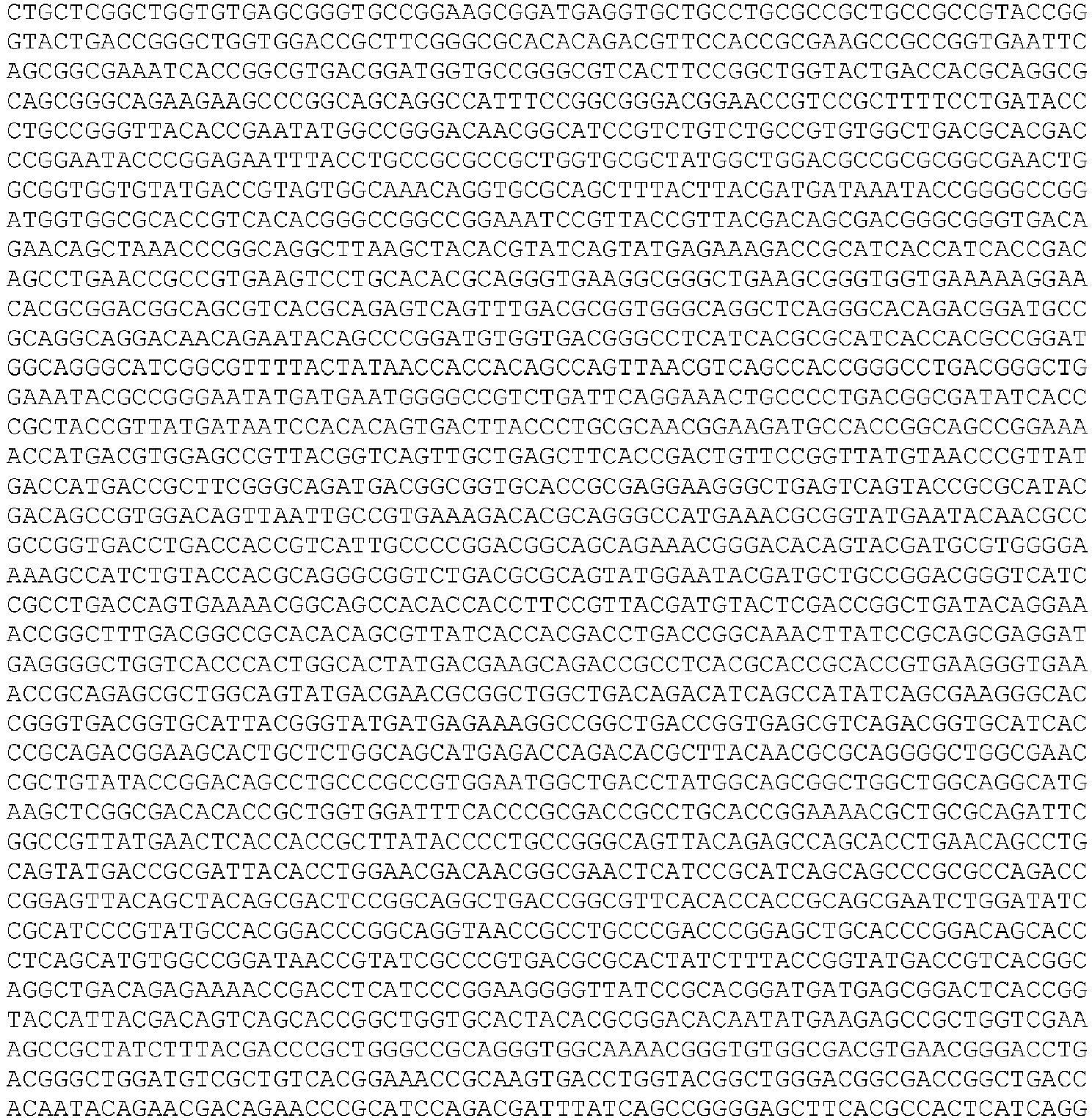 |
||
 |
||
| MC018 prot |
 |
1399 |
| MC019 |
 |
7863 |
 |
||
 |
||
 |
||
| MC019 prot |
 |
2620 |
 |
||
| MC021 |
 |
5037 |
 |
||
 |
||
| MC021 prot |
 |
1678 |
| MC022 |
 |
2409 |
 |
||
| MC022 prot |
 |
802 |
| MC023 |
 |
2451 |
| MC023 |
 |
816 |
| prot |
 |
|
| MC024 |
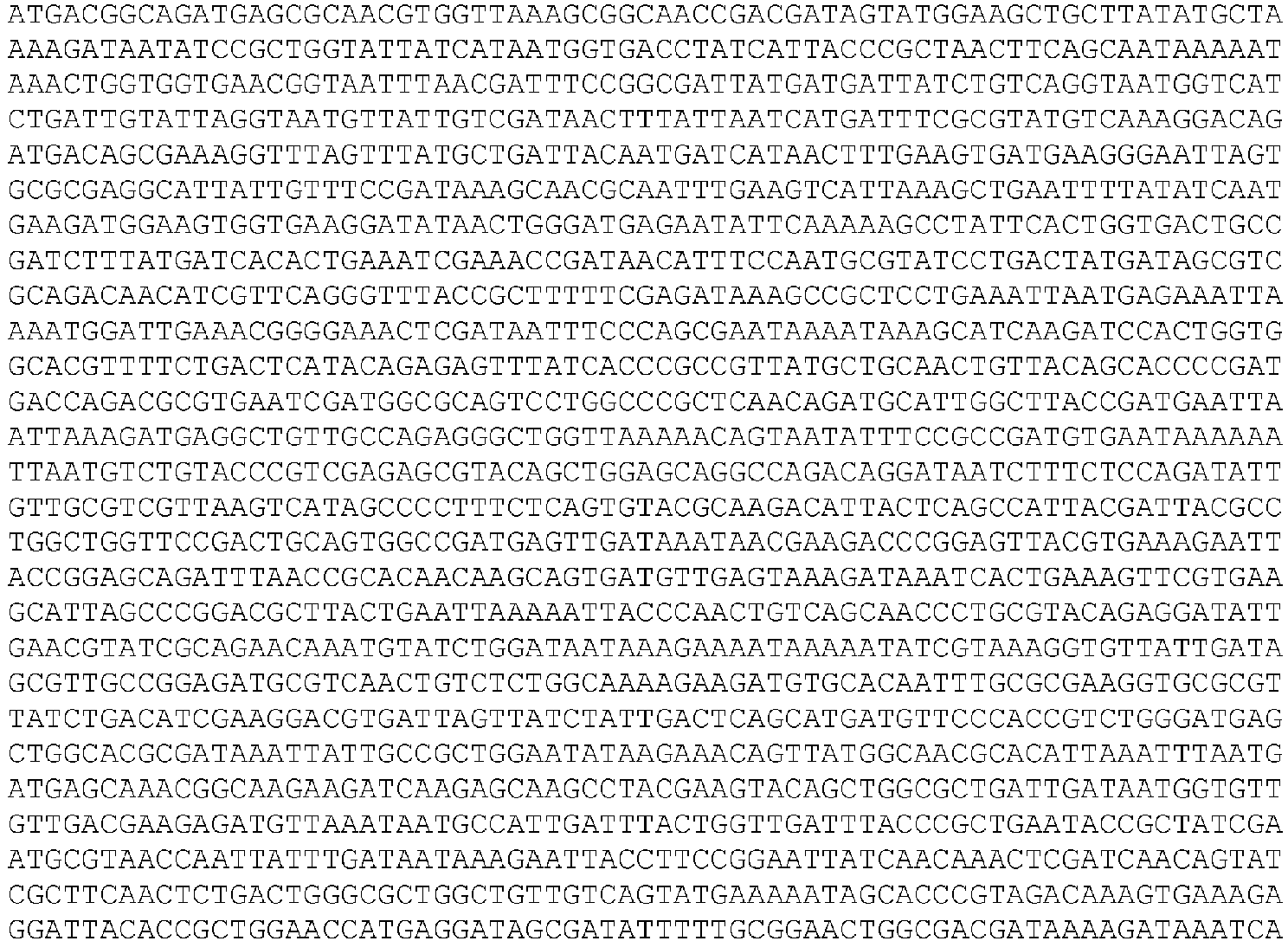 |
2166 |
 |
||
| MC024 prot |
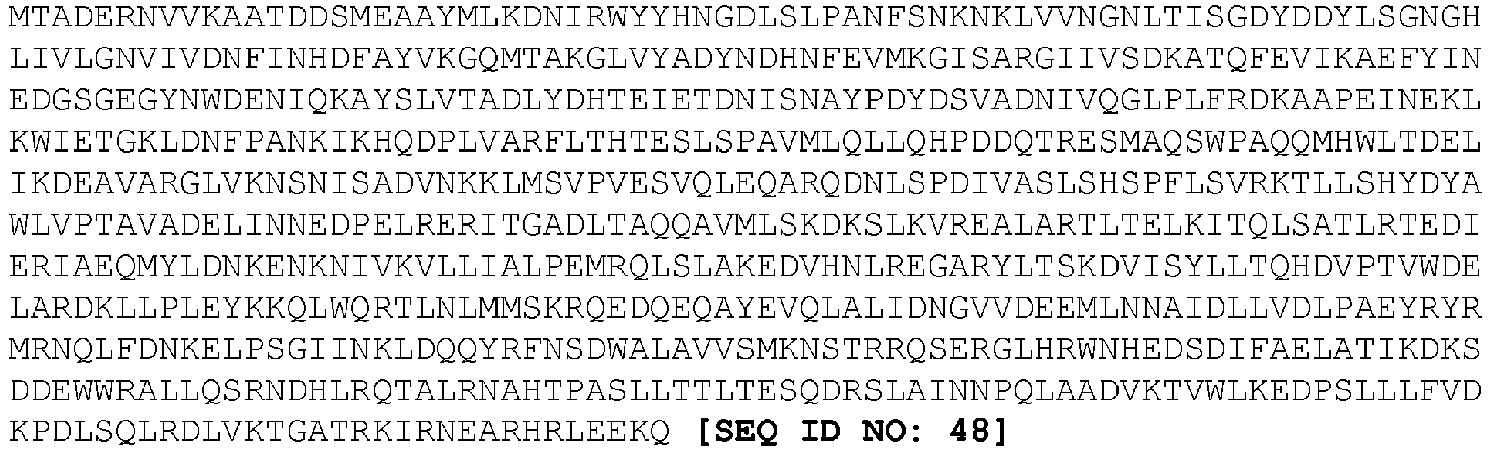 |
721 |


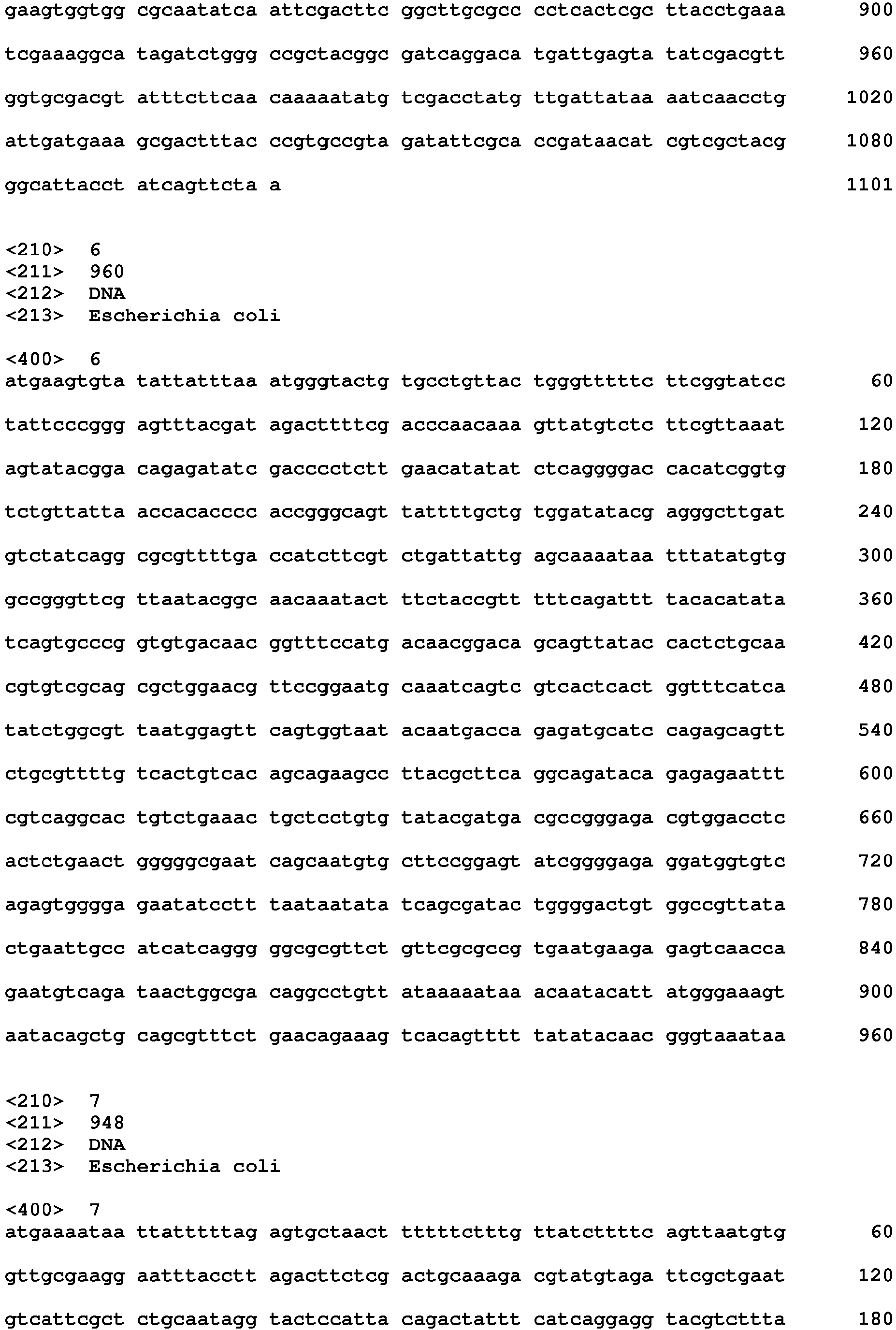










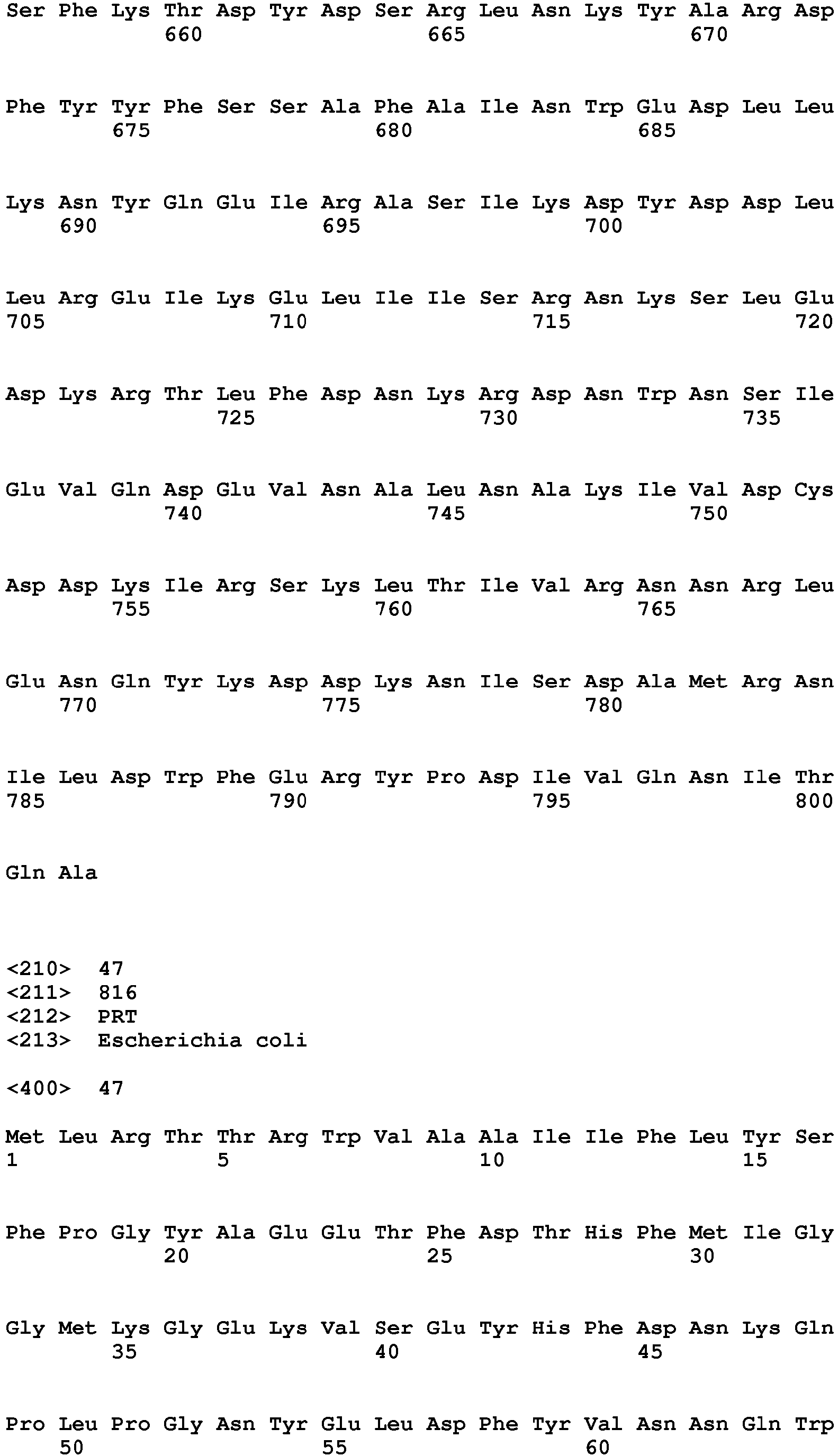


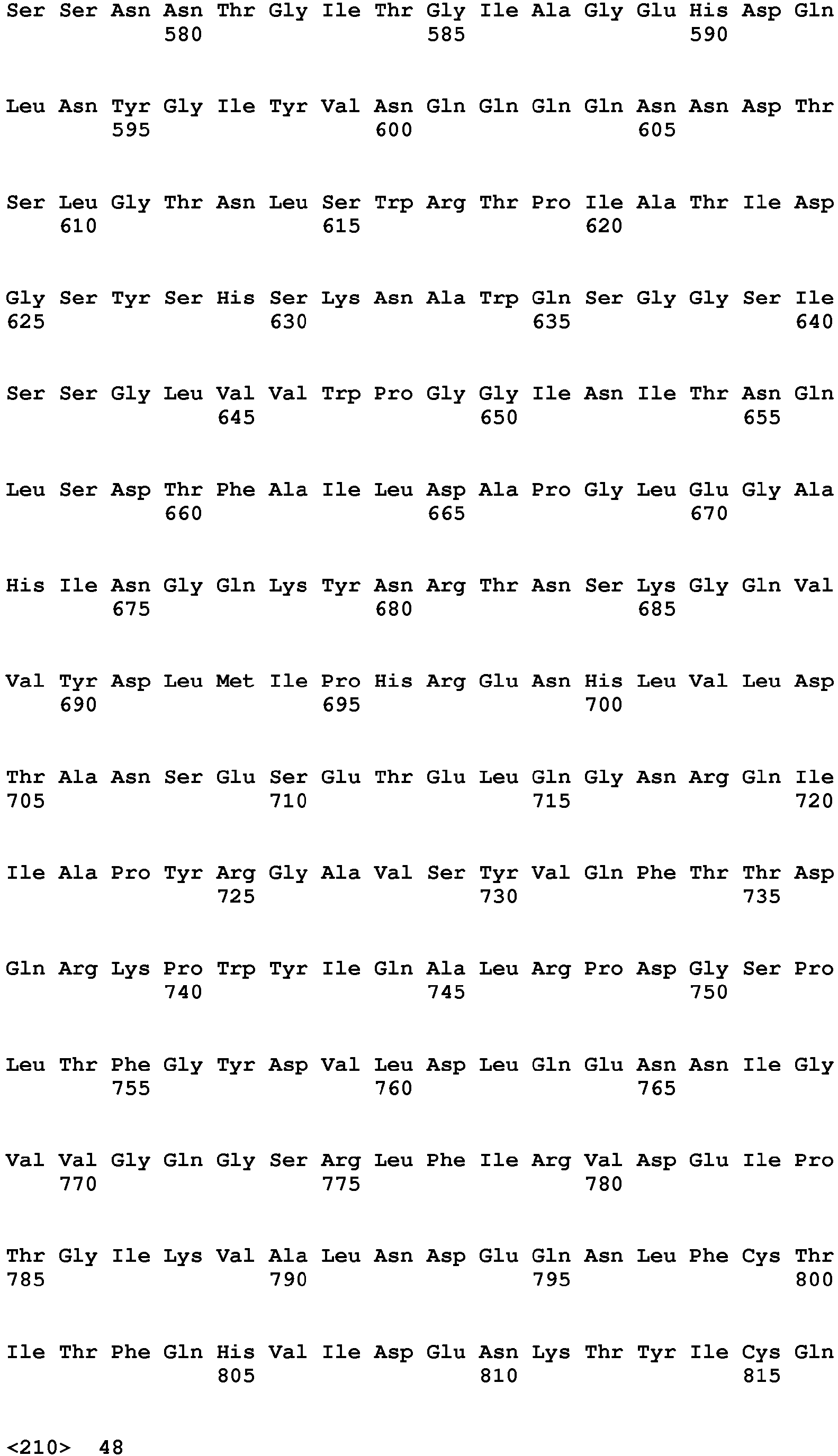


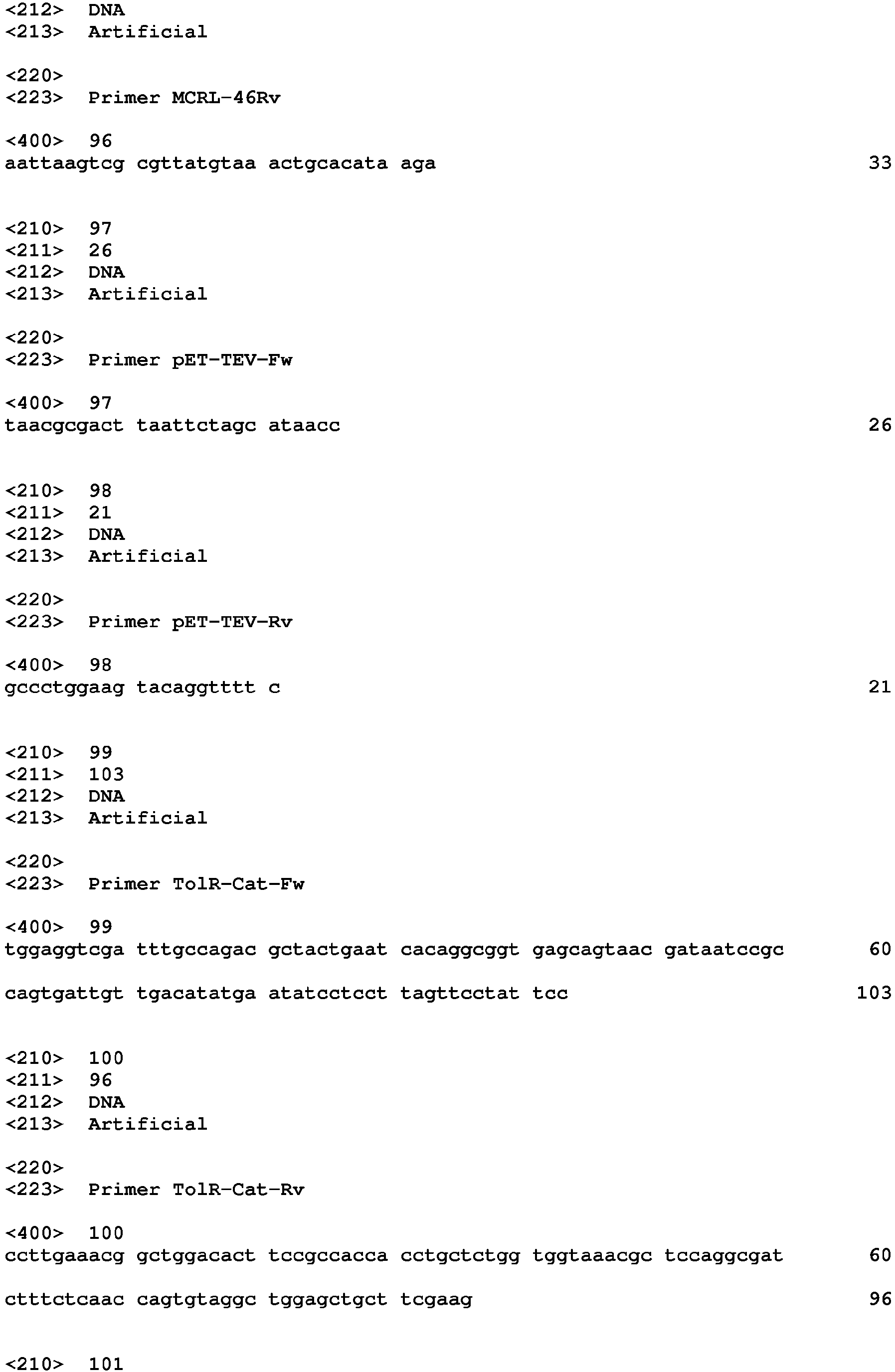


Claims (15)
- An isolated polypeptide comprising or consisting of:(a) an amino acid sequence selected from the group consisting of SEQ ID NOs: 25, 26, 27, 28, 29, 30, 31, 32, 33, 34, 35, 36, 37, 38, 39, 40, 41, 42, 43, 44, 45, 46, 47 or 48; or(b) a variant and/or fragment of (a), for example:(i) a variant of (a);(ii) a fragment of (a);(iii) a variant of a fragment of (a).
- The isolated polypeptide according to claim 1, wherein (a) is selected from the group consisting of SEQ ID NOs: 25, 26 and 27.
- The isolated polypeptide according to any preceding claim, wherein (b) exhibits at least 60% sequence identity to an amino acid sequence listed in (a), for example, at least 61%, 62%, 63%, 64%, 65%, 66%, 67%, 68%, 69%, 70%, 71%, 72%, 73%, 74%, 75%, 76%, 77%, 78%, 79%, 80%, 81%, 82%, 83%, 84%, 85%, 86%, 87%, 88%, 89%, 90%, 91%, 92%, 93%, 94%, 95%, 96%, 97%, 98%, 99% or 99.5% sequence identity to an amino acid sequence listed in (a);(iii) wherein the at least 60% sequence identity is exhibited over at least 60% of the amino acid sequence listed in (a), for example, a contiguous amino acid sequence spanning at least 61%, 62%, 63%, 64%, 65%, 66%, 67%, 68%, 69%, 70%, 71%, 72%, 73%, 74%, 75%, 76%, 77%, 78%, 79%, 80%, 81%, 82%, 83%, 84%, 85%, 86%, 87%, 88%, 89%, 90%, 91%, 92%, 93%, 94%, 95%, 96%, 97%, 98%, 99% or 100% of the amino acid sequence listed in (a); or(iv) wherein the at least 60% sequence identity is exhibited over at least 10 contiguous amino acids of the amino acid sequence listed in (a), for example, at least 11, 12, 13, 14, 15, 16, 17, 18, 19, 20, 21, 22, 23, 24, 25, 26, 27, 28, 29, 30, 31, 32, 33, 34, 35, 36, 37, 38, 39, 40, 41, 42, 43, 44, 45, 46, 47, 48, 49, 50, 51, 52, 53, 54, 55, 56, 57, 58, 59, 60, 61, 62, 63, 64, 65, 66, 67, 68, 69, 70, 71, 72, 73, 74, 75, 76, 77, 78, 79, 80, 81, 82, 83, 84, 85, 86, 87, 88, 89, 90, 91, 92, 93, 94, 95, 96, 97, 98, 99, 100, 101, 102, 103, 104, 105, 106, 107, 108, 109, 110, 111, 112, 113, 114, 115, 116, 117, 118, 119, 120, 121, 122, 123, 124, 125, 126, 127, 128, 129, 130, 131, 132, 133, 134, 135, 136, 137, 138, 139, 140, 141, 142, 143, 144, 145, 146, 147, 148, 149, 150, 151, 152, 153, 154, 155, 156, 157, 158, 159, 160, 161, 162, 163, 164, 165, 166, 167, 168, 169, 170, 171, 172, 173, 174, 175, 176, 177, 178, 179, 180, 181, 182, 183, 184, 185, 186, 187, 188, 189, 190, 191, 192, 193, 194, 195, 196, 197, 198, 199, 200, 201, 202, 203, 204, 205, 206, 207, 208, 209, 210, 211, 212, 213, 214, 215, 216, 217, 218, 219, 220, 221, 222, 223, 224, 225, 226, 227, 228, 229, 230, 231, 232, 233, 234, 235, 236, 237, 238, 239, 240, 241, 242, 243, 244, 245, 246, 247, 248, 249, 250, 251, 252, 253, 254, 255, 256, 257, 258, 259, 260, 261, 262, 263, 264, 265, 266, 267, 268, 269, 270, 271, 272, 273, 274, 275, 276, 277, 278, 279, 280, 281, 282, 283, 284, 285, 286, 287, 288, 289, 290, 291, 292, 293, 294, 295, 296, 297, 298, 299, 300, 350, 400, 450, 500, 550, 600, 650, 700, 750, 800, 850, 900, 950, 1000, 1500, 2000, 2500, 2600, 2601, 2602, 2603, 2604, 2605, 2606, 2607, 2608, 2609, 2610, 2611, 2612, 2613, 2614, 2615, 2616, 2617, 2618 or 2619 contiguous amino acids of the amino acid sequence listed in (a).
- An isolated nucleic acid molecule comprising or consisting of:(C) a nucleic acid sequence selected from the group consisting of selected from the group consisting of SEQ ID NO: 1, 2, 3, 4, 5, 6, 7, 8, 9, 10, 11, 12, 13, 14, 15, 16, 17, 18, 19, 20, 21, 22, 23 or 24; or(D) a fragment, variant and/or fusion of (A).
- A vector comprising a nucleic acid molecule defined in claim 4.
- A host cell comprising a nucleic acid molecule defined in claim 4 or a vector as defined in claim 5.
- A method for producing a polypeptide according to any one of claims 1-3:
comprising or consisting of the steps of culturing a population of host cells according to claim 6 under conditions in which the peptide is expressed, and isolating the peptide therefrom. - A vesicle comprising one or more polypeptide defined in claim 1.
- The vesicle according to claim 8, wherein the vesicle is derived from the membrane of a cell, for example, a Gram positive bacteria membrane vesicle or a Gram negative bacteria outer membrane vesicle (OMV).
- A binding moiety capable of specifically binding to one or more polypeptide defined in claim 1.
- A pharmaceutical composition comprising a polypeptide defined in claim 1, a nucleic acid molecule defined in claim 4, a vector as defined in claim 5, a host cell as defined in claim 6, a vesicle as defined in claim 8 and/or a binding moiety as defined in claim 10.
- A kit comprising or consisting of a polypeptide defined in claim 1, a nucleic acid molecule defined in claim 4, a vector as defined in claim 5, a host cell as defined in claim 6, a vesicle as defined in claim 8, a binding moiety as defined in claim 10 and/or a pharmaceutical composition as defined in claim 11; and (optionally) instructions for use.
- A polypeptide defined in claim 1, a nucleic acid molecule defined in claim 4, a vector as defined in claim 5, a host cell as defined in claim 6, a vesicle as defined in claim 8, a binding moiety as defined in claim 10 and/or a pharmaceutical composition as defined in claim 11, for use in medicine.
- A polypeptide defined in claim 1, a nucleic acid molecule defined in claim 4, a vector as defined in claim 5, a host cell as defined in claim 6, a vesicle as defined in claim 8, a binding moiety as defined in claim 10 and/or a pharmaceutical composition as defined in claim 11, for use in preventing or treating bacterial infection and/or symptoms thereof.
- The use of a nucleic acid molecule defined in claim 4, or a binding moiety as defined in claim 10, for detecting the presence of bacteria.
Priority Applications (4)
| Application Number | Priority Date | Filing Date | Title |
|---|---|---|---|
| EP18178128.7A EP3581201A1 (en) | 2018-06-15 | 2018-06-15 | Escherichia coli o157:h7 proteins and uses thereof |
| EP19729060.4A EP3806893A1 (en) | 2018-06-15 | 2019-06-12 | Escherichia coli o157:h7 proteins and uses thereof |
| PCT/EP2019/065354 WO2019238757A1 (en) | 2018-06-15 | 2019-06-12 | Escherichia coli o157:h7 proteins and uses thereof |
| US17/251,973 US20220105167A1 (en) | 2018-06-15 | 2019-06-12 | Escherichia coli 0157:h7 proteins and uses thereof |
Applications Claiming Priority (1)
| Application Number | Priority Date | Filing Date | Title |
|---|---|---|---|
| EP18178128.7A EP3581201A1 (en) | 2018-06-15 | 2018-06-15 | Escherichia coli o157:h7 proteins and uses thereof |
Publications (1)
| Publication Number | Publication Date |
|---|---|
| EP3581201A1 true EP3581201A1 (en) | 2019-12-18 |
Family
ID=62816297
Family Applications (2)
| Application Number | Title | Priority Date | Filing Date |
|---|---|---|---|
| EP18178128.7A Ceased EP3581201A1 (en) | 2018-06-15 | 2018-06-15 | Escherichia coli o157:h7 proteins and uses thereof |
| EP19729060.4A Withdrawn EP3806893A1 (en) | 2018-06-15 | 2019-06-12 | Escherichia coli o157:h7 proteins and uses thereof |
Family Applications After (1)
| Application Number | Title | Priority Date | Filing Date |
|---|---|---|---|
| EP19729060.4A Withdrawn EP3806893A1 (en) | 2018-06-15 | 2019-06-12 | Escherichia coli o157:h7 proteins and uses thereof |
Country Status (3)
| Country | Link |
|---|---|
| US (1) | US20220105167A1 (en) |
| EP (2) | EP3581201A1 (en) |
| WO (1) | WO2019238757A1 (en) |
Families Citing this family (4)
| Publication number | Priority date | Publication date | Assignee | Title |
|---|---|---|---|---|
| EP3703737A4 (en) * | 2017-10-30 | 2021-08-18 | University of Southern California | COMPOSITIONS AND PROCEDURES FOR A MULTI-ADJUVANCES ONLY APPROACH TO IMMUNE PROPHYLAXIS TO PREVENT INFECTION |
| JP2025510729A (en) | 2022-03-21 | 2025-04-15 | ユニバーシティ オブ サザン カリフォルニア | Triple vaccine protects against bacterial and fungal pathogens via trained immunity |
| CN116903710B (en) * | 2023-09-12 | 2023-11-14 | 山东省农业科学院畜牧兽医研究所 | Phage targeting protein molecule and application thereof in identifying shiga toxin-producing escherichia coli of O103 antigen serotype |
| WO2026003181A1 (en) * | 2024-06-26 | 2026-01-02 | University Of Copenhagen | Outer membrane vesicles from avian pathogenic escherichia coli and aerosol vaccine comprising the same |
Citations (46)
| Publication number | Priority date | Publication date | Assignee | Title |
|---|---|---|---|---|
| US3238190A (en) | 1963-10-23 | 1966-03-01 | Madaus & Co K G Fa Dr | Aescin recovery |
| US4436727A (en) | 1982-05-26 | 1984-03-13 | Ribi Immunochem Research, Inc. | Refined detoxified endotoxin product |
| US4866034A (en) | 1982-05-26 | 1989-09-12 | Ribi Immunochem Research Inc. | Refined detoxified endotoxin |
| US4877611A (en) | 1986-04-15 | 1989-10-31 | Ribi Immunochem Research Inc. | Vaccine containing tumor antigens and adjuvants |
| GB2220211A (en) | 1988-06-29 | 1990-01-04 | Ribi Immunochem Research Inc | Modified lipopolysaccharides |
| EP0362278A1 (en) | 1987-06-05 | 1990-04-11 | THE UNITED STATES OF AMERICA as represented by the Secretary United States Department of Commerce | Autocrine motility factors in cancer diagnosis and management |
| EP0109942B1 (en) | 1982-10-18 | 1991-03-06 | Bror Morein | Immunogenic protein or peptide complex, method of producing said complex and the use thereof as an immune stimulant and as a vaccine |
| US5057540A (en) | 1987-05-29 | 1991-10-15 | Cambridge Biotech Corporation | Saponin adjuvant |
| EP0467714A1 (en) | 1990-07-19 | 1992-01-22 | Merck & Co. Inc. | The class II protein of the outer membrane of neisseria meningitidis |
| WO1994021292A1 (en) | 1993-03-23 | 1994-09-29 | Smithkline Beecham Biologicals (S.A.) | Vaccine compositions containing 3-o deacylated monophosphoryl lipid a |
| EP0382271B1 (en) | 1989-02-04 | 1994-12-21 | Akzo Nobel N.V. | Tocols as adjuvant in vaccine |
| EP0362279B1 (en) | 1987-05-29 | 1995-01-11 | Cambridge Biotech Corporation | Saponin adjuvant |
| WO1995014026A1 (en) | 1993-11-17 | 1995-05-26 | Laboratoires Om S.A. | Glucosamine disaccharides, method for their preparation, pharmaceutical composition comprising same, and their use |
| WO1996011711A1 (en) | 1994-10-12 | 1996-04-25 | Iscotec Ab | Saponin preparations and use thereof in iscoms |
| WO1996033739A1 (en) | 1995-04-25 | 1996-10-31 | Smithkline Beecham Biologicals S.A. | Vaccines containing a saponin and a sterol |
| US5643872A (en) | 1989-10-23 | 1997-07-01 | Smithkline Beecham Corporation | Cyclic anti-aggregatory peptides |
| WO1998033487A1 (en) | 1997-01-30 | 1998-08-06 | Chiron Corporation | Use of microparticles with adsorbed antigen to stimulate immune responses |
| WO1998050399A1 (en) | 1997-05-08 | 1998-11-12 | Corixa Corporation | Aminoalkyl glucosamine phosphate compounds and their use as adjuvants and immunoeffectors |
| WO1999010008A1 (en) | 1997-08-29 | 1999-03-04 | Aquila Biopharmaceuticals, Inc. | Compositions comprising the adjuvant qs-21 and polysorbate or cyclodextrin as excipient |
| WO1999064301A1 (en) | 1998-06-08 | 1999-12-16 | Sca Emballage France | Fast flattening packaging |
| US6008058A (en) | 1993-06-18 | 1999-12-28 | University Of Louisville | Cyclic peptide mixtures via side chain or backbone attachment and solid phase synthesis |
| WO2000000462A1 (en) | 1998-06-30 | 2000-01-06 | Om Pharma | Novel acyl pseudodipeptides, preparation method and pharmaceutical compositions containing same |
| WO2001046127A1 (en) | 1999-12-22 | 2001-06-28 | Om Pharma | Acyl pseudopeptides bearing a functionalised auxiliary spacer |
| US6303347B1 (en) | 1997-05-08 | 2001-10-16 | Corixa Corporation | Aminoalkyl glucosaminide phosphate compounds and their use as adjuvants and immunoeffectors |
| WO2002085905A1 (en) | 2001-04-17 | 2002-10-31 | Sumitomo Pharmaceuticals Company, Limited | Novel adenine derivatives |
| JP2002355074A (en) * | 2001-01-24 | 2002-12-10 | Univ Tsukuba | Nucleic acid molecule and polypeptide specific to enteropathogenic escherichia coli o157:h7 and method for using the same |
| WO2003000283A1 (en) | 2001-06-22 | 2003-01-03 | The Wistar Institute Of Anatomy And Biology | Methods of inducing a cytotoxic immune response and recombinant simian adenovirus compositions useful therein |
| WO2003011223A2 (en) | 2001-07-31 | 2003-02-13 | Eisai Co., Ltd. | Immunomodulatory compounds and methods of use thereof |
| WO2003043572A2 (en) | 2001-11-16 | 2003-05-30 | 3M Innovative Properties Company | Methods and compositions related to irm compounds and toll-like receptor pathways |
| WO2003050283A2 (en) | 2001-12-10 | 2003-06-19 | Catchmabs B.V. | A structure for presenting desired peptide sequences |
| WO2003099195A2 (en) | 2002-05-28 | 2003-12-04 | Eisai Co., Ltd. | Immunomodulatory compounds and methods of use thereof |
| US6764840B2 (en) | 1997-05-08 | 2004-07-20 | Corixa Corporation | Aminoalkyl glucosaminide phosphate compounds and their use as adjuvants and immunoeffectors |
| WO2004071459A2 (en) | 2003-02-13 | 2004-08-26 | 3M Innovative Properties Company | Methods and compositions related to irm compounds and toll-like receptor 8 |
| WO2005071093A2 (en) | 2004-01-23 | 2005-08-04 | Istituto Di Ricerche Di Biologia Molecolare P Angeletti Spa | Chimpanzee adenovirus vaccine carriers |
| WO2005076010A2 (en) * | 2004-02-06 | 2005-08-18 | Council Of Scientific And Industrial Research | Computational method for identifying adhesin and adhesin-like proteins of therapeutic potential |
| WO2006113907A2 (en) * | 2005-04-20 | 2006-10-26 | The General Hospital Corporation | Escherichia coli o157:h7 proteins and uses thereof |
| WO2006124712A2 (en) | 2005-05-16 | 2006-11-23 | Merck & Co., Inc. | A method for improving the immunogenicity of plasmodium antigens |
| JP2008182907A (en) * | 2007-01-27 | 2008-08-14 | Osaka Univ | Highly efficient cell-free protein synthesis system |
| WO2009128950A2 (en) | 2008-04-18 | 2009-10-22 | Vaxinnate Corporation | Deletion mutants of flagellin and methods of use |
| WO2009156405A1 (en) | 2008-06-25 | 2009-12-30 | INSERM (Institut National de la Santé et de la Recherche Médicale) | Novel immunoadjuvant flagellin-based compounds and use thereof |
| WO2010086189A2 (en) | 2009-02-02 | 2010-08-05 | Okairòs Ag, Switzerland | Simian adenovirus nucleic acid- and amino acid-sequences, vectors containing same, and uses thereof |
| WO2012006376A2 (en) | 2010-07-06 | 2012-01-12 | Novartis Ag | Virion-like delivery particles for self-replicating rna molecules |
| WO2012006380A2 (en) | 2010-07-06 | 2012-01-12 | Novartis Ag | Cationic oil-in-water emulsions |
| WO2012049662A1 (en) * | 2010-10-15 | 2012-04-19 | Novartis Vaccines Institute For Global Health Srl | Hyperblebbing salmonella strains |
| WO2012136823A1 (en) | 2011-04-08 | 2012-10-11 | Glaxosmithkline Biologicals S.A. | Process for producing an immunogenic composition containing tetanus toxoid |
| WO2015095340A1 (en) | 2013-12-19 | 2015-06-25 | Novartis Ag | Lipids and lipid compositions for the delivery of active agents |
Family Cites Families (1)
| Publication number | Priority date | Publication date | Assignee | Title |
|---|---|---|---|---|
| HUE052751T2 (en) * | 2016-11-25 | 2021-05-28 | Glaxosmithkline Biologicals Sa | Native omv-antigen conjugates and use thereof |
-
2018
- 2018-06-15 EP EP18178128.7A patent/EP3581201A1/en not_active Ceased
-
2019
- 2019-06-12 US US17/251,973 patent/US20220105167A1/en not_active Abandoned
- 2019-06-12 WO PCT/EP2019/065354 patent/WO2019238757A1/en not_active Ceased
- 2019-06-12 EP EP19729060.4A patent/EP3806893A1/en not_active Withdrawn
Patent Citations (48)
| Publication number | Priority date | Publication date | Assignee | Title |
|---|---|---|---|---|
| US3238190A (en) | 1963-10-23 | 1966-03-01 | Madaus & Co K G Fa Dr | Aescin recovery |
| US4436727A (en) | 1982-05-26 | 1984-03-13 | Ribi Immunochem Research, Inc. | Refined detoxified endotoxin product |
| US4866034A (en) | 1982-05-26 | 1989-09-12 | Ribi Immunochem Research Inc. | Refined detoxified endotoxin |
| EP0109942B1 (en) | 1982-10-18 | 1991-03-06 | Bror Morein | Immunogenic protein or peptide complex, method of producing said complex and the use thereof as an immune stimulant and as a vaccine |
| US4877611A (en) | 1986-04-15 | 1989-10-31 | Ribi Immunochem Research Inc. | Vaccine containing tumor antigens and adjuvants |
| EP0362279B1 (en) | 1987-05-29 | 1995-01-11 | Cambridge Biotech Corporation | Saponin adjuvant |
| US5057540A (en) | 1987-05-29 | 1991-10-15 | Cambridge Biotech Corporation | Saponin adjuvant |
| EP0362278A1 (en) | 1987-06-05 | 1990-04-11 | THE UNITED STATES OF AMERICA as represented by the Secretary United States Department of Commerce | Autocrine motility factors in cancer diagnosis and management |
| GB2220211A (en) | 1988-06-29 | 1990-01-04 | Ribi Immunochem Research Inc | Modified lipopolysaccharides |
| US4912094A (en) | 1988-06-29 | 1990-03-27 | Ribi Immunochem Research, Inc. | Modified lipopolysaccharides and process of preparation |
| US4912094B1 (en) | 1988-06-29 | 1994-02-15 | Ribi Immunochem Research Inc. | Modified lipopolysaccharides and process of preparation |
| EP0382271B1 (en) | 1989-02-04 | 1994-12-21 | Akzo Nobel N.V. | Tocols as adjuvant in vaccine |
| US5643872A (en) | 1989-10-23 | 1997-07-01 | Smithkline Beecham Corporation | Cyclic anti-aggregatory peptides |
| EP0467714A1 (en) | 1990-07-19 | 1992-01-22 | Merck & Co. Inc. | The class II protein of the outer membrane of neisseria meningitidis |
| WO1994021292A1 (en) | 1993-03-23 | 1994-09-29 | Smithkline Beecham Biologicals (S.A.) | Vaccine compositions containing 3-o deacylated monophosphoryl lipid a |
| US6008058A (en) | 1993-06-18 | 1999-12-28 | University Of Louisville | Cyclic peptide mixtures via side chain or backbone attachment and solid phase synthesis |
| WO1995014026A1 (en) | 1993-11-17 | 1995-05-26 | Laboratoires Om S.A. | Glucosamine disaccharides, method for their preparation, pharmaceutical composition comprising same, and their use |
| WO1996011711A1 (en) | 1994-10-12 | 1996-04-25 | Iscotec Ab | Saponin preparations and use thereof in iscoms |
| WO1996033739A1 (en) | 1995-04-25 | 1996-10-31 | Smithkline Beecham Biologicals S.A. | Vaccines containing a saponin and a sterol |
| WO1998033487A1 (en) | 1997-01-30 | 1998-08-06 | Chiron Corporation | Use of microparticles with adsorbed antigen to stimulate immune responses |
| WO1998050399A1 (en) | 1997-05-08 | 1998-11-12 | Corixa Corporation | Aminoalkyl glucosamine phosphate compounds and their use as adjuvants and immunoeffectors |
| US6764840B2 (en) | 1997-05-08 | 2004-07-20 | Corixa Corporation | Aminoalkyl glucosaminide phosphate compounds and their use as adjuvants and immunoeffectors |
| US6303347B1 (en) | 1997-05-08 | 2001-10-16 | Corixa Corporation | Aminoalkyl glucosaminide phosphate compounds and their use as adjuvants and immunoeffectors |
| WO1999010008A1 (en) | 1997-08-29 | 1999-03-04 | Aquila Biopharmaceuticals, Inc. | Compositions comprising the adjuvant qs-21 and polysorbate or cyclodextrin as excipient |
| WO1999064301A1 (en) | 1998-06-08 | 1999-12-16 | Sca Emballage France | Fast flattening packaging |
| WO2000000462A1 (en) | 1998-06-30 | 2000-01-06 | Om Pharma | Novel acyl pseudodipeptides, preparation method and pharmaceutical compositions containing same |
| WO2001046127A1 (en) | 1999-12-22 | 2001-06-28 | Om Pharma | Acyl pseudopeptides bearing a functionalised auxiliary spacer |
| JP2002355074A (en) * | 2001-01-24 | 2002-12-10 | Univ Tsukuba | Nucleic acid molecule and polypeptide specific to enteropathogenic escherichia coli o157:h7 and method for using the same |
| WO2002085905A1 (en) | 2001-04-17 | 2002-10-31 | Sumitomo Pharmaceuticals Company, Limited | Novel adenine derivatives |
| WO2003000283A1 (en) | 2001-06-22 | 2003-01-03 | The Wistar Institute Of Anatomy And Biology | Methods of inducing a cytotoxic immune response and recombinant simian adenovirus compositions useful therein |
| WO2003011223A2 (en) | 2001-07-31 | 2003-02-13 | Eisai Co., Ltd. | Immunomodulatory compounds and methods of use thereof |
| WO2003043572A2 (en) | 2001-11-16 | 2003-05-30 | 3M Innovative Properties Company | Methods and compositions related to irm compounds and toll-like receptor pathways |
| WO2003050283A2 (en) | 2001-12-10 | 2003-06-19 | Catchmabs B.V. | A structure for presenting desired peptide sequences |
| WO2003099195A2 (en) | 2002-05-28 | 2003-12-04 | Eisai Co., Ltd. | Immunomodulatory compounds and methods of use thereof |
| WO2004071459A2 (en) | 2003-02-13 | 2004-08-26 | 3M Innovative Properties Company | Methods and compositions related to irm compounds and toll-like receptor 8 |
| WO2005071093A2 (en) | 2004-01-23 | 2005-08-04 | Istituto Di Ricerche Di Biologia Molecolare P Angeletti Spa | Chimpanzee adenovirus vaccine carriers |
| WO2005076010A2 (en) * | 2004-02-06 | 2005-08-18 | Council Of Scientific And Industrial Research | Computational method for identifying adhesin and adhesin-like proteins of therapeutic potential |
| WO2006113907A2 (en) * | 2005-04-20 | 2006-10-26 | The General Hospital Corporation | Escherichia coli o157:h7 proteins and uses thereof |
| WO2006124712A2 (en) | 2005-05-16 | 2006-11-23 | Merck & Co., Inc. | A method for improving the immunogenicity of plasmodium antigens |
| JP2008182907A (en) * | 2007-01-27 | 2008-08-14 | Osaka Univ | Highly efficient cell-free protein synthesis system |
| WO2009128950A2 (en) | 2008-04-18 | 2009-10-22 | Vaxinnate Corporation | Deletion mutants of flagellin and methods of use |
| WO2009156405A1 (en) | 2008-06-25 | 2009-12-30 | INSERM (Institut National de la Santé et de la Recherche Médicale) | Novel immunoadjuvant flagellin-based compounds and use thereof |
| WO2010086189A2 (en) | 2009-02-02 | 2010-08-05 | Okairòs Ag, Switzerland | Simian adenovirus nucleic acid- and amino acid-sequences, vectors containing same, and uses thereof |
| WO2012006376A2 (en) | 2010-07-06 | 2012-01-12 | Novartis Ag | Virion-like delivery particles for self-replicating rna molecules |
| WO2012006380A2 (en) | 2010-07-06 | 2012-01-12 | Novartis Ag | Cationic oil-in-water emulsions |
| WO2012049662A1 (en) * | 2010-10-15 | 2012-04-19 | Novartis Vaccines Institute For Global Health Srl | Hyperblebbing salmonella strains |
| WO2012136823A1 (en) | 2011-04-08 | 2012-10-11 | Glaxosmithkline Biologicals S.A. | Process for producing an immunogenic composition containing tetanus toxoid |
| WO2015095340A1 (en) | 2013-12-19 | 2015-06-25 | Novartis Ag | Lipids and lipid compositions for the delivery of active agents |
Non-Patent Citations (115)
| Title |
|---|
| "Genbank", Database accession no. AB028476 |
| "Genbank", Database accession no. AF045151 |
| "Merck index" |
| "Merck Index", pages: 341 |
| ABBANAT ET AL.: "Development and Qualification of an Opsonophagocytic Killing Assay To Assess Immunogenicity of a Bioconjugated Escherichia coli Vaccine", CLIN. VACCINE. IMMUNOL., vol. 24, no. 12, 2017, pages e00123 - 17 |
| ALTSCHUL, S.F.; MADDEN, T.L.; SCHAFFER, A.A.; ZHANG, J.; ZHANG, Z.; MILLER, W. ET AL.: "Gapped BLAST and PSI-BLAST: a new generation of protein database search programs", NUCLEIC ACIDS RES, vol. 25, no. 17, 1997, pages 3389 - 3402, XP002905950, DOI: 10.1093/nar/25.17.3389 |
| BARTOLINI, E.; LANNI, E.; FRIGIMELICA, E.; PETRACCA, R.; GALLI, G.; BERLANDA SCORZA, F. ET AL.: "Recombinant outer membrane vesicles carrying Chlamydia muridarum HtrA induce antibodies that neutralize chlamydial infection in vitro", J EXTRACELL VESICLES, vol. 2, 2013 |
| BENKERT, P.; KUNZLI, M.; SCHWEDE, T.: "QMEAN server for protein model quality estimation", NUCLEIC ACIDS RES, vol. 37, 2009, pages W510 - 514 |
| BERLANDA SCORZA, F.; COLUCCI, A.M.; MAGGIORE, L.; SANZONE, S.; ROSSI, O.; FERLENGHI, I. ET AL.: "High yield production process for Shigella outer membrane particles", PLOS ONE, vol. 7, no. 6, 2012, pages e35616, XP055145618, DOI: 10.1371/journal.pone.0035616 |
| BERMAN, H.M.; WESTBROOK, J.; FENG, Z.; GILLILAND, G.; BHAT, T.N.; WEISSIG, H. ET AL.: "The Protein Data Bank", NUCLEIC ACIDS RES, vol. 28, no. 1, 2000, pages 235 - 242, XP002963358, DOI: 10.1093/nar/28.1.235 |
| BERNADAC, A.; GAVIOLI, M.; LAZZARONI, J.C.; RAINA, S.; LLOUBES, R.: "Escherichia coli tol-pal mutants form outer membrane vesicles", J BACTERIOL, vol. 180, no. 18, 1998, pages 4872 - 4878, XP002208245 |
| BETTER ET AL., SCIENCE, vol. 240, 1988, pages 1041 |
| BIASINI, M.; BIENERT, S.; WATERHOUSE, A.; ARNOLD, K.; STUDER, G.; SCHMIDT, T. ET AL.: "SWISS-MODEL: modelling protein tertiary and quaternary structure using evolutionary information", NUCLEIC ACIDS RES, vol. 42, 2014, pages W252 - 258 |
| BIRD ET AL., SCIENCE, vol. 242, 1988, pages 423 |
| CLIN VACCINE IMMUNOL., vol. 23, no. 4, April 2016 (2016-04-01), pages 304 - 314 |
| COLE ET AL., MOL. CELL. BIOL., vol. 62, 1984, pages 109 - 120 |
| COTE ET AL., PROC. NATL. ACAD. SCI. USA, vol. 80, 1983, pages 2026 - 2030 |
| CROKAERT ET AL.: "Determination of serum bactericidal activity against Escherichia coli by an automated photometric method", J. CLIN. MICROBIOL., vol. 26, no. 10, October 1988 (1988-10-01), pages 2069 - 2076 |
| CROXEN, M.A.; FINLAY, B.B.: "Molecular mechanisms of Escherichia coli pathogenicity", NAT REV MICROBIOL, vol. 8, no. 1, 2010, pages 26 - 38 |
| CROXEN, M.A.; LAW, R.J.; SCHOLZ, R.; KEENEY, K.M.; WLODARSKA, M.; FINLAY, B.B.: "Recent advances in understanding enteric pathogenic Escherichia coli", CLIN MICROBIOL REV, vol. 26, no. 4, 2013, pages 822 - 880 |
| CSHL, 1988, pages 567 - 569,574-576,583,590-612, ISBN: 0-87969-314-2 |
| CURR. OPIN. PHARMACOL., vol. 8, 2008, pages 600 - 608 |
| DALEKE-SCHERMERHORN, M.H.; FELIX, T.; SOPROVA, Z.; TEN HAGEN-JONGMAN, C.M.; VIKSTROM, D.; MAJLESSI, L. ET AL.: "Decoration of outer membrane vesicles with multiple antigens by using an autotransporter approach", APPL ENVIRON MICROBIOL, vol. 80, no. 18, 2014, pages 5854 - 5865, XP002742555, DOI: 10.1128/AEM.01941-14 |
| DALSGAARD ET AL.: "Archiv. fur die gesamte Virusforschung", vol. 44, 1974, SPRINGER VERLAG, article "Saponin adjuvants", pages: 243 - 254 |
| DATABASE Geneseq [online] 15 June 2007 (2007-06-15), "E.coli 0157 immunogenic protein expressed during infection, SEQ ID:179.", retrieved from EBI accession no. GSP:AEM19416 Database accession no. AEM19416 * |
| DATABASE Geneseq [online] 15 June 2007 (2007-06-15), "Enterohaemorragic E. coli 0157:H7-specific protein SEQ ID NO: 941.", XP002783790, retrieved from EBI accession no. GSP:ADC00896 Database accession no. ADC00896 * |
| DATABASE Geneseq [online] 15 June 2007 (2007-06-15), "Microbial pathogen adhesin protein sequence, SEQ ID NO:2.", XP002783793, retrieved from EBI accession no. GSP:AEB91292 Database accession no. AEB91292 * |
| DATABASE Geneseq [online] 7 June 2012 (2012-06-07), "Vaccine preparation-related Salmonella bleb protein, SEQ ID NO:475.", XP002783791, retrieved from EBI accession no. GSP:AZV17380 Database accession no. AZV17380 * |
| DATABASE JPO Proteins [online] 24 August 2012 (2012-08-24), "JP 2008182907-A/332: A high efficiency cell-free protein synthesis system.", XP002783792, retrieved from EBI accession no. JPOP:DD779295 Database accession no. DD779295 * |
| DATSENKO, K.A.; WANNER, B.L.: "One-step inactivation of chromosomal genes in Escherichia coli K-12 using PCR products", PROC NATL ACAD SCI U S A, vol. 97, no. 12, 2000, pages 6640 - 6645, XP002210218, DOI: 10.1073/pnas.120163297 |
| DE BENEDETTO, G.; ALFINI, R.; CESCUTTI, P.; CABONI, M.; LANZILAO, L.; NECCHI, F. ET AL.: "Characterization of O-antigen delivered by Generalized Modules for Membrane Antigens (GMMA) vaccine candidates against nontyphoidal Salmonella", VACCINE, vol. 35, no. 3, 2017, pages 419 - 426 |
| DORLAND'S: "Illustrated Medical Dictionary", 1974, W.B. SANDERS COMPANY |
| EBEJER, J.P.; HILL, J.R.; KELM, S.; SHI, J.; DEANE, C.M.: "Memoir: template-based structure prediction for membrane proteins", NUCLEIC ACIDS RES, vol. 41, 2013, pages W379 - 383 |
| ELLIS, T.N.; KUEHN, M.J.: "Virulence and immunomodulatory roles of bacterial outer membrane vesicles", MICROBIOL MOL BIOL REV, vol. 74, no. 1, 2010, pages 81 - 94, XP055107038, DOI: 10.1128/MMBR.00031-09 |
| FANTAPPIE, L.; DE SANTIS, M.; CHIAROT, E.; CARBONI, F.; BENSI, G.; JOUSSON, O. ET AL.: "Antibody-mediated immunity induced by engineered Escherichia coli OMVs carrying heterologous antigens in their lumen", J EXTRACELL VESICLES, vol. 3, 2014, XP055342003, DOI: 10.3402/jev.v3.24015 |
| FIEDLER, ARZNEIMITTEL-FORSCH., vol. 4, 1953, pages 213 |
| FUKUSAWA ET AL., VACCINE, vol. 17, 1999, pages 2951 - 2958 |
| GARCIA-ANGULO, V.A.; KALITA, A.; KALITA, M.; LOZANO, L.; TORRES, A.G.: "Comparative genomics and immunoinformatics approach for the identification of vaccine candidates for enterohemorrhagic Escherichia coli 0157:H7", INFECT IMMUN, vol. 82, no. 5, 2014, pages 2016 - 2026, XP055235203, DOI: 10.1128/IAI.01437-13 |
| GARCIA-ANGULO, V.A.; KALITA, A.; TORRES, A.G.: "Advances in the development of enterohemorrhagic Escherichia coli vaccines using murine models of infection", VACCINE, vol. 31, no. 32, 2013, pages 3229 - 3235 |
| GERKE, C.; COLUCCI, A.M.; GIANNELLI, C.; SANZONE, S.; VITALI, C.G.; SOLLAI, L. ET AL.: "Production of a Shigella sonnei Vaccine Based on Generalized Modules for Membrane Antigens (GMMA), 1790GAHB", PLOS ONE, vol. 10, no. 8, 2015, pages e0134478, XP055215201, DOI: 10.1371/journal.pone.0134478 |
| GOLDWATER, P.N.; BETTELHEIM, K.A.: "Treatment of enterohemorrhagic Escherichia coli (EHEC) infection and hemolytic uremic syndrome (HUS", BMC MED, vol. 10, 2012, pages 12, XP021131485, DOI: 10.1186/1741-7015-10-12 |
| H ZOLA: "Monoclonal Antibodies: A manual of techniques", 1988, CRC PRESS |
| HARLOW; LANE: "Antibodies: A Laboratory Manual" |
| HARLOW; LANE: "Antibodies: A Laboratory Manual", 1988, COLD SPRING HARBOR LABORATORY |
| HARLOW; LANE: "Antibodies: A Laboratory", COLD SPRING HABOR LABORATORY PRESS |
| HUANG; MILLER, ADV. APPL. MATH., vol. 12, 1991, pages 337 - 357 |
| HUSTON ET AL., PROC. NATL. ACAD. SCI. USA, vol. 85, 1988, pages 5879 |
| J G R HURRELL: "Monoclonal Hybridoma Antibodies: Techniques and Applications", 1982, CRC PRESS |
| JEFFS ET AL., PHARMACEUTICAL RESEARCH, vol. 22, no. 3, 2005, pages 362 - 372 |
| KAPARAKIS-LIASKOS, M.; FERRERO, R.L.: "Immune modulation by bacterial outer membrane vesicles", NAT REV IMMUNOL, vol. 15, no. 6, 2015, pages 375 - 387, XP055247417, DOI: 10.1038/nri3837 |
| KAPER, J.B.; NATARO, J.P.; MOBLEY, H.L.: "Pathogenic Escherichia coli", NAT REV MICROBIOL, vol. 2, no. 2, 2004, pages 123 - 140 |
| KAWASAKI, K.; TERAMOTO, M.; TATSUI, R.; AMAMOTO, S.: "Lipid A 3'-O-deacylation by Salmonella outer membrane enzyme LpxR modulates the ability of lipid A to stimulate Toll-like receptor 4", BIOCHEM BIOPHYS RES COMMUN, vol. 428, no. 3, 2012, pages 343 - 347 |
| KEARSE, M.; MOIR, R.; WILSON, A.; STONES-HAVAS, S.; CHEUNG, M.; STURROCK, S. ET AL.: "Geneious Basic: an integrated and extendable desktop software platform for the organization and analysis of sequence data", BIOINFORMATICS, vol. 28, no. 12, 2012, pages 1647 - 1649 |
| KENSIL ET AL., J. IMMUNOLOGY, vol. 146, 1991, pages 431 - 437 |
| KENSIL, C. R.: "Saponins as vaccine adjuvants", CRIT. REV. THER. DRUG. CARRIER SYST., vol. 12, no. 1-2, 1996, pages 1 - 55 |
| KERSTEN; CROMMELIN, BIOCHIMICA ET BIOPHYSICA ACTA, vol. 1241, 1995, pages 117 - 138 |
| KLOCK, H.E.; LESLEY, S.A.: "The Polymerase Incomplete Primer Extension (PIPE) method applied to high-throughput cloning and site-directed mutagenesis", METHODS MOL BIOL, vol. 498, 2009, pages 91 - 103 |
| KOHLER ET AL., NATURE, vol. 256, 1975, pages 4950497 |
| KOZBOR ET AL., J. IMMUNOL. METHODS, vol. 81, 1985, pages 31 - 42 |
| KROGH, A.; LARSSON, B.; HEIJNE, G.; SONNHAMMER, E.L.: "Predicting transmembrane protein topology with a hidden Markov model: application to complete genomes", J MOL BIOL, vol. 305, no. 3, 2001, pages 567 - 580, XP004469188, DOI: 10.1006/jmbi.2000.4315 |
| LANDSTORFER, R.; SIMON, S.; SCHOBER, S.; KEIM, D.; SCHERER, S.; NEUHAUS, K.: "Comparison of strand-specific transcriptomes of enterohemorrhagic Escherichia coli 0157:H7 EDL933 (EHEC) under eleven different environmental conditions including radish sprouts and cattle feces", BMC GENOMICS, vol. 15, 2014, pages 353, XP021187303, DOI: 10.1186/1471-2164-15-353 |
| LOESSNER, CURRENT OPINION IN MICROBIOLOGY, vol. 8, 2005, pages 480 - 487 |
| MACLENNAN, C.A.; SAUL, A.: "Vaccines against poverty", PROC NATL ACAD SCI US A, vol. 111, no. 34, 2014, pages 12307 - 12312 |
| MAIONE, D.; MARGARIT, I.; RINAUDO, C.D.; MASIGNANI, V.; MORA, M.; SCARSELLI, M. ET AL.: "Identification of a universal Group B streptococcus vaccine by multiple genome screen", SCIENCE, vol. 309, no. 5731, 2005, pages 148 - 150 |
| MEZIERE ET AL., J. IMMUNOL., vol. 159, 1997, pages 3230 - 3237 |
| MILLER: "Experiments in Molecular Genetics", 1972, COLD SPRING HARBOR, pages: 31 - 36 |
| MOHAWK, K.L.; O'BRIEN, A.D.: "Mouse models of Escherichia coli 0157:H7 infection and shiga toxin injection", J BIOMED BIOTECHNOL, 2011, pages 258185 |
| MORA, M.; DONATI, C.; MEDINI, D.; COVACCI, A.; RAPPUOLI, R.: "Microbial genomes and vaccine design: refinements to the classical reverse vaccinology approach", CURR OPIN MICROBIOL, vol. 9, no. 5, 2006, pages 532 - 536, XP028033999, DOI: 10.1016/j.mib.2006.07.003 |
| MORA, M.; VEGGI, D.; SANTINI, L.; PIZZA, M.; RAPPUOLI, R.: "Reverse vaccinology", DRUG DISCOV TODAY, vol. 8, no. 10, 2003, pages 459 - 464, XP002324779, DOI: 10.1016/S1359-6446(03)02689-8 |
| MORIEL, D.G.; BERTOLDI, I.; SPAGNUOLO, A.; MARCHI, S.; ROSINI, R.; NESTA, B. ET AL.: "Identification of protective and broadly conserved vaccine antigens from the genome of extraintestinal pathogenic Escherichia coli", PROC NATL ACAD SCI U S A, vol. 107, no. 20, 2010, pages 9072 - 9077, XP002612615, DOI: 10.1073/PNAS.0915077107 |
| MORIEL, D.G.; ROSINI, R.; SEIB, K.L.; SERINO, L.; PIZZA, M.; RAPPUOLI, R.: "Escherichia coli: great diversity around a common core", MBIO, vol. 3, no. 3, 2012 |
| MORRISON ET AL., PROC. NATL. ACAD. SCI. USA, vol. 81, 1984, pages 6851 - 6855 |
| NECCHI, SAUL; RONDINI: "Development of a high-throughput method to evaluate serum bactericidal activity using bacterial ATP measurement as survival readout", PLOS ONE, vol. 12, no. 2, 2017, pages e0172163 |
| NESTA, B.; VALERI, M.; SPAGNUOLO, A.; ROSINI, R.; MORA, M.; DONATO, P. ET AL.: "SslE elicits functional antibodies that impair in vitro mucinase activity and in vivo colonization by both intestinal and extraintestinal Escherichia coli strains", PLOS PATHOG, vol. 10, no. 5, 2014, pages e1004124 |
| NIELSEN, H.: "Predicting Secretory Proteins with SignalP", METHODS MOL BIOL, vol. 1611, 2017, pages 59 - 73 |
| NIEVES, W.; PETERSEN, H.; JUDY, B.M.; BLUMENTRITT, C.A.; RUSSELL-LODRIGUE, K.; ROY, C.J. ET AL.: "A Burkholderia pseudomallei outer membrane vesicle vaccine provides protection against lethal sepsis", CLIN VACCINE IMMUNOL, vol. 21, no. 5, 2014, pages 747 - 754 |
| OGAWA ET AL.: "Activation of IpxR gene through enterohaemorrhagic Escherichia coli virulence regulators mediates lipid A modification to attenuate innate immune response", CELL MICROBIOL., 2017 |
| ORLANDI ET AL., PROC. NATL. ACAD. SCI. U.S.A., vol. 86, 1989, pages 3833 - 3837 |
| PAUL N GOLDWATER ET AL: "Treatment of enterohemorrhagic Escherichia coli (EHEC) infection and hemolytic uremic syndrome (HUS)", BMC MEDICINE, BIOMED CENTRAL LTD., LONDON, GB, vol. 10, no. 1, 2 February 2012 (2012-02-02), pages 12, XP021131485, ISSN: 1741-7015, DOI: 10.1186/1741-7015-10-12 * |
| PEREZ-CRUZ, C.; CANAS, M.A.; GIMENEZ, R.; BADIA, J.; MERCADE, E.; BALDOMA, L. ET AL.: "Membrane Vesicles Released by a hypervesiculating Escherichia coli Nissle 1917 toIR Mutant Are Highly Heterogeneous and Show Reduced Capacity for Epithelial Cell Interaction and Entry", PLOS ONE, vol. 11, no. 12, 2016, pages e0169186 |
| PEREZ-CRUZ, C.; CARRION, O.; DELGADO, L.; MARTINEZ, G.; LOPEZ-IGLESIAS, C.; MERCADE, E.: "New type of outer membrane vesicle produced by the Gram-negative bacterium Shewanella vesiculosa M7T: implications for DNA content", APPL ENVIRON MICROBIOL, vol. 79, no. 6, 2013, pages 1874 - 1881 |
| PETERSEN, H.; NIEVES, W.; RUSSELL-LODRIGUE, K.; ROY, C.J.; MORICI, L.A.: "Evaluation of a Burkholderia pseudomallei Outer Membrane Vesicle Vaccine in Nonhuman Primates", PROCEDIA VACCINOL, vol. 8, 2014, pages 38 - 42 |
| PETRONE, B.L.; STRINGER, A.M.; WADE, J.T.: "Identification of HilD-regulated genes in Salmonella enterica serovar Typhimurium", J BACTERIOL, vol. 196, no. 5, 2014, pages 1094 - 1101 |
| PIZZA, M.; SCARLATO, V.; MASIGNANI, V.; GIULIANI, M.M.; ARICO, B.; COMANDUCCI, M. ET AL.: "Identification of vaccine candidates against serogroup B meningococcus by whole-genome sequencing", SCIENCE, vol. 287, no. 5459, 2000, pages 1816 - 1820 |
| PLOS ONE, vol. 10, no. 8, 2015, pages e0134478 |
| PLOS ONE., vol. 10, no. 8, 2015, pages e0134478 |
| R. VOCHTEN ET AL., J. PHARM. BELG., vol. 42, 1968, pages 213 - 226 |
| RAPPUOLI, R.: "Reverse vaccinology", CURR OPIN MICROBIOL, vol. 3, no. 5, 2000, pages 445 - 450 |
| RAPPUOLI, R.; PIZZA, M.; DEL GIUDICE, G.; DE GREGORIO, E.: "Vaccines, new opportunities for a new society", PROC NATL ACAD SCI U S A, vol. 111, no. 34, 2014, pages 12288 - 12293 |
| RIVAS, M.; CHINEN, I.; GUTH, B.E.C.: "Escherichia coli in the Americas", 2016, CHAM: SPRINGER INTERNATIONAL PUBLISHING, article "Enterohemorrhagic (Shiga Toxin-Producing) Escherichia coli", pages: 97 - 123 |
| ROJAS-LOPEZ ET AL., FRONT. MICROBIOL., vol. 9, 2018, pages 440 |
| ROSSI O ET AL., CLIN VACCINE IMMUNOL., vol. 23, no. 4, 4 April 2016 (2016-04-04), pages 304 - 14 |
| ROSSI O ET AL., J BIOL CHEM., vol. 289, no. 36, 5 September 2014 (2014-09-05), pages 24922 - 35 |
| ROSSI, O.; CABONI, M.; NEGREA, A.; NECCHI, F.; ALFINI, R.; MICOLI, F. ET AL.: "Toll-Like Receptor Activation by Generalized Modules for Membrane Antigens from Lipid A Mutants of Salmonella enterica Serovars Typhimurium and Enteritidis", CLIN VACCINE IMMUNOL, vol. 23, no. 4, 2016, pages 304 - 314, XP055506434 |
| ROSSI, O.; MAGGIORE, L.; NECCHI, F.; KOEBERLING, O.; MACLENNAN, C.A.; SAUL, A. ET AL.: "Comparison of Colorimetric Assays with Quantitative Amino Acid Analysis for Protein Quantification of Generalized Modules for Membrane Antigens (GMMA", MOLECULAR BIOTECHNOLOGY, vol. 57, no. 1, 2015, pages 84 - 93, XP035423717, DOI: 10.1007/s12033-014-9804-7 |
| ROY, A.; KUCUKURAL, A.; ZHANG, Y.: "I-TASSER: a unified platform for automated protein structure and function prediction", NAT PROTOC, vol. 5, no. 4, 2010, pages 725 - 738 |
| RUBIN, PEDIATRIC. CLIN. NORTH AM., vol. 47, 2000, pages 269 - 285 |
| RUTTEN, L.; MANNIE, J.P.; STEAD, C.M.; RAETZ, C.R.; REYNOLDS, C.M.; BONVIN, A.M. ET AL.: "Active-site architecture and catalytic mechanism of the lipid A deacylase LpxR of Salmonella typhimurium", PROC NATL ACAD SCI USA, vol. 106, no. 6, 2009, pages 1960 - 1964 |
| SABROE ET AL., !, 2003, pages 1630 - 5 |
| SABROE ET AL., J!, 2003, pages 1630 - 5 |
| SABROE ET AL., JI, 2003, pages 1630 - 5 |
| SAIKI ET AL., SCIENCE, vol. 239, 1988, pages 487 - 491 |
| SAMBROOK; RUSSELL: "Molecular Cloning: a Laboratory Manual", 2001, COLD SPRING HARBOR LABORATORY PRESS |
| SINGH ET AL., EXPERT REV. VACCINES, vol. 6, no. 5, 2007, pages 797 - 808 |
| SKERRA ET AL., SCIENCE, vol. 240, 1988, pages 1038 |
| TAPIA, D.; ROSS, B.N.; KALITA, A.; KALITA, M.; HATCHER, C.L.; MURUATO, L.A. ET AL.: "From In silico Protein Epitope Density Prediction to Testing Escherichia coli 0157:H7 Vaccine Candidates in a Murine Model of Colonization", FRONT CELL INFECT MICROBIOL, vol. 6, 2016, pages 94 |
| TARR, P.I.; GORDON, C.A.; CHANDLER, W.L.: "Shiga-toxin-producing Escherichia coli and haemolytic uraemic syndrome", LANCET, vol. 365, no. 9464, 2005, pages 1073 - 1086, XP025277242, DOI: 10.1016/S0140-6736(05)71144-2 |
| THORPE ET AL.: "Detection and measurement of cytokines", BLOOD REV., vol. 6, no. 3, 1992, pages 133 - 48, XP022954293, DOI: 10.1016/0268-960X(92)90025-L |
| VAN SLYKE ET AL.: "Development and validation of the pain response inventory for children", PSYCHOLOGICAL ASSESSMENT, vol. 9, 1997, pages 392 - 405 |
| WARD ET AL., NATURE, vol. 341, 1989, pages 544 |
| WINTER ET AL., NATURE, vol. 349, 1991, pages 293 - 299 |
| WINTER; MILSTEIN, NATURE, vol. 349, 1991, pages 293 - 299 |
| WU ET AL., PNAS USA, vol. 103, no. 48, 2006, pages 18243 - 18248 |
| YOSHIKAWA ET AL., CHEM PHARM BULL (TOKYO, vol. 44, no. 8, 1996, pages 1454 - 1464 |
| YU, N.Y.; WAGNER, J.R.; LAIRD, M.R.; MELLI, G.; REY, S.; LO, R. ET AL.: "PSORTb 3.0: improved protein subcellular localization prediction with refined localization subcategories and predictive capabilities for all prokaryotes", BIOINFORMATICS, vol. 26, no. 13, 2010, pages 1608 - 1615 |
Also Published As
| Publication number | Publication date |
|---|---|
| WO2019238757A1 (en) | 2019-12-19 |
| EP3806893A1 (en) | 2021-04-21 |
| US20220105167A1 (en) | 2022-04-07 |
Similar Documents
| Publication | Publication Date | Title |
|---|---|---|
| Rojas-Lopez et al. | Intestinal pathogenic Escherichia coli: insights for vaccine development | |
| JP6833785B2 (en) | Production of recombinant vaccine in E. coli by enzymatic conjugate | |
| US7794728B2 (en) | Attenuated Listeria spp. and methods for using the same | |
| TWI751513B (en) | BIOCONJUGATES OF E. coli O-ANTIGEN POLYSACCHARIDES, METHODS OF PRODUCTION THEREOF, AND METHODS OF USE THEREOF | |
| EP2265640B1 (en) | Chimeric factor h binding proteins (fhbp) containing a heterologous b domain and methods of use | |
| US8889121B2 (en) | Bacterium comprising a regulated rfaH nucleic acid | |
| US20220105167A1 (en) | Escherichia coli 0157:h7 proteins and uses thereof | |
| JP6054371B2 (en) | Regulation of bacterial MAM polypeptides in pathogenic diseases | |
| TWI771663B (en) | Methods of producing bioconjugates of e. coli o-antigen polysaccharides, compositions thereof, and methods of use thereof | |
| US20170145061A1 (en) | Engineered bacteroides outer membrane vesicles | |
| EA015561B1 (en) | A NOVEL SURFACE EXPOSED HAEMOPHILUS INFLUENZAE PROTEIN (PROTEIN E; pE) | |
| JP2024099716A (en) | Multivalent vaccine compositions and uses thereof | |
| Godlewska et al. | Evaluation of a protective effect of in ovo delivered Campylobacter jejuni OMVs | |
| US20210369831A1 (en) | Clostridium difficile multi-component vaccine | |
| US6040421A (en) | Escherichia coli O157:H7 epithelial adhesion and vaccine | |
| Montero et al. | A chimeric protein-based vaccine elicits a strong IgG antibody response and confers partial protection against Shiga toxin-producing Escherichia coli in mice | |
| Cho-Rok et al. | Immunization with major outer membrane protein of Vibrio vulnificus elicits protective antibodies in a murine model | |
| Bian et al. | Salmonella Typhimurium derived OMV nanoparticle displaying mixed heterologous O-antigens confers immunogenicity and protection against STEC infections in mice | |
| US8647640B2 (en) | Vaccine compositions and methods of use to protect against infectious disease | |
| JPWO2018159476A1 (en) | Multivalent vaccine | |
| WO2002079240A2 (en) | Intimins for the prevention or treatment of infections: i | |
| Mudiyanselage | The testing of a novel vaccine against Pseudomonas aeruginosa | |
| WO2024121125A1 (en) | Single-domain antibodies to reduce the risk of cholera infection | |
| TW202434282A (en) | Multivalent vaccine compositions and uses thereof | |
| Kirn Jr | Vibrio cholerae pathogenesis: Molecular mechanisms of colonization |
Legal Events
| Date | Code | Title | Description |
|---|---|---|---|
| PUAI | Public reference made under article 153(3) epc to a published international application that has entered the european phase |
Free format text: ORIGINAL CODE: 0009012 |
|
| AK | Designated contracting states |
Kind code of ref document: A1 Designated state(s): AL AT BE BG CH CY CZ DE DK EE ES FI FR GB GR HR HU IE IS IT LI LT LU LV MC MK MT NL NO PL PT RO RS SE SI SK SM TR |
|
| AX | Request for extension of the european patent |
Extension state: BA ME |
|
| STAA | Information on the status of an ep patent application or granted ep patent |
Free format text: STATUS: THE APPLICATION HAS BEEN REFUSED |
|
| 18R | Application refused |
Effective date: 20200203 |