EP3580219B1 - Process for the preparation of remimazolam and solid state forms of remimazolam salts - Google Patents
Process for the preparation of remimazolam and solid state forms of remimazolam salts Download PDFInfo
- Publication number
- EP3580219B1 EP3580219B1 EP18706147.8A EP18706147A EP3580219B1 EP 3580219 B1 EP3580219 B1 EP 3580219B1 EP 18706147 A EP18706147 A EP 18706147A EP 3580219 B1 EP3580219 B1 EP 3580219B1
- Authority
- EP
- European Patent Office
- Prior art keywords
- compound
- remimazolam
- formula
- formula iii
- iii
- Prior art date
- Legal status (The legal status is an assumption and is not a legal conclusion. Google has not performed a legal analysis and makes no representation as to the accuracy of the status listed.)
- Active
Links
Images




Classifications
-
- A—HUMAN NECESSITIES
- A61—MEDICAL OR VETERINARY SCIENCE; HYGIENE
- A61P—SPECIFIC THERAPEUTIC ACTIVITY OF CHEMICAL COMPOUNDS OR MEDICINAL PREPARATIONS
- A61P23/00—Anaesthetics
-
- C—CHEMISTRY; METALLURGY
- C07—ORGANIC CHEMISTRY
- C07D—HETEROCYCLIC COMPOUNDS
- C07D405/00—Heterocyclic compounds containing both one or more hetero rings having oxygen atoms as the only ring hetero atoms, and one or more rings having nitrogen as the only ring hetero atom
- C07D405/14—Heterocyclic compounds containing both one or more hetero rings having oxygen atoms as the only ring hetero atoms, and one or more rings having nitrogen as the only ring hetero atom containing three or more hetero rings
-
- C—CHEMISTRY; METALLURGY
- C07—ORGANIC CHEMISTRY
- C07D—HETEROCYCLIC COMPOUNDS
- C07D487/00—Heterocyclic compounds containing nitrogen atoms as the only ring hetero atoms in the condensed system, not provided for by groups C07D451/00 - C07D477/00
- C07D487/02—Heterocyclic compounds containing nitrogen atoms as the only ring hetero atoms in the condensed system, not provided for by groups C07D451/00 - C07D477/00 in which the condensed system contains two hetero rings
- C07D487/04—Ortho-condensed systems
-
- C—CHEMISTRY; METALLURGY
- C07—ORGANIC CHEMISTRY
- C07B—GENERAL METHODS OF ORGANIC CHEMISTRY; APPARATUS THEREFOR
- C07B2200/00—Indexing scheme relating to specific properties of organic compounds
- C07B2200/13—Crystalline forms, e.g. polymorphs
Definitions
- the present disclosure relates to novel processes for the preparation of short acting benzodiazepines as well as to novel intermediates in this process. More particularly the disclosure relates to processes and intermediates for preparation of Methyl 3-[(4S)-8-bromo-1-methyl-6-(pyridin-2-yl)-4H-imidazo[1,2-a][1,4]benzodiazepin-4-yl]propanoate, commonly known as Remimazolam.
- Remimazolam (may referred to herein as Formula-I, Formula I, Compound of formula I or Compound I). Remimazolam has the following chemical structure:
- Remimazolam is developed for use in induction of anesthesia and conscious sedation for minor invasive procedures.
- US patent number 9,156,842 (referred to herein as '842) discloses a process for preparation of Remimazolam which utilizes Dess-Martin periodinane (DMP) for the oxidation of Compound II, an intermediate in the synthesis of Remimazolam.
- DMP Dess-Martin periodinane
- the reported overall yield is about 34-35% (w/w).
- the use of DMP is not preferred due to its potential explosive nature, its high cost and the need to use high quantity of reagent to match its high molecular weight.
- the '842 patent also discloses process for preparation of compound of Compound-IV, an intermediate in the synthesis of Remimazolam, which includes tert-butyloxycarbonyl (Boc) protection and later de-protection using hydrochloric acid. This process is described in Scheme 2.
- US patent number 9656987 (referred to herein as '987) teaches additional process for the preparation of Remimazolam, which includes oxidation of Compound-II in the presence N-Oxyl oxidation catalyst.
- the reported yield of this process, from intermediate IV to intermediate II is about 56% (w/w) and the overall yield is of about 33%.
- This process utilizes the hazardous reagents LDA (Lithium diisopropylamide) and bismorpholinophosphoryl chloridate and requires relatively long reaction time.
- Polymorphism the occurrence of different crystal forms, is a property of some molecules and molecular complexes.
- a single compound, like Remimazolam or a salt thereof, may give rise to a variety of polymorphs having distinct crystal structures and physical properties like melting point, thermal behaviors (e.g. measured by thermogravimetric analysis - "TGA”, or differential scanning calorimetry - “DSC”), X-ray powder diffraction (XRPD) pattern, infrared absorption fingerprint, Raman absorption fingerprint, and solid state ( 13 C-) NMR spectrum.
- TGA thermogravimetric analysis -
- DSC differential scanning calorimetry -
- XRPD X-ray powder diffraction
- Different salts and solid state forms (including solvated forms) of an active pharmaceutical ingredient may possess different properties. Such variations in the properties of different salts and solid state forms and solvates may provide a basis for improving formulation, for example, by facilitating better processing or handling characteristics, improving the dissolution profile, or improving stability (polymorphic as well as chemical stability) and shelf-life. These variations in the properties of different salts and solid state forms may also provide improvements to the final dosage form, for instance, if they serve to improve bioavailability. Different salts and solid state forms and solvates of an active pharmaceutical ingredient may also give rise to a variety of polymorphs or crystalline forms, which may in turn provide additional opportunities to use variations in the properties and characteristics of a solid active pharmaceutical ingredient for providing an improved product.
- Developing new salts and solid state forms and solvates of a pharmaceutical product can provide materials having desirable processing properties, such as ease of handling, ease of processing, storage stability, and ease of purification or as desirable intermediate crystal forms that facilitate conversion to other salts or polymorphic forms.
- New polymorphic forms and solvates of a pharmaceutically useful compound can also provide an opportunity to improve the performance characteristics of a pharmaceutical product (dissolution profile, bioavailability, etc.). It enlarges the repertoire of materials that a formulation scientist has available for formulation optimization, for example by providing a product with different properties, e.g., a different crystal habit, higher crystallinity or polymorphic stability which may offer better processing or handling characteristics, improved dissolution profile, or improved shelf-life. For at least these reasons, there is a need for additional solid state forms (including solvated forms) of Remimazolam salts.
- the present disclosure provides novel intermediates, their preparation and their use in the preparation of benzodiazepines. Particularly, the present disclosure provides intermediates useful for the preparation of Remimazolam.
- the present disclosure provides processes for preparation of Remimazolam.
- the present disclosure also provides processes for early intermediates in the synthesis of benzodiazepines, particularly, Remimazolam, namely the intermediate compound of formula III-A, III, particularly III-S, and III-13S.
- the present disclosure also relates to Remimazolam salts and solid state forms thereof, which are not part of the invention.
- Remimazolam Hydrochloride relates to crystalline forms of Remimazolam Hydrochloride, Remimazolam Mono Hydrobromide, Remimazolam Dihydrobromide, Remimazolam Fumarate, Remimazolam Oxalate, Remimazolam Sulphate, Remimazolam Methane sulfonate, Remimazolam Camphor sulfonate and Remimazolam Dibesylate.
- Remimazolam salts can be used for preparing other salts and solid state forms of Remimazolam.
- Remimazolam salts can be used for the preparation of pharmaceutical compositions and/or formulations.
- compositions comprising the above described solid state forms of Remimazolam salts.
- the solid state forms of Remimazolam salts defined herein as well as the pharmaceutical compositions and formulations of the solid state form of the Remimazolam salts can be used as medicaments, particularly for induction of anesthesia and conscious sedation for minor invasive procedures. Described herein but not claimed is a method of inducing anesthesia and conscious sedation for minor invasive procedures comprising administering a therapeutically effective amount of any of the solid state form of Remimazolam salts of the present disclosure, or at least one of the above pharmaceutical compositions or formulations, to a subject which needs induction of anesthesia and conscious sedation for minor invasive procedures, or otherwise in need of the treatment.
- Remimazolam salts for use in medicine, preferably for induction of anesthesia and conscious sedation for minor invasive procedures.
- the present disclosure relates to novel processes for preparation of short acting benzodiazepines as well as to novel intermediates in this process. More particularly the disclosure relates to processes and intermediates for preparation of Methyl 3-[(4S)-8-bromo-1-methyl-6-(pyridin-2-yl)-4H-imidazo[1,2-a][1,4]benzodiazepin-4-yl]propanoate, commonly known as Remimazolam.
- the process of the present disclosure provides the final product, Remimazolam, in excellent yield and purity, avoids the use of hazardous reagents, such as Bismorpholinophosphoryl chloridate and is performed in convenient environment and conditions, therefore it is suitable for use in industrial scale.
- hazardous reagents such as Bismorpholinophosphoryl chloridate
- the present disclosure relates also to solid state forms of Remimazolam salts, to processes for preparation thereof and to pharmaceutical compositions and formulations comprising these solid state forms and/or combinations thereof which are not part of the invention.
- the solid state forms of Remimazolam salts according to the present disclosure may have advantageous properties selected from at least one of: chemical or polymorphic purity, flowability, solubility, dissolution rate, bioavailability, morphology or crystal habit, stability - such as chemical stability as well as thermal and mechanical stability with respect to polymorphic conversion, stability towards dehydration and/or storage stability, a lower degree of hygroscopicity, low content of residual solvents, adhesive tendencies and advantageous processing and handling characteristics such as compressibility, and bulk density.
- the term "isolated" in reference to solid state forms of novel intermediates and Remimazolam of the present invention corresponds to a solid state form of novel intermediates and Remimazolam that is physically separated from the reaction mixture in which it is formed.
- the term "isolated" in reference to the solid state forms of Remimazolam salts of the present disclosure corresponds to solid state form of Remimazolam salt that is physically separated from the reaction mixture in which it is formed.
- a thing e.g., a reaction mixture
- room temperature often abbreviated "RT.” This means that the temperature of the thing is close to, or the same as, that of the space, e.g., the room or fume hood, in which the thing is located.
- room temperature is from about 20°C to about 30°C, or about 22°C to about 27°C, or about 25°C.
- a process or step may be referred to herein as being carried out “overnight.” This refers to a time interval, e.g., for the process or step, that spans the time during the night, when that process or step may not be actively observed. This time interval is from about 8 to about 20 hours, or about 10-18 hours, typically about 16 hours.
- the amount of solvent employed in a chemical process may be referred to herein as a number of "volumes” or “vol” or “V.”
- a material may be referred to as being suspended in 10 volumes (or 10 vol or 10V) of a solvent.
- this expression would be understood to mean milliliters of the solvent per gram of the material being suspended, such that suspending 5 grams of a material in 10 volumes of a solvent means that the solvent is used in an amount of 10 milliliters of the solvent per gram of the material that is being suspended or, in this example, 50 mL of the solvent.
- v/v may be used to indicate the number of volumes of a solvent that are added to a liquid mixture based on the volume of that mixture. For example, adding methyl tert-butyl ether (MTBE) (1.5 v/v) to a 100 ml reaction mixture would indicate that 150 mL of methyl tert-butyl ether (MTBE) was added.
- MTBE methyl tert-butyl ether
- reduced pressure refers to a pressure of about 10 mbar to about 500 mbar, or about 10 mbar to about 50 mbar.
- a crystal form may be referred to herein as being characterized by graphical data "as depicted in" a Figure.
- Such data include, for example, powder X-ray diffractograms and solid state NMR spectra.
- the graphical data potentially provides additional technical information to further define the respective solid state form (a so-called "fingerprint") which can not necessarily be described by reference to numerical values or peak positions alone.
- the skilled person will understand that such graphical representations of data may be subject to small variations, e.g., in peak relative intensities and peak positions due to factors such as variations in instrument response and variations in sample concentration and purity, which are well known to the skilled person. Nonetheless, the skilled person would readily be capable of comparing the graphical data in the Figures herein with graphical data generated for an unknown crystal form and confirm whether the two sets of graphical data are characterizing the same crystal form or two different crystal forms.
- a crystal form of Remimazolam salt referred to herein as being characterized by graphical data "as depicted in" a Figure will thus be understood to include any crystal form of the Remimazolam salt, characterized with the graphical data having such small variations, as are well known to the skilled person, in comparison with the Figure.
- a solid state form may be referred to herein as polymorphically pure or as substantially free of any other solid state (or polymorphic) forms.
- the expression “substantially free of any other forms” will be understood to mean that the solid state form contains about 20% (w/w) or less, about 10% (w/w) or less, about 5% (w/w) or less, about 2% (w/w) or less, about 1% (w/w) or less, or about 0% of any other forms of the subject compound as measured, for example, by XRPD.
- solid state form of Remimazolam salt described herein as substantially free of any other solid state forms would be understood to contain greater than about 80% (w/w), greater than about 90% (w/w), greater than about 95% (w/w), greater than about 98% (w/w), greater than about 99% (w/w), or about 100% of the subject solid state form of Remimazolam salt.
- the described solid state forms of Remimazolam salt may contain from about 1% to about 20% (w/w), from about 5% to about 20% (w/w), or from about 5% to about 10% (w/w) of one or more other solid state forms of Remimazolam salt.
- anhydrous in relation to a crystalline Remimazolam salt relates to a crystalline Remimazolam salt which does not include any crystalline water (or other solvents) in a defined, stoichiometric amount within the crystal. Moreover, an “anhydrous” form does not contain more than about 1% (w/w) of either water or organic solvents as measured for example by TGA.
- solvate refers to a crystal form that incorporates a solvent in the crystal structure.
- the solvent is water, the solvate is often referred to as a "hydrate.”
- the solvent in a solvate may be present in either a stoichiometric or in a non-stoichiometric amount.
- non-hygroscopic in relation to a crystalline form of Remimazolam salt refers to less than about 1.0% (w/w) absorption of water at about 25°C and about 80% relative humidity (RH), by the crystalline form of Remimazolam salt as determined for example by TGA.
- Water can be for example atmospheric water.
- the present disclosure provides efficient process for preparation of Remimazolam and Remimazolam intermediates.
- the present disclosure provides novel compound of Formula III-A, its salts, solvates or hydrates thereof.
- the present disclosure provides a process for preparation of compound of Formula-III-A and its salts, solvates or hydrates thereof.
- the process comprises preparing the compound of formula-IV-A and converting it to compound of Formula-III-A.
- the present disclosure provides use of the compound of formula-III-A in the preparation of compound of Formula-I-A, as well as a process of preparation of compound of Formula-I-A comprising preparing the compound of formula-III-A or its salts, solvates and hydrates thereof and converting it to the compound of Formula-I-A.
- the present disclosure provides a process for preparing benzodiazepines of formula I-A, comprising:
- the amino ketal compounds may be prepared from corresponding amino ketone and diols wherein diols having hydroxyl functional groups separated by C1 to C8 carbon chain which may be saturated, unsaturated or substituted.
- Preferred examples of Amino ketal compounds are (2-methyl-1,3-dioxolan-2-yl)methanamine; (2,5,5-trimethyl-1,3-dioxan-2-yl)methanamine, 1-amino-2,2-dimethoxypropane etc.
- the carbonyl activating group can be selected from the group comprising of triflic anhydride, triflic acid, benzene sulfonic acid, Toluene sulfonic acid, Methane sulfonic acid and the like.
- Pg is H or amino protecting group.
- the above process can be done either as a one pot reaction, meaning, the Compound of formula I-A can be prepared from compound of formula IV-A without isolating compound of formula III-A.
- the compound of formula III-A can be isolated prior to its conversion to compound of formula I-A.
- compound III-A is obtained in a crystalline form.
- the present disclosure provides novel compound of formula III, its salts, solvates or hydrates thereof:
- the compound of formula III can be isolated, either as crystalline or non-crystalline form. Preferably, compound III is crystalline.
- the compound of formula III may be a racemic mixture, or enantiomerically pure.
- the compound of formula III is in S- configuration, i.e. compound of formula III-S:
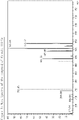
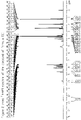
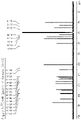
- the compound of formula III-S is typically characterized by mass spectra as shown in figure 1 , or by 1 H-NMR as shown in figure 2 , or by combination thereof.
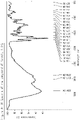
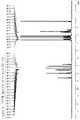
- Crystalline compound of formula III-S may be characterized by data selected from one or more of the following: 13 C-NMR Spectra of the compound of formula III-S as shown in Figure 3 ; IR Spectra of the compound of formula III-S as shown in Figure 4 ; and combinations of these data.
- the compound of Formula-III, its salts, solvates or hydrates thereof can be prepared by a process comprising preparing the compound of formula-IV and converting it to compound of Formula-III.
- Amino ketal compound and carbonyl activating group are as defined above, preferably the amino ketal is 2-methyl-1,3-dioxolan-2-yl)methanamine.
- Scheme-4 The process can be summarized by the following Scheme-4:
- the above process can be done either as a one pot reaction, meaning, the compound of formula I can be prepared from compound of formula IV without isolating compound of formula III. Alternatively, the compound of formula III can be isolated prior to its conversion to compound of formula I.
- the compound of formula III-13 can be isolated, either as crystalline or non-crystalline form.
- compound 111-13 is crystalline.
- the compound of formula 111-13 may a racemic mixture, or enantimerically pure.
- the invention also relates to compound of formula III-13 is in S- configuration, i.e. compound of formula III-13S:
- the compound of formula III-13 S is typically characterized by mass spectra as shown in figure 5 , or by 1 H-NMR as shown in figure 6 , or by combination thereof.
- Crystalline compound of formula III-13S may be characterized by data selected from one or more of the following: 13 C-NMR Spectra of the compound of formula III-13S as shown in Figure 7 ; IR Spectra of the compound of formula III-13S as shown in Figure 8 ; and combinations of these data.
- the compound of Formula-III-13, its salts, solvates, hydrates or isomer thereof can be prepared by a process comprising preparing the compound of formula-IV and converting it to compound of Formula-III-13.
- Amino ketal compound and carbonyl activating group are as defined above.
- the above process can be done either as a one pot reaction, meaning, the compound of formula I can be prepared from compound of formula IV without isolating compound of formula III -13. Alternatively, the compound of formula 111-13 can be isolated prior to its conversion to compound of formula I.
- This process avoids the use of hazardous reagent, can be performed at relatively short reaction time and provides the compound of formula II-A in high yield, of at least 80% (w/w).
- Protecting group refers to a grouping of atoms that when attached to a reactive functional group in a molecule masks, reduces or prevents reactivity of the functional group.
- Examples of protecting groups can be found in Green et al., “Protective Groups in Organic Chemistry", (Wiley,2nd ed. 1991 ) and Harrison et al., “Compendium of Synthetic Organic Methods", Vols. 1-8 (John Wiley and Sons, 1971-1996 ).
- Representative amino protecting groups include, but are not limited to, formyl, acetyl, trifiuoroacetyl, benzyl, benzyloxycarbonyl ("CBZ”), tert-butoxycarbonyl (“BOC”), trimethylsilyl (“TMS”), 2-trimethylsilylethanesulfonyl, (“SES”), trityl and substituted trityl groups, allyloxycarbo ny I, 9-fiuoreny lme thy loxycarbonyl (“FMOC”), nitro-veratryloxycarbonyl (“NVOC”) and the like.
- hydroxy protecting groups include, but are not limited to, those where the hydroxy group is either acylated or alkylated such as benzyl, and trityl ethers as well as alkyl ethers, tetrahydropyranyl ethers, trialkylsilyl ethers and allyl ethers.
- the process comprises de-protection of the compound of formula VI using a suitable acid, excluding hydrochloric acid.
- a suitable acid excluding hydrochloric acid.
- the process can be summarized by the following Scheme-7: wherein B - is anion of corresponding acid which is sufficient for the de-protection of -Boc with the proviso that B - is not Cl - .
- the acid is triflic acid and B - is CF 3 SO 3 -
- Remimazolam prepared by the above described processes can be used to prepare solid state forms of Remimazolam, Remimazolam salts and their solid state forms thereof.
- crystalline Form 1 of Remimazolam Hydrochloride designated as Form 1.
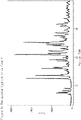
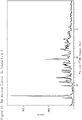
- the crystalline Form 1 of Remimazolam Hydrochloride can be characterized by data selected from one or more of the following: an XRPD pattern having peaks at 9.0, 12.5, 13.5, 20.8 and 25.2 degrees two theta ⁇ 0.2 degrees two theta; an XRPD pattern substantially as depicted in Figure 9 ; or combinations of these data.
- Crystalline Form 1 of Remimazolam Hydrochloride may be further characterized by data selected from one or more of the following: an XRPD pattern having peaks at 9.0, 12.5, 13.5, 20.8 and 25.2 degrees two theta ⁇ 0.2 degrees two theta; and also having one, two, three, four or five additional peaks selected from 16.0, 19.1, 19.8, 21.7 and 27.7 degrees two theta ⁇ 0.2 degrees two theta; or combinations of these data.
- crystalline Form 1 of Remimazolam Dihydrobromide designated as Form 1.
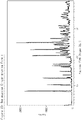
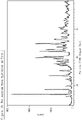
- the crystalline Form 1 of Remimazolam Dihydrobromide can be characterized by data selected from one or more of the following: an XRPD pattern having peaks at 8.1, 10.3, 12.7, 15.1, 17.0, 20.6, 22.7 and 25.2 degrees two theta ⁇ 0.2 degrees two theta; an XRPD pattern substantially as depicted in Figure 10 ; or combinations of these data.
- Crystalline Form 1 of Remimazolam Dihydrobromide may be further characterized by data selected from one or more of the following: an XRPD pattern having peaks at 8.1, 10.3, 12.7, 15.1, 17.0, 20.6, 22.7 and 25.2 degrees two theta ⁇ 0.2 degrees two theta; and also having one, two, three, four, five or six additional peaks selected from 13.7, 16.6, 17.6, 21.1, 23.5 and 26.6 degrees two theta ⁇ 0.2 degrees two theta; or combinations of these data.
- crystalline Form 1 of Remimazolam Mono hydrobromide designated as Form 1.
- the crystalline Form 1 of Remimazolam Mono hydrobromide can be characterized by data selected from one or more of the following: an XRPD pattern having peaks at 7.1, 8.7, 13.6, 22.2 and 24.9 degrees two theta ⁇ 0.2 degrees two theta; an XRPD pattern substantially as depicted in Figure 18 ; or combinations of these data.
- Crystalline Form 1 of Remimazolam Mono hydrobromide may be further characterized by data selected from one or more of the following: an XRPD pattern having peaks at 7.1, 8.7, 13.6, 22.2 and 24.9 degrees two theta ⁇ 0.2 degrees two theta; and also having one, two, three, four or five additional peaks selected from 15.4, 19.6, 20.0, 20.4 and 22.4 degrees two theta ⁇ 0.2 degrees two theta; or combinations of these data.
- Crystalline Form 1 of Remimazolam Mono hydrobromide may have advantageous properties, as detailed above. Particularly, crystalline Form 1 of Remimazolam Mono hydrobromide is stable for a period of at least 24 hours at 80% relative humidity (RH) at room temperature (RT) in open Petri dish; and it has improved kinetic water solubility as well as improved solubility in various pH ranges.
- RH relative humidity
- RT room temperature
- crystalline Form 1 of Remimazolam Fumarate designated as Form 1.
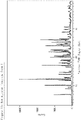
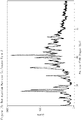
- the crystalline Form 1 of Remimazolam Fumarate can be characterized by data selected from one or more of the following: an XRPD pattern having peaks at 7.0, 9.0, 10.2, 12.4, 14.1, 17.3, 20.2, 24.1 and 26.2 degrees two theta ⁇ 0.2 degrees two theta; an XRPD pattern substantially as depicted in Figure 11 ; or combinations of these data.
- Crystalline Form 1 of Remimazolam Fumarate may be further characterized by data selected from one or more of the following: an XRPD pattern having peaks at 7.0, 9.0, 10.2, 12.4, 14.1, 17.3, 20.2, 24.1 and 26.2 degrees two theta ⁇ 0.2 degrees two theta; and also having one, two, three, four or five additional peaks selected from 9.6, 11.9, 14.8, 16.7 and 20.6 degrees two theta ⁇ 0.2 degrees two theta; or combinations of these data.
- crystalline Form 1 of Remimazolam Oxalate designated as Form 1.
- the crystalline Form 1 of Remimazolam Oxalate can be characterized by data selected from one or more of the following: an XRPD pattern having peaks at 6.7, 8.7, 11.3, 13.3, 15.2, 16.9, 20.9 and 25.9 degrees two theta ⁇ 0.2 degrees two theta; an XRPD pattern substantially as depicted in Figure 12 ; or combinations of these data.
- Crystalline Form 1 of Remimazolam Oxalate may be further characterized by data selected from one or more of the following: an XRPD pattern having peaks at 6.7, 8.7, 11.3, 13.3, 15.2, 16.9, 20.9 and 25.9 degrees two theta ⁇ 0.2 degrees two theta; and also having one, two, three, four or five additional peaks selected from 7.5, 12.5, 19.7, 20.0 and 20.4 degrees two theta ⁇ 0.2 degrees two theta; or combinations of these data.
- crystalline Form 1 of Remimazolam Sulphate designated as Form 1.
- the crystalline Form 1 of Remimazolam Sulphate can be characterized by data selected from one or more of the following: an XRPD pattern having peaks at 10.2, 13.7, 15.7, 16.5, 21.1, 22.3 and 27.6 degrees two theta ⁇ 0.2 degrees two theta; an XRPD pattern substantially as depicted in Figure 13 ; or combinations of these data.
- Crystalline Form 1 of Remimazolam Sulphate may be further characterized by data selected from one or more of the following: an XRPD pattern having peaks at 10.2, 13.7, 15.7, 16.5, 21.1, 22.3 and 27.6 degrees two theta ⁇ 0.2 degrees two theta; and also having one, two, three, or four additional peaks selected from 15.0, 21.7, 23.6 and 24.3 degrees two theta ⁇ 0.2 degrees two theta; or combinations of these data.
- crystalline Form 1 of Remimazolam Methane Sulfonate i.e. mesylate
- the crystalline Form 1 of Remimazolam Methane Sulfonate can be characterized by data selected from one or more of the following: an XRPD pattern having peaks at 4.3, 5.6, 8.7, 13.3, 16.3, 19.8 and 22.0 degrees two theta ⁇ 0.2 degrees two theta; an XRPD pattern substantially as depicted in Figure 14 ; or combinations of these data.
- Crystalline Form 1 of Remimazolam Methane Sulfonate may be further characterized by data selected from one or more of the following: an XRPD pattern having peaks at 4.3, 5.6, 8.7, 13.3, 16.3, 19.8 and 22.0 degrees two theta ⁇ 0.2 degrees two theta; and also having one, two, three, four, five or six additional peaks selected from 5.9, 8.2, 16.8, 18.8, 22.9 and 24.8 degrees two theta ⁇ 0.2 degrees two theta; or combinations of these data.
- crystalline Form 2 of Remimazolam Methane Sulfonate i.e. mesylate
- the crystalline Form 2 of Remimazolam Methane Sulfonate can be characterized by data selected from one or more of the following: an XRPD pattern having peaks at 5.0, 9.5, 10.1, 20.9 and 27.3 degrees two theta ⁇ 0.2 degrees two theta; an XRPD pattern substantially as depicted in Figure 19 ; or combinations of these data.
- Crystalline Form 2 of Remimazolam Methane Sulfonate may be further characterized by data selected from one or more of the following: an XRPD pattern having peaks at 5.0, 9.5, 10.1, 20.9 and 27.3 degrees two theta ⁇ 0.2 degrees two theta; and also having one, two, three or four additional peaks selected from 16.3, 18.5, 18.9 and 20.5 degrees two theta ⁇ 0.2 degrees two theta; or combinations of these data.
- Crystalline Form 2 of Remimazolam Methane Sulfonate may be a hydrate, preferably a mono hydrate.
- Crystalline Form 2 of Remimazolam Methane Sulfonate may have advantageous properties, as detailed above. Particularly, crystalline Form 2 of Remimazolam Methane Sulfonate is stable for a period of at least 24 hours at 80% relative humidity (RH) at room temperature (RT) in open Petri dish; and it has improved kinetic water solubility as well as improved solubility in various pH ranges.
- RH relative humidity
- RT room temperature
- crystalline Form 1 of Remimazolam Camphor Sulfonate i.e. camsylate
- the crystalline Form 1 of Remimazolam Camphor Sulfonate can be characterized by data selected from one or more of the following: an XRPD pattern having peaks at 6.5, 11.8, 12.9, 15.1, 17.7, 19.3, 21.2 and 24.0 degrees two theta ⁇ 0.2 degrees two theta; an XRPD pattern substantially as depicted in Figure 15 ; or combinations of these data.
- Crystalline Form 1 of Remimazolam Camphor Sulfonate may be further characterized by data selected from one or more of the following: an XRPD pattern having peaks at 6.5, 11.8, 12.9, 15.1, 17.7, 19.3, 21.2 and 24.0 degrees two theta ⁇ 0.2 degrees two theta; and also having one, two, three or four additional peaks selected from 14.3, 16.5, 19.6 and 21.5 degrees two theta ⁇ 0.2 degrees two theta; or combinations of these data.
- crystalline Form 2 of Remimazolam Camphor Sulfonate i.e. camsylate
- the crystalline Form 2 of Remimazolam Camphor Sulfonate can be characterized by data selected from one or more of the following: an XRPD pattern having peaks at 5.7, 10.0, 15.4, 16.3 and 18.1 degrees two theta ⁇ 0.2 degrees two theta; an XRPD pattern substantially as depicted in Figure 17 ; or combinations of these data.
- Crystalline Form 2 of Remimazolam Camphor Sulfonate may be further characterized by data selected from one or more of the following: an XRPD pattern having peaks at 5.7, 10.0, 15.4, 16.3 and 18.1 degrees two theta ⁇ 0.2 degrees two theta; and also having one, two, three, four or five additional peaks selected from 11.4, 14.9, 19.3, 20.6 and 25.1 degrees two theta ⁇ 0.2 degrees two theta; or combinations of these data.
- Crystalline Form 2 of Remimazolam Camphor Sulfonate may be a hydrate, preferably a hemi hydrate.
- Crystalline Form 2 of Remimazolam Camphor Sulfonate may have advantageous properties, as detailed above. Particularly, crystalline Form 2 of Remimazolam Camphor Sulfonate is stable for a period of at least 24 hours at 80% relative humidity (RH) at room temperature (RT) in open Petri dish; it possesses higher bulk density and improved compressibility properties compared to Remimazolam besylate. The improved compressibility properties may indicate better flow properties.
- crystalline Form 1 of Remimazolam dibesylate designated as Form 1.
- the crystalline Form 1 of Remimazolam dibesylate can be characterized by data selected from one or more of the following: an XRPD pattern having peaks at 7.2, 12.5, 20.4, 21.8 and 22.9 degrees two theta ⁇ 0.2 degrees two theta; an XRPD pattern substantially as depicted in Figure 16 ; or combinations of these data.
- Crystalline Form 1 of Remimazolam dibesylate may be further characterized by data selected from one or more of the following: an XRPD pattern having peaks at 7.2, 12.5, 20.4, 21.8 and 22.9 degrees two theta ⁇ 0.2 degrees two theta; and also having one, two, three, four or five additional peaks selected from 14.6, 15.0, 17.6, 18.3 and 24.7 degrees two theta ⁇ 0.2 degrees two theta; or combinations of these data.
- Described herein but not claimed is process for preparing solid state forms of Remimazolam, Remimazolam salts or solid state forms thereof, said process comprises preparing any one or a combination of the solid state forms of Remimazolam salts, according to the present disclosure, and converting them to Remimazolam or solid state forms thereof, or to Remimazolam salt and solid state forms thereof.
- the conversion can be done, for example, by reacting solid state form of Remimazolam salt described herein with a suitable base to obtain Remimazolam base, and may further comprises reacting the Remimazolam base with a suitable acid to prepare the corresponding acid addition salt.
- Example 1-b Preparation of compound of methyl-3-(( S )-2-(22-dimethoxypropylamino)-7-bromo-5-(pyridin-2-yl)-3H-benzo[e][1,4]diazepin-3-yl)propanoate) (formula-III-13) from compound of formula-IV
- Triflic anhydride 26.32 gr was slowly added, over a period of 30-45 minutes to the cooled reaction mass, at the same temperature of -15° to -20°C. After the addition was completed, the obtained reaction mixture was stirred for 30-45 minutes, at the same temperature of -15° to -20°C.
- the reaction progress was monitored by HPLC (monitor intermediate (S)-3-(2-(methoxycarbonyl)ethyl)-7-bromo-5-(pyridin-2-yl)-3H-benzo[e][1,4]diazepin-2-yl trifluoromethanesulfonate formation).
- the organic layer was separated, washed with DM water (125 ml) and re-separated. The organic layer was then concentrated to volume of 1-1.5 vol, at a temperature below 45°C. Toluene (50ml) was added to the reaction mass, and then stripped out 1 vol under vacuum at a temperature below 60°C. Then, Toluene (50ml) was added and the obtained mixture was heated to temperature of 60-65°C, and was stirred at this temperature for 30-45 minutes. Heating was discontinued and the reaction mass was slowly cooled to temperature of 0-10°C, and was stirred for 3-4 hours - crystallization occurred. The obtained suspension was stirred at temperature of 0-10°C for 30-45 minutes.
- the compound of formula -III (5.1 g) was dissolved in Methanolic HCl (20.4 ml) and temperature was maintained 25 °C to 30 °C. The obtained reaction mixture was stirred for 10 to 12 hours. After that, the solvent was removed to get a residue. The obtained residue was neutralized with Triethyl amine (8 g). Ethyl acetate (50 ml) was added and the layers separated. The organic layer was washed with water (25 ml). Ethyl acetate was distilled and a residue was obtained (4.4 g).
- the compound of formula 111-13 (methyl 3-((S)-2-(2,2-dimethoxypropylamino)-7-bromo-5-(pyridin-2-yl)-3H-benzo[e][1,4]diazepin-3-yl)propanoate) (20.0 g) was dissolved in methanol (40 mL) under stirring for 4-10 minutes at 20-25 °C. The reaction mixture was cooled to 15°C and slowly charged 10% Methanolic HCl solution (87.0 g) then slowly raised the temperature up to 20-25°C and maintained under stirring for 3-6 hours to complete the reaction.
- reaction mass was cooled to 5-10°C and quenched with aqueous sodium carbonated solution (13.0 g Sodium carbonate in 200 mL water) and added dichloromethane (100 mL) and stir for 15-20 minutes.
- the organic layer was extracted in dichloromethane (50 mL x 2) and washed with water (50 mL).
- the organic layer was charged with activated carbon (2.0 g) and maintained for 30 minutes at 35-40°C.
- Reaction mass was filtered through hyflo bed and washed with hot dichloromethane (20 mL). The clear solution was distilled off under vacuum below 45°C up to 40-60 ml reaction mass remains inside. Then methyl acetate (60 mL) was added and stripped out 20-30 mL solvent atmospherically below 65°C.
- the solution obtained was Remimazolam base (Yield: 14.8-16.6 g) with above 95% HPLC purity.
- the compound of formula-VI (9.4 g) was dissolved in 100 ml toluene at room temperature the obtained solution was cooled to a temperature below 20 °C. To this solution, triflic acid (6.4 ml) was added while maintaining the reaction mixture at a temperature of 15 to 10 °C. The mixture was stirred for 24 hours at a temperature of 45°C to 50 °C. The solvent was distilled out from the reaction mixture and product was isolated as solid (9 g, yield 90 %).
- Remimazolam (4.0 g) was dissolved in ethyl acetate (36.0 mL), and then slowly added into 3.5 mL ethyl acetate-hydrochloric acid (9.0%) solution under stirring in 10 minutes at 20-30°C which leads to immediate crystallization.
- the slurry mass was stirred for 60-90 minutes at 20-30°C. Filtered, washed with ethyl acetate (6.0 mL) and was kept under suction in inert atmosphere for 5-10 minutes at 25 ⁇ 5°C. Then, wet cake was dried at 40 ⁇ 5°C under vacuum for 3 hours.
- the solid obtained was Remimazolam hydrochloride salt (Yield: 2.5 g).
- Remimazolam (5.0 g) was dissolved in acetone (75.0 mL) and then slowly added 2.0 mL HBr solution (48%) under stirring at 20-25°C and maintained for 1hr. The reaction mixture was filtered, washed with acetone (20.0 mL) and suck dried under nitrogen atmosphere. Wet cake was dried under vacuum at 40 ⁇ 5°C for 3 hours. The solid obtained was Remimazolam dihydromide salt (Yield: 5.3 g).
- Remimazolam (5.0 g) was dissolved in ethanol (25 mL) at 20-30°C and then added fumaric acid (1.3 g) under stirring and maintained for 10-15 minutes. The clear solution was cooled down to 0-5°C in 20-30 minutes and crystallization was observed after 2 hours. The reaction mixture was maintained for 8-10 hours under stirring at 0-5°C, filtered and suck dried under nitrogen atmosphere for 5-10 minutes. Wet cake was dried under vacuum at 40 ⁇ 5°C for 4 hours. The solid obtained was Remimazolam mono-fumarate salt (Yield: 1.5g). The XRPD diffractogram of the obtained solid is shown in Figure 11 .
- Remimazolam (4.0 g) was dissolved in acetone (80 mL) and then added oxalic acid (0.819 g) under stirring at 20-30°C and maintained for 10 minutes. The reaction mixture was filtered and the clear solution was cooled down to 0-10°C and maintained for 60-90 minutes. The crystallization was observed at 0-5°C after 30 minutes. The solid obtained was filtered, washed with acetone (20 mL), suck dried under nitrogen atmosphere. Wet cake was dried at 40 ⁇ 5°C under vacuum for 3h. The solid obtained was Remimazolam oxalate salt. (Yield: 3.1 g).
- Remimazolam (4.0 g) was dissolved in acetone (80.0 mL) and then slowly added conc. sulphuric acid (0.910 g) under stirring at 20-30°C which leads to immediate crystallization in 10 minutes. The slurry mass was maintained at 20-30°C under stirring for 60-90 minutes. Filtered, washed with acetone (20.0 mL) and suck dried under nitrogen atmosphere. Wet cake was dried under vacuum at 40 ⁇ 5°C for 3 hours. The solid obtained was Remimazolam mono-sulphate salt (Yield: 4.4 g).
- Remimazolam (3.0 g) was dissolved in acetone (60.0 mL) and then slowly added methane sulfonic acid (0. 656 g) under stirring at 20-30°C in 10 minutes which leads to immediate crystallization. The slurry mass was maintained at 20-30°C under stirring for 60-90 minutes. Filtered, washed with acetone (15.0 mL) and suck dried under nitrogen atmosphere. Wet cake dried at 40 ⁇ 5°C under vacuum for 4 hours. The solid obtained was Remimazolam methane sulfonate salt (Yield: 3.1g).
- Remimazolam (3.0 g) was dissolved in acetone (45ml) and then added R-(-)-Camphor sulfonic acid (1.6 g) under stirring at 20-30°C which leads to immediate crystallization.
- the slurry mass was maintained at 20-30°C under stirring or 60-90 minutes. Filtered, washed with acetone (20 ml) and suck dried under nitrogen atmosphere. Wet cake was dried under vacuum at 40 ⁇ 5°C for 4h.
- the solid obtained was Remimazolam mono-camphor sulfonate salt (Yield: 3.5g).
- Remimazolam besylate Form 1 (1.0g) was taken in a 50 mL round bottom flask and dissolved in ethanol (14mL) at 40-45°C. The reaction mixture was filtered to remove any undissolved particulate and a clear solution was obtained. Subsequently, ethanolic solution of benzenesulfonic acid (0.34g of benzenesulfonic acid in 7.0mL ethanol) was added under stirring and maintained at 40-45°C for 1 hour. The clear solution was slowly cooled down to 20-25°C for 4 hours. The reaction mixture was further cooled to 0-10°C in 1 hour and maintained under stirring for 16-18 hours, then filtered and suck dried for 5-10 minutes. The solid obtained was Remimazolam dibesylate salt (Yield: 0.65g). Remimazolam dibesylate salt Form 1 is hydrate.
- Remimazolam (20.0 g) was dissolved in acetone (300 mL) in 500ml round bottom flask then added R-(-)-Camphor sulfonic acid (10.5 g) at 20°C-25°C.The obtained slurry mass were maintained under stirring for 2 hours at 20-25°hrs at 200-300rpm. The reaction mixture was filtered, washed twice with acetone (60mL) and suck dried the material under vacuum by blanketing with nitrogen atmosphere for 15min at 20-25°C. The wet cake was dried under vacuum at 45°C for 8hr. The solid obtained was Remimazolam mono-camphor sulfonate salt (Yield: 18 g).
- Remimazolam (20.0 g) was dissolved in acetone (300 mL) in 500ml round bottom flask and the obtained solution were stirred at 200-300rpm for 5 to 10 minutes at 20-25°C and then aqueous solution of HBr (48%) was added in 20min under stirring at 20-25°C and maintained for 2 hours at 20-25°C.
- the reaction mixture was filtered, washed twice with acetone (40mL) and suck dried under vacuum by blanketing with nitrogen atmosphere for 15 minutes at 20-25°C.
- the wet cake was dried under vacuum at 45°C for 8 hours.
- the solid obtained was Remimazolam mono hydrobromide salt (Yield: 17.8 g).
- Remimazolam (20.0 g) was dissolved in acetone (400 mL) in 500ml round bottom flask then added methane sulfonic acid (4.3 g) and the obtained slurry mass were maintained under stirring at 20-25°C for 2 hours at 200-300rpm.
- the reaction mixture was filtered, washed twice with acetone (50mL) and suck dried under vacuum by blanketing with nitrogen atmosphere for 15 minutes at 20-25°C. Wet cake was dried under vacuum at 45°C for 8hr.
- the solid obtained was Remimazolam methane sulfonic acid salt (Yield: 18.5 g).
Landscapes
- Chemical & Material Sciences (AREA)
- Organic Chemistry (AREA)
- Health & Medical Sciences (AREA)
- Anesthesiology (AREA)
- Chemical Kinetics & Catalysis (AREA)
- General Chemical & Material Sciences (AREA)
- Medicinal Chemistry (AREA)
- Nuclear Medicine, Radiotherapy & Molecular Imaging (AREA)
- Pharmacology & Pharmacy (AREA)
- Life Sciences & Earth Sciences (AREA)
- Animal Behavior & Ethology (AREA)
- General Health & Medical Sciences (AREA)
- Public Health (AREA)
- Veterinary Medicine (AREA)
- Pharmaceuticals Containing Other Organic And Inorganic Compounds (AREA)
- Cephalosporin Compounds (AREA)
- Nitrogen And Oxygen Or Sulfur-Condensed Heterocyclic Ring Systems (AREA)
Description
- The present disclosure relates to novel processes for the preparation of short acting benzodiazepines as well as to novel intermediates in this process. More particularly the disclosure relates to processes and intermediates for preparation of Methyl 3-[(4S)-8-bromo-1-methyl-6-(pyridin-2-yl)-4H-imidazo[1,2-a][1,4]benzodiazepin-4-yl]propanoate, commonly known as Remimazolam.
- Methyl 3-[(4S)-8-bromo-1-methyl-6-(pyridin-2-yl)-4H-imidazo[1,2-a][1,4]benzodiazepin-4-yl]propanoate, is commonly known as Remimazolam (may referred to herein as Formula-I, Formula I, Compound of formula I or Compound I). Remimazolam has the following chemical structure:

- Remimazolam is developed for use in induction of anesthesia and conscious sedation for minor invasive procedures.
-
US patent number 7,485,635 (referred to herein as '635) discloses Remimazolam and process for its preparation. The process is described in scheme-1.
- The process disclosed in '635 patent involves Swern oxidation, which needs to be carried out in the presence of dimethyl sulfoxide (DMSO) and Oxalyl chloride, and requires extremely low temperature of about -78 °C, therefore this process can't be adopted for industrial scale manufacturing. In addition the process utilizes the hazardous reagents sodium hydride, Bismorpholinophosphochloridate, and Lawesson's reagent. The reported yield of this process, from intermediate IV to intermediate II is about 37% (w/w) and the overall yield is of about 33%.
-
US patent number 9,156,842 - The '842 patent also discloses process for preparation of compound of Compound-IV, an intermediate in the synthesis of Remimazolam, which includes tert-butyloxycarbonyl (Boc) protection and later de-protection using hydrochloric acid. This process is described in
Scheme 2.
-
US patent number 9656987 -
US patent number 9,193,730 - As reported, the processes disclosed in the prior art suffer from poor yield and involve hazardous chemicals, extremely tough reaction conditions, and expensive reagents. For at least these reasons there is need to develop a process for the preparation of Remimazolam, which provides the final product in high yield and purity, avoids hazardous chemicals and can be utilized in industrial scale.
- Polymorphism, the occurrence of different crystal forms, is a property of some molecules and molecular complexes. A single compound, like Remimazolam or a salt thereof, may give rise to a variety of polymorphs having distinct crystal structures and physical properties like melting point, thermal behaviors (e.g. measured by thermogravimetric analysis - "TGA", or differential scanning calorimetry - "DSC"), X-ray powder diffraction (XRPD) pattern, infrared absorption fingerprint, Raman absorption fingerprint, and solid state (13C-) NMR spectrum. One or more of these techniques may be used to distinguish different polymorphic forms of a compound.
- Different salts and solid state forms (including solvated forms) of an active pharmaceutical ingredient may possess different properties. Such variations in the properties of different salts and solid state forms and solvates may provide a basis for improving formulation, for example, by facilitating better processing or handling characteristics, improving the dissolution profile, or improving stability (polymorphic as well as chemical stability) and shelf-life. These variations in the properties of different salts and solid state forms may also provide improvements to the final dosage form, for instance, if they serve to improve bioavailability. Different salts and solid state forms and solvates of an active pharmaceutical ingredient may also give rise to a variety of polymorphs or crystalline forms, which may in turn provide additional opportunities to use variations in the properties and characteristics of a solid active pharmaceutical ingredient for providing an improved product.
- Developing new salts and solid state forms and solvates of a pharmaceutical product can provide materials having desirable processing properties, such as ease of handling, ease of processing, storage stability, and ease of purification or as desirable intermediate crystal forms that facilitate conversion to other salts or polymorphic forms. New polymorphic forms and solvates of a pharmaceutically useful compound can also provide an opportunity to improve the performance characteristics of a pharmaceutical product (dissolution profile, bioavailability, etc.). It enlarges the repertoire of materials that a formulation scientist has available for formulation optimization, for example by providing a product with different properties, e.g., a different crystal habit, higher crystallinity or polymorphic stability which may offer better processing or handling characteristics, improved dissolution profile, or improved shelf-life. For at least these reasons, there is a need for additional solid state forms (including solvated forms) of Remimazolam salts.
- The present disclosure provides novel intermediates, their preparation and their use in the preparation of benzodiazepines. Particularly, the present disclosure provides intermediates useful for the preparation of Remimazolam.
- The present disclosure provides processes for preparation of Remimazolam.
- The present disclosure also provides processes for early intermediates in the synthesis of benzodiazepines, particularly, Remimazolam, namely the intermediate compound of formula III-A, III, particularly III-S, and III-13S.
- The present disclosure also relates to Remimazolam salts and solid state forms thereof, which are not part of the invention.
- Particularly, it relates to crystalline forms of Remimazolam Hydrochloride, Remimazolam Mono Hydrobromide, Remimazolam Dihydrobromide, Remimazolam Fumarate, Remimazolam Oxalate, Remimazolam Sulphate, Remimazolam Methane sulfonate, Remimazolam Camphor sulfonate and Remimazolam Dibesylate.
- The solid state forms of Remimazolam salts can be used for preparing other salts and solid state forms of Remimazolam.
- The above described solid state forms of Remimazolam salts can be used for the preparation of pharmaceutical compositions and/or formulations.
- Described herein but not claimed are pharmaceutical compositions comprising the above described solid state forms of Remimazolam salts.
- Described herein but not claimed are pharmaceutical formulations comprising the above described solid state forms of Remimazolam salts, and at least one pharmaceutically acceptable excipient.
- Described herein but not claimed are processes to prepare said pharmaceutical formulations of solid state forms of Remimazolam salts comprising combining any one of the above described solid state forms of Remimazolam salts, or pharmaceutical compositions comprising them, and at least one pharmaceutically acceptable excipient.
- The solid state forms of Remimazolam salts defined herein as well as the pharmaceutical compositions and formulations of the solid state form of the Remimazolam salts can be used as medicaments, particularly for induction of anesthesia and conscious sedation for minor invasive procedures. Described herein but not claimed is a method of inducing anesthesia and conscious sedation for minor invasive procedures comprising administering a therapeutically effective amount of any of the solid state form of Remimazolam salts of the present disclosure, or at least one of the above pharmaceutical compositions or formulations, to a subject which needs induction of anesthesia and conscious sedation for minor invasive procedures, or otherwise in need of the treatment.
- Described herein but not claimed are the uses of the solid state forms of Remimazolam salts of the present disclosure, or at least one of the above pharmaceutical compositions or formulations, for the manufacture of medicaments for induction of anesthesia and conscious sedation for minor invasive procedures.
- Described herein but not claimed are the above solid state forms of Remimazolam salts for use in medicine, preferably for induction of anesthesia and conscious sedation for minor invasive procedures.
-
-
Figure 1 shows Mass Spectra of the compound of formula III-S. -
Figure 2 shows 1H-NMR Spectra of the compound of formula III-S. -
Figure 3 shows 13C-NMR Spectra of the compound of formula III-S. -
Figure 4 shows IR Spectra of the compound of formula III-S. -
Figure 5 shows Mass Spectra of the compound of formula III-13S. -
Figure 6 shows 1H-NMR Spectra of the compound of formula III-13S. -
Figure 7 shows 13C-NMR Spectra of the compound of formula III-13S. -
Figure 8 shows IR Spectra of the compound of formula III-13 S. -
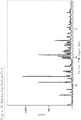
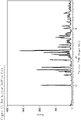
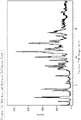
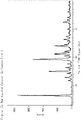
Figure 9 shows an XRPD pattern ofForm 1 of Remimazolam Hydrochloride. -
Figure 10 shows an XRPD pattern ofForm 1 of Remimazolam Dihydrobromide. -
Figure 11 shows an XRPD pattern ofForm 1 of Remimazolam Fumarate. -
Figure 12 shows an XRPD pattern ofForm 1 of Remimazolam Oxalate. -
Figure 13 shows an XRPD pattern ofForm 1 of Remimazolam Sulphate. -
Figure 14 shows an XRPD pattern ofForm 1 of Remimazolam Methane Sulfonate. -
Figure 15 shows an XRPD pattern ofForm 1 of Remimazolam Camphor Sulfonate. -
Figure 16 shows an XRPD pattern ofForm 1 of Remimazolam Dibesylate. -
Figure 17 shows an XRPD pattern ofForm 2 of Remimazolam Camphor Sulfonate. -
Figure 18 shows an XRPD pattern ofForm 1 of Remimazolam Mono Hydrobromide. -
Figure 19 shows an XRPD pattern ofForm 2 of Remimazolam Methane Sulfonate. - The present disclosure relates to novel processes for preparation of short acting benzodiazepines as well as to novel intermediates in this process. More particularly the disclosure relates to processes and intermediates for preparation of Methyl 3-[(4S)-8-bromo-1-methyl-6-(pyridin-2-yl)-4H-imidazo[1,2-a][1,4]benzodiazepin-4-yl]propanoate, commonly known as Remimazolam.
- The process of the present disclosure provides the final product, Remimazolam, in excellent yield and purity, avoids the use of hazardous reagents, such as Bismorpholinophosphoryl chloridate and is performed in convenient environment and conditions, therefore it is suitable for use in industrial scale.
- The present disclosure relates also to solid state forms of Remimazolam salts, to processes for preparation thereof and to pharmaceutical compositions and formulations comprising these solid state forms and/or combinations thereof which are not part of the invention.
- The solid state forms of Remimazolam salts according to the present disclosure (not claimed) may have advantageous properties selected from at least one of: chemical or polymorphic purity, flowability, solubility, dissolution rate, bioavailability, morphology or crystal habit, stability - such as chemical stability as well as thermal and mechanical stability with respect to polymorphic conversion, stability towards dehydration and/or storage stability, a lower degree of hygroscopicity, low content of residual solvents, adhesive tendencies and advantageous processing and handling characteristics such as compressibility, and bulk density.
- As used herein, the term "isolated" in reference to solid state forms of novel intermediates and Remimazolam of the present invention corresponds to a solid state form of novel intermediates and Remimazolam that is physically separated from the reaction mixture in which it is formed.
- As used herein, the term "isolated" in reference to the solid state forms of Remimazolam salts of the present disclosure corresponds to solid state form of Remimazolam salt that is physically separated from the reaction mixture in which it is formed.
- A thing, e.g., a reaction mixture, may be characterized herein as being at, or allowed to come to "room temperature", often abbreviated "RT." This means that the temperature of the thing is close to, or the same as, that of the space, e.g., the room or fume hood, in which the thing is located. Typically, room temperature is from about 20°C to about 30°C, or about 22°C to about 27°C, or about 25°C.
- A process or step may be referred to herein as being carried out "overnight." This refers to a time interval, e.g., for the process or step, that spans the time during the night, when that process or step may not be actively observed. This time interval is from about 8 to about 20 hours, or about 10-18 hours, typically about 16 hours.
- The amount of solvent employed in a chemical process, e.g., a reaction or a crystallization may be referred to herein as a number of "volumes" or "vol" or "V." For example, a material may be referred to as being suspended in 10 volumes (or 10 vol or 10V) of a solvent. In this context, this expression would be understood to mean milliliters of the solvent per gram of the material being suspended, such that suspending 5 grams of a material in 10 volumes of a solvent means that the solvent is used in an amount of 10 milliliters of the solvent per gram of the material that is being suspended or, in this example, 50 mL of the solvent. In another context, the term "v/v" may be used to indicate the number of volumes of a solvent that are added to a liquid mixture based on the volume of that mixture. For example, adding methyl tert-butyl ether (MTBE) (1.5 v/v) to a 100 ml reaction mixture would indicate that 150 mL of methyl tert-butyl ether (MTBE) was added.
- As used herein, the term "reduced pressure" refers to a pressure of about 10 mbar to about 500 mbar, or about 10 mbar to about 50 mbar.
- A crystal form may be referred to herein as being characterized by graphical data "as depicted in" a Figure. Such data include, for example, powder X-ray diffractograms and solid state NMR spectra. As is well-known in the art, the graphical data potentially provides additional technical information to further define the respective solid state form (a so-called "fingerprint") which can not necessarily be described by reference to numerical values or peak positions alone. In any event, the skilled person will understand that such graphical representations of data may be subject to small variations, e.g., in peak relative intensities and peak positions due to factors such as variations in instrument response and variations in sample concentration and purity, which are well known to the skilled person. Nonetheless, the skilled person would readily be capable of comparing the graphical data in the Figures herein with graphical data generated for an unknown crystal form and confirm whether the two sets of graphical data are characterizing the same crystal form or two different crystal forms.
- A crystal form of Remimazolam salt, referred to herein as being characterized by graphical data "as depicted in" a Figure will thus be understood to include any crystal form of the Remimazolam salt, characterized with the graphical data having such small variations, as are well known to the skilled person, in comparison with the Figure.
- A solid state form (or polymorph) may be referred to herein as polymorphically pure or as substantially free of any other solid state (or polymorphic) forms. As used herein in this context, the expression "substantially free of any other forms" will be understood to mean that the solid state form contains about 20% (w/w) or less, about 10% (w/w) or less, about 5% (w/w) or less, about 2% (w/w) or less, about 1% (w/w) or less, or about 0% of any other forms of the subject compound as measured, for example, by XRPD.
- Thus, solid state form of Remimazolam salt described herein as substantially free of any other solid state forms would be understood to contain greater than about 80% (w/w), greater than about 90% (w/w), greater than about 95% (w/w), greater than about 98% (w/w), greater than about 99% (w/w), or about 100% of the subject solid state form of Remimazolam salt.
- In some embodiments of the disclosure, the described solid state forms of Remimazolam salt may contain from about 1% to about 20% (w/w), from about 5% to about 20% (w/w), or from about 5% to about 10% (w/w) of one or more other solid state forms of Remimazolam salt.
- As used herein, unless stated otherwise, XRPD peaks reported herein are preferably measured using CuKα radiation, λ = 1.5418 Å, preferably, XRPD peaks reported herein are measured using CuK α radiation, λ = 1.5418 Å, at a temperature of 25 ± 3°C.
- As used herein, and unless stated otherwise, the term "anhydrous" in relation to a crystalline Remimazolam salt relates to a crystalline Remimazolam salt which does not include any crystalline water (or other solvents) in a defined, stoichiometric amount within the crystal. Moreover, an "anhydrous" form does not contain more than about 1% (w/w) of either water or organic solvents as measured for example by TGA.
- The term "solvate", as used herein and unless indicated otherwise, refers to a crystal form that incorporates a solvent in the crystal structure. When the solvent is water, the solvate is often referred to as a "hydrate." The solvent in a solvate may be present in either a stoichiometric or in a non-stoichiometric amount.
- As used herein the term non-hygroscopic in relation to a crystalline form of Remimazolam salt, refers to less than about 1.0% (w/w) absorption of water at about 25°C and about 80% relative humidity (RH), by the crystalline form of Remimazolam salt as determined for example by TGA. Water can be for example atmospheric water.
- The present disclosure provides efficient process for preparation of Remimazolam and Remimazolam intermediates.
- In one embodiment, the present disclosure provides novel compound of Formula III-A, its salts, solvates or hydrates thereof.

- wherein, R1 and R2 are independently C1-C8 alkyl or they are connected via C1 to C8 carbon chain which may be saturated, unsaturated or substituted,
- R3 and R4 are independently H, C1-C8 alkyl, vinyl or allyl,
- X is any halogen,
- Y is O or S; or Y is NR5 wherein R5 is H, C1-C8 alkyl, vinyl or allyl; and
- A is alkyl or aliphatic, aromatic or heterocyclic ring.
- Preferably, as used herein, alkyl is straight chain or branched alkyl,
- specifically C1-C8; preferably C1-C3; more preferably C1, i.e. methyl.
- Preferably, as used herein, ring includes C1-C12, specifically C1-C8.
- Preferably, A is 2-pyridinyl.
- In another embodiment, the present disclosure provides a process for preparation of compound of Formula-III-A and its salts, solvates or hydrates thereof. The process comprises preparing the compound of formula-IV-A and converting it to compound of Formula-III-A.
- In yet another embodiment, the present disclosure provides use of the compound of formula-III-A in the preparation of compound of Formula-I-A, as well as a process of preparation of compound of Formula-I-A comprising preparing the compound of formula-III-A or its salts, solvates and hydrates thereof and converting it to the compound of Formula-I-A.
- In specific embodiment, the present disclosure provides a process for preparing benzodiazepines of formula I-A, comprising:
- a. reacting the compound of formula IV-A and an amino ketal compound in presence of a carbonyl activating group to obtain the compound of formula III-A; and
- b. converting the compound of formula III-A to the compound of formula I-A by deprotecting the ketal followed by cyclization in acidic condition.
- The amino ketal compounds may be prepared from corresponding amino ketone and diols wherein diols having hydroxyl functional groups separated by C1 to C8 carbon chain which may be saturated, unsaturated or substituted. Preferred examples of Amino ketal compounds are (2-methyl-1,3-dioxolan-2-yl)methanamine; (2,5,5-trimethyl-1,3-dioxan-2-yl)methanamine, 1-amino-2,2-dimethoxypropane etc.
- The carbonyl activating group can be selected from the group comprising of triflic anhydride, triflic acid, benzene sulfonic acid, Toluene sulfonic acid, Methane sulfonic acid and the like.
- The process can be summarized by the following Scheme-3:

- wherein, R1 and R2 are independently Alkyl or they are connected to form a cyclic ring,
- R3 and R4 are independently H, alkyl, acyl, vinyl or allyl,
- X is any halogen,
- Y is O, S or N, or Y is NR5 wherein R5 is H, alkyl, acyl, vinyl or allyl,
- A is alkyl or aliphatic, aromatic or heterocyclic ring; and
- Pg is H or amino protecting group.
- The above process can be done either as a one pot reaction, meaning, the Compound of formula I-A can be prepared from compound of formula IV-A without isolating compound of formula III-A. Alternatively, the compound of formula III-A can be isolated prior to its conversion to compound of formula I-A. Preferably, compound III-A is obtained in a crystalline form.
- In specific embodiment, the present disclosure provides novel compound of formula III, its salts, solvates or hydrates thereof:

- The compound of formula III can be isolated, either as crystalline or non-crystalline form. Preferably, compound III is crystalline.
- The compound of formula III may be a racemic mixture, or enantiomerically pure. Preferably, the compound of formula III is in S- configuration, i.e. compound of formula III-S:

- The compound of formula III-S is typically characterized by mass spectra as shown in
figure 1 , or by 1H-NMR as shown infigure 2 , or by combination thereof. - Crystalline compound of formula III-S may be characterized by data selected from one or more of the following: 13C-NMR Spectra of the compound of formula III-S as shown in
Figure 3 ; IR Spectra of the compound of formula III-S as shown inFigure 4 ; and combinations of these data. - The compound of Formula-III, its salts, solvates or hydrates thereof can be prepared by a process comprising preparing the compound of formula-IV and converting it to compound of Formula-III.
- The compound of Formula-III, its salts, solvates, or hydrates thereof are useful in the preparation of Remimazolam, the compound of formula I.
- In another embodiment the present disclosure provides a process for preparing Remimazolam comprising:
- a. reacting the compound of formula IV and an amino ketal compound in presence of a carbonyl activating group to obtain the compound of formula III; and
- b. converting the compound of formula III to the compound of formula I, by deprotecting the ketal followed by cyclization in acidic conditions.
- Amino ketal compound and carbonyl activating group are as defined above, preferably the amino ketal is 2-methyl-1,3-dioxolan-2-yl)methanamine. The process can be summarized by the following Scheme-4:


- The above process can be done either as a one pot reaction, meaning, the compound of formula I can be prepared from compound of formula IV without isolating compound of formula III. Alternatively, the compound of formula III can be isolated prior to its conversion to compound of formula I.
- Described herein but not claimed is compound of formula III-13, its salts, solvates, hydrates or isomers thereof:

- The compound of formula III-13 can be isolated, either as crystalline or non-crystalline form. Preferably, compound 111-13 is crystalline.
- The compound of formula 111-13 may a racemic mixture, or enantimerically pure. The invention also relates to compound of formula III-13 is in S- configuration, i.e. compound of formula III-13S:


- The compound of formula III-13 S is typically characterized by mass spectra as shown in
figure 5 , or by 1H-NMR as shown infigure 6 , or by combination thereof. - Crystalline compound of formula III-13S may be characterized by data selected from one or more of the following: 13C-NMR Spectra of the compound of formula III-13S as shown in
Figure 7 ; IR Spectra of the compound of formula III-13S as shown inFigure 8 ; and combinations of these data. - The compound of Formula-III-13, its salts, solvates, hydrates or isomer thereof can be prepared by a process comprising preparing the compound of formula-IV and converting it to compound of Formula-III-13.
- The compound of Formula-III-13, its salts, solvates, or hydrates thereof are useful in the preparation of Remimazolam, the compound of formula I.
- In another embodiment the present disclosure provides a process for preparing Remimazolam comprising:
- a. reacting the compound of formula IV and an amino ketal compound (such as 1-amino-2,2-dimethoxypropane) in presence of a carbonyl activating group to obtain the compound of formula III-13; and
- b. converting the compound of formula III-13 to the compound of formula I, by deprotecting the ketal followed by cyclization in acidic conditions.
- Amino ketal compound and carbonyl activating group are as defined above.
- The process can be summarized by the following Scheme-4a:

- The above process can be done either as a one pot reaction, meaning, the compound of formula I can be prepared from compound of formula IV without isolating compound of formula III -13. Alternatively, the compound of formula 111-13 can be isolated prior to its conversion to compound of formula I.
- Described herein but not claimed are additional processes for preparation of Remimazolam, comprising reacting the compound of formula IV-A and amino-alcohol, such as 1-Aminopropan-2-ol in the presence of triflic anhydride and halopyridine, to form the compound of formula II-A. This process avoids the use of hazardous reagent, can be performed at relatively short reaction time and provides the compound of formula II-A in high yield, of at least 80% (w/w).
- The process can be summarized by the following Scheme-5:

- wherein as R3 and R4 are independently H, alkyl, acyl, vinyl or allyl,
- X is any halogen,
- Y is O, S or N, or Y is NR5 wherein R5 is H, alkyl, acyl, vinyl or allyl,
- A is alkyl or aliphatic, aromatic or heterocyclic ring, and
- Pg1 is H or any hydroxyl protecting group.
- Preferably, as used herein, the term "Protecting group" refers to a grouping of atoms that when attached to a reactive functional group in a molecule masks, reduces or prevents reactivity of the functional group. Examples of protecting groups can be found in Green et al., "Protective Groups in Organic Chemistry", (Wiley,2nd ed. 1991) and Harrison et al., "Compendium of Synthetic Organic Methods", Vols. 1-8 (John Wiley and Sons, 1971-1996). Representative amino protecting groups include, but are not limited to, formyl, acetyl, trifiuoroacetyl, benzyl, benzyloxycarbonyl ("CBZ"), tert-butoxycarbonyl ("BOC"), trimethylsilyl ("TMS"), 2-trimethylsilylethanesulfonyl, ("SES"), trityl and substituted trityl groups, allyloxycarbo ny I, 9-fiuoreny lme thy loxycarbonyl ("FMOC"), nitro-veratryloxycarbonyl ("NVOC") and the like.
- Representative hydroxy protecting groups include, but are not limited to, those where the hydroxy group is either acylated or alkylated such as benzyl, and trityl ethers as well as alkyl ethers, tetrahydropyranyl ethers, trialkylsilyl ethers and allyl ethers.
- Described herein but not claimed is the process of preparation of compound of Formula-II from the compound of formula-IV as described in Scheme-6.

- Described herein but not claimed is the preparation of early intermediates in the synthesis of Remimazolam, namely the preparation of the compound of formula-V-A. The process comprises de-protection of the compound of formula VI using a suitable acid, excluding hydrochloric acid. The process can be summarized by the following Scheme-7:

- Remimazolam prepared by the above described processes can be used to prepare solid state forms of Remimazolam, Remimazolam salts and their solid state forms thereof.
- Described herein but not claimed is a crystalline form of Remimazolam Hydrochloride designated as
Form 1. Thecrystalline Form 1 of Remimazolam Hydrochloride can be characterized by data selected from one or more of the following: an XRPD pattern having peaks at 9.0, 12.5, 13.5, 20.8 and 25.2 degrees two theta ± 0.2 degrees two theta; an XRPD pattern substantially as depicted inFigure 9 ; or combinations of these data.Crystalline Form 1 of Remimazolam Hydrochloride may be further characterized by data selected from one or more of the following: an XRPD pattern having peaks at 9.0, 12.5, 13.5, 20.8 and 25.2 degrees two theta ± 0.2 degrees two theta; and also having one, two, three, four or five additional peaks selected from 16.0, 19.1, 19.8, 21.7 and 27.7 degrees two theta ± 0.2 degrees two theta; or combinations of these data. - Described herein but not claimed is a crystalline form of Remimazolam Dihydrobromide designated as
Form 1. Thecrystalline Form 1 of Remimazolam Dihydrobromide can be characterized by data selected from one or more of the following: an XRPD pattern having peaks at 8.1, 10.3, 12.7, 15.1, 17.0, 20.6, 22.7 and 25.2 degrees two theta ± 0.2 degrees two theta; an XRPD pattern substantially as depicted inFigure 10 ; or combinations of these data.Crystalline Form 1 of Remimazolam Dihydrobromide may be further characterized by data selected from one or more of the following: an XRPD pattern having peaks at 8.1, 10.3, 12.7, 15.1, 17.0, 20.6, 22.7 and 25.2 degrees two theta ± 0.2 degrees two theta; and also having one, two, three, four, five or six additional peaks selected from 13.7, 16.6, 17.6, 21.1, 23.5 and 26.6 degrees two theta ± 0.2 degrees two theta; or combinations of these data. - Described herein but not claimed is a crystalline form of Remimazolam Mono hydrobromide designated as
Form 1. Thecrystalline Form 1 of Remimazolam Mono hydrobromide can be characterized by data selected from one or more of the following: an XRPD pattern having peaks at 7.1, 8.7, 13.6, 22.2 and 24.9 degrees two theta ± 0.2 degrees two theta; an XRPD pattern substantially as depicted inFigure 18 ; or combinations of these data.Crystalline Form 1 of Remimazolam Mono hydrobromide may be further characterized by data selected from one or more of the following: an XRPD pattern having peaks at 7.1, 8.7, 13.6, 22.2 and 24.9 degrees two theta ± 0.2 degrees two theta; and also having one, two, three, four or five additional peaks selected from 15.4, 19.6, 20.0, 20.4 and 22.4 degrees two theta ± 0.2 degrees two theta; or combinations of these data. -
Crystalline Form 1 of Remimazolam Mono hydrobromide may have advantageous properties, as detailed above. Particularly,crystalline Form 1 of Remimazolam Mono hydrobromide is stable for a period of at least 24 hours at 80% relative humidity (RH) at room temperature (RT) in open Petri dish; and it has improved kinetic water solubility as well as improved solubility in various pH ranges. - Described herein but not claimed is a crystalline form of Remimazolam Fumarate designated as
Form 1. Thecrystalline Form 1 of Remimazolam Fumarate can be characterized by data selected from one or more of the following: an XRPD pattern having peaks at 7.0, 9.0, 10.2, 12.4, 14.1, 17.3, 20.2, 24.1 and 26.2 degrees two theta ± 0.2 degrees two theta; an XRPD pattern substantially as depicted inFigure 11 ; or combinations of these data.Crystalline Form 1 of Remimazolam Fumarate may be further characterized by data selected from one or more of the following: an XRPD pattern having peaks at 7.0, 9.0, 10.2, 12.4, 14.1, 17.3, 20.2, 24.1 and 26.2 degrees two theta ± 0.2 degrees two theta; and also having one, two, three, four or five additional peaks selected from 9.6, 11.9, 14.8, 16.7 and 20.6 degrees two theta ± 0.2 degrees two theta; or combinations of these data. - Described herein but not claimed is a crystalline form of Remimazolam Oxalate designated as
Form 1. Thecrystalline Form 1 of Remimazolam Oxalate can be characterized by data selected from one or more of the following: an XRPD pattern having peaks at 6.7, 8.7, 11.3, 13.3, 15.2, 16.9, 20.9 and 25.9 degrees two theta ± 0.2 degrees two theta; an XRPD pattern substantially as depicted inFigure 12 ; or combinations of these data.Crystalline Form 1 of Remimazolam Oxalate may be further characterized by data selected from one or more of the following: an XRPD pattern having peaks at 6.7, 8.7, 11.3, 13.3, 15.2, 16.9, 20.9 and 25.9 degrees two theta ± 0.2 degrees two theta; and also having one, two, three, four or five additional peaks selected from 7.5, 12.5, 19.7, 20.0 and 20.4 degrees two theta ± 0.2 degrees two theta; or combinations of these data. - Described herein but not claimed is a crystalline form of Remimazolam Sulphate designated as
Form 1. Thecrystalline Form 1 of Remimazolam Sulphate can be characterized by data selected from one or more of the following: an XRPD pattern having peaks at 10.2, 13.7, 15.7, 16.5, 21.1, 22.3 and 27.6 degrees two theta ± 0.2 degrees two theta; an XRPD pattern substantially as depicted inFigure 13 ; or combinations of these data.Crystalline Form 1 of Remimazolam Sulphate may be further characterized by data selected from one or more of the following: an XRPD pattern having peaks at 10.2, 13.7, 15.7, 16.5, 21.1, 22.3 and 27.6 degrees two theta ± 0.2 degrees two theta; and also having one, two, three, or four additional peaks selected from 15.0, 21.7, 23.6 and 24.3 degrees two theta ± 0.2 degrees two theta; or combinations of these data. - Described herein but not claimed is a crystalline form of Remimazolam Methane Sulfonate (i.e. mesylate) designated as
Form 1. Thecrystalline Form 1 of Remimazolam Methane Sulfonate can be characterized by data selected from one or more of the following: an XRPD pattern having peaks at 4.3, 5.6, 8.7, 13.3, 16.3, 19.8 and 22.0 degrees two theta ± 0.2 degrees two theta; an XRPD pattern substantially as depicted inFigure 14 ; or combinations of these data.Crystalline Form 1 of Remimazolam Methane Sulfonate may be further characterized by data selected from one or more of the following: an XRPD pattern having peaks at 4.3, 5.6, 8.7, 13.3, 16.3, 19.8 and 22.0 degrees two theta ± 0.2 degrees two theta; and also having one, two, three, four, five or six additional peaks selected from 5.9, 8.2, 16.8, 18.8, 22.9 and 24.8 degrees two theta ± 0.2 degrees two theta; or combinations of these data. - Described herein but not claimed is a crystalline form of Remimazolam Methane Sulfonate (i.e. mesylate) designated as
Form 2. Thecrystalline Form 2 of Remimazolam Methane Sulfonate can be characterized by data selected from one or more of the following: an XRPD pattern having peaks at 5.0, 9.5, 10.1, 20.9 and 27.3 degrees two theta ± 0.2 degrees two theta; an XRPD pattern substantially as depicted inFigure 19 ; or combinations of these data.Crystalline Form 2 of Remimazolam Methane Sulfonate may be further characterized by data selected from one or more of the following: an XRPD pattern having peaks at 5.0, 9.5, 10.1, 20.9 and 27.3 degrees two theta ± 0.2 degrees two theta; and also having one, two, three or four additional peaks selected from 16.3, 18.5, 18.9 and 20.5 degrees two theta ± 0.2 degrees two theta; or combinations of these data. -
Crystalline Form 2 of Remimazolam Methane Sulfonate may be a hydrate, preferably a mono hydrate. -
Crystalline Form 2 of Remimazolam Methane Sulfonate may have advantageous properties, as detailed above. Particularly,crystalline Form 2 of Remimazolam Methane Sulfonate is stable for a period of at least 24 hours at 80% relative humidity (RH) at room temperature (RT) in open Petri dish; and it has improved kinetic water solubility as well as improved solubility in various pH ranges. - Described herein but not claimed is a crystalline form of Remimazolam Camphor Sulfonate (i.e. camsylate) designated as
Form 1. Thecrystalline Form 1 of Remimazolam Camphor Sulfonate can be characterized by data selected from one or more of the following: an XRPD pattern having peaks at 6.5, 11.8, 12.9, 15.1, 17.7, 19.3, 21.2 and 24.0 degrees two theta ± 0.2 degrees two theta; an XRPD pattern substantially as depicted inFigure 15 ; or combinations of these data.Crystalline Form 1 of Remimazolam Camphor Sulfonate may be further characterized by data selected from one or more of the following: an XRPD pattern having peaks at 6.5, 11.8, 12.9, 15.1, 17.7, 19.3, 21.2 and 24.0 degrees two theta ± 0.2 degrees two theta; and also having one, two, three or four additional peaks selected from 14.3, 16.5, 19.6 and 21.5 degrees two theta ± 0.2 degrees two theta; or combinations of these data. - Described herein but not claimed is a crystalline form of Remimazolam Camphor Sulfonate (i.e. camsylate) designated as
Form 2. Thecrystalline Form 2 of Remimazolam Camphor Sulfonate can be characterized by data selected from one or more of the following: an XRPD pattern having peaks at 5.7, 10.0, 15.4, 16.3 and 18.1 degrees two theta ± 0.2 degrees two theta; an XRPD pattern substantially as depicted inFigure 17 ; or combinations of these data.Crystalline Form 2 of Remimazolam Camphor Sulfonate may be further characterized by data selected from one or more of the following: an XRPD pattern having peaks at 5.7, 10.0, 15.4, 16.3 and 18.1 degrees two theta ± 0.2 degrees two theta; and also having one, two, three, four or five additional peaks selected from 11.4, 14.9, 19.3, 20.6 and 25.1 degrees two theta ± 0.2 degrees two theta; or combinations of these data. -
Crystalline Form 2 of Remimazolam Camphor Sulfonate may be a hydrate, preferably a hemi hydrate. -
Crystalline Form 2 of Remimazolam Camphor Sulfonate may have advantageous properties, as detailed above. Particularly,crystalline Form 2 of Remimazolam Camphor Sulfonate is stable for a period of at least 24 hours at 80% relative humidity (RH) at room temperature (RT) in open Petri dish; it possesses higher bulk density and improved compressibility properties compared to Remimazolam besylate. The improved compressibility properties may indicate better flow properties. - Described herein but not claimed is a crystalline form of Remimazolam dibesylate designated as
Form 1. Thecrystalline Form 1 of Remimazolam dibesylate can be characterized by data selected from one or more of the following: an XRPD pattern having peaks at 7.2, 12.5, 20.4, 21.8 and 22.9 degrees two theta ± 0.2 degrees two theta; an XRPD pattern substantially as depicted inFigure 16 ; or combinations of these data.Crystalline Form 1 of Remimazolam dibesylate may be further characterized by data selected from one or more of the following: an XRPD pattern having peaks at 7.2, 12.5, 20.4, 21.8 and 22.9 degrees two theta ± 0.2 degrees two theta; and also having one, two, three, four or five additional peaks selected from 14.6, 15.0, 17.6, 18.3 and 24.7 degrees two theta ± 0.2 degrees two theta; or combinations of these data. - Described herein but not claimed are uses of the solid state forms of Remimazolam salts of the present disclosure, for preparing other solid state forms of Remimazolam, Remimazolam salts, and solid state forms thereof.
- Described herein but not claimed is process for preparing solid state forms of Remimazolam, Remimazolam salts or solid state forms thereof, said process comprises preparing any one or a combination of the solid state forms of Remimazolam salts, according to the present disclosure, and converting them to Remimazolam or solid state forms thereof, or to Remimazolam salt and solid state forms thereof. The conversion can be done, for example, by reacting solid state form of Remimazolam salt described herein with a suitable base to obtain Remimazolam base, and may further comprises reacting the Remimazolam base with a suitable acid to prepare the corresponding acid addition salt.
- Having described the invention with reference to certain preferred embodiments, other embodiments will become apparent to one skilled in the art from consideration of the specification. The invention is further defined by reference to the following examples describing in detail the preparation of the composition and methods of use of the invention. It will be apparent to those skilled in the art that many modifications, both to materials and methods, may be practiced without departing from the scope of the invention defined by the appended claims.
-
- 1) NMR:
Bruker 400 MHz, Avance-III, Sample preparation: About 10 mg in DMSO-D6 solution. - 2) IR: Bruker Tensor 27, Sample Preparation: KBr Pellet (1:100 = sample: KBr ratio).
- 3) Mass: Shimadzu LCMS-IT-TOF, Sample Preparation = 5 mg in 5 ml Methanol.
- X-ray diffraction was performed on X-Ray powder diffractometer: X'Pert PRO PANalytical; CuKα radiation (λ = 1.5418 Å); PIXcel detector; laboratory temperature 22-25 °C; the samples were gently ground by means of mortar and pestle in order to obtain a fine powder.
- Measurement parameters:
Scan range (°) : 3.000 - 40.001 Step size (°) : 0.0131 Time per Step (s): 66.3 No. of steps : 2818 Scan mode : Continuous Sample spinning: Without Spin Sample holder : PW1811/16 ring holder with zero background plate - X-ray diffraction was performed on X-Ray powder diffractometer: Bruker D8 Advance; CuK_radiation (λ = 1.5418 Å); Lynx eye detector; laboratory temperature 22-25 °C; PMMA specimen holder ring. Prior to analysis, the samples were gently ground by means of mortar and pestle in order to obtain a fine powder. The ground sample was adjusted into a cavity of the sample holder and the surface of the sample was smoothed by means of a cover glass.
- Measurement parameters:
- Scan range: 2-40 degrees 2-theta;
- Scan mode: continuous;
- Step size: 0.05 degrees;
- Time per step: 0.5 s;
- Sample spin: 30 rpm;
- Sample holder: PMMA specimen holder ring.
- The present invention will now be exemplified by the following nonlimiting examples.
- The compound of formula -IV (5 g) was dissolved in dichloromethane (80 ml) and cooled to -5 °C to -10 °C and a solution was formed. To this solution 2-bromo pyridine (4 g) was added and followed by slow addition of triflic anhydride (3.9 g) while maintaining the temperature below -5 °C. The temperature of the reaction mixture was maintained below -5°C and the reaction mixture was stirred for 30 min. Then, a mixture of (2-methyl-1,3-dioxolan-2-yl)methanamine (2.93 g) in dichloromethane (20 ml) was added slowly to the reaction mixture and the combined mixture was stirred for about 30 minutes. After that, water (50 ml) was added to the reaction mixture and the layer was separated. The solvent was removed to get a residue. After removal of solvent 5.1 g (yield 80 %, HPLC purity 93 %) product as oil was obtained.
- (3S)-(7-BroMo-2-oxo-5-pyridin-2-yl-2,3-dihydro-1H-benzo[e][1,4]diazepin-3-yl)-propionic acid Methyl ester (Compound of formula IV, S enantiomer,25.0 gr) and dichloromethane ("MDC", 375 ml) were charged into a clean, dry 4 neck RBF. The reaction mixture was stirred for 5-10 minutes at temperature of 20-25°C and a clear solution was obtained. 2-bromo pyridine (29.46 gr) was added to the solution and the obtained reaction mixture was stirred for 5-10 minutes. The obtained reaction mass was cooled down to a temperature of -15° to -20°C. Then, Triflic anhydride (26.32 gr) was slowly added, over a period of 30-45 minutes to the cooled reaction mass, at the same temperature of -15° to -20°C. After the addition was completed, the obtained reaction mixture was stirred for 30-45 minutes, at the same temperature of -15° to -20°C. The reaction progress was monitored by HPLC (monitor intermediate (S)-3-(2-(methoxycarbonyl)ethyl)-7-bromo-5-(pyridin-2-yl)-3H-benzo[e][1,4]diazepin-2-yl trifluoromethanesulfonate formation). Afterwards, 1-amino-2,2-dimethoxypropane (14.81 gr) in dichloromethane (2 vol, 50 mL) solution was slowly added over a period of about 30 minutes to the reaction mixture at temperature of -15° to -20°C. After complete addition, Triethylamine (31.44 gr) was slowly added over a period of about 30 minutes at the same temperature of -15° to -20°C, and the obtained mixture was stirred at temperature of -15° to -20°C for 60-120 minutes. The reaction progress was monitored by HPLC. After the reaction was completed, ammonium chloride solution (20%, 125 ml) was added, and the temperature was raised to 15-20°C; the obtained mixture was stirred for 30 minutes. The organic layer was separated, washed with DM water (125 ml) and re-separated. The organic layer was then concentrated to volume of 1-1.5 vol, at a temperature below 45°C. Toluene (50ml) was added to the reaction mass, and then stripped out 1 vol under vacuum at a temperature below 60°C. Then, Toluene (50ml) was added and the obtained mixture was heated to temperature of 60-65°C, and was stirred at this temperature for 30-45 minutes. Heating was discontinued and the reaction mass was slowly cooled to temperature of 0-10°C, and was stirred for 3-4 hours - crystallization occurred. The obtained suspension was stirred at temperature of 0-10°C for 30-45 minutes. The obtained solid was filtered and washed twice with pre-cooled (temperature of about 5-10 °C) toluene (12.5
ml X 2 times), and suck-dried for 20-30 minutes. The wet solid was further dried under vacuum at temperature of 40-45°C for 6-8 hours. Yield (dry): 26.5 gm (85%) - The product obtained in example-1 was dissolved in ethyl acetate (50 ml) and Ethyl acetate: HCl (4 ml) was added drop wise to the reaction mixture at a temperature of about 10 °C to 15 °C. The reaction mixture was stirred for 30 minutes and then precipitation occurred. The precipitate was filtered out and washed with Ethyl acetate (10 ml). Finally dried product was obtained (5.2 g).
- The product obtained in example-1 was dissolved in ethyl acetate (40 ml) and then a mixture of Benzene sulfonic acid (1.6 g) and ethyl acetate (10 ml) at 10 °C to 15 °C was added drop wise to the reaction mixture. The reaction mixture was stirred for 30 minutes, and then precipitation occurred. The precipitate was filtered out and washed with Ethyl acetate (10 ml). Finally dried product was obtained (5.4 g).
- HCl salt of compound of formula -III (5 g) was dissolved in Methanolic HCl (20 ml) and the temperature was maintained 25 °C to 30 °C. The obtained reaction mixture was stirred for 10 to 12 hours. After that, the solvent was removed to get a residue. The obtained residue was neutralized with Triethyl amine (8 g). Ethyl acetate (50 ml) was added and the layers separated. The organic layer was washed with water (25 ml). Ethyl acetate was distilled and a residue was obtained (4.4 g).
- The compound of formula -III (5.1 g) was dissolved in Methanolic HCl (20.4 ml) and temperature was maintained 25 °C to 30 °C. The obtained reaction mixture was stirred for 10 to 12 hours. After that, the solvent was removed to get a residue. The obtained residue was neutralized with Triethyl amine (8 g). Ethyl acetate (50 ml) was added and the layers separated. The organic layer was washed with water (25 ml). Ethyl acetate was distilled and a residue was obtained (4.4 g).
- The compound of formula 111-13 (methyl 3-((S)-2-(2,2-dimethoxypropylamino)-7-bromo-5-(pyridin-2-yl)-3H-benzo[e][1,4]diazepin-3-yl)propanoate) (20.0 g) was dissolved in methanol (40 mL) under stirring for 4-10 minutes at 20-25 °C. The reaction mixture was cooled to 15°C and slowly charged 10% Methanolic HCl solution (87.0 g) then slowly raised the temperature up to 20-25°C and maintained under stirring for 3-6 hours to complete the reaction. The reaction mass was cooled to 5-10°C and quenched with aqueous sodium carbonated solution (13.0 g Sodium carbonate in 200 mL water) and added dichloromethane (100 mL) and stir for 15-20 minutes. The organic layer was extracted in dichloromethane (50 mL x 2) and washed with water (50 mL). The organic layer was charged with activated carbon (2.0 g) and maintained for 30 minutes at 35-40°C. Reaction mass was filtered through hyflo bed and washed with hot dichloromethane (20 mL). The clear solution was distilled off under vacuum below 45°C up to 40-60 ml reaction mass remains inside. Then methyl acetate (60 mL) was added and stripped out 20-30 mL solvent atmospherically below 65°C. The solution obtained was Remimazolam base (Yield: 14.8-16.6 g) with above 95% HPLC purity.
- The following examples are given for reference.
- The residue obtained in example-4 (4.4 g) was dissolved in ethyl acetate (40 ml) and a mixture of Benzene sulfonic acid (1.5 g) and methanol (4 ml) at 10 °C to 15 °C was added drop wise to the reaction mixture. The reaction mixture was stirred for about 3 to 4 hours then precipitation occurred. The precipitate was filtered out and washed with Ethyl acetate (10 ml). Finally dried product was obtained (4.7 g).
- The compound of formula-IV (2 g) was dissolved in dichloromethane (20 ml) and the obtained solution was cooled to -5 °C to -10 °C. 2-bromo pyridine (1.58 g) was added to the reaction mixture. Triflic anhydride (1.6 g) was slowly added to the reaction mixture at a temperature of below -5 °C. The temperature of reaction mixture was maintained below -5 °C for 30 min. Then, 1-Aminopropan-2-ol (0.75 g) and dichloromethane (4 ml) were slowly added mixture while the temperature was maintained below -5 °C for about 30 min. Water was added to the reaction mixture and the layers were separated. The organic layer was distilled off to obtain a residue. The residue was purified with silica column chromatography in Hexane and Ethyl acetate solvents. Product (2.2 g, Yield = 96 %; HPLC purity= 93 %) was isolated.
- The compound of formula -IV (2 g) was dissolved in dichloromethane (20 ml) and the obtained solution was cooled to -5 °C to -10 °C. 2-Bromo pyridine (1.58 g) was added to the reaction mixture. Triflic anhydride (1.6 g) was slowly added to the reaction mixture at a temperature below -5 °C. The temperature of reaction mixture was maintained below -5 °C for 30 min. Then, 1-Aminopropan-2-ol (0.75 g) and dichloromethane (4 ml) were slowly added to the mixture and temperature was maintained below -5 °C for about 30 min. Water was added to the reaction mixture and the layers separated. The organic layer was distilled off to obtain a residue. The obtained residue was dissolved in ethyl acetate (40 ml) and slowly added methanolic hydrochloride (about 23 ml). The precipitated product was filtered and dried to obtain 2.1g (85 %) as solid product.
- The compound of formula-VI (9.4 g) was dissolved in 100 ml toluene at room temperature the obtained solution was cooled to a temperature below 20 °C. To this solution, triflic acid (6.4 ml) was added while maintaining the reaction mixture at a temperature of 15 to 10 °C. The mixture was stirred for 24 hours at a temperature of 45°C to 50 °C. The solvent was distilled out from the reaction mixture and product was isolated as solid (9 g, yield 90 %).
- Remimazolam (4.0 g) was dissolved in ethyl acetate (36.0 mL), and then slowly added into 3.5 mL ethyl acetate-hydrochloric acid (9.0%) solution under stirring in 10 minutes at 20-30°C which leads to immediate crystallization. The slurry mass was stirred for 60-90 minutes at 20-30°C. Filtered, washed with ethyl acetate (6.0 mL) and was kept under suction in inert atmosphere for 5-10 minutes at 25±5°C. Then, wet cake was dried at 40±5°C under vacuum for 3 hours. The solid obtained was Remimazolam hydrochloride salt (Yield: 2.5 g).
- The XRPD diffractogram of the obtained product is shown in
Figure 9 . - Remimazolam (5.0 g) was dissolved in acetone (75.0 mL) and then slowly added 2.0 mL HBr solution (48%) under stirring at 20-25°C and maintained for 1hr. The reaction mixture was filtered, washed with acetone (20.0 mL) and suck dried under nitrogen atmosphere. Wet cake was dried under vacuum at 40±5°C for 3 hours. The solid obtained was Remimazolam dihydromide salt (Yield: 5.3 g).
- The XRPD diffractogram of the obtained solid is shown in
Figure 10 . - Remimazolam (5.0 g) was dissolved in ethanol (25 mL) at 20-30°C and then added fumaric acid (1.3 g) under stirring and maintained for 10-15 minutes. The clear solution was cooled down to 0-5°C in 20-30 minutes and crystallization was observed after 2 hours. The reaction mixture was maintained for 8-10 hours under stirring at 0-5°C, filtered and suck dried under nitrogen atmosphere for 5-10 minutes. Wet cake was dried under vacuum at 40±5°C for 4 hours. The solid obtained was Remimazolam mono-fumarate salt (Yield: 1.5g).
The XRPD diffractogram of the obtained solid is shown inFigure 11 . - Remimazolam (4.0 g) was dissolved in acetone (80 mL) and then added oxalic acid (0.819 g) under stirring at 20-30°C and maintained for 10 minutes. The reaction mixture was filtered and the clear solution was cooled down to 0-10°C and maintained for 60-90 minutes. The crystallization was observed at 0-5°C after 30 minutes. The solid obtained was filtered, washed with acetone (20 mL), suck dried under nitrogen atmosphere. Wet cake was dried at 40±5°C under vacuum for 3h. The solid obtained was Remimazolam oxalate salt. (Yield: 3.1 g).
- The XRPD diffractogram of the obtained solid is shown in
Figure 12 . - Remimazolam (4.0 g) was dissolved in acetone (80.0 mL) and then slowly added conc. sulphuric acid (0.910 g) under stirring at 20-30°C which leads to immediate crystallization in 10 minutes. The slurry mass was maintained at 20-30°C under stirring for 60-90 minutes. Filtered, washed with acetone (20.0 mL) and suck dried under nitrogen atmosphere. Wet cake was dried under vacuum at 40±5°C for 3 hours. The solid obtained was Remimazolam mono-sulphate salt (Yield: 4.4 g).
- The XRPD diffractogram of the obtained solid is shown in
Figure 13 . - Remimazolam (3.0 g) was dissolved in acetone (60.0 mL) and then slowly added methane sulfonic acid (0. 656 g) under stirring at 20-30°C in 10 minutes which leads to immediate crystallization. The slurry mass was maintained at 20-30°C under stirring for 60-90 minutes. Filtered, washed with acetone (15.0 mL) and suck dried under nitrogen atmosphere. Wet cake dried at 40±5°C under vacuum for 4 hours. The solid obtained was Remimazolam methane sulfonate salt (Yield: 3.1g).
- The XRPD diffractogram of the obtained solid is shown in
Figure 14 . - Remimazolam (3.0 g) was dissolved in acetone (45ml) and then added R-(-)-Camphor sulfonic acid (1.6 g) under stirring at 20-30°C which leads to immediate crystallization. The slurry mass was maintained at 20-30°C under stirring or 60-90 minutes. Filtered, washed with acetone (20 ml) and suck dried under nitrogen atmosphere. Wet cake was dried under vacuum at 40±5°C for 4h. The solid obtained was Remimazolam mono-camphor sulfonate salt (Yield: 3.5g).
- The XRPD diffractogram of the obtained solid is shown in
Figure 15 . - Remimazolam besylate Form 1 (1.0g) was taken in a 50 mL round bottom flask and dissolved in ethanol (14mL) at 40-45°C. The reaction mixture was filtered to remove any undissolved particulate and a clear solution was obtained. Subsequently, ethanolic solution of benzenesulfonic acid (0.34g of benzenesulfonic acid in 7.0mL ethanol) was added under stirring and maintained at 40-45°C for 1 hour. The clear solution was slowly cooled down to 20-25°C for 4 hours. The reaction mixture was further cooled to 0-10°C in 1 hour and maintained under stirring for 16-18 hours, then filtered and suck dried for 5-10 minutes. The solid obtained was Remimazolam dibesylate salt (Yield: 0.65g). Remimazolam
dibesylate salt Form 1 is hydrate. - The XRPD diffractogram of the obtained solid is shown in
Figure 16 . - Remimazolam (20.0 g) was dissolved in acetone (300 mL) in 500ml round bottom flask then added R-(-)-Camphor sulfonic acid (10.5 g) at 20°C-25°C.The obtained slurry mass were maintained under stirring for 2 hours at 20-25°hrs at 200-300rpm. The reaction mixture was filtered, washed twice with acetone (60mL) and suck dried the material under vacuum by blanketing with nitrogen atmosphere for 15min at 20-25°C. The wet cake was dried under vacuum at 45°C for 8hr. The solid obtained was Remimazolam mono-camphor sulfonate salt (Yield: 18 g).
- The XRPD diffractogram of the obtained solid is shown in
Figure 17 . - Remimazolam (20.0 g) was dissolved in acetone (300 mL) in 500ml round bottom flask and the obtained solution were stirred at 200-300rpm for 5 to 10 minutes at 20-25°C and then aqueous solution of HBr (48%) was added in 20min under stirring at 20-25°C and maintained for 2 hours at 20-25°C. The reaction mixture was filtered, washed twice with acetone (40mL) and suck dried under vacuum by blanketing with nitrogen atmosphere for 15 minutes at 20-25°C. The wet cake was dried under vacuum at 45°C for 8 hours. The solid obtained was Remimazolam mono hydrobromide salt (Yield: 17.8 g).
- The XRPD diffractogram of the obtained solid is shown in
Figure 18 . - Remimazolam (20.0 g) was dissolved in acetone (400 mL) in 500ml round bottom flask then added methane sulfonic acid (4.3 g) and the obtained slurry mass were maintained under stirring at 20-25°C for 2 hours at 200-300rpm. The reaction mixture was filtered, washed twice with acetone (50mL) and suck dried under vacuum by blanketing with nitrogen atmosphere for 15 minutes at 20-25°C. Wet cake was dried under vacuum at 45°C for 8hr. The solid obtained was Remimazolam methane sulfonic acid salt (Yield: 18.5 g).
- The XRPD diffractogram of the obtained solid is shown in
Figure 19 .
Claims (15)
- Compound of Formula III-A, its salts, solvates or hydrates thereof.
 wherein, R1 and R2 are independently C1-C8 alkyl or they are connected via C1 to C8 carbon chain which may be saturated, unsaturated or substituted.R3 and R4 are independently H, C1-C8 alkyl, vinyl, or allyl,X is any halogen,Y is O or S; or Y is NR5 wherein R5 is H, C1-C8 alkyl, vinyl or allyl, andA is C1-C8 alkyl or an aliphatic, aromatic or heterocyclic ring.
 - The compound of formula III-A according to claim 1, wherein R1 and R2 are connected to form a cyclic ring and the compound is the compound of Formula III, its salts, solvates or hydrates thereof.

- The compound of formula III-A, according to claim 1, or the compound of formula III, according to claim 2, wherein it is isolated.
- The compound of formula III-A according to claim 1 or claim 3, or the compound of formula III according to claim 2 or claim 3, wherein it is crystalline.
- The compound of formula III according to any one of claims 2 to 4, wherein it is in S configuration:

- A process for preparing the compound of formula III-A according to any one of claims 1, 3 or 4, comprising preparing the compound of formula IV-A:

- The process for preparing the compound of formula III-A according to claim 6, wherein the compound of formula III-A is a compound of formula III, as defined in claim 2, the compound of formula IV-A is a compound of formula IV, and optionally the compound of formula III is in S configuration, as defined in claim 5

- A process for preparation of Remimazolam or a salt thereof, comprising preparing a compound of formula III as defined in claims 2 to 4 or a compound of formula III-S as defined in claim 5, and converting it to Remimazolam or a salt thereof.
- A process for preparation of compound I-A of the following formula:
 wherein R3 and R4 are independently H, C1-C8 alkyl, vinyl, or allyl,X is any halogen,Y is O or S, or Y is NR5 wherein R5 is H, C1-C8 alkyl, vinyl or allyl, andA is C1-C8 alkyl or an aliphatic, aromatic or heterocyclic ring;said process comprising:a. reacting the compound of formula IV-A, as defined in claim 6, and an amino ketal compound in the presence of a carbonyl activating group to obtain the compound of formula III-A, as defined in claim 1; andb. converting the compound of formula III-A to the compound of formula I-A by deprotecting the ketal followed by cyclization in acidic condition.
 - The process according to claim 9, wherein the compound of formula I-A is a compound of formula I, the compound of formula IV-A is a compound of formula IV, as defined in claim 7, and the compound of formula III-A is a compound of formula III, as defined in any of claims 2 to 5

- The compound of formula III-A according to claim 1 which is a compound of formula III-13S:

- The compound of formula III-13S according to claim 11 in crystalline form.
- A process for the preparation of the compound of formula I (Remimazolam) or a salt thereof, according to claim 9, said process comprising:
 a. reacting the compound of formula IV, as defined in claim 7, and an amino ketal compound in the presence of a carbonyl activating group to obtain the compound of formula III-13S, as defined in claim 14; andb. converting the compound of formula III-13S to the compound of formula I by deprotecting the ketal followed by cyclization in acidic condition.
 - The process according to any one of claims 9, 10 orl3, wherein:a. the amino ketal compound is selected from (2-methyl-1,3-dioxolan-2-yl)methanamine; (2,5,5-trimethyl-1,3-dioxan-2-yl)methanamine and 1-amino-2,2-dimethoxypropane; and/orb. the carbonyl activating group is selected from triflic anhydride, triflic acid, benzene sulfonic acid, Toluene sulfonic acid, and Methane sulfonic acid.
- The process according to any one of claims 9, 10, 13 or 14, wherein the process is a one-pot process.
Priority Applications (1)
| Application Number | Priority Date | Filing Date | Title |
|---|---|---|---|
| EP22162577.5A EP4086260A1 (en) | 2017-02-09 | 2018-02-08 | Solid state forms of remimazolam salts |
Applications Claiming Priority (5)
| Application Number | Priority Date | Filing Date | Title |
|---|---|---|---|
| IN201711004706 | 2017-02-09 | ||
| IN201711033273 | 2017-09-20 | ||
| IN201711046934 | 2017-12-27 | ||
| IN201811002128 | 2018-01-18 | ||
| PCT/US2018/017347 WO2018148361A1 (en) | 2017-02-09 | 2018-02-08 | Process for the preparation of remimazolam and solid state forms of remimazolam salts |
Related Child Applications (1)
| Application Number | Title | Priority Date | Filing Date |
|---|---|---|---|
| EP22162577.5A Division EP4086260A1 (en) | 2017-02-09 | 2018-02-08 | Solid state forms of remimazolam salts |
Publications (2)
| Publication Number | Publication Date |
|---|---|
| EP3580219A1 EP3580219A1 (en) | 2019-12-18 |
| EP3580219B1 true EP3580219B1 (en) | 2022-04-13 |
Family
ID=61244816
Family Applications (2)
| Application Number | Title | Priority Date | Filing Date |
|---|---|---|---|
| EP18706147.8A Active EP3580219B1 (en) | 2017-02-09 | 2018-02-08 | Process for the preparation of remimazolam and solid state forms of remimazolam salts |
| EP22162577.5A Withdrawn EP4086260A1 (en) | 2017-02-09 | 2018-02-08 | Solid state forms of remimazolam salts |
Family Applications After (1)
| Application Number | Title | Priority Date | Filing Date |
|---|---|---|---|
| EP22162577.5A Withdrawn EP4086260A1 (en) | 2017-02-09 | 2018-02-08 | Solid state forms of remimazolam salts |
Country Status (5)
| Country | Link |
|---|---|
| US (2) | US11034697B2 (en) |
| EP (2) | EP3580219B1 (en) |
| ES (1) | ES2916845T3 (en) |
| PT (1) | PT3580219T (en) |
| WO (1) | WO2018148361A1 (en) |
Families Citing this family (13)
| Publication number | Priority date | Publication date | Assignee | Title |
|---|---|---|---|---|
| ES2697918A1 (en) * | 2017-07-28 | 2019-01-29 | Moehs Iberica Sl | PROCEDURE FOR PREPARING METHYL ESTER OF THE ACID 3 - [(3S) -7-BROMO-2-OXO-5- (PYRIDIN-2-IL) -2,3-DIHYDRO-1H- [1,4] -BENZODIAZEPIN-3- IL] PROPIONIC, AND USEFUL COMPOUNDS IN THAT PROCEDURE |
| ES2709298B2 (en) | 2017-10-13 | 2019-08-21 | Moehs Iberica Sl | PROCEDURE TO PREPARE METHYL ESTER ACID 3 - [(4S) -8-BROMO-1-METHYL-6- (PIRIDIN-2-IL) -4H-IMIDAZO [1,2-A] [1,4] BENZODIAZEPIN-4 -IL] -PROPIONIC, AND USEFUL COMPOUNDS IN THAT PROCEDURE |
| CA3090913C (en) * | 2018-02-13 | 2024-01-02 | Jiangsu Nhwaluokang Pharmaceutical Research And Development Co., Ltd. | Benzodiazepine derivative hydrochloride and crystal form, preparation method, and application thereof |
| CN112142746B (en) * | 2019-06-28 | 2021-09-24 | 四川大学华西医院 | Benzodiazepine compounds and their preparation methods and their effects in medicine |
| CN112209932B (en) * | 2019-07-12 | 2023-03-24 | 成都倍特药业股份有限公司 | New solid form of compound hydrobromide, preparation method and application thereof |
| KR102526590B1 (en) | 2020-06-19 | 2023-04-28 | 하나제약 주식회사 | METHOD FOR PREPARATION OF 3-[(4S)-8-BROMO-1-METHYL-6-(2-PYRIDINYL)-4H-IMIDAZO[1,2-a][1,4]BENZODIAZEPINE-4-YL]PROPIONIC ACID METHYL ESTER |
| CN112462015B (en) * | 2020-11-18 | 2022-07-12 | 海南倍特药业有限公司 | Method for detecting bacterial endotoxin of remazolam hydrobromide |
| CN112321594B (en) * | 2020-12-07 | 2022-05-20 | 扬子江药业集团有限公司 | Preparation method of benzodiazepine medicine |
| CN114644612B (en) * | 2020-12-17 | 2023-04-28 | 成都苑东生物制药股份有限公司 | Preparation method of benzodiazepine nerve inhibitor intermediate compound |
| CN114668766A (en) * | 2020-12-25 | 2022-06-28 | 江苏恒瑞医药股份有限公司 | A kind of pharmaceutical composition of remazolam |
| WO2023037237A1 (en) * | 2021-09-09 | 2023-03-16 | Wavelength Enterprises Ltd | Process for the preparation of remimazolam |
| CN116102557B (en) * | 2021-11-09 | 2024-04-26 | 四川大学华西医院 | Benzodiazepine compounds and their preparation methods and medical uses |
| WO2023194945A1 (en) | 2022-04-08 | 2023-10-12 | Fresenius Kabi Oncology Ltd. | An improved process for the preparation of remimazolam |
Citations (1)
| Publication number | Priority date | Publication date | Assignee | Title |
|---|---|---|---|---|
| WO2019072944A1 (en) * | 2017-10-13 | 2019-04-18 | Moehs Iberica, S.L. | Method for preparing 3-[(4s)-8-bromo-1-methyl-6-(pyridin-2-yl)-4h-imidazo[1,2-a][1,4]benzodiazepin-4-yl]-propionic acid methyl ester, and compounds useful in said method |
Family Cites Families (7)
| Publication number | Priority date | Publication date | Assignee | Title |
|---|---|---|---|---|
| US7160880B1 (en) | 1999-05-14 | 2007-01-09 | Cenes Limited | Short-acting benzodiazepines |
| KR20150081370A (en) | 2006-07-10 | 2015-07-13 | 파이온 유케이 리미티드 | Short-acting benzodiazepine salts and their polymorphic forms |
| EP2305647A1 (en) | 2009-09-18 | 2011-04-06 | PAION UK Limited | Process for preparing 3-[(4S)-8-bromo-1-methyl-6-(2-pyridinyl)-4 H-imidazo[1,2-a][1,4]benzodiazepine-4-yl] propionic acid methyl ester or the benzene sulfonate salt thereof, and compounds useful in that process |
| AR094963A1 (en) | 2013-03-04 | 2015-09-09 | Ono Pharmaceutical Co | EXCELLENT OXIDATION REACTION IN THE CONVERSION INDEX |
| PL3162804T3 (en) * | 2014-07-23 | 2020-04-30 | Jiangsu Nhwaluokang Pharmaceutical Research And Development Co., Ltd. | New benzodiazepine derivative and use thereof |
| CN106632342B (en) * | 2015-08-07 | 2019-01-25 | 成都倍特药业有限公司 | 2-Naphthalenesulfonates of benzodiazepine* derivatives and crystal forms and their preparation methods |
| CN108503644B (en) * | 2016-12-09 | 2019-06-14 | 成都倍特药业有限公司 | A kind of hydrobromide of benzodiazepine* derivative and its preparation method and use |
-
2018
- 2018-02-08 EP EP18706147.8A patent/EP3580219B1/en active Active
- 2018-02-08 WO PCT/US2018/017347 patent/WO2018148361A1/en not_active Ceased
- 2018-02-08 EP EP22162577.5A patent/EP4086260A1/en not_active Withdrawn
- 2018-02-08 US US16/484,165 patent/US11034697B2/en active Active
- 2018-02-08 ES ES18706147T patent/ES2916845T3/en active Active
- 2018-02-08 PT PT187061478T patent/PT3580219T/en unknown
-
2021
- 2021-05-24 US US17/328,146 patent/US11820776B2/en active Active
Patent Citations (1)
| Publication number | Priority date | Publication date | Assignee | Title |
|---|---|---|---|---|
| WO2019072944A1 (en) * | 2017-10-13 | 2019-04-18 | Moehs Iberica, S.L. | Method for preparing 3-[(4s)-8-bromo-1-methyl-6-(pyridin-2-yl)-4h-imidazo[1,2-a][1,4]benzodiazepin-4-yl]-propionic acid methyl ester, and compounds useful in said method |
Also Published As
| Publication number | Publication date |
|---|---|
| EP3580219A1 (en) | 2019-12-18 |
| PT3580219T (en) | 2022-06-02 |
| US20190359619A1 (en) | 2019-11-28 |
| US20210277013A1 (en) | 2021-09-09 |
| ES2916845T3 (en) | 2022-07-06 |
| WO2018148361A1 (en) | 2018-08-16 |
| US11820776B2 (en) | 2023-11-21 |
| US11034697B2 (en) | 2021-06-15 |
| EP4086260A1 (en) | 2022-11-09 |
Similar Documents
| Publication | Publication Date | Title |
|---|---|---|
| US11820776B2 (en) | Process for the preparation of Remimazolam and solid state forms of Remimazolam salts | |
| US10035802B2 (en) | Solid state forms of ibrutinib | |
| JP6013326B2 (en) | Process for the preparation of chiral triazolones | |
| US8921411B2 (en) | Solid state forms of cabazitaxel and processes for preparation thereof | |
| US11149017B2 (en) | Solid state forms of apalutamide | |
| EP3715345A2 (en) | Preparation of lfa-1 inhibitor and polymorph thereof | |
| US20220127259A1 (en) | Solid state forms of valbenazine | |
| FR2945531A1 (en) | 7-AZA-SPIRO® 3,5-NONANE-7-CARBOXYLATE DERIVATIVES, THEIR PREPARATION AND THEIR THERAPEUTIC APPLICATION | |
| EP2145882B1 (en) | Process for obtaining olopatadine and intermediates | |
| EP3481200B1 (en) | Processes for the preparation of 4-alkoxy-3-(acyl or alkyl)oxypicolinamides | |
| US9695147B2 (en) | Process for the preparation of perampanel | |
| KR20230004622A (en) | Synthesis of monoacylglycerol lipase inhibitors | |
| CN116249705A (en) | Desymmetrization of diols via nucleophilic aromatic substitution | |
| US20240239791A1 (en) | Processes for the synthesis of valbenazine | |
| EP2102195A1 (en) | Crystal modifications -3- (1h-ind0l-3-yl) -4- [2- (4-methyl-piperazin-1-yl) -quinazolin-4-yl]-pyrrole-2, 5-d ione | |
| EP4041726B1 (en) | Process for the production of 5-(4-((2 s,5 s)-5-(4-chlorobenzyl)-2-methylmorpholino)piperidin-1-yl)-1 h-1,2,4-triazol-3-amine | |
| EP4097093B1 (en) | Processes for the preparation of glasdegib and salt thereof and solid state forms of glasdegib maleate and process for preparation thereof | |
| EP3266773B1 (en) | Process for the preparation of lapatinib ditosylate monohydrate by means of an improved crystallization procedure | |
| CN121443612A (en) | Improved manufacturing methods, intermediates, and uses of pyrrolo[2,3-d]pyrimidine compounds | |
| EP4582419A1 (en) | Method for producing quinoxaline derivative | |
| HK40085939A (en) | Diol desymmetrization by nucleophilic aromatic substitution | |
| CN118525011A (en) | A morpholinoquinazoline compound, preparation method and application thereof | |
| US20090062546A1 (en) | Dolasetron trifluoroacetate, polymorphs of dolasetron trifluoroacetate and process for preparation thereof | |
| WO2016157057A1 (en) | A process for preparation of sodium salt of (2s, 5r) sulfuric acid mono-(2-[1,3,4]oxadiazol-2-yl-7-oxo-1,6-diazabicyclo[3.2.1 ]oct-6-yl)ester | |
| WO2004026882A1 (en) | Process for the preparation of cephems |
Legal Events
| Date | Code | Title | Description |
|---|---|---|---|
| STAA | Information on the status of an ep patent application or granted ep patent |
Free format text: STATUS: UNKNOWN |
|
| STAA | Information on the status of an ep patent application or granted ep patent |
Free format text: STATUS: THE INTERNATIONAL PUBLICATION HAS BEEN MADE |
|
| PUAI | Public reference made under article 153(3) epc to a published international application that has entered the european phase |
Free format text: ORIGINAL CODE: 0009012 |
|
| STAA | Information on the status of an ep patent application or granted ep patent |
Free format text: STATUS: REQUEST FOR EXAMINATION WAS MADE |
|
| 17P | Request for examination filed |
Effective date: 20190826 |
|
| AK | Designated contracting states |
Kind code of ref document: A1 Designated state(s): AL AT BE BG CH CY CZ DE DK EE ES FI FR GB GR HR HU IE IS IT LI LT LU LV MC MK MT NL NO PL PT RO RS SE SI SK SM TR |
|
| AX | Request for extension of the european patent |
Extension state: BA ME |
|
| TPAC | Observations filed by third parties |
Free format text: ORIGINAL CODE: EPIDOSNTIPA |
|
| DAV | Request for validation of the european patent (deleted) | ||
| DAX | Request for extension of the european patent (deleted) | ||
| STAA | Information on the status of an ep patent application or granted ep patent |
Free format text: STATUS: EXAMINATION IS IN PROGRESS |
|
| 17Q | First examination report despatched |
Effective date: 20200707 |
|
| TPAC | Observations filed by third parties |
Free format text: ORIGINAL CODE: EPIDOSNTIPA |
|
| TPAC | Observations filed by third parties |
Free format text: ORIGINAL CODE: EPIDOSNTIPA |
|
| GRAP | Despatch of communication of intention to grant a patent |
Free format text: ORIGINAL CODE: EPIDOSNIGR1 |
|
| STAA | Information on the status of an ep patent application or granted ep patent |
Free format text: STATUS: GRANT OF PATENT IS INTENDED |
|
| INTG | Intention to grant announced |
Effective date: 20211022 |
|
| RIN1 | Information on inventor provided before grant (corrected) |
Inventor name: MUTHUSAMY, ANANTHA RAJMOHAN Inventor name: SINGH, AMIT Inventor name: LUTHRA, PARVEN KUMAR Inventor name: VIJAY, JOSHI ASHUTOSH Inventor name: SRIHARI, SAMALA RAJAMOULI Inventor name: SHIVAJI, MANE GANESH Inventor name: RAJARAM, BODKHE ARJUN Inventor name: MARIOARA, MENDELOVICI Inventor name: BEN-ZION, DOLITZKY |
|
| GRAS | Grant fee paid |
Free format text: ORIGINAL CODE: EPIDOSNIGR3 |
|
| GRAA | (expected) grant |
Free format text: ORIGINAL CODE: 0009210 |
|
| STAA | Information on the status of an ep patent application or granted ep patent |
Free format text: STATUS: THE PATENT HAS BEEN GRANTED |
|
| RAP1 | Party data changed (applicant data changed or rights of an application transferred) |
Owner name: ASSIA CHEMICAL INDUSTRIES LTD. |
|
| AK | Designated contracting states |
Kind code of ref document: B1 Designated state(s): AL AT BE BG CH CY CZ DE DK EE ES FI FR GB GR HR HU IE IS IT LI LT LU LV MC MK MT NL NO PL PT RO RS SE SI SK SM TR |
|
| REG | Reference to a national code |
Ref country code: GB Ref legal event code: FG4D |
|
| REG | Reference to a national code |
Ref country code: CH Ref legal event code: EP |
|
| REG | Reference to a national code |
Ref country code: DE Ref legal event code: R096 Ref document number: 602018033731 Country of ref document: DE |
|
| REG | Reference to a national code |
Ref country code: IE Ref legal event code: FG4D |
|
| REG | Reference to a national code |
Ref country code: AT Ref legal event code: REF Ref document number: 1483337 Country of ref document: AT Kind code of ref document: T Effective date: 20220515 |
|
| REG | Reference to a national code |
Ref country code: PT Ref legal event code: SC4A Ref document number: 3580219 Country of ref document: PT Date of ref document: 20220602 Kind code of ref document: T Free format text: AVAILABILITY OF NATIONAL TRANSLATION Effective date: 20220525 |
|
| REG | Reference to a national code |
Ref country code: ES Ref legal event code: FG2A Ref document number: 2916845 Country of ref document: ES Kind code of ref document: T3 Effective date: 20220706 |
|
| REG | Reference to a national code |
Ref country code: LT Ref legal event code: MG9D |
|
| REG | Reference to a national code |
Ref country code: NL Ref legal event code: MP Effective date: 20220413 |
|
| REG | Reference to a national code |
Ref country code: AT Ref legal event code: MK05 Ref document number: 1483337 Country of ref document: AT Kind code of ref document: T Effective date: 20220413 |
|
| PG25 | Lapsed in a contracting state [announced via postgrant information from national office to epo] |
Ref country code: NL Free format text: LAPSE BECAUSE OF FAILURE TO SUBMIT A TRANSLATION OF THE DESCRIPTION OR TO PAY THE FEE WITHIN THE PRESCRIBED TIME-LIMIT Effective date: 20220413 |
|
| PG25 | Lapsed in a contracting state [announced via postgrant information from national office to epo] |
Ref country code: SE Free format text: LAPSE BECAUSE OF FAILURE TO SUBMIT A TRANSLATION OF THE DESCRIPTION OR TO PAY THE FEE WITHIN THE PRESCRIBED TIME-LIMIT Effective date: 20220413 Ref country code: NO Free format text: LAPSE BECAUSE OF FAILURE TO SUBMIT A TRANSLATION OF THE DESCRIPTION OR TO PAY THE FEE WITHIN THE PRESCRIBED TIME-LIMIT Effective date: 20220713 Ref country code: LT Free format text: LAPSE BECAUSE OF FAILURE TO SUBMIT A TRANSLATION OF THE DESCRIPTION OR TO PAY THE FEE WITHIN THE PRESCRIBED TIME-LIMIT Effective date: 20220413 Ref country code: HR Free format text: LAPSE BECAUSE OF FAILURE TO SUBMIT A TRANSLATION OF THE DESCRIPTION OR TO PAY THE FEE WITHIN THE PRESCRIBED TIME-LIMIT Effective date: 20220413 Ref country code: GR Free format text: LAPSE BECAUSE OF FAILURE TO SUBMIT A TRANSLATION OF THE DESCRIPTION OR TO PAY THE FEE WITHIN THE PRESCRIBED TIME-LIMIT Effective date: 20220714 Ref country code: FI Free format text: LAPSE BECAUSE OF FAILURE TO SUBMIT A TRANSLATION OF THE DESCRIPTION OR TO PAY THE FEE WITHIN THE PRESCRIBED TIME-LIMIT Effective date: 20220413 Ref country code: BG Free format text: LAPSE BECAUSE OF FAILURE TO SUBMIT A TRANSLATION OF THE DESCRIPTION OR TO PAY THE FEE WITHIN THE PRESCRIBED TIME-LIMIT Effective date: 20220713 Ref country code: AT Free format text: LAPSE BECAUSE OF FAILURE TO SUBMIT A TRANSLATION OF THE DESCRIPTION OR TO PAY THE FEE WITHIN THE PRESCRIBED TIME-LIMIT Effective date: 20220413 |
|
| PG25 | Lapsed in a contracting state [announced via postgrant information from national office to epo] |
Ref country code: RS Free format text: LAPSE BECAUSE OF FAILURE TO SUBMIT A TRANSLATION OF THE DESCRIPTION OR TO PAY THE FEE WITHIN THE PRESCRIBED TIME-LIMIT Effective date: 20220413 Ref country code: PL Free format text: LAPSE BECAUSE OF FAILURE TO SUBMIT A TRANSLATION OF THE DESCRIPTION OR TO PAY THE FEE WITHIN THE PRESCRIBED TIME-LIMIT Effective date: 20220413 Ref country code: LV Free format text: LAPSE BECAUSE OF FAILURE TO SUBMIT A TRANSLATION OF THE DESCRIPTION OR TO PAY THE FEE WITHIN THE PRESCRIBED TIME-LIMIT Effective date: 20220413 Ref country code: IS Free format text: LAPSE BECAUSE OF FAILURE TO SUBMIT A TRANSLATION OF THE DESCRIPTION OR TO PAY THE FEE WITHIN THE PRESCRIBED TIME-LIMIT Effective date: 20220813 |
|
| REG | Reference to a national code |
Ref country code: DE Ref legal event code: R097 Ref document number: 602018033731 Country of ref document: DE |
|
| PG25 | Lapsed in a contracting state [announced via postgrant information from national office to epo] |
Ref country code: SM Free format text: LAPSE BECAUSE OF FAILURE TO SUBMIT A TRANSLATION OF THE DESCRIPTION OR TO PAY THE FEE WITHIN THE PRESCRIBED TIME-LIMIT Effective date: 20220413 Ref country code: SK Free format text: LAPSE BECAUSE OF FAILURE TO SUBMIT A TRANSLATION OF THE DESCRIPTION OR TO PAY THE FEE WITHIN THE PRESCRIBED TIME-LIMIT Effective date: 20220413 Ref country code: RO Free format text: LAPSE BECAUSE OF FAILURE TO SUBMIT A TRANSLATION OF THE DESCRIPTION OR TO PAY THE FEE WITHIN THE PRESCRIBED TIME-LIMIT Effective date: 20220413 Ref country code: EE Free format text: LAPSE BECAUSE OF FAILURE TO SUBMIT A TRANSLATION OF THE DESCRIPTION OR TO PAY THE FEE WITHIN THE PRESCRIBED TIME-LIMIT Effective date: 20220413 Ref country code: DK Free format text: LAPSE BECAUSE OF FAILURE TO SUBMIT A TRANSLATION OF THE DESCRIPTION OR TO PAY THE FEE WITHIN THE PRESCRIBED TIME-LIMIT Effective date: 20220413 Ref country code: CZ Free format text: LAPSE BECAUSE OF FAILURE TO SUBMIT A TRANSLATION OF THE DESCRIPTION OR TO PAY THE FEE WITHIN THE PRESCRIBED TIME-LIMIT Effective date: 20220413 |
|
| PLBE | No opposition filed within time limit |
Free format text: ORIGINAL CODE: 0009261 |
|
| STAA | Information on the status of an ep patent application or granted ep patent |
Free format text: STATUS: NO OPPOSITION FILED WITHIN TIME LIMIT |
|
| 26N | No opposition filed |
Effective date: 20230116 |
|
| PG25 | Lapsed in a contracting state [announced via postgrant information from national office to epo] |
Ref country code: AL Free format text: LAPSE BECAUSE OF FAILURE TO SUBMIT A TRANSLATION OF THE DESCRIPTION OR TO PAY THE FEE WITHIN THE PRESCRIBED TIME-LIMIT Effective date: 20220413 |
|
| PG25 | Lapsed in a contracting state [announced via postgrant information from national office to epo] |
Ref country code: SI Free format text: LAPSE BECAUSE OF FAILURE TO SUBMIT A TRANSLATION OF THE DESCRIPTION OR TO PAY THE FEE WITHIN THE PRESCRIBED TIME-LIMIT Effective date: 20220413 |
|
| P01 | Opt-out of the competence of the unified patent court (upc) registered |
Effective date: 20230523 |
|
| PG25 | Lapsed in a contracting state [announced via postgrant information from national office to epo] |
Ref country code: MC Free format text: LAPSE BECAUSE OF FAILURE TO SUBMIT A TRANSLATION OF THE DESCRIPTION OR TO PAY THE FEE WITHIN THE PRESCRIBED TIME-LIMIT Effective date: 20220413 |
|
| REG | Reference to a national code |
Ref country code: CH Ref legal event code: PL |
|
| REG | Reference to a national code |
Ref country code: BE Ref legal event code: MM Effective date: 20230228 |
|
| PG25 | Lapsed in a contracting state [announced via postgrant information from national office to epo] |
Ref country code: LU Free format text: LAPSE BECAUSE OF NON-PAYMENT OF DUE FEES Effective date: 20230208 Ref country code: LI Free format text: LAPSE BECAUSE OF NON-PAYMENT OF DUE FEES Effective date: 20230228 Ref country code: CH Free format text: LAPSE BECAUSE OF NON-PAYMENT OF DUE FEES Effective date: 20230228 |
|
| REG | Reference to a national code |
Ref country code: IE Ref legal event code: MM4A |
|
| PG25 | Lapsed in a contracting state [announced via postgrant information from national office to epo] |
Ref country code: IE Free format text: LAPSE BECAUSE OF NON-PAYMENT OF DUE FEES Effective date: 20230208 |
|
| PG25 | Lapsed in a contracting state [announced via postgrant information from national office to epo] |
Ref country code: BE Free format text: LAPSE BECAUSE OF NON-PAYMENT OF DUE FEES Effective date: 20230228 |
|
| PG25 | Lapsed in a contracting state [announced via postgrant information from national office to epo] |
Ref country code: BG Free format text: LAPSE BECAUSE OF FAILURE TO SUBMIT A TRANSLATION OF THE DESCRIPTION OR TO PAY THE FEE WITHIN THE PRESCRIBED TIME-LIMIT Effective date: 20220413 |
|
| PG25 | Lapsed in a contracting state [announced via postgrant information from national office to epo] |
Ref country code: BG Free format text: LAPSE BECAUSE OF FAILURE TO SUBMIT A TRANSLATION OF THE DESCRIPTION OR TO PAY THE FEE WITHIN THE PRESCRIBED TIME-LIMIT Effective date: 20220413 |
|
| PG25 | Lapsed in a contracting state [announced via postgrant information from national office to epo] |
Ref country code: CY Free format text: LAPSE BECAUSE OF FAILURE TO SUBMIT A TRANSLATION OF THE DESCRIPTION OR TO PAY THE FEE WITHIN THE PRESCRIBED TIME-LIMIT; INVALID AB INITIO Effective date: 20180208 |
|
| PG25 | Lapsed in a contracting state [announced via postgrant information from national office to epo] |
Ref country code: HU Free format text: LAPSE BECAUSE OF FAILURE TO SUBMIT A TRANSLATION OF THE DESCRIPTION OR TO PAY THE FEE WITHIN THE PRESCRIBED TIME-LIMIT; INVALID AB INITIO Effective date: 20180208 |
|
| PG25 | Lapsed in a contracting state [announced via postgrant information from national office to epo] |
Ref country code: TR Free format text: LAPSE BECAUSE OF FAILURE TO SUBMIT A TRANSLATION OF THE DESCRIPTION OR TO PAY THE FEE WITHIN THE PRESCRIBED TIME-LIMIT Effective date: 20220413 |
|
| PGFP | Annual fee paid to national office [announced via postgrant information from national office to epo] |
Ref country code: GB Payment date: 20260121 Year of fee payment: 9 |
|
| PGFP | Annual fee paid to national office [announced via postgrant information from national office to epo] |
Ref country code: ES Payment date: 20260302 Year of fee payment: 9 |
|
| PGFP | Annual fee paid to national office [announced via postgrant information from national office to epo] |
Ref country code: DE Payment date: 20260121 Year of fee payment: 9 |
|
| PGFP | Annual fee paid to national office [announced via postgrant information from national office to epo] |
Ref country code: IT Payment date: 20260121 Year of fee payment: 9 |
|
| PGFP | Annual fee paid to national office [announced via postgrant information from national office to epo] |
Ref country code: FR Payment date: 20260121 Year of fee payment: 9 |
|
| PGFP | Annual fee paid to national office [announced via postgrant information from national office to epo] |
Ref country code: PT Payment date: 20260122 Year of fee payment: 9 |