EP3579133A1 - Software security vulnerability evaluating apparatus - Google Patents
Software security vulnerability evaluating apparatus Download PDFInfo
- Publication number
- EP3579133A1 EP3579133A1 EP19172430.1A EP19172430A EP3579133A1 EP 3579133 A1 EP3579133 A1 EP 3579133A1 EP 19172430 A EP19172430 A EP 19172430A EP 3579133 A1 EP3579133 A1 EP 3579133A1
- Authority
- EP
- European Patent Office
- Prior art keywords
- state
- input
- protection state
- property
- model
- Prior art date
- Legal status (The legal status is an assumption and is not a legal conclusion. Google has not performed a legal analysis and makes no representation as to the accuracy of the status listed.)
- Withdrawn
Links
Images



Classifications
-
- G—PHYSICS
- G06—COMPUTING OR CALCULATING; COUNTING
- G06F—ELECTRIC DIGITAL DATA PROCESSING
- G06F21/00—Security arrangements for protecting computers, components thereof, programs or data against unauthorised activity
- G06F21/30—Authentication, i.e. establishing the identity or authorisation of security principals
- G06F21/45—Structures or tools for the administration of authentication
-
- G—PHYSICS
- G06—COMPUTING OR CALCULATING; COUNTING
- G06F—ELECTRIC DIGITAL DATA PROCESSING
- G06F21/00—Security arrangements for protecting computers, components thereof, programs or data against unauthorised activity
- G06F21/50—Monitoring users, programs or devices to maintain the integrity of platforms, e.g. of processors, firmware or operating systems
- G06F21/57—Certifying or maintaining trusted computer platforms, e.g. secure boots or power-downs, version controls, system software checks, secure updates or assessing vulnerabilities
- G06F21/577—Assessing vulnerabilities and evaluating computer system security
-
- G—PHYSICS
- G06—COMPUTING OR CALCULATING; COUNTING
- G06F—ELECTRIC DIGITAL DATA PROCESSING
- G06F11/00—Error detection; Error correction; Monitoring
- G06F11/36—Prevention of errors by analysis, debugging or testing of software
- G06F11/3604—Analysis of software for verifying properties of programs
- G06F11/3608—Analysis of software for verifying properties of programs using formal methods, e.g. model checking, abstract interpretation
-
- G—PHYSICS
- G06—COMPUTING OR CALCULATING; COUNTING
- G06F—ELECTRIC DIGITAL DATA PROCESSING
- G06F21/00—Security arrangements for protecting computers, components thereof, programs or data against unauthorised activity
- G06F21/50—Monitoring users, programs or devices to maintain the integrity of platforms, e.g. of processors, firmware or operating systems
- G06F21/55—Detecting local intrusion or implementing counter-measures
- G06F21/56—Computer malware detection or handling, e.g. anti-virus arrangements
- G06F21/562—Static detection
-
- G—PHYSICS
- G06—COMPUTING OR CALCULATING; COUNTING
- G06F—ELECTRIC DIGITAL DATA PROCESSING
- G06F21/00—Security arrangements for protecting computers, components thereof, programs or data against unauthorised activity
- G06F21/60—Protecting data
- G06F21/602—Providing cryptographic facilities or services
-
- G—PHYSICS
- G06—COMPUTING OR CALCULATING; COUNTING
- G06F—ELECTRIC DIGITAL DATA PROCESSING
- G06F21/00—Security arrangements for protecting computers, components thereof, programs or data against unauthorised activity
- G06F21/60—Protecting data
- G06F21/62—Protecting access to data via a platform, e.g. using keys or access control rules
- G06F21/6218—Protecting access to data via a platform, e.g. using keys or access control rules to a system of files or objects, e.g. local or distributed file system or database
- G06F21/6245—Protecting personal data, e.g. for financial or medical purposes
-
- G—PHYSICS
- G06—COMPUTING OR CALCULATING; COUNTING
- G06F—ELECTRIC DIGITAL DATA PROCESSING
- G06F21/00—Security arrangements for protecting computers, components thereof, programs or data against unauthorised activity
- G06F21/70—Protecting specific internal or peripheral components, in which the protection of a component leads to protection of the entire computer
- G06F21/71—Protecting specific internal or peripheral components, in which the protection of a component leads to protection of the entire computer to assure secure computing or processing of information
-
- G—PHYSICS
- G06—COMPUTING OR CALCULATING; COUNTING
- G06Q—INFORMATION AND COMMUNICATION TECHNOLOGY [ICT] SPECIALLY ADAPTED FOR ADMINISTRATIVE, COMMERCIAL, FINANCIAL, MANAGERIAL OR SUPERVISORY PURPOSES; SYSTEMS OR METHODS SPECIALLY ADAPTED FOR ADMINISTRATIVE, COMMERCIAL, FINANCIAL, MANAGERIAL OR SUPERVISORY PURPOSES, NOT OTHERWISE PROVIDED FOR
- G06Q10/00—Administration; Management
- G06Q10/06—Resources, workflows, human or project management; Enterprise or organisation planning; Enterprise or organisation modelling
- G06Q10/063—Operations research, analysis or management
- G06Q10/0639—Performance analysis of employees; Performance analysis of enterprise or organisation operations
-
- G—PHYSICS
- G06—COMPUTING OR CALCULATING; COUNTING
- G06Q—INFORMATION AND COMMUNICATION TECHNOLOGY [ICT] SPECIALLY ADAPTED FOR ADMINISTRATIVE, COMMERCIAL, FINANCIAL, MANAGERIAL OR SUPERVISORY PURPOSES; SYSTEMS OR METHODS SPECIALLY ADAPTED FOR ADMINISTRATIVE, COMMERCIAL, FINANCIAL, MANAGERIAL OR SUPERVISORY PURPOSES, NOT OTHERWISE PROVIDED FOR
- G06Q40/00—Finance; Insurance; Tax strategies; Processing of corporate or income taxes
- G06Q40/12—Accounting
- G06Q40/125—Finance or payroll
-
- G—PHYSICS
- G06—COMPUTING OR CALCULATING; COUNTING
- G06F—ELECTRIC DIGITAL DATA PROCESSING
- G06F21/00—Security arrangements for protecting computers, components thereof, programs or data against unauthorised activity
- G06F21/10—Protecting distributed programs or content, e.g. vending or licensing of copyrighted material ; Digital rights management [DRM]
- G06F21/12—Protecting executable software
- G06F21/121—Restricting unauthorised execution of programs
- G06F21/125—Restricting unauthorised execution of programs by manipulating the program code, e.g. source code, compiled code, interpreted code, machine code
-
- G—PHYSICS
- G06—COMPUTING OR CALCULATING; COUNTING
- G06F—ELECTRIC DIGITAL DATA PROCESSING
- G06F2221/00—Indexing scheme relating to security arrangements for protecting computers, components thereof, programs or data against unauthorised activity
- G06F2221/03—Indexing scheme relating to G06F21/50, monitoring users, programs or devices to maintain the integrity of platforms
- G06F2221/034—Test or assess a computer or a system
Definitions
- the present invention relates to a vulnerability evaluating apparatus.
- Patent Documents 1 and 2 listed below As a method of detecting security vulnerability existing in an information system integrated into a computer, ones disclosed in Patent Documents 1 and 2 listed below have been proposed.
- Patent Document 1 proposes a system that automatically selects inspection data suited to an operating system of an audited computer with referring to a database constituted of security bug information and such, and detects security vulnerability existing in the audited computer using the inspection data.
- Patent Document 2 proposes a method of detecting vulnerabilities of 3 types, namely, overflow, race condition and privileges escalation, by statically analyzing a source code.
- Patent Document 1 has a problem that it cannot detect security vulnerability for a customized software and such that is not registered in the database.
- the method described in Patent Document 2 has a problem that it cannot detect vulnerability of types other than the overflow, the race condition and the privileges escalation.
- attacks against the information systems including integrated systems have been increasing, and therefore exhaustive security vulnerability detection is becoming increasingly important.
- an object of the present invention is to provide a vulnerability evaluating apparatus that can perform exhaustive vulnerability evaluation.
- One embodiment of the present invention provides a vulnerability evaluating apparatus including: a specification input part to which a design specification of a product with a built-in computer is inputted; a design model producing part configured to produce a design model indicating an operation of the product and data used in the product, based on the design specification inputted by the specification input part; a property input part configured to input a protected property of the product and a protection state of the protected property; a protection state model producing part configured to produce a protection state model by extracting, out of the design model produced by the design model producing part, an operation portion associated with the protected property inputted by the property input part; and a determination part configured to determine, based on the protection state model, whether or not there exists a state to violate the protection state of the protected property.
- a vulnerability evaluating apparatus including: a design model input part to which a design model indicating an operation of a product with a built-in computer and data used in the product is inputted; a property input part configured to input a protected property of the product and a protection state of the protected property; a protection state model producing part configured to produce a protection state model by extracting, out of the design model inputted by the design model input part, an operation portion associated with the protected property inputted by the property input part; and a determination part configured to determine, based on the protection state model, whether or not there exists a state to violate the protection state of the protected property.
- the vulnerability evaluating apparatus may further include an input producing part configured to produce an input to the product that leads to the state to violate the protection state of the protected property, if the determination part determines that there exists the state to violate the protection state of the protected property.
- the vulnerability evaluating apparatus may further include an output part configured to output the design model, wherein the property input part is configured to select and input the protected property from the operation of the product and the data used in the product indicated by the design model outputted to the output part.
- the property input part may be configured to select and input the operation that affects the protection state from the operations indicated by the design model outputted to the output part, and may be configured to input, as the protection state, a state of the protected property after the selected operation is performed indicating that the protected property is protected.
- the design model may be constituted of an operation flow or a state transition diagram
- the protection state model producing part may produce a protection state model by extracting, out of the operation flow or the state transition diagram, an initial state to the operation selected by the property input part
- the determination part may be configured to determine, based on the extracted protection state model, that there exists the state to violate the protection state if there is a state departing from the protection state of the protected property.
- the input producing part may be configured to compute a range of value that each field of an input frame to the product may take when it leads to the state to violate the protection state of the protected property.
- vulnerability can be evaluated regarding the protected property of the product and the protection state of the protected property inputted to the property input part, allowing evaluation for various protected properties and the protection states, thereby performing exhaustive vulnerability evaluation.
- a vulnerability evaluating apparatus shown in FIG. 1 is an apparatus configured to evaluate security vulnerability of an integrated system product (an actual machine) with a built-in computer.
- a vulnerability evaluating apparatus 1 is constituted of an input and output device 2, a model producing device 3 and a pattern producing device 4.
- the input and output device 2 includes a specification input part 21, an output part 22 and a property input part 23.
- the specification input part 21 is constituted of an operation part such as a keyboard, a mouse and/or a touch panel, and design specification of the actual machine is to be inputted to the specification input part 21.
- design specification a format of an input (data) and an operation of the actual machine and such are inputted.
- operation of the actual machine for example, various functions to be performed by the actual machine to produce a design model and relationship between them, various states of the actual machine and relationship between them and such, are inputted.
- the design specification needs to be inputted in a form understandable to the later-described model producing device (i.e., a format description).
- a language called a format description is often difficult to understand, and it would be difficult to demand a user for the format description language.
- This embodiment is configured to allow a document described in a natural language to be inputted as the design specification, and has a built-in function to convert the document inputted to the input and output device and the model producing device into the format description.
- it may be configured to allow the design specification to be inputted using the format description language.
- the output part 22 is constituted of a display part such as a touch panel, and is configured to display to a user the design model (including a flowchart and/or a state transition diagram and/or such) indicating an operation of the product produced by the model producing device 3 as described later.
- the design model including a flowchart and/or a state transition diagram and/or such
- the property input part 23 is constituted of an operation part such as a keyboard, a mouse and/or a touch panel, and inputs a protected property of the actual machine and a protection state of this protected property.
- the property input part 23 can select and input the protected property from, for example, input data displayed on the output part 22 as the design model. Further, the property input part 23 can select transition of various functions and/or various states displayed on the display part as the design model, and, can define and input, as the protection state, a state of the protected property after the transition of the selected operation and/or state is performed indicating that the protected property is protected.
- the protected property and the protection state may be freely inputted by a user using a document.
- the model producing device 3 includes a design model producing part 31 and a protection state model producing part 32.
- a known microcomputer having a ROM, a RAM and a CPU functions as the design model producing part 31.
- the design model producing part 31 produces the design model indicating an operation of the product, such as a data format, a flowchart and/or a state transition diagram, based on the design specification inputted by the specification input part 21.
- the design model producing part 31 outputs the produced design model to the output part 22.
- the protection state model producing part 32 produces a protection state model by extracting an operation portion associated with the protected property inputted by the property input part 23 out of the design model produced by the design model producing part 31. Specifically, the protection state model producing part 32 extracts, from the design model (i.e., the operation flow, the state transition diagram), an initial state to the operation and/or state selected by the property input part 23 to define the protection state, and sets the extracted portion as the protection state model.
- the design model i.e., the operation flow, the state transition diagram
- the pattern producing device 4 includes a computing part 41 and an input producing part 42.
- the computing part 41 determines, based on the protection state model, whether or not it leads to a state that violates the protection state of the protected property. Specifically, the computing part 41 determines that there exists the state to violate the protection state of the protected property, if the protection state model includes a state departing from the protection state of the protected property, or if the protection state model does not include an operation to ensure the protection state.
- the input producing part 42 produces an input to the product that leads to the state to violate the protection state of the protected property, and outputs it.
- a user inputs an operation (i.e., design specification) of the actual machine using the specification input part 21. Specifically, the user inputs various functions and relationships between the functions to produce a flowchart as one design model. In the above-described example of the design specification, the user inputs the following functions and relationships as the design specification.
- the user inputs various states and relationships between the states to produce a state transition diagram as one design model, using the specification input part 21.
- the user inputs the following states and relationships as the design specification.
- the user also inputs information associating the input functions with the input states, using the specification input part 21. Further, the user inputs a format of an input message (i.e., an input) as described below.
- the design model producing part 31 of the model producing device 3 produces, based on the design specification, a flowchart shown in FIG. 2 and/or a state transition diagram shown in FIG. 3 , as the design model. As shown in FIG. 4 , the design model producing part 31 may associate the functions of the flowchart with the states of the state transition diagram.
- the design model producing part 31 outputs the produced design model to the output part 22.
- the output part 22 displays (i.e., outputs) the flowchart, the state transition and the input message diagram set as the design model.
- the user inputs the protected property and the protection state of the protected property using the property input part 23.
- the user can input the protected property and the protection state by selecting from the flowchart, the state transition diagram and the input message displayed on the output part 22.
- the user selects the rewritten data from the displayed data format of the input message and inputs it as the protected property.
- the user selects and manipulates "data rewrite" function/state in the flowchart and the state transition diagram. Then, the user inputs, e.g. using a document, that the rewritten data is correct in the selected function/state, thereby defining the protection state.
- the protection state model producing part 32 of the model producing device 3 extracts, out of the design model, an operation portion associated with the protected property (i.e., an operation portion that may possibly affect the protected property) as a protection state model.
- the protection state model producing part 32 produces the protection state model including from the start (i.e., the initial state) to the "data rewrite" function/state selected by the property input part 23 during the input of the protection state.
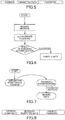
- the flowchart/state transition diagram as shown in FIG. 6/FIG.7 is produced as the protection state model.
- the computing part determines, based on the protection state model produced by the protection state model producing part, whether or not there exists the state to violate the protection state of the protected property. Specifically, if the protection state model does not include a function/state to check the protection state of the protected property (i.e., check that the rewritten data is correct), then the computing part determines that there exists the state to violate the protection state of the protected property.
- the input producing part 42 produces an input to the product that leads to the state to violate the protection state of the protected property.
- the input is an input message shown in FIG. 5 .
- the input producing part 42 takes a look at a target information out of the respective information (i.e., respective fields; in the example shown in FIG. 5 , that are address, rewritten data, password) included in the input message (i.e., input frame) other than "rewritten data" which is the protected property (i.e., the target information being address, password), and takes a look at in what condition of the target information the data rewrite function/operation can be reached.
- the input producing part 42 takes a look at the address of the input message.
- the input producing part 42 sets the address as an arbitrary value, because an operation that refers to the address is not performed in the protection state.
- the input producing part 42 takes a look at the password. Since in the protection state model, "data rewrite" can be performed only when the password is a correct password with which the determination of password matched is made in the password authentication, the input producing part 42 sets the password as the correct password.
- the input producing part 42 determines that a state of incorrect (improper) rewritten data being written is "state to violate the protection state of the protected property", and sets the rewritten data as the improper rewritten data.
- the input producing part 42 can produce and output the input message having the arbitrary address, the improper rewritten data and the correct password.
- the user can input the input message produced by the input producing part 42 to the actual machine to evaluate the vulnerability of the actual machine.
- the input producing part 42 may be configured to compute a range of value that each information of the input message to the product may take when the information leads to the state to violate the protection state of the protected property, and produce a plurality of input messages falling within that range.
- the evaluation of vulnerability with respect to the protected property of the actual machine and the protection state of this protected property inputted to the property input part 23 can be performed. Consequently, by changing the protected property and/or the protection state to be inputted, various protection properties and/or protection states can be evaluated, thereby performing exhaustive vulnerability evaluation.
- the computing part 41 determines that there exists the state to violate the protection state of the protected property
- the input producing part 42 produces the input message to the actual machine that leads to the state to violate the protection state of the protected property.
- the vulnerability evaluation can be performed by inputting the input message to the actual machine, thus the vulnerability evaluation can be performed accurately.
- the property input part 23 can select and input the protected property from the operation of the actual machine and the data used in the actual machine indicated by the design model that is outputted (i.e., displayed) on the output part 22. As such, the protected property can be inputted easily.
- the property input part 23 can select and input the operation that affects the protection state from the operations indicated by the design model outputted (i.e., displayed) on the output part 22, and can input, as the protection state, a state of the protected property after the selected operation is performed indicating that the protected property is protected.
- the protection state can be inputted easily.
- the protection state model producing part 32 produces the protection state model including the initial state to the operation selected by the property input part 23 that are extracted out of the flowchart or the state transition diagram, and, based on the extracted protection state model, if there is no state to check the protection state of the protected property, the computing part 41 determines that there exists the state to violate the protection state of the protected property. As such, determination of whether or not there exists the state to violate the protection state can be made easily.
- the initial state to the "data rewrite" function/state selected by the property input part 23 are extracted as the protection state model.
- the present invention is not limited to this. Additionally, function/state portion that forms a loop including "data rewrite" function/state may also be extracted as the protection state model.
- the input producing part 42 is configured to produce the input message that leads to the state to violate the protection state.
- the input producing part 42 is not essential.
- the input producing part 42 may be omitted, and the computing part 41 may be configured to output (display) the determination result from (on) the output part 22.
- the user can evaluate the vulnerability of the inputted protected property and protection state, and can e.g. adjust a program of the actual machine.
- the design model producing part 31 produces the design model based on the design specification inputted by the specification input part 21.
- the present invention is not limited to this.
- the specification input par 21 and the design model producing part 31 may be omitted, and instead a design model input part 24 configured to allow the user to input the design model may be provided.
- the output part 22 displays the design model inputted by the design model input part 24.
Landscapes
- Engineering & Computer Science (AREA)
- Theoretical Computer Science (AREA)
- Computer Hardware Design (AREA)
- Computer Security & Cryptography (AREA)
- General Engineering & Computer Science (AREA)
- Software Systems (AREA)
- Physics & Mathematics (AREA)
- General Physics & Mathematics (AREA)
- Business, Economics & Management (AREA)
- General Health & Medical Sciences (AREA)
- Health & Medical Sciences (AREA)
- Human Resources & Organizations (AREA)
- Strategic Management (AREA)
- Accounting & Taxation (AREA)
- Economics (AREA)
- Finance (AREA)
- Development Economics (AREA)
- Bioethics (AREA)
- Computing Systems (AREA)
- Marketing (AREA)
- Quality & Reliability (AREA)
- Entrepreneurship & Innovation (AREA)
- Educational Administration (AREA)
- General Business, Economics & Management (AREA)
- Mathematical Physics (AREA)
- Virology (AREA)
- Game Theory and Decision Science (AREA)
- Databases & Information Systems (AREA)
- Medical Informatics (AREA)
- Tourism & Hospitality (AREA)
- Operations Research (AREA)
- Technology Law (AREA)
- Management, Administration, Business Operations System, And Electronic Commerce (AREA)
- Stored Programmes (AREA)
Abstract
Description
- The present invention relates to a vulnerability evaluating apparatus.
- As a method of detecting security vulnerability existing in an information system integrated into a computer, ones disclosed in
Patent Documents -
Patent Document 1 proposes a system that automatically selects inspection data suited to an operating system of an audited computer with referring to a database constituted of security bug information and such, and detects security vulnerability existing in the audited computer using the inspection data. -
Patent Document 2 proposes a method of detecting vulnerabilities of 3 types, namely, overflow, race condition and privileges escalation, by statically analyzing a source code. - The method described in
Patent Document 1 has a problem that it cannot detect security vulnerability for a customized software and such that is not registered in the database. The method described inPatent Document 2 has a problem that it cannot detect vulnerability of types other than the overflow, the race condition and the privileges escalation. Moreover, attacks against the information systems including integrated systems have been increasing, and therefore exhaustive security vulnerability detection is becoming increasingly important. -
- Patent Document 1:
JP 2002-157221 A - Patent Document 2:
JP 2006-523898 A - In view of the above-described problems, an object of the present invention is to provide a vulnerability evaluating apparatus that can perform exhaustive vulnerability evaluation.
- One embodiment of the present invention provides a vulnerability evaluating apparatus including: a specification input part to which a design specification of a product with a built-in computer is inputted; a design model producing part configured to produce a design model indicating an operation of the product and data used in the product, based on the design specification inputted by the specification input part; a property input part configured to input a protected property of the product and a protection state of the protected property; a protection state model producing part configured to produce a protection state model by extracting, out of the design model produced by the design model producing part, an operation portion associated with the protected property inputted by the property input part; and a determination part configured to determine, based on the protection state model, whether or not there exists a state to violate the protection state of the protected property.
- Another embodiment of the present invention provides a vulnerability evaluating apparatus including: a design model input part to which a design model indicating an operation of a product with a built-in computer and data used in the product is inputted; a property input part configured to input a protected property of the product and a protection state of the protected property; a protection state model producing part configured to produce a protection state model by extracting, out of the design model inputted by the design model input part, an operation portion associated with the protected property inputted by the property input part; and a determination part configured to determine, based on the protection state model, whether or not there exists a state to violate the protection state of the protected property.
- Further, the vulnerability evaluating apparatus may further include an input producing part configured to produce an input to the product that leads to the state to violate the protection state of the protected property, if the determination part determines that there exists the state to violate the protection state of the protected property.
- Further, the vulnerability evaluating apparatus may further include an output part configured to output the design model, wherein the property input part is configured to select and input the protected property from the operation of the product and the data used in the product indicated by the design model outputted to the output part.
- Further, the property input part may be configured to select and input the operation that affects the protection state from the operations indicated by the design model outputted to the output part, and may be configured to input, as the protection state, a state of the protected property after the selected operation is performed indicating that the protected property is protected.
- Further, the design model may be constituted of an operation flow or a state transition diagram, and the protection state model producing part may produce a protection state model by extracting, out of the operation flow or the state transition diagram, an initial state to the operation selected by the property input part, and the determination part may be configured to determine, based on the extracted protection state model, that there exists the state to violate the protection state if there is a state departing from the protection state of the protected property.
- Further, the input producing part may be configured to compute a range of value that each field of an input frame to the product may take when it leads to the state to violate the protection state of the protected property.
- According to the present invention, vulnerability can be evaluated regarding the protected property of the product and the protection state of the protected property inputted to the property input part, allowing evaluation for various protected properties and the protection states, thereby performing exhaustive vulnerability evaluation.
-
-
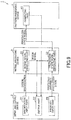
FIG. 1 is a function block diagram showing one embodiment of a vulnerability evaluating apparatus of the present invention; -
FIG. 2 is a flowchart showing one example of a design model produced by a design model producing part shown inFIG. 1 ; -
FIG. 3 is a state transition diagram showing one example of a design model produced by the design model producing part shown inFIG. 1 ; -
FIG. 4 shows a flowchart and a state transition diagram associated to each other showing one example of a design model produced by the design model producing part shown inFIG. 1 ; -
FIG. 5 shows a format of an input message to be inputted to an actual machine; -
FIG. 6 is a flowchart showing one example of a protection state model produced by a protection state model producing part shown inFIG. 1 ; -
FIG. 7 is a state transition diagram showing one example of a protection state model produced by the protection state model producing part shown inFIG. 1 ; -
FIG. 8 shows one example of an input message produced by an input producing part shown inFIG. 1 ; -
FIG. 9 is a function block diagram showing a vulnerability evaluating apparatus according to another embodiment; and -
FIG. 10 is a function block diagram showing a vulnerability evaluating apparatus according to yet another embodiment. - In the following, one embodiment of the present invention will be explained with reference to
FIG. 1 . A vulnerability evaluating apparatus shown inFIG. 1 is an apparatus configured to evaluate security vulnerability of an integrated system product (an actual machine) with a built-in computer. As shown inFIG. 1 , avulnerability evaluating apparatus 1 is constituted of an input andoutput device 2, amodel producing device 3 and apattern producing device 4. - The input and
output device 2 includes aspecification input part 21, anoutput part 22 and aproperty input part 23. - The
specification input part 21 is constituted of an operation part such as a keyboard, a mouse and/or a touch panel, and design specification of the actual machine is to be inputted to thespecification input part 21. As the design specification, a format of an input (data) and an operation of the actual machine and such are inputted. As the operation of the actual machine, for example, various functions to be performed by the actual machine to produce a design model and relationship between them, various states of the actual machine and relationship between them and such, are inputted. - The design specification needs to be inputted in a form understandable to the later-described model producing device (i.e., a format description). However, a language called a format description is often difficult to understand, and it would be difficult to demand a user for the format description language. This embodiment is configured to allow a document described in a natural language to be inputted as the design specification, and has a built-in function to convert the document inputted to the input and output device and the model producing device into the format description. Of course, it may be configured to allow the design specification to be inputted using the format description language.
- The
output part 22 is constituted of a display part such as a touch panel, and is configured to display to a user the design model (including a flowchart and/or a state transition diagram and/or such) indicating an operation of the product produced by themodel producing device 3 as described later. - The
property input part 23 is constituted of an operation part such as a keyboard, a mouse and/or a touch panel, and inputs a protected property of the actual machine and a protection state of this protected property. Theproperty input part 23 can select and input the protected property from, for example, input data displayed on theoutput part 22 as the design model. Further, theproperty input part 23 can select transition of various functions and/or various states displayed on the display part as the design model, and, can define and input, as the protection state, a state of the protected property after the transition of the selected operation and/or state is performed indicating that the protected property is protected. Herein, the protected property and the protection state may be freely inputted by a user using a document. - The
model producing device 3 includes a designmodel producing part 31 and a protection statemodel producing part 32. - A known microcomputer having a ROM, a RAM and a CPU functions as the design
model producing part 31. The designmodel producing part 31 produces the design model indicating an operation of the product, such as a data format, a flowchart and/or a state transition diagram, based on the design specification inputted by thespecification input part 21. The designmodel producing part 31 outputs the produced design model to theoutput part 22. - The protection state
model producing part 32 produces a protection state model by extracting an operation portion associated with the protected property inputted by theproperty input part 23 out of the design model produced by the designmodel producing part 31. Specifically, the protection statemodel producing part 32 extracts, from the design model (i.e., the operation flow, the state transition diagram), an initial state to the operation and/or state selected by theproperty input part 23 to define the protection state, and sets the extracted portion as the protection state model. - The
pattern producing device 4 includes acomputing part 41 and aninput producing part 42. - The
computing part 41 as a determination part determines, based on the protection state model, whether or not it leads to a state that violates the protection state of the protected property. Specifically, thecomputing part 41 determines that there exists the state to violate the protection state of the protected property, if the protection state model includes a state departing from the protection state of the protected property, or if the protection state model does not include an operation to ensure the protection state. - If the
computing part 41 has determined that there exists the state to violate the protection state of the protected property, theinput producing part 42 produces an input to the product that leads to the state to violate the protection state of the protected property, and outputs it. - Next, the following will explain an operation of the above-described
vulnerability evaluating apparatus 1 with specific examples of the design specification, the protected property and the protection state. The examples of the design specification, the protected property and the protection state of the actual machine are indicated below. - Receive a message, perform password authentication, and, if the authentication is succeeded, rewrite data and transmit a success message. Reception of a message is repeated.
- Writing a correct "rewritten data" by "data rewrite" function.
- Firstly, a user inputs an operation (i.e., design specification) of the actual machine using the
specification input part 21. Specifically, the user inputs various functions and relationships between the functions to produce a flowchart as one design model. In the above-described example of the design specification, the user inputs the following functions and relationships as the design specification. -
- Message receiving function
- Password authentication function
- Data rewrite function
- Success message transmitting function
-
- After start, transit to the message receiving function.
- After the execution of the message receiving function, execute the password authentication function.
- After the password authentication is succeeded, execute the data rewrite function.
- After the password authentication is failed, return to the message receiving function.
- After the execution of the data rewrite function, return to the success message transmitting function.
- After the execution of the success message transmitting function, execute the message receiving function.
- Further, the user inputs various states and relationships between the states to produce a state transition diagram as one design model, using the
specification input part 21. In the above-described example of the design specification, the user inputs the following states and relationships as the design specification. -
- Message reception waiting state
- Password authentication state
- Data rewrite state
- Message transmission state
-
- After "start", transit to "message reception waiting state".
- When a message is received in "message reception waiting state", transit to "password authentication state".
- If the password is matched in "password authentication state", transit to "data rewrite state".
- If the password is not matched in "password authentication state", transit to "message reception waiting state".
- When the data rewriting is completed in "data rewrite state", transit to "message reception waiting state".
- When the message transmission is completed in "message transmission state", transmit to "message reception waiting state".
- At this time, the user also inputs information associating the input functions with the input states, using the
specification input part 21. Further, the user inputs a format of an input message (i.e., an input) as described below. -
- Includes an address
- Includes rewritten data
- Includes a password
- After the design specification is inputted, the design
model producing part 31 of themodel producing device 3 produces, based on the design specification, a flowchart shown inFIG. 2 and/or a state transition diagram shown inFIG. 3 , as the design model. As shown inFIG. 4 , the designmodel producing part 31 may associate the functions of the flowchart with the states of the state transition diagram. - The design
model producing part 31 outputs the produced design model to theoutput part 22. As such, theoutput part 22 displays (i.e., outputs) the flowchart, the state transition and the input message diagram set as the design model. - Subsequently, the user inputs the protected property and the protection state of the protected property using the
property input part 23. The user can input the protected property and the protection state by selecting from the flowchart, the state transition diagram and the input message displayed on theoutput part 22. In the above-described example of the protected property, the user selects the rewritten data from the displayed data format of the input message and inputs it as the protected property. - Further, the user selects and manipulates "data rewrite" function/state in the flowchart and the state transition diagram. Then, the user inputs, e.g. using a document, that the rewritten data is correct in the selected function/state, thereby defining the protection state.
- Next, based on the inputted protected property and the protection state, the protection state
model producing part 32 of themodel producing device 3 extracts, out of the design model, an operation portion associated with the protected property (i.e., an operation portion that may possibly affect the protected property) as a protection state model. - Specifically, the protection state
model producing part 32 produces the protection state model including from the start (i.e., the initial state) to the "data rewrite" function/state selected by theproperty input part 23 during the input of the protection state. As such, the flowchart/state transition diagram as shown inFIG. 6/FIG.7 is produced as the protection state model. - The computing part determines, based on the protection state model produced by the protection state model producing part, whether or not there exists the state to violate the protection state of the protected property. Specifically, if the protection state model does not include a function/state to check the protection state of the protected property (i.e., check that the rewritten data is correct), then the computing part determines that there exists the state to violate the protection state of the protected property.
- If the
computing part 41 determines that there exists the state to violate the protection state of the protected property, then theinput producing part 42 produces an input to the product that leads to the state to violate the protection state of the protected property. In a specific example, the input is an input message shown inFIG. 5 . Theinput producing part 42 takes a look at a target information out of the respective information (i.e., respective fields; in the example shown inFIG. 5 , that are address, rewritten data, password) included in the input message (i.e., input frame) other than "rewritten data" which is the protected property (i.e., the target information being address, password), and takes a look at in what condition of the target information the data rewrite function/operation can be reached. - Firstly, the
input producing part 42 takes a look at the address of the input message. Theinput producing part 42 sets the address as an arbitrary value, because an operation that refers to the address is not performed in the protection state. - Next, the
input producing part 42 takes a look at the password. Since in the protection state model, "data rewrite" can be performed only when the password is a correct password with which the determination of password matched is made in the password authentication, theinput producing part 42 sets the password as the correct password. - Next, since the defined protection state is the data being rewritten to the correct rewritten data in the "data rewrite" function/state, the
input producing part 42 determines that a state of incorrect (improper) rewritten data being written is "state to violate the protection state of the protected property", and sets the rewritten data as the improper rewritten data. - As such, as shown in
FIG. 8 , theinput producing part 42 can produce and output the input message having the arbitrary address, the improper rewritten data and the correct password. The user can input the input message produced by theinput producing part 42 to the actual machine to evaluate the vulnerability of the actual machine. - The
input producing part 42 may be configured to compute a range of value that each information of the input message to the product may take when the information leads to the state to violate the protection state of the protected property, and produce a plurality of input messages falling within that range. - According to the embodiments described above, the evaluation of vulnerability with respect to the protected property of the actual machine and the protection state of this protected property inputted to the
property input part 23 can be performed. Consequently, by changing the protected property and/or the protection state to be inputted, various protection properties and/or protection states can be evaluated, thereby performing exhaustive vulnerability evaluation. - According to the above-described embodiment, if the
computing part 41 determines that there exists the state to violate the protection state of the protected property, then theinput producing part 42 produces the input message to the actual machine that leads to the state to violate the protection state of the protected property. As such, the vulnerability evaluation can be performed by inputting the input message to the actual machine, thus the vulnerability evaluation can be performed accurately. - According to the above-described embodiment, the
property input part 23 can select and input the protected property from the operation of the actual machine and the data used in the actual machine indicated by the design model that is outputted (i.e., displayed) on theoutput part 22. As such, the protected property can be inputted easily. - According to the above-described embodiment, the
property input part 23 can select and input the operation that affects the protection state from the operations indicated by the design model outputted (i.e., displayed) on theoutput part 22, and can input, as the protection state, a state of the protected property after the selected operation is performed indicating that the protected property is protected. As such, the protection state can be inputted easily. - According to the above-described embodiment, the protection state
model producing part 32 produces the protection state model including the initial state to the operation selected by theproperty input part 23 that are extracted out of the flowchart or the state transition diagram, and, based on the extracted protection state model, if there is no state to check the protection state of the protected property, thecomputing part 41 determines that there exists the state to violate the protection state of the protected property. As such, determination of whether or not there exists the state to violate the protection state can be made easily. - In the above-described embodiment, the initial state to the "data rewrite" function/state selected by the
property input part 23 are extracted as the protection state model. However, the present invention is not limited to this. Additionally, function/state portion that forms a loop including "data rewrite" function/state may also be extracted as the protection state model. - Furthermore, in the above-described embodiment, the
input producing part 42 is configured to produce the input message that leads to the state to violate the protection state. However, the present invention is not limited to this. Theinput producing part 42 is not essential. For example, as shown inFIG. 9 , theinput producing part 42 may be omitted, and thecomputing part 41 may be configured to output (display) the determination result from (on) theoutput part 22. As such, the user can evaluate the vulnerability of the inputted protected property and protection state, and can e.g. adjust a program of the actual machine. - Furthermore, in the above-described embodiment, the design
model producing part 31 produces the design model based on the design specification inputted by thespecification input part 21. However, the present invention is not limited to this. For example, as shown inFIG. 10 , thespecification input par 21 and the designmodel producing part 31 may be omitted, and instead a design model input part 24 configured to allow the user to input the design model may be provided. In this case, theoutput part 22 displays the design model inputted by the design model input part 24. - The present invention is not limited to the above-described embodiments, and various changes and modifications may be made without departing from the scope of the present invention.
-
- 1
- vulnerability evaluating apparatus
- 21
- specification input part
- 22
- output part
- 23
- property input part
- 24
- design model input part
- 31
- design model producing part
- 32
- protection state model producing part
- 41
- computing part (determination part)
- 42
- input producing part
Claims (6)
- A vulnerability evaluating apparatus comprising:a specification input part to which a design specification of a product with a built-in computer is inputted;a design model producing part configured to produce a design model indicating an operation of the product and data used in the product, based on the design specification inputted by the specification input part;a property input part configured to input a protected property of the product and a protection state of the protected property;a protection state model producing part configured to produce a protection state model by extracting, out of the design model produced by the design model producing part, an operation portion associated with the protected property inputted by the property input part; anda determination part configured to determine, based on the protection state model, whether or not there exists a state to violate the protection state of the protected property.
- A vulnerability evaluating apparatus comprising:a design model input part to which a design model indicating an operation of a product with a built-in computer and data used in the product is inputted;a property input part configured to input a protected property of the product and a protection state of the protected property;a protection state model producing part configured to produce a protection state model by extracting, out of the design model inputted by the design model input part, an operation portion associated with the protected property inputted by the property input part; anda determination part configured to determine, based on the protection state model, whether or not there exists a state to violate the protection state of the protected property.
- The vulnerability evaluating apparatus according to claim 1 or 2, further comprising an input producing part configured to produce an input to the product that leads to the state to violate the protection state of the protected property, if the determination part determines that there exists the state to violate the protection state of the protected property.
- The vulnerability evaluating apparatus according to any one of claims 1 to 3, further comprising an output part configured to output the design model,
wherein the property input part is configured to select and input the protected property from the operation of the product and the data used in the product indicated by the design model outputted to the output part. - The vulnerability evaluating apparatus according to claim 4,
wherein the property input part is configured to select and input the operation that affects the protection state from the operations indicated by the design model outputted to the output part, and is configured to input, as the protection state, a state of the protected property after the selected operation is performed indicating that the protected property is protected. - The vulnerability evaluating apparatus according to claim 4,
wherein the design model is constituted of an operation flow or a state transition diagram,
wherein the protection state model producing part produces a protection state model by extracting, out of the operation flow or the state transition diagram, an initial state to the operation selected by the property input part, and
wherein the determination part determines, based on the extracted protection state model, that there exists the state to violate the protection state if there is a state departing from the protection state of the protected property.
Applications Claiming Priority (1)
| Application Number | Priority Date | Filing Date | Title |
|---|---|---|---|
| JP2018106764A JP6962867B2 (en) | 2018-06-04 | 2018-06-04 | Vulnerability assessment device |
Publications (1)
| Publication Number | Publication Date |
|---|---|
| EP3579133A1 true EP3579133A1 (en) | 2019-12-11 |
Family
ID=66397074
Family Applications (1)
| Application Number | Title | Priority Date | Filing Date |
|---|---|---|---|
| EP19172430.1A Withdrawn EP3579133A1 (en) | 2018-06-04 | 2019-05-03 | Software security vulnerability evaluating apparatus |
Country Status (4)
| Country | Link |
|---|---|
| US (1) | US20190370474A1 (en) |
| EP (1) | EP3579133A1 (en) |
| JP (1) | JP6962867B2 (en) |
| CN (1) | CN110618919A (en) |
Citations (2)
| Publication number | Priority date | Publication date | Assignee | Title |
|---|---|---|---|---|
| JP2002157221A (en) | 2000-11-20 | 2002-05-31 | Nec Fielding Ltd | System for automating setting measures to cope with weak points of security |
| JP2006523898A (en) | 2003-04-18 | 2006-10-19 | オンス ラブス,インク | Source code vulnerability detection method and detection system |
Family Cites Families (8)
| Publication number | Priority date | Publication date | Assignee | Title |
|---|---|---|---|---|
| JP2004070561A (en) * | 2002-08-05 | 2004-03-04 | Funai Electric Co Ltd | Debugging device |
| JP2007265089A (en) * | 2006-03-29 | 2007-10-11 | Fujitsu Ltd | Software maintenance support program, processing method and apparatus |
| JP4759546B2 (en) * | 2007-09-20 | 2011-08-31 | 株式会社エヌ・ティ・ティ・データ | Specification defect verification system, method and program |
| JP5269722B2 (en) * | 2009-08-26 | 2013-08-21 | 株式会社東芝 | Security design support apparatus and program |
| JP2011180850A (en) * | 2010-03-02 | 2011-09-15 | Mitsubishi Electric Corp | Model generation device, model generation method, and model generation program |
| JP2012128727A (en) * | 2010-12-16 | 2012-07-05 | Toyota Infotechnology Center Co Ltd | Reliability evaluation method and apparatus for software component |
| US10346140B2 (en) * | 2015-08-05 | 2019-07-09 | General Electric Company | System and method for model based technology and process for safety-critical software development |
| JP2017068825A (en) * | 2015-09-29 | 2017-04-06 | パナソニックIpマネジメント株式会社 | Software development system and program |
-
2018
- 2018-06-04 JP JP2018106764A patent/JP6962867B2/en active Active
-
2019
- 2019-04-29 US US16/397,164 patent/US20190370474A1/en not_active Abandoned
- 2019-05-03 EP EP19172430.1A patent/EP3579133A1/en not_active Withdrawn
- 2019-05-07 CN CN201910376073.3A patent/CN110618919A/en not_active Withdrawn
Patent Citations (2)
| Publication number | Priority date | Publication date | Assignee | Title |
|---|---|---|---|---|
| JP2002157221A (en) | 2000-11-20 | 2002-05-31 | Nec Fielding Ltd | System for automating setting measures to cope with weak points of security |
| JP2006523898A (en) | 2003-04-18 | 2006-10-19 | オンス ラブス,インク | Source code vulnerability detection method and detection system |
Non-Patent Citations (2)
| Title |
|---|
| MEDEIROS IBERIA ET AL: "Detecting and Removing Web Application Vulnerabilities with Static Analysis and Data Mining", IEEE TRANSACTIONS ON RELIABILITY, IEEE SERVICE CENTER, PISCATAWAY, NJ, US, vol. 65, no. 1, 1 March 2016 (2016-03-01), pages 54 - 69, XP011608435, ISSN: 0018-9529, [retrieved on 20160301], DOI: 10.1109/TR.2015.2457411 * |
| SHOSHITAISHVILI YAN ET AL: "SOK: (State of) The Art of War: Offensive Techniques in Binary Analysis", 2016 IEEE SYMPOSIUM ON SECURITY AND PRIVACY (SP), IEEE, 22 May 2016 (2016-05-22), pages 138 - 157, XP032945697, DOI: 10.1109/SP.2016.17 * |
Also Published As
| Publication number | Publication date |
|---|---|
| CN110618919A (en) | 2019-12-27 |
| US20190370474A1 (en) | 2019-12-05 |
| JP2019211947A (en) | 2019-12-12 |
| JP6962867B2 (en) | 2021-11-05 |
Similar Documents
| Publication | Publication Date | Title |
|---|---|---|
| JP6047463B2 (en) | Evaluation apparatus and method for evaluating security threats | |
| KR101711882B1 (en) | Method, device and terminal device for detecting a malicious vulnerability file | |
| KR101337874B1 (en) | System and method for detecting malwares in a file based on genetic map of the file | |
| US9372785B2 (en) | Identifying implicit assumptions associated with a software product | |
| JP6428070B2 (en) | Code-based risk analysis using static analysis and performance data | |
| US20250148059A1 (en) | Method for application protection, electronic device, and computer-readable storage medium | |
| US9495542B2 (en) | Software inspection system | |
| CN118378270B (en) | Method, device, equipment and medium for generating component vulnerability automatic repair scheme | |
| CN108234441B (en) | Method, apparatus, electronic device and storage medium for determining forged access request | |
| US20150178264A1 (en) | Reporting the presence of hardcoded strings on a user interface (ui) | |
| US12001325B2 (en) | Test data generation apparatus, test data generation method and program | |
| US20150234793A1 (en) | Font resource management | |
| CN107291614B (en) | File abnormity detection method and electronic equipment | |
| KR20210041310A (en) | Appratus and method for verification of smart contracts | |
| CN107430590B (en) | System and method for data comparison | |
| EP3767507A1 (en) | Data processing method against ransomware, program for executing same, and computer-readable recording medium with program recorded thereon | |
| CN112182617A (en) | Processing method, device and system for interface request | |
| US20190370474A1 (en) | Vulnerability evaluating apparatus | |
| US12001551B2 (en) | Warning apparatus, control method, and program | |
| CN110874475A (en) | Vulnerability mining method, vulnerability mining platform and computer readable storage medium | |
| KR100653122B1 (en) | Rule-based Real-time Detection System and Method for Secure Software Development | |
| JP6608569B1 (en) | Security design apparatus, security design method, and security design program | |
| US10063348B2 (en) | Retransmission data processing device, retransmission data communication device, retransmission data communication system, retransmission data processing method, retransmission data communication method, and non-transitory computer readable medium for detecting abnormality by comparing retransmission data to transmission data | |
| KR101691929B1 (en) | An apparatus for implementing an automation of a web user interface and method therefor | |
| US8065625B2 (en) | GUI evaluation system, GUI evaluation method, and GUI evaluation program |
Legal Events
| Date | Code | Title | Description |
|---|---|---|---|
| PUAI | Public reference made under article 153(3) epc to a published international application that has entered the european phase |
Free format text: ORIGINAL CODE: 0009012 |
|
| STAA | Information on the status of an ep patent application or granted ep patent |
Free format text: STATUS: REQUEST FOR EXAMINATION WAS MADE |
|
| 17P | Request for examination filed |
Effective date: 20190503 |
|
| AK | Designated contracting states |
Kind code of ref document: A1 Designated state(s): AL AT BE BG CH CY CZ DE DK EE ES FI FR GB GR HR HU IE IS IT LI LT LU LV MC MK MT NL NO PL PT RO RS SE SI SK SM TR |
|
| AX | Request for extension of the european patent |
Extension state: BA ME |
|
| RBV | Designated contracting states (corrected) |
Designated state(s): AL AT BE BG CH CY CZ DE DK EE ES FI FR GB GR HR HU IE IS IT LI LT LU LV MC MK MT NL NO PL PT RO RS SE SI SK SM TR |
|
| STAA | Information on the status of an ep patent application or granted ep patent |
Free format text: STATUS: EXAMINATION IS IN PROGRESS |
|
| 17Q | First examination report despatched |
Effective date: 20210426 |
|
| STAA | Information on the status of an ep patent application or granted ep patent |
Free format text: STATUS: THE APPLICATION HAS BEEN WITHDRAWN |
|
| 18W | Application withdrawn |
Effective date: 20210721 |