EP3575140A1 - Estimation method of the residual range of an electric vehicle - Google Patents
Estimation method of the residual range of an electric vehicle Download PDFInfo
- Publication number
- EP3575140A1 EP3575140A1 EP19177543.6A EP19177543A EP3575140A1 EP 3575140 A1 EP3575140 A1 EP 3575140A1 EP 19177543 A EP19177543 A EP 19177543A EP 3575140 A1 EP3575140 A1 EP 3575140A1
- Authority
- EP
- European Patent Office
- Prior art keywords
- vehicle
- avg
- coefficient
- available energy
- battery
- Prior art date
- Legal status (The legal status is an assumption and is not a legal conclusion. Google has not performed a legal analysis and makes no representation as to the accuracy of the status listed.)
- Granted
Links
Images
Classifications
-
- B—PERFORMING OPERATIONS; TRANSPORTING
- B60—VEHICLES IN GENERAL
- B60L—PROPULSION OF ELECTRICALLY-PROPELLED VEHICLES; SUPPLYING ELECTRIC POWER FOR AUXILIARY EQUIPMENT OF ELECTRICALLY-PROPELLED VEHICLES; ELECTRODYNAMIC BRAKE SYSTEMS FOR VEHICLES IN GENERAL; MAGNETIC SUSPENSION OR LEVITATION FOR VEHICLES; MONITORING OPERATING VARIABLES OF ELECTRICALLY-PROPELLED VEHICLES; ELECTRIC SAFETY DEVICES FOR ELECTRICALLY-PROPELLED VEHICLES
- B60L58/00—Methods or circuit arrangements for monitoring or controlling batteries or fuel cells, specially adapted for electric vehicles
- B60L58/10—Methods or circuit arrangements for monitoring or controlling batteries or fuel cells, specially adapted for electric vehicles for monitoring or controlling batteries
- B60L58/12—Methods or circuit arrangements for monitoring or controlling batteries or fuel cells, specially adapted for electric vehicles for monitoring or controlling batteries responding to state of charge [SoC]
-
- B—PERFORMING OPERATIONS; TRANSPORTING
- B60—VEHICLES IN GENERAL
- B60L—PROPULSION OF ELECTRICALLY-PROPELLED VEHICLES; SUPPLYING ELECTRIC POWER FOR AUXILIARY EQUIPMENT OF ELECTRICALLY-PROPELLED VEHICLES; ELECTRODYNAMIC BRAKE SYSTEMS FOR VEHICLES IN GENERAL; MAGNETIC SUSPENSION OR LEVITATION FOR VEHICLES; MONITORING OPERATING VARIABLES OF ELECTRICALLY-PROPELLED VEHICLES; ELECTRIC SAFETY DEVICES FOR ELECTRICALLY-PROPELLED VEHICLES
- B60L3/00—Electric devices on electrically-propelled vehicles for safety purposes; Monitoring operating variables, e.g. speed, deceleration or energy consumption
- B60L3/12—Recording operating variables ; Monitoring of operating variables
-
- G—PHYSICS
- G01—MEASURING; TESTING
- G01R—MEASURING ELECTRIC VARIABLES; MEASURING MAGNETIC VARIABLES
- G01R31/00—Arrangements for testing electric properties; Arrangements for locating electric faults; Arrangements for electrical testing characterised by what is being tested not provided for elsewhere
- G01R31/36—Arrangements for testing, measuring or monitoring the electrical condition of accumulators or electric batteries, e.g. capacity or state of charge [SoC]
- G01R31/367—Software therefor, e.g. for battery testing using modelling or look-up tables
-
- G—PHYSICS
- G01—MEASURING; TESTING
- G01R—MEASURING ELECTRIC VARIABLES; MEASURING MAGNETIC VARIABLES
- G01R31/00—Arrangements for testing electric properties; Arrangements for locating electric faults; Arrangements for electrical testing characterised by what is being tested not provided for elsewhere
- G01R31/36—Arrangements for testing, measuring or monitoring the electrical condition of accumulators or electric batteries, e.g. capacity or state of charge [SoC]
- G01R31/382—Arrangements for monitoring battery or accumulator variables, e.g. SoC
-
- B—PERFORMING OPERATIONS; TRANSPORTING
- B60—VEHICLES IN GENERAL
- B60L—PROPULSION OF ELECTRICALLY-PROPELLED VEHICLES; SUPPLYING ELECTRIC POWER FOR AUXILIARY EQUIPMENT OF ELECTRICALLY-PROPELLED VEHICLES; ELECTRODYNAMIC BRAKE SYSTEMS FOR VEHICLES IN GENERAL; MAGNETIC SUSPENSION OR LEVITATION FOR VEHICLES; MONITORING OPERATING VARIABLES OF ELECTRICALLY-PROPELLED VEHICLES; ELECTRIC SAFETY DEVICES FOR ELECTRICALLY-PROPELLED VEHICLES
- B60L2240/00—Control parameters of input or output; Target parameters
- B60L2240/40—Drive Train control parameters
- B60L2240/54—Drive Train control parameters related to batteries
-
- B—PERFORMING OPERATIONS; TRANSPORTING
- B60—VEHICLES IN GENERAL
- B60L—PROPULSION OF ELECTRICALLY-PROPELLED VEHICLES; SUPPLYING ELECTRIC POWER FOR AUXILIARY EQUIPMENT OF ELECTRICALLY-PROPELLED VEHICLES; ELECTRODYNAMIC BRAKE SYSTEMS FOR VEHICLES IN GENERAL; MAGNETIC SUSPENSION OR LEVITATION FOR VEHICLES; MONITORING OPERATING VARIABLES OF ELECTRICALLY-PROPELLED VEHICLES; ELECTRIC SAFETY DEVICES FOR ELECTRICALLY-PROPELLED VEHICLES
- B60L2240/00—Control parameters of input or output; Target parameters
- B60L2240/40—Drive Train control parameters
- B60L2240/54—Drive Train control parameters related to batteries
- B60L2240/547—Voltage
-
- B—PERFORMING OPERATIONS; TRANSPORTING
- B60—VEHICLES IN GENERAL
- B60L—PROPULSION OF ELECTRICALLY-PROPELLED VEHICLES; SUPPLYING ELECTRIC POWER FOR AUXILIARY EQUIPMENT OF ELECTRICALLY-PROPELLED VEHICLES; ELECTRODYNAMIC BRAKE SYSTEMS FOR VEHICLES IN GENERAL; MAGNETIC SUSPENSION OR LEVITATION FOR VEHICLES; MONITORING OPERATING VARIABLES OF ELECTRICALLY-PROPELLED VEHICLES; ELECTRIC SAFETY DEVICES FOR ELECTRICALLY-PROPELLED VEHICLES
- B60L2260/00—Operating Modes
- B60L2260/40—Control modes
- B60L2260/50—Control modes by future state prediction
- B60L2260/52—Control modes by future state prediction drive range estimation, e.g. of estimation of available travel distance
-
- B—PERFORMING OPERATIONS; TRANSPORTING
- B60—VEHICLES IN GENERAL
- B60L—PROPULSION OF ELECTRICALLY-PROPELLED VEHICLES; SUPPLYING ELECTRIC POWER FOR AUXILIARY EQUIPMENT OF ELECTRICALLY-PROPELLED VEHICLES; ELECTRODYNAMIC BRAKE SYSTEMS FOR VEHICLES IN GENERAL; MAGNETIC SUSPENSION OR LEVITATION FOR VEHICLES; MONITORING OPERATING VARIABLES OF ELECTRICALLY-PROPELLED VEHICLES; ELECTRIC SAFETY DEVICES FOR ELECTRICALLY-PROPELLED VEHICLES
- B60L2260/00—Operating Modes
- B60L2260/40—Control modes
- B60L2260/50—Control modes by future state prediction
- B60L2260/54—Energy consumption estimation
-
- B—PERFORMING OPERATIONS; TRANSPORTING
- B60—VEHICLES IN GENERAL
- B60L—PROPULSION OF ELECTRICALLY-PROPELLED VEHICLES; SUPPLYING ELECTRIC POWER FOR AUXILIARY EQUIPMENT OF ELECTRICALLY-PROPELLED VEHICLES; ELECTRODYNAMIC BRAKE SYSTEMS FOR VEHICLES IN GENERAL; MAGNETIC SUSPENSION OR LEVITATION FOR VEHICLES; MONITORING OPERATING VARIABLES OF ELECTRICALLY-PROPELLED VEHICLES; ELECTRIC SAFETY DEVICES FOR ELECTRICALLY-PROPELLED VEHICLES
- B60L50/00—Electric propulsion with power supplied within the vehicle
- B60L50/50—Electric propulsion with power supplied within the vehicle using propulsion power supplied by batteries or fuel cells
-
- Y—GENERAL TAGGING OF NEW TECHNOLOGICAL DEVELOPMENTS; GENERAL TAGGING OF CROSS-SECTIONAL TECHNOLOGIES SPANNING OVER SEVERAL SECTIONS OF THE IPC; TECHNICAL SUBJECTS COVERED BY FORMER USPC CROSS-REFERENCE ART COLLECTIONS [XRACs] AND DIGESTS
- Y02—TECHNOLOGIES OR APPLICATIONS FOR MITIGATION OR ADAPTATION AGAINST CLIMATE CHANGE
- Y02T—CLIMATE CHANGE MITIGATION TECHNOLOGIES RELATED TO TRANSPORTATION
- Y02T10/00—Road transport of goods or passengers
- Y02T10/60—Other road transportation technologies with climate change mitigation effect
- Y02T10/70—Energy storage systems for electromobility, e.g. batteries
Definitions
- the present invention relates to a method for estimating the residual range of a vehicle, more specifically the residual range of an electric vehicle.
- Electric vehicles require an estimate of the residual range, i.e. for how long the batteries have sufficient energy to allow the vehicle to travel.
- This range is often calculated according to the state of charge or SOC, a parameter that expresses the residual charge of the batteries in percentage, from which, multiplying such parameter by the nominal capacity of the batteries, it is possible to trace the residual charge of the same.
- a corrective parameter provided by the battery manufacturers is generally used, which is configured to correct the above-mentioned SOC value. Normally this value is tabulated and is calculated on an hourly basis. However, as the SOC estimate is inaccurate, despite the multiplication by the corrective factor such estimate still remains inaccurate.
- EP3069923 A1 illustrates an alternative method for a precise estimation of the residual range of electric vehicles using a tabulated corrective value based on a discharge time of vehicle batteries that can be empirically acquired on the basis of tests of standard vehicle missions.
- the purpose of the present invention is to solve the technical problem described above.
- the present method may be applied to a vehicle (not illustrated), preferably an electric vehicle, essentially comprising at least one battery configured to power, at least partially, at least one electric motor cooperating with a drive system to ensure the running of the vehicle and configured to power the different devices in a vehicle.
- a vehicle not illustrated
- an electric vehicle essentially comprising at least one battery configured to power, at least partially, at least one electric motor cooperating with a drive system to ensure the running of the vehicle and configured to power the different devices in a vehicle.
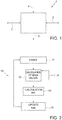
- FIG. 1 schematically illustrates a vehicle management unit 1, or VMU ("Vehicle management unit") connected to respective traction control CAN BUS 2, e.g. the motor, the drive system, braking and electric traction chain management systems 3, e.g. traction batteries or inverter.
- VMU Vehicle management unit
- the management unit 1 can also receive input signals 4 from the vehicle via the abovementioned CAN BUS 2 and 3, and can obviously send output signals 5 to the vehicle, for example to a graphical interface for the vehicle user (HMI).
- the management unit 1 is equipped with an internal memory, such as an EEPROM.
- the management unit 1 receives a plurality of parameters such as, for example:
- the management unit 1 can take the dimensionless values of an available energy coefficient K ae tabulated as a function of time. These values can be stored as follows: Calculated discharge time [h] Coefficient Kae 1 0.78 2 0.89 3 0.92 4 0.94 5 0.95 8 0.97
- the management unit 1 comprises electronic processing means configured to acquire and store the above-mentioned values and advantageously to elaborate an iterative method, described in detail below, for estimating the residual range of a vehicle and schematized in block diagram 10 of figure 2 .
- the method of estimating the residual range of an electric vehicle according to the present invention essentially comprises the following steps:
- the initialisation step 11 comprises the steps of:
- the second calculation step 12 of mean values essentially comprises the steps of:
- the second step also comprises calculating an average usable energy of the batteries Eu avg , an average distance X avg , an average speed of the vehicle V avg , as respective averages, for example arithmetic averages, of the i-th values previously calculated.
- the fourth step 14 comprises calculating the residual kilometres, Range km , which can be covered with the available energy of the batteries, and the residual time range, Time range , as a function of the current available energy coefficient Krc avg .
- the above-mentioned values are sent to an HMI interface of the vehicle, such as a display, to allow the user of the electric vehicle to view them.
- this value can be advantageously obtained from the values already present by interpolation of a known type, such as linear or polynomial interpolation.
- the calculation cycle can be repeated at regular time intervals or after travelling a pre-set distance, or continuously.
- 'work cycle' means the operation of the vehicle from one ignition to the next switching off.
- the unit will store the values mentioned above and, advantageously, the values of Krc avg are averaged against each other to obtain a value of the overall available energy coefficient Krc abs equal to the average of the values of all the Krc avg of the calculation cycles of the vehicle work cycle.
- the third step 13 may comprise a further correction step in which the current available energy coefficient Krc avg is further refined by calculating an adjusted coefficient of available energy Krc avg' as an average between Krc avg and Krc abs .
- the estimate of K ae used to calculate the real energy E r at the beginning of the work cycle will be more and more accurate and refined since it is based on an increasing number of real work cycles of the vehicle.
- the averages of the aforementioned values could be calculated differently or additional intermediate calculation steps could be included within a step of the method as claimed.
Landscapes
- Engineering & Computer Science (AREA)
- Life Sciences & Earth Sciences (AREA)
- Sustainable Development (AREA)
- Sustainable Energy (AREA)
- Power Engineering (AREA)
- Transportation (AREA)
- Mechanical Engineering (AREA)
- Physics & Mathematics (AREA)
- General Physics & Mathematics (AREA)
- Electric Propulsion And Braking For Vehicles (AREA)
- Charge And Discharge Circuits For Batteries Or The Like (AREA)
Abstract
Description
- This Patent Application claims priority from Italian Patent Application No.
102018000005878 filed on May 30, 2018 - The present invention relates to a method for estimating the residual range of a vehicle, more specifically the residual range of an electric vehicle.
- Electric vehicles require an estimate of the residual range, i.e. for how long the batteries have sufficient energy to allow the vehicle to travel.
- This range is often calculated according to the state of charge or SOC, a parameter that expresses the residual charge of the batteries in percentage, from which, multiplying such parameter by the nominal capacity of the batteries, it is possible to trace the residual charge of the same.
- However, it is known that such parameter is extremely inaccurate as it is obtained by means of devices for monitoring the voltage of vehicle batteries, which are not very sensitive and reliable.
- For this purpose, a corrective parameter provided by the battery manufacturers is generally used, which is configured to correct the above-mentioned SOC value. Normally this value is tabulated and is calculated on an hourly basis. However, as the SOC estimate is inaccurate, despite the multiplication by the corrective factor such estimate still remains inaccurate.
-
EP3069923 A1 illustrates an alternative method for a precise estimation of the residual range of electric vehicles using a tabulated corrective value based on a discharge time of vehicle batteries that can be empirically acquired on the basis of tests of standard vehicle missions. - However, even the above-mentioned estimate is not sufficiently accurate because it is clear that the values obtained empirically, calculated on the basis of tests of standard missions, will never correspond to the actual use values of the vehicle.
- In fact, it is known that during such tests of standard missions the consumptions due to some electrical devices, for example the conditioning devices of the vehicle, are not counted. It is therefore clear that these tests do not faithfully reflect the battery consumptions during normal use of an electric vehicle.
- Therefore, there is a need to improve the methods for estimating the residual range of known electric vehicles.
- The purpose of the present invention is to solve the technical problem described above.
- The above purpose is achieved with a method as claimed in the appended claims.
- In order to better understand the present invention, a non-limiting preferred embodiment thereof will now be described by way of example with reference to the accompanying drawings, in which:
-
Figure 1 schematically illustrates a management unit for an electric vehicle; and -
Figure 2 is a block diagram that schematically describes the method of the present invention. - The present method may be applied to a vehicle (not illustrated), preferably an electric vehicle, essentially comprising at least one battery configured to power, at least partially, at least one electric motor cooperating with a drive system to ensure the running of the vehicle and configured to power the different devices in a vehicle.
-
Figure 1 schematically illustrates avehicle management unit 1, or VMU ("Vehicle management unit") connected to respective traction control CANBUS 2, e.g. the motor, the drive system, braking and electric tractionchain management systems 3, e.g. traction batteries or inverter. - The
management unit 1 can also receive input signals 4 from the vehicle via theabovementioned CAN BUS output signals 5 to the vehicle, for example to a graphical interface for the vehicle user (HMI). Of course, themanagement unit 1 is equipped with an internal memory, such as an EEPROM. - From the CAN
BUS management unit 1 receives a plurality of parameters such as, for example: - vehicle speed V in km/h;
- the distance X travelled by the vehicle in km;
- a threshold distance Xs, of a pre-set value in km;
- the available energy E of the batteries in kWh;
- the depth of discharge DOD, a dimensionless value indicating the unavailable amount of energy;
- the state of charge SOC, equal to the complementary of DOD, i.e. SOC = 100% - DOD;
- the time T elapsed since the vehicle was in motion, e.g. in h;
- the maximum and minimum threshold of the battery state of charge Smax, Smin, as dimensionless coefficients, for example configurable at 17% and 83%.
- From the internal memory, the
management unit 1 can take the dimensionless values of an available energy coefficient Kae tabulated as a function of time. These values can be stored as follows:Calculated discharge time [h] Coefficient Kae 1 0.78 2 0.89 3 0.92 4 0.94 5 0.95 8 0.97 - The
management unit 1 comprises electronic processing means configured to acquire and store the above-mentioned values and advantageously to elaborate an iterative method, described in detail below, for estimating the residual range of a vehicle and schematized in block diagram 10 offigure 2 . - The method of estimating the residual range of an electric vehicle according to the present invention essentially comprises the following steps:
- a
first initialization step 11, at the beginning of the calculation cycle, for calculating the initial values of essential parameters for the following steps, such as the real energy Er and the state of charge SOC of the vehicle batteries using the data acquired and/or already stored bymanagement unit 1; - a second calculation step of
mean values 12, as an average of values calculated for successive iterations at a pre-set running interval travelled by the vehicle, such as the average usable energy Euavg of the batteries and the average speed Vavg of the vehicle; - a
third step 13 in which a current available energy coefficient Krcavg characteristic of the working conditions of the vehicle is calculated; - a
fourth step 14 in which the distance and the residual discharge time of the electric batteries are calculated and a new value of Kae is selected, according to such residual discharge time, to reinitialize the estimation method from thefirst step 11 mentioned above. - In particular, the
initialisation step 11 comprises the steps of: - calculating the real energy Er multiplying the available energy E measured by the vehicle's batteries by an available energy coefficient Kae, selected according to tabulated measures (for the first work cycle ever it can be selected in a pre-set way, for example the mean value of all the tabulated ones), as in the table described above.

- calculating the usable state of charge Socus through the equation:

- The
second calculation step 12 of mean values essentially comprises the steps of: - calculating the usable energy Eu(i) at the i-th moment as:

- measuring the vehicle's speed V(i) and distance X(i) at the i-th moment;
- storing the i-th value of Eu(i) and V(i),
where said i-th value is sampled at a pre-set time interval provided that the distance X(i) travelled in such interval of time is greater than a threshold distance Xs. The value of such distance Xs can be varied at will depending on the distance for which the sampling is deemed necessary, for example every kilometre. - This calculation is iterated as many times as one wishes to sample the measurement of Eu, X and V, for example i= 1:5.
- The second step also comprises calculating an average usable energy of the batteries Euavg, an average distance Xavg, an average speed of the vehicle Vavg, as respective averages, for example arithmetic averages, of the i-th values previously calculated.
- The
third step 13 comprises calculating a parameter of a current available energy coefficient Krcavg as:
- The
fourth step 14 comprises calculating the residual kilometres, Rangekm , which can be covered with the available energy of the batteries, and the residual time range, Timerange, as a function of the current available energy coefficient Krcavg . - In particular, these values can be calculated using the equations:


- The above-mentioned values are sent to an HMI interface of the vehicle, such as a display, to allow the user of the electric vehicle to view them.
- At this point it is possible to update the value of the available energy coefficient Kae, used during the
first step 11, using the value of Kae related to the time calculated above. - If there is no tabulated value for the calculated time, this value can be advantageously obtained from the values already present by interpolation of a known type, such as linear or polynomial interpolation.
- The calculation cycle can be repeated at regular time intervals or after travelling a pre-set distance, or continuously.
- At the end of each calculation cycle, the values of Krcavg are advantageously stored for the purposes listed below.
- In the following, the term 'work cycle' means the operation of the vehicle from one ignition to the next switching off.
- Therefore, at the end of such work cycle the unit will store the values mentioned above and, advantageously, the values of Krcavg are averaged against each other to obtain a value of the overall available energy coefficient Krcabs equal to the average of the values of all the Krcavg of the calculation cycles of the vehicle work cycle.
- At the next first work cycle with respect to the calculation of Krcabs the
third step 13 may comprise a further correction step in which the current available energy coefficient Krc avg is further refined by calculating an adjusted coefficient of available energy Krcavg' as an average between Krc avg and Krcabs . In this way, previous work cycles can be taken into account and the measurement of the available energy coefficient can be increasingly refined. In this way, the estimate of Kae used to calculate the real energy Er at the beginning of the work cycle will be more and more accurate and refined since it is based on an increasing number of real work cycles of the vehicle. - The advantages of the method of the invention for estimating the residual range of the vehicle are apparent from the above description.
- Thanks to the method described above, it is possible to calculate precisely the value of the residual range of an electric vehicle. In particular, it is possible to select an available energy coefficient Kae no longer based on experimental tests but on a real time calculated on the basis of a multitude of real work cycles, including habitual situations of use of the vehicle.
- In fact, electrical loads which are normally not considered during bench tests, are also calculated in these work cycles, further refining the Kae estimate.
- In addition, work cycle after work cycle, it is possible to increasingly refine the calculation of the Krc coefficient.
- Finally, it is clear that the method of estimating the residual range of the vehicle implemented according to the present invention can be modified and variations can be made without departing from the scope of the present invention, as set forth in the claims.
- For example, the averages of the aforementioned values could be calculated differently or additional intermediate calculation steps could be included within a step of the method as claimed.
Claims (9)
- An estimation method of the residual charge of an electric vehicle comprising at least one electric battery and at least one motor configured to use, at least in part, the energy of said at least one battery for enabling the movement of said electric vehicle, said method comprising:• a first initialisation step (11) wherein a real energy (Er) and a state of charge (SOC) of said at least one battery are calculated, said real energy (Er) and state of charge (SOC) of said at least one battery of the vehicle are calculated using the equations:

 • a second calculation step (12) of the average usable energy value (Euavg) of said at least one battery, of the average distance travelled (Xavg) by said vehicle as averages of respective values sampled at predetermined intervals at a i-th time, said usable energy (E u(i)) being calculated using the equation:
 • a third step (13) wherein for each sampling, a current available energy coefficient (Krc) is calculated as a function of said average usable energy (Euavg) and said average distance travelled (Xavg), as:
 • a fourth step 14 wherein the vehicle range is calculated as residual kilometres and/or residual operating time of the vehicle as a function of said current available energy coefficient (Krcavg ).
 - The method according to claim 1, in which the fourth step (14) comprises setting a new value for the coefficient of available energy (Kae) as a function of said residual operating time, said new value being used after said first initialisation step (11).
- The method according to claim 1 or 2, in which said values Smin ,Smax may be pre-set to maintain a safety margin as a minimum, or maximum level of the state of charge of said at least one battery.
- The method according to one of the claims from 1 to 3, in which said residual kilometres and/or residual operating time of the vehicle are calculated by means of the equations:


- The method according to any one of the preceding claims, in which said method is cyclically repeated at intervals of time and/or distance travelled by said vehicle which are pre-set over a whole work cycle of said vehicle.
- The method according to any one of the preceding claims, in which said coefficient of available energy (Kae) is a dimensionless value tabulated as a function of time and is pre-set for a first work cycle ever of said vehicle.
- The method according to claim 6, in which said coefficient of available energy (Kae) is equal to the mean value of all the tabulated values of the available energy coefficient (Kae) for a first work cycle ever of said vehicle.
- The method according to one of the preceding claims, in which said current available energy coefficient (Krcavg ) is stored at each calculation cycle in said third step (13), said stored values being averaged at the end of a work cycle of said vehicle to derive an overall coefficient of available energy (Krcabs ), said overall coefficient of available energy (Krcabs ) being used to correct the current available energy coefficient (Krcavg ) calculated in the first work cycle following the calculation of said overall coefficient of available energy (Krcabs ) before the calculation of said kilometres and said residual range in said fourth step, said correction being made by averaging the value of said overall coefficient of available energy (Krcabs ) and said current available energy coefficient (Krcavg ).
- A vehicle comprising at least one electric battery and at least one motor configured to use, at least in part, the energy of said at least one battery for enabling the movement of said electric vehicle, the latter comprising a management unit (1) of said vehicle comprising electronic means configured to acquire, process and store operating values of said vehicle and to process the method steps according to any one of the preceding claims.
Applications Claiming Priority (1)
| Application Number | Priority Date | Filing Date | Title |
|---|---|---|---|
| IT102018000005878A IT201800005878A1 (en) | 2018-05-30 | 2018-05-30 | METHOD OF ESTIMATING THE REMAINING AUTONOMY OF AN ELECTRIC VEHICLE |
Publications (2)
| Publication Number | Publication Date |
|---|---|
| EP3575140A1 true EP3575140A1 (en) | 2019-12-04 |
| EP3575140B1 EP3575140B1 (en) | 2021-04-07 |
Family
ID=63312345
Family Applications (1)
| Application Number | Title | Priority Date | Filing Date |
|---|---|---|---|
| EP19177543.6A Active EP3575140B1 (en) | 2018-05-30 | 2019-05-30 | Estimation method of the residual range of an electric vehicle |
Country Status (3)
| Country | Link |
|---|---|
| US (1) | US11332036B2 (en) |
| EP (1) | EP3575140B1 (en) |
| IT (1) | IT201800005878A1 (en) |
Cited By (1)
| Publication number | Priority date | Publication date | Assignee | Title |
|---|---|---|---|---|
| CN112744121A (en) * | 2020-04-30 | 2021-05-04 | 长城汽车股份有限公司 | Method and system for determining vehicle endurance mileage |
Families Citing this family (7)
| Publication number | Priority date | Publication date | Assignee | Title |
|---|---|---|---|---|
| JP7398321B2 (en) | 2020-03-31 | 2023-12-14 | 本田技研工業株式会社 | Control device, control method and program |
| JP2021164266A (en) * | 2020-03-31 | 2021-10-11 | 本田技研工業株式会社 | Controller, control method and program |
| CN114407680B (en) * | 2021-12-31 | 2024-03-01 | 柳州柳工挖掘机有限公司 | Estimation method for remaining driving mileage of electric excavator |
| KR20230131615A (en) * | 2022-03-07 | 2023-09-14 | 현대자동차주식회사 | System and method for evaluating the residual value of a vehicle |
| CN115257461B (en) * | 2022-07-28 | 2024-09-17 | 上汽通用五菱汽车股份有限公司 | Method and device for determining remaining driving range |
| CN116118513A (en) * | 2022-09-30 | 2023-05-16 | 成都赛力斯科技有限公司 | Method and device for calculating driving range, computer equipment and storage medium |
| CN115932597A (en) * | 2022-11-28 | 2023-04-07 | 浙江凌骁能源科技有限公司 | Method, device, equipment and medium for estimating remaining available energy of power battery |
Citations (4)
| Publication number | Priority date | Publication date | Assignee | Title |
|---|---|---|---|---|
| WO2013026973A1 (en) * | 2011-08-23 | 2013-02-28 | Peugeot Citroen Automobiles Sa | Method and device for checking the remaining range of a hybrid or electric automobile |
| DE102012216617A1 (en) * | 2011-10-28 | 2013-05-02 | Gm Global Technology Operations, Llc | RANGE ASSESSMENT OF A RECHARGEABLE ENERGY STORAGE SYSTEM FOR A VEHICLE |
| GB2505665A (en) * | 2012-09-06 | 2014-03-12 | Jaguar Land Rover Ltd | Residual range display |
| EP3069923A1 (en) | 2015-03-18 | 2016-09-21 | IVECO S.p.A. | Estimation method of a residual electric vehicle range |
Family Cites Families (1)
| Publication number | Priority date | Publication date | Assignee | Title |
|---|---|---|---|---|
| JP4010288B2 (en) * | 2003-07-29 | 2007-11-21 | ソニー株式会社 | Secondary battery remaining capacity calculation method and battery pack |
-
2018
- 2018-05-30 IT IT102018000005878A patent/IT201800005878A1/en unknown
-
2019
- 2019-05-28 US US16/424,217 patent/US11332036B2/en active Active
- 2019-05-30 EP EP19177543.6A patent/EP3575140B1/en active Active
Patent Citations (4)
| Publication number | Priority date | Publication date | Assignee | Title |
|---|---|---|---|---|
| WO2013026973A1 (en) * | 2011-08-23 | 2013-02-28 | Peugeot Citroen Automobiles Sa | Method and device for checking the remaining range of a hybrid or electric automobile |
| DE102012216617A1 (en) * | 2011-10-28 | 2013-05-02 | Gm Global Technology Operations, Llc | RANGE ASSESSMENT OF A RECHARGEABLE ENERGY STORAGE SYSTEM FOR A VEHICLE |
| GB2505665A (en) * | 2012-09-06 | 2014-03-12 | Jaguar Land Rover Ltd | Residual range display |
| EP3069923A1 (en) | 2015-03-18 | 2016-09-21 | IVECO S.p.A. | Estimation method of a residual electric vehicle range |
Cited By (3)
| Publication number | Priority date | Publication date | Assignee | Title |
|---|---|---|---|---|
| CN112744121A (en) * | 2020-04-30 | 2021-05-04 | 长城汽车股份有限公司 | Method and system for determining vehicle endurance mileage |
| WO2021219013A1 (en) * | 2020-04-30 | 2021-11-04 | 长城汽车股份有限公司 | Method and apparatus for determining cruising range of vehicle, and device, computer program and medium |
| US12539786B2 (en) | 2020-04-30 | 2026-02-03 | Great Wall Motor Company Limited | Method for determining remaining range of vehicle, computer device, and computer-readable storage medium |
Also Published As
| Publication number | Publication date |
|---|---|
| US11332036B2 (en) | 2022-05-17 |
| US20190366870A1 (en) | 2019-12-05 |
| IT201800005878A1 (en) | 2019-11-30 |
| EP3575140B1 (en) | 2021-04-07 |
| BR102019011132A2 (en) | 2019-12-03 |
Similar Documents
| Publication | Publication Date | Title |
|---|---|---|
| EP3575140B1 (en) | Estimation method of the residual range of an electric vehicle | |
| JP6844683B2 (en) | Power storage element management device, SOC reset method, power storage element module, power storage element management program and mobile | |
| EP3309567B1 (en) | Method and device for estimating remaining available energy of a power battery | |
| US10807494B2 (en) | Battery management system, battery system and hybrid vehicle control system | |
| KR102080632B1 (en) | Battery management system and its operating method | |
| EP3438683B1 (en) | Secondary battery deterioration estimation device and secondary battery deterioration estimation method | |
| EP1688754B1 (en) | Battery management apparatus | |
| US11982720B2 (en) | Method and battery management system for ascertaining a state of health of a secondary battery | |
| US12252021B2 (en) | Method for estimating an operating parameter of a battery unit | |
| EP3069923B1 (en) | Estimation method of a residual electric vehicle range | |
| EP2765436A1 (en) | Battery state-of-charge estimation device and state-of-charge estimation method | |
| CN109073708B (en) | Secondary battery degradation estimation device and secondary battery degradation estimation method | |
| EP3107146B1 (en) | Secondary battery internal temperature estimation device and secondary battery internal temperature estimation method | |
| EP3983815B1 (en) | A method for estimating a battery state | |
| JPWO2016129248A1 (en) | Secondary battery charge state estimation device and charge state estimation method | |
| KR20060130509A (en) | Battery charging or discharging output adjustment method and device | |
| CN110400987B (en) | Battery charging and discharging current limiting method, battery management system and storage medium | |
| EP3853673B1 (en) | A method for estimating an operating parameter of a battery cell in a vehicle | |
| KR20150019190A (en) | Method of Estimating Battery Stste-Of-Charge and Apparatus therefor the same | |
| JP6791002B2 (en) | Deterioration estimation device for secondary batteries | |
| CN104956232B (en) | For the method for the average value for determining cycle or quasi periodic voltage signal | |
| CN118591958A (en) | Method and apparatus for multi-core battery charging | |
| CN105527492B (en) | Method and apparatus for determining resistance change of energy storage device and automobile | |
| EP2626715B1 (en) | Battery condition estimating method and power system | |
| CN104868515B (en) | A kind of method and device for obtaining charging current limit value and discharge current limit value |
Legal Events
| Date | Code | Title | Description |
|---|---|---|---|
| PUAI | Public reference made under article 153(3) epc to a published international application that has entered the european phase |
Free format text: ORIGINAL CODE: 0009012 |
|
| STAA | Information on the status of an ep patent application or granted ep patent |
Free format text: STATUS: THE APPLICATION HAS BEEN PUBLISHED |
|
| AK | Designated contracting states |
Kind code of ref document: A1 Designated state(s): AL AT BE BG CH CY CZ DE DK EE ES FI FR GB GR HR HU IE IS IT LI LT LU LV MC MK MT NL NO PL PT RO RS SE SI SK SM TR |
|
| AX | Request for extension of the european patent |
Extension state: BA ME |
|
| STAA | Information on the status of an ep patent application or granted ep patent |
Free format text: STATUS: REQUEST FOR EXAMINATION WAS MADE |
|
| 17P | Request for examination filed |
Effective date: 20200603 |
|
| RBV | Designated contracting states (corrected) |
Designated state(s): AL AT BE BG CH CY CZ DE DK EE ES FI FR GB GR HR HU IE IS IT LI LT LU LV MC MK MT NL NO PL PT RO RS SE SI SK SM TR |
|
| GRAP | Despatch of communication of intention to grant a patent |
Free format text: ORIGINAL CODE: EPIDOSNIGR1 |
|
| STAA | Information on the status of an ep patent application or granted ep patent |
Free format text: STATUS: GRANT OF PATENT IS INTENDED |
|
| INTG | Intention to grant announced |
Effective date: 20201106 |
|
| RIN1 | Information on inventor provided before grant (corrected) |
Inventor name: PERRONE, ATTILIO |
|
| GRAS | Grant fee paid |
Free format text: ORIGINAL CODE: EPIDOSNIGR3 |
|
| GRAA | (expected) grant |
Free format text: ORIGINAL CODE: 0009210 |
|
| STAA | Information on the status of an ep patent application or granted ep patent |
Free format text: STATUS: THE PATENT HAS BEEN GRANTED |
|
| AK | Designated contracting states |
Kind code of ref document: B1 Designated state(s): AL AT BE BG CH CY CZ DE DK EE ES FI FR GB GR HR HU IE IS IT LI LT LU LV MC MK MT NL NO PL PT RO RS SE SI SK SM TR |
|
| REG | Reference to a national code |
Ref country code: GB Ref legal event code: FG4D |
|
| REG | Reference to a national code |
Ref country code: AT Ref legal event code: REF Ref document number: 1379272 Country of ref document: AT Kind code of ref document: T Effective date: 20210415 Ref country code: CH Ref legal event code: EP |
|
| REG | Reference to a national code |
Ref country code: DE Ref legal event code: R096 Ref document number: 602019003707 Country of ref document: DE |
|
| REG | Reference to a national code |
Ref country code: IE Ref legal event code: FG4D |
|
| REG | Reference to a national code |
Ref country code: LT Ref legal event code: MG9D |
|
| REG | Reference to a national code |
Ref country code: NL Ref legal event code: MP Effective date: 20210407 Ref country code: AT Ref legal event code: MK05 Ref document number: 1379272 Country of ref document: AT Kind code of ref document: T Effective date: 20210407 |
|
| PG25 | Lapsed in a contracting state [announced via postgrant information from national office to epo] |
Ref country code: HR Free format text: LAPSE BECAUSE OF FAILURE TO SUBMIT A TRANSLATION OF THE DESCRIPTION OR TO PAY THE FEE WITHIN THE PRESCRIBED TIME-LIMIT Effective date: 20210407 Ref country code: LT Free format text: LAPSE BECAUSE OF FAILURE TO SUBMIT A TRANSLATION OF THE DESCRIPTION OR TO PAY THE FEE WITHIN THE PRESCRIBED TIME-LIMIT Effective date: 20210407 Ref country code: FI Free format text: LAPSE BECAUSE OF FAILURE TO SUBMIT A TRANSLATION OF THE DESCRIPTION OR TO PAY THE FEE WITHIN THE PRESCRIBED TIME-LIMIT Effective date: 20210407 Ref country code: BG Free format text: LAPSE BECAUSE OF FAILURE TO SUBMIT A TRANSLATION OF THE DESCRIPTION OR TO PAY THE FEE WITHIN THE PRESCRIBED TIME-LIMIT Effective date: 20210707 Ref country code: AT Free format text: LAPSE BECAUSE OF FAILURE TO SUBMIT A TRANSLATION OF THE DESCRIPTION OR TO PAY THE FEE WITHIN THE PRESCRIBED TIME-LIMIT Effective date: 20210407 Ref country code: NL Free format text: LAPSE BECAUSE OF FAILURE TO SUBMIT A TRANSLATION OF THE DESCRIPTION OR TO PAY THE FEE WITHIN THE PRESCRIBED TIME-LIMIT Effective date: 20210407 |
|
| PG25 | Lapsed in a contracting state [announced via postgrant information from national office to epo] |
Ref country code: IS Free format text: LAPSE BECAUSE OF FAILURE TO SUBMIT A TRANSLATION OF THE DESCRIPTION OR TO PAY THE FEE WITHIN THE PRESCRIBED TIME-LIMIT Effective date: 20210807 Ref country code: GR Free format text: LAPSE BECAUSE OF FAILURE TO SUBMIT A TRANSLATION OF THE DESCRIPTION OR TO PAY THE FEE WITHIN THE PRESCRIBED TIME-LIMIT Effective date: 20210708 Ref country code: PL Free format text: LAPSE BECAUSE OF FAILURE TO SUBMIT A TRANSLATION OF THE DESCRIPTION OR TO PAY THE FEE WITHIN THE PRESCRIBED TIME-LIMIT Effective date: 20210407 Ref country code: LV Free format text: LAPSE BECAUSE OF FAILURE TO SUBMIT A TRANSLATION OF THE DESCRIPTION OR TO PAY THE FEE WITHIN THE PRESCRIBED TIME-LIMIT Effective date: 20210407 Ref country code: NO Free format text: LAPSE BECAUSE OF FAILURE TO SUBMIT A TRANSLATION OF THE DESCRIPTION OR TO PAY THE FEE WITHIN THE PRESCRIBED TIME-LIMIT Effective date: 20210707 Ref country code: PT Free format text: LAPSE BECAUSE OF FAILURE TO SUBMIT A TRANSLATION OF THE DESCRIPTION OR TO PAY THE FEE WITHIN THE PRESCRIBED TIME-LIMIT Effective date: 20210809 Ref country code: SE Free format text: LAPSE BECAUSE OF FAILURE TO SUBMIT A TRANSLATION OF THE DESCRIPTION OR TO PAY THE FEE WITHIN THE PRESCRIBED TIME-LIMIT Effective date: 20210407 Ref country code: RS Free format text: LAPSE BECAUSE OF FAILURE TO SUBMIT A TRANSLATION OF THE DESCRIPTION OR TO PAY THE FEE WITHIN THE PRESCRIBED TIME-LIMIT Effective date: 20210407 |
|
| REG | Reference to a national code |
Ref country code: DE Ref legal event code: R097 Ref document number: 602019003707 Country of ref document: DE |
|
| PG25 | Lapsed in a contracting state [announced via postgrant information from national office to epo] |
Ref country code: SK Free format text: LAPSE BECAUSE OF FAILURE TO SUBMIT A TRANSLATION OF THE DESCRIPTION OR TO PAY THE FEE WITHIN THE PRESCRIBED TIME-LIMIT Effective date: 20210407 Ref country code: ES Free format text: LAPSE BECAUSE OF FAILURE TO SUBMIT A TRANSLATION OF THE DESCRIPTION OR TO PAY THE FEE WITHIN THE PRESCRIBED TIME-LIMIT Effective date: 20210407 Ref country code: EE Free format text: LAPSE BECAUSE OF FAILURE TO SUBMIT A TRANSLATION OF THE DESCRIPTION OR TO PAY THE FEE WITHIN THE PRESCRIBED TIME-LIMIT Effective date: 20210407 Ref country code: SM Free format text: LAPSE BECAUSE OF FAILURE TO SUBMIT A TRANSLATION OF THE DESCRIPTION OR TO PAY THE FEE WITHIN THE PRESCRIBED TIME-LIMIT Effective date: 20210407 Ref country code: RO Free format text: LAPSE BECAUSE OF FAILURE TO SUBMIT A TRANSLATION OF THE DESCRIPTION OR TO PAY THE FEE WITHIN THE PRESCRIBED TIME-LIMIT Effective date: 20210407 Ref country code: MC Free format text: LAPSE BECAUSE OF FAILURE TO SUBMIT A TRANSLATION OF THE DESCRIPTION OR TO PAY THE FEE WITHIN THE PRESCRIBED TIME-LIMIT Effective date: 20210407 Ref country code: DK Free format text: LAPSE BECAUSE OF FAILURE TO SUBMIT A TRANSLATION OF THE DESCRIPTION OR TO PAY THE FEE WITHIN THE PRESCRIBED TIME-LIMIT Effective date: 20210407 Ref country code: CZ Free format text: LAPSE BECAUSE OF FAILURE TO SUBMIT A TRANSLATION OF THE DESCRIPTION OR TO PAY THE FEE WITHIN THE PRESCRIBED TIME-LIMIT Effective date: 20210407 Ref country code: LU Free format text: LAPSE BECAUSE OF NON-PAYMENT OF DUE FEES Effective date: 20210530 |
|
| REG | Reference to a national code |
Ref country code: BE Ref legal event code: MM Effective date: 20210531 |
|
| PLBE | No opposition filed within time limit |
Free format text: ORIGINAL CODE: 0009261 |
|
| STAA | Information on the status of an ep patent application or granted ep patent |
Free format text: STATUS: NO OPPOSITION FILED WITHIN TIME LIMIT |
|
| 26N | No opposition filed |
Effective date: 20220110 |
|
| PG25 | Lapsed in a contracting state [announced via postgrant information from national office to epo] |
Ref country code: IE Free format text: LAPSE BECAUSE OF NON-PAYMENT OF DUE FEES Effective date: 20210530 |
|
| PG25 | Lapsed in a contracting state [announced via postgrant information from national office to epo] |
Ref country code: IS Free format text: LAPSE BECAUSE OF FAILURE TO SUBMIT A TRANSLATION OF THE DESCRIPTION OR TO PAY THE FEE WITHIN THE PRESCRIBED TIME-LIMIT Effective date: 20210807 Ref country code: AL Free format text: LAPSE BECAUSE OF FAILURE TO SUBMIT A TRANSLATION OF THE DESCRIPTION OR TO PAY THE FEE WITHIN THE PRESCRIBED TIME-LIMIT Effective date: 20210407 |
|
| PG25 | Lapsed in a contracting state [announced via postgrant information from national office to epo] |
Ref country code: BE Free format text: LAPSE BECAUSE OF NON-PAYMENT OF DUE FEES Effective date: 20210531 |
|
| REG | Reference to a national code |
Ref country code: CH Ref legal event code: PL |
|
| PG25 | Lapsed in a contracting state [announced via postgrant information from national office to epo] |
Ref country code: LI Free format text: LAPSE BECAUSE OF NON-PAYMENT OF DUE FEES Effective date: 20220531 Ref country code: CH Free format text: LAPSE BECAUSE OF NON-PAYMENT OF DUE FEES Effective date: 20220531 |
|
| P01 | Opt-out of the competence of the unified patent court (upc) registered |
Effective date: 20230523 |
|
| PG25 | Lapsed in a contracting state [announced via postgrant information from national office to epo] |
Ref country code: CY Free format text: LAPSE BECAUSE OF FAILURE TO SUBMIT A TRANSLATION OF THE DESCRIPTION OR TO PAY THE FEE WITHIN THE PRESCRIBED TIME-LIMIT Effective date: 20210407 |
|
| PG25 | Lapsed in a contracting state [announced via postgrant information from national office to epo] |
Ref country code: HU Free format text: LAPSE BECAUSE OF FAILURE TO SUBMIT A TRANSLATION OF THE DESCRIPTION OR TO PAY THE FEE WITHIN THE PRESCRIBED TIME-LIMIT; INVALID AB INITIO Effective date: 20190530 |
|
| GBPC | Gb: european patent ceased through non-payment of renewal fee |
Effective date: 20230530 |
|
| PG25 | Lapsed in a contracting state [announced via postgrant information from national office to epo] |
Ref country code: MK Free format text: LAPSE BECAUSE OF FAILURE TO SUBMIT A TRANSLATION OF THE DESCRIPTION OR TO PAY THE FEE WITHIN THE PRESCRIBED TIME-LIMIT Effective date: 20210407 Ref country code: GB Free format text: LAPSE BECAUSE OF NON-PAYMENT OF DUE FEES Effective date: 20230530 |
|
| PG25 | Lapsed in a contracting state [announced via postgrant information from national office to epo] |
Ref country code: MT Free format text: LAPSE BECAUSE OF FAILURE TO SUBMIT A TRANSLATION OF THE DESCRIPTION OR TO PAY THE FEE WITHIN THE PRESCRIBED TIME-LIMIT Effective date: 20210407 |
|
| PGFP | Annual fee paid to national office [announced via postgrant information from national office to epo] |
Ref country code: DE Payment date: 20250528 Year of fee payment: 7 |
|
| PGFP | Annual fee paid to national office [announced via postgrant information from national office to epo] |
Ref country code: IT Payment date: 20250512 Year of fee payment: 7 |
|
| PGFP | Annual fee paid to national office [announced via postgrant information from national office to epo] |
Ref country code: FR Payment date: 20250526 Year of fee payment: 7 |
|
| PG25 | Lapsed in a contracting state [announced via postgrant information from national office to epo] |
Ref country code: TR Free format text: LAPSE BECAUSE OF FAILURE TO SUBMIT A TRANSLATION OF THE DESCRIPTION OR TO PAY THE FEE WITHIN THE PRESCRIBED TIME-LIMIT Effective date: 20210407 |