EP3574540B1 - Battery paste and electrolye compositions and electrochemical cell for use therewith - Google Patents
Battery paste and electrolye compositions and electrochemical cell for use therewith Download PDFInfo
- Publication number
- EP3574540B1 EP3574540B1 EP18704714.7A EP18704714A EP3574540B1 EP 3574540 B1 EP3574540 B1 EP 3574540B1 EP 18704714 A EP18704714 A EP 18704714A EP 3574540 B1 EP3574540 B1 EP 3574540B1
- Authority
- EP
- European Patent Office
- Prior art keywords
- lead
- paste
- negative
- battery
- positive
- Prior art date
- Legal status (The legal status is an assumption and is not a legal conclusion. Google has not performed a legal analysis and makes no representation as to the accuracy of the status listed.)
- Active
Links
Images

Classifications
-
- H—ELECTRICITY
- H01—ELECTRIC ELEMENTS
- H01M—PROCESSES OR MEANS, e.g. BATTERIES, FOR THE DIRECT CONVERSION OF CHEMICAL ENERGY INTO ELECTRICAL ENERGY
- H01M10/00—Secondary cells; Manufacture thereof
- H01M10/06—Lead-acid accumulators
- H01M10/08—Selection of materials as electrolytes
-
- H—ELECTRICITY
- H01—ELECTRIC ELEMENTS
- H01M—PROCESSES OR MEANS, e.g. BATTERIES, FOR THE DIRECT CONVERSION OF CHEMICAL ENERGY INTO ELECTRICAL ENERGY
- H01M10/00—Secondary cells; Manufacture thereof
- H01M10/06—Lead-acid accumulators
- H01M10/08—Selection of materials as electrolytes
- H01M10/10—Immobilising of electrolyte
-
- H—ELECTRICITY
- H01—ELECTRIC ELEMENTS
- H01M—PROCESSES OR MEANS, e.g. BATTERIES, FOR THE DIRECT CONVERSION OF CHEMICAL ENERGY INTO ELECTRICAL ENERGY
- H01M4/00—Electrodes
- H01M4/02—Electrodes composed of, or comprising, active material
- H01M4/14—Electrodes for lead-acid accumulators
- H01M4/16—Processes of manufacture
- H01M4/20—Processes of manufacture of pasted electrodes
-
- H—ELECTRICITY
- H01—ELECTRIC ELEMENTS
- H01M—PROCESSES OR MEANS, e.g. BATTERIES, FOR THE DIRECT CONVERSION OF CHEMICAL ENERGY INTO ELECTRICAL ENERGY
- H01M4/00—Electrodes
- H01M4/02—Electrodes composed of, or comprising, active material
- H01M4/62—Selection of inactive substances as ingredients for active masses, e.g. binders, fillers
-
- H—ELECTRICITY
- H01—ELECTRIC ELEMENTS
- H01M—PROCESSES OR MEANS, e.g. BATTERIES, FOR THE DIRECT CONVERSION OF CHEMICAL ENERGY INTO ELECTRICAL ENERGY
- H01M4/00—Electrodes
- H01M4/02—Electrodes composed of, or comprising, active material
- H01M4/64—Carriers or collectors
- H01M4/66—Selection of materials
- H01M4/68—Selection of materials for use in lead-acid accumulators
-
- H—ELECTRICITY
- H01—ELECTRIC ELEMENTS
- H01M—PROCESSES OR MEANS, e.g. BATTERIES, FOR THE DIRECT CONVERSION OF CHEMICAL ENERGY INTO ELECTRICAL ENERGY
- H01M2300/00—Electrolytes
- H01M2300/0002—Aqueous electrolytes
- H01M2300/0005—Acid electrolytes
- H01M2300/0008—Phosphoric acid-based
-
- H—ELECTRICITY
- H01—ELECTRIC ELEMENTS
- H01M—PROCESSES OR MEANS, e.g. BATTERIES, FOR THE DIRECT CONVERSION OF CHEMICAL ENERGY INTO ELECTRICAL ENERGY
- H01M2300/00—Electrolytes
- H01M2300/0002—Aqueous electrolytes
- H01M2300/0005—Acid electrolytes
- H01M2300/0011—Sulfuric acid-based
-
- H—ELECTRICITY
- H01—ELECTRIC ELEMENTS
- H01M—PROCESSES OR MEANS, e.g. BATTERIES, FOR THE DIRECT CONVERSION OF CHEMICAL ENERGY INTO ELECTRICAL ENERGY
- H01M4/00—Electrodes
- H01M4/02—Electrodes composed of, or comprising, active material
- H01M4/14—Electrodes for lead-acid accumulators
-
- H—ELECTRICITY
- H01—ELECTRIC ELEMENTS
- H01M—PROCESSES OR MEANS, e.g. BATTERIES, FOR THE DIRECT CONVERSION OF CHEMICAL ENERGY INTO ELECTRICAL ENERGY
- H01M4/00—Electrodes
- H01M4/02—Electrodes composed of, or comprising, active material
- H01M4/62—Selection of inactive substances as ingredients for active masses, e.g. binders, fillers
- H01M4/627—Expanders for lead-acid accumulators
-
- Y—GENERAL TAGGING OF NEW TECHNOLOGICAL DEVELOPMENTS; GENERAL TAGGING OF CROSS-SECTIONAL TECHNOLOGIES SPANNING OVER SEVERAL SECTIONS OF THE IPC; TECHNICAL SUBJECTS COVERED BY FORMER USPC CROSS-REFERENCE ART COLLECTIONS [XRACs] AND DIGESTS
- Y02—TECHNOLOGIES OR APPLICATIONS FOR MITIGATION OR ADAPTATION AGAINST CLIMATE CHANGE
- Y02E—REDUCTION OF GREENHOUSE GAS [GHG] EMISSIONS, RELATED TO ENERGY GENERATION, TRANSMISSION OR DISTRIBUTION
- Y02E60/00—Enabling technologies; Technologies with a potential or indirect contribution to GHG emissions mitigation
- Y02E60/10—Energy storage using batteries
Definitions
- the invention(s) described herein relate to the field of battery paste and electrolyte compositions. More specifically the invention(s) described herein relate to an AGM lead acid battery having said battery paste and electrolyte compositions
- Lead acid batteries are known and are often used for starting- iighting-ign its on (SLI) functions as well as deep cycle (DC) related applications.
- lead acid batteries include electrically conductive positive and negative current collectors in the form of lead or lead-alloy grids. These current collectors or grids have a paste composition deposited, thereon, with the makeup or composition of the paste potentially varying based upon the make-up of the current collector (e.g., a negative paste on a negative grid and a positive paste on a positive grid).
- Lead acid batteries also include an electrolyte which is normally acidic in nature and commonly is or includes aqueous solutions of H2SO4.
- Lead acid batteries may also include a separator between grids and/or an absorbent glass mat (AOM) wrapped around one or more said grids.
- AOM absorbent glass mat
- the document US 5,871,862 A relates to a battery paste composition and a lead-acid electrochemical cell which incorporates the composition.
- the cell includes a positive current collector and a negative current collector which are each coated with a paste containing one or more lead-containing compositions and a paste vehicle to form a positive plate and a negative plate.
- the document JP 2010-118249 A discloses an unformed paste-type positive electrode plate and an unformed paste-type negative electrode plate, which are laminated via a separator.
- the document JP 2011-165378 A relates to a method of manufacturing a lead storage battery which exhibits a high utilization rate of an active material of a positive electrode plate.
- the present invention relates to an electrochemical cell according to independent claim 1, wherein further developments of the inventive electrochemical cell are provided in the corresponding sub-claims.
- the present invention further relates to a lead acid battery according to claim 10, wherein further developments of the inventive lead acid battery are provided in claims 11 and 12.
- Battery paste and electrolyte compositions are disclosed, as well as an electrochemical cell for use therewith, the combination of which provides improved performance in a flat plate AGM lead acid battery.
- the electrochemical cell includes a flat positive plate composed of a grid formed of virgin lead or high purity lead or highly purified secondary lead and a positive battery paste disposed on the grid.
- the battery paste comprises a lead-containing composition, a positive plate paste vehicle, and a polyvinylsulfonate additive.
- a flat negative plate is also provided which is composed of a grid and a negative battery paste disposed on the grid.
- the battery paste comprises a lead-containing composition and a negative plate paste vehicle.
- An absorbent glass mat is interleaved between the flat positive plate and the flat negative plate and an electrolyte is provided in the container and retained in the absorbent glass mat.
- the electrolyte includes phosphoric acid.
- a lead acid battery is also disclosed.
- the battery includes a container and a plurality of electrochemical cells within the container.
- the electrochemical cells have a plurality of flat positive plates each composed of a grid formed of virgin lead or high purity lead or highly purified secondary lead and a positive battery paste disposed on the grid, the battery paste comprising a lead-containing composition, a positive plate paste vehicle, and a polyvinylsulfonate additive.
- the electrochemical cells also have a plurality of flat negative plates each composed of a grid and a negative battery paste disposed on the grid, the battery paste comprising a lead-containing composition and a negative plate paste vehicle.
- An absorbent glass mat is interleaved between the flat positive plate and the flat negative plate.
- An electrolyte is provided in the container and retained in the absorbent glass mat.
- the electrolyte includes phosphoric acid.
- the plurality of flat positive plates and the plurality of flat negative plates are connected by intercell connectors and coupled to one or more terminals.
- a lid is provided on the container.
- An additional lead acid battery including a container and a plurality of electrochemical cells within the container.
- the electrochemical cells include a plurality of flat positive plates each composed of a grid formed of virgin lead or high purity lead or highly purified secondary lead and a positive battery paste disposed on the grid.
- the battery paste comprises a lead-containing composition, a positive plate paste vehicle, and a polyvinylsulfonate additive.
- the battery also includes a plurality of flat negative plates each composed of a grid and a negative battery paste disposed on the grid.
- the battery paste comprises a lead-containing composition, a negative plate paste vehicle, an expander, and a polyvinylsulfonate additive.
- An absorbent glass mat is interleaved between the flat positive plate and the flat negative plate.
- An electrolyte is provided in the container and retained in the absorbent glass mat.
- the electrolyte includes phosphoric acid, water, sulfuric acid, and sodium sulfate.
- the plurality of flat positive plates and the plurality of flat negative plates are connected by intercell connectors and coupled to one or more terminals.
- a lid is provided on the container.
- An improved electrochemical cell having a battery paste composition and electrolyte composition is described. More specifically, a flat plate AGM lead acid electrochemical cell for a battery having an improved paste composition and an electrolyte composition is described.
- the electrochemical reaction that takes place within the electrochemical cell may be, in part, the result of the reaction of the various chemical compositions therein, including for example, the grid material, the battery paste composition, and the electrolyte.
- various chemical compositions are further detailed herein as used in a flat plate AGM lead acid electrochemical cell and battery.
- the battery 100 is an AGM battery having positive and negative plates 104, 106 which are separated by an absorbent glass mat 108 that absorbs and holds the battery's acid or electrolyte and prevents it from flowing freely inside the battery.
- the plates 104, 106 include electrically-conductive positive or negative grids 110, 112 or current collecting members. Positive paste 114 is provided on the positive grid 110 and negative paste 116 is provided on the negative grid 112.
- the positive plate 104 includes a positive grid 110 having or supporting a positive active material or paste 114 thereon, and in some examples of embodiments may include a pasting paper or a scrim 132; and the negative plate 106 includes a negative grid 112 having or supporting a negative active material or paste 116 thereon, and in some examples of embodiments may include a pasting paper or a scrim 132.
- Grid 110 or grids 110 and 112 are formed of pure or virgin lead or high purity lead or highly purified secondary lead.
- the separator 108 Positioned between the positive and negative plates 114, 116 is a separator 108.
- the separator 108 is a porous and absorbent glass mat (AGM).
- the AGM 108 may also be used with an additional separator.
- a pasting paper or pasting material or scrim 132 may also be used or provided on the plate to help retain the paste on the grid.
- Individual battery cells or electrochemical cells 102 may be assembled by alternating one or more, and preferably a plurality of positive and negative plates 104, 106 and separators 108 to form a plate block 118.
- Each plate block 118 is positioned within a housing or container 120 of a battery 100 and connected by electrical connecting straps or intercell connectors 122 (e.g., cast on straps) to and between the cells 102.
- the intercell connectors 122 are connected to lugs 130 which extend from the grids 110, 112.
- Electrolyte 124 is included in the housing 120 and more specifically is retained at least in part within the separator or AGM 108.
- a lid 126 covers the housing or container 120. In an AGM battery, the lid 126 may be sealed to the container 120.
- One or more positive and one or more negative terminals 128 may be provided.
- Such terminals typically include portions which may extend through the cover 126 and/or housing 120 and electrically couple to the intercell connectors 122 or electrochemical cells 102, depending upon the battery design. It will be recognized that a variety of terminal arrangements are possible, including top, side or corner configurations known in the art.
- the plate (both positive and negative) 104, 106 which includes the grid 110 or 112, is a generally flat plate.
- the positive grid (or both positive and negative grids) 110, 112 is composed of lead which is virgin lead (Pb) (i.e., from a mine rather than recycled lead), or high purity lead, or highly purified secondary lead, or may be substantially pure or virgin lead.
- the lead may also include a small amount of tin (Sn) added to the lead which may provide improved fluidity of the metal and some corrosion resistance.
- the lead may be approximately 99.9% lead.
- tin in the range of approximately 0.1% to approximately 1.5% may be added to the lead.
- a battery paste 114, 116 composition is provided on or supported by the one or more battery grids or current collectors 110, 112.
- the paste 114 or 116 may be provided in a layer of a predetermined amount on the battery grid 110 or 112.
- An example of a suitable battery paste composition is disclosed in United States Patent No. 5,871,862 .
- the battery paste composition comprises a positive paste 114 on the positive grid 110 or current collecting member (which forms the positive plate 104) and a negative paste 116 on the negative grid 112 or current collecting member (which forms the negative plate 106).
- the paste according to one or more examples of embodiments may be composed of virgin lead (Pb) (i.e., from a mine rather than recycled lead), or high purity lead, or highly purified secondary lead, or substantially pure or virgin lead.
- the lead may be approximately 99.9% to 99.99% lead.
- the paste composition(s) e.g. the positive paste, the negative paste, or both pastes
- the positive plate 104 contains a metal (e.g., lead) grid 110 with lead dioxide active material or paste 114 thereon.
- the positive paste 114 disclosed herein generally includes at least one particulate lead-containing composition and a paste vehicle. Different materials may be used in connection with the lead-containing composition, with the present invention not being restricted to any particular materials or mixtures.
- the selected lead-containing composition or compositions may have a particle size of about 0.1-10 microns in a representative and non-limiting embodiment.
- lead-containing compositions which may be employed in the positive paste include, but are not limited to, finely-divided elemental Pb, PbO ("litharge” or “massicot"), Pb 3 O 4 ("red lead”), PbSO 4 ("lead sulfate” with the term “PbSO 4 " being defined to also include its associated hydrates), and mixtures thereof. These materials may be employed alone or in combination as determined by numerous factors, including for example, the intended use of the battery and the other materials employed in the battery. Accordingly, the term “lead-containing composition” is defined to encompass elemental lead, lead compounds, and mixtures thereof.
- the positive paste 114 also includes a paste vehicle which is primarily used as a carrier medium to produce the completed paste.
- water may be used as the paste vehicle.
- a representative positive paste 114 may include about 3-25% by weight vehicle therein.
- the positive paste 114 may likewise contain an aqueous solution of H 2 SO 4 therein (e.g., about 0.01-18M) as an optional ingredient.
- H 2 SO 4 aqueous solution of H 2 SO 4 therein
- a specialized paste additive is provided in at least the positive paste 114, or in both the positive paste and the negative paste 116.
- This additive involves a polymeric composition, such as "polyvinylsulfonic acid” or the salts of this material (e.g. "polyvinylsulfonates”).
- polyvinylsulfonic acid may be chemically characterized in accordance with the following representative formula: (CH 2 [CH SO 3 H] x H 1-x ) n
- polyvinylsulfonic acid e.g. "polyvinylsulfonates”
- salts of polyvinylsulfonic acid may be represented by the following formula: (CH 2 [CH SO 3 M] x H 1-x ) n
- M is an alkali metal or alkaline earth metal counterion preferably selected from the group consisting of Na + , K + , Li + , Ba +2 , Mg +2 , Ca +2 , and Sr +2 .
- Polyvinylsulfonic acid and polyvinylsulfonates are available from a number of commercial sources (listed below), and are generally classified as “water-soluble ionomers” (e.g. polymers with ionic groups). Likewise, these materials are also broadly characterized as “polyelectrolytes” with an average molecular weight in a non-limiting, representative embodiment of about 500-100,000. Polyvinylsulfonic acid and salts thereof (polyvinylsulfonates) are commercially available from many sources including but not limited to the Hoechst Company of Germany, Air Products Company of Allentown, Pa. (USA) and Nalco/Exxon of England (UK).
- Polyvinylsulfonic acid and polyvinylsulfonates collectively provide numerous advantages when used in the paste compositions on the positive and/or negative current collecting members (e.g. grids) of an electrochemical cell. These benefits include, as non-limiting examples: the ability of these materials to function as "plasticizers" in which the sulfate groups therein effectively interlink particulate materials (e.g.
- the lead-containing compositions) in the pastes to produce a more cohesive paste product; an improvement in the overall charge capacity of the battery; an increase in battery cycle life; the production of more homogeneous, smooth, and uniform paste products which improves the overall efficiency of the paste application process; the control of extraneous crystal growth on the plates; and/or a general improvement in plate performance under normal and adverse (e.g. low temperature) operating conditions.
- use of the claimed additive in the positive (and/or negative) paste generally improves the consistency of the paste.
- the additive may function as a "rheology modifier" which makes the paste smoother and more adhesive, thereby facilitating the paste application process.
- the completed positive paste may have a typical density of about 3-5 g/cc.
- a positive paste 114 containing the desired additive composition is provided in Table I: TABLE I Ingredient Amount (% by weight) Particulate lead-containing composition (e.g. Pb 3 O 4 ) about 70-95 Paste additive (e.g. polyvinylsulfonic acid or a selected polyvinylsulfonate) about 0.001-0.5 Acid composition (e.g. H 2 SO 4 ) about 0-5 Paste vehicle (e.g. water) balance (amount needed to make 100%) Total: 100%
- Particulate lead-containing composition e.g. Pb 3 O 4
- Paste additive e.g. polyvinylsulfonic acid or a selected polyvinylsulfonate
- Acid composition e.g. H 2 SO 4
- Paste vehicle e.g. water
- the negative plate 106 may be composed of a metal (e.g., lead) grid 112 with a spongy lead active material or paste 116 thereon.
- the negative paste 116 may, in a preferred embodiment, be substantially similar to the positive paste with certain exceptions as outlined below.
- the lead of the negative paste 116 may be a pure or virgin lead, or substantially pure or virgin lead. In this regard, the lead may be approximately 99.9% to 99.99% lead.
- Exemplary lead-containing compositions which may be employed in the negative paste 116 include but are not limited to finely-divided elemental Pb, PbO ("litharge” or “massicot"), Pb 3 O 4 ("red lead”), PbSO 4 ("lead sulfate” with the term “PbSO 4 " being defined to also include its associated hydrates), and mixtures thereof. These materials may be employed alone or in combination as determined by numerous factors, including for example, the intended use of the battery and the other materials employed in the battery. Accordingly, the term “lead-containing composition” is defined to encompass elemental lead, lead compounds, and mixtures thereof.
- the negative paste 116 may also include an optional "expander” which, for example, may be designed to promote paste uniformity and consistency, as well as long term or “cycling" performance.
- Representative materials suitable for this purpose include, but are not limited to, barium sulfate, carbon black, and lignosulfonate (which may consist of a non-water-soluble mononuclear phenylpropane derivative) and the like.
- the completed negative paste 116 may have a typical density of about 3-5 g/cc.
- a negative paste 116 containing the desired additive composition is provided in Table II: TABLE II Ingredient Amount (% by weight) Particulate lead-containing composition (e.g. Pb 3 O 4 ) about 70-95 Paste additive (e.g. polyvinylsulfonic acid or a selected polyvinylsulfonate) about 0.001-0.5 Acid composition (e.g. H 2 SO 4 ) about 0-5 Expander (e.g. barium sulfate) about 0-5 Paste vehicle (e.g. water) balance (amount needed to make 100%) Total: 100%
- Particulate lead-containing composition e.g. Pb 3 O 4
- Paste additive e.g. polyvinylsulfonic acid or a selected polyvinylsulfonate
- Acid composition e.g. H 2 SO 4
- Expander e.g. barium sulf
- the claimed additive may be absent from the negative paste and only present in the positive paste.
- the negative paste 116 without the additive may have the following example composition values: Particulate lead-containing composition: about 70-95% by weight; H 2 SO 4 : about 0-5% by weight; Expander: about 0-5% by weight; and Paste vehicle (water): balance needed to make 100%.
- an electrolyte 124 is also provided in the battery 100.
- the electrolyte 124 may be a solution which is clear, colorless and free of particulate matter.
- the electrolyte 124 in one or more particular examples of embodiments may be composed of phosphoric acid which may be added to sulfuric acid and water.
- the electrolyte 124 according to one or more further examples of embodiments may be composed of phosphoric acid and/or sodium sulfate which are added to sulfuric acid and water.
- the electrolyte 124 is composed of water, which may be deionized water, sulfuric acid, phosphoric acid, and sodium sulfate, and in some instances may include one or more impurities.
- Phosphoric acid is present in the electrolyte 124 in a range of from 0.1 g/L to 0.5 g/L.
- impurities such as metal ions
- impurities may include, but are not limited to, Ag, As, Bi, Cd, Co, Cr, Cu, Fe, Mn, Mo, Ni, Pt, Sb, Se, Te, V, Zn, Chloride, TOC.
- the metal ions may not exceed a total concentration.
- An electrolyte 124 as described above and used in association with a flat plate electrochemical cell 102 is unique to the present invention. More specifically, a unique flat plate AGM electrochemical cell 102 is described having a phosphoric acid in the electrolyte solution, and/or a phosphoric acid and sodium sulfate in the electrolyte solution. Such a combination has various advantages, including, for example improved performance of the electrochemical cell.
- the electrochemical cell 102 includes an absorbent glass mat or AGM 108.
- the mat or AGM 108 may be formed of any commercially known or future developed material and generally comprises a woven or non-woven mat of fibers composed of polymer and/or glass, such as but not limited to very fine fiberglass.
- Electrolyte 124 is, in part, absorbed by the mat 108 between the plates 104, 106 and immobilized by the mat 108, while keeping the electrolyte 124 available to the plates 104, 106, thereby allowing a fast reaction between the electrolyte 124 and plate material.
- the positive and negative plates 104, 106 are separated by an absorbent glass mat 108 that absorbs and holds the electrolyte 124.
- the saturation ratio of the electrolyte 124 in the mat 108 is improved over existing devices.
- a battery 100 having one or more electrochemical cells 102 of the type described herein is shown in FIG. 1 .
- the battery 100 is a lead acid storage battery.
- the lead acid storage battery 100 is a sealed lead acid battery or an AGM lead acid battery. While specific examples are described and illustrated, any secondary battery having the characteristics described herein may be acceptable for the purposes provided.
- the battery 100 in one or more examples of embodiments is configured to provide at least a portion of the power required to start or operate a vehicle and/or various vehicle systems. Further, it should be understood that the battery 100 may be utilized in a variety of applications not involving a vehicle, and all such applications are intended to be within the scope of the present disclosure.
- the battery 100 includes several electrochemical cells 102 which are provided in separate compartments of a container or housing 120.
- the plurality of electrochemical cells 102 are electrically connected by intercell connectors 122 and terminals 128 are provided which are electrically connected to the cells 102 and which may extend through the lid 126 or container 120.
- a cover or lid 126 is provided on the container 120, and may be sealed thereto.
- the lid 126 and/or container 120 includes terminal bushings, fill tubes, vent openings, and the like, as is customary for AGM batteries.
- production of a battery 100 or electrochemical cell 102 includes obtaining electrically-conductive positive and negative grids 110, 112 or current collecting members.
- Either or both the positive and negative grids 110, 112 are, in one or more examples of embodiments, formed of virgin lead or high purity lead or highly purified secondary lead.
- the positive paste 114 is applied to the positive current collecting member 110 on both sides thereof (and within the openings in the grid or current collecting member).
- the negative paste 116 is applied to the negative current collecting member 112 on both sides thereof (and within the openings in the grid or current collecting member).
- the positive and negative current collecting members 1 10, 1 12 are pasted in order to form the positive plate 104 and the negative plate 106, individual cells 102 may be assembled.
- one or more, and preferably a plurality of positive and negative plates 104, 106 are stacked together in an alternating manner, with a separator 108 positioned or interleaved between them or wrapped around one of said plates.
- the separator 108 is a porous and absorbent mat (AGM) that is interleaved with the plates 104, 106 or wrapped around at least a portion of one of the plates.
- AGM porous and absorbent mat
- a pasting paper or pasting material or scrim 132 may also be used, placed upon the plate 104 or 106 between the plate and the mat 108 to help retain the paste 1 14 or 1 16 on the grid 1 10 or 1 12.
- Plate blocks 118 are formed by assembling a grouping of a plurality of positive and negative plates 104, 106 in the manner described.
- the plate blocks 1 18 are then positioned within the housing or container 120, followed by connection of the electrical connecting straps or intercell connectors 122 (e.g., cast on straps) to and between the cells 102 and in particular to the respective lugs 130 on the grids; and electrolyte 124 addition (which may be retained within the separator member).
- the electrolyte solution is provided in the housing or container 120 between the electrode plates 104, 106 (e.g., absorbed within the separator mat 108).
- the lid 126 is then secured to the housing or container 120 followed by "formation" of the battery.
- an AGM battery having the foregoing chemical compositions provided in association with a flat plate electrochemical cell provides improved performance over existing devices.
- the term “coupled” means the joining of two members directly or indirectly to one another. Such joining may be stationary in nature or moveable in nature. Such joining may be achieved with the two members or the two members and any additional intermediate members being integrally formed as a single unitary body with one another or with the two members or the two members and any additional intermediate members being attached to one another. Such joining may be permanent in nature or may be removable or releasable in nature.
- elements shown as integrally formed may be constructed of multiple parts or elements show as multiple parts may be integrally formed, the operation of the interfaces may be reversed or otherwise varied, the length or width of the structures and/or members or connector or other elements of the system may be varied, the nature or number of adjustment positions provided between the elements may be varied (e.g. by variations in the number of engagement slots or size of the engagement slots or type of engagement).
- the order or sequence of any process or method steps may be varied or re-sequenced according to alternative embodiments.
- Other substitutions, modifications, changes and omissions may be made in the design, operating conditions and arrangement of the various examples of embodiments.
Landscapes
- Chemical & Material Sciences (AREA)
- Chemical Kinetics & Catalysis (AREA)
- Electrochemistry (AREA)
- General Chemical & Material Sciences (AREA)
- Engineering & Computer Science (AREA)
- Manufacturing & Machinery (AREA)
- Materials Engineering (AREA)
- Battery Electrode And Active Subsutance (AREA)
- Secondary Cells (AREA)
Description
- This application claims priority to
United States Provisional Patent Application, Serial No. 62/451 ,523, filed January 27, 2017 United States Provisional Patent Application, Serial No. 62/454,305, filed February 3, 2017 - The invention(s) described herein relate to the field of battery paste and electrolyte compositions. More specifically the invention(s) described herein relate to an AGM lead acid battery having said battery paste and electrolyte compositions
- Lead acid batteries are known and are often used for starting- iighting-ign its on (SLI) functions as well as deep cycle (DC) related applications. Conventionally, lead acid batteries include electrically conductive positive and negative current collectors in the form of lead or lead-alloy grids. These current collectors or grids have a paste composition deposited, thereon, with the makeup or composition of the paste potentially varying based upon the make-up of the current collector (e.g., a negative paste on a negative grid and a positive paste on a positive grid). Lead acid batteries also include an electrolyte which is normally acidic in nature and commonly is or includes aqueous solutions of H2SO4. Lead acid batteries may also include a separator between grids and/or an absorbent glass mat (AOM) wrapped around one or more said grids.
- A need exists for an electrochemical cell which provides improved performance in a flat plate AGM lead acid battery.
- The document
US 5,871,862 A relates to a battery paste composition and a lead-acid electrochemical cell which incorporates the composition. The cell includes a positive current collector and a negative current collector which are each coated with a paste containing one or more lead-containing compositions and a paste vehicle to form a positive plate and a negative plate. - The document
JP 2010-118249 A - The document
JP 2011-165378 A - The present invention relates to an electrochemical cell according to independent claim 1, wherein further developments of the inventive electrochemical cell are provided in the corresponding sub-claims.
- The present invention further relates to a lead acid battery according to claim 10, wherein further developments of the inventive lead acid battery are provided in claims 11 and 12.
- Battery paste and electrolyte compositions are disclosed, as well as an electrochemical cell for use therewith, the combination of which provides improved performance in a flat plate AGM lead acid battery.
- An electrochemical cell is disclosed. The electrochemical cell includes a flat positive plate composed of a grid formed of virgin lead or high purity lead or highly purified secondary lead and a positive battery paste disposed on the grid. The battery paste comprises a lead-containing composition, a positive plate paste vehicle, and a polyvinylsulfonate additive. A flat negative plate is also provided which is composed of a grid and a negative battery paste disposed on the grid. The battery paste comprises a lead-containing composition and a negative plate paste vehicle. An absorbent glass mat is interleaved between the flat positive plate and the flat negative plate and an electrolyte is provided in the container and retained in the absorbent glass mat. The electrolyte includes phosphoric acid.
- A lead acid battery is also disclosed. The battery includes a container and a plurality of electrochemical cells within the container. The electrochemical cells have a plurality of flat positive plates each composed of a grid formed of virgin lead or high purity lead or highly purified secondary lead and a positive battery paste disposed on the grid, the battery paste comprising a lead-containing composition, a positive plate paste vehicle, and a polyvinylsulfonate additive. The electrochemical cells also have a plurality of flat negative plates each composed of a grid and a negative battery paste disposed on the grid, the battery paste comprising a lead-containing composition and a negative plate paste vehicle. An absorbent glass mat is interleaved between the flat positive plate and the flat negative plate. An electrolyte is provided in the container and retained in the absorbent glass mat. The electrolyte includes phosphoric acid. The plurality of flat positive plates and the plurality of flat negative plates are connected by intercell connectors and coupled to one or more terminals. A lid is provided on the container.
- An additional lead acid battery is disclosed including a container and a plurality of electrochemical cells within the container. The electrochemical cells include a plurality of flat positive plates each composed of a grid formed of virgin lead or high purity lead or highly purified secondary lead and a positive battery paste disposed on the grid. The battery paste comprises a lead-containing composition, a positive plate paste vehicle, and a polyvinylsulfonate additive. The battery also includes a plurality of flat negative plates each composed of a grid and a negative battery paste disposed on the grid. The battery paste comprises a lead-containing composition, a negative plate paste vehicle, an expander, and a polyvinylsulfonate additive. An absorbent glass mat is interleaved between the flat positive plate and the flat negative plate. An electrolyte is provided in the container and retained in the absorbent glass mat. The electrolyte includes phosphoric acid, water, sulfuric acid, and sodium sulfate. The plurality of flat positive plates and the plurality of flat negative plates are connected by intercell connectors and coupled to one or more terminals. A lid is provided on the container.
- These and other features and advantages of devices, systems, and methods according to this invention are described in, or are apparent from, the following detailed descriptions of various examples of embodiments.
- Various examples of embodiments of the systems, devices, and methods according to this invention will be described in detail, with reference to the following figures, wherein:
-
FIG. 1 is a perspective, partially cut-away exploded view of one or more examples of a lead acid battery and electrochemical cell as described herein. -
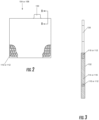
FIG. 2 is a front elevation, cut-away view of one or more examples of a plate for the battery or electrochemical cell ofFIG. 1 . -
FIG. 3 is a partial cross-sectional view of the plate shown inFIG. 2 , taken along line B-B ofFIG. 2 . - It should be understood that the drawings are not necessarily to scale. In certain instances, details that are not necessary to the understanding of the invention or render other details difficult to perceive may have been omitted. It should be understood, of course, that the invention is not necessarily limited to the particular embodiments illustrated herein.
- An improved electrochemical cell having a battery paste composition and electrolyte composition is described. More specifically, a flat plate AGM lead acid electrochemical cell for a battery having an improved paste composition and an electrolyte composition is described.
- The electrochemical reaction that takes place within the electrochemical cell may be, in part, the result of the reaction of the various chemical compositions therein, including for example, the grid material, the battery paste composition, and the electrolyte. Various chemical compositions are further detailed herein as used in a flat plate AGM lead acid electrochemical cell and battery.
- Generally, a
battery 100 orelectrochemical cell 102 is provided and shown inFIG. 1 . Thebattery 100 is an AGM battery having positive andnegative plates absorbent glass mat 108 that absorbs and holds the battery's acid or electrolyte and prevents it from flowing freely inside the battery. Referring toFIGS. 1-3 , theplates negative grids Positive paste 114 is provided on thepositive grid 110 andnegative paste 116 is provided on thenegative grid 112. More specifically, thepositive plate 104 includes apositive grid 110 having or supporting a positive active material orpaste 114 thereon, and in some examples of embodiments may include a pasting paper or a scrim 132; and thenegative plate 106 includes anegative grid 112 having or supporting a negative active material orpaste 116 thereon, and in some examples of embodiments may include a pasting paper or a scrim 132.Grid 110 orgrids negative plates separator 108. In a retained electrolyte-type battery system such as described herein, theseparator 108 is a porous and absorbent glass mat (AGM). In some examples, theAGM 108 may also be used with an additional separator. As indicated, a pasting paper or pasting material or scrim 132 may also be used or provided on the plate to help retain the paste on the grid. - Individual battery cells or
electrochemical cells 102 may be assembled by alternating one or more, and preferably a plurality of positive andnegative plates separators 108 to form a plate block 118. Each plate block 118 is positioned within a housing orcontainer 120 of abattery 100 and connected by electrical connecting straps or intercell connectors 122 (e.g., cast on straps) to and between thecells 102. Theintercell connectors 122 are connected to lugs 130 which extend from thegrids Electrolyte 124 is included in thehousing 120 and more specifically is retained at least in part within the separator orAGM 108. A lid 126 covers the housing orcontainer 120. In an AGM battery, the lid 126 may be sealed to thecontainer 120. - One or more positive and one or more
negative terminals 128 may be provided. Such terminals typically include portions which may extend through the cover 126 and/orhousing 120 and electrically couple to theintercell connectors 122 orelectrochemical cells 102, depending upon the battery design. It will be recognized that a variety of terminal arrangements are possible, including top, side or corner configurations known in the art. - According to the invention, the plate (both positive and negative) 104, 106, which includes the
grid - A
battery paste current collectors paste battery grid United States Patent No. 5,871,862 . Generally, as described herein the battery paste composition comprises apositive paste 114 on thepositive grid 110 or current collecting member (which forms the positive plate 104) and anegative paste 116 on thenegative grid 112 or current collecting member (which forms the negative plate 106). To this end, the paste according to one or more examples of embodiments may be composed of virgin lead (Pb) (i.e., from a mine rather than recycled lead), or high purity lead, or highly purified secondary lead, or substantially pure or virgin lead. In one or more examples of embodiments, the lead may be approximately 99.9% to 99.99% lead. The paste composition(s) (e.g. the positive paste, the negative paste, or both pastes) may contain a specialized paste additive. - In more detail, the
positive plate 104 contains a metal (e.g., lead)grid 110 with lead dioxide active material orpaste 114 thereon. More specifically, thepositive paste 114 disclosed herein generally includes at least one particulate lead-containing composition and a paste vehicle. Different materials may be used in connection with the lead-containing composition, with the present invention not being restricted to any particular materials or mixtures. The selected lead-containing composition or compositions may have a particle size of about 0.1-10 microns in a representative and non-limiting embodiment. One or more examples of lead-containing compositions which may be employed in the positive paste include, but are not limited to, finely-divided elemental Pb, PbO ("litharge" or "massicot"), Pb3 O4 ("red lead"), PbSO4 ("lead sulfate" with the term "PbSO4 " being defined to also include its associated hydrates), and mixtures thereof. These materials may be employed alone or in combination as determined by numerous factors, including for example, the intended use of the battery and the other materials employed in the battery. Accordingly, the term "lead-containing composition" is defined to encompass elemental lead, lead compounds, and mixtures thereof. Thepositive paste 114 also includes a paste vehicle which is primarily used as a carrier medium to produce the completed paste. In one or more examples of embodiments, water may be used as the paste vehicle. A representativepositive paste 114 may include about 3-25% by weight vehicle therein. In addition, thepositive paste 114 may likewise contain an aqueous solution of H2 SO4 therein (e.g., about 0.01-18M) as an optional ingredient. However, variations on the materials included in the positive paste and/or any particular amounts/concentrations of this material may not depart from the overall scope of the present invention. - As previously indicated, a specialized paste additive is provided in at least the
positive paste 114, or in both the positive paste and thenegative paste 116. This additive involves a polymeric composition, such as "polyvinylsulfonic acid" or the salts of this material (e.g. "polyvinylsulfonates"). For example, polyvinylsulfonic acid may be chemically characterized in accordance with the following representative formula:
(CH2 [CH SO3 H]x H1-x)n
- In this formula, x=0.01-1 and n=10-1000 in a preferred and non-limiting example of embodiments, with the term "polyvinylsulfonic acid" being defined to encompass all of the formulations included within these ranges. Likewise, the salts of polyvinylsulfonic acid (e.g. "polyvinylsulfonates") may be represented by the following formula:
(CH2 [CH SO3 M]x H1-x)n
- In the above-listed formula, M is an alkali metal or alkaline earth metal counterion preferably selected from the group consisting of Na+, K+, Li+, Ba+2, Mg+2, Ca+2, and Sr+2. Likewise, as noted above, x=0.01-1 and n=10-1000 in a preferred and non-limiting example of embodiments, with the term "polyvinylsulfonate" being defined to encompass all of the formulations included within these ranges.
- Polyvinylsulfonic acid and polyvinylsulfonates are available from a number of commercial sources (listed below), and are generally classified as "water-soluble ionomers" (e.g. polymers with ionic groups). Likewise, these materials are also broadly characterized as "polyelectrolytes" with an average molecular weight in a non-limiting, representative embodiment of about 500-100,000. Polyvinylsulfonic acid and salts thereof (polyvinylsulfonates) are commercially available from many sources including but not limited to the Hoechst Company of Germany, Air Products Company of Allentown, Pa. (USA) and Nalco/Exxon of England (UK).
- Polyvinylsulfonic acid and polyvinylsulfonates collectively provide numerous advantages when used in the paste compositions on the positive and/or negative current collecting members (e.g. grids) of an electrochemical cell. These benefits include, as non-limiting examples: the ability of these materials to function as "plasticizers" in which the sulfate groups therein effectively interlink particulate materials (e.g. the lead-containing compositions) in the pastes to produce a more cohesive paste product; an improvement in the overall charge capacity of the battery; an increase in battery cycle life; the production of more homogeneous, smooth, and uniform paste products which improves the overall efficiency of the paste application process; the control of extraneous crystal growth on the plates; and/or a general improvement in plate performance under normal and adverse (e.g. low temperature) operating conditions. Moreover, use of the claimed additive in the positive (and/or negative) paste generally improves the consistency of the paste. When added to the positive paste and/or negative paste, the additive may function as a "rheology modifier" which makes the paste smoother and more adhesive, thereby facilitating the paste application process.
- The completed positive paste may have a typical density of about 3-5 g/cc. One example of a
positive paste 114 containing the desired additive composition is provided in Table I:TABLE I Ingredient Amount (% by weight) Particulate lead-containing composition (e.g. Pb3 O4) about 70-95 Paste additive (e.g. polyvinylsulfonic acid or a selected polyvinylsulfonate) about 0.001-0.5 Acid composition (e.g. H2 SO4) about 0-5 Paste vehicle (e.g. water) balance (amount needed to make 100%) Total: 100% - The information in Table I is presented for purposes of example only and one of skill in the art will understand that variations thereon may be made without departing from the overall scope of the present invention.
- The
negative plate 106 may be composed of a metal (e.g., lead)grid 112 with a spongy lead active material orpaste 116 thereon. Thenegative paste 116 may, in a preferred embodiment, be substantially similar to the positive paste with certain exceptions as outlined below. Like the positive paste, the lead of thenegative paste 116 may be a pure or virgin lead, or substantially pure or virgin lead. In this regard, the lead may be approximately 99.9% to 99.99% lead. Exemplary lead-containing compositions which may be employed in thenegative paste 116 include but are not limited to finely-divided elemental Pb, PbO ("litharge" or "massicot"), Pb3 O4 ("red lead"), PbSO4 ("lead sulfate" with the term "PbSO4" being defined to also include its associated hydrates), and mixtures thereof. These materials may be employed alone or in combination as determined by numerous factors, including for example, the intended use of the battery and the other materials employed in the battery. Accordingly, the term "lead-containing composition" is defined to encompass elemental lead, lead compounds, and mixtures thereof. - If needed, the
negative paste 116 may also include an optional "expander" which, for example, may be designed to promote paste uniformity and consistency, as well as long term or "cycling" performance. Representative materials suitable for this purpose include, but are not limited to, barium sulfate, carbon black, and lignosulfonate (which may consist of a non-water-soluble mononuclear phenylpropane derivative) and the like. - The completed
negative paste 116 may have a typical density of about 3-5 g/cc. One example of anegative paste 116 containing the desired additive composition is provided in Table II:TABLE II Ingredient Amount (% by weight) Particulate lead-containing composition (e.g. Pb3 O4) about 70-95 Paste additive (e.g. polyvinylsulfonic acid or a selected polyvinylsulfonate) about 0.001-0.5 Acid composition (e.g. H2 SO4) about 0-5 Expander (e.g. barium sulfate) about 0-5 Paste vehicle (e.g. water) balance (amount needed to make 100%) Total: 100% - The information in Table II is presented for purposes of example only and one of skill in the art will understand that variations thereon may be made without departing from the overall scope of the present invention.
- It is also contemplated that the claimed additive may be absent from the negative paste and only present in the positive paste. To this end, the
negative paste 116 without the additive may have the following example composition values: Particulate lead-containing composition: about 70-95% by weight; H2 SO4: about 0-5% by weight; Expander: about 0-5% by weight; and Paste vehicle (water): balance needed to make 100%. - As indicated, an
electrolyte 124 is also provided in thebattery 100. Generally, theelectrolyte 124 may be a solution which is clear, colorless and free of particulate matter. Theelectrolyte 124 in one or more particular examples of embodiments may be composed of phosphoric acid which may be added to sulfuric acid and water. Theelectrolyte 124 according to one or more further examples of embodiments may be composed of phosphoric acid and/or sodium sulfate which are added to sulfuric acid and water. Preferably, theelectrolyte 124 is composed of water, which may be deionized water, sulfuric acid, phosphoric acid, and sodium sulfate, and in some instances may include one or more impurities. - Phosphoric acid is present in the
electrolyte 124 in a range of from 0.1 g/L to 0.5 g/L. - Various impurities, such as metal ions, may also be present. Examples of impurities may include, but are not limited to, Ag, As, Bi, Cd, Co, Cr, Cu, Fe, Mn, Mo, Ni, Pt, Sb, Se, Te, V, Zn, Chloride, TOC. Generally, in some examples the metal ions may not exceed a total concentration.
- An
electrolyte 124 as described above and used in association with a flat plateelectrochemical cell 102 is unique to the present invention. More specifically, a unique flat plate AGMelectrochemical cell 102 is described having a phosphoric acid in the electrolyte solution, and/or a phosphoric acid and sodium sulfate in the electrolyte solution. Such a combination has various advantages, including, for example improved performance of the electrochemical cell. - The
electrochemical cell 102 includes an absorbent glass mat orAGM 108. The mat orAGM 108 may be formed of any commercially known or future developed material and generally comprises a woven or non-woven mat of fibers composed of polymer and/or glass, such as but not limited to very fine fiberglass.Electrolyte 124 is, in part, absorbed by themat 108 between theplates mat 108, while keeping theelectrolyte 124 available to theplates electrolyte 124 and plate material. To this end, the positive andnegative plates absorbent glass mat 108 that absorbs and holds theelectrolyte 124. The saturation ratio of theelectrolyte 124 in themat 108 is improved over existing devices. - A
battery 100 having one or moreelectrochemical cells 102 of the type described herein is shown inFIG. 1 . According to one or more examples of embodiments, thebattery 100 is a lead acid storage battery. According to one or more further examples of embodiments, the leadacid storage battery 100 is a sealed lead acid battery or an AGM lead acid battery. While specific examples are described and illustrated, any secondary battery having the characteristics described herein may be acceptable for the purposes provided. Thebattery 100 in one or more examples of embodiments is configured to provide at least a portion of the power required to start or operate a vehicle and/or various vehicle systems. Further, it should be understood that thebattery 100 may be utilized in a variety of applications not involving a vehicle, and all such applications are intended to be within the scope of the present disclosure. - As indicated, the
battery 100 includes severalelectrochemical cells 102 which are provided in separate compartments of a container orhousing 120. The plurality ofelectrochemical cells 102 are electrically connected byintercell connectors 122 andterminals 128 are provided which are electrically connected to thecells 102 and which may extend through the lid 126 orcontainer 120. To this end, a cover or lid 126 is provided on thecontainer 120, and may be sealed thereto. In various embodiments, the lid 126 and/orcontainer 120 includes terminal bushings, fill tubes, vent openings, and the like, as is customary for AGM batteries. - One or more examples of production of an
electrochemical cell 102 having the foregoing components will now be described. As indicated, production of abattery 100 orelectrochemical cell 102 includes obtaining electrically-conductive positive andnegative grids negative grids positive paste 114 is applied to the positive current collectingmember 110 on both sides thereof (and within the openings in the grid or current collecting member). In a similar manner, thenegative paste 116 is applied to the negative current collectingmember 112 on both sides thereof (and within the openings in the grid or current collecting member). - Once the positive and negative current collecting members 1 10, 1 12 are pasted in order to form the
positive plate 104 and thenegative plate 106,individual cells 102 may be assembled. To this end, one or more, and preferably a plurality of positive andnegative plates separator 108 positioned or interleaved between them or wrapped around one of said plates. In a retained electrolyte-type battery system such as disclosed herein, theseparator 108 is a porous and absorbent mat (AGM) that is interleaved with theplates plate mat 108 to help retain the paste 1 14 or 1 16 on the grid 1 10 or 1 12. Plate blocks 118 are formed by assembling a grouping of a plurality of positive andnegative plates - The plate blocks 1 18 are then positioned within the housing or
container 120, followed by connection of the electrical connecting straps or intercell connectors 122 (e.g., cast on straps) to and between thecells 102 and in particular to therespective lugs 130 on the grids; andelectrolyte 124 addition (which may be retained within the separator member). The electrolyte solution is provided in the housing orcontainer 120 between theelectrode plates 104, 106 (e.g., absorbed within the separator mat 108). The lid 126 is then secured to the housing orcontainer 120 followed by "formation" of the battery. - While a specific order of events is described for purposes of example, the invention is not limited thereto and variations in the order of events may be acceptable for the purposes provided.
- As set forth above, an AGM battery having the foregoing chemical compositions provided in association with a flat plate electrochemical cell provides improved performance over existing devices.
- As utilized herein, the terms "approximately," "about," "substantially", and similar terms are intended to have a broad meaning in harmony with the common and accepted usage by those of ordinary skill in the art to which the subject matter of this disclosure pertains.
- It should be noted that references to relative positions (e.g., "top" and "bottom") in this description are merely used to identify various elements as are oriented in the Figures. It should be recognized that the orientation of particular components may vary greatly depending on the application in which they are used.
- For the purpose of this disclosure, the term "coupled" means the joining of two members directly or indirectly to one another. Such joining may be stationary in nature or moveable in nature. Such joining may be achieved with the two members or the two members and any additional intermediate members being integrally formed as a single unitary body with one another or with the two members or the two members and any additional intermediate members being attached to one another. Such joining may be permanent in nature or may be removable or releasable in nature.
- It is also important to note that the construction and arrangement of the system, methods, and devices as shown in the various examples of embodiments is illustrative only. Although only a few embodiments have been described in detail in this disclosure, those skilled in the art who review this disclosure will readily appreciate that many modifications are possible (e.g., variations in sizes, dimensions, structures, shapes and proportions of the various elements, values of parameters, mounting arrangements, use of materials, colors, orientations, etc.). For example, elements shown as integrally formed may be constructed of multiple parts or elements show as multiple parts may be integrally formed, the operation of the interfaces may be reversed or otherwise varied, the length or width of the structures and/or members or connector or other elements of the system may be varied, the nature or number of adjustment positions provided between the elements may be varied (e.g. by variations in the number of engagement slots or size of the engagement slots or type of engagement). The order or sequence of any process or method steps may be varied or re-sequenced according to alternative embodiments. Other substitutions, modifications, changes and omissions may be made in the design, operating conditions and arrangement of the various examples of embodiments.
- While this invention has been described in conjunction with the examples of embodiments outlined above, various alternatives, modifications, variations, improvements and/or substantial equivalents, whether known or that are or may be presently foreseen, may become apparent to those having at least ordinary skill in the art. Accordingly, the examples of embodiments of the invention, as set forth above, are intended to be illustrative, not limiting.
- The technical effects and technical problems in the specification are exemplary and are not limiting. It should be noted that the embodiments described in the specification may have other technical effects and can solve other technical problems.
Claims (12)
- An electrochemical cell (102) comprising:- a flat positive plate (104) composed of a positive grid (110) formed of virgin lead or high purity lead or highly purified secondary lead and a positive battery paste (114) disposed on the positive grid (110), the positive battery paste (114) comprising a lead-containing composition, a positive plate paste vehicle, and a polyvinylsulfonate additive, wherein the virgin lead or high purity lead or highly purified secondary lead is in the range of 99.9% to 99.99% lead;- a flat negative plate (106) composed of a negative grid (112) and a negative battery paste (116) disposed on the negative grid (112), the negative battery paste (116) comprising a lead-containing composition and a negative plate paste vehicle;- an absorbent glass mat (108) interleaved between the flat positive plate (104) and the flat negative plate (106); and- an electrolyte (124) in a container (120) and retained in the absorbent glass mat (108), the electrolyte (124) including phosphoric acid, wherein the phosphoric acid is present in the electrolyte (124) in a range of from 0.1 g/L to 0.5 g/L.
- The electrochemical cell (102) of Claim 1,
wherein the electrolyte (124) further comprises sodium sulfate. - The electrochemical cell (102) of Claim 1,
wherein the electrolyte (124) further comprises water, sulfuric acid, and sodium sulfate. - The electrochemical cell (102) of one of Claims 1 to 3,
wherein the polyvinylsulfonate additive comprises polyvinylsulfonic acid or salts of this material. - The electrochemical cell (102) of one of Claims 1 to 4,
wherein the negative paste (116) further comprises a polyvinylsulfonate additive. - The electrochemical cell (102) of one of Claims 1 to 5,
wherein the negative battery paste (116) further comprises an expander. - The electrochemical cell (102) of one of Claims 1 to 6,
wherein the positive plate paste vehicle is water. - The electrochemical cell (102) of one of Claims 1 to 7,
wherein the negative plate paste vehicle is water. - The electrochemical cell (102) of one of Claims 1 to 8,
wherein the negative plate (106) is composed of virgin lead or high purity lead or highly purified secondary lead in the range of 99.9% to 99.99% lead. - A lead acid battery comprising:- a container (120);- a plurality of electrochemical cells (102) according to one of claims 1 to 9 within the container (120), the plurality of flat positive plates (104) of the electrochemical cells (102) and the plurality of flat negative plates (106) of the electrochemical cells (102) being connected by intercell connectors (122) and coupled to one or more terminals (128); and- a lid (126) on the container (120).
- The lead acid battery of claim 10,
wherein negative battery paste (116) further comprises an expander, and a polyvinylsulfonate additive, and wherein the electrolyte (124) further includes water, sulfuric acid, and sodium sulfate. - The lead acid battery of Claim 11,
wherein the polyvinylsulfonate additive comprises polyvinylsulfonic acid or salts of this material.
Applications Claiming Priority (3)
| Application Number | Priority Date | Filing Date | Title |
|---|---|---|---|
| US201762451523P | 2017-01-27 | 2017-01-27 | |
| US201762454305P | 2017-02-03 | 2017-02-03 | |
| PCT/US2018/015422 WO2018140711A1 (en) | 2017-01-27 | 2018-01-26 | Battery paste and electrolye compositions and electrochemical cell for use therewith |
Publications (2)
| Publication Number | Publication Date |
|---|---|
| EP3574540A1 EP3574540A1 (en) | 2019-12-04 |
| EP3574540B1 true EP3574540B1 (en) | 2025-04-23 |
Family
ID=61193092
Family Applications (1)
| Application Number | Title | Priority Date | Filing Date |
|---|---|---|---|
| EP18704714.7A Active EP3574540B1 (en) | 2017-01-27 | 2018-01-26 | Battery paste and electrolye compositions and electrochemical cell for use therewith |
Country Status (4)
| Country | Link |
|---|---|
| US (1) | US20190379055A1 (en) |
| EP (1) | EP3574540B1 (en) |
| CN (1) | CN110495027A (en) |
| WO (1) | WO2018140711A1 (en) |
Families Citing this family (3)
| Publication number | Priority date | Publication date | Assignee | Title |
|---|---|---|---|---|
| US11936032B2 (en) | 2017-06-09 | 2024-03-19 | Cps Technology Holdings Llc | Absorbent glass mat battery |
| EP3635805B1 (en) | 2017-06-09 | 2023-09-06 | CPS Technology Holdings LLC | Lead-acid battery |
| EP3970224A1 (en) * | 2019-05-14 | 2022-03-23 | Microporous, LLC | Application of lignosulfonates and high surface area carbon on battery separator component |
Family Cites Families (6)
| Publication number | Priority date | Publication date | Assignee | Title |
|---|---|---|---|---|
| US5871862A (en) * | 1997-05-08 | 1999-02-16 | Optima Batteries, Inc. | Battery paste compositions and electrochemical cells for use therewith |
| JP5277885B2 (en) * | 2008-11-13 | 2013-08-28 | 新神戸電機株式会社 | Method for producing lead-acid battery |
| JP5668292B2 (en) * | 2010-02-05 | 2015-02-12 | 新神戸電機株式会社 | Method for producing lead-acid battery |
| CN102544597B (en) * | 2012-01-16 | 2014-01-15 | 超威电源有限公司 | Colloidal electrolyte for internalized battery |
| CN103280606B (en) * | 2013-06-08 | 2018-08-31 | 青岛果子知识产权运营有限公司 | A method of bringing back to life lead-acid battery using active electrolyte |
| CN106025379A (en) * | 2016-06-15 | 2016-10-12 | 浙江天能动力能源有限公司 | Gel battery electrolyte and preparation method therefor |
-
2018
- 2018-01-26 US US16/481,247 patent/US20190379055A1/en not_active Abandoned
- 2018-01-26 EP EP18704714.7A patent/EP3574540B1/en active Active
- 2018-01-26 WO PCT/US2018/015422 patent/WO2018140711A1/en not_active Ceased
- 2018-01-26 CN CN201880007714.1A patent/CN110495027A/en active Pending
Also Published As
| Publication number | Publication date |
|---|---|
| CN110495027A (en) | 2019-11-22 |
| US20190379055A1 (en) | 2019-12-12 |
| WO2018140711A1 (en) | 2018-08-02 |
| EP3574540A1 (en) | 2019-12-04 |
Similar Documents
| Publication | Publication Date | Title |
|---|---|---|
| US5871862A (en) | Battery paste compositions and electrochemical cells for use therewith | |
| US12288897B2 (en) | Absorbent glass mat battery | |
| JP5797993B2 (en) | Nonaqueous electrolyte secondary battery | |
| US4076909A (en) | Alkaline lead battery | |
| US10522869B2 (en) | Battery, battery pack, and uninterruptible power supply | |
| KR20130043308A (en) | Secondary battery | |
| CN104733787B (en) | Battery | |
| EP3574540B1 (en) | Battery paste and electrolye compositions and electrochemical cell for use therewith | |
| CN111902992A (en) | Lead-acid battery | |
| JPWO2018229875A1 (en) | Liquid lead storage battery | |
| US20030077512A1 (en) | Electrolyte for alkaline rechargeable batteries | |
| EP3574541A1 (en) | Battery grid | |
| CN109119635B (en) | Battery with a battery cell | |
| CN111247683A (en) | Compact absorptive glass mat battery | |
| US12266783B2 (en) | Negative mass for lead-acid battery electrodes and lead-acid battery including same | |
| CA1055566A (en) | Load leveling battery device | |
| US12051812B2 (en) | Rechargeable cell architecture | |
| WO2021067292A1 (en) | Active material having oxidized fiber additive & electrode and battery having same | |
| US20250233126A1 (en) | Negative mass for lead-acid battery electrodes and lead-acid battery including same | |
| WO2021150851A1 (en) | Lead-acid battery having fiber electrode and alloy for use with same | |
| JP2025101783A (en) | Bipolar lead-acid battery | |
| JP2021144798A (en) | Lead acid battery | |
| WO2021055662A1 (en) | Lead-acid battery having fiber electrode with lead-calcium strap |
Legal Events
| Date | Code | Title | Description |
|---|---|---|---|
| STAA | Information on the status of an ep patent application or granted ep patent |
Free format text: STATUS: UNKNOWN |
|
| STAA | Information on the status of an ep patent application or granted ep patent |
Free format text: STATUS: THE INTERNATIONAL PUBLICATION HAS BEEN MADE |
|
| PUAI | Public reference made under article 153(3) epc to a published international application that has entered the european phase |
Free format text: ORIGINAL CODE: 0009012 |
|
| STAA | Information on the status of an ep patent application or granted ep patent |
Free format text: STATUS: REQUEST FOR EXAMINATION WAS MADE |
|
| 17P | Request for examination filed |
Effective date: 20190723 |
|
| AK | Designated contracting states |
Kind code of ref document: A1 Designated state(s): AL AT BE BG CH CY CZ DE DK EE ES FI FR GB GR HR HU IE IS IT LI LT LU LV MC MK MT NL NO PL PT RO RS SE SI SK SM TR |
|
| AX | Request for extension of the european patent |
Extension state: BA ME |
|
| DAV | Request for validation of the european patent (deleted) | ||
| DAX | Request for extension of the european patent (deleted) | ||
| STAA | Information on the status of an ep patent application or granted ep patent |
Free format text: STATUS: EXAMINATION IS IN PROGRESS |
|
| 17Q | First examination report despatched |
Effective date: 20210518 |
|
| GRAP | Despatch of communication of intention to grant a patent |
Free format text: ORIGINAL CODE: EPIDOSNIGR1 |
|
| STAA | Information on the status of an ep patent application or granted ep patent |
Free format text: STATUS: GRANT OF PATENT IS INTENDED |
|
| GRAJ | Information related to disapproval of communication of intention to grant by the applicant or resumption of examination proceedings by the epo deleted |
Free format text: ORIGINAL CODE: EPIDOSDIGR1 |
|
| STAA | Information on the status of an ep patent application or granted ep patent |
Free format text: STATUS: EXAMINATION IS IN PROGRESS |
|
| GRAP | Despatch of communication of intention to grant a patent |
Free format text: ORIGINAL CODE: EPIDOSNIGR1 |
|
| STAA | Information on the status of an ep patent application or granted ep patent |
Free format text: STATUS: GRANT OF PATENT IS INTENDED |
|
| INTG | Intention to grant announced |
Effective date: 20241125 |
|
| INTC | Intention to grant announced (deleted) | ||
| INTG | Intention to grant announced |
Effective date: 20241219 |
|
| GRAS | Grant fee paid |
Free format text: ORIGINAL CODE: EPIDOSNIGR3 |
|
| GRAA | (expected) grant |
Free format text: ORIGINAL CODE: 0009210 |
|
| STAA | Information on the status of an ep patent application or granted ep patent |
Free format text: STATUS: THE PATENT HAS BEEN GRANTED |
|
| AK | Designated contracting states |
Kind code of ref document: B1 Designated state(s): AL AT BE BG CH CY CZ DE DK EE ES FI FR GB GR HR HU IE IS IT LI LT LU LV MC MK MT NL NO PL PT RO RS SE SI SK SM TR |
|
| REG | Reference to a national code |
Ref country code: GB Ref legal event code: FG4D |
|
| REG | Reference to a national code |
Ref country code: CH Ref legal event code: EP |
|
| REG | Reference to a national code |
Ref country code: DE Ref legal event code: R096 Ref document number: 602018081272 Country of ref document: DE |
|
| REG | Reference to a national code |
Ref country code: IE Ref legal event code: FG4D |
|
| REG | Reference to a national code |
Ref country code: NL Ref legal event code: MP Effective date: 20250423 |
|
| PG25 | Lapsed in a contracting state [announced via postgrant information from national office to epo] |
Ref country code: NL Free format text: LAPSE BECAUSE OF FAILURE TO SUBMIT A TRANSLATION OF THE DESCRIPTION OR TO PAY THE FEE WITHIN THE PRESCRIBED TIME-LIMIT Effective date: 20250423 |
|
| REG | Reference to a national code |
Ref country code: AT Ref legal event code: MK05 Ref document number: 1788690 Country of ref document: AT Kind code of ref document: T Effective date: 20250423 |
|
| PG25 | Lapsed in a contracting state [announced via postgrant information from national office to epo] |
Ref country code: PT Free format text: LAPSE BECAUSE OF FAILURE TO SUBMIT A TRANSLATION OF THE DESCRIPTION OR TO PAY THE FEE WITHIN THE PRESCRIBED TIME-LIMIT Effective date: 20250825 Ref country code: FI Free format text: LAPSE BECAUSE OF FAILURE TO SUBMIT A TRANSLATION OF THE DESCRIPTION OR TO PAY THE FEE WITHIN THE PRESCRIBED TIME-LIMIT Effective date: 20250423 Ref country code: ES Free format text: LAPSE BECAUSE OF FAILURE TO SUBMIT A TRANSLATION OF THE DESCRIPTION OR TO PAY THE FEE WITHIN THE PRESCRIBED TIME-LIMIT Effective date: 20250423 |
|
| REG | Reference to a national code |
Ref country code: LT Ref legal event code: MG9D |
|
| PG25 | Lapsed in a contracting state [announced via postgrant information from national office to epo] |
Ref country code: NO Free format text: LAPSE BECAUSE OF FAILURE TO SUBMIT A TRANSLATION OF THE DESCRIPTION OR TO PAY THE FEE WITHIN THE PRESCRIBED TIME-LIMIT Effective date: 20250723 Ref country code: GR Free format text: LAPSE BECAUSE OF FAILURE TO SUBMIT A TRANSLATION OF THE DESCRIPTION OR TO PAY THE FEE WITHIN THE PRESCRIBED TIME-LIMIT Effective date: 20250724 |
|
| PG25 | Lapsed in a contracting state [announced via postgrant information from national office to epo] |
Ref country code: PL Free format text: LAPSE BECAUSE OF FAILURE TO SUBMIT A TRANSLATION OF THE DESCRIPTION OR TO PAY THE FEE WITHIN THE PRESCRIBED TIME-LIMIT Effective date: 20250423 |
|
| PG25 | Lapsed in a contracting state [announced via postgrant information from national office to epo] |
Ref country code: BG Free format text: LAPSE BECAUSE OF FAILURE TO SUBMIT A TRANSLATION OF THE DESCRIPTION OR TO PAY THE FEE WITHIN THE PRESCRIBED TIME-LIMIT Effective date: 20250423 |
|
| PG25 | Lapsed in a contracting state [announced via postgrant information from national office to epo] |
Ref country code: HR Free format text: LAPSE BECAUSE OF FAILURE TO SUBMIT A TRANSLATION OF THE DESCRIPTION OR TO PAY THE FEE WITHIN THE PRESCRIBED TIME-LIMIT Effective date: 20250423 |
|
| PG25 | Lapsed in a contracting state [announced via postgrant information from national office to epo] |
Ref country code: AT Free format text: LAPSE BECAUSE OF FAILURE TO SUBMIT A TRANSLATION OF THE DESCRIPTION OR TO PAY THE FEE WITHIN THE PRESCRIBED TIME-LIMIT Effective date: 20250423 |
|
| PG25 | Lapsed in a contracting state [announced via postgrant information from national office to epo] |
Ref country code: RS Free format text: LAPSE BECAUSE OF FAILURE TO SUBMIT A TRANSLATION OF THE DESCRIPTION OR TO PAY THE FEE WITHIN THE PRESCRIBED TIME-LIMIT Effective date: 20250723 |
|
| PG25 | Lapsed in a contracting state [announced via postgrant information from national office to epo] |
Ref country code: IS Free format text: LAPSE BECAUSE OF FAILURE TO SUBMIT A TRANSLATION OF THE DESCRIPTION OR TO PAY THE FEE WITHIN THE PRESCRIBED TIME-LIMIT Effective date: 20250823 |
|
| PG25 | Lapsed in a contracting state [announced via postgrant information from national office to epo] |
Ref country code: LV Free format text: LAPSE BECAUSE OF FAILURE TO SUBMIT A TRANSLATION OF THE DESCRIPTION OR TO PAY THE FEE WITHIN THE PRESCRIBED TIME-LIMIT Effective date: 20250423 |
|
| PG25 | Lapsed in a contracting state [announced via postgrant information from national office to epo] |
Ref country code: SM Free format text: LAPSE BECAUSE OF FAILURE TO SUBMIT A TRANSLATION OF THE DESCRIPTION OR TO PAY THE FEE WITHIN THE PRESCRIBED TIME-LIMIT Effective date: 20250423 Ref country code: DK Free format text: LAPSE BECAUSE OF FAILURE TO SUBMIT A TRANSLATION OF THE DESCRIPTION OR TO PAY THE FEE WITHIN THE PRESCRIBED TIME-LIMIT Effective date: 20250423 |
|
| PG25 | Lapsed in a contracting state [announced via postgrant information from national office to epo] |
Ref country code: CZ Free format text: LAPSE BECAUSE OF FAILURE TO SUBMIT A TRANSLATION OF THE DESCRIPTION OR TO PAY THE FEE WITHIN THE PRESCRIBED TIME-LIMIT Effective date: 20250423 |
|
| PG25 | Lapsed in a contracting state [announced via postgrant information from national office to epo] |
Ref country code: EE Free format text: LAPSE BECAUSE OF FAILURE TO SUBMIT A TRANSLATION OF THE DESCRIPTION OR TO PAY THE FEE WITHIN THE PRESCRIBED TIME-LIMIT Effective date: 20250423 |
|
| REG | Reference to a national code |
Ref country code: DE Ref legal event code: R097 Ref document number: 602018081272 Country of ref document: DE |
|
| PG25 | Lapsed in a contracting state [announced via postgrant information from national office to epo] |
Ref country code: SK Free format text: LAPSE BECAUSE OF FAILURE TO SUBMIT A TRANSLATION OF THE DESCRIPTION OR TO PAY THE FEE WITHIN THE PRESCRIBED TIME-LIMIT Effective date: 20250423 Ref country code: RO Free format text: LAPSE BECAUSE OF FAILURE TO SUBMIT A TRANSLATION OF THE DESCRIPTION OR TO PAY THE FEE WITHIN THE PRESCRIBED TIME-LIMIT Effective date: 20250423 |
|
| PG25 | Lapsed in a contracting state [announced via postgrant information from national office to epo] |
Ref country code: IT Free format text: LAPSE BECAUSE OF FAILURE TO SUBMIT A TRANSLATION OF THE DESCRIPTION OR TO PAY THE FEE WITHIN THE PRESCRIBED TIME-LIMIT Effective date: 20250423 |
|
| PLBE | No opposition filed within time limit |
Free format text: ORIGINAL CODE: 0009261 |
|
| STAA | Information on the status of an ep patent application or granted ep patent |
Free format text: STATUS: NO OPPOSITION FILED WITHIN TIME LIMIT |
|
| REG | Reference to a national code |
Ref country code: CH Ref legal event code: L10 Free format text: ST27 STATUS EVENT CODE: U-0-0-L10-L00 (AS PROVIDED BY THE NATIONAL OFFICE) Effective date: 20260304 |
|
| 26N | No opposition filed |
Effective date: 20260126 |
|
| PGFP | Annual fee paid to national office [announced via postgrant information from national office to epo] |
Ref country code: GB Payment date: 20260127 Year of fee payment: 9 |
|
| PGFP | Annual fee paid to national office [announced via postgrant information from national office to epo] |
Ref country code: DE Payment date: 20260128 Year of fee payment: 9 |
|
| PGFP | Annual fee paid to national office [announced via postgrant information from national office to epo] |
Ref country code: FR Payment date: 20260126 Year of fee payment: 9 |