EP3572944A1 - Concurrency vulnerability detection - Google Patents
Concurrency vulnerability detection Download PDFInfo
- Publication number
- EP3572944A1 EP3572944A1 EP18202921.5A EP18202921A EP3572944A1 EP 3572944 A1 EP3572944 A1 EP 3572944A1 EP 18202921 A EP18202921 A EP 18202921A EP 3572944 A1 EP3572944 A1 EP 3572944A1
- Authority
- EP
- European Patent Office
- Prior art keywords
- test case
- program
- concurrency
- priority
- fuzzer
- Prior art date
- Legal status (The legal status is an assumption and is not a legal conclusion. Google has not performed a legal analysis and makes no representation as to the accuracy of the status listed.)
- Granted
Links
Images


Classifications
-
- G—PHYSICS
- G06—COMPUTING OR CALCULATING; COUNTING
- G06F—ELECTRIC DIGITAL DATA PROCESSING
- G06F11/00—Error detection; Error correction; Monitoring
- G06F11/36—Prevention of errors by analysis, debugging or testing of software
- G06F11/3604—Analysis of software for verifying properties of programs
-
- G—PHYSICS
- G06—COMPUTING OR CALCULATING; COUNTING
- G06F—ELECTRIC DIGITAL DATA PROCESSING
- G06F11/00—Error detection; Error correction; Monitoring
- G06F11/36—Prevention of errors by analysis, debugging or testing of software
- G06F11/3604—Analysis of software for verifying properties of programs
- G06F11/3608—Analysis of software for verifying properties of programs using formal methods, e.g. model checking, abstract interpretation
-
- G—PHYSICS
- G06—COMPUTING OR CALCULATING; COUNTING
- G06F—ELECTRIC DIGITAL DATA PROCESSING
- G06F11/00—Error detection; Error correction; Monitoring
- G06F11/36—Prevention of errors by analysis, debugging or testing of software
- G06F11/3604—Analysis of software for verifying properties of programs
- G06F11/3612—Analysis of software for verifying properties of programs by runtime analysis
-
- G—PHYSICS
- G06—COMPUTING OR CALCULATING; COUNTING
- G06F—ELECTRIC DIGITAL DATA PROCESSING
- G06F11/00—Error detection; Error correction; Monitoring
- G06F11/36—Prevention of errors by analysis, debugging or testing of software
- G06F11/3668—Testing of software
- G06F11/3672—Test management
- G06F11/3676—Test management for coverage analysis
-
- G—PHYSICS
- G06—COMPUTING OR CALCULATING; COUNTING
- G06F—ELECTRIC DIGITAL DATA PROCESSING
- G06F11/00—Error detection; Error correction; Monitoring
- G06F11/36—Prevention of errors by analysis, debugging or testing of software
- G06F11/3668—Testing of software
- G06F11/3672—Test management
- G06F11/3684—Test management for test design, e.g. generating new test cases
-
- G—PHYSICS
- G06—COMPUTING OR CALCULATING; COUNTING
- G06F—ELECTRIC DIGITAL DATA PROCESSING
- G06F11/00—Error detection; Error correction; Monitoring
- G06F11/36—Prevention of errors by analysis, debugging or testing of software
- G06F11/3668—Testing of software
- G06F11/3672—Test management
- G06F11/3688—Test management for test execution, e.g. scheduling of test suites
-
- G—PHYSICS
- G06—COMPUTING OR CALCULATING; COUNTING
- G06F—ELECTRIC DIGITAL DATA PROCESSING
- G06F21/00—Security arrangements for protecting computers, components thereof, programs or data against unauthorised activity
- G06F21/50—Monitoring users, programs or devices to maintain the integrity of platforms, e.g. of processors, firmware or operating systems
- G06F21/57—Certifying or maintaining trusted computer platforms, e.g. secure boots or power-downs, version controls, system software checks, secure updates or assessing vulnerabilities
- G06F21/577—Assessing vulnerabilities and evaluating computer system security
-
- G—PHYSICS
- G06—COMPUTING OR CALCULATING; COUNTING
- G06F—ELECTRIC DIGITAL DATA PROCESSING
- G06F2221/00—Indexing scheme relating to security arrangements for protecting computers, components thereof, programs or data against unauthorised activity
- G06F2221/03—Indexing scheme relating to G06F21/50, monitoring users, programs or devices to maintain the integrity of platforms
- G06F2221/033—Test or assess software
Definitions
- the embodiments discussed herein relate to detecting concurrency vulnerabilities.
- a concurrency vulnerability may occur in a concurrent program where two or more threads are run concurrently.
- a concurrency vulnerability which may be caused by, for example, a data race (e.g., during execution of a multi-threaded process), may enable a local user to gain root access or execute arbitrary code within ring 0 or cause kernel memory corruption.
- a method may include instrumenting read and write access of a program to a shared memory.
- the method may also include identifying, via a greybox fuzzer, a test case for the program.
- the method may include analyzing, via the greybox fuzzer and based on the test case, two or more branches of the program that include sets of racing pairs to determine if the test case is a priority test case.
- the method may include providing the test case from the greybox fuzzer to a concurrency verification module.
- the method may also include testing, via the concurrency verification module, the test case with one or more scheduling policies to identify one or more concurrency vulnerabilities.
- Various embodiments discussed herein relate to discovering concurrency bugs. For example, some embodiments may relate to testing program binaries to discover bugs (e.g., bugs that may be exploited by hackers and/or criminals).
- bugs e.g., bugs that may be exploited by hackers and/or criminals.
- Concurrency bugs are notoriously hard to discover and reproduce, since their occurrences depend on, for example, a scheduling policy of an operating system and an external environment. More specifically, because an order of execution of a program may vary based on a scheduling policy, detection or reproduction of a vulnerability may be difficult.
- “Fuzzing” or “fuzz testing” may refer to an automated software testing process including providing invalid, unexpected, or random data as inputs to a computer program.
- Coverage-based Greybox Fuzzing (CGF) is a random testing approach that may not require program analysis.
- Coverage-guided greybox fuzzing is a well-known technique for discovering bugs. However, the impact of coverage-guided greybox fuzzing on concurrency bugs is very limited. In greybox fuzzing, a program may be executed with an input and coverage may be observed. Yet, some bugs may not be detected during testing, or may only occur after numerous (e.g., 1000) executions with the same input. Further, model checking and active testing may discover concurrency bugs with a given input, although determining the input may be challenging.
- Various embodiments may relate methods for improving the effectiveness of fuzzing on discovering concurrency bugs.
- various embodiments of the present disclosure provide a technical solution to one or more problems that arise from technology that could not reasonably be performed by a person, and various embodiments disclosed herein are rooted in computer technology in order to overcome the problems and/or challenges described above. Further, at least some embodiments disclosed herein may improve computer-related technology by allowing computer performance of a function not previously performable by a computer.
- FIG. 1 illustrates source code 100 including two threads, thread 102 ("thread1") and thread 104 ("thread2") of an example program.
- a thread may include stream of operations.
- an operating system may execute instructions one by one from start to end.
- a sequential program is often referred to as a single-threaded program as there is only one thread.
- there are often many branches of execution. For example, if a program includes a condition x > 0, there are two branches: x > 0 (when the condition is true, often called "then” branch), and x ⁇ 0 ("else" branch- the name came from "if ... then ... else .").
- WMM weak memory models
- a policy for interleaving instructions of the scheduler may be controlled to discover concurrency bug.
- model checking all races under WMM may be detected (e.g., via summary function).
- AFL American Fuzzy Lop
- each basic block of the program may be given a unique identifier location.
- a transition from a block A to a block B may be identified by "locationA ⁇ locationB" (e.g., XOR may be used as hashing).
- a bitmap e.g., an array of bits
- a new bit in a bitmap may be indicative of identification (e.g., discovery and/or exploration) of a new transition in a test case.
- test cases e.g., a population
- test cases that discover new transitions may be prioritized to be mutated.
- AFL may be considered efficient for a deterministic program, and quickly generate input (test case) to exercises different program paths. However, AFL may not discover concurrency bugs since it may not control the scheduler or the environment.
- an algorithm may include preprocessing wherein all READ and WRITE operations to shared memory maybe identified (e.g., instruments all READ and WRITE access to shared memory).
- the algorithm may include generating (e.g., via a greybox fuzzer) inputs to explore different branches a program.
- branches of a program that have statements in a set of racing pairs may be of particular interest (e.g., focused on). More specifically, in some embodiments, branches of a program that have statements in a set of racing pairs may be analyzed to determine if an associated test case is a priority test case.
- the greybox fuzzer may be configured to focus on concurrency bugs. More specifically, according to some embodiments, two bitmaps may be used, wherein one bitmap (a "first bitmap”) may be used for overall coverage (e.g., similar to AFL), and another bitmap (a "second bitmap”) may be used for a set of racing pairs.
- first bitmap may be used for overall coverage (e.g., similar to AFL)
- second bitmap may be used for a set of racing pairs.
- pseudo-code to implement a tool may include:
- the algorithm may include selecting (e.g., via the greybox fuzzer) inputs and sending the inputs to a concurrency verification module (e.g., a model checker).
- a concurrency verification module e.g., a model checker
- inputs generating new traces in the second bitmaps may be selected first.
- only test inputs that generate unique coverage in the second bitmap may be sent to the concurrency verification module.
- the algorithm may include analyzing (e.g., via a concurrency verification module, such as a model checker or an active testing tool) each concrete input from the fuzzer with different scheduling policies to discover concurrency bugs.
- a concurrency verification module such as a model checker or an active testing tool
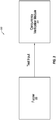
- FIG. 3 illustrates an example system 300, in accordance with various embodiments of the present disclosure.
- System 300 includes a fuzzer 302, which may include a greybox fuzzer. More specifically, for example, fuzzer may include a race directed, coverage-guided greybox fuzzer.
- System 300 further includes a concurrency verification module 304 (also referred to herein as a "verification tool" or "testing device"), which may include a model checker and/or an active testing tool.
- concurrency verification module 304 may include an explicit-state model checker.
- fuzzer 302 may generate (e.g., determine) inputs to explore different branches of a program. Further, fuzzer 302 may select inputs, and the inputs may be sent from fuzzer 302 to concurrency verification module 304. Moreover, concurrency verification module 304 may check each concrete input with different scheduling policies to discover concurrency bugs. Thus, according to various embodiments, system 300, and more specifically, fuzzer 302, may be configured to reduce a number of test cases provided to concurrency verification module 304.
- system 300 may include two or more fuzzers 302 and/or two or more concurrency verification modules 304.
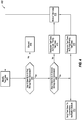
- FIG. 4 illustrates a flowchart of an example method 400 of performing fuzzing, in accordance with one or more embodiments of the present disclosure.
- one or more of the operations associated with method 400 may be performed by system 300 of FIG. 1 . More specifically, for example, method 400 may be performed by fuzzer 302 of system 300.
- method 400 may be performed by any suitable system, apparatus, or device.
- processor 610 of system 600 may perform one or more of the operations associated with method 400.
- steps and operations associated with one or more of the blocks of method 400 may be divided into additional blocks, combined into fewer blocks, or eliminated, depending on the desired implementation.
- a test case may be identified, and method 400 may proceed to block 404.
- a queue may include test cases, and test cases may be identified for testing based on priorities assigned to the test cases.
- a test case having the highest priority in the queue may be identified for testing.
- a test case may be determined (e.g., identified) via processor 610 of system 600 (see FIG. 6 ).
- a greybox fuzzer e.g., fuzzer 302 of FIG. 3
- the priority e.g., high or low
- two or more branches of a program that include sets of racing pairs may be analyzed (e.g., via a greybox fuzzer, such as fuzzer 302 of FIG. 3 ) to determine if the test case is a high priority test case (also referred to herein as a "priority test case") or a low priority test case.
- the analysis may include determining whether or not each of a first bitmap and a second bitmap including a new bit, as described more fully below with reference to blocks 404 and 408.
- a determination as to whether or not a new bit in a first bitmap has been generated may proceed to block 406. If a new bit in the first bitmap has been generated, method 400 may proceed to block 408.
- the first bitmap may include an AFL-type bitmap.
- a block 404 it may be determined, based on one bit (e.g., 0 or 1), whether or not a new condition has occurred (e.g., a new bit has been generated) in a race. More specifically, for example, a bitmap may record which one or more branches have been explored. Further, when, for example, a fuzzer (e.g., fuzzer 302 of FIG. 3 ) executes the program with a test input (or "test case” or "test vector") and records the trace, it may be determined whether the bitmap includes a new bit (e.g., a new branch has been discovered). A test case that discovers a new branch may be assigned a higher priority (e.g., to be mutated again). For example, processor 610 of system 600 (see FIG. 6 ) may determine whether or not a new bit in the first bitmap has been generated.
- a new condition e.g., a new bit has been generated
- test case may be discarded.
- method 400 may return to block 402 (e.g., after the test case is discarded).
- a determination as to whether or not a new bit in a second bitmap has be generated If a new bit in the second bitmap has not been generated, method 400 may proceed to block 410. If a new bit in the second bitmap has been generated, method 400 may proceed to each of block 412 and block 414. For example, processor 610 of system 600 (see FIG. 6 ) may determine whether or not a new bit in the second bitmap has been generated.
- the first bitmap may records one or more branches discovered (e.g., in an entire program).
- the second bitmap may record the branches, in the same way, in the shared memory.
- the test case may be of interest for discovering concurrency bugs. Since the test case is of interest, the test case may be sent to a model checker/active testing tool (e.g., at block 412) for further investigation on different scheduling policies. Further, the test case may be assigned a higher priority to be mutated (e.g., at block 414).
- the test case may be assigned a low priority, and method 400 may proceed to block 416.
- the test case may be positioned at or near a bottom of a test case queue.
- processor 610 of system 600 may assign the test case a low priority.
- the test case may be sent to a concurrency verification module.
- the test case may be sent to concurrency verification module 304 (see FIG. 3 ), which may include a model checker and/or an active testing tool.
- the test case may be assigned a high priority, and method 400 may proceed to block 416.
- the test case may be positioned at or near a top of a test case queue.
- processor 610 of system 600 may assign the test case a high priority.
- test case may be mutated, and method 400 may return to block 402.
- processor 610 of system 600 may mutate the test case.
- method 400 may include instrumenting for each read and write access for a program to shared memory.
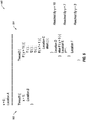
- FIG. 5 depicts example source code 500 a program including two threads, thread 502 ("thread1") and thread 504 ("thread2").
- thread 502 thread 502
- thread 504 thread 504
- FIG. 5 depicts example source code 500 a program including two threads, thread 502 ("thread1") and thread 504 ("thread2").
- a second bitmap e.g., for a set of racing pairs
- a new branch is discovered in a first bitmap, but not in the second bitmap.
- the first bitmap includes a new bit, but a second bitmap does not include a new bit. Accordingly, in this example, the test cases may not be of interest for race detection, and the test case may be given a low priority.
- a flow proceeds from location A to location B, and from location B to location D.
- a new branch is generated in a first bitmap
- a new branch is generated in a second bitmap.
- the first bitmap includes a new bit
- the second bitmap includes a new bit.
- the test may be of interest for race detection, and the test case may be given a high priority.
- the test case may be provided to a concurrency verification module (e.g., model checker and/or active testing tool), such as concurrency verification module 304 (see FIG. 3 ).
- the transition sequence may be from location A to location B to location D to location F.
- This test case may not discover the bug (e.g., the abort statement may make the program crash, however it may be considered of interest as a new transition in the second bitmap (e.g., location B to location D) may be discovered.
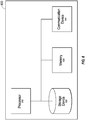
- FIG. 6 is a block diagram of an example computing device 600, in accordance with at least one embodiment of the present disclosure.
- Computing device 600 may include a desktop computer, a laptop computer, a server computer, a tablet computer, a mobile phone, a smartphone, a personal digital assistant (PDA), an e-reader device, a network switch, a network router, a network hub, other networking devices, or other suitable computing device.
- PDA personal digital assistant
- Computing device 600 may include a processor 610, a storage device 620, a memory 630, and a communication device 640.
- Processor 610, storage device 620, memory 630, and/or communication device 640 may all be communicatively coupled such that each of the components may communicate with the other components.
- Computing device 600 may perform any of the operations described in the present disclosure.
- processor 610 may include any suitable special-purpose or general-purpose computer, computing entity, or processing device including various computer hardware or software modules and may be configured to execute instructions stored on any applicable computer-readable storage media.
- processor 610 may include a microprocessor, a microcontroller, a digital signal processor (DSP), an application-specific integrated circuit (ASIC), a Field-Programmable Gate Array (FPGA), or any other digital or analog circuitry configured to interpret and/or to execute program instructions and/or to process data.
- DSP digital signal processor
- ASIC application-specific integrated circuit
- FPGA Field-Programmable Gate Array
- processor 610 may include any number of processors configured to perform, individually or collectively, any number of operations described in the present disclosure.
- processor 610 may interpret and/or execute program instructions and/or process data stored in storage device 620, memory 630, or storage device 620 and memory 630. In some embodiments, processor 610 may fetch program instructions from storage device 620 and load the program instructions in memory 630. After the program instructions are loaded into memory 630, processor 610 may execute the program instructions.
- one or more of processing operations for detecting concurrency vulnerabilities may be included in data storage 620 as program instructions.
- Processor 610 may fetch the program instructions of one or more of the processing operations and may load the program instructions of the processing operations in memory 630. After the program instructions of the processing operations are loaded into memory 630, processor 610 may execute the program instructions such that computing device 600 may implement the operations associated with the processing operations as directed by the program instructions.
- Storage device 620 and memory 630 may include computer-readable storage media for carrying or having computer-executable instructions or data structures stored thereon.
- Such computer-readable storage media may include any available media that may be accessed by a general-purpose or special-purpose computer, such as processor 610.
- Such computer-readable storage media may include tangible or non-transitory computer-readable storage media including RAM, ROM, EEPROM, CD-ROM or other optical disk storage, magnetic disk storage or other magnetic storage devices, flash memory devices (e.g., solid state memory devices), or any other storage medium which may be used to carry or store desired program code in the form of computer-executable instructions or data structures and which may be accessed by a general-purpose or special-purpose computer. Combinations of the above may also be included within the scope of computer-readable storage media.
- Computer-executable instructions may include, for example, instructions and data configured to cause the processor 610 to perform a certain operation or group of operations.
- storage device 620 and/or memory 630 may store data associated with concurrency vulnerability detection, and more specifically, data associated with source code, programs, inputs, bits, bitmaps, test input queues, etc.
- Communication device 640 may include any device, system, component, or collection of components configured to allow or facilitate communication between computing device 600 and another electronic device.
- communication device 640 may include, without limitation, a modem, a network card (wireless or wired), an infrared communication device, an optical communication device, a wireless communication device (such as an antenna), and/or chipset (such as a Bluetooth device, an 802.6 device (e.g. Metropolitan Area Network (MAN)), a Wi-Fi device, a WiMAX device, cellular communication facilities, etc.), and/or the like.
- Communication device 640 may permit data to be exchanged with any network such as a cellular network, a Wi-Fi network, a MAN, an optical network, etc., to name a few examples, and/or any other devices described in the present disclosure, including remote devices.
- any network such as a cellular network, a Wi-Fi network, a MAN, an optical network, etc., to name a few examples, and/or any other devices described in the present disclosure, including remote devices.
- computing device 600 may include more or fewer elements than those illustrated and described in the present disclosure.
- computing device 600 may include an integrated display device such as a screen of a tablet or mobile phone or may include an external monitor, a projector, a television, or other suitable display device that may be separate from and communicatively coupled to computing device 600.
- module or “component” may refer to specific hardware implementations configured to perform the actions of the module or component and/or software objects or software routines that may be stored on and/or executed by general purpose hardware (e.g., computer-readable media, processing devices, etc.) of the computing system.
- general purpose hardware e.g., computer-readable media, processing devices, etc.
- the different components, modules, engines, and services described in the present disclosure may be implemented as objects or processes that execute on the computing system (e.g., as separate threads). While some of the system and methods described in the present disclosure are generally described as being implemented in software (stored on and/or executed by general purpose hardware), specific hardware implementations or a combination of software and specific hardware implementations are also possible and contemplated.
- a "computing entity” may be any computing system as previously defined in the present disclosure, or any module or combination of modulates running on a computing system.
- any disjunctive word or phrase presenting two or more alternative terms, whether in the description, claims, or drawings, should be understood to contemplate the possibilities of including one of the terms, either of the terms, or both terms.
- the phrase “A or B” should be understood to include the possibilities of "A” or “B” or “A and B.”
- the invention also provides a computer program or a computer program product for carrying out any of the methods described herein, and a computer readable medium having stored thereon a program for carrying out any of the methods described herein.
- a computer program embodying the invention may be stored on a computer-readable medium, or it could, for example, be in the form of a signal such as a downloadable data signal provided from an Internet website, or it could be in any other form.
- One or more non-transitory computer-readable media that include instructions that, when executed by one or more processing systems, are configured to cause the processing system to perform operations, the operations comprising:
- providing the test case to the concurrency verification module comprises providing the test case to one of a model checker and an active testing tool.
- analyzing branches of the program comprises analyzing the branches via a race directed, coverage guided greybox fuzzer.
- testing the test case with one or more scheduling policies to identify one or more concurrency vulnerabilities comprises testing the test case with one of a model checker and an active testing tool.
- test case priority queue in response to the test case not being a priority test case, positioning the test case at or near a top of a test case priority queue.
Landscapes
- Engineering & Computer Science (AREA)
- Theoretical Computer Science (AREA)
- Computer Hardware Design (AREA)
- General Engineering & Computer Science (AREA)
- Physics & Mathematics (AREA)
- General Physics & Mathematics (AREA)
- Quality & Reliability (AREA)
- Software Systems (AREA)
- Computer Security & Cryptography (AREA)
- Computing Systems (AREA)
- Stored Programmes (AREA)
- Debugging And Monitoring (AREA)
Abstract
Description
- The embodiments discussed herein relate to detecting concurrency vulnerabilities.
- A concurrency vulnerability may occur in a concurrent program where two or more threads are run concurrently. A concurrency vulnerability, which may be caused by, for example, a data race (e.g., during execution of a multi-threaded process), may enable a local user to gain root access or execute arbitrary code within
ring 0 or cause kernel memory corruption. - The subject matter claimed herein is not limited to embodiments that solve any disadvantages or that operate only in environments such as those described above. Rather, this background is only provided to illustrate one example technology area where some embodiments described herein may be practiced.
- According to an embodiment of one aspect of the invention, a method may include instrumenting read and write access of a program to a shared memory. The method may also include identifying, via a greybox fuzzer, a test case for the program. Further, the method may include analyzing, via the greybox fuzzer and based on the test case, two or more branches of the program that include sets of racing pairs to determine if the test case is a priority test case. In response to the test case being a priority test case, the method may include providing the test case from the greybox fuzzer to a concurrency verification module. The method may also include testing, via the concurrency verification module, the test case with one or more scheduling policies to identify one or more concurrency vulnerabilities.
- The advantages of the embodiments will be realized and achieved at least by the elements, features, and combinations particularly pointed out in the claims.
- It is to be understood that both the foregoing general description and the following detailed description are exemplary and explanatory and are not restrictive of the invention, as claimed.
- Example embodiments will be described and explained with additional specificity and detail, by way of example only, through the use of the accompanying drawings in which:
-
FIG. 1 illustrates source code including a plurality of threads of an example program; -
FIG. 2 illustrates source code for an example program including a plurality of threads; -
FIG. 3 depicts an example system including a greybox fuzzer and a concurrency verification module; -
FIG. 4 depicts an example flow diagram of a method of performing greybox fuzzing; -
FIG. 5 illustrates source code of an example program including multiple threads and locations; and -
FIG. 6 is a block diagram of an example computing device. - Various embodiments discussed herein relate to discovering concurrency bugs. For example, some embodiments may relate to testing program binaries to discover bugs (e.g., bugs that may be exploited by hackers and/or criminals).
- Concurrency bugs are notoriously hard to discover and reproduce, since their occurrences depend on, for example, a scheduling policy of an operating system and an external environment. More specifically, because an order of execution of a program may vary based on a scheduling policy, detection or reproduction of a vulnerability may be difficult.
- "Fuzzing" or "fuzz testing" may refer to an automated software testing process including providing invalid, unexpected, or random data as inputs to a computer program. Coverage-based Greybox Fuzzing (CGF) is a random testing approach that may not require program analysis. Coverage-guided greybox fuzzing is a well-known technique for discovering bugs. However, the impact of coverage-guided greybox fuzzing on concurrency bugs is very limited. In greybox fuzzing, a program may be executed with an input and coverage may be observed. Yet, some bugs may not be detected during testing, or may only occur after numerous (e.g., 1000) executions with the same input. Further, model checking and active testing may discover concurrency bugs with a given input, although determining the input may be challenging.
- Various embodiments may relate methods for improving the effectiveness of fuzzing on discovering concurrency bugs. Thus, various embodiments of the present disclosure, as described more fully herein, provide a technical solution to one or more problems that arise from technology that could not reasonably be performed by a person, and various embodiments disclosed herein are rooted in computer technology in order to overcome the problems and/or challenges described above. Further, at least some embodiments disclosed herein may improve computer-related technology by allowing computer performance of a function not previously performable by a computer.
- Embodiments of the present disclosure will be explained with reference to the accompanying drawings.
-
FIG. 1 illustratessource code 100 including two threads, thread 102 ("thread1") and thread 104 ("thread2") of an example program. For example, greybox fuzzing may generate inputs that exercise both paths (e.g., y > 15 and y <= 15), however running the program many times (e.g., 1000 times) with, for example, y = 18 may not discover the bug. Rather, the bug may only occur when a scheduler executes all the instructions inthread 104 before executing the instructions in thread 102 (therefore x = 0, thus the abort() function may be called). Further, model checking and/or active testing may only discover the bug when y is a specific value (e.g., y = 18). - A thread may include stream of operations. For example, an operating system may execute instructions one by one from start to end. A sequential program is often referred to as a single-threaded program as there is only one thread. In a single thread, there are often many branches of execution. For example, if a program includes a condition x > 0, there are two branches: x > 0 (when the condition is true, often called "then" branch), and x <= 0 ("else" branch- the name came from "if ... then ... else ...."). Depending on inputs (e.g., x = 1 or x = -1), a stream of operation may follow the "then" branch or the "else" branch.
- With weak memory models (WMM) (e.g. used in C and Java), to optimize instruction cycles (and hence performance), instructions may not be executed in their original order in the program. Further, via active testing, a policy for interleaving instructions of the scheduler may be controlled to discover concurrency bug. Moreover, via model checking, all races under WMM may be detected (e.g., via summary function).
- For example, with reference to
FIG. 2 ,source code 200 of an example program including two threads, thread 202 ("thread1") and thread 204 ("thread2"), is depicted. For example, WMM may optimize the program for performance (e.g., y = 1 may be executed before x = 1). One potential race under WWM that may occur is y = 1, x = 0. - American Fuzzy Lop (AFL) is a known fuzzing tool that uses algorithms to increase code coverage of test cases. For example, utilizing AFL to instrument a program, each basic block of the program may be given a unique identifier location. Further, a transition from a block A to a block B may be identified by "locationA ^ locationB" (e.g., XOR may be used as hashing). Moreover, according to various embodiments, a bitmap (e.g., an array of bits) may be used to identify which transitions are already explored. For example, a new bit in a bitmap may be indicative of identification (e.g., discovery and/or exploration) of a new transition in a test case. Further, via, for example, a genetic algorithm, a set of test cases (e.g., a population) may be mutated. In at least some embodiments, test cases that discover new transitions may be prioritized to be mutated. AFL may be considered efficient for a deterministic program, and quickly generate input (test case) to exercises different program paths. However, AFL may not discover concurrency bugs since it may not control the scheduler or the environment.
- According to various embodiments of the present disclosure, an algorithm may include preprocessing wherein all READ and WRITE operations to shared memory maybe identified (e.g., instruments all READ and WRITE access to shared memory).
- Further, the algorithm may include generating (e.g., via a greybox fuzzer) inputs to explore different branches a program. For example, in some embodiments, branches of a program that have statements in a set of racing pairs may be of particular interest (e.g., focused on). More specifically, in some embodiments, branches of a program that have statements in a set of racing pairs may be analyzed to determine if an associated test case is a priority test case.
- For example, the greybox fuzzer may be configured to focus on concurrency bugs. More specifically, according to some embodiments, two bitmaps may be used, wherein one bitmap (a "first bitmap") may be used for overall coverage (e.g., similar to AFL), and another bitmap (a "second bitmap") may be used for a set of racing pairs.
- For example, pseudo-code to implement a tool (e.g., a fuzzer) may include:
                    cur_location = <COMPILE_TIME_RANDOM>;
                   shared_mem[cur_location ^ prev_location]++;
                        prev_location = cur_location >> 1;
wherein current and previous locations include the locations of the READ and WRITE to the shared memory.
- instrumenting read and write access for a program to a shared memory;
- identifying, via a greybox fuzzer, a test case for the program;
- analyzing, via the greybox fuzzer and based on the test case, two or more branches of the program that include sets of racing pairs to determine if the test case is a priority test case;
- in response to the test case being a priority test case, providing the test case from the greybox fuzzer to a concurrency verification module; and
- testing, via the concurrency verification module, the test case with one or more scheduling policies to identify one or more concurrency vulnerabilities.
- determining whether the test case generates new bits in each of a first bitmap and a second bitmap; and
- identifying the test case as a priority test case if the test case generates new bits in each of the first bitmap and the second bitmap.
- designating the test case as a low priority test case; and
- positioning the test case at or near a bottom of a test case priority queue.
Claims (14)
- A method of identifying concurrency vulnerabilities, the method comprising:instrumenting read and write access for a program to a shared memory;identifying, via a greybox fuzzer, a test case for the program;analyzing, via the greybox fuzzer and based on the test case, two or more branches of the program that include sets of racing pairs to determine if the test case is a priority test case;in response to the test case being a priority test case, providing the test case from the greybox fuzzer to a concurrency verification module; andtesting, via the concurrency verification module, the test case with one or more scheduling policies to identify one or more concurrency vulnerabilities.
- The method of claim 1, wherein providing the test case to the concurrency verification module comprises providing the test case to one of a model checker and an active testing tool.
- The method of claim 1 or 2, wherein analyzing the two or more branches of the program comprises:determining whether the test case generates new bits in each of a first bitmap and a second bitmap; andidentifying the test case as a priority test case if the test case generates new bits in each of the first bitmap and the second bitmap.
- The method of any preceding claim, wherein analyzing branches of the program comprises analyzing the branches via a race directed, coverage guided greybox fuzzer.
- The method of any preceding claim, wherein testing the test case with one or more scheduling policies to identify one or more concurrency vulnerabilities comprises testing the test case with one of a model checker and an active testing tool.
- The method of any preceding claim, in response to the test case not being a priority test case, positioning the test case at or near a top of a test case priority queue.
- The method of any preceding claim, in response to the test case not being a priority test case:designating the test case as a low priority test case; andpositioning the test case at or near a bottom of a test case priority queue.
- One or more non-transitory computer-readable media that include instructions that, when executed by one or more processing systems, are configured to cause the processing system to perform operations, the operations comprising:instrumenting read and write access for a program to a shared memory;identifying, via a greybox fuzzer, a test case for the program;analyzing, via the greybox fuzzer and based on the test case, two or more branches of the program that include sets of racing pairs to determine if the test case is a priority test case;in response to the test case being a priority test case, providing the test case from the greybox fuzzer to a concurrency verification module; andtesting, via the concurrency verification module, the test case with one or more scheduling policies to identify one or more concurrency vulnerabilities.
- A system, comprising:
one or more processing units configured to:instrument read and write access for a program to a shared memory;identify, via a greybox fuzzer, a test case for the program;analyze, via the greybox fuzzer and based on the test case, two or more branches of the program that include sets of racing pairs to determine if the test case is a priority test case;in response to the test case being a priority test case, provide the test case from the greybox fuzzer to a concurrency verification module; andtest, via the concurrency verification module, the test case with one or more scheduling policies to identify one or more concurrency vulnerabilities. - The system of claim 9, wherein the concurrency verification module comprises one of a model checker and an active testing tool.
- The system of claim 9 or 10, wherein to analyze the two or more branches of the program, the one or more processing units are configured to:determine whether the test case generates new bits in each of a first bitmap and a second bitmap; andidentify the test case as a priority test case if the test case generates new bits in each of the first bitmap and the second bitmap.
- The system of any of claims 9 to 11, wherein the greybox fuzzer comprises a race directed, coverage guided greybox fuzzer.
- The system of any of claims 9 to 12, wherein in response to the test case not being a priority test case, the one or more processing units are configured to position the test case at or near a bottom of a test case priority queue.
- The system of any of claims 9 to 13, wherein in response to the test case being a priority test case, the one or more processing units are configured to position the test case at or near a top of a test case priority queue.
Applications Claiming Priority (1)
| Application Number | Priority Date | Filing Date | Title |
|---|---|---|---|
| US15/988,934 US10628281B2 (en) | 2018-05-24 | 2018-05-24 | Concurrency vulnerability detection |
Publications (2)
| Publication Number | Publication Date |
|---|---|
| EP3572944A1 true EP3572944A1 (en) | 2019-11-27 |
| EP3572944B1 EP3572944B1 (en) | 2022-04-20 |
Family
ID=64051435
Family Applications (1)
| Application Number | Title | Priority Date | Filing Date |
|---|---|---|---|
| EP18202921.5A Not-in-force EP3572944B1 (en) | 2018-05-24 | 2018-10-26 | Concurrency vulnerability detection |
Country Status (3)
| Country | Link |
|---|---|
| US (1) | US10628281B2 (en) |
| EP (1) | EP3572944B1 (en) |
| JP (1) | JP7200661B2 (en) |
Cited By (6)
| Publication number | Priority date | Publication date | Assignee | Title |
|---|---|---|---|---|
| CN111124926A (en) * | 2019-12-25 | 2020-05-08 | 支付宝(杭州)信息技术有限公司 | Fuzzy test method and device, electronic equipment and storage medium |
| CN111367794A (en) * | 2020-02-25 | 2020-07-03 | 杭州世平信息科技有限公司 | AFL-oriented adaptive Bitmap table adjusting method and device |
| CN113806750A (en) * | 2021-09-24 | 2021-12-17 | 深信服科技股份有限公司 | File security risk detection method, model training method, device and equipment |
| EP4177778A1 (en) * | 2021-11-05 | 2023-05-10 | BlackBerry Limited | Detecting software vulnerabilities in a binary code |
| CN116186717A (en) * | 2023-04-26 | 2023-05-30 | 中诚华隆计算机技术有限公司 | Multithreading concurrency vulnerability detection method and device |
| US12174965B2 (en) | 2021-11-05 | 2024-12-24 | Blackberry Limited | Identifying application program interface use in a binary code |
Families Citing this family (13)
| Publication number | Priority date | Publication date | Assignee | Title |
|---|---|---|---|---|
| US10983901B1 (en) * | 2018-05-30 | 2021-04-20 | Amazon Technologies, Inc. | Systems and methods for fuzz testing serverless software applications |
| US10635576B2 (en) * | 2018-06-18 | 2020-04-28 | Fujitsu Limited | Branch coverage guided symbolic execution for hybrid fuzz testing of software binaries |
| US11734161B2 (en) * | 2020-01-31 | 2023-08-22 | Raytheon Company | System and method for fuzzing test orchestration using reinforcement learning |
| CN111510839B (en) * | 2020-04-13 | 2021-10-29 | 广东思派康电子科技有限公司 | A kind of test method and test system of earphone |
| CN111858307B (en) * | 2020-06-18 | 2024-04-19 | 三星(中国)半导体有限公司 | Fuzzy test method and equipment |
| KR102353187B1 (en) * | 2020-08-14 | 2022-01-20 | 국방과학연구소 | Method And Apparatus For Scheduling Seed File In Fuzzing |
| US11822673B2 (en) * | 2021-08-05 | 2023-11-21 | International Business Machines Corporation | Guided micro-fuzzing through hybrid program analysis |
| CN113992433B (en) * | 2021-12-24 | 2022-03-25 | 杭州海康威视数字技术股份有限公司 | Network equipment concurrency fuzzy test method and device based on variation strategy |
| CN114553490B (en) * | 2022-01-25 | 2024-02-09 | 浙江木链物联网科技有限公司 | Industrial passive fuzzy test method, system and readable storage medium |
| CN114969754B (en) * | 2022-05-25 | 2024-07-16 | 安徽工业大学 | Method and system for solving AFL prediction model data unbalance based on multitask learning |
| CN115237766A (en) * | 2022-07-19 | 2022-10-25 | 科大讯飞股份有限公司 | Fuzz test case screening method, device, electronic device and storage medium |
| CN115391787B (en) * | 2022-08-24 | 2026-02-17 | 北京计算机技术及应用研究所 | AFL seed optimization method and system based on generation countermeasure network |
| CN116881919B (en) * | 2023-06-01 | 2024-04-19 | 清华大学 | Vulnerability discovery method and device, electronic equipment and storage medium |
Citations (1)
| Publication number | Priority date | Publication date | Assignee | Title |
|---|---|---|---|---|
| WO2014124691A1 (en) * | 2013-02-15 | 2014-08-21 | Sabanci Üniversitesi | Interleaving coverage criteria oriented testing of multi-threaded applications |
Family Cites Families (8)
| Publication number | Priority date | Publication date | Assignee | Title |
|---|---|---|---|---|
| JPH09212385A (en) * | 1996-02-02 | 1997-08-15 | Mitsubishi Electric Corp | Parallel program debug device |
| US6615166B1 (en) * | 1999-05-27 | 2003-09-02 | Accenture Llp | Prioritizing components of a network framework required for implementation of technology |
| US7095416B1 (en) * | 2003-09-22 | 2006-08-22 | Microsoft Corporation | Facilitating performance analysis for processing |
| US8527976B2 (en) * | 2007-11-14 | 2013-09-03 | Nec Laboratories America, Inc. | System and method for generating error traces for concurrency bugs |
| WO2009114645A1 (en) * | 2008-03-11 | 2009-09-17 | University Of Washington | Efficient deterministic multiprocessing |
| JP2010003153A (en) * | 2008-06-20 | 2010-01-07 | Toshiba Corp | Information processor and program |
| US20120089873A1 (en) * | 2010-08-17 | 2012-04-12 | Nec Laboratories America, Inc. | Systems and methods for automated systematic concurrency testing |
| US9767290B2 (en) * | 2015-03-05 | 2017-09-19 | Fujitsu Limited | Autonomous reasoning system for vulnerability analysis |
-
2018
- 2018-05-24 US US15/988,934 patent/US10628281B2/en active Active
- 2018-10-26 EP EP18202921.5A patent/EP3572944B1/en not_active Not-in-force
- 2018-12-25 JP JP2018241155A patent/JP7200661B2/en active Active
Patent Citations (1)
| Publication number | Priority date | Publication date | Assignee | Title |
|---|---|---|---|---|
| WO2014124691A1 (en) * | 2013-02-15 | 2014-08-21 | Sabanci Üniversitesi | Interleaving coverage criteria oriented testing of multi-threaded applications |
Non-Patent Citations (1)
| Title |
|---|
| MARCEL BÖHME ET AL: "Coverage-based Greybox Fuzzing as Markov Chain", COMPUTER AND COMMUNICATIONS SECURITY, ACM, 2 PENN PLAZA, SUITE 701 NEW YORK NY 10121-0701 USA, 24 October 2016 (2016-10-24), pages 1032 - 1043, XP058299033, ISBN: 978-1-4503-4139-4, DOI: 10.1145/2976749.2978428 * |
Cited By (11)
| Publication number | Priority date | Publication date | Assignee | Title |
|---|---|---|---|---|
| CN111124926A (en) * | 2019-12-25 | 2020-05-08 | 支付宝(杭州)信息技术有限公司 | Fuzzy test method and device, electronic equipment and storage medium |
| CN111124926B (en) * | 2019-12-25 | 2022-09-16 | 支付宝(杭州)信息技术有限公司 | Fuzzy test method and device, electronic equipment and storage medium |
| CN111367794A (en) * | 2020-02-25 | 2020-07-03 | 杭州世平信息科技有限公司 | AFL-oriented adaptive Bitmap table adjusting method and device |
| CN111367794B (en) * | 2020-02-25 | 2023-05-23 | 杭州世平信息科技有限公司 | AFL-oriented self-adaptive Bitmap table adjustment method and device |
| CN113806750A (en) * | 2021-09-24 | 2021-12-17 | 深信服科技股份有限公司 | File security risk detection method, model training method, device and equipment |
| CN113806750B (en) * | 2021-09-24 | 2024-02-23 | 深信服科技股份有限公司 | File security risk detection method, training method, device and equipment of model |
| EP4177778A1 (en) * | 2021-11-05 | 2023-05-10 | BlackBerry Limited | Detecting software vulnerabilities in a binary code |
| US12174965B2 (en) | 2021-11-05 | 2024-12-24 | Blackberry Limited | Identifying application program interface use in a binary code |
| US12182271B2 (en) | 2021-11-05 | 2024-12-31 | Blackberry Limited | Detecting software vulnerabilities in a binary code |
| CN116186717A (en) * | 2023-04-26 | 2023-05-30 | 中诚华隆计算机技术有限公司 | Multithreading concurrency vulnerability detection method and device |
| CN116186717B (en) * | 2023-04-26 | 2023-07-04 | 中诚华隆计算机技术有限公司 | Multithreading concurrency vulnerability detection method and device |
Also Published As
| Publication number | Publication date |
|---|---|
| US10628281B2 (en) | 2020-04-21 |
| EP3572944B1 (en) | 2022-04-20 |
| JP7200661B2 (en) | 2023-01-10 |
| US20190361789A1 (en) | 2019-11-28 |
| JP2019204482A (en) | 2019-11-28 |
Similar Documents
| Publication | Publication Date | Title |
|---|---|---|
| US10628281B2 (en) | Concurrency vulnerability detection | |
| US10635576B2 (en) | Branch coverage guided symbolic execution for hybrid fuzz testing of software binaries | |
| US9569179B1 (en) | Modifying models based on profiling information | |
| US10353809B2 (en) | System and method for executing integration tests in multiuser environment | |
| US10176086B2 (en) | Event-driven software test sequence determination | |
| CN110096872B (en) | Detection method of webpage intrusion script attack tool and server | |
| WO2020146170A1 (en) | Test result triage for a failed code validation | |
| CN106095669B (en) | A Parallel Program Testing Method Based on Scheduling Sequence Reduction | |
| US9983975B2 (en) | Fixing anti-patterns in javascript | |
| Zhao et al. | Probabilistic path prioritization for hybrid fuzzing | |
| US11361077B2 (en) | Kernel-based proactive engine for malware detection | |
| US20120198555A1 (en) | Testing web services that are accessible via service oriented architecture (soa) interceptors | |
| CN116680140A (en) | Verification method, system, device and storage medium for processor | |
| CN110825438B (en) | Method and device for simulating data processing of artificial intelligence chip | |
| CN112579373B (en) | Verification method, system, device and storage medium for branch predictor | |
| US20140137083A1 (en) | Instrumenting computer program code by merging template and target code methods | |
| CN120085914A (en) | Instruction processing method, device, electronic device and readable storage medium | |
| CN112835804A (en) | Test case processing method, test case processing device, electronic device, test case processing medium, and program product | |
| WO2020185328A1 (en) | Method, apparatus, and electronic device for improving parallel performance of cpu | |
| US9830253B2 (en) | Eliminating redundant interactions when testing computer software applications | |
| CN114490379A (en) | Test method and device for approval workflow | |
| Rehida et al. | Malware Detection Tool Based on Emulator State Analysis | |
| CN114331167A (en) | Champion challenger strategy management method, system, medium and equipment | |
| US20210294895A1 (en) | Method and system for detecting malware using memory map | |
| CN119782096B (en) | Performance monitoring method, device, storage medium and program product |
Legal Events
| Date | Code | Title | Description |
|---|---|---|---|
| PUAI | Public reference made under article 153(3) epc to a published international application that has entered the european phase |
Free format text: ORIGINAL CODE: 0009012 |
|
| STAA | Information on the status of an ep patent application or granted ep patent |
Free format text: STATUS: REQUEST FOR EXAMINATION WAS MADE |
|
| 17P | Request for examination filed |
Effective date: 20190530 |
|
| AK | Designated contracting states |
Kind code of ref document: A1 Designated state(s): AL AT BE BG CH CY CZ DE DK EE ES FI FR GB GR HR HU IE IS IT LI LT LU LV MC MK MT NL NO PL PT RO RS SE SI SK SM TR |
|
| AX | Request for extension of the european patent |
Extension state: BA ME |
|
| STAA | Information on the status of an ep patent application or granted ep patent |
Free format text: STATUS: EXAMINATION IS IN PROGRESS |
|
| 17Q | First examination report despatched |
Effective date: 20201201 |
|
| GRAP | Despatch of communication of intention to grant a patent |
Free format text: ORIGINAL CODE: EPIDOSNIGR1 |
|
| STAA | Information on the status of an ep patent application or granted ep patent |
Free format text: STATUS: GRANT OF PATENT IS INTENDED |
|
| INTG | Intention to grant announced |
Effective date: 20211216 |
|
| GRAS | Grant fee paid |
Free format text: ORIGINAL CODE: EPIDOSNIGR3 |
|
| GRAA | (expected) grant |
Free format text: ORIGINAL CODE: 0009210 |
|
| STAA | Information on the status of an ep patent application or granted ep patent |
Free format text: STATUS: THE PATENT HAS BEEN GRANTED |
|
| AK | Designated contracting states |
Kind code of ref document: B1 Designated state(s): AL AT BE BG CH CY CZ DE DK EE ES FI FR GB GR HR HU IE IS IT LI LT LU LV MC MK MT NL NO PL PT RO RS SE SI SK SM TR |
|
| REG | Reference to a national code |
Ref country code: GB Ref legal event code: FG4D |
|
| REG | Reference to a national code |
Ref country code: CH Ref legal event code: EP |
|
| REG | Reference to a national code |
Ref country code: DE Ref legal event code: R096 Ref document number: 602018034071 Country of ref document: DE |
|
| REG | Reference to a national code |
Ref country code: IE Ref legal event code: FG4D |
|
| REG | Reference to a national code |
Ref country code: AT Ref legal event code: REF Ref document number: 1485736 Country of ref document: AT Kind code of ref document: T Effective date: 20220515 |
|
| REG | Reference to a national code |
Ref country code: LT Ref legal event code: MG9D |
|
| REG | Reference to a national code |
Ref country code: NL Ref legal event code: MP Effective date: 20220420 |
|
| REG | Reference to a national code |
Ref country code: AT Ref legal event code: MK05 Ref document number: 1485736 Country of ref document: AT Kind code of ref document: T Effective date: 20220420 |
|
| PG25 | Lapsed in a contracting state [announced via postgrant information from national office to epo] |
Ref country code: NL Free format text: LAPSE BECAUSE OF FAILURE TO SUBMIT A TRANSLATION OF THE DESCRIPTION OR TO PAY THE FEE WITHIN THE PRESCRIBED TIME-LIMIT Effective date: 20220420 |
|
| PG25 | Lapsed in a contracting state [announced via postgrant information from national office to epo] |
Ref country code: SE Free format text: LAPSE BECAUSE OF FAILURE TO SUBMIT A TRANSLATION OF THE DESCRIPTION OR TO PAY THE FEE WITHIN THE PRESCRIBED TIME-LIMIT Effective date: 20220420 Ref country code: PT Free format text: LAPSE BECAUSE OF FAILURE TO SUBMIT A TRANSLATION OF THE DESCRIPTION OR TO PAY THE FEE WITHIN THE PRESCRIBED TIME-LIMIT Effective date: 20220822 Ref country code: NO Free format text: LAPSE BECAUSE OF FAILURE TO SUBMIT A TRANSLATION OF THE DESCRIPTION OR TO PAY THE FEE WITHIN THE PRESCRIBED TIME-LIMIT Effective date: 20220720 Ref country code: LT Free format text: LAPSE BECAUSE OF FAILURE TO SUBMIT A TRANSLATION OF THE DESCRIPTION OR TO PAY THE FEE WITHIN THE PRESCRIBED TIME-LIMIT Effective date: 20220420 Ref country code: HR Free format text: LAPSE BECAUSE OF FAILURE TO SUBMIT A TRANSLATION OF THE DESCRIPTION OR TO PAY THE FEE WITHIN THE PRESCRIBED TIME-LIMIT Effective date: 20220420 Ref country code: GR Free format text: LAPSE BECAUSE OF FAILURE TO SUBMIT A TRANSLATION OF THE DESCRIPTION OR TO PAY THE FEE WITHIN THE PRESCRIBED TIME-LIMIT Effective date: 20220721 Ref country code: FI Free format text: LAPSE BECAUSE OF FAILURE TO SUBMIT A TRANSLATION OF THE DESCRIPTION OR TO PAY THE FEE WITHIN THE PRESCRIBED TIME-LIMIT Effective date: 20220420 Ref country code: ES Free format text: LAPSE BECAUSE OF FAILURE TO SUBMIT A TRANSLATION OF THE DESCRIPTION OR TO PAY THE FEE WITHIN THE PRESCRIBED TIME-LIMIT Effective date: 20220420 Ref country code: BG Free format text: LAPSE BECAUSE OF FAILURE TO SUBMIT A TRANSLATION OF THE DESCRIPTION OR TO PAY THE FEE WITHIN THE PRESCRIBED TIME-LIMIT Effective date: 20220720 Ref country code: AT Free format text: LAPSE BECAUSE OF FAILURE TO SUBMIT A TRANSLATION OF THE DESCRIPTION OR TO PAY THE FEE WITHIN THE PRESCRIBED TIME-LIMIT Effective date: 20220420 |
|
| PG25 | Lapsed in a contracting state [announced via postgrant information from national office to epo] |
Ref country code: RS Free format text: LAPSE BECAUSE OF FAILURE TO SUBMIT A TRANSLATION OF THE DESCRIPTION OR TO PAY THE FEE WITHIN THE PRESCRIBED TIME-LIMIT Effective date: 20220420 Ref country code: PL Free format text: LAPSE BECAUSE OF FAILURE TO SUBMIT A TRANSLATION OF THE DESCRIPTION OR TO PAY THE FEE WITHIN THE PRESCRIBED TIME-LIMIT Effective date: 20220420 Ref country code: LV Free format text: LAPSE BECAUSE OF FAILURE TO SUBMIT A TRANSLATION OF THE DESCRIPTION OR TO PAY THE FEE WITHIN THE PRESCRIBED TIME-LIMIT Effective date: 20220420 Ref country code: IS Free format text: LAPSE BECAUSE OF FAILURE TO SUBMIT A TRANSLATION OF THE DESCRIPTION OR TO PAY THE FEE WITHIN THE PRESCRIBED TIME-LIMIT Effective date: 20220820 |
|
| REG | Reference to a national code |
Ref country code: DE Ref legal event code: R097 Ref document number: 602018034071 Country of ref document: DE |
|
| PG25 | Lapsed in a contracting state [announced via postgrant information from national office to epo] |
Ref country code: SM Free format text: LAPSE BECAUSE OF FAILURE TO SUBMIT A TRANSLATION OF THE DESCRIPTION OR TO PAY THE FEE WITHIN THE PRESCRIBED TIME-LIMIT Effective date: 20220420 Ref country code: SK Free format text: LAPSE BECAUSE OF FAILURE TO SUBMIT A TRANSLATION OF THE DESCRIPTION OR TO PAY THE FEE WITHIN THE PRESCRIBED TIME-LIMIT Effective date: 20220420 Ref country code: RO Free format text: LAPSE BECAUSE OF FAILURE TO SUBMIT A TRANSLATION OF THE DESCRIPTION OR TO PAY THE FEE WITHIN THE PRESCRIBED TIME-LIMIT Effective date: 20220420 Ref country code: EE Free format text: LAPSE BECAUSE OF FAILURE TO SUBMIT A TRANSLATION OF THE DESCRIPTION OR TO PAY THE FEE WITHIN THE PRESCRIBED TIME-LIMIT Effective date: 20220420 Ref country code: DK Free format text: LAPSE BECAUSE OF FAILURE TO SUBMIT A TRANSLATION OF THE DESCRIPTION OR TO PAY THE FEE WITHIN THE PRESCRIBED TIME-LIMIT Effective date: 20220420 Ref country code: CZ Free format text: LAPSE BECAUSE OF FAILURE TO SUBMIT A TRANSLATION OF THE DESCRIPTION OR TO PAY THE FEE WITHIN THE PRESCRIBED TIME-LIMIT Effective date: 20220420 |
|
| PLBE | No opposition filed within time limit |
Free format text: ORIGINAL CODE: 0009261 |
|
| STAA | Information on the status of an ep patent application or granted ep patent |
Free format text: STATUS: NO OPPOSITION FILED WITHIN TIME LIMIT |
|
| 26N | No opposition filed |
Effective date: 20230123 |
|
| PG25 | Lapsed in a contracting state [announced via postgrant information from national office to epo] |
Ref country code: AL Free format text: LAPSE BECAUSE OF FAILURE TO SUBMIT A TRANSLATION OF THE DESCRIPTION OR TO PAY THE FEE WITHIN THE PRESCRIBED TIME-LIMIT Effective date: 20220420 |
|
| PG25 | Lapsed in a contracting state [announced via postgrant information from national office to epo] |
Ref country code: SI Free format text: LAPSE BECAUSE OF FAILURE TO SUBMIT A TRANSLATION OF THE DESCRIPTION OR TO PAY THE FEE WITHIN THE PRESCRIBED TIME-LIMIT Effective date: 20220420 Ref country code: MC Free format text: LAPSE BECAUSE OF FAILURE TO SUBMIT A TRANSLATION OF THE DESCRIPTION OR TO PAY THE FEE WITHIN THE PRESCRIBED TIME-LIMIT Effective date: 20220420 |
|
| REG | Reference to a national code |
Ref country code: CH Ref legal event code: PL |
|
| REG | Reference to a national code |
Ref country code: BE Ref legal event code: MM Effective date: 20221031 |
|
| PG25 | Lapsed in a contracting state [announced via postgrant information from national office to epo] |
Ref country code: LU Free format text: LAPSE BECAUSE OF NON-PAYMENT OF DUE FEES Effective date: 20221026 |
|
| PG25 | Lapsed in a contracting state [announced via postgrant information from national office to epo] |
Ref country code: LI Free format text: LAPSE BECAUSE OF NON-PAYMENT OF DUE FEES Effective date: 20221031 Ref country code: CH Free format text: LAPSE BECAUSE OF NON-PAYMENT OF DUE FEES Effective date: 20221031 |
|
| PG25 | Lapsed in a contracting state [announced via postgrant information from national office to epo] |
Ref country code: BE Free format text: LAPSE BECAUSE OF NON-PAYMENT OF DUE FEES Effective date: 20221031 |
|
| PG25 | Lapsed in a contracting state [announced via postgrant information from national office to epo] |
Ref country code: IE Free format text: LAPSE BECAUSE OF NON-PAYMENT OF DUE FEES Effective date: 20221026 |
|
| PGFP | Annual fee paid to national office [announced via postgrant information from national office to epo] |
Ref country code: GB Payment date: 20230907 Year of fee payment: 6 |
|
| PGFP | Annual fee paid to national office [announced via postgrant information from national office to epo] |
Ref country code: FR Payment date: 20230911 Year of fee payment: 6 |
|
| PG25 | Lapsed in a contracting state [announced via postgrant information from national office to epo] |
Ref country code: IT Free format text: LAPSE BECAUSE OF FAILURE TO SUBMIT A TRANSLATION OF THE DESCRIPTION OR TO PAY THE FEE WITHIN THE PRESCRIBED TIME-LIMIT Effective date: 20220420 |
|
| PGFP | Annual fee paid to national office [announced via postgrant information from national office to epo] |
Ref country code: DE Payment date: 20230830 Year of fee payment: 6 |
|
| PG25 | Lapsed in a contracting state [announced via postgrant information from national office to epo] |
Ref country code: HU Free format text: LAPSE BECAUSE OF FAILURE TO SUBMIT A TRANSLATION OF THE DESCRIPTION OR TO PAY THE FEE WITHIN THE PRESCRIBED TIME-LIMIT; INVALID AB INITIO Effective date: 20181026 |
|
| PG25 | Lapsed in a contracting state [announced via postgrant information from national office to epo] |
Ref country code: CY Free format text: LAPSE BECAUSE OF FAILURE TO SUBMIT A TRANSLATION OF THE DESCRIPTION OR TO PAY THE FEE WITHIN THE PRESCRIBED TIME-LIMIT Effective date: 20220420 |
|
| PG25 | Lapsed in a contracting state [announced via postgrant information from national office to epo] |
Ref country code: MK Free format text: LAPSE BECAUSE OF FAILURE TO SUBMIT A TRANSLATION OF THE DESCRIPTION OR TO PAY THE FEE WITHIN THE PRESCRIBED TIME-LIMIT Effective date: 20220420 |
|
| PG25 | Lapsed in a contracting state [announced via postgrant information from national office to epo] |
Ref country code: MT Free format text: LAPSE BECAUSE OF FAILURE TO SUBMIT A TRANSLATION OF THE DESCRIPTION OR TO PAY THE FEE WITHIN THE PRESCRIBED TIME-LIMIT Effective date: 20220420 |
|
| PG25 | Lapsed in a contracting state [announced via postgrant information from national office to epo] |
Ref country code: BG Free format text: LAPSE BECAUSE OF FAILURE TO SUBMIT A TRANSLATION OF THE DESCRIPTION OR TO PAY THE FEE WITHIN THE PRESCRIBED TIME-LIMIT Effective date: 20220420 |
|
| PG25 | Lapsed in a contracting state [announced via postgrant information from national office to epo] |
Ref country code: BG Free format text: LAPSE BECAUSE OF FAILURE TO SUBMIT A TRANSLATION OF THE DESCRIPTION OR TO PAY THE FEE WITHIN THE PRESCRIBED TIME-LIMIT Effective date: 20220420 |
|
| REG | Reference to a national code |
Ref country code: DE Ref legal event code: R119 Ref document number: 602018034071 Country of ref document: DE |
|
| GBPC | Gb: european patent ceased through non-payment of renewal fee |
Effective date: 20241026 |
|
| PG25 | Lapsed in a contracting state [announced via postgrant information from national office to epo] |
Ref country code: DE Free format text: LAPSE BECAUSE OF NON-PAYMENT OF DUE FEES Effective date: 20250501 |
|
| PG25 | Lapsed in a contracting state [announced via postgrant information from national office to epo] |
Ref country code: GB Free format text: LAPSE BECAUSE OF NON-PAYMENT OF DUE FEES Effective date: 20241026 |
|
| PG25 | Lapsed in a contracting state [announced via postgrant information from national office to epo] |
Ref country code: FR Free format text: LAPSE BECAUSE OF NON-PAYMENT OF DUE FEES Effective date: 20241031 |
|
| PG25 | Lapsed in a contracting state [announced via postgrant information from national office to epo] |
Ref country code: TR Free format text: LAPSE BECAUSE OF FAILURE TO SUBMIT A TRANSLATION OF THE DESCRIPTION OR TO PAY THE FEE WITHIN THE PRESCRIBED TIME-LIMIT Effective date: 20220420 |