EP3572404B1 - Butylphthalide-telmisartan heterocomplex, preparation method and application thereof - Google Patents
Butylphthalide-telmisartan heterocomplex, preparation method and application thereof Download PDFInfo
- Publication number
- EP3572404B1 EP3572404B1 EP18741580.7A EP18741580A EP3572404B1 EP 3572404 B1 EP3572404 B1 EP 3572404B1 EP 18741580 A EP18741580 A EP 18741580A EP 3572404 B1 EP3572404 B1 EP 3572404B1
- Authority
- EP
- European Patent Office
- Prior art keywords
- compound
- group
- telmisartan
- solvent
- reaction
- Prior art date
- Legal status (The legal status is an assumption and is not a legal conclusion. Google has not performed a legal analysis and makes no representation as to the accuracy of the status listed.)
- Active
Links
- 0 CCCC*(C(C1)C1C(C)=O)C=CC=CC=CC(NCCCCCCCCNC(c(cccc1)c1-c1ccc(C[n]2c(cc(cc3C)-c4nc(cccc5)c5[n]4C)c3nc2CCC)cc1)=O)=* Chemical compound CCCC*(C(C1)C1C(C)=O)C=CC=CC=CC(NCCCCCCCCNC(c(cccc1)c1-c1ccc(C[n]2c(cc(cc3C)-c4nc(cccc5)c5[n]4C)c3nc2CCC)cc1)=O)=* 0.000 description 5
- RPKCLSMBVQLWIN-UHFFFAOYSA-N CNc1ccccc1N Chemical compound CNc1ccccc1N RPKCLSMBVQLWIN-UHFFFAOYSA-N 0.000 description 1
Images


Classifications
-
- C—CHEMISTRY; METALLURGY
- C07—ORGANIC CHEMISTRY
- C07D—HETEROCYCLIC COMPOUNDS
- C07D403/00—Heterocyclic compounds containing two or more hetero rings, having nitrogen atoms as the only ring hetero atoms, not provided for by group C07D401/00
- C07D403/02—Heterocyclic compounds containing two or more hetero rings, having nitrogen atoms as the only ring hetero atoms, not provided for by group C07D401/00 containing two hetero rings
- C07D403/04—Heterocyclic compounds containing two or more hetero rings, having nitrogen atoms as the only ring hetero atoms, not provided for by group C07D401/00 containing two hetero rings directly linked by a ring-member-to-ring-member bond
-
- A—HUMAN NECESSITIES
- A61—MEDICAL OR VETERINARY SCIENCE; HYGIENE
- A61P—SPECIFIC THERAPEUTIC ACTIVITY OF CHEMICAL COMPOUNDS OR MEDICINAL PREPARATIONS
- A61P9/00—Drugs for disorders of the cardiovascular system
- A61P9/10—Drugs for disorders of the cardiovascular system for treating ischaemic or atherosclerotic diseases, e.g. antianginal drugs, coronary vasodilators, drugs for myocardial infarction, retinopathy, cerebrovascula insufficiency, renal arteriosclerosis
-
- A—HUMAN NECESSITIES
- A61—MEDICAL OR VETERINARY SCIENCE; HYGIENE
- A61P—SPECIFIC THERAPEUTIC ACTIVITY OF CHEMICAL COMPOUNDS OR MEDICINAL PREPARATIONS
- A61P25/00—Drugs for disorders of the nervous system
-
- A—HUMAN NECESSITIES
- A61—MEDICAL OR VETERINARY SCIENCE; HYGIENE
- A61P—SPECIFIC THERAPEUTIC ACTIVITY OF CHEMICAL COMPOUNDS OR MEDICINAL PREPARATIONS
- A61P25/00—Drugs for disorders of the nervous system
- A61P25/14—Drugs for disorders of the nervous system for treating abnormal movements, e.g. chorea, dyskinesia
- A61P25/16—Anti-Parkinson drugs
-
- A—HUMAN NECESSITIES
- A61—MEDICAL OR VETERINARY SCIENCE; HYGIENE
- A61P—SPECIFIC THERAPEUTIC ACTIVITY OF CHEMICAL COMPOUNDS OR MEDICINAL PREPARATIONS
- A61P29/00—Non-central analgesic, antipyretic or antiinflammatory agents, e.g. antirheumatic agents; Non-steroidal antiinflammatory drugs [NSAID]
-
- C—CHEMISTRY; METALLURGY
- C07—ORGANIC CHEMISTRY
- C07D—HETEROCYCLIC COMPOUNDS
- C07D235/00—Heterocyclic compounds containing 1,3-diazole or hydrogenated 1,3-diazole rings, condensed with other rings
- C07D235/02—Heterocyclic compounds containing 1,3-diazole or hydrogenated 1,3-diazole rings, condensed with other rings condensed with carbocyclic rings or ring systems
- C07D235/04—Benzimidazoles; Hydrogenated benzimidazoles
- C07D235/18—Benzimidazoles; Hydrogenated benzimidazoles with aryl radicals directly attached in position 2
-
- C—CHEMISTRY; METALLURGY
- C07—ORGANIC CHEMISTRY
- C07D—HETEROCYCLIC COMPOUNDS
- C07D257/00—Heterocyclic compounds containing rings having four nitrogen atoms as the only ring hetero atoms
- C07D257/02—Heterocyclic compounds containing rings having four nitrogen atoms as the only ring hetero atoms not condensed with other rings
- C07D257/04—Five-membered rings
-
- C—CHEMISTRY; METALLURGY
- C07—ORGANIC CHEMISTRY
- C07D—HETEROCYCLIC COMPOUNDS
- C07D403/00—Heterocyclic compounds containing two or more hetero rings, having nitrogen atoms as the only ring hetero atoms, not provided for by group C07D401/00
- C07D403/02—Heterocyclic compounds containing two or more hetero rings, having nitrogen atoms as the only ring hetero atoms, not provided for by group C07D401/00 containing two hetero rings
- C07D403/10—Heterocyclic compounds containing two or more hetero rings, having nitrogen atoms as the only ring hetero atoms, not provided for by group C07D401/00 containing two hetero rings linked by a carbon chain containing aromatic rings
Definitions
- the present disclosure relates to a butylphthalide-telmisartan hybrid, specifically to an optically active ring-opening butylphthalide-telmisartan hybrid or a pharmaceutically acceptable salt thereof, a preparation method thereof, a pharmaceutical composition containing the compounds, and a medical use thereof, particularly the use in the prevention and treatment of neuroinflammation-related diseases including cerebral ischemic stroke, Alzheimer's disease, brain trauma, Parkinson's disease, multiple sclerosis, depression, and the like, which belongs to the field of pharmaceutical technology.
- neuroinflammation-related diseases including cerebral ischemic stroke, Alzheimer's disease, brain trauma, Parkinson's disease, multiple sclerosis, depression, and the like, which belongs to the field of pharmaceutical technology.
- Microglia in the central nervous system play a key role in mediating a variety of immune-related diseases, and are categorized into pro-inflammatory type (M1 classical type) and anti-inflammatory type (M2 alternatively activated type).
- M1 microglia highly express oxidative metabolites (e.g., superoxide and nitric oxide) and pro-inflammatory factors (e.g., TNF- ⁇ , IL-1 ⁇ , IL-6 and IL-18) which may produce cytotoxic effect on neurons and glial cells.
- M2 microglia secrete neurotrophic factors (e.g., Arginase 1, CD206, IL-10 and TGF- ⁇ 1) that may regulate immune responses and promote tissue repair and remodeling.
- Telmisartan is a new nonpeptide angiotensin II (Ang II) AT1 receptor antagonist, and may competitively block the binding of Ang II to AT1 so as to antagonize the effects such as vasoconstriction, sympathetic activation and increased secretion of aldosterone caused by Ang II, and therefore may be used to treat high blood pressure.
- Ang II angiotensin II
- studies have shown that telmisartan can inhibit the generation of M1 microglia, promote the transformation of microglia into M2, and effectively reduce the occurrence of neuroinflammation, and thus telmisartan has neuroprotective effect.
- Telmisartan also exerts effects on activating peroxisome proliferator-activated receptor ⁇ (PPAR ⁇ ), as well as regulating the expression of genes involved in blood glucose, lipogenic metabolism and insulin sensitivity and inhibiting the production of inflammatory factors, and therefore can further be used to improve cardiac remodeling and the treatment of function, and also has a certain effect on the glucose and lipid metabolism disorders and diabetes complications.
- PPAR ⁇ peroxisome proliferator-activated receptor ⁇
- Butylphthalide (with trade name of NBP) is the first new drug with independent intellectual property rights in the field of treatment of cerebrovascular diseases in China, and was approved for marketing for the treatment of mild and moderate cerebral ischemic strokes in November 2004. Clinical researches show that butylphthalide can improve the damage of central nervous function and promote the neurological function recovery in patients with acute cerebral ischemic stroke.
- butylphthalide can block multiple pathological processes in brain injury caused by cerebral ischemic stroke, and has strong anti-cerebral ischemia and cerebral protection effects, especially can significantly increase ATP and phosphocreatine levels in the brain of ischemic mouse, significantly reduce the infarction area of local cerebral ischemia in rats, alleviate cerebral edema, improve the cerebral energy metabolism, the microcirculation and blood flow in ischemic cerebral regions, inhibit the apoptosis of neurocyte, and has certain effects on anti-cerebral thrombosis and anti-platelet aggregation ( J. Neurol. Sci., 2007, 260, 106 ).
- PHPB potassium 2-(1-hydroxypentyl)-benzoate
- PHPB a ring-opening derivative of butylphthalide
- the pharmacokinetic characteristics, main metabolites and excretion pathways during the transformation of prodrug PHPB into NBP in vivo after intravenous administration are very similar to those after the direct intravenous administration of NBP (Patent PCT/CN02/00320. 2002 ).
- an optically active butylphthalide ring-opening butylphthalide-telmisartan hybrid is designed and synthesized based on the principle of predrug combination.
- the object of the present disclosure is to provide an optically active butylphthalide ring-opening butylphthalide-telmisartan hybrid, a preparation method and a medical use thereof.
- the present disclosure relates to a compound or a pharmaceutically acceptable salt thereof, wherein the compound includes, but is not limited to:
- Compounds I 9 to I 17 are comparator compounds and do not form part of the invention.
- Medicinal acid addition salts of the preferred compounds of the present disclosure constitute the complete part of the disclosure.
- the medicinal acid includes hydrochloric acid, hydrobromic acid, sulfuric acid, phosphoric acid, acetic acid, trifluoroacetic acid, lactic acid, pyruvic acid, malonic acid, succinic acid, glutaric acid, fumaric acid, tartaric acid, maleic acid, citric acid, ascorbic acid, methanesulfonic acid, camphoric acid, oxalic acid, and the like.
- the medicinal acid addition salt of the compound as shown in formula I is preferably
- Another object of the present disclosure is to provide a preparation method of the compound of formula I characterized in that: (S)- or (R)-butylphthalide is subject to saponification under alkaline condition and then acidification under acidic condition to give a ring-opening lactone compound III, the compound III is esterified with an acyl chloride compound (RCOCI) under alkaline condition of a base and a solvent to give an ester compound IV, compound IV is condensed with a diol (or a diamine, etc.) having a different carbon chain length under alkaline condition of a condensing agent, a base and a solvent to give a compound V , and the compound V is further condensed with telmisartan under alkaline condition of a condensing agent, a base and a solvent to give a target compound I; alternatively, telmisartan is first condensed with a diol (or a diamine, etc.) having a different carbon chain length under al
- the solvent is selected from one or more of the group consisting of acetonitrile, dichloromethane, chloroform, ethyl acetate, acetone, tetrahydrofuran, N, N-dimethylformamide, dimethyl sulfoxide and dioxane;
- the base is selected from the group consisting of potassium carbonate, sodium carbonate, sodium bicarbonate, sodium hydroxide, potassium hydroxide, pyridine, 4-methylaminopyridine, triethylamine, and N, N-diisopropylmethylamine; and the reaction temperature is from -20 °C to reflux temperature.
- the solvent is selected from one or more of the group consisting of acetonitrile, dichloromethane, chloroform, ethyl acetate, acetone, tetrahydrofuran, N, N-dimethylformamide, dimethyl sulfoxide and dioxane;
- the condensing agent is selected from the group consisting of N, N'-dicyclohexylcarbodiimide, 1-(3-dimethylaminopropyl)-3-ethylcarbodiimide hydrochloride, 1-hydroxybenzotriazole, and N-hydroxysuccinimide;
- the base is selected from the group consisting of pyridine, 4-methylaminopyridine, triethylamine, and N, N-diisopropylmethylamine; and the reaction temperature is from -20 °C to reflux temperature.
- the solvent is dichloromethane
- the condensing agent is 1-(3-dimethylaminopropyl)-3-ethylcarbodiimide hydrochloride
- the base is 4-methylaminopyridine
- the reaction temperature is room temperature.
- the solvent is selected from one or more of the group consisting of acetonitrile, dichloromethane, chloroform, ethyl acetate, acetone, tetrahydrofuran, N, N-dimethylformamide, dimethyl sulfoxide and dioxane;
- the condensing agent is selected from the group consisting of N, N'-dicyclohexylcarbodiimide, 1-(3-dimethylaminopropyl)-3-ethylcarbodiimide hydrochloride, 1-hydroxybenzotriazole, and N-hydroxysuccinimide;
- the base is selected from the group consisting of pyridine, 4-methylaminopyridine, triethylamine, and N, N-diisopropylmethylamine; and the reaction temperature is from -20 °C to reflux temperature.
- the solvent is dichloromethane
- the condensing agent is 1-(3-dimethylaminopropyl)-3-ethylcarbodiimide hydrochloride
- the base is 4-methylaminopyridine
- the reaction temperature is room temperature.
- the solvent is selected from one or more of the group consisting of acetonitrile, dichloromethane, chloroform, ethyl acetate, acetone, tetrahydrofuran, N, N-dimethylformamide, dimethyl sulfoxide and dioxane;
- the condensing agent is selected from the group consisting of N, N'-dicyclohexylcarbodiimide, 1-(3-dimethylaminopropyl)-3-ethylcarbodiimide hydrochloride, 1-hydroxybenzotriazole, and N-hydroxysuccinimide;
- the base is selected from the group consisting of pyridine, 4-methylaminopyridine, triethylamine, and N, N-diisopropylmethylamine; and the reaction temperature is from -20 °C to reflux temperature.
- the solvent is dichloromethane
- the condensing agent is 1-(3-dimethylaminopropyl)-3-ethylcarbodiimide hydrochloride
- the base is 4-methylaminopyridine
- the reaction temperature is room temperature.
- the solvent is selected from one or more of the group consisting of acetonitrile, dichloromethane, chloroform, ethyl acetate, acetone, tetrahydrofuran, N, N-dimethylformamide, dimethyl sulfoxide and dioxane;
- the condensing agent is selected from the group consisting of N, N'-dicyclohexylcarbodiimide, 1-(3-dimethylaminopropyl)-3-ethylcarbodiimide hydrochloride, 1-hydroxybenzotriazole, and N-hydroxysuccinimide;
- the base is selected from the group consisting of pyridine, 4-methylaminopyridine, triethylamine, and N, N-diisopropylmethylamine; and the reaction temperature is from -20 °C to reflux temperature.
- the solvent is dichloromethane
- the condensing agent is 1-(3-dimethylaminopropyl)-3-ethylcarbodiimide hydrochloride
- the base is 4-methylaminopyridine
- the reaction temperature is room temperature.
- All the intermediates or target compounds may be purified according to conventional separation techniques, separated into isomers thereof by conventional separation techniques if desired, and converted to medicinal acid or base addition salts as needed.
- Another object of the present disclosure is to provide a preparation method of the compound of formula II comprising: dissolving compound I 3 into a solvent, adding a saturated solution of hydrogen chloride in the solvent and stirring to obtain the compound II ;
- the synthetic route is as follows: the solvent is selected from one or more of the group consisting of acetonitrile, dichloromethane, chloroform, ethyl acetate, acetone, tetrahydrofuran, N, N-dimethylformamide, dimethyl sulfoxide and dioxane; and the reaction temperature is from - 20 °C to reflux temperature.
- the preparation of II from I is characterized in that the solvent is ethyl acetate, and the reaction temperature is room temperature.
- a further object of the present disclosure is to provide a pharmaceutical composition comprising an effective amount of the compound of formula I or the pharmaceutically acceptable salt thereof and a medicinal carrier.
- Still a further object of the present disclosure is to provide a use of the compound of formula I in the preparation of drugs for preventing or treating neuroinflammation-related diseases, especially for preventing or treating cerebral ischemic stroke, alzheimer's disease, brain trauma, parkinson's disease, multiple sclerosis, depression, and the like.
- the compound of formula I and the pharmaceutically acceptable salt thereof, as well as the solvates of these compounds may be administrated to a mammal alone, or preferably administrated in combination with a medicinal carrier or diluent according to standardized pharmaceutical method.
- the administration may be carried out by various routes, including oral, parenteral or topical administration.
- the parenteral administration as referred herein includes, but is not limited to, intravenous injection, intramuscular injection, intraperitoneal injection, subcutaneous injection and transdermal administration.
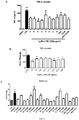
- 1.1 In vitro model for screening anti-inflammatory drugs The primary microglia were extracted from the brain of mouse and cultured, were pre-administrated with 1 ⁇ M or 5 ⁇ M drugs for 3 h, and then stimulated with 100 ng/mL lipopolysaccharide (LPS) for 5 h. The supernatant of cell culture was extracted, and the expression level of TNF- ⁇ in the supernatant was determined by ELISA method. It can be seen from FIG. 1 , I3 can significantly inhibit LPS-induced TNF- ⁇ release in mouse primary microglia.
- LPS lipopolysaccharide
- Nrf2-activating drugs BV2 cells were transfected with Neh2-Luciferase reporter gene plasmid for 6 h, replaced a normal serum-containing medium and cultured for 24 h, then incubated with drug for 24 h, and treated with Reporter Lysis Buffer for 20 min. The Reporter Lysis Buffer was added to a 96-well plate, and the activity of luciferase was measured. Positive drug Oltipraz as Nrf2 activator can significantly promote the activation of Nrf2. Compared with the above, 1 ⁇ M and 10 ⁇ M of 13, 10 ⁇ M of I7 and 10 ⁇ M of I8 can significantly activate the activity of intracellular Nrf2.
- mice 75 SD male rats weighing 300 ⁇ 20 g were raised under the condition of 25°C and relative humidity of 60% to 75% for 1 week for experiment. Rats were randomized into 5 groups: sham group, vehicle group, drug administration group at 24 h after ischemia, drug administration group at 6 h after ischemia, drug administration group at 4 h after ischemia, respectively, with 15 animals in each group.
- tMCAO transient middle cerebral artery occlusion
- ECA was ligated and cut off, ICA was clamped at the distal end with an arterial clip, and then a small opening was cut at the intersection of ECA and ICA near the ECA.
- a nylon thread with paraffin coated on one end was inserted from the small cut opening into the internal carotid artery at the intersection of the internal and external carotid arteries and further into the anterior cerebral artery at the proximal end, to block the blood supply to the middle cerebral artery on this side.
- the nylon thread was withdrawn at the incision of the external carotid artery to achieve the reperfusion of the middle cerebral artery.
- the room temperature during surgery was controlled at 25 to 27°C.
- Administration method administrating after surgery with a concentration of 1 mg/kg.
- Drug administration group at 4 h after ischemia was administrated at 4 h after ischemia, and once again after 24 h.
- Drug administration group at 6 h after ischemia was administrated at 6 h after ischemia, and once again after 24 h.
- Drug administration group at 24 h after ischemia was administrated once at 24 h after ischemia.
- TTC staining At 48 h post-ischemia, the rats were anesthetized with pentobarbital sodium, decapitated to get brain quickly, olfactory bulb, cerebellum and lower brain stem were removed, and coronal was cut into 6 slices. Then the brain slices were placed in the solution containing 4% TTC and 1 mol/L of K 2 HPO 4 , incubated at 37 ° C for 30 min in the dark, during which the brain slices were flipped every 7 to 8 min. After TTC staining, the normal cerebral tissue showed rosy and the infarcted tissue was white. Images were taken after staining, and the infarct volume was calculated using an image analysis software. The percentage of infarct volume is calculated by the following formula: infarct area/total brain cross-sectional area ⁇ 100%.
- Neurobehavioral function score The neurobehavioral function score of tMCAO rats were scored at 48 h after ischemia. Criteria for scoring is as follows: 0 point, no symptoms of nerve damage; 1 point, inability of fully extending forepaw at the healthy side; 2 points, circling to the healthy side; 3 points, tilting toward the healthy side; 4 points, inability of spontaneous walking and losing consciousness.
- Surgical method was described as the operation method for the above tMCAO.
- the thread embolism remained in the brain of rats without pulling out, and rotarod performance was tested every day. Brains were taken out at 72 h after ischemia for the determination of infarct volume and neurobehavioral score.
- the process of the rotarod performance test was as follows: rats were placed on a rotating rod of which the speed was accelerated from 4 rpm up to the maximum speed of 40 rpm within 5 minutes. Rats were trained for 3 to 7 days before model establishment, the rotarod performance was tested at 1, 2 and 3 days after pMCAO, respectively, and the falling time of rats were recorded.
- the experimental method was manipulated as described in 2. At 30 min before the administration of 13, rats were intraperitoneally injected with 20 mg/kg of AMPK inhibitor Compound C, and the volume of the ipsilateral hemisphere infarct and the neurobehavioral score were determined at 48 h post-ischemia. Western blot analysis was performed on ischemic brain tissue to determine the content of phosphorylated AMPK (p-AMPK) in the cerebral cortex at the infarct side. The results showed that pre-administration of Compound C significantly attenuate the neuroprotective effect of I3 on transient ischemic attack, and inhibit the increase of AMPK activity induced by 13. Table 6.
- Compound C inhibits the effect of I3 on reducing the infarction area in rats with tMCAO.
- Groups Infarction rate (%) SD Sham group 0 0 Vehicle group 33.04768 4.460327 tMCAO + I3 group 6.654898 3.738676 tMCAO + I3 + CC group 15.40428 2.989042 Table 7.
- Pre-administration of Compound C (CC) inhibits the effect of I3 on the neurobehavioral function recovery in rats with tMCAO.
- Groups Neurobehavioral score SD Sham group 0 0 Vehicle group 2.8 0.42164 tMCAO + I3 group 1.181818 0.60302 tMCAO + I3 + CC group 2.625 0.51755
- the butylphthalide-telmisartan hybrid is designed and synthesized, and in vitro activity study indicates that the butylphthalide-telmisartan hybrid exerts double agonistic activity towards both of Nrf2 and AMPK activation.
- the hybrid exerts stronger anti-cerebral ischemia activity than a combination of butylphthalide with telmisartan, and also shows stronger anti-cerebral ischemia activity than Edaravone.
- the pharmaceutical composition containing these compounds and the medical use thereof have a good application prospect particularly in the prevention and treatment of neuroinflammation-related diseases, including cerebral ischemic stroke, Alzheimer's disease, brain trauma, Parkinson's disease, multiple sclerosis, depression, ect.
- the above-mentioned diethyl ether solution containing III was diluted with 200 mL of dichloromethane, 2.7 mL (19.6 mmol) of triethylamine, and 0.5 g of DMAP were added separately, 1.4 mL (19.6 mmol) of acetyl chloride was added dropwise at -10 °C. After the dropping, the mixture was stirred at 10 °C for 5 h, then 10 mL of water was added, and stirred at room temperature for 0.5 h. The organic layer was separated, dried over Na 2 SO 4 , filtered and concentrated to give a wax solid.
- Telmisartan (2.57 g, 5.0 mmol) was dissolved in anhydrous dichloromethane (200 mL), EDAC (1.15 g, 6.0 mmol) and a catalytic amount of DMAP were added, stirred at room temperature for 0.5 h, then octanediamine (1.44 g, 10.0 mmol) was added, and the reaction solution was stirred at room temperature for 5 h.
- the mono-substituted intermediate (1.74 g, 5.0 mmol) obtained by reacting 2-(1-acetyl-n-pentyl)benzoic acid with hexanediamine was reacted with telmisartan (2.57 g, 5.0 mmol), and the reaction product was purified by column chromatography to give 1.69 g of white solid, with a yield of 40%. mp: 96-98°C.
- the mono-substituted intermediate (1.60 g, 5.0 mmol) obtained by reacting 2-(1-acetyl-n-pentyl)benzoic acid with butanediamine was reacted with telmisartan (2.57 g, 5.0 mmol), and the reaction product was purified by column chromatography to give 1.88 g of white solid, with a yield of 46%. mp: 97-99°C.
- p-methylbenzoyl chloride (1.55 g, 10.0 mmol) was dissolved in anhydrous dichloromethane (50 mL), triethylamine (2.88 g, 20.0 mmol) and a catalytic amount of DMAP were added, stirred at room temperature for 0.5 h, then octanediamine (1.44 g, 10.0 mmol) was further added, and stirred at room temperature for 3 h.
- the mono-substituted intermediate (1.59 g, 5.0 mmol) obtained by reacting 3,5-dichlorobenzoic acid with octanediamine was dissolved in anhydrous dichloromethane (30 mL), EDAC (1.15 g, 6.0 mmol) and a catalytic amount of DMAP were added and stirred at room temperature for 0.5 h, then telmisartan (3.86 g, 7.5 mmol) was further added.
- the mono-substituted intermediate (1.39 g, 5.0 mmol) obtained by reacting m-methoxybenzoic acid with octanediamine was dissolved in anhydrous dichloromethane (30 mL), EDAC (1.15 g, 6.0 mmol) and a catalytic amount of DMAP were added and stirred at room temperature for 0.5 h, then telmisartan (3.86 g, 7.5 mmol) was further added.
Landscapes
- Chemical & Material Sciences (AREA)
- Organic Chemistry (AREA)
- Health & Medical Sciences (AREA)
- Engineering & Computer Science (AREA)
- Bioinformatics & Cheminformatics (AREA)
- Veterinary Medicine (AREA)
- General Health & Medical Sciences (AREA)
- Public Health (AREA)
- Chemical Kinetics & Catalysis (AREA)
- General Chemical & Material Sciences (AREA)
- Medicinal Chemistry (AREA)
- Nuclear Medicine, Radiotherapy & Molecular Imaging (AREA)
- Animal Behavior & Ethology (AREA)
- Pharmacology & Pharmacy (AREA)
- Life Sciences & Earth Sciences (AREA)
- Biomedical Technology (AREA)
- Neurology (AREA)
- Neurosurgery (AREA)
- Vascular Medicine (AREA)
- Heart & Thoracic Surgery (AREA)
- Cardiology (AREA)
- Urology & Nephrology (AREA)
- Pain & Pain Management (AREA)
- Rheumatology (AREA)
- Psychology (AREA)
- Pharmaceuticals Containing Other Organic And Inorganic Compounds (AREA)
Description
- The present disclosure relates to a butylphthalide-telmisartan hybrid, specifically to an optically active ring-opening butylphthalide-telmisartan hybrid or a pharmaceutically acceptable salt thereof, a preparation method thereof, a pharmaceutical composition containing the compounds, and a medical use thereof, particularly the use in the prevention and treatment of neuroinflammation-related diseases including cerebral ischemic stroke, Alzheimer's disease, brain trauma, Parkinson's disease, multiple sclerosis, depression, and the like, which belongs to the field of pharmaceutical technology.
- Microglia in the central nervous system (CNS) play a key role in mediating a variety of immune-related diseases, and are categorized into pro-inflammatory type (M1 classical type) and anti-inflammatory type (M2 alternatively activated type). M1 microglia highly express oxidative metabolites (e.g., superoxide and nitric oxide) and pro-inflammatory factors (e.g., TNF-α, IL-1β, IL-6 and IL-18) which may produce cytotoxic effect on neurons and glial cells. M2 microglia secrete neurotrophic factors (e.g., Arginase 1, CD206, IL-10 and TGF- β1) that may regulate immune responses and promote tissue repair and remodeling.
- Telmisartan is a new nonpeptide angiotensin II (Ang II) AT1 receptor antagonist, and may competitively block the binding of Ang II to AT1 so as to antagonize the effects such as vasoconstriction, sympathetic activation and increased secretion of aldosterone caused by Ang II, and therefore may be used to treat high blood pressure. In addition, studies have shown that telmisartan can inhibit the generation of M1 microglia, promote the transformation of microglia into M2, and effectively reduce the occurrence of neuroinflammation, and thus telmisartan has neuroprotective effect. Telmisartan also exerts effects on activating peroxisome proliferator-activated receptor γ (PPARγ), as well as regulating the expression of genes involved in blood glucose, lipogenic metabolism and insulin sensitivity and inhibiting the production of inflammatory factors, and therefore can further be used to improve cardiac remodeling and the treatment of function, and also has a certain effect on the glucose and lipid metabolism disorders and diabetes complications.
- Butylphthalide (with trade name of NBP) is the first new drug with independent intellectual property rights in the field of treatment of cerebrovascular diseases in China, and was approved for marketing for the treatment of mild and moderate cerebral ischemic strokes in November 2004. Clinical researches show that butylphthalide can improve the damage of central nervous function and promote the neurological function recovery in patients with acute cerebral ischemic stroke. Pharmacodynamics research in animals suggests that butylphthalide can block multiple pathological processes in brain injury caused by cerebral ischemic stroke, and has strong anti-cerebral ischemia and cerebral protection effects, especially can significantly increase ATP and phosphocreatine levels in the brain of ischemic mouse, significantly reduce the infarction area of local cerebral ischemia in rats, alleviate cerebral edema, improve the cerebral energy metabolism, the microcirculation and blood flow in ischemic cerebral regions, inhibit the apoptosis of neurocyte, and has certain effects on anti-cerebral thrombosis and anti-platelet aggregation (J. Neurol. Sci., 2007, 260, 106). In addition, there are documents demonstrating that butylphthalide can relieve microvascular spasm, inhibit platelet aggregation and the synthesis of thromboxane A2, scavenge free radicals and the like, through affecting the metabolism of arachidonic acid (AA) and selectively inhibiting various pathophysiological processes mediated by AA and metabolites thereof, thus blocking the pathophysiological development processes caused by cerebral ischemia via multiple ways or routes, to protect neurons and repair the function of nerve (J. Cardiovasc. Pharmacol., 2004, 43, 876; ActaPharmacol. Sin., 1998, 19, 117).
- Studies shows that potassium 2-(1-hydroxypentyl)-benzoate (PHPB), a ring-opening derivative of butylphthalide, is a water-soluble prodrug of NBP, and can be transformed into NBP rapidly and completely by enzyme or chemical action in vivo and take effects, regardless of oral administration or intravenous injection. The pharmacokinetic characteristics, main metabolites and excretion pathways during the transformation of prodrug PHPB into NBP in vivo after intravenous administration are very similar to those after the direct intravenous administration of NBP (Patent
PCT/CN02/00320. 2002 ). Moreover, the bioavailability of NBP transformed from PHPB in vivo through oral administration of PHPB is nearly doubled compared with that through direct oral administration of NBP, and the disadvantage of poor water solubility of NBP is completely overcome. In addition, pharmacological studies have found that PHPB can significantly improve local cerebral blood flow after ischemia and inhibit excessive platelet aggregation and thrombosis, avoid the damage of mitochondrial function caused by ischemia-reperfusion through various mechanisms, especially protect mitochondria energy metabolism and reduce the activation of the mitochondrial pathway of apoptosis, which is an anti-cerebral ischemic drug with good development prospects (J PharmacolExpTher., 2006, 317, 973). - In the present disclosure, an optically active butylphthalide ring-opening butylphthalide-telmisartan hybrid is designed and synthesized based on the principle of predrug combination.
- The object of the present disclosure is to provide an optically active butylphthalide ring-opening butylphthalide-telmisartan hybrid, a preparation method and a medical use thereof.
- In order to solve the above technical problems, the technical solution adopted in the present disclosure is as follows.
- There is provided a compound of the present disclosure, which is an optically active butylphthalide-telmisartan hybrid as shown in formula I, or a pharmaceutically acceptable salt thereof:

- wherein, R represents a hydrogen atom H, linear or branched C1-C10 alkyl, (linear or branched C1-C10 alkylene) - Q, wherein Q represents hydroxyl or halogen;
- n represents 1 to 20;
- X represents an oxygen atom, a nitrogen atom or a sulfur atom;
- Y represents an oxygen atom, a nitrogen atom or a sulfur atom; and
- the chiral center * is S or R configurated.
- Pharmacological experiments demonstrate that the compound of the present disclosure or the pharmaceutically acceptable salt thereof has an effect on reducing the increased pro-inflammatory factor TNF-α in primary microglia caused by LPS, inhibiting the increased M1-associated pro-inflammatory factors TNF-α and IL-1β, and promoting M2-associated anti-inflammatory factors CD206 and YM1/2. Moreover, this kind of compounds can significantly reduce cerebral infarction area, improve neurobehavioral function and protect neurons, and therefore may be used to prevent and treat neuroinflammation-related diseases including, but are not limited to, cerebral ischemic stroke, alzheimer's disease, brain trauma, parkinson's disease, multiple sclerosis, depression, and the like.
- In a technical solution, there is provided a compound of formula I or a pharmaceutically acceptable salt thereof, wherein X represents an oxygen atom or a nitrogen atom.
- In a technical solution, there is provided a compound of formula I or a pharmaceutically acceptable salt thereof, wherein Y represents an oxygen atom or a nitrogen atom.
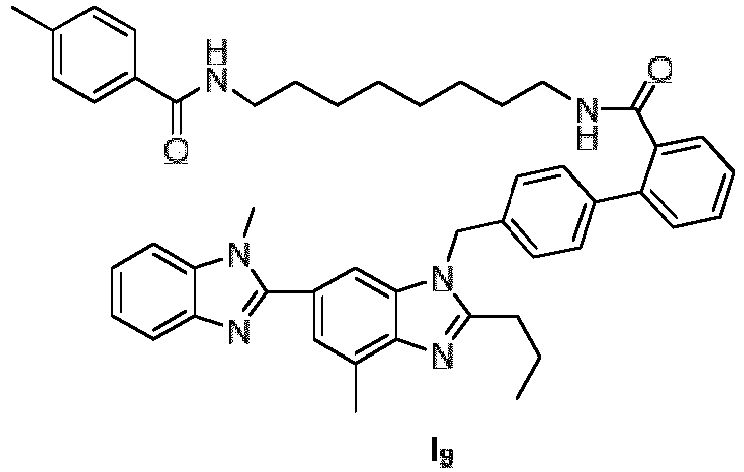
- The present disclosure relates to a compound or a pharmaceutically acceptable salt thereof, wherein the compound includes, but is not limited to:
-

-

-

-

-

-

-

-

- Compounds I9 to I17 are comparator compounds and do not form part of the invention.
-
-

-

-

-

-

-

-

-

- Medicinal acid addition salts of the preferred compounds of the present disclosure constitute the complete part of the disclosure. The medicinal acid includes hydrochloric acid, hydrobromic acid, sulfuric acid, phosphoric acid, acetic acid, trifluoroacetic acid, lactic acid, pyruvic acid, malonic acid, succinic acid, glutaric acid, fumaric acid, tartaric acid, maleic acid, citric acid, ascorbic acid, methanesulfonic acid, camphoric acid, oxalic acid, and the like.
- Specifically, the medicinal acid addition salt of the compound as shown in formula I is preferably
-

- The reference number of compound in the following pharmacological experiments is equivalent to the compound corresponding to the reference number herein.
- Another object of the present disclosure is to provide a preparation method of the compound of formula I characterized in that:
(S)- or (R)-butylphthalide is subject to saponification under alkaline condition and then acidification under acidic condition to give a ring-opening lactone compound III, the compound III is esterified with an acyl chloride compound (RCOCI) under alkaline condition of a base and a solvent to give an ester compound IV, compound IV is condensed with a diol (or a diamine, etc.) having a different carbon chain length under alkaline condition of a condensing agent, a base and a solvent to give a compound V, and the compound V is further condensed with telmisartan under alkaline condition of a condensing agent, a base and a solvent to give a target compound I; alternatively, telmisartan is first condensed with a diol (or a diamine, etc.) having a different carbon chain length under alkaline condition of a condensing agent, a base and a solvent to give a compound VI, and then the compound VI is condensed with the ester compound IV under alkaline condition of a condensing agent, a base and a solvent to give the target compound I; the synthetic route is as follows:
- The specific conditions of each reaction step in the preparation method of the compound of formula I of the present disclosure are as follows.
- In the step of preparing the compound IV from the compound III, the solvent is selected from one or more of the group consisting of acetonitrile, dichloromethane, chloroform, ethyl acetate, acetone, tetrahydrofuran, N, N-dimethylformamide, dimethyl sulfoxide and dioxane; the base is selected from the group consisting of potassium carbonate, sodium carbonate, sodium bicarbonate, sodium hydroxide, potassium hydroxide, pyridine, 4-methylaminopyridine, triethylamine, and N, N-diisopropylmethylamine; and the reaction temperature is from -20 °C to reflux temperature.
- In the step of preparing the compound V from the compound IV, the solvent is selected from one or more of the group consisting of acetonitrile, dichloromethane, chloroform, ethyl acetate, acetone, tetrahydrofuran, N, N-dimethylformamide, dimethyl sulfoxide and dioxane; the condensing agent is selected from the group consisting of N, N'-dicyclohexylcarbodiimide, 1-(3-dimethylaminopropyl)-3-ethylcarbodiimide hydrochloride, 1-hydroxybenzotriazole, and N-hydroxysuccinimide; the base is selected from the group consisting of pyridine, 4-methylaminopyridine, triethylamine, and N, N-diisopropylmethylamine; and the reaction temperature is from -20 °C to reflux temperature. More preferably, the solvent is dichloromethane, the condensing agent is 1-(3-dimethylaminopropyl)-3-ethylcarbodiimide hydrochloride, the base is 4-methylaminopyridine, and the reaction temperature is room temperature.
- In the step of preparing the compound I from the compound V, the solvent is selected from one or more of the group consisting of acetonitrile, dichloromethane, chloroform, ethyl acetate, acetone, tetrahydrofuran, N, N-dimethylformamide, dimethyl sulfoxide and dioxane; the condensing agent is selected from the group consisting of N, N'-dicyclohexylcarbodiimide, 1-(3-dimethylaminopropyl)-3-ethylcarbodiimide hydrochloride, 1-hydroxybenzotriazole, and N-hydroxysuccinimide; the base is selected from the group consisting of pyridine, 4-methylaminopyridine, triethylamine, and N, N-diisopropylmethylamine; and the reaction temperature is from -20 °C to reflux temperature. More preferably, the solvent is dichloromethane, the condensing agent is 1-(3-dimethylaminopropyl)-3-ethylcarbodiimide hydrochloride, the base is 4-methylaminopyridine, and the reaction temperature is room temperature.
- In the step of preparing the compound VI from telmisartan, the solvent is selected from one or more of the group consisting of acetonitrile, dichloromethane, chloroform, ethyl acetate, acetone, tetrahydrofuran, N, N-dimethylformamide, dimethyl sulfoxide and dioxane; the condensing agent is selected from the group consisting of N, N'-dicyclohexylcarbodiimide, 1-(3-dimethylaminopropyl)-3-ethylcarbodiimide hydrochloride, 1-hydroxybenzotriazole, and N-hydroxysuccinimide; the base is selected from the group consisting of pyridine, 4-methylaminopyridine, triethylamine, and N, N-diisopropylmethylamine; and the reaction temperature is from -20 °C to reflux temperature. More preferably, the solvent is dichloromethane, the condensing agent is 1-(3-dimethylaminopropyl)-3-ethylcarbodiimide hydrochloride, the base is 4-methylaminopyridine, and the reaction temperature is room temperature.
- In the step of preparing the compound I from the compound IV and the compound VI, the solvent is selected from one or more of the group consisting of acetonitrile, dichloromethane, chloroform, ethyl acetate, acetone, tetrahydrofuran, N, N-dimethylformamide, dimethyl sulfoxide and dioxane; the condensing agent is selected from the group consisting of N, N'-dicyclohexylcarbodiimide, 1-(3-dimethylaminopropyl)-3-ethylcarbodiimide hydrochloride, 1-hydroxybenzotriazole, and N-hydroxysuccinimide; the base is selected from the group consisting of pyridine, 4-methylaminopyridine, triethylamine, and N, N-diisopropylmethylamine; and the reaction temperature is from -20 °C to reflux temperature. More preferably, the solvent is dichloromethane, the condensing agent is 1-(3-dimethylaminopropyl)-3-ethylcarbodiimide hydrochloride, the base is 4-methylaminopyridine, and the reaction temperature is room temperature.
- All the intermediates or target compounds may be purified according to conventional separation techniques, separated into isomers thereof by conventional separation techniques if desired, and converted to medicinal acid or base addition salts as needed.
- Another object of the present disclosure is to provide a preparation method of the compound of formula II comprising:
dissolving compound I3 into a solvent, adding a saturated solution of hydrogen chloride in the solvent and stirring to obtain the compound II; the synthetic route is as follows:
- The preparation of II from I is characterized in that the solvent is ethyl acetate, and the reaction temperature is room temperature.
- A further object of the present disclosure is to provide a pharmaceutical composition comprising an effective amount of the compound of formula I or the pharmaceutically acceptable salt thereof and a medicinal carrier.
- Still a further object of the present disclosure is to provide a use of the compound of formula I in the preparation of drugs for preventing or treating neuroinflammation-related diseases, especially for preventing or treating cerebral ischemic stroke, alzheimer's disease, brain trauma, parkinson's disease, multiple sclerosis, depression, and the like.
- In the present disclosure, the compound of formula I and the pharmaceutically acceptable salt thereof, as well as the solvates of these compounds (collectively referred to herein as "therapeutic drug") may be administrated to a mammal alone, or preferably administrated in combination with a medicinal carrier or diluent according to standardized pharmaceutical method. The administration may be carried out by various routes, including oral, parenteral or topical administration. The parenteral administration as referred herein includes, but is not limited to, intravenous injection, intramuscular injection, intraperitoneal injection, subcutaneous injection and transdermal administration.
- 1.1 In vitro model for screening anti-inflammatory drugs: The primary microglia were extracted from the brain of mouse and cultured, were pre-administrated with 1 µM or 5 µM drugs for 3 h, and then stimulated with 100 ng/mL lipopolysaccharide (LPS) for 5 h. The supernatant of cell culture was extracted, and the expression level of TNF-α in the supernatant was determined by ELISA method. It can be seen from
FIG. 1 , I3 can significantly inhibit LPS-induced TNF-α release in mouse primary microglia. - 1.2 In vitro model for screening Nrf2-activating drugs: BV2 cells were transfected with Neh2-Luciferase reporter gene plasmid for 6 h, replaced a normal serum-containing medium and cultured for 24 h, then incubated with drug for 24 h, and treated with Reporter Lysis Buffer for 20 min. The Reporter Lysis Buffer was added to a 96-well plate, and the activity of luciferase was measured. Positive drug Oltipraz as Nrf2 activator can significantly promote the activation of Nrf2. Compared with the above, 1 µM and 10 µM of 13, 10 µM of I7 and 10 µM of I8 can significantly activate the activity of intracellular Nrf2.
- Experimental method: 75 SD male rats weighing 300±20 g were raised under the condition of 25°C and relative humidity of 60% to 75% for 1 week for experiment. Rats were randomized into 5 groups: sham group, vehicle group, drug administration group at 24 h after ischemia, drug administration group at 6 h after ischemia, drug administration group at 4 h after ischemia, respectively, with 15 animals in each group.
- Establishment of transient middle cerebral artery occlusion (tMCAO) rat model: The rats were anesthetized by intraperitoneal injection of chloral hydrate, and lying on an operating table with limbs fixed with string. An incision was made in the middle of the neck and the skin and subcutaneous tissue were incised to expose the digastric muscle, the right common carotid artery (CCA) was isolated and ligated at proximal end, the right external carotid artery (ECA) and internal carotid artery (ICA) were isolated upward, and the superior thyroid artery and occipital artery were isolated, ligated, and cut off. ECA was ligated and cut off, ICA was clamped at the distal end with an arterial clip, and then a small opening was cut at the intersection of ECA and ICA near the ECA. A nylon thread with paraffin coated on one end was inserted from the small cut opening into the internal carotid artery at the intersection of the internal and external carotid arteries and further into the anterior cerebral artery at the proximal end, to block the blood supply to the middle cerebral artery on this side. At 120 minutes after ischemia, the nylon thread was withdrawn at the incision of the external carotid artery to achieve the reperfusion of the middle cerebral artery. The room temperature during surgery was controlled at 25 to 27°C.
- Administration method: administrating after surgery with a concentration of 1 mg/kg. Drug administration group at 4 h after ischemia was administrated at 4 h after ischemia, and once again after 24 h. Drug administration group at 6 h after ischemia was administrated at 6 h after ischemia, and once again after 24 h. Drug administration group at 24 h after ischemia was administrated once at 24 h after ischemia.
- After the time window for administration of I3 was determined, administration at 4 hour post-ischemia was selected as the subsequent testing time point. 95 SD male rats were randomized into 7 groups: sham group, vehicle group, NBP group, Telm group, NBP+Telm group, I3 group and edaravone group, respectively. The surgical procedure was as described above, NBP (1 mg/kg), Telm (1 mg/kg), NBP (1 mg/kg) + Telm (1 mg/kg), I3 (1 mg/kg) and edaravone (3 mg/kg) were administrated at 4 hour post-ischemia, and once again at 24 h, respectively. The infarct volume and neurobehavioral score were determined at 48 h post-ischemia.
- 2.1 Determination of the infarct volume (TTC staining): At 48 h post-ischemia, the rats were anesthetized with pentobarbital sodium, decapitated to get brain quickly, olfactory bulb, cerebellum and lower brain stem were removed, and coronal was cut into 6 slices. Then the brain slices were placed in the solution containing 4% TTC and 1 mol/L of K2HPO4, incubated at 37 ° C for 30 min in the dark, during which the brain slices were flipped every 7 to 8 min. After TTC staining, the normal cerebral tissue showed rosy and the infarcted tissue was white. Images were taken after staining, and the infarct volume was calculated using an image analysis software. The percentage of infarct volume is calculated by the following formula: infarct area/total brain cross-sectional area × 100%.
- 2.2 Neurobehavioral function score: The neurobehavioral function score of tMCAO rats were scored at 48 h after ischemia. Criteria for scoring is as follows: 0 point, no symptoms of nerve damage; 1 point, inability of fully extending forepaw at the healthy side; 2 points, circling to the healthy side; 3 points, tilting toward the healthy side; 4 points, inability of spontaneous walking and losing consciousness.
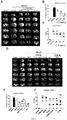
- 2.1 Test results of the infarct volume in tMCAO rats: As shown in
FIG. 2 , compared with vehicle group, I3 administrating at each time point significantly reduced the infarct volume, wherein the administration group at 4 h post-ischemia has the strongest effect. Meanwhile, compared with NBP group, Telm group and NBP + Telm group, I3 had a more pronounced effect on reducing the infarct volume, and had the same effect as the edaravone group, as shown in Table 1.Table 1. Effects of 13, constituent compounds thereof and Edaravone on reducing infarct volume in rats with tMCAO Groups Infarction rate (%) SD sham group 0 0 vehicle group 33.04768 4.460327 tMCAO + I3 group (administrated after 24h) 20.71811 9.277905 tMCAO + I3 group (administrated after 6h) 13.07053 7.106176 tMCAO + I3 group (administrated after 4h) 6.654898 3.738677 tMCAO + NBP group 20.99379 8.051519 tMCAO+ Telm group 11.57468 4.538631 tMCAO + Telm + NBP group 12.46524 8.356078 tMCAO + Edaravone group 6.183 3.805 - 2.2 Measurement results of neurological function score: As shown in
FIG. 2 , compared with the vehicle group, administration of I3 at each time point significantly reduced ischemia-induced neurological function score of I/R rats, i.e., can significantly improve the neurological function of animals. Meanwhile, compared with NBP, Telm and NBP + Telm, I3 had a more pronounced effect on improving the neurological function and had the same effect as the edaravone group, as shown in Table 2.Table 2. Effects of 13, constituent compounds thereof and Edaravone on improving the neurobehavioral function Groups Neurobehavioral score SD Sham group 0 0 vehicle group 2.8 0.421637 tMCAO + I3 group (administrated after 24 h) 1.181818 0.6030227 tMCAO + I3 group (administrated after 6 h) 1.866667 0.3518658 tMCAO + I3 group (administrated after 4 h) 2.384615 0.6504436 tMCAO + NBP group 2.7 0.4830459 tMCAO + Telm group 1 0.7559289 tMCAO + Telm + NBP group 0.9 0.5676462 tMCAO + I3 group 1.181818 0.6030227 tMCAO + Edaravone group 1.555556 0.7264832 - Experimental method: Surgical method was described as the operation method for the above tMCAO. The thread embolism remained in the brain of rats without pulling out, and rotarod performance was tested every day. Brains were taken out at 72 h after ischemia for the determination of infarct volume and neurobehavioral score. The process of the rotarod performance test was as follows: rats were placed on a rotating rod of which the speed was accelerated from 4 rpm up to the maximum speed of 40 rpm within 5 minutes. Rats were trained for 3 to 7 days before model establishment, the rotarod performance was tested at 1, 2 and 3 days after pMCAO, respectively, and the falling time of rats were recorded.
- The results showed that I3 significantly reduced the infarct volume and improved neurobehavioral impairment, and has better effects on improving the neurobehavioral than Edaravone, as shown in Tables 3, 4 and 5.
Table 3. Effects of I3 and Edaravone on reducing the infarct volume in rats caused by permanent middle cerebral artery occlusion Groups Infarction rate (%) SD Sham group 0 0 Vehicle group 30.82191 5.78276 pMCAO + I3 group 12.47746 4.24391 pMCAO + Edaravone group 16.69789 5.41495 Table 4. Effects of I3 and Edaravone on improving the neurobehavioral function in rats with permanent middle cerebral artery occlusion Groups Neurobehavioral score SD Sham group 0 0 Vehicle group 2.666667 0.5 pMCAO + I3 group 1.6 0.6992059 pMCAO + Edaravone group 1.7 0.6749486 Table 5. Results of the rotarod performance of I3 and Edaravone Groups Before modeling Day 1Day 2Day 3Falling time SD Falling time SD Falling time SD Falling time SD Sham group 273.00 23.43 300.0 0 0.00 300.00 0.00 296.67 3.06 Vehicle group 287.30 19.84 34.20 26.8 8 43.11 26.50 57.80 19.01 pMCAO + I3 group 279.10 32.14 68.63 44.6 5 94.00 50.32 125.13 54.57 pMCAO + Edaravone group 292.17 11.43 56.33 31.6 5 64.00 30.00 74.00 27.83 - The experimental method was manipulated as described in 2. At 30 min before the administration of 13, rats were intraperitoneally injected with 20 mg/kg of AMPK inhibitor Compound C, and the volume of the ipsilateral hemisphere infarct and the neurobehavioral score were determined at 48 h post-ischemia. Western blot analysis was performed on ischemic brain tissue to determine the content of phosphorylated AMPK (p-AMPK) in the cerebral cortex at the infarct side. The results showed that pre-administration of Compound C significantly attenuate the neuroprotective effect of I3 on transient ischemic attack, and inhibit the increase of AMPK activity induced by 13.
Table 6. Pre-administration of Compound C (CC) inhibits the effect of I3 on reducing the infarction area in rats with tMCAO. Groups Infarction rate (%) SD Sham group 0 0 Vehicle group 33.04768 4.460327 tMCAO + I3 group 6.654898 3.738676 tMCAO + I3 + CC group 15.40428 2.989042 Table 7. Pre-administration of Compound C (CC) inhibits the effect of I3 on the neurobehavioral function recovery in rats with tMCAO. Groups Neurobehavioral score SD Sham group 0 0 Vehicle group 2.8 0.42164 tMCAO + I3 group 1.181818 0.60302 tMCAO + I3 + CC group 2.625 0.51755 - Advantageous Effects: in the present disclosure, the butylphthalide-telmisartan hybrid is designed and synthesized, and in vitro activity study indicates that the butylphthalide-telmisartan hybrid exerts double agonistic activity towards both of Nrf2 and AMPK activation. In a number of in vivo models, the hybrid exerts stronger anti-cerebral ischemia activity than a combination of butylphthalide with telmisartan, and also shows stronger anti-cerebral ischemia activity than Edaravone. The pharmaceutical composition containing these compounds and the medical use thereof have a good application prospect particularly in the prevention and treatment of neuroinflammation-related diseases, including cerebral ischemic stroke, Alzheimer's disease, brain trauma, Parkinson's disease, multiple sclerosis, depression, ect.
-
-
FIG. 1 shows a result of experiments of screening the compounds of the present disclosure on inhibiting the inflammatory factor TNF-α induced by lipopolysaccharide (LPS) and on activating Nrf2 in vitro.
InFIGS. 1A and 1B , mouse primary microglia are pre-incubated with 1 µM or 5 µM of test compounds for 3 hours, then stimulated with LPS for 5 hours, and the protein content of pro-inflammatory factor TNF-α is determined by ELISA method. InFIG. 1C , the activations of the compounds on Nrf2 are tested by Luciferase Reporter Assay. -
FIG. 2 shows a neuroprotective effect of the representative compound I3 of the present disclosure on transient middle cerebral artery occlusion (tMCAO) rats.
InFIG. 2 , tMCAO models are established in male rats of 260 to 280 g (thread embolism is pulled out from the rats after 2 hour ischemia, resulting in reperfusion), I3 compound (1 mg/kg) is intravenously injected at 4 h post-ischemia, and intravenously injected again at 24 h post-ischemia. At 48 h post-ischemia, the brain tissue is cut into 6 uniform slices and stained using 2,3,5-triphenyltetrazolium chloride (TTC) to determine the infarction area (the white region represents ischemic region and the red region represents non-ischemic region), and the neurobehavioral feature is determined by Longa test, wherein the total score is 4 points, 0 point: no abnormal behavior; 1 point: left forepaw could not fully extend, indicating mild neurological function deficit; 2 points: the rat circles to the left during walking, indicating moderate neurological function deficit; 3 points: the rat tilts to the left side during walking or palsies, indicating severe neurological function deficit; 4 points: the rat cannot walk spontaneously, losing consciousness. -
FIG. 3 shows a neuroprotective effect of the representative compound I3 in present disclosure on permanent middle cerebral artery occlusion (pMCAO) rat model.
InFIG. 3 , pMCAO model is established on male rats of 260 to 280 g (thread embolism is not pulled out, resulting in permanent ischemia), the administration method is the same as that inFIG. 2 , and the infract volume, neurobehavioral scores and rotarod test were determined at 72 h after ischemia, as described above. -
FIG. 4 shows the effect of AMPK pathway on the neuroprotective effect ofcompound 13.
InFIG. 4 , 20 mg/kg Compound C (AMPK inhibitor) is intraperitoneally injected at 3.5 h after ischemia, I3 compound (1 mg/kg) is intravenously injected at 4 h after ischemia, and the infarct volume and neurobehavioral scores were determined after 48 hour ischemia. - In order to further illustrate the present disclosure, a series of embodiments are described below, which are completely illustrative and are only used to describe the present disclosure in detail and should not be construed as a limit to the present disclosure.
- 1.24 g (6.5 mmol) of NBP was dissolved in 10 mL of methanol, 10 mL of 2M NaOH solution was added. The reaction solution was refluxed with stirring for 0.5 h, evaporated under reduced pressure to remove methanol, diluted by addition of 10 mL of distilled water, cooled to -5 °C, acidified to
pH 2 topH 3 with 5% diluted hydrochloric acid under vigorous stirring. The mixture was extracted with diethyl ether (15 mLx3), and directly transferred to the next reaction without any purification. - The above-mentioned diethyl ether solution containing III was diluted with 200 mL of dichloromethane, 2.7 mL (19.6 mmol) of triethylamine, and 0.5 g of DMAP were added separately, 1.4 mL (19.6 mmol) of acetyl chloride was added dropwise at -10 °C. After the dropping, the mixture was stirred at 10 °C for 5 h, then 10 mL of water was added, and stirred at room temperature for 0.5 h. The organic layer was separated, dried over Na2SO4, filtered and concentrated to give a wax solid. The wax solid was recrystallized from n-hexane to give 1.06 g of white needle crystal, with a yield of 65%. mp 65-66°C. MS (ESI): m/z 249.1 [M - H]-. 1H NMR (300 MHz, CDCl3): δ 0.93 (t, 3H, CH3, J = 8.5 Hz), 1.37-1.42 (m, 4H, 2×CH2), 1.88-1.91 (m, 2H, CH2), 2.13-2.33 (m, 3H, COCH3), 6.61-6.72 (m, 1H, OCHCH2), 7.37-7.40 (m, 1H, ArH), 7.56-7.62 (m, 2H, ArH), 8.05 (d, 1H, ArH, J = 8.1 Hz), 10.98 (brs, 1H, COOH). 13C NMR (75 MHz, CDCl3): δ 172.0, 166.5, 140.8, 133.1, 130.3, 130.0, 127.1, 125.7, 74.8, 41.0, 36.3, 27.8, 22.4, 13.8.
- 2-(1-acetoxy-n-pentyl)benzoic acid (2.50 g, 10.0 mmol) was dissolved in anhydrous dichloromethane (50 mL), EDAC (2.29 g, 12.0 mmol) and a catalytic amount of DMAP were added, stirred at room temperature for 0.5 h, then ethylene glycol (0.62 g, 10.0 mmol) was added, and stirred at room temperature for 5 h. The mixture was filtered, concentrated under reduced pressure, and purified by column chromatography [petroleum ether: ethyl acetate (v: v) = 30:1] to give 1.71 g of oily substance, with a yield of 58%. MS (ESI): m/z 317.1 [M + Na]+. 1H NMR (300 MHz, CDCl3): δ 0.807 (t, 3H, CH3, J = 7.0 Hz), 1.181-1.356 (m, 4H, 2×CH2), 1.730-1.777 (m, 2H, CH2), 1.965 (s, 3H, COCH3), 3.823-3.862 (m, 2H, CH2), 4.269-4.474 (m, 2H, CH2), 5.206 (s, 1H, OH), 6.452 (t, 1H, COOCH, J = 6.7 Hz), 7.197-7.265 (m, 1H, ArH), 7.441-7.444 (m, 2H, ArH), 7.750-7.777 (m, 1H, ArH). 13C NMR (75 MHz, CDCl3): δ 170.90, 167.51, 142.37, 132.15, 129.94, 129.34, 127.39, 126.46, 72.79, 67.05, 60.88, 36.32, 27.90, 22.42, 21.18, 13.92.
- 2-(1-acetoxy-n-pentyl)benzoic acid (2.50 g, 10.0 mmol) was dissolved in anhydrous dichloromethane (50 mL), EDAC (2.29 g, 12.0 mmol) and a catalytic amount of DMAP were added, stirred at room temperature for 0.5 h, then octanediamine (1.44 g, 10.0 mmol) was added, and stirred at room temperature for 8 h. The mixture was filtered, concentrated under reduced pressure, and purified by column chromatography [dichloromethane: methanol (v: v) = 10:1] to give 1.92 g of oily substance, with a yield of 51%.
- Telmisartan (2.57 g, 5.0 mmol) was dissolved in anhydrous dichloromethane (200 mL), EDAC (1.15 g, 6.0 mmol) and a catalytic amount of DMAP were added, stirred at room temperature for 0.5 h, then octanediamine (1.44 g, 10.0 mmol) was added, and the reaction solution was stirred at room temperature for 5 h. The mixture was filtered, concentrated under reduced pressure, and purified by column chromatography [dichloromethane: methanol (v: v) = 30:1] to give 1.48 g of white solid, with a yield of 46%. mp: 113°C.MS (ESI): m/z641.4 [M + H]+. 1H NMR (300 MHz, CDCl3): δ 0.799(t, 3H, CH3, J=6.8Hz), 0.943-1.058(m, 8H, 4×CH2), 1.506(m, 4H, 2×CH2), 1.728-1.798(m, 2H, CH2), 2.374(s, 3H, CH3), 2.731(t, 2H, NH2CH2, J=7.2Hz), 2.839(t, 2H, CH2, J=7.7Hz), 3.137(t, 2H, NHCH2, J=6.1Hz), 3.728(s, 3H, NCH3), 5.398(s, 2H, NCH2), 7.015(s, 1H, ArH), 7.041(s, 1H, ArH), 7.204 (m, 4H, ArH), 7.251-7.312(m, 6H, ArH), 7.405(m, 1H, NH), 7.468-7.491(m, 1H, ArH), 7.670-7.698(m, 1H, ArH).13C NMR (75 MHz, CDCl3): 169.59, 159.58, 154.56, 143.08, 142.47, 140.04, 138.58, 136.45, 136.05, 135.33, 135.08, 130.12, 129.99, 129.44, 129.31, 128.42, 127.69, 126.40, 123.69, 122.71, 122.52, 119.29, 109.63, 109.02, 56.14, 43.98, 39.66, 35.15, 31.90, 31.81, 29.70, 29.33, 26.41, 26.36, 22.66, 16.94, 14.08.
- The above-mentioned intermediate V1 (1.47 g, 5.0 mmol) was dissolved in anhydrous dichloromethane (30 mL), EDAC (1.15 g, 6.0 mmol) and a catalytic amount of DMAP were added, stirred at room temperature for 0.5 h, then telmisartan (2.57 g, 5.0 mmol) was added, and stirred at room temperature for 8 h. The mixture was filtered, concentrated under reduced pressure, and purified by column chromatography [dichloromethane: methanol (v: v) = 50:1] to give 1.69 g of white solid, with a yield of 43%. mp: 82-83°C. MS (ESI): m/z 791.4 [M + H]+, 813.4 [M + Na]+. 1H NMR (300 MHz, CDCl3): δ 0.772 (m, 3H, CH3), 0.989 (m, 3H, CH3), 1.181 (m, 4H, 2×CH2), 1.712 (m, 2H, CH2), 1.808 (m, 2H, CH2), 1.973 (s, 3H, ArCH3), 2.691 (s, 3H, COCH3), 2.871 (m, 2H, NCNCH2), 3.716 (s, 3H, NCH3), 3.973-4.310 (m, 4H, 2×OCH2), 5.369 (s, 2H, NCH2), 6.478 (m, 1H, OCH), 6.948 (s, 1H, ArH), 7.023 (s, 1H, ArH), 7.120-7.302 (m, 7H, ArH), 7.323-7.423 (m, 5H, ArH), 7.722-7.796 (m, 3H, ArH). 13C NMR (75 MHz, CDCl3): δ 169.19, 167.27, 165.83, 156.09, 154.24, 143.63, 142.67, 142.37, 141.70, 140.76, 136.14, 134.49, 132.12, 131.09, 130.26, 130.01, 129.73, 129.58, 128.97, 128.49, 126.94, 126.65, 125.60, 125.32, 123.44, 121.97, 121.80, 119.02, 109.04, 108.53, 72.35, 62.25, 61.78, 46.50, 36.10, 31.29, 29.29, 27.57, 21.98, 21.45, 20.68, 16.41, 13.59, 13.50.
- Referring to the method in Example 6, the mono-substituted intermediate (1.61 g, 5.0 mmol) obtained by reacting 2-(1-acetyl-n-pentyl)benzoic acid with butanediol was reacted with telmisartan (2.57 g, 5.0 mmol), and the reaction product was purified by column chromatography to give 1.84 g of white solid, with a yield of 45%. mp: 83°C. MS (ESI): m/z 819.5 [M + H]+, 841.4 [M + Na]+. 1H NMR (300 MHz, CDCl3): δ 0.779 (t, 2H, CH3, J = 6.9 Hz), 0.855 (t, 1H, CH3, J = 7.1 Hz), 0.963 (t, 3H, CH3, J = 7.3 Hz), 1.160-1.304 (m, 4H, 2×CH2), 1.495 (m, 2H, CH2), 1.725-1.826 (m, 4H, 2×CH2), 1.952 (s, 3H, ArCH3), 2.676 (s, 3H, COCH3), 2.847 (t, 2H, NCNCH2, J = 7.8 Hz), 3.671 (s, 3H, NCH3), 3.926-4.078 (m, 4H, 2×OCH2), 5.339 (s, 2H, NCH2), 6.438 (q, 1H, OCH, J = 4.9 Hz), 7.011 (m, 2H, ArH), 7.149-7.413 (m, 14H, ArH), 7.695-7.741 (m, 3H, ArH). 13C NMR (75 MHz, CDCl3): δ 156.49, 143.71, 141.73, 141.29, 136.64, 134.99, 134.87, 132.30, 131.36, 131.25, 130.76, 130.63, 130.13, 129.93, 129.85, 129.46, 129.07, 127.41, 127.11, 126.15, 126.02, 125.83, 123.90, 122.51, 122.33, 119.49, 109.55, 108.98, 72.86, 64.44, 64.38, 47.04, 36.60, 31.80, 29.81, 28.08, 25.19, 25.08, 22.49, 21.87, 21.18, 16.91, 14.10, 14.01.
- Intermediate V3 (1.88 g, 5.0 mmol) was reacted with telmisartan (2.57 g, 5.0 mmol), and the reaction product was purified by column chromatography to give 1.78 g of white solid, with a yield of 41%. mp: 94-95°C. MS (ESI): m/z 873.6 [M + H]+, 895.6 [M + Na]+. 1H NMR (300 MHz, CDCl3): δ 0.723 (t, 3H, CH3, J = 7.2 Hz), 0.917 (t, 3H, CH3, J = 7.3 Hz), 1.130 (m, 8H, 4×CH2), 1.157 (m, 4H, 2×CH2), 1.212 (m, 2H, CH2), 1.414-1.459 (m, 2H, CH2), 1.670-1.775 (m, 4H, 2×CH2), 1.912 (s, 3H, ArCH3), 2.636 (s, 3H, COCH3), 2.786 (t, 2H, NCNCH2, J = 7.8 Hz), 2.956 (q, 2H, NHCH2, J = 6.6 Hz), 3.266 (q, 2H, NHCH2, J = 6.8 Hz), 3.666 (s, 3H, NCH3), 5.302 (s, 2H, NCH2), 5.710 (q, 1H, OCH, J = 5.7 Hz), 6.954 (s, 1H, ArH), 6.981 (s, 1H, ArH), 7.134-7.157 (m, 5H, ArH), 7.210-7.263 (m, 9H, ArH), 7.289 (m, 1H, NH), 7.340 (m, 1H, NH), 7.433-7.458 (m, 1H, ArH), 7.603-7.632 (m, 1H, ArH). 13C NMR (75 MHz, CDCl3): δ 171.16, 169.02, 168.61, 155.93, 154.05, 142.60, 142.16, 139.55, 138.00, 137.87, 136.06, 135.62, 135.58, 134.72, 134.53, 129.56, 129.49, 128.93, 128.82, 127.97, 127.40, 127.20, 127.16, 125.85, 125.25, 123.33, 122.10, 121.89, 118.88, 109.09, 108.48, 73.78, 46.49, 39.40, 39.26, 36.26, 31.42, 31.33, 30.93, 29.68, 29.29, 29.19, 28.86, 28.59, 28.51, 27.17, 26.39, 26.12, 21.82, 21.33, 20.72, 16.44, 13.60, 13.38.
- Referring to the method in Example 6, the mono-substituted intermediate (1.68 g, 5.0 mmol) obtained by reacting 2-(1-acetyl-n-pentyl)benzoic acid with pentanediol was reacted with telmisartan (2.57 g, 5.0 mmol), and the reaction product was purified by column chromatography to give 1.98 g of white solid, with a yield of 48%. mp: 78-79°C. MS (ESI): m/z 833.5 [M + H]+, 855.5 [M + Na]+. 1H NMR (300 MHz, CDCl3): δ 0.786 (t, 3H, CH3, J = 6.9 Hz), 0.964 (t, 3H, CH3, J = 7.4 Hz), 1.223-1.256 (m, 6H, 3×CH2), 1.345-1.393 (m, 2H, CH2), 1.571 (t, 2H, CH2, J = 7.4 Hz), 1.707-1.802 (m, 4H, 2×CH2), 1.955 (s, 3H, ArCH), 32.681 (s, 3H, COCH3), 2.849 (t, 2H, NCNCH2, J = 7.8 Hz), 3.686 (s, 3H, NCH3), 3.958 (t, 2H, OCH2, J = 6.5 Hz), 4.132 (t, 2H, OCH2, J = 6.6 Hz), 5.356 (s, 2H, NCH2), 6.448 (q, 1H, OCH, J = 4.7 Hz), 6.995 (s, 1H, ArH), 7.022 (s, 1H, ArH), 7.140-7.205 (m, 6H, ArH), 7.240-7.314 (m, 2H, ArH), 7.349-7.416 (m, 5H, ArH), 7.696-7.754 (m, 3H, ArH). 13C NMR (75 MHz, CDCl3): δ 169.82, 167.74, 166.41, 155.98, 154.16, 143.15, 142.63, 142.31, 141.25, 140.78, 136.13, 134.50, 134.28, 131.74, 130.82, 130.27, 129.65, 129.40, 128.95, 128.57, 126.90, 126.59, 125.64, 125.47, 125.33, 123.37, 123.33, 122.03, 121.85, 119.00, 109.05, 108.49, 72.38, 64.34, 64.21, 46.56, 36.12, 31.32, 29.32, 27.68, 27.58, 27.48, 22.00, 21.93, 21.37, 20.69, 16.42, 13.61, 13.52.
- Referring to the method in Example 6, the mono-substituted intermediate (1.75 g, 5.0 mmol) obtained by reacting 2-(1-acetyl-n-pentyl)benzoic acid with hexanediol was reacted with telmisartan (2.57 g, 5.0 mmol), and the reaction product was purified by column chromatography to give 1.82 g of white solid, with a yield of 43%. mp: 82-83°C. MS (ESI): m/z 847.5 [M + H]+, 869.5 [M + Na]+. 1H NMR (300 MHz, CDCl3): δ 0.796 (m, 3H, CH3), 0.973 (t, 3H, CH3, J = 7.2 Hz), 1.176-1.256 (m, 10H, 5×CH2), 1.600 (m, 2H, CH2), 1.757-1.806 (m, 4H, 2×CH2), 1.966 (s, 3H, ArCH3), 2.687 (s, 3H, COCH3), 2.849 (t, 2H, NCNCH2, J = 7.7 Hz), 3.702 (s, 3H, NCH3), 3.939-3.961 (m, 2H, OCH2), 4.169 (m, 2H, OCH2), 5.349 (s, 2H, NCH2), 6.443 (q, 1H, OCH), 7.001-7.026 (m, 2H, ArH), 7.154-7.203 (m, 8H, ArH), 7.302-7.405 (m, 5H, ArH), 7.720-7.775 (m, 3H, ArH). 13C NMR (75 MHz, CDCl3): δ 169.81, 167.77, 166.47, 155.97, 154.15, 143.08, 142.64, 142.30, 141.25, 140.80, 136.13, 134.52, 134.22, 131.68, 130.79, 130.35, 130.25, 129.66, 129.38, 128.96, 128.58, 126.90, 126.59, 125.61, 125.42, 123.35, 122.04, 121.86, 119.01, 109.04, 108.49, 72.42, 64.55, 64.37, 46.56, 36.14, 31.34, 29.24, 28.03, 27.73, 27.59, 25.12, 25.05, 22.01, 21.37, 20.69, 16.42, 13.61, 13.52.
- Referring to the method in Example 5, the mono-substituted intermediate (1.89 g, 5.0 mmol) obtained by reacting 2-(1-acetyl-n-pentyl)benzoic acid with octanediol was reacted with telmisartan (2.57 g, 5.0 mmol), and the reaction product was purified by column chromatography to give 1.96 g of white solid, with a yield of 45%. mp: 83-84°C. MS (ESI): m/z 875.6 [M+H]+, 897.5 [M+Na]+. 1H NMR (300 MHz, CDCl3): δ 0.806 (t, 3H, CH3, J = 6.8 Hz), 0.981 (t, 3H, CH3, J = 7.3 Hz), 1.179-1.237 (m, 8H, 4×CH2), 1.452-1.474 (m, 6H, 3×CH2), 1.627-1.695 (m, 2H, CH2), 1.722-1.843 (m, 4H, 2×CH2), 1.980 (s, 3H, ArCH3), 2.692 (s, 3H, COCH3), 2.861 (t, 2H, NCNCH2, J = 7.8 Hz), 3.712 (s, 3H, NCH3), 3.931 (t, 2H, OCH2, J = 6.4 Hz), 4.204 (t, 2H, OCH2, J = 6.6 Hz), 5.364 (s, 2H, NCH2), 6.455 (q, 1H, OCH, J = 4.6 Hz), 7.001-7.027 (m, 2H, ArH), 7.158-7.286 (m, 8H, ArH), 7.337-7.418 (m, 5H, ArH), 7.703-7.797 (m, 3H, ArH). 13C NMR (75 MHz, CDCl3): δ 169.81, 167.79, 166.55, 155.97, 154.15, 143.12, 142.60, 141.24, 140.81, 136.11, 134.51, 134.16, 131.63, 130.77, 130.40, 130.24, 129.69, 129.37, 128.95, 128.59, 126.89, 126.58, 125.59, 125.38, 123.39, 122.04, 121.86, 119.02, 109.02, 108.50, 72.47, 64.75, 64.54, 62.40, 46.59, 36.15, 32.24, 31.33, 29.33, 28.85, 28.63, 28.55, 25.45, 25.17, 22.02, 21.37, 20.70, 16.42, 13.61, 13.52.
- Referring to the method in Example 8, the mono-substituted intermediate (1.74 g, 5.0 mmol) obtained by reacting 2-(1-acetyl-n-pentyl)benzoic acid with hexanediamine was reacted with telmisartan (2.57 g, 5.0 mmol), and the reaction product was purified by column chromatography to give 1.69 g of white solid, with a yield of 40%. mp: 96-98°C. MS (ESI): m/z 845.6 [M + H]+, 867.5 [M + Na]+. 1H NMR (300 MHz, CDCl3): δ 0.768 (m, 3H, CH3), 0.970 (t, 3H, CH3, J = 7.2 Hz), 1.181 (m, 10H, 5×CH2), 1.417 (m, 2H, CH2), 1.776-1.801 (m, 4H, 2×CH2), 1.936 (s, 3H, ArCH3), 2.645 (s, 3H, COCH3), 2.843 (t, 2H, NCNCH2, J = 7.6 Hz), 3.013-3.032 (m, 2H, NHCH2), 3.259-3.279 (m, 2H, NHCH2), 3.751 (s, 3H, NCH3), 5.365 (s, 2H, NCH2), 5.749 (m, 1H, OCH), 7.022-7.046 (m, 2H, ArH), 7.195-7.218 (m, 6H, ArH), 7.299-7.328 (m, 9H, ArH), 7.423 (m, 1H, NH), 7.501-7.524 (m, 1H, NH), 7.4674 (m, 1H, ArH). 13C NMR (75 MHz, CDCl3): δ 171.17, 169.04, 168.62, 155.97, 154.09, 142.63, 142.17, 139.57, 137.94, 136.08, 135.64, 135.52, 134.78, 134.58, 129.62, 129.51, 128.95, 128.84, 127.98, 127.39, 127.23, 127.12, 125.89, 125.29, 123.29, 122.11, 121.92, 118.92, 109.09, 108.50, 73.75, 46.50, 39.17, 39.04, 36.28, 31.37, 29.19, 28.79, 28.43, 27.17, 25.87, 25.68, 21.83, 21.33, 20.69, 16.44, 13.60, 13.38.
- Referring to the method in Example 8, the mono-substituted intermediate (1.60 g, 5.0 mmol) obtained by reacting 2-(1-acetyl-n-pentyl)benzoic acid with butanediamine was reacted with telmisartan (2.57 g, 5.0 mmol), and the reaction product was purified by column chromatography to give 1.88 g of white solid, with a yield of 46%. mp: 97-99°C. MS (ESI): m/z 817.5 [M + H]+, 839.5 [M+Na]+. 1H NMR (300 MHz, CDCl3): δ 0.743-0.766 (m, 3H, CH3), 0.974 (t, 3H, CH3, J = 7.3 Hz), 1.834-1.260 (m, 12H, 6×CH2), 1.835 (s, 3H, ArCH3), 2.696 (s, 3H, COCH3), 2.856 (t, 2H, NCNCH2, J = 7.7 Hz), 3.097(m, 4H, 2×NHCH2), 3.748 (s, 3H, NCH3), 5.382 (s, 2H, NCH2), 5.903 (m, 1H, OCH), 6.998-7.024 (m, 2H, ArH), 7.191-7.215 (m, 6H, ArH), 7.280 (m, 9H, ArH), 7.474 (m, 2H, 2xNH), 7.638 (m, 1H, ArH). 13C NMR (75 MHz, CDCl3): δ 170.96, 169.22, 168.62, 156.16, 153.91, 142.70, 139.66, 138.30, 138.08, 135.84, 135.30, 134.74, 129.57, 129.33, 129.03, 128.89, 127.87, 127.25, 127.10, 126.84, 125.78, 125.46, 123.27, 122.29, 121.15, 118.69, 109.14, 108.70, 73.52, 46.47, 38.76, 38.52, 36.16, 31.35, 29.16, 27.14, 26.21, 25.69, 21.78, 21.27, 20.52, 16.38, 13.54, 13.31.
- p-methylbenzoyl chloride (1.55 g, 10.0 mmol) was dissolved in anhydrous dichloromethane (50 mL), triethylamine (2.88 g, 20.0 mmol) and a catalytic amount of DMAP were added, stirred at room temperature for 0.5 h, then octanediamine (1.44 g, 10.0 mmol) was further added, and stirred at room temperature for 3 h. The mixture was filtered, concentrated under reduced pressure, and purified by column chromatography [dichloromethane: methanol (v: v) = 20:1] to give 1.52 g of white solid, i.e., a mono-substituted intermediate, with a yield of 48%. The obtained intermediate (1.52 g, 5.8 mmol) was dissolved in anhydrous dichloromethane (30 mL), EDAC (1.15 g, 6.0 mmol) and a catalytic amount of DMAP were added and stirred at room temperature for 0.5 h, then telmisartan (5.96 g, 11.6 mmol) was further added. The reaction mixture was stirred overnight at room temperature, filtered, concentrated under reduced pressure, and purified by column chromatography [dichloromethane: methanol (v: v) = 50:1] to give 2.15 g of white solid, with a yield of 49%. MS (ESI): m/z 759.4 [M + H]+, 781.4 [M+Na]+. 1H NMR (300 MHz, CDCl3): δ 0.854 (t, 3H, CH3, J = 7.6 Hz), 1.25 (m, 8H, 4×CH2), 1.535 (m, 4H, 2×CH2), 1.856 (m, 2H, CH2), 2.342 (s, 3H, ArCH3), 2.756 (s, 3H, ArCH3), 2.881 (t, 2H, CH2, J = 6.7 Hz), 3.088 (q, 2H, NHCH2, J = 6.6 Hz), 3.404 (q, 2H, NHCH2, J = 6.8 Hz), 3.831 (s, 3H, NCH3), 5.398 (s, 2H, NCH2), 7.116 (m, 4H, ArH), 7.287-7.421 (m, 8H, ArH), 7.493 (s, 1H, ArH), 7.583-7.767 (m, 5H, ArH).
- Referring to the method in Example 14, the mono-substituted intermediate (1.59 g, 5.0 mmol) obtained by reacting 3,5-dichlorobenzoic acid with octanediamine was dissolved in anhydrous dichloromethane (30 mL), EDAC (1.15 g, 6.0 mmol) and a catalytic amount of DMAP were added and stirred at room temperature for 0.5 h, then telmisartan (3.86 g, 7.5 mmol) was further added. The mixture was stirred overnight at room temperature, filtered, concentrated under reduced pressure, and purified by column chromatography [dichloromethane: methanol (v: v) = 50:1] to give 1.71 g of white soli, with a yield of 42%. MS (ESI): m/z 813.4 [M + H]+, 835.4 [M+Na]+. 1H NMR (300 MHz, CDCl3): δ 0.946 (t, 3H, CH3, J = 7.3 Hz), 1.124 (m, 8H, 4×CH2), 1.337 (m, 4H,2×CH2), 1.488 (m, 2H, CH2), 2.666 (s, 3H, ArCH3), 2.709 (t, 2H, CH2, J = 6.7 Hz), 3.023 (q, 4H, 2×NHCH2, J = 6.7 Hz), 3.795(s, 3H, NCH3), 5.301 (s, 2H, NCH2), 7.023 (m, 2H, ArH), 7.195-7.327 (m, 10H, ArH), 7.419 (s, 1H, ArH), 7.507 (s, 1H, ArH), 7.565 (d, 1H, ArH), 7.654 (d, 1H, ArH), 7.806 (s, 1H, ArH).
- Referring to the method in Example 14, the mono-substituted intermediate (1.37 g, 5.0 mmol) obtained by reacting 4-cyanobenzoic acid with octanediamine was dissolved in anhydrous dichloromethane (30 mL), EDAC (1.15 g, 6.0 mmol) and a catalytic amount of DMAP were added and stirred at room temperature for 0.5 h, then telmisartan (3.86 g, 7.5 mmol) was further added. The mixture was stirred overnight at room temperature, filtered, concentrated under reduced pressure, and purified by column chromatography [dichloromethane: methanol (v: v) = 40:1] to give 1.84 g of white solid, with a yield of 48%. MS (ESI): m/z 770.4 [M + H]+, 792.4 [M+Na]+. 1H NMR (300 MHz, CDCl3): δ 0.959 (t, 3H, CH3, J = 7.3 Hz), 1.183 (m, 4H, 2×CH2), 1.518 (m, 2H, CH2), 1.759 (m, 8H, 4×CH2), 2.678 (s, 3H, ArCH3), 2.789 (t, 2H, CH2, J = 6.8 Hz), 3.03 (q, 2H, NHCH2, J = 6.5 Hz), 3.385 (q, 2H, NHCH2, J = 6.7 Hz), 3.792 (s, 3H, NCH3), 5.306 (s, 2H, NCH2), 7.035 (m, 2H, ArH), 7.194-7.425 (m, 11H, ArH), 7.509 (d, 1H, ArH, J = 3.6 Hz), 7.636 (d, 1H, ArH, J = 3.4 Hz), 7.751 (d, 2H, ArH, J = 4.1 Hz), 7.891 (s, 1H, ArH).
- Referring to the method in Example 14, the mono-substituted intermediate (1.47 g, 5.0 mmol) obtained by reacting p-nitrobenzoic acid with octanediamine was dissolved in anhydrous dichloromethane (30 mL), EDAC (1.15 g, 6.0 mmol) and a catalytic amount of DMAP were added and stirred at room temperature for 0.5 h, then telmisartan (3.86 g, 7.5 mmol) was further added, and the mixture was stirred overnight at room temperature, filtered, concentrated under reduced pressure, and purified by column chromatography [dichloromethane: methanol (v: v) = 40:1] to give 2.01 g of pale yellow solid. MS (ESI): m/z 790.4 [M + H]+, 812.4 [M+Na]+. 1H NMR (300 MHz, CDCl3): δ 0.836 (t, 3H, CH3, J = 7.3 Hz), 1.103 (m, 8H, 4×CH2), 1.213 (m, 4H, 2×CH2), 1.533 (m, 2H, CH2), 2.652 (s, 3H, ArCH3), 2.771 (t, 2H, CH2, J = 7.7 Hz), 3.033 (q, 2H, NHCH2, J = 6.3 Hz), 3.342 (q, 2H, NHCH2, J = 6.5 Hz), 3.769 (s, 3H, NCH3), 5.282 (s, 2H, NCH2), 7.032 (m, 2H, ArH), 7.192-7.408 (m, 9H, ArH), 7.511 (d, 1H, ArH, J = 3.6 Hz), 7.638 (d, 1H, ArH, J = 3.6 Hz), 7.789 (d, 1H, ArH, J = 4.3 Hz), 7.922 (d, 1H, ArH, J = 4.3 Hz), 8.145 (s, 1H, ArH).
- Referring to the method in Example 14, the mono-substituted intermediate (1.39 g, 5.0 mmol) obtained by reacting m-methoxybenzoic acid with octanediamine was dissolved in anhydrous dichloromethane (30 mL), EDAC (1.15 g, 6.0 mmol) and a catalytic amount of DMAP were added and stirred at room temperature for 0.5 h, then telmisartan (3.86 g, 7.5 mmol) was further added. The mixture was stirred overnight at room temperature, filtered, concentrated under reduced pressure, and purified by column chromatography [dichloromethane: methanol (v: v) = 40:1] to give 1.74 g of pale yellow solid, with a yield of 45%. MS (ESI): m/z775.4 [M + H]+, 797.4 [M+Na]+. 1H NMR (300 MHz, CDCl3): δ 0.784(t, 3H, CH3, J=7.3Hz), 1.012(m, 8H, 4×CH2), 1.079(m, 4H,2xCH2), 1.469(m, 2H, CH2), 2.683(s, 3H, ArCH3), 2.819(t, 2H, CH2, J=7.7Hz), 3.033(q, 2H, NHCH2, J=6.5Hz), 3.342(q, 2H, NHCH2, J=6.5Hz), 3.711(s, 3H, OCH3), 3.767(s, 3H, NCH3), 5.336(s, 2H, NCH2), 6.733(s, 1H, ArH), 6.893(d, 1H, ArH, J=4.0Hz), 7.035(d, 2H, ArH, J=3.8Hz), 7.212(M, 6H, ArH), 7.301(M, 5H, ArH), 7.436(S, 1H, ArH), 7.529(d, 1H, ArH, J=3.9Hz), 7.689(d, 1H, ArH, J=3.2Hz).
- Referring to the method in Example 14, o-hydroxybenzoic acid (1.38 g, 10 mmol) was dissolved in anhydrous dichloromethane (50 mL), EDAC (2.29 g, 12.0 mmol) and a catalytic amount of DMAP were added and stirred at room temperature for 0.5 h, octanediamine (1.44 g, 10.0 mmol) was further added. The mixture was stirred at room temperature for 5 h, filtered, concentrated under reduced pressure, and purified by column chromatography [petroleum ether: ethyl acetate (v: v) = 30:1] to give 1.34 g of oily substance, with a yield of 44%. The intermediate (1.06 g, 4.0 mmol) was then reacted with telmisartan (2.06 g, 4.0 mmol), and the reaction product was purified by column chromatography to give 1.34 g of white solid, with a yield of 44%. MS (ESI): m/z 783.5 [M + Na]+, 759.4 [M - H]-. 1H NMR (300 MHz, CDCl3): δ 0.919-0.967 (m, 7H, CH3, 2×CH2), 0.967-1.096 (m, 4H, 2×CH2), 1.111-1.243 (m, 6H, 3×CH2), 1.422-1.444 (m, 2H, CH2), 1.742-1.766 (m, 2H, CH2), 2.662 (s, 3H, ArCH3), 2.786 (t, 2H, CH2, J = 7.5 Hz), 2.996-3.015 (m, 2H, NHCH2), 3.309-3.330 (m, 2H, NHCH2), 3.771 (s, 3H, NCH3), 5.278 (s, 2H, NCH2), 6.554 (t, 1H, ArH, J = 7.5 Hz), 6.777-6.804 (m, 1H, ArH), 6.998-7.021 (m, 2H, ArH), 7.122-7.353 (m, 11H, ArH), 7.417 (s, 1H, NH), 7.486-7.549 (m, 2H, ArH), 7.647-7.672 (m, 1H, ArH), 7.863 (m, 1H, NH), 12.664 (s, 1H, OH).
- Referring to the method in Example 8, intermediate V3 (1.88 g, 5.0 mmol) was reacted with candesartan (2.20 g, 5.0 mmol), and the reaction product was purified by column chromatography to give 2.20 g of white solid, with a yield of 55%. MS (ESI): m/z 821.5 [M + Na]+, 797.4 [M - H]-. 1H NMR (300 MHz, CDCl3): δ 0.752 (t, 3H, CH3, J = 6.9 Hz), 1.153-1.254 (m, 16H, 8×CH2), 1.346 (t, 4H, 2×CH2, J = 6.9 Hz), 1.975 (s, 3H, OCH3), 2.975-2.995(m, 2H, NCH2), 3.282-3.300(m, 2H, NCH2), 4.309 (q, 2H, OCH2, J = 6.6 Hz), 5.331 (s, 2H, CH2), 5.754 (t, 1H,OCH, J = 6.9 Hz), 6.087 (s, 1H, NH), 6.642-6.668 (m, 2H, ArH,), 6.741-6.767 (m, 2H, ArH), 6.833-6.884 (m, 1H, ArH), 6.973-7.018 (m, 2H, ArH), 7.184-7.248 (m, 2H, ArH), 7.314-7.330 (m, 3H, ArH), 7.409-7.483(m, 2H, ArH, NH), 7.652-7.676 (m, 1H, NH).
- Referring to the method in Example 8, intermediate V3 (1.88 g, 5.0 mmol) was reacted with valsartan (2.66 g, 5.0 mmol), and the reaction product was purified by column chromatography to give 2.06 g of white solid, with a yield of 52%. MS (ESI): m/z 816.5 [M + Na]+, 792.4 [M - H]-. 1H NMR (300 MHz, CDCl3): δ 0.755-0.881 (m, 12H, 4×CH3), 1.183-1.302 (m, 22H, 11×CH2), 1.613-1.635 (m, 2H, CH2), 1.984 (s, 3H, OCH3), 2.399-2.449 (m, 2H, NCH2), 2.953-2.996 (m, 2H, NCH2), 3.307 (s, 2H, NCH), 5.734 (t, 1H,OCH, J = 6.6 Hz), 7.194-7.239 (m, 4H, ArH), 7.284-7.354 (m ,5H, ArH), 7.448-7.537 (m, 4H, ArH, NH), 7.999-8.025 (m, 1H, NH).
- Referring to the method in Example 8, intermediate V3 (1.60 g, 5.0 mmol) was reacted with losartan (2.08 g, 5.0 mmol), and the reaction product was purified by column chromatography to give 1.88 g of white solid, with a yield of 49%. mp: 197-199°C. MS (ESI): m/z 775 [M + H]+.
- compound I3 (873 mg, 1.0 mmol) was dissolved in ethyl acetate, an appropriate amount of saturated solution of HCl in ethyl acetate was added dropwise, and stirred, and solid was precipitated. The solvent was evaporated to give 870 mg of white solid, with a yield of 96%. mp: 227-229°C. MS (ESI): m/z 907.4 [M - H]-.
Claims (10)
- A compound which is an optically active butylphthalide-telmisartan hybrid as shown in formula I, or a pharmaceutically acceptable salt thereof:
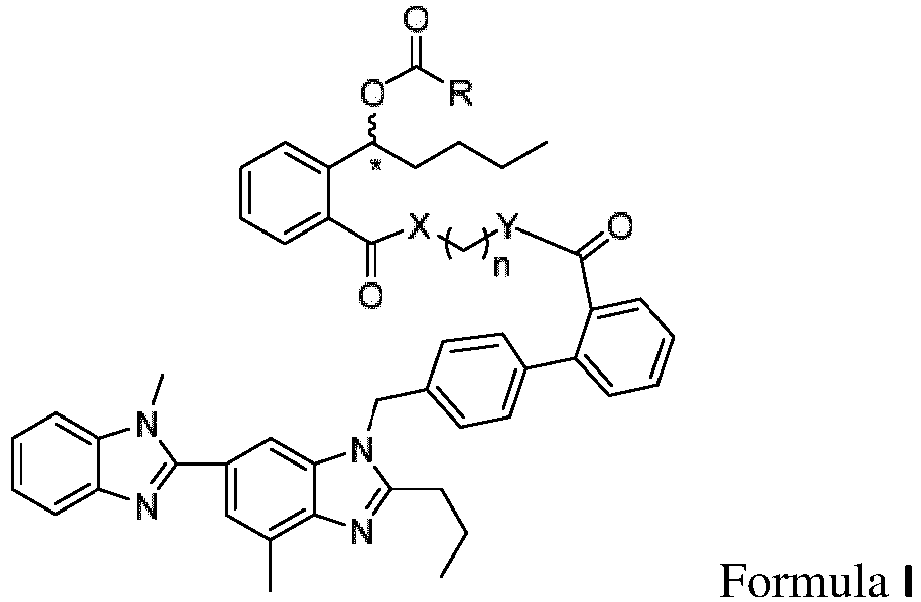 wherein, R represents a hydrogen atom H, linear or branched C1-C10 alkyl, (linear or branched C1-C10 alkylene) - Q, wherein Q represents hydroxyl or halogen;n represents 1 to 20;X represents an oxygen atom, a nitrogen atom or a sulfur atom;Y represents an oxygen atom, a nitrogen atom or a sulfur atom; andchiral center * is S or R configurated.
 - The compound according to claim 1, wherein R represents methyl;
X represents an oxygen atom or a nitrogen atom; and
Y represents an oxygen atom or a nitrogen atom. - The compound according to claim 1, wherein the compound is selected from the group consisting of:telmisartan 2-(2-(1-acetoxypentyl)benzoyloxy)ethyl ester;telmisartan 4-(2-(1-acetoxypentyl)benzoyloxy)butyl ester;N-8-(2-(1-acetoxypentyl)benzoylamino)octyl telmisartan amide;telmisartan 5-(2-(1-acetoxypentyl)benzoyloxy)pentyl ester;telmisartan 6-(2-(1-acetoxypentyl)benzoyloxy)hexyl ester;telmisartan 8-(2-(1-acetoxypentyl)benzoyloxy)octyl ester;N-6-(2-(1-acetoxypentyl)benzoylamino)hexyl telmisartan amide;N-4-(2-(1-acetoxypentyl)benzoylamino)butyl telmisartan amide; andN-8-(2-(1-acetoxypentyl)benzoylamino)octyl telmisartan amide hydrochloride.
- A preparation method of the compound according to claim 1, comprising:allowing (S)- or (R)-butylphthalide to be saponified under alkaline condition and then acidified under acidic condition to give a compound III;allowing the compound III to be esterified with an acyl chloride compound under alkaline condition of a base and a solvent to give a compound IV;allowing the compound IV to be condensed with a diol or a diamine having a different carbon chain length under alkaline condition of a condensing agent, a base and a solvent to give a compound V;allowing the compound V to be further condensed with telmisartan under alkaline condition of a condensing agent, a base and a solvent to give a target compound I;alternatively, allowing telmisartan to be first condensed with a diol or a diamine having a different carbon chain length under alkaline condition of a condensing agent, a base and a solvent to give a compound VI, and then allowing the compound VI to be condensed with the compound IV under alkaline condition of a condensing agent, a base and a solvent to give the target compound I; a synthetic route is as follows:

- The preparation method of the compound according to claim 4, wherein,
in the reaction for preparing the compound IV from the compound III, the solvent is selected from one or more of the group consisting of acetonitrile, dichloromethane, chloroform, ethyl acetate, acetone, tetrahydrofuran, N, N-dimethylformamide, dimethyl sulfoxide and dioxane; the base is selected from the group consisting of potassium carbonate, sodium carbonate, sodium bicarbonate, sodium hydroxide, potassium hydroxide, pyridine, 4-methylaminopyridine, triethylamine, and N, N-diisopropylmethylamine; and the reaction temperature is from -20 °C to reflux temperature; and/or,
in the reaction for preparing the compound V from the compound IV, the solvent is selected from one or more of the group consisting of acetonitrile, dichloromethane, chloroform, ethyl acetate, acetone, tetrahydrofuran, N, N-dimethylformamide, dimethyl sulfoxide and dioxane; the condensing agent is selected from the group consisting of N, N'-dicyclohexylcarbodiimide, 1-(3-dimethylaminopropyl)-3-ethylcarbodiimide hydrochloride, 1-hydroxybenzotriazole, and N-hydroxysuccinimide; the base is selected from the group consisting of pyridine, 4-methylaminopyridine, triethylamine, and N, N-diisopropylmethylamine; and the reaction temperature is from -20 °C to reflux temperature; and/or,
in the reaction for preparing the compound I from the compound V, the solvent is selected from one or more of the group consisting of acetonitrile, dichloromethane, chloroform, ethyl acetate, acetone, tetrahydrofuran, N, N-dimethylformamide, dimethyl sulfoxide and dioxane; the condensing agent is selected from the group consisting of N, N'-dicyclohexylcarbodiimide, 1-(3-dimethylaminopropyl)-3-ethylcarbodiimide hydrochloride, 1-hydroxybenzotriazole, and N-hydroxysuccinimide; the base is selected from the group consisting of pyridine, 4-methylaminopyridine, triethylamine, and N, N-diisopropylmethylamine; and the reaction temperature is from -20 °C to reflux temperature; and/or,
in the reaction for preparing the compound VI from telmisartan, the solvent is selected from one or more of the group consisting of acetonitrile, dichloromethane, chloroform, ethyl acetate, acetone, tetrahydrofuran, N, N-dimethylformamide, dimethyl sulfoxide and dioxane; the condensing agent is selected from the group consisting of N, N'-dicyclohexylcarbodiimide, 1-(3-dimethylaminopropyl)-3-ethylcarbodiimide hydrochloride, 1-hydroxybenzotriazole, and N-hydroxysuccinimide; the base is selected from the group consisting of pyridine, 4-methylaminopyridine, triethylamine, and N, N-diisopropylmethylamine; and the reaction temperature is from -20 °C to reflux temperature; and/or,
in the reaction for preparing the compound I from the compound IV and the compound VI, the solvent is selected from one or more of the group consisting of acetonitrile, dichloromethane, chloroform, ethyl acetate, acetone, tetrahydrofuran, N, N-dimethylformamide, dimethyl sulfoxide and dioxane; the condensing agent is selected from the group consisting of N, N'-dicyclohexylcarbodiimide, 1-(3-dimethylaminopropyl)-3-ethylcarbodiimide hydrochloride, 1-hydroxybenzotriazole, and N-hydroxysuccinimide; the base is selected from the group consisting of pyridine, 4-methylaminopyridine, triethylamine, and N, N-diisopropylmethylamine; and the reaction temperature is from -20 °C to reflux temperature. - The preparation method of the compound according to claim 5, wherein,
in the reaction for preparing the compound IV from the compound III, the solvent is dichloromethane, the base is triethylamine, and the reaction temperature is -20 °C; and/or,
in the reaction for preparing the compound V from the compound IV, the solvent is dichloromethane, the condensing agent is 1-(3-dimethylaminopropyl)-3-ethylcarbodiimide hydrochloride, the base is 4-methylaminopyridine, and the reaction temperature is room temperature; and/or,
in the reaction for preparing the compound I from the compound V, the solvent is dichloromethane, the condensing agent is 1-(3-dimethylaminopropyl)-3-ethylcarbodiimide hydrochloride, the base is 4-methylaminopyridine, and the reaction temperature is room temperature; and/or,
in the reaction for preparing the compound VI from telmisartan, the solvent is dichloromethane, the condensing agent is 1-(3-dimethylaminopropyl)-3-ethylcarbodiimide hydrochloride, the base is 4-methylaminopyridine, and the reaction temperature is room temperature; and/or,
in the reaction for preparing the compound I from the compound IV and compound VI, the solvent is dichloromethane, the condensing agent is 1-(3-dimethylaminopropyl)-3-ethylcarbodiimide hydrochloride, the base is 4-methylaminopyridine, and the reaction temperature is room temperature. - A preparation method of the compound II comprising:
dissolving compound I3 in a solvent, adding a saturated solution formed by dissolving hydrogen chloride in the solvent, and stirring to obtain the compound II; the synthetic route is as follows:
- A pharmaceutical composition comprising a therapeutically effective amount of the compound, or the pharmaceutically acceptable salt thereof according to claim 1, and a medicinal carrier, adjuvant or vehicle.
- A compound according to any one of claims 1 to 3 for use in the prevention or treatment of neuroinflammation-related diseases.
- A compound for use according to claim 9, wherein the neuroinflammation-related diseases are selected from the group consisting of cerebral ischemic stroke, alzheimer's disease, brain trauma, parkinson's disease, multiple sclerosis and depression.
Applications Claiming Priority (2)
| Application Number | Priority Date | Filing Date | Title |
|---|---|---|---|
| CN201710033418.6A CN106800537B (en) | 2017-01-18 | 2017-01-18 | Butylphenyl phthaleine-Telmisartan heterocomplex and its preparation method and application |
| PCT/CN2018/071308 WO2018133670A1 (en) | 2017-01-18 | 2018-01-04 | Butylphthalide-telmisartan heterocomplex, preparation method and application thereof |
Publications (3)
| Publication Number | Publication Date |
|---|---|
| EP3572404A4 EP3572404A4 (en) | 2019-11-27 |
| EP3572404A1 EP3572404A1 (en) | 2019-11-27 |
| EP3572404B1 true EP3572404B1 (en) | 2020-10-21 |
Family
ID=58984454
Family Applications (1)
| Application Number | Title | Priority Date | Filing Date |
|---|---|---|---|
| EP18741580.7A Active EP3572404B1 (en) | 2017-01-18 | 2018-01-04 | Butylphthalide-telmisartan heterocomplex, preparation method and application thereof |
Country Status (7)
| Country | Link |
|---|---|
| US (1) | US11028073B2 (en) |
| EP (1) | EP3572404B1 (en) |
| JP (1) | JP6688437B1 (en) |
| CN (1) | CN106800537B (en) |
| CA (1) | CA3049604C (en) |
| MY (1) | MY189740A (en) |
| WO (1) | WO2018133670A1 (en) |
Families Citing this family (8)
| Publication number | Priority date | Publication date | Assignee | Title |
|---|---|---|---|---|
| CN106800537B (en) | 2017-01-18 | 2019-02-01 | 广东隆赋药业股份有限公司 | Butylphenyl phthaleine-Telmisartan heterocomplex and its preparation method and application |
| CN108715579B (en) | 2018-05-17 | 2020-03-24 | 四川大学 | Organic amine ester derivative medicine of 2- (α hydroxypentyl) benzoic acid |
| CN109503548B (en) * | 2018-12-26 | 2020-08-04 | 江南大学 | A kind of butylphthalide derivative and its preparation method and application |
| CN110542760A (en) * | 2019-08-19 | 2019-12-06 | 鲁东大学 | A panel of brain proteins whose expression is regulated by the drug dl-PHPB |
| CN112679353B (en) * | 2020-12-26 | 2022-09-20 | 郑州大学 | A kind of prodrug based on butylphthalide structure or its pharmaceutically acceptable metal salt and its preparation method and application |
| CN113024422B (en) * | 2021-03-12 | 2022-12-20 | 上海科州药物研发有限公司 | Butylphthalide ring-opening compound, pharmaceutical compound and their preparation method, composition and application |
| CN114262299B (en) * | 2021-12-31 | 2023-08-22 | 中国药科大学 | A kind of antineuritis compound and its preparation method and medical application |
| CN115876927B (en) * | 2022-12-30 | 2024-06-18 | 广东隆赋药业股份有限公司 | Method for detecting content of compound LFHP-1C |
Family Cites Families (11)
| Publication number | Priority date | Publication date | Assignee | Title |
|---|---|---|---|---|
| DK1653950T3 (en) | 2003-07-31 | 2008-05-26 | Nicox Sa | Nitric oxide derivatives of Losartan, Valsatan, Candesartan, Telmisartan, Eprosartan and Olmesartan as angiotensin II receptor blockers for the treatment of cardiovascular disease |
| AR057882A1 (en) | 2005-11-09 | 2007-12-26 | Novartis Ag | DOUBLE ACTION COMPOUNDS OF ANGIOTENSIN RECEPTOR BLOCKERS AND NEUTRAL ENDOPEPTIDASE INHIBITORS |
| EP1970053A1 (en) | 2007-03-14 | 2008-09-17 | Boehringer Ingelheim Pharma GmbH & Co. KG | Pharmaceutical composition |
| CN101134745A (en) * | 2007-09-29 | 2008-03-05 | 中国药科大学 | Nitric oxide donating type telmisartan derivative, preparation method and medical use thereof |
| CN101337891B (en) * | 2008-05-19 | 2011-07-20 | 中国药科大学 | Nitric oxide donor type 3-butylphthalide derivates, method for preparing same and pharmaceutical use |
| CN103193789A (en) * | 2013-03-14 | 2013-07-10 | 中国药科大学 | Optically active butylphthalide open-ring derivative, preparation method and medical application |
| CN105412077B (en) | 2014-11-10 | 2018-06-15 | 石药集团恩必普药业有限公司 | A kind of new application of butylphenyl phthaleine |
| CN104628649A (en) * | 2015-01-23 | 2015-05-20 | 云南昊邦制药有限公司 | 2-(alpha-hydroxy amyl) benzamide derivate as well as preparation method, preparation and application thereof |
| JP5871294B1 (en) | 2015-02-27 | 2016-03-01 | ベーリンガー インゲルハイム インターナショナル ゲゼルシャフト ミット ベシュレンクテル ハフツング | Immediate release oral tablets |
| CN105412078B (en) | 2015-06-30 | 2019-08-16 | 石药集团恩必普药业有限公司 | Butylphenyl phthaleine or its application of derivative in the drug that preparation treats or prevents cerebral concussion |
| CN106800537B (en) | 2017-01-18 | 2019-02-01 | 广东隆赋药业股份有限公司 | Butylphenyl phthaleine-Telmisartan heterocomplex and its preparation method and application |
-
2017
- 2017-01-18 CN CN201710033418.6A patent/CN106800537B/en active Active
-
2018
- 2018-01-04 CA CA3049604A patent/CA3049604C/en active Active
- 2018-01-04 MY MYPI2019004140A patent/MY189740A/en unknown
- 2018-01-04 US US16/478,400 patent/US11028073B2/en active Active
- 2018-01-04 JP JP2019551260A patent/JP6688437B1/en active Active
- 2018-01-04 EP EP18741580.7A patent/EP3572404B1/en active Active
- 2018-01-04 WO PCT/CN2018/071308 patent/WO2018133670A1/en not_active Ceased
Non-Patent Citations (1)
| Title |
|---|
| None * |
Also Published As
| Publication number | Publication date |
|---|---|
| CA3049604A1 (en) | 2018-07-26 |
| CN106800537B (en) | 2019-02-01 |
| EP3572404A4 (en) | 2019-11-27 |
| JP6688437B1 (en) | 2020-04-28 |
| CA3049604C (en) | 2020-12-01 |
| JP2020514372A (en) | 2020-05-21 |
| US11028073B2 (en) | 2021-06-08 |
| WO2018133670A1 (en) | 2018-07-26 |
| MY189740A (en) | 2022-02-28 |
| CN106800537A (en) | 2017-06-06 |
| EP3572404A1 (en) | 2019-11-27 |
| US20190375729A1 (en) | 2019-12-12 |
Similar Documents
| Publication | Publication Date | Title |
|---|---|---|
| EP3572404A1 (en) | Butylphthalide-telmisartan heterocomplex, preparation method and application thereof | |
| DE60215919T2 (en) | 4-FLUORO-N-INDAN-2-YL BENZAMIDE AND ITS USE AS A MEDICAMENT | |
| JP2017128605A (en) | Solid forms of antiviral compound | |
| EP2867207B1 (en) | Phenoxyethyl piperidine compounds | |
| EA032526B1 (en) | Use of kynurenine-3-monooxygenase inhibitor for treating diseases and conditions mediated by kynurenine-3-monooxygenase activity | |
| KR20110091508A (en) | Carbamate compounds or salts thereof | |
| WO1999020620A1 (en) | Isoquinoline derivative and drug | |
| KR102677119B1 (en) | Novel cannabidiol derivative, process for preparing the same and composition for improving cognitive function comprising the same | |
| WO2010076033A1 (en) | Toluidine sulfonamides and their use | |
| CA3040258A1 (en) | N-acylethanolamide derivatives and uses thereof | |
| CN119930733A (en) | C-17 carbonyl substituted oleanane triterpene derivatives and preparation method and use thereof | |
| US10131647B2 (en) | Chromene derivatives substituted by alkoxide as inhibitors of the TCR-Nck interaction | |
| EP2767533B1 (en) | Derivative of butylphthalide and preparation method and use thereof | |
| CN107753469B (en) | Application of NDGA analogue in preparing antioxidant drugs | |
| EP2917204B1 (en) | Derivatives of 1h-indole-3-carboxamide and their use as p2y12 antagonists | |
| EP3750904A1 (en) | Therapeutic drug for neurodegenerative disease and application thereof | |
| EP4043436A1 (en) | Magl inhibitor, preparation method therefor and use thereof | |
| CN109422751A (en) | One kind has the degradation active compound of tyrosine protein kinase JAK3 | |
| EP3085698B1 (en) | Pain-related compound and medicinal composition | |
| KR102812340B1 (en) | Novel psoralen derivative, process for preparing the same and composition for improving symptoms of neurodegenerative disease comprising the same | |
| WO2020255983A1 (en) | MITOCHONDRIAL PERMEABILITY TRANSITION PORE (mPTP)-OPENING INHIBITOR, NOVEL COMPOUND EXHIBITING mPTP-OPENING INHIBITORY ACTIVITY, AND USE THEREFOR | |
| EP4043442A1 (en) | 6-methyluracil derivatives with anticholinesterase activity and their use | |
| WO2021018699A1 (en) | Cannabinoid receptor subtype 2 stimulator inhibiting acetylcholinesterase and butyrylcholinesterase | |
| HK40072310A (en) | Magl inhibitor, preparation method therefor and use thereof | |
| HK1203937B (en) | Phenoxyethyl piperidine compounds |
Legal Events
| Date | Code | Title | Description |
|---|---|---|---|
| STAA | Information on the status of an ep patent application or granted ep patent |
Free format text: STATUS: THE INTERNATIONAL PUBLICATION HAS BEEN MADE |
|
| PUAI | Public reference made under article 153(3) epc to a published international application that has entered the european phase |
Free format text: ORIGINAL CODE: 0009012 |
|
| STAA | Information on the status of an ep patent application or granted ep patent |
Free format text: STATUS: REQUEST FOR EXAMINATION WAS MADE |
|
| 17P | Request for examination filed |
Effective date: 20190704 |
|
| A4 | Supplementary search report drawn up and despatched |
Effective date: 20191016 |
|
| AK | Designated contracting states |
Kind code of ref document: A1 Designated state(s): AL AT BE BG CH CY CZ DE DK EE ES FI FR GB GR HR HU IE IS IT LI LT LU LV MC MK MT NL NO PL PT RO RS SE SI SK SM TR |
|
| AX | Request for extension of the european patent |
Extension state: BA ME |
|
| DAV | Request for validation of the european patent (deleted) | ||
| DAX | Request for extension of the european patent (deleted) | ||
| GRAP | Despatch of communication of intention to grant a patent |
Free format text: ORIGINAL CODE: EPIDOSNIGR1 |
|
| STAA | Information on the status of an ep patent application or granted ep patent |
Free format text: STATUS: GRANT OF PATENT IS INTENDED |
|
| INTG | Intention to grant announced |
Effective date: 20200626 |
|
| GRAS | Grant fee paid |
Free format text: ORIGINAL CODE: EPIDOSNIGR3 |
|
| GRAA | (expected) grant |
Free format text: ORIGINAL CODE: 0009210 |
|
| STAA | Information on the status of an ep patent application or granted ep patent |
Free format text: STATUS: THE PATENT HAS BEEN GRANTED |
|
| AK | Designated contracting states |
Kind code of ref document: B1 Designated state(s): AL AT BE BG CH CY CZ DE DK EE ES FI FR GB GR HR HU IE IS IT LI LT LU LV MC MK MT NL NO PL PT RO RS SE SI SK SM TR |
|
| REG | Reference to a national code |
Ref country code: GB Ref legal event code: FG4D |
|
| REG | Reference to a national code |
Ref country code: CH Ref legal event code: EP |
|
| REG | Reference to a national code |
Ref country code: IE Ref legal event code: FG4D |
|
| REG | Reference to a national code |
Ref country code: DE Ref legal event code: R096 Ref document number: 602018008989 Country of ref document: DE |
|
| REG | Reference to a national code |
Ref country code: AT Ref legal event code: REF Ref document number: 1325733 Country of ref document: AT Kind code of ref document: T Effective date: 20201115 |
|
| REG | Reference to a national code |
Ref country code: AT Ref legal event code: MK05 Ref document number: 1325733 Country of ref document: AT Kind code of ref document: T Effective date: 20201021 |
|
| REG | Reference to a national code |
Ref country code: NL Ref legal event code: MP Effective date: 20201021 |
|
| PG25 | Lapsed in a contracting state [announced via postgrant information from national office to epo] |
Ref country code: GR Free format text: LAPSE BECAUSE OF FAILURE TO SUBMIT A TRANSLATION OF THE DESCRIPTION OR TO PAY THE FEE WITHIN THE PRESCRIBED TIME-LIMIT Effective date: 20210122 Ref country code: NO Free format text: LAPSE BECAUSE OF FAILURE TO SUBMIT A TRANSLATION OF THE DESCRIPTION OR TO PAY THE FEE WITHIN THE PRESCRIBED TIME-LIMIT Effective date: 20210121 Ref country code: RS Free format text: LAPSE BECAUSE OF FAILURE TO SUBMIT A TRANSLATION OF THE DESCRIPTION OR TO PAY THE FEE WITHIN THE PRESCRIBED TIME-LIMIT Effective date: 20201021 Ref country code: PT Free format text: LAPSE BECAUSE OF FAILURE TO SUBMIT A TRANSLATION OF THE DESCRIPTION OR TO PAY THE FEE WITHIN THE PRESCRIBED TIME-LIMIT Effective date: 20210222 Ref country code: FI Free format text: LAPSE BECAUSE OF FAILURE TO SUBMIT A TRANSLATION OF THE DESCRIPTION OR TO PAY THE FEE WITHIN THE PRESCRIBED TIME-LIMIT Effective date: 20201021 |
|
| REG | Reference to a national code |
Ref country code: LT Ref legal event code: MG4D |
|
| PG25 | Lapsed in a contracting state [announced via postgrant information from national office to epo] |
Ref country code: AT Free format text: LAPSE BECAUSE OF FAILURE TO SUBMIT A TRANSLATION OF THE DESCRIPTION OR TO PAY THE FEE WITHIN THE PRESCRIBED TIME-LIMIT Effective date: 20201021 Ref country code: ES Free format text: LAPSE BECAUSE OF FAILURE TO SUBMIT A TRANSLATION OF THE DESCRIPTION OR TO PAY THE FEE WITHIN THE PRESCRIBED TIME-LIMIT Effective date: 20201021 Ref country code: BG Free format text: LAPSE BECAUSE OF FAILURE TO SUBMIT A TRANSLATION OF THE DESCRIPTION OR TO PAY THE FEE WITHIN THE PRESCRIBED TIME-LIMIT Effective date: 20210121 Ref country code: IS Free format text: LAPSE BECAUSE OF FAILURE TO SUBMIT A TRANSLATION OF THE DESCRIPTION OR TO PAY THE FEE WITHIN THE PRESCRIBED TIME-LIMIT Effective date: 20210221 Ref country code: LV Free format text: LAPSE BECAUSE OF FAILURE TO SUBMIT A TRANSLATION OF THE DESCRIPTION OR TO PAY THE FEE WITHIN THE PRESCRIBED TIME-LIMIT Effective date: 20201021 Ref country code: PL Free format text: LAPSE BECAUSE OF FAILURE TO SUBMIT A TRANSLATION OF THE DESCRIPTION OR TO PAY THE FEE WITHIN THE PRESCRIBED TIME-LIMIT Effective date: 20201021 Ref country code: SE Free format text: LAPSE BECAUSE OF FAILURE TO SUBMIT A TRANSLATION OF THE DESCRIPTION OR TO PAY THE FEE WITHIN THE PRESCRIBED TIME-LIMIT Effective date: 20201021 |
|
| PG25 | Lapsed in a contracting state [announced via postgrant information from national office to epo] |
Ref country code: HR Free format text: LAPSE BECAUSE OF FAILURE TO SUBMIT A TRANSLATION OF THE DESCRIPTION OR TO PAY THE FEE WITHIN THE PRESCRIBED TIME-LIMIT Effective date: 20201021 Ref country code: NL Free format text: LAPSE BECAUSE OF FAILURE TO SUBMIT A TRANSLATION OF THE DESCRIPTION OR TO PAY THE FEE WITHIN THE PRESCRIBED TIME-LIMIT Effective date: 20201021 |
|
| REG | Reference to a national code |
Ref country code: DE Ref legal event code: R097 Ref document number: 602018008989 Country of ref document: DE |
|
| PG25 | Lapsed in a contracting state [announced via postgrant information from national office to epo] |
Ref country code: LT Free format text: LAPSE BECAUSE OF FAILURE TO SUBMIT A TRANSLATION OF THE DESCRIPTION OR TO PAY THE FEE WITHIN THE PRESCRIBED TIME-LIMIT Effective date: 20201021 Ref country code: RO Free format text: LAPSE BECAUSE OF FAILURE TO SUBMIT A TRANSLATION OF THE DESCRIPTION OR TO PAY THE FEE WITHIN THE PRESCRIBED TIME-LIMIT Effective date: 20201021 Ref country code: SK Free format text: LAPSE BECAUSE OF FAILURE TO SUBMIT A TRANSLATION OF THE DESCRIPTION OR TO PAY THE FEE WITHIN THE PRESCRIBED TIME-LIMIT Effective date: 20201021 Ref country code: SM Free format text: LAPSE BECAUSE OF FAILURE TO SUBMIT A TRANSLATION OF THE DESCRIPTION OR TO PAY THE FEE WITHIN THE PRESCRIBED TIME-LIMIT Effective date: 20201021 Ref country code: EE Free format text: LAPSE BECAUSE OF FAILURE TO SUBMIT A TRANSLATION OF THE DESCRIPTION OR TO PAY THE FEE WITHIN THE PRESCRIBED TIME-LIMIT Effective date: 20201021 Ref country code: CZ Free format text: LAPSE BECAUSE OF FAILURE TO SUBMIT A TRANSLATION OF THE DESCRIPTION OR TO PAY THE FEE WITHIN THE PRESCRIBED TIME-LIMIT Effective date: 20201021 |
|
| PLBE | No opposition filed within time limit |
Free format text: ORIGINAL CODE: 0009261 |
|
| STAA | Information on the status of an ep patent application or granted ep patent |
Free format text: STATUS: NO OPPOSITION FILED WITHIN TIME LIMIT |
|
| PG25 | Lapsed in a contracting state [announced via postgrant information from national office to epo] |
Ref country code: DK Free format text: LAPSE BECAUSE OF FAILURE TO SUBMIT A TRANSLATION OF THE DESCRIPTION OR TO PAY THE FEE WITHIN THE PRESCRIBED TIME-LIMIT Effective date: 20201021 Ref country code: MC Free format text: LAPSE BECAUSE OF FAILURE TO SUBMIT A TRANSLATION OF THE DESCRIPTION OR TO PAY THE FEE WITHIN THE PRESCRIBED TIME-LIMIT Effective date: 20201021 |
|
| REG | Reference to a national code |
Ref country code: CH Ref legal event code: PL |
|
| 26N | No opposition filed |
Effective date: 20210722 |
|
| PG25 | Lapsed in a contracting state [announced via postgrant information from national office to epo] |
Ref country code: LU Free format text: LAPSE BECAUSE OF NON-PAYMENT OF DUE FEES Effective date: 20210104 |
|
| REG | Reference to a national code |
Ref country code: BE Ref legal event code: MM Effective date: 20210131 |
|
| PG25 | Lapsed in a contracting state [announced via postgrant information from national office to epo] |
Ref country code: AL Free format text: LAPSE BECAUSE OF FAILURE TO SUBMIT A TRANSLATION OF THE DESCRIPTION OR TO PAY THE FEE WITHIN THE PRESCRIBED TIME-LIMIT Effective date: 20201021 |
|
| PG25 | Lapsed in a contracting state [announced via postgrant information from national office to epo] |
Ref country code: SI Free format text: LAPSE BECAUSE OF FAILURE TO SUBMIT A TRANSLATION OF THE DESCRIPTION OR TO PAY THE FEE WITHIN THE PRESCRIBED TIME-LIMIT Effective date: 20201021 Ref country code: CH Free format text: LAPSE BECAUSE OF NON-PAYMENT OF DUE FEES Effective date: 20210131 Ref country code: LI Free format text: LAPSE BECAUSE OF NON-PAYMENT OF DUE FEES Effective date: 20210131 |
|
| PG25 | Lapsed in a contracting state [announced via postgrant information from national office to epo] |
Ref country code: IE Free format text: LAPSE BECAUSE OF NON-PAYMENT OF DUE FEES Effective date: 20210104 |
|
| PG25 | Lapsed in a contracting state [announced via postgrant information from national office to epo] |
Ref country code: IS Free format text: LAPSE BECAUSE OF FAILURE TO SUBMIT A TRANSLATION OF THE DESCRIPTION OR TO PAY THE FEE WITHIN THE PRESCRIBED TIME-LIMIT Effective date: 20210221 |
|
| PG25 | Lapsed in a contracting state [announced via postgrant information from national office to epo] |
Ref country code: BE Free format text: LAPSE BECAUSE OF NON-PAYMENT OF DUE FEES Effective date: 20210131 |
|
| P01 | Opt-out of the competence of the unified patent court (upc) registered |
Effective date: 20230519 |
|
| PG25 | Lapsed in a contracting state [announced via postgrant information from national office to epo] |
Ref country code: CY Free format text: LAPSE BECAUSE OF FAILURE TO SUBMIT A TRANSLATION OF THE DESCRIPTION OR TO PAY THE FEE WITHIN THE PRESCRIBED TIME-LIMIT Effective date: 20201021 |
|
| PG25 | Lapsed in a contracting state [announced via postgrant information from national office to epo] |
Ref country code: HU Free format text: LAPSE BECAUSE OF FAILURE TO SUBMIT A TRANSLATION OF THE DESCRIPTION OR TO PAY THE FEE WITHIN THE PRESCRIBED TIME-LIMIT; INVALID AB INITIO Effective date: 20180104 |
|
| PG25 | Lapsed in a contracting state [announced via postgrant information from national office to epo] |
Ref country code: MK Free format text: LAPSE BECAUSE OF FAILURE TO SUBMIT A TRANSLATION OF THE DESCRIPTION OR TO PAY THE FEE WITHIN THE PRESCRIBED TIME-LIMIT Effective date: 20201021 |
|
| PG25 | Lapsed in a contracting state [announced via postgrant information from national office to epo] |
Ref country code: MT Free format text: LAPSE BECAUSE OF FAILURE TO SUBMIT A TRANSLATION OF THE DESCRIPTION OR TO PAY THE FEE WITHIN THE PRESCRIBED TIME-LIMIT Effective date: 20201021 |
|
| PG25 | Lapsed in a contracting state [announced via postgrant information from national office to epo] |
Ref country code: TR Free format text: LAPSE BECAUSE OF FAILURE TO SUBMIT A TRANSLATION OF THE DESCRIPTION OR TO PAY THE FEE WITHIN THE PRESCRIBED TIME-LIMIT Effective date: 20201021 |
|
| PGFP | Annual fee paid to national office [announced via postgrant information from national office to epo] |
Ref country code: GB Payment date: 20260123 Year of fee payment: 9 |
|
| PGFP | Annual fee paid to national office [announced via postgrant information from national office to epo] |
Ref country code: DE Payment date: 20260121 Year of fee payment: 9 |
|
| PGFP | Annual fee paid to national office [announced via postgrant information from national office to epo] |
Ref country code: IT Payment date: 20260126 Year of fee payment: 9 |
|
| PGFP | Annual fee paid to national office [announced via postgrant information from national office to epo] |
Ref country code: FR Payment date: 20260123 Year of fee payment: 9 |