EP3572218A1 - Pneumatic tire with post cure sealant layer and method of manufacturing - Google Patents
Pneumatic tire with post cure sealant layer and method of manufacturing Download PDFInfo
- Publication number
- EP3572218A1 EP3572218A1 EP19174969.6A EP19174969A EP3572218A1 EP 3572218 A1 EP3572218 A1 EP 3572218A1 EP 19174969 A EP19174969 A EP 19174969A EP 3572218 A1 EP3572218 A1 EP 3572218A1
- Authority
- EP
- European Patent Office
- Prior art keywords
- sup
- previous
- alkyl
- sealant composition
- rubber
- Prior art date
- Legal status (The legal status is an assumption and is not a legal conclusion. Google has not performed a legal analysis and makes no representation as to the accuracy of the status listed.)
- Granted
Links
Images

Classifications
-
- B—PERFORMING OPERATIONS; TRANSPORTING
- B29—WORKING OF PLASTICS; WORKING OF SUBSTANCES IN A PLASTIC STATE IN GENERAL
- B29C—SHAPING OR JOINING OF PLASTICS; SHAPING OF MATERIAL IN A PLASTIC STATE, NOT OTHERWISE PROVIDED FOR; AFTER-TREATMENT OF THE SHAPED PRODUCTS, e.g. REPAIRING
- B29C73/00—Repairing of articles made from plastics or substances in a plastic state, e.g. of articles shaped or produced by using techniques covered by this subclass or subclass B29D
- B29C73/16—Auto-repairing or self-sealing arrangements or agents
- B29C73/163—Sealing compositions or agents, e.g. combined with propellant agents
-
- B—PERFORMING OPERATIONS; TRANSPORTING
- B60—VEHICLES IN GENERAL
- B60C—VEHICLE TYRES; TYRE INFLATION; TYRE CHANGING; CONNECTING VALVES TO INFLATABLE ELASTIC BODIES IN GENERAL; DEVICES OR ARRANGEMENTS RELATED TO TYRES
- B60C19/00—Tyre parts or constructions not otherwise provided for
- B60C19/12—Puncture preventing arrangements
- B60C19/122—Puncture preventing arrangements disposed inside of the inner liner
-
- B—PERFORMING OPERATIONS; TRANSPORTING
- B29—WORKING OF PLASTICS; WORKING OF SUBSTANCES IN A PLASTIC STATE IN GENERAL
- B29C—SHAPING OR JOINING OF PLASTICS; SHAPING OF MATERIAL IN A PLASTIC STATE, NOT OTHERWISE PROVIDED FOR; AFTER-TREATMENT OF THE SHAPED PRODUCTS, e.g. REPAIRING
- B29C73/00—Repairing of articles made from plastics or substances in a plastic state, e.g. of articles shaped or produced by using techniques covered by this subclass or subclass B29D
- B29C73/16—Auto-repairing or self-sealing arrangements or agents
- B29C73/166—Devices or methods for introducing sealing compositions into articles
-
- B—PERFORMING OPERATIONS; TRANSPORTING
- B29—WORKING OF PLASTICS; WORKING OF SUBSTANCES IN A PLASTIC STATE IN GENERAL
- B29C—SHAPING OR JOINING OF PLASTICS; SHAPING OF MATERIAL IN A PLASTIC STATE, NOT OTHERWISE PROVIDED FOR; AFTER-TREATMENT OF THE SHAPED PRODUCTS, e.g. REPAIRING
- B29C73/00—Repairing of articles made from plastics or substances in a plastic state, e.g. of articles shaped or produced by using techniques covered by this subclass or subclass B29D
- B29C73/16—Auto-repairing or self-sealing arrangements or agents
- B29C73/22—Auto-repairing or self-sealing arrangements or agents the article containing elements including a sealing composition, e.g. powder being liberated when the article is damaged
-
- B—PERFORMING OPERATIONS; TRANSPORTING
- B29—WORKING OF PLASTICS; WORKING OF SUBSTANCES IN A PLASTIC STATE IN GENERAL
- B29D—PRODUCING PARTICULAR ARTICLES FROM PLASTICS OR FROM SUBSTANCES IN A PLASTIC STATE
- B29D30/00—Producing pneumatic or solid tyres or parts thereof
- B29D30/0005—Pretreatment of tyres or parts thereof, e.g. preheating, irradiation, precuring
-
- B—PERFORMING OPERATIONS; TRANSPORTING
- B29—WORKING OF PLASTICS; WORKING OF SUBSTANCES IN A PLASTIC STATE IN GENERAL
- B29D—PRODUCING PARTICULAR ARTICLES FROM PLASTICS OR FROM SUBSTANCES IN A PLASTIC STATE
- B29D30/00—Producing pneumatic or solid tyres or parts thereof
- B29D30/0061—Accessories, details or auxiliary operations not otherwise provided for
-
- B—PERFORMING OPERATIONS; TRANSPORTING
- B29—WORKING OF PLASTICS; WORKING OF SUBSTANCES IN A PLASTIC STATE IN GENERAL
- B29D—PRODUCING PARTICULAR ARTICLES FROM PLASTICS OR FROM SUBSTANCES IN A PLASTIC STATE
- B29D30/00—Producing pneumatic or solid tyres or parts thereof
- B29D30/06—Pneumatic tyres or parts thereof (e.g. produced by casting, moulding, compression moulding, injection moulding, centrifugal casting)
- B29D30/0681—Parts of pneumatic tyres; accessories, auxiliary operations
- B29D30/0685—Incorporating auto-repairing or self-sealing arrangements or agents on or into tyres
-
- B—PERFORMING OPERATIONS; TRANSPORTING
- B60—VEHICLES IN GENERAL
- B60C—VEHICLE TYRES; TYRE INFLATION; TYRE CHANGING; CONNECTING VALVES TO INFLATABLE ELASTIC BODIES IN GENERAL; DEVICES OR ARRANGEMENTS RELATED TO TYRES
- B60C1/00—Tyres characterised by the chemical composition or the physical arrangement or mixture of the composition
-
- B—PERFORMING OPERATIONS; TRANSPORTING
- B60—VEHICLES IN GENERAL
- B60C—VEHICLE TYRES; TYRE INFLATION; TYRE CHANGING; CONNECTING VALVES TO INFLATABLE ELASTIC BODIES IN GENERAL; DEVICES OR ARRANGEMENTS RELATED TO TYRES
- B60C5/00—Inflatable pneumatic tyres or inner tubes
- B60C5/12—Inflatable pneumatic tyres or inner tubes without separate inflatable inserts, e.g. tubeless tyres with transverse section open to the rim
- B60C5/14—Inflatable pneumatic tyres or inner tubes without separate inflatable inserts, e.g. tubeless tyres with transverse section open to the rim with impervious liner or coating on the inner wall of the tyre
-
- C—CHEMISTRY; METALLURGY
- C08—ORGANIC MACROMOLECULAR COMPOUNDS; THEIR PREPARATION OR CHEMICAL WORKING-UP; COMPOSITIONS BASED THEREON
- C08K—Use of inorganic or non-macromolecular organic substances as compounding ingredients
- C08K3/00—Use of inorganic substances as compounding ingredients
- C08K3/18—Oxygen-containing compounds, e.g. metal carbonyls
- C08K3/20—Oxides; Hydroxides
- C08K3/22—Oxides; Hydroxides of metals
-
- C—CHEMISTRY; METALLURGY
- C08—ORGANIC MACROMOLECULAR COMPOUNDS; THEIR PREPARATION OR CHEMICAL WORKING-UP; COMPOSITIONS BASED THEREON
- C08K—Use of inorganic or non-macromolecular organic substances as compounding ingredients
- C08K5/00—Use of organic ingredients
- C08K5/04—Oxygen-containing compounds
- C08K5/05—Alcohols; Metal alcoholates
- C08K5/053—Polyhydroxylic alcohols
-
- C—CHEMISTRY; METALLURGY
- C08—ORGANIC MACROMOLECULAR COMPOUNDS; THEIR PREPARATION OR CHEMICAL WORKING-UP; COMPOSITIONS BASED THEREON
- C08K—Use of inorganic or non-macromolecular organic substances as compounding ingredients
- C08K5/00—Use of organic ingredients
- C08K5/04—Oxygen-containing compounds
- C08K5/07—Aldehydes; Ketones
- C08K5/08—Quinones
-
- C—CHEMISTRY; METALLURGY
- C08—ORGANIC MACROMOLECULAR COMPOUNDS; THEIR PREPARATION OR CHEMICAL WORKING-UP; COMPOSITIONS BASED THEREON
- C08K—Use of inorganic or non-macromolecular organic substances as compounding ingredients
- C08K5/00—Use of organic ingredients
- C08K5/04—Oxygen-containing compounds
- C08K5/09—Carboxylic acids; Metal salts thereof; Anhydrides thereof
- C08K5/092—Polycarboxylic acids
-
- C—CHEMISTRY; METALLURGY
- C08—ORGANIC MACROMOLECULAR COMPOUNDS; THEIR PREPARATION OR CHEMICAL WORKING-UP; COMPOSITIONS BASED THEREON
- C08K—Use of inorganic or non-macromolecular organic substances as compounding ingredients
- C08K5/00—Use of organic ingredients
- C08K5/04—Oxygen-containing compounds
- C08K5/10—Esters; Ether-esters
- C08K5/11—Esters; Ether-esters of acyclic polycarboxylic acids
-
- C—CHEMISTRY; METALLURGY
- C08—ORGANIC MACROMOLECULAR COMPOUNDS; THEIR PREPARATION OR CHEMICAL WORKING-UP; COMPOSITIONS BASED THEREON
- C08K—Use of inorganic or non-macromolecular organic substances as compounding ingredients
- C08K5/00—Use of organic ingredients
- C08K5/04—Oxygen-containing compounds
- C08K5/14—Peroxides
-
- C—CHEMISTRY; METALLURGY
- C08—ORGANIC MACROMOLECULAR COMPOUNDS; THEIR PREPARATION OR CHEMICAL WORKING-UP; COMPOSITIONS BASED THEREON
- C08K—Use of inorganic or non-macromolecular organic substances as compounding ingredients
- C08K5/00—Use of organic ingredients
- C08K5/16—Nitrogen-containing compounds
- C08K5/17—Amines; Quaternary ammonium compounds
-
- C—CHEMISTRY; METALLURGY
- C08—ORGANIC MACROMOLECULAR COMPOUNDS; THEIR PREPARATION OR CHEMICAL WORKING-UP; COMPOSITIONS BASED THEREON
- C08L—COMPOSITIONS OF MACROMOLECULAR COMPOUNDS
- C08L23/00—Compositions of homopolymers or copolymers of unsaturated aliphatic hydrocarbons having only one carbon-to-carbon double bond; Compositions of derivatives of such polymers
- C08L23/02—Compositions of homopolymers or copolymers of unsaturated aliphatic hydrocarbons having only one carbon-to-carbon double bond; Compositions of derivatives of such polymers not modified by chemical after-treatment
- C08L23/18—Homopolymers or copolymers of hydrocarbons having four or more carbon atoms
- C08L23/20—Homopolymers or copolymers of hydrocarbons having four or more carbon atoms having four to nine carbon atoms
- C08L23/22—Copolymers of isobutene; Butyl rubber; Homopolymers or copolymers of other iso-olefins
-
- C—CHEMISTRY; METALLURGY
- C08—ORGANIC MACROMOLECULAR COMPOUNDS; THEIR PREPARATION OR CHEMICAL WORKING-UP; COMPOSITIONS BASED THEREON
- C08L—COMPOSITIONS OF MACROMOLECULAR COMPOUNDS
- C08L7/00—Compositions of natural rubber
- C08L7/02—Latex
-
- C—CHEMISTRY; METALLURGY
- C08—ORGANIC MACROMOLECULAR COMPOUNDS; THEIR PREPARATION OR CHEMICAL WORKING-UP; COMPOSITIONS BASED THEREON
- C08L—COMPOSITIONS OF MACROMOLECULAR COMPOUNDS
- C08L9/00—Compositions of homopolymers or copolymers of conjugated diene hydrocarbons
- C08L9/02—Copolymers with acrylonitrile
-
- C—CHEMISTRY; METALLURGY
- C08—ORGANIC MACROMOLECULAR COMPOUNDS; THEIR PREPARATION OR CHEMICAL WORKING-UP; COMPOSITIONS BASED THEREON
- C08L—COMPOSITIONS OF MACROMOLECULAR COMPOUNDS
- C08L9/00—Compositions of homopolymers or copolymers of conjugated diene hydrocarbons
- C08L9/06—Copolymers with styrene
-
- B—PERFORMING OPERATIONS; TRANSPORTING
- B29—WORKING OF PLASTICS; WORKING OF SUBSTANCES IN A PLASTIC STATE IN GENERAL
- B29D—PRODUCING PARTICULAR ARTICLES FROM PLASTICS OR FROM SUBSTANCES IN A PLASTIC STATE
- B29D30/00—Producing pneumatic or solid tyres or parts thereof
- B29D30/06—Pneumatic tyres or parts thereof (e.g. produced by casting, moulding, compression moulding, injection moulding, centrifugal casting)
- B29D30/0681—Parts of pneumatic tyres; accessories, auxiliary operations
- B29D30/0685—Incorporating auto-repairing or self-sealing arrangements or agents on or into tyres
- B29D2030/0686—Incorporating sealants on or into tyres not otherwise provided for; auxiliary operations therefore, e.g. preparation of the tyre
-
- B—PERFORMING OPERATIONS; TRANSPORTING
- B29—WORKING OF PLASTICS; WORKING OF SUBSTANCES IN A PLASTIC STATE IN GENERAL
- B29D—PRODUCING PARTICULAR ARTICLES FROM PLASTICS OR FROM SUBSTANCES IN A PLASTIC STATE
- B29D30/00—Producing pneumatic or solid tyres or parts thereof
- B29D30/06—Pneumatic tyres or parts thereof (e.g. produced by casting, moulding, compression moulding, injection moulding, centrifugal casting)
- B29D30/0681—Parts of pneumatic tyres; accessories, auxiliary operations
- B29D30/0685—Incorporating auto-repairing or self-sealing arrangements or agents on or into tyres
- B29D2030/0686—Incorporating sealants on or into tyres not otherwise provided for; auxiliary operations therefore, e.g. preparation of the tyre
- B29D2030/0695—Incorporating sealants on or into tyres not otherwise provided for; auxiliary operations therefore, e.g. preparation of the tyre the sealant being in the form of one wide strip, e.g. a patch
-
- B—PERFORMING OPERATIONS; TRANSPORTING
- B29—WORKING OF PLASTICS; WORKING OF SUBSTANCES IN A PLASTIC STATE IN GENERAL
- B29L—INDEXING SCHEME ASSOCIATED WITH SUBCLASS B29C, RELATING TO PARTICULAR ARTICLES
- B29L2030/00—Pneumatic or solid tyres or parts thereof
-
- C—CHEMISTRY; METALLURGY
- C08—ORGANIC MACROMOLECULAR COMPOUNDS; THEIR PREPARATION OR CHEMICAL WORKING-UP; COMPOSITIONS BASED THEREON
- C08K—Use of inorganic or non-macromolecular organic substances as compounding ingredients
- C08K3/00—Use of inorganic substances as compounding ingredients
- C08K3/18—Oxygen-containing compounds, e.g. metal carbonyls
- C08K3/20—Oxides; Hydroxides
- C08K3/22—Oxides; Hydroxides of metals
- C08K2003/2206—Oxides; Hydroxides of metals of calcium, strontium or barium
-
- C—CHEMISTRY; METALLURGY
- C08—ORGANIC MACROMOLECULAR COMPOUNDS; THEIR PREPARATION OR CHEMICAL WORKING-UP; COMPOSITIONS BASED THEREON
- C08K—Use of inorganic or non-macromolecular organic substances as compounding ingredients
- C08K3/00—Use of inorganic substances as compounding ingredients
- C08K3/18—Oxygen-containing compounds, e.g. metal carbonyls
- C08K3/20—Oxides; Hydroxides
- C08K3/22—Oxides; Hydroxides of metals
- C08K2003/2217—Oxides; Hydroxides of metals of magnesium
- C08K2003/222—Magnesia, i.e. magnesium oxide
-
- C—CHEMISTRY; METALLURGY
- C08—ORGANIC MACROMOLECULAR COMPOUNDS; THEIR PREPARATION OR CHEMICAL WORKING-UP; COMPOSITIONS BASED THEREON
- C08K—Use of inorganic or non-macromolecular organic substances as compounding ingredients
- C08K3/00—Use of inorganic substances as compounding ingredients
- C08K3/18—Oxygen-containing compounds, e.g. metal carbonyls
- C08K3/20—Oxides; Hydroxides
- C08K3/22—Oxides; Hydroxides of metals
- C08K2003/2296—Oxides; Hydroxides of metals of zinc
-
- C—CHEMISTRY; METALLURGY
- C08—ORGANIC MACROMOLECULAR COMPOUNDS; THEIR PREPARATION OR CHEMICAL WORKING-UP; COMPOSITIONS BASED THEREON
- C08L—COMPOSITIONS OF MACROMOLECULAR COMPOUNDS
- C08L2205/00—Polymer mixtures characterised by other features
- C08L2205/02—Polymer mixtures characterised by other features containing two or more polymers of the same C08L -group
- C08L2205/025—Polymer mixtures characterised by other features containing two or more polymers of the same C08L -group containing two or more polymers of the same hierarchy C08L, and differing only in parameters such as density, comonomer content, molecular weight, structure
Definitions
- Puncture sealing tires also have been further proposed wherein a sealant layer of degradable butyl based rubber, for example, is assembled between unvulcanized tire layers to provide a built-in sealant.
- a sealant layer of degradable butyl based rubber for example, is assembled between unvulcanized tire layers to provide a built-in sealant.
- the compounds that typically are used in the built-in sealant can generate gases at higher temperature, such as during the tire cure or during tire use, which can result in aesthetically unappealing inner liner blister formation. Aside from being unappealing, such blister formation may allow the sealant to unfavorably migrate away from its intended location.
- the inner liner for example, can be provided at an increased thickness but this can add to the cost of building a tire.
- sealant layers to tires after the cure process, or post cure.
- sealant layers generally are adhesively secured to the exposed surface of the innermost inner liner, and may be tacky and gel-like.
- post cure sealants as known in the art may not provide adequate long-term seal against puncturing objects such as nails and the like. Accordingly, there is a need for an improved post cure sealant layer for tires.
- the invention relates to a method in accordance with claim 1 and to a tire in accordance with claim 15.
- the present invention is directed to a method making a pneumatic tire, comprising the steps of: mixing a sealant composition comprising an elastomer, a filler, a diluent, a quinoid curing agent, an oxidant co-curative; and a cure activator of formula 1: wherein R 1 and R 2 are independently H or C1 to C4 alkyl, or R 1 and R 2 taken together form a substituted or unsubstituted phenylene group; R 3 and R 4 are independently H, -OH -NH 2 , C1 to C4 alkyl, or -OR 5 where R 5 is C1 to C4 alkyl, with the proviso that when R 1 and R 2 are taken together to form a substituted or unsubstituted phenylene group, R 5 is C1 to C3 alkyl; applying the sealant composition to an inner surface of a cured tire; and curing the sealant composition.
- a sealant composition comprising an elastomer
- a method making a pneumatic tire comprising the steps of: mixing a sealant composition comprising an elastomer, a filler, a diluent, a quinoid curing agent, an oxidant co-curative; and a cure activator of formula 1: wherein R 1 and R 2 are independently H or C1 to C4 alkyl, or R 1 and R 2 taken together form a substituted or unsubstituted phenylene group; R 3 and R 4 are independently H, -OH -NH 2 , C1 to C4 alkyl, or -OR 5 where R 5 is C1 to C4 alkyl, with the proviso that when R 1 and R 2 are taken together to form a substituted or unsubstituted phenylene group, R 5 is C1 to C3 alkyl; applying the sealant composition to an inner surface of a cured tire; and curing the sealant composition.
- a cross-section of a cured pneumatic tire 10 comprising a tread 14 which preferably includes a tread base rubber layer 11, sidewalls 12, spaced apart beads 18 and a carcass underlying the tread 14 (the tread 14 including the tread base layer 11), the carcass comprising one or more cord reinforced (e.g. wire cord reinforced) rubber belt plies 16, preferably further one or more cord reinforced (e.g. synthetic nylon or polyester cord reinforced) rubber carcass plies 17, and an optional rubber barrier layer 13 with an inner liner rubber layer 22 being positioned radially inward of the carcass and the optional barrier layer 13 and carcass ply 17.
- a sealant layer 20 is formed at least partially on the radially inner side of the inner liner rubber layer 22.
- the sealant layer 20, where applied, forms the radially innermost surface of the tire 10.
- the sealant layer 20 is applied radially inward of the crown portion of the tread 14.
- the sealant layer 20 is formed of a composition having the general components as shown in Table 1.
- Table 1 Material Percent (wt.) Elastomer 10-50% Filler 0-30% Diluent 10-80% Quinoid curing agent 0.5-5% Basic oxide (ZnO, MgO, CaO) 0-5% Peroxide 1-15% Cure activator of formula 1 1-10%
- Suitable cure activators of formula 1 include phthalic acid, monoalkyl phthalates, dialkyl phthalates such as dimethyl phthalate, diethylphthalate, and dipropylphthalate, phthalic acid monoamides, phthalic acid diamides, phthalaldehyde, and o-diacetylbenzene; maleic acid, monoalkyl maleates, dialkyl maleates such as dimethylmaleate, diethylmaleate, dipropylmaleate, and dibutylmaleate, maleic acid monoamides, maleic acid diamides, citraconic acid, monoalkyl citraconate, dialkyl citraconates, citraconic acid monoamides, citraconic acid diamides, and 2-butenedial-2Z; trimellitic acid, monoalkyl trimellitates, dialkyltrimellitates, trialkyltrimellitates, hemimellitic acid, monoalkyl hemimellitates, dialky hemimellitates,
- the sealant layer 20 includes an elastomer.
- Suitable elastomers include isoprene-isobutylene-rubber (Butyl rubber, IIR), halogenated isoprene-isobutylene-rubber (HIIR), ethylene-propylene-diene-terpolymer (EPDM), styrene-butadiene copolymer (SBR), acrylonitrile-butadiene copolymer (AB), acrylonitrile-butadienestyrene copolymer (ABS), polybutadiene, natural rubber, cis polyisoprene, and combinations thereof.
- Suitable elastomers generally having a molecular weight Mn between 100 kDa and 500 kDa. Molecular weight Mn is determined by gel permeation chromatography following ASTM D3536 or equivalent.
- the sealant layer 20 includes a butyl rubber.
- butyl rubber is defined to mean a polymer predominately comprising repeat units of isobutylene but including a few repeat units of a conjugated diene. Preferably from 85% to 99.5% by weight of the butyl rubber are repeat units derived from the polymerization of isobutylene, while from 0.1% to 15% by weight of the repeat units are derived from a conjugated diene having from 4 to 8 carbon atoms such as butadiene, isoprene, hexadiene, etc., with isoprene being preferred.
- the sealant layer 20 also includes a diluent.
- Suitable diluents include low molecular weight elastomers with a number average molecular weight Mn ranging from 200 to 5,000.
- Low molecular weight elastomers include low molecular weight polyisoprene, polybutenes including polyisobutylene, polybutadiene, butyl rubber, and the like.
- Other diluents include oils and resins.
- Molecular weight Mn is determined by gel permeation chromatography following ASTM D3536 or equivalent.
- the diluent is a polybutene.
- polybutene it is meant a polymer of one or more butene isomers including 1-butene, 2-butene, and 2-methylpropene (isobutylene).
- Such polybutene may be commercially referred to as polyisobutylene.
- Such polybutenes preferably have a number average molecular weight exceeding 600 to minimize the possibility of migration from the sealant layer into adjacent tire components. It is preferably prepared by polymerizing an isobutylene rich stream with a metal halide catalyst and preferably has a polymer backbone structure resembling polyisobutylene. Very suitable polybutenes are available under the trademark Indopol. In one embodiment, the number average molecular weights (Mn) of the polybutene from 600 to 2500, as determined by vapor pressure osmometry.
- Oils may be included in the sealant as a diluent.
- Suitable oils include oils such as mineral oils including but not limited to aromatic oils, naphthenic oils, paraffinic oils, MES oils, TDAE oils, RAE oils, and SRAE oils, and vegetable oils including but not limited to sunflower oil, soybean oil, corn oil, castor oil, and canola oil. Oil may be present in an amount ranging from 5 to 15 phr.
- Resins may also be included in the sealant as a diluent.
- Suitable resins include hydrocarbon resins, phenol/acetylene resins, rosin derived resins and mixtures thereof.
- Representative hydrocarbon resins include coumarone-indene-resins, petroleum resins, terpene polymers and mixtures thereof.
- Crosslinking of the elastomer constituents in the sealant may be effected by one of the known quinoid systems.
- benzoquinone dioxime and p,p-di-benzoylquinone dioxime are preferred as the curing agents.
- Other suitable curing agents include dibenzoyl-p-quinone dioxime, p-dinitrosobenzene and N-methyl-N, 4-dinitrosoanilene.
- the crosslinking activators which may be employed in the sealant composition include organic peroxides (including diaroyl peroxides, diacyl peroxides and peroxyesters.
- the curing agent/crosslinking activator combination is benzoquinone dioxime and benzoyl peroxide combination.
- compositions including but not limited to filler such as carbon black and silica, antidegradants, colorants, processing aids, and the like.
- the sealant composition may also include a cure retarder selected from ethylene glycol, alkyl-substituted ethylene glycols, ethylene diamine, and alkyl-substituted ethylene diamines.
- Suitable cure retarders include ethylene glycol, propylene glycol (i.e., ⁇ -propylene glycol), ethylene diamine, methyl ethylene diamine, N, N-dimethyl ethylene diamine, and 1,2-dimethyl ethylene diamine.
- the cure retarder may be used in the same amount range as the cure accelerator.
- Sealing of the sealant composition may be accomplished for example by combining the elastomers and other components in a rubber mixer such as a Brabender internal mixer, extruder, conical mixer, or the like.
- a suitable process for mixing the sealant and applying to a tire innerliner is as disclosed for example in US-B-8,821,982 .
- the sealant composition is applied to the innerliner of a cured tire.
- the tire innerliner Prior to application of the sealant, the tire innerliner may be cleaned of surface impurities to improve adhesion of the sealant to the innerliner surface.
- the innerliner surface is cleaned using a laser technique as described in US-A-2017/0151740 .
- FIG. 2 depicts a partial cross-section of the sulfur cured pneumatic tire 10, labeled as 10a in FIG. 2 , comprising the tire tread 14 with its tread base rubber layer 11, wire cord reinforced rubber belt plies 16, carcass with synthetic cord reinforced rubber carcass ply 17 (e.g. synthetic fiber based cord such as, for example, nylon or polyester cord), optional rubber barrier layer 13, rubber inner liner 22 and sealant layer 20.
- the sealant layer 20 is applied to the inner liner 22 of the already cured tire (and is therefore a post tire cure applied sealant layer) to provide a tire with a sealant layer with puncture sealing properties against various puncturing objects.
- the thickness of the circumferential sealant layer 20 can vary depending somewhat upon the degree of sealing ability desired as well as the tire itself, including the tire size and intended tire use.
- the thickness of the sealant layer may range from 0.13 cm (0.05 inches) to 1.9 cm (0.75 inches) depending somewhat upon the tire itself and its intended use.
- the sealant layer 20 might, for example, have a thickness in a range of from 0.33 cm (0.125 inches) to 1 cm whereas for truck tires, the sealant layer 20 might, for example, have a thickness in a range of from 0.76 cm (0.3 inches) to 1.5 cm.
- the post cured tire applied sealant layer 20 is generally situated in the crown region of the tire 10, and, if desired, may include colorant so that it is of a non-black color that may contrast with the black colored inner liner, tread, or sidewall so that a tire puncture can be noticed.
- the tire inner liner rubber layer 22 may comprise a conventional sulfur curable rubber inner liner for use in pneumatic tires.
- the rubber innerliner 22 can be a sulfur curative-containing halobutyl rubber composition of a halobutyl rubber such as for example chlorobutyl rubber or bromobutyl rubber.
- halobutyl rubber based inner liner layer may also contain one or more sulfur curable diene-based elastomers such as, for example, cis-1,4-polyisoprene natural rubber, cis-1,4-polybutadiene rubber and styrene/butadiene rubber, or mixtures thereof.
- the inner liner 22 is normally prepared by conventional calendering or milling techniques to form a strip of uncured compounded rubber of appropriate width. When the tire 10 is cured, the inner liner 22 becomes co-cured and thereby integral with, the tire 10. Tire inner liner rubber layers and their methods of preparation are well known to those having skill in such art.
Landscapes
- Chemical & Material Sciences (AREA)
- Engineering & Computer Science (AREA)
- Mechanical Engineering (AREA)
- Health & Medical Sciences (AREA)
- Chemical Kinetics & Catalysis (AREA)
- Medicinal Chemistry (AREA)
- Polymers & Plastics (AREA)
- Organic Chemistry (AREA)
- Compositions Of Macromolecular Compounds (AREA)
- Tires In General (AREA)
- Tyre Moulding (AREA)
- Sealing Material Composition (AREA)
Abstract
Description
- Various methods, sealants and tire constructions have been suggested for pneumatic tires relating to the use of liquid sealant coatings in which the sealant flows into a puncture hole. However, such liquid sealants can flow excessively at elevated temperatures and cause the tire to become out of balance. Also, the liquid sealant may not be entirely operable or effective over a wide temperature range extending from summer to winter conditions. More complicated tire structures which encase a liquid sealant in a vulcanized rubber material can be expensive to manufacture and can also create balance and suspension problems due to the additional weight required in the tire.
- Puncture sealing tires also have been further proposed wherein a sealant layer of degradable butyl based rubber, for example, is assembled between unvulcanized tire layers to provide a built-in sealant. By laminating the sealant layer between two or more non-degraded rubber layers, e.g., the tire inner liner and a tire carcass, the sealant layer retains its structural integrity during the vulcanization operation where high pressures are applied to the tire, which would otherwise displace the degraded rubber layer from its desired location. However, the compounds that typically are used in the built-in sealant, e.g., organic peroxide depolymerized butyl based rubber, can generate gases at higher temperature, such as during the tire cure or during tire use, which can result in aesthetically unappealing inner liner blister formation. Aside from being unappealing, such blister formation may allow the sealant to unfavorably migrate away from its intended location. To combat blister formation, the inner liner, for example, can be provided at an increased thickness but this can add to the cost of building a tire.
- It is also known to directly apply sealant layers to tires after the cure process, or post cure. Such sealant layers generally are adhesively secured to the exposed surface of the innermost inner liner, and may be tacky and gel-like. Such post cure sealants as known in the art may not provide adequate long-term seal against puncturing objects such as nails and the like. Accordingly, there is a need for an improved post cure sealant layer for tires.
- The invention relates to a method in accordance with
claim 1 and to a tire in accordance withclaim 15. - Dependent claims refer to preferred embodiments of the invention.
- In one aspect, the present invention is directed to a method making a pneumatic tire, comprising the steps of: mixing a sealant composition comprising an elastomer, a filler, a diluent, a quinoid curing agent, an oxidant co-curative; and a cure activator of formula 1:

-
-
Figure 1 shows a cross-sectional view of a pneumatic tire which contains a circumferential sealant layer which contains a post tire cure applied sealant layer adhered to the innerliner. -
Figure 2 shows a partial cross-sectional view of a portion of the tire with a post-tire cure applied sealant layer. -
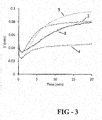
Figure 3 shows cure behavior for a sealant composition including various cure modifiers. - There is disclosed a method making a pneumatic tire, the method comprising the steps of: mixing a sealant composition comprising an elastomer, a filler, a diluent, a quinoid curing agent, an oxidant co-curative; and a cure activator of formula 1:
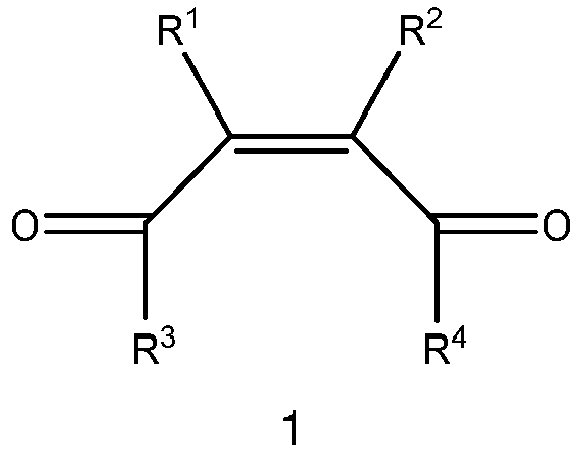
- In
FIG. 1 , a cross-section of a curedpneumatic tire 10 is presented comprising atread 14 which preferably includes a treadbase rubber layer 11,sidewalls 12, spaced apartbeads 18 and a carcass underlying the tread 14 (thetread 14 including the tread base layer 11), the carcass comprising one or more cord reinforced (e.g. wire cord reinforced)rubber belt plies 16, preferably further one or more cord reinforced (e.g. synthetic nylon or polyester cord reinforced)rubber carcass plies 17, and an optionalrubber barrier layer 13 with an innerliner rubber layer 22 being positioned radially inward of the carcass and theoptional barrier layer 13 andcarcass ply 17. Asealant layer 20 is formed at least partially on the radially inner side of the innerliner rubber layer 22. Thesealant layer 20, where applied, forms the radially innermost surface of thetire 10. Preferably, thesealant layer 20 is applied radially inward of the crown portion of thetread 14. - The
sealant layer 20 is formed of a composition having the general components as shown in Table 1.Table 1 Material Percent (wt.) Elastomer 10-50% Filler 0-30% Diluent 10-80% Quinoid curing agent 0.5-5% Basic oxide (ZnO, MgO, CaO) 0-5% Peroxide 1-15% Cure activator of formula 11-10% - Suitable cure activators of
formula 1 include phthalic acid, monoalkyl phthalates, dialkyl phthalates such as dimethyl phthalate, diethylphthalate, and dipropylphthalate, phthalic acid monoamides, phthalic acid diamides, phthalaldehyde, and o-diacetylbenzene; maleic acid, monoalkyl maleates, dialkyl maleates such as dimethylmaleate, diethylmaleate, dipropylmaleate, and dibutylmaleate, maleic acid monoamides, maleic acid diamides, citraconic acid, monoalkyl citraconate, dialkyl citraconates, citraconic acid monoamides, citraconic acid diamides, and 2-butenedial-2Z; trimellitic acid, monoalkyl trimellitates, dialkyltrimellitates, trialkyltrimellitates, hemimellitic acid, monoalkyl hemimellitates, dialky hemimellitates, trialkyl hemimellitates, pyromellitic acid, monoalkyl pyromellitates, dialkyl pyromellitates, trialkyl pyromellitates, and tetraalkyl pyromellitates. - The
sealant layer 20 includes an elastomer. Suitable elastomers include isoprene-isobutylene-rubber (Butyl rubber, IIR), halogenated isoprene-isobutylene-rubber (HIIR), ethylene-propylene-diene-terpolymer (EPDM), styrene-butadiene copolymer (SBR), acrylonitrile-butadiene copolymer (AB), acrylonitrile-butadienestyrene copolymer (ABS), polybutadiene, natural rubber, cis polyisoprene, and combinations thereof. Suitable elastomers generally having a molecular weight Mn between 100 kDa and 500 kDa. Molecular weight Mn is determined by gel permeation chromatography following ASTM D3536 or equivalent. - In one embodiment, the
sealant layer 20 includes a butyl rubber. As used herein the term "butyl rubber" is defined to mean a polymer predominately comprising repeat units of isobutylene but including a few repeat units of a conjugated diene. Preferably from 85% to 99.5% by weight of the butyl rubber are repeat units derived from the polymerization of isobutylene, while from 0.1% to 15% by weight of the repeat units are derived from a conjugated diene having from 4 to 8 carbon atoms such as butadiene, isoprene, hexadiene, etc., with isoprene being preferred. - The
sealant layer 20 also includes a diluent. Suitable diluents include low molecular weight elastomers with a number average molecular weight Mn ranging from 200 to 5,000. Low molecular weight elastomers include low molecular weight polyisoprene, polybutenes including polyisobutylene, polybutadiene, butyl rubber, and the like. Other diluents include oils and resins. Molecular weight Mn is determined by gel permeation chromatography following ASTM D3536 or equivalent. - In one embodiment, the diluent is a polybutene. By polybutene, it is meant a polymer of one or more butene isomers including 1-butene, 2-butene, and 2-methylpropene (isobutylene). Such polybutene may be commercially referred to as polyisobutylene.
- Such polybutenes preferably have a number average molecular weight exceeding 600 to minimize the possibility of migration from the sealant layer into adjacent tire components. It is preferably prepared by polymerizing an isobutylene rich stream with a metal halide catalyst and preferably has a polymer backbone structure resembling polyisobutylene. Very suitable polybutenes are available under the trademark Indopol. In one embodiment, the number average molecular weights (Mn) of the polybutene from 600 to 2500, as determined by vapor pressure osmometry.
- Oils may be included in the sealant as a diluent. Suitable oils include oils such as mineral oils including but not limited to aromatic oils, naphthenic oils, paraffinic oils, MES oils, TDAE oils, RAE oils, and SRAE oils, and vegetable oils including but not limited to sunflower oil, soybean oil, corn oil, castor oil, and canola oil. Oil may be present in an amount ranging from 5 to 15 phr.
- Resins may also be included in the sealant as a diluent. Suitable resins include hydrocarbon resins, phenol/acetylene resins, rosin derived resins and mixtures thereof. Representative hydrocarbon resins include coumarone-indene-resins, petroleum resins, terpene polymers and mixtures thereof.
- Crosslinking of the elastomer constituents in the sealant may be effected by one of the known quinoid systems. In the quinoid curing system, benzoquinone dioxime and p,p-di-benzoylquinone dioxime are preferred as the curing agents. Other suitable curing agents include dibenzoyl-p-quinone dioxime, p-dinitrosobenzene and N-methyl-N, 4-dinitrosoanilene. The crosslinking activators which may be employed in the sealant composition include organic peroxides (including diaroyl peroxides, diacyl peroxides and peroxyesters. In one embodiment, the curing agent/crosslinking activator combination is benzoquinone dioxime and benzoyl peroxide combination.
- Other conventional compounding ingredients may be included in the mixing process, including but not limited to filler such as carbon black and silica, antidegradants, colorants, processing aids, and the like.
- In addition to the cure accelerator of
formula 1, the sealant composition may also include a cure retarder selected from ethylene glycol, alkyl-substituted ethylene glycols, ethylene diamine, and alkyl-substituted ethylene diamines. Suitable cure retarders include ethylene glycol, propylene glycol (i.e., α-propylene glycol), ethylene diamine, methyl ethylene diamine, N, N-dimethyl ethylene diamine, and 1,2-dimethyl ethylene diamine. The cure retarder may be used in the same amount range as the cure accelerator. - Mixing of the sealant composition may be accomplished for example by combining the elastomers and other components in a rubber mixer such as a Brabender internal mixer, extruder, conical mixer, or the like. A suitable process for mixing the sealant and applying to a tire innerliner is as disclosed for example in
US-B-8,821,982 . - Following mixing and cure, the sealant composition is applied to the innerliner of a cured tire. Prior to application of the sealant, the tire innerliner may be cleaned of surface impurities to improve adhesion of the sealant to the innerliner surface. In one embodiment, the innerliner surface is cleaned using a laser technique as described in
US-A-2017/0151740 . -
FIG. 2 depicts a partial cross-section of the sulfur curedpneumatic tire 10, labeled as 10a inFIG. 2 , comprising thetire tread 14 with its treadbase rubber layer 11, wire cord reinforced rubber belt plies 16, carcass with synthetic cord reinforced rubber carcass ply 17 (e.g. synthetic fiber based cord such as, for example, nylon or polyester cord), optionalrubber barrier layer 13, rubberinner liner 22 andsealant layer 20. Thesealant layer 20 is applied to theinner liner 22 of the already cured tire (and is therefore a post tire cure applied sealant layer) to provide a tire with a sealant layer with puncture sealing properties against various puncturing objects. - The thickness of the
circumferential sealant layer 20 can vary depending somewhat upon the degree of sealing ability desired as well as the tire itself, including the tire size and intended tire use. For example, the thickness of the sealant layer may range from 0.13 cm (0.05 inches) to 1.9 cm (0.75 inches) depending somewhat upon the tire itself and its intended use. For example, in passenger tires, thesealant layer 20 might, for example, have a thickness in a range of from 0.33 cm (0.125 inches) to 1 cm whereas for truck tires, thesealant layer 20 might, for example, have a thickness in a range of from 0.76 cm (0.3 inches) to 1.5 cm. The post cured tire appliedsealant layer 20 is generally situated in the crown region of thetire 10, and, if desired, may include colorant so that it is of a non-black color that may contrast with the black colored inner liner, tread, or sidewall so that a tire puncture can be noticed. - The tire inner
liner rubber layer 22 may comprise a conventional sulfur curable rubber inner liner for use in pneumatic tires. In one example, therubber innerliner 22 can be a sulfur curative-containing halobutyl rubber composition of a halobutyl rubber such as for example chlorobutyl rubber or bromobutyl rubber. Such halobutyl rubber based inner liner layer may also contain one or more sulfur curable diene-based elastomers such as, for example, cis-1,4-polyisoprene natural rubber, cis-1,4-polybutadiene rubber and styrene/butadiene rubber, or mixtures thereof. Theinner liner 22 is normally prepared by conventional calendering or milling techniques to form a strip of uncured compounded rubber of appropriate width. When thetire 10 is cured, theinner liner 22 becomes co-cured and thereby integral with, thetire 10. Tire inner liner rubber layers and their methods of preparation are well known to those having skill in such art. - In this example, the effect of several cure modifiers on the cure of a tire sealant composition is illustrated. Four sealant compositions were mixed in a laboratory mixer using amounts as indicated in Table 2, with amounts given in weight percent. The mixed samples were tested for cure characteristics including minimum and maximum torque (Smin, Smax), delta torque (Smax-Smin) and T points with results given in Table 3 and Fig - 3. Such "T-points" (i.e., T90, T25, T80, etc.) represent vulcanization states, are defined in ASTM D2084, D5289 and ISO 6502 and are described in a presentation given by H. G. Buhrin at Tyretech '90 in Brighton, England, Nov. 5-6, 1990. The torque and T-points were determined using the Flexsys Rubber Process Analyzer (RPA) 2000. A description of the RPA 2000, its capability, sample preparation, tests and subtests can be found in these references. H. A. Pawlowski and J. S. Dick, Rubber World, June 1992; J. S. Dick and H. A. Pawlowski, Rubber World, January 1997; and J. S. Dick and J. A. Pawlowski, Rubber & Plastics News, Apr. 26 and May 10, 1993.
- As seen in
Fig. 3 , addition of dimethylphathalate (3) or dibutylmaleate (2) showed an enhancement in the cure of sealant as compared with control (1). Addition of ethylene glycol (4) showed an inhibiting effect on cure.Table 2 Sample No. 1 2 3 4 Butyl rubber1 16.1 16.1 16.1 16.1 Carbon black2 8.5 8.5 8.5 8.5 Polyisobutylene3 67.8 65.7 65.7 65.7 Benzoquinonedioxime4 1.2 1.2 1.2 1.2 Zinc oxide5 1.4 1.4 1.4 1.4 Dibenzoylperoxide 65 5 5 5 Dimethylphthalate 0 2 0 0 Dibutylmaleate 0 0 2 0 Ethylene Glycol 0 0 0 2 1 Butyl 269 from ExxonMobil
2 Vulcan M from Cabot
3 Indopol H300
4 Luxomaxx K-CDO
5 French process
6 Peroxan BP50 PF1 from Pergan, 50% by weight dibenzoylperoxideTable 3 Sample No. 1 2 3 4 Min Torque 0.034 0.0323 0.0236 0.0242 Max Torque 0.0831 0.0826 0.0961 0.0468 Delta Torque 0.0491 0.0502 0.0725 0.0227 T25, sec 276 160 180 108 T90, sec 1062 686 757.8 805
Claims (15)
- A method of making a pneumatic tire, the method comprising the steps of:mixing a sealant composition comprising an elastomer, a filler, a diluent, a quinoid curing agent, an oxidant co-curative; and a cure modifier of the formula
 applying the sealant composition (20) to an inner surface of a cured tire (10, 10a); andcuring the sealant composition (20).
 - The method of claim 1, wherein the cure modifier is selected from the group consisting of phthalic acid, monoalkyl phthalates, dialkyl phthalates, phthalic acid monoamides, phthalic acid diamides, phthalaldehyde, o-diacetylbenzene. dimethyl phthalate, diethylphthalate, and dipropylphthalate.
- The method of claim 1, wherein the cure modifier is selected from the group consisting of maleic acid, monoalkyl maleates, dialkyl maleates, maleic acid monoamides, maleic acid diamides, citraconic acid, monoalkyl citraconate, dialkyl citraconates, citraconic acid monoamides, citraconic acid diamides, 2-butenedial-2Z, dimethylmaleate, diethylmaleate, dipropylmaleate, and dibutylmaleate.
- The method of claim 1, wherein the cure modifier is selected from the group consisting of trimellitic acid, monoalkyl trimellitates, dialkyltrimellitates, trialkyltrimellitates, hemimellitic acid, monoalkyl hemimellitates, dialky hemimellitates, trialkyl hemimellitates, pyromellitic acid, monoalkyl pyromellitates, dialkyl pyromellitates, trialkyl pyromellitates, and tetraalkyl pyromellitates.
- The method of at least one of the previous claims, wherein the sealant composition (20) further comprises a cure retarder selected from ethylene glycol, alkyl-substituted ethylene glycols, ethylene diamine, and alkyl-substituted ethylene diamines.
- The method of at least one of the previous claims, wherein the elastomer is selected from the group consisting of butyl rubber, halogenated butyl rubber, EPDM, styrene-butadiene rubber, acrylonitrile-butadiene rubber, acrylonitrile-butadienestyrene rubber, polybutadiene, natural rubber, and synthetic polyisoprene.
- The method of at least one of the previous claims, wherein the oxidant co-curative is selected from the group consisting of diaroyl peroxides, diacyl peroxides and peroxyesters.
- The method of at least one of the previous claims, wherein the quinoid is selected from the group consisting of benzoquinone dioxime, p,p-di-benzoylquinone dioxime, and dibenzoyl-p-quinone dioxime.
- The method of at least one of the previous claims, wherein the oxidant co-curative is benzoyl peroxide.
- The method of at least one of the previous claims, wherein the diluent is an elastomer with a number average molecular weight Mn ranging from 200 to 5,000.
- The method of at least one of the previous claims, wherein the sealant composition (20) further comprises at least one of oil and resin.
- The method of at least one of the previous claims, wherein the diluent is polyisobutylene.
- The method of at least one of the previous claims, wherein the sealant composition (20) further comprises from 1 to 10 phr of a metal oxide selected from zinc oxide, magnesium oxide, and calcium oxide.
- The method of at least one of the previous claims, wherein the step of mixing comprises the steps of:combining the oxidant co-curative and a portion of the diluent to form a component A;combining the remaining ingredients to form a component B; andmixing component A with component B to form the sealant composition.
- A pneumatic tire made by the method of at least one of the previous claims.
Applications Claiming Priority (1)
| Application Number | Priority Date | Filing Date | Title |
|---|---|---|---|
| US15/987,966 US10870319B2 (en) | 2018-05-24 | 2018-05-24 | Pneumatic tire with post cure sealant layer |
Publications (2)
| Publication Number | Publication Date |
|---|---|
| EP3572218A1 true EP3572218A1 (en) | 2019-11-27 |
| EP3572218B1 EP3572218B1 (en) | 2022-09-28 |
Family
ID=66589365
Family Applications (1)
| Application Number | Title | Priority Date | Filing Date |
|---|---|---|---|
| EP19174969.6A Active EP3572218B1 (en) | 2018-05-24 | 2019-05-16 | Pneumatic tire with post cure sealant layer and method of manufacturing |
Country Status (5)
| Country | Link |
|---|---|
| US (1) | US10870319B2 (en) |
| EP (1) | EP3572218B1 (en) |
| JP (1) | JP7289722B2 (en) |
| CN (1) | CN110527202B (en) |
| BR (1) | BR102019010567A2 (en) |
Cited By (2)
| Publication number | Priority date | Publication date | Assignee | Title |
|---|---|---|---|---|
| EP3974212A1 (en) * | 2020-09-29 | 2022-03-30 | The Goodyear Tire & Rubber Company | Sealant composition and self sealing tire |
| WO2022069821A1 (en) * | 2020-09-29 | 2022-04-07 | Compagnie Generale Des Etablissements Michelin | Method for manufacturing an optimized layer of self-sealing product |
Families Citing this family (2)
| Publication number | Priority date | Publication date | Assignee | Title |
|---|---|---|---|---|
| US20250108667A1 (en) | 2023-09-29 | 2025-04-03 | The Goodyear Tire & Rubber Company | Tire with sealant and tire puncture sensor system |
| US20250289949A1 (en) * | 2024-03-15 | 2025-09-18 | The Goodyear Tire & Rubber Company | Rubber compositions and articles thereof |
Citations (8)
| Publication number | Priority date | Publication date | Assignee | Title |
|---|---|---|---|---|
| US20120199260A1 (en) * | 2009-07-22 | 2012-08-09 | Michelin Recherche Et Technique S.A. | Tire having a built-in self-sealing layer |
| US8821982B2 (en) | 2007-05-23 | 2014-09-02 | Continental Reifen Deutschland Gmbh | Method of making a solvent-free polymer-based tire sealant |
| EP3009473A1 (en) * | 2014-10-17 | 2016-04-20 | Sumitomo Rubber Industries, Ltd. | Rubber composition for pneumatic tire |
| US20170151740A1 (en) | 2015-12-01 | 2017-06-01 | The Goodyear Tire & Rubber Company | Method of making a self-sealing tire, and a tire |
| EP3199382A1 (en) * | 2014-10-17 | 2017-08-02 | Sumitomo Rubber Industries, Ltd. | Pneumatic tire and method for producing pneumatic tire |
| EP3263359A1 (en) * | 2016-06-28 | 2018-01-03 | Sumitomo Rubber Industries, Ltd. | Rubber composition for sealants |
| DE102016219668A1 (en) * | 2016-10-11 | 2018-04-12 | Continental Reifen Deutschland Gmbh | A method of making a self-sealing tire sealant, tire sealant and pneumatic vehicle tire having the tire sealant |
| WO2018141454A1 (en) * | 2017-02-06 | 2018-08-09 | Continental Reifen Deutschland Gmbh | Automatically sealing tire sealant and vehicle pneumatic tire containing the tire sealant |
Family Cites Families (27)
| Publication number | Priority date | Publication date | Assignee | Title |
|---|---|---|---|---|
| US2619481A (en) | 1949-04-28 | 1952-11-25 | Standard Oil Dev Co | Curing rubbery olefinic copolymers |
| US2822342A (en) | 1952-06-02 | 1958-02-04 | Exxon Research Engineering Co | Heat processing of butyl rubber with carbon black and a promoter and product obtained |
| GB1050841A (en) | 1963-04-02 | |||
| US3324040A (en) * | 1965-09-17 | 1967-06-06 | Wallace & Tiernan Inc | Homogeneous benzoyl peroxide paste |
| GB1246278A (en) * | 1967-09-13 | 1971-09-15 | Teruhiko Miyazato | Tyre lining agents |
| US3846370A (en) | 1971-10-04 | 1974-11-05 | Shatterproof Glass Corp | Sealing element and composition |
| US4020033A (en) * | 1974-08-29 | 1977-04-26 | Hooker Chemicals & Plastics Corporation | Polythioether sealant compositions |
| US4068027A (en) | 1976-01-07 | 1978-01-10 | Rocket Research Corporation | Sealant application method |
| DE2639391C2 (en) | 1976-09-01 | 1986-12-04 | Uniroyal, Inc., New York, N.Y. | Mixture for sealing tires or as a repair material for tubeless tires and their use |
| US4214619A (en) | 1977-04-28 | 1980-07-29 | The B. F. Goodrich Company | Puncture-sealing tire |
| US4426468A (en) | 1978-10-10 | 1984-01-17 | Rockcor, Inc. | Sealant composition |
| US4289805A (en) * | 1979-07-26 | 1981-09-15 | Stop-A-Flat Corporation | Method for sealing porosity leaks in pneumatic tires |
| US4539344A (en) | 1981-08-31 | 1985-09-03 | Rockcor, Inc. | Thermally stable sealant composition |
| CA1232597A (en) * | 1983-11-09 | 1988-02-09 | Mario N. Detrano | Accelerator system for peroxide based curing systems |
| US4616048A (en) | 1985-04-29 | 1986-10-07 | The Firestone Tire & Rubber Company | Solution compounding process for achieving uniform, fine particle size dispersion of curing agents |
| EP0658597B1 (en) | 1993-12-17 | 1998-03-04 | Henkel Kommanditgesellschaft auf Aktien | Sealant and adhesive with damping properties |
| CN1074011C (en) | 1993-12-27 | 2001-10-31 | 阿克佐诺贝尔公司 | Gels of organic peroxides |
| US6194485B1 (en) | 1999-04-01 | 2001-02-27 | Bridgestone Corporation | Compounding process for achieving uniform, fine particle size dispersion of curing agents with minimal use of solvents |
| US6303694B1 (en) | 2000-02-18 | 2001-10-16 | Bridgestone Corporation | Compounding process for achieving uniform, fine particle size dispersion of curing agents in the substantial absence of solvents and a sealant produced thereby |
| WO2004009700A1 (en) * | 2002-07-17 | 2004-01-29 | Exxonmobil Chemical Patents Inc. | Elastomeric blend for air barriers |
| US9217044B2 (en) * | 2009-02-03 | 2015-12-22 | Arkema Inc. | Thixotropic anhydrous shear thinning peroxide dispersions |
| US8293049B2 (en) * | 2009-12-02 | 2012-10-23 | The Goodyear Tire & Rubber Company | Tire sealant and tire with sealant containing silica and balanced organoperoxide depolymerized butyl rubber |
| WO2012044317A1 (en) * | 2010-09-30 | 2012-04-05 | Michelin Recherche Et Technique S.A. | Barrier layer for inflatable articles |
| JP5660920B2 (en) * | 2011-02-15 | 2015-01-28 | 信越化学工業株式会社 | Manufacturing method of air bag base fabric and air bag base fabric |
| JP5926458B2 (en) * | 2013-05-28 | 2016-05-25 | 株式会社ダイセル | Curable composition for optical semiconductor encapsulation |
| KR101610815B1 (en) * | 2013-08-01 | 2016-04-08 | 요코하마 고무 가부시키가이샤 | Solidifying agent and tire puncture repair kit |
| KR102378509B1 (en) | 2014-10-17 | 2022-03-24 | 니폰 제온 가부시키가이샤 | Crosslinkable nitrile rubber composition and rubber crosslinked product |
-
2018
- 2018-05-24 US US15/987,966 patent/US10870319B2/en active Active
-
2019
- 2019-05-16 EP EP19174969.6A patent/EP3572218B1/en active Active
- 2019-05-23 JP JP2019096695A patent/JP7289722B2/en active Active
- 2019-05-23 BR BR102019010567A patent/BR102019010567A2/en not_active Application Discontinuation
- 2019-05-24 CN CN201910439871.6A patent/CN110527202B/en active Active
Patent Citations (8)
| Publication number | Priority date | Publication date | Assignee | Title |
|---|---|---|---|---|
| US8821982B2 (en) | 2007-05-23 | 2014-09-02 | Continental Reifen Deutschland Gmbh | Method of making a solvent-free polymer-based tire sealant |
| US20120199260A1 (en) * | 2009-07-22 | 2012-08-09 | Michelin Recherche Et Technique S.A. | Tire having a built-in self-sealing layer |
| EP3009473A1 (en) * | 2014-10-17 | 2016-04-20 | Sumitomo Rubber Industries, Ltd. | Rubber composition for pneumatic tire |
| EP3199382A1 (en) * | 2014-10-17 | 2017-08-02 | Sumitomo Rubber Industries, Ltd. | Pneumatic tire and method for producing pneumatic tire |
| US20170151740A1 (en) | 2015-12-01 | 2017-06-01 | The Goodyear Tire & Rubber Company | Method of making a self-sealing tire, and a tire |
| EP3263359A1 (en) * | 2016-06-28 | 2018-01-03 | Sumitomo Rubber Industries, Ltd. | Rubber composition for sealants |
| DE102016219668A1 (en) * | 2016-10-11 | 2018-04-12 | Continental Reifen Deutschland Gmbh | A method of making a self-sealing tire sealant, tire sealant and pneumatic vehicle tire having the tire sealant |
| WO2018141454A1 (en) * | 2017-02-06 | 2018-08-09 | Continental Reifen Deutschland Gmbh | Automatically sealing tire sealant and vehicle pneumatic tire containing the tire sealant |
Cited By (5)
| Publication number | Priority date | Publication date | Assignee | Title |
|---|---|---|---|---|
| EP3974212A1 (en) * | 2020-09-29 | 2022-03-30 | The Goodyear Tire & Rubber Company | Sealant composition and self sealing tire |
| US20220097326A1 (en) * | 2020-09-29 | 2022-03-31 | The Goodyear Tire & Rubber Company | Self sealing tire |
| WO2022069821A1 (en) * | 2020-09-29 | 2022-04-07 | Compagnie Generale Des Etablissements Michelin | Method for manufacturing an optimized layer of self-sealing product |
| US12036756B2 (en) * | 2020-09-29 | 2024-07-16 | The Goodyear Tire & Rubber Company | Self sealing tire |
| US12427738B2 (en) | 2020-09-29 | 2025-09-30 | Compagnie Generale Des Etablissements Michelin | Method for manufacturing an optimized layer of self-sealing product |
Also Published As
| Publication number | Publication date |
|---|---|
| EP3572218B1 (en) | 2022-09-28 |
| JP2020019272A (en) | 2020-02-06 |
| CN110527202B (en) | 2022-07-05 |
| US20190359013A1 (en) | 2019-11-28 |
| BR102019010567A2 (en) | 2019-12-10 |
| CN110527202A (en) | 2019-12-03 |
| JP7289722B2 (en) | 2023-06-12 |
| US10870319B2 (en) | 2020-12-22 |
Similar Documents
| Publication | Publication Date | Title |
|---|---|---|
| EP2993061B1 (en) | Pneumatic tire with post cure sealant layer | |
| EP3572218B1 (en) | Pneumatic tire with post cure sealant layer and method of manufacturing | |
| US5005625A (en) | Pneumatic tire having air retention innerliner | |
| EP2329940B1 (en) | Tire sealant and tire with sealant containing silica and balanced organoperoxide depolmerized butyl rubber | |
| EP2860047B1 (en) | Rubbery blend containing trans isoprene-butadiene copolymer | |
| KR20140000252A (en) | Pneumatic tire | |
| EP2447316B1 (en) | Tire with tie layer and method of making same. | |
| US10308792B2 (en) | Rubbery blend containing trans isoprene-butadiene copolymer | |
| EP2452830A1 (en) | Pneumatic tire having an innerliner of a rubber composition comprising diene based elastomer and resin | |
| EP2060414B1 (en) | Tire with zoned built-in sealant layer | |
| US5118546A (en) | Blend of polychloroprene and epoxidized natural rubber | |
| US20170029606A1 (en) | Method of making a tire sealant | |
| EP3130454B1 (en) | Pneumatic tire with post cure sealant layer | |
| US20240417584A1 (en) | Rfid-tag coating rubber composition, and tire | |
| JP2013121738A (en) | Pneumatic tire |
Legal Events
| Date | Code | Title | Description |
|---|---|---|---|
| PUAI | Public reference made under article 153(3) epc to a published international application that has entered the european phase |
Free format text: ORIGINAL CODE: 0009012 |
|
| STAA | Information on the status of an ep patent application or granted ep patent |
Free format text: STATUS: THE APPLICATION HAS BEEN PUBLISHED |
|
| AK | Designated contracting states |
Kind code of ref document: A1 Designated state(s): AL AT BE BG CH CY CZ DE DK EE ES FI FR GB GR HR HU IE IS IT LI LT LU LV MC MK MT NL NO PL PT RO RS SE SI SK SM TR |
|
| AX | Request for extension of the european patent |
Extension state: BA ME |
|
| STAA | Information on the status of an ep patent application or granted ep patent |
Free format text: STATUS: REQUEST FOR EXAMINATION WAS MADE |
|
| 17P | Request for examination filed |
Effective date: 20200527 |
|
| RBV | Designated contracting states (corrected) |
Designated state(s): AL AT BE BG CH CY CZ DE DK EE ES FI FR GB GR HR HU IE IS IT LI LT LU LV MC MK MT NL NO PL PT RO RS SE SI SK SM TR |
|
| STAA | Information on the status of an ep patent application or granted ep patent |
Free format text: STATUS: EXAMINATION IS IN PROGRESS |
|
| 17Q | First examination report despatched |
Effective date: 20210812 |
|
| GRAP | Despatch of communication of intention to grant a patent |
Free format text: ORIGINAL CODE: EPIDOSNIGR1 |
|
| RIC1 | Information provided on ipc code assigned before grant |
Ipc: B29L 30/00 20060101ALN20220317BHEP Ipc: B60C 19/12 20060101ALI20220317BHEP Ipc: B60C 5/14 20060101ALI20220317BHEP Ipc: B29C 73/22 20060101ALI20220317BHEP Ipc: B29C 73/16 20060101ALI20220317BHEP Ipc: B29D 30/06 20060101AFI20220317BHEP |
|
| STAA | Information on the status of an ep patent application or granted ep patent |
Free format text: STATUS: GRANT OF PATENT IS INTENDED |
|
| INTG | Intention to grant announced |
Effective date: 20220421 |
|
| GRAS | Grant fee paid |
Free format text: ORIGINAL CODE: EPIDOSNIGR3 |
|
| GRAA | (expected) grant |
Free format text: ORIGINAL CODE: 0009210 |
|
| STAA | Information on the status of an ep patent application or granted ep patent |
Free format text: STATUS: THE PATENT HAS BEEN GRANTED |
|
| AK | Designated contracting states |
Kind code of ref document: B1 Designated state(s): AL AT BE BG CH CY CZ DE DK EE ES FI FR GB GR HR HU IE IS IT LI LT LU LV MC MK MT NL NO PL PT RO RS SE SI SK SM TR |
|
| REG | Reference to a national code |
Ref country code: GB Ref legal event code: FG4D |
|
| REG | Reference to a national code |
Ref country code: CH Ref legal event code: EP |
|
| REG | Reference to a national code |
Ref country code: AT Ref legal event code: REF Ref document number: 1520989 Country of ref document: AT Kind code of ref document: T Effective date: 20221015 |
|
| REG | Reference to a national code |
Ref country code: DE Ref legal event code: R096 Ref document number: 602019019938 Country of ref document: DE |
|
| REG | Reference to a national code |
Ref country code: IE Ref legal event code: FG4D |
|
| REG | Reference to a national code |
Ref country code: LT Ref legal event code: MG9D |
|
| PG25 | Lapsed in a contracting state [announced via postgrant information from national office to epo] |
Ref country code: SE Free format text: LAPSE BECAUSE OF FAILURE TO SUBMIT A TRANSLATION OF THE DESCRIPTION OR TO PAY THE FEE WITHIN THE PRESCRIBED TIME-LIMIT Effective date: 20220928 Ref country code: RS Free format text: LAPSE BECAUSE OF FAILURE TO SUBMIT A TRANSLATION OF THE DESCRIPTION OR TO PAY THE FEE WITHIN THE PRESCRIBED TIME-LIMIT Effective date: 20220928 Ref country code: NO Free format text: LAPSE BECAUSE OF FAILURE TO SUBMIT A TRANSLATION OF THE DESCRIPTION OR TO PAY THE FEE WITHIN THE PRESCRIBED TIME-LIMIT Effective date: 20221228 Ref country code: LV Free format text: LAPSE BECAUSE OF FAILURE TO SUBMIT A TRANSLATION OF THE DESCRIPTION OR TO PAY THE FEE WITHIN THE PRESCRIBED TIME-LIMIT Effective date: 20220928 Ref country code: LT Free format text: LAPSE BECAUSE OF FAILURE TO SUBMIT A TRANSLATION OF THE DESCRIPTION OR TO PAY THE FEE WITHIN THE PRESCRIBED TIME-LIMIT Effective date: 20220928 Ref country code: FI Free format text: LAPSE BECAUSE OF FAILURE TO SUBMIT A TRANSLATION OF THE DESCRIPTION OR TO PAY THE FEE WITHIN THE PRESCRIBED TIME-LIMIT Effective date: 20220928 |
|
| REG | Reference to a national code |
Ref country code: NL Ref legal event code: MP Effective date: 20220928 |
|
| REG | Reference to a national code |
Ref country code: AT Ref legal event code: MK05 Ref document number: 1520989 Country of ref document: AT Kind code of ref document: T Effective date: 20220928 |
|
| PG25 | Lapsed in a contracting state [announced via postgrant information from national office to epo] |
Ref country code: HR Free format text: LAPSE BECAUSE OF FAILURE TO SUBMIT A TRANSLATION OF THE DESCRIPTION OR TO PAY THE FEE WITHIN THE PRESCRIBED TIME-LIMIT Effective date: 20220928 Ref country code: GR Free format text: LAPSE BECAUSE OF FAILURE TO SUBMIT A TRANSLATION OF THE DESCRIPTION OR TO PAY THE FEE WITHIN THE PRESCRIBED TIME-LIMIT Effective date: 20221229 |
|
| PG25 | Lapsed in a contracting state [announced via postgrant information from national office to epo] |
Ref country code: SM Free format text: LAPSE BECAUSE OF FAILURE TO SUBMIT A TRANSLATION OF THE DESCRIPTION OR TO PAY THE FEE WITHIN THE PRESCRIBED TIME-LIMIT Effective date: 20220928 Ref country code: RO Free format text: LAPSE BECAUSE OF FAILURE TO SUBMIT A TRANSLATION OF THE DESCRIPTION OR TO PAY THE FEE WITHIN THE PRESCRIBED TIME-LIMIT Effective date: 20220928 Ref country code: PT Free format text: LAPSE BECAUSE OF FAILURE TO SUBMIT A TRANSLATION OF THE DESCRIPTION OR TO PAY THE FEE WITHIN THE PRESCRIBED TIME-LIMIT Effective date: 20230130 Ref country code: ES Free format text: LAPSE BECAUSE OF FAILURE TO SUBMIT A TRANSLATION OF THE DESCRIPTION OR TO PAY THE FEE WITHIN THE PRESCRIBED TIME-LIMIT Effective date: 20220928 Ref country code: CZ Free format text: LAPSE BECAUSE OF FAILURE TO SUBMIT A TRANSLATION OF THE DESCRIPTION OR TO PAY THE FEE WITHIN THE PRESCRIBED TIME-LIMIT Effective date: 20220928 Ref country code: AT Free format text: LAPSE BECAUSE OF FAILURE TO SUBMIT A TRANSLATION OF THE DESCRIPTION OR TO PAY THE FEE WITHIN THE PRESCRIBED TIME-LIMIT Effective date: 20220928 |
|
| PG25 | Lapsed in a contracting state [announced via postgrant information from national office to epo] |
Ref country code: SK Free format text: LAPSE BECAUSE OF FAILURE TO SUBMIT A TRANSLATION OF THE DESCRIPTION OR TO PAY THE FEE WITHIN THE PRESCRIBED TIME-LIMIT Effective date: 20220928 Ref country code: PL Free format text: LAPSE BECAUSE OF FAILURE TO SUBMIT A TRANSLATION OF THE DESCRIPTION OR TO PAY THE FEE WITHIN THE PRESCRIBED TIME-LIMIT Effective date: 20220928 Ref country code: IS Free format text: LAPSE BECAUSE OF FAILURE TO SUBMIT A TRANSLATION OF THE DESCRIPTION OR TO PAY THE FEE WITHIN THE PRESCRIBED TIME-LIMIT Effective date: 20230128 Ref country code: EE Free format text: LAPSE BECAUSE OF FAILURE TO SUBMIT A TRANSLATION OF THE DESCRIPTION OR TO PAY THE FEE WITHIN THE PRESCRIBED TIME-LIMIT Effective date: 20220928 |
|
| REG | Reference to a national code |
Ref country code: DE Ref legal event code: R097 Ref document number: 602019019938 Country of ref document: DE |
|
| PG25 | Lapsed in a contracting state [announced via postgrant information from national office to epo] |
Ref country code: NL Free format text: LAPSE BECAUSE OF FAILURE TO SUBMIT A TRANSLATION OF THE DESCRIPTION OR TO PAY THE FEE WITHIN THE PRESCRIBED TIME-LIMIT Effective date: 20220928 Ref country code: AL Free format text: LAPSE BECAUSE OF FAILURE TO SUBMIT A TRANSLATION OF THE DESCRIPTION OR TO PAY THE FEE WITHIN THE PRESCRIBED TIME-LIMIT Effective date: 20220928 |
|
| PG25 | Lapsed in a contracting state [announced via postgrant information from national office to epo] |
Ref country code: DK Free format text: LAPSE BECAUSE OF FAILURE TO SUBMIT A TRANSLATION OF THE DESCRIPTION OR TO PAY THE FEE WITHIN THE PRESCRIBED TIME-LIMIT Effective date: 20220928 |
|
| PLBE | No opposition filed within time limit |
Free format text: ORIGINAL CODE: 0009261 |
|
| STAA | Information on the status of an ep patent application or granted ep patent |
Free format text: STATUS: NO OPPOSITION FILED WITHIN TIME LIMIT |
|
| 26N | No opposition filed |
Effective date: 20230629 |
|
| PG25 | Lapsed in a contracting state [announced via postgrant information from national office to epo] |
Ref country code: SI Free format text: LAPSE BECAUSE OF FAILURE TO SUBMIT A TRANSLATION OF THE DESCRIPTION OR TO PAY THE FEE WITHIN THE PRESCRIBED TIME-LIMIT Effective date: 20220928 |
|
| REG | Reference to a national code |
Ref country code: CH Ref legal event code: PL |
|
| PG25 | Lapsed in a contracting state [announced via postgrant information from national office to epo] |
Ref country code: MC Free format text: LAPSE BECAUSE OF FAILURE TO SUBMIT A TRANSLATION OF THE DESCRIPTION OR TO PAY THE FEE WITHIN THE PRESCRIBED TIME-LIMIT Effective date: 20220928 |
|
| GBPC | Gb: european patent ceased through non-payment of renewal fee |
Effective date: 20230516 |
|
| REG | Reference to a national code |
Ref country code: BE Ref legal event code: MM Effective date: 20230531 |
|
| PG25 | Lapsed in a contracting state [announced via postgrant information from national office to epo] |
Ref country code: MC Free format text: LAPSE BECAUSE OF FAILURE TO SUBMIT A TRANSLATION OF THE DESCRIPTION OR TO PAY THE FEE WITHIN THE PRESCRIBED TIME-LIMIT Effective date: 20220928 Ref country code: LU Free format text: LAPSE BECAUSE OF NON-PAYMENT OF DUE FEES Effective date: 20230516 Ref country code: LI Free format text: LAPSE BECAUSE OF NON-PAYMENT OF DUE FEES Effective date: 20230531 Ref country code: CH Free format text: LAPSE BECAUSE OF NON-PAYMENT OF DUE FEES Effective date: 20230531 |
|
| REG | Reference to a national code |
Ref country code: IE Ref legal event code: MM4A |
|
| PG25 | Lapsed in a contracting state [announced via postgrant information from national office to epo] |
Ref country code: IE Free format text: LAPSE BECAUSE OF NON-PAYMENT OF DUE FEES Effective date: 20230516 |
|
| PG25 | Lapsed in a contracting state [announced via postgrant information from national office to epo] |
Ref country code: IE Free format text: LAPSE BECAUSE OF NON-PAYMENT OF DUE FEES Effective date: 20230516 Ref country code: GB Free format text: LAPSE BECAUSE OF NON-PAYMENT OF DUE FEES Effective date: 20230516 |
|
| PG25 | Lapsed in a contracting state [announced via postgrant information from national office to epo] |
Ref country code: BE Free format text: LAPSE BECAUSE OF NON-PAYMENT OF DUE FEES Effective date: 20230531 |
|
| PG25 | Lapsed in a contracting state [announced via postgrant information from national office to epo] |
Ref country code: BG Free format text: LAPSE BECAUSE OF FAILURE TO SUBMIT A TRANSLATION OF THE DESCRIPTION OR TO PAY THE FEE WITHIN THE PRESCRIBED TIME-LIMIT Effective date: 20220928 |
|
| PG25 | Lapsed in a contracting state [announced via postgrant information from national office to epo] |
Ref country code: BG Free format text: LAPSE BECAUSE OF FAILURE TO SUBMIT A TRANSLATION OF THE DESCRIPTION OR TO PAY THE FEE WITHIN THE PRESCRIBED TIME-LIMIT Effective date: 20220928 |
|
| PGFP | Annual fee paid to national office [announced via postgrant information from national office to epo] |
Ref country code: DE Payment date: 20250423 Year of fee payment: 7 |
|
| PGFP | Annual fee paid to national office [announced via postgrant information from national office to epo] |
Ref country code: IT Payment date: 20250423 Year of fee payment: 7 |
|
| PGFP | Annual fee paid to national office [announced via postgrant information from national office to epo] |
Ref country code: FR Payment date: 20250424 Year of fee payment: 7 |
|
| PG25 | Lapsed in a contracting state [announced via postgrant information from national office to epo] |
Ref country code: CY Free format text: LAPSE BECAUSE OF FAILURE TO SUBMIT A TRANSLATION OF THE DESCRIPTION OR TO PAY THE FEE WITHIN THE PRESCRIBED TIME-LIMIT; INVALID AB INITIO Effective date: 20190516 |
|
| PG25 | Lapsed in a contracting state [announced via postgrant information from national office to epo] |
Ref country code: HU Free format text: LAPSE BECAUSE OF FAILURE TO SUBMIT A TRANSLATION OF THE DESCRIPTION OR TO PAY THE FEE WITHIN THE PRESCRIBED TIME-LIMIT; INVALID AB INITIO Effective date: 20190516 |
|
| PG25 | Lapsed in a contracting state [announced via postgrant information from national office to epo] |
Ref country code: TR Free format text: LAPSE BECAUSE OF FAILURE TO SUBMIT A TRANSLATION OF THE DESCRIPTION OR TO PAY THE FEE WITHIN THE PRESCRIBED TIME-LIMIT Effective date: 20220928 |