EP3572081A1 - Antiviral drug for severe fever with thrombocytopenia syndrome - Google Patents
Antiviral drug for severe fever with thrombocytopenia syndrome Download PDFInfo
- Publication number
- EP3572081A1 EP3572081A1 EP18741625.0A EP18741625A EP3572081A1 EP 3572081 A1 EP3572081 A1 EP 3572081A1 EP 18741625 A EP18741625 A EP 18741625A EP 3572081 A1 EP3572081 A1 EP 3572081A1
- Authority
- EP
- European Patent Office
- Prior art keywords
- group
- compound
- membered ring
- substituted
- unsubstituted
- Prior art date
- Legal status (The legal status is an assumption and is not a legal conclusion. Google has not performed a legal analysis and makes no representation as to the accuracy of the status listed.)
- Granted
Links
- YJBNJHWGGZBXST-UHFFFAOYSA-N CCCN(CCC)Cc1cc(Nc2c(ccc(Cl)c3)c3ncc2)ccc1O Chemical compound CCCN(CCC)Cc1cc(Nc2c(ccc(Cl)c3)c3ncc2)ccc1O YJBNJHWGGZBXST-UHFFFAOYSA-N 0.000 description 1
- JXLHNGVMBHQSLW-UHFFFAOYSA-N CCN(CC)Cc1cc(Nc2c(ccc(F)c3)c3ncc2)ccc1O Chemical compound CCN(CC)Cc1cc(Nc2c(ccc(F)c3)c3ncc2)ccc1O JXLHNGVMBHQSLW-UHFFFAOYSA-N 0.000 description 1
- LIFIXEDAQAQTEK-UHFFFAOYSA-N CCN(CC)Cc1cc(Nc2c(ccc(I)c3)c3ncc2)ccc1O Chemical compound CCN(CC)Cc1cc(Nc2c(ccc(I)c3)c3ncc2)ccc1O LIFIXEDAQAQTEK-UHFFFAOYSA-N 0.000 description 1
Images



Classifications
-
- A—HUMAN NECESSITIES
- A61—MEDICAL OR VETERINARY SCIENCE; HYGIENE
- A61K—PREPARATIONS FOR MEDICAL, DENTAL OR TOILETRY PURPOSES
- A61K31/00—Medicinal preparations containing organic active ingredients
- A61K31/33—Heterocyclic compounds
- A61K31/395—Heterocyclic compounds having nitrogen as a ring hetero atom, e.g. guanethidine or rifamycins
- A61K31/435—Heterocyclic compounds having nitrogen as a ring hetero atom, e.g. guanethidine or rifamycins having six-membered rings with one nitrogen as the only ring hetero atom
- A61K31/47—Quinolines; Isoquinolines
- A61K31/4706—4-Aminoquinolines; 8-Aminoquinolines, e.g. chloroquine, primaquine
-
- C—CHEMISTRY; METALLURGY
- C07—ORGANIC CHEMISTRY
- C07D—HETEROCYCLIC COMPOUNDS
- C07D215/00—Heterocyclic compounds containing quinoline or hydrogenated quinoline ring systems
- C07D215/02—Heterocyclic compounds containing quinoline or hydrogenated quinoline ring systems having no bond between the ring nitrogen atom and a non-ring member or having only hydrogen atoms or carbon atoms directly attached to the ring nitrogen atom
- C07D215/16—Heterocyclic compounds containing quinoline or hydrogenated quinoline ring systems having no bond between the ring nitrogen atom and a non-ring member or having only hydrogen atoms or carbon atoms directly attached to the ring nitrogen atom with hetero atoms or with carbon atoms having three bonds to hetero atoms with at the most one bond to halogen, e.g. ester or nitrile radicals, directly attached to ring carbon atoms
- C07D215/38—Nitrogen atoms
- C07D215/42—Nitrogen atoms attached in position 4
- C07D215/44—Nitrogen atoms attached in position 4 with aryl radicals attached to said nitrogen atoms
-
- A—HUMAN NECESSITIES
- A61—MEDICAL OR VETERINARY SCIENCE; HYGIENE
- A61K—PREPARATIONS FOR MEDICAL, DENTAL OR TOILETRY PURPOSES
- A61K31/00—Medicinal preparations containing organic active ingredients
- A61K31/33—Heterocyclic compounds
- A61K31/395—Heterocyclic compounds having nitrogen as a ring hetero atom, e.g. guanethidine or rifamycins
- A61K31/435—Heterocyclic compounds having nitrogen as a ring hetero atom, e.g. guanethidine or rifamycins having six-membered rings with one nitrogen as the only ring hetero atom
- A61K31/47—Quinolines; Isoquinolines
- A61K31/4709—Non-condensed quinolines and containing further heterocyclic rings
-
- A—HUMAN NECESSITIES
- A61—MEDICAL OR VETERINARY SCIENCE; HYGIENE
- A61P—SPECIFIC THERAPEUTIC ACTIVITY OF CHEMICAL COMPOUNDS OR MEDICINAL PREPARATIONS
- A61P31/00—Antiinfectives, i.e. antibiotics, antiseptics, chemotherapeutics
- A61P31/12—Antivirals
-
- A—HUMAN NECESSITIES
- A61—MEDICAL OR VETERINARY SCIENCE; HYGIENE
- A61P—SPECIFIC THERAPEUTIC ACTIVITY OF CHEMICAL COMPOUNDS OR MEDICINAL PREPARATIONS
- A61P31/00—Antiinfectives, i.e. antibiotics, antiseptics, chemotherapeutics
- A61P31/12—Antivirals
- A61P31/14—Antivirals for RNA viruses
-
- C—CHEMISTRY; METALLURGY
- C07—ORGANIC CHEMISTRY
- C07D—HETEROCYCLIC COMPOUNDS
- C07D401/00—Heterocyclic compounds containing two or more hetero rings, having nitrogen atoms as the only ring hetero atoms, at least one ring being a six-membered ring with only one nitrogen atom
- C07D401/02—Heterocyclic compounds containing two or more hetero rings, having nitrogen atoms as the only ring hetero atoms, at least one ring being a six-membered ring with only one nitrogen atom containing two hetero rings
- C07D401/12—Heterocyclic compounds containing two or more hetero rings, having nitrogen atoms as the only ring hetero atoms, at least one ring being a six-membered ring with only one nitrogen atom containing two hetero rings linked by a chain containing hetero atoms as chain links
-
- C—CHEMISTRY; METALLURGY
- C07—ORGANIC CHEMISTRY
- C07D—HETEROCYCLIC COMPOUNDS
- C07D413/00—Heterocyclic compounds containing two or more hetero rings, at least one ring having nitrogen and oxygen atoms as the only ring hetero atoms
- C07D413/02—Heterocyclic compounds containing two or more hetero rings, at least one ring having nitrogen and oxygen atoms as the only ring hetero atoms containing two hetero rings
- C07D413/12—Heterocyclic compounds containing two or more hetero rings, at least one ring having nitrogen and oxygen atoms as the only ring hetero atoms containing two hetero rings linked by a chain containing hetero atoms as chain links
-
- C—CHEMISTRY; METALLURGY
- C07—ORGANIC CHEMISTRY
- C07D—HETEROCYCLIC COMPOUNDS
- C07D417/00—Heterocyclic compounds containing two or more hetero rings, at least one ring having nitrogen and sulfur atoms as the only ring hetero atoms, not provided for by group C07D415/00
- C07D417/02—Heterocyclic compounds containing two or more hetero rings, at least one ring having nitrogen and sulfur atoms as the only ring hetero atoms, not provided for by group C07D415/00 containing two hetero rings
- C07D417/12—Heterocyclic compounds containing two or more hetero rings, at least one ring having nitrogen and sulfur atoms as the only ring hetero atoms, not provided for by group C07D415/00 containing two hetero rings linked by a chain containing hetero atoms as chain links
Definitions
- the present invention relates to an antiviral drug for severe fever with thrombocytopenia syndrome.
- Severe fever with thrombocytopenia syndrome is a tick-borne infection caused by severe fever with thrombocytopenia syndrome virus (SFTSV), which is newly found and classified in the genus Phlebovirus belonging to the family Bunyaviridae, as reported by Chinese researchers in 2011. In this country, SFTS was first reported in 2013 and is an infection with an extremely high mortality rate. Currently, 226 patients (as of November 30, 2016) are reported mainly in the west of Japan, and 52 patients of them are dead.
- SFTSV severe fever with thrombocytopenia syndrome virus
- Amodiaquine has been already approved as an antimalarial drug for clinical use.
- a 7-chloro-4-aminoquinoline compound such as amodiaquine is known to be effective for Parkinson's disease.
- the relationship between 7-chloro-4-aminoquinoline compound such as amodiaquine and anti-SFTSV activity has not yet been reported, up to present.
- Patent Literature 1 JP Patent Publication (Kohyo) 2009-527478 A
- An object of the present invention is to provide an antiviral drug effective for SFTSV.
- the present inventors with a view to attaining the object, separated SFTSV from the blood of patients with SFTS and established an antiviral assay system using the SFTSV.
- an antiviral assay system using the assay system, for examining an antiviral activity, we further conducted an anti-SFTSV activity test for various drugs.
- anti-SFTSV activity which is selective for amodiaquine which is presently approved as an antimalarial drug for clinical use and a predetermined derivative(s) of them. Based on the finding, the present invention was accomplished.
- Examples of the C 1-10 -alkyl group represented by R 1 or R 2 in the formula (I) include, a methyl group, an ethyl group, a propyl group, an isopropyl group, a butyl group, an isobutyl group, a sec-butyl group, a tert-butyl group, a pentyl group, an isopentyl group, a hexyl group, a heptyl group, an octyl group, a nonyl group, a decyl group, a cyclopropyl group, a cyclobutyl group, a cyclopentyl group and a cyclohexyl group.
- Examples of the C 1-6 -alkyl group represented by R 1 or R 2 in the formula (I) include a methyl group, an ethyl group, a propyl group, an isopropyl group, a butyl group, an isobutyl group, a sec-butyl group, a tert-butyl group, a pentyl group, an isopentyl group, a hexyl group, a cyclopropyl group, a cyclobutyl group, a cyclopentyl group and a cyclohexyl group.
- the said C 1-10 -alkyl group and said C 1-6 -alkyl group may be substituted with one or more substituents selected from, for example, a C 1-6 -alkoxy group such as a methoxy group, an ethoxy group, a propoxy group, an isopropoxy group, a butoxy group, an isobutoxy group, a sec-butoxy group, a tert-butoxy group, a pentyloxy group, an isopentyloxy group, a hexyloxy group, a cyclopropyloxy group, a cyclobutyloxy group, a cyclopentyloxy group and a cyclohexyloxy group; a C 1-6 -alkoxy-carbonyl group such as a methoxy carbonyl group, an ethoxycarbonyl group, a propoxycarbonyl group, an isopropoxycarbonyl group, a butoxycarbonyl group, an isobutoxycarbon
- Examples of the 5-membered ring group or 6-membered ring group formed by joining R 1 and R 2 or R 1a and R 2a with an adjacent nitrogen atom include a 1-pyrrolidinyl group, a 1-imidazolidinyl group, a 1-pyrazolidinyl group, a morpholino group (4-morpholinyl group), a piperidino group (1-piperidinyl group), a 1-piperazinyl group and a 4-thiamorpholinyl group.
- These 5-membered ring groups and 6-membered ring groups may be substituted with one or more substituents selected from a C 1-6 -alkyl group, a C 2-6 -alkenyl group, a C 2-6 -alkynyl group, an aromatic group, an acyl group, a hydroxyl group, a carboxyl group, a cyano group, a halogen atom, a C 1-6 -alkoxy group, an aralkyl group, a nitro group, an amino group, a C 1-6 -alkylamino group, a di-C 1-6 -alkylamino group, and the like.
- Examples of the 5-membered ring group or 6-membered ring group preferably include a substituted or unsubstituted 1-pyrrolidinyl group, a substituted or unsubstituted 1-piperidinyl group, a substituted or unsubstituted morpholino group (4-morpholinyl group), a substituted or unsubstituted 4-thiamorpholinyl group and a substituted or unsubstituted piperidino group (1-piperidinyl group).
- Examples of a halogen atom represented by X in the formula (I) include a fluorine atom, a chlorine atom, a bromine atom, and an iodine atom.
- the compounds represented by the formula (I) for example, a compound of No. 2 shown in the following Table 1 and compounds of Nos. 7 to 22 described in Example 8 are novel compounds.
- compounds wherein the total number of carbon atoms of R 1 and R 2 is 4 or more, for example, a compound wherein R 1 and R 2 represent a combination of a methyl group and a C 3-10 -alkyl group or a combination of an ethyl group and a C 2-10 -alkyl group; or a compound wherein R 1 and R 2 join with an adjacent nitrogen atom to form a substituted or unsubstituted 5-membered ring or 6-membered ring and X represents a chlorine atom or an iodine atom is preferable and a compound wherein R 1 is a methyl group and R 2 is a C 4-6 -alkyl group, is further preferable.
- amodiaquine and the compound of No. 5 shown in the following Table 1 are commercially available.
- the commercially available compounds can be directly or, after purified, if necessary, used as an active ingredient in the present invention.
- the salt of a compound represented by the formula (I) is preferably a pharmaceutically acceptable salt, and examples of the salt include a salt of the compound with an inorganic acid such as hydrochloric acid, sulfuric acid, phosphoric acid, hydrobromic acid, hydroiodic acid, nitric acid, pyrosulfuric acid and metaphosphoric acid or with an organic acid such as citric acid, benzoic acid, acetic acid, propionic acid, fumaric acid, maleic acid and sulfonic acid (for example, methanesulfonic acid, p-toluene sulfonic acid, naphthalene sulfonic acid).
- an inorganic acid such as hydrochloric acid, sulfuric acid, phosphoric acid, hydrobromic acid, hydroiodic acid, nitric acid, pyrosulfuric acid and metaphosphoric acid
- organic acid such as citric acid, benzoic acid, acetic acid, propionic acid, fumaric acid,
- Examples of a solvate of a compound represented by the formula (I) or a salt thereof include a hydrate.
- a compound represented by the formula (I) can be produced by a method known in the art, for example, as follows. wherein R 1 , R 2 and X are the same as defined above and Ac represents an acetyl group.
- the product obtained as mentioned above may be purified by a customary method, for example, column chromatography using, e.g., silica gel, as a carrier and a recrystallization method using, e.g., methanol, ethanol, chloroform, dimethyl sulfoxide, n-hexane-ethyl acetate or water.
- a recrystallization method using, e.g., methanol, ethanol, chloroform, dimethyl sulfoxide, n-hexane-ethyl acetate or water.
- Examples of an elution solvent for column chromatography include methanol, ethanol, chloroform, acetone, hexane, dichloromethane, ethyl acetate and mixed solvents of these.
- the compound as mentioned above can be used as an anti-SFTSV drug in combination with a customary pharmaceutical carrier.
- the dosage form thereof is not particularly limited and appropriately selected and used depending on needs.
- examples of the dosage form include oral agents such as a tablet, a capsule, a granule, a fine granule, a powder, a sustained release preparation, a liquid preparation, a suspension, an emulsion, a syrup and an elixir and parenteral agents such as an injection and a suppository.
- An oral agent is produced by using, for example, starch, lactose, sucrose, mannitol, carboxymethylcellulose and inorganic salts in accordance with an ordinary method.
- a binder e.g., a disintegrant, a surfactant, a lubricant, a glidant, a flavoring agent, a colorant and/or a perfume can be appropriately added.
- binder examples include starch, dextrin, gum Arabic, gelatin, hydroxypropyl starch, methylcellulose, sodium carboxymethylcellulose, hydroxypropylcellulose, crystalline cellulose, ethyl cellulose, polyvinyl pyrrolidone and macrogol.
- disintegrant examples include starch, hydroxypropyl starch, sodium carboxymethylcellulose, calcium carboxymethylcellulose, carboxymethylcellulose and a low-substituted hydroxypropylcellulose.
- surfactant examples include sodium lauryl sulfate, soy lecithin, sucrose fatty acid ester and polysorbate 80.
- lubricant examples include talc, wax, hydrogenated vegetable oil, sucrose fatty acid ester, magnesium stearate, calcium stearate, aluminum stearate and polyethylene glycol.
- Examples of the glidant include light anhydrous silicic acid, dry aluminum hydroxide gel, synthetic aluminum silicate and magnesium silicate.
- An injection is produced in accordance with an ordinary method.
- a diluent generally, distilled water for injection, saline, a glucose solution, olive oil, sesame oil, peanut oil, soybean oil, corn oil, propylene glycol, polyethylene glycol, and/or the like can be used.
- a disinfectant, a preservative, a stabilizer, an isotonic agent, a soothing agent, and/or the like may be added.
- an injection can be added in, e.g., a vial, frozen and subjected to ordinary lyophilization to remove a water content. From the lyophilized injection, a liquid preparation can be prepared again immediately before use.
- the content of a compound of the formula (I) in the injection may be varied between the 5 and 50 wt%; however, the content is not limited to this.
- parenteral agents examples include a suppository for intrarectal administration.
- the suppository can be produced in accordance with an ordinary method.
- the administration schedule of an anti-SFTSV drug formulated varies depending on, e.g., the dosage form and the route of administration, and, for example, can be administered once to four times per day in a period from a week to 3 months.
- the dose of an oral agent which varies depending on the age, body weight and severity of a disease of a patient, is usually, for example, 0.1 to 1000 mg and preferably 1 to 500 mg per adult in terms of the weight of a compound of the formula (I), and suitably divided into several portions per day and administered.
- the dose of a parenteral agent which varies depending on the age, body weight and severity of a disease of a patient, is usually, for example, 0.1 to 1000 mg and preferably 1 to 500 mg per adult in terms of the weight of a compound of the formula (I), and suitably administered by intravenous injection, intravenous drip infusion, subcutaneous injection or intramuscular injection.
- a compound represented by the formula (I) may be used in combination with an additional agent effective for SFTSV infection. These are separately administered during the process for treatment, or the agent is combined with the compound represented by the formula (I) in a single dosage form such as a tablet, an intravenous solution or a capsule.
- additional agent include ribavirin and favipiravir.
- each of the samples was inoculated in Vero cells (70 to 80% confluent), which were then incubated at 37°C for 2 hours and washed. A fresh culture fluid was added and culture was carried out for three days.
- RNA extracted or the sample treated was subjected to amplification by an RT-PCR method using a SFTSV specific primer(s).
- the amplified product to be desired was confirmed by use of a microchip electrophoresis apparatus (Bio Analyzer).
- the cells were fixed with paraformaldehyde/methanol and then immunostained with SFTSV specific immune serum. In this manner, infected cells were identified.
- FIG. 2 A photomicrograph of SFTSV infected Vero cells (Day 3 after infection) is shown in Figure 2 and a photograph of the cells immunostained is shown in Figure 3 .
- SFTSV separated from a patient serum by use of Vero cells was subcultured by using HuH-7 cells derived from human hepatocytes. The culture supernatant thereof was used as a virus solution for assay. The infectivity titer of the virus was determined by immunohistochemical staining using Vero cells and counting the foci of infected cells.
- the anti-SFTSV effect of the drug was examined by washing the cells once with PBS, subjecting the cells to real time RT-PCR using a TaqMan Gene Expression Cells-to-CTTM Kit (Thermo Fisher Scientific Inc.) and determining the amount of viral RNA per well.
- the cytotoxicity of a drug was examined by adding the various concentration of drugs to uninfected Vero cells and culturing the Vero cells for 3 days and counting the number of surviving cells by a dye method.
- ribavirin and favipiravir are drugs already reported to have an anti-SFTSV effect ( Tani H, et al., Efficacy of T-705 (favipiravir) in the treatment of infections with lethal severe fever with thrombocytopenia syndrome virus., mSphere 1 (1): e00061-15 (2016 )), these were used as control drugs.
- Data of drugs 1 to 4 are mean values and SD values of three experiments; whereas, data of drugs 5 and 6 are single experimental results.
- amodiaquine ribavirin and favipiravir were commercially available products.
- Amodiaquine derivatives were synthesized as follows.
- amodiaquine derivatives were obtained using the same procedure as in Examples 3-7.
- Example 8 The amodiaquine derivatives described in Example 8 were examined for anti-SFTSV effect and cytotoxicity in the same procedure as in Example 2.
Landscapes
- Chemical & Material Sciences (AREA)
- Health & Medical Sciences (AREA)
- Organic Chemistry (AREA)
- Life Sciences & Earth Sciences (AREA)
- Animal Behavior & Ethology (AREA)
- Veterinary Medicine (AREA)
- Public Health (AREA)
- Medicinal Chemistry (AREA)
- General Health & Medical Sciences (AREA)
- Pharmacology & Pharmacy (AREA)
- Virology (AREA)
- Epidemiology (AREA)
- Communicable Diseases (AREA)
- Nuclear Medicine, Radiotherapy & Molecular Imaging (AREA)
- General Chemical & Material Sciences (AREA)
- Chemical Kinetics & Catalysis (AREA)
- Oncology (AREA)
- Molecular Biology (AREA)
- Pharmaceuticals Containing Other Organic And Inorganic Compounds (AREA)
- Plural Heterocyclic Compounds (AREA)
- Quinoline Compounds (AREA)
Abstract
Description
- The present invention relates to an antiviral drug for severe fever with thrombocytopenia syndrome.
- Severe fever with thrombocytopenia syndrome (SFTS) is a tick-borne infection caused by severe fever with thrombocytopenia syndrome virus (SFTSV), which is newly found and classified in the genus Phlebovirus belonging to the family Bunyaviridae, as reported by Chinese researchers in 2011. In this country, SFTS was first reported in 2013 and is an infection with an extremely high mortality rate. Currently, 226 patients (as of November 30, 2016) are reported mainly in the west of Japan, and 52 patients of them are dead.
- Amodiaquine has been already approved as an antimalarial drug for clinical use. A 7-chloro-4-aminoquinoline compound such as amodiaquine is known to be effective for Parkinson's disease. However, the relationship between 7-chloro-4-aminoquinoline compound such as amodiaquine and anti-SFTSV activity has not yet been reported, up to present.
- Patent Literature 1: JP Patent Publication (Kohyo)
2009-527478 A - An object of the present invention is to provide an antiviral drug effective for SFTSV.
- The present inventors, with a view to attaining the object, separated SFTSV from the blood of patients with SFTS and established an antiviral assay system using the SFTSV. Using the assay system, for examining an antiviral activity, we further conducted an anti-SFTSV activity test for various drugs. As a result, we successfully found anti-SFTSV activity, which is selective for amodiaquine which is presently approved as an antimalarial drug for clinical use and a predetermined derivative(s) of them. Based on the finding, the present invention was accomplished.
- More specifically, the present invention will be summarized as follows.
- (1) An antiviral drug for severe fever with thrombocytopenia syndrome, comprising a compound represented by the following formula (I):

or a salt thereof or a solvate thereof. - (2) The antiviral drug for severe fever with thrombocytopenia syndrome according to (1), wherein, in the formula (I), R1 and R2, which are the same or different, each represent a substituted or unsubstituted C1-6-alkyl group and may join with an adjacent nitrogen atom to form a substituted or unsubstituted 5-membered ring or 6-membered ring; and X represents a halogen atom.
- (3) The antiviral drug for severe fever with thrombocytopenia syndrome according to (1) or (2), for use in prevention or treatment of severe fever with thrombocytopenia syndrome.
- (4) A compound represented by the following formula (Ia):

or a salt thereof or a solvate thereof. - According to the present invention, it is possible to provide an antiviral drug effective for SFTSV.
-
- [
Figure 1] FIG. 1 shows the results of electrophoresis when the gene of SFTSV was identified from a patient's specimen directly or a culture of cells inoculated with a patient's specimen. - [
Figure 2] Figure 2 is a photomicrograph of Vero cells (Day 3 after infection) infected with SFTSV. - [
Figure 3] Figure 3 is a photograph of immunostained Vero cells (Day 3 after infection) infected with SFTSV. - [
Figure 4] Figure 4 shows the anti-SFTSV effect of amodiaquine, ribavirin and favipiravir. - [
Figure 5] Figure 5 shows the anti-SFTSV effect of amodiaquine, various amodiaquine derivatives, favipiravir, ribavirin and lamivudine. - Now, the present invention will be described below in detail.
- Examples of the C1-10-alkyl group represented by R1 or R2 in the formula (I) include, a methyl group, an ethyl group, a propyl group, an isopropyl group, a butyl group, an isobutyl group, a sec-butyl group, a tert-butyl group, a pentyl group, an isopentyl group, a hexyl group, a heptyl group, an octyl group, a nonyl group, a decyl group, a cyclopropyl group, a cyclobutyl group, a cyclopentyl group and a cyclohexyl group. Examples of the C1-6-alkyl group represented by R1 or R2 in the formula (I) include a methyl group, an ethyl group, a propyl group, an isopropyl group, a butyl group, an isobutyl group, a sec-butyl group, a tert-butyl group, a pentyl group, an isopentyl group, a hexyl group, a cyclopropyl group, a cyclobutyl group, a cyclopentyl group and a cyclohexyl group.
- The said C1-10-alkyl group and said C1-6-alkyl group may be substituted with one or more substituents selected from, for example, a C1-6-alkoxy group such as a methoxy group, an ethoxy group, a propoxy group, an isopropoxy group, a butoxy group, an isobutoxy group, a sec-butoxy group, a tert-butoxy group, a pentyloxy group, an isopentyloxy group, a hexyloxy group, a cyclopropyloxy group, a cyclobutyloxy group, a cyclopentyloxy group and a cyclohexyloxy group; a C1-6-alkoxy-carbonyl group such as a methoxy carbonyl group, an ethoxycarbonyl group, a propoxycarbonyl group, an isopropoxycarbonyl group, a butoxycarbonyl group, an isobutoxycarbonyl group, a sec-butoxycarbonyl group, a tert-butoxycarbonyl group, a pentyloxycarbonyl group, an isopentyloxy carbonyl group, a cyclopropyloxycarbonyl group, a cyclobutyloxycarbonyl group and a cyclopentyloxycarbonyl group; a hydroxyl group; an aromatic hydrocarbon group such as a phenyl group, a tolyl group and a naphthyl group; a halogen atom such as a fluorine atom, a chlorine atom, a bromine atom and an iodine atom; a C1-6-aliphatic acyl group such as a formyl group, an acetyl group, a propionyl group (propanoyl group), a butyryl group (butanoyl group), a valeryl group (pentanoyl group) and a hexanoyl group; an aromatic acyl group (aroyl group) such as a benzoyl group, a toluoyl group; an aralkyloxy group, a carboxyl group, an amino group, a C1-6-alkylamino group and a di-C1-6-alkylamino group.
- Examples of the 5-membered ring group or 6-membered ring group formed by joining R1 and R2 or R1a and R2a with an adjacent nitrogen atom include a 1-pyrrolidinyl group, a 1-imidazolidinyl group, a 1-pyrazolidinyl group, a morpholino group (4-morpholinyl group), a piperidino group (1-piperidinyl group), a 1-piperazinyl group and a 4-thiamorpholinyl group. These 5-membered ring groups and 6-membered ring groups may be substituted with one or more substituents selected from a C1-6-alkyl group, a C2-6-alkenyl group, a C2-6-alkynyl group, an aromatic group, an acyl group, a hydroxyl group, a carboxyl group, a cyano group, a halogen atom, a C1-6-alkoxy group, an aralkyl group, a nitro group, an amino group, a C1-6-alkylamino group, a di-C1-6-alkylamino group, and the like. Examples of the 5-membered ring group or 6-membered ring group preferably include a substituted or unsubstituted 1-pyrrolidinyl group, a substituted or unsubstituted 1-piperidinyl group, a substituted or unsubstituted morpholino group (4-morpholinyl group), a substituted or unsubstituted 4-thiamorpholinyl group and a substituted or unsubstituted piperidino group (1-piperidinyl group).
- Examples of a halogen atom represented by X in the formula (I) include a fluorine atom, a chlorine atom, a bromine atom, and an iodine atom.
- Of the compounds represented by the formula (I), the compounds represented by the formula (Ia), for example, a compound of No. 2 shown in the following Table 1 and compounds of Nos. 7 to 22 described in Example 8 are novel compounds.
- Of the compounds represented by the formula (I), compounds wherein the total number of carbon atoms of R1 and R2 is 4 or more, for example, a compound wherein R1 and R2 represent a combination of a methyl group and a C3-10-alkyl group or a combination of an ethyl group and a C2-10-alkyl group; or a compound wherein R1 and R2 join with an adjacent nitrogen atom to form a substituted or unsubstituted 5-membered ring or 6-membered ring and X represents a chlorine atom or an iodine atom is preferable and a compound wherein R1 is a methyl group and R2 is a C4-6-alkyl group, is further preferable.
- Of the compounds represented by the formula (I), amodiaquine and the compound of No. 5 shown in the following Table 1 are commercially available. The commercially available compounds can be directly or, after purified, if necessary, used as an active ingredient in the present invention.
- The salt of a compound represented by the formula (I) is preferably a pharmaceutically acceptable salt, and examples of the salt include a salt of the compound with an inorganic acid such as hydrochloric acid, sulfuric acid, phosphoric acid, hydrobromic acid, hydroiodic acid, nitric acid, pyrosulfuric acid and metaphosphoric acid or with an organic acid such as citric acid, benzoic acid, acetic acid, propionic acid, fumaric acid, maleic acid and sulfonic acid (for example, methanesulfonic acid, p-toluene sulfonic acid, naphthalene sulfonic acid).
- Examples of a solvate of a compound represented by the formula (I) or a salt thereof include a hydrate.
- A compound represented by the formula (I) can be produced by a method known in the art, for example, as follows.


- More specifically, 4-acetamido-2-(N,N-disubstituted aminomethyl)phenol (1) is heated in ethanol/hydrochloric acid and hydrolyzed. Then, a hydrolyzed product is reacted with 4,7-dihaloquinoline (2). In this manner, a desired compound (I) can be produced.
- The product obtained as mentioned above may be purified by a customary method, for example, column chromatography using, e.g., silica gel, as a carrier and a recrystallization method using, e.g., methanol, ethanol, chloroform, dimethyl sulfoxide, n-hexane-ethyl acetate or water. Examples of an elution solvent for column chromatography include methanol, ethanol, chloroform, acetone, hexane, dichloromethane, ethyl acetate and mixed solvents of these.
- The compound as mentioned above can be used as an anti-SFTSV drug in combination with a customary pharmaceutical carrier. The dosage form thereof is not particularly limited and appropriately selected and used depending on needs. Examples of the dosage form include oral agents such as a tablet, a capsule, a granule, a fine granule, a powder, a sustained release preparation, a liquid preparation, a suspension, an emulsion, a syrup and an elixir and parenteral agents such as an injection and a suppository.
- An oral agent is produced by using, for example, starch, lactose, sucrose, mannitol, carboxymethylcellulose and inorganic salts in accordance with an ordinary method. In addition to these components, e.g., a binder, a disintegrant, a surfactant, a lubricant, a glidant, a flavoring agent, a colorant and/or a perfume can be appropriately added.
- Examples of the binder include starch, dextrin, gum Arabic, gelatin, hydroxypropyl starch, methylcellulose, sodium carboxymethylcellulose, hydroxypropylcellulose, crystalline cellulose, ethyl cellulose, polyvinyl pyrrolidone and macrogol.
- Examples of the disintegrant include starch, hydroxypropyl starch, sodium carboxymethylcellulose, calcium carboxymethylcellulose, carboxymethylcellulose and a low-substituted hydroxypropylcellulose.
- Examples of the surfactant include sodium lauryl sulfate, soy lecithin, sucrose fatty acid ester and
polysorbate 80. - Examples of the lubricant include talc, wax, hydrogenated vegetable oil, sucrose fatty acid ester, magnesium stearate, calcium stearate, aluminum stearate and polyethylene glycol.
- Examples of the glidant include light anhydrous silicic acid, dry aluminum hydroxide gel, synthetic aluminum silicate and magnesium silicate.
- An injection is produced in accordance with an ordinary method. As a diluent, generally, distilled water for injection, saline, a glucose solution, olive oil, sesame oil, peanut oil, soybean oil, corn oil, propylene glycol, polyethylene glycol, and/or the like can be used. If necessary, a disinfectant, a preservative, a stabilizer, an isotonic agent, a soothing agent, and/or the like may be added. In view of stability, an injection can be added in, e.g., a vial, frozen and subjected to ordinary lyophilization to remove a water content. From the lyophilized injection, a liquid preparation can be prepared again immediately before use. The content of a compound of the formula (I) in the injection may be varied between the 5 and 50 wt%; however, the content is not limited to this.
- Examples of other parenteral agents include a suppository for intrarectal administration. The suppository can be produced in accordance with an ordinary method.
- The administration schedule of an anti-SFTSV drug formulated varies depending on, e.g., the dosage form and the route of administration, and, for example, can be administered once to four times per day in a period from a week to 3 months.
- In order to obtain a desired effect, the dose of an oral agent, which varies depending on the age, body weight and severity of a disease of a patient, is usually, for example, 0.1 to 1000 mg and preferably 1 to 500 mg per adult in terms of the weight of a compound of the formula (I), and suitably divided into several portions per day and administered.
- In order to obtain a desired effect, the dose of a parenteral agent, which varies depending on the age, body weight and severity of a disease of a patient, is usually, for example, 0.1 to 1000 mg and preferably 1 to 500 mg per adult in terms of the weight of a compound of the formula (I), and suitably administered by intravenous injection, intravenous drip infusion, subcutaneous injection or intramuscular injection.
- A compound represented by the formula (I) may be used in combination with an additional agent effective for SFTSV infection. These are separately administered during the process for treatment, or the agent is combined with the compound represented by the formula (I) in a single dosage form such as a tablet, an intravenous solution or a capsule. Examples of the additional agent include ribavirin and favipiravir.
- Now, the present invention will be more specifically described below by way of Examples; however, the scope of the present invention is not limited to them.
-
- Patient 1: (female), onset: May 17, 2013 and serum sampling: May 24, 2013
- Patient 2: (female), onset: March 26, 2013 and serum sampling: April 4, 2013
- Each of the samples was inoculated in Vero cells (70 to 80% confluent), which were then incubated at 37°C for 2 hours and washed. A fresh culture fluid was added and culture was carried out for three days.
- The culture supernatant was collected. RNA was extracted by use of a QIAmp Viral RNA Mini Kit from the sample, or the supernatant was treated with Sidestep Lysis and Stabilization Buffer (Agilent).
- The RNA extracted or the sample treated was subjected to amplification by an RT-PCR method using a SFTSV specific primer(s). The amplified product to be desired was confirmed by use of a microchip electrophoresis apparatus (Bio Analyzer).
- The cells were fixed with paraformaldehyde/methanol and then immunostained with SFTSV specific immune serum. In this manner, infected cells were identified.
- The results of electrophoresis are shown in
Figure 1 . - A photomicrograph of SFTSV infected Vero cells (
Day 3 after infection) is shown inFigure 2 and a photograph of the cells immunostained is shown inFigure 3 . - SFTSV separated from a patient serum by use of Vero cells was subcultured by using HuH-7 cells derived from human hepatocytes. The culture supernatant thereof was used as a virus solution for assay. The infectivity titer of the virus was determined by immunohistochemical staining using Vero cells and counting the foci of infected cells.
- Vero cells were seeded on a microplate (2 × 10⁴ cells/well). After culture was carried out for 24 hours, various concentration of drugs and virus (MOI = 0.01) were added. Culture was carried out at 37°C for three days.
- The anti-SFTSV effect of the drug was examined by washing the cells once with PBS, subjecting the cells to real time RT-PCR using a TaqMan Gene Expression Cells-to-CT™ Kit (Thermo Fisher Scientific Inc.) and determining the amount of viral RNA per well.
- The cytotoxicity of a drug was examined by adding the various concentration of drugs to uninfected Vero cells and culturing the Vero cells for 3 days and counting the number of surviving cells by a dye method.
- Since ribavirin and favipiravir are drugs already reported to have an anti-SFTSV effect (Tani H, et al., Efficacy of T-705 (favipiravir) in the treatment of infections with lethal severe fever with thrombocytopenia syndrome virus., mSphere 1 (1): e00061-15 (2016)), these were used as control drugs.
- The results are shown in Table 1 and
Figure 4 .[Table 1] No. (name of drug) Chemical structure EC50 (µM) CC50 (µM) 1 (Amodiaquine) 
19.1 ± 5.1 > 100 2 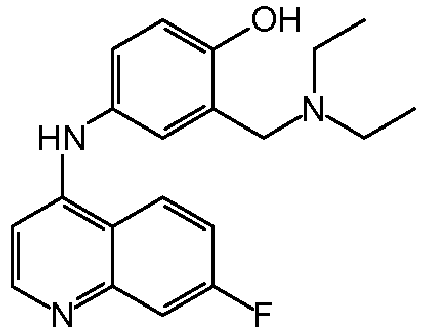
36.6 ± 9.3 > 100 3 
31.1 ± 16.8 > 100 4 
15.6 ± 4.9 > 100 5 
14.6 41.1 6 
58.7 > 100 EC50: 50% effective concentration (concentration of a drug suppressing SFTSV proliferation by 50%)
CC50: 50% cytotoxic concentration (concentration of a drug decreasing the number of surviving host cells by 50%) - Data of
drugs 1 to 4 are mean values and SD values of three experiments; whereas, data ofdrugs - From Table 1 and
Figure 4 , it is found that amodiaquine and its derivatives, and ribavirin and favipiravir have an anti-SFTSV effect. - Of the drugs, amodiaquine, ribavirin and favipiravir were commercially available products.
- Amodiaquine derivatives were synthesized as follows.
-

- Scheme for synthesizing the title compound is shown below. In the scheme, "reflux" refers to a refluxing treatment.


- A mixture of 4-acetamidophenol (2a) (858.6 mg, 5.68 mmol) and 37% formaldehyde (848 µL, 8.52 mmol) was dissolved with ethanol (5 mL). Subsequently, diethylamine (881 µl, 8.52 mmol) was added and the mixture was refluxed for about 12 hours. The solvent was distilled off under reduced pressure and the resulting residue was isolated and purified by column chromatography (ethyl acetate: methanol = 5:1) to obtain N-[3-{(diethylamino)methyl}-4-hydroxyphenyl]acetamide (2b) (871.2 mg, 3.69 mmol, yield 65%) as a white crystal. Then, a mixture of N-[3-{(diethylamino)methyl}-4-hydroxyphenyl]acetamide (2b) (133.6 mg, 0.50 mmol) and 4-chloro-7-fluoroquinoline (95.3 mg, 0.53 mmol) was dissolved with ethanol (5 mL) and refluxed for about 6 hours. The temperature of the reaction solution was controlled to be 0°C. While stirring, 2% ammonia water (about 5 mL) was added. The crystal was precipitated and separated by a Hirsch funnel. The resultant coarse crystal was recrystallized from methanol to obtain the title compound (2) (108.5 mg, 0.32 mmol, yield 64%) as a gray powder. The compound obtained was subjected to 1H and 13C NMR spectroscopies, high resolution mass spectroscopy (HRMS) and measurement of melting point (mp). The results are shown below.
- 1H NMR (400MHz, CDCl3): δ 8.45 (1H, d, J 5.6, quinoline-H), 7.89 (1H, m, quinoline-H), 7.63 (1H, m, quinoline-H), 7.25 (1H, m, quinoline-H), 7.09 (1H, dd, J 8.4 and 2.4, Ar-H), 6.93 (1H, d, J 2.4, Ar-H), 6.86 (1H, d, J 8.4, Ar-H), 6.60 (1H, brs, Ar-OH), 6.59 (1H, d, J 5.6, quinoline-H), 3.78 (2H, s, ArCH2N), 2.65 (4H, q, J 7.2, NCH2CH3), 1.14 (6H, t, J 7.2, NCH2CH3); 13C NMR (100MHz, CDCl3): δ 163.1 (d, J 248), 156.7, 151.9, 150.1 (d, J 12), 149.6, 129.9, 125.6, 125.3, 123.3, 121.7 (d, J 10), 117.2, 115.9, 115.0 (d, J 25), 113.4 (d, J 20), 100.8, 56.8, 50.8, 46.5, 11.2; HRMS (ESI) Calcd for C20H23FN3O+ [M+H]+: 340.18197. Found 340.18174; mp: 185.5-186.7°C.
-

- Synthesis was performed in the same procedure as in Example 3 except that 4-chloro-7-fluoroquinoline (95.3 mg, 0.53 mmol) was replaced by 4-chloro-7-bromoquinoline (126.5 mg, 0.53 mmol) to obtain the title compound (144.2 mg, 0.36 mmol, yield 72%) as a brown powder. The compound obtained was subjected to 1H and 13C NMR spectroscopies, high resolution mass spectroscopy (HRMS) and measurement of melting point (mp). The results are shown below.
- 1H NMR (400MHz, CDCl3): δ 8.45 (1H, d, J 5.2, quinoline-H), 8.18 (1H, d, J 2.4, quinoline-H), 7.75 (1H, d, J 8.8, quinoline-H), 7.56 (1H, dd, J 8.8 and 2.4, quinoline-H), 7.08 (1H, dd, J 8.4 and 2.4, Ar-H), 6.92 (1H, d, J 2.4, Ar-H), 6.86 (1H, d, J 8.4, Ar-H), 6.64 (1H, d, J 5.2, quinoline-H), 6.57 (1H, brs, Ar-OH), 3.79 (2H, s, ArCH2N), 2.66 (4H, q, J 7.2, NCH2CH3), 1.14 (6H, t, J 7.2, NCH2CH3); 13C NMR (100MHz, CDCl3): δ 156.7, 151.8, 149.6, 149.5, 132.1, 129.9, 128.3, 125.6, 125.3, 123.4, 121.0, 117.7, 117.1, 101.4, 56.8, 50.9, 46.4, 11.2; HRMS (ESI) Calcd for C20H23BrN3O+ [M+H]+: 400.10190. Found 400.10155; mp: 194.3-195.8°C.
-

- Synthesis was performed in the same procedure as in Example 3 except that 4-chloro-7-fluoroquinoline (95.3 mg, 0.53 mmol) was replaced by 4-chloro-7-iodoquinoline (91.0 mg, 0.32 mmol) to obtain the title compound (125.2 mg, 0.28 mmol, yield 93%) as a gray powder. The compound obtained was subjected to 1H and 13C NMR spectroscopies, high resolution mass spectroscopy (HRMS) and measurement of melting point (mp). The results are shown below.
- 1H NMR (400MHz, CDCl3): δ 8.44 (1H, d, J 5.2, quinoline-H), 8.42 (1H, d, J 1.2, quinoline-H), 7.72 (1H, dd, J 8.8 and 1.2, quinoline-H), 7.60 (1H, d, J 8.8, quinoline-H), 7.08 (1H, dd, J 8.4 and 2.4, Ar-H), 6.92 (1H, d, J 2.4, Ar-H), 6.86 (1H, d, J 8.4, Ar-H), 6.64 (1H, d, J 5.2, quinoline-H), 6.55 (1H, brs, Ar-OH), 3.78 (2H, s, ArCH2N), 2.65 (4H, q, J 7.2, NCH2CH3), 1.14 (6H, t, J 7.2, NCH2CH3); 13C NMR (100MHz, CDCl3): δ 156.7, 151.5, 149.8, 149.4, 138.8, 133.5, 129.8, 125.5, 125.3, 123.4, 120.8, 118.1, 117.2, 101.5, 95.3, 56.8, 46.4, 11.2; HRMS (ESI) Calcd for C20H23IN3O+ [M+H]+: 448.08803. Found 448.08638; mp: 189.7-190.4°C.
-

- Synthesis was performed in the same procedure as in Example 3 except that diethylamine (881 µl, 8.52 mmol) was replaced by pyrrolidine (705 µl, 8.52 mmol) and that 4-chloro-7-fluoroquinoline (95.3 mg, 0.53 mmol) was replaced by 4,7-dichloroquinoline (614.4 mg, 3.10 mmol) to obtain the title compound (402.8 mg, 1.13 mmol, yield 40%) as a brown solid. The compound obtained was subjected to 1H and 13C NMR spectroscopies, high resolution mass spectroscopy (HRMS) and measurement of melting point (mp). The results are shown below.
- 1H NMR (400MHz, CDCl3): δ 8.45 (1H, d, J 5.2, quinoline-H), 8.00 (1H, d, J 2.0, quinoline-H), 7.86 (1H, d, J 8.4, quinoline-H), 7.42 (1H, dd, J 8.4 and 2.0, quinoline-H), 7.10 (1H, dd, J 8.4 and 2.4, Ar-H), 6.95 (1H, d, J 2.4, Ar-H), 6.87 (1H, d, J 8.4, Ar-H), 6.71 (1H, brs, Ar-OH), 6.63 (1H, d, J 5.2, quinoline-H), 3.84 (2H, s, ArCH2N), 2.68 (4H, m, pyrrolidinyl-H), 1.88 (4H, m, pyrrolidinyl-H); 13C NMR (100MHz, CDCl3): δ 156.5, 151.5, 149.5, 149.1, 135.3, 129.7, 128.6, 125.8, 125.6, 124.8, 123.7, 121.1, 117.3, 117.1, 101.3, 58.6, 53.6, 23.7; HRMS (ESI) Calcd for C20H21ClN3O+ [M+H]+: 354.13677. Found 354.13608; mp: 188.8-190.0°C.
-


- Synthesis was performed in the same procedure as in Example 3 except that diethylamine (881 µl, 8.52 mmol) was replaced by dipropylamine (1168 µl, 8.52 mmol) and that 4-chloro-7-fluoroquinoline (95.3 mg, 0.53 mmol) was replaced by 4,7-dichloroquinoline (614.4 mg, 3.10 mmol) to obtain the title compound (529.8 mg, 1.38 mmol, yield 46%) as a pale yellow solid. The compound obtained was subjected to 1H and 13C NMR spectroscopies, high resolution mass spectroscopy (HRMS) and measurement of melting point (mp). The results are shown below.
- 1H NMR (400MHz, CDCl3): δ 8.48 (1H, d, J 5.2, quinoline-H), 8.00 (1H, d, J 2.4, quinoline-H), 7.82 (1H, d, J 8.8, quinoline-H), 7.42 (1H, dd, J 8.8 and 2.4, quinoline-H), 7.09 (1H, dd, J 8.4 and 2.0, Ar-H), 6.92 (1H, d, J 2.4, Ar-H), 6.86 (1H, d, J 8.4, Ar-H), 6.63 (1H, d, J 5.2, quinoline-H), 6.57 (1H, brs, Ar-OH), 3.77 (2H, s, ArCH2N), 2.51 (4H, m, NCH2CH2CH3), 1.56 (4H, m, NCH2CH2CH3), 0.92 (6H, t, J 7.2, NCH2CH2CH3); 13C NMR (100MHz, CDCl3): δ 156.6, 152.0, 149.6, 149.3, 135.1, 129.9, 129.0, 125.7, 125.5, 125.3, 123.5, 121.0, 117.4, 117.1, 101.4, 58.1, 55.5, 19.5, 11.8; HRMS (ESI) Calcd for C22H27ClN3O+ [M+H]+: 384.18372. Found 384.18302; mp: 163.2-164.3°C.
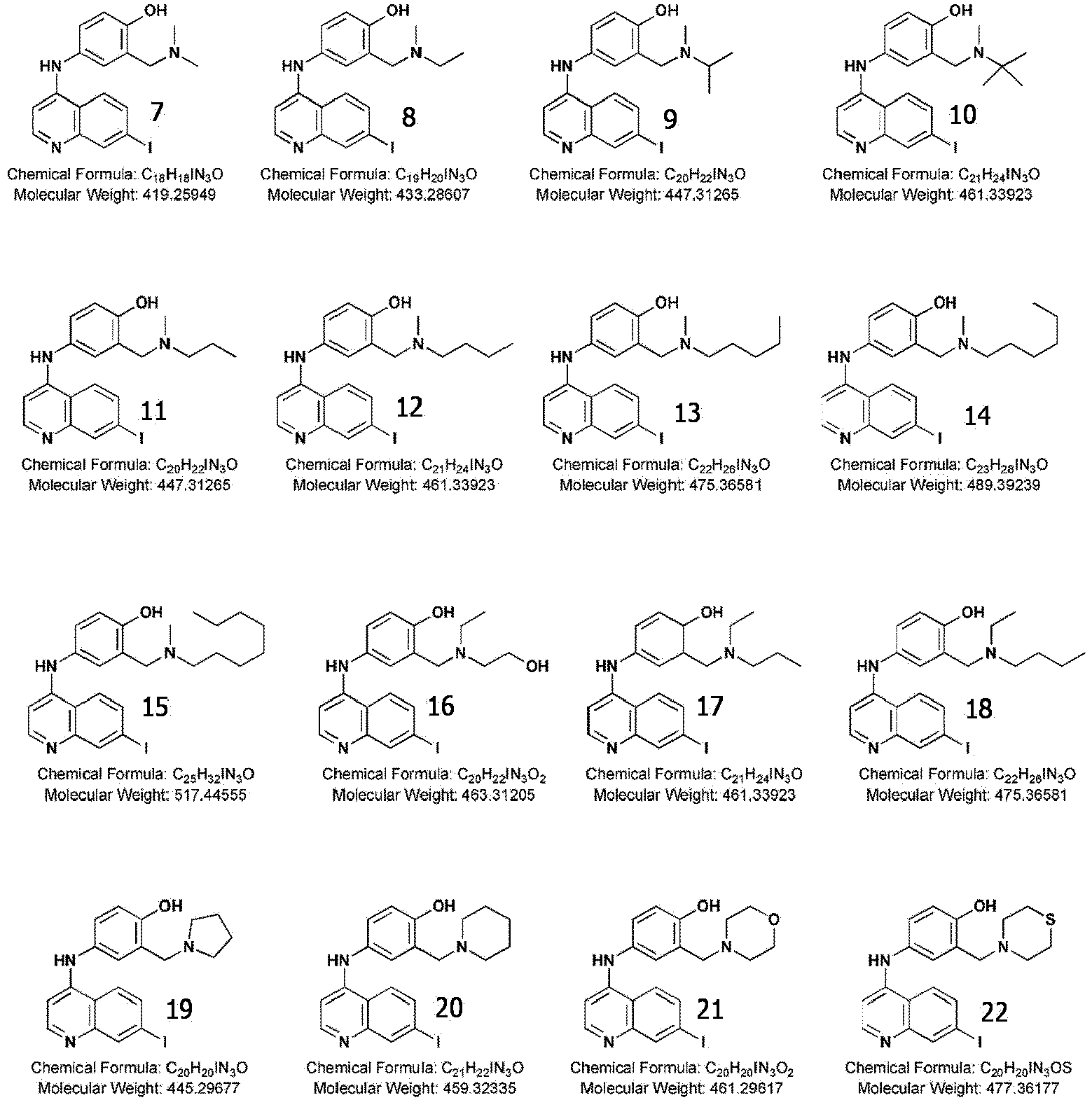
- The following amodiaquine derivatives were obtained using the same procedure as in Examples 3-7.
- Compound 7: 4-(7-iodoquinolin-4-ylamino)-2-dimethylaminomethylphenol
- Compound 8: 4-(7-iodoquinolin-4-ylamino)-2-ethylmethylaminomethylphenol
- Compound 9: 4-(7-iodoquinolin-4-ylamino)-2-isopropylmethylaminomethylphenol
- Compound 10: 4-(7-iodoquinolin-4-ylamino)-2-tert-butylmethylaminomethylphenol
- Compound 11: 4-(7-iodoquinolin-4-ylamino)-2-methylpropylaminomethylphenol
- Compound 12: 4-(7-iodoquinolin-4-ylamino)-2-butylmethylaminomethylphenol
- Compound 13: 4-(7-iodoquinolin-4-ylamino)-2-methylpentylaminomethylphenol
- Compound 14: 4-(7-iodoquinolin-4-ylamino)-2-hexylmethylaminomethylphenol
- Compound 15: 4-(7-iodoquinolin-4-ylamino)-2-methyloctylaminomethylphenol
- Compound 16: 4-(7-iodoquinolin-4-ylamino)-2-ethyl(2-hydroxyethyl)aminomethylphenol
- Compound 17: 4-(7-iodoquinolin-4-ylamino)-2-ethylpropylaminomethylphenol
- Compound 18: 4-(7-iodoquinolin-4-ylamino)-2-ethylbutylaminomethylphenol
- Compound 19: 4-(7-iodoquinolin-4-ylamino)-2-(1-pyrrolidinylmethyl)phenol
- Compound 20: 4-(7-iodoquinolin-4-ylamino)-2-(1-piperidinylmethyl)phenol
- Compound 21: 4-(7-iodoquinolin-4-ylamino)-2-(4-morpholinylmethyl)phenol
- Compound 22: 4-(7-iodoquinolin-4-ylamino)-2-(4-thiamorpholinylmethyl)phenol
- The amodiaquine derivatives described in Example 8 were examined for anti-SFTSV effect and cytotoxicity in the same procedure as in Example 2.
- A screening test was carried out by fixing the concentrations of the drugs all at 10 µM. The results are shown in
Figure 5 . InFigure 5 , the "Percent of control" on the vertical axis represents percentage based on the proliferation (100%) of SFTSV in a case without drug addition. - The compounds of Nos. 12 to 14, which exhibited particularly excellent activity in the screening test, were examined for anti-SFTSV effect and cytotoxicity. The results are shown in Table 2.
[Table 2] Chemical structure EC50(µM) CC50(µM) Compound 12
6.2 > 50 Compound 13
3.4 > 50 Compound 14
8.7 > 50

Claims (4)
- An antiviral drug for severe fever with thrombocytopenia syndrome, comprising a compound represented by the following formula (I):

or a salt thereof or a solvate thereof. - The antiviral drug for severe fever with thrombocytopenia syndrome according to Claim 1, wherein, in the formula (I), R1 and R2, which are the same or different, each represent a substituted or unsubstituted C1-6-alkyl group and may join with an adjacent nitrogen atom to form a substituted or unsubstituted 5-membered ring or 6-membered ring; and X represents a halogen atom.
- The antiviral drug for severe fever with thrombocytopenia syndrome according to Claim 1 or 2, for use in prevention or treatment of severe fever with thrombocytopenia syndrome.
- A compound represented by the following formula (Ia):


Applications Claiming Priority (2)
| Application Number | Priority Date | Filing Date | Title |
|---|---|---|---|
| JP2017007507 | 2017-01-19 | ||
| PCT/JP2018/000887 WO2018135449A1 (en) | 2017-01-19 | 2018-01-16 | Antiviral drug for severe fever with thrombocytopenia syndrome |
Publications (3)
| Publication Number | Publication Date |
|---|---|
| EP3572081A1 true EP3572081A1 (en) | 2019-11-27 |
| EP3572081A4 EP3572081A4 (en) | 2020-10-07 |
| EP3572081B1 EP3572081B1 (en) | 2021-10-20 |
Family
ID=62908406
Family Applications (1)
| Application Number | Title | Priority Date | Filing Date |
|---|---|---|---|
| EP18741625.0A Not-in-force EP3572081B1 (en) | 2017-01-19 | 2018-01-16 | Antiviral drug for severe fever with thrombocytopenia syndrome |
Country Status (6)
| Country | Link |
|---|---|
| US (1) | US11001557B2 (en) |
| EP (1) | EP3572081B1 (en) |
| JP (1) | JP7023442B2 (en) |
| KR (1) | KR20190105013A (en) |
| CN (1) | CN110214011A (en) |
| WO (1) | WO2018135449A1 (en) |
Families Citing this family (6)
| Publication number | Priority date | Publication date | Assignee | Title |
|---|---|---|---|---|
| JP7176767B2 (en) * | 2017-04-13 | 2022-11-22 | 国立大学法人 鹿児島大学 | Novel amodiaquine analogues and methods of use thereof |
| WO2021235390A1 (en) * | 2020-05-18 | 2021-11-25 | 国立大学法人鹿児島大学 | Anti-sars-cov-2 drug |
| JPWO2023085392A1 (en) | 2021-11-12 | 2023-05-19 | ||
| KR102597757B1 (en) * | 2023-02-28 | 2023-11-03 | 대한민국(질병관리청 국립보건연구원장) | Compound derived from natural product and antiviral agent containing the same as an active ingredient |
| KR102641010B1 (en) * | 2023-12-04 | 2024-02-28 | 대한민국 | Pharmaceutical composition for preventing or treating severe fever with thrombocytopenia syndrome comprising of silmitasertib as an active ingredient |
| KR102728905B1 (en) * | 2023-12-04 | 2024-11-13 | 대한민국 | Pharmaceutical composition for preventing or treating severe fever with thrombocytopenia syndrome comprising of ML-18 as an active ingredient |
Family Cites Families (5)
| Publication number | Priority date | Publication date | Assignee | Title |
|---|---|---|---|---|
| WO2002072554A1 (en) * | 2001-03-14 | 2002-09-19 | The University Of Liverpool | Anti-malarial compounds |
| WO2007098047A2 (en) | 2006-02-16 | 2007-08-30 | The Mclean Hospital Corporation | Methods and compositions for the treatment of parkinson's disease |
| TW201402556A (en) * | 2012-05-30 | 2014-01-16 | Toyama Chemical Co Ltd | Deuterated nitrogen-containing heterocyclic carboxamide derivative and salt thereof |
| CN103142566A (en) * | 2013-02-25 | 2013-06-12 | 中国科学院生物物理研究所 | Important-protein inhibitor in severe fever with thrombocytopenia syndrome |
| JP7176767B2 (en) * | 2017-04-13 | 2022-11-22 | 国立大学法人 鹿児島大学 | Novel amodiaquine analogues and methods of use thereof |
-
2018
- 2018-01-16 CN CN201880007680.6A patent/CN110214011A/en active Pending
- 2018-01-16 WO PCT/JP2018/000887 patent/WO2018135449A1/en not_active Ceased
- 2018-01-16 KR KR1020197021393A patent/KR20190105013A/en not_active Ceased
- 2018-01-16 US US16/479,081 patent/US11001557B2/en active Active
- 2018-01-16 JP JP2018563317A patent/JP7023442B2/en active Active
- 2018-01-16 EP EP18741625.0A patent/EP3572081B1/en not_active Not-in-force
Also Published As
| Publication number | Publication date |
|---|---|
| CN110214011A (en) | 2019-09-06 |
| US20190389803A1 (en) | 2019-12-26 |
| KR20190105013A (en) | 2019-09-11 |
| JPWO2018135449A1 (en) | 2019-11-07 |
| WO2018135449A1 (en) | 2018-07-26 |
| EP3572081A4 (en) | 2020-10-07 |
| US11001557B2 (en) | 2021-05-11 |
| EP3572081B1 (en) | 2021-10-20 |
| JP7023442B2 (en) | 2022-02-22 |
Similar Documents
| Publication | Publication Date | Title |
|---|---|---|
| EP3572081B1 (en) | Antiviral drug for severe fever with thrombocytopenia syndrome | |
| RU2443703C2 (en) | Bromophenyl substituted thiazolyl dihydropyrimidines | |
| CN106061975B (en) | Pyrazolo [1,5-A] pyrimidine as antiviral compound | |
| CN101247807A (en) | Thiazole compounds and methods of use | |
| JP4988841B2 (en) | Optically pure dihydropyrimidine compounds and their use for the preparation of a medicament for the treatment and prevention of viral diseases | |
| TW509689B (en) | Benzothiadiazoles and derivatives | |
| EP2135866A1 (en) | New dihydropyrimidine compounds and their uses in manufactures of pharmaceutical medicaments for treatment and prevention against virosis | |
| JPH10114766A (en) | New flavone compound, its production and pharmaceutical composition comprising the same | |
| JP5404607B2 (en) | Aniline derivative having anti-RNA virus action | |
| EP1928884B1 (en) | 5,6-dimethylthieno[2,3-di]pyrimidine derivatives, the preparation method thereof and the pharmaceutical composition comprising the same for anti-virus | |
| EP2551266A1 (en) | 2',2-dithiazol non-nucleoside compounds, preparation methods, pharmaceutical compositions and uses as hepatitis virus inhibitors thereof | |
| CN114805307B (en) | A method for preparing coronavirus indole compounds for therapeutic agents | |
| EP4431151A1 (en) | Anti-sars-cov-2 drug | |
| CN1990470B (en) | Phthiobuzonum derivative, its manufacturing process, pharmaceutical combination and uses thereof | |
| WO2021235390A1 (en) | Anti-sars-cov-2 drug | |
| JP5280850B2 (en) | Amidine derivatives and their use as pharmaceuticals | |
| CN109824670B (en) | Polymorph of pteridone compound or its salt and its preparation method and use | |
| CN108467365B (en) | IDO enzyme inhibitor compound and preparation method and application thereof | |
| KR100798634B1 (en) | Pharmaceutical composition for prevention and treatment of hepatitis C | |
| KR100575344B1 (en) | Pharmaceutical composition for prevention and treatment of hepatitis C | |
| CN120208818A (en) | A cyclopropyl-substituted benzamide HBV capsid protein inhibitor and its preparation method and application | |
| HK40057712B (en) | N-heterocyclic five-membered ring-containing capsid protein assembly inhibitor, pharmaceutical composition and uses thereof | |
| HK1116090A (en) | Thiazole compounds and methods of use | |
| CN107903252A (en) | Triazole derivative and its application in the medicine for preparing treatment liver diseases | |
| HK1179621A (en) | 2',2-dithiazol non-nucleoside compounds, preparation methods, pharmaceutical compositions and uses as hepatitis virus inhibitors thereof |
Legal Events
| Date | Code | Title | Description |
|---|---|---|---|
| STAA | Information on the status of an ep patent application or granted ep patent |
Free format text: STATUS: THE INTERNATIONAL PUBLICATION HAS BEEN MADE |
|
| PUAI | Public reference made under article 153(3) epc to a published international application that has entered the european phase |
Free format text: ORIGINAL CODE: 0009012 |
|
| STAA | Information on the status of an ep patent application or granted ep patent |
Free format text: STATUS: REQUEST FOR EXAMINATION WAS MADE |
|
| 17P | Request for examination filed |
Effective date: 20190725 |
|
| AK | Designated contracting states |
Kind code of ref document: A1 Designated state(s): AL AT BE BG CH CY CZ DE DK EE ES FI FR GB GR HR HU IE IS IT LI LT LU LV MC MK MT NL NO PL PT RO RS SE SI SK SM TR |
|
| AX | Request for extension of the european patent |
Extension state: BA ME |
|
| DAV | Request for validation of the european patent (deleted) | ||
| DAX | Request for extension of the european patent (deleted) | ||
| A4 | Supplementary search report drawn up and despatched |
Effective date: 20200909 |
|
| RIC1 | Information provided on ipc code assigned before grant |
Ipc: C07D 413/12 20060101ALI20200903BHEP Ipc: C07D 401/12 20060101ALI20200903BHEP Ipc: A61K 31/4706 20060101ALI20200903BHEP Ipc: C07D 215/44 20060101ALI20200903BHEP Ipc: A61K 31/4709 20060101ALI20200903BHEP Ipc: C07D 417/12 20060101ALI20200903BHEP Ipc: A61P 31/14 20060101ALI20200903BHEP Ipc: A61K 31/47 20060101AFI20200903BHEP Ipc: A61P 31/12 20060101ALI20200903BHEP |
|
| REG | Reference to a national code |
Ref country code: DE Ref legal event code: R079 Ref document number: 602018025334 Country of ref document: DE Free format text: PREVIOUS MAIN CLASS: A61K0031470000 Ipc: A61K0031470900 |
|
| GRAP | Despatch of communication of intention to grant a patent |
Free format text: ORIGINAL CODE: EPIDOSNIGR1 |
|
| STAA | Information on the status of an ep patent application or granted ep patent |
Free format text: STATUS: GRANT OF PATENT IS INTENDED |
|
| RIC1 | Information provided on ipc code assigned before grant |
Ipc: C07D 417/12 20060101ALI20210527BHEP Ipc: C07D 413/12 20060101ALI20210527BHEP Ipc: C07D 401/12 20060101ALI20210527BHEP Ipc: A61P 31/14 20060101ALI20210527BHEP Ipc: A61P 31/12 20060101ALI20210527BHEP Ipc: C07D 215/44 20060101ALI20210527BHEP Ipc: A61K 31/47 20060101ALI20210527BHEP Ipc: A61K 31/4706 20060101ALI20210527BHEP Ipc: A61K 31/4709 20060101AFI20210527BHEP |
|
| INTG | Intention to grant announced |
Effective date: 20210617 |
|
| GRAS | Grant fee paid |
Free format text: ORIGINAL CODE: EPIDOSNIGR3 |
|
| GRAA | (expected) grant |
Free format text: ORIGINAL CODE: 0009210 |
|
| STAA | Information on the status of an ep patent application or granted ep patent |
Free format text: STATUS: THE PATENT HAS BEEN GRANTED |
|
| AK | Designated contracting states |
Kind code of ref document: B1 Designated state(s): AL AT BE BG CH CY CZ DE DK EE ES FI FR GB GR HR HU IE IS IT LI LT LU LV MC MK MT NL NO PL PT RO RS SE SI SK SM TR |
|
| REG | Reference to a national code |
Ref country code: GB Ref legal event code: FG4D |
|
| REG | Reference to a national code |
Ref country code: CH Ref legal event code: EP |
|
| REG | Reference to a national code |
Ref country code: IE Ref legal event code: FG4D |
|
| REG | Reference to a national code |
Ref country code: DE Ref legal event code: R096 Ref document number: 602018025334 Country of ref document: DE |
|
| REG | Reference to a national code |
Ref country code: AT Ref legal event code: REF Ref document number: 1439343 Country of ref document: AT Kind code of ref document: T Effective date: 20211115 |
|
| REG | Reference to a national code |
Ref country code: LT Ref legal event code: MG9D |
|
| REG | Reference to a national code |
Ref country code: NL Ref legal event code: MP Effective date: 20211020 |
|
| REG | Reference to a national code |
Ref country code: AT Ref legal event code: MK05 Ref document number: 1439343 Country of ref document: AT Kind code of ref document: T Effective date: 20211020 |
|
| PG25 | Lapsed in a contracting state [announced via postgrant information from national office to epo] |
Ref country code: RS Free format text: LAPSE BECAUSE OF FAILURE TO SUBMIT A TRANSLATION OF THE DESCRIPTION OR TO PAY THE FEE WITHIN THE PRESCRIBED TIME-LIMIT Effective date: 20211020 Ref country code: LT Free format text: LAPSE BECAUSE OF FAILURE TO SUBMIT A TRANSLATION OF THE DESCRIPTION OR TO PAY THE FEE WITHIN THE PRESCRIBED TIME-LIMIT Effective date: 20211020 Ref country code: FI Free format text: LAPSE BECAUSE OF FAILURE TO SUBMIT A TRANSLATION OF THE DESCRIPTION OR TO PAY THE FEE WITHIN THE PRESCRIBED TIME-LIMIT Effective date: 20211020 Ref country code: BG Free format text: LAPSE BECAUSE OF FAILURE TO SUBMIT A TRANSLATION OF THE DESCRIPTION OR TO PAY THE FEE WITHIN THE PRESCRIBED TIME-LIMIT Effective date: 20220120 Ref country code: AT Free format text: LAPSE BECAUSE OF FAILURE TO SUBMIT A TRANSLATION OF THE DESCRIPTION OR TO PAY THE FEE WITHIN THE PRESCRIBED TIME-LIMIT Effective date: 20211020 |
|
| PG25 | Lapsed in a contracting state [announced via postgrant information from national office to epo] |
Ref country code: IS Free format text: LAPSE BECAUSE OF FAILURE TO SUBMIT A TRANSLATION OF THE DESCRIPTION OR TO PAY THE FEE WITHIN THE PRESCRIBED TIME-LIMIT Effective date: 20220220 Ref country code: SE Free format text: LAPSE BECAUSE OF FAILURE TO SUBMIT A TRANSLATION OF THE DESCRIPTION OR TO PAY THE FEE WITHIN THE PRESCRIBED TIME-LIMIT Effective date: 20211020 Ref country code: PT Free format text: LAPSE BECAUSE OF FAILURE TO SUBMIT A TRANSLATION OF THE DESCRIPTION OR TO PAY THE FEE WITHIN THE PRESCRIBED TIME-LIMIT Effective date: 20220221 Ref country code: PL Free format text: LAPSE BECAUSE OF FAILURE TO SUBMIT A TRANSLATION OF THE DESCRIPTION OR TO PAY THE FEE WITHIN THE PRESCRIBED TIME-LIMIT Effective date: 20211020 Ref country code: NO Free format text: LAPSE BECAUSE OF FAILURE TO SUBMIT A TRANSLATION OF THE DESCRIPTION OR TO PAY THE FEE WITHIN THE PRESCRIBED TIME-LIMIT Effective date: 20220120 Ref country code: NL Free format text: LAPSE BECAUSE OF FAILURE TO SUBMIT A TRANSLATION OF THE DESCRIPTION OR TO PAY THE FEE WITHIN THE PRESCRIBED TIME-LIMIT Effective date: 20211020 Ref country code: LV Free format text: LAPSE BECAUSE OF FAILURE TO SUBMIT A TRANSLATION OF THE DESCRIPTION OR TO PAY THE FEE WITHIN THE PRESCRIBED TIME-LIMIT Effective date: 20211020 Ref country code: HR Free format text: LAPSE BECAUSE OF FAILURE TO SUBMIT A TRANSLATION OF THE DESCRIPTION OR TO PAY THE FEE WITHIN THE PRESCRIBED TIME-LIMIT Effective date: 20211020 Ref country code: GR Free format text: LAPSE BECAUSE OF FAILURE TO SUBMIT A TRANSLATION OF THE DESCRIPTION OR TO PAY THE FEE WITHIN THE PRESCRIBED TIME-LIMIT Effective date: 20220121 Ref country code: ES Free format text: LAPSE BECAUSE OF FAILURE TO SUBMIT A TRANSLATION OF THE DESCRIPTION OR TO PAY THE FEE WITHIN THE PRESCRIBED TIME-LIMIT Effective date: 20211020 |
|
| REG | Reference to a national code |
Ref country code: DE Ref legal event code: R097 Ref document number: 602018025334 Country of ref document: DE |
|
| PG25 | Lapsed in a contracting state [announced via postgrant information from national office to epo] |
Ref country code: SM Free format text: LAPSE BECAUSE OF FAILURE TO SUBMIT A TRANSLATION OF THE DESCRIPTION OR TO PAY THE FEE WITHIN THE PRESCRIBED TIME-LIMIT Effective date: 20211020 Ref country code: SK Free format text: LAPSE BECAUSE OF FAILURE TO SUBMIT A TRANSLATION OF THE DESCRIPTION OR TO PAY THE FEE WITHIN THE PRESCRIBED TIME-LIMIT Effective date: 20211020 Ref country code: RO Free format text: LAPSE BECAUSE OF FAILURE TO SUBMIT A TRANSLATION OF THE DESCRIPTION OR TO PAY THE FEE WITHIN THE PRESCRIBED TIME-LIMIT Effective date: 20211020 Ref country code: EE Free format text: LAPSE BECAUSE OF FAILURE TO SUBMIT A TRANSLATION OF THE DESCRIPTION OR TO PAY THE FEE WITHIN THE PRESCRIBED TIME-LIMIT Effective date: 20211020 Ref country code: DK Free format text: LAPSE BECAUSE OF FAILURE TO SUBMIT A TRANSLATION OF THE DESCRIPTION OR TO PAY THE FEE WITHIN THE PRESCRIBED TIME-LIMIT Effective date: 20211020 Ref country code: CZ Free format text: LAPSE BECAUSE OF FAILURE TO SUBMIT A TRANSLATION OF THE DESCRIPTION OR TO PAY THE FEE WITHIN THE PRESCRIBED TIME-LIMIT Effective date: 20211020 |
|
| REG | Reference to a national code |
Ref country code: DE Ref legal event code: R119 Ref document number: 602018025334 Country of ref document: DE |
|
| PLBE | No opposition filed within time limit |
Free format text: ORIGINAL CODE: 0009261 |
|
| STAA | Information on the status of an ep patent application or granted ep patent |
Free format text: STATUS: NO OPPOSITION FILED WITHIN TIME LIMIT |
|
| PG25 | Lapsed in a contracting state [announced via postgrant information from national office to epo] |
Ref country code: MC Free format text: LAPSE BECAUSE OF FAILURE TO SUBMIT A TRANSLATION OF THE DESCRIPTION OR TO PAY THE FEE WITHIN THE PRESCRIBED TIME-LIMIT Effective date: 20211020 |
|
| REG | Reference to a national code |
Ref country code: CH Ref legal event code: PL |
|
| 26N | No opposition filed |
Effective date: 20220721 |
|
| GBPC | Gb: european patent ceased through non-payment of renewal fee |
Effective date: 20220120 |
|
| REG | Reference to a national code |
Ref country code: BE Ref legal event code: MM Effective date: 20220131 |
|
| PG25 | Lapsed in a contracting state [announced via postgrant information from national office to epo] |
Ref country code: LU Free format text: LAPSE BECAUSE OF NON-PAYMENT OF DUE FEES Effective date: 20220116 Ref country code: GB Free format text: LAPSE BECAUSE OF NON-PAYMENT OF DUE FEES Effective date: 20220120 Ref country code: DE Free format text: LAPSE BECAUSE OF NON-PAYMENT OF DUE FEES Effective date: 20220802 Ref country code: AL Free format text: LAPSE BECAUSE OF FAILURE TO SUBMIT A TRANSLATION OF THE DESCRIPTION OR TO PAY THE FEE WITHIN THE PRESCRIBED TIME-LIMIT Effective date: 20211020 |
|
| PG25 | Lapsed in a contracting state [announced via postgrant information from national office to epo] |
Ref country code: SI Free format text: LAPSE BECAUSE OF FAILURE TO SUBMIT A TRANSLATION OF THE DESCRIPTION OR TO PAY THE FEE WITHIN THE PRESCRIBED TIME-LIMIT Effective date: 20211020 Ref country code: FR Free format text: LAPSE BECAUSE OF NON-PAYMENT OF DUE FEES Effective date: 20220131 Ref country code: BE Free format text: LAPSE BECAUSE OF NON-PAYMENT OF DUE FEES Effective date: 20220131 |
|
| PG25 | Lapsed in a contracting state [announced via postgrant information from national office to epo] |
Ref country code: LI Free format text: LAPSE BECAUSE OF NON-PAYMENT OF DUE FEES Effective date: 20220131 Ref country code: CH Free format text: LAPSE BECAUSE OF NON-PAYMENT OF DUE FEES Effective date: 20220131 |
|
| PG25 | Lapsed in a contracting state [announced via postgrant information from national office to epo] |
Ref country code: IE Free format text: LAPSE BECAUSE OF NON-PAYMENT OF DUE FEES Effective date: 20220116 |
|
| PG25 | Lapsed in a contracting state [announced via postgrant information from national office to epo] |
Ref country code: IT Free format text: LAPSE BECAUSE OF FAILURE TO SUBMIT A TRANSLATION OF THE DESCRIPTION OR TO PAY THE FEE WITHIN THE PRESCRIBED TIME-LIMIT Effective date: 20211020 |
|
| PG25 | Lapsed in a contracting state [announced via postgrant information from national office to epo] |
Ref country code: MK Free format text: LAPSE BECAUSE OF FAILURE TO SUBMIT A TRANSLATION OF THE DESCRIPTION OR TO PAY THE FEE WITHIN THE PRESCRIBED TIME-LIMIT Effective date: 20211020 Ref country code: CY Free format text: LAPSE BECAUSE OF FAILURE TO SUBMIT A TRANSLATION OF THE DESCRIPTION OR TO PAY THE FEE WITHIN THE PRESCRIBED TIME-LIMIT Effective date: 20211020 |
|
| PG25 | Lapsed in a contracting state [announced via postgrant information from national office to epo] |
Ref country code: HU Free format text: LAPSE BECAUSE OF FAILURE TO SUBMIT A TRANSLATION OF THE DESCRIPTION OR TO PAY THE FEE WITHIN THE PRESCRIBED TIME-LIMIT; INVALID AB INITIO Effective date: 20180116 |
|
| PG25 | Lapsed in a contracting state [announced via postgrant information from national office to epo] |
Ref country code: MT Free format text: LAPSE BECAUSE OF FAILURE TO SUBMIT A TRANSLATION OF THE DESCRIPTION OR TO PAY THE FEE WITHIN THE PRESCRIBED TIME-LIMIT Effective date: 20211020 |
|
| PG25 | Lapsed in a contracting state [announced via postgrant information from national office to epo] |
Ref country code: TR Free format text: LAPSE BECAUSE OF FAILURE TO SUBMIT A TRANSLATION OF THE DESCRIPTION OR TO PAY THE FEE WITHIN THE PRESCRIBED TIME-LIMIT Effective date: 20211020 |