EP3570192A1 - Mediation of entitlement transfers among affiliated domains - Google Patents
Mediation of entitlement transfers among affiliated domains Download PDFInfo
- Publication number
- EP3570192A1 EP3570192A1 EP19174856.5A EP19174856A EP3570192A1 EP 3570192 A1 EP3570192 A1 EP 3570192A1 EP 19174856 A EP19174856 A EP 19174856A EP 3570192 A1 EP3570192 A1 EP 3570192A1
- Authority
- EP
- European Patent Office
- Prior art keywords
- entitlement
- domain
- asset
- user
- affiliated
- Prior art date
- Legal status (The legal status is an assumption and is not a legal conclusion. Google has not performed a legal analysis and makes no representation as to the accuracy of the status listed.)
- Pending
Links
Images


Classifications
-
- H—ELECTRICITY
- H04—ELECTRIC COMMUNICATION TECHNIQUE
- H04N—PICTORIAL COMMUNICATION, e.g. TELEVISION
- H04N21/00—Selective content distribution, e.g. interactive television or video on demand [VOD]
- H04N21/20—Servers specifically adapted for the distribution of content, e.g. VOD servers; Operations thereof
- H04N21/25—Management operations performed by the server for facilitating the content distribution or administrating data related to end-users or client devices, e.g. end-user or client device authentication, learning user preferences for recommending movies
- H04N21/266—Channel or content management, e.g. generation and management of keys and entitlement messages in a conditional access system, merging a VOD unicast channel into a multicast channel
- H04N21/26606—Channel or content management, e.g. generation and management of keys and entitlement messages in a conditional access system, merging a VOD unicast channel into a multicast channel for generating or managing entitlement messages, e.g. Entitlement Control Message [ECM] or Entitlement Management Message [EMM]
-
- G—PHYSICS
- G06—COMPUTING OR CALCULATING; COUNTING
- G06F—ELECTRIC DIGITAL DATA PROCESSING
- G06F21/00—Security arrangements for protecting computers, components thereof, programs or data against unauthorised activity
- G06F21/10—Protecting distributed programs or content, e.g. vending or licensing of copyrighted material ; Digital rights management [DRM]
-
- H—ELECTRICITY
- H04—ELECTRIC COMMUNICATION TECHNIQUE
- H04L—TRANSMISSION OF DIGITAL INFORMATION, e.g. TELEGRAPHIC COMMUNICATION
- H04L63/00—Network architectures or network communication protocols for network security
- H04L63/08—Network architectures or network communication protocols for network security for authentication of entities
- H04L63/0876—Network architectures or network communication protocols for network security for authentication of entities based on the identity of the terminal or configuration, e.g. MAC address, hardware or software configuration or device fingerprint
-
- G—PHYSICS
- G06—COMPUTING OR CALCULATING; COUNTING
- G06F—ELECTRIC DIGITAL DATA PROCESSING
- G06F21/00—Security arrangements for protecting computers, components thereof, programs or data against unauthorised activity
- G06F21/10—Protecting distributed programs or content, e.g. vending or licensing of copyrighted material ; Digital rights management [DRM]
- G06F21/101—Protecting distributed programs or content, e.g. vending or licensing of copyrighted material ; Digital rights management [DRM] by binding digital rights to specific entities
- G06F21/1012—Protecting distributed programs or content, e.g. vending or licensing of copyrighted material ; Digital rights management [DRM] by binding digital rights to specific entities to domains
-
- G—PHYSICS
- G06—COMPUTING OR CALCULATING; COUNTING
- G06F—ELECTRIC DIGITAL DATA PROCESSING
- G06F21/00—Security arrangements for protecting computers, components thereof, programs or data against unauthorised activity
- G06F21/10—Protecting distributed programs or content, e.g. vending or licensing of copyrighted material ; Digital rights management [DRM]
- G06F21/101—Protecting distributed programs or content, e.g. vending or licensing of copyrighted material ; Digital rights management [DRM] by binding digital rights to specific entities
- G06F21/1015—Protecting distributed programs or content, e.g. vending or licensing of copyrighted material ; Digital rights management [DRM] by binding digital rights to specific entities to users
-
- G—PHYSICS
- G06—COMPUTING OR CALCULATING; COUNTING
- G06F—ELECTRIC DIGITAL DATA PROCESSING
- G06F21/00—Security arrangements for protecting computers, components thereof, programs or data against unauthorised activity
- G06F21/10—Protecting distributed programs or content, e.g. vending or licensing of copyrighted material ; Digital rights management [DRM]
- G06F21/105—Arrangements for software license management or administration, e.g. for managing licenses at corporate level
-
- G—PHYSICS
- G06—COMPUTING OR CALCULATING; COUNTING
- G06F—ELECTRIC DIGITAL DATA PROCESSING
- G06F21/00—Security arrangements for protecting computers, components thereof, programs or data against unauthorised activity
- G06F21/10—Protecting distributed programs or content, e.g. vending or licensing of copyrighted material ; Digital rights management [DRM]
- G06F21/107—License processing; Key processing
- G06F21/1078—Logging; Metering
-
- G—PHYSICS
- G06—COMPUTING OR CALCULATING; COUNTING
- G06F—ELECTRIC DIGITAL DATA PROCESSING
- G06F21/00—Security arrangements for protecting computers, components thereof, programs or data against unauthorised activity
- G06F21/10—Protecting distributed programs or content, e.g. vending or licensing of copyrighted material ; Digital rights management [DRM]
- G06F21/12—Protecting executable software
- G06F21/121—Restricting unauthorised execution of programs
- G06F21/123—Restricting unauthorised execution of programs by using dedicated hardware, e.g. dongles, smart cards, cryptographic processors, global positioning systems [GPS] devices
-
- G—PHYSICS
- G06—COMPUTING OR CALCULATING; COUNTING
- G06F—ELECTRIC DIGITAL DATA PROCESSING
- G06F21/00—Security arrangements for protecting computers, components thereof, programs or data against unauthorised activity
- G06F21/60—Protecting data
- G06F21/64—Protecting data integrity, e.g. using checksums, certificates or signatures
-
- H—ELECTRICITY
- H04—ELECTRIC COMMUNICATION TECHNIQUE
- H04L—TRANSMISSION OF DIGITAL INFORMATION, e.g. TELEGRAPHIC COMMUNICATION
- H04L67/00—Network arrangements or protocols for supporting network services or applications
- H04L67/50—Network services
- H04L67/56—Provisioning of proxy services
- H04L67/562—Brokering proxy services
-
- H—ELECTRICITY
- H04—ELECTRIC COMMUNICATION TECHNIQUE
- H04L—TRANSMISSION OF DIGITAL INFORMATION, e.g. TELEGRAPHIC COMMUNICATION
- H04L9/00—Cryptographic mechanisms or cryptographic arrangements for secret or secure communications; Network security protocols
- H04L9/06—Cryptographic mechanisms or cryptographic arrangements for secret or secure communications; Network security protocols the encryption apparatus using shift registers or memories for block-wise or stream coding, e.g. DES systems or RC4; Hash functions; Pseudorandom sequence generators
- H04L9/0618—Block ciphers, i.e. encrypting groups of characters of a plain text message using fixed encryption transformation
- H04L9/0637—Modes of operation, e.g. cipher block chaining [CBC], electronic codebook [ECB] or Galois/counter mode [GCM]
-
- H—ELECTRICITY
- H04—ELECTRIC COMMUNICATION TECHNIQUE
- H04L—TRANSMISSION OF DIGITAL INFORMATION, e.g. TELEGRAPHIC COMMUNICATION
- H04L9/00—Cryptographic mechanisms or cryptographic arrangements for secret or secure communications; Network security protocols
- H04L9/32—Cryptographic mechanisms or cryptographic arrangements for secret or secure communications; Network security protocols including means for verifying the identity or authority of a user of the system or for message authentication, e.g. authorization, entity authentication, data integrity or data verification, non-repudiation, key authentication or verification of credentials
- H04L9/3236—Cryptographic mechanisms or cryptographic arrangements for secret or secure communications; Network security protocols including means for verifying the identity or authority of a user of the system or for message authentication, e.g. authorization, entity authentication, data integrity or data verification, non-repudiation, key authentication or verification of credentials using cryptographic hash functions
- H04L9/3239—Cryptographic mechanisms or cryptographic arrangements for secret or secure communications; Network security protocols including means for verifying the identity or authority of a user of the system or for message authentication, e.g. authorization, entity authentication, data integrity or data verification, non-repudiation, key authentication or verification of credentials using cryptographic hash functions involving non-keyed hash functions, e.g. modification detection codes [MDCs], MD5, SHA or RIPEMD
-
- H—ELECTRICITY
- H04—ELECTRIC COMMUNICATION TECHNIQUE
- H04L—TRANSMISSION OF DIGITAL INFORMATION, e.g. TELEGRAPHIC COMMUNICATION
- H04L9/00—Cryptographic mechanisms or cryptographic arrangements for secret or secure communications; Network security protocols
- H04L9/50—Cryptographic mechanisms or cryptographic arrangements for secret or secure communications; Network security protocols using hash chains, e.g. blockchains or hash trees
-
- G—PHYSICS
- G06—COMPUTING OR CALCULATING; COUNTING
- G06Q—INFORMATION AND COMMUNICATION TECHNOLOGY [ICT] SPECIALLY ADAPTED FOR ADMINISTRATIVE, COMMERCIAL, FINANCIAL, MANAGERIAL OR SUPERVISORY PURPOSES; SYSTEMS OR METHODS SPECIALLY ADAPTED FOR ADMINISTRATIVE, COMMERCIAL, FINANCIAL, MANAGERIAL OR SUPERVISORY PURPOSES, NOT OTHERWISE PROVIDED FOR
- G06Q2220/00—Business processing using cryptography
- G06Q2220/10—Usage protection of distributed data files
- G06Q2220/18—Licensing
-
- H—ELECTRICITY
- H04—ELECTRIC COMMUNICATION TECHNIQUE
- H04L—TRANSMISSION OF DIGITAL INFORMATION, e.g. TELEGRAPHIC COMMUNICATION
- H04L2209/00—Additional information or applications relating to cryptographic mechanisms or cryptographic arrangements for secret or secure communication H04L9/00
- H04L2209/60—Digital content management, e.g. content distribution
- H04L2209/603—Digital right managament [DRM]
-
- H—ELECTRICITY
- H04—ELECTRIC COMMUNICATION TECHNIQUE
- H04L—TRANSMISSION OF DIGITAL INFORMATION, e.g. TELEGRAPHIC COMMUNICATION
- H04L67/00—Network arrangements or protocols for supporting network services or applications
- H04L67/01—Protocols
- H04L67/10—Protocols in which an application is distributed across nodes in the network
- H04L67/104—Peer-to-peer [P2P] networks
Definitions
- Personal communication devices such as smartphones and tablet computers, for example, are now widely utilized as portable entertainment systems.
- One of the benefits enjoyed by users of such devices is that access to media content, such as movie or television (TV) content, is more available than ever before.
- content subscription services that may entitle a subscriber to access a large library of movies or TV episodes.
- Consumption and enjoyment of media content that is familiar during such times can be one significant source of reassurance and comfort in an otherwise strange environment.
- international relocation can be particularly disconcerting.
- a provider of media content will typically distribute media content using different and independent content delivery networks (CDNs) in different international markets.
- CDNs content delivery networks
- an entitlement to media content acquired by a user in the United States may not enable the user to access that media content when residing in another country, and vice versa.
- an entitlement refers to any acquired right by a user to access, possess, or utilize an asset.
- an entitlement may include one or more of the following: ownership of an asset, a license to utilize an asset, a membership or subscription conferring a right of access to one or more assets, or a rental or lease agreement conferring such a right, for example.
- an entitlement may include a right to utilize a content delivery network (CDN) or other media content distribution infrastructure of a domain.
- CDN content delivery network
- the terms “automation,” “automated,” and “automating” refer to systems and processes that do not require the participation of a human user, such as a human administrator. Although, in some implementations, a human administrator may intervene in the transfer of an entitlement by the systems and according to the methods described herein, that human involvement is optional. Thus, the methods described in the present application may be performed under the control of hardware processing components of the disclosed systems.
- Figure 1 shows a diagram of an exemplary system for mediating entitlement transfers among affiliated domains, according to one implementation.
- system 100 includes computing platform 102 having hardware processor 104 and system memory 106 implemented as a non-transitory storage device.
- system memory 106 stores entitlement ledger 116 and software code 110 including domain registry 112 and authentication module 114.
- system 100 is implemented within a use environment including communication network 120 including network communication links 122, and respective first and second affiliated domains 130 and 140.
- system 100, first affiliated domain 130, and second affiliated domain 140 are interactively coupled via communication network 120 and network communication links 122.
- Figure 1 shows asset 152 available in each of first affiliated domain 130 and second affiliated domain 140, entitlement 154, request 156, ledger entry 118, access request 157, and user 150 seeking to access asset 152 in second affiliated domain 140.
- user device 151 to which asset 152 may be streamed and/or on which asset 152 may be rendered.
- user device is depicted as a smart television (smart TV) in Figure 1 for exemplary purposes, user device may take a number of alternative forms.
- user device 151 may be implemented as a smartphone, tablet computer, laptop or desktop computer, digital media player, or gaming console, to name a few alternatives.
- system 100 may include more than two affiliated domains, such as tens or hundreds of affiliated domains, for example, each corresponding in general to either of first and second affiliated domains 130 and 140.
- system memory 106 may take the form of any computer-readable non-transitory storage medium.
- a computer-readable non-transitory storage medium refers to any medium, excluding a carrier wave or other transitory signal that provides instructions to hardware processor 104 of computing platform 102.
- a computer-readable non-transitory medium may correspond to various types of media, such as volatile media and non-volatile media, for example.
- Volatile media may include dynamic memory, such as dynamic random access memory (dynamic RAM), while non-volatile memory may include optical, magnetic, or electrostatic storage devices.
- Common forms of computer-readable non-transitory media include, for example, optical discs, RAM, programmable read-only memory (PROM), erasable PROM (EPROM), and FLASH memory.
- system 100 may include one or more computing platforms 102, such as computer servers for example, which may be co-located, or may form an interactively linked but distributed system, such as a cloud based system, for instance.
- computing platforms 102 such as computer servers for example, which may be co-located, or may form an interactively linked but distributed system, such as a cloud based system, for instance.
- hardware processor 104 and system memory 106 may correspond to distributed processor and memory resources within system 100.
- entitlement ledger 116 and/or various features of software code 110 such as domain registry 112 and authentication module 114, may be stored and/or executed using the distributed memory and/or processor resources of system 100.
- asset 152 may be a vehicle, such as a car, boat, or plane, for example, or may take the form of any other material object of worth or interest.
- asset 152 may include real property or intellectual property such as a creative work, invention, software code, or data for example.
- asset 152 may include media content, such as a movie or movies, music, TV content, and the like.
- System 100 is configured to mediate transfer of entitlement 154 to second affiliated domain 140 to enable user 150 to access asset 152 in second affiliated domain 140.
- system 100 may correspond to one or more web servers, accessible over a packet-switched network such as the Internet, for example.
- system 100 may correspond to one or more computer servers supporting a private wide-area network (WAN), or included in another type of limited distribution network.
- WAN wide-area network
- transfer of entitlement 154 to second affiliated domain 140 may be recorded in entitlement ledger 116 as ledger entry 118.
- Ledger entry 118 may provide a persistent record of the transfer of entitlement 154.
- entitlement ledger 116 may serve as a reference for the present status of entitlement 154, i.e., indicating whether entitlement 154 is active or has lapsed, for example, as well as identifying user 150 and/or other users having entitlement 154 and the domain or domains in which entitlement 154 may be asserted.
- entitlement ledger 116 may include a blockchain, for example, as known in the art.
- Figure 2 shows an exemplary system for mediating entitlement transfers among affiliated domains, according to another implementation.
- system 200 includes multiple affiliated domains coupled via communication network 270.
- Communication network 270 may be a peer-to-peer (P2P) network in which each of first affiliated domain 230, second affiliated domain 240, and third affiliated domain 260 is communicatively coupled to one or more others of affiliated domains 230, 240, and 260 via network communication links 272.
- P2P peer-to-peer
- Figure 2 shows asset 252 available in each of first affiliated domain 230, second affiliated domain 240, and third affiliated domain 260, entitlement 254, request 256, access request 257, ledger entry broadcast 258, and user 250. Also shown in Figure 2 is user device 251, to which asset 252 may be streamed and/or on which asset 252 may be rendered.
- system 200 may include more than three affiliated domains, such as tens or hundreds of affiliated domains, for example, each corresponding to any of first, second, and third affiliated domains 230, 240, and 260.
- First affiliated domain 230, second affiliated domain 240, and entitlement 254 correspond respectively in general to first affiliated domain 130, second affiliated domain 140, and entitlement 154, in Figure 1 .
- first affiliated domain 230, second affiliated domain 240, and entitlement 254 may share any of the features and functionality attributed to first affiliated domain 130, second affiliated domain 140, and entitlement 154, and vice versa.
- user device 251, request 256, access request 257, and asset 252, in Figure 2 correspond respectively in general to user device 151, request 156, access request 157, and asset 152, in Figure 1 .
- user device 251, request 256, asset request 257, and asset 252 may share any of the features and functionality attributed to user device 151, request 156, asset request 157, and asset 152, and vice versa.
- asset 252 may be a vehicle, may take the form of any other material object of worth or interest, or may include real property or intellectual property, for example.
- asset 252 may include media content, such as movie(s) and/or TV content, for example.
- Figure 3 shows a more detailed diagram of first and second affiliated domains 330 and 340 corresponding respectively to first and second affiliated domains 230 and 240 of exemplary system 200, in Figure 2 .
- first affiliated domain 330 includes computing platform 332 having hardware processor 334, and memory 336 implemented as a non-transitory storage device storing entitlement ledger 316 and software code 310.
- second affiliated domain 340 includes computing platform 342 having hardware processor 344, and memory 346 implemented as a non-transitory storage device and also storing entitlement ledger 316 and software code 310.
- Software code 310 includes domain registry 312 and authentication module 314. Also shown in Figure 3 are ledger entry 318, communication network 370, and network communication link 372.
- System 300 including first affiliated domain 330, second affiliated domain 340, and communication network 370 corresponds to system 200 including first affiliated domain 230, second affiliated domain 240, and communication network 270, in Figure 2 .
- system 300 including first affiliated domain 330, second affiliated domain 340, and communication network 370 may share any of the features and functionality attributed to system 200 including first affiliated domain 230, second affiliated domain 240, and communication network 270, and vice versa.
- first affiliated domain 230 may include computing platform 332 having hardware processor 334, and memory 336 storing entitlement ledger 316 and software code 310.
- second affiliated domain 240 may include computing platform 342 having hardware processor 344, and memory 346 storing entitlement ledger 316 and software code 310.
- Communication network 370 and network communication link 372 correspond respectively to communication network 270 and network communication link 272, in Figure 2 .
- communication network 370 and network communication links 372 may share any of the features and functionality attributed to communication network 270 and network communication links 272, and vice versa.
- communication network 370 may take the form of a P2P network among first, second, and third affiliated domains 230, 240, and 260.
- communication network 270/370 may be a P2P network of the respective computing platforms of those affiliated domains, such as computing platforms 332 and 342, for example.
- entitlement ledger 316 and ledger entry 318 correspond respectively in general to entitlement ledger 116 and ledger entry 118, in Figure 1 .
- entitlement ledger 316 and ledger entry 318 may share any of the features and functionality attributed to entitlement ledger 116 and ledger entry 118, and vice versa.
- software code 310 including domain registry 312 and authentication module 314 corresponds in general to software coder 110 including domain registry 112 and authentication module 114, in Figure 1 .
- software code 310, domain registry 312, and authentication module 314 may share any of the features and functionality attributed to software code 110, domain registry 112, and authentication module 114, and vice versa.
- first and second affiliated domains 230/330 and 240/340, as well as third affiliated domain 260 may correspond to one or more web servers acting as P2P network nodes and accessible over a packet-switched network such as the Internet, for example.
- each of first and second affiliated domains 230/330 and 240/340, as well as third affiliated domain 260 may include one or more computer servers participating as P2P network nodes in a private wide-area network (WAN), or included in another type of limited distribution network.
- WAN wide-area network
- transfer of entitlement 254 to second affiliated domain 240/340 may be recorded in entitlement ledger 316 as ledger entry 318.
- Ledger entry 318 may provide a persistent record of the transfer of entitlement 254.
- entitlement ledger 316 may serve as a reference for the present status of entitlement 254, i.e., indicating whether entitlement 254 is active or has lapsed, for example, identifying user 250 and/or other users having entitlement 254, and identifying the domain or domains in which entitlement 254 may be asserted.
- entitlement ledger 316 may include a blockchain, for example, as known in the art.
- the act of recording ledger entry 318 in entitlement ledger 316 may by substantially concurrently accompanied with broadcasting of ledger entry 318 to some or all other affiliated domains of system 200/300 as ledger entry broadcast 258.
- ledger entry broadcast 258 may be transmitted to all other affiliated domains of system 200/300 via communication network 270/370, i.e., second and third affiliated domains 240/340 and 260.
- each instantiation of entitlement ledger 316 stored locally in each of the affiliated domains of system 200/300 may be substantially concurrently updated so as to agree with another.
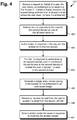
- Figure 4 shows flowchart 480 presenting an exemplary method for mediating entitlement transfers among affiliated domains, according to one implementation.
- flowchart 480 presenting an exemplary method for mediating entitlement transfers among affiliated domains, according to one implementation.
- flowchart 480 begins with receiving request 156/256 on behalf of user 150/250, user 150/250 having entitlement 154/254 to asset 152/252 in first affiliated domain 130/230/330, the request being received from second domain 140/240/340 where user 150/250 does not have entitlement 154/254 (action 481).
- asset 152/252 may be a vehicle, may take the form of any other material object of worth or interest, or may include real property or intellectual property, for example.
- asset 152/252 may include media content, such as movie(s) and/or TV content, for example.
- entitlement 154/254 may include any of ownership of asset 152/252, a license to utilize asset 152/252, a membership or subscription conferring a right of access to asset 152/252, or a rental or lease agreement conferring such a right, for example.
- entitlement 154/254 may include a right to utilize a CDN or other media content distribution infrastructure of affiliated domains 130/230/330, 140/240/340, and 260.
- Request 156/256 may be received on behalf of user 150/250 from second domain 140/240/340 via one of communication network 120 or 270/370.
- Request 156/256 may be received by software code 110/310, executed by hardware processor 104 of computing platform 102, or executed by hardware processor 334 of computing platform 332 of first affiliated domain 230/330.
- Second affiliated domain 140/240/340 may be authenticated by software code 110/310, executed by hardware processor 104 of computing platform 102, or executed by hardware processor 334 of computing platform 332 of first affiliated domain 230/330, and using authentication module 114/314.
- authentication module 114/314 may authenticate second affiliated domain 140/240/340 by reference to domain registry 112/312, which may include identification data for all of affiliated domains 130/230/330, 140/240/340, and 260.
- Entitlement 154/254 may be authenticated by software code 110/310, executed by hardware processor 104 of computing platform 102, or executed by hardware processor 334 of computing platform 332 of first affiliated domain 230/330, and using authentication module 114/314. Entitlement 154/254 may be authenticated by authentication module 114/314 by reference to entitlement ledger 116/316, for example.
- Flowchart 480 continues with transferring, in response to authenticating second affiliated domain 140/240/340 and entitlement 154/254, entitlement 154/254 to second affiliated domain 140/240/340 to enable user 150/250 to access asset 152/252 in second affiliated domain 140/240/340 (action 484).
- entitlement 154/254 includes a right of user 150/250 to utilize a CDN of first affiliated domain 130/230/330
- transfer of entitlement 154/254 to second affiliated domain 140/240/340 may endow user 150/250 with a right to utilize a CDN of second affiliated domain 140/240/340 corresponding to the CDN of first affiliated domain 130/230/330.
- transfer of entitlement 154/254 to second affiliated domain 140/240/340 results in user 150/250 having entitlement 154/254 to asset 152/252 in second affiliated domain 140/240/340, but not in first affiliated domain 130/230/330. That is to say, in those implementations, transfer of entitlement 154/254 to second affiliated domain 140/240/340 causes entitlement 154/254 to lapse, either permanently or temporarily, in first affiliated domain 130/230/330. Alternatively, in some implementations, transfer of entitlement 154/254 to second affiliated domain 140/240/340 results in user 150/250 having entitlement 154/254 to asset 152/252 in second affiliated domain 140/240/340 while retaining entitlement 154/254 in first affiliated domain 130/230/330.
- transfer of entitlement 154/254 to one or more other affiliated domains can result in replication of entitlement 154/254 in each of those respective affiliated domains.
- Entitlement 154/254 may be transferred to second affiliated domains 140/240/340 by software code 110/310, executed by hardware processor 104 of computing platform 102, or executed by hardware processor 334 of computing platform 332 of first affiliated domain 230/330, and via communication network 120/270/370.
- Flowchart 480 continues with generating ledger entry 118/318 corresponding to the transfer of entitlement 154/254, in entitlement ledger 116/316 (action 485).
- Generation of ledger entry 118/318 may be performed by software code 110/310, executed by hardware processor 104 of computing platform 102, or executed by hardware processor 334 of computing platform 332 of first affiliated domain 230/330.
- the present method can further include broadcasting ledger entry 118/318 to all other affiliated domains 140/240/340 and 260 via communication network 270/370, for example as ledger entry broadcast 258.
- broadcasting of ledger entry 118/318 to other affiliated domains of system 200/300, such as second affiliated domain 240/340 results in entitlement ledger 316, which may be a distributed ledger persistently stored on each of the affiliated domains of system 200/300, being updated in real-time. That is to say, ledger entry 118/318, generated in response to transfer of entitlement 154/254 to second affiliated domain 140/240/340, can be propagated into each version of distributed entitlement ledger 316 substantially concurrently.
- flowchart 480 may conclude with action 485, or with the subsequent broadcasting of ledger entry 118/318 described above. However, in some implementations, flowchart 480 can continue with receiving access request 157/257 from user 150/250 to access asset 152/252 from second affiliated domain 140/240/340 (action 486). Access request 157/257 may be received from user 150/250 via one of communication network 120 or 270/370. Access request 157/257 may be received by software code 110/310, executed by hardware processor 104 of computing platform 102, or executed by hardware processor 334 of computing platform 332 of first affiliated domain 230/330.
- Flowchart 480 can conclude with one or more of streaming and rendering asset 152/252 in response to receiving access request 157/257 (action 487).
- asset 152/252 may take the form of media content, such as movie(s) and/or TV content, for example.
- asset 152/252 may be streamed to user device 151/251 via one of communication network 120 or 270/370.
- asset 152/252 may be rendered on user device 151/251.
- Asset 152/252 may be streamed to user device 151/251 by software code 110/310, executed by hardware processor 104 of computing platform 102, or executed by hardware processor 334 of computing platform 332 of first affiliated domain 230/330.
- Asset 152/252 may be rendered on user device 151/251, by user device 151/251, in response to streaming of asset 152/252 by software code 110/310.
- flowchart 480 can be used to automate the transfer of entitlement 154/254 between or among affiliated domains 130/230/330, 140/240/340, and 260 in response to request 156/256.
- the present inventive concepts advantageously enable user 150/250 to exercise an entitlement acquired in first affiliated domain 130/230/330 in one or more other affiliated domains, without requiring the intervention or assistance of a human system administrator.
- the present application discloses a solution for mediating entitlement transfers between affiliated domains.
- the present solution includes receiving a request for an asset on behalf of a user having an entitlement to the asset in a first of multiple affiliated domains, the request being received from a second domain where the user does not have the entitlement.
- the present solution also includes authenticating, in response to the request, the second domain as one of the affiliated domains, authenticating, also in response to the request, the entitlement in the first domain.
- the authenticated entitlement can then be transferred to the second domain, thereby advantageously enabling the user to access the asset in the second domain.
- the present solution further includes generating a ledger entry corresponding to the transfer in an entitlement ledger providing a persistent record of transfers of the entitlement, as well as the present status of the entitlement.
- the method according to the invention may comprise the following steps, in combination with anyone of the steps as per the claims or elsewhere comprised herein either separately or alone:
Landscapes
- Engineering & Computer Science (AREA)
- Computer Security & Cryptography (AREA)
- Theoretical Computer Science (AREA)
- Software Systems (AREA)
- Computer Hardware Design (AREA)
- General Engineering & Computer Science (AREA)
- Signal Processing (AREA)
- Multimedia (AREA)
- General Physics & Mathematics (AREA)
- Physics & Mathematics (AREA)
- Computer Networks & Wireless Communication (AREA)
- Technology Law (AREA)
- Databases & Information Systems (AREA)
- Power Engineering (AREA)
- Computing Systems (AREA)
- Remote Sensing (AREA)
- Health & Medical Sciences (AREA)
- Bioethics (AREA)
- General Health & Medical Sciences (AREA)
- Radar, Positioning & Navigation (AREA)
- Information Transfer Between Computers (AREA)
- Two-Way Televisions, Distribution Of Moving Picture Or The Like (AREA)
- Storage Device Security (AREA)
Abstract
Description
- Personal communication devices such as smartphones and tablet computers, for example, are now widely utilized as portable entertainment systems. One of the benefits enjoyed by users of such devices is that access to media content, such as movie or television (TV) content, is more available than ever before. Further increasing the availability of such content are content subscription services that may entitle a subscriber to access a large library of movies or TV episodes.
- There are provided systems and methods for mediating entitlement transfers among affiliated domains, substantially as shown in and/or described in connection with at least one of the figures, and as set forth more completely in the claims.
-
-
Figure 1 shows a diagram of an exemplary system for mediating entitlement transfers among affiliated domains, according to one implementation; -
Figure 2 shows an exemplary system for mediating entitlement transfers among affiliated domains, according to another implementation; -
Figure 3 shows a more detailed diagram of two affiliated domains of the exemplary system shown inFigure 2 ; and -
Figure 4 shows a flowchart presenting an exemplary method for mediating entitlement transfers among affiliated domains, according to one implementation. - The following description contains specific information pertaining to implementations in the present disclosure. One skilled in the art will recognize that the present disclosure may be implemented in a manner different from that specifically discussed herein. The drawings in the present application and their accompanying detailed description are directed to merely exemplary implementations. Unless noted otherwise, like or corresponding elements among the figures may be indicated by like or corresponding reference numerals. Moreover, the drawings and illustrations in the present application are generally not to scale, and are not intended to correspond to actual relative dimensions. Relocation, whether undertaken enthusiastically in the pursuit of opportunity, or dutifully in response to employment imposed necessity or a military service obligation, can be an initially jarring and disorienting experience. Consumption and enjoyment of media content that is familiar during such times can be one significant source of reassurance and comfort in an otherwise strange environment. However, due to the obstacles typically encountered by users seeking to access content to which they have acquired an entitlement in their original home country, when residing abroad, international relocation can be particularly disconcerting. For example, a provider of media content will typically distribute media content using different and independent content delivery networks (CDNs) in different international markets. As a result, an entitlement to media content acquired by a user in the United States, for example, may not enable the user to access that media content when residing in another country, and vice versa.
- The present application provides a solution for mediating entitlement transfers between affiliated domains that overcomes the drawbacks and deficiencies in the conventional art. It is noted that, as used in the present application, the term "domain" refers to an independently administered network having its own protocols. Moreover, the term "affiliated domains" refers to two or more independently administered networks having common ownership, or common membership in an organization. It is further noted that, as used in the present application, the term "entitlement" refers to any acquired right by a user to access, possess, or utilize an asset. Thus, an entitlement may include one or more of the following: ownership of an asset, a license to utilize an asset, a membership or subscription conferring a right of access to one or more assets, or a rental or lease agreement conferring such a right, for example. Moreover, in some implementations, an entitlement may include a right to utilize a content delivery network (CDN) or other media content distribution infrastructure of a domain.
- It is also noted that, as used in the present application, the terms "automation," "automated," and "automating" refer to systems and processes that do not require the participation of a human user, such as a human administrator. Although, in some implementations, a human administrator may intervene in the transfer of an entitlement by the systems and according to the methods described herein, that human involvement is optional. Thus, the methods described in the present application may be performed under the control of hardware processing components of the disclosed systems.
-
Figure 1 shows a diagram of an exemplary system for mediating entitlement transfers among affiliated domains, according to one implementation. As shown inFigure 1 ,system 100 includescomputing platform 102 havinghardware processor 104 andsystem memory 106 implemented as a non-transitory storage device. According to the present exemplary implementation,system memory 106stores entitlement ledger 116 andsoftware code 110 includingdomain registry 112 andauthentication module 114. - As further shown in
Figure 1 ,system 100 is implemented within a use environment includingcommunication network 120 includingnetwork communication links 122, and respective first and second affiliateddomains Figure 1 ,system 100, first affiliateddomain 130, and second affiliateddomain 140 are interactively coupled viacommunication network 120 andnetwork communication links 122. In addition,Figure 1 showsasset 152 available in each of first affiliateddomain 130 and second affiliateddomain 140,entitlement 154,request 156,ledger entry 118,access request 157, anduser 150 seeking to accessasset 152 in second affiliateddomain 140. Also shown inFigure 1 isuser device 151, to whichasset 152 may be streamed and/or on whichasset 152 may be rendered. Although user device is depicted as a smart television (smart TV) inFigure 1 for exemplary purposes, user device may take a number of alternative forms. For example,user device 151 may be implemented as a smartphone, tablet computer, laptop or desktop computer, digital media player, or gaming console, to name a few alternatives. - It is noted that although the implementation shown in
Figure 1 depictssystem 100 as including two affiliated domains, i.e.,domains system 100 may include more than two affiliated domains, such as tens or hundreds of affiliated domains, for example, each corresponding in general to either of first and second affiliateddomains software code 110 as being stored insystem memory 106 for conceptual clarity, more generally,system memory 106 may take the form of any computer-readable non-transitory storage medium. - The expression "computer-readable non-transitory storage medium," as used in the present application, refers to any medium, excluding a carrier wave or other transitory signal that provides instructions to
hardware processor 104 ofcomputing platform 102. Thus, a computer-readable non-transitory medium may correspond to various types of media, such as volatile media and non-volatile media, for example. Volatile media may include dynamic memory, such as dynamic random access memory (dynamic RAM), while non-volatile memory may include optical, magnetic, or electrostatic storage devices. Common forms of computer-readable non-transitory media include, for example, optical discs, RAM, programmable read-only memory (PROM), erasable PROM (EPROM), and FLASH memory. - It is also noted that although
Figure 1 depictssoftware code 110 andentitlement ledger 116 as being commonly stored insystem memory 106, that representation is also provided merely as an aid to conceptual clarity. More generally,system 100 may include one ormore computing platforms 102, such as computer servers for example, which may be co-located, or may form an interactively linked but distributed system, such as a cloud based system, for instance. As a result,hardware processor 104 andsystem memory 106 may correspond to distributed processor and memory resources withinsystem 100. Thus, it is to be understood thatentitlement ledger 116 and/or various features ofsoftware code 110, such asdomain registry 112 andauthentication module 114, may be stored and/or executed using the distributed memory and/or processor resources ofsystem 100. - According to the implementation shown by
Figure 1 ,user 150 hasentitlement 154 toasset 152 in first affiliateddomain 130 but seeks to accessasset 152 in second affiliateddomain 140 whereuser 150 does not have an entitlement toasset 152.Asset 152 may be a vehicle, such as a car, boat, or plane, for example, or may take the form of any other material object of worth or interest. Alternatively,asset 152 may include real property or intellectual property such as a creative work, invention, software code, or data for example. As yet another alternative,asset 152 may include media content, such as a movie or movies, music, TV content, and the like. -
System 100 is configured to mediate transfer ofentitlement 154 to second affiliateddomain 140 to enableuser 150 to accessasset 152 in second affiliateddomain 140. In one such implementation,system 100 may correspond to one or more web servers, accessible over a packet-switched network such as the Internet, for example. Alternatively,system 100 may correspond to one or more computer servers supporting a private wide-area network (WAN), or included in another type of limited distribution network. - In various implementations, transfer of
entitlement 154 to second affiliateddomain 140 may be recorded inentitlement ledger 116 asledger entry 118. Ledgerentry 118 may provide a persistent record of the transfer ofentitlement 154. Moreoverentitlement ledger 116 may serve as a reference for the present status ofentitlement 154, i.e., indicating whetherentitlement 154 is active or has lapsed, for example, as well as identifyinguser 150 and/or otherusers having entitlement 154 and the domain or domains in whichentitlement 154 may be asserted. In one implementation,entitlement ledger 116 may include a blockchain, for example, as known in the art. -
Figure 2 shows an exemplary system for mediating entitlement transfers among affiliated domains, according to another implementation. As shown inFigure 2 ,system 200 includes multiple affiliated domains coupled viacommunication network 270.Communication network 270 may be a peer-to-peer (P2P) network in which each of first affiliateddomain 230, second affiliateddomain 240, and third affiliateddomain 260 is communicatively coupled to one or more others of affiliateddomains network communication links 272. - In addition,
Figure 2 showsasset 252 available in each of firstaffiliated domain 230, secondaffiliated domain 240, and thirdaffiliated domain 260,entitlement 254,request 256,access request 257, ledger entry broadcast 258, anduser 250. Also shown inFigure 2 isuser device 251, to whichasset 252 may be streamed and/or on whichasset 252 may be rendered. It is noted that, although the implementation shown inFigure 2 depictssystem 200 as including three affiliated domains, i.e.,domains system 200 may include more than three affiliated domains, such as tens or hundreds of affiliated domains, for example, each corresponding to any of first, second, and thirdaffiliated domains - First affiliated
domain 230, secondaffiliated domain 240, andentitlement 254 correspond respectively in general to firstaffiliated domain 130, secondaffiliated domain 140, andentitlement 154, inFigure 1 . Thus, firstaffiliated domain 230, secondaffiliated domain 240, andentitlement 254 may share any of the features and functionality attributed to firstaffiliated domain 130, secondaffiliated domain 140, andentitlement 154, and vice versa. - Moreover,
user device 251,request 256,access request 257, andasset 252, inFigure 2 , correspond respectively in general touser device 151,request 156,access request 157, andasset 152, inFigure 1 . Thus,user device 251,request 256,asset request 257, andasset 252 may share any of the features and functionality attributed touser device 151,request 156,asset request 157, andasset 152, and vice versa. That is to say,asset 252 may be a vehicle, may take the form of any other material object of worth or interest, or may include real property or intellectual property, for example. Alternatively,asset 252 may include media content, such as movie(s) and/or TV content, for example. -
Figure 3 shows a more detailed diagram of first and secondaffiliated domains affiliated domains exemplary system 200, inFigure 2 . As shown inFigure 3 , firstaffiliated domain 330 includescomputing platform 332 havinghardware processor 334, andmemory 336 implemented as a non-transitory storage device storingentitlement ledger 316 andsoftware code 310. As further shown inFigure 3 , secondaffiliated domain 340 includescomputing platform 342 havinghardware processor 344, andmemory 346 implemented as a non-transitory storage device and also storingentitlement ledger 316 andsoftware code 310.Software code 310 includesdomain registry 312 andauthentication module 314. Also shown inFigure 3 areledger entry 318,communication network 370, andnetwork communication link 372. -
System 300 including first affiliateddomain 330, secondaffiliated domain 340, andcommunication network 370 corresponds tosystem 200 including first affiliateddomain 230, secondaffiliated domain 240, andcommunication network 270, inFigure 2 . Thus,system 300 including first affiliateddomain 330, secondaffiliated domain 340, andcommunication network 370 may share any of the features and functionality attributed tosystem 200 including first affiliateddomain 230, secondaffiliated domain 240, andcommunication network 270, and vice versa. In other words, like firstaffiliated domain 330, firstaffiliated domain 230 may includecomputing platform 332 havinghardware processor 334, andmemory 336 storingentitlement ledger 316 andsoftware code 310. In addition like secondaffiliated domain 340, secondaffiliated domain 240 may includecomputing platform 342 havinghardware processor 344, andmemory 346 storingentitlement ledger 316 andsoftware code 310. -
Communication network 370 andnetwork communication link 372 correspond respectively tocommunication network 270 andnetwork communication link 272, inFigure 2 . Thus,communication network 370 andnetwork communication links 372 may share any of the features and functionality attributed tocommunication network 270 andnetwork communication links 272, and vice versa. In other words, likecommunication network 270,communication network 370 may take the form of a P2P network among first, second, and thirdaffiliated domains Figure 3 ,communication network 270/370 may be a P2P network of the respective computing platforms of those affiliated domains, such ascomputing platforms - In addition,
entitlement ledger 316 andledger entry 318, inFigure 3 , correspond respectively in general toentitlement ledger 116 andledger entry 118, inFigure 1 . Thus,entitlement ledger 316 andledger entry 318 may share any of the features and functionality attributed toentitlement ledger 116 andledger entry 118, and vice versa. Moreover,software code 310 includingdomain registry 312 andauthentication module 314 corresponds in general tosoftware coder 110 includingdomain registry 112 andauthentication module 114, inFigure 1 . Thus,software code 310,domain registry 312, andauthentication module 314 may share any of the features and functionality attributed tosoftware code 110,domain registry 112, andauthentication module 114, and vice versa. - According to the implementation shown by
Figures 2 and3 ,user 250 hasentitlement 254 toasset 252 in firstaffiliated domain 230/330 but seeks to accessasset 252 in secondaffiliated domain 240/340 whereuser 250 does not have an entitlement toasset 252.System 200/300 is configured to mediate transfer ofentitlement 254 to secondaffiliated domain 240/340 so as to enableuser 250 to accessasset 252 in secondaffiliated domain 240/340. In one such implementation, each of first and secondaffiliated domains 230/330 and 240/340, as well as thirdaffiliated domain 260, may correspond to one or more web servers acting as P2P network nodes and accessible over a packet-switched network such as the Internet, for example. Alternatively, each of first and secondaffiliated domains 230/330 and 240/340, as well as thirdaffiliated domain 260, may include one or more computer servers participating as P2P network nodes in a private wide-area network (WAN), or included in another type of limited distribution network. - In various implementations, transfer of
entitlement 254 to secondaffiliated domain 240/340 may be recorded inentitlement ledger 316 asledger entry 318.Ledger entry 318 may provide a persistent record of the transfer ofentitlement 254. Moreoverentitlement ledger 316 may serve as a reference for the present status ofentitlement 254, i.e., indicating whetherentitlement 254 is active or has lapsed, for example, identifyinguser 250 and/or otherusers having entitlement 254, and identifying the domain or domains in whichentitlement 254 may be asserted. In one implementation,entitlement ledger 316 may include a blockchain, for example, as known in the art. - Furthermore, in some implementations, the act of
recording ledger entry 318 inentitlement ledger 316 may by substantially concurrently accompanied with broadcasting ofledger entry 318 to some or all other affiliated domains ofsystem 200/300 asledger entry broadcast 258. For example, in implementations in whichledger entry 318 is first recorded inentitlement ledger 316 of firstaffiliated domain 230/330, ledger entry broadcast 258 may be transmitted to all other affiliated domains ofsystem 200/300 viacommunication network 270/370, i.e., second and thirdaffiliated domains 240/340 and 260. As a, result each instantiation ofentitlement ledger 316 stored locally in each of the affiliated domains ofsystem 200/300 may be substantially concurrently updated so as to agree with another. - The functionality of
software code 110/310 will be further described by reference toFigure 4 in combination withFigures 1 ,2 , and3 .Figure 4 showsflowchart 480 presenting an exemplary method for mediating entitlement transfers among affiliated domains, according to one implementation. With respect to the method outlined inFigure 4 , it is noted that certain details and features have been left out offlowchart 480 in order not to obscure the discussion of the inventive features in the present application. - Referring now to
Figure 4 in combination withFigures 1 and2 ,flowchart 480 begins with receivingrequest 156/256 on behalf ofuser 150/250,user 150/250 havingentitlement 154/254 toasset 152/252 in firstaffiliated domain 130/230/330, the request being received fromsecond domain 140/240/340 whereuser 150/250 does not haveentitlement 154/254 (action 481). As noted above,asset 152/252 may be a vehicle, may take the form of any other material object of worth or interest, or may include real property or intellectual property, for example. Alternatively,asset 152/252 may include media content, such as movie(s) and/or TV content, for example. - As also noted above,
entitlement 154/254 may include any of ownership ofasset 152/252, a license to utilizeasset 152/252, a membership or subscription conferring a right of access toasset 152/252, or a rental or lease agreement conferring such a right, for example. Moreover, in some implementations,entitlement 154/254 may include a right to utilize a CDN or other media content distribution infrastructure ofaffiliated domains 130/230/330, 140/240/340, and 260. -
Request 156/256 may be received on behalf ofuser 150/250 fromsecond domain 140/240/340 via one ofcommunication network Request 156/256 may be received bysoftware code 110/310, executed byhardware processor 104 ofcomputing platform 102, or executed byhardware processor 334 ofcomputing platform 332 of firstaffiliated domain 230/330. -
Flowchart 480 continues with authenticating, in response to request 156/256,second domain 140/240/340 as one ofaffiliated domains 130/230/330, 140/240/340, and 260 (action 482). Second affiliateddomain 140/240/340 may be authenticated bysoftware code 110/310, executed byhardware processor 104 ofcomputing platform 102, or executed byhardware processor 334 ofcomputing platform 332 of firstaffiliated domain 230/330, and usingauthentication module 114/314. In one implementation, forexample authentication module 114/314 may authenticate secondaffiliated domain 140/240/340 by reference todomain registry 112/312, which may include identification data for all ofaffiliated domains 130/230/330, 140/240/340, and 260. -
Flowchart 480 continues with authenticating, in response to request 156/256,entitlement 154/254 in firstaffiliated domain 130/230/330 (action 483).Entitlement 154/254 may be authenticated bysoftware code 110/310, executed byhardware processor 104 ofcomputing platform 102, or executed byhardware processor 334 ofcomputing platform 332 of firstaffiliated domain 230/330, and usingauthentication module 114/314.Entitlement 154/254 may be authenticated byauthentication module 114/314 by reference toentitlement ledger 116/316, for example. -
Flowchart 480 continues with transferring, in response to authenticating secondaffiliated domain 140/240/340 andentitlement 154/254,entitlement 154/254 to secondaffiliated domain 140/240/340 to enableuser 150/250 to accessasset 152/252 in secondaffiliated domain 140/240/340 (action 484). For example, whereentitlement 154/254 includes a right ofuser 150/250 to utilize a CDN of firstaffiliated domain 130/230/330, transfer ofentitlement 154/254 to secondaffiliated domain 140/240/340 may endowuser 150/250 with a right to utilize a CDN of secondaffiliated domain 140/240/340 corresponding to the CDN of firstaffiliated domain 130/230/330. - In some implementations, transfer of
entitlement 154/254 to secondaffiliated domain 140/240/340 results inuser 150/250 havingentitlement 154/254 toasset 152/252 in secondaffiliated domain 140/240/340, but not in firstaffiliated domain 130/230/330. That is to say, in those implementations, transfer ofentitlement 154/254 to secondaffiliated domain 140/240/340 causesentitlement 154/254 to lapse, either permanently or temporarily, in firstaffiliated domain 130/230/330. Alternatively, in some implementations, transfer ofentitlement 154/254 to secondaffiliated domain 140/240/340 results inuser 150/250 havingentitlement 154/254 toasset 152/252 in secondaffiliated domain 140/240/340 while retainingentitlement 154/254 in firstaffiliated domain 130/230/330. In other words, in some implementations, transfer ofentitlement 154/254 to one or more other affiliated domains can result in replication ofentitlement 154/254 in each of those respective affiliated domains.Entitlement 154/254 may be transferred to secondaffiliated domains 140/240/340 bysoftware code 110/310, executed byhardware processor 104 ofcomputing platform 102, or executed byhardware processor 334 ofcomputing platform 332 of firstaffiliated domain 230/330, and viacommunication network 120/270/370. -
Flowchart 480 continues with generatingledger entry 118/318 corresponding to the transfer ofentitlement 154/254, inentitlement ledger 116/316 (action 485). Generation ofledger entry 118/318 may be performed bysoftware code 110/310, executed byhardware processor 104 ofcomputing platform 102, or executed byhardware processor 334 ofcomputing platform 332 of firstaffiliated domain 230/330. - Although not included in
flowchart 480, in implementations in whichcommunication network 270/370 takes the form of a P2P network, the present method can further includebroadcasting ledger entry 118/318 to all otheraffiliated domains 140/240/340 and 260 viacommunication network 270/370, for example asledger entry broadcast 258. As shown byFigure 3 , broadcasting ofledger entry 118/318 to other affiliated domains ofsystem 200/300, such as secondaffiliated domain 240/340, results inentitlement ledger 316, which may be a distributed ledger persistently stored on each of the affiliated domains ofsystem 200/300, being updated in real-time. That is to say,ledger entry 118/318, generated in response to transfer ofentitlement 154/254 to secondaffiliated domain 140/240/340, can be propagated into each version of distributedentitlement ledger 316 substantially concurrently. - It is noted that, in some implementations,
flowchart 480 may conclude withaction 485, or with the subsequent broadcasting ofledger entry 118/318 described above. However, in some implementations,flowchart 480 can continue with receivingaccess request 157/257 fromuser 150/250 to accessasset 152/252 from secondaffiliated domain 140/240/340 (action 486).Access request 157/257 may be received fromuser 150/250 via one ofcommunication network Access request 157/257 may be received bysoftware code 110/310, executed byhardware processor 104 ofcomputing platform 102, or executed byhardware processor 334 ofcomputing platform 332 of firstaffiliated domain 230/330. -
Flowchart 480 can conclude with one or more of streaming andrendering asset 152/252 in response to receivingaccess request 157/257 (action 487). As noted above,asset 152/252 may take the form of media content, such as movie(s) and/or TV content, for example. In those implementations,asset 152/252 may be streamed touser device 151/251 via one ofcommunication network asset 152/252 may be rendered onuser device 151/251. -
Asset 152/252 may be streamed touser device 151/251 bysoftware code 110/310, executed byhardware processor 104 ofcomputing platform 102, or executed byhardware processor 334 ofcomputing platform 332 of firstaffiliated domain 230/330.Asset 152/252 may be rendered onuser device 151/251, byuser device 151/251, in response to streaming ofasset 152/252 bysoftware code 110/310. - It is emphasized that the method presented by
flowchart 480 can be used to automate the transfer ofentitlement 154/254 between or amongaffiliated domains 130/230/330, 140/240/340, and 260 in response to request 156/256. As a result, the present inventive concepts advantageously enableuser 150/250 to exercise an entitlement acquired in firstaffiliated domain 130/230/330 in one or more other affiliated domains, without requiring the intervention or assistance of a human system administrator. - Thus, the present application discloses a solution for mediating entitlement transfers between affiliated domains. The present solution includes receiving a request for an asset on behalf of a user having an entitlement to the asset in a first of multiple affiliated domains, the request being received from a second domain where the user does not have the entitlement. The present solution also includes authenticating, in response to the request, the second domain as one of the affiliated domains, authenticating, also in response to the request, the entitlement in the first domain. The authenticated entitlement can then be transferred to the second domain, thereby advantageously enabling the user to access the asset in the second domain. The present solution further includes generating a ledger entry corresponding to the transfer in an entitlement ledger providing a persistent record of transfers of the entitlement, as well as the present status of the entitlement.
- From the above description it is manifest that various techniques can be used for implementing the concepts described in the present application without departing from the scope of those concepts. Moreover, while the concepts have been described with specific reference to certain implementations, a person of ordinary skill in the art would recognize that changes can be made in form and detail without departing from the scope of those concepts. As such, the described implementations are to be considered in all respects as illustrative and not restrictive. It should also be understood that the present application is not limited to the particular implementations described herein, but many rearrangements, modifications, and substitutions are possible without departing from the scope of the present disclosure.
- The method according to the invention may comprise the following steps, in combination with anyone of the steps as per the claims or elsewhere comprised herein either separately or alone:
- the entitlement ledger comprises a blockchain;
- transferring the entitlement results in the user having the entitlement to the asset in the second domain but not in the first domain;
- transferring the entitlement results in the user having the entitlement to the asset in the second domain while retaining the entitlement to the asset in the first domain;
- the entitlement comprises a right to utilize a content delivery network (CDN) of the second domain corresponding to a CDN of the first domain;
- the asset comprises media content.
Claims (15)
- A system for mediating entitlement transfers among a plurality of affiliated domains, the system comprising:a computing platform including a hardware processor and a system memory;a software code and an entitlement ledger stored in the system memory;the hardware processor configured to execute the software code to:receive a request on behalf of a user, the user having an entitlement to an asset in a first domain of the plurality of affiliated domains, the request being received from a second domain wherein the user does not have the entitlement;authenticate, in response to the request, the second domain as one of the plurality of affiliated domains;authenticate, in response to the request, the entitlement in the first domain;transfer, in response to authenticating the second domain and the entitlement, the entitlement to the second domain to enable the user to access the asset in the second domain; andgenerate a ledger entry corresponding to the transfer in the entitlement ledger.
- The system of claim 1, wherein the transfer results in the user having the entitlement to the asset in the second domain but not in the first domain.
- The system of at least one of claims 1 or 2, wherein the transfer results in the user having the entitlement to the asset in the second domain while retaining the entitlement to the asset in the first domain.
- The system of at least one of claims 1 to 3, wherein the entitlement comprises a right to utilize a content delivery network (CDN) of the second domain corresponding to a CDN of the first domain.
- The system of at least one of claims 1 to 4, wherein the asset comprises media content.
- A system for mediating entitlement transfers among a plurality of affiliated domains, the system comprising:the plurality of affiliated domains communicatively coupled via a network;each of the plurality of affiliated domains including a respective computing platform having a hardware processor and a memory storing a software code and an entitlement ledger;wherein for at least a first of the plurality of affiliated domains, the hardware processor is configured to execute the software code to:receive a request on behalf of a user, the user having an entitlement to an asset in the first domain, the request being received from a second domain wherein the user does not have the entitlement;authenticate, in response to the request, the second domain as one of the plurality of affiliated domains;authenticate, in response to the request, the entitlement in the first domain;transfer, in response to authenticating the second domain and the entitlement, the entitlement to the second domain to enable the user to access the asset in the second domain; andgenerate a ledger entry corresponding to the transfer in the entitlement ledger.
- The system of claim 6, wherein the hardware processor of the computing platform of the first domain is further configured to execute the software code to broadcast the ledger entry to others of the plurality of affiliated domains via the network.
- The system of at least one of claims 6 or 7, wherein the network is a peer-to-peer (P2P) network of the respective computing platforms of the plurality of affiliated domains.
- The system of at least one of claims 6 to 8, wherein the entitlement ledger comprises a blockchain.
- The system of at least one of claims 6 to 9, wherein the transfer results in the user having the entitlement to the asset in the second domain but not in the first domain.
- The system of at least one of claims 6 to 10, wherein the transfer results in the user having the entitlement to the asset in the second domain while retaining the entitlement to the asset in the first domain.
- The system of at least one of claims 6 to 11, wherein the entitlement comprises a right to utilize a content delivery network (CDN) of the second domain corresponding to a CDN of the first domain.
- The system of at least one of claims 6 to 12, wherein the asset comprises media content.
- A method for use by a system for mediating entitlement transfers among a plurality of affiliated domains, the method comprising:receiving, using a hardware processor of the system, a request on behalf of a user, the user having an entitlement to an asset in a first domain of the plurality of affiliated domains, the request being received from a second domain wherein the user does not have the entitlement;authenticating, using the hardware processor and in response to the request, the second domain as one of the plurality of affiliated domains;authenticating, using the hardware processor and in response to the request, the entitlement in the first domain;transferring, using the hardware processor and in response to authenticating the second domain and the entitlement, the entitlement to the second domain to enable the user to access the asset in the second domain; andgenerating, using the hardware processor a ledger entry corresponding to the transfer in the entitlement ledger.
- The method of claim 14, further comprising broadcasting, using the hardware processor, the ledger entry to others of the plurality of affiliated domains.
Applications Claiming Priority (1)
| Application Number | Priority Date | Filing Date | Title |
|---|---|---|---|
| US15/982,985 US20190356658A1 (en) | 2018-05-17 | 2018-05-17 | Mediation of entitlement transfers among affiliated domains |
Publications (1)
| Publication Number | Publication Date |
|---|---|
| EP3570192A1 true EP3570192A1 (en) | 2019-11-20 |
Family
ID=66589304
Family Applications (1)
| Application Number | Title | Priority Date | Filing Date |
|---|---|---|---|
| EP19174856.5A Pending EP3570192A1 (en) | 2018-05-17 | 2019-05-16 | Mediation of entitlement transfers among affiliated domains |
Country Status (5)
| Country | Link |
|---|---|
| US (1) | US20190356658A1 (en) |
| EP (1) | EP3570192A1 (en) |
| JP (1) | JP6851420B2 (en) |
| KR (1) | KR20190132285A (en) |
| CN (1) | CN110502871B (en) |
Families Citing this family (2)
| Publication number | Priority date | Publication date | Assignee | Title |
|---|---|---|---|---|
| US12099997B1 (en) | 2020-01-31 | 2024-09-24 | Steven Mark Hoffberg | Tokenized fungible liabilities |
| JP6860108B1 (en) * | 2020-03-19 | 2021-04-14 | 株式会社リコー | Brokerage servers, trading systems, brokerage methods, and programs |
Citations (4)
| Publication number | Priority date | Publication date | Assignee | Title |
|---|---|---|---|---|
| US20090307759A1 (en) * | 2008-06-06 | 2009-12-10 | Microsoft Corporation | Temporary Domain Membership for Content Sharing |
| EP2463799A1 (en) * | 2010-12-08 | 2012-06-13 | Disney Enterprises, Inc. | System and method for coordinating asset entitlements |
| WO2013120100A1 (en) * | 2012-02-10 | 2013-08-15 | Contentguard Holdings, Inc. | Method, apparatus, and computer-readable medium for content access authorization |
| US20170116693A1 (en) * | 2015-10-27 | 2017-04-27 | Verimatrix, Inc. | Systems and Methods for Decentralizing Commerce and Rights Management for Digital Assets Using a Blockchain Rights Ledger |
Family Cites Families (14)
| Publication number | Priority date | Publication date | Assignee | Title |
|---|---|---|---|---|
| JP3935083B2 (en) * | 2003-01-31 | 2007-06-20 | 株式会社エヌ・ティ・ティ・ドコモ | Content server and relay device |
| JP4469631B2 (en) * | 2003-02-28 | 2010-05-26 | パナソニック株式会社 | Terminal device, server device, license distribution system, license information handling method, and program |
| US8688513B2 (en) * | 2004-11-24 | 2014-04-01 | Ashraf Nashed | Method and system for providing access rights to a communications network site |
| US8280982B2 (en) * | 2006-05-24 | 2012-10-02 | Time Warner Cable Inc. | Personal content server apparatus and methods |
| US20080154780A1 (en) * | 2006-12-22 | 2008-06-26 | Nortel Networks Limited | Sharing usage rights |
| JP2009175790A (en) * | 2008-01-21 | 2009-08-06 | Nec Corp | Content asset management system, method and control program |
| US8356359B2 (en) * | 2010-04-19 | 2013-01-15 | Ericsson Television, Inc. | Licensing rights for media content that follows a subscriber |
| US9544293B2 (en) * | 2013-09-20 | 2017-01-10 | Oracle International Corporation | Global unified session identifier across multiple data centers |
| US10491685B2 (en) * | 2015-03-31 | 2019-11-26 | Microsoft Technology Licensing, Llc | Session transfer between resources |
| US10102216B2 (en) * | 2015-04-21 | 2018-10-16 | Google Llc | System for associating related digital assets |
| CN104917767B (en) * | 2015-06-11 | 2017-11-28 | 杭州东信北邮信息技术有限公司 | home business access control method based on RBAC model |
| US10880267B2 (en) * | 2016-04-28 | 2020-12-29 | Afilias Limited | Verification of domain events |
| JP6690993B2 (en) * | 2016-05-19 | 2020-04-28 | 株式会社日立ソリューションズ東日本 | Information management device and information management method |
| US10715867B2 (en) * | 2018-01-11 | 2020-07-14 | Turner Broadcasting System, Inc. | Providing media content to content consumers for playback and consumption |
-
2018
- 2018-05-17 US US15/982,985 patent/US20190356658A1/en active Pending
-
2019
- 2019-05-16 EP EP19174856.5A patent/EP3570192A1/en active Pending
- 2019-05-16 JP JP2019092802A patent/JP6851420B2/en active Active
- 2019-05-17 CN CN201910414739.XA patent/CN110502871B/en active Active
- 2019-05-17 KR KR1020190058181A patent/KR20190132285A/en not_active Ceased
Patent Citations (4)
| Publication number | Priority date | Publication date | Assignee | Title |
|---|---|---|---|---|
| US20090307759A1 (en) * | 2008-06-06 | 2009-12-10 | Microsoft Corporation | Temporary Domain Membership for Content Sharing |
| EP2463799A1 (en) * | 2010-12-08 | 2012-06-13 | Disney Enterprises, Inc. | System and method for coordinating asset entitlements |
| WO2013120100A1 (en) * | 2012-02-10 | 2013-08-15 | Contentguard Holdings, Inc. | Method, apparatus, and computer-readable medium for content access authorization |
| US20170116693A1 (en) * | 2015-10-27 | 2017-04-27 | Verimatrix, Inc. | Systems and Methods for Decentralizing Commerce and Rights Management for Digital Assets Using a Blockchain Rights Ledger |
Also Published As
| Publication number | Publication date |
|---|---|
| JP6851420B2 (en) | 2021-03-31 |
| CN110502871A (en) | 2019-11-26 |
| KR20190132285A (en) | 2019-11-27 |
| US20190356658A1 (en) | 2019-11-21 |
| JP2019220154A (en) | 2019-12-26 |
| CN110502871B (en) | 2024-03-15 |
Similar Documents
| Publication | Publication Date | Title |
|---|---|---|
| US20230164207A1 (en) | System and Method for Verifying and Providing Compensation for Participation in Real-Time Streaming of Multimedia Over a Decentralized Network | |
| US20240114210A1 (en) | System to establish a network of nodes and participants for dynamic management of media content rights | |
| US20260113368A1 (en) | Decentralized content fabric | |
| AU2025205425A1 (en) | Interoperable digital social recorder of multi-threaded smart routed media and crypto asset compliance and payment systems and methods | |
| WO2022119785A1 (en) | Non-fungible token (nft) based digital rights management in a decentralized data delivery network | |
| JP7212266B2 (en) | A platform for co-processing tasks | |
| US10387629B2 (en) | Method and system for allocating access to digital media content | |
| WO2020022957A1 (en) | Method and apparatus for transaction verification in a blockchain-based network | |
| US20130232583A1 (en) | Method and System for Providing Digital Media Rental | |
| Elert et al. | Two sides to the evasion: The Pirate Bay and the interdependencies of evasive entrepreneurship | |
| US11089051B1 (en) | Preventing denial-of-service attacks in decentralized edge networks using verifiable delay functions (VDFs) | |
| TWI351849B (en) | Apparatus and method for transmitting streaming se | |
| CN110839056A (en) | Data processing method and device based on block chain and node network | |
| US12200285B2 (en) | Technologies for managing collaborative and multiplatform media content playlists | |
| US20080104206A1 (en) | Efficient knowledge representation in data synchronization systems | |
| US20190356658A1 (en) | Mediation of entitlement transfers among affiliated domains | |
| US20180287878A1 (en) | Monitoring a peer-to-peer network | |
| WO2008000840A1 (en) | Distributed p2p network system | |
| CN118354135A (en) | Resource exchange method, device, equipment, medium and program in video viewing scenario | |
| US9979988B2 (en) | Program distribution service | |
| HK40011612A (en) | Mediation of entitlement transfers among affiliated domains | |
| CN102739701A (en) | Access control method of media streams and peer-to-peer streaming media system | |
| HK40011612B (en) | Mediation of entitlement transfers among affiliated domains | |
| WO2015136209A1 (en) | Means for managing resale rights for digital objects | |
| CN112075064A (en) | Scalable real-time duplex communication service |
Legal Events
| Date | Code | Title | Description |
|---|---|---|---|
| PUAI | Public reference made under article 153(3) epc to a published international application that has entered the european phase |
Free format text: ORIGINAL CODE: 0009012 |
|
| STAA | Information on the status of an ep patent application or granted ep patent |
Free format text: STATUS: THE APPLICATION HAS BEEN PUBLISHED |
|
| AK | Designated contracting states |
Kind code of ref document: A1 Designated state(s): AL AT BE BG CH CY CZ DE DK EE ES FI FR GB GR HR HU IE IS IT LI LT LU LV MC MK MT NL NO PL PT RO RS SE SI SK SM TR |
|
| AX | Request for extension of the european patent |
Extension state: BA ME |
|
| STAA | Information on the status of an ep patent application or granted ep patent |
Free format text: STATUS: REQUEST FOR EXAMINATION WAS MADE |
|
| 17P | Request for examination filed |
Effective date: 20200310 |
|
| RBV | Designated contracting states (corrected) |
Designated state(s): AL AT BE BG CH CY CZ DE DK EE ES FI FR GB GR HR HU IE IS IT LI LT LU LV MC MK MT NL NO PL PT RO RS SE SI SK SM TR |
|
| STAA | Information on the status of an ep patent application or granted ep patent |
Free format text: STATUS: EXAMINATION IS IN PROGRESS |
|
| 17Q | First examination report despatched |
Effective date: 20211102 |
|
| P01 | Opt-out of the competence of the unified patent court (upc) registered |
Effective date: 20230524 |