EP3570134A1 - System for evacuating one or more mobile robots - Google Patents
System for evacuating one or more mobile robots Download PDFInfo
- Publication number
- EP3570134A1 EP3570134A1 EP18173332.0A EP18173332A EP3570134A1 EP 3570134 A1 EP3570134 A1 EP 3570134A1 EP 18173332 A EP18173332 A EP 18173332A EP 3570134 A1 EP3570134 A1 EP 3570134A1
- Authority
- EP
- European Patent Office
- Prior art keywords
- evacuation
- mobile robots
- area
- commands
- zones
- Prior art date
- Legal status (The legal status is an assumption and is not a legal conclusion. Google has not performed a legal analysis and makes no representation as to the accuracy of the status listed.)
- Granted
Links
Images


Classifications
-
- G—PHYSICS
- G05—CONTROLLING; REGULATING
- G05D—SYSTEMS FOR CONTROLLING OR REGULATING NON-ELECTRIC VARIABLES
- G05D1/00—Control of position, course, altitude or attitude of land, water, air or space vehicles, e.g. using automatic pilots
- G05D1/02—Control of position or course in two dimensions
- G05D1/021—Control of position or course in two dimensions specially adapted to land vehicles
- G05D1/0212—Control of position or course in two dimensions specially adapted to land vehicles with means for defining a desired trajectory
- G05D1/0214—Control of position or course in two dimensions specially adapted to land vehicles with means for defining a desired trajectory in accordance with safety or protection criteria, e.g. avoiding hazardous areas
-
- G—PHYSICS
- G05—CONTROLLING; REGULATING
- G05D—SYSTEMS FOR CONTROLLING OR REGULATING NON-ELECTRIC VARIABLES
- G05D1/00—Control of position, course, altitude or attitude of land, water, air or space vehicles, e.g. using automatic pilots
- G05D1/02—Control of position or course in two dimensions
- G05D1/021—Control of position or course in two dimensions specially adapted to land vehicles
- G05D1/0287—Control of position or course in two dimensions specially adapted to land vehicles involving a plurality of land vehicles, e.g. fleet or convoy travelling
- G05D1/0291—Fleet control
- G05D1/0297—Fleet control by controlling means in a control room
-
- G—PHYSICS
- G01—MEASURING; TESTING
- G01C—MEASURING DISTANCES, LEVELS OR BEARINGS; SURVEYING; NAVIGATION; GYROSCOPIC INSTRUMENTS; PHOTOGRAMMETRY OR VIDEOGRAMMETRY
- G01C21/00—Navigation; Navigational instruments not provided for in groups G01C1/00 - G01C19/00
- G01C21/20—Instruments for performing navigational calculations
- G01C21/206—Instruments for performing navigational calculations specially adapted for indoor navigation
-
- G—PHYSICS
- G05—CONTROLLING; REGULATING
- G05D—SYSTEMS FOR CONTROLLING OR REGULATING NON-ELECTRIC VARIABLES
- G05D1/00—Control of position, course, altitude or attitude of land, water, air or space vehicles, e.g. using automatic pilots
- G05D1/0011—Control of position, course, altitude or attitude of land, water, air or space vehicles, e.g. using automatic pilots associated with a remote control arrangement
- G05D1/0027—Control of position, course, altitude or attitude of land, water, air or space vehicles, e.g. using automatic pilots associated with a remote control arrangement involving a plurality of vehicles, e.g. fleet or convoy travelling
-
- G—PHYSICS
- G05—CONTROLLING; REGULATING
- G05D—SYSTEMS FOR CONTROLLING OR REGULATING NON-ELECTRIC VARIABLES
- G05D1/00—Control of position, course, altitude or attitude of land, water, air or space vehicles, e.g. using automatic pilots
- G05D1/02—Control of position or course in two dimensions
- G05D1/021—Control of position or course in two dimensions specially adapted to land vehicles
- G05D1/0276—Control of position or course in two dimensions specially adapted to land vehicles using signals provided by a source external to the vehicle
- G05D1/028—Control of position or course in two dimensions specially adapted to land vehicles using signals provided by a source external to the vehicle using a RF signal
- G05D1/0282—Control of position or course in two dimensions specially adapted to land vehicles using signals provided by a source external to the vehicle using a RF signal generated in a local control room
-
- G—PHYSICS
- G08—SIGNALLING
- G08B—SIGNALLING SYSTEMS, e.g. PERSONAL CALLING SYSTEMS; ORDER TELEGRAPHS; ALARM SYSTEMS
- G08B7/00—Signalling systems according to two or more of groups G08B3/00 - G08B6/00
- G08B7/06—Signalling systems according to two or more of groups G08B3/00 - G08B6/00 using electric transmission, e.g. involving audible and visible signalling through the use of sound and light sources
- G08B7/066—Signalling systems according to two or more of groups G08B3/00 - G08B6/00 using electric transmission, e.g. involving audible and visible signalling through the use of sound and light sources guiding along a path, e.g. evacuation path lighting strip
Definitions
- the present invention relates to a system and method for evacuating one or more mobile robots from a confined area.
- the system and method involve one or more mobile robots equipped with sensors or receivers for receiving evacuation commands directing the one or more mobile robots to leave the evacuation area and enter a location outside the evacuation area.
- Prior art systems typically solves the above mentioned situations by dividing the relevant physical area into sub areas which can all individually be set in two states; i) a state that allows robots to enter the area and ii) a state that does not allow the robots to enter the area.
- Each robot then check status of each area before it enters the area and only enters if the status allows this. If the status changes when a robot is inside an area the robots simply stops. Alternatively the robots use audio and visual signals when driving in restricted areas as to enhance identification of the presence of the robots.
- the optimized access will allow the robots to move more efficiently within a common space as well as perform designated tasks more efficiently.
- the optimized access prioritizes the resource allocation to minimize aggregate time robots wait in order to obtain the resources needed to move or perform a task.
- the present invention solves the above discussed problems by defining a number of individual evacuation zones and letting the robot management system receive evacuation alarms per individual zone and then as soon as this happens send command for robots to evacuate the specific zone as fast as possible. Either just evacuate to outside evacuation zone or to go to specific positions during the alarm.
- a system for evacuating one or more mobile robots from specific zones in an area comprising: one or more mobile robots equipped with sensors or receivers for receiving one or more evacuation commands from a source emitting said evacuation commands, whereby the one or more mobile robots evacuate from one or more specific evacuation zones; wherein the system defines an evacuation action to be performed at a zone at which to perform the evacuation for one or more mobile robots, said evacuation action directs the one or more mobile robots to leave the evacuation area and enter a location outside the evacuation area in response to the one or more evacuation commands.
- the one or more mobile robots is/are autonomous mobile robots.
- the one or more mobile robots are controlled by a robot management system.
- the robot management system may be located remote from the one or more mobile robots, and it may communicate with the one or more mobile robots via a wireless communication.
- the robot management system may be configured to process information from the one or more mobile robots, such as information comprising status on which of the robots are inside or outside the evacuation area.
- the robot management system may be configured to process commands from an external source, such as an actuator or an ERP system, such as commands comprising activation of alarms.
- a method for evacuating the one or more mobile robots from specific zones in a confined area involves emitting evacuation commands from a source emitting said commands to one or more mobile robots equipped with sensors or receivers for receiving such evacuation commands, whereby the one or more of the mobile robots evacuate from one or more specific evacuation zones.
- the method defines an evacuation action to be performed at a zone at which to perform the evacuation for one or more mobile robots. This evacuation action directs the one or more mobile robots to leave the evacuation area and enter a location outside the evacuation area in response to the one or more evacuation commands.
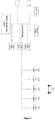
- FIG. 1 there is shown a local area network with different devices for communication.
- the local area network connects many different systems and devices which need communication between them.
- the robot management system is integrated to the enterprise resource planning (ERP) system which handles sales orders, finance and logistic issues. It is also connected to the fire alarm system, the alarm buttons for the different physical areas which individually may require evacuation, and it is connected to the WIFI routers which connect to the mobile robots.
- ERP enterprise resource planning
- the alarm buttons for the different physical areas which individually may require evacuation
- WIFI routers which connect to the mobile robots. This enables the robot management system to receive alarms from either physical buttons or via the ERP or fire alarm systems and send directions for evacuating specific areas to the mobile robots.
- FIG. 2 there is shows a map of a small physical area in which the mobile robots operate.
- an evacuation zone 3 evacuation positions. These positions are the positions to which the mobile robots move when evacuating the evacuation zone when an alarm is active.
- the evacuation zone is assigned with 2 different evacuation directions and this is indicated by the arrows named "Direction for evacuation”. This means that when an evacuation alarm is raised the mobile robot will evacuate in different direction depending on its position inside the evacuation zone when the alarm is raised.
- FIG. 3 there is shown an event diagram illustrating a possible implementation of the logic for evacuation.
- the robots inside the area that is to be evacuated calculate their preferred route to a position outside the evacuation area and communicates this planned route to the robot management system which will identify possible conflicts and direct some of the robots to alternative positions to solve the conflicts.
- the robot management system dictates the route/direction and evacuation position and communicates this to all robots which all just follow the instructions for evacuation.
- the system of the present invention is particularly useful for evacuation purposes in a factory, a warehouse, a hospital or a service/repair shop or similar.
- one or more mobile robots are configured to transport components from A to B or to perform tasks at various positions in the area.
- a wireless communication system such as Local Area Network with WiFi, Zigbee, Z-wave or similar, may be used to control the robots.
- a network such as LORA, NB-loT or LTE.
- the system also includes a robot management system which is a SW program that handles and prioritizes jobs of the fleet of robots.
- the robot management system communicates with all the robots in the area using the wireless communication system.
- the robot management system has an application programmable Interface (API) through which other systems can interact with the robot management system.
- API application programmable Interface
- This can for instance be a physical alarm button that is connected to the wireless communication or it can be the fire alarm system that is also connected to the Local Area Network.
- the robots can move out of the area in different ways.
- One way is to move to a specific position outside the area given for the robot.
- Another way is to leave to the nearest of a number of different evacuation positions outside the area.
- Another way is to leave the area moving in a specific direction and then locate the nearest evacuation position outside the area.
- each robot finds the nearest or fastest route to an outside position but each position is only allowed to have one robot parked so the robot management system can communicate with each robot who calculates time or distance to different positions outside the area and sends this information back to the robot management system which decides which robot shall move to which position based on evaluation of the fastest way to evacuate the entire area and still only have one robot parked at each position.
Landscapes
- Engineering & Computer Science (AREA)
- Radar, Positioning & Navigation (AREA)
- Remote Sensing (AREA)
- Physics & Mathematics (AREA)
- General Physics & Mathematics (AREA)
- Automation & Control Theory (AREA)
- Aviation & Aerospace Engineering (AREA)
- Control Of Position, Course, Altitude, Or Attitude Of Moving Bodies (AREA)
Abstract
Description
- The present invention relates to a system and method for evacuating one or more mobile robots from a confined area. Specifically the system and method involve one or more mobile robots equipped with sensors or receivers for receiving evacuation commands directing the one or more mobile robots to leave the evacuation area and enter a location outside the evacuation area.
- In mobile industrial robot fleets situations occur where certain areas needs to be kept free of one or more mobile robots. Such situations can be fire alarms where the robots must leave areas of fire escape routes or areas around fire doors. Another situation is in hospitals where priority needs to be given for transport of patients in a narrow corridor and where the porter must be able to ensure that robots are not blocking the way during the transport of the patient. Another situation is in a warehouse where certain areas can be used by both robots and large trucks with limited visibility. Here it can also be necessary to evacuate the area for robots in times where the large trucks are entering the area.
- Prior art systems typically solves the above mentioned situations by dividing the relevant physical area into sub areas which can all individually be set in two states; i) a state that allows robots to enter the area and ii) a state that does not allow the robots to enter the area. Each robot then check status of each area before it enters the area and only enters if the status allows this. If the status changes when a robot is inside an area the robots simply stops. Alternatively the robots use audio and visual signals when driving in restricted areas as to enhance identification of the presence of the robots.
- There is a need to optimize access to limited resources for robots operating in the same space. The optimized access will allow the robots to move more efficiently within a common space as well as perform designated tasks more efficiently. In particular, the optimized access prioritizes the resource allocation to minimize aggregate time robots wait in order to obtain the resources needed to move or perform a task. To this end, there is a need to coordinate the resource allocation and reservation amongst robots. There is a further need to have the robots coordinate the resource allocation and reservation autonomously without human intervention so that the resources can be efficiently allocated in real-time. Accordingly, there is a need to supplement local navigational techniques with global navigational techniques and independent and autonomous robot operation through coordinated resource allocation
- The present invention solves the above discussed problems by defining a number of individual evacuation zones and letting the robot management system receive evacuation alarms per individual zone and then as soon as this happens send command for robots to evacuate the specific zone as fast as possible. Either just evacuate to outside evacuation zone or to go to specific positions during the alarm.
- Accordingly, in a first aspect of the present invention there is provided a system for evacuating one or more mobile robots from specific zones in an area, said system comprising: one or more mobile robots equipped with sensors or receivers for receiving one or more evacuation commands from a source emitting said evacuation commands, whereby the one or more mobile robots evacuate from one or more specific evacuation zones; wherein the system defines an evacuation action to be performed at a zone at which to perform the evacuation for one or more mobile robots, said evacuation action directs the one or more mobile robots to leave the evacuation area and enter a location outside the evacuation area in response to the one or more evacuation commands.
- In a preferred embodiment of the invention the one or more mobile robots is/are autonomous mobile robots. In some embodiments the one or more mobile robots are controlled by a robot management system. The robot management system may be located remote from the one or more mobile robots, and it may communicate with the one or more mobile robots via a wireless communication. Also, the robot management system may be configured to process information from the one or more mobile robots, such as information comprising status on which of the robots are inside or outside the evacuation area.
- Furthermore, the robot management system may be configured to process commands from an external source, such as an actuator or an ERP system, such as commands comprising activation of alarms.
- In a second aspect of the present invention there is provided a method for evacuating the one or more mobile robots from specific zones in a confined area. This method involves emitting evacuation commands from a source emitting said commands to one or more mobile robots equipped with sensors or receivers for receiving such evacuation commands, whereby the one or more of the mobile robots evacuate from one or more specific evacuation zones. Importantly the method defines an evacuation action to be performed at a zone at which to perform the evacuation for one or more mobile robots. This evacuation action directs the one or more mobile robots to leave the evacuation area and enter a location outside the evacuation area in response to the one or more evacuation commands.
-
-
Figure 1 shows a diagram of the modules applicable to the system of the present invention. -
Figure 2 shows a map with zones and positions applicable to the system of the present invention. -
Figure 3 shows flow diagram applicable to an evacuation procedure with the system of the present invention. - In the following detailed description, numerous details, examples, and embodiments are set forth and described. As one skilled in the art would understand in light of the present description, the system and is not limited to the embodiments set forth, and the system may be practiced without some of the specific details and examples discussed. Also, reference is made to accompanying figures, which illustrate specific embodiments in which autonomous coordination of robots can be practiced. It is to be understood that other embodiments can be used and structural changes can be made without departing from the scope of the embodiments herein described.
- Referring to
Figure 1 there is shown a local area network with different devices for communication. The local area network connects many different systems and devices which need communication between them. Hence it can be seen in the figure that the robot management system is integrated to the enterprise resource planning (ERP) system which handles sales orders, finance and logistic issues. It is also connected to the fire alarm system, the alarm buttons for the different physical areas which individually may require evacuation, and it is connected to the WIFI routers which connect to the mobile robots. This enables the robot management system to receive alarms from either physical buttons or via the ERP or fire alarm systems and send directions for evacuating specific areas to the mobile robots. - Referring to
Figure 2 there is shows a map of a small physical area in which the mobile robots operate. In the map there is an evacuation zone and 3 evacuation positions. These positions are the positions to which the mobile robots move when evacuating the evacuation zone when an alarm is active. The evacuation zone is assigned with 2 different evacuation directions and this is indicated by the arrows named "Direction for evacuation". This means that when an evacuation alarm is raised the mobile robot will evacuate in different direction depending on its position inside the evacuation zone when the alarm is raised. - Referring to
Figure 3 there is shown an event diagram illustrating a possible implementation of the logic for evacuation. In this example the robots inside the area that is to be evacuated calculate their preferred route to a position outside the evacuation area and communicates this planned route to the robot management system which will identify possible conflicts and direct some of the robots to alternative positions to solve the conflicts. In another implementation the robot management system dictates the route/direction and evacuation position and communicates this to all robots which all just follow the instructions for evacuation. - The system of the present invention is particularly useful for evacuation purposes in a factory, a warehouse, a hospital or a service/repair shop or similar. Within the scope of the invention one or more mobile robots are configured to transport components from A to B or to perform tasks at various positions in the area. A wireless communication system, such as Local Area Network with WiFi, Zigbee, Z-wave or similar, may be used to control the robots. Alternatively there is a network such as LORA, NB-loT or LTE.
- The system also includes a robot management system which is a SW program that handles and prioritizes jobs of the fleet of robots. The robot management system communicates with all the robots in the area using the wireless communication system.
- The robot management system has an application programmable Interface (API) through which other systems can interact with the robot management system. This can for instance be a physical alarm button that is connected to the wireless communication or it can be the fire alarm system that is also connected to the Local Area Network.
- When an evacuation alarm is raised for a given area the robots can move out of the area in different ways. One way is to move to a specific position outside the area given for the robot. Another way is to leave to the nearest of a number of different evacuation positions outside the area. Another way is to leave the area moving in a specific direction and then locate the nearest evacuation position outside the area.
- If multiple robots are being evacuated at the same time then they can move to the same position outside the area or they can move to different positions if each position can only be occupied by one robot. The combination can also exist where each robot finds the nearest or fastest route to an outside position but each position is only allowed to have one robot parked so the robot management system can communicate with each robot who calculates time or distance to different positions outside the area and sends this information back to the robot management system which decides which robot shall move to which position based on evaluation of the fastest way to evacuate the entire area and still only have one robot parked at each position.
Claims (20)
- A system for evacuating one or more mobile robots operating in one or more zones in an area, said system comprising:the one or more mobile robots capable of receiving one or more evacuation commands, wherein the one or more evacuation commands comprise information about one or more zones to be evacuated,wherein the system defines an evacuation action to be performed at the one or more zones to be evacuated, said evacuation action directs the one or more mobile robots operating in the one or more zones to be evacuated to leave the one or more zones to be evacuated and enter a location outside the one or more zones to be evacuated in response to the one or more evacuation commands.
- The system according to claim 1, wherein the one or more mobile robots is/are autonomous mobile robots.
- The system according to claim 1 or 2, wherein the one or more mobile robots are controlled by a robot management system.
- The system according to claim 3, wherein the robot management system is located remote from the one or more mobile robots.
- The system according to claim 4, wherein the robot management system communicates with the one or more mobile robots via a wireless communication .
- The system according to any one of the preceding claims, wherein the location outside the evacuation area is a specific location inside or outside the confined area.
- The system according to any one of the preceding claims, wherein the robot management system is configured to process information from the one or more mobile robots, said information comprising status on which of the robots are inside or outside the evacuation area.
- The system according to any one of the preceding claims, wherein the robot management system is configured to process commands from an external source, such as an actuator or an ERP system, said commands comprising activation of alarms.
- The system according to any one of the preceding claims, wherein the one or more mobile robots or the management system is configured to determine the shortest or fastest path out of the evacuation area.
- The system according to claim 9, wherein the one or more mobile robots or the management system based on the determined shortest or fastest path executes an exit out of the evacuation area.
- The system according to any one of the preceding claims, wherein the one or more mobile robots is restricted from entering the evacuation area during a prescribed time.
- The system according to claim 6, wherein the one or more mobile robots are programmed to move to an alternative location if the specific location is occupied or if the path thereto has been obstructed.
- The system according to any one of the preceding claims, wherein the specific location is selected from the group consisting of dedicated parking lots for the one or more mobile robots, specific compartments, and docking stations.
- The system according to any one of the preceding claims, wherein information obtained by the one or more mobile robots during the evacuation is deleted upon completion of the evacuation thereby resetting the one or more mobile robots to a situation before the evacuation.
- The system according to any one of the preceding claims, wherein the confined area is a building.
- The system according to any one of the preceding claims, wherein the evacuation zones are selected from the group consisting of corridors, fire emergency zones, emergency exits, fire doors, and elevators.
- A method for evacuating one or more mobile robots from specific zones in an area, said method comprising the steps of:emitting one or more evacuation commands from a source emitting said commands to the one or more mobile robots equipped with sensors or receivers for receiving the one or more evacuation commands, whereby the one or more of the mobile robots evacuate from one or more specific evacuation zones;wherein the method defines an evacuation action to be performed at a zone at which to perform the evacuation for the one or more mobile robots, said evacuation action directs the one or more mobile robots to leave the evacuation area and enter a location outside the evacuation area in response to the one or more evacuation commands.
- The method according to claim 17, wherein the one or more mobile robots are controlled by a robot management system.
- The method according to claim 18, wherein the robot management system is located remote from the one or more mobile robots.
- The method according to any one of the claims 17 to 19, wherein the one or more mobile robots are commanded to leave the evacuation area and enter a location outside the evacuation area in response to the one or more evacuation commands.
Priority Applications (5)
| Application Number | Priority Date | Filing Date | Title |
|---|---|---|---|
| EP18173332.0A EP3570134B1 (en) | 2018-05-18 | 2018-05-18 | System for evacuating one or more mobile robots |
| DK18173332.0T DK3570134T3 (en) | 2018-05-18 | 2018-05-18 | SYSTEM FOR EVACUATION OF ONE OR MORE MOBILE ROBOTS |
| CN201980033411.1A CN112136089B (en) | 2018-05-18 | 2019-05-09 | System for evacuating one or more mobile robots |
| US17/055,660 US11656625B2 (en) | 2018-05-18 | 2019-05-09 | System for evacuating one or more mobile robots |
| PCT/EP2019/061896 WO2019219490A1 (en) | 2018-05-18 | 2019-05-09 | System for evacuating one or more mobile robots |
Applications Claiming Priority (1)
| Application Number | Priority Date | Filing Date | Title |
|---|---|---|---|
| EP18173332.0A EP3570134B1 (en) | 2018-05-18 | 2018-05-18 | System for evacuating one or more mobile robots |
Publications (2)
| Publication Number | Publication Date |
|---|---|
| EP3570134A1 true EP3570134A1 (en) | 2019-11-20 |
| EP3570134B1 EP3570134B1 (en) | 2021-06-30 |
Family
ID=62245162
Family Applications (1)
| Application Number | Title | Priority Date | Filing Date |
|---|---|---|---|
| EP18173332.0A Active EP3570134B1 (en) | 2018-05-18 | 2018-05-18 | System for evacuating one or more mobile robots |
Country Status (5)
| Country | Link |
|---|---|
| US (1) | US11656625B2 (en) |
| EP (1) | EP3570134B1 (en) |
| CN (1) | CN112136089B (en) |
| DK (1) | DK3570134T3 (en) |
| WO (1) | WO2019219490A1 (en) |
Families Citing this family (7)
| Publication number | Priority date | Publication date | Assignee | Title |
|---|---|---|---|---|
| EP3570134B1 (en) | 2018-05-18 | 2021-06-30 | Mobile Industrial Robots A/S | System for evacuating one or more mobile robots |
| US20190384314A1 (en) | 2018-06-15 | 2019-12-19 | Mobile Industrial Robots A/S | Detecting objects near an autonomous device |
| EP3623894B1 (en) | 2018-09-13 | 2022-11-23 | Mobile Industrial Robots A/S | Agv having dynamic safety zone |
| CN113284310A (en) * | 2021-05-17 | 2021-08-20 | 上海鲸创电子科技有限公司 | Indoor unattended safety inspection system |
| US12535318B2 (en) | 2021-10-22 | 2026-01-27 | Mobile Industrial Robots A/S | Determining scanner error |
| CN114260925B (en) * | 2022-03-03 | 2022-05-31 | 北京云迹科技股份有限公司 | Conveying method and device of mobile robot |
| US20250216859A1 (en) * | 2023-12-28 | 2025-07-03 | Intel Corporation | Emergency management using robot fleet |
Citations (3)
| Publication number | Priority date | Publication date | Assignee | Title |
|---|---|---|---|---|
| US20170030725A1 (en) * | 2015-07-31 | 2017-02-02 | International Business Machines Corporation | Self-Driving Vehicle's Response to a Proximate Emergency Vehicle |
| US20170185085A1 (en) * | 2015-12-23 | 2017-06-29 | Lior Storfer | Navigating semi-autonomous mobile robots |
| US20180099412A1 (en) * | 2012-05-22 | 2018-04-12 | Irobot Corporation | Social behavior rules for a medical telepresence robot |
Family Cites Families (21)
| Publication number | Priority date | Publication date | Assignee | Title |
|---|---|---|---|---|
| US7349768B2 (en) * | 2005-04-25 | 2008-03-25 | The Boeing Company | Evacuation route planning tool |
| EP2466404A1 (en) * | 2010-12-14 | 2012-06-20 | Abb As | Method for controlling industrial robots in a work area |
| US20140032114A1 (en) * | 2012-07-30 | 2014-01-30 | Telecommunication Systems, Inc. | Navigation Redirect Using CMAS Emergency Alerts |
| KR102394108B1 (en) | 2014-05-23 | 2022-05-03 | 더 뱁콕 앤드 윌콕스 컴퍼니 | System and method for reducing liquid discharge from one or more devices |
| CN107533151B (en) | 2015-02-26 | 2020-02-11 | 布鲁尔及凯尔声音及振动测量公司 | Method for detecting the spatial orientation of a transducer by means of one or more spatial orientation features |
| DK178498B1 (en) | 2015-04-13 | 2016-04-18 | Mobile Ind Robots Aps | ROBOT-BASED VEHICLE TO TOUGH A CAR |
| CN105223951B (en) * | 2015-09-14 | 2018-01-26 | 苏州爱普电器有限公司 | Self-movement robot |
| JP6650346B2 (en) * | 2016-05-30 | 2020-02-19 | ホーチキ株式会社 | Disaster prevention cooperation system |
| WO2018051349A1 (en) * | 2016-09-15 | 2018-03-22 | R.A.S Robotics Artificial Intelligence Ltd. | Facility monitoring by a distributed robotic system |
| DE102017218671A1 (en) * | 2016-12-13 | 2018-06-14 | Robert Bosch Gmbh | Method for controlling an automated mobile unit and method for transmitting danger information |
| CN107168337A (en) * | 2017-07-04 | 2017-09-15 | 武汉视览科技有限公司 | A kind of mobile robot path planning and dispatching method of view-based access control model identification |
| CN107703943A (en) * | 2017-10-23 | 2018-02-16 | 清华大学 | A kind of method and its system that control multiple mobile robots concurrently to run |
| JP6958243B2 (en) * | 2017-11-01 | 2021-11-02 | トヨタ自動車株式会社 | Self-driving vehicle |
| CN107992060B (en) * | 2018-01-19 | 2021-08-06 | 广东美的智能机器人有限公司 | Path planning method and system for multi-mobile robot |
| US10782698B1 (en) * | 2018-02-20 | 2020-09-22 | State Farm Mutual Automobile Insurance Company | Data processing systems and methods for providing relocation alerts |
| EP3570134B1 (en) | 2018-05-18 | 2021-06-30 | Mobile Industrial Robots A/S | System for evacuating one or more mobile robots |
| USD929478S1 (en) | 2018-06-15 | 2021-08-31 | Mobile Industrial Robots A/S | Mobile robot having an illuminated region |
| USD907677S1 (en) | 2018-06-15 | 2021-01-12 | Mobile Industrial Robots A/S | Mobile robot |
| US20190384314A1 (en) | 2018-06-15 | 2019-12-19 | Mobile Industrial Robots A/S | Detecting objects near an autonomous device |
| US20200004247A1 (en) | 2018-07-02 | 2020-01-02 | Mobile Industrial Robots A/S | Controlling movement of autonomous device |
| US11287824B2 (en) | 2018-11-19 | 2022-03-29 | Mobile Industrial Robots A/S | Detecting a location of an autonomous device |
-
2018
- 2018-05-18 EP EP18173332.0A patent/EP3570134B1/en active Active
- 2018-05-18 DK DK18173332.0T patent/DK3570134T3/en active
-
2019
- 2019-05-09 US US17/055,660 patent/US11656625B2/en active Active
- 2019-05-09 WO PCT/EP2019/061896 patent/WO2019219490A1/en not_active Ceased
- 2019-05-09 CN CN201980033411.1A patent/CN112136089B/en active Active
Patent Citations (3)
| Publication number | Priority date | Publication date | Assignee | Title |
|---|---|---|---|---|
| US20180099412A1 (en) * | 2012-05-22 | 2018-04-12 | Irobot Corporation | Social behavior rules for a medical telepresence robot |
| US20170030725A1 (en) * | 2015-07-31 | 2017-02-02 | International Business Machines Corporation | Self-Driving Vehicle's Response to a Proximate Emergency Vehicle |
| US20170185085A1 (en) * | 2015-12-23 | 2017-06-29 | Lior Storfer | Navigating semi-autonomous mobile robots |
Non-Patent Citations (1)
| Title |
|---|
| GUO J H ET AL: "Programming of the Fire Escaping Paths Using Bayesian Estimated Algorithm", 2014 INTERNATIONAL SYMPOSIUM ON COMPUTER, CONSUMER AND CONTROL, IEEE, 10 June 2014 (2014-06-10), pages 1271 - 1274, XP032612781, DOI: 10.1109/IS3C.2014.328 * |
Also Published As
| Publication number | Publication date |
|---|---|
| CN112136089B (en) | 2025-03-28 |
| WO2019219490A1 (en) | 2019-11-21 |
| EP3570134B1 (en) | 2021-06-30 |
| US11656625B2 (en) | 2023-05-23 |
| DK3570134T3 (en) | 2021-09-20 |
| CN112136089A (en) | 2020-12-25 |
| US20210208592A1 (en) | 2021-07-08 |
Similar Documents
| Publication | Publication Date | Title |
|---|---|---|
| US11656625B2 (en) | System for evacuating one or more mobile robots | |
| KR102160968B1 (en) | Robot apparatus for autonomous driving and method for autonomous driving the robot apparatus | |
| JP7005794B2 (en) | Robot scheduling, robot routing methods, servers and storage media | |
| US10942515B2 (en) | Multi-sensor safe path system for autonomous vehicles | |
| JP7669451B2 (en) | Information processing device, information processing method, computer program, and information processing system | |
| US9758308B1 (en) | Article transport facility | |
| KR101695557B1 (en) | Automated guided vehicle system based on autonomous mobile technique and a method for controlling the same | |
| US5280431A (en) | Method for controlling the movements of a mobile robot in a multiple node factory | |
| JP7149567B2 (en) | MOBILE BODY CONTROL SYSTEM, MOBILE BODY SYSTEM, MOBILE BODY CONTROL METHOD AND PROGRAM | |
| US11099576B2 (en) | Spatiotemporal robotic navigation | |
| CN114314217A (en) | Elevator taking control method and device, computer equipment and storage medium | |
| KR102327293B1 (en) | System for controlling automated guided vehicle for autonomous driving | |
| JP7590168B2 (en) | Mobility control assistance device and method | |
| KR20230035987A (en) | Programmable logic controller operation system and method for each movement position of logistics robot | |
| US20240111585A1 (en) | Shared resource management system and method | |
| US20250370482A1 (en) | Mobile body passage management system, and mobile body passage management method | |
| US20240152148A1 (en) | System and method for optimized traffic flow through intersections with conditional convoying based on path network analysis | |
| KR102291577B1 (en) | Method, system and non-transitory computer-readable recording medium for controlling a plurality of automated guided vehicles | |
| EP4202588B1 (en) | Detection of an occurring deadlock conflict in a robot fleet of autonomous mobile robots | |
| CN116360438A (en) | Robot autonomous elevator control method, device and system | |
| Stenzel et al. | Concept of decentralized cooperative path conflict resolution for heterogeneous mobile robots | |
| JP7770648B2 (en) | Route planning device, its application equipment, and route planning method | |
| KR102809938B1 (en) | Automatic Guided Vehicle Transportation System Linked with Manufacturing Execution System | |
| JP2024097565A (en) | Automatic guided vehicle operation management system, automatic guided vehicle operation management method | |
| JP2026509714A (en) | Semi-centralized robotic frit management system and management method |
Legal Events
| Date | Code | Title | Description |
|---|---|---|---|
| PUAI | Public reference made under article 153(3) epc to a published international application that has entered the european phase |
Free format text: ORIGINAL CODE: 0009012 |
|
| STAA | Information on the status of an ep patent application or granted ep patent |
Free format text: STATUS: THE APPLICATION HAS BEEN PUBLISHED |
|
| AK | Designated contracting states |
Kind code of ref document: A1 Designated state(s): AL AT BE BG CH CY CZ DE DK EE ES FI FR GB GR HR HU IE IS IT LI LT LU LV MC MK MT NL NO PL PT RO RS SE SI SK SM TR |
|
| AX | Request for extension of the european patent |
Extension state: BA ME |
|
| STAA | Information on the status of an ep patent application or granted ep patent |
Free format text: STATUS: REQUEST FOR EXAMINATION WAS MADE |
|
| 17P | Request for examination filed |
Effective date: 20200518 |
|
| RBV | Designated contracting states (corrected) |
Designated state(s): AL AT BE BG CH CY CZ DE DK EE ES FI FR GB GR HR HU IE IS IT LI LT LU LV MC MK MT NL NO PL PT RO RS SE SI SK SM TR |
|
| STAA | Information on the status of an ep patent application or granted ep patent |
Free format text: STATUS: EXAMINATION IS IN PROGRESS |
|
| 17Q | First examination report despatched |
Effective date: 20200814 |
|
| GRAP | Despatch of communication of intention to grant a patent |
Free format text: ORIGINAL CODE: EPIDOSNIGR1 |
|
| STAA | Information on the status of an ep patent application or granted ep patent |
Free format text: STATUS: GRANT OF PATENT IS INTENDED |
|
| RIC1 | Information provided on ipc code assigned before grant |
Ipc: G01C 21/34 20060101ALI20210111BHEP Ipc: G05D 1/02 20200101AFI20210111BHEP Ipc: G01C 21/20 20060101ALI20210111BHEP Ipc: G08B 7/06 20060101ALI20210111BHEP Ipc: G08G 1/00 20060101ALI20210111BHEP |
|
| INTG | Intention to grant announced |
Effective date: 20210203 |
|
| GRAS | Grant fee paid |
Free format text: ORIGINAL CODE: EPIDOSNIGR3 |
|
| GRAA | (expected) grant |
Free format text: ORIGINAL CODE: 0009210 |
|
| STAA | Information on the status of an ep patent application or granted ep patent |
Free format text: STATUS: THE PATENT HAS BEEN GRANTED |
|
| AK | Designated contracting states |
Kind code of ref document: B1 Designated state(s): AL AT BE BG CH CY CZ DE DK EE ES FI FR GB GR HR HU IE IS IT LI LT LU LV MC MK MT NL NO PL PT RO RS SE SI SK SM TR |
|
| REG | Reference to a national code |
Ref country code: CH Ref legal event code: EP |
|
| REG | Reference to a national code |
Ref country code: AT Ref legal event code: REF Ref document number: 1406931 Country of ref document: AT Kind code of ref document: T Effective date: 20210715 |
|
| REG | Reference to a national code |
Ref country code: DE Ref legal event code: R096 Ref document number: 602018019206 Country of ref document: DE |
|
| REG | Reference to a national code |
Ref country code: IE Ref legal event code: FG4D |
|
| REG | Reference to a national code |
Ref country code: DK Ref legal event code: T3 Effective date: 20210913 |
|
| REG | Reference to a national code |
Ref country code: LT Ref legal event code: MG9D |
|
| PG25 | Lapsed in a contracting state [announced via postgrant information from national office to epo] |
Ref country code: BG Free format text: LAPSE BECAUSE OF FAILURE TO SUBMIT A TRANSLATION OF THE DESCRIPTION OR TO PAY THE FEE WITHIN THE PRESCRIBED TIME-LIMIT Effective date: 20210930 Ref country code: FI Free format text: LAPSE BECAUSE OF FAILURE TO SUBMIT A TRANSLATION OF THE DESCRIPTION OR TO PAY THE FEE WITHIN THE PRESCRIBED TIME-LIMIT Effective date: 20210630 Ref country code: HR Free format text: LAPSE BECAUSE OF FAILURE TO SUBMIT A TRANSLATION OF THE DESCRIPTION OR TO PAY THE FEE WITHIN THE PRESCRIBED TIME-LIMIT Effective date: 20210630 |
|
| REG | Reference to a national code |
Ref country code: NL Ref legal event code: MP Effective date: 20210630 |
|
| REG | Reference to a national code |
Ref country code: AT Ref legal event code: MK05 Ref document number: 1406931 Country of ref document: AT Kind code of ref document: T Effective date: 20210630 |
|
| PG25 | Lapsed in a contracting state [announced via postgrant information from national office to epo] |
Ref country code: GR Free format text: LAPSE BECAUSE OF FAILURE TO SUBMIT A TRANSLATION OF THE DESCRIPTION OR TO PAY THE FEE WITHIN THE PRESCRIBED TIME-LIMIT Effective date: 20211001 Ref country code: LV Free format text: LAPSE BECAUSE OF FAILURE TO SUBMIT A TRANSLATION OF THE DESCRIPTION OR TO PAY THE FEE WITHIN THE PRESCRIBED TIME-LIMIT Effective date: 20210630 Ref country code: NO Free format text: LAPSE BECAUSE OF FAILURE TO SUBMIT A TRANSLATION OF THE DESCRIPTION OR TO PAY THE FEE WITHIN THE PRESCRIBED TIME-LIMIT Effective date: 20210930 Ref country code: SE Free format text: LAPSE BECAUSE OF FAILURE TO SUBMIT A TRANSLATION OF THE DESCRIPTION OR TO PAY THE FEE WITHIN THE PRESCRIBED TIME-LIMIT Effective date: 20210630 Ref country code: RS Free format text: LAPSE BECAUSE OF FAILURE TO SUBMIT A TRANSLATION OF THE DESCRIPTION OR TO PAY THE FEE WITHIN THE PRESCRIBED TIME-LIMIT Effective date: 20210630 |
|
| PG25 | Lapsed in a contracting state [announced via postgrant information from national office to epo] |
Ref country code: SM Free format text: LAPSE BECAUSE OF FAILURE TO SUBMIT A TRANSLATION OF THE DESCRIPTION OR TO PAY THE FEE WITHIN THE PRESCRIBED TIME-LIMIT Effective date: 20210630 Ref country code: SK Free format text: LAPSE BECAUSE OF FAILURE TO SUBMIT A TRANSLATION OF THE DESCRIPTION OR TO PAY THE FEE WITHIN THE PRESCRIBED TIME-LIMIT Effective date: 20210630 Ref country code: EE Free format text: LAPSE BECAUSE OF FAILURE TO SUBMIT A TRANSLATION OF THE DESCRIPTION OR TO PAY THE FEE WITHIN THE PRESCRIBED TIME-LIMIT Effective date: 20210630 Ref country code: ES Free format text: LAPSE BECAUSE OF FAILURE TO SUBMIT A TRANSLATION OF THE DESCRIPTION OR TO PAY THE FEE WITHIN THE PRESCRIBED TIME-LIMIT Effective date: 20210630 Ref country code: NL Free format text: LAPSE BECAUSE OF FAILURE TO SUBMIT A TRANSLATION OF THE DESCRIPTION OR TO PAY THE FEE WITHIN THE PRESCRIBED TIME-LIMIT Effective date: 20210630 Ref country code: RO Free format text: LAPSE BECAUSE OF FAILURE TO SUBMIT A TRANSLATION OF THE DESCRIPTION OR TO PAY THE FEE WITHIN THE PRESCRIBED TIME-LIMIT Effective date: 20210630 Ref country code: PT Free format text: LAPSE BECAUSE OF FAILURE TO SUBMIT A TRANSLATION OF THE DESCRIPTION OR TO PAY THE FEE WITHIN THE PRESCRIBED TIME-LIMIT Effective date: 20211102 Ref country code: AT Free format text: LAPSE BECAUSE OF FAILURE TO SUBMIT A TRANSLATION OF THE DESCRIPTION OR TO PAY THE FEE WITHIN THE PRESCRIBED TIME-LIMIT Effective date: 20210630 Ref country code: CZ Free format text: LAPSE BECAUSE OF FAILURE TO SUBMIT A TRANSLATION OF THE DESCRIPTION OR TO PAY THE FEE WITHIN THE PRESCRIBED TIME-LIMIT Effective date: 20210630 |
|
| PG25 | Lapsed in a contracting state [announced via postgrant information from national office to epo] |
Ref country code: PL Free format text: LAPSE BECAUSE OF FAILURE TO SUBMIT A TRANSLATION OF THE DESCRIPTION OR TO PAY THE FEE WITHIN THE PRESCRIBED TIME-LIMIT Effective date: 20210630 |
|
| REG | Reference to a national code |
Ref country code: DE Ref legal event code: R097 Ref document number: 602018019206 Country of ref document: DE |
|
| PLBE | No opposition filed within time limit |
Free format text: ORIGINAL CODE: 0009261 |
|
| STAA | Information on the status of an ep patent application or granted ep patent |
Free format text: STATUS: NO OPPOSITION FILED WITHIN TIME LIMIT |
|
| PG25 | Lapsed in a contracting state [announced via postgrant information from national office to epo] |
Ref country code: AL Free format text: LAPSE BECAUSE OF FAILURE TO SUBMIT A TRANSLATION OF THE DESCRIPTION OR TO PAY THE FEE WITHIN THE PRESCRIBED TIME-LIMIT Effective date: 20210630 |
|
| 26N | No opposition filed |
Effective date: 20220331 |
|
| PG25 | Lapsed in a contracting state [announced via postgrant information from national office to epo] |
Ref country code: IT Free format text: LAPSE BECAUSE OF FAILURE TO SUBMIT A TRANSLATION OF THE DESCRIPTION OR TO PAY THE FEE WITHIN THE PRESCRIBED TIME-LIMIT Effective date: 20210630 |
|
| REG | Reference to a national code |
Ref country code: CH Ref legal event code: PL |
|
| REG | Reference to a national code |
Ref country code: BE Ref legal event code: MM Effective date: 20220531 |
|
| PG25 | Lapsed in a contracting state [announced via postgrant information from national office to epo] |
Ref country code: MC Free format text: LAPSE BECAUSE OF FAILURE TO SUBMIT A TRANSLATION OF THE DESCRIPTION OR TO PAY THE FEE WITHIN THE PRESCRIBED TIME-LIMIT Effective date: 20210630 Ref country code: LU Free format text: LAPSE BECAUSE OF NON-PAYMENT OF DUE FEES Effective date: 20220518 Ref country code: LI Free format text: LAPSE BECAUSE OF NON-PAYMENT OF DUE FEES Effective date: 20220531 Ref country code: CH Free format text: LAPSE BECAUSE OF NON-PAYMENT OF DUE FEES Effective date: 20220531 |
|
| PG25 | Lapsed in a contracting state [announced via postgrant information from national office to epo] |
Ref country code: LT Free format text: LAPSE BECAUSE OF FAILURE TO SUBMIT A TRANSLATION OF THE DESCRIPTION OR TO PAY THE FEE WITHIN THE PRESCRIBED TIME-LIMIT Effective date: 20210630 Ref country code: IE Free format text: LAPSE BECAUSE OF NON-PAYMENT OF DUE FEES Effective date: 20220518 |
|
| PG25 | Lapsed in a contracting state [announced via postgrant information from national office to epo] |
Ref country code: BE Free format text: LAPSE BECAUSE OF NON-PAYMENT OF DUE FEES Effective date: 20220531 |
|
| P01 | Opt-out of the competence of the unified patent court (upc) registered |
Effective date: 20230412 |
|
| REG | Reference to a national code |
Ref country code: DE Ref legal event code: R079 Ref document number: 602018019206 Country of ref document: DE Free format text: PREVIOUS MAIN CLASS: G05D0001020000 Ipc: G05D0001430000 |
|
| PG25 | Lapsed in a contracting state [announced via postgrant information from national office to epo] |
Ref country code: HU Free format text: LAPSE BECAUSE OF FAILURE TO SUBMIT A TRANSLATION OF THE DESCRIPTION OR TO PAY THE FEE WITHIN THE PRESCRIBED TIME-LIMIT; INVALID AB INITIO Effective date: 20180518 |
|
| PG25 | Lapsed in a contracting state [announced via postgrant information from national office to epo] |
Ref country code: MK Free format text: LAPSE BECAUSE OF FAILURE TO SUBMIT A TRANSLATION OF THE DESCRIPTION OR TO PAY THE FEE WITHIN THE PRESCRIBED TIME-LIMIT Effective date: 20210630 Ref country code: CY Free format text: LAPSE BECAUSE OF FAILURE TO SUBMIT A TRANSLATION OF THE DESCRIPTION OR TO PAY THE FEE WITHIN THE PRESCRIBED TIME-LIMIT Effective date: 20210630 |
|
| PG25 | Lapsed in a contracting state [announced via postgrant information from national office to epo] |
Ref country code: MT Free format text: LAPSE BECAUSE OF FAILURE TO SUBMIT A TRANSLATION OF THE DESCRIPTION OR TO PAY THE FEE WITHIN THE PRESCRIBED TIME-LIMIT Effective date: 20210630 |
|
| PGFP | Annual fee paid to national office [announced via postgrant information from national office to epo] |
Ref country code: DE Payment date: 20250325 Year of fee payment: 8 |
|
| PGFP | Annual fee paid to national office [announced via postgrant information from national office to epo] |
Ref country code: DK Payment date: 20250516 Year of fee payment: 8 |
|
| PG25 | Lapsed in a contracting state [announced via postgrant information from national office to epo] |
Ref country code: TR Free format text: LAPSE BECAUSE OF FAILURE TO SUBMIT A TRANSLATION OF THE DESCRIPTION OR TO PAY THE FEE WITHIN THE PRESCRIBED TIME-LIMIT Effective date: 20210630 |
|
| PGFP | Annual fee paid to national office [announced via postgrant information from national office to epo] |
Ref country code: GB Payment date: 20260312 Year of fee payment: 9 |
|
| PGFP | Annual fee paid to national office [announced via postgrant information from national office to epo] |
Ref country code: FR Payment date: 20260309 Year of fee payment: 9 |