EP3569845A1 - Hybrid electric fan with stall free low pressure compressor - Google Patents
Hybrid electric fan with stall free low pressure compressor Download PDFInfo
- Publication number
- EP3569845A1 EP3569845A1 EP19174692.4A EP19174692A EP3569845A1 EP 3569845 A1 EP3569845 A1 EP 3569845A1 EP 19174692 A EP19174692 A EP 19174692A EP 3569845 A1 EP3569845 A1 EP 3569845A1
- Authority
- EP
- European Patent Office
- Prior art keywords
- electric motor
- geared architecture
- fan
- section
- speed
- Prior art date
- Legal status (The legal status is an assumption and is not a legal conclusion. Google has not performed a legal analysis and makes no representation as to the accuracy of the status listed.)
- Granted
Links
Images


Classifications
-
- F—MECHANICAL ENGINEERING; LIGHTING; HEATING; WEAPONS; BLASTING
- F02—COMBUSTION ENGINES; HOT-GAS OR COMBUSTION-PRODUCT ENGINE PLANTS
- F02C—GAS-TURBINE PLANTS; AIR INTAKES FOR JET-PROPULSION PLANTS; CONTROLLING FUEL SUPPLY IN AIR-BREATHING JET-PROPULSION PLANTS
- F02C7/00—Features, components parts, details or accessories, not provided for in, or of interest apart form groups F02C1/00 - F02C6/00; Air intakes for jet-propulsion plants
- F02C7/36—Power transmission arrangements between the different shafts of the gas turbine plant, or between the gas-turbine plant and the power user
-
- F—MECHANICAL ENGINEERING; LIGHTING; HEATING; WEAPONS; BLASTING
- F02—COMBUSTION ENGINES; HOT-GAS OR COMBUSTION-PRODUCT ENGINE PLANTS
- F02K—JET-PROPULSION PLANTS
- F02K5/00—Plants including an engine, other than a gas turbine, driving a compressor or a ducted fan
-
- F—MECHANICAL ENGINEERING; LIGHTING; HEATING; WEAPONS; BLASTING
- F02—COMBUSTION ENGINES; HOT-GAS OR COMBUSTION-PRODUCT ENGINE PLANTS
- F02C—GAS-TURBINE PLANTS; AIR INTAKES FOR JET-PROPULSION PLANTS; CONTROLLING FUEL SUPPLY IN AIR-BREATHING JET-PROPULSION PLANTS
- F02C6/00—Plural gas-turbine plants; Combinations of gas-turbine plants with other apparatus; Adaptations of gas-turbine plants for special use
-
- F—MECHANICAL ENGINEERING; LIGHTING; HEATING; WEAPONS; BLASTING
- F02—COMBUSTION ENGINES; HOT-GAS OR COMBUSTION-PRODUCT ENGINE PLANTS
- F02C—GAS-TURBINE PLANTS; AIR INTAKES FOR JET-PROPULSION PLANTS; CONTROLLING FUEL SUPPLY IN AIR-BREATHING JET-PROPULSION PLANTS
- F02C9/00—Controlling gas-turbine plants; Controlling fuel supply in air- breathing jet-propulsion plants
-
- F—MECHANICAL ENGINEERING; LIGHTING; HEATING; WEAPONS; BLASTING
- F02—COMBUSTION ENGINES; HOT-GAS OR COMBUSTION-PRODUCT ENGINE PLANTS
- F02K—JET-PROPULSION PLANTS
- F02K3/00—Plants including a gas turbine driving a compressor or a ducted fan
- F02K3/02—Plants including a gas turbine driving a compressor or a ducted fan in which part of the working fluid by-passes the turbine and combustion chamber
- F02K3/04—Plants including a gas turbine driving a compressor or a ducted fan in which part of the working fluid by-passes the turbine and combustion chamber the plant including ducted fans, i.e. fans with high volume, low pressure outputs, for augmenting the jet thrust, e.g. of double-flow type
- F02K3/06—Plants including a gas turbine driving a compressor or a ducted fan in which part of the working fluid by-passes the turbine and combustion chamber the plant including ducted fans, i.e. fans with high volume, low pressure outputs, for augmenting the jet thrust, e.g. of double-flow type with front fan
-
- F—MECHANICAL ENGINEERING; LIGHTING; HEATING; WEAPONS; BLASTING
- F16—ENGINEERING ELEMENTS AND UNITS; GENERAL MEASURES FOR PRODUCING AND MAINTAINING EFFECTIVE FUNCTIONING OF MACHINES OR INSTALLATIONS; THERMAL INSULATION IN GENERAL
- F16H—GEARING
- F16H1/00—Toothed gearings for conveying rotary motion
- F16H1/28—Toothed gearings for conveying rotary motion with gears having orbital motion
-
- H—ELECTRICITY
- H02—GENERATION; CONVERSION OR DISTRIBUTION OF ELECTRIC POWER
- H02K—DYNAMO-ELECTRIC MACHINES
- H02K7/00—Arrangements for handling mechanical energy structurally associated with dynamo-electric machines, e.g. structural association with mechanical driving motors or auxiliary dynamo-electric machines
- H02K7/10—Structural association with clutches, brakes, gears, pulleys or mechanical starters
- H02K7/116—Structural association with clutches, brakes, gears, pulleys or mechanical starters with gears
-
- H—ELECTRICITY
- H02—GENERATION; CONVERSION OR DISTRIBUTION OF ELECTRIC POWER
- H02K—DYNAMO-ELECTRIC MACHINES
- H02K7/00—Arrangements for handling mechanical energy structurally associated with dynamo-electric machines, e.g. structural association with mechanical driving motors or auxiliary dynamo-electric machines
- H02K7/14—Structural association with mechanical loads, e.g. with hand-held machine tools or fans
-
- H—ELECTRICITY
- H02—GENERATION; CONVERSION OR DISTRIBUTION OF ELECTRIC POWER
- H02K—DYNAMO-ELECTRIC MACHINES
- H02K7/00—Arrangements for handling mechanical energy structurally associated with dynamo-electric machines, e.g. structural association with mechanical driving motors or auxiliary dynamo-electric machines
- H02K7/18—Structural association of electric generators with mechanical driving motors, e.g. with turbines
- H02K7/1807—Rotary generators
- H02K7/1823—Rotary generators structurally associated with turbines or similar engines
-
- F—MECHANICAL ENGINEERING; LIGHTING; HEATING; WEAPONS; BLASTING
- F05—INDEXING SCHEMES RELATING TO ENGINES OR PUMPS IN VARIOUS SUBCLASSES OF CLASSES F01-F04
- F05D—INDEXING SCHEME FOR ASPECTS RELATING TO NON-POSITIVE-DISPLACEMENT MACHINES OR ENGINES, GAS-TURBINES OR JET-PROPULSION PLANTS
- F05D2220/00—Application
- F05D2220/30—Application in turbines
- F05D2220/32—Application in turbines in gas turbines
- F05D2220/323—Application in turbines in gas turbines for aircraft propulsion, e.g. jet engines
-
- F—MECHANICAL ENGINEERING; LIGHTING; HEATING; WEAPONS; BLASTING
- F05—INDEXING SCHEMES RELATING TO ENGINES OR PUMPS IN VARIOUS SUBCLASSES OF CLASSES F01-F04
- F05D—INDEXING SCHEME FOR ASPECTS RELATING TO NON-POSITIVE-DISPLACEMENT MACHINES OR ENGINES, GAS-TURBINES OR JET-PROPULSION PLANTS
- F05D2220/00—Application
- F05D2220/70—Application in combination with
-
- F—MECHANICAL ENGINEERING; LIGHTING; HEATING; WEAPONS; BLASTING
- F05—INDEXING SCHEMES RELATING TO ENGINES OR PUMPS IN VARIOUS SUBCLASSES OF CLASSES F01-F04
- F05D—INDEXING SCHEME FOR ASPECTS RELATING TO NON-POSITIVE-DISPLACEMENT MACHINES OR ENGINES, GAS-TURBINES OR JET-PROPULSION PLANTS
- F05D2260/00—Function
- F05D2260/40—Transmission of power
- F05D2260/403—Transmission of power through the shape of the drive components
- F05D2260/4031—Transmission of power through the shape of the drive components as in toothed gearing
- F05D2260/40311—Transmission of power through the shape of the drive components as in toothed gearing of the epicyclical, planetary or differential type
-
- F—MECHANICAL ENGINEERING; LIGHTING; HEATING; WEAPONS; BLASTING
- F05—INDEXING SCHEMES RELATING TO ENGINES OR PUMPS IN VARIOUS SUBCLASSES OF CLASSES F01-F04
- F05D—INDEXING SCHEME FOR ASPECTS RELATING TO NON-POSITIVE-DISPLACEMENT MACHINES OR ENGINES, GAS-TURBINES OR JET-PROPULSION PLANTS
- F05D2270/00—Control
- F05D2270/01—Purpose of the control system
- F05D2270/02—Purpose of the control system to control rotational speed (n)
-
- F—MECHANICAL ENGINEERING; LIGHTING; HEATING; WEAPONS; BLASTING
- F05—INDEXING SCHEMES RELATING TO ENGINES OR PUMPS IN VARIOUS SUBCLASSES OF CLASSES F01-F04
- F05D—INDEXING SCHEME FOR ASPECTS RELATING TO NON-POSITIVE-DISPLACEMENT MACHINES OR ENGINES, GAS-TURBINES OR JET-PROPULSION PLANTS
- F05D2270/00—Control
- F05D2270/01—Purpose of the control system
- F05D2270/05—Purpose of the control system to affect the output of the engine
- F05D2270/051—Thrust
-
- F—MECHANICAL ENGINEERING; LIGHTING; HEATING; WEAPONS; BLASTING
- F05—INDEXING SCHEMES RELATING TO ENGINES OR PUMPS IN VARIOUS SUBCLASSES OF CLASSES F01-F04
- F05D—INDEXING SCHEME FOR ASPECTS RELATING TO NON-POSITIVE-DISPLACEMENT MACHINES OR ENGINES, GAS-TURBINES OR JET-PROPULSION PLANTS
- F05D2270/00—Control
- F05D2270/01—Purpose of the control system
- F05D2270/10—Purpose of the control system to cope with, or avoid, compressor flow instabilities
- F05D2270/101—Compressor surge or stall
-
- F—MECHANICAL ENGINEERING; LIGHTING; HEATING; WEAPONS; BLASTING
- F05—INDEXING SCHEMES RELATING TO ENGINES OR PUMPS IN VARIOUS SUBCLASSES OF CLASSES F01-F04
- F05D—INDEXING SCHEME FOR ASPECTS RELATING TO NON-POSITIVE-DISPLACEMENT MACHINES OR ENGINES, GAS-TURBINES OR JET-PROPULSION PLANTS
- F05D2270/00—Control
- F05D2270/01—Purpose of the control system
- F05D2270/20—Purpose of the control system to optimize the performance of a machine
Definitions
- a gas turbine engine typically includes a fan section, a compressor section, a combustor section and a turbine section. Air entering the compressor section is compressed and delivered into the combustion section where it is mixed with fuel and ignited to generate a high-energy exhaust gas flow. The high-energy exhaust gas flow expands through the turbine section to drive the compressor and the fan section.
- the compressor section typically includes low and high pressure compressors, and the turbine section includes low and high pressure turbines.
- the fan section typically provides a majority of propulsive thrust for the engine. Adjusting a speed of the fan to provide more efficient operation requires adjustment of a speed of the drive turbine.
- a geared architecture between the fan and the drive turbine enables both to operate closer to optimal speeds.
- the drive turbine and fan are still mechanically linked and therefore any changes in speed to adjust fan speed also changes the speed of the drive turbine.
- the drive turbine typically drives a low pressure compressor. Changing speeds of the low pressure compressor can complicate operation and place constraints on the speed of the fan.
- a gas turbine engine includes among other possible things, a fan section including a plurality of fan blades, a first electric motor assembly that provides a first drive input for driving the fan blades about an axis, a turbine section, and a geared architecture driven by the turbine section and coupled to the fan section to provide a second drive input for driving the fan blades, and second electric motor assembly is coupled to rotate the geared architecture relative to a fixed structure controls a speed of the fan blades provided by a combination of the first drive input and the second drive input.
- the second electric motor assembly includes a first electric motor for rotating the geared architecture in a first direction and a second electric motor for rotating the geared architecture in a second direction.
- a first clutch assembly is disposed between the first electric motor and the geared architecture and a second clutch assembly disposed between the second electric motor and the geared architecture, wherein the first clutch assembly enables input from the first electric motor in only the first direction and the second clutch assembly enables input from the second electric motor in only the second direction.
- the geared architecture includes a sun gear driving a plurality of intermediate gears circumscribed by a ring gear with a carrier supporting the plurality of intermediate gears.
- a driven gear is coupled to the geared architecture and driven by one of a first drive gear driven by the first electric motor and a second drive gear driven by the second electric motor.
- the driven gear is coupled to the carrier.
- the driven gear is coupled to the ring gear.
- the geared architecture includes a sun gear driving a plurality of intermediate gears circumscribed by a ring gear and the fan section includes a fan shaft coupled to the ring gear.
- the geared architecture includes a sun gear driving a plurality of intermediate gears circumscribed by a ring gear with a carrier supporting the plurality of intermediate gears and the fan section includes a fan shaft coupled to the carrier.
- a compressor in another embodiment of any of the foregoing gas turbine engines, includes a section with a low pressure compressor and the turbine section includes a low pressure turbine that drives both the low pressure compressor and the geared architecture.
- the low pressure compressor is driven by the low pressure turbine at a speed different then the fan section.
- the second electric motor assembly is configured such that rotation of the geared architecture in a first direction enables an increase of a speed of the fan section. Rotation in a second direction enables a decrease of a speed of the fan without a change in speed of the second driving input provided by the turbine section.
- the first electric motor assembly drives the fan in the first direction to increase fan speed.
- the second electric motor assembly is configured such that rotation of the geared architecture enables a speed of the fan to remain constant with a change in speed of the second driving input provided by the turbine section.
- a controller includes a commanding operation of both of the first electric motor assembly and the second electric motor assembly to provide a predefined rotational speed of the fan.
- Another gas turbine engine includes among other possible things, a fan section including a plurality of fan blades.
- a first electric motor assembly provides a first drive input for driving the fan blades about an axis, a turbine section, a geared architecture driven by the turbine section and coupled to the fan section to provide a second drive input for driving the fan blades.
- a means for rotating the geared architecture relative to a fixed structure to control a speed of the fan blades is provided by a combination of the first drive input and the second drive input.
- the means for rotating includes a first electric motor for rotating the geared architecture in a first direction and a second electric motor for rotating the geared architecture in a second direction.
- a first clutch assembly is disposed between the first electric motor and the geared architecture.
- a second clutch assembly is disposed between the second electric motor and the geared architecture. The first clutch assembly enables input from the first electric motor in only the first direction and the second clutch assembly enables input from the second electric motor in only the second direction.
- a method of operating a gas turbine engine includes, among other possible things, coupling a first electric motor assembly to a fan section providing a first drive input for driving the fan blades and coupling a geared architecture driven by a turbine section of the engine to the fan section for providing a second drive input to drive the fan blades. Coupling a second electric motor assembly to rotate the geared architecture relative to a static engine structure and controlling the first electric motor assembly and the second electric motor assembly to provide a combination of the first drive input and the second drive to rotate the fan blades at a predefined rotational speed.
- the second electric motor assembly includes a first electric motor and a second electric motor that are coupled to a drive gear mounted to the geared architecture.
- Driving the geared architecture in a first direction with the first electric motor increases a rotational speed of the fan blades and driving the geared architecture in a second direction with the second electric motor decreases a rotational speed of the fan blades without a change in speed of the turbine section driving the geared architecture.
- the first electric motor assembly and the second electric motor assembly operate to maintain a rotational speed of the fan blades while decreasing a speed of a low pressure compressor driven by the turbine section.
- the first electric motor assembly is mounted to drive a fan shaft.
- FIG. 1 schematically illustrates a gas turbine engine 20.
- the gas turbine engine 20 is disclosed herein as a two-spool turbofan that generally incorporates a fan section 22, a compressor section 24, a combustor section 26 and a turbine section 28.
- the fan section 22 drives air along a bypass flow path B in a bypass duct defined within a nacelle 18, and also drives air along a core flow path C for compression and communication into the combustor section 26 then expansion through the turbine section 28.
- FIG. 1 schematically illustrates a gas turbine engine 20.
- the gas turbine engine 20 is disclosed herein as a two-spool turbofan that generally incorporates a fan section 22, a compressor section 24, a combustor section 26 and a turbine section 28.
- the fan section 22 drives air along a bypass flow path B in a bypass duct defined within a nacelle 18, and also drives air along a core flow path C for compression and communication into the combustor section 26 then expansion through the turbine section 28.
- FIG. 1 schematic
- the exemplary engine 20 generally includes a low speed spool 30 and a high speed spool 32 mounted for rotation about an engine central longitudinal axis A relative to an engine static structure (or 'fixed structure') 36 via several bearing systems 38. It should be understood that various bearing systems 38 at various locations may alternatively or additionally be provided, and the location of bearing systems 38 may be varied as appropriate to the application.
- the low speed spool 30 generally includes an inner shaft 40 that interconnects, a first (or low) pressure compressor 44 and a first (or low) pressure turbine 46.
- the inner shaft 40 is connected to the fan section 22 through a speed change mechanism, which in the exemplary gas turbine engine 20 is illustrated as a geared architecture 48 to drive fan blades 42 at a lower speed than the low speed spool 30.
- the high speed spool 32 includes an outer shaft 50 that interconnects a second (or high) pressure compressor 52 and a second (or high) pressure turbine 54.
- a combustor 56 is arranged in the exemplary gas turbine 20 between the high pressure compressor 52 and the high pressure turbine 54.
- a mid-turbine frame 58 of the engine static structure 36 may be arranged generally between the high pressure turbine 54 and the low pressure turbine 46.
- the mid-turbine frame 58 further supports bearing systems 38 in the turbine section 28.
- the inner shaft 40 and the outer shaft 50 are concentric and rotate via bearing systems 38 about the engine central longitudinal axis A which is collinear with their longitudinal axes.
- the core airflow is compressed by the low pressure compressor 44 then the high pressure compressor 52, mixed and burned with fuel in the combustor 56 to generate a high energy flow that is expanded over the high pressure turbine 54 and low pressure turbine 46.
- the mid-turbine frame 58 includes airfoils 60 which are in the core airflow path C.
- the turbines 46, 54 rotationally drive the respective low speed spool 30 and high speed spool 32 in response to the expansion.
- gear system 48 may be located aft of the low pressure compressor 44, and fan blades 42 may be positioned forward or aft of the location of the geared architecture 48 or even aft of turbine section 28.
- the engine 20 in one example is a high-bypass geared aircraft engine.
- the engine 20 bypass ratio is greater than about six, with an example embodiment being greater than about ten
- the geared architecture 48 is an epicyclic gear train, such as a planetary gear system or other gear system, with a gear reduction ratio of greater than about 2.3 and the low pressure turbine 46 has a pressure ratio that is greater than about five.
- the engine 20 bypass ratio is greater than about ten
- the fan diameter is significantly larger than that of the low pressure compressor 44
- the low pressure turbine 46 has a pressure ratio that is greater than about five.
- Low pressure turbine 46 pressure ratio is pressure measured prior to inlet of low pressure turbine 46 as related to the pressure at the outlet of the low pressure turbine 46 prior to an exhaust nozzle.
- the geared architecture 48 may be an epicycle gear train, such as a planetary gear system or other gear system, with a gear reduction ratio of greater than about 2.3:1 and less than about 5:1. It should be understood, however, that the above parameters are only exemplary of one embodiment of a geared architecture engine and that the present invention is applicable to other gas turbine engines including direct drive turbofans.
- the fan section 22 of the engine 20 is designed for a particular flight condition -- typically cruise at about 0.8 Mach and about 35,000 feet (10,668 meters).
- the flight condition of 0.8 Mach and 35,000 ft (10,668 meters), with the engine at its best fuel consumption - also known as "bucket cruise Thrust Specific Fuel Consumption ('TSFC')" - is the industry standard parameter of lbm of fuel being burned divided by lbf of thrust the engine produces at that minimum point.
- "Low fan pressure ratio” is the pressure ratio across the fan blade alone, without a Fan Exit Guide Vane (“FEGV”) system.
- the low fan pressure ratio as disclosed herein according to one non-limiting embodiment is less than about 1.45.
- the "Low corrected fan tip speed” as disclosed herein according to one non-limiting embodiment is less than about 1150 ft / second (350.5 meters/second).
- the example gas turbine engine includes the fan section 22 that comprises in one non-limiting embodiment less than about twenty-six fan blades 42. In another non-limiting embodiment, the fan section 22 includes less than about twenty fan blades 42. Moreover, in one disclosed embodiment the low pressure turbine 46 includes no more than about six turbine rotors schematically indicated at 34. In another non-limiting example embodiment the low pressure turbine 46 includes about three turbine rotors. A ratio between the number of fan blades 42 and the number of low pressure turbine rotors is between about 3.3 and about 8.6. The example low pressure turbine 46 provides the driving power to rotate the fan section 22 and therefore the relationship between the number of turbine rotors 34 in the low pressure turbine 46 and the number of blades 42 in the fan section 22 disclose an example gas turbine engine 20 with increased power transfer efficiency.
- the example gas turbine engine 20 includes a first electric motor assembly 72 that is coupled to drive the fan section 22.
- a second electric motor assembly 74 is coupled to drive the geared architecture 48 relative to the static structure 36 of the engine 20.
- the first and second electric motor assemblies 72, 74 enable the fan blades 42 to rotate about the axis A at a speed different than provided by the geared architecture 48.
- Changes to propulsive thrust provided by the fan section 22 require a corresponding change of speed of the low pressure turbine 46.
- the low pressure turbine 46 also drives the low pressure compressor 44 and results in changes in speed of the low pressure compressor 44.
- Increasing the speed of the low pressure compressor 44 may result in the compressor rotating at speeds that do not provide efficient operation or that provide pressures and flows that are not within desired ranges for efficient operation of the high pressure compressor 52.
- Performance of the low-pressure compressor 44 is matched to the operation of the high-pressure compressor 52 to provide the most efficient use of energy and provide optimal engine operating conditions. Inputting additional power by increasing the speed of the low-pressure compressor 44 may disrupt the matched performance between the low-pressure compressor 44 and the high-pressure compressor 52.
- the example gas turbine engine 20 includes the first electric motor assembly 72 that boosts a speed of rotation of the fan blades 42 about the axis A to a speed greater than that provided by the output of the geared architecture 48.
- the geared architecture 48 is driven relative to the static structure 36 of the engine by the second electric motor assembly 74.
- the geared architecture 48 is not structurally grounded directly to the static engine structure 36 but is instead mechanically grounded to the engine static 36 structure through the electric motor assembly 74. It should be understood that various bearing systems 38 at various locations may alternatively or additionally be provided, and the location of bearing systems 38 may be varied as appropriate to the application.
- the electric motor assembly 74 rotates the geared architecture 48 to partially decouple fan speed from a speed provided by the low pressure turbine 46 through the geared architecture 48.
- the example gas turbine engine 20 is shown schematically and includes the first electric motor assembly 72 that is disposed on a fan shaft 70 that supports the plurality of fan blades 42.
- the first motor assembly 72 provides a first drive input for driving the fan blades 42 about the axis and is operated by a motor control 104 that is a part of a motor controller 100.
- the example motor controller 100 can receive information from an engine control such as in this example a Full Authority Digital Electronic Control (FADEC) 98.
- the electric motor 72 inputs power directly to the fan shaft 70 to provide a boost of power directly to the fan section 22.
- the increased power provided by the electric motor 72 enables a boost to the speed of the fan section 22 independent of the low pressure turbine 46.
- the geared architecture 48 provides a second drive input to drive the fan blades 42 about the axis A.
- the second electric motor assembly 74 includes a first electric motor 82 and a second electric motor 84 that are both coupled to drive a driven gear 76 that is attached to a carrier 68.
- the example geared architecture 48 includes a sun gear 62 driven by the shaft 40. The sun gear 62 in turns drives intermediate gears 64 that are supported on the carrier 68. The intermediate gears 68 are circumscribed by a ring gear 66. The ring gear 66 is coupled to drive the fan shaft 70.
- the driven gear 76 is a single gear that is attached to the carrier 68 and is coupled to a first drive gear 78 and second drive gear 80.
- the disclosed gear architecture 48 is not directly coupled to the engine static structure 36 but is instead rotatable about the axis A independent of rotation of the shaft 40.
- the first electric motor 82 includes a first clutch 86.
- the electric motor 82 drives the first shaft 88 that drives the first drive gear 78 that is coupled to the driven gear 76.
- the driven gear 76 is a gear that is disposed about the axis A and rotates the geared architecture 48. It should be understood that various bearing systems 38 at various locations may alternatively or additionally be provided, and the location of bearing systems 38 may be varied as appropriate to the application.
- the second electric motor 84 drives a second shaft 92 and the second drive gear 80.
- a second clutch 90 is provided to enable the electric motor 84 to drive the driven gear 76 in only one direction.
- the first clutch 86 driven by the first electric motor 82 is able to drive the driven gear 76 in only a single direction.
- the first electric motor 82 drives the driven gear 76 in a clockwise or first direction and the second electric motor 84 drives the second driven gear 76 in a counterclockwise or second direction. It should be appreciated, that although the first electric motor 82 and the second electric motor 84 are depicted as a single electric motor, multiple electric motors could be utilized and are within the contemplation of this disclosure.
- the example controller 100 includes the motor controller 104 that commands operation of the first electric motor assembly 72, a power source 106 and electronics 102 required to drive and command operation of the first electric motor assembly 72.
- the controller 100 further includes motor controllers 106 and 108 that control operation of the corresponding first and second electric motors 82 and 84 of the second electric motor assembly 74.
- the example controller 100 may be provided as part of the engine controller or may be a separate controller for the first and second electric motor assemblies 72, 74. Additionally, the controller 100 can be implemented as hardware or software.
- the power source 106 maybe a battery or generator powered by the engine 20.
- operation of the example gas turbine engine 20 to provide a boost to the fan section 22 enables the speed of the fan blades 42 to be increased or decreased independent of the speed provided by the low pressure turbine 46 and geared architecture 48.
- increase the fan speed 42 without increasing the speed of the low pressure turbine 46 includes inputting power to drive the first electric motor 72 to drive the fan blades 42.
- the increase boost of power provided by the first electric motor assembly alone is not possible unless the fan shaft 70 is decoupled from input from the low pressure turbine 46.
- the decoupling of the direct input from the fan shaft 46 is enabled by rotation of the geared architecture 48.
- the sun gear 62 rotates counterclockwise.
- the first electric motor 82 drives the first drive gear 78 to drive the driven gear 76 and thereby the geared architecture 48 in a first clockwise direction 94.
- the fan section 22 may rotate at a faster speed than that provided by the low pressure turbine 46 and geared architecture 48.
- Operation of the first electric motor 82 to drive the geared architecture 48 in the first direction 94 enables an increase speed of the fan section 42 independent of speed of the low pressure turbine 46 and thereby the sun gear 62.
- the first clutch assembly 86 is a one way clutch such that the electric motor 82 may only drive the first shaft 88 in the first direction.
- the second electric motor 84 and the second clutch 90 enables the second electric motor 84 to drive the shaft 92 in a second direction.
- the second clutch 90 decouples the second electric motor 84 such that no driving input is provided by the second electric motor 84.
- the sun gear 62 rotates counterclockwise.
- FIG. 4 another example operational condition is illustrated where the second electric motor 84 is driving the second gear 80 in a second counterclockwise direction 96.
- the geared architecture 48 is rotated in a counterclockwise direction and provides for a reduction in fan speed relative to the input provided by the low pressure turbine 46.
- the reduction in the fan speed is independent of the input speed provided by the low pressure turbine 46. Accordingly the fan speed 42 is decoupled from the input provided by the low pressure turbine 46 and the geared architecture 48.
- neither the first electric motor 82 nor the second electric motor 84 is operational thereby locking the geared architecture in a fixed position.
- the low pressure turbine 46 drives the geared architecture 48 and thereby the fan section 22 at a constant speed dictated by the structure and gear ratio of the geared architecture 48.
- the first electric motor assembly 72 is not operated and the engine operates with the fan blades 42 turning at a speed that corresponds with the low pressure turbine 46 and the gear ratio provided by the gear architecture 48.
- the first electric motor assembly 72 provides a boost to fan shaft 70 speed of rotation of the fan blades 42 about the axis A to a speed greater than that provided by the output of the geared architecture 48.
- the first electric motor assembly 72 that is coupled to drive the fan section 22 is a motor.
- the assembly 72 may comprise of a motor-generator that provides a load to fan shaft 70 speed of rotation of the fan blades 42 about the axis A to a speed smaller than that provided by the output of the geared architecture 48.
- first electric motor 82 and the second electric motor 84 are each illustrated as a single electric motor.
- each of the first electric motor and second electric motor 82, 84 may comprise several electric motors that are each engaged to the driven gear 76 to provide rotation of the geared architecture relative of the engine static structure in either the first direction 94 or the second direction 96.
- first electric motor assembly 72 is illustrated as a motor including a first static part fixed to a static structure and a second rotor part that is attached to a portion of the fan shaft 70. It should be appreciated that although the first electric motor assembly 72 is schematically shown as a single electric motor mounted to and coupled as part of the fan shaft 70 that other configurations and separate electric motors could be utilized including an electric motor that drives the fan shafts 70 through a gear system or other drive configuration.
- the driven gear 76 is coupled to rotate the carrier 68 relative to the engine static structure 36.
- the ring gear 66 is fixed to and is coupled to drive the fan shaft 70.
- other configurations of a geared architecture could be utilized and are within the contemplation of this invention.
- FIG. 5 another gas turbine engine 25 is schematically shown and includes another geared architecture 45.
- the geared architecture 45 includes the ring gear 66 that is coupled to the driven gear 76.
- the carrier 68 is coupled to drive the fan shaft 70. Operation of the engine illustrated in Figure 5 would proceed as is described above with regard to the disclosed engine 20 and in this example the sun gear 62 rotates clockwise.
- the application or mounting of the driven gear 76 to the ring gear 66 instead of the carrier 68 enables other gear ratios and operational structures that may be utilized within the contemplation of this disclosure.
- the example disclosed engines 20, 25 provided a boost of power to the fan section 22 independent of power provided by the low pressure turbine 46 and geared architecture 48 to enable an increase in thrust produced by the fan section 22 independent of the low speed spool 30.
Landscapes
- Engineering & Computer Science (AREA)
- Chemical & Material Sciences (AREA)
- Combustion & Propulsion (AREA)
- General Engineering & Computer Science (AREA)
- Mechanical Engineering (AREA)
- Power Engineering (AREA)
- Structures Of Non-Positive Displacement Pumps (AREA)
Abstract
Description
- A gas turbine engine typically includes a fan section, a compressor section, a combustor section and a turbine section. Air entering the compressor section is compressed and delivered into the combustion section where it is mixed with fuel and ignited to generate a high-energy exhaust gas flow. The high-energy exhaust gas flow expands through the turbine section to drive the compressor and the fan section. The compressor section typically includes low and high pressure compressors, and the turbine section includes low and high pressure turbines.
- The fan section typically provides a majority of propulsive thrust for the engine. Adjusting a speed of the fan to provide more efficient operation requires adjustment of a speed of the drive turbine. A geared architecture between the fan and the drive turbine enables both to operate closer to optimal speeds. However, the drive turbine and fan are still mechanically linked and therefore any changes in speed to adjust fan speed also changes the speed of the drive turbine. Moreover, the drive turbine typically drives a low pressure compressor. Changing speeds of the low pressure compressor can complicate operation and place constraints on the speed of the fan.
- Although improved technology and materials have improved engine efficiency, turbine engine manufacturers continue to seek further improvements to engine performance including improvements to thermal, transfer and propulsive efficiencies.
- A gas turbine engine according to an aspect of the invention includes among other possible things, a fan section including a plurality of fan blades, a first electric motor assembly that provides a first drive input for driving the fan blades about an axis, a turbine section, and a geared architecture driven by the turbine section and coupled to the fan section to provide a second drive input for driving the fan blades, and second electric motor assembly is coupled to rotate the geared architecture relative to a fixed structure controls a speed of the fan blades provided by a combination of the first drive input and the second drive input.
- In an embodiment of the foregoing gas turbine engine, the second electric motor assembly includes a first electric motor for rotating the geared architecture in a first direction and a second electric motor for rotating the geared architecture in a second direction.
- In a further embodiment of any of the foregoing gas turbine engines, a first clutch assembly is disposed between the first electric motor and the geared architecture and a second clutch assembly disposed between the second electric motor and the geared architecture, wherein the first clutch assembly enables input from the first electric motor in only the first direction and the second clutch assembly enables input from the second electric motor in only the second direction.
- In another embodiment of any of the foregoing gas turbine engines, the geared architecture includes a sun gear driving a plurality of intermediate gears circumscribed by a ring gear with a carrier supporting the plurality of intermediate gears. A driven gear is coupled to the geared architecture and driven by one of a first drive gear driven by the first electric motor and a second drive gear driven by the second electric motor.
- In another embodiment of any of the foregoing gas turbine engines, the driven gear is coupled to the carrier.
- In another embodiment of any of the foregoing gas turbine engines, the driven gear is coupled to the ring gear.
- In another embodiment of any of the foregoing gas turbine engines, the geared architecture includes a sun gear driving a plurality of intermediate gears circumscribed by a ring gear and the fan section includes a fan shaft coupled to the ring gear.
- In another embodiment of any of the foregoing gas turbine engines, the geared architecture includes a sun gear driving a plurality of intermediate gears circumscribed by a ring gear with a carrier supporting the plurality of intermediate gears and the fan section includes a fan shaft coupled to the carrier.
- In another embodiment of any of the foregoing gas turbine engines, a compressor includes a section with a low pressure compressor and the turbine section includes a low pressure turbine that drives both the low pressure compressor and the geared architecture.
- In another embodiment of any of the foregoing gas turbine engines, the low pressure compressor is driven by the low pressure turbine at a speed different then the fan section.
- In another embodiment of any of the foregoing gas turbine engines, the second electric motor assembly is configured such that rotation of the geared architecture in a first direction enables an increase of a speed of the fan section. Rotation in a second direction enables a decrease of a speed of the fan without a change in speed of the second driving input provided by the turbine section.
- In another embodiment of any of the foregoing gas turbine engines, the first electric motor assembly drives the fan in the first direction to increase fan speed.
- In another embodiment of any of the foregoing gas turbine engines, the second electric motor assembly is configured such that rotation of the geared architecture enables a speed of the fan to remain constant with a change in speed of the second driving input provided by the turbine section.
- In another embodiment of any of the foregoing gas turbine engines, a controller includes a commanding operation of both of the first electric motor assembly and the second electric motor assembly to provide a predefined rotational speed of the fan.
- Another gas turbine engine according to another aspect of the invention includes among other possible things, a fan section including a plurality of fan blades. A first electric motor assembly provides a first drive input for driving the fan blades about an axis, a turbine section, a geared architecture driven by the turbine section and coupled to the fan section to provide a second drive input for driving the fan blades. A means for rotating the geared architecture relative to a fixed structure to control a speed of the fan blades is provided by a combination of the first drive input and the second drive input.
- In an embodiment of the foregoing gas turbine engine, the means for rotating includes a first electric motor for rotating the geared architecture in a first direction and a second electric motor for rotating the geared architecture in a second direction.
- In another embodiment of any of the foregoing gas turbine engines, a first clutch assembly is disposed between the first electric motor and the geared architecture. A second clutch assembly is disposed between the second electric motor and the geared architecture. The first clutch assembly enables input from the first electric motor in only the first direction and the second clutch assembly enables input from the second electric motor in only the second direction.
- A method of operating a gas turbine engine according to another aspect of the inventionincludes, among other possible things, coupling a first electric motor assembly to a fan section providing a first drive input for driving the fan blades and coupling a geared architecture driven by a turbine section of the engine to the fan section for providing a second drive input to drive the fan blades. Coupling a second electric motor assembly to rotate the geared architecture relative to a static engine structure and controlling the first electric motor assembly and the second electric motor assembly to provide a combination of the first drive input and the second drive to rotate the fan blades at a predefined rotational speed.
- In an embodiment of the foregoing method of operating a gas turbine engine, the second electric motor assembly includes a first electric motor and a second electric motor that are coupled to a drive gear mounted to the geared architecture. Driving the geared architecture in a first direction with the first electric motor increases a rotational speed of the fan blades and driving the geared architecture in a second direction with the second electric motor decreases a rotational speed of the fan blades without a change in speed of the turbine section driving the geared architecture.
- In a further embodiment of the foregoing method of operating a gas turbine engine, coupling a first clutch assembly between the first electric motor and the drive gear and coupling a second clutch assembly between the second electric motor and the drive gear. The first electric motor and the second electric motor only drive the geared architecture in a single direction.
- In a further embodiment of the foregoing method of operating a gas turbine engine, the first electric motor assembly and the second electric motor assembly operate to maintain a rotational speed of the fan blades while decreasing a speed of a low pressure compressor driven by the turbine section.
- In a further embodiment of the foregoing method of operating a gas turbine engine, the first electric motor assembly is mounted to drive a fan shaft.
- Although the different examples have the specific components shown in the illustrations, embodiments of this invention are not limited to those particular combinations. It is possible to use some of the components or features from one of the examples in combination with features or components from another one of the examples.
- These and other features disclosed herein can be best understood from the following specification and drawings, the following of which is a brief description.
-
-
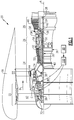
Figure 1 is a schematic view of an example gas turbine engine including a fan drive electric motor assembly. -
Figure 2 is a schematic representation of the example gas turbine engine and fan drive electric motor assembly. -
Figure 3 is a schematic view of an example geared architecture and gear drive electric motor assembly. -
Figure 4 is another schematic view of the geared architecture and gear drive electric motor assembly. -
Figure 5 is another example gas turbine engine and fan drive electric motor assembly. -
Figure 1 schematically illustrates agas turbine engine 20. Thegas turbine engine 20 is disclosed herein as a two-spool turbofan that generally incorporates afan section 22, acompressor section 24, acombustor section 26 and aturbine section 28. Thefan section 22 drives air along a bypass flow path B in a bypass duct defined within anacelle 18, and also drives air along a core flow path C for compression and communication into thecombustor section 26 then expansion through theturbine section 28. Although depicted as a two-spool turbofan gas turbine engine in the disclosed non-limiting embodiment, it should be understood that the concepts described herein are not limited to use with two-spool turbofans as the teachings may be applied to other types of turbine engines including three-spool architectures. - The
exemplary engine 20 generally includes alow speed spool 30 and ahigh speed spool 32 mounted for rotation about an engine central longitudinal axis A relative to an engine static structure (or 'fixed structure') 36 viaseveral bearing systems 38. It should be understood thatvarious bearing systems 38 at various locations may alternatively or additionally be provided, and the location ofbearing systems 38 may be varied as appropriate to the application. - The
low speed spool 30 generally includes aninner shaft 40 that interconnects, a first (or low)pressure compressor 44 and a first (or low)pressure turbine 46. Theinner shaft 40 is connected to thefan section 22 through a speed change mechanism, which in the exemplarygas turbine engine 20 is illustrated as a gearedarchitecture 48 to drivefan blades 42 at a lower speed than thelow speed spool 30. Thehigh speed spool 32 includes anouter shaft 50 that interconnects a second (or high)pressure compressor 52 and a second (or high)pressure turbine 54. Acombustor 56 is arranged in theexemplary gas turbine 20 between thehigh pressure compressor 52 and thehigh pressure turbine 54. Amid-turbine frame 58 of the enginestatic structure 36 may be arranged generally between thehigh pressure turbine 54 and thelow pressure turbine 46. Themid-turbine frame 58 furthersupports bearing systems 38 in theturbine section 28. Theinner shaft 40 and theouter shaft 50 are concentric and rotate via bearingsystems 38 about the engine central longitudinal axis A which is collinear with their longitudinal axes. - The core airflow is compressed by the
low pressure compressor 44 then thehigh pressure compressor 52, mixed and burned with fuel in thecombustor 56 to generate a high energy flow that is expanded over thehigh pressure turbine 54 andlow pressure turbine 46. Themid-turbine frame 58 includesairfoils 60 which are in the core airflow path C. Theturbines low speed spool 30 andhigh speed spool 32 in response to the expansion. It will be appreciated that each of the positions of thefan section 22,compressor section 24,combustor section 26,turbine section 28, and fandrive gear system 48 may be varied. For example,gear system 48 may be located aft of thelow pressure compressor 44, andfan blades 42 may be positioned forward or aft of the location of the gearedarchitecture 48 or even aft ofturbine section 28. - The
engine 20 in one example is a high-bypass geared aircraft engine. In a further example, theengine 20 bypass ratio is greater than about six, with an example embodiment being greater than about ten, the gearedarchitecture 48 is an epicyclic gear train, such as a planetary gear system or other gear system, with a gear reduction ratio of greater than about 2.3 and thelow pressure turbine 46 has a pressure ratio that is greater than about five. In one disclosed embodiment, theengine 20 bypass ratio is greater than about ten, the fan diameter is significantly larger than that of thelow pressure compressor 44, and thelow pressure turbine 46 has a pressure ratio that is greater than about five.Low pressure turbine 46 pressure ratio is pressure measured prior to inlet oflow pressure turbine 46 as related to the pressure at the outlet of thelow pressure turbine 46 prior to an exhaust nozzle. The gearedarchitecture 48 may be an epicycle gear train, such as a planetary gear system or other gear system, with a gear reduction ratio of greater than about 2.3:1 and less than about 5:1. It should be understood, however, that the above parameters are only exemplary of one embodiment of a geared architecture engine and that the present invention is applicable to other gas turbine engines including direct drive turbofans. - A significant amount of thrust is provided by the bypass flow B due to the high bypass ratio. The
fan section 22 of theengine 20 is designed for a particular flight condition -- typically cruise at about 0.8 Mach and about 35,000 feet (10,668 meters). The flight condition of 0.8 Mach and 35,000 ft (10,668 meters), with the engine at its best fuel consumption - also known as "bucket cruise Thrust Specific Fuel Consumption ('TSFC')" - is the industry standard parameter of lbm of fuel being burned divided by lbf of thrust the engine produces at that minimum point. "Low fan pressure ratio" is the pressure ratio across the fan blade alone, without a Fan Exit Guide Vane ("FEGV") system. The low fan pressure ratio as disclosed herein according to one non-limiting embodiment is less than about 1.45. "Low corrected fan tip speed" is the actual fan tip speed in ft/sec divided by an industry standard temperature correction of [(Tram °R) / (518.7 °R)]^0.5 (where °R = K x 9/5). The "Low corrected fan tip speed" as disclosed herein according to one non-limiting embodiment is less than about 1150 ft / second (350.5 meters/second). - The example gas turbine engine includes the
fan section 22 that comprises in one non-limiting embodiment less than about twenty-sixfan blades 42. In another non-limiting embodiment, thefan section 22 includes less than about twentyfan blades 42. Moreover, in one disclosed embodiment thelow pressure turbine 46 includes no more than about six turbine rotors schematically indicated at 34. In another non-limiting example embodiment thelow pressure turbine 46 includes about three turbine rotors. A ratio between the number offan blades 42 and the number of low pressure turbine rotors is between about 3.3 and about 8.6. The examplelow pressure turbine 46 provides the driving power to rotate thefan section 22 and therefore the relationship between the number of turbine rotors 34 in thelow pressure turbine 46 and the number ofblades 42 in thefan section 22 disclose an examplegas turbine engine 20 with increased power transfer efficiency. - The example
gas turbine engine 20 includes a firstelectric motor assembly 72 that is coupled to drive thefan section 22. A secondelectric motor assembly 74 is coupled to drive the gearedarchitecture 48 relative to thestatic structure 36 of theengine 20. The first and secondelectric motor assemblies fan blades 42 to rotate about the axis A at a speed different than provided by the gearedarchitecture 48. - Changes to propulsive thrust provided by the
fan section 22 require a corresponding change of speed of thelow pressure turbine 46. Thelow pressure turbine 46 also drives thelow pressure compressor 44 and results in changes in speed of thelow pressure compressor 44. Increasing the speed of thelow pressure compressor 44 may result in the compressor rotating at speeds that do not provide efficient operation or that provide pressures and flows that are not within desired ranges for efficient operation of thehigh pressure compressor 52. Performance of the low-pressure compressor 44 is matched to the operation of the high-pressure compressor 52 to provide the most efficient use of energy and provide optimal engine operating conditions. Inputting additional power by increasing the speed of the low-pressure compressor 44 may disrupt the matched performance between the low-pressure compressor 44 and the high-pressure compressor 52. - The example
gas turbine engine 20 includes the firstelectric motor assembly 72 that boosts a speed of rotation of thefan blades 42 about the axis A to a speed greater than that provided by the output of the gearedarchitecture 48. The gearedarchitecture 48 is driven relative to thestatic structure 36 of the engine by the secondelectric motor assembly 74. The gearedarchitecture 48 is not structurally grounded directly to thestatic engine structure 36 but is instead mechanically grounded to the engine static 36 structure through theelectric motor assembly 74. It should be understood that various bearingsystems 38 at various locations may alternatively or additionally be provided, and the location of bearingsystems 38 may be varied as appropriate to the application. Theelectric motor assembly 74 rotates the gearedarchitecture 48 to partially decouple fan speed from a speed provided by thelow pressure turbine 46 through the gearedarchitecture 48. - Referring to
Figure 2 the examplegas turbine engine 20 is shown schematically and includes the firstelectric motor assembly 72 that is disposed on afan shaft 70 that supports the plurality offan blades 42. Thefirst motor assembly 72 provides a first drive input for driving thefan blades 42 about the axis and is operated by amotor control 104 that is a part of amotor controller 100. Theexample motor controller 100 can receive information from an engine control such as in this example a Full Authority Digital Electronic Control (FADEC) 98. Theelectric motor 72 inputs power directly to thefan shaft 70 to provide a boost of power directly to thefan section 22. The increased power provided by theelectric motor 72 enables a boost to the speed of thefan section 22 independent of thelow pressure turbine 46. The gearedarchitecture 48 provides a second drive input to drive thefan blades 42 about the axis A. - The second
electric motor assembly 74 includes a first electric motor 82 and a secondelectric motor 84 that are both coupled to drive a drivengear 76 that is attached to acarrier 68. The example gearedarchitecture 48 includes asun gear 62 driven by theshaft 40. Thesun gear 62 in turns drivesintermediate gears 64 that are supported on thecarrier 68. The intermediate gears 68 are circumscribed by aring gear 66. Thering gear 66 is coupled to drive thefan shaft 70. The drivengear 76 is a single gear that is attached to thecarrier 68 and is coupled to afirst drive gear 78 andsecond drive gear 80. The disclosedgear architecture 48 is not directly coupled to the enginestatic structure 36 but is instead rotatable about the axis A independent of rotation of theshaft 40. - The first electric motor 82 includes a first clutch 86. The electric motor 82 drives the first shaft 88 that drives the
first drive gear 78 that is coupled to the drivengear 76. The drivengear 76 is a gear that is disposed about the axis A and rotates the gearedarchitecture 48. It should be understood that various bearingsystems 38 at various locations may alternatively or additionally be provided, and the location of bearingsystems 38 may be varied as appropriate to the application. - The second
electric motor 84 drives asecond shaft 92 and thesecond drive gear 80. Asecond clutch 90 is provided to enable theelectric motor 84 to drive the drivengear 76 in only one direction. Moreover the first clutch 86 driven by the first electric motor 82 is able to drive the drivengear 76 in only a single direction. In one disclosed embodiment, the first electric motor 82 drives the drivengear 76 in a clockwise or first direction and the secondelectric motor 84 drives the second drivengear 76 in a counterclockwise or second direction. It should be appreciated, that although the first electric motor 82 and the secondelectric motor 84 are depicted as a single electric motor, multiple electric motors could be utilized and are within the contemplation of this disclosure. - The
example controller 100 includes themotor controller 104 that commands operation of the firstelectric motor assembly 72, apower source 106 andelectronics 102 required to drive and command operation of the firstelectric motor assembly 72. Thecontroller 100 further includesmotor controllers electric motors 82 and 84 of the secondelectric motor assembly 74. Theexample controller 100 may be provided as part of the engine controller or may be a separate controller for the first and secondelectric motor assemblies controller 100 can be implemented as hardware or software. Thepower source 106 maybe a battery or generator powered by theengine 20. - Referring to
Figure 3 with continued reference toFigure 2 , operation of the examplegas turbine engine 20 to provide a boost to thefan section 22 enables the speed of thefan blades 42 to be increased or decreased independent of the speed provided by thelow pressure turbine 46 and gearedarchitecture 48. In one disclosed example operation of thegas turbine engine 20, increase thefan speed 42 without increasing the speed of thelow pressure turbine 46 includes inputting power to drive the firstelectric motor 72 to drive thefan blades 42. The increase boost of power provided by the first electric motor assembly alone is not possible unless thefan shaft 70 is decoupled from input from thelow pressure turbine 46. In this example the decoupling of the direct input from thefan shaft 46 is enabled by rotation of the gearedarchitecture 48. In this example thesun gear 62 rotates counterclockwise. - In the embodiment disclosed in
Figure 3 , the first electric motor 82 drives thefirst drive gear 78 to drive the drivengear 76 and thereby the gearedarchitecture 48 in a firstclockwise direction 94. In theclockwise direction 94 thefan section 22 may rotate at a faster speed than that provided by thelow pressure turbine 46 and gearedarchitecture 48. - Operation of the first electric motor 82 to drive the geared
architecture 48 in thefirst direction 94 enables an increase speed of thefan section 42 independent of speed of thelow pressure turbine 46 and thereby thesun gear 62. - The first clutch assembly 86 is a one way clutch such that the electric motor 82 may only drive the first shaft 88 in the first direction. The second
electric motor 84 and the second clutch 90 enables the secondelectric motor 84 to drive theshaft 92 in a second direction. When the first electric motor 82 engages to drive the gearedarchitecture 48, the second clutch 90 decouples the secondelectric motor 84 such that no driving input is provided by the secondelectric motor 84. In this example thesun gear 62 rotates counterclockwise. - Referring for
Figure 4 with continued reference toFigures 2 and3 , another example operational condition is illustrated where the secondelectric motor 84 is driving thesecond gear 80 in a secondcounterclockwise direction 96. In thesecond direction 96 the gearedarchitecture 48 is rotated in a counterclockwise direction and provides for a reduction in fan speed relative to the input provided by thelow pressure turbine 46. The reduction in the fan speed is independent of the input speed provided by thelow pressure turbine 46. Accordingly thefan speed 42 is decoupled from the input provided by thelow pressure turbine 46 and the gearedarchitecture 48. - In another operational phase of the example
gas turbine engine 20, neither the first electric motor 82 nor the secondelectric motor 84 is operational thereby locking the geared architecture in a fixed position. In the fixed position, thelow pressure turbine 46 drives the gearedarchitecture 48 and thereby thefan section 22 at a constant speed dictated by the structure and gear ratio of the gearedarchitecture 48. The firstelectric motor assembly 72 is not operated and the engine operates with thefan blades 42 turning at a speed that corresponds with thelow pressure turbine 46 and the gear ratio provided by thegear architecture 48. In another operational phase of the examplegas turbine engine 20 the firstelectric motor assembly 72 provides a boost tofan shaft 70 speed of rotation of thefan blades 42 about the axis A to a speed greater than that provided by the output of the gearedarchitecture 48. - In the disclosed embodiment shown in
Figure 2 , the firstelectric motor assembly 72 that is coupled to drive thefan section 22 is a motor. However theassembly 72 may comprise of a motor-generator that provides a load tofan shaft 70 speed of rotation of thefan blades 42 about the axis A to a speed smaller than that provided by the output of the gearedarchitecture 48. - In the disclosed embodiment shown in
Figure 2 , the first electric motor 82 and the secondelectric motor 84 are each illustrated as a single electric motor. However, each of the first electric motor and secondelectric motor 82, 84 may comprise several electric motors that are each engaged to the drivengear 76 to provide rotation of the geared architecture relative of the engine static structure in either thefirst direction 94 or thesecond direction 96. - Moreover the first
electric motor assembly 72 is illustrated as a motor including a first static part fixed to a static structure and a second rotor part that is attached to a portion of thefan shaft 70. It should be appreciated that although the firstelectric motor assembly 72 is schematically shown as a single electric motor mounted to and coupled as part of thefan shaft 70 that other configurations and separate electric motors could be utilized including an electric motor that drives thefan shafts 70 through a gear system or other drive configuration. - Additionally in the disclosed example the driven
gear 76 is coupled to rotate thecarrier 68 relative to the enginestatic structure 36. Thering gear 66 is fixed to and is coupled to drive thefan shaft 70. However, other configurations of a geared architecture could be utilized and are within the contemplation of this invention. - Referring to
Figure 5 anothergas turbine engine 25 is schematically shown and includes another geared architecture 45. The geared architecture 45 includes thering gear 66 that is coupled to the drivengear 76. Thecarrier 68 is coupled to drive thefan shaft 70. Operation of the engine illustrated inFigure 5 would proceed as is described above with regard to the disclosedengine 20 and in this example thesun gear 62 rotates clockwise. The application or mounting of the drivengear 76 to thering gear 66 instead of thecarrier 68 enables other gear ratios and operational structures that may be utilized within the contemplation of this disclosure. - Accordingly, the example disclosed
engines fan section 22 independent of power provided by thelow pressure turbine 46 and gearedarchitecture 48 to enable an increase in thrust produced by thefan section 22 independent of thelow speed spool 30. - Although an example embodiment has been disclosed, a worker of ordinary skill in this art would recognize that certain modifications would come within the scope of this disclosure. For that reason, the following claims should be studied to determine the scope and content of this disclosure.
Claims (15)
- A gas turbine engine (20, 25) comprising:a fan section (22) including a plurality of fan blades (42) and a first electric motor assembly (72) providing a first drive input for driving the fan blades (42) about an axis (A);a turbine section (28);a geared architecture (48) driven by the turbine section (28) and coupled to the fan section (22) to provide a second drive input for driving the fan blades (42); andmeans (74) for rotating the geared architecture (48) relative to a fixed structure (36) to control a speed of the fan blades (42) provided by a combination of the first drive input and the second drive input.
- The gas turbine engine (20, 25) as recited in claim 1, wherein the means for rotating the geared architecture (48) comprises a second electric motor assembly (74) coupled to rotate the geared architecture (48).
- The gas turbine engine (20, 25) as recited in claim 2, wherein the means (74) for rotating the geared architecture (48) or the second electric motor assembly (74) includes a first electric motor (82) for rotating the geared architecture (48) in a first direction and a second electric motor (84) for rotating the geared architecture (48) in a second direction.
- The gas turbine engine (20, 25) as recited in claim 3, including a first clutch assembly (86) disposed between the first electric motor (82) and the geared architecture (48) and a second clutch assembly (90) disposed between the second electric motor (84) and the geared architecture (48), wherein the first clutch assembly (86) enables input from the first electric motor (82) in only the first direction and the second clutch assembly (90) enables input from the second electric motor (84) in only the second direction.
- The gas turbine engine (20, 25) as recited in claim 3 or claim 4, wherein the geared architecture (48) includes a sun gear (62) driving a plurality of intermediate gears (64) circumscribed by a ring gear (66) with a carrier (68) supporting the plurality of intermediate gears (64) and a driven gear (76) coupled to the geared architecture (48) and driven by a first drive gear (78) driven by the first electric motor (82) or a second drive gear (80) driven by the second electric motor (84), optionally wherein the driven gear (76) is coupled to the carrier (68), or to the ring gear (66).
- The gas turbine engine (20, 25) as recited in any of claims 1 to 4, wherein the geared architecture (48) includes a sun gear (62) driving a plurality of intermediate gears (64) circumscribed by a ring gear (66) and optionally the fan section (22) includes a fan shaft (70) coupled to the ring gear (66), or a carrier (68) supports the plurality of intermediate gears (64) and the fan section (22) includes a fan shaft (70) coupled to the carrier (68).
- The gas turbine engine (20, 25) as recited in any preceding claim, wherein the means (74) for rotating the geared architecture (48) or the second electric motor assembly (74) is configured such that rotation of the geared architecture (48) in a first direction enables an increase of a speed of the fan section (22) and rotation in a second direction enables a decrease of a speed of the fan section (22) without a change in speed of the second driving input provided by the turbine section (28), optionally wherein the first electric motor assembly (72) drives the fan section (22) in the first direction to increase fan speed.
- The gas turbine engine (20, 25) as recited in any preceding claim, wherein the means (74) for rotating the geared architecture (48) or the second electric motor assembly (74) is configured such that rotation of the geared architecture (48) enables a speed of the fan section (22) to remain constant with a change in speed of the second driving input provided by the turbine section (28).
- The gas turbine engine (20, 25) as recited in any preceding claim, including a controller (100) commanding operation of both of the first electric motor assembly (72) and the means (74) for rotating the geared architecture (48) or the second electric motor assembly (74) to provide a predefined rotational speed of the fan section (22).
- The gas turbine engine (20, 25) as recited in any preceding claim, including a compressor section (24) comprising a low pressure compressor (44), wherein the turbine section (28) includes a low pressure turbine (46) that drives both the low pressure compressor (44) and the geared architecture (48), optionally wherein the low pressure compressor (44) is driven by the low pressure turbine (46) at a speed different than the fan section (22).
- A method of operating a gas turbine engine (20, 25) comprising:coupling a first electric motor assembly (72) to a fan section (22) providing a first drive input for driving the fan blades (42);coupling a geared architecture (48) driven by a turbine section (28) of the engine to the fan section (22) for providing a second drive input to drive the fan blades (42);coupling a second electric motor assembly (74) to rotate the geared architecture (48) relative to a static engine structure (36); andcontrolling the first electric motor assembly (72) and the second electric motor assembly (74) to provide a combination of the first drive input and the second drive input to rotate the fan blades (42) at a predefined rotational speed.
- The method as recited in claim 11, wherein the second electric motor assembly (74) includes a first electric motor (82) and a second electric motor (84) that are coupled to a driven gear (76) mounted to the geared architecture (48) and driving the geared architecture (48) in a first direction with the first electric motor (82) increases a rotational speed of the fan blades (42) and driving the geared architecture (48) in a second direction with the second electric motor (84) decreases a rotational speed of the fan blades (42) without a change in speed of the turbine section (28) driving the geared architecture (48).
- The method as recited in claim 12, including coupling a first clutch assembly (86) between the first electric motor (82) and the driven gear (76) and coupling a second clutch assembly (90) between the second electric motor (84) and the driven gear (76) such that each of the first electric motor (82) and the second electric motor (84) only drive the geared architecture (48) in a single direction.
- The method as recited in claim 12 or claim 13, including operating the first electric motor assembly (72) and the second electric motor assembly (74) to maintain a rotational speed of the fan blades (42) while decreasing a speed of a low pressure compressor (44) driven by the turbine section (28).
- The method as recited in any of claims 11 to 14, including mounting the first electric motor assembly (72) to drive a fan shaft (70).
Applications Claiming Priority (1)
| Application Number | Priority Date | Filing Date | Title |
|---|---|---|---|
| US15/980,870 US11168616B2 (en) | 2018-05-16 | 2018-05-16 | Hybrid electric fan with improved low pressure compressor |
Publications (2)
| Publication Number | Publication Date |
|---|---|
| EP3569845A1 true EP3569845A1 (en) | 2019-11-20 |
| EP3569845B1 EP3569845B1 (en) | 2025-06-25 |
Family
ID=66770155
Family Applications (1)
| Application Number | Title | Priority Date | Filing Date |
|---|---|---|---|
| EP19174692.4A Active EP3569845B1 (en) | 2018-05-16 | 2019-05-15 | Hybrid electric fan with stall free low pressure compressor |
Country Status (2)
| Country | Link |
|---|---|
| US (2) | US11168616B2 (en) |
| EP (1) | EP3569845B1 (en) |
Cited By (6)
| Publication number | Priority date | Publication date | Assignee | Title |
|---|---|---|---|---|
| EP3656997A1 (en) * | 2018-11-21 | 2020-05-27 | United Technologies Corporation | Hybrid electric propulsion with superposition gearbox |
| EP3848569A1 (en) * | 2020-01-09 | 2021-07-14 | Safran Transmission Systems | Reduction gear for turbine engine provided with an electric generator |
| EP3870813A1 (en) * | 2018-10-26 | 2021-09-01 | Safran Aircraft Engines | Aircraft turbine engine equipped with an electrical machine |
| CN113958538A (en) * | 2021-10-22 | 2022-01-21 | 清华大学 | Stator blade adjusting device of spatial gear train and turbine engine |
| US11557995B2 (en) * | 2019-08-12 | 2023-01-17 | Raytheon Technologies Corporation | Aircraft engine power-assist start stability control |
| US12187444B1 (en) * | 2024-02-06 | 2025-01-07 | Pratt & Whitney Canada Corp. | Hybrid aircraft power plant |
Families Citing this family (15)
| Publication number | Priority date | Publication date | Assignee | Title |
|---|---|---|---|---|
| US10718271B2 (en) * | 2018-05-29 | 2020-07-21 | Raytheon Technologies Corporation | Hybrid amplification of high spool motoring via low spool power extraction and motoring of a differential geared generator |
| FR3087421B1 (en) * | 2018-10-17 | 2022-03-04 | Voltaero | MACHINE COMPRISING A HYBRID POWERTRAIN AND CORRESPONDING METHOD OF CONTROL |
| US11519289B2 (en) | 2019-12-06 | 2022-12-06 | Raytheon Technologies Corporation | Systems and methods for hybrid electric turbine engines |
| US11428171B2 (en) * | 2019-12-06 | 2022-08-30 | General Electric Company | Electric machine assistance for multi-spool turbomachine operation and control |
| US11073107B1 (en) | 2020-01-24 | 2021-07-27 | Raytheon Technologies Corporation | Systems and methods for hybrid electric turbine engines |
| US12043405B2 (en) * | 2022-05-26 | 2024-07-23 | Rtx Corporation | Selective power distribution for an aircraft propulsion system |
| US12480449B2 (en) | 2022-08-22 | 2025-11-25 | General Electric Company | Propulsion system including an electric machine for starting a gas turbine engine |
| US20240247593A1 (en) * | 2023-01-25 | 2024-07-25 | Raytheon Technologies Corporation | Two piece hollow-vane assembly joined via brazing |
| US12428986B2 (en) * | 2023-07-03 | 2025-09-30 | Rtx Corporation | Aircraft propulsion system engine with multiple independent rotating structures |
| WO2025183725A2 (en) * | 2023-08-08 | 2025-09-04 | Tennessee Technological University | Fuel cell turboelectric fan for an aircraft |
| US12331683B2 (en) | 2023-09-29 | 2025-06-17 | Rtx Corporation | Bearing arrangement for turbine engine geartrain |
| US12188551B1 (en) | 2023-09-29 | 2025-01-07 | Rtx Corporation | Reduced clearance interface between a fluid device and a rotating structure for a geartrain |
| US12135076B1 (en) | 2023-09-29 | 2024-11-05 | Rtx Corporation | Fluid device(s) for supporting rotating structure(s) of a turbine engine |
| US12292107B2 (en) | 2023-09-29 | 2025-05-06 | Rtx Corporation | Fluid damper for turbine engine geartrain assembly |
| EP4628716A1 (en) | 2024-04-03 | 2025-10-08 | Hamilton Sundstrand Corporation | Multi shaft power transfer system |
Citations (2)
| Publication number | Priority date | Publication date | Assignee | Title |
|---|---|---|---|---|
| US20040255590A1 (en) * | 2003-06-23 | 2004-12-23 | Pratt & Whiney Canada Corp. | Differential geared turbine engine with torque modulation capability |
| US20160369702A1 (en) * | 2013-07-07 | 2016-12-22 | United Technologies Corporation | Fan drive gear system mechanical controller |
Family Cites Families (7)
| Publication number | Priority date | Publication date | Assignee | Title |
|---|---|---|---|---|
| GB1484898A (en) * | 1974-09-11 | 1977-09-08 | Rolls Royce | Ducted fan gas turbine engine |
| GB0809336D0 (en) * | 2008-05-23 | 2008-07-02 | Rolls Royce Plc | A gas turbine engine arrangement |
| GB0903423D0 (en) | 2009-03-02 | 2009-04-08 | Rolls Royce Plc | Variable drive gas turbine engine |
| US8425372B2 (en) * | 2010-07-14 | 2013-04-23 | Hamilton Sundstrand Corporation | Geared turbofan emergency power |
| US10094295B2 (en) * | 2013-01-30 | 2018-10-09 | Pratt & Whitney Canada Corp. | Gas turbine engine with transmission |
| US10774741B2 (en) * | 2016-01-26 | 2020-09-15 | General Electric Company | Hybrid propulsion system for a gas turbine engine including a fuel cell |
| CN107178426B (en) | 2017-06-07 | 2019-04-26 | 南昌航空大学 | A power storage speed regulating gear transmission turbine engine |
-
2018
- 2018-05-16 US US15/980,870 patent/US11168616B2/en active Active
-
2019
- 2019-05-15 EP EP19174692.4A patent/EP3569845B1/en active Active
-
2021
- 2021-10-04 US US17/493,002 patent/US11952947B2/en active Active
Patent Citations (2)
| Publication number | Priority date | Publication date | Assignee | Title |
|---|---|---|---|---|
| US20040255590A1 (en) * | 2003-06-23 | 2004-12-23 | Pratt & Whiney Canada Corp. | Differential geared turbine engine with torque modulation capability |
| US20160369702A1 (en) * | 2013-07-07 | 2016-12-22 | United Technologies Corporation | Fan drive gear system mechanical controller |
Cited By (8)
| Publication number | Priority date | Publication date | Assignee | Title |
|---|---|---|---|---|
| EP3870813A1 (en) * | 2018-10-26 | 2021-09-01 | Safran Aircraft Engines | Aircraft turbine engine equipped with an electrical machine |
| EP3656997A1 (en) * | 2018-11-21 | 2020-05-27 | United Technologies Corporation | Hybrid electric propulsion with superposition gearbox |
| US11557995B2 (en) * | 2019-08-12 | 2023-01-17 | Raytheon Technologies Corporation | Aircraft engine power-assist start stability control |
| EP3848569A1 (en) * | 2020-01-09 | 2021-07-14 | Safran Transmission Systems | Reduction gear for turbine engine provided with an electric generator |
| FR3106176A1 (en) * | 2020-01-09 | 2021-07-16 | Safran Transmission Systems | Turbomachine reducer fitted with an electric generator |
| US11448084B2 (en) | 2020-01-09 | 2022-09-20 | Safran Transmission Systems | Reduction gear for turbomachine equipped with an electric generator |
| CN113958538A (en) * | 2021-10-22 | 2022-01-21 | 清华大学 | Stator blade adjusting device of spatial gear train and turbine engine |
| US12187444B1 (en) * | 2024-02-06 | 2025-01-07 | Pratt & Whitney Canada Corp. | Hybrid aircraft power plant |
Also Published As
| Publication number | Publication date |
|---|---|
| EP3569845B1 (en) | 2025-06-25 |
| US11168616B2 (en) | 2021-11-09 |
| US20190353104A1 (en) | 2019-11-21 |
| US20220025823A1 (en) | 2022-01-27 |
| US11952947B2 (en) | 2024-04-09 |
Similar Documents
| Publication | Publication Date | Title |
|---|---|---|
| US11952947B2 (en) | Hybrid electric fan with stall free low pressure compressor | |
| US12571352B2 (en) | Electric enhanced transmission for multi-spool load-sharing turbofan engine | |
| EP3656997B1 (en) | Hybrid electric propulsion with superposition gearbox | |
| US11873766B2 (en) | Differential geared amplification of auxiliary power unit | |
| EP3712407A1 (en) | Secondary fuel flow demand fuel pumping system | |
| EP3039276B1 (en) | Three spool geared turbofan with low pressure compressor drive gear system and mechanical controller | |
| US11143111B2 (en) | Fan drive gear system mechanical controller | |
| EP3613953B1 (en) | Turbofan with motorized rotating inlet guide vane | |
| EP3351766B1 (en) | Advanced geared gas turbine engine | |
| US10794216B2 (en) | Fan drive gear system DC motor and generator | |
| EP3633152B1 (en) | Turbofan with motorized rotating inlet guide vane | |
| EP4215737B1 (en) | Dual spool power extraction with superposition gearbox | |
| EP2776677B1 (en) | Gas turbine engine | |
| US10890115B2 (en) | Low torque engine starting with dual spool power extraction with superposition gearbox | |
| EP3260684B1 (en) | Gas turbine engine comprising a gearbox between a bleed air system turbine and compressor | |
| EP3546737A1 (en) | Gas turbine engine compressor arrangement | |
| EP3636898A1 (en) | Accessory gearbox with superposition gearbox | |
| EP4686822A1 (en) | Gas turbine engine with controlled return of fuel to power accessories and retrofitting method | |
| US12553380B2 (en) | Constant speed accessory gearbox for turbine engine |
Legal Events
| Date | Code | Title | Description |
|---|---|---|---|
| PUAI | Public reference made under article 153(3) epc to a published international application that has entered the european phase |
Free format text: ORIGINAL CODE: 0009012 |
|
| STAA | Information on the status of an ep patent application or granted ep patent |
Free format text: STATUS: THE APPLICATION HAS BEEN PUBLISHED |
|
| AK | Designated contracting states |
Kind code of ref document: A1 Designated state(s): AL AT BE BG CH CY CZ DE DK EE ES FI FR GB GR HR HU IE IS IT LI LT LU LV MC MK MT NL NO PL PT RO RS SE SI SK SM TR |
|
| AX | Request for extension of the european patent |
Extension state: BA ME |
|
| STAA | Information on the status of an ep patent application or granted ep patent |
Free format text: STATUS: REQUEST FOR EXAMINATION WAS MADE |
|
| 17P | Request for examination filed |
Effective date: 20200522 |
|
| RBV | Designated contracting states (corrected) |
Designated state(s): AL AT BE BG CH CY CZ DE DK EE ES FI FR GB GR HR HU IE IS IT LI LT LU LV MC MK MT NL NO PL PT RO RS SE SI SK SM TR |
|
| RAP1 | Party data changed (applicant data changed or rights of an application transferred) |
Owner name: RAYTHEON TECHNOLOGIES CORPORATION |
|
| STAA | Information on the status of an ep patent application or granted ep patent |
Free format text: STATUS: EXAMINATION IS IN PROGRESS |
|
| 17Q | First examination report despatched |
Effective date: 20211213 |
|
| RAP3 | Party data changed (applicant data changed or rights of an application transferred) |
Owner name: RTX CORPORATION |
|
| GRAP | Despatch of communication of intention to grant a patent |
Free format text: ORIGINAL CODE: EPIDOSNIGR1 |
|
| STAA | Information on the status of an ep patent application or granted ep patent |
Free format text: STATUS: GRANT OF PATENT IS INTENDED |
|
| RIC1 | Information provided on ipc code assigned before grant |
Ipc: B64D 27/02 20060101ALI20231222BHEP Ipc: F02K 5/00 20060101ALI20231222BHEP Ipc: F02C 7/36 20060101AFI20231222BHEP |
|
| INTG | Intention to grant announced |
Effective date: 20240124 |
|
| GRAJ | Information related to disapproval of communication of intention to grant by the applicant or resumption of examination proceedings by the epo deleted |
Free format text: ORIGINAL CODE: EPIDOSDIGR1 |
|
| STAA | Information on the status of an ep patent application or granted ep patent |
Free format text: STATUS: EXAMINATION IS IN PROGRESS |
|
| INTC | Intention to grant announced (deleted) | ||
| GRAP | Despatch of communication of intention to grant a patent |
Free format text: ORIGINAL CODE: EPIDOSNIGR1 |
|
| STAA | Information on the status of an ep patent application or granted ep patent |
Free format text: STATUS: GRANT OF PATENT IS INTENDED |
|
| INTG | Intention to grant announced |
Effective date: 20240711 |
|
| GRAJ | Information related to disapproval of communication of intention to grant by the applicant or resumption of examination proceedings by the epo deleted |
Free format text: ORIGINAL CODE: EPIDOSDIGR1 |
|
| STAA | Information on the status of an ep patent application or granted ep patent |
Free format text: STATUS: EXAMINATION IS IN PROGRESS |
|
| INTC | Intention to grant announced (deleted) | ||
| GRAP | Despatch of communication of intention to grant a patent |
Free format text: ORIGINAL CODE: EPIDOSNIGR1 |
|
| STAA | Information on the status of an ep patent application or granted ep patent |
Free format text: STATUS: GRANT OF PATENT IS INTENDED |
|
| INTG | Intention to grant announced |
Effective date: 20250114 |
|
| GRAS | Grant fee paid |
Free format text: ORIGINAL CODE: EPIDOSNIGR3 |
|
| GRAA | (expected) grant |
Free format text: ORIGINAL CODE: 0009210 |
|
| STAA | Information on the status of an ep patent application or granted ep patent |
Free format text: STATUS: THE PATENT HAS BEEN GRANTED |
|
| AK | Designated contracting states |
Kind code of ref document: B1 Designated state(s): AL AT BE BG CH CY CZ DE DK EE ES FI FR GB GR HR HU IE IS IT LI LT LU LV MC MK MT NL NO PL PT RO RS SE SI SK SM TR |
|
| REG | Reference to a national code |
Ref country code: GB Ref legal event code: FG4D |
|
| REG | Reference to a national code |
Ref country code: CH Ref legal event code: EP |
|
| REG | Reference to a national code |
Ref country code: DE Ref legal event code: R096 Ref document number: 602019071459 Country of ref document: DE |
|
| REG | Reference to a national code |
Ref country code: CH Ref legal event code: EP |
|
| REG | Reference to a national code |
Ref country code: IE Ref legal event code: FG4D |
|
| PG25 | Lapsed in a contracting state [announced via postgrant information from national office to epo] |
Ref country code: FI Free format text: LAPSE BECAUSE OF FAILURE TO SUBMIT A TRANSLATION OF THE DESCRIPTION OR TO PAY THE FEE WITHIN THE PRESCRIBED TIME-LIMIT Effective date: 20250625 |
|
| REG | Reference to a national code |
Ref country code: LT Ref legal event code: MG9D |
|
| PG25 | Lapsed in a contracting state [announced via postgrant information from national office to epo] |
Ref country code: GR Free format text: LAPSE BECAUSE OF FAILURE TO SUBMIT A TRANSLATION OF THE DESCRIPTION OR TO PAY THE FEE WITHIN THE PRESCRIBED TIME-LIMIT Effective date: 20250926 Ref country code: NO Free format text: LAPSE BECAUSE OF FAILURE TO SUBMIT A TRANSLATION OF THE DESCRIPTION OR TO PAY THE FEE WITHIN THE PRESCRIBED TIME-LIMIT Effective date: 20250925 |
|
| PG25 | Lapsed in a contracting state [announced via postgrant information from national office to epo] |
Ref country code: BG Free format text: LAPSE BECAUSE OF FAILURE TO SUBMIT A TRANSLATION OF THE DESCRIPTION OR TO PAY THE FEE WITHIN THE PRESCRIBED TIME-LIMIT Effective date: 20250625 |
|
| PG25 | Lapsed in a contracting state [announced via postgrant information from national office to epo] |
Ref country code: HR Free format text: LAPSE BECAUSE OF FAILURE TO SUBMIT A TRANSLATION OF THE DESCRIPTION OR TO PAY THE FEE WITHIN THE PRESCRIBED TIME-LIMIT Effective date: 20250625 |
|
| PG25 | Lapsed in a contracting state [announced via postgrant information from national office to epo] |
Ref country code: RS Free format text: LAPSE BECAUSE OF FAILURE TO SUBMIT A TRANSLATION OF THE DESCRIPTION OR TO PAY THE FEE WITHIN THE PRESCRIBED TIME-LIMIT Effective date: 20250925 |
|
| PG25 | Lapsed in a contracting state [announced via postgrant information from national office to epo] |
Ref country code: LV Free format text: LAPSE BECAUSE OF FAILURE TO SUBMIT A TRANSLATION OF THE DESCRIPTION OR TO PAY THE FEE WITHIN THE PRESCRIBED TIME-LIMIT Effective date: 20250625 |
|
| REG | Reference to a national code |
Ref country code: NL Ref legal event code: MP Effective date: 20250625 |
|
| PG25 | Lapsed in a contracting state [announced via postgrant information from national office to epo] |
Ref country code: NL Free format text: LAPSE BECAUSE OF FAILURE TO SUBMIT A TRANSLATION OF THE DESCRIPTION OR TO PAY THE FEE WITHIN THE PRESCRIBED TIME-LIMIT Effective date: 20250625 |
|
| PG25 | Lapsed in a contracting state [announced via postgrant information from national office to epo] |
Ref country code: PT Free format text: LAPSE BECAUSE OF FAILURE TO SUBMIT A TRANSLATION OF THE DESCRIPTION OR TO PAY THE FEE WITHIN THE PRESCRIBED TIME-LIMIT Effective date: 20251027 |
|
| REG | Reference to a national code |
Ref country code: AT Ref legal event code: MK05 Ref document number: 1806653 Country of ref document: AT Kind code of ref document: T Effective date: 20250625 |
|
| PG25 | Lapsed in a contracting state [announced via postgrant information from national office to epo] |
Ref country code: IS Free format text: LAPSE BECAUSE OF FAILURE TO SUBMIT A TRANSLATION OF THE DESCRIPTION OR TO PAY THE FEE WITHIN THE PRESCRIBED TIME-LIMIT Effective date: 20251025 |
|
| PG25 | Lapsed in a contracting state [announced via postgrant information from national office to epo] |
Ref country code: AT Free format text: LAPSE BECAUSE OF FAILURE TO SUBMIT A TRANSLATION OF THE DESCRIPTION OR TO PAY THE FEE WITHIN THE PRESCRIBED TIME-LIMIT Effective date: 20250625 Ref country code: SM Free format text: LAPSE BECAUSE OF FAILURE TO SUBMIT A TRANSLATION OF THE DESCRIPTION OR TO PAY THE FEE WITHIN THE PRESCRIBED TIME-LIMIT Effective date: 20250625 |
|
| PG25 | Lapsed in a contracting state [announced via postgrant information from national office to epo] |
Ref country code: CZ Free format text: LAPSE BECAUSE OF FAILURE TO SUBMIT A TRANSLATION OF THE DESCRIPTION OR TO PAY THE FEE WITHIN THE PRESCRIBED TIME-LIMIT Effective date: 20250625 |
|
| PG25 | Lapsed in a contracting state [announced via postgrant information from national office to epo] |
Ref country code: PL Free format text: LAPSE BECAUSE OF FAILURE TO SUBMIT A TRANSLATION OF THE DESCRIPTION OR TO PAY THE FEE WITHIN THE PRESCRIBED TIME-LIMIT Effective date: 20250625 |
|
| PG25 | Lapsed in a contracting state [announced via postgrant information from national office to epo] |
Ref country code: EE Free format text: LAPSE BECAUSE OF FAILURE TO SUBMIT A TRANSLATION OF THE DESCRIPTION OR TO PAY THE FEE WITHIN THE PRESCRIBED TIME-LIMIT Effective date: 20250625 |
|
| PG25 | Lapsed in a contracting state [announced via postgrant information from national office to epo] |
Ref country code: SK Free format text: LAPSE BECAUSE OF FAILURE TO SUBMIT A TRANSLATION OF THE DESCRIPTION OR TO PAY THE FEE WITHIN THE PRESCRIBED TIME-LIMIT Effective date: 20250625 |
|
| PG25 | Lapsed in a contracting state [announced via postgrant information from national office to epo] |
Ref country code: ES Free format text: LAPSE BECAUSE OF FAILURE TO SUBMIT A TRANSLATION OF THE DESCRIPTION OR TO PAY THE FEE WITHIN THE PRESCRIBED TIME-LIMIT Effective date: 20250625 |
|
| PG25 | Lapsed in a contracting state [announced via postgrant information from national office to epo] |
Ref country code: DK Free format text: LAPSE BECAUSE OF FAILURE TO SUBMIT A TRANSLATION OF THE DESCRIPTION OR TO PAY THE FEE WITHIN THE PRESCRIBED TIME-LIMIT Effective date: 20250625 |
|
| PG25 | Lapsed in a contracting state [announced via postgrant information from national office to epo] |
Ref country code: IT Free format text: LAPSE BECAUSE OF FAILURE TO SUBMIT A TRANSLATION OF THE DESCRIPTION OR TO PAY THE FEE WITHIN THE PRESCRIBED TIME-LIMIT Effective date: 20250625 |
|
| PLBE | No opposition filed within time limit |
Free format text: ORIGINAL CODE: 0009261 |
|
| STAA | Information on the status of an ep patent application or granted ep patent |
Free format text: STATUS: NO OPPOSITION FILED WITHIN TIME LIMIT |