EP3569541A1 - Wireless communication in an elevator system - Google Patents
Wireless communication in an elevator system Download PDFInfo
- Publication number
- EP3569541A1 EP3569541A1 EP18172375.0A EP18172375A EP3569541A1 EP 3569541 A1 EP3569541 A1 EP 3569541A1 EP 18172375 A EP18172375 A EP 18172375A EP 3569541 A1 EP3569541 A1 EP 3569541A1
- Authority
- EP
- European Patent Office
- Prior art keywords
- wireless communication
- module
- voice
- elevator system
- text
- Prior art date
- Legal status (The legal status is an assumption and is not a legal conclusion. Google has not performed a legal analysis and makes no representation as to the accuracy of the status listed.)
- Withdrawn
Links
- 238000004891 communication Methods 0.000 title claims abstract description 160
- 238000000034 method Methods 0.000 claims abstract description 17
- 238000006243 chemical reaction Methods 0.000 claims description 22
- 238000012546 transfer Methods 0.000 claims description 5
- 238000010586 diagram Methods 0.000 description 7
- 238000012545 processing Methods 0.000 description 5
- 230000015572 biosynthetic process Effects 0.000 description 2
- 230000001413 cellular effect Effects 0.000 description 2
- 238000003786 synthesis reaction Methods 0.000 description 2
- 241000252794 Sphinx Species 0.000 description 1
- 230000009286 beneficial effect Effects 0.000 description 1
- 230000005540 biological transmission Effects 0.000 description 1
- QVFWZNCVPCJQOP-UHFFFAOYSA-N chloralodol Chemical compound CC(O)(C)CC(C)OC(O)C(Cl)(Cl)Cl QVFWZNCVPCJQOP-UHFFFAOYSA-N 0.000 description 1
- 238000005516 engineering process Methods 0.000 description 1
- 238000012423 maintenance Methods 0.000 description 1
- 238000010295 mobile communication Methods 0.000 description 1
- 238000012986 modification Methods 0.000 description 1
- 230000004048 modification Effects 0.000 description 1
Images


Classifications
-
- B—PERFORMING OPERATIONS; TRANSPORTING
- B66—HOISTING; LIFTING; HAULING
- B66B—ELEVATORS; ESCALATORS OR MOVING WALKWAYS
- B66B1/00—Control systems of elevators in general
- B66B1/34—Details, e.g. call counting devices, data transmission from car to control system, devices giving information to the control system
- B66B1/3415—Control system configuration and the data transmission or communication within the control system
- B66B1/3446—Data transmission or communication within the control system
- B66B1/3461—Data transmission or communication within the control system between the elevator control system and remote or mobile stations
Definitions
- the invention relates to an elevator system, in particular to an apparatus and a method of wireless communication in the elevator system.
- a wireless communication apparatus for an elevator system comprises a user interface module placed in an elevator car of the elevator system, the user interface module providing a user interface for a passenger in the elevator car and including a microphone; a voice recognition module configured to recognize voice data input through the microphone by the passenger and to convert the recognized voice into text data; a wireless communication module configured to make a wireless connection with a remote communication device to transmit the text data over a wireless communication network; and a control module configured to control the wireless communication module to set up the wireless connection with the remote communication device over the wireless communication network.
- the user interface may further comprise a speaker
- the wireless communication apparatus may further comprise a text-to-voice conversion module configured to convert text data received from the remote communication unit into voice data and to transfer the voice data to the speaker.
- the voice recognition module, the wireless communication module, the text-to voice conversion module, and the control module may be implemented in a communication unit.
- the communication unit may be provided on a top of the elevator car.
- the communication unit may be placed in a head room or a machine room above, beneath, or next to a hoistway of the elevator system.
- the user interface module and the communication unit may be configured to make at least one of a wire communication or a wireless communication.
- a remote communication device configured to carry out a wireless communication with an apparatus according to the claimed embodiments of the present invention.
- An exemplary embodiment of the remote communication apparatus comprises a user interface module comprising a microphone and a speaker; a voice recognition module configured to recognize voice data inputted through the microphone and to convert the recognized voice into text data; a wireless communication module configured to make a wireless connection with a communication unit placed in an elevator system to transmit the text data over a wireless communication network; a text-to-voice conversion module configured to convert text data received from the communication unit into voice data and to transfer the voice data to the speaker; and a control module configured to control the wireless communication module to set up the wireless connection with the communication unit over the wireless communication network.
- the remote communication device may be configured to be used by a person who is responsible for managing the elevator system or may be configured to be placed in a management center of the elevator system.
- an elevator system equipped with a wireless communication apparatus according to the claimed embodiments of the present invention is provided.
- a method of voice communication in an elevator system may comprise setting up a wireless connection between a communication unit placed in the elevator system and a remote communication device, upon receiving a passenger's input through an interface module placed in a elevator car of the elevator system; receiving the passenger's voice data via a microphone arranged in the elevator car; performing a voice recognition process for the received voice data to produce corresponding text data; and transmitting the text data to the remote communication device over the wireless communication network.
- Another embodiment of the method may comprise receiving text data from the remote communication device; performing a text-to-voice conversion process for the received text data to produce corresponding voice data; and outputting the produced voice data through a speaker arranged in the elevator car.
- the wireless communication network may be any one of GSM, WCDMA, LTE, and LTE-A networks.
- the wireless communication network may be any one of Low-Power Wide-Area Network (LPWAN), Low-Range-Wide-Area-Network (LoRaWAN), Wi-Fi, and Bluetooth networks.
- LPWAN Low-Power Wide-Area Network
- LiRaWAN Low-Range-Wide-Area-Network
- Wi-Fi Wi-Fi
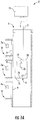
- the elevator system 2 comprises a hoistway 4 extending in a vertical direction between a plurality of landings 8 located on different floors.
- the elevator car 6 comprises a floor 16, a ceiling 18 and sidewalls 17 extending between the floor 16 and the ceiling 18 defining an interior space of the elevator car 6. Only one sidewall 17 is depicted in the schematic illustration of Fig. 1 .
- the elevator car 6 is movably suspended within the hoistway 4 by means of a tension member 3.
- the tension member 3 for example a rope or belt, is connected to a drive 5, which is configured for driving the tension member 3 in order to move the elevator car 6 along the longitudinal direction / height of the hoistway 4 between the plurality of landings 8.
- Each landing 8 is provided with a landing door (elevator hoistway door) 9, and the elevator car 6 is provided with a corresponding elevator car door 11 allowing passengers to transfer between a landing 8 and the interior space of the elevator car 6 when the elevator car 6 is positioned at the respective landing 8.
- the drive 5 is controlled by an elevator control 15 for moving the elevator car 6 along the hoistway 4 between the different landings 8.
- Input to the elevator control 15 may be provided via elevator hall call buttons included in hall call panels 7a, which are provided on each landing 8 close to the elevator landing doors 9, and/or via elevator car control buttons which are incorporated into a user interface 7b provided inside the elevator car 6.
- the hall call panels 7a may have the configuration of destination call panels including buttons for input of a desired destination floor by the passenger.
- the user interface 7b inside the elevator car 6 is not required to have elevator car control buttons for input of the desired destination floor.
- the elevator hall call panels 7a and the elevator car control buttons included in the user interface 7a may be connected to the elevator control 15 by means of electrical lines, which are not shown in Fig. 1 , in particular by an electric bus, e.g. a field bus such as a CAN bus, or by means of wireless data transmission.
- an electric bus e.g. a field bus such as a CAN bus
- wireless data transmission
- the exemplary embodiments of the elevator system 2 shown in Figs. 1A and 1B are provided with the user interface 7b and a communication unit 10.
- the user interface 7b may include an emergency button, a microphone, a speaker, and/or a monitor etc. As described above, the user interface 7b may be implemented together with the elevator car control buttons. Alternatively, the user interface 7b may be located on another place inside the elevator car 6 separately from the elevator car control buttons.
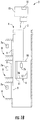
- the communication unit 10 may be provided on the top of the elevator car 6. As an alternative, as shown in Fig. 1B , the communication unit 10 is incorporated into the elevator control 15. However, the communication unit 10 may be a device separate from the elevator control 15. The communication unit 10 may be placed in a head room of the hoistway 4 or in a machine room located above, beneath, or next to the hoistway 4.
- Fig. 2 is a schematic diagram showing an overall network structure in accordance with an embodiment of the present invention.
- the user interface 7b is connected to the communication unit 10 by means of the CAN bus or wirelessly.
- the communication unit 10 is configured to be connected with the remote communication device 20 over a wireless communication network 30.
- LPWAN Low-Power Wide-Area Network
- LPN Low-Power Wide-Area Network
- the LPWAN is a type of wireless telecommunication wide area network designed to allow long range communications at a low bit rate with low power.
- An example for an LPWAN available in Europe is the SigFox network.
- a plurality of technical standards for the LPWAN like SigFox, LoRa, LoRaWAN, Random Phase Multiple Access (RPMA), Symphony Link, Weightless have been set up and the wireless communication network 30 can be implemented in compliance with communication protocols set by any one of these technical standards for the LPWAN.
- the remote communication device 20 may be provided, for example, in a management center (not shown in the Figures) which is responsible for managing the elevator system 2, particularly in an emergency situation.
- the remote communication unit 20 may be a mobile device carried by a person who is responsible for managing the elevator system 2 or a passenger's acquaintance.
- Figs. 3-4 are diagrams showing exemplary structures of the communication unit 10 and the remote communication device 20, respectively, in accordance with an embodiment of the present invention.
- the communication unit 10 includes a first voice recognition module 101, a first text-to-voice conversion module 103, a first control module 105, a memory 107, and a first wireless communication module 109.
- the first voice recognition module 101 is connected to a microphone 7c of the interface module 7b and voice data from a passenger in the elevator car 6 is transferred to the first voice recognition module 101 via the microphone 7c.
- the first voice recognition module 101 performs a voice recognition operation upon the voice data using a voice recognition program to output corresponding text data.
- voice recognition has the same meaning as “speech recognition”.
- a known voice or speech recognition technology can be used to implement the first voice recognition module 12.
- voice/speech recognition software engines known to the public, like “CMU Sphinx,” “Julius,” and “Kaldi,” etc.
- voice/speech recognition software engines known such as “Dragon Dictate,” “MacSpeech Scribe,” “ViaVoice,” “Voice Notebook,and “SpeechTexter,” etc.
- the first wireless communication module 109 in Fig. 3 is configured to perform a predefined data processing to communicate with the remote communication device 20 over the wireless communication network 30, e.g. the LPWAN.
- the first wireless communication module 109 performs the predefined data processing on the text data transferred from the first voice recognition module 101.
- the predefined data processing is determined in compliance with communication protocols set by a technical standard based upon which the wireless communication network 30 has been implemented.
- the first wireless communication module 109 also performs a predetermined data processing on wireless signals received from the remote communication device 20 to output text data to be transferred to the first text-to-voice conversion module 103.
- the first text-to-voice conversion module 103 performs text-to-voice conversion operations on the text data transferred from the first wireless communication module 109 to produce corresponding voice data.
- the voice data is transferred to and outputted by the speaker 7d of the interface module 7b.
- text-to-voice conversion can be replaced with simply “text-to-voice,” “text-to-speech,” or “speech synthesis”.
- a known text-to-voice conversion algorithm can be adopted to implement the first text-to-voice conversion module 103.
- "Festival Speech Synthesis System,” “eSpeak,” and “gnuspeech” are examples of open source text-to-voice (or text-to-speech) algorithms.
- the first control module 105 is configured to control the overall operations of the components (101, 103, 107, 109) of the communication unit 10. Algorithms for the voice recognition and the text-to-voice conversion, programs, instructions, and data required to control the communication unit 20 and to communicate with the remote communication device 20 may be stored in the memory 107 which may comprise a RAM and a ROM.
- the remote communication device 20 includes a second wireless communication module 201, a second control module 203, a memory 205, a second voice recognition module 207, a second text-to-voice conversion module, and an interface module 211 which comprises a microphone 211a and a speaker. Operations of those modules 201, 203, 205, 207, 209, 211 are analogous to the corresponding modules of the communication unit 10, so that detailed explanations will be omitted.
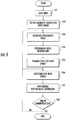
- Fig. 5 is a flowchart showing a process performed by the communication unit 10 in accordance with an embodiment of the present invention.
- a process performed by the remote communication unit 20 in accordance with an embodiment of the present invention could be the other way around, so that specific explanations thereof will be omitted.
- a user input is made by a passenger in the elevator car 6, for example, by simply pushing an emergency button or by picking up a handset provided in the user interface 7b.
- the user input is transferred to the first voice recognition module 101.
- the first control module 105 controls the first wireless communication module 109 to set up a wireless connection with the remote communication device 20 over the wireless communication network 40, e.g. the LPWAN.
- the passenger's voice is received, at S53, by the first voice recognition module 101 through the microphone 7c of the user interface 7b.
- the first voice recognition module 101 performs the voice recognition operations on the received voice data to produce corresponding text data.
- the text data is transmitted through the first wireless communication module 109 to the remote communication device 20 over the wireless communication network 30.
- the first wireless communication module 109 receives text data from the remote communication device 20 over the wireless communication network 30 and the received text data is transferred to the first text-to-voice conversion module 103.
- the first text-to-voice conversion module 103 performs text-to-voice conversion operations to convert the text data into corresponding voice data.
- the voice data is passed to the speaker 7d to be outputted to the passenger in the elevator car 6. The steps of S53-S57 may be repeated until it is determined that the communication is terminated at S58.
- corresponding text data is transmitted over a wireless communication network.
- data processing procedures performed by a wireless communication module of a communication unit in an elevator system or a remote communication device could be simplified.
- a narrower bandwidth, less power and cost could be required for the wireless communication in the elevator system and thereby providing higher availability and connectivity.
- quality of speech signals output from the speakers is standardized.
Landscapes
- Engineering & Computer Science (AREA)
- Automation & Control Theory (AREA)
- Computer Networks & Wireless Communication (AREA)
- Elevator Control (AREA)
- Indicating And Signalling Devices For Elevators (AREA)
Abstract
The invention relates to an apparatus and a method of wireless communication in an elevator system (2, 3). The wireless communication apparatus comprises a user interface module (211, 7B) placed in an elevator car (17, 18, 20, 6, 7A) of the elevator system (2, 3), the user interface module (211, 7B) providing a user interface (7A, 7B, 7C) for a passenger in the elevator car (17, 18, 20, 6, 7A) and including a microphone (211A, 7C, 7D) and a speaker (7D, 8);a voice recognition module (101, 103, 12, 207, 209) configured to recognize voice data inputted through the microphone (211A, 7C, 7D) by the passenger and to convert the recognized voice into text data;a wireless communication module (109, 201, 203) configured to make a wireless connection with a remote communication device (20, 30) to transmit the text data over a wireless communication network (101, 30, 40);and a control module (105, 107, 203, 205) configured to control the wireless communication module (109, 201, 203) to set up the wireless connection with the remote communication device (20, 30) over the wireless communication network (101, 30, 40).
Description
- The invention relates to an elevator system, in particular to an apparatus and a method of wireless communication in the elevator system.
- In an elevator system, e.g. during maintenance or in emergency situations, particularly when passengers are trapped in an elevator car, it is essential to allow communication between the passengers and people who are located apart from the elevator car, e.g. in an external management center. Conventionally, a wired communication system has been used for such a purpose, but wireless communication systems, such as 3rd and 4th generation mobile communication systems using cellular networks like GSM, WCDMA, LTE, or LTE-A, have recently been replacing the wired communication system for the communication purpose in the elevator system. Voice communication over cellular networks, however, has a problem of requiring a relatively broad bandwidth and high cost.
- It would therefore be beneficial to provide a wireless communication system for an elevator system occupying a narrower bandwidth with lower cost.
- According to an exemplary embodiment of the invention, a wireless communication apparatus for an elevator system comprises a user interface module placed in an elevator car of the elevator system, the user interface module providing a user interface for a passenger in the elevator car and including a microphone; a voice recognition module configured to recognize voice data input through the microphone by the passenger and to convert the recognized voice into text data; a wireless communication module configured to make a wireless connection with a remote communication device to transmit the text data over a wireless communication network; and a control module configured to control the wireless communication module to set up the wireless connection with the remote communication device over the wireless communication network.
- A number of optional features are set out in the following. These features may be realized in particular embodiments, alone or in combination with any of the other features.
- The user interface may further comprise a speaker, and the wireless communication apparatus may further comprise a text-to-voice conversion module configured to convert text data received from the remote communication unit into voice data and to transfer the voice data to the speaker.
- The voice recognition module, the wireless communication module, the text-to voice conversion module, and the control module may be implemented in a communication unit. Particularly, the communication unit may be provided on a top of the elevator car. Alternatively, the communication unit may be placed in a head room or a machine room above, beneath, or next to a hoistway of the elevator system.
- The user interface module and the communication unit may be configured to make at least one of a wire communication or a wireless communication.
- As another aspect of the present invention, a remote communication device configured to carry out a wireless communication with an apparatus according to the claimed embodiments of the present invention is provided. An exemplary embodiment of the remote communication apparatus comprises a user interface module comprising a microphone and a speaker; a voice recognition module configured to recognize voice data inputted through the microphone and to convert the recognized voice into text data; a wireless communication module configured to make a wireless connection with a communication unit placed in an elevator system to transmit the text data over a wireless communication network; a text-to-voice conversion module configured to convert text data received from the communication unit into voice data and to transfer the voice data to the speaker; and a control module configured to control the wireless communication module to set up the wireless connection with the communication unit over the wireless communication network.
- Particularly, the remote communication device may be configured to be used by a person who is responsible for managing the elevator system or may be configured to be placed in a management center of the elevator system.
- As further another aspect of the present invention, an elevator system equipped with a wireless communication apparatus according to the claimed embodiments of the present invention is provided.
- As further another aspect of the present invention, a method of voice communication in an elevator system is provided. An exemplary embodiment of the method may comprise setting up a wireless connection between a communication unit placed in the elevator system and a remote communication device, upon receiving a passenger's input through an interface module placed in a elevator car of the elevator system; receiving the passenger's voice data via a microphone arranged in the elevator car; performing a voice recognition process for the received voice data to produce corresponding text data; and transmitting the text data to the remote communication device over the wireless communication network.
- Another embodiment of the method may comprise receiving text data from the remote communication device; performing a text-to-voice conversion process for the received text data to produce corresponding voice data; and outputting the produced voice data through a speaker arranged in the elevator car.
- The wireless communication network may be any one of GSM, WCDMA, LTE, and LTE-A networks. Alternatively, the wireless communication network may be any one of Low-Power Wide-Area Network (LPWAN), Low-Range-Wide-Area-Network (LoRaWAN), Wi-Fi, and Bluetooth networks.
- In the following an exemplary embodiment of the invention is described with reference to the enclosed figures.
-
Fig. 1A is a schematic diagram depicting an elevator system comprising an elevator car according to an exemplary embodiment of the invention. -
Fig. 1B is a schematic diagram depicting an elevator system comprising an elevator car according to another exemplary embodiment of the invention. -
Fig. 2 is a schematic diagram showing an overall network structure in accordance with an embodiment of the present invention. -
Fig. 3 is a diagram showing an exemplary structure of a communication unit in accordance with an embodiment of the present invention. -
Fig. 4 is a diagram showing an exemplary structure of a remote communication device in accordance with an embodiment of the present invention. -
Fig. 5 is a flowchart showing a process performed by a communication unit in accordance with an embodiment of the present invention. -
Figs. 1A and1B schematically depict anelevator system 2 comprising anelevator car 6 according to exemplary embodiments of the present invention. - The
elevator system 2 comprises ahoistway 4 extending in a vertical direction between a plurality oflandings 8 located on different floors. - The
elevator car 6 comprises afloor 16, aceiling 18 andsidewalls 17 extending between thefloor 16 and theceiling 18 defining an interior space of theelevator car 6. Only onesidewall 17 is depicted in the schematic illustration ofFig. 1 . - The
elevator car 6 is movably suspended within thehoistway 4 by means of atension member 3. Thetension member 3, for example a rope or belt, is connected to adrive 5, which is configured for driving thetension member 3 in order to move theelevator car 6 along the longitudinal direction / height of thehoistway 4 between the plurality oflandings 8. - Each
landing 8 is provided with a landing door (elevator hoistway door) 9, and theelevator car 6 is provided with a correspondingelevator car door 11 allowing passengers to transfer between alanding 8 and the interior space of theelevator car 6 when theelevator car 6 is positioned at therespective landing 8. - The
drive 5 is controlled by anelevator control 15 for moving theelevator car 6 along thehoistway 4 between thedifferent landings 8. - Input to the
elevator control 15 may be provided via elevator hall call buttons included inhall call panels 7a, which are provided on eachlanding 8 close to theelevator landing doors 9, and/or via elevator car control buttons which are incorporated into auser interface 7b provided inside theelevator car 6. Instead of traditional up/down hall call buttons, thehall call panels 7a may have the configuration of destination call panels including buttons for input of a desired destination floor by the passenger. In this case, theuser interface 7b inside theelevator car 6 is not required to have elevator car control buttons for input of the desired destination floor. - The elevator
hall call panels 7a and the elevator car control buttons included in theuser interface 7a may be connected to theelevator control 15 by means of electrical lines, which are not shown inFig. 1 , in particular by an electric bus, e.g. a field bus such as a CAN bus, or by means of wireless data transmission. - The exemplary embodiments of the
elevator system 2 shown inFigs. 1A and1B are provided with theuser interface 7b and acommunication unit 10. Theuser interface 7b may include an emergency button, a microphone, a speaker, and/or a monitor etc. As described above, theuser interface 7b may be implemented together with the elevator car control buttons. Alternatively, theuser interface 7b may be located on another place inside theelevator car 6 separately from the elevator car control buttons. - As depicted in
Fig. 1A , thecommunication unit 10 may be provided on the top of theelevator car 6. As an alternative, as shown inFig. 1B , thecommunication unit 10 is incorporated into theelevator control 15. However, thecommunication unit 10 may be a device separate from theelevator control 15. Thecommunication unit 10 may be placed in a head room of thehoistway 4 or in a machine room located above, beneath, or next to thehoistway 4. - The operations of the
interface unit 7b, thecommunication unit 10, and theremote communication unit 20 will be described in detail with reference toFigs. 2-5 . -
Fig. 2 is a schematic diagram showing an overall network structure in accordance with an embodiment of the present invention. - Referring to
Fig. 2 , theuser interface 7b is connected to thecommunication unit 10 by means of the CAN bus or wirelessly. Thecommunication unit 10 is configured to be connected with theremote communication device 20 over awireless communication network 30. In this embodiment, LPWAN (Low-Power Wide-Area Network, also abbreviated "LPWA" or "LPN") is used as thewireless communication network 30. The LPWAN is a type of wireless telecommunication wide area network designed to allow long range communications at a low bit rate with low power. An example for an LPWAN available in Europe is the SigFox network. A plurality of technical standards for the LPWAN, like SigFox, LoRa, LoRaWAN, Random Phase Multiple Access (RPMA), Symphony Link, Weightless have been set up and thewireless communication network 30 can be implemented in compliance with communication protocols set by any one of these technical standards for the LPWAN. - The
remote communication device 20 may be provided, for example, in a management center (not shown in the Figures) which is responsible for managing theelevator system 2, particularly in an emergency situation. Alternatively, theremote communication unit 20 may be a mobile device carried by a person who is responsible for managing theelevator system 2 or a passenger's acquaintance. -
Figs. 3-4 are diagrams showing exemplary structures of thecommunication unit 10 and theremote communication device 20, respectively, in accordance with an embodiment of the present invention. - Referring to
Fig. 3 , thecommunication unit 10 includes a firstvoice recognition module 101, a first text-to-voice conversion module 103, afirst control module 105, amemory 107, and a firstwireless communication module 109. The firstvoice recognition module 101 is connected to a microphone 7c of theinterface module 7b and voice data from a passenger in theelevator car 6 is transferred to the firstvoice recognition module 101 via the microphone 7c. The firstvoice recognition module 101 performs a voice recognition operation upon the voice data using a voice recognition program to output corresponding text data. - In this document, the term "voice recognition" has the same meaning as "speech recognition". A known voice or speech recognition technology can be used to implement the first voice recognition module 12. There are many open source voice/speech recognition software engines known to the public, like "CMU Sphinx," "Julius," and "Kaldi," etc. There are also many commercial voice/speech recognition software engines known such as "Dragon Dictate," "MacSpeech Scribe," "ViaVoice," "Voice Notebook,and "SpeechTexter," etc.
- The first
wireless communication module 109 inFig. 3 is configured to perform a predefined data processing to communicate with theremote communication device 20 over thewireless communication network 30, e.g. the LPWAN. In particular, the firstwireless communication module 109 performs the predefined data processing on the text data transferred from the firstvoice recognition module 101. The predefined data processing is determined in compliance with communication protocols set by a technical standard based upon which thewireless communication network 30 has been implemented. The firstwireless communication module 109 also performs a predetermined data processing on wireless signals received from theremote communication device 20 to output text data to be transferred to the first text-to-voice conversion module 103.
The first text-to-voice conversion module 103 performs text-to-voice conversion operations on the text data transferred from the firstwireless communication module 109 to produce corresponding voice data. The voice data is transferred to and outputted by thespeaker 7d of theinterface module 7b. - In this document, the term "text-to-voice conversion" can be replaced with simply "text-to-voice," "text-to-speech," or "speech synthesis". A known text-to-voice conversion algorithm can be adopted to implement the first text-to-
voice conversion module 103. "Festival Speech Synthesis System," "eSpeak," and "gnuspeech" are examples of open source text-to-voice (or text-to-speech) algorithms. - The
first control module 105 is configured to control the overall operations of the components (101, 103, 107, 109) of thecommunication unit 10. Algorithms for the voice recognition and the text-to-voice conversion, programs, instructions, and data required to control thecommunication unit 20 and to communicate with theremote communication device 20 may be stored in thememory 107 which may comprise a RAM and a ROM. - With reference to
Fig. 4 , theremote communication device 20 includes a secondwireless communication module 201, asecond control module 203, amemory 205, a secondvoice recognition module 207, a second text-to-voice conversion module, and aninterface module 211 which comprises amicrophone 211a and a speaker. Operations of thosemodules communication unit 10, so that detailed explanations will be omitted. -
Fig. 5 is a flowchart showing a process performed by thecommunication unit 10 in accordance with an embodiment of the present invention. A process performed by theremote communication unit 20 in accordance with an embodiment of the present invention could be the other way around, so that specific explanations thereof will be omitted. - Referring to
Fig. 5 , at S51, a user input is made by a passenger in theelevator car 6, for example, by simply pushing an emergency button or by picking up a handset provided in theuser interface 7b. The user input is transferred to the firstvoice recognition module 101. - When receiving the user input, at S51, the
first control module 105 controls the firstwireless communication module 109 to set up a wireless connection with theremote communication device 20 over the wireless communication network 40, e.g. the LPWAN. After setting up the wireless connection at S52, the passenger's voice is received, at S53, by the firstvoice recognition module 101 through the microphone 7c of theuser interface 7b. At S54, the firstvoice recognition module 101 performs the voice recognition operations on the received voice data to produce corresponding text data. At S55, the text data is transmitted through the firstwireless communication module 109 to theremote communication device 20 over thewireless communication network 30. - At S56, the first
wireless communication module 109 receives text data from theremote communication device 20 over thewireless communication network 30 and the received text data is transferred to the first text-to-voice conversion module 103. At S57, the first text-to-voice conversion module 103 performs text-to-voice conversion operations to convert the text data into corresponding voice data. The voice data is passed to thespeaker 7d to be outputted to the passenger in theelevator car 6. The steps of S53-S57 may be repeated until it is determined that the communication is terminated at S58. - According to the embodiments of the present invention, instead of transmitting voice data, corresponding text data is transmitted over a wireless communication network. Thus, data processing procedures performed by a wireless communication module of a communication unit in an elevator system or a remote communication device could be simplified. In addition, a narrower bandwidth, less power and cost could be required for the wireless communication in the elevator system and thereby providing higher availability and connectivity. As a further benefit, quality of speech signals output from the speakers is standardized.
- While the invention has been described with reference to exemplary embodiments, it will be understood by those skilled in the art that various changes may be made and equivalents may be substituted for elements thereof without departing from the scope of the invention. In addition, many modifications may be made to adopt a particular situation or material to the teachings of the invention without departing from the essential scope thereof. Therefore, it is intended that the invention is not limited to the particular embodiments disclosed, but that the invention includes all embodiments falling within the scope of the claims.
-
- 2
- elevator system
- 3
- tension member
- 4
- hoistway
- 5
- drive
- 6
- elevator car
- 7a
- elevator hall call panel
- 7b
- user interface
- 7c, 211a
- microphone
- 7d,211b
- speaker
- 8
- landing
- 9
- landing door frame
- 10
- communication unit
- 11
- elevator car door
- 15
- elevator control
- 16
- floor of the elevator car
- 17
- sidewall of the elevator car
- 18
- ceiling of the elevator car
- 20
- remote communication device
- 30
- wireless communication network
- 101
- first voice recognition module
- 103
- first text-to-voice conversion module
- 105
- first control module
- 107,205
- memory
- 109
- first wireless communication module
- 201
- second wireless communication module
- 203
- second control module
- 205
- memory
- 207
- second voice recognition module
- 209
- second text-to-voice conversion module
Claims (14)
- A wireless communication apparatus for an elevator system (2), the wireless communication apparatus comprising:a user interface module (7b) placed in an elevator car (6) of the elevator system (2), the user interface module (7b) providing a user interface for a passenger in the elevator car (6) and including a microphone (7c);a voice recognition module (101) configured to recognize voice data inputted through the microphone (7c) by the passenger and to convert the recognized voice data into text data;a wireless communication module (109) configured to make a wireless connection with a remote communication device (20) to transmit the text data over a wireless communication network (30); anda control module (105) configured to control the wireless communication module (109) to set up the wireless connection with the remote communication device (20) over the wireless communication network (30).
- The wireless communication apparatus according to claim 1, wherein the user interface module (7b) further comprises a speaker (7d), and the wireless communication apparatus further comprises:
a text-to-voice conversion module (103) configured to convert text data received from the remote communication unit (20) into voice data and to transfer the voice data to the speaker (7d). - The wireless communication apparatus according to claim 2, wherein the voice recognition module (101), the wireless communication module (109), the text-to voice conversion module (103), and the control module (105) are implemented in a communication unit (10).
- The wireless communication apparatus according to claim 3, wherein the communication unit (10) is provided on a top of the elevator car (6).
- The wireless communication apparatus according to claim 3, wherein the communication unit (10) is placed in a head room or a machine room above, beneath, or next to a hoistway (4) of the elevator system (2).
- The wireless communication apparatus according to any of the preceding claims, wherein the wireless communication network (30) is any of Low-Power Wide-Area Network (LPWAN), Low-Range-Wide-Area-Network (LoRaWAN), Wi-Fi, and Bluetooth networks.
- The wireless communication apparatus according to any of claims 3-6, wherein the user interface module (7b) and the communication unit (10) are configured to make at least one of a wire communication or a wireless communication.
- A remote communication device (20) configured to carry out a wireless communication with an apparatus according to any of the preceding claims, the remote communication apparatus (20) comprising:a user interface module (211) comprising a microphone (211a) and a speaker (211b);a voice recognition module (207) configured to recognize voice data inputted through the microphone (211a) and to convert the recognized voice into text data;a wireless communication module (211) configured to make a wireless connection with a communication unit (10) placed in an elevator system to transmit the text data over a wireless communication network (30);a text-to-voice conversion module (209) configured to convert text data received from the communication unit (10) into voice data and to transfer the voice data to the speaker (211b); anda control module (203) configured to control the wireless communication module (201) to set up the wireless connection with the communication unit (10) over the wireless communication network (30).
- The remote communication apparatus (20) according to claim 8 or 9, wherein the remote communication device (20) is configured to be used by a person who is responsible for managing the elevator system (2).
- The remote communication apparatus (20) according to claim 8, wherein the remote communication device (20) is configured to be placed in a management center of the elevator system (2).
- An elevator system (2) equipped with a wireless communication apparatus according any one of claims 1 to 7.
- A method of voice communication in an elevator system (2), the method comprising:setting up a wireless connection between a communication unit (10) placed in the elevator system (2) and a remote communication device (20) upon receiving a passenger's input through an interface module placed in an elevator car (6) of the elevator system (10);receiving the passenger's voice data via a microphone (7c) arranged in the elevator car (6);performing a voice recognition process for the received voice data to produce corresponding text data; andtransmitting the text data to the remote communication device (20) over the wireless communication network (30).
- The method according to claim 12, further comprising
receiving text data from the remote communication device (20);
performing a text-to-voice conversion process for the received text data to produce corresponding voice data; and
outputting the produced voice data through a speaker (7d) arranged in the elevator car (6). - The method according to claim 12 or 13, wherein the wireless communication network (30) is any one of Low-Power Wide-Area Network (LPWAN), Low-Range-Wide-Area-Network (LoRaWAN), Wi-Fi, and Bluetooth networks.
Priority Applications (1)
| Application Number | Priority Date | Filing Date | Title |
|---|---|---|---|
| EP18172375.0A EP3569541A1 (en) | 2018-05-15 | 2018-05-15 | Wireless communication in an elevator system |
Applications Claiming Priority (1)
| Application Number | Priority Date | Filing Date | Title |
|---|---|---|---|
| EP18172375.0A EP3569541A1 (en) | 2018-05-15 | 2018-05-15 | Wireless communication in an elevator system |
Publications (1)
| Publication Number | Publication Date |
|---|---|
| EP3569541A1 true EP3569541A1 (en) | 2019-11-20 |
Family
ID=62167245
Family Applications (1)
| Application Number | Title | Priority Date | Filing Date |
|---|---|---|---|
| EP18172375.0A Withdrawn EP3569541A1 (en) | 2018-05-15 | 2018-05-15 | Wireless communication in an elevator system |
Country Status (1)
| Country | Link |
|---|---|
| EP (1) | EP3569541A1 (en) |
Cited By (1)
| Publication number | Priority date | Publication date | Assignee | Title |
|---|---|---|---|---|
| CN111477225A (en) * | 2020-03-26 | 2020-07-31 | 北京声智科技有限公司 | Voice control method and device, electronic equipment and storage medium |
Citations (3)
| Publication number | Priority date | Publication date | Assignee | Title |
|---|---|---|---|---|
| US20060151256A1 (en) * | 2005-01-07 | 2006-07-13 | Lee Jae H | Elevator with voice recognition floor assignment device |
| CN107673153A (en) * | 2017-10-26 | 2018-02-09 | 上海新时达电气股份有限公司 | Elevator long distance distress system and long-range call device |
| CN107902517A (en) * | 2017-10-19 | 2018-04-13 | 上海新时达电气股份有限公司 | A kind of elevator calls for help pacifying device and system |
-
2018
- 2018-05-15 EP EP18172375.0A patent/EP3569541A1/en not_active Withdrawn
Patent Citations (3)
| Publication number | Priority date | Publication date | Assignee | Title |
|---|---|---|---|---|
| US20060151256A1 (en) * | 2005-01-07 | 2006-07-13 | Lee Jae H | Elevator with voice recognition floor assignment device |
| CN107902517A (en) * | 2017-10-19 | 2018-04-13 | 上海新时达电气股份有限公司 | A kind of elevator calls for help pacifying device and system |
| CN107673153A (en) * | 2017-10-26 | 2018-02-09 | 上海新时达电气股份有限公司 | Elevator long distance distress system and long-range call device |
Cited By (2)
| Publication number | Priority date | Publication date | Assignee | Title |
|---|---|---|---|---|
| CN111477225A (en) * | 2020-03-26 | 2020-07-31 | 北京声智科技有限公司 | Voice control method and device, electronic equipment and storage medium |
| CN111477225B (en) * | 2020-03-26 | 2021-04-30 | 北京声智科技有限公司 | Voice control method, device, electronic device and storage medium |
Similar Documents
| Publication | Publication Date | Title |
|---|---|---|
| US10703606B2 (en) | Wireless communication in an elevator | |
| CN105959039B (en) | Elevator communication gateway | |
| EP1163182B1 (en) | A system for remotely communicating voice and data to and from an elevator controller | |
| US12084309B2 (en) | Wireless connectivity in an elevator system | |
| US20200048033A1 (en) | Elevator communications system | |
| US20210087016A1 (en) | Communications system for conveyance system | |
| US11305967B2 (en) | Elevator renewal construction method and elevator control panel | |
| US11274016B2 (en) | Wireless communication in an elevator system | |
| CN106185485B (en) | Wireless transmission system | |
| CN101500319A (en) | Dedicated channel entry method | |
| JP2009215024A (en) | Tail cordless elevator system | |
| CN105905716B (en) | Wireless transmission system and wireless transmission method | |
| WO2023052455A1 (en) | Elevator system, method of operating an elevator system, and use of a control unit, a user interface unit, and a first access point in an elevator system | |
| JP2014155150A (en) | Elevator communication system | |
| JP2023106487A (en) | Direct call support device | |
| JP5963334B1 (en) | Elevator system and wireless communication method | |
| KR101628893B1 (en) | Intercom apparatus for helicopter | |
| CN102942086A (en) | Home elevator voice control operating system | |
| KR200467173Y1 (en) | Emergency call system of elevator | |
| US20240228227A1 (en) | System and method to enable communication between control components of a pneumatic vacuum elevator | |
| CN110104513A (en) | Elevator control method, elevator device, elevator outer calling terminal and storage medium | |
| EP4132872A1 (en) | Apparatuses and methods for enabling calling to an elevator in an emergency situation | |
| KR101304899B1 (en) | Driving control method of elevator for the disabled in group management type destination selecting terminal | |
| JPWO2020008580A1 (en) | Direct call support device | |
| HK1231833A1 (en) | Wireless transmission system |
Legal Events
| Date | Code | Title | Description |
|---|---|---|---|
| PUAI | Public reference made under article 153(3) epc to a published international application that has entered the european phase |
Free format text: ORIGINAL CODE: 0009012 |
|
| AK | Designated contracting states |
Kind code of ref document: A1 Designated state(s): AL AT BE BG CH CY CZ DE DK EE ES FI FR GB GR HR HU IE IS IT LI LT LU LV MC MK MT NL NO PL PT RO RS SE SI SK SM TR |
|
| AX | Request for extension of the european patent |
Extension state: BA ME |
|
| STAA | Information on the status of an ep patent application or granted ep patent |
Free format text: STATUS: THE APPLICATION IS DEEMED TO BE WITHDRAWN |
|
| 18D | Application deemed to be withdrawn |
Effective date: 20200603 |