EP3568811B1 - Training machine learning models - Google Patents
Training machine learning models Download PDFInfo
- Publication number
- EP3568811B1 EP3568811B1 EP18705928.2A EP18705928A EP3568811B1 EP 3568811 B1 EP3568811 B1 EP 3568811B1 EP 18705928 A EP18705928 A EP 18705928A EP 3568811 B1 EP3568811 B1 EP 3568811B1
- Authority
- EP
- European Patent Office
- Prior art keywords
- training
- weights
- values
- neural network
- loss
- Prior art date
- Legal status (The legal status is an assumption and is not a legal conclusion. Google has not performed a legal analysis and makes no representation as to the accuracy of the status listed.)
- Active
Links
Images



Classifications
-
- G—PHYSICS
- G06—COMPUTING OR CALCULATING; COUNTING
- G06N—COMPUTING ARRANGEMENTS BASED ON SPECIFIC COMPUTATIONAL MODELS
- G06N3/00—Computing arrangements based on biological models
- G06N3/02—Neural networks
- G06N3/08—Learning methods
- G06N3/09—Supervised learning
-
- G—PHYSICS
- G06—COMPUTING OR CALCULATING; COUNTING
- G06N—COMPUTING ARRANGEMENTS BASED ON SPECIFIC COMPUTATIONAL MODELS
- G06N3/00—Computing arrangements based on biological models
- G06N3/02—Neural networks
- G06N3/08—Learning methods
-
- G—PHYSICS
- G06—COMPUTING OR CALCULATING; COUNTING
- G06N—COMPUTING ARRANGEMENTS BASED ON SPECIFIC COMPUTATIONAL MODELS
- G06N3/00—Computing arrangements based on biological models
- G06N3/02—Neural networks
- G06N3/04—Architecture, e.g. interconnection topology
- G06N3/044—Recurrent networks, e.g. Hopfield networks
- G06N3/0442—Recurrent networks, e.g. Hopfield networks characterised by memory or gating, e.g. long short-term memory [LSTM] or gated recurrent units [GRU]
-
- G—PHYSICS
- G06—COMPUTING OR CALCULATING; COUNTING
- G06N—COMPUTING ARRANGEMENTS BASED ON SPECIFIC COMPUTATIONAL MODELS
- G06N3/00—Computing arrangements based on biological models
- G06N3/02—Neural networks
- G06N3/04—Architecture, e.g. interconnection topology
- G06N3/047—Probabilistic or stochastic networks
-
- G—PHYSICS
- G06—COMPUTING OR CALCULATING; COUNTING
- G06N—COMPUTING ARRANGEMENTS BASED ON SPECIFIC COMPUTATIONAL MODELS
- G06N3/00—Computing arrangements based on biological models
- G06N3/02—Neural networks
- G06N3/08—Learning methods
- G06N3/096—Transfer learning
-
- G—PHYSICS
- G06—COMPUTING OR CALCULATING; COUNTING
- G06N—COMPUTING ARRANGEMENTS BASED ON SPECIFIC COMPUTATIONAL MODELS
- G06N3/00—Computing arrangements based on biological models
- G06N3/02—Neural networks
- G06N3/08—Learning methods
- G06N3/0985—Hyperparameter optimisation; Meta-learning; Learning-to-learn
-
- G—PHYSICS
- G06—COMPUTING OR CALCULATING; COUNTING
- G06N—COMPUTING ARRANGEMENTS BASED ON SPECIFIC COMPUTATIONAL MODELS
- G06N3/00—Computing arrangements based on biological models
- G06N3/02—Neural networks
- G06N3/04—Architecture, e.g. interconnection topology
- G06N3/044—Recurrent networks, e.g. Hopfield networks
Definitions
- This specification relates to training machine learning models.
- Machine learning models receive an input and generate an output, e.g., a predicted output, based on the received input and on values of the parameters of the model.
- Neural networks are machine learning models that employ one or more layers of nonlinear units to predict an output for a received input.
- Some neural networks include one or more hidden layers in addition to an output layer. The output of each hidden layer is used as input to the next layer in the network, i.e., the next hidden layer or the output layer.
- Each layer of the network generates an output from a received input in accordance with current values of a respective set of parameters.
- a recurrent neural network is a neural network that receives an input sequence and generates an output sequence from the input sequence.
- a recurrent neural network can use some or all of the internal state of the network from a previous time step in computing an output at a current time step.
- An example of a recurrent neural network is a long short term (LSTM) neural network that includes one or more LSTM memory blocks.
- LSTM long short term
- Each LSTM memory block can include one or more cells that each include an input gate, a forget gate, and an output gate that allow the cell to store previous states for the cell, e.g., for use in generating a current activation or to be provided to other components of the LSTM neural network Fan et al: "Neural data filter for bootstrapping stochastic gradient descent", paper submitted at ICLR'17 (revision: 20 Jan 2017 14:44), 20 January 2017 (2017-01-20 ), describes a general framework to automatically and adaptively select training data for Stochastic Gradient Descent.
- This specification describes a system implemented as computer programs on one or more computers in one or more locations that performs training of a machine learning model.
- the training system as described in this specification can adapt the policy to the model's capabilities as they evolve over the course of training.
- the training system as described in this specification can measure learning progress using novel learning progress signals based on the rate at which the complexity of the machine learning model increases.
- the training system as described in this specification can train machine learning models faster (e.g., over fewer training iterations) than conventional training systems that do not incorporate these improvements.
- the training system as described in this specification may consume fewer computational resources (e.g., memory and computing power) than conventional training systems.
- the training system as described in this specification can train the machine learning model on a progression of tasks that maximize the learning progress of the machine learning model.
- the training system as described in this specification may require fewer training iterations to train the machine learning model relative to training systems with static task selection policies.
- the rate at which the complexity of the machine learning model increases may be a more accurate learning progress signal (i.e., may better reflect the actual learning progress of the machine learning model) than conventional learning progress signals.
- the training system as described in this specification maximizes the learning progress of the machine learning model during training, and thereby may require fewer iterations to train the machine learning model.
- the training system as described in this specification may determine trained machine learning model parameters that result in better task performance (e.g., higher prediction accuracy) of the trained machine learning model relative to machine learning models that are trained by conventional training systems.
- the training system as described in this specification achieves greater learning progress of the machine learning model during training relative to conventional training systems (as previously described)
- a machine learning model trained for a fixed number of iterations by the training system as described in this specification may have better task performance relative to a machine learning model trained by a conventional training system for the same fixed number of iterations.
- FIG. 1A shows an example training system 100.
- the training system 100 is an example of a system implemented as computer programs on one or more computers in one or more locations in which the systems, components, and techniques described below are implemented.
- the training system 100 is configured to train a machine learning model 118 based on training data 102.
- the model 118 is configured to receive an input and to process the input in accordance with current values of a set of machine learning model parameters 116 to generate an output for the input.
- the model 118 is a neural network and the model parameters 116 include the weight values of the neuron connections of the neural network.
- the current values of the set of model parameters 116 may be sampled from a model parameter distribution 124 that defines a probability distribution over the set of possible values of the model parameters 116.
- the model parameter distribution 124 may characterize each of the model parameters by a Normal distribution with a different mean and standard deviation.
- the model 118 is a supervised neural network model (e.g., a recurrent neural network).
- the output generated by the model 118 for a given image comprises scores for each of a set of object categories, with each score representing an estimated likelihood that the image depicts an object belonging to the category.
- the output generated by the model 118 for a given Internet resource, document, or portion of a document may be a score for each of a set of topics, with each score representing an estimated likelihood that the Internet resource, document, or document portion is about the topic.
- the output generated by the model 118 may be a score that represents an estimated likelihood that the particular advertisement will be clicked on.
- the output generated by the model 118 may be a score for each of a set of content items, with each score representing an estimated likelihood that the user will respond favorably to being recommended the content item.
- the output generated by the model 118 may be a score for each of a set of pieces of text in another language, with each score representing an estimated likelihood that the piece of text in the other language is a proper translation of the input text into the other language.
- the output generated by the model 118 comprises a score for each of a set of pieces of text, each score representing an estimated likelihood that the piece of text is the correct transcript for the utterance.
- the training data 102 includes multiple training examples. Each training example includes an input to the model 118 and a corresponding target output. The target output corresponding to an input refers to a preferred output of the model 118 in response to processing the input.
- the training data 102 includes data specifying multiple tasks 120.
- a task is a set of multiple batches of training examples from the training data 102.
- a batch of training examples refers to a set of one or more training examples. An illustration of examples of training data, tasks, batches, and training examples is described with reference to FIG. 1B .
- a particular training example may be included in multiple batches, a particular batch of training data may be included in multiple tasks, and different batches may include different numbers of training examples.
- the system 100 trains the model 118 to perform well (i.e., to make accurate predictions) for training examples in each different task.
- a model is said to make an accurate prediction for a training example if, by processing the input of the training example, the model generates an output that is similar to a target output of the training example.
- the loss function 114 measures the accuracy of the outputs generated by the model 118 (as will be described in more detail below with reference to the description of 210).
- Each task includes batches of training examples of a different nature.
- training the model 118 to perform well for training examples in a particular task can cause the model to perform better (i.e., to make more accurate predictions) for training examples in other tasks.
- training examples in different tasks may have different semantics. For example, if the system 100 trains the model 118 to perform machine translation, then training examples in different batches may correspond to translations of text sequences between different languages.
- the training data 102 includes data specifying that one or more of the tasks are target tasks, which are tasks that include training examples with inputs that are most similar to inputs to be processed by the model 118 after training of the model 118. In these cases, the system 100 may train the model 118 to perform well for training examples in the target tasks.
- auxiliary tasks may include batches of training examples on which it is expected to be easier to train the model 118. Training the model 118 on the auxiliary tasks may be helpful in improving the performance of the model 118 on the target tasks.
- the system 100 may train the model 118 with the goal of minimizing an objective function given by: , where task N is the target task (and the other tasks are auxiliary tasks) and refers to the loss of the model 118 on task N (as described above).
- the system 100 trains the model 118 over multiple iterations of an iterative training procedure.
- the system 100 includes a task selection engine 104 that is configured to, at each of the multiple iterations, determine a selected task 106 from the tasks 120.
- the task selection engine 104 determines the selected task 106 for the iteration based on a task selection policy.
- the task selection engine 104 updates the task selection policy at each iteration using a learning progress measure 126 determined for the iteration.
- the task selection policy may be an adversarial bandit algorithm. An example process for updating a task selection policy is described with reference to FIG. 3 .
- the system 100 includes a batch selection engine 108 that is configured to, at each iteration, determine a selected batch 110 of training examples from the selected task 106 for the iteration.
- the batch selection engine 108 determines the selected batch 110 by randomly sampling a batch from the selected task 106.
- the system 100 includes a training engine 112 that is configured to, at each iteration, train the model 118 based on the selected batch 110 for the iteration and the loss function 114.
- the training engine 112 trains the model 118 by determining updated values of the model parameters 116 from current values of the model parameters 116 in order to decrease a loss on the selected batch as measured by the loss function 114.
- the training engine trains the model 118 by determining updated parameter values of the model parameter distributions 124 from current parameter values of the model parameter distributions 124 in order to decrease a loss on the selected batch as measure by the loss function 114.
- the training engine 112 determines a learning progress measure 126 for each iteration.
- the learning progress measure 126 for an iteration is a scalar value indicating a progress of training the model 118 as a result of training the model 118 on training examples from the selected batch 110 for the iteration.
- the system 100 when the system 100 determines that the training of the model 118 is complete, the system 100 stores the model 118 and the trained model parameters 116. In some implementations, when the system 100 determines that the training of the model 118 is complete, the system 100 provides the model 118 and the model parameters 116 to a third-party. In some implementations, when the system 100 determines that the training of the model 118 is complete, the system 100 uses the model 118 to process inputs (e.g., from a user device) in accordance with the trained model parameters 116 and provides the corresponding outputs of the model 118, e.g., to the user device.
- inputs e.g., from a user device
- FIG. 1B is an illustration of examples of training data, tasks, batches, and training examples.
- the training data 142 includes multiple training examples (e.g., 144). Each training example includes an input (e.g., 146) and a corresponding target output (e.g., 148).
- Each batch (e.g., 130, 132, 134, 136, 138, 140, ...) includes multiple training examples from the training data 142.
- Each of the tasks (e.g., 126, 128, ...) is a set of multiple batches of training examples. For example, task 126 is associated with batches 130, 134, 138, and so on, while task 128 is associated with batches 132, 136, 140, and so on.
- different batches of training data can include different numbers of training examples, and different tasks can be associated with different numbers of batches.
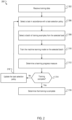
- FIG. 2 is a flow diagram of an example process for training a machine learning model.
- the process 200 will be described as being performed by a system of one or more computers located in one or more locations.
- a training system e.g., the training system 100 of FIG. 1 , appropriately programmed in accordance with this specification, can perform the process 200.
- the system receives training data (202).
- the training data includes multiple training examples.
- Each training example includes an input to the machine learning model and a corresponding target output.
- the inputs can be any kind of digital data and the target outputs can be any kind of score, classification, or regression output based on the inputs.
- the training data specifies multiple tasks. Each task is a set of multiple batches of training examples from the training data.
- the system selects a task in accordance with a task selection policy (206).
- the task selection policy assigns a respective probability to each of the tasks and the system stochastically selects a task in accordance with the respective probabilities assigned to each of the tasks.
- the respective probabilities assigned to each of the tasks differ from iteration to iteration.
- the system selects a batch of training examples from the selected task for the iteration (208).
- the system selects the batch by randomly sampling a batch from the selected task.
- the system trains the model based on the selected batch of training examples for the iteration (210).
- the system can train the model based on the selected batch of training examples for the iteration using any appropriate training technique. For example, if the model is a neural network, then the system can train the model using gradient descent.
- the system trains the model by determining updated values of the model parameters from current values of the model parameters in order to decrease a loss on the selected batch as measured by a loss function.
- the system trains the model by determining updated parameter values of model parameter distributions over possible values of the model parameters from current parameter values of model parameter distributions over possible values of the model parameters in order to decrease a loss on the selected batch as measured by a loss function.
- the model parameter distributions include a distribution referred to as a prior distribution and a distribution referred to as a posterior distribution.
- the posterior distribution is a distribution which is modified by the training.
- the prior distribution may be fixed, in which case the parameter values of the prior distribution are not updated by the system during training.
- the system determines a learning progress measure for the iteration (212).
- the learning progress measure is based on changes in the outputs of the model that are caused by training the model on the selected batch.
- the learning progress measure may be given by: L x ⁇ ⁇ L x , ⁇ ′ , where L ( x , ⁇ ) refers to the value of the loss function evaluated on the outputs generated by the model in accordance with the current values ⁇ of the model parameters for inputs in the selected batch x, and L ( x , ⁇ ' ) refers to the value of the loss function evaluated on the outputs generated by the model in accordance with the updated values ⁇ ' of the model parameters for inputs in the selected batch x .
- the learning progress measure may be given by: ⁇ ⁇ L x ⁇ , where ⁇ ⁇ L ( x , ⁇ ) refers to a gradient vector of gradients of the loss function L ( x , ⁇ ) with respect to the current values of the model parameters ⁇ generated as part of training the model on the selected batch x , and
- the norm may be a squared L 2 norm.
- the learning progress measure may be given by: L x ′ , ⁇ ⁇ L x ′ , ⁇ ′ , where L ( x ' , ⁇ ) refers to the value of the loss function evaluated on the outputs generated by the model in accordance with the current values ⁇ of the model parameters for inputs in a new batch x' , and L ( x' , ⁇ ' ) refers to the value of the loss function evaluated on the outputs generated by the model in accordance with the updated values ⁇ ' of the model parameters for inputs in the new batch x' .
- the system selects the new batch from the selected task. In some other cases, the system selects the new batch from a target task. In some other cases, the system randomly selects a new task and selects the new batch from the randomly selected new task. Given a particular task from which the system selects the new batch, the system randomly selects the new batch from the batches of the particular task.
- the learning progress measure is based on changes in the complexity of the model that are caused by training the model on the selected batch.
- the learning progress measure may be given by: ⁇ ′ ⁇ ⁇ , where
- ⁇ refers to a norm (e.g., a squared L 2 norm)
- ⁇ ' refers to the vector of updated values of the model parameters
- ⁇ refers to the vector of current values of the model parameters.
- the learning progress measure may be given by: ⁇ T ⁇ ⁇ L x ⁇ , where ⁇ T refers to the transpose of a vector of the current values of the model parameters and ⁇ ⁇ L ( x , ⁇ ) refers to the gradient of the loss function with respect to the model parameters ⁇ on the selected batch x .
- the learning progress measure may be given by: KL P ⁇ ′
- the learning progress may be given by: ⁇ ⁇ , ⁇ KL P ⁇
- the system determines whether the training is complete (214). In some cases, the system determines that the training is complete if the system has trained the model for a predetermined number of iterations. In some cases, the system determines that the training is complete if the measures of learning progress fall below a predetermined threshold for a predetermined number of iterations.
- the system In response to determining that the training is not complete, the system updates the task selection policy based on, that is dependent upon, the determined learning progress measure for the iteration (218), returns to 206, and repeats the preceding steps. An example process for updating a task selection policy is described with reference to FIG. 3 . In response to determining that the training is complete (218), the system terminates the training.
- FIG. 3 is a flow diagram of an example process for updating a task selection policy.
- the process 300 will be described as being performed by a system of one or more computers located in one or more locations.
- a training system e.g., the training system 100 of FIG. 1 , appropriately programmed in accordance with this specification, can perform the process 300.
- the system determines a normalized measure of learning progress for the iteration (302).
- the system determines the normalized measure of learning progress for the iteration by dividing the measure of learning progress for the iteration by a normalization factor.
- the normalization factor is the time required for the model to generate outputs for the inputs of the training examples in the selected task.
- the time may be measured in time steps.
- normalization factor is the number of time steps required for the model to generate outputs for the inputs of the training examples of the selected batch.
- the normalization factor is the number of individual inputs in each of the inputs of the training examples in the selected batch. For example, if the inputs are sequences of words in a natural language (e.g., English), then the number of individual inputs in an input may be the number of words in the input.
- a natural language e.g., English
- the system determines a payoff for the iteration using the learning progress measure, for example by scaling the normalized learning progress measure to fall within a payoff range (304), which may be a predetermined range.
- the system determines a lower percentile and an upper percentile (e.g., the 20 th and 80 th percentiles, or any other appropriate percentiles) of the normalized learning progress measures determined for previous iterations.
- the system determines the respective percentiles based on the normalized learning progress measures of a representative sample of previous iterations rather than for all previous iterations. For example, an iteration may be included in the representative sample of previous iterations if the index of the iteration is divisible by a fixed factor (e.g., 10).
- the system updates the task selection policy based on the payoff for the iteration using an adversarial bandit algorithm.
- the adversarial bandit algorithm may be the Exp3.S algorithm, as described in Auer, P., Cesa-Bianchi, N., Freund, Y., Schapire, R.E., "The nonstochastic multiarmed bandit problem," SIAM Journal on Computing, 32(1): 48-77 .
- the adversarial bandit algorithm may be the Exp3.M algorithm, as described in Uchiya, T., Nakamura, A., Kudo, M., "Algorithms for adversarial bandit problems with multiple plays," Proceedings of the International Conference on Algorithmic Learning Theory, 2010 .
- An adversarial bandits algorithm may be described as an algorithm in which actions are selected with the aim of minimizing regret, which may be defined as the expected payoff lost when compared with the best action.
- the system uses an adversarial bandit algorithm to update the task selection policy by updating the respective selection probabilities of the tasks with the aim of maximizing the sum of the payoffs achieved over the multiple training iterations.
- Embodiments of the subject matter and the functional operations described in this specification can be implemented in digital electronic circuitry, in tangibly-embodied computer software or firmware, in computer hardware, including the structures disclosed in this specification and their structural equivalents, or in combinations of one or more of them.
- Embodiments of the subject matter described in this specification can be implemented as one or more computer programs, i.e., one or more modules of computer program instructions encoded on a tangible non-transitory storage medium for execution by, or to control the operation of, data processing apparatus.
- the computer storage medium can be a machine-readable storage device, a machine-readable storage substrate, a random or serial access memory device, or a combination of one or more of them.
- the program instructions can be encoded on an artificially-generated propagated signal, e.g., a machine-generated electrical, optical, or electromagnetic signal, that is generated to encode information for transmission to suitable receiver apparatus for execution by a data processing apparatus.
- data processing apparatus refers to data processing hardware and encompasses all kinds of apparatus, devices, and machines for processing data, including by way of example a programmable processor, a computer, or multiple processors or computers.
- the apparatus can also be, or further include, special purpose logic circuitry, e.g., an FPGA (field programmable gate array) or an ASIC (application-specific integrated circuit).
- the apparatus can optionally include, in addition to hardware, code that creates an execution environment for computer programs, e.g., code that constitutes processor firmware, a protocol stack, a database management system, an operating system, or a combination of one or more of them.
- a computer program which may also be referred to or described as a program, software, a software application, an app, a module, a software module, a script, or code, can be written in any form of programming language, including compiled or interpreted languages, or declarative or procedural languages; and it can be deployed in any form, including as a stand-alone program or as a module, component, subroutine, or other unit suitable for use in a computing environment.
- a program may, but need not, correspond to a file in a file system.
- a program can be stored in a portion of a file that holds other programs or data, e.g., one or more scripts stored in a markup language document, in a single file dedicated to the program in question, or in multiple coordinated files, e.g., files that store one or more modules, sub-programs, or portions of code.
- a computer program can be deployed to be executed on one computer or on multiple computers that are located at one site or distributed across multiple sites and interconnected by a data communication network.
- engine is used broadly to refer to a software-based system, subsystem, or process that is programmed to perform one or more specific functions.
- an engine will be implemented as one or more software modules or components, installed on one or more computers in one or more locations. In some cases, one or more computers will be dedicated to a particular engine; in other cases, multiple engines can be installed and running on the same computer or computers.
- the processes and logic flows described in this specification can be performed by one or more programmable computers executing one or more computer programs to perform functions by operating on input data and generating output.
- the processes and logic flows can also be performed by special purpose logic circuitry, e.g., an FPGA or an ASIC, or by a combination of special purpose logic circuitry and one or more programmed computers.
- Computers suitable for the execution of a computer program can be based on general or special purpose microprocessors or both, or any other kind of central processing unit.
- a central processing unit will receive instructions and data from a read-only memory or a random access memory or both.
- the essential elements of a computer are a central processing unit for performing or executing instructions and one or more memory devices for storing instructions and data.
- the central processing unit and the memory can be supplemented by, or incorporated in, special purpose logic circuitry.
- a computer will also include, or be operatively coupled to receive data from or transfer data to, or both, one or more mass storage devices for storing data, e.g., magnetic, magneto-optical disks, or optical disks.
- a computer need not have such devices.
- a computer can be embedded in another device, e.g., a mobile telephone, a personal digital assistant (PDA), a mobile audio or video player, a game console, a Global Positioning System (GPS) receiver, or a portable storage device, e.g., a universal serial bus (USB) flash drive, to name just a few.
- PDA personal digital assistant
- GPS Global Positioning System
- USB universal serial bus
- Computer-readable media suitable for storing computer program instructions and data include all forms of non-volatile memory, media and memory devices, including by way of example semiconductor memory devices, e.g., EPROM, EEPROM, and flash memory devices; magnetic disks, e.g., internal hard disks or removable disks; magneto-optical disks; and CD-ROM and DVD-ROM disks.
- semiconductor memory devices e.g., EPROM, EEPROM, and flash memory devices
- magnetic disks e.g., internal hard disks or removable disks
- magneto-optical disks e.g., CD-ROM and DVD-ROM disks.
- embodiments of the subject matter described in this specification can be implemented on a computer having a display device, e.g., a CRT (cathode ray tube) or LCD (liquid crystal display) monitor, for displaying information to the user and a keyboard and a pointing device, e.g., a mouse or a trackball, by which the user can provide input to the computer.
- a display device e.g., a CRT (cathode ray tube) or LCD (liquid crystal display) monitor
- keyboard and a pointing device e.g., a mouse or a trackball
- Other kinds of devices can be used to provide for interaction with a user as well; for example, feedback provided to the user can be any form of sensory feedback, e.g., visual feedback, auditory feedback, or tactile feedback; and input from the user can be received in any form, including acoustic, speech, or tactile input.
- a computer can interact with a user by sending documents to and receiving documents from a device that is used by the user; for example, by sending web pages to a web browser on a user's device in response to requests received from the web browser.
- a computer can interact with a user by sending text messages or other forms of message to a personal device, e.g., a smartphone that is running a messaging application, and receiving responsive messages from the user in return.
- Data processing apparatus for implementing machine learning models can also include, for example, special-purpose hardware accelerator units for processing common and compute-intensive parts of machine learning training or production, i.e., inference, workloads.
- Machine learning models can be implemented and deployed using a machine learning framework, e.g., a TensorFlow framework, a Microsoft Cognitive Toolkit framework, an Apache Singa framework, or an Apache MXNet framework.
- a machine learning framework e.g., a TensorFlow framework, a Microsoft Cognitive Toolkit framework, an Apache Singa framework, or an Apache MXNet framework.
- Embodiments of the subject matter described in this specification can be implemented in a computing system that includes a back-end component, e.g., as a data server, or that includes a middleware component, e.g., an application server, or that includes a front-end component, e.g., a client computer having a graphical user interface, a web browser, or an app through which a user can interact with an implementation of the subject matter described in this specification, or any combination of one or more such back-end, middleware, or front-end components.
- the components of the system can be interconnected by any form or medium of digital data communication, e.g., a communication network. Examples of communication networks include a local area network (LAN) and a wide area network (WAN), e.g., the Internet.
- LAN local area network
- WAN wide area network
- the computing system can include clients and servers.
- a client and server are generally remote from each other and typically interact through a communication network. The relationship of client and server arises by virtue of computer programs running on the respective computers and having a client-server relationship to each other.
- a server transmits data, e.g., an HTML page, to a user device, e.g., for purposes of displaying data to and receiving user input from a user interacting with the device, which acts as a client.
- Data generated at the user device e.g., a result of the user interaction, can be received at the server from the device.
Landscapes
- Engineering & Computer Science (AREA)
- Physics & Mathematics (AREA)
- Theoretical Computer Science (AREA)
- General Health & Medical Sciences (AREA)
- Computing Systems (AREA)
- Biomedical Technology (AREA)
- Biophysics (AREA)
- Computational Linguistics (AREA)
- Data Mining & Analysis (AREA)
- Evolutionary Computation (AREA)
- Life Sciences & Earth Sciences (AREA)
- Molecular Biology (AREA)
- Artificial Intelligence (AREA)
- General Engineering & Computer Science (AREA)
- General Physics & Mathematics (AREA)
- Mathematical Physics (AREA)
- Software Systems (AREA)
- Health & Medical Sciences (AREA)
- Probability & Statistics with Applications (AREA)
- Feedback Control In General (AREA)
- Machine Translation (AREA)
- Management, Administration, Business Operations System, And Electronic Commerce (AREA)
Description
- This specification relates to training machine learning models.
- Machine learning models receive an input and generate an output, e.g., a predicted output, based on the received input and on values of the parameters of the model.
- Neural networks are machine learning models that employ one or more layers of nonlinear units to predict an output for a received input. Some neural networks include one or more hidden layers in addition to an output layer. The output of each hidden layer is used as input to the next layer in the network, i.e., the next hidden layer or the output layer. Each layer of the network generates an output from a received input in accordance with current values of a respective set of parameters.
- Some neural networks are recurrent neural networks. A recurrent neural network is a neural network that receives an input sequence and generates an output sequence from the input sequence. In particular, a recurrent neural network can use some or all of the internal state of the network from a previous time step in computing an output at a current time step. An example of a recurrent neural network is a long short term (LSTM) neural network that includes one or more LSTM memory blocks. Each LSTM memory block can include one or more cells that each include an input gate, a forget gate, and an output gate that allow the cell to store previous states for the cell, e.g., for use in generating a current activation or to be provided to other components of the LSTM neural network Fan et al: "Neural data filter for bootstrapping stochastic gradient descent", paper submitted at ICLR'17 (revision: 20 Jan 2017 14:44), 20 January 2017 (2017-01-20), describes a general framework to automatically and adaptively select training data for Stochastic Gradient Descent.
- This specification describes a system implemented as computer programs on one or more computers in one or more locations that performs training of a machine learning model.
- According to a first aspect there is provided a method as defined by the appended claim 1. According to a second aspect there is provided a system as defined by the appended claim 13. According to a third aspect there are provided one or more computer storage media as defined by the appended claim 14.
- Particular embodiments of the subject matter described in this specification can be implemented so as to realize one or more of the following advantages. By dynamically modifying the task selection policy during training, the training system as described in this specification can adapt the policy to the model's capabilities as they evolve over the course of training. Moreover, the training system as described in this specification can measure learning progress using novel learning progress signals based on the rate at which the complexity of the machine learning model increases. By incorporating these (and other) improvements, the training system as described in this specification can train machine learning models faster (e.g., over fewer training iterations) than conventional training systems that do not incorporate these improvements. Because the training system as described in this specification can train machine learning models faster than conventional training systems, the training system as described in this specification may consume fewer computational resources (e.g., memory and computing power) than conventional training systems.
- For example, by adaptively modifying the task selection policy during training to take into account the model's changing capabilities, the training system as described in this specification can train the machine learning model on a progression of tasks that maximize the learning progress of the machine learning model. By maximizing the learning progress of the machine learning model during training, the training system as described in this specification may require fewer training iterations to train the machine learning model relative to training systems with static task selection policies.
- As another example, the rate at which the complexity of the machine learning model increases may be a more accurate learning progress signal (i.e., may better reflect the actual learning progress of the machine learning model) than conventional learning progress signals. By measuring learning progress based on more accurate learning progress signals, the training system as described in this specification maximizes the learning progress of the machine learning model during training, and thereby may require fewer iterations to train the machine learning model.
- Moreover, the training system as described in this specification may determine trained machine learning model parameters that result in better task performance (e.g., higher prediction accuracy) of the trained machine learning model relative to machine learning models that are trained by conventional training systems. In particular, because the training system as described in this specification achieves greater learning progress of the machine learning model during training relative to conventional training systems (as previously described), a machine learning model trained for a fixed number of iterations by the training system as described in this specification may have better task performance relative to a machine learning model trained by a conventional training system for the same fixed number of iterations.
- The details of one or more embodiments of the subject matter of this specification are set forth in the accompanying drawings and the description below.
-
-
FIG. 1A shows an example training system. -
FIG. 1B shows examples of training data, tasks, batches, and training examples. -
FIG. 2 is a flow diagram of an example process for training a machine learning model. -
FIG. 3 is a flow diagram of an example process for updating a task selection policy. - Like reference numbers and designations in the various drawings indicate like elements.
-
FIG. 1A shows anexample training system 100. Thetraining system 100 is an example of a system implemented as computer programs on one or more computers in one or more locations in which the systems, components, and techniques described below are implemented. - The
training system 100 is configured to train amachine learning model 118 based ontraining data 102. - The
model 118 is configured to receive an input and to process the input in accordance with current values of a set of machinelearning model parameters 116 to generate an output for the input. Themodel 118 is a neural network and themodel parameters 116 include the weight values of the neuron connections of the neural network. The current values of the set ofmodel parameters 116 may be sampled from amodel parameter distribution 124 that defines a probability distribution over the set of possible values of themodel parameters 116. For example, themodel parameter distribution 124 may characterize each of the model parameters by a Normal distribution with a different mean and standard deviation. - The
model 118 is a supervised neural network model (e.g., a recurrent neural network). - If the inputs to the
model 118 are images or features that have been extracted from images, the output generated by themodel 118 for a given image comprises scores for each of a set of object categories, with each score representing an estimated likelihood that the image depicts an object belonging to the category. - As another example not falling within the scope of the claims, if the inputs to the
model 118 are Internet resources (e.g., web pages), documents, or portions of documents or features extracted from Internet resources, documents, or portions of documents, the output generated by themodel 118 for a given Internet resource, document, or portion of a document may be a score for each of a set of topics, with each score representing an estimated likelihood that the Internet resource, document, or document portion is about the topic. - As another example not falling within the scope of the claims, if the inputs to the
model 118 are features of an impression context for a particular advertisement, the output generated by themodel 118 may be a score that represents an estimated likelihood that the particular advertisement will be clicked on. - As another example not falling within the scope of the claims, if the inputs to the
model 118 are features of a personalized recommendation for a user, e.g., features characterizing the context for the recommendation, e.g., features characterizing previous actions taken by the user, the output generated by themodel 118 may be a score for each of a set of content items, with each score representing an estimated likelihood that the user will respond favorably to being recommended the content item. - As another example not falling within the scope of the claims, if the input to the
model 118 is a sequence of text in one language, the output generated by themodel 118 may be a score for each of a set of pieces of text in another language, with each score representing an estimated likelihood that the piece of text in the other language is a proper translation of the input text into the other language. - If the input to the
model 118 is a sequence representing a spoken utterance, the output generated by themodel 118 comprises a score for each of a set of pieces of text, each score representing an estimated likelihood that the piece of text is the correct transcript for the utterance. - The
training data 102 includes multiple training examples. Each training example includes an input to themodel 118 and a corresponding target output. The target output corresponding to an input refers to a preferred output of themodel 118 in response to processing the input. Thetraining data 102 includes data specifyingmultiple tasks 120. A task is a set of multiple batches of training examples from thetraining data 102. A batch of training examples refers to a set of one or more training examples. An illustration of examples of training data, tasks, batches, and training examples is described with reference toFIG. 1B . - In general, a particular training example may be included in multiple batches, a particular batch of training data may be included in multiple tasks, and different batches may include different numbers of training examples.
- The
system 100 trains themodel 118 to perform well (i.e., to make accurate predictions) for training examples in each different task. A model is said to make an accurate prediction for a training example if, by processing the input of the training example, the model generates an output that is similar to a target output of the training example. For example, thesystem 100 may train themodel 118 with the goal of minimizing the objective function: is the loss of the
model 118 on task k, where the loss of themodel 118 on a task may be given by:
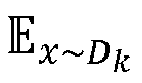
loss function 114 evaluated on outputs generated by themodel 118 for inputs of training examples in batch x. In general, theloss function 114 measures the accuracy of the outputs generated by the model 118 (as will be described in more detail below with reference to the description of 210). - Each task includes batches of training examples of a different nature. In general, training the
model 118 to perform well for training examples in a particular task can cause the model to perform better (i.e., to make more accurate predictions) for training examples in other tasks. In some cases, training examples in different tasks may have different semantics. For example, if thesystem 100 trains themodel 118 to perform machine translation, then training examples in different batches may correspond to translations of text sequences between different languages. In some cases, thetraining data 102 includes data specifying that one or more of the tasks are target tasks, which are tasks that include training examples with inputs that are most similar to inputs to be processed by themodel 118 after training of themodel 118. In these cases, thesystem 100 may train themodel 118 to perform well for training examples in the target tasks. In these cases, tasks other than the target tasks (referred to in this specification as auxiliary tasks) may include batches of training examples on which it is expected to be easier to train themodel 118. Training themodel 118 on the auxiliary tasks may be helpful in improving the performance of themodel 118 on the target tasks. For example, thesystem 100 may train themodel 118 with the goal of minimizing an objective function given by:, where task N is the target task (and the other tasks are auxiliary tasks) and refers to the loss of the
model 118 on task N (as described above). - The
system 100 trains themodel 118 over multiple iterations of an iterative training procedure. - The
system 100 includes atask selection engine 104 that is configured to, at each of the multiple iterations, determine a selectedtask 106 from thetasks 120. Thetask selection engine 104 determines the selectedtask 106 for the iteration based on a task selection policy. Thetask selection engine 104 updates the task selection policy at each iteration using a learningprogress measure 126 determined for the iteration. For example, the task selection policy may be an adversarial bandit algorithm. An example process for updating a task selection policy is described with reference toFIG. 3 . - The
system 100 includes abatch selection engine 108 that is configured to, at each iteration, determine a selectedbatch 110 of training examples from the selectedtask 106 for the iteration. Thebatch selection engine 108 determines the selectedbatch 110 by randomly sampling a batch from the selectedtask 106. - The
system 100 includes atraining engine 112 that is configured to, at each iteration, train themodel 118 based on the selectedbatch 110 for the iteration and theloss function 114. - In some implementations, the
training engine 112 trains themodel 118 by determining updated values of themodel parameters 116 from current values of themodel parameters 116 in order to decrease a loss on the selected batch as measured by theloss function 114. - In some other implementations, the training engine trains the
model 118 by determining updated parameter values of themodel parameter distributions 124 from current parameter values of themodel parameter distributions 124 in order to decrease a loss on the selected batch as measure by theloss function 114. - The
training engine 112 determines a learningprogress measure 126 for each iteration. In general, the learningprogress measure 126 for an iteration is a scalar value indicating a progress of training themodel 118 as a result of training themodel 118 on training examples from the selectedbatch 110 for the iteration. - In some implementations, when the
system 100 determines that the training of themodel 118 is complete, thesystem 100 stores themodel 118 and the trainedmodel parameters 116. In some implementations, when thesystem 100 determines that the training of themodel 118 is complete, thesystem 100 provides themodel 118 and themodel parameters 116 to a third-party. In some implementations, when thesystem 100 determines that the training of themodel 118 is complete, thesystem 100 uses themodel 118 to process inputs (e.g., from a user device) in accordance with the trainedmodel parameters 116 and provides the corresponding outputs of themodel 118, e.g., to the user device. -
FIG. 1B is an illustration of examples of training data, tasks, batches, and training examples. Thetraining data 142 includes multiple training examples (e.g., 144). Each training example includes an input (e.g., 146) and a corresponding target output (e.g., 148). Each batch (e.g., 130, 132, 134, 136, 138, 140, ...) includes multiple training examples from thetraining data 142. Each of the tasks (e.g., 126, 128, ...) is a set of multiple batches of training examples. For example,task 126 is associated withbatches task 128 is associated withbatches -
FIG. 2 is a flow diagram of an example process for training a machine learning model. For convenience, the process 200 will be described as being performed by a system of one or more computers located in one or more locations. For example, a training system, e.g., thetraining system 100 ofFIG. 1 , appropriately programmed in accordance with this specification, can perform the process 200. - The system receives training data (202). The training data includes multiple training examples. Each training example includes an input to the machine learning model and a corresponding target output. The inputs can be any kind of digital data and the target outputs can be any kind of score, classification, or regression output based on the inputs. The training data specifies multiple tasks. Each task is a set of multiple batches of training examples from the training data.
- The system selects a task in accordance with a task selection policy (206). Specifically, the task selection policy assigns a respective probability to each of the tasks and the system stochastically selects a task in accordance with the respective probabilities assigned to each of the tasks. In general, the respective probabilities assigned to each of the tasks differ from iteration to iteration.
- The system selects a batch of training examples from the selected task for the iteration (208). The system selects the batch by randomly sampling a batch from the selected task.
- The system trains the model based on the selected batch of training examples for the iteration (210). The system can train the model based on the selected batch of training examples for the iteration using any appropriate training technique. For example, if the model is a neural network, then the system can train the model using gradient descent.
- In some implementations, the system trains the model by determining updated values of the model parameters from current values of the model parameters in order to decrease a loss on the selected batch as measured by a loss function. For example, the loss function may be given by:

- In some other implementations, the system trains the model by determining updated parameter values of model parameter distributions over possible values of the model parameters from current parameter values of model parameter distributions over possible values of the model parameters in order to decrease a loss on the selected batch as measured by a loss function. The model parameter distributions include a distribution referred to as a prior distribution and a distribution referred to as a posterior distribution. The posterior distribution is a distribution which is modified by the training. In some cases, the prior distribution may be fixed, in which case the parameter values of the prior distribution are not updated by the system during training. The loss function may be given by:


- The system determines a learning progress measure for the iteration (212).
- In some implementations, the learning progress measure is based on changes in the outputs of the model that are caused by training the model on the selected batch.
- For example, the learning progress measure may be given by:

- As another example, the learning progress measure may be given by:
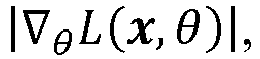
- As another example, the learning progress measure may be given by:

- In some implementations, the learning progress measure is based on changes in the complexity of the model that are caused by training the model on the selected batch.
- For example, the learning progress measure may be given by:

- As another example, the learning progress measure may be given by:

- As another example, the learning progress measure may be given by:

- As another example, the learning progress may be given by:


- The system determines whether the training is complete (214). In some cases, the system determines that the training is complete if the system has trained the model for a predetermined number of iterations. In some cases, the system determines that the training is complete if the measures of learning progress fall below a predetermined threshold for a predetermined number of iterations.
- In response to determining that the training is not complete, the system updates the task selection policy based on, that is dependent upon, the determined learning progress measure for the iteration (218), returns to 206, and repeats the preceding steps. An example process for updating a task selection policy is described with reference to
FIG. 3 . In response to determining that the training is complete (218), the system terminates the training. -
FIG. 3 is a flow diagram of an example process for updating a task selection policy. For convenience, theprocess 300 will be described as being performed by a system of one or more computers located in one or more locations. For example, a training system, e.g., thetraining system 100 ofFIG. 1 , appropriately programmed in accordance with this specification, can perform theprocess 300. - The system determines a normalized measure of learning progress for the iteration (302). The system determines the normalized measure of learning progress for the iteration by dividing the measure of learning progress for the iteration by a normalization factor.
- In some implementations, the normalization factor is the time required for the model to generate outputs for the inputs of the training examples in the selected task. The time may be measured in time steps.
- In some implementations, particularly when the model is configured to process inputs over a sequence of time steps (e.g., if the model is a recurrent neural network), then normalization factor is the number of time steps required for the model to generate outputs for the inputs of the training examples of the selected batch.
- In some implementations, the normalization factor is the number of individual inputs in each of the inputs of the training examples in the selected batch. For example, if the inputs are sequences of words in a natural language (e.g., English), then the number of individual inputs in an input may be the number of words in the input.
- The system determines a payoff for the iteration using the learning progress measure, for example by scaling the normalized learning progress measure to fall within a payoff range (304), which may be a predetermined range. The system determines a lower percentile and an upper percentile (e.g., the 20th and 80th percentiles, or any other appropriate percentiles) of the normalized learning progress measures determined for previous iterations. In some cases, the system determines the respective percentiles based on the normalized learning progress measures of a representative sample of previous iterations rather than for all previous iterations. For example, an iteration may be included in the representative sample of previous iterations if the index of the iteration is divisible by a fixed factor (e.g., 10). The system determines the payoff for the iteration by mapping the normalized learning progress measure for the iteration to fall within the predetermined range, for example, based on the mapping:

- The system updates the task selection policy based on the payoff for the iteration using an adversarial bandit algorithm. For example, the adversarial bandit algorithm may be the Exp3.S algorithm, as described in Auer, P., Cesa-Bianchi, N., Freund, Y., Schapire, R.E., "The nonstochastic multiarmed bandit problem," SIAM Journal on Computing, 32(1): 48-77. As another example, the adversarial bandit algorithm may be the Exp3.M algorithm, as described in Uchiya, T., Nakamura, A., Kudo, M., "Algorithms for adversarial bandit problems with multiple plays," Proceedings of the International Conference on Algorithmic Learning Theory, 2010. An adversarial bandits algorithm may be described as an algorithm in which actions are selected with the aim of minimizing regret, which may be defined as the expected payoff lost when compared with the best action. Using an adversarial bandit algorithm, the system updates the task selection policy by updating the respective selection probabilities of the tasks with the aim of maximizing the sum of the payoffs achieved over the multiple training iterations.
- This specification uses the term "configured" in connection with systems and computer program components. For a system of one or more computers to be configured to perform particular operations or actions means that the system has installed on it software, firmware, hardware, or a combination of them that in operation cause the system to perform the operations or actions. For one or more computer programs to be configured to perform particular operations or actions means that the one or more programs include instructions that, when executed by data processing apparatus, cause the apparatus to perform the operations or actions.
- Embodiments of the subject matter and the functional operations described in this specification can be implemented in digital electronic circuitry, in tangibly-embodied computer software or firmware, in computer hardware, including the structures disclosed in this specification and their structural equivalents, or in combinations of one or more of them. Embodiments of the subject matter described in this specification can be implemented as one or more computer programs, i.e., one or more modules of computer program instructions encoded on a tangible non-transitory storage medium for execution by, or to control the operation of, data processing apparatus. The computer storage medium can be a machine-readable storage device, a machine-readable storage substrate, a random or serial access memory device, or a combination of one or more of them. Alternatively or in addition, the program instructions can be encoded on an artificially-generated propagated signal, e.g., a machine-generated electrical, optical, or electromagnetic signal, that is generated to encode information for transmission to suitable receiver apparatus for execution by a data processing apparatus.
- The term "data processing apparatus" refers to data processing hardware and encompasses all kinds of apparatus, devices, and machines for processing data, including by way of example a programmable processor, a computer, or multiple processors or computers. The apparatus can also be, or further include, special purpose logic circuitry, e.g., an FPGA (field programmable gate array) or an ASIC (application-specific integrated circuit). The apparatus can optionally include, in addition to hardware, code that creates an execution environment for computer programs, e.g., code that constitutes processor firmware, a protocol stack, a database management system, an operating system, or a combination of one or more of them.
- A computer program, which may also be referred to or described as a program, software, a software application, an app, a module, a software module, a script, or code, can be written in any form of programming language, including compiled or interpreted languages, or declarative or procedural languages; and it can be deployed in any form, including as a stand-alone program or as a module, component, subroutine, or other unit suitable for use in a computing environment. A program may, but need not, correspond to a file in a file system. A program can be stored in a portion of a file that holds other programs or data, e.g., one or more scripts stored in a markup language document, in a single file dedicated to the program in question, or in multiple coordinated files, e.g., files that store one or more modules, sub-programs, or portions of code. A computer program can be deployed to be executed on one computer or on multiple computers that are located at one site or distributed across multiple sites and interconnected by a data communication network.
- In this specification the term "engine" is used broadly to refer to a software-based system, subsystem, or process that is programmed to perform one or more specific functions. Generally, an engine will be implemented as one or more software modules or components, installed on one or more computers in one or more locations. In some cases, one or more computers will be dedicated to a particular engine; in other cases, multiple engines can be installed and running on the same computer or computers.
- The processes and logic flows described in this specification can be performed by one or more programmable computers executing one or more computer programs to perform functions by operating on input data and generating output. The processes and logic flows can also be performed by special purpose logic circuitry, e.g., an FPGA or an ASIC, or by a combination of special purpose logic circuitry and one or more programmed computers.
- Computers suitable for the execution of a computer program can be based on general or special purpose microprocessors or both, or any other kind of central processing unit. Generally, a central processing unit will receive instructions and data from a read-only memory or a random access memory or both. The essential elements of a computer are a central processing unit for performing or executing instructions and one or more memory devices for storing instructions and data. The central processing unit and the memory can be supplemented by, or incorporated in, special purpose logic circuitry. Generally, a computer will also include, or be operatively coupled to receive data from or transfer data to, or both, one or more mass storage devices for storing data, e.g., magnetic, magneto-optical disks, or optical disks. However, a computer need not have such devices. Moreover, a computer can be embedded in another device, e.g., a mobile telephone, a personal digital assistant (PDA), a mobile audio or video player, a game console, a Global Positioning System (GPS) receiver, or a portable storage device, e.g., a universal serial bus (USB) flash drive, to name just a few.
- Computer-readable media suitable for storing computer program instructions and data include all forms of non-volatile memory, media and memory devices, including by way of example semiconductor memory devices, e.g., EPROM, EEPROM, and flash memory devices; magnetic disks, e.g., internal hard disks or removable disks; magneto-optical disks; and CD-ROM and DVD-ROM disks.
- To provide for interaction with a user, embodiments of the subject matter described in this specification can be implemented on a computer having a display device, e.g., a CRT (cathode ray tube) or LCD (liquid crystal display) monitor, for displaying information to the user and a keyboard and a pointing device, e.g., a mouse or a trackball, by which the user can provide input to the computer. Other kinds of devices can be used to provide for interaction with a user as well; for example, feedback provided to the user can be any form of sensory feedback, e.g., visual feedback, auditory feedback, or tactile feedback; and input from the user can be received in any form, including acoustic, speech, or tactile input. In addition, a computer can interact with a user by sending documents to and receiving documents from a device that is used by the user; for example, by sending web pages to a web browser on a user's device in response to requests received from the web browser. Also, a computer can interact with a user by sending text messages or other forms of message to a personal device, e.g., a smartphone that is running a messaging application, and receiving responsive messages from the user in return.
- Data processing apparatus for implementing machine learning models can also include, for example, special-purpose hardware accelerator units for processing common and compute-intensive parts of machine learning training or production, i.e., inference, workloads.
- Machine learning models can be implemented and deployed using a machine learning framework, e.g., a TensorFlow framework, a Microsoft Cognitive Toolkit framework, an Apache Singa framework, or an Apache MXNet framework.
- Embodiments of the subject matter described in this specification can be implemented in a computing system that includes a back-end component, e.g., as a data server, or that includes a middleware component, e.g., an application server, or that includes a front-end component, e.g., a client computer having a graphical user interface, a web browser, or an app through which a user can interact with an implementation of the subject matter described in this specification, or any combination of one or more such back-end, middleware, or front-end components. The components of the system can be interconnected by any form or medium of digital data communication, e.g., a communication network. Examples of communication networks include a local area network (LAN) and a wide area network (WAN), e.g., the Internet.
- The computing system can include clients and servers. A client and server are generally remote from each other and typically interact through a communication network. The relationship of client and server arises by virtue of computer programs running on the respective computers and having a client-server relationship to each other. In some embodiments, a server transmits data, e.g., an HTML page, to a user device, e.g., for purposes of displaying data to and receiving user input from a user interacting with the device, which acts as a client. Data generated at the user device, e.g., a result of the user interaction, can be received at the server from the device.
- While this specification contains many specific implementation details, these should not be construed as limitations on the scope of any invention or on the scope of what may be claimed, but rather as descriptions of features that may be specific to particular embodiments of particular inventions. Certain features that are described in this specification in the context of separate embodiments can also be implemented in combination in a single embodiment. Conversely, various features that are described in the context of a single embodiment can also be implemented in multiple embodiments separately or in any suitable subcombination. Moreover, although features may be described above as acting in certain combinations and even initially be claimed as such, one or more features from a claimed combination can in some cases be excised from the combination, and the claimed combination may be directed to a subcombination or variation of a subcombination. In certain circumstances, multitasking and parallel processing may be advantageous.
Claims (14)
- A computer-implemented method of training a supervised neural network (118) having a plurality of weights to determine trained values of the weights (116) from initial values of the weights, the method comprising:receiving training data (102) for training the neural network, wherein the training data comprises a plurality of training examples, wherein each training example comprises an input to the neural network and a corresponding target output, wherein the training data is partitioned into a plurality of partitions (120), wherein each partition comprises a respective plurality of batches of training data; andtraining the neural network on the training data to make predictions by repeatedly performing the following operations at each of multiple iterations:selecting a partition (106) from the plurality of partitions in accordance with a current partition selection policy, wherein the partition selection policy is a policy that assigns a respective likelihood to each of the plurality of partitions, and wherein selecting a partition from the plurality of partitions in accordance with the current partition selection policy comprises stochastically selecting the partition in accordance with the likelihoods assigned by the current partition selection policy;selecting a batch (110) of training data from the plurality of batches of training data for the selected partition, wherein each batch of training data comprises a set of one or more training examples;training the neural network on the selected batch of training data comprising the set of one or more training examples to determine updated values of the weights from current values of the weights;determining a learning progress measure (126) that represents a progress of the training of the neural network as a result of training the neural network on the selected batch of training data; anddetermining whether the training of the neural network is complete and, in response to determining that the training is not complete, updating the current partition selection policy using the learning progress measure; and whereini) the neural network is configured to receive an input comprising an image and to generate an output comprising scores for each of a set of object categories, with each score representing a likelihood that the image depicts an object belonging to the category; orii) wherein the neural network is configured to receive an input comprising a sound data sequence representing a spoken utterance and to generate an output comprising a score for each of a set of pieces of text, each score representing an estimated likelihood that the piece of text is the correct transcript for the utterance.
- The method of claim 1, wherein training the neural network on the selected batch comprises training the neural network to decrease a loss (114) on the selected batch as measured by a loss function, and wherein the learning progress measure is based on a decrease in the loss as a result of training the neural network on the selected batch of training data; in particular wherein determining the learning progress measure comprises:determining a first loss on the selected batch in accordance with the current values of the weights; anddetermining a second loss on the selected batch in accordance with the updated values of the weights, andwherein the learning progress measure comprises a difference between the first loss and the second loss.
- The method of any one of claims 1-2, wherein determining the learning progress measure comprises:sampling a new batch from the plurality of batches in the selected partition;determining a first loss on the new batch in accordance with the current values of the weights; anddetermining a second loss on the new batch in accordance with the updated values of the weights, andwherein the learning progress measure comprises a difference between the first loss and the second loss; orwherein one of the partitions is identified as a target partition that includes training inputs that are most similar to inputs to be processed by the neural network after the training of the neural network on the training data, wherein determining the learning progress measure comprises:sampling a new batch from the plurality of batches in the target partition;determining a first loss on the new batch in accordance with the current values of the weights; anddetermining a second loss on the new batch in accordance with the updated values of the weights, andwherein the learning progress measure comprises a difference between the first loss and the second loss; orwherein determining the learning progress measure comprises:sampling a partition randomly from the plurality of partitions;sampling a new batch from the plurality of batches in the sampled partition;determining a first loss on the new batch in accordance with the current values of the weights; anddetermining a second loss on the new batch in accordance with the updated values of the weights, andwherein the learning progress measure comprises a difference between the first loss and the second loss.
- The method of any one of claims 1-3, wherein the learning progress measure comprises a norm of a gradient vector of gradients of the loss function with respect to the weights generated by training the neural network on the selected batch.
- The method of any one of claims 1-4, wherein values of the weights are defined by a posterior distribution over possible values of the weights, wherein during the training posterior distribution parameters that parameterize the posterior distribution are optimized such that the trained values of the weights are defined by trained values of the posterior distribution parameters, and wherein training the neural network on the selected batch of training data comprises training the neural network on the selected batch of training data to determine adjusted values of the posterior distribution parameters from current values of the posterior distribution parameters.
- The method of claim 5, wherein determining the learning progress measure comprises:determining a first Kullback-Leibler (KL) divergence between (i) the posterior distribution as defined by the updated values of the posterior distribution parameters and (ii) a prior distribution over possible values for the weights; anddetermining a second KL divergence between (i) the posterior distribution as defined by the current values of the posterior distribution parameters and (ii) a prior distribution over possible values for the weights, andwherein the learning progress measure comprises a difference between the first KL divergence and the second KL divergence.
- The method of claim 6, wherein the prior distribution is defined by prior distribution parameters, wherein training the neural network on the selected batch of training data comprises determining adjusted values of the prior distribution parameters from current values of the prior distribution parameters, wherein the first KL divergence is a KL divergence between (i) the posterior distribution as defined by the updated values of the posterior distribution parameters and (ii) the prior distribution as defined by the updated values of the prior distribution parameters, and wherein the second KL divergence is a KL divergence between (i) the posterior distribution as defined by the current values of the posterior distribution parameters and (ii) the prior distribution as defined by the current values of the prior distribution parameters.
- The method of claim 5,wherein training the neural network on the selected batch of training data comprises determining adjusted values of prior distribution parameters from current values of prior distribution parameters, wherein the prior distribution parameters parametrize a prior distribution over possible values for the weights, andwherein the learning progress measure is based on a) a gradient with respect to the posterior distribution parameters and the prior distribution parameters of a KL divergence between (i) the posterior distribution as defined by the current values of the posterior distribution parameters and (ii) the prior distribution as defined by the current values of the prior distribution parameters and b) a gradient with respect to the posterior distribution parameters of the expectation of a loss on the selected batch as measured by a loss function.
- The method of any one of claims 1-8, wherein the learning progress measure is based on a difference between a first norm of a vector of the updated values of the weights and a second norm of a vector of the current values of the weights; or wherein the learning progress measure is based on a product between (i) a transpose of a vector of the current values of the weights and (ii) a gradient vector of gradients of a loss function with respect to the weights generated as part of training the neural network on the selected batch.
- The method of any preceding claim, wherein the partition selection policy is an adversarial bandits policy, wherein updating the current partition selection policy using the learning progress measure comprises:determining a payoff from the learning progress measure; andupdating the current partition selection policy based on the payoff using an adversarial bandits algorithm.
- The method of claim 10, wherein determining the payoff comprises:normalizing the learning progress measure to generate a normalized learning progress measure by dividing the learning progress measure by a normalization factor for the selected partition; andgenerating the payoff by scaling the normalized learning progress measure to fall within a payoff range.
- The method of claim 11, wherein the normalization factor for the selected partition is a time required for the neural network to generate outputs for training inputs in the selected partition or an approximation of the time required; in particular wherein the approximation is a number of time steps required for the neural network to generate outputs for training inputs in the selected batch, or a number of individual inputs in each of the training inputs in the selected batch.
- A system comprising one or more computers and one or more storage devices storing instructions that when executed by the one or more computers cause the one or more computers to perform the method of any one of claims 1-12.
- One or more computer storage media storing instructions that when executed by one or more computers cause the one or more computers to perform the method of any one of claims 1-12.
Applications Claiming Priority (2)
| Application Number | Priority Date | Filing Date | Title |
|---|---|---|---|
| US201762463540P | 2017-02-24 | 2017-02-24 | |
| PCT/EP2018/054000 WO2018153806A1 (en) | 2017-02-24 | 2018-02-19 | Training machine learning models |
Publications (2)
| Publication Number | Publication Date |
|---|---|
| EP3568811A1 EP3568811A1 (en) | 2019-11-20 |
| EP3568811B1 true EP3568811B1 (en) | 2024-10-16 |
Family
ID=61244625
Family Applications (1)
| Application Number | Title | Priority Date | Filing Date |
|---|---|---|---|
| EP18705928.2A Active EP3568811B1 (en) | 2017-02-24 | 2018-02-19 | Training machine learning models |
Country Status (4)
| Country | Link |
|---|---|
| US (2) | US10936949B2 (en) |
| EP (1) | EP3568811B1 (en) |
| CN (2) | CN110520871B (en) |
| WO (1) | WO2018153806A1 (en) |
Families Citing this family (37)
| Publication number | Priority date | Publication date | Assignee | Title |
|---|---|---|---|---|
| CN110945537B (en) * | 2017-07-28 | 2023-09-22 | 索尼互动娱乐股份有限公司 | Training devices, recognition devices, training methods, recognition methods and procedures |
| US11372522B2 (en) * | 2017-12-13 | 2022-06-28 | Google Llc | Intelligent people-centric predictions in a collaborative environment |
| EP3807823A1 (en) | 2018-06-12 | 2021-04-21 | Intergraph Corporation | Artificial intelligence applications for computer-aided dispatch systems |
| ES2966999T3 (en) * | 2018-08-03 | 2024-04-25 | Siemens Healthcare Diagnostics Inc | Procedure and device for training a machine learning routine for the control of a technical system |
| CN109740759B (en) * | 2018-12-13 | 2024-05-03 | 平安科技(深圳)有限公司 | Learning model optimization and selection method, electronic device and computer equipment |
| US11836583B2 (en) * | 2019-09-09 | 2023-12-05 | Huawei Cloud Computing Technologies Co., Ltd. | Method, apparatus and system for secure vertical federated learning |
| CN110866609B (en) * | 2019-11-08 | 2024-01-30 | 腾讯科技(深圳)有限公司 | Method, device, server and storage medium for acquiring interpretation information |
| CN111191791B (en) * | 2019-12-02 | 2023-09-29 | 腾讯云计算(北京)有限责任公司 | Picture classification method, device and equipment based on machine learning model |
| EP3836033A1 (en) * | 2019-12-11 | 2021-06-16 | Robert Bosch GmbH | Efficient temporal memory for sparse binary sequences |
| CN111222553B (en) * | 2019-12-30 | 2023-08-29 | 广州方硅信息技术有限公司 | Training data processing method and device of machine learning model and computer equipment |
| CN111240282B (en) * | 2019-12-31 | 2021-12-24 | 联想(北京)有限公司 | Process optimization method, device, equipment and computer readable storage medium |
| US20210284184A1 (en) * | 2020-03-05 | 2021-09-16 | Waymo Llc | Learning point cloud augmentation policies |
| CN111461290B (en) * | 2020-03-11 | 2023-09-22 | 北京百度网讯科技有限公司 | Model parameter update method and device |
| CN111461207B (en) * | 2020-03-30 | 2023-07-18 | 北京奇艺世纪科技有限公司 | Picture identification model training system and method |
| CN111523685B (en) * | 2020-04-22 | 2022-09-06 | 中国科学技术大学 | Method for reducing performance modeling overhead based on active learning |
| KR20210150233A (en) * | 2020-06-03 | 2021-12-10 | 삼성전자주식회사 | Method for optimizing image processing-algorithm and Electronic device including the Algorithm |
| US20220019909A1 (en) * | 2020-07-14 | 2022-01-20 | Adobe Inc. | Intent-based command recommendation generation in an analytics system |
| CN114303170A (en) * | 2020-08-06 | 2022-04-08 | 谷歌有限责任公司 | Assessing visual quality of digital content |
| US11216273B1 (en) | 2020-09-08 | 2022-01-04 | Stripe, Inc. | Model training using build artifacts |
| US12248854B2 (en) | 2020-09-30 | 2025-03-11 | Google Llc | Robust model performance across disparate sub-groups within a same group |
| CN116057537B (en) * | 2020-10-02 | 2025-07-04 | 华为技术有限公司 | Variable Importance Learning for Multi-Task Models |
| EP3982302A1 (en) * | 2020-10-12 | 2022-04-13 | Robert Bosch GmbH | Device for and method of automating machine learning |
| US20220180744A1 (en) * | 2020-12-09 | 2022-06-09 | Beijing Didi Infinity Technology And Development Co., Ltd. | System and method for task control based on bayesian meta-reinforcement learning |
| CN112489794A (en) * | 2020-12-18 | 2021-03-12 | 推想医疗科技股份有限公司 | Model training method and device, electronic terminal and storage medium |
| US11657591B2 (en) * | 2021-01-15 | 2023-05-23 | Argo AI, LLC | Autonomous vehicle system for intelligent on-board selection of data for building a remote machine learning model |
| US11838301B2 (en) * | 2021-04-28 | 2023-12-05 | Mastercard International Incorporated | System for detection of entities associated with compromised records |
| WO2023280511A1 (en) * | 2021-07-06 | 2023-01-12 | Asml Netherlands B.V. | Determining localized image prediction errors to improve a machine learning model in predicting an image |
| CN113570207B (en) * | 2021-07-09 | 2024-04-26 | 北京淇瑀信息科技有限公司 | User policy allocation method, device and electronic device |
| KR20230063247A (en) | 2021-11-01 | 2023-05-09 | 삼성전자주식회사 | Fault recovery system |
| US12118400B2 (en) * | 2021-11-29 | 2024-10-15 | International Business Machines Corporation | Performing batched training for machine-learning pipelines |
| US11853392B2 (en) * | 2021-11-30 | 2023-12-26 | International Business Machines Corporation | Providing reduced training data for training a machine learning model |
| US12596931B1 (en) * | 2021-12-29 | 2026-04-07 | Amazon Technologies, Inc. | Selection of inputs for training machine-trained network |
| CN114967649B (en) * | 2022-05-26 | 2024-10-11 | 华中科技大学 | Intelligent agent training method and pre-setting method for emergency machine-cutting control measures setting |
| CN117663407A (en) * | 2022-08-31 | 2024-03-08 | 广东美的制冷设备有限公司 | Air conditioner control method, device, air conditioner and storage medium |
| WO2024191658A1 (en) * | 2023-03-14 | 2024-09-19 | Google Llc | Responsible artificial intelligence controller with tunable parameters for model optimization across multiple variables |
| US20250131029A1 (en) * | 2023-10-23 | 2025-04-24 | International Business Machines Corporation | Model emergent capability analysis |
| WO2025245409A1 (en) * | 2024-05-22 | 2025-11-27 | Deepmind Technologies Limited | Joint example selection for multimodal learning |
Family Cites Families (31)
| Publication number | Priority date | Publication date | Assignee | Title |
|---|---|---|---|---|
| US7451065B2 (en) * | 2002-03-11 | 2008-11-11 | International Business Machines Corporation | Method for constructing segmentation-based predictive models |
| US7352911B2 (en) * | 2003-07-31 | 2008-04-01 | Hewlett-Packard Development Company, L.P. | Method for bilateral filtering of digital images |
| US7548892B2 (en) * | 2004-04-30 | 2009-06-16 | Microsoft Corporation | Processing machine learning techniques using a graphics processing unit |
| JP4923450B2 (en) * | 2005-07-01 | 2012-04-25 | 富士ゼロックス株式会社 | Batch processing support apparatus and method, program |
| US20090043597A1 (en) * | 2007-08-07 | 2009-02-12 | Yahoo! Inc. | System and method for matching objects using a cluster-dependent multi-armed bandit |
| US8538739B2 (en) * | 2007-10-31 | 2013-09-17 | International Business Machines Corporation | Adjusting model output events in a simulation |
| US8433660B2 (en) * | 2009-12-01 | 2013-04-30 | Microsoft Corporation | Managing a portfolio of experts |
| US20130198152A1 (en) * | 2010-09-10 | 2013-08-01 | LaShawn McGhee | Systems and methods for data compression |
| WO2013188886A2 (en) * | 2012-06-15 | 2013-12-19 | California Institute Of Technology | Method and system for parallel batch processing of data sets using gaussian process with batch upper confidence bound |
| US9646226B2 (en) * | 2013-04-16 | 2017-05-09 | The Penn State Research Foundation | Instance-weighted mixture modeling to enhance training collections for image annotation |
| WO2014179544A1 (en) * | 2013-05-01 | 2014-11-06 | Worcester Polytechnic Institute | Detection and monitoring of atrial fibrillation |
| US9679258B2 (en) * | 2013-10-08 | 2017-06-13 | Google Inc. | Methods and apparatus for reinforcement learning |
| US9601109B2 (en) * | 2013-12-06 | 2017-03-21 | International Business Machines Corporation | Systems and methods for accelerating hessian-free optimization for deep neural networks by implicit preconditioning and sampling |
| US9767419B2 (en) * | 2014-01-24 | 2017-09-19 | Microsoft Technology Licensing, Llc | Crowdsourcing system with community learning |
| EP3129920B1 (en) * | 2014-04-11 | 2022-06-08 | Google LLC | Parallelizing the training of convolutional neural networks |
| US10289962B2 (en) * | 2014-06-06 | 2019-05-14 | Google Llc | Training distilled machine learning models |
| WO2016057480A1 (en) * | 2014-10-07 | 2016-04-14 | Google Inc. | Training neural networks on partitioned training data |
| US20160307113A1 (en) * | 2015-04-20 | 2016-10-20 | Xerox Corporation | Large-scale batch active learning using locality sensitive hashing |
| WO2017031357A1 (en) * | 2015-08-19 | 2017-02-23 | D-Wave Systems Inc. | Systems and methods for machine learning using adiabatic quantum computers |
| WO2017031356A1 (en) * | 2015-08-19 | 2017-02-23 | D-Wave Systems Inc. | Discrete variational auto-encoder systems and methods for machine learning using adiabatic quantum computers |
| US10083169B1 (en) * | 2015-08-28 | 2018-09-25 | Google Llc | Topic-based sequence modeling neural networks |
| US10535017B2 (en) * | 2015-10-27 | 2020-01-14 | Legility Data Solutions, Llc | Apparatus and method of implementing enhanced batch-mode active learning for technology-assisted review of documents |
| KR102883915B1 (en) * | 2015-12-16 | 2025-11-18 | 시애틀 프로젝트 코포레이션 | Identification, production, and use of neoantigens |
| US10572800B2 (en) * | 2016-02-05 | 2020-02-25 | Nec Corporation | Accelerating deep neural network training with inconsistent stochastic gradient descent |
| US9947102B2 (en) * | 2016-08-26 | 2018-04-17 | Elekta, Inc. | Image segmentation using neural network method |
| JP6490311B2 (en) * | 2016-09-06 | 2019-03-27 | 三菱電機株式会社 | Learning device, signal processing device, and learning method |
| EP3504034A1 (en) * | 2016-09-15 | 2019-07-03 | Google LLC. | Deep reinforcement learning for robotic manipulation |
| US11164076B2 (en) * | 2016-10-20 | 2021-11-02 | Uber Technologies, Inc. | Intelligent regularization of neural network architectures |
| US10748061B2 (en) * | 2016-12-19 | 2020-08-18 | Futurewei Technologies, Inc. | Simultaneous localization and mapping with reinforcement learning |
| US11080475B2 (en) * | 2017-01-17 | 2021-08-03 | Microsoft Technology Licensing, Llc | Predicting spreadsheet properties |
| US10713317B2 (en) * | 2017-01-30 | 2020-07-14 | Adobe Inc. | Conversational agent for search |
-
2018
- 2018-02-19 CN CN201880013612.0A patent/CN110520871B/en active Active
- 2018-02-19 WO PCT/EP2018/054000 patent/WO2018153806A1/en not_active Ceased
- 2018-02-19 CN CN202311499522.6A patent/CN117709426B/en active Active
- 2018-02-19 EP EP18705928.2A patent/EP3568811B1/en active Active
-
2019
- 2019-07-10 US US16/508,042 patent/US10936949B2/en active Active
-
2021
- 2021-01-27 US US17/159,961 patent/US20210150355A1/en active Pending
Also Published As
| Publication number | Publication date |
|---|---|
| CN117709426B (en) | 2024-11-15 |
| WO2018153806A1 (en) | 2018-08-30 |
| US20210150355A1 (en) | 2021-05-20 |
| US20190332938A1 (en) | 2019-10-31 |
| CN117709426A (en) | 2024-03-15 |
| CN110520871B (en) | 2023-11-07 |
| CN110520871A (en) | 2019-11-29 |
| EP3568811A1 (en) | 2019-11-20 |
| US10936949B2 (en) | 2021-03-02 |
Similar Documents
| Publication | Publication Date | Title |
|---|---|---|
| US10936949B2 (en) | Training machine learning models using task selection policies to increase learning progress | |
| US11681924B2 (en) | Training neural networks using a variational information bottleneck | |
| US11928601B2 (en) | Neural network compression | |
| US11087201B2 (en) | Neural architecture search using a performance prediction neural network | |
| US11080589B2 (en) | Sequence processing using online attention | |
| US20220092416A1 (en) | Neural architecture search through a graph search space | |
| US11836630B2 (en) | Training neural networks using posterior sharpening | |
| US12118064B2 (en) | Training machine learning models using unsupervised data augmentation | |
| US11797839B2 (en) | Training neural networks using priority queues | |
| US20240185030A1 (en) | Adjusting neural network resource usage | |
| EP4459567A2 (en) | Regularizing machine learning models | |
| US20240152809A1 (en) | Efficient machine learning model architecture selection | |
| US20220230065A1 (en) | Semi-supervised training of machine learning models using label guessing | |
| EP3782080A1 (en) | Neural networks for scalable continual learning in domains with sequentially learned tasks | |
| KR20250125233A (en) | Reinforcement learning through preference feedback |
Legal Events
| Date | Code | Title | Description |
|---|---|---|---|
| STAA | Information on the status of an ep patent application or granted ep patent |
Free format text: STATUS: UNKNOWN |
|
| STAA | Information on the status of an ep patent application or granted ep patent |
Free format text: STATUS: THE INTERNATIONAL PUBLICATION HAS BEEN MADE |
|
| PUAI | Public reference made under article 153(3) epc to a published international application that has entered the european phase |
Free format text: ORIGINAL CODE: 0009012 |
|
| STAA | Information on the status of an ep patent application or granted ep patent |
Free format text: STATUS: REQUEST FOR EXAMINATION WAS MADE |
|
| 17P | Request for examination filed |
Effective date: 20190814 |
|
| AK | Designated contracting states |
Kind code of ref document: A1 Designated state(s): AL AT BE BG CH CY CZ DE DK EE ES FI FR GB GR HR HU IE IS IT LI LT LU LV MC MK MT NL NO PL PT RO RS SE SI SK SM TR |
|
| AX | Request for extension of the european patent |
Extension state: BA ME |
|
| DAV | Request for validation of the european patent (deleted) | ||
| DAX | Request for extension of the european patent (deleted) | ||
| STAA | Information on the status of an ep patent application or granted ep patent |
Free format text: STATUS: EXAMINATION IS IN PROGRESS |
|
| 17Q | First examination report despatched |
Effective date: 20210325 |
|
| P01 | Opt-out of the competence of the unified patent court (upc) registered |
Effective date: 20230505 |
|
| RAP3 | Party data changed (applicant data changed or rights of an application transferred) |
Owner name: DEEPMIND TECHNOLOGIES LIMITED |
|
| REG | Reference to a national code |
Ref country code: DE Free format text: PREVIOUS MAIN CLASS: G06N0003080000 Ref country code: DE Ref legal event code: R079 Ref document number: 602018075459 Country of ref document: DE Free format text: PREVIOUS MAIN CLASS: G06N0003080000 Ipc: G06N0003047000 |
|
| RIC1 | Information provided on ipc code assigned before grant |
Ipc: G06N 3/044 20230101ALN20240429BHEP Ipc: G06N 3/096 20230101ALI20240429BHEP Ipc: G06N 3/09 20230101ALI20240429BHEP Ipc: G06N 3/047 20230101AFI20240429BHEP |
|
| GRAP | Despatch of communication of intention to grant a patent |
Free format text: ORIGINAL CODE: EPIDOSNIGR1 |
|
| STAA | Information on the status of an ep patent application or granted ep patent |
Free format text: STATUS: GRANT OF PATENT IS INTENDED |
|
| INTG | Intention to grant announced |
Effective date: 20240607 |
|
| GRAS | Grant fee paid |
Free format text: ORIGINAL CODE: EPIDOSNIGR3 |
|
| GRAA | (expected) grant |
Free format text: ORIGINAL CODE: 0009210 |
|
| STAA | Information on the status of an ep patent application or granted ep patent |
Free format text: STATUS: THE PATENT HAS BEEN GRANTED |
|
| AK | Designated contracting states |
Kind code of ref document: B1 Designated state(s): AL AT BE BG CH CY CZ DE DK EE ES FI FR GB GR HR HU IE IS IT LI LT LU LV MC MK MT NL NO PL PT RO RS SE SI SK SM TR |
|
| REG | Reference to a national code |
Ref country code: GB Ref legal event code: FG4D |
|
| REG | Reference to a national code |
Ref country code: CH Ref legal event code: EP |
|
| REG | Reference to a national code |
Ref country code: IE Ref legal event code: FG4D |
|
| REG | Reference to a national code |
Ref country code: DE Ref legal event code: R096 Ref document number: 602018075459 Country of ref document: DE |
|
| REG | Reference to a national code |
Ref country code: NL Ref legal event code: FP |
|
| REG | Reference to a national code |
Ref country code: LT Ref legal event code: MG9D |
|
| REG | Reference to a national code |
Ref country code: AT Ref legal event code: MK05 Ref document number: 1733515 Country of ref document: AT Kind code of ref document: T Effective date: 20241016 |
|
| PG25 | Lapsed in a contracting state [announced via postgrant information from national office to epo] |
Ref country code: HR Free format text: LAPSE BECAUSE OF FAILURE TO SUBMIT A TRANSLATION OF THE DESCRIPTION OR TO PAY THE FEE WITHIN THE PRESCRIBED TIME-LIMIT Effective date: 20241016 Ref country code: PT Free format text: LAPSE BECAUSE OF FAILURE TO SUBMIT A TRANSLATION OF THE DESCRIPTION OR TO PAY THE FEE WITHIN THE PRESCRIBED TIME-LIMIT Effective date: 20250217 Ref country code: IS Free format text: LAPSE BECAUSE OF FAILURE TO SUBMIT A TRANSLATION OF THE DESCRIPTION OR TO PAY THE FEE WITHIN THE PRESCRIBED TIME-LIMIT Effective date: 20250216 |
|
| PG25 | Lapsed in a contracting state [announced via postgrant information from national office to epo] |
Ref country code: FI Free format text: LAPSE BECAUSE OF FAILURE TO SUBMIT A TRANSLATION OF THE DESCRIPTION OR TO PAY THE FEE WITHIN THE PRESCRIBED TIME-LIMIT Effective date: 20241016 |
|
| PG25 | Lapsed in a contracting state [announced via postgrant information from national office to epo] |
Ref country code: BG Free format text: LAPSE BECAUSE OF FAILURE TO SUBMIT A TRANSLATION OF THE DESCRIPTION OR TO PAY THE FEE WITHIN THE PRESCRIBED TIME-LIMIT Effective date: 20241016 |
|
| PG25 | Lapsed in a contracting state [announced via postgrant information from national office to epo] |
Ref country code: ES Free format text: LAPSE BECAUSE OF FAILURE TO SUBMIT A TRANSLATION OF THE DESCRIPTION OR TO PAY THE FEE WITHIN THE PRESCRIBED TIME-LIMIT Effective date: 20241016 |
|
| PG25 | Lapsed in a contracting state [announced via postgrant information from national office to epo] |
Ref country code: NO Free format text: LAPSE BECAUSE OF FAILURE TO SUBMIT A TRANSLATION OF THE DESCRIPTION OR TO PAY THE FEE WITHIN THE PRESCRIBED TIME-LIMIT Effective date: 20250116 |
|
| PG25 | Lapsed in a contracting state [announced via postgrant information from national office to epo] |
Ref country code: LV Free format text: LAPSE BECAUSE OF FAILURE TO SUBMIT A TRANSLATION OF THE DESCRIPTION OR TO PAY THE FEE WITHIN THE PRESCRIBED TIME-LIMIT Effective date: 20241016 Ref country code: AT Free format text: LAPSE BECAUSE OF FAILURE TO SUBMIT A TRANSLATION OF THE DESCRIPTION OR TO PAY THE FEE WITHIN THE PRESCRIBED TIME-LIMIT Effective date: 20241016 Ref country code: GR Free format text: LAPSE BECAUSE OF FAILURE TO SUBMIT A TRANSLATION OF THE DESCRIPTION OR TO PAY THE FEE WITHIN THE PRESCRIBED TIME-LIMIT Effective date: 20250117 |
|
| PG25 | Lapsed in a contracting state [announced via postgrant information from national office to epo] |
Ref country code: PL Free format text: LAPSE BECAUSE OF FAILURE TO SUBMIT A TRANSLATION OF THE DESCRIPTION OR TO PAY THE FEE WITHIN THE PRESCRIBED TIME-LIMIT Effective date: 20241016 |
|
| PG25 | Lapsed in a contracting state [announced via postgrant information from national office to epo] |
Ref country code: RS Free format text: LAPSE BECAUSE OF FAILURE TO SUBMIT A TRANSLATION OF THE DESCRIPTION OR TO PAY THE FEE WITHIN THE PRESCRIBED TIME-LIMIT Effective date: 20250116 |
|
| PG25 | Lapsed in a contracting state [announced via postgrant information from national office to epo] |
Ref country code: SM Free format text: LAPSE BECAUSE OF FAILURE TO SUBMIT A TRANSLATION OF THE DESCRIPTION OR TO PAY THE FEE WITHIN THE PRESCRIBED TIME-LIMIT Effective date: 20241016 |
|
| PG25 | Lapsed in a contracting state [announced via postgrant information from national office to epo] |
Ref country code: DK Free format text: LAPSE BECAUSE OF FAILURE TO SUBMIT A TRANSLATION OF THE DESCRIPTION OR TO PAY THE FEE WITHIN THE PRESCRIBED TIME-LIMIT Effective date: 20241016 |
|
| REG | Reference to a national code |
Ref country code: DE Ref legal event code: R097 Ref document number: 602018075459 Country of ref document: DE |
|
| PG25 | Lapsed in a contracting state [announced via postgrant information from national office to epo] |
Ref country code: EE Free format text: LAPSE BECAUSE OF FAILURE TO SUBMIT A TRANSLATION OF THE DESCRIPTION OR TO PAY THE FEE WITHIN THE PRESCRIBED TIME-LIMIT Effective date: 20241016 |
|
| PG25 | Lapsed in a contracting state [announced via postgrant information from national office to epo] |
Ref country code: RO Free format text: LAPSE BECAUSE OF FAILURE TO SUBMIT A TRANSLATION OF THE DESCRIPTION OR TO PAY THE FEE WITHIN THE PRESCRIBED TIME-LIMIT Effective date: 20241016 |
|
| PG25 | Lapsed in a contracting state [announced via postgrant information from national office to epo] |
Ref country code: SK Free format text: LAPSE BECAUSE OF FAILURE TO SUBMIT A TRANSLATION OF THE DESCRIPTION OR TO PAY THE FEE WITHIN THE PRESCRIBED TIME-LIMIT Effective date: 20241016 |
|
| PG25 | Lapsed in a contracting state [announced via postgrant information from national office to epo] |
Ref country code: CZ Free format text: LAPSE BECAUSE OF FAILURE TO SUBMIT A TRANSLATION OF THE DESCRIPTION OR TO PAY THE FEE WITHIN THE PRESCRIBED TIME-LIMIT Effective date: 20241016 |
|
| PG25 | Lapsed in a contracting state [announced via postgrant information from national office to epo] |
Ref country code: IT Free format text: LAPSE BECAUSE OF FAILURE TO SUBMIT A TRANSLATION OF THE DESCRIPTION OR TO PAY THE FEE WITHIN THE PRESCRIBED TIME-LIMIT Effective date: 20241016 |
|
| PLBE | No opposition filed within time limit |
Free format text: ORIGINAL CODE: 0009261 |
|
| STAA | Information on the status of an ep patent application or granted ep patent |
Free format text: STATUS: NO OPPOSITION FILED WITHIN TIME LIMIT |
|
| PG25 | Lapsed in a contracting state [announced via postgrant information from national office to epo] |
Ref country code: SE Free format text: LAPSE BECAUSE OF FAILURE TO SUBMIT A TRANSLATION OF THE DESCRIPTION OR TO PAY THE FEE WITHIN THE PRESCRIBED TIME-LIMIT Effective date: 20241016 |
|
| PG25 | Lapsed in a contracting state [announced via postgrant information from national office to epo] |
Ref country code: MC Free format text: LAPSE BECAUSE OF FAILURE TO SUBMIT A TRANSLATION OF THE DESCRIPTION OR TO PAY THE FEE WITHIN THE PRESCRIBED TIME-LIMIT Effective date: 20241016 |
|
| 26N | No opposition filed |
Effective date: 20250717 |
|
| REG | Reference to a national code |
Ref country code: CH Ref legal event code: PL |
|
| PG25 | Lapsed in a contracting state [announced via postgrant information from national office to epo] |
Ref country code: LU Free format text: LAPSE BECAUSE OF NON-PAYMENT OF DUE FEES Effective date: 20250219 |
|
| PG25 | Lapsed in a contracting state [announced via postgrant information from national office to epo] |
Ref country code: CH Free format text: LAPSE BECAUSE OF NON-PAYMENT OF DUE FEES Effective date: 20250228 |
|
| REG | Reference to a national code |
Ref country code: BE Ref legal event code: MM Effective date: 20250228 |
|
| PG25 | Lapsed in a contracting state [announced via postgrant information from national office to epo] |
Ref country code: BE Free format text: LAPSE BECAUSE OF NON-PAYMENT OF DUE FEES Effective date: 20250228 |
|
| REG | Reference to a national code |
Ref country code: DE Ref legal event code: R081 Ref document number: 602018075459 Country of ref document: DE Owner name: GDM HOLDING LLC (N.D.GES.D.STAATES DELAWARE), , US Free format text: FORMER OWNER: DEEPMIND TECHNOLOGIES LIMITED, LONDON, GB |
|
| PGFP | Annual fee paid to national office [announced via postgrant information from national office to epo] |
Ref country code: NL Payment date: 20260226 Year of fee payment: 9 |
|
| PGFP | Annual fee paid to national office [announced via postgrant information from national office to epo] |
Ref country code: GB Payment date: 20260227 Year of fee payment: 9 |
|
| PGFP | Annual fee paid to national office [announced via postgrant information from national office to epo] |
Ref country code: DE Payment date: 20260227 Year of fee payment: 9 Ref country code: IE Payment date: 20260227 Year of fee payment: 9 |
|
| PGFP | Annual fee paid to national office [announced via postgrant information from national office to epo] |
Ref country code: FR Payment date: 20260225 Year of fee payment: 9 |