EP3566914B1 - Method and device for authenticating vehicle smart key - Google Patents
Method and device for authenticating vehicle smart key Download PDFInfo
- Publication number
- EP3566914B1 EP3566914B1 EP18751705.7A EP18751705A EP3566914B1 EP 3566914 B1 EP3566914 B1 EP 3566914B1 EP 18751705 A EP18751705 A EP 18751705A EP 3566914 B1 EP3566914 B1 EP 3566914B1
- Authority
- EP
- European Patent Office
- Prior art keywords
- smart key
- vehicle
- key device
- authentication
- relay attack
- Prior art date
- Legal status (The legal status is an assumption and is not a legal conclusion. Google has not performed a legal analysis and makes no representation as to the accuracy of the status listed.)
- Not-in-force
Links
Images








Classifications
-
- G—PHYSICS
- G07—CHECKING-DEVICES
- G07C—TIME OR ATTENDANCE REGISTERS; REGISTERING OR INDICATING THE WORKING OF MACHINES; GENERATING RANDOM NUMBERS; VOTING OR LOTTERY APPARATUS; ARRANGEMENTS, SYSTEMS OR APPARATUS FOR CHECKING NOT PROVIDED FOR ELSEWHERE
- G07C9/00—Individual registration on entry or exit
- G07C9/00174—Electronically operated locks; Circuits therefor; Nonmechanical keys therefor, e.g. passive or active electrical keys or other data carriers without mechanical keys
- G07C9/00309—Electronically operated locks; Circuits therefor; Nonmechanical keys therefor, e.g. passive or active electrical keys or other data carriers without mechanical keys operated with bidirectional data transmission between data carrier and locks
-
- B—PERFORMING OPERATIONS; TRANSPORTING
- B60—VEHICLES IN GENERAL
- B60R—VEHICLES, VEHICLE FITTINGS, OR VEHICLE PARTS, NOT OTHERWISE PROVIDED FOR
- B60R25/00—Fittings or systems for preventing or indicating unauthorised use or theft of vehicles
- B60R25/20—Means to switch the anti-theft system on or off
- B60R25/24—Means to switch the anti-theft system on or off using electronic identifiers containing a code not memorised by the user
- B60R25/246—Means to switch the anti-theft system on or off using electronic identifiers containing a code not memorised by the user characterised by the challenge triggering
-
- B—PERFORMING OPERATIONS; TRANSPORTING
- B60—VEHICLES IN GENERAL
- B60R—VEHICLES, VEHICLE FITTINGS, OR VEHICLE PARTS, NOT OTHERWISE PROVIDED FOR
- B60R25/00—Fittings or systems for preventing or indicating unauthorised use or theft of vehicles
- B60R25/20—Means to switch the anti-theft system on or off
- B60R25/24—Means to switch the anti-theft system on or off using electronic identifiers containing a code not memorised by the user
-
- B—PERFORMING OPERATIONS; TRANSPORTING
- B60—VEHICLES IN GENERAL
- B60R—VEHICLES, VEHICLE FITTINGS, OR VEHICLE PARTS, NOT OTHERWISE PROVIDED FOR
- B60R25/00—Fittings or systems for preventing or indicating unauthorised use or theft of vehicles
- B60R25/01—Fittings or systems for preventing or indicating unauthorised use or theft of vehicles operating on vehicle systems or fittings, e.g. on doors, seats or windscreens
-
- B—PERFORMING OPERATIONS; TRANSPORTING
- B60—VEHICLES IN GENERAL
- B60R—VEHICLES, VEHICLE FITTINGS, OR VEHICLE PARTS, NOT OTHERWISE PROVIDED FOR
- B60R25/00—Fittings or systems for preventing or indicating unauthorised use or theft of vehicles
- B60R25/10—Fittings or systems for preventing or indicating unauthorised use or theft of vehicles actuating a signalling device
-
- B—PERFORMING OPERATIONS; TRANSPORTING
- B60—VEHICLES IN GENERAL
- B60R—VEHICLES, VEHICLE FITTINGS, OR VEHICLE PARTS, NOT OTHERWISE PROVIDED FOR
- B60R25/00—Fittings or systems for preventing or indicating unauthorised use or theft of vehicles
- B60R25/10—Fittings or systems for preventing or indicating unauthorised use or theft of vehicles actuating a signalling device
- B60R25/1001—Alarm systems associated with another car fitting or mechanism, e.g. door lock or knob, pedals
-
- B—PERFORMING OPERATIONS; TRANSPORTING
- B60—VEHICLES IN GENERAL
- B60R—VEHICLES, VEHICLE FITTINGS, OR VEHICLE PARTS, NOT OTHERWISE PROVIDED FOR
- B60R25/00—Fittings or systems for preventing or indicating unauthorised use or theft of vehicles
- B60R25/20—Means to switch the anti-theft system on or off
- B60R25/24—Means to switch the anti-theft system on or off using electronic identifiers containing a code not memorised by the user
- B60R25/245—Means to switch the anti-theft system on or off using electronic identifiers containing a code not memorised by the user where the antenna reception area plays a role
-
- G—PHYSICS
- G06—COMPUTING OR CALCULATING; COUNTING
- G06F—ELECTRIC DIGITAL DATA PROCESSING
- G06F21/00—Security arrangements for protecting computers, components thereof, programs or data against unauthorised activity
- G06F21/30—Authentication, i.e. establishing the identity or authorisation of security principals
-
- H—ELECTRICITY
- H04—ELECTRIC COMMUNICATION TECHNIQUE
- H04L—TRANSMISSION OF DIGITAL INFORMATION, e.g. TELEGRAPHIC COMMUNICATION
- H04L9/00—Cryptographic mechanisms or cryptographic arrangements for secret or secure communications; Network security protocols
- H04L9/32—Cryptographic mechanisms or cryptographic arrangements for secret or secure communications; Network security protocols including means for verifying the identity or authority of a user of the system or for message authentication, e.g. authorization, entity authentication, data integrity or data verification, non-repudiation, key authentication or verification of credentials
- H04L9/3226—Cryptographic mechanisms or cryptographic arrangements for secret or secure communications; Network security protocols including means for verifying the identity or authority of a user of the system or for message authentication, e.g. authorization, entity authentication, data integrity or data verification, non-repudiation, key authentication or verification of credentials using a predetermined code, e.g. password, passphrase or PIN
-
- G—PHYSICS
- G07—CHECKING-DEVICES
- G07C—TIME OR ATTENDANCE REGISTERS; REGISTERING OR INDICATING THE WORKING OF MACHINES; GENERATING RANDOM NUMBERS; VOTING OR LOTTERY APPARATUS; ARRANGEMENTS, SYSTEMS OR APPARATUS FOR CHECKING NOT PROVIDED FOR ELSEWHERE
- G07C9/00—Individual registration on entry or exit
- G07C9/00174—Electronically operated locks; Circuits therefor; Nonmechanical keys therefor, e.g. passive or active electrical keys or other data carriers without mechanical keys
- G07C9/00309—Electronically operated locks; Circuits therefor; Nonmechanical keys therefor, e.g. passive or active electrical keys or other data carriers without mechanical keys operated with bidirectional data transmission between data carrier and locks
- G07C2009/00555—Electronically operated locks; Circuits therefor; Nonmechanical keys therefor, e.g. passive or active electrical keys or other data carriers without mechanical keys operated with bidirectional data transmission between data carrier and locks comprising means to detect or avoid relay attacks
-
- G—PHYSICS
- G07—CHECKING-DEVICES
- G07C—TIME OR ATTENDANCE REGISTERS; REGISTERING OR INDICATING THE WORKING OF MACHINES; GENERATING RANDOM NUMBERS; VOTING OR LOTTERY APPARATUS; ARRANGEMENTS, SYSTEMS OR APPARATUS FOR CHECKING NOT PROVIDED FOR ELSEWHERE
- G07C9/00—Individual registration on entry or exit
- G07C9/00174—Electronically operated locks; Circuits therefor; Nonmechanical keys therefor, e.g. passive or active electrical keys or other data carriers without mechanical keys
- G07C2009/00753—Electronically operated locks; Circuits therefor; Nonmechanical keys therefor, e.g. passive or active electrical keys or other data carriers without mechanical keys operated by active electrical keys
- G07C2009/00769—Electronically operated locks; Circuits therefor; Nonmechanical keys therefor, e.g. passive or active electrical keys or other data carriers without mechanical keys operated by active electrical keys with data transmission performed by wireless means
- G07C2009/00793—Electronically operated locks; Circuits therefor; Nonmechanical keys therefor, e.g. passive or active electrical keys or other data carriers without mechanical keys operated by active electrical keys with data transmission performed by wireless means by Hertzian waves
-
- G—PHYSICS
- G07—CHECKING-DEVICES
- G07C—TIME OR ATTENDANCE REGISTERS; REGISTERING OR INDICATING THE WORKING OF MACHINES; GENERATING RANDOM NUMBERS; VOTING OR LOTTERY APPARATUS; ARRANGEMENTS, SYSTEMS OR APPARATUS FOR CHECKING NOT PROVIDED FOR ELSEWHERE
- G07C2209/00—Indexing scheme relating to groups G07C9/00 - G07C9/38
- G07C2209/60—Indexing scheme relating to groups G07C9/00174 - G07C9/00944
- G07C2209/63—Comprising locating means for detecting the position of the data carrier, i.e. within the vehicle or within a certain distance from the vehicle
Definitions
- the disclosure relates to a method and device for performing smart key authentication by detecting a relay attack when the relay attack is present between a smart key and a vehicle.
- the supply of smart keys capable of controlling the operation of a device to be controlled by only a signal without a physical contact with the device to be controlled is spread.
- the use of a smart key for controlling a vehicle is gradually increasing.
- the smart key may be exposed to a relay attack that intercepts information of the smart key because it controls a vehicle using communication.
- a relay attack that intercepts information of the smart key because it controls a vehicle using communication.
- an Amplifying-Relaying device may midway forward a signal of the smart key to the vehicle.
- the vehicle that has obtained the signal of the smart key may perform the authentication of the smart key. Accordingly, the vehicle may be exposed to an outsider's crime.
- a method for detecting a relay attack is known from US20150015367A .
- the disclosure is to block a relay attack by detecting the relay attack and to provide notification to a user in a smart key system.
- a method for an electronic device to authenticate a smart key includes transmitting an authentication request in a given cycle, receiving an authentication response from a smart key device, identifying whether a relay attack is present based on an interval between the received authentication responses, and authenticating the smart key device based on a relay attack being not present.
- an authentication method of a smart key device includes receiving an authentication request from a vehicle in a given cycle, identifying whether a relay attack is present based on an interval between the received authentication requests, and responding to a detection of an approach confirmation signal transmitted by the vehicle based on the relay attack being not present, wherein the approach confirmation signal is transmitted based on the smart key being authenticated.
- an electronic device which includes a transceiver transmitting and receiving signals and a controller configured to transmit an authentication request in a given cycle, receive an authentication response from a smart key device, identify whether a relay attack is present based on an interval between the received authentication responses, and authenticate the smart key device based on a relay attack being not present.
- a smart key device which includes a transceiver transmitting and receiving signals and a controller configured to receive an authentication request from a vehicle in a given cycle, identify whether a relay attack is present based on an interval between the received authentication requests, and respond to a detection of an approach confirmation signal transmitted by the vehicle based on the relay attack being not present, wherein the approach confirmation signal is transmitted based on the smart key being authenticated.
- a safer smart key system against an external attack can be constructed because a relay attack can be detected and corresponding follow-up measures can be taken.
- FIG. 1A shows a smart key system according to an embodiment of the disclosure.
- a smart key 100 may be used as a tool for controlling various functions of a vehicle 110.
- the smart key 100 may be registered in relation to the vehicle 110.
- the smart key 100 experiences an authentication procedure of identifying the smart key is a registered valid key.
- the smart key 100 may transmit an authentication response to the vehicle 110.
- the vehicle 110 may check whether the smart key is proximate based on the size of the signal of the authentication response.
- the authentication response may include information on the smart key.
- the vehicle 110 may perform authentication based on the information of the smart key.
- FIG. 1B is a diagram for illustrating a case where a relay attack occurs in a smart key system.
- an Amplifying-Relaying device (hereinafter described as a hacking device) may be cut in between the smart key 100 and the vehicle 110, and may cheat the vehicle 110 as if the smart key 100 and the vehicle 110 are proximate by amplifying and relaying a signal.
- the authentication of the smart key 100 may be performed and the vehicle 110 may be fully controlled by a hacker. Such a situation is called a relay attack.
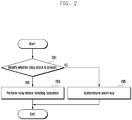
- FIG. 2 is a flowchart showing an operation of a vehicle (e.g., 110) to prepare for a relay attack according to an embodiment of the disclosure.
- the operation of the vehicle 110 may be performed by a smart key authentication device included in the vehicle 110, for example.
- the vehicle may identify whether a relay attack is present between the vehicle and a smart key.
- the vehicle 110 may identify whether a relay attack is present based on the delay time of a signal or may identify whether a relay attack is present based on data received after a channel measurement result is fed back.
- the vehicle may perform a corresponding operation for the relay attack.
- the vehicle may restrict a vehicle function (e.g., door lock setting, vehicle control hold), may output warning notification (e.g., light flickering, warning sound output), or may notify the smart key or a vehicle owner of a current condition.
- a vehicle function e.g., door lock setting, vehicle control hold
- warning notification e.g., light flickering, warning sound output
- the vehicle may perform authentication on the corresponding smart key. If the smart key has been authenticated, when the smart key and the vehicle are proximate, the vehicle may be controlled by the smart key.
- FIG. 3 is a diagram showing a method of authenticating a smart key according to an embodiment of the disclosure.
- FIG. 3 is related to an embodiment in which whether a relay attack is present is identified based on the delay time of a signal.
- a vehicle 305 may perform a smart key authentication operation.
- the vehicle 305 may periodically transmit an authentication request to a smart key device 300.
- the smart key device may receive the authentication request and transmit an authentication response at step 313.
- the authentication response may include information on the smart key device 300, for example, user information or device ID information.
- the vehicle 305 may authenticate the smart key device 300 by identifying whether the smart key device is a registered valid key and whether a relay attack is present. For example, the vehicle 305 may measure an interval ( ⁇ T2) between authentication responses, and may identify that a relay attack is not present if the interval is within a given time interval.
- ⁇ T2 an interval between authentication responses
- the vehicle 305 may transmit an approach confirmation signal (Adv) to the smart key device 300. If the smart key device 300 has approached the vehicle 305 within a given distance, it may detect the approach confirmation signal (Adv) and transmit a response to the approach confirmation signal.
- Adv approach confirmation signal
- the smart key device 300 may identify whether a relay attack is present by measuring an interval ( ⁇ T1) between authentication requests. For example, the smart key device 300 may measure the interval ( ⁇ T1) between authentication requests, and may identify that a relay attack is not present if the interval is within a given time interval. If a relay attack is not present, the smart key device 300 may normally perform a control function on the vehicle 305. If a relay attack is present, the smart key device 300 may not transmit a response although the approach confirmation signal (Adv) is detected. Furthermore, notification for notifying a user of the relay attack may be output through the smart key device 300, notification may be output to the terminal of a given user or notification for the relay attack may be forwarded to the vehicle 305.
- ⁇ T1 interval between authentication requests
- FIG. 4 is a diagram showing a method of authenticating a smart key when a relay attack occurs according to an embodiment of the disclosure.
- a vehicle 410 may perform a smart key authentication operation.
- the vehicle 410 may periodically transmit an authentication request.
- the smart key device 400 cannot detect the authentication request.
- the hacking device 405 may forward the authentication request to the smart key device 400 by amplifying and relaying the authentication request, and forward it.
- the smart key device 400 may transmit an authentication response.
- the vehicle 410 cannot detect the authentication response.
- the hacking device 405 may forward the authentication response to the vehicle 410 by amplifying and relaying the authentication response.
- the authentication response may include information on the smart key device 400, for example, user information or device ID information.
- the vehicle 410 may authenticate the smart key device 400 by identifying whether the smart key device is a registered valid key and whether a relay attack is present. For example, the vehicle 410 may measure an interval ( ⁇ T4) between authentication responses, and may identify that a relay attack is present if the interval is out of a given time interval. For example, assuming that the time taken for a signal to be delayed by a relay attack is ⁇ R, ⁇ T4 may be a value that is 2 ⁇ AR greater than ⁇ T2 measured when a relay attack is not present.
- ⁇ T4 may be a value that is 2 ⁇ AR greater than ⁇ T2 measured when a relay attack is not present.
- the vehicle 410 may transmit an approach confirmation signal (Adv). If the smart key device 400 is not located within a given distance from the vehicle 410, the smart key device 400 cannot detect the approach confirmation signal (Adv). However, if a relay attack by the hacking device 405 is present between the vehicle and the smart key device, at step 417b, the hacking device 405 may forward the approach confirmation signal (Adv) to the smart key device 400 by amplifying and relaying the approach confirmation signal. If the smart key device 400 is proximate to the vehicle 405 within a given distance, it may detect the approach confirmation signal (Adv).
- the smart key device 400 may also identify whether a relay attack is present by measuring an interval ( ⁇ T3) between authentication requests. For example, the smart key device 400 may measure the interval ( ⁇ T3) between authentication requests, and may identify that a relay attack is not present if the interval is out of a given time interval. For example, assuming that the time taken for a signal to be delayed by a relay attack is ⁇ R, ⁇ T3 may be a value that is 2 ⁇ ⁇ R greater than ⁇ T1 measured when a relay attack is not present.
- the smart key device 400 may not transmit a response although the approach confirmation signal (Adv) is detected. Furthermore, notification for notifying a user of the relay attack may be output through the smart key device 400, notification may be output to the terminal of a given user, or notification for the relay attack may be forwarded to the vehicle 410. Accordingly, although a relay attack is not properly detected by the vehicle 410, control of the vehicle 410 for security may be limited if the smart key device 400 detects the relay attack.
- FIG. 5A is a flowchart showing a method of authenticating a smart key of a vehicle (e.g., 305, 410) according to an embodiment of the disclosure.
- the operation of the vehicle may be performed by a smart key authentication device included in the vehicle, for example.
- the vehicle may measure a reception interval between authentication responses received from the smart key device.
- the vehicle may check whether the reception interval between the authentication responses is within a given section.
- the given section is a preset value, and is a value related to a normal signal transmission time between the vehicle and the smart key device.
- the vehicle may identify that a relay attack is not present.
- the vehicle may successfully perform smart key authentication if the smart key device is a previously registered valid device.
- the vehicle may identify that a relay attack is present.
- the vehicle may fail in smart key authentication although the smart key device is a previously registered valid device.
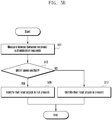
- FIG. 5B is a flowchart showing an authentication method of a smart key device (e.g., 300, 400) according to an embodiment of the disclosure.
- the smart key device may measure a reception interval between authentication requests received from a vehicle.
- the smart key device may check whether the reception interval between the authentication requests is within a given section.
- the given section is a preset value, and is a value related to a normal signal transmission time between the vehicle and the smart key device.
- the smart key device may identify that a relay attack is not present, and may then perform a vehicle control-related operation.
- the smart key device may identify that a relay attack is present, and may perform an operation, such as vehicle function restriction or relay attack notification output.
- FIG. 6 is a diagram showing a method of authenticating a smart key according to another embodiment of the disclosure.
- FIG. 6 is related to an embodiment in which whether a relay attack is present is identified based on the multi-antenna channel uniqueness of a signal. For example, such an operation may be performed based on the delay time of a signal, described with reference to FIGS. 3 to 5 , in parallel or selectively with respect to the operation of identifying a relay attack.
- a direct channel for wireless communication is formed between a smart key device 600 and a vehicle 605.
- a generated channel measurement value may be defined as H 0 .
- the vehicle 605 may perform channel measurement based on a signal transmitted by the smart key device 600, and may feed a channel measurement value H 0 back to the smart key device 600.
- the smart key device 600 may precode data, previously agreed to be transmitted, using the fed-back channel measurement value H 0 , and may transmit the precoded data.
- the vehicle 605 may validly receive the data because the smart key device 600 transmits the data by incorporating the accurate channel measurement value H 0 into the data. Accordingly, the vehicle 605 that has validly received the previously agreed data may identify that a relay attack is not present. In this case, if the smart key is a previously registered valid device, the vehicle may perform smart key authentication.
- FIG. 7 is a diagram showing a method of authenticating a smart key when a relay attack occurs according to another embodiment of the disclosure.
- a direct channel is not formed between a smart key device 700 and a vehicle 710, and a channel (H 1 H 2 ) in which a channel H 1 between the smart key device 700 and the hacking device 705 and a channel H 2 between the vehicle 710 and the hacking device 715 are mixed is formed between the smart key device 700 and the vehicle 710.
- the vehicle 710 may obtain a channel measurement value of the channel H 2 .
- the vehicle 710 may feed the channel measurement value H 2 back to a terminal.
- the smart key device 700 may precode data, previously agreed to be transmitted, using the fed-back channel measurement value H 2 , and may transmit the precoded data.
- the vehicle 710 cannot validly receive the data because the smart key device 700 transmits the data by incorporating only the value H 2 into the data. Accordingly, the vehicle 710 that has not validly received the previously agreed data may identify that a relay attack is present. In this case, the vehicle may fail in smart key authentication although the smart key is a previously registered valid device. Furthermore, the vehicle may restrict a vehicle function, and may output relay attack notification or forward the relay attack notification to the smart key device 700.
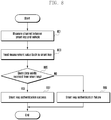
- FIG. 8 is a flowchart showing a method of authenticating a smart key of a vehicle (e.g., 605, 710) according to another embodiment of the disclosure.
- An operation of the vehicle may be performed by a smart key authentication device included in a vehicle, for example.
- the vehicle may measure a channel between the vehicle and the smart key device at step 801, and may feed a channel measurement value back to the smart key device at step 803.
- the vehicle may identify whether previously agreed data has been validly received from the smart key device.
- the vehicle may identify that a relay attack is not present, and may successfully perform smart key authentication if the smart key device is a previously registered valid device at step 807.
- the vehicle may identify that a relay attack is present, and may fail in smart key authentication although the smart key device is a previously registered valid device at step 809.
- FIG. 9 is a block diagram showing the configuration of a smart key authentication device of a vehicle according to an embodiment of the disclosure.
- the smart key authentication device of a vehicle may include a transceiver 901, a controller 903, a storage unit 905 and an output unit 907.
- the transceiver 901 may include a module for communicating with a smart key device.
- the controller 903 may include at least one processor.
- the controller 903 may control the operations of the transceiver 901, the storage unit 905 and the output unit 907.
- the controller 903 may control the operations of the smart key authentication device of a vehicle according to various embodiments of the disclosure described with reference to FIGS. 1 to 8 .
- the controller 903 may identify whether a relay attack is present between a vehicle and a smart key device. As described above, the controller may identify whether a relay attack is present based on the delay time of a signal, or may identify whether a relay attack is present based on the uniqueness of a multi-antenna channel. If it is identified that a relay attack is not present, the controller 903 may succeed in smart key device authentication. In contrast, if it is identified that a relay attack is present, the controller 903 may fail in smart key device authentication, and may restrict a vehicle function or forward notification to a smart key device in preparation for the relay attack.
- the storage unit 905 may store smart key device information. For example, user information related to a smart key device may be previously stored in the storage unit, and may be used upon smart key device authentication.
- the output unit 907 may include a light or an audio output unit.
- the output unit 907 may control the flickering of the light or output a warning sound under the control of the controller 903 (e.g., if it is identified that a relay attack is present).
- FIG. 10 is a block diagram showing the configuration of a smart key device according to an embodiment of the disclosure.
- the smart key device may include a transceiver 1001 and a controller 1003.
- the transceiver 1001 may include an RF module for remote communication or a module for short-distance communication, for example.
- the controller 1003 may include at least one processor.
- the controller 1003 may control the operation of the transceiver 1001.
- the controller 1003 may control the operations of the smart key device according to various embodiments of the disclosure described with reference to FIGS. 1 to 8 .
- the controller 1003 may identify whether a relay attack is present between the smart key device and a vehicle, and may help the vehicle to identify whether a relay attack is present. As described above, whether a relay attack is present may be identified based on the delay time of a signal or may be identified based on the uniqueness of a multi-antenna channel. If it is identified that a relay attack is present, the controller 1003 may provide notification to a user, and may restrict the function of a vehicle or control the vehicle to output notification.
Landscapes
- Engineering & Computer Science (AREA)
- Mechanical Engineering (AREA)
- Computer Security & Cryptography (AREA)
- Physics & Mathematics (AREA)
- General Physics & Mathematics (AREA)
- Theoretical Computer Science (AREA)
- Computer Networks & Wireless Communication (AREA)
- Computer Hardware Design (AREA)
- Software Systems (AREA)
- General Engineering & Computer Science (AREA)
- Signal Processing (AREA)
- Lock And Its Accessories (AREA)
Description
- The disclosure relates to a method and device for performing smart key authentication by detecting a relay attack when the relay attack is present between a smart key and a vehicle.
- As the data communication technology is advanced, the supply of smart keys capable of controlling the operation of a device to be controlled by only a signal without a physical contact with the device to be controlled is spread. For example, the use of a smart key for controlling a vehicle is gradually increasing.
- However, the smart key may be exposed to a relay attack that intercepts information of the smart key because it controls a vehicle using communication. For example, although a smart key and a vehicle are disposed at a given distance or more, an Amplifying-Relaying device may midway forward a signal of the smart key to the vehicle. The vehicle that has obtained the signal of the smart key may perform the authentication of the smart key. Accordingly, the vehicle may be exposed to an outsider's crime. A method for detecting a relay attack is known from
US20150015367A . - The disclosure is to block a relay attack by detecting the relay attack and to provide notification to a user in a smart key system.
- According to the invention, a method for an electronic device to authenticate a smart key according to claim 1 is provided which includes transmitting an authentication request in a given cycle, receiving an authentication response from a smart key device, identifying whether a relay attack is present based on an interval between the received authentication responses, and authenticating the smart key device based on a relay attack being not present.
- According to the invention, an authentication method of a smart key device according to claim 4 is provided which includes receiving an authentication request from a vehicle in a given cycle, identifying whether a relay attack is present based on an interval between the received authentication requests, and responding to a detection of an approach confirmation signal transmitted by the vehicle based on the relay attack being not present, wherein the approach confirmation signal is transmitted based on the smart key being authenticated.
- According to the invention, an electronic device according to claim 7 is provided which includes a transceiver transmitting and receiving signals and a controller configured to transmit an authentication request in a given cycle, receive an authentication response from a smart key device, identify whether a relay attack is present based on an interval between the received authentication responses, and authenticate the smart key device based on a relay attack being not present.
- According to the invention, a smart key device according to claim 10 is provided which includes a transceiver transmitting and receiving signals and a controller configured to receive an authentication request from a vehicle in a given cycle, identify whether a relay attack is present based on an interval between the received authentication requests, and respond to a detection of an approach confirmation signal transmitted by the vehicle based on the relay attack being not present, wherein the approach confirmation signal is transmitted based on the smart key being authenticated. A safer smart key system against an external attack can be constructed because a relay attack can be detected and corresponding follow-up measures can be taken.
-
-
FIG. 1A shows a smart key system according to an embodiment of the disclosure. -
FIG. 1B is a diagram for illustrating a case where a relay attack occurs in a smart key system. -
FIG. 2 is a flowchart showing an operation of a vehicle to prepare for a relay attack according to an embodiment of the disclosure. -
FIG. 3 is a diagram showing a method of authenticating a smart key according to an embodiment of the disclosure. -
FIG. 4 is a diagram showing a method of authenticating a smart key when a relay attack occurs according to an embodiment of the disclosure. -
FIG. 5A is a flowchart showing a method of authenticating a smart key of a vehicle according to an embodiment of the disclosure. -
FIG. 5B is a flowchart showing an authentication method of a smart key device according to an embodiment of the disclosure. -
FIG. 6 is a diagram showing a method of authenticating a smart key according to another embodiment of the disclosure. -
FIG. 7 is a diagram showing a method of authenticating a smart key when a relay attack occurs according to another embodiment of the disclosure. -
FIG. 8 is a flowchart showing a method of authenticating the smart key of a vehicle according to another embodiment of the disclosure. -
FIG. 9 is a block diagram showing the configuration of a smart key authentication device of a vehicle according to an embodiment of the disclosure. -
FIG. 10 is a block diagram showing the configuration of a smart key device according to an embodiment of the disclosure. - Hereinafter, the disclosure is described with reference to the accompanying drawings.
-
FIG. 1A shows a smart key system according to an embodiment of the disclosure. - A
smart key 100 may be used as a tool for controlling various functions of avehicle 110. Thesmart key 100 may be registered in relation to thevehicle 110. When thesmart key 100 approaches thevehicle 110 within a given range, thesmart key 100 experiences an authentication procedure of identifying the smart key is a registered valid key. For example, when thesmart key 100 detects an authentication request transmitted by thevehicle 110, thesmart key 100 may transmit an authentication response to thevehicle 110. Thevehicle 110 may check whether the smart key is proximate based on the size of the signal of the authentication response. The authentication response may include information on the smart key. Thevehicle 110 may perform authentication based on the information of the smart key. -
FIG. 1B is a diagram for illustrating a case where a relay attack occurs in a smart key system. - Although the
smart key 100 does not approach thevehicle 110 within a given range, an Amplifying-Relaying device (hereinafter described as a hacking device) may be cut in between thesmart key 100 and thevehicle 110, and may cheat thevehicle 110 as if thesmart key 100 and thevehicle 110 are proximate by amplifying and relaying a signal. As described above, the authentication of thesmart key 100 may be performed and thevehicle 110 may be fully controlled by a hacker. Such a situation is called a relay attack. -
FIG. 2 is a flowchart showing an operation of a vehicle (e.g., 110) to prepare for a relay attack according to an embodiment of the disclosure. The operation of thevehicle 110 may be performed by a smart key authentication device included in thevehicle 110, for example. - At step 201, the vehicle may identify whether a relay attack is present between the vehicle and a smart key. As will be described in detail below, the
vehicle 110 may identify whether a relay attack is present based on the delay time of a signal or may identify whether a relay attack is present based on data received after a channel measurement result is fed back. - If it is identified that the relay attack is present, at
step 203, the vehicle may perform a corresponding operation for the relay attack. For example, the vehicle may restrict a vehicle function (e.g., door lock setting, vehicle control hold), may output warning notification (e.g., light flickering, warning sound output), or may notify the smart key or a vehicle owner of a current condition. - If it is identified that a relay attack is not present, at
step 205, the vehicle may perform authentication on the corresponding smart key. If the smart key has been authenticated, when the smart key and the vehicle are proximate, the vehicle may be controlled by the smart key. -
FIG. 3 is a diagram showing a method of authenticating a smart key according to an embodiment of the disclosure.FIG. 3 is related to an embodiment in which whether a relay attack is present is identified based on the delay time of a signal. - A
vehicle 305 may perform a smart key authentication operation. Atstep 311, thevehicle 305 may periodically transmit an authentication request to asmart key device 300. When thesmart key device 300 and thevehicle 305 are located within a given range, the smart key device may receive the authentication request and transmit an authentication response atstep 313. The authentication response may include information on thesmart key device 300, for example, user information or device ID information. - At
step 315, thevehicle 305 may authenticate the smartkey device 300 by identifying whether the smart key device is a registered valid key and whether a relay attack is present. For example, thevehicle 305 may measure an interval (ΔT2) between authentication responses, and may identify that a relay attack is not present if the interval is within a given time interval. - If the smart
key device 300 has been validly authenticated, atstep 317, thevehicle 305 may transmit an approach confirmation signal (Adv) to the smartkey device 300. If the smartkey device 300 has approached thevehicle 305 within a given distance, it may detect the approach confirmation signal (Adv) and transmit a response to the approach confirmation signal. - Although not shown, the smart
key device 300 may identify whether a relay attack is present by measuring an interval (ΔT1) between authentication requests. For example, the smartkey device 300 may measure the interval (ΔT1) between authentication requests, and may identify that a relay attack is not present if the interval is within a given time interval. If a relay attack is not present, the smartkey device 300 may normally perform a control function on thevehicle 305. If a relay attack is present, the smartkey device 300 may not transmit a response although the approach confirmation signal (Adv) is detected. Furthermore, notification for notifying a user of the relay attack may be output through the smartkey device 300, notification may be output to the terminal of a given user or notification for the relay attack may be forwarded to thevehicle 305. -
FIG. 4 is a diagram showing a method of authenticating a smart key when a relay attack occurs according to an embodiment of the disclosure. - A
vehicle 410 may perform a smart key authentication operation. Atstep 411a, thevehicle 410 may periodically transmit an authentication request. In general, if a smartkey device 400 is not positioned within a given range of thevehicle 410, the smartkey device 400 cannot detect the authentication request. However, if a relay attack by ahacking device 405 is present between the smart key device and the vehicle, atstep 411b, thehacking device 405 may forward the authentication request to the smartkey device 400 by amplifying and relaying the authentication request, and forward it. Atstep 413a, the smartkey device 400 may transmit an authentication response. Likewise, if the smartkey device 400 is not positioned within a given range of thevehicle 410, thevehicle 410 cannot detect the authentication response. However, if a relay attack by thehacking device 405 is present between the smart key device and the vehicle, atstep 413b, thehacking device 405 may forward the authentication response to thevehicle 410 by amplifying and relaying the authentication response. The authentication response may include information on the smartkey device 400, for example, user information or device ID information. - At
step 415, thevehicle 410 may authenticate the smartkey device 400 by identifying whether the smart key device is a registered valid key and whether a relay attack is present. For example, thevehicle 410 may measure an interval (ΔT4) between authentication responses, and may identify that a relay attack is present if the interval is out of a given time interval. For example, assuming that the time taken for a signal to be delayed by a relay attack is ΔR, ΔT4 may be a value that is 2∗AR greater than ΔT2 measured when a relay attack is not present. - If the smart
key device 400 has been validly authenticated, atstep 417a, thevehicle 410 may transmit an approach confirmation signal (Adv). If the smartkey device 400 is not located within a given distance from thevehicle 410, the smartkey device 400 cannot detect the approach confirmation signal (Adv). However, if a relay attack by thehacking device 405 is present between the vehicle and the smart key device, atstep 417b, thehacking device 405 may forward the approach confirmation signal (Adv) to the smartkey device 400 by amplifying and relaying the approach confirmation signal. If the smartkey device 400 is proximate to thevehicle 405 within a given distance, it may detect the approach confirmation signal (Adv). - Although not shown, the smart
key device 400 may also identify whether a relay attack is present by measuring an interval (ΔT3) between authentication requests. For example, the smartkey device 400 may measure the interval (ΔT3) between authentication requests, and may identify that a relay attack is not present if the interval is out of a given time interval. For example, assuming that the time taken for a signal to be delayed by a relay attack is ΔR, ΔT3 may be a value that is 2∗ΔR greater than ΔT1 measured when a relay attack is not present. - If a relay attack is present, the smart
key device 400 may not transmit a response although the approach confirmation signal (Adv) is detected. Furthermore, notification for notifying a user of the relay attack may be output through the smartkey device 400, notification may be output to the terminal of a given user, or notification for the relay attack may be forwarded to thevehicle 410. Accordingly, although a relay attack is not properly detected by thevehicle 410, control of thevehicle 410 for security may be limited if the smartkey device 400 detects the relay attack. -
FIG. 5A is a flowchart showing a method of authenticating a smart key of a vehicle (e.g., 305, 410) according to an embodiment of the disclosure. The operation of the vehicle may be performed by a smart key authentication device included in the vehicle, for example. - At
step 501, the vehicle may measure a reception interval between authentication responses received from the smart key device. Atstep 503, the vehicle may check whether the reception interval between the authentication responses is within a given section. The given section is a preset value, and is a value related to a normal signal transmission time between the vehicle and the smart key device. - If the interval is within the given section, the vehicle may identify that a relay attack is not present. At
step 505, the vehicle may successfully perform smart key authentication if the smart key device is a previously registered valid device. - If the interval is out of the given section, the vehicle may identify that a relay attack is present. At
step 507, the vehicle may fail in smart key authentication although the smart key device is a previously registered valid device. -
FIG. 5B is a flowchart showing an authentication method of a smart key device (e.g., 300, 400) according to an embodiment of the disclosure. - At
step 511, the smart key device may measure a reception interval between authentication requests received from a vehicle. Atstep 513, the smart key device may check whether the reception interval between the authentication requests is within a given section. The given section is a preset value, and is a value related to a normal signal transmission time between the vehicle and the smart key device. - If the interval is within the given section, at
step 515, the smart key device may identify that a relay attack is not present, and may then perform a vehicle control-related operation. - If the interval is out of the given section, at
step 517, the smart key device may identify that a relay attack is present, and may perform an operation, such as vehicle function restriction or relay attack notification output. -
FIG. 6 is a diagram showing a method of authenticating a smart key according to another embodiment of the disclosure.FIG. 6 is related to an embodiment in which whether a relay attack is present is identified based on the multi-antenna channel uniqueness of a signal. For example, such an operation may be performed based on the delay time of a signal, described with reference toFIGS. 3 to 5 , in parallel or selectively with respect to the operation of identifying a relay attack. - A direct channel for wireless communication is formed between a smart
key device 600 and avehicle 605. In this case, a generated channel measurement value may be defined as H0. For example, thevehicle 605 may perform channel measurement based on a signal transmitted by the smartkey device 600, and may feed a channel measurement value H0 back to the smartkey device 600. - The smart
key device 600 may precode data, previously agreed to be transmitted, using the fed-back channel measurement value H0, and may transmit the precoded data. Thevehicle 605 may validly receive the data because the smartkey device 600 transmits the data by incorporating the accurate channel measurement value H0 into the data. Accordingly, thevehicle 605 that has validly received the previously agreed data may identify that a relay attack is not present. In this case, if the smart key is a previously registered valid device, the vehicle may perform smart key authentication. -
FIG. 7 is a diagram showing a method of authenticating a smart key when a relay attack occurs according to another embodiment of the disclosure. - If a
hacking device key device 700 and avehicle 710, and a channel (H1H2) in which a channel H1 between the smartkey device 700 and thehacking device 705 and a channel H2 between thevehicle 710 and thehacking device 715 are mixed is formed between the smartkey device 700 and thevehicle 710. If thevehicle 710 performs channel measurement, it may obtain a channel measurement value of the channel H2. Thevehicle 710 may feed the channel measurement value H2 back to a terminal. - The smart
key device 700 may precode data, previously agreed to be transmitted, using the fed-back channel measurement value H2, and may transmit the precoded data. Thevehicle 710 cannot validly receive the data because the smartkey device 700 transmits the data by incorporating only the value H2 into the data. Accordingly, thevehicle 710 that has not validly received the previously agreed data may identify that a relay attack is present. In this case, the vehicle may fail in smart key authentication although the smart key is a previously registered valid device. Furthermore, the vehicle may restrict a vehicle function, and may output relay attack notification or forward the relay attack notification to the smartkey device 700. -
FIG. 8 is a flowchart showing a method of authenticating a smart key of a vehicle (e.g., 605, 710) according to another embodiment of the disclosure. An operation of the vehicle may be performed by a smart key authentication device included in a vehicle, for example. - The vehicle may measure a channel between the vehicle and the smart key device at
step 801, and may feed a channel measurement value back to the smart key device atstep 803. - Thereafter, at
step 805, the vehicle may identify whether previously agreed data has been validly received from the smart key device. - If the agreed data has been validly received, the vehicle may identify that a relay attack is not present, and may successfully perform smart key authentication if the smart key device is a previously registered valid device at
step 807. - If the agreed data has not been validly received, the vehicle may identify that a relay attack is present, and may fail in smart key authentication although the smart key device is a previously registered valid device at
step 809. -
FIG. 9 is a block diagram showing the configuration of a smart key authentication device of a vehicle according to an embodiment of the disclosure. - Referring to
FIG. 9 , the smart key authentication device of a vehicle may include atransceiver 901, acontroller 903, astorage unit 905 and anoutput unit 907. - The
transceiver 901 may include a module for communicating with a smart key device. - The
controller 903 may include at least one processor. Thecontroller 903 may control the operations of thetransceiver 901, thestorage unit 905 and theoutput unit 907. Thecontroller 903 may control the operations of the smart key authentication device of a vehicle according to various embodiments of the disclosure described with reference toFIGS. 1 to 8 . Thecontroller 903 may identify whether a relay attack is present between a vehicle and a smart key device. As described above, the controller may identify whether a relay attack is present based on the delay time of a signal, or may identify whether a relay attack is present based on the uniqueness of a multi-antenna channel. If it is identified that a relay attack is not present, thecontroller 903 may succeed in smart key device authentication. In contrast, if it is identified that a relay attack is present, thecontroller 903 may fail in smart key device authentication, and may restrict a vehicle function or forward notification to a smart key device in preparation for the relay attack. - The
storage unit 905 may store smart key device information. For example, user information related to a smart key device may be previously stored in the storage unit, and may be used upon smart key device authentication. - The
output unit 907 may include a light or an audio output unit. Theoutput unit 907 may control the flickering of the light or output a warning sound under the control of the controller 903 (e.g., if it is identified that a relay attack is present). -
FIG. 10 is a block diagram showing the configuration of a smart key device according to an embodiment of the disclosure. - Referring to
FIG. 10 , the smart key device according to an embodiment of the disclosure may include atransceiver 1001 and acontroller 1003. - The
transceiver 1001 may include an RF module for remote communication or a module for short-distance communication, for example. - The
controller 1003 may include at least one processor. Thecontroller 1003 may control the operation of thetransceiver 1001. Thecontroller 1003 may control the operations of the smart key device according to various embodiments of the disclosure described with reference toFIGS. 1 to 8 . For example, thecontroller 1003 may identify whether a relay attack is present between the smart key device and a vehicle, and may help the vehicle to identify whether a relay attack is present. As described above, whether a relay attack is present may be identified based on the delay time of a signal or may be identified based on the uniqueness of a multi-antenna channel. If it is identified that a relay attack is present, thecontroller 1003 may provide notification to a user, and may restrict the function of a vehicle or control the vehicle to output notification.
Claims (12)
- A method for an electronic device to authenticate a smart key device (100), the method comprising:transmitting a first authentication request (311);receiving a first authentication response (313) in response to the first authentication request from the smart key device (100);transmitting a second authentication request after receiving the first authentication response;receiving a second authentication response in response to the second authentication request from the smart key device (100);the method being characterized in that it further comprises:identifying that the relay attack does not occur in case that an interval between the received first and second authentication responses is within a pre-determined duration, andidentifying that the relay attack occurs in case that the interval between the received first and second authentication responses exceeds the pre-determined duration; andauthenticating the smart key device (100) in case that the relay attack does not occur.
- The method of claim 1, further comprising:
performing at least one of vehicle function restriction, vehicle warning notification, or situation notification for the smart key device (100) in case that the relay attack occurs. - The method of claim 1, further comprising:performing channel measurement on the smart key device (100) and feeding a measurement result back to the smart key device (100);identifying whether data, previously agreed to be transmitted, are validly received from the smart key device (100); andauthenticating the smart key device (100) in case that data are validly received,wherein the smart key device (100) transmits data based on the measurement result.
- An authentication method of a smart key device (100), the method comprising:receiving (311) a first authentication request from a vehicle;transmitting (313) a first authentication response in response to the first authentication request to the vehicle;receiving a second authentication request from the vehicle;the method being characterized in that it further comprises:identifying that the relay attack does not occur in case that a interval between the received first and second authentication requests is within a pre-determined duration, andidentifying that the relay attack occurs in case that the interval between the received first and second authentication requests exceeds the pre-determined duration; andresponding to a detection of an approach confirmation signal transmitted by the vehicle in case that the relay attack does not occur (315),wherein the approach confirmation signal is transmitted in case that the smart key device (100) is authenticated.
- The method of claim 4, further comprising:
performing at least one of vehicle function restriction, vehicle warning notification, or warning notification for the smart key device (100) in case that the relay attack occurs. - The method of claim 4, further comprising:receiving a channel measurement result from the vehicle; andtransmitting data, previously agreed to be transmitted, to the vehicle based on the channel measurement result,wherein the smart key device (100) is authenticated in case that data are validly received by the vehicle.
- An electronic device, the electronic device comprising:a transceiver (901) transmitting and receiving signals; anda controller (903) configured to:transmit (311) a first authentication request;receive (313) a first authentication response in response to the first authentication request from a smart key device (100);transmit a second authentication request;receive a second authentication response in response to the second authentication request from the smart key device (100);the controller (903) being characterized in that it is further configured to:identify the relay attack does not occur in case that a interval between the received first and second authentication responses is within a pre-determined duration, andidentify the relay attack occurs in case that the interval between the received first and second authentication responses exceeds the pre-determined duration; andauthenticate the smart key device (100) in case that the relay attack does not occur.
- The electronic device of claim 7, wherein the controller is configured to perform at least one of vehicle function restriction, vehicle warning notification, or situation notification for the smart key device (100) in case that the relay attack occurs.
- The electronic device of claim 7, wherein:the controller is configured to perform channel measurement on the smart key device (100) and feeding a measurement result back to the smart key, identify whether data, previously agreed to be transmitted, are validly received from the smart key device (100), and authenticate the smart key device (100) in case that data are validly received, andthe smart key device (100) transmits data based on the measurement result.
- A smart key device (100), the smart key device (100) comprising:a transceiver (1001) transmitting and receiving signals; anda controller (1003) configured to:receive (311) a first authentication request from a vehicle;transmit (313) a first authentication response in response to the first authentication request to the vehicle;receive a second authentication request from the vehicle;the controller (1003) being characterized in that it is further configured to:identify that the relay attack does not occur in case that an interval between the received first and second authentication requests is within a pre-determined duration,identify that the relay attack occurs in case that the interval between the received first and second authentication requests exceeds the pre-determined duration; andrespond to a detection of an approach confirmation signal transmitted by the vehicle in case that the relay attack does not occur,wherein the approach confirmation signal is transmitted in case that the smart key device (100) is authenticated.
- The smart key device (100) of claim 10, wherein the controller is configured to perform at least one of vehicle function restriction, vehicle warning notification, or warning notification for the smart key device (100) in case that the relay attack occurs.
- The smart key device (100) of claim 10, wherein the controller is configured to:receive a channel measurement result from the vehicle; andtransmit data, previously agreed to be transmitted, to the vehicle based on the channel measurement result,wherein the smart key device (100) is authenticated in case that data are validly received by the vehicle.
Applications Claiming Priority (2)
| Application Number | Priority Date | Filing Date | Title |
|---|---|---|---|
| KR1020170019419A KR102689221B1 (en) | 2017-02-13 | 2017-02-13 | Method and apparatus for authenticating smart car key |
| PCT/KR2018/001397 WO2018147595A1 (en) | 2017-02-13 | 2018-02-01 | Method and device for authenticating vehicle smart key |
Publications (3)
| Publication Number | Publication Date |
|---|---|
| EP3566914A1 EP3566914A1 (en) | 2019-11-13 |
| EP3566914A4 EP3566914A4 (en) | 2020-01-29 |
| EP3566914B1 true EP3566914B1 (en) | 2021-01-06 |
Family
ID=63107029
Family Applications (1)
| Application Number | Title | Priority Date | Filing Date |
|---|---|---|---|
| EP18751705.7A Not-in-force EP3566914B1 (en) | 2017-02-13 | 2018-02-01 | Method and device for authenticating vehicle smart key |
Country Status (5)
| Country | Link |
|---|---|
| US (1) | US11164409B2 (en) |
| EP (1) | EP3566914B1 (en) |
| KR (1) | KR102689221B1 (en) |
| CN (1) | CN110267853A (en) |
| WO (1) | WO2018147595A1 (en) |
Families Citing this family (11)
| Publication number | Priority date | Publication date | Assignee | Title |
|---|---|---|---|---|
| DE102017011879A1 (en) * | 2017-12-21 | 2019-06-27 | Metirionic Gmbh | Radio field based authentication of nodes within a radio link |
| JP6751863B1 (en) | 2018-10-15 | 2020-09-09 | PaylessGate株式会社 | Location identification system, location identification device, location identification method, location identification program, computer-readable recording medium, and recording equipment |
| BR112021006914A2 (en) * | 2018-10-15 | 2021-07-20 | Paylessgate Corporation | authenticated device, authentication device, authentication request transmission method, authentication method, and program |
| JP7226177B2 (en) * | 2019-08-02 | 2023-02-21 | 株式会社オートネットワーク技術研究所 | In-vehicle relay device, in-vehicle communication system, communication program and communication method |
| CN110708227A (en) * | 2019-09-29 | 2020-01-17 | 河海大学 | A test method for automatic replay attack in fieldbus |
| CN113015161B (en) * | 2019-12-20 | 2022-05-13 | 华为技术有限公司 | Authentication method, medium thereof, and electronic device |
| CN111246423B (en) * | 2020-01-09 | 2024-06-04 | 联合汽车电子有限公司 | Method for preventing broadcast relay attack in keyless entry and starting system |
| EP4020411B1 (en) * | 2020-12-23 | 2025-03-12 | Nagravision Sàrl | Relay attack prevention |
| US11962359B2 (en) * | 2021-05-11 | 2024-04-16 | Qualcomm Incorporated | Detection of deployed time-domain duplexed repeaters |
| CN115884188B (en) * | 2021-08-24 | 2026-02-10 | 创领心律管理医疗器械(上海)有限公司 | Relay attack prevention methods, implantable medical devices, medical systems and media |
| KR20250108913A (en) | 2024-01-09 | 2025-07-16 | 현대자동차주식회사 | Method for enhancing smart key security |
Family Cites Families (21)
| Publication number | Priority date | Publication date | Assignee | Title |
|---|---|---|---|---|
| DE10114876A1 (en) * | 2001-03-26 | 2002-10-17 | Siemens Ag | Identification system for proving authorization to access or use an object, in particular a motor vehicle |
| TW563383B (en) | 2002-08-30 | 2003-11-21 | Holtek Semiconductor Inc | Encoding device for remote control with high security |
| JP2007511682A (en) * | 2003-05-20 | 2007-05-10 | コーニンクレッカ フィリップス エレクトロニクス エヌ ヴィ | Electronic communication system |
| GB0426446D0 (en) * | 2004-12-02 | 2005-01-05 | Koninkl Philips Electronics Nv | Measuring the distance between devices |
| US20060202798A1 (en) * | 2005-03-08 | 2006-09-14 | Siemens Vdo Automotive Corporation | Frequency hopping for passive start and entry systems |
| US20100304690A1 (en) * | 2009-05-29 | 2010-12-02 | Gm Global Technology Operations, Inc. | Method of passively detecting an approach to a vehicle |
| KR101879820B1 (en) * | 2011-12-28 | 2018-07-18 | 한국단자공업 주식회사 | Security system and method for car |
| JP5862454B2 (en) * | 2012-05-25 | 2016-02-16 | 株式会社日本自動車部品総合研究所 | Smart system |
| US9456344B2 (en) * | 2013-03-15 | 2016-09-27 | Ologn Technologies Ag | Systems, methods and apparatuses for ensuring proximity of communication device |
| US8930045B2 (en) | 2013-05-01 | 2015-01-06 | Delphi Technologies, Inc. | Relay attack prevention for passive entry passive start (PEPS) vehicle security systems |
| US9102296B2 (en) * | 2013-06-24 | 2015-08-11 | Texas Instruments Incorporated | Relay attack prevention for passive entry/passive start systems |
| FR3007875B1 (en) * | 2013-06-28 | 2015-07-17 | Continental Automotive France | METHOD FOR PROTECTING A FREE ACCESS AND / OR START SYSTEM OF A VEHICLE BY MODIFYING THE SIGNAL RECEPTION SPEED |
| US9842445B2 (en) * | 2013-07-15 | 2017-12-12 | Trw Automotive U.S. Llc | Passive remote keyless entry system with time-based anti-theft feature |
| KR101455801B1 (en) * | 2013-11-22 | 2014-11-03 | 주식회사 대동 | Method to protect Relay Attack of Smart key System for vehicles |
| JP6354165B2 (en) * | 2014-01-15 | 2018-07-11 | 株式会社デンソー | Control system |
| CN106605034B (en) * | 2014-08-29 | 2019-08-16 | 阿尔卑斯阿尔派株式会社 | keyless entry |
| WO2016059451A1 (en) | 2014-10-15 | 2016-04-21 | Continental Automotive Gmbh | Method and system for detecting relay attack for pase system |
| KR101533428B1 (en) * | 2015-02-06 | 2015-07-02 | (주)플라토 | Method For Preventing Relay Station Attack By Using Moving Path of Smart Key |
| JP6292719B2 (en) | 2015-03-13 | 2018-03-14 | オムロンオートモーティブエレクトロニクス株式会社 | Vehicle wireless communication system, vehicle control device, portable device |
| DE102015206009B4 (en) | 2015-04-02 | 2017-06-08 | Volkswagen Aktiengesellschaft | Distance determination and authentication of a radio key for a vehicle |
| DE102016215901A1 (en) * | 2016-08-24 | 2018-03-01 | Audi Ag | Radio key closing device for a motor vehicle, motor vehicle and method for operating the closing device |
-
2017
- 2017-02-13 KR KR1020170019419A patent/KR102689221B1/en active Active
-
2018
- 2018-02-01 CN CN201880011348.7A patent/CN110267853A/en active Pending
- 2018-02-01 US US16/484,294 patent/US11164409B2/en not_active Expired - Fee Related
- 2018-02-01 WO PCT/KR2018/001397 patent/WO2018147595A1/en not_active Ceased
- 2018-02-01 EP EP18751705.7A patent/EP3566914B1/en not_active Not-in-force
Non-Patent Citations (1)
| Title |
|---|
| None * |
Also Published As
| Publication number | Publication date |
|---|---|
| EP3566914A4 (en) | 2020-01-29 |
| WO2018147595A1 (en) | 2018-08-16 |
| EP3566914A1 (en) | 2019-11-13 |
| US20200005571A1 (en) | 2020-01-02 |
| KR20180093398A (en) | 2018-08-22 |
| CN110267853A (en) | 2019-09-20 |
| US11164409B2 (en) | 2021-11-02 |
| KR102689221B1 (en) | 2024-07-30 |
Similar Documents
| Publication | Publication Date | Title |
|---|---|---|
| US11164409B2 (en) | Method and device for authenticating vehicle smart key | |
| EP4276779B1 (en) | Electronic access control device and access control method | |
| US20220217534A1 (en) | Authentication system and authentication method | |
| US11356264B2 (en) | Authentication system | |
| US11277742B2 (en) | Method for operating authentication system and authentication system | |
| KR102761490B1 (en) | Method and apparatus for authenticating car smart key | |
| US11521450B2 (en) | Physical access control system and method | |
| US11301651B2 (en) | Method and device for data transfer between a mobile device and a reader device | |
| US10223887B2 (en) | Anti-theft apparatus for smart device | |
| EP2940882B1 (en) | Proximity check for communication devices | |
| US8797144B2 (en) | Authorizing RFID reader and inhibiting skimming | |
| JP2006174423A5 (en) | ||
| CN107948961A (en) | Bluetooth alignment system and method | |
| EP3977419B1 (en) | Systems and methods of a doorbell device initiating a state change of an access control device and/or a control panel responsive to two-factor authentication | |
| US20190329732A1 (en) | Method for Safeguarding Access | |
| CN114268959B (en) | Communication device and system | |
| EP1959588B1 (en) | Terminal and information relay apparatus | |
| JP2010516925A (en) | Method for distance characterization in inductively coupled access systems | |
| KR101729692B1 (en) | System and method for computer security and energy saving using mobile device | |
| KR20160062369A (en) | Entrance authentication system and authenticating method thereof | |
| US10674365B1 (en) | Systems and methods for preventing relay attacks | |
| JP5195496B2 (en) | Authentication target device and key, and wireless authentication system | |
| US10970950B2 (en) | Systems and methods for activating a security action responsive to proximal detection and identification of a wireless device | |
| WO2020209254A1 (en) | Control device and control system | |
| KR20160125222A (en) | System and method for network partition computer security using mobile device |
Legal Events
| Date | Code | Title | Description |
|---|---|---|---|
| STAA | Information on the status of an ep patent application or granted ep patent |
Free format text: STATUS: THE INTERNATIONAL PUBLICATION HAS BEEN MADE |
|
| PUAI | Public reference made under article 153(3) epc to a published international application that has entered the european phase |
Free format text: ORIGINAL CODE: 0009012 |
|
| STAA | Information on the status of an ep patent application or granted ep patent |
Free format text: STATUS: REQUEST FOR EXAMINATION WAS MADE |
|
| 17P | Request for examination filed |
Effective date: 20190808 |
|
| AK | Designated contracting states |
Kind code of ref document: A1 Designated state(s): AL AT BE BG CH CY CZ DE DK EE ES FI FR GB GR HR HU IE IS IT LI LT LU LV MC MK MT NL NO PL PT RO RS SE SI SK SM TR |
|
| AX | Request for extension of the european patent |
Extension state: BA ME |
|
| A4 | Supplementary search report drawn up and despatched |
Effective date: 20200108 |
|
| RIC1 | Information provided on ipc code assigned before grant |
Ipc: B60R 25/24 20130101AFI20191220BHEP Ipc: B60R 25/10 20130101ALI20191220BHEP Ipc: G06F 21/30 20130101ALI20191220BHEP Ipc: G07C 9/00 20060101ALI20191220BHEP |
|
| DAV | Request for validation of the european patent (deleted) | ||
| DAX | Request for extension of the european patent (deleted) | ||
| GRAP | Despatch of communication of intention to grant a patent |
Free format text: ORIGINAL CODE: EPIDOSNIGR1 |
|
| STAA | Information on the status of an ep patent application or granted ep patent |
Free format text: STATUS: GRANT OF PATENT IS INTENDED |
|
| RIC1 | Information provided on ipc code assigned before grant |
Ipc: B60R 25/10 20130101ALI20200917BHEP Ipc: B60R 25/24 20130101AFI20200917BHEP Ipc: G07C 9/00 20200101ALI20200917BHEP Ipc: G06F 21/30 20130101ALI20200917BHEP |
|
| INTG | Intention to grant announced |
Effective date: 20201015 |
|
| GRAS | Grant fee paid |
Free format text: ORIGINAL CODE: EPIDOSNIGR3 |
|
| GRAA | (expected) grant |
Free format text: ORIGINAL CODE: 0009210 |
|
| STAA | Information on the status of an ep patent application or granted ep patent |
Free format text: STATUS: THE PATENT HAS BEEN GRANTED |
|
| AK | Designated contracting states |
Kind code of ref document: B1 Designated state(s): AL AT BE BG CH CY CZ DE DK EE ES FI FR GB GR HR HU IE IS IT LI LT LU LV MC MK MT NL NO PL PT RO RS SE SI SK SM TR |
|
| REG | Reference to a national code |
Ref country code: GB Ref legal event code: FG4D |
|
| REG | Reference to a national code |
Ref country code: AT Ref legal event code: REF Ref document number: 1352022 Country of ref document: AT Kind code of ref document: T Effective date: 20210115 Ref country code: CH Ref legal event code: EP |
|
| REG | Reference to a national code |
Ref country code: DE Ref legal event code: R096 Ref document number: 602018011673 Country of ref document: DE |
|
| REG | Reference to a national code |
Ref country code: IE Ref legal event code: FG4D |
|
| REG | Reference to a national code |
Ref country code: NL Ref legal event code: MP Effective date: 20210106 |
|
| REG | Reference to a national code |
Ref country code: AT Ref legal event code: MK05 Ref document number: 1352022 Country of ref document: AT Kind code of ref document: T Effective date: 20210106 |
|
| REG | Reference to a national code |
Ref country code: LT Ref legal event code: MG9D |
|
| PG25 | Lapsed in a contracting state [announced via postgrant information from national office to epo] |
Ref country code: BG Free format text: LAPSE BECAUSE OF FAILURE TO SUBMIT A TRANSLATION OF THE DESCRIPTION OR TO PAY THE FEE WITHIN THE PRESCRIBED TIME-LIMIT Effective date: 20210406 Ref country code: GR Free format text: LAPSE BECAUSE OF FAILURE TO SUBMIT A TRANSLATION OF THE DESCRIPTION OR TO PAY THE FEE WITHIN THE PRESCRIBED TIME-LIMIT Effective date: 20210407 Ref country code: HR Free format text: LAPSE BECAUSE OF FAILURE TO SUBMIT A TRANSLATION OF THE DESCRIPTION OR TO PAY THE FEE WITHIN THE PRESCRIBED TIME-LIMIT Effective date: 20210106 Ref country code: FI Free format text: LAPSE BECAUSE OF FAILURE TO SUBMIT A TRANSLATION OF THE DESCRIPTION OR TO PAY THE FEE WITHIN THE PRESCRIBED TIME-LIMIT Effective date: 20210106 Ref country code: PT Free format text: LAPSE BECAUSE OF FAILURE TO SUBMIT A TRANSLATION OF THE DESCRIPTION OR TO PAY THE FEE WITHIN THE PRESCRIBED TIME-LIMIT Effective date: 20210506 Ref country code: NO Free format text: LAPSE BECAUSE OF FAILURE TO SUBMIT A TRANSLATION OF THE DESCRIPTION OR TO PAY THE FEE WITHIN THE PRESCRIBED TIME-LIMIT Effective date: 20210406 Ref country code: LT Free format text: LAPSE BECAUSE OF FAILURE TO SUBMIT A TRANSLATION OF THE DESCRIPTION OR TO PAY THE FEE WITHIN THE PRESCRIBED TIME-LIMIT Effective date: 20210106 |
|
| PG25 | Lapsed in a contracting state [announced via postgrant information from national office to epo] |
Ref country code: SE Free format text: LAPSE BECAUSE OF FAILURE TO SUBMIT A TRANSLATION OF THE DESCRIPTION OR TO PAY THE FEE WITHIN THE PRESCRIBED TIME-LIMIT Effective date: 20210106 Ref country code: AT Free format text: LAPSE BECAUSE OF FAILURE TO SUBMIT A TRANSLATION OF THE DESCRIPTION OR TO PAY THE FEE WITHIN THE PRESCRIBED TIME-LIMIT Effective date: 20210106 Ref country code: RS Free format text: LAPSE BECAUSE OF FAILURE TO SUBMIT A TRANSLATION OF THE DESCRIPTION OR TO PAY THE FEE WITHIN THE PRESCRIBED TIME-LIMIT Effective date: 20210106 Ref country code: PL Free format text: LAPSE BECAUSE OF FAILURE TO SUBMIT A TRANSLATION OF THE DESCRIPTION OR TO PAY THE FEE WITHIN THE PRESCRIBED TIME-LIMIT Effective date: 20210106 Ref country code: LV Free format text: LAPSE BECAUSE OF FAILURE TO SUBMIT A TRANSLATION OF THE DESCRIPTION OR TO PAY THE FEE WITHIN THE PRESCRIBED TIME-LIMIT Effective date: 20210106 |
|
| PG25 | Lapsed in a contracting state [announced via postgrant information from national office to epo] |
Ref country code: IS Free format text: LAPSE BECAUSE OF FAILURE TO SUBMIT A TRANSLATION OF THE DESCRIPTION OR TO PAY THE FEE WITHIN THE PRESCRIBED TIME-LIMIT Effective date: 20210506 |
|
| REG | Reference to a national code |
Ref country code: DE Ref legal event code: R097 Ref document number: 602018011673 Country of ref document: DE |
|
| REG | Reference to a national code |
Ref country code: BE Ref legal event code: MM Effective date: 20210228 |
|
| PG25 | Lapsed in a contracting state [announced via postgrant information from national office to epo] |
Ref country code: SM Free format text: LAPSE BECAUSE OF FAILURE TO SUBMIT A TRANSLATION OF THE DESCRIPTION OR TO PAY THE FEE WITHIN THE PRESCRIBED TIME-LIMIT Effective date: 20210106 Ref country code: MC Free format text: LAPSE BECAUSE OF FAILURE TO SUBMIT A TRANSLATION OF THE DESCRIPTION OR TO PAY THE FEE WITHIN THE PRESCRIBED TIME-LIMIT Effective date: 20210106 Ref country code: CZ Free format text: LAPSE BECAUSE OF FAILURE TO SUBMIT A TRANSLATION OF THE DESCRIPTION OR TO PAY THE FEE WITHIN THE PRESCRIBED TIME-LIMIT Effective date: 20210106 Ref country code: EE Free format text: LAPSE BECAUSE OF FAILURE TO SUBMIT A TRANSLATION OF THE DESCRIPTION OR TO PAY THE FEE WITHIN THE PRESCRIBED TIME-LIMIT Effective date: 20210106 Ref country code: CH Free format text: LAPSE BECAUSE OF NON-PAYMENT OF DUE FEES Effective date: 20210228 Ref country code: LU Free format text: LAPSE BECAUSE OF NON-PAYMENT OF DUE FEES Effective date: 20210201 Ref country code: LI Free format text: LAPSE BECAUSE OF NON-PAYMENT OF DUE FEES Effective date: 20210228 |
|
| PLBE | No opposition filed within time limit |
Free format text: ORIGINAL CODE: 0009261 |
|
| STAA | Information on the status of an ep patent application or granted ep patent |
Free format text: STATUS: NO OPPOSITION FILED WITHIN TIME LIMIT |
|
| PG25 | Lapsed in a contracting state [announced via postgrant information from national office to epo] |
Ref country code: DK Free format text: LAPSE BECAUSE OF FAILURE TO SUBMIT A TRANSLATION OF THE DESCRIPTION OR TO PAY THE FEE WITHIN THE PRESCRIBED TIME-LIMIT Effective date: 20210106 Ref country code: SK Free format text: LAPSE BECAUSE OF FAILURE TO SUBMIT A TRANSLATION OF THE DESCRIPTION OR TO PAY THE FEE WITHIN THE PRESCRIBED TIME-LIMIT Effective date: 20210106 Ref country code: RO Free format text: LAPSE BECAUSE OF FAILURE TO SUBMIT A TRANSLATION OF THE DESCRIPTION OR TO PAY THE FEE WITHIN THE PRESCRIBED TIME-LIMIT Effective date: 20210106 |
|
| 26N | No opposition filed |
Effective date: 20211007 |
|
| PG25 | Lapsed in a contracting state [announced via postgrant information from national office to epo] |
Ref country code: IE Free format text: LAPSE BECAUSE OF NON-PAYMENT OF DUE FEES Effective date: 20210201 Ref country code: AL Free format text: LAPSE BECAUSE OF FAILURE TO SUBMIT A TRANSLATION OF THE DESCRIPTION OR TO PAY THE FEE WITHIN THE PRESCRIBED TIME-LIMIT Effective date: 20210106 Ref country code: FR Free format text: LAPSE BECAUSE OF NON-PAYMENT OF DUE FEES Effective date: 20210306 Ref country code: ES Free format text: LAPSE BECAUSE OF FAILURE TO SUBMIT A TRANSLATION OF THE DESCRIPTION OR TO PAY THE FEE WITHIN THE PRESCRIBED TIME-LIMIT Effective date: 20210106 |
|
| PG25 | Lapsed in a contracting state [announced via postgrant information from national office to epo] |
Ref country code: SI Free format text: LAPSE BECAUSE OF FAILURE TO SUBMIT A TRANSLATION OF THE DESCRIPTION OR TO PAY THE FEE WITHIN THE PRESCRIBED TIME-LIMIT Effective date: 20210106 |
|
| PG25 | Lapsed in a contracting state [announced via postgrant information from national office to epo] |
Ref country code: IT Free format text: LAPSE BECAUSE OF FAILURE TO SUBMIT A TRANSLATION OF THE DESCRIPTION OR TO PAY THE FEE WITHIN THE PRESCRIBED TIME-LIMIT Effective date: 20210106 |
|
| PG25 | Lapsed in a contracting state [announced via postgrant information from national office to epo] |
Ref country code: IS Free format text: LAPSE BECAUSE OF FAILURE TO SUBMIT A TRANSLATION OF THE DESCRIPTION OR TO PAY THE FEE WITHIN THE PRESCRIBED TIME-LIMIT Effective date: 20210506 |
|
| PG25 | Lapsed in a contracting state [announced via postgrant information from national office to epo] |
Ref country code: BE Free format text: LAPSE BECAUSE OF NON-PAYMENT OF DUE FEES Effective date: 20210228 |
|
| PG25 | Lapsed in a contracting state [announced via postgrant information from national office to epo] |
Ref country code: NL Free format text: LAPSE BECAUSE OF NON-PAYMENT OF DUE FEES Effective date: 20210206 Ref country code: CY Free format text: LAPSE BECAUSE OF FAILURE TO SUBMIT A TRANSLATION OF THE DESCRIPTION OR TO PAY THE FEE WITHIN THE PRESCRIBED TIME-LIMIT Effective date: 20210106 |
|
| PG25 | Lapsed in a contracting state [announced via postgrant information from national office to epo] |
Ref country code: HU Free format text: LAPSE BECAUSE OF FAILURE TO SUBMIT A TRANSLATION OF THE DESCRIPTION OR TO PAY THE FEE WITHIN THE PRESCRIBED TIME-LIMIT; INVALID AB INITIO Effective date: 20180201 |
|
| PG25 | Lapsed in a contracting state [announced via postgrant information from national office to epo] |
Ref country code: MK Free format text: LAPSE BECAUSE OF FAILURE TO SUBMIT A TRANSLATION OF THE DESCRIPTION OR TO PAY THE FEE WITHIN THE PRESCRIBED TIME-LIMIT Effective date: 20210106 |
|
| PGFP | Annual fee paid to national office [announced via postgrant information from national office to epo] |
Ref country code: DE Payment date: 20240122 Year of fee payment: 7 Ref country code: GB Payment date: 20240122 Year of fee payment: 7 |
|
| PG25 | Lapsed in a contracting state [announced via postgrant information from national office to epo] |
Ref country code: MT Free format text: LAPSE BECAUSE OF FAILURE TO SUBMIT A TRANSLATION OF THE DESCRIPTION OR TO PAY THE FEE WITHIN THE PRESCRIBED TIME-LIMIT Effective date: 20210106 |
|
| REG | Reference to a national code |
Ref country code: DE Ref legal event code: R119 Ref document number: 602018011673 Country of ref document: DE |
|
| GBPC | Gb: european patent ceased through non-payment of renewal fee |
Effective date: 20250201 |
|
| PG25 | Lapsed in a contracting state [announced via postgrant information from national office to epo] |
Ref country code: TR Free format text: LAPSE BECAUSE OF FAILURE TO SUBMIT A TRANSLATION OF THE DESCRIPTION OR TO PAY THE FEE WITHIN THE PRESCRIBED TIME-LIMIT Effective date: 20210106 |
|
| PG25 | Lapsed in a contracting state [announced via postgrant information from national office to epo] |
Ref country code: DE Free format text: LAPSE BECAUSE OF NON-PAYMENT OF DUE FEES Effective date: 20250902 |
|
| PG25 | Lapsed in a contracting state [announced via postgrant information from national office to epo] |
Ref country code: GB Free format text: LAPSE BECAUSE OF NON-PAYMENT OF DUE FEES Effective date: 20250201 |