EP3566760A1 - Method for nucleating crystals from a solution in a capillary tube - Google Patents
Method for nucleating crystals from a solution in a capillary tube Download PDFInfo
- Publication number
- EP3566760A1 EP3566760A1 EP18171018.7A EP18171018A EP3566760A1 EP 3566760 A1 EP3566760 A1 EP 3566760A1 EP 18171018 A EP18171018 A EP 18171018A EP 3566760 A1 EP3566760 A1 EP 3566760A1
- Authority
- EP
- European Patent Office
- Prior art keywords
- conditions
- capillary
- previous
- solution
- metastable
- Prior art date
- Legal status (The legal status is an assumption and is not a legal conclusion. Google has not performed a legal analysis and makes no representation as to the accuracy of the status listed.)
- Withdrawn
Links
- 239000013078 crystal Substances 0.000 title claims abstract description 50
- 238000000034 method Methods 0.000 title claims abstract description 40
- 239000000243 solution Substances 0.000 claims abstract description 26
- 239000002904 solvent Substances 0.000 claims abstract description 22
- MSYKRHVOOPPJKU-BDAKNGLRSA-N brivaracetam Chemical compound CCC[C@H]1CN([C@@H](CC)C(N)=O)C(=O)C1 MSYKRHVOOPPJKU-BDAKNGLRSA-N 0.000 claims abstract description 17
- 229960002161 brivaracetam Drugs 0.000 claims abstract description 17
- 150000001875 compounds Chemical class 0.000 claims abstract description 14
- 229920006395 saturated elastomer Polymers 0.000 claims abstract description 11
- 239000012047 saturated solution Substances 0.000 claims abstract description 9
- 230000007704 transition Effects 0.000 claims abstract description 7
- 239000012530 fluid Substances 0.000 claims abstract description 4
- 238000010899 nucleation Methods 0.000 claims description 26
- 239000012296 anti-solvent Substances 0.000 claims description 19
- 238000001816 cooling Methods 0.000 claims description 13
- 239000007788 liquid Substances 0.000 claims description 9
- 238000002156 mixing Methods 0.000 claims description 9
- 230000003068 static effect Effects 0.000 claims description 7
- 230000008569 process Effects 0.000 claims description 6
- 238000009792 diffusion process Methods 0.000 claims description 2
- 238000011144 upstream manufacturing Methods 0.000 claims description 2
- LFQSCWFLJHTTHZ-UHFFFAOYSA-N Ethanol Chemical compound CCO LFQSCWFLJHTTHZ-UHFFFAOYSA-N 0.000 description 42
- XLYOFNOQVPJJNP-UHFFFAOYSA-N water Substances O XLYOFNOQVPJJNP-UHFFFAOYSA-N 0.000 description 25
- 238000002425 crystallisation Methods 0.000 description 22
- 230000006911 nucleation Effects 0.000 description 22
- 238000012360 testing method Methods 0.000 description 22
- VLKZOEOYAKHREP-UHFFFAOYSA-N n-Hexane Chemical compound CCCCCC VLKZOEOYAKHREP-UHFFFAOYSA-N 0.000 description 15
- 230000008025 crystallization Effects 0.000 description 14
- JMMWKPVZQRWMSS-UHFFFAOYSA-N isopropanol acetate Natural products CC(C)OC(C)=O JMMWKPVZQRWMSS-UHFFFAOYSA-N 0.000 description 14
- 229940011051 isopropyl acetate Drugs 0.000 description 14
- GWYFCOCPABKNJV-UHFFFAOYSA-N isovaleric acid Chemical compound CC(C)CC(O)=O GWYFCOCPABKNJV-UHFFFAOYSA-N 0.000 description 13
- BSYNRYMUTXBXSQ-UHFFFAOYSA-N Aspirin Chemical compound CC(=O)OC1=CC=CC=C1C(O)=O BSYNRYMUTXBXSQ-UHFFFAOYSA-N 0.000 description 12
- 229960001138 acetylsalicylic acid Drugs 0.000 description 12
- RTZKZFJDLAIYFH-UHFFFAOYSA-N Diethyl ether Chemical compound CCOCC RTZKZFJDLAIYFH-UHFFFAOYSA-N 0.000 description 11
- 239000000203 mixture Substances 0.000 description 11
- QTBSBXVTEAMEQO-UHFFFAOYSA-N Acetic acid Chemical compound CC(O)=O QTBSBXVTEAMEQO-UHFFFAOYSA-N 0.000 description 9
- CSCPPACGZOOCGX-UHFFFAOYSA-N Acetone Chemical compound CC(C)=O CSCPPACGZOOCGX-UHFFFAOYSA-N 0.000 description 9
- WEVYAHXRMPXWCK-UHFFFAOYSA-N Acetonitrile Chemical compound CC#N WEVYAHXRMPXWCK-UHFFFAOYSA-N 0.000 description 9
- UHOVQNZJYSORNB-UHFFFAOYSA-N Benzene Chemical compound C1=CC=CC=C1 UHOVQNZJYSORNB-UHFFFAOYSA-N 0.000 description 9
- XEKOWRVHYACXOJ-UHFFFAOYSA-N Ethyl acetate Chemical compound CCOC(C)=O XEKOWRVHYACXOJ-UHFFFAOYSA-N 0.000 description 9
- OKKJLVBELUTLKV-UHFFFAOYSA-N Methanol Chemical compound OC OKKJLVBELUTLKV-UHFFFAOYSA-N 0.000 description 9
- ZMXDDKWLCZADIW-UHFFFAOYSA-N N,N-Dimethylformamide Chemical compound CN(C)C=O ZMXDDKWLCZADIW-UHFFFAOYSA-N 0.000 description 9
- YXFVVABEGXRONW-UHFFFAOYSA-N Toluene Chemical compound CC1=CC=CC=C1 YXFVVABEGXRONW-UHFFFAOYSA-N 0.000 description 9
- 238000001914 filtration Methods 0.000 description 9
- 239000000047 product Substances 0.000 description 7
- SYBYTAAJFKOIEJ-UHFFFAOYSA-N 3-Methylbutan-2-one Chemical compound CC(C)C(C)=O SYBYTAAJFKOIEJ-UHFFFAOYSA-N 0.000 description 6
- IAZDPXIOMUYVGZ-UHFFFAOYSA-N Dimethylsulphoxide Chemical compound CS(C)=O IAZDPXIOMUYVGZ-UHFFFAOYSA-N 0.000 description 6
- KFZMGEQAYNKOFK-UHFFFAOYSA-N Isopropanol Chemical compound CC(C)O KFZMGEQAYNKOFK-UHFFFAOYSA-N 0.000 description 6
- OFBQJSOFQDEBGM-UHFFFAOYSA-N Pentane Chemical compound CCCCC OFBQJSOFQDEBGM-UHFFFAOYSA-N 0.000 description 6
- WYURNTSHIVDZCO-UHFFFAOYSA-N Tetrahydrofuran Chemical compound C1CCOC1 WYURNTSHIVDZCO-UHFFFAOYSA-N 0.000 description 6
- ZSIAUFGUXNUGDI-UHFFFAOYSA-N hexan-1-ol Chemical compound CCCCCCO ZSIAUFGUXNUGDI-UHFFFAOYSA-N 0.000 description 6
- 239000008186 active pharmaceutical agent Substances 0.000 description 4
- 230000000694 effects Effects 0.000 description 4
- 150000002576 ketones Chemical class 0.000 description 4
- JVTAAEKCZFNVCJ-UHFFFAOYSA-N lactic acid Chemical compound CC(O)C(O)=O JVTAAEKCZFNVCJ-UHFFFAOYSA-N 0.000 description 4
- 230000002269 spontaneous effect Effects 0.000 description 4
- 239000000126 substance Substances 0.000 description 4
- 239000000725 suspension Substances 0.000 description 4
- XDTMQSROBMDMFD-UHFFFAOYSA-N Cyclohexane Chemical compound C1CCCCC1 XDTMQSROBMDMFD-UHFFFAOYSA-N 0.000 description 3
- XPOQHMRABVBWPR-UHFFFAOYSA-N Efavirenz Natural products O1C(=O)NC2=CC=C(Cl)C=C2C1(C(F)(F)F)C#CC1CC1 XPOQHMRABVBWPR-UHFFFAOYSA-N 0.000 description 3
- 229960003804 efavirenz Drugs 0.000 description 3
- XPOQHMRABVBWPR-ZDUSSCGKSA-N efavirenz Chemical compound C([C@]1(C2=CC(Cl)=CC=C2NC(=O)O1)C(F)(F)F)#CC1CC1 XPOQHMRABVBWPR-ZDUSSCGKSA-N 0.000 description 3
- 239000002245 particle Substances 0.000 description 3
- BDERNNFJNOPAEC-UHFFFAOYSA-N propan-1-ol Chemical compound CCCO BDERNNFJNOPAEC-UHFFFAOYSA-N 0.000 description 3
- YLQBMQCUIZJEEH-UHFFFAOYSA-N tetrahydrofuran Natural products C=1C=COC=1 YLQBMQCUIZJEEH-UHFFFAOYSA-N 0.000 description 3
- -1 ...) Chemical compound 0.000 description 2
- BSYNRYMUTXBXSQ-FOQJRBATSA-N 59096-14-9 Chemical compound CC(=O)OC1=CC=CC=C1[14C](O)=O BSYNRYMUTXBXSQ-FOQJRBATSA-N 0.000 description 2
- RZVAJINKPMORJF-UHFFFAOYSA-N Acetaminophen Chemical compound CC(=O)NC1=CC=C(O)C=C1 RZVAJINKPMORJF-UHFFFAOYSA-N 0.000 description 2
- QTBSBXVTEAMEQO-UHFFFAOYSA-M Acetate Chemical compound CC([O-])=O QTBSBXVTEAMEQO-UHFFFAOYSA-M 0.000 description 2
- AXRYRYVKAWYZBR-UHFFFAOYSA-N Atazanavir Natural products C=1C=C(C=2N=CC=CC=2)C=CC=1CN(NC(=O)C(NC(=O)OC)C(C)(C)C)CC(O)C(NC(=O)C(NC(=O)OC)C(C)(C)C)CC1=CC=CC=C1 AXRYRYVKAWYZBR-UHFFFAOYSA-N 0.000 description 2
- 108010019625 Atazanavir Sulfate Proteins 0.000 description 2
- BXZVVICBKDXVGW-NKWVEPMBSA-N Didanosine Chemical compound O1[C@H](CO)CC[C@@H]1N1C(NC=NC2=O)=C2N=C1 BXZVVICBKDXVGW-NKWVEPMBSA-N 0.000 description 2
- XQSPYNMVSIKCOC-NTSWFWBYSA-N Emtricitabine Chemical compound C1=C(F)C(N)=NC(=O)N1[C@H]1O[C@@H](CO)SC1 XQSPYNMVSIKCOC-NTSWFWBYSA-N 0.000 description 2
- HPHUVLMMVZITSG-UHFFFAOYSA-N Etiracetam Chemical compound CCC(C(N)=O)N1CCCC1=O HPHUVLMMVZITSG-UHFFFAOYSA-N 0.000 description 2
- HEFNNWSXXWATRW-UHFFFAOYSA-N Ibuprofen Chemical compound CC(C)CC1=CC=C(C(C)C(O)=O)C=C1 HEFNNWSXXWATRW-UHFFFAOYSA-N 0.000 description 2
- YQEZLKZALYSWHR-UHFFFAOYSA-N Ketamine Chemical compound C=1C=CC=C(Cl)C=1C1(NC)CCCCC1=O YQEZLKZALYSWHR-UHFFFAOYSA-N 0.000 description 2
- NTIZESTWPVYFNL-UHFFFAOYSA-N Methyl isobutyl ketone Chemical compound CC(C)CC(C)=O NTIZESTWPVYFNL-UHFFFAOYSA-N 0.000 description 2
- UIHCLUNTQKBZGK-UHFFFAOYSA-N Methyl isobutyl ketone Natural products CCC(C)C(C)=O UIHCLUNTQKBZGK-UHFFFAOYSA-N 0.000 description 2
- GMZVRMREEHBGGF-UHFFFAOYSA-N Piracetam Chemical compound NC(=O)CN1CCCC1=O GMZVRMREEHBGGF-UHFFFAOYSA-N 0.000 description 2
- 229960004748 abacavir Drugs 0.000 description 2
- MCGSCOLBFJQGHM-SCZZXKLOSA-N abacavir Chemical compound C=12N=CN([C@H]3C=C[C@@H](CO)C3)C2=NC(N)=NC=1NC1CC1 MCGSCOLBFJQGHM-SCZZXKLOSA-N 0.000 description 2
- 230000000798 anti-retroviral effect Effects 0.000 description 2
- 238000013459 approach Methods 0.000 description 2
- 229960000981 artemether Drugs 0.000 description 2
- 229960004991 artesunate Drugs 0.000 description 2
- FIHJKUPKCHIPAT-AHIGJZGOSA-N artesunate Chemical compound C([C@](OO1)(C)O2)C[C@H]3[C@H](C)CC[C@@H]4[C@@]31[C@@H]2O[C@@H](OC(=O)CCC(O)=O)[C@@H]4C FIHJKUPKCHIPAT-AHIGJZGOSA-N 0.000 description 2
- AXRYRYVKAWYZBR-GASGPIRDSA-N atazanavir Chemical compound C([C@H](NC(=O)[C@@H](NC(=O)OC)C(C)(C)C)[C@@H](O)CN(CC=1C=CC(=CC=1)C=1N=CC=CC=1)NC(=O)[C@@H](NC(=O)OC)C(C)(C)C)C1=CC=CC=C1 AXRYRYVKAWYZBR-GASGPIRDSA-N 0.000 description 2
- 229960003277 atazanavir Drugs 0.000 description 2
- 230000015572 biosynthetic process Effects 0.000 description 2
- 230000008859 change Effects 0.000 description 2
- 239000007795 chemical reaction product Substances 0.000 description 2
- 229960005107 darunavir Drugs 0.000 description 2
- CJBJHOAVZSMMDJ-HEXNFIEUSA-N darunavir Chemical compound C([C@@H]([C@H](O)CN(CC(C)C)S(=O)(=O)C=1C=CC(N)=CC=1)NC(=O)O[C@@H]1[C@@H]2CCO[C@@H]2OC1)C1=CC=CC=C1 CJBJHOAVZSMMDJ-HEXNFIEUSA-N 0.000 description 2
- 229960002656 didanosine Drugs 0.000 description 2
- SXYIRMFQILZOAM-HVNFFKDJSA-N dihydroartemisinin methyl ether Chemical compound C1C[C@H]2[C@H](C)CC[C@H]3[C@@H](C)[C@@H](OC)O[C@H]4[C@]32OO[C@@]1(C)O4 SXYIRMFQILZOAM-HVNFFKDJSA-N 0.000 description 2
- 229940079593 drug Drugs 0.000 description 2
- 239000003814 drug Substances 0.000 description 2
- 238000001035 drying Methods 0.000 description 2
- 229960000366 emtricitabine Drugs 0.000 description 2
- 229960000980 entecavir Drugs 0.000 description 2
- YXPVEXCTPGULBZ-WQYNNSOESA-N entecavir hydrate Chemical compound O.C1=NC=2C(=O)NC(N)=NC=2N1[C@H]1C[C@H](O)[C@@H](CO)C1=C YXPVEXCTPGULBZ-WQYNNSOESA-N 0.000 description 2
- 229950007353 etiracetam Drugs 0.000 description 2
- 239000011521 glass Substances 0.000 description 2
- 238000000227 grinding Methods 0.000 description 2
- 229960001680 ibuprofen Drugs 0.000 description 2
- 229960003299 ketamine Drugs 0.000 description 2
- 150000003893 lactate salts Chemical class 0.000 description 2
- 239000004310 lactic acid Substances 0.000 description 2
- 235000014655 lactic acid Nutrition 0.000 description 2
- 229960000448 lactic acid Drugs 0.000 description 2
- JTEGQNOMFQHVDC-NKWVEPMBSA-N lamivudine Chemical compound O=C1N=C(N)C=CN1[C@H]1O[C@@H](CO)SC1 JTEGQNOMFQHVDC-NKWVEPMBSA-N 0.000 description 2
- 229960001627 lamivudine Drugs 0.000 description 2
- 150000007524 organic acids Chemical class 0.000 description 2
- 229960005489 paracetamol Drugs 0.000 description 2
- 229960004526 piracetam Drugs 0.000 description 2
- 239000000843 powder Substances 0.000 description 2
- 238000010956 selective crystallization Methods 0.000 description 2
- 238000004088 simulation Methods 0.000 description 2
- 239000002002 slurry Substances 0.000 description 2
- 239000007787 solid Substances 0.000 description 2
- 238000003786 synthesis reaction Methods 0.000 description 2
- 229960004556 tenofovir Drugs 0.000 description 2
- VCMJCVGFSROFHV-WZGZYPNHSA-N tenofovir disoproxil fumarate Chemical compound OC(=O)\C=C\C(O)=O.N1=CN=C2N(C[C@@H](C)OCP(=O)(OCOC(=O)OC(C)C)OCOC(=O)OC(C)C)C=NC2=C1N VCMJCVGFSROFHV-WZGZYPNHSA-N 0.000 description 2
- 238000011282 treatment Methods 0.000 description 2
- 229960001028 zanamivir Drugs 0.000 description 2
- ARAIBEBZBOPLMB-UFGQHTETSA-N zanamivir Chemical compound CC(=O)N[C@@H]1[C@@H](N=C(N)N)C=C(C(O)=O)O[C@H]1[C@H](O)[C@H](O)CO ARAIBEBZBOPLMB-UFGQHTETSA-N 0.000 description 2
- 239000005517 L01XE01 - Imatinib Substances 0.000 description 1
- 239000002253 acid Substances 0.000 description 1
- WYTGDNHDOZPMIW-RCBQFDQVSA-N alstonine Natural products C1=CC2=C3C=CC=CC3=NC2=C2N1C[C@H]1[C@H](C)OC=C(C(=O)OC)[C@H]1C2 WYTGDNHDOZPMIW-RCBQFDQVSA-N 0.000 description 1
- 150000001408 amides Chemical class 0.000 description 1
- 229960004191 artemisinin Drugs 0.000 description 1
- BLUAFEHZUWYNDE-NNWCWBAJSA-N artemisinin Chemical compound C([C@](OO1)(C)O2)C[C@H]3[C@H](C)CC[C@@H]4[C@@]31[C@@H]2OC(=O)[C@@H]4C BLUAFEHZUWYNDE-NNWCWBAJSA-N 0.000 description 1
- 229930101531 artemisinin Natural products 0.000 description 1
- 230000008901 benefit Effects 0.000 description 1
- 230000002301 combined effect Effects 0.000 description 1
- 239000002826 coolant Substances 0.000 description 1
- 239000000110 cooling liquid Substances 0.000 description 1
- 230000007423 decrease Effects 0.000 description 1
- 230000003247 decreasing effect Effects 0.000 description 1
- 238000011161 development Methods 0.000 description 1
- 238000009826 distribution Methods 0.000 description 1
- 150000002148 esters Chemical class 0.000 description 1
- IDGUHHHQCWSQLU-UHFFFAOYSA-N ethanol;hydrate Chemical compound O.CCO IDGUHHHQCWSQLU-UHFFFAOYSA-N 0.000 description 1
- 239000012467 final product Substances 0.000 description 1
- 238000010438 heat treatment Methods 0.000 description 1
- KTUFNOKKBVMGRW-UHFFFAOYSA-N imatinib Chemical compound C1CN(C)CCN1CC1=CC=C(C(=O)NC=2C=C(NC=3N=C(C=CN=3)C=3C=NC=CC=3)C(C)=CC=2)C=C1 KTUFNOKKBVMGRW-UHFFFAOYSA-N 0.000 description 1
- 229960002411 imatinib Drugs 0.000 description 1
- 230000006698 induction Effects 0.000 description 1
- 238000009776 industrial production Methods 0.000 description 1
- 239000004615 ingredient Substances 0.000 description 1
- 238000002347 injection Methods 0.000 description 1
- 239000007924 injection Substances 0.000 description 1
- 125000001449 isopropyl group Chemical group [H]C([H])([H])C([H])(*)C([H])([H])[H] 0.000 description 1
- 238000004519 manufacturing process Methods 0.000 description 1
- 125000002496 methyl group Chemical group [H]C([H])([H])* 0.000 description 1
- 239000012046 mixed solvent Substances 0.000 description 1
- 239000012452 mother liquor Substances 0.000 description 1
- 239000002798 polar solvent Substances 0.000 description 1
- 239000004810 polytetrafluoroethylene Substances 0.000 description 1
- 229920001343 polytetrafluoroethylene Polymers 0.000 description 1
- 230000008092 positive effect Effects 0.000 description 1
- 238000012545 processing Methods 0.000 description 1
- 238000000746 purification Methods 0.000 description 1
- 230000009467 reduction Effects 0.000 description 1
- 239000011877 solvent mixture Substances 0.000 description 1
- 238000003756 stirring Methods 0.000 description 1
- 239000000758 substrate Substances 0.000 description 1
Images
Classifications
-
- C—CHEMISTRY; METALLURGY
- C07—ORGANIC CHEMISTRY
- C07D—HETEROCYCLIC COMPOUNDS
- C07D207/00—Heterocyclic compounds containing five-membered rings not condensed with other rings, with one nitrogen atom as the only ring hetero atom
- C07D207/02—Heterocyclic compounds containing five-membered rings not condensed with other rings, with one nitrogen atom as the only ring hetero atom with only hydrogen or carbon atoms directly attached to the ring nitrogen atom
- C07D207/18—Heterocyclic compounds containing five-membered rings not condensed with other rings, with one nitrogen atom as the only ring hetero atom with only hydrogen or carbon atoms directly attached to the ring nitrogen atom having one double bond between ring members or between a ring member and a non-ring member
- C07D207/22—Heterocyclic compounds containing five-membered rings not condensed with other rings, with one nitrogen atom as the only ring hetero atom with only hydrogen or carbon atoms directly attached to the ring nitrogen atom having one double bond between ring members or between a ring member and a non-ring member with hetero atoms or with carbon atoms having three bonds to hetero atoms with at the most one bond to halogen, e.g. ester or nitrile radicals, directly attached to ring carbon atoms
- C07D207/24—Oxygen or sulfur atoms
- C07D207/26—2-Pyrrolidones
- C07D207/263—2-Pyrrolidones with only hydrogen atoms or radicals containing only hydrogen and carbon atoms directly attached to other ring carbon atoms
- C07D207/27—2-Pyrrolidones with only hydrogen atoms or radicals containing only hydrogen and carbon atoms directly attached to other ring carbon atoms with substituted hydrocarbon radicals directly attached to the ring nitrogen atom
-
- B—PERFORMING OPERATIONS; TRANSPORTING
- B01—PHYSICAL OR CHEMICAL PROCESSES OR APPARATUS IN GENERAL
- B01D—SEPARATION
- B01D9/00—Crystallisation
- B01D9/0004—Crystallisation cooling by heat exchange
- B01D9/0009—Crystallisation cooling by heat exchange by direct heat exchange with added cooling fluid
-
- B—PERFORMING OPERATIONS; TRANSPORTING
- B01—PHYSICAL OR CHEMICAL PROCESSES OR APPARATUS IN GENERAL
- B01D—SEPARATION
- B01D9/00—Crystallisation
- B01D9/0004—Crystallisation cooling by heat exchange
- B01D9/0013—Crystallisation cooling by heat exchange by indirect heat exchange
-
- B—PERFORMING OPERATIONS; TRANSPORTING
- B01—PHYSICAL OR CHEMICAL PROCESSES OR APPARATUS IN GENERAL
- B01D—SEPARATION
- B01D9/00—Crystallisation
- B01D9/0036—Crystallisation on to a bed of product crystals; Seeding
-
- B—PERFORMING OPERATIONS; TRANSPORTING
- B01—PHYSICAL OR CHEMICAL PROCESSES OR APPARATUS IN GENERAL
- B01D—SEPARATION
- B01D9/00—Crystallisation
- B01D9/005—Selection of auxiliary, e.g. for control of crystallisation nuclei, of crystal growth, of adherence to walls; Arrangements for introduction thereof
- B01D9/0054—Use of anti-solvent
-
- B—PERFORMING OPERATIONS; TRANSPORTING
- B01—PHYSICAL OR CHEMICAL PROCESSES OR APPARATUS IN GENERAL
- B01D—SEPARATION
- B01D9/00—Crystallisation
- B01D9/0072—Crystallisation in microfluidic devices
-
- B—PERFORMING OPERATIONS; TRANSPORTING
- B01—PHYSICAL OR CHEMICAL PROCESSES OR APPARATUS IN GENERAL
- B01D—SEPARATION
- B01D9/00—Crystallisation
- B01D2009/0086—Processes or apparatus therefor
-
- B—PERFORMING OPERATIONS; TRANSPORTING
- B01—PHYSICAL OR CHEMICAL PROCESSES OR APPARATUS IN GENERAL
- B01D—SEPARATION
- B01D9/00—Crystallisation
- B01D9/0077—Screening for crystallisation conditions or for crystal forms
Definitions
- the present invention is related to a method for improving nucleation step in a crystallisation process.
- Crystallisation is commonly used in purification of chemicals and controls size, shape and polymorphism of the obtained chemicals.
- size of particles in powders is obtained by a grinding step, also referred to as micronization, which can be problematic, as heating may be introduced in the process by friction effects.
- the present invention discloses a method for nucleating crystals from a solution comprising the steps of:
- Preferred embodiments of the present invention disclose at least one, or an appropriate combination of the following features:
- the invention is also related to a method for crystallising a compound from an under saturated solution comprising the steps of nucleating crystals of the compound by the method according to any of the previous claims and growing the obtained nuclei in a metastable supersaturated solution.
- Another aspect of the invention is related to a method of seeding a supersaturated solution by injecting nuclei obtained by the method for nucleating crystals from a supersaturated solution according to the invention.
- the device and method of the invention is related to the controlled crystallisation of crystallisable soluble organic molecules such as active pharmaceutical ingredients.
- the device and method of the invention is particularly suitable for molecules where the crystallisation is mainly limited by the nucleation process.
- Preferred molecules are pharmaceutical ingredients and more general small organic molecules selected from the group consisting of acetylsalicylic acid, paracetamol, etiracetam, piracetam, brivaracetam, lamivudine, ketamine, lactic acid, lactate esters, antiretroviral drugs (like abacavir, atazanavir, darunavir, didanosine, efavirenz, emtricitabine, tenofovir, ...), ibuprofen, artesunate, entecavir, zanamivir and artemether, and others.
- the device and method of the invention is used to continuously nucleate and grow crystals of organic molecules (solute) in solution inside capillaries with inner diameter equal or less than 1 millimeter for industrial production.
- the very small size of the capillary ensures that saturation conditions can be varied very fast, getting in less than 1 second from under saturated conditions or metastable conditions (i.e. supersaturated conditions, but without spontaneous nucleation) to strongly supersaturated solutions, above the spontaneous nucleation threshold.
- surface to volume ratio in such system permits very fast and efficient cooling on one side, and the very small volume inside the capillary permits high concentration gradient improving antisolvent mixing on the other side.
- Nucleation can be obtained by either cooling and/or antisolvent injection. Fast cooling rates are achieved by flowing concentrated solutions into these capillaries.
- the tubular crystallizer is positioned at low temperatures generating highly supersaturated conditions.
- An example of such device is represented in fig. 1 .
- An antisolvent, or non-solvent is a liquid, at least partially miscible with the solvent which reduces the solubility of the solute.
- suitable solvent can be a polar solvent selected from the group consisting of water, alcohol, (methanol, ethanol, propanol, isopropanol, hexanol) acetate (, ethyl acetate, isopropyl acetate,) Ketone (methyl isobutyl ketone, methyl isopropyl ketone) organic acid (acetic acid), acetone, acetonitrile, dimethyl formamide, dimethyl sulfoxide and their mixture or can be apolar solvent such as pentane, hexane, cyclohexane, tetrahydrofuran, benzene, toluene, diethyl ether or others.
- a polar solvent such as pentane, hexane, cyclohexane, tetrahydrofuran, benzene, toluene, diethyl ether or others.
- the antisolvent is another liquid selected from the same group consisting of water, alcohol, (methanol, ethanol, propanol, isopropanol, hexanol) acetate (, ethyl acetate, isopropyl acetate,) Ketone (methyl isobutyl ketone, methyl isopropyl ketone) organic acid (acetic acid), acetone, acetonitrile, dimethyl formamide, dimethyl sulfoxide and their mixture or can be apolar solvent such as pentane, hexane, cyclohexane, tetrahydrofuran, benzene, toluene, diethyl ether or others.
- apolar solvent such as pentane, hexane, cyclohexane, tetrahydrofuran, benzene, toluene, diethyl ether or others.
- cooled antisolvent can be added by a side feed, preferably at constant flow rates.
- both the side feed and the main feed are of capillary dimensions, so that fast mixing is obtained, ensuring fast spontaneous nucleation.
- static mixers such as restrictions of variable lengths and diameters, included in the flow path prior to cooling, help increasing and controlling the overall nucleation rate; hence, by parameter selection, predefined crystal sizes can easily be obtained with a micrometric dimension (typically between 5 ⁇ m and 500 ⁇ m) and a narrow size distribution, both ensuring appropriate biodisponibility and controllable pharmacokinetics.
- restriction it is meant a change in diameter over a certain distance as opposed to the normal inner diameter of the tubing.
- a restriction can have an inner diameter of 250 to 750 ⁇ m, over a length of 1 mm to 50 cm.
- the purpose of these restrictions is to induce recirculation zones at the end of the restriction in the flow path of the liquid and thus increasing cooling rates further downstream due to convection as well as increasing overall shear rates of the liquid over the full length of the crystallizer. Appropriate positioning of the restrictions renders a full control of crystal nucleation rate and therefore final crystal size.
- the dimensions of the capillary ensure fast cooling rates of all the liquid (10-50°C/s) at set flow rate.
- Length may vary between 15 cm and 10 m: shorter lengths (15 cm to 1m) are used when antisolvent is added to the crystallizing liquid, longer lengths (between 1 and 10 m) when only cooling crystallization is applied.
- Supersaturation is the driving force for nucleation.
- the fast cooling rates and/or antisolvent gradients obtained inside the apparatus provide high supersaturation values resulting in high enough nucleation rates in order to have a continuous stream of small crystals at the outlet of the apparatus.
- the combination of flow rates and tube length determines the residence time of the molecules inside the tubing. Moreover, the flow rate impacts the recirculation zones after the restrictions in flow. Therefore, the ideal combination of flow rates and supersaturation time gradient has to be found for each different molecule.
- Table 2 shows the change in crystal size for Brivaracetam/IPAc solutions for different flow rates Q at a crystallization temperature Tc of 0°C (so same overall supersaturation). The variation in crystal size is shown without and with a 5 cm long 500 ⁇ m restriction. "Needles and rods" indicate appearance of concurring crystallizations of the two possible crystal types of Brivaracetam. Therefore the method also influences selectivity for one single crystal form. In the case of Brivaracetam, rods are preferred.
- the length of the capillary tube has also been varied.
- antisolvent hexane at 4°C was added to a solution of Brivaracetam/IPAc.
- the varying parameters are listed in table 5. It became clear that for these cases different lengths of tubing are to be investigated, as too long tube results into blockage of the tubes due to too high solid content in suspension in the solution, as reported in table 6. In all cases, the preferred rods form was observed.
- Tubing length should also be adapted when no antisolvent is added to the molecule/solvent solution.
- acetylsalicylic acid in Ethanol/water mixtures, it is observed that in tubes longer than 3 m, the solid content in suspension in the solution becomes so high that blockage of the tubing occurs as reported in table 7.
- Table 7 Acetylsalicylic acid/ethanol-water, 300 mg/mL, bath temperature at 15°C, initial temperature at 60°C, flow rate of 30 mL/min.
- the crystallization temperature is controlled by a water bath containing about 5L of water, temperature is monitored at all times by a thermocouple. This water is cooled by a 1 m long cupper serpentine plunged into the bath with cooling liquid flowing from and to a cryothermostat, the water bath itself is agitated with a magnetic bar stirrer.
- the internal volume of a 7m long tubing of 1 mm inner diameter is about 22 mL. As this volume is 220 times smaller than the volume of the present water it is assumed that the water temperature remains within a 0.5°C or smaller margin of the set temperature value.
- Solvents and solvent mixtures can have an increased viscosity, as is the case for ethanol/water mixtures: viscosity goes through a maximum of when mixed in a 50/50 volumetric ratio. Hence, it is expected that the inner diameter of the restrictions have to be reduced for a mixture of solvent and acetylsalicylic acid to have a positive effect on nucleation rate as opposed to Brivaracetam/Isopropyl acetate solutions.
- Table 8 Acetylsalicylic acid dissolved in ethanol/water 50/50 vol%, 200 mg/mL, 3 m long tubing, restriction of 500 and 250 ⁇ m wide and 1 mm long, initial temperature at 60°C, flow rate 30 mL/min, water bath set at 15°C, shown average results from 10 repeated tests where 15 mL of product was collected, filtered and dried.
- the crystals will have attained a certain size and shape at the end of the tubular crystallizer, which corresponds to their nucleation rate attained inside the tubing. Obtaining different crystal sizes as end-product then depends on the time that is given to the crystals to mature further.
- Tests reported in table 9 were performed on acetylsalicylic acid/ethanol/water solutions of 200 mg acetylsalicylic acid/mL solvent in a 50/50 volumetric ratio of ethanol/water, using a flow rate of 30 mL/min and a bath temperature of 10 °C. Crystal growth treatments varied between growth in suspension up to equilibrium followed by filtration and drying (test 45); filtration after 60 seconds (test 46); filtration after 90 seconds (test 47); addition of 250 mL of the mother liquor to 250 mL of a saturated 70 mg/mL acetylsalicylic acid/ethanol/water solution under gentle stirring followed by filtration and drying (test 48).
- the thickness is set equal to 1/5 th of the width (experimentally observed) N° T c ⁇ Restriction type Filtration Crystal length Crystal width Sphere Equivalent Diameter °C ⁇ m ⁇ m ⁇ m 49 15 4.5 1 of 250 ⁇ m ID At exit 104 ⁇ 55 28 ⁇ 13 32 ⁇ 7 50 15 4.5 2 of 250 ⁇ m ID At exit 63 ⁇ 36 23 ⁇ 17 24 ⁇ 8 51 15 4.5 2 of 250 ⁇ m ID After 120s 155 ⁇ 91 36 ⁇ 17 42 ⁇ 11
Landscapes
- Chemical & Material Sciences (AREA)
- Crystallography & Structural Chemistry (AREA)
- Chemical Kinetics & Catalysis (AREA)
- Physics & Mathematics (AREA)
- Thermal Sciences (AREA)
- Organic Chemistry (AREA)
- Dispersion Chemistry (AREA)
- Organic Low-Molecular-Weight Compounds And Preparation Thereof (AREA)
- Pharmaceuticals Containing Other Organic And Inorganic Compounds (AREA)
- Saccharide Compounds (AREA)
- Physical Or Chemical Processes And Apparatus (AREA)
- Pyrrole Compounds (AREA)
Abstract
Method for nucleating crystals from a solution comprising the steps of:• injecting in a first capillary (1) tube an under-saturated solution comprising a solvent and a soluble compound to be crystallised;• changing the local conditions of the solution downstream of the capillary tube (1) to super-saturated conditions above the meta-stable conditions, the transition time of the fluid flowing in the capillary tube between the under-saturated conditions and the super-saturated conditions above the meta-stable conditions being less than 1000 ms.The present method is preferably used for crystallising Brivaracetam.
Description
- The present invention is related to a method for improving nucleation step in a crystallisation process.
- Many products in the pharmaceutical and high value chemical industries go through multiple crystallization steps during their development and manufacture. Crystallisation is commonly used in purification of chemicals and controls size, shape and polymorphism of the obtained chemicals.
- In the pharmaceutical industry, precisely controlling the size, polymorphism and shape of the particles is also of key importance, as it has an influence on pharmacokinetics and mixing behaviour of active molecules. Usually, size of particles in powders is obtained by a grinding step, also referred to as micronization, which can be problematic, as heating may be introduced in the process by friction effects.
- Nowadays, continuous flow synthesis of organic molecules is becoming an area of upmost interest for the pharmaceutical industry and more generally in engineering and chemistry. Continuous phase synthesis and crystallization of high value Active Pharmaceutical Ingredients (API) have been successfully reported for molecules such as artemisinin, imatinib, efavirenz and others (for example Cogoni G.; de Souza B.P.; Frawley P.J., Chem. Eng. Sci. 2015, 138, 592-599). Several continuous crystallization methods have been described and developed commercially, like e.g. mixed suspension, mixed product removal setups (MSMPR, see Alvarez A.J. Singh A.; Myerson A.S., Cryst. Growth Des. 2011,11, 4392-4400.), and impinging jet crystallizers (see Metzger L. ; Kind M., Chem. Eng. Sci., 2015, 133, 91-105).
- Many organic molecules exhibit polymorphism and pseudo-polymorphism, where a compound can adopt more than one crystal form without or with solvent molecules incorporated in the crystal lattice. Selective crystallization of metastable crystals becomes then mandatory to retain the requested end-product polymorph. The approach for selective crystallization is based on seeding locations or spontaneous nucleation of the targeted form in these domains and controlling the cooling or antisolvent addition rate, or both, so that the combined effects only promote the nucleation of the desired (meta)stable crystalline form. Many approaches are described in literature using single and mixed solvents, supercritical crystallization, seeding strategies, capillary crystallization, polymer- and substrate-induced heteronucleation, and others.
- Therefore, there is a need to develop a continuous and seedless process to crystallise chemicals from solution wherein the obtained crystalline structure is well defined, and wherein the size and shape of the particles is controlled, so that a grinding (or micronization) step can be avoided.
- The present invention discloses a method for nucleating crystals from a solution comprising the steps of:
- Injecting in a first capillary tube an under saturated solution comprising a solvent and a soluble compound to be crystallised;
- changing the local conditions of the solution downstream of the capillary tube to supersaturated conditions above the metastable conditions, the transition time of the fluid flowing in the capillary tube between the under saturated conditions and the supersaturated conditions above the metastable conditions being less than 1000 ms, preferably below 100 ms, even more preferably less than 10 ms.
- Preferred embodiments of the present invention disclose at least one, or an appropriate combination of the following features:
- the transition to supersaturated conditions is obtained by cooling down the capillary wall to temperature below the metastable temperature, and/or injecting a antisolvent in the injected stream, and/or injecting a cooled solvent, the cooled or antisolvent liquid being injected by a second capillary tube having essentially the same dimension as the first capillary;
- the first capillary tube (1) has an internal diameter comprised between 1 mm and 100µm, preferably between 800µm and 500µm;
- the method comprises the additional step of initially setting the supersaturation between -0.1 (i.e. under saturated) and the high concentration limit of the metastable conditions, supersaturation being defined as the relative difference between the local concentration of the compound to be crystallized and the solubility of the compound to be crystallized;
- the capillary tube comprises static mixing zone(s) improving thermal, antisolvent diffusion and shear rate;
- the static mixing zone comprises section restrictions, preferably, from one to four restrictions;
- the inner diameters of the restrictions are comprised between 100 and 900µm preferably between 250 and 750µm, and a length comprised between 1mm and 50cm;
- the static mixing zone is located upstream of the transition zone between under saturated or metastable conditions and supersaturated conditions above the metastable conditions;
- the supersaturation above the metastable conditions is comprised between 1.6 and 30, preferably between 2 and 18;
- the capillary length is comprised between 15cm and 10m;
- the flow in the capillary length is continuous;
- the flow rate of the under saturated solution is comprised between 2 and 200 mL/min, preferably between 10 and 50mL/min;
- the method is performed as a continuous open loop process;
- the soluble compound is an active pharmaceutical ingredients preferably selected from the group consisting of acetylsalicylic acid, paracetamol, etiracetam, piracetam, brivaracetam, lamivudine, ketamine, lactic acid, lactate esters, antiretroviral drugs (like abacavir, atazanavir, darunavir, didanosine, efavirenz, emtricitabine, tenofovir, ...), ibuprofen, artesunate, entecavir, zanamivir, artemether, and their mixture;
- the solvent is selected from the group consisting of water, alcohol, acid, ether, ketone, alcane, amide, ester and their mixtures;
- the solvent is selected from the group consisting of water, methanol, ethanol, propanol, isopropanol, hexanol, ethyl acetate, isopropyl acetate, methyl isoutyl ketone, methyl isopropyl ketone, acetic acid, acetone, acetonitrile, dimethyl formamide, dimethyl sulfoxide, pentane, hexane, cyclohexane, tetrahydrofuran, benzene, toluene, diethyl ether, and their mixtures.
- The invention is also related to a method for crystallising a compound from an under saturated solution comprising the steps of nucleating crystals of the compound by the method according to any of the previous claims and growing the obtained nuclei in a metastable supersaturated solution.
- Another aspect of the invention is related to a method of seeding a supersaturated solution by injecting nuclei obtained by the method for nucleating crystals from a supersaturated solution according to the invention.
-
-
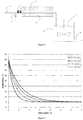
Fig. 1 represents an example of crystallisation setup according to the invention. -
Fig. 2 shows the results of a simulation of the temperature gradient in a capillary tube of an example of the invention. -
- 1: molecule/solvent solution entry line, 1 mm inner diameter or less;
- 2: Optional antisolvent entry line, 1 mm or less inner diameter;
- 3: restriction setup, various inner diameters placed in series;
- 4: cooling bath;
- 5: optional vessel with stirrer;
- 6: coolant;
- 7: collecting fluid;
- 8: output.
- The device and method of the invention is related to the controlled crystallisation of crystallisable soluble organic molecules such as active pharmaceutical ingredients. The device and method of the invention is particularly suitable for molecules where the crystallisation is mainly limited by the nucleation process. Preferred molecules are pharmaceutical ingredients and more general small organic molecules selected from the group consisting of acetylsalicylic acid, paracetamol, etiracetam, piracetam, brivaracetam, lamivudine, ketamine, lactic acid, lactate esters, antiretroviral drugs (like abacavir, atazanavir, darunavir, didanosine, efavirenz, emtricitabine, tenofovir, ...), ibuprofen, artesunate, entecavir, zanamivir and artemether, and others.
- The device and method of the invention is used to continuously nucleate and grow crystals of organic molecules (solute) in solution inside capillaries with inner diameter equal or less than 1 millimeter for industrial production. The very small size of the capillary ensures that saturation conditions can be varied very fast, getting in less than 1 second from under saturated conditions or metastable conditions (i.e. supersaturated conditions, but without spontaneous nucleation) to strongly supersaturated solutions, above the spontaneous nucleation threshold. For instance, surface to volume ratio in such system permits very fast and efficient cooling on one side, and the very small volume inside the capillary permits high concentration gradient improving antisolvent mixing on the other side.
- Nucleation can be obtained by either cooling and/or antisolvent injection. Fast cooling rates are achieved by flowing concentrated solutions into these capillaries. The tubular crystallizer is positioned at low temperatures generating highly supersaturated conditions. An example of such device is represented in
fig. 1 . An antisolvent, or non-solvent is a liquid, at least partially miscible with the solvent which reduces the solubility of the solute. - Depending on the molecule to be crystallised, suitable solvent can be a polar solvent selected from the group consisting of water, alcohol, (methanol, ethanol, propanol, isopropanol, hexanol) acetate (, ethyl acetate, isopropyl acetate,) Ketone (methyl isobutyl ketone, methyl isopropyl ketone) organic acid (acetic acid), acetone, acetonitrile, dimethyl formamide, dimethyl sulfoxide and their mixture or can be apolar solvent such as pentane, hexane, cyclohexane, tetrahydrofuran, benzene, toluene, diethyl ether or others.
- Typically, the antisolvent is another liquid selected from the same group consisting of water, alcohol, (methanol, ethanol, propanol, isopropanol, hexanol) acetate (, ethyl acetate, isopropyl acetate,) Ketone (methyl isobutyl ketone, methyl isopropyl ketone) organic acid (acetic acid), acetone, acetonitrile, dimethyl formamide, dimethyl sulfoxide and their mixture or can be apolar solvent such as pentane, hexane, cyclohexane, tetrahydrofuran, benzene, toluene, diethyl ether or others.
- Advantageously, cooled antisolvent can be added by a side feed, preferably at constant flow rates. In that case, both the side feed and the main feed are of capillary dimensions, so that fast mixing is obtained, ensuring fast spontaneous nucleation.
- Preferably, static mixers, such as restrictions of variable lengths and diameters, included in the flow path prior to cooling, help increasing and controlling the overall nucleation rate; hence, by parameter selection, predefined crystal sizes can easily be obtained with a micrometric dimension (typically between 5µm and 500µm) and a narrow size distribution, both ensuring appropriate biodisponibility and controllable pharmacokinetics.
- By restriction, it is meant a change in diameter over a certain distance as opposed to the normal inner diameter of the tubing. Such a restriction can have an inner diameter of 250 to 750 µm, over a length of 1 mm to 50 cm. The purpose of these restrictions is to induce recirculation zones at the end of the restriction in the flow path of the liquid and thus increasing cooling rates further downstream due to convection as well as increasing overall shear rates of the liquid over the full length of the crystallizer. Appropriate positioning of the restrictions renders a full control of crystal nucleation rate and therefore final crystal size.
- The dimensions of the capillary ensure fast cooling rates of all the liquid (10-50°C/s) at set flow rate. Length may vary between 15 cm and 10 m: shorter lengths (15 cm to 1m) are used when antisolvent is added to the crystallizing liquid, longer lengths (between 1 and 10 m) when only cooling crystallization is applied.
- Supersaturation is the driving force for nucleation. The fast cooling rates and/or antisolvent gradients obtained inside the apparatus provide high supersaturation values resulting in high enough nucleation rates in order to have a continuous stream of small crystals at the outlet of the apparatus. Preferred values between 2 and 18 as supersaturation is defined as σ=(C-C*)/C* with C is the actual concentration and C* the solubility value at the crystallization temperature.
- For example, following tests were made on Brivaracetam/IPAc (IsoPropylAcetate) at different concentrations. Induction time (appearance of crystals) is shown in table 1 for different increasing concentrations at a crystallization temperature of 20°C after flowing through the tube at 30 mL/min in a 7m long tubing.
Table 1 Brivaracetam/IPAc, Solubility at 20°C : 136 mg/mL; solubility at 45°C : ∼1100 mg/mL Flow of 30 mL/min, 7m long tubing, 1 restriction, bath temperature at 20°C, initial temperature at 45°C Concentration mg/mL Supersaturation Appearance of crystals 150 0.09 None 200 0.47 None 250 0.83 20 h 300 1.21 2 h 350 1.57 0.5 h 400 1.94 Immediate 500 2.68 Immediate 600 3.41 Immediate, white slurry coming out of tubing 800 4.88 Immediate, white slurry coming out of tubing - The combination of flow rates and tube length determines the residence time of the molecules inside the tubing. Moreover, the flow rate impacts the recirculation zones after the restrictions in flow. Therefore, the ideal combination of flow rates and supersaturation time gradient has to be found for each different molecule.
- Table 2 shows the change in crystal size for Brivaracetam/IPAc solutions for different flow rates Q at a crystallization temperature Tc of 0°C (so same overall supersaturation). The variation in crystal size is shown without and with a 5 cm long 500 µm restriction. "Needles and rods" indicate appearance of concurring crystallizations of the two possible crystal types of Brivaracetam. Therefore the method also influences selectivity for one single crystal form. In the case of Brivaracetam, rods are preferred.
- Decreasing flow rate results in longer residence times and therefore more nucleation, so smaller crystals are observed (
tests Table 2 Brivaracetam/IPAc, 600 mg/mL, 7 m long tubing, restriction of 5 cm long and inner diameter of 500µm, bath temperature at 0°C, initial temperature at 45°C. N° Tc σ Q Restriction Appearance crystals Crystal length J °C mL/min µm µm mL-1.s-1 1 0 11 54 none Needles and rods 2 0 11 43 none Rods 1020 ± 196 2 100 3 0 11 32 none Rods 365 ± 106 43 000 4 0 11 21 none Rods 258 ± 76 121000 5 0 11 54 500 Needles and rods 6 0 11 43 500 Rods 227 ± 64 181 000 7 0 11 32 500 Rods 121 ± 33 1 200 000 8 0 11 21 500 Rods 175 ± 100 400 000 - The advantage of using restriction(s) has already been indicated in previous tables. A series of tests was also performed using identical conditions and only changing the number of identical restrictions. In table 3, the tests were performed with restrictions of 1 mm in length and having an inner diameter of 500 µm. Crystal length decreases drastically when placing more restrictions in series in the tubing line.
Table 3 Brivaracetam/IPAc, 400 mg/mL, 7 m long tubing, bath temperature at 10°C, initial temperature at 45°C, flow rate of 30 mL/min. used restrictions: 1 mm long and 500 µm inner diameter N° Tc σ Q Restrictions Appearance crystals Crystal length J °C mL/min # µm mL.-1s-1 9 10 4.7 30 0 Rods 195 ± 62 66 000 10 10 4.7 30 1 Rods 62 ± 29 3 085 000 11 10 4.7 30 1 Rods 62 ± 20 1 609 000 12 10 4.7 30 2 Rods 46 ± 21 8 500 000 13 10 4.7 30 2 Rods 43 ± 18 7 300 000 14 10 4.7 30 3 Rods 37 ± 19 12 000 000 15 10 4.7 30 3 Rods 40 ± 19 11 500 000 16 10 4.7 30 4 Rods 35 ± 13 9 700 000 - Also different geometries of restriction were tested on Brivaracetam/IPAc mixtures: different lengths and different inner diameters. All result in fast crystallization and different obtained crystal lengths and sizes, as shown in table 4.
Table 4 Brivaracetam/IPAc, 400 mg/mL, 7 m long tubing, bath temperature at 10°C, initial temperature at 45°C, flow rate of 30 mL/min, one restriction of different lengths and widths N° Tc σ Q Restriction Appearance crystals Crystal length J length diameter °C mL/min cm µm µm mL-1.s-1 17 10 4.7 30 5 500 Rods 143 ± 52 310 000 18 10 4.7 30 5 750 Rods 120 ± 47 500 000 19 10 4.7 30 20 500 Rods 95 ± 34 642 000 20 10 4.7 30 50 500 Rods 207 + 45 132 000 21 10 4.7 30 100 500 Rods 211 ± 53 107 000 9 10 4.7 30 none Rods 195 + 62 131 000 - The length of the capillary tube has also been varied. In the following tests, antisolvent hexane at 4°C was added to a solution of Brivaracetam/IPAc. The varying parameters are listed in table 5. It became clear that for these cases different lengths of tubing are to be investigated, as too long tube results into blockage of the tubes due to too high solid content in suspension in the solution, as reported in table 6. In all cases, the preferred rods form was observed.
Table 5 Anti-solvent test conditions Parameter Used Values Concentration (mg.mL-1) 100, 150, 200, 300 Solution temperature (°C) 30 Hexane temperature (°C) 5 Solvent Flow Rate (mL.min-1) 20 Anti-solvent Flow Rate (mL.min-1) 20 Tubing inner diameter (µm) 500 Tubing length (cm) 18 - 33 - 50 - 100 Temperature crystal growth and filtration (°C) 25 Table 6 N° Initial concentration Brivaracetam/IPAc mg.mL-1 σ Tubular length cm Crystals Mean maximum length µm 22 150 8.4 18 6 ± 2 23 150 8.4 33 9 ± 5 24 150 8.4 50 10 ± 5 25 150 8.4 50 9 ± 4 26 150 8.4 100 Blocked tube 27 200 11.5 18 12 ± 6 28 200 11.5 33 7 ± 3 29 200 11.5 50 9 ± 5 30 200 11.5 50 7 ± 3 31 200 11.5 100 Blocked tube 32 300 17.8 50 8 ± 3 33 300 17.8 100 Blocked tube - Tubing length should also be adapted when no antisolvent is added to the molecule/solvent solution. For example in the crystallization of acetylsalicylic acid in Ethanol/water mixtures, it is observed that in tubes longer than 3 m, the solid content in suspension in the solution becomes so high that blockage of the tubing occurs as reported in table 7.
Table 7 Acetylsalicylic acid/ethanol-water, 300 mg/mL, bath temperature at 15°C, initial temperature at 60°C, flow rate of 30 mL/min. used restrictions: 4 restrictions of 1 mm long and 500 µm wide N° Tc σ Q tubing Crystal length °C mL/min length m diameter µm µm 34 15 27 30 7 500 Tube blocked 35 10 27 30 6 750 Tube blocked 36 10 27 30 5 500 Tube blocked 37 10 27 30 3 500 800 ± 68 38 10 27 30 3 500 820 ± 80 39 10 27 30 3 500 795 ± 73 - As can be seen from the reported results, depending on the crystallisation system to be treated, different parameters can be varied, and optimal setup depends on the solvent/solute combination and composition.
- The crystallization temperature is controlled by a water bath containing about 5L of water, temperature is monitored at all times by a thermocouple. This water is cooled by a 1 m long cupper serpentine plunged into the bath with cooling liquid flowing from and to a cryothermostat, the water bath itself is agitated with a magnetic bar stirrer. The internal volume of a 7m long tubing of 1 mm inner diameter is about 22 mL. As this volume is 220 times smaller than the volume of the present water it is assumed that the water temperature remains within a 0.5°C or smaller margin of the set temperature value.
- Especially since the wall thickness of the used tubing is 0.3 mm - PTFE - which enhances temperature exchange between crystallizing liquid and the water bath. Temperature simulations using COMSOL Multiphysics, above mentioned conditions, and - measured and documented - physicochemical values of the solute/solvent solution for heat capacity, heat conductivity and density have pointed out that temperature variation inside the tubing when flowing at different flow rates is fast and that the crystallization temperature of the water bath is reached for
flow rates 20 to 50 mL/min, starting from a tube length of 7 m long tubing. Simulated temperature variation as a function of tubing length is shown infigure 2 . - Solvents and solvent mixtures can have an increased viscosity, as is the case for ethanol/water mixtures: viscosity goes through a maximum of when mixed in a 50/50 volumetric ratio. Hence, it is expected that the inner diameter of the restrictions have to be reduced for a mixture of solvent and acetylsalicylic acid to have a positive effect on nucleation rate as opposed to Brivaracetam/Isopropyl acetate solutions.
- This reduction in size has to be performed in order to increase the reigning Reynolds number inside the restriction at set flow rates and concentrations. Indeed, in table 8, the average crystal lengths, Sphere Equivalent Diameter (SED) and nucleation rates are shown for 10 repeated tests of several conditions with varying inner diameter and number of restrictions for an acetylsalicylic acid/ethanol/water mixture of 200 mg acetylsalicylic acid/mL solvent in a 50/50 volumetric ratio of ethanol and water.
- The use of two restrictions with an inner diameter of 500 µm has some effect on the average size. It is however mostly the use of 250 µm inner diameter restrictions that have a drastic impact: not only is the average crystal length reduced; also the crystal aspect has changed: instead of rectangular rods with an observed equal width and depth for tests 37 to 40, this depth is reduced to about 1/5 of the width in
tests 43 and 44. - Therefore, the use of these restrictions has also a large impact on crystal appearance, pinpointing again to the influence of shear stresses on the nucleation behavior of small organic molecules. Next to this, the use of 2 restrictions increases drastically the nucleation rate by 2 orders of magnitude, as was also shown for Brivaracetam. It is expected that any molecule undergoing cooling crystallization in this setup will be influenced by the use and position of proposed flow path restrictions.
Table 8 Acetylsalicylic acid dissolved in ethanol/ water 50/50 vol%, 200 mg/mL, 3 m long tubing, restriction of 500 and 250µm wide and 1 mm long, initial temperature at 60°C, flowrate 30 mL/min, water bath set at 15°C, shown average results from 10 repeated tests where 15 mL of product was collected, filtered and dried.N° Tc σ Restriction type Crystal length Sphere Equivalent Diameter Nucleation rate °C µm µm mL-1.s-1 40 15 4.5 0 1319 ± 167 449 ± 74 2300 41 15 4.5 1 of 500 µm ID 1398 ± 100 490 ± 85 1900 42 15 4.5 2 of 500 µm ID 1049 ± 179 348 ± 104 3700 43 15 4.5 1 of 250 µm ID 962 ± 82 328 ± 31 5300 44 15 4.5 2 of 250 µm ID 393 ± 35 117 ± 20 130 000 - Using the proposed setup of
claim 1, the crystals will have attained a certain size and shape at the end of the tubular crystallizer, which corresponds to their nucleation rate attained inside the tubing. Obtaining different crystal sizes as end-product then depends on the time that is given to the crystals to mature further. - Tests reported in table 9 were performed on acetylsalicylic acid/ethanol/water solutions of 200 mg acetylsalicylic acid/mL solvent in a 50/50 volumetric ratio of ethanol/water, using a flow rate of 30 mL/min and a bath temperature of 10 °C. Crystal growth treatments varied between growth in suspension up to equilibrium followed by filtration and drying (test 45); filtration after 60 seconds (test 46); filtration after 90 seconds (test 47); addition of 250 mL of the mother liquor to 250 mL of a saturated 70 mg/mL acetylsalicylic acid/ethanol/water solution under gentle stirring followed by filtration and drying (test 48).
- When the product is filtered after 1 minute, the final product is indeed smaller than the product found at equilibrium. After 90 seconds this effect is already absent, meaning that equilibrium conditions are met very fast inside the liquor. The fact that average crystal length of test 47 is larger than
test 45 as to be found in small variations in nucleation rate as a function of time. When the same product is added to a saturated solution, overall concentration drops and therefore the system is more diluted after the nucleation step. Therefore, the number of nuclei formed inside the tubular crystallizer will undergo less growth and hence, reduced crystal sizes are obtained.Table 9 Acetylsalicylic acid dissolved in ethanol/ water 50/50 vol%, 200 mg/mL, 3 m long tubing, initial temperature at 60°C, flowrate 30 mL/min, water bath set at 10°C, no restrictions used.N° Tc σ Crystal growth treatment Crystal length Crystal width °C µm µm 45 10 6.7 Growth to equilibrium in tubing 500 ± 230 69 ± 27 46 10 6.7 filtration on 16 µm glass filter after 60s 359 ± 190 66 ± 35 47 10 6.7 filtration on 16 µm glass filter after 90s 646 ± 391 38 ± 23 48 10 6.7 Addition to saturated solution 172 ± 66 38 ± 13 - To further proof the effect of early filtration (see table 10), the liquor of
tests 43 and 44 were also directly filtered after exiting the tubing (test 49 and 50, respectively); the product of test 44 was also collected for 2 minutes and filtered afterwards (test 51). As a result, a very fine crystalline powder is obtained which does not require any further processing to be incorporated into tablets.Table 10 Acetylsalicylic acid dissolved in ethanol/ water 50/50 vol%, 200 mg/mL, 3 m long tubing, restrictions of 250µm wide and 1 mm long, initial temperature at 60°C, flowrate 30 mL/min, water bath set at 15°C. The thickness is set equal to 1/5th of the width (experimentally observed)N° Tc σ Restriction type Filtration Crystal length Crystal width Sphere Equivalent Diameter °C µm µm µm 49 15 4.5 1 of 250 µm ID At exit 104 ± 55 28 ± 13 32 ± 7 50 15 4.5 2 of 250 µm ID At exit 63 ± 36 23 ± 17 24 ± 8 51 15 4.5 2 of 250 µm ID After 120s 155 ± 91 36 ± 17 42 ± 11
Claims (16)
- Method for nucleating crystals from a solution comprising the steps of:- Injecting in a first capillary (1) tube an under saturated solution comprising a solvent and a soluble compound to be crystallised;- changing the local conditions of the solution downstream of the capillary tube (1) to supersaturated conditions above the metastable conditions, the transition time of the fluid flowing in the capillary tube between the under saturated conditions and the supersaturated conditions above the metastable conditions being less than 1000 ms, preferably below 100 ms, even more preferably less than 10 ms.
- Method according to claim 1 wherein the transition to supersaturated conditions is obtained by cooling down the capillary wall to temperature below the metastable temperature, and/or injecting a antisolvent in the injected stream, and/or injecting a cooled solvent, the cooled or antisolvent liquid being injected by a second capillary (2) tube having essentially the same dimension as the first capillary.
- Method according to claim 1 or 2 wherein the first capillary tube (1) has an internal diameter comprised between 1 mm and 100µm, preferably between 800µm and 500µm.
- Method according to any of the previous claims comprising the step of initially setting the supersaturation between -0.1 (i.e. under saturated) and the high concentration limit of the metastable conditions, supersaturation being defined as the relative difference between the local concentration of the compound to be crystallised and the solubility of the compound to be crystallised.
- Method according to any of the previous claims wherein the capillary tube comprises static mixing zone(s) (3) improving thermal, antisolvent diffusion and shear rate.
- Method according to claim 5 wherein the static mixing zone (3) comprises section restrictions, preferably, from one to four restrictions.
- Method according to claim 6 wherein the inner diameters of the restrictions are comprised between 250 and 750µm, and a length comprised between 1mm and 50cm.
- Method according to any of claims 5 to 7 wherein the static mixing zone is located upstream of the transition zone between under saturated or metastable conditions and supersaturated conditions above the metastable conditions.
- Method according to any of the previous claims wherein the supersaturation above the metastable conditions is comprised between 1.6 and 30, preferably between 2 and 18.
- Method according to any of the previous claims wherein the capillary length is comprised between 15cm and 10m.
- Method according to any of the previous claims wherein the flow in the capillary length is continuous.
- Method according to any of the previous claims wherein the flow rate of the under saturated solution is comprised between 2 and 200 mL/min, preferably between 10 and 50mL/min.
- Method according to any of the previous claims wherein the method is performed as a continuous open loop process.
- Method according to any of the previous claims wherein the soluble compound is Brivaracetam.
- Method for crystallising a compound from an under saturated solution comprising the steps of nucleating crystals of the compound by the method according to any of the previous claims and growing the obtained nuclei in a metastable supersaturated solution (7).
- Method of seeding a supersaturated solution (7) by injecting nuclei obtained by the method of any of the claims 1 to 13.
Priority Applications (6)
| Application Number | Priority Date | Filing Date | Title |
|---|---|---|---|
| EP18171018.7A EP3566760A1 (en) | 2018-05-07 | 2018-05-07 | Method for nucleating crystals from a solution in a capillary tube |
| PCT/EP2019/061347 WO2019215022A1 (en) | 2018-05-07 | 2019-05-03 | Method for improving nucleation of crystals from solution |
| US17/050,129 US20210238138A1 (en) | 2018-05-07 | 2019-05-03 | Method for improving nucleation of crystals from solution |
| CN201980022674.2A CN111936464A (en) | 2018-05-07 | 2019-05-03 | Methods to improve crystal nucleation in solution |
| JP2020561862A JP2021522063A (en) | 2018-05-07 | 2019-05-03 | How to improve crystal nucleation from solution |
| EP19724366.0A EP3790860A1 (en) | 2018-05-07 | 2019-05-03 | Method for improving nucleation of crystals from solution |
Applications Claiming Priority (1)
| Application Number | Priority Date | Filing Date | Title |
|---|---|---|---|
| EP18171018.7A EP3566760A1 (en) | 2018-05-07 | 2018-05-07 | Method for nucleating crystals from a solution in a capillary tube |
Publications (1)
| Publication Number | Publication Date |
|---|---|
| EP3566760A1 true EP3566760A1 (en) | 2019-11-13 |
Family
ID=62134091
Family Applications (2)
| Application Number | Title | Priority Date | Filing Date |
|---|---|---|---|
| EP18171018.7A Withdrawn EP3566760A1 (en) | 2018-05-07 | 2018-05-07 | Method for nucleating crystals from a solution in a capillary tube |
| EP19724366.0A Pending EP3790860A1 (en) | 2018-05-07 | 2019-05-03 | Method for improving nucleation of crystals from solution |
Family Applications After (1)
| Application Number | Title | Priority Date | Filing Date |
|---|---|---|---|
| EP19724366.0A Pending EP3790860A1 (en) | 2018-05-07 | 2019-05-03 | Method for improving nucleation of crystals from solution |
Country Status (5)
| Country | Link |
|---|---|
| US (1) | US20210238138A1 (en) |
| EP (2) | EP3566760A1 (en) |
| JP (1) | JP2021522063A (en) |
| CN (1) | CN111936464A (en) |
| WO (1) | WO2019215022A1 (en) |
Families Citing this family (2)
| Publication number | Priority date | Publication date | Assignee | Title |
|---|---|---|---|---|
| CN111943880A (en) * | 2019-05-14 | 2020-11-17 | 浙江京新药业股份有限公司 | A kind of brivaracetam crystal and its preparation method and application |
| GB202215072D0 (en) | 2022-10-13 | 2022-11-30 | Glaxosmithkline Biologicals Sa | Process for production of aluminium hydroxide particles |
Citations (2)
| Publication number | Priority date | Publication date | Assignee | Title |
|---|---|---|---|---|
| WO2001062726A2 (en) * | 2000-02-23 | 2001-08-30 | Ucb, S.A. | 2-oxo-1-pyrrolidine derivatives, processes for preparing them and their uses |
| CN106866483A (en) * | 2017-02-05 | 2017-06-20 | 苏州鹏旭医药科技有限公司 | Crystal formation C of Bu Waxitan and preparation method thereof |
Family Cites Families (2)
| Publication number | Priority date | Publication date | Assignee | Title |
|---|---|---|---|---|
| JPH0698245B2 (en) * | 1991-05-17 | 1994-12-07 | 株式会社神戸製鋼所 | Pressure crystallizer |
| US8187554B2 (en) * | 2008-04-23 | 2012-05-29 | Microfluidics International Corporation | Apparatus and methods for nanoparticle generation and process intensification of transport and reaction systems |
-
2018
- 2018-05-07 EP EP18171018.7A patent/EP3566760A1/en not_active Withdrawn
-
2019
- 2019-05-03 US US17/050,129 patent/US20210238138A1/en not_active Abandoned
- 2019-05-03 CN CN201980022674.2A patent/CN111936464A/en active Pending
- 2019-05-03 WO PCT/EP2019/061347 patent/WO2019215022A1/en not_active Ceased
- 2019-05-03 JP JP2020561862A patent/JP2021522063A/en active Pending
- 2019-05-03 EP EP19724366.0A patent/EP3790860A1/en active Pending
Patent Citations (2)
| Publication number | Priority date | Publication date | Assignee | Title |
|---|---|---|---|---|
| WO2001062726A2 (en) * | 2000-02-23 | 2001-08-30 | Ucb, S.A. | 2-oxo-1-pyrrolidine derivatives, processes for preparing them and their uses |
| CN106866483A (en) * | 2017-02-05 | 2017-06-20 | 苏州鹏旭医药科技有限公司 | Crystal formation C of Bu Waxitan and preparation method thereof |
Non-Patent Citations (9)
| Title |
|---|
| ALVAREZ A.J.; SINGH A.; MYERSON A.S., CRYST. GROWTH DES., vol. 11, 2011, pages 4392 - 4400 |
| BO ZHENG ET AL: "A Droplet-Based, Composite PDMS/Glass Capillary Microfluidic System for Evaluating Protein Crystallization Conditions by Microbatch and Vapor-Diffusion Methods with On-Chip X-Ray Diffraction", ANGEWANDTE CHEMIE INT. ED., vol. 43, no. 19, 8 April 2004 (2004-04-08) - 3 May 2004 (2004-05-03), pages 2508 - 2511, XP002783777, DOI: 10.1002/anie.200453974 * |
| COGONI G.; DE SOUZA B.P.; FRAWLEY P.J., CHEM. ENG. SCI., vol. 138, 2015, pages 592 - 599 |
| MAHMOODA SULTATA ET AL: "Microfluidic Continuous Seeded Crystallization: Extraction of Growth Kinetics and Impact of Impurity on Morphology", CRYSTAL GROWTH & DESIGN, vol. 12, no. 12, 5 November 2012 (2012-11-05), pages 6260 - 6266, XP002783778, DOI: 10.1021/cg301538y * |
| METZGER L.; KIND M., CHEM. ENG. SCI., vol. 133, 2015, pages 91 - 105 |
| MICHAEL M. ROBERTS ET AL: "Protein Crystallization by Forced Flow through Glass Capillaries: Enhanced Lysozyme Crystal Growth", CRYSTAL GROWTH & DESIGN, vol. 10, no. 3, 4 February 2010 (2010-02-04), pages 1074 - 1083, XP002783776, DOI: 10.1021/cg900492j * |
| RAFAEL J. P. EDER ET AL: "Continuously Seeded, Continuously Operated Tubular Crystallizer for the Production of Active Pharmaceutical Ingredients", CRYSTAL GROWTH DESIGN, vol. 10, no. 5, 13 April 2010 (2010-04-13), pages 2247 - 2257, XP002783779, DOI: 10.1021/cg9015788 * |
| S. TEYCHENÉ ET AL: "Crystal nucleation in a droplet based microfluidic crystallizer", CHEMICAL ENGINEERING SCIENCE, vol. 77, 22 February 2012 (2012-02-22) - 30 July 2012 (2012-07-30), pages 242 - 248, XP002783775, DOI: 10.1016/j.ces.2012.01.036 * |
| TING WANG ET AL: "Recent Progress of Continuous Crystallization", JOURNAL OF INDUSTRIAL AND ENGINEERING CHEMISTRY, vol. 54, 15 June 2017 (2017-06-15), pages 14 - 29, XP002783774, DOI: 10.1016/j.jiec.2017.06.009 * |
Also Published As
| Publication number | Publication date |
|---|---|
| WO2019215022A1 (en) | 2019-11-14 |
| EP3790860A1 (en) | 2021-03-17 |
| JP2021522063A (en) | 2021-08-30 |
| CN111936464A (en) | 2020-11-13 |
| US20210238138A1 (en) | 2021-08-05 |
Similar Documents
| Publication | Publication Date | Title |
|---|---|---|
| McGinty et al. | Nucleation and crystal growth in continuous crystallization | |
| US7041144B2 (en) | Hydrodynamic cavitation crystallization process | |
| JP5207432B2 (en) | Anti-solvent coagulation process | |
| JP4876208B2 (en) | Apparatus and method for crystallization by hydrodynamic cavitation | |
| Fang et al. | Ultrasound-assisted solution crystallization of fotagliptin benzoate: Process intensification and crystal product optimization | |
| Gao et al. | Ultrasonic irradiation and seeding to prevent metastable liquid–liquid phase separation and intensify crystallization | |
| Tacsi et al. | Development of a triple impinging jet mixer for continuous antisolvent crystallization of acetylsalicylic acid reaction mixture | |
| US20210238138A1 (en) | Method for improving nucleation of crystals from solution | |
| US20040005255A1 (en) | Appartus and process used in growing crystals | |
| Hussain et al. | Process intensified anti-solvent crystallization of o-aminobenzoic acid via sonication and flow | |
| Shen et al. | Recent advances in melt crystallization, towards process intensification and technique development | |
| CN107551599B (en) | Multi-stage feed anti-solvent spray crystallizer and spray crystallization method thereof | |
| Tacsi et al. | Implementation of sonicated continuous plug flow crystallization technology for processing of acetylsalicylic acid reaction mixture | |
| Du et al. | Membrane-assisted combined cooling and antisolvent crystallization for improved cefuroxime sodium manufacture: From metastable zone analysis to application | |
| de Hemptinne et al. | Controlled antisolvent crystallization of miconazole nitrate in microfluidic droplets | |
| US8216363B2 (en) | Continuous antisolvent crystallization process and system using plug flow reactors | |
| EP1603652B1 (en) | Hydrodynamic cavitation crystallization process | |
| CN108295500B (en) | Crystallization apparatus and crystallization method | |
| Igarashi et al. | Control of Crystal Size Distribution and Polymorphs in the Crystallization of Organic Compounds | |
| CN114394981A (en) | Micro-fluidic continuous crystallization method for dorivivir sodium | |
| KR101813794B1 (en) | Preparation method for crystallization using rotation disc crystallizer | |
| JP4731980B2 (en) | Method and system for crystallizing sterols | |
| HK1116225B (en) | Hydrodynamic cavitation crystallization device and process | |
| Alvarez | Particle engineering through control of size and polymorphic forms of pharmaceutical products crystallized from solution | |
| Rimez et al. | Continuous Nucleation Process of Lactose and Adipic Acid: Parameter Optimization from Laboratory-to Kilogram Pilot-Scale Operations |
Legal Events
| Date | Code | Title | Description |
|---|---|---|---|
| PUAI | Public reference made under article 153(3) epc to a published international application that has entered the european phase |
Free format text: ORIGINAL CODE: 0009012 |
|
| AK | Designated contracting states |
Kind code of ref document: A1 Designated state(s): AL AT BE BG CH CY CZ DE DK EE ES FI FR GB GR HR HU IE IS IT LI LT LU LV MC MK MT NL NO PL PT RO RS SE SI SK SM TR |
|
| AX | Request for extension of the european patent |
Extension state: BA ME |
|
| STAA | Information on the status of an ep patent application or granted ep patent |
Free format text: STATUS: THE APPLICATION IS DEEMED TO BE WITHDRAWN |
|
| 18D | Application deemed to be withdrawn |
Effective date: 20200603 |