EP3565038A1 - Method for preparing graphene/ternary material composite for use in lithium ion batteries and product thereof - Google Patents
Method for preparing graphene/ternary material composite for use in lithium ion batteries and product thereof Download PDFInfo
- Publication number
- EP3565038A1 EP3565038A1 EP16924912.5A EP16924912A EP3565038A1 EP 3565038 A1 EP3565038 A1 EP 3565038A1 EP 16924912 A EP16924912 A EP 16924912A EP 3565038 A1 EP3565038 A1 EP 3565038A1
- Authority
- EP
- European Patent Office
- Prior art keywords
- ternary material
- graphene
- graphene oxide
- ternary
- dispersion
- Prior art date
- Legal status (The legal status is an assumption and is not a legal conclusion. Google has not performed a legal analysis and makes no representation as to the accuracy of the status listed.)
- Pending
Links
- 239000000463 material Substances 0.000 title claims abstract description 134
- OKTJSMMVPCPJKN-UHFFFAOYSA-N Carbon Chemical compound [C] OKTJSMMVPCPJKN-UHFFFAOYSA-N 0.000 title claims abstract description 124
- 229910021389 graphene Inorganic materials 0.000 title claims abstract description 117
- 238000000034 method Methods 0.000 title claims abstract description 62
- 239000002131 composite material Substances 0.000 title claims abstract description 43
- 229910001416 lithium ion Inorganic materials 0.000 title claims abstract description 24
- HBBGRARXTFLTSG-UHFFFAOYSA-N Lithium ion Chemical compound [Li+] HBBGRARXTFLTSG-UHFFFAOYSA-N 0.000 title claims abstract description 21
- 238000006722 reduction reaction Methods 0.000 claims abstract description 36
- 239000006185 dispersion Substances 0.000 claims abstract description 30
- 238000003756 stirring Methods 0.000 claims abstract description 30
- 238000000137 annealing Methods 0.000 claims abstract description 25
- 239000003638 chemical reducing agent Substances 0.000 claims abstract description 22
- 239000011541 reaction mixture Substances 0.000 claims abstract description 17
- 239000003960 organic solvent Substances 0.000 claims abstract description 13
- VNWKTOKETHGBQD-UHFFFAOYSA-N methane Chemical compound C VNWKTOKETHGBQD-UHFFFAOYSA-N 0.000 claims abstract description 11
- 238000002156 mixing Methods 0.000 claims abstract description 11
- 230000009467 reduction Effects 0.000 claims abstract description 11
- 238000001035 drying Methods 0.000 claims abstract description 8
- 238000001704 evaporation Methods 0.000 claims abstract description 8
- 239000002904 solvent Substances 0.000 claims abstract description 8
- 239000000203 mixture Substances 0.000 claims abstract description 6
- LFQSCWFLJHTTHZ-UHFFFAOYSA-N Ethanol Chemical compound CCO LFQSCWFLJHTTHZ-UHFFFAOYSA-N 0.000 claims description 48
- ZMXDDKWLCZADIW-UHFFFAOYSA-N N,N-Dimethylformamide Chemical compound CN(C)C=O ZMXDDKWLCZADIW-UHFFFAOYSA-N 0.000 claims description 17
- CIWBSHSKHKDKBQ-JLAZNSOCSA-N Ascorbic acid Chemical compound OC[C@H](O)[C@H]1OC(=O)C(O)=C1O CIWBSHSKHKDKBQ-JLAZNSOCSA-N 0.000 claims description 15
- CSCPPACGZOOCGX-UHFFFAOYSA-N Acetone Chemical compound CC(C)=O CSCPPACGZOOCGX-UHFFFAOYSA-N 0.000 claims description 12
- LYCAIKOWRPUZTN-UHFFFAOYSA-N Ethylene glycol Chemical compound OCCO LYCAIKOWRPUZTN-UHFFFAOYSA-N 0.000 claims description 9
- PEDCQBHIVMGVHV-UHFFFAOYSA-N Glycerine Chemical compound OCC(O)CO PEDCQBHIVMGVHV-UHFFFAOYSA-N 0.000 claims description 9
- OKKJLVBELUTLKV-UHFFFAOYSA-N Methanol Chemical compound OC OKKJLVBELUTLKV-UHFFFAOYSA-N 0.000 claims description 9
- KWYUFKZDYYNOTN-UHFFFAOYSA-M Potassium hydroxide Chemical compound [OH-].[K+] KWYUFKZDYYNOTN-UHFFFAOYSA-M 0.000 claims description 9
- HEMHJVSKTPXQMS-UHFFFAOYSA-M Sodium hydroxide Chemical compound [OH-].[Na+] HEMHJVSKTPXQMS-UHFFFAOYSA-M 0.000 claims description 9
- IKDUDTNKRLTJSI-UHFFFAOYSA-N hydrazine monohydrate Substances O.NN IKDUDTNKRLTJSI-UHFFFAOYSA-N 0.000 claims description 9
- BDERNNFJNOPAEC-UHFFFAOYSA-N propan-1-ol Chemical compound CCCO BDERNNFJNOPAEC-UHFFFAOYSA-N 0.000 claims description 9
- NWZSZGALRFJKBT-KNIFDHDWSA-N (2s)-2,6-diaminohexanoic acid;(2s)-2-hydroxybutanedioic acid Chemical compound OC(=O)[C@@H](O)CC(O)=O.NCCCC[C@H](N)C(O)=O NWZSZGALRFJKBT-KNIFDHDWSA-N 0.000 claims description 8
- SECXISVLQFMRJM-UHFFFAOYSA-N N-Methylpyrrolidone Chemical compound CN1CCCC1=O SECXISVLQFMRJM-UHFFFAOYSA-N 0.000 claims description 8
- -1 lithium aluminum hydride Chemical compound 0.000 claims description 8
- 235000010323 ascorbic acid Nutrition 0.000 claims description 7
- 229960005070 ascorbic acid Drugs 0.000 claims description 7
- 239000011668 ascorbic acid Substances 0.000 claims description 7
- OAKJQQAXSVQMHS-UHFFFAOYSA-N Hydrazine Chemical compound NN OAKJQQAXSVQMHS-UHFFFAOYSA-N 0.000 claims description 6
- QIGBRXMKCJKVMJ-UHFFFAOYSA-N Hydroquinone Chemical compound OC1=CC=C(O)C=C1 QIGBRXMKCJKVMJ-UHFFFAOYSA-N 0.000 claims description 6
- KFZMGEQAYNKOFK-UHFFFAOYSA-N Isopropanol Chemical compound CC(C)O KFZMGEQAYNKOFK-UHFFFAOYSA-N 0.000 claims description 6
- LRHPLDYGYMQRHN-UHFFFAOYSA-N N-Butanol Chemical compound CCCCO LRHPLDYGYMQRHN-UHFFFAOYSA-N 0.000 claims description 6
- KFDQGLPGKXUTMZ-UHFFFAOYSA-N [Mn].[Co].[Ni] Chemical compound [Mn].[Co].[Ni] KFDQGLPGKXUTMZ-UHFFFAOYSA-N 0.000 claims description 6
- 238000002203 pretreatment Methods 0.000 claims description 6
- 150000001298 alcohols Chemical class 0.000 claims description 5
- XMBWDFGMSWQBCA-UHFFFAOYSA-N hydrogen iodide Chemical compound I XMBWDFGMSWQBCA-UHFFFAOYSA-N 0.000 claims description 5
- 229940071870 hydroiodic acid Drugs 0.000 claims description 5
- JVBXVOWTABLYPX-UHFFFAOYSA-L sodium dithionite Chemical compound [Na+].[Na+].[O-]S(=O)S([O-])=O JVBXVOWTABLYPX-UHFFFAOYSA-L 0.000 claims description 5
- WHXSMMKQMYFTQS-UHFFFAOYSA-N Lithium Chemical compound [Li] WHXSMMKQMYFTQS-UHFFFAOYSA-N 0.000 claims description 4
- 229910052744 lithium Inorganic materials 0.000 claims description 4
- DIIIISSCIXVANO-UHFFFAOYSA-N 1,2-Dimethylhydrazine Chemical compound CNNC DIIIISSCIXVANO-UHFFFAOYSA-N 0.000 claims description 3
- VHUUQVKOLVNVRT-UHFFFAOYSA-N Ammonium hydroxide Chemical compound [NH4+].[OH-] VHUUQVKOLVNVRT-UHFFFAOYSA-N 0.000 claims description 3
- 229930091371 Fructose Natural products 0.000 claims description 3
- 239000005715 Fructose Substances 0.000 claims description 3
- RFSUNEUAIZKAJO-ARQDHWQXSA-N Fructose Chemical compound OC[C@H]1O[C@](O)(CO)[C@@H](O)[C@@H]1O RFSUNEUAIZKAJO-ARQDHWQXSA-N 0.000 claims description 3
- WQZGKKKJIJFFOK-GASJEMHNSA-N Glucose Natural products OC[C@H]1OC(O)[C@H](O)[C@@H](O)[C@@H]1O WQZGKKKJIJFFOK-GASJEMHNSA-N 0.000 claims description 3
- CZMRCDWAGMRECN-UGDNZRGBSA-N Sucrose Chemical compound O[C@H]1[C@H](O)[C@@H](CO)O[C@@]1(CO)O[C@@H]1[C@H](O)[C@@H](O)[C@H](O)[C@@H](CO)O1 CZMRCDWAGMRECN-UGDNZRGBSA-N 0.000 claims description 3
- 229930006000 Sucrose Natural products 0.000 claims description 3
- 241001122767 Theaceae Species 0.000 claims description 3
- 239000002253 acid Substances 0.000 claims description 3
- 150000007513 acids Chemical class 0.000 claims description 3
- QGZKDVFQNNGYKY-UHFFFAOYSA-N ammonia Natural products N QGZKDVFQNNGYKY-UHFFFAOYSA-N 0.000 claims description 3
- 238000000498 ball milling Methods 0.000 claims description 3
- WQZGKKKJIJFFOK-VFUOTHLCSA-N beta-D-glucose Chemical compound OC[C@H]1O[C@@H](O)[C@H](O)[C@@H](O)[C@@H]1O WQZGKKKJIJFFOK-VFUOTHLCSA-N 0.000 claims description 3
- 239000008103 glucose Substances 0.000 claims description 3
- 239000012280 lithium aluminium hydride Substances 0.000 claims description 3
- 229910052987 metal hydride Inorganic materials 0.000 claims description 3
- 150000004681 metal hydrides Chemical class 0.000 claims description 3
- 150000002989 phenols Chemical class 0.000 claims description 3
- HKOOXMFOFWEVGF-UHFFFAOYSA-N phenylhydrazine Chemical compound NNC1=CC=CC=C1 HKOOXMFOFWEVGF-UHFFFAOYSA-N 0.000 claims description 3
- 229940067157 phenylhydrazine Drugs 0.000 claims description 3
- 150000008442 polyphenolic compounds Chemical class 0.000 claims description 3
- 235000013824 polyphenols Nutrition 0.000 claims description 3
- WQGWDDDVZFFDIG-UHFFFAOYSA-N pyrogallol Chemical compound OC1=CC=CC(O)=C1O WQGWDDDVZFFDIG-UHFFFAOYSA-N 0.000 claims description 3
- 239000012279 sodium borohydride Substances 0.000 claims description 3
- 229910000033 sodium borohydride Inorganic materials 0.000 claims description 3
- 238000000527 sonication Methods 0.000 claims description 3
- 239000005720 sucrose Substances 0.000 claims description 3
- 235000000346 sugar Nutrition 0.000 claims description 3
- 150000008163 sugars Chemical class 0.000 claims description 3
- 238000001132 ultrasonic dispersion Methods 0.000 claims description 3
- 238000002360 preparation method Methods 0.000 abstract description 3
- 239000002994 raw material Substances 0.000 description 33
- 239000000243 solution Substances 0.000 description 22
- 239000000843 powder Substances 0.000 description 18
- 239000011259 mixed solution Substances 0.000 description 14
- 230000001351 cycling effect Effects 0.000 description 11
- 238000011056 performance test Methods 0.000 description 10
- 238000010277 constant-current charging Methods 0.000 description 9
- 230000014759 maintenance of location Effects 0.000 description 9
- 238000006243 chemical reaction Methods 0.000 description 8
- 230000004048 modification Effects 0.000 description 8
- 238000012986 modification Methods 0.000 description 8
- WMFOQBRAJBCJND-UHFFFAOYSA-M Lithium hydroxide Chemical compound [Li+].[OH-] WMFOQBRAJBCJND-UHFFFAOYSA-M 0.000 description 6
- 239000013078 crystal Substances 0.000 description 5
- 238000007599 discharging Methods 0.000 description 5
- 239000011572 manganese Substances 0.000 description 5
- QVGXLLKOCUKJST-UHFFFAOYSA-N atomic oxygen Chemical compound [O] QVGXLLKOCUKJST-UHFFFAOYSA-N 0.000 description 4
- PXHVJJICTQNCMI-UHFFFAOYSA-N nickel Substances [Ni] PXHVJJICTQNCMI-UHFFFAOYSA-N 0.000 description 4
- 229910052760 oxygen Inorganic materials 0.000 description 4
- 239000001301 oxygen Substances 0.000 description 4
- 239000002245 particle Substances 0.000 description 4
- 230000008569 process Effects 0.000 description 4
- 150000003624 transition metals Chemical class 0.000 description 4
- 239000002033 PVDF binder Substances 0.000 description 3
- 230000000694 effects Effects 0.000 description 3
- 238000009776 industrial production Methods 0.000 description 3
- 229910052759 nickel Inorganic materials 0.000 description 3
- 125000004430 oxygen atom Chemical group O* 0.000 description 3
- 229920002981 polyvinylidene fluoride Polymers 0.000 description 3
- XLYOFNOQVPJJNP-UHFFFAOYSA-N water Substances O XLYOFNOQVPJJNP-UHFFFAOYSA-N 0.000 description 3
- CURLTUGMZLYLDI-UHFFFAOYSA-N Carbon dioxide Chemical compound O=C=O CURLTUGMZLYLDI-UHFFFAOYSA-N 0.000 description 2
- 229910032387 LiCoO2 Inorganic materials 0.000 description 2
- 229910014336 LiNi1-x-yCoxMnyO2 Inorganic materials 0.000 description 2
- 229910014446 LiNi1−x-yCoxMnyO2 Inorganic materials 0.000 description 2
- 229910014825 LiNi1−x−yCoxMnyO2 Inorganic materials 0.000 description 2
- 238000002441 X-ray diffraction Methods 0.000 description 2
- 230000015572 biosynthetic process Effects 0.000 description 2
- 229910052799 carbon Inorganic materials 0.000 description 2
- 239000010406 cathode material Substances 0.000 description 2
- 238000007600 charging Methods 0.000 description 2
- 238000010280 constant potential charging Methods 0.000 description 2
- 239000011267 electrode slurry Substances 0.000 description 2
- 229910002804 graphite Inorganic materials 0.000 description 2
- 239000010439 graphite Substances 0.000 description 2
- 238000010438 heat treatment Methods 0.000 description 2
- 239000003273 ketjen black Substances 0.000 description 2
- 239000002243 precursor Substances 0.000 description 2
- 239000011163 secondary particle Substances 0.000 description 2
- 238000012360 testing method Methods 0.000 description 2
- 229910052723 transition metal Inorganic materials 0.000 description 2
- 229910001428 transition metal ion Inorganic materials 0.000 description 2
- 238000005406 washing Methods 0.000 description 2
- XMWRBQBLMFGWIX-UHFFFAOYSA-N C60 fullerene Chemical compound C12=C3C(C4=C56)=C7C8=C5C5=C9C%10=C6C6=C4C1=C1C4=C6C6=C%10C%10=C9C9=C%11C5=C8C5=C8C7=C3C3=C7C2=C1C1=C2C4=C6C4=C%10C6=C9C9=C%11C5=C5C8=C3C3=C7C1=C1C2=C4C6=C2C9=C5C3=C12 XMWRBQBLMFGWIX-UHFFFAOYSA-N 0.000 description 1
- 229910052493 LiFePO4 Inorganic materials 0.000 description 1
- 229910002993 LiMnO2 Inorganic materials 0.000 description 1
- 229910012528 LiNi0.4Co0.4Mn0.2O2 Inorganic materials 0.000 description 1
- 229910012406 LiNi0.5 Inorganic materials 0.000 description 1
- 229910012742 LiNi0.5Co0.3Mn0.2O2 Inorganic materials 0.000 description 1
- 229910012881 LiNi0.6Co0.2Al0.2O2 Inorganic materials 0.000 description 1
- 229910011328 LiNi0.6Co0.2Mn0.2O2 Inorganic materials 0.000 description 1
- 229910003005 LiNiO2 Inorganic materials 0.000 description 1
- 229910001228 Li[Ni1/3Co1/3Mn1/3]O2 (NCM 111) Inorganic materials 0.000 description 1
- 229910002097 Lithium manganese(III,IV) oxide Inorganic materials 0.000 description 1
- 238000005411 Van der Waals force Methods 0.000 description 1
- IDSMHEZTLOUMLM-UHFFFAOYSA-N [Li].[O].[Co] Chemical class [Li].[O].[Co] IDSMHEZTLOUMLM-UHFFFAOYSA-N 0.000 description 1
- FBDMTTNVIIVBKI-UHFFFAOYSA-N [O-2].[Mn+2].[Co+2].[Ni+2].[Li+] Chemical class [O-2].[Mn+2].[Co+2].[Ni+2].[Li+] FBDMTTNVIIVBKI-UHFFFAOYSA-N 0.000 description 1
- 230000002411 adverse Effects 0.000 description 1
- 238000005054 agglomeration Methods 0.000 description 1
- 230000002776 aggregation Effects 0.000 description 1
- 229910052782 aluminium Inorganic materials 0.000 description 1
- XAGFODPZIPBFFR-UHFFFAOYSA-N aluminium Chemical compound [Al] XAGFODPZIPBFFR-UHFFFAOYSA-N 0.000 description 1
- 239000003125 aqueous solvent Substances 0.000 description 1
- 230000009286 beneficial effect Effects 0.000 description 1
- 125000004432 carbon atom Chemical group C* 0.000 description 1
- 239000001569 carbon dioxide Substances 0.000 description 1
- 229910002092 carbon dioxide Inorganic materials 0.000 description 1
- 239000002041 carbon nanotube Substances 0.000 description 1
- 229910021393 carbon nanotube Inorganic materials 0.000 description 1
- 238000005119 centrifugation Methods 0.000 description 1
- 230000008859 change Effects 0.000 description 1
- 238000005056 compaction Methods 0.000 description 1
- 150000001875 compounds Chemical class 0.000 description 1
- 239000006258 conductive agent Substances 0.000 description 1
- 238000001816 cooling Methods 0.000 description 1
- 238000002425 crystallisation Methods 0.000 description 1
- 230000008025 crystallization Effects 0.000 description 1
- 230000007547 defect Effects 0.000 description 1
- 230000006866 deterioration Effects 0.000 description 1
- 238000009792 diffusion process Methods 0.000 description 1
- 238000009826 distribution Methods 0.000 description 1
- 239000003792 electrolyte Substances 0.000 description 1
- 238000005516 engineering process Methods 0.000 description 1
- 230000007613 environmental effect Effects 0.000 description 1
- 230000006355 external stress Effects 0.000 description 1
- 239000011888 foil Substances 0.000 description 1
- 229910003472 fullerene Inorganic materials 0.000 description 1
- 125000000524 functional group Chemical group 0.000 description 1
- 230000002209 hydrophobic effect Effects 0.000 description 1
- 238000001027 hydrothermal synthesis Methods 0.000 description 1
- 239000012535 impurity Substances 0.000 description 1
- 238000010348 incorporation Methods 0.000 description 1
- 230000000977 initiatory effect Effects 0.000 description 1
- 238000009830 intercalation Methods 0.000 description 1
- 230000002687 intercalation Effects 0.000 description 1
- XGZVUEUWXADBQD-UHFFFAOYSA-L lithium carbonate Chemical compound [Li+].[Li+].[O-]C([O-])=O XGZVUEUWXADBQD-UHFFFAOYSA-L 0.000 description 1
- 229910052808 lithium carbonate Inorganic materials 0.000 description 1
- 229910000625 lithium cobalt oxide Inorganic materials 0.000 description 1
- GELKBWJHTRAYNV-UHFFFAOYSA-K lithium iron phosphate Chemical compound [Li+].[Fe+2].[O-]P([O-])([O-])=O GELKBWJHTRAYNV-UHFFFAOYSA-K 0.000 description 1
- FUJCRWPEOMXPAD-UHFFFAOYSA-N lithium oxide Chemical compound [Li+].[Li+].[O-2] FUJCRWPEOMXPAD-UHFFFAOYSA-N 0.000 description 1
- 229910001947 lithium oxide Inorganic materials 0.000 description 1
- 238000005461 lubrication Methods 0.000 description 1
- 229910052748 manganese Inorganic materials 0.000 description 1
- 239000011159 matrix material Substances 0.000 description 1
- 229910052751 metal Inorganic materials 0.000 description 1
- 239000002184 metal Substances 0.000 description 1
- MCPLVIGCWWTHFH-UHFFFAOYSA-L methyl blue Chemical compound [Na+].[Na+].C1=CC(S(=O)(=O)[O-])=CC=C1NC1=CC=C(C(=C2C=CC(C=C2)=[NH+]C=2C=CC(=CC=2)S([O-])(=O)=O)C=2C=CC(NC=3C=CC(=CC=3)S([O-])(=O)=O)=CC=2)C=C1 MCPLVIGCWWTHFH-UHFFFAOYSA-L 0.000 description 1
- 125000000896 monocarboxylic acid group Chemical group 0.000 description 1
- 239000002135 nanosheet Substances 0.000 description 1
- 229920000642 polymer Polymers 0.000 description 1
- 239000007774 positive electrode material Substances 0.000 description 1
- 238000010298 pulverizing process Methods 0.000 description 1
- 238000011160 research Methods 0.000 description 1
- 238000005096 rolling process Methods 0.000 description 1
- 238000010583 slow cooling Methods 0.000 description 1
- 150000003384 small molecules Chemical class 0.000 description 1
- 239000007787 solid Substances 0.000 description 1
- 229910052596 spinel Inorganic materials 0.000 description 1
- 239000011029 spinel Substances 0.000 description 1
- 230000006641 stabilisation Effects 0.000 description 1
- 238000011105 stabilization Methods 0.000 description 1
- 239000000126 substance Substances 0.000 description 1
- 230000007704 transition Effects 0.000 description 1
- 229910000314 transition metal oxide Inorganic materials 0.000 description 1
- 229910052721 tungsten Inorganic materials 0.000 description 1
Images


Classifications
-
- H—ELECTRICITY
- H01—ELECTRIC ELEMENTS
- H01M—PROCESSES OR MEANS, e.g. BATTERIES, FOR THE DIRECT CONVERSION OF CHEMICAL ENERGY INTO ELECTRICAL ENERGY
- H01M4/00—Electrodes
- H01M4/02—Electrodes composed of, or comprising, active material
- H01M4/13—Electrodes for accumulators with non-aqueous electrolyte, e.g. for lithium-accumulators; Processes of manufacture thereof
- H01M4/131—Electrodes based on mixed oxides or hydroxides, or on mixtures of oxides or hydroxides, e.g. LiCoOx
-
- H—ELECTRICITY
- H01—ELECTRIC ELEMENTS
- H01M—PROCESSES OR MEANS, e.g. BATTERIES, FOR THE DIRECT CONVERSION OF CHEMICAL ENERGY INTO ELECTRICAL ENERGY
- H01M4/00—Electrodes
- H01M4/02—Electrodes composed of, or comprising, active material
- H01M4/36—Selection of substances as active materials, active masses, active liquids
- H01M4/362—Composites
-
- H—ELECTRICITY
- H01—ELECTRIC ELEMENTS
- H01M—PROCESSES OR MEANS, e.g. BATTERIES, FOR THE DIRECT CONVERSION OF CHEMICAL ENERGY INTO ELECTRICAL ENERGY
- H01M4/00—Electrodes
- H01M4/02—Electrodes composed of, or comprising, active material
- H01M4/36—Selection of substances as active materials, active masses, active liquids
- H01M4/362—Composites
- H01M4/364—Composites as mixtures
-
- H—ELECTRICITY
- H01—ELECTRIC ELEMENTS
- H01M—PROCESSES OR MEANS, e.g. BATTERIES, FOR THE DIRECT CONVERSION OF CHEMICAL ENERGY INTO ELECTRICAL ENERGY
- H01M10/00—Secondary cells; Manufacture thereof
- H01M10/05—Accumulators with non-aqueous electrolyte
- H01M10/052—Li-accumulators
- H01M10/0525—Rocking-chair batteries, i.e. batteries with lithium insertion or intercalation in both electrodes; Lithium-ion batteries
-
- H—ELECTRICITY
- H01—ELECTRIC ELEMENTS
- H01M—PROCESSES OR MEANS, e.g. BATTERIES, FOR THE DIRECT CONVERSION OF CHEMICAL ENERGY INTO ELECTRICAL ENERGY
- H01M4/00—Electrodes
- H01M4/02—Electrodes composed of, or comprising, active material
- H01M4/13—Electrodes for accumulators with non-aqueous electrolyte, e.g. for lithium-accumulators; Processes of manufacture thereof
- H01M4/139—Processes of manufacture
- H01M4/1391—Processes of manufacture of electrodes based on mixed oxides or hydroxides, or on mixtures of oxides or hydroxides, e.g. LiCoOx
-
- H—ELECTRICITY
- H01—ELECTRIC ELEMENTS
- H01M—PROCESSES OR MEANS, e.g. BATTERIES, FOR THE DIRECT CONVERSION OF CHEMICAL ENERGY INTO ELECTRICAL ENERGY
- H01M4/00—Electrodes
- H01M4/02—Electrodes composed of, or comprising, active material
- H01M4/36—Selection of substances as active materials, active masses, active liquids
- H01M4/48—Selection of substances as active materials, active masses, active liquids of inorganic oxides or hydroxides
- H01M4/485—Selection of substances as active materials, active masses, active liquids of inorganic oxides or hydroxides of mixed oxides or hydroxides for inserting or intercalating light metals, e.g. LiTi2O4 or LiTi2OxFy
-
- H—ELECTRICITY
- H01—ELECTRIC ELEMENTS
- H01M—PROCESSES OR MEANS, e.g. BATTERIES, FOR THE DIRECT CONVERSION OF CHEMICAL ENERGY INTO ELECTRICAL ENERGY
- H01M4/00—Electrodes
- H01M4/02—Electrodes composed of, or comprising, active material
- H01M4/36—Selection of substances as active materials, active masses, active liquids
- H01M4/48—Selection of substances as active materials, active masses, active liquids of inorganic oxides or hydroxides
- H01M4/50—Selection of substances as active materials, active masses, active liquids of inorganic oxides or hydroxides of manganese
- H01M4/505—Selection of substances as active materials, active masses, active liquids of inorganic oxides or hydroxides of manganese of mixed oxides or hydroxides containing manganese for inserting or intercalating light metals, e.g. LiMn2O4 or LiMn2OxFy
-
- H—ELECTRICITY
- H01—ELECTRIC ELEMENTS
- H01M—PROCESSES OR MEANS, e.g. BATTERIES, FOR THE DIRECT CONVERSION OF CHEMICAL ENERGY INTO ELECTRICAL ENERGY
- H01M4/00—Electrodes
- H01M4/02—Electrodes composed of, or comprising, active material
- H01M4/36—Selection of substances as active materials, active masses, active liquids
- H01M4/48—Selection of substances as active materials, active masses, active liquids of inorganic oxides or hydroxides
- H01M4/52—Selection of substances as active materials, active masses, active liquids of inorganic oxides or hydroxides of nickel, cobalt or iron
- H01M4/525—Selection of substances as active materials, active masses, active liquids of inorganic oxides or hydroxides of nickel, cobalt or iron of mixed oxides or hydroxides containing iron, cobalt or nickel for inserting or intercalating light metals, e.g. LiNiO2, LiCoO2 or LiCoOxFy
-
- H—ELECTRICITY
- H01—ELECTRIC ELEMENTS
- H01M—PROCESSES OR MEANS, e.g. BATTERIES, FOR THE DIRECT CONVERSION OF CHEMICAL ENERGY INTO ELECTRICAL ENERGY
- H01M4/00—Electrodes
- H01M4/02—Electrodes composed of, or comprising, active material
- H01M4/36—Selection of substances as active materials, active masses, active liquids
- H01M4/58—Selection of substances as active materials, active masses, active liquids of inorganic compounds other than oxides or hydroxides, e.g. sulfides, selenides, tellurides, halogenides or LiCoFy; of polyanionic structures, e.g. phosphates, silicates or borates
- H01M4/583—Carbonaceous material, e.g. graphite-intercalation compounds or CFx
- H01M4/587—Carbonaceous material, e.g. graphite-intercalation compounds or CFx for inserting or intercalating light metals
-
- H—ELECTRICITY
- H01—ELECTRIC ELEMENTS
- H01M—PROCESSES OR MEANS, e.g. BATTERIES, FOR THE DIRECT CONVERSION OF CHEMICAL ENERGY INTO ELECTRICAL ENERGY
- H01M4/00—Electrodes
- H01M4/02—Electrodes composed of, or comprising, active material
- H01M4/62—Selection of inactive substances as ingredients for active masses, e.g. binders, fillers
- H01M4/624—Electric conductive fillers
- H01M4/625—Carbon or graphite
-
- Y—GENERAL TAGGING OF NEW TECHNOLOGICAL DEVELOPMENTS; GENERAL TAGGING OF CROSS-SECTIONAL TECHNOLOGIES SPANNING OVER SEVERAL SECTIONS OF THE IPC; TECHNICAL SUBJECTS COVERED BY FORMER USPC CROSS-REFERENCE ART COLLECTIONS [XRACs] AND DIGESTS
- Y02—TECHNOLOGIES OR APPLICATIONS FOR MITIGATION OR ADAPTATION AGAINST CLIMATE CHANGE
- Y02E—REDUCTION OF GREENHOUSE GAS [GHG] EMISSIONS, RELATED TO ENERGY GENERATION, TRANSMISSION OR DISTRIBUTION
- Y02E60/00—Enabling technologies; Technologies with a potential or indirect contribution to GHG emissions mitigation
- Y02E60/10—Energy storage using batteries
Definitions
- the present invention relates to the technical field of lithium ion battery materials.
- the present invention relates to a method for preparing a graphene/ternary material composite for use in lithium ion batteries, and a product prepared by the method.
- Lithium ion batteries are widely used in the fields of electronic products, electric vehicles, medical equipment, aerospace, etc. With the advancement of technologies, after the requirements of safety, cost, longevity and environmental protection are met, the key performance indicators of the lithium ion batteries are high energy density and fast discharge capability.
- the cathode materials, LiCoO 2 , LiMn 2 O 4 and LiFePO 4 for commercialized lithium ion batteries have an actual maximum specific capacity of only 145 mAh/g, and also have the disadvantages of high cost, poor safety, poor consistency and the like.
- the ternary materials, such as nickel-cobalt-lithium manganese oxide composites have a high capacity and an actual specific capacity of up to 200 mAh/g.
- the ternary materials have the advantages of low cost, good stability, high safety and so on. Moreover, the ternary materials have a relatively low requirement on the environment and equipment, can be relatively easily prepared and processed, have high consistency and reliability, and thus can achieve high energy density. In recent years, some lithium cobalt oxides have been gradually replaced by the ternary materials. In the next five years, the ternary materials will be the mainstream of R&D and industrialization, and also will be the most promising cathode materials for next-generation power lithium ion batteries and high-energy density small-sized lithium ion batteries for electronic products.
- the ternary materials have good electrochemical performances, there are still problems to be solved in terms of the practical applicability, for example, the disorder of high-nickel materials; the oxygen loss and phase transition caused by delithiation in the first cycle, resulting in poor initial effect; low conductivity, poor performance at a high rate, and so on.
- researchers have done a lot of solid research works ranging from the method for preparing materials to the modification of materials. Carbon modification has become one of the most popular directions for improving the rate performance of materials.
- papers and patent applications regarding the modification of lithium iron phosphate with graphene have been reported frequently, while papers and patent applications regarding the modification of ternary materials with graphene are relatively rare.
- the modification of the ternary materials is carried out preferably by using an organic solvent, so as to avoid the adverse effects of water on the ternary materials.
- ternary materials with graphene there are two main ways for the modification of ternary materials with graphene.
- One way is to modify the ternary materials directly by using graphene as a raw material, and for this way, a commercial method is to directly use graphene as a conductive agent. In this way, the content of graphene is generally less than 2%, and the rate performance is improved.
- Another way is to modify the ternary materials with graphene oxide as a raw material.
- the related patents and patent applications are as follows: in the patent for which the patent right was granted in 2015 with the granted publication No. CN103500826B , graphite oxide is functionalized with methyl blue, and then a reduction reaction is performed to obtain a hydrophilically-modified graphene, thereby modifying the positive electrode materials.
- the present invention relates to a method for preparing a graphene/ternary material composite for use in lithium ion batteries, comprising the steps of:
- the present invention relates to a graphene/ternary material composite for use in lithium ion batteries prepared by the method of the present invention.
- the present invention has one or more of the following advantages: 1. the high mechanical flexibility of the graphene sheet layer can provide lubrication effect, thereby improving the compaction density of the ternary material particles; 2. the graphene sheet layer relieves the external stress, and thus reduces the crushing of the secondary particles in the rolling and cycling processes; 3. the graphene nanosheet layer structure forms an efficient three-dimensional conductive network, which ameliorates the deterioration of conductivity caused by the formation of a fresh particle surface after the crushing or pulverization of the secondary particles, and meanwhile ensures the conductive contact of the particles during the cycle, greatly improving the rate performance and cycling performance of the ternary materials; 4.
- the chemical reduction method employed is simple in process, relatively low in cost as compared to the heating reduction method, environmentally friendly, and suitable for industrial production. Therefore, the present invention provides a graphene/ternary material composite having a three-dimensional network structure and a method for preparing the same in a cost-effective manner, which improve the lithium ion diffusion coefficient and/or electronic conductivity of the ternary material for lithium ion batteries, and/or suppress the capacity decay of the material during the high rate discharging.
- the ternary material for use in lithium ion batteries was first reported in 1999 as a nickel-cobalt-manganese ternary transition metal oxide composite having a structural formula of LiNi 1-x-y Co x Mn y O 2 (0 ⁇ x ⁇ 0.5, and 0 ⁇ y ⁇ 0.5).
- the material offers combined advantages such as the good cycling performance of LiCoO 2 , the high specific capacity of LiNiO 2 , and the high safety and low cost of LiMnO 2 .
- the ternary material is one or more selected from the group consisting of nickel-cobalt-manganese ternary materials, nickel-cobalt-aluminum ternary materials, and lithium-rich ternary materials.
- the nickel-cobalt-manganese ternary material has a structural formula of LiNi 1-x-y Co x Mn y O 2 (0 ⁇ x ⁇ 0.5, and 0 ⁇ y ⁇ 0.5).
- the nickel-cobalt-manganese ternary material is one or more selected from the group consisting of LiNi 1/3 Co 1/3 Mn 1/3 O 2 (Type 333), LiNi 0.5 Co 0.3 Mn 0.2 O 2 (Type 532), LiNi 0.4 Co 0.4 Mn 0.2 O 2 (Type 442), LiNi0.6Co0.2Mn0.2O2 (Type 611), and LiNi 0.8 CO 0.10 Mn 0.10 O 2 (Type 811) ternary materials.
- the nickel-cobalt-aluminum ternary material is one or more selected from the group consisting of LiNi 0.5 Co 0.3 Al 0.2 O 2 (Type 532), LiNi 0.6 Co 0.2 Al 0.2 O 2 (Type 611), and LiNi 0.8 CO 0.10 Al 0.10 O 2 (Type 811).
- the ternary material is present in the form of powder.
- the ternary material is present in the form of crystalline powder.
- the ternary material crystal belongs to the hexagonal crystal system with an ⁇ -NaFeO 2 -type layered structure and a space group of R3m, wherein Li + and the transition metal ions alternately occupy positions 3a (0,0,0) and 3b (0,0,1/2), and O 2- is located at position 6c (0,0,z).
- the O at position 6c is cubic close-packed, and the transition metal layer is composed of Ni, Mn, and Co.
- Each transition metal atom is surrounded by 6 oxygen atoms to form an MO 6 octahedral structure.
- the transition metal ion at position 3b and Li at position 3a alternately occupy the voids of the octahedron, and Li + is intercalated between the LiNi 0-x-y Co x Mn y O 2 layers formed of the transition metal atoms and oxygen.
- the ternary material Due to the different ratios of transition metals, the ternary material has different electrochemical properties.
- an increase in Co content is beneficial to stabilization of the layered structure of the compound, thereby improving the cycling performance; an increase in Ni content can achieve a higher capacity, but will result in deteriorated cycling performance; and the incorporation of Mn can reduce the cost and improve the stability of the matrix, but excess Mn will lead to the formation of a spinel phase, thereby destroying the layered structure.
- Graphene a two-dimensional free-state atomic crystal, is the basic structural unit for constructing zero-dimensional fullerene, one-dimensional carbon nanotubes and three-dimensional graphite. It has special physical and chemical properties such as high electrical conductivity, high thermal conductivity, high hardness and high strength, and thus can find broad application in the fields of electronics, information, energy, material and biomedicine.
- the application of graphene is limited since it is hydrophobic and prone to agglomeration due to the strong van der Waals force.
- the emergence of graphene oxide well solves the above problems.
- graphene oxide has more excellent properties including not only good wettability and surface activity, but also the ability of being peeled off after intercalation of small molecules or polymers. It plays a very important role in improving the comprehensive performances of materials such as the thermal, electrical and mechanical properties.
- the graphene oxide is present in the form of powder.
- a graphene/ternary material composite for use in lithium ion batteries is prepared by a chemical reduction method using graphene oxide and a ternary material as raw materials in the presence of a reducing agent.
- the method for preparing a graphene/ternary material composite for use in lithium ion batteries comprises the following steps:
- the reducing agent is selected from the group consisting of hydrazine reducing agents (such as hydrazine hydrate, dimethyl hydrazine, phenylhydrazine, p-methylsulfonyl hydrazide, etc.), weak acids and phenols (such as ascorbic acid, pyrogallic acid, hydroquinone, tea polyphenol, etc.), metal hydride reducing agents (such as sodium borohydride, lithium aluminum hydride, etc.), strong bases (such as sodium hydroxide, potassium hydroxide, aqueous ammonia, etc.), reducing sugars (such as glucose, fructose, sucrose, etc.), alcohols, sodium dithionite, H 2 , hydroiodic acid, etc.
- hydrazine reducing agents such as hydrazine hydrate, dimethyl hydrazine, phenylhydrazine, p-methylsulfonyl hydrazide, etc.
- step (a) further comprises the steps of:
- the mass ratio of the ternary material to the graphene oxide is 1:20-1:200, preferably 1:50-1:150, and more preferably 1:80-1:120.
- the mass ratio of the graphene oxide to the reducing agent is 1:1-1:100, preferably 1:10-1:80, more preferably 1:20-1:80, and even more preferably 1:30-1:50.
- the organic solvent in step (a) is one or more selected from the group consisting of ethanol, N-methylpyrrolidone (NMP), N,N-dimethylformamide (DMF), methanol, propanol, isopropanol, n-butanol, ethylene glycol, glycerol, acetone, and n-propanol.
- the reduction reaction mixture is purified before evaporating the solvent from the reduction reaction mixture from step (b) while stirring.
- the reduction reaction mixture from step (b) can be purified by centrifugation, washing (for example, washing with ethanol, acetone, or the like), removal of impurities or the like, to obtain a relatively thin paste mixture.
- the annealing at a low temperature in step (c) refers to a heat treatment process in which the reaction is heated to a certain annealing temperature for a sufficient annealing time, and then cooled at a suitable rate (slow cooling or controlled cooling).
- the annealing at a low temperature can further reduce the number of oxygen-containing functional groups, increase the purity of graphene, and improve the electrical conductivity.
- the annealing can change the distribution of residual oxygen atoms on the surface of graphene, so that the oxygen atoms can be regularly gathered together, while there are still pure graphene voids left, thereby keeping the original structure of graphene unchanged and avoiding defects.
- the annealing temperature is 150-350 °C, preferably 160-300 °C, and more preferably 180-250 °C.
- the annealing time is 1-5 h, preferably 2-4 h, and more preferably 2.5-3.5 h.
- the annealing at a low temperature in step (c) is carried out in a tube furnace.
- the method further comprises a pre-treatment prior to step (a), wherein the pre-treatment comprises drying the ternary material and the graphene oxide powder at 120-200 °C for 1-3 h. After being cooled, the dried powder can be used directly or placed in a dryer for later use.
- the graphene/ternary material composite for use in lithium ion batteries prepared by the method of the present invention has excellent rate performance and cycling performance. Without wishing to be bound by theory, it is believed that the addition of graphene does not alter the crystal structure of the ternary material.
- the presence of graphene in the three-dimensional network structure further improves the electrical conductivity and mechanical properties of the material, resulting in a material having better rate performance and cycling performance.
- a battery was assembled as follows.
- the graphene/ternary material composite, Ketjenblack and PVDF were weighed at a ratio of 90: 5: 5.
- N-methylpyrrolidone was added to a small volumetric flask and stirred uniformly to give an electrode slurry.
- the electrode slurry was uniformly coated onto an aluminum foil, and then dried in a vacuum oven at a temperature of 105 °C for 12 h. It was punched into a ⁇ 12 mm electrode sheet and placed into a glovebox.
- a CR2032 button battery was assembled by using the electrode sheet as a working electrode, metal lithium as a counter electrode, Celgard2400 as a separator, and 1M/LLiPF6/EC:DEC:DMC (at a volume ratio of 1:1:1) as an electrolyte.
- the rate performance test comprised three cycles at 0.2C; then constant current charging at 0.5C, 1.0C, 2.0C, 3.0C, 5.0C and 10.0C, constant voltage charging at 4.3V, and then constant current discharging at 0.5C, 1.0C, 2.0C, 3.0C, 5.0C and 10.0C, 5 cycles for each rate.
- the cycling performance test comprised three cycles at 0.2C; then 80 cycles of constant current charging at 3C, constant voltage charging at 4.3V, and discharging at 1C.
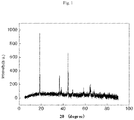
- Fig. 1 is an XRD pattern of the graphene/ternary material composite prepared in Example 1, showing that the crystal structure of the composite is intact.
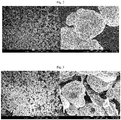
- Fig. 2 is an SEM photograph of the raw material of the ternary material.
- Fig. 3 is an SEM photograph of the graphene/ternary material composite prepared in Example 1, indicating that graphene is uniformly dispersed on or attached to the ternary material particles, and graphene in the figure constitutes a three-dimensional conductive network structure.
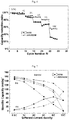
- the electrochemical performance test showed that the graphene/ternary material composite prepared by the method of the present invention had an initial capacity comparable to the ternary material as the raw material; a 5C capacity of about 130 mAh/g, which was 30% higher than that of the raw material; and a 10C capacity of 90 mAh/g, which was 1.0 times higher than that of the raw material, wherein the capacity for constant current charging at 5C was increased by 73% as compared to the raw material.
- the capacity retention ratios at 80 cycles of 3C/1C were 91% and 98%, respectively, as shown in Figs. 4-9 .
- the dried powder was placed in a tube furnace and annealed at an annealing temperature of 150 °C in an inert atmosphere for 3 h, to obtain a graphene/ternary material composite.
- the electrochemical performance test conducted in the same manner as described in Example 1 showed that the graphene/ternary material composite as prepared above had an initial capacity comparable to the ternary material as the raw material; a 5C capacity of about 126 mAh/g, which was 27% higher than that of the raw material; and a 10C capacity of 86 mAh/g, which was 0.8 times higher than that of the raw material, wherein the capacity for constant current charging at 5C was increased by 69% as compared to the raw material.
- the capacity retention ratios at 80 cycles of 3C/1C were 91% and 97%, respectively.
- the dried powder was placed in a tube furnace and annealed at an annealing temperature of 200 °C in an inert atmosphere for 4 h, to obtain a graphene/ternary material composite.
- the electrochemical performance test conducted in the same manner as described in Example 1 showed that the graphene/ternary material composite as prepared above had an initial capacity comparable to the ternary material as the raw material; a 5C capacity of about 133 mAh/g, which was 31% higher than that of the raw material; and a 10C capacity of 93 mAh/g, which was 0.8 times higher than that of the raw material, wherein the capacity for constant current charging at 5C was increased by 75% as compared to the raw material.
- the capacity retention ratios at 80 cycles of 3C/1C were 91% and 97%, respectively.
- the dried powder was placed in a tube furnace and annealed at an annealing temperature of 200 °C in an inert atmosphere for 5 h, to obtain a graphene/ternary material composite.
- the electrochemical performance test conducted in the same manner as described in Example 1 showed that the graphene/ternary material composite as prepared above had an initial capacity comparable to the ternary material as the raw material; a 5C capacity of about 125 mAh/g, which was 24% higher than that of the raw material; and a 10C capacity of 79 mAh/g, which was 0.4 times higher than that of the raw material, wherein the capacity for constant current charging at 5C was increased by 65% as compared to the raw material.
- the capacity retention ratios at 80 cycles of 3C/1C were 91% and 92%, respectively.
- the dried powder was placed in a tube furnace and annealed at an annealing temperature of 300 °C in an inert atmosphere for 2 h, to obtain a graphene/ternary material composite.
- the electrochemical performance test conducted in the same manner as described in Example 1 showed that the graphene/ternary material composite as prepared above had an initial capacity comparable to the ternary material as the raw material; a 5C capacity of about 125 mAh/g, which was 26% higher than that of the raw material; and a 10C capacity of 85 mAh/g, which was 0.5 times higher than that of the raw material, wherein the capacity for constant current charging at 5C was increased by 90% as compared to the raw material.
- the capacity retention ratios at 80 cycles of 3C/1C cycle were 90% and 91%, respectively.
- the dried powder was placed in a tube furnace and annealed at an annealing temperature of 300 °C in an inert atmosphere for 2 h, to obtain a graphene/ternary material composite.
- the electrochemical performance test conducted in the same manner as described in Example 1 showed that the graphene/ternary material composite as prepared above had an initial capacity comparable to the ternary material as the raw material; a 5C capacity of about 130 mAh/g, which was 30% higher than that of the raw material; and a 10C capacity of 90 mAh/g, which was 0.8 times higher than that of the raw material, wherein the capacity for constant current charging at 5C was increased by 69% as compared to the raw material.
- the capacity retention ratios at80 cycles of 3C/1C were 90% and 95%, respectively.
- the dried powder was placed in a tube furnace and annealed at an annealing temperature of 300 °C in an inert atmosphere for 2 h, to obtain a graphene/ternary material composite.
- the electrochemical performance test conducted in the same manner as described in Example 1 showed that the graphene/ternary material composite as prepared above had an initial capacity comparable to the ternary material as the raw material; a 5C capacity of about 133 mAh/g, which was 31% higher than that of the raw material; and a 10C capacity of 92 mAh/g, which was 1.0 times higher than that of the raw material, wherein the capacity for constant current charging at 5C was increased by 73% as compared to the raw material.
- the capacity retention ratios at 80 cycles of 3C/1C were 90% and 98%, respectively.
Landscapes
- Chemical & Material Sciences (AREA)
- Chemical Kinetics & Catalysis (AREA)
- Electrochemistry (AREA)
- General Chemical & Material Sciences (AREA)
- Inorganic Chemistry (AREA)
- Engineering & Computer Science (AREA)
- Composite Materials (AREA)
- Materials Engineering (AREA)
- Manufacturing & Machinery (AREA)
- Battery Electrode And Active Subsutance (AREA)
- Carbon And Carbon Compounds (AREA)
Abstract
Description
- The present invention relates to the technical field of lithium ion battery materials. In particular, the present invention relates to a method for preparing a graphene/ternary material composite for use in lithium ion batteries, and a product prepared by the method.
- Lithium ion batteries are widely used in the fields of electronic products, electric vehicles, medical equipment, aerospace, etc. With the advancement of technologies, after the requirements of safety, cost, longevity and environmental protection are met, the key performance indicators of the lithium ion batteries are high energy density and fast discharge capability. At present, the cathode materials, LiCoO2, LiMn2O4 and LiFePO4, for commercialized lithium ion batteries have an actual maximum specific capacity of only 145 mAh/g, and also have the disadvantages of high cost, poor safety, poor consistency and the like. The ternary materials, such as nickel-cobalt-lithium manganese oxide composites, have a high capacity and an actual specific capacity of up to 200 mAh/g. They have the advantages of low cost, good stability, high safety and so on. Moreover, the ternary materials have a relatively low requirement on the environment and equipment, can be relatively easily prepared and processed, have high consistency and reliability, and thus can achieve high energy density. In recent years, some lithium cobalt oxides have been gradually replaced by the ternary materials. In the next five years, the ternary materials will be the mainstream of R&D and industrialization, and also will be the most promising cathode materials for next-generation power lithium ion batteries and high-energy density small-sized lithium ion batteries for electronic products.
- Although the ternary materials have good electrochemical performances, there are still problems to be solved in terms of the practical applicability, for example, the disorder of high-nickel materials; the oxygen loss and phase transition caused by delithiation in the first cycle, resulting in poor initial effect; low conductivity, poor performance at a high rate, and so on. In order to solve these problems, researchers have done a lot of solid research works ranging from the method for preparing materials to the modification of materials. Carbon modification has become one of the most popular directions for improving the rate performance of materials. Recently, papers and patent applications regarding the modification of lithium iron phosphate with graphene have been reported frequently, while papers and patent applications regarding the modification of ternary materials with graphene are relatively rare. This is mainly because graphene has the best dispersibility in aqueous solvents, while the ternary materials, especially high-nickel materials, have on their surfaces a small amount of lithium oxide which absorbs water to form lithium hydroxide continuing to absorb water to form hydrated lithium hydroxide which then reacts with carbon dioxide to form lithium carbonate. Therefore, the modification of the ternary materials is carried out preferably by using an organic solvent, so as to avoid the adverse effects of water on the ternary materials.
- At present, there are two main ways for the modification of ternary materials with graphene. One way is to modify the ternary materials directly by using graphene as a raw material, and for this way, a commercial method is to directly use graphene as a conductive agent. In this way, the content of graphene is generally less than 2%, and the rate performance is improved. Another way is to modify the ternary materials with graphene oxide as a raw material. The related patents and patent applications are as follows: in the patent for which the patent right was granted in 2015 with the granted publication No.
CN103500826B , graphite oxide is functionalized with methyl blue, and then a reduction reaction is performed to obtain a hydrophilically-modified graphene, thereby modifying the positive electrode materials. In the patent application which was published in 2015 with the publication No.CN104852053A , graphene oxide is added in the preparation of the precursor, but this is limited to the preparation of the precursor only. In the patent application which was published in 2014 with the publication No.CN104157845A , the composite of graphene oxide and a ternary material is dispersed in an organic solvent, and then calcined at a high temperature in a reducing atmosphere after hydrothermal synthesis. In this way, the rate performance of the sample is improved as compared to that of the unmodified sample, but the overall rate performance is poor, wherein the 5C rate performance reaches only 60 mAh/g. The method is not suitable for industrial production. - Therefore, there is a need for a novel method for modifying ternary materials with graphene and a product prepared by the method. In particular, there is a need for a method and product that can improve the rate performance and/or cycling performance of the ternary materials more effectively. More advantageously, there is a need for a method and product that is simple in process, environmentally friendly, and/or suitable for industrial production.
- In the first aspect, the present invention relates to a method for preparing a graphene/ternary material composite for use in lithium ion batteries, comprising the steps of:
- (a) mixing a ternary material with a graphene oxide powder in an organic solvent to form a mixed dispersion;
- (b) adding a reducing agent to the mixed dispersion from step (a), and carrying out a reduction reaction at a reduction temperature of 80-160 °C while stirring, to obtain a reduction reaction mixture after a reduction time of 60-240 min; and
- (c) evaporating the solvent from the reduction reaction mixture from step (b) while stirring, and drying and then annealing the mixture at a low temperature in an inert atmosphere to obtain a graphene/ternary material composite having a three-dimensional network structure.
- In the second aspect, the present invention relates to a graphene/ternary material composite for use in lithium ion batteries prepared by the method of the present invention.
- The present invention has one or more of the following advantages: 1. the high mechanical flexibility of the graphene sheet layer can provide lubrication effect, thereby improving the compaction density of the ternary material particles; 2. the graphene sheet layer relieves the external stress, and thus reduces the crushing of the secondary particles in the rolling and cycling processes; 3. the graphene nanosheet layer structure forms an efficient three-dimensional conductive network, which ameliorates the deterioration of conductivity caused by the formation of a fresh particle surface after the crushing or pulverization of the secondary particles, and meanwhile ensures the conductive contact of the particles during the cycle, greatly improving the rate performance and cycling performance of the ternary materials; 4. the chemical reduction method employed is simple in process, relatively low in cost as compared to the heating reduction method, environmentally friendly, and suitable for industrial production. Therefore, the present invention provides a graphene/ternary material composite having a three-dimensional network structure and a method for preparing the same in a cost-effective manner, which improve the lithium ion diffusion coefficient and/or electronic conductivity of the ternary material for lithium ion batteries, and/or suppress the capacity decay of the material during the high rate discharging.
- The present invention is illustrated in detail with reference to the following detailed description and the accompanying drawings, so as to enable those skilled in the art to obtain a better understanding of the present invention. However, they cannot to be construed as limiting the scope of the present invention in any way.
-
Fig. 1 shows an XRD pattern of a graphene/ternary material composite according to one embodiment of the present invention. -
Fig. 2 shows an SEM photograph of a ternary material according to one embodiment of the present invention. -
Fig. 3 shows an SEM photograph of a graphene/ternary material composite according to one embodiment of the present invention. -
Fig. 4 shows comparison of charging and discharging curves before and after the addition of graphene according to one embodiment of the present invention. -
Fig. 5 shows comparison of capacity curves at different rates before and after the addition of graphene according to one embodiment of the present invention. -
Fig. 6 shows comparison of capacity retention ratio curves at different rates before and after the addition of graphene according to one embodiment of the present invention. -
Fig. 7 shows comparison of capacity curves at different charging states at different rates before and after the addition of graphene according to one embodiment of the present invention. -
Fig. 8 is a graph showing the cycling capacities before and after the addition of graphene according to one embodiment of the present invention. -
Fig. 9 is a graph showing the cycling capacity retention ratios before and after the addition of graphene according to one embodiment of the present invention. - The present invention provides the following embodiments:
- 1. A method for preparing a graphene/ternary material composite for use in lithium ion batteries, comprising the steps of:
- (a) mixing a ternary material with a graphene oxide powder in an organic solvent to form a mixed dispersion;
- (b) adding a reducing agent to the mixed dispersion from step (a), and carrying out a reduction reaction at a reduction temperature of 80-160 °C while stirring, to obtain a reduction reaction mixture after a reduction time of 60-240 min; and
- (c) evaporating the solvent from the reduction reaction mixture from step (b) while stirring, and drying and then annealing the mixture at a low temperature in an inert atmosphere to obtain a graphene/ternary material composite having a three-dimensional network structure.
- 2. The method of item 1, wherein the reducing agent is one or more selected from the group consisting of hydrazine reducing agents, weak acids, phenols, metal hydride reducing agents, strong bases, reducing sugars, alcohols, sodium dithionite, H2 and hydroiodic acid.
- 3. The method of item 1 or 2, wherein the reducing agent is one or more selected from the group consisting of hydrazine hydrate, dimethyl hydrazine, phenylhydrazine, p-methylsulfonyl hydrazide, ascorbic acid, pyrogallic acid, hydroquinone, tea polyphenol, sodium borohydride, lithium aluminum hydride, sodium hydroxide, potassium hydroxide, aqueous ammonia, glucose, fructose, sucrose, alcohols, sodium dithionite, H2 and hydroiodic acid.
- 4. The method of any one of items 1-3, wherein step (a) further comprises the steps of:
- (a1) adding the graphene oxide powder to the organic solvent to obtain a uniformly dispersed graphene oxide dispersion; and
- (a2) adding the ternary material to the graphene oxide dispersion to form a mixed dispersion.
- 5. The method of item 4, wherein in step (a1), the uniformly dispersed graphene oxide dispersion is obtained by ultrasonic dispersion.
- 6. The method of any one of items 4-5, wherein the graphene oxide dispersion obtained in step (a1) has a concentration of 0.1-5 g/L.
- 7. The method of any one of items 4-6, wherein in step (a2), the ternary material is added to the graphene oxide dispersion in 2-6 portions.
- 8. The method of any one of items 4-7, wherein in step (a2), the ternary material is sufficiently mixed with the graphene oxide by physical mixing to form a mixed dispersion, wherein the physical mixing is one or more selected from the group consisting of stirring, sonication, ball milling, and cell discruption.
- 9. The method of any one of items 1-8, wherein the mass ratio of the ternary material to the graphene oxide is 1:20-1:200.
- 10. The method of any one of items 1-9, wherein the mass ratio of the graphene oxide to the reducing agent is 1:1-1:100.
- 11. The method of any one of items 1-10, wherein the organic solvent in step (a) is one or more selected from the group consisting of ethanol, N-methylpyrrolidone (NMP), N,N-dimethylformamide (DMF), methanol, propanol, isopropanol, n-butanol, ethylene glycol, glycerol, acetone, and n-propanol.
- 12. The method of any one of items 1-11, wherein the reduction reaction mixture is purified before evaporating the solvent from the reduction reaction mixture from step (b) while stirring.
- 13. The method of any one of items 1-12, wherein the annealing in step (c) is conducted at a temperature of 150-350 °C.
- 14. The method of any one of items 1-13, wherein the annealing in step (c) is conducted for 1-5 h.
- 15. The method of any one of items 1-14, wherein the annealing at a low temperature in step (c) is carried out in a tube furnace.
- 16. The method of any one of items 1-15, further comprising a pre-treatment prior to step (a), in which the pre-treatment comprises drying the ternary material and the graphene oxide powder at 120-200 °C for 1-3 h.
- 17. The method of any one of items 1-16, wherein the ternary material is one or more selected from the group consisting of nickel-cobalt-manganese ternary materials, nickel-cobalt-aluminum ternary materials, and lithium-rich ternary materials.
- 18. A graphene/ternary material composite for use in lithium ion batteries prepared by the method according to any one of items 1-17.
- The ternary material for use in lithium ion batteries was first reported in 1999 as a nickel-cobalt-manganese ternary transition metal oxide composite having a structural formula of LiNi1-x-yCoxMnyO2 (0<x<0.5, and 0<y<0.5). The material offers combined advantages such as the good cycling performance of LiCoO2, the high specific capacity of LiNiO2, and the high safety and low cost of LiMnO2.
- According to one embodiment of the present invention, the ternary material is one or more selected from the group consisting of nickel-cobalt-manganese ternary materials, nickel-cobalt-aluminum ternary materials, and lithium-rich ternary materials. Preferably, the nickel-cobalt-manganese ternary material has a structural formula of LiNi1-x-yCoxMnyO2 (0<x<0.5, and 0<y<0.5). In one embodiment, the nickel-cobalt-manganese ternary material is one or more selected from the group consisting of LiNi1/3Co1/3Mn1/3O2 (Type 333), LiNi0.5Co0.3Mn0.2O2 (Type 532), LiNi0.4Co0.4Mn0.2O2 (Type 442), LiNi0.6Co0.2Mn0.2O2 (Type 611), and LiNi0.8CO0.10Mn0.10O2 (Type 811) ternary materials. According to another embodiment of the present invention, the nickel-cobalt-aluminum ternary material is one or more selected from the group consisting of LiNi0.5Co0.3Al0.2O2 (Type 532), LiNi0.6Co0.2Al0.2O2 (Type 611), and LiNi0.8CO0.10Al0.10O2 (Type 811).
- According to one embodiment of the present invention, the ternary material is present in the form of powder. Preferably, the ternary material is present in the form of crystalline powder. In one embodiment, the ternary material crystal belongs to the hexagonal crystal system with an α-NaFeO2-type layered structure and a space group of R3m, wherein Li+ and the transition metal ions alternately occupy positions 3a (0,0,0) and 3b (0,0,1/2), and O2- is located at position 6c (0,0,z). The O at position 6c is cubic close-packed, and the transition metal layer is composed of Ni, Mn, and Co. Each transition metal atom is surrounded by 6 oxygen atoms to form an MO6 octahedral structure. The transition metal ion at position 3b and Li at position 3a alternately occupy the voids of the octahedron, and Li+ is intercalated between the LiNi0-x-yCoxMnyO2 layers formed of the transition metal atoms and oxygen.
- Due to the different ratios of transition metals, the ternary material has different electrochemical properties. Generally, an increase in Co content is beneficial to stabilization of the layered structure of the compound, thereby improving the cycling performance; an increase in Ni content can achieve a higher capacity, but will result in deteriorated cycling performance; and the incorporation of Mn can reduce the cost and improve the stability of the matrix, but excess Mn will lead to the formation of a spinel phase, thereby destroying the layered structure.
- Graphene, a two-dimensional free-state atomic crystal, is the basic structural unit for constructing zero-dimensional fullerene, one-dimensional carbon nanotubes and three-dimensional graphite. It has special physical and chemical properties such as high electrical conductivity, high thermal conductivity, high hardness and high strength, and thus can find broad application in the fields of electronics, information, energy, material and biomedicine. However, the application of graphene is limited since it is hydrophobic and prone to agglomeration due to the strong van der Waals force. The emergence of graphene oxide well solves the above problems.
- Graphene oxide is an oxide of graphene, and has substantially the same structure as graphene, except that a large number of oxygen-containing groups are attached to the base surface that is composed of one layer of carbon atoms and infinitely extends in the two-dimensional space, -OH and C-O-C are present in the plane, and C=O and COOH are contained at the edges of the sheet. As compared to graphene, graphene oxide has more excellent properties including not only good wettability and surface activity, but also the ability of being peeled off after intercalation of small molecules or polymers. It plays a very important role in improving the comprehensive performances of materials such as the thermal, electrical and mechanical properties.
- According to one embodiment of the present invention, the graphene oxide is present in the form of powder.
- In the present invention, a graphene/ternary material composite for use in lithium ion batteries is prepared by a chemical reduction method using graphene oxide and a ternary material as raw materials in the presence of a reducing agent.
- According to one embodiment of the present invention, the method for preparing a graphene/ternary material composite for use in lithium ion batteries comprises the following steps:
- (a) mixing a ternary material with a graphene oxide powder in an organic solvent to form a mixed dispersion;
- (b) adding a reducing agent to the mixed dispersion from step (a), and carrying out a reduction reaction at a reduction temperature of 80-160 °C, preferably 90-140 °C, and more preferably 100-120 °C while stirring, to obtain a reduction reaction mixture after a reduction time of 60-240 min, preferably 80-200 min, and more preferably 100-150 min; and
- (c) evaporating the solvent from the reduction reaction mixture from step (b) while stirring, and drying and then annealing the mixture at a low temperature in an inert atmosphere to obtain a graphene/ternary material composite having a three-dimensional network structure.
- According to one embodiment of the present invention, the reducing agent is selected from the group consisting of hydrazine reducing agents (such as hydrazine hydrate, dimethyl hydrazine, phenylhydrazine, p-methylsulfonyl hydrazide, etc.), weak acids and phenols (such as ascorbic acid, pyrogallic acid, hydroquinone, tea polyphenol, etc.), metal hydride reducing agents (such as sodium borohydride, lithium aluminum hydride, etc.), strong bases (such as sodium hydroxide, potassium hydroxide, aqueous ammonia, etc.), reducing sugars (such as glucose, fructose, sucrose, etc.), alcohols, sodium dithionite, H2, hydroiodic acid, etc.
- According to one embodiment of the present invention, step (a) further comprises the steps of:
- (a1) adding the graphene oxide powder to the organic solvent to obtain a uniformly dispersed graphene oxide dispersion preferably by ultrasonic dispersion, wherein the graphene oxide dispersion preferably has a concentration of 0.1-5 g/L, more preferably 0.5-4 g/L, and even more preferably 1-3 g/L; and
- (a2) adding the ternary material to the graphene oxide dispersion to form a mixed dispersion. Preferably, the ternary material is added to the graphene oxide dispersion in 2-6 portions. Preferably, the ternary material is sufficiently mixed with the graphene oxide by physical mixing to form a mixed dispersion, wherein the physical mixing is one or more selected from the group consisting of stirring, sonication, ball milling, and cell discruption.
- According to one embodiment of the present invention, the mass ratio of the ternary material to the graphene oxide is 1:20-1:200, preferably 1:50-1:150, and more preferably 1:80-1:120.
- According to one embodiment of the present invention, the mass ratio of the graphene oxide to the reducing agent is 1:1-1:100, preferably 1:10-1:80, more preferably 1:20-1:80, and even more preferably 1:30-1:50.
- According to one embodiment of the present invention, the organic solvent in step (a) is one or more selected from the group consisting of ethanol, N-methylpyrrolidone (NMP), N,N-dimethylformamide (DMF), methanol, propanol, isopropanol, n-butanol, ethylene glycol, glycerol, acetone, and n-propanol.
- According to one embodiment of the present invention, the reduction reaction mixture is purified before evaporating the solvent from the reduction reaction mixture from step (b) while stirring. For example, the reduction reaction mixture from step (b) can be purified by centrifugation, washing (for example, washing with ethanol, acetone, or the like), removal of impurities or the like, to obtain a relatively thin paste mixture.
- According to one embodiment of the present invention, the annealing at a low temperature in step (c) refers to a heat treatment process in which the reaction is heated to a certain annealing temperature for a sufficient annealing time, and then cooled at a suitable rate (slow cooling or controlled cooling). The annealing at a low temperature can further reduce the number of oxygen-containing functional groups, increase the purity of graphene, and improve the electrical conductivity. Moreover, the annealing can change the distribution of residual oxygen atoms on the surface of graphene, so that the oxygen atoms can be regularly gathered together, while there are still pure graphene voids left, thereby keeping the original structure of graphene unchanged and avoiding defects. Preferably, the annealing temperature is 150-350 °C, preferably 160-300 °C, and more preferably 180-250 °C. Preferably, the annealing time is 1-5 h, preferably 2-4 h, and more preferably 2.5-3.5 h.
- According to one embodiment of the present invention, the annealing at a low temperature in step (c) is carried out in a tube furnace.
- According to one embodiment of the present invention, the method further comprises a pre-treatment prior to step (a), wherein the pre-treatment comprises drying the ternary material and the graphene oxide powder at 120-200 °C for 1-3 h. After being cooled, the dried powder can be used directly or placed in a dryer for later use.
- The graphene/ternary material composite for use in lithium ion batteries prepared by the method of the present invention has excellent rate performance and cycling performance. Without wishing to be bound by theory, it is believed that the addition of graphene does not alter the crystal structure of the ternary material. The graphene/ternary material composite according to the present invention has an α-NaFeO2-type layered structure and a space group of R3m, with R≥1.2 (R=I003/I004), indicating that the material has a lower degree of Ni+ and Li+ disorder, a better hexagonal layered structure and a higher degree of crystallization. Moreover, the presence of graphene in the three-dimensional network structure further improves the electrical conductivity and mechanical properties of the material, resulting in a material having better rate performance and cycling performance.
- Certain specific embodiments of the present invention will be illustrated below with reference to the examples, so that those skilled in the art can obtain a more clear understanding of the technical solutions of the present invention and the advantages thereof. The examples should not be construed as limiting the present invention in any way.
- The following raw materials were used in the examples:
- Graphene oxide: XT-100, available from Tunghsu Carbon Advanced Materials Technology Co., Ltd.
- Ternary material: 2016SY130, available from Xiamen Tungsten Co., Ltd.
- Hydrazine hydrate: available from J&K Scientific Co., Ltd. (CAS: 10217-52-4)
- Ascorbic acid: available from J&K Scientific Co., Ltd. (CAS: 50-81-7)
- Ketjenblack: available from Sinopharm Chemical Reagent Co., Ltd. (1333-86-4)
- PVDF: Polyvinylidene fluoride, available from J&K Scientific Co., Ltd. (CAS: 24937-79-9)
- 250 ml of a solution containing 25 mg of graphene oxide in ethanol was prepared and ultrasonically dispersed for 2 h. 5 g of ternary material powder was added to the above mixed solution, and stirred at a stirring speed of 180 rpm for 30 min. 0.25 g of hydrazine hydrate was added dropwise to the solution, and the solution was heated at a temperature of 90 °C for 120 min. After being cooled, the above mixed solution after reaction was washed with ethanol and centrifuged to obtain a relatively thin paste. The paste was placed in a beaker, and oven-dried while stirring. The dried powder was placed in a tube furnace and annealed at a temperature of 150 °C in an inert atmosphere for 3 h, to obtain a graphene/ternary material composite.
- First, a battery was assembled as follows. The graphene/ternary material composite, Ketjenblack and PVDF were weighed at a ratio of 90: 5: 5. N-methylpyrrolidone was added to a small volumetric flask and stirred uniformly to give an electrode slurry. The electrode slurry was uniformly coated onto an aluminum foil, and then dried in a vacuum oven at a temperature of 105 °C for 12 h. It was punched into a Φ 12 mm electrode sheet and placed into a glovebox. A CR2032 button battery was assembled by using the electrode sheet as a working electrode, metal lithium as a counter electrode, Celgard2400 as a separator, and 1M/LLiPF6/EC:DEC:DMC (at a volume ratio of 1:1:1) as an electrolyte.
- Then, a constant current charging-discharging test was performed at room temperature, with a test voltage in the range of 3.0-4.3 V. The rate performance test comprised three cycles at 0.2C; then constant current charging at 0.5C, 1.0C, 2.0C, 3.0C, 5.0C and 10.0C, constant voltage charging at 4.3V, and then constant current discharging at 0.5C, 1.0C, 2.0C, 3.0C, 5.0C and 10.0C, 5 cycles for each rate. The cycling performance test comprised three cycles at 0.2C; then 80 cycles of constant current charging at 3C, constant voltage charging at 4.3V, and discharging at 1C.
-
Fig. 1 is an XRD pattern of the graphene/ternary material composite prepared in Example 1, showing that the crystal structure of the composite is intact.Fig. 2 is an SEM photograph of the raw material of the ternary material.Fig. 3 is an SEM photograph of the graphene/ternary material composite prepared in Example 1, indicating that graphene is uniformly dispersed on or attached to the ternary material particles, and graphene in the figure constitutes a three-dimensional conductive network structure. The electrochemical performance test showed that the graphene/ternary material composite prepared by the method of the present invention had an initial capacity comparable to the ternary material as the raw material; a 5C capacity of about 130 mAh/g, which was 30% higher than that of the raw material; and a 10C capacity of 90 mAh/g, which was 1.0 times higher than that of the raw material, wherein the capacity for constant current charging at 5C was increased by 73% as compared to the raw material. Before and after the addition of graphene, the capacity retention ratios at 80 cycles of 3C/1C were 91% and 98%, respectively, as shown inFigs. 4-9 . - 50 ml of a solution containing 50 mg of graphene oxide in ethanol was prepared and ultrasonically dispersed for 2 h. 5 g of ternary material powder was added to the above mixed solution, and stirred at a stirring speed of 180 rpm for 30 min. 1 g of hydrazine hydrate was added dropwise to the solution, and the solution was heated at a temperature of 100 °C for 100 min. After being cooled, the above mixed solution after reaction was washed with ethanol and centrifuged to obtain a relatively thin paste. The paste was placed in a beaker, and oven-dried while stirring. The dried powder was placed in a tube furnace and annealed at an annealing temperature of 150 °C in an inert atmosphere for 3 h, to obtain a graphene/ternary material composite. The electrochemical performance test conducted in the same manner as described in Example 1 showed that the graphene/ternary material composite as prepared above had an initial capacity comparable to the ternary material as the raw material; a 5C capacity of about 126 mAh/g, which was 27% higher than that of the raw material; and a 10C capacity of 86 mAh/g, which was 0.8 times higher than that of the raw material, wherein the capacity for constant current charging at 5C was increased by 69% as compared to the raw material. Before and after the addition of graphene, the capacity retention ratios at 80 cycles of 3C/1C were 91% and 97%, respectively.
- 50 ml of a solution containing 150 mg of graphene oxide in ethanol was prepared and ultrasonically dispersed for 2 h. 5 g of ternary material powder was added to the above mixed solution, and stirred at a stirring speed of 180 rpm for 30 min. 4.5 g of hydrazine hydrate was added dropwise to the solution, and the solution was heated at a temperature of 100 °C for 90 min. After being cooled, the above mixed solution after reaction was washed with ethanol and centrifuged to obtain a relatively thin paste. The paste was placed in a beaker, and oven-dried while stirring. The dried powder was placed in a tube furnace and annealed at an annealing temperature of 200 °C in an inert atmosphere for 4 h, to obtain a graphene/ternary material composite. The electrochemical performance test conducted in the same manner as described in Example 1 showed that the graphene/ternary material composite as prepared above had an initial capacity comparable to the ternary material as the raw material; a 5C capacity of about 133 mAh/g, which was 31% higher than that of the raw material; and a 10C capacity of 93 mAh/g, which was 0.8 times higher than that of the raw material, wherein the capacity for constant current charging at 5C was increased by 75% as compared to the raw material. Before and after the addition of graphene, the capacity retention ratios at 80 cycles of 3C/1C were 91% and 97%, respectively.
- 50 ml of a solution containing 250 mg of graphene oxide in ethanol was prepared and ultrasonically dispersed for 2 h. 5 g of ternary material powder was added to the above mixed solution, and stirred at a stirring speed of 180 rpm for 30 min. 12.5 g of hydrazine hydrate was added dropwise to the solution, and the solution was heated at a temperature of 120 °C for 80 min. After being cooled, the above mixed solution after reaction was washed with ethanol and centrifuged to obtain a relatively thin paste. The paste was placed in a beaker, and oven-dried while stirring. The dried powder was placed in a tube furnace and annealed at an annealing temperature of 200 °C in an inert atmosphere for 5 h, to obtain a graphene/ternary material composite. The electrochemical performance test conducted in the same manner as described in Example 1 showed that the graphene/ternary material composite as prepared above had an initial capacity comparable to the ternary material as the raw material; a 5C capacity of about 125 mAh/g, which was 24% higher than that of the raw material; and a 10C capacity of 79 mAh/g, which was 0.4 times higher than that of the raw material, wherein the capacity for constant current charging at 5C was increased by 65% as compared to the raw material. Before and after the addition of graphene, the capacity retention ratios at 80 cycles of 3C/1C were 91% and 92%, respectively.
- 250 ml of a solution containing 25 mg of graphene oxide in ethanol was prepared and ultrasonically dispersed for 2 h. 5 g of ternary material powder was added to the above mixed solution, and stirred at a stirring speed of 180 rpm for 30 min. 0.08 g of ascorbic acid was added to the solution, and the solution was heated at a temperature of 80 °C for 240 min. After being cooled, the above mixed solution after reaction was washed with ethanol and centrifuged to obtain a relatively thin paste. The paste was placed in a beaker, and oven-dried while stirring. The dried powder was placed in a tube furnace and annealed at an annealing temperature of 300 °C in an inert atmosphere for 2 h, to obtain a graphene/ternary material composite. The electrochemical performance test conducted in the same manner as described in Example 1 showed that the graphene/ternary material composite as prepared above had an initial capacity comparable to the ternary material as the raw material; a 5C capacity of about 125 mAh/g, which was 26% higher than that of the raw material; and a 10C capacity of 85 mAh/g, which was 0.5 times higher than that of the raw material, wherein the capacity for constant current charging at 5C was increased by 90% as compared to the raw material. Before and after the addition of graphene, the capacity retention ratios at 80 cycles of 3C/1C cycle were 90% and 91%, respectively.
- 50 ml of a solution containing 50 mg of graphene oxide in NMP was prepared and ultrasonically dispersed for 2 h. 5 g of ternary material powder was added to the above mixed solution, and stirred at a stirring speed of 180 rpm for 30 min. 0.50 g of ascorbic acid was added to the solution, and the solution was heated at a temperature of 120 °C for 120 min. After being cooled, the above mixed solution after reaction was washed with ethanol and centrifuged to obtain a relatively thin paste. The paste was placed in a beaker, and oven-dried while stirring. The dried powder was placed in a tube furnace and annealed at an annealing temperature of 300 °C in an inert atmosphere for 2 h, to obtain a graphene/ternary material composite. The electrochemical performance test conducted in the same manner as described in Example 1 showed that the graphene/ternary material composite as prepared above had an initial capacity comparable to the ternary material as the raw material; a 5C capacity of about 130 mAh/g, which was 30% higher than that of the raw material; and a 10C capacity of 90 mAh/g, which was 0.8 times higher than that of the raw material, wherein the capacity for constant current charging at 5C was increased by 69% as compared to the raw material. Before and after the addition of graphene, the capacity retention ratios at80 cycles of 3C/1C were 90% and 95%, respectively.
- 50 ml of a solution containing 50 mg of graphene oxide in DMF was prepared and ultrasonically dispersed for 2 h. 5 g of ternary material powder was added to the above mixed solution, and stirred at a stirring speed of 180 rpm for 30 min. 1 g of ascorbic acid was added dropwise to the solution, and the solution was heated at a temperature of 160 °C for 60 min. After being cooled, the above mixed solution after reaction was washed with ethanol and centrifuged to obtain a relatively thin paste. The paste was placed in a beaker, and oven-dried while stirring. The dried powder was placed in a tube furnace and annealed at an annealing temperature of 300 °C in an inert atmosphere for 2 h, to obtain a graphene/ternary material composite. The electrochemical performance test conducted in the same manner as described in Example 1 showed that the graphene/ternary material composite as prepared above had an initial capacity comparable to the ternary material as the raw material; a 5C capacity of about 133 mAh/g, which was 31% higher than that of the raw material; and a 10C capacity of 92 mAh/g, which was 1.0 times higher than that of the raw material, wherein the capacity for constant current charging at 5C was increased by 73% as compared to the raw material. Before and after the addition of graphene, the capacity retention ratios at 80 cycles of 3C/1C were 90% and 98%, respectively.
- Although the present invention has been described above in connection with the accompanying drawings, the present invention is not limited to the specific embodiments described above. The specific embodiments described above are merely illustrative and not restrictive. In view of the teachings of the present invention, those of ordinary skill in the art can make some changes and modifications to the above embodiments without departing from the spirit of the present invention. Such changes and modifications are all within the protection scope of the present invention.
Claims (18)
- A method for preparing a graphene/ternary material composite for use in lithium ion batteries, comprising the steps of:(a) mixing a ternary material with a graphene oxide powder in an organic solvent to form a mixed dispersion;(b) adding a reducing agent to the mixed dispersion from step (a), and carrying out a reduction reaction at a reduction temperature of 80-160 °C while stirring, to obtain a reduction reaction mixture after a reduction time of 60-240 min; and(c) evaporating the solvent from the reduction reaction mixture from step (b) while stirring, and drying and then annealing the mixture at a low temperature in an inert atmosphere to obtain a graphene/ternary material composite having a three-dimensional network structure.
- The method of claim 1, wherein the reducing agent is one or more selected from the group consisting of hydrazine reducing agents, weak acids, phenols, metal hydride reducing agents, strong bases, reducing sugars, alcohols, sodium dithionite, H2 and hydroiodic acid.
- The method of claim 1, wherein the reducing agent is one or more selected from the group consisting of hydrazine hydrate, dimethyl hydrazine, phenylhydrazine, p-methylsulfonyl hydrazide, ascorbic acid, pyrogallic acid, hydroquinone, tea polyphenol, sodium borohydride, lithium aluminum hydride, sodium hydroxide, potassium hydroxide, aqueous ammonia, glucose, fructose, sucrose, alcohols, sodium dithionite, H2 and hydroiodic acid.
- The method of claim 1, wherein step (a) further comprises the steps of:(a1) adding the graphene oxide powder to the organic solvent to obtain a uniformly dispersed graphene oxide dispersion; and(a2) adding the ternary material to the graphene oxide dispersion to form a mixed dispersion.
- The method of claim 4, wherein in step (a1), the uniformly dispersed graphene oxide dispersion is obtained by ultrasonic dispersion.
- The method of claim 4, wherein the graphene oxide dispersion obtained in step (a1) has a concentration of 0.1-5 g/L.
- The method of claim 4, wherein in step (a2), the ternary material is added to the graphene oxide dispersion in 2-6 portions.
- The method of claim 4, wherein in step (a2), the ternary material is sufficiently mixed with the graphene oxide by physical mixing to form a mixed dispersion, wherein the physical mixing is one or more selected from the group consisting of stirring, sonication, ball milling, and cell discruption.
- The method of any one of claims 1-8, wherein the mass ratio of the ternary material to the graphene oxide is 1:20-1:200.
- The method of any one of claims 1-8, wherein the mass ratio of the graphene oxide to the reducing agent is 1:1-1:100.
- The method of any one of claims 1-8, wherein the organic solvent in step (a) is one or more selected from the group consisting of ethanol, N-methylpyrrolidone (NMP), N,N-dimethylformamide (DMF), methanol, propanol, isopropanol, n-butanol, ethylene glycol, glycerol, acetone, and n-propanol.
- The method of any one of claims 1-8, wherein the reduction reaction mixture is purified before evaporating the solvent from the reduction reaction mixture from step (b) while stirring.
- The method of any one of claims 1-8, wherein the annealing in step (c) is conducted at a temperature of 150-350 °C.
- The method of any one of claims 1-8, wherein the annealing in step (c) is conducted for 1-5 h.
- The method of any one of claims 1-8, wherein the annealing at a low temperature in step (c) is carried out in a tube furnace.
- The method of any one of claims 1-8, further comprising a pre-treatment prior to step (a), in which the pre-treatment comprises drying the ternary material and the graphene oxide powder at 120-200 °C for 1-3 h.
- The method of any one of claims 1-8, wherein the ternary material is one or more selected from the group consisting of nickel-cobalt-manganese ternary materials, nickel-cobalt-aluminum ternary materials, and lithium-rich ternary materials.
- A graphene/ternary material composite for use in lithium ion batteries prepared by the method according to any one of claims 1-17.
Applications Claiming Priority (1)
| Application Number | Priority Date | Filing Date | Title |
|---|---|---|---|
| PCT/CN2016/113790 WO2018120147A1 (en) | 2016-12-30 | 2016-12-30 | Method for preparing graphene/ternary material composite for use in lithium ion batteries and product thereof |
Publications (2)
| Publication Number | Publication Date |
|---|---|
| EP3565038A1 true EP3565038A1 (en) | 2019-11-06 |
| EP3565038A4 EP3565038A4 (en) | 2020-07-15 |
Family
ID=62706743
Family Applications (1)
| Application Number | Title | Priority Date | Filing Date |
|---|---|---|---|
| EP16924912.5A Pending EP3565038A4 (en) | 2016-12-30 | 2016-12-30 | METHOD FOR PRODUCING A COMPOSITE FROM GRAPHEN / TERNARY MATERIAL FOR USE IN LITHIUM-ION BATTERIES AND PRODUCT THEREOF |
Country Status (5)
| Country | Link |
|---|---|
| US (1) | US11108037B2 (en) |
| EP (1) | EP3565038A4 (en) |
| JP (1) | JP7181218B2 (en) |
| KR (1) | KR102257461B1 (en) |
| WO (1) | WO2018120147A1 (en) |
Families Citing this family (19)
| Publication number | Priority date | Publication date | Assignee | Title |
|---|---|---|---|---|
| CN109638248B (en) * | 2018-12-10 | 2022-10-21 | 北方奥钛纳米技术有限公司 | Preparation method of porous ternary material, porous ternary material and half cell |
| CN110040716B (en) * | 2019-04-24 | 2020-11-13 | 陕西科技大学 | A kind of preparation method of ultrathin carbon nanosheet negative electrode material for sodium ion battery |
| CN110350164B (en) * | 2019-06-24 | 2023-06-06 | 湖南省正源储能材料与器件研究所 | Multiphase composite high-nickel ternary positive electrode material and preparation method thereof |
| CN110931762B (en) * | 2019-12-20 | 2021-08-24 | 上海昱瓴新能源科技有限公司 | Nano copper oxalate composite three-dimensional graphene anode material and preparation method and application thereof |
| CN114846647A (en) * | 2019-12-27 | 2022-08-02 | 株式会社半导体能源研究所 | Method for producing electrode paste, method for producing electrode, method for producing positive electrode, electrode for secondary battery, and positive electrode for secondary battery |
| CN111337555A (en) * | 2020-03-24 | 2020-06-26 | 泉州师范学院 | Method for preparing reduced graphene oxide-nanogold composite material by using perilla extract and application of reduced graphene oxide-nanogold composite material in electrochemical sensor |
| CN112320792B (en) * | 2020-11-03 | 2023-03-24 | 青岛泰达华润新能源科技有限公司 | Preparation method of negative electrode material for lithium ion battery and product thereof |
| CN112408369A (en) * | 2020-11-27 | 2021-02-26 | 烟台德鹏晟阳碳材料有限公司 | Method for preparing graphene by efficiently stripping graphite in green mode |
| CN112678784B (en) * | 2020-12-28 | 2023-11-21 | 天目湖先进储能技术研究院有限公司 | Preparation method and application of sodium ion battery composite anode material |
| CN114324748B (en) * | 2021-12-09 | 2024-05-03 | 杭州电子科技大学 | Preparation method and application of ternary composite gas-sensitive material |
| CN114361411A (en) * | 2021-12-14 | 2022-04-15 | 上海应用技术大学 | Graphene-coated layered double hydroxide derivative composite material and preparation method and application thereof |
| CN114447312B (en) * | 2022-01-18 | 2024-07-12 | 广州巨湾技研有限公司 | Negative electrode material of sodium ion battery and preparation method thereof |
| CN114744185A (en) * | 2022-03-25 | 2022-07-12 | 湖北亿纬动力有限公司 | A kind of graphene-coated ternary material and preparation method and application thereof |
| CN114715875B (en) * | 2022-03-31 | 2024-10-01 | 金马能源科技(淮南)有限公司 | Preparation method of thin-layer carbon-based material and application of thin-layer carbon-based material as battery material |
| CN114551892B (en) * | 2022-04-27 | 2022-08-02 | 浙江清华柔性电子技术研究院 | Cobalt niobate oxide-loaded graphene composite material and preparation method and application thereof |
| CN115124091B (en) * | 2022-08-09 | 2023-03-21 | 广东墨睿科技有限公司 | Graphene high-nickel ternary composite material and preparation method thereof |
| CN117142450B (en) * | 2023-09-05 | 2024-08-09 | 湖北三峡实验室 | Method for preparing lithium iron phosphate anode material by taking tea polyphenol as carbon source |
| CN117999242B (en) * | 2023-12-20 | 2025-03-25 | 广东邦普循环科技有限公司 | Preparation method and application of nano lithium iron phosphate |
| CN119581720B (en) * | 2024-11-26 | 2026-02-03 | 中国科学院合肥物质科学研究院 | Repairing method of retired lithium iron phosphate positive electrode material |
Family Cites Families (17)
| Publication number | Priority date | Publication date | Assignee | Title |
|---|---|---|---|---|
| US8691441B2 (en) * | 2010-09-07 | 2014-04-08 | Nanotek Instruments, Inc. | Graphene-enhanced cathode materials for lithium batteries |
| KR102131859B1 (en) | 2011-03-25 | 2020-07-08 | 가부시키가이샤 한도오따이 에네루기 켄큐쇼 | Lithium-ion secondary battery |
| EP2950374B1 (en) * | 2013-01-23 | 2019-08-28 | Toray Industries, Inc. | Positive electrode active material/graphene composite particles, positive electrode material for lithium ion cell, and method for manufacturing positive electrode active material/graphene composite particles |
| CN103500826B (en) | 2013-09-30 | 2015-11-18 | 山东聊城鲁西化工集团有限责任公司 | A kind of preparation method of positive composite material of graphene-lithium battery |
| KR20160065837A (en) * | 2013-10-04 | 2016-06-09 | 가부시키가이샤 한도오따이 에네루기 켄큐쇼 | Lithium manganese composite oxide, secondary battery, electronic device, and method for forming layer |
| US20150166348A1 (en) | 2013-12-18 | 2015-06-18 | Semiconductor Energy Laboratory Co., Ltd. | Graphene, graphene-including layer, electrode, and power storage device |
| JP6745587B2 (en) | 2014-05-29 | 2020-08-26 | 株式会社半導体エネルギー研究所 | Electrode manufacturing method |
| CN104157854B (en) * | 2014-07-31 | 2016-05-04 | 山东玉皇新能源科技有限公司 | A kind of preparation method of Graphene composite lithium ion cell tertiary cathode material |
| CN104157845B (en) | 2014-08-01 | 2016-08-31 | 山东玉皇新能源科技有限公司 | A kind of method preparing Graphene complex ternary material |
| CN104241615B (en) | 2014-08-01 | 2017-03-08 | 山东玉皇新能源科技有限公司 | A kind of method that Graphene complex ternary material is prepared using monoalcohol solvent full-boiled process |
| KR101661896B1 (en) * | 2014-11-20 | 2016-10-04 | 주식회사 포스코 | Positive active material for lithium secondary battery, method of preparing same and a lithium secondary battery comprising the same |
| WO2016110771A1 (en) * | 2015-01-09 | 2016-07-14 | 株式会社半導体エネルギー研究所 | Storage battery electrode, manufacturing method for same, storage battery, and electronic device |
| CN104852053B (en) | 2015-04-03 | 2017-10-31 | 郭建 | A kind of rate ternary cathode material of lithium ion battery presoma and preparation method thereof |
| CN105070888B (en) | 2015-07-09 | 2017-11-14 | 山东玉皇新能源科技有限公司 | Ternary material of CNT graphene complex three-dimensional network structure cladding of coupling and preparation method thereof |
| US10826054B2 (en) * | 2015-10-05 | 2020-11-03 | Toray Industries, Inc. | Positive electrode for lithium ion secondary battery, graphene/positive electrode active material composite particles, manufacturing methods for same, and positive electrode paste for lithium ion secondary battery |
| CN105489884B (en) | 2016-02-01 | 2019-01-11 | 上海交通大学 | The method that electronation graphene oxide/magnesium improves nickle cobalt lithium manganate chemical property |
| CN105742627A (en) * | 2016-04-15 | 2016-07-06 | 合肥工业大学 | A kind of preparation method of LiNixCoyMnl-x-yBrzO2-z/graphene composite cathode material |
-
2016
- 2016-12-30 KR KR1020197021785A patent/KR102257461B1/en active Active
- 2016-12-30 EP EP16924912.5A patent/EP3565038A4/en active Pending
- 2016-12-30 WO PCT/CN2016/113790 patent/WO2018120147A1/en not_active Ceased
- 2016-12-30 JP JP2019556394A patent/JP7181218B2/en active Active
- 2016-12-30 US US16/474,209 patent/US11108037B2/en active Active
Also Published As
| Publication number | Publication date |
|---|---|
| KR102257461B1 (en) | 2021-05-27 |
| US20190355978A1 (en) | 2019-11-21 |
| JP7181218B2 (en) | 2022-11-30 |
| US11108037B2 (en) | 2021-08-31 |
| KR20190095471A (en) | 2019-08-14 |
| WO2018120147A1 (en) | 2018-07-05 |
| JP2020504433A (en) | 2020-02-06 |
| EP3565038A4 (en) | 2020-07-15 |
Similar Documents
| Publication | Publication Date | Title |
|---|---|---|
| US11108037B2 (en) | Method for preparing graphene/ternary material composite for use in lithium ion batteries and product thereof | |
| CN107732220B (en) | Preparation method of nitrogen-doped mesoporous carbon-coated ternary cathode material for lithium ion battery | |
| Tang et al. | Synthesis and electrochemical performance of lithium-rich cathode material Li [Li0. 2Ni0. 15Mn0. 55Co0. 1-xAlx] O2 | |
| CN106910887B (en) | A lithium-rich manganese-based positive electrode material, a preparation method thereof, and a lithium ion battery comprising the positive electrode material | |
| Ju et al. | Surfactant-assisted synthesis of high energy {010} facets beneficial to Li-ion transport kinetics with layered LiNi0. 6Co0. 2Mn0. 2O2 | |
| CN106602009A (en) | Lithium-rich positive electrode modified material of lithium ion battery and preparation method of lithium-rich positive electrode modified material | |
| EP3633771B1 (en) | Method for preparing graphene-coated powder material, and product of method | |
| CN112694104B (en) | Prussian blue analogue, preparation method thereof, negative electrode material and application | |
| CN102427131A (en) | Preparation method for metal magnesium-doped lithium manganese phosphate/carbon cathode material of lithium ion battery | |
| CN118431478B (en) | Positive electrode lithium supplement and preparation method thereof, positive electrode sheet and lithium ion battery | |
| EP2784853A1 (en) | Lithium transistion metal titanate with a spinel structure, method for its manufacturing, its use, Li-ion cell and battery | |
| CN114094060B (en) | Preparation method of high-voltage positive electrode material with core-shell structure | |
| CN105762351A (en) | Lithium titanate/M-graphene composite cathode material for lithium ion battery and preparation method of lithium titanate/M-graphene composite cathode material | |
| CN116835551B (en) | A method for rapid thermal shock synthesis of lithium iron phosphate cathode material using hydrated iron phosphate as raw material | |
| Jing et al. | A novel and practical hydrothermal method for synthesizing LiNi1/3Co1/3Mn1/3O2 cathode material | |
| CN117080419A (en) | Positive electrode active material, preparation method thereof, positive electrode plate, secondary battery and power utilization device | |
| Qiu et al. | Li1. 2Mn0. 6Ni0. 2O2 with 3D porous rod-like hierarchical micro/nanostructure for high-performance cathode material | |
| CN113823790B (en) | Cobalt iron selenide/graphene nanoribbon composite negative electrode material and preparation method thereof | |
| Liu et al. | A new, high energy rechargeable lithium ion battery with a surface-treated Li1. 2Mn0. 54Ni0. 13Co0. 13O2 cathode and a nano-structured Li4Ti5O12 anode | |
| CN104009215A (en) | Vanadium dioxide-graphene compound and its use as lithium ion battery positive electrode material | |
| CN105047898B (en) | A kind of twin spherical lithium ion secondary battery lithium-rich anode material and preparation method thereof | |
| CN116314622B (en) | Single crystal cobalt-free aluminum-doped lithium nickelate cathode material with self-precipitating coating layer and its preparation method and application | |
| Zhou et al. | Hierarchical LiNi0. 5Mn1. 5O4 micro-rods with enhanced rate performance for lithium-ion batteries | |
| CN102723476A (en) | Method for preparing lithium-ion battery anode material lithium nickel manganese dioxide (LiNiMnO2) | |
| CN103011116B (en) | Produce the method for anode material for lithium-ion batteries amorphous precursors |
Legal Events
| Date | Code | Title | Description |
|---|---|---|---|
| STAA | Information on the status of an ep patent application or granted ep patent |
Free format text: STATUS: THE INTERNATIONAL PUBLICATION HAS BEEN MADE |
|
| PUAI | Public reference made under article 153(3) epc to a published international application that has entered the european phase |
Free format text: ORIGINAL CODE: 0009012 |
|
| STAA | Information on the status of an ep patent application or granted ep patent |
Free format text: STATUS: REQUEST FOR EXAMINATION WAS MADE |
|
| 17P | Request for examination filed |
Effective date: 20190704 |
|
| AK | Designated contracting states |
Kind code of ref document: A1 Designated state(s): AL AT BE BG CH CY CZ DE DK EE ES FI FR GB GR HR HU IE IS IT LI LT LU LV MC MK MT NL NO PL PT RO RS SE SI SK SM TR |
|
| AX | Request for extension of the european patent |
Extension state: BA ME |
|
| DAV | Request for validation of the european patent (deleted) | ||
| DAX | Request for extension of the european patent (deleted) | ||
| A4 | Supplementary search report drawn up and despatched |
Effective date: 20200612 |
|
| RIC1 | Information provided on ipc code assigned before grant |
Ipc: H01M 4/131 20100101ALI20200606BHEP Ipc: H01M 4/62 20060101ALI20200606BHEP Ipc: H01M 10/0525 20100101ALI20200606BHEP Ipc: H01M 4/36 20060101AFI20200606BHEP Ipc: H01M 4/1391 20100101ALI20200606BHEP Ipc: H01M 4/505 20100101ALI20200606BHEP Ipc: H01M 4/525 20100101ALI20200606BHEP |
|
| RIN1 | Information on inventor provided before grant (corrected) |
Inventor name: LI, HERAN Inventor name: LI, QING Inventor name: CHEN, MIN |
|
| STAA | Information on the status of an ep patent application or granted ep patent |
Free format text: STATUS: EXAMINATION IS IN PROGRESS |
|
| 17Q | First examination report despatched |
Effective date: 20220407 |