EP3564692A1 - Terminal device and battery abnormality monitoring method and monitoring system therefor - Google Patents
Terminal device and battery abnormality monitoring method and monitoring system therefor Download PDFInfo
- Publication number
- EP3564692A1 EP3564692A1 EP17922871.3A EP17922871A EP3564692A1 EP 3564692 A1 EP3564692 A1 EP 3564692A1 EP 17922871 A EP17922871 A EP 17922871A EP 3564692 A1 EP3564692 A1 EP 3564692A1
- Authority
- EP
- European Patent Office
- Prior art keywords
- battery
- voltage
- occurs
- terminal device
- abnormality monitoring
- Prior art date
- Legal status (The legal status is an assumption and is not a legal conclusion. Google has not performed a legal analysis and makes no representation as to the accuracy of the status listed.)
- Withdrawn
Links
Images

Classifications
-
- G—PHYSICS
- G01—MEASURING; TESTING
- G01R—MEASURING ELECTRIC VARIABLES; MEASURING MAGNETIC VARIABLES
- G01R31/00—Arrangements for testing electric properties; Arrangements for locating electric faults; Arrangements for electrical testing characterised by what is being tested not provided for elsewhere
- G01R31/36—Arrangements for testing, measuring or monitoring the electrical condition of accumulators or electric batteries, e.g. capacity or state of charge [SoC]
- G01R31/382—Arrangements for monitoring battery or accumulator variables, e.g. SoC
- G01R31/3842—Arrangements for monitoring battery or accumulator variables, e.g. SoC combining voltage and current measurements
-
- G—PHYSICS
- G01—MEASURING; TESTING
- G01R—MEASURING ELECTRIC VARIABLES; MEASURING MAGNETIC VARIABLES
- G01R31/00—Arrangements for testing electric properties; Arrangements for locating electric faults; Arrangements for electrical testing characterised by what is being tested not provided for elsewhere
- G01R31/36—Arrangements for testing, measuring or monitoring the electrical condition of accumulators or electric batteries, e.g. capacity or state of charge [SoC]
-
- G—PHYSICS
- G01—MEASURING; TESTING
- G01R—MEASURING ELECTRIC VARIABLES; MEASURING MAGNETIC VARIABLES
- G01R31/00—Arrangements for testing electric properties; Arrangements for locating electric faults; Arrangements for electrical testing characterised by what is being tested not provided for elsewhere
- G01R31/36—Arrangements for testing, measuring or monitoring the electrical condition of accumulators or electric batteries, e.g. capacity or state of charge [SoC]
- G01R31/367—Software therefor, e.g. for battery testing using modelling or look-up tables
-
- G—PHYSICS
- G01—MEASURING; TESTING
- G01R—MEASURING ELECTRIC VARIABLES; MEASURING MAGNETIC VARIABLES
- G01R31/00—Arrangements for testing electric properties; Arrangements for locating electric faults; Arrangements for electrical testing characterised by what is being tested not provided for elsewhere
- G01R31/36—Arrangements for testing, measuring or monitoring the electrical condition of accumulators or electric batteries, e.g. capacity or state of charge [SoC]
- G01R31/371—Arrangements for testing, measuring or monitoring the electrical condition of accumulators or electric batteries, e.g. capacity or state of charge [SoC] with remote indication, e.g. on external chargers
-
- G—PHYSICS
- G01—MEASURING; TESTING
- G01R—MEASURING ELECTRIC VARIABLES; MEASURING MAGNETIC VARIABLES
- G01R31/00—Arrangements for testing electric properties; Arrangements for locating electric faults; Arrangements for electrical testing characterised by what is being tested not provided for elsewhere
- G01R31/36—Arrangements for testing, measuring or monitoring the electrical condition of accumulators or electric batteries, e.g. capacity or state of charge [SoC]
- G01R31/392—Determining battery ageing or deterioration, e.g. state of health
-
- G—PHYSICS
- G08—SIGNALLING
- G08B—SIGNALLING SYSTEMS, e.g. PERSONAL CALLING SYSTEMS; ORDER TELEGRAPHS; ALARM SYSTEMS
- G08B21/00—Alarms responsive to a single specified undesired or abnormal condition and not otherwise provided for
- G08B21/18—Status alarms
- G08B21/24—Reminder alarms, e.g. anti-loss alarms
Definitions
- the present disclosure relates to a terminal device technology field, and more particularly, to a battery abnormality monitoring method of a terminal device, a battery abnormality monitoring system of a terminal device, and a terminal device having the battery abnormality monitoring system.
- a battery is a power source of a mobile terminal, and provides a long-term stable power supply for the mobile terminal such as a mobile phone.
- the earliest batteries used in mobile terminals are nickel-chrome batteries and nickel-hydrogen batteries. With the increasement of sizes and functions of screens of the mobile terminals, the capacity of nickel-chrome batteries and nickel-hydrogen batteries cannot satisfy the energy demand.
- Lithium batteries have many advantages, for example, high energy density and hence small size and light weight and larger capacity, quick charging and discharging, having no memory effect compared to the nickel-chrome batteries and nickel-hydrogen batteries, and minimal element damage to environment. The lithium batteries have gradually replaced the traditional nickel-chrome batteries and nickel-hydrogen batteries.
- the lithium battery effectively solves the problem of battery capacity, it also causes safety problems. For example, when the lithium battery is damaged and becomes short-circuited, heat generates inside the battery cell. When the heat generates really fast, the battery would ignite or explode. Therefore, safety monitoring is required for the battery to prevent accidents.
- a first objective of the present disclosure is to provide a battery abnormality monitoring method of a terminal device, which can monitor whether an abnormality occurs in the battery due to damage, by detecting whether a voltage jump occurs in a voltage of the battery and whether an abrupt change occurs in a consumption current of the battery, thereby achieving timely reminder and maintenance and avoiding safety hazards caused by the battery abnormality.
- a second objective of the present disclosure is to provide a non-transitory computer-readable storage medium.
- a third objective of the present disclosure is to provide a battery abnormality monitoring system of a terminal device.
- a fourth objective of the present disclosure is to provide a terminal device.
- embodiments of a first aspect of the present disclosure provide a battery abnormality monitoring method of a terminal device.
- the method includes: obtaining a battery voltage of a battery of the terminal device in real time and obtaining a consumption current of the battery in real time, when the terminal device is in an on state; determining whether a voltage jump occurs in the battery of the terminal device according to the battery voltage obtained in real time; further determining whether an abrupt change occurs in the consumption current of the battery when the voltage jump occurs in the battery; and determining that an abnormality occurs currently in the battery when the abrupt change does not occur in the consumption current of the battery.
- the battery voltage and the consumption current of the battery of the terminal device are obtained in real time when the terminal device is on, and then whether the voltage jump occurs in the battery of the terminal device is determined according to the battery voltage obtained in real time and whether the abrupt change occurs in the consumption current of the battery is further determined when the voltage jump occurs in the battery, and finally it is determined that the battery is abnormal currently when the abrupt change does not occurs in the consumption current of the battery. That is, when the battery is damaged currently, the voltage jump of the battery voltage occurs, but the consumption current of the battery is generally smooth at this time without abrupt change.
- the present disclosure determines whether the battery is abnormal due to damage by monitoring the battery voltage and the consumption current of the battery in real time, so that the battery damage can be monitored in real time once it occurs, and timely reminder and maintenance can be achieved, thereby avoiding safety hazards caused by the battery abnormality, and greatly improving the safety of the terminal device in use.
- the battery abnormality monitoring method according to the above embodiments of the present disclosure may further have the following additional technical features.
- the terminal device is further controlled to issue a reminder message for indicating the abnormality of the battery, when the abnormality occurs currently in the battery.
- determining whether the voltage jump occurs in the battery based on the battery voltage obtained in real time includes: determining whether an instantaneous voltage drop occurs in the battery based on the battery voltage obtained in real time; and determining that the voltage jump occurs in the battery when the instantaneous voltage drop occurs in the battery.
- an occurrence of the instantaneous voltage drop is determined when a magnitude of a voltage drop of the battery voltage within a first preset time period is greater than or equal to a preset value.
- the preset value is greater than or equal to 10mV.
- determining whether the abrupt change occurs in the consumption current of the battery includes: determining whether a magnitude of change of the consumption current within a second preset time period is greater than or equal to a preset current threshold; if yes, determining that the abrupt change occurs in the consumption current of the battery; and if no, determining that the abrupt change does not occur in the consumption current of the battery.
- the preset current threshold is greater than or equal to 50mA.
- a fault grade is determined based on a situation of the voltage jump of the battery, and a corresponding function of the terminal device is limited according to the fault grade.
- embodiments of a second aspect of the present disclosure provide a non-transitory computer-readable storage medium.
- the computer-readable storage medium is stored thereon with a computer program that, when executed by a processor, perform the battery abnormality monitoring method described above.
- the non-transitory computer-readable storage medium by performing the above-mentioned battery abnormality monitoring method, can determine whether the battery is abnormal currently due to damage by monitoring the battery voltage and the consumption current of the battery, so that the abnormality can be monitored in real time once the battery is damaged, and thus timely reminder and maintenance can be achieved, thereby avoiding safety hazards caused by the battery abnormality, and greatly improving the safety of the terminal device in use.
- a battery abnormality monitoring system of a terminal device includes: a first obtaining module, configured to obtain a battery voltage of a battery of the terminal device in real time when the terminal device is in an on state; a second obtaining module, configured to obtain a consumption current of the battery in real time when the terminal device is in the on state; a determining module, configured to determine whether a voltage jump occurs in the battery based on the battery voltage obtained in real time, and to further determine whether an abrupt change occurs in the consumption current of the battery when the voltage jump occurs in the battery; and an abnormality monitoring module, configured to determine that an abnormality occurs currently in the battery when the voltage jump occurs in the battery and the abrupt change does not occur in the consumption current of the battery.
- the first obtaining module obtains the battery voltage of the terminal device in real time and the second obtaining module obtains the consumption current of the battery in real time
- the determining module determines whether the voltage jump occurs in the battery of the terminal device according to the battery voltage obtained in real time and further determines whether the abrupt change of the consumption current occurs when the voltage jump occurs in the battery voltage
- the abnormality monitoring module determines that the battery is abnormal currently when the abrupt change of the consumption current of the battery does not occur. That is, when the battery is damaged currently, the voltage jump of the battery voltage occurs, but the consumption current of the battery is generally smooth at this time without abrupt change.
- the present disclosure determines whether the battery is abnormal due to damage by monitoring the battery voltage and the consumption current of the battery in real time, so that the battery damage can be monitored in real time once it occurs, and timely reminder and maintenance can be achieved, thereby avoiding safety hazards caused by the battery abnormality, and greatly improving the safety of the terminal device in use.
- the battery abnormality monitoring system may further have the following additional technical features.
- the abnormality monitoring module is further configured to control the terminal device to issue a reminder message for indicating the abnormality of the battery, when the abnormality occurs currently in the battery.
- the determining module is configured to: determine whether an instantaneous voltage drop occurs in the battery based on the battery voltage obtained in real time; and determine that the voltage jump occurs in the battery when the instantaneous voltage drop occurs in the battery.
- the determining module is configured to determine that the instantaneous voltage drop occurs in the battery when a magnitude of a voltage drop of the battery voltage within a first preset time period is greater than or equal to a preset value.
- the preset value is greater than or equal to 10mV.
- the determining module is configured to: determine whether a magnitude of change of the consumption current within a second preset time period is greater than or equal to a preset current threshold; if yes, determine that the abrupt change occurs in the consumption current of the battery; and if no, determine that the abrupt change does not occur in the consumption current of the battery.
- the preset current threshold is greater than or equal to 50mA.
- the abnormality monitoring module when the abnormality occurs currently in the battery, is further configured to determine a fault grade based on a situation of the voltage jump of the battery, and to limit a corresponding function of the terminal device according to the fault grade.
- inventions of a fourth aspect of the present disclosure provide a terminal device.
- the terminal device includes the above battery abnormality monitoring system.
- the terminal device can determine whether the battery is abnormal currently due to damage by monitoring the battery voltage and the consumption current of the battery in real time, so that the battery damage can be monitored in real time once it occurs, and timely reminder and maintenance can be achieved, thereby avoiding safety hazards caused by the battery abnormality, and greatly improving the safety of the terminal device in use.
- the battery abnormality monitoring system and the terminal device having the battery abnormality monitoring system Before describing the battery abnormality monitoring method, the battery abnormality monitoring system and the terminal device having the battery abnormality monitoring system according to embodiments of the present disclosure, a structure of a battery generally used for the terminal device and its possible safety hazard will be described.
- a lithium battery mainly consists of a battery cell and a battery protection system.
- the battery cell is referred to as a "heart" of the lithium battery, the cell has positive electrode and negative electrode materials, electrolyte, an isolation membrane and a casing, and the protection system of the battery is disposed externally.
- the positive electrode material of the battery cell is material including lithium molecules, such as lithium manganite and lithium cobalt oxide, and the negative electrode material is graphite.
- the isolation membrane is disposed between the positive electrode and the negative electrode of the battery. Generally, the isolation membrane is like a kind of paper folded repeatedly into a small battery box, and filled with positive electrode and negative electrode materials and electrolyte.
- the isolation membrane is mainly used to completely separate the positive electrode and negative electrode materials of the cell. Once the positive electrode and the negative electrode are in direct contact, an internal short circuit of the battery will occur, which brings certain safety hazards. Therefore, since a thin isolation membrane can be easily damaged, the isolation membrane should not be too thin.
- manufacturers are seeking batteries with higher energy density. For example, the energy density of the battery can be improved by filling more positive electrode and negative electrode materials.
- the more positive electrode and negative electrode materials are filled, the thinner the isolation membrane becomes, and the isolation membrane is easily damaged if the battery is damaged by external impact, which leads to a short circuit.
- the isolation membrane is thin, it is easy to cause damage to the isolation membrane and short circuit between the positive electrode and the negative electrode, i.e., the internal short circuit in the battery.
- the short circuit occurs, the battery voltage will be pulled down instantaneously, which is mainly because that a local internal short circuit point is formed inside the battery. The more seriously the battery is damaged, the more severely the voltage is pulled down.
- lithium ions may accumulate in the positive electrode and the negative electrode, and during accumulating, a dendrite will be produced as we can see that crystals grow on many things.
- the dendrite may become longer slowly, and in this process, it may puncture the isolation membrane, resulting in the internal short circuit of the battery.
- the above example describes the case where the battery is caused to occur the temporary internal short circuit due to external mechanical damage and then restored to the initial state. Such a case is more obvious at this time, that is, it is more likely to cause the internal short circuit of the battery again.
- the so-called fast charging is the process in which the secondary rechargeable battery is charged quickly.
- the charging process of the battery may include one or more of a trickle current charging phase, a constant current charging phase and a constant voltage charging phase.
- the current feedback loop can be utilized such that the current entering the battery meets the expected charging current of the battery (e.g. the first charge current), for example, when the voltage is below 3.0V, the battery is pre-charged with a charging current of 100mA.
- the current feedback loop can be utilized such that the current entering the battery meets the expected charging current of the battery (e.g.
- the charging current can vary from 0.1C to a few C for different batteries, where C refers to the battery capacity.
- standard charging is generally performed with a charging current of 0.1C, and fast charging means charging at a current greater than 0.1C to complete charging in a short time.
- the voltage feedback loop can be utilized such that the voltage applied to both ends of the battery satisfies the expected charging voltage of the battery, for example, when the battery voltage is equal to 4.2V, the charging process enters the constant voltage charging phase with a constant voltage of 4.2V, and when the battery is gradually fully charged, the charging current will gradually decrease, and the battery is deemed to be fully charged if the charging current is less than 100mA.
- the charging current is relatively large, for example, 0.2C to 0.8C and sometimes even 1C, and the charging process of the battery is an electrochemical reaction process, which is accompanied by heat.
- a large amount of heat can be generated in a short time when the charging current is large, and if the insolation film is damaged, it is easy to cause short circuit of the positive electrode and the negative electrode.
- Once the short circuit occurs more heat is generated and the electrolyte is vaporized, and the air pressure inside the cell will increase. When the air pressure reaches a certain level that is unbearable for the casing, the casing will crack and causes an explosion, and the battery may also be ignited in contact with an open flame.
- the battery has an internal short circuit, it indicates that the battery is abnormal, and in this case, the battery has certain safety hazards, which may cause safety accidents during use.
- the inventors of the present application have found that the voltage of the battery is relatively stable in normal use, however, once the battery is damaged, the short circuit may occur inside the battery, and thus the battery voltage will suddenly drop, and this voltage jump signal is very strong.
- the inventors have verified the existence of this voltage jump phenomenon through experiments. Therefore, according to the test results, the voltage jump signal appears once the battery is damaged.
- the present disclosure provides effective abnormality monitoring method for abnormality of the battery.
- terminal device used in the embodiments of the present disclosure may include, but is not limited to, a device configured to receive/transmit communication signals via a wired connection (for example, public switched telephone network (PSTN), digital subscriber line (DSL) connection, digital cable connection, direct cable connection and/or another data connection/network) and/or via a wireless interface (for example, cellular network, wireless local area network (WLAN), digital TV network such as digital video broadcasting handheld (DVB-H) network, satellite network, an amplitude modulation-frequency modulation (AM-FM) broadcasting transmitter, and/or a wireless interface of another communication terminal).
- a wired connection for example, public switched telephone network (PSTN), digital subscriber line (DSL) connection, digital cable connection, direct cable connection and/or another data connection/network
- a wireless interface for example, cellular network, wireless local area network (WLAN), digital TV network such as digital video broadcasting handheld (DVB-H) network, satellite network, an amplitude modulation-frequency modulation (AM-FM) broadcast
- the terminal configured to communicate via the wireless interface may be referred to as "wireless communication terminal", “wireless terminal” and/or “mobile terminal”.
- a mobile terminal include, but are not limited to a satellite phone or a cell phone, a terminal combining a cell radio phone and a personal communication system (PCS) having capability of data process, fax, and data communication, a personal digital assistant (PDA) including a radio phone, a pager, Internet/Intranet access, a web browser, a note pad & address book, a calendar and/or a global positioning system (GPS) receiver, and a common laptop and/or handheld receiver, or other electronic devices including a radio phone transceiver.
- PCS personal communication system
- PDA personal digital assistant
- GPS global positioning system
- Fig. 2 is a flow chart of a battery abnormality monitoring method of a terminal device according to an embodiment of the present disclosure. As illustrated in Fig. 2 , the battery abnormality monitoring method may include following operations.
- the battery voltage can be detected in real time by a differential amplification circuit.
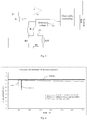
- the differential amplification circuit may be as illustrated in Fig. 3 , which may include a resistor R1, a resistor R2, a capacitor C1, and a differential amplifier X1.
- a first end of the resistor R2 is coupled to a positive electrode of the battery, and a second end of the resistor R2 is coupled to a negative input end of the differential amplifier.
- the resistor R1 and the capacitor C1 together form an RC voltage stabilization and filter circuit.
- a first end of the resistor R1 is coupled to the negative input end of the differential amplifier X1, and a second end of the resistor R1 is grounded.
- the capacitor C1 is coupled to the resistor R1 in parallel, and a positive input end of the differential amplifier X1 is coupled to the positive electrode of the battery.
- the battery voltage can be monitored in real time through the differential amplification circuit, and whether the voltage jump occurs in the battery voltage can be determined according to an output signal of the differential amplification circuit.
- the voltage jump of the battery voltage may be due to a sudden increase of a system load.
- the voltage jump of the battery voltage occurs due to the sudden increase of the system load, it is accompanied with the sudden increase of the consumption current of the battery. That is, the abrupt change of the consumption current of the battery will occur with the voltage jump.
- the consumption current of the battery is monitored by a current detection circuit.
- the current detection circuit may include an eighth resistor R8, a ninth resistor R9, a tenth resistor R10, a third comparator X3, an eleventh resistor R11, and a fourth comparator X4.
- a first end of the eighth resistor R8 is coupled to an negative electrode of the battery
- a second end of the eighth resistor R8 is coupled to a positive electrode of the battery via a system load
- the eighth resistor R8 is a current detection resistor.
- a first end of the ninth resistor R9 is coupled to the first end of the eighth resistor R8.
- a first end of the tenth resistor R10 is coupled to the second end of the eighth resistor R8.
- a negative input end of the third comparator X3 is coupled to a second end of the ninth resistor R9, and a positive input end of the third comparator X3 is coupled to a second end of the tenth resistor R10.
- the eleventh resistor R11 is coupled between the negative input end and an output end of the third comparator X3.
- a positive input end of the fourth comparator X4 is coupled to the output end of the third comparator X3, a negative input end of the fourth comparator X4 is coupled to a reference voltage providing end, and an output end of the fourth comparator X4 is configured to output a current detection signal, so that whether the abrupt change occurs in the consumption current of the battery may be determined according to the current detection signal.
- the current detection circuit detects the consumption current of the battery by the current detection resistor R8, such that when the voltage jump of the battery voltage is monitored by the differential amplification circuit, if the consumption current flowing through the current detection resistor R8 is greater than or equal to a preset current threshold within a second preset time period, it is determined that the abrupt change of the consumption current of the battery occurs, which indicates that the system load suddenly increases, and thus it can be determined that the voltage jump of the battery voltage is the instantaneous voltage drop caused by the sudden increase of the system load, not the instantaneous voltage drop due to the battery damage.
- the differential amplification circuit When the voltage jump of the battery voltage is monitored by the differential amplification circuit, if the consumption current flowing through the current detection resistor R8 within the second time period is less than the preset current threshold, it is determined that the abrupt change of the consumption current of the battery does not occur, which indicates that the system load does not increase suddenly, the voltage at the positive input end of the fourth comparator X4 is less than the reference voltage at the negative input end, and the fourth comparator X4 outputs a low level, and thus it can be determined that the voltage jump of the battery voltage is not the instantaneous voltage drop caused by the sudden increase of the system load, but the instantaneous voltage drop caused by the battery damage.
- the battery is determined as abnormal currently when the abrupt change occurs in the consumption current of the battery.
- the inventors have found through extensive tests and experiments that the voltage of the battery is relatively stable during normal use, but once the battery is subjected to external mechanical damages such as falling, impacting, squeezing and puncturing, the voltage jump of the battery voltage occurs. Therefore, the battery abnormality monitoring method of embodiments of the present disclosure monitors whether the abrupt change of the consumption current of the battery occurs while monitoring whether the voltage jump of the battery voltage occurs. In this manner, when the voltage jump of the battery voltage occurs, if the abrupt change of the consumption current of the battery does not occur (the current is relatively smooth), it is determined that the battery is damaged currently and has an internal short circuit, and it is determined that the abnormality occurs in the battery currently and has a certain safety hazard.
- determining whether the voltage jump occurs in the battery of the terminal device according to the battery voltage obtained in real time includes: determining whether an instantaneous voltage drop occurs in the battery according to the battery voltage obtained in real time, and determining that the voltage jump occurs in the battery, when the instantaneous voltage drop occurs in the battery.
- the preset value may be greater than or equal to 10 mV. Based on extensive experiments, it has been proved that in a light load situation of the battery (for example, the output of the battery is 5mA-6mA), the magnitude of the voltage drop of the battery caused by the battery damage is above 10mV.
- the first preset time period may be calibrated by millisecond, for example, may be 0.1-5ms.
- curve 1 represents the voltage change when the battery is slightly damaged
- curve 2 represents the voltage change when the battery is seriously damaged
- curve 3 represents the voltage change when the battery is normal without damage. It can be seen from curve 1 that when the battery is slightly damaged, the battery voltage instantaneously drops from 3.8V to 3.63V and then back to about 3.8V. It can be seen from curve 2 that when the battery is seriously damaged, the battery voltage instantaneously drops from 3.8V to 3.51V and then back to about 3.8V It can be seen from curve 3 that the battery voltage is basically stable at 3.8V when the battery is normal without damage.
- determining whether the abrupt change of the consumption current of the battery occurs includes: determining whether a magnitude of change of the consumption current of the battery in a second preset time period is greater than or equal to a preset current threshold; if yes, determining that the abrupt change of the consumption current occurs; and if no, determining that the abrupt change of the consumption current does not occur.
- the preset current threshold is greater than or equal to 50mA, and the second preset time period is calibrated by millisecond.
- the terminal device when the terminal device is in the on state, in order to avoid interference caused by the voltage jump of the battery voltage due to the sudden change of the system load, it is further monitored whether the abrupt change of the consumption current of the battery occurs when the voltage jump of the battery voltage is monitored.
- the abrupt change of the consumption current of the battery does not occur, it is determined that the abnormality occurs in the battery currently due to the battery damage, and there is the safety hazard.
- the abrupt change of the consumption current occurs with the voltage jump, it can be determined that the voltage jump of the battery voltage is caused by the sudden increase of the system load.
- the battery abnormality monitoring method of embodiments of the present disclosure by detecting whether the abrupt change of the consumption current of the battery occurs while detecting whether the voltage jump of the battery voltage occurs, whether the abnormality occurs in the battery currently can be determined precisely. Further, the battery damage can be monitored in real time once it occurs, and timely reminder and maintenance can be achieved, thereby avoiding the safety hazards caused by the battery abnormality and greatly improving the safety of the terminal device in use.
- the terminal device when the battery is abnormal currently, the terminal device is further controlled to issue a reminder message for indicating that the battery is abnormal, and the abnormal battery can be marked.
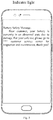
- the users can be alerted by the following message "Battery Safety Message: Dear customer, your battery is currently in an abnormal state due to damage. For your safe use, please go to *** customer service center for inspection and maintenance, thank you!.
- the user may also be altered by flashing the indicator light disposed on the terminal device, for example, controlling the indicator light to emit red light at a high frequency.
- the user may also be alerted by the voice playing function in the terminal device.
- the user when seeing the above reminder message, the user will promptly go to the corresponding customer service center for inspection and maintenance.
- some users are not sure about the seriousness of the problem when they see the message, so it is likely for them to ignore the message, and continue to use the terminal device. In this case, the user should be alerted repeatedly, for example, at least three times. If the user still does not seek for maintenance after a plurality of reminder, some functions of the terminal device can be limited.
- a fault grade is further determined according to a situation of the voltage jump, and a corresponding function of the terminal device is limited according to the fault grade.
- the fault grade can be determined according to the magnitude of the instantaneous voltage drop of the battery voltage. For example, the larger the magnitude of the instantaneous voltage drop of the battery voltage is, the more serious the battery damage is. Therefore, the battery damage can be divided into general damage, comparatively severe damage, severe damage and battery failure, the corresponding fault grade may be general grade, comparatively severe grade, severe grade, and complete fault grade, and further the corresponding function of the terminal device can be limited according to the fault grade.
- the battery power consumption is small at this time and the battery generates less heat, and thus the battery is less likely to cause safety incidents.
- the application consumes a large amount of power, for example, by watching videos and playing games, the battery power consumption is large at this time and the battery generates more heat, and thus the battery is likely to cause safety incidents.
- the fault grade is general grade, certain applications such as video software and game software that consume a large amount of power shall be banned, or if the fault grade is comparatively severe grade or severe grade, the entire system can be directly prohibited to prevent the occurrence of safety incidents, and the message "The battery has potential safety hazard, the activation of system is prohibited, please go to the customer service center of *** for inspection and maintenance, thank you for your cooperation! " can be displayed on the screen of the terminal device, to remind the user, or if the fault grade is complete fault grade, the battery fails, the system is off and cannot be started.
- heat is also generated during the charging process of the battery.
- the battery is also prohibited from fast charging.
- the user may be banned from charging the battery to prevent safety incidents, and the user will be alerted through the message displayed on the screen of the terminal device "The battery is damaged and cannot be charged. Please check the customer service center of *** for inspection and maintenance, thank you for your cooperation!.
- the battery abnormality monitoring method when the terminal device is in the on state, the battery voltage and the consumption current of the battery of the terminal device are obtained in real time, and then whether the voltage jump occurs in the battery of the terminal device is determined according to the battery voltage obtained in real time, and whether the abrupt change of the consumption current occurs is further determined when the voltage jump occurs in the battery, and the battery is determined to be abnormal currently when the abrupt change of the consumption current does not occur. That is, when the battery is damaged currently, the voltage jump of the battery voltage occurs, but the consumption current of the battery is generally smooth at this time without abrupt change.
- the present disclosure determines whether the battery is abnormal due to damage by monitoring the battery voltage and the consumption current of the battery in real time, so that the battery damage can be monitored in real time once it occurs, and timely reminder and maintenance can be achieved, thereby avoiding safety hazards caused by the battery abnormality, and greatly improving the safety of the terminal device in use.
- embodiments of the present disclosure provide a non-transitory computer-readable storage medium.
- the storage medium is stored thereon with a computer program that, when executed by a processor, perform the battery abnormality monitoring method described above.
- the non-transitory computer-readable storage medium by performing the above-mentioned battery abnormality monitoring method, can determine whether the battery is abnormal currently due to damage by monitoring the battery voltage and the consumption current of the battery in real time, so that the abnormality can be monitored in real time once the battery is damaged, and timely reminder and maintenance can be achieved, thereby avoiding safety hazards caused by the battery abnormality, and greatly improving the safety of the terminal device in use.
- Fig. 6 is a schematic block diagram illustrating a battery abnormality monitoring system according to embodiments of the present disclosure.
- the battery abnormality monitoring system 100 includes a first obtaining module 110, a second obtaining module 140, a determining module 120 and an abnormality monitoring module 130.
- the first obtaining module 110 is configured to obtain a battery voltage of a battery of the terminal device in real time when the terminal device is in an on state.
- the second obtaining module 140 is configured to obtain a consumption current of the battery in real time when the terminal device is in the on state.
- the first obtaining module 110 may detect the battery voltage in real time by a differential amplification circuit
- the second obtaining module 140 may detect the consumption current of the battery by a current detection circuit
- the differential amplification circuit may include a resistor R1, a resistor R2, a capacitor C1, and a differential amplifier X1.
- a first end of the resistor R2 is coupled to a positive electrode of the battery, and a second end of the resistor R2 is coupled to a negative input end of the differential amplifier.
- the resistor R1 and the capacitor C1 together form an RC voltage stabilization and filter circuit.
- a first end of the resistor R1 is coupled to the negative input end of the differential amplifier X1, and a second end of the resistor R1 is grounded.
- the capacitor C1 is coupled to the resistor R1 in parallel, and a positive input end of the differential amplifier X1 is coupled to the positive electrode of the battery.
- the current detection circuit may include an eighth resistor R8, a ninth resistor R9, a tenth resistor R10, a third comparator X3, an eleventh resistor R11, and a fourth comparator X4.
- a first end of the eighth resistor R8 is coupled to an negative electrode of the battery
- a second end of the eighth resistor R8 is coupled to a positive electrode of the battery via a system load
- the eighth resistor R8 is a current detection resistor.
- a first end of the ninth resistor R9 is coupled to the first end of the eighth resistor R8.
- a first end of the tenth resistor R10 is coupled to second end of the eighth resistor R8.
- a negative input end of the third comparator X3 is coupled to a second end of the ninth resistor R9, and a positive input end of the third comparator X3 is coupled to a second end of the tenth resistor R10.
- the eleventh resistor R11 is coupled between the negative input end and an output end of the third comparator X3.
- a positive input end of the fourth comparator X4 is coupled to the output end of the third comparator X3, a negative input end of the fourth comparator X4 is coupled to a reference voltage providing end, and an output end of the fourth comparator X4 is configured to output a current detection signal, so that whether the abrupt change occurs in the consumption current of the battery may be determined according to the current detection signal.
- the voltage jump of the battery voltage may be due to a sudden increase of a system load.
- the voltage jump of the battery voltage occurs due to the sudden increase of the system load, it is accompanied with the sudden increase of the consumption current of the battery. That is, the abrupt change of the consumption current of the battery will occur with the voltage jump.
- the battery voltage is monitored in real time by the differential amplification circuit, so that whether the voltage jump occurs in the battery voltage is determined according to the output signal of the differential amplification circuit.
- the consumption current of the battery is monitored in real time by the current detection circuit, so that when the abrupt change of the consumption current occurs is determined according to the current detection signal output by the current detection circuit.
- the current detection circuit detects the consumption current of the battery by the current detection resistor R8, such that when the voltage jump of the battery voltage is monitored by the differential amplification circuit, if the consumption current flowing through the current detection resistor R8 is greater than or equal to a preset current threshold within a second preset time period, it is determined that the abrupt change of the consumption current of the battery occurs, which indicates that the system load suddenly increases, and thus it can be determined that the voltage jump of the battery voltage is the instantaneous voltage drop caused by the sudden increase of the system load, not the instantaneous voltage drop due to the battery damage.
- the differential amplification circuit When the voltage jump of the battery voltage is monitored by the differential amplification circuit, if the consumption current flowing through the current detection resistor R8 within the second time period is less than the preset current threshold, it is determined that the abrupt change of the consumption current of the battery does not occur, which indicates that the system load does not increase suddenly, the voltage at the positive input end of the fourth comparator X4 is less than the reference voltage at the negative input end, and the fourth comparator X4 outputs a low level, and thus it can be determined that the voltage jump of the battery voltage is not the instantaneous voltage drop caused by the sudden increase of the system load, but the instantaneous voltage drop caused by the battery damage.
- the determining module 120 is configured to determine whether the voltage jump occurs in the battery of the terminal device according to the battery voltage obtained in real time, and to further determine whether the abrupt change occurs in the consumption current of the battery when the voltage jump occurs in the battery voltage.
- the abnormality monitoring module 130 is configured to determine that an abnormality occurs in the battery currently when the voltage jump occurs in the battery and the abrupt change does not occur in the consumption current of the battery.
- the determining module 120 is further configured to determine whether an instantaneous voltage drop occurs in the battery according to the battery voltage obtained in real time, and determine that the voltage jump occurs if the instantaneous voltage drop occurs in the battery.
- the determining module 120 determines that the instantaneous voltage drop occurs in the battery, when a magnitude of a voltage drop of the battery voltage within a first preset time period is greater than or equal to a preset value.
- the preset value may be greater than or equal to 10 mV. Based on extensive experiments, it has been proved that in a light load situation of the battery (for example, the output of the battery is 5mA-6mA), the magnitude of the voltage drop of the battery caused by the battery damage is above 10mV.
- the first preset time period may be calibrated by millisecond, for example, may be 0.1-5ms.
- curve 1 represents the voltage change when the battery is slightly damaged
- curve 2 represents the voltage change when the battery is seriously damaged
- curve 3 represents the voltage change when the battery is normal without damage. It can be seen from curve 1 that when the battery is slightly damaged, the battery voltage instantaneously drops from 3.8V to 3.63V and then back to about 3.8V. It can be seen from curve 2 that when the battery is seriously damaged, the battery voltage instantaneously drops from 3.8V to 3.51V and then back to about 3.8V It can be seen from curve 3 that the battery voltage is basically stable at 3.8V when the battery is normal without damage.
- the determining module 120 is further configured to: determine whether a magnitude of change of the consumption current of the battery in a second preset time period is greater than or equal to a preset current threshold; if yes, determine that the abrupt change of the consumption current occurs; and if no, determine that the abrupt change of the consumption current does not occur.
- the preset current threshold is greater than or equal to 50mA, and the second preset time period is calibrated by millisecond.
- the terminal device when the terminal device is in the on state, in order to avoid interference caused by the voltage jump of the battery voltage due to the sudden change of the system load, it is further monitored whether the abrupt change of the consumption current of the battery occurs when the voltage jump of the battery voltage is monitored.
- the abrupt change of the consumption current of the battery does not occur, it is determined that the abnormality occurs in the battery currently due to the battery damage, and there is the safety hazard.
- the abrupt change of the consumption current occurs with the voltage jump, it can be determined that the voltage jump of the battery voltage is caused by the sudden increase of the system load.
- the battery abnormality monitoring method of embodiments of the present disclosure by detecting whether the abrupt change of the consumption current of the battery occurs while detecting whether the voltage jump of the battery voltage occurs, whether the abnormality occurs in the battery currently can be determined precisely. Further, the battery damage can be monitored in real time once it occurs, and timely reminder and maintenance can be achieved, thereby avoiding the safety hazards caused by the battery abnormality and greatly improving the safety of the terminal device in use.
- the abnormality monitoring module 130 is further configured to control the terminal device to issue a reminder message for indicating that the battery is abnormal.
- the users can be alerted by the following message "Battery Safety Message: Dear customer, your battery is currently in an abnormal state due to damage. For your safe use, please go to *** customer service center for inspection and maintenance, thank you!.
- the user may also be altered by flashing the indicator light disposed on the mobile terminal, for example, controlling the indicator light to emit red light at a high frequency.
- the user may also be alerted by the voice playing function in the terminal device.
- the user when seeing the above reminder message, the user will promptly go to the corresponding customer service center for inspection and maintenance.
- some users are not sure about the seriousness of the problem when they see the message, so it is likely for them to ignore the message, and continue to use the terminal device. In this case, the user should be alerted repeatedly, for example, at least three times. If the user still does not seek for maintenance after a plurality of reminder, some functions of the terminal device can be limited.
- the abnormality monitoring module 130 is further configured to determine a fault grade according to a situation of the voltage jump, and limit a corresponding function of the terminal device according to the fault grade.
- the abnormality monitoring module 130 may determine the fault grade according to the magnitude of the instantaneous voltage drop of the battery voltage. For example, the larger the magnitude of the instantaneous voltage drop of the battery voltage is, the more serious the battery damage is. Therefore, the battery damage can be divided into general damage, comparatively severe damage, severe damage and battery failure, the corresponding fault grade may be general grade, comparatively severe grade, severe grade, and complete fault grade, and further the corresponding functions of the terminal device can be limited according to the fault grade.
- the battery power consumption is small at this time and the battery generates less heat, and thus it is unlikely to cause safety incidents.
- the application consumes a large amount of power, for example, by watching videos and playing games, the battery power consumption is large at this time and the battery generates more heat, and thus it is likely to cause safety incidents.
- the fault grade is general grade
- certain applications such as video software and game software that consume a large amount of power shall be banned by the abnormality monitoring module 130, or if the fault grade is comparatively severe grade or severe grade, the entire system can be directly prohibited by the abnormality monitoring module 130 to prevent the occurrence of safety incidents, and the message "The battery has potential safety hazard, the activation of system is prohibited, please go to the customer service center of *** for inspection and maintenance, thank you for your cooperation! " can be displayed on the screen of the terminal device, to remind the user, or if the fault grade is complete fault grade, the battery fails, the system is off and cannot be started.
- heat is also generated during the charging process of the battery.
- the battery is also prohibited by the abnormality monitoring module 130 from fast charging.
- the user may be banned from charging the battery to prevent safety incidents, and the user will be alerted through the message displayed on the screen of the terminal device "The battery is damaged and cannot be charged. Please check the customer service center of *** for inspection and maintenance, thank you for your cooperation!.
- the abnormality monitoring module 130 may be a battery manager with a battery management function, or may be a battery protection system with a battery protection function, or may be a terminal device control system with an integrated battery management function, battery protection function and terminal device control function, which will not be specifically limited in the present disclosure.
- the first obtaining module obtains the battery voltage of the terminal device in real time and the second obtaining module obtains the consumption current of the battery in real time
- the determining module determines whether the voltage jump occurs in the battery of the terminal device according to the battery voltage obtained in real time and further determines whether the abrupt change of the consumption current occurs when the voltage jump occurs in the battery voltage
- the abnormality monitoring module determines that the battery is abnormal currently when the abrupt change of the consumption current of the battery does not occur. That is, when the battery is damaged currently, the voltage jump of the battery voltage occurs, but the consumption current of the battery is generally smooth at this time without abrupt change.
- the present disclosure determines whether the battery is abnormal due to damage by monitoring the battery voltage and the consumption current of the battery in real time, so that the battery damage can be monitored in real time once it occurs, and timely reminder and maintenance can be achieved, thereby avoiding safety hazards caused by the battery abnormality, and greatly improving the safety of the terminal device in use.
- inventions of the present disclosure further provide a terminal device 10.
- the terminal device 10 includes the above battery abnormality monitoring system 100.
- the terminal device can determine whether the battery is abnormal currently due to damage by monitoring the battery voltage and the consumption current of the battery in real time, so that the battery damage can be monitored in real time once it occurs, and timely reminder and maintenance can be achieved, thereby avoiding safety hazards caused by the battery abnormality, and greatly improving the safety of the terminal device in use.
- first and second are used herein for purposes of description and are not intended to indicate or imply relative importance or significance.
- feature defined with “first” and “second” may comprise one or more this feature distinctly or implicitly.
- a plurality of' means two or more than two, unless specified otherwise.
- the terms “mounted,” “connected,” “coupled” and “fixed” are understood broadly, such as fixed, detachable mountings, connections and couplings or integrated, and can be mechanical or electrical mountings, connections and couplings, and also can be direct and via media indirect mountings, connections, and couplings, and further can be inner mountings, connections and couplings of two components or interaction relations between two components, which can be understood by those skilled in the art according to the detail embodiment of the present disclosure.
- the first characteristic is “on” or “under” the second characteristic refers to the first characteristic and the second characteristic can be direct or via media indirect mountings, connections, and couplings.
- the first characteristic is “on”, “above”, “over” the second characteristic may refer to the first characteristic is right over the second characteristic or is diagonal above the second characteristic, or just refer to the horizontal height of the first characteristic is higher than the horizontal height of the second characteristic.
- the first characteristic is “below” or “under” the second characteristic may refer to the first characteristic is right over the second characteristic or is diagonal under the second characteristic, or just refer to the horizontal height of the first characteristic is lower than the horizontal height of the second characteristic.
- the system, devices and method disclosed in several embodiments provided by the present disclosure can be realized in any other manner.
- the device embodiments described above can be merely exemplary, for example, the units are just divided according to logic functions. In practical implementation, the units can be divided in other manners, for example, multiple units or components can be combined or integrated into another system, or some features can be omitted or not executed.
- the mutual coupling or direct coupling or communication connection described or discussed can be via some interfaces, and indirect coupling or communication connection between devices or units may be electrical, mechanical or of other forms.
- the units illustrated as separate components can be or not be separated physically, and components described as units can be or not be physical units, i.e., can be located at one place, or can be distributed onto multiple network units. It is possible to select some or all of the units according to actual needs, for realizing the objective of embodiments of the present disclosure
- respective functional units in respective embodiments of the present disclosure can be integrated into one processing unit, or can be present as separate physical entities. It is also possible that two or more than two units are integrated into one unit.
- the functions are realized in form of functional software units and are sold or used as separate products, they can be stored in a computer readable storage medium.
- the parts of the technical solutions or the essential parts of the technical solutions i.e. the parts making a contribution to the related art
- the above storage medium may be any medium capable of storing program codes, including a USB flash disk, a mobile hard disk, a Read-Only Memory (ROM), a Random Access Memory (RAM), a disc, or a light disk.
Landscapes
- Physics & Mathematics (AREA)
- General Physics & Mathematics (AREA)
- Business, Economics & Management (AREA)
- Emergency Management (AREA)
- Secondary Cells (AREA)
- Charge And Discharge Circuits For Batteries Or The Like (AREA)
Abstract
Description
- The present disclosure relates to a terminal device technology field, and more particularly, to a battery abnormality monitoring method of a terminal device, a battery abnormality monitoring system of a terminal device, and a terminal device having the battery abnormality monitoring system.
- A battery is a power source of a mobile terminal, and provides a long-term stable power supply for the mobile terminal such as a mobile phone. The earliest batteries used in mobile terminals are nickel-chrome batteries and nickel-hydrogen batteries. With the increasement of sizes and functions of screens of the mobile terminals, the capacity of nickel-chrome batteries and nickel-hydrogen batteries cannot satisfy the energy demand. Lithium batteries have many advantages, for example, high energy density and hence small size and light weight and larger capacity, quick charging and discharging, having no memory effect compared to the nickel-chrome batteries and nickel-hydrogen batteries, and minimal element damage to environment. The lithium batteries have gradually replaced the traditional nickel-chrome batteries and nickel-hydrogen batteries.
- Although the lithium battery effectively solves the problem of battery capacity, it also causes safety problems. For example, when the lithium battery is damaged and becomes short-circuited, heat generates inside the battery cell. When the heat generates really fast, the battery would ignite or explode. Therefore, safety monitoring is required for the battery to prevent accidents.
- The present disclosure aims to solve at least one of the above problems to at least some extent. For this, a first objective of the present disclosure is to provide a battery abnormality monitoring method of a terminal device, which can monitor whether an abnormality occurs in the battery due to damage, by detecting whether a voltage jump occurs in a voltage of the battery and whether an abrupt change occurs in a consumption current of the battery, thereby achieving timely reminder and maintenance and avoiding safety hazards caused by the battery abnormality.
- A second objective of the present disclosure is to provide a non-transitory computer-readable storage medium.
- A third objective of the present disclosure is to provide a battery abnormality monitoring system of a terminal device.
- A fourth objective of the present disclosure is to provide a terminal device.
- In order to achieve the above objectives, embodiments of a first aspect of the present disclosure provide a battery abnormality monitoring method of a terminal device. The method includes: obtaining a battery voltage of a battery of the terminal device in real time and obtaining a consumption current of the battery in real time, when the terminal device is in an on state; determining whether a voltage jump occurs in the battery of the terminal device according to the battery voltage obtained in real time; further determining whether an abrupt change occurs in the consumption current of the battery when the voltage jump occurs in the battery; and determining that an abnormality occurs currently in the battery when the abrupt change does not occur in the consumption current of the battery.
- According to the battery abnormality monitoring method of a terminal device of embodiments of the present disclosure, the battery voltage and the consumption current of the battery of the terminal device are obtained in real time when the terminal device is on, and then whether the voltage jump occurs in the battery of the terminal device is determined according to the battery voltage obtained in real time and whether the abrupt change occurs in the consumption current of the battery is further determined when the voltage jump occurs in the battery, and finally it is determined that the battery is abnormal currently when the abrupt change does not occurs in the consumption current of the battery. That is, when the battery is damaged currently, the voltage jump of the battery voltage occurs, but the consumption current of the battery is generally smooth at this time without abrupt change. Therefore, the present disclosure determines whether the battery is abnormal due to damage by monitoring the battery voltage and the consumption current of the battery in real time, so that the battery damage can be monitored in real time once it occurs, and timely reminder and maintenance can be achieved, thereby avoiding safety hazards caused by the battery abnormality, and greatly improving the safety of the terminal device in use.
- In addition, the battery abnormality monitoring method according to the above embodiments of the present disclosure may further have the following additional technical features.
- According to an embodiment of the present disclosure, the terminal device is further controlled to issue a reminder message for indicating the abnormality of the battery, when the abnormality occurs currently in the battery.
- According to an embodiment of the present disclosure, determining whether the voltage jump occurs in the battery based on the battery voltage obtained in real time includes: determining whether an instantaneous voltage drop occurs in the battery based on the battery voltage obtained in real time; and determining that the voltage jump occurs in the battery when the instantaneous voltage drop occurs in the battery.
- According to an embodiment of the present disclosure, an occurrence of the instantaneous voltage drop is determined when a magnitude of a voltage drop of the battery voltage within a first preset time period is greater than or equal to a preset value.
- According to an embodiment of the present disclosure, the preset value is greater than or equal to 10mV.
- According to an embodiment of the present disclosure, determining whether the abrupt change occurs in the consumption current of the battery includes: determining whether a magnitude of change of the consumption current within a second preset time period is greater than or equal to a preset current threshold; if yes, determining that the abrupt change occurs in the consumption current of the battery; and if no, determining that the abrupt change does not occur in the consumption current of the battery.
- According to an embodiment of the present disclosure, the preset current threshold is greater than or equal to 50mA.
- According to an embodiment of the present disclosure, when the abnormality occurs currently in the battery, a fault grade is determined based on a situation of the voltage jump of the battery, and a corresponding function of the terminal device is limited according to the fault grade.
- In order to achieve the above objectives, embodiments of a second aspect of the present disclosure provide a non-transitory computer-readable storage medium. The computer-readable storage medium is stored thereon with a computer program that, when executed by a processor, perform the battery abnormality monitoring method described above.
- The non-transitory computer-readable storage medium according to embodiments of the present disclosure, by performing the above-mentioned battery abnormality monitoring method, can determine whether the battery is abnormal currently due to damage by monitoring the battery voltage and the consumption current of the battery, so that the abnormality can be monitored in real time once the battery is damaged, and thus timely reminder and maintenance can be achieved, thereby avoiding safety hazards caused by the battery abnormality, and greatly improving the safety of the terminal device in use.
- In order to achieve the above objectives, embodiments of a third aspect of the present disclosure provide a battery abnormality monitoring system of a terminal device. The system includes: a first obtaining module, configured to obtain a battery voltage of a battery of the terminal device in real time when the terminal device is in an on state; a second obtaining module, configured to obtain a consumption current of the battery in real time when the terminal device is in the on state; a determining module, configured to determine whether a voltage jump occurs in the battery based on the battery voltage obtained in real time, and to further determine whether an abrupt change occurs in the consumption current of the battery when the voltage jump occurs in the battery; and an abnormality monitoring module, configured to determine that an abnormality occurs currently in the battery when the voltage jump occurs in the battery and the abrupt change does not occur in the consumption current of the battery.
- According to the battery abnormality monitoring system of embodiments of the present disclosure, when the terminal device is in the on state, the first obtaining module obtains the battery voltage of the terminal device in real time and the second obtaining module obtains the consumption current of the battery in real time, and then the determining module determines whether the voltage jump occurs in the battery of the terminal device according to the battery voltage obtained in real time and further determines whether the abrupt change of the consumption current occurs when the voltage jump occurs in the battery voltage, and finally the abnormality monitoring module determines that the battery is abnormal currently when the abrupt change of the consumption current of the battery does not occur. That is, when the battery is damaged currently, the voltage jump of the battery voltage occurs, but the consumption current of the battery is generally smooth at this time without abrupt change. Therefore, the present disclosure determines whether the battery is abnormal due to damage by monitoring the battery voltage and the consumption current of the battery in real time, so that the battery damage can be monitored in real time once it occurs, and timely reminder and maintenance can be achieved, thereby avoiding safety hazards caused by the battery abnormality, and greatly improving the safety of the terminal device in use.
- In addition, the battery abnormality monitoring system according to the above embodiments of the present disclosure may further have the following additional technical features.
- According to an embodiment of the present disclosure, the abnormality monitoring module is further configured to control the terminal device to issue a reminder message for indicating the abnormality of the battery, when the abnormality occurs currently in the battery.
- According to an embodiment of the present disclosure, the determining module is configured to: determine whether an instantaneous voltage drop occurs in the battery based on the battery voltage obtained in real time; and determine that the voltage jump occurs in the battery when the instantaneous voltage drop occurs in the battery.
- According to an embodiment of the present disclosure, the determining module is configured to determine that the instantaneous voltage drop occurs in the battery when a magnitude of a voltage drop of the battery voltage within a first preset time period is greater than or equal to a preset value.
- According to an embodiment of the present disclosure, the preset value is greater than or equal to 10mV.
- According to an embodiment of the present disclosure, the determining module is configured to: determine whether a magnitude of change of the consumption current within a second preset time period is greater than or equal to a preset current threshold; if yes, determine that the abrupt change occurs in the consumption current of the battery; and if no, determine that the abrupt change does not occur in the consumption current of the battery.
- According to an embodiment of the present disclosure, the preset current threshold is greater than or equal to 50mA.
- According to an embodiment of the present disclosure, when the abnormality occurs currently in the battery, the abnormality monitoring module is further configured to determine a fault grade based on a situation of the voltage jump of the battery, and to limit a corresponding function of the terminal device according to the fault grade.
- In order to achieve the above objectives, embodiments of a fourth aspect of the present disclosure provide a terminal device. The terminal device includes the above battery abnormality monitoring system.
- With the above battery abnormality monitoring system, the terminal device according to embodiments of the present disclosure can determine whether the battery is abnormal currently due to damage by monitoring the battery voltage and the consumption current of the battery in real time, so that the battery damage can be monitored in real time once it occurs, and timely reminder and maintenance can be achieved, thereby avoiding safety hazards caused by the battery abnormality, and greatly improving the safety of the terminal device in use.
-
-
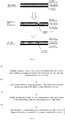
Fig. 1 is a schematic diagram of a battery damage process according to an embodiment of the present disclosure. -
Fig. 2 is a flow chart of a battery abnormality monitoring method of a terminal device according to an embodiment of the present disclosure. -
Fig. 3 is a schematic diagram illustrating a voltage detection and current detection circuit according to an embodiment of the present disclosure. -
Fig. 4 is a schematic diagram illustrating a comparison of voltage monitoring curves of a damaged battery and a normal battery according to an embodiment of the present disclosure. -
Fig. 5 is a schematic diagram of a reminder message of a mobile terminal according to an embodiment of the present disclosure. -
Fig. 6 is a schematic block diagram illustrating a battery abnormality monitoring system of a terminal device according to embodiments of the present disclosure. -
Fig. 7 is a schematic block diagram illustrating a terminal device according to embodiments of the present disclosure. - Embodiments of the present disclosure will be described in detail and examples of embodiments are illustrated in the drawings. The same or similar elements and the elements having the same or similar functions are denoted by like reference numerals throughout the descriptions. Embodiments described herein with reference to drawings are explanatory, serve to explain the present disclosure, and are not construed to limit embodiments of the present disclosure.
- Before describing the battery abnormality monitoring method, the battery abnormality monitoring system and the terminal device having the battery abnormality monitoring system according to embodiments of the present disclosure, a structure of a battery generally used for the terminal device and its possible safety hazard will be described.
- For example, a lithium battery mainly consists of a battery cell and a battery protection system. The battery cell is referred to as a "heart" of the lithium battery, the cell has positive electrode and negative electrode materials, electrolyte, an isolation membrane and a casing, and the protection system of the battery is disposed externally. The positive electrode material of the battery cell is material including lithium molecules, such as lithium manganite and lithium cobalt oxide, and the negative electrode material is graphite. The isolation membrane is disposed between the positive electrode and the negative electrode of the battery. Generally, the isolation membrane is like a kind of paper folded repeatedly into a small battery box, and filled with positive electrode and negative electrode materials and electrolyte. When charging is performed, an external electric field activates the lithium molecules in the positive electrode material, drives them to the negative electrode and stores them in voids in the graphite carbon structure. The more lithium molecules are driven, the more energy is stored. When discharging is performed, the lithium ions in the negative electrode are driven to the positive electrode, and turns to lithium molecules in the positive electrode material again, so the cycle to achieve charging and discharging of the battery.
- The isolation membrane is mainly used to completely separate the positive electrode and negative electrode materials of the cell. Once the positive electrode and the negative electrode are in direct contact, an internal short circuit of the battery will occur, which brings certain safety hazards. Therefore, since a thin isolation membrane can be easily damaged, the isolation membrane should not be too thin. However, as consumers demand higher requirements for terminal devices, such as, thin and light mobile terminals, large screens and strong standby capability, manufacturers are seeking batteries with higher energy density. For example, the energy density of the battery can be improved by filling more positive electrode and negative electrode materials. However, in the same volume, the more positive electrode and negative electrode materials are filled, the thinner the isolation membrane becomes, and the isolation membrane is easily damaged if the battery is damaged by external impact, which leads to a short circuit.
- As an example, when the battery is subjected to external mechanical damages such as crush damage, falling damage and puncturing damage, since the isolation membrane is thin, it is easy to cause damage to the isolation membrane and short circuit between the positive electrode and the negative electrode, i.e., the internal short circuit in the battery. When the short circuit occurs, the battery voltage will be pulled down instantaneously, which is mainly because that a local internal short circuit point is formed inside the battery. The more seriously the battery is damaged, the more severely the voltage is pulled down.
- Generally, relatively serious damage results in larger internal short-circuit area of the battery, and heat will generate continuously at the damage point, until the battery voltage drops to 0V If the battery voltage is high, the battery may even be ignited and burned. Moreover, slight damage results in smaller internal short-circuit area of the battery, short-circuit current is formed at the short-circuit point, and since the large short-circuit current generates a large amount of heat at the short-circuit point, the short-circuit point is fused, and the battery voltage returns to the initial state. At this time, the battery may be used normally as a normal battery, but the battery already has the safety hazard, which may trigger the internal short circuit at any time during the later user, specifically as illustrated in
Fig. 1 . When the battery is damaged by external mechanical damages, most of the damages are slight damages, which results in temporary internal short circuit, and the internal short circuit of the battery will quickly return to the initial state. However, at this time, the isolation membrane has already been partially damaged. Therefore, it is generally difficult to monitor this kind of battery abnormality, and such a battery abnormality will bring certain safety risks to the terminal device. - As another example, during the charging and discharging process of the battery, lithium ions may accumulate in the positive electrode and the negative electrode, and during accumulating, a dendrite will be produced as we can see that crystals grow on many things. The dendrite may become longer slowly, and in this process, it may puncture the isolation membrane, resulting in the internal short circuit of the battery. The above example describes the case where the battery is caused to occur the temporary internal short circuit due to external mechanical damage and then restored to the initial state. Such a case is more obvious at this time, that is, it is more likely to cause the internal short circuit of the battery again.
- Once the short circuit occurs, a large amount of heat will be generated inside the battery cell during the use of the battery. This heat will vaporize the electrolyte inside the battery. If the heat is generated too fast, the gasification process will be very fast, and the air pressure inside the cell will increase. When the air pressure reaches a certain level that is unbearable for the casing, the casing will crack and cause an explosion, and the battery may also be ignited in contact with an open flame.
- The higher the energy density is, the thinner the insolation film is, which results in that it is easy to damage the isolation membrane and further cause the safety accidents. Besides this, fast charging is also one of the main reasons for the safety hazard of the battery.
- The so-called fast charging is the process in which the secondary rechargeable battery is charged quickly. For example, the charging process of the battery may include one or more of a trickle current charging phase, a constant current charging phase and a constant voltage charging phase. In the trickle current charging phase, the current feedback loop can be utilized such that the current entering the battery meets the expected charging current of the battery (e.g. the first charge current), for example, when the voltage is below 3.0V, the battery is pre-charged with a charging current of 100mA. In the constant current charging phase, the current feedback loop can be utilized such that the current entering the battery meets the expected charging current of the battery (e.g. the second charge current, which is greater than the first charge current), for example, the charging current can vary from 0.1C to a few C for different batteries, where C refers to the battery capacity. At this stage, standard charging is generally performed with a charging current of 0.1C, and fast charging means charging at a current greater than 0.1C to complete charging in a short time. In the constant voltage charging phase, the voltage feedback loop can be utilized such that the voltage applied to both ends of the battery satisfies the expected charging voltage of the battery, for example, when the battery voltage is equal to 4.2V, the charging process enters the constant voltage charging phase with a constant voltage of 4.2V, and when the battery is gradually fully charged, the charging current will gradually decrease, and the battery is deemed to be fully charged if the charging current is less than 100mA.
- In the constant current charging phase, the charging current is relatively large, for example, 0.2C to 0.8C and sometimes even 1C, and the charging process of the battery is an electrochemical reaction process, which is accompanied by heat. A large amount of heat can be generated in a short time when the charging current is large, and if the insolation film is damaged, it is easy to cause short circuit of the positive electrode and the negative electrode. Once the short circuit occurs, more heat is generated and the electrolyte is vaporized, and the air pressure inside the cell will increase. When the air pressure reaches a certain level that is unbearable for the casing, the casing will crack and causes an explosion, and the battery may also be ignited in contact with an open flame.
- That is, once the battery has an internal short circuit, it indicates that the battery is abnormal, and in this case, the battery has certain safety hazards, which may cause safety accidents during use.
- According to continuous research and experiments on the battery, the inventors of the present application have found that the voltage of the battery is relatively stable in normal use, however, once the battery is damaged, the short circuit may occur inside the battery, and thus the battery voltage will suddenly drop, and this voltage jump signal is very strong. The inventors have verified the existence of this voltage jump phenomenon through experiments. Therefore, according to the test results, the voltage jump signal appears once the battery is damaged.
- Based on the discovery and a large number of experimental verifications, in order to effectively monitor whether the battery is damaged, to prevent the battery from safety hazards, and to further avoid safety incidents, the present disclosure provides effective abnormality monitoring method for abnormality of the battery.
- The battery abnormality monitoring method, the battery abnormality monitoring system and the terminal device according to embodiments of the present disclosure will be described below with reference to the drawings.
- It should be noted that the "terminal device" used in the embodiments of the present disclosure may include, but is not limited to, a device configured to receive/transmit communication signals via a wired connection (for example, public switched telephone network (PSTN), digital subscriber line (DSL) connection, digital cable connection, direct cable connection and/or another data connection/network) and/or via a wireless interface (for example, cellular network, wireless local area network (WLAN), digital TV network such as digital video broadcasting handheld (DVB-H) network, satellite network, an amplitude modulation-frequency modulation (AM-FM) broadcasting transmitter, and/or a wireless interface of another communication terminal). The terminal configured to communicate via the wireless interface may be referred to as "wireless communication terminal", "wireless terminal" and/or "mobile terminal". Examples of a mobile terminal include, but are not limited to a satellite phone or a cell phone, a terminal combining a cell radio phone and a personal communication system (PCS) having capability of data process, fax, and data communication, a personal digital assistant (PDA) including a radio phone, a pager, Internet/Intranet access, a web browser, a note pad & address book, a calendar and/or a global positioning system (GPS) receiver, and a common laptop and/or handheld receiver, or other electronic devices including a radio phone transceiver.
-
Fig. 2 is a flow chart of a battery abnormality monitoring method of a terminal device according to an embodiment of the present disclosure. As illustrated inFig. 2 , the battery abnormality monitoring method may include following operations. - At S1, when the terminal device is in an on state, a battery voltage of a battery of the terminal device is obtained in real time, and a consumption current of the battery is obtained in real time.
- At S2, whether a voltage jump occurs in the battery voltage is determined according to the battery voltage obtained in real time.
- In an embodiment of the present disclosure, as illustrated in
Fig. 3 , the battery voltage can be detected in real time by a differential amplification circuit. As an example, the differential amplification circuit may be as illustrated inFig. 3 , which may include a resistor R1, a resistor R2, a capacitor C1, and a differential amplifier X1. A first end of the resistor R2 is coupled to a positive electrode of the battery, and a second end of the resistor R2 is coupled to a negative input end of the differential amplifier. The resistor R1 and the capacitor C1 together form an RC voltage stabilization and filter circuit. A first end of the resistor R1 is coupled to the negative input end of the differential amplifier X1, and a second end of the resistor R1 is grounded. The capacitor C1 is coupled to the resistor R1 in parallel, and a positive input end of the differential amplifier X1 is coupled to the positive electrode of the battery. The battery voltage can be monitored in real time through the differential amplification circuit, and whether the voltage jump occurs in the battery voltage can be determined according to an output signal of the differential amplification circuit. - At S3, whether an abrupt change occurs in the consumption current of the battery is further determined when the voltage jump occurs in the battery voltage.
- In an embodiment of the present disclosure, when the terminal device is in the on state, the voltage jump of the battery voltage may be due to a sudden increase of a system load. When the voltage jump of the battery voltage occurs due to the sudden increase of the system load, it is accompanied with the sudden increase of the consumption current of the battery. That is, the abrupt change of the consumption current of the battery will occur with the voltage jump.
- In an embodiment of the present disclosure, as illustrated in
Fig. 3 , the consumption current of the battery is monitored by a current detection circuit. Specifically, the current detection circuit may include an eighth resistor R8, a ninth resistor R9, a tenth resistor R10, a third comparator X3, an eleventh resistor R11, and a fourth comparator X4. A first end of the eighth resistor R8 is coupled to an negative electrode of the battery, a second end of the eighth resistor R8 is coupled to a positive electrode of the battery via a system load, and the eighth resistor R8 is a current detection resistor. A first end of the ninth resistor R9 is coupled to the first end of the eighth resistor R8. A first end of the tenth resistor R10 is coupled to the second end of the eighth resistor R8. A negative input end of the third comparator X3 is coupled to a second end of the ninth resistor R9, and a positive input end of the third comparator X3 is coupled to a second end of the tenth resistor R10. The eleventh resistor R11 is coupled between the negative input end and an output end of the third comparator X3. A positive input end of the fourth comparator X4 is coupled to the output end of the third comparator X3, a negative input end of the fourth comparator X4 is coupled to a reference voltage providing end, and an output end of the fourth comparator X4 is configured to output a current detection signal, so that whether the abrupt change occurs in the consumption current of the battery may be determined according to the current detection signal. - Specifically, the current detection circuit detects the consumption current of the battery by the current detection resistor R8, such that when the voltage jump of the battery voltage is monitored by the differential amplification circuit, if the consumption current flowing through the current detection resistor R8 is greater than or equal to a preset current threshold within a second preset time period, it is determined that the abrupt change of the consumption current of the battery occurs, which indicates that the system load suddenly increases, and thus it can be determined that the voltage jump of the battery voltage is the instantaneous voltage drop caused by the sudden increase of the system load, not the instantaneous voltage drop due to the battery damage. When the voltage jump of the battery voltage is monitored by the differential amplification circuit, if the consumption current flowing through the current detection resistor R8 within the second time period is less than the preset current threshold, it is determined that the abrupt change of the consumption current of the battery does not occur, which indicates that the system load does not increase suddenly, the voltage at the positive input end of the fourth comparator X4 is less than the reference voltage at the negative input end, and the fourth comparator X4 outputs a low level, and thus it can be determined that the voltage jump of the battery voltage is not the instantaneous voltage drop caused by the sudden increase of the system load, but the instantaneous voltage drop caused by the battery damage.
- At S4, the battery is determined as abnormal currently when the abrupt change occurs in the consumption current of the battery.
- That is, when the voltage jump of the battery voltage occurs but the abrupt change of the consumption current of the battery does not occur, it indicates that the voltage jump of the battery voltage is due to the battery damage, instead of due to the sudden increase of the system load, and thus it can be determined that the battery is damaged currently, and an abnormality occurs in the battery.
- In embodiments of the present disclosure, the inventors have found through extensive tests and experiments that the voltage of the battery is relatively stable during normal use, but once the battery is subjected to external mechanical damages such as falling, impacting, squeezing and puncturing, the voltage jump of the battery voltage occurs. Therefore, the battery abnormality monitoring method of embodiments of the present disclosure monitors whether the abrupt change of the consumption current of the battery occurs while monitoring whether the voltage jump of the battery voltage occurs. In this manner, when the voltage jump of the battery voltage occurs, if the abrupt change of the consumption current of the battery does not occur (the current is relatively smooth), it is determined that the battery is damaged currently and has an internal short circuit, and it is determined that the abnormality occurs in the battery currently and has a certain safety hazard.
- According to an embodiment of the present disclosure, determining whether the voltage jump occurs in the battery of the terminal device according to the battery voltage obtained in real time includes: determining whether an instantaneous voltage drop occurs in the battery according to the battery voltage obtained in real time, and determining that the voltage jump occurs in the battery, when the instantaneous voltage drop occurs in the battery.
- It is determined that the instantaneous voltage drop occurs in the battery, when a magnitude of a voltage drop of the battery voltage within a first preset time period is greater than or equal to a preset value.
- Specifically, in one example of the present disclosure, the preset value may be greater than or equal to 10 mV. Based on extensive experiments, it has been proved that in a light load situation of the battery (for example, the output of the battery is 5mA-6mA), the magnitude of the voltage drop of the battery caused by the battery damage is above 10mV.
- The first preset time period may be calibrated by millisecond, for example, may be 0.1-5ms.
- Specifically, according to an embodiment of the present disclosure, voltage monitoring in the damage process of the battery is as illustrated in
Fig. 4 .Curve 1 represents the voltage change when the battery is slightly damaged,curve 2 represents the voltage change when the battery is seriously damaged, andcurve 3 represents the voltage change when the battery is normal without damage. It can be seen fromcurve 1 that when the battery is slightly damaged, the battery voltage instantaneously drops from 3.8V to 3.63V and then back to about 3.8V. It can be seen fromcurve 2 that when the battery is seriously damaged, the battery voltage instantaneously drops from 3.8V to 3.51V and then back to about 3.8V It can be seen fromcurve 3 that the battery voltage is basically stable at 3.8V when the battery is normal without damage. Therefore, by comparingcurve 1,curve 2 andcurve 3, it can be seen that once the battery is subjected to external mechanical damages such as falling, impacting, squeezing and penetrating, the voltage jump of the battery voltage occurs, that is, the voltage of the battery suddenly drops and the magnitude of the voltage drop is different depending on the degree of damage. The present disclosure monitors whether the battery is damaged currently by monitoring whether the instantaneous voltage jump of the battery voltage occurs. Once the instantaneous drop of the battery voltage is detected, it is determined that the battery may be damaged currently and have an internal short circuit, and it is required to further determine whether the abrupt change of the consumption current of the battery occurs. - According to an embodiment of the present disclosure, determining whether the abrupt change of the consumption current of the battery occurs includes: determining whether a magnitude of change of the consumption current of the battery in a second preset time period is greater than or equal to a preset current threshold; if yes, determining that the abrupt change of the consumption current occurs; and if no, determining that the abrupt change of the consumption current does not occur.
- Specifically, the preset current threshold is greater than or equal to 50mA, and the second preset time period is calibrated by millisecond.
- That is, when the terminal device is in the on state, in order to avoid interference caused by the voltage jump of the battery voltage due to the sudden change of the system load, it is further monitored whether the abrupt change of the consumption current of the battery occurs when the voltage jump of the battery voltage is monitored. When the abrupt change of the consumption current of the battery does not occur, it is determined that the abnormality occurs in the battery currently due to the battery damage, and there is the safety hazard. When the abrupt change of the consumption current occurs with the voltage jump, it can be determined that the voltage jump of the battery voltage is caused by the sudden increase of the system load.
- Therefore, according to the battery abnormality monitoring method of embodiments of the present disclosure, by detecting whether the abrupt change of the consumption current of the battery occurs while detecting whether the voltage jump of the battery voltage occurs, whether the abnormality occurs in the battery currently can be determined precisely. Further, the battery damage can be monitored in real time once it occurs, and timely reminder and maintenance can be achieved, thereby avoiding the safety hazards caused by the battery abnormality and greatly improving the safety of the terminal device in use.
- According to an embodiment of the present disclosure, when the battery is abnormal currently, the terminal device is further controlled to issue a reminder message for indicating that the battery is abnormal, and the abnormal battery can be marked.
- For example, when it is monitored that the battery is abnormal currently, there is a need to alert the user. As an example, as illustrated in
Fig. 5 , the users can be alerted by the following message "Battery Safety Message: Dear customer, your battery is currently in an abnormal state due to damage. For your safe use, please go to *** customer service center for inspection and maintenance, thank you!". As another example, while displaying the message as illustrated inFig. 5 to alert the user, the user may also be altered by flashing the indicator light disposed on the terminal device, for example, controlling the indicator light to emit red light at a high frequency. As yet another example, the user may also be alerted by the voice playing function in the terminal device. - In general, when seeing the above reminder message, the user will promptly go to the corresponding customer service center for inspection and maintenance. However, some users are not sure about the seriousness of the problem when they see the message, so it is likely for them to ignore the message, and continue to use the terminal device. In this case, the user should be alerted repeatedly, for example, at least three times. If the user still does not seek for maintenance after a plurality of reminder, some functions of the terminal device can be limited.
- According to an embodiment of the present disclosure, when the battery is abnormal currently, a fault grade is further determined according to a situation of the voltage jump, and a corresponding function of the terminal device is limited according to the fault grade.
- That is, the fault grade can be determined according to the magnitude of the instantaneous voltage drop of the battery voltage. For example, the larger the magnitude of the instantaneous voltage drop of the battery voltage is, the more serious the battery damage is. Therefore, the battery damage can be divided into general damage, comparatively severe damage, severe damage and battery failure, the corresponding fault grade may be general grade, comparatively severe grade, severe grade, and complete fault grade, and further the corresponding function of the terminal device can be limited according to the fault grade.
- For example, in general, the lower the power consumption of an application in the terminal device is, the less heat is generated when the battery is used. For example, when the chatting application is activated, but the video chat is not performed, the battery power consumption is small at this time and the battery generates less heat, and thus the battery is less likely to cause safety incidents. When the application consumes a large amount of power, for example, by watching videos and playing games, the battery power consumption is large at this time and the battery generates more heat, and thus the battery is likely to cause safety incidents. Therefore, when it is determined that there is an abnormality in the battery, if the fault grade is general grade, certain applications such as video software and game software that consume a large amount of power shall be banned, or if the fault grade is comparatively severe grade or severe grade, the entire system can be directly prohibited to prevent the occurrence of safety incidents, and the message "The battery has potential safety hazard, the activation of system is prohibited, please go to the customer service center of *** for inspection and maintenance, thank you for your cooperation! " can be displayed on the screen of the terminal device, to remind the user, or if the fault grade is complete fault grade, the battery fails, the system is off and cannot be started.
- In addition, heat is also generated during the charging process of the battery. In particular, in the state of fast charging, more heat is generated in a short time. When it is determined that the battery is abnormal, the battery is also prohibited from fast charging. In severe cases, the user may be banned from charging the battery to prevent safety incidents, and the user will be alerted through the message displayed on the screen of the terminal device "The battery is damaged and cannot be charged. Please check the customer service center of *** for inspection and maintenance, thank you for your cooperation!".
- In conclusion, with the battery abnormality monitoring method according to embodiments of the present disclosure, when the terminal device is in the on state, the battery voltage and the consumption current of the battery of the terminal device are obtained in real time, and then whether the voltage jump occurs in the battery of the terminal device is determined according to the battery voltage obtained in real time, and whether the abrupt change of the consumption current occurs is further determined when the voltage jump occurs in the battery, and the battery is determined to be abnormal currently when the abrupt change of the consumption current does not occur. That is, when the battery is damaged currently, the voltage jump of the battery voltage occurs, but the consumption current of the battery is generally smooth at this time without abrupt change. Therefore, the present disclosure determines whether the battery is abnormal due to damage by monitoring the battery voltage and the consumption current of the battery in real time, so that the battery damage can be monitored in real time once it occurs, and timely reminder and maintenance can be achieved, thereby avoiding safety hazards caused by the battery abnormality, and greatly improving the safety of the terminal device in use.
- In addition, embodiments of the present disclosure provide a non-transitory computer-readable storage medium. The storage medium is stored thereon with a computer program that, when executed by a processor, perform the battery abnormality monitoring method described above.
- The non-transitory computer-readable storage medium according to embodiments of the present disclosure, by performing the above-mentioned battery abnormality monitoring method, can determine whether the battery is abnormal currently due to damage by monitoring the battery voltage and the consumption current of the battery in real time, so that the abnormality can be monitored in real time once the battery is damaged, and timely reminder and maintenance can be achieved, thereby avoiding safety hazards caused by the battery abnormality, and greatly improving the safety of the terminal device in use.
-
Fig. 6 is a schematic block diagram illustrating a battery abnormality monitoring system according to embodiments of the present disclosure. As illustrated inFig. 6 , the batteryabnormality monitoring system 100 includes a first obtainingmodule 110, a second obtainingmodule 140, a determiningmodule 120 and anabnormality monitoring module 130. - The first obtaining
module 110 is configured to obtain a battery voltage of a battery of the terminal device in real time when the terminal device is in an on state. The second obtainingmodule 140 is configured to obtain a consumption current of the battery in real time when the terminal device is in the on state. - In an embodiment of the present disclosure, as illustrated in
Fig. 3 , the first obtainingmodule 110 may detect the battery voltage in real time by a differential amplification circuit, and the second obtainingmodule 140 may detect the consumption current of the battery by a current detection circuit. The differential amplification circuit may include a resistor R1, a resistor R2, a capacitor C1, and a differential amplifier X1. A first end of the resistor R2 is coupled to a positive electrode of the battery, and a second end of the resistor R2 is coupled to a negative input end of the differential amplifier. The resistor R1 and the capacitor C1 together form an RC voltage stabilization and filter circuit. A first end of the resistor R1 is coupled to the negative input end of the differential amplifier X1, and a second end of the resistor R1 is grounded. The capacitor C1 is coupled to the resistor R1 in parallel, and a positive input end of the differential amplifier X1 is coupled to the positive electrode of the battery. - As illustrated in
Fig. 3 , the current detection circuit may include an eighth resistor R8, a ninth resistor R9, a tenth resistor R10, a third comparator X3, an eleventh resistor R11, and a fourth comparator X4. A first end of the eighth resistor R8 is coupled to an negative electrode of the battery, a second end of the eighth resistor R8 is coupled to a positive electrode of the battery via a system load, and the eighth resistor R8 is a current detection resistor. A first end of the ninth resistor R9 is coupled to the first end of the eighth resistor R8. A first end of the tenth resistor R10 is coupled to second end of the eighth resistor R8. A negative input end of the third comparator X3 is coupled to a second end of the ninth resistor R9, and a positive input end of the third comparator X3 is coupled to a second end of the tenth resistor R10. The eleventh resistor R11 is coupled between the negative input end and an output end of the third comparator X3. A positive input end of the fourth comparator X4 is coupled to the output end of the third comparator X3, a negative input end of the fourth comparator X4 is coupled to a reference voltage providing end, and an output end of the fourth comparator X4 is configured to output a current detection signal, so that whether the abrupt change occurs in the consumption current of the battery may be determined according to the current detection signal. - In an embodiment of the present disclosure, when the terminal device is in the on state, the voltage jump of the battery voltage may be due to a sudden increase of a system load. When the voltage jump of the battery voltage occurs due to the sudden increase of the system load, it is accompanied with the sudden increase of the consumption current of the battery. That is, the abrupt change of the consumption current of the battery will occur with the voltage jump.
- Therefore, the battery voltage is monitored in real time by the differential amplification circuit, so that whether the voltage jump occurs in the battery voltage is determined according to the output signal of the differential amplification circuit. At the same time, the consumption current of the battery is monitored in real time by the current detection circuit, so that when the abrupt change of the consumption current occurs is determined according to the current detection signal output by the current detection circuit.
- Specifically, the current detection circuit detects the consumption current of the battery by the current detection resistor R8, such that when the voltage jump of the battery voltage is monitored by the differential amplification circuit, if the consumption current flowing through the current detection resistor R8 is greater than or equal to a preset current threshold within a second preset time period, it is determined that the abrupt change of the consumption current of the battery occurs, which indicates that the system load suddenly increases, and thus it can be determined that the voltage jump of the battery voltage is the instantaneous voltage drop caused by the sudden increase of the system load, not the instantaneous voltage drop due to the battery damage. When the voltage jump of the battery voltage is monitored by the differential amplification circuit, if the consumption current flowing through the current detection resistor R8 within the second time period is less than the preset current threshold, it is determined that the abrupt change of the consumption current of the battery does not occur, which indicates that the system load does not increase suddenly, the voltage at the positive input end of the fourth comparator X4 is less than the reference voltage at the negative input end, and the fourth comparator X4 outputs a low level, and thus it can be determined that the voltage jump of the battery voltage is not the instantaneous voltage drop caused by the sudden increase of the system load, but the instantaneous voltage drop caused by the battery damage.
- The determining
module 120 is configured to determine whether the voltage jump occurs in the battery of the terminal device according to the battery voltage obtained in real time, and to further determine whether the abrupt change occurs in the consumption current of the battery when the voltage jump occurs in the battery voltage. Theabnormality monitoring module 130 is configured to determine that an abnormality occurs in the battery currently when the voltage jump occurs in the battery and the abrupt change does not occur in the consumption current of the battery. - That is, when the voltage jump of the battery voltage occurs but the abrupt change of the consumption current of the battery does not occur, it indicates that the voltage jump of the battery voltage is due to the battery damage, instead of due to the sudden increase of the system load, and thus it can be determined that the battery is damaged currently, and an abnormality occurs in the battery.
- According to an embodiment of the present disclosure, the determining
module 120 is further configured to determine whether an instantaneous voltage drop occurs in the battery according to the battery voltage obtained in real time, and determine that the voltage jump occurs if the instantaneous voltage drop occurs in the battery. - The determining
module 120 determines that the instantaneous voltage drop occurs in the battery, when a magnitude of a voltage drop of the battery voltage within a first preset time period is greater than or equal to a preset value. - Specifically, in one example of the present disclosure, the preset value may be greater than or equal to 10 mV. Based on extensive experiments, it has been proved that in a light load situation of the battery (for example, the output of the battery is 5mA-6mA), the magnitude of the voltage drop of the battery caused by the battery damage is above 10mV.
- The first preset time period may be calibrated by millisecond, for example, may be 0.1-5ms.
- Specifically, according to an embodiment of the present disclosure, voltage monitoring in the damage process of the battery is as illustrated in
Fig. 4 .Curve 1 represents the voltage change when the battery is slightly damaged,curve 2 represents the voltage change when the battery is seriously damaged, andcurve 3 represents the voltage change when the battery is normal without damage. It can be seen fromcurve 1 that when the battery is slightly damaged, the battery voltage instantaneously drops from 3.8V to 3.63V and then back to about 3.8V. It can be seen fromcurve 2 that when the battery is seriously damaged, the battery voltage instantaneously drops from 3.8V to 3.51V and then back to about 3.8V It can be seen fromcurve 3 that the battery voltage is basically stable at 3.8V when the battery is normal without damage. Therefore, by comparingcurve 1,curve 2 andcurve 3, it can be seen that once the battery is subjected to external mechanical damages such as falling, impacting, squeezing and penetrating, the voltage jump of the battery occurs, that is, the voltage of the battery suddenly drops and the magnitude of the voltage drop is different depending on the degree of damage. The present disclosure monitors whether the battery is damaged currently by monitoring whether the instantaneous voltage jump of the battery voltage occurs. Once the instantaneous drop of the battery voltage is detected, it is determined that the battery may be damaged currently and have an internal short circuit, and it is required to further determine whether the abrupt change of the consumption current of the battery occurs. - According to an embodiment of the present disclosure, the determining
module 120 is further configured to: determine whether a magnitude of change of the consumption current of the battery in a second preset time period is greater than or equal to a preset current threshold; if yes, determine that the abrupt change of the consumption current occurs; and if no, determine that the abrupt change of the consumption current does not occur. - Specifically, the preset current threshold is greater than or equal to 50mA, and the second preset time period is calibrated by millisecond.
- That is, when the terminal device is in the on state, in order to avoid interference caused by the voltage jump of the battery voltage due to the sudden change of the system load, it is further monitored whether the abrupt change of the consumption current of the battery occurs when the voltage jump of the battery voltage is monitored. When the abrupt change of the consumption current of the battery does not occur, it is determined that the abnormality occurs in the battery currently due to the battery damage, and there is the safety hazard. When the abrupt change of the consumption current occurs with the voltage jump, it can be determined that the voltage jump of the battery voltage is caused by the sudden increase of the system load.
- Therefore, according to the battery abnormality monitoring method of embodiments of the present disclosure, by detecting whether the abrupt change of the consumption current of the battery occurs while detecting whether the voltage jump of the battery voltage occurs, whether the abnormality occurs in the battery currently can be determined precisely. Further, the battery damage can be monitored in real time once it occurs, and timely reminder and maintenance can be achieved, thereby avoiding the safety hazards caused by the battery abnormality and greatly improving the safety of the terminal device in use.
- According to an embodiment of the present disclosure, when the battery is abnormal currently, the
abnormality monitoring module 130 is further configured to control the terminal device to issue a reminder message for indicating that the battery is abnormal. - For example, when it is monitored that the battery is abnormal currently, there is a need to alert the user. As an example, as illustrated in
Fig. 5 , the users can be alerted by the following message "Battery Safety Message: Dear customer, your battery is currently in an abnormal state due to damage. For your safe use, please go to *** customer service center for inspection and maintenance, thank you!". As another example, while displaying the message as illustrated inFig. 5 to alert the user, the user may also be altered by flashing the indicator light disposed on the mobile terminal, for example, controlling the indicator light to emit red light at a high frequency. As yet another example, the user may also be alerted by the voice playing function in the terminal device. - In general, when seeing the above reminder message, the user will promptly go to the corresponding customer service center for inspection and maintenance. However, some users are not sure about the seriousness of the problem when they see the message, so it is likely for them to ignore the message, and continue to use the terminal device. In this case, the user should be alerted repeatedly, for example, at least three times. If the user still does not seek for maintenance after a plurality of reminder, some functions of the terminal device can be limited.
- According to an embodiment of the present disclosure, when the battery is abnormal currently, the
abnormality monitoring module 130 is further configured to determine a fault grade according to a situation of the voltage jump, and limit a corresponding function of the terminal device according to the fault grade. - That is, the
abnormality monitoring module 130 may determine the fault grade according to the magnitude of the instantaneous voltage drop of the battery voltage. For example, the larger the magnitude of the instantaneous voltage drop of the battery voltage is, the more serious the battery damage is. Therefore, the battery damage can be divided into general damage, comparatively severe damage, severe damage and battery failure, the corresponding fault grade may be general grade, comparatively severe grade, severe grade, and complete fault grade, and further the corresponding functions of the terminal device can be limited according to the fault grade. - For example, in general, the lower the power consumption of an application in the terminal device is, the less heat is generated when the battery is used. For example, when the chatting application is activated, but the video chat is not performed, the battery power consumption is small at this time and the battery generates less heat, and thus it is unlikely to cause safety incidents. When the application consumes a large amount of power, for example, by watching videos and playing games, the battery power consumption is large at this time and the battery generates more heat, and thus it is likely to cause safety incidents. Therefore, when it is determined that there is an abnormality in the battery, if the fault grade is general grade, certain applications such as video software and game software that consume a large amount of power shall be banned by the
abnormality monitoring module 130, or if the fault grade is comparatively severe grade or severe grade, the entire system can be directly prohibited by theabnormality monitoring module 130 to prevent the occurrence of safety incidents, and the message "The battery has potential safety hazard, the activation of system is prohibited, please go to the customer service center of *** for inspection and maintenance, thank you for your cooperation! " can be displayed on the screen of the terminal device, to remind the user, or if the fault grade is complete fault grade, the battery fails, the system is off and cannot be started. - In addition, heat is also generated during the charging process of the battery. In particular, in the state of fast charging, more heat is generated in a short time. When it is determined that the battery is abnormal, the battery is also prohibited by the
abnormality monitoring module 130 from fast charging. In severe cases, the user may be banned from charging the battery to prevent safety incidents, and the user will be alerted through the message displayed on the screen of the terminal device "The battery is damaged and cannot be charged. Please check the customer service center of *** for inspection and maintenance, thank you for your cooperation!". - In embodiments of the present disclosure, the
abnormality monitoring module 130 may be a battery manager with a battery management function, or may be a battery protection system with a battery protection function, or may be a terminal device control system with an integrated battery management function, battery protection function and terminal device control function, which will not be specifically limited in the present disclosure. - According to the battery abnormality monitoring system of embodiments of the present disclosure, when the terminal device is in the on state, the first obtaining module obtains the battery voltage of the terminal device in real time and the second obtaining module obtains the consumption current of the battery in real time, and then the determining module determines whether the voltage jump occurs in the battery of the terminal device according to the battery voltage obtained in real time and further determines whether the abrupt change of the consumption current occurs when the voltage jump occurs in the battery voltage, and finally the abnormality monitoring module determines that the battery is abnormal currently when the abrupt change of the consumption current of the battery does not occur. That is, when the battery is damaged currently, the voltage jump of the battery voltage occurs, but the consumption current of the battery is generally smooth at this time without abrupt change. Therefore, the present disclosure determines whether the battery is abnormal due to damage by monitoring the battery voltage and the consumption current of the battery in real time, so that the battery damage can be monitored in real time once it occurs, and timely reminder and maintenance can be achieved, thereby avoiding safety hazards caused by the battery abnormality, and greatly improving the safety of the terminal device in use.
- In addition, as illustrated in
Fig. 7 , embodiments of the present disclosure further provide aterminal device 10. Theterminal device 10 includes the above batteryabnormality monitoring system 100. - With the above battery abnormality monitoring system, the terminal device according to embodiments of the present disclosure can determine whether the battery is abnormal currently due to damage by monitoring the battery voltage and the consumption current of the battery in real time, so that the battery damage can be monitored in real time once it occurs, and timely reminder and maintenance can be achieved, thereby avoiding safety hazards caused by the battery abnormality, and greatly improving the safety of the terminal device in use.
- In the description of the present disclosure, it is to be understood that, terms such as "center", "longitudinal", "lateral", "length", "width", "thickness", "over", "below", "front", "back", "left", "right", "vertical", "horizontal", "top", "bottom", "in", "out", "clockwise", "anti-clockwise", "axial", "radial" and "circumference" refer to the directions and location relations which are the directions and location relations shown in the drawings, and for describing the present disclosure and for describing in simple, and which are not intended to indicate or imply that the device or the elements are disposed to locate at the specific directions or are structured and performed in the specific directions, which could not to be understood to the limitation of the present disclosure.
- In addition, terms such as "first" and "second" are used herein for purposes of description and are not intended to indicate or imply relative importance or significance. Furthermore, the feature defined with "first" and "second" may comprise one or more this feature distinctly or implicitly. In the description of the present disclosure, "a plurality of' means two or more than two, unless specified otherwise.
- In the present disclosure, unless specified or limited otherwise, the terms "mounted," "connected," "coupled" and "fixed" are understood broadly, such as fixed, detachable mountings, connections and couplings or integrated, and can be mechanical or electrical mountings, connections and couplings, and also can be direct and via media indirect mountings, connections, and couplings, and further can be inner mountings, connections and couplings of two components or interaction relations between two components, which can be understood by those skilled in the art according to the detail embodiment of the present disclosure.
- In the present disclosure, unless specified or limited otherwise, the first characteristic is "on" or "under" the second characteristic refers to the first characteristic and the second characteristic can be direct or via media indirect mountings, connections, and couplings. And, the first characteristic is "on", "above", "over" the second characteristic may refer to the first characteristic is right over the second characteristic or is diagonal above the second characteristic, or just refer to the horizontal height of the first characteristic is higher than the horizontal height of the second characteristic. The first characteristic is "below" or "under" the second characteristic may refer to the first characteristic is right over the second characteristic or is diagonal under the second characteristic, or just refer to the horizontal height of the first characteristic is lower than the horizontal height of the second characteristic.
- In the description of the present disclosure, reference throughout this specification to "an embodiment," "some embodiments," "an example," "a specific example," or "some examples," means that a particular feature, structure, material, or characteristic described in connection with the embodiment or example is included in at least one embodiment or example of the present disclosure. Thus, the appearances of the phrases in various places throughout this specification are not necessarily referring to the same embodiment or example of the present disclosure. Furthermore, the particular features, structures, materials, or characteristics may be combined in any suitable manner in one or more embodiments or examples. Without a contradiction, the different embodiments or examples and the features of the different embodiments or examples can be combined by those skilled in the art.
- Those skilled in the art will appreciate that the elements and algorithm steps of the various examples described in combination with the embodiments disclosed herein can be implemented in electronic hardware or a combination of computer software and electronic hardware. Whether these functions are implemented by hardware or software depends on the specific application and restrictive conditions on design. A person skilled in the art can use different methods for implementing the described functions for each particular application, but such implementation should not be considered to be beyond the scope of the present invention.
- A person skilled in the art can clearly understand that for the convenience and brevity of the description, the specific working process of the system, the device and the unit described above can refer to the corresponding process in the above method embodiment, and details are not described herein again.
- In several embodiments provided by the present disclosure, it should be understood that, the system, devices and method disclosed in several embodiments provided by the present disclosure can be realized in any other manner. For example, the device embodiments described above can be merely exemplary, for example, the units are just divided according to logic functions. In practical implementation, the units can be divided in other manners, for example, multiple units or components can be combined or integrated into another system, or some features can be omitted or not executed. In addition, the mutual coupling or direct coupling or communication connection described or discussed can be via some interfaces, and indirect coupling or communication connection between devices or units may be electrical, mechanical or of other forms.
- The units illustrated as separate components can be or not be separated physically, and components described as units can be or not be physical units, i.e., can be located at one place, or can be distributed onto multiple network units. It is possible to select some or all of the units according to actual needs, for realizing the objective of embodiments of the present disclosure
- In addition, respective functional units in respective embodiments of the present disclosure can be integrated into one processing unit, or can be present as separate physical entities. It is also possible that two or more than two units are integrated into one unit.
- If the functions are realized in form of functional software units and are sold or used as separate products, they can be stored in a computer readable storage medium. Based on this understanding, the parts of the technical solutions or the essential parts of the technical solutions (i.e. the parts making a contribution to the related art) can be embodied in form of software product, which is stored in a storage medium, and includes several instruction used for causing a computer device (for example, a personal computer, a server or a network device) to execute all or part of steps in the methods described in respective embodiments of the present disclosure. The above storage medium may be any medium capable of storing program codes, including a USB flash disk, a mobile hard disk, a Read-Only Memory (ROM), a Random Access Memory (RAM), a disc, or a light disk.
- Although explanatory embodiments have been shown and described, it would be appreciated by those skilled in the art that the above embodiments cannot be construed to limit the present disclosure, and changes, alternatives, and modifications can be made in the embodiments without departing from scope of the present disclosure.
Claims (18)
- A battery abnormality monitoring method of a terminal device, comprising:obtaining a battery voltage of a battery of the terminal device in real time and obtaining a consumption current of the battery in real time, when the terminal device is in an on state;determining whether a voltage jump occurs in the battery of the terminal device according to the battery voltage obtained in real time;further determining whether an abrupt change occurs in the consumption current of the battery when the voltage jump occurs in the battery; anddetermining that an abnormality occurs currently in the battery when the abrupt change does not occur in the consumption current of the battery.
- The battery abnormality monitoring method according to claim 1, wherein, the terminal device is further controlled to issue a reminder message for indicating the abnormality of the battery, when the abnormality occurs currently in the battery.
- The battery abnormality monitoring method according to claim 1 or 2, wherein, determining whether the voltage jump occurs in the battery based on the battery voltage obtained in real time comprises:determining whether an instantaneous voltage drop occurs in the battery based on the battery voltage obtained in real time; anddetermining that the voltage jump occurs in the battery when the instantaneous voltage drop occurs in the battery.
- The battery abnormality monitoring method according to claim 3, wherein an occurrence of the instantaneous voltage drop is determined when a magnitude of a voltage drop of the battery voltage within a first preset time period is greater than or equal to a preset value.
- The battery abnormality monitoring method according to claim 4, wherein the preset value is greater than or equal to 10mV.
- The battery abnormality monitoring method according to any of claims 1 to 5, wherein determining whether the abrupt change occurs in the consumption current of the battery comprises:determining whether a magnitude of change of the consumption current within a second preset time period is greater than or equal to a preset current threshold;if yes, determining that the abrupt change occurs in the consumption current of the battery; andif no, determining that the abrupt change does not occur in the consumption current of the battery.
- The battery abnormality monitoring method according to claim 6, wherein the preset current threshold is greater than or equal to 50mA.
- The battery abnormality monitoring method according to claim 1, wherein when the abnormality occurs currently in the battery, a fault grade is determined based on a situation of the voltage jump of the battery, and a corresponding function of the terminal device is limited according to the fault grade.
- A non-transitory computer-readable storage medium, stored thereon with a computer program that, when executed by a processor, performs the battery abnormality monitoring method according to any one of claims 1 to 8.
- A battery abnormality monitoring system of a terminal device, comprising:a first obtaining module, configured to obtain a battery voltage of a battery of the terminal device in real time when the terminal device is in an on state;a second obtaining module, configured to obtain a consumption current of the battery in real time when the terminal device is in the on state;a determining module, configured to determine whether a voltage jump occurs in the battery based on the battery voltage obtained in real time, and to further determine whether an abrupt change occurs in the consumption current of the battery when the voltage jump occurs in the battery; andan abnormality monitoring module, configured to determine that an abnormality occurs currently in the battery when the voltage jump occurs in the battery and the abrupt change does not occur in the consumption current of the battery.
- The battery abnormality monitoring system according to claim 10, wherein, the abnormality monitoring module is further configured to control the terminal device to issue a reminder message for indicating the abnormality of the battery, when the abnormality occurs currently in the battery.
- The battery abnormality monitoring system according to claim 10 or 11, wherein, the determining module is configured to:determine whether an instantaneous voltage drop occurs in the battery based on the battery voltage obtained in real time; anddetermine that the voltage jump occurs in the battery when the instantaneous voltage drop occurs in the battery.
- The battery abnormality monitoring system according to claim 12, wherein the determining module is configured to determine that the instantaneous voltage drop occurs in the battery when a magnitude of a voltage drop of the battery voltage within a first preset time period is greater than or equal to a preset value.
- The battery abnormality monitoring system according to claim 13, wherein the preset value is greater than or equal to 10mV.
- The battery abnormality monitoring system according to any of claims 10 to 14, wherein the determining module is configured to:determine whether a magnitude of change of the consumption current within a second preset time period is greater than or equal to a preset current threshold;if yes, determine that the abrupt change occurs in the consumption current of the battery; andif no, determine that the abrupt change does not occur in the consumption current of the battery.
- The battery abnormality monitoring system according to claim 15, wherein the preset current threshold is greater than or equal to 50mA.
- The battery abnormality monitoring system according to claim 10, wherein when the abnormality occurs currently in the battery, the abnormality monitoring module is further configured to determine a fault grade based on a situation of the voltage jump of the battery, and to limit a corresponding function of the terminal device according to the fault grade.
- A terminal device, comprising the battery abnormality monitoring system of a terminal device according to any one of claims 10 to 17.
Applications Claiming Priority (1)
| Application Number | Priority Date | Filing Date | Title |
|---|---|---|---|
| PCT/CN2017/099129 WO2019037112A1 (en) | 2017-08-25 | 2017-08-25 | Terminal device and battery abnormality monitoring method and monitoring system therefor |
Publications (2)
| Publication Number | Publication Date |
|---|---|
| EP3564692A1 true EP3564692A1 (en) | 2019-11-06 |
| EP3564692A4 EP3564692A4 (en) | 2020-03-11 |
Family
ID=65438274
Family Applications (1)
| Application Number | Title | Priority Date | Filing Date |
|---|---|---|---|
| EP17922871.3A Withdrawn EP3564692A4 (en) | 2017-08-25 | 2017-08-25 | TERMINAL DEVICE AND BATTERY ANOMALY MONITORING METHOD AND MONITORING SYSTEM THEREFOR |
Country Status (4)
| Country | Link |
|---|---|
| US (1) | US10969437B2 (en) |
| EP (1) | EP3564692A4 (en) |
| CN (1) | CN109642929B (en) |
| WO (1) | WO2019037112A1 (en) |
Families Citing this family (12)
| Publication number | Priority date | Publication date | Assignee | Title |
|---|---|---|---|---|
| EP3657591B1 (en) * | 2017-08-25 | 2021-07-14 | Guangdong Oppo Mobile Telecommunications Corp., Ltd. | Terminal device and battery safety monitoring method and monitoring system therefor |
| CN108323221B (en) * | 2017-08-25 | 2022-02-01 | Oppo广东移动通信有限公司 | Terminal device, battery pack and battery protection board |
| CN110626210A (en) * | 2019-08-29 | 2019-12-31 | 蜂巢能源科技有限公司 | Identification method and battery management system of lithium battery micro-short circuit |
| CN112666477B (en) * | 2019-10-15 | 2022-06-03 | 东莞新能德科技有限公司 | Method for determining short circuit in battery, electronic device, and storage medium |
| WO2021142676A1 (en) * | 2020-01-15 | 2021-07-22 | 深圳市大疆创新科技有限公司 | Battery abnormality detection method, system, battery, and movable platform |
| CN111332297B (en) * | 2020-02-17 | 2022-05-03 | 宁波吉利汽车研究开发有限公司 | Automobile starting system and method based on intelligent management of low-voltage storage battery |
| CN111308376B (en) * | 2020-02-24 | 2026-01-20 | 武汉蔚来能源有限公司 | Methods, systems and devices for monitoring the insulation of power batteries |
| JP7334676B2 (en) * | 2020-06-01 | 2023-08-29 | トヨタ自動車株式会社 | BATTERY STATE DETERMINATION DEVICE, METHOD, PROGRAM, AND VEHICLE |
| CN113219023A (en) * | 2021-04-27 | 2021-08-06 | 大唐秦岭发电有限公司 | Method and system for monitoring failure of online dissolved oxygen meter sensor |
| CN113859022B (en) * | 2021-08-24 | 2024-07-23 | 安徽绿舟科技有限公司 | System and method for detecting abnormal quality and available redundancy inside power exchange station based on strategy |
| CN113866671B (en) * | 2021-08-30 | 2024-01-12 | 苏州浪潮智能科技有限公司 | A method, system, implementation method and device for monitoring server voltage leakage |
| CN116442778B (en) * | 2022-11-08 | 2025-11-04 | 奇瑞新能源汽车股份有限公司 | Vehicle warning methods, devices, smart gateways, media and software products |
Family Cites Families (21)
| Publication number | Priority date | Publication date | Assignee | Title |
|---|---|---|---|---|
| CN2501061Y (en) | 2001-10-22 | 2002-07-17 | 北京会众科技有限公司 | Grounding and short circuit fault indicator |
| US6930469B2 (en) * | 2003-07-10 | 2005-08-16 | Vector Products, Inc. | Battery charger with a timed high-current stage |
| JP2009032506A (en) | 2007-07-26 | 2009-02-12 | Panasonic Corp | Method and apparatus for detecting internal short circuit in non-aqueous electrolyte secondary battery |
| CN101425678B (en) * | 2007-10-30 | 2011-11-23 | 比亚迪股份有限公司 | Battery protection method and system |
| CN101587170B (en) | 2008-05-23 | 2011-05-25 | 英华达股份有限公司 | Lithium battery dangerous state warning method and its portable electronic device |
| JP5289083B2 (en) * | 2009-02-05 | 2013-09-11 | 三洋電機株式会社 | Secondary battery abnormality detection device and secondary battery device |
| JP2010223768A (en) * | 2009-03-24 | 2010-10-07 | Panasonic Corp | Battery abnormality detection circuit and power supply device |
| CN102170029B (en) * | 2011-03-29 | 2013-02-06 | 哈尔滨工业大学 | Energy transfer type power battery quick balancing system and control method |
| DE102011087678A1 (en) * | 2011-12-02 | 2013-06-06 | Conti Temic Microelectronic Gmbh | Device for detecting the state of a battery to be tested |
| CN103376171B (en) | 2012-04-20 | 2015-04-01 | 希姆通信息技术(上海)有限公司 | Electronic product battery anomaly detection device and detection method thereof |
| JP6154164B2 (en) | 2013-03-21 | 2017-06-28 | オートモーティブエナジーサプライ株式会社 | Battery abnormality detection device and abnormality detection method |
| CN103809124A (en) * | 2014-01-26 | 2014-05-21 | 深圳市清友能源技术有限公司 | Battery anomaly detection method and detection system |
| DE102014204956A1 (en) | 2014-03-18 | 2015-09-24 | Robert Bosch Gmbh | Method for detecting anomalies in a battery cell and short-circuit sensor |
| US9627678B2 (en) | 2014-05-14 | 2017-04-18 | Bayerische Motoren Werke Aktiengesellschaft | Battery module with a controllable external heat sink |
| JP6330782B2 (en) * | 2015-10-27 | 2018-05-30 | トヨタ自動車株式会社 | Hybrid vehicle |
| US10859624B2 (en) * | 2015-12-24 | 2020-12-08 | Renesas Electronics Corporation | Semiconductor device, electronic control unit and vehicle apparatus |
| CN105721687B (en) | 2016-01-25 | 2019-06-04 | 惠州Tcl移动通信有限公司 | A kind of battery method for detecting abnormality and system based on mobile terminal |
| CN105652212B (en) | 2016-02-05 | 2017-05-17 | 惠州市蓝微新源技术有限公司 | Method for dynamically detecting consistency of battery pack |
| JP6394631B2 (en) * | 2016-03-22 | 2018-09-26 | トヨタ自動車株式会社 | Power supply |
| CN106058987B (en) * | 2016-06-29 | 2018-11-06 | 浙江万马新能源有限公司 | Electric vehicle charging method based on accumulator group monitoring and fault diagnosis and device |
| CN206002632U (en) * | 2016-08-22 | 2017-03-08 | 南京海兴电网技术有限公司 | A kind of electric distribution network overhead wire fault detect instruction device |
-
2017
- 2017-08-25 CN CN201780043737.3A patent/CN109642929B/en active Active
- 2017-08-25 EP EP17922871.3A patent/EP3564692A4/en not_active Withdrawn
- 2017-08-25 US US16/461,744 patent/US10969437B2/en not_active Expired - Fee Related
- 2017-08-25 WO PCT/CN2017/099129 patent/WO2019037112A1/en not_active Ceased
Also Published As
| Publication number | Publication date |
|---|---|
| CN109642929A (en) | 2019-04-16 |
| CN109642929B (en) | 2021-07-30 |
| WO2019037112A1 (en) | 2019-02-28 |
| EP3564692A4 (en) | 2020-03-11 |
| US20190317154A1 (en) | 2019-10-17 |
| US10969437B2 (en) | 2021-04-06 |
Similar Documents
| Publication | Publication Date | Title |
|---|---|---|
| US10969437B2 (en) | Electronic device, and battery abnormality monitoring method and monitoring system thereof | |
| US10830828B2 (en) | Electronic device and battery safety monitoring method and monitoring system thereof | |
| US11171496B2 (en) | Electronic device, battery assembly and battery protection board | |
| KR102335723B1 (en) | Terminal device and battery abnormality detection device | |
| KR102301102B1 (en) | Terminal device and its battery safety monitoring method | |
| JP7043519B2 (en) | Terminal device and its battery safety monitoring method and monitoring system | |
| WO2019037109A1 (en) | Terminal device, adapter, battery safety monitoring method and monitoring system | |
| CN109791179B (en) | Terminal equipment, adapter, battery safety monitoring method and monitoring system | |
| CN107478994B (en) | Terminal equipment and battery safety monitoring method and monitoring system thereof | |
| WO2019157613A1 (en) | Terminal device and battery abnormality monitoring method and monitoring system therefor | |
| HK1258123B (en) | Terminal device and battery safety monitoring method and monitoring system | |
| HK40002075B (en) | Terminal equipment, battery system and battery abnormality detecting device | |
| HK40002075A (en) | Terminal equipment, battery system and battery abnormality detecting device |
Legal Events
| Date | Code | Title | Description |
|---|---|---|---|
| STAA | Information on the status of an ep patent application or granted ep patent |
Free format text: STATUS: THE INTERNATIONAL PUBLICATION HAS BEEN MADE |
|
| PUAI | Public reference made under article 153(3) epc to a published international application that has entered the european phase |
Free format text: ORIGINAL CODE: 0009012 |
|
| STAA | Information on the status of an ep patent application or granted ep patent |
Free format text: STATUS: REQUEST FOR EXAMINATION WAS MADE |
|
| 17P | Request for examination filed |
Effective date: 20190711 |
|
| AK | Designated contracting states |
Kind code of ref document: A1 Designated state(s): AL AT BE BG CH CY CZ DE DK EE ES FI FR GB GR HR HU IE IS IT LI LT LU LV MC MK MT NL NO PL PT RO RS SE SI SK SM TR |
|
| AX | Request for extension of the european patent |
Extension state: BA ME |
|
| RAP1 | Party data changed (applicant data changed or rights of an application transferred) |
Owner name: GUANGDONG OPPO MOBILE TELECOMMUNICATIONS CORP., LT |
|
| A4 | Supplementary search report drawn up and despatched |
Effective date: 20200212 |
|
| RIC1 | Information provided on ipc code assigned before grant |
Ipc: G01R 31/36 20200101AFI20200206BHEP Ipc: G01R 31/371 20190101ALI20200206BHEP Ipc: G01R 31/3842 20190101ALI20200206BHEP Ipc: G01R 31/392 20190101ALI20200206BHEP |
|
| DAV | Request for validation of the european patent (deleted) | ||
| DAX | Request for extension of the european patent (deleted) | ||
| STAA | Information on the status of an ep patent application or granted ep patent |
Free format text: STATUS: EXAMINATION IS IN PROGRESS |
|
| 17Q | First examination report despatched |
Effective date: 20221011 |
|
| STAA | Information on the status of an ep patent application or granted ep patent |
Free format text: STATUS: THE APPLICATION IS DEEMED TO BE WITHDRAWN |
|
| 18D | Application deemed to be withdrawn |
Effective date: 20240413 |