EP3564287B1 - Aramid-based epoxy resin and preparation method thereof - Google Patents
Aramid-based epoxy resin and preparation method thereof Download PDFInfo
- Publication number
- EP3564287B1 EP3564287B1 EP18889839.9A EP18889839A EP3564287B1 EP 3564287 B1 EP3564287 B1 EP 3564287B1 EP 18889839 A EP18889839 A EP 18889839A EP 3564287 B1 EP3564287 B1 EP 3564287B1
- Authority
- EP
- European Patent Office
- Prior art keywords
- aramid
- epoxy resin
- conducted
- reaction
- based epoxy
- Prior art date
- Legal status (The legal status is an assumption and is not a legal conclusion. Google has not performed a legal analysis and makes no representation as to the accuracy of the status listed.)
- Active
Links
Images
Classifications
-
- C—CHEMISTRY; METALLURGY
- C08—ORGANIC MACROMOLECULAR COMPOUNDS; THEIR PREPARATION OR CHEMICAL WORKING-UP; COMPOSITIONS BASED THEREON
- C08G—MACROMOLECULAR COMPOUNDS OBTAINED OTHERWISE THAN BY REACTIONS ONLY INVOLVING UNSATURATED CARBON-TO-CARBON BONDS
- C08G59/00—Polycondensates containing more than one epoxy group per molecule; Macromolecules obtained by polymerising compounds containing more than one epoxy group per molecule using curing agents or catalysts which react with the epoxy groups
- C08G59/02—Polycondensates containing more than one epoxy group per molecule
- C08G59/04—Polycondensates containing more than one epoxy group per molecule of polyhydroxy compounds with epihalohydrins or precursors thereof
-
- C—CHEMISTRY; METALLURGY
- C08—ORGANIC MACROMOLECULAR COMPOUNDS; THEIR PREPARATION OR CHEMICAL WORKING-UP; COMPOSITIONS BASED THEREON
- C08G—MACROMOLECULAR COMPOUNDS OBTAINED OTHERWISE THAN BY REACTIONS ONLY INVOLVING UNSATURATED CARBON-TO-CARBON BONDS
- C08G69/00—Macromolecular compounds obtained by reactions forming a carboxylic amide link in the main chain of the macromolecule
- C08G69/48—Polymers modified by chemical after-treatment
-
- D—TEXTILES; PAPER
- D06—TREATMENT OF TEXTILES OR THE LIKE; LAUNDERING; FLEXIBLE MATERIALS NOT OTHERWISE PROVIDED FOR
- D06M—TREATMENT, NOT PROVIDED FOR ELSEWHERE IN CLASS D06, OF FIBRES, THREADS, YARNS, FABRICS, FEATHERS OR FIBROUS GOODS MADE FROM SUCH MATERIALS
- D06M15/00—Treating fibres, threads, yarns, fabrics, or fibrous goods made from such materials, with macromolecular compounds; Such treatment combined with mechanical treatment
- D06M15/19—Treating fibres, threads, yarns, fabrics, or fibrous goods made from such materials, with macromolecular compounds; Such treatment combined with mechanical treatment with synthetic macromolecular compounds
- D06M15/37—Macromolecular compounds obtained otherwise than by reactions only involving carbon-to-carbon unsaturated bonds
- D06M15/55—Epoxy resins
-
- D—TEXTILES; PAPER
- D06—TREATMENT OF TEXTILES OR THE LIKE; LAUNDERING; FLEXIBLE MATERIALS NOT OTHERWISE PROVIDED FOR
- D06M—TREATMENT, NOT PROVIDED FOR ELSEWHERE IN CLASS D06, OF FIBRES, THREADS, YARNS, FABRICS, FEATHERS OR FIBROUS GOODS MADE FROM SUCH MATERIALS
- D06M2101/00—Chemical constitution of the fibres, threads, yarns, fabrics or fibrous goods made from such materials, to be treated
- D06M2101/16—Synthetic fibres, other than mineral fibres
- D06M2101/30—Synthetic polymers consisting of macromolecular compounds obtained otherwise than by reactions only involving carbon-to-carbon unsaturated bonds
- D06M2101/34—Polyamides
- D06M2101/36—Aromatic polyamides
Definitions
- the present invention relates to the technical field of graft modification of aramid powder and a low-molecular-weight defective aramid powder product that is produced in an aramid production process, and relates to an aramid-based epoxy resin and a preparation method thereof.
- An aramid fiber is a new type of high-tech synthetic fiber composed of an aromatic ring and an amide bond, and has advantages such as high strength, high modulus, high temperature resistance, and low density.
- advantages such as high strength, high modulus, high temperature resistance, and low density.
- due to a large benzene ring structure in a molecular chain of the aramid fiber it is relatively difficult for an amide group to react with another group, and due to a smooth surface of aramid and chemical inertness of the aramid, surface activity of the fiber is low and wettability is poor, and consequently there is relatively low interface bonding strength between the fiber and a resin matrix.
- Aramid has a very broad application prospect in various fields, and its related research and development have become a recognized hot spot and frontier in this field.
- Surface modification of an aramid fiber may be generally divided into physical modification, chemical modification, and synergistic modification.
- Surface chemical graft modification is a most studied method at present. Chemical modification may be divided into two parts: one part is conducted on a benzene ring, and the other part is replacing a hydrogen atom of an amide group.
- a polar group with reaction activity may be introduced into a surface of the aramid fiber. This can increase surface polarity of the aramid fiber and facilitate forming of chemical bonding between the aramid fiber and a resin matrix, thereby further improving interface bonding strength of a composite material.
- conventional chemical empirical research on a grafting reaction on a benzene ring there are generally the following two manners:
- a reaction that occurs on a benzene ring is relatively effective in some respects.
- problems in both methods such as it is difficult to control a reaction degree and strength of the fiber body is easily damaged.
- aramid modification research mainly focuses on surface modification of aramid for reinforcement of composite materials, to improve performance of aramid-based composite materials.
- Long et al discloses subjecting an aramid fiber to a treatment using a KOH solution, such that the amido bond on the surface thereof is hydrolyzed to generate a -COOK group, which is used as a graft inhibitor; and the graft modification of the surface of the fibers is carried out using epichlorohydrin.
- CN 1039388454 A discloses a method for preparing modified aramid nano-particles grafted with epichlorohydrin or epibromohydrin, the method involving mixing sodium hydride and anhydrous dimethyl sulfoxide, adding a poly-p-phenylene terephthamide polymer, stirring same at room temperature until the polymer is completely dissolved, and then adding epichlorohydrin or epibromohydrin and stirring same at room temperature, and adding a precipitant to obtain a precipitate.
- KR 9400007753 B discloses that the surface-modified aromatic polyamide fibers have an increased viscosity, with a preparation method thereof comprising: introducing an epoxy group onto a phenyl group of polyamide by means of alkylation, followed by introducing an epoxy group by means of reacting same with ethylenediamine, wherein said polyamide fibers can be used as core fibers for reinforcing a rubber.
- a preparation method thereof comprising: introducing an epoxy group onto a phenyl group of polyamide by means of alkylation, followed by introducing an epoxy group by means of reacting same with ethylenediamine, wherein said polyamide fibers can be used as core fibers for reinforcing a rubber.
- an object of the present invention is to provide an aramid-based epoxy resin, where a salable aramid product and a defective low-molecular-weight aramid powder product that is produced in a production process of the salable aramid product are used as raw materials to be activated by a metallization reagent to prepare liquid aramid-based polyether, and then the liquid aramid polyether reacts with epoxy chloropropane to prepare the aramid-based epoxy resin.
- the process is simple, the final product has excellent performance, and the like.
- Another object of the present invention is to provide a preparation method of the aramid-based epoxy resin.
- the present invention provides the following technical solution.
- the present invention provides a preparation method of an aramid-based epoxy resin, including: first allowing aramid powder as a raw material to react with a metallization reagent; grafting a plurality of ethylene oxide (EO) or propylene oxide (PO) or a mixture thereof to an activated amide group of the aramid, to introduce a reactive functional group hydroxyl; and conducting a ring-opening and closure reaction by using epoxy chloropropane (ECH), to obtain a liquid aramid-based epoxy resin.
- EO ethylene oxide
- PO propylene oxide
- the aramid powder includes para-aramid or a low-molecular-weight defective aramid powder product that is produced in a production process of the para-aramid.
- a substitution reaction of H of an amide group of the aramid is first conducted, the metallization reagent is prepared by using an alkali metal or an alkali metal compound and a solvent, and the prepared metallization reagent is used for substitution of H of the amide group of the para-aramid to form metalized aramid; a ring-opening polymerization reaction is conducted between the metalized aramid and the EO, the PO, or a mixture thereof to prepare hydroxyalkyl aramid, and a ring-opening and closure reaction is conducted between the hydroxyalkyl aramid and ECH; and reduced pressure distillation is conducted to recycle the solvent, a crude product is dissolved by methylene chloride and washed with a moderate amount of water, and distillation is conducted to recycle the solvent dichloromethane, so that the liquid aramid-based epoxy resin is prepared.
- the solvent is DMSO or DMF, and a dosage of the solvent is 40 mL to 70 mL/g of the aramid powder.
- the alkali metal includes sodium and potassium
- the alkali metal compound includes sodium methoxide, sodium hydroxide, potassium methoxide, and potassium hydroxide
- a dosage of the alkali metal or the alkali metal compound is 0.15% to 0.40% of total mass of reactants.
- the solvent was distilled off under reduced pressure, the crude product is dissolved in dichloromethane, washed three times with an appropriate amount of water, and subject to distillation for recycling dichloromethane, to obtain an aramid-based epoxy resin.
- the present invention provides an aramid-based epoxy resin obtained by using the above preparation method of an aramid-based epoxy resin.
- a raw material para-aramid may be a salable aramid product or low-molecular-weight defective aramid powder product; compared with sodium hydride, sodium metal, sodium hydroxide, and sodium methoxide used as metallization reagents of the aramid powder have advantages of convenient use and less hydrogen production; an alkali metal compound obtained after a hydroxyalkylation reaction is conducted can be directly used as a raw material for an ECH epoxidation reaction, and the epoxy resin has a simple preparation process and has a high epoxy value; and the aramid-based epoxy resin has low viscosity and high reactivity, and when a small amount of the aramid-based epoxy resin is added into E-51, tensile performance, impact resistance performance, bending strength, and the like of a cured product are greatly improved.
- a raw material ethylene oxide is an industrial grade reagent and is purchased from Sinopec Yangzi Petrochemical Co., Ltd; epoxypropane and epoxy chloropropane are industrial grade reagents and are purchased from Qilu Petrochemical Industry Co., Ltd; metal sodium, sodium hydroxide, dimethyl sulfoxide, and dimethyl formamide are analytical pure reagents and are purchased from Nanjing Chemical Reagent Co., Ltd; high purity nitrogen has purity of 99.9% and is purchased from Nanjing Special Gas Factory Co., Ltd; and aramid powder is purchased from Sinopec Oilfield Service Corporation.
- An epoxy value of aramid-based epoxy resin is determined according to GB/T 1677-2008 .
- 330 mL of dimethyl sulfoxide is added to a 1000 mL four-necked flask equipped with a stirrer, a condenser tube, and a thermometer, 1.9 g of metal sodium is added under the protection of nitrogen gas and heated to 70°C, and stirring is conducted to dissolve Na, so that the solution changes to a dark brown red metallization reagent; in an atmosphere of nitrogen gas, the metallization reagent is added to a 1000 mL autoclave, 6 g of defective aramid powder product is added, air is displaced by nitrogen gas, stirring and heating are conducted, 15.0 g of ethylene oxide is introduced, and the reaction temperature is controlled to be 110°C, reaction pressure is controlled to be lower than 0.8 MPa, and a grafting reaction time is controlled to be 2.5 h to prepare a hydroxyalkylated aramid crude product; and the hydroxyalkylated aramid is added to a four-necked flask equipped with a reflux condenser
- the aramid-based epoxy resin prepared in Embodiment 1 a bisphenol A-type epoxy resin (E-51), and a curing agent diethylenetriamine are uniformly mixed at room temperature, poured into a mold, placed in a vacuum drying oven for vacuum degassing for 15 min, and then cured in a drying oven at 80°C for 2 h. A total of three parallel sample stripes are prepared and test data is averaged to obtain results listed in Table 1.
- a raw material aramid powder recovery and refining process is as follows: N-methyl pyrrolidone-containing aramid powder discharged during a production process is collected; the crude aramid powder product and water are stirred in a beaker at a mass ratio of 1:2 for 1 h, and is subjected to suction filtration; and a filter cake is washed with water several times according to a mass ratio of 1:3 until filter liquor is neutral. Finally, the filter cake is poured into a clean evaporating dish and placed in a drying oven to be dried to a constant weight. The dried aramid powder is ground, sieved through a 40 mesh sieve, and loaded in a seal bag, that is, aramid powder is obtained.
- Viscosity-average molecular weights of low-quality, medium-quality, and high-quality aramid measured by using the Ubbelohde viscometer are respectively 2606, 2903, and 5226, and polymerization degrees thereof are respectively 11, 12, and 22. It indicates that structural properties of low-quality and medium-quality aramid are similar, and high-quality aramid has a large molecular weight, high crystallinity, and a better mechanical property.
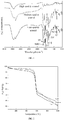
- the recycled refined aramid powder is measured to obtain an infrared spectrogram, and a result is shown in FIG. 1 .
- TG analysis is conducted on the recycled refined aramid powder, and a result is shown in FIG. 2 .
- the low-quality, medium-quality, and high-quality aramid have similar infrared spectrograms and relatively good heat resistance, and are degraded less within 500°C.
- temperature of the low-quality, medium-quality, and high-quality aramid are 498°C, 540°C, and 550°C, respectively. This indicates that a higher molecular weight of aramid indicates better heat resistance.
Landscapes
- Chemical & Material Sciences (AREA)
- Chemical Kinetics & Catalysis (AREA)
- Health & Medical Sciences (AREA)
- Medicinal Chemistry (AREA)
- Polymers & Plastics (AREA)
- Organic Chemistry (AREA)
- Engineering & Computer Science (AREA)
- Textile Engineering (AREA)
- General Chemical & Material Sciences (AREA)
- Epoxy Resins (AREA)
- Polyamides (AREA)
- Treatments For Attaching Organic Compounds To Fibrous Goods (AREA)
Description
- This application claims priority to Chinese Patent Application No.
CN201711354416.3 - The present invention relates to the technical field of graft modification of aramid powder and a low-molecular-weight defective aramid powder product that is produced in an aramid production process, and relates to an aramid-based epoxy resin and a preparation method thereof.
- An aramid fiber is a new type of high-tech synthetic fiber composed of an aromatic ring and an amide bond, and has advantages such as high strength, high modulus, high temperature resistance, and low density. However, due to a large benzene ring structure in a molecular chain of the aramid fiber, it is relatively difficult for an amide group to react with another group, and due to a smooth surface of aramid and chemical inertness of the aramid, surface activity of the fiber is low and wettability is poor, and consequently there is relatively low interface bonding strength between the fiber and a resin matrix.
- Aramid has a very broad application prospect in various fields, and its related research and development have become a recognized hot spot and frontier in this field. However, it is learned from in-depth physical and chemical analysis of the aramid fiber that, due to its structural features, there are the following application difficulties in an aramid material to some extent:
- (1) Aramid is a macromolecular polymer, and its structure includes many benzene rings, and therefore a chain has higher rigidity and poor flexibility is poor and cannot be easily mover, and it is very difficult to freely rotate a chain segment.
- (2) A molecular chain at a surface layer of an aramid fiber has high symmetry, a high orientation degree, and high crystallinity, but a core layer changes little, and therefore strength of a surface layer is higher than that of a core layer in an obtained aramid fiber. In addition, it is relatively difficult to form a hydrogen bond between molecular chains of the aramid fiber, and radial intermolecular force of the fiber is also relatively small, ultimately leading to a relatively low binding effect. To some extent, it is determined that aramid has an obvious "skin-core" structure, and there is also a distinct gradient intensity distribution on a corresponding cross section. These structural characteristics directly affect later aramid research and application. For example, as a reinforcing material, aramid is a main carrier in a composite material, and can increase strength, while a specific result of impact of the structure on the aramid is as follows: Once a surface structure of a fiber is destroyed by the outside, the fiber strength is greatly reduced, thereby correspondingly losing a reinforcement effect.
- (3) There are many benzene ring groups and carbonyl groups in a chain structure of aramid, a "conjugation effect" and "steric hindrance" between the benzene ring groups and the carbonyl groups are very strong, leading to a decrease in reaction activity of H of an amide group in a molecular chain of the aramid. As a result, there are almost no chemically active groups on a surface of an aramid fiber material; in addition, the surface of the fiber is very smooth, and surface energy of the aramid fiber material is extremely low. Consequently, interface bonding strength of the composite material is relatively low, and mechanical property is reduced.
- Therefore, it is necessary to perform surface modification on aramid, to improve application performance of the aramid. Surface modification of an aramid fiber may be generally divided into physical modification, chemical modification, and synergistic modification. Surface chemical graft modification is a most studied method at present. Chemical modification may be divided into two parts: one part is conducted on a benzene ring, and the other part is replacing a hydrogen atom of an amide group.
- In a grafting reaction conducted on a benzene ring, based on that an ortho-position and a para-position of the benzene ring in an aramid fiber material have reaction activity, a polar group with reaction activity may be introduced into a surface of the aramid fiber. This can increase surface polarity of the aramid fiber and facilitate forming of chemical bonding between the aramid fiber and a resin matrix, thereby further improving interface bonding strength of a composite material. According to conventional chemical empirical research on a grafting reaction on a benzene ring, there are generally the following two manners:
- (1) A nitration reduction reaction is conducted to introduce an amido group. In this method, a nitration reduction reaction is first conducted to introduce a nitro group to a benzene ring, and then under a specific condition, a reducing agent is used to restore the introduced group nitro to an amido group. In this case, a polar group is introduced into a fiber surface, so that wettability of a resin matrix to the fiber surface is more sufficient and more uniform, thereby further improving interface bonding performance of a composite material.
- (2) Chlorosulfonation is conducted to introduce an active group. With chlorosulfonation, not only an acyl chloride group (-SO2Cl) is introduced to a surface of an aramid fiber, but also another group with polarity is grafted onto the surface of the aramid fiber, to increase surface polarity of the fiber.
- A reaction that occurs on a benzene ring is relatively effective in some respects. However, there are problems in both methods, such as it is difficult to control a reaction degree and strength of the fiber body is easily damaged.
- It is not easy to conduct a substitution reaction of hydrogen of an amide group in an aramid fiber material. This is mainly because that there is a conjugated system structure between an amide bond and a benzene ring, a to-be-replaced hydrogen is shielded due to strong steric hindrance, so that reaction activity of hydrogen of the amide group is very poor and the to-be-replaced hydrogen is not easily replaced. Even if the substitution reaction can be conducted, types and a number of reactive functional groups are also very limited.
- Currently, aramid modification research mainly focuses on surface modification of aramid for reinforcement of composite materials, to improve performance of aramid-based composite materials. Long et al (Material Science and Technology 1999, 7(3), 46-49, discloses subjecting an aramid fiber to a treatment using a KOH solution, such that the amido bond on the surface thereof is hydrolyzed to generate a -COOK group, which is used as a graft inhibitor; and the graft modification of the surface of the fibers is carried out using epichlorohydrin.
CN 1039388454 A KR 9400007753 B - Invention objective: In view of deficiency in the prior art, an object of the present invention is to provide an aramid-based epoxy resin, where a salable aramid product and a defective low-molecular-weight aramid powder product that is produced in a production process of the salable aramid product are used as raw materials to be activated by a metallization reagent to prepare liquid aramid-based polyether, and then the liquid aramid polyether reacts with epoxy chloropropane to prepare the aramid-based epoxy resin. In the present invention, the process is simple, the final product has excellent performance, and the like. Another object of the present invention is to provide a preparation method of the aramid-based epoxy resin.
- To achieve the above purpose, the present invention provides the following technical solution.
- In a first aspect, the present invention provides a preparation method of an aramid-based epoxy resin, including: first allowing aramid powder as a raw material to react with a metallization reagent; grafting a plurality of ethylene oxide (EO) or propylene oxide (PO) or a mixture thereof to an activated amide group of the aramid, to introduce a reactive functional group hydroxyl; and conducting a ring-opening and closure reaction by using epoxy chloropropane (ECH), to obtain a liquid aramid-based epoxy resin.
- The aramid powder includes para-aramid or a low-molecular-weight defective aramid powder product that is produced in a production process of the para-aramid.
- In the preparation method of an aramid-based epoxy resin, a substitution reaction of H of an amide group of the aramid is first conducted, the metallization reagent is prepared by using an alkali metal or an alkali metal compound and a solvent, and the prepared metallization reagent is used for substitution of H of the amide group of the para-aramid to form metalized aramid; a ring-opening polymerization reaction is conducted between the metalized aramid and the EO, the PO, or a mixture thereof to prepare hydroxyalkyl aramid, and a ring-opening and closure reaction is conducted between the hydroxyalkyl aramid and ECH; and reduced pressure distillation is conducted to recycle the solvent, a crude product is dissolved by methylene chloride and washed with a moderate amount of water, and distillation is conducted to recycle the solvent dichloromethane, so that the liquid aramid-based epoxy resin is prepared.
- In preparation of the metallization reagent, the solvent is DMSO or DMF, and a dosage of the solvent is 40 mL to 70 mL/g of the aramid powder.
- In preparation of the metallization reagent, the alkali metal includes sodium and potassium, the alkali metal compound includes sodium methoxide, sodium hydroxide, potassium methoxide, and potassium hydroxide, and a dosage of the alkali metal or the alkali metal compound is 0.15% to 0.40% of total mass of reactants.
- In the preparation method of an aramid-based epoxy resin, the genus reagent reacts with H of the para-aramid amide group to form a metallated aramid, and then undergoes a hydroxyalkylation reaction with the EO or PO, where m(aramid):m(EO or PO)=1:(1.5-4.5), the reaction temperature is 100°C to 130°C, an EO or PO feeding time is 1.5 h to 3.5 h, and heat insulation for reaction is conducted for 1 h, to obtain crude hydroxyalkylated aramid.
- In the preparation method of an aramid-based epoxy resin, epichlorohydrin is slowly dropwise added to the crude hydroxyalkylated aramid, where m(aramid):m(ECH)=1:(1.5-2.5), a time for dropwise adding the ECH is 2 h to 6 h, heat insulation for reaction is conducted for 1 h, and the reaction temperature is 40°C to 80°C, preferably 40∼60°C. After the reaction is completed, the solvent was distilled off under reduced pressure, the crude product is dissolved in dichloromethane, washed three times with an appropriate amount of water, and subject to distillation for recycling dichloromethane, to obtain an aramid-based epoxy resin.
- In a second aspect, the present invention provides an aramid-based epoxy resin obtained by using the above preparation method of an aramid-based epoxy resin.
- Beneficial effects: Compared with the prior art, in the method of the present invention for preparing the aramid-based epoxy resin by using a defective aramid product, a raw material para-aramid may be a salable aramid product or low-molecular-weight defective aramid powder product; compared with sodium hydride, sodium metal, sodium hydroxide, and sodium methoxide used as metallization reagents of the aramid powder have advantages of convenient use and less hydrogen production; an alkali metal compound obtained after a hydroxyalkylation reaction is conducted can be directly used as a raw material for an ECH epoxidation reaction, and the epoxy resin has a simple preparation process and has a high epoxy value; and the aramid-based epoxy resin has low viscosity and high reactivity, and when a small amount of the aramid-based epoxy resin is added into E-51, tensile performance, impact resistance performance, bending strength, and the like of a cured product are greatly improved.
-
-
FIG. 1 is an infrared spectrogram of recycled refined aramid powder; and -
FIG. 2 is a thermogravimetric chart of recycled refined aramid powder. - The present invention will be described in detail below with reference to specific embodiments.
- In the embodiments, a raw material ethylene oxide is an industrial grade reagent and is purchased from Sinopec Yangzi Petrochemical Co., Ltd; epoxypropane and epoxy chloropropane are industrial grade reagents and are purchased from Qilu Petrochemical Industry Co., Ltd; metal sodium, sodium hydroxide, dimethyl sulfoxide, and dimethyl formamide are analytical pure reagents and are purchased from Nanjing Chemical Reagent Co., Ltd; high purity nitrogen has purity of 99.9% and is purchased from Nanjing Special Gas Factory Co., Ltd; and aramid powder is purchased from Sinopec Oilfield Service Corporation. An epoxy value of aramid-based epoxy resin is determined according to
GB/T 1677-2008 - 300 mL of dimethyl sulfoxide is added to a 1000 mL four-necked flask equipped with a stirrer, a condenser tube, and a thermometer, 1.4 g of metal sodium is added under the protection of nitrogen gas and heated to 80°C, and stirring is conducted to dissolve Na, so that the solution changes to a dark brown red metallization reagent; in an atmosphere of nitrogen gas, the metallization reagent is added to a 1000 mL autoclave, 6 g of defective aramid powder product is added, air is displaced by nitrogen gas, stirring and heating are conducted, 15.5 g of ethylene oxide is introduced, and the reaction temperature is controlled to be 110°C, reaction pressure is controlled to be lower than 0.8 MPa, and a grafting reaction time is controlled to be 2.5 h to prepare a hydroxyalkylated aramid crude product; and the hydroxyalkylated aramid is added to a four-necked flask equipped with a reflux condenser tube, a thermometer, and a constant-pressure dropping funnel and heated to 30°C under the protection of nitrogen gas, 10.5 g of epoxy chloropropane is lowly added dropwise for 1 h and is slowly heated to 50°C, reaction is conducted for 4.5 h, reduced pressure distillation is conducted after the reaction to recycle dimethyl sulfoxide, and a crude product is dissolved in methylene chloride, washed with a moderate amount of water three times, and subject to distillation for recycling the solvent methylene chloride, to obtain a black liquid with an epoxy value of 1.57eq/100g.
- 300 mL of dimethyl sulfoxide is added to a 1000 mL four-necked flask equipped with a stirrer, a condenser tube, and a thermometer, 1.4 g of metal sodium is added under the protection of nitrogen gas and heated to 80°C, and stirring is conducted to dissolve Na, so that the solution changes to a dark brown red metallization reagent; in an atmosphere of nitrogen gas, the metallization reagent is added to a 1000 mL autoclave, 6 g of defective aramid powder product is added, air is displaced by nitrogen gas, stirring and heating are conducted, 10.3 g of ethylene oxide is introduced, and the reaction temperature is controlled to be 120°C, reaction pressure is controlled to be lower than 0.8 MPa, and a grafting reaction time is controlled to be 2.5 h to prepare a hydroxyalkylated aramid crude product; and the hydroxyalkylated aramid is added to a four-necked flask equipped with a reflux condenser tube, a thermometer, and a constant-pressure dropping funnel and heated to 40°C under the protection of nitrogen gas, 10.5 g of epoxy chloropropane is lowly added dropwise for 1 h and is slowly heated to 60°C, reaction is conducted for 4.5 h, reduced pressure distillation is conducted after the reaction to recycle dimethyl sulfoxide, and a crude product is dissolved in methylene chloride, washed with a moderate amount of water three times, and subject to distillation for recycling the solvent methylene chloride, to obtain a black liquid with an epoxy value of 1.42 eq/100g.
- 300 mL of dimethyl sulfoxide is added to a 1000 mL four-necked flask equipped with a stirrer, a condenser tube, and a thermometer, 1.4 g of metal sodium is added under the protection of nitrogen gas and heated to 80°C, and stirring is conducted to dissolve Na, so that the solution changes to a dark brown red metallization reagent; in an atmosphere of nitrogen gas, the metallization reagent is added to a 1000 mL autoclave, 6 g of defective aramid powder product is added, air is displaced by nitrogen gas, stirring and heating are conducted, 20.6 g of ethylene oxide is introduced, and the reaction temperature is controlled to be 130°C, reaction pressure is controlled to be lower than 0.8 MPa, and a grafting reaction time is controlled to be 2.5 h to prepare a hydroxyalkylated aramid crude product; and the hydroxyalkylated aramid is added to a four-necked flask equipped with a reflux condenser tube, a thermometer, and a constant-pressure dropping funnel and heated to 50°C under the protection of nitrogen gas, 10.5 g of epoxy chloropropane is lowly added dropwise for 1 h and is slowly heated to 50°C, reaction is conducted for 4 h, reduced pressure distillation is conducted after the reaction to recycle dimethyl sulfoxide, and a crude product is dissolved in methylene chloride, washed with a moderate amount of water three times, and subject to distillation for recycling the solvent methylene chloride, to obtain a black liquid with an epoxy value of 1.11 eq/100 g.
- 300 mL of dimethyl formamide is added to a 1000 mL four-necked flask equipped with a stirrer, a condenser tube, and a thermometer, 1.4 g of metal sodium is added under the protection of nitrogen gas and heated to 80°C, and stirring is conducted to dissolve Na, so that the solution changes to a dark brown red metallization reagent; in an atmosphere of nitrogen gas, the metallization reagent is added to a 1000 mL autoclave, 6 g of defective aramid powder product is added, air is displaced by nitrogen gas, stirring and heating are conducted, 25.8 g of ethylene oxide is introduced, and the reaction temperature is controlled to be 130°C, reaction pressure is controlled to be lower than 0.8 MPa, and a grafting reaction time is controlled to be 2.5 h to prepare a hydroxyalkylated aramid crude product; and the hydroxyalkylated aramid is added to a four-necked flask equipped with a reflux condenser tube, a thermometer, and a constant-pressure dropping funnel and heated to 40°C under the protection of nitrogen gas, 10.5 g of epoxy chloropropane is lowly added dropwise for 1 h and is slowly heated to 50°C, reaction is conducted for 3.5 h, reduced pressure distillation is conducted after the reaction to recycle dimethyl sulfoxide, and a crude product is dissolved in methylene chloride, washed with a moderate amount of water three times, and subject to distillation for recycling the solvent methylene chloride, to obtain a black liquid with an epoxy value of 1.02 eq/100g.
- 330 mL of dimethyl sulfoxide is added to a 1000 mL four-necked flask equipped with a stirrer, a condenser tube, and a thermometer, 1.9 g of metal sodium is added under the protection of nitrogen gas and heated to 70°C, and stirring is conducted to dissolve Na, so that the solution changes to a dark brown red metallization reagent; in an atmosphere of nitrogen gas, the metallization reagent is added to a 1000 mL autoclave, 6 g of defective aramid powder product is added, air is displaced by nitrogen gas, stirring and heating are conducted, 15.0 g of ethylene oxide is introduced, and the reaction temperature is controlled to be 110°C, reaction pressure is controlled to be lower than 0.8 MPa, and a grafting reaction time is controlled to be 2.5 h to prepare a hydroxyalkylated aramid crude product; and the hydroxyalkylated aramid is added to a four-necked flask equipped with a reflux condenser tube, a thermometer, and a constant-pressure dropping funnel and heated to 50°C under the protection of nitrogen gas, 10.5 g of epoxy chloropropane is lowly added dropwise for 1 h, reaction is conducted for 3.5 h, reduced pressure distillation is conducted after the reaction to recycle dimethyl sulfoxide, and a crude product is dissolved in methylene chloride, washed with a moderate amount of water three times, and subject to distillation for recycling the solvent methylene chloride, to obtain a black liquid with an epoxy value of 1.35 eq/100g.
- 300 mL of dimethyl sulfoxide is added to a 1000 mL four-necked flask equipped with a stirrer, a condenser tube, and a thermometer, 1.4 g of metal sodium is added under the protection of nitrogen gas and heated to 80°C, and stirring is conducted to dissolve Na, so that the solution changes to a dark brown red metallization reagent; in an atmosphere of nitrogen gas, the metallization reagent is added to a 1000 mL autoclave, 6 g of defective aramid powder product is added, air is displaced by nitrogen gas, stirring and heating are conducted, 15.0 g of ethylene oxide is introduced, and the reaction temperature is controlled to be 110°C, reaction pressure is controlled to be lower than 0.8 MPa, and a grafting reaction time is controlled to be 2.5 h to prepare a hydroxyalkylated aramid crude product; and the hydroxyalkylated aramid is added to a four-necked flask equipped with a reflux condenser tube, a thermometer, and a constant-pressure dropping funnel and heated to 30°C under the protection of nitrogen gas, 12.0 g of epoxy chloropropane is lowly added dropwise for 1 h and is slowly heated to 50°C, reaction is conducted for 4.5 h, reduced pressure distillation is conducted after the reaction to recycle dimethyl sulfoxide, and a crude product is dissolved in methylene chloride, washed with a moderate amount of water three times, and subject to distillation for recycling the solvent methylene chloride, to obtain a black liquid with an epoxy value of 1.32 eq/100g.
- 300 mL of dimethyl formamide is added to a 1000 mL four-necked flask equipped with a stirrer, a condenser tube, and a thermometer, 1.4 g of metal sodium is added under the protection of nitrogen gas and heated to 80°C, and stirring is conducted to dissolve Na, so that the solution changes to a dark brown red metallization reagent; in an atmosphere of nitrogen gas, the metallization reagent is added to a 1000 mL autoclave, 6 g of defective aramid powder product is added, air is displaced by nitrogen gas, stirring is conducted for heating, 15.0 g of ethylene oxide is introduced, and the reaction temperature is controlled to be 110°C, reaction pressure is controlled to be lower than 0.8 MPa, and a grafting reaction time is controlled to be 2.5 h to prepare a hydroxyalkylated aramid crude product; and the hydroxyalkylated aramid is added to a four-necked flask equipped with a reflux condenser tube, a thermometer, and a constant-pressure dropping funnel and heated to 30°C under the protection of nitrogen gas, 12.0 g of epoxy chloropropane is lowly added dropwise for 1 h and is slowly heated to 50°C, reaction is conducted for 4.5 h, reduced pressure distillation is conducted after the reaction to recycle dimethyl sulfoxide, and a crude product is dissolved in methylene chloride, washed with a moderate amount of water three times, and subject to distillation for recycling the solvent methylene chloride, to obtain a black liquid with an epoxy value of 1.23 eq/100 g.
- 300 mL of dimethyl sulfoxide is added to a 1000 mL four-necked flask equipped with a stirrer, a condenser tube, and a thermometer, 1.4 g of metal sodium is added under the protection of nitrogen gas and heated to 80°C, and stirring is conducted to dissolve Na, so that the solution changes to a dark brown red metallization reagent; in an atmosphere of nitrogen gas, the metallization reagent is added to a 1000 mL autoclave, 6 g of defective aramid powder product is added, air is displaced by nitrogen gas, stirring and heating are conducted, 19.7 g of ethylene oxide is introduced, and the reaction temperature is controlled to be 110°C, reaction pressure is controlled to be lower than 0.8 MPa, and a grafting reaction time is controlled to be 2.5 h to prepare a hydroxyalkylated aramid crude product; and the hydroxyalkylated aramid is added to a four-necked flask equipped with a reflux condenser tube, a thermometer, and a constant-pressure dropping funnel and heated to 30°C under the protection of nitrogen gas, 10.5 g of epoxy chloropropane is lowly added dropwise for 1 h and is slowly heated to 50°C, reaction is conducted for 4.5 h, reduced pressure distillation is conducted after the reaction to recycle dimethyl sulfoxide, and a crude product is dissolved in methylene chloride, washed with a moderate amount of water three times, and subject to distillation for recycling the solvent methylene chloride, to obtain a black liquid with an epoxy value of 1.43 eq/100g.
- The aramid-based epoxy resin prepared in Embodiment 1, a bisphenol A-type epoxy resin (E-51), and a curing agent diethylenetriamine are uniformly mixed at room temperature, poured into a mold, placed in a vacuum drying oven for vacuum degassing for 15 min, and then cured in a drying oven at 80°C for 2 h. A total of three parallel sample stripes are prepared and test data is averaged to obtain results listed in Table 1.
Table 1 Product performance test table Comparison sample Product 1 Product 2 Product in Embodiment 1 0 g 2.5 g 5 g E-51 100 g 97.5 g 95 g Diethylenetriamine 28 g 28 g 28 g Tensile strength 31.55 MPa 60.08 MPa 68.94 MPa Elongation at break 1.65% 3.11% 3.96% Shock strength 5.42 kJ/m2 7.96 kJ/m2 11.25 kJ/m2 Bending strength 107.08 MPa 109.04 MPa 128.25 MPa - It can be learned from the results in Table 1 that when a small amount of the prepared aramid-based epoxy resin is added into E-51, a tensile property, impact resistance, bending strength, and the like of the cured product are greatly improved.
- In the foregoing embodiments, a raw material aramid powder recovery and refining process is as follows: N-methyl pyrrolidone-containing aramid powder discharged during a production process is collected; the crude aramid powder product and water are stirred in a beaker at a mass ratio of 1:2 for 1 h, and is subjected to suction filtration; and a filter cake is washed with water several times according to a mass ratio of 1:3 until filter liquor is neutral. Finally, the filter cake is poured into a clean evaporating dish and placed in a drying oven to be dried to a constant weight. The dried aramid powder is ground, sieved through a 40 mesh sieve, and loaded in a seal bag, that is, aramid powder is obtained.
- 0.125 g of recycled refined aramid powder dried to a constant weight is dissolved in 25 mL of 98% concentrated sulfuric acid. Viscosity of the aramid powder is measured in an Ubbelohde viscometer in a constant temperature bath at (30±0.05)°C, and a molecular weight of the aramid powder is calculated according to the viscosity, and results are listed in Table 2.
Table 2 [η], Mη, and DPη of the recycled stood aramid powder Aramid [η]/(dL/g) Mη DPη Low-quality aramid 0.33 2606 11 Medium-quality aramid 0.37 2903 12 High-quality aramid 0.69 5226 22 - Viscosity-average molecular weights of low-quality, medium-quality, and high-quality aramid measured by using the Ubbelohde viscometer are respectively 2606, 2903, and 5226, and polymerization degrees thereof are respectively 11, 12, and 22. It indicates that structural properties of low-quality and medium-quality aramid are similar, and high-quality aramid has a large molecular weight, high crystallinity, and a better mechanical property.
- The recycled refined aramid powder is measured to obtain an infrared spectrogram, and a result is shown in
FIG. 1 . TG analysis is conducted on the recycled refined aramid powder, and a result is shown inFIG. 2 . According to infrared analysis and thermogravimetric analysis, the low-quality, medium-quality, and high-quality aramid have similar infrared spectrograms and relatively good heat resistance, and are degraded less within 500°C. When mass losses are 50%, temperature of the low-quality, medium-quality, and high-quality aramid are 498°C, 540°C, and 550°C, respectively. This indicates that a higher molecular weight of aramid indicates better heat resistance.
Claims (7)
- A preparation method of an aramid-based epoxy resin, wherein the method comprises: first allowing aramid powder as a raw material to react with a metallization reagent; grafting a plurality of ethylene oxide or propylene oxide or a mixture thereof to an activated amide group of the aramid, to introduce a reactive functional group hydroxyl; and conducting a ring-opening and closure reaction by using epoxy chloropropane, to obtain a liquid aramid-based epoxy resin.
- The preparation method of an aramid-based epoxy resin according to claim 1, wherein a substitution reaction of H of an amide group of the aramid is first conducted, the metallization reagent is prepared by using an alkali metal and a solvent, and the prepared metallization reagent is used for substitution of H of the amide group of the para-aramid to form metalized aramid; a ring-opening polymerization reaction is conducted between the metalized aramid and the EO, the PO, or a mixture thereof to prepare hydroxyalkyl aramid, and a ring-opening and closure reaction is conducted between the hydroxyalkyl aramid and ECH; and reduced pressure distillation is conducted to recycle the solvent, a crude product is dissolved by methylene chloride and washed with a moderate amount of water, and distillation is conducted to recycle the solvent dichloromethane, so that the liquid aramid-based epoxy resin is prepared.
- The preparation method of an aramid-based epoxy resin according to claim 2, wherein in preparation of the metallization reagent, the solvent is DMSO or DMF, and a dosage of the solvent is 40 mL to 70 mL/g of the aramid powder.
- The preparation method of an aramid-based epoxy resin according to claim 2, wherein m(aramid):m(EO or PO)=1:(1.5-4.5), the reaction temperature is 100°C to 130°C, an EO or PO feeding time is 1.5 h to 3.5 h, and heat insulation for reaction is conducted for 1 h.
- The preparation method of an aramid-based epoxy resin according to claim 2, wherein m(aramid):m(ECH)=1:(1.5-2.5), a time for dropwise adding the ECH is 2 h to 6 h, heat insulation for reaction is conducted for 1 h, and the reaction temperature is 40°C to 80°C.
- The preparation method of an aramid-based epoxy resin according to claim 5, wherein the reaction temperature is 40°C to 60°C.
- An aramid-based epoxy resin obtained by using the preparation method of an aramid-based epoxy resin according to any one of claims 1 to 6.
Applications Claiming Priority (2)
| Application Number | Priority Date | Filing Date | Title |
|---|---|---|---|
| CN201711354416.3A CN108047429B (en) | 2017-12-15 | 2017-12-15 | Aramid-based epoxy resin and preparation method thereof |
| PCT/CN2018/120010 WO2019114643A1 (en) | 2017-12-15 | 2018-12-10 | Aramid-based epoxy resin and preparation method thereof |
Publications (3)
| Publication Number | Publication Date |
|---|---|
| EP3564287A1 EP3564287A1 (en) | 2019-11-06 |
| EP3564287A4 EP3564287A4 (en) | 2020-03-04 |
| EP3564287B1 true EP3564287B1 (en) | 2021-03-03 |
Family
ID=62132709
Family Applications (1)
| Application Number | Title | Priority Date | Filing Date |
|---|---|---|---|
| EP18889839.9A Active EP3564287B1 (en) | 2017-12-15 | 2018-12-10 | Aramid-based epoxy resin and preparation method thereof |
Country Status (5)
| Country | Link |
|---|---|
| US (1) | US11279794B2 (en) |
| EP (1) | EP3564287B1 (en) |
| JP (1) | JP6868876B2 (en) |
| CN (1) | CN108047429B (en) |
| WO (1) | WO2019114643A1 (en) |
Families Citing this family (6)
| Publication number | Priority date | Publication date | Assignee | Title |
|---|---|---|---|---|
| CN108047429B (en) * | 2017-12-15 | 2020-12-25 | 南京林业大学 | Aramid-based epoxy resin and preparation method thereof |
| CN112824437B (en) * | 2019-11-20 | 2023-02-21 | 欧美新材料(浙江)有限公司 | Preparation method of modified polyaramide and modified polyaramide |
| CN110725124A (en) * | 2019-12-04 | 2020-01-24 | 中国科学院兰州化学物理研究所 | Interface enhancement method for para-aramid-polytetrafluoroethylene blended fiber fabric |
| CN113831524B (en) * | 2021-08-11 | 2023-10-20 | 滨州学院 | Preparation method of liquid desulfurizing agent and liquid desulfurizing agent |
| CN115449110B (en) * | 2022-10-09 | 2023-07-21 | 南京林业大学 | A kind of aramid fiber reinforced epoxy resin matrix composite material and preparation method thereof |
| CN116394607B (en) * | 2022-10-09 | 2025-08-15 | 南京林业大学 | Aramid fiber-based epoxy resin/aramid fiber composite material and preparation method thereof |
Family Cites Families (13)
| Publication number | Priority date | Publication date | Assignee | Title |
|---|---|---|---|---|
| JPS62172037A (en) * | 1986-01-27 | 1987-07-29 | Asahi Chem Ind Co Ltd | Molded article of wholly aromatic polyamide having novel composite structure and production thereof |
| JPS61194273A (en) * | 1986-02-21 | 1986-08-28 | 高柳 素夫 | Surface modified oriented full aromatic polyamide fiber and its production |
| JPS6335630A (en) * | 1986-07-30 | 1988-02-16 | Asahi Shiyueebell Kk | Production of composite material base comprising aramid fiber |
| EP0332919B1 (en) | 1988-03-02 | 1994-01-19 | Teijin Limited | Surface-modified wholly aromatic polyamide fiber and method of producing same |
| KR940007753B1 (en) * | 1992-07-11 | 1994-08-24 | 주식회사 코오롱 | Surface modified wholly aromatic polyamide fiber and method for producing same |
| US6045907A (en) * | 1998-10-09 | 2000-04-04 | E. I. Du Pont De Nemours And Company | Grafted poly(p-phenylene terephthalamide) fibers |
| CN101538398A (en) * | 2009-04-09 | 2009-09-23 | 上海第二工业大学 | Preparation method of aramid fiber/epoxy resin composite material |
| CN101831800B (en) * | 2010-03-17 | 2011-09-07 | 北京理工大学 | Method for modifying aramid fiber by using carbon nano tubes |
| CN103469589B (en) * | 2013-09-13 | 2016-01-06 | 东华大学 | A kind of aramid fiber is at CO 2the method of Graft Epoxy Resin in supercritical fluid |
| CN103938454B (en) * | 2014-04-16 | 2015-10-14 | 鲁东大学 | A kind of aramid fiber nanometer coating material and preparation method thereof |
| CN103981692B (en) * | 2014-06-03 | 2016-03-09 | 陕西科技大学 | A kind of method of aramid fiber surface organic modification |
| CN104624173B (en) * | 2015-01-22 | 2017-05-17 | 鲁东大学 | Preparation method for novel adsorption material based on para-aramid fibers and containing polyamine functional group |
| CN108047429B (en) * | 2017-12-15 | 2020-12-25 | 南京林业大学 | Aramid-based epoxy resin and preparation method thereof |
-
2017
- 2017-12-15 CN CN201711354416.3A patent/CN108047429B/en active Active
-
2018
- 2018-12-10 JP JP2020500957A patent/JP6868876B2/en not_active Expired - Fee Related
- 2018-12-10 WO PCT/CN2018/120010 patent/WO2019114643A1/en not_active Ceased
- 2018-12-10 EP EP18889839.9A patent/EP3564287B1/en active Active
- 2018-12-10 US US16/494,178 patent/US11279794B2/en active Active
Non-Patent Citations (1)
| Title |
|---|
| None * |
Also Published As
| Publication number | Publication date |
|---|---|
| CN108047429A (en) | 2018-05-18 |
| EP3564287A4 (en) | 2020-03-04 |
| JP6868876B2 (en) | 2021-05-12 |
| US20200131303A1 (en) | 2020-04-30 |
| CN108047429B (en) | 2020-12-25 |
| EP3564287A1 (en) | 2019-11-06 |
| JP2020512474A (en) | 2020-04-23 |
| US11279794B2 (en) | 2022-03-22 |
| WO2019114643A1 (en) | 2019-06-20 |
Similar Documents
| Publication | Publication Date | Title |
|---|---|---|
| US11279794B2 (en) | Aramid-based epoxy resin and preparation method thereof | |
| CN104080856B (en) | Composition epoxy resin and fibre reinforced composites | |
| CN107043454B (en) | Epoxy-amine adduct, resin composition, sizing agent, carbon fiber coated with sizing agent and fiber-reinforced composite material | |
| US12496760B2 (en) | Creep-resistant fiber and preparation method thereof | |
| CN110885419A (en) | Ultrahigh-frequency low-dielectric-property carboxylated graphene reinforced poly (benzoxazine-urethane) nano composite resin and preparation method thereof | |
| Xu et al. | Modification of epoxy resins with different molecular weight poly (aryl ether sulfone) as effective toughening agents | |
| Dağlar et al. | Chemical and Solvent‐Based Recycling of DGEBA‐Based Epoxy Thermoset and Carbon‐Fiber Reinforced Epoxy Composite Utilizing Imine‐Containing Secondary Amine Hardener | |
| Lan et al. | Poly (glycidyl methacrylate) grafted to carbon fiber surface by RAFT polymerization for enhancing interface adhesion and mechanical properties of carbon fiber/epoxy composites | |
| CN108084402A (en) | A kind of hemicellulose base epoxy and preparation method thereof | |
| CN105884753B (en) | A kind of perhydro-s-triazine ethylene oxidic ester and its synthetic method and application | |
| Jin et al. | Preparation and characterization of cyano-silicon-containing arylacetylene resins and their composites: dual enhancement strategy involving physical interfacial interactions and chemical crosslinking | |
| CN108299623B (en) | Method for preparing recyclable epoxy resin by using body click chemical reaction | |
| CN113683777A (en) | Preparation method of epoxy-terminated hyperbranched polyether sulfone and application of epoxy-terminated hyperbranched polyether sulfone in salt spray-resistant epoxy resin | |
| CN103435978A (en) | PET composite material and preparation method thereof | |
| CN121181910A (en) | A fluorinated bio-based epoxy resin, its preparation method and application | |
| CN112457498B (en) | High-temperature-resistant modified lignin epoxy resin and carbon fiber composite material thereof | |
| CN103408905A (en) | PBT composite material and preparation method thereof | |
| CN117903087B (en) | N-phenyl-p-phenylenediamine epoxy resin and preparation method and application thereof | |
| CN111909117B (en) | Phthalic anhydride diisopropanol amide epoxy resin and preparation method and application thereof | |
| CN114907670A (en) | Single-component fast curing epoxy resin and preparation method thereof | |
| CN103435979A (en) | Low temperature-resistant and halogen-free flame retardant PBT composite material and preparation method thereof | |
| CN108219126B (en) | A kind of aramid-based polyether polyol and preparation method thereof | |
| Li et al. | Preparation of robust aramid/epoxy composites through enhancing the interface performance by nanocoating solution | |
| CN108285518B (en) | Aramid fiber-based polyurethane rigid foam and preparation method thereof | |
| CN112592587A (en) | Preparation method of polylactic acid biological composite material |
Legal Events
| Date | Code | Title | Description |
|---|---|---|---|
| STAA | Information on the status of an ep patent application or granted ep patent |
Free format text: STATUS: THE INTERNATIONAL PUBLICATION HAS BEEN MADE |
|
| PUAI | Public reference made under article 153(3) epc to a published international application that has entered the european phase |
Free format text: ORIGINAL CODE: 0009012 |
|
| STAA | Information on the status of an ep patent application or granted ep patent |
Free format text: STATUS: REQUEST FOR EXAMINATION WAS MADE |
|
| 17P | Request for examination filed |
Effective date: 20190731 |
|
| AK | Designated contracting states |
Kind code of ref document: A1 Designated state(s): AL AT BE BG CH CY CZ DE DK EE ES FI FR GB GR HR HU IE IS IT LI LT LU LV MC MK MT NL NO PL PT RO RS SE SI SK SM TR |
|
| AX | Request for extension of the european patent |
Extension state: BA ME |
|
| RAP1 | Party data changed (applicant data changed or rights of an application transferred) |
Owner name: ANHUI XINYUAN CHEMICAL CO., LTD Owner name: NANJING FORESTRY UNIVERSITY |
|
| RIN1 | Information on inventor provided before grant (corrected) |
Inventor name: ZHU, YUTING Inventor name: XIE, BINGXUE Inventor name: XI, YANG Inventor name: FU, BO Inventor name: YANG, YANG Inventor name: YU, MIN Inventor name: WANG, FANG Inventor name: GUO, DENGFENG Inventor name: ZHANG, XIAOXIANG Inventor name: ZHU, XINBAO Inventor name: CHENG, ZHENSHUO Inventor name: CHEN, YANYI |
|
| A4 | Supplementary search report drawn up and despatched |
Effective date: 20200203 |
|
| RIC1 | Information provided on ipc code assigned before grant |
Ipc: C08G 59/32 20060101ALI20200128BHEP Ipc: C08G 59/04 20060101AFI20200128BHEP Ipc: D06M 15/55 20060101ALI20200128BHEP Ipc: D01F 6/60 20060101ALI20200128BHEP Ipc: C08G 69/48 20060101ALI20200128BHEP |
|
| GRAP | Despatch of communication of intention to grant a patent |
Free format text: ORIGINAL CODE: EPIDOSNIGR1 |
|
| STAA | Information on the status of an ep patent application or granted ep patent |
Free format text: STATUS: GRANT OF PATENT IS INTENDED |
|
| RIC1 | Information provided on ipc code assigned before grant |
Ipc: C08G 69/48 20060101ALI20200924BHEP Ipc: C08G 59/04 20060101AFI20200924BHEP |
|
| DAV | Request for validation of the european patent (deleted) | ||
| DAX | Request for extension of the european patent (deleted) | ||
| INTG | Intention to grant announced |
Effective date: 20201013 |
|
| GRAS | Grant fee paid |
Free format text: ORIGINAL CODE: EPIDOSNIGR3 |
|
| GRAA | (expected) grant |
Free format text: ORIGINAL CODE: 0009210 |
|
| STAA | Information on the status of an ep patent application or granted ep patent |
Free format text: STATUS: THE PATENT HAS BEEN GRANTED |
|
| AK | Designated contracting states |
Kind code of ref document: B1 Designated state(s): AL AT BE BG CH CY CZ DE DK EE ES FI FR GB GR HR HU IE IS IT LI LT LU LV MC MK MT NL NO PL PT RO RS SE SI SK SM TR |
|
| REG | Reference to a national code |
Ref country code: GB Ref legal event code: FG4D |
|
| REG | Reference to a national code |
Ref country code: AT Ref legal event code: REF Ref document number: 1367137 Country of ref document: AT Kind code of ref document: T Effective date: 20210315 Ref country code: CH Ref legal event code: EP |
|
| REG | Reference to a national code |
Ref country code: DE Ref legal event code: R096 Ref document number: 602018013532 Country of ref document: DE |
|
| REG | Reference to a national code |
Ref country code: IE Ref legal event code: FG4D |
|
| REG | Reference to a national code |
Ref country code: LT Ref legal event code: MG9D |
|
| PG25 | Lapsed in a contracting state [announced via postgrant information from national office to epo] |
Ref country code: HR Free format text: LAPSE BECAUSE OF FAILURE TO SUBMIT A TRANSLATION OF THE DESCRIPTION OR TO PAY THE FEE WITHIN THE PRESCRIBED TIME-LIMIT Effective date: 20210303 Ref country code: FI Free format text: LAPSE BECAUSE OF FAILURE TO SUBMIT A TRANSLATION OF THE DESCRIPTION OR TO PAY THE FEE WITHIN THE PRESCRIBED TIME-LIMIT Effective date: 20210303 Ref country code: GR Free format text: LAPSE BECAUSE OF FAILURE TO SUBMIT A TRANSLATION OF THE DESCRIPTION OR TO PAY THE FEE WITHIN THE PRESCRIBED TIME-LIMIT Effective date: 20210604 Ref country code: BG Free format text: LAPSE BECAUSE OF FAILURE TO SUBMIT A TRANSLATION OF THE DESCRIPTION OR TO PAY THE FEE WITHIN THE PRESCRIBED TIME-LIMIT Effective date: 20210603 Ref country code: NO Free format text: LAPSE BECAUSE OF FAILURE TO SUBMIT A TRANSLATION OF THE DESCRIPTION OR TO PAY THE FEE WITHIN THE PRESCRIBED TIME-LIMIT Effective date: 20210603 Ref country code: LT Free format text: LAPSE BECAUSE OF FAILURE TO SUBMIT A TRANSLATION OF THE DESCRIPTION OR TO PAY THE FEE WITHIN THE PRESCRIBED TIME-LIMIT Effective date: 20210303 |
|
| REG | Reference to a national code |
Ref country code: NL Ref legal event code: MP Effective date: 20210303 |
|
| REG | Reference to a national code |
Ref country code: AT Ref legal event code: MK05 Ref document number: 1367137 Country of ref document: AT Kind code of ref document: T Effective date: 20210303 |
|
| PG25 | Lapsed in a contracting state [announced via postgrant information from national office to epo] |
Ref country code: SE Free format text: LAPSE BECAUSE OF FAILURE TO SUBMIT A TRANSLATION OF THE DESCRIPTION OR TO PAY THE FEE WITHIN THE PRESCRIBED TIME-LIMIT Effective date: 20210303 Ref country code: PL Free format text: LAPSE BECAUSE OF FAILURE TO SUBMIT A TRANSLATION OF THE DESCRIPTION OR TO PAY THE FEE WITHIN THE PRESCRIBED TIME-LIMIT Effective date: 20210303 Ref country code: LV Free format text: LAPSE BECAUSE OF FAILURE TO SUBMIT A TRANSLATION OF THE DESCRIPTION OR TO PAY THE FEE WITHIN THE PRESCRIBED TIME-LIMIT Effective date: 20210303 Ref country code: RS Free format text: LAPSE BECAUSE OF FAILURE TO SUBMIT A TRANSLATION OF THE DESCRIPTION OR TO PAY THE FEE WITHIN THE PRESCRIBED TIME-LIMIT Effective date: 20210303 |
|
| PG25 | Lapsed in a contracting state [announced via postgrant information from national office to epo] |
Ref country code: NL Free format text: LAPSE BECAUSE OF FAILURE TO SUBMIT A TRANSLATION OF THE DESCRIPTION OR TO PAY THE FEE WITHIN THE PRESCRIBED TIME-LIMIT Effective date: 20210303 |
|
| PG25 | Lapsed in a contracting state [announced via postgrant information from national office to epo] |
Ref country code: EE Free format text: LAPSE BECAUSE OF FAILURE TO SUBMIT A TRANSLATION OF THE DESCRIPTION OR TO PAY THE FEE WITHIN THE PRESCRIBED TIME-LIMIT Effective date: 20210303 Ref country code: CZ Free format text: LAPSE BECAUSE OF FAILURE TO SUBMIT A TRANSLATION OF THE DESCRIPTION OR TO PAY THE FEE WITHIN THE PRESCRIBED TIME-LIMIT Effective date: 20210303 Ref country code: SM Free format text: LAPSE BECAUSE OF FAILURE TO SUBMIT A TRANSLATION OF THE DESCRIPTION OR TO PAY THE FEE WITHIN THE PRESCRIBED TIME-LIMIT Effective date: 20210303 Ref country code: AT Free format text: LAPSE BECAUSE OF FAILURE TO SUBMIT A TRANSLATION OF THE DESCRIPTION OR TO PAY THE FEE WITHIN THE PRESCRIBED TIME-LIMIT Effective date: 20210303 |
|
| PG25 | Lapsed in a contracting state [announced via postgrant information from national office to epo] |
Ref country code: SK Free format text: LAPSE BECAUSE OF FAILURE TO SUBMIT A TRANSLATION OF THE DESCRIPTION OR TO PAY THE FEE WITHIN THE PRESCRIBED TIME-LIMIT Effective date: 20210303 Ref country code: PT Free format text: LAPSE BECAUSE OF FAILURE TO SUBMIT A TRANSLATION OF THE DESCRIPTION OR TO PAY THE FEE WITHIN THE PRESCRIBED TIME-LIMIT Effective date: 20210705 Ref country code: RO Free format text: LAPSE BECAUSE OF FAILURE TO SUBMIT A TRANSLATION OF THE DESCRIPTION OR TO PAY THE FEE WITHIN THE PRESCRIBED TIME-LIMIT Effective date: 20210303 Ref country code: IS Free format text: LAPSE BECAUSE OF FAILURE TO SUBMIT A TRANSLATION OF THE DESCRIPTION OR TO PAY THE FEE WITHIN THE PRESCRIBED TIME-LIMIT Effective date: 20210703 |
|
| REG | Reference to a national code |
Ref country code: DE Ref legal event code: R097 Ref document number: 602018013532 Country of ref document: DE |
|
| PLBE | No opposition filed within time limit |
Free format text: ORIGINAL CODE: 0009261 |
|
| STAA | Information on the status of an ep patent application or granted ep patent |
Free format text: STATUS: NO OPPOSITION FILED WITHIN TIME LIMIT |
|
| PG25 | Lapsed in a contracting state [announced via postgrant information from national office to epo] |
Ref country code: ES Free format text: LAPSE BECAUSE OF FAILURE TO SUBMIT A TRANSLATION OF THE DESCRIPTION OR TO PAY THE FEE WITHIN THE PRESCRIBED TIME-LIMIT Effective date: 20210303 Ref country code: DK Free format text: LAPSE BECAUSE OF FAILURE TO SUBMIT A TRANSLATION OF THE DESCRIPTION OR TO PAY THE FEE WITHIN THE PRESCRIBED TIME-LIMIT Effective date: 20210303 Ref country code: AL Free format text: LAPSE BECAUSE OF FAILURE TO SUBMIT A TRANSLATION OF THE DESCRIPTION OR TO PAY THE FEE WITHIN THE PRESCRIBED TIME-LIMIT Effective date: 20210303 |
|
| 26N | No opposition filed |
Effective date: 20211206 |
|
| PG25 | Lapsed in a contracting state [announced via postgrant information from national office to epo] |
Ref country code: SI Free format text: LAPSE BECAUSE OF FAILURE TO SUBMIT A TRANSLATION OF THE DESCRIPTION OR TO PAY THE FEE WITHIN THE PRESCRIBED TIME-LIMIT Effective date: 20210303 |
|
| PG25 | Lapsed in a contracting state [announced via postgrant information from national office to epo] |
Ref country code: IT Free format text: LAPSE BECAUSE OF FAILURE TO SUBMIT A TRANSLATION OF THE DESCRIPTION OR TO PAY THE FEE WITHIN THE PRESCRIBED TIME-LIMIT Effective date: 20210303 |
|
| PG25 | Lapsed in a contracting state [announced via postgrant information from national office to epo] |
Ref country code: IS Free format text: LAPSE BECAUSE OF FAILURE TO SUBMIT A TRANSLATION OF THE DESCRIPTION OR TO PAY THE FEE WITHIN THE PRESCRIBED TIME-LIMIT Effective date: 20210703 |
|
| PG25 | Lapsed in a contracting state [announced via postgrant information from national office to epo] |
Ref country code: MC Free format text: LAPSE BECAUSE OF FAILURE TO SUBMIT A TRANSLATION OF THE DESCRIPTION OR TO PAY THE FEE WITHIN THE PRESCRIBED TIME-LIMIT Effective date: 20210303 |
|
| REG | Reference to a national code |
Ref country code: CH Ref legal event code: PL |
|
| REG | Reference to a national code |
Ref country code: BE Ref legal event code: MM Effective date: 20211231 |
|
| PG25 | Lapsed in a contracting state [announced via postgrant information from national office to epo] |
Ref country code: LU Free format text: LAPSE BECAUSE OF NON-PAYMENT OF DUE FEES Effective date: 20211210 Ref country code: IE Free format text: LAPSE BECAUSE OF NON-PAYMENT OF DUE FEES Effective date: 20211210 |
|
| PG25 | Lapsed in a contracting state [announced via postgrant information from national office to epo] |
Ref country code: BE Free format text: LAPSE BECAUSE OF NON-PAYMENT OF DUE FEES Effective date: 20211231 |
|
| PG25 | Lapsed in a contracting state [announced via postgrant information from national office to epo] |
Ref country code: LI Free format text: LAPSE BECAUSE OF NON-PAYMENT OF DUE FEES Effective date: 20211231 Ref country code: CH Free format text: LAPSE BECAUSE OF NON-PAYMENT OF DUE FEES Effective date: 20211231 |
|
| PG25 | Lapsed in a contracting state [announced via postgrant information from national office to epo] |
Ref country code: CY Free format text: LAPSE BECAUSE OF FAILURE TO SUBMIT A TRANSLATION OF THE DESCRIPTION OR TO PAY THE FEE WITHIN THE PRESCRIBED TIME-LIMIT Effective date: 20210303 |
|
| PG25 | Lapsed in a contracting state [announced via postgrant information from national office to epo] |
Ref country code: HU Free format text: LAPSE BECAUSE OF FAILURE TO SUBMIT A TRANSLATION OF THE DESCRIPTION OR TO PAY THE FEE WITHIN THE PRESCRIBED TIME-LIMIT; INVALID AB INITIO Effective date: 20181210 |
|
| REG | Reference to a national code |
Ref country code: DE Ref legal event code: R081 Ref document number: 602018013532 Country of ref document: DE Owner name: ANHUI XINYUAN TECHNOLOGY CO., LTD, HUANGSHAN C, CN Free format text: FORMER OWNERS: ANHUI XINYUAN CHEMICAL CO., LTD, HUANGSHAN, ANHUI, CN; NANJING FORESTRY UNIVERSITY, NANJING, JIANGSU, CN |
|
| PG25 | Lapsed in a contracting state [announced via postgrant information from national office to epo] |
Ref country code: MK Free format text: LAPSE BECAUSE OF FAILURE TO SUBMIT A TRANSLATION OF THE DESCRIPTION OR TO PAY THE FEE WITHIN THE PRESCRIBED TIME-LIMIT Effective date: 20210303 |
|
| PG25 | Lapsed in a contracting state [announced via postgrant information from national office to epo] |
Ref country code: MT Free format text: LAPSE BECAUSE OF FAILURE TO SUBMIT A TRANSLATION OF THE DESCRIPTION OR TO PAY THE FEE WITHIN THE PRESCRIBED TIME-LIMIT Effective date: 20210303 |
|
| PGFP | Annual fee paid to national office [announced via postgrant information from national office to epo] |
Ref country code: FR Payment date: 20250930 Year of fee payment: 8 |
|
| PG25 | Lapsed in a contracting state [announced via postgrant information from national office to epo] |
Ref country code: TR Free format text: LAPSE BECAUSE OF FAILURE TO SUBMIT A TRANSLATION OF THE DESCRIPTION OR TO PAY THE FEE WITHIN THE PRESCRIBED TIME-LIMIT Effective date: 20210303 |
|
| PGFP | Annual fee paid to national office [announced via postgrant information from national office to epo] |
Ref country code: DE Payment date: 20250930 Year of fee payment: 8 |
|
| PGFP | Annual fee paid to national office [announced via postgrant information from national office to epo] |
Ref country code: GB Payment date: 20251001 Year of fee payment: 8 |