EP3563683A1 - Combination therapy for head and neck cancer - Google Patents
Combination therapy for head and neck cancer Download PDFInfo
- Publication number
- EP3563683A1 EP3563683A1 EP19161431.2A EP19161431A EP3563683A1 EP 3563683 A1 EP3563683 A1 EP 3563683A1 EP 19161431 A EP19161431 A EP 19161431A EP 3563683 A1 EP3563683 A1 EP 3563683A1
- Authority
- EP
- European Patent Office
- Prior art keywords
- nqo
- agonist
- reactome
- rar
- group
- Prior art date
- Legal status (The legal status is an assumption and is not a legal conclusion. Google has not performed a legal analysis and makes no representation as to the accuracy of the status listed.)
- Granted
Links
Images




Classifications
-
- A—HUMAN NECESSITIES
- A61—MEDICAL OR VETERINARY SCIENCE; HYGIENE
- A61K—PREPARATIONS FOR MEDICAL, DENTAL OR TOILETRY PURPOSES
- A61K38/00—Medicinal preparations containing peptides
- A61K38/16—Peptides having more than 20 amino acids; Gastrins; Somatostatins; Melanotropins; Derivatives thereof
- A61K38/17—Peptides having more than 20 amino acids; Gastrins; Somatostatins; Melanotropins; Derivatives thereof from animals; from humans
- A61K38/177—Receptors; Cell surface antigens; Cell surface determinants
-
- A—HUMAN NECESSITIES
- A61—MEDICAL OR VETERINARY SCIENCE; HYGIENE
- A61K—PREPARATIONS FOR MEDICAL, DENTAL OR TOILETRY PURPOSES
- A61K31/00—Medicinal preparations containing organic active ingredients
- A61K31/185—Acids; Anhydrides, halides or salts thereof, e.g. sulfur acids, imidic, hydrazonic or hydroximic acids
- A61K31/19—Carboxylic acids, e.g. valproic acid
- A61K31/192—Carboxylic acids, e.g. valproic acid having aromatic groups, e.g. sulindac, 2-aryl-propionic acids, ethacrynic acid
-
- A—HUMAN NECESSITIES
- A61—MEDICAL OR VETERINARY SCIENCE; HYGIENE
- A61K—PREPARATIONS FOR MEDICAL, DENTAL OR TOILETRY PURPOSES
- A61K31/00—Medicinal preparations containing organic active ingredients
- A61K31/185—Acids; Anhydrides, halides or salts thereof, e.g. sulfur acids, imidic, hydrazonic or hydroximic acids
- A61K31/19—Carboxylic acids, e.g. valproic acid
- A61K31/20—Carboxylic acids, e.g. valproic acid having a carboxyl group bound to a chain of seven or more carbon atoms, e.g. stearic, palmitic, arachidic acids
- A61K31/203—Retinoic acids ; Salts thereof
-
- A—HUMAN NECESSITIES
- A61—MEDICAL OR VETERINARY SCIENCE; HYGIENE
- A61K—PREPARATIONS FOR MEDICAL, DENTAL OR TOILETRY PURPOSES
- A61K31/00—Medicinal preparations containing organic active ingredients
- A61K31/33—Heterocyclic compounds
- A61K31/395—Heterocyclic compounds having nitrogen as a ring hetero atom, e.g. guanethidine or rifamycins
- A61K31/435—Heterocyclic compounds having nitrogen as a ring hetero atom, e.g. guanethidine or rifamycins having six-membered rings with one nitrogen as the only ring hetero atom
- A61K31/44—Non condensed pyridines; Hydrogenated derivatives thereof
-
- A—HUMAN NECESSITIES
- A61—MEDICAL OR VETERINARY SCIENCE; HYGIENE
- A61K—PREPARATIONS FOR MEDICAL, DENTAL OR TOILETRY PURPOSES
- A61K45/00—Medicinal preparations containing active ingredients not provided for in groups A61K31/00 - A61K41/00
- A61K45/06—Mixtures of active ingredients without chemical characterisation, e.g. antiphlogistics and cardiaca
-
- A—HUMAN NECESSITIES
- A61—MEDICAL OR VETERINARY SCIENCE; HYGIENE
- A61K—PREPARATIONS FOR MEDICAL, DENTAL OR TOILETRY PURPOSES
- A61K9/00—Medicinal preparations characterised by special physical form
- A61K9/0012—Galenical forms characterised by the site of application
- A61K9/0019—Injectable compositions; Intramuscular, intravenous, arterial, subcutaneous administration; Compositions to be administered through the skin in an invasive manner
-
- A—HUMAN NECESSITIES
- A61—MEDICAL OR VETERINARY SCIENCE; HYGIENE
- A61K—PREPARATIONS FOR MEDICAL, DENTAL OR TOILETRY PURPOSES
- A61K9/00—Medicinal preparations characterised by special physical form
- A61K9/0012—Galenical forms characterised by the site of application
- A61K9/0053—Mouth and digestive tract, i.e. intraoral and peroral administration
-
- A—HUMAN NECESSITIES
- A61—MEDICAL OR VETERINARY SCIENCE; HYGIENE
- A61P—SPECIFIC THERAPEUTIC ACTIVITY OF CHEMICAL COMPOUNDS OR MEDICINAL PREPARATIONS
- A61P35/00—Antineoplastic agents
Definitions
- the invention relates to the treatment and prevention of head and neck cancer.
- Retinoids including vitamin A (retinol) and its metabolites such as all-trans retinoic acid (RA), regulate cell proliferation and differentiation ( Gudas et al., 1994, The Retinoids: Biology, Chemistry, and Medicine, eds Sporn MB, Roberts AB, & Goodman DS (Raven Press, New York), pp 443-520 ).
- RA regulates gene expression by binding and activating retinoic acid receptors (RARs ⁇ , ⁇ , and ⁇ ) and retinoid X receptors (RXRs ⁇ , ⁇ , and ⁇ ), transcription factors that heterodimerize and associate with retinoic acid response elements (RAREs) ( Chambon P, 1996, FASEB J. 10:940-954 ; Mongan NP & Gudas LJ, 2007, Differentiation 75(9):853-870 ; Tang XH & Gudas LJ, 2011, Annu Rev Pathol 6:345-364 .)
- Retinoid X receptors play a key role within the nuclear receptor (NR) superfamily and can form heterodimers with many other nuclear receptors, including RARs, PPARs, liver X receptors (LXR), farnesoid X receptor (FXR) ( Pérez E, Bourguet W, Gronemeyer H, & de Lera AR, 2012, Biochim Biophys Acta 1821(1):57-69 .), and vitamin D receptor (VDR) ( Pérez E, Bourguet W, Gronemeyer H, & de Lera AR, 2012, Biochim Biophys Acta 1821(1):57-69 ; Germain P, et al.
- RXRs participate in many nuclear receptor signaling pathways, they have been a target for drug discovery ( Pérez E, Bourguet W, Gronemeyer H, & de Lera AR, 2012, Biochim Biophys Acta 1821(1):57-69 .).
- the retinoic acid receptor is a type of nuclear receptor that is activated by both all-trans retinoic acid and 9-cis retinoic acid.
- the effects of RA on cells and tissues are known to occur through the activation of retinoic acid receptors (RAR a , RAR ⁇ , and RAR y ) and their isoforms ( Chambon P, 1996, FASEB J. 10:940-954 ; Tang XH & Gudas LJ, 2011, Annu Rev Pathol 6:345-364 ).
- Head and neck cancer is a group of cancers that start in the lip, oral cavity (mouth), nasal cavity (inside the nose), paranasal sinuses, pharynx, and larynx. These cancers are biologically similar, with 90% of head and neck cancers are squamous cell carcinomas originating from the mucosal lining (epithelium) of these regions. These cancers are frequently aggressive in their biologic behavior, and patients with these types of cancer are at a higher risk of developing another cancer in the head and neck area.
- Natural and synthetic retinoids have shown efficacy in the prevention and treatment of human cancers including leukemia, breast and lung cancers ( Connolly RM, Nguyen NK, & Sukumar S, 2013, Clin Cancer Res 19(7):1651-1659 ; Dragnev KH, et al., 2007, Clin Cancer Res 13(6):1794-1800 ; Dragnev KH, et al., 2011, Cancer Prev Res (Phila) 4(6):818-828 ; Gniadecki R, et al., 2007, Br J Dermatol 157(3):433-440 .).
- Bexarotene inhibits cell proliferation and induces cellular senescence and apoptosis in a mouse breast cancer model ( Shilkaitis A, Bratescu L, Green A, Yamada T, & Christov K, 2013, Cancer Prev Res (Phila) 6(4):299-308 .), and modulates expression of genes related to the cell cycle, cell differentiation/apoptosis, and cell adhesion/migration in a mouse breast cancer model ( Abba MC, et al., 2009, Cancer Prev Res (Phila) 2(2):175-184 .) and in human normal mammary epithelial cells ( Kim HT, et al., 2006, Cancer Res 66(24):12009-12018 .).
- RAR ⁇ also mediates RA-induced growth arrest and apoptosis of neoplastic mouse papilloma cell lines ( Hatoum A, El-Sabban ME, Khoury J, Yuspa SH, & Darwiche N, 2001, Carcinogenesis 22(12):1955-1963 .).
- Head and neck cancer is often treated with some form of surgery, with the goal of removing the cancerous cells entirely. This can be particularly difficult if the cancer is near the larynx and can result in the patient being unable to speak.
- Surgery is also commonly used to remove some or all of the cervical lymph nodes to prevent further spread of the disease. Radiation therapy may also play an important role.
- Head and neck cancer is strongly associated with certain environmental and lifestyle risk factors, including tobacco smoking, alcohol consumption, UV light, particular chemicals used in certain workplaces, and certain strains of viruses, such as human papillomavirus (HPV) and Epstein-Barr virus (EBV). Cigar smoking is an important risk factor for oral cancers as well. Head and neck cancers, however, are often not diagnosed early enough for the most effective treatment. For example, about 60-70% of oral cavity carcinoma cases are diagnosed only after the tumors have become locally advanced ( Lippman SM, Sudbo J, & Hong WK, 2005, J Clin Oncol 23(2):346-356 .). Therefore, there is a need for alternative treatments that prevent or slow the progression of head and neck cancer using novel pharmaceutical compositions.
- This invention discloses pharmaceutical compositions and methods for treating and preventing head and neck cancer.
- the invention provides a pharmaceutical composition comprising a RXR agonist and a RAR agonist.
- the amount of the RXR agonist or RAR agonist is from 50 mg to about 500 mg.
- the concentration of the RXR agonist or RAR agonist is from about 1 mg to about 10 mg per 100 ml.
- the RXR agonist may be a highly specific RXR agonist according to certain embodiments.
- the RXR agonist is bexarotene.
- the RAR agonist may be a highly specific RAR agonist according to certain embodiments.
- the RAR agonist is a RAR ⁇ agonist.
- the RAR ⁇ agonist is CD1530.
- the invention provides a method of treating or preventing head and neck cancer in a subject comprising administering to the subject a RXR agonist and/or a RAR agonist.
- the head and neck cancer is oral cancer according to certain embodiments.
- the head and neck cancer is oral cavity squamous cell carcinoma.
- the head and neck cancer is esophageal squamous cell carcinoma.
- the head and neck cancer is malignant squamous cell carcinomas
- the head and neck cancer is caused by tobacco or cigar smoking according to certain embodiments.
- the head and neck cancer is caused by alcohol according to certain embodiments.
- the head and neck cancer is caused by virus according to certain embodiments.
- the virus is human papillomavirus (HPV).
- the virus is Epstein-Barr virus (EBV).
- the head and neck cancer is caused by exposure to a carcinogen according to certain embodiments.
- the head and neck cancer is caused by exposure to irradiation.
- the head and neck cancer may have become locally advanced according to certain embodiments.
- the invention provides a method of treating or preventing head and neck cancer in a subject comprising administering to the subject a RXR agonist and/or a RAR agonist.
- the invention provides a method of reducing cell proliferation or cell cycle progression in a subject comprising administering to the subject a RXR agonist and/or a RAR agonist.
- the invention provides a method of reducing the level of ⁇ -catenin in a subject comprising administering to the subject a RXR agonist and/or a RAR agonist.
- the invention provides a method of reducing the level of MMP9 protein in a subject comprising administering to the subject a RXR agonist and/or a RAR agonist.
- the invention provides a method of reducing the level of reactive oxygen species (ROS) in a subject comprising administering to the subject a RXR agonist and/or a RAR agonist.
- ROS reactive oxygen species
- the invention provides a method of reducing the number of cancer stem cells in the oral cavity in a subject comprising administering to the subject a RXR agonist and/or a RAR agonist.
- the invention provides a method of reducing tongue tumor development in a subject comprising administering to the subject a RXR agonist and/or a RAR agonist.
- the invention provides a method of reducing cell cycle gene progression in a subject comprising administering to the subject a RXR agonist and/or a RAR agonist.
- the gene involved in cell cycle progression is selected from the group consisting of: aurora kinase A, aurora kinase B, CDK1, CDK6, cyclin A2, cyclin B1, and cyclin E1.
- the invention provides a method of reducing DNA replication gene ontology in a subject comprising administering to the subject a RXR agonist and/or a RAR agonist.
- the gene involved in DNA replication is selected from the group consisting of: minichromosome maintenance (MCM) complex members 2-7 and 10, DNA replication helicase 2 (DNA2), DNA ligase 1 (LIG1), origin recognition complex subunit 1 (ORC1), DNA polymerase alpha 1 (POLA1), the catalytic subunit of DNA polymerase, and DNA primase large subunit (PRIM2).
- MCM minichromosome maintenance
- DNA2 DNA replication helicase 2
- LIG1 DNA ligase 1
- ORC1 origin recognition complex subunit 1
- POLA1 DNA polymerase alpha 1
- POLA1 DNA polymerase alpha 1
- PARM2 DNA primase large subunit
- the invention provides a method of reducing cell migration gene ontology in a subject comprising administering to said subject a RXR agonist and/or a RAR agonist.
- the gene involved in cell migration is selected from the group consisting of: Matrix metalloproteinases MMP3, MMP9, MMP10, MMP12, MMP13, MMP14, and tenascin C (TNC).
- the invention provides a method of reducing mitosis gene expression in a subject comprising administering to the subject a RXR agonist and/or a RAR agonist.
- the invention provides a method of reducing TCA cycle and oxidative phosphorylation gene expression in a subject comprising administering to the subject a RXR agonist and/or a RAR agonist.
- the gene involved in TCA cycle and oxidative phosphorylation is selected from the group consisting of: hypoxia-inducible factor 1 ⁇ (HIF1 ⁇ ), glucose transporter 1 (GLUT1), monocarboxylate transporter 4 (Slc16a3, MCT4), and NADH dehydrogenase (ubiquinone) 1 alpha subcomplex 4-like (Ndufa412).
- hypoxia-inducible factor 1 ⁇ HIF1 ⁇
- GLUT1 glucose transporter 1
- Slc16a3, MCT4 monocarboxylate transporter 4
- NADH dehydrogenase ubiquinone 1 alpha subcomplex 4-like
- the invention provides a method of maintaining or restoring transcription profile in a subject comprising administering to the subject a RXR agonist and/or a RAR agonist.
- the invention provides a method of reducing cancerous lesion severity in a subject comprising administering to the subject a RXR agonist and/or a RAR agonist.
- the invention provides a method of reducing the number of cancerous lesions in a subject comprising administering to the subject a RXR agonist and/or a RAR agonist.
- the lesion is neoplastic tongue lesion.
- the invention provides a method of reducing hyperplasia in a subject comprising administering to the subject a RXR agonist and/or a RAR agonist.
- the invention provides a method of reducing malignant squamous cell carcinomas in a subject comprising administering to the subject a RXR agonist and/or aRAR agonist.
- the RXR agonist and/or a RAR agonist is administered three times daily.
- the RXR agonist and/or a RAR agonist is administered daily for at least seven consecutive days.
- the RXR agonist and/or a RAR agonist is administered at an amount from about 5.0 mg to about 500 mg per day.
- the RXR agonist and/or a RAR agonist is administered orally.
- the RXR agonist and/or a RAR agonist may be administered in drinking water or in an oral rinse according to certain embodiments.
- the RXR agonist and/or a RAR agonist is administered intravenously or subcutaneously.
- the RXR agonist and/or a RAR agonist do not elevate serum triglyceride in the subject according to certain embodiments.
- the RXR agonist and/or a RAR agonist do not increase cardiovascular risk in the subject according to certain embodiments.
- a therapeutic effective amount of the RXR agonist and/or a RAR agonist is administered.
- the RXR agonist administered is a highly specific RXR agonist according to certain embodiments.
- the RXR agonist administered is bexarotene according to certain embodiments.
- the RAR agonist administered is a highly specific RAR agonist according to certain embodiments.
- the RAR agonist administered is a RAR ⁇ agonist according to certain embodiments.
- the RAR ⁇ agonist administered is CD1530 according to certain embodiments.
- the present invention relates to pharmaceutically compositions comprising an RXR agonist and/or RAR agonist, and uses thereof in this regard.
- cancer tumor-derived cell proliferative disorder
- tumor a cellular disorder characterized by uncontrolled or disregulated cell proliferation, decreased cellular differentiation, inappropriate ability to invade surrounding tissue, and/or ability to establish new growth at ectopic sites.
- the terms further encompass primary and metastatic cancers.
- Head and neck cancer is a group of cancers that start in the lip, oral cavity (mouth), nasal cavity (inside the nose), paranasal sinuses, pharynx, and larynx.
- Oral cavity squamous cell carcinoma (OCSCC) a head and neck cancer, is one of the most common human cancers in the world ( Siegel R, Naishadham D, & Jemal A, 2013, CA Cancer J Clin 63(1):11-30 .).
- OCSCC oral cavity squamous cell carcinoma
- head and neck cancer include, but are not limited to, nasopharynx cancer (nasopharynx), oropharyngeal cancer, hypopharynx, laryngeal cancer (larynx), trachea and others.
- Environmental and lifestyle risk factors for head and neck cancer include, but are not limited to, tobacco smoking, cigar smoking, alcohol consumption, UV light, particular chemicals used in certain workplaces, and certain strains of viruses, such as human papillomavirus (HPV) and Epstein-Barr virus (EBV).
- HPV human papillomavirus
- EBV Epstein-Barr virus
- RXR retinoid X receptor
- RXR a The retinoid X receptor
- RXR ⁇ The retinoid X receptor
- RXR y The retinoid X receptor (RXR) are encoded by three distinct human genes, RXR a , RXR ⁇ , and RXR y ( Germain et al., (2006) International Union of Pharmacology. LXIII. Retinoid X receptors. Pharmacol. Rev., 58 (4): 760-72 ).
- RARs and RXRs belong to two different groups of the nuclear receptor superfamily, suggesting different functions.
- RXRs are expressed primarily in visceral organs such as the liver and kidney.
- Activated RXRs form homodimers or heterodimers with retinoic acid receptors, vitamin D receptors, thyroid receptors or peroxisome proliferator-activated receptors.
- these retinoid receptor dimers bind to DNA at retinoic acid response elements and act as transcription factors that regulate the expression of genes which control cellular differentiation and proliferation.
- Retinoid agonists can activate the expression of retinoid regulated genes by removing negative transcription control or by facilitating positive transcriptional activity.
- RAR retinoic acid receptors
- RAR ⁇ retinoic acid receptors
- RAR ⁇ retinoic acid receptors
- RAR ⁇ retinoic acid receptors
- agonist refers to an agonist of an RXR (RXR a , RXR ⁇ , and/or RXR y ), or RAR (RXR ⁇ , RXR ⁇ , and/or RXR ⁇ ).
- RXR agonists include but are not limited to: bexarotene, AGN194204, LG100268, 9-cis- retinoic acid, methoprene acid, and SR11237.
- RAR ⁇ agonists include but are not limited to: TTNPB, tamibarotene, 9-cis-retinoic acid, all-trans-retinoic acid, AGN193836, Ro 40-6055, CD666, and BMS753.
- highly-specific RAR agonist refers to an RAR agonist that has the highest affinity for agonists of a particular isoform selected from the group consisting of RAR ⁇ , RAR ⁇ , and RAR ⁇ .
- the term also includes other agonists of that particular isoform having a binding affinity similar to the agonist having the highest affinity, e.g., at least 50% or greater, preferably 75% or greater, more preferably 90% or greater of the highest binding affinity.
- highly-specific RXR agonist refers to an RXR agonist that has the highest affinity for agonists of a particular isoform selected from the group consisting of RXR ⁇ , RXR ⁇ , and RXR ⁇ .
- the term also includes other agonists of that particular isoform having a binding affinity similar to the agonist having the highest affinity, e.g., at least 50% or greater, preferably 75% or greater, more preferably 90% or greater of the highest binding affinity.
- RAR ⁇ agonists include but are not limited to: AC261066, AC55649, LE135, Tazarotene, Adapalene, CD666, 9-cis-retinoic acid, BMS641 and TTNPB.
- AC261066 and AC55649 are highly-specific RAR ⁇ agonists.
- the term "highly-specific RAR ⁇ agonist” also includes other agonists having a affinity similar to AC261066 or AC55649, e.g., at least 50% or greater, preferably 75% or greater, more preferably 90% or greater of the RAR ⁇ binding affinity of AC261066 or AC55649.
- highly-specific RAR ⁇ agonist refers to CD1530, and also include other agonists having a binding affinity similar to CD1530, e.g., at least 50% or greater, preferably 75% or greater, more preferably 90% or greater of the RAR y binding affinity of CD1530.
- highly-specific RAR ⁇ agonist refers to AM580, and also include other agonists having a binding affinity similar to AM580, e.g., at least 50% or greater, preferably 75% or greater, more preferably 90% or greater of the RAR ⁇ binding affinity of AM580.
- RAR ⁇ agonists include the fluorinated alkoxythiazoles previously described (65), such as:
- RAR ⁇ agonists include but are not limited to: CD1530, TTNPB, BMS270394, all-trans-retinoic acid, 9-cis-retinoic acid, CD666, and AHPN.
- the inventors of the present application induced oral cavity SCCs that mimic human oral tumors in terms of their morphological, histopathological, and molecular characteristics in mice by adding the carcinogen 4-nitroquinoline 1-oxide (4-NQO) to the drinking water ( Tang XH, Albert M, Scognamiglio T, & Gudas LJ, 2009, Cancer Prev Res (Phila Pa) 2(12):1100-1110 ; Tang XH, Knudsen B, Bemis D, Tickoo S, & Gudas LJ, 2004, Clin Cancer Res 10(1 Pt 1):301-313 ; Vitale-Cross L, et al., 2009, Cancer Prev Res (Phila Pa) 2(5):419-422 .).
- 4-NQO carcinogen 4-nitroquinoline 1-oxide
- this murine 4-NQO model is an excellent one for the evaluation of potential cancer preventive and therapeutic approaches.
- Bexarotene a synthetic, pan-retinoid X receptor (RXR) agonist ( Boehm MF, et al., 1995, J Med Chem 38(16):3146-3155 .)
- RXR pan-retinoid X receptor
- Boehm MF pan-retinoid X receptor
- RXR agonist e.g., bexarotene
- RAR agonist e.g., CD1530, a synthetic, specific RAR ⁇ agonist, see ( Chen CF, Goyette P, & Lohnes D, 2004, Oncogene 23(31):5350-5359 .
- RXR agonist e.g., bexarotene
- RAR agonist e.g., CD1530, a synthetic, specific RAR ⁇ agonist, see ( Chen CF, Goyette P, & Lohnes D, 2004, Oncogene 23(31):5350-5359 .
- RXR agonist e.g., bexarotene
- RAR agonist e.g., CD1530
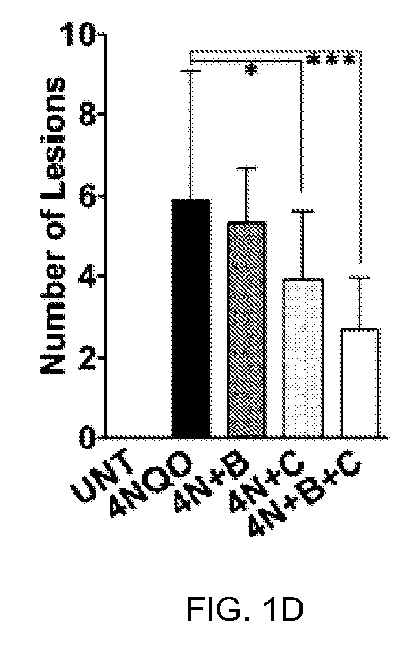
- the inventors discovered that for the prevention of murine oral carcinogenesis the combination of bexarotene and CD1530 is more efficacious than bexarotene alone or CD1530 alone ( Fig. 1 D, E ).
- the combination of bexarotene and CD1530 is also more effective than either drug alone in preventing the 4-NQO-induced changes in the transcript levels of genes important for tumor development ( Fig. 3 and 4 ).
- bexarotene and/or CD1530 did not elevate triglyceride levels ( Fig. 2 ), suggesting that the combination of bexarotene and CD1530 would not cause cardiovascular risks if used at similar doses in cancer prevention treatments for those at risk for oral cancer.
- the inventors discovered that the mRNA levels of several CDKs, cyclins, and proteins involved in DNA replication were lower in the 4N+B group, 4N+C group, and the 4N+B+C group than in the 4-NQO group ( Fig. 3 ).
- ROS reactive oxygen species
- 4-hydroxynonenal (4-HNE) one of the products generated from excessive ROS, modifies cell proteins by forming protein adducts, and thereby changes cellular signaling cascades and gene expression ( Ullery JC & Marnett LJ, 2012, Biochim Biophys Acta 1818(10):2424-2435 .).
- the inventors discovered, for the first time, show that both bexarotene, a RXR agonist, and CD1530, a RAR y agonist, suppress excessive ROS production in tongue epithelial cells, and suggest that this inhibition of ROS contributes to the inhibition of tongue carcinogenesis ( Fig. 5 ).
- the inventors discovered that the RXR and RAR y agonists in combination reduce the mRNA levels of several MMPs and the protein level of MMP9, suggesting that targeting RXR and RAR y is a useful strategy for the prevention of cancer cell migration and metastasis in other human cancers.
- HIF1 ⁇ regulates genes involved in tumor initiation, progression, and metastasis ( Semenza GL, 2012, Cell 148(3):399-408 .), and HIF1 ⁇ overexpression correlates with a poor prognosis in human head and neck cancer ( Eckert AW, et al., 2010, J Oral Pathol Med 39(4):313-317 .).
- RAR y and RXR agonists inhibit the HIF1 ⁇ signaling pathway in the context of tongue carcinogenesis ( Fig. 4B ).
- RNA-Seq data suggest that the TCA cycle and OX-PHOS pathways are significantly less active during tongue carcinogenesis, no significant increases in transcript levels of the glycolysis pathway genes were detected ( Fig. 9 , Table 1). Therefore, glycolysis is not increased in this 4-NQO model of oral carcinogenesis.
- subject means an animal, preferably a mammal, and most preferably a human.
- a subject may be a patient having a disease or disorder as discussed herein.
- vitamin A deficiency refers to a lack of a decreased level of vitamin in serum or an organ (e.g., pancreas, liver, kidney or testes) of an animal, e.g., human.
- the terms “decrease” and “reduce” are used interchangeably to refer to a negative change in the level, activity or function of a molecule, cell or organ. It is meant that the particular level, activity or function is lower by about 25%, about 50%, about 75%, about 90%, about 1-fold, about 2-fold, about 5 fold, about 10-fold, about 25-fold, about 50-fold, or about 100 fold, or lower, when compared to a control.
- the terms “increase”, “improve”, “elevate” and “enhance” are used interchangeably to refer to a positive change in the level, activity or function of a molecule, cell or organ. It is meant that the particular level, activity or function is higher by about 25%, about 50%, about 75%, about 90%, about 1- fold, about 2-fold, about 5 fold, about 10-fold, about 25-fold, about 50-fold, or about 100 fold, or higher, when compared to a control.
- therapeutically effective and “therapeutic effect” refer to a benefit including, but not limited to, the treatment or amelioration of symptoms of a proliferative disorder discussed herein. It will be appreciated that the therapeutically effective amount or the amount of agent required to provide a therapeutic effect will vary depending upon the intended application (in vitro or in vivo), or the subject and disease condition being treated (e.g., nature of the severity of the condition to be treated, the particular inhibitor, the route of administration and the age, weight, general health, and response of the individual patient), which can be readily determined by a person of skill in the art. For example, an amount of an agonist is therapeutically effective if it is sufficient to effect the treatment or amelioration of symptoms of a disease discussed herein.
- clinical significant level is used herein to refer to a level of a side effect such as cardiovascular risk caused by the administration of a pharmaceutical composition (e.g., one comprising an agonist) that a physician treating the subject would consider to be significant.
- a pharmaceutical composition e.g., one comprising an agonist
- the term "pharmaceutically acceptable salt” refers to those salts which are, within the scope of sound medical judgment, suitable for use in contact with the tissues of humans and lower animals without undue toxicity, irritation, allergic response and the like, and are commensurate with a reasonable benefit/risk ratio.
- a pharmaceutically acceptable salt of an agonist is utilized in pharmaceutical compositions
- the salt preferably is derived from an inorganic or organic acid or base.
- suitable salts see, e.g., Berge et al, J. Pharm. Sci. 66: 1-19 (1977 ); Remington: The Science and Practice of Pharmacy, 20th Ed., ed. A. Gennaro, Lippincott Williams & Wilkins, 2000 .
- pharmaceutically acceptable carrier is used herein to refer to a material that is compatible with a recipient subject, preferably a mammal, more preferably a human, and is suitable for delivering an active agent to the target site without terminating the activity of the agent.
- the toxicity or adverse effects, if any, associated with the carrier preferably are commensurate with a reasonable risk/benefit ratio for the intended use of the active agent.
- carrier is used interchangeably herein, and includes any and all solvents, diluents, and other liquid vehicles, dispersion or suspension aids, surface active agents, isotonic agents, thickening or emulsifying agents, preservatives, solid binders, lubricants and the like, as suited to the particular dosage form desired.
- compositions of the invention can be manufactured by methods well known in the art such as conventional granulating, mixing, dissolving, encapsulating, lyophilizing, or emulsifying processes, among others.
- Compositions may be produced in various forms, including granules, precipitates, or particulates, powders, including freeze dried, rotary dried or spray dried powders, amorphous powders, tablets, capsules, syrup, suppositories, injections, emulsions, elixirs, suspensions or solutions.
- Formulations may optionally contain solvents, diluents, and other liquid vehicles, dispersion or suspension aids, surface active agents, pH modifiers, isotonic agents, thickening or emulsifying agents, stabilizers and preservatives, solid binders, lubricants and the like, as suited to the particular dosage form desired.
- composition of the present invention can be administered by any method known to one skilled in the art. For example, it may be administered orally orparenterally.
- parenteral includes subcutaneous, intravenous, intramuscular, intra- articular, intra- synovial, intrasternal, intrathecal, intrahepatic, intralesional and intracranial injection or infusion techniques.
- the compositions are administered orally, intravenously, or subcutaneously.
- the formulations of the invention may be designed to be short-acting, fast-releasing, or long-acting.
- compounds can be administered in a local rather than systemic means, such as administration (e.g., by injection) at a tumor site.
- Liquid dosage forms for oral administration include, but are not limited to, pharmaceutically acceptable emulsions, microemulsions, solutions, suspensions, syrups and elixirs.
- the liquid dosage forms may contain inert diluents commonly used in the art such as, for example, water or other solvents, solubilizing agents and emulsifiers.
- the oral compositions can also include adjuvants such as wetting agents, emulsifying and suspending agents, sweetening, flavoring, and perfuming agents.
- sterile injectable aqueous or oleaginous suspensions may be formulated according to the known art using suitable dispersing or wetting agents and suspending agents.
- the sterile injectable preparation may also be a sterile injectable solution, suspension or emulsion in a nontoxic parenterally acceptable diluent or solvent, for example, as a solution in 1,3-butanediol.
- acceptable vehicles and solvents that may be employed are water, Ringer's solution, U.S.P. and isotonic sodium chloride solution.
- sterile, fixed oils are conventionally employed as a solvent or suspending medium.
- any bland fixed oil can be employed including synthetic mono- or diglycerides.
- fatty acids such as oleic acid are used in the preparation of injectables.
- Solid dosage forms for oral administration include capsules, tablets, pills, powders, and granules.
- the active compound is mixed with at least one inert, pharmaceutically acceptable excipient or carrier such as sodium citrate or dicalcium phosphate and/or a) fillers or extenders such as starches, lactose, sucrose, glucose, mannitol, and silicic acid, b) binders such as, for example, carboxymethylcellulose, alginates, gelatin, polyvinylpyrrolidinone, sucrose, and acacia, c) humectants such as glycerol, d) disintegrating agents such as agar, calcium carbonate, potato or tapioca starch, alginic acid, certain silicates, and sodium carbonate, e) solution retarding agents such as paraffin, f) absorption accelerators such as quaternary ammonium compounds, g) wetting agents such as, for example, cetyl alcohol and glycerol mono
- Solid compositions of a similar type may also be employed as fillers in soft and hard-filled gelatin capsules using such excipients as lactose or milk sugar as well as high molecular weight polyethylene glycols and the like.
- the solid dosage forms of tablets, dragees, capsules, pills, and granules can be prepared with coatings and shells such as enteric coatings and other coatings well known in the pharmaceutical formulating art.
- a composition that comprises the combination of a RXR agonist and a RAR agonist of the present invention, and further with one or more other therapeutic agents can be used, for example, to: 1) enhance the therapeutic effect(s) of the methods of the present invention and/or the one or more other therapeutic agents; 2) reduce the side effects exhibited by the methods of the present invention and/or the one or more other therapeutic agents; and/or 3) reduce the effective dose of an agonist of the present invention and/or the one or more other therapeutic agents.
- an agonist (either alone or in combination with another agonist) may be administered at an amount from about 30 mg to about 500 mg per day, e.g., about 50 mg to about 500 mg per day, about 100 to about 500 mg per day, about 200 mg to about 500 mg per day, about 100 mg to about 400 mg per day, about 100 mg to about 300 mg per day, about 100 mg to 200 mg per day.
- the agonist alone or in combination with another agonist, may be administered in single or divided or multiple doses. It will be understood that a suitable dosage of an agonist may be taken at any time of the day or night, with food or without food.
- the treatment period during which an agent is administered is then followed by a non-treatment period of a particular time duration, during which the therapeutic agents are not administered to the patient. This non-treatment period can then be followed by a series of subsequent treatment and non-treatment periods of the same or different frequencies for the same or different lengths of time.
- mice/group mice Six week old wild type C57BL/6 female mice (15 mice/group) were treated with vehicle as a negative control or 100 ⁇ g/ml 4- nitroquinoline-1-oxide (4-NQO) for 10 weeks, as previously described ( Tang XH, Albert M, Scognamiglio T, & Gudas LJ, (2009), Cancer Prev Res (Phila Pa) 2(12):1100-1110 ; Tang XH, Knudsen B, Bemis D, Tickoo S, & Gudas LJ, 2004, Clin Cancer Res 10(1 Pt 1):301-313 .).
- mice Two weeks after termination of the carcinogen treatment mice received various drug treatments at doses based on previous studies ( Shimono K, et al., 2011, Nat Med 17(4):454-460 ; Janakiram NB, et al., 2012, Neoplasia 14(2):159-168 .): bexarotene at 300 mg/kg in the diet, CD1530 at 2.5 mg/100 ml in drinking water, and the combination of both drugs. The care and use of animals in this study were approved by the Institutional Animal Care and Use Committee (IACUC) of Weill Cornell Medical College.
- IACUC Institutional Animal Care and Use Committee
- mice Tissue dissection, lesion grade measurement, and pathological diagnosis.
- the tongues of mice were dissected immediately after cervical dislocation. Gross lesions were identified, photographed, counted, and graded (supporting information).
- the histological diagnosis of squamous neoplasia was performed by a Board-certified pathologist (TS) on paraffin embedded, hematoxylin and eosin (H&E) stained tissue samples in a blinded manner.
- TS Board-certified pathologist
- H&E paraffin embedded, hematoxylin and eosin
- RNA-Seq analysis of the mRNA transcriptome One part of each mouse tongue (same position on each mouse tongue) was snap frozen in liquid N 2 and stored at -70°C until total RNA extraction. Total tissue RNA was extracted and subjected to Next-Generation Sequencing (RNA-Seq) at the Genomics Resources Core Facility, Weill Cornell Medical College. Bioinfomatics analyses were performed using the Tophat and Cufflink software. (supporting information).
- mice Tissue dissection, lesion grade measurement, and pathological diagnosis.
- the tongues of mice were dissected immediately after cervical dislocation. Gross lesions were identified and photographed, and visible cancerous lesions on the tongues were counted for the examination and multiplicity (i.e., the number of lesions per mouse) with a 8x magnification.
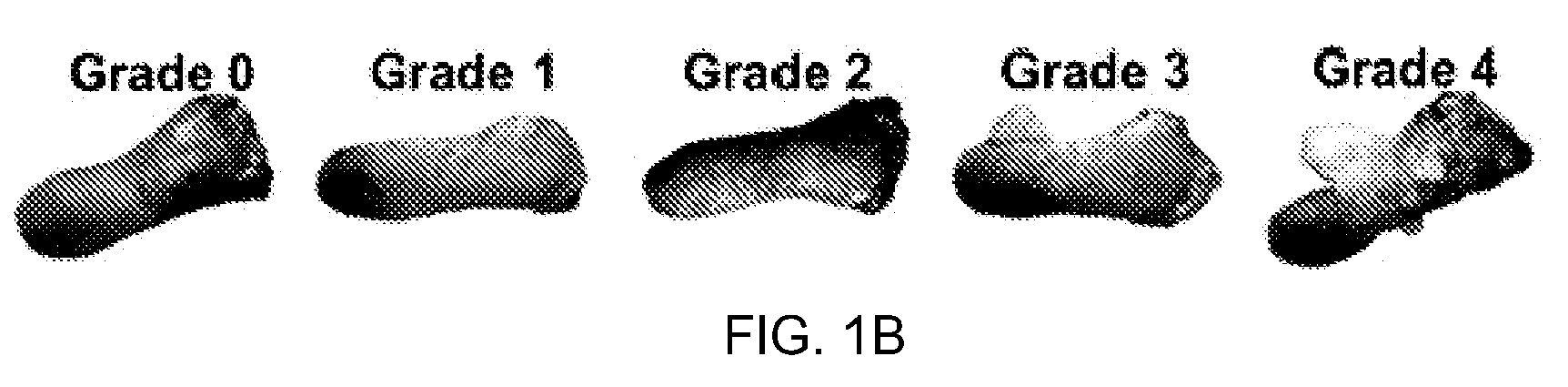
- the severity of gross lesions on the tongues was quantified by a grading system that included 0 (no lesion), 1 (mild lesion), 2 (intermediate lesion), 3 (severe lesion), and 4 (most severe lesion), respectively, and the average grades from different treatment groups were used for the analyses of the tongue lesions.
- Mouse tongues were cut longitudinally.
- tissue was fixed in freshly made 4% paraformaldehyde overnight at 4°C, embedded in paraffin, and sectioned into 7- ⁇ m sections.
- One part of each tongue tissue was immediately snap frozen and stored at -70°C before RNA extraction.
- the histological diagnosis of squamous neoplasia was performed by a pathologist (T.S.) on the hematoxylin and eosin (H&E) stained, sectioned tissue samples.
- UNT untreated; 4-NQO, 4-NQO treatment; 4N+B, 4-NQO+bexarotene; 4N+C, 4-NQO+CD1530; 4N+B+C, 4-NQO+bexarotene+CD1530.
- the extraction of total cellular RNA from mouse tissues was carried out using the RNeasy kit (Qiagen). Subsequent RNA preparation steps were carried out at the Genomics Resources Core Facility of WCMC. The measurement of RNA integrity was determined using the Agilent 2100 BioAnalyzer (Agilent Technologies). Samples with RNA integrity number (RIN) values of 10 were used to construct cDNA libraries.
- RIN RNA integrity number
- mRNA was purified by using pre-prepared Sera-mag Magnetic Oligo(dT) Beads from Illumina Inc. (SanDiego, CA), subjected to thermal fragmentation, and reverse transcribed to first strand cDNA. Following the removal of mRNA strands by RNaseH, first strand cDNAs were used as templates to produce double strand cDNAs, and the overhangs resulting from fragmentation were repaired to blunt ends. An 'A' base was added to the 3' end of cDNAs and subsequently the cDNAs were ligated to Illumina paired end (PE) adaptors that have a single 'T' base overhang at their 3' end.
- PE Illumina paired end
- the cDNA-adaptor libraries were purified and enriched by 15 cycles of PCR.
- the enriched libraries were hybridized to a flow cell and amplified, resulting in ultra-high density flow cells with millions of clusters, each containing about 1,000 copies of the templates.
- the double stranded cDNA-adaptors were denatured and converted into single strand DNA, and then the template cDNAs were amplified one more time isothermally to produce surface-bound colonies.
- the clonal DNA clusters were linearized, free 3' OH ends blocked, denatured, hybridized to sequencing primers, and sequenced. The sequencing was conducted by running 4 samples per lane with 51 pair-end cycles on the HISeq2000/1000.
- the Sequencing-by-Synthesis process used reversible terminators and a DNA polymerase modified to accept reversible terminator nucleotides. After each synthesis cycle the fluorescence of clusters was imaged with high sensitivity. Then the sequencing images were analyzed in three steps, image analysis, base calling, and sequence analysis.
- the Tophat software was used to align raw sequencing reads against the UCSC mm9 mouse reference genome, and Cufflinks software was employed to measure transcript abundances in the unit of f ragments p er k ilobase of exon model per million mapped reads (FPKM), as well as to perform statistical analysis on the changes in gene expression.
- the heat maps for genes of interest were generated by R package software.
- the GEO Accession number is GSE54246; embargoed until publication.
- tissue sections were incubated with a 4-HNE antibody (1:700; mouse monoclonal antibody; Abcam, ab48506), a ⁇ -catenin antibody (1:400; rabbit polyclonal antibody; Abcam, ab6302), or a MMP9 antibody (1:70; rabbit polyclonal antibody; Abcam, ab38898), respectively, overnight at 4 °C.
- the sections were then incubated with secondary antibodies (1:200, anti-mouse IgG from the M.O.M kit for 4-HNE; ready-to-use anti-rabbit IgG from the Invitrogen SuperPicture kit for ⁇ -catenin and MMP9).
- secondary antibodies (1:200, anti-mouse IgG from the M.O.M kit for 4-HNE; ready-to-use anti-rabbit IgG from the Invitrogen SuperPicture kit for ⁇ -catenin and MMP9.
- DAB 3,3-diaminobenzidine
- Real time PCR Total RNA from mouse tongues was extracted and reverse transcribed to cDNA as described previously ( Tang XH, Albert M, Scognamiglio T, & Gudas LJ, 2009, Cancer Prev Res (Phila Pa) 2(12):1100-1110 .).
- Real-time PCR was performed on a MyiQ real-time PCR detection system (Bio-Rad Laboratories) with a SYBR Green Supermix (Quanta). The conditions for the PCR were as follows: 95°C for 3 min to activate the DNA polymerase, followed by 45 cycles at 94°C for 30 s, primer annealing at 58°C for 30 s, and product extension at 72°C for 30 s.
- the primer sequences were as follows: mouse CDK1, 5'-CCGTCGTAACCTGTTGAGTAACTAT-3' (forward) (SEQ ID NO.: 1) and 5'-GTCTACCCTTATACACCACACCGTAA-3' (reverse) (SEQ ID NO.: 2); mouse Cyclin B1, 5'-ACTTCCTCCGTAGAGCATC-3'(forward) (SEQ ID NO.: 3) and 5'-GCAGAGTTGGTGTCCATTC-3' (reverse) (SEQ ID NO.: 4); mouse 36B4, 5'-AGAACAACCCAGCTCTGGAGAAA-3' (forward) (SEQ ID NO.: 5) and 5'-ACACCCTCCAGAAAGCGAGAGT-3' (reverse) (SEQ ID NO.: 6).
- Example 2 Drug treatments reduce tongue tumor development.
- the severities of all tongue lesions were at or greater than grade 2 and the average severity was 2.8 ⁇ 0.8.
- the 4N+B group showed an average severity of 1.9 ⁇ 1.2 (p ⁇ 0.05), with 50% of the lesions at grade 1.
- the 4N+C group showed an average severity of 1.6 ⁇ 0.8 (p ⁇ 0.01).
- no lesion severity grade was greater than 2
- 70% of the lesions were at grade 1
- the average lesion severity was 1.3 ⁇ 0.5 (p ⁇ 0.001) ( Fig. 1E ).
- Bexarotene and CD1530 do not elevate serum triglyceride levels.
- treatment for 15 weeks with CD1530 alone, bexarotene alone, and the CD1530 plus bexarotene combination did not change serum triglyceride levels significantly ( Fig. 2 ), suggesting that these treatments do not elevate serum triglyceride levels.
- Gene ontology (GO) analysis was conducted on the Gene Ontology level 3 of the "Biological Process" domain that has predefined, functional sets for enrichment analysis with default parameter settings.
- GO analysis revealed that among the top categories with obvious over-representation in the 4-NQO induced tongue tumors vs. untreated tongues were "cell cycle phase " and "cellular component organization at cellular level” (including increases in ECM component degradation enzymes) ( Fig. 9A , white bars). Under-expressed GO categories in the 4-NQO induced tongue tumors vs.
- untreated tongues included "energy derivation by oxidation of organic compounds", “generation of precursor metabolites and energy”, and “electron transport chain” ( Fig. 9A , black bars), indicating that the transcript levels of the genes in the tricarboxylic acid cycle (TCA) cycle and oxidative phosphorylation (OX-PHOS) pathway were decreased in tongue tumors from the 4-NQO treated group compared to tongues from untreated mice.
- TCA tricarboxylic acid cycle
- OX-PHOS oxidative phosphorylation
- transcripts involved in DNA replication were also significantly increased in the 4-NQO group, including minichromosome maintenance (MCM) complex members 2-7 and 10 that unwind the double stranded DNA at the origins, recruit DNA polymerases, and initiate DNA synthesis ( Maiorano D, Lutzmann M, & Méchali M, 2006, Curr Opin Cell Biol 18(2):130-136 .); DNA replication helicase 2 (DNA2), a key enzyme involved in DNA replication and DNA repair in both the nucleus and mitochondria; DNA ligase 1 (LIG1); origin recognition complex, subunit 1 (ORC1); DNA polymerase, alpha 1 (POLA1), the catalytic subunit of DNA polymerase; and DNA primase large subunit (PRIM2).
- MCM minichromosome maintenance
- the 4N+B, 4N+C, and 4N+B+C groups showed significantly lower transcript levels of the majority of these genes as compared to the 4-NQO group, especially the 4N+B+C group, in which the mRNA levels of all of these genes were greatly reduced ( Fig. 3B ).
- MMP Matrix metalloproteinases contribute to extracellular matrix (ECM) breakdown and cancer cell migration ( Munshi HG & Stack MS, 2006, Cancer Metastasis Rev 25(1):45-56 .), and tenascin C (TNC) is involved in cell migration ( Orend G & Chiquet-Ehrismann R, 2006, Cancer Lett 244(2):143-163 .).
- ECM extracellular matrix
- TNC tenascin C
- Hypoxia-inducible factor 1 ⁇ (HIF1 ⁇ ) is involved in the switch from tricarboxylic acid (TCA) cycle and oxidative phosphorylation (OX-PHOS) pathways to glycolysis ( Aragonés J, Fraisl P, Baes M, & Carmeliet P, 2009, Cell Metab 9(1):11-22 .).
- HIF1 ⁇ and several HIF1 a targets that participate in the modulation of glycolysis and oxidative phosphorylation such as glucose transporter 1 (GLUT1) ( Brahimi-Horn MC, Bellot G, & Pouysségur J, 2011, Curr Opin Genet Dev 21(1):67-72 .), monocarboxylate transporter 4 (Slc16a3, MCT4) (31), and NADH dehydrogenase (ubiquinone) 1 alpha subcomplex, 4-like (Ndufa412) that inhibits oxidative phosphorylation ( Tello D, et al., 2011, Cell Metab 14(6):768-779 .).
- GLUT1 glucose transporter 1
- Slc16a3, MCT4 monocarboxylate transporter 4
- NADH dehydrogenase ubiquinone 1 alpha subcomplex, 4-like (Ndufa412) that inhibits oxidative phosphorylation
- RNA-Seq data analyses correlate with the tongue tumor multiplicity and severity data (Fig. ID, E), suggesting that the drug treatments, especially the combination of bexarotene and CD1530, may suppress/reduce tongue carcinogenesis via reduction of transcript levels of genes involved in cell cycle progression and cell migration.
- Oxidative stress level as assessed by 4-hydroxynoneal (4-HNE), is lower in the tongues from the 4-NQO and subsequent drug treatment groups.
- Excessive reactive oxygen species (ROS) accumulation caused by carcinogen exposure, may play a role in human oral carcinogenesis because ROS causes oxidative modifications of cellular macromolecules such as DNA, proteins, and lipids (33).
- 4-hydroxynonenal (4-HNE), an ⁇ , ⁇ -unsaturated hydroxyalkenal that is produced by lipid peroxidation in cells during oxidative stress, and is a marker of oxidative stress caused by reactive oxygen species (ROS) ( Ullery JC & Marnett LJ, 2012, Biochim Biophys Acta 1818(10):2424-2435 .).
- ROS reactive oxygen species
- ⁇ -catenin levels are lower in the tongues from the 4-NQO and subsequent drug treatment groups compared to the 4-NQO group.
- Oxidative stress can activate the ⁇ -catenin/Wnt signaling pathway ( Reuter S, Gupta SC, Chaturvedi MM, & Aggarwal BB, 2010, Free Radic Biol Med 49(11):1603-1616 .). and the increase in ⁇ -catenin protein level can lead to increased cell proliferation in human head and neck cancer cells ( Song J, Chang I, Chen Z, Kang M, & Wang CY, 2010, PLoS One 5(7):e11456 .).
- MMP9 matrix metalloproteinase 9
- MMP9 protein levels were low in untreated tongue epithelium, and that 4-NQO treatment resulted in an increase in MMP9 protein levels in tongue epithelium and tongue tumors (bottom panel) ( Fig. 6B ).
- Interleukin-6 is a multifunctional cytokine that is involved in the regulation of immune responses and cellular functions. IL-6 levels are enhanced in human oral squamous cell carcinoma and IL-6 is considered a bad prognostic factor in this cancer ( Expert Opin Ther Targets. 2013 Jan;17(1):53-9 ). IL-6 protein was detected primarily in the basal layer of tongue epithelium in the UNT samples ( Fig.
- Control group pathway name set size candidates contained p-value q-value pathway source Metabolism 1039 173 (17.8%) 1.01E-19 5.96E-17 Reactome Valine, leucine and isoleucine degradation -Mus musculus (mouse) 50 28 (56.0%) 7.19E-17 2.13E-14 KEGG Pyruvate metabolism and Citric Acid (TCA) cycle 36 23 (65.7%) 2.96E-16 5.83E-14 Reactome The citric acid (TCA) cycle and respiratory electron transport 153 44 (34.4%) 1.81E-15 2.68E-13 Reactome Mitochondrial Fatty Acid Beta-Oxidation 15 14 (100.0%) 2.72E-15 3.21E-13 Reactome Fatty acid, triacylglycerol, and ketone body metabolism 66 28 (43.8%) 2.59E-13 2.55E-11 Reactome Propanoate metabolism -Mus musculus (mouse) 33 19 (59.4%) 1.76E-12 1.49E-10 KEGG Citrate cycle (TCA cycle)
- Control group pathway name set size candidates contained p-value q-value pathway source DNA Replication 163 59 (37.6%) 5.05E-27 3.15E-24 Reactome Cell Cycle, Mitotic 277 76 (28.4%) 1.96E-25 4.08E-23 Reactome Mitotic M-M/G1 phases 141 53 (39.3%) 1.96E-25 4.08E-23 Reactome Cell Cycle 314 80 (26.3%) 2.14E-24 3.35E-22 Reactome M Phase 102 38 (38.4%) 3.93E-18 4.90E-16 Reactome Mitotic Prometaphase 98 36 (37.9%) 5.00E-17 5.20E-15 Reactome Cell cycle -Mus musculus (mouse) 127 33 (26.0%) 1.66E-10 1.48E-08 KEGG Cytokine-cytokine receptor interaction -Mus musculus (mouse) 245 48 (19.6%) 5.74E-10 4.48E-08 KEGG Cell Cycle Checkpoints 82 24 (31.2%) 9.92E-10 6.88
- 4-NQO group pathway name set size candidates contained p-value q-value pathway source Gastric acid secretion -Mus musculus (mouse) 73 10 (13.7%) 1.49E-06 0.000265 KEGG Calcium signaling pathway -Mus musculus (mouse) 180 15 (8.4%) 2.16E-06 0.000265 KEGG Table 3 Pathways significantly differed in the 4-NQO+CD1530 group vs. the 4-NQO group Downregulated in the 4-NQO+CD1530 group vs.
- the 4-NQO group pathway name set size candidates contained p-value q-value pathway source Cell Cycle, Mitotic 277 52 (19.4%) 3.45E-28 6.72E-26 Reactome Mitotic M-M/G1 phases 141 39 (28.9%) 4.19E-28 6.72E-26 Reactome DNA Replication 163 41 (26.1%) 1.32E-27 1.42E-25 Reactome Cell Cycle 314 54 (17.8%) 2.80E-27 2.25E-25 Reactome M Phase 102 27 (27.3%) 5.90E-19 3.79E-17 Reactome Mitotic Prometaphase 98 26 (27.4%) 2.48E-18 1.33E-16 Reactome Cell Cycle Checkpoints 82 19 (24.7%) 8.40E-13 3.85E-11 Reactome Cell cycle -Mus musculus (mouse) 127 23 (18.1%) 3.38E-12 1.36E-10 KEGG G2/M Checkpoints 45 14 (31.1%) 3.01E-11 1.07E-09 Reactome DNA Replication Pre-Initiation 39 12 (33.3
- the 4-NQO group pathway name set size candidates contained p-value q-value pathway source Metabolism 1039 181 (18.6%) 9.20E-52 3.94E-49 Reactome Drug metabolism -cytochrome P450 -Mus musculus (mouse) 87 52 (59.8%) 3.03E-42 6.48E-40 KEGG Metabolism of xenobiotics by cytochrome P450 - Mus musculus (mouse) 90 50 (55.6%) 1.93E-38 2.75E-36 KEGG Biological oxidations 160 64 (40.5%) 3.19E-38 3.41E-36 Reactome Phase 1 -Functionalization of compounds 100 51 (51.5%) 5.43E-37 4.65E-35 Reactome nicotine degradation II 63 41 (65.1%) 1.17E-35 8.37E-34 MouseCyc Xenobiotics 39 31 (81.6%) 2.57E-32 1.57E-30 Reactome Retinol metabolism -Mus musculus (mouse) 79
- the 4-NQO group pathway name set size candidates contained p-value q-value pathway source Cell Cycle, Mitotic 277 60 (22.4%) 3.68E-26 1.60E-23 Reactome DNA Replication 163 46 (29.3%) 1.71E-25 3.72E-23 Reactome Cell Cycle 314 62 (20.4%) 1.12E-24 1.62E-22 Reactome Mitotic M-M/G1 phases 141 40 (29.6%) 1.83E-22 1.99E-20 Reactome M Phase 102 27 (27.3%) 1.66E-14 1.44E-12 Reactome Cytokine-cytokine receptor interaction -Mus musculus (mouse) 245 42 (17.1%) 4.33E-14 3.14E-12 KEGG Mitotic Prometaphase 98 25 (26.3%) 3.92E-13 2.44E-11 Reactome Cell Cycle Checkpoints 82 20 (26.0%) 1.21E-10 6.59E-09 Re
- the 4-NQO group pathway name set size candidates contained p-value q-value pathway source Fatty acid, triacylglycerol, and ketone body metabolism 66 12 (18.8%) 3.35E-07 0.000101 Reactome Dilated cardiomyopathy -Mus musculus (mouse) 91 13 (14.6%) 2.15E-06 0.000248 KEGG Tight junction -Mus musculus (mouse) 137 16 (11.8%) 2.79E-06 0.000248 KEGG Propanoate metabolism -Mus musculus (mouse) 33 8 (25.0%) 3.31E-06 0.000248 KEGG
- Embodiments of the invention corresponding to the original claims of PCT/2015/019528 include the following:
Landscapes
- Health & Medical Sciences (AREA)
- Life Sciences & Earth Sciences (AREA)
- General Health & Medical Sciences (AREA)
- Chemical & Material Sciences (AREA)
- Medicinal Chemistry (AREA)
- Veterinary Medicine (AREA)
- Public Health (AREA)
- Pharmacology & Pharmacy (AREA)
- Animal Behavior & Ethology (AREA)
- Epidemiology (AREA)
- Bioinformatics & Cheminformatics (AREA)
- Immunology (AREA)
- Proteomics, Peptides & Aminoacids (AREA)
- Engineering & Computer Science (AREA)
- Cell Biology (AREA)
- Zoology (AREA)
- Gastroenterology & Hepatology (AREA)
- General Chemical & Material Sciences (AREA)
- Chemical Kinetics & Catalysis (AREA)
- Organic Chemistry (AREA)
- Nuclear Medicine, Radiotherapy & Molecular Imaging (AREA)
- Nutrition Science (AREA)
- Physiology (AREA)
- Dermatology (AREA)
- Pharmaceuticals Containing Other Organic And Inorganic Compounds (AREA)
- Medicines That Contain Protein Lipid Enzymes And Other Medicines (AREA)
- Acyclic And Carbocyclic Compounds In Medicinal Compositions (AREA)
Abstract


Description
- This invention was made with Government support by National Institutes of Health (NIDCR) Grant Number R01 10389, NIH postdoctoral fellowship NIAAA F32-AA021045, and NIH Grant Number R01AA018332. The United States Government has certain rights in the invention.
- This application claims priority to
U.S. Provisional Application No. 61/950,480, filed on March 10, 2014 - The invention relates to the treatment and prevention of head and neck cancer.
- Retinoids, including vitamin A (retinol) and its metabolites such as all-trans retinoic acid (RA), regulate cell proliferation and differentiation (Gudas et al., 1994, The Retinoids: Biology, Chemistry, and Medicine, eds Sporn MB, Roberts AB, & Goodman DS (Raven Press, New York), pp 443-520). RA regulates gene expression by binding and activating retinoic acid receptors (RARs α, β, and γ) and retinoid X receptors (RXRs α, β, and γ), transcription factors that heterodimerize and associate with retinoic acid response elements (RAREs) (Chambon P, 1996, FASEB J. 10:940-954; Mongan NP & Gudas LJ, 2007, Differentiation 75(9):853-870; Tang XH & Gudas LJ, 2011, Annu Rev Pathol 6:345-364.)
- Retinoid X receptors (RXRs) play a key role within the nuclear receptor (NR) superfamily and can form heterodimers with many other nuclear receptors, including RARs, PPARs, liver X receptors (LXR), farnesoid X receptor (FXR) (Pérez E, Bourguet W, Gronemeyer H, & de Lera AR, 2012, Biochim Biophys Acta 1821(1):57-69.), and vitamin D receptor (VDR) (Pérez E, Bourguet W, Gronemeyer H, & de Lera AR, 2012, Biochim Biophys Acta 1821(1):57-69; Germain P, et al. 2006, Pharmacol Rev 58(4):760-772.). Because RXRs participate in many nuclear receptor signaling pathways, they have been a target for drug discovery (Pérez E, Bourguet W, Gronemeyer H, & de Lera AR, 2012, Biochim Biophys Acta 1821(1):57-69.).
- The retinoic acid receptor (RAR) is a type of nuclear receptor that is activated by both all-trans retinoic acid and 9-cis retinoic acid. The effects of RA on cells and tissues are known to occur through the activation of retinoic acid receptors (RARa, RARβ, and RARy) and their isoforms (Chambon P, 1996, FASEB J. 10:940-954; Tang XH & Gudas LJ, 2011, Annu Rev Pathol 6:345-364).
- Head and neck cancer is a group of cancers that start in the lip, oral cavity (mouth), nasal cavity (inside the nose), paranasal sinuses, pharynx, and larynx. These cancers are biologically similar, with 90% of head and neck cancers are squamous cell carcinomas originating from the mucosal lining (epithelium) of these regions. These cancers are frequently aggressive in their biologic behavior, and patients with these types of cancer are at a higher risk of developing another cancer in the head and neck area.
- Natural and synthetic retinoids have shown efficacy in the prevention and treatment of human cancers including leukemia, breast and lung cancers (Connolly RM, Nguyen NK, & Sukumar S, 2013, Clin Cancer Res 19(7):1651-1659; Dragnev KH, et al., 2007, Clin Cancer Res 13(6):1794-1800; Dragnev KH, et al., 2011, Cancer Prev Res (Phila) 4(6):818-828; Gniadecki R, et al., 2007, Br J Dermatol 157(3):433-440.). Bexarotene inhibits cell proliferation and induces cellular senescence and apoptosis in a mouse breast cancer model (Shilkaitis A, Bratescu L, Green A, Yamada T, & Christov K, 2013, Cancer Prev Res (Phila) 6(4):299-308.), and modulates expression of genes related to the cell cycle, cell differentiation/apoptosis, and cell adhesion/migration in a mouse breast cancer model (Abba MC, et al., 2009, Cancer Prev Res (Phila) 2(2):175-184.) and in human normal mammary epithelial cells (Kim HT, et al., 2006, Cancer Res 66(24):12009-12018.). RARγ also mediates RA-induced growth arrest and apoptosis of neoplastic mouse papilloma cell lines (Hatoum A, El-Sabban ME, Khoury J, Yuspa SH, & Darwiche N, 2001, Carcinogenesis 22(12):1955-1963.).
- Head and neck cancer is often treated with some form of surgery, with the goal of removing the cancerous cells entirely. This can be particularly difficult if the cancer is near the larynx and can result in the patient being unable to speak. Surgery is also commonly used to remove some or all of the cervical lymph nodes to prevent further spread of the disease. Radiation therapy may also play an important role. Treatment with 13-cis RA, which can be isomerized to RA, a pan-RAR agonist, resulted in reductions in the sizes of oral leukoplakias in patients (Connolly RM, Nguyen NK, & Sukumar S, 2013, Clin Cancer Res 19(7):1651-1659; Lippman SM, et al., 1993, N Engl J Med 328(1):15-20.). The effectiveness of radiation and chemotherapy, however, is often limited; while side effects may be significant.
- Head and neck cancer is strongly associated with certain environmental and lifestyle risk factors, including tobacco smoking, alcohol consumption, UV light, particular chemicals used in certain workplaces, and certain strains of viruses, such as human papillomavirus (HPV) and Epstein-Barr virus (EBV). Cigar smoking is an important risk factor for oral cancers as well. Head and neck cancers, however, are often not diagnosed early enough for the most effective treatment. For example, about 60-70% of oral cavity carcinoma cases are diagnosed only after the tumors have become locally advanced (Lippman SM, Sudbo J, & Hong WK, 2005, J Clin Oncol 23(2):346-356.). Therefore, there is a need for alternative treatments that prevent or slow the progression of head and neck cancer using novel pharmaceutical compositions.
- This invention discloses pharmaceutical compositions and methods for treating and preventing head and neck cancer.
- According to certain embodiments, the invention provides a pharmaceutical composition comprising a RXR agonist and a RAR agonist.
- In certain embodiments, the amount of the RXR agonist or RAR agonist is from 50 mg to about 500 mg.
- In certain embodiments, the concentration of the RXR agonist or RAR agonist is from about 1 mg to about 10 mg per 100 ml.
- The RXR agonist may be a highly specific RXR agonist according to certain embodiments.
- In certain embodiments, the RXR agonist is bexarotene.
- The RAR agonist may be a highly specific RAR agonist according to certain embodiments.
- In certain embodiments, the RAR agonist is a RARγ agonist.
- In certain embodiments, the RARγ agonist is CD1530.
- According to certain embodiments, the invention provides a method of treating or preventing head and neck cancer in a subject comprising administering to the subject a RXR agonist and/or a RAR agonist.
- The head and neck cancer is oral cancer according to certain embodiments.
- In certain embodiments, the head and neck cancer is oral cavity squamous cell carcinoma.
- In certain embodiments, the head and neck cancer is esophageal squamous cell carcinoma.
- In certain embodiments, the head and neck cancer is malignant squamous cell carcinomas
- The head and neck cancer is caused by tobacco or cigar smoking according to certain embodiments.
- The head and neck cancer is caused by alcohol according to certain embodiments.
- The head and neck cancer is caused by virus according to certain embodiments.
- In certain embodiments, the virus is human papillomavirus (HPV).
- In certain embodiments, the virus is Epstein-Barr virus (EBV).
- The head and neck cancer is caused by exposure to a carcinogen according to certain embodiments.
- In certain embodiments, the head and neck cancer is caused by exposure to irradiation.
- The head and neck cancer may have become locally advanced according to certain embodiments.
- According to certain embodiments, the invention provides a method of treating or preventing head and neck cancer in a subject comprising administering to the subject a RXR agonist and/or a RAR agonist.
- According to certain embodiments, the invention provides a method of reducing cell proliferation or cell cycle progression in a subject comprising administering to the subject a RXR agonist and/or a RAR agonist.
- According to certain embodiments, the invention provides a method of reducing the level of β-catenin in a subject comprising administering to the subject a RXR agonist and/or a RAR agonist.
- According to certain embodiments, the invention provides a method of reducing the level of MMP9 protein in a subject comprising administering to the subject a RXR agonist and/or a RAR agonist.
- According to certain embodiments, the invention provides a method of reducing the level of reactive oxygen species (ROS) in a subject comprising administering to the subject a RXR agonist and/or a RAR agonist.
- According to certain embodiments, the invention provides a method of reducing the number of cancer stem cells in the oral cavity in a subject comprising administering to the subject a RXR agonist and/or a RAR agonist.
- According to certain embodiments, the invention provides a method of reducing tongue tumor development in a subject comprising administering to the subject a RXR agonist and/or a RAR agonist.
- According to certain embodiments, the invention provides a method of reducing cell cycle gene progression in a subject comprising administering to the subject a RXR agonist and/or a RAR agonist.
- In certain embodiments, the gene involved in cell cycle progression is selected from the group consisting of: aurora kinase A, aurora kinase B, CDK1, CDK6, cyclin A2, cyclin B1, and cyclin E1.
- According to certain embodiments, the invention provides a method of reducing DNA replication gene ontology in a subject comprising administering to the subject a RXR agonist and/or a RAR agonist.
- In certain embodiments, the gene involved in DNA replication is selected from the group consisting of: minichromosome maintenance (MCM) complex members 2-7 and 10, DNA replication helicase 2 (DNA2), DNA ligase 1 (LIG1), origin recognition complex subunit 1 (ORC1), DNA polymerase alpha 1 (POLA1), the catalytic subunit of DNA polymerase, and DNA primase large subunit (PRIM2).
- According to certain embodiments, the invention provides a method of reducing cell migration gene ontology in a subject comprising administering to said subject a RXR agonist and/or a RAR agonist.
- In certain embodiments, the gene involved in cell migration is selected from the group consisting of: Matrix metalloproteinases MMP3, MMP9, MMP10, MMP12, MMP13, MMP14, and tenascin C (TNC).
- According to certain embodiments, the invention provides a method of reducing mitosis gene expression in a subject comprising administering to the subject a RXR agonist and/or a RAR agonist.
- According to certain embodiments, the invention provides a method of reducing TCA cycle and oxidative phosphorylation gene expression in a subject comprising administering to the subject a RXR agonist and/or a RAR agonist.
- In certain embodiments, the gene involved in TCA cycle and oxidative phosphorylation is selected from the group consisting of: hypoxia-inducible factor 1α (HIF1α), glucose transporter 1 (GLUT1), monocarboxylate transporter 4 (Slc16a3, MCT4), and NADH dehydrogenase (ubiquinone) 1 alpha subcomplex 4-like (Ndufa412).
- According to certain embodiments, the invention provides a method of maintaining or restoring transcription profile in a subject comprising administering to the subject a RXR agonist and/or a RAR agonist.
- According to certain embodiments, the invention provides a method of reducing cancerous lesion severity in a subject comprising administering to the subject a RXR agonist and/or a RAR agonist.
- According to certain embodiments, the invention provides a method of reducing the number of cancerous lesions in a subject comprising administering to the subject a RXR agonist and/or a RAR agonist.
- In certain embodiments, the lesion is neoplastic tongue lesion.
- According to certain embodiments, the invention provides a method of reducing hyperplasia in a subject comprising administering to the subject a RXR agonist and/or a RAR agonist.
- According to certain embodiments, the invention provides a method of reducing malignant squamous cell carcinomas in a subject comprising administering to the subject a RXR agonist and/or aRAR agonist.
- In certain embodiments, the RXR agonist and/or a RAR agonist is administered three times daily.
- In certain embodiments, the RXR agonist and/or a RAR agonist is administered daily for at least seven consecutive days.
- In certain embodiments, the RXR agonist and/or a RAR agonist is administered at an amount from about 5.0 mg to about 500 mg per day.
- In certain embodiments, the RXR agonist and/or a RAR agonist is administered orally.
- The RXR agonist and/or a RAR agonist may be administered in drinking water or in an oral rinse according to certain embodiments.
- In certain embodiments, the RXR agonist and/or a RAR agonist is administered intravenously or subcutaneously.
- The RXR agonist and/or a RAR agonist do not elevate serum triglyceride in the subject according to certain embodiments.
- The RXR agonist and/or a RAR agonist do not increase cardiovascular risk in the subject according to certain embodiments.
- In certain embodiments, a therapeutic effective amount of the RXR agonist and/or a RAR agonist is administered.
- The RXR agonist administered is a highly specific RXR agonist according to certain embodiments.
- The RXR agonist administered is bexarotene according to certain embodiments.
- The RAR agonist administered is a highly specific RAR agonist according to certain embodiments.
- The RAR agonist administered is a RARγ agonist according to certain embodiments.
- The RARγ agonist administered is CD1530 according to certain embodiments.
-
-
Figure 1 . The combination of bexarotene and CD1530 reduced average gross cancerous lesion numbers and lesion grades in mouse tongues. A. Brief diagram of the experimental protocol (see MATERIALS AND METHODS). B. Representative gross morphology of the mouse tongues from groups in this study and the gross tongue lesion grading system (8ξ),severity 4>3>2>1>0. C. Representative histology of pathological stages of tongue lesions: a, normal (untreated tongue); b, hyperplasia; c, dysplasia; d, papilloma; e, invasive squamous cell carcinoma. D. Number of cancerous tongue lesions (number of lesions per tongue) as a function of treatment. E. Severity of tongue lesions as a function of treatment. In D & E, a one way analysis of variance test was used to analyze the differences in the tongue lesion numbers and severity among all treatment groups (UNT, n=15; 4-NQO, n=10; 4N+B, n=12; 4N+C, n=13; 4N+B+C, n=10). Differences with p values of < 0.05 between the 4-NQO and the 4N+B, 4N+C, 4N+B+C groups were considered statistically significant (*, p<0.05; **, p<0.01; ***, p<0.001). UNT, untreated; 4-NQO, 4- NQO treatment; 4N+B, 4-NQO+bexarotene; 4N+C, 4-NQO+CD1530; 4N+B+C, 4- NQO+bexarotene+CD1530. -
Figure 2 . Mouse serum triglyceride levels following the treatments indicated. UNT (n=4); 4- NQO (n=3); 4N+B (n=4); 4N+C (n=3), and 4N+B+C (n=4). UNT, untreated; 4-NQO, 4-NQO treatment; 4N+B, 4-NQO+bexarotene; 4N+C, 4-NQO+CD1530; 4N+B+C, 4-NQO+bexarotene+CD1530. -
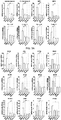
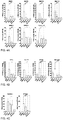
Figure 3 . Quantitative analysis of the transcripts identified as involved in cell proliferation from RNA-Seq data. A. Genes involved in cell cycle regulation. B. Genes involved in DNA replication. DNA2,DNA replication helicase 2; LIG1,DNA ligase 1; FPKM, Fragments Per Kilobase of exon model per Million mapped reads; MCM, minichromosome maintenance complex; ORC1, originrecognition complex subunit 1, POLA1, DNA polymerase,alpha 1; PRIM2, DNA primase large subunit. Differences with p values of < 0.05 between the 4-NQO and the 4N+B, 4N+C, 4N+B+C groups were considered statistically significant (UNT, n=5; 4-NQO, n=3; 4N+B, n=4; 4N+C, n=4; 4N+B+C, n=5; *, p<0.05; **, p<0.01; ***, p<0.001). UNT, untreated; 4-NQO, 4-NQO treatment; 4N+B, 4-NQO+bexarotene; 4N+C, 4-NQO+CD1530; 4N+B+C,4-NQO+bexarotene+CD1530. -
Figure 4 . Quantitative analysis of some transcripts identified from RNA-Seq as involved in extracellular matrix (ECM) breakdown and cell migration, HIF1α signaling, and oral cancer. A. Genes involved in the ECM breakdown and cell migration. B. Genes involved in HIF1α signaling pathway members. C. Genes involved in human oral cancer markers. FPKM, Fragments Per Kilobase of exon model per Million mapped reads; HIF1α, hypoxia-inducible factor 1α; HMMR, hyaluronan-mediated motility receptor; GLUT1,glucose transporter 1; MCT4,monocarboxylate transporter 4; MMP, matrix metalloproteinase; Ndufa412, NADH dehydrogenase (ubiquinone) 1 alpha subcomplex, 4-like 2; PTGS2, prostaglandin-endoperoxide synthase 2; TNC, tenascin. Differences with p values of < 0.05 between the 4-NQO and the 4N+B, 4N+C, 4N+B+C groups were considered statistically significant (UNT, n=5; 4-NQO, n=3; 4N+B, n=4; 4N+C, n=4; 4N+B+C, n=5; *, p<0.05; **, p<0.01; ***, p<0.001). UNT, untreated; 4-NQO, 4-NQO treatment; 4N+B, 4-NQO+bexarotene; 4N+C, 4-NQO+CD1530; 4N+B+C,4-NQO+bexarotene+CD1530. -
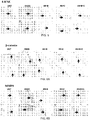
Figure 5 . 4-Hydroxynonenal (4-HNE), an indicator of oxidative stress, in tongue epithelium. The tongues were fixed, embedded in paraffin, and sectioned. Then the tissue sections were stained with an antibody against 4-HNE (magnification, 200×). Four to five representative areas of each tongue section from two mice/group were photographed and analyzed. Two samples/group are shown. UNT, untreated; 4-NQO, 4-NQO treatment; 4N+B, 4-NQO+bexarotene; 4N+C, 4-NQO+CD1530; 4N+B+C, 4-NQO+bexarotene+CD1530. T, tumor. Darker brown indicates more 4-HNE adducts. T, tumor. -
Figure 6 . β-catenin and MMP9 proteins in tongue epithelium. The tongues were fixed, embedded in paraffin, and sectioned. Then the tissue sections were stained with various antibodies (magnification, 200×). Four to five representative areas of each tongue section from two to four mice/group were photographed and analyzed. A. β-catenin. B. MMP9. Two samples/group are shown. UNT, untreated; 4-NQO, 4-NQO treatment; 4N+B, 4-NQO+bexarotene; 4N+C, 4-NQO+CD1530; 4N+B+C, 4-NQO+bexarotene+CD1530. T, tumor. -
Figure 7 . CD1530 is stable in the drinking water for at least 7 days at room temperature. CD1530 was first dissolved in 100% DMSO and subsequently diluted in the drinking water (the final concentration of DMSO was 0.8%). The same amounts of the freshly prepared CD1530 containing drinking water and the CD1530 containing water prepared 7 days earlier and stored at the room temperature were subjected to high-performance liquid chromatography (HPLC) analysis. -
Figure 8 . Global view of alterations in transcript levels by RNA-Seq. ThemRNA samples extracted from tongues were subjected to RNA-Seq analysis. A. Total numbers of genes with statistically significant increases or decreases (p<0.05) between any two groups: a, compared to the untreated group, the number of genes changed in the 4-NQO group; b, compared to the 4-NQO group, the number of genes changed in the 4N+B group; c, compared to the 4-NQO group, the number of genes changed in the 4N+C group; d, compared to the 4-NQO group, the number of genes changed in the 4N+B+C group. B. Heat map analyses among all groups of the 3379 genes whose transcript levels statistically differed between the UNT group and the 4-NQO group. UNT, untreated group; 4-NQO, 4-NQO induced tumor group; 4N+B, 4-NQO+bexarotene group; 4N+C, 4-NQO+CD1530 group; 4N+B+C, 4-NQO+bexarotene+CD1530 group. Red, increased transcript levels; green, decreased transcript levels. Color key is defined as (X-mean)/standard deviation, X: a transcript level in a group, mean and standard deviation were the mean and standard deviation of these 5 groups. -
Figure 9 . Gene Ontology (GO) analyses of the genes that show differences (p<0.05) between different groups. White bars indicate categories with increases and black bars show categories with decreases. A. The 4-NQO group compared to the UNT group. B. The 4N+B group compared to the 4-NQO group. C. The 4N+C group compared to the 4-NQO group. D. The 4N+B+C group compared to the 4-NQO group. UNT, untreated; 4-NQO, 4-NQO treatment; 4N+B, 4-NQO+bexarotene; 4N+C, 4-NQO+CD1530; 4N+B+C, 4-NQO+bexarotene+CD1530. -
Figure 10 . Quantitative analysis of Cyp26a1 transcripts from the RNA-Seq results (UNT, n=5; 4-NQO, n=3; 4N+B, n=4; 4N+C, n=4; 4N+B+C, n=5; *, p<0.05; **, p<0.01; ***, p<0.001). UNT, untreated; 4-NQO, 4-NQO treatment; 4N+B, 4-NQO+bexarotene; 4N+C, 4-NQO+CD1530; 4N+B+C, 4-NQO+bexarotene+CD1530. -
Fig. 11 . Real time PCR analysis on the mRNA levels of CDK1 and Cyclin B1 in mouse tongues (UNT, n=5; 4-NQO, n=3; 4N+B, n=4; 4N+C, n=4; 4N+B+C, n=5; *, p<0.05). The RNA samples used for RNA-Seq were used for the real time PCR analysis. A, CDK1; B, Cyclin B1. UNT, untreated; 4-NQO, 4-NQO treatment; 4N+B, 4-NQO+bexarotene; 4N+C, 4-NQO+CD1530; 4N+B+C, 4-NQO+bexarotene+CD1530. -
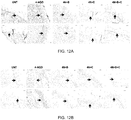
Fig. 12 . IL-6 and MCT4 proteins (arrows) in tongue epithelium. Antibody staining of two samples/groups of tongue sections: A. IL-6. B. MCT4. UNT, untreated; 4-NQO, 4-NQO treatment; 4N+B, 4-NQO+bexarotene; 4N+C, 4-NQO+CD1530; 4N+B+C, 4-NQO+bexarotene+CD1530. - As discussed above, there remains a need to provide alternate treatment and prevention of head and neck cancer using novel pharmaceutical compositions. Accordingly, the present invention relates to pharmaceutically compositions comprising an RXR agonist and/or RAR agonist, and uses thereof in this regard.
- As used herein, the terms "cancer", "tumor" and "cell proliferative disorder" are used interchangeably to refer to a cellular disorder characterized by uncontrolled or disregulated cell proliferation, decreased cellular differentiation, inappropriate ability to invade surrounding tissue, and/or ability to establish new growth at ectopic sites. The terms further encompass primary and metastatic cancers.
- Head and neck cancer is a group of cancers that start in the lip, oral cavity (mouth), nasal cavity (inside the nose), paranasal sinuses, pharynx, and larynx. Oral cavity squamous cell carcinoma (OCSCC), a head and neck cancer, is one of the most common human cancers in the world (Siegel R, Naishadham D, & Jemal A, 2013, CA Cancer J Clin 63(1):11-30.). The two major etiological factors in OCSCC are tobacco and alcohol (Binnie WH, Rankin KV, & Mackenzie IC, 1983, J Oral Pathol 12(1):11-29; Lippman SM, Sudbo J, & Hong WK, 2005, J Clin Oncol 23(2):346-356.). Oral cavity squamous cell carcinoma (SCC) development is a complicated, multi-step process that involves genetic, epigenetic, and metabolic changes (Haddad RI & Shin DM, 2008, N Engl J Med 359(11):1143-1154.). Other types of head and neck cancer include, but are not limited to, nasopharynx cancer (nasopharynx), oropharyngeal cancer, hypopharynx, laryngeal cancer (larynx), trachea and others. Environmental and lifestyle risk factors for head and neck cancer include, but are not limited to, tobacco smoking, cigar smoking, alcohol consumption, UV light, particular chemicals used in certain workplaces, and certain strains of viruses, such as human papillomavirus (HPV) and Epstein-Barr virus (EBV).
- The retinoid X receptor (RXR) are encoded by three distinct human genes, RXRa, RXRβ, and RXRy (Germain et al., (2006) International Union of Pharmacology. LXIII. Retinoid X receptors. Pharmacol. Rev., 58 (4): 760-72). RARs and RXRs belong to two different groups of the nuclear receptor superfamily, suggesting different functions. RXRs are expressed primarily in visceral organs such as the liver and kidney. Activated RXRs form homodimers or heterodimers with retinoic acid receptors, vitamin D receptors, thyroid receptors or peroxisome proliferator-activated receptors. Once activated, these retinoid receptor dimers bind to DNA at retinoic acid response elements and act as transcription factors that regulate the expression of genes which control cellular differentiation and proliferation. Retinoid agonists can activate the expression of retinoid regulated genes by removing negative transcription control or by facilitating positive transcriptional activity.
- There are also three retinoic acid receptors (RAR), RARα, RARβ, and RARψ, encoded by the RARα, RARβ, RARγ genes, respectively. Each receptor isoform has several splice variants: two- for α, four- for β, and two- for y. RAR heterodimerizes with RXR and in the absence of ligand, the RAR/RXR dimer binds to hormone response elements known as retinoic acid response elements (RAREs) in a complex with corepressor protein. Binding of agonist ligands to RAR results in dissociation of corepressor and recruitment of coactivator protein that, in turn, promotes transcription of the downstream target gene into mRNA and eventually protein.
- The term "agonist" according to the present invention refers to an agonist of an RXR (RXRa, RXRβ, and/or RXRy), or RAR (RXRα, RXRβ, and/or RXRγ).
- Known RXR agonists include but are not limited to: bexarotene, AGN194204, LG100268, 9-cis- retinoic acid, methoprene acid, and SR11237.


- Known RARα agonists include but are not limited to: TTNPB, tamibarotene, 9-cis-retinoic acid, all-trans-retinoic acid, AGN193836, Ro 40-6055, CD666, and BMS753.


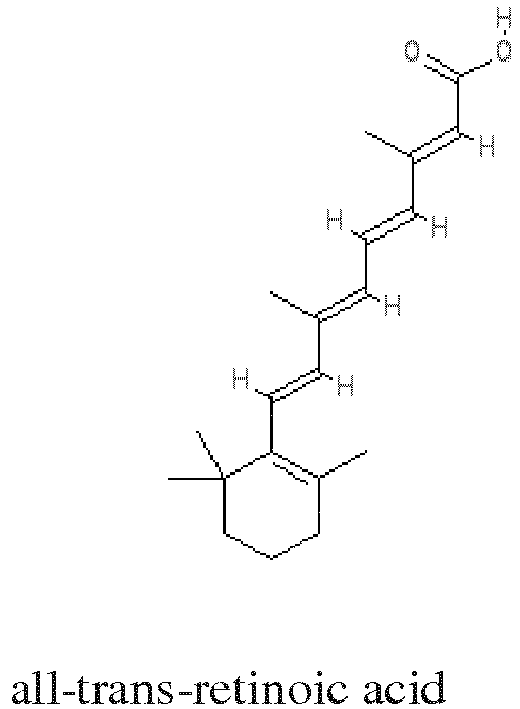


- The term "highly-specific RAR agonist" refers to an RAR agonist that has the highest affinity for agonists of a particular isoform selected from the group consisting of RARα, RARβ, and RARγ. The term also includes other agonists of that particular isoform having a binding affinity similar to the agonist having the highest affinity, e.g., at least 50% or greater, preferably 75% or greater, more preferably 90% or greater of the highest binding affinity.
- The term "highly-specific RXR agonist" refers to an RXR agonist that has the highest affinity for agonists of a particular isoform selected from the group consisting of RXRα, RXRβ, and RXRγ. The term also includes other agonists of that particular isoform having a binding affinity similar to the agonist having the highest affinity, e.g., at least 50% or greater, preferably 75% or greater, more preferably 90% or greater of the highest binding affinity.
- Known RARβ agonists include but are not limited to: AC261066, AC55649, LE135, Tazarotene, Adapalene, CD666, 9-cis-retinoic acid, BMS641 and TTNPB. AC261066 and AC55649 are highly-specific RARβ agonists. The term "highly-specific RARβ agonist" also includes other agonists having aaffinity similar to AC261066 or AC55649, e.g., at least 50% or greater, preferably 75% or greater, more preferably 90% or greater of the RARβ binding affinity of AC261066 or AC55649. The term "highly- specific RARγ agonist" refers to CD1530, and also include other agonists having a binding affinity similar to CD1530, e.g., at least 50% or greater, preferably 75% or greater, more preferably 90% or greater of the RARy binding affinity of CD1530. The term "highly-specific RARα agonist" refers to AM580, and also include other agonists having a binding affinity similar to AM580, e.g., at least 50% or greater, preferably 75% or greater, more preferably 90% or greater of the RARα binding affinity of AM580.

- RARβ agonists include the fluorinated alkoxythiazoles previously described (65), such as:

- 4'-Octyl-[1,1'-biphenyl]-4-carboxylic acid (65), Adapalene (67), BMS-231973, BMS-228987, BMS-276393, BMS-209641 (66), BMS-189453 {4-[(1E)-2-(5,6-Dihydro-5,5-dimethyl-8-phenyl-2-naphthalenyl)ethenyl]-benzoic acid} (68), CD2019 (6-[4-methoxy-3-(1-methylcyclohexyl)phenyl]naphthalene-2-carboxylic acid), compounds described in
WO2008/064136 andWO2007009083 and tazarotene (ethyl 6-[2-(4,4-dimethyl-3,4-dihydro-2H-1-benzothiopyran-6-yl)ethynyl] pyridine-3-carboxylate).
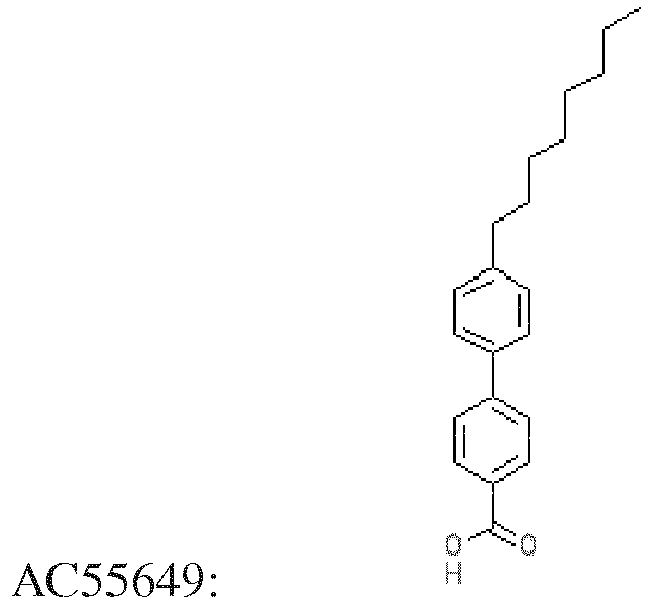


- Known RARγ agonists include but are not limited to: CD1530, TTNPB, BMS270394, all-trans-retinoic acid, 9-cis-retinoic acid, CD666, and AHPN.


- The inventors of the present application induced oral cavity SCCs that mimic human oral tumors in terms of their morphological, histopathological, and molecular characteristics in mice by adding the carcinogen 4-nitroquinoline 1-oxide (4-NQO) to the drinking water (Tang XH, Albert M, Scognamiglio T, & Gudas LJ, 2009, Cancer Prev Res (Phila Pa) 2(12):1100-1110; Tang XH, Knudsen B, Bemis D, Tickoo S, & Gudas LJ, 2004, Clin Cancer Res 10(1 Pt 1):301-313; Vitale-Cross L, et al., 2009, Cancer Prev Res (Phila Pa) 2(5):419-422.). Therefore, this murine 4-NQO model is an excellent one for the evaluation of potential cancer preventive and therapeutic approaches. Bexarotene, a synthetic, pan-retinoid X receptor (RXR) agonist (Boehm MF, et al., 1995, J Med Chem 38(16):3146-3155.), has shown efficacy in the treatment of human T-cell lymphoma and lung cancer, and was well tolerated by patients (Dragnev KH, et al., 2007, Clin Cancer Res 13(6):1794-1800; Dragnev KH, et al., 2011, Cancer Prev Res (Phila) 4(6):818- 828; Gniadecki R, et al., 2007, Br J Dermatol 157(3):433-440.). RARγ has also shown tumor growth suppression in mouse epidermal keratinocytes (Chen CF, Goyette P, & Lohnes D, 2004, Oncogene 23(31):5350-5359.).
- Using the animal model developed, the present inventors have examined RXR agonist (e.g., bexarotene), RAR agonist (e.g., CD1530, a synthetic, specific RARγ agonist, see (Chen CF, Goyette P, & Lohnes D, 2004, Oncogene 23(31):5350-5359.), or the combination of a RXR agonist with a RAR agonist for the treatment and prevention of head and neck cancer, e.g., oral cavity carcinogenesis. The inventors discovered that RXR agonist (e.g., bexarotene) alone or RAR agonist (e.g., CD1530) alone has certain effects. Surprisingly, the inventors discovered that for the prevention of murine oral carcinogenesis the combination of bexarotene and CD1530 is more efficacious than bexarotene alone or CD1530 alone (
Fig. 1 D, E ). The combination of bexarotene and CD1530 is also more effective than either drug alone in preventing the 4-NQO-induced changes in the transcript levels of genes important for tumor development (Fig. 3 and4 ). - The inventors also discovered that bexarotene and/or CD1530, at the dose and the duration used in the present study, did not elevate triglyceride levels (
Fig. 2 ), suggesting that the combination of bexarotene and CD1530 would not cause cardiovascular risks if used at similar doses in cancer prevention treatments for those at risk for oral cancer. - In addition, the inventors discovered that the mRNA levels of several CDKs, cyclins, and proteins involved in DNA replication were lower in the 4N+B group, 4N+C group, and the 4N+B+C group than in the 4-NQO group (
Fig. 3 ). - Similar to the mechanisms of human oral carcinogenesis (Hanafi R, et al., 2012, Curr Mol Med 12(6):698-703.), one of the mechanisms of 4-NQO induced tumorigenesis is the generation of reactive oxygen species (ROS) that leads to the formation of DNA adducts (Kanojia D & Vaidya MM, 2006, Oral Oncol 42(7):655-667; Nunoshiba T & Demple B, 1993, Cancer Res 53(14):3250-3252.). 4-hydroxynonenal (4-HNE), one of the products generated from excessive ROS, modifies cell proteins by forming protein adducts, and thereby changes cellular signaling cascades and gene expression (Ullery JC & Marnett LJ, 2012, Biochim Biophys Acta 1818(10):2424-2435.). The inventors discovered, for the first time, show that both bexarotene, a RXR agonist, and CD1530, a RARy agonist, suppress excessive ROS production in tongue epithelial cells, and suggest that this inhibition of ROS contributes to the inhibition of tongue carcinogenesis (
Fig. 5 ). - The inventors discovered that the RXR and RARy agonists in combination reduce the mRNA levels of several MMPs and the protein level of MMP9, suggesting that targeting RXR and RARy is a useful strategy for the prevention of cancer cell migration and metastasis in other human cancers.
- HIF1α regulates genes involved in tumor initiation, progression, and metastasis (Semenza GL, 2012, Cell 148(3):399-408.), and HIF1α overexpression correlates with a poor prognosis in human head and neck cancer (Eckert AW, et al., 2010, J Oral Pathol Med 39(4):313-317.). The inventors discovered that RARy and RXR agonists inhibit the HIF1α signaling pathway in the context of tongue carcinogenesis (
Fig. 4B ). Although the gene ontology and pathway analyses of RNA-Seq data suggest that the TCA cycle and OX-PHOS pathways are significantly less active during tongue carcinogenesis, no significant increases in transcript levels of the glycolysis pathway genes were detected (Fig. 9 , Table 1). Therefore, glycolysis is not increased in this 4-NQO model of oral carcinogenesis. - As used herein, the term "subject" means an animal, preferably a mammal, and most preferably a human. A subject may be a patient having a disease or disorder as discussed herein.
- As used herein, the term "vitamin A deficiency" refers to a lack of a decreased level of vitamin in serum or an organ (e.g., pancreas, liver, kidney or testes) of an animal, e.g., human.
- As used herein, the terms "decrease" and "reduce" are used interchangeably to refer to a negative change in the level, activity or function of a molecule, cell or organ. It is meant that the particular level, activity or function is lower by about 25%, about 50%, about 75%, about 90%, about 1-fold, about 2-fold, about 5 fold, about 10-fold, about 25-fold, about 50-fold, or about 100 fold, or lower, when compared to a control.
- As used herein, the terms "increase", "improve", "elevate" and "enhance" are used interchangeably to refer to a positive change in the level, activity or function of a molecule, cell or organ. It is meant that the particular level, activity or function is higher by about 25%, about 50%, about 75%, about 90%, about 1- fold, about 2-fold, about 5 fold, about 10-fold, about 25-fold, about 50-fold, or about 100 fold, or higher, when compared to a control.
- The expressions "therapeutically effective" and "therapeutic effect" refer to a benefit including, but not limited to, the treatment or amelioration of symptoms of a proliferative disorder discussed herein. It will be appreciated that the therapeutically effective amount or the amount of agent required to provide a therapeutic effect will vary depending upon the intended application (in vitro or in vivo), or the subject and disease condition being treated (e.g., nature of the severity of the condition to be treated, the particular inhibitor, the route of administration and the age, weight, general health, and response of the individual patient), which can be readily determined by a person of skill in the art. For example, an amount of an agonist is therapeutically effective if it is sufficient to effect the treatment or amelioration of symptoms of a disease discussed herein.
- The term "clinically significant level" is used herein to refer to a level of a side effect such as cardiovascular risk caused by the administration of a pharmaceutical composition (e.g., one comprising an agonist) that a physician treating the subject would consider to be significant.
- The term "about" is used herein to mean approximately, in the region of, roughly, or around. When the term "about" is used in conjunction with a numerical range, it modifies that range by extending the boundaries above and below the numerical values set forth. In general, the term "about" is used herein to modify a numerical value above and below the stated value by a variance of 30%, preferably 20%, more preferably 10%.
- As used herein, the term "comprises" means "includes, but is not limited to."
- As used herein, the term "pharmaceutically acceptable salt" refers to those salts which are, within the scope of sound medical judgment, suitable for use in contact with the tissues of humans and lower animals without undue toxicity, irritation, allergic response and the like, and are commensurate with a reasonable benefit/risk ratio.
- If a pharmaceutically acceptable salt of an agonist is utilized in pharmaceutical compositions, the salt preferably is derived from an inorganic or organic acid or base. For reviews of suitable salts, see, e.g., Berge et al, J. Pharm. Sci. 66: 1-19 (1977); Remington: The Science and Practice of Pharmacy, 20th Ed., ed. A. Gennaro, Lippincott Williams & Wilkins, 2000.
- The term "pharmaceutically acceptable carrier" is used herein to refer to a material that is compatible with a recipient subject, preferably a mammal, more preferably a human, and is suitable for delivering an active agent to the target site without terminating the activity of the agent. The toxicity or adverse effects, if any, associated with the carrier preferably are commensurate with a reasonable risk/benefit ratio for the intended use of the active agent.
- The term "carrier" is used interchangeably herein, and includes any and all solvents, diluents, and other liquid vehicles, dispersion or suspension aids, surface active agents, isotonic agents, thickening or emulsifying agents, preservatives, solid binders, lubricants and the like, as suited to the particular dosage form desired. Remington: The Science and Practice of Pharmacy, 20th Ed., ed. A. Gennaro, Lippincott Williams & Wilkins, 2000 discloses various carriers used in formulating pharmaceutically acceptable compositions and known techniques for the preparation thereof.
- The pharmaceutical compositions of the invention can be manufactured by methods well known in the art such as conventional granulating, mixing, dissolving, encapsulating, lyophilizing, or emulsifying processes, among others. Compositions may be produced in various forms, including granules, precipitates, or particulates, powders, including freeze dried, rotary dried or spray dried powders, amorphous powders, tablets, capsules, syrup, suppositories, injections, emulsions, elixirs, suspensions or solutions. Formulations may optionally contain solvents, diluents, and other liquid vehicles, dispersion or suspension aids, surface active agents, pH modifiers, isotonic agents, thickening or emulsifying agents, stabilizers and preservatives, solid binders, lubricants and the like, as suited to the particular dosage form desired.
- The pharmaceutical composition of the present invention can be administered by any method known to one skilled in the art. For example, it may be administered orally orparenterally.
- The term "parenteral" as used herein includes subcutaneous, intravenous, intramuscular, intra- articular, intra- synovial, intrasternal, intrathecal, intrahepatic, intralesional and intracranial injection or infusion techniques. Preferably, the compositions are administered orally, intravenously, or subcutaneously. The formulations of the invention may be designed to be short-acting, fast-releasing, or long-acting. Still further, compounds can be administered in a local rather than systemic means, such as administration (e.g., by injection) at a tumor site.
- Liquid dosage forms for oral administration include, but are not limited to, pharmaceutically acceptable emulsions, microemulsions, solutions, suspensions, syrups and elixirs. In addition to the active compounds, the liquid dosage forms may contain inert diluents commonly used in the art such as, for example, water or other solvents, solubilizing agents and emulsifiers. Besides inert diluents, the oral compositions can also include adjuvants such as wetting agents, emulsifying and suspending agents, sweetening, flavoring, and perfuming agents.
- Injectable preparations, for example, sterile injectable aqueous or oleaginous suspensions may be formulated according to the known art using suitable dispersing or wetting agents and suspending agents. The sterile injectable preparation may also be a sterile injectable solution, suspension or emulsion in a nontoxic parenterally acceptable diluent or solvent, for example, as a solution in 1,3-butanediol. Among the acceptable vehicles and solvents that may be employed are water, Ringer's solution, U.S.P. and isotonic sodium chloride solution. In addition, sterile, fixed oils are conventionally employed as a solvent or suspending medium. For this purpose any bland fixed oil can be employed including synthetic mono- or diglycerides. In addition, fatty acids such as oleic acid are used in the preparation of injectables.
- Solid dosage forms for oral administration include capsules, tablets, pills, powders, and granules. In such solid dosage forms, the active compound is mixed with at least one inert, pharmaceutically acceptable excipient or carrier such as sodium citrate or dicalcium phosphate and/or a) fillers or extenders such as starches, lactose, sucrose, glucose, mannitol, and silicic acid, b) binders such as, for example, carboxymethylcellulose, alginates, gelatin, polyvinylpyrrolidinone, sucrose, and acacia, c) humectants such as glycerol, d) disintegrating agents such as agar, calcium carbonate, potato or tapioca starch, alginic acid, certain silicates, and sodium carbonate, e) solution retarding agents such as paraffin, f) absorption accelerators such as quaternary ammonium compounds, g) wetting agents such as, for example, cetyl alcohol and glycerol monostearate, h) absorbents such as kaolin and bentonite clay, and i) lubricants such as talc, calcium stearate, magnesium stearate, solid polyethylene glycols, sodium lauryl sulfate, and mixtures thereof. In the case of capsules, tablets and pills, the dosage form may also comprise buffering agents such as phosphates or carbonates.
- Solid compositions of a similar type may also be employed as fillers in soft and hard-filled gelatin capsules using such excipients as lactose or milk sugar as well as high molecular weight polyethylene glycols and the like. The solid dosage forms of tablets, dragees, capsules, pills, and granules can be prepared with coatings and shells such as enteric coatings and other coatings well known in the pharmaceutical formulating art.
- A composition that comprises the combination of a RXR agonist and a RAR agonist of the present invention, and further with one or more other therapeutic agents can be used, for example, to: 1) enhance the therapeutic effect(s) of the methods of the present invention and/or the one or more other therapeutic agents; 2) reduce the side effects exhibited by the methods of the present invention and/or the one or more other therapeutic agents; and/or 3) reduce the effective dose of an agonist of the present invention and/or the one or more other therapeutic agents.
- The amount or suitable dosage of an agonist or a combination of agonists depends upon a number of factors, including the nature of the severity of the condition to be treated, the route of administration and the age, weight, general health, and response of the individual subject. In certain embodiments, the suitable dose level is one that achieves this therapeutic response and also minimizes any side effects associated with the administration. For example, an agonist (either alone or in combination with another agonist) may be administered at an amount from about 30 mg to about 500 mg per day, e.g., about 50 mg to about 500 mg per day, about 100 to about 500 mg per day, about 200 mg to about 500 mg per day, about 100 mg to about 400 mg per day, about 100 mg to about 300 mg per day, about 100 mg to 200 mg per day.
- The agonist, alone or in combination with another agonist, may be administered in single or divided or multiple doses. It will be understood that a suitable dosage of an agonist may be taken at any time of the day or night, with food or without food. In some embodiments, the treatment period during which an agent is administered is then followed by a non-treatment period of a particular time duration, during which the therapeutic agents are not administered to the patient. This non-treatment period can then be followed by a series of subsequent treatment and non-treatment periods of the same or different frequencies for the same or different lengths of time.
- In the following description, reference is made to the accompanying drawings that form a part hereof, and in which is shown by way of illustration specific embodiments which may be practiced. These embodiments are described in detail to enable those skilled in the art to practice the invention, and it is to be understood that other embodiments may be utilized and that logical changes may be made without departing from the scope of the present invention. The following description of example embodiments is, therefore, not to be taken in a limited sense, and the scope of the present invention is defined by the claims.
- The present description is further illustrated by the following examples, which should not be construed as limiting in any way. The contents of all cited references (including literature references, issued patents, published patent applications as cited throughout this application) are hereby expressly incorporated by reference.
- Tumor development in the mouse oral cavity and drug treatments. Six week old wild type C57BL/6 female mice (15 mice/group) were treated with vehicle as a negative control or 100 µg/ml 4- nitroquinoline-1-oxide (4-NQO) for 10 weeks, as previously described (Tang XH, Albert M, Scognamiglio T, & Gudas LJ, (2009), Cancer Prev Res (Phila Pa) 2(12):1100-1110; Tang XH, Knudsen B, Bemis D, Tickoo S, & Gudas LJ, 2004, Clin Cancer Res 10(1 Pt 1):301-313.). Two weeks after termination of the carcinogen treatment mice received various drug treatments at doses based on previous studies (Shimono K, et al., 2011, Nat Med 17(4):454-460; Janakiram NB, et al., 2012, Neoplasia 14(2):159-168.): bexarotene at 300 mg/kg in the diet, CD1530 at 2.5 mg/100 ml in drinking water, and the combination of both drugs. The care and use of animals in this study were approved by the Institutional Animal Care and Use Committee (IACUC) of Weill Cornell Medical College.
- Tissue dissection, lesion grade measurement, and pathological diagnosis. The tongues of mice were dissected immediately after cervical dislocation. Gross lesions were identified, photographed, counted, and graded (supporting information). The histological diagnosis of squamous neoplasia was performed by a Board-certified pathologist (TS) on paraffin embedded, hematoxylin and eosin (H&E) stained tissue samples in a blinded manner.
- RNA-Seq analysis of the mRNA transcriptome. One part of each mouse tongue (same position on each mouse tongue) was snap frozen in liquid N2 and stored at -70°C until total RNA extraction. Total tissue RNA was extracted and subjected to Next-Generation Sequencing (RNA-Seq) at the Genomics Resources Core Facility, Weill Cornell Medical College. Bioinfomatics analyses were performed using the Tophat and Cufflink software. (supporting information).
- Immunohistochemistry. Paraffin embedded tongue sections were stained with various antibodies (supporting information).
- Statistical analyses. We performed statistical analyses by one-way analysis of variance and subsequently the Bonferroni test or the Tukey test for multiple comparisons. Differences with ap< 0.05 (two-tailed test) were considered statistically significant.
- Tissue dissection, lesion grade measurement, and pathological diagnosis. The tongues of mice were dissected immediately after cervical dislocation. Gross lesions were identified and photographed, and visible cancerous lesions on the tongues were counted for the examination and multiplicity (i.e., the number of lesions per mouse) with a 8x magnification. The severity of gross lesions on the tongues was quantified by a grading system that included 0 (no lesion), 1 (mild lesion), 2 (intermediate lesion), 3 (severe lesion), and 4 (most severe lesion), respectively, and the average grades from different treatment groups were used for the analyses of the tongue lesions. Mouse tongues were cut longitudinally. One part tissue was fixed in freshly made 4% paraformaldehyde overnight at 4°C, embedded in paraffin, and sectioned into 7-µm sections. One part of each tongue tissue was immediately snap frozen and stored at -70°C before RNA extraction. The histological diagnosis of squamous neoplasia was performed by a pathologist (T.S.) on the hematoxylin and eosin (H&E) stained, sectioned tissue samples. The lesions observed were classified into three types: epithelial hyperplasia dysplasia (mild, moderate, and severe) and squamous cell carcinoma (SCC), as described previously (Tang XH, Albert M, Scognamiglio T, & Gudas LJ, 2009, Cancer Prev Res (Phila Pa) 2(12):1100-1110; Tang XH, Su D, Albert M, Scognamiglio T, & Gudas LJ, 2009, Cancer Biol Ther 8(13):1214-1225.).
- Mouse serum triglyceride level measurements. Blood samples from the mice were obtained from mouse tails. The analysis of serum triglyceride levels was carried out at the Laboratory of Comparative Pathology of the Memorial Sloan-Kettering Cancer Center. UNT (n=4); 4-NQO (n=3); 4N+B (n=4); 4N+C (n=3), and 4N+B+C (n=4). UNT, untreated; 4-NQO, 4-NQO treatment; 4N+B, 4-NQO+bexarotene; 4N+C, 4-NQO+CD1530; 4N+B+C, 4-NQO+bexarotene+CD1530.
- RNA-Seq analysis of mRNA transcriptome. Representative tongue samples were chosen for the RNA-Seq analysis: untreated (n=5), 4-NQO treatment group (n=3), 4N +B (n=4), 4N+C (n=4), and 4N+B+C (n=5). The extraction of total cellular RNA from mouse tissues was carried out using the RNeasy kit (Qiagen). Subsequent RNA preparation steps were carried out at the Genomics Resources Core Facility of WCMC. The measurement of RNA integrity was determined using the Agilent 2100 BioAnalyzer (Agilent Technologies). Samples with RNA integrity number (RIN) values of 10 were used to construct cDNA libraries. mRNA was purified by using pre-prepared Sera-mag Magnetic Oligo(dT) Beads from Illumina Inc. (SanDiego, CA), subjected to thermal fragmentation, and reverse transcribed to first strand cDNA. Following the removal of mRNA strands by RNaseH, first strand cDNAs were used as templates to produce double strand cDNAs, and the overhangs resulting from fragmentation were repaired to blunt ends. An 'A' base was added to the 3' end of cDNAs and subsequently the cDNAs were ligated to Illumina paired end (PE) adaptors that have a single 'T' base overhang at their 3' end. The cDNA-adaptor libraries were purified and enriched by 15 cycles of PCR. The enriched libraries were hybridized to a flow cell and amplified, resulting in ultra-high density flow cells with millions of clusters, each containing about 1,000 copies of the templates. The double stranded cDNA-adaptors were denatured and converted into single strand DNA, and then the template cDNAs were amplified one more time isothermally to produce surface-bound colonies. The clonal DNA clusters were linearized, free 3' OH ends blocked, denatured, hybridized to sequencing primers, and sequenced. The sequencing was conducted by running 4 samples per lane with 51 pair-end cycles on the HISeq2000/1000. The Sequencing-by-Synthesis process used reversible terminators and a DNA polymerase modified to accept reversible terminator nucleotides. After each synthesis cycle the fluorescence of clusters was imaged with high sensitivity. Then the sequencing images were analyzed in three steps, image analysis, base calling, and sequence analysis. The Tophat software was used to align raw sequencing reads against the UCSC mm9 mouse reference genome, and Cufflinks software was employed to measure transcript abundances in the unit of fragments per kilobase of exon model per million mapped reads (FPKM), as well as to perform statistical analysis on the changes in gene expression. The heat maps for genes of interest were generated by R package software. The GEO Accession number is GSE54246; embargoed until publication.
- Immunohistochemistry. Paraffin-embedded sections (from two to four mice per group) were deparaffinized and rehydrated, and antigen retrieval was performed using an antigen unmasking solution (Vector Laboratories, H-3300). After quenching endogenous peroxidase with 3% H2O2, the tissue sections were blocked with the blocking reagent (from the M.O.M. kit from Vector Laboratories for 4-HNE) or 10% goat serum (Vector Laboratories). Then, tissue sections were incubated with a 4-HNE antibody (1:700; mouse monoclonal antibody; Abcam, ab48506), a β-catenin antibody (1:400; rabbit polyclonal antibody; Abcam, ab6302), or a MMP9 antibody (1:70; rabbit polyclonal antibody; Abcam, ab38898), respectively, overnight at 4 °C. The sections were then incubated with secondary antibodies (1:200, anti-mouse IgG from the M.O.M kit for 4-HNE; ready-to-use anti-rabbit IgG from the Invitrogen SuperPicture kit for β-catenin and MMP9). As a negative control, sections were stained without incubation with primary antibodies. The signals were visualized based on a peroxidase detection mechanism with 3,3-diaminobenzidine (DAB) used as the substrate. Four to five representative areas of each mouse tongue section from two to four mice per group were photographed and analyzed.
- Real time PCR. Total RNA from mouse tongues was extracted and reverse transcribed to cDNA as described previously (Tang XH, Albert M, Scognamiglio T, & Gudas LJ, 2009, Cancer Prev Res (Phila Pa) 2(12):1100-1110.). Real-time PCR was performed on a MyiQ real-time PCR detection system (Bio-Rad Laboratories) with a SYBR Green Supermix (Quanta). The conditions for the PCR were as follows: 95°C for 3 min to activate the DNA polymerase, followed by 45 cycles at 94°C for 30 s, primer annealing at 58°C for 30 s, and product extension at 72°C for 30 s. After each cycle, fluorescence was read at 84°C. 36B4 was used as a control (Tang XH, Albert M, Scognamiglio T, & Gudas LJ, 2009, Cancer Prev Res (Phila Pa) 2(12):1100-1110.). The primer sequences were as follows: mouse CDK1, 5'-CCGTCGTAACCTGTTGAGTAACTAT-3' (forward) (SEQ ID NO.: 1) and 5'-GTCTACCCTTATACACCACACCGTAA-3' (reverse) (SEQ ID NO.: 2); mouse Cyclin B1, 5'-ACTTCCTCCGTAGAGCATC-3'(forward) (SEQ ID NO.: 3) and 5'-GCAGAGTTGGTGTCCATTC-3' (reverse) (SEQ ID NO.: 4); mouse 36B4, 5'-AGAACAACCCAGCTCTGGAGAAA-3' (forward) (SEQ ID NO.: 5) and 5'-ACACCCTCCAGAAAGCGAGAGT-3' (reverse) (SEQ ID NO.: 6). We used the University of California, Santa Cruz In-Silico PCR program 3 to ensure that the PCR primers were not homologous to pseudogene sequences. Primers were designed around the introns.
- Drug treatments reduce tongue tumor development. All of the mice tolerated the 10 week 4-NQO treatment, and almost all of the mice survived the 15 week post 4-NQO treatment period (A). We determined that the CD1530 in the regular drinking water was stable for at least 7 days at room temperature by HPLC analysis (
Fig. 7 ); thus, we decided to use drinking water as a delivery method because this method is effective and less laborious. During the 15 week post 4-NQO treatment, consumption of regular drinking water and the water that contained CD1530 by the 4-NQO treated mice was comparable, and the consumption of regular diet and bexarotene containing diet by 4-NQO treated mice was also comparable. - No visible lesions (grade 0) developed in the untreated (UNT) mouse tongues (
Fig. 1A ). However, we observed obvious multifocal, precancerous, and cancerous lesions during the 15 week post-4-NQO treatment period in all 4-NQO treated mice (1B). Pathological analyses show that after 4-NQO treatment mice developed cancerous lesions, ranging from hyperplasia to malignant squamous cell carcinomas (Fig. 1C ), consistent with our previous findings (Tang XH, Albert M, Scognamiglio T, & Gudas LJ, (2009), Cancer Prev Res (Phila Pa) 2(12):1100-1110; Tang XH, Knudsen B, Bemis D, Tickoo S, & Gudas LJ, 2004, Clin Cancer Res 10(1 Pt 1):301-313; Tang XH, Su D, Albert M, Scognamiglio T, & Gudas LJ, 2009, Cancer Biol Ther 8(13):1214-1225.). The examination of gross tongue lesion multiplicity revealed that compared to an average of 5.9±3.2 tongue lesions observed in the 4-NQO (4-NQO) group, the 4-NQO+bexarotene (4N+B) group developed 5.3±1.4 (p>0.05) tongue lesions, the 4-NQO+CD1530 (4N+C) group developed significantly fewer (3.9±1.7, p<0.05) tongue lesions, and the 4-NQO+bexarotene+CD1530 (4N+B+C) group developed only 2.7±1.2 (p<0.001) tongue lesions, a significantly lower number (Fig. ID). - In addition, in the 4-NQO group the severities of all tongue lesions were at or greater than
grade 2 and the average severity was 2.8±0.8. The 4N+B group showed an average severity of 1.9±1.2 (p<0.05), with 50% of the lesions atgrade 1. The 4N+C group showed an average severity of 1.6±0.8 (p<0.01). In the 4N+B+C group no lesion severity grade was greater than 2, 70% of the lesions were atgrade 1, and the average lesion severity was 1.3±0.5 (p<0.001) (Fig. 1E ). - Bexarotene and CD1530 do not elevate serum triglyceride levels. We also examined the effects of this drug combination on the triglyceride levels in serum samples, because elevated triglyceride levels are associated with cardiovascular risks, which could be a major side-effect in terms of a long term cancer prevention approach. Compared to the UNT group, treatment for 15 weeks with CD1530 alone, bexarotene alone, and the CD1530 plus bexarotene combination did not change serum triglyceride levels significantly (
Fig. 2 ), suggesting that these treatments do not elevate serum triglyceride levels. - Drug treatments attenuate 4-NQO induced gene expression changes. We next performed RNA- Seq using tongue samples that contained large tumors in the 4-NQO group compared to tongue samples from untreated mice to assess global changes in mRNA expression profiles. We found that the mRNA levels of a total of 3379 genes were significantly over-expressed or under-expressed in the 4-NQO induced tongue tumors vs untreated tongues, including increases in 1377 and decreases in 2002 genes (
Fig. 8Aa ). Compared to the 4-NQO group, the transcript levels of 1050 genes were significantly different in the 4N+B group (436 with increased and 614 with decreased levels) (Fig. 8Ab ); 1518 transcripts were significantly differentially expressed in the 4N+C group (987 genes with greater and 531 genes with lower mRNA levels) (Fig. 8Ac ); and 671 transcripts showed higher levels and 763 transcripts showed lower levels in the 4N+B+C group (Fig. 8Ad ). Heatmap analysis of the total of 3379 transcripts that differed between the UNT group and the 4-NQO group revealed that to some extent all drug treatments mitigated the effects of 4-NQO on the transcript levels of the majority of these genes (Fig. 8B ). - Gene ontology (GO) analysis. Gene ontology (GO) analysis (p-value cutoff: 0.00001), using the ConsensusPathDB online tool, was conducted on the
Gene Ontology level 3 of the "Biological Process" domain that has predefined, functional sets for enrichment analysis with default parameter settings. GO analysis revealed that among the top categories with obvious over-representation in the 4-NQO induced tongue tumors vs. untreated tongues were "cell cycle phase " and "cellular component organization at cellular level" (including increases in ECM component degradation enzymes) (Fig. 9A , white bars). Under-expressed GO categories in the 4-NQO induced tongue tumors vs. untreated tongues included "energy derivation by oxidation of organic compounds", "generation of precursor metabolites and energy", and "electron transport chain" (Fig. 9A , black bars), indicating that the transcript levels of the genes in the tricarboxylic acid cycle (TCA) cycle and oxidative phosphorylation (OX-PHOS) pathway were decreased in tongue tumors from the 4-NQO treated group compared to tongues from untreated mice. - The comparisons between the 4-NQO group and all 4-NQO plus drug treatment groups (4N+B, 4N+C, and 4N+B+C) demonstrated that the GO categories related to cell cycle, DNA replication, and mitosis were statistically the most under-expressed in the three 4-NQO plus drug treatment groups (
Fig. 9B-D , black bars). The 4N+C group showed over-representation of many GO categories, with some of them involved in lipid metabolism (Fig. 9C , white bars). - Pathway analysis. Furthermore, pathway enrichment analysis using the ConsensusPathDB online tool (p<0.00001) on the 3379 transcripts with altered levels in the 4-NQO induced tongue tumors was carried out. Similar to the GO analysis, the results suggest that changes in gene expression in the 4-NQO induced tumors compared to the UNT group are broad and reflect the characteristics of these tumor cells, such as enhanced cell proliferation and mobility and abnormal metabolism (Table 1). In addition to the cell cycle related pathways that were down-regulated in the three 4-NQO plus drug treatment groups compared to the 4-NQO group (Table 2-4), the cytochrome P450 enzymes were significantly elevated only in the 4N+C group (Table 3).
- Comparison of mRNA levels of individual genes that play important roles in the pathways described above. As described above, the 4-NQO treatment affected some GO categories and pathways. We then compared the mRNA levels of some individual genes that are important in the GO categories and pathways described above and whose mRNA levels were significantly different between the UNT group and the 4-NQO group. First, we analyzed the transcript levels of Cyp26a1, one member of the cytochrome P450 enzyme family and a direct target of RARy (Gillespie RF & Gudas LJ, 2007, J Biol Chem 282(46):33421-33434.). We found that the Cyp26a1 mRNA level was about 20-fold greater in the 4N+C group than in other groups (
Fig. 10 ), indicating that the CD1530 administered to mice specifically transcriptionally activated RARy target genes. - One of the characteristics of tumor development is cell cycle progression, the transition from the G1 phase to the S, G2, and M phases of the cell cycle (Sherr CJ, 2004, Cell 116:235-246.). With respect to the transcript levels of genes involved in cell cycle progression, only aurora kinase A and B,
CDK Fig. 3A ). These data correlate with our data on tumor multiplicity and severity. - Compared to the UNT samples, transcripts involved in DNA replication were also significantly increased in the 4-NQO group, including minichromosome maintenance (MCM) complex members 2-7 and 10 that unwind the double stranded DNA at the origins, recruit DNA polymerases, and initiate DNA synthesis (Maiorano D, Lutzmann M, & Méchali M, 2006, Curr Opin Cell Biol 18(2):130-136.); DNA replication helicase 2 (DNA2), a key enzyme involved in DNA replication and DNA repair in both the nucleus and mitochondria; DNA ligase 1 (LIG1); origin recognition complex, subunit 1 (ORC1); DNA polymerase, alpha 1 (POLA1), the catalytic subunit of DNA polymerase; and DNA primase large subunit (PRIM2). The 4N+B, 4N+C, and 4N+B+C groups showed significantly lower transcript levels of the majority of these genes as compared to the 4-NQO group, especially the 4N+B+C group, in which the mRNA levels of all of these genes were greatly reduced (
Fig. 3B ). - Matrix metalloproteinases (MMP) contribute to extracellular matrix (ECM) breakdown and cancer cell migration (Munshi HG & Stack MS, 2006, Cancer Metastasis Rev 25(1):45-56.), and tenascin C (TNC) is involved in cell migration (Orend G & Chiquet-Ehrismann R, 2006, Cancer Lett 244(2):143-163.). We found that the transcript levels of
MMPs Fig. 4A ). - Hypoxia-inducible factor 1α (HIF1α) is involved in the switch from tricarboxylic acid (TCA) cycle and oxidative phosphorylation (OX-PHOS) pathways to glycolysis (Aragonés J, Fraisl P, Baes M, & Carmeliet P, 2009, Cell Metab 9(1):11-22.). Because we observed significantly decreased mRNA levels of many genes of the TCA cycle and oxidative phosphorylation, we ascertained the transcript levels of HIF1α and several HIF1a targets that participate in the modulation of glycolysis and oxidative phosphorylation, such as glucose transporter 1 (GLUT1) (Brahimi-Horn MC, Bellot G, & Pouysségur J, 2011, Curr Opin Genet Dev 21(1):67-72.), monocarboxylate transporter 4 (Slc16a3, MCT4) (31), and NADH dehydrogenase (ubiquinone) 1 alpha subcomplex, 4-like (Ndufa412) that inhibits oxidative phosphorylation (Tello D, et al., 2011, Cell Metab 14(6):768-779.). Transcripts of HIF1a and its targets, described above, were significantly increased in the 4-NQO group compared to the UNT group, and the mRNA levels of these genes in the
4N+B+C group were significantly lower than in the 4-NQO group (Fig. 4B ). In addition, low MCT4 protein was detected in the basal layer of tongue epithelium in the UNT samples (Fig. 12B , arrows), and the 4-NQO treatment resulted in both an increase in the MCT4 protein level and an expansion of MCT4 staining to the suprabasal layers of the tongue epithelium (Fig. 12B ). Compared to the 4-NQO group, all 4-NQO plus drug treatment groups (4N+B, 4N+C, and 4N+B+C) showed lower MCT4 protein levels in the tongue epithelium (Fig. 12B ). Moreover, the transcript levels of oral cancer markers, such as keratin 1 (Tang XH, Knudsen B, Bemis D, Tickoo S, & Gudas LJ, 2004, Clin Cancer Res 10(1 Pt 1):301-313.) and prostaglandin- endoperoxide synthase 2 (PTGS2), also known as cyclooxygenase-2 (COX-2) (Khan Z, et al., 2011, Curr Drug Targets 12(7):1082-1093.), were significantly lower in the 4N+B+C group than the 4-NQO group (Fig. 4C ). - Additionally, we performed quantitative real time PCR on some of the genes described above to validate the RNA-Seq data (Fig. S5). Collectively, the RNA-Seq data analyses correlate with the tongue tumor multiplicity and severity data (Fig. ID, E), suggesting that the drug treatments, especially the combination of bexarotene and CD1530, may suppress/reduce tongue carcinogenesis via reduction of transcript levels of genes involved in cell cycle progression and cell migration.
- Oxidative stress level, as assessed by 4-hydroxynoneal (4-HNE), is lower in the tongues from the 4-NQO and subsequent drug treatment groups. Excessive reactive oxygen species (ROS) accumulation, caused by carcinogen exposure, may play a role in human oral carcinogenesis because ROS causes oxidative modifications of cellular macromolecules such as DNA, proteins, and lipids (33). Therefore, we next examined the levels of 4-hydroxynonenal (4-HNE), an α,β-unsaturated hydroxyalkenal that is produced by lipid peroxidation in cells during oxidative stress, and is a marker of oxidative stress caused by reactive oxygen species (ROS) (Ullery JC & Marnett LJ, 2012, Biochim Biophys Acta 1818(10):2424-2435.). The 4-NQO samples showed a large increase in the 4-HNE levels in the precancerous tongue epithelium (top panel) and cancerous lesions (bottom panel) compared to the UNT samples (
Fig. 5 ). It is important to note that these 4-NQO samples were assessed for 4-HNE levels 17 weeks after the cessation of the 4-NQO administration, indicating that a higher ROS level is a lasting feature of carcinogen treatment. Moreover, the tongue samples from the 4N+B, 4N+C, and 4N+B+C groups exhibited lower 4-HNE levels than those from the 4-NQO group (Fig. 5 ), indicating that the treatments with bexarotene, CD1530, and bexarotene plus CD1530 resulted in lower oxidative stress. The lower oxidative stress, as assessed by lower 4-HNE levels (Fig. 5 ), may be one of the mechanisms through which the retinoid drug treatments reduced oral carcinogenesis, though further testing is required. - β-catenin levels are lower in the tongues from the 4-NQO and subsequent drug treatment groups compared to the 4-NQO group. Oxidative stress can activate the β-catenin/Wnt signaling pathway (Reuter S, Gupta SC, Chaturvedi MM, & Aggarwal BB, 2010, Free Radic Biol Med 49(11):1603-1616.). and the increase in β-catenin protein level can lead to increased cell proliferation in human head and neck cancer cells (Song J, Chang I, Chen Z, Kang M, & Wang CY, 2010, PLoS One 5(7):e11456.). Increased β-catenin levels have been observed during human oral squamous cell carcinoma development (Pannone G, et al., 2010, Oncol Rep 24(4):1035-1041.). We detected β-catenin protein primarily in the basal layer oftongue epithelium in the UNT samples (
Fig. 6A , arrows), and 4-NQO treatment resulted in both an increase in the β-catenin level and an expansion of β-catenin staining to the suprabasal layers of the tongue epithelium (top panel) and tumors (bottom panel) (Fig. 6A ), consistent with our previous findings (Osei- Sarfo K, Tang XH, Urvalek AM, Scognamiglio T, & Gudas LJ, 2013, Carcinogenesis 34(11):2673-2681.). Compared to the 4-NQO group, all 4-NQO plus drug treatment groups (4N+B, 4N+C, and 4N+B+C) showed lower β-catenin protein levels in the tongue epithelium, primarily limited to the basal layer, even in the regions of tumor (bottom panel) (Fig. 6A ). - All drug treatments result in lower MMP9 protein levels. High matrix metalloproteinase 9 (MMP9) protein levels have been observed in human oral cancers, and MMP9 is a marker of malignant human oral cancer (Fan HX, Li HX, Chen D, Gao ZX, & Zheng JH, 2012, J Exp Clin Cancer Res 31:90; Patel BP, Shah SV, Shukla SN, Shah PM, & Patel PS, 2007, Head Neck 29(6):564-572.). We discovered that the MMP9 protein levels were low in untreated tongue epithelium, and that 4-NQO treatment resulted in an increase in MMP9 protein levels in tongue epithelium and tongue tumors (bottom panel) (
Fig. 6B ). All 4-NQO plus drug treatment groups showed lower MMP9 protein levels in tongue epithelia compared to the 4-NQO group (Fig. 6B ). Combined with the RNA-Seq data on the pathways of ECM breakdown and cell migration (Fig. 4A ), our data indicate that the retinoid drug treatments limited the breakdown of ECM and potentially reduced cell migration and metastasis. - The tongues were fixed, embedded in paraffin, and sectioned. Then the tissue sections were stained with various antibodies (magnification, 200x). Four to five representative areas of each tongue section from two to four mice/group were photographed and analyzed (
Fig. 12A and 12B ). Interleukin-6 (IL-6) is a multifunctional cytokine that is involved in the regulation of immune responses and cellular functions. IL-6 levels are enhanced in human oral squamous cell carcinoma and IL-6 is considered a bad prognostic factor in this cancer (Expert Opin Ther Targets. 2013 Jan;17(1):53-9). IL-6 protein was detected primarily in the basal layer of tongue epithelium in the UNT samples (Fig. 12A , arrows), but in the 4-NQO treated samples we observed both an increase in the protein level and an expansion of IL-6 signal to the suprabasal layers of the tongue epithelium (Fig. 12A ). Compared to the 4-NQO group, all 4-NQO plus drug treatment groups (4N+B, 4N+C, and 4N+B+C) showed lower IL-6 protein levels in the tongue epithelium (Fig. 12A ). - Unless defined otherwise, all technical and scientific terms used herein have the same meanings as commonly understood by one of ordinary skill in the art to which this invention belongs. Although any methods and materials similar or equivalent to those described herein can be used in the practice or testing of the present invention, the preferred methods, devices and materials are herein described. All publications mentioned herein are hereby incorporated by reference in their entirety for the purpose of describing and disclosing the materials and methodologies that are reported in the publication which might be used in connection with the invention.
Table 1 Pathways significantly differed in the 4-NQO group vs. the Control group Down-regulated in 4-NQO group vs. Control group pathway name set size candidates contained p-value q-value pathway source Metabolism 1039 173 (17.8%) 1.01E-19 5.96E-17 Reactome Valine, leucine and isoleucine degradation -Mus musculus (mouse) 50 28 (56.0%) 7.19E-17 2.13E-14 KEGG Pyruvate metabolism and Citric Acid (TCA) cycle 36 23 (65.7%) 2.96E-16 5.83E-14 Reactome The citric acid (TCA) cycle and respiratory electron transport 153 44 (34.4%) 1.81E-15 2.68E-13 Reactome Mitochondrial Fatty Acid Beta-Oxidation 15 14 (100.0%) 2.72E-15 3.21E-13 Reactome Fatty acid, triacylglycerol, and ketone body metabolism 66 28 (43.8%) 2.59E-13 2.55E-11 Reactome Propanoate metabolism -Mus musculus (mouse) 33 19 (59.4%) 1.76E-12 1.49E-10 KEGG Citrate cycle (TCA cycle) -Mus musculus (mouse) 31 18 (58.1%) 1.17E-11 8.61E-10 KEGG Branched-chain amino acid catabolism 17 13 (76.5%) 5.04E-11 3.31E-09 Reactome Metabolic pathways -Mus musculus (mouse) 1212 172 (14.5%) 8.91E-11 5.27E-09 KEGG Citric acid cycle (TCA cycle) 18 13 (72.2%) 1.66E-10 8.94E-09 Reactome valine degradation 15 11 (73.3%) 3.54E-09 1.74E-07 MouseCyc mitochondrial fatty acid beta-oxidation of saturated fatty acids 9 8 (100.0%) 4.89E-09 2.22E-07 Reactome Fatty acid metabolism -Mus musculus (mouse) 49 19 (38.8%) 2.11E-08 8.90E-07 KEGG Vascular smooth muscle contraction -Mus musculus (mouse) 123 32 (26.2%) 2.85E-08 1.12E-06 KEGG Salivary secretion -Mus musculus (mouse) 77 24 (31.2%) 4.45E-08 1.64E-06 KEGG Dilated cardiomyopathy -Mus musculus (mouse) 91 26 (29.2%) 5.42E-08 1.88E-06 KEGG Pyruvate metabolism 19 11 (61.1%) 6.37E-08 2.09E-06 Reactome Regulation of pyruvate dehydrogenase (PDH) complex 12 9 (75.0%) 7.58E-08 2.36E-06 Reactome fatty acid £]-oxidation I 28 13 (48.1%) 1.77E-07 5.24E-06 MouseCyc TCA cycle variation III (eukaryotic) 16 10 (62.5%) 1.93E-07 5.44E-06 MouseCyc Respiratory electron transport 97 23 (29.5%) 2.64E-07 7.09E-06 Reactome Calcium signaling pathway -Mus musculus (mouse) 180 38 (21.3%) 5.33E-07 1.37E-05 KEGG Bile secretion -Mus musculus (mouse) 71 21 (29.6%) 8.25E-07 2.03E-05 KEGG aerobic respiration --electron donor II 101 23 (27.4%) 1.13E-06 2.68E-05 MouseCyc isoleucine degradation 15 9 (60.0%) 1.34E-06 2.94E-05 MouseCyc Respiratory electron transport, ATP synthesis by chemiosmotic coupling, and heat production by uncoupling proteins. 121 25 (25.8%) 1.34E-06 2.94E-05 Reactome Muscle contraction 47 16 (34.0%) 2.16E-06 4.42E-05 Reactome Parkinson,s disease -Mus musculus (mouse) 149 30 (22.7%) 2.17E-06 4.42E-05 KEGG Hypertrophic cardiomyopathy (HCM) -Mus musculus (mouse) 83 22 (26.5%) 3.49E-06 6.88E-05 KEGG aerobic respiration --electron donors reaction list 7 6 (85.7%) 3.80E-06 7.25E-05 MouseCyc TCA cycle 13 8 (61.5%) 4.13E-06 7.64E-05 MouseCyc Alzheimer,s disease -Mus musculus (mouse) 189 36 (20.1%) 4.62E-06 8.27E-05 KEGG Gastric acid secretion -Mus musculus (mouse) 73 20 (27.4%) 5.59E-06 9.71E-05 KEGG Beta oxidation of lauroyl-CoA to decanoyl-CoA-CoA 6 5 (100.0%) 6.45E-06 0.0001 Reactome Beta oxidation of hexanoyl-CoA to butanoyl-CoA 6 5 (100.0%) 6.45E-06 0.0001 Reactome Beta oxidation of decanoyl-CoA to octanoyl-CoA-CoA 6 5 (100.0%) 6.45E-06 0.0001 Reactome Beta oxidation of octanoyl-CoA to hexanoyl-CoA 6 5 (100.0%) 6.45E-06 0.0001 Reactome Striated Muscle Contraction 26 11 (42.3%) 7.76E-06 0.000118 Reactome Focal adhesion -Mus musculus (mouse) 200 38 (19.1%) 9.10E-06 0.000135 KEGG Cholinergic synapse -Mus musculus (mouse) 115 26 (22.8%) 9.60E-06 0.000138 KEGG UP-regulated in the 4-NQO group vs. the Control group pathway name set size candidates contained p-value q-value pathway source DNA Replication 163 59 (37.6%) 5.05E-27 3.15E-24 Reactome Cell Cycle, Mitotic 277 76 (28.4%) 1.96E-25 4.08E-23 Reactome Mitotic M-M/G1 phases 141 53 (39.3%) 1.96E-25 4.08E-23 Reactome Cell Cycle 314 80 (26.3%) 2.14E-24 3.35E-22 Reactome M Phase 102 38 (38.4%) 3.93E-18 4.90E-16 Reactome Mitotic Prometaphase 98 36 (37.9%) 5.00E-17 5.20E-15 Reactome Cell cycle -Mus musculus (mouse) 127 33 (26.0%) 1.66E-10 1.48E-08 KEGG Cytokine-cytokine receptor interaction -Mus musculus (mouse) 245 48 (19.6%) 5.74E-10 4.48E-08 KEGG Cell Cycle Checkpoints 82 24 (31.2%) 9.92E-10 6.88E-08 Reactome G2/M Checkpoints 45 18 (40.0%) 1.32E-09 8.24E-08 Reactome Mitotic G1-G1/S phases 76 23 (31.5%) 1.75E-09 9.95E-08 Reactome Activation of the pre-replicative complex 29 14 (48.3%) 4.78E-09 2.48E-07 Reactome G1/S Transition 65 20 (32.3%) 1.29E-08 6.20E-07 Reactome DNA Replication Pre-Initiation 39 15 (41.7%) 1.65E-08 6.86E-07 Reactome M/G1 Transition 39 15 (41.7%) 1.65E-08 6.86E-07 Reactome DNA replication -Mus musculus (mouse) 36 14 (38.9%) 1.42E-07 5.53E-06 KEGG Synthesis of DNA 57 17 (31.5%) 2.40E-07 8.81E-06 Reactome Activation of ATR in response to replication stress 38 14 (36.8%) 3.13E-07 1.09E-05 Reactome DNA strand elongation 31 12 (38.7%) 1.20E-06 3.93E-05 Reactome Hematopoietic cell lineage -Mus musculus (mouse) 84 20 (24.4%) 2.05E-06 6.18E-05 KEGG PD-1 signaling 14 8 (57.1%) 2.08E-06 6.18E-05 Reactome Costimulation by the CD28 family 57 16 (28.6%) 2.33E-06 6.38E-05 Reactome S Phase 72 18 (26.1%) 2.35E-06 6.38E-05 Reactome Unwinding of DNA 11 7 (63.6%) 3.51E-06 9.12E-05 Reactome Removal of licensing factors from origins 33 11 (36.7%) 6.26E-06 0.00015 Reactome Regulation of DNA replication 33 11 (36.7%) 6.26E-06 0.00015 Reactome Rheumatoid arthritis -Mus musculus (mouse) 83 19 (23.5%) 6.85E-06 0.000158 KEGG Table 2 Pathways significantly differed in the 4-NQO+bexarotene group vs. the 4-NQO group Down-regulated in the 4-NQO+Bexarotene group vs. 4-NQO group pathway name set size candidates contained p-value q-value pathway source Mitotic M-M/G1 phases 141 32 (23.7%) 5.44E-17 2.22E-14 Reactome DNA Replication 163 34 (21.7%) 1.08E-16 2.22E-14 Reactome Cell Cycle, Mitotic 277 44 (16.4%) 1.75E-16 2.39E-14 Reactome Cell Cycle 314 46 (15.1%) 8.68E-16 8.88E-14 Reactome Complement and coagulation cascades -Mus musculus (mouse) 76 21 (27.6%) 5.93E-13 4.85E-11 KEGG M Phase 102 22 (22.2%) 1.95E-11 1.33E-09 Reactome Mitotic Prometaphase 98 21 (22.1%) 6.32E-11 3.70E-09 Reactome Hemostasis 305 37 (12.3%) 3.86E-10 1.97E-08 Reactome G2/M Checkpoints 45 13 (28.9%) 9.29E-09 4.22E-07 Reactome Metabolism of amino acids and derivatives 127 21 (16.9%) 1.09E-08 4.32E-07 Reactome Lipoprotein metabolism 32 11 (35.5%) 1.16E-08 4.32E-07 Reactome Platelet degranulation 65 15 (23.4%) 1.56E-08 5.30E-07 Reactome Cell Cycle Checkpoints 82 16 (20.8%) 3.24E-08 1.02E-06 Reactome Response to elevated platelet cytosolic Ca2+ 71 15 (21.4%) 5.68E-08 1.66E-06 Reactome Formation of Fibrin Clot (Clotting Cascade) 35 10 (29.4%) 4.14E-07 1.08E-05 Reactome Cell cycle -Mus musculus (mouse) 127 19 (15.0%) 4.22E-07 1.08E-05 KEGG Mitotic G1-G1/S phases 76 14 (19.2%) 6.77E-07 1.61E-05 Reactome DNA Replication Pre-Initiation 39 10 (27.8%) 7.49E-07 1.61E-05 Reactome M/G1 Transition 39 10 (27.8%) 7.49E-07 1.61E-05 Reactome Activation of the pre-replicative complex 29 9 (31.0%) 9.61E-07 1.97E-05 Reactome Activation of ATR in response to replication stress 38 10 (26.3%) 1.30E-06 2.53E-05 Reactome HDL-mediated lipid transport 18 7 (41.2%) 1.82E-06 3.27E-05 Reactome Retinol metabolism -Mus musculus (mouse) 79 14 (17.7%) 1.84E-06 3.27E-05 KEGG Lipid digestion, mobilization, and transport 50 11 (22.4%) 2.13E-06 3.62E-05 Reactome G1/S Transition 65 12 (19.4%) 3.88E-06 6.35E-05 Reactome Phenylalanine and tyrosine catabolism 8 5 (62.5%) 4.51E-06 7.04E-05 Reactome Common Pathway 13 6 (46.2%) 4.65E-06 7.04E-05 Reactome Upregulated in 4-NQO+Bexarotene group vs. 4-NQO group pathway name set size candidates contained p-value q-value pathway source Gastric acid secretion -Mus musculus (mouse) 73 10 (13.7%) 1.49E-06 0.000265 KEGG Calcium signaling pathway -Mus musculus (mouse) 180 15 (8.4%) 2.16E-06 0.000265 KEGG Table 3 Pathways significantly differed in the 4-NQO+CD1530 group vs. the 4-NQO group Downregulated in the 4-NQO+CD1530 group vs. the 4-NQO group pathway name set size candidates contained p-value q-value pathway source Cell Cycle, Mitotic 277 52 (19.4%) 3.45E-28 6.72E-26 Reactome Mitotic M-M/G1 phases 141 39 (28.9%) 4.19E-28 6.72E-26 Reactome DNA Replication 163 41 (26.1%) 1.32E-27 1.42E-25 Reactome Cell Cycle 314 54 (17.8%) 2.80E-27 2.25E-25 Reactome M Phase 102 27 (27.3%) 5.90E-19 3.79E-17 Reactome Mitotic Prometaphase 98 26 (27.4%) 2.48E-18 1.33E-16 Reactome Cell Cycle Checkpoints 82 19 (24.7%) 8.40E-13 3.85E-11 Reactome Cell cycle -Mus musculus (mouse) 127 23 (18.1%) 3.38E-12 1.36E-10 KEGG G2/M Checkpoints 45 14 (31.1%) 3.01E-11 1.07E-09 Reactome DNA Replication Pre-Initiation 39 12 (33.3%) 3.25E-10 9.48E-09 Reactome M/G1 Transition 39 12 (33.3%) 3.25E-10 9.48E-09 Reactome Activation of the pre-replicative complex 29 11 (37.9%) 3.63E-10 9.54E-09 Reactome Mitotic G1-G1/S phases 76 16 (21.9%) 3.87E-10 9.54E-09 Reactome G1/S Transition 65 14 (22.6%) 3.29E-09 7.55E-08 Reactome Assembly of the pre-replicative complex 25 9 (40.9%) 6.95E-09 1.49E-07 Reactome Activation of ATR in response to replication stress 38 11 (28.9%) 9.88E-09 1.82E-07 Reactome Removal of licensing factors from origins 33 10 (33.3%) 1.02E-08 1.82E-07 Reactome Regulation of DNA replication 33 10 (33.3%) 1.02E-08 1.82E-07 Reactome Unwinding of DNA 11 6 (54.5%) 3.08E-07 5.20E-06 Reactome Synthesis of DNA 57 11 (20.4%) 5.10E-07 8.19E-06 Reactome DNA replication -Mus musculus (mouse) 36 9 (25.0%) 9.04E-07 1.30E-05 KEGG S Phase 72 12 (17.4%) 9.34E-07 1.30E-05 Reactome p53 signaling pathway -Mus musculus (mouse) 70 12 (17.4%) 9.34E-07 1.30E-05 KEGG Orc1 removal from chromatin 31 8 (28.6%) 1.22E-06 1.57E-05 Reactome Switching of origins to a post-replicative state 31 8 (28.6%) 1.22E-06 1.57E-05 Reactome Pathways in cancer -Mus musculus (mouse) 326 27 (8.4%) 1.66E-06 2.04E-05 KEGG ECM-receptor interaction -Mus musculus (mouse) 86 13 (15.1%) 1.73E-06 2.06E-05 KEGG Small cell lung cancer -Mus musculus (mouse) 88 13 (14.9%) 1.98E-06 2.27E-05 KEGG DNA strand elongation 31 8 (25.8%) 2.87E-06 3.18E-05 Reactome Cyclin B2 mediated events 5 4 (80.0%) 4.12E-06 4.41E-05 Reactome Cyclin A/B1 associated events during G2/M transition 16 6 (37.5%) 4.69E-06 4.86E-05 Reactome Upregulated in the 4-NQO+CD1530 group vs. the 4-NQO group pathway name set size candidates contained p-value q-value pathway source Metabolism 1039 181 (18.6%) 9.20E-52 3.94E-49 Reactome Drug metabolism -cytochrome P450 -Mus musculus (mouse) 87 52 (59.8%) 3.03E-42 6.48E-40 KEGG Metabolism of xenobiotics by cytochrome P450 - Mus musculus (mouse) 90 50 (55.6%) 1.93E-38 2.75E-36 KEGG Biological oxidations 160 64 (40.5%) 3.19E-38 3.41E-36 Reactome Phase 1 -Functionalization of compounds 100 51 (51.5%) 5.43E-37 4.65E-35 Reactome nicotine degradation II 63 41 (65.1%) 1.17E-35 8.37E-34 MouseCyc Xenobiotics 39 31 (81.6%) 2.57E-32 1.57E-30 Reactome Retinol metabolism -Mus musculus (mouse) 79 42 (53.2%) 2.47E-31 1.32E-29 KEGG Cytochrome P450 -arranged by substrate type 83 42 (51.2%) 1.88E-30 8.95E-29 Reactome nicotine degradation III 55 35 (63.6%) 4.68E-30 2.00E-28 MouseCyc bupropion degradation 39 29 (74.4%) 3.55E-28 1.38E-26 MouseCyc Complement and coagulation cascades -Mus musculus (mouse) 76 38 (50.0%) 3.94E-27 1.40E-25 KEGG Metabolic pathways -Mus musculus (mouse) 1212 160 (13.4%) 1.08E-26 3.54E-25 KEGG Metabolism of lipids and lipoproteins 265 57 (21.8%) 1.09E-18 3.35E-17 Reactome Linoleic acid metabolism -Mus musculus (mouse) 45 24 (53.3%) 2.09E-18 5.96E-17 KEGG Metabolism of amino acids and derivatives 127 34 (27.4%) 1.22E-14 3.26E-13 Reactome Bile acid and bile salt metabolism 38 19 (50.0%) 3.80E-14 9.56E-13 Reactome Formation of Fibrin Clot (Clotting Cascade) 35 18 (52.9%) 4.92E-14 1.17E-12 Reactome Synthesis of bile acids and bile salts via 7alpha-hydroxycholesterol 23 15 (65.2%) 9.19E-14 2.07E-12 Reactome Drug metabolism -other enzymes -Mus musculus (mouse) 56 22 (39.3%) 1.82E-13 3.89E-12 KEGG Lipoprotein metabolism 32 16 (51.6%) 2.19E-12 4.46E-11 Reactome Synthesis of bile acids and bile salts 27 15 (55.6%) 2.61E-12 5.08E-11 Reactome Bile secretion -Mus musculus (mouse) 71 23 (32.4%) 5.83E-12 1.09E-10 KEGG PPAR signaling pathway -Mus musculus (mouse) 81 24 (29.6%) 1.73E-11 3.09E-10 KEGG Arachidonic acid metabolism -Mus musculus (mouse) 94 25 (26.6%) 8.90E-11 1.52E-09 KEGG Lipid digestion, mobilization, and transport 50 18 (36.7%) 1.13E-10 1.85E-09 Reactome Steroid hormone biosynthesis -Mus musculus (mouse) 55 19 (34.5%) 1.18E-10 1.87E-09 KEGG Synthesis of bile acids and bile salts via 24-hydroxycholesterol 18 11 (61.1%) 5.80E-10 8.57E-09 Reactome Chylomicron-mediated lipid transport 18 11 (61.1%) 5.80E-10 8.57E-09 Reactome Tryptophan metabolism -Mus musculus (mouse) 44 16 (36.4%) 1.48E-09 2.11E-08 KEGG Platelet degranulation 65 19 (29.7%) 2.22E-09 3.07E-08 Reactome Common Pathway 13 9 (69.2%) 4.60E-09 6.16E-08 Reactome Response to elevated platelet cytosolic Ca2+ 71 19 (27.1%) 1.16E-08 1.51E-07 Reactome Miscellaneous substrates 18 10 (55.6%) 1.31E-08 1.65E-07 Reactome Phenylalanine and tyrosine catabolism 8 7 (87.5%) 1.80E-08 2.20E-07 Reactome Intrinsic Pathway 21 10 (50.0%) 4.98E-08 5.92E-07 Reactome Maturity onset diabetes of the young -Mus musculus (mouse) 26 11 (42.3%) 9.14E-08 1.03E-06 KEGG Ascorbate and aldarate metabolism -Mus musculus (mouse) 26 11 (42.3%) 9.14E-08 1.03E-06 KEGG HDL-mediated lipid transport 18 9 (52.9%) 1.26E-07 1.39E-06 Reactome Complement cascade 124 11 (39.3%) 2.28E-07 2.44E-06 Reactome Synthesis of bile acids and bile salts via 27-hydroxycholesterol 14 8 (57.1%) 3.01E-07 3.14E-06 Reactome Peroxisome -Mus musculus (mouse) 79 18 (22.8%) 5.12E-07 5.22E-06 KEGG Biosynthesis of unsaturated fatty acids -Mus musculus (mouse) 25 10 (40.0%) 6.73E-07 6.70E-06 KEGG Transport of gamma-carboxylated protein precursors from the ER to the Golgi apparatus 8 6 (75.0%) 1.03E-06 9.99E-06 Reactome Pentose and glucuronate interconversions -Mus musculus (mouse) 32 11 (34.4%) 1.10E-06 1.03E-05 KEGG Propanoate metabolism -Mus musculus (mouse) 33 11 (34.4%) 1.10E-06 1.03E-05 KEGG Primary bile acid biosynthesis -Mus musculus (mouse) 16 8 (50.0%) 1.16E-06 1.06E-05 KEGG Glycine, serine and threonine metabolism -Mus musculus (mouse) 39 12 (30.8%) 1.38E-06 1.23E-05 KEGG Serotonergic synapse -Mus musculus (mouse) 140 24 (17.3%) 1.60E-06 1.40E-05 KEGG Removal of aminoterminal propeptides from gamma-carboxylated proteins 9 6 (66.7%) 2.93E-06 2.46E-05 Reactome Gamma-carboxylation of protein precursors 9 6 (66.7%) 2.93E-06 2.46E-05 Reactome Fatty acid metabolism -Mus musculus (mouse) 49 13 (26.5%) 3.25E-06 2.68E-05 KEGG Activation of C3 and C5 6 5 (83.3%) 3.97E-06 3.15E-05 Reactome Terminal pathway of complement 6 5 (83.3%) 3.97E-06 3.15E-05 Reactome beta-Alanine metabolism -Mus musculus (mouse) 30 10 (33.3%) 4.73E-06 3.68E-05 KEGG Recycling of bile acids and salts 14 7 (50.0%) 5.64E-06 4.31E-05 Reactome Gamma-carboxylation, transport, and aminoterminal cleavage of proteins 10 6 (60.0%) 6.95E-06 5.22E-05 Reactome Phase II conjugation 61 14 (23.3%) 7.10E-06 5.24E-05 Reactome Tyrosine metabolism -Mus musculus (mouse) 39 11 (28.2%) 9.83E-06 7.13E-05 KEGG Table 4 Pathways significantly differed in the 4-NQO+bexarotene+CD1530 group vs. the 4-NQO group Down-regulated in the 4-NQO+Bexarotene+CD1530 group vs. the 4-NQO group pathway name set size candidates contained p-value q-value pathway source Cell Cycle, Mitotic 277 60 (22.4%) 3.68E-26 1.60E-23 Reactome DNA Replication 163 46 (29.3%) 1.71E-25 3.72E-23 Reactome Cell Cycle 314 62 (20.4%) 1.12E-24 1.62E-22 Reactome Mitotic M-M/G1 phases 141 40 (29.6%) 1.83E-22 1.99E-20 Reactome M Phase 102 27 (27.3%) 1.66E-14 1.44E-12 Reactome Cytokine-cytokine receptor interaction -Mus musculus (mouse) 245 42 (17.1%) 4.33E-14 3.14E-12 KEGG Mitotic Prometaphase 98 25 (26.3%) 3.92E-13 2.44E-11 Reactome Cell Cycle Checkpoints 82 20 (26.0%) 1.21E-10 6.59E-09 Reactome G2/M Checkpoints 45 15 (33.3%) 5.65E-10 2.73E-08 Reactome Synthesis of DNA 57 16 (29.6%) 1.08E-09 4.70E-08 Reactome Activation of the pre-replicative complex 29 12 (41.4%) 1.73E-09 6.82E-08 Reactome Cell cycle -Mus musculus (mouse) 127 24 (18.9%) 2.01E-09 7.16E-08 KEGG Mitotic G1-G1/S phases 76 18 (24.7%) 2.62E-09 7.16E-08 Reactome DNA replication -Mus musculus (mouse) 36 13 (36.1%) 2.64E-09 7.16E-08 KEGG DNA Replication Pre-Initiation 39 13 (36.1%) 2.64E-09 7.16E-08 Reactome M/G1 Transition 39 13 (36.1%) 2.64E-09 7.16E-08 Reactome DNA strand elongation 31 12 (38.7%) 4.32E-09 1.10E-07 Reactome S Phase 72 17 (24.6%) 7.40E-09 1.79E-07 Reactome G1/S Transition 65 16 (25.8%) 1.00E-08 2.29E-07 Reactome Rheumatoid arthritis -Mus musculus (mouse) 83 18 (22.2%) 1.55E-08 3.38E-07 KEGG Removal of licensing factors from origins 33 11 (36.7%) 3.79E-08 7.49E-07 Reactome Regulation of DNA replication 33 11 (36.7%) 3.79E-08 7.49E-07 Reactome Activation of ATR in response to replication stress 38 12 (31.6%) 6.20E-08 1.17E-06 Reactome Unwinding of DNA 11 7 (63.6%) 1.09E-07 1.97E-06 Reactome Hematopoietic cell lineage -Mus musculus (mouse) 84 17 (20.7%) 1.17E-07 2.03E-06 KEGG Assembly of the pre-replicative complex 25 9 (40.9%) 2.25E-07 3.77E-06 Reactome Orc1 removal from chromatin 31 9 (32.1%) 2.45E-06 3.81E-05 Reactome Switching of origins to a post-replicative state 31 9 (32.1%) 2.45E-06 3.81E-05 Reactome Cyclin A/B1 associated events during G2/M transition 16 7 (43.8%) 3.08E-06 4.62E-05 Reactome Jak-STAT signaling pathway -Mus musculus (mouse) 153 21 (13.7%) 5.34E-06 7.74E-05 KEGG APC/C-mediated degradation of cell cycle proteins 44 10 (25.0%) 8.49E-06 0.000115 Reactome Regulation of mitotic cell cycle 44 10 (25.0%) 8.49E-06 0.000115 Reactome Upregulated in the 4-NQO+Bexarotene+CD1530 group vs. the 4-NQO group pathway name set size candidates contained p-value q-value pathway source Fatty acid, triacylglycerol, and ketone body metabolism 66 12 (18.8%) 3.35E-07 0.000101 Reactome Dilated cardiomyopathy -Mus musculus (mouse) 91 13 (14.6%) 2.15E-06 0.000248 KEGG Tight junction -Mus musculus (mouse) 137 16 (11.8%) 2.79E-06 0.000248 KEGG Propanoate metabolism -Mus musculus (mouse) 33 8 (25.0%) 3.31E-06 0.000248 KEGG - Embodiments of the invention corresponding to the original claims of
PCT/2015/019528 (WO 2015/138354 ) include the following: - 1. A pharmaceutical composition comprising a RXR agonist and a RARagonist.
- 2. The pharmaceutical composition of
embodiment 1, wherein the amount of said RXR agonist or RAR agonist is from 50 mg to about 500 mg. - 3. The pharmaceutical composition of
embodiment 1, wherein the concentration of said RXR agonist or RAR agonist is from about 1 mg to about 10 mg per 100 ml. - 4. The pharmaceutical composition according to any one of embodiment 1-3, wherein said RXR agonist is a highly specific RXR agonist.
- 5. The pharmaceutical composition of
embodiment 4, wherein said RXR agonist is bexarotene. - 6. The pharmaceutical composition according to any one of embodiment 1-3, wherein said RAR agonist is a highly specific RAR agonist.
- 7. The pharmaceutical composition of
embodiment 6, wherein said RAR agonist is a RARγ agonist. - 8. The pharmaceutical composition of
embodiment 7, wherein said RARγ agonist is CD1530. - 9. A method of treating or preventing head and neck cancer in a subject comprising administering to said subject a RXR agonist and/or a RAR agonist.
- 10. The method of embodiment 9, wherein said head and neck cancer is oral cancer.
- 11. The method of
embodiment 10, wherein said head and neck cancer is oral cavity squamous cell carcinoma. - 12. The method of
embodiment 10, wherein said cancer is esophageal squamous cell carcinoma. - 13. The method of
embodiment 10, wherein said cancer is malignant squamous cell carcinomas - 14. The method according to any one of embodiment 9-13, wherein said cancer is caused by tobacco or cigar smoking.
- 15. The method according to any one of embodiment 9-13, wherein said cancer is caused by alcohol.
- 16. The method according to any one of embodiment 9-13, wherein said cancer is caused by virus.
- 17. The method of embodiment 16, wherein said virus is human papillomavirus (HPV).
- 18. The method of embodiment 16, wherein said virus is Epstein-Barr virus (EBV).
- 19. The method of embodiment according to any one of embodiment 9-13, wherein said cancer is caused by exposure to a carcinogen
- 20. The method of embodiment according to any one of embodiment 9-13, wherein said cancer is caused by exposure to irradiation
- 21. The method according to any one of embodiment 9-13, wherein said cancer has become locally advanced.
- 22. A method of treating or preventing head and neck cancer in a subject comprising administering to said subject a RXR agonist and/or a RAR agonist.
- 23. A method of reducing cell proliferation or cell cycle progression in a subject comprising administering to said subject a RXR agonist and/or a RAR agonist.
- 24. A method of reducing the level of β-catenin in a subject comprising administering to said subject a RXR agonist and/or a RAR agonist.
- 25. A method of reducing the level of MMP9 protein in a subject comprising administering to said subject a RXR agonist and/or a RAR agonist.
- 26. A method of reducing the level of reactive oxygen species (ROS) in a subject comprising administering to said subject a RXR agonist and/or a RAR agonist.
- 27. A method of reducing the number of cancer stem cells in the oral cavity in a subject comprising administering to said subject a RXR agonist and/or a RAR agonist.
- 28. A method of reducing tongue tumor development in a subject comprising administering to said subject a RXR agonist and/or a RAR agonist.
- 29. A method of reducing cell cycle gene progression in a subject comprising administering to said subject a RXR agonist and/or a RAR agonist.
- 30. The method of embodiment 29, wherein the gene involved in cell cycle progression is selected from the group consisting of: aurora kinase A, aurora kinase B, CDK1, CDK6, cyclin A2, cyclin B1, and cyclin E1.
- 31. A method of reducing DNA replication gene ontology in a subject comprising administering to said subject a RXR agonist and/or a RAR agonist.
- 32. The method of embodiment 31, wherein the gene involved in DNA replication is selected from the group consisting of: minichromosome maintenance (MCM) complex members 2-7 and 10, DNA replication helicase 2 (DNA2), DNA ligase 1 (LIG1), origin recognition complex subunit 1 (ORC1), DNA polymerase alpha 1 (POLA1), the catalytic subunit of DNA polymerase, and DNA primase large subunit (PRIM2).
- 33. A method of reducing cell migration gene ontology in a subject comprising administering to said subject a RXR agonist and/or a RAR agonist.
- 34. The method of embodiment 33, wherein the gene involved in cell migration is selected from the group consisting of: Matrix metalloproteinases MMP3, MMP9, MMP10, MMP12, MMP13, MMP14, and tenascin C (TNC).
- 35. A method of reducing mitosis gene expression in a subject comprising administering to said subject a RXR agonist and/or a RAR agonist.
- 36. A method of reducing TCA cycle and oxidative phosphorylation gene expression in a subject comprising administering to said subject a RXR agonist and/or a RAR agonist.
- 37. The method of embodiment 36, wherein the gene involved in TCA cycle and oxidative phosphorylation is selected from the group consisting of: hypoxia-inducible factor 1α (HIF1α), glucose transporter 1 (GLUT1), monocarboxylate transporter 4 (Slc16a3, MCT4), and NADH dehydrogenase (ubiquinone) 1 alpha subcomplex 4-like (Ndufa412).
- 38. A method of maintaining or restoring transcription profile in a subject comprising administering to said subject a RXR agonist and/or a RAR agonist.
- 39. A method of reducing cancerous lesion severity in a subject comprising administering to said subject a RXR agonist and/or a RAR agonist.
- 40. A method of reducing the number of cancerous lesions in a subject comprising administering to said subject a RXR agonist and/or a RAR agonist.
- 41. The method of embodiment 39 or 40, wherein said lesion is neoplastic tongue lesion.
- 42. A method of reducing hyperplasia in a subject comprising administering to said subject a RXR agonist and/or a RAR agonist.
- 43. A method of reducing malignant squamous cell carcinomas in a subject comprising administering to said subject a RXR agonist and/or a RAR agonist.
- 44. The method according to any one of embodiments 9-43, wherein said RXR agonist and/or a RAR agonist is administered three times daily.
- 45. The method according to any one of embodiments 9-43, wherein said RXR agonist and/or a RAR agonist is administered daily for at least seven consecutive days.
- 46. The method according to any one of embodiments 9-43, wherein said RXR agonist and/or a RAR agonist is administered at an amount from about 5.0 mg to about 500 mg per day.
- 47. The method according to any one of embodiments 9-43, wherein said RXR agonist and/or a RAR agonist is administered orally.
- 48. The method of embodiment 47, wherein said RXR agonist and/or a RAR agonist is administered in drinking water or in an oral rinse.
- 49. The method according to any one of embodiments 9-43, wherein said RXR agonist and/or a RAR agonist is administered intravenously or subcutaneously.
- 50. The method according to any one of embodiments 9-43, wherein said RXR agonist and/or a RAR agonist do not elevate serum triglyceride in said subject.
- 51. The method according to any one of embodiments 9-43, wherein said RXR agonist and/or a RAR agonist do not increase cardiovascular risk in said subject.
- 52. The method according to any one of embodiments 9-43, wherein a therapeutic effective amount of said RXR agonist and/or a RAR agonist is administered.
- 53. The method according to any one of embodiments 9-43, wherein said RXR agonist is a highly specific RXR agonist.
- 54. The method of embodiment 53, wherein said RXR agonist is bexarotene.
- 55. The method according to any one of embodiments 9-43, wherein said RAR agonist is a highly specific RAR agonist.
- 56. The method of embodiment 55, wherein said RAR agonist is a RARγ agonist.
- 57. The method of embodiment 56, wherein said RARγ agonist is CD1530.


Claims (11)
- A composition comprising a Retinoid X Receptor (RXR) agonist and a Retinoic Acid Receptor (RAR) agonist, wherein said RXR agonist is bexarotene and said RAR agonist is CD1530.
- The composition of claim 1, wherein the RXR agonist and the RAR agonist are present in an amount effective to treat a squamous cell carcinoma in a subject,
- The composition of claim 2, wherein said squamous cell carcinoma is head and neck squamous cell carcinoma (HNSCC).
- The composition of claim 2, wherein said squamous cell carcinoma is oral cancer.
- The composition of claim 4, wherein said oral cancer is oral cavity squamous cell carcinoma or malignant squamous cell carcinoma.
- The composition of claim 1, wherein said composition is effective to reduce the number of cancer stem cells in the oral cavity.
- The composition of claim 1, wherein said composition is suitable for oral administration.
- The composition of claim 7, wherein said composition is suitable for administration by oral rinse.
- The composition of claim 1, wherein said composition is suitable for intravenous or subcutaneous administration.
- The composition of claim 2, wherein said squamous cell carcinoma is a locally advanced cancer.
- The composition of claim 2, wherein said squamous cell carcinoma is caused by tobacco, cigar smoking, alcohol, virus, carcinogen, irradiation, or a combination thereof.
Applications Claiming Priority (3)
| Application Number | Priority Date | Filing Date | Title |
|---|---|---|---|
| US201461950480P | 2014-03-10 | 2014-03-10 | |
| PCT/US2015/019528 WO2015138354A1 (en) | 2014-03-10 | 2015-03-09 | Combination therapy for head and neck cancer |
| EP15761565.9A EP3116318B1 (en) | 2014-03-10 | 2015-03-09 | Combination therapy for head and neck cancer |
Related Parent Applications (1)
| Application Number | Title | Priority Date | Filing Date |
|---|---|---|---|
| EP15761565.9A Division EP3116318B1 (en) | 2014-03-10 | 2015-03-09 | Combination therapy for head and neck cancer |
Publications (2)
| Publication Number | Publication Date |
|---|---|
| EP3563683A1 true EP3563683A1 (en) | 2019-11-06 |
| EP3563683B1 EP3563683B1 (en) | 2021-03-31 |
Family
ID=54072300
Family Applications (2)
| Application Number | Title | Priority Date | Filing Date |
|---|---|---|---|
| EP19161431.2A Active EP3563683B1 (en) | 2014-03-10 | 2015-03-09 | Combination therapy for head and neck cancer |
| EP15761565.9A Active EP3116318B1 (en) | 2014-03-10 | 2015-03-09 | Combination therapy for head and neck cancer |
Family Applications After (1)
| Application Number | Title | Priority Date | Filing Date |
|---|---|---|---|
| EP15761565.9A Active EP3116318B1 (en) | 2014-03-10 | 2015-03-09 | Combination therapy for head and neck cancer |
Country Status (5)
| Country | Link |
|---|---|
| US (2) | US10265378B2 (en) |
| EP (2) | EP3563683B1 (en) |
| CN (1) | CN106572663B (en) |
| CA (1) | CA2942469C (en) |
| WO (1) | WO2015138354A1 (en) |
Families Citing this family (5)
| Publication number | Priority date | Publication date | Assignee | Title |
|---|---|---|---|---|
| EP3563683B1 (en) | 2014-03-10 | 2021-03-31 | Cornell University | Combination therapy for head and neck cancer |
| CN111886008B (en) * | 2017-10-18 | 2024-05-31 | 港大科桥有限公司 | Compositions and methods for anti-MERS-coronavirus treatment |
| US11135236B2 (en) * | 2018-04-10 | 2021-10-05 | Northwestern University | Retinoic acid receptor gamma agonists to attenuate anthracycline-induced cardiotoxicity |
| US12540121B2 (en) | 2019-06-28 | 2026-02-03 | Arizona Board Of Regents On Behalf Of Arizona State University | Compositions comprising a retinoid X receptor (RXR) agonist, a retinoic acid receptor (RAR) agonist, or a dual RXR/RAR agonist |
| US12115140B2 (en) | 2020-07-31 | 2024-10-15 | The Trustees Of Columbia University In The City Of New York | Method of treating adenoid cystic carcinoma |
Citations (6)
| Publication number | Priority date | Publication date | Assignee | Title |
|---|---|---|---|---|
| WO2007009083A2 (en) | 2005-07-12 | 2007-01-18 | Acadia Pharmaceuticals Inc. | Compounds with activity at retinoic acid receptors |
| WO2008064136A2 (en) | 2006-11-17 | 2008-05-29 | Acadia Pharmaceuticals Inc. | Compounds with activity at retinoic acid receptors |
| WO2011103321A1 (en) * | 2010-02-19 | 2011-08-25 | Arizona Board Of Regents, A Body Corporate Of The State Of Arizona, Acting For And On Behalf Of Arizona State University | Novel bexarotene analogs |
| US20120094956A1 (en) * | 2005-09-30 | 2012-04-19 | Io Therapeutics, Inc. | Treatment of Cancer with Specific RXR Agonists |
| WO2015019528A1 (en) | 2013-08-09 | 2015-02-12 | 株式会社ターキー | Connector for animal |
| WO2015138354A1 (en) | 2014-03-10 | 2015-09-17 | Cornell University | Combination therapy for head and neck cancer |
Family Cites Families (2)
| Publication number | Priority date | Publication date | Assignee | Title |
|---|---|---|---|---|
| CN1205166C (en) * | 2001-12-29 | 2005-06-08 | 中国科学院上海药物研究所 | Synthesis of antitumour medicine bexarotene |
| CN111298120A (en) * | 2011-06-24 | 2020-06-19 | 格里生物公司 | Prevention and treatment of inflammatory disorders |
-
2015
- 2015-03-09 EP EP19161431.2A patent/EP3563683B1/en active Active
- 2015-03-09 CA CA2942469A patent/CA2942469C/en active Active
- 2015-03-09 US US15/125,081 patent/US10265378B2/en active Active
- 2015-03-09 WO PCT/US2015/019528 patent/WO2015138354A1/en not_active Ceased
- 2015-03-09 CN CN201580024532.1A patent/CN106572663B/en not_active Expired - Fee Related
- 2015-03-09 EP EP15761565.9A patent/EP3116318B1/en active Active
-
2019
- 2019-11-20 US US16/689,965 patent/US20200179317A1/en not_active Abandoned
Patent Citations (6)
| Publication number | Priority date | Publication date | Assignee | Title |
|---|---|---|---|---|
| WO2007009083A2 (en) | 2005-07-12 | 2007-01-18 | Acadia Pharmaceuticals Inc. | Compounds with activity at retinoic acid receptors |
| US20120094956A1 (en) * | 2005-09-30 | 2012-04-19 | Io Therapeutics, Inc. | Treatment of Cancer with Specific RXR Agonists |
| WO2008064136A2 (en) | 2006-11-17 | 2008-05-29 | Acadia Pharmaceuticals Inc. | Compounds with activity at retinoic acid receptors |
| WO2011103321A1 (en) * | 2010-02-19 | 2011-08-25 | Arizona Board Of Regents, A Body Corporate Of The State Of Arizona, Acting For And On Behalf Of Arizona State University | Novel bexarotene analogs |
| WO2015019528A1 (en) | 2013-08-09 | 2015-02-12 | 株式会社ターキー | Connector for animal |
| WO2015138354A1 (en) | 2014-03-10 | 2015-09-17 | Cornell University | Combination therapy for head and neck cancer |
Non-Patent Citations (54)
| Title |
|---|
| "Remington: The Science and Practice of Pharmacy", 2000, LIPPINCOTT WILLIAMS & WILKINS |
| ABBA MC ET AL., CANCER PREV RES (PHILA), vol. 2, no. 2, 2009, pages 175 - 184 |
| ARAGONES J; FRAISL P; BAES M; CARMELIET P, CELL METAB, vol. 9, no. 1, 2009, pages 11 - 22 |
| BERGE ET AL., J. PHARM. SCI., vol. 66, 1977, pages 1 - 19 |
| BINNIE WH; RANKIN KV; MACKENZIE IC, J ORAL PATHOL, vol. 12, no. 1, 1983, pages 11 - 29 |
| BOEHM MF ET AL., J MED CHEM, vol. 38, no. 16, 1995, pages 3146 - 3155 |
| BRAHIMI-HORN MC; BELLOT G; POUYSSEGUR J, CURR OPIN GENET DEV, vol. 21, no. 1, 2011, pages 67 - 72 |
| CHAMBON P, FASEB J., vol. 10, 1996, pages 940 - 954 |
| CHEN CF; GOYETTE P; LOHNES D, ONCOGENE, vol. 23, no. 31, 2004, pages 5350 - 5359 |
| CONNOLLY RM; NGUYEN NK; SUKUMAR S, CLIN CANCER RES, vol. 19, no. 7, 2013, pages 1651 - 1659 |
| DRAGNEV KH ET AL., CANCER PREV RES (PHILA, vol. 4, no. 6, 2011, pages 818 - 828 |
| DRAGNEV KH ET AL., CLIN CANCER RES, vol. 13, no. 6, 2007, pages 1794 - 1800 |
| ECKERT AW ET AL., J ORAL PATHOL MED, vol. 39, no. 4, 2010, pages 313 - 317 |
| EXPERT OPIN THER TARGETS, vol. 17, no. 1, January 2013 (2013-01-01), pages 53 - 9 |
| FAN HX; LI HX; CHEN D; GAO ZX; ZHENG JH, J EXP CLIN CANCER RES, vol. 31, 2012, pages 90 |
| GERMAIN ET AL.: "International Union of Pharmacology. LXIII. Retinoid X receptors", PHARMACOL. REV., vol. 58, no. 4, 2006, pages 760 - 72 |
| GERMAIN P ET AL., PHARMACOL REV, vol. 58, no. 4, 2006, pages 760 - 772 |
| GILLESPIE RF; GUDAS LJ, J BIOL CHEM, vol. 282, no. 46, 2007, pages 33421 - 33434 |
| GNIADECKI R ET AL., BR J DERMATOL, vol. 157, no. 3, 2007, pages 433 - 440 |
| GUDAS ET AL.: "The Retinoids: Biology, Chemistry, and Medicine", 1994, RAVEN PRESS, pages: 443 - 520 |
| HADDAD RI; SHIN DM, N ENGL J MED, vol. 359, no. 11, 2008, pages 1143 - 1154 |
| HANAFI R ET AL., CURR MOL MED, vol. 12, no. 6, 2012, pages 698 - 703 |
| HATOUM A; EL-SABBAN ME; KHOURY J; YUSPA SH; DARWICHE N, CARCINOGENESIS, vol. 22, no. 12, 2001, pages 1955 - 1963 |
| JANAKIRAM NB ET AL., NEOPLASIA, vol. 14, no. 2, 2012, pages 159 - 168 |
| KANOJIA D; VAIDYA MM, ORAL ONCOL, vol. 42, no. 7, 2006, pages 655 - 667 |
| KHAN Z ET AL., CURR DRUG TARGETS, vol. 12, no. 7, 2011, pages 1082 - 1093 |
| KIM HT ET AL., CANCER RES, vol. 66, no. 24, 2006, pages 12009 - 12018 |
| LIPPMAN SM ET AL., N ENGL J MED, vol. 328, no. 1, 1993, pages 15 - 20 |
| LIPPMAN SM; SUDBO J; HONG WK, J CLIN ONCOL, vol. 23, no. 2, 2005, pages 346 - 356 |
| MAIORANO D; LUTZMANN M; MECHALI M, CURR OPIN CELL BIOL, vol. 18, no. 2, 2006, pages 130 - 136 |
| MALUMBRES M; BARBACID M, TRENDS BIOCHEM SCI, vol. 30, no. 11, 2005, pages 630 - 641 |
| MONGAN NP; GUDAS LJ, DIFFERENTIATION, vol. 75, no. 9, 2007, pages 853 - 870 |
| MUNSHI HG; STACK MS, CANCER METASTASIS REV, vol. 25, no. 1, 2006, pages 45 - 56 |
| NUNOSHIBA T; DEMPLE B, CANCER RES, vol. 53, no. 14, 1993, pages 3250 - 3252 |
| OREND G; CHIQUET-EHRISMANN R, CANCER LETT, vol. 244, no. 2, 2006, pages 143 - 163 |
| OSEI- SARFO K; TANG XH; URVALEK AM; SCOGNAMIGLIO T; GUDAS LJ, CARCINOGENESIS, vol. 34, no. 11, 2013, pages 2673 - 2681 |
| PANNONE G, ONCOL REP, vol. 24, no. 4, 2010, pages 1035 - 1041 |
| PATEL BP; SHAH SV; SHUKLA SN; SHAH PM; PATEL PS, HEAD NECK, vol. 29, no. 6, 2007, pages 564 - 572 |
| PEREZ E; BOURGUET W; GRONEMEYER H; DE LERA AR, BIOCHIM BIOPHYS ACTA, vol. 1821, no. 1, 2012, pages 57 - 69 |
| REUTER S; GUPTA SC; CHATURVEDI MM; AGGARWAL BB, FREE RADIC BIOL MED, vol. 49, no. 11, 2010, pages 1603 - 1616 |
| SEMENZA GL, CELL, vol. 148, no. 3, 2012, pages 399 - 408 |
| SHERR CJ, CELL, vol. 116, 2004, pages 235 - 246 |
| SHERR CJ, HARVEY LECT, vol. 96, 2000, pages 73 - 92 |
| SHILKAITIS A; BRATESCU L; GREEN A; YAMADA T; CHRISTOV K, CANCER PREV RES (PHILA), vol. 6, no. 4, 2013, pages 299 - 308 |
| SHIMONO K ET AL., NAT MED, vol. 17, no. 4, 2011, pages 454 - 460 |
| SIEGEL R; NAISHADHAM D; JEMAL A, CA CANCER J CLIN, vol. 63, no. 1, 2013, pages 11 - 30 |
| SONG J; CHANG I; CHEN Z; KANG M; WANG CY, PLOS ONE, vol. 5, no. 7, 2010, pages e 11456 |
| TANG XH; ALBERT M; SCOGNAMIGLIO T; GUDAS LJ, CANCER PREV RES (PHILA PA), vol. 2, no. 12, 2009, pages 1100 - 1110 |
| TANG XH; GUDAS LJ, ANNU REV PATHOL, vol. 6, 2011, pages 345 - 364 |
| TANG XH; KNUDSEN B; BEMIS D; TICKOO S; GUDAS LJ, CLIN CANCER RES, vol. 10, no. 1, 2004, pages 301 - 313 |
| TANG XH; SU D; ALBERT M; SCOGNAMIGLIO T; GUDAS LJ, CANCER BIOL THER, vol. 8, no. 13, 2009, pages 1214 - 1225 |
| TELLO D ET AL., CELL METAB, vol. 14, no. 6, 2011, pages 768 - 779 |
| ULLERY JC; MARNETT LJ, BIOCHIM BIOPHYS ACTA, vol. 1818, no. 10, 2012, pages 2424 - 2435 |
| VITALE-CROSS L ET AL., CANCER PREV RES (PHILA PA, vol. 2, no. 5, 2009, pages 419 - 422 |
Also Published As
| Publication number | Publication date |
|---|---|
| US20170072010A1 (en) | 2017-03-16 |
| CN106572663A (en) | 2017-04-19 |
| CA2942469C (en) | 2024-06-11 |
| EP3116318B1 (en) | 2019-03-13 |
| US10265378B2 (en) | 2019-04-23 |
| EP3563683B1 (en) | 2021-03-31 |
| EP3116318A1 (en) | 2017-01-18 |
| US20200179317A1 (en) | 2020-06-11 |
| CA2942469A1 (en) | 2015-09-17 |
| EP3116318A4 (en) | 2017-09-20 |
| WO2015138354A1 (en) | 2015-09-17 |
| CN106572663B (en) | 2020-09-29 |
Similar Documents
| Publication | Publication Date | Title |
|---|---|---|
| Oh et al. | Molecular mechanisms of radioactive iodine refractoriness in differentiated thyroid cancer: Impaired sodium iodide symporter (NIS) expression owing to altered signaling pathway activity and intracellular localization of NIS | |
| US20200179317A1 (en) | Combination therapy for head and neck cancer | |
| Gouirand et al. | Ketogenic HMG‐CoA lyase and its product β‐hydroxybutyrate promote pancreatic cancer progression | |
| EP3411063B1 (en) | Methods and pharmaceutical compositions for enhancing cd8+ t cell-dependent immune responses in subjects suffering from cancer | |
| EP3004396B1 (en) | Compositions for the treatment of cancer | |
| Li et al. | NLRP3 inflammasome-modulated angiogenic function of EPC via PI3K/Akt/mTOR pathway in diabetic myocardial infarction | |
| JP2019531699A (en) | Diagnosis and treatment method of cancer by expression state and mutation state of NRF2 and downstream target gene of the gene | |
| Hollingshead et al. | Ligand activation of peroxisome proliferator-activated receptor-β/δ (PPARβ/δ) and inhibition of cyclooxygenase 2 (COX2) attenuate colon carcinogenesis through independent signaling mechanisms | |
| US20190269707A1 (en) | Therapeutic treatment of breast cancer based on c-maf status | |
| Langbein et al. | BAP1 maintains HIF-dependent interferon beta induction to suppress tumor growth in clear cell renal cell carcinoma | |
| US20210163929A1 (en) | Methods and compositions for the treatment of hepatic and metabolic diseases | |
| Xu et al. | The modulation of PD-L1 induced by the oncogenic HBXIP for breast cancer growth | |
| Jiang et al. | RXRα-enriched cancer stem cell-like properties triggered by CDDP in head and neck squamous cell carcinoma (HNSCC) | |
| Li et al. | MAT1A suppression by the CTBP1/HDAC1/HDAC2 transcriptional complex induces immune escape and reduces ferroptosis in hepatocellular carcinoma | |
| Mendonca et al. | Cardamonin anticancer effects through the modulation of the tumor immune microenvironment in triple-negative breast cancer cells | |
| Cheng et al. | IGF2BP3 regulates macrophage-induced inflammation and liver damage in acute-on-chronic liver failure via the RORα-NF-κB signaling axis | |
| Dias et al. | Functional specialization of MITF, TFEB and TFE3 drives radically distinct adaptive gene expression programs in melanoma | |
| Sun et al. | KDM5B-driven glucose metabolic reprogramming promotes enzalutamide resistance in prostate cancer via the lactate/hnRNPA1 lactylation/AR-V7 axis | |
| Lu et al. | Differential regulation of CDX1 and CDX2 gene expression by deficiency in methyl group donors | |
| KR102715760B1 (en) | Catecholamine/ADRB2-mediated screening method for the therapeutic agents in liver diseases | |
| US20220016157A1 (en) | Method for preventing oral cancer | |
| Nagalingam et al. | The nuclear receptor ROR-alpha is a critical myogenic regulator of the cardiomyocyte transcriptome, including the alpha-1A adrenergic receptor | |
| WO2025207474A1 (en) | Methods and compositions relating to angioinvasive lung adenocarcinoma | |
| Shen et al. | A ferroptosis-related gene signature and immune infiltration for predicting the lymph node metastasis of patients with lung adenocarcinoma | |
| KR20170119148A (en) | Method for Screening a Composition for Preventing or Treating MYC-AP4 Activated Cancers |
Legal Events
| Date | Code | Title | Description |
|---|---|---|---|
| PUAI | Public reference made under article 153(3) epc to a published international application that has entered the european phase |
Free format text: ORIGINAL CODE: 0009012 |
|
| STAA | Information on the status of an ep patent application or granted ep patent |
Free format text: STATUS: THE APPLICATION HAS BEEN PUBLISHED |
|
| AC | Divisional application: reference to earlier application |
Ref document number: 3116318 Country of ref document: EP Kind code of ref document: P |
|
| AK | Designated contracting states |
Kind code of ref document: A1 Designated state(s): AL AT BE BG CH CY CZ DE DK EE ES FI FR GB GR HR HU IE IS IT LI LT LU LV MC MK MT NL NO PL PT RO RS SE SI SK SM TR |
|
| STAA | Information on the status of an ep patent application or granted ep patent |
Free format text: STATUS: REQUEST FOR EXAMINATION WAS MADE |
|
| 17P | Request for examination filed |
Effective date: 20200512 |
|
| RBV | Designated contracting states (corrected) |
Designated state(s): AL AT BE BG CH CY CZ DE DK EE ES FI FR GB GR HR HU IE IS IT LI LT LU LV MC MK MT NL NO PL PT RO RS SE SI SK SM TR |
|
| GRAP | Despatch of communication of intention to grant a patent |
Free format text: ORIGINAL CODE: EPIDOSNIGR1 |
|
| STAA | Information on the status of an ep patent application or granted ep patent |
Free format text: STATUS: GRANT OF PATENT IS INTENDED |
|
| INTG | Intention to grant announced |
Effective date: 20201021 |
|
| RIN1 | Information on inventor provided before grant (corrected) |
Inventor name: TANG, XIAO-HAN Inventor name: GUDAS, LORRAINE J Inventor name: OSEI-SARFO, KWAME Inventor name: URVALEK, ALISON |
|
| GRAS | Grant fee paid |
Free format text: ORIGINAL CODE: EPIDOSNIGR3 |
|
| GRAA | (expected) grant |
Free format text: ORIGINAL CODE: 0009210 |
|
| STAA | Information on the status of an ep patent application or granted ep patent |
Free format text: STATUS: THE PATENT HAS BEEN GRANTED |
|
| AC | Divisional application: reference to earlier application |
Ref document number: 3116318 Country of ref document: EP Kind code of ref document: P |
|
| AK | Designated contracting states |
Kind code of ref document: B1 Designated state(s): AL AT BE BG CH CY CZ DE DK EE ES FI FR GB GR HR HU IE IS IT LI LT LU LV MC MK MT NL NO PL PT RO RS SE SI SK SM TR |
|
| REG | Reference to a national code |
Ref country code: GB Ref legal event code: FG4D Ref country code: CH Ref legal event code: EP |
|
| REG | Reference to a national code |
Ref country code: AT Ref legal event code: REF Ref document number: 1375897 Country of ref document: AT Kind code of ref document: T Effective date: 20210415 |
|
| REG | Reference to a national code |
Ref country code: DE Ref legal event code: R096 Ref document number: 602015067656 Country of ref document: DE |
|
| REG | Reference to a national code |
Ref country code: IE Ref legal event code: FG4D |
|
| REG | Reference to a national code |
Ref country code: NL Ref legal event code: FP |
|
| REG | Reference to a national code |
Ref country code: LT Ref legal event code: MG9D |
|
| PG25 | Lapsed in a contracting state [announced via postgrant information from national office to epo] |
Ref country code: NO Free format text: LAPSE BECAUSE OF FAILURE TO SUBMIT A TRANSLATION OF THE DESCRIPTION OR TO PAY THE FEE WITHIN THE PRESCRIBED TIME-LIMIT Effective date: 20210630 Ref country code: HR Free format text: LAPSE BECAUSE OF FAILURE TO SUBMIT A TRANSLATION OF THE DESCRIPTION OR TO PAY THE FEE WITHIN THE PRESCRIBED TIME-LIMIT Effective date: 20210331 Ref country code: FI Free format text: LAPSE BECAUSE OF FAILURE TO SUBMIT A TRANSLATION OF THE DESCRIPTION OR TO PAY THE FEE WITHIN THE PRESCRIBED TIME-LIMIT Effective date: 20210331 Ref country code: BG Free format text: LAPSE BECAUSE OF FAILURE TO SUBMIT A TRANSLATION OF THE DESCRIPTION OR TO PAY THE FEE WITHIN THE PRESCRIBED TIME-LIMIT Effective date: 20210630 |
|
| PG25 | Lapsed in a contracting state [announced via postgrant information from national office to epo] |
Ref country code: LV Free format text: LAPSE BECAUSE OF FAILURE TO SUBMIT A TRANSLATION OF THE DESCRIPTION OR TO PAY THE FEE WITHIN THE PRESCRIBED TIME-LIMIT Effective date: 20210331 Ref country code: RS Free format text: LAPSE BECAUSE OF FAILURE TO SUBMIT A TRANSLATION OF THE DESCRIPTION OR TO PAY THE FEE WITHIN THE PRESCRIBED TIME-LIMIT Effective date: 20210331 Ref country code: SE Free format text: LAPSE BECAUSE OF FAILURE TO SUBMIT A TRANSLATION OF THE DESCRIPTION OR TO PAY THE FEE WITHIN THE PRESCRIBED TIME-LIMIT Effective date: 20210331 |
|
| REG | Reference to a national code |
Ref country code: AT Ref legal event code: MK05 Ref document number: 1375897 Country of ref document: AT Kind code of ref document: T Effective date: 20210331 |
|
| PG25 | Lapsed in a contracting state [announced via postgrant information from national office to epo] |
Ref country code: SM Free format text: LAPSE BECAUSE OF FAILURE TO SUBMIT A TRANSLATION OF THE DESCRIPTION OR TO PAY THE FEE WITHIN THE PRESCRIBED TIME-LIMIT Effective date: 20210331 Ref country code: AT Free format text: LAPSE BECAUSE OF FAILURE TO SUBMIT A TRANSLATION OF THE DESCRIPTION OR TO PAY THE FEE WITHIN THE PRESCRIBED TIME-LIMIT Effective date: 20210331 Ref country code: CZ Free format text: LAPSE BECAUSE OF FAILURE TO SUBMIT A TRANSLATION OF THE DESCRIPTION OR TO PAY THE FEE WITHIN THE PRESCRIBED TIME-LIMIT Effective date: 20210331 Ref country code: EE Free format text: LAPSE BECAUSE OF FAILURE TO SUBMIT A TRANSLATION OF THE DESCRIPTION OR TO PAY THE FEE WITHIN THE PRESCRIBED TIME-LIMIT Effective date: 20210331 Ref country code: LT Free format text: LAPSE BECAUSE OF FAILURE TO SUBMIT A TRANSLATION OF THE DESCRIPTION OR TO PAY THE FEE WITHIN THE PRESCRIBED TIME-LIMIT Effective date: 20210331 |
|
| PG25 | Lapsed in a contracting state [announced via postgrant information from national office to epo] |
Ref country code: IS Free format text: LAPSE BECAUSE OF FAILURE TO SUBMIT A TRANSLATION OF THE DESCRIPTION OR TO PAY THE FEE WITHIN THE PRESCRIBED TIME-LIMIT Effective date: 20210731 Ref country code: RO Free format text: LAPSE BECAUSE OF FAILURE TO SUBMIT A TRANSLATION OF THE DESCRIPTION OR TO PAY THE FEE WITHIN THE PRESCRIBED TIME-LIMIT Effective date: 20210331 Ref country code: PT Free format text: LAPSE BECAUSE OF FAILURE TO SUBMIT A TRANSLATION OF THE DESCRIPTION OR TO PAY THE FEE WITHIN THE PRESCRIBED TIME-LIMIT Effective date: 20210802 Ref country code: SK Free format text: LAPSE BECAUSE OF FAILURE TO SUBMIT A TRANSLATION OF THE DESCRIPTION OR TO PAY THE FEE WITHIN THE PRESCRIBED TIME-LIMIT Effective date: 20210331 Ref country code: PL Free format text: LAPSE BECAUSE OF FAILURE TO SUBMIT A TRANSLATION OF THE DESCRIPTION OR TO PAY THE FEE WITHIN THE PRESCRIBED TIME-LIMIT Effective date: 20210331 |
|
| REG | Reference to a national code |
Ref country code: DE Ref legal event code: R097 Ref document number: 602015067656 Country of ref document: DE |
|
| PG25 | Lapsed in a contracting state [announced via postgrant information from national office to epo] |
Ref country code: ES Free format text: LAPSE BECAUSE OF FAILURE TO SUBMIT A TRANSLATION OF THE DESCRIPTION OR TO PAY THE FEE WITHIN THE PRESCRIBED TIME-LIMIT Effective date: 20210331 Ref country code: DK Free format text: LAPSE BECAUSE OF FAILURE TO SUBMIT A TRANSLATION OF THE DESCRIPTION OR TO PAY THE FEE WITHIN THE PRESCRIBED TIME-LIMIT Effective date: 20210331 Ref country code: AL Free format text: LAPSE BECAUSE OF FAILURE TO SUBMIT A TRANSLATION OF THE DESCRIPTION OR TO PAY THE FEE WITHIN THE PRESCRIBED TIME-LIMIT Effective date: 20210331 |
|
| PLBE | No opposition filed within time limit |
Free format text: ORIGINAL CODE: 0009261 |
|
| STAA | Information on the status of an ep patent application or granted ep patent |
Free format text: STATUS: NO OPPOSITION FILED WITHIN TIME LIMIT |
|
| 26N | No opposition filed |
Effective date: 20220104 |
|
| PG25 | Lapsed in a contracting state [announced via postgrant information from national office to epo] |
Ref country code: IS Free format text: LAPSE BECAUSE OF FAILURE TO SUBMIT A TRANSLATION OF THE DESCRIPTION OR TO PAY THE FEE WITHIN THE PRESCRIBED TIME-LIMIT Effective date: 20210731 |
|
| PG25 | Lapsed in a contracting state [announced via postgrant information from national office to epo] |
Ref country code: IT Free format text: LAPSE BECAUSE OF FAILURE TO SUBMIT A TRANSLATION OF THE DESCRIPTION OR TO PAY THE FEE WITHIN THE PRESCRIBED TIME-LIMIT Effective date: 20210331 |
|
| PG25 | Lapsed in a contracting state [announced via postgrant information from national office to epo] |
Ref country code: MC Free format text: LAPSE BECAUSE OF FAILURE TO SUBMIT A TRANSLATION OF THE DESCRIPTION OR TO PAY THE FEE WITHIN THE PRESCRIBED TIME-LIMIT Effective date: 20210331 |
|
| PG25 | Lapsed in a contracting state [announced via postgrant information from national office to epo] |
Ref country code: LU Free format text: LAPSE BECAUSE OF NON-PAYMENT OF DUE FEES Effective date: 20220309 |
|
| P01 | Opt-out of the competence of the unified patent court (upc) registered |
Effective date: 20230531 |
|
| PGFP | Annual fee paid to national office [announced via postgrant information from national office to epo] |
Ref country code: NL Payment date: 20240326 Year of fee payment: 10 Ref country code: IE Payment date: 20240327 Year of fee payment: 10 |
|
| PG25 | Lapsed in a contracting state [announced via postgrant information from national office to epo] |
Ref country code: MK Free format text: LAPSE BECAUSE OF FAILURE TO SUBMIT A TRANSLATION OF THE DESCRIPTION OR TO PAY THE FEE WITHIN THE PRESCRIBED TIME-LIMIT Effective date: 20210331 Ref country code: CY Free format text: LAPSE BECAUSE OF FAILURE TO SUBMIT A TRANSLATION OF THE DESCRIPTION OR TO PAY THE FEE WITHIN THE PRESCRIBED TIME-LIMIT Effective date: 20210331 |
|
| PGFP | Annual fee paid to national office [announced via postgrant information from national office to epo] |
Ref country code: DE Payment date: 20240327 Year of fee payment: 10 Ref country code: GB Payment date: 20240327 Year of fee payment: 10 |
|
| PG25 | Lapsed in a contracting state [announced via postgrant information from national office to epo] |
Ref country code: HU Free format text: LAPSE BECAUSE OF FAILURE TO SUBMIT A TRANSLATION OF THE DESCRIPTION OR TO PAY THE FEE WITHIN THE PRESCRIBED TIME-LIMIT; INVALID AB INITIO Effective date: 20150309 |
|
| PGFP | Annual fee paid to national office [announced via postgrant information from national office to epo] |
Ref country code: FR Payment date: 20240325 Year of fee payment: 10 Ref country code: BE Payment date: 20240327 Year of fee payment: 10 |
|
| PGFP | Annual fee paid to national office [announced via postgrant information from national office to epo] |
Ref country code: CH Payment date: 20240402 Year of fee payment: 10 |
|
| PG25 | Lapsed in a contracting state [announced via postgrant information from national office to epo] |
Ref country code: MT Free format text: LAPSE BECAUSE OF FAILURE TO SUBMIT A TRANSLATION OF THE DESCRIPTION OR TO PAY THE FEE WITHIN THE PRESCRIBED TIME-LIMIT Effective date: 20210331 |
|
| PG25 | Lapsed in a contracting state [announced via postgrant information from national office to epo] |
Ref country code: GR Free format text: LAPSE BECAUSE OF NON-PAYMENT OF DUE FEES Effective date: 20210331 |
|
| PG25 | Lapsed in a contracting state [announced via postgrant information from national office to epo] |
Ref country code: GR Free format text: LAPSE BECAUSE OF NON-PAYMENT OF DUE FEES Effective date: 20210331 |
|
| REG | Reference to a national code |
Ref country code: DE Ref legal event code: R119 Ref document number: 602015067656 Country of ref document: DE |
|
| REG | Reference to a national code |
Ref country code: CH Ref legal event code: H13 Free format text: ST27 STATUS EVENT CODE: U-0-0-H10-H13 (AS PROVIDED BY THE NATIONAL OFFICE) Effective date: 20251023 |
|
| REG | Reference to a national code |
Ref country code: NL Ref legal event code: MM Effective date: 20250401 |
|
| GBPC | Gb: european patent ceased through non-payment of renewal fee |
Effective date: 20250309 |
|
| PG25 | Lapsed in a contracting state [announced via postgrant information from national office to epo] |
Ref country code: TR Free format text: LAPSE BECAUSE OF FAILURE TO SUBMIT A TRANSLATION OF THE DESCRIPTION OR TO PAY THE FEE WITHIN THE PRESCRIBED TIME-LIMIT Effective date: 20210331 |
|
| REG | Reference to a national code |
Ref country code: BE Ref legal event code: MM Effective date: 20250331 |
|
| PG25 | Lapsed in a contracting state [announced via postgrant information from national office to epo] |
Ref country code: NL Free format text: LAPSE BECAUSE OF NON-PAYMENT OF DUE FEES Effective date: 20250401 |
|
| PG25 | Lapsed in a contracting state [announced via postgrant information from national office to epo] |
Ref country code: DE Free format text: LAPSE BECAUSE OF NON-PAYMENT OF DUE FEES Effective date: 20251001 |
|
| PG25 | Lapsed in a contracting state [announced via postgrant information from national office to epo] |
Ref country code: GB Free format text: LAPSE BECAUSE OF NON-PAYMENT OF DUE FEES Effective date: 20250309 |
|
| PG25 | Lapsed in a contracting state [announced via postgrant information from national office to epo] |
Ref country code: FR Free format text: LAPSE BECAUSE OF NON-PAYMENT OF DUE FEES Effective date: 20250331 |
|
| PG25 | Lapsed in a contracting state [announced via postgrant information from national office to epo] |
Ref country code: BE Free format text: LAPSE BECAUSE OF NON-PAYMENT OF DUE FEES Effective date: 20250331 |
|
| PG25 | Lapsed in a contracting state [announced via postgrant information from national office to epo] |
Ref country code: CH Free format text: LAPSE BECAUSE OF NON-PAYMENT OF DUE FEES Effective date: 20250331 |
|
| PG25 | Lapsed in a contracting state [announced via postgrant information from national office to epo] |
Ref country code: IE Free format text: LAPSE BECAUSE OF NON-PAYMENT OF DUE FEES Effective date: 20250309 |