EP3563528B1 - Courrier electronique dynamique pour boite personnelle de messagerie - Google Patents
Courrier electronique dynamique pour boite personnelle de messagerie Download PDFInfo
- Publication number
- EP3563528B1 EP3563528B1 EP17817775.4A EP17817775A EP3563528B1 EP 3563528 B1 EP3563528 B1 EP 3563528B1 EP 17817775 A EP17817775 A EP 17817775A EP 3563528 B1 EP3563528 B1 EP 3563528B1
- Authority
- EP
- European Patent Office
- Prior art keywords
- receiver
- party application
- electronic mail
- personal
- content
- Prior art date
- Legal status (The legal status is an assumption and is not a legal conclusion. Google has not performed a legal analysis and makes no representation as to the accuracy of the status listed.)
- Active
Links
Images
Classifications
-
- H—ELECTRICITY
- H04—ELECTRIC COMMUNICATION TECHNIQUE
- H04L—TRANSMISSION OF DIGITAL INFORMATION, e.g. TELEGRAPHIC COMMUNICATION
- H04L51/00—User-to-user messaging in packet-switching networks, transmitted according to store-and-forward or real-time protocols, e.g. e-mail
- H04L51/07—User-to-user messaging in packet-switching networks, transmitted according to store-and-forward or real-time protocols, e.g. e-mail characterised by the inclusion of specific contents
- H04L51/18—Commands or executable codes
-
- H—ELECTRICITY
- H04—ELECTRIC COMMUNICATION TECHNIQUE
- H04L—TRANSMISSION OF DIGITAL INFORMATION, e.g. TELEGRAPHIC COMMUNICATION
- H04L51/00—User-to-user messaging in packet-switching networks, transmitted according to store-and-forward or real-time protocols, e.g. e-mail
- H04L51/02—User-to-user messaging in packet-switching networks, transmitted according to store-and-forward or real-time protocols, e.g. e-mail using automatic reactions or user delegation, e.g. automatic replies or chatbot-generated messages
-
- H—ELECTRICITY
- H04—ELECTRIC COMMUNICATION TECHNIQUE
- H04L—TRANSMISSION OF DIGITAL INFORMATION, e.g. TELEGRAPHIC COMMUNICATION
- H04L51/00—User-to-user messaging in packet-switching networks, transmitted according to store-and-forward or real-time protocols, e.g. e-mail
- H04L51/06—Message adaptation to terminal or network requirements
- H04L51/063—Content adaptation, e.g. replacement of unsuitable content
Definitions
- the invention relates to the field of electronic mail. It relates more particularly to the display of dynamic content in an electronic mail consulted by the receiver by accessing a remote personal box.
- dynamic content can be based on the call to third-party applications, or to executable code (flash, javascript 7), which can be aware of these circumstances and make the content to be displayed depend on them.
- US6507865 describes such a mechanism of integrating dynamic content into the body of the message
- Much of the email is accessed by accessing a personal mailbox that is hosted on a remote server. Access can be made via the web via a “ webmail ” type interface, but also, from a mobile communication terminal, to a specific mobile application.
- the hosts of these personal mailboxes usually implement security mechanisms in order to avoid cyber threats. So, calls to external components are generally blocked, apart from images. The same goes for the use of executable codes such as Javascript, Flash, etc.
- Another possibility is to insert links to third-party applications implementing dynamic content, in the body of the email.
- this practice is quite accepted by the hosts of personal boxes, but there is no guarantee that the receiver will actually click on the link in order to access dynamic elements.
- the aim of the present invention is to provide a solution at least partially overcoming the aforementioned drawbacks.
- the invention aims to provide a method allowing the display of dynamic content of an electronic mail when the receiver consults it by accessing his personal mailbox.
- This dynamic content can be personalized and contextualized.
- the present invention provides a method of transmitting an electronic mail according to claim 1.
- Another object of the invention relates to a computer program comprising code executable by digital equipment to implement the method as described above.
- Another object of the invention relates to a server for managing a personal box according to claim 8.
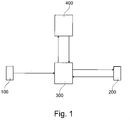
- the figure 1 schematically represents an example of implementation of the invention.
- the invention applies particularly well to the situation of a sender who wishes to broadcast a newsletter to a large number of receivers. It may for example be a commercial company who wishes to disseminate information to its customer or prospect base.
- This transmitter can then come into contact with the hosts of personal boxes in order to set up the mechanism according to the invention.
- These personal boxes can be of the “web messaging” type, or mobile electronic mail applications.
- a web mail, or " webmail " in English, is an interface between a mail server and a web browser. It therefore allows access to electronic mail by means of web protocols, such as those of the HTTP family (for “HyperText Transfer Protocol”).
- the receiver can therefore access his e-mails stored in his personal mailbox, hosted by a server, by means of a communication terminal (fixed or laptop computer, mobile terminal, tablet, etc.).
- This server is a functional entity comprising a web server and possible other mechanisms.
- the server comprises particular management means, allowing it to manage mechanical electronic mails, which can be implemented in software, in a manner that is conventional in itself and accessible to those skilled in the art.
- the various processing related to electronic mails are therefore taken care of by the server managing the personal mailbox, and the receiver only interacts with his mailbox to consult or act on his mails.
- the putting in contact between the host of the personal box and the sender can allow the host to provide a shared secret to the sender, which can be in the form of a key.
- the sender can then use this key for one or more campaigns, each campaign being characterized by the sending of an electronic mail to a set of receivers. To do this, an application can be made available to the issuer.
- the figure 1 illustrates an example of implementation of the invention.
- the sender 100 wishes to transmit a dynamic electronic mail to a receiver 200 which uses a personal mailbox 300, hosted by a server.
- the personal box or more precisely the server managing the personal box, can implement other security mechanisms.
- a white list can be defined beforehand, identifying authorized issuers. The dynamic content of e-mails coming from a sender not belonging to this whitelist is then blocked.
- the electronic mail is stored in the personal box 300.
- the receiver 200 can access his personal box after identification. This identification can be carried out by entering an identifier (or “login”) and a password, or by sending a certificate, etc.
- a mobile communication terminal of the “smartphone” type, it can also connect to a mobile messaging application.
- the server managing the personal box 300 triggers the execution of a third-party application 400 on reading it, which aims to provide content replacing that of said mail. electronic for presentation to receiver 400.
- the substitution can be total or partial.
- This third-party application 400 is identified by means of an identifier conveyed by an indicator inserted by the sender 100 within the electronic mail, in particular as a header.
- This identifier can be an address, typically a URL (for “Uniform Resource Locator” in English.
- URL for “Uniform Resource Locator” in English.
- Other types of identifiers of the third-party application are possible.
- the personal box 300 can be associated with a table of references, mapping identifiers to addresses.
- the indicator may then contain an application identifier that is not an address.
- This indicator can be a header of the electronic mail, conforming to the MIME protocol (for "Multipurpose Internet Mail Extensions", in English).
- this indicator is encrypted by the transmitter 100 by means of a secret previously provided by the server managing the personal box 300.
- the receiver is not aware of the address of the third-party application 400, thus limiting the risks in the event that this receiver is animated by malicious intentions, but also, this makes it possible to guard against a malicious transmission of an electronic mail since we then have the assurance that the sender and the personal box have the same shared secret. It is possible to revoke the secret, in the event of theft or compromise within the sender's infrastructure, for example.
- This shared secret can be, as we have seen previously, a key provided by the host of the mailbox to the sender 100. The latter can then use it to encrypt the headers of the electronic mails intended for the personal mailboxes. hosted by the same web server.
- the electronic mail can therefore contain a header consisting of metadata indicating that what follows is an indicator containing for example the address of a third-party application.
- this header can take the form: X-WMD-dynamail: U2FsdGVkX1950K2B1q1FKz1pC20GfihPHpUXWTVOLLdku817dn02mU KCtD8 + 0Fth
- the metadata, or keyword, “X-WMD-dynamail”, indicates according to the formalism of the MIME protocol that the header must be processed according to the mechanism of the invention. Also, the server managing the personal box 300 must be provided to detect the presence of such a header (thanks to the use of such a keyword), and to process it correctly.
- the processing of this header comprises, in this case, its decryption using the secret shared with the sender 100. Once decrypted, the header provides access to an identifier (for example the address) of the third-party application. 400.
- the server managing the personal box 300 can then trigger the execution of the third-party application 400 thus identified, and replace all or part of the static content of the electronic mail with content provided dynamically by the third-party application 400.
- the personal box provides for determining that a given electronic mail contains dynamic content and, in which case, to display a pictogram next to this electronic mail.
- the receiver will thus be able to know that a mail contains dynamic content even before opening it.
- the server managing the personal box can determine for each message the presence of an indicator (header, etc.) containing the identifier of a third-party application 400, and, in this case, insert the appropriate pictogram, or any other visual indicator, next to the corresponding email in the list.
- an indicator header, etc.
- the server managing the personal box 300 can send it an authentication element of the receiver. This makes it possible to secure exchanges and prevents a third-party application from displaying data specific to a given receiver, while the electronic mail is consulted by another receiver (in the event of mail transfer, for example).
- the authentication element can also be provided by an identity provider in the case of authentication by SSO (for “ Single Sign-On ”).
- the third-party application can be hosted on a remote application server. It may in particular be a web application, of the “web service” type. In a classic way, it receives a request from the server managing the personal box 300 and formulated according to the identifier contained in the electronic mail, and returns a response conveying the content. The request and the response can conform to the HTTP protocol.
- connection can also be direct between the end user's browser and the server of the third party application.
- the third-party application can provide content which is a function of various parameters linked in particular to the context and to the receiver.
- the dynamic content that the mechanism of the invention allows can be contextualized and / or personalized.
- the third-party application 400 may have various means for providing dynamic content. It can have knowledge of the receiver 200 and adapt the content according to a profile of this receiver.
- the content can be adapted to the date (day / time) when the email is viewed, whereas a static email can only depend on the date of issue.
- a static email can only depend on the date of issue.
- the third-party application 400 can be aware of events and adapt the content to the occurrence of such events, including subsequent to the sending of the mail.
- the third-party application may also provide content allowing interaction with the receiver.
- the receiver can act on the displayed content and thus cause a modification of this content, see the display of new content.
- a questionnaire can be displayed. Once the receiver has completed this questionnaire, a result can be immediately displayed. It is thus possible to set up survey campaigns, or else contests, allowing receivers to know the result without even leaving the electronic mail consulted.
- Such a questionnaire can be implemented via content expressed in HTML (HyperText Markup Language).
- a third party application 400 hosted on a server, allows a wide spectrum of possibilities, while keeping the content in the body of the email.
- the receiver has the feeling of consulting an electronic mail, while its content is supplied, dynamically, by an application which may correspond to a website.
Landscapes
- Engineering & Computer Science (AREA)
- Computer Networks & Wireless Communication (AREA)
- Signal Processing (AREA)
- Information Transfer Between Computers (AREA)
Description
- L'invention concerne le domaine du courrier électronique. Elle concerne plus particulièrement l'affichage d'un contenu dynamique dans un courrier électronique consulté par le récepteur en accédant à une boîte personnelle distante.
- Il peut être intéressant pour un émetteur de définir un contenu dynamique aux courriers électroniques qu'il envoie. Cela peut notamment être le cas des lettres d'information (ou « newsletter » en anglais) qu'il diffuse périodiquement auprès d'un réseau de contact. Ce contenu dynamique peut permettre d'adapter un même courrier électronique à des circonstances qui peuvent dépendre du récepteur, du moment auquel celui-ci accède au courrier, etc.
- La mise en place d'un contenu dynamique peut reposer sur l'appel à des applications tierces, ou à du code exécutable (flash, javascript...), qui peuvent avoir connaissance de ces circonstances et en faire dépendre le contenu à afficher.
-
US6507865 décrit un tel mécanisme consistant à intégrer le contenu dynamique dans le corps du message
Pour une grande part, les courriers électroniques sont consultés en accédant à une boîte personnelle qui est hébergée sur un serveur distant. L'accès peut se faire via le web via une interface de type « webmail », mais également, depuis un terminal de communication mobile, vers une application mobile spécifique. - Les hébergeurs de ces boîtes personnelles mettent habituellement en œuvre des mécanismes de sécurité afin d'éviter les cyber-menaces. Ainsi, les appels vers des composants externes sont généralement bloqués, en dehors des images. Il en va de même de l'utilisation de codes exécutables tels que Javascript, Flash, etc.
- Par conséquent, le contenu des courriers électroniques ne peut être que statique : même si le courrier électronique contient de tels éléments dynamiques, ceux-ci seront bloqués et ne pourront donc pas être visualisés par le récepteur qui ne recevra donc que les éléments statiques du courrier électronique.
- Une autre possibilité est d'insérer des liens vers les applications tierces mettant en œuvre le contenu dynamique, dans le corps du courrier électronique. En général, cette pratique est tout à fait admise par les hébergeurs de boites personnelles, mais il n'y a aucune garantie que le récepteur cliquera effectivement sur le lien afin d'accéder aux éléments dynamiques.
- Le but de la présente invention est de fournir une solution palliant au moins partiellement les inconvénients précités.
- Plus particulièrement, l'invention vise à fournir un procédé permettant l'affichage d'un contenu dynamique d'un courrier électronique lorsque le récepteur le consulte en accédant à sa boîte personnelle. Ce contenu dynamique peut être personnalisé et contextualisé.
- A cette fin, la présente invention propose un procédé de transmission d'un courrier électronique selon la revendication 1.
- Suivant des modes de réalisation préférés, l'invention comprend une ou plusieurs des caractéristiques suivantes qui peuvent être utilisées séparément ou en combinaison partielle entre elles ou en combinaison totale entre elles :
- ladite application tierce fournit un contenu fonction d'un paramètre parmi la date, un profil dudit récepteur, des données météorologiques, un événement, un accès à des données appartenant au récepteur, ...
- ledit contenu permet une interaction avec ledit récepteur ;
- le serveur gérant ladite boîte personnelle transmet un élément d'authentification dudit récepteur à ladite application tierce ;
- ledit indicateur est crypté par ledit émetteur au moyen d'un secret partagé préalablement fourni par ledit serveur gérant ladite boîte personnelle ;
- ledit récepteur peut accéder à une liste des courriers électroniques disponibles dans ladite boîte personnelle, dans laquelle un pictogramme est affiché en regard des courriers électroniques dans lesquels a été inséré un indicateur contenant l'adresse d'une application tierce ;
- Un autre objet de l'invention concerne un programme d'ordinateur comportant du code exécutable par un équipement numérique pour mettre en œuvre le procédé tel que précédemment décrit.
- Un autre objet de l'invention concerne un serveur gestionnaire d'une boite personnelle selon la revendication 8.
- D'autres caractéristiques et avantages de l'invention apparaîtront à la lecture de la description qui suit d'un mode de réalisation préféré de l'invention, donnée à titre d'exemple et en référence aux dessins annexés.
- La
figure 1 représente schématiquement un exemple de mise en œuvre de l'invention. - L'invention s'applique particulièrement bien à la situation d'un émetteur qui souhaite diffuser une lettre d'information vers un grand nombre de récepteurs. Il peut par exemple s'agir d'une société commerciale qui souhaite diffuser des informations vers sa base de clients ou de prospects.
- Cet émetteur peut alors entrer en contact avec les hébergeurs de boites personnelles afin de mettre en place le mécanisme selon l'invention. Ces boites personnelles peuvent être de type « messagerie web », ou des applications mobiles de courrier électronique.
- Une messagerie web, ou « webmail » en langue anglaise, est une interface entre un serveur de messagerie et un navigateur web. Elle permet donc l'accès aux courriers électroniques au moyen des protocoles du web, tels que ceux de la famille HTTP (pour « HyperText Transfer Protocol »). Le récepteur peut donc accéder à ses courriers électroniques stockées dans sa boite personnelle de messagerie, hébergée par un serveur, au moyen d'un terminal de communication (ordinateur fixe ou portable, terminal mobile, tablette, etc.). Ce serveur est une entité fonctionnelle comportant un serveur web et d'éventuels autres mécanismes. Selon l'invention, le serveur comporte des moyens de gestion particuliers, lui permettant de gérer des courriers électroniques mécaniques, qui peuvent être mis en œuvre de façon logicielle, de façon classique en soi et accessible à l'homme du métier.
- Les différents traitements liés aux courriers électroniques sont donc pris en charge par le serveur gérant la boîte personnelle, et le récepteur ne fait qu'interagir avec sa boite pour consulter ou agir sur ses courriers.
- La mise en contact entre l'hébergeur de la boite personnelle et l'émetteur peut permettre à l'hébergeur de fournir un secret partagé à l'émetteur, qui peut être sous la forme d'une clé. L'émetteur peut alors utiliser cette clé pour une ou plusieurs campagnes, chaque campagne se caractérisant par l'émission d'un courrier électronique vers un ensemble de récepteurs. Pour ce faire, une application peut être mise à disposition de l'émetteur.
- La
figure 1 illustre un exemple de mise en œuvre de l'invention. Dans cet exemple, l'émetteur 100 souhaite transmettre un courrier électronique dynamique à un récepteur 200 qui utilise une boîte personnelle 300, hébergée par un serveur. - On suppose que l'émetteur est préalablement entré en contact avec l'hébergeur de la boîte personnelle de messagerie 300 afin d'obtenir un secret partagé. Il est toutefois à noter que l'invention peut être mise en œuvre dans sa généralité sans l'utilisation d'un secret partagé, mais que celui-ci présente des avantages supplémentaires pour la sécurisation du mécanisme selon l'invention.
- En outre, la boite personnelle, ou plus précisément le serveur gérant la boîte personnelle, peut mettre en œuvre d'autres mécanismes de sécurisation. Par exemple, une liste blanche peut être préalablement définie, identifiant des émetteurs autorisés. Le contenu dynamique des courriers électroniques provenant d'un émetteur n'appartenant pas à cette liste blanche est alors bloqué.
- Le courrier électronique est stocké dans la boîte personnelle 300. De façon connue en soi, le récepteur 200 peut accéder à sa boite personnelle après identification. Cette identification peut être effectuée en saisissant un identifiant (ou « login ») et un mot de passe, ou bien par la transmission d'un certificat, etc.
- Comme dit précédemment, il peut utiliser un navigateur web afin de visualiser la liste des courriers électroniques disponibles et d'en afficher le contenu.
- A partir d'un terminal de communication mobile, de type « smartphone », il peut de même se connecter à une application mobile de messagerie.
- Lorsque le récepteur accède au courrier électronique, le serveur gérant la boîte personnelle 300 déclenche à sa lecture l'exécution d'une application tierce 400 qui vise à fournir un contenu se substituant à celui dudit courrier électronique pour présentation au récepteur 400. La substitution peut être totale ou partielle.
- Cette application tierce 400 est identifiée au moyen d'un identifiant véhiculée par un indicateur insérée par l'émetteur 100 au sein du courrier électronique, notamment en tant qu'entête.
- Cet identifiant peut être une adresse, typiquement une URL (pour « Uniform Resource Locator » en langue anglaise. D'autres types d'identifiants de l'application tierce sont possibles. Par exemple, la boite personnelle 300 peut être associée à une table de références, mettant en correspondance des identifiants à des adresses. L'indicateur peut alors contenir un identifiant d'applications qui n'est pas une adresse.
- Cet indicateur peut être un entête du courrier électronique, conforme au protocole MIME (pour « Multipurpose Internet Mail Extensions », en langue anglaise).
- Selon le mode de réalisation précédemment évoqué, cet indicateur est crypté par l'émetteur 100 au moyen d'un secret préalablement fourni par le serveur gérant la boîte personnelle 300. De la sorte, le récepteur n'a pas connaissance de l'adresse de l'application tierce 400, limitant ainsi les risques au cas où ce récepteur serait animé d'intentions malfaisantes, mais aussi, cela permet de se prémunir d'une transmission malveillante d'un courrier électronique puisqu'on a alors assurance que l'émetteur et la boîte personnelle disposent d'un même secret partagé. Il est possible de révoquer le secret, en cas d'usurpation ou de compromission au sein de des infrastructures de l'émetteur par exemple.
- Ce secret partagé peut être, comme on l'a vu précédemment, une clé fournie par l'hébergeur de la boite à l'émetteur 100. Celui-ci peut alors s'en servir pour crypter les entêtes des courriers électroniques destinés aux boites personnelles hébergés par le même serveur web.
- Le courrier électronique peut donc contenir un entête constitué d'une métadonnée signalant que ce qui suit est un indicateur contenant par exemple l'adresse d'une application tierce.
- Ainsi, cet entête peut prendre pour forme :
X-WMD-dynamail:
U2FsdGVkX1950K2B1q1FKz1pC20GfihPHpUXWTVOLLdku817dn02mU KCtD8+0Fth - La métadonnée, ou mot-clé, « X-WMD-dynamail », indique selon le formalisme du protocole MIME que l'entête doit être traité selon le mécanisme de l'invention. Aussi, le serveur gérant la boîte personnelle 300 doit être prévu pour détecter la présence d'un tel entête (grâce à l'utilisation d'un tel mot-clé), et pour le traiter correctement.
- Le nom de l'entête, « X-WMD-dynamail » est bien entendu donné à titre indicatif. Tout nom, non déjà utilisé ou standardisé, peut être employé dès lors qu'il est partagé entre les parties.
- Le traitement de cet entête comprend, dans ce cas, son décryptage en utilisant le secret partagé avec l'émetteur 100. Une fois décrypté, l'entête permet d'accéder à un identifiant (par exemple l'adresse) de l'application tierce 400.
- Le serveur gérant la boîte personnelle 300 peut alors déclencher l'exécution de l'application tierce 400 ainsi identifiée, et substituer tout ou partie du contenu statique du courrier électronique par un contenu fourni, dynamiquement par l'application tierce 400.
- Le même courrier électronique étant transmis à plusieurs récepteurs, certains peuvent le consulter via une boîte personnelle ne mettant pas en place les mécanismes de l'invention, c'est-à-dire ne prenant pas en compte l'entête véhiculant un identifiant d'application tierce. Dans ce cas, le contenu statique du message électronique sera affiché.
- Il en va de même lorsque le courrier électronique est consulté au moyen d'un client lourd de messagerie.
- Autrement dit, du point de vue de l'émetteur, deux versions du message électronique peuvent être définies :
- une statique, véhiculée par le corps du courrier électronique ;
- une dynamique, dont le contenu est substitué au corps du courrier électronique pour l'affichage au récepteur, et fourni par l'application tierce 400.
- Selon un mode de réalisation de l'invention, la boîte personnelle prévoit de déterminer qu'un courrier électronique donné contient un contenu dynamique et, auquel cas, d'afficher un pictogramme en regard de ce courrier électronique. Le récepteur pourra ainsi avoir connaissance qu'un courrier contient du contenu dynamique avant même de l'ouvrir.
- Pour ce faire, le serveur gérant la boîte personnelle peut déterminer pour chaque message la présence d'un indicateur (entête...) contenant l'identifiant d'une application tierce 400, et, en ce cas, insérer le pictogramme approprié, ou tout autre indicateur visuel, en regard du courrier électronique correspondant de la liste.
- Lors du déclenchement de l'exécution de l'application tierce, le serveur gérant la boîte personnelle 300 peut lui transmettre un élément d'authentification du récepteur. Cela permet de sécuriser les échanges et permet d'éviter qu'une application tierce affiche des données propres à un récepteur donné, alors que le courrier électronique est consulté par un autre récepteur (en cas de transfert de courrier, par exemple).
- L'élément d'authentification peut aussi être fourni par un fournisseur d'identité dans le cas d'une authentification par SSO (pour « Single Sign-On » en anglais).
- L'application tierce peut être hébergée sur un serveur applicatif distant. Il peut notamment s'agir d'une application web, de type « web service ». De façon classique en soit, elle reçoit une requête du serveur gérant la boîte personnelle 300 et formulée selon l'identifiant contenu dans le courrier électronique, et retourne une réponse véhiculant le contenu. La requête et la réponse peuvent être conformes au protocole HTTP.
- La connexion peut aussi être directe entre le navigateur de l'utilisateur final et le serveur de l'application tierce.
- L'application tierce peut fournir un contenu qui est fonction de différents paramètres liés notamment au contexte et au récepteur. Ainsi, le contenu dynamique que permet le mécanisme de l'invention peut être contextualisé et/ou personnalisé.
- L'application tierce 400 peut disposer de différents moyens pour fournir un contenu dynamique. Elle peut avoir connaissance du récepteur 200 et adapter le contenu en fonction d'un profil de ce récepteur.
- Elle peut avoir connaissance de données météorologiques et notamment géolocalisées en fonction du récepteur 200, et adapter le contenu à cette information. On peut par exemple citer l'exemple d'un courrier d'information d'une société vendant des vêtements, dont les produits mis en avant dans le contenu du courrier peuvent ainsi dépendre de la météo, du sexe du récepteur, de sa tranche d'âges, etc.
- Il est aussi possible d'accéder via l'application à des contenus appartenant à l'utilisateur, tels que des pièces jointes des autres emails stockés dans la boite ou des photos stockés sur son espace de stockage en ligne (« cloud »).
- En outre, le contenu peut être adapté à la date (jour / heure) à laquelle le courrier électronique est consulté, alors qu'un courrier électronique statique ne peut dépendre que de la date d'émission. L'expérience montre que plusieurs jours, voire plusieurs semaines ou mois, peuvent s'écouler entre l'émission d'un courrier électronique et sa consultation (c'est-à-dire sa réception par le récepteur final). Dès lors, pouvoir adapter le contenu présenté au récepteur 200 à la date de consultation présente un avantage certain.
- De même, l'application tierce 400 peut avoir connaissance d'événements et adapter le contenu à la survenance de tels événements, y compris postérieurs à l'émission du courrier.
- L'application tierce peut également fournir un contenu permettant une interaction avec le récepteur. Ainsi, le récepteur peut agir sur le contenu affiché et ainsi provoquer une modification de ce contenu, voir l'affichage d'un nouveau contenu.
- Par exemple, un questionnaire peut être affiché. Une fois que le récepteur a rempli ce questionnaire, un résultat peut être immédiatement affiché. Il est ainsi possible de mettre en place des campagnes d'enquêtes, ou bien des jeux-concours, permettant aux récepteurs d'avoir connaissance du résultat sans même sortir du courrier électronique consulté.
- Un tel questionnaire peut être mis en œuvre via un contenu exprimé en langage HTML (HyperText Markup Language).
- D'autres contenus interactifs peuvent être mis en œuvre via des applets Java, des modules programmés en langage Flash, etc., tout en conservant de bonnes conditions de sécurité, basées sur la confiance vis-à-vis de l'éditeur de l'application tierce à qui il a été fourni une clef partagée
- En fait, l'utilisation d'une application tierce 400, hébergée sur un serveur, permet un large spectre de possibilités, tout en maintenant le contenu dans le corps du courrier électronique. Ainsi, le récepteur a le sentiment de consulter un courrier électronique, alors que son contenu est fourni, dynamiquement, par une application qui peut correspondre à un site web.
- Bien entendu, la présente invention n'est pas limitée aux exemples et au mode de réalisation décrits et représentés, mais elle est susceptible de nombreuses variantes accessibles à l'homme de l'art.
Claims (8)
- Procédé de transmission d'un courrier électronique entre un émetteur (100) et un récepteur (200), comportant- l'insertion en tant qu'entête dudit courrier d'un indicateur contenant l'adresse d'une application tierce (400), par ledit émetteur, et sa transmission vers une boîte personnelle (300) dudit récepteur, gérée par un serveur et accessible par un terminal de communication associé audit récepteur, et- l'accès par ledit récepteur à ladite boîte personnelle, ladite boite personnelle déclenchant à la lecture dudit courrier électronique l'exécution de ladite application tierce qui fournit alors, en réponse à une requête formulée selon ladite adresse, un contenu se substituant à celui dudit courrier électronique pour présentation audit récepteur.
- Procédé selon la revendication précédente, dans lequel ladite application tierce (400) fournit un contenu fonction d'un paramètre parmi la date, un profil dudit récepteur, des données météorologiques, un événement, un accès à des données appartenant au récepteur, ...
- Procédé selon l'une des revendications précédentes, dans lequel ledit contenu permet une interaction avec ledit récepteur (200).
- Procédé selon l'une des revendications précédentes dans lequel le serveur gérant ladite boîte personnelle transmet un élément d'authentification dudit récepteur à ladite application tierce (400).
- Procédé selon l'une des revendications précédentes, dans lequel ledit indicateur est crypté par ledit émetteur au moyen d'un secret partagé préalablement fourni par ledit serveur gérant ladite boîte personnelle.
- Procédé selon l'une des revendications précédentes, dans lequel ledit récepteur peut accéder à une liste des courriers électroniques disponibles dans ladite boîte personnelle, dans laquelle un pictogramme est affiché en regard des courriers électroniques dans lesquels a été inséré un indicateur contenant l'adresse d'une application tierce.
- Programme d'ordinateur comportant du code exécutable par un équipement numérique pour mettre en œuvre le procédé selon l'une des revendications précédentes.
- Serveur gestionnaire d'une boite personnelle (300) pour le stockage de courriers électronique, comportant des moyens de réception d'un courrier électronique destiné à un récepteur (200) et comportant dans un entête un indicateur contenant l'adresse d'une application tierce (400), et des moyens pour, lorsque ledit récepteur y accède, déclencher l'exécution de ladite application tierce qui fournit alors en réponse à une requête formulée selon ladite adresse un contenu se substituant à celui dudit courrier électronique pour présentation audit récepteur.
Applications Claiming Priority (2)
| Application Number | Priority Date | Filing Date | Title |
|---|---|---|---|
| FR1663490A FR3061566B1 (fr) | 2016-12-29 | 2016-12-29 | Courrier electronique dynamique pour boite personnelle de messagerie |
| PCT/FR2017/053118 WO2018122477A1 (fr) | 2016-12-29 | 2017-11-28 | Courrier electronique dynamique pour boite personnelle de messagerie |
Publications (2)
| Publication Number | Publication Date |
|---|---|
| EP3563528A1 EP3563528A1 (fr) | 2019-11-06 |
| EP3563528B1 true EP3563528B1 (fr) | 2021-01-06 |
Family
ID=58669908
Family Applications (1)
| Application Number | Title | Priority Date | Filing Date |
|---|---|---|---|
| EP17817775.4A Active EP3563528B1 (fr) | 2016-12-29 | 2017-11-28 | Courrier electronique dynamique pour boite personnelle de messagerie |
Country Status (3)
| Country | Link |
|---|---|
| EP (1) | EP3563528B1 (fr) |
| FR (1) | FR3061566B1 (fr) |
| WO (1) | WO2018122477A1 (fr) |
Family Cites Families (3)
| Publication number | Priority date | Publication date | Assignee | Title |
|---|---|---|---|---|
| US6507865B1 (en) * | 1999-08-30 | 2003-01-14 | Zaplet, Inc. | Method and system for group content collaboration |
| US8040880B2 (en) * | 2004-06-30 | 2011-10-18 | Movius Interactive Corporation | Signed message based application generation and delivery |
| US7783709B2 (en) * | 2005-07-08 | 2010-08-24 | Followflow B.V. | E-mail with visual object method and apparatus |
-
2016
- 2016-12-29 FR FR1663490A patent/FR3061566B1/fr active Active
-
2017
- 2017-11-28 EP EP17817775.4A patent/EP3563528B1/fr active Active
- 2017-11-28 WO PCT/FR2017/053118 patent/WO2018122477A1/fr not_active Ceased
Non-Patent Citations (1)
| Title |
|---|
| None * |
Also Published As
| Publication number | Publication date |
|---|---|
| FR3061566A1 (fr) | 2018-07-06 |
| FR3061566B1 (fr) | 2021-01-15 |
| WO2018122477A1 (fr) | 2018-07-05 |
| EP3563528A1 (fr) | 2019-11-06 |
Similar Documents
| Publication | Publication Date | Title |
|---|---|---|
| US8732250B2 (en) | Provision of secure RSS feeds using a secure RSS catcher | |
| US7299357B2 (en) | Opaque message archives | |
| US7469340B2 (en) | Selective encryption of electronic messages and data | |
| JP2022522788A (ja) | ブロックチェーンベースのセキュアな電子メールシステム | |
| US20070094389A1 (en) | Provision of rss feeds based on classification of content | |
| EP3734901B1 (fr) | Procédé de transmission sécurisée de données | |
| US20070094390A1 (en) | Delivery of sensitive information through secure rss feed | |
| US20040030918A1 (en) | Enterprise based opaque message archives | |
| US20160134642A1 (en) | Secure content and encryption methods and techniques | |
| US20070100999A1 (en) | Method, system and software for rendering e-mail messages | |
| US20060271629A1 (en) | Distributed Challenge and Response Recognition System | |
| US10243900B2 (en) | Using private tokens in electronic messages associated with a subscription-based messaging service | |
| CN101346711B (zh) | 使用安全rss捕集器提供安全rss馈入 | |
| US20040030916A1 (en) | Preemptive and interactive data solicitation for electronic messaging | |
| FR2975847A1 (fr) | Systeme de controle de publication de contenu | |
| EP2336967B1 (fr) | Messagerie personnalisée sur encarts web. | |
| CA3047855A1 (fr) | Procede de transmission d'une information numerique chiffree de bout en bout, application de ce procede et objet mettant en oeuvre ce p rocede | |
| WO2018122477A1 (fr) | Courrier electronique dynamique pour boite personnelle de messagerie | |
| EP1955180B1 (fr) | Fourniture de fils de syndication rss securises utilisant un recepteur de rss securise | |
| FR2863379A1 (fr) | Systeme de messagerie electronique et procede d'emission de messages electroniques correspondant | |
| FR3109234A1 (fr) | Procédé de traitement d’une transaction effectuée par une entité débitrice auprès d’une entité créditrice cible | |
| GB2483488A (en) | Email server which stores message body and attachments in a database and replaces them with hyperlinks to the stored data | |
| FR3085814A1 (fr) | Systeme de communication entre un module cam et un terminal mobile disposant d'une connexion au reseau internet. | |
| WO2005109264A2 (fr) | Methode de tracabilite d'un message electronique | |
| FR3027427A1 (fr) | Systeme et procede de securisation et de mise a disposition de courriels |
Legal Events
| Date | Code | Title | Description |
|---|---|---|---|
| STAA | Information on the status of an ep patent application or granted ep patent |
Free format text: STATUS: UNKNOWN |
|
| STAA | Information on the status of an ep patent application or granted ep patent |
Free format text: STATUS: THE INTERNATIONAL PUBLICATION HAS BEEN MADE |
|
| PUAI | Public reference made under article 153(3) epc to a published international application that has entered the european phase |
Free format text: ORIGINAL CODE: 0009012 |
|
| STAA | Information on the status of an ep patent application or granted ep patent |
Free format text: STATUS: REQUEST FOR EXAMINATION WAS MADE |
|
| 17P | Request for examination filed |
Effective date: 20190625 |
|
| AK | Designated contracting states |
Kind code of ref document: A1 Designated state(s): AL AT BE BG CH CY CZ DE DK EE ES FI FR GB GR HR HU IE IS IT LI LT LU LV MC MK MT NL NO PL PT RO RS SE SI SK SM TR |
|
| AX | Request for extension of the european patent |
Extension state: BA ME |
|
| DAV | Request for validation of the european patent (deleted) | ||
| DAX | Request for extension of the european patent (deleted) | ||
| STAA | Information on the status of an ep patent application or granted ep patent |
Free format text: STATUS: EXAMINATION IS IN PROGRESS |
|
| 17Q | First examination report despatched |
Effective date: 20200602 |
|
| GRAP | Despatch of communication of intention to grant a patent |
Free format text: ORIGINAL CODE: EPIDOSNIGR1 |
|
| STAA | Information on the status of an ep patent application or granted ep patent |
Free format text: STATUS: GRANT OF PATENT IS INTENDED |
|
| INTG | Intention to grant announced |
Effective date: 20200921 |
|
| RIN1 | Information on inventor provided before grant (corrected) |
Inventor name: DEPREZ, CLAIRE Inventor name: LANEL, JEAN-BAPTISTE Inventor name: DASSONVILLE, MATTHIEU |
|
| GRAS | Grant fee paid |
Free format text: ORIGINAL CODE: EPIDOSNIGR3 |
|
| GRAA | (expected) grant |
Free format text: ORIGINAL CODE: 0009210 |
|
| STAA | Information on the status of an ep patent application or granted ep patent |
Free format text: STATUS: THE PATENT HAS BEEN GRANTED |
|
| AK | Designated contracting states |
Kind code of ref document: B1 Designated state(s): AL AT BE BG CH CY CZ DE DK EE ES FI FR GB GR HR HU IE IS IT LI LT LU LV MC MK MT NL NO PL PT RO RS SE SI SK SM TR |
|
| REG | Reference to a national code |
Ref country code: GB Ref legal event code: FG4D Free format text: NOT ENGLISH |
|
| REG | Reference to a national code |
Ref country code: AT Ref legal event code: REF Ref document number: 1353555 Country of ref document: AT Kind code of ref document: T Effective date: 20210115 Ref country code: CH Ref legal event code: EP |
|
| REG | Reference to a national code |
Ref country code: DE Ref legal event code: R096 Ref document number: 602017031118 Country of ref document: DE |
|
| REG | Reference to a national code |
Ref country code: IE Ref legal event code: FG4D Free format text: LANGUAGE OF EP DOCUMENT: FRENCH |
|
| REG | Reference to a national code |
Ref country code: NL Ref legal event code: MP Effective date: 20210106 |
|
| REG | Reference to a national code |
Ref country code: AT Ref legal event code: MK05 Ref document number: 1353555 Country of ref document: AT Kind code of ref document: T Effective date: 20210106 |
|
| REG | Reference to a national code |
Ref country code: LT Ref legal event code: MG9D |
|
| PG25 | Lapsed in a contracting state [announced via postgrant information from national office to epo] |
Ref country code: PT Free format text: LAPSE BECAUSE OF FAILURE TO SUBMIT A TRANSLATION OF THE DESCRIPTION OR TO PAY THE FEE WITHIN THE PRESCRIBED TIME-LIMIT Effective date: 20210506 Ref country code: NO Free format text: LAPSE BECAUSE OF FAILURE TO SUBMIT A TRANSLATION OF THE DESCRIPTION OR TO PAY THE FEE WITHIN THE PRESCRIBED TIME-LIMIT Effective date: 20210406 Ref country code: FI Free format text: LAPSE BECAUSE OF FAILURE TO SUBMIT A TRANSLATION OF THE DESCRIPTION OR TO PAY THE FEE WITHIN THE PRESCRIBED TIME-LIMIT Effective date: 20210106 Ref country code: HR Free format text: LAPSE BECAUSE OF FAILURE TO SUBMIT A TRANSLATION OF THE DESCRIPTION OR TO PAY THE FEE WITHIN THE PRESCRIBED TIME-LIMIT Effective date: 20210106 Ref country code: GR Free format text: LAPSE BECAUSE OF FAILURE TO SUBMIT A TRANSLATION OF THE DESCRIPTION OR TO PAY THE FEE WITHIN THE PRESCRIBED TIME-LIMIT Effective date: 20210407 Ref country code: BG Free format text: LAPSE BECAUSE OF FAILURE TO SUBMIT A TRANSLATION OF THE DESCRIPTION OR TO PAY THE FEE WITHIN THE PRESCRIBED TIME-LIMIT Effective date: 20210406 Ref country code: LT Free format text: LAPSE BECAUSE OF FAILURE TO SUBMIT A TRANSLATION OF THE DESCRIPTION OR TO PAY THE FEE WITHIN THE PRESCRIBED TIME-LIMIT Effective date: 20210106 |
|
| PG25 | Lapsed in a contracting state [announced via postgrant information from national office to epo] |
Ref country code: LV Free format text: LAPSE BECAUSE OF FAILURE TO SUBMIT A TRANSLATION OF THE DESCRIPTION OR TO PAY THE FEE WITHIN THE PRESCRIBED TIME-LIMIT Effective date: 20210106 Ref country code: RS Free format text: LAPSE BECAUSE OF FAILURE TO SUBMIT A TRANSLATION OF THE DESCRIPTION OR TO PAY THE FEE WITHIN THE PRESCRIBED TIME-LIMIT Effective date: 20210106 Ref country code: PL Free format text: LAPSE BECAUSE OF FAILURE TO SUBMIT A TRANSLATION OF THE DESCRIPTION OR TO PAY THE FEE WITHIN THE PRESCRIBED TIME-LIMIT Effective date: 20210106 Ref country code: AT Free format text: LAPSE BECAUSE OF FAILURE TO SUBMIT A TRANSLATION OF THE DESCRIPTION OR TO PAY THE FEE WITHIN THE PRESCRIBED TIME-LIMIT Effective date: 20210106 Ref country code: SE Free format text: LAPSE BECAUSE OF FAILURE TO SUBMIT A TRANSLATION OF THE DESCRIPTION OR TO PAY THE FEE WITHIN THE PRESCRIBED TIME-LIMIT Effective date: 20210106 |
|
| PG25 | Lapsed in a contracting state [announced via postgrant information from national office to epo] |
Ref country code: IS Free format text: LAPSE BECAUSE OF FAILURE TO SUBMIT A TRANSLATION OF THE DESCRIPTION OR TO PAY THE FEE WITHIN THE PRESCRIBED TIME-LIMIT Effective date: 20210506 |
|
| REG | Reference to a national code |
Ref country code: DE Ref legal event code: R097 Ref document number: 602017031118 Country of ref document: DE |
|
| PG25 | Lapsed in a contracting state [announced via postgrant information from national office to epo] |
Ref country code: SM Free format text: LAPSE BECAUSE OF FAILURE TO SUBMIT A TRANSLATION OF THE DESCRIPTION OR TO PAY THE FEE WITHIN THE PRESCRIBED TIME-LIMIT Effective date: 20210106 Ref country code: EE Free format text: LAPSE BECAUSE OF FAILURE TO SUBMIT A TRANSLATION OF THE DESCRIPTION OR TO PAY THE FEE WITHIN THE PRESCRIBED TIME-LIMIT Effective date: 20210106 Ref country code: CZ Free format text: LAPSE BECAUSE OF FAILURE TO SUBMIT A TRANSLATION OF THE DESCRIPTION OR TO PAY THE FEE WITHIN THE PRESCRIBED TIME-LIMIT Effective date: 20210106 |
|
| PLBE | No opposition filed within time limit |
Free format text: ORIGINAL CODE: 0009261 |
|
| STAA | Information on the status of an ep patent application or granted ep patent |
Free format text: STATUS: NO OPPOSITION FILED WITHIN TIME LIMIT |
|
| REG | Reference to a national code |
Ref country code: DE Ref legal event code: R079 Ref document number: 602017031118 Country of ref document: DE Free format text: PREVIOUS MAIN CLASS: H04L0012580000 Ipc: H04L0051000000 |
|
| PG25 | Lapsed in a contracting state [announced via postgrant information from national office to epo] |
Ref country code: RO Free format text: LAPSE BECAUSE OF FAILURE TO SUBMIT A TRANSLATION OF THE DESCRIPTION OR TO PAY THE FEE WITHIN THE PRESCRIBED TIME-LIMIT Effective date: 20210106 Ref country code: SK Free format text: LAPSE BECAUSE OF FAILURE TO SUBMIT A TRANSLATION OF THE DESCRIPTION OR TO PAY THE FEE WITHIN THE PRESCRIBED TIME-LIMIT Effective date: 20210106 Ref country code: DK Free format text: LAPSE BECAUSE OF FAILURE TO SUBMIT A TRANSLATION OF THE DESCRIPTION OR TO PAY THE FEE WITHIN THE PRESCRIBED TIME-LIMIT Effective date: 20210106 |
|
| 26N | No opposition filed |
Effective date: 20211007 |
|
| PG25 | Lapsed in a contracting state [announced via postgrant information from national office to epo] |
Ref country code: AL Free format text: LAPSE BECAUSE OF FAILURE TO SUBMIT A TRANSLATION OF THE DESCRIPTION OR TO PAY THE FEE WITHIN THE PRESCRIBED TIME-LIMIT Effective date: 20210106 Ref country code: ES Free format text: LAPSE BECAUSE OF FAILURE TO SUBMIT A TRANSLATION OF THE DESCRIPTION OR TO PAY THE FEE WITHIN THE PRESCRIBED TIME-LIMIT Effective date: 20210106 |
|
| PG25 | Lapsed in a contracting state [announced via postgrant information from national office to epo] |
Ref country code: SI Free format text: LAPSE BECAUSE OF FAILURE TO SUBMIT A TRANSLATION OF THE DESCRIPTION OR TO PAY THE FEE WITHIN THE PRESCRIBED TIME-LIMIT Effective date: 20210106 |
|
| PG25 | Lapsed in a contracting state [announced via postgrant information from national office to epo] |
Ref country code: IT Free format text: LAPSE BECAUSE OF FAILURE TO SUBMIT A TRANSLATION OF THE DESCRIPTION OR TO PAY THE FEE WITHIN THE PRESCRIBED TIME-LIMIT Effective date: 20210106 |
|
| PG25 | Lapsed in a contracting state [announced via postgrant information from national office to epo] |
Ref country code: IS Free format text: LAPSE BECAUSE OF FAILURE TO SUBMIT A TRANSLATION OF THE DESCRIPTION OR TO PAY THE FEE WITHIN THE PRESCRIBED TIME-LIMIT Effective date: 20210506 |
|
| PG25 | Lapsed in a contracting state [announced via postgrant information from national office to epo] |
Ref country code: MC Free format text: LAPSE BECAUSE OF FAILURE TO SUBMIT A TRANSLATION OF THE DESCRIPTION OR TO PAY THE FEE WITHIN THE PRESCRIBED TIME-LIMIT Effective date: 20210106 |
|
| REG | Reference to a national code |
Ref country code: CH Ref legal event code: PL |
|
| PG25 | Lapsed in a contracting state [announced via postgrant information from national office to epo] |
Ref country code: LU Free format text: LAPSE BECAUSE OF NON-PAYMENT OF DUE FEES Effective date: 20211128 Ref country code: BE Free format text: LAPSE BECAUSE OF NON-PAYMENT OF DUE FEES Effective date: 20211130 |
|
| REG | Reference to a national code |
Ref country code: BE Ref legal event code: MM Effective date: 20211130 |
|
| PG25 | Lapsed in a contracting state [announced via postgrant information from national office to epo] |
Ref country code: LI Free format text: LAPSE BECAUSE OF NON-PAYMENT OF DUE FEES Effective date: 20211130 Ref country code: CH Free format text: LAPSE BECAUSE OF NON-PAYMENT OF DUE FEES Effective date: 20211130 |
|
| PG25 | Lapsed in a contracting state [announced via postgrant information from national office to epo] |
Ref country code: NL Free format text: LAPSE BECAUSE OF NON-PAYMENT OF DUE FEES Effective date: 20210206 Ref country code: CY Free format text: LAPSE BECAUSE OF FAILURE TO SUBMIT A TRANSLATION OF THE DESCRIPTION OR TO PAY THE FEE WITHIN THE PRESCRIBED TIME-LIMIT Effective date: 20210106 |
|
| P01 | Opt-out of the competence of the unified patent court (upc) registered |
Effective date: 20230527 |
|
| PG25 | Lapsed in a contracting state [announced via postgrant information from national office to epo] |
Ref country code: HU Free format text: LAPSE BECAUSE OF FAILURE TO SUBMIT A TRANSLATION OF THE DESCRIPTION OR TO PAY THE FEE WITHIN THE PRESCRIBED TIME-LIMIT; INVALID AB INITIO Effective date: 20171128 |
|
| PG25 | Lapsed in a contracting state [announced via postgrant information from national office to epo] |
Ref country code: MK Free format text: LAPSE BECAUSE OF FAILURE TO SUBMIT A TRANSLATION OF THE DESCRIPTION OR TO PAY THE FEE WITHIN THE PRESCRIBED TIME-LIMIT Effective date: 20210106 |
|
| PG25 | Lapsed in a contracting state [announced via postgrant information from national office to epo] |
Ref country code: MT Free format text: LAPSE BECAUSE OF FAILURE TO SUBMIT A TRANSLATION OF THE DESCRIPTION OR TO PAY THE FEE WITHIN THE PRESCRIBED TIME-LIMIT Effective date: 20210106 |
|
| PG25 | Lapsed in a contracting state [announced via postgrant information from national office to epo] |
Ref country code: TR Free format text: LAPSE BECAUSE OF FAILURE TO SUBMIT A TRANSLATION OF THE DESCRIPTION OR TO PAY THE FEE WITHIN THE PRESCRIBED TIME-LIMIT Effective date: 20210106 |
|
| PGFP | Annual fee paid to national office [announced via postgrant information from national office to epo] |
Ref country code: DE Payment date: 20251126 Year of fee payment: 9 |
|
| PGFP | Annual fee paid to national office [announced via postgrant information from national office to epo] |
Ref country code: GB Payment date: 20251125 Year of fee payment: 9 |
|
| PGFP | Annual fee paid to national office [announced via postgrant information from national office to epo] |
Ref country code: FR Payment date: 20251124 Year of fee payment: 9 |
|
| PGFP | Annual fee paid to national office [announced via postgrant information from national office to epo] |
Ref country code: IE Payment date: 20251118 Year of fee payment: 9 |
|
| REG | Reference to a national code |
Ref country code: GB Ref legal event code: 732E Free format text: REGISTERED BETWEEN 20260312 AND 20260318 |
|
| REG | Reference to a national code |
Ref country code: DE Ref legal event code: R081 Ref document number: 602017031118 Country of ref document: DE Owner name: WORLDLINE FRANCE, FR Free format text: FORMER OWNER: WORLDLINE, BEZONS, FR |