EP3563360B1 - Method and control unit for enhanced safety in an agricultural environment - Google Patents
Method and control unit for enhanced safety in an agricultural environment Download PDFInfo
- Publication number
- EP3563360B1 EP3563360B1 EP17828921.1A EP17828921A EP3563360B1 EP 3563360 B1 EP3563360 B1 EP 3563360B1 EP 17828921 A EP17828921 A EP 17828921A EP 3563360 B1 EP3563360 B1 EP 3563360B1
- Authority
- EP
- European Patent Office
- Prior art keywords
- agricultural structure
- portable electronic
- electronic device
- locational
- control unit
- Prior art date
- Legal status (The legal status is an assumption and is not a legal conclusion. Google has not performed a legal analysis and makes no representation as to the accuracy of the status listed.)
- Active
Links
Images



Classifications
-
- H—ELECTRICITY
- H04—ELECTRIC COMMUNICATION TECHNIQUE
- H04W—WIRELESS COMMUNICATION NETWORKS
- H04W4/00—Services specially adapted for wireless communication networks; Facilities therefor
- H04W4/90—Services for handling of emergency or hazardous situations, e.g. earthquake and tsunami warning systems [ETWS]
-
- H—ELECTRICITY
- H04—ELECTRIC COMMUNICATION TECHNIQUE
- H04W—WIRELESS COMMUNICATION NETWORKS
- H04W4/00—Services specially adapted for wireless communication networks; Facilities therefor
- H04W4/02—Services making use of location information
-
- H—ELECTRICITY
- H04—ELECTRIC COMMUNICATION TECHNIQUE
- H04W—WIRELESS COMMUNICATION NETWORKS
- H04W4/00—Services specially adapted for wireless communication networks; Facilities therefor
- H04W4/02—Services making use of location information
- H04W4/023—Services making use of location information using mutual or relative location information between multiple location based services [LBS] targets or of distance thresholds
-
- G—PHYSICS
- G05—CONTROLLING; REGULATING
- G05B—CONTROL OR REGULATING SYSTEMS IN GENERAL; FUNCTIONAL ELEMENTS OF SUCH SYSTEMS; MONITORING OR TESTING ARRANGEMENTS FOR SUCH SYSTEMS OR ELEMENTS
- G05B2219/00—Program-control systems
- G05B2219/30—Nc systems
- G05B2219/40—Robotics, robotics mapping to robotics vision
- G05B2219/40202—Human robot coexistence
-
- G—PHYSICS
- G05—CONTROLLING; REGULATING
- G05B—CONTROL OR REGULATING SYSTEMS IN GENERAL; FUNCTIONAL ELEMENTS OF SUCH SYSTEMS; MONITORING OR TESTING ARRANGEMENTS FOR SUCH SYSTEMS OR ELEMENTS
- G05B2219/00—Program-control systems
- G05B2219/30—Nc systems
- G05B2219/45—Nc applications
- G05B2219/45113—Animal handling, milking robot
-
- G—PHYSICS
- G05—CONTROLLING; REGULATING
- G05B—CONTROL OR REGULATING SYSTEMS IN GENERAL; FUNCTIONAL ELEMENTS OF SUCH SYSTEMS; MONITORING OR TESTING ARRANGEMENTS FOR SUCH SYSTEMS OR ELEMENTS
- G05B2219/00—Program-control systems
- G05B2219/30—Nc systems
- G05B2219/50—Machine tool, machine tool null till machine tool work handling
- G05B2219/50193—Safety in general
Definitions
- This document discloses a method and a system. More particularly, a method and a system are described, for enhancing security in an agricultural environment.
- US 2010/0026509 A1 discloses an approach warning system with a first near-field device which is associated with an object with a metal outer structure and a second near-field device which is associated with a person.
- the first and the second near-field devices form a transmission link for an electric near field and a warning device outputs an approach warning signal when the person with the second near-field device enters a detection region in which the near field is transmitted via a transmission link.
- US 2008/0125908 A1 discloses an industrial robot system including at least one industrial robot including a manipulator and a portable operator control device.
- a detecting unit detects when the portable operator control device enters an area defined in the vicinity of the manipulator.
- EP 2 719 275 A1 discloses a method for operation of a timber-working device to which is associated a hazard zone.
- the described method comprises receiving a wireless signal indicating a location of at an object tracking device.
- the location of the object tracking device is determined relative to the hazard zone of the timber-working device.
- a recommended operation of the timber-working device is determined based on the location of the object tracking device relative to the hazard zone.
- a recently emerging problem may be that many smart phone users, including farmers, service technicians and locum tenens working on a farm are occupied/ distracted by their smart phone, e.g. by augmented reality applications and similar captive programs and/ or games. In such situation when the user is distracted, an accident may occur more easily.
- Another problem with robots and autonomously operating machines in combination with animals is that the animals may distract the farmer.
- Agricultural machines may be surrounded e.g. by light grids for switching off the machine when a farmer or animal is intersecting the light beam.
- a system in an agricultural environment comprises an agricultural structure comprising a moving part. Also, the system comprises a locational device, associated with a human user. Furthermore, the system also comprises a set of wireless signal receivers, configured to receive wireless signals from the locational device. The system further comprises a control unit. The control unit is configured to obtain geographical position of the locational device. Further, the control unit is configured to determine a distance between the geographical position of the locational device and the agricultural structure.
- the control unit is additionally configured to trigger an accident avoidance measure when the determined distance is smaller than a threshold limit and to pair the portable electronic device with the agricultural structure when the determined distance is smaller than an additional threshold limit, thereby enabling the portable electronic device to adjust a parameter of the agricultural structure.
- this objective is achieved by a method in an agricultural environment.
- the method comprises the steps of obtaining a geographical position of a locational device, associated with a human user. Further, the method also comprises determining a distance between the obtained geographical position of the locational device and a geographical position of an agricultural structure comprising a moving part. The method additionally comprises triggering an accident avoidance measure when the determined distance is smaller than a threshold limit and pairing the portable electronic device with the agricultural structure when the determined distance is smaller than an additional threshold limit, thereby enabling the portable electronic device to adjust a parameter of the agricultural structure.
- the disclosed solution is not disturbed by animals etc., in the barn, and security is enhanced in the agricultural environment. Thanks to the described method, accidents involving the farmer may be avoided or even completely omitted.
- Embodiments of the invention described herein are defined as a method, and a system, which may be put into practice in the embodiments described below. These embodiments may, however, be exemplified and realised in many different forms and are not to be limited to the examples set forth herein; rather, these illustrative examples of embodiments are provided so that this disclosure will be thorough and complete.
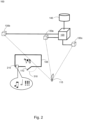
- Figure 1 illustrates a scenario at an agricultural environment 100 , such as a barn, a milking hall, a stable, etc.
- the agricultural environment 100 comprises an agricultural structure 105 comprising a moving part 110 .
- the agricultural structure 105 with the moving part 110 may be e.g. a robot having a moving arm, a mixer wagon with a rotating auger, a milking parlour with a rotating platform, or a fence with a gate.
- the agricultural structure 105 may be stationary in some embodiments.
- the agricultural environment 100 also comprises an infrastructure for positioning of a locational device 115 , sometimes also referred to as a wireless tag.
- the locational device 115 may comprise a transponder, such as a Radio-Frequency Identification (RFID) device in some embodiments.
- the transponder may comprise electronically stored information, e.g. concerning an entity associated with the locational device 115.
- RFID Radio-Frequency Identification
- Such transponder may be active or passive.
- An active transponder comprises, or is attached to, a local power source such as a battery and may operate at hundreds of meters from signal receivers 130a, 130b, 130c.
- a passive transponder collect energy from a nearby signal receiver's 130a, 130b, 130c interrogating radio waves. Thereby, no local power source is required in a passive transponder.
- the locational device 115 may emit radio signals to be received by a plurality of signal receivers 130a, 130b, 130c, situated at known positions, i.e. fixed reference points in the agricultural environment 100.
- a plurality of signal receivers 130a, 130b, 130c situated at known positions, i.e. fixed reference points in the agricultural environment 100.
- four signal receivers 130a, 130b, 130c may be utilised, each positioned in a corner of the agricultural environment 100/ barn. This is however only a non-limiting example, another number of signal receivers 130a, 130b, 130c may be comprised in other embodiments.
- the control unit 120 and the signal receivers 130a, 130b, 130c may form a Real-Time Locating Systems (RTLS) used to automatically identify and track the location of the locational device 115.
- RTLS Real-Time Locating Systems
- the emitted radio signals of the locational device 115 may be based on various different technologies in different embodiments, such as e.g. Ultra-Wideband (UWB), Bluetooth, WiFi, etc.
- UWB Ultra-Wideband
- Bluetooth Wireless Fidelity
- WiFi Wireless Fidelity
- UWB technology for positioning may bring a number of advantages, such as long range and high accuracy, allowing the position of the locational device 115 to be determined to a high degree of accuracy, e.g. at centimetre level.
- UWB radio waves may penetrate walls and other obstacles in the agricultural environment 100.
- UWB radio signals typically do not interfere/ disturb radio signals used for wireless communication, as the UWB transmission may be made using low transmission power. This means that other wireless communication devices may perceive the UWB signals as noise and filter it out.
- a control unit 120 may then, based on trilateration, multi-lateration, or triangulation determine the current position of the locational device 115.
- multi-lateration techniques may comprise, or be based on e.g. Time Difference of Arrival (TDOA) and Received Signal Strength Indicator (RSSI) techniques.
- TDOA Time Difference of Arrival
- RSSI Received Signal Strength Indicator
- TOA Time Of Arrival
- AOA Angle Of Arrival
- AOA AOA at a signal receiver 130a, 130b, 130c can be determined by the use of a directional antenna, or by differential time of arrival at an array of antennas with known location.
- AOA information may be combined with distance estimates from the techniques previously described to establish the location of the locational device 115.
- the AOA at two (or more) signal receivers 130a, 130b, 130c of known location establishes the position of the locational device 115.
- the position of the locational device 115 may be determined in two dimensions (2D), or three dimensions (3D) in different embodiments.
- the control unit 120 may be connected to a database 140, where information concerning location of the stationary agricultural structure 105 with the moving part 110, which may have a fixed, determined position within the agricultural environment 100, is stored. Also, one or more threshold limits may be stored in the database 140, which will be further discussed later in this document.
- control unit 120 may comprise or be connected to a transceiver 125 , configured to transmit and receive wireless signals to/ from the signal receivers 130a, 130b, 130c, the database 140 and/ or a portable electronic device 150 over a wireless communication interface.
- Such wireless communication interface may comprise, or at least be inspired by wireless communication technology such as Wi-Fi, Wireless Local Area Network (WLAN), Ultra Mobile Broadband (UMB), Bluetooth (BT) to name but a few possible examples of wireless communications in some embodiments.
- the communication may alternatively be made over a wireless interface comprising, or at least being inspired by radio access technologies such as e.g.
- TDMA Time Division Multiple Access
- FDMA Frequency Division Multiple Access
- OFDMA Orthogonal FDMA
- SC-FDMA Single-Carrier FDMA
- the communication between the control unit 120, the signal receivers 130a, 130b, 130c, the database 140, the transceiver 125 and/ or the portable electronic device 150 may alternatively be made over a wired connection.
- the portable electronic device 150 may comprise e.g. a cellular mobile telephone, a stationary or portable computing device, a computer tablet, a pair of intelligent glasses, a smart contact lens, an augmented reality device, a smart watch or similar device having a user interface and wireless communication ability.
- a cellular mobile telephone e.g. a cellular mobile telephone, a stationary or portable computing device, a computer tablet, a pair of intelligent glasses, a smart contact lens, an augmented reality device, a smart watch or similar device having a user interface and wireless communication ability.
- the portable electronic device 150 may belong to a human user, i.e. a farmer, service supplier, veterinarian or similar person working at, or temporarily visiting the agricultural environment 100.
- the user may however be any human working on or visiting the agricultural environment 100, such as e.g. a veterinarian, agronomist, biologist, zoologist, ecologist, mammologist, domestic animal researcher or other similar human who temporarily is visiting the farm.
- a veterinarian e.g. a veterinarian, agronomist, biologist, zoologist, ecologist, mammologist, domestic animal researcher or other similar human who temporarily is visiting the farm.
- the locational device 115 may be associated with the human user.
- the locational device 115 may for example be comprised in the cloths, boots or cap of the user; be carried in a pocket, in a neck collar, operated under the skin of the user, etc.
- the portable electronic device 150 of the human user may also be associated with the locational device 115.
- the control unit 120 based on radio signals emitted by the locational device 115, perceived by the signal receivers 130a, 130b, 130c may determine position of the locational device 115, and thereby also of the human user.
- the position of the agricultural structure 105 may be previously stored in the database 140. Further, the control unit 120 may determine the distance between the agricultural structure 105 and the locational device 115. This determined distance may be compared with a threshold limit (predetermined or configurable), and when the determined distance is smaller than the threshold limit an accident avoidance measure is triggered.
- a threshold limit predetermined or configurable
- the accident avoidance measure may be for example to output an alert when the determined distance is smaller than the threshold limit.
- the alert may be outputted on the portable electronic device 150 in some embodiments, as illustrated in Figure 1 , by outputting audio information, visual information and/ or tactile information. However, the alert may be outputted on another alert device, mounted in the agricultural environment 100.
- the accident avoidance measure may in some embodiments comprise deactivating the moving part 110 of the agricultural structure 105 when the determined distance is smaller than the threshold limit.
- Figure 2 illustrates another example of the agricultural environment 100.
- the agricultural structure 105 comprises a fence and the moving part 110 may comprise a gate, which e.g. may be automatically or remotely opened/ closed.
- the fence may be stationary.
- An alerting device 210 may be arranged in the agricultural environment 100, at or close to the agricultural structure 105 and/ or its moving part 110 according to some embodiments.
- the alerting device 210 may be represented by a lamp, diode or similar configured to emit light signals and/ or flashing light signals. Alternatively, or additionally in different embodiments, the alerting device 210 may be represented by a loudspeaker, or similar entity configured to emit an audio alert, such as a sound, a tone, a spoken message, etc. Further, the alerting device 210 may comprise, or additionally comprise a haptic device for emitting tactile signals, i.e. vibrations.
- the alert may also, additionally or alternatively be outputted on the portable electronic device 150 of the user, i.e. the alerting device 210 may comprise the portable electronic device 150 in some embodiments.
- Figure 3 illustrates yet another example of the agricultural environment 100, as regarded from above in a bird's eye view.
- the agricultural structure 105 which may be stationary, comprises a machine, robot or similar, and the moving part 110 may comprise a tool, an arm, etc., which e.g. may be automatically or remotely operated.
- the human user 200 is carrying the locational device 115 and is moving towards the agricultural structure 105 and the moving part 110.
- One or several threshold limits 310 may be defined.
- the current position of the human user 200 (or in fact rather the locational device 115) may be continuously surveyed, a distance between the human user 200/ locational device 115 and the agricultural structure 105 may be computed. This computed distance may then be compared with the one or more threshold limits 310.
- a plurality of threshold limits 310 may be applied, such as a first threshold limit 310a.
- a first threshold limit 310a When the distance between the human user 200/ locational device 115 and the agricultural structure 105 is smaller than the first threshold limit 310a, an alert may be triggered, e.g. by the alerting device 210.
- a second threshold limit 310b may be defined, wherein the second threshold limit 310b is smaller than the first threshold limit 310a.
- the agricultural structure 105 may be deactivated.
- threshold limits 310 may be applied, which may trigger alerts with increasing intensity/ sound.
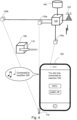
- the human user 200 may utilise the portable electronic device 150 for communicating with and perform various operations on the agricultural structure 105/ the moving part 110.
- An advantage therewith is that a separate command panel of the agricultural structure 105 may be omitted, which saves resources.
- a third threshold limit 310c may be defined, wherein the third threshold limit 310c exceeds the second threshold limit 310b and possibly also the first threshold limit 310a.
- a connection may be made over a wireless communication interface, such as e.g. Bluetooth, ZigBee, infrared transmission, Wi-Fi, Light Fidelity (Li-Fi), ANT+, Near Field Communication (NFC), Z-Wave, Wireless Universal Serial Bus (Wireless USB), etc.
- a wireless communication interface such as e.g. Bluetooth, ZigBee, infrared transmission, Wi-Fi, Light Fidelity (Li-Fi), ANT+, Near Field Communication (NFC), Z-Wave, Wireless Universal Serial Bus (Wireless USB), etc.
- a confirmation of the made connection may be outputted to the human user 200, e.g. on the portable electronic device 150.
- the human user 200 is thereby informed that he/ she is connected to the agricultural structure 105 and that he/ she may perform various actions influencing the agricultural structure 105.
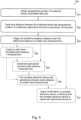
- Figure 5 illustrates an example of a method 500 according to an embodiment.
- the flow chart in Figure 5 shows the method 500 performed in an agricultural environment 100, to trigger an accident avoidance measure.
- the agricultural environment 100 comprises an agricultural structure 105 comprising a moving part 110.
- the agricultural environment 100 may be stationary.
- the agricultural structure 105 may be represented by any of : a robot having a moving arm, a mixer wagon with a rotating auger, a milking parlour with a rotating platform or a fence with a gate.
- the method 500 may comprise a number of steps 501-507. However, some of these steps 501-507 may be performed solely in some alternative embodiments, like e.g. steps 504- 507. Further, the described steps 501-507 may be performed in a somewhat different chronological order than the numbering suggests; step 502 may for example be performed simultaneously with step 501.
- the method 500 may comprise the subsequent steps: Step 501 comprises obtaining a geographical position of a locational device 115, associated with a human user 200.
- the locational device 115 may also be associated with a portable electronic device 150, configured to adjust a parameter of the agricultural structure 105, in some embodiments.
- the geographical position of the locational device 115 may be determined in two dimensions, or three dimensions in different embodiments.
- Step 502 comprises determining a distance between the obtained 501 geographical position of the locational device 115 and a geographical position of an agricultural structure 105 comprising a moving part 110.
- the locational device identity associated with the locational device 115, and the geographical position of the agricultural structure 105, respectively, may be stored in, and retrieved from a database 140.
- the geographical position of the agricultural structure 105 may be stored in the database 140 upon installation in some embodiments.
- the agricultural structure 105 and/ or the moving part 110 may alternatively comprise a locational device and the control unit 120 may be configured to continuously; upon request by the human user 200 or at predetermined or configurable time interval determine the geographical position of the agricultural structure 105 and/ or the moving part 110.
- the position of the locational device 115, and/ or the agricultural structure 105 may be determined by a locating algorithm, based on trilateration, multi-lateration, or triangulation in different embodiments.
- Step 503 comprises triggering an accident avoidance measure when the determined 502 distance is smaller than a threshold limit 31 0a, 310b, 310c.
- the accident avoidance measure may comprise e.g. emitting an alert, deactivating the moving part 110 of the agricultural structure 105, deactivating the agricultural structure 105, etc.
- Step 504 which may be performed only in some particular embodiments, wherein the accident avoidance measure comprises outputting an alert for warning the human user 200 when the determined 502 distance is smaller than the threshold limit 310a.
- Step 505 which may be performed only in some particular embodiments, wherein the accident avoidance measure comprises deactivating the moving part 110 of the agricultural structure 105 when the determined 502 distance is smaller than the threshold limit 310b.
- Step 506 which may be performed only in some particular embodiments, wherein the accident avoidance measure comprises pairing the portable electronic device 150 with the agricultural structure 105 when the determined 502 distance is smaller than the threshold limit 310c, thereby enabling the portable electronic device 150 to adjust the parameter of the agricultural structure 105.
- the agricultural environment 100 may comprise a plurality of agricultural structures 105, which may be operated by the portable electronic device 150. Thanks to enable pairing of the agricultural structure 105 and the portable electronic device 150 only within a certain minimum distance from the agricultural structure 105, it is avoided that the human user 200, when intending to perform operations on a first agricultural structure 105 via the portable electronic device 150, instead perform operations on a second agricultural structure 105, which may cause an accident. Thereby, a more secure working environment is created and accidents may be avoided or at least reduced.
- Step 507 comprises outputting a confirmation on the portable electronic device 150, confirming that the portable electronic device 150 is paired 506 with the agricultural structure 105.
- the human user 200 is ascertained that he is enabled to perform operations on the agricultural structure 105.
- Figure 6 illustrates an embodiment of a system 600 in an agricultural environment 100.
- the system 600 may perform at least some of the previously described steps 501-507 according to the method 500 described above and illustrated in Figure 5 .
- the system 600 comprises an agricultural structure 105 comprising a moving part 110. Further, the system 600 also comprises a locational device 115, associated with a human user 200. Also, the system 600 furthermore comprises a set of wireless signal receivers 130a, 130b, 130c, configured to receive wireless signals from the locational device 115.
- the agricultural structure 105 comprising the moving part 110 may be represented by any of: a robot having a moving arm, a mixer wagon with a rotating auger, a milking parlour with a rotating platform or a fence with a gate.
- the locational device 115 may be associated with a portable electronic device 150 in some embodiments, configured to adjust a parameter of the agricultural structure 105.
- the system 600 also comprises a control unit 120.
- the control unit 120 is configured to obtain geographical position of the locational device 115. Further, the control unit 120 is configured to determine a distance between the geographical position of the locational device 115 and the agricultural structure 105. In addition, the control unit 120 is configured to trigger an accident avoidance measure when the determined distance is smaller than a threshold limit 310a, 310b, 310c.
- the control unit 120 in the system 600 may in some embodiments be configured to deactivate the moving part 110 of the agricultural structure 105 when the determined distance is smaller than the threshold limit 310b, when the accident avoidance measure comprises deactivating the agricultural structure 105.
- control unit 120 of the system 600 may be configured to determine the position of the locational device 115 based on trilateration, multi-lateration, or triangulation.
- control unit 120 of the system 600 may be configured to output a confirmation via the portable electronic device 150, confirming that the portable electronic device 150 is paired with the agricultural structure 105.
- the control unit 120 may be configured to pair the portable electronic device 150 with the agricultural structure 105 when the determined distance is smaller than the threshold limit 310c, thereby enabling the portable electronic device 150 to adjust the parameter of the agricultural structure 105.
- the control unit 120 may comprise a receiver 610 configured for receiving information from the set of wireless signal receivers 130-1, 130-2, 130-3 and/ or the transceiver 125.
- the control unit 120 comprises a processing circuit 620 configured for performing various calculations for conducting the method 500 according to at least some of the previously described steps 501-507.
- Such processing circuit 620 may comprise one or more instances of a processing circuit, i.e. a Central Processing Unit (CPU), a processing unit, a processing circuit, a processor, an Application Specific Integrated Circuit (ASIC), a microprocessor, or other processing logic that may interpret and execute instructions.
- a processing circuit i.e. a Central Processing Unit (CPU), a processing unit, a processing circuit, a processor, an Application Specific Integrated Circuit (ASIC), a microprocessor, or other processing logic that may interpret and execute instructions.
- CPU Central Processing Unit
- ASIC Application Specific Integrated Circuit
- microprocessor may thus represent a processing circuitry comprising a plurality of processing circuits, such as, e.g., any, some or all of the ones enumerated above.
- control unit 120 may comprise a memory 625 in some embodiments.
- the optional memory 625 may comprise a physical device utilised to store data or programs, i.e., sequences of instructions, on a temporary or permanent basis.
- the memory 625 may comprise integrated circuits comprising silicon-based transistors.
- the memory 625 may comprise e.g. a memory card, a flash memory, a USB memory, a hard disc, or another similar volatile or non-volatile storage unit for storing data such as e.g. ROM (Read-Only Memory), PROM (Programmable Read-Only Memory), EPROM (Erasable PROM), EEPROM (Electrically Erasable PROM), etc. in different embodiments.
- control unit 120 may comprise a signal transmitter 630 .
- the signal transmitter 630 may be configured for transmitting signals via a wired or wireless communication interface to the transceiver 125 and/ or the database 140.
- the system 600 also may comprise an alerting device 210, configured to output an alert when the determined distance is smaller than the threshold limit 310a, 310b, 310c, when the accident avoidance measure comprises output of an alert.
- an alerting device 210 configured to output an alert when the determined distance is smaller than the threshold limit 310a, 310b, 310c, when the accident avoidance measure comprises output of an alert.
- the system 600 may furthermore comprise a database 140 configured to store a locational device identity associated with the locational device 115, and the geographical position of the agricultural structure 105, respectively in some embodiments.
- system 600 may comprise additional units for performing the method 500 according to steps 501-507.
- the above described steps 501-507 to be performed in the system 600 may be implemented through the one or more processing circuits 620 within the control unit 120, together with a computer program for performing at least some of the functions of the steps 501-507.
- the computer program comprises instructions which, when the computer program is executed by the control unit 120 in the system 600, cause the control unit 120 to carry out the method 500 according to at least some of steps 501-507.
- the computer program mentioned above may be provided for instance in the form of a computer-readable medium, i.e. a data carrier carrying computer program code for performing at least some of the steps 501-507 according to some embodiments when being loaded into the one or more processing circuits 620 of the control unit 120.
- the data carrier may be, e.g., a hard disk, a CD ROM disc, a memory stick, an optical storage device, a magnetic storage device or any other appropriate medium such as a disk or tape that may hold machine readable data in a non-transitory manner.
- the computer program may furthermore be provided as computer program code on a server and downloaded to the control unit 120 remotely, e.g. over an Internet or an intranet connection.
- the term “and/ or” comprises any and all combinations of one or more of the associated listed items.
- the term “or” as used herein, is to be interpreted as a mathematical OR, i.e., as an inclusive disjunction; not as a mathematical exclusive OR (XOR), unless expressly stated otherwise.
- the singular forms “a”, “an” and “the” are to be interpreted as “at least one”, thus also possibly comprising a plurality of entities of the same kind, unless expressly stated otherwise.
Landscapes
- Engineering & Computer Science (AREA)
- Computer Networks & Wireless Communication (AREA)
- Signal Processing (AREA)
- Business, Economics & Management (AREA)
- Health & Medical Sciences (AREA)
- Emergency Management (AREA)
- Environmental & Geological Engineering (AREA)
- Public Health (AREA)
- Management, Administration, Business Operations System, And Electronic Commerce (AREA)
- Catching Or Destruction (AREA)
Description
- This document discloses a method and a system. More particularly, a method and a system are described, for enhancing security in an agricultural environment.
- In many agricultural activities, such as e.g. on dairy farms, there may be many dangerous machines with moving parts, (autonomous) vehicles, and robots. Several advanced security systems exist for preventing accidents. One example is described in document
US 2016/062345 A1 which discloses techniques for making a physical area safe for a human to enter when mobile drive units are operating in the physical area. A management device sends activity commands to the mobile drive units instructing them to perform activities. If a human is detected in the physical area, the management device may stop sending activity commands. -
US 2010/0026509 A1 discloses an approach warning system with a first near-field device which is associated with an object with a metal outer structure and a second near-field device which is associated with a person. The first and the second near-field devices form a transmission link for an electric near field and a warning device outputs an approach warning signal when the person with the second near-field device enters a detection region in which the near field is transmitted via a transmission link. -
US 2008/0125908 A1 discloses an industrial robot system including at least one industrial robot including a manipulator and a portable operator control device. A detecting unit detects when the portable operator control device enters an area defined in the vicinity of the manipulator. -
EP 2 719 275 A1 discloses a method for operation of a timber-working device to which is associated a hazard zone. The described method comprises receiving a wireless signal indicating a location of at an object tracking device. The location of the object tracking device is determined relative to the hazard zone of the timber-working device. A recommended operation of the timber-working device is determined based on the location of the object tracking device relative to the hazard zone. - Yet, it would be desired to further enhance security in agricultural environments by providing supplementary security solutions.
- A recently emerging problem may be that many smart phone users, including farmers, service technicians and locum tenens working on a farm are occupied/ distracted by their smart phone, e.g. by augmented reality applications and similar captive programs and/ or games. In such situation when the user is distracted, an accident may occur more easily.
- Another problem with robots and autonomously operating machines in combination with animals is that the animals may distract the farmer.
- Agricultural machines may be surrounded e.g. by light grids for switching off the machine when a farmer or animal is intersecting the light beam. However, it would be desired to develop an alternative or supplementary solution for enhancing security on a farm for eliminating or at least reducing accidents caused by robots/ machines and humans on a farm.
- It is therefore an object of this invention to further increase security on a farm by providing a supplementary security system.
- According to a first aspect of the invention, this objective is achieved by a system in an agricultural environment. The system comprises an agricultural structure comprising a moving part. Also, the system comprises a locational device, associated with a human user. Furthermore, the system also comprises a set of wireless signal receivers, configured to receive wireless signals from the locational device. The system further comprises a control unit. The control unit is configured to obtain geographical position of the locational device. Further, the control unit is configured to determine a distance between the geographical position of the locational device and the agricultural structure. The control unit is additionally configured to trigger an accident avoidance measure when the determined distance is smaller than a threshold limit and to pair the portable electronic device with the agricultural structure when the determined distance is smaller than an additional threshold limit, thereby enabling the portable electronic device to adjust a parameter of the agricultural structure.
- According to a second aspect of the invention, this objective is achieved by a method in an agricultural environment. The method comprises the steps of obtaining a geographical position of a locational device, associated with a human user. Further, the method also comprises determining a distance between the obtained geographical position of the locational device and a geographical position of an agricultural structure comprising a moving part. The method additionally comprises triggering an accident avoidance measure when the determined distance is smaller than a threshold limit and pairing the portable electronic device with the agricultural structure when the determined distance is smaller than an additional threshold limit, thereby enabling the portable electronic device to adjust a parameter of the agricultural structure.
- Thanks to the described aspects, by determining the current position of the user and continuously keep track on the distance between the user and the agricultural structure, i.e. dangerous machine, and trigger an action for avoiding an accident when the user comes too close, i.e. closer than a threshold limit, an accident may be avoided.
- The disclosed solution is not disturbed by animals etc., in the barn, and security is enhanced in the agricultural environment. Thanks to the described method, accidents involving the farmer may be avoided or even completely omitted.
- Other advantages and additional novel features will become apparent from the subsequent detailed description.
- Embodiments of the invention will now be described in further detail with reference to the accompanying figures, in which:
- Figure 1
- illustrates an example of an agricultural environment and an accident avoidance system, according to an embodiment of the invention;
- Figure 2
- illustrates an example of an agricultural environment and an accident avoidance system, according to an embodiment of the invention;
- Figure 3
- illustrates an example of an agricultural environment and an accident avoidance system, according to an embodiment of the invention;
- Figure 4
- illustrates an example of an agricultural environment and an accident avoidance system, according to an embodiment of the invention;
- Figure 5
- is a flow chart illustrating an embodiment of a method;
- Figure 6
- is an illustration depicting a system according to an embodiment.
- Embodiments of the invention described herein are defined as a method, and a system, which may be put into practice in the embodiments described below. These embodiments may, however, be exemplified and realised in many different forms and are not to be limited to the examples set forth herein; rather, these illustrative examples of embodiments are provided so that this disclosure will be thorough and complete.
- Still other objects and features may become apparent from the following detailed description, considered in conjunction with the accompanying drawings. It is to be understood, however, that the drawings are designed solely for purposes of illustration and not as a definition of the limits of the herein disclosed embodiments, for which reference is to be made to the appended claims. Further, the drawings are not necessarily drawn to scale and, unless otherwise indicated, they are merely intended to conceptually illustrate the structures and procedures described herein.
-
Figure 1 illustrates a scenario at anagricultural environment 100, such as a barn, a milking hall, a stable, etc. Theagricultural environment 100 comprises anagricultural structure 105 comprising a movingpart 110. Theagricultural structure 105 with the movingpart 110 may be e.g. a robot having a moving arm, a mixer wagon with a rotating auger, a milking parlour with a rotating platform, or a fence with a gate. Theagricultural structure 105 may be stationary in some embodiments. - The
agricultural environment 100 also comprises an infrastructure for positioning of alocational device 115, sometimes also referred to as a wireless tag. - The
locational device 115 may comprise a transponder, such as a Radio-Frequency Identification (RFID) device in some embodiments. The transponder may comprise electronically stored information, e.g. concerning an entity associated with thelocational device 115. Such transponder may be active or passive. An active transponder comprises, or is attached to, a local power source such as a battery and may operate at hundreds of meters fromsignal receivers - In some embodiments, the
locational device 115 may emit radio signals to be received by a plurality ofsignal receivers agricultural environment 100. In some embodiments, foursignal receivers agricultural environment 100/ barn. This is however only a non-limiting example, another number ofsignal receivers - The
control unit 120 and thesignal receivers locational device 115. - The emitted radio signals of the
locational device 115 may be based on various different technologies in different embodiments, such as e.g. Ultra-Wideband (UWB), Bluetooth, WiFi, etc. - Utilising UWB technology for positioning may bring a number of advantages, such as long range and high accuracy, allowing the position of the
locational device 115 to be determined to a high degree of accuracy, e.g. at centimetre level. Further, UWB radio waves may penetrate walls and other obstacles in theagricultural environment 100. In addition, UWB radio signals typically do not interfere/ disturb radio signals used for wireless communication, as the UWB transmission may be made using low transmission power. This means that other wireless communication devices may perceive the UWB signals as noise and filter it out. - A
control unit 120 may then, based on trilateration, multi-lateration, or triangulation determine the current position of thelocational device 115. - Some examples of multi-lateration techniques may comprise, or be based on e.g. Time Difference of Arrival (TDOA) and Received Signal Strength Indicator (RSSI) techniques. Another technique may use the Time Of Arrival (TOA), when the time of transmission and speed of propagation are known. Combining TOA data from
several signal receivers signal receiver locational device 115. Alternatively, the AOA at two (or more)signal receivers locational device 115. - The position of the
locational device 115 may be determined in two dimensions (2D), or three dimensions (3D) in different embodiments. - The
control unit 120 may be connected to adatabase 140, where information concerning location of the stationaryagricultural structure 105 with the movingpart 110, which may have a fixed, determined position within theagricultural environment 100, is stored. Also, one or more threshold limits may be stored in thedatabase 140, which will be further discussed later in this document. - Further, the
control unit 120 may comprise or be connected to atransceiver 125, configured to transmit and receive wireless signals to/ from thesignal receivers database 140 and/ or a portableelectronic device 150 over a wireless communication interface. - Such wireless communication interface may comprise, or at least be inspired by wireless communication technology such as Wi-Fi, Wireless Local Area Network (WLAN), Ultra Mobile Broadband (UMB), Bluetooth (BT) to name but a few possible examples of wireless communications in some embodiments. The communication may alternatively be made over a wireless interface comprising, or at least being inspired by radio access technologies such as e.g. 3GPP LTE, LTE-Advanced, E-UTRAN, UMTS, GSM, GSM/ EDGE, WCDMA, Time Division Multiple Access (TDMA) networks, Frequency Division Multiple Access (FDMA) networks, Orthogonal FDMA (OFDMA) networks, Single-Carrier FDMA (SC-FDMA) networks, Worldwide Interoperability for Microwave Access (WiMax), or Ultra Mobile Broadband (UMB), High Speed Packet Access (HSPA) Evolved Universal Terrestrial Radio Access (E-UTRA), Universal Terrestrial Radio Access (UTRA), GSM EDGE Radio Access Network (GERAN), 3GPP2 CDMA technologies, e.g., CDMA2000 1x RTT and High Rate Packet Data (HRPD), or similar, just to mention some few options, via a wireless communication network.
- The communication between the
control unit 120, thesignal receivers database 140, thetransceiver 125 and/ or the portableelectronic device 150 may alternatively be made over a wired connection. - The portable
electronic device 150 may comprise e.g. a cellular mobile telephone, a stationary or portable computing device, a computer tablet, a pair of intelligent glasses, a smart contact lens, an augmented reality device, a smart watch or similar device having a user interface and wireless communication ability. - The portable
electronic device 150 may belong to a human user, i.e. a farmer, service supplier, veterinarian or similar person working at, or temporarily visiting theagricultural environment 100. - The user may however be any human working on or visiting the
agricultural environment 100, such as e.g. a veterinarian, agronomist, biologist, zoologist, ecologist, mammologist, domestic animal researcher or other similar human who temporarily is visiting the farm. - The
locational device 115 may be associated with the human user. Thelocational device 115 may for example be comprised in the cloths, boots or cap of the user; be carried in a pocket, in a neck collar, operated under the skin of the user, etc. - In some embodiments, the portable
electronic device 150 of the human user may also be associated with thelocational device 115. - The
control unit 120, based on radio signals emitted by thelocational device 115, perceived by thesignal receivers locational device 115, and thereby also of the human user. The position of theagricultural structure 105 may be previously stored in thedatabase 140. Further, thecontrol unit 120 may determine the distance between theagricultural structure 105 and thelocational device 115. This determined distance may be compared with a threshold limit (predetermined or configurable), and when the determined distance is smaller than the threshold limit an accident avoidance measure is triggered. - The accident avoidance measure may be for example to output an alert when the determined distance is smaller than the threshold limit. The alert may be outputted on the portable
electronic device 150 in some embodiments, as illustrated inFigure 1 , by outputting audio information, visual information and/ or tactile information. However, the alert may be outputted on another alert device, mounted in theagricultural environment 100. - The accident avoidance measure may in some embodiments comprise deactivating the moving
part 110 of theagricultural structure 105 when the determined distance is smaller than the threshold limit. -
Figure 2 illustrates another example of theagricultural environment 100. In this embodiment, theagricultural structure 105 comprises a fence and the movingpart 110 may comprise a gate, which e.g. may be automatically or remotely opened/ closed. The fence may be stationary. - An
alerting device 210 may be arranged in theagricultural environment 100, at or close to theagricultural structure 105 and/ or its movingpart 110 according to some embodiments. - The alerting
device 210 may be represented by a lamp, diode or similar configured to emit light signals and/ or flashing light signals. Alternatively, or additionally in different embodiments, the alertingdevice 210 may be represented by a loudspeaker, or similar entity configured to emit an audio alert, such as a sound, a tone, a spoken message, etc. Further, the alertingdevice 210 may comprise, or additionally comprise a haptic device for emitting tactile signals, i.e. vibrations. - As already mentioned above, the alert may also, additionally or alternatively be outputted on the portable
electronic device 150 of the user, i.e. the alertingdevice 210 may comprise the portableelectronic device 150 in some embodiments. -
Figure 3 illustrates yet another example of theagricultural environment 100, as regarded from above in a bird's eye view. In this embodiment, theagricultural structure 105, which may be stationary, comprises a machine, robot or similar, and the movingpart 110 may comprise a tool, an arm, etc., which e.g. may be automatically or remotely operated. - The
human user 200 is carrying thelocational device 115 and is moving towards theagricultural structure 105 and the movingpart 110. One orseveral threshold limits 310 may be defined. - Thus, the current position of the human user 200 (or in fact rather the locational device 115) may be continuously surveyed, a distance between the
human user 200/locational device 115 and theagricultural structure 105 may be computed. This computed distance may then be compared with the one or more threshold limits 310. - In some embodiments, a plurality of
threshold limits 310 may be applied, such as afirst threshold limit 310a. When the distance between thehuman user 200/locational device 115 and theagricultural structure 105 is smaller than thefirst threshold limit 310a, an alert may be triggered, e.g. by the alertingdevice 210. - Further, a
second threshold limit 310b may be defined, wherein thesecond threshold limit 310b is smaller than thefirst threshold limit 310a. When the distance between thehuman user 200/locational device 115 and theagricultural structure 105 is smaller than thesecond threshold limit 310b, theagricultural structure 105 may be deactivated. - Thereby, an increasing level of security may be applied, depending on how close the
human user 200 is to the agricultural structure 105 (or the moving part 110), which is an advantage as it may be avoided to close down theagricultural structure 105/ the movingpart 110 unless thehuman user 200 is approaching so close to theagricultural structure 105/ the movingpart 110 that it becomes an acute dangerous situation. - Further,
more threshold limits 310 may be applied, which may trigger alerts with increasing intensity/ sound. - In some cases, the
human user 200 may utilise the portableelectronic device 150 for communicating with and perform various operations on theagricultural structure 105/ the movingpart 110. An advantage therewith is that a separate command panel of theagricultural structure 105 may be omitted, which saves resources. - This situation is further illustrated in
Figure 4 . Thus, athird threshold limit 310c may be defined, wherein thethird threshold limit 310c exceeds thesecond threshold limit 310b and possibly also thefirst threshold limit 310a. When the distance between thehuman user 200/locational device 115 and theagricultural structure 105 is smaller than thethird threshold limit 310c, a connection may be made over a wireless communication interface, such as e.g. Bluetooth, ZigBee, infrared transmission, Wi-Fi, Light Fidelity (Li-Fi), ANT+, Near Field Communication (NFC), Z-Wave, Wireless Universal Serial Bus (Wireless USB), etc. - A confirmation of the made connection may be outputted to the
human user 200, e.g. on the portableelectronic device 150. Thehuman user 200 is thereby informed that he/ she is connected to theagricultural structure 105 and that he/ she may perform various actions influencing theagricultural structure 105. -
Figure 5 illustrates an example of amethod 500 according to an embodiment. The flow chart inFigure 5 shows themethod 500 performed in anagricultural environment 100, to trigger an accident avoidance measure. - The
agricultural environment 100 comprises anagricultural structure 105 comprising a movingpart 110. Theagricultural environment 100 may be stationary. Theagricultural structure 105 may be represented by any of : a robot having a moving arm, a mixer wagon with a rotating auger, a milking parlour with a rotating platform or a fence with a gate. - In order to correctly trigger the accident avoidance measure, the
method 500 may comprise a number of steps 501-507. However, some of these steps 501-507 may be performed solely in some alternative embodiments, like e.g. steps 504- 507. Further, the described steps 501-507 may be performed in a somewhat different chronological order than the numbering suggests; step 502 may for example be performed simultaneously withstep 501. Themethod 500 may comprise the subsequent steps:
Step 501 comprises obtaining a geographical position of alocational device 115, associated with ahuman user 200. - The
locational device 115 may also be associated with a portableelectronic device 150, configured to adjust a parameter of theagricultural structure 105, in some embodiments. - The geographical position of the
locational device 115 may be determined in two dimensions, or three dimensions in different embodiments. - Step 502 comprises determining a distance between the obtained 501 geographical position of the
locational device 115 and a geographical position of anagricultural structure 105 comprising a movingpart 110. - The locational device identity associated with the
locational device 115, and the geographical position of theagricultural structure 105, respectively, may be stored in, and retrieved from adatabase 140. - The geographical position of the
agricultural structure 105 may be stored in thedatabase 140 upon installation in some embodiments. Theagricultural structure 105 and/ or the movingpart 110 may alternatively comprise a locational device and thecontrol unit 120 may be configured to continuously; upon request by thehuman user 200 or at predetermined or configurable time interval determine the geographical position of theagricultural structure 105 and/ or the movingpart 110. - The position of the
locational device 115, and/ or theagricultural structure 105 may be determined by a locating algorithm, based on trilateration, multi-lateration, or triangulation in different embodiments. - Step 503 comprises triggering an accident avoidance measure when the determined 502 distance is smaller than a threshold limit 31 0a, 310b, 310c.
- The accident avoidance measure may comprise e.g. emitting an alert, deactivating the moving
part 110 of theagricultural structure 105, deactivating theagricultural structure 105, etc. -
Step 504, which may be performed only in some particular embodiments, wherein the accident avoidance measure comprises outputting an alert for warning thehuman user 200 when the determined 502 distance is smaller than thethreshold limit 310a. -
Step 505, which may be performed only in some particular embodiments, wherein the accident avoidance measure comprises deactivating the movingpart 110 of theagricultural structure 105 when the determined 502 distance is smaller than thethreshold limit 310b. -
Step 506, which may be performed only in some particular embodiments, wherein the accident avoidance measure comprises pairing the portableelectronic device 150 with theagricultural structure 105 when the determined 502 distance is smaller than thethreshold limit 310c, thereby enabling the portableelectronic device 150 to adjust the parameter of theagricultural structure 105. - The
agricultural environment 100 may comprise a plurality ofagricultural structures 105, which may be operated by the portableelectronic device 150. Thanks to enable pairing of theagricultural structure 105 and the portableelectronic device 150 only within a certain minimum distance from theagricultural structure 105, it is avoided that thehuman user 200, when intending to perform operations on a firstagricultural structure 105 via the portableelectronic device 150, instead perform operations on a secondagricultural structure 105, which may cause an accident. Thereby, a more secure working environment is created and accidents may be avoided or at least reduced. -
Step 507, which may be performed only in some particular embodiments, comprises outputting a confirmation on the portableelectronic device 150, confirming that the portableelectronic device 150 is paired 506 with theagricultural structure 105. - Thanks to the outputted confirmation, the
human user 200 is ascertained that he is enabled to perform operations on theagricultural structure 105. -
Figure 6 illustrates an embodiment of asystem 600 in anagricultural environment 100. Thesystem 600 may perform at least some of the previously described steps 501-507 according to themethod 500 described above and illustrated inFigure 5 . - The
system 600 comprises anagricultural structure 105 comprising a movingpart 110. Further, thesystem 600 also comprises alocational device 115, associated with ahuman user 200. Also, thesystem 600 furthermore comprises a set ofwireless signal receivers locational device 115. - The
agricultural structure 105 comprising the movingpart 110 may be represented by any of: a robot having a moving arm, a mixer wagon with a rotating auger, a milking parlour with a rotating platform or a fence with a gate. - The
locational device 115 may be associated with a portableelectronic device 150 in some embodiments, configured to adjust a parameter of theagricultural structure 105. - The
system 600 also comprises acontrol unit 120. Thecontrol unit 120 is configured to obtain geographical position of thelocational device 115. Further, thecontrol unit 120 is configured to determine a distance between the geographical position of thelocational device 115 and theagricultural structure 105. In addition, thecontrol unit 120 is configured to trigger an accident avoidance measure when the determined distance is smaller than athreshold limit - The
control unit 120 in thesystem 600 may in some embodiments be configured to deactivate the movingpart 110 of theagricultural structure 105 when the determined distance is smaller than thethreshold limit 310b, when the accident avoidance measure comprises deactivating theagricultural structure 105. - Furthermore, in some embodiments, the
control unit 120 of thesystem 600 may be configured to determine the position of thelocational device 115 based on trilateration, multi-lateration, or triangulation. - Also, the
control unit 120 of thesystem 600 may be configured to output a confirmation via the portableelectronic device 150, confirming that the portableelectronic device 150 is paired with theagricultural structure 105. - The
control unit 120 may be configured to pair the portableelectronic device 150 with theagricultural structure 105 when the determined distance is smaller than thethreshold limit 310c, thereby enabling the portableelectronic device 150 to adjust the parameter of theagricultural structure 105. - The
control unit 120 may comprise areceiver 610 configured for receiving information from the set of wireless signal receivers 130-1, 130-2, 130-3 and/ or thetransceiver 125. - The
control unit 120 comprises aprocessing circuit 620 configured for performing various calculations for conducting themethod 500 according to at least some of the previously described steps 501-507. -
Such processing circuit 620 may comprise one or more instances of a processing circuit, i.e. a Central Processing Unit (CPU), a processing unit, a processing circuit, a processor, an Application Specific Integrated Circuit (ASIC), a microprocessor, or other processing logic that may interpret and execute instructions. The herein utilised expression "processor" may thus represent a processing circuitry comprising a plurality of processing circuits, such as, e.g., any, some or all of the ones enumerated above. - Furthermore, the
control unit 120 may comprise amemory 625 in some embodiments. Theoptional memory 625 may comprise a physical device utilised to store data or programs, i.e., sequences of instructions, on a temporary or permanent basis. According to some embodiments, thememory 625 may comprise integrated circuits comprising silicon-based transistors. Thememory 625 may comprise e.g. a memory card, a flash memory, a USB memory, a hard disc, or another similar volatile or non-volatile storage unit for storing data such as e.g. ROM (Read-Only Memory), PROM (Programmable Read-Only Memory), EPROM (Erasable PROM), EEPROM (Electrically Erasable PROM), etc. in different embodiments. - Further, the
control unit 120 may comprise asignal transmitter 630. Thesignal transmitter 630 may be configured for transmitting signals via a wired or wireless communication interface to thetransceiver 125 and/ or thedatabase 140. - In some alternative embodiments, the
system 600 also may comprise analerting device 210, configured to output an alert when the determined distance is smaller than thethreshold limit - The
system 600 may furthermore comprise adatabase 140 configured to store a locational device identity associated with thelocational device 115, and the geographical position of theagricultural structure 105, respectively in some embodiments. - However, in some alternative embodiments, the
system 600 may comprise additional units for performing themethod 500 according to steps 501-507. - The above described steps 501-507 to be performed in the
system 600 may be implemented through the one ormore processing circuits 620 within thecontrol unit 120, together with a computer program for performing at least some of the functions of the steps 501-507. Thus, the computer program comprises instructions which, when the computer program is executed by thecontrol unit 120 in thesystem 600, cause thecontrol unit 120 to carry out themethod 500 according to at least some of steps 501-507. - The computer program mentioned above may be provided for instance in the form of a computer-readable medium, i.e. a data carrier carrying computer program code for performing at least some of the steps 501-507 according to some embodiments when being loaded into the one or
more processing circuits 620 of thecontrol unit 120. The data carrier may be, e.g., a hard disk, a CD ROM disc, a memory stick, an optical storage device, a magnetic storage device or any other appropriate medium such as a disk or tape that may hold machine readable data in a non-transitory manner. The computer program may furthermore be provided as computer program code on a server and downloaded to thecontrol unit 120 remotely, e.g. over an Internet or an intranet connection. - The terminology used in the description of the embodiments as illustrated in the accompanying drawings is not intended to be limiting of the described
method 500; thecontrol unit 120; the computer program; thesystem 600 and/ or the computer-readable medium. Various changes, substitutions and/ or alterations may be made, without departing from invention embodiments as defined by the appended claims. - As used herein, the term "and/ or" comprises any and all combinations of one or more of the associated listed items. The term "or" as used herein, is to be interpreted as a mathematical OR, i.e., as an inclusive disjunction; not as a mathematical exclusive OR (XOR), unless expressly stated otherwise. In addition, the singular forms "a", "an" and "the" are to be interpreted as "at least one", thus also possibly comprising a plurality of entities of the same kind, unless expressly stated otherwise. It will be further understood that the terms "includes", "comprises", "including" and/ or "comprising", specifies the presence of stated features, actions, integers, steps, operations, elements, and/ or components, but do not preclude the presence or addition of one or more other features, actions, integers, steps, operations, elements, components, and/ or groups thereof. A single unit such as e.g. a processor may fulfil the functions of several items recited in the claims. The mere fact that certain measures or features are recited in mutually different dependent claims, illustrated in different figures or discussed in conjunction with different embodiments does not indicate that a combination of these measures or features cannot be used to advantage. A computer program may be stored/ distributed on a suitable medium, such as an optical storage medium or a solid-state medium supplied together with or as part of other hardware, but may also be distributed in other forms such as via Internet or other wired or wireless communication system.
Claims (11)
- A system (600) in an agricultural environment (100); wherein the system (600) comprises:a stationary agricultural structure (105) comprising a moving part (110), which is represented by any of: a robot having a moving arm, a milking parlour with a rotating platform, or a fence with a gate;a locational device (115), associated with a human user (200) and associated with a portable electronic device (150), configured to adjust a parameter of the stationary agricultural structure (105);a set of wireless signal receivers (130a, 130b, 130c), configured to receive wireless signals from the locational device (115);a control unit (120) configured to:obtain geographical position of the locational device (115); anddetermine a distance between the geographical position of the locational device (115) and the stationary agricultural structure (105);wherein the control unit is configured to:trigger an accident avoidance measure when the determined distance is smaller than a threshold limit (310a, 310b, 310c), wherein the accident avoidance measure comprises deactivating the moving part (110) of the stationary agricultural structure (105) when the determined distance is smaller than the threshold limit (310b); andpair the portable electronic device (150) with the stationary agricultural structure (105) when the determined distance is smaller than an additional threshold limit (310c), thereby enabling the portable electronic device (150) to adjust the parameter of the stationary agricultural structure (105).
- The system (600) according to claim 1, comprising an alerting device (210), configured to output an alert when the determined distance is smaller than the threshold limit (310a, 310b, 310c), when the accident avoidance measure comprises output of an alert.
- The system (600) according to any of claims 1-2, comprising a database (140) configured to store a locational device identity associated with the locational device (115), and the geographical position of the stationary agricultural structure (105), respectively.
- The system (600) according to any of claims 1-3, wherein the control unit (120) is configured to determine the position of the locational device (115) based on trilateration, multi-lateration, or triangulation.
- The system (600) according to any of claims 1 - 4, wherein the control unit (120) is configured to output a confirmation via the portable electronic device (150), confirming that the portable electronic device (150) is paired with the agricultural structure (105).
- A method (500) in an agricultural environment (100), wherein the method (500) comprises the steps of:obtaining (501) a geographical position of a locational device (115), associated with a human user (200) and associated with a portable electronic device (150);determining (502) a distance between the obtained (501) geographical position of the locational device (115) and a geographical position of a stationary agricultural structure (105) comprising a moving part (110), wherein the portable electronic device (150) is configured to adjust a parameter of the stationary agricultural structure (105), the stationary agricultural structure (105) comprising the moving part (110) being represented by any of: a robot having a moving arm, a milking parlour with a rotating platform or a fence with a gate;triggering (503) an accident avoidance measure when the determined (502) distance is smaller than a threshold limit (310a, 310b, 310c) wherein the accident avoidance measure comprises:deactivating (505) the moving part (110) of the stationary agricultural structure (105) when the determined (502) distance is smaller than the threshold limit (310b) and pairing (506) the portable electronic device (150) with the stationary agricultural structure (105) when the determined (502) distance is smaller than an additional threshold limit (310c), thereby enabling the portable electronic device (150) to adjust the parameter of the stationary agricultural structure (105).
- The method (500) according to claim 6, wherein the accident avoidance measure comprises:
outputting (504) an alert for warning the human user (200) when the determined (502) distance is smaller than the threshold limit (310a). - The method (500) according to any of claims 6 and 7, wherein a locational device identity associated with the locational device (115), and the geographical position of the stationary agricultural structure (105), respectively, are stored in, and retrieved from a database (140).
- The method (500) according to any of claims 6-8, wherein the position of the locational device (115) is determined (503) by a locating algorithm, based on trilateration, multilateration, or triangulation.
- The method (500) according to any of claims 6-9, wherein the accident avoidance measure comprises:
outputting (507) a confirmation on the portable electronic device (150), confirming that the portable electronic device (150) is paired (506) with the agricultural structure (105). - A computer program comprising instructions which, when the computer program is executed by the control unit (120) in the system (600) according to any of claims 1-5, cause the control unit (120) to carry out the method (500) according to any of claims 6-10.
Priority Applications (2)
| Application Number | Priority Date | Filing Date | Title |
|---|---|---|---|
| EP21198280.6A EP3955227B1 (en) | 2016-12-30 | 2017-12-22 | System for enhanced safety in an agricultural environment |
| EP21198283.0A EP3955228B1 (en) | 2016-12-30 | 2017-12-22 | System for enhanced safety in an agricultural environment |
Applications Claiming Priority (2)
| Application Number | Priority Date | Filing Date | Title |
|---|---|---|---|
| SE1651756 | 2016-12-30 | ||
| PCT/EP2017/084509 WO2018122199A1 (en) | 2016-12-30 | 2017-12-22 | Method and control unit for enhanced safety in an agricultural environment |
Related Child Applications (4)
| Application Number | Title | Priority Date | Filing Date |
|---|---|---|---|
| EP21198280.6A Division EP3955227B1 (en) | 2016-12-30 | 2017-12-22 | System for enhanced safety in an agricultural environment |
| EP21198280.6A Division-Into EP3955227B1 (en) | 2016-12-30 | 2017-12-22 | System for enhanced safety in an agricultural environment |
| EP21198283.0A Division EP3955228B1 (en) | 2016-12-30 | 2017-12-22 | System for enhanced safety in an agricultural environment |
| EP21198283.0A Division-Into EP3955228B1 (en) | 2016-12-30 | 2017-12-22 | System for enhanced safety in an agricultural environment |
Publications (3)
| Publication Number | Publication Date |
|---|---|
| EP3563360A1 EP3563360A1 (en) | 2019-11-06 |
| EP3563360B1 true EP3563360B1 (en) | 2023-08-09 |
| EP3563360B2 EP3563360B2 (en) | 2026-06-03 |
Family
ID=60957295
Family Applications (3)
| Application Number | Title | Priority Date | Filing Date |
|---|---|---|---|
| EP21198280.6A Active EP3955227B1 (en) | 2016-12-30 | 2017-12-22 | System for enhanced safety in an agricultural environment |
| EP17828921.1A Active EP3563360B2 (en) | 2016-12-30 | 2017-12-22 | Method and control unit for enhanced safety in an agricultural environment |
| EP21198283.0A Active EP3955228B1 (en) | 2016-12-30 | 2017-12-22 | System for enhanced safety in an agricultural environment |
Family Applications Before (1)
| Application Number | Title | Priority Date | Filing Date |
|---|---|---|---|
| EP21198280.6A Active EP3955227B1 (en) | 2016-12-30 | 2017-12-22 | System for enhanced safety in an agricultural environment |
Family Applications After (1)
| Application Number | Title | Priority Date | Filing Date |
|---|---|---|---|
| EP21198283.0A Active EP3955228B1 (en) | 2016-12-30 | 2017-12-22 | System for enhanced safety in an agricultural environment |
Country Status (4)
| Country | Link |
|---|---|
| EP (3) | EP3955227B1 (en) |
| DE (2) | DE202017007478U1 (en) |
| PL (2) | PL3955227T3 (en) |
| WO (1) | WO2018122199A1 (en) |
Families Citing this family (2)
| Publication number | Priority date | Publication date | Assignee | Title |
|---|---|---|---|---|
| IT202000006382A1 (en) * | 2020-03-26 | 2021-09-26 | Gipstech S R L | APPARATUS AND METHOD FOR LOCATING AN INDIVIDUAL WITH RESPECT TO A ZONE OF CONTROL |
| DK4294164T3 (en) * | 2021-02-18 | 2026-06-15 | Delaval Holding Ab | CONTROL ARRANGEMENT AND METHOD FOR CONTROLLING THE OPERATION OF MOBILE AGRICULTURAL EQUIPMENT |
Citations (10)
| Publication number | Priority date | Publication date | Assignee | Title |
|---|---|---|---|---|
| US20010035729A1 (en) | 2000-03-17 | 2001-11-01 | Dieter Graiger | Method of connecting a mobile control and/or monitoring unit to a machine and a control and/or monitoring unit for same |
| DE10216023A1 (en) | 2002-04-11 | 2003-11-06 | Fraunhofer Ges Forschung | A method for controlling the interface between a robot movement and a person within the working area has the operator fitted with transmitting units to establish a pattern of movements. |
| EP1479964A2 (en) | 2003-05-22 | 2004-11-24 | Safecom Engineering Ag | Secure remote control |
| DE102004048563A1 (en) | 2004-10-04 | 2006-04-13 | Benteler Automobiltechnik Gmbh | Monitoring system for an industrial robot prevents collision with objects within field of operation |
| EP1752702A1 (en) | 2005-08-05 | 2007-02-14 | Reis GmbH & Co. KG Maschinenfabrik | Method and system for monitoring collisions between robots and persons |
| WO2007093591A1 (en) | 2006-02-17 | 2007-08-23 | Abb Research Ltd. | An industrial robot system |
| US20080125908A1 (en) | 2004-11-04 | 2008-05-29 | Abb Ab | Industrial Robot System |
| US20100026509A1 (en) | 2007-09-04 | 2010-02-04 | Alfred Boehm | Approach warning system for detecting when a person approaches an object, particularly a machine |
| EP2719275A1 (en) * | 2012-10-10 | 2014-04-16 | Waratah NZ Limited | Method, apparatus, and system for controlling a timber-working device |
| US20160062345A1 (en) | 2014-08-29 | 2016-03-03 | Amazon Technologies, Inc. | Safety Compliance for Mobile Drive Units |
-
2017
- 2017-12-22 DE DE202017007478.8U patent/DE202017007478U1/en active Active
- 2017-12-22 PL PL21198280.6T patent/PL3955227T3/en unknown
- 2017-12-22 EP EP21198280.6A patent/EP3955227B1/en active Active
- 2017-12-22 DE DE202017007475.3U patent/DE202017007475U1/en active Active
- 2017-12-22 EP EP17828921.1A patent/EP3563360B2/en active Active
- 2017-12-22 PL PL21198283.0T patent/PL3955228T3/en unknown
- 2017-12-22 WO PCT/EP2017/084509 patent/WO2018122199A1/en not_active Ceased
- 2017-12-22 EP EP21198283.0A patent/EP3955228B1/en active Active
Patent Citations (10)
| Publication number | Priority date | Publication date | Assignee | Title |
|---|---|---|---|---|
| US20010035729A1 (en) | 2000-03-17 | 2001-11-01 | Dieter Graiger | Method of connecting a mobile control and/or monitoring unit to a machine and a control and/or monitoring unit for same |
| DE10216023A1 (en) | 2002-04-11 | 2003-11-06 | Fraunhofer Ges Forschung | A method for controlling the interface between a robot movement and a person within the working area has the operator fitted with transmitting units to establish a pattern of movements. |
| EP1479964A2 (en) | 2003-05-22 | 2004-11-24 | Safecom Engineering Ag | Secure remote control |
| DE102004048563A1 (en) | 2004-10-04 | 2006-04-13 | Benteler Automobiltechnik Gmbh | Monitoring system for an industrial robot prevents collision with objects within field of operation |
| US20080125908A1 (en) | 2004-11-04 | 2008-05-29 | Abb Ab | Industrial Robot System |
| EP1752702A1 (en) | 2005-08-05 | 2007-02-14 | Reis GmbH & Co. KG Maschinenfabrik | Method and system for monitoring collisions between robots and persons |
| WO2007093591A1 (en) | 2006-02-17 | 2007-08-23 | Abb Research Ltd. | An industrial robot system |
| US20100026509A1 (en) | 2007-09-04 | 2010-02-04 | Alfred Boehm | Approach warning system for detecting when a person approaches an object, particularly a machine |
| EP2719275A1 (en) * | 2012-10-10 | 2014-04-16 | Waratah NZ Limited | Method, apparatus, and system for controlling a timber-working device |
| US20160062345A1 (en) | 2014-08-29 | 2016-03-03 | Amazon Technologies, Inc. | Safety Compliance for Mobile Drive Units |
Non-Patent Citations (1)
| Title |
|---|
| ANONYMOUS: "Near-field communication", WIKIPEDIA, THE FREE ENCYCLOPEDIA, 23 December 2016 (2016-12-23), XP093190462, Retrieved from the Internet <URL:https://en.wikipedia.org/w/index.php?title=Near-field%20communication&oldid=756256801> |
Also Published As
| Publication number | Publication date |
|---|---|
| PL3955227T3 (en) | 2026-03-30 |
| EP3955228A1 (en) | 2022-02-16 |
| DE202017007475U1 (en) | 2021-11-19 |
| WO2018122199A1 (en) | 2018-07-05 |
| EP3955227B1 (en) | 2026-01-21 |
| DE202017007478U1 (en) | 2021-11-24 |
| EP3563360A1 (en) | 2019-11-06 |
| EP3563360B2 (en) | 2026-06-03 |
| EP3955228B1 (en) | 2026-01-21 |
| EP3955227A1 (en) | 2022-02-16 |
| PL3955228T3 (en) | 2026-04-07 |
Similar Documents
| Publication | Publication Date | Title |
|---|---|---|
| EP3275220B1 (en) | Bluetooth low energy rapid room entry system and method | |
| EP3136319B1 (en) | Method and system for asset tracking in an enterprise environment | |
| CN114096452B (en) | Collision avoidance systems and methods for ground vehicles | |
| US20190003807A1 (en) | UAV Defense System | |
| CA3028331C (en) | Location systems using short-range communications | |
| KR101792339B1 (en) | System for providing open platform of traking beacon possessed by dementia patient | |
| KR20160120763A (en) | Wireless access service method and device | |
| EP3500094A1 (en) | Method and control unit for locating animals | |
| US9674664B1 (en) | Mobile device in-motion proximity guidance system | |
| US20170186318A1 (en) | Driving support system, driving support method and program | |
| WO2013192033A1 (en) | Electronic article surveillance using radio frequency identification | |
| US9764473B1 (en) | System and method for confinement of a robotic device | |
| EP3955227B1 (en) | System for enhanced safety in an agricultural environment | |
| CN120476323A (en) | Wireless sensing and communication system with matching functionality for improved interoperability | |
| JP2022532780A (en) | Methods and controls for controlling automated cloud gates | |
| EP3415942A1 (en) | Systems and methods for indoor tracking via wi-fi fingerprinting and electromagnetic fingerprinting | |
| JP2020003416A (en) | Target position estimation device | |
| Bolić et al. | Proximity detection with RFID in the Internet of Things | |
| US20160229059A1 (en) | Robot Repelling System and Method for Repelling a Robotic Device | |
| GB2541787A (en) | Mobile communications devices | |
| US10800038B1 (en) | System and method for confinement of a robotic device | |
| WO2018224970A1 (en) | A personal tracking system and method | |
| KR20140126156A (en) | System and method for automatic scan Safety Taxi identifier for the taxi safe return | |
| JP6785567B2 (en) | Mobile self-propelled system | |
| WO2016135486A1 (en) | Virtual perimeter system and method |
Legal Events
| Date | Code | Title | Description |
|---|---|---|---|
| STAA | Information on the status of an ep patent application or granted ep patent |
Free format text: STATUS: UNKNOWN |
|
| STAA | Information on the status of an ep patent application or granted ep patent |
Free format text: STATUS: THE INTERNATIONAL PUBLICATION HAS BEEN MADE |
|
| PUAI | Public reference made under article 153(3) epc to a published international application that has entered the european phase |
Free format text: ORIGINAL CODE: 0009012 |
|
| STAA | Information on the status of an ep patent application or granted ep patent |
Free format text: STATUS: REQUEST FOR EXAMINATION WAS MADE |
|
| 17P | Request for examination filed |
Effective date: 20190709 |
|
| AK | Designated contracting states |
Kind code of ref document: A1 Designated state(s): AL AT BE BG CH CY CZ DE DK EE ES FI FR GB GR HR HU IE IS IT LI LT LU LV MC MK MT NL NO PL PT RO RS SE SI SK SM TR |
|
| AX | Request for extension of the european patent |
Extension state: BA ME |
|
| DAV | Request for validation of the european patent (deleted) | ||
| DAX | Request for extension of the european patent (deleted) | ||
| STAA | Information on the status of an ep patent application or granted ep patent |
Free format text: STATUS: EXAMINATION IS IN PROGRESS |
|
| 17Q | First examination report despatched |
Effective date: 20200804 |
|
| REG | Reference to a national code |
Ref country code: DE Ref legal event code: R079 Free format text: PREVIOUS MAIN CLASS: G08B0021020000 Ipc: H04W0004900000 Ref country code: DE Ref legal event code: R079 Ref document number: 602017072564 Country of ref document: DE Free format text: PREVIOUS MAIN CLASS: G08B0021020000 Ipc: H04W0004900000 |
|
| GRAP | Despatch of communication of intention to grant a patent |
Free format text: ORIGINAL CODE: EPIDOSNIGR1 |
|
| STAA | Information on the status of an ep patent application or granted ep patent |
Free format text: STATUS: GRANT OF PATENT IS INTENDED |
|
| RIC1 | Information provided on ipc code assigned before grant |
Ipc: G08B 21/02 20060101ALI20230404BHEP Ipc: H04W 4/02 20180101ALI20230404BHEP Ipc: H04W 4/90 20180101AFI20230404BHEP |
|
| INTG | Intention to grant announced |
Effective date: 20230510 |
|
| GRAS | Grant fee paid |
Free format text: ORIGINAL CODE: EPIDOSNIGR3 |
|
| GRAA | (expected) grant |
Free format text: ORIGINAL CODE: 0009210 |
|
| STAA | Information on the status of an ep patent application or granted ep patent |
Free format text: STATUS: THE PATENT HAS BEEN GRANTED |
|
| AK | Designated contracting states |
Kind code of ref document: B1 Designated state(s): AL AT BE BG CH CY CZ DE DK EE ES FI FR GB GR HR HU IE IS IT LI LT LU LV MC MK MT NL NO PL PT RO RS SE SI SK SM TR |
|
| REG | Reference to a national code |
Ref country code: GB Ref legal event code: FG4D |
|
| REG | Reference to a national code |
Ref country code: CH Ref legal event code: EP |
|
| REG | Reference to a national code |
Ref country code: IE Ref legal event code: FG4D |
|
| REG | Reference to a national code |
Ref country code: DE Ref legal event code: R096 Ref document number: 602017072564 Country of ref document: DE |
|
| REG | Reference to a national code |
Ref country code: NL Ref legal event code: FP |
|
| REG | Reference to a national code |
Ref country code: LT Ref legal event code: MG9D |
|
| REG | Reference to a national code |
Ref country code: AT Ref legal event code: MK05 Ref document number: 1598883 Country of ref document: AT Kind code of ref document: T Effective date: 20230809 |
|
| PG25 | Lapsed in a contracting state [announced via postgrant information from national office to epo] |
Ref country code: GR Free format text: LAPSE BECAUSE OF FAILURE TO SUBMIT A TRANSLATION OF THE DESCRIPTION OR TO PAY THE FEE WITHIN THE PRESCRIBED TIME-LIMIT Effective date: 20231110 |
|
| PG25 | Lapsed in a contracting state [announced via postgrant information from national office to epo] |
Ref country code: IS Free format text: LAPSE BECAUSE OF FAILURE TO SUBMIT A TRANSLATION OF THE DESCRIPTION OR TO PAY THE FEE WITHIN THE PRESCRIBED TIME-LIMIT Effective date: 20231209 |
|
| PG25 | Lapsed in a contracting state [announced via postgrant information from national office to epo] |
Ref country code: SE Free format text: LAPSE BECAUSE OF FAILURE TO SUBMIT A TRANSLATION OF THE DESCRIPTION OR TO PAY THE FEE WITHIN THE PRESCRIBED TIME-LIMIT Effective date: 20230809 Ref country code: RS Free format text: LAPSE BECAUSE OF FAILURE TO SUBMIT A TRANSLATION OF THE DESCRIPTION OR TO PAY THE FEE WITHIN THE PRESCRIBED TIME-LIMIT Effective date: 20230809 Ref country code: PT Free format text: LAPSE BECAUSE OF FAILURE TO SUBMIT A TRANSLATION OF THE DESCRIPTION OR TO PAY THE FEE WITHIN THE PRESCRIBED TIME-LIMIT Effective date: 20231211 Ref country code: NO Free format text: LAPSE BECAUSE OF FAILURE TO SUBMIT A TRANSLATION OF THE DESCRIPTION OR TO PAY THE FEE WITHIN THE PRESCRIBED TIME-LIMIT Effective date: 20231109 Ref country code: LV Free format text: LAPSE BECAUSE OF FAILURE TO SUBMIT A TRANSLATION OF THE DESCRIPTION OR TO PAY THE FEE WITHIN THE PRESCRIBED TIME-LIMIT Effective date: 20230809 Ref country code: LT Free format text: LAPSE BECAUSE OF FAILURE TO SUBMIT A TRANSLATION OF THE DESCRIPTION OR TO PAY THE FEE WITHIN THE PRESCRIBED TIME-LIMIT Effective date: 20230809 Ref country code: IS Free format text: LAPSE BECAUSE OF FAILURE TO SUBMIT A TRANSLATION OF THE DESCRIPTION OR TO PAY THE FEE WITHIN THE PRESCRIBED TIME-LIMIT Effective date: 20231209 Ref country code: HR Free format text: LAPSE BECAUSE OF FAILURE TO SUBMIT A TRANSLATION OF THE DESCRIPTION OR TO PAY THE FEE WITHIN THE PRESCRIBED TIME-LIMIT Effective date: 20230809 Ref country code: GR Free format text: LAPSE BECAUSE OF FAILURE TO SUBMIT A TRANSLATION OF THE DESCRIPTION OR TO PAY THE FEE WITHIN THE PRESCRIBED TIME-LIMIT Effective date: 20231110 Ref country code: FI Free format text: LAPSE BECAUSE OF FAILURE TO SUBMIT A TRANSLATION OF THE DESCRIPTION OR TO PAY THE FEE WITHIN THE PRESCRIBED TIME-LIMIT Effective date: 20230809 Ref country code: AT Free format text: LAPSE BECAUSE OF FAILURE TO SUBMIT A TRANSLATION OF THE DESCRIPTION OR TO PAY THE FEE WITHIN THE PRESCRIBED TIME-LIMIT Effective date: 20230809 |
|
| PG25 | Lapsed in a contracting state [announced via postgrant information from national office to epo] |
Ref country code: PL Free format text: LAPSE BECAUSE OF FAILURE TO SUBMIT A TRANSLATION OF THE DESCRIPTION OR TO PAY THE FEE WITHIN THE PRESCRIBED TIME-LIMIT Effective date: 20230809 |
|
| PG25 | Lapsed in a contracting state [announced via postgrant information from national office to epo] |
Ref country code: ES Free format text: LAPSE BECAUSE OF FAILURE TO SUBMIT A TRANSLATION OF THE DESCRIPTION OR TO PAY THE FEE WITHIN THE PRESCRIBED TIME-LIMIT Effective date: 20230809 |
|
| PG25 | Lapsed in a contracting state [announced via postgrant information from national office to epo] |
Ref country code: SM Free format text: LAPSE BECAUSE OF FAILURE TO SUBMIT A TRANSLATION OF THE DESCRIPTION OR TO PAY THE FEE WITHIN THE PRESCRIBED TIME-LIMIT Effective date: 20230809 Ref country code: RO Free format text: LAPSE BECAUSE OF FAILURE TO SUBMIT A TRANSLATION OF THE DESCRIPTION OR TO PAY THE FEE WITHIN THE PRESCRIBED TIME-LIMIT Effective date: 20230809 Ref country code: ES Free format text: LAPSE BECAUSE OF FAILURE TO SUBMIT A TRANSLATION OF THE DESCRIPTION OR TO PAY THE FEE WITHIN THE PRESCRIBED TIME-LIMIT Effective date: 20230809 Ref country code: EE Free format text: LAPSE BECAUSE OF FAILURE TO SUBMIT A TRANSLATION OF THE DESCRIPTION OR TO PAY THE FEE WITHIN THE PRESCRIBED TIME-LIMIT Effective date: 20230809 Ref country code: DK Free format text: LAPSE BECAUSE OF FAILURE TO SUBMIT A TRANSLATION OF THE DESCRIPTION OR TO PAY THE FEE WITHIN THE PRESCRIBED TIME-LIMIT Effective date: 20230809 Ref country code: CZ Free format text: LAPSE BECAUSE OF FAILURE TO SUBMIT A TRANSLATION OF THE DESCRIPTION OR TO PAY THE FEE WITHIN THE PRESCRIBED TIME-LIMIT Effective date: 20230809 Ref country code: SK Free format text: LAPSE BECAUSE OF FAILURE TO SUBMIT A TRANSLATION OF THE DESCRIPTION OR TO PAY THE FEE WITHIN THE PRESCRIBED TIME-LIMIT Effective date: 20230809 |
|
| REG | Reference to a national code |
Ref country code: DE Ref legal event code: R026 Ref document number: 602017072564 Country of ref document: DE |
|
| PLBI | Opposition filed |
Free format text: ORIGINAL CODE: 0009260 |
|
| PLAB | Opposition data, opponent's data or that of the opponent's representative modified |
Free format text: ORIGINAL CODE: 0009299OPPO |
|
| PLAX | Notice of opposition and request to file observation + time limit sent |
Free format text: ORIGINAL CODE: EPIDOSNOBS2 |
|
| PG25 | Lapsed in a contracting state [announced via postgrant information from national office to epo] |
Ref country code: IT Free format text: LAPSE BECAUSE OF FAILURE TO SUBMIT A TRANSLATION OF THE DESCRIPTION OR TO PAY THE FEE WITHIN THE PRESCRIBED TIME-LIMIT Effective date: 20230809 |
|
| 26 | Opposition filed |
Opponent name: OCTROOIBUREAU VAN DER LELY N.V. Effective date: 20240508 |
|
| R26 | Opposition filed (corrected) |
Opponent name: OCTROOIBUREAU VAN DER LELY N.V. Effective date: 20240508 |
|
| PG25 | Lapsed in a contracting state [announced via postgrant information from national office to epo] |
Ref country code: SI Free format text: LAPSE BECAUSE OF FAILURE TO SUBMIT A TRANSLATION OF THE DESCRIPTION OR TO PAY THE FEE WITHIN THE PRESCRIBED TIME-LIMIT Effective date: 20230809 |
|
| REG | Reference to a national code |
Ref country code: CH Ref legal event code: PL |
|
| PG25 | Lapsed in a contracting state [announced via postgrant information from national office to epo] |
Ref country code: LU Free format text: LAPSE BECAUSE OF NON-PAYMENT OF DUE FEES Effective date: 20231222 |
|
| PG25 | Lapsed in a contracting state [announced via postgrant information from national office to epo] |
Ref country code: MC Free format text: LAPSE BECAUSE OF FAILURE TO SUBMIT A TRANSLATION OF THE DESCRIPTION OR TO PAY THE FEE WITHIN THE PRESCRIBED TIME-LIMIT Effective date: 20230809 |
|
| REG | Reference to a national code |
Ref country code: BE Ref legal event code: MM Effective date: 20231231 |
|
| PG25 | Lapsed in a contracting state [announced via postgrant information from national office to epo] |
Ref country code: MC Free format text: LAPSE BECAUSE OF FAILURE TO SUBMIT A TRANSLATION OF THE DESCRIPTION OR TO PAY THE FEE WITHIN THE PRESCRIBED TIME-LIMIT Effective date: 20230809 Ref country code: LU Free format text: LAPSE BECAUSE OF NON-PAYMENT OF DUE FEES Effective date: 20231222 |
|
| PLBB | Reply of patent proprietor to notice(s) of opposition received |
Free format text: ORIGINAL CODE: EPIDOSNOBS3 |
|
| PG25 | Lapsed in a contracting state [announced via postgrant information from national office to epo] |
Ref country code: BE Free format text: LAPSE BECAUSE OF NON-PAYMENT OF DUE FEES Effective date: 20231231 |
|
| PG25 | Lapsed in a contracting state [announced via postgrant information from national office to epo] |
Ref country code: CH Free format text: LAPSE BECAUSE OF NON-PAYMENT OF DUE FEES Effective date: 20231231 |
|
| PG25 | Lapsed in a contracting state [announced via postgrant information from national office to epo] |
Ref country code: CH Free format text: LAPSE BECAUSE OF NON-PAYMENT OF DUE FEES Effective date: 20231231 Ref country code: BE Free format text: LAPSE BECAUSE OF NON-PAYMENT OF DUE FEES Effective date: 20231231 |
|
| PG25 | Lapsed in a contracting state [announced via postgrant information from national office to epo] |
Ref country code: BG Free format text: LAPSE BECAUSE OF FAILURE TO SUBMIT A TRANSLATION OF THE DESCRIPTION OR TO PAY THE FEE WITHIN THE PRESCRIBED TIME-LIMIT Effective date: 20230809 |
|
| PG25 | Lapsed in a contracting state [announced via postgrant information from national office to epo] |
Ref country code: BG Free format text: LAPSE BECAUSE OF FAILURE TO SUBMIT A TRANSLATION OF THE DESCRIPTION OR TO PAY THE FEE WITHIN THE PRESCRIBED TIME-LIMIT Effective date: 20230809 |
|
| PG25 | Lapsed in a contracting state [announced via postgrant information from national office to epo] |
Ref country code: CY Free format text: LAPSE BECAUSE OF FAILURE TO SUBMIT A TRANSLATION OF THE DESCRIPTION OR TO PAY THE FEE WITHIN THE PRESCRIBED TIME-LIMIT; INVALID AB INITIO Effective date: 20171222 |
|
| PG25 | Lapsed in a contracting state [announced via postgrant information from national office to epo] |
Ref country code: HU Free format text: LAPSE BECAUSE OF FAILURE TO SUBMIT A TRANSLATION OF THE DESCRIPTION OR TO PAY THE FEE WITHIN THE PRESCRIBED TIME-LIMIT; INVALID AB INITIO Effective date: 20171222 |
|
| PG25 | Lapsed in a contracting state [announced via postgrant information from national office to epo] |
Ref country code: TR Free format text: LAPSE BECAUSE OF FAILURE TO SUBMIT A TRANSLATION OF THE DESCRIPTION OR TO PAY THE FEE WITHIN THE PRESCRIBED TIME-LIMIT Effective date: 20230809 |
|
| PGFP | Annual fee paid to national office [announced via postgrant information from national office to epo] |
Ref country code: NL Payment date: 20251112 Year of fee payment: 9 |
|
| PGFP | Annual fee paid to national office [announced via postgrant information from national office to epo] |
Ref country code: DE Payment date: 20251104 Year of fee payment: 9 |
|
| PGFP | Annual fee paid to national office [announced via postgrant information from national office to epo] |
Ref country code: GB Payment date: 20251114 Year of fee payment: 9 |
|
| PGFP | Annual fee paid to national office [announced via postgrant information from national office to epo] |
Ref country code: FR Payment date: 20251117 Year of fee payment: 9 |
|
| PGFP | Annual fee paid to national office [announced via postgrant information from national office to epo] |
Ref country code: IE Payment date: 20251111 Year of fee payment: 9 |
|
| PUAH | Patent maintained in amended form |
Free format text: ORIGINAL CODE: 0009272 |
|
| STAA | Information on the status of an ep patent application or granted ep patent |
Free format text: STATUS: PATENT MAINTAINED AS AMENDED |
|
| REG | Reference to a national code |
Ref country code: CH Ref legal event code: M12 Free format text: ST27 STATUS EVENT CODE: U-0-0-M10-M12 (AS PROVIDED BY THE NATIONAL OFFICE) Effective date: 20260507 |
|
| 27A | Patent maintained in amended form |
Effective date: 20260603 |
|
| AK | Designated contracting states |
Kind code of ref document: B2 Designated state(s): AL AT BE BG CH CY CZ DE DK EE ES FI FR GB GR HR HU IE IS IT LI LT LU LV MC MK MT NL NO PL PT RO RS SE SI SK SM TR |
|
| REG | Reference to a national code |
Ref country code: DE Ref legal event code: R102 Ref document number: 602017072564 Country of ref document: DE |
|
| REG | Reference to a national code |
Ref country code: NL Ref legal event code: FP |