EP3560935A1 - Method for obtaining peroxides using organosilicon agents - Google Patents
Method for obtaining peroxides using organosilicon agents Download PDFInfo
- Publication number
- EP3560935A1 EP3560935A1 EP18168733.6A EP18168733A EP3560935A1 EP 3560935 A1 EP3560935 A1 EP 3560935A1 EP 18168733 A EP18168733 A EP 18168733A EP 3560935 A1 EP3560935 A1 EP 3560935A1
- Authority
- EP
- European Patent Office
- Prior art keywords
- substituted
- alkyl
- atoms
- unsubstituted
- groups
- Prior art date
- Legal status (The legal status is an assumption and is not a legal conclusion. Google has not performed a legal analysis and makes no representation as to the accuracy of the status listed.)
- Withdrawn
Links
- 0 Cc1c(*)c(*)c(*(*)c2c(*3*)c(*)c(*)c(*)c2*)c3c1* Chemical compound Cc1c(*)c(*)c(*(*)c2c(*3*)c(*)c(*)c(*)c2*)c3c1* 0.000 description 1
Classifications
-
- C—CHEMISTRY; METALLURGY
- C07—ORGANIC CHEMISTRY
- C07F—ACYCLIC, CARBOCYCLIC OR HETEROCYCLIC COMPOUNDS CONTAINING ELEMENTS OTHER THAN CARBON, HYDROGEN, HALOGEN, OXYGEN, NITROGEN, SULFUR, SELENIUM OR TELLURIUM
- C07F7/00—Compounds containing elements of Groups 4 or 14 of the Periodic Table
- C07F7/02—Silicon compounds
- C07F7/08—Compounds having one or more C—Si linkages
- C07F7/0834—Compounds having one or more O-Si linkage
- C07F7/0838—Compounds with one or more Si-O-Si sequences
-
- C—CHEMISTRY; METALLURGY
- C07—ORGANIC CHEMISTRY
- C07F—ACYCLIC, CARBOCYCLIC OR HETEROCYCLIC COMPOUNDS CONTAINING ELEMENTS OTHER THAN CARBON, HYDROGEN, HALOGEN, OXYGEN, NITROGEN, SULFUR, SELENIUM OR TELLURIUM
- C07F7/00—Compounds containing elements of Groups 4 or 14 of the Periodic Table
- C07F7/02—Silicon compounds
- C07F7/08—Compounds having one or more C—Si linkages
- C07F7/0803—Compounds with Si-C or Si-Si linkages
- C07F7/081—Compounds with Si-C or Si-Si linkages comprising at least one atom selected from the elements N, O, halogen, S, Se or Te
- C07F7/0812—Compounds with Si-C or Si-Si linkages comprising at least one atom selected from the elements N, O, halogen, S, Se or Te comprising a heterocyclic ring
- C07F7/0814—Compounds with Si-C or Si-Si linkages comprising at least one atom selected from the elements N, O, halogen, S, Se or Te comprising a heterocyclic ring said ring is substituted at a C ring atom by Si
-
- C—CHEMISTRY; METALLURGY
- C01—INORGANIC CHEMISTRY
- C01B—NON-METALLIC ELEMENTS; COMPOUNDS THEREOF; METALLOIDS OR COMPOUNDS THEREOF NOT COVERED BY SUBCLASS C01C
- C01B15/00—Peroxides; Peroxyhydrates; Peroxyacids or salts thereof; Superoxides; Ozonides
- C01B15/01—Hydrogen peroxide
- C01B15/022—Preparation from organic compounds
Definitions
- Oxygenation is one of the most fundamental chemical transformations, with direct applications in industrial processes. Ideally, molecular oxygen is the most atom-economical and environmentally friendly primary oxidant. It is however rarely used as a primary oxidant in low temperature homogeneous processes. This is a consequence of the kinetic inertness of O 2 , due to its triplet ground state.
- O 2 activation is accomplished by (mono- or di-) oxygenases, where riboflavin-based coenzymes activate O 2 under mild conditions to form a hydroperoxide intermediate, which is then used to transfer the oxygen atom to the substrates, in reactions such as phenol hydroxylation, Baeyer-Villiger oxidation, olefin epoxidation, hypochlorous formation etc.
- O 2 is reacted with hydrocarbon to generate alkyl hydroperoxide or transformed into H 2 O 2 via the anthraquinone process.
- the typical method is the above mentioned anthraquinone method.
- 2-ethyl anthraquinone is hydrogenated in 1-decanol at 2 atm by a Pd/C catalyst to give the corresponding anthradihydroquinone, which reacts with O 2 gas to give H 2 O 2 in the solvent medium.
- H 2 O 2 is extracted with deionized water from the solvent medium, followed by distillation and concentration if necessary, giving aqueous H 2 O 2 in ca. 80% yield (to O 2 gas used). Since 15 O 2 , 17 O 2 and 18 O 2 are quite expensive, the conversion efficiency of O 2 gas is the most important factor.
- Silylated peroxides such as Bis(trialkylsilyl)peroxide, (R 3 Si) 2 O 2
- R 3 Si 2 O 2 Bis(trialkylsilyl)peroxide
- a method for the synthesis of peroxides that does not require the use of a complex hydrogenation apparatus. Any by-products formed can be easily removed from the reaction mixture, for example by washing with pentane, giving analytically pure aqueous peroxide, such as H 2 O 2 .
- the use of organic solvent can be minimized or even avoided.
- High concentration of peroxide for example in case of H 2 O 2 to about 15 wt%, can be obtained with still further possibility for concentration.
- silylated peroxides such as (R 3 Si) 2 O 2
- the reaction steps for the production of (R 3 Si) 2 O 2 from O 2 are reduced because the additional process via H 2 O 2 is not needed.
- the molecular oxygen 15 O 2 , 16 O 2 , 17 O 2 or 18 O 2 is added to the reaction mixture in a ratio of ratio 0.1 - 1000 equivalents, preferably 0.5 - 500 equivalents, more preferably 1-100 equivalents in respect to the cyclodiene of general formula (IIa,b).
- the molecular oxygen is added in a ratio of 0.8 - 50 equivalents, preferably 0.8 - 10 equivalents, more preferably 0.8 -1.5 equivalents, most preferably 1-1.3 equivalents in respect to the cyclodiene of general formula (IIa,b).
- O 2 can be used as part of a gasous mixture like Synhetic Air, O 2 /Ar and O 2 /N 2 , O 2 /Ar mixture.
- reaction is carried out at a partial pressure below or above atmospheric pressure, preferably at atmospheric pressure. This has the advantage that complex lab systems can be avoided.
- the moieties R 1 and R 2 of general formula (I) are the same or different and are H, D ( 2 H), T ( 3 H), -Si (R 3a , R 3b , R 3c ) 3 , with R 3a , R 3b , R 3c being H, substituted or unsubstituted linear or branched C1-C10 alkyl, or substituted or unsubstituted C6-C12 aryl wherein in each case one or multiple carbon atoms can be substituted by one or multiple oxygen atoms, sulphur atoms, substituted nitrogen atoms, double bonds and/or by one or multiple groups of the type -C(O)O-, -C(O)-, -NHC(O)O-, -OC(O)NH- and/or -OC(O)O-.
- the moieties R 1 and R 2 of general formula (I) are the same or different and are H, D or -Si (R 3a , R 3b , R 3c ) 3 , with R 3a , R 3b , R 3c being substituted or non-substituted C1-C5 alkyl, more preferably substituted or non-substituted C1-C3 alkyl.
- the moieties R 1 and R 2 of general formula (I) are the same or different and are H or -Si (R 3a , R 3b , R 3c ) 3 , with R 3a , R 3b , R 3c being methyl, ethyl, n-propyl, isopropyl.
- the peroxides obtained by the present method may be H 2 O 2 , (Me 3 Si) 2 O 2 or (Et 3 Si) 2 O 2 .
- R 5a , R 5b , R 5c , R 5d are H, D, T, substituted or unsubstituted linear or branched C1-C10 alkyl, substituted or unsubstituted C1-C10 alkoxy or substituted or unsubstituted C6-C12 aryl wherein in each case one or multiple carbon atoms can be substituted by one or multiple oxygen atoms, sulphur atoms, substituted nitrogen atoms, double bonds and/or by one or multiple groups of the type -C(O)O-, -C(O)-, - NHC(O)O-, -OC(O)NH- and/or -OC(O)O-; wherein R 5a , R 5b and R 5c , R 5d can be part of a cyclic structure respectively; R 5a , R 5b , R 5c , R 5d being the same or different.
- the moieties R 5a , R 5b , R 5c , R 5d are H, substituted or unsubstituted linear or branched C1-C5 alkyl, preferably substituted or non-substituted C1-C3 alkyl, in particular methyl, ethyl, n-propyl, isopropyl or, substituted or unsubstituted C1-C5, alkoxy, preferably methoxy and ethoxy.
- R 7a-h are H, D, T substituted or unsubstituted linear or branched C1-C5 alkyl, , substituted or unsubstituted C1-C10 alkoxy or substituted or unsubstituted C6-C10 aryl wherein in each case one or multiple carbon atoms can be substituted by one or multiple oxygen atoms, sulphur atoms, substituted nitrogen atoms, double bonds and/or by one or multiple groups of the type -C(O)O-, -C(O)-, -NHC(O)O-, -OC(O)NH- and/or -OC(O)O-, and R 7a-h being the same or different.
- the moieties R 7a-h are H, substituted or unsubstituted linear or branched C1-C5 alkyl, preferably substituted or non-substituted C1-C3 alkyl, in particular methyl, ethyl, n-propyl, isopropyl or , substituted or unsubstituted C1-C5, alkoxy, preferably methoxy and ethoxy.
- the cyclodiene may be of one of the following structures (V)-(VII): or wherein R 4 , R 6 , R 5a , R 5b , R 5c , R 5d , and R 7a-h have the above meaning.
- the cyclodiene may be of one of the following structures (VIII)-(XI): wherein R 4 , R 6 , R 5a , R 5b , R 5c , R 5d , and R 7a-h have the above meaning.
- substituted in connection to alkyl and aryl relates to the substitution of one or more atoms, usually H-atoms, by one or more of the following substituents: halogen, hydroxy, protected hydroxy, oxo, protected oxo, C 3 -C 7 -cycloalkyl, phenyl, naphthyl, amino, protected amino, primary, secondary or tertiary amino, heterocyclic ring, imidazolyl, indolyl, pyrrolidinyl, C 1 -C 12 -alkoxy, C 1 -C 12 -acyl, C 1 -C 12 -acyloxy, nitro, carboxy, carbamoyl, carboxamid, N-(C 1 -C 12 -alkyl)carboxamid, N,N-Di(C 1 -C 12 -alkyl)carboxamid, cyano, methylsulfonylamino, thiol, C
- Examples for the above substituted alkyl groups comprise 2-oxo-prop-1-yl, 3-oxo-but-1-yl, cyanomethyl, nitromethyl, chlormethyl, hydroxymethyl, tetrahydropyranyloxymethy, trityloxymethyl, propionyloxymethyl, aminomethyl, carboxymethyl, allyloxycarbonylmethyl, allyloxycarbonylaminomethyl, methoxymethyl, ethoxymethyl, t-butoxymethyl, acetoxymethyl, chlormethyl, brommethyl, iodmethyl, trifluormethyl, 6-hydroxyhexyl, 2,4-dichlor(n-butyl), 2-aminopropyl, 1-chloroethyl, 2-chloroethyl, 1-bromoethyl, 2-bromoethyl, 1-fluoroethyl, 2-fluoroethyl, 1-iodoethyl, 2-iodoethyl, 1-chloroprop
- C 1 -C 12 -alkyl relates to moieties like methyl, ethyl, n-propyl, isopropyl, n-butyl, isobutyl, s-butyl, t-butyl, amyl, t-amyl, hexyl, heptyl, octyl, nonyl, decyl, undecyl, dodecyl, and alike.
- Preferred C 1 -C 12 -alkyl groups are methyl, ethyl, isobutyl, s-butyl und isopropyl.
- oxo relates to a carbon atom, which is connected with an oxygen atom via a double bond whereby a keto or an aldehyde group is formed.
- protected oxo relates to a carbon atom, which is substituted by two alkoxy groups or is connected twice with a substituted diol forming a non-cyclic or cyclic ketal group.
- alkoxy relates to moities like methoxy, ethoxy, n-propoxy, isopropoxy, n-butoxy, t-butoxy and alike.
- a preferred alkoxy group is methoxy.
- the moieties R 4 and R 6 are -Si (R 3a , R 3b , R 3c ) 3 , with R 3a , R 3b , R 3c being C1-C3 alkyl, in particular methyl, ethyl, n-propyl, isopropyl.
- the cyclodiene of general formula (IIb) may also be one of
- the reaction of the present method is carried out in water, in an organic solvent or in a mixture thereof.
- the organic solvent may be selected from a group comprising dichloromethane, t-butanol, ethanol, methanol, toluene, methyl-t-butyl-ether, acetonitrile, tetrahydrofuran, N-methyl-2-pyrrolidone.
- any other suitable organic solvent may be used.
- H 2 O 2 At ambient temperature and atmospheric pressure, a reaction of O 2 (1 equiv.) with 1-methyl-3,6-bis(trimethylsilyl)-1,4-cyclohexadiene in H 2 O for 16 hours produces H 2 O 2 in 78% yield in the water phase.
- the aqueous H 2 O 2 phase can be separated or directly used for further oxidation in a one-pot reaction.
- Table 1 summarizes the H 2 O 2 yields using different solvent systems.
- Table 1 H 2 O 2 formation by the reaction of 1 with 02 Entry Solvent Yield(%) of H 2 O 2 1 CH 2 Cl 2 (9 mL) / H 2 O (1 mL) 81 2 CH 2 Cl 2 (9 mL) / H 2 O (0.4 mL) 80 3 CH 2 Cl 2 (9 mL) / H 2 O (0.1 mL) 74 4 CH 2 Cl 2 (9 mL) 40 5 toluene (9 mL) / H 2 O (1 mL) 79 6 MTBE (9 mL) / H 2 O (1 mL) 75 7 H 2 O (10 mL) 78 8 t-butanol (9 mL) 93 9 CH 3 CN (9 mL) 98 10 NMP (9 mL) 97 11 THF (9 mL) 88 12 a CH 2 Cl 2 (9 mL) / H 2 O (1 mL) 46 b a The reaction is carried
- Table 2 summarizes the (Me 3 Si) 2 O 2 yields using different solvent systems.
- Table 2 Bistrimethylsilylperoxide (BTSP) formation by the reaction of 2 and 3 with O 2 .
Landscapes
- Chemical & Material Sciences (AREA)
- Organic Chemistry (AREA)
Abstract
The present invention relates to a method for obtaining peroxides of the general formula (I) R<sub>1</sub>-O-O-R<sub>2</sub> (I)by reacting a cyclodiene compound of the general formula (IIa, b)with molecular oxygen<sup>15</sup>O<sub>2</sub>,<sup>16</sup>O<sub>2</sub>,<sup>17</sup>O<sub>2</sub>or<sup>18</sup>O<sub>2</sub>, or a mixture thereof.
Description
- Oxygenation is one of the most fundamental chemical transformations, with direct applications in industrial processes. Ideally, molecular oxygen is the most atom-economical and environmentally friendly primary oxidant. It is however rarely used as a primary oxidant in low temperature homogeneous processes. This is a consequence of the kinetic inertness of O2, due to its triplet ground state. In fact, in nature, O2 activation is accomplished by (mono- or di-) oxygenases, where riboflavin-based coenzymes activate O2 under mild conditions to form a hydroperoxide intermediate, which is then used to transfer the oxygen atom to the substrates, in reactions such as phenol hydroxylation, Baeyer-Villiger oxidation, olefin epoxidation, hypochlorous formation etc. Similarly, in industrial processes, O2 is reacted with hydrocarbon to generate alkyl hydroperoxide or transformed into H2O2 via the anthraquinone process.
- Because isotopically labeled hydrogen peroxide, H2O2 (H = 1H, 2H, 3H; O = 15O, 16O, 17O, 18O, except for 1H2 16O2 and 1H2 18O2) is commercially not available, they are in general synthesized in each laboratory when necessary. In common organic, inorganic, and bio engineering laboratories, the ways to produce isotopically labeled H2O2 are, however, rather limited.
- The typical method is the above mentioned anthraquinone method. Here 2-ethyl anthraquinone is hydrogenated in 1-decanol at 2 atm by a Pd/C catalyst to give the corresponding anthradihydroquinone, which reacts with O2 gas to give H2O2 in the solvent medium. H2O2 is extracted with deionized water from the solvent medium, followed by distillation and concentration if necessary, giving aqueous H2O2 in ca. 80% yield (to O2 gas used). Since 15O2, 17O2 and 18O2 are quite expensive, the conversion efficiency of O2 gas is the most important factor.
- The above-mentioned method is not convenient because of the following reasons: 1) Hydrogen apparatus for high pressure reaction is needed. 2) Trace organic impurities derived from 2-ethyl anthraquinone can contaminate aqueous H2O2. 3) Plenty of 1-decanol is used as the solvent to dissolve 2-ethyl anthraquinone, hence plenty of deionized water needs to be used during the extraction from the reaction medium. As a result, the concentration of the obtained aqueous H2O2 is low, which is not appropriate for some organic transformations, and 4), if needed, distillation and concentration of the aqueous H2O2 is required. However, there is a risk that H2O2 decomposes during the process because H2O2 is thermally sensitive.
- Silylated peroxides, such as Bis(trialkylsilyl)peroxide, (R3Si)2O2, are commonly prepared by reaction of H2O2-urea with R3SiCl. Accordingly, to obtain isotopically labeled (R3Si)2O2 (O = 17O, 18O), preparation of the corresponding isotopically labeled H2O2 (O = 17O, 18O) and isolation as H2O2-urea are required in advance.
- As easily can be seen the presently applied methods for obtaining peroxides using molecular oxygen are cumbersome and tedious and require high pressure equipment.
- It was therefore an object of the present invention to provide a method for obtaining peroxides, which can be conducted in a simple manner and at atmospheric pressure.
- This object is solved by a method with the features of claim 1.
- Accordingly, a method for obtaining peroxides of the general formula (I)
R1-O-O-R2 (I)
wherein - R1, R2 can be the same or different,
- R1, R2 being H, D (2H), T(3H), -Si (R3a, R3b, R3c)3, with R3a, R3b, R3c being H, substituted or unsubstituted linear or branched C1-C10 alkyl, or substituted or unsubstituted C6-C12 aryl wherein in each case one or multiple carbon atoms can be substituted by one or multiple oxygen atoms, sulphur atoms, substituted nitrogen atoms, selenium atom, boron atom, double bonds and/or by one or multiple groups of the type -C(O)O-, -C(O)-, -C(O)-H, -NHC(O)O-, -OC(O)NH- and/or -OC(O)O-; and/or can be functionalized by one or multiple hydroxyl groups, amino groups, seleno groups and/or mercapto groups, R3a, R3b, R3c being the same or different, and
- O is 15O, 16O, 17O, or 18O, or a mixture thereof,
- X being CH, CD, CT or N,
- R4 being -Si (R3a, R3b, R3c)3, with R3a, R3b, R3c having the above meaning,
- R5a, R5b, R5c, R5d being H, D, T, substituted or unsubstituted linear or branched C1-C10 alkyl, substituted or unsubstituted C1-C10 alkoxy or substituted or unsubstituted C6-C12 aryl wherein in each case one or multiple carbon atoms can be substituted by one or multiple oxygen atoms, sulphur atoms, substituted nitrogen atoms, double bonds and/or by one or multiple groups of the type -C(O)O-, -C(O)-, - C(O)-H, -NHC(O)O-, -OC(O)NH- and/or -OC(O)O-; and/or can be functionalized by one or multiple hydroxyl groups, amino groups and/or mercapto groups, wherein R5a, R5b and R5c, R5d can be part of a cyclic structure respectively; R5a, R5b, R5c, R5d being the same or different;
- R6 being -Si (R3a, R3b, R3c)3, with R3a, R3b, R3c having the above meaning in case of general formulae (IIa), or
- R6 being
- Thus, a method for the synthesis of peroxides is provided that does not require the use of a complex hydrogenation apparatus. Any by-products formed can be easily removed from the reaction mixture, for example by washing with pentane, giving analytically pure aqueous peroxide, such as H2O2. The use of organic solvent can be minimized or even avoided. High concentration of peroxide, for example in case of H2O2 to about 15 wt%, can be obtained with still further possibility for concentration. In case of silylated peroxides such as (R3Si)2O2 the reaction steps for the production of (R3Si)2O2 from O2 are reduced because the additional process via H2O2 is not needed.
- In an embodiment of the present method the molecular oxygen 15O2, 16O2, 17O2 or 18O2 is added to the reaction mixture in a ratio of ratio 0.1 - 1000 equivalents, preferably 0.5 - 500 equivalents, more preferably 1-100 equivalents in respect to the cyclodiene of general formula (IIa,b). In some embodiments the molecular oxygen is added in a ratio of 0.8 - 50 equivalents, preferably 0.8 - 10 equivalents, more preferably 0.8 -1.5 equivalents, most preferably 1-1.3 equivalents in respect to the cyclodiene of general formula (IIa,b). It is to be understood that O2 can be used as part of a gasous mixture like Synhetic Air, O2/Ar and O2/N2, O2/Ar mixture.
- It is also possible to add molecular oxygen according to the formulae nO-mO with n different from m and n, m = 15, 16, 17 and 18.
- In a further embodiment of the present method the reaction is carried out at a partial pressure below or above atmospheric pressure, preferably at atmospheric pressure. This has the advantage that complex lab systems can be avoided.
- In one embodiment of the method the moieties R1 and R2 of general formula (I) are the same or different and are H, D (2H), T (3H), -Si (R3a, R3b, R3c)3, with R3a, R3b, R3c being H, substituted or unsubstituted linear or branched C1-C10 alkyl, or substituted or unsubstituted C6-C12 aryl wherein in each case one or multiple carbon atoms can be substituted by one or multiple oxygen atoms, sulphur atoms, substituted nitrogen atoms, double bonds and/or by one or multiple groups of the type -C(O)O-, -C(O)-, -NHC(O)O-, -OC(O)NH- and/or -OC(O)O-.
- In yet another embodiment of the method the moieties R1 and R2 of general formula (I) are the same or different and are H, D or -Si (R3a, R3b, R3c)3, with R3a, R3b, R3c being substituted or non-substituted C1-C5 alkyl, more preferably substituted or non-substituted C1-C3 alkyl. Specifically, the moieties R1 and R2 of general formula (I) are the same or different and are H or -Si (R3a, R3b, R3c)3, with R3a, R3b, R3c being methyl, ethyl, n-propyl, isopropyl. For example, the peroxides obtained by the present method may be H2O2, (Me3Si)2O2 or (Et3Si)2O2.
- In a variant of the present method the moieties R5a, R5b, R5c, R5d are H, D, T, substituted or unsubstituted linear or branched C1-C10 alkyl, substituted or unsubstituted C1-C10 alkoxy or substituted or unsubstituted C6-C12 aryl wherein in each case one or multiple carbon atoms can be substituted by one or multiple oxygen atoms, sulphur atoms, substituted nitrogen atoms, double bonds and/or by one or multiple groups of the type -C(O)O-, -C(O)-, - NHC(O)O-, -OC(O)NH- and/or -OC(O)O-;wherein R5a, R5b and R5c, R5d can be part of a cyclic structure respectively; R5a, R5b, R5c, R5d being the same or different.
- In still another variant of the present method the moieties R5a, R5b, R5c, R5d are H, substituted or unsubstituted linear or branched C1-C5 alkyl, preferably substituted or non-substituted C1-C3 alkyl, in particular methyl, ethyl, n-propyl, isopropyl or, substituted or unsubstituted C1-C5, alkoxy, preferably methoxy and ethoxy.
- In a further variant of the present method it is conceivable that the moieties R5a, R5b and R5c, R5d are part of C6 aryl ring according to one of the following structures (III) or (IV):

- R4, R6, R5a, R5b and X have the above meaning, and
- R7a-h being H, D, T, substituted or unsubstituted linear or branched C1-C10 alkyl, substituted or unsubstituted C1-C10 alkoxy or substituted or unsubstituted C6-C12 aryl wherein in each case one or multiple carbon atoms can be substituted by one or multiple oxygen atoms, sulphur atoms, substituted nitrogen atoms, double bonds and/or by one or multiple groups of the type -C(O)O-, -C(O)-, -C(O)-H, -NHC(O)O-, -OC(O)NH- and/or -OC(O)O-; and/or can be functionalized by one or multiple hydroxyl groups, amino groups and/or mercapto groups, and R7a-h being the same or different.
- In a variant the moieties R7a-h are H, D, T substituted or unsubstituted linear or branched C1-C5 alkyl, , substituted or unsubstituted C1-C10 alkoxy or substituted or unsubstituted C6-C10 aryl wherein in each case one or multiple carbon atoms can be substituted by one or multiple oxygen atoms, sulphur atoms, substituted nitrogen atoms, double bonds and/or by one or multiple groups of the type -C(O)O-, -C(O)-, -NHC(O)O-, -OC(O)NH- and/or -OC(O)O-, and R7a-h being the same or different.
- In still another variant of the present method the moieties R7a-h are H, substituted or unsubstituted linear or branched C1-C5 alkyl, preferably substituted or non-substituted C1-C3 alkyl, in particular methyl, ethyl, n-propyl, isopropyl or , substituted or unsubstituted C1-C5, alkoxy, preferably methoxy and ethoxy.
- In more specific embodiments the cyclodiene may be of one of the following structures (V)-(VII):


- It is particularly preferred that a trimethylsilyl group is used for both of R4 and R6 positions and methyl or methoxy groups are used at R5a position (Rb-d = H) for the above structures V-VII, in particular in case of structure V.
- In further more specific embodiments the cyclodiene may be of one of the following structures (VIII)-(XI):


- In some embodiments a trimethylsilyl group for both of R4 and R6 positions and a methyl group on R5a/5d (R5b,5c = H) or on R5a-d for the structure VIII, a trimethylsilyl group for both of R4 and R6 positions and an ethyl group on R5a/5b (R7a-d = H) for the structure IX, a trimethylsilyl group for both of R4 and R6 positions and hydrogen on R7a-h for the structure X, a trimethylsilyl group for both of R4 and R6 positions and hydrogen on R5a-d for the structure XI are preferred.
- The term "substituted" in connection to alkyl and aryl relates to the substitution of one or more atoms, usually H-atoms, by one or more of the following substituents: halogen, hydroxy, protected hydroxy, oxo, protected oxo, C3-C7-cycloalkyl, phenyl, naphthyl, amino, protected amino, primary, secondary or tertiary amino, heterocyclic ring, imidazolyl, indolyl, pyrrolidinyl, C1-C12-alkoxy, C1-C12-acyl, C1-C12-acyloxy, nitro, carboxy, carbamoyl, carboxamid, N-(C1-C12-alkyl)carboxamid, N,N-Di(C1-C12-alkyl)carboxamid, cyano, methylsulfonylamino, thiol, C1-C10-alkylthio und C1-C10-alkylsulfonyl. The substituted groups can be once or twice substituted with same or different substituents.
- Examples for the above substituted alkyl groups comprise 2-oxo-prop-1-yl, 3-oxo-but-1-yl, cyanomethyl, nitromethyl, chlormethyl, hydroxymethyl, tetrahydropyranyloxymethy, trityloxymethyl, propionyloxymethyl, aminomethyl, carboxymethyl, allyloxycarbonylmethyl, allyloxycarbonylaminomethyl, methoxymethyl, ethoxymethyl, t-butoxymethyl, acetoxymethyl, chlormethyl, brommethyl, iodmethyl, trifluormethyl, 6-hydroxyhexyl, 2,4-dichlor(n-butyl), 2-aminopropyl, 1-chloroethyl, 2-chloroethyl, 1-bromoethyl, 2-bromoethyl, 1-fluoroethyl, 2-fluoroethyl, 1-iodoethyl, 2-iodoethyl, 1-chloropropyl, 2-chloropropyl, 3-chloropropyl, 1-bromopropyl, 2-bromopropyl, 3-bromopropyl, 1-fluoropropyl, 2-fluoropropyl, 3-fluoropropyl, 1-iodopropyl, 2-iodopropyl, 3-iodopropyl, 2-aminoethyl, 1-aminoethyl, N-benzoyl-2-aminoethyl, N-acetyl-2-aminoethyl, N-benzoyl-1-aminoethyl, N-acetyl-1-aminoethyl and alike.
- The term "C1-C12-alkyl" relates to moieties like methyl, ethyl, n-propyl, isopropyl, n-butyl, isobutyl, s-butyl, t-butyl, amyl, t-amyl, hexyl, heptyl, octyl, nonyl, decyl, undecyl, dodecyl, and alike. Preferred C1-C12-alkyl groups are methyl, ethyl, isobutyl, s-butyl und isopropyl.
- The term "oxo" relates to a carbon atom, which is connected with an oxygen atom via a double bond whereby a keto or an aldehyde group is formed. The term "protected oxo" relates to a carbon atom, which is substituted by two alkoxy groups or is connected twice with a substituted diol forming a non-cyclic or cyclic ketal group.
- The term "alkoxy" relates to moities like methoxy, ethoxy, n-propoxy, isopropoxy, n-butoxy, t-butoxy and alike. A preferred alkoxy group is methoxy.
- It a further variant of the present method the moieties R4 and R6 are -Si (R3a, R3b, R3c)3, with R3a, R3b, R3c being C1-C3 alkyl, in particular methyl, ethyl, n-propyl, isopropyl.
- In a very specific embodiment of the present method the cyclodiene of general formulae (IIa) is

- The cyclodiene of general formula (IIb) may also be one of

- The reaction of the present method is carried out in water, in an organic solvent or in a mixture thereof. The organic solvent may be selected from a group comprising dichloromethane, t-butanol, ethanol, methanol, toluene, methyl-t-butyl-ether, acetonitrile, tetrahydrofuran, N-methyl-2-pyrrolidone. However, any other suitable organic solvent may be used.
- The invention is described in the following in more detail by means of several examples.
- At ambient temperature and atmospheric pressure, a reaction of O2 (1 equiv.) with 1-methyl-3,6-bis(trimethylsilyl)-1,4-cyclohexadiene in CH2Cl2/H2O for 16 hours produces H2O2 in 81% yield in the water phase. The aqueous H2O2 phase can be separated or directly used for further oxidation as a one-pot reaction.
- At ambient temperature and atmospheric pressure, a reaction of O2 (1 equiv.) with 1-methyl-3,6-bis(trimethylsilyl)-1,4-cyclohexadiene in H2O for 16 hours produces H2O2 in 78% yield in the water phase. The aqueous H2O2 phase can be separated or directly used for further oxidation in a one-pot reaction.
- At ambient temperature and atmospheric pressure, a reaction of O2(1 equiv.) with 1-methyl-3,6-bis(trimethylsilyl)-1,4-cyclohexadiene in t-butanol for 16 hours gives H2O2 in 93% yield in the solvent medium. The obtained H2O2 in t-butanol can be directly used for further oxidation in a one-pot reaction.
- Table 1 summarizes the H2O2 yields using different solvent systems.
Table 1: H2O2 formation by the reaction of 1 with 02 
Entry Solvent Yield(%) of H2O2 1 CH2Cl2 (9 mL) / H2O (1 mL) 81 2 CH2Cl2 (9 mL) / H2O (0.4 mL) 80 3 CH2Cl2 (9 mL) / H2O (0.1 mL) 74 4 CH2Cl2 (9 mL) 40 5 toluene (9 mL) / H2O (1 mL) 79 6 MTBE (9 mL) / H2O (1 mL) 75 7 H2O (10 mL) 78 8 t-butanol (9 mL) 93 9 CH3CN (9 mL) 98 10 NMP (9 mL) 97 11 THF (9 mL) 88 12 a CH2Cl2 (9 mL) / H2O (1 mL) 46 b a The reaction is carried out under synthetic air (1 atm, constant). b The conversion of 1 is 50%. - At atmospheric pressure, O2 (1.3 equiv.) is added to a solution of N,N'- bis(trimethylsilyl)-4,4'-dihydrobipyridine in CH2CI2 at -78 ºC. The solution was warmed to ambient temperature, followed by trap-to-trap distillation to give (Me3Si)2O2 in a 99% yield in CH2CI2.
- At atmospheric pressure, O2 (1.3 equiv.) is added to a solution of bis(trimethylsilyl)-2,3,5,6-tetramethyldihydropyrazine in CH2Cl2 at -78 ºC. The solution was warmed to ambient temperature, followed by trap-to-trap distillation to give (Me3Si)2O2 in a 99% yield in CH2CI2.
- At ambient temperature, synthetic air (1 atm (20%O2/80%N2), flow) is added to a solution of 1-methyl-3,6-bis(trimethylsilyl)-1,4-cyclohexadiene in CH2Cl2/H2O for 16 hours produces H2O2 in 46% yield in the water phase. The aqueous H2O2 phase can be separated or directly used for further oxidation as a one-pot reaction.
- Table 2 summarizes the (Me3Si)2O2 yields using different solvent systems.
Table 2: Bistrimethylsilylperoxide (BTSP) formation by the reaction of 2 and 3 with O2. 
Entry Reductant Solvent Yield(%) of (Me3Si)2O2 1 2 CH2Cl2 99 2 2 C6H6 99 3 2 Et2O 99 4 2 THF 99 5 2 pentane 99 6 3 CH2Cl2 93
a cyclodiene compound of the general formula (II)


is reacted with molecular oxygen 15O2, 16O2, 17O2 or 18O2, or a mixture thereof.
Claims (14)
- Method for obtaining peroxides of the general formula (I)
R1-O-O-R2 (I)
whereinR1, R2 can be the same or different,R1, R2 being H, D(2H), T(3H), -Si (R3a, R3b, R3c)3, with R3a, R3b, R3c being H, substituted or unsubstituted linear or branched C1-C10 alkyl, or substituted or unsubstituted C6-C12 aryl wherein in each case one or multiple carbon atoms can be substituted by one or multiple oxygen atoms, boron atoms, sulphur atoms, selenium atoms, unsubstituted or substituted nitrogen atoms, double bonds and/or by one or multiple groups of the type -C(O)O-, -C(O)-, -C(O)-H, -NHC(O)O-, -OC(O)NH- and/or -OC(O)O-; and/or can be functionalized by one or multiple hydroxyl groups, halogens, amino groups and/or mercapto or seleno groups, R3a, R3b, R3c being the same or different, andO is 15O, 16O, 17O, or 18O, or a mixture thereof,by reacting a cyclodiene compound of the general formula (IIa, b) X being CH, CD, CT or N,R4 being -Si (R3a, R3b, R3c)3, with R3a,R3b,R3c having the above meaning,R5a, R5b, R5c, R5d being H, D, T, substituted or unsubstituted linear or branched C1-C10 alkyl, substituted or unsubstituted C1-C10 alkoxy or substituted or unsubstituted C6-C12 aryl wherein in each case one or multiple carbon atoms can be substituted by one or multiple oxygen atoms, sulphur atoms, substituted nitrogen atoms, double bonds and/or by one or multiple groups of the type -C(O)O-, -C(O)-, - C(O)-H, -NHC(O)O-, -OC(O)NH- and/or -OC(O)O-; and/or can be functionalized by one or multiple hydroxyl groups, amino groups and/or mercapto groups, wherein R5a, R5b and R5c, R5d can be part of a cyclic structure respectively; R5a, R5b, R5c, R5d being the same or different;R6 being -Si (R3a, R3b, R3c)3, with R3a,R3b,R3c having the above meaning in case of general formulae (IIa), orR6 being
with molecular oxygen 15O2, 16O2, 17O2 or 18O2, or a mixture thereof. - Method according to claim 1, characterized in that the molecular oxygen 15O2, 16O2, 17O2 or 18O2 is added in a ratio of ratio 0.1 - 1000 equivalents, preferably 0.5 - 500 equivalents, more preferably 1-100 equivalents in respect to the cyclodiene of general formula (II).
- Method according to one of the preceding claims, characterized in that the reaction is carried out at a partial pressures below or above atmospheric pressure, preferably at atmospheric pressure.
- Method according to one of the preceding claims, characterized in that R1 and R2 of general formula (I) are the same or different and are H, D, T or -Si (R3a, R3b, R3c)3, with R3a, R3b, R3c being substituted or non-substituted C1-C5 alkyl, more preferably substituted or non-substituted C1-C3 alkyl.
- Method according to one of the preceding claims, characterized in that R1 and R2 of general formula (I) are the same or different and are H or -Si (R3a, R3b, R3c)3, with R3a, R3b, R3c being methyl, ethyl, n-propyl, isopropyl.
- Method according to one of the preceding claims, characterized in that R5a, R5b, R5c, R5d being H, D, substituted or unsubstituted linear or branched C1-C5 alkyl, preferably substituted or non-substituted C1-C3 alkyl, in particular methyl, ethyl, n-propyl, isopropyl, and the same or different.
- Method according to one of the claims 1-5, characterized in that R5a, R5b and R5c, R5d are part of C6 aryl ring according to one of the following structures (III) or (IV):
 R4, R6, R5a, R5b and X have the above meaning, andR7a-h being H, substituted or unsubstituted linear or branched C1-C10 alkyl, substituted or unsubstituted C1-C10 alkoxy or substituted or unsubstituted C6-C12 aryl wherein in each case one or multiple carbon atoms can be substituted by one or multiple oxygen atoms, sulphur atoms, substituted nitrogen atoms, double bonds and/or by one or multiple groups of the type -C(O)O-, -C(O)-, -C(O)-H, -NHC(O)O-, -OC(O)NH- and/or -OC(O)O-; and/or can be functionalized by one or multiple hydroxyl groups, amino groups and/or mercapto groups, and R7a-h being the same or different.
 - Method according to one of the preceding claims, characterized by a cyclodiene of one of the following structures (V)-(VII):
 wherein R4, R6, R5a, R5b, R5c, R5d, and R7a-h have the above meaning.
- Method according to one of the preceding claims, characterized by a cyclodiene of one of the following structures (VIII)-(XI):


- Method according to one of the preceding claims, characterized in that R4 and R6 are - Si (R3a, R3b, R3c)3, with R3a, R3b, R3c being C1-C3 alkyl, in particular methyl, ethyl, n-propyl, isopropyl.
- Method according to one the preceding claims, characterized in that the cyclodiene of general formulae (IIa) is

- Method according to one of the preceding claims, characterized in that the cyclodiene of general formulae (IIb) is
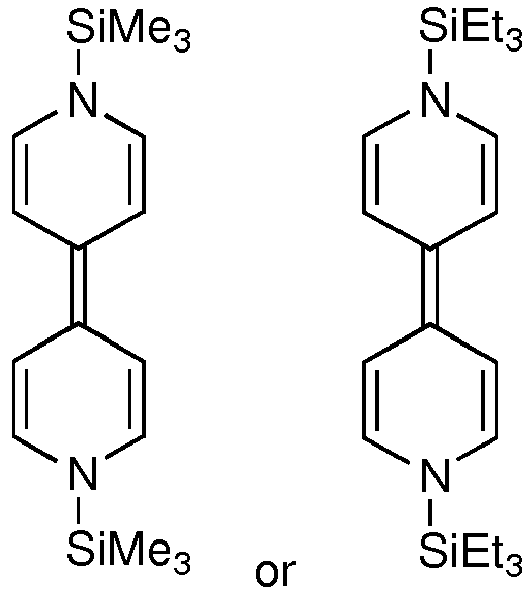
- Method according to one of the preceding claims, characterized in that the reaction is carried out in a water, in an organic solvent or in a mixture thereof.
- Method according to one of the preceding claims, characterized in that the organic solvent is selected from a group comprising dichloromethane, t-butanol, ethanol, methanol, toluene, methyl-t.butyl-ether, acetonitrile, tetrahydrofuran, N-methyl-2-pyrrolidone.
Priority Applications (2)
| Application Number | Priority Date | Filing Date | Title |
|---|---|---|---|
| EP18168733.6A EP3560935A1 (en) | 2018-04-23 | 2018-04-23 | Method for obtaining peroxides using organosilicon agents |
| PCT/EP2019/059821 WO2019206744A1 (en) | 2018-04-23 | 2019-04-16 | Method for obtaining peroxides using organosilicon agents |
Applications Claiming Priority (1)
| Application Number | Priority Date | Filing Date | Title |
|---|---|---|---|
| EP18168733.6A EP3560935A1 (en) | 2018-04-23 | 2018-04-23 | Method for obtaining peroxides using organosilicon agents |
Publications (1)
| Publication Number | Publication Date |
|---|---|
| EP3560935A1 true EP3560935A1 (en) | 2019-10-30 |
Family
ID=62046734
Family Applications (1)
| Application Number | Title | Priority Date | Filing Date |
|---|---|---|---|
| EP18168733.6A Withdrawn EP3560935A1 (en) | 2018-04-23 | 2018-04-23 | Method for obtaining peroxides using organosilicon agents |
Country Status (2)
| Country | Link |
|---|---|
| EP (1) | EP3560935A1 (en) |
| WO (1) | WO2019206744A1 (en) |
-
2018
- 2018-04-23 EP EP18168733.6A patent/EP3560935A1/en not_active Withdrawn
-
2019
- 2019-04-16 WO PCT/EP2019/059821 patent/WO2019206744A1/en not_active Ceased
Non-Patent Citations (4)
| Title |
|---|
| CAMPOS MARTIN J M ET AL: "Hydrogen Peroxide Synthesis: An Outlook beyond the Anthraquinone Process", ANGEWANDTE CHEMIE INTERNATIONAL EDITION, vol. 45, no. 42, 27 October 2006 (2006-10-27), pages 6962 - 6984, XP055533786, ISSN: 1433-7851, DOI: 10.1002/anie.200503779 * |
| KILPATRICK M L ET AL: "The preparation of hydrogen peroxide", JOURNAL OF THE AMERICAN CHEMICAL SOCIETY, vol. 48, no. 12, December 1926 (1926-12-01), pages 3019 - 3021, XP055533774, ISSN: 0002-7863, DOI: 10.1021/ja01691a003 * |
| TOKUYASU T ET AL: "Co(III)-Alkyl Complex- and Co(III)-Alkylperoxo Complex-Catalyzed Triethylsilylperoxidation of Alkenes with Molecular Oxygen and Triethylsilane", ORGANIC LETTERS, vol. 4, no. 21, 17 October 2002 (2002-10-17), pages 3595 - 3598, XP055533624, ISSN: 1523-7060, DOI: 10.1021/ol0201299 * |
| WU J-M ET AL: "Co-catalyzed autoxidation of alkene in the presence of silane. The effect of the structure of silanes on the efficiency of the reaction and on the product distribution", TETRAHEDRON, vol. 61, no. 42, 17 October 2005 (2005-10-17), pages 9961 - 9968, XP055533608, ISSN: 0040-4020, DOI: 10.1016/j.tet.2005.08.025 * |
Also Published As
| Publication number | Publication date |
|---|---|
| WO2019206744A1 (en) | 2019-10-31 |
Similar Documents
| Publication | Publication Date | Title |
|---|---|---|
| EP1941946A1 (en) | Carbonitrides as catalysts | |
| US20090076307A1 (en) | Aromatic diamine compound and aromatic dinitro compound | |
| JP6950869B2 (en) | Method for producing isocyanuric acid derivative having one hydrocarbon group | |
| EP3552700B1 (en) | Organometallic complex catalyst | |
| KR102658286B1 (en) | Buchwald-Hartwig arylation method for the preparation of tertiary aryl amines | |
| Dong et al. | Facile synthesis of tribenzosilepins from terphenyls and dihydrosilanes by electrophilic double silylation | |
| WO2019206744A1 (en) | Method for obtaining peroxides using organosilicon agents | |
| KR101598179B1 (en) | Improved preparing method of oxindole dimers and oxindole dimers made by the same | |
| CN108752338A (en) | A kind of preparation method of 1,2,3 full substitution Indoli zine derivatives | |
| Setsune et al. | Highly reactive meso-like positions of dipyrihexaphyrin | |
| KR102943446B1 (en) | Processes for selective synthesis of 3,6'-ditiopomalidomide from pomalidomide | |
| JP5111782B2 (en) | Method for producing 1,2-disubstituted imidazole | |
| Kuvshinov et al. | Synthesis of 2-R-4, 6-Dinitro-2H-indazoles from 2, 4, 6-Trinitrotoluene | |
| WO2017159310A1 (en) | Manufacturing method for isocyanuric acid derivative having two hydrocarbon groups | |
| JP7864249B2 (en) | Method for producing polyamine compounds | |
| CN111100082A (en) | Preparation method of 2-aryl benzotriazole compound | |
| CN117263785B (en) | A method for palladium-catalyzed linear selective hydroformylation of olefins | |
| CN109563058B (en) | Isocyanuric acid derivative having one substituent containing alkoxy group and method for producing the same | |
| JP2024056494A (en) | Method for producing diphenylureas | |
| JP2023028408A (en) | Isocyanate group-containing compound and method for producing the same, reactive flame retardant, and composition | |
| Vasil’ev et al. | 2-(N-Alkylamino)-1-(trifluoroacetimidoyl) vinyl ketone derivatives as potential reagents in heterocyclic synthesis | |
| EP4674842A1 (en) | Triazine compound and method for producing same | |
| US20200002288A1 (en) | Backfunctionalized imidazolinium salts and nhc carbene-metal complexes | |
| CN113336696A (en) | Preparation method of meta-allyl aromatic compound | |
| WO2024190689A1 (en) | Method for producing polyamine compound |
Legal Events
| Date | Code | Title | Description |
|---|---|---|---|
| PUAI | Public reference made under article 153(3) epc to a published international application that has entered the european phase |
Free format text: ORIGINAL CODE: 0009012 |
|
| AK | Designated contracting states |
Kind code of ref document: A1 Designated state(s): AL AT BE BG CH CY CZ DE DK EE ES FI FR GB GR HR HU IE IS IT LI LT LU LV MC MK MT NL NO PL PT RO RS SE SI SK SM TR |
|
| AX | Request for extension of the european patent |
Extension state: BA ME |
|
| STAA | Information on the status of an ep patent application or granted ep patent |
Free format text: STATUS: THE APPLICATION IS DEEMED TO BE WITHDRAWN |
|
| 18D | Application deemed to be withdrawn |
Effective date: 20200603 |