EP3558288B1 - L-pag derivatives for treatment of sleep disordered breathing (sdb) - Google Patents
L-pag derivatives for treatment of sleep disordered breathing (sdb) Download PDFInfo
- Publication number
- EP3558288B1 EP3558288B1 EP17884341.3A EP17884341A EP3558288B1 EP 3558288 B1 EP3558288 B1 EP 3558288B1 EP 17884341 A EP17884341 A EP 17884341A EP 3558288 B1 EP3558288 B1 EP 3558288B1
- Authority
- EP
- European Patent Office
- Prior art keywords
- cse
- antagonist
- apnea
- mice
- breathing
- Prior art date
- Legal status (The legal status is an assumption and is not a legal conclusion. Google has not performed a legal analysis and makes no representation as to the accuracy of the status listed.)
- Active
Links
Images


Classifications
-
- A—HUMAN NECESSITIES
- A61—MEDICAL OR VETERINARY SCIENCE; HYGIENE
- A61K—PREPARATIONS FOR MEDICAL, DENTAL OR TOILETRY PURPOSES
- A61K31/00—Medicinal preparations containing organic active ingredients
- A61K31/185—Acids; Anhydrides, halides or salts thereof, e.g. sulfur acids, imidic, hydrazonic or hydroximic acids
- A61K31/19—Carboxylic acids, e.g. valproic acid
- A61K31/195—Carboxylic acids, e.g. valproic acid having an amino group
- A61K31/197—Carboxylic acids, e.g. valproic acid having an amino group the amino and the carboxyl groups being attached to the same acyclic carbon chain, e.g. gamma-aminobutyric acid [GABA], beta-alanine, epsilon-aminocaproic acid or pantothenic acid
- A61K31/198—Alpha-amino acids, e.g. alanine or edetic acid [EDTA]
-
- A—HUMAN NECESSITIES
- A61—MEDICAL OR VETERINARY SCIENCE; HYGIENE
- A61K—PREPARATIONS FOR MEDICAL, DENTAL OR TOILETRY PURPOSES
- A61K31/00—Medicinal preparations containing organic active ingredients
- A61K31/33—Heterocyclic compounds
- A61K31/395—Heterocyclic compounds having nitrogen as a ring hetero atom, e.g. guanethidine or rifamycins
- A61K31/41—Heterocyclic compounds having nitrogen as a ring hetero atom, e.g. guanethidine or rifamycins having five-membered rings with two or more ring hetero atoms, at least one of which being nitrogen, e.g. tetrazole
- A61K31/4164—1,3-Diazoles
-
- A—HUMAN NECESSITIES
- A61—MEDICAL OR VETERINARY SCIENCE; HYGIENE
- A61K—PREPARATIONS FOR MEDICAL, DENTAL OR TOILETRY PURPOSES
- A61K31/00—Medicinal preparations containing organic active ingredients
- A61K31/185—Acids; Anhydrides, halides or salts thereof, e.g. sulfur acids, imidic, hydrazonic or hydroximic acids
- A61K31/19—Carboxylic acids, e.g. valproic acid
- A61K31/195—Carboxylic acids, e.g. valproic acid having an amino group
- A61K31/197—Carboxylic acids, e.g. valproic acid having an amino group the amino and the carboxyl groups being attached to the same acyclic carbon chain, e.g. gamma-aminobutyric acid [GABA], beta-alanine, epsilon-aminocaproic acid or pantothenic acid
-
- A—HUMAN NECESSITIES
- A61—MEDICAL OR VETERINARY SCIENCE; HYGIENE
- A61K—PREPARATIONS FOR MEDICAL, DENTAL OR TOILETRY PURPOSES
- A61K31/00—Medicinal preparations containing organic active ingredients
- A61K31/21—Esters, e.g. nitroglycerine, selenocyanates
- A61K31/215—Esters, e.g. nitroglycerine, selenocyanates of carboxylic acids
- A61K31/216—Esters, e.g. nitroglycerine, selenocyanates of carboxylic acids of acids having aromatic rings, e.g. benactizyne, clofibrate
-
- A—HUMAN NECESSITIES
- A61—MEDICAL OR VETERINARY SCIENCE; HYGIENE
- A61K—PREPARATIONS FOR MEDICAL, DENTAL OR TOILETRY PURPOSES
- A61K31/00—Medicinal preparations containing organic active ingredients
- A61K31/21—Esters, e.g. nitroglycerine, selenocyanates
- A61K31/215—Esters, e.g. nitroglycerine, selenocyanates of carboxylic acids
- A61K31/22—Esters, e.g. nitroglycerine, selenocyanates of carboxylic acids of acyclic acids, e.g. pravastatin
- A61K31/221—Esters, e.g. nitroglycerine, selenocyanates of carboxylic acids of acyclic acids, e.g. pravastatin with compounds having an amino group, e.g. acetylcholine, acetylcarnitine
-
- A—HUMAN NECESSITIES
- A61—MEDICAL OR VETERINARY SCIENCE; HYGIENE
- A61K—PREPARATIONS FOR MEDICAL, DENTAL OR TOILETRY PURPOSES
- A61K31/00—Medicinal preparations containing organic active ingredients
- A61K31/275—Nitriles; Isonitriles
-
- A—HUMAN NECESSITIES
- A61—MEDICAL OR VETERINARY SCIENCE; HYGIENE
- A61K—PREPARATIONS FOR MEDICAL, DENTAL OR TOILETRY PURPOSES
- A61K31/00—Medicinal preparations containing organic active ingredients
- A61K31/33—Heterocyclic compounds
- A61K31/38—Heterocyclic compounds having sulfur as a ring hetero atom
- A61K31/381—Heterocyclic compounds having sulfur as a ring hetero atom having five-membered rings
-
- A—HUMAN NECESSITIES
- A61—MEDICAL OR VETERINARY SCIENCE; HYGIENE
- A61K—PREPARATIONS FOR MEDICAL, DENTAL OR TOILETRY PURPOSES
- A61K31/00—Medicinal preparations containing organic active ingredients
- A61K31/33—Heterocyclic compounds
- A61K31/395—Heterocyclic compounds having nitrogen as a ring hetero atom, e.g. guanethidine or rifamycins
- A61K31/41—Heterocyclic compounds having nitrogen as a ring hetero atom, e.g. guanethidine or rifamycins having five-membered rings with two or more ring hetero atoms, at least one of which being nitrogen, e.g. tetrazole
- A61K31/425—Thiazoles
- A61K31/426—1,3-Thiazoles
-
- A—HUMAN NECESSITIES
- A61—MEDICAL OR VETERINARY SCIENCE; HYGIENE
- A61K—PREPARATIONS FOR MEDICAL, DENTAL OR TOILETRY PURPOSES
- A61K45/00—Medicinal preparations containing active ingredients not provided for in groups A61K31/00 - A61K41/00
-
- A—HUMAN NECESSITIES
- A61—MEDICAL OR VETERINARY SCIENCE; HYGIENE
- A61K—PREPARATIONS FOR MEDICAL, DENTAL OR TOILETRY PURPOSES
- A61K45/00—Medicinal preparations containing active ingredients not provided for in groups A61K31/00 - A61K41/00
- A61K45/06—Mixtures of active ingredients without chemical characterisation, e.g. antiphlogistics and cardiaca
-
- A—HUMAN NECESSITIES
- A61—MEDICAL OR VETERINARY SCIENCE; HYGIENE
- A61P—SPECIFIC THERAPEUTIC ACTIVITY OF CHEMICAL COMPOUNDS OR MEDICINAL PREPARATIONS
- A61P11/00—Drugs for disorders of the respiratory system
-
- C—CHEMISTRY; METALLURGY
- C07—ORGANIC CHEMISTRY
- C07C—ACYCLIC OR CARBOCYCLIC COMPOUNDS
- C07C229/00—Compounds containing amino and carboxyl groups bound to the same carbon skeleton
- C07C229/02—Compounds containing amino and carboxyl groups bound to the same carbon skeleton having amino and carboxyl groups bound to acyclic carbon atoms of the same carbon skeleton
- C07C229/30—Compounds containing amino and carboxyl groups bound to the same carbon skeleton having amino and carboxyl groups bound to acyclic carbon atoms of the same carbon skeleton the carbon skeleton being acyclic and unsaturated
-
- C—CHEMISTRY; METALLURGY
- C07—ORGANIC CHEMISTRY
- C07C—ACYCLIC OR CARBOCYCLIC COMPOUNDS
- C07C229/00—Compounds containing amino and carboxyl groups bound to the same carbon skeleton
- C07C229/02—Compounds containing amino and carboxyl groups bound to the same carbon skeleton having amino and carboxyl groups bound to acyclic carbon atoms of the same carbon skeleton
- C07C229/34—Compounds containing amino and carboxyl groups bound to the same carbon skeleton having amino and carboxyl groups bound to acyclic carbon atoms of the same carbon skeleton the carbon skeleton containing six-membered aromatic rings
- C07C229/36—Compounds containing amino and carboxyl groups bound to the same carbon skeleton having amino and carboxyl groups bound to acyclic carbon atoms of the same carbon skeleton the carbon skeleton containing six-membered aromatic rings with at least one amino group and one carboxyl group bound to the same carbon atom of the carbon skeleton
-
- C—CHEMISTRY; METALLURGY
- C07—ORGANIC CHEMISTRY
- C07C—ACYCLIC OR CARBOCYCLIC COMPOUNDS
- C07C229/00—Compounds containing amino and carboxyl groups bound to the same carbon skeleton
- C07C229/40—Compounds containing amino and carboxyl groups bound to the same carbon skeleton having amino groups bound to carbon atoms of at least one six-membered aromatic ring and carboxyl groups bound to acyclic carbon atoms of the same carbon skeleton
- C07C229/44—Compounds containing amino and carboxyl groups bound to the same carbon skeleton having amino groups bound to carbon atoms of at least one six-membered aromatic ring and carboxyl groups bound to acyclic carbon atoms of the same carbon skeleton with carboxyl groups linked to the six-membered aromatic ring, or to the condensed ring system containing that ring, by unsaturated carbon chains
-
- C—CHEMISTRY; METALLURGY
- C07—ORGANIC CHEMISTRY
- C07C—ACYCLIC OR CARBOCYCLIC COMPOUNDS
- C07C233/00—Carboxylic acid amides
- C07C233/01—Carboxylic acid amides having carbon atoms of carboxamide groups bound to hydrogen atoms or to acyclic carbon atoms
- C07C233/45—Carboxylic acid amides having carbon atoms of carboxamide groups bound to hydrogen atoms or to acyclic carbon atoms having the nitrogen atom of at least one of the carboxamide groups bound to a carbon atom of a hydrocarbon radical substituted by carboxyl groups
- C07C233/46—Carboxylic acid amides having carbon atoms of carboxamide groups bound to hydrogen atoms or to acyclic carbon atoms having the nitrogen atom of at least one of the carboxamide groups bound to a carbon atom of a hydrocarbon radical substituted by carboxyl groups with the substituted hydrocarbon radical bound to the nitrogen atom of the carboxamide group by an acyclic carbon atom
- C07C233/47—Carboxylic acid amides having carbon atoms of carboxamide groups bound to hydrogen atoms or to acyclic carbon atoms having the nitrogen atom of at least one of the carboxamide groups bound to a carbon atom of a hydrocarbon radical substituted by carboxyl groups with the substituted hydrocarbon radical bound to the nitrogen atom of the carboxamide group by an acyclic carbon atom having the carbon atom of the carboxamide group bound to a hydrogen atom or to a carbon atom of an acyclic saturated carbon skeleton
-
- C—CHEMISTRY; METALLURGY
- C07—ORGANIC CHEMISTRY
- C07C—ACYCLIC OR CARBOCYCLIC COMPOUNDS
- C07C255/00—Carboxylic acid nitriles
- C07C255/01—Carboxylic acid nitriles having cyano groups bound to acyclic carbon atoms
- C07C255/06—Carboxylic acid nitriles having cyano groups bound to acyclic carbon atoms of an acyclic and unsaturated carbon skeleton
- C07C255/07—Mononitriles
-
- C—CHEMISTRY; METALLURGY
- C07—ORGANIC CHEMISTRY
- C07C—ACYCLIC OR CARBOCYCLIC COMPOUNDS
- C07C255/00—Carboxylic acid nitriles
- C07C255/01—Carboxylic acid nitriles having cyano groups bound to acyclic carbon atoms
- C07C255/30—Carboxylic acid nitriles having cyano groups bound to acyclic carbon atoms containing cyano groups and singly-bound nitrogen atoms, not being further bound to other hetero atoms, bound to the same unsaturated acyclic carbon skeleton
-
- C—CHEMISTRY; METALLURGY
- C07—ORGANIC CHEMISTRY
- C07C—ACYCLIC OR CARBOCYCLIC COMPOUNDS
- C07C311/00—Amides of sulfonic acids, i.e. compounds having singly-bound oxygen atoms of sulfo groups replaced by nitrogen atoms, not being part of nitro or nitroso groups
- C07C311/30—Sulfonamides, the carbon skeleton of the acid part being further substituted by singly-bound nitrogen atoms, not being part of nitro or nitroso groups
- C07C311/37—Sulfonamides, the carbon skeleton of the acid part being further substituted by singly-bound nitrogen atoms, not being part of nitro or nitroso groups having the sulfur atom of at least one of the sulfonamide groups bound to a carbon atom of a six-membered aromatic ring
-
- C—CHEMISTRY; METALLURGY
- C07—ORGANIC CHEMISTRY
- C07D—HETEROCYCLIC COMPOUNDS
- C07D277/00—Heterocyclic compounds containing 1,3-thiazole or hydrogenated 1,3-thiazole rings
- C07D277/02—Heterocyclic compounds containing 1,3-thiazole or hydrogenated 1,3-thiazole rings not condensed with other rings
- C07D277/20—Heterocyclic compounds containing 1,3-thiazole or hydrogenated 1,3-thiazole rings not condensed with other rings having two or three double bonds between ring members or between ring members and non-ring members
- C07D277/22—Heterocyclic compounds containing 1,3-thiazole or hydrogenated 1,3-thiazole rings not condensed with other rings having two or three double bonds between ring members or between ring members and non-ring members with only hydrogen atoms, hydrocarbon or substituted hydrocarbon radicals, directly attached to ring carbon atoms
- C07D277/28—Radicals substituted by nitrogen atoms
-
- C—CHEMISTRY; METALLURGY
- C07—ORGANIC CHEMISTRY
- C07D—HETEROCYCLIC COMPOUNDS
- C07D277/00—Heterocyclic compounds containing 1,3-thiazole or hydrogenated 1,3-thiazole rings
- C07D277/02—Heterocyclic compounds containing 1,3-thiazole or hydrogenated 1,3-thiazole rings not condensed with other rings
- C07D277/20—Heterocyclic compounds containing 1,3-thiazole or hydrogenated 1,3-thiazole rings not condensed with other rings having two or three double bonds between ring members or between ring members and non-ring members
- C07D277/22—Heterocyclic compounds containing 1,3-thiazole or hydrogenated 1,3-thiazole rings not condensed with other rings having two or three double bonds between ring members or between ring members and non-ring members with only hydrogen atoms, hydrocarbon or substituted hydrocarbon radicals, directly attached to ring carbon atoms
- C07D277/30—Radicals substituted by carbon atoms having three bonds to hetero atoms with at the most one bond to halogen, e.g. ester or nitrile radicals
-
- C—CHEMISTRY; METALLURGY
- C07—ORGANIC CHEMISTRY
- C07D—HETEROCYCLIC COMPOUNDS
- C07D333/00—Heterocyclic compounds containing five-membered rings having one sulfur atom as the only ring hetero atom
- C07D333/02—Heterocyclic compounds containing five-membered rings having one sulfur atom as the only ring hetero atom not condensed with other rings
- C07D333/04—Heterocyclic compounds containing five-membered rings having one sulfur atom as the only ring hetero atom not condensed with other rings not substituted on the ring sulphur atom
- C07D333/06—Heterocyclic compounds containing five-membered rings having one sulfur atom as the only ring hetero atom not condensed with other rings not substituted on the ring sulphur atom with only hydrogen atoms, hydrocarbon or substituted hydrocarbon radicals, directly attached to the ring carbon atoms
- C07D333/14—Radicals substituted by singly bound hetero atoms other than halogen
- C07D333/20—Radicals substituted by singly bound hetero atoms other than halogen by nitrogen atoms
-
- C—CHEMISTRY; METALLURGY
- C07—ORGANIC CHEMISTRY
- C07D—HETEROCYCLIC COMPOUNDS
- C07D333/00—Heterocyclic compounds containing five-membered rings having one sulfur atom as the only ring hetero atom
- C07D333/02—Heterocyclic compounds containing five-membered rings having one sulfur atom as the only ring hetero atom not condensed with other rings
- C07D333/04—Heterocyclic compounds containing five-membered rings having one sulfur atom as the only ring hetero atom not condensed with other rings not substituted on the ring sulphur atom
- C07D333/06—Heterocyclic compounds containing five-membered rings having one sulfur atom as the only ring hetero atom not condensed with other rings not substituted on the ring sulphur atom with only hydrogen atoms, hydrocarbon or substituted hydrocarbon radicals, directly attached to the ring carbon atoms
- C07D333/24—Radicals substituted by carbon atoms having three bonds to hetero atoms with at the most one bond to halogen, e.g. ester or nitrile radicals
-
- C—CHEMISTRY; METALLURGY
- C07—ORGANIC CHEMISTRY
- C07D—HETEROCYCLIC COMPOUNDS
- C07D333/00—Heterocyclic compounds containing five-membered rings having one sulfur atom as the only ring hetero atom
- C07D333/02—Heterocyclic compounds containing five-membered rings having one sulfur atom as the only ring hetero atom not condensed with other rings
- C07D333/46—Heterocyclic compounds containing five-membered rings having one sulfur atom as the only ring hetero atom not condensed with other rings substituted on the ring sulfur atom
- C07D333/48—Heterocyclic compounds containing five-membered rings having one sulfur atom as the only ring hetero atom not condensed with other rings substituted on the ring sulfur atom by oxygen atoms
-
- C—CHEMISTRY; METALLURGY
- C07—ORGANIC CHEMISTRY
- C07B—GENERAL METHODS OF ORGANIC CHEMISTRY; APPARATUS THEREFOR
- C07B2200/00—Indexing scheme relating to specific properties of organic compounds
- C07B2200/07—Optical isomers
Definitions
- the invention relates to the field of medicine, pharmacology, and synthetic organic chemistry. More specifically, it concerns compositions involving a cystathionine- ⁇ -lyase (CSE) antagonist for preventing, treating, and/or reducing symptoms of sleep-related disorders and conditions.
- CSE cystathionine- ⁇ -lyase
- Sleep apnea is a respiratory disorder characterized by periodic cessation of breathing (apnea) during sleep. Sleep apnea is caused by obstruction of the upper airway (obstructive sleep apnea or OSA) or disrupted respiratory rhythm generation by the central nervous system (central sleep apnea or CSA). OSA can be caused by deposition of adipose tissue in the upper airway or changes in the characteristics of the hyoid bone, soft palate, nasopharynx and oropharynx. Development of sleep apnea has been observed in both obese and non-obese individuals and can be diagnosed by methods including but not limited to polysomnography.
- CSA cerebral spastic syndrome
- OSA central sleep apnea
- Ondine's curse which usually occurs in newborns, people may breathe inadequately or not at all except when they are fully awake.
- Sleep apnea is a highly prevalent disorder that affects an estimated 10% of the adult human population (Peppard, 2013). Patients with sleep apnea exhibit a wide spectrum of pathologies including hypertension, stroke, neurocognitive and metabolic dysfunctions and disrupted sleep.
- the carotid body is a sensory organ that detects acute changes in arterial blood oxygen (O 2 ) levels and reflexively mediates systemic cardiac, vascular, and respiratory responses to hypoxia.
- O 2 arterial blood oxygen
- studies show that hydrogen sulfide (H 2 S) acts as a carotid gasotransmitter, enhancing its sensory response to hypoxia.
- Clinical studies suggest that enhanced carotid body chemoreflex contributes in part to the genesis of apnea and the downstream pathologies caused by intermittent deficiency in the amount of oxygen reaching the tissues (hypoxia).
- Continuous positive airway pressure is the present treatment of choice for OSA and adaptive servo-ventilation is considered beneficial for CSA patients.
- OSA continuous positive airway pressure
- CSA Continuous positive airway pressure
- Adaptive ventilation in heart failure patients exhibiting CSA showed 30% mortality with no demonstrable benefits for CSA (Cowie, 2015).
- the estimated cost burden in unmanaged sleep apnea patients is extremely high; estimates range from approximately $65-165 billion per year in the U.S.
- current therapies are not effective in preventing co-morbidities associated with either OSA or CSA and highlight the need for alternative strategies for preventing sleep apnea and associated pathologies.
- WO 2011/130181 A1 describes methods for the treatment of sleep-related breathing disorders by administration of an agent that modulates the activity of the carotid body.
- CSE cystathionine ⁇ -lyase
- Propargyl-substituted amino acids and esters reduce CSE-catalyzed synthesis of hydrogen sulfide (H 2 S).
- the CSE antagonists disclosed herein may be used to treat, prevent, or reduce sleep-related breathing disorders.
- the disclosed methods and compositions concern a CSE antagonist that causes one or more physiological effects. In some embodiments it reduces or attenuates CSE-catalyzed synthesis of H 2 S. In some aspects, reduced synthesis of H 2 S results in attenuation of carotid body chemoreflex. In further aspects, the CSE antagonist reduces chemosensitivity of the carotid body to arterial blood oxygen and/or arterial blood carbon dioxide. Reduced carotid body chemosensitivity reduces loop gain of the ventilator drive control system, blunts hypoventilation, lowers blood pressure, and/or dampens carotid sinus nerve activity, in some aspects. In some embodiments, the CSE antagonist bolsters the carotid body's response to hypoxia.
- the CSE antagonist had an anti-apneic effect within or after 10, 20, 30, 40, 50, 60, 70, 80, 90, 100, 110, 120, 130, 140, 150 minutes (or any range derivable therein) of administration.
- the effects of ED 50 dose was fully reversed after at least or at most 12, 13, 14, 15, 16, 17, 18, 19, 20, 21, 22, 23, 24, 25, 26, 27, 28, 29, or 30 hours (or any range derivable therein).
- the invention provides a cystathionine- ⁇ -lyase (CSE) antagonist for use in a method of treating, preventing, or reducing a sleep-related breathing disorder in an individual in need thereof, which method comprises administering a therapeutically effective amount of the CSE antagonist, which CSE antagonist is at least one of: or a pharmaceutically acceptable salt, enantiomer or diastereomer thereof.
- CSE cystathionine- ⁇ -lyase
- the CSE antagonist may be administered to an individual that is suffering from or suspected to be suffering from a sleep-related breathing disorder, which include the following disorders: central sleep apnea (CSA), Cheyne-Stokes breathing-central sleep apnea (CSB-CSA), obesity hypoventilation syndrome (OHS), congenital central hypoventilation syndrome (CCHS), obstructive sleep apnea (OSA), idiopathic central sleep apnea (ICSA), narcotic-induced CSA, high altitude periodic breathing, chronic mountain sickness, impaired respiratory motor control associated with stroke, upper airway resistance syndrome (UARS), or impaired respiratory motor control associated with a neurologic disorder.
- the CSE antagonist is administered orally, subcutaneously, topically, intramuscularly, or intravenously.
- the invention also provides a compound which is: or a pharmaceutically acceptable salt, enantiomer, or diastereomer thereof.
- the stereochemistry at the ⁇ -carbon may be (R) or (S). In further aspects, the stereochemistry at the ⁇ -carbon may be (R) or (S).
- the stereochemistries of the ⁇ - and ⁇ -carbons may be the same, or may be different.
- the CSE antagonist for use in a method of treating, preventing, or reducing a sleep-related breathing disorder in an individual in need thereof further comprises administering one or more additional therapeutic agents.
- a second therapeutic agent may be selected from carbonic anhydrase inhibitors, cholinesterase inhibitors, adenosine inhibitors, progestational agents, opioid antagonists, central nervous system stimulants, selective serotonin reuptake inhibitors (SSRis), antidepressants, antihypertensives, calcium channel antagonists, ACE inhibitors, respiratory stimulants, alpha-2 adrenergic agonists, gamma aminobutyric acid agonists, and glutamate antagonists.
- an additional therapeutic agent may be at least one therapeutic agent selected from acetazolamide, theophylline, progesterone, donepezil, naloxone, nicotine, paroxetine, protriptyline, metoprolol, cilazapril, propranolol, atenolol, hydrochlorothiazide, isradipine, spirapril, doxapram, clonidine, baclofen, and sabeluzole.
- a second and/or additional, i.e., third, therapeutic agent can be administered in the same composition or in separate compositions.
- the first inhibitor or treatment is administered, and a second inhibitor or treatment is administered.
- the second therapeutic agent is administered within 3 days of the CSE antagonist.
- the second therapeutic agent is administered within 24 hours of the CSE antagonist.
- the second therapeutic agent is administered within 3 hours of the CSE antagonist.
- an additional therapeutic agent may be used in conjunction with the CSE inhibitor, or with the combination of the CSE inhibitor and second therapeutic agent.
- compositions may be administered in any appropriate manner.
- the composition is administered orally, intraadiposally, intraarterially, intraarticularly, intracranially, intradermally, intralesionally, intramuscularly, intranasally, intraocularally, intrapericardially, intraperitoneally, intrapleurally, intraprostaticaly, intrarectally, intrathecally, intratracheally, intratumorally, intraumbilically, intravaginally, intravenously, intravesicularlly, intravitreally, liposomally, locally, mucosally, orally, parenterally, rectally, subconjunctival, subcutaneously, sublingually, topically, transbuccally, transdermally, vaginally, in cremes, in lipid compositions, via a catheter, via a lavage, via continuous infusion, via infusion, via inhalation, via injection, via local delivery, via localized perfusion, bathing target cells directly, or any combination thereof.
- Methods may involve administering a composition containing about, at least about, or at most about 0.01, 0.02, 0.03, 0.04, 0.05, 0.06, 0.07, 0.08, 0.09, 0.1, 0.2, 0.3, 0.4, 0.5, 0.6, 0.7, 0.8, 0.9, 1.0, 1.1, 1.2, 1.3, 1.4, 1.5, 1.6, 1.7, 1.8, 1.9, 2.0, 2.1, 2.2, 2.3, 2.4, 2.5, 2.6, 2.7, 2.8, 2.9, 3.0, 3.1, 3.2, 3.3, 3.4, 3.5, 3.6, 3.7.
- the methods may involve providing or administering to the patient or to cells or tissue of the patient about, at least about, or at most about 0.01, 0.02, 0.03, 0.04, 0.05, 0.06, 0.07, 0.08, 0.09, 0.1, 0.2, 0.3, 0.4, 0.5, 0.6, 0.7, 0.8, 0.9, 1.0, 1.1, 1.2, 1.3, 1.4, 1.5, 1.6, 1.7, 1.8, 1.9, 2.0, 2.1, 2.2, 2.3, 2.4, 2.5, 2.6, 2.7, 2.8, 2.9, 3.0, 3.1, 3.2, 3.3, 3.4, 3.5, 3.6, 3.7.
- the composition may have a concentration of a CSE antagonist that is about, at least about, or at most about 0.01, 0.02, 0.03, 0.04, 0.05, 0.06, 0.07, 0.08, 0.09, 0.1, 0.2, 0.3, 0.4, 0.5, 0.6, 0.7, 0.8, 0.9, 1.0, 1.1, 1.2, 1.3, 1.4, 1.5, 1.6, 1.7, 1.8, 1.9, 2.0, 2.1, 2.2, 2.3, 2.4, 2.5, 2.6, 2.7, 2.8, 2.9, 3.0, 3.1, 3.2, 3.3, 3.4, 3.5, 3.6, 3.7.
- a CSE antagonist that is about, at least about, or at most about 0.01, 0.02, 0.03, 0.04, 0.05, 0.06, 0.07, 0.08, 0.09, 0.1, 0.2, 0.3, 0.4, 0.5, 0.6, 0.7, 0.8, 0.9, 1.0, 1.1, 1.2, 1.3, 1.4, 1.5, 1.6,
- the volume of the composition that is administered to the patient may be about, at least about, or at most about 0.01, 0.02, 0.03, 0.04, 0.05, 0.06, 0.07, 0.08, 0.09, 0.1, 0.2, 0.3, 0.4, 0.5, 0.6, 0.7, 0.8, 0.9, 1.0, 1.1, 1.2, 1.3, 1.4, 1.5, 1.6, 1.7, 1.8, 1.9, 2.0, 2.1, 2.2, 2.3, 2.4, 2.5, 2.6, 2.7, 2.8, 2.9, 3.0, 3.1, 3.2, 3.3, 3.4, 3.5, 3.6, 3.7.
- the amount of CSE antagonist that is administered or taken by the patient may be based on the patient's weight (in kilograms). Therefore, in some embodiments, the patient is administered or takes a dose or multiple doses amounting to about, at least about, or at most about 0.01, 0.02, 0.03, 0.04, 0.05, 0.06, 0.07, 0.08, 0.09, 0.1, 0.2, 0.3, 0.4, 0.5, 0.6, 0.7, 0.8, 0.9, 1.0, 1.1, 1.2, 1.3, 1.4, 1.5, 1.6, 1.7, 1.8, 1.9, 2.0, 2.1, 2.2, 2.3, 2.4, 2.5, 2.6, 2.7, 2.8, 2.9, 3.0, 3.1, 3.2, 3.3, 3.4, 3.5, 3.6, 3.7.
- the composition may be administered to (or taken by) the patient 1, 2, 3, 4, 5, 6, 7, 8, 9, 10, 11, 12, 13, 14, 15, 16, 17, 18, 19, 20 or more times, or any range derivable therein, and they may be administered every 1, 2, 3, 4, 5, 6, 7, 8, 9, 10, 11, 12, 13, 14, 15, 16, 17, 18, 19, 20, 21, 22, 23, 24 hours, or 1, 2, 3, 4, 5, 6, 7 days, or 1, 2, 3, 4, 5 weeks, or 1, 2, 3, 4, 5, 6, 7, 8, 9, 10, 11, 12 months, or any range derivable therein. It is specifically contemplated that the composition may be administered once daily, twice daily, three times daily, four times daily, five times daily, or six times daily (or any range derivable therein) and/or as needed to the patient.
- the composition may be administered every 2, 4, 6, 8, 12 or 24 hours (or any range derivable therein) to or by the patient.
- the patient is administered the composition for a certain period of time or with a certain number of doses after experiencing symptoms of a sleep-related breathing disorder.
- Any method or system disclosed herein can consist of or consist essentially of-rather than comprise/include/contain/have-any of the described elements and/or features and/or steps.
- the term “consisting of” or “consisting essentially of” can be substituted for any of the open-ended linking verbs recited above.
- substantially is defined as being largely but not necessarily wholly what is specified (and include wholly what is specified) as understood by one of ordinary skill in the art.
- the term “substantially” may be substituted with "within [a percentage] of” what is specified, where the percentage includes 0.1, 1, 5, and 10 percent.
- Sleep apnea is a highly prevalent respiratory disorder often associated with either OSA or CSA or a combination of both. Patients with sleep apnea exhibit a wide spectrum of co- morbidties including hypertension. Currently available therapies have limited efficacy in normalizing breathing in patients with OSA or CSA.
- HO-2 hemeoxygenase-2
- CO carbon monoxide
- CSE cystathionine- ⁇ -lyase
- H2S hydrogen sulfide
- the results disclosed herein demonstrate that correction of the carotid body chemoreflex by inhibiting CSE-derived H 2 S generation reversibly prevents apnea in HO-2 null mice.
- the tested compounds demonstrated that the onset of anti-apneic effect was rapid and was seen as quickly as two hours after the administration. Moreover, the effects of ED 50 dose were fully reversed after 24 hours. Furthermore, there was an absence of any mortality or gross toxicity within the dose range tested.
- the CSE inhibitors disclosed herein may be used as therapeutic agents for the treatment of sleep-related breathing disorders including OSA and CSA.
- a CSE antagonist is a compound that acts to inhibit, attenuate, or decrease the activity of the CSE protein.
- the CSE inhibitor is at least one of: or a pharmaceutically acceptable salt, enantiomer or diastereomer thereof.
- the stereochemistry at the ⁇ -carbon may be (R) or (S). In further aspects, the stereochemistry at the ⁇ -carbon may be (R) or (S).
- the stereochemistries of the ⁇ - and ⁇ -carbons may be the same, or may be different.
- the CSE antagonist is at least one of: or a pharmaceutically acceptable salt, enantiomer or diastereomer thereof.
- the CSE antagonist may be: or a pharmaceutically acceptable salt, enantiomer or diastereomer thereof.
- the symbol “-” means a single bond
- “ ⁇ ” means triple bond.
- the symbol " " represents an optional bond, which if present is either single or double.
- the symbol " - - - - " represents a single bond or a double bond.
- the structure includes the structures and As will be understood by a person of skill in the art, no one such ring atom forms part of more than one double bond.
- the symbol “ " ", when drawn perpendicularly across a bond indicates a point of attachment of the group. It is noted that the point of attachment is typically only identified in this manner for larger groups in order to assist the reader in rapidly and unambiguously identifying a point of attachment.
- R may replace any hydrogen atom attached to any of the ring atoms, including a depicted, implied, or expressly defined hydrogen, so long as a stable structure is formed.
- R may replace any hydrogen atom attached to any of the ring atoms, including a depicted, implied, or expressly defined hydrogen, so long as a stable structure is formed.
- R may replace any hydrogen attached to any of the ring atoms of either of the fused rings unless specified otherwise.
- Replaceable hydrogens include depicted hydrogens (e.g., the hydrogen attached to the nitrogen in the formula above), implied hydrogens (e.g ., a hydrogen of the formula above that is not shown but understood to be present), expressly defined hydrogens, and optional hydrogens whose presence depends on the identity of a ring atom (e.g., a hydrogen attached to group X, when X equals -CH-), so long as a stable structure is formed.
- R may reside on either the 5-membered or the 6-membered ring of the fused ring system.
- (Cn) defines the exact number (n) of carbon atoms in the group/class.
- (C ⁇ n) defines the maximum number (n) of carbon atoms that can be in the group/class, with the minimum number as small as possible for the group in question, e.g ., it is understood that the minimum number of carbon atoms in the group “alkenyl (C ⁇ 8) “ or the class “alkene (C ⁇ 8) " is two.
- alkoxy (C ⁇ 10) designates those alkoxy groups having from 1 to 10 carbon atoms ( e.g.
- alkyl (C2-10) designates those alkyl groups having from 2 to 10 carbon atoms (e.g., 2, 3, 4, 5, 6, 7, 8, 9, or 10, or any range derivable therein (e.g., 3 to 10 carbon atoms)).
- saturated means the compound or group so modified has no carbon-carbon double and no carbon-carbon triple bonds, except as noted below.
- the term does not preclude carbon-heteroatom multiple bonds, for example a carbon oxygen double bond or a carbon nitrogen double bond. Moreover, it does not preclude a carbon-carbon double bond that may occur as part of keto-enol tautomerism or imine/enamine tautomerism.
- aliphatic when used without the "substituted” modifier signifies that the compound/group so modified is an acyclic or cyclic, but non-aromatic hydrocarbon compound or group.
- the carbon atoms can be joined together in straight chains, branched chains, or non-aromatic rings (alicyclic).
- Aliphatic compounds/groups can be saturated, that is joined by single bonds (alkanes/alkyl), or unsaturated, with one or more double bonds (alkenes/alkenyl) or with one or more triple bonds (alkynes/alkynyl).
- one or more hydrogen atom has been independently replaced by -OH, -F, -Cl, -Br, -I, -NH 2 , -NO 2 , -CO 2 H, -CO 2 CH 3 , -CN, -SH, -OCH 3 , -OCH 2 CH 3 , -C(O)CH 3 , -N(CH 3 ) 2 , - C(O)NH 2 , -OC(O)CH 3 , or -S(O) 2 NH 2 .
- alkyl when used without the "substituted” modifier refers to a monovalent saturated aliphatic group with a carbon atom as the point of attachment, a linear or branched, cyclo, cyclic or acyclic structure, and no atoms other than carbon and hydrogen.
- cycloalkyl is a subset of alkyl.
- the groups -CH 3 (Me), -CH 2 CH 3 (Et), -CH 2 CH 2 CH 3 ( n -Pr), -CH(CH 3 ) 2 ( iso -Pr), -CH(CH 2 ) 2 (cyclopropyl), -CH 2 CH 2 CH 2 CH 3 ( n- Bu), -CH(CH 3 )CH 2 CH 3 ( sec -butyl), -CH 2 CH(CH 3 ) 2 ( iso -butyl), -C(CH 3 ) 3 ( tert -butyl), -CH 2 C(CH 3 ) 3 ( neo -pentyl), cyclobutyl, cyclopentyl, cyclohexyl, and cyclohexylmethyl are examples of alkyl groups.
- alkanediyl when used without the "substituted” modifier refers to a divalent saturated aliphatic group, with one or two saturated carbon atom(s) as the point(s) of attachment, a linear or branched, cyclo, cyclic or acyclic structure, no carbon-carbon double or triple bonds, and no atoms other than carbon and hydrogen.
- one or more hydrogen atom has been independently replaced by -OH, -F, -Cl, -Br, -I, -NH 2 , -NO 2 , -CO 2 H, -CO 2 CH 3 , -CN, -SH, -OCH 3 , -OCH 2 CH 3 , -OCH 2 CH 2 OH, -C(O)CH 3 , -NC(O)CH 3 , -N(CH 3 ) 2 , -C(O)NH 2 , - OC(O)CH 3 , -S(O) 2 NH 2 , or imidazolidinone.
- the following groups are examples of substituted alkyl groups: -CH 2 OH, -CH 2 Cl, -CF 3 , -CH 2 CN, -CH 2 C(O)OH, -CH 2 C(O)OCH 3 , -CH 2 C(O)NH 2 , -CH 2 C(O)CH 3 , -CH 2 OCH 3 , -CH 2 OC(O)CH 3 , -CH 2 NH 2 , -CH 2 N(CH 3 ) 2 , and -CH 2 CH 2 Cl.
- haloalkyl is a subset of substituted alkyl, in which one or more hydrogen atoms has been substituted with a halo group and no other atoms aside from carbon, hydrogen and halogen are present.
- the group, -CH 2 Cl is an example of a haloalkyl.
- An “alkane” refers to the compound H-R, wherein R is alkyl.
- the term “fluoroalkyl” is a subset of substituted alkyl, in which one or more hydrogen has been substituted with a fluoro group and no other atoms aside from carbon, hydrogen and fluorine are present.
- the groups, -CH 2 F, -CF 3 , and -CH 2 CF 3 are examples of fluoroalkyl groups.
- An “alkane” refers to the compound H-R, wherein R is alkyl.
- alkenyl when used without the "substituted” modifier refers to an monovalent unsaturated aliphatic group with a carbon atom as the point of attachment, a linear or branched, cyclo, cyclic or acyclic structure, at least one nonaromatic carbon-carbon double bond, no carbon-carbon triple bonds, and no atoms other than carbon and hydrogen.
- alkenediyl when used without the "substituted” modifier refers to a divalent unsaturated aliphatic group, with two carbon atoms as points of attachment, a linear or branched, cyclo, cyclic or acyclic structure, at least one nonaromatic carbon-carbon double bond, no carbon-carbon triple bonds, and no atoms other than carbon and hydrogen.
- alkynyl when used without the "substituted” modifier refers to an monovalent unsaturated aliphatic group with a carbon atom as the point of attachment, a linear or branched, cyclo, cyclic or acyclic structure, at least one carbon-carbon triple bond, and no atoms other than carbon and hydrogen.
- alkynyl does not preclude the presence of one or more non-aromatic carbon-carbon double bonds.
- alkynyl When alkynyl is used with the "substituted" modifier one or more hydrogen atom has been independently replaced by -OH, -F, -Cl, -Br, -I, -NH 2 , -NO 2 , -CO 2 H, -CO 2 CH 3 , -CN, -SH, -OCH 3 , -OCH 2 CH 3 , - C(O)CH 3 , -N(CH 3 ) 2 , -C(O)NH 2 , -OC(O)CH 3 , or -S(O) 2 NH 2 .
- An "alkyne” refers to the compound H-R, wherein R is alkynyl.
- aryl when used without the "substituted” modifier refers to a monovalent unsaturated aromatic group with an aromatic carbon atom as the point of attachment, said carbon atom forming part of a one or more six-membered aromatic ring structure, wherein the ring atoms are all carbon, and wherein the group consists of no atoms other than carbon and hydrogen. If more than one ring is present, the rings may be fused or unfused. As used herein, the term does not preclude the presence of one or more alkyl group (carbon number limitation permitting) attached to the first aromatic ring or any additional aromatic ring present.
- aryl groups include phenyl (Ph), methylphenyl, (dimethyl)phenyl, -C 6 H 4 CH 2 CH 3 (ethylphenyl), naphthyl, and the monovalent group derived from biphenyl.
- aromaticiyl when used without the "substituted” modifier refers to a divalent aromatic group, with two aromatic carbon atoms as points of attachment, said carbon atoms forming part of one or more six-membered aromatic ring structure(s) wherein the ring atoms are all carbon, and wherein the monovalent group consists of no atoms other than carbon and hydrogen.
- the term does not preclude the presence of one or more alkyl group (carbon number limitation permitting) attached to the first aromatic ring or any additional aromatic ring present. If more than one ring is present, the rings may be fused or unfused.
- alkyl group carbon number limitation permitting
- arenediyl groups include:
- one or more hydrogen atom has been independently replaced by -OH, -F, -Cl, -Br, -I, -NH 2 , -NO 2 , -CO 2 H, -CO 2 CH 3 , -CN, -SH, -OCH 3 , -OCH 2 CH 3 , -C(O)CH 3 , -N(CH 3 ) 2 , -C(O)NH 2 , -OC(O)CH 3 , or -S(O) 2 NH 2 .
- An "arene” refers to the compound H-R, wherein R is aryl.
- aralkyl when used without the “substituted” modifier refers to the monovalent group -alkanediyl-aryl, in which the terms alkanediyl and aryl are each used in a manner consistent with the definitions provided above.
- Examples of aralkyls are: phenylmethyl (benzyl, Bn) and 2-phenyl-ethyl.
- substituted aralkyls are: (3-chlorophenyl)-methyl, and 2-chloro-2-phenyl-eth-1-yl.
- heteroaryl when used without the "substituted” modifier refers to a monovalent aromatic group with an aromatic carbon atom or nitrogen atom as the point of attachment, said carbon atom or nitrogen atom forming part of one or more aromatic ring structures wherein at least one of the ring atoms is nitrogen, oxygen or sulfur, and wherein the heteroaryl group consists of no atoms other than carbon, hydrogen, aromatic nitrogen, aromatic oxygen and aromatic sulfur.
- the term does not preclude the presence of one or more alkyl, aryl, and/or aralkyl groups (carbon number limitation permitting) attached to the aromatic ring or aromatic ring system. If more than one ring is present, the rings may be fused or unfused.
- heteroaryl groups include furanyl, imidazolyl, indolyl, indazolyl (Im), isoxazolyl, methylpyridinyl, oxazolyl, phenylpyridinyl, pyridinyl, pyrrolyl, pyrimidinyl, pyrazinyl, quinolyl, quinazolyl, quinoxalinyl, triazinyl, tetrazolyl, thiazolyl, thienyl, and triazolyl.
- heteroarenediyl when used without the "substituted” modifier refers to an divalent aromatic group, with two aromatic carbon atoms, two aromatic nitrogen atoms, or one aromatic carbon atom and one aromatic nitrogen atom as the two points of attachment, said atoms forming part of one or more aromatic ring structure(s) wherein at least one of the ring atoms is nitrogen, oxygen or sulfur, and wherein the divalent group consists of no atoms other than carbon, hydrogen, aromatic nitrogen, aromatic oxygen and aromatic sulfur.
- the term does not preclude the presence of one or more alkyl, aryl, and/or aralkyl groups (carbon number limitation permitting) attached to the aromatic ring or aromatic ring system. If more than one ring is present, the rings may be fused or unfused. Examples of heteroarenediyl groups include:
- one or more hydrogen atom has been independently replaced by -OH, -F, -Cl, -Br, -I, -NH 2 , -NO 2 , -CO 2 H, -CO 2 CH 3 , -CN, -SH, -OCH 3 , -OCH 2 CH 3 , -C(O)CH 3 , -N(CH 3 ) 2 , -C(O)NH 2 , -OC(O)CH 3 , or -S(O) 2 NH 2 .
- heterocycloalkyl when used without the "substituted” modifier refers to a monovalent non-aromatic group with a carbon atom or nitrogen atom as the point of attachment, said carbon atom or nitrogen atom forming part of one or more non-aromatic ring structures wherein at least one of the ring atoms is nitrogen, oxygen or sulfur, and wherein the heterocycloalkyl group consists of no atoms other than carbon, hydrogen, nitrogen, oxygen and sulfur.
- the term does not preclude the presence of one or more alkyl groups (carbon number limitation permitting) attached to the ring or ring system. If more than one ring is present, the rings may be fused or unfused.
- heterocycloalkyl groups include aziridinyl, azetidinyl, pyrrolidinyl, piperidinyl, piperazinyl, morpholinyl, thiomorpholinyl, tetrahydrofuranyl, tetrahydrothiofuranyl, tetrahydropyranyl, and pyranyl.
- heterocycloalkyl used with the "substituted" modifier one or more hydrogen atom has been independently replaced by -OH, -F, -Cl, -Br, -I, -NH 2 , -NO 2 , -CO 2 H, -CO 2 CH 3 , -CN, -SH, -OCH 3 , -OCH 2 CH 3 , -C(O)CH 3 , -N(CH 3 ) 2 , -C(O)NH 2 , -OC(O)CH 3 , or -S(O) 2 NH 2 .
- acyl when used without the “substituted” modifier refers to the group -C(O)R, in which R is a hydrogen, alkyl, aryl, aralkyl or heteroaryl, as those terms are defined above.
- the groups, -CHO, -C(O)CH 3 (acetyl, Ac), -C(O)CH 2 CH 3 , -C(O)CH 2 CH 2 CH 3 , -C(O)CH(CH 3 ) 2 , -C(O)CH(CH 2 ) 2 , -C(O)C 6 H 5 , -C(O)C 6 H 4 CH 3 , -C(O)CH 2 C 6 H 5 , -C(O)(imidazolyl) are examples of acyl groups.
- a "thioacyl" is defined in an analogous manner, except that the oxygen atom of the group -C(O)R has been replaced with a sulfur atom, -C(S)R.
- one or more hydrogen atom has been independently replaced by-OH, -F, -Cl, -Br, -I, -NH 2 , -NO 2 , -CO 2 H, -CO 2 CH 3 , -CN, -SH, -OCH 3 , -OCH 2 CH 3 , -C(O)CH 3 , -N(CH 3 ) 2 , - C(O)NH 2 , -OC(O)CH 3 , or -S(O) 2 NH 2 .
- the groups, -C(O)CH 2 CF 3 , -CO 2 H (carboxyl), -CO 2 CH 3 (methylcarboxyl), -CO 2 CH 2 CH 3 , -C(O)NH 2 (carbamoyl), and -CON(CH 3 ) 2 are examples of substituted acyl groups.
- alkoxy when used without the "substituted” modifier refers to the group -OR, in which R is an alkyl, as that term is defined above.
- alkoxy groups include: -OCH 3 (methoxy), -OCH 2 CH 3 (ethoxy), -OCH 2 CH 2 CH 3 , -OCH(CH 3 ) 2 (isopropoxy), -OCH(CH 2 ) 2 , -O-cyclopentyl, and -O-cyclohexyl.
- alkenyloxy when used without the “substituted” modifier, refers to groups, defined as -OR, in which R is alkenyl, alkynyl, aryl, aralkyl, heteroaryl, and acyl, respectively.
- alkoxydiyl refers to the divalent group -O-alkanediyl-, -O-alkanediyl-O-, or -alkanediyl-O-alkanediyl-.
- alkylthio and acylthio when used without the “substituted” modifier refers to the group -SR, in which R is an alkyl and acyl, respectively.
- R is an alkyl and acyl, respectively.
- one or more hydrogen atom has been independently replaced by -OH, -F, -Cl, -Br, -I, -NH 2 , -NO 2 , -CO 2 H, -CO 2 CH 3 , -CN, -SH, -OCH 3 , -OCH 2 CH 3 , -C(O)CH 3 , -N(CH 3 ) 2 , -C(O)NH 2 , -OC(O)CH 3 , or -S(O) 2 NH 2 .
- alcohol corresponds to an alkane, as defined above, wherein at least one of the hydrogen atoms has been replaced with a hydroxy group.
- alkylamino when used without the "substituted” modifier refers to the group -NHR, in which R is an alkyl, as that term is defined above.
- alkylamino groups include: -NHCH 3 and -NHCH 2 CH 3 .
- dialkylamino when used without the "substituted” modifier refers to the group -NRR', in which R and R' can be the same or different alkyl groups, or R and R' can be taken together to represent an alkanediyl.
- dialkylamino groups include: -N(CH 3 ) 2 , -N(CH 3 )(CH 2 CH 3 ), and N -pyrrolidinyl.
- alkoxyamino refers to groups, defined as -NHR, in which R is alkoxy, alkenyl, alkynyl, aryl, aralkyl, heteroaryl, and alkylsulfonyl, respectively.
- R is alkoxy, alkenyl, alkynyl, aryl, aralkyl, heteroaryl, and alkylsulfonyl, respectively.
- An example of an arylamino group is -NHC 6 H 5 .
- amido when used without the “substituted” modifier, refers to the group -NHR, in which R is acyl, as that term is defined above.
- An example of an amido group is -NHC(O)CH 3 .
- alkylaminodiyl refers to the divalent group -NH-alkanediyl-, -NH-alkanediyl-NH-, or -alkanediyl-NH-alkanediyl-.
- alkylsulfonyl and alkylsulfinyl when used without the “substituted” modifier refers to the groups -S(O) 2 R and -S(O)R, respectively, in which R is an alkyl, as that term is defined above.
- alkenylsulfonyl alkynylsulfonyl
- arylsulfonyl arylsulfonyl
- aralkylsulfonyl and “heteroarylsulfonyl
- one or more hydrogen atom has been independently replaced by -OH, -F, -Cl, -Br, -I, -NH 2 , -NO 2 , -CO 2 H, -CO 2 CH 3 , -CN, -SH, -OCH 3 , -OCH 2 CH 3 , -C(O)CH 3 , -N(CH 3 ) 2 , -C(O)NH 2 , -OC(O)CH 3 , or -S(O) 2 NH 2 .
- a "chiral auxiliary” refers to a removable chiral group that is capable of influencing the stereoselectivity of a reaction. Persons of skill in the art are familiar with such compounds, and many are commercially available.
- hydrate when used as a modifier to a compound means that the compound has less than one (e.g ., hemihydrate), one ( e.g ., monohydrate), or more than one ( e.g ., dihydrate) water molecules associated with each compound molecule, such as in solid forms of the compound.
- IC 50 refers to an inhibitory dose which is 50% of the maximum response obtained. This quantitative measure indicates how much of a particular drug or other substance (inhibitor) is needed to inhibit a given biological, biochemical or chemical process (or component of a process, i.e. an enzyme, cell, cell receptor or microorganism) by half.
- An "isomer" of a first compound is a separate compound in which each molecule contains the same constituent atoms as the first compound, but where the configuration of those atoms in three dimensions differs.
- compositions may be administered one or more times. In some embodiments, the compositions are administered 1, 2, 3, 4, 5, 6, 7, 8, 9, or 10 times or more.
- Effective amount or “therapeutically effective amount” or “pharmaceutically effective amount” means that amount which, when administered to a subject or patient for treating a disease, is sufficient to effect such treatment for the disease.
- the subject is administered at least about 0.01, 0.02, 0.03, 0.04, 0.05, 0.06, 0.07, 0.08, 0.09, 0.1, 0.2, 0.3, 0.4, 0.5, 0.6, 0.7, 0.8, 0.9, 1.0, 2, 3, 4, 5, 6, 7, 8, 9, 10, 20, 30, 40, 50, 60, 70, 80, 90, or 100 mg/kg (or any range derivable therein).
- “Pharmaceutically acceptable” means that which is useful in preparing a pharmaceutical composition that is generally safe, non-toxic and neither biologically nor otherwise undesirable and includes that which is acceptable for veterinary use as well as human pharmaceutical use.
- “Pharmaceutically acceptable salts” means salts of compounds of the present invention which are pharmaceutically acceptable, as defined above, and which possess the desired pharmacological activity. Such salts include acid addition salts formed with inorganic acids such as hydrochloric acid, hydrobromic acid, sulfuric acid, nitric acid, phosphoric acid, and the like; or with organic acids such as 1,2-ethanedisulfonic acid, 2-hydroxyethanesulfonic acid, 2-naphthalenesulfonic acid, 3-phenylpropionic acid, 4,4'-methylenebis(3-hydroxy-2-ene-1-carboxylic acid), 4-methylbicyclo[2.2.2]oct-2-ene-1-carboxylic acid, acetic acid, aliphatic mono- and dicarboxylicacids, aliphatic sulfuric acids, aromatic sulfuric acids, benzenesulfonic acid, benzoic acid, camphorsulfonic acid, carbonic acid, cinnamic acid, citric
- Pharmaceutically acceptable salts also include base addition salts which may be formed when acidic protons present are capable of reacting with inorganic or organic bases.
- Acceptable inorganic bases include sodium hydroxide, sodium carbonate, potassium hydroxide, aluminum hydroxide and calcium hydroxide.
- Acceptable organic bases include ethanolamine, diethanolamine, triethanolamine, tromethamine, N-methylglucamine and the like. It should be recognized that the particular anion or cation forming a part of any salt of this invention is not critical, so long as the salt, as a whole, is pharmacologically acceptable. Additional examples of pharmaceutically acceptable salts and their methods of preparation and use are presented in Handbook of Pharmaceutical Salts: Properties, and Use (P. H. Stahl & C. G. Wermuth eds., Verlag Helvetica Chimica Acta, 2002 ).
- a “disease” is defined as a pathological condition of a body part, an organ, or a system resulting from any cause, such as infection, genetic defect, or environmental stress.
- a “health-related condition” is defined herein to refer to a condition of a body part, an organ, or a system that may not be pathological, but for which treatment is sought. Examples include sleep-related breathing disorders.
- the disease can be any disease, and examples include obstructive sleep apnea and central sleep apnea.
- the phrases “treating and/or preventing” or “treatment and/or prevention” includes the administration of the compositions, compounds or agents of the invention to prevent or delay the onset of the symptoms, complications, or biochemical indicia of a disease, alleviating or ameliorating the symptoms or arresting or inhibiting further development of the disease, condition, or disorder (e.g., obstructive sleep apnea).
- Treating and/or preventing further refers to any indicia of success in the treatment or amelioration or prevention of the disease, condition, or disorder, including any objective or subjective parameter such as abatement; remission; diminishing of symptoms or making the disease condition more tolerable to the patient; slowing in the rate of degeneration or decline; or making the final point of degeneration less debilitating.
- the treatment or amelioration of symptoms can be based on objective or subjective parameters; including the results of an examination by a physician.
- the phrase “treating and/or preventing” includes the administration of the therapeutic agents of the disclosure to prevent, to alleviate, or to reduce occurrence of sleep apnea and associated pathologies.
- the patient may have sleep apnea that is not caused by being obese or because of excessive weight or the patient is not overweight or obese according to their body mass index.
- People are generally considered obese when their body mass index (BMI), a measurement obtained by dividing a person's weight by the square of the person's height, is over 30 kg/m2, with the range 25-30 kg/m2 defined as overweight.
- a “therapeutically effective amount” of a substance/molecule may vary according to factors such as the disease state, age, sex, and weight of the individual, and the ability of the substance/molecule to elicit a desired response in the individual.
- a therapeutically effective amount is also one in which any toxic or detrimental effects of the substance/molecule are outweighed by the therapeutically beneficial effects.
- a “prophylactically effective amount” refers to an amount effective, at dosages and for periods of time necessary, to achieve the desired prophylactic result. Typically but not necessarily, since a prophylactic dose is used in subjects prior to or at an earlier stage of disease, the prophylactically effective amount will be less than the therapeutically effective amount.
- mammals include domesticated animals (e.g., cows, sheep, cats, dogs, and horses), primates (e.g., humans and non- human primates such as monkeys), rabbits, and rodents (e.g., mice and rats).
- the individual or subject is a human.
- Reduce or inhibit is meant the ability to cause an overall decrease of 20%, 30%, 40%, 50%, 60%, 70%, 75%, 80%, 85%, 90%, 95%, or greater.
- Reduce or inhibit can refer to the symptoms of the disorder being treated, the presence or size of metastases, or the size of the primary tumor.
- pharmaceutically acceptable carrier means a pharmaceutically-acceptable material, composition or vehicle, such as a liquid or solid filler, diluent, excipient, solvent or encapsulating material, involved in carrying or transporting a chemical agent.
- Prodrug means a compound that is convertible in vivo metabolically into an inhibitor as used in the present invention.
- the prodrug itself may or may not also have activity with respect to a given target protein.
- a compound comprising a hydroxy group may be administered as an ester that is converted by hydrolysis in vivo to the hydroxy compound.
- esters that may be converted in vivo into hydroxy compounds include acetates, citrates, lactates, phosphates, tartrates, malonates, oxalates, salicylates, propionates, succinates, fumarates, maleates, methylene-bis- ⁇ -hydroxynaphthoate, gentisates, isethionates, di- p -toluoyltartrates, methanesulfonates, ethanesulfonates, benzenesulfonates, p-toluenesulfonates, cyclohexyl sulfamates, quinates, esters of amino acids, and the like.
- a compound comprising an amine group may be administered as an amide that is converted by hydrolysis in vivo to the amine compound.
- a prodrug may include at least one of an ester and amide functional group.
- saturated when referring to an atom means that the atom is connected to other atoms only by means of single bonds.
- a “stereoisomer” or “optical isomer” is an isomer of a given compound in which the same atoms are bonded to the same other atoms, but where the configuration of those atoms in three dimensions differs.
- “Enantiomers” are stereoisomers of a given compound that are mirror images of each other, like left and right hands.
- “Diastereomers” are stereoisomers of a given compound that are not enantiomers.
- Chiral molecules contain a chiral center, also referred to as a stereocenter or stereogenic center, which is any point, though not necessarily an atom, in a molecule bearing groups such that an interchanging of any two groups leads to a stereoisomer.
- the chiral center is typically a carbon, phosphorus or sulfur atom, though it is also possible for other atoms to be stereocenters in organic and inorganic compounds.
- a molecule can have multiple stereocenters, giving it many stereoisomers.
- the total number of hypothetically possible stereoisomers will not exceed 2n, where n is the number of tetrahedral stereocenters.
- Molecules with symmetry frequently have fewer than the maximum possible number of stereoisomers.
- a 50:50 mixture of enantiomers is referred to as a racemic mixture.
- a mixture of enantiomers can be enantiomerically enriched so that one enantiomer is present in an amount greater than 50%.
- enantiomers and/or diasteromers can be resolved or separated using techniques known in the art. It is contemplated that that for any stereocenter or axis of chirality for which stereochemistry has not been defined, that stereocenter or axis of chirality can be present in its R form, S form, or as a mixture of the R and S forms, including racemic and non-racemic mixtures.
- the phrase "substantially free from other stereoisomers” means that the composition contains ⁇ 15%, more preferably ⁇ 10%, even more preferably ⁇ 5%, or most preferably ⁇ 1% of another stereoisomer(s).
- the compounds in a therapeutically effective amount are ordinarily combined with one or more excipients appropriate to the indicated route of administration.
- the compounds may be admixed with lactose, sucrose, starch powder, cellulose esters of alkanoic acids, cellulose alkyl esters, talc, stearic acid, magnesium stearate, magnesium oxide, sodium and calcium salts of phosphoric and sulfuric acids, gelatin, acacia, sodium alginate, polyvinylpyrrolidone, and/or polyvinyl alcohol, and tableted or encapsulated for convenient administration.
- the compounds may be dissolved in water, polyethylene glycol, propylene glycol, ethanol, corn oil, cottonseed oil, peanut oil, sesame oil, benzyl alcohol, sodium chloride, and/or various buffers.
- Other excipients and modes of administration are well and widely known in the pharmaceutical art.
- compositions useful in the present invention may be subjected to conventional pharmaceutical operations such as sterilization and/or may contain conventional pharmaceutical carriers and excipients such as preservatives, stabilizers, wetting agents, emulsifiers, buffers, etc.
- the compounds of the present disclosure may be administered by a variety of methods, including orally, sublingually, and by injection (e.g . subcutaneous, intravenous, intraperitoneal, etc .).
- the active compounds may be coated in a material to protect the compound from the action of acids and other natural conditions which may inactivate the compound. They may also be administered by continuous perfusion/infusion of a disease or wound site.
- a therapeutic compound may be administered to a patient in an appropriate carrier, for example, liposomes, or a diluent.
- suitable diluents include saline and aqueous buffer solutions.
- Liposomes include water-in-oil-in-water CGF emulsions as well as conventional liposomes.
- the therapeutic compound or compounds may also be administered parenterally, intraperitoneally, intraspinally, or intracerebrally.
- Dispersions can be prepared in glycerol, liquid polyethylene glycols, and mixtures thereof and in oils. Under ordinary conditions of storage and use, these preparations may contain a preservative to prevent the growth of microorganisms.
- compositions suitable for injectable use include sterile aqueous solutions (where water soluble) or dispersions and sterile powders for the extemporaneous preparation of sterile injectable solutions or dispersion.
- the composition must be sterile and must be fluid to the extent that easy syringability exists. It must be stable under the conditions of manufacture and storage and must be preserved against the contaminating action of microorganisms such as bacteria and fungi.
- the carrier can be a solvent or dispersion medium containing, for example, water, ethanol, polyol (such as, glycerol, propylene glycol, and liquid polyethylene glycol, and the like), suitable mixtures thereof, and vegetable oils.
- the proper fluidity can be maintained, for example, by the use of a coating such as lecithin, by the maintenance of the required particle size in the case of dispersion and by the use of surfactants.
- Prevention of the action of microorganisms can be achieved by various antibacterial and antifungal agents, for example, parabens, chlorobutanol, phenol, ascorbic acid, thimerosal, and the like.
- isotonic agents for example, sugars, sodium chloride, or polyalcohols such as mannitol and sorbitol, in the composition.
- Prolonged absorption of the injectable compositions can be brought about by including in the composition an agent which delays absorption, for example, aluminum monostearate or gelatin.
- Sterile injectable solutions can be prepared by incorporating the therapeutic compound in the required amount in an appropriate solvent with one or a combination of ingredients enumerated above, as required, followed by filtered sterilization.
- dispersions are prepared by incorporating the therapeutic compound into a sterile carrier which contains a basic dispersion medium and the required other ingredients from those enumerated above.
- the preferred methods of preparation are vacuum drying and freeze-drying which yields a powder of the active ingredient (i.e ., the therapeutic compound) plus any additional desired ingredient from a previously sterile-filtered solution thereof.
- the therapeutic compound can be orally administered, for example, with an inert diluent or an assimilable edible carrier.
- the therapeutic compound and other ingredients may also be enclosed in a hard or soft shell gelatin capsule, compressed into tablets, or incorporated directly into the subject's diet.
- the therapeutic compound may be incorporated with excipients and used in the form of ingestible tablets, buccal tablets, troches, capsules, elixirs, suspensions, syrups, wafers, and the like.
- the percentage of the therapeutic compound in the compositions and preparations may, of course, be varied. The amount of the therapeutic compound in such therapeutically useful compositions is such that a suitable dosage will be obtained.
- Dosage unit form refers to physically discrete units suited as unitary dosages for the subjects to be treated; each unit containing a predetermined quantity of therapeutic compound calculated to produce the desired therapeutic effect in association with the required pharmaceutical carrier.
- the specification for the dosage unit forms useful in the invention are dictated by and directly dependent on (a) the unique characteristics of the therapeutic compound and the particular therapeutic effect to be achieved, and (b) the limitations inherent in the art of compounding such a therapeutic compound for the treatment of a selected condition in a patient.
- the therapeutic compound may also be administered topically to the skin, eye, or mucosa. Alternatively, if local delivery to the lungs is desired the therapeutic compound may be administered by inhalation in a dry-powder or aerosol formulation.
- Active compounds are administered at a therapeutically effective dosage sufficient to treat a condition associated with a condition in a patient.
- the efficacy of a compound can be evaluated in an animal model system that may be predictive of efficacy in treating the disease in humans, such as the model systems shown in the examples and drawings.
- the actual dosage amount of a compound of the present disclosure or composition comprising a compound of the present disclosure administered to a subject may be determined by physical and physiological factors such as age, sex, body weight, severity of condition, the type of disease being treated, previous or concurrent therapeutic interventions, idiopathy of the subject and on the route of administration. These factors may be determined by a skilled artisan. The practitioner responsible for administration will typically determine the concentration of active ingredient(s) in a composition and appropriate dose(s) for the individual subject. The dosage may be adjusted by the individual physician in the event of any complication.
- An effective amount typically will vary from about 0.001 mg/kg to about 1000 mg/kg, from about 0.01 mg/kg to about 750 mg/kg, from about 100 mg/kg to about 500 mg/kg, from about 1.0 mg/kg to about 250 mg/kg, from about 10.0 mg/kg to about 150 mg/kg in one or more dose administrations daily, for one or several days (depending of course of the mode of administration and the factors discussed above).
- Other suitable dose ranges include 1 mg to 10000 mg per day, 100 mg to 10000 mg per day, 500 mg to 10000 mg per day, and 500 mg to 1000 mg per day. In some particular embodiments, the amount is less than 10,000 mg per day with a range of 750 mg to 9000 mg per day.
- the effective amount may be less than 1 mg/kg/day, less than 500 mg/kg/day, less than 250 mg/kg/day, less than 100 mg/kg/day, less than 50 mg/kg/day, less than 25 mg/kg/day or less than 10 mg/kg/day. It may alternatively be in the range of 1 mg/kg/day to 200 mg/kg/day.
- the unit dosage may be an amount that reduces blood glucose by at least 40% as compared to an untreated subject.
- the unit dosage is an amount that reduces blood glucose to a level that is ⁇ 10% of the blood glucose level of a non-diabetic subject.
- a dose may also comprise from about 1 microgram/kg/body weight, about 5 microgram/kg/body weight, about 10 microgram/kg/body weight, about 50 microgram/kg/body weight, about 100 microgram/kg/body weight, about 200 microgram/kg/body weight, about 350 microgram/kg/body weight, about 500 microgram/kg/body weight, about 1 milligram/kg/body weight, about 5 milligram/kg/body weight, about 10 milligram/kg/body weight, about 50 milligram/kg/body weight, about 100 milligram/kg/body weight, about 200 milligram/kg/body weight, about 350 milligram/kg/body weight, about 500 milligram/kg/body weight, to about 1000 mg/kg/body weight or more per administration, and any range derivable therein.
- a range of about 5 mg/kg/body weight to about 100 mg/kg/body weight, about 5 microgram/kg/body weight to about 500 milligram/kg/body weight, etc . can be administered, based on the numbers described above.
- a pharmaceutical composition of the present disclosure may comprise, for example, at least about 0.1% of a compound of the present disclosure.
- the compound of the present disclosure may comprise between about 2% to about 75% of the weight of the unit, or between about 25% to about 60%, for example, and any range derivable therein.
- Desired time intervals for delivery of multiple doses can be determined by one of ordinary skill in the art employing no more than routine experimentation. As an example, subjects may be administered two doses daily at approximately 12 hour intervals. In some embodiments, the agent is administered once a day.
- the agent(s) may be administered on a routine schedule.
- a routine schedule refers to a predetermined designated period of time.
- the routine schedule may encompass periods of time which are identical or which differ in length, as long as the schedule is predetermined.
- the routine schedule may involve administration twice a day, every day, every two days, every three days, every four days, every five days, every six days, a weekly basis, a monthly basis or any set number of days or weeks there-between.
- the predetermined routine schedule may involve administration on a twice daily basis for the first week, followed by a daily basis for several months, etc.
- the agent(s) may be taken orally and that the timing of which is or is not dependent upon food intake. Thus, for example, the agent can be taken every morning and/or every evening, regardless of when the subject has eaten or will eat.
- compositions and related methods may also be used in combination with the administration of a second therapeutic agent.
- a CSE antagonist and second therapeutic agent are used in combination with an additional therapeutic agent.
- Administration of the additional therapeutic agent(s) may precede or follow the CSE antagonist treatment by intervals ranging from minutes to weeks.
- the other agents and/or a proteins or polynucleotides are administered separately, one would generally ensure that a significant period of time did not expire between the time of each delivery, such that the agent and antigenic composition would still be able to exert an advantageously combined effect on the subject.
- Effective combination therapy may be achieved with a single composition or pharmacological formulation that includes two or more therapeutic agents, or with two or more distinct compositions or formulations, administered at the same time, wherein one composition includes a CSE antagonist, and the other(s) includes an additional therapeutic agent or agents.
- the therapy may precede or follow the other agent treatment by intervals ranging from minutes to months.
- combination therapy examples include combination of one or more compounds of the invention with a second therapeutic agent may be selected from carbonic anhydrase inhibitors, cholinesterase inhibitors, adenosine inhibitors, progestational agents, opioid antagonists, central nervous system stimulants, selective serotonin reuptake inhibitors (SSRis), antidepressants, antihypertensives, calcium channel antagonists, ACE inhibitors, respiratory stimulants, alpha-2 adrenergic agonists, gamma aminobutyric acid agonists, and glutamate antagonists.
- a second therapeutic agent may be selected from carbonic anhydrase inhibitors, cholinesterase inhibitors, adenosine inhibitors, progestational agents, opioid antagonists, central nervous system stimulants, selective serotonin reuptake inhibitors (SSRis), antidepressants, antihypertensives, calcium channel antagonists, ACE inhibitors, respiratory stimulants, alpha-2 adrenergic agonists, gamma
- an additional therapeutic agent may be at least one therapeutic agent selected from acetazolamide, theophylline, progesterone, donepezil, naloxone, nicotine, paroxetine, protriptyline, metoprolol, cilazapril, propranolol, atenolol, hydrochlorothiazide, isradipine, spirapril, doxapram, clonidine, baclofen, and sabeluzole.
- mice were euthanized by intra-cardiac injection (0.1 mL) of euthanasia solution (Beuthanasia-D Special, Schering-Plough).
- Transthoracic echocardiography was performed in mice anesthetized with 1.5% isoflurane using an ultrasound imaging system (VisualSonics 770) equipped with a 35 MHz transducer.
- Left ventricular ejection fraction, end-systolic dimension (ESD), end-diastolic dimension (EDD), and wall thickness were assessed at different time points accordingly. Three cycles were measured for each assessment, and the average values were obtained.
- Electrodes for EEG and nuchal EMG were implanted in mice placed on a stereotaxic frame under anesthesia with ketamine/xylazine mixture (90/9 mg/kg; I.P.) or 2% isoflurane.
- Four stainless steel screws served as epidural electrodes were placed on both the left and right frontal and parietal cortex according to the stereotaxic coordinates: frontal, mediolateral 1.7 mm, anteroposterior 1.5 mm relative to bregma; parietal, mediolateral 1.7 mm, anteroposterior 1.0 mm relative to lambda.
- EEG/EMG headmount Model 8431, Pinnacle Technology, Lawrence, KS.
- EEG/EMG headmount Two stainless steel wires that were attached with the EEG/EMG headmount were inserted into the neck muscles.
- the head mount was secured on the skull with dental cement.
- EEG/EMG signals were pre-amplified and filtered (Model 8202, Pinnacle Technology Inc., Lawrence, KS). Along with breathing, the conditioned EEG/EMG signals were then collected with a data acquisition system (PowerLab 8/35, AD Instruments, Australia). EEG/EMG data were scored off-line with commercial software (RemLogicTM) in a 10-second epoch.
- NREM Non Rapid Eye Movement
- REM sleep was scored when increased amplitude, low frequency (delta/theta range) electrocortical activity was combined with a low-level EMG.
- REM sleep was scored when the EEG showed theta activity and the nuchal EMG was low. Wake was manifested by high EMG tone, movement artifacts, and alpha rhythms.
- Sensory nerve activity was recorded from ex vivo carotid bodies harvested from anesthetized mice. Briefly, the carotid sinus nerve was treated with collagenase, and several nerve bundles were isolated. Action potentials from one of the nerve bundles were recorded using a suction electrode ( ⁇ 20- ⁇ m-diameter tip). In general, 2-3 action potentials of varying size and amplitude were seen in a given nerve bundle. Action potentials of similar height, duration, and shape (“single" unit) were selected using Spike histogram software (LabChart 7 Pro) for analysis of the sensory nerve activity. To obtain a stable baseline sensory nerve activity, carotid bodies were first superfused for 1 hour with normoxia-equilibrated medium.
- baseline sensory nerve activity under normoxia was recorded for 5 min.
- Sensory nerve responses to hypoxia were monitored for 3 min.
- the PO 2 in the medium was determined by a blood gas analyzer (ABL 5).
- Hypoxic response was measured as the difference between the sensory nerve activity under baseline and during hypoxia ( ⁇ imp/s).
- HO-2 null mice exhibit irregular breathing with apnea and hypoapnea
- SD1 presents the y axis
- SD2 presents the x axis
- hypoapnea index (number of hypoapnea events per hour) was higher in HO-2 null as compared with wild-type mice ( FIG. 1F ).
- Analysis of arterial blood gases showed reduced arterial blood POz, O 2 saturation and elevated PCO 2 in HO-2 null mice as compared with wild-type mice (Table 1).
- Systolic, diastolic and mean blood pressures were elevated in HO-2 null mice as compared with age matched wild-type mice ( FIG. 8 ).
- HO-2 null mice exhibit mixed obstructive and central apnea
- Obstructive apnea is characterized by cessation of airflow with concomitant increase in respiratory motor activity; whereas both breathing movements and respiratory motor activity are absent in central apnea.
- I-EMG inspiratory intercostal muscle electromygraphic activity
- EEG electroencephalogram
- EMG electromyogram
- the following criterion was used for identifying wake state, Rapid eye movement (REM) and non REM (NREM) sleep.
- Wake state was characterized by EEG activity of mixed frequency with low amplitude and muscle tone as evidenced by EMG activity.
- Rapid eye movement (REM) sleep was identified by frequency of theta waves (6-9 Hz) and muscle atonia, and non REM (NREM) was characterized by high amplitude slow waves in the delta frequency range (1-4 Hz) and low muscle tone ( FIGS. 3C-3D and FIG. 6 ).
- FIGS. 3C-3D the number of apneas and hypoapnea index were comparable between wild-type and HO-2 null mice.
- the number of apneas and hypoapnea index were unaltered during NREM and REM sleep in wild-type mice ( FIG . 3A and FIGS. 3C -3D ).
- occurrence of apnea and hypoapnea index were markedly increased in NREM and REM in HO-2 null mice, with greater incidence of apnea in REM than in NREM sleep ( Fig. 3 C-D ).
- Carotid body chemoreflex contributes to apnea in HO-2 null mice
- hyperoxia (90% O 2 for 15 min), which is known to inhibit the carotid body activity on breathing in HO-2 null mice were examined.
- Hyperoxia decreased the incidence of apnea by 80% as compared with room air breathing ( FIGS. 4A-4B ).
- the reduced incidence of apnea by hyperoxia was due to reduction in both obstructive and central apnea.
- Challenging HO-2 null mice with mild hypoxia (15% O 2 ), which stimulates the carotid body activity markedly increased the number of apnea, with a 3 and 2 fold increase in obstructive and central apnea events, respectively ( FIGS. 4A-4B ).
- the enhanced carotid body activity in HO-2 null mice is mediated by CSE-derived H 2 S. Blockade of H 2 S signaling with genetic knock down of CSE should therefore normalize carotid body function and restore stable breathing in HO-2 null mice.
- This possibility was examined in HO-2-CSE double knockout mice. The carotid body response to hypoxia in wild-type, HO-2 null and HO-2-CSE double knock out mice was recorded. HO-2 null mice showed an augmented carotid body response to hypoxia as compared with wild-type mice, and this effect was absent in HO-2-CSE double knockout mice ( FIG. 9 ) .
- HO-2-CSE double knockout mice exhibited stable breathing like the wild-type mice ( FIGS. 4C-4G ).
- L-propargylglycine (L-PAG) is an inhibitor of CSE.
- An in vitro assay showed that L-PAG inhibited CSE-derived H 2 S ( FIG. 10A ).
- the inhibitory effects of L-PAG were selective to CSE because H 2 S synthesis by cystathionine- ⁇ -synthase was unaffected ( FIG. 10 B ).
- HO-2 null mice were treated with increasing doses of L-PAG via the intraperitoneal route, and breathing was monitored continuously for 6 hours.
- L-PAG reduced the number of apneas and restored stable breathing in a dose-dependent manner with an ED 50 value of 30mg/kg ( FIGS. 5A-5E ).
- the anti-apneic effects of L-PAG were further analyzed at 30mg/kg.
- the effects of L-PAG were seen after ⁇ 2 hours after the administration, and apnea returned to pre-injection values after 24 hours ( FIG. 5F ).
- L-PAG markedly reduced the occurrence of both obstructive and central apnea ( FIG. 5G ).
- L-PAG was equally effective in normalizing breathing by the intraperitoneal and oral routes prompted the assessment of its pharmacokinetic (PK) properties.
- L-PAG showed 100% bioavailability given by either intraperitoneal or oral route.
- Plasma clearance profiles for oral and i.p. administration of L-PAG across the entire pharmacologically active range (10 mg/kg to 150 mg/kg) were essentially identical.
- This threshold plasma drug level is consistent with both (a) the minimal anti-apnea activity of the 10 mg/kg dose of L-PAG and (b) the kinetics of the reversal of anti-apnea activity with time seen at L-PAG doses of 30 mg/kg or higher.
- NME design was based on binding of the L-PAG amine to an internal CSE/pyridoxal phosphate (PLP) aldimine conjugate to form an external L-PAG/PLP aldimine conjugate.
- PEP pyridoxal phosphate
- Deprotonation of L-PAG ⁇ - and ⁇ -protons gives way to an L-PAG/PLP allene intermediate. Binding of CSE to the L-PAG/PLP allene intermediate results in inhibition of CSE activity.
- TRI-101 and TRI-102 Two agents (designated TRI-101 and TRI-102) were identified to be 3-fold and 10-fold more potent than L-PAG in inhibiting SDB in the HO2-KO mice ( FIG. 11 ). Comparative dose-response data for systemic administration of L-PAG and the two current lead compounds are presented in FIG. 11 .
- the ED 50 for L-PAG is ⁇ 30 mg/kg, while the ED 50 for TRI-101 is ⁇ 10 mg/kg (3-fold more potent than L-PAG) and the ED 50 for TRI-102 is ⁇ 3 mg/kg (10-fold more potent than L-PAG).
Landscapes
- Chemical & Material Sciences (AREA)
- Health & Medical Sciences (AREA)
- Organic Chemistry (AREA)
- Public Health (AREA)
- Medicinal Chemistry (AREA)
- Pharmacology & Pharmacy (AREA)
- Life Sciences & Earth Sciences (AREA)
- Animal Behavior & Ethology (AREA)
- General Health & Medical Sciences (AREA)
- Veterinary Medicine (AREA)
- Epidemiology (AREA)
- Emergency Medicine (AREA)
- Engineering & Computer Science (AREA)
- Bioinformatics & Cheminformatics (AREA)
- Pulmonology (AREA)
- Chemical Kinetics & Catalysis (AREA)
- General Chemical & Material Sciences (AREA)
- Nuclear Medicine, Radiotherapy & Molecular Imaging (AREA)
- Acyclic And Carbocyclic Compounds In Medicinal Compositions (AREA)
- Pharmaceuticals Containing Other Organic And Inorganic Compounds (AREA)
- Medicines That Contain Protein Lipid Enzymes And Other Medicines (AREA)
Description
- The invention was made with government support under Grant No. 4UH3 HL123610-03 awarded by the National Institutes of Health. The government has certain rights in the invention.
- The invention relates to the field of medicine, pharmacology, and synthetic organic chemistry. More specifically, it concerns compositions involving a cystathionine-γ-lyase (CSE) antagonist for preventing, treating, and/or reducing symptoms of sleep-related disorders and conditions.
- Sleep apnea is a respiratory disorder characterized by periodic cessation of breathing (apnea) during sleep. Sleep apnea is caused by obstruction of the upper airway (obstructive sleep apnea or OSA) or disrupted respiratory rhythm generation by the central nervous system (central sleep apnea or CSA). OSA can be caused by deposition of adipose tissue in the upper airway or changes in the characteristics of the hyoid bone, soft palate, nasopharynx and oropharynx. Development of sleep apnea has been observed in both obese and non-obese individuals and can be diagnosed by methods including but not limited to polysomnography. In CSA, the brain stem is less sensitive to changes in the carbon dioxide level. As a consequence, people who have CSA breathe less deeply and more slowly than normal. Using an opioid, being at high altitude or the presence of a brain tumor, though rare, can be a cause of CSA. Unlike OSA, central sleep apnea is not associated with obesity. In one form of CSA, called Ondine's curse, which usually occurs in newborns, people may breathe inadequately or not at all except when they are fully awake. Sleep apnea is a highly prevalent disorder that affects an estimated 10% of the adult human population (Peppard, 2013). Patients with sleep apnea exhibit a wide spectrum of pathologies including hypertension, stroke, neurocognitive and metabolic dysfunctions and disrupted sleep.
- The carotid body is a sensory organ that detects acute changes in arterial blood oxygen (O2) levels and reflexively mediates systemic cardiac, vascular, and respiratory responses to hypoxia. Although the mechanisms of carotid body sensing are not known, studies show that hydrogen sulfide (H2S) acts as a carotid gasotransmitter, enhancing its sensory response to hypoxia. Clinical studies suggest that enhanced carotid body chemoreflex contributes in part to the genesis of apnea and the downstream pathologies caused by intermittent deficiency in the amount of oxygen reaching the tissues (hypoxia). Exaggerated carotid body response to hypoxia is observed in mice lacking hemeoxygenase-2 (HO-2), an enzyme responsible for the generation of endogenous carbon monoxide (CO). This effect is mediated by augmented cystathionine-γ-lyase (CSE) derived hydrogen sulfide (H2S) signaling in the carotid body.
- Continuous positive airway pressure (CPAP) is the present treatment of choice for OSA and adaptive servo-ventilation is considered beneficial for CSA patients. However, a substantial number of OSA patients do not respond to CPAP therapy (McEvoy, 2016). Adaptive ventilation in heart failure patients exhibiting CSA showed 30% mortality with no demonstrable benefits for CSA (Cowie, 2015). The estimated cost burden in unmanaged sleep apnea patients is extremely high; estimates range from approximately $65-165 billion per year in the U.S. Thus, available evidence suggest that current therapies are not effective in preventing co-morbidities associated with either OSA or CSA and highlight the need for alternative strategies for preventing sleep apnea and associated pathologies. There exists a need for therapeutic agents that attenuate carotid body chemoreflex for treatment of sleep-related breathing disorders such as OSA and CSA.
-
WO 2011/130181 A1 describes methods for the treatment of sleep-related breathing disorders by administration of an agent that modulates the activity of the carotid body. - Disclosed herein are methods and composition involving antagonists of cystathionine γ-lyase (CSE), including propargyl (2-propynyl) substituted amino acids and esters. Propargyl-substituted amino acids and esters reduce CSE-catalyzed synthesis of hydrogen sulfide (H2S). The CSE antagonists disclosed herein may be used to treat, prevent, or reduce sleep-related breathing disorders.
- The disclosed methods and compositions concern a CSE antagonist that causes one or more physiological effects. In some embodiments it reduces or attenuates CSE-catalyzed synthesis of H2S. In some aspects, reduced synthesis of H2S results in attenuation of carotid body chemoreflex. In further aspects, the CSE antagonist reduces chemosensitivity of the carotid body to arterial blood oxygen and/or arterial blood carbon dioxide. Reduced carotid body chemosensitivity reduces loop gain of the ventilator drive control system, blunts hypoventilation, lowers blood pressure, and/or dampens carotid sinus nerve activity, in some aspects. In some embodiments, the CSE antagonist bolsters the carotid body's response to hypoxia. In further embodiments, the CSE antagonist had an anti-apneic effect within or after 10, 20, 30, 40, 50, 60, 70, 80, 90, 100, 110, 120, 130, 140, 150 minutes (or any range derivable therein) of administration. In some embodiments, the effects of
ED 50 dose was fully reversed after at least or at most 12, 13, 14, 15, 16, 17, 18, 19, 20, 21, 22, 23, 24, 25, 26, 27, 28, 29, or 30 hours (or any range derivable therein). Furthermore, in additional embodiments, there was an absence of any visible toxicity due to the administered drug.
The invention provides a cystathionine-γ-lyase (CSE) antagonist for use in a method of treating, preventing, or reducing a sleep-related breathing disorder in an individual in need thereof, which method comprises administering a therapeutically effective amount of the CSE antagonist, which CSE antagonist is at least one of:


- In some aspects, the CSE antagonist may be administered to an individual that is suffering from or suspected to be suffering from a sleep-related breathing disorder, which include the following disorders: central sleep apnea (CSA), Cheyne-Stokes breathing-central sleep apnea (CSB-CSA), obesity hypoventilation syndrome (OHS), congenital central hypoventilation syndrome (CCHS), obstructive sleep apnea (OSA), idiopathic central sleep apnea (ICSA), narcotic-induced CSA, high altitude periodic breathing, chronic mountain sickness, impaired respiratory motor control associated with stroke, upper airway resistance syndrome (UARS), or impaired respiratory motor control associated with a neurologic disorder. In some embodiments, the CSE antagonist is administered orally, subcutaneously, topically, intramuscularly, or intravenously.
- The invention also provides a compound which is:


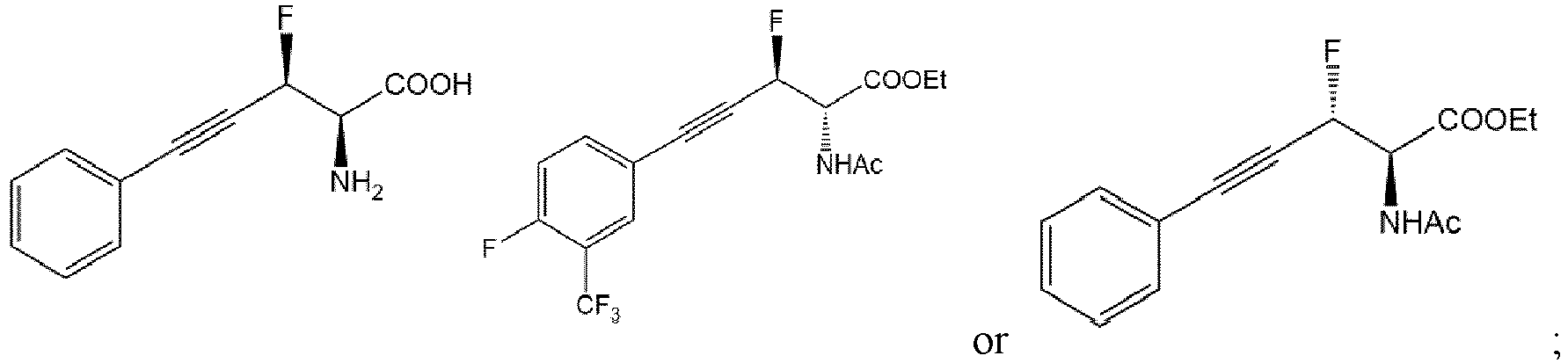
- In some aspects, the stereochemistry at the α-carbon may be (R) or (S). In further aspects, the stereochemistry at the β-carbon may be (R) or (S). The stereochemistries of the α- and β-carbons may be the same, or may be different.
- In some embodiments, the CSE antagonist for use in a method of treating, preventing, or reducing a sleep-related breathing disorder in an individual in need thereof further comprises administering one or more additional therapeutic agents. A second therapeutic agent may be selected from carbonic anhydrase inhibitors, cholinesterase inhibitors, adenosine inhibitors, progestational agents, opioid antagonists, central nervous system stimulants, selective serotonin reuptake inhibitors (SSRis), antidepressants, antihypertensives, calcium channel antagonists, ACE inhibitors, respiratory stimulants, alpha-2 adrenergic agonists, gamma aminobutyric acid agonists, and glutamate antagonists. In yet further embodiments, an additional therapeutic agent may be at least one therapeutic agent selected from acetazolamide, theophylline, progesterone, donepezil, naloxone, nicotine, paroxetine, protriptyline, metoprolol, cilazapril, propranolol, atenolol, hydrochlorothiazide, isradipine, spirapril, doxapram, clonidine, baclofen, and sabeluzole.
- A second and/or additional, i.e., third, therapeutic agent can be administered in the same composition or in separate compositions. In some embodiments, the first inhibitor or treatment is administered, and a second inhibitor or treatment is administered. In some embodiments, the second therapeutic agent is administered within 3 days of the CSE antagonist. In some embodiments, the second therapeutic agent is administered within 24 hours of the CSE antagonist. In some embodiments, the second therapeutic agent is administered within 3 hours of the CSE antagonist. In further embodiments, an additional therapeutic agent may be used in conjunction with the CSE inhibitor, or with the combination of the CSE inhibitor and second therapeutic agent.
- The compositions may be administered in any appropriate manner. In some embodiments, the composition is administered orally, intraadiposally, intraarterially, intraarticularly, intracranially, intradermally, intralesionally, intramuscularly, intranasally, intraocularally, intrapericardially, intraperitoneally, intrapleurally, intraprostaticaly, intrarectally, intrathecally, intratracheally, intratumorally, intraumbilically, intravaginally, intravenously, intravesicularlly, intravitreally, liposomally, locally, mucosally, orally, parenterally, rectally, subconjunctival, subcutaneously, sublingually, topically, transbuccally, transdermally, vaginally, in cremes, in lipid compositions, via a catheter, via a lavage, via continuous infusion, via infusion, via inhalation, via injection, via local delivery, via localized perfusion, bathing target cells directly, or any combination thereof.
- Methods may involve administering a composition containing about, at least about, or at most about 0.01, 0.02, 0.03, 0.04, 0.05, 0.06, 0.07, 0.08, 0.09, 0.1, 0.2, 0.3, 0.4, 0.5, 0.6, 0.7, 0.8, 0.9, 1.0, 1.1, 1.2, 1.3, 1.4, 1.5, 1.6, 1.7, 1.8, 1.9, 2.0, 2.1, 2.2, 2.3, 2.4, 2.5, 2.6, 2.7, 2.8, 2.9, 3.0, 3.1, 3.2, 3.3, 3.4, 3.5, 3.6, 3.7. 3.8, 3.9, 4.0, 4.1, 4.2, 4.3, 4.4, 4.5, 4.6, 4.7, 4.8, 4.9, 5.0, 5.1, 5.2, 5.3, 5.4, 5.5, 5.6, 5.7, 5.8, 5.9, 6.0, 6.1, 6.2, 6.3, 6.4, 6.5, 6.6, 6.7, 6.8, 6.9, 7.0, 7.1, 7.2, 7.3, 7.4, 7.5, 7.6, 7.7, 7.8, 7.9, 8.0, 8.1, 8.2, 8.3, 8.4, 8.5, 8.6, 8.7, 8.8, 8.9, 9.0, 9.1, 9.2, 9.3, 9.4, 9.5, 9.6, 9.7, 9.8, 9.9, 10.0, 10.5, 11.0, 11.5, 12.0, 12.5, 13.0, 13.5, 14.0, 14.5, 15.0, 15.5, 16.0, 16.5, 17.0, 17.5, 18.0, 18.5, 19.0. 19.5, 20.0, 1, 2, 3, 4, 5, 6, 7, 8, 9, 10, 11, 12, 13, 14, 15, 16, 17, 18, 19, 20, 21, 22, 23, 24, 25, 26, 27, 28, 29, 30, 31, 32, 33, 34, 35, 36, 37, 38, 39, 40, 41, 42, 43, 44, 45, 46, 47, 48, 49, 50, 51, 52, 53, 54, 55, 56, 57, 58, 59, 60, 61, 62, 63, 64, 65, 66, 67, 68, 69, 70, 71, 72, 73, 74, 75, 76, 77, 78, 79, 80, 81, 82, 83, 84, 85, 86, 87, 88, 89, 90, 91, 92, 93, 94, 95, 96, 97, 98, 99, 100, 105, 110, 115, 120, 125, 130, 135, 140, 145, 150, 155, 160, 165, 170, 175, 180, 185, 190, 195, 200, 205, 210, 215, 220, 225, 230, 235, 240, 245, 250, 255, 260, 265, 270, 275, 280, 285, 290, 295, 300, 305, 310, 315, 320, 325, 330, 335, 340, 345, 350, 355, 360, 365, 370, 375, 380, 385, 390, 395, 400, 410, 420, 425, 430, 440, 441, 450, 460, 470, 475, 480, 490, 500, 510, 520, 525, 530, 540, 550, 560, 570, 575, 580, 590, 600, 610, 620, 625, 630, 640, 650, 660, 670, 675, 680, 690, 700, 710, 720, 725, 730, 740, 750, 760, 770, 775, 780, 790, 800, 810, 820, 825, 830, 840, 850, 860, 870, 875, 880, 890, 900, 910, 920, 925, 930, 940, 950, 960, 970, 975, 980, 990, 1000, 1100, 1200, 1300, 1400, 1500, 1600, 1700, 1800, 1900, 2000, 2100, 2200, 2300, 2400, 2500, 2600, 2700, 2800, 2900, 3000, 3100, 3200, 3300, 3400, 3500, 3600, 3700, 3800, 3900, 4000, 4100, 4200, 4300, 4400, 4500, 4600, 4700, 4800, 4900, 5000, 6000, 7000, 8000, 9000, 10000 nanograms (ng), micrograms (mcg), milligrams (mg), or grams of a CSE antagonist, or any range derivable therein.
- Alternatively, the methods may involve providing or administering to the patient or to cells or tissue of the patient about, at least about, or at most about 0.01, 0.02, 0.03, 0.04, 0.05, 0.06, 0.07, 0.08, 0.09, 0.1, 0.2, 0.3, 0.4, 0.5, 0.6, 0.7, 0.8, 0.9, 1.0, 1.1, 1.2, 1.3, 1.4, 1.5, 1.6, 1.7, 1.8, 1.9, 2.0, 2.1, 2.2, 2.3, 2.4, 2.5, 2.6, 2.7, 2.8, 2.9, 3.0, 3.1, 3.2, 3.3, 3.4, 3.5, 3.6, 3.7. 3.8, 3.9, 4.0, 4.1, 4.2, 4.3, 4.4, 4.5, 4.6, 4.7, 4.8, 4.9, 5.0, 5.1, 5.2, 5.3, 5.4, 5.5, 5.6, 5.7, 5.8, 5.9, 6.0, 6.1, 6.2, 6.3, 6.4, 6.5, 6.6, 6.7, 6.8, 6.9, 7.0, 7.1, 7.2, 7.3, 7.4, 7.5, 7.6, 7.7, 7.8, 7.9, 8.0, 8.1, 8.2, 8.3, 8.4, 8.5, 8.6, 8.7, 8.8, 8.9, 9.0, 9.1, 9.2, 9.3, 9.4, 9.5, 9.6, 9.7, 9.8, 9.9, 10.0, 10.5, 11.0, 11.5, 12.0, 12.5, 13.0, 13.5, 14.0, 14.5, 15.0, 15.5, 16.0, 16.5, 17.0, 17.5, 18.0, 18.5, 19.0. 19.5, 20.0, 1, 2, 3, 4, 5, 6, 7, 8, 9, 10, 11, 12, 13, 14, 15, 16, 17, 18, 19, 20, 21, 22, 23, 24, 25, 26, 27, 28, 29, 30, 31, 32, 33, 34, 35, 36, 37, 38, 39, 40, 41, 42, 43, 44, 45, 46, 47, 48, 49, 50, 51, 52, 53, 54, 55, 56, 57, 58, 59, 60, 61, 62, 63, 64, 65, 66, 67, 68, 69, 70, 71, 72, 73, 74, 75, 76, 77, 78, 79, 80, 81, 82, 83, 84, 85, 86, 87, 88, 89, 90, 91, 92, 93, 94, 95, 96, 97, 98, 99, 100, 105, 110, 115, 120, 125, 130, 135, 140, 145, 150, 155, 160, 165, 170, 175, 180, 185, 190, 195, 200, 205, 210, 215, 220, 225, 230, 235, 240, 245, 250, 255, 260, 265, 270, 275, 280, 285, 290, 295, 300, 305, 310, 315, 320, 325, 330, 335, 340, 345, 350, 355, 360, 365, 370, 375, 380, 385, 390, 395, 400, 410, 420, 425, 430, 440, 441, 450, 460, 470, 475, 480, 490, 500, 510, 520, 525, 530, 540, 550, 560, 570, 575, 580, 590, 600, 610, 620, 625, 630, 640, 650, 660, 670, 675, 680, 690, 700, 710, 720, 725, 730, 740, 750, 760, 770, 775, 780, 790, 800, 810, 820, 825, 830, 840, 850, 860, 870, 875, 880, 890, 900, 910, 920, 925, 930, 940, 950, 960, 970, 975, 980, 990, 1000, 1100, 1200, 1300, 1400, 1500, 1600, 1700, 1800, 1900, 2000, 2100, 2200, 2300, 2400, 2500, 2600, 2700, 2800, 2900, 3000, 3100, 3200, 3300, 3400, 3500, 3600, 3700, 3800, 3900, 4000, 4100, 4200, 4300, 4400, 4500, 4600, 4700, 4800, 4900, 5000, 6000, 7000, 8000, 9000, 10000 nanograms (ng), micrograms (mcg), milligrams (mg), or grams of a CSE antagonist, or any range derivable therein, in one dose or collectively in multiple doses. In some embodiments, the composition comprises between about 0.1 ng and about 2.0 g of a CSE antagonist.
- Alternatively, the composition may have a concentration of a CSE antagonist that is about, at least about, or at most about 0.01, 0.02, 0.03, 0.04, 0.05, 0.06, 0.07, 0.08, 0.09, 0.1, 0.2, 0.3, 0.4, 0.5, 0.6, 0.7, 0.8, 0.9, 1.0, 1.1, 1.2, 1.3, 1.4, 1.5, 1.6, 1.7, 1.8, 1.9, 2.0, 2.1, 2.2, 2.3, 2.4, 2.5, 2.6, 2.7, 2.8, 2.9, 3.0, 3.1, 3.2, 3.3, 3.4, 3.5, 3.6, 3.7. 3.8, 3.9, 4.0, 4.1, 4.2, 4.3, 4.4, 4.5, 4.6, 4.7, 4.8, 4.9, 5.0, 5.1, 5.2, 5.3, 5.4, 5.5, 5.6, 5.7, 5.8, 5.9, 6.0, 6.1, 6.2, 6.3, 6.4, 6.5, 6.6, 6.7, 6.8, 6.9, 7.0, 7.1, 7.2, 7.3, 7.4, 7.5, 7.6, 7.7, 7.8, 7.9, 8.0, 8.1, 8.2, 8.3, 8.4, 8.5, 8.6, 8.7, 8.8, 8.9, 9.0, 9.1, 9.2, 9.3, 9.4, 9.5, 9.6, 9.7, 9.8, 9.9, 10.0, 10.5, 11.0, 11.5, 12.0, 12.5, 13.0, 13.5, 14.0, 14.5, 15.0, 15.5, 16.0, 16.5, 17.0, 17.5, 18.0, 18.5, 19.0. 19.5, 20.0, 1, 2, 3, 4, 5, 6, 7, 8, 9, 10, 11, 12, 13, 14, 15, 16, 17, 18, 19, 20, 21, 22, 23, 24, 25, 26, 27, 28, 29, 30, 31, 32, 33, 34, 35, 36, 37, 38, 39, 40, 41, 42, 43, 44, 45, 46, 47, 48, 49, 50, 51, 52, 53, 54, 55, 56, 57, 58, 59, 60, 61, 62, 63, 64, 65, 66, 67, 68, 69, 70, 71, 72, 73, 74, 75, 76, 77, 78, 79, 80, 81, 82, 83, 84, 85, 86, 87, 88, 89, 90, 91, 92, 93, 94, 95, 96, 97, 98, 99, 100, 105, 110, 115, 120, 125, 130, 135, 140, 145, 150, 155, 160, 165, 170, 175, 180, 185, 190, 195, 200, 205, 210, 215, 220, 225, 230, 235, 240, 245, 250, 255, 260, 265, 270, 275, 280, 285, 290, 295, 300, 305, 310, 315, 320, 325, 330, 335, 340, 345, 350, 355, 360, 365, 370, 375, 380, 385, 390, 395, 400, 410, 420, 425, 430, 440, 441, 450, 460, 470, 475, 480, 490, 500, 510, 520, 525, 530, 540, 550, 560, 570, 575, 580, 590, 600, 610, 620, 625, 630, 640, 650, 660, 670, 675, 680, 690, 700, 710, 720, 725, 730, 740, 750, 760, 770, 775, 780, 790, 800, 810, 820, 825, 830, 840, 850, 860, 870, 875, 880, 890, 900, 910, 920, 925, 930, 940, 950, 960, 970, 975, 980, 990, 1000 mg or micrograms/ml or mg/ml, or any range derivable therein.
- If a liquid, gel, or semi-solid composition, the volume of the composition that is administered to the patient may be about, at least about, or at most about 0.01, 0.02, 0.03, 0.04, 0.05, 0.06, 0.07, 0.08, 0.09, 0.1, 0.2, 0.3, 0.4, 0.5, 0.6, 0.7, 0.8, 0.9, 1.0, 1.1, 1.2, 1.3, 1.4, 1.5, 1.6, 1.7, 1.8, 1.9, 2.0, 2.1, 2.2, 2.3, 2.4, 2.5, 2.6, 2.7, 2.8, 2.9, 3.0, 3.1, 3.2, 3.3, 3.4, 3.5, 3.6, 3.7. 3.8, 3.9, 4.0, 4.1, 4.2, 4.3, 4.4, 4.5, 4.6, 4.7, 4.8, 4.9, 5.0, 5.1, 5.2, 5.3, 5.4, 5.5, 5.6, 5.7, 5.8, 5.9, 6.0, 6.1, 6.2, 6.3, 6.4, 6.5, 6.6, 6.7, 6.8, 6.9, 7.0, 7.1, 7.2, 7.3, 7.4, 7.5, 7.6, 7.7, 7.8, 7.9, 8.0, 8.1, 8.2, 8.3, 8.4, 8.5, 8.6, 8.7, 8.8, 8.9, 9.0, 9.1, 9.2, 9.3, 9.4, 9.5, 9.6, 9.7, 9.8, 9.9, 10.0, 10.5, 11.0, 11.5, 12.0, 12.5, 13.0, 13.5, 14.0, 14.5, 15.0, 15.5, 16.0, 16.5, 17.0, 17.5, 18.0, 18.5, 19.0. 19.5, 20.0, 1, 2, 3, 4, 5, 6, 7, 8, 9, 10, 11, 12, 13, 14, 15, 16, 17, 18, 19, 20, 21, 22, 23, 24, 25, 26, 27, 28, 29, 30, 31, 32, 33, 34, 35, 36, 37, 38, 39, 40, 41, 42, 43, 44, 45, 46, 47, 48, 49, 50, 51, 52, 53, 54, 55, 56, 57, 58, 59, 60, 61, 62, 63, 64, 65, 66, 67, 68, 69, 70, 71, 72, 73, 74, 75, 76, 77, 78, 79, 80, 81, 82, 83, 84, 85, 86, 87, 88, 89, 90, 91, 92, 93, 94, 95, 96, 97, 98, 99, 100 microliters (µl) or milliliters (ml), or any range derivable therein. In certain embodiments, the patient is administered up to about 10 ml of the composition.
- The amount of CSE antagonist that is administered or taken by the patient may be based on the patient's weight (in kilograms). Therefore, in some embodiments, the patient is administered or takes a dose or multiple doses amounting to about, at least about, or at most about 0.01, 0.02, 0.03, 0.04, 0.05, 0.06, 0.07, 0.08, 0.09, 0.1, 0.2, 0.3, 0.4, 0.5, 0.6, 0.7, 0.8, 0.9, 1.0, 1.1, 1.2, 1.3, 1.4, 1.5, 1.6, 1.7, 1.8, 1.9, 2.0, 2.1, 2.2, 2.3, 2.4, 2.5, 2.6, 2.7, 2.8, 2.9, 3.0, 3.1, 3.2, 3.3, 3.4, 3.5, 3.6, 3.7. 3.8, 3.9, 4.0, 4.1, 4.2, 4.3, 4.4, 4.5, 4.6, 4.7, 4.8, 4.9, 5.0, 5.1, 5.2, 5.3, 5.4, 5.5, 5.6, 5.7, 5.8, 5.9, 6.0, 6.1, 6.2, 6.3, 6.4, 6.5, 6.6, 6.7, 6.8, 6.9, 7.0, 7.1, 7.2, 7.3, 7.4, 7.5, 7.6, 7.7, 7.8, 7.9, 8.0, 8.1, 8.2, 8.3, 8.4, 8.5, 8.6, 8.7, 8.8, 8.9, 9.0, 9.1, 9.2, 9.3, 9.4, 9.5, 9.6, 9.7, 9.8, 9.9, 10.0, 10.5, 11.0, 11.5, 12.0, 12.5, 13.0, 13.5, 14.0, 14.5, 15.0, 15.5, 16.0, 16.5, 17.0, 17.5, 18.0, 18.5, 19.0. 19.5, 20.0, 1, 2, 3, 4, 5, 6, 7, 8, 9, 10, 11, 12, 13, 14, 15, 16, 17, 18, 19, 20, 21, 22, 23, 24, 25, 26, 27, 28, 29, 30, 31, 32, 33, 34, 35, 36, 37, 38, 39, 40, 41, 42, 43, 44, 45, 46, 47, 48, 49, 50, 51, 52, 53, 54, 55, 56, 57, 58, 59, 60, 61, 62, 63, 64, 65, 66, 67, 68, 69, 70, 71, 72, 73, 74, 75, 76, 77, 78, 79, 80, 81, 82, 83, 84, 85, 86, 87, 88, 89, 90, 91, 92, 93, 94, 95, 96, 97, 98, 99, 100, 105, 110, 115, 120, 125, 130, 135, 140, 145, 150, 155, 160, 165, 170, 175, 180, 185, 190, 195, 200, 205, 210, 215, 220, 225, 230, 235, 240, 245, 250, 255, 260, 265, 270, 275, 280, 285, 290, 295, 300, 305, 310, 315, 320, 325, 330, 335, 340, 345, 350, 355, 360, 365, 370, 375, 380, 385, 390, 395, 400, 410, 420, 425, 430, 440, 441, 450, 460, 470, 475, 480, 490, 500, 510, 520, 525, 530, 540, 550, 560, 570, 575, 580, 590, 600, 610, 620, 625, 630, 640, 650, 660, 670, 675, 680, 690, 700, 710, 720, 725, 730, 740, 750, 760, 770, 775, 780, 790, 800, 810, 820, 825, 830, 840, 850, 860, 870, 875, 880, 890, 900, 910, 920, 925, 930, 940, 950, 960, 970, 975, 980, 990, 1000 micrograms/kilogram (kg) or mg/kg, or any range derivable therein.
- The composition may be administered to (or taken by) the
patient - The use of the term "or" in the claims is used to mean "and/or" unless explicitly indicated to refer to alternatives only or the alternative are mutually exclusive, although the disclosure supports a definition that refers to only alternatives and "and/or."
- The terms "comprise" (and any form of comprise, such as "comprises" and "comprising"), "have" (and any form of have, such as "has" and "having"), "include" (and any form of include, such as "includes" and "including") and "contain" (and any form of contain, such as "contains" and "containing") are open-ended linking verbs. As a result, methods and systems that "comprises," "has," "includes" or "contains" one or more elements possesses those one or more elements, but is not limited to possessing only those one or more elements. Likewise, an element of a method or system that "comprises," "has," "includes" or "contains" one or more features possesses those one or more features, but is not limited to possessing only those one or more features.
- Any method or system disclosed herein can consist of or consist essentially of-rather than comprise/include/contain/have-any of the described elements and/or features and/or steps. Thus the term "consisting of" or "consisting essentially of" can be substituted for any of the open-ended linking verbs recited above.
- Throughout this application, the term "about" is used to indicate that a value includes the standard deviation of error for the device and/or method being employed to determine the value.
- The term "substantially" is defined as being largely but not necessarily wholly what is specified (and include wholly what is specified) as understood by one of ordinary skill in the art. The term "substantially" may be substituted with "within [a percentage] of" what is specified, where the percentage includes 0.1, 1, 5, and 10 percent.
- As used herein, in the specification, "a" or "an" may mean one or more, unless clearly indicated otherwise. As used herein, in the claim(s), when used in conjunction with the word "comprising," the words "a" or "an" may mean one or more than one. As used herein "another" may mean at least a second or more.
- Other objects, features and advantages disclosed herein will become apparent from the following detailed description. It should be understood, however, that the detailed description and the specific examples, while indicating preferred embodiments, are given by way of illustration only.
-
-
FIGS. 1A-1F HO-2 null mice exhibit irregular breathing with apnea and hypoapnea.FIG. 1A depicts breathing monitored by plethysmography in un-sedated six month old, female wild-type (WT) mice and age and gender matched HO-2 -/- mice (top). Plethysmography (bottom) includes arrows that indicate apnea (complete cessation of breathing for >2 breaths duration) and a shaded area that represents hypoapnea (≥30 reduction in tidal volume).FIG. 1C is a graph depicting the average of hypoapnea index (number of hypoapnea events per hour) in wild-type (WT) and HO-2-/- mice.FIG. 1D includes Poincaré plots of breath to breath (BBi) versus next BB interval (BBi+1) for 500 breaths in a single six month old, female, wild-type (left) mouse and an age and gender matched HO-2 -/- mouse (right).FIG. 1E is a graph depictingstandard deviation 1 of breath-to-breath intervals of HO-2 null mice as compared with wild-type mice.FIG. 1F is a graph depictingstandard deviation 2 of breath-to-breath intervals in HO-2 null as compared with wild-type mice. -
FIGS. 2A-2C HO-2 null mice exhibit both obstructive and central apnea. HO-2 null mice were chronically implanted electrodes in the inspiratory intercostal muscle. Inspiratory intercostal electromyographic activity (I-EMG), integrated I-EMG were recorded along with breathing by plethysmography were continuously monitored for six hours in unsedated HO-2 null mice.FIG. 2A is an example of breathing in an HO-2 null mouse showing apnea with increased I-EMG activity (obstructive apnea).FIG. 2B is an example of breathing in an HO-2 null mouse showing apnea with total absence of I-EMG activity (central apnea).FIG. 2C is a graph depicting average (mean ± SEM) of obstructive and central apneas during six hours of recording in HO-2 null mice. * Denotes P<0.05. -
FIG. 3A-3D Increased incidence of apnea during sleep in HO-2 null mice. Electrodes were implanted under surgical anesthesia for monitoring electroencephalographic (EEG) and electromyographic activity of neck muscles (EMG neck) in wild-type and HO-2 null mice. After recovery from surgery, EEG, EMGneck were recorded along with breathing by plethysmography (VT) in unsedated mice for six hours. Wake, non-rapid eye movement (NREM) and rapid eye movement (REM) sleep were identified as outlined in methods and results.FIG. 3A is an example of breathing (VT), EEG, EMGneck under wake, NREM, and REM sleep in a wild-type mouse.FIG. 3B is an example of breathing (VT), EEG, EMGneck under wake, NREM, and REM sleep in a HO-2 -/- mouse.FIG. 3C is a graph depicting the average (mean±SEM) data of the number of apnea (events/hour) in wild-type and HO-2 -/- mice under wake, NREM and REM sleep.FIG. 3D is a graph depicting the average (mean±SEM) data of the number of hypoapnea index (number of events with ≥30 reduction in tidal volume per hour) in wild-type and HO-2 -/- mice under wake, NREM and REM sleep. * and ** Denote P< 0.05 and <0.01, respectively. -
FIGS. 4A-4H Carotid chemo reflex contributes to apnea in HO-2 null mice.FIG. 4A depicts examples of breathing responses of HO-2 null mice to normoxia (21% O2), hyperoxia (90% O2), and mild hypoxia (15% O2).FIG. 4B is a graph depicting the average (mean±SEM) data of number of apnea per hour presented as percent of control normoxia (21% O2) from HO-2 null mice exposed to 15 minutes of hyperoxia (90% O2) and mild hypoxia (15% O2).FIG. 4C depicts examples of breathing monitored by plethysmography in an unsedated wild-type (WT) mouse, and age and gender matched HO-2 -/- and HO-2 -/- + Cse -/- mice. Arrows indicate apnea (complete cessation of breathing for >2 breaths duration).FIG. 4D includes three sets of Poincaré plots of breath to breath (BBi) versus next BB interval (BBi+1) for 500 breaths in a single WT mouse, and age and gender matched HO-2 -/- and HO-2 -/- + Cse -/- mice.FIG. 4E is a graph depicting the analysis of the standard deviation 1 (SD1) of breath-to-breath (BB) intervals.FIG. 4F is a graph depicting the analysis of the standard deviation 2 (SD2) of breath-to-breath (BB) intervals.FIG. 4G is a graph depicting the average of the number of apnea (events/hr) in WT and HO-2 -/- and HO-2 -/- + Cse -/- mice.FIG. 4H is a graph depicting the average of the hypoapnea index (number of events with ≥30 reduction in tidal volume per hour in WT and HO-2 -/- and HO-2 -/- + Cse -/- mice. ∗∗ Denote P <0.01. -
FIGS. 5A-5I L-propargylglycine (L-PAG), a CSE inhibitor normalizes breathing in HO-2 null mice.FIG. 5A includes examples of breathing monitored by plethysmography in an unsedated HO-2 -/- mouse treated with intraperitoneal administration of vehicle (saline) or 30 and 90 mg/Kg of L-PAG. Arrows indicate apnea (complete cessation of breathing for >2 breaths duration).FIG. 5B is a graph depicting the average data (mean±SEM) of dose-response of L-PAG on number apnea per hour presented as percent of vehicle treated controls in HO-2 null mice.FIG. 5C includes Poincaré plots of breath to breath (BBi) versus next BB interval (BBi+1) for 500 breaths in a single HO-2 -/- mouse treated with vehicle or L-PAG (30 mg/kg).FIG. 5D is a graph depicting average data (mean ±SEM) of the analysis of the standard deviation 1 (SD1) of breath-to-breath (BB) intervals.FIG. 5E is a graph depicting average data (mean ±SEM) of the analysis of the standard deviation 2 (SD2) of breath-to-breath (BB) intervals.FIG. 5F is a graph depicting average data (mean ±SEM) of number of apneas per hour in HO-2 null mice treated with intra-peritoneal administration of either vehicle or L-PAG (30mg/Kg) and after 24 hours post-L-PAG administration.FIG. 5G is a graph depicting average data (mean ±SEM) of hypoapnea index in HO-2 null mice treated with intra-peritoneal administration of either vehicle or L-PAG (30mg/Kg) and after 24 hours post-L-PAG administration.FIG. 5H is a graph depicting the average data (mean ±SEM) of the effects of oral administration of either vehicle or 30 mg/kg of L-PAG on number of apneas per hour (H) in HO-2 null mice.FIG. 5I is a graph depicting the average data (mean ±SEM) of the effects of oral administration of either vehicle or 30 mg/kg of L-PAG on hypoapnea index (number of events with 30% reduction in tidal volume per hour). * and ** Denote P < 0.05 and 0.01, respectively. -
FIGS. 6A is a graph depicting the percentage of population of mice in wake, NREM, or REM sleep stages for WT and HO-2 -/- mice.FIG. 6B is a graph depicting the difference in apnea index (events/hr) between mice ofages 5 months and >6 months. -
FIGS. 7A-7D Echocardiography & quantitative data in wild-type and HO-2 null mice.FIG. 7A includes echocardiograms of WT and HO-2 -/- mice.FIG. 7B is a graph depicting fractional shortening for WT and HO-2 -/- mice.FIG. 7C is a graph depicting left ventricular inner diameter (LVID, mm) for WT and HO-2 -/- mice.FIG. 7D is a graph depicting ventricular wall thickness for WT and HO-2 -/- mice. -
FIGS. 8A-8C Effect of breathing 2% CO2 on apneas in HO-2 null mice.FIG. 8A is a plethysmography of an HO-2 null mouse during normoxic conditions followed by a 2% CO2 challenge.FIG. 8B is a graph depicting the change in number of apnea events/hr upon challenging HO-2 null mice with 2% CO2.FIG. 8C is a graph depicting a 25% reduction in the number of apneas, which was primarly due to reduced central apnea. -
FIGS. 9A-9B Carotid body response to hypoxia.FIG. 9A includes measurements of carotid body response to hypoxia in wild-type, HO-2 null and HO-2-CSE double knock out mice. HO-2 null mice showed an augmented carotid body response to hypoxia as compared with wild-type mice, and this effect was absent in HO-2-CSE double knockout mice.FIG. 9B is a graph depicting sensory response (Δimp/s) for wild-type, HO-2 null and HO-2-CSE double knock out mice in response to hypoxia. -
FIGS. 10A-10B Effect of CSE inhibitor on H2S production.FIG. 10A depicts a dose-response of L-propargylglycine (L-PAG) on H2S production in an in vitro assay using mouse liver homogenates.FIG. 10B depicts the effect of L-PAG (30 µM) on H2S generation by CSE and CBS in mouse liver homogenates. Data are presented as mean ± SEM from 4 independent experiments. **P < 0.01; n.s., not significant. -
FIG. 11 includes comparative dose-response graphs for systemic administration of L-PAG and two CSE inhibitors TRI-101 and TRI-102. The ED50 for L-PAG is ~30 mg/kg, while the ED50 for TRI-101 is ~10 mg/kg (3-fold more potent than L-PAG) and the ED50 for TRI-102 is ~3 mg/kg (10-fold more potent than L-PAG). - Sleep apnea is a highly prevalent respiratory disorder often associated with either OSA or CSA or a combination of both. Patients with sleep apnea exhibit a wide spectrum of co- morbidties including hypertension. Currently available therapies have limited efficacy in normalizing breathing in patients with OSA or CSA.
- A recent study showed exaggerated carotid body response to hypoxia in mice lacking hemeoxygenase-2 (HO-2), an enzyme responsible for the generation of endogenous carbon monoxide (CO) and this effect is mediated by augmented cystathionine-γ-lyase (CSE)-derived hydrogen sulfide (H2S) signaling in the carotid body. The results disclosed herein include experiments with HO-2 null mice as an experimental model of sleep apnea exhibiting both OSA and CSA phenotype. HO-2 null mice exhibit both OSA and CSA with higher incidence of apnea during sleep. The results disclosed herein demonstrate that correction of the carotid body chemoreflex by inhibiting CSE-derived H2S generation reversibly prevents apnea in HO-2 null mice. The tested compounds demonstrated that the onset of anti-apneic effect was rapid and was seen as quickly as two hours after the administration. Moreover, the effects of
ED 50 dose were fully reversed after 24 hours. Furthermore, there was an absence of any mortality or gross toxicity within the dose range tested. The CSE inhibitors disclosed herein may be used as therapeutic agents for the treatment of sleep-related breathing disorders including OSA and CSA. - A CSE antagonist is a compound that acts to inhibit, attenuate, or decrease the activity of the CSE protein. The CSE inhibitor is at least one of:


- In some aspects, the stereochemistry at the α-carbon may be (R) or (S). In further aspects, the stereochemistry at the β-carbon may be (R) or (S). The stereochemistries of the α- and β-carbons may be the same, or may be different.
- In particular aspects, the CSE antagonist is at least one of:


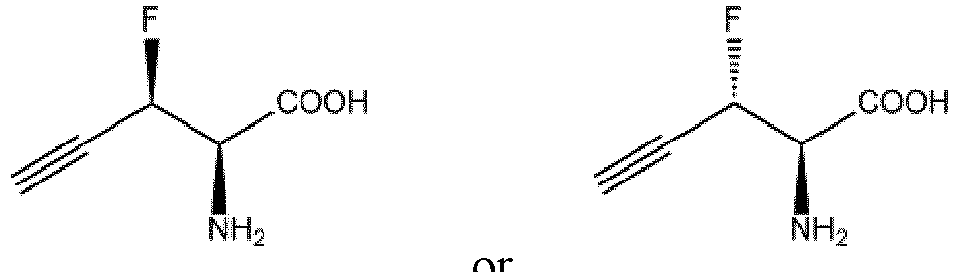
- When used in the context of a chemical group, "hydrogen" means -H; "hydroxy" means -OH; "oxo" means =O; "halo" means independently -F, -Cl, -Br or -I; "amino" means -NH2; "hydroxyamino" means -NHOH; "nitro" means -NO2; imino means =NH; "cyano" means -CN; "isocyanate" means -N=C=O; "azido" means -N3; in a monovalent context "phosphate" means -OP(O)(OH)2 or a deprotonated form thereof; in a divalent context "phosphate" means -OP(O)(OH)O- or a deprotonated form thereof; "mercapto" means -SH; "thio" means =S; "sulfonyl" means -S(O)2-; and "sulfinyl" means -S(O)-.
- In the context of chemical formulas, the symbol "-" means a single bond, "=" means a double bond; and "≡" means triple bond. The symbol " " represents an optional bond, which if present is either single or double. The symbol "
- - - - " represents a single bond or a double bond. Thus, for example, the structure


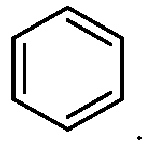 ", when drawn perpendicularly across a bond indicates a point of attachment of the group. It is noted that the point of attachment is typically only identified in this manner for larger groups in order to assist the reader in rapidly and unambiguously identifying a point of attachment. The symbol "
 " means a single bond where the group attached to the thick end of the wedge is "out of the page." The symbol "
 " means a single bond where the group attached to the thick end of the wedge is "into the page". The symbol "
 " means a single bond where the conformation (e.g., either R or S) or the geometry is undefined (e.g., either E or Z).
- Any undefined valency on an atom of a structure shown in this application implicitly represents a hydrogen atom bonded to the atom. When a group "R" is depicted as a "floating group" on a ring system, for example, in the formula:

- then R may replace any hydrogen atom attached to any of the ring atoms, including a depicted, implied, or expressly defined hydrogen, so long as a stable structure is formed. When a group "R" is depicted as a "floating group" on a fused ring system, as for example in the formula:

- then R may replace any hydrogen attached to any of the ring atoms of either of the fused rings unless specified otherwise. Replaceable hydrogens include depicted hydrogens (e.g., the hydrogen attached to the nitrogen in the formula above), implied hydrogens (e.g., a hydrogen of the formula above that is not shown but understood to be present), expressly defined hydrogens, and optional hydrogens whose presence depends on the identity of a ring atom (e.g., a hydrogen attached to group X, when X equals -CH-), so long as a stable structure is formed. In the example depicted, R may reside on either the 5-membered or the 6-membered ring of the fused ring system. In the formula above, the subscript letter "y" immediately following the group "R" enclosed in parentheses, represents a numeric variable. Unless specified otherwise, this variable can be 0, 1, 2, or any integer greater than 2, only limited by the maximum number of replaceable hydrogen atoms of the ring or ring system.
- For the groups and classes below, the following parenthetical subscripts further define the group/class as follows: "(Cn)" defines the exact number (n) of carbon atoms in the group/class. "(C≤n)" defines the maximum number (n) of carbon atoms that can be in the group/class, with the minimum number as small as possible for the group in question, e.g., it is understood that the minimum number of carbon atoms in the group "alkenyl(C≤8)" or the class "alkene(C≤8)" is two. For example, "alkoxy(C≤10)" designates those alkoxy groups having from 1 to 10 carbon atoms (e.g., 1, 2, 3, 4, 5, 6, 7, 8, 9, or 10, or any range derivable therein (e.g., 3 to 10 carbon atoms). (Cn-n') defines both the minimum (n) and maximum number (n') of carbon atoms in the group. Similarly, "alkyl(C2-10)" designates those alkyl groups having from 2 to 10 carbon atoms (e.g., 2, 3, 4, 5, 6, 7, 8, 9, or 10, or any range derivable therein (e.g., 3 to 10 carbon atoms)).
- The term "saturated" as used herein means the compound or group so modified has no carbon-carbon double and no carbon-carbon triple bonds, except as noted below. The term does not preclude carbon-heteroatom multiple bonds, for example a carbon oxygen double bond or a carbon nitrogen double bond. Moreover, it does not preclude a carbon-carbon double bond that may occur as part of keto-enol tautomerism or imine/enamine tautomerism.
- The term "aliphatic" when used without the "substituted" modifier signifies that the compound/group so modified is an acyclic or cyclic, but non-aromatic hydrocarbon compound or group. In aliphatic compounds/groups, the carbon atoms can be joined together in straight chains, branched chains, or non-aromatic rings (alicyclic). Aliphatic compounds/groups can be saturated, that is joined by single bonds (alkanes/alkyl), or unsaturated, with one or more double bonds (alkenes/alkenyl) or with one or more triple bonds (alkynes/alkynyl). When the term "aliphatic" is used without the "substituted" modifier only carbon and hydrogen atoms are present. When the term is used with the "substituted" modifier one or more hydrogen atom has been independently replaced by -OH, -F, -Cl, -Br, -I, -NH2, -NO2, -CO2H, -CO2CH3, -CN, -SH, -OCH3, -OCH2CH3, -C(O)CH3, -N(CH3)2, - C(O)NH2, -OC(O)CH3, or -S(O)2NH2.
- The term "alkyl" when used without the "substituted" modifier refers to a monovalent saturated aliphatic group with a carbon atom as the point of attachment, a linear or branched, cyclo, cyclic or acyclic structure, and no atoms other than carbon and hydrogen. Thus, as used herein cycloalkyl is a subset of alkyl. The groups -CH3 (Me), -CH2CH3 (Et), -CH2CH2CH3 (n-Pr), -CH(CH3)2 (iso-Pr), -CH(CH2)2 (cyclopropyl), -CH2CH2CH2CH3 (n-Bu), -CH(CH3)CH2CH3 (sec-butyl), -CH2CH(CH3)2 (iso-butyl), -C(CH3)3 (tert-butyl), -CH2C(CH3)3 (neo-pentyl), cyclobutyl, cyclopentyl, cyclohexyl, and cyclohexylmethyl are examples of alkyl groups. The term "alkanediyl" when used without the "substituted" modifier refers to a divalent saturated aliphatic group, with one or two saturated carbon atom(s) as the point(s) of attachment, a linear or branched, cyclo, cyclic or acyclic structure, no carbon-carbon double or triple bonds, and no atoms other than carbon and hydrogen. The groups, -CH2-(methylene), -CH2CH2-, -CH2C(CH3)2CH2-, -CH2CH2CH2-, and

- The term "alkenyl" when used without the "substituted" modifier refers to an monovalent unsaturated aliphatic group with a carbon atom as the point of attachment, a linear or branched, cyclo, cyclic or acyclic structure, at least one nonaromatic carbon-carbon double bond, no carbon-carbon triple bonds, and no atoms other than carbon and hydrogen. Examples of alkenyl groups include: -CH=CH2 (vinyl), -CH=CHCH3, -CH=CHCH2CH3, -CH2CH=CH2 (allyl), -CH2CH=CHCH3, and -CH=CH-C6H5. The term "alkenediyl" when used without the "substituted" modifier refers to a divalent unsaturated aliphatic group, with two carbon atoms as points of attachment, a linear or branched, cyclo, cyclic or acyclic structure, at least one nonaromatic carbon-carbon double bond, no carbon-carbon triple bonds, and no atoms other than carbon and hydrogen. The groups, -CH=CH-, -CH=C(CH3)CH2-, -CH=CHCH2-, and

- The term "alkynyl" when used without the "substituted" modifier refers to an monovalent unsaturated aliphatic group with a carbon atom as the point of attachment, a linear or branched, cyclo, cyclic or acyclic structure, at least one carbon-carbon triple bond, and no atoms other than carbon and hydrogen. As used herein, the term alkynyl does not preclude the presence of one or more non-aromatic carbon-carbon double bonds. The groups, -C=CH, -C≡CCH3, and -CH2C≡CCH3, are examples of alkynyl groups. When alkynyl is used with the "substituted" modifier one or more hydrogen atom has been independently replaced by -OH, -F, -Cl, -Br, -I, -NH2, -NO2, -CO2H, -CO2CH3, -CN, -SH, -OCH3, -OCH2CH3, - C(O)CH3, -N(CH3)2, -C(O)NH2, -OC(O)CH3, or -S(O)2NH2. An "alkyne" refers to the compound H-R, wherein R is alkynyl.
- The term "aryl" when used without the "substituted" modifier refers to a monovalent unsaturated aromatic group with an aromatic carbon atom as the point of attachment, said carbon atom forming part of a one or more six-membered aromatic ring structure, wherein the ring atoms are all carbon, and wherein the group consists of no atoms other than carbon and hydrogen. If more than one ring is present, the rings may be fused or unfused. As used herein, the term does not preclude the presence of one or more alkyl group (carbon number limitation permitting) attached to the first aromatic ring or any additional aromatic ring present. Examples of aryl groups include phenyl (Ph), methylphenyl, (dimethyl)phenyl, -C6H4CH2CH3 (ethylphenyl), naphthyl, and the monovalent group derived from biphenyl. The term "arenediyl" when used without the "substituted" modifier refers to a divalent aromatic group, with two aromatic carbon atoms as points of attachment, said carbon atoms forming part of one or more six-membered aromatic ring structure(s) wherein the ring atoms are all carbon, and wherein the monovalent group consists of no atoms other than carbon and hydrogen. As used herein, the term does not preclude the presence of one or more alkyl group (carbon number limitation permitting) attached to the first aromatic ring or any additional aromatic ring present. If more than one ring is present, the rings may be fused or unfused. Examples of arenediyl groups include:

- When these terms are used with the "substituted" modifier one or more hydrogen atom has been independently replaced by -OH, -F, -Cl, -Br, -I, -NH2, -NO2, -CO2H, -CO2CH3, -CN, -SH, -OCH3, -OCH2CH3, -C(O)CH3, -N(CH3)2, -C(O)NH2, -OC(O)CH3, or -S(O)2NH2. An "arene" refers to the compound H-R, wherein R is aryl.
- The term "aralkyl" when used without the "substituted" modifier refers to the monovalent group -alkanediyl-aryl, in which the terms alkanediyl and aryl are each used in a manner consistent with the definitions provided above. Examples of aralkyls are: phenylmethyl (benzyl, Bn) and 2-phenyl-ethyl. When the term is used with the "substituted" modifier one or more hydrogen atom from the alkanediyl and/or the aryl has been independently replaced by -OH, -F, -Cl, -Br, -I, -NH2, -NO2, -CO2H, -CO2CH3, -CN, -SH, -OCH3, -OCH2CH3, -C(O)CH3, -N(CH3)2, -C(O)NH2, -OC(O)CH3, or -S(O)2NH2. Examples of substituted aralkyls are: (3-chlorophenyl)-methyl, and 2-chloro-2-phenyl-eth-1-yl.
- The term "heteroaryl" when used without the "substituted" modifier refers to a monovalent aromatic group with an aromatic carbon atom or nitrogen atom as the point of attachment, said carbon atom or nitrogen atom forming part of one or more aromatic ring structures wherein at least one of the ring atoms is nitrogen, oxygen or sulfur, and wherein the heteroaryl group consists of no atoms other than carbon, hydrogen, aromatic nitrogen, aromatic oxygen and aromatic sulfur. As used herein, the term does not preclude the presence of one or more alkyl, aryl, and/or aralkyl groups (carbon number limitation permitting) attached to the aromatic ring or aromatic ring system. If more than one ring is present, the rings may be fused or unfused. Examples of heteroaryl groups include furanyl, imidazolyl, indolyl, indazolyl (Im), isoxazolyl, methylpyridinyl, oxazolyl, phenylpyridinyl, pyridinyl, pyrrolyl, pyrimidinyl, pyrazinyl, quinolyl, quinazolyl, quinoxalinyl, triazinyl, tetrazolyl, thiazolyl, thienyl, and triazolyl. The term "heteroarenediyl" when used without the "substituted" modifier refers to an divalent aromatic group, with two aromatic carbon atoms, two aromatic nitrogen atoms, or one aromatic carbon atom and one aromatic nitrogen atom as the two points of attachment, said atoms forming part of one or more aromatic ring structure(s) wherein at least one of the ring atoms is nitrogen, oxygen or sulfur, and wherein the divalent group consists of no atoms other than carbon, hydrogen, aromatic nitrogen, aromatic oxygen and aromatic sulfur. As used herein, the term does not preclude the presence of one or more alkyl, aryl, and/or aralkyl groups (carbon number limitation permitting) attached to the aromatic ring or aromatic ring system. If more than one ring is present, the rings may be fused or unfused. Examples of heteroarenediyl groups include:

- When these terms are used with the "substituted" modifier one or more hydrogen atom has been independently replaced by -OH, -F, -Cl, -Br, -I, -NH2, -NO2, -CO2H, -CO2CH3, -CN, -SH, -OCH3, -OCH2CH3, -C(O)CH3, -N(CH3)2, -C(O)NH2, -OC(O)CH3, or -S(O)2NH2.
- The term "heterocycloalkyl" when used without the "substituted" modifier refers to a monovalent non-aromatic group with a carbon atom or nitrogen atom as the point of attachment, said carbon atom or nitrogen atom forming part of one or more non-aromatic ring structures wherein at least one of the ring atoms is nitrogen, oxygen or sulfur, and wherein the heterocycloalkyl group consists of no atoms other than carbon, hydrogen, nitrogen, oxygen and sulfur. As used herein, the term does not preclude the presence of one or more alkyl groups (carbon number limitation permitting) attached to the ring or ring system. If more than one ring is present, the rings may be fused or unfused. Examples of heterocycloalkyl groups include aziridinyl, azetidinyl, pyrrolidinyl, piperidinyl, piperazinyl, morpholinyl, thiomorpholinyl, tetrahydrofuranyl, tetrahydrothiofuranyl, tetrahydropyranyl, and pyranyl. When the term "heterocycloalkyl" used with the "substituted" modifier one or more hydrogen atom has been independently replaced by -OH, -F, -Cl, -Br, -I, -NH2, -NO2, -CO2H, -CO2CH3, -CN, -SH, -OCH3, -OCH2CH3, -C(O)CH3, -N(CH3)2, -C(O)NH2, -OC(O)CH3, or -S(O)2NH2.
- The term "acyl" when used without the "substituted" modifier refers to the group -C(O)R, in which R is a hydrogen, alkyl, aryl, aralkyl or heteroaryl, as those terms are defined above. The groups, -CHO, -C(O)CH3 (acetyl, Ac), -C(O)CH2CH3, -C(O)CH2CH2CH3, -C(O)CH(CH3)2, -C(O)CH(CH2)2, -C(O)C6H5, -C(O)C6H4CH3, -C(O)CH2C6H5, -C(O)(imidazolyl) are examples of acyl groups. A "thioacyl" is defined in an analogous manner, except that the oxygen atom of the group -C(O)R has been replaced with a sulfur atom, -C(S)R. When either of these terms are used with the "substituted" modifier one or more hydrogen atom (including the hydrogen atom directly attached the carbonyl or thiocarbonyl group) has been independently replaced by-OH, -F, -Cl, -Br, -I, -NH2, -NO2, -CO2H, -CO2CH3, -CN, -SH, -OCH3, -OCH2CH3, -C(O)CH3, -N(CH3)2, - C(O)NH2, -OC(O)CH3, or -S(O)2NH2. The groups, -C(O)CH2CF3, -CO2H (carboxyl), -CO2CH3 (methylcarboxyl), -CO2CH2CH3, -C(O)NH2 (carbamoyl), and -CON(CH3)2, are examples of substituted acyl groups.
- The term "alkoxy" when used without the "substituted" modifier refers to the group -OR, in which R is an alkyl, as that term is defined above. Examples of alkoxy groups include: -OCH3 (methoxy), -OCH2CH3 (ethoxy), -OCH2CH2CH3, -OCH(CH3)2 (isopropoxy), -OCH(CH2)2, -O-cyclopentyl, and -O-cyclohexyl. The terms "alkenyloxy", "alkynyloxy", "aryloxy", "aralkoxy", "heteroaryloxy", and "acyloxy", when used without the "substituted" modifier, refers to groups, defined as -OR, in which R is alkenyl, alkynyl, aryl, aralkyl, heteroaryl, and acyl, respectively. The term "alkoxydiyl" refers to the divalent group -O-alkanediyl-, -O-alkanediyl-O-, or -alkanediyl-O-alkanediyl-. The term "alkylthio" and "acylthio" when used without the "substituted" modifier refers to the group -SR, in which R is an alkyl and acyl, respectively. When any of these terms is used with the "substituted" modifier one or more hydrogen atom has been independently replaced by -OH, -F, -Cl, -Br, -I, -NH2, -NO2, -CO2H, -CO2CH3, -CN, -SH, -OCH3, -OCH2CH3, -C(O)CH3, -N(CH3)2, -C(O)NH2, -OC(O)CH3, or -S(O)2NH2. The term "alcohol" corresponds to an alkane, as defined above, wherein at least one of the hydrogen atoms has been replaced with a hydroxy group.
- The term "alkylamino" when used without the "substituted" modifier refers to the group -NHR, in which R is an alkyl, as that term is defined above. Examples of alkylamino groups include: -NHCH3 and -NHCH2CH3. The term "dialkylamino" when used without the "substituted" modifier refers to the group -NRR', in which R and R' can be the same or different alkyl groups, or R and R' can be taken together to represent an alkanediyl. Examples of dialkylamino groups include: -N(CH3)2, -N(CH3)(CH2CH3), and N-pyrrolidinyl. The terms "alkoxyamino", "alkenylamino", "alkynylamino", "arylamino", "aralkylamino", "heteroarylamino", and "alkylsulfonylamino" when used without the "substituted" modifier, refers to groups, defined as -NHR, in which R is alkoxy, alkenyl, alkynyl, aryl, aralkyl, heteroaryl, and alkylsulfonyl, respectively. An example of an arylamino group is -NHC6H5. The term "amido" (acylamino), when used without the "substituted" modifier, refers to the group -NHR, in which R is acyl, as that term is defined above. An example of an amido group is -NHC(O)CH3. The term "alkylimino" when used without the "substituted" modifier refers to the divalent group =NR, in which R is an alkyl, as that term is defined above. The term "alkylaminodiyl" refers to the divalent group -NH-alkanediyl-, -NH-alkanediyl-NH-, or -alkanediyl-NH-alkanediyl-. When any of these terms is used with the "substituted" modifier one or more hydrogen atom has been independently replaced by -OH, -F, -Cl, -Br, -I, -NH2, -NO2, -CO2H, -CO2CH3, -CN, -SH, -OCH3, -OCH2CH3, -C(O)CH3, -N(CH3)2, -C(O)NH2, -OC(O)CH3, or -S(O)2NH2. The groups -NHC(O)OCH3 and -NHC(O)NHCH3 are examples of substituted amido groups.
- The terms "alkylsulfonyl" and "alkylsulfinyl" when used without the "substituted" modifier refers to the groups -S(O)2R and -S(O)R, respectively, in which R is an alkyl, as that term is defined above. The terms "alkenylsulfonyl", "alkynylsulfonyl", "arylsulfonyl", "aralkylsulfonyl", and "heteroarylsulfonyl", are defined in an analogous manner. When any of these terms is used with the "substituted" modifier one or more hydrogen atom has been independently replaced by -OH, -F, -Cl, -Br, -I, -NH2, -NO2, -CO2H, -CO2CH3, -CN, -SH, -OCH3, -OCH2CH3, -C(O)CH3, -N(CH3)2, -C(O)NH2, -OC(O)CH3, or -S(O)2NH2.
- As used herein, a "chiral auxiliary" refers to a removable chiral group that is capable of influencing the stereoselectivity of a reaction. Persons of skill in the art are familiar with such compounds, and many are commercially available.
- The term "effective," as that term is used in the specification and/or claims, means adequate to accomplish a desired, expected, or intended result.
- The term "hydrate" when used as a modifier to a compound means that the compound has less than one (e.g., hemihydrate), one (e.g., monohydrate), or more than one (e.g., dihydrate) water molecules associated with each compound molecule, such as in solid forms of the compound.
- As used herein, the term "IC50" refers to an inhibitory dose which is 50% of the maximum response obtained. This quantitative measure indicates how much of a particular drug or other substance (inhibitor) is needed to inhibit a given biological, biochemical or chemical process (or component of a process, i.e. an enzyme, cell, cell receptor or microorganism) by half.
- An "isomer" of a first compound is a separate compound in which each molecule contains the same constituent atoms as the first compound, but where the configuration of those atoms in three dimensions differs.
- The compositions may be administered one or more times. In some embodiments, the compositions are administered 1, 2, 3, 4, 5, 6, 7, 8, 9, or 10 times or more.
- "Effective amount" or "therapeutically effective amount" or "pharmaceutically effective amount" means that amount which, when administered to a subject or patient for treating a disease, is sufficient to effect such treatment for the disease. In some embodiments, the subject is administered at least about 0.01, 0.02, 0.03, 0.04, 0.05, 0.06, 0.07, 0.08, 0.09, 0.1, 0.2, 0.3, 0.4, 0.5, 0.6, 0.7, 0.8, 0.9, 1.0, 2, 3, 4, 5, 6, 7, 8, 9, 10, 20, 30, 40, 50, 60, 70, 80, 90, or 100 mg/kg (or any range derivable therein).
- "Pharmaceutically acceptable" means that which is useful in preparing a pharmaceutical composition that is generally safe, non-toxic and neither biologically nor otherwise undesirable and includes that which is acceptable for veterinary use as well as human pharmaceutical use.
- "Pharmaceutically acceptable salts" means salts of compounds of the present invention which are pharmaceutically acceptable, as defined above, and which possess the desired pharmacological activity. Such salts include acid addition salts formed with inorganic acids such as hydrochloric acid, hydrobromic acid, sulfuric acid, nitric acid, phosphoric acid, and the like; or with organic acids such as 1,2-ethanedisulfonic acid, 2-hydroxyethanesulfonic acid, 2-naphthalenesulfonic acid, 3-phenylpropionic acid, 4,4'-methylenebis(3-hydroxy-2-ene-1-carboxylic acid), 4-methylbicyclo[2.2.2]oct-2-ene-1-carboxylic acid, acetic acid, aliphatic mono- and dicarboxylicacids, aliphatic sulfuric acids, aromatic sulfuric acids, benzenesulfonic acid, benzoic acid, camphorsulfonic acid, carbonic acid, cinnamic acid, citric acid, cyclopentanepropionic acid, ethanesulfonic acid, fumaric acid, glucoheptonic acid, gluconic acid, glutamic acid, glycolic acid, heptanoic acid, hexanoic acid, hydroxynaphthoic acid, lactic acid, laurylsulfuric acid, maleic acid, malic acid, malonic acid, mandelic acid, methanesulfonic acid, muconic acid, o-(4-hydroxybenzoyl)benzoic acid, oxalic acid, p-chlorobenzenesulfonic acid, phenyl-substituted alkanoic acids, propionic acid, p-toluenesulfonic acid, pyruvic acid, salicylic acid, stearic acid, succinic acid, tartaric acid, tertiarybutylacetic acid, trimethylacetic acid, and the like. Pharmaceutically acceptable salts also include base addition salts which may be formed when acidic protons present are capable of reacting with inorganic or organic bases. Acceptable inorganic bases include sodium hydroxide, sodium carbonate, potassium hydroxide, aluminum hydroxide and calcium hydroxide. Acceptable organic bases include ethanolamine, diethanolamine, triethanolamine, tromethamine, N-methylglucamine and the like. It should be recognized that the particular anion or cation forming a part of any salt of this invention is not critical, so long as the salt, as a whole, is pharmacologically acceptable. Additional examples of pharmaceutically acceptable salts and their methods of preparation and use are presented in Handbook of Pharmaceutical Salts: Properties, and Use (P. H. Stahl & C. G. Wermuth eds., Verlag Helvetica Chimica Acta, 2002).
- A "disease" is defined as a pathological condition of a body part, an organ, or a system resulting from any cause, such as infection, genetic defect, or environmental stress. A "health-related condition" is defined herein to refer to a condition of a body part, an organ, or a system that may not be pathological, but for which treatment is sought. Examples include sleep-related breathing disorders. The disease can be any disease, and examples include obstructive sleep apnea and central sleep apnea.
- As used herein, the phrases "treating and/or preventing" or "treatment and/or prevention" includes the administration of the compositions, compounds or agents of the invention to prevent or delay the onset of the symptoms, complications, or biochemical indicia of a disease, alleviating or ameliorating the symptoms or arresting or inhibiting further development of the disease, condition, or disorder (e.g., obstructive sleep apnea). "Treating and/or preventing" further refers to any indicia of success in the treatment or amelioration or prevention of the disease, condition, or disorder, including any objective or subjective parameter such as abatement; remission; diminishing of symptoms or making the disease condition more tolerable to the patient; slowing in the rate of degeneration or decline; or making the final point of degeneration less debilitating. The treatment or amelioration of symptoms can be based on objective or subjective parameters; including the results of an examination by a physician. Accordingly, the phrase "treating and/or preventing" includes the administration of the therapeutic agents of the disclosure to prevent, to alleviate, or to reduce occurrence of sleep apnea and associated pathologies. In some embodiments, the patient may have sleep apnea that is not caused by being obese or because of excessive weight or the patient is not overweight or obese according to their body mass index. (People are generally considered obese when their body mass index (BMI), a measurement obtained by dividing a person's weight by the square of the person's height, is over 30 kg/m2, with the range 25-30 kg/m2 defined as overweight.)
- A "therapeutically effective amount" of a substance/molecule may vary according to factors such as the disease state, age, sex, and weight of the individual, and the ability of the substance/molecule to elicit a desired response in the individual. A therapeutically effective amount is also one in which any toxic or detrimental effects of the substance/molecule are outweighed by the therapeutically beneficial effects. A "prophylactically effective amount" refers to an amount effective, at dosages and for periods of time necessary, to achieve the desired prophylactic result. Typically but not necessarily, since a prophylactic dose is used in subjects prior to or at an earlier stage of disease, the prophylactically effective amount will be less than the therapeutically effective amount.
- An "individual" or "subject" is a mammal. Mammals include domesticated animals (e.g., cows, sheep, cats, dogs, and horses), primates (e.g., humans and non- human primates such as monkeys), rabbits, and rodents (e.g., mice and rats). In certain embodiments, the individual or subject is a human.
- By "reduce or inhibit" is meant the ability to cause an overall decrease of 20%, 30%, 40%, 50%, 60%, 70%, 75%, 80%, 85%, 90%, 95%, or greater. Reduce or inhibit can refer to the symptoms of the disorder being treated, the presence or size of metastases, or the size of the primary tumor.
- The term "pharmaceutically acceptable carrier," as used herein means a pharmaceutically-acceptable material, composition or vehicle, such as a liquid or solid filler, diluent, excipient, solvent or encapsulating material, involved in carrying or transporting a chemical agent.
- "Prodrug" means a compound that is convertible in vivo metabolically into an inhibitor as used in the present invention. The prodrug itself may or may not also have activity with respect to a given target protein. For example, a compound comprising a hydroxy group may be administered as an ester that is converted by hydrolysis in vivo to the hydroxy compound. Suitable esters that may be converted in vivo into hydroxy compounds include acetates, citrates, lactates, phosphates, tartrates, malonates, oxalates, salicylates, propionates, succinates, fumarates, maleates, methylene-bis-β-hydroxynaphthoate, gentisates, isethionates, di-p-toluoyltartrates, methanesulfonates, ethanesulfonates, benzenesulfonates, p-toluenesulfonates, cyclohexyl sulfamates, quinates, esters of amino acids, and the like. Similarly, a compound comprising an amine group may be administered as an amide that is converted by hydrolysis in vivo to the amine compound. In some aspects, a prodrug may include at least one of an ester and amide functional group.
- The term "saturated" when referring to an atom means that the atom is connected to other atoms only by means of single bonds.
- A "stereoisomer" or "optical isomer" is an isomer of a given compound in which the same atoms are bonded to the same other atoms, but where the configuration of those atoms in three dimensions differs. "Enantiomers" are stereoisomers of a given compound that are mirror images of each other, like left and right hands. "Diastereomers" are stereoisomers of a given compound that are not enantiomers. Chiral molecules contain a chiral center, also referred to as a stereocenter or stereogenic center, which is any point, though not necessarily an atom, in a molecule bearing groups such that an interchanging of any two groups leads to a stereoisomer. In organic compounds, the chiral center is typically a carbon, phosphorus or sulfur atom, though it is also possible for other atoms to be stereocenters in organic and inorganic compounds. A molecule can have multiple stereocenters, giving it many stereoisomers. In compounds whose stereoisomerism is due to tetrahedral stereogenic centers (e.g., tetrahedral carbon), the total number of hypothetically possible stereoisomers will not exceed 2n, where n is the number of tetrahedral stereocenters. Molecules with symmetry frequently have fewer than the maximum possible number of stereoisomers. A 50:50 mixture of enantiomers is referred to as a racemic mixture. Alternatively, a mixture of enantiomers can be enantiomerically enriched so that one enantiomer is present in an amount greater than 50%. Typically, enantiomers and/or diasteromers can be resolved or separated using techniques known in the art. It is contemplated that that for any stereocenter or axis of chirality for which stereochemistry has not been defined, that stereocenter or axis of chirality can be present in its R form, S form, or as a mixture of the R and S forms, including racemic and non-racemic mixtures. As used herein, the phrase "substantially free from other stereoisomers" means that the composition contains ≤ 15%, more preferably ≤ 10%, even more preferably ≤ 5%, or most preferably ≤ 1% of another stereoisomer(s).
- For administration to a mammal in need of such treatment, the compounds in a therapeutically effective amount are ordinarily combined with one or more excipients appropriate to the indicated route of administration. The compounds may be admixed with lactose, sucrose, starch powder, cellulose esters of alkanoic acids, cellulose alkyl esters, talc, stearic acid, magnesium stearate, magnesium oxide, sodium and calcium salts of phosphoric and sulfuric acids, gelatin, acacia, sodium alginate, polyvinylpyrrolidone, and/or polyvinyl alcohol, and tableted or encapsulated for convenient administration. Alternatively, the compounds may be dissolved in water, polyethylene glycol, propylene glycol, ethanol, corn oil, cottonseed oil, peanut oil, sesame oil, benzyl alcohol, sodium chloride, and/or various buffers. Other excipients and modes of administration are well and widely known in the pharmaceutical art.
- The pharmaceutical compositions useful in the present invention may be subjected to conventional pharmaceutical operations such as sterilization and/or may contain conventional pharmaceutical carriers and excipients such as preservatives, stabilizers, wetting agents, emulsifiers, buffers, etc.
- The compounds of the present disclosure may be administered by a variety of methods, including orally, sublingually, and by injection (e.g. subcutaneous, intravenous, intraperitoneal, etc.). Depending on the route of administration, the active compounds may be coated in a material to protect the compound from the action of acids and other natural conditions which may inactivate the compound. They may also be administered by continuous perfusion/infusion of a disease or wound site.
- To administer the therapeutic compound or compounds by other than parenteral administration, it may be necessary to coat the compound with, or co-administer the compound with, a material to prevent its inactivation. For example, a therapeutic compound may be administered to a patient in an appropriate carrier, for example, liposomes, or a diluent. Pharmaceutically acceptable diluents include saline and aqueous buffer solutions. Liposomes include water-in-oil-in-water CGF emulsions as well as conventional liposomes.
- The therapeutic compound or compounds may also be administered parenterally, intraperitoneally, intraspinally, or intracerebrally. Dispersions can be prepared in glycerol, liquid polyethylene glycols, and mixtures thereof and in oils. Under ordinary conditions of storage and use, these preparations may contain a preservative to prevent the growth of microorganisms.
- Pharmaceutical compositions suitable for injectable use include sterile aqueous solutions (where water soluble) or dispersions and sterile powders for the extemporaneous preparation of sterile injectable solutions or dispersion. In all cases, the composition must be sterile and must be fluid to the extent that easy syringability exists. It must be stable under the conditions of manufacture and storage and must be preserved against the contaminating action of microorganisms such as bacteria and fungi. The carrier can be a solvent or dispersion medium containing, for example, water, ethanol, polyol (such as, glycerol, propylene glycol, and liquid polyethylene glycol, and the like), suitable mixtures thereof, and vegetable oils. The proper fluidity can be maintained, for example, by the use of a coating such as lecithin, by the maintenance of the required particle size in the case of dispersion and by the use of surfactants. Prevention of the action of microorganisms can be achieved by various antibacterial and antifungal agents, for example, parabens, chlorobutanol, phenol, ascorbic acid, thimerosal, and the like. In many cases, it will be preferable to include isotonic agents, for example, sugars, sodium chloride, or polyalcohols such as mannitol and sorbitol, in the composition. Prolonged absorption of the injectable compositions can be brought about by including in the composition an agent which delays absorption, for example, aluminum monostearate or gelatin.
- Sterile injectable solutions can be prepared by incorporating the therapeutic compound in the required amount in an appropriate solvent with one or a combination of ingredients enumerated above, as required, followed by filtered sterilization. Generally, dispersions are prepared by incorporating the therapeutic compound into a sterile carrier which contains a basic dispersion medium and the required other ingredients from those enumerated above. In the case of sterile powders for the preparation of sterile injectable solutions, the preferred methods of preparation are vacuum drying and freeze-drying which yields a powder of the active ingredient (i.e., the therapeutic compound) plus any additional desired ingredient from a previously sterile-filtered solution thereof.
- The therapeutic compound can be orally administered, for example, with an inert diluent or an assimilable edible carrier. The therapeutic compound and other ingredients may also be enclosed in a hard or soft shell gelatin capsule, compressed into tablets, or incorporated directly into the subject's diet. For oral therapeutic administration, the therapeutic compound may be incorporated with excipients and used in the form of ingestible tablets, buccal tablets, troches, capsules, elixirs, suspensions, syrups, wafers, and the like. The percentage of the therapeutic compound in the compositions and preparations may, of course, be varied. The amount of the therapeutic compound in such therapeutically useful compositions is such that a suitable dosage will be obtained.
- It is especially advantageous to formulate parenteral compositions in dosage unit form for ease of administration and uniformity of dosage. Dosage unit form as used herein refers to physically discrete units suited as unitary dosages for the subjects to be treated; each unit containing a predetermined quantity of therapeutic compound calculated to produce the desired therapeutic effect in association with the required pharmaceutical carrier. The specification for the dosage unit forms useful in the invention are dictated by and directly dependent on (a) the unique characteristics of the therapeutic compound and the particular therapeutic effect to be achieved, and (b) the limitations inherent in the art of compounding such a therapeutic compound for the treatment of a selected condition in a patient.
- The therapeutic compound may also be administered topically to the skin, eye, or mucosa. Alternatively, if local delivery to the lungs is desired the therapeutic compound may be administered by inhalation in a dry-powder or aerosol formulation.
- Active compounds are administered at a therapeutically effective dosage sufficient to treat a condition associated with a condition in a patient. For example, the efficacy of a compound can be evaluated in an animal model system that may be predictive of efficacy in treating the disease in humans, such as the model systems shown in the examples and drawings.
- The actual dosage amount of a compound of the present disclosure or composition comprising a compound of the present disclosure administered to a subject may be determined by physical and physiological factors such as age, sex, body weight, severity of condition, the type of disease being treated, previous or concurrent therapeutic interventions, idiopathy of the subject and on the route of administration. These factors may be determined by a skilled artisan. The practitioner responsible for administration will typically determine the concentration of active ingredient(s) in a composition and appropriate dose(s) for the individual subject. The dosage may be adjusted by the individual physician in the event of any complication.
- An effective amount typically will vary from about 0.001 mg/kg to about 1000 mg/kg, from about 0.01 mg/kg to about 750 mg/kg, from about 100 mg/kg to about 500 mg/kg, from about 1.0 mg/kg to about 250 mg/kg, from about 10.0 mg/kg to about 150 mg/kg in one or more dose administrations daily, for one or several days (depending of course of the mode of administration and the factors discussed above). Other suitable dose ranges include 1 mg to 10000 mg per day, 100 mg to 10000 mg per day, 500 mg to 10000 mg per day, and 500 mg to 1000 mg per day. In some particular embodiments, the amount is less than 10,000 mg per day with a range of 750 mg to 9000 mg per day.
- The effective amount may be less than 1 mg/kg/day, less than 500 mg/kg/day, less than 250 mg/kg/day, less than 100 mg/kg/day, less than 50 mg/kg/day, less than 25 mg/kg/day or less than 10 mg/kg/day. It may alternatively be in the range of 1 mg/kg/day to 200 mg/kg/day. For example, regarding treatment of diabetic patients, the unit dosage may be an amount that reduces blood glucose by at least 40% as compared to an untreated subject. In another embodiment, the unit dosage is an amount that reduces blood glucose to a level that is ± 10% of the blood glucose level of a non-diabetic subject.
- In other examples, a dose may also comprise from about 1 microgram/kg/body weight, about 5 microgram/kg/body weight, about 10 microgram/kg/body weight, about 50 microgram/kg/body weight, about 100 microgram/kg/body weight, about 200 microgram/kg/body weight, about 350 microgram/kg/body weight, about 500 microgram/kg/body weight, about 1 milligram/kg/body weight, about 5 milligram/kg/body weight, about 10 milligram/kg/body weight, about 50 milligram/kg/body weight, about 100 milligram/kg/body weight, about 200 milligram/kg/body weight, about 350 milligram/kg/body weight, about 500 milligram/kg/body weight, to about 1000 mg/kg/body weight or more per administration, and any range derivable therein. In examples of a derivable range from the numbers listed herein, a range of about 5 mg/kg/body weight to about 100 mg/kg/body weight, about 5 microgram/kg/body weight to about 500 milligram/kg/body weight, etc., can be administered, based on the numbers described above.
- In certain embodiments, a pharmaceutical composition of the present disclosure may comprise, for example, at least about 0.1% of a compound of the present disclosure. In other embodiments, the compound of the present disclosure may comprise between about 2% to about 75% of the weight of the unit, or between about 25% to about 60%, for example, and any range derivable therein.
- Single or multiple doses of the agents are contemplated. Desired time intervals for delivery of multiple doses can be determined by one of ordinary skill in the art employing no more than routine experimentation. As an example, subjects may be administered two doses daily at approximately 12 hour intervals. In some embodiments, the agent is administered once a day.
- The agent(s) may be administered on a routine schedule. As used herein a routine schedule refers to a predetermined designated period of time. The routine schedule may encompass periods of time which are identical or which differ in length, as long as the schedule is predetermined. For instance, the routine schedule may involve administration twice a day, every day, every two days, every three days, every four days, every five days, every six days, a weekly basis, a monthly basis or any set number of days or weeks there-between. Alternatively, the predetermined routine schedule may involve administration on a twice daily basis for the first week, followed by a daily basis for several months, etc. In other embodiments, the agent(s) may be taken orally and that the timing of which is or is not dependent upon food intake. Thus, for example, the agent can be taken every morning and/or every evening, regardless of when the subject has eaten or will eat.
- The compositions and related methods, particularly administration of a CSE antagonist, may also be used in combination with the administration of a second therapeutic agent. In some embodiments, a CSE antagonist and second therapeutic agent are used in combination with an additional therapeutic agent.
- Administration of the additional therapeutic agent(s) may precede or follow the CSE antagonist treatment by intervals ranging from minutes to weeks. In embodiments where the other agents and/or a proteins or polynucleotides are administered separately, one would generally ensure that a significant period of time did not expire between the time of each delivery, such that the agent and antigenic composition would still be able to exert an advantageously combined effect on the subject. In such instances, it is contemplated that one may administer both modalities within about 12-24 h of each other or within about 6-12 h of each other. In some situations, it may be desirable to extend the time period for administration significantly, where several days (2, 3, 4, 5, 6 or 7) to several weeks (1, 2, 3, 4, 5, 6, 7 or 8) lapse between the respective administrations.
- Effective combination therapy may be achieved with a single composition or pharmacological formulation that includes two or more therapeutic agents, or with two or more distinct compositions or formulations, administered at the same time, wherein one composition includes a CSE antagonist, and the other(s) includes an additional therapeutic agent or agents. Alternatively, the therapy may precede or follow the other agent treatment by intervals ranging from minutes to months.
- Examples of such combination therapy include combination of one or more compounds of the invention with a second therapeutic agent may be selected from carbonic anhydrase inhibitors, cholinesterase inhibitors, adenosine inhibitors, progestational agents, opioid antagonists, central nervous system stimulants, selective serotonin reuptake inhibitors (SSRis), antidepressants, antihypertensives, calcium channel antagonists, ACE inhibitors, respiratory stimulants, alpha-2 adrenergic agonists, gamma aminobutyric acid agonists, and glutamate antagonists. In yet further embodiments, an additional therapeutic agent may be at least one therapeutic agent selected from acetazolamide, theophylline, progesterone, donepezil, naloxone, nicotine, paroxetine, protriptyline, metoprolol, cilazapril, propranolol, atenolol, hydrochlorothiazide, isradipine, spirapril, doxapram, clonidine, baclofen, and sabeluzole.
- The following examples are included to demonstrate preferred embodiments of the invention. It should be appreciated by those of skill in the art that the techniques disclosed in the examples which follow represent techniques discovered by the inventor to function well in the practice of the invention, and thus can be considered to constitute preferred modes for its practice.
- Experiments were approved by the Institutional Animal Care and Use Committee of the University of Chicago and were performed on age-matched C57BL6 wild type and HO-2 -/- mice. At the end of the experiment, mice were euthanized by intra-cardiac injection (0.1 mL) of euthanasia solution (Beuthanasia-D Special, Schering-Plough).
- Breathing was continuously monitored under room air from 10:00 AM to 4:00 PM by whole-body plethysmography (emka Technologies, Falls Church, VA) while ambient temperatures were maintained at 25 ± 1 °C. Breathing signals were collected and stored with a data acquisition system (emka Technologies, Falls Church, VA; or PowerLab 8/35, AD Instruments, Australia), and scored off-line with commercial software (RemLogicTM, Natus). Apneas were scored when there was a complete pause of respiration for the duration of 3 or more breaths. Hypopneas were scored when there was a 30% reduction in tidal volume or signal amplitude, often with an abrupt return to hyperventilation breaths at the end of the event.
- Transthoracic echocardiography was performed in mice anesthetized with 1.5% isoflurane using an ultrasound imaging system (VisualSonics 770) equipped with a 35 MHz transducer. Left ventricular ejection fraction, end-systolic dimension (ESD), end-diastolic dimension (EDD), and wall thickness were assessed at different time points accordingly. Three cycles were measured for each assessment, and the average values were obtained. Fractional shortening (FS) were calculated from the equation: FS = (EDD-ESD)/EDD×100.
- Electrodes for EEG and nuchal EMG were implanted in mice placed on a stereotaxic frame under anesthesia with ketamine/xylazine mixture (90/9 mg/kg; I.P.) or 2% isoflurane. Four stainless steel screws served as epidural electrodes were placed on both the left and right frontal and parietal cortex according to the stereotaxic coordinates: frontal, mediolateral 1.7 mm, anteroposterior 1.5 mm relative to bregma; parietal, mediolateral 1.7 mm, anteroposterior 1.0 mm relative to lambda. Each screw was attached with a stainless steel wire that was subsequently attached to an EEG/EMG headmount (Model 8431, Pinnacle Technology, Lawrence, KS). To monitor neck muscle activity, two stainless steel wires that were attached with the EEG/EMG headmount were inserted into the neck muscles. The head mount was secured on the skull with dental cement.
- For experiments involving recording of intercostal EMG, two stainless steel wires were implanted into intercostal muscles. Wires were tunneled under the skin and attached to the headmount that was secured on the skull.
- All incisions were sutured and buprenorphine was administrated every 12 hours post-surgery (0.05mg/kg, S.C.) as an analgesic until no evidence of pain was observed. Mice were allowed 5 days to recover before EEG/EMG recoding.
- On the day of experiment, the animal was placed in the plethysmograph chamber, and the recording cable was attached to the headmount through a header. EEG/EMG signals were pre-amplified and filtered (Model 8202, Pinnacle Technology Inc., Lawrence, KS). Along with breathing, the conditioned EEG/EMG signals were then collected with a data acquisition system (PowerLab 8/35, AD Instruments, Australia). EEG/EMG data were scored off-line with commercial software (RemLogicTM) in a 10-second epoch. Non Rapid Eye Movement(NREM) sleep was scored when increased amplitude, low frequency (delta/theta range) electrocortical activity was combined with a low-level EMG. REM sleep was scored when the EEG showed theta activity and the nuchal EMG was low. Wake was manifested by high EMG tone, movement artifacts, and alpha rhythms.
- Sensory nerve activity was recorded from ex vivo carotid bodies harvested from anesthetized mice. Briefly, the carotid sinus nerve was treated with collagenase, and several nerve bundles were isolated. Action potentials from one of the nerve bundles were recorded using a suction electrode (~20-µm-diameter tip). In general, 2-3 action potentials of varying size and amplitude were seen in a given nerve bundle. Action potentials of similar height, duration, and shape ("single" unit) were selected using Spike histogram software (
LabChart 7 Pro) for analysis of the sensory nerve activity. To obtain a stable baseline sensory nerve activity, carotid bodies were first superfused for 1 hour with normoxia-equilibrated medium. Subsequently, baseline sensory nerve activity under normoxia was recorded for 5 min. Sensory nerve responses to hypoxia were monitored for 3 min. The PO2 in the medium was determined by a blood gas analyzer (ABL 5). Hypoxic response was measured as the difference between the sensory nerve activity under baseline and during hypoxia (Δimp/s). - All data are reported as mean ± SEM unless otherwise stated in the figure legends. Statistical analysis was performed with either one-way or two-way analysis of variance (ANOVA) with repeated measures followed by post-hoc Tukey's test. Chi-square test was employed for analysis of distribution of apnea. For the analysis of normalized data, Mann-Whitney's test was applied. All p values < 0.05 were considered significant.
- Breathing was monitored by plethysmography in unsedated adult (>6 months old) male and female wild-type and HO-2-/- mice. Wild-type mice showed relatively stable breathing, whereas HO-2 null mice exhibited irregular breathing with apnea (cessation of breathing for > 2 breaths duration), and hypoapnea (≥ 30% reduction in tidal volume;
FIG. 1A ). The irregular breathing was quantified by analyzing breath-to-breath (BB) interval (BBn) versus the subsequent interval (BBn+1) for 500 breaths in a wild-type and adult HO-2 null mouse during room air breathing and presented as Poincaré plots (FIG. 1B ). Analysis of the standard deviation (SD) of BB intervals showed that SD1 (representing the y axis) and SD2 (representing the x axis) were significantly greater in HO-2 null than wild-type mice (FIGS. 1C-D ). - Analysis of the number of apneas showed that a majority of HO-2 null mice (40 out of 70 mice; 57%) showed greater than 20 apneas per hour (excluding post-sigh apneas;
FIG. 1E ). The incidence of apneas ranged between 20-120 apnea/hour (mean±SEM). By contrast, few wild type mice (2 of the 40 mice; 5%) showed the severe apnea phenotype (FIG. 1E ). Unlike adults, younger HO-2 null mice (age 6-8 weeks) showed less number of apneas (FIG. 6B ), suggesting the incidence of apnea increases with age. - The hypoapnea index (number of hypoapnea events per hour) was higher in HO-2 null as compared with wild-type mice (
FIG. 1F ). Analysis of arterial blood gases showed reduced arterial blood POz, O2 saturation and elevated PCO2 in HO-2 null mice as compared with wild-type mice (Table 1). Systolic, diastolic and mean blood pressures were elevated in HO-2 null mice as compared with age matched wild-type mice (FIG. 8 ). These results demonstrate that adult HO-2 null mice exhibit irregular breathing with high incidence of apnea and hypoapnea as compared with wild-type mice.Table 1 Arterial blood gas values under normoxia in WT and HO-2 KO mice WT (n=8) HO-2 KO (n=11) PaO2(mmHg) 99±7 89±6 PaCO2(mmHg) 37±2.9 40±3.5 pH 7.29±0.03 7.24±0.04 SaO2(%) 95±1.7 86±5.3 - Obstructive apnea is characterized by cessation of airflow with concomitant increase in respiratory motor activity; whereas both breathing movements and respiratory motor activity are absent in central apnea. In order to determine whether apneas are of obstructive, or central or of mixed phenotype, inspiratory intercostal muscle electromygraphic activity (I-EMG) was recorded as an index of respiratory motor activity along with breathing monitored by plethysmography in unsedated HO-2 null mice. In a given mouse, during six hours of recording, there are incidences of apnea that were associated with increased I-EMG activity indicative of obstructive apnea (
FIG. 2A ), whereas others were accompanied with complete absence of I-EMG activity, suggestive of central apnea (FIG. 2B ). Average data showed that a greater proportion of apnea are of obstructive than of central phenotype (FIG. 2C ). These findings show that HO-2 null mice exhibit mixed phenotype of both obstructive and central apnea, and the incidence of the former was greater than the later type. - To determine whether the occurrence of apnea depends on wake-sleep state, electroencephalogram (EEG), electromyogram (EMG) of neck muscles and breathing were simultaneously recorded in unsedated wild-type and HO-2-null mice. The following criterion was used for identifying wake state, Rapid eye movement (REM) and non REM (NREM) sleep. Wake state was characterized by EEG activity of mixed frequency with low amplitude and muscle tone as evidenced by EMG activity. Rapid eye movement (REM) sleep was identified by frequency of theta waves (6-9 Hz) and muscle atonia, and non REM (NREM) was characterized by high amplitude slow waves in the delta frequency range (1-4 Hz) and low muscle tone (
FIGS. 3C-3D andFIG. 6 ). - During the wake state, the number of apneas and hypoapnea index were comparable between wild-type and HO-2 null mice (
FIGS. 3C-3D ). The number of apneas and hypoapnea index were unaltered during NREM and REM sleep in wild-type mice (FIG. 3A andFIGS. 3C -3D). By contrast, occurrence of apnea and hypoapnea index were markedly increased in NREM and REM in HO-2 null mice, with greater incidence of apnea in REM than in NREM sleep (Fig. 3 C-D ). These results demonstrate that HO-2 null mice exhibit sleep apnea. - The potential mechanisms that contribute to the genesis of apnea in HO-2 null mice were investigated. Cardiomyopathy can lead to irregular breathing with apnea. To determine whether the apnea in HO-2 null mice is due to cardiomyopathy, cardiac function was determined by echocardiography (
FIG. 7A ). Fractional shortening, left ventricular diameter, and ventricular wall thickness were all comparable between HO-2 null and wild-type mice (FIGS. 7B-7D ). These findings suggest that normal cardiac function is preserved in HO-2 null mice and the increased incidence of apnea is unlikely due to cardiomyopathy. - An exaggerated carotid body chemoreflex has been implicated in causing irregular breathing with apnea. Because HO-2 null mice exhibit augmented carotid body response to hypoxia, the contribution of heightened carotid chemoreflex to apnea was determined. Bilateral ablation of the carotid bodies resulted in mortality in four HO-2 null mice tested.
- The effects of hyperoxia (90% O2 for 15 min), which is known to inhibit the carotid body activity on breathing in HO-2 null mice were examined. Hyperoxia decreased the incidence of apnea by 80% as compared with room air breathing (
FIGS. 4A-4B ). The reduced incidence of apnea by hyperoxia was due to reduction in both obstructive and central apnea. Challenging HO-2 null mice with mild hypoxia (15% O2), which stimulates the carotid body activity, markedly increased the number of apnea, with a 3 and 2 fold increase in obstructive and central apnea events, respectively (FIGS. 4A-4B ). Although apnea can occur due to reduced sensitivity of central chemoreceptors to CO2, challenging HO-2 null mice with 2% CO2 resulted in only 25% reduction in the number of apneas, which was primarly due to reduced central apnea (FIG. 8 ). Together, these observations suggest that the carotid body chemoreflex is a major contributor to the increased incidence of apnea in HO-2 null mice. - The enhanced carotid body activity in HO-2 null mice is mediated by CSE-derived H2S. Blockade of H2S signaling with genetic knock down of CSE should therefore normalize carotid body function and restore stable breathing in HO-2 null mice. This possibility was examined in HO-2-CSE double knockout mice. The carotid body response to hypoxia in wild-type, HO-2 null and HO-2-CSE double knock out mice was recorded. HO-2 null mice showed an augmented carotid body response to hypoxia as compared with wild-type mice, and this effect was absent in HO-2-CSE double knockout mice (
FIG. 9 ). Unlike HO-2 null mice, HO-2-CSE double knockout mice exhibited stable breathing like the wild-type mice (FIGS. 4C-4G ). These findings establish that CSE-derived H2S generation contributes to irregular breathing with apnea in HO-2 null mice through activation of carotid body chemo reflex. - The effect of pharmacological CSE blockade on restoration of stable breathing in HO-2 null mice was examined. L-propargylglycine (L-PAG) is an inhibitor of CSE. An in vitro assay showed that L-PAG inhibited CSE-derived H2S (
FIG. 10A ). The inhibitory effects of L-PAG were selective to CSE because H2S synthesis by cystathionine-β-synthase was unaffected (FIG. 10 B). - HO-2 null mice were treated with increasing doses of L-PAG via the intraperitoneal route, and breathing was monitored continuously for 6 hours. L-PAG reduced the number of apneas and restored stable breathing in a dose-dependent manner with an ED50 value of 30mg/kg (
FIGS. 5A-5E ). The anti-apneic effects of L-PAG were further analyzed at 30mg/kg. The effects of L-PAG were seen after ~2 hours after the administration, and apnea returned to pre-injection values after 24 hours (FIG. 5F ). L-PAG markedly reduced the occurrence of both obstructive and central apnea (FIG. 5G ). Hypoapnea index was also reduced by L-PAG and this effect persisted even after 24 hours (FIG. 5H ). Oral administration of L-PAG (30mg/kg) was equally effective in reducing the number of apneas and the hypoapnea index (FIG. 5I ). The anti-apneic effects of L-PAG (30mg/kg) were associated with markedly reduced carotid body sensitivity to hypoxia in HO-2 null mice (FIG. 9B ). There was no mortality with any of the doses of L-PAG tested. - The finding that L-PAG was equally effective in normalizing breathing by the intraperitoneal and oral routes prompted the assessment of its pharmacokinetic (PK) properties. L-PAG showed 100% bioavailability given by either intraperitoneal or oral route. Plasma clearance profiles for oral and i.p. administration of L-PAG across the entire pharmacologically active range (10 mg/kg to 150 mg/kg) were essentially identical. Comparisons of L-PAG plasma levels with (a) dose-response parameters for L-PAG pharmacologic activity and (b) the kinetics of reversal of this pharmacologic activity, support the conclusion that a threshold plasma drug level of approximately 12 to 15 µg/ml is necessary to sustain anti-apnea action. This threshold plasma drug level is consistent with both (a) the minimal anti-apnea activity of the 10 mg/kg dose of L-PAG and (b) the kinetics of the reversal of anti-apnea activity with time seen at L-PAG doses of 30 mg/kg or higher.
- Synthesis of new molecular entities (NME) based on "hits" identified by HTS failed to generate agents that were more active than L-PAG. For this reason, a mechanism-based approach was implemented to design L-PAG analogs based on the molecular mechanism of its inhibition of CSE. NME design was based on binding of the L-PAG amine to an internal CSE/pyridoxal phosphate (PLP) aldimine conjugate to form an external L-PAG/PLP aldimine conjugate. Deprotonation of L-PAG α- and β-protons gives way to an L-PAG/PLP allene intermediate. Binding of CSE to the L-PAG/PLP allene intermediate results in inhibition of CSE activity. Using this approach, a series of agents were designed and synthesized. Two agents (designated TRI-101 and TRI-102) were identified to be 3-fold and 10-fold more potent than L-PAG in inhibiting SDB in the HO2-KO mice (
FIG. 11 ). Comparative dose-response data for systemic administration of L-PAG and the two current lead compounds are presented inFIG. 11 . The ED50 for L-PAG is ~30 mg/kg, while the ED50 for TRI-101 is ~10 mg/kg (3-fold more potent than L-PAG) and the ED50 for TRI-102 is ~3 mg/kg (10-fold more potent than L-PAG). -
- 1. Cowie, M. R. (2015). New England Journal of Medicine, 1095-1105.
- 2. McEvoy, D. (2016). New England Journal of Medicine .
- 3. Peppard, P. E. (2013). American Journal of Epidemiology, 1006-1014.
Claims (13)
- A cystathionine-γ-lyase (CSE) antagonist for use in a method of treating, preventing, or reducing a sleep-related breathing disorder in an individual in need thereof, wherein the method comprises administering a therapeutically effective amount of the CSE antagonist, which CSE antagonist is at least one of:


- The CSE antagonist for use of claim 1, wherein the CSE antagonist reduces CSE-catalyzed synthesis of hydrogen sulfide (H2S), preferably wherein reduced synthesis of H2S results in attenuation of carotid body activity.
- The CSE antagonist for use of claim 1 or 2, wherein the CSE antagonist reduces chemosensitivity of the carotid body,preferably wherein reduced carotid body chemosensitivity is reduction of arterial blood oxygen sensitivity or wherein reduced carotid body reduction chemosensitivity is reduction of arterial blood carbon dioxide sensitivity,and optionally further wherein the reduced carotid body chemosensitivity reduces loop gain of the ventilator drive control system, blunts hypoventilation, lowers blood pressure, and/or dampens carotid sinus nerve activity.
- The CSE antagonist for use of any one of claims 1 to 3, wherein the CSE antagonist bolsters the carotid body's response to hypoxia.
- The CSE antagonist for use of any one of the preceding claims, wherein the individual is suffering from or suspected to be suffering from a sleep-related breathing disorder selected from central sleep apnea (CSA), Cheyne-Stokes breathing-central sleep apnea (CSB-CSA), obesity hypoventilation syndrome (OHS), congenital central hypoventilation syndrome (CCHS), obstructive sleep apnea (OSA), idiopathic central sleep apnea (ICSA), narcotic-induced CSA, high altitude periodic breathing, chronic mountain sickness, impaired respiratory motor control associated with stroke, upper airway resistance syndrome (UARS), or impaired respiratory motor control associated with a neurologic disorder.
- The CSE antagonist for use of any one of the preceding claims, wherein the method further comprises administering a second therapeutic selected from carbonic anhydrase inhibitors, cholinesterase inhibitors, adenosine inhibitors, progestational agents, opioid antagonists, central nervous system stimulants, selective serotonin reuptake inhibitors (SSRis), antidepressants, antihypertensives, calcium channel antagonists, ACE inhibitors, respiratory stimulants, alpha-2 adrenergic agonists, gamma aminobutyric acid agonists, and glutamate antagonists.
- The CSE antagonist for use of any one of the preceding claims, wherein the method further comprises administering an additional therapeutic selected from acetazolamide, theophylline, progesterone, donepezil, naloxone, nicotine, paroxetine, protriptyline, metoprolol, cilazapril, propranolol, atenolol, hydrochlorothiazide, isradipine, spirapril, doxapram, clonidine, baclofen, and sabeluzole.
- The CSE antagonist for use of any one of the preceding claims, wherein the CSE antagonist is administered orally, subcutaneously, topically, intramuscularly, or intravenously.
- The CSE antagonist for use of any one of the preceding claims, wherein the CSE antagonist is at least one of:


- The CSE antagonist for use of any one of the preceding claims, wherein the CSE antagonist is:

- A compound which is:


- A compound of claim 11, which compound is:


- A compound of claim 11, which compound is:

Applications Claiming Priority (2)
| Application Number | Priority Date | Filing Date | Title |
|---|---|---|---|
| US201662436942P | 2016-12-20 | 2016-12-20 | |
| PCT/US2017/067689 WO2018119126A1 (en) | 2016-12-20 | 2017-12-20 | L-pag derivatives for treatment of sleep disordered breathing (sdb) |
Publications (3)
| Publication Number | Publication Date |
|---|---|
| EP3558288A1 EP3558288A1 (en) | 2019-10-30 |
| EP3558288A4 EP3558288A4 (en) | 2020-11-04 |
| EP3558288B1 true EP3558288B1 (en) | 2023-08-16 |
Family
ID=62627177
Family Applications (1)
| Application Number | Title | Priority Date | Filing Date |
|---|---|---|---|
| EP17884341.3A Active EP3558288B1 (en) | 2016-12-20 | 2017-12-20 | L-pag derivatives for treatment of sleep disordered breathing (sdb) |
Country Status (5)
| Country | Link |
|---|---|
| US (3) | US20210085648A1 (en) |
| EP (1) | EP3558288B1 (en) |
| CN (2) | CN117064874A (en) |
| AU (2) | AU2017382228B2 (en) |
| WO (1) | WO2018119126A1 (en) |
Families Citing this family (1)
| Publication number | Priority date | Publication date | Assignee | Title |
|---|---|---|---|---|
| CN116236180A (en) * | 2023-03-20 | 2023-06-09 | 昆山市中医医院 | Device and method for measuring body activity of human carotid artery |
Family Cites Families (8)
| Publication number | Priority date | Publication date | Assignee | Title |
|---|---|---|---|---|
| US4423064A (en) | 1981-06-29 | 1983-12-27 | Union Carbide Corporation | Biocidal esters of alkynoic acids |
| US7785825B2 (en) * | 2004-01-12 | 2010-08-31 | The Board Of Trustees Of The University Of Illinois | Compositions and methods for dehydration and cyclization of peptides, synthetic compounds, and lantibiotics |
| CA2590802A1 (en) * | 2004-12-20 | 2006-06-29 | Collegium Pharmaceutical, Inc. | Pharmaceutical compositions for sleep disorders |
| GB0505861D0 (en) | 2005-03-22 | 2005-04-27 | Univ Cardiff | Methods for the synthesis of heteroaromatic compounds |
| RU2436577C2 (en) * | 2006-04-27 | 2011-12-20 | Санофи-Авентис Дойчланд Гмбх | Ionic task-1 and task-3 channel inhibitors |
| EP2557921A4 (en) * | 2010-04-13 | 2013-07-31 | Univ Johns Hopkins | METHODS OF TREATING SLEEP-RELATED RESPIRATION DISORDERS |
| US20150272934A1 (en) * | 2012-07-25 | 2015-10-01 | Sova Pharmaceuticals, Inc. | Use of cse inhibitors for the treatment of cutaneous injuries or conditions and sleep-related breathing disorders |
| AR091858A1 (en) | 2012-07-25 | 2015-03-04 | Sova Pharmaceuticals Inc | CISTATIONIN-g-LIASA INHIBITORS (CSE) |
-
2017
- 2017-12-20 EP EP17884341.3A patent/EP3558288B1/en active Active
- 2017-12-20 WO PCT/US2017/067689 patent/WO2018119126A1/en not_active Ceased
- 2017-12-20 CN CN202311019931.1A patent/CN117064874A/en active Pending
- 2017-12-20 AU AU2017382228A patent/AU2017382228B2/en active Active
- 2017-12-20 CN CN201780086951.7A patent/CN110381934B/en active Active
-
2020
- 2020-05-06 US US15/929,512 patent/US20210085648A1/en not_active Abandoned
-
2022
- 2022-06-24 US US17/808,645 patent/US12280038B2/en active Active
-
2024
- 2024-05-08 AU AU2024203053A patent/AU2024203053A1/en not_active Abandoned
-
2025
- 2025-03-19 US US19/084,506 patent/US20250241896A1/en not_active Abandoned
Also Published As
| Publication number | Publication date |
|---|---|
| EP3558288A4 (en) | 2020-11-04 |
| US20220323415A1 (en) | 2022-10-13 |
| AU2017382228A1 (en) | 2019-07-04 |
| US12280038B2 (en) | 2025-04-22 |
| CN110381934B (en) | 2023-07-11 |
| US20250241896A1 (en) | 2025-07-31 |
| AU2017382228B2 (en) | 2024-02-15 |
| AU2024203053A1 (en) | 2024-05-30 |
| CN117064874A (en) | 2023-11-17 |
| WO2018119126A1 (en) | 2018-06-28 |
| EP3558288A1 (en) | 2019-10-30 |
| CN110381934A (en) | 2019-10-25 |
| US20210085648A1 (en) | 2021-03-25 |
Similar Documents
| Publication | Publication Date | Title |
|---|---|---|
| US10688096B2 (en) | Methods for treatment of sleep-related breathing disorders | |
| US20120101073A1 (en) | Novel Method For Treating Breathing Disorders or Diseases | |
| US20120270848A1 (en) | Novel Compositions and Therapeutic Methods Using Same | |
| RU2734506C2 (en) | New modulating breathing regulation compounds and methods for their preparation and use | |
| WO2012166909A1 (en) | Compositions and methods for treating breathing control disorders or diseases | |
| JP2015537032A (en) | Respiratory regulatory compound with oral bioavailability and method of using the same | |
| US20250241896A1 (en) | L-pag derivatives for treatment of sleep disordered breathing (sdb) | |
| CN102821765A (en) | Methods and compositions for improving nerve conduction velocity | |
| US4562196A (en) | 2,4-Diaminopyridine as a pharmacologic agent | |
| JPH1095731A (en) | Hydroxyl radical scavenger | |
| HU219482B (en) | Use of (+) doxazosin for producing pharmaceutical compositions eliciting an increase in urine flow | |
| US11603385B2 (en) | Analgesic mu-opioid receptor binding peptide pharmaceutical formulations and uses thereof | |
| JP2001522891A (en) | Use of mirtazapine to treat sleep apnea | |
| HK1219234A1 (en) | Novel breathing control modulating compounds, and methods of using same | |
| US20120202860A2 (en) | Analgesic Compounds, Compositions and Uses Thereof | |
| HK40103020A (en) | L-pag derivatives for treatment of sleep disordered breathing (sdb) | |
| US6878689B2 (en) | Preventives or remedies for heart failure | |
| WO2024246867A1 (en) | Use of an orexin 2 receptor agonist for improving respiratory function during sleep | |
| Jellish et al. | Intraoperative anesthetic management of patients undergoing glomus tumor resection using a low-dose isoflurane-fentanyl technique | |
| KR20210093949A (en) | α2-adrenergic receptor subtype C (alpha-2C) antagonists for the treatment of sleep apnea | |
| HK40049552A (en) | α2-ADRENOCEPTOR SUBTYPE C (ALPHA-2C) ANTAGONISTS FOR THE TREATMENT OF SLEEP APNEA | |
| EA045860B1 (en) | ANTAGONISTS OF α2-ADRENORESCEPTORS SUBTYPE C (ALPHA-2C ADRENORESCEPTORS) FOR THE TREATMENT OF SLEEP APNEA | |
| WO2005004875A1 (en) | Medicinal composition for pulmonary administration |
Legal Events
| Date | Code | Title | Description |
|---|---|---|---|
| STAA | Information on the status of an ep patent application or granted ep patent |
Free format text: STATUS: THE INTERNATIONAL PUBLICATION HAS BEEN MADE |
|
| PUAI | Public reference made under article 153(3) epc to a published international application that has entered the european phase |
Free format text: ORIGINAL CODE: 0009012 |
|
| STAA | Information on the status of an ep patent application or granted ep patent |
Free format text: STATUS: REQUEST FOR EXAMINATION WAS MADE |
|
| 17P | Request for examination filed |
Effective date: 20190614 |
|
| AK | Designated contracting states |
Kind code of ref document: A1 Designated state(s): AL AT BE BG CH CY CZ DE DK EE ES FI FR GB GR HR HU IE IS IT LI LT LU LV MC MK MT NL NO PL PT RO RS SE SI SK SM TR |
|
| AX | Request for extension of the european patent |
Extension state: BA ME |
|
| DAV | Request for validation of the european patent (deleted) | ||
| DAX | Request for extension of the european patent (deleted) | ||
| RIC1 | Information provided on ipc code assigned before grant |
Ipc: C07D 277/28 20060101ALI20200618BHEP Ipc: A61K 31/198 20060101ALI20200618BHEP Ipc: A61K 45/06 20060101ALI20200618BHEP Ipc: A61K 31/381 20060101ALI20200618BHEP Ipc: A61P 11/00 20060101ALI20200618BHEP Ipc: A61K 31/426 20060101ALI20200618BHEP Ipc: C07C 229/30 20060101ALI20200618BHEP Ipc: A61K 31/197 20060101AFI20200618BHEP |
|
| A4 | Supplementary search report drawn up and despatched |
Effective date: 20201001 |
|
| RIC1 | Information provided on ipc code assigned before grant |
Ipc: A61K 31/426 20060101ALI20200925BHEP Ipc: A61K 31/198 20060101ALI20200925BHEP Ipc: A61K 31/381 20060101ALI20200925BHEP Ipc: A61P 11/00 20060101ALI20200925BHEP Ipc: C07C 229/30 20060101ALI20200925BHEP Ipc: C07D 277/28 20060101ALI20200925BHEP Ipc: A61K 31/197 20060101AFI20200925BHEP Ipc: A61K 45/06 20060101ALI20200925BHEP |
|
| GRAP | Despatch of communication of intention to grant a patent |
Free format text: ORIGINAL CODE: EPIDOSNIGR1 |
|
| STAA | Information on the status of an ep patent application or granted ep patent |
Free format text: STATUS: GRANT OF PATENT IS INTENDED |
|
| INTG | Intention to grant announced |
Effective date: 20230228 |
|
| GRAS | Grant fee paid |
Free format text: ORIGINAL CODE: EPIDOSNIGR3 |
|
| GRAA | (expected) grant |
Free format text: ORIGINAL CODE: 0009210 |
|
| STAA | Information on the status of an ep patent application or granted ep patent |
Free format text: STATUS: THE PATENT HAS BEEN GRANTED |
|
| P01 | Opt-out of the competence of the unified patent court (upc) registered |
Effective date: 20230629 |
|
| AK | Designated contracting states |
Kind code of ref document: B1 Designated state(s): AL AT BE BG CH CY CZ DE DK EE ES FI FR GB GR HR HU IE IS IT LI LT LU LV MC MK MT NL NO PL PT RO RS SE SI SK SM TR |
|
| REG | Reference to a national code |
Ref country code: GB Ref legal event code: FG4D |
|
| REG | Reference to a national code |
Ref country code: CH Ref legal event code: EP |
|
| REG | Reference to a national code |
Ref country code: DE Ref legal event code: R096 Ref document number: 602017072943 Country of ref document: DE |
|
| REG | Reference to a national code |
Ref country code: IE Ref legal event code: FG4D |
|
| REG | Reference to a national code |
Ref country code: LT Ref legal event code: MG9D |
|
| REG | Reference to a national code |
Ref country code: NL Ref legal event code: MP Effective date: 20230816 |
|
| REG | Reference to a national code |
Ref country code: AT Ref legal event code: MK05 Ref document number: 1599357 Country of ref document: AT Kind code of ref document: T Effective date: 20230816 |
|
| PG25 | Lapsed in a contracting state [announced via postgrant information from national office to epo] |
Ref country code: GR Free format text: LAPSE BECAUSE OF FAILURE TO SUBMIT A TRANSLATION OF THE DESCRIPTION OR TO PAY THE FEE WITHIN THE PRESCRIBED TIME-LIMIT Effective date: 20231117 |
|
| PG25 | Lapsed in a contracting state [announced via postgrant information from national office to epo] |
Ref country code: IS Free format text: LAPSE BECAUSE OF FAILURE TO SUBMIT A TRANSLATION OF THE DESCRIPTION OR TO PAY THE FEE WITHIN THE PRESCRIBED TIME-LIMIT Effective date: 20231216 |
|
| PG25 | Lapsed in a contracting state [announced via postgrant information from national office to epo] |
Ref country code: SE Free format text: LAPSE BECAUSE OF FAILURE TO SUBMIT A TRANSLATION OF THE DESCRIPTION OR TO PAY THE FEE WITHIN THE PRESCRIBED TIME-LIMIT Effective date: 20230816 Ref country code: RS Free format text: LAPSE BECAUSE OF FAILURE TO SUBMIT A TRANSLATION OF THE DESCRIPTION OR TO PAY THE FEE WITHIN THE PRESCRIBED TIME-LIMIT Effective date: 20230816 Ref country code: PT Free format text: LAPSE BECAUSE OF FAILURE TO SUBMIT A TRANSLATION OF THE DESCRIPTION OR TO PAY THE FEE WITHIN THE PRESCRIBED TIME-LIMIT Effective date: 20231218 Ref country code: NO Free format text: LAPSE BECAUSE OF FAILURE TO SUBMIT A TRANSLATION OF THE DESCRIPTION OR TO PAY THE FEE WITHIN THE PRESCRIBED TIME-LIMIT Effective date: 20231116 Ref country code: NL Free format text: LAPSE BECAUSE OF FAILURE TO SUBMIT A TRANSLATION OF THE DESCRIPTION OR TO PAY THE FEE WITHIN THE PRESCRIBED TIME-LIMIT Effective date: 20230816 Ref country code: LV Free format text: LAPSE BECAUSE OF FAILURE TO SUBMIT A TRANSLATION OF THE DESCRIPTION OR TO PAY THE FEE WITHIN THE PRESCRIBED TIME-LIMIT Effective date: 20230816 Ref country code: LT Free format text: LAPSE BECAUSE OF FAILURE TO SUBMIT A TRANSLATION OF THE DESCRIPTION OR TO PAY THE FEE WITHIN THE PRESCRIBED TIME-LIMIT Effective date: 20230816 Ref country code: IS Free format text: LAPSE BECAUSE OF FAILURE TO SUBMIT A TRANSLATION OF THE DESCRIPTION OR TO PAY THE FEE WITHIN THE PRESCRIBED TIME-LIMIT Effective date: 20231216 Ref country code: HR Free format text: LAPSE BECAUSE OF FAILURE TO SUBMIT A TRANSLATION OF THE DESCRIPTION OR TO PAY THE FEE WITHIN THE PRESCRIBED TIME-LIMIT Effective date: 20230816 Ref country code: GR Free format text: LAPSE BECAUSE OF FAILURE TO SUBMIT A TRANSLATION OF THE DESCRIPTION OR TO PAY THE FEE WITHIN THE PRESCRIBED TIME-LIMIT Effective date: 20231117 Ref country code: FI Free format text: LAPSE BECAUSE OF FAILURE TO SUBMIT A TRANSLATION OF THE DESCRIPTION OR TO PAY THE FEE WITHIN THE PRESCRIBED TIME-LIMIT Effective date: 20230816 Ref country code: AT Free format text: LAPSE BECAUSE OF FAILURE TO SUBMIT A TRANSLATION OF THE DESCRIPTION OR TO PAY THE FEE WITHIN THE PRESCRIBED TIME-LIMIT Effective date: 20230816 |
|
| PG25 | Lapsed in a contracting state [announced via postgrant information from national office to epo] |
Ref country code: PL Free format text: LAPSE BECAUSE OF FAILURE TO SUBMIT A TRANSLATION OF THE DESCRIPTION OR TO PAY THE FEE WITHIN THE PRESCRIBED TIME-LIMIT Effective date: 20230816 |
|
| PG25 | Lapsed in a contracting state [announced via postgrant information from national office to epo] |
Ref country code: ES Free format text: LAPSE BECAUSE OF FAILURE TO SUBMIT A TRANSLATION OF THE DESCRIPTION OR TO PAY THE FEE WITHIN THE PRESCRIBED TIME-LIMIT Effective date: 20230816 |
|
| PG25 | Lapsed in a contracting state [announced via postgrant information from national office to epo] |
Ref country code: SM Free format text: LAPSE BECAUSE OF FAILURE TO SUBMIT A TRANSLATION OF THE DESCRIPTION OR TO PAY THE FEE WITHIN THE PRESCRIBED TIME-LIMIT Effective date: 20230816 Ref country code: RO Free format text: LAPSE BECAUSE OF FAILURE TO SUBMIT A TRANSLATION OF THE DESCRIPTION OR TO PAY THE FEE WITHIN THE PRESCRIBED TIME-LIMIT Effective date: 20230816 Ref country code: ES Free format text: LAPSE BECAUSE OF FAILURE TO SUBMIT A TRANSLATION OF THE DESCRIPTION OR TO PAY THE FEE WITHIN THE PRESCRIBED TIME-LIMIT Effective date: 20230816 Ref country code: EE Free format text: LAPSE BECAUSE OF FAILURE TO SUBMIT A TRANSLATION OF THE DESCRIPTION OR TO PAY THE FEE WITHIN THE PRESCRIBED TIME-LIMIT Effective date: 20230816 Ref country code: DK Free format text: LAPSE BECAUSE OF FAILURE TO SUBMIT A TRANSLATION OF THE DESCRIPTION OR TO PAY THE FEE WITHIN THE PRESCRIBED TIME-LIMIT Effective date: 20230816 Ref country code: CZ Free format text: LAPSE BECAUSE OF FAILURE TO SUBMIT A TRANSLATION OF THE DESCRIPTION OR TO PAY THE FEE WITHIN THE PRESCRIBED TIME-LIMIT Effective date: 20230816 Ref country code: SK Free format text: LAPSE BECAUSE OF FAILURE TO SUBMIT A TRANSLATION OF THE DESCRIPTION OR TO PAY THE FEE WITHIN THE PRESCRIBED TIME-LIMIT Effective date: 20230816 |
|
| REG | Reference to a national code |
Ref country code: DE Ref legal event code: R097 Ref document number: 602017072943 Country of ref document: DE |
|
| PLBE | No opposition filed within time limit |
Free format text: ORIGINAL CODE: 0009261 |
|
| STAA | Information on the status of an ep patent application or granted ep patent |
Free format text: STATUS: NO OPPOSITION FILED WITHIN TIME LIMIT |
|
| 26N | No opposition filed |
Effective date: 20240517 |
|
| PG25 | Lapsed in a contracting state [announced via postgrant information from national office to epo] |
Ref country code: IT Free format text: LAPSE BECAUSE OF FAILURE TO SUBMIT A TRANSLATION OF THE DESCRIPTION OR TO PAY THE FEE WITHIN THE PRESCRIBED TIME-LIMIT Effective date: 20230816 Ref country code: SI Free format text: LAPSE BECAUSE OF FAILURE TO SUBMIT A TRANSLATION OF THE DESCRIPTION OR TO PAY THE FEE WITHIN THE PRESCRIBED TIME-LIMIT Effective date: 20230816 |
|
| REG | Reference to a national code |
Ref country code: CH Ref legal event code: PL |
|
| PG25 | Lapsed in a contracting state [announced via postgrant information from national office to epo] |
Ref country code: LU Free format text: LAPSE BECAUSE OF NON-PAYMENT OF DUE FEES Effective date: 20231220 |
|
| PG25 | Lapsed in a contracting state [announced via postgrant information from national office to epo] |
Ref country code: MC Free format text: LAPSE BECAUSE OF FAILURE TO SUBMIT A TRANSLATION OF THE DESCRIPTION OR TO PAY THE FEE WITHIN THE PRESCRIBED TIME-LIMIT Effective date: 20230816 |
|
| REG | Reference to a national code |
Ref country code: BE Ref legal event code: MM Effective date: 20231231 |
|
| PG25 | Lapsed in a contracting state [announced via postgrant information from national office to epo] |
Ref country code: MC Free format text: LAPSE BECAUSE OF FAILURE TO SUBMIT A TRANSLATION OF THE DESCRIPTION OR TO PAY THE FEE WITHIN THE PRESCRIBED TIME-LIMIT Effective date: 20230816 Ref country code: LU Free format text: LAPSE BECAUSE OF NON-PAYMENT OF DUE FEES Effective date: 20231220 |
|
| REG | Reference to a national code |
Ref country code: IE Ref legal event code: MM4A |
|
| PG25 | Lapsed in a contracting state [announced via postgrant information from national office to epo] |
Ref country code: IE Free format text: LAPSE BECAUSE OF NON-PAYMENT OF DUE FEES Effective date: 20231220 |
|
| PG25 | Lapsed in a contracting state [announced via postgrant information from national office to epo] |
Ref country code: BE Free format text: LAPSE BECAUSE OF NON-PAYMENT OF DUE FEES Effective date: 20231231 |
|
| PG25 | Lapsed in a contracting state [announced via postgrant information from national office to epo] |
Ref country code: CH Free format text: LAPSE BECAUSE OF NON-PAYMENT OF DUE FEES Effective date: 20231231 |
|
| PG25 | Lapsed in a contracting state [announced via postgrant information from national office to epo] |
Ref country code: IE Free format text: LAPSE BECAUSE OF NON-PAYMENT OF DUE FEES Effective date: 20231220 Ref country code: CH Free format text: LAPSE BECAUSE OF NON-PAYMENT OF DUE FEES Effective date: 20231231 Ref country code: BE Free format text: LAPSE BECAUSE OF NON-PAYMENT OF DUE FEES Effective date: 20231231 |
|
| PG25 | Lapsed in a contracting state [announced via postgrant information from national office to epo] |
Ref country code: BG Free format text: LAPSE BECAUSE OF FAILURE TO SUBMIT A TRANSLATION OF THE DESCRIPTION OR TO PAY THE FEE WITHIN THE PRESCRIBED TIME-LIMIT Effective date: 20230816 |
|
| PG25 | Lapsed in a contracting state [announced via postgrant information from national office to epo] |
Ref country code: BG Free format text: LAPSE BECAUSE OF FAILURE TO SUBMIT A TRANSLATION OF THE DESCRIPTION OR TO PAY THE FEE WITHIN THE PRESCRIBED TIME-LIMIT Effective date: 20230816 |
|
| PG25 | Lapsed in a contracting state [announced via postgrant information from national office to epo] |
Ref country code: CY Free format text: LAPSE BECAUSE OF FAILURE TO SUBMIT A TRANSLATION OF THE DESCRIPTION OR TO PAY THE FEE WITHIN THE PRESCRIBED TIME-LIMIT; INVALID AB INITIO Effective date: 20171220 |
|
| PG25 | Lapsed in a contracting state [announced via postgrant information from national office to epo] |
Ref country code: HU Free format text: LAPSE BECAUSE OF FAILURE TO SUBMIT A TRANSLATION OF THE DESCRIPTION OR TO PAY THE FEE WITHIN THE PRESCRIBED TIME-LIMIT; INVALID AB INITIO Effective date: 20171220 |
|
| PG25 | Lapsed in a contracting state [announced via postgrant information from national office to epo] |
Ref country code: TR Free format text: LAPSE BECAUSE OF FAILURE TO SUBMIT A TRANSLATION OF THE DESCRIPTION OR TO PAY THE FEE WITHIN THE PRESCRIBED TIME-LIMIT Effective date: 20230816 |
|
| PGFP | Annual fee paid to national office [announced via postgrant information from national office to epo] |
Ref country code: DE Payment date: 20251211 Year of fee payment: 9 |
|
| PGFP | Annual fee paid to national office [announced via postgrant information from national office to epo] |
Ref country code: GB Payment date: 20251219 Year of fee payment: 9 |
|
| PGFP | Annual fee paid to national office [announced via postgrant information from national office to epo] |
Ref country code: FR Payment date: 20251229 Year of fee payment: 9 |