EP3557985B1 - Video camera trap for ecological research - Google Patents
Video camera trap for ecological research Download PDFInfo
- Publication number
- EP3557985B1 EP3557985B1 EP17826507.0A EP17826507A EP3557985B1 EP 3557985 B1 EP3557985 B1 EP 3557985B1 EP 17826507 A EP17826507 A EP 17826507A EP 3557985 B1 EP3557985 B1 EP 3557985B1
- Authority
- EP
- European Patent Office
- Prior art keywords
- wall
- conduct
- opening
- hollow
- watertight container
- Prior art date
- Legal status (The legal status is an assumption and is not a legal conclusion. Google has not performed a legal analysis and makes no representation as to the accuracy of the status listed.)
- Active
Links
Images



Classifications
-
- A—HUMAN NECESSITIES
- A01—AGRICULTURE; FORESTRY; ANIMAL HUSBANDRY; HUNTING; TRAPPING; FISHING
- A01K—ANIMAL HUSBANDRY; AVICULTURE; APICULTURE; PISCICULTURE; FISHING; REARING OR BREEDING ANIMALS, NOT OTHERWISE PROVIDED FOR; NEW BREEDS OF ANIMALS
- A01K61/00—Culture of aquatic animals
- A01K61/90—Sorting, grading, counting or marking live aquatic animals, e.g. sex determination
-
- Y—GENERAL TAGGING OF NEW TECHNOLOGICAL DEVELOPMENTS; GENERAL TAGGING OF CROSS-SECTIONAL TECHNOLOGIES SPANNING OVER SEVERAL SECTIONS OF THE IPC; TECHNICAL SUBJECTS COVERED BY FORMER USPC CROSS-REFERENCE ART COLLECTIONS [XRACs] AND DIGESTS
- Y02—TECHNOLOGIES OR APPLICATIONS FOR MITIGATION OR ADAPTATION AGAINST CLIMATE CHANGE
- Y02A—TECHNOLOGIES FOR ADAPTATION TO CLIMATE CHANGE
- Y02A40/00—Adaptation technologies in agriculture, forestry, livestock or agroalimentary production
- Y02A40/80—Adaptation technologies in agriculture, forestry, livestock or agroalimentary production in fisheries management
- Y02A40/81—Aquaculture, e.g. of fish
Definitions
- the invention is directed to the field of ecological research and/or wildlife tracking. More particularly, the invention concerns an apparatus allowing for the detection and the identification of aquatic amphibians, in particular newts, by providing ventral pattern images and/or ventral images of the animal. The invention also concerns a method for detecting and identifying aquatic animals.
- Funnel traps systematically require two site visits per trapping night (set down and pick up) and the handling of any trapped individual.
- camera traps largely contributed to improve ecology, distribution or abundance knowledge of several species.
- One of the main interests of camera traps lies in the fact that they are automated and do not continuously take pictures: surveys last several days and can be conducted simultaneously on different sites. Pictures are associated to a timestamp, stored and analysed later with automatic solutions. Sampling sites can be multiplied and large datasets with a high geographical and temporal resolution can be easily produced.
- US patent application published US 5,222,458 A relates to an apparatus for monitoring aquatic organisms that allows high contrast silhouette images of moving aquatic organisms against a brightly lit background.
- a silhouette does not provide sufficient information to determine the species.
- a silhouette does not provide either a good picture of the body colour pattern of the animal, while it has been determined that for identifying newt, the natural body pattern is fundamental.
- the invention has for technical problem to alleviate at least one of the drawbacks present in the prior art. More particularly, the invention has for technical problem to provide an apparatus suitable for detecting, identifying and when possible individualizing aquatic animals, such as amphibians, by providing ventral pattern images of the animals with no catching or handling them.
- the invention is as set out in the appended set of claims.
- the first object of the invention is directed to an apparatus for producing ventral images of aquatic organisms, in particular of amphibians, more particularly of newts, said apparatus comprising a hollow conduct and a watertight container.
- Said hollow conduct has a first opening and a second opening being opposed from each other.
- Said hollow conduct and said watertight container are separated by a wall which transmits the wavelengths comprised between 390 nm and 1.4 ⁇ m.
- Said apparatus is opaque to the wavelengths comprised between 390 nm and 1.4 ⁇ m.
- Said watertight container comprises an underwater video camera oriented towards said wall. Said apparatus is remarkable in that said watertight container is positioned below said hollow conduct, said watertight container being filled with clean water.
- said wall is optically transparent.
- said hollow conduct is made of titanium materials and/or plastic materials, said plastic materials being preferentially polyvinyl chloride and/or polypropylene.
- said watertight container comprises at least two light-emitting diodes emitting light indirectly towards said wall, said light having a wavelength preferentially comprised between 390 nm and 1.4 ⁇ m.
- said light-emitting diodes are topped with a deflector to avoid light dazzling spots in the field of vision of said video camera, said deflector being preferentially conic.
- said watertight container has an inner surface coated with a light reflective material, preferentially aluminium.
- said poly-(methyl methacrylate) and/or glass have an anti-reflective coating and/or an anti-scratch coating.
- said watertight container comprises means for regulating the clean water content in said watertight container, said means being preferentially a clean water input and/or a pressure valve.
- said apparatus further comprises spotting means and/or floating means and/or handling means.
- At least one of said first opening, said second opening and said openings of said second hollow conduct is connected to a funnel trap.
- said wall is flat.
- said video camera further comprises a timer.
- said hollow conduct, said watertight container, said wall and/or said waterproof video camera are removable.
- said apparatus further comprises at least one float and/or at least one connection to at least one float.
- said container comprises a valve configured to remove bubble of air.
- said video camera further comprises a battery.
- said wall comprises dimensional markers and/or graduation markers.
- said first and second openings are disposed along the longitudinal axis of said apparatus.
- the second object of the invention is directed to a method for detecting, identifying and/or individualizing aquatic animals, in particular amphibians, more particularly newts, comprising the steps of (a) providing the apparatus in accordance with the first object of the invention in water, (b) processing the recordings of the video camera with a computer, and (c) analysing the ventral images of said aquatic animals.
- said method comprises the step between said steps (a) and (b) of creating within the hollow conduct of said apparatus at least one wave in the water.
- each object of the invention is also applicable to other objects of the invention.
- each object of the invention is combinable with other objects.
- Threatened and rare species are particularly intensively surveyed in the sake of nature conservation interests, an observation tool and method to survey them are therefore particularly of interest.
- the invention produces imagery where body patterns are clearly visible while other apparatus producing underwater imagery of aquatic animals in a standardised position enhances the silhouette, masking essential species and individual criteria for several species.
- the invention is easily transportable from a site to another by a single person.
- ventral images allow for the extraction and analysis of several data, such as the species, the sex, the phenology, the body length (if dimensional markers are placed on the transparent wall), the individualization through analysis of the belly patches.
- the present invention enables to acquire large dataset with less effort (notably in comparison with the CMR technique) and therefore enhances the quality of the estimation of the population size.
- the apparatus for producing ventral images of aquatic organisms, in particular newts, must be shaped and fitted to welcome those animals.
- the apparatus for producing ventral images of aquatic organisms can be divided in one aquatic part (A) and in one onshore part (B), as seen on the scheme of figure 2 .
- Figure 3 also presents an enlargement of the aquatic part (A).
- Figures 5 , 6 , 7 and 8 illustrate the apparatus of the present invention according to a first embodiment.
- the aquatic part of the apparatus may comprise funnel-shaped entrances that have as goal to lead the newts into a hollow conduct 10.
- a hollow conduct 10 can be for instance a polyvinyl chloride tube that is half cut in the direction of the length of the tube.
- Said hollow conduct 10 comprises a first opening 12 and a second opening 14.
- the funnel traps, or funnel-shape entrances (16a, 16b) are optional but can favor the entrance and the exit of the aquatic organisms by guiding them.
- the base of those funnel traps is preferentially flat.
- Said floor/wall 18 is optically transparent to the visible light (with wavelength comprised between 390 nm and 700 nm) and to the near-infrared light (with wavelength comprised between 700 nm and 1.4 ⁇ m).
- the optical transparency allows an optical device placed below the wall 18 in a watertight container 20 to study the animals passing through the hollow conduct 10. It is obvious that such optical device must be oriented to visualize the wall 18.
- Said optically transparent wall 18 is made of semi-transparent material, for example of (poly-(methyl methacrylate) or plexiglas ® . It can also be made of glass. However, plexiglas ® is the preferred material, since it is lighter than glass.
- the wall 18 In order to render unbreakable (or at least sufficiently resistant to the environmental constraints) the wall 18, its thickness is comprised between 2 mm and 5 mm, preferably 3 mm.
- the resistance of the plexiglas ® is also higher than the resistance of the glass.
- said optically transparent wall 18 has an anti-scratch coating, in order to reinforce the protection of said wall 18.
- said optically transparent wall 18 is horizontal and/or includes graduation marks for length measurement of the animal.
- said optically transparent wall 18 comprises an anti-reflective coating, to avoid dazzling spots on the video recordings.
- the size of the conduct 10 is configured to host an aquatic organism, preferentially an amphibian, more preferentially a newt, said size being advantageously increased of about 10% of the size of said aquatic organism.
- the distance according to the Z axis, or the longitudinal axis, between both openings (12 and 14), is thus generally equal to 20 cm, or superior to 20 cm. This defines the total length of the hollow conduct 10.
- the width, according to the X axis, of the hollow conduct 10 is thus generally equal to 7 cm, or superior to 7 cm.
- the height, according to the Y axis, of the hollow conduct 10 is thus generally equal to 3 cm, or superior to 3 cm.
- the openings (12, 14) can be of semi-circular shape, presenting a diameter comprised between 4 cm and 7 cm, or more than 7 cm.
- the openings (12, 14) can alternatively be of trapezoidal shape, preferentially an isosceles trapezoid, presenting a size of legs (the sides of equal length) comprised between 2.5 cm and 4 cm, or superior to 4 cm.
- the larger base has a length generally equal to 7 cm, or superior to 7 cm, while the smaller base has a length generally equal to 4.5 cm, or superior to 4.5 cm.
- the openings (12, 14) can be of any other alternative shape. They need preferably to be opposite from each other in order to allow for the animal to cross them without zigzagging. This also facilities the arrangement of an optical device for studying them (see below).
- the apparatus In order to enhance the detection of the animal, the apparatus must be opaque to the visible light (notably the light coming from the surroundings) and to the near-infrared light. All the walls of the hollow conduct 10 and of the watertight container 20 must be opaque (except the wall 18 separating the conduct and the container which is the only wall 18 in the whole apparatus to be optically transparent).
- the materials that have been chosen to make the apparatus are light material, such as titanium material and/or plastics materials.
- plastic materials are polyvinyl chloride and/or polypropylene.
- a watertight container 20 with an underwater video camera 22 (e.g. an underwater video camera of the brand Aqua Vu ® ) at its bottom.
- an underwater video camera 22 e.g. an underwater video camera of the brand Aqua Vu ®
- a conic deflector 26 is set at the top of the video camera 22 so that near-infrared lights from the LEDs (24a, 24b) are not directly reflected to the lens by the transparent floor 18 (to avoid dazzling bright spots). In fact, it reflects the light to the inner walls of the container 20 before reaching the optically transparent wall 18.
- the deflector 26 might be also a funnel-shaped deflector, as shown on figure 4 .
- Such deflector 26 can be developed by using a 3D printer.
- the deflector 26 produces a diffuse lighting inside the watertight opaque container 20.
- the inner surface 28 of the watertight container 20 is covered with a reflective material, for instance aluminium.
- the watertight container 20 is filled in with clean water to limit disturbances from natural turbidity of the pond. This allows the watertight container 20, and subsequently the whole apparatus, which are made in light material (see above) to stay stable into the water of the pond. Clean water also allows for preventing that moving particles are present in the field of the video camera 22. Another advantage of the clean water also limits the number of particles and unwanted organisms which could accidentally trigger the video camera 22. Water turbidity of the pond has a limited impact on image quality thanks to the watertight container 20 full of clean water where the video camera 22 is located. It was indeed noted that when the video camera 22 was placed directly below the optically transparent wall 18, false triggering of the video camera 22 was induced by the turbidity of the water flowing through the conduct 10.
- the watertight container 20 includes at least one hole to fill clean water and/or at least one pressure valve configured to remove bubbles of air. These means 30 are thus suitable for regulating the water content inside the watertight container 20.
- the onshore part (B) of the apparatus is connected to the underwater video camera 22 through an electric cable 32.
- the connection might also be wireless.
- a mini digital video recorder (DVR) 34 with a motion detection mode, powers the video camera 22 and the LEDs (24a, 24b), and stores the video signal on a SD card.
- DVR digital video recorder
- the mini DVR 34 can be for example of the type DVRTAXI from the company ELRO.
- a recording of 30 frames by second and a resolution of 640x480 VGA allows for species recognition.
- the advantage of the motion detection mode is to limit the number of produced files, because it triggers the video camera 22 once there is motion inside the hollow conduct 10. Subsequently, the amount of work for the analyst is reduced because only videos of interests (with an aquatic animal passing by the conduct 10) are recorded.
- the area of motion detection might be adapted and is usually set at the entrances (i.e ., the first opening 12 and the second opening 14) of the tunnel to reduce the number of false triggering by aquatic particles.
- a timer 36 between a battery 38 and the DVR 34 allows scheduling working periods in order to save power and storage capacity by focusing on periods of interest ( e.g . night).
- the presence of such timer 36 is not compulsory if it is desirable to study diurnal and nocturnal animals in the same set of experiment.
- the battery 38 might be a lead acid battery, producing an electrical potential of 12V and an intensity of 12 Ah.
- the aquatic part (A) of the apparatus might be handled into and out of the pond using a pole with a hook so that there is no need for the user to enter into the water.
- At least one wire 40 may be present to enable the user to carry the aquatic part (A) with a hook and set/remove it into water.
- At least one float 42 optionally attached on the wire 40, enables to easily find the apparatus in water.
- the apparatus of the present invention further comprises a system to attract the aquatic organism inside the hollow conduct 10.
- This system consists in producing a disturbance in the water inside the conduct 10 in order to mimic the presence of another animal(s) and to encourage the aquatic organism, especially the newt, to cross the conduct 10 (and in the meantime to trigger the video camera 22) to see what is occurring at the other side of the conduct 10.
- said hollow conduct 10 further comprises an outer wall 44 opposed to the optically transparent wall/floor 18.
- Said outer wall 44 can be considered as the ceiling of the hollow conduct 10, the aquatic organism, especially the newt, being supposed to walk and/or swim on the optically transparent floor/wall 18.
- Said outer wall 44 comprises on its internal face 46 an inner wall 48 which has a length that is inferior or equal to two third of the total length of the conduct 10, said total length being defined by the distance between the first opening 12 and the second opening 14.
- the inner wall 48 is located in the middle of the length of the conduct 10, in order not to cover the internal face 46 of the outer wall 44 at proximity of the openings (12, 14).
- the wave(s) that is/are created by the means 50 for creating at least one wave is felt in the conduct 10 by the aquatic organisms only at the proximity of the openings (12, 14). This will exacerbate the natural curiosity of the animals that will be then tempted to enter in the hollow conduct 10 (by one or another openings (12, 14)) and to cross it to see what is occurring at the other side of the conduct 10.
- the motion detection mode of the mini digital video recorder will trigger the underwater video camera 22 and the recordings of the aquatic organisms passing through the hollow conduct 10 will work. The users are thus able to shoot ventral images of the aquatic organism passing through the conduct 10.
- the inner wall 48 must be located in the middle of the length of the conduct 10 in order prevent the artificial wave created by the means 50 to falsely trigger the underwater video camera 22.
- the means 50 can be for example a helix, a propeller, or a metallic ribbon.
- the hollow conduct (10) of the first embodiment is a first conduct and said apparatus comprises a second hollow conduct which is perpendicular to said first conduct (10), said second hollow conduct comprising two openings opposed to each other.
- the apparatus for producing ventral images of aquatic organisms has therefore four openings (12, 14, 54, 56), being opposed two by two, as shown on figure 9 .
- similar apparatus can be made with more openings.
- the advantage of providing more than two openings is to increase the probability of shooting a video of a newt.
- the apparatus in accordance with the invention was set in the pond during 40 nights between May and mid-June 2016. This corresponds to the newt reproduction season and enhances therefore the chance to detect these aquatic animals.
- the timer 36 was scheduled to power the video camera 22 between 8 pm and 8 am.
- the study site was visited regularly in order to check the storage capacity and the power of the battery.
- the video produced by the apparatus on the SD card was transferred to a field computer.
- a standard funnel trap was occasionally used for comparison.
- Video visualisation was done on a desk computer using VLC media player at an accelerated playback speed (up to 8x) in order to quickly highlight videos with an animal.
- Both the standard funnel trap and the invention detected the four newt species occurring in the pond.
- the species on about 2% of the videos could not be determined.
- About half of the videos were related to Triturus cristatus. Triturus cristatus crosses the apparatus mainly slowly, using its legs. Lissotriton vulgaris is more often using its tail and is therefore faster.
- the number of individuals observed by the apparatus was higher with funnel trap, or funnel-shaped entrances 16a and 16b, than without.
- the semicircular tube 10 might be replaced by transparent tubes of several section sizes, open on one of their extremity, and displaced side by side so that the video camera 18 is oriented perpendicularly to the length of the tubes.
Landscapes
- Life Sciences & Earth Sciences (AREA)
- Zoology (AREA)
- Environmental Sciences (AREA)
- Marine Sciences & Fisheries (AREA)
- Animal Husbandry (AREA)
- Biodiversity & Conservation Biology (AREA)
- Catching Or Destruction (AREA)
- Investigating Or Analysing Materials By Optical Means (AREA)
- Studio Devices (AREA)
Description
- The invention is directed to the field of ecological research and/or wildlife tracking. More particularly, the invention concerns an apparatus allowing for the detection and the identification of aquatic amphibians, in particular newts, by providing ventral pattern images and/or ventral images of the animal. The invention also concerns a method for detecting and identifying aquatic animals.
- Estimating newt population size with accuracy is difficult but of significance importance to fulfil legal obligations, to be used as bioindicator, or to study biotic and abiotic interactions with their environment.
- Genetic analysis of environmental DNA (eDNA) in water performs very well in detecting the presence of a species in a site, with a relatively simple water sampling protocol and no habitat disturbance (Biggs J. et al., Biological Conservation, 2015, 183, 19-28). However, this technique fails in providing species abundance estimates and its population structure.
- Several methods have been tested or used to produce abundance data like for instance torch counts from the bank, dip net fishing, egg counts, drift fences, pitfalls, and traps (bottle or funnel traps), but all of them do have an imperfect and relatively variable detection rate (Weddeling K. et al., Herpetological J., 2004, 14, 1-7). For instance, net trapping, which has a relatively low detection rate of some species, is a highly disturbing method for the habitat and the individuals themselves. Furthermore, for direct night observation implying the use of flashlights, this method is not suitable in ponds presenting a high degree of turbidity, neither in dense vegetation nor in deep waters.
- Funnel traps systematically require two site visits per trapping night (set down and pick up) and the handling of any trapped individual.
- Natural body pattern is a trustworthy mark to identify and/or individuate species, in particular for Alpine newt (Ichthyosaura vulgaris), smooth newt (Lissotriton vulgaris) (Mettouris O. et al., Ecol. Res., 2016, 31, 483-489), and several other species like the great crested newt (Triturus cristatus) (Unglaub B. et al., Front. Zool., 2015, 12:9) or the European tree frog (Hyla arborea) (Pellet J. et al., Amphibia-Reptilia, 2007, 28, 287-294). Typically, this implies to trap and handle each individual one by one, on the field, to take a picture in a standardised position and at repeated occasion. This process is time-consuming and might be considered as disturbing. Moreover special authorization in case of protected species is required.
- The development and the use of camera traps largely contributed to improve ecology, distribution or abundance knowledge of several species. One of the main interests of camera traps lies in the fact that they are automated and do not continuously take pictures: surveys last several days and can be conducted simultaneously on different sites. Pictures are associated to a timestamp, stored and analysed later with automatic solutions. Sampling sites can be multiplied and large datasets with a high geographical and temporal resolution can be easily produced.
- A study uses an underwater video recording system (Favaro B. et al., Methods in Ecology and Evolution, 2012, 3, 39-46) but neither position of the subject nor the background are standardised, limiting the interpretation of the imagery. Some systems aim to bring the subject in a defined position and in front of a bright and contrasting background to take lateral or top view imagery. In these cases, fish species are determined on the basis of the outlines of silhouette, which is enhanced by the contrasting background.
- US patent application published
US 5,222,458 A relates to an apparatus for monitoring aquatic organisms that allows high contrast silhouette images of moving aquatic organisms against a brightly lit background. - However, in the case of newts, a silhouette does not provide sufficient information to determine the species. A silhouette does not provide either a good picture of the body colour pattern of the animal, while it has been determined that for identifying newt, the natural body pattern is fundamental.
-
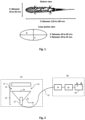
Figure 1 illustrates an adult newt (Triturus cristatus) with its size: The length of the newt is generally comprised between 12 cm and 18 cm. The width of the newt is generally comprised between 4 cm and 6 cm. The height of the newt is generally comprised between 2 cm and 2.5 cm. - International patent application published
WO 2016/004527 A1 relates to a method of determining a variable of interest associated with a sample having a quantity of organisms received in a container. - The invention has for technical problem to alleviate at least one of the drawbacks present in the prior art. More particularly, the invention has for technical problem to provide an apparatus suitable for detecting, identifying and when possible individualizing aquatic animals, such as amphibians, by providing ventral pattern images of the animals with no catching or handling them.
- The invention is as set out in the appended set of claims. The first object of the invention is directed to an apparatus for producing ventral images of aquatic organisms, in particular of amphibians, more particularly of newts, said apparatus comprising a hollow conduct and a watertight container. Said hollow conduct has a first opening and a second opening being opposed from each other. Said hollow conduct and said watertight container are separated by a wall which transmits the wavelengths comprised between 390 nm and 1.4 µm. Said apparatus is opaque to the wavelengths comprised between 390 nm and 1.4 µm. Said watertight container comprises an underwater video camera oriented towards said wall. Said apparatus is remarkable in that said watertight container is positioned below said hollow conduct, said watertight container being filled with clean water.
- According to a preferred embodiment, said wall is optically transparent.
- According to a preferred embodiment, said hollow conduct is made of titanium materials and/or plastic materials, said plastic materials being preferentially polyvinyl chloride and/or polypropylene.
- According to a preferred embodiment, said watertight container comprises at least two light-emitting diodes emitting light indirectly towards said wall, said light having a wavelength preferentially comprised between 390 nm and 1.4 µm.
- According to a preferred embodiment, said light-emitting diodes are topped with a deflector to avoid light dazzling spots in the field of vision of said video camera, said deflector being preferentially conic.
- According to a preferred embodiment, said watertight container has an inner surface coated with a light reflective material, preferentially aluminium.
- According to a preferred embodiment, said wall is made of poly-(methyl methacrylate) and/or glass, preferentially of poly-(methyl methacrylate).
- According to a preferred embodiment, said poly-(methyl methacrylate) and/or glass have an anti-reflective coating and/or an anti-scratch coating.
- According to a preferred embodiment, said video camera is connected to a mini digital video recorder, preferentially a mini digital video recorder with a motion detection mode, said connection being wired or wireless.
- According to a preferred embodiment, said watertight container comprises means for regulating the clean water content in said watertight container, said means being preferentially a clean water input and/or a pressure valve.
- According to a preferred embodiment, said apparatus further comprises spotting means and/or floating means and/or handling means.
- According to a preferred embodiment, said hollow conduct further comprises an outer wall opposed to the optically transparent wall, said outer wall having an internal face comprising an inner wall with a length inferior to the distance between said first opening and said second opening, said inner wall being located at equal distance from said first opening and said second opening, and in that said hollow conduct further comprises means for creating at least one wave, said means being located between the internal face of the outer wall and the inner wall.
- According to a preferred embodiment, said hollow conduct is a first conduct and said apparatus comprises a second hollow conduct which is perpendicular to said first conduct, said second hollow opaque conduct comprising two openings opposed to each other.
- According to a preferred embodiment, at least one of said first opening, said second opening and said openings of said second hollow conduct is connected to a funnel trap.
- According to a preferred embodiment, said first and second opening have a semi-circular shape or a trapezoidal shape.
- According to a preferred embodiment, said wall is flat.
- According to a preferred embodiment, said wall has a thickness comprised between 2 mm and 5 mm, preferential equal to 3 mm.
- According to a preferred embodiment, said video camera further comprises a timer.
- According to a preferred embodiment, the size of the conduct is configured to host an aquatic organism, preferentially an amphibian, more preferentially a newt.
- According to a preferred embodiment, said hollow conduct, said watertight container, said wall and/or said waterproof video camera are removable.
- According to a preferred embodiment, said apparatus further comprises at least one float and/or at least one connection to at least one float.
- According to a preferred embodiment, said container comprises a valve configured to remove bubble of air.
- According to a preferred embodiment, said video camera further comprises a battery.
- According to a preferred embodiment, said wall comprises dimensional markers and/or graduation markers.
- According to a preferred embodiment, said first and second openings are disposed along the longitudinal axis of said apparatus.
- The second object of the invention is directed to a method for detecting, identifying and/or individualizing aquatic animals, in particular amphibians, more particularly newts, comprising the steps of (a) providing the apparatus in accordance with the first object of the invention in water, (b) processing the recordings of the video camera with a computer, and (c) analysing the ventral images of said aquatic animals.
- According to a preferred embodiment, said method comprises the step between said steps (a) and (b) of creating within the hollow conduct of said apparatus at least one wave in the water.
- In general, the particular embodiments of each object of the invention are also applicable to other objects of the invention. Insofar as possible, each object of the invention is combinable with other objects.
- In comparison with the state-of-the-art observation tools massively used in biological studies, the invention is particularly interesting in that the apparatus is able to produce ventral imagery of newts without disturbing them (no capture, no handling), in a standardised position, in a continuous manner (for several days for instance), and automatically (in the sense that no presence is required for the apparatus to function). The invention requires less human resources and produces datasets with higher temporal resolution thanks to the timestamp of any single observation.
- Threatened and rare species are particularly intensively surveyed in the sake of nature conservation interests, an observation tool and method to survey them are therefore particularly of interest.
- The invention produces imagery where body patterns are clearly visible while other apparatus producing underwater imagery of aquatic animals in a standardised position enhances the silhouette, masking essential species and individual criteria for several species.
- The invention is easily transportable from a site to another by a single person.
- Those ventral images allow for the extraction and analysis of several data, such as the species, the sex, the phenology, the body length (if dimensional markers are placed on the transparent wall), the individualization through analysis of the belly patches.
- It avoids a concentration of individuals in a basket, thus reducing the transmission of disease.
- Data related to the species conservation status assessment or monitoring of nature conservation actions can be determined.
- It is also remarkable that since this way of observing aquatic animals is not harmful, anybody that would like to perform such observations could use it without requiring derogations to nature protection laws.
- By automating the observation of the individuals, the present invention enables to acquire large dataset with less effort (notably in comparison with the CMR technique) and therefore enhances the quality of the estimation of the population size.
-
-
Figure 1 depicts an adult newt (Triturus cristatus) with its size. -
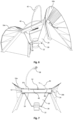
Figure 2 shows a general design of the apparatus of the present invention. -
Figure 3 is an enlargement of the aquatic part of the apparatus of the present invention. -
Figure 4 shows a funnel-shaped deflector in accordance with the first and second embodiment of the present invention. -
Figure 5 shows a first overview of the apparatus in accordance with the first embodiment of the present invention. -
Figure 6 shows a second overview of the apparatus in accordance with the first embodiment of the present invention. -
Figure 7 shows a third overview of the apparatus in accordance with the first embodiment of the present invention. -
Figure 8 shows an enlargement offigure 7 . -
Figure 9 shows an overview of the apparatus in accordance with the second embodiment of the present invention. - The apparatus for producing ventral images of aquatic organisms, in particular newts, must be shaped and fitted to welcome those animals.
- In accordance with the first embodiment of the invention, the apparatus for producing ventral images of aquatic organisms can be divided in one aquatic part (A) and in one onshore part (B), as seen on the scheme of
figure 2 .Figure 3 also presents an enlargement of the aquatic part (A). - The aquatic part (A) of the apparatus aims to produce ventral images of individuals in water, and is connected to an onshore part (B) controlling the camera and storing the video signal.
-
Figures 5 ,6 ,7 and8 illustrate the apparatus of the present invention according to a first embodiment. - The aquatic part of the apparatus may comprise funnel-shaped entrances that have as goal to lead the newts into a
hollow conduct 10.Such conduct 10 can be for instance a polyvinyl chloride tube that is half cut in the direction of the length of the tube. - Said
hollow conduct 10 comprises afirst opening 12 and asecond opening 14. The funnel traps, or funnel-shape entrances (16a, 16b), are optional but can favor the entrance and the exit of the aquatic organisms by guiding them. When funnel traps (16a, 16b) are used, the base of those funnel traps is preferentially flat. - Once the free-swimming amphibian is inside the
hollow conduct 10, it walks and/or swims from one of the opening to the other opposing opening by walking on an opticallytransparent wall 18, saidwall 18 being thus considered as the floor on which the animals can move. - Said floor/
wall 18 is optically transparent to the visible light (with wavelength comprised between 390 nm and 700 nm) and to the near-infrared light (with wavelength comprised between 700 nm and 1.4 µm). The optical transparency allows an optical device placed below thewall 18 in awatertight container 20 to study the animals passing through thehollow conduct 10. It is obvious that such optical device must be oriented to visualize thewall 18. - Said optically
transparent wall 18 is made of semi-transparent material, for example of (poly-(methyl methacrylate) or plexiglas®. It can also be made of glass. However, plexiglas® is the preferred material, since it is lighter than glass. - In order to render unbreakable (or at least sufficiently resistant to the environmental constraints) the
wall 18, its thickness is comprised between 2 mm and 5 mm, preferably 3 mm. The resistance of the plexiglas® is also higher than the resistance of the glass. - Advantageously, said optically
transparent wall 18 has an anti-scratch coating, in order to reinforce the protection of saidwall 18. - Advantageously, said optically
transparent wall 18 is horizontal and/or includes graduation marks for length measurement of the animal. - Advantageously, said optically
transparent wall 18 comprises an anti-reflective coating, to avoid dazzling spots on the video recordings. - The size of the
conduct 10 is configured to host an aquatic organism, preferentially an amphibian, more preferentially a newt, said size being advantageously increased of about 10% of the size of said aquatic organism. - The distance according to the Z axis, or the longitudinal axis, between both openings (12 and 14), is thus generally equal to 20 cm, or superior to 20 cm. This defines the total length of the
hollow conduct 10. - The width, according to the X axis, of the
hollow conduct 10 is thus generally equal to 7 cm, or superior to 7 cm. - The height, according to the Y axis, of the
hollow conduct 10 is thus generally equal to 3 cm, or superior to 3 cm. - The openings (12, 14) can be of semi-circular shape, presenting a diameter comprised between 4 cm and 7 cm, or more than 7 cm.
- The openings (12, 14) can alternatively be of trapezoidal shape, preferentially an isosceles trapezoid, presenting a size of legs (the sides of equal length) comprised between 2.5 cm and 4 cm, or superior to 4 cm. The larger base has a length generally equal to 7 cm, or superior to 7 cm, while the smaller base has a length generally equal to 4.5 cm, or superior to 4.5 cm.
- It is to be understood that larger animals can be studied if the size of the
hollow conduct 10 is enlarged. The smaller animals can be observed as well, even if the size of thehollow conduct 10 is considerably bigger than the smaller animals. - It is also to be understood that in order to select the type of animal to be studied, in particular if the goal is to study small animals, it is advantageous for the user to use a conduct with smaller size, avoiding subsequently the detection of larger animals that would be unable to penetrate into the
hollow conduct 10. - The openings (12, 14) can be of any other alternative shape. They need preferably to be opposite from each other in order to allow for the animal to cross them without zigzagging. This also facilities the arrangement of an optical device for studying them (see below).
- In order to enhance the detection of the animal, the apparatus must be opaque to the visible light (notably the light coming from the surroundings) and to the near-infrared light. All the walls of the
hollow conduct 10 and of thewatertight container 20 must be opaque (except thewall 18 separating the conduct and the container which is theonly wall 18 in the whole apparatus to be optically transparent). - In order to render the apparatus easy to handle by a user, the materials that have been chosen to make the apparatus are light material, such as titanium material and/or plastics materials. Examples of plastic materials are polyvinyl chloride and/or polypropylene.
- Below this
transparent floor 18 is located awatertight container 20 with an underwater video camera 22 (e.g. an underwater video camera of the brand Aqua Vu®) at its bottom. - The
underwater video camera 22 is maintained with silicon in a polypropylene drainpipe, this latter being able to move up and down in thewatertight box 20. - As shown on
figure 3 , two build-in LEDs (24a, 24b) beside the lens of thevideo camera 22 supply near-infrared lighting. - A
conic deflector 26 is set at the top of thevideo camera 22 so that near-infrared lights from the LEDs (24a, 24b) are not directly reflected to the lens by the transparent floor 18 (to avoid dazzling bright spots). In fact, it reflects the light to the inner walls of thecontainer 20 before reaching the opticallytransparent wall 18. - Alternatively, the
deflector 26 might be also a funnel-shaped deflector, as shown onfigure 4 . -
Such deflector 26 can be developed by using a 3D printer. - The
deflector 26 produces a diffuse lighting inside the watertightopaque container 20. - To improve a homogenous lighting, the
inner surface 28 of thewatertight container 20 is covered with a reflective material, for instance aluminium. - The
watertight container 20 is filled in with clean water to limit disturbances from natural turbidity of the pond. This allows thewatertight container 20, and subsequently the whole apparatus, which are made in light material (see above) to stay stable into the water of the pond. Clean water also allows for preventing that moving particles are present in the field of thevideo camera 22. Another advantage of the clean water also limits the number of particles and unwanted organisms which could accidentally trigger thevideo camera 22. Water turbidity of the pond has a limited impact on image quality thanks to thewatertight container 20 full of clean water where thevideo camera 22 is located. It was indeed noted that when thevideo camera 22 was placed directly below the opticallytransparent wall 18, false triggering of thevideo camera 22 was induced by the turbidity of the water flowing through theconduct 10. - The
watertight container 20 includes at least one hole to fill clean water and/or at least one pressure valve configured to remove bubbles of air. These means 30 are thus suitable for regulating the water content inside thewatertight container 20. - As shown on
figure 2 , the onshore part (B) of the apparatus is connected to theunderwater video camera 22 through anelectric cable 32. The connection might also be wireless. - A mini digital video recorder (DVR) 34, with a motion detection mode, powers the
video camera 22 and the LEDs (24a, 24b), and stores the video signal on a SD card. - The
mini DVR 34 can be for example of the type DVRTAXI from the company ELRO. - A recording of 30 frames by second and a resolution of 640x480 VGA allows for species recognition.
- The advantage of the motion detection mode is to limit the number of produced files, because it triggers the
video camera 22 once there is motion inside thehollow conduct 10. Subsequently, the amount of work for the analyst is reduced because only videos of interests (with an aquatic animal passing by the conduct 10) are recorded. - The area of motion detection might be adapted and is usually set at the entrances (i.e., the
first opening 12 and the second opening 14) of the tunnel to reduce the number of false triggering by aquatic particles. Once a movement is detected in the detection area, the video signal starts to be recorded on the SD card, including the 10 seconds preceding and following a motion detection. If a motion is detected during more than 10 seconds, the video sequence is split in several files of maximum 30 seconds length. - A
timer 36 between abattery 38 and theDVR 34 allows scheduling working periods in order to save power and storage capacity by focusing on periods of interest (e.g. night). The presence ofsuch timer 36 is not compulsory if it is desirable to study diurnal and nocturnal animals in the same set of experiment. For instance, thebattery 38 might be a lead acid battery, producing an electrical potential of 12V and an intensity of 12 Ah. - The aquatic part (A) of the apparatus might be handled into and out of the pond using a pole with a hook so that there is no need for the user to enter into the water.
- At least one
wire 40 may be present to enable the user to carry the aquatic part (A) with a hook and set/remove it into water. At least onefloat 42, optionally attached on thewire 40, enables to easily find the apparatus in water. - As shown on
figure 7 , the apparatus of the present invention further comprises a system to attract the aquatic organism inside thehollow conduct 10. This system consists in producing a disturbance in the water inside theconduct 10 in order to mimic the presence of another animal(s) and to encourage the aquatic organism, especially the newt, to cross the conduct 10 (and in the meantime to trigger the video camera 22) to see what is occurring at the other side of theconduct 10. - As shown on the enlargement of
figure 8 , saidhollow conduct 10 further comprises anouter wall 44 opposed to the optically transparent wall/floor 18. Saidouter wall 44 can be considered as the ceiling of thehollow conduct 10, the aquatic organism, especially the newt, being supposed to walk and/or swim on the optically transparent floor/wall 18. Saidouter wall 44 comprises on itsinternal face 46 aninner wall 48 which has a length that is inferior or equal to two third of the total length of theconduct 10, said total length being defined by the distance between thefirst opening 12 and thesecond opening 14. Theinner wall 48 is located in the middle of the length of theconduct 10, in order not to cover theinternal face 46 of theouter wall 44 at proximity of the openings (12, 14). The system to attract the aquatic organisms comprises means 50 for creating at least one wave in the water, said means 50 being located between theinternal face 46 of theouter wall 44 and theinner wall 48. Said means 50 are located at the middle of the length of theconduct 10. The means 50 are connected to adevice 52 through theouter wall 44. Thedevice 52 works with a battery (not shown) and/or is connected through a wire (not shown) to the onshore part (B) of the apparatus. - As the length of the
inner wall 48 does not extend over the total length of theconduct 10, the wave(s) that is/are created by themeans 50 for creating at least one wave, is felt in theconduct 10 by the aquatic organisms only at the proximity of the openings (12, 14). This will exacerbate the natural curiosity of the animals that will be then tempted to enter in the hollow conduct 10 (by one or another openings (12, 14)) and to cross it to see what is occurring at the other side of theconduct 10. By doing this, as explained above, the motion detection mode of the mini digital video recorder will trigger theunderwater video camera 22 and the recordings of the aquatic organisms passing through thehollow conduct 10 will work. The users are thus able to shoot ventral images of the aquatic organism passing through theconduct 10. - The
inner wall 48 must be located in the middle of the length of theconduct 10 in order prevent the artificial wave created by themeans 50 to falsely trigger theunderwater video camera 22. - The means 50 can be for example a helix, a propeller, or a metallic ribbon.
- In a second embodiment of the invention, the hollow conduct (10) of the first embodiment is a first conduct and said apparatus comprises a second hollow conduct which is perpendicular to said first conduct (10), said second hollow conduct comprising two openings opposed to each other. The apparatus for producing ventral images of aquatic organisms has therefore four openings (12, 14, 54, 56), being opposed two by two, as shown on
figure 9 . - In various alternatives, similar apparatus can be made with more openings.
- The advantage of providing more than two openings is to increase the probability of shooting a video of a newt.
- The apparatus has been tested in a pond south-west of the Grand-Duchy of Luxembourg (5.90E 49.56N) where the four native species are known to occur: Lissotriton helveticus (Razoumovsky 1789), Lissotriton vulgaris (Linnaeus 1758), Ichthyosaura alpestris (Laurenti 1768) and Triturus cristatus (Laurenti 1768).
- The apparatus in accordance with the invention was set in the pond during 40 nights between May and mid-June 2016. This corresponds to the newt reproduction season and enhances therefore the chance to detect these aquatic animals. The
timer 36 was scheduled to power thevideo camera 22 between 8 pm and 8 am. - The study site was visited regularly in order to check the storage capacity and the power of the battery. The video produced by the apparatus on the SD card was transferred to a field computer. A standard funnel trap was occasionally used for comparison.
- Video visualisation was done on a desk computer using VLC media player at an accelerated playback speed (up to 8x) in order to quickly highlight videos with an animal.
- Both the standard funnel trap and the invention detected the four newt species occurring in the pond. The species on about 2% of the videos could not be determined. About half of the videos were related to Triturus cristatus. Triturus cristatus crosses the apparatus mainly slowly, using its legs. Lissotriton vulgaris is more often using its tail and is therefore faster.
- The number of individuals observed by the apparatus was higher with funnel trap, or funnel-shaped
entrances - It is worth to note that such method can be used for other aquatic animals, such as for instance crayfish. In order to observe other aquatic animals, it might be necessary to modify the funnel-shaped entrances. The
semicircular tube 10 might be replaced by transparent tubes of several section sizes, open on one of their extremity, and displaced side by side so that thevideo camera 18 is oriented perpendicularly to the length of the tubes.
Claims (15)
- Apparatus for producing ventral images of aquatic organisms, in particular of amphibians, more particularly of newts, said apparatus comprisinga) a hollow conduct (10) with a first opening (12) and a second opening (14), said first and second openings (12, 14) being opposed from each other,b) a watertight container (20),wherein said hollow conduct (10) and said watertight container (20) are separated by a wall (18), said wall transmitting the wavelengths comprised between 390 nm and 1.4 µm,wherein said apparatus, except for said wall (18), is opaque to the wavelengths comprised between 390 nm and 1.4 µm,wherein said watertight container (20) comprises an underwater video camera (22) oriented towards said wall (18),wherein said watertight container (20) is positioned below said hollow conduct (10), said watertight container (20) being filled with clean water.
- Apparatus according to claim 1, characterized in that said hollow conduct (10) is made of titanium materials and/or plastic materials, said plastic materials being preferentially polyvinyl chloride and/or polypropylene.
- Apparatus according to any one of claims 1-2, characterized in that said watertight container (20) comprises at least two light-emitting diodes (24a, 24b) emitting light indirectly towards said wall (18), said light having a wavelength preferentially comprised between 390 nm and 1.4 µm.
- Apparatus according to claim 3, characterized in that said light-emitting diodes (24a, 24b) are topped with a deflector (26) to avoid light dazzling spots in the field of vision of said video camera (22), said deflector (26) being preferentially conic.
- Apparatus according to any one of claims 1-4, characterized in that said watertight container (20) has an inner surface (28) coated with a light reflective material, preferentially aluminium.
- Apparatus according to any one of claims 1-5, characterized in that said wall (18) is made of poly-(methyl methacrylate) and/or glass, preferentially of poly-(methyl methacrylate).
- Apparatus according to claim 6, characterized in that said poly-(methyl methacrylate) and/or glass have an anti-reflective coating and/or an anti-scratch coating.
- Apparatus according to any one of claims 1-7, characterized in that said apparatus further comprises a mini digital video recorder (34) with a motion detection mode, said mini digital video recorder (34) being connected to said video camera (22) through one connection (32), said connection (32) being wired or wireless.
- Apparatus according to any one of claims 1-8, characterized in that said watertight container (20) comprises means (30) for regulating the clean water content in said watertight container (20), said means (30) being preferentially a clean water input and/or a pressure valve.
- Apparatus according to any one of claims 1-9, characterized in that said apparatus further comprises spotting means and/or floating means (42) and/or handling means (40).
- Apparatus according to any one of claims 1-10, characterized in that said hollow conduct (10) further comprises an outer wall (44) opposed to the optically transparent wall (18), said outer wall (44) having an internal face (46) comprising an inner wall (48) with a length inferior to the distance between said first opening (12) and said second opening (14), said inner wall (48) being located at equal distance from said first opening (12) and said second opening (14), and in that said hollow conduct (10) further comprises means (50) for creating at least one wave, said means (50) being located between the internal face (46) of the outer wall (44) and the inner wall (48).
- Apparatus according to any one of claims 1-11, characterized in that said apparatus further comprises funnel trap (16a, 16b), said funnel trap (16a, 16b) being connected to at least one of said first opening (12) and said second opening (14).
- Apparatus according to any one of claims 1-12, characterized in that said hollow conduct (10) is a first conduct and in that said apparatus comprises a second hollow conduct which is perpendicular to said first conduct (10), said second hollow opaque conduct comprising two openings (54, 56) opposed to each other, preferably said apparatus further comprises funnel trap (16a, 16b), said funnel trap (16a, 16b) being connected to at least one of said first opening (12), said second opening (14) and said openings (54, 56) of said second hollow conduct.
- Method for detecting, identifying and/or individualizing aquatic animals, in particular amphibians, more particularly newts, comprising the steps ofa) providing the apparatus in accordance with any one of claims 1 to 13 in water,b) processing the recordings of the video camera (22) with a computer so as to obtain ventral images of said aquatic animals, andc) analysing said ventral images of said aquatic animals.
- Method according to claim 14, characterized in that said method comprises the step between said steps (a) and (b) of creating within the hollow conduct (10) of said apparatus at least one wave in the water.
Applications Claiming Priority (2)
| Application Number | Priority Date | Filing Date | Title |
|---|---|---|---|
| LU93388A LU93388B1 (en) | 2016-12-21 | 2016-12-21 | Video camera trap for ecological research |
| PCT/EP2017/084132 WO2018115301A1 (en) | 2016-12-21 | 2017-12-21 | Video camera trap for ecological research |
Publications (3)
| Publication Number | Publication Date |
|---|---|
| EP3557985A1 EP3557985A1 (en) | 2019-10-30 |
| EP3557985C0 EP3557985C0 (en) | 2023-09-06 |
| EP3557985B1 true EP3557985B1 (en) | 2023-09-06 |
Family
ID=57629609
Family Applications (1)
| Application Number | Title | Priority Date | Filing Date |
|---|---|---|---|
| EP17826507.0A Active EP3557985B1 (en) | 2016-12-21 | 2017-12-21 | Video camera trap for ecological research |
Country Status (6)
| Country | Link |
|---|---|
| US (1) | US11240994B2 (en) |
| EP (1) | EP3557985B1 (en) |
| CN (1) | CN110099564B (en) |
| CA (1) | CA3046592A1 (en) |
| LU (1) | LU93388B1 (en) |
| WO (1) | WO2018115301A1 (en) |
Cited By (1)
| Publication number | Priority date | Publication date | Assignee | Title |
|---|---|---|---|---|
| WO2025181231A1 (en) * | 2024-02-29 | 2025-09-04 | Vaki Fiskeldiskerfi Ehf | Biomass camera accessory |
Families Citing this family (8)
| Publication number | Priority date | Publication date | Assignee | Title |
|---|---|---|---|---|
| NO20210919A1 (en) * | 2018-12-21 | 2021-07-20 | Xpertsea Solutions Inc | Systems and methods for predicting growth of a population of organisms |
| USD928861S1 (en) * | 2019-09-09 | 2021-08-24 | Luxembourg Institute Of Science And Technology | Housing of a camera trap for aquatic organisms |
| MX2023004090A (en) * | 2020-11-24 | 2023-04-27 | Rynan Tech Pte Ltd | Smart aquaculture growth and health monitoring system. |
| EP4247153A4 (en) * | 2020-12-27 | 2024-05-29 | Diptera.AI Ltd. | Optical technique for analyzing insects, shrimp and fish |
| CN113841656B (en) * | 2021-09-18 | 2022-10-14 | 中国科学院成都生物研究所 | Novel amphibian migration data investigation device and method thereof |
| LU504832B1 (en) | 2023-07-28 | 2025-01-28 | Luxembourg Inst Science & Tech List | Device for capturing images of aquatic animals like amphibians, with ballast cavities |
| WO2026132859A1 (en) * | 2024-12-17 | 2026-06-25 | Totalenergies Onetech | Monitoring of aquatic larvae |
| WO2026139705A1 (en) * | 2024-12-23 | 2026-07-02 | Totalenergies Onetech | Monitoring of amphibious creatures |
Family Cites Families (12)
| Publication number | Priority date | Publication date | Assignee | Title |
|---|---|---|---|---|
| CA2057833C (en) | 1991-12-17 | 1997-11-11 | John H. C. Pippy | Apparatus for monitoring moving aquatic organisms |
| US5836264A (en) * | 1994-07-22 | 1998-11-17 | International Flavors & Fragrances Inc. | Apparatus for use in determining excitants, attractants, stimulants and incitants for members of the penaeus genus of the class crustacea |
| US5555161A (en) * | 1995-09-11 | 1996-09-10 | Delco Electronics Corporation | Bi-functional light pipe and display assembly |
| JP4845806B2 (en) * | 2007-05-18 | 2011-12-28 | 株式会社アムコ | Aquatic organism sampling apparatus and aquatic organism sampling method |
| NO331345B1 (en) * | 2010-02-05 | 2011-12-05 | Esben Beck | Device and method for damaging parasites on fish |
| WO2012083461A1 (en) * | 2010-12-23 | 2012-06-28 | Xpertsea Solutions Inc. | Photo-coupled data acquisition system and method |
| FR2999622B1 (en) * | 2012-12-18 | 2015-07-03 | Hizkia | DEVICE FOR VISUALIZING FISH IN A FISH PASS |
| US10154656B2 (en) * | 2014-05-12 | 2018-12-18 | Vaki Fiskeldiskerfi Hf | Optical system for counting objects |
| CN107155343A (en) * | 2014-07-07 | 2017-09-12 | 艾克斯波特西溶液公司 | It is determined that the method and system of the value of the variables of interest of the sample with organism |
| US10222688B2 (en) * | 2014-09-22 | 2019-03-05 | Woods Hole Oceanographic Institution | Continuous particle imaging and classification system |
| CN105994203A (en) * | 2016-07-13 | 2016-10-12 | 马长风 | Lure bait |
| CN107156001A (en) * | 2017-05-15 | 2017-09-15 | 柳州译海网络科技有限公司 | A kind of device of portable identification aquatic animal |
-
2016
- 2016-12-21 LU LU93388A patent/LU93388B1/en active IP Right Grant
-
2017
- 2017-12-21 CN CN201780079523.1A patent/CN110099564B/en active Active
- 2017-12-21 CA CA3046592A patent/CA3046592A1/en active Pending
- 2017-12-21 US US16/471,341 patent/US11240994B2/en not_active Expired - Fee Related
- 2017-12-21 EP EP17826507.0A patent/EP3557985B1/en active Active
- 2017-12-21 WO PCT/EP2017/084132 patent/WO2018115301A1/en not_active Ceased
Cited By (1)
| Publication number | Priority date | Publication date | Assignee | Title |
|---|---|---|---|---|
| WO2025181231A1 (en) * | 2024-02-29 | 2025-09-04 | Vaki Fiskeldiskerfi Ehf | Biomass camera accessory |
Also Published As
| Publication number | Publication date |
|---|---|
| CA3046592A1 (en) | 2018-06-28 |
| US11240994B2 (en) | 2022-02-08 |
| CN110099564B (en) | 2022-07-12 |
| EP3557985A1 (en) | 2019-10-30 |
| EP3557985C0 (en) | 2023-09-06 |
| WO2018115301A1 (en) | 2018-06-28 |
| US20200037584A1 (en) | 2020-02-06 |
| LU93388B1 (en) | 2018-06-21 |
| CN110099564A (en) | 2019-08-06 |
Similar Documents
| Publication | Publication Date | Title |
|---|---|---|
| US11240994B2 (en) | Video camera trap for ecological research | |
| Besson et al. | Towards the fully automated monitoring of ecological communities | |
| Lahoz-Monfort et al. | A comprehensive overview of technologies for species and habitat monitoring and conservation | |
| Ohman et al. | Zooglider: An autonomous vehicle for optical and acoustic sensing of zooplankton | |
| Bailey et al. | Cameras and carcasses: historical and current methods for using artificial food falls to study deep-water animals | |
| Abangan et al. | Artificial intelligence for fish behavior recognition may unlock fishing gear selectivity | |
| McGeady et al. | A review of new and existing non-extractive techniques for monitoring marine protected areas | |
| Sward et al. | A systematic review of remotely operated vehicle surveys for visually assessing fish assemblages | |
| Sheehan et al. | PelagiCam: a novel underwater imaging system with computer vision for semi-automated monitoring of mobile marine fauna at offshore structures | |
| Widder et al. | Using red light for in situ observations of deep-sea fishes | |
| Harvey et al. | The use of BRUVs as a tool for assessing marine fisheries and ecosystems: a review of the hurdles and potential | |
| Giddens et al. | The national geographic society deep-sea camera system: A low-cost remote video survey instrument to advance biodiversity observation in the deep ocean | |
| Poisson et al. | New technologies to improve bycatch mitigation in industrial tuna fisheries | |
| Williams et al. | An underwater stereo-camera trap | |
| Livanos et al. | Intelligent navigation and control of a prototype autonomous underwater vehicle for automated inspection of aquaculture net pen cages | |
| Lertvilai | The In situ Plankton Assemblage eXplorer (IPAX): An inexpensive underwater imaging system for zooplankton study | |
| Li et al. | An intelligent monitoring system of diseases and pests on rice canopy | |
| Briseño-Avena et al. | Comparing vertical distributions of chl-a fluorescence, marine snow, and taxon-specific zooplankton in relation to density using high-resolution optical measurements | |
| Chatzievangelou et al. | Transects in the deep: opportunities with tele-operated resident seafloor robots | |
| Jamieson | Landers: baited cameras and traps | |
| Skelly et al. | Larval sampling | |
| Loiseau et al. | Using an unbaited stationary video system to investigate the behaviour and interactions of bull sharks Carcharhinus leucas under an aquaculture farm | |
| Favaro et al. | TrapCam: an inexpensive camera system for studying deep‐water animals | |
| Buskey et al. | An encounter model to predict natural planktonic bioluminescence | |
| Clay et al. | The effects of thin layers on the vertical distribution of larval Pacific herring, Clupea pallasi |
Legal Events
| Date | Code | Title | Description |
|---|---|---|---|
| STAA | Information on the status of an ep patent application or granted ep patent |
Free format text: STATUS: UNKNOWN |
|
| STAA | Information on the status of an ep patent application or granted ep patent |
Free format text: STATUS: THE INTERNATIONAL PUBLICATION HAS BEEN MADE |
|
| PUAI | Public reference made under article 153(3) epc to a published international application that has entered the european phase |
Free format text: ORIGINAL CODE: 0009012 |
|
| STAA | Information on the status of an ep patent application or granted ep patent |
Free format text: STATUS: REQUEST FOR EXAMINATION WAS MADE |
|
| 17P | Request for examination filed |
Effective date: 20190605 |
|
| AK | Designated contracting states |
Kind code of ref document: A1 Designated state(s): AL AT BE BG CH CY CZ DE DK EE ES FI FR GB GR HR HU IE IS IT LI LT LU LV MC MK MT NL NO PL PT RO RS SE SI SK SM TR |
|
| AX | Request for extension of the european patent |
Extension state: BA ME |
|
| DAV | Request for validation of the european patent (deleted) | ||
| DAX | Request for extension of the european patent (deleted) | ||
| STAA | Information on the status of an ep patent application or granted ep patent |
Free format text: STATUS: EXAMINATION IS IN PROGRESS |
|
| 17Q | First examination report despatched |
Effective date: 20220209 |
|
| GRAP | Despatch of communication of intention to grant a patent |
Free format text: ORIGINAL CODE: EPIDOSNIGR1 |
|
| STAA | Information on the status of an ep patent application or granted ep patent |
Free format text: STATUS: GRANT OF PATENT IS INTENDED |
|
| INTG | Intention to grant announced |
Effective date: 20230321 |
|
| GRAS | Grant fee paid |
Free format text: ORIGINAL CODE: EPIDOSNIGR3 |
|
| GRAA | (expected) grant |
Free format text: ORIGINAL CODE: 0009210 |
|
| STAA | Information on the status of an ep patent application or granted ep patent |
Free format text: STATUS: THE PATENT HAS BEEN GRANTED |
|
| AK | Designated contracting states |
Kind code of ref document: B1 Designated state(s): AL AT BE BG CH CY CZ DE DK EE ES FI FR GB GR HR HU IE IS IT LI LT LU LV MC MK MT NL NO PL PT RO RS SE SI SK SM TR |
|
| REG | Reference to a national code |
Ref country code: GB Ref legal event code: FG4D |
|
| REG | Reference to a national code |
Ref country code: CH Ref legal event code: EP |
|
| REG | Reference to a national code |
Ref country code: IE Ref legal event code: FG4D |
|
| REG | Reference to a national code |
Ref country code: DE Ref legal event code: R096 Ref document number: 602017073887 Country of ref document: DE |
|
| U01 | Request for unitary effect filed |
Effective date: 20231005 |
|
| U07 | Unitary effect registered |
Designated state(s): AT BE BG DE DK EE FI FR IT LT LU LV MT NL PT SE SI Effective date: 20231016 |
|
| U20 | Renewal fee for the european patent with unitary effect paid |
Year of fee payment: 7 Effective date: 20231201 |
|
| PG25 | Lapsed in a contracting state [announced via postgrant information from national office to epo] |
Ref country code: GR Free format text: LAPSE BECAUSE OF FAILURE TO SUBMIT A TRANSLATION OF THE DESCRIPTION OR TO PAY THE FEE WITHIN THE PRESCRIBED TIME-LIMIT Effective date: 20231207 |
|
| PGFP | Annual fee paid to national office [announced via postgrant information from national office to epo] |
Ref country code: GB Payment date: 20231201 Year of fee payment: 7 |
|
| PG25 | Lapsed in a contracting state [announced via postgrant information from national office to epo] |
Ref country code: RS Free format text: LAPSE BECAUSE OF FAILURE TO SUBMIT A TRANSLATION OF THE DESCRIPTION OR TO PAY THE FEE WITHIN THE PRESCRIBED TIME-LIMIT Effective date: 20230906 Ref country code: NO Free format text: LAPSE BECAUSE OF FAILURE TO SUBMIT A TRANSLATION OF THE DESCRIPTION OR TO PAY THE FEE WITHIN THE PRESCRIBED TIME-LIMIT Effective date: 20231206 Ref country code: HR Free format text: LAPSE BECAUSE OF FAILURE TO SUBMIT A TRANSLATION OF THE DESCRIPTION OR TO PAY THE FEE WITHIN THE PRESCRIBED TIME-LIMIT Effective date: 20230906 Ref country code: GR Free format text: LAPSE BECAUSE OF FAILURE TO SUBMIT A TRANSLATION OF THE DESCRIPTION OR TO PAY THE FEE WITHIN THE PRESCRIBED TIME-LIMIT Effective date: 20231207 |
|
| PG25 | Lapsed in a contracting state [announced via postgrant information from national office to epo] |
Ref country code: IS Free format text: LAPSE BECAUSE OF FAILURE TO SUBMIT A TRANSLATION OF THE DESCRIPTION OR TO PAY THE FEE WITHIN THE PRESCRIBED TIME-LIMIT Effective date: 20240106 |
|
| PG25 | Lapsed in a contracting state [announced via postgrant information from national office to epo] |
Ref country code: ES Free format text: LAPSE BECAUSE OF FAILURE TO SUBMIT A TRANSLATION OF THE DESCRIPTION OR TO PAY THE FEE WITHIN THE PRESCRIBED TIME-LIMIT Effective date: 20230906 |
|
| PG25 | Lapsed in a contracting state [announced via postgrant information from national office to epo] |
Ref country code: SM Free format text: LAPSE BECAUSE OF FAILURE TO SUBMIT A TRANSLATION OF THE DESCRIPTION OR TO PAY THE FEE WITHIN THE PRESCRIBED TIME-LIMIT Effective date: 20230906 Ref country code: RO Free format text: LAPSE BECAUSE OF FAILURE TO SUBMIT A TRANSLATION OF THE DESCRIPTION OR TO PAY THE FEE WITHIN THE PRESCRIBED TIME-LIMIT Effective date: 20230906 Ref country code: IS Free format text: LAPSE BECAUSE OF FAILURE TO SUBMIT A TRANSLATION OF THE DESCRIPTION OR TO PAY THE FEE WITHIN THE PRESCRIBED TIME-LIMIT Effective date: 20240106 Ref country code: ES Free format text: LAPSE BECAUSE OF FAILURE TO SUBMIT A TRANSLATION OF THE DESCRIPTION OR TO PAY THE FEE WITHIN THE PRESCRIBED TIME-LIMIT Effective date: 20230906 Ref country code: CZ Free format text: LAPSE BECAUSE OF FAILURE TO SUBMIT A TRANSLATION OF THE DESCRIPTION OR TO PAY THE FEE WITHIN THE PRESCRIBED TIME-LIMIT Effective date: 20230906 Ref country code: SK Free format text: LAPSE BECAUSE OF FAILURE TO SUBMIT A TRANSLATION OF THE DESCRIPTION OR TO PAY THE FEE WITHIN THE PRESCRIBED TIME-LIMIT Effective date: 20230906 |
|
| PGFP | Annual fee paid to national office [announced via postgrant information from national office to epo] |
Ref country code: CH Payment date: 20240104 Year of fee payment: 7 |
|
| PG25 | Lapsed in a contracting state [announced via postgrant information from national office to epo] |
Ref country code: PL Free format text: LAPSE BECAUSE OF FAILURE TO SUBMIT A TRANSLATION OF THE DESCRIPTION OR TO PAY THE FEE WITHIN THE PRESCRIBED TIME-LIMIT Effective date: 20230906 |
|
| REG | Reference to a national code |
Ref country code: DE Ref legal event code: R097 Ref document number: 602017073887 Country of ref document: DE |
|
| PLBE | No opposition filed within time limit |
Free format text: ORIGINAL CODE: 0009261 |
|
| STAA | Information on the status of an ep patent application or granted ep patent |
Free format text: STATUS: NO OPPOSITION FILED WITHIN TIME LIMIT |
|
| 26N | No opposition filed |
Effective date: 20240607 |
|
| PG25 | Lapsed in a contracting state [announced via postgrant information from national office to epo] |
Ref country code: MC Free format text: LAPSE BECAUSE OF FAILURE TO SUBMIT A TRANSLATION OF THE DESCRIPTION OR TO PAY THE FEE WITHIN THE PRESCRIBED TIME-LIMIT Effective date: 20230906 |
|
| PG25 | Lapsed in a contracting state [announced via postgrant information from national office to epo] |
Ref country code: MC Free format text: LAPSE BECAUSE OF FAILURE TO SUBMIT A TRANSLATION OF THE DESCRIPTION OR TO PAY THE FEE WITHIN THE PRESCRIBED TIME-LIMIT Effective date: 20230906 |
|
| REG | Reference to a national code |
Ref country code: IE Ref legal event code: MM4A |
|
| PG25 | Lapsed in a contracting state [announced via postgrant information from national office to epo] |
Ref country code: IE Free format text: LAPSE BECAUSE OF NON-PAYMENT OF DUE FEES Effective date: 20231221 |
|
| PG25 | Lapsed in a contracting state [announced via postgrant information from national office to epo] |
Ref country code: IE Free format text: LAPSE BECAUSE OF NON-PAYMENT OF DUE FEES Effective date: 20231221 |
|
| PG25 | Lapsed in a contracting state [announced via postgrant information from national office to epo] |
Ref country code: CY Free format text: LAPSE BECAUSE OF FAILURE TO SUBMIT A TRANSLATION OF THE DESCRIPTION OR TO PAY THE FEE WITHIN THE PRESCRIBED TIME-LIMIT; INVALID AB INITIO Effective date: 20171221 |
|
| REG | Reference to a national code |
Ref country code: CH Ref legal event code: PL |
|
| U90 | Renewal fees not paid: noting of loss of rights |
Free format text: RENEWAL FEE NOT PAID FOR YEAR 08 Effective date: 20250711 |
|
| PG25 | Lapsed in a contracting state [announced via postgrant information from national office to epo] |
Ref country code: HU Free format text: LAPSE BECAUSE OF FAILURE TO SUBMIT A TRANSLATION OF THE DESCRIPTION OR TO PAY THE FEE WITHIN THE PRESCRIBED TIME-LIMIT; INVALID AB INITIO Effective date: 20171221 |
|
| GBPC | Gb: european patent ceased through non-payment of renewal fee |
Effective date: 20241221 |
|
| PG25 | Lapsed in a contracting state [announced via postgrant information from national office to epo] |
Ref country code: GB Free format text: LAPSE BECAUSE OF NON-PAYMENT OF DUE FEES Effective date: 20241221 |
|
| PG25 | Lapsed in a contracting state [announced via postgrant information from national office to epo] |
Ref country code: CH Free format text: LAPSE BECAUSE OF NON-PAYMENT OF DUE FEES Effective date: 20241231 |
|
| U93 | Unitary patent lapsed |
Free format text: RENEWAL FEE NOT PAID Effective date: 20241231 |
|
| PG25 | Lapsed in a contracting state [announced via postgrant information from national office to epo] |
Ref country code: TR Free format text: LAPSE BECAUSE OF FAILURE TO SUBMIT A TRANSLATION OF THE DESCRIPTION OR TO PAY THE FEE WITHIN THE PRESCRIBED TIME-LIMIT Effective date: 20230906 |