EP3557846B1 - Data processing method and end-cloud collaboration system - Google Patents
Data processing method and end-cloud collaboration system Download PDFInfo
- Publication number
- EP3557846B1 EP3557846B1 EP17886187.8A EP17886187A EP3557846B1 EP 3557846 B1 EP3557846 B1 EP 3557846B1 EP 17886187 A EP17886187 A EP 17886187A EP 3557846 B1 EP3557846 B1 EP 3557846B1
- Authority
- EP
- European Patent Office
- Prior art keywords
- neural network
- network model
- side device
- terminal
- cloud
- Prior art date
- Legal status (The legal status is an assumption and is not a legal conclusion. Google has not performed a legal analysis and makes no representation as to the accuracy of the status listed.)
- Active
Links
Images






Classifications
-
- H—ELECTRICITY
- H04—ELECTRIC COMMUNICATION TECHNIQUE
- H04L—TRANSMISSION OF DIGITAL INFORMATION, e.g. TELEGRAPHIC COMMUNICATION
- H04L67/00—Network arrangements or protocols for supporting network services or applications
- H04L67/01—Protocols
- H04L67/10—Protocols in which an application is distributed across nodes in the network
-
- G—PHYSICS
- G06—COMPUTING OR CALCULATING; COUNTING
- G06N—COMPUTING ARRANGEMENTS BASED ON SPECIFIC COMPUTATIONAL MODELS
- G06N3/00—Computing arrangements based on biological models
- G06N3/02—Neural networks
- G06N3/06—Physical realisation, i.e. hardware implementation of neural networks, neurons or parts of neurons
- G06N3/063—Physical realisation, i.e. hardware implementation of neural networks, neurons or parts of neurons using electronic means
-
- G—PHYSICS
- G06—COMPUTING OR CALCULATING; COUNTING
- G06F—ELECTRIC DIGITAL DATA PROCESSING
- G06F9/00—Arrangements for program control, e.g. control units
- G06F9/06—Arrangements for program control, e.g. control units using stored programs, i.e. using an internal store of processing equipment to receive or retain programs
- G06F9/46—Multiprogramming arrangements
- G06F9/50—Allocation of resources, e.g. of the central processing unit [CPU]
- G06F9/5005—Allocation of resources, e.g. of the central processing unit [CPU] to service a request
- G06F9/5011—Allocation of resources, e.g. of the central processing unit [CPU] to service a request the resources being hardware resources other than CPUs, Servers and Terminals
-
- G—PHYSICS
- G06—COMPUTING OR CALCULATING; COUNTING
- G06F—ELECTRIC DIGITAL DATA PROCESSING
- G06F9/00—Arrangements for program control, e.g. control units
- G06F9/06—Arrangements for program control, e.g. control units using stored programs, i.e. using an internal store of processing equipment to receive or retain programs
- G06F9/46—Multiprogramming arrangements
- G06F9/50—Allocation of resources, e.g. of the central processing unit [CPU]
- G06F9/5005—Allocation of resources, e.g. of the central processing unit [CPU] to service a request
- G06F9/5027—Allocation of resources, e.g. of the central processing unit [CPU] to service a request the resource being a machine, e.g. CPUs, Servers, Terminals
-
- G—PHYSICS
- G06—COMPUTING OR CALCULATING; COUNTING
- G06F—ELECTRIC DIGITAL DATA PROCESSING
- G06F9/00—Arrangements for program control, e.g. control units
- G06F9/06—Arrangements for program control, e.g. control units using stored programs, i.e. using an internal store of processing equipment to receive or retain programs
- G06F9/46—Multiprogramming arrangements
- G06F9/50—Allocation of resources, e.g. of the central processing unit [CPU]
- G06F9/5061—Partitioning or combining of resources
-
- G—PHYSICS
- G06—COMPUTING OR CALCULATING; COUNTING
- G06N—COMPUTING ARRANGEMENTS BASED ON SPECIFIC COMPUTATIONAL MODELS
- G06N3/00—Computing arrangements based on biological models
- G06N3/02—Neural networks
- G06N3/04—Architecture, e.g. interconnection topology
-
- G—PHYSICS
- G06—COMPUTING OR CALCULATING; COUNTING
- G06N—COMPUTING ARRANGEMENTS BASED ON SPECIFIC COMPUTATIONAL MODELS
- G06N3/00—Computing arrangements based on biological models
- G06N3/02—Neural networks
- G06N3/04—Architecture, e.g. interconnection topology
- G06N3/045—Combinations of networks
-
- G—PHYSICS
- G06—COMPUTING OR CALCULATING; COUNTING
- G06N—COMPUTING ARRANGEMENTS BASED ON SPECIFIC COMPUTATIONAL MODELS
- G06N3/00—Computing arrangements based on biological models
- G06N3/02—Neural networks
- G06N3/04—Architecture, e.g. interconnection topology
- G06N3/0464—Convolutional networks [CNN, ConvNet]
-
- G—PHYSICS
- G06—COMPUTING OR CALCULATING; COUNTING
- G06N—COMPUTING ARRANGEMENTS BASED ON SPECIFIC COMPUTATIONAL MODELS
- G06N3/00—Computing arrangements based on biological models
- G06N3/02—Neural networks
- G06N3/04—Architecture, e.g. interconnection topology
- G06N3/0495—Quantised networks; Sparse networks; Compressed networks
-
- G—PHYSICS
- G06—COMPUTING OR CALCULATING; COUNTING
- G06N—COMPUTING ARRANGEMENTS BASED ON SPECIFIC COMPUTATIONAL MODELS
- G06N3/00—Computing arrangements based on biological models
- G06N3/02—Neural networks
- G06N3/08—Learning methods
- G06N3/082—Learning methods modifying the architecture, e.g. adding, deleting or silencing nodes or connections
-
- H—ELECTRICITY
- H04—ELECTRIC COMMUNICATION TECHNIQUE
- H04L—TRANSMISSION OF DIGITAL INFORMATION, e.g. TELEGRAPHIC COMMUNICATION
- H04L67/00—Network arrangements or protocols for supporting network services or applications
- H04L67/34—Network arrangements or protocols for supporting network services or applications involving the movement of software or configuration parameters
Definitions
- This application relates to the field of data processing, and more specifically, to a method, a terminal-side device, and a cloud-side device for data processing and a terminal-cloud collaboration system.
- a requirement for an intelligent application of a terminal-side device increasingly grows.
- a typical intelligent application scenario includes an intelligent mobile terminal, a robot, a driverless car, a safe city, a smart city, the Internet of Things, and the like.
- a requirement for the intelligent application of the terminal-side device increasingly grows in an intelligent application scenario.
- the intelligent application typically features a large data amount and a large computation amount, and needs a large storage capacity during running.
- a computation kernel in a computing program of the intelligent application is mainly machine learning, and in particular, a neural network. This type of program features a large computation amount and needs a large storage capacity during running.
- the terminal-side device (such as a smartphone, a tablet computer, a smart camera, smart glasses, a robot, or a smart sensor) typically features a relatively weak computing capability and a limited storage capacity integrated in the device, and the computing capability and the storage capacity are much lower than those of a high-performance server. Consequently, the terminal-side device cannot efficiently perform computation to meet a computing requirement in the intelligent application scenario, and expansion of an intelligent application feature of the terminal-side device is limited.
- EP 3 188 081 A1 discloses a data processing method and device.
- the method includes: obtaining target perception data, where the target perception data is any type of the following data: image data, video data, or voice data; determining a target scenario to which the target perception data belongs; determining a target perception model corresponding to the target scenario; and computing a recognition result of the target perception data according to the target perception model
- US 2016/078339 A1 discloses systems and methods for generating a DNN classifier by "learning" a "Student" DNN model from a larger more accurate "teacher” DNN model.
- the student DNN may be trained from un-labeled training data because its super- vised signal is obtained by passing the un-labeled training data through the teacher DNN.
- an iterative process is applied to train the Student DNN by minimize the divergence of the output distributions from the teacher and Student DNN models. For each iteration until convergence, the difference in the output distributions is used to update the Student DNN model, and output distributions are determined again, using the unlabeled training data.
- US 2016/358070 A1 discloses devices and methods for determining if a first neural network meets some determined performance requirements and if not, generating a second neural network to meet those requirements.
- This invention provides a method according to independent claim 1 and a terminal-cloud collaboration system, in accordance with independent claim 10, comprising a terminal-side device and a cloud-side device for data processing, so as to improve performance of processing a neural network-related application by the terminal-side device, and help enhance expansion of an intelligent application capability of the terminal-side device.
- a terminal-cloud collaboration system in accordance with independent claim 10, comprising a terminal-side device and a cloud-side device for data processing, so as to improve performance of processing a neural network-related application by the terminal-side device, and help enhance expansion of an intelligent application capability of the terminal-side device.
- a method for data processing includes: sending, by a terminal-side device, a request message to a cloud-side device, where the request message is used to request a neural network model used to process a cognitive computing task; receiving, by the terminal-side device, a second neural network model that is obtained by trimming a first neural network model and that is sent by the cloud-side device, where the first neural network model is a neural network model on the cloud-side device that is used to process the cognitive computing task, and a hardware resource required when the second neural network model runs is within an available hardware resource capability range of the terminal-side device; and processing, by the terminal-side device, the cognitive computing task based on the second neural network model.
- the terminal-side device requests, from the cloud-side device, the neural network model used to process the cognitive computing task, and after trimming the neural network model capable of processing the cognitive computing task, the cloud-side device delivers the trimmed neural network model to the terminal-side device, where a hardware resource required when the trimmed neural network model runs is within the available hardware resource capability range of the terminal-side device, so that a neural network model that originally runs on the cloud-side device with a strong computing capability can also be applicable to the terminal-side device with a relatively weak computing capability, and the terminal-side device can process the cognitive computing task. Therefore, the solution provided in this application can improve performance of processing a neural network-related application by the terminal-side device, and help enhance expansion of an intelligent application capability of the terminal-side device.
- the terminal-side device includes a neural network basic platform, the neural network basic platform includes a neural network architecture component and a neural network parameter component, and the neural network architecture component is decoupled from the neural network parameter component; and the processing, by the terminal-side device, the cognitive computing task based on the second neural network model includes: when the second neural network model includes an architecture update component, updating the neural network architecture component based on the architecture update component; when the second neural network model includes a parameter update component, updating the neural network parameter component based on the parameter update component; and processing the cognitive computing task based on an updated neural network basic platform.
- the neural network basic platform on the terminal-side device includes the neural network architecture component and the neural network parameter component, and the neural network architecture component is decoupled from the neural network parameter component.
- an update to the neural network parameter component and an update to the neural network architecture component are independent of each other and do not affect each other. This can help extend an intelligent application function of the terminal-side device.
- the sending, by a terminal-side device, a request message to a cloud-side device includes: sending, by the terminal-side device, the request message to the cloud-side device under any one of the following conditions: the terminal-side device lacks a neural network model used to process the cognitive computing task; accuracy of processing the cognitive computing task by using a neural network model on the terminal-side device does not meet cognitive accuracy tolerance; and a hardware resource required when a neural network model on the terminal-side device that is used to process the cognitive computing task runs exceeds an available hardware resource capability of the terminal-side device, where the cognitive accuracy tolerance represents expected accuracy of processing the cognitive computing task by the terminal-side device.
- the terminal-side device actively requests, from the cloud-side device, the neural network model used to process the cognitive computing task, so as to effectively achieve an objective that the terminal-side device has a function of processing a neural network-related application, and help enhance expansion of an intelligent application capability of the terminal-side device.
- the request message carries indication information used to indicate the cognitive accuracy tolerance, so that the cloud-side device trims the first neural network model to obtain the second neural network model that meets the cognitive accuracy tolerance, where the cognitive accuracy tolerance represents the expected accuracy of processing the cognitive computing task by the terminal-side device.
- the terminal-side device when requesting, from the cloud-side device, the neural network model used to process the cognitive computing task, the terminal-side device further reports the indication information used to indicate the cognitive accuracy tolerance, so that the neural network model delivered by the cloud-side device can meet a requirement for the cognitive accuracy tolerance. Therefore, in the technical solution provided in this application, the terminal-side device can invoke, based on a hardware resource of the terminal-side device, the neural network model received from the cloud-side device, to process the cognitive computing task; in addition, accuracy of processing the cognitive computing task can be ensured, so that the performance of processing the neural network-related application by the terminal-side device can be further improved.
- accuracy of processing the cognitive computing task by using the second neural network model delivered by the cloud-side device to the terminal-side device is consistent with accuracy corresponding to the cognitive accuracy tolerance.
- the accuracy of processing the cognitive computing task by using the second neural network model is not much higher than the accuracy corresponding to the cognitive accuracy tolerance.
- the request message carries indication information used to indicate the available hardware resource capability of the terminal-side device.
- the request message further carries an identifier used to indicate the first neural network model, so that the cloud-side device determines the first neural network model based on the identifier; or the request message further carries function information, where the function information is used to describe a function of processing the cognitive computing task, so that the cloud-side device determines the first neural network model based on the function information.
- a computation amount and a required storage capacity of the second neural network model are respectively less than a computation amount and a required storage capacity of the first neural network model.
- a method for data processing includes: receiving, by a cloud-side device, a request message sent by a terminal-side device, where the request message is used to request a neural network model used to process a cognitive computing task; determining, by the cloud-side device based on the request message, a first neural network model used to process the cognitive computing task; trimming, by the cloud-side device, the first neural network model to obtain a second neural network model, where a hardware resource required when the second neural network model runs is within an available hardware resource capability range of the terminal-side device; and sending, by the cloud-side device, the second neural network model to the terminal-side device, so that the terminal-side device processes the cognitive computing task based on the second neural network model.
- the terminal-side device requests, from the cloud-side device, the neural network model used to process the cognitive computing task, and after trimming the neural network model capable of processing the cognitive computing task, the cloud-side device delivers the trimmed neural network model to the terminal-side device, where a hardware resource required when the trimmed neural network model runs is within the available hardware resource capability range of the terminal-side device, so that a neural network model that originally runs on the cloud-side device with a strong computing capability can also be applicable to the terminal-side device with a relatively weak computing capability, and the terminal-side device can process the cognitive computing task. Therefore, the solution provided in this application can improve performance of processing a neural network-related application by the terminal-side device, and help enhance expansion of an intelligent application capability of the terminal-side device.
- the request message carries indication information used to indicate cognitive accuracy tolerance, and the cognitive accuracy tolerance represents expected accuracy of processing the cognitive computing task by the terminal-side device; and the trimming, by the cloud-side device, the first neural network model to obtain a second neural network model includes: trimming, by the cloud-side device based on the cognitive accuracy tolerance, the first neural network model to obtain the second neural network model, where accuracy of processing the cognitive computing task by using the second neural network model meets the cognitive accuracy tolerance.
- the cloud-side device trims, based on the cognitive accuracy tolerance of processing the cognitive computing task by the terminal-side device, the neural network model requested by the terminal-side device, and delivers the trimmed neural network model to the terminal-side device, so that the accuracy of processing the cognitive computing task by using the neural network model delivered to the terminal-side device meets the cognitive accuracy tolerance. Therefore, in the technical solution provided in this application, the terminal-side device can invoke, based on a hardware resource of the terminal-side device, the neural network model received from the cloud-side device, to process the cognitive computing task; in addition, accuracy of processing the cognitive computing task can be ensured, so that the performance of processing the neural network-related application by the terminal-side device can be further improved.
- accuracy of processing the cognitive computing task by using the second neural network model delivered by the cloud-side device to the terminal-side device is consistent with accuracy corresponding to the cognitive accuracy tolerance.
- the accuracy of processing the cognitive computing task by using the second neural network model is not much higher than the accuracy corresponding to the cognitive accuracy tolerance.
- the trimming, by the cloud-side device, the first neural network model to obtain a second neural network model includes: trimming, by the cloud-side device, a parameter component of the first neural network model to obtain the second neural network model, where a required storage capacity of a parameter component of the second neural network model is less than a required storage capacity of the parameter component of the first neural network model.
- the cloud-side device may first train the first neural network model to obtain the parameter component (for example, a weight parameter component) of the first neural network model, and then trim the parameter component, for example, cluster weight parameter matrices of the first neural network model, so that a storage capacity required by a trimmed parameter component is less than a storage capacity required by the untrimmed parameter component.
- the second neural network model is formed after the parameter component of the first neural network model is trimmed.
- architecture components of the second neural network model and the first neural network model are the same, the parameter components of the second neural network model and the first neural network model are different, and the storage capacity required by the parameter component of the second neural network model is less than the storage capacity required by the parameter component of the first neural network model.
- a method for trimming the parameter component of the neural network model may include the following steps: Step 1: Classify a row vector in the weight parameter matrix of the neural network model as a sub-vector, convert the sub-vector into a group of codewords (codeword) by using a sub-vector quantization method, and group codewords obtained by quantizing all sub-vectors to form a codebook (codebook).
- Step 2 Cluster all weight parameters of the neural network model, and use a codeword to approximate all weight parameters of each type to form a codebook, where the codeword is a shared parameter for each type of weight parameters, that is, convert the weight parameter matrix into parameter-to-codebook location mapping and the codebook.
- the cloud-side device trims the parameter component of the neural network model, so as to reduce a storage capacity occupied by the neural network model, and reduce a computation amount and a required storage capacity of the neural network model in a running process, so that a hardware resource required when the neural network model (that is, the second neural network model) delivered to the terminal-side device runs is within the available hardware resource capability range of the terminal-side device.
- the trimming, by the cloud-side device, the first neural network model to obtain a second neural network model includes: trimming, by the cloud-side device, an architecture component of the first neural network model to obtain a third neural network model, where a computation amount of a computation kernel of the third neural network model is less than a computation amount of a computation kernel of the first neural network model; and trimming, by the cloud-side device, a parameter component of the third neural network model to obtain the second neural network model, where a required storage capacity of a parameter component of the second neural network model is less than a required storage capacity of the parameter component of the third neural network model.
- the cloud-side device first trims the architecture component of the first neural network model to obtain the third neural network model. It may be understood that the computation kernel of the third neural network model is simpler than the computation kernel of the first neural network model. Then the cloud-side device trains the third neural network model to obtain the parameter component of the third neural network model. Finally, the cloud-side device trims the parameter component of the third neural network model to obtain the second neural network model.
- the storage capacity required by the parameter component of the second neural network model is less than the storage capacity required by the parameter component of the third neural network model.
- a main method for trimming the architecture component of the neural network model includes any one or any combination of the following methods: reducing operand accuracy, reducing an order, and using a dedicated instruction of a hardware computing unit.
- the cloud-side device trims the architecture component of the neural network model, so as to simplify a computation kernel of the neural network model, thereby reducing a computation amount and a required storage capacity of the neural network model in a training process.
- the cloud-side device trims the parameter component of the neural network model, so as to reduce a storage capacity occupied by the neural network model, and reduce a computation amount and a required storage capacity of the neural network model in a running process, so that a hardware resource required when the neural network model (that is, the second neural network model) delivered to the terminal-side device runs is within the available hardware resource capability range of the terminal-side device.
- the request message carries indication information used to indicate an available hardware resource capability of the terminal-side device.
- the cloud-side device trims, based on the available hardware resource capability of the terminal-side device, the neural network model requested by the terminal-side device, and delivers the trimmed neural network model to the terminal-side device, so that a hardware resource required when the neural network model delivered to the terminal-side device runs is within the available hardware resource capability range of the terminal-side device, and the terminal-side device can invoke, based on a hardware resource of the terminal-side device, the neural network model received from the cloud-side device to process the cognitive computing task. Therefore, in this solution, performance of processing a neural network-related application by the terminal-side device can be improved.
- the request message further carries an identifier used to indicate the first neural network model; and the determining, by the cloud-side device based on the request message, a first neural network model used to process the cognitive computing task includes: determining, by the cloud-side device, the first neural network model based on the identifier.
- the request message further carries function information, and the function information is used to describe a function of processing the cognitive computing task; and the determining, by the cloud-side device based on the request message, a first neural network model used to process the cognitive computing task includes: determining, by the cloud-side device, the first neural network model based on the function information.
- a computation amount and a required storage capacity of the second neural network model are respectively less than a computation amount and a required storage capacity of the first neural network model.
- a terminal-side device is provided, and the terminal-side device is configured to perform the method according to any one of the first aspect or the possible implementations of the first aspect.
- the terminal-side device may include a module configured to perform the method according to any one of the first aspect or the possible implementations of the first aspect.
- a cloud-side device is provided, and the cloud-side device is configured to perform the method according to any one of the second aspect or the possible implementations of the second aspect.
- the cloud-side device may include a module configured to perform the method according to any one of the second aspect or the possible implementations of the second aspect.
- a terminal-side device includes a memory and a processor.
- the memory is configured to store an instruction.
- the processor is configured to execute the instruction stored in the memory.
- execution of the instruction stored in the memory enables the processor to perform the method according to any one of the first aspect or the possible implementations of the first aspect.
- a cloud-side device includes a memory and a processor.
- the memory is configured to store an instruction.
- the processor is configured to execute the instruction stored in the memory.
- execution of the instruction stored in the memory enables the processor to perform the method according to any one of the second aspect or the possible implementations of the second aspect.
- a terminal-cloud collaboration system includes the terminal-side device provided in the third aspect and the cloud-side device provided in the fourth aspect.
- the terminal-side device requests, from the cloud-side device, the neural network model used to process the cognitive computing task, and after trimming the neural network model capable of processing the cognitive computing task, the cloud-side device delivers the trimmed neural network model to the terminal-side device, where a hardware resource required when the trimmed neural network model runs is within the available hardware resource capability range of the terminal-side device, so that a neural network model that originally runs on the cloud-side device with a strong computing capability can also be applicable to the terminal-side device with a relatively weak computing capability, and the terminal-side device can process the cognitive computing task. Therefore, the solutions provided in this application can improve performance of processing a neural network-related application by the terminal-side device, and help enhance expansion of an intelligent application capability of the terminal-side device.
- the embodiments of this application can be applied to scenarios of various intelligent terminal devices with weak computing capabilities, such as a driverless car, a robot, and intelligent terminal cognition.
- a terminal-side device may also be referred to as user equipment (User Equipment, UE), a mobile station (Mobile Station, MS), a mobile terminal (Mobile Terminal), or the like.
- the terminal-side device may be a mobile phone (or referred to as a "cellular" phone) or a computer with a mobile terminal, for example, may be a portable, pocket-sized, handheld, computer built-in, or in-vehicle mobile apparatus.
- a cloud-side device may be a server or a server cluster, and the cloud-side device may also be referred to as a computing node or a cloud-side computing cluster.
- a terminal-cloud collaboration system 100 provided in an embodiment of this application is first described below with reference to FIG. 1 , so as to help understand and describe a method for data processing provided in an embodiment of this application.
- the terminal-cloud collaboration system 100 includes a terminal-side device 110 and a cloud-side device 120.
- the terminal-side device 110 includes a neural network basic platform 111 and an application program 112 ( FIG. 1 schematically shows application programs 1, 2, ..., and n).
- the neural network basic platform 111 includes two decoupled components: a neural network architecture component 111a and a neural network parameter component 111b.
- the application program 112 is implemented through encapsulation based on the neural network basic platform 111 running on the terminal-side device 110, and the application program 120 is configured to provide a cognitive computing function for a user.
- Both the neural network architecture component 111a and the neural network parameter component 111b may be updated and replaced.
- the neural network architecture component 111a is configured to support function expansion of the application program 120, for example, enhance an identification capability from identifying only a car to identifying a brand, a type, or the like of the car.
- the neural network parameter component 111b is configured to support updating of accuracy and performance of the application program 120, for example, obtain higher accuracy, obtain higher computing efficiency, or obtain lower energy consumption and a lower storage requirement during running of the application program.
- the neural network architecture component 111a and the neural network parameter component 111b need to be updated to implement function expansion of the application program 120 on the terminal-side device 110. Only the neural network parameter component 111b may be updated if only the accuracy and performance of the application program 120 on the terminal-side device 110 need to be improved.
- the terminal-side device 110 is configured to: receive a cognitive computing request, process the cognitive computing request by using the neural network basic platform 111 running on the terminal-side device 110, and return a processing result.
- the terminal-side device 110 is further configured to send a request message to the cloud-side device 120, so as to request to update the architecture component and/or the parameter component on the neural network basic platform.
- the cloud-side device 120 includes a neural network training and trimming platform 121, and the neural network training and trimming platform 121 includes a neural network architecture component updating and trimming module 112a and a neural network parameter component trimming module 121b.
- the module 112a is configured to update and trim a neural network architecture running on the terminal-side device 110
- the model 112b is configured to trim a parameter obtained by training a neural network model.
- the cloud-side device 120 is configured to: receive the request message from the terminal-side device 110, obtain, by using the neural network training and trimming platform 121, a neural network model required by the terminal-side device, and send a trimmed neural network component to the terminal-side device 110.
- the neural network model refers to a program and data used to perform cognitive computing that are obtained by training a large amount of tagged data.
- the neural network model includes a neural network architecture component and a neural network parameter component.
- the neural network architecture component refers to a network related to a neural network algorithm and a hierarchical structure of the network that are in the neural network model, that is, the foregoing program in the neural network model that is used to perform cognitive computing.
- the neural network parameter component refers to a large quantity of parameters obtained when the neural network model is trained, and is used as a value of a neuron in a neural network architecture, that is, the foregoing data in the neural network model that is used to perform cognitive computing.
- the cloud-side device delivers a neural network model (for example, a second neural network model shown in FIG. 2 ) to the terminal-side device.
- the neural network model herein may include a neural network architecture component and a neural network parameter component, or the neural network model includes only a neural network parameter component.
- FIG. 2 is a schematic flowchart of a method 200 for data processing according to an embodiment of this application.
- the method 200 is performed by a terminal-side device and a cloud-side device.
- the terminal-side device is the terminal-side device 110 shown in FIG. 1
- the cloud-side device is the cloud-side device 120 shown in FIG. 1 .
- the method 200 includes the following steps.
- the terminal-side device sends a request message to the cloud-side device, where the request message is used to request a neural network model used to process a cognitive computing task.
- the terminal-side device receives a cognitive computing request sent by a user, and the cognitive computing request is used to request to process the cognitive computing task.
- the cloud-side device determines, based on the request message, a first neural network model used to process the cognitive computing task.
- the request message carries information used to indicate the first neural network model.
- the request message carries an identifier used to indicate the first neural network model.
- the cloud-side device determines the first neural network model based on the identifier.
- the cloud-side device may deliver in advance, to the terminal-side device, a correspondence between a cognitive computing function and an identifier of a neural network model with the cognitive computing function.
- the terminal-side device may directly report a corresponding identifier to the cloud-side device when the terminal-side device requires a neural network model with a cognitive computing function.
- the request message carries function information
- the function information is used to describe a function of processing the cognitive computing task.
- the cloud-side device determines the first neural network model based on the function information. It should be understood that different neural network models are corresponding to different cognitive computing functions.
- the cloud-side device may obtain a neural network model with a corresponding cognitive computing function based on the function information.
- the cloud-side device trims the first neural network model to obtain a second neural network model, where a hardware resource required when the second neural network model runs is within an available hardware resource capability range of the terminal-side device.
- An available hardware resource capability of the terminal-side device is a computing capability and/or a storage capability of the terminal-side device.
- the computing capability is related to CPU performance of the terminal-side device
- the storage capability is related to storage performance of the terminal-side device.
- the cloud-side device may determine the available hardware resource capability range of the terminal-side device based on hardware resource information of the terminal-side device that is reported by the terminal-side device.
- the hardware resource information may include CPU performance information and storage performance information of the terminal device.
- the cloud-side device may further infer the available hardware resource capability of the terminal-side device based on an empirical value. This is not limited in this embodiment of this application.
- the second neural network model in this embodiment of this application is obtained by trimming the first neural network model. Therefore, the second neural network model also has the function of processing the cognitive computing task.
- a computation amount of the second neural network model is less than a computation amount of the first neural network model, and a required storage capacity of the second neural network model is less than a required storage capacity of the first neural network model.
- the second neural network model may be understood as a reduced model of the first neural network model.
- a computation amount of a neural network model mentioned in this embodiment of this application refers to a data amount generated when the neural network model is used to process data, and a required storage capacity of the neural network model refers to storage space required for storing the neural network model.
- the cloud-side device sends the second neural network model to the terminal-side device.
- the terminal-side device processes the cognitive computing task based on the second neural network model.
- the terminal-side device requests, from the cloud-side device, the neural network model used to process the cognitive computing task, and the cloud-side device sends a trimmed neural network model to the terminal-side device, where a hardware resource required when the trimmed neural network model runs is within the available hardware resource capability range of the terminal-side device, so that a neural network model that originally runs on the cloud-side device with a strong computing capability can also be applicable to the terminal-side device with a relatively weak computing capability, and the terminal-side device can process the cognitive computing task. Therefore, this embodiment of this application can improve performance of processing a neural network-related application by the terminal-side device, and help enhance expansion of an intelligent application capability of the terminal-side device.
- the terminal-side device may directly process the cognitive computing task based on the second neural network model.
- the second neural network model is a complete application program.
- the terminal-side device may directly process the corresponding cognitive computing task after downloading the second neural network model from the cloud-side device to the terminal-side device.
- the terminal-side device includes a neural network basic platform (for example, the neural network basic platform 111 shown in FIG. 1 ), the neural network basic platform includes a neural network architecture component (for example, the neural network architecture component 111a shown in FIG. 1 ) and a neural network parameter component (for example, the neural network parameter component 111b shown in FIG. 1 ), and the neural network architecture component is decoupled from the neural network parameter component.
- the terminal-side device updates the neural network basic platform based on the second neural network model, and then processes the cognitive computing task based on an updated neural network basic platform.
- That the terminal-side device updates the neural network basic platform based on the second neural network model includes the following cases:
- the neural network basic platform on the terminal-side device includes the neural network architecture component and the neural network parameter component, and the neural network architecture component is decoupled from the neural network parameter component.
- an update to the neural network parameter component and an update to the neural network architecture component are independent of each other and do not affect each other. This can help extend an intelligent application function of the terminal-side device.
- the request message sent by the terminal-side device to the cloud-side device may be referred to as a neural network component update request message.
- the terminal-side device sends the request message to the cloud-side device under any one of the following trigger conditions:
- Trigger condition 3 The terminal-side device includes a neural network model (or an application program) capable of processing the cognitive computing task, but a hardware resource required when the neural network model runs exceeds an available hardware resource capability range of the terminal-side device.
- the terminal-side device includes the neural network basic platform
- the request message is specifically used to request to update the neural network architecture component and the neural network parameter component on the neural network basic platform
- the request message is specifically used to request to update the neural network parameter component on the neural network basic platform
- the request message is specifically used to request to update the neural network parameter component on the neural network basic platform
- the request message is specifically used to request to update the neural network architecture component and the neural network parameter component on the neural network basic platform.
- the terminal-side device actively requests, from the cloud-side device, the neural network model used to process the cognitive computing task, so as to effectively achieve an objective that the terminal-side device has a function of processing a neural network-related application, and help enhance expansion of an intelligent application capability of the terminal-side device.
- the request message sent by the terminal-side device to the cloud-side device carries indication information used to indicate the available hardware resource capability of the terminal-side device.
- the cloud-side device trims the first neural network model based on the available hardware resource capability of the terminal-side device, so as to obtain the second neural network model, where a hardware resource required when the second neural network model runs is within the available hardware resource capability range.
- the terminal-side device may determine the available hardware resource capability of the terminal-side device based on a change status of a hardware resource required when the neural network basic platform runs on the terminal-side device.
- a computing capability C CPU and a storage capability C MEM required when the neural network basic platform runs on the terminal-side device are respectively measured based on the following formulas (1) and (2):
- C CPU C CPU + NNC ⁇ C CPU ⁇ NNC
- C MEM C MEM + NNC ⁇ C MEM ⁇ NNC C MEM NNC
- C CPU represents a current computing capability of the terminal-side device (for example, is represented by CPU usage of the terminal-side device)
- C mem represents a current storage capability of the terminal-side device (for example, is represented by memory usage of the terminal-side device)
- +NNC indicates that the neural network basic platform runs
- -NNC indicates that the neural network basic platform does not run.
- a plurality of different thresholds or change ranges may be set to measure a computing capability and a storage capability of the terminal-side device.
- the computing capability or the storage capability reaches a threshold or falls within a change range, a state of the computing capability or the storage capability of the terminal-side device is entered, and then the state is used as a parameter of a trigger condition, and is used to indicate degrees of trimming a cloud-side neural network architecture and a cloud-side neural network model.
- the cloud-side device selects a neural network model with suitable accuracy based on the computing capability and the storage capability of the terminal-side device.
- the cloud-side device trims, based on the available hardware resource capability of the terminal-side device, the neural network model requested by the terminal-side device, and delivers the trimmed neural network model to the terminal-side device, so that the hardware resource required when the neural network model delivered to the terminal-side device runs is within the available hardware resource capability range of the terminal-side device, and the terminal-side device can invoke, based on a hardware resource of the terminal-side device, the neural network model received from the cloud-side device to process the cognitive computing task. Therefore, in this embodiment of this application, performance of processing a neural network-related application by the terminal-side device can be improved.
- the request message sent by the terminal-side device to the cloud-side device carries indication information used to indicate cognitive accuracy tolerance, and the cognitive accuracy tolerance represents expected accuracy of processing the cognitive computing task by the terminal-side device.
- the cloud-side device trims, based on the cognitive accuracy tolerance, the first neural network model to obtain the second neural network model, so that accuracy of processing the cognitive computing task by using the second neural network model meets the cognitive accuracy tolerance.
- the terminal-side device collects and perceives accuracy that is of a cognitive computing result of the cognitive computing task and that is expected by an installed application program (APP), that is, cognitive computing tolerance, then adds the cognitive computing tolerance to the request message, and reports the request message to the cloud-side device, so that the cloud-side device delivers a neural network model that meets the cognitive computing tolerance to the terminal-side device.
- APP installed application program
- the cognitive accuracy tolerance is related to an input data amount, a training time, a neural network model compression ratio that are involved in a process of training the neural network model by the cloud-side device.
- the training time may be represented by a quantity of times of iteration in the training process.
- the cognitive accuracy tolerance is inversely proportional to the training time; the cognitive accuracy tolerance is inversely proportional to the input data amount; and the cognitive accuracy tolerance is proportional to the model compression ratio. In other words, a larger input data amount or a longer training time indicates lower cognitive accuracy tolerance; and a larger model compression ratio indicates higher cognitive accuracy tolerance.
- the terminal-side device when requesting, from the cloud-side device, the neural network model used to process the cognitive computing task, the terminal-side device further reports the indication information used to indicate the cognitive accuracy tolerance, so that the neural network model delivered by the cloud-side device can meet a requirement for the cognitive accuracy tolerance. Therefore, in this embodiment of this application, the terminal-side device can invoke, based on a hardware resource of the terminal-side device, the neural network model received from the cloud-side device, to process the cognitive computing task; in addition, accuracy of processing the cognitive computing task can be ensured, so that the performance of processing the neural network-related application by the terminal-side device can be further improved.
- accuracy of processing the cognitive computing task by using the neural network model correspondingly indicates a larger computation amount and a larger storage capacity required.
- accuracy of processing the cognitive computing task by using the second neural network model delivered by the cloud-side device to the terminal-side device is consistent with accuracy corresponding to the cognitive accuracy tolerance, so as to reduce a computation amount and a required storage capacity of the second neural network model to a relatively large extent.
- the accuracy of processing the cognitive computing task by using the second neural network model is not much higher than the accuracy corresponding to the cognitive accuracy tolerance.
- a pre-installed application program provided by a neural network cognitive computing platform for image classification is trained by using 1000 categories of ImageNet datasets by default; but only 20 of the 1000 categories need to be identified in an application scenario for the terminal-side device.
- the default neural network cognitive computing platform provides an excessive quantity of functions, an architecture of a default neural network model integrated on the neural network cognitive computing platform is relatively complex, and a computation amount of the default neural network model is relatively large. Consequently, computing resources and storage resources of the terminal-side device are wasted when the neural network cognitive computing platform runs.
- the terminal-side device determines a most frequently identified category, uses first 20 most frequently identified categories as parameters, adds these parameters to the request message, and sends the request message to the cloud-side device.
- the cloud-side device trims a neural network architecture component based on an accuracy requirement of the terminal-side device, trims a neural network parameter component obtained through training, and sends a corresponding neural network component to the terminal-side device after completing trimming. This can effectively avoid wasting the computing resources and the storage resources of the terminal-side device.
- hardware resources required for the second neural network model are reduced to a relatively large extent on the premise that the accuracy of processing the cognitive computing task by using the second neural network model meets the cognitive accuracy tolerance of the terminal-side device, so as to reduce load of the hardware resources required when the neural network model runs on the terminal-side device.
- the terminal-side device if there is a new requirement for an application scenario after the terminal-side device reduces a quantity of categories for the neural network cognitive computing platform to 20, for example, a quantity of to-be-identified categories is increased to 21, the terminal-side device re-submits a perceived accuracy requirement to the cloud-side device, to trigger trimming and training of a neural network architecture and parameter of the cloud-side device and a real-time update to the terminal-side device.
- step 230 in which the cloud-side device trims the first neural network model to obtain a second neural network model includes: trimming, by the cloud-side device, a parameter component of the first neural network model to obtain the second neural network model, where a required storage capacity of a parameter component of the second neural network model is less than a required storage capacity of the parameter component of the first neural network model.
- the cloud-side device first trains the first neural network model to obtain the parameter component (for example, a weight parameter component) of the first neural network model, and then trims the parameter component, for example, clusters weight parameter matrices of the first neural network model, so that a storage capacity required by a trimmed parameter component is less than a storage capacity required by the untrimmed parameter component.
- the second neural network model is formed after the parameter component of the first neural network model is trimmed.
- architecture components of the second neural network model and the first neural network model are the same, the parameter components of the second neural network model and the first neural network model are different, and the storage capacity required by the parameter component of the second neural network model is less than the storage capacity required by the parameter component of the first neural network model.
- a step of trimming a parameter component of a neural network model is for a neural network model obtained after training is completed.
- a process of training the neural network model is a process of obtaining the parameter component of the neural network model. Therefore, trimming the parameter component of the neural network model may be mainly trimming a weight parameter matrix of the neural network model.
- a purpose of trimming the parameter component of the neural network model is to reduce a storage capacity occupied by the neural network model, and to reduce a computation amount and a required storage capacity of the neural network model in a running process.
- a method for trimming the parameter component of the neural network model may include the following steps: Step 1: Classify a row vector in the weight parameter matrix of the neural network model as a sub-vector, convert the sub-vector into a group of codewords (codeword) by using a sub-vector quantization method, and group codewords obtained by quantizing all sub-vectors to form a codebook (codebook).
- Step 2 Cluster all weight parameters of the neural network model, and use a codeword to approximate all weight parameters of each type to form a codebook, where the codeword is a shared parameter for each type of weight parameters, that is, convert the weight parameter matrix into parameter-to-codebook location mapping and the codebook.
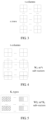
- FIG. 3 to FIG. 6 are schematic diagrams of steps of trimming the parameter component of the neural network model.
- a weight parameter matrix obtained by training the neural network model is an s*t weight parameter matrix shown in FIG. 3.
- FIG. 4 is a schematic diagram of classifying row vectors in the weight parameter matrix shown in FIG. 3 as sub-vectors.
- the s*t weight parameter matrix shown in FIG. 3 is decomposed into s/m m*t sub-vectors by using a row vector as a unit, and each sub-vector W i includes m rows.
- FIG. 5 is a schematic diagram of clustering all weight parameters. Specifically, all sub-vectors W i obtained in the step shown in FIG.
- FIG. 6 is a schematic diagram of a result obtained after the weight parameter matrix W: s ⁇ t shown in FIG. 3 is processed in the steps shown in FIG. 4 and FIG. 5 . Specifically, the weight parameter matrix W: s ⁇ t is converted into a weight parameter approximation matrix WJ: s ⁇ K.
- the cloud-side device trims the parameter component of the neural network model, so as to reduce a storage capacity occupied by the neural network model, and reduce a computation amount and a required storage capacity of the neural network model in a running process, so that a hardware resource required when the neural network model (that is, the second neural network model) delivered to the terminal-side device runs is within the available hardware resource capability range of the terminal-side device.
- the parameter component of the neural network model may be trimmed to effectively reduce the computation amount and the required storage capacity of the neural network model.
- An architecture component of the neural network model may be further trimmed before the neural network model is trained, so as to further reduce the computation amount and the required storage capacity of the neural network model.
- step 230 in which the cloud-side device trims the first neural network model to obtain a second neural network model includes: trimming, by the cloud-side device, an architecture component of the first neural network model to obtain a third neural network model, where a computation amount of a computation kernel of the third neural network model is less than a computation amount of a computation kernel of the first neural network model; and trimming, by the cloud-side device, a parameter component of the third neural network model to obtain the second neural network model, where a required storage capacity of a parameter component of the second neural network model is less than a required storage capacity of the parameter component of the third neural network model.
- the cloud-side device first trims the architecture component of the first neural network model to obtain the third neural network model.
- the computation amount of the computation kernel of the third neural network model is less than the computation amount of the computation kernel of the first neural network model.
- the computation kernel of the third neural network model is simpler than the computation kernel of the first neural network model.
- the cloud-side device trains the third neural network model to obtain the parameter component of the third neural network model.
- the cloud-side device trims the parameter component of the third neural network model to obtain the second neural network model.
- the storage capacity required by the parameter component of the second neural network model is less than the storage capacity required by the parameter component of the third neural network model.
- the architecture component of the neural network model is trimmed to simplify a computation kernel of the neural network model, and the architecture component is trimmed to reduce a computation amount and a required storage capacity of the neural network model in a training process.
- a method for trimming the architecture component of the neural network model includes any one or any combination of the following methods: reducing operand accuracy, reducing an order, and using a dedicated instruction of a hardware computing unit.
- a manner of reducing an order includes convolution kernel decomposition, matrix decomposition, or the like.
- the dedicated instruction of a hardware computing unit includes, for example, a single-instruction multiple-data stream (Single Instruction Multiple Data, SIMD) instruction, a streaming single-instruction multiple-data expansions 2 (Streaming SIMD Expansions 2, SSE2) instruction, a streaming single-instruction multiple-data expansions 3 (Streaming SIMD Expansions 3, SSE3) instruction, or a supplemental streaming single-instruction multiple-data expansions 3 (Supplemental Streaming SIMD Expansions 3, SSSE3) instruction.
- SIMD Single Instruction Multiple Data
- SIMD streaming SIMD Expansions 2
- SSE3 streaming single-instruction multiple-data expansions 3
- a supplemental streaming single-instruction multiple-data expansions 3 Supplemental Streaming SIMD Expansions 3, SSSE3 instruction.
- the reducing an order is used as an example.
- An operation of a high-order vector is converted into a product operation of two low-order vectors.
- An operation of reducing an order of the high-order vector includes a plurality of mathematical methods. For example, Tucker decomposition may be performed to convert the high-order vector into a product of a plurality of low-order vectors.
- a high-order vector W to be learned in a process of training the neural network model is converted into two low-order vectors H and V.
- the cloud-side device trims the architecture component of the neural network model, so as to simplify the computation kernel of the neural network model, thereby reducing the computation amount and the required storage capacity of the neural network model in a training process.
- the cloud-side device trims the parameter component of the neural network model, so as to reduce the storage capacity occupied by the neural network model, and reduce the computation amount and the required storage capacity of the neural network model in a running process, so that a hardware resource required when the neural network model (that is, the second neural network model) delivered to the terminal-side device runs is within the available hardware resource capability range of the terminal-side device.
- a same cognitive computing task may correspond to different accuracy requirements in different application fields.
- the terminal-side device may correspond to different degrees of cognitive computing tolerance when processing a same cognitive computing task in different application fields.
- the following two solutions are proposed in this embodiment of this application, so that the terminal-side device can respond to different accuracy requirements in different application fields when processing a same cognitive computing task.
- the cloud-side device obtains, based on the request message, a neural network architecture capable of processing the cognitive computing task; trains the neural network architecture to obtain a plurality of neural network models with different degrees of cognitive accuracy; and delivers the plurality of neural network models with different degrees of cognitive accuracy to the terminal-side device.
- the plurality of neural network models with different degrees of cognitive accuracy are pre-stored on the terminal-side device.
- the terminal-side device when the terminal-side device needs to process the cognitive computing task in an application scenario A, the terminal-side device selects a neural network model with cognitive accuracy corresponding to the application scenario A to process the cognitive computing task; when the terminal-side device needs to process the cognitive computing task in an application scenario B, the terminal-side device selects a neural network model with cognitive accuracy corresponding to the application scenario B to process the cognitive computing task.
- the neural network models with different degrees of cognitive accuracy are pre-stored on the terminal-side device, so that efficiency of processing the cognitive computing task in different application scenarios by the terminal-side device can be effectively improved.
- the terminal-side device determines, based on a to-be-processed application scenario, a requirement of the application scenario for cognitive accuracy, that is, cognitive accuracy tolerance, and then adds the cognitive accuracy tolerance to the request message; and the cloud-side device obtains, based on the cognitive accuracy tolerance, a neural network model that meets the cognitive accuracy tolerance, and then delivers the neural network model to the terminal-side device.
- the cloud-side device delivers, to the terminal-side device, only a neural network model that meets current cognitive accuracy tolerance of the terminal-side device.
- the cloud-side device delivers, to the terminal-side device, only a neural network model that meets cognitive accuracy in a current application scenario, so that storage load of the terminal-side device can be reduced.
- a cognitive computing task to be processed by the terminal-side device is to identify an object in a picture shown in FIG. 8 , and the object in the figure is a Mercedes-Benz SUV.
- the terminal-side device obtains the picture shown in FIG. 8 , and uses the picture as input data of a cognitive application program (corresponding to a neural network basic platform) on the terminal-side device.
- the cognitive application program obtains an identification result by processing the input data, for example, a coarse-grained correct identification result is a "car”.
- the cognitive application program mentioned herein is implemented through encapsulation based on the neural network basic platform running on the terminal-side device, and a function of the cognitive application program is to provide a cognitive function for a user. In this embodiment, the function is used to identify the object in the picture shown in FIG. 8 .
- processing result in step 620 does not meet the expected requirement includes the following three cases:
- an identification result of the cognitive application program on the terminal-side device does not meet the expected requirement. For example, if the object in the picture shown in FIG. 8 is identified as a "ship", the identification result is incorrect.
- an identification function of the cognitive application program on the terminal-side device does not meet the expected requirement.
- the cognitive application program on the terminal-side device can only identify the object in the picture shown in FIG. 8 as a "car”, but cannot identify the object in the picture shown in FIG. 8 as "Mercedes-Benz".
- the terminal-side device sends a request message to the cloud-side device, so as to trigger the cloud-side device to train and trim a neural network of the terminal-side device.
- the terminal-side device may upload an obtained new picture set, that is, an incremental picture set, to the cloud-side device, so that the cloud-side device trains and trims the neural network of the terminal-side device based on an existing picture set and the newly uploaded incremental picture set.
- the cloud-side device trains and trims a neural network model to obtain a second neural network model.
- the cloud-side device obtains, based on the request message, a first neural network model capable of processing the cognitive computing task, and then trims the first neural network model to obtain the second neural network model.
- a computation amount and a required storage capacity of the second neural network model are respectively less than a computation amount and a required storage capacity of the first neural network model.
- the trimming the first neural network model to obtain the second neural network model includes: trimming a parameter component of the first neural network model to obtain the second neural network model.
- the trimming the first neural network model to obtain the second neural network model includes: trimming an architecture component of the first neural network model to obtain a third neural network model, where a computation amount of a computation kernel of the third neural network model is less than a computation amount of a computation kernel of the first neural network model; and trimming a parameter component of the third neural network model to obtain the second neural network model.
- the cloud-side device stores the second neural network model.
- the cloud-side device delivers the second neural network model to the terminal-side device.
- step 670 may also be:
- the cloud-side device pushes the neural network model to the terminal-side device.
- the neural network model delivered by the cloud-side device to the terminal-side device may include a neural network architecture component and a neural network parameter component, or may include only a neural network parameter component.
- the terminal-side device updates, based on the second neural network model received from the cloud-side device, the neural network basic platform running on the terminal-side device, and processes the cognitive computing task based on an updated neural network basic platform.
- the terminal-side device determines whether a processing result in step 680 meets the expected requirement; and if the processing result in step 680 meets the expected requirement, ends the procedure, or if the processing result in step 680 does not meet the expected requirement, performs step 640.
- the terminal-side device requests, from the cloud-side device, the neural network model used to process the cognitive computing task, and after trimming the neural network model capable of processing the cognitive computing task, the cloud-side device delivers the trimmed neural network model to the terminal-side device, where a hardware resource required when the trimmed neural network model runs is within the available hardware resource capability range of the terminal-side device, so that a neural network model that originally runs on the cloud-side device with a strong computing capability can also be applicable to the terminal-side device with a relatively weak computing capability, and the terminal-side device can process the cognitive computing task. Therefore, this embodiment of this application can improve performance of processing a neural network-related application by the terminal-side device, and help enhance expansion of an intelligent application capability of the terminal-side device.
- step 660 in the embodiment shown in FIG. 9 storage of the neural network model on the cloud-side device may be implemented by using a content delivery network (Context Delivery Network, CDN).
- step 670 dynamic update push of the neural network model to the terminal-side device may be implemented by using a push notification server (Push Notification Server, PNS), and delivery of the neural network model to the terminal-side device may be implemented by using the content delivery network (CDN).
- PNS Push Notification Server
- an embodiment of this application further provides a terminal-cloud collaboration system 700.
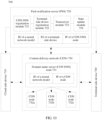
- the terminal-cloud collaboration system 700 includes a cloud-side device 710, a push notification server (PNS) 720, a content delivery network (CDN) 730, and a terminal-side device 740.
- the cloud-side device 710, the push notification server 720, the content delivery network 730, and the terminal-side device 740 may communicate with each other.
- the content delivery network (CDN) 730 includes an intelligent scheduling domain name server (Context Delivery Network Domain Name System, CDN DNS) node 731 and a plurality of CDN nodes 732 ( FIG. 10 schematically shows three CDN nodes 732).
- the CDN node 732 is configured to store a neural network model obtained by the cloud-side device.
- the CDN DNS node 731 is configured to maintain a correspondence between a neural network model stored in a network and a CDN node 732.
- the CDN DNS node 731 maintains a correspondence between an identifier of a neural network model (Model ID) and an IP address of a CDN node 732 (CDN Node IP).
- an identifier of one neural network model may correspond to IP addresses of a plurality of CDN nodes.
- the push notification server 720 includes a CDN DNS node registration module 721, a terminal-side device registration module 722, a transceiver module 723, and a state update module 724.
- the push notification server 720 further maintains a correspondence between an identifier of a neural network model (Model ID), an identifier of the terminal-side device (Device ID), and an IP address of the CDN DNS node (CDN DNS IP).
- the push notification server 720 may further maintain a state machine of the terminal-side device 740, that is, maintain a state update of the terminal-side device 740.
- a data structure used by the push notification server 720 to maintain the foregoing information may be a two-dimensional table.
- a processing procedure of implementing storage of the neural network model on the cloud-side device by using the content delivery network (CDN) is as follows:
- a log may be maintained on the cloud-side device 710.
- Each log entry includes an identifier of a neural network model, an available version number of the neural network model, accuracy/precision corresponding to the version, completion time of the version, and the like. It should be understood that the log maintained on the cloud-side device 710 helps implement update push of the neural network model.
- the cloud-side device 710 adds a new log entry to the log after completing training and trimming of the neural network model.
- the cloud-side device 710 sends the new log entry to the push notification server 720, so as to trigger the push notification server 720 to send an update push notification to the terminal-side device 740.
- the terminal-side device 740 may choose, based on information about a current neural network model available to the cloud-side device 710, whether to update a neural network model on the terminal-side device 740.
- the terminal-side device 740 includes a control module 741, a receiving module 742, a cache module 743, an update control module 744, a neural network basic platform 745, and an application program 745.
- the neural network basic platform 745 includes a neural network architecture component and a neural network parameter component, and the neural network architecture component is decoupled from the neural network parameter component. In other words, both a submodule in the neural network architecture component and a submodule in the neural network parameter component may be replaced based on a requirement.
- the application program 745 is an APP obtained through encapsulation based on the neural network basic platform 745.
- a procedure of dynamically updating the neural network model (a component) on the terminal-side device 740 is as follows:
- a new function (that is, a function corresponding to the neural network model delivered by the cloud-side device) is added to the application program 746 based on the updated neural network basic platform 745 by using an application programming interface (Application Programming Interface, API), so that the application program 746 can process user data.
- the user data is data in an intelligent application scenario, and the intelligent application scenario includes, for example, a driverless car, a robot, and intelligent terminal cognition.
- a terminal-side device and a cloud-side comprised in a terminal-cloud collaboration system in the embodiments of this application are described below with reference to FIG. 12 to FIG. 16 .
- FIG. 12 is a schematic block diagram of a terminal-side device 900, comprised in a terminal-cloud collaboration system according to an embodiment of this application.
- the terminal-side device 900 includes:
- the terminal-side device requests, from the cloud-side device, the neural network model used to process the cognitive computing task, and after trimming the neural network model capable of processing the cognitive computing task, the cloud-side device delivers the trimmed neural network model to the terminal-side device, where a hardware resource required when the trimmed neural network model runs is within the available hardware resource capability range of the terminal-side device, so that a neural network model that originally runs on the cloud-side device with a strong computing capability can also be applicable to the terminal-side device with a relatively weak computing capability, and the terminal-side device can process the cognitive computing task. Therefore, this embodiment of this application can improve performance of processing a neural network-related application by the terminal-side device, and help enhance expansion of an intelligent application capability of the terminal-side device.
- the terminal-side device includes a neural network basic platform
- the neural network basic platform includes a neural network architecture component and a neural network parameter component
- the neural network architecture component is decoupled from the neural network parameter component.
- the processing module 930 is specifically configured to: when the second neural network model includes an architecture update component, update the neural network architecture component based on the architecture update component; when the second neural network model includes a parameter update component, update the neural network parameter component based on the parameter update component; and process the cognitive computing task based on an updated neural network basic platform.
- the sending module 910 is specifically configured to send the request message to the cloud-side device under any one of the following conditions: the terminal-side device lacks a neural network model used to process the cognitive computing task; accuracy of processing the cognitive computing task by using a neural network model on the terminal-side device does not meet cognitive accuracy tolerance; and, in accordance with the claimed invention, when a hardware resource required when a neural network model on the terminal-side device that is used to process the cognitive computing task runs exceeds an available hardware resource capability of the terminal-side device, where the cognitive accuracy tolerance represents expected accuracy of processing the cognitive computing task by the terminal-side device.
- the request message carries indication information used to indicate the cognitive accuracy tolerance, so that the cloud-side device trims the first neural network model to obtain the second neural network model that meets the cognitive accuracy tolerance, where the cognitive accuracy tolerance represents the expected accuracy of processing the cognitive computing task by the terminal-side device.
- the request message carries indication information used to indicate the available hardware resource capability of the terminal-side device.
- the request message further carries an identifier used to indicate the first neural network model, so that the cloud-side device determines the first neural network model based on the identifier; or the request message further carries function information, and the function information is used to describe a function of processing the cognitive computing task, so that the cloud-side device determines the first neural network model based on the function information.
- a computation amount and a required storage capacity of the second neural network model are respectively less than a computation amount and a required storage capacity of the first neural network model.
- the processing module 930 may be implemented by a processor or a processor-related circuit.
- the sending module 910 may be implemented by a transmitter or a transmitter-related circuit.
- the receiving module 920 may be implemented by a receiver or a receiver-related circuit.
- an embodiment of this application further provides a terminal-side device 1000, comprised in a terminal-cloud collaboration system.
- the terminal-side device 1000 includes a processor 1010, a memory 1020, a receiver 1030, and a transmitter 1040.
- the processor 1010, the memory 1020, the receiver 1030, and the transmitter 1040 communicate with each other by using an internal connection path.
- the memory 1020 is configured to store an instruction.
- the processor 1010 is configured to execute the instruction stored in the memory 1020, so as to control the receiver 1030 to receive a signal and control the transmitter 1040 to send a signal.
- the transmitter 1040 is configured to send a request message to a cloud-side device, where the request message is used to request a neural network model used to process a cognitive computing task;
- the receiver 1030 is configured to receive a second neural network model that is obtained by trimming a first neural network model and that is sent by the cloud-side device, where the first neural network model is a neural network model on the cloud-side device that is used to process the cognitive computing task, and a hardware resource required when the second neural network model runs is within an available hardware resource capability range of the terminal-side device; and the processor 1010 is configured to process the cognitive computing task based on the second neural network model.
- the terminal-side device requests, from the cloud-side device, the neural network model used to process the cognitive computing task, and after trimming the neural network model capable of processing the cognitive computing task, the cloud-side device delivers the trimmed neural network model to the terminal-side device, where a hardware resource required when the trimmed neural network model runs is within the available hardware resource capability range of the terminal-side device, so that a neural network model that originally runs on the cloud-side device with a strong computing capability can also be applicable to the terminal-side device with a relatively weak computing capability, and the terminal-side device can process the cognitive computing task. Therefore, this embodiment of this application can improve performance of processing a neural network-related application by the terminal-side device, and help enhance expansion of an intelligent application capability of the terminal-side device.
- the terminal-side device includes a neural network basic platform
- the neural network basic platform includes a neural network architecture component and a neural network parameter component
- the neural network architecture component is decoupled from the neural network parameter component.
- the processor 1010 is specifically configured to: when the second neural network model includes an architecture update component, update the neural network architecture component based on the architecture update component; when the second neural network model includes a parameter update component, update the neural network parameter component based on the parameter update component; and process the cognitive computing task based on an updated neural network basic platform.
- the transmitter 1040 is specifically configured to send the request message to the cloud-side device under any one of the following conditions: the terminal-side device lacks a neural network model used to process the cognitive computing task; accuracy of processing the cognitive computing task by using a neural network model on the terminal-side device does not meet cognitive accuracy tolerance; or, in accordance with the claimed invention, when a hardware resource required when a neural network model on the terminal-side device that is used to process the cognitive computing task runs exceeds an available hardware resource capability of the terminal-side device, where the cognitive accuracy tolerance represents expected accuracy of processing the cognitive computing task by the terminal-side device.
- the request message carries indication information used to indicate the cognitive accuracy tolerance, so that the cloud-side device trims the first neural network model to obtain the second neural network model that meets the cognitive accuracy tolerance, where the cognitive accuracy tolerance represents the expected accuracy of processing the cognitive computing task by the terminal-side device.
- the request message carries indication information used to indicate the available hardware resource capability of the terminal-side device.
- the request message further carries an identifier used to indicate the first neural network model, so that the cloud-side device determines the first neural network model based on the identifier; or the request message further carries function information, and the function information is used to describe a function of processing the cognitive computing task, so that the cloud-side device determines the first neural network model based on the function information.
- a computation amount and a required storage capacity of the second neural network model are respectively less than a computation amount and a required storage capacity of the first neural network model.
- terminal-side device 900 shown in FIG. 12 or the terminal-side device 1000 shown in FIG. 13 may be configured to perform an operation or a procedure related to the terminal-side device in the method embodiment, and operations and/or functions of the modules in the terminal-side device 900 or the terminal-side device 1000 are separately used to implement a corresponding procedure in the method embodiment.
- operations and/or functions of the modules in the terminal-side device 900 or the terminal-side device 1000 are separately used to implement a corresponding procedure in the method embodiment.
- details are not described herein again.
- FIG. 14 is a schematic block diagram of a cloud-side device 1100, comprised in a terminal-cloud collaboration system according to an embodiment of this application.
- the cloud-side device 1100 includes:
- the terminal-side device requests, from the cloud-side device, the neural network model used to process the cognitive computing task, and after trimming the neural network model capable of processing the cognitive computing task, the cloud-side device delivers the trimmed neural network model to the terminal-side device, where a hardware resource required when the trimmed neural network model runs is within the available hardware resource capability range of the terminal-side device, so that a neural network model that originally runs on the cloud-side device with a strong computing capability can also be applicable to the terminal-side device with a relatively weak computing capability, and the terminal-side device can process the cognitive computing task. Therefore, this embodiment of this application can improve performance of processing a neural network-related application by the terminal-side device, and help enhance expansion of an intelligent application capability of the terminal-side device.
- the trimming module 1130 is specifically configured to trim a parameter component of the first neural network model to obtain the second neural network model, where a required storage capacity of a parameter component of the second neural network model is less than a required storage capacity of the parameter component of the first neural network model.
- the trimming module 1130 is specifically configured to: trim an architecture component of the first neural network model to obtain a third neural network model, where a computation amount of a computation kernel of the third neural network model is less than a computation amount of a computation kernel of the first neural network model; and trim a parameter component of the third neural network model to obtain the second neural network model, where a required storage capacity of a parameter component of the second neural network model is less than a required storage capacity of the parameter component of the third neural network model.
- the request message carries indication information used to indicate cognitive accuracy tolerance, and the cognitive accuracy tolerance represents expected accuracy of processing the cognitive computing task by the terminal-side device.
- the trimming module 1130 is specifically configured to trim, based on the cognitive accuracy tolerance, the first neural network model to obtain the second neural network model, where accuracy of processing the cognitive computing task by using the second neural network model meets the cognitive accuracy tolerance.
- the request message carries indication information used to indicate an available hardware resource capability of the terminal-side device.
- the request message further carries an identifier used to indicate the first neural network model.
- the determining module 1120 is specifically configured to determine the first neural network model based on the identifier.
- the request message further carries function information, and the function information is used to describe a function of processing the cognitive computing task.
- the determining module is specifically configured to determine the first neural network model based on the function information.
- a computation amount and a required storage capacity of the second neural network model are respectively less than a computation amount and a required storage capacity of the first neural network model.
- the determining module 1120 and the trimming module 1130 may be implemented by a processor or a processor-related circuit.
- the receiving module 1110 may be implemented by a receiver or a receiver-related circuit.
- the sending module 1140 may be implemented by a transmitter or a transmitter-related circuit.
- an embodiment of this application further provides a cloud-side device 1200, comprised in a terminal-cloud collaboration system
- the cloud-side device 1200 includes a processor 1210, a memory 1220, a receiver 1230, and a transmitter 1240.
- the processor 1210, the memory 1220, the receiver 1230, and the transmitter 1240 communicate with each other by using an internal connection path.
- the memory 1220 is configured to store an instruction.
- the processor 1210 is configured to execute the instruction stored in the memory 1220, so as to control the receiver 1230 to receive a signal and control the transmitter 1240 to send a signal.
- the receiver 1230 is configured to receive a request message sent by a terminal-side device, where the request message is used to request a neural network model used to process a cognitive computing task; the processor 1210 is configured to: determine, based on the request message, a first neural network model used to process the cognitive computing task; and trim the first neural network model to obtain a second neural network model, where a hardware resource required when the second neural network model runs is within an available hardware resource capability range of the terminal-side device; and the transmitter 1240 is configured to send the second neural network model to the terminal-side device, so that the terminal-side device processes the cognitive computing task based on the second neural network model.
- the terminal-side device requests, from the cloud-side device, the neural network model used to process the cognitive computing task, and after trimming the neural network model capable of processing the cognitive computing task, the cloud-side device delivers the trimmed neural network model to the terminal-side device, where a hardware resource required when the trimmed neural network model runs is within the available hardware resource capability range of the terminal-side device, so that a neural network model that originally runs on the cloud-side device with a strong computing capability can also be applicable to the terminal-side device with a relatively weak computing capability, and the terminal-side device can process the cognitive computing task. Therefore, this embodiment of this application can improve performance of processing a neural network-related application by the terminal-side device, and help enhance expansion of an intelligent application capability of the terminal-side device.
- the processor 1210 is specifically configured to trim a parameter component of the first neural network model to obtain the second neural network model, where a required storage capacity of a parameter component of the second neural network model is less than a required storage capacity of the parameter component of the first neural network model.
- the processor 1210 is specifically configured to: trim an architecture component of the first neural network model to obtain a third neural network model, where a computation amount of a computation kernel of the third neural network model is less than a computation amount of a computation kernel of the first neural network model; and trim a parameter component of the third neural network model to obtain the second neural network model, where a required storage capacity of a parameter component of the second neural network model is less than a required storage capacity of the parameter component of the third neural network model.
- the request message carries indication information used to indicate cognitive accuracy tolerance, and the cognitive accuracy tolerance represents expected accuracy of processing the cognitive computing task by the terminal-side device.
- the processor 1210 is specifically configured to trim, based on the cognitive accuracy tolerance, the first neural network model to obtain the second neural network model, where accuracy of processing the cognitive computing task by using the second neural network model meets the cognitive accuracy tolerance.
- the request message carries indication information used to indicate an available hardware resource capability of the terminal-side device.
- the request message further carries an identifier used to indicate the first neural network model.
- the processor 1210 is specifically configured to determine the first neural network model based on the identifier.
- the request message further carries function information, and the function information is used to describe a function of processing the cognitive computing task.
- the processor 1210 is specifically configured to determine the first neural network model based on the function information.
- a computation amount and a required storage capacity of the second neural network model are respectively less than a computation amount and a required storage capacity of the first neural network model.
- the cloud-side device 1100 shown in FIG. 14 or the cloud-side device 1200 shown in FIG. 15 may be configured to perform an operation or a procedure related to the cloud-side device in the method embodiment, and operations and/or functions of the modules in the cloud-side device 1100 or the cloud-side device 1200 are separately used to implement a corresponding procedure in the method embodiment. For brevity, details are not described herein again.
- FIG. 16 is a schematic block diagram of a terminal-cloud collaboration system 1300 according to an embodiment of this application.
- the terminal-cloud collaboration system 1300 includes a terminal-side device 1310 and a cloud-side device 1320.
- the terminal-side device 1310 is corresponding to the terminal-side device 900 or the terminal-side device 1000 in the foregoing embodiment
- the cloud-side device 1320 is corresponding to the cloud-side device 1100 or the cloud-side device 1200 in the foregoing embodiment.
- the terminal-side device requests, from the cloud-side device, a neural network model used to process a cognitive computing task, and after trimming the neural network model capable of processing the cognitive computing task, the cloud-side device delivers the trimmed neural network model to the terminal-side device, where a hardware resource required when the trimmed neural network model runs is within an available hardware resource capability range of the terminal-side device, so that a neural network model that originally runs on the cloud-side device with a strong computing capability can also be applicable to the terminal-side device with a relatively weak computing capability, and the terminal-side device can process the cognitive computing task. Therefore, this embodiment of this application can improve performance of processing a neural network-related application by the terminal-side device, and help enhance expansion of an intelligent application capability of the terminal-side device.
- a processor may be a central processing unit (Central Processing Unit, CPU), or may be another general-purpose processor, a digital signal processor (Digital Signal Processor, DSP), an application-specific integrated circuit (Application-Specific Integrated Circuit, ASIC), a field programmable gate array (Field Programmable Gate Array, FPGA) or another programmable logic device, a discrete gate or a transistor logic device, a discrete hardware component, or the like.
- the general-purpose processor may be a microprocessor, or the processor may be any conventional processor or the like.
- a memory may be a volatile memory or a nonvolatile memory, or may include both a volatile memory and a nonvolatile memory.
- the nonvolatile memory may be a read-only memory (Read-Only Memory, ROM), a programmable read-only memory (Programmable ROM, PROM), an erasable programmable read-only memory (Erasable PROM, EPROM), an electrically erasable programmable read-only memory (Electrically EPROM, EEPROM), or a flash memory.
- the volatile memory may be a random access memory (Random Access Memory, RAM), and is used as an external cache.
- RAMs are available, for example, a static random access memory (Static RAM, SRAM), a dynamic random access memory (Dynamic RAM, DRAM), a synchronous dynamic random access memory (Synchronous DRAM, SDRAM), a double data rate synchronous dynamic random access memory (Double Data Rate SDRAM, DDR SDRAM), an enhanced synchronous dynamic random access memory (Enhanced SDRAM, ESDRAM), a synchlink dynamic random access memory (Synchlink DRAM, SLDRAM), and a direct rambus random access memory (Direct Rambus RAM, DR RAM).
- Static RAM Static RAM, SRAM
- DRAM dynamic random access memory
- DRAM synchronous dynamic random access memory
- SDRAM synchronous dynamic random access memory
- DDR SDRAM double data rate synchronous dynamic random access memory
- Enhanced SDRAM, ESDRAM enhanced synchronous dynamic random access memory
- Synchlink dynamic random access memory Synchlink dynamic random access memory
- SLDRAM direct rambus random access memory
- Direct Rambus RAM Direct Rambus RAM
- the memory (a storage module) is integrated in the processor when the processor is a general-purpose processor, a DSP, an ASIC, an FPGA, or another programmable logic device, a discrete gate or a transistor logic device, or a discrete hardware component.
- sequence numbers of the foregoing processes do not mean execution sequences in the embodiments.
- the execution sequences of the processes should be determined based on functions and internal logic of the processes, and should not be construed as any limitation on the implementation processes of the embodiments of this application.
- the disclosed system, apparatus, and method may be implemented in other manners.
- the described apparatus embodiment is merely an example.
- the unit division is merely logical function division and may be other division in actual implementation.
- a plurality of units or components may be combined or integrated into another system, or some features may be ignored or not performed.
- the displayed or discussed mutual couplings or direct couplings or communication connections may be implemented by using some interfaces.
- the indirect couplings or communication connections between the apparatuses or units may be implemented in electronic, mechanical, or other forms.
- the units described as separate parts may or may not be physically separate, and parts displayed as units may or may not be physical units, may be located in one position, or may be distributed on a plurality of network units. Some or all of the units may be selected based on actual requirements to achieve the objectives of the solutions of the embodiments.
- function units in the embodiments may be integrated into one processing unit, or each of the units may exist alone physically, or two or more units are integrated into one unit.
- the functions When the functions are implemented in the form of a software function unit and sold or used as an independent product, the functions may be stored in a computer-readable storage medium. Based on such an understanding, the technical solutions of the embodiments of this application essentially, or the part contributing to the prior art, or some of the technical solutions may be implemented in a form of a software product.
- the software product is stored in a storage medium, and includes several instructions for instructing a computer device (which may be a personal computer, a server, or a network device) to perform all or some of the steps of the methods described in the embodiments of this application.
- the foregoing storage medium includes: any medium that can store program code, such as a USB flash drive, a removable hard disk, a read-only memory (Read-Only Memory, ROM), a random access memory (Random Access Memory, RAM), a magnetic disk, or an optical disc.
- program code such as a USB flash drive, a removable hard disk, a read-only memory (Read-Only Memory, ROM), a random access memory (Random Access Memory, RAM), a magnetic disk, or an optical disc.
Landscapes
- Engineering & Computer Science (AREA)
- Theoretical Computer Science (AREA)
- Physics & Mathematics (AREA)
- Software Systems (AREA)
- General Physics & Mathematics (AREA)
- General Engineering & Computer Science (AREA)
- Health & Medical Sciences (AREA)
- Life Sciences & Earth Sciences (AREA)
- Biomedical Technology (AREA)
- Biophysics (AREA)
- Computing Systems (AREA)
- Artificial Intelligence (AREA)
- General Health & Medical Sciences (AREA)
- Evolutionary Computation (AREA)
- Data Mining & Analysis (AREA)
- Mathematical Physics (AREA)
- Computational Linguistics (AREA)
- Molecular Biology (AREA)
- Neurology (AREA)
- Computer Networks & Wireless Communication (AREA)
- Signal Processing (AREA)
- Management, Administration, Business Operations System, And Electronic Commerce (AREA)
- Mobile Radio Communication Systems (AREA)
- Computer And Data Communications (AREA)
- Selective Calling Equipment (AREA)
- Information Transfer Between Computers (AREA)
Description
- This application claims priority to
Chinese Patent Application No. 201611215479.6, filed with the Chinese Patent Office on December 26, 2016 - This application relates to the field of data processing, and more specifically, to a method, a terminal-side device, and a cloud-side device for data processing and a terminal-cloud collaboration system.
- A requirement for an intelligent application of a terminal-side device increasingly grows. A typical intelligent application scenario includes an intelligent mobile terminal, a robot, a driverless car, a safe city, a smart city, the Internet of Things, and the like. A requirement for the intelligent application of the terminal-side device increasingly grows in an intelligent application scenario. The intelligent application typically features a large data amount and a large computation amount, and needs a large storage capacity during running. A computation kernel in a computing program of the intelligent application is mainly machine learning, and in particular, a neural network. This type of program features a large computation amount and needs a large storage capacity during running. However, the terminal-side device (such as a smartphone, a tablet computer, a smart camera, smart glasses, a robot, or a smart sensor) typically features a relatively weak computing capability and a limited storage capacity integrated in the device, and the computing capability and the storage capacity are much lower than those of a high-performance server. Consequently, the terminal-side device cannot efficiently perform computation to meet a computing requirement in the intelligent application scenario, and expansion of an intelligent application feature of the terminal-side device is limited.
EP 3 188 081 A1 discloses a data processing method and device. The method includes: obtaining target perception data, where the target perception data is any type of the following data: image data, video data, or voice data; determining a target scenario to which the target perception data belongs; determining a target perception model corresponding to the target scenario; and computing a recognition result of the target perception data according to the target perception model
US 2016/078339 A1 discloses systems and methods for generating a DNN classifier by "learning" a "Student" DNN model from a larger more accurate "teacher" DNN model. The student DNN may be trained from un-labeled training data because its super- vised signal is obtained by passing the un-labeled training data through the teacher DNN. In one embodiment, an iterative process is applied to train the Student DNN by minimize the divergence of the output distributions from the teacher and Student DNN models. For each iteration until convergence, the difference in the output distributions is used to update the Student DNN model, and output distributions are determined again, using the unlabeled training data.
US 2016/358070 A1 discloses devices and methods for determining if a first neural network meets some determined performance requirements and if not, generating a second neural network to meet those requirements. - This invention provides a method according to
independent claim 1 and a terminal-cloud collaboration system, in accordance with independent claim 10, comprising a terminal-side device and a cloud-side device for data processing, so as to improve performance of processing a neural network-related application by the terminal-side device, and help enhance expansion of an intelligent application capability of the terminal-side device. Further embodiments of the invention are outlined in the dependent claims. Further aspects disclosed in the application are useful for understanding the embodiments. - According to a first aspect, a method for data processing is provided, and the method includes: sending, by a terminal-side device, a request message to a cloud-side device, where the request message is used to request a neural network model used to process a cognitive computing task; receiving, by the terminal-side device, a second neural network model that is obtained by trimming a first neural network model and that is sent by the cloud-side device, where the first neural network model is a neural network model on the cloud-side device that is used to process the cognitive computing task, and a hardware resource required when the second neural network model runs is within an available hardware resource capability range of the terminal-side device; and processing, by the terminal-side device, the cognitive computing task based on the second neural network model.
- In this solution, the terminal-side device requests, from the cloud-side device, the neural network model used to process the cognitive computing task, and after trimming the neural network model capable of processing the cognitive computing task, the cloud-side device delivers the trimmed neural network model to the terminal-side device, where a hardware resource required when the trimmed neural network model runs is within the available hardware resource capability range of the terminal-side device, so that a neural network model that originally runs on the cloud-side device with a strong computing capability can also be applicable to the terminal-side device with a relatively weak computing capability, and the terminal-side device can process the cognitive computing task. Therefore, the solution provided in this application can improve performance of processing a neural network-related application by the terminal-side device, and help enhance expansion of an intelligent application capability of the terminal-side device.
- With reference to the first aspect, in a possible implementation of the first aspect, the terminal-side device includes a neural network basic platform, the neural network basic platform includes a neural network architecture component and a neural network parameter component, and the neural network architecture component is decoupled from the neural network parameter component; and the processing, by the terminal-side device, the cognitive computing task based on the second neural network model includes: when the second neural network model includes an architecture update component, updating the neural network architecture component based on the architecture update component; when the second neural network model includes a parameter update component, updating the neural network parameter component based on the parameter update component; and processing the cognitive computing task based on an updated neural network basic platform.
- In this solution, the neural network basic platform on the terminal-side device includes the neural network architecture component and the neural network parameter component, and the neural network architecture component is decoupled from the neural network parameter component. In other words, an update to the neural network parameter component and an update to the neural network architecture component are independent of each other and do not affect each other. This can help extend an intelligent application function of the terminal-side device.
- With reference to the first aspect or some possible implementations of the first aspect, in a possible implementation of the first aspect, the sending, by a terminal-side device, a request message to a cloud-side device includes: sending, by the terminal-side device, the request message to the cloud-side device under any one of the following conditions: the terminal-side device lacks a neural network model used to process the cognitive computing task; accuracy of processing the cognitive computing task by using a neural network model on the terminal-side device does not meet cognitive accuracy tolerance; and a hardware resource required when a neural network model on the terminal-side device that is used to process the cognitive computing task runs exceeds an available hardware resource capability of the terminal-side device, where the cognitive accuracy tolerance represents expected accuracy of processing the cognitive computing task by the terminal-side device.
- In this solution, under any one of the foregoing conditions, the terminal-side device actively requests, from the cloud-side device, the neural network model used to process the cognitive computing task, so as to effectively achieve an objective that the terminal-side device has a function of processing a neural network-related application, and help enhance expansion of an intelligent application capability of the terminal-side device.
- With reference to the first aspect or some possible implementations of the first aspect, in a possible implementation of the first aspect, the request message carries indication information used to indicate the cognitive accuracy tolerance, so that the cloud-side device trims the first neural network model to obtain the second neural network model that meets the cognitive accuracy tolerance, where the cognitive accuracy tolerance represents the expected accuracy of processing the cognitive computing task by the terminal-side device.
- In this solution, when requesting, from the cloud-side device, the neural network model used to process the cognitive computing task, the terminal-side device further reports the indication information used to indicate the cognitive accuracy tolerance, so that the neural network model delivered by the cloud-side device can meet a requirement for the cognitive accuracy tolerance. Therefore, in the technical solution provided in this application, the terminal-side device can invoke, based on a hardware resource of the terminal-side device, the neural network model received from the cloud-side device, to process the cognitive computing task; in addition, accuracy of processing the cognitive computing task can be ensured, so that the performance of processing the neural network-related application by the terminal-side device can be further improved.
- In the foregoing implementations, accuracy of processing the cognitive computing task by using the second neural network model delivered by the cloud-side device to the terminal-side device is consistent with accuracy corresponding to the cognitive accuracy tolerance. In other words, the accuracy of processing the cognitive computing task by using the second neural network model is not much higher than the accuracy corresponding to the cognitive accuracy tolerance.
- It should be understood that higher accuracy of processing the cognitive computing task by using the neural network model correspondingly indicates a larger computation amount and a larger storage capacity required. In this solution, hardware resources required for the neural network model are reduced to a relatively large extent on the premise that the accuracy of processing the cognitive computing task by using the neural network model delivered by the cloud-side device to the terminal-side device meets the cognitive accuracy tolerance, so as to reduce load of the hardware resources required when the neural network model runs on the terminal-side device.
- With reference to the first aspect or some possible implementations of the first aspect, in a possible implementation of the first aspect, the request message carries indication information used to indicate the available hardware resource capability of the terminal-side device.
- With reference to the first aspect or some possible implementations of the first aspect, in a possible implementation of the first aspect, the request message further carries an identifier used to indicate the first neural network model, so that the cloud-side device determines the first neural network model based on the identifier; or the request message further carries function information, where the function information is used to describe a function of processing the cognitive computing task, so that the cloud-side device determines the first neural network model based on the function information.
- With reference to the first aspect or some possible implementations of the first aspect, in a possible implementation of the first aspect, a computation amount and a required storage capacity of the second neural network model are respectively less than a computation amount and a required storage capacity of the first neural network model.
- According to a second aspect, a method for data processing is provided, and the method includes: receiving, by a cloud-side device, a request message sent by a terminal-side device, where the request message is used to request a neural network model used to process a cognitive computing task; determining, by the cloud-side device based on the request message, a first neural network model used to process the cognitive computing task; trimming, by the cloud-side device, the first neural network model to obtain a second neural network model, where a hardware resource required when the second neural network model runs is within an available hardware resource capability range of the terminal-side device; and sending, by the cloud-side device, the second neural network model to the terminal-side device, so that the terminal-side device processes the cognitive computing task based on the second neural network model.
- In this solution, the terminal-side device requests, from the cloud-side device, the neural network model used to process the cognitive computing task, and after trimming the neural network model capable of processing the cognitive computing task, the cloud-side device delivers the trimmed neural network model to the terminal-side device, where a hardware resource required when the trimmed neural network model runs is within the available hardware resource capability range of the terminal-side device, so that a neural network model that originally runs on the cloud-side device with a strong computing capability can also be applicable to the terminal-side device with a relatively weak computing capability, and the terminal-side device can process the cognitive computing task. Therefore, the solution provided in this application can improve performance of processing a neural network-related application by the terminal-side device, and help enhance expansion of an intelligent application capability of the terminal-side device.
- With reference to the second aspect, in a possible implementation of the second aspect, the request message carries indication information used to indicate cognitive accuracy tolerance, and the cognitive accuracy tolerance represents expected accuracy of processing the cognitive computing task by the terminal-side device; and the trimming, by the cloud-side device, the first neural network model to obtain a second neural network model includes: trimming, by the cloud-side device based on the cognitive accuracy tolerance, the first neural network model to obtain the second neural network model, where accuracy of processing the cognitive computing task by using the second neural network model meets the cognitive accuracy tolerance.
- In this solution, the cloud-side device trims, based on the cognitive accuracy tolerance of processing the cognitive computing task by the terminal-side device, the neural network model requested by the terminal-side device, and delivers the trimmed neural network model to the terminal-side device, so that the accuracy of processing the cognitive computing task by using the neural network model delivered to the terminal-side device meets the cognitive accuracy tolerance. Therefore, in the technical solution provided in this application, the terminal-side device can invoke, based on a hardware resource of the terminal-side device, the neural network model received from the cloud-side device, to process the cognitive computing task; in addition, accuracy of processing the cognitive computing task can be ensured, so that the performance of processing the neural network-related application by the terminal-side device can be further improved.
- In the foregoing implementations, accuracy of processing the cognitive computing task by using the second neural network model delivered by the cloud-side device to the terminal-side device is consistent with accuracy corresponding to the cognitive accuracy tolerance. In other words, the accuracy of processing the cognitive computing task by using the second neural network model is not much higher than the accuracy corresponding to the cognitive accuracy tolerance.
- It should be understood that higher accuracy of processing the cognitive computing task by using the neural network model correspondingly indicates a larger computation amount and a larger storage capacity required. In this solution, hardware resources required for the neural network model are reduced to a relatively large extent on the premise that the accuracy of processing the cognitive computing task by using the neural network model delivered by the cloud-side device to the terminal-side device meets the cognitive accuracy tolerance, so as to reduce load of the hardware resources required when the neural network model runs on the terminal-side device.
- With reference to the second aspect or some possible implementations of the second aspect, in a possible implementation of the second aspect, the trimming, by the cloud-side device, the first neural network model to obtain a second neural network model includes: trimming, by the cloud-side device, a parameter component of the first neural network model to obtain the second neural network model, where a required storage capacity of a parameter component of the second neural network model is less than a required storage capacity of the parameter component of the first neural network model.
- Specifically, the cloud-side device may first train the first neural network model to obtain the parameter component (for example, a weight parameter component) of the first neural network model, and then trim the parameter component, for example, cluster weight parameter matrices of the first neural network model, so that a storage capacity required by a trimmed parameter component is less than a storage capacity required by the untrimmed parameter component. The second neural network model is formed after the parameter component of the first neural network model is trimmed. In other words, in this implementation, architecture components of the second neural network model and the first neural network model are the same, the parameter components of the second neural network model and the first neural network model are different, and the storage capacity required by the parameter component of the second neural network model is less than the storage capacity required by the parameter component of the first neural network model.
- Optionally, in an implementation, a method for trimming the parameter component of the neural network model may include the following steps: Step 1: Classify a row vector in the weight parameter matrix of the neural network model as a sub-vector, convert the sub-vector into a group of codewords (codeword) by using a sub-vector quantization method, and group codewords obtained by quantizing all sub-vectors to form a codebook (codebook). Step 2: Cluster all weight parameters of the neural network model, and use a codeword to approximate all weight parameters of each type to form a codebook, where the codeword is a shared parameter for each type of weight parameters, that is, convert the weight parameter matrix into parameter-to-codebook location mapping and the codebook.
- In this solution, the cloud-side device trims the parameter component of the neural network model, so as to reduce a storage capacity occupied by the neural network model, and reduce a computation amount and a required storage capacity of the neural network model in a running process, so that a hardware resource required when the neural network model (that is, the second neural network model) delivered to the terminal-side device runs is within the available hardware resource capability range of the terminal-side device.
- With reference to the second aspect or some possible implementations of the second aspect, in a possible implementation of the second aspect, the trimming, by the cloud-side device, the first neural network model to obtain a second neural network model includes: trimming, by the cloud-side device, an architecture component of the first neural network model to obtain a third neural network model, where a computation amount of a computation kernel of the third neural network model is less than a computation amount of a computation kernel of the first neural network model; and trimming, by the cloud-side device, a parameter component of the third neural network model to obtain the second neural network model, where a required storage capacity of a parameter component of the second neural network model is less than a required storage capacity of the parameter component of the third neural network model.
- Specifically, the cloud-side device first trims the architecture component of the first neural network model to obtain the third neural network model. It may be understood that the computation kernel of the third neural network model is simpler than the computation kernel of the first neural network model. Then the cloud-side device trains the third neural network model to obtain the parameter component of the third neural network model. Finally, the cloud-side device trims the parameter component of the third neural network model to obtain the second neural network model. The storage capacity required by the parameter component of the second neural network model is less than the storage capacity required by the parameter component of the third neural network model.
- Optionally, in an implementation, a main method for trimming the architecture component of the neural network model includes any one or any combination of the following methods: reducing operand accuracy, reducing an order, and using a dedicated instruction of a hardware computing unit.
- In this solution, the cloud-side device trims the architecture component of the neural network model, so as to simplify a computation kernel of the neural network model, thereby reducing a computation amount and a required storage capacity of the neural network model in a training process. The cloud-side device trims the parameter component of the neural network model, so as to reduce a storage capacity occupied by the neural network model, and reduce a computation amount and a required storage capacity of the neural network model in a running process, so that a hardware resource required when the neural network model (that is, the second neural network model) delivered to the terminal-side device runs is within the available hardware resource capability range of the terminal-side device.
- With reference to the second aspect or some possible implementations of the second aspect, in a possible implementation of the second aspect, the request message carries indication information used to indicate an available hardware resource capability of the terminal-side device.
- In this solution, the cloud-side device trims, based on the available hardware resource capability of the terminal-side device, the neural network model requested by the terminal-side device, and delivers the trimmed neural network model to the terminal-side device, so that a hardware resource required when the neural network model delivered to the terminal-side device runs is within the available hardware resource capability range of the terminal-side device, and the terminal-side device can invoke, based on a hardware resource of the terminal-side device, the neural network model received from the cloud-side device to process the cognitive computing task. Therefore, in this solution, performance of processing a neural network-related application by the terminal-side device can be improved.
- With reference to the second aspect or some possible implementations of the second aspect, in a possible implementation of the second aspect, the request message further carries an identifier used to indicate the first neural network model; and the determining, by the cloud-side device based on the request message, a first neural network model used to process the cognitive computing task includes: determining, by the cloud-side device, the first neural network model based on the identifier.
- With reference to the second aspect or some possible implementations of the second aspect, in a possible implementation of the second aspect, the request message further carries function information, and the function information is used to describe a function of processing the cognitive computing task; and the determining, by the cloud-side device based on the request message, a first neural network model used to process the cognitive computing task includes: determining, by the cloud-side device, the first neural network model based on the function information.
- With reference to the second aspect or some possible implementations of the second aspect, in a possible implementation of the second aspect, a computation amount and a required storage capacity of the second neural network model are respectively less than a computation amount and a required storage capacity of the first neural network model.
- According to a third aspect, a terminal-side device is provided, and the terminal-side device is configured to perform the method according to any one of the first aspect or the possible implementations of the first aspect. Specifically, the terminal-side device may include a module configured to perform the method according to any one of the first aspect or the possible implementations of the first aspect.
- According to a fourth aspect, a cloud-side device is provided, and the cloud-side device is configured to perform the method according to any one of the second aspect or the possible implementations of the second aspect. Specifically, the cloud-side device may include a module configured to perform the method according to any one of the second aspect or the possible implementations of the second aspect.
- According to a fifth aspect, a terminal-side device is provided, and the terminal-side device includes a memory and a processor. The memory is configured to store an instruction. The processor is configured to execute the instruction stored in the memory. In addition, execution of the instruction stored in the memory enables the processor to perform the method according to any one of the first aspect or the possible implementations of the first aspect.
- According to a sixth aspect, a cloud-side device is provided, and the cloud-side device includes a memory and a processor. The memory is configured to store an instruction. The processor is configured to execute the instruction stored in the memory. In addition, execution of the instruction stored in the memory enables the processor to perform the method according to any one of the second aspect or the possible implementations of the second aspect.
- According to a seventh aspect, a terminal-cloud collaboration system is provided, and the terminal-cloud collaboration system includes the terminal-side device provided in the third aspect and the cloud-side device provided in the fourth aspect.
- In conclusion, in the solutions provided in this application, the terminal-side device requests, from the cloud-side device, the neural network model used to process the cognitive computing task, and after trimming the neural network model capable of processing the cognitive computing task, the cloud-side device delivers the trimmed neural network model to the terminal-side device, where a hardware resource required when the trimmed neural network model runs is within the available hardware resource capability range of the terminal-side device, so that a neural network model that originally runs on the cloud-side device with a strong computing capability can also be applicable to the terminal-side device with a relatively weak computing capability, and the terminal-side device can process the cognitive computing task. Therefore, the solutions provided in this application can improve performance of processing a neural network-related application by the terminal-side device, and help enhance expansion of an intelligent application capability of the terminal-side device.
-
-
FIG. 1 is a schematic block diagram of a terminal-cloud collaboration system according to an embodiment of this application; -
FIG. 2 is a schematic flowchart of a method for data processing according to an embodiment of this application; -
FIG. 3 to FIG. 6 are schematic diagrams of trimming a neural network parameter component according to an embodiment of this application; -
FIG. 7 is a schematic diagram of trimming a neural network architecture component according to an embodiment of this application; -
FIG. 8 is a schematic diagram of a to-be-identified image according to an embodiment of this application; -
FIG. 9 is another schematic flowchart of a method for data processing according to an embodiment of this application; -
FIG. 10 is another schematic block diagram of a terminal-cloud collaboration system according to an embodiment of this application; -
FIG. 11 is still another schematic block diagram of a terminal-cloud collaboration system according to an embodiment of this application; -
FIG. 12 is a schematic block diagram of a terminal-side device comprised in a terminal-cloud collaboration system according to an embodiment of this application; -
FIG. 13 is another schematic block diagram of a terminal-side device comprised in a terminal-cloud collaboration system according to an embodiment of this application; -
FIG. 14 is a schematic block diagram of a cloud-side device comprised in a terminal-cloud collaboration system according to an embodiment of this application; -
FIG. 15 is another schematic block diagram of a cloud-side device comprised in a terminal-cloud collaboration system according to an embodiment of this application; and -
FIG. 16 is yet another schematic block diagram of a terminal-cloud collaboration system according to an embodiment of this application. - The following describes technical solutions of the embodiments in this application with reference to the accompanying drawings.
- The embodiments of this application can be applied to scenarios of various intelligent terminal devices with weak computing capabilities, such as a driverless car, a robot, and intelligent terminal cognition.
- In the embodiments of this application, a terminal-side device may also be referred to as user equipment (User Equipment, UE), a mobile station (Mobile Station, MS), a mobile terminal (Mobile Terminal), or the like. For example, the terminal-side device may be a mobile phone (or referred to as a "cellular" phone) or a computer with a mobile terminal, for example, may be a portable, pocket-sized, handheld, computer built-in, or in-vehicle mobile apparatus.
- In the embodiments of this application, a cloud-side device may be a server or a server cluster, and the cloud-side device may also be referred to as a computing node or a cloud-side computing cluster.
- A terminal-
cloud collaboration system 100 provided in an embodiment of this application is first described below with reference toFIG. 1 , so as to help understand and describe a method for data processing provided in an embodiment of this application. - As shown in
FIG. 1 , the terminal-cloud collaboration system 100 includes a terminal-side device 110 and a cloud-side device 120. The terminal-side device 110 includes a neural networkbasic platform 111 and an application program 112 (FIG. 1 schematically showsapplication programs basic platform 111 includes two decoupled components: a neural network architecture component 111a and a neuralnetwork parameter component 111b. Theapplication program 112 is implemented through encapsulation based on the neural networkbasic platform 111 running on the terminal-side device 110, and theapplication program 120 is configured to provide a cognitive computing function for a user. - Both the neural network architecture component 111a and the neural
network parameter component 111b may be updated and replaced. The neural network architecture component 111a is configured to support function expansion of theapplication program 120, for example, enhance an identification capability from identifying only a car to identifying a brand, a type, or the like of the car. The neuralnetwork parameter component 111b is configured to support updating of accuracy and performance of theapplication program 120, for example, obtain higher accuracy, obtain higher computing efficiency, or obtain lower energy consumption and a lower storage requirement during running of the application program. - In other words, the neural network architecture component 111a and the neural
network parameter component 111b need to be updated to implement function expansion of theapplication program 120 on the terminal-side device 110. Only the neuralnetwork parameter component 111b may be updated if only the accuracy and performance of theapplication program 120 on the terminal-side device 110 need to be improved. - The terminal-
side device 110 is configured to: receive a cognitive computing request, process the cognitive computing request by using the neural networkbasic platform 111 running on the terminal-side device 110, and return a processing result. The terminal-side device 110 is further configured to send a request message to the cloud-side device 120, so as to request to update the architecture component and/or the parameter component on the neural network basic platform. - The cloud-
side device 120 includes a neural network training andtrimming platform 121, and the neural network training andtrimming platform 121 includes a neural network architecture component updating and trimming module 112a and a neural network parameter component trimming module 121b. The module 112a is configured to update and trim a neural network architecture running on the terminal-side device 110, and the model 112b is configured to trim a parameter obtained by training a neural network model. - The cloud-
side device 120 is configured to: receive the request message from the terminal-side device 110, obtain, by using the neural network training andtrimming platform 121, a neural network model required by the terminal-side device, and send a trimmed neural network component to the terminal-side device 110. - The neural network model refers to a program and data used to perform cognitive computing that are obtained by training a large amount of tagged data. The neural network model includes a neural network architecture component and a neural network parameter component. The neural network architecture component refers to a network related to a neural network algorithm and a hierarchical structure of the network that are in the neural network model, that is, the foregoing program in the neural network model that is used to perform cognitive computing. The neural network parameter component refers to a large quantity of parameters obtained when the neural network model is trained, and is used as a value of a neuron in a neural network architecture, that is, the foregoing data in the neural network model that is used to perform cognitive computing.
- It should be noted that, in some embodiments, the following description may be given: The cloud-side device delivers a neural network model (for example, a second neural network model shown in
FIG. 2 ) to the terminal-side device. The neural network model herein may include a neural network architecture component and a neural network parameter component, or the neural network model includes only a neural network parameter component. -
FIG. 2 is a schematic flowchart of a method 200 for data processing according to an embodiment of this application. As shown inFIG. 2 , the method 200 is performed by a terminal-side device and a cloud-side device. For example, the terminal-side device is the terminal-side device 110 shown inFIG. 1 , and the cloud-side device is the cloud-side device 120 shown inFIG. 1 . The method 200 includes the following steps. - 210. The terminal-side device sends a request message to the cloud-side device, where the request message is used to request a neural network model used to process a cognitive computing task.
- Specifically, the terminal-side device receives a cognitive computing request sent by a user, and the cognitive computing request is used to request to process the cognitive computing task.
- 220. The cloud-side device determines, based on the request message, a first neural network model used to process the cognitive computing task.
- Specifically, the request message carries information used to indicate the first neural network model.
- Optionally, in some embodiments, the request message carries an identifier used to indicate the first neural network model. In
step 220, the cloud-side device determines the first neural network model based on the identifier. - For example, the cloud-side device may deliver in advance, to the terminal-side device, a correspondence between a cognitive computing function and an identifier of a neural network model with the cognitive computing function. The terminal-side device may directly report a corresponding identifier to the cloud-side device when the terminal-side device requires a neural network model with a cognitive computing function.
- Optionally, in some embodiments, the request message carries function information, and the function information is used to describe a function of processing the cognitive computing task. In
step 220, the cloud-side device determines the first neural network model based on the function information. It should be understood that different neural network models are corresponding to different cognitive computing functions. The cloud-side device may obtain a neural network model with a corresponding cognitive computing function based on the function information. - 230. The cloud-side device trims the first neural network model to obtain a second neural network model, where a hardware resource required when the second neural network model runs is within an available hardware resource capability range of the terminal-side device.
- An available hardware resource capability of the terminal-side device is a computing capability and/or a storage capability of the terminal-side device. The computing capability is related to CPU performance of the terminal-side device, and the storage capability is related to storage performance of the terminal-side device.
- Specifically, the cloud-side device may determine the available hardware resource capability range of the terminal-side device based on hardware resource information of the terminal-side device that is reported by the terminal-side device. For example, the hardware resource information may include CPU performance information and storage performance information of the terminal device.
- It should be understood that the cloud-side device may further infer the available hardware resource capability of the terminal-side device based on an empirical value. This is not limited in this embodiment of this application.
- The second neural network model in this embodiment of this application is obtained by trimming the first neural network model. Therefore, the second neural network model also has the function of processing the cognitive computing task.
- Optionally, in some embodiments, a computation amount of the second neural network model is less than a computation amount of the first neural network model, and a required storage capacity of the second neural network model is less than a required storage capacity of the first neural network model. In this case, the second neural network model may be understood as a reduced model of the first neural network model.
- A computation amount of a neural network model mentioned in this embodiment of this application refers to a data amount generated when the neural network model is used to process data, and a required storage capacity of the neural network model refers to storage space required for storing the neural network model.
- 240. The cloud-side device sends the second neural network model to the terminal-side device.
- 250. The terminal-side device processes the cognitive computing task based on the second neural network model.
- In this embodiment of this application, the terminal-side device requests, from the cloud-side device, the neural network model used to process the cognitive computing task, and the cloud-side device sends a trimmed neural network model to the terminal-side device, where a hardware resource required when the trimmed neural network model runs is within the available hardware resource capability range of the terminal-side device, so that a neural network model that originally runs on the cloud-side device with a strong computing capability can also be applicable to the terminal-side device with a relatively weak computing capability, and the terminal-side device can process the cognitive computing task. Therefore, this embodiment of this application can improve performance of processing a neural network-related application by the terminal-side device, and help enhance expansion of an intelligent application capability of the terminal-side device.
- Optionally, in an embodiment, in
step 250, the terminal-side device may directly process the cognitive computing task based on the second neural network model. For example, the second neural network model is a complete application program. The terminal-side device may directly process the corresponding cognitive computing task after downloading the second neural network model from the cloud-side device to the terminal-side device. - Optionally, in an embodiment, the terminal-side device includes a neural network basic platform (for example, the neural network
basic platform 111 shown inFIG. 1 ), the neural network basic platform includes a neural network architecture component (for example, the neural network architecture component 111a shown inFIG. 1 ) and a neural network parameter component (for example, the neuralnetwork parameter component 111b shown inFIG. 1 ), and the neural network architecture component is decoupled from the neural network parameter component. Instep 250, the terminal-side device updates the neural network basic platform based on the second neural network model, and then processes the cognitive computing task based on an updated neural network basic platform. - That the terminal-side device updates the neural network basic platform based on the second neural network model includes the following cases:
- Case 1: The second neural network model includes only a corresponding parameter component; in this case, the terminal-side device updates only the neural network parameter component on the neural network basic platform based on the second neural network model, and an update to the neural network parameter component has no impact on the neural network architecture component on the neural network basic platform.
- Case 2: The second neural network model includes a corresponding architecture parameter and parameter component; in this case, the terminal-side device updates both the neural network parameter component on the neural network basic platform and the neural network architecture component on the neural network basic platform based on the second neural network model, but updates to the neural network parameter component and the neural network architecture component are independent of each other and do not affect each other.
- In this embodiment of this application, the neural network basic platform on the terminal-side device includes the neural network architecture component and the neural network parameter component, and the neural network architecture component is decoupled from the neural network parameter component. In other words, an update to the neural network parameter component and an update to the neural network architecture component are independent of each other and do not affect each other. This can help extend an intelligent application function of the terminal-side device.
- It should be understood that, in the embodiment in which the terminal-side device includes the neural network basic platform, the request message sent by the terminal-side device to the cloud-side device may be referred to as a neural network component update request message.
- Optionally, according to an aspect not covered by the claims, the terminal-side device sends the request message to the cloud-side device under any one of the following trigger conditions:
- Trigger condition 1: The terminal-side device lacks a neural network model (or an application program) used to process the cognitive computing task.
- Trigger condition 2: The terminal-side device includes a neural network model (or an application program) capable of processing the cognitive computing task, but cognitive accuracy of the neural network model does not meet cognitive accuracy tolerance, where the cognitive accuracy tolerance represents expected accuracy of processing the cognitive computing task by the terminal-side device.
- Or in accordance with the claimed invention, under the following trigger condition:
Trigger condition 3: The terminal-side device includes a neural network model (or an application program) capable of processing the cognitive computing task, but a hardware resource required when the neural network model runs exceeds an available hardware resource capability range of the terminal-side device. - Specifically, when the terminal-side device includes the neural network basic platform, if the terminal-side device sends the request message to the cloud-side device based on
trigger condition 1, the request message is specifically used to request to update the neural network architecture component and the neural network parameter component on the neural network basic platform; if the terminal-side device sends the request message to the cloud-side device based ontrigger condition 2, the request message is specifically used to request to update the neural network parameter component on the neural network basic platform; or if the terminal-side device sends the request message to the cloud-side device based on trigger condition 3, the request message is specifically used to request to update the neural network architecture component and the neural network parameter component on the neural network basic platform. - In this embodiment of this application, under any one of the foregoing conditions, the terminal-side device actively requests, from the cloud-side device, the neural network model used to process the cognitive computing task, so as to effectively achieve an objective that the terminal-side device has a function of processing a neural network-related application, and help enhance expansion of an intelligent application capability of the terminal-side device.
- In the embodiments of the present application, the request message sent by the terminal-side device to the cloud-side device carries indication information used to indicate the available hardware resource capability of the terminal-side device. Specifically, in
step 230, the cloud-side device trims the first neural network model based on the available hardware resource capability of the terminal-side device, so as to obtain the second neural network model, where a hardware resource required when the second neural network model runs is within the available hardware resource capability range. - Specifically, the terminal-side device may determine the available hardware resource capability of the terminal-side device based on a change status of a hardware resource required when the neural network basic platform runs on the terminal-side device. Specifically, a computing capability CCPU and a storage capability CMEM required when the neural network basic platform runs on the terminal-side device are respectively measured based on the following formulas (1) and (2):


- CCPU represents a current computing capability of the terminal-side device (for example, is represented by CPU usage of the terminal-side device), Cmem represents a current storage capability of the terminal-side device (for example, is represented by memory usage of the terminal-side device), +NNC indicates that the neural network basic platform runs, and -NNC indicates that the neural network basic platform does not run.
- In actual application, a plurality of different thresholds or change ranges may be set to measure a computing capability and a storage capability of the terminal-side device. When the computing capability or the storage capability reaches a threshold or falls within a change range, a state of the computing capability or the storage capability of the terminal-side device is entered, and then the state is used as a parameter of a trigger condition, and is used to indicate degrees of trimming a cloud-side neural network architecture and a cloud-side neural network model. As shown in Table 1, when trimming the neural network model, the cloud-side device selects a neural network model with suitable accuracy based on the computing capability and the storage capability of the terminal-side device.
Table 1 Storage performance Quantization Computing performance Dimension reduction Strong One time Strong One time Moderate Five times Moderate Five times Weak 10 times Weak 10 times - In this embodiment of this application, the cloud-side device trims, based on the available hardware resource capability of the terminal-side device, the neural network model requested by the terminal-side device, and delivers the trimmed neural network model to the terminal-side device, so that the hardware resource required when the neural network model delivered to the terminal-side device runs is within the available hardware resource capability range of the terminal-side device, and the terminal-side device can invoke, based on a hardware resource of the terminal-side device, the neural network model received from the cloud-side device to process the cognitive computing task. Therefore, in this embodiment of this application, performance of processing a neural network-related application by the terminal-side device can be improved.
- Optionally, in some embodiments, the request message sent by the terminal-side device to the cloud-side device carries indication information used to indicate cognitive accuracy tolerance, and the cognitive accuracy tolerance represents expected accuracy of processing the cognitive computing task by the terminal-side device. Specifically, in
step 230, the cloud-side device trims, based on the cognitive accuracy tolerance, the first neural network model to obtain the second neural network model, so that accuracy of processing the cognitive computing task by using the second neural network model meets the cognitive accuracy tolerance. - Specifically, the terminal-side device collects and perceives accuracy that is of a cognitive computing result of the cognitive computing task and that is expected by an installed application program (APP), that is, cognitive computing tolerance, then adds the cognitive computing tolerance to the request message, and reports the request message to the cloud-side device, so that the cloud-side device delivers a neural network model that meets the cognitive computing tolerance to the terminal-side device.
- The cognitive accuracy tolerance is related to an input data amount, a training time, a neural network model compression ratio that are involved in a process of training the neural network model by the cloud-side device. The cognitive accuracy tolerance may be defined as a continuous function of the input data amount, the training time, and the neural network model compression ratio: Cognitive accuracy tolerance = f(training time, model compression ratio, and input data amount). The training time may be represented by a quantity of times of iteration in the training process. The cognitive accuracy tolerance is inversely proportional to the training time; the cognitive accuracy tolerance is inversely proportional to the input data amount; and the cognitive accuracy tolerance is proportional to the model compression ratio. In other words, a larger input data amount or a longer training time indicates lower cognitive accuracy tolerance; and a larger model compression ratio indicates higher cognitive accuracy tolerance.
- In this embodiment of this application, when requesting, from the cloud-side device, the neural network model used to process the cognitive computing task, the terminal-side device further reports the indication information used to indicate the cognitive accuracy tolerance, so that the neural network model delivered by the cloud-side device can meet a requirement for the cognitive accuracy tolerance. Therefore, in this embodiment of this application, the terminal-side device can invoke, based on a hardware resource of the terminal-side device, the neural network model received from the cloud-side device, to process the cognitive computing task; in addition, accuracy of processing the cognitive computing task can be ensured, so that the performance of processing the neural network-related application by the terminal-side device can be further improved.
- It should be understood that higher accuracy of processing the cognitive computing task by using the neural network model correspondingly indicates a larger computation amount and a larger storage capacity required. In this embodiment of this application, accuracy of processing the cognitive computing task by using the second neural network model delivered by the cloud-side device to the terminal-side device is consistent with accuracy corresponding to the cognitive accuracy tolerance, so as to reduce a computation amount and a required storage capacity of the second neural network model to a relatively large extent. In other words, the accuracy of processing the cognitive computing task by using the second neural network model is not much higher than the accuracy corresponding to the cognitive accuracy tolerance.
- For example, a pre-installed application program provided by a neural network cognitive computing platform for image classification is trained by using 1000 categories of ImageNet datasets by default; but only 20 of the 1000 categories need to be identified in an application scenario for the terminal-side device. In this case, because the default neural network cognitive computing platform provides an excessive quantity of functions, an architecture of a default neural network model integrated on the neural network cognitive computing platform is relatively complex, and a computation amount of the default neural network model is relatively large. Consequently, computing resources and storage resources of the terminal-side device are wasted when the neural network cognitive computing platform runs. In an actual use process, the terminal-side device determines a most frequently identified category, uses first 20 most frequently identified categories as parameters, adds these parameters to the request message, and sends the request message to the cloud-side device. The cloud-side device trims a neural network architecture component based on an accuracy requirement of the terminal-side device, trims a neural network parameter component obtained through training, and sends a corresponding neural network component to the terminal-side device after completing trimming. This can effectively avoid wasting the computing resources and the storage resources of the terminal-side device.
- Therefore, in this embodiment of this application, hardware resources required for the second neural network model are reduced to a relatively large extent on the premise that the accuracy of processing the cognitive computing task by using the second neural network model meets the cognitive accuracy tolerance of the terminal-side device, so as to reduce load of the hardware resources required when the neural network model runs on the terminal-side device.
- It should be understood that, in the foregoing embodiment in which image classification is used as an example, if there is a new requirement for an application scenario after the terminal-side device reduces a quantity of categories for the neural network cognitive computing platform to 20, for example, a quantity of to-be-identified categories is increased to 21, the terminal-side device re-submits a perceived accuracy requirement to the cloud-side device, to trigger trimming and training of a neural network architecture and parameter of the cloud-side device and a real-time update to the terminal-side device.
- To help a person skilled in the art better understand this embodiment of this application, a specific method in which the cloud-side device trims the first neural network model to obtain the second neural network model is described below with reference to
FIG. 3 to FIG. 7 . - Optionally, in an embodiment,
step 230 in which the cloud-side device trims the first neural network model to obtain a second neural network model includes: trimming, by the cloud-side device, a parameter component of the first neural network model to obtain the second neural network model, where a required storage capacity of a parameter component of the second neural network model is less than a required storage capacity of the parameter component of the first neural network model. - Specifically, the cloud-side device first trains the first neural network model to obtain the parameter component (for example, a weight parameter component) of the first neural network model, and then trims the parameter component, for example, clusters weight parameter matrices of the first neural network model, so that a storage capacity required by a trimmed parameter component is less than a storage capacity required by the untrimmed parameter component. The second neural network model is formed after the parameter component of the first neural network model is trimmed. In other words, in this implementation, architecture components of the second neural network model and the first neural network model are the same, the parameter components of the second neural network model and the first neural network model are different, and the storage capacity required by the parameter component of the second neural network model is less than the storage capacity required by the parameter component of the first neural network model.
- In this embodiment of this application, a step of trimming a parameter component of a neural network model is for a neural network model obtained after training is completed. It should be understood that a process of training the neural network model is a process of obtaining the parameter component of the neural network model. Therefore, trimming the parameter component of the neural network model may be mainly trimming a weight parameter matrix of the neural network model. A purpose of trimming the parameter component of the neural network model is to reduce a storage capacity occupied by the neural network model, and to reduce a computation amount and a required storage capacity of the neural network model in a running process.
- Specifically, a method for trimming the parameter component of the neural network model may include the following steps: Step 1: Classify a row vector in the weight parameter matrix of the neural network model as a sub-vector, convert the sub-vector into a group of codewords (codeword) by using a sub-vector quantization method, and group codewords obtained by quantizing all sub-vectors to form a codebook (codebook). Step 2: Cluster all weight parameters of the neural network model, and use a codeword to approximate all weight parameters of each type to form a codebook, where the codeword is a shared parameter for each type of weight parameters, that is, convert the weight parameter matrix into parameter-to-codebook location mapping and the codebook.
- Specifically,
FIG. 3 to FIG. 6 are schematic diagrams of steps of trimming the parameter component of the neural network model. As shown inFIG. 3 , it is assumed that a weight parameter matrix obtained by training the neural network model is an s*t weight parameter matrix shown inFIG. 3. FIG. 4 is a schematic diagram of classifying row vectors in the weight parameter matrix shown inFIG. 3 as sub-vectors. Specifically, the s*t weight parameter matrix shown inFIG. 3 is decomposed into s/m m*t sub-vectors by using a row vector as a unit, and each sub-vector Wi includes m rows.FIG. 5 is a schematic diagram of clustering all weight parameters. Specifically, all sub-vectors Wi obtained in the step shown inFIG. 4 are clustered in a manner of K-means or the like, and are classified into Ki types based on similarity of values to obtain m∗Ki sub-vectors, that is, WJi. Each sub-vector has Ki column vectors in total, and a value of each column vector is an approximate value of all column vectors of a same type, for example, an intermediate value of all the column vectors.FIG. 6 is a schematic diagram of a result obtained after the weight parameter matrix W: s∗t shown inFIG. 3 is processed in the steps shown inFIG. 4 and FIG. 5 . Specifically, the weight parameter matrix W: s∗t is converted into a weight parameter approximation matrix WJ: s∗K. - In this embodiment of this application, the cloud-side device trims the parameter component of the neural network model, so as to reduce a storage capacity occupied by the neural network model, and reduce a computation amount and a required storage capacity of the neural network model in a running process, so that a hardware resource required when the neural network model (that is, the second neural network model) delivered to the terminal-side device runs is within the available hardware resource capability range of the terminal-side device.
- It may be learned from the foregoing description that the parameter component of the neural network model may be trimmed to effectively reduce the computation amount and the required storage capacity of the neural network model. An architecture component of the neural network model may be further trimmed before the neural network model is trained, so as to further reduce the computation amount and the required storage capacity of the neural network model.
- Optionally, in an embodiment,
step 230 in which the cloud-side device trims the first neural network model to obtain a second neural network model includes: trimming, by the cloud-side device, an architecture component of the first neural network model to obtain a third neural network model, where a computation amount of a computation kernel of the third neural network model is less than a computation amount of a computation kernel of the first neural network model; and trimming, by the cloud-side device, a parameter component of the third neural network model to obtain the second neural network model, where a required storage capacity of a parameter component of the second neural network model is less than a required storage capacity of the parameter component of the third neural network model. - Specifically, the cloud-side device first trims the architecture component of the first neural network model to obtain the third neural network model. The computation amount of the computation kernel of the third neural network model is less than the computation amount of the computation kernel of the first neural network model. In other words, the computation kernel of the third neural network model is simpler than the computation kernel of the first neural network model. Then the cloud-side device trains the third neural network model to obtain the parameter component of the third neural network model. Finally, the cloud-side device trims the parameter component of the third neural network model to obtain the second neural network model. The storage capacity required by the parameter component of the second neural network model is less than the storage capacity required by the parameter component of the third neural network model.
- In this embodiment of this application, the architecture component of the neural network model is trimmed to simplify a computation kernel of the neural network model, and the architecture component is trimmed to reduce a computation amount and a required storage capacity of the neural network model in a training process.
- Specifically, a method for trimming the architecture component of the neural network model includes any one or any combination of the following methods: reducing operand accuracy, reducing an order, and using a dedicated instruction of a hardware computing unit. A manner of reducing an order includes convolution kernel decomposition, matrix decomposition, or the like. The dedicated instruction of a hardware computing unit includes, for example, a single-instruction multiple-data stream (Single Instruction Multiple Data, SIMD) instruction, a streaming single-instruction multiple-data expansions 2 (
Streaming SIMD Expansions 2, SSE2) instruction, a streaming single-instruction multiple-data expansions 3 (Streaming SIMD Expansions 3, SSE3) instruction, or a supplemental streaming single-instruction multiple-data expansions 3 (Supplemental Streaming SIMD Expansions 3, SSSE3) instruction. - The reducing an order is used as an example. An operation of a high-order vector is converted into a product operation of two low-order vectors. An operation of reducing an order of the high-order vector includes a plurality of mathematical methods. For example, Tucker decomposition may be performed to convert the high-order vector into a product of a plurality of low-order vectors. For example, in a convolutional neural network, a 4D convolution kernel tensor W is decomposed into an accumulated sum of products of K horizontal filters (Horizontal Filter) Hk and K vertical filters (Vertical Filter) Vk, that is,

FIG. 7 , a high-order vector W to be learned in a process of training the neural network model is converted into two low-order vectors H and V. - Specifically, for a detailed method for trimming the parameter component of the third neural network model, refer to the foregoing related description, for example, the description with reference to
FIG. 3 . For brevity, details are not described herein again. - In this embodiment of this application, the cloud-side device trims the architecture component of the neural network model, so as to simplify the computation kernel of the neural network model, thereby reducing the computation amount and the required storage capacity of the neural network model in a training process. The cloud-side device trims the parameter component of the neural network model, so as to reduce the storage capacity occupied by the neural network model, and reduce the computation amount and the required storage capacity of the neural network model in a running process, so that a hardware resource required when the neural network model (that is, the second neural network model) delivered to the terminal-side device runs is within the available hardware resource capability range of the terminal-side device.
- It should be understood that a same cognitive computing task may correspond to different accuracy requirements in different application fields. In other words, the terminal-side device may correspond to different degrees of cognitive computing tolerance when processing a same cognitive computing task in different application fields. The following two solutions are proposed in this embodiment of this application, so that the terminal-side device can respond to different accuracy requirements in different application fields when processing a same cognitive computing task.
- In a first solution, the cloud-side device obtains, based on the request message, a neural network architecture capable of processing the cognitive computing task; trains the neural network architecture to obtain a plurality of neural network models with different degrees of cognitive accuracy; and delivers the plurality of neural network models with different degrees of cognitive accuracy to the terminal-side device. In other words, the plurality of neural network models with different degrees of cognitive accuracy are pre-stored on the terminal-side device. For example, when the terminal-side device needs to process the cognitive computing task in an application scenario A, the terminal-side device selects a neural network model with cognitive accuracy corresponding to the application scenario A to process the cognitive computing task; when the terminal-side device needs to process the cognitive computing task in an application scenario B, the terminal-side device selects a neural network model with cognitive accuracy corresponding to the application scenario B to process the cognitive computing task.
- It should be understood that, in the first solution, the neural network models with different degrees of cognitive accuracy are pre-stored on the terminal-side device, so that efficiency of processing the cognitive computing task in different application scenarios by the terminal-side device can be effectively improved.
- In a second solution, the terminal-side device determines, based on a to-be-processed application scenario, a requirement of the application scenario for cognitive accuracy, that is, cognitive accuracy tolerance, and then adds the cognitive accuracy tolerance to the request message; and the cloud-side device obtains, based on the cognitive accuracy tolerance, a neural network model that meets the cognitive accuracy tolerance, and then delivers the neural network model to the terminal-side device. In other words, the cloud-side device delivers, to the terminal-side device, only a neural network model that meets current cognitive accuracy tolerance of the terminal-side device.
- Therefore, in the second solution, the cloud-side device delivers, to the terminal-side device, only a neural network model that meets cognitive accuracy in a current application scenario, so that storage load of the terminal-side device can be reduced.
- To better understand the method for data processing in this embodiment of this application, the following describes the method for data processing in this embodiment of this application with reference to
FIG. 9 by using a cognitive computing scenario shown inFIG. 8 as an example. - It is assumed that a cognitive computing task to be processed by the terminal-side device is to identify an object in a picture shown in
FIG. 8 , and the object in the figure is a Mercedes-Benz SUV. The terminal-side device obtains the picture shown inFIG. 8 , and uses the picture as input data of a cognitive application program (corresponding to a neural network basic platform) on the terminal-side device. The cognitive application program obtains an identification result by processing the input data, for example, a coarse-grained correct identification result is a "car". It should be understood that the cognitive application program mentioned herein is implemented through encapsulation based on the neural network basic platform running on the terminal-side device, and a function of the cognitive application program is to provide a cognitive function for a user. In this embodiment, the function is used to identify the object in the picture shown inFIG. 8 . - As shown in
FIG. 9 , a specific processing procedure is as follows: - 610. The terminal-side device obtains a to-be-processed cognitive computing task, that is, to identify a car in the picture shown in
FIG. 8 . - 620. The terminal-side device processes the cognitive computing task by using a cognitive application program; in other words, the terminal-side device processes the cognitive computing task by using a neural network basic platform running on the terminal-side device.
- 630. Determine whether a processing result in step 620 meets an expected requirement; and if the processing result in step 620 meets the expected requirement, end the procedure, or if the processing result in step 620 does not meet the expected requirement, perform
step 640. - Specifically, that the processing result in step 620 does not meet the expected requirement includes the following three cases:
- In a first case, an identification result of the cognitive application program on the terminal-side device does not meet the expected requirement. For example, if the object in the picture shown in
FIG. 8 is identified as a "ship", the identification result is incorrect. - In a second case, an identification function of the cognitive application program on the terminal-side device does not meet the expected requirement. For example, the cognitive application program on the terminal-side device can only identify the object in the picture shown in
FIG. 8 as a "car", but cannot identify the object in the picture shown inFIG. 8 as "Mercedes-Benz". - In a third case, a hardware resource required when the cognitive application program on the terminal-side device that is capable of identifying the object in the picture shown in
FIG. 8 runs exceeds an available hardware resource capability range of the terminal-side device. - 640. If the processing result in step 620 does not meet the expected requirement, the terminal-side device sends a request message to the cloud-side device, so as to trigger the cloud-side device to train and trim a neural network of the terminal-side device.
- Specifically, the terminal-side device may upload an obtained new picture set, that is, an incremental picture set, to the cloud-side device, so that the cloud-side device trains and trims the neural network of the terminal-side device based on an existing picture set and the newly uploaded incremental picture set.
- 650. The cloud-side device trains and trims a neural network model to obtain a second neural network model.
- Specifically, the cloud-side device obtains, based on the request message, a first neural network model capable of processing the cognitive computing task, and then trims the first neural network model to obtain the second neural network model. A computation amount and a required storage capacity of the second neural network model are respectively less than a computation amount and a required storage capacity of the first neural network model.
- The trimming the first neural network model to obtain the second neural network model includes: trimming a parameter component of the first neural network model to obtain the second neural network model.
- Alternatively, the trimming the first neural network model to obtain the second neural network model includes:
trimming an architecture component of the first neural network model to obtain a third neural network model, where a computation amount of a computation kernel of the third neural network model is less than a computation amount of a computation kernel of the first neural network model; and trimming a parameter component of the third neural network model to obtain the second neural network model. - For specific descriptions, refer to the foregoing related description. For brevity, details are not described herein again.
- 660. The cloud-side device stores the second neural network model.
- 670. The cloud-side device delivers the second neural network model to the terminal-side device.
- Specifically, step 670 may also be: The cloud-side device pushes the neural network model to the terminal-side device.
- It should be understood that the neural network model delivered by the cloud-side device to the terminal-side device may include a neural network architecture component and a neural network parameter component, or may include only a neural network parameter component.
- 680. The terminal-side device updates, based on the second neural network model received from the cloud-side device, the neural network basic platform running on the terminal-side device, and processes the cognitive computing task based on an updated neural network basic platform.
- 690. The terminal-side device determines whether a processing result in
step 680 meets the expected requirement; and if the processing result instep 680 meets the expected requirement, ends the procedure, or if the processing result instep 680 does not meet the expected requirement, performsstep 640. - Therefore, in this embodiment of this application, the terminal-side device requests, from the cloud-side device, the neural network model used to process the cognitive computing task, and after trimming the neural network model capable of processing the cognitive computing task, the cloud-side device delivers the trimmed neural network model to the terminal-side device, where a hardware resource required when the trimmed neural network model runs is within the available hardware resource capability range of the terminal-side device, so that a neural network model that originally runs on the cloud-side device with a strong computing capability can also be applicable to the terminal-side device with a relatively weak computing capability, and the terminal-side device can process the cognitive computing task. Therefore, this embodiment of this application can improve performance of processing a neural network-related application by the terminal-side device, and help enhance expansion of an intelligent application capability of the terminal-side device.
- Specifically, in
step 660 in the embodiment shown inFIG. 9 , storage of the neural network model on the cloud-side device may be implemented by using a content delivery network (Context Delivery Network, CDN). Instep 670, dynamic update push of the neural network model to the terminal-side device may be implemented by using a push notification server (Push Notification Server, PNS), and delivery of the neural network model to the terminal-side device may be implemented by using the content delivery network (CDN). - Specifically, as shown in
FIG. 10 , an embodiment of this application further provides a terminal-cloud collaboration system 700. The terminal-cloud collaboration system 700 includes a cloud-side device 710, a push notification server (PNS) 720, a content delivery network (CDN) 730, and a terminal-side device 740. The cloud-side device 710, thepush notification server 720, thecontent delivery network 730, and the terminal-side device 740 may communicate with each other. - As shown in
FIG. 10 , the content delivery network (CDN) 730 includes an intelligent scheduling domain name server (Context Delivery Network Domain Name System, CDN DNS)node 731 and a plurality of CDN nodes 732 (FIG. 10 schematically shows three CDN nodes 732). The CDN node 732 is configured to store a neural network model obtained by the cloud-side device. TheCDN DNS node 731 is configured to maintain a correspondence between a neural network model stored in a network and a CDN node 732. Specifically, in an example ofFIG. 10 , theCDN DNS node 731 maintains a correspondence between an identifier of a neural network model (Model ID) and an IP address of a CDN node 732 (CDN Node IP). Optionally, an identifier of one neural network model may correspond to IP addresses of a plurality of CDN nodes. - As shown in
FIG. 10 , thepush notification server 720 includes a CDN DNSnode registration module 721, a terminal-sidedevice registration module 722, atransceiver module 723, and astate update module 724. Thepush notification server 720 further maintains a correspondence between an identifier of a neural network model (Model ID), an identifier of the terminal-side device (Device ID), and an IP address of the CDN DNS node (CDN DNS IP). Thepush notification server 720 may further maintain a state machine of the terminal-side device 740, that is, maintain a state update of the terminal-side device 740. A data structure used by thepush notification server 720 to maintain the foregoing information may be a two-dimensional table. - A processing procedure of implementing storage of the neural network model on the cloud-side device by using the content delivery network (CDN) is as follows:
- Step 1: When the
CDN DNS node 731 communicates with thepush notification server 720 for the first time, theCDN DNS node 731 first needs to send, to thepush notification server 720, a registration request for requesting to register theCDN DNS node 731, where the registration request includes an IP address of theCDN DNS node 731; and after thepush notification server 720 receives the registration request, the CDNDNS registration module 721 processes the registration request, and stores the IP address of theCDN DNS node 731 on thepush notification server 720. - Step 2: After completing training and trimming of a neural network model, the cloud-
side device 710 sends a storage request to theCDN DNS node 731 to request to store the neural network model; theCDN DNS node 731 allocates a CDN node configured to store the neural network model (a neural network architecture component and/or a neural network parameter component), for example, aCDN node 732a shown inFIG. 10 , and sends, to the cloud-side device 710, a response message used to indicate theCDN node 732a that stores the neural network model; and theCDN DNS node 731 is further configured to maintain a correspondence between an identifier of the neural network model and an IP address of the selected CDN node 732. Specifically, a data structure for maintaining the correspondence may be a two-dimensional table shown inFIG. 10 . - Step 3: The cloud-side device stores, based on the received response message, the neural network model obtained after training and trimming on the corresponding CDN node, for example, on the
CDN node 732a. - Specifically, a log may be maintained on the cloud-
side device 710. Each log entry includes an identifier of a neural network model, an available version number of the neural network model, accuracy/precision corresponding to the version, completion time of the version, and the like. It should be understood that the log maintained on the cloud-side device 710 helps implement update push of the neural network model. - Specifically, the cloud-
side device 710 adds a new log entry to the log after completing training and trimming of the neural network model. The cloud-side device 710 sends the new log entry to thepush notification server 720, so as to trigger thepush notification server 720 to send an update push notification to the terminal-side device 740. The terminal-side device 740 may choose, based on information about a current neural network model available to the cloud-side device 710, whether to update a neural network model on the terminal-side device 740. - As shown in
FIG. 11 , the terminal-side device 740 includes acontrol module 741, a receivingmodule 742, acache module 743, anupdate control module 744, a neural networkbasic platform 745, and anapplication program 745. The neural networkbasic platform 745 includes a neural network architecture component and a neural network parameter component, and the neural network architecture component is decoupled from the neural network parameter component. In other words, both a submodule in the neural network architecture component and a submodule in the neural network parameter component may be replaced based on a requirement. Theapplication program 745 is an APP obtained through encapsulation based on the neural networkbasic platform 745. - A procedure of dynamically updating the neural network model (a component) on the terminal-
side device 740 is as follows: - Step 1: After the cloud-
side device 710 has a new available version of a neural network model, thepush notification server 720 sends an update push notification to a corresponding terminal-side device (for example, the terminal-side device 740) based on the correspondence between an ID of a neural network model and an ID of the terminal-side device that is maintained on thepush notification server 720. - Step 2: The
control module 741 of the terminal-side device 740 receives the update push notification from thepush notification server 720, and feeds back, to thepush notification server 720, a signal indicating whether the terminal-side device 740 locally updates the neural network model; and thepush notification server 720 modifies an update state in a two-dimensional table of thepush notification server 720 based on the feedback. - Step 3: If the terminal-
side device 740 chooses to update the local neural network model (a component) after receiving the update push notification from thepush notification server 720, the terminal-side device 740 sends a neural network update request to the content delivery network (CDN) 730. - Step 4: The
CDN DNS node 731 obtains, based on the neural network update request of the terminal-side device 740, an identifier of a neural network model requested by the terminal-side device 740; and then determines, based on the correspondence between an identifier of a neural network model and an IP address of a CDN node that is on theCDN DNS node 731, an IP address of a CDN node (for example, theCDN node 732a) that actually stores the neural network model requested by the terminal-side device 740, and sends the IP address of theCDN node 732a to the terminal-side device 740. - Step 5: The
control module 741 of the terminal-side device 740 sends a neural network model request message to theCDN node 732a based on the IP address of theCDN node 732a that is sent by theCDN DNS node 731, and thecontrol module 741 further controls the receivingmodule 742 to receive information fed back by theCDN node 732a. - Step 6: The
CDN node 732a sends the corresponding neural network model to the terminal-side device 740, and specifically, may send an architecture component and/or a parameter component that are/is of the neural network model. - Step 7: The receiving
module 742 receives the neural network model sent by theCDN node 732a, and caches the neural network model by using the cache model 734. - Step 8: The
update control module 744 is configured to update a related component on the neural networkbasic platform 745 based on the neural network model cached by the cache model 734, for example, update a neural network architecture component on the neural networkbasic platform 745 based on the architecture component of the neural network model cached by the cache model 734, and update a neural network parameter component on the neural networkbasic platform 745 based on the parameter component of the neural network model cached by the cache model 734. - As shown in
FIG. 11 , a new function (that is, a function corresponding to the neural network model delivered by the cloud-side device) is added to theapplication program 746 based on the updated neural networkbasic platform 745 by using an application programming interface (Application Programming Interface, API), so that theapplication program 746 can process user data. The user data is data in an intelligent application scenario, and the intelligent application scenario includes, for example, a driverless car, a robot, and intelligent terminal cognition. - The method for data processing in this embodiment of this application is described above. A terminal-side device and a cloud-side comprised in a terminal-cloud collaboration system in the embodiments of this application are described below with reference to
FIG. 12 to FIG. 16 . -
FIG. 12 is a schematic block diagram of a terminal-side device 900, comprised in a terminal-cloud collaboration system according to an embodiment of this application. The terminal-side device 900 includes: - a sending
module 910, configured to send a request message to a cloud-side device, where the request message is used to request a neural network model used to process a cognitive computing task; - a
receiving module 920, configured to receive a second neural network model that is obtained by trimming a first neural network model and that is sent by the cloud-side device, where the first neural network model is a neural network model on the cloud-side device that is used to process the cognitive computing task, and a hardware resource required when the second neural network model runs is within an available hardware resource capability range of the terminal-side device; and - a
processing module 930, configured to process the cognitive computing task based on the second neural network model. - In this embodiment of this application, the terminal-side device requests, from the cloud-side device, the neural network model used to process the cognitive computing task, and after trimming the neural network model capable of processing the cognitive computing task, the cloud-side device delivers the trimmed neural network model to the terminal-side device, where a hardware resource required when the trimmed neural network model runs is within the available hardware resource capability range of the terminal-side device, so that a neural network model that originally runs on the cloud-side device with a strong computing capability can also be applicable to the terminal-side device with a relatively weak computing capability, and the terminal-side device can process the cognitive computing task. Therefore, this embodiment of this application can improve performance of processing a neural network-related application by the terminal-side device, and help enhance expansion of an intelligent application capability of the terminal-side device.
- Optionally, in an embodiment, the terminal-side device includes a neural network basic platform, the neural network basic platform includes a neural network architecture component and a neural network parameter component, and the neural network architecture component is decoupled from the neural network parameter component. The
processing module 930 is specifically configured to: when the second neural network model includes an architecture update component, update the neural network architecture component based on the architecture update component; when the second neural network model includes a parameter update component, update the neural network parameter component based on the parameter update component; and process the cognitive computing task based on an updated neural network basic platform. - Optionally, according to an aspect not covered by the claims, the sending
module 910 is specifically configured to send the request message to the cloud-side device under any one of the following conditions: the terminal-side device lacks a neural network model used to process the cognitive computing task; accuracy of processing the cognitive computing task by using a neural network model on the terminal-side device does not meet cognitive accuracy tolerance; and, in accordance with the claimed invention, when a hardware resource required when a neural network model on the terminal-side device that is used to process the cognitive computing task runs exceeds an available hardware resource capability of the terminal-side device, where the cognitive accuracy tolerance represents expected accuracy of processing the cognitive computing task by the terminal-side device. - Optionally, in an embodiment, the request message carries indication information used to indicate the cognitive accuracy tolerance, so that the cloud-side device trims the first neural network model to obtain the second neural network model that meets the cognitive accuracy tolerance, where the cognitive accuracy tolerance represents the expected accuracy of processing the cognitive computing task by the terminal-side device.
- In an embodiment, the request message carries indication information used to indicate the available hardware resource capability of the terminal-side device.
- In an embodiment, the request message further carries an identifier used to indicate the first neural network model, so that the cloud-side device determines the first neural network model based on the identifier; or the request message further carries function information, and the function information is used to describe a function of processing the cognitive computing task, so that the cloud-side device determines the first neural network model based on the function information.
- Optionally, in an embodiment, a computation amount and a required storage capacity of the second neural network model are respectively less than a computation amount and a required storage capacity of the first neural network model.
- Specifically, in this embodiment of this application, the
processing module 930 may be implemented by a processor or a processor-related circuit. The sendingmodule 910 may be implemented by a transmitter or a transmitter-related circuit. The receivingmodule 920 may be implemented by a receiver or a receiver-related circuit. - As shown in
FIG. 13 , an embodiment of this application further provides a terminal-side device 1000, comprised in a terminal-cloud collaboration system. The terminal-side device 1000 includes aprocessor 1010, amemory 1020, areceiver 1030, and atransmitter 1040. Theprocessor 1010, thememory 1020, thereceiver 1030, and thetransmitter 1040 communicate with each other by using an internal connection path. Thememory 1020 is configured to store an instruction. Theprocessor 1010 is configured to execute the instruction stored in thememory 1020, so as to control thereceiver 1030 to receive a signal and control thetransmitter 1040 to send a signal. Thetransmitter 1040 is configured to send a request message to a cloud-side device, where the request message is used to request a neural network model used to process a cognitive computing task; thereceiver 1030 is configured to receive a second neural network model that is obtained by trimming a first neural network model and that is sent by the cloud-side device, where the first neural network model is a neural network model on the cloud-side device that is used to process the cognitive computing task, and a hardware resource required when the second neural network model runs is within an available hardware resource capability range of the terminal-side device; and theprocessor 1010 is configured to process the cognitive computing task based on the second neural network model. - In this embodiment of this application, the terminal-side device requests, from the cloud-side device, the neural network model used to process the cognitive computing task, and after trimming the neural network model capable of processing the cognitive computing task, the cloud-side device delivers the trimmed neural network model to the terminal-side device, where a hardware resource required when the trimmed neural network model runs is within the available hardware resource capability range of the terminal-side device, so that a neural network model that originally runs on the cloud-side device with a strong computing capability can also be applicable to the terminal-side device with a relatively weak computing capability, and the terminal-side device can process the cognitive computing task. Therefore, this embodiment of this application can improve performance of processing a neural network-related application by the terminal-side device, and help enhance expansion of an intelligent application capability of the terminal-side device.
- Optionally, in an embodiment, the terminal-side device includes a neural network basic platform, the neural network basic platform includes a neural network architecture component and a neural network parameter component, and the neural network architecture component is decoupled from the neural network parameter component. The
processor 1010 is specifically configured to: when the second neural network model includes an architecture update component, update the neural network architecture component based on the architecture update component; when the second neural network model includes a parameter update component, update the neural network parameter component based on the parameter update component; and process the cognitive computing task based on an updated neural network basic platform. - Optionally, according to an aspect not covered by the claims, the
transmitter 1040 is specifically configured to send the request message to the cloud-side device under any one of the following conditions: the terminal-side device lacks a neural network model used to process the cognitive computing task; accuracy of processing the cognitive computing task by using a neural network model on the terminal-side device does not meet cognitive accuracy tolerance; or, in accordance with the claimed invention, when a hardware resource required when a neural network model on the terminal-side device that is used to process the cognitive computing task runs exceeds an available hardware resource capability of the terminal-side device, where the cognitive accuracy tolerance represents expected accuracy of processing the cognitive computing task by the terminal-side device. - Optionally, in an embodiment, the request message carries indication information used to indicate the cognitive accuracy tolerance, so that the cloud-side device trims the first neural network model to obtain the second neural network model that meets the cognitive accuracy tolerance, where the cognitive accuracy tolerance represents the expected accuracy of processing the cognitive computing task by the terminal-side device.
- in an embodiment, the request message carries indication information used to indicate the available hardware resource capability of the terminal-side device.
- in 2. an embodiment, the request message further carries an identifier used to indicate the first neural network model, so that the cloud-side device determines the first neural network model based on the identifier; or
the request message further carries function information, and the function information is used to describe a function of processing the cognitive computing task, so that the cloud-side device determines the first neural network model based on the function information. - Optionally, in an embodiment, a computation amount and a required storage capacity of the second neural network model are respectively less than a computation amount and a required storage capacity of the first neural network model.
- It should be understood that the terminal-
side device 900 shown inFIG. 12 or the terminal-side device 1000 shown inFIG. 13 may be configured to perform an operation or a procedure related to the terminal-side device in the method embodiment, and operations and/or functions of the modules in the terminal-side device 900 or the terminal-side device 1000 are separately used to implement a corresponding procedure in the method embodiment. For brevity, details are not described herein again. -
FIG. 14 is a schematic block diagram of a cloud-side device 1100, comprised in a terminal-cloud collaboration system according to an embodiment of this application. The cloud-side device 1100 includes: - a
receiving module 1110, configured to receive a request message sent by a terminal-side device, where the request message is used to request a neural network model used to process a cognitive computing task; - a determining
module 1120, configured to determine, based on the request message, a first neural network model used to process the cognitive computing task; - a
trimming module 1130, configured to trim the first neural network model to obtain a second neural network model, where a hardware resource required when the second neural network model runs is within an available hardware resource capability range of the terminal-side device; and - a
sending module 1140, configured to send the second neural network model to the terminal-side device, so that the terminal-side device processes the cognitive computing task based on the second neural network model. - In this embodiment of this application, the terminal-side device requests, from the cloud-side device, the neural network model used to process the cognitive computing task, and after trimming the neural network model capable of processing the cognitive computing task, the cloud-side device delivers the trimmed neural network model to the terminal-side device, where a hardware resource required when the trimmed neural network model runs is within the available hardware resource capability range of the terminal-side device, so that a neural network model that originally runs on the cloud-side device with a strong computing capability can also be applicable to the terminal-side device with a relatively weak computing capability, and the terminal-side device can process the cognitive computing task. Therefore, this embodiment of this application can improve performance of processing a neural network-related application by the terminal-side device, and help enhance expansion of an intelligent application capability of the terminal-side device.
- Optionally, in an embodiment, the
trimming module 1130 is specifically configured to trim a parameter component of the first neural network model to obtain the second neural network model, where a required storage capacity of a parameter component of the second neural network model is less than a required storage capacity of the parameter component of the first neural network model. - Optionally, in an embodiment, the
trimming module 1130 is specifically configured to: trim an architecture component of the first neural network model to obtain a third neural network model, where a computation amount of a computation kernel of the third neural network model is less than a computation amount of a computation kernel of the first neural network model; and trim a parameter component of the third neural network model to obtain the second neural network model, where a required storage capacity of a parameter component of the second neural network model is less than a required storage capacity of the parameter component of the third neural network model. - Optionally, in an embodiment, the request message carries indication information used to indicate cognitive accuracy tolerance, and the cognitive accuracy tolerance represents expected accuracy of processing the cognitive computing task by the terminal-side device.
- The
trimming module 1130 is specifically configured to trim, based on the cognitive accuracy tolerance, the first neural network model to obtain the second neural network model, where accuracy of processing the cognitive computing task by using the second neural network model meets the cognitive accuracy tolerance. - In an embodiment, the request message carries indication information used to indicate an available hardware resource capability of the terminal-side device.
- In an embodiment, the request message further carries an identifier used to indicate the first neural network model.
- The determining
module 1120 is specifically configured to determine the first neural network model based on the identifier. - Optionally, in an embodiment, the request message further carries function information, and the function information is used to describe a function of processing the cognitive computing task.
- The determining module is specifically configured to determine the first neural network model based on the function information.
- Optionally, in an embodiment, a computation amount and a required storage capacity of the second neural network model are respectively less than a computation amount and a required storage capacity of the first neural network model.
- Specifically, in this embodiment of this application, the determining
module 1120 and thetrimming module 1130 may be implemented by a processor or a processor-related circuit. Thereceiving module 1110 may be implemented by a receiver or a receiver-related circuit. The sendingmodule 1140 may be implemented by a transmitter or a transmitter-related circuit. - As shown in
FIG. 15 , an embodiment of this application further provides a cloud-side device 1200, comprised in a terminal-cloud collaboration system The cloud-side device 1200 includes aprocessor 1210, amemory 1220, areceiver 1230, and atransmitter 1240. Theprocessor 1210, thememory 1220, thereceiver 1230, and thetransmitter 1240 communicate with each other by using an internal connection path. Thememory 1220 is configured to store an instruction. Theprocessor 1210 is configured to execute the instruction stored in thememory 1220, so as to control thereceiver 1230 to receive a signal and control thetransmitter 1240 to send a signal. Thereceiver 1230 is configured to receive a request message sent by a terminal-side device, where the request message is used to request a neural network model used to process a cognitive computing task; theprocessor 1210 is configured to: determine, based on the request message, a first neural network model used to process the cognitive computing task; and trim the first neural network model to obtain a second neural network model, where a hardware resource required when the second neural network model runs is within an available hardware resource capability range of the terminal-side device; and thetransmitter 1240 is configured to send the second neural network model to the terminal-side device, so that the terminal-side device processes the cognitive computing task based on the second neural network model. - In this embodiment of this application, the terminal-side device requests, from the cloud-side device, the neural network model used to process the cognitive computing task, and after trimming the neural network model capable of processing the cognitive computing task, the cloud-side device delivers the trimmed neural network model to the terminal-side device, where a hardware resource required when the trimmed neural network model runs is within the available hardware resource capability range of the terminal-side device, so that a neural network model that originally runs on the cloud-side device with a strong computing capability can also be applicable to the terminal-side device with a relatively weak computing capability, and the terminal-side device can process the cognitive computing task. Therefore, this embodiment of this application can improve performance of processing a neural network-related application by the terminal-side device, and help enhance expansion of an intelligent application capability of the terminal-side device.
- Optionally, in an embodiment, the
processor 1210 is specifically configured to trim a parameter component of the first neural network model to obtain the second neural network model, where a required storage capacity of a parameter component of the second neural network model is less than a required storage capacity of the parameter component of the first neural network model. - Optionally, in an embodiment, the
processor 1210 is specifically configured to: trim an architecture component of the first neural network model to obtain a third neural network model, where a computation amount of a computation kernel of the third neural network model is less than a computation amount of a computation kernel of the first neural network model; and trim a parameter component of the third neural network model to obtain the second neural network model, where a required storage capacity of a parameter component of the second neural network model is less than a required storage capacity of the parameter component of the third neural network model. - Optionally, in an embodiment, the request message carries indication information used to indicate cognitive accuracy tolerance, and the cognitive accuracy tolerance represents expected accuracy of processing the cognitive computing task by the terminal-side device.
- The
processor 1210 is specifically configured to trim, based on the cognitive accuracy tolerance, the first neural network model to obtain the second neural network model, where accuracy of processing the cognitive computing task by using the second neural network model meets the cognitive accuracy tolerance. - In an embodiment, the request message carries indication information used to indicate an available hardware resource capability of the terminal-side device.
- In an embodiment, the request message further carries an identifier used to indicate the first neural network model.
- The
processor 1210 is specifically configured to determine the first neural network model based on the identifier. - Optionally, in an embodiment, the request message further carries function information, and the function information is used to describe a function of processing the cognitive computing task.
- The
processor 1210 is specifically configured to determine the first neural network model based on the function information. - Optionally, in an embodiment, a computation amount and a required storage capacity of the second neural network model are respectively less than a computation amount and a required storage capacity of the first neural network model.
- It should be understood that the cloud-
side device 1100 shown inFIG. 14 or the cloud-side device 1200 shown inFIG. 15 may be configured to perform an operation or a procedure related to the cloud-side device in the method embodiment, and operations and/or functions of the modules in the cloud-side device 1100 or the cloud-side device 1200 are separately used to implement a corresponding procedure in the method embodiment. For brevity, details are not described herein again. -
FIG. 16 is a schematic block diagram of a terminal-cloud collaboration system 1300 according to an embodiment of this application. The terminal-cloud collaboration system 1300 includes a terminal-side device 1310 and a cloud-side device 1320. The terminal-side device 1310 is corresponding to the terminal-side device 900 or the terminal-side device 1000 in the foregoing embodiment, and the cloud-side device 1320 is corresponding to the cloud-side device 1100 or the cloud-side device 1200 in the foregoing embodiment. - In this embodiment of this application, the terminal-side device requests, from the cloud-side device, a neural network model used to process a cognitive computing task, and after trimming the neural network model capable of processing the cognitive computing task, the cloud-side device delivers the trimmed neural network model to the terminal-side device, where a hardware resource required when the trimmed neural network model runs is within an available hardware resource capability range of the terminal-side device, so that a neural network model that originally runs on the cloud-side device with a strong computing capability can also be applicable to the terminal-side device with a relatively weak computing capability, and the terminal-side device can process the cognitive computing task. Therefore, this embodiment of this application can improve performance of processing a neural network-related application by the terminal-side device, and help enhance expansion of an intelligent application capability of the terminal-side device.
- It should be understood that, in this embodiment of this application, a processor may be a central processing unit (Central Processing Unit, CPU), or may be another general-purpose processor, a digital signal processor (Digital Signal Processor, DSP), an application-specific integrated circuit (Application-Specific Integrated Circuit, ASIC), a field programmable gate array (Field Programmable Gate Array, FPGA) or another programmable logic device, a discrete gate or a transistor logic device, a discrete hardware component, or the like. The general-purpose processor may be a microprocessor, or the processor may be any conventional processor or the like.
- It should be further understood that, in this embodiment of this application, a memory may be a volatile memory or a nonvolatile memory, or may include both a volatile memory and a nonvolatile memory. The nonvolatile memory may be a read-only memory (Read-Only Memory, ROM), a programmable read-only memory (Programmable ROM, PROM), an erasable programmable read-only memory (Erasable PROM, EPROM), an electrically erasable programmable read-only memory (Electrically EPROM, EEPROM), or a flash memory. The volatile memory may be a random access memory (Random Access Memory, RAM), and is used as an external cache. Based on a description that is used as an example instead of a limitation, many forms of RAMs are available, for example, a static random access memory (Static RAM, SRAM), a dynamic random access memory (Dynamic RAM, DRAM), a synchronous dynamic random access memory (Synchronous DRAM, SDRAM), a double data rate synchronous dynamic random access memory (Double Data Rate SDRAM, DDR SDRAM), an enhanced synchronous dynamic random access memory (Enhanced SDRAM, ESDRAM), a synchlink dynamic random access memory (Synchlink DRAM, SLDRAM), and a direct rambus random access memory (Direct Rambus RAM, DR RAM).
- It should be noted that the memory (a storage module) is integrated in the processor when the processor is a general-purpose processor, a DSP, an ASIC, an FPGA, or another programmable logic device, a discrete gate or a transistor logic device, or a discrete hardware component.
- It should be noted that the memory in the systems and methods described in this specification is intended to include but is not limited to these and any other proper types of memories.
- It should be further understood that various numerical symbols related to this specification are differentiated merely for ease of description, but are not used to limit the scope of the embodiments of this application.
- The term "and/or" in this specification describes only an association relationship for describing associated objects and represents that three relationships may exist. For example, A and/or B may represent the following three cases: Only A exists, both A and B exist, and only B exists. In addition, the character "/" in this specification generally indicates an "or" relationship between the associated objects.
- It should be understood that sequence numbers of the foregoing processes do not mean execution sequences in the embodiments. The execution sequences of the processes should be determined based on functions and internal logic of the processes, and should not be construed as any limitation on the implementation processes of the embodiments of this application.
- A person of ordinary skill in the art may be aware that, in combination with the examples described in the embodiments disclosed in this specification, units and algorithm steps may be implemented by electronic hardware or a combination of computer software and electronic hardware. Whether the functions are performed by hardware or software depends on particular applications and design constraint conditions of the technical solutions. A person skilled in the art may use different methods to implement the described functions for each particular application, as long as they fall within the scope of the appended claims.
- In the several embodiments provided in this application, it should be understood that the disclosed system, apparatus, and method may be implemented in other manners. For example, the described apparatus embodiment is merely an example. For example, the unit division is merely logical function division and may be other division in actual implementation. For example, a plurality of units or components may be combined or integrated into another system, or some features may be ignored or not performed. In addition, the displayed or discussed mutual couplings or direct couplings or communication connections may be implemented by using some interfaces. The indirect couplings or communication connections between the apparatuses or units may be implemented in electronic, mechanical, or other forms.
- The units described as separate parts may or may not be physically separate, and parts displayed as units may or may not be physical units, may be located in one position, or may be distributed on a plurality of network units. Some or all of the units may be selected based on actual requirements to achieve the objectives of the solutions of the embodiments.
- In addition, function units in the embodiments may be integrated into one processing unit, or each of the units may exist alone physically, or two or more units are integrated into one unit.
- When the functions are implemented in the form of a software function unit and sold or used as an independent product, the functions may be stored in a computer-readable storage medium. Based on such an understanding, the technical solutions of the embodiments of this application essentially, or the part contributing to the prior art, or some of the technical solutions may be implemented in a form of a software product. The software product is stored in a storage medium, and includes several instructions for instructing a computer device (which may be a personal computer, a server, or a network device) to perform all or some of the steps of the methods described in the embodiments of this application. The foregoing storage medium includes: any medium that can store program code, such as a USB flash drive, a removable hard disk, a read-only memory (Read-Only Memory, ROM), a random access memory (Random Access Memory, RAM), a magnetic disk, or an optical disc.
- The foregoing descriptions are merely specific implementations of the embodiments of this application, but are not intended to limit the protection scope of this application. The protection scope of this application shall be subject to the protection scope of the claims.
Claims (19)
- A method for data processing, comprising:
sending, by a terminal-side device (110, 740, 900, 1000, 1310), a request message to a cloud-side device (120, 710, 1100, 1200, 1320) under the following condition:a hardware resource required when a neural network model on the terminal-side device that is used to process a cognitive computing task runs exceeds an available hardware resource capability of the terminal-side device, wherein the request message is used to request a neural network model used to process the cognitive computing task and wherein the request message further carries indication information used to indicate the available hardware resource capability of the terminal-side device (110, 740, 900, 1000, 1310);receiving, by a cloud-side device (120, 710, 1100, 1200, 1320), the request message sent by a terminal-side device (110, 740, 900, 1000, 1310);determining, by the cloud-side device (120, 710, 1100, 1200, 1320) based on the request message, a first neural network model used to process the cognitive computing task;trimming, by the cloud-side device (120, 710, 1100, 1200, 1320), based on the available hardware resource capability of the terminal-side device, the first neural network model to obtain a second neural network model, so that the hardware resource required when the second neural network model runs is within the available hardware resource capability range of the terminal-side device (110, 740, 900, 1000, 1310); andsending, by the cloud-side device (120, 710, 1100, 1200, 1320), the second neural network model to the terminal-side device (110, 740, 900, 1000, 1310), so that the terminal-side device processes the cognitive computing task based on the second neural network model.receiving, by the terminal-side device (110, 740, 900, 1000, 1310), the second neural network model; andprocessing, by the terminal-side device (110, 740, 900, 1000, 1310), the cognitive computing task based on the second neural network model. - The method according to claim 1, wherein the terminal-side device (110, 740, 900, 1000, 1310) comprises a neural network basic platform, the neural network basic platform comprises a neural network architecture component (111a) and a neural network parameter component (111b), and the neural network architecture component is decoupled from the neural network parameter component; and
the processing, by the terminal-side device (110, 740, 900, 1000, 1310), the cognitive computing task based on the second neural network model comprises:when the second neural network model comprises an architecture update component, updating the neural network architecture component (111a) based on the architecture update component;updating the neural network parameter component (111b) based on the parameter update component; andprocessing the cognitive computing task based on an updated neural network basic platform. - The method according to any one of claims 1 to 2, wherein the request message further carries indication information used to indicate the cognitive accuracy tolerance, so that the cloud-side device (120, 710, 1100, 1200, 1320) trims the first neural network model to obtain the second neural network model that meets the cognitive accuracy tolerance, wherein the cognitive accuracy tolerance represents the expected accuracy of processing the cognitive computing task by the terminal-side device (110, 740, 900, 1000, 1310).
- The method according to any one of claims 1 to 3, wherein the request message further carries an identifier used to indicate the first neural network model, so that the cloud-side device (120, 710, 1100, 1200, 1320) determines the first neural network model based on the identifier.
- The method according to any one of claims 1 to 4, wherein a computation amount and a required storage capacity of the second neural network model are respectively less than a computation amount and a required storage capacity of the first neural network model.
- The method according to any one of the preceding claims, wherein the trimming, by the cloud-side device (120, 710, 1100, 1200, 1320), the first neural network model to obtain a second neural network model comprises:
trimming, by the cloud-side device (120, 710, 1100, 1200, 1320), a parameter component (111b) of the first neural network model to obtain the second neural network model, wherein a required storage capacity of a parameter component of the second neural network model is less than a required storage capacity of the parameter component of the first neural network model. - The method according to any one of the preceding claims, wherein the trimming, by the cloud-side device (120, 710, 1100, 1200, 1320), the first neural network model to obtain a second neural network model comprises:trimming, by the cloud-side device (120, 710, 1100, 1200, 1320), an architecture component (111a) of the first neural network model to obtain a third neural network model, wherein a computation amount of a computation kernel of the third neural network model is less than a computation amount of a computation kernel of the first neural network model; andtrimming, by the cloud-side device (120, 710, 1100, 1200, 1320), a parameter component (111b) of the third neural network model to obtain the second neural network model, wherein a required storage capacity of a parameter component of the second neural network model is less than a required storage capacity of the parameter component of the third neural network model.
- The method according to any one of the preceding claims, wherein the request message further carries indication information used to indicate cognitive accuracy tolerance, and the cognitive accuracy tolerance represents expected accuracy of processing the cognitive computing task by the terminal-side device (110, 740, 900, 1000, 1310); and
the trimming, by the cloud-side device (120, 710, 1100, 1200, 1320), the first neural network model to obtain a second neural network model comprises:
trimming, by the cloud-side device (120, 710, 1100, 1200, 1320) based on the cognitive accuracy tolerance, the first neural network model to obtain the second neural network model, wherein accuracy of processing the cognitive computing task by using the second neural network model meets the cognitive accuracy tolerance. - The method according to any one of the preceding claims, wherein the request message further carries function information, and the function information is used to describe a function of processing the cognitive computing task; and
the determining, by the cloud-side device (120, 710, 1100, 1200, 1320) based on the request message, a first neural network model used to process the cognitive computing task comprises:
determining, by the cloud-side device (120, 710, 1100, 1200, 1320), the first neural network model based on the function information. - A terminal-cloud collaboration system (100, 700, 1300), comprising a terminal-side device (110, 740, 900, 1000, 1310) and a cloud-side device (120, 710,1100,1200,1320),
wherein the terminal-side device (110, 740, 900, 1000, 1310) for data processing, comprising:a sending module (910), configured to send a request message to a cloud-side device (120, 710, 1100, 1200, 1320) under the following condition: a hardware resource required when a neural network model on the terminal-side device that is used to process a cognitive computing task runs exceeds an available hardware resource capability of the terminal-side device, wherein the request message is used to request a neural network model used to process the cognitive computing task and wherein the request message further carries indication information used to indicate the available hardware resource capability of the terminal-side device;a receiving module (920), configured to receive a second neural network model that is obtained by trimming a first neural network model and that is sent by the cloud-side device (120, 710, 1100, 1200, 1320), wherein the first neural network model is a neural network model on the cloud-side device that is used to process the cognitive computing task, and a hardware resource required when the second neural network model runs is within the available hardware resource capability range of the terminal-side device (110, 740, 900, 1000, 1310); anda processing module (930), configured to process the cognitive computing task based on the second neural network model;and wherein the cloud-side device (120, 710, 1100, 1200, 1320) for data processing, comprising:a receiving module (1110), configured to receive the request message sent by a terminal-side device (110, 740, 900, 1000, 1310), wherein the request message is used to request a neural network model used to process a cognitive computing task and wherein the request message carries indication information used to indicate an available hardware resource capability of the terminal-side device (110, 740, 900, 1000, 1310);a determining module (1120), configured to determine, based on the request message, a first neural network model used to process the cognitive computing task;a trimming module (1130), configured to trim, based on the available hardware resource capability of the terminal-side device, the first neural network model to obtain a second neural network model, so that the hardware resource required when the second neural network model runs is within the available hardware resource capability range of the terminal-side device (110, 740, 900, 1000, 1310); anda sending module (1140), configured to send the second neural network model to the terminal-side device (110, 740, 900, 1000, 1310), so that the terminal-side device processes the cognitive computing task based on the second neural network model. - The terminal-cloud collaboration system (100, 700, 1300) according to claim 10, wherein the terminal-side device comprises a neural network basic platform, the neural network basic platform further comprises a neural network architecture component (111a) and a neural network parameter component (111b), and the neural network architecture component is decoupled from the neural network parameter component; and
the processing module (930) is specifically configured to: when the second neural network model comprises an architecture update component, update the neural network architecture component (111a) based on the architecture update component; when the second neural network model comprises a parameter update component, update the neural network parameter component (111b) based on the parameter update component; and process the cognitive computing task based on an updated neural network basic platform. - The terminal-cloud collaboration system (100, 700, 1300) according to any one of claims 10 or 11, wherein the request message further carries indication information used to indicate the cognitive accuracy tolerance, so that the cloud-side device (120, 710, 1100, 1200, 1320) trims the first neural network model to obtain the second neural network model that meets the cognitive accuracy tolerance, wherein the cognitive accuracy tolerance represents the expected accuracy of processing the cognitive computing task by the terminal-side device.
- The terminal-cloud collaboration system (100, 700, 1300) according to any one of claims 10 to 12, wherein the request message further carries an identifier used to indicate the first neural network model, so that the cloud-side device (120, 710, 1100, 1200, 1320) determines the first neural network model based on the identifier.
- The terminal-cloud collaboration system (100, 700, 1300) according to any one of claims 10 to 13, wherein a computation amount and a required storage capacity of the second neural network model are respectively less than a computation amount and a required storage capacity of the first neural network model.
- The terminal-cloud collaboration system (100, 700, 1300) according to any one of claims 10 to 14, wherein the trimming module (1130) is specifically configured to trim a parameter component (111b) of the first neural network model to obtain the second neural network model, wherein a required storage capacity of a parameter component of the second neural network model is less than a required storage capacity of the parameter component of the first neural network model.
- The terminal-cloud collaboration system (100, 700, 1300) according to any one of claims 10 to 15, wherein the trimming module (1130) is specifically configured to: trim an architecture component (111a) of the first neural network model to obtain a third neural network model, wherein a computation amount of a computation kernel of the third neural network model is less than a computation amount of a computation kernel of the first neural network model; and trim a parameter component (111b) of the third neural network model to obtain the second neural network model, wherein a required storage capacity of a parameter component of the second neural network model is less than a required storage capacity of the parameter component of the third neural network model.
- The terminal-cloud collaboration system (100, 700, 1300) according to any one of claims 10 to 16, wherein the request message further carries indication information used to indicate cognitive accuracy tolerance, and the cognitive accuracy tolerance represents expected accuracy of processing the cognitive computing task by the terminal-side device (110, 740, 900, 1000, 1310); and
the trimming module (1130) is specifically configured to trim, based on the cognitive accuracy tolerance, the first neural network model to obtain the second neural network model, wherein accuracy of processing the cognitive computing task by using the second neural network model meets the cognitive accuracy tolerance. - The terminal-cloud collaboration system (100, 700, 1300) according to any one of claims 10 to 17, wherein the request message further carries an identifier used to indicate the first neural network model; and
the determining module (1120) is specifically configured to determine the first neural network model based on the identifier. - The terminal-cloud collaboration system (100, 700, 1300) according to any one of claims 10 to 18, wherein the request message further carries function information, and the function information is used to describe a function of processing the cognitive computing task; and
the determining module (1120) is specifically configured to determine the first neural network model based on the function information.
Priority Applications (1)
| Application Number | Priority Date | Filing Date | Title |
|---|---|---|---|
| EP23184682.5A EP4280112A3 (en) | 2016-12-26 | 2017-12-14 | Data processing method and end-cloud collaboration system |
Applications Claiming Priority (2)
| Application Number | Priority Date | Filing Date | Title |
|---|---|---|---|
| CN201611215479.6A CN108243216B (en) | 2016-12-26 | 2016-12-26 | Data processing method, end-side device, cloud-side device and end cloud cooperative system |
| PCT/CN2017/116203 WO2018121282A1 (en) | 2016-12-26 | 2017-12-14 | Data processing method, end device, cloud device, and end-cloud collaboration system |
Related Child Applications (2)
| Application Number | Title | Priority Date | Filing Date |
|---|---|---|---|
| EP23184682.5A Division EP4280112A3 (en) | 2016-12-26 | 2017-12-14 | Data processing method and end-cloud collaboration system |
| EP23184682.5A Division-Into EP4280112A3 (en) | 2016-12-26 | 2017-12-14 | Data processing method and end-cloud collaboration system |
Publications (3)
| Publication Number | Publication Date |
|---|---|
| EP3557846A1 EP3557846A1 (en) | 2019-10-23 |
| EP3557846A4 EP3557846A4 (en) | 2019-12-25 |
| EP3557846B1 true EP3557846B1 (en) | 2023-09-06 |
Family
ID=62704719
Family Applications (2)
| Application Number | Title | Priority Date | Filing Date |
|---|---|---|---|
| EP17886187.8A Active EP3557846B1 (en) | 2016-12-26 | 2017-12-14 | Data processing method and end-cloud collaboration system |
| EP23184682.5A Pending EP4280112A3 (en) | 2016-12-26 | 2017-12-14 | Data processing method and end-cloud collaboration system |
Family Applications After (1)
| Application Number | Title | Priority Date | Filing Date |
|---|---|---|---|
| EP23184682.5A Pending EP4280112A3 (en) | 2016-12-26 | 2017-12-14 | Data processing method and end-cloud collaboration system |
Country Status (5)
| Country | Link |
|---|---|
| US (1) | US11861499B2 (en) |
| EP (2) | EP3557846B1 (en) |
| CN (1) | CN108243216B (en) |
| FI (1) | FI3557846T3 (en) |
| WO (1) | WO2018121282A1 (en) |
Families Citing this family (62)
| Publication number | Priority date | Publication date | Assignee | Title |
|---|---|---|---|---|
| EP4220630A1 (en) | 2016-11-03 | 2023-08-02 | Samsung Electronics Co., Ltd. | Electronic device and controlling method thereof |
| US11037330B2 (en) | 2017-04-08 | 2021-06-15 | Intel Corporation | Low rank matrix compression |
| CN110399211B (en) * | 2018-04-24 | 2021-06-08 | 中科寒武纪科技股份有限公司 | Distribution system, method and device for machine learning and computer equipment |
| CN112437930A (en) * | 2018-07-12 | 2021-03-02 | 华为技术有限公司 | Generating a compressed representation of a neural network with skilled inference speed and power consumption |
| KR102728476B1 (en) | 2018-07-19 | 2024-11-12 | 삼성전자주식회사 | Electronic apparatus and control method thereof |
| CN109117942A (en) * | 2018-07-23 | 2019-01-01 | 上海七牛信息技术有限公司 | A kind of neural network and nerve network system |
| CN108924910B (en) * | 2018-07-25 | 2021-03-09 | Oppo广东移动通信有限公司 | AI model updating method and related product |
| CN109062700A (en) * | 2018-08-21 | 2018-12-21 | 郑州云海信息技术有限公司 | A kind of method for managing resource and server based on distributed system |
| CN111047045B (en) * | 2018-10-12 | 2021-03-19 | 中科寒武纪科技股份有限公司 | Distribution system and method for machine learning operation |
| CN109543829A (en) * | 2018-10-15 | 2019-03-29 | 华东计算技术研究所(中国电子科技集团公司第三十二研究所) | Method and system for hybrid deployment of deep learning neural network on terminal and cloud |
| CN109446783B (en) * | 2018-11-16 | 2023-07-25 | 山东浪潮科学研究院有限公司 | Image recognition efficient sample collection method and system based on machine crowdsourcing |
| US11221876B2 (en) * | 2018-12-30 | 2022-01-11 | Paypal, Inc. | Scheduling applications in CPU and GPU hybrid environments |
| US20220083870A1 (en) * | 2019-01-18 | 2022-03-17 | Nokia Technologies Oy | Training in Communication Systems |
| CN110147251B (en) * | 2019-01-28 | 2023-07-25 | 腾讯科技(深圳)有限公司 | System, chip and calculation method for calculating neural network model |
| US11444845B1 (en) * | 2019-03-05 | 2022-09-13 | Amazon Technologies, Inc. | Processing requests using compressed and complete machine learning models |
| CN110009096A (en) * | 2019-03-06 | 2019-07-12 | 开易(北京)科技有限公司 | Target detection network model optimization method based on embedded device |
| CN109948803A (en) * | 2019-03-12 | 2019-06-28 | 深圳灵图慧视科技有限公司 | Algorithm model optimization method, device and equipment |
| CN110766131A (en) * | 2019-05-14 | 2020-02-07 | 北京嘀嘀无限科技发展有限公司 | Data processing device and method and electronic equipment |
| CN111954206B (en) * | 2019-05-17 | 2024-04-09 | 株式会社Ntt都科摩 | Terminals and base stations |
| EP3767548B1 (en) * | 2019-07-03 | 2025-03-05 | Nokia Technologies Oy | Delivery of compressed neural networks |
| EP3767549A1 (en) * | 2019-07-03 | 2021-01-20 | Nokia Technologies Oy | Delivery of compressed neural networks |
| US11720826B2 (en) * | 2019-07-24 | 2023-08-08 | International Business Machines Corporation | Feedback loop learning between artificial intelligence systems |
| CN110427998A (en) * | 2019-07-26 | 2019-11-08 | 上海商汤智能科技有限公司 | Model training, object detection method and device, electronic equipment, storage medium |
| CN110544234A (en) * | 2019-07-30 | 2019-12-06 | 北京达佳互联信息技术有限公司 | Image noise detection method, image noise detection device, electronic equipment and storage medium |
| CN110705684A (en) * | 2019-08-22 | 2020-01-17 | 中国科学院计算技术研究所 | Environment-adaptive learning method and system based on device-cloud collaboration |
| US11449739B2 (en) * | 2019-08-22 | 2022-09-20 | Google Llc | General padding support for convolution on systolic arrays |
| WO2021040419A1 (en) | 2019-08-30 | 2021-03-04 | Samsung Electronics Co., Ltd. | Electronic apparatus for applying personalized artificial intelligence model to another model |
| CN114746870B (en) * | 2019-10-02 | 2025-10-03 | 诺基亚技术有限公司 | A high-level syntax for priority signaling in neural network compression |
| CN110750312A (en) * | 2019-10-17 | 2020-02-04 | 中科寒武纪科技股份有限公司 | Hardware resource configuration method and device, cloud side equipment and storage medium |
| US20230004864A1 (en) * | 2019-10-28 | 2023-01-05 | Google Llc | End-to-End Machine-Learning for Wireless Networks |
| US12072954B1 (en) * | 2019-11-06 | 2024-08-27 | Nvidia Corporation | Neural network trained using federated learning with local training data preserved at local edge circuits |
| CN111126594B (en) * | 2019-11-25 | 2023-08-04 | 北京邮电大学 | Method and device for dynamic segmentation of neural network model based on edge computing |
| WO2021106077A1 (en) * | 2019-11-26 | 2021-06-03 | 日本電気株式会社 | Update method for neural network, terminal device, calculation device, and program |
| WO2021142637A1 (en) * | 2020-01-14 | 2021-07-22 | Oppo广东移动通信有限公司 | Artificial intelligence operation processing method and apparatus, system, terminal, and network device |
| CN114930945A (en) * | 2020-01-14 | 2022-08-19 | Oppo广东移动通信有限公司 | Information reporting method, device, equipment and storage medium |
| CN111368993B (en) * | 2020-02-12 | 2023-03-31 | 华为技术有限公司 | Data processing method and related equipment |
| US12266369B2 (en) | 2020-03-19 | 2025-04-01 | Toa Corporation | AI control device, server device connected to AI control device, and AI control method |
| CN113472830B (en) * | 2020-03-31 | 2023-03-10 | 华为技术有限公司 | A communication method and device |
| WO2021212293A1 (en) * | 2020-04-20 | 2021-10-28 | Oppo广东移动通信有限公司 | Method and apparatus for transmitting messages in internet of things, server, device and cloud platform |
| CN111510774A (en) * | 2020-04-21 | 2020-08-07 | 济南浪潮高新科技投资发展有限公司 | An Intelligent Terminal Image Compression Algorithm Combining Edge Computing and Deep Learning |
| CN113592059A (en) | 2020-04-30 | 2021-11-02 | 伊姆西Ip控股有限责任公司 | Method, apparatus and computer program product for processing data |
| CN113938907A (en) * | 2020-07-13 | 2022-01-14 | 华为技术有限公司 | Communication method and communication device |
| CN112116067A (en) * | 2020-08-27 | 2020-12-22 | 济南浪潮高新科技投资发展有限公司 | FPGA-based camera device implementation method and equipment |
| CN114202796B (en) * | 2020-08-27 | 2023-08-04 | 中国电信股份有限公司 | Model self-adaptive target detection method and device |
| WO2022082658A1 (en) * | 2020-10-22 | 2022-04-28 | 华为技术有限公司 | Communication method and apparatus |
| CN115918048B (en) * | 2020-10-30 | 2025-09-05 | 华为技术有限公司 | Information transmission method, lightweight processing method and related communication device |
| EP4257443A4 (en) * | 2020-12-01 | 2024-11-06 | Zhejiang Geely Holding Group Co., Ltd. | METHOD AND SYSTEM FOR AUTOMATIC COLLECTION AND CLOSED LOOP MANAGEMENT OF DRIVING DATA |
| CN114679355A (en) * | 2020-12-24 | 2022-06-28 | 华为技术有限公司 | Communication method and device |
| CN114696925B (en) * | 2020-12-31 | 2023-12-15 | 华为技术有限公司 | Channel quality assessment method and related device |
| CN115484620A (en) * | 2021-05-31 | 2022-12-16 | 华为技术有限公司 | A method and related device for computing power resource scheduling |
| EP4395434A4 (en) * | 2021-08-24 | 2024-10-30 | Guangdong Oppo Mobile Telecommunications Corp., Ltd. | METHOD AND DEVICE FOR MODEL TRANSFER |
| CN114037113B (en) * | 2021-09-24 | 2023-07-11 | 清华大学 | Intelligent water meter control method, device and system, storage medium and cloud computing center |
| CN116017493A (en) * | 2021-10-21 | 2023-04-25 | 维沃移动通信有限公司 | Model request method, model request processing method and related equipment |
| CN114168186B (en) * | 2021-12-09 | 2024-07-16 | 北京机电工程研究所 | Embedded artificial intelligence implementation method and hardware platform for inference deployment |
| CN114172908B (en) * | 2022-02-10 | 2022-08-05 | 浙江大学 | End cloud cooperative processing method and equipment |
| WO2023230969A1 (en) * | 2022-06-01 | 2023-12-07 | 北京小米移动软件有限公司 | Artificial intelligence model determination method and apparatus, and communication device and storage medium |
| US20240127105A1 (en) * | 2022-10-13 | 2024-04-18 | Toyota Motor Engineering & Manufacturing North America, Inc. | Systems and methods for contribution-aware federated learning |
| CN118632263A (en) * | 2023-03-07 | 2024-09-10 | 华为技术有限公司 | Communication method and related device |
| CN119106741A (en) * | 2023-06-08 | 2024-12-10 | 华为云计算技术有限公司 | A method and device for model reasoning |
| CN116662283B (en) * | 2023-07-28 | 2023-12-12 | 北京孔皆数智科技有限公司 | Data sharing and calculating method with end-edge cooperation |
| CN118260066B (en) * | 2023-10-20 | 2025-03-18 | 华为技术有限公司 | End-cloud computing power collaborative scheduling method, related system and equipment |
| CN120181189A (en) * | 2023-12-19 | 2025-06-20 | 华为云计算技术有限公司 | Method, device and equipment for loading neural network model |
Citations (1)
| Publication number | Priority date | Publication date | Assignee | Title |
|---|---|---|---|---|
| US20160358070A1 (en) * | 2015-06-04 | 2016-12-08 | Samsung Electronics Co., Ltd. | Automatic tuning of artificial neural networks |
Family Cites Families (18)
| Publication number | Priority date | Publication date | Assignee | Title |
|---|---|---|---|---|
| US6253228B1 (en) | 1997-03-31 | 2001-06-26 | Apple Computer, Inc. | Method and apparatus for updating and synchronizing information between a client and a server |
| US6418464B1 (en) | 1998-09-25 | 2002-07-09 | Apple Compunter, Inc. | Method and apparatus for coordination of client/server processes |
| WO2013070152A2 (en) * | 2011-11-07 | 2013-05-16 | Binary Bio Ab | Dynamic dataflow network |
| CN102427577A (en) | 2011-12-06 | 2012-04-25 | 安徽省徽商集团有限公司 | System and method for pushing information from collaboration server to mobile terminal |
| US9747440B2 (en) * | 2012-08-15 | 2017-08-29 | Qualcomm Incorporated | On-line behavioral analysis engine in mobile device with multiple analyzer model providers |
| CN102916940A (en) * | 2012-09-19 | 2013-02-06 | 浪潮(北京)电子信息产业有限公司 | Method and system for realizing network safety of cloud data center |
| CN103312788B (en) | 2013-05-17 | 2016-09-28 | 南京邮电大学 | The automotive networking black box subsystem that end pipe cloud is collaborative |
| CN104346214B (en) * | 2013-07-30 | 2018-09-04 | 中国银联股份有限公司 | Asynchronous task managing device and method for distributed environment |
| US20150242747A1 (en) * | 2014-02-26 | 2015-08-27 | Nancy Packes, Inc. | Real estate evaluating platform methods, apparatuses, and media |
| JP6612855B2 (en) * | 2014-09-12 | 2019-11-27 | マイクロソフト テクノロジー ライセンシング,エルエルシー | Student DNN learning by output distribution |
| CN105488044A (en) | 2014-09-16 | 2016-04-13 | 华为技术有限公司 | Data processing method and device |
| US9607366B1 (en) * | 2014-12-19 | 2017-03-28 | Amazon Technologies, Inc. | Contextual HDR determination |
| US10229356B1 (en) * | 2014-12-23 | 2019-03-12 | Amazon Technologies, Inc. | Error tolerant neural network model compression |
| US10223635B2 (en) * | 2015-01-22 | 2019-03-05 | Qualcomm Incorporated | Model compression and fine-tuning |
| CN104767810A (en) | 2015-04-07 | 2015-07-08 | 中国海洋大学 | Cloud-end collaborative service system and cloud-end collaborative working method |
| US9792907B2 (en) * | 2015-11-24 | 2017-10-17 | Intel IP Corporation | Low resource key phrase detection for wake on voice |
| CN105575389B (en) * | 2015-12-07 | 2019-07-30 | 百度在线网络技术(北京)有限公司 | Model training method, system and device |
| CN105760224A (en) * | 2016-01-06 | 2016-07-13 | 杭州华三通信技术有限公司 | Dynamic resource adjustment method and device |
-
2016
- 2016-12-26 CN CN201611215479.6A patent/CN108243216B/en active Active
-
2017
- 2017-12-14 FI FIEP17886187.8T patent/FI3557846T3/en active
- 2017-12-14 EP EP17886187.8A patent/EP3557846B1/en active Active
- 2017-12-14 EP EP23184682.5A patent/EP4280112A3/en active Pending
- 2017-12-14 WO PCT/CN2017/116203 patent/WO2018121282A1/en not_active Ceased
-
2019
- 2019-06-25 US US16/452,290 patent/US11861499B2/en active Active
Patent Citations (1)
| Publication number | Priority date | Publication date | Assignee | Title |
|---|---|---|---|---|
| US20160358070A1 (en) * | 2015-06-04 | 2016-12-08 | Samsung Electronics Co., Ltd. | Automatic tuning of artificial neural networks |
Also Published As
| Publication number | Publication date |
|---|---|
| EP3557846A4 (en) | 2019-12-25 |
| CN108243216B (en) | 2020-02-14 |
| US11861499B2 (en) | 2024-01-02 |
| WO2018121282A1 (en) | 2018-07-05 |
| US20190318245A1 (en) | 2019-10-17 |
| EP3557846A1 (en) | 2019-10-23 |
| CN108243216A (en) | 2018-07-03 |
| EP4280112A2 (en) | 2023-11-22 |
| FI3557846T3 (en) | 2023-10-10 |
| EP4280112A3 (en) | 2024-02-14 |
Similar Documents
| Publication | Publication Date | Title |
|---|---|---|
| US11861499B2 (en) | Method, terminal-side device, and cloud-side device for data processing and terminal-cloud collaboration system | |
| US20230043111A1 (en) | Positioning method, communications device, and network device | |
| US11671110B2 (en) | Method and apparatus for neural network model compression/decompression | |
| EP4187440A1 (en) | Classification model training method, hyper-parameter searching method, and device | |
| US8904149B2 (en) | Parallelization of online learning algorithms | |
| CN112446462B (en) | Method and device for generating target neural network model | |
| US20230004776A1 (en) | Moderator for identifying deficient nodes in federated learning | |
| KR20240158174A (en) | Systems and methods for tuning parameters of a machine learning model for federated learning | |
| CN118035624A (en) | Low-rank adaptive quantitative fine tuning method and device for large language model | |
| WO2016142285A1 (en) | Method and apparatus for image search using sparsifying analysis operators | |
| CN112101543A (en) | Neural network model determination method and device, electronic equipment and readable storage medium | |
| CN115759192A (en) | A neural network acceleration method, device, equipment, chip and storage medium | |
| CN118735001A (en) | Distributed large language model quantization deployment method, device, equipment and storage medium | |
| CN115293252A (en) | Method, apparatus, device and medium for information classification | |
| CN111026912A (en) | Collaborative recommendation method and device based on IPTV, computer equipment and storage medium | |
| CN116862017B (en) | Data processing method, device, equipment and medium | |
| CN119646165B (en) | Question-answering model training method and device, computer equipment and readable storage medium | |
| CN117278799B (en) | Server resource allocation method, device, computer equipment and storage medium | |
| CN115601550B (en) | Model determination method, model determination device, computer equipment and computer readable storage medium | |
| CN114782758B (en) | Image processing model training method, system, computer device and storage medium | |
| JP2024083738A (en) | COMMUNICATION CONTROL METHOD AND COMMUNICATION CONTROL APPARATUS | |
| CN109344166B (en) | Database monitoring method, computer readable storage medium and terminal device | |
| US20240020519A1 (en) | Training and application method and apparatus for neural network model, and storage medium | |
| US20250238664A1 (en) | Adaptation of quantization of neural network models during inference | |
| CN114785907B (en) | Communication system, communication method, storage medium and program product |
Legal Events
| Date | Code | Title | Description |
|---|---|---|---|
| STAA | Information on the status of an ep patent application or granted ep patent |
Free format text: STATUS: THE INTERNATIONAL PUBLICATION HAS BEEN MADE |
|
| PUAI | Public reference made under article 153(3) epc to a published international application that has entered the european phase |
Free format text: ORIGINAL CODE: 0009012 |
|
| STAA | Information on the status of an ep patent application or granted ep patent |
Free format text: STATUS: REQUEST FOR EXAMINATION WAS MADE |
|
| 17P | Request for examination filed |
Effective date: 20190717 |
|
| AK | Designated contracting states |
Kind code of ref document: A1 Designated state(s): AL AT BE BG CH CY CZ DE DK EE ES FI FR GB GR HR HU IE IS IT LI LT LU LV MC MK MT NL NO PL PT RO RS SE SI SK SM TR |
|
| AX | Request for extension of the european patent |
Extension state: BA ME |
|
| A4 | Supplementary search report drawn up and despatched |
Effective date: 20191127 |
|
| RIC1 | Information provided on ipc code assigned before grant |
Ipc: G06F 9/38 20180101ALN20191121BHEP Ipc: G06N 3/063 20060101ALI20191121BHEP Ipc: G06N 3/04 20060101ALI20191121BHEP Ipc: G06N 3/08 20060101ALI20191121BHEP Ipc: H04L 29/08 20060101AFI20191121BHEP |
|
| DAV | Request for validation of the european patent (deleted) | ||
| DAX | Request for extension of the european patent (deleted) | ||
| STAA | Information on the status of an ep patent application or granted ep patent |
Free format text: STATUS: EXAMINATION IS IN PROGRESS |
|
| 17Q | First examination report despatched |
Effective date: 20211005 |
|
| REG | Reference to a national code |
Ref country code: DE Free format text: PREVIOUS MAIN CLASS: H04L0029080000 Ipc: G06N0003040000 Ref country code: DE Ref legal event code: R079 Ref document number: 602017073977 Country of ref document: DE Free format text: PREVIOUS MAIN CLASS: H04L0029080000 Ipc: G06N0003040000 |
|
| GRAP | Despatch of communication of intention to grant a patent |
Free format text: ORIGINAL CODE: EPIDOSNIGR1 |
|
| STAA | Information on the status of an ep patent application or granted ep patent |
Free format text: STATUS: GRANT OF PATENT IS INTENDED |
|
| RIC1 | Information provided on ipc code assigned before grant |
Ipc: G06N 3/0464 20230101ALN20230316BHEP Ipc: G06F 9/38 20180101ALN20230316BHEP Ipc: G06F 9/50 20060101ALI20230316BHEP Ipc: G06N 3/045 20230101ALI20230316BHEP Ipc: G06N 3/063 20060101ALI20230316BHEP Ipc: G06N 3/082 20230101ALI20230316BHEP Ipc: G06N 3/04 20060101AFI20230316BHEP |
|
| RIC1 | Information provided on ipc code assigned before grant |
Ipc: G06N 3/0464 20230101ALN20230322BHEP Ipc: G06F 9/38 20180101ALN20230322BHEP Ipc: G06N 3/0495 20230101ALI20230322BHEP Ipc: G06F 9/50 20060101ALI20230322BHEP Ipc: G06N 3/045 20230101ALI20230322BHEP Ipc: G06N 3/063 20060101ALI20230322BHEP Ipc: G06N 3/082 20230101ALI20230322BHEP Ipc: G06N 3/04 20060101AFI20230322BHEP |
|
| INTG | Intention to grant announced |
Effective date: 20230405 |
|
| GRAS | Grant fee paid |
Free format text: ORIGINAL CODE: EPIDOSNIGR3 |
|
| GRAA | (expected) grant |
Free format text: ORIGINAL CODE: 0009210 |
|
| STAA | Information on the status of an ep patent application or granted ep patent |
Free format text: STATUS: THE PATENT HAS BEEN GRANTED |
|
| AK | Designated contracting states |
Kind code of ref document: B1 Designated state(s): AL AT BE BG CH CY CZ DE DK EE ES FI FR GB GR HR HU IE IS IT LI LT LU LV MC MK MT NL NO PL PT RO RS SE SI SK SM TR |
|
| P01 | Opt-out of the competence of the unified patent court (upc) registered |
Effective date: 20230727 |
|
| REG | Reference to a national code |
Ref country code: GB Ref legal event code: FG4D |
|
| REG | Reference to a national code |
Ref country code: CH Ref legal event code: EP |
|
| REG | Reference to a national code |
Ref country code: DE Ref legal event code: R096 Ref document number: 602017073977 Country of ref document: DE |
|
| REG | Reference to a national code |
Ref country code: IE Ref legal event code: FG4D |
|
| REG | Reference to a national code |
Ref country code: FI Ref legal event code: FGE |
|
| REG | Reference to a national code |
Ref country code: NL Ref legal event code: FP |
|
| REG | Reference to a national code |
Ref country code: LT Ref legal event code: MG9D |
|
| PG25 | Lapsed in a contracting state [announced via postgrant information from national office to epo] |
Ref country code: GR Free format text: LAPSE BECAUSE OF FAILURE TO SUBMIT A TRANSLATION OF THE DESCRIPTION OR TO PAY THE FEE WITHIN THE PRESCRIBED TIME-LIMIT Effective date: 20231207 |
|
| PG25 | Lapsed in a contracting state [announced via postgrant information from national office to epo] |
Ref country code: SE Free format text: LAPSE BECAUSE OF FAILURE TO SUBMIT A TRANSLATION OF THE DESCRIPTION OR TO PAY THE FEE WITHIN THE PRESCRIBED TIME-LIMIT Effective date: 20230906 Ref country code: RS Free format text: LAPSE BECAUSE OF FAILURE TO SUBMIT A TRANSLATION OF THE DESCRIPTION OR TO PAY THE FEE WITHIN THE PRESCRIBED TIME-LIMIT Effective date: 20230906 Ref country code: NO Free format text: LAPSE BECAUSE OF FAILURE TO SUBMIT A TRANSLATION OF THE DESCRIPTION OR TO PAY THE FEE WITHIN THE PRESCRIBED TIME-LIMIT Effective date: 20231206 Ref country code: LV Free format text: LAPSE BECAUSE OF FAILURE TO SUBMIT A TRANSLATION OF THE DESCRIPTION OR TO PAY THE FEE WITHIN THE PRESCRIBED TIME-LIMIT Effective date: 20230906 Ref country code: LT Free format text: LAPSE BECAUSE OF FAILURE TO SUBMIT A TRANSLATION OF THE DESCRIPTION OR TO PAY THE FEE WITHIN THE PRESCRIBED TIME-LIMIT Effective date: 20230906 Ref country code: HR Free format text: LAPSE BECAUSE OF FAILURE TO SUBMIT A TRANSLATION OF THE DESCRIPTION OR TO PAY THE FEE WITHIN THE PRESCRIBED TIME-LIMIT Effective date: 20230906 Ref country code: GR Free format text: LAPSE BECAUSE OF FAILURE TO SUBMIT A TRANSLATION OF THE DESCRIPTION OR TO PAY THE FEE WITHIN THE PRESCRIBED TIME-LIMIT Effective date: 20231207 |
|
| REG | Reference to a national code |
Ref country code: AT Ref legal event code: MK05 Ref document number: 1609505 Country of ref document: AT Kind code of ref document: T Effective date: 20230906 |
|
| PG25 | Lapsed in a contracting state [announced via postgrant information from national office to epo] |
Ref country code: IS Free format text: LAPSE BECAUSE OF FAILURE TO SUBMIT A TRANSLATION OF THE DESCRIPTION OR TO PAY THE FEE WITHIN THE PRESCRIBED TIME-LIMIT Effective date: 20240106 |
|
| PG25 | Lapsed in a contracting state [announced via postgrant information from national office to epo] |
Ref country code: AT Free format text: LAPSE BECAUSE OF FAILURE TO SUBMIT A TRANSLATION OF THE DESCRIPTION OR TO PAY THE FEE WITHIN THE PRESCRIBED TIME-LIMIT Effective date: 20230906 |
|
| PG25 | Lapsed in a contracting state [announced via postgrant information from national office to epo] |
Ref country code: ES Free format text: LAPSE BECAUSE OF FAILURE TO SUBMIT A TRANSLATION OF THE DESCRIPTION OR TO PAY THE FEE WITHIN THE PRESCRIBED TIME-LIMIT Effective date: 20230906 |
|
| PG25 | Lapsed in a contracting state [announced via postgrant information from national office to epo] |
Ref country code: SM Free format text: LAPSE BECAUSE OF FAILURE TO SUBMIT A TRANSLATION OF THE DESCRIPTION OR TO PAY THE FEE WITHIN THE PRESCRIBED TIME-LIMIT Effective date: 20230906 Ref country code: RO Free format text: LAPSE BECAUSE OF FAILURE TO SUBMIT A TRANSLATION OF THE DESCRIPTION OR TO PAY THE FEE WITHIN THE PRESCRIBED TIME-LIMIT Effective date: 20230906 Ref country code: IS Free format text: LAPSE BECAUSE OF FAILURE TO SUBMIT A TRANSLATION OF THE DESCRIPTION OR TO PAY THE FEE WITHIN THE PRESCRIBED TIME-LIMIT Effective date: 20240106 Ref country code: ES Free format text: LAPSE BECAUSE OF FAILURE TO SUBMIT A TRANSLATION OF THE DESCRIPTION OR TO PAY THE FEE WITHIN THE PRESCRIBED TIME-LIMIT Effective date: 20230906 Ref country code: EE Free format text: LAPSE BECAUSE OF FAILURE TO SUBMIT A TRANSLATION OF THE DESCRIPTION OR TO PAY THE FEE WITHIN THE PRESCRIBED TIME-LIMIT Effective date: 20230906 Ref country code: CZ Free format text: LAPSE BECAUSE OF FAILURE TO SUBMIT A TRANSLATION OF THE DESCRIPTION OR TO PAY THE FEE WITHIN THE PRESCRIBED TIME-LIMIT Effective date: 20230906 Ref country code: AT Free format text: LAPSE BECAUSE OF FAILURE TO SUBMIT A TRANSLATION OF THE DESCRIPTION OR TO PAY THE FEE WITHIN THE PRESCRIBED TIME-LIMIT Effective date: 20230906 Ref country code: SK Free format text: LAPSE BECAUSE OF FAILURE TO SUBMIT A TRANSLATION OF THE DESCRIPTION OR TO PAY THE FEE WITHIN THE PRESCRIBED TIME-LIMIT Effective date: 20230906 Ref country code: PT Free format text: LAPSE BECAUSE OF FAILURE TO SUBMIT A TRANSLATION OF THE DESCRIPTION OR TO PAY THE FEE WITHIN THE PRESCRIBED TIME-LIMIT Effective date: 20240108 |
|
| PG25 | Lapsed in a contracting state [announced via postgrant information from national office to epo] |
Ref country code: PL Free format text: LAPSE BECAUSE OF FAILURE TO SUBMIT A TRANSLATION OF THE DESCRIPTION OR TO PAY THE FEE WITHIN THE PRESCRIBED TIME-LIMIT Effective date: 20230906 Ref country code: IT Free format text: LAPSE BECAUSE OF FAILURE TO SUBMIT A TRANSLATION OF THE DESCRIPTION OR TO PAY THE FEE WITHIN THE PRESCRIBED TIME-LIMIT Effective date: 20230906 |
|
| REG | Reference to a national code |
Ref country code: DE Ref legal event code: R097 Ref document number: 602017073977 Country of ref document: DE |
|
| PG25 | Lapsed in a contracting state [announced via postgrant information from national office to epo] |
Ref country code: DK Free format text: LAPSE BECAUSE OF FAILURE TO SUBMIT A TRANSLATION OF THE DESCRIPTION OR TO PAY THE FEE WITHIN THE PRESCRIBED TIME-LIMIT Effective date: 20230906 |
|
| PLBE | No opposition filed within time limit |
Free format text: ORIGINAL CODE: 0009261 |
|
| STAA | Information on the status of an ep patent application or granted ep patent |
Free format text: STATUS: NO OPPOSITION FILED WITHIN TIME LIMIT |
|
| PG25 | Lapsed in a contracting state [announced via postgrant information from national office to epo] |
Ref country code: DK Free format text: LAPSE BECAUSE OF FAILURE TO SUBMIT A TRANSLATION OF THE DESCRIPTION OR TO PAY THE FEE WITHIN THE PRESCRIBED TIME-LIMIT Effective date: 20230906 Ref country code: SI Free format text: LAPSE BECAUSE OF FAILURE TO SUBMIT A TRANSLATION OF THE DESCRIPTION OR TO PAY THE FEE WITHIN THE PRESCRIBED TIME-LIMIT Effective date: 20230906 |
|
| 26N | No opposition filed |
Effective date: 20240607 |
|
| PG25 | Lapsed in a contracting state [announced via postgrant information from national office to epo] |
Ref country code: LU Free format text: LAPSE BECAUSE OF NON-PAYMENT OF DUE FEES Effective date: 20231214 |
|
| PG25 | Lapsed in a contracting state [announced via postgrant information from national office to epo] |
Ref country code: MC Free format text: LAPSE BECAUSE OF FAILURE TO SUBMIT A TRANSLATION OF THE DESCRIPTION OR TO PAY THE FEE WITHIN THE PRESCRIBED TIME-LIMIT Effective date: 20230906 |
|
| REG | Reference to a national code |
Ref country code: BE Ref legal event code: MM Effective date: 20231231 |
|
| PG25 | Lapsed in a contracting state [announced via postgrant information from national office to epo] |
Ref country code: MC Free format text: LAPSE BECAUSE OF FAILURE TO SUBMIT A TRANSLATION OF THE DESCRIPTION OR TO PAY THE FEE WITHIN THE PRESCRIBED TIME-LIMIT Effective date: 20230906 Ref country code: LU Free format text: LAPSE BECAUSE OF NON-PAYMENT OF DUE FEES Effective date: 20231214 |
|
| REG | Reference to a national code |
Ref country code: IE Ref legal event code: MM4A |
|
| PG25 | Lapsed in a contracting state [announced via postgrant information from national office to epo] |
Ref country code: IE Free format text: LAPSE BECAUSE OF NON-PAYMENT OF DUE FEES Effective date: 20231214 |
|
| PG25 | Lapsed in a contracting state [announced via postgrant information from national office to epo] |
Ref country code: BE Free format text: LAPSE BECAUSE OF NON-PAYMENT OF DUE FEES Effective date: 20231231 |
|
| PG25 | Lapsed in a contracting state [announced via postgrant information from national office to epo] |
Ref country code: IE Free format text: LAPSE BECAUSE OF NON-PAYMENT OF DUE FEES Effective date: 20231214 Ref country code: BE Free format text: LAPSE BECAUSE OF NON-PAYMENT OF DUE FEES Effective date: 20231231 |
|
| PG25 | Lapsed in a contracting state [announced via postgrant information from national office to epo] |
Ref country code: BG Free format text: LAPSE BECAUSE OF FAILURE TO SUBMIT A TRANSLATION OF THE DESCRIPTION OR TO PAY THE FEE WITHIN THE PRESCRIBED TIME-LIMIT Effective date: 20230906 |
|
| PG25 | Lapsed in a contracting state [announced via postgrant information from national office to epo] |
Ref country code: BG Free format text: LAPSE BECAUSE OF FAILURE TO SUBMIT A TRANSLATION OF THE DESCRIPTION OR TO PAY THE FEE WITHIN THE PRESCRIBED TIME-LIMIT Effective date: 20230906 |
|
| PG25 | Lapsed in a contracting state [announced via postgrant information from national office to epo] |
Ref country code: CY Free format text: LAPSE BECAUSE OF FAILURE TO SUBMIT A TRANSLATION OF THE DESCRIPTION OR TO PAY THE FEE WITHIN THE PRESCRIBED TIME-LIMIT; INVALID AB INITIO Effective date: 20171214 |
|
| PG25 | Lapsed in a contracting state [announced via postgrant information from national office to epo] |
Ref country code: HU Free format text: LAPSE BECAUSE OF FAILURE TO SUBMIT A TRANSLATION OF THE DESCRIPTION OR TO PAY THE FEE WITHIN THE PRESCRIBED TIME-LIMIT; INVALID AB INITIO Effective date: 20171214 |
|
| PG25 | Lapsed in a contracting state [announced via postgrant information from national office to epo] |
Ref country code: TR Free format text: LAPSE BECAUSE OF FAILURE TO SUBMIT A TRANSLATION OF THE DESCRIPTION OR TO PAY THE FEE WITHIN THE PRESCRIBED TIME-LIMIT Effective date: 20230906 |
|
| PGFP | Annual fee paid to national office [announced via postgrant information from national office to epo] |
Ref country code: NL Payment date: 20251112 Year of fee payment: 9 |
|
| REG | Reference to a national code |
Ref country code: CH Ref legal event code: U11 Free format text: ST27 STATUS EVENT CODE: U-0-0-U10-U11 (AS PROVIDED BY THE NATIONAL OFFICE) Effective date: 20260101 |
|
| PGFP | Annual fee paid to national office [announced via postgrant information from national office to epo] |
Ref country code: DE Payment date: 20251104 Year of fee payment: 9 |
|
| PGFP | Annual fee paid to national office [announced via postgrant information from national office to epo] |
Ref country code: GB Payment date: 20251030 Year of fee payment: 9 |
|
| PGFP | Annual fee paid to national office [announced via postgrant information from national office to epo] |
Ref country code: FI Payment date: 20251211 Year of fee payment: 9 |
|
| PGFP | Annual fee paid to national office [announced via postgrant information from national office to epo] |
Ref country code: FR Payment date: 20251110 Year of fee payment: 9 |
|
| PGFP | Annual fee paid to national office [announced via postgrant information from national office to epo] |
Ref country code: CH Payment date: 20260101 Year of fee payment: 9 |