EP3557476A1 - Device for determining a caption for an unknown traffic sign - Google Patents
Device for determining a caption for an unknown traffic sign Download PDFInfo
- Publication number
- EP3557476A1 EP3557476A1 EP18167677.6A EP18167677A EP3557476A1 EP 3557476 A1 EP3557476 A1 EP 3557476A1 EP 18167677 A EP18167677 A EP 18167677A EP 3557476 A1 EP3557476 A1 EP 3557476A1
- Authority
- EP
- European Patent Office
- Prior art keywords
- traffic sign
- caption
- unknown
- image data
- neural network
- Prior art date
- Legal status (The legal status is an assumption and is not a legal conclusion. Google has not performed a legal analysis and makes no representation as to the accuracy of the status listed.)
- Granted
Links
Images


Classifications
-
- G—PHYSICS
- G06—COMPUTING OR CALCULATING; COUNTING
- G06V—IMAGE OR VIDEO RECOGNITION OR UNDERSTANDING
- G06V20/00—Scenes; Scene-specific elements
- G06V20/50—Context or environment of the image
- G06V20/56—Context or environment of the image exterior to a vehicle by using sensors mounted on the vehicle
- G06V20/58—Recognition of moving objects or obstacles, e.g. vehicles or pedestrians; Recognition of traffic objects, e.g. traffic signs, traffic lights or roads
- G06V20/582—Recognition of moving objects or obstacles, e.g. vehicles or pedestrians; Recognition of traffic objects, e.g. traffic signs, traffic lights or roads of traffic signs
-
- G—PHYSICS
- G06—COMPUTING OR CALCULATING; COUNTING
- G06V—IMAGE OR VIDEO RECOGNITION OR UNDERSTANDING
- G06V10/00—Arrangements for image or video recognition or understanding
- G06V10/70—Arrangements for image or video recognition or understanding using pattern recognition or machine learning
- G06V10/82—Arrangements for image or video recognition or understanding using pattern recognition or machine learning using neural networks
Definitions
- the present invention relates to a device for determining a caption for an unknown traffic sign, an advanced driving assistance system, a vehicle with an advanced driving assistance system, and to a method for determining a caption for an unknown traffic sign, as well as to a computer program element and a computer readable medium.
- the general background of this invention is the field of traffic sign recognition.
- Traffic sign recognition systems require very large databases of traffic sign imagery against which a currently acquired image of a sign is compared in order to identify it. If the currently acquired sign is not found in the database, the current sign is not identified and is considered to be garbage.
- a device for determining a caption for an unknown traffic sign comprising:
- the input unit is configured to provide the processing unit with at least one image data relating to an unknown traffic sign for which a caption associated with the traffic sign is not known.
- the processing unit is configured to implement at least one artificial neural network to process the at least one image data to generate a caption for the unknown traffic sign.
- the at least one artificial neural network has been trained on the basis of a plurality of image data and associated captions for a plurality of known traffic signs, wherein the caption for each known traffic sign is known.
- the output unit is configured to output the caption for the unknown traffic sign.
- traffic signs can be identified without being dependent on a very large database of traffic signs in all their forms and in different conditions. Additionally, totally signs can be identified that have not yet been populated into databases of existing traffic sign identification systems. Also, the generation of ground truth information is automated by generating meaningful captions to signs that were previously unknown.
- the at least one image data is a plurality of image data
- the processing unit is configured to generate a plurality of intermediate captions for the plurality of image data.
- Each image data has an associated generated intermediate caption.
- Generation of the caption for the unknown traffic sign comprises utilisation of the plurality of intermediate captions.
- the processing unit is configured to generate a plurality of probability scores for the plurality of intermediate captions.
- Each intermediate caption has an associated probability score indicating a likelihood that the intermediate caption is the correct caption for the unknown traffic sign.
- Generation of the caption for the unknown traffic sign comprises utilisation of the plurality of probability scores.
- the processing unit is configured to sum together the probability scores for the intermediate captions that have the same caption.
- Generation of the caption for the unknown traffic sign comprises utilisation of the intermediate caption that has the highest sum of probability scores.
- the at least one artificial neural network comprises a convolutional neural network "CNN” and a recurrent neural network "RNN”.
- output from the CNN forms input to the RNN.
- the RNN is a Long Short Term Memory "LSTM" neural network.
- training of the at least one neural network comprises a simultaneous optimization step where of weights of the CNN and RNN are adjusted together.
- the unknown traffic sign after generation of the caption for the unknown traffic sign, the unknown traffic sign becomes a known traffic sign.
- the at least one artificial neural network is further trained comprising utilization of the generated caption and the at least one image data for the previously unknown traffic sign that is now a known traffic sign.
- the at least one neural network is continually trained and improved on the basis of acquired data, and ground truth data, relating to signs that were unknown but that are now known in that their associated captions are now known, is automatically generated.
- an advanced driving assistance system comprising:
- the at least one camera is configured to acquire at least one image comprising the at least one image data.
- the advanced driving assistance system comprises a traffic sign classifier.
- the traffic sign classifier is provided with at least one image comprising the at least one image data.
- the traffic sign classifier is configured to analyse the at least one image to determine if a detected traffic sign is known or unknown. If the traffic sign is unknown the classifier is configured to provide the at least one image data relating to the unknown traffic sign to the processing unit of the device.
- a first classifier can operate to identify signs such as speed limit signs, roundabout signs, and other signs that it can identify. However, with respect to signs that it cannot identify and as such are unknown to it, these can be passed to a second classifier that utilises the at least one trained neural network to provide a caption for this unknown sign, thereby identifying it.
- a vehicle with an advanced driving assistance system according to the second aspect.
- the output unit of the device is configured to display the caption for the unknown traffic sign on a dashboard display of the vehicle.
- a method for determining a caption for an unknown traffic sign comprising:
- a computer program element controlling apparatus as previously described which, when the computer program element is executed by a processing unit, is adapted to perform the method steps as previously described.
- Fig. 1 shows an example of a device 10 for determining a caption for an unknown traffic sign.
- the device 10 comprises an input unit 20, a processing unit 30, and an output unit 40.
- the input unit 20 is configured to provide the processing unit 30 with at least one image data relating to an unknown traffic sign for which a caption associated with the traffic sign is not known.
- the processing unit 30 is configured to implement at least one artificial neural network to process the at least one image data to generate a caption for the unknown traffic sign.
- the at least one artificial neural network has been trained on the basis of a plurality of image data and associated captions for a plurality of known traffic signs.
- the caption for each known traffic sign used in the training is known.
- the output unit 40 is configured to output the caption for the unknown traffic sign.
- the at least one image data is a plurality of image data.
- the processing unit is configured to generate a plurality of intermediate captions for the plurality of image data.
- Each image data has an associated generated intermediate caption.
- Generation of the caption for the unknown traffic sign comprises utilisation of the plurality of intermediate captions.
- the processing unit is configured to generate a plurality of probability scores for the plurality of intermediate captions.
- Each intermediate caption has an associated probability score indicating a likelihood that the intermediate caption is the correct caption for the unknown traffic sign.
- Generation of the caption for the unknown traffic sign comprises utilisation of the plurality of probability scores.
- the processing unit is configured to sum together the probability scores for the intermediate captions that have the same caption.
- Generation of the caption for the unknown traffic sign comprises utilisation of the intermediate caption that has the highest sum of probability scores.
- the at least one artificial neural network comprises a convolutional neural network "CNN” and a recurrent neural network "RNN”.
- output from the CNN forms input to the RNN.
- the RNN is a Long Short Term Memory "LSTM" neural network.
- training of the at least one neural network comprises a simultaneous optimization step where of weights of the CNN and RNN are adjusted together.
- the unknown traffic sign becomes a known traffic sign.
- the at least one artificial neural network is further trained comprising utilization of the generated caption and the at least one image data for the previously unknown traffic sign that is now a known traffic sign.
- Fig. 2 shows an example of an advanced driving assistance system (ADAS) 100.
- the ADAS 100 comprises at least one camera 110 and a device 10 for determining a caption for an unknown traffic sign according as described with respect to Fig. 1 .
- the at least one camera 110 is configured to acquire at least one image comprising the at least one image data.
- the advanced driving assistance system 100 comprises a traffic sign classifier 120.
- the traffic sign classifier 120 is provided with at least one image comprising the at least one image data.
- the traffic sign classifier 120 is configured to analyse the at least one image to determine if a detected traffic sign is known or unknown and if the traffic sign is unknown the classifier is configured to provide the at least one image data relating to the unknown traffic sign to the processing unit 30 of the device 10.
- Fig. 3 shows an example of a vehicle 200 with an advanced driving assistance system 100 as described with respect to Fig. 2 .
- the output unit 40 of the device 10 is configured to display the caption for the unknown traffic sign on a dashboard display 210 of the vehicle 200.
- Fig. 4 shows a method 300 for determining a caption for an unknown traffic sign in its basic steps.
- the method 300 comprises:
- step b) comprises the processing unit generating a plurality of intermediate captions for the plurality of image data, wherein each image data has an associated generated intermediate caption.
- Generation of the caption for the unknown traffic sign comprises utilisation of the plurality of intermediate captions.
- step b) comprises the processing unit generating a plurality of probability scores for the plurality of intermediate captions.
- each intermediate caption has an associated probability score indicating a likelihood that the intermediate caption is the correct caption for the unknown traffic sign.
- Generation of the caption for the unknown traffic sign comprises utilisation of the plurality of probability scores.
- step b) comprises the processing unit summing together the probability scores for the intermediate captions that have the same caption.
- Generation of the caption for the unknown traffic sign comprises utilisation of the intermediate caption that has the highest sum of probability scores.
- the at least one artificial neural network comprises a convolutional neural network "CNN” and a recurrent neural network "RNN”.
- output from the CNN forms input to the RNN.
- the RNN is a Long Short Term Memory "LSTM" neural network.
- training of the at least one neural network comprises a simultaneous optimization step where of weights of the CNN and RNN are adjusted together.
- the unknown traffic sign after generation of the caption for the unknown traffic sign the unknown traffic sign becomes a known traffic sign.
- the at least one artificial neural network is further trained comprising utilization of the generated caption and the at least one image data for the previously unknown traffic sign that is now a known traffic sign.
- Fig. 5 shows a number of different traffic signs used in training a CNN and RNN (LSTM) network, shown in more detail in Figs. 7-8 . These images shown sign cutouts, and these are provided to the CNN and RNN (LSTM) network, along with the associated captions.
- LSTM CNN and RNN
- Fig 5e the sign cut-out and "Cycle Prohibited” is provided.
- Fig. 5f the sign cut-out and "Tractor Prohibited” is provided.
- Many other sign cut-outs with associated captions can be provided as training data to the CNN and RNN (LSTM) network, and these are only examples.
- LSTM CNN and RNN (LSTM) network
- Fig. 5a relating to a sign cut-out of a person walking on a zebra crossing and the associated caption "Person Zebra Crossing”.
- the image details of a person and zebra crossing do not need to be separately provided. All that is feed as training input is this pictogram along with the Caption "Person Zebra Crossing".
- the CNN part of the network is capable of extracting the individual features from it.
- VGG 16 Deep Convolutional Neural Network
- LSTM Long Short Term Memory
- LSTM Long Short Term Memory
- LSTM is in the form of a chain of repeating modules of neural network. It is based on the concept of persistence of thought that human beings have. For instance when a human reads an essay each word is understood based on the understanding of the previous words. LSTM have loops within them, which allows the words to persist. They can connect the previous information to the present task, which in this analogy would be for predicting the next word in the sentence from the previous words. This is achieved by defining a probability distribution of the next word in a sequence given the current word and context from previous time steps.
- the architecture and details of LSTM can be found here in the paper by S. Hochreiter and J. Schmidhuber "Long Short-Term Memory” Neural Computation 9 (8): 1735-1780, 1997 .
- the output features from the CNN is directly connected to the LSTM.
- the training is performed end to end at a single step of optimization so that the weights of both CNN and LSTM get adjusted in one go.
- the network weights are therefore learned end to end in a single step of optimization.
- the network will be capable of predicting the caption for unknown sign cutout based on the features and captions it learned from the ground truth that it is trained with. For instance, in Fig. 5 with the associated captions as discussed above, the network will learn that the Person features from cutouts a, b and c is associated with a label "Person" and that the Diagonal Line across the image in d, e, and f is associated with label "Prohibited”.
- the result of the CNN and RNN network may not be the same result for each frame for a particular sign. Therefore, to address this the probability of each result is determined and is accumulated and the final result is the caption with maximum accumulated probability. For example if the input sign is 'Person Prohibited' and Table 1 details the caption result of 5 camera frame results, then Table 2 are provides the accumulated (summed) probabilities from which the final caption result of "Person Prohibited" is output.
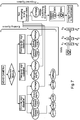
- Figs. 7-8 shows the complete sign recognition system, that includes the CNN and RNN (LSTM) network that can determine a caption for an unknown traffic sign as discussed above.
- a detection module detects the traffic sign boards based on their shape.
- the detection system supports Circle, Triangle and Rectangle Shaped signs.
- the module sends the detected cutouts to respective classifier modules (circular, Triangular or rectangular) based on shape.
- classifiers classify signs, for example a circular speed sign with "50" as "speed limit 50".
- this classification is done by a sign recognition component which is capable of recognizing the traffic signs that it is already trained with. It internally has different classifiers capable of handling circular shaped, triangular shaped, rectangular shaped signs.
- this classifier is not capable of giving any valid output if it encounters a totally new sign which it is not trained with. This is then however passed to the CNN and RNN (LSTM) network component part of the sign recognition system, that can provide a caption for this unknown traffic sign as described above.
- LSTM CNN and RNN
- a computer program or computer program element is provided that is characterized by being configured to execute the method steps of the method according to one of the preceding embodiments, on an appropriate system.
- the computer program element might therefore be stored on a computer unit, which might also be part of an embodiment.
- This computing unit may be configured to perform or induce performing of the steps of the method described above. Moreover, it may be configured to operate the components of the above described apparatus and/or system.
- the computing unit can be configured to operate automatically and/or to execute the orders of a user.
- a computer program may be loaded into a working memory of a data processor. The data processor may thus be equipped to carry out the method according to one of the preceding embodiments.
- a computer readable medium such as a CD-ROM
- the computer readable medium has a computer program element stored on it which computer program element is described by the preceding section.
Landscapes
- Engineering & Computer Science (AREA)
- Theoretical Computer Science (AREA)
- Physics & Mathematics (AREA)
- General Physics & Mathematics (AREA)
- Multimedia (AREA)
- Evolutionary Computation (AREA)
- Health & Medical Sciences (AREA)
- Artificial Intelligence (AREA)
- Computer Vision & Pattern Recognition (AREA)
- Computing Systems (AREA)
- Databases & Information Systems (AREA)
- General Health & Medical Sciences (AREA)
- Medical Informatics (AREA)
- Software Systems (AREA)
- Image Analysis (AREA)
Abstract
Description
- The present invention relates to a device for determining a caption for an unknown traffic sign, an advanced driving assistance system, a vehicle with an advanced driving assistance system, and to a method for determining a caption for an unknown traffic sign, as well as to a computer program element and a computer readable medium.
- The general background of this invention is the field of traffic sign recognition. Traffic sign recognition systems require very large databases of traffic sign imagery against which a currently acquired image of a sign is compared in order to identify it. If the currently acquired sign is not found in the database, the current sign is not identified and is considered to be garbage.
- There is a need to provide an improved technique for recognizing traffic signs.
- The object of the present invention is solved with the subject matter of the independent claims, wherein further embodiments are incorporated in the dependent claims. It should be noted that the following described aspects and examples of the invention apply also for the device for determining a caption for an unknown traffic sign, for the advanced driving assistance system, for the vehicle with an advanced driving assistance system, for the method for determining a caption for an unknown traffic sign, and for the computer program element and computer readable medium.
- According to a first aspect, there is provided a device for determining a caption for an unknown traffic sign, comprising:
- an input unit;
- a processing unit; and
- an output unit.
- The input unit is configured to provide the processing unit with at least one image data relating to an unknown traffic sign for which a caption associated with the traffic sign is not known. The processing unit is configured to implement at least one artificial neural network to process the at least one image data to generate a caption for the unknown traffic sign. The at least one artificial neural network has been trained on the basis of a plurality of image data and associated captions for a plurality of known traffic signs, wherein the caption for each known traffic sign is known. The output unit is configured to output the caption for the unknown traffic sign.
- In this manner, traffic signs can be identified without being dependent on a very large database of traffic signs in all their forms and in different conditions. Additionally, totally signs can be identified that have not yet been populated into databases of existing traffic sign identification systems. Also, the generation of ground truth information is automated by generating meaningful captions to signs that were previously unknown.
- In an example, the at least one image data is a plurality of image data, and the processing unit is configured to generate a plurality of intermediate captions for the plurality of image data. Each image data has an associated generated intermediate caption. Generation of the caption for the unknown traffic sign comprises utilisation of the plurality of intermediate captions.
- In an example, the processing unit is configured to generate a plurality of probability scores for the plurality of intermediate captions. Each intermediate caption has an associated probability score indicating a likelihood that the intermediate caption is the correct caption for the unknown traffic sign. Generation of the caption for the unknown traffic sign comprises utilisation of the plurality of probability scores.
- In an example, the processing unit is configured to sum together the probability scores for the intermediate captions that have the same caption. Generation of the caption for the unknown traffic sign comprises utilisation of the intermediate caption that has the highest sum of probability scores.
- In an example, the at least one artificial neural network comprises a convolutional neural network "CNN" and a recurrent neural network "RNN".
- In an example, output from the CNN forms input to the RNN.
- In an example, the RNN is a Long Short Term Memory "LSTM" neural network.
- In an example, training of the at least one neural network comprises a simultaneous optimization step where of weights of the CNN and RNN are adjusted together.
- In an example, after generation of the caption for the unknown traffic sign, the unknown traffic sign becomes a known traffic sign. The at least one artificial neural network is further trained comprising utilization of the generated caption and the at least one image data for the previously unknown traffic sign that is now a known traffic sign.
- In this way, the at least one neural network is continually trained and improved on the basis of acquired data, and ground truth data, relating to signs that were unknown but that are now known in that their associated captions are now known, is automatically generated.
- According to a second aspect, there is provided an advanced driving assistance system, comprising:
- at least one camera; and
- a device for determining a caption for an unknown traffic sign according to the first aspect.
- The at least one camera is configured to acquire at least one image comprising the at least one image data.
- In an example, the advanced driving assistance system comprises a traffic sign classifier. The traffic sign classifier is provided with at least one image comprising the at least one image data. The traffic sign classifier is configured to analyse the at least one image to determine if a detected traffic sign is known or unknown. If the traffic sign is unknown the classifier is configured to provide the at least one image data relating to the unknown traffic sign to the processing unit of the device.
- Thus, a first classifier can operate to identify signs such as speed limit signs, roundabout signs, and other signs that it can identify. However, with respect to signs that it cannot identify and as such are unknown to it, these can be passed to a second classifier that utilises the at least one trained neural network to provide a caption for this unknown sign, thereby identifying it.
- According to a third aspect, there is provided a vehicle with an advanced driving assistance system according to the second aspect. The output unit of the device is configured to display the caption for the unknown traffic sign on a dashboard display of the vehicle.
- According to a fourth aspect, there is provided a method for determining a caption for an unknown traffic sign, comprising:
- a) providing a processing unit with at least one image data relating to an unknown traffic sign for which a caption associated with the traffic sign is not known;
- b) implementing by the processing unit at least one artificial neural network to process the at least one image data to generate a caption for the unknown traffic sign; wherein the at least one artificial neural network has been trained on the basis of a plurality of image data and associated captions for a plurality of known traffic signs, wherein the caption for each known traffic sign is known; and
- c) outputting (330) by an output unit the caption for the unknown traffic sign.
- According to another aspect, there is provided a computer program element controlling apparatus as previously described which, when the computer program element is executed by a processing unit, is adapted to perform the method steps as previously described.
- According to another aspect, there is also provided a computer readable medium having stored the computer element as previously described.
- Advantageously, the benefits provided by any of the above aspects equally apply to all of the other aspects and vice versa.
- The above aspects and examples will become apparent from and be elucidated with reference to the embodiments described hereinafter.
- Exemplary embodiments will be described in the following with reference to the following drawings:
-
Fig. 1 shows a schematic set up of an example of a device for determining a caption for an unknown traffic sign; -
Fig. 2 shows a schematic set up of an example of an advanced driving assistance system; -
Fig. 3 shows a schematic set up of an example of a vehicle with advanced driving assistance system; -
Fig. 4 shows a method for determining a caption for an unknown traffic sign; -
Fig. 5 shows an example of signs used to train a CNN and RNN (LSTM) network; -
Fig. 6 shows an example of an unknown sign; -
Fig. 7 shows a detailed example of a complete sign recognition system that includes a CNN and RNN (LSTM) network used in determining a caption for an unknown traffic sign; and -
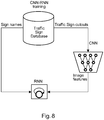
Fig 8 shows greater detail of the CNN and RNN (LSTM) network as shown inFig. 7 . -
Fig. 1 shows an example of adevice 10 for determining a caption for an unknown traffic sign. Thedevice 10 comprises aninput unit 20, aprocessing unit 30, and anoutput unit 40. Theinput unit 20 is configured to provide theprocessing unit 30 with at least one image data relating to an unknown traffic sign for which a caption associated with the traffic sign is not known. Theprocessing unit 30 is configured to implement at least one artificial neural network to process the at least one image data to generate a caption for the unknown traffic sign. The at least one artificial neural network has been trained on the basis of a plurality of image data and associated captions for a plurality of known traffic signs. The caption for each known traffic sign used in the training is known. Theoutput unit 40 is configured to output the caption for the unknown traffic sign. - According to an example, the at least one image data is a plurality of image data. The processing unit is configured to generate a plurality of intermediate captions for the plurality of image data. Each image data has an associated generated intermediate caption. Generation of the caption for the unknown traffic sign comprises utilisation of the plurality of intermediate captions.
- According to an example, the processing unit is configured to generate a plurality of probability scores for the plurality of intermediate captions. Each intermediate caption has an associated probability score indicating a likelihood that the intermediate caption is the correct caption for the unknown traffic sign. Generation of the caption for the unknown traffic sign comprises utilisation of the plurality of probability scores.
- According to an example, the processing unit is configured to sum together the probability scores for the intermediate captions that have the same caption. Generation of the caption for the unknown traffic sign comprises utilisation of the intermediate caption that has the highest sum of probability scores.
- According to an example, the at least one artificial neural network comprises a convolutional neural network "CNN" and a recurrent neural network "RNN".
- According to an example, output from the CNN forms input to the RNN.
- According to an example, the RNN is a Long Short Term Memory "LSTM" neural network.
- According to an example, training of the at least one neural network comprises a simultaneous optimization step where of weights of the CNN and RNN are adjusted together.
- According to an example, after generation of the caption for the unknown traffic sign the unknown traffic sign becomes a known traffic sign. The at least one artificial neural network is further trained comprising utilization of the generated caption and the at least one image data for the previously unknown traffic sign that is now a known traffic sign.
-
Fig. 2 shows an example of an advanced driving assistance system (ADAS) 100. TheADAS 100 comprises at least onecamera 110 and adevice 10 for determining a caption for an unknown traffic sign according as described with respect toFig. 1 . The at least onecamera 110 is configured to acquire at least one image comprising the at least one image data. - According to an example, the advanced
driving assistance system 100 comprises atraffic sign classifier 120. Thetraffic sign classifier 120 is provided with at least one image comprising the at least one image data. Thetraffic sign classifier 120 is configured to analyse the at least one image to determine if a detected traffic sign is known or unknown and if the traffic sign is unknown the classifier is configured to provide the at least one image data relating to the unknown traffic sign to theprocessing unit 30 of thedevice 10. -
Fig. 3 shows an example of avehicle 200 with an advanceddriving assistance system 100 as described with respect toFig. 2 . Theoutput unit 40 of thedevice 10 is configured to display the caption for the unknown traffic sign on adashboard display 210 of thevehicle 200. -
Fig. 4 shows amethod 300 for determining a caption for an unknown traffic sign in its basic steps. themethod 300 comprises: - in a providing
step 310, also referred to as step a), providing a processing unit with at least one image data relating to an unknown traffic sign for which a caption associated with the traffic sign is not known; - in an implementing
step 320, also referred to as step b), implementing by the processing unit at least one artificial neural network to process the at least one image data to generate a caption for the unknown traffic sign. The at least one artificial neural network has been trained on the basis of a plurality of image data and associated captions for a plurality of known traffic signs, wherein for the training of the at least one neural network the caption for each known traffic sign is known; and - in an outputting
step 330, also referred to as step c), outputting by an output unit the caption for the unknown traffic sign. - In an example the at least one image data is a plurality of image data, and wherein step b) comprises the processing unit generating a plurality of intermediate captions for the plurality of image data, wherein each image data has an associated generated intermediate caption. Generation of the caption for the unknown traffic sign comprises utilisation of the plurality of intermediate captions.
- In an example, step b) comprises the processing unit generating a plurality of probability scores for the plurality of intermediate captions. each intermediate caption has an associated probability score indicating a likelihood that the intermediate caption is the correct caption for the unknown traffic sign. Generation of the caption for the unknown traffic sign comprises utilisation of the plurality of probability scores.
- In an example, step b) comprises the processing unit summing together the probability scores for the intermediate captions that have the same caption. Generation of the caption for the unknown traffic sign comprises utilisation of the intermediate caption that has the highest sum of probability scores.
- In an example, in step b) the at least one artificial neural network comprises a convolutional neural network "CNN" and a recurrent neural network "RNN".
- In an example, output from the CNN forms input to the RNN.
- In an example, the RNN is a Long Short Term Memory "LSTM" neural network.
- In an example, training of the at least one neural network comprises a simultaneous optimization step where of weights of the CNN and RNN are adjusted together.
- In an example, after generation of the caption for the unknown traffic sign the unknown traffic sign becomes a known traffic sign. The at least one artificial neural network is further trained comprising utilization of the generated caption and the at least one image data for the previously unknown traffic sign that is now a known traffic sign.
- The device, advanced driving assistance system, vehicle and method are now described in further detail with respect to
Figs. 5-8 . -
Fig. 5 shows a number of different traffic signs used in training a CNN and RNN (LSTM) network, shown in more detail inFigs. 7-8 . These images shown sign cutouts, and these are provided to the CNN and RNN (LSTM) network, along with the associated captions. Thus, forFig. 5a , the sign cut-out and caption "Person Zebra Crossing" is provided as training input. ForFig, 5b the sign cut-out and "Person Working on Road" is provided. ForFig. 5c , the sign cut-out and "Person on Bicycle" is provided. ForFig. 5d , the sign cut-out and "Bus Prohibited" is provided. ForFig 5e , the sign cut-out and "Cycle Prohibited" is provided. ForFig. 5f , the sign cut-out and "Tractor Prohibited" is provided. Many other sign cut-outs with associated captions can be provided as training data to the CNN and RNN (LSTM) network, and these are only examples. - Regarding training of the CNN and RNN (LSTM) network, taking for example
Fig. 5a , relating to a sign cut-out of a person walking on a zebra crossing and the associated caption "Person Zebra Crossing". As far as the training implementation is considered, the image details of a person and zebra crossing do not need to be separately provided. All that is feed as training input is this pictogram along with the Caption "Person Zebra Crossing". The CNN part of the network is capable of extracting the individual features from it. - Therefore, the input to train the CNN and RNN (LSTM) network is sign cutouts and the corresponding captions. The CNN is responsible for extracting features from the sign cutout that is provided as input to the network. A Deep Convolutional Neural Network (VGG 16) for the CNN model. The network architecture and details of VGG 16 can be found in the paper by K. Simonyan and A. Zisserman "Very Deep Convolutional Networks For Large-Scale Image Recognitiona" conference paper at ICLR 2015, https://arxiv.org/pdf/1409.1556.pdf.
- For learning the caption associated with the sign cut-outs, a special kind of RNN known as LSTM (Long Short Term Memory) is used. LSTM is in the form of a chain of repeating modules of neural network. It is based on the concept of persistence of thought that human beings have. For instance when a human reads an essay each word is understood based on the understanding of the previous words. LSTM have loops within them, which allows the words to persist. They can connect the previous information to the present task, which in this analogy would be for predicting the next word in the sentence from the previous words. This is achieved by defining a probability distribution of the next word in a sequence given the current word and context from previous time steps. The architecture and details of LSTM can be found here in the paper by S. Hochreiter and J. Schmidhuber "Long Short-Term Memory" Neural Computation 9 (8): 1735-1780, 1997.
- The output features from the CNN is directly connected to the LSTM. The training is performed end to end at a single step of optimization so that the weights of both CNN and LSTM get adjusted in one go. The network weights are therefore learned end to end in a single step of optimization. By the end of training process the network will be capable of predicting the caption for unknown sign cutout based on the features and captions it learned from the ground truth that it is trained with. For instance, in
Fig. 5 with the associated captions as discussed above, the network will learn that the Person features from cutouts a, b and c is associated with a label "Person" and that the Diagonal Line across the image in d, e, and f is associated with label "Prohibited". - Therefore, turning to
Fig. 6 that shows an unknown traffic sign, when provided with the sign cut-out the CNN and RNN (LSTM) network predicts a caption of "Person Prohibited". - However, with respect to continuous frames of an in-car camera output, the result of the CNN and RNN network may not be the same result for each frame for a particular sign. Therefore, to address this the probability of each result is determined and is accumulated and the final result is the caption with maximum accumulated probability. For example if the input sign is 'Person Prohibited' and Table 1 details the caption result of 5 camera frame results, then Table 2 are provides the accumulated (summed) probabilities from which the final caption result of "Person Prohibited" is output.
Table 1 Frame number Caption result Probability 1 Person Prohibited 0.61 2 Cycle Prohibited 0.36 3 Person On Bicycle 0.41 4 Person Prohibited 0.75 5 Person Prohibited 0.69 

-
Figs. 7-8 shows the complete sign recognition system, that includes the CNN and RNN (LSTM) network that can determine a caption for an unknown traffic sign as discussed above. A detection module detects the traffic sign boards based on their shape. The detection system supports Circle, Triangle and Rectangle Shaped signs. The module sends the detected cutouts to respective classifier modules (circular, Triangular or rectangular) based on shape. These classifiers classify signs, for example a circular speed sign with "50" as "speed limit 50". Thus this classification is done by a sign recognition component which is capable of recognizing the traffic signs that it is already trained with. It internally has different classifiers capable of handling circular shaped, triangular shaped, rectangular shaped signs. However, this classifier is not capable of giving any valid output if it encounters a totally new sign which it is not trained with. This is then however passed to the CNN and RNN (LSTM) network component part of the sign recognition system, that can provide a caption for this unknown traffic sign as described above. - In another exemplary embodiment, a computer program or computer program element is provided that is characterized by being configured to execute the method steps of the method according to one of the preceding embodiments, on an appropriate system.
- The computer program element might therefore be stored on a computer unit, which might also be part of an embodiment. This computing unit may be configured to perform or induce performing of the steps of the method described above. Moreover, it may be configured to operate the components of the above described apparatus and/or system. The computing unit can be configured to operate automatically and/or to execute the orders of a user. A computer program may be loaded into a working memory of a data processor. The data processor may thus be equipped to carry out the method according to one of the preceding embodiments.
- According to a further exemplary embodiment of the present invention, a computer readable medium, such as a CD-ROM, is presented wherein the computer readable medium has a computer program element stored on it which computer program element is described by the preceding section.
- It has to be noted that embodiments of the invention are described with reference to different subject matters. In particular, some embodiments are described with reference to method type claims whereas other embodiments are described with reference to the device type claims. However, a person skilled in the art will gather from the above and the following description that, unless otherwise notified, in addition to any combination of features belonging to one type of subject matter also any combination between features relating to different subject matters is considered to be disclosed with this application. However, all features can be combined providing synergetic effects that are more than the simple summation of the features.
- While the invention has been illustrated and described in detail in the drawings and foregoing description, such illustration and description are to be considered illustrative or exemplary and not restrictive. The invention is not limited to the disclosed embodiments. Other variations to the disclosed embodiments can be understood and effected by those skilled in the art in practicing a claimed invention, from a study of the drawings, the disclosure, and the dependent claims.
- In the claims, the word "comprising" does not exclude other elements or steps, and the indefinite article "a" or "an" does not exclude a plurality. A single processor or other unit may fulfill the functions of several items re-cited in the claims. The mere fact that certain measures are re-cited in mutually different dependent claims does not indicate that a combination of these measures cannot be used to advantage. Any reference signs in the claims should not be construed as limiting the scope.
Claims (15)
- A device (10) for determining a caption for an unknown traffic sign, comprising:- an input unit (20);- a processing unit (30); and- an output unit (40);wherein, the input unit is configured to provide the processing unit with at least one image data relating to an unknown traffic sign for which a caption associated with the traffic sign is not known;
wherein, the processing unit is configured to implement at least one artificial neural network to process the at least one image data to generate a caption for the unknown traffic sign;
wherein, the at least one artificial neural network has been trained on the basis of a plurality of image data and associated captions for a plurality of known traffic signs, wherein the caption for each known traffic sign is known; and
wherein, the output unit is configured to output the caption for the unknown traffic sign. - Device according to claim 1, wherein the at least one image data is a plurality of image data, wherein the processing unit is configured to generate a plurality of intermediate captions for the plurality of image data, wherein each image data has an associated generated intermediate caption, and wherein generation of the caption for the unknown traffic sign comprises utilisation of the plurality of intermediate captions.
- Device according to claim 2, wherein the processing unit is configured to generate a plurality of probability scores for the plurality of intermediate captions, wherein each intermediate caption has an associated probability score indicating a likelihood that the intermediate caption is the correct caption for the unknown traffic sign, and wherein generation of the caption for the unknown traffic sign comprises utilisation of the plurality of probability scores.
- Device according to claim 3, wherein the processing unit is configured to sum together the probability scores for the intermediate captions that have the same caption, and wherein generation of the caption for the unknown traffic sign comprises utilisation of the intermediate caption that has the highest sum of probability scores.
- Device according to any of claims 1-4, wherein the at least one artificial neural network comprises a convolutional neural network "CNN" and a recurrent neural network "RNN".
- Device according to claim 5, wherein output from the CNN forms input to the RNN.
- Device according to any of claims 5-6, wherein the RNN is a Long Short Term Memory "LSTM" neural network.
- Device according to any of claims 5-7, wherein training of the at least one neural network comprises a simultaneous optimization step where of weights of the CNN and RNN are adjusted together.
- Device according to any of claims 1-8, wherein after generation of the caption for the unknown traffic sign the unknown traffic sign becomes a known traffic sign, and wherein the at least one artificial neural network is further trained comprising utilization of the generated caption and the at least one image data for the previously unknown traffic sign that is now a known traffic sign.
- An advanced driving assistance system (100), comprising:- at least one camera (110);- a device (10) for determining a caption for an unknown traffic sign according to any of claims 1-9; andwherein, the at least one camera is configured to acquire at least one image comprising the at least one image data.
- Advanced driving assistance system according to claim 10, comprising a traffic sign classifier (120), wherein the traffic sign classifier is provided with at least one image comprising the at least one image data, and wherein the traffic sign classifier is configured to analyse the at least one image to determine if a detected traffic sign is known or unknown and if the traffic sign is unknown the classifier is configured to provide the at least one image data relating to the unknown traffic sign to the processing unit of the device.
- A vehicle (200) with an advanced driving assistance system (100) according to any of claims 10-11, wherein the output unit (40) of the device (10) is configured to display the caption for the unknown traffic sign on a dashboard display (210) of the vehicle.
- A method (300) for determining a caption for an unknown traffic sign, comprising:a) providing (310) a processing unit with at least one image data relating to an unknown traffic sign for which a caption associated with the traffic sign is not known;b) implementing (320) by the processing unit at least one artificial neural network to process the at least one image data to generate a caption for the unknown traffic sign; wherein the at least one artificial neural network has been trained on the basis of a plurality of image data and associated captions for a plurality of known traffic signs, wherein the caption for each known traffic sign is known; andc) outputting (330) by an output unit the caption for the unknown traffic sign.
- A computer program element for controlling an device according to any one of claims 1 to 9 and/or advanced driving assistance system according to any one of claims 10-11 and/or advanced driving assistance system along with dashboard display of a vehicle according to claim 12, which when executed by a processor is configured to carry out the method of claim 13.
- Computer readable medium having stored the computer program element according to claim 14.
Priority Applications (1)
| Application Number | Priority Date | Filing Date | Title |
|---|---|---|---|
| EP18167677.6A EP3557476B1 (en) | 2018-04-17 | 2018-04-17 | Device for determining a caption for an unknown traffic sign |
Applications Claiming Priority (1)
| Application Number | Priority Date | Filing Date | Title |
|---|---|---|---|
| EP18167677.6A EP3557476B1 (en) | 2018-04-17 | 2018-04-17 | Device for determining a caption for an unknown traffic sign |
Publications (2)
| Publication Number | Publication Date |
|---|---|
| EP3557476A1 true EP3557476A1 (en) | 2019-10-23 |
| EP3557476B1 EP3557476B1 (en) | 2023-08-09 |
Family
ID=62063306
Family Applications (1)
| Application Number | Title | Priority Date | Filing Date |
|---|---|---|---|
| EP18167677.6A Active EP3557476B1 (en) | 2018-04-17 | 2018-04-17 | Device for determining a caption for an unknown traffic sign |
Country Status (1)
| Country | Link |
|---|---|
| EP (1) | EP3557476B1 (en) |
Cited By (1)
| Publication number | Priority date | Publication date | Assignee | Title |
|---|---|---|---|---|
| EP4071729A3 (en) * | 2021-11-05 | 2023-03-15 | Beijing Baidu Netcom Science Technology Co., Ltd. | Method and apparatus for training image recognition model based on semantic enhancement |
-
2018
- 2018-04-17 EP EP18167677.6A patent/EP3557476B1/en active Active
Non-Patent Citations (8)
| Title |
|---|
| K. SIMONYAN; A. ZISSERMAN: "Very Deep Convolutional Networks For Large-Scale Image Recognitiona", CONFERENCE PAPER AT ICLR 2015, Retrieved from the Internet <URL:https://arxiv.org/pdf/1409.1556.pdf> |
| KAI YI ET AL: "Knowledge-based Recurrent Attentive Neural Network for Small Object Detection", 15 March 2018 (2018-03-15), XP055515506, Retrieved from the Internet <URL:https://arxiv.org/pdf/1803.05263v2.pdf> [retrieved on 20181015] * |
| KELVIN XU ET AL: "Show, Attend and Tell: Neural Image Caption Generation with Visual Attention", CORR (ARXIV), vol. 1502.03044, no. 1502.03044v2, 11 February 2015 (2015-02-11), pages 1 - 22, XP055370931 * |
| PICCIOLI G ET AL: "Robust method for road sign detection and recognition", IMAGE AND VISION COMPUTING, ELSEVIER, GUILDFORD, GB, vol. 14, no. 3, 1 April 1996 (1996-04-01), pages 209 - 223, XP002252733, ISSN: 0262-8856, DOI: 10.1016/0262-8856(95)01057-2 * |
| RONG XUEJIAN ET AL: "Recognizing Text-Based Traffic Guide Panels with Cascaded Localization Network", 18 September 2016, MEDICAL IMAGE COMPUTING AND COMPUTER-ASSISTED INTERVENTION - MICCAI 2015 : 18TH INTERNATIONAL CONFERENCE, MUNICH, GERMANY, OCTOBER 5-9, 2015; PROCEEDINGS; [LECTURE NOTES IN COMPUTER SCIENCE; LECT.NOTES COMPUTER], SPRINGER INTERNATIONAL PUBLISHING, CH, ISBN: 978-3-319-24946-9, ISSN: 0302-9743, XP047354232 * |
| RUTA A ET AL: "Real-time traffic sign recognition from video by class-specific discriminative features", PATTERN RECOGNITION, ELSEVIER, GB, vol. 43, no. 1, 1 January 2010 (2010-01-01), pages 416 - 430, XP026498180, ISSN: 0031-3203, [retrieved on 20090606], DOI: 10.1016/J.PATCOG.2009.05.018 * |
| S. HOCHREITER; J. SCHMIDHUBER: "Long Short-Term Memory", NEURAL COMPUTATION, vol. 9, no. 8, 1997, pages 1735 - 1780, XP055232921, DOI: doi:10.1162/neco.1997.9.8.1735 |
| YANN LECUN ET AL: "Deep learning", NATURE, vol. 521, no. 7553, 27 May 2015 (2015-05-27), GB, pages 436 - 444, XP055262383, ISSN: 0028-0836, DOI: 10.1038/nature14539 * |
Cited By (1)
| Publication number | Priority date | Publication date | Assignee | Title |
|---|---|---|---|---|
| EP4071729A3 (en) * | 2021-11-05 | 2023-03-15 | Beijing Baidu Netcom Science Technology Co., Ltd. | Method and apparatus for training image recognition model based on semantic enhancement |
Also Published As
| Publication number | Publication date |
|---|---|
| EP3557476B1 (en) | 2023-08-09 |
Similar Documents
| Publication | Publication Date | Title |
|---|---|---|
| EP3779774B1 (en) | Training method for image semantic segmentation model and server | |
| Van Quyen et al. | Feature pyramid network with multi-scale prediction fusion for real-time semantic segmentation | |
| CN111027576B (en) | Cooperative significance detection method based on cooperative significance generation type countermeasure network | |
| CN107609485A (en) | The recognition methods of traffic sign, storage medium, processing equipment | |
| WO2019136960A1 (en) | Method and device for crawling website data, storage medium and server | |
| Abdulhamied et al. | Real-time recognition of American sign language using long-short term memory neural network and hand detection | |
| CN112464877B (en) | Weakly supervised object detection method and system based on adaptive instance classifier refinement | |
| CN112288702A (en) | Road image detection method based on Internet of vehicles | |
| US20230306259A1 (en) | Information processing apparatus, information processing method and program | |
| JP2021189625A (en) | On-road obstacle detection device, on-road obstacle detection method, and on-road obstacle detection program | |
| CN114387600B (en) | Text feature recognition method, device, computer equipment and storage medium | |
| CN112989869B (en) | Optimization method, device, equipment and storage medium of face quality detection model | |
| Shams et al. | Multimodal ensemble approach leveraging spatial, skeletal, and edge features for enhanced bangla sign language recognition | |
| Wang et al. | Eagle-YOLOv8: UAV object detection inspired by the eagle-eye vision system | |
| CN111476190A (en) | Target detection method, apparatus and storage medium for unmanned driving | |
| CN116486394B (en) | Label text detection method based on multistage separation feature enhancement and spatial attention | |
| CN112598081A (en) | Target detection method, device, equipment and computer readable storage medium | |
| Kumar et al. | A deep transfer learning approach for enhanced traffic sign recognition in autonomous vehicles with nvidia jetson nano | |
| CN104966109A (en) | Image classification method and device for medical laboratory test sheets | |
| EP3557476B1 (en) | Device for determining a caption for an unknown traffic sign | |
| TWI781856B (en) | Method for identifying medicine image, computer device and storage medium | |
| JP5004743B2 (en) | Data processing device | |
| CN111767884B (en) | Image processing method and device | |
| CN115115871A (en) | Training method, device and equipment of image recognition model and storage medium | |
| Kamboj et al. | Evaluation of focal loss based deep neural networks for traffic sign detection |
Legal Events
| Date | Code | Title | Description |
|---|---|---|---|
| PUAI | Public reference made under article 153(3) epc to a published international application that has entered the european phase |
Free format text: ORIGINAL CODE: 0009012 |
|
| STAA | Information on the status of an ep patent application or granted ep patent |
Free format text: STATUS: THE APPLICATION HAS BEEN PUBLISHED |
|
| AK | Designated contracting states |
Kind code of ref document: A1 Designated state(s): AL AT BE BG CH CY CZ DE DK EE ES FI FR GB GR HR HU IE IS IT LI LT LU LV MC MK MT NL NO PL PT RO RS SE SI SK SM TR |
|
| AX | Request for extension of the european patent |
Extension state: BA ME |
|
| STAA | Information on the status of an ep patent application or granted ep patent |
Free format text: STATUS: REQUEST FOR EXAMINATION WAS MADE |
|
| 17P | Request for examination filed |
Effective date: 20200423 |
|
| RBV | Designated contracting states (corrected) |
Designated state(s): AL AT BE BG CH CY CZ DE DK EE ES FI FR GB GR HR HU IE IS IT LI LT LU LV MC MK MT NL NO PL PT RO RS SE SI SK SM TR |
|
| STAA | Information on the status of an ep patent application or granted ep patent |
Free format text: STATUS: EXAMINATION IS IN PROGRESS |
|
| 17Q | First examination report despatched |
Effective date: 20201020 |
|
| RAP1 | Party data changed (applicant data changed or rights of an application transferred) |
Owner name: CONTINENTAL AUTONOMOUS MOBILITY GERMANY GMBH |
|
| REG | Reference to a national code |
Ref country code: DE Ref legal event code: R079 Free format text: PREVIOUS MAIN CLASS: G06K0009000000 Ipc: G06V0010820000 Ref document number: 602018054879 Country of ref document: DE |
|
| RIC1 | Information provided on ipc code assigned before grant |
Ipc: G06V 20/58 20220101ALI20230220BHEP Ipc: G06V 10/82 20220101AFI20230220BHEP |
|
| GRAP | Despatch of communication of intention to grant a patent |
Free format text: ORIGINAL CODE: EPIDOSNIGR1 |
|
| STAA | Information on the status of an ep patent application or granted ep patent |
Free format text: STATUS: GRANT OF PATENT IS INTENDED |
|
| INTG | Intention to grant announced |
Effective date: 20230331 |
|
| GRAS | Grant fee paid |
Free format text: ORIGINAL CODE: EPIDOSNIGR3 |
|
| GRAA | (expected) grant |
Free format text: ORIGINAL CODE: 0009210 |
|
| STAA | Information on the status of an ep patent application or granted ep patent |
Free format text: STATUS: THE PATENT HAS BEEN GRANTED |
|
| AK | Designated contracting states |
Kind code of ref document: B1 Designated state(s): AL AT BE BG CH CY CZ DE DK EE ES FI FR GB GR HR HU IE IS IT LI LT LU LV MC MK MT NL NO PL PT RO RS SE SI SK SM TR |
|
| REG | Reference to a national code |
Ref country code: GB Ref legal event code: FG4D |
|
| REG | Reference to a national code |
Ref country code: CH Ref legal event code: EP |
|
| REG | Reference to a national code |
Ref country code: DE Ref legal event code: R096 Ref document number: 602018054879 Country of ref document: DE |
|
| REG | Reference to a national code |
Ref country code: IE Ref legal event code: FG4D |
|
| REG | Reference to a national code |
Ref country code: SE Ref legal event code: TRGR |
|
| REG | Reference to a national code |
Ref country code: LT Ref legal event code: MG9D |
|
| REG | Reference to a national code |
Ref country code: NL Ref legal event code: MP Effective date: 20230809 |
|
| REG | Reference to a national code |
Ref country code: AT Ref legal event code: MK05 Ref document number: 1598403 Country of ref document: AT Kind code of ref document: T Effective date: 20230809 |
|
| PG25 | Lapsed in a contracting state [announced via postgrant information from national office to epo] |
Ref country code: GR Free format text: LAPSE BECAUSE OF FAILURE TO SUBMIT A TRANSLATION OF THE DESCRIPTION OR TO PAY THE FEE WITHIN THE PRESCRIBED TIME-LIMIT Effective date: 20231110 |
|
| PG25 | Lapsed in a contracting state [announced via postgrant information from national office to epo] |
Ref country code: IS Free format text: LAPSE BECAUSE OF FAILURE TO SUBMIT A TRANSLATION OF THE DESCRIPTION OR TO PAY THE FEE WITHIN THE PRESCRIBED TIME-LIMIT Effective date: 20231209 |
|
| PG25 | Lapsed in a contracting state [announced via postgrant information from national office to epo] |
Ref country code: RS Free format text: LAPSE BECAUSE OF FAILURE TO SUBMIT A TRANSLATION OF THE DESCRIPTION OR TO PAY THE FEE WITHIN THE PRESCRIBED TIME-LIMIT Effective date: 20230809 Ref country code: PT Free format text: LAPSE BECAUSE OF FAILURE TO SUBMIT A TRANSLATION OF THE DESCRIPTION OR TO PAY THE FEE WITHIN THE PRESCRIBED TIME-LIMIT Effective date: 20231211 Ref country code: NO Free format text: LAPSE BECAUSE OF FAILURE TO SUBMIT A TRANSLATION OF THE DESCRIPTION OR TO PAY THE FEE WITHIN THE PRESCRIBED TIME-LIMIT Effective date: 20231109 Ref country code: NL Free format text: LAPSE BECAUSE OF FAILURE TO SUBMIT A TRANSLATION OF THE DESCRIPTION OR TO PAY THE FEE WITHIN THE PRESCRIBED TIME-LIMIT Effective date: 20230809 Ref country code: LV Free format text: LAPSE BECAUSE OF FAILURE TO SUBMIT A TRANSLATION OF THE DESCRIPTION OR TO PAY THE FEE WITHIN THE PRESCRIBED TIME-LIMIT Effective date: 20230809 Ref country code: LT Free format text: LAPSE BECAUSE OF FAILURE TO SUBMIT A TRANSLATION OF THE DESCRIPTION OR TO PAY THE FEE WITHIN THE PRESCRIBED TIME-LIMIT Effective date: 20230809 Ref country code: IS Free format text: LAPSE BECAUSE OF FAILURE TO SUBMIT A TRANSLATION OF THE DESCRIPTION OR TO PAY THE FEE WITHIN THE PRESCRIBED TIME-LIMIT Effective date: 20231209 Ref country code: HR Free format text: LAPSE BECAUSE OF FAILURE TO SUBMIT A TRANSLATION OF THE DESCRIPTION OR TO PAY THE FEE WITHIN THE PRESCRIBED TIME-LIMIT Effective date: 20230809 Ref country code: GR Free format text: LAPSE BECAUSE OF FAILURE TO SUBMIT A TRANSLATION OF THE DESCRIPTION OR TO PAY THE FEE WITHIN THE PRESCRIBED TIME-LIMIT Effective date: 20231110 Ref country code: FI Free format text: LAPSE BECAUSE OF FAILURE TO SUBMIT A TRANSLATION OF THE DESCRIPTION OR TO PAY THE FEE WITHIN THE PRESCRIBED TIME-LIMIT Effective date: 20230809 Ref country code: AT Free format text: LAPSE BECAUSE OF FAILURE TO SUBMIT A TRANSLATION OF THE DESCRIPTION OR TO PAY THE FEE WITHIN THE PRESCRIBED TIME-LIMIT Effective date: 20230809 |
|
| PG25 | Lapsed in a contracting state [announced via postgrant information from national office to epo] |
Ref country code: PL Free format text: LAPSE BECAUSE OF FAILURE TO SUBMIT A TRANSLATION OF THE DESCRIPTION OR TO PAY THE FEE WITHIN THE PRESCRIBED TIME-LIMIT Effective date: 20230809 |
|
| PG25 | Lapsed in a contracting state [announced via postgrant information from national office to epo] |
Ref country code: ES Free format text: LAPSE BECAUSE OF FAILURE TO SUBMIT A TRANSLATION OF THE DESCRIPTION OR TO PAY THE FEE WITHIN THE PRESCRIBED TIME-LIMIT Effective date: 20230809 |
|
| PG25 | Lapsed in a contracting state [announced via postgrant information from national office to epo] |
Ref country code: SM Free format text: LAPSE BECAUSE OF FAILURE TO SUBMIT A TRANSLATION OF THE DESCRIPTION OR TO PAY THE FEE WITHIN THE PRESCRIBED TIME-LIMIT Effective date: 20230809 Ref country code: RO Free format text: LAPSE BECAUSE OF FAILURE TO SUBMIT A TRANSLATION OF THE DESCRIPTION OR TO PAY THE FEE WITHIN THE PRESCRIBED TIME-LIMIT Effective date: 20230809 Ref country code: ES Free format text: LAPSE BECAUSE OF FAILURE TO SUBMIT A TRANSLATION OF THE DESCRIPTION OR TO PAY THE FEE WITHIN THE PRESCRIBED TIME-LIMIT Effective date: 20230809 Ref country code: EE Free format text: LAPSE BECAUSE OF FAILURE TO SUBMIT A TRANSLATION OF THE DESCRIPTION OR TO PAY THE FEE WITHIN THE PRESCRIBED TIME-LIMIT Effective date: 20230809 Ref country code: DK Free format text: LAPSE BECAUSE OF FAILURE TO SUBMIT A TRANSLATION OF THE DESCRIPTION OR TO PAY THE FEE WITHIN THE PRESCRIBED TIME-LIMIT Effective date: 20230809 Ref country code: CZ Free format text: LAPSE BECAUSE OF FAILURE TO SUBMIT A TRANSLATION OF THE DESCRIPTION OR TO PAY THE FEE WITHIN THE PRESCRIBED TIME-LIMIT Effective date: 20230809 Ref country code: SK Free format text: LAPSE BECAUSE OF FAILURE TO SUBMIT A TRANSLATION OF THE DESCRIPTION OR TO PAY THE FEE WITHIN THE PRESCRIBED TIME-LIMIT Effective date: 20230809 |
|
| REG | Reference to a national code |
Ref country code: DE Ref legal event code: R097 Ref document number: 602018054879 Country of ref document: DE |
|
| PG25 | Lapsed in a contracting state [announced via postgrant information from national office to epo] |
Ref country code: IT Free format text: LAPSE BECAUSE OF FAILURE TO SUBMIT A TRANSLATION OF THE DESCRIPTION OR TO PAY THE FEE WITHIN THE PRESCRIBED TIME-LIMIT Effective date: 20230809 |
|
| PLBE | No opposition filed within time limit |
Free format text: ORIGINAL CODE: 0009261 |
|
| STAA | Information on the status of an ep patent application or granted ep patent |
Free format text: STATUS: NO OPPOSITION FILED WITHIN TIME LIMIT |
|
| 26N | No opposition filed |
Effective date: 20240513 |
|
| PG25 | Lapsed in a contracting state [announced via postgrant information from national office to epo] |
Ref country code: SI Free format text: LAPSE BECAUSE OF FAILURE TO SUBMIT A TRANSLATION OF THE DESCRIPTION OR TO PAY THE FEE WITHIN THE PRESCRIBED TIME-LIMIT Effective date: 20230809 |
|
| PG25 | Lapsed in a contracting state [announced via postgrant information from national office to epo] |
Ref country code: BG Free format text: LAPSE BECAUSE OF FAILURE TO SUBMIT A TRANSLATION OF THE DESCRIPTION OR TO PAY THE FEE WITHIN THE PRESCRIBED TIME-LIMIT Effective date: 20230809 |
|
| PG25 | Lapsed in a contracting state [announced via postgrant information from national office to epo] |
Ref country code: MC Free format text: LAPSE BECAUSE OF FAILURE TO SUBMIT A TRANSLATION OF THE DESCRIPTION OR TO PAY THE FEE WITHIN THE PRESCRIBED TIME-LIMIT Effective date: 20230809 |
|
| PG25 | Lapsed in a contracting state [announced via postgrant information from national office to epo] |
Ref country code: MC Free format text: LAPSE BECAUSE OF FAILURE TO SUBMIT A TRANSLATION OF THE DESCRIPTION OR TO PAY THE FEE WITHIN THE PRESCRIBED TIME-LIMIT Effective date: 20230809 Ref country code: BG Free format text: LAPSE BECAUSE OF FAILURE TO SUBMIT A TRANSLATION OF THE DESCRIPTION OR TO PAY THE FEE WITHIN THE PRESCRIBED TIME-LIMIT Effective date: 20230809 |
|
| REG | Reference to a national code |
Ref country code: CH Ref legal event code: PL |
|
| PG25 | Lapsed in a contracting state [announced via postgrant information from national office to epo] |
Ref country code: LU Free format text: LAPSE BECAUSE OF NON-PAYMENT OF DUE FEES Effective date: 20240417 |
|
| GBPC | Gb: european patent ceased through non-payment of renewal fee |
Effective date: 20240417 |
|
| REG | Reference to a national code |
Ref country code: BE Ref legal event code: MM Effective date: 20240430 |
|
| PG25 | Lapsed in a contracting state [announced via postgrant information from national office to epo] |
Ref country code: LU Free format text: LAPSE BECAUSE OF NON-PAYMENT OF DUE FEES Effective date: 20240417 |
|
| PG25 | Lapsed in a contracting state [announced via postgrant information from national office to epo] |
Ref country code: BE Free format text: LAPSE BECAUSE OF NON-PAYMENT OF DUE FEES Effective date: 20240430 |
|
| PG25 | Lapsed in a contracting state [announced via postgrant information from national office to epo] |
Ref country code: GB Free format text: LAPSE BECAUSE OF NON-PAYMENT OF DUE FEES Effective date: 20240417 |
|
| PG25 | Lapsed in a contracting state [announced via postgrant information from national office to epo] |
Ref country code: GB Free format text: LAPSE BECAUSE OF NON-PAYMENT OF DUE FEES Effective date: 20240417 Ref country code: BE Free format text: LAPSE BECAUSE OF NON-PAYMENT OF DUE FEES Effective date: 20240430 Ref country code: CH Free format text: LAPSE BECAUSE OF NON-PAYMENT OF DUE FEES Effective date: 20240430 |
|
| PG25 | Lapsed in a contracting state [announced via postgrant information from national office to epo] |
Ref country code: IE Free format text: LAPSE BECAUSE OF NON-PAYMENT OF DUE FEES Effective date: 20240417 |
|
| REG | Reference to a national code |
Ref country code: DE Ref legal event code: R081 Ref document number: 602018054879 Country of ref document: DE Owner name: AUMOVIO AUTONOMOUS MOBILITY GERMANY GMBH, DE Free format text: FORMER OWNER: CONTINENTAL AUTONOMOUS MOBILITY GERMANY GMBH, 85057 INGOLSTADT, DE |
|
| PGFP | Annual fee paid to national office [announced via postgrant information from national office to epo] |
Ref country code: FR Payment date: 20250425 Year of fee payment: 8 |
|
| PGFP | Annual fee paid to national office [announced via postgrant information from national office to epo] |
Ref country code: SE Payment date: 20250429 Year of fee payment: 8 |
|
| PG25 | Lapsed in a contracting state [announced via postgrant information from national office to epo] |
Ref country code: CY Free format text: LAPSE BECAUSE OF FAILURE TO SUBMIT A TRANSLATION OF THE DESCRIPTION OR TO PAY THE FEE WITHIN THE PRESCRIBED TIME-LIMIT; INVALID AB INITIO Effective date: 20180417 |
|
| PG25 | Lapsed in a contracting state [announced via postgrant information from national office to epo] |
Ref country code: HU Free format text: LAPSE BECAUSE OF FAILURE TO SUBMIT A TRANSLATION OF THE DESCRIPTION OR TO PAY THE FEE WITHIN THE PRESCRIBED TIME-LIMIT; INVALID AB INITIO Effective date: 20180417 |
|
| PG25 | Lapsed in a contracting state [announced via postgrant information from national office to epo] |
Ref country code: TR Free format text: LAPSE BECAUSE OF FAILURE TO SUBMIT A TRANSLATION OF THE DESCRIPTION OR TO PAY THE FEE WITHIN THE PRESCRIBED TIME-LIMIT Effective date: 20230809 |
|
| PGFP | Annual fee paid to national office [announced via postgrant information from national office to epo] |
Ref country code: DE Payment date: 20260430 Year of fee payment: 9 |