EP3557419A1 - Supercomputer system, method of data transmission in such supercomputer system and associated computer program product - Google Patents
Supercomputer system, method of data transmission in such supercomputer system and associated computer program product Download PDFInfo
- Publication number
- EP3557419A1 EP3557419A1 EP18305491.5A EP18305491A EP3557419A1 EP 3557419 A1 EP3557419 A1 EP 3557419A1 EP 18305491 A EP18305491 A EP 18305491A EP 3557419 A1 EP3557419 A1 EP 3557419A1
- Authority
- EP
- European Patent Office
- Prior art keywords
- client
- compute
- server
- distributed file
- file system
- Prior art date
- Legal status (The legal status is an assumption and is not a legal conclusion. Google has not performed a legal analysis and makes no representation as to the accuracy of the status listed.)
- Ceased
Links
Images

Classifications
-
- G—PHYSICS
- G06—COMPUTING OR CALCULATING; COUNTING
- G06F—ELECTRIC DIGITAL DATA PROCESSING
- G06F9/00—Arrangements for program control, e.g. control units
- G06F9/06—Arrangements for program control, e.g. control units using stored programs, i.e. using an internal store of processing equipment to receive or retain programs
- G06F9/46—Multiprogramming arrangements
- G06F9/50—Allocation of resources, e.g. of the central processing unit [CPU]
- G06F9/5005—Allocation of resources, e.g. of the central processing unit [CPU] to service a request
- G06F9/5027—Allocation of resources, e.g. of the central processing unit [CPU] to service a request the resource being a machine, e.g. CPUs, Servers, Terminals
-
- G—PHYSICS
- G06—COMPUTING OR CALCULATING; COUNTING
- G06F—ELECTRIC DIGITAL DATA PROCESSING
- G06F16/00—Information retrieval; Database structures therefor; File system structures therefor
- G06F16/10—File systems; File servers
- G06F16/18—File system types
- G06F16/182—Distributed file systems
- G06F16/1824—Distributed file systems implemented using Network-attached Storage [NAS] architecture
- G06F16/183—Provision of network file services by network file servers, e.g. by using NFS, CIFS
-
- H—ELECTRICITY
- H04—ELECTRIC COMMUNICATION TECHNIQUE
- H04L—TRANSMISSION OF DIGITAL INFORMATION, e.g. TELEGRAPHIC COMMUNICATION
- H04L67/00—Network arrangements or protocols for supporting network services or applications
- H04L67/01—Protocols
- H04L67/06—Protocols specially adapted for file transfer, e.g. file transfer protocol [FTP]
-
- H—ELECTRICITY
- H04—ELECTRIC COMMUNICATION TECHNIQUE
- H04L—TRANSMISSION OF DIGITAL INFORMATION, e.g. TELEGRAPHIC COMMUNICATION
- H04L67/00—Network arrangements or protocols for supporting network services or applications
- H04L67/01—Protocols
- H04L67/10—Protocols in which an application is distributed across nodes in the network
Definitions
- the present invention concerns a supercomputer system.
- the present invention concerns also a method of data transmission in such supercomputer system and associated computer program product.
- HPC systems High Performance Computer systems known as HPC systems, used to process a big volume of data.
- data comprises for example information relative to a geological structure of the ground in a given zone or information relative to a seismic activity in such zone.
- HPC HPC
- a supercomputer system is usually formed using a large number of compute nodes connected one to another by a computer network.
- a Client/Server model is a well-known technology which can be implemented in an HPC system. It has an advantage to present a high availability of the service. In the HPC systems, this model is implemented using compute nodes to ensure the execution of different computation tasks.
- At least some of the compute nodes form a server able to manage the tasks execution performed by a plurality of clients formed by the other nodes.
- a client When a client is available to execute a task, it is able to request from the server a ticket which defines a specific task. Upon receiving such request, the server sends to the client a ticket defining a task to be executed by the client.
- the client needs to read input data from a specified file storage system and after the task execution, to write produced output data to such system. After, the output data produced by several clients, can be post-processed according to the final destination of this data.
- I/O processing The process of reading input data and writing output data by the nodes is known in the art as I/O processing.
- the HPC systems use generally a distributed file system for data storage.
- Such distributed file system is formed by several compute nodes and uses a specific network protocol to give to the client access to data.
- the computing power is not the only criterion defining the performances of an HPC system.
- the speed rate of the I/O processing should also be considered.
- the present invention aims to improve the speed rate of the I/O processing in the HPC systems.
- the present invention proposes a supercomputer system comprising at least one server, a plurality of compute clients and a distributed file system ; the server being configured to distribute computation tickets to the compute clients ; each compute client being configured to request a computation ticket from the server and upon receipt of a computation ticket from the server, to execute a task defined by this ticket, each task comprising analyzing input data and producing output data; the distributed file system being configured to stock input data for all tasks and output data produced by the compute clients ; and the supercomputer system being characterized in that it further comprises at least one I/O client configured to exchange data with each compute client and with the distributed file system, to distribute input data to at least some of the compute clients or to collect output data produced by at least some of the compute clients.
- the supercomputer system makes it possible to accelerate considerably I/O exchanges inside the system. Indeed, the I/O exchanges with the I/O client are faster than the I/O exchanges with the distributed file system. This is particularly advantageous when redundant or similar data is frequently used by the compute clients.
- the supercomputer system may comprise one or several of the following optional features, taken individually or in any technically feasible combination:
- the invention also relates to a method of data transmission in a supercomputer system comprising at least one server, a plurality of compute clients, an I/O client and a distributed file system.
- the method being implemented by at least one compute client and comprising the following steps:
- the invention also relates to a computer program product comprising software instructions which, when executed by a processor, implement a method defined above.
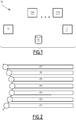
- the supercomputer system 10 of figure 1 is an HPC system configured to process a large volume of data.
- data comprises for example information relative to a geological structure of the ground in a given zone or information relative to a seismic activity in such zone.
- the supercomputer system 10 of figure 1 is formed by a plurality of compute nodes connected one to another by a computer network.
- Each compute node comprises one or several processors, a memory module able to stock at least some processing data items and an interface module connecting this compute node to the computer network.
- the compute nodes of the supercomputer system 10 form a plurality of computing units.
- At least some of the compute nodes of the system 10 form at least one server 12, at least some of the compute nodes of the system 10 form a plurality of compute clients 13A,...,13N, at least some of the compute nodes of the system 10 form at least one I/O client 14, and at least some of the compute nodes of the system 10 form a distributed file system 15.
- Each of these computing units comprises an identifier making it possible its identification among the other units. Further, the above-mentioned designation "server 12", “compute clients 13A,...,13N”, “I/O client 14" and “distributed file system 15" are not frozen and can be interchanged between different computing units as it will be explained below.
- the server 12 and the compute clients 13A,...,13N are implemented according to a known "ticket service” model.
- the server 12 is configured to generate for each task intended to be executed by the supercomputer system 10, a computation ticket defining this task and to distribute the generated computation tickets to the compute clients 13A,...,13N .
- the server 12 is configured ensure an optimized way of using resources including notably the compute clients 13A,...,13N and the distributed file system 15.
- the server 12 is configured to analyze the I/O requirement of all tasks, and in the case where high redundant usage of a same piece of data occurs or in the case where reduction of output volume of different tasks is possible due to the overlap, the server 12 is configured to designate one the several compute clients 13A,...,13N to become the I/O client 14.
- the server 12 is configured to distribute the computing tasks to different compute clients 13A,...,13N in a way that all processing tasks use as much as possible same or redundant input data stored in the I/O client.
- the server 12 is configured to predict data which will be used by the compute clients 13A,...,13N and to the I/O client information about the predicted data.
- the predicted data is determined by the server 12 according for example to the nature of the data being processed in a given instant.
- computing tasks are often distributed among different geometrical locations and have an important surface of overlap.
- the predicted data could be relative to a geometrical location next the geometrical location which is being processed in a given instant.
- Each compute client 13A,...,13N is configured to request a computation ticket from the server 12 and upon receipt of a computation ticket from the server 12, to execute the task defined by this ticket.
- Each task executed by one of the compute clients 13A,...,13N comprises analyzing input data and producing output data.
- the distributed file system 15 is a storage system providing access to data via a network protocol, according to methods known in the art. Hence, as it is known, the distributed file system 15 allows data to be accessed by the server 12 and the clients 13A,...,13N, 14 using the same interfaces and semantics.
- the distributed file system 15 is represented by a Lustre File System or by a General Parallel File System (known as GPFS).
- GPFS General Parallel File System
- the distributed file system 15 is configured to stock input data for all tasks intended to be executed by the compute clients 13A,...,13N and output data produced by these clients.
- the I/O client 14 is configured to exchange data between the compute clients 13A,...,13N and the distributed file system 15.
- the I/O client 14 is further configured to exchange data between the server 12 and the distributed file system 15.
- the I/O client 14 is configured to pre-process and distribute input data to at least some of the compute clients 13A,...,13N and/or to collect and post-process output data produced by at least some of the compute clients 13A,...,13N, as it will be explained in reference with the method of data transmission below.
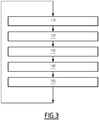
- FIG. 2 illustrates different layers implemented in each computing unit of the supercomputer system 10 for making possible the operation of the supercomputer system 10.
- each computing unit comprises seven layers starting from the lowest level layer 21 and finishing by the highest level layer 27.
- the first three bottom layers 21 to 23 ensure that a message is received or a special event is detected by the corresponding computing unit.
- a special event comprises for example a detection of death of a remote node.
- the first layer 21 is a communication layer. This layer forms a basic level of the framework for messages passing between the computing units.
- each message has a header which contains a service identifier, a client identifier and an operation identifier.
- Each message received by the communication layer 21 is in a non-blocking mode to ensure a better scalability of number of messages passing simultaneously.
- the example implementation of this layer 21 is based for example on a non-blocking socket communication.
- the second layer 22 is an event layer. This layer prepares a list of received messages for each connected remote node and also handles connection with each remote node.
- This layer 22 requires three threads working together: a main thread ensuring the process of the message, a receiving thread preparing lists of received message by using the communication layer 21 and indicating the main thread if a message is completely received, and a log thread taking care of the connection between nodes.
- the log thread uses a non-blocking accept and connect for better absorbing the peak connection between the computing units.
- the third layer 23 is a channel exchange layer. This layer ensures the connection of a link (socket) and message passing on a particular service served by the link. The connectivity is ensured by the log thread of the event layer 22, and service accessibility is ensured by the receiving thread of the event layer 22.
- this implementation of layers 21 to 23 can be replaced by a remote direct memory access, known in the art as RDMA.
- RDMA remote direct memory access
- the layers 21 and 22 are implemented directly in the hardware.
- the forth layer 24 is a service model layer. This layer ensures the implementation of the "ticket service” model explained above.
- this layer 24 is composed by a list of particular operation functions which are based on the received messages.
- the fifth layer 25 is a multi-service model manager layer. This layer makes it possible to switch a service model among multiple service models.
- Each service model defines the functions operated by a server 12, by a compute client, by an I/O client or by a distributed file system.
- switching of the service model makes it possible to redefine the functions operated by the corresponding computing unit so as for example the server 12 can become a "client” and one of the compute clients 13A,...,13N can become a "server” or an "I/O client".
- the switching between the multi-service models is operated by the server 12 or by "a meta-server" (non-represented on figure 1 ).
- the sixth layer 26 is a multi-client support layer (Message Passing Interface known as MPI). This layer makes it possible to the corresponding computing unit to be launched with several MPI processes.
- MPI Message Passing Interface
- the seventh layer 27 is an application layer. Notably, this layer initializes the multi-service model manager layer 25 and controls the function executed by the corresponding computing unit.
- the method of data transmission according to the first embodiment of the invention is implemented by at least one compute client 13A,...,13N.
- this method is implemented by the compute client 13A.
- the I/O client 14 is designated for example by the server 12 or by any other meta-server. This client 14 is thus called "current I/O client 14" hereinafter.
- the server 12 or any other meta-server designates another I/O client among for example one of the compute clients.
- the designated I/O client will be thus called "current I/O client 14".
- the current I/O client 14 reads periodically from the distributed file system 15 data intended to be input data for the compute clients 13A,...13N.
- the data to be read by the current I/O client 14 is determined by the server 12.
- the data determined by the server 12 is determined according to the tasks generated by the server 12 and corresponds to input data frequently usable to process these tasks.
- the data determined by the server 12 corresponds to the data predicted by the server 12, i.e. input data that will be used to process current or future tasks.
- the current I/O client 14 pre-processes at least some data read from the distributed file system 15.
- the compute client 13A requests a computation ticket from the server 12. This step is implemented by the client 13A when it is available for computing, which means that it has no task to be executed.
- the compute client 13A requests also the identifier of the current I/O client 14 from the server 12.
- the server 12 receives the request from the compute client 13A and sends to the compute client 13A a computation ticket corresponding to a task to be executed by this client.
- the server 12 sends also the identifier of the current I/O client 14.
- the compute client 13A receives the computation ticket from the server 12 and determines input data requested to execute the task defined by the ticket.
- the compute client 13A may also request the identifier of the current I/O client 14 if it was not done during the previous step or if a confirmation of this identifier is required.
- the compute client 13A collects the requested input data from the current I/O client 14 using the known identifier of this I/O client 14.
- the compute client 13A reads this data directly from the distributed file system 15.
- the compute client 13A pre-processes this data.
- the compute client 13A executes the task defined by the computation ticket using the collected input data and produces corresponding output data.
- the compute client 13A may post-process the produced output data.
- the compute client 13A writes the produced output data to the distributed file system 15.
- the compute client 13A becomes available for a new task and proceeds to a new iteration of the method.
- the method of data transmission according to the second embodiment of the invention is implemented by at least one compute client 13A,...,13N, for example by the compute client 13A.
- the I/O client 14 is designated for example by the server 12 or by any other meta-server. This client 14 is thus called “current I/O client 14" hereinafter.
- the server 12 or any other meta-server designates another I/O client among for example one of the compute clients.
- the designated I/O client will be thus called "current I/O client 14".
- the initial step 210 of the method according to the second embodiment of the invention is identical to the initial step 110 of the method according to the first embodiment of the invention.
- the compute client 13A requests from the server 12 a computation ticket, eventually with the identifier of the current I/O client 14.
- the compute client 13A receives the computation ticket from the server 12 and determines input data requested to execute the task defined by the ticket.
- the compute client 13A reads the requested input data from the distributed file system 15.
- the compute client 13A executes the task defined by the computation ticket using the read input data and produces corresponding output data.
- the compute client 13A sends the produced output data to the current I/O client 14.
- the compute client 13A may request the identifier of the current I/O client 14 from the server 12 if this identifier is not available or if the current I/O client 14 is not available.
- the compute client 13A becomes available for a new task and proceeds to a new iteration of the method.
- the output data produced by the compute client 13A is transmitted to the current I/O client 14 who implements a post-processing of this data immediately after its reception.
- the I/O client implements a post-processing after receiving all output data linked to the task executed by the compute client 13A, from the other compute clients 13B,...,13N.
- the current I/O client 14 stocks periodically output data received from different compute clients 13A,...,13N in the distributed file system 15.
- This periodicity corresponds for example to each hundred of tickets processed by the server 12.
- Such process is called “checkpoint” and ensures fault tolerance of the I/O client. More precisely, it reduces impact in the case where the current I/O client has any material or software failure.
- the I/O client 14 stocks the results of this post-processing in the distributed file system 15.
- the step 230 of reading input data from the distributed file system 15 can be replaced by the step 130 of collecting input data from the current I/O client 14.
- the step 130 of collecting input data from the current I/O client 14 can be used for implement different steps of such a mixed embodiment.
- the embodiments of the method can be applied simultaneously using a same I/O client or different I/O clients.
- designations of a server, a compute client, an I/O client and a distributed file system can be interchanged using the multi-service model manager layer 25 of each one of these computing units.
- the system 10 operates according to the classical "ticket service” model.
- the invention accelerates considerably I/O exchanges in a supercomputer system. Indeed, the I/O exchanges with the I/O client are faster than the I/O exchanges with the distributed file system.
- the invention is based on the classical "ticket service” model which makes it possible to distribute efficiently tasks between different clients and reduces the risk to lose a task or a computation ticket corresponding to this task. Moreover, this model gives the possibility of a fault tolerance handling to the supercomputer system.
- the architecture of the supercomputer system is not frozen. It is possible to designate and to re-designate a compute client to be an I/O client or a server or a distributed file system, and vice versa.
Landscapes
- Engineering & Computer Science (AREA)
- Theoretical Computer Science (AREA)
- Software Systems (AREA)
- Physics & Mathematics (AREA)
- General Engineering & Computer Science (AREA)
- General Physics & Mathematics (AREA)
- Computer Networks & Wireless Communication (AREA)
- Signal Processing (AREA)
- Data Mining & Analysis (AREA)
- Databases & Information Systems (AREA)
- Computer And Data Communications (AREA)
Abstract
Description
- The present invention concerns a supercomputer system.
- The present invention concerns also a method of data transmission in such supercomputer system and associated computer program product.
- The field of the invention is High Performance Computer systems known as HPC systems, used to process a big volume of data. Such data comprises for example information relative to a geological structure of the ground in a given zone or information relative to a seismic activity in such zone.
- In the whole text, a supercomputer system is defined as an HPC system.
- In the art, a supercomputer system is usually formed using a large number of compute nodes connected one to another by a computer network.
- A Client/Server model is a well-known technology which can be implemented in an HPC system. It has an advantage to present a high availability of the service. In the HPC systems, this model is implemented using compute nodes to ensure the execution of different computation tasks.
- Particularly, according to this model, at least some of the compute nodes form a server able to manage the tasks execution performed by a plurality of clients formed by the other nodes.
- When a client is available to execute a task, it is able to request from the server a ticket which defines a specific task. Upon receiving such request, the server sends to the client a ticket defining a task to be executed by the client.
- To execute the task, the client needs to read input data from a specified file storage system and after the task execution, to write produced output data to such system. After, the output data produced by several clients, can be post-processed according to the final destination of this data.
- The process of reading input data and writing output data by the nodes is known in the art as I/O processing.
- Contrary to a classical computer network using for example a specific server to stock all data used in the network, the HPC systems use generally a distributed file system for data storage.
- Such distributed file system is formed by several compute nodes and uses a specific network protocol to give to the client access to data.
- A large number of distributed file systems are known in the art. Among these systems, one can recite Lustre File System or General Parallel File System (known as GPFS).
- The performances of an HPC system depend notably on the computing power of the compute nodes forming the system. According to the Moore's law, this power doubles approximately every 18 months.
- However, the computing power is not the only criterion defining the performances of an HPC system. Particularly, the speed rate of the I/O processing should also be considered.
- Indeed, comparing to the computing power growing, the speed rate of the I/O processing grows much slower.
- Hence, in the actual HPC systems, data processing is slowed down rather by the I/O processing than by the computing power.
- The present invention aims to improve the speed rate of the I/O processing in the HPC systems.
- For this purpose, the present invention proposes a supercomputer system comprising at least one server, a plurality of compute clients and a distributed file system ; the server being configured to distribute computation tickets to the compute clients ; each compute client being configured to request a computation ticket from the server and upon receipt of a computation ticket from the server, to execute a task defined by this ticket, each task comprising analyzing input data and producing output data; the distributed file system being configured to stock input data for all tasks and output data produced by the compute clients ; and the supercomputer system being characterized in that it further comprises at least one I/O client configured to exchange data with each compute client and with the distributed file system, to distribute input data to at least some of the compute clients or to collect output data produced by at least some of the compute clients.
- Provided with these features, the supercomputer system makes it possible to accelerate considerably I/O exchanges inside the system. Indeed, the I/O exchanges with the I/O client are faster than the I/O exchanges with the distributed file system. This is particularly advantageous when redundant or similar data is frequently used by the compute clients.
- In other embodiments, the supercomputer system may comprise one or several of the following optional features, taken individually or in any technically feasible combination:
- each compute client is configured to request an identifier of the I/O client from the server;
- an identifier of the I/O client is transmitted by the server after the execution of the corresponding task by the corresponding compute client;
- each compute client is configured to request corresponding input data from the I/O client and if the I/O client is unable to provide the requested input data, to read the corresponding input data from the distributed file system ;
- the I/O client is configured to read periodically input data usable by the compute clients and advantageously determined by the server, from the distributed file system ;
- the I/O client is configured to implement a pre-processing of the read input data from the distributed file system ;
- each compute client is configured to send all produced output data to the I/O client;
- the I/O client is configured to implement a post-processing of the collected output data;
- the I/O client is configured to stock in the distributed file system results of the post-processing ;
- the I/O client is configured to write periodically in the distributed file system the collected output data;
- the server is configured to designate a new I/O client, notably from one of the compute clients, if the current I/O client is not available ;
- the server, the I/O client, the distributed file system and each compute client are implemented by one or several physical compute nodes.
- The invention also relates to a method of data transmission in a supercomputer system comprising at least one server, a plurality of compute clients, an I/O client and a distributed file system.
- The method being implemented by at least one compute client and comprising the following steps:
- requesting a computation ticket from the server;
- receiving a computation ticket from the server; and
- executing a task defined by this ticket, each task comprising analyzing input data and producing output data, input data being stocked in the distributed file system and output data being intended to be stocked or processing in or by the distributed file system;
- The invention also relates to a computer program product comprising software instructions which, when executed by a processor, implement a method defined above.
- The invention and its advantages will be better understood upon reading the following description, which is given solely by way of non-limiting example and which is made with reference to the appended drawings, in which:
-
figure 1 is a schematic view of a supercomputer system according to the invention; -
figure 2 is a flowchart illustrating the structure of one of the computing units forming the supercomputer system offigure 1 ; -
figure 3 is a flowchart of a method of data transmission according to a first embodiment of the invention; and -
figure 4 is a flowchart of a method of data transmission according to a second embodiment of the invention. - The
supercomputer system 10 offigure 1 is an HPC system configured to process a large volume of data. Such data comprises for example information relative to a geological structure of the ground in a given zone or information relative to a seismic activity in such zone. - The
supercomputer system 10 offigure 1 is formed by a plurality of compute nodes connected one to another by a computer network. - Each compute node comprises one or several processors, a memory module able to stock at least some processing data items and an interface module connecting this compute node to the computer network.
- The compute nodes of the
supercomputer system 10 form a plurality of computing units. - Particularly, as it is illustrated on
figure 1 , at least some of the compute nodes of thesystem 10 form at least oneserver 12, at least some of the compute nodes of thesystem 10 form a plurality ofcompute clients 13A,...,13N, at least some of the compute nodes of thesystem 10 form at least one I/O client 14, and at least some of the compute nodes of thesystem 10 form adistributed file system 15. - Each of these computing units comprises an identifier making it possible its identification among the other units. Further, the above-mentioned designation "
server 12", "computeclients 13A,...,13N", "I/O client 14" and "distributed file system 15" are not frozen and can be interchanged between different computing units as it will be explained below. - The
server 12 and thecompute clients 13A,...,13N are implemented according to a known "ticket service" model. - In particular, according to this model, the
server 12 is configured to generate for each task intended to be executed by thesupercomputer system 10, a computation ticket defining this task and to distribute the generated computation tickets to thecompute clients 13A,...,13N . - Advantageously, the
server 12 is configured ensure an optimized way of using resources including notably thecompute clients 13A,...,13N and thedistributed file system 15. - Additionally, the
server 12 is configured to analyze the I/O requirement of all tasks, and in the case where high redundant usage of a same piece of data occurs or in the case where reduction of output volume of different tasks is possible due to the overlap, theserver 12 is configured to designate one theseveral compute clients 13A,...,13N to become the I/O client 14. - Additionally, in the case where high redundant usage of a same piece of data occurs, the
server 12 is configured to distribute the computing tasks todifferent compute clients 13A,...,13N in a way that all processing tasks use as much as possible same or redundant input data stored in the I/O client. - Additionally, in the case where high redundant usage of a same piece of data occurs, the
server 12 is configured to predict data which will be used by thecompute clients 13A,...,13N and to the I/O client information about the predicted data. - The predicted data is determined by the
server 12 according for example to the nature of the data being processed in a given instant. Thus, for example, for geoscience studies, computing tasks are often distributed among different geometrical locations and have an important surface of overlap. Hence, in this case, the predicted data could be relative to a geometrical location next the geometrical location which is being processed in a given instant. - Each
compute client 13A,...,13N is configured to request a computation ticket from theserver 12 and upon receipt of a computation ticket from theserver 12, to execute the task defined by this ticket. - Each task executed by one of the
compute clients 13A,...,13N comprises analyzing input data and producing output data. - The distributed
file system 15 is a storage system providing access to data via a network protocol, according to methods known in the art. Hence, as it is known, the distributedfile system 15 allows data to be accessed by theserver 12 and theclients 13A,...,13N, 14 using the same interfaces and semantics. - According to a preferred embodiment of the invention, the distributed
file system 15 is represented by a Lustre File System or by a General Parallel File System (known as GPFS). - The distributed
file system 15 is configured to stock input data for all tasks intended to be executed by thecompute clients 13A,...,13N and output data produced by these clients. - According to the invention, the I/
O client 14 is configured to exchange data between thecompute clients 13A,...,13N and the distributedfile system 15. - Advantageously, the I/
O client 14 is further configured to exchange data between theserver 12 and the distributedfile system 15. - Particularly, the I/
O client 14 is configured to pre-process and distribute input data to at least some of thecompute clients 13A,...,13N and/or to collect and post-process output data produced by at least some of thecompute clients 13A,...,13N, as it will be explained in reference with the method of data transmission below. -
Figure 2 illustrates different layers implemented in each computing unit of thesupercomputer system 10 for making possible the operation of thesupercomputer system 10. - In reference to this figure, each computing unit comprises seven layers starting from the
lowest level layer 21 and finishing by thehighest level layer 27. - The first three
bottom layers 21 to 23 ensure that a message is received or a special event is detected by the corresponding computing unit. A special event comprises for example a detection of death of a remote node. - An example implementation of these
layers 21 to 23 is based on a TCP/IP socket. This example is explained in the following text. - In more detail, the
first layer 21 is a communication layer. This layer forms a basic level of the framework for messages passing between the computing units. - As it is known in the art, each message has a header which contains a service identifier, a client identifier and an operation identifier.
- Each message received by the
communication layer 21 is in a non-blocking mode to ensure a better scalability of number of messages passing simultaneously. The example implementation of thislayer 21 is based for example on a non-blocking socket communication. - The
second layer 22 is an event layer. This layer prepares a list of received messages for each connected remote node and also handles connection with each remote node. - An example implementation of this
layer 22 requires three threads working together: a main thread ensuring the process of the message, a receiving thread preparing lists of received message by using thecommunication layer 21 and indicating the main thread if a message is completely received, and a log thread taking care of the connection between nodes. The log thread uses a non-blocking accept and connect for better absorbing the peak connection between the computing units. - The
third layer 23 is a channel exchange layer. This layer ensures the connection of a link (socket) and message passing on a particular service served by the link. The connectivity is ensured by the log thread of theevent layer 22, and service accessibility is ensured by the receiving thread of theevent layer 22. - According to another embodiment of the invention, this implementation of
layers 21 to 23 can be replaced by a remote direct memory access, known in the art as RDMA. In this case, thelayers - The
forth layer 24 is a service model layer. This layer ensures the implementation of the "ticket service" model explained above. - Particularly, this
layer 24 is composed by a list of particular operation functions which are based on the received messages. Once the receiver thread of thecommunication layer 21 receives an entire message, the main thread of thecommunication layer 21 finds a service model based on the service defined by the service identifier of this message and then calls a particular operation function inside the service model found. - The
fifth layer 25 is a multi-service model manager layer. This layer makes it possible to switch a service model among multiple service models. - Each service model defines the functions operated by a
server 12, by a compute client, by an I/O client or by a distributed file system. - According to an advantageous implementation of the invention, switching of the service model makes it possible to redefine the functions operated by the corresponding computing unit so as for example the
server 12 can become a "client" and one of thecompute clients 13A,...,13N can become a "server" or an "I/O client". - According to one embodiment of the invention, the switching between the multi-service models is operated by the
server 12 or by "a meta-server" (non-represented onfigure 1 ). - The
sixth layer 26 is a multi-client support layer (Message Passing Interface known as MPI). This layer makes it possible to the corresponding computing unit to be launched with several MPI processes. - The
seventh layer 27 is an application layer. Notably, this layer initializes the multi-servicemodel manager layer 25 and controls the function executed by the corresponding computing unit. - The method of data transmission according to the invention will now be explained in reference on
figures 3 and4 illustrating respectfully a flowchart of this method according to a first embodiment and a flowchart of this method according to a second embodiment. However, it should be understood that these embodiments may be combined as it will be explained below. - Referencing to
figure 3 , the method of data transmission according to the first embodiment of the invention is implemented by at least onecompute client 13A,...,13N. For simplicity reasons, it will be supposed hereinafter that this method is implemented by thecompute client 13A. - Initially, the I/
O client 14 is designated for example by theserver 12 or by any other meta-server. Thisclient 14 is thus called "current I/O client 14" hereinafter. - If the current I/
O client 14 is not available during the method's execution, theserver 12 or any other meta-server designates another I/O client among for example one of the compute clients. The designated I/O client will be thus called "current I/O client 14". - During the execution of the method, the current I/
O client 14 reads periodically from the distributedfile system 15 data intended to be input data for thecompute clients 13A,...13N. - Advantageously, the data to be read by the current I/
O client 14 is determined by theserver 12. Thus, for example, the data determined by theserver 12 is determined according to the tasks generated by theserver 12 and corresponds to input data frequently usable to process these tasks. Advantageously, the data determined by theserver 12 corresponds to the data predicted by theserver 12, i.e. input data that will be used to process current or future tasks. - Advantageously, during the execution of the method, the current I/
O client 14 pre-processes at least some data read from the distributedfile system 15. - During the
initial step 110 of the method, thecompute client 13A requests a computation ticket from theserver 12. This step is implemented by theclient 13A when it is available for computing, which means that it has no task to be executed. - Advantageously, during the
same step 110, thecompute client 13A requests also the identifier of the current I/O client 14 from theserver 12. - During the
same step 110, theserver 12 receives the request from thecompute client 13A and sends to thecompute client 13A a computation ticket corresponding to a task to be executed by this client. - Advantageously, the
server 12 sends also the identifier of the current I/O client 14. - During the
next step 120, thecompute client 13A receives the computation ticket from theserver 12 and determines input data requested to execute the task defined by the ticket. - During this
step 120, thecompute client 13A may also request the identifier of the current I/O client 14 if it was not done during the previous step or if a confirmation of this identifier is required. - During the
next step 130, thecompute client 13A collects the requested input data from the current I/O client 14 using the known identifier of this I/O client 14. - If during this
step 130, the I/O client 14 is unable to provide the requested input data, thecompute client 13A reads this data directly from the distributedfile system 15. Advantageously, thecompute client 13A pre-processes this data. - During the
next step 140, thecompute client 13A executes the task defined by the computation ticket using the collected input data and produces corresponding output data. - Further, during the
same step 140, thecompute client 13A may post-process the produced output data. - During the
next step 150, thecompute client 13A writes the produced output data to the distributedfile system 15. - At the end of this step, the
compute client 13A becomes available for a new task and proceeds to a new iteration of the method. - The method of data transmission according to the second embodiment of the invention will now be explained in reference to
figure 4 . - Like in the previous case, the method of data transmission according to the second embodiment of the invention is implemented by at least one
compute client 13A,...,13N, for example by thecompute client 13A. - Similarly to the previous case, initially, the I/
O client 14 is designated for example by theserver 12 or by any other meta-server. Thisclient 14 is thus called "current I/O client 14" hereinafter. - If the current I/
O client 14 is not available during the method's execution, theserver 12 or any other meta-server designates another I/O client among for example one of the compute clients. The designated I/O client will be thus called "current I/O client 14". - The
initial step 210 of the method according to the second embodiment of the invention is identical to theinitial step 110 of the method according to the first embodiment of the invention. - Particularly, during this
initial step 210, thecompute client 13A requests from the server 12 a computation ticket, eventually with the identifier of the current I/O client 14. - During the
next step 220, thecompute client 13A receives the computation ticket from theserver 12 and determines input data requested to execute the task defined by the ticket. - During the
next step 230, thecompute client 13A reads the requested input data from the distributedfile system 15. - During the
next step 240, thecompute client 13A executes the task defined by the computation ticket using the read input data and produces corresponding output data. - During the
next step 250, thecompute client 13A sends the produced output data to the current I/O client 14. - Before sending this data, the
compute client 13A may request the identifier of the current I/O client 14 from theserver 12 if this identifier is not available or if the current I/O client 14 is not available. - At the end of this step, the
compute client 13A becomes available for a new task and proceeds to a new iteration of the method. - Thus, the output data produced by the
compute client 13A is transmitted to the current I/O client 14 who implements a post-processing of this data immediately after its reception. According to some embodiments, the I/O client implements a post-processing after receiving all output data linked to the task executed by thecompute client 13A, from the other compute clients 13B,...,13N. - Advantageously, the current I/
O client 14 stocks periodically output data received fromdifferent compute clients 13A,...,13N in the distributedfile system 15. This periodicity corresponds for example to each hundred of tickets processed by theserver 12. Such process is called "checkpoint" and ensures fault tolerance of the I/O client. More precisely, it reduces impact in the case where the current I/O client has any material or software failure. - Advantageously, after completing the post-processing, the I/
O client 14 stocks the results of this post-processing in the distributedfile system 15. - It is clear that the embodiments of the method explained in reference to
figures 3 and4 can be combined one with the other. - Thus, for example, while executing the method according to the second embodiment, the
step 230 of reading input data from the distributedfile system 15 can be replaced by thestep 130 of collecting input data from the current I/O client 14. Moreover, it is possible to use several I/O clients for implement different steps of such a mixed embodiment. - In other words, the embodiments of the method can be applied simultaneously using a same I/O client or different I/O clients. Moreover, it is clear that during execution of the method, designations of a server, a compute client, an I/O client and a distributed file system can be interchanged using the multi-service
model manager layer 25 of each one of these computing units. - Finally, it is possible do not designate any I/O client for at least some tasks. In this case, the
system 10 operates according to the classical "ticket service" model. - One can conceive that the invention presents numerous advantages.
- First of all, the invention accelerates considerably I/O exchanges in a supercomputer system. Indeed, the I/O exchanges with the I/O client are faster than the I/O exchanges with the distributed file system.
- This is particularly advantageous when redundant data is frequently used by the compute clients or when a reduction of final result is possible based on the overlap of intermediate output produced by the compute clients.
- Further, the invention is based on the classical "ticket service" model which makes it possible to distribute efficiently tasks between different clients and reduces the risk to lose a task or a computation ticket corresponding to this task. Moreover, this model gives the possibility of a fault tolerance handling to the supercomputer system.
- Finally, the architecture of the supercomputer system is not frozen. It is possible to designate and to re-designate a compute client to be an I/O client or a server or a distributed file system, and vice versa.
Claims (14)
- Supercomputer system (10) comprising at least one server (12), a plurality of compute clients (13A,...,13N) and a distributed file system (15);
the server (12) being configured to distribute computation tickets to the compute clients (13A,...,13N);
each compute client (13A,...,13N) being configured to request a computation ticket from the server (12) and upon receipt of a computation ticket from the server (12), to execute a task defined by this ticket, each task comprising analyzing input data and producing output data;
the distributed file system (15) being configured to stock input data for all tasks and output data produced by the compute clients (13A,...,13N);
the supercomputer system (10) being characterized in that it further comprises at least one I/O client (14) configured to exchange data with each compute client (13A,...,13N) and with the distributed file system (15), to distribute input data to at least some of the compute clients (13A,...,13N) or to collect output data produced by at least some of the compute clients (13A,...,13N). - Supercomputer system (10) according to claim 1, wherein each compute client (13A,...,13N) is configured to request an identifier of the I/O client from the server (12).
- Supercomputer system (10) according to claim 1 or 2, wherein an identifier of the I/O client is transmitted by the server (12) after the execution of the corresponding task by the corresponding compute client (13A,...,13N)..
- Supercomputer system (10) according to one of the previous claims, wherein each compute client (13A,...,13N) is configured to request corresponding input data from the I/O client (14) and if the I/O client (14) is unable to provide the requested input data, to read the corresponding input data from the distributed file system (15).
- Supercomputer system (10) according to one of the previous claims, wherein the I/O client (14) is configured to read periodically input data usable by the compute clients (13A,...,13N) and advantageously determined by the server (12), from the distributed file system (15).
- Supercomputer system (10) according to one of the previous claims, wherein the I/O client (14) is configured to implement a pre-processing of the read input data from the distributed file system (15).
- Supercomputer system (10) according to one of the previous claims, wherein each compute client (13A,...,13N) is configured to send all produced output data to the I/O client (14).
- Supercomputer system (10) according to one of the previous claims, wherein the I/O client (14) is configured to implement a post-processing of the collected output data.
- Supercomputer system (10) according to claim 8, wherein the I/O client (14) is configured to stock in the distributed file system (15) results of the post-processing.
- Supercomputer system (10) according to one of the previous claims, wherein the I/O client (14) is configured to write periodically in the distributed file system (15) the collected output data.
- Supercomputer system (10) according to one of the previous claims, wherein the server is configured to designate a new I/O client, notably from one of the compute clients (13A,...,13N), if the current I/O client (14) is not available.
- Supercomputer system (10) according to one of the previous claims, wherein the server (12), the I/O client (14), the distributed file system (15) and each compute client (13A,...,13N) are implemented by one or several physical compute nodes.
- Method of data transmission in a supercomputer system (10) comprising at least one server (12), a plurality of compute clients (13A,...,13N), an I/O client (14) and a distributed file system (15);
the method being implemented by at least one compute client (13A,...,13N) and comprising the following steps:- requesting (110; 210) a computation ticket from the server (12);- receiving (120; 220) a computation ticket from the server (12); and- executing (140; 240) a task defined by this ticket, each task comprising analyzing input data and producing output data, input data being stocked in the distributed file system (15) and output data being intended to be stocked or processing in or by the distributed file system (15);the method being characterized in that it further comprises a step (130) of collecting input data from the I/O client (14) or a step (250) of sending output data to the I/O client (14). - A computer program product comprising software instructions which, when executed by a processor, implement a method according to claim 13.
Priority Applications (2)
| Application Number | Priority Date | Filing Date | Title |
|---|---|---|---|
| EP18305491.5A EP3557419A1 (en) | 2018-04-20 | 2018-04-20 | Supercomputer system, method of data transmission in such supercomputer system and associated computer program product |
| US16/388,947 US10999350B2 (en) | 2018-04-20 | 2019-04-19 | Supercomputer system, method of data transmission in such supercomputer system and associated computer program product |
Applications Claiming Priority (1)
| Application Number | Priority Date | Filing Date | Title |
|---|---|---|---|
| EP18305491.5A EP3557419A1 (en) | 2018-04-20 | 2018-04-20 | Supercomputer system, method of data transmission in such supercomputer system and associated computer program product |
Publications (1)
| Publication Number | Publication Date |
|---|---|
| EP3557419A1 true EP3557419A1 (en) | 2019-10-23 |
Family
ID=62909469
Family Applications (1)
| Application Number | Title | Priority Date | Filing Date |
|---|---|---|---|
| EP18305491.5A Ceased EP3557419A1 (en) | 2018-04-20 | 2018-04-20 | Supercomputer system, method of data transmission in such supercomputer system and associated computer program product |
Country Status (2)
| Country | Link |
|---|---|
| US (1) | US10999350B2 (en) |
| EP (1) | EP3557419A1 (en) |
Citations (2)
| Publication number | Priority date | Publication date | Assignee | Title |
|---|---|---|---|---|
| US20110145367A1 (en) * | 2009-12-16 | 2011-06-16 | International Business Machines Corporation | Scalable caching of remote file data in a cluster file system |
| US20150263900A1 (en) * | 2014-03-11 | 2015-09-17 | Schlumberger Technology Corporation | High performance distributed computing environment particularly suited for reservoir modeling and simulation |
Family Cites Families (16)
| Publication number | Priority date | Publication date | Assignee | Title |
|---|---|---|---|---|
| US6418479B1 (en) * | 1997-08-29 | 2002-07-09 | Intel Corporation | I/O pass through for a distributed computer system |
| US6757705B1 (en) * | 1998-08-14 | 2004-06-29 | Microsoft Corporation | Method and system for client-side caching |
| US6745272B2 (en) * | 2001-04-04 | 2004-06-01 | Advanced Micro Devices, Inc. | System and method of increasing bandwidth for issuing ordered transactions into a distributed communication system |
| US6999958B2 (en) * | 2002-06-07 | 2006-02-14 | International Business Machines Corporation | Runtime query optimization for dynamically selecting from multiple plans in a query based upon runtime-evaluated performance criterion |
| US7516108B2 (en) * | 2005-12-22 | 2009-04-07 | International Business Machines Corporation | Block allocation times in a computer system |
| US8015215B2 (en) * | 2006-08-24 | 2011-09-06 | Oracle America, Inc. | Delegation in a file system with distributed components |
| US7721009B2 (en) * | 2006-11-22 | 2010-05-18 | International Business Machines Corporation | Method for providing high performance scalable file I/O through persistent file domain and functional partitioning |
| US8381220B2 (en) * | 2007-10-31 | 2013-02-19 | International Business Machines Corporation | Job scheduling and distribution on a partitioned compute tree based on job priority and network utilization |
| US7840662B1 (en) * | 2008-03-28 | 2010-11-23 | EMC(Benelux) B.V., S.A.R.L. | Dynamically managing a network cluster |
| US8473582B2 (en) * | 2009-12-16 | 2013-06-25 | International Business Machines Corporation | Disconnected file operations in a scalable multi-node file system cache for a remote cluster file system |
| WO2012160641A1 (en) * | 2011-05-23 | 2012-11-29 | 富士通株式会社 | Administration device, information processing device, information processing system, data transfer method, path selection program, and transfer request program |
| US9047195B2 (en) * | 2012-07-05 | 2015-06-02 | Hitachi, Ltd. | Computer system with virtualization mechanism and management table, cache control method and computer program |
| US10104202B2 (en) * | 2013-03-13 | 2018-10-16 | International Business Machines Corporation | Collectively loading programs in a multiple program multiple data environment |
| US10402339B2 (en) * | 2015-01-05 | 2019-09-03 | CacheIO, LLC | Metadata management in a scale out storage system |
| US10437212B2 (en) * | 2015-04-28 | 2019-10-08 | Schneider Electric Systems Usa, Inc. | Distributed computing in a process control environment |
| US10367676B1 (en) * | 2015-09-28 | 2019-07-30 | Amazon Technologies, Inc. | Stable leader selection for distributed services |
-
2018
- 2018-04-20 EP EP18305491.5A patent/EP3557419A1/en not_active Ceased
-
2019
- 2019-04-19 US US16/388,947 patent/US10999350B2/en active Active
Patent Citations (2)
| Publication number | Priority date | Publication date | Assignee | Title |
|---|---|---|---|---|
| US20110145367A1 (en) * | 2009-12-16 | 2011-06-16 | International Business Machines Corporation | Scalable caching of remote file data in a cluster file system |
| US20150263900A1 (en) * | 2014-03-11 | 2015-09-17 | Schlumberger Technology Corporation | High performance distributed computing environment particularly suited for reservoir modeling and simulation |
Non-Patent Citations (6)
| Title |
|---|
| HAYNES ET AL: "RFC 7530 - Network File System (NFS) Version 4 protocol", 4 March 2015 (2015-03-04), XP055902992, Retrieved from the Internet <URL:https://www.rfc-editor.org/rfc/pdfrfc/rfc7530.txt.pdf> [retrieved on 20220318] * |
| JING FU ET AL: "Parallel I/O Performance for Application-Level Checkpointing on the Blue Gene/P System", CLUSTER COMPUTING (CLUSTER), 2011 IEEE INTERNATIONAL CONFERENCE ON, IEEE, 26 September 2011 (2011-09-26), pages 465 - 473, XP032066064, ISBN: 978-1-4577-1355-2, DOI: 10.1109/CLUSTER.2011.81 * |
| LIU WEIFENG ET AL: "A Self-Organizing Distributed Memory Cache for Data Sharing Applications in Cluster Environment", 2013 IEEE 10TH INTERNATIONAL CONFERENCE ON HIGH PERFORMANCE COMPUTING AND COMMUNICATIONS & 2013 IEEE INTERNATIONAL CONFERENCE ON EMBEDDED AND UBIQUITOUS COMPUTING, IEEE, 13 November 2013 (2013-11-13), pages 158 - 164, XP032606313, DOI: 10.1109/HPCC.AND.EUC.2013.32 * |
| PALLICKARA S L ET AL: "SWARM: Scheduling Large-Scale Jobs over the Loosely-Coupled HPC Clusters", ESCIENCE, 2008. ESCIENCE '08. IEEE FOURTH INTERNATIONAL CONFERENCE ON, IEEE, PISCATAWAY, NJ, USA, 7 December 2008 (2008-12-07), pages 285 - 292, XP031399633, ISBN: 978-1-4244-3380-3 * |
| SALEM EL SAYED ET AL: "Using GPFS to Manage NVRAM-Based Storage Cache", 16 June 2013, SUPERCOMPUTING, SPRINGER BERLIN HEIDELBERG, BERLIN, HEIDELBERG, PAGE(S) 435 - 446, ISBN: 978-3-642-38749-4, XP047031712 * |
| WICKBERG TIM ET AL: "The RAMDISK storage accelerator", 29 June 2012 (2012-06-29), pages 1 - 8, XP055902841, ISBN: 978-1-4503-1460-2, Retrieved from the Internet <URL:https://dl.acm.org/doi/pdf/10.1145/2318916.2318922?casa_token=yL7v0Ives8gAAAAA:XSKayyn_i_k6pQn0LrWecmbSpg6m8Cftq6tAYkk0DTdao8AJuynoL6e0FNCZgGbjXDEuxj62d2v_> DOI: 10.1145/2318916.2318922 * |
Also Published As
| Publication number | Publication date |
|---|---|
| US10999350B2 (en) | 2021-05-04 |
| US20190327289A1 (en) | 2019-10-24 |
Similar Documents
| Publication | Publication Date | Title |
|---|---|---|
| CN111897638B (en) | Distributed task scheduling method and system | |
| US20160275123A1 (en) | Pipeline execution of multiple map-reduce jobs | |
| US7516360B2 (en) | System and method for execution of a job in a distributed computing architecture | |
| US8584136B2 (en) | Context-aware request dispatching in clustered environments | |
| CN1777107B (en) | Device and method for on-demand instantiation in a high-performance computing (HPC) system | |
| EP4068725B1 (en) | Topology-based load balancing for task allocation | |
| US7093004B2 (en) | Using execution statistics to select tasks for redundant assignment in a distributed computing platform | |
| US8903981B2 (en) | Method and system for achieving better efficiency in a client grid using node resource usage and tracking | |
| US20140130059A1 (en) | Lattice Computing | |
| US20040243709A1 (en) | System and method for cluster-sensitive sticky load balancing | |
| US7155438B2 (en) | High availability for event forwarding | |
| CN100359508C (en) | Method and apparatus for handling a merge protocol for a clustered computer system | |
| CN111414241B (en) | Batch data processing method, device, system, computer equipment and computer readable storage medium | |
| CN104239555B (en) | Parallel data mining system and its implementation based on MPP | |
| CN106330987A (en) | Dynamic load balancing method | |
| CN105610972A (en) | Clustered task dispatching system | |
| US7650347B2 (en) | System and method for job scheduling and distributing job scheduling | |
| CN111767145A (en) | Container scheduling system, method, device and equipment | |
| CN107172149A (en) | Big data instant scheduling method | |
| US7219345B2 (en) | System and method for terminating processes in a distributed computing system | |
| CN107168799A (en) | Data-optimized processing method based on cloud computing framework | |
| US10999350B2 (en) | Supercomputer system, method of data transmission in such supercomputer system and associated computer program product | |
| Ali et al. | Probabilistic normed load monitoring in large scale distributed systems using mobile agents | |
| CN116860406A (en) | Scheduling method, device, equipment and storage medium based on message queue system | |
| Mahmud et al. | DISTRI: development and integration of simulation tools for resilient infrastructure |
Legal Events
| Date | Code | Title | Description |
|---|---|---|---|
| PUAI | Public reference made under article 153(3) epc to a published international application that has entered the european phase |
Free format text: ORIGINAL CODE: 0009012 |
|
| STAA | Information on the status of an ep patent application or granted ep patent |
Free format text: STATUS: THE APPLICATION HAS BEEN PUBLISHED |
|
| STAA | Information on the status of an ep patent application or granted ep patent |
Free format text: STATUS: REQUEST FOR EXAMINATION WAS MADE |
|
| AK | Designated contracting states |
Kind code of ref document: A1 Designated state(s): AL AT BE BG CH CY CZ DE DK EE ES FI FR GB GR HR HU IE IS IT LI LT LU LV MC MK MT NL NO PL PT RO RS SE SI SK SM TR |
|
| AX | Request for extension of the european patent |
Extension state: BA ME |
|
| 17P | Request for examination filed |
Effective date: 20191010 |
|
| RBV | Designated contracting states (corrected) |
Designated state(s): AL AT BE BG CH CY CZ DE DK EE ES FI FR GB GR HR HU IE IS IT LI LT LU LV MC MK MT NL NO PL PT RO RS SE SI SK SM TR |
|
| RAP1 | Party data changed (applicant data changed or rights of an application transferred) |
Owner name: TOTAL SE |
|
| STAA | Information on the status of an ep patent application or granted ep patent |
Free format text: STATUS: EXAMINATION IS IN PROGRESS |
|
| 17Q | First examination report despatched |
Effective date: 20210315 |
|
| RAP1 | Party data changed (applicant data changed or rights of an application transferred) |
Owner name: TOTALENERGIES ONETECH |
|
| STAA | Information on the status of an ep patent application or granted ep patent |
Free format text: STATUS: THE APPLICATION HAS BEEN REFUSED |
|
| 18R | Application refused |
Effective date: 20230109 |