EP3557414A1 - Service providing device and program - Google Patents
Service providing device and program Download PDFInfo
- Publication number
- EP3557414A1 EP3557414A1 EP19169858.8A EP19169858A EP3557414A1 EP 3557414 A1 EP3557414 A1 EP 3557414A1 EP 19169858 A EP19169858 A EP 19169858A EP 3557414 A1 EP3557414 A1 EP 3557414A1
- Authority
- EP
- European Patent Office
- Prior art keywords
- service
- processing
- providing device
- external server
- data
- Prior art date
- Legal status (The legal status is an assumption and is not a legal conclusion. Google has not performed a legal analysis and makes no representation as to the accuracy of the status listed.)
- Granted
Links
Images












Classifications
-
- G—PHYSICS
- G06—COMPUTING OR CALCULATING; COUNTING
- G06F—ELECTRIC DIGITAL DATA PROCESSING
- G06F9/00—Arrangements for program control, e.g. control units
- G06F9/06—Arrangements for program control, e.g. control units using stored programs, i.e. using an internal store of processing equipment to receive or retain programs
- G06F9/44—Arrangements for executing specific programs
- G06F9/445—Program loading or initiating
-
- H—ELECTRICITY
- H04—ELECTRIC COMMUNICATION TECHNIQUE
- H04L—TRANSMISSION OF DIGITAL INFORMATION, e.g. TELEGRAPHIC COMMUNICATION
- H04L67/00—Network arrangements or protocols for supporting network services or applications
- H04L67/50—Network services
- H04L67/60—Scheduling or organising the servicing of application requests, e.g. requests for application data transmissions using the analysis and optimisation of the required network resources
-
- G—PHYSICS
- G06—COMPUTING OR CALCULATING; COUNTING
- G06F—ELECTRIC DIGITAL DATA PROCESSING
- G06F8/00—Arrangements for software engineering
- G06F8/60—Software deployment
- G06F8/61—Installation
-
- G—PHYSICS
- G06—COMPUTING OR CALCULATING; COUNTING
- G06F—ELECTRIC DIGITAL DATA PROCESSING
- G06F9/00—Arrangements for program control, e.g. control units
- G06F9/06—Arrangements for program control, e.g. control units using stored programs, i.e. using an internal store of processing equipment to receive or retain programs
-
- G—PHYSICS
- G06—COMPUTING OR CALCULATING; COUNTING
- G06F—ELECTRIC DIGITAL DATA PROCESSING
- G06F9/00—Arrangements for program control, e.g. control units
- G06F9/06—Arrangements for program control, e.g. control units using stored programs, i.e. using an internal store of processing equipment to receive or retain programs
- G06F9/46—Multiprogramming arrangements
- G06F9/48—Program initiating; Program switching, e.g. by interrupt
- G06F9/4806—Task transfer initiation or dispatching
- G06F9/4843—Task transfer initiation or dispatching by program, e.g. task dispatcher, supervisor, operating system
- G06F9/485—Task life-cycle, e.g. stopping, restarting, resuming execution
-
- G—PHYSICS
- G06—COMPUTING OR CALCULATING; COUNTING
- G06F—ELECTRIC DIGITAL DATA PROCESSING
- G06F9/00—Arrangements for program control, e.g. control units
- G06F9/06—Arrangements for program control, e.g. control units using stored programs, i.e. using an internal store of processing equipment to receive or retain programs
- G06F9/46—Multiprogramming arrangements
- G06F9/48—Program initiating; Program switching, e.g. by interrupt
- G06F9/4806—Task transfer initiation or dispatching
- G06F9/4843—Task transfer initiation or dispatching by program, e.g. task dispatcher, supervisor, operating system
- G06F9/485—Task life-cycle, e.g. stopping, restarting, resuming execution
- G06F9/4856—Task life-cycle, e.g. stopping, restarting, resuming execution resumption being on a different machine, e.g. task migration, virtual machine migration
-
- G—PHYSICS
- G06—COMPUTING OR CALCULATING; COUNTING
- G06F—ELECTRIC DIGITAL DATA PROCESSING
- G06F9/00—Arrangements for program control, e.g. control units
- G06F9/06—Arrangements for program control, e.g. control units using stored programs, i.e. using an internal store of processing equipment to receive or retain programs
- G06F9/46—Multiprogramming arrangements
- G06F9/50—Allocation of resources, e.g. of the central processing unit [CPU]
- G06F9/5005—Allocation of resources, e.g. of the central processing unit [CPU] to service a request
- G06F9/5011—Allocation of resources, e.g. of the central processing unit [CPU] to service a request the resources being hardware resources other than CPUs, Servers and Terminals
- G06F9/5022—Mechanisms to release resources
-
- G—PHYSICS
- G06—COMPUTING OR CALCULATING; COUNTING
- G06F—ELECTRIC DIGITAL DATA PROCESSING
- G06F9/00—Arrangements for program control, e.g. control units
- G06F9/06—Arrangements for program control, e.g. control units using stored programs, i.e. using an internal store of processing equipment to receive or retain programs
- G06F9/46—Multiprogramming arrangements
- G06F9/50—Allocation of resources, e.g. of the central processing unit [CPU]
- G06F9/5005—Allocation of resources, e.g. of the central processing unit [CPU] to service a request
- G06F9/5027—Allocation of resources, e.g. of the central processing unit [CPU] to service a request the resource being a machine, e.g. CPUs, Servers, Terminals
- G06F9/5055—Allocation of resources, e.g. of the central processing unit [CPU] to service a request the resource being a machine, e.g. CPUs, Servers, Terminals considering software capabilities, i.e. software resources associated or available to the machine
-
- H—ELECTRICITY
- H04—ELECTRIC COMMUNICATION TECHNIQUE
- H04L—TRANSMISSION OF DIGITAL INFORMATION, e.g. TELEGRAPHIC COMMUNICATION
- H04L67/00—Network arrangements or protocols for supporting network services or applications
- H04L67/01—Protocols
- H04L67/10—Protocols in which an application is distributed across nodes in the network
-
- H—ELECTRICITY
- H04—ELECTRIC COMMUNICATION TECHNIQUE
- H04N—PICTORIAL COMMUNICATION, e.g. TELEVISION
- H04N1/00—Scanning, transmission or reproduction of documents or the like, e.g. facsimile transmission; Details thereof
- H04N1/00127—Connection or combination of a still picture apparatus with another apparatus, e.g. for storage, processing or transmission of still picture signals or of information associated with a still picture
- H04N1/00204—Connection or combination of a still picture apparatus with another apparatus, e.g. for storage, processing or transmission of still picture signals or of information associated with a still picture with a digital computer or a digital computer system, e.g. an internet server
- H04N1/00209—Transmitting or receiving image data, e.g. facsimile data, via a computer, e.g. using e-mail, a computer network, the internet, I-fax
-
- H—ELECTRICITY
- H04—ELECTRIC COMMUNICATION TECHNIQUE
- H04N—PICTORIAL COMMUNICATION, e.g. TELEVISION
- H04N1/00—Scanning, transmission or reproduction of documents or the like, e.g. facsimile transmission; Details thereof
- H04N1/00127—Connection or combination of a still picture apparatus with another apparatus, e.g. for storage, processing or transmission of still picture signals or of information associated with a still picture
- H04N1/00204—Connection or combination of a still picture apparatus with another apparatus, e.g. for storage, processing or transmission of still picture signals or of information associated with a still picture with a digital computer or a digital computer system, e.g. an internet server
- H04N1/00244—Connection or combination of a still picture apparatus with another apparatus, e.g. for storage, processing or transmission of still picture signals or of information associated with a still picture with a digital computer or a digital computer system, e.g. an internet server with a server, e.g. an internet server
-
- G—PHYSICS
- G06—COMPUTING OR CALCULATING; COUNTING
- G06F—ELECTRIC DIGITAL DATA PROCESSING
- G06F9/00—Arrangements for program control, e.g. control units
- G06F9/06—Arrangements for program control, e.g. control units using stored programs, i.e. using an internal store of processing equipment to receive or retain programs
- G06F9/44—Arrangements for executing specific programs
- G06F9/445—Program loading or initiating
- G06F9/44594—Unloading
-
- H—ELECTRICITY
- H04—ELECTRIC COMMUNICATION TECHNIQUE
- H04N—PICTORIAL COMMUNICATION, e.g. TELEVISION
- H04N2201/00—Indexing scheme relating to scanning, transmission or reproduction of documents or the like, and to details thereof
- H04N2201/0077—Types of the still picture apparatus
- H04N2201/0094—Multifunctional device, i.e. a device capable of all of reading, reproducing, copying, facsimile transception, file transception
Definitions
- a cloud server that provides a web service according to a request from a client terminal exists.
- the imaging forming device 30 (also refer to Fig. 1 ) is a device that is capable of executing various jobs (a copy job, a scan job, etc.). It should be noted that the imaging forming device 30 is also referred to as an "MFP device”.
- the program (in detail, a program module group) may be recorded on a portable recording medium such as a USB memory so as to be read from the recording medium and installed in the imaging forming device 30.
- the program may be downloaded via a network so as to be installed in the imaging forming device 30.
- the controller 39 realizes various processing parts including a communication control part 39a, a manipulation control part 39b, an operation control part 39c, and an obtaining part 39d.
- the operation control part 39c is a processing part that controls various operation (job operation, etc.) in the imaging forming device 30.
- the operation control part 39c controls print job operation, copy job operation, scan job operation and the like.
- Fig. 4 is a diagram illustrating functional blocks of the server device 20.
- the server device 20 is provided with a communication part 24, a storage part 25, a controller (control part) 29 and the like, and realizes various functions by causing each of these parts to combinedly operate.
- the communication part 24 is capable of performing network communication.
- This network communication uses various protocols such as Transmission Control Protocol/Internet Protocol (TCP/IP).
- TCP/IP Transmission Control Protocol/Internet Protocol
- Using the network communication enables the server device 20 to give and receive various data in conjunction with desired destinations (the client 90, the cloud server 80, the imaging forming device 30 and the like).
- the storage part 25 is formed by various storage devices (a (volatile and/or nonvolatile) semiconductor memory and/or a hard disk drive (HDD), etc.).
- various storage devices a (volatile and/or nonvolatile) semiconductor memory and/or a hard disk drive (HDD), etc.
- the controller (control part) 29 is a control device that is built into the server device 20, and controls the server device 20 in a unified manner.
- the controller 29 is configured as a computer system that is provided with a CPU, various semiconductor memories (an RAM and a ROM), and the like.
- the controller 29 realizes various processing parts by executing, in the CPU, a predetermined program stored in the storage part (the semiconductor memory, etc.).
- the program in detail, a program module group
- the program may be downloaded via a network so as to be installed in the server device 20.
- the controller 29 realizes various processing parts including a communication control part 29a, a manipulation control part 29b, an operation control part 29c, an acceptance part 29d, a determination part 29e, and a service management part 29f.
- the communication control part 29a is a processing part that controls communication operation with other devices (including other devices (the image forming device 30, etc.) in the same housing (the same apparatus), and devices provided in other housings of other apparatuses) in cooperation with the communication part 24 and the like.
- the manipulation control part 29b is a processing part that controls input operation for the manipulation display part 40 (in particular, the touch panel 45), and controls display operation in the manipulation display part 40 (in particular, the touch panel 45), in cooperation with the manipulation display part 40.
- the manipulation control part 29b causes the manipulation display part 40 (the touch panel 45) to display information related to the server device 20, and obtains, from the manipulation display part 40, manipulation input information related to user's manipulation for the manipulation display part 40 (the touch panel 45).
- the operation control part 29c is a processing part that controls various operation (server operation, etc.) in the server device 20.
- the acceptance part 29d is a processing part that accepts a providing request to provide each service from each client (a terminal, etc.).
- the determination part 29e is a processing part that determines whether or not one service, the providing request of which has been accepted by the acceptance part 29d, can be provided by using any of a plurality of applications that have already been installed in an own device. In other words, the determination part 29e determines whether or not the one service can be immediately provided. For example, in a case where the specific application is already installed in the own device (and is being executed), the determination part 29e determines that the one service can be immediately provided.
- the service management part 29f is a processing part that controls service processing corresponding to a providing request of each service.
- a plurality of virtual environments is built in the server device 20.
- the plurality of virtual environments are built (by being logically sectioned), and the hardware (the processor and the HDD) of the server device 20 is shared among the virtual environments.
- the MFP 10 (which includes the server device 20) is a server device that is arranged in the same LAN as that of the client 90.
- the server device (MFP 10) is a server that is possessed by an own company, and is operated by the own company. Therefore, the server device is also referred to as an "on-premise server”.
- the MFP 10 is capable of providing various services according to a service request from the client 90. Each service can also be provided by the cloud server 80.
- the communication speed of communication between the MFP 10 (in particular, the server device 20) and the client 90 is higher than the communication speed of communication between the cloud server 80 and the client 90.
- whether or not services that are currently being executed include the execution target service is determined on the basis of the service list 250, and according to a result of the determination, a determination is made as to whether or not the execution target service can be provided by using any of the plurality of applications.
- a URL ("http://***.com/service_05") for accessing the service "service_05" provided on the cloud server 80 is obtained.
- redirection processing of redirecting to the URL is performed (step S11).
- the server device 20 transmits, to the cloud server 80, a download request to download the execution target service on the cloud server 80 (step S31), and the cloud server 80 transmits, for example, an application for the execution target service (here, "service_05" (refer to Fig. 14 )) in response to the download request (step S32).
- an application for the execution target service here, "service_05" (refer to Fig. 14 )
- service image data data that includes an application
- the server device 20 installs the execution target service in the own device by using the received data (the service image data, etc.).
- the cloud server 80 When the cloud server 80 receives the switching request, the cloud server 80 interrupts the service provision of the execution target service. Subsequently, the cloud server 80 transmits change information (input information or the like by a user), which is information that has been changed with respect to the execution target service from the point of time at which the service has been started in the step S14 until the present time (at the point of time at which the service provision has been interrupted), to the MFP 10 (in detail, the execution target service on the server device 20) (step S38).
- change information input information or the like by a user
- a service corresponding to an application that is not yet installed in the server device 20 at the time of the request of the execution target service is first provided by the cloud server 80, and therefore the user is able to start using a desired service immediately (relatively in an early stage).
- the execution of a newly executed service (the "service_05", etc.) be immediately stopped at a point of time at which the use of the service ends.
- This enables newly execution of still another service in the server device 20. Therefore, a larger number of services can be provided by the server device 20.
- the present invention is not limited to this.
- a newly executed service may be kept executed continuously (in preparation for the use by still another user) even when the use of the service ends.
- This second embodiment describes a mode in which even in a case where the allowed resources do not exist in the server device 20 at the time of receiving the request from the user, such a case can be satisfactorily coped with.
- Figs. 18 and 19 are flowcharts each illustrating operation of the MFP 10 (the server device 20) according to the second embodiment.
- the operation of Fig. 18 (and Fig. 19 ) is executed as an alternative to the operation of Fig. 6 .
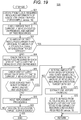
- Fig. 19 is a flowchart illustrating in detail a part (step S20) of the operation of Fig. 18 .
- step S2 in a case where it is determined, in the step S2 ( Fig. 18 ), that an execution target service cannot be immediately provided, processing of steps S11 to S14 (refer to Fig. 6 , Fig. 8 and Fig. 10 ) is performed in a manner similar to that of the first embodiment, and subsequently the process proceeds to the step S20. It should be noted that after the step S20, processing of steps S31 to S45 (refer to Fig. 6 ( Fig. 18 ), Fig. 9 and Fig. 11 ) is performed in a manner similar to that of the first embodiment.
- the MFP 10 obtains, from the cloud server 80, resource information (also referred to as "required resource information" required for the execution of the execution target service.
- resource information also referred to as "required resource information”
- the server device 20 transmits an obtaining request to obtain required resource information to the cloud server 80 (in detail, the service management part 89f in the cloud server 80), and receives and obtains the required resource information from the service management part 89f.
- the service list 250 of Fig. 22 shows that nine services are being executed in corresponding containers, respectively.
- the total amount of resources (used resources) that are being used by the nine services is calculated.
- the total amount of used resources is calculated on a blade server basis.
- the number of CPU cores is taken into consideration as "resources". However, the present invention is not limited to this. In addition to the number of CPU cores (or as an alternative to the number of CPU cores), the required memory amount or the like may be taken into consideration.
- the service management part 29f checks the amount of resources required by each service that is being executed in the server device 20 at the present point of time (also referred to as a "service that is being executed").
- the process proceeds to the step S68.
- the replacement processing (the steps S72, S31 to S34, etc.) is held.
- the server device 20 determines a "stop target service (deletion target service)" in the replacement processing from among services that are being executed (in detail, from among services that are not being used) (step S72).
- the server device 20 obtains a use history of services (step S71), and determines, on the basis of the use history, a stop target service (a service that should be stopped by being brought into a non-execution state) in the replacement processing (step S72). It should be noted that in a case where the number of services that are not being used is only one, the one service that is not being used is determined as the stop target service.
- the stop target service in the replacement processing is determined on the basis of the use history.
- the process proceeds from the step S67 to the steps S71, S72.
- the service "service_02" is a service, the last used time point (the last used date and time) of which is the most previous, among the plurality of services that are being executed and are not being used, the service "service_02" is determined as the "stop target service”.
- a service the elapsed time period from the last used time point of which is longer than a predetermined time period, is extracted from among services that are currently being executed and are not being used in the MFP 10, and a "stop target service" may be selected (determined) from among the extracted one or more services.
- a service the last used time point of which is the most previous thereamong, may be selected as the "stop target service", or a user may be allowed to select a "stop target service” from among the plurality of services.
- the service determines whether the stop target service.
- the service, the use frequency thereof is the lowest may be determined as the stop target service.
- a service, the use count during the predetermined past time period of which is smaller than a predetermined number of times, is extracted, and a "stop target service" may be selected therefrom.
- a service In a case where a plurality of services is extracted, a service, the use count of which is the smallest thereamong, may be selected as the "stop target service", or a user may be allowed to select a "stop target service” from among the plurality of services.
- a service that is not being used the number of users who have used the service in the past three months being "5", and a service that is not being used, the number of users who have used the service in the past three months being "1", exist among the services that are currently being executed, the service that is not being used, the number of users who have used the service in the past three months being "1", is determined as the stop target service.
- a service in which the number of users who have used the service in the past is the smallest, may be determined as the stop target service.
- stop target service is determined from among services that are not being used, the present invention is not limited to this.
- the stop target service may be determined from among a plurality of services that are being executed and include a service that is being used.
- the server device 20 brings the service that has been determined as the stop target service into a non-execution state from an execution state, and then stops the service (step S72).
- the stop target service (deletion target service) is deleted from the server device 20.
- a service that is not being used is determined as a stop target service. Therefore, the stop target service can be executed while suppressing the influence on the other services.
- step S66 after a point of time at which holding of replacement processing has been once determined (step S66) on the basis of a state in which a service that is not used (service that is not being used) does not exist, in a case where one or more services that having been used at that point of time have gotten out of use after that point of time (in a case where the use of services that are being used ends), in response to the case, the process proceeds from the step S66 to the step S67.
- step S72 On condition that the total amount of resources of the services that are not being used is larger than or equal to the amount of resources required by the execution target service, holding of the replacement processing (steps S72, S31 to S34, etc.) is released, and the replacement processing is started (steps S67, S71, S72).
- step S67, S71, S72 This enables execution of the replacement processing more properly in consideration of a change with time in the use situation in the server device 20 as well.
- the above-described second embodiment shows a mode in which in a case where a service that is not currently being used in the server device 20 does not exist (YES in the step S66 ( Fig. 19 )), replacement processing is held until a service that is not being used occurs (step S68), and therefore a stop target service cannot be determined.
- the present invention is not limited to this.
- the application download processing progresses earlier than a point of time at which a stop target service is determined (step S72). Therefore, the download processing can be ended earlier than the mode in which the download processing is started from the step S31, and furthermore, the execution target service can be taken over from the cloud server 80 to the server device 20 in an early stage.
- each of the embodiments described above shows a mode in which all services that are being executed by the server device 20 in the MFP 10 may be a stop target service (deletion target service).
- a stop target service may be determined from among services excluding predetermined exclusion target services (exclusion target services specified beforehand).
- predetermined exclusion target service a service that is preferably always operated in the server device 20 (not on the cloud server 80 side) is presented.
- basic operation services of the imaging forming device 30 in the MFP 10 in detail, a print service, a scan service, a copy service, a facsimile service, etc.
- a mail service that should reside in the server device 20 is also presented.
- the server device 20 when it is determined that service processing is taken over from the cloud server 80 and is then executed, the server device 20 receives service related information in the step S38 (refer to Figs. 6 and 9 ), and executes the service processing by taking over the service related information as well.
- the service related information may include data related to all of a plurality of users. However, the present invention is not limited to this. Including only data related to a part of the plurality of users suffices.
- the server device 20 may start (execute) downloading of data related to users (U3, etc.) other than the currently using users. In this manner, data of the currently using users (U1, U2) may be downloaded with higher priority than data of the other users (U3, etc.).
- the server device 20 may download data related to the second use target users (U5, etc.).
- the service related information may include all kinds of data, the present invention is not limited to this.
- the service related information may include only a part of the kinds of data.
- information that is managed on the local side (the server device 20) may be a part of kinds of information.
- information (data) that is managed on the local side for example, information (print setting information on a login user basis, and path information of file saving destination on a login user basis, etc.) that is associated with login information is presented.
- thumbnail image information related to screen manipulation for example, thumbnail image information in a specific folder
- status information printing accepted, image being converted, printing being executed, error has occurred, successfully completed
- polling monitoring processing and the like.
- information for which the consistency between a series of processing is required at a higher level than a predetermined level (information for which inconsistency between a series of processing should be avoided) and the like be collectively managed by the cloud server 80 rather than be managed by a plurality of local-side servers (the plurality of server devices 20, etc.).
- data (transaction data) related to transaction processing an inseparable processing group such as reception and payment processing (money reception processing and payment processing)
- these pieces of information have only to be excluded from the download target in the step S38, so as to be managed by the cloud server 80.
- a change request of the information is successively transmitted from the server device 20 to the cloud server 80 in the communication in the step S45 and subsequent ones, and management information in the cloud server 80 has only to be successively updated (changed) according to the change request.
- the service providing system 1 may be configured in such a manner that the server device 20 does not download (manage) a part of specific data (transaction data, etc.) among pieces of data related to the execution target service, and the cloud server 80 manages the part of specific data.
- step S72 data that has been changed during a service provision time period by the server device 20 is uploaded from the server device 20 to the cloud server 80 when the execution is stopped in the server device 20.
- the present invention is not limited to this.
- the server device 20 may transmits data, which is changed during the service provision time period of the execution target service provided by the server device 20, to the cloud server 80 consecutively (every time the data is changed) during an execution time period of the execution target service (during an execution time period that is before the step S1, and during an execution time period that is in the step S45 and subsequent ones, etc.), so as to cause the cloud server 80 to store (manage) the data therein.
- the client 90 may be an MFP that differs from the above-described MFP 10.
- the different MFP may be a conventional MFP that does not include the server device 20.
Landscapes
- Engineering & Computer Science (AREA)
- Software Systems (AREA)
- Theoretical Computer Science (AREA)
- General Engineering & Computer Science (AREA)
- Physics & Mathematics (AREA)
- General Physics & Mathematics (AREA)
- Signal Processing (AREA)
- Computer Networks & Wireless Communication (AREA)
- Multimedia (AREA)
- Computing Systems (AREA)
- Information Transfer Between Computers (AREA)
- Facsimiles In General (AREA)
- Stored Programmes (AREA)
- Computer And Data Communications (AREA)
Abstract
Description
- The present invention relates to a service providing device, and technology related thereto.
- A cloud server that provides a web service according to a request from a client terminal exists.
- However, although depending on a communication environment, the communication speed of communication between a client terminal (an internal device of a LAN) and a cloud server (an external device of the LAN) is lower (low speed) than the communication speed in a local environment (the communication speed of communication between devices in the LAN). Therefore, there exists a problem that a reaction velocity or the like at the time of service provision decreases.
- To cope with this problem, there exists a technology (refer to
JP 2001-51839 A - However, since resources of the service providing device (the server or the like in the LAN) are limited, it is difficult for such a technology to always continue operating all of a large number of services in the service providing device.
- Accordingly, an object of the present invention relates to providing a service providing device that is capable of providing a relatively large number of services.
- To achieve the abovementioned object, according to an aspect of the present invention, a service providing device reflecting one aspect of the present invention comprises: an acceptance means that accepts a providing request of one service; a determination means that determines whether or not the one service can be provided by using any of a plurality of applications installed in an own device; and a service management means that controls service processing corresponding to the providing request of the one service, wherein in a case where it is determined that the one service can be provided by using any of the plurality of applications, the service management means uses, among the plurality of applications, an application corresponding to the one service to start the service processing corresponding to the providing request of the one service, and in a case where it is determined that the one service cannot be provided even by using any of the plurality of applications, the service management means transmits the providing request of the one service to an external server that is another service providing device different from the service providing device, so as to cause the external server to start the service processing corresponding to the providing request, and downloads a specific application for providing the one service from the external server or another external device to install the specific application in the own device, after the installation of the specific application to the own device is completed, takes over, from the external server, the service processing that has been started by the external server resulting from the transmission of the providing request of the one service, and then executes the service processing.
- The advantages and features provided by one or more embodiments of the invention will become more fully understood from the detailed description given hereinbelow and the appended drawings which are given by way of illustration only, and thus are not intended as a definition of the limits of the present invention:
-
Fig. 1 is a drawing illustrating a service providing system; -
Fig. 2 is a conceptual diagram illustrating operation in the service providing system; -
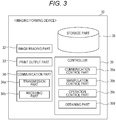
Fig. 3 is a diagram illustrating functional blocks of an imaging forming device; -
Fig. 4 is a diagram illustrating functional blocks of a server device; -
Fig. 5 is a drawing illustrating an execution state of services in an MFP and a cloud server; -
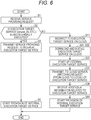
Fig. 6 is a flowchart illustrating operation of a service providing device according to a first embodiment; -
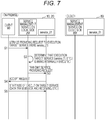
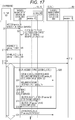
Fig. 7 is a timing chart illustrating operation (in detail, operation performed in a case where an execution target service "can be" immediately provided) of the present system; -
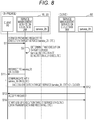
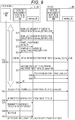
Fig. 8 is a timing chart illustrating operation (in detail, operation performed in a case where an execution target service "cannot be" immediately provided) of the present system; -
Fig. 9 is a drawing illustrating operation subsequent toFig. 8 ; -
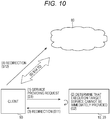
Fig. 10 is a conceptual diagram illustrating operation ofFig. 8 ; -
Fig. 11 is a conceptual diagram illustrating operation ofFig. 9 ; -
Fig. 12 is a drawing illustrating a list (service list) of services that are being executed in a server device; -
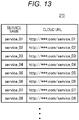
Fig. 13 is a drawing illustrating a URL list; -
Fig. 14 is a drawing illustrating a list (service list) of services that are being executed in a cloud server; -
Fig. 15 is a drawing illustrating a list of services that are being executed in a server device; -
Fig. 16 is a drawing illustrating a plurality of virtual container environments; -
Fig. 17 is a timing chart according to a second embodiment; -
Fig. 18 is a flowchart illustrating operation of a service providing device according to the second embodiment; -
Fig. 19 is a flowchart partially illustrating detailed operation ofFig. 18 ; -
Fig. 20 is a conceptual diagram illustrating, for example, obtaining operation of required resource information of an execution target service; -
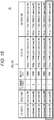
Fig. 21 is a drawing illustrating a list of services that are being executed in a server device; -
Fig. 22 is a drawing illustrating a list of services that are being executed in a server device; -
Fig. 23 is a drawing illustrating a list of services that are being executed in a cloud server; -
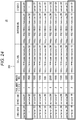
Fig. 24 is a drawing illustrating a service list after replacement processing; and -
Fig. 25 is a drawing illustrating hardware resources of a server device. - Hereinafter, one or more embodiments of the present invention will be described with reference to the drawings. However, the scope of the invention is not limited to the disclosed embodiments.
-
Fig. 1 is a drawing illustrating aservice providing system 1. Theservice providing system 1 is provided with a multi-functional peripheral (MFP) 10, acloud server 80, and aclient 90. It should be noted that the MFP 10 is also referred to as an "image forming apparatus" or the like. - The MFP 10, the
cloud server 80 and theclient 90 are connected through anetwork 108, and data can be mutually transmitted and received among the MFP 10, thecloud server 80 and theclient 90. It should be noted that thenetwork 108 includes various networks such as a local area network (LAN), and the Internet. Here, theMFP 10 and theclient 90 are arranged in the same LAN. In addition, thecloud server 80 is arranged outside the LAN. Theclient 90 and the MFP 10 are each capable of accessing thecloud server 80 through the Internet. - This
MFP 10 is provided with a plurality of devices that operate independently of each other (here, two devices of theserver device 20 and the imaging forming device 30) (also refer toFig. 2 ). Here, theserver device 20 and theimaging forming device 30 are housed in one housing, and are integrally formed. Incidentally, it is assumed that the one housing includes a predetermined member, and a member that is provided so as to be openable and closable with respect to the predetermined member (for example, an original document cover with an auto document feeder (ADF), etc., the original document cover being pivotably provided with respect to a rotating shaft provided in an original document table of the MFP 10). In addition, this MFP 10 is also provided with a manipulation display part 40 (also refer toFig. 1 ). Themanipulation display part 40 is shared by the plurality ofdevices - A device (the MFP 10 (in detail, the server device 20)) on the on-premise side enables the
client 90 to receive a service, and a device (the cloud server 80) on the cloud side also enables theclient 90 to receive a service (also refer toFig. 2 ). Theclient 90 is configured as, for example, a personal computer or the like. - The imaging forming device 30 (also refer to
Fig. 1 ) is a device that is capable of executing various jobs (a copy job, a scan job, etc.). It should be noted that theimaging forming device 30 is also referred to as an "MFP device". -
Fig. 3 is a diagram illustrating functional blocks of theimaging forming device 30. Theimaging forming device 30 includes an image forming function (a copy function, a scanning function, a facsimile function, a box print function, etc.). Specifically, as shown inFig. 3 , theimaging forming device 30 is provided with animage reading part 32, aprint output part 33, acommunication part 34, astorage part 35, a controller (control part) 39 and the like. Theimaging forming device 30 realizes various functions by causing each of these parts to combinedly operate. - The
image reading part 32 is a processing part that optically reads (that is to say, scans) an original document placed at a predetermined position (an auto document feeder (ADF), a glass surface or the like) of theimaging forming device 30, and generates image data of the original document (also referred to as an "original document image" or a "scanned image"). Thisimage reading part 32 is also referred to as a "scanning part" or the like. Theimaging forming device 30 is a device that is capable of reading an original document placed at a predetermined position, and is also referred to as an "image reading device". - The
print output part 33 is an output part that prints out an image to various media such as paper on the basis of data related to a print target. Theprint output part 33 includes a printout mechanism (specifically, a toner unit (developing unit), a photoconductive drum unit, an intermediate transfer belt, a transfer part, a fixing part, a transport part and the like). The printout mechanism is also referred to as an "image forming mechanism". In addition, theimaging forming device 30 is a device that is capable of printing out an image to various media, and is also referred to as a "print output device". - The
communication part 34 is a processing part that is capable of performing facsimile communication through a public line or the like. Moreover, thecommunication part 34 is also capable of performing network communication through a network. This network communication uses various protocols such as Transmission Control Protocol/Internet Protocol (TCP/IP). Using the network communication enables theimaging forming device 30 to give and receive various data to/from a desired destination (theserver device 20, etc.). - The
storage part 35 is formed by various storage devices (a (volatile and/or nonvolatile) semiconductor memory and/or a hard disk drive (HDD), etc.). - The
controller 39 is a control device that is built into theimaging forming device 30, and controls theimaging forming device 30 in a unified manner. Thecontroller 39 is configured as a computer system that is provided with a central processing unit (CPU) (also referred to as a "microprocessor" or a "computer processor"), various semiconductor memories (a RAM and a ROM) and the like. Thecontroller 39 realizes various processing parts by executing, in the CPU, a predetermined software program (also merely referred to as a "program") stored in the ROM (for example, an EEPROM (registered trademark)). It should be noted that the program (in detail, a program module group) may be recorded on a portable recording medium such as a USB memory so as to be read from the recording medium and installed in theimaging forming device 30. Alternatively, the program may be downloaded via a network so as to be installed in theimaging forming device 30. - Specifically, as shown in
Fig. 3 , by executing the above-described program, thecontroller 39 realizes various processing parts including acommunication control part 39a, amanipulation control part 39b, anoperation control part 39c, and an obtainingpart 39d. - The
communication control part 39a is a processing part that controls communication operation with other devices (including other devices (theserver device 20, etc.) in the same housing (the same apparatus), and devices provided in other housings of other apparatuses) in cooperation with thecommunication part 34 and the like. - The
manipulation control part 39b is a processing part that controls input operation (operation of accepting manipulation input) for the manipulation display part 40 (in particular, a touch panel 45 (refer toFig. 1 )), and controls display operation (display output operation) in the manipulation display part 40 (in particular, the touch panel 45), in cooperation with the manipulation display part 40 (refer toFig. 1 ). For example, themanipulation control part 39b causes the manipulation display part 40 (the touch panel 45) to display, for example, information related to an image forming function of theimaging forming device 30, and obtains, from themanipulation display part 40, manipulation input information (touch information, etc.) related to user's manipulation for themanipulation display part 40. - The
operation control part 39c is a processing part that controls various operation (job operation, etc.) in theimaging forming device 30. Theoperation control part 39c controls print job operation, copy job operation, scan job operation and the like. - The server device 20 (also refer to
Fig. 1 ) is a device that is capable of realizing a server function. Theserver device 20 is configured as, for example, a general-purpose computer device. -
Fig. 4 is a diagram illustrating functional blocks of theserver device 20. - As shown in the functional block diagram of
Fig. 4 , theserver device 20 is provided with acommunication part 24, astorage part 25, a controller (control part) 29 and the like, and realizes various functions by causing each of these parts to combinedly operate. - The
communication part 24 is capable of performing network communication. This network communication uses various protocols such as Transmission Control Protocol/Internet Protocol (TCP/IP). Using the network communication enables theserver device 20 to give and receive various data in conjunction with desired destinations (theclient 90, thecloud server 80, theimaging forming device 30 and the like). - The
storage part 25 is formed by various storage devices (a (volatile and/or nonvolatile) semiconductor memory and/or a hard disk drive (HDD), etc.). - The controller (control part) 29 is a control device that is built into the
server device 20, and controls theserver device 20 in a unified manner. Thecontroller 29 is configured as a computer system that is provided with a CPU, various semiconductor memories (an RAM and a ROM), and the like. Thecontroller 29 realizes various processing parts by executing, in the CPU, a predetermined program stored in the storage part (the semiconductor memory, etc.). It should be noted that the program (in detail, a program module group) may be recorded on a portable recording medium such as a USB memory so as to be read from the recording medium and installed in theserver device 20. Alternatively, the program may be downloaded via a network so as to be installed in theserver device 20. - Specifically, by executing the program or the like, the
controller 29 realizes various processing parts including acommunication control part 29a, amanipulation control part 29b, anoperation control part 29c, anacceptance part 29d, adetermination part 29e, and aservice management part 29f. - The
communication control part 29a is a processing part that controls communication operation with other devices (including other devices (theimage forming device 30, etc.) in the same housing (the same apparatus), and devices provided in other housings of other apparatuses) in cooperation with thecommunication part 24 and the like. - The
manipulation control part 29b is a processing part that controls input operation for the manipulation display part 40 (in particular, the touch panel 45), and controls display operation in the manipulation display part 40 (in particular, the touch panel 45), in cooperation with themanipulation display part 40. For example, themanipulation control part 29b causes the manipulation display part 40 (the touch panel 45) to display information related to theserver device 20, and obtains, from themanipulation display part 40, manipulation input information related to user's manipulation for the manipulation display part 40 (the touch panel 45). - The
operation control part 29c is a processing part that controls various operation (server operation, etc.) in theserver device 20. - The
acceptance part 29d is a processing part that accepts a providing request to provide each service from each client (a terminal, etc.). - The
determination part 29e is a processing part that determines whether or not one service, the providing request of which has been accepted by theacceptance part 29d, can be provided by using any of a plurality of applications that have already been installed in an own device. In other words, thedetermination part 29e determines whether or not the one service can be immediately provided. For example, in a case where the specific application is already installed in the own device (and is being executed), thedetermination part 29e determines that the one service can be immediately provided. - The
service management part 29f is a processing part that controls service processing corresponding to a providing request of each service. - As various services, a "translation service", an "OCR service", a "color control service" and the like are presented. The "translation service" is a service that translates a document in a translation target file from a current language to a different language, and then outputs the document. In addition, the "OCR service" is a service that converts a character string in a processing target file (image data file) into text data by OCR processing. Moreover, the "color control service" is a service that performs fine adjustment of an output color or an input color in the
imaging forming device 30. - A plurality of virtual environments is built in the
server device 20. The plurality of virtual environments are built (by being logically sectioned), and the hardware (the processor and the HDD) of theserver device 20 is shared among the virtual environments. - For example, a "virtual container environment" is presented as the "virtual environment" (refer to
Fig. 16 ). A plurality of virtual container environments is formed by virtual containers (also merely referred to as "containers") CT (CT1, CT2, ...) that operate on a plurality of guest OSs on the same host OS, respectively. Incidentally,Fig. 16 is a drawing illustrating a plurality of virtual container environments. - In addition, an application for providing a certain service (in detail, a server application) can be executed in each virtual environment. For example, an application for providing a service "service_01" can be executed in a container CT1 ("container_01"). In other words, the service "service_01" can be provided by the container CT1. Similarly, another service ("service_02", etc.) can be provided by a container CT2, and still another service ("service_03", etc.) can be provided by a container CT3. The same applies to a container CT4 (not illustrated) and subsequent ones.
- This MFP 10 (in particular, the server device 20) operates as a service providing device. In addition, the cloud server 80 (a server outside the MFP 10 (also merely referred to as an "external server")) also operates as a service providing device that differs from the
MFP 10. A large number of applications for providing a large number of services are installed in thecloud server 80. Meanwhile, only a part of the large number of applications is installed in the MFP 10 (at a certain point of time). - In addition, the MFP 10 (which includes the server device 20) is a server device that is arranged in the same LAN as that of the
client 90. The server device (MFP 10) is a server that is possessed by an own company, and is operated by the own company. Therefore, the server device is also referred to as an "on-premise server". TheMFP 10 is capable of providing various services according to a service request from theclient 90. Each service can also be provided by thecloud server 80. However, since theMFP 10 and theclient 90 exist in the same LAN, the communication speed of communication between the MFP 10 (in particular, the server device 20) and theclient 90 is higher than the communication speed of communication between thecloud server 80 and theclient 90. Therefore, the reaction velocity at the time of service provision by theMFP 10 is higher than the reaction velocity at the time of service provision by thecloud server 80. In addition, the on-premise server 10 is capable of not only accepting a service providing request from theexternal client 90, but also accepting a service providing request from the internal client (the imaging forming device 30). In other words, theimaging forming device 30 inside theMFP 10 functions as a client with respect to the MFP 10 (in detail, the server device 20). -
Fig. 5 is a drawing illustrating an execution status of services in theMFP 10 and thecloud server 80. As shown inFig. 5 , at a certain point of time, various services (for example, 80 services ("service_01" to "service_80")) are being executed in thecloud server 80, and a part (here, four services ("service_01" to "service_04")) of the services are also installed in theMFP 10 beforehand, and being executed (refer toFig. 12 ). In other words, in theMFP 10, four applications corresponding to the four services respectively have already been installed. Incidentally,Fig. 12 is a drawing illustrating a list (a service list 250) of services that are currently being executed in the MFP 10 (the server device 20). Theservice list 250 is stored in the storage part 25 (Fig. 4 ) of theserver device 20. -
Fig. 6 is a flowchart illustrating operation of the MFP 10 (in detail, the server device 20) according to the first embodiment. - In a step S1, the
server device 20 accepts, from theclient 90 or the like in the same LAN, a providing request (also referred to as a "service providing request") to provide a desired service of a user. In the providing request, a service to be executed (an execution target service) is specified. - In the next step S2, a determination is made as to whether or not the execution target service can be provided by using any of a plurality of applications that have already been installed in the server device 20 (at this point of time) (also referred to as "installed applications"). In other words, a determination is made as to whether or not the execution target service corresponds to any of the plurality of services (here, four services ("service_01" to "service_04")) corresponding to the installed applications. Specifically, whether or not services that are currently being executed include the execution target service is determined on the basis of the
service list 250, and according to a result of the determination, a determination is made as to whether or not the execution target service can be provided by using any of the plurality of applications. - In a case where it is determined that the execution target service can be provided by using any of the plurality of applications, the
server device 20 uses an application corresponding to the execution target service, among the plurality of applications, to start service processing corresponding to the providing request to provide the execution target service (refer toFig. 7 ). In other words, theserver device 20 provides theclient 90 with the execution target service by using an application that has already been installed in theown device 20. In other words, theserver device 20 uses the own device to immediately start provision of the execution target service. Incidentally,Fig. 7 is a timing chart illustrating operation of the present system 1 (in detail, operation performed in a case where the execution target service can be provided by using any of the plurality of applications). - For example, in a case where the execution target service "service_01" is specified, it is determined, on the basis of a state in which the service "service_01" is included in the service list 250 (
Fig. 12 ), that the execution target service can be provided by using any (in detail, the installed application for the service "service_01") of the plurality of applications that have already been installed. In this case, as shown inFig. 7 , theservice management part 29f of theserver device 20 transmits the service providing request to the execution target service "service_01" (step S3), and theclient 90 is notified of an acceptance of the service providing request (step S4). Subsequently, theclient 90 is provided with the execution target service from the MFP 10 (in detail, the service "service_01" in the server device 20) (step S5). - It should be noted that although the execution target service is already being executed in the above-described embodiment, the present invention is not limited to this. For example, in a case where an execution target service ("service_01", etc.) has already been installed, but is not yet executed, processing of steps S3, S4, S5 may be executed after startup processing of the execution target service is immediately performed.
- Meanwhile, in a case where the execution target service "service_05" is specified, it is determined, in the step S2, that the service "service_05" is not included in the service list 250 (
Fig. 12 ). Subsequently, on the basis of a result of the determination, it is determined that it is "impossible" to "provide the execution target service by using any of the plurality of applications that have already been installed in theserver device 20". In other words, it is determined that it is impossible to provide the execution target service even by using any of the plurality of applications. - In this case, the
server device 20 executes a step S11 (Fig. 6 ) and subsequent ones (refer toFig. 8 to Fig. 11 ). Incidentally,Figs. 8 and9 are timing charts each illustrating operation of the present system 1 (in detail, operation performed in a case where the execution target service cannot be provided by using any of the plurality of applications). In addition,Fig. 10 is a conceptual diagram illustrating operation ofFig. 8 , andFig. 11 is a conceptual diagram illustrating operation ofFig. 9 . The description below focuses on a situation in which the service "service_05" is specified as an execution target service in the step S1. - Specifically, first of all, in the steps S11 to S14 (refer to
Figs. 8 and10 ), theservice management part 29f of theserver device 20 transmits a providing request of an execution target service to thecloud server 80, thereby causing thecloud server 80 to start service processing corresponding to the providing request. In other words, theserver device 20 causes thecloud server 80 to provide the execution target service for theclient 90. - In detail, in the step S11, the
server device 20 redirects the service providing request to a service on thecloud server 80. - Specifically, first of all, the
server device 20 makes an inquiry to thecloud server 80 about a URL for accessing the execution target service on thecloud server 80, and obtains, from thecloud server 80, the URL for making an access thereto. It should be noted that the present invention is not limited to this, and theserver device 20 may obtain the URL for accessing the execution target service on a cloud by using a URL list 210 (Fig. 13 ) stored in thestorage part 25. TheURL list 210 is a data list that lists and stores URLs for accessing execution target services on the cloud beforehand. - In this manner, for example, a URL ("http://***.com/service_05") for accessing the service "service_05" provided on the
cloud server 80 is obtained. In addition, when the URL is obtained, redirection processing of redirecting to the URL is performed (step S11). - This redirection processing (step S11) causes the access to the original URL "http://192.168.0.1/service_05" to change to an access to a new URL "http://***.com/service_05", and the
client 90 accesses (not the MFP 10 (the server device 20) but) the cloud server 80 (step S12). In other words, the service providing request from theclient 90 is transferred to thecloud server 80. When thecloud server 80 receives the service providing request, thecloud server 80 transmits an acceptance of the service providing request to the client 90 (step S13). Subsequently, provision of the execution target service by thecloud server 80 is started (step S14). In other words, theclient 90 can be provided with the execution target service from thecloud server 80. - Moreover, the MFP 10 (server device 20) executes, for example, downloading of a specific application for providing the execution target service during a time period in which the execution target service is provided by the cloud server 80 (refer to steps S31 to S34) (refer to
Figs. 9 and11 ). In other words, in parallel to the provision of the execution target service from thecloud server 80 to theclient 90, theserver device 20 executes, for example, downloading from thecloud server 80. - Specifically, the
server device 20 transmits, to thecloud server 80, a download request to download the execution target service on the cloud server 80 (step S31), and thecloud server 80 transmits, for example, an application for the execution target service (here, "service_05" (refer toFig. 14 )) in response to the download request (step S32). For example, service image data (data that includes an application) of the execution target service on thecloud server 80 is transmitted from thecloud server 80 to theserver device 20. Theserver device 20 installs the execution target service in the own device by using the received data (the service image data, etc.). Subsequently, theserver device 20 transmits a startup request for the execution target service installed in the own device (step S33), and starts up the execution target service ("service_05") (also refer toFig. 15 ). On completion of the startup of the execution target service, theserver device 20 receives a startup completion notification (step S34). Incidentally, with respect to the execution target service, it is often the case that input manipulation (setting manipulation, etc.) of inputting various matters by a user requires a relatively long time period (manipulation time period). Using such a user's manipulation time period enables the above-described installation processing or the like to progress. - In this manner, when the installation of the application for the execution target service to the own device is completed, and the execution target service starts up, the
server device 20 executes processing of taking over service processing of the execution target service started in the step S14 from thecloud server 80 to the server device 20 (steps S37 to S40). - Specifically, first of all, the
server device 20 transmits, to thecloud server 80, a switching request to switch to the execution target service on the server device 20 (step S37). The switching request is a request indicating that the provider device that provides the execution target service should be switched from thecloud server 80 to theserver device 20. - When the
cloud server 80 receives the switching request, thecloud server 80 interrupts the service provision of the execution target service. Subsequently, thecloud server 80 transmits change information (input information or the like by a user), which is information that has been changed with respect to the execution target service from the point of time at which the service has been started in the step S14 until the present time (at the point of time at which the service provision has been interrupted), to the MFP 10 (in detail, the execution target service on the server device 20) (step S38). - For example, in a case where the execution target service is a "translation service", information related to translation target data (a file name and a file path, etc.), and various setting information related to translation (including an input language, an output language, etc.), and the like, are transmitted. In addition, in a case where the execution target service is an "OCR service", information related to OCR processing target data (a file name and a file path, etc.), and various setting information related to OCR (including an OCR engine, an output file format, etc.), and the like, are transmitted. It should be noted that the change information may be transmitted to the execution target service on the
server device 20 via theservice management part 29f, or may be directly transmitted to the execution target service on theserver device 20. - When the transmission of the change information (also referred to as "in-process information") is completed, the
cloud server 80 transmits a transmission completion notification (step S39), and also transmits a completion notification of the processing related to the switching request (step S40). - Moreover, when the
cloud server 80 receives a request related to the next processing from the client 90 (step S41), thecloud server 80 redirects the request to the execution target service on the server device 20 (steps S42, S43). A response after the redirection is returned from the server device 20 (step S44). From this time, a request related to the execution target service from theclient 90 is transmitted to theserver device 20, and a response is returned from theserver device 20 to theclient 90. As the result, theserver device 20 provides theclient 90 with the execution target service (on the server device 20) (step S45). In this manner, theserver device 20 takes over, from the cloud server, the service processing that has been started by thecloud server 80 as the result of the transmission of the providing request to provide the execution target service. Subsequently, theserver device 20 executes the service processing. - As described above, when it is determined that the execution target service "cannot" be provided even by using any of the plurality of applications that have already been installed in the server device 20 (step S2), the
server device 20 causes thecloud server 80 to start the service processing related to the execution target service (S11 to S14), and in parallel to the processing of providing the execution target service by thecloud server 80, theserver device 20 installs the application for the execution target service in theserver device 20 itself to advance the preparation for service execution (S31 to S40). In addition, after the application for the execution target service is started, when the preparation for service execution is completed, the provider of the execution target service is switched from thecloud server 80 to the server device 20 (S42 to S44). - In such operation, a service corresponding to an application that is not yet installed in the
server device 20 at the time of the request of the execution target service is first provided by thecloud server 80, and therefore the user is able to start using a desired service immediately (relatively in an early stage). - In addition, in parallel to the processing of providing the
client 90 with the execution target service by thecloud server 80, theserver device 20 downloads the application for the execution target service from thecloud server 80 to install the application in theserver device 20 itself. In addition, after the completion of the installation, theserver device 20 takes over, from thecloud server 80, the service processing that has been started by thecloud server 80 with respect to the execution target service, and then executes the service processing. In this manner, even if the application for the execution target service is not yet installed in theserver device 20 at the time of requesting the execution target service, the application is installed in theserver device 20, and the execution target service is taken over from thecloud server 80 to theserver device 20 and is then executed. Therefore, theserver device 20 is capable of providing not only a service that has been prepared beforehand, but also a relatively large number of services that include other services. In other words, the user is able to use a relatively large number of services provided by theserver device 20. - In addition, the server device 20 (also expressed as an "on-premise server") exists at a position in the network, the position being closer from the client 90 (than the cloud server 80) (in detail, the
server device 20 and theclient 90 exist in the same LAN). Accordingly, the communication speed of communication between the server device 20 (device that exists in the same LAN) and theclient 90 is higher (higher speed) than the communication speed of communication between the cloud server 80 (device that exists outside the LAN) and theclient 90. If all services are always provided to theclient 90 by thecloud server 80, a relatively low communication speed causes a large decrease in the reaction velocity. Meanwhile, according to the above-described mode, the decrease in reaction velocity in theclient 90 can be suppressed. - According to such a server device 20 (the MFP 10), a relatively large number of services can be used while suppressing a decrease in reaction velocity.
- In addition, when the
server device 20 takes over the service processing from thecloud server 80, and then executes the service processing, theserver device 20 receives service related information related to the service processing (specifically, including data (input information by the user, etc.) that has been changed during the service provision by the cloud server 80) from the cloud server 80 (step S38), and then takes over the data from thecloud server 80 and uses the data (step S45 and subsequent ones). Therefore, in a case where the provider of the service is changed from thecloud server 80 to theserver device 20, it is not necessary for the user to input data again (redundant duplicate input manipulation, etc.). - It should be noted that in a case where the remaining amount (allowance) of the hardware resources of the
server device 20 is small, it is preferable that the execution of a newly executed service (the "service_05", etc.) be immediately stopped at a point of time at which the use of the service ends. This enables newly execution of still another service in theserver device 20. Therefore, a larger number of services can be provided by theserver device 20. However, the present invention is not limited to this. A newly executed service may be kept executed continuously (in preparation for the use by still another user) even when the use of the service ends. In this case, as shown in a second embodiment described next, when a providing request to provide a service that is not being executed has been accepted, it is preferable that at least one of services that are currently being executed be brought into a non-execution state so as to reserve resources for executing the new service. - In addition, here, the specific application for providing the execution target service is downloaded from the cloud server 80 (the external device). However, the present invention is not limited to this. The application may be downloaded to the MFP 10 (the server device 20) from, for example, the external device other than the
cloud server 80. - The second embodiment is a modified example of the first embodiment. The second embodiment will be described below focusing on points of difference from the first embodiment.
- The above first embodiment has been described on the assumption that the resources (hardware resources) for newly executing a service that has not yet been executed at the time of receiving a request from the user (the step S1 (
Fig. 6 )) remain in theserver device 20 at the time of receiving the request. In other words, the case where the resources (allowed resources) for adding a new service always exist in theserver device 20 has been described. - This second embodiment describes a mode in which even in a case where the allowed resources do not exist in the
server device 20 at the time of receiving the request from the user, such a case can be satisfactorily coped with. -
Figs. 18 and19 are flowcharts each illustrating operation of the MFP 10 (the server device 20) according to the second embodiment. In theMFP 10 according to the second embodiment, the operation ofFig. 18 (andFig. 19 ) is executed as an alternative to the operation ofFig. 6 . It should be noted thatFig. 19 is a flowchart illustrating in detail a part (step S20) of the operation ofFig. 18 . - In detail, in the second embodiment, differently from the first embodiment, the operation of the step S20 (refer to
Figs. 18 and19 ) is further executed between the step S11 and the step S31. - As the result, in the second embodiment, the operation of
Fig. 17 is executed as an alternative to the operation ofFig. 8 .Fig. 17 is a timing chart illustrating a part of the operation according to the second embodiment. As understood from a comparison withFig. 8 , processing of the step S20 is executed immediately after the step S14 (refer toFig. 17 ). The processing of the step S20 will be described below with reference toFig. 19 and the like. - In the second embodiment, in a case where it is determined, in the step S2 (
Fig. 18 ), that an execution target service cannot be immediately provided, processing of steps S11 to S14 (refer toFig. 6 ,Fig. 8 andFig. 10 ) is performed in a manner similar to that of the first embodiment, and subsequently the process proceeds to the step S20. It should be noted that after the step S20, processing of steps S31 to S45 (refer toFig. 6 (Fig. 18 ),Fig. 9 andFig. 11 ) is performed in a manner similar to that of the first embodiment. - In the step S20, processing of replacing an execution target service (a service that is not currently being executed) with a service that is currently being executed (also referred to as "replacement processing") and the like is performed. More specifically, for example, replacement processing is performed in which at least one service among a plurality of services that are being executed (a plurality of services that are using the resources of the server device 20) is brought into a non-execution state to release the resources used by the at least one service (increase free resources in the server device 20), and the execution target service is executed in the
server device 20 in place of the at least one service. In short, replacement processing of deleting a part of services that is being executed, and replacing (substituting) the deleted part of services that is being executed with an execution target service to execute the execution target service, is executed. It should be noted that in the replacement processing, at least one service that is brought into a non-execution state (stopped state) (at least one service that is being executed, which is deleted from a memory or the like of the server device 20) is also referred to as a "stop target service (or deletion target service)". - Specifically, first of all, in the step S61, the MFP 10 (in detail, the
service management part 29f of the server device 20) obtains, from thecloud server 80, resource information (also referred to as "required resource information") required for the execution of the execution target service. In more detail, as shown inFigs. 17 and20 , the server device 20 (theservice management part 29f) transmits an obtaining request to obtain required resource information to the cloud server 80 (in detail, theservice management part 89f in the cloud server 80), and receives and obtains the required resource information from theservice management part 89f. - For example, in a case where the execution target service is "service_10", required resource information (the number of CPU cores is "2", and memory is "1000" MB (megabytes)) of the "service_10" is obtained on the basis of a service list 850 (refer to
Fig. 23 ) stored in thecloud server 80. It should be noted that theservice list 850 stores various kinds of information ("service name", "the number of required CPU cores", "required memory capacity", and "address of cloud service") of each service that is being executed in thecloud server 80. - In the next step S62, the
service management part 29f obtains information related to services that are being executed in the server device 20 (on-premise server) on the basis of the service list 250 (refer toFig. 22 ). Theservice list 250 stores various kinds of information ("container name", "service name", "the number of used CPU cores", "used memory capacity", "address of cloud service (service provided by the cloud server 80)", "address of on-premise service (service provided by server device 20)", and "server ID") of each service that is currently being executed in theserver device 20. It should be noted that theserver device 20 is formed by being provided with two pieces of blade servers ("server_01" and "server_02"), and an ID of a blade server that actually executes each service is stored as a "server ID". - For example, the
service list 250 ofFig. 22 shows that nine services are being executed in corresponding containers, respectively. In addition, the total amount of resources (used resources) that are being used by the nine services is calculated. Here, the total amount of used resources is calculated on a blade server basis. - Three services ("service_06" to "service_08") are being executed in the blade server "server_02", and the number of CPU cores used in the three services is "7" (= 3 + 2 + 2). Therefore, the number of CPU cores used in the blade server "server_01" is "7". In addition, as shown in
Fig. 25 , the blade server "server_02" has "8" CPU cores. Therefore, the number of available CPU cores is "1" (= 8 - 7). Incidentally,Fig. 25 is a drawing illustrating hardware resources of a server device. - In addition, six services ("service_01" to "service_05", and "service_09") are being executed in the blade server "server_01" (refer to
Fig. 22 ), and the number of CPU cores used in the six services is "7" (= 1 + 2 + 1 + 1 + 1 + 1). However, in addition to the six services, a service management service (and a host OS) is also being executed in the blade server "server_01". Therefore, "8" obtained by adding the number of CPU cores used by the service management service (and the host OS), which is "1", to "7" is the number of CPU cores used in the blade server "server_01". In addition, as shown inFig. 25 , the blade server "server_01" has "8" CPU cores. Therefore, the number of available CPU cores is "0" (= 8 - 8), and thus no available CPU core exists in the blade server "server_01". - In a step S63, a determination is made as to whether or not the current amount of free resources of the
server device 20 is larger than or equal to the amount of resources required by the execution target service. Specifically, the amount of free resources of each blade server is compared with the amount of resources required by the execution target service. Here, the number of CPU cores is taken into consideration as "resources". However, the present invention is not limited to this. In addition to the number of CPU cores (or as an alternative to the number of CPU cores), the required memory amount or the like may be taken into consideration. - In a case where the amount of free resources of the
server device 20 is larger than or equal to the amount of resources required by the execution target service, the process proceeds from the step S63 to the step S31 (Fig. 6 ), and the operation similar to that of the first embodiment is executed. - For example, as shown in
Fig. 21 , in a case where the service "service_09" is going to be executed as an execution target service during the execution of eight services ("service_01" to "service_08") in theserver device 20, the number of CPU cores that are available in theserver device 20 is "2" (the blade servers "server_01" and "server_02" each have "1"), and the number of CPU cores required by the execution target service "service_09" is "1". In this case, it is determined that the amount of free resources of theserver device 20 is larger than or equal to the amount of resources required by the execution target service. Therefore, the process proceeds to the step S31 (without proceeding to a step S64 described next). In addition, processing of the step S31 and subsequent ones is executed, and consequently the execution target service "service_09" is executed by the server device 20 (for example, the blade server "server_01"). Thus, provision of the execution target service "service_09" by theserver device 20 is started. - Meanwhile, in a case where the amount of free resources of the
server device 20 is smaller than the amount of resources required by the execution target service, the process proceeds from the step S63 to the step S64. For example, in a case where the number of CPU cores required by the desired execution target service "service_10", which is "2", is larger than the total number of free resources (here, the number of free CPU cores), which is "1" (refer toFig. 22 ), it is determined that the amount of free resources of theserver device 20 is smaller than the amount of resources required by the execution target service, and the process proceeds to the step S64. - In the step S64, the
service management part 29f checks the amount of resources required by each service that is being executed in theserver device 20 at the present point of time (also referred to as a "service that is being executed"). - Moreover, the
service management part 29f checks a utilizing situation (use situation) of a user of each service that is being executed (step S65), and determines whether or not "among services that are being executed, a service that is not currently being used by any user" (also referred to as service that is not being used (or a service that is not being utilized)) exists (step S66). - In a case where it is determined that a service that is not being used does not exist, the process proceeds to the step S68, and starting of service replacement processing is held. In branch processing of the next step S69, when the use of the execution target service has not yet been ended, the process returns to the step S65.
Meanwhile, when the use of execution target service is ended, the present processing is ended. In this manner, on condition that the use of the execution target service has not yet been ended, the processing of the steps S65, S66 and S68 is repeated until any service that is not being used occurs. In other words, in a case where a service that is not being used does not exist in services that are currently being executed in theserver device 20, replacement processing (steps S72, S31 to S34, etc.) is held. - Meanwhile, in a case where it is determined that a service that is not being used exists, the process proceeds to a step S67.
- In the step S67, a determination is made as to whether or not the total amount of resources of the service that is not being used is larger than or equal to the amount of resources required by the execution target service.
- In a case where the total amount of resources of the service that is not being used is smaller than the amount of resources required by the execution target service, the process proceeds to the step S68. In this case as well, the replacement processing (the steps S72, S31 to S34, etc.) is held.
- Meanwhile, in a case where the total amount of resources of the service that is not being used is larger than or equal to the amount of resources required by the execution target service, the
server device 20 determines a "stop target service (deletion target service)" in the replacement processing from among services that are being executed (in detail, from among services that are not being used) (step S72). In more detail, theserver device 20 obtains a use history of services (step S71), and determines, on the basis of the use history, a stop target service (a service that should be stopped by being brought into a non-execution state) in the replacement processing (step S72). It should be noted that in a case where the number of services that are not being used is only one, the one service that is not being used is determined as the stop target service. In addition, in a case where a plurality of services that are not being used exist, the stop target service in the replacement processing is determined on the basis of the use history. - Here, from among services that are currently being executed and are not being used in the MFP 10 (the server device 20), the "stop target service" is determined on the basis of information indicating a last used time point. In more detail, from among services that are currently being executed and are not being used in the
MFP 10, a service, the last used time point (the last used date and time) of which is the most previous, is determined as the "stop target service". For example, in a case where a service that is not being used, the last used time point of which is "five minutes ago", and a service that is not being used, the last used time point of which is "one week ago", exist among the services that are currently being executed, the service, the last used time point of which is "one week ago", is determined as the stop target service. In this manner, a service, the unused time period of which is the longest, is determined as the stop target service. - For example, in a case where a plurality of services including the service "service_02" in
Fig. 22 are services that are not being used, the total amount of resources of the services that are not being used (the number of CPU cores is "2" or more) is larger than or equal to the amount of resources required by the execution target service (the number of CPU cores is "1"). Therefore, the process proceeds from the step S67 to the steps S71, S72. Subsequently, in a case where the service "service_02" is a service, the last used time point (the last used date and time) of which is the most previous, among the plurality of services that are being executed and are not being used, the service "service_02" is determined as the "stop target service". - However, the present invention is not limited to this. A service, the elapsed time period from the last used time point of which is longer than a predetermined time period, is extracted from among services that are currently being executed and are not being used in the
MFP 10, and a "stop target service" may be selected (determined) from among the extracted one or more services. In a case where a plurality of services is extracted, a service, the last used time point of which is the most previous thereamong, may be selected as the "stop target service", or a user may be allowed to select a "stop target service" from among the plurality of services. - Alternatively, from among services that are currently being executed and are not being used in the MFP 10 (the server device 20), a "stop target service" may be determined on the basis of information indicating a use count during a predetermined past time period. In more detail, from among services that are currently being executed and are not being used in the
MFP 10, a service, the use count during the predetermined past time period of which is the smallest (a service, the use frequency thereof is the lowest) may be determined as the stop target service. For example, in a case where a service that is not being used, the use count in the past three months of which is "100 times", and a service that is not being used, the use count in the past three months of which is "5 times", exist among the services that are currently being executed, the service, the use count in the past three months of which is "5 times", is determined as the stop target service. In this manner, the service, the use frequency thereof is the lowest, may be determined as the stop target service. Alternatively, a service, the use count during the predetermined past time period of which is smaller than a predetermined number of times, is extracted, and a "stop target service" may be selected therefrom. In a case where a plurality of services is extracted, a service, the use count of which is the smallest thereamong, may be selected as the "stop target service", or a user may be allowed to select a "stop target service" from among the plurality of services. - Alternatively, from among services that are currently being executed and are not being used in the MFP 10 (the server device 20), a "stop target service" may be determined on the basis of information indicating the number of users who have used the service during a predetermined past time period. In more detail, from among services that are currently being executed and are not being used in the
MFP 10, a service, in which the number of users who have used the service during the predetermined past time period is the smallest (a service, in which the number of users who have ever used the service during the predetermined past time period is the smallest) may be determined as the stop target service. For example, in a case where a service that is not being used, the number of users who have used the service in the past three months being "5", and a service that is not being used, the number of users who have used the service in the past three months being "1", exist among the services that are currently being executed, the service that is not being used, the number of users who have used the service in the past three months being "1", is determined as the stop target service. In this manner, a service, in which the number of users who have used the service in the past is the smallest, may be determined as the stop target service. Alternatively, a service, in which the number of users who have used the service during the predetermined past time period is smaller than a predetermined number, is extracted, and a "stop target service" may be selected therefrom. In a case where a plurality of services is extracted, a service, in which the number of users who have used the service is the smallest thereamong, may be selected as the "stop target service", or a user may be allowed to select a "stop target service" from among the plurality of services. It should be noted that the predetermined past time period may be the entire past time period. - As the result of such processing, at least one service (for example, one service "service_02") is determined as the stop target service. In more detail, at least one service, in which the total amount of resources (occupied resources) used by the service is larger than the amount of resources required for the provision of the execution target service, is determined as the stop target service from among the services that are being executed (in more detail, from among services that are not being used).
- Incidentally, here, although the stop target service is determined from among services that are not being used, the present invention is not limited to this. The stop target service may be determined from among a plurality of services that are being executed and include a service that is being used.
- Subsequently, the
server device 20 brings the service that has been determined as the stop target service into a non-execution state from an execution state, and then stops the service (step S72). In short, the stop target service (deletion target service) is deleted from theserver device 20. - In addition, operation in the step S31 and subsequent ones (refer to
Fig. 18 ,Fig. 9 andFig. 11 ) is executed in a manner similar to that of the first embodiment. Consequently, provision of the execution target service "service_10" by theserver device 20 is started. Theservice list 250 ofFig. 24 shows a state in which the stop target service "service_02" is stopped in the server device 20 (step S72), and execution of the execution target service "service_10" has been started in the server device 20 (step S44) (in exchange for stopping of the service "service_02"). - As described above, the operation of providing the execution target service by the
server device 20 is executed while being accompanied by the replacement processing. As the result of being accompanied by such replacement processing, even in a case where allowed resources do not exist in theserver device 20 at the time of receiving a request from a user, such a case can be satisfactorily coped with by effectively utilizing the resources of theserver device 20. Specifically, the execution target service can be executed in exchange for the stop target service in theserver device 20. - In addition, from among services that are being executed, a service that is not being used is determined as a stop target service. Therefore, the stop target service can be executed while suppressing the influence on the other services.
- Moreover, among the services that are not being used, for example, a service that is not used for a long period of time, a service, the use frequency thereof is low, or a service, in which the number of users who have used the service in the past is small, is determined as the stop target service. Therefore, the stop target service can be executed while more properly suppressing the influence on the other services.
- In addition, in the above-described operation (in particular, the steps S66, S67 to S72, etc.), after a point of time at which holding of replacement processing has been once determined (step S66) on the basis of a state in which a service that is not used (service that is not being used) does not exist, in a case where one or more services that having been used at that point of time have gotten out of use after that point of time (in a case where the use of services that are being used ends), in response to the case, the process proceeds from the step S66 to the step S67. In this case, also on condition that the total amount of resources of the services that are not being used is larger than or equal to the amount of resources required by the execution target service, holding of the replacement processing (steps S72, S31 to S34, etc.) is released, and the replacement processing is started (steps S67, S71, S72). This enables execution of the replacement processing more properly in consideration of a change with time in the use situation in the
server device 20 as well. - Moreover, in the step S72, it is preferable that the
server device 20 upload, to thecloud server 80, data related to the stop target service which is brought into the non-execution state (execution stopped state) from the execution state, the data having been changed during the execution time period before being brought into the non-execution state, and that theserver device 20 causes thecloud server 80 to manage the data. As the data that has been changed when the stop target service having been executed in the service providing device 10 (data that has been changed during the execution time period before being brought into the non-execution state), for example, charging information, input information by the user, use history information of the user and the like are presented. - Consequently, data that has been changed on the local side (the server device 20) is properly reflected on the cloud side (the cloud server 80), and therefore, when the stop target service is executed in the
cloud server 80 again, data inconsistency between thecloud server 80 and theservice providing device 10 can be avoided. - Although embodiments of the present invention have been described above, the present invention is not limited to the contents described above.
- For example, the above-described second embodiment shows a mode in which in a case where a service that is not currently being used in the
server device 20 does not exist (YES in the step S66 (Fig. 19 )), replacement processing is held until a service that is not being used occurs (step S68), and therefore a stop target service cannot be determined. However, the present invention is not limited to this. - Specifically, in a case where a service that is not currently being used in the
server device 20 does not exist, with the result that a stop target service cannot be determined, theserver device 20 may be adapted to start downloading of an application for executing an execution target service, and thereby advancing the preparation for starting the execution of the execution target service (in the step S68, etc.). Subsequently, when a service, the use of which has ended in theserver device 20, occurs, theserver device 20 may determine the service, the use of which has ended, as a stop target service, and in exchange for stopping of execution of the stop target service, theserver device 20 may start the execution of the execution target service by using the application for executing the execution target service. More specifically, in a case where downloading of the application for execution has already been completed at a point of time at which the execution of the stop target service has been stopped, the downloaded application for execution has only to be installed and started up. Alternatively, in a case where downloading of the application for execution has not yet been completed at the point of time at which the execution of the stop target service has been stopped, the downloading is continued, and the application for execution has only to be installed and started up immediately after the completion of the downloading. Moreover, subsequently, processing in the steps S37, S38 (receiving operation of receiving a switching request of the execution target service, service related information related to the execution target service, etc.) has only to be executed. - According to such operation, the application download processing progresses earlier than a point of time at which a stop target service is determined (step S72). Therefore, the download processing can be ended earlier than the mode in which the download processing is started from the step S31, and furthermore, the execution target service can be taken over from the
cloud server 80 to theserver device 20 in an early stage. - In addition, each of the embodiments described above shows a mode in which all services that are being executed by the
server device 20 in theMFP 10 may be a stop target service (deletion target service). However, the present invention is not limited to this. For example, a stop target service may be determined from among services excluding predetermined exclusion target services (exclusion target services specified beforehand). As the predetermined exclusion target service, a service that is preferably always operated in the server device 20 (not on thecloud server 80 side) is presented. For example, basic operation services of theimaging forming device 30 in the MFP 10 (in detail, a print service, a scan service, a copy service, a facsimile service, etc.) are presented. In addition, a mail service that should reside in theserver device 20 is also presented. When a stop target service is determined from among services excluding the exclusion target services, an execution state of the exclusion target service in theserver device 20 can be properly continued. - In addition, in each of the embodiments described above, when it is determined that service processing is taken over from the
cloud server 80 and is then executed, theserver device 20 receives service related information in the step S38 (refer toFigs. 6 and9 ), and executes the service processing by taking over the service related information as well. The service related information may include data related to all of a plurality of users. However, the present invention is not limited to this. Including only data related to a part of the plurality of users suffices. - For example, in the step S38, the
server device 20 identifies users who are currently using the execution target service (service to be taken over), and may download only data related to the currently using users (U1, U2) from among data related to the plurality of users (U1, U2, U3, etc.) of the execution target service. - Moreover, after downloading of data related to the users who are currently using the execution target service is completed (more preferably, after the step S44), the
server device 20 may start (execute) downloading of data related to users (U3, etc.) other than the currently using users. In this manner, data of the currently using users (U1, U2) may be downloaded with higher priority than data of the other users (U3, etc.). - Alternatively, after data related to the currently using users (also referred to as "first use target users") (U1, U2) is downloaded in the step S38, in response to accept, from second use target users (U5, etc.) that are different from the first use target users, a providing request to provide the same execution target service, the
server device 20 may download data related to the second use target users (U5, etc.). - As described above, in each of the above-described embodiments, when it is determined that service processing is taken over from the
cloud server 80 and is then executed, theserver device 20 receives service related information in the step S38 (refer toFigs. 6 and9 ), and executes the service processing by taking over the service related information as well. - Although the service related information may include all kinds of data, the present invention is not limited to this. The service related information may include only a part of the kinds of data. In other words, information that is managed on the local side (the server device 20) may be a part of kinds of information.
- As information (data) that is managed on the local side (the
server device 20 side), for example, information (print setting information on a login user basis, and path information of file saving destination on a login user basis, etc.) that is associated with login information is presented. In addition, thumbnail image information related to screen manipulation (for example, thumbnail image information in a specific folder), and status information (printing accepted, image being converted, printing being executed, error has occurred, successfully completed) in polling monitoring processing, and the like, are presented. These pieces of information have characteristics of being information that is frequently accessed (and/or information that is easily exposed to user's eyes, for example, by being displayed on a screen). Therefore, in order to suppress a decrease in reaction velocity resulting from data communication thereof, it is preferable that these pieces of information be managed on the local side (on the on-premise side). - Meanwhile, it is preferable that information for which the consistency between a series of processing is required at a higher level than a predetermined level (information for which inconsistency between a series of processing should be avoided) and the like be collectively managed by the
cloud server 80 rather than be managed by a plurality of local-side servers (the plurality ofserver devices 20, etc.). For example, it is preferable that data (transaction data) related to transaction processing (an inseparable processing group such as reception and payment processing (money reception processing and payment processing)) be managed not on theserver device 20 side, but by thecloud server 80. For example, these pieces of information (data related to transaction processing, etc.) have only to be excluded from the download target in the step S38, so as to be managed by thecloud server 80. Specifically, a change request of the information is successively transmitted from theserver device 20 to thecloud server 80 in the communication in the step S45 and subsequent ones, and management information in thecloud server 80 has only to be successively updated (changed) according to the change request. - In this manner, the
service providing system 1 may be configured in such a manner that theserver device 20 does not download (manage) a part of specific data (transaction data, etc.) among pieces of data related to the execution target service, and thecloud server 80 manages the part of specific data. - In each of the embodiments described above, data that has been changed during a service provision time period by the
server device 20 is uploaded from theserver device 20 to thecloud server 80 when the execution is stopped in the server device 20 (step S72). However, the present invention is not limited to this. - For example, the
server device 20 may transmits data, which is changed during the service provision time period of the execution target service provided by theserver device 20, to thecloud server 80 consecutively (every time the data is changed) during an execution time period of the execution target service (during an execution time period that is before the step S1, and during an execution time period that is in the step S45 and subsequent ones, etc.), so as to cause thecloud server 80 to store (manage) the data therein. - Alternatively, the
server device 20 may collectively transmit data, which is changed during the service provision time period of the execution target service provided by theserver device 20, to thecloud server 80 at a point of time at which the use of the execution target service by each user has ended (in detail, a point of time at which each user has logged out according to user's manipulation, and/or at the time of forced log out based on an elapse of a constant no manipulation time period by each user (at the time of session timeout) etc.), so as to cause thecloud server 80 to store (manage) the data therein. - In addition, in each of the above-described embodiments and the like, resources related to the CPU are expressed by the number of CPU cores. However, the present invention is not limited to this. The resources related to the CPU may be expressed by, for example, a usage rate (%) of the CPU.
- Moreover, in each of the above-described embodiments, what is called a personal computer or the like is presented as the
client 90. However, the present invention is not limited to this. For example, theclient 90 may be an MFP that differs from the above-describedMFP 10. The different MFP may be a conventional MFP that does not include theserver device 20. - Although embodiments of the present invention have been described and illustrated in detail, the disclosed embodiments are made for purposes of illustration and example only and not limitation. The scope of the present invention should be interpreted by terms of the appended claims.
Claims (15)
- A service providing device (10) comprising:an acceptance means that accepts a providing request of one service;a determination means that determines whether or not the one service can be provided by using any of a plurality of applications installed in an own device; anda service management means that controls service processing corresponding to the providing request of the one service, whereinin a case where it is determined that the one service can be provided by using any of the plurality of applications, the service management means uses, among the plurality of applications, an application corresponding to the one service to start the service processing corresponding to the providing request of the one service, andin a case where it is determined that the one service cannot be provided even by using any of the plurality of applications, the service management means transmits the providing request of the one service to an external server that is another service providing device different from the service providing device (10), so as to cause the external server to start the service processing corresponding to the providing request, and downloads a specific application for providing the one service from the external server or another external device to install the specific application in the own device, after the installation of the specific application to the own device is completed, takes over, from the external server, the service processing that has been started by the external server resulting from the transmission of the providing request of the one service, and then executes the service processing.
- The service providing device (10) according to claim 1, wherein
in a case where it is determined that the one service cannot be provided by using any of the plurality of applications, the service management means brings at least one service that is being executed in the service providing device (10) into a non-execution state to release resources used by the at least one service, and executes replacement processing that is processing of executing the one service in the service providing device (10) in place of the at least one service. - The service providing device (10) according to claim 2, wherein
the service management means determines at least one service, the total amount of resources of which is larger than the amount of resources required to provide the one service, as a stop target service that should be brought into the non-execution state and is stopped in the replacement processing, from among executing services that are currently being executed in the service providing device (10). - The service providing device (10) according to claim 2, wherein
the stop target service that should be brought into the non-execution state and is stopped in the replacement processing is determined from among services that are not currently being used by any user in the service providing device (10). - The service providing device (10) according to claim 4, wherein
the service management means determines the stop target service, from among services that are currently being executed and are not being used in the service providing device (10), on the basis of information indicating a last used time point, on the basis of information indicating a use count during a predetermined past time period, or on the basis of information indicating the number of users who have used the service during a predetermined past time period. - The service providing device (10) according to any one of claims 4 to 5, wherein
in a case where a service that is not currently being used does not exist among services that are currently being executed in the service providing device (10), the service management means holds the replacement processing. - The service providing device (10) according to claim 6, wherein
after a point of time at which it has been determined, on the basis of a state in which a service that is not being used does not exist, that the replacement processing is held, the service management means releases holding of the replacement processing to start the replacement processing on condition that the service having been used at the point of time has gotten out of use after the point of time. - The service providing device (10) according to any one of claims 4 to 7, wherein
in a case where a service that is not currently being used in the service providing device (10) does not exist, with the result that the stop target service cannot be determined, the service management means starts downloading of the specific application corresponding to the one service to advance preparation for starting execution of the one service, and when a service, the use of which has ended in the service providing device (10), occurs, the service management means determines the service, the use of which has ended, as a stop target service, and starts the execution of the one service using the specific application in exchange for stopping of the stop target service. - The service providing device (10) according to claim 2, wherein
the stop target service that should be brought into the non-execution state and is stopped in the replacement processing is a service excluding predetermined replacement exclusion target services. - The service providing device (10) according to claim 2, wherein
among data related to the stop target service that should be brought into the non-execution state and is stopped in the replacement processing, the service management means uploads, to the external server, data that has been changed during an execution time period before the stop target service is brought into the non-execution state, and causes the external server to manage the data. - The service providing device (10) according to any one of claims 1 to 9, wherein
when the service processing is taken over from the external server and is then executed, service related information related to the service processing is also taken over from the external server, and is used. - The service providing device (10) according to claim 11, wherein
when it is determined that the service processing is taken over from the external server and is then executed, the service management means identifies a user who is currently using the one service, and downloads data related to the currently using user from among data related to a plurality of users of the one service. - The service providing device (10) according to claim 12, whereinafter downloading of the data related to the user who is currently using the one service is completed, the service management means starts downloading of data related to users other than the user who is currently using the one service, or whereinafter data related to a first use target user that is the user who is currently using the one service is downloaded from among data related to the plurality of users of the one service, in response to accept a providing request of the one service from a second use target user that is different from the first use target user, the service management means downloads data related to the second use target user.
- The service providing device (10) according to any one of claims 1 to 9, whereinwhen the service processing is taken over from the external server and is then executed, the service management means downloads, from the external server, a part of data including data related to screen manipulation from among data related to the one service, and then takes over the part of data, or whereinwhen the service processing is taken over from the external server and is then executed, the service management means downloads, from the external server, a part of data including status data for polling and displaying a status related to the service providing device (10) from among data related to the one service, and then takes over the part of data, or whereinwhen the service processing is taken over from the external server and is then executed, the service management means does not download a part of specific data managed by the external server from among data related to the one service, and excludes the part of specific data from target data to be taken over in the service processing, or whereinthe service management means successively transmits data that is provided by the service providing device (10), and that is changed in the one service, to the external server, and causes the external server to store the data, or whereinthe service management means collectively transmits data that is provided by the service providing device (10), and that is changed in the one service, to the external server at a point of time at which the use of the one service by the user has ended, and causes the external server to store the data.
- A program causing a computer built into a service providing device (10) to perform:a) accepting a providing request of one service;b) determining whether or not the one service can be provided by using any of a plurality of applications installed in an own device; andc) controlling service processing corresponding to the providing request of the one service, wherein the c) includes:c-1) in a case where it is determined that the one service can be provided by using any of the plurality of applications, using, among the plurality of applications, an application corresponding to the one service to start the service processing corresponding to the providing request of the one service; andc-2) in a case where it is determined that the one service cannot be provided even by using any of the plurality of applications, transmitting the providing request of the one service to an external server that is another service providing device different from the service providing device (10), so as to cause the external server to start the service processing corresponding to the providing request, and downloading a specific application for providing the one service from the external server or another external device to install the specific application in the own device, after the installation of the specific application to the own device is completed, taking over, from the external server, the service processing that has been started by the external server resulting from the transmission of the providing request of the one service, and then executing the service processing.
processing (S45).
Applications Claiming Priority (1)
| Application Number | Priority Date | Filing Date | Title |
|---|---|---|---|
| JP2018081350A JP7067232B2 (en) | 2018-04-20 | 2018-04-20 | Service providers and programs |
Publications (2)
| Publication Number | Publication Date |
|---|---|
| EP3557414A1 true EP3557414A1 (en) | 2019-10-23 |
| EP3557414B1 EP3557414B1 (en) | 2022-01-19 |
Family
ID=66448301
Family Applications (1)
| Application Number | Title | Priority Date | Filing Date |
|---|---|---|---|
| EP19169858.8A Not-in-force EP3557414B1 (en) | 2018-04-20 | 2019-04-17 | Service providing device and program |
Country Status (4)
| Country | Link |
|---|---|
| US (1) | US10771588B2 (en) |
| EP (1) | EP3557414B1 (en) |
| JP (1) | JP7067232B2 (en) |
| CN (1) | CN110392175B (en) |
Families Citing this family (4)
| Publication number | Priority date | Publication date | Assignee | Title |
|---|---|---|---|---|
| JP7404798B2 (en) * | 2019-11-15 | 2023-12-26 | 富士フイルムビジネスイノベーション株式会社 | Data management system and data management program |
| JP7419771B2 (en) * | 2019-11-29 | 2024-01-23 | 株式会社リコー | Network system and connection method |
| JP7144490B2 (en) * | 2020-08-04 | 2022-09-29 | 株式会社三菱Ufj銀行 | System and program |
| EP4413461A1 (en) * | 2021-10-05 | 2024-08-14 | Oracle International Corporation | Techniques for providing cloud services on demand |
Citations (4)
| Publication number | Priority date | Publication date | Assignee | Title |
|---|---|---|---|---|
| JP2001051839A (en) | 1999-08-12 | 2001-02-23 | Nippon Telegr & Teleph Corp <Ntt> | Client / server system, control method thereof, and client terminal |
| US20060085787A1 (en) * | 2004-09-15 | 2006-04-20 | Nokia Corporation | Method for providing a rapid response to an application launch request |
| US20080316529A1 (en) * | 2007-06-19 | 2008-12-25 | International Business Machines Corporation | Service Supplied by Multifunction Peripheral (MFP) |
| WO2016191177A1 (en) * | 2015-05-26 | 2016-12-01 | Google Inc. | Application download emulation |
Family Cites Families (11)
| Publication number | Priority date | Publication date | Assignee | Title |
|---|---|---|---|---|
| JP3961301B2 (en) * | 2001-01-25 | 2007-08-22 | 松下電器産業株式会社 | Digital device, task management method and program thereof |
| JP2006502465A (en) * | 2002-01-11 | 2006-01-19 | アカマイ テクノロジーズ インコーポレイテッド | Java application framework for use in content distribution network (CDN) |
| JP2006085620A (en) * | 2004-09-17 | 2006-03-30 | Ricoh Co Ltd | Electronic device system, electronic device system, control method, program, and recording medium |
| JP2013020494A (en) * | 2011-07-12 | 2013-01-31 | Mitsubishi Electric Corp | Software execution system, and software execution method, and program |
| US20130117806A1 (en) * | 2011-11-09 | 2013-05-09 | Microsoft Corporation | Network based provisioning |
| TWI539296B (en) * | 2011-12-12 | 2016-06-21 | 和沛科技股份有限公司 | Method for triggering computing process for migration location of virtual machines and application program for the same |
| KR101868386B1 (en) * | 2011-12-13 | 2018-06-19 | 삼성전자주식회사 | Method for providing application and Display apparatus, and server |
| US9069469B2 (en) * | 2012-09-10 | 2015-06-30 | Apple Inc. | Sharing and synchronizing data across users of cloud computing systems |
| JP6500542B2 (en) * | 2015-03-24 | 2019-04-17 | 富士ゼロックス株式会社 | Image forming apparatus, program and image forming system |
| US11531468B2 (en) * | 2016-06-10 | 2022-12-20 | Apple Inc. | System and method for managing storage space |
| CN106775816B (en) * | 2016-10-28 | 2019-12-27 | 广州视源电子科技股份有限公司 | Automatic updating method and system for application program in local area network |
-
2018
- 2018-04-20 JP JP2018081350A patent/JP7067232B2/en not_active Expired - Fee Related
-
2019
- 2019-04-15 US US16/384,551 patent/US10771588B2/en active Active
- 2019-04-16 CN CN201910302920.1A patent/CN110392175B/en active Active
- 2019-04-17 EP EP19169858.8A patent/EP3557414B1/en not_active Not-in-force
Patent Citations (4)
| Publication number | Priority date | Publication date | Assignee | Title |
|---|---|---|---|---|
| JP2001051839A (en) | 1999-08-12 | 2001-02-23 | Nippon Telegr & Teleph Corp <Ntt> | Client / server system, control method thereof, and client terminal |
| US20060085787A1 (en) * | 2004-09-15 | 2006-04-20 | Nokia Corporation | Method for providing a rapid response to an application launch request |
| US20080316529A1 (en) * | 2007-06-19 | 2008-12-25 | International Business Machines Corporation | Service Supplied by Multifunction Peripheral (MFP) |
| WO2016191177A1 (en) * | 2015-05-26 | 2016-12-01 | Google Inc. | Application download emulation |
Also Published As
| Publication number | Publication date |
|---|---|
| JP7067232B2 (en) | 2022-05-16 |
| US10771588B2 (en) | 2020-09-08 |
| JP2019191740A (en) | 2019-10-31 |
| CN110392175A (en) | 2019-10-29 |
| US20190327333A1 (en) | 2019-10-24 |
| CN110392175B (en) | 2022-07-26 |
| EP3557414B1 (en) | 2022-01-19 |
Similar Documents
| Publication | Publication Date | Title |
|---|---|---|
| EP3557414B1 (en) | Service providing device and program | |
| US8760700B2 (en) | Method, apparatus, and computer product for managing image formation resources | |
| US9692927B2 (en) | Device, information processing system, and information processing method | |
| JP5786835B2 (en) | Printing system, printing apparatus, control method therefor, and computer program | |
| US20160006796A1 (en) | Information processing system | |
| US9917960B2 (en) | Image forming apparatus, management apparatus, non-transitory computer-readable storage medium and load control method | |
| US20140195585A1 (en) | Process executing system, process executing method, and information processing device | |
| US8274680B2 (en) | Service supplied by multifunction peripheral (MFP) | |
| CN100545829C (en) | Print supporting device and control method, print processing device and text processing system | |
| CN100452022C (en) | Image forming apparatus, control method, job management apparatus, job processing method, and storage medium | |
| JP4227568B2 (en) | Information processing apparatus, information processing method, and program | |
| US12073127B2 (en) | System and method of controlling system | |
| JP6996216B2 (en) | Simulation device, information processing device, device setting method and device setting program | |
| US7797385B2 (en) | Image processing apparatus, management apparatus and image processing method that reduce delays in print job processing caused by rewriting of firmware | |
| EP2302512A1 (en) | Integration and management apparatus, integration and management system and computer readable information recording medium | |
| JP6458669B2 (en) | Image forming apparatus, operation control program, and operation control method | |
| EP2811729B1 (en) | Scanner-driven push operation realized by image forming apparatus having no auxiliary storage device | |
| JP4531729B2 (en) | Billing data holding system and billing data holding method | |
| US20250110671A1 (en) | Cloud server for providing cloud print service | |
| JP4398795B2 (en) | Information processing apparatus, information processing method, information processing program, and recording medium | |
| US11909926B2 (en) | Information processing apparatus using cloud, control method therefor, storage medium storing control program therefor, and information processing system, that obtain and store additional print setting information not included in a tenant server that stores print setting information | |
| JP2005128761A (en) | Copy service apparatus, information processing apparatus, information processing method, information processing program, and recording medium | |
| JP2024177111A (en) | Information processing system, image forming system, and information processing method | |
| JP2009064446A (en) | Network stack interface configuration system and method | |
| JP2007251246A (en) | Reception data processing method, image processing apparatus, image forming apparatus, and program for causing computer to execute reception data processing method |
Legal Events
| Date | Code | Title | Description |
|---|---|---|---|
| PUAI | Public reference made under article 153(3) epc to a published international application that has entered the european phase |
Free format text: ORIGINAL CODE: 0009012 |
|
| STAA | Information on the status of an ep patent application or granted ep patent |
Free format text: STATUS: THE APPLICATION HAS BEEN PUBLISHED |
|
| AK | Designated contracting states |
Kind code of ref document: A1 Designated state(s): AL AT BE BG CH CY CZ DE DK EE ES FI FR GB GR HR HU IE IS IT LI LT LU LV MC MK MT NL NO PL PT RO RS SE SI SK SM TR |
|
| AX | Request for extension of the european patent |
Extension state: BA ME |
|
| STAA | Information on the status of an ep patent application or granted ep patent |
Free format text: STATUS: REQUEST FOR EXAMINATION WAS MADE |
|
| 17P | Request for examination filed |
Effective date: 20200331 |
|
| RBV | Designated contracting states (corrected) |
Designated state(s): AL AT BE BG CH CY CZ DE DK EE ES FI FR GB GR HR HU IE IS IT LI LT LU LV MC MK MT NL NO PL PT RO RS SE SI SK SM TR |
|
| GRAP | Despatch of communication of intention to grant a patent |
Free format text: ORIGINAL CODE: EPIDOSNIGR1 |
|
| STAA | Information on the status of an ep patent application or granted ep patent |
Free format text: STATUS: GRANT OF PATENT IS INTENDED |
|
| INTG | Intention to grant announced |
Effective date: 20210819 |
|
| GRAS | Grant fee paid |
Free format text: ORIGINAL CODE: EPIDOSNIGR3 |
|
| GRAA | (expected) grant |
Free format text: ORIGINAL CODE: 0009210 |
|
| STAA | Information on the status of an ep patent application or granted ep patent |
Free format text: STATUS: THE PATENT HAS BEEN GRANTED |
|
| AK | Designated contracting states |
Kind code of ref document: B1 Designated state(s): AL AT BE BG CH CY CZ DE DK EE ES FI FR GB GR HR HU IE IS IT LI LT LU LV MC MK MT NL NO PL PT RO RS SE SI SK SM TR |
|
| REG | Reference to a national code |
Ref country code: GB Ref legal event code: FG4D |
|
| REG | Reference to a national code |
Ref country code: CH Ref legal event code: EP |
|
| REG | Reference to a national code |
Ref country code: DE Ref legal event code: R096 Ref document number: 602019010973 Country of ref document: DE |
|
| REG | Reference to a national code |
Ref country code: AT Ref legal event code: REF Ref document number: 1464186 Country of ref document: AT Kind code of ref document: T Effective date: 20220215 |
|
| REG | Reference to a national code |
Ref country code: IE Ref legal event code: FG4D |
|
| REG | Reference to a national code |
Ref country code: LT Ref legal event code: MG9D |
|
| REG | Reference to a national code |
Ref country code: NL Ref legal event code: MP Effective date: 20220119 |
|
| REG | Reference to a national code |
Ref country code: AT Ref legal event code: MK05 Ref document number: 1464186 Country of ref document: AT Kind code of ref document: T Effective date: 20220119 |
|
| PG25 | Lapsed in a contracting state [announced via postgrant information from national office to epo] |
Ref country code: NL Free format text: LAPSE BECAUSE OF FAILURE TO SUBMIT A TRANSLATION OF THE DESCRIPTION OR TO PAY THE FEE WITHIN THE PRESCRIBED TIME-LIMIT Effective date: 20220119 |
|
| PG25 | Lapsed in a contracting state [announced via postgrant information from national office to epo] |
Ref country code: SE Free format text: LAPSE BECAUSE OF FAILURE TO SUBMIT A TRANSLATION OF THE DESCRIPTION OR TO PAY THE FEE WITHIN THE PRESCRIBED TIME-LIMIT Effective date: 20220119 Ref country code: RS Free format text: LAPSE BECAUSE OF FAILURE TO SUBMIT A TRANSLATION OF THE DESCRIPTION OR TO PAY THE FEE WITHIN THE PRESCRIBED TIME-LIMIT Effective date: 20220119 Ref country code: PT Free format text: LAPSE BECAUSE OF FAILURE TO SUBMIT A TRANSLATION OF THE DESCRIPTION OR TO PAY THE FEE WITHIN THE PRESCRIBED TIME-LIMIT Effective date: 20220519 Ref country code: NO Free format text: LAPSE BECAUSE OF FAILURE TO SUBMIT A TRANSLATION OF THE DESCRIPTION OR TO PAY THE FEE WITHIN THE PRESCRIBED TIME-LIMIT Effective date: 20220419 Ref country code: LT Free format text: LAPSE BECAUSE OF FAILURE TO SUBMIT A TRANSLATION OF THE DESCRIPTION OR TO PAY THE FEE WITHIN THE PRESCRIBED TIME-LIMIT Effective date: 20220119 Ref country code: HR Free format text: LAPSE BECAUSE OF FAILURE TO SUBMIT A TRANSLATION OF THE DESCRIPTION OR TO PAY THE FEE WITHIN THE PRESCRIBED TIME-LIMIT Effective date: 20220119 Ref country code: ES Free format text: LAPSE BECAUSE OF FAILURE TO SUBMIT A TRANSLATION OF THE DESCRIPTION OR TO PAY THE FEE WITHIN THE PRESCRIBED TIME-LIMIT Effective date: 20220119 Ref country code: BG Free format text: LAPSE BECAUSE OF FAILURE TO SUBMIT A TRANSLATION OF THE DESCRIPTION OR TO PAY THE FEE WITHIN THE PRESCRIBED TIME-LIMIT Effective date: 20220419 |
|
| PG25 | Lapsed in a contracting state [announced via postgrant information from national office to epo] |
Ref country code: PL Free format text: LAPSE BECAUSE OF FAILURE TO SUBMIT A TRANSLATION OF THE DESCRIPTION OR TO PAY THE FEE WITHIN THE PRESCRIBED TIME-LIMIT Effective date: 20220119 Ref country code: LV Free format text: LAPSE BECAUSE OF FAILURE TO SUBMIT A TRANSLATION OF THE DESCRIPTION OR TO PAY THE FEE WITHIN THE PRESCRIBED TIME-LIMIT Effective date: 20220119 Ref country code: GR Free format text: LAPSE BECAUSE OF FAILURE TO SUBMIT A TRANSLATION OF THE DESCRIPTION OR TO PAY THE FEE WITHIN THE PRESCRIBED TIME-LIMIT Effective date: 20220420 Ref country code: FI Free format text: LAPSE BECAUSE OF FAILURE TO SUBMIT A TRANSLATION OF THE DESCRIPTION OR TO PAY THE FEE WITHIN THE PRESCRIBED TIME-LIMIT Effective date: 20220119 Ref country code: AT Free format text: LAPSE BECAUSE OF FAILURE TO SUBMIT A TRANSLATION OF THE DESCRIPTION OR TO PAY THE FEE WITHIN THE PRESCRIBED TIME-LIMIT Effective date: 20220119 |
|
| PG25 | Lapsed in a contracting state [announced via postgrant information from national office to epo] |
Ref country code: IS Free format text: LAPSE BECAUSE OF FAILURE TO SUBMIT A TRANSLATION OF THE DESCRIPTION OR TO PAY THE FEE WITHIN THE PRESCRIBED TIME-LIMIT Effective date: 20220519 |
|
| REG | Reference to a national code |
Ref country code: DE Ref legal event code: R097 Ref document number: 602019010973 Country of ref document: DE |
|
| PG25 | Lapsed in a contracting state [announced via postgrant information from national office to epo] |
Ref country code: SM Free format text: LAPSE BECAUSE OF FAILURE TO SUBMIT A TRANSLATION OF THE DESCRIPTION OR TO PAY THE FEE WITHIN THE PRESCRIBED TIME-LIMIT Effective date: 20220119 Ref country code: SK Free format text: LAPSE BECAUSE OF FAILURE TO SUBMIT A TRANSLATION OF THE DESCRIPTION OR TO PAY THE FEE WITHIN THE PRESCRIBED TIME-LIMIT Effective date: 20220119 Ref country code: RO Free format text: LAPSE BECAUSE OF FAILURE TO SUBMIT A TRANSLATION OF THE DESCRIPTION OR TO PAY THE FEE WITHIN THE PRESCRIBED TIME-LIMIT Effective date: 20220119 Ref country code: EE Free format text: LAPSE BECAUSE OF FAILURE TO SUBMIT A TRANSLATION OF THE DESCRIPTION OR TO PAY THE FEE WITHIN THE PRESCRIBED TIME-LIMIT Effective date: 20220119 Ref country code: DK Free format text: LAPSE BECAUSE OF FAILURE TO SUBMIT A TRANSLATION OF THE DESCRIPTION OR TO PAY THE FEE WITHIN THE PRESCRIBED TIME-LIMIT Effective date: 20220119 Ref country code: CZ Free format text: LAPSE BECAUSE OF FAILURE TO SUBMIT A TRANSLATION OF THE DESCRIPTION OR TO PAY THE FEE WITHIN THE PRESCRIBED TIME-LIMIT Effective date: 20220119 |
|
| PLBE | No opposition filed within time limit |
Free format text: ORIGINAL CODE: 0009261 |
|
| STAA | Information on the status of an ep patent application or granted ep patent |
Free format text: STATUS: NO OPPOSITION FILED WITHIN TIME LIMIT |
|
| PG25 | Lapsed in a contracting state [announced via postgrant information from national office to epo] |
Ref country code: AL Free format text: LAPSE BECAUSE OF FAILURE TO SUBMIT A TRANSLATION OF THE DESCRIPTION OR TO PAY THE FEE WITHIN THE PRESCRIBED TIME-LIMIT Effective date: 20220119 |
|
| REG | Reference to a national code |
Ref country code: CH Ref legal event code: PL |
|
| 26N | No opposition filed |
Effective date: 20221020 |
|
| REG | Reference to a national code |
Ref country code: BE Ref legal event code: MM Effective date: 20220430 |
|
| PG25 | Lapsed in a contracting state [announced via postgrant information from national office to epo] |
Ref country code: MC Free format text: LAPSE BECAUSE OF FAILURE TO SUBMIT A TRANSLATION OF THE DESCRIPTION OR TO PAY THE FEE WITHIN THE PRESCRIBED TIME-LIMIT Effective date: 20220119 Ref country code: LU Free format text: LAPSE BECAUSE OF NON-PAYMENT OF DUE FEES Effective date: 20220417 Ref country code: LI Free format text: LAPSE BECAUSE OF NON-PAYMENT OF DUE FEES Effective date: 20220430 Ref country code: CH Free format text: LAPSE BECAUSE OF NON-PAYMENT OF DUE FEES Effective date: 20220430 |
|
| PG25 | Lapsed in a contracting state [announced via postgrant information from national office to epo] |
Ref country code: SI Free format text: LAPSE BECAUSE OF FAILURE TO SUBMIT A TRANSLATION OF THE DESCRIPTION OR TO PAY THE FEE WITHIN THE PRESCRIBED TIME-LIMIT Effective date: 20220119 Ref country code: BE Free format text: LAPSE BECAUSE OF NON-PAYMENT OF DUE FEES Effective date: 20220430 |
|
| PG25 | Lapsed in a contracting state [announced via postgrant information from national office to epo] |
Ref country code: IE Free format text: LAPSE BECAUSE OF NON-PAYMENT OF DUE FEES Effective date: 20220417 |
|
| P01 | Opt-out of the competence of the unified patent court (upc) registered |
Effective date: 20230510 |
|
| PG25 | Lapsed in a contracting state [announced via postgrant information from national office to epo] |
Ref country code: IT Free format text: LAPSE BECAUSE OF FAILURE TO SUBMIT A TRANSLATION OF THE DESCRIPTION OR TO PAY THE FEE WITHIN THE PRESCRIBED TIME-LIMIT Effective date: 20220119 |
|
| PG25 | Lapsed in a contracting state [announced via postgrant information from national office to epo] |
Ref country code: HU Free format text: LAPSE BECAUSE OF FAILURE TO SUBMIT A TRANSLATION OF THE DESCRIPTION OR TO PAY THE FEE WITHIN THE PRESCRIBED TIME-LIMIT; INVALID AB INITIO Effective date: 20190417 |
|
| PG25 | Lapsed in a contracting state [announced via postgrant information from national office to epo] |
Ref country code: MK Free format text: LAPSE BECAUSE OF FAILURE TO SUBMIT A TRANSLATION OF THE DESCRIPTION OR TO PAY THE FEE WITHIN THE PRESCRIBED TIME-LIMIT Effective date: 20220119 Ref country code: CY Free format text: LAPSE BECAUSE OF FAILURE TO SUBMIT A TRANSLATION OF THE DESCRIPTION OR TO PAY THE FEE WITHIN THE PRESCRIBED TIME-LIMIT Effective date: 20220119 |
|
| PGFP | Annual fee paid to national office [announced via postgrant information from national office to epo] |
Ref country code: GB Payment date: 20240229 Year of fee payment: 6 |
|
| PGFP | Annual fee paid to national office [announced via postgrant information from national office to epo] |
Ref country code: FR Payment date: 20240308 Year of fee payment: 6 |
|
| PGFP | Annual fee paid to national office [announced via postgrant information from national office to epo] |
Ref country code: DE Payment date: 20240306 Year of fee payment: 6 |
|
| PG25 | Lapsed in a contracting state [announced via postgrant information from national office to epo] |
Ref country code: MT Free format text: LAPSE BECAUSE OF FAILURE TO SUBMIT A TRANSLATION OF THE DESCRIPTION OR TO PAY THE FEE WITHIN THE PRESCRIBED TIME-LIMIT Effective date: 20220119 |
|
| REG | Reference to a national code |
Ref country code: DE Ref legal event code: R119 Ref document number: 602019010973 Country of ref document: DE |
|
| PG25 | Lapsed in a contracting state [announced via postgrant information from national office to epo] |
Ref country code: TR Free format text: LAPSE BECAUSE OF FAILURE TO SUBMIT A TRANSLATION OF THE DESCRIPTION OR TO PAY THE FEE WITHIN THE PRESCRIBED TIME-LIMIT Effective date: 20220119 |
|
| GBPC | Gb: european patent ceased through non-payment of renewal fee |
Effective date: 20250417 |
|
| PG25 | Lapsed in a contracting state [announced via postgrant information from national office to epo] |
Ref country code: DE Free format text: LAPSE BECAUSE OF NON-PAYMENT OF DUE FEES Effective date: 20251104 |
|
| PG25 | Lapsed in a contracting state [announced via postgrant information from national office to epo] |
Ref country code: GB Free format text: LAPSE BECAUSE OF NON-PAYMENT OF DUE FEES Effective date: 20250417 |
|
| PG25 | Lapsed in a contracting state [announced via postgrant information from national office to epo] |
Ref country code: FR Free format text: LAPSE BECAUSE OF NON-PAYMENT OF DUE FEES Effective date: 20250430 |