EP3555065B1 - Compounds as modulators of ror gamma - Google Patents
Compounds as modulators of ror gamma Download PDFInfo
- Publication number
- EP3555065B1 EP3555065B1 EP17822927.4A EP17822927A EP3555065B1 EP 3555065 B1 EP3555065 B1 EP 3555065B1 EP 17822927 A EP17822927 A EP 17822927A EP 3555065 B1 EP3555065 B1 EP 3555065B1
- Authority
- EP
- European Patent Office
- Prior art keywords
- phenyl
- pyridyl
- mmol
- alkyl
- reaction mixture
- Prior art date
- Legal status (The legal status is an assumption and is not a legal conclusion. Google has not performed a legal analysis and makes no representation as to the accuracy of the status listed.)
- Active
Links
- RDMGDZWQPYKRLT-UHFFFAOYSA-N CCS(c1ccc(CNC(N(CC2c3c[n](C(C)C)nc3C(C)(C)C)CC2c2ccccc2)=O)nc1)(=O)=O Chemical compound CCS(c1ccc(CNC(N(CC2c3c[n](C(C)C)nc3C(C)(C)C)CC2c2ccccc2)=O)nc1)(=O)=O RDMGDZWQPYKRLT-UHFFFAOYSA-N 0.000 description 1
- SABVZRGMRAXWQO-UHFFFAOYSA-N CCS(c1ccc(CNC(N(CC2c3c[n](C4CC4)nc3C(C)(C)C)CC2c2ccccc2)=O)cc1)(=O)=O Chemical compound CCS(c1ccc(CNC(N(CC2c3c[n](C4CC4)nc3C(C)(C)C)CC2c2ccccc2)=O)cc1)(=O)=O SABVZRGMRAXWQO-UHFFFAOYSA-N 0.000 description 1
- BTRWGWUSBVTKPL-UHFFFAOYSA-N CCS(c1ccc(CNC(N(CC2c3cc(C4CC4)n[n]3C(C)C)CC2c2cccc(C3CC3)n2)=O)cc1)(=O)=O Chemical compound CCS(c1ccc(CNC(N(CC2c3cc(C4CC4)n[n]3C(C)C)CC2c2cccc(C3CC3)n2)=O)cc1)(=O)=O BTRWGWUSBVTKPL-UHFFFAOYSA-N 0.000 description 1
- XONTZPCVEUEIBM-UHFFFAOYSA-N CCS(c1ccc(CNC(N(CC2c3cc(C4CC4)n[n]3C(C)C)CC2c2cccc(Cl)c2)=O)cc1)(=O)=O Chemical compound CCS(c1ccc(CNC(N(CC2c3cc(C4CC4)n[n]3C(C)C)CC2c2cccc(Cl)c2)=O)cc1)(=O)=O XONTZPCVEUEIBM-UHFFFAOYSA-N 0.000 description 1
- NHCLENRCTXLGIF-UHFFFAOYSA-N CCS(c1ccc(CNC(N(CC2c3ccccc3)CC2c(cccc2)c2OC(F)(F)F)=O)cc1)(=O)=O Chemical compound CCS(c1ccc(CNC(N(CC2c3ccccc3)CC2c(cccc2)c2OC(F)(F)F)=O)cc1)(=O)=O NHCLENRCTXLGIF-UHFFFAOYSA-N 0.000 description 1
- 0 CCS(c1ccc(CNC(N(CC2c3ccccc3)CC2c2cccc(*)c2)=O)nc1)(=O)=O Chemical compound CCS(c1ccc(CNC(N(CC2c3ccccc3)CC2c2cccc(*)c2)=O)nc1)(=O)=O 0.000 description 1
- UXNGYGOHFSZSAN-UHFFFAOYSA-N CCS(c1ccc(CNC(N(CC2c3ccccc3)CC2c2ccccc2)=O)cn1)(=O)=O Chemical compound CCS(c1ccc(CNC(N(CC2c3ccccc3)CC2c2ccccc2)=O)cn1)(=O)=O UXNGYGOHFSZSAN-UHFFFAOYSA-N 0.000 description 1
- LEEIYNLCQGPSAY-UHFFFAOYSA-N CCS(c1ccc(CNC(N(CC2c3ccccc3)CC2c2ccccc2)=O)nc1)(=O)=O Chemical compound CCS(c1ccc(CNC(N(CC2c3ccccc3)CC2c2ccccc2)=O)nc1)(=O)=O LEEIYNLCQGPSAY-UHFFFAOYSA-N 0.000 description 1
- BNJKAKAGTXAUFU-UHFFFAOYSA-N CCS(c1ccc(CNC(N(CC2c3nc(C(C)C)n[n]3C(C)(C)C)CC2c2ccccc2)=O)cc1)(=O)=O Chemical compound CCS(c1ccc(CNC(N(CC2c3nc(C(C)C)n[n]3C(C)(C)C)CC2c2ccccc2)=O)cc1)(=O)=O BNJKAKAGTXAUFU-UHFFFAOYSA-N 0.000 description 1
- COIBXLVXCMTOEN-UHFFFAOYSA-N CCS(c1ccc(CNC(N(CC2c3nc(C4CC4)n[n]3C(C)(C)C)CC2c2ccccc2)=O)cc1)(=O)=O Chemical compound CCS(c1ccc(CNC(N(CC2c3nc(C4CC4)n[n]3C(C)(C)C)CC2c2ccccc2)=O)cc1)(=O)=O COIBXLVXCMTOEN-UHFFFAOYSA-N 0.000 description 1
- ZNTGVTNNMUSVOY-IZZNHLLZSA-N CCS(c1ccc(CNC(N(C[C@H]2c3cc(C4CC4)n[n]3C(C)C)C[C@H]2c2ccccc2)=O)cc1)(=O)=O Chemical compound CCS(c1ccc(CNC(N(C[C@H]2c3cc(C4CC4)n[n]3C(C)C)C[C@H]2c2ccccc2)=O)cc1)(=O)=O ZNTGVTNNMUSVOY-IZZNHLLZSA-N 0.000 description 1
- PMLNILQBSHCFJX-UHFFFAOYSA-N CCS(c1ccc(CNCN(CC2c3ccccc3)CC22Oc3c(C(C)C)ccc(C)c3C2=O)cc1)(=O)=O Chemical compound CCS(c1ccc(CNCN(CC2c3ccccc3)CC22Oc3c(C(C)C)ccc(C)c3C2=O)cc1)(=O)=O PMLNILQBSHCFJX-UHFFFAOYSA-N 0.000 description 1
- YGRRYILGPKHVPF-UHFFFAOYSA-N CCS(c1cnc(CNC(N(CC2c3c[n](C4CC4)nc3C(C)(C)C)CC2c2ccccc2)=O)cc1)(=O)=O Chemical compound CCS(c1cnc(CNC(N(CC2c3c[n](C4CC4)nc3C(C)(C)C)CC2c2ccccc2)=O)cc1)(=O)=O YGRRYILGPKHVPF-UHFFFAOYSA-N 0.000 description 1
- VSIXYJJSKRURSV-UHFFFAOYSA-N CCS(c1cnc(CNC(N(CC2c3cc(C4CC4)n[n]3C(C)C)CC2c2cccc(C3CC3)n2)=O)cc1)(=O)=O Chemical compound CCS(c1cnc(CNC(N(CC2c3cc(C4CC4)n[n]3C(C)C)CC2c2cccc(C3CC3)n2)=O)cc1)(=O)=O VSIXYJJSKRURSV-UHFFFAOYSA-N 0.000 description 1
- NRYJINGRVAPTQD-UHFFFAOYSA-N CCS(c1cnc(CNC(N(CC2c3cc(C4CC4)n[n]3C(C)C)CC2c2cccc(C3CC3)n2)=O)nc1)(=O)=O Chemical compound CCS(c1cnc(CNC(N(CC2c3cc(C4CC4)n[n]3C(C)C)CC2c2cccc(C3CC3)n2)=O)nc1)(=O)=O NRYJINGRVAPTQD-UHFFFAOYSA-N 0.000 description 1
- ZDXGBLZUVXWIHR-UHFFFAOYSA-N CCS(c1cnc(CNC(N(CC2c3cc(C4CC4)n[n]3C(C)C)CC2c2cccc(Cl)c2)=O)cc1)(=O)=O Chemical compound CCS(c1cnc(CNC(N(CC2c3cc(C4CC4)n[n]3C(C)C)CC2c2cccc(Cl)c2)=O)cc1)(=O)=O ZDXGBLZUVXWIHR-UHFFFAOYSA-N 0.000 description 1
- KRBMEBLHSFBHFD-UHFFFAOYSA-N CCS(c1cnc(CNC(N(CC2c3n[n](C(C)C)nc3C3CC3)CC2c2ccccc2)=O)cc1)(=O)=O Chemical compound CCS(c1cnc(CNC(N(CC2c3n[n](C(C)C)nc3C3CC3)CC2c2ccccc2)=O)cc1)(=O)=O KRBMEBLHSFBHFD-UHFFFAOYSA-N 0.000 description 1
- FSWCCQWDVGZMRD-ZETCQYMHSA-N C[C@H]1CC=CCC1 Chemical compound C[C@H]1CC=CCC1 FSWCCQWDVGZMRD-ZETCQYMHSA-N 0.000 description 1
- LSIMRQUPGBZPMK-CMDGGOBGSA-N FC(c1cccnc1/C=C/c1ccccc1)(F)F Chemical compound FC(c1cccnc1/C=C/c1ccccc1)(F)F LSIMRQUPGBZPMK-CMDGGOBGSA-N 0.000 description 1
- OKTSAQXGEYHGTO-UHFFFAOYSA-N O=Cc1cc(C2CC2)n[n]1CC1CC1 Chemical compound O=Cc1cc(C2CC2)n[n]1CC1CC1 OKTSAQXGEYHGTO-UHFFFAOYSA-N 0.000 description 1
Classifications
-
- C—CHEMISTRY; METALLURGY
- C07—ORGANIC CHEMISTRY
- C07D—HETEROCYCLIC COMPOUNDS
- C07D207/00—Heterocyclic compounds containing five-membered rings not condensed with other rings, with one nitrogen atom as the only ring hetero atom
- C07D207/02—Heterocyclic compounds containing five-membered rings not condensed with other rings, with one nitrogen atom as the only ring hetero atom with only hydrogen or carbon atoms directly attached to the ring nitrogen atom
- C07D207/04—Heterocyclic compounds containing five-membered rings not condensed with other rings, with one nitrogen atom as the only ring hetero atom with only hydrogen or carbon atoms directly attached to the ring nitrogen atom having no double bonds between ring members or between ring members and non-ring members
- C07D207/06—Heterocyclic compounds containing five-membered rings not condensed with other rings, with one nitrogen atom as the only ring hetero atom with only hydrogen or carbon atoms directly attached to the ring nitrogen atom having no double bonds between ring members or between ring members and non-ring members with radicals, containing only hydrogen and carbon atoms, attached to ring carbon atoms
-
- C—CHEMISTRY; METALLURGY
- C07—ORGANIC CHEMISTRY
- C07D—HETEROCYCLIC COMPOUNDS
- C07D401/00—Heterocyclic compounds containing two or more hetero rings, having nitrogen atoms as the only ring hetero atoms, at least one ring being a six-membered ring with only one nitrogen atom
- C07D401/14—Heterocyclic compounds containing two or more hetero rings, having nitrogen atoms as the only ring hetero atoms, at least one ring being a six-membered ring with only one nitrogen atom containing three or more hetero rings
-
- A—HUMAN NECESSITIES
- A61—MEDICAL OR VETERINARY SCIENCE; HYGIENE
- A61P—SPECIFIC THERAPEUTIC ACTIVITY OF CHEMICAL COMPOUNDS OR MEDICINAL PREPARATIONS
- A61P1/00—Drugs for disorders of the alimentary tract or the digestive system
- A61P1/04—Drugs for disorders of the alimentary tract or the digestive system for ulcers, gastritis or reflux esophagitis, e.g. antacids, inhibitors of acid secretion, mucosal protectants
-
- A—HUMAN NECESSITIES
- A61—MEDICAL OR VETERINARY SCIENCE; HYGIENE
- A61P—SPECIFIC THERAPEUTIC ACTIVITY OF CHEMICAL COMPOUNDS OR MEDICINAL PREPARATIONS
- A61P11/00—Drugs for disorders of the respiratory system
- A61P11/06—Antiasthmatics
-
- A—HUMAN NECESSITIES
- A61—MEDICAL OR VETERINARY SCIENCE; HYGIENE
- A61P—SPECIFIC THERAPEUTIC ACTIVITY OF CHEMICAL COMPOUNDS OR MEDICINAL PREPARATIONS
- A61P13/00—Drugs for disorders of the urinary system
- A61P13/12—Drugs for disorders of the urinary system of the kidneys
-
- A—HUMAN NECESSITIES
- A61—MEDICAL OR VETERINARY SCIENCE; HYGIENE
- A61P—SPECIFIC THERAPEUTIC ACTIVITY OF CHEMICAL COMPOUNDS OR MEDICINAL PREPARATIONS
- A61P17/00—Drugs for dermatological disorders
-
- A—HUMAN NECESSITIES
- A61—MEDICAL OR VETERINARY SCIENCE; HYGIENE
- A61P—SPECIFIC THERAPEUTIC ACTIVITY OF CHEMICAL COMPOUNDS OR MEDICINAL PREPARATIONS
- A61P17/00—Drugs for dermatological disorders
- A61P17/06—Antipsoriatics
-
- A—HUMAN NECESSITIES
- A61—MEDICAL OR VETERINARY SCIENCE; HYGIENE
- A61P—SPECIFIC THERAPEUTIC ACTIVITY OF CHEMICAL COMPOUNDS OR MEDICINAL PREPARATIONS
- A61P19/00—Drugs for skeletal disorders
- A61P19/02—Drugs for skeletal disorders for joint disorders, e.g. arthritis, arthrosis
-
- A—HUMAN NECESSITIES
- A61—MEDICAL OR VETERINARY SCIENCE; HYGIENE
- A61P—SPECIFIC THERAPEUTIC ACTIVITY OF CHEMICAL COMPOUNDS OR MEDICINAL PREPARATIONS
- A61P25/00—Drugs for disorders of the nervous system
-
- A—HUMAN NECESSITIES
- A61—MEDICAL OR VETERINARY SCIENCE; HYGIENE
- A61P—SPECIFIC THERAPEUTIC ACTIVITY OF CHEMICAL COMPOUNDS OR MEDICINAL PREPARATIONS
- A61P27/00—Drugs for disorders of the senses
-
- A—HUMAN NECESSITIES
- A61—MEDICAL OR VETERINARY SCIENCE; HYGIENE
- A61P—SPECIFIC THERAPEUTIC ACTIVITY OF CHEMICAL COMPOUNDS OR MEDICINAL PREPARATIONS
- A61P27/00—Drugs for disorders of the senses
- A61P27/02—Ophthalmic agents
-
- A—HUMAN NECESSITIES
- A61—MEDICAL OR VETERINARY SCIENCE; HYGIENE
- A61P—SPECIFIC THERAPEUTIC ACTIVITY OF CHEMICAL COMPOUNDS OR MEDICINAL PREPARATIONS
- A61P29/00—Non-central analgesic, antipyretic or antiinflammatory agents, e.g. antirheumatic agents; Non-steroidal antiinflammatory drugs [NSAID]
-
- A—HUMAN NECESSITIES
- A61—MEDICAL OR VETERINARY SCIENCE; HYGIENE
- A61P—SPECIFIC THERAPEUTIC ACTIVITY OF CHEMICAL COMPOUNDS OR MEDICINAL PREPARATIONS
- A61P3/00—Drugs for disorders of the metabolism
- A61P3/08—Drugs for disorders of the metabolism for glucose homeostasis
- A61P3/10—Drugs for disorders of the metabolism for glucose homeostasis for hyperglycaemia, e.g. antidiabetics
-
- A—HUMAN NECESSITIES
- A61—MEDICAL OR VETERINARY SCIENCE; HYGIENE
- A61P—SPECIFIC THERAPEUTIC ACTIVITY OF CHEMICAL COMPOUNDS OR MEDICINAL PREPARATIONS
- A61P37/00—Drugs for immunological or allergic disorders
- A61P37/02—Immunomodulators
-
- A—HUMAN NECESSITIES
- A61—MEDICAL OR VETERINARY SCIENCE; HYGIENE
- A61P—SPECIFIC THERAPEUTIC ACTIVITY OF CHEMICAL COMPOUNDS OR MEDICINAL PREPARATIONS
- A61P37/00—Drugs for immunological or allergic disorders
- A61P37/02—Immunomodulators
- A61P37/06—Immunosuppressants, e.g. drugs for graft rejection
-
- A—HUMAN NECESSITIES
- A61—MEDICAL OR VETERINARY SCIENCE; HYGIENE
- A61P—SPECIFIC THERAPEUTIC ACTIVITY OF CHEMICAL COMPOUNDS OR MEDICINAL PREPARATIONS
- A61P37/00—Drugs for immunological or allergic disorders
- A61P37/08—Antiallergic agents
-
- A—HUMAN NECESSITIES
- A61—MEDICAL OR VETERINARY SCIENCE; HYGIENE
- A61P—SPECIFIC THERAPEUTIC ACTIVITY OF CHEMICAL COMPOUNDS OR MEDICINAL PREPARATIONS
- A61P43/00—Drugs for specific purposes, not provided for in groups A61P1/00-A61P41/00
-
- C—CHEMISTRY; METALLURGY
- C07—ORGANIC CHEMISTRY
- C07D—HETEROCYCLIC COMPOUNDS
- C07D207/00—Heterocyclic compounds containing five-membered rings not condensed with other rings, with one nitrogen atom as the only ring hetero atom
- C07D207/02—Heterocyclic compounds containing five-membered rings not condensed with other rings, with one nitrogen atom as the only ring hetero atom with only hydrogen or carbon atoms directly attached to the ring nitrogen atom
- C07D207/04—Heterocyclic compounds containing five-membered rings not condensed with other rings, with one nitrogen atom as the only ring hetero atom with only hydrogen or carbon atoms directly attached to the ring nitrogen atom having no double bonds between ring members or between ring members and non-ring members
- C07D207/10—Heterocyclic compounds containing five-membered rings not condensed with other rings, with one nitrogen atom as the only ring hetero atom with only hydrogen or carbon atoms directly attached to the ring nitrogen atom having no double bonds between ring members or between ring members and non-ring members with hetero atoms or with carbon atoms having three bonds to hetero atoms with at the most one bond to halogen, e.g. ester or nitrile radicals, directly attached to ring carbon atoms
- C07D207/16—Carbon atoms having three bonds to hetero atoms with at the most one bond to halogen, e.g. ester or nitrile radicals
-
- C—CHEMISTRY; METALLURGY
- C07—ORGANIC CHEMISTRY
- C07D—HETEROCYCLIC COMPOUNDS
- C07D401/00—Heterocyclic compounds containing two or more hetero rings, having nitrogen atoms as the only ring hetero atoms, at least one ring being a six-membered ring with only one nitrogen atom
- C07D401/02—Heterocyclic compounds containing two or more hetero rings, having nitrogen atoms as the only ring hetero atoms, at least one ring being a six-membered ring with only one nitrogen atom containing two hetero rings
- C07D401/04—Heterocyclic compounds containing two or more hetero rings, having nitrogen atoms as the only ring hetero atoms, at least one ring being a six-membered ring with only one nitrogen atom containing two hetero rings directly linked by a ring-member-to-ring-member bond
-
- C—CHEMISTRY; METALLURGY
- C07—ORGANIC CHEMISTRY
- C07D—HETEROCYCLIC COMPOUNDS
- C07D401/00—Heterocyclic compounds containing two or more hetero rings, having nitrogen atoms as the only ring hetero atoms, at least one ring being a six-membered ring with only one nitrogen atom
- C07D401/02—Heterocyclic compounds containing two or more hetero rings, having nitrogen atoms as the only ring hetero atoms, at least one ring being a six-membered ring with only one nitrogen atom containing two hetero rings
- C07D401/10—Heterocyclic compounds containing two or more hetero rings, having nitrogen atoms as the only ring hetero atoms, at least one ring being a six-membered ring with only one nitrogen atom containing two hetero rings linked by a carbon chain containing aromatic rings
-
- C—CHEMISTRY; METALLURGY
- C07—ORGANIC CHEMISTRY
- C07D—HETEROCYCLIC COMPOUNDS
- C07D401/00—Heterocyclic compounds containing two or more hetero rings, having nitrogen atoms as the only ring hetero atoms, at least one ring being a six-membered ring with only one nitrogen atom
- C07D401/02—Heterocyclic compounds containing two or more hetero rings, having nitrogen atoms as the only ring hetero atoms, at least one ring being a six-membered ring with only one nitrogen atom containing two hetero rings
- C07D401/12—Heterocyclic compounds containing two or more hetero rings, having nitrogen atoms as the only ring hetero atoms, at least one ring being a six-membered ring with only one nitrogen atom containing two hetero rings linked by a chain containing hetero atoms as chain links
-
- C—CHEMISTRY; METALLURGY
- C07—ORGANIC CHEMISTRY
- C07D—HETEROCYCLIC COMPOUNDS
- C07D403/00—Heterocyclic compounds containing two or more hetero rings, having nitrogen atoms as the only ring hetero atoms, not provided for by group C07D401/00
- C07D403/02—Heterocyclic compounds containing two or more hetero rings, having nitrogen atoms as the only ring hetero atoms, not provided for by group C07D401/00 containing two hetero rings
- C07D403/04—Heterocyclic compounds containing two or more hetero rings, having nitrogen atoms as the only ring hetero atoms, not provided for by group C07D401/00 containing two hetero rings directly linked by a ring-member-to-ring-member bond
-
- C—CHEMISTRY; METALLURGY
- C07—ORGANIC CHEMISTRY
- C07D—HETEROCYCLIC COMPOUNDS
- C07D409/00—Heterocyclic compounds containing two or more hetero rings, at least one ring having sulfur atoms as the only ring hetero atoms
- C07D409/02—Heterocyclic compounds containing two or more hetero rings, at least one ring having sulfur atoms as the only ring hetero atoms containing two hetero rings
- C07D409/04—Heterocyclic compounds containing two or more hetero rings, at least one ring having sulfur atoms as the only ring hetero atoms containing two hetero rings directly linked by a ring-member-to-ring-member bond
-
- C—CHEMISTRY; METALLURGY
- C07—ORGANIC CHEMISTRY
- C07D—HETEROCYCLIC COMPOUNDS
- C07D413/00—Heterocyclic compounds containing two or more hetero rings, at least one ring having nitrogen and oxygen atoms as the only ring hetero atoms
- C07D413/02—Heterocyclic compounds containing two or more hetero rings, at least one ring having nitrogen and oxygen atoms as the only ring hetero atoms containing two hetero rings
- C07D413/04—Heterocyclic compounds containing two or more hetero rings, at least one ring having nitrogen and oxygen atoms as the only ring hetero atoms containing two hetero rings directly linked by a ring-member-to-ring-member bond
-
- C—CHEMISTRY; METALLURGY
- C07—ORGANIC CHEMISTRY
- C07D—HETEROCYCLIC COMPOUNDS
- C07D417/00—Heterocyclic compounds containing two or more hetero rings, at least one ring having nitrogen and sulfur atoms as the only ring hetero atoms, not provided for by group C07D415/00
- C07D417/02—Heterocyclic compounds containing two or more hetero rings, at least one ring having nitrogen and sulfur atoms as the only ring hetero atoms, not provided for by group C07D415/00 containing two hetero rings
- C07D417/04—Heterocyclic compounds containing two or more hetero rings, at least one ring having nitrogen and sulfur atoms as the only ring hetero atoms, not provided for by group C07D415/00 containing two hetero rings directly linked by a ring-member-to-ring-member bond
-
- C—CHEMISTRY; METALLURGY
- C07—ORGANIC CHEMISTRY
- C07D—HETEROCYCLIC COMPOUNDS
- C07D491/00—Heterocyclic compounds containing in the condensed ring system both one or more rings having oxygen atoms as the only ring hetero atoms and one or more rings having nitrogen atoms as the only ring hetero atoms, not provided for by groups C07D451/00 - C07D459/00, C07D463/00, C07D477/00 or C07D489/00
- C07D491/02—Heterocyclic compounds containing in the condensed ring system both one or more rings having oxygen atoms as the only ring hetero atoms and one or more rings having nitrogen atoms as the only ring hetero atoms, not provided for by groups C07D451/00 - C07D459/00, C07D463/00, C07D477/00 or C07D489/00 in which the condensed system contains two hetero rings
- C07D491/10—Spiro-condensed systems
- C07D491/107—Spiro-condensed systems with only one oxygen atom as ring hetero atom in the oxygen-containing ring
Definitions
- the present invention relates to novel compounds which modulate the activity of ROR ⁇ and their use as medicaments.
- ROR ⁇ retinoic acid receptor related orphan receptor gamma
- ROR ⁇ t retinoic acid receptor related orphan receptor gamma
- IL-17 Interleukin 17
- Th 17 cells and the cytokine IL-17 contribute to the initiation and progression of the pathogenesis of several autoimmune diseases including psoriasis, ankylosing spondylitis, rheumatoid arthritis, multiple sclerosis and Crohn's disease (reviewed in Miossec, Nature Drug Discovery 2012, 11, 763-776 ; see also Khan et al., Bioorganic & Medicinal Chemistry Letters 23 (2013), 532-536 ).
- the invention comprises a novel class of heteroaromatic compounds and methods for making and using the same, said compounds having the general structure of formula (I), wherein the substituent groups are as herein defined:
- These compounds are useful for the treatment of autoimmune and allergic disorders in that they exhibit potent inhibitory activity against ROR ⁇ .
- R 2' is H; and R 1 is selected from phenyl and 2-pyridyl; R 2 is selected from benzothiophen-3-yl, isoquinolin-5-yl, phenyl, 4- and 5-pyrazolyl, 2-pyridyl and 1H-[1,2,4]triazol-5-yl; or R 2 and R 2' may form a spiro benzofuran-3-one ring; and R 1 is selected from isopropyl, phenyl and 2-pyridyl; wherein R 1 and R 2 are each optionally substituted by one to two groups independently selected from C 1-4 alkyl, C 3-5 cycloalkyl, cyclopropylmethyl, -CF 3 , Cl, -OCF 3 , -OH and -OCH 3 ; R 3 is selected from phenyl and 2-pyridyl; wherein R 3 is substituted with a
- R 2' is H; and R 1 is selected from isopropyl, phenyl and 2-pyridyl; R 2 is selected from isopropyl, phenyl, 4- and 5-pyrazolyl and 2-pyridyl; or R 2 and R 2' may form a spiro benzofuran-3-one ring; and R 1 is selected from isopropyl and phenyl; wherein R 1 and R 2 are each optionally substituted by one to two groups independently selected from methyl, isopropyl, tert-butyl, cyclopropyl, cyclopentyl, -CF 3 , Cl and -OCF 3 ; R 3 is selected from phenyl and 2-pyridyl; wherein R 3 is substituted with a group selected from -SO 2 CH 2 CH 3 and -SO 2 NHCH 3 ; or an enantiomer or a salt thereof.
- Table 1 shows representative compounds of the invention which can be made by the methods described in the general synthetic schemes, the examples, and known methods in the art.
- Table 1 Cpd No. Structure Cpd No. Structure 1 29 2 30 3 31 4 32 5 33 6 34 7 35 8 36 9 37 10 38 11 39 12 40 13 41 14 42 15 43 16A 44 16B 45 16C 46 17 47 18 48 19 49 20 50 21 51 22 52 23 53 24 54 25 55 26 56 27 57 28
- the invention relates to compounds 1-57 depicted in Table 1 above, the enantiomers thereof and the pharmaceutically acceptable salts thereof.
- a given chemical formula or name shall encompass tautomers and all stereo, optical and geometrical isomers (e.g. enantiomers, diastereomers, E/Z isomers, etc.) and racemates thereof as well as mixtures in different proportions of the separate enantiomers, mixtures of diastereomers, or mixtures of any of the foregoing forms where such isomers and enantiomers exist, as well as salts, including pharmaceutically acceptable salts thereof and solvates thereof such as for instance hydrates including solvates of the free compounds or solvates of a salt of the compound.
- Some of the compounds of formula (I) can exist in more than one tautomeric form.
- the invention includes methods for using all such tautomers.
- Compounds of the invention also include their isotopically-labelled forms.
- An isotopically-labelled form of an active agent of a combination of the present invention is identical to said active agent but for the fact that one or more atoms of said active agent have been replaced by an atom or atoms having an atomic mass or mass number different from the atomic mass or mass number of said atom which is usually found in nature.
- isotopes which are readily available commercially and which can be incorporated into an active agent of a combination of the present invention in accordance with well established procedures, include isotopes of hydrogen, carbon, nitrogen, oxygen, phosphorous, fluorine and chlorine, e.g., 2 H, 3 H, 13 C, 14 C, 15 N, 18 O, 17 O, 31 P, 32 P, 35 S, 18 F, and 36 Cl, respectively.
- An active agent of a combination of the present invention, a prodrug thereof, or a pharmaceutically acceptable salt of either which contains one or more of the above-mentioned isotopes and/or other isotopes of other atoms is contemplated to be within the scope of the present invention.
- the invention includes pharmaceutically acceptable derivatives of compounds of formula (I).
- a "pharmaceutically acceptable derivative” refers to any pharmaceutically acceptable salt or ester, or any other compound which, upon administration to a patient, is capable of providing (directly or indirectly) a compound useful for the invention, or a pharmacologically active metabolite or pharmacologically active residue thereof.
- a pharmacologically active metabolite shall be understood to mean any compound of the invention capable of being metabolized enzymatically or chemically. This includes, for example, hydroxylated or oxidized derivative compounds of the formula (I).
- pharmaceutically acceptable salts refer to derivatives of the disclosed compounds wherein the parent compound is modified by making acid or base salts thereof.
- examples of pharmaceutically acceptable salts include, but are not limited to, mineral or organic acid salts of basic residues such as amines; alkali or organic salts of acidic residues such as carboxylic acids; and the like.
- such salts include acetates, ascorbates, benzenesulfonates, benzoates, besylates, bicarbonates, bitartrates, bromides/hydrobromides, edetates, camsylates, carbonates, chlorides/hydrochlorides, citrates, edisylates, ethane disulfonates, estolates esylates, fumarates, gluceptates, gluconates, glutamates, glycolates, glycollylarsnilates, hexylresorcinates, hydrabamines, hydroxymaleates, hydroxynaphthoates, iodides, isothionates, lactates, lactobionates, malates, maleates, mandelates, methanesulfonates, methylbromides, methylnitrates, methylsulfates, mucates, napsylates, nitrates,
- salts can be formed with cations from metals like aluminium, calcium, lithium, magnesium, potassium, sodium, zinc and the like. (also see Pharmaceutical salts, Berge, S.M. et al., J. Pharm. Sci., (1977), 66, 1-19 ).
- the pharmaceutically acceptable salts of the present invention can be synthesized from the parent compound which contains a basic or acidic moiety by conventional chemical methods. Generally, such salts can be prepared by reacting the free acid or base forms of these compounds with a sufficient amount of the appropriate base or acid in water or in an organic diluent like ether, ethyl acetate, ethanol, isopropanol, or acetonitrile, or a mixture thereof
- Salts of other acids than those mentioned above which for example are useful for purifying or isolating the compounds of the present invention e.g. trifluoro acetate salts
- Salts of other acids than those mentioned above which for example are useful for purifying or isolating the compounds of the present invention also comprise a part of the invention.
- the compounds of the invention are only those which are contemplated to be 'chemically stable' as will be appreciated by those skilled in the art.
- peroxides or a compound which would have a 'dangling valency', or a 'carbanion' are not compounds contemplated by the inventive methods disclosed herein.
- C 1-4 alkyl is a saturated aliphatic hydrocarbon monovalent radical containing 1-4 carbons such as methyl, ethyl, n -propyl, 1-methylethyl (isopropyl), n -butyl or t -butyl;
- C 1-4 alkoxy is a C 1-4 alkyl with a terminal oxygen, such as methoxy, ethoxy, propoxy, butoxy.
- alkyl, alkenyl and alkynyl groups shall be understood as being branched or unbranched, cyclized or uncyclized where structurally possible and unless otherwise specified.
- Other more specific definitions are as follows:
- the term "C 1-n -alkyl", wherein n is an integer from 2 to n, either alone or in combination with another radical denotes an acyclic, saturated, branched or linear hydrocarbon radical with 1 to n C atoms.
- C 1-5 -alkyl embraces the radicals H 3 C-, H 3 C-CH 2 -, H 3 C-CH 2 -CH 2 -, H 3 C-CH(CH 3 )-, H 3 C-CH 2 -CH 2 -CH 2 -, H 3 C-CH 2 -CH(CH 3 )-, H 3 C-CH(CH 3 )-CH 2 -, H 3 C-C(CH 3 ) 2 -, H 3 C-CH 2 -CH 2 -CH 2 -CH 2 -, H 3 C-CH 2 -CH 2 -CH(CH 3 )-, H 3 C-CH 2 -CH(CH 3 )-CH 2 -, H 3 C-CH(CH 3 )-CH 2 -, H 3 C-CH(CH 3 )-CH 2 -, H 3 C-CH 2 -C(CH 3 ) 2 -, H 3 C-C(CH 3 ) 2 -CH 2 -, H 3 C-CH(CH 3 )
- C 1-n -alkylene wherein n is an integer 1 to n, either alone or in combination with another radical, denotes an acyclic, straight or branched chain divalent alkyl radical containing from 1 to n carbon atoms.
- C 1-4 -alkylene includes -(CH 2 )-, -(CH 2 -CH 2 )-, -(CH(CH 3 ))-, -(CH 2 -CH 2 -CH 2 )-, -(C(CH 3 ) 2 )-, -(CH(CH 2 CH 3 ))-, -(CH(CH 3 )-CH 2 )-, -(CH 2 -CH(CH 3 ))-, -(CH 2 -CH 2 -CH 2 -CH 2 )-, -(CH 2 -CH 2 -CH(CH 3 ))-, -(CH(CH 3 )-CH 2 -CH 2 )-, -(CH 2 -CH(CH 3 )-CH 2 )-, -(CH 2 -CH(CH 3 )-CH 2 )-, -(CH 2 -CH(CH 3 )-CH 2 )-, -(CH 2 -C(CH 3 )
- C 3-n -cycloalkyl wherein n is an integer 3 to n, either alone or in combination with another radical denotes a cyclic, saturated, unbranched hydrocarbon radical with 3 to n C atoms.
- C 3-7 -cycloalkyl includes cyclopropyl, cyclobutyl, cyclopentyl, cyclohexyl and cycloheptyl.
- heteroatom as used herein shall be understood to mean atoms other than carbon such as O, N, S and P.
- one or more carbon atoms can be optionally replaced by heteroatoms: O, S or N, it shall be understood that if N is not substituted then it is NH, it shall also be understood that the heteroatoms may replace either terminal carbon atoms or internal carbon atoms within a branched or unbranched carbon chain.
- Such groups can be substituted as herein above described by groups such as oxo to result in definitions such as but not limited to: alkoxycarbonyl, acyl, amido and thioxo.
- aryl denotes a carbocyclic aromatic monocyclic group containing 6 carbon atoms which may be further fused to a second 5- or 6-membered carbocyclic group which may be aromatic, saturated or unsaturated.
- Aryl includes, but is not limited to, phenyl, indanyl, indenyl, naphthyl, anthracenyl, phenanthrenyl, tetrahydronaphthyl and dihydronaphthyl.
- heteroaryl means an aromatic 5 to 6-membered monocyclic heteroaryl or an aromatic 7 to 11-membered heteroaryl bicyclic ring where at least one of the rings is aromatic, wherein the heteroaryl ring contains 1-4 heteroatoms such as N, O and S.
- Non-limiting examples of 5 to 6-membered monocyclic heteroaryl rings include furanyl, oxazolyl, isoxazolyl, oxadiazolyl, thiazolyl, pyrazolyl, pyrrolyl, imidazolyl, tetrazolyl, triazolyl, thienyl, thiadiazolyl, pyridinyl, pyrimidinyl, pyridazinyl, pyrazinyl, triazinyl, and purinyl.
- Non-limiting examples of 7 to 11-membered heteroaryl bicyclic heteroaryl rings include benzimidazolyl, quinolinyl, dihydro-2H-quinolinyl, tetrahydroquinolinyl, isoquinolinyl, quinazolinyl, indazolyl, thieno[2,3-d]pyrimidinyl, indolyl, isoindolyl, benzofuranyl, dihydrobenzofuranyl, benzopyranyl, benzodioxolyl, benzoxazolyl and benzothiazolyl.
- heterocyclyl means a stable nonaromatic 4-8 membered monocyclic heterocyclic radical or a stable nonaromatic 6 to 11-membered fused bicyclic, bridged bicyclic or spirocyclic heterocyclic radical.
- the 5 to 11 -membered heterocycle consists of carbon atoms and one or more, preferably from one to four heteroatoms chosen from nitrogen, oxygen and sulfur.
- the heterocycle may be either saturated or partially unsaturated.
- Non-limiting examples of nonaromatic 4-8 membered monocyclic heterocyclic radicals include tetrahydrofuranyl, azetidinyl, pyrrolidinyl, pyranyl, tetrahydropyranyl, dioxanyl, thiomorpholinyl, 1,1-dioxo-1 ⁇ 6 -thiomorpholinyl, morpholinyl, piperidinyl, piperazinyl, and azepinyl.
- Non-limiting examples of nonaromatic 6 to 11-membered fused bicyclic radicals include octahydroindolyl, octahydrobenzofuranyl, and octahydrobenzothiophenyl.
- Non-limiting examples of nonaromatic 6 to 11-membered bridged bicyclic radicals include 2-azabicyclo[2.2.1]heptanyl, 3-azabicyclo[3.1.0]hexanyl, and 3-azabicyclo[3.2.1]octanyl.
- Non-limiting examples of nonaromatic 6 to 11-membered spirocyclic heterocyclic radicals include 7-aza-spiro[3,3]heptanyl, 7-spiro[3,4]octanyl, and 7-aza-spiro[3,4]octanyl.
- heterocyclyl or is intended to include all the possible isomeric forms.
- halogen as used in the present specification shall be understood to mean bromine, chlorine, fluorine or iodine.
- alkyl non-limiting examples would be -CH 2 CHF 2 , -CF 3 etc.
- nitrogen or N and "sulfur” or S includes any oxidized form of nitrogen and sulfur and the quaternized form of any basic nitrogen.
- -S-C 1-6 alkyl radical unless otherwise specified, this shall be understood to include -S(O)-C 1-6 alkyl and -S(O) 2 -C 1-6 alkyl, likewise, -S-R a may be represented as phenyl-S(O) m - when R a is phenyl and where m is 0, 1 or 2.
- the compounds of the invention may be prepared by the methods and examples presented below and methods known to those of ordinary skill in the art. The methods that are described here are intended as an illustration and for the enablement of the instant invention without restricting the scope of its subject matter, the claimed compounds, and the examples.
- the substituents R 1 , R 2 , R 3 , R 4 , R 5 , X, Y and A shall have the meanings defined hereinbefore in the detailed description of the compounds of formula I.
- Optimum reaction conditions and reaction times may vary depending on the particular reactants used. Unless otherwise specified, solvents, temperatures, pressures, and other reaction conditions may be readily selected by one of ordinary skill in the art. Specific procedures are provided below.
- the general synthetic routes for the examples are outlined below. Most of the examples were synthesized by general route 1 with the substituted pyrrolidines as the key intermediates. The majority of the pyrrolidine intermediates were prepared from olefins via two types of 3+2 cycloadditions followed by the deprotection of benzyl or methyl groups, respectively. The substituted pyrrolidines react with carbamates to form the ureas as the final products in most of cases while some examples require further transformation after this step. For a set of triazole analogues, the triazole formation was conducted after urea formation in order to do synthesis in a parallel fashion as shown in the general synthetic route 2.
- EE-1 10 g, 144.79 mmol
- EE-2 13.73 g, 173.75 mmol
- the reaction mixture is stirred at 0 °C for 7 hours.
- the reaction mixture is filtered and extracted with diethyl ether. The combined organics are concentrated in vacuo to yield EE-3.
- Example 4 The following Examples are synthesized in a similar fashion: Example 4, 5, 7, 8, 10, 11, 12, 14, 15, 16, 17, 18, 20, 24, 32, 43, 45, 46, 48, 49, 53, 54 and 55.
- Example 28 is synthesized in a similar fashion as to Step 2 of Method 13. MS (ES+): m/z 533.4 [M+H] + .
- Example 6 9, 19, 23, 28, 29, 31, 32, 33, 34, 35, 38, 39, 41, 42, 56 and 57.
- Example 48 To a solution of Example 48 (100 mg, 0.18 mmol), FF-2 (46.4 mg, 0.54 mmol) and aqueous Na 2 CO 3 solution (2M, 0.27 mL, 0.54 mmol) in Dioxane (1.5 mL) is added UUU (25.5 mg, 0.036 mmol). The reaction mixture is purged with Ar then sealed and heated at 130 °C for 1.5 hours. After this time, the reaction mixture is quenched with water then extracted with EA twice. The organics are combined and washed with brine, dried over Na 2 SO 4 , filtered and concentrated. The residue is purified by pre-HPLC to yield Example 50. MS (ES+): m/z 561.1 [M+H] + .
- Example 54 was synthesized in a similar fashion Example Structure m / z [M+H] + HPLC Method 52 562.4 A
- VVV-1 100 mg, 0.31 mmol
- VVV-3 54.7 mg, 0.34 mmol
- VVV-2 31 mg, 0.31 mmol
- the reaction mixture is quenched with water and extracted with EA twice.
- the organics are combined and washed with brine, dried over Na 2 SO 4 , filtered and concentrated.
- the residue is purified by chromatography on silica gel eluting with EtOAc in heptane to give VVV-4.
- VVV-4 44 mg, 0.11 mmol
- DCM 15 mL
- 4 N HCl in dioxane 0.28 mL, 1.1 mmol
- WWW-4 (42 mg, 0.12 mmol) and WWW-5 (20 mg, 0.12 mmol) are mixed in EtOH (1 mL) and the mixture is heated at 80 °C over the weekend. More CK-5 (40 mg, 0.24 mmol) is added followed by pyridine (0.03 mL) and the reaction mixture is heated at 80 °C overnight. The reaction mixture is concentrated and purified by chromatography on silica gel eluting with EtOAc in heptane to give WWW-6.
- Example 13 is synthesized in a similar fashion as to Step 2 of Method 13. MS (ES+): m/z 515.2 [M-H]+.
- XXX-4 (150 mg, 0.378 mmol) is dissolved in DCM (8 mL) and to the resulting solution is added 4N HCl in Dioxane (0.5 mL). The solution is stirred at rt for 1 hour. The solution is concentrated and purified via HPLC to give XXX-5.
- Example 22 is synthesized in a similar fashion as Step 2 of Method 13.
- YYY-4 (40 mg, 0.096 mmol) is dissolved in N,N-dimethylacetamide (1 ml).
- HATU (40.3 mg, 0.106 mmol) is added and the mixture is stirred to result a solution.
- To the resulting solution is added to cyclopropanecarboximidamide hydrochloride (17.4 mg, 144 ⁇ mol), followed by diisopropylamine (51.830 ⁇ L, 0.288 mmol). The mixture is then shaken at rt for 3 hours.
- Example 36 A solution of t-butylhydrazine hydrochloride (18 mg, 144 ⁇ mol) in DMA (0.5 mL) is added followed by acetic acid (55 ⁇ L, 0.960 mmol). The mixture is shaken at 80 °C for 3 hours. The reaction mixture is purified by reverse phase HPLC to obtain Example 36.
- YYY-4 (40 mg, 0.096 mmol) is dissolved in N,N-dimethylacetamide (1 ml).
- HATU (40.3 mg, 0.106 mmol) is added and the mixture is stirred to result in a solution.
- 2-methylpropanimidamide hydrochloride 17.7 mg, 144 ⁇ mol
- diisopropylamine 51.830 ⁇ L, 0.288 mmol. The mixture is then shaken at rt for 3 hours.
- Example 42 A solution of t-butylhydrazine hydrochloride (18 mg, 144 ⁇ mol) in DMA (0.5 mL) is added followed by acetic acid (55 ⁇ L, 0.960 mmol). The mixture is shaken at 80 °C for 3 hours. The reaction mixture is purified by reverse phase HPLC to obtain Example 42.
- YYY-4 (40 mg, 0.096 mmol) is dissolved in N,N-dimethylacetamide (1 ml).
- HATU (40.3 mg, 0.106 mmol) is added and the mixture is stirred to result a solution.
- 2-methylpropanimidamide hydrochloride 17.7 mg, 144 ⁇ mol
- diisopropylamine 51.830 ⁇ L, 0.288 mmol. The mixture is then shaken at rt for 3 hours.
- Example 21 A solution of cyclopropylhydrazine (10.4 mg, 144 ⁇ mol) in DMA (0.5 mL) is added followed by acetic acid (55 ⁇ L, 0.960 mmol). The mixture is shaken at 80 °C for 3 hours. The reaction mixture is purified by reverse phase HPLC to obtain Example 21.
- Example 2 A solution of ZZZ (42 mg, 0.147 mmol) in N,N-dimethylacetamide (0.8 ml) is added to MMM (52.2 mg, 220 ⁇ mol) followed by diisopropylethylamine (106 ⁇ L, 0.588 mmol). The mixture is shaken at room temperature overnight, and then purified by reverse phase preparative HPLC to obtain Example 2.
- Example 3 is prepared in the same way as described for Example 2.
- the compounds of the present invention have activity as modulators of ROR ⁇ (retinoid acid receptor-related orphan receptor ⁇ ).
- a nuclear receptor transactivation assay is performed to quantitate the ability of test compounds to inhibit ROR ⁇ transactivation of a luciferase reporter.
- a similar assay is described in: Khan et al., Bioorganic & Medicinal Chemistry Letters 23 (2013), 532-536 .
- the system uses transiently transfected HEK 293 cells cotransfected with two plasmids (pGL4.3, luc2P/GAL4UAS/Hygro, and pBIND, Gal4DBD hRORC LBD1-3).
- the positive control is co-transiently transfected with both plasmids, and the negative control contains the pGL4.3 promoter sequence.
- Assays are assembled in 384 well plates where transiently transfected cells and test compound at varying concentrations are incubated for 20-24 h. The next day, assays plates are taken out and equilibrated at RT for 20-30 minutes. Bright-GloTM Luciferase Assay System is used to detect Luciferase production. After addition of Bright GLO detection reagent, the plates are incubated at RT for 20 minutes. The plates are read on an Envision plate reader to measure luminescence signal. The RLU signal is converted to POC relative to control and blank wells.
- Table 2 presents the results obtained when the compounds of the present invention were tested in the above assay, demonstrating their activity as modulators of ROR ⁇ .
- Table 2 Example RGA IC 50 (nM)
- Example RGA IC 50 (nM) 1 2400 29 830 2 5000 30 5200 3 7900 31 2200 4 3900 32 1200 5 2800 33 510 6 2600 34 1300 7 1015 35 1900 8 1750 36 2600 9 1550 37 440 10 275 38 780 11 620 39 965 12 2100 40 1300 13 19000 41 1450 14 1000 42 1950 15 565 43 149 16A 625 44 1150 16B 925 45 260 16C 1250 46 3200 17 2300 47 1400 18 2500 48 775 19 4100 49 1750 20 5500 50 545 21 7400 51 810 22 8700 52 1485 23 6200 53 1550 24 13000 54 5200 25 4900 55 1500 26 850 56 865 27 2400 57 1050 28 1060
- Analytical UPLC/MS Analysis Method A Column: Waters CSH 2.1x50mm C18 1.7um column Gradient: Time(min) 0.05% Formic Acid in Water 0.05% Formic Acid in ACN Flow(mL/min) 0 90 10 0.8 1.19 0 100 0.8 1.77 0 100 0.8
- Table 3 shows the retention times, m/z and LC/MS method used for compounds 1-57.
- Table 3 Example Retention time m/z LC MS method 1 0.93 449.6 A 2 0.92 450.3 A 3 0.92 450.3 A 4 0.70 466.9 A 5 0.89 490.0 A 6 0.84 493.5 A 7 1.07 505.2 A 8 0.93 507.3 A 9 1.01 509.4 A 10 2.98 513.3 B 11 2.81 514.2 B 12 1.87 515.2 B 13 1.01 515.2 M-1 A 14 0.97 518.1 A 15 0.94 521.3 A 16A 2.06 521.3 B 16B 0.88 521.4 A 16C 0.85 521.7 A 17 0.87 522.4 A 18 0.88 522.3 A 19 1.09 522.3 A 20 0.86 522.7 A 21 0.86 522.5 A 22 0.85 522.5 A 23 1.03 523.3 A 24 1.85 523.1 B 25 1.03 530.5 A 26 1.20 533.2 A 27 1.05 533.2 A 28 1.18 533.4 A 29 1.14 533.6 A 30 1.01 534.2 A 31 1.13 534.4 A 32 0.74 534.2 A 33
- the compounds of formula (I) according to the invention are suitable for treating autoimmune and allergic disorders in that they exhibit good modulatory effect upon ROR ⁇ .
- the present invention is therefore directed to compounds of general formula (I), and the pharmaceutically acceptable salts thereof, and all tautomers, racemates, enantiomers, diastereomers, mixtures thereof, which are useful in the treatment of a disease and/or condition wherein the activity of ROR ⁇ modulators is of therapeutic benefit, including but not limited to the treatment of autoimmune or allergic disorders.
- Such disorders include for example: rheumatoid arthritis, psoriasis, systemic lupus erythromatosis, lupus nephritis, systemic sclerosis, vasculitis, scleroderma, asthma, allergic rhinitis, allergic eczema, multiple sclerosis, juvenile rheumatoid arthritis, juvenile idiopathic arthritis, type I diabetes, Crohn's disease, ulcerative colitis, graft versus host disease, psoriatic arthritis, reactive arthritis, ankylosing spondylitis, atherosclerosis, uveitis and non-radiographic spondyloarthropathy.
- a compound of formula I may be used for the preparation of a medicament for treating a disease or disorder mediated by aldosterone synthase, including diabetic nephropathy, glomerulosclerosis, glomerulonephritis, IGA nephropathy, nephritic syndrome focal segmental glomerulosclerosis (FSGS), hypertension, pulmonary arterial hypertension, Conn's syndrome, systolic heart failure, diastolic heart failure, left ventricular dysfunction, left ventricular stiffness and fibrosis, left ventricular filing abnormalities, arterial stiffness, atherosclerosis and cardiovascular morbidity associated with primary or secondary hyperaldosteronism, adrenal hyperplasia and primary and secondary hyperaldosteronism.
- aldosterone synthase including diabetic nephropathy, glomerulosclerosis, glomerulonephritis, IGA nephropathy, nephritic syndrome focal segmental glomerulosclerosis (FSGS), hyper
- the compounds of the invention may be administered via a pharmaceutical composition in any conventional pharmaceutical dosage form in any conventional manner.
- Conventional dosage forms typically include a pharmaceutically acceptable carrier suitable to the particular dosage form selected.
- Routes of administration include, but are not limited to, intravenously, intramuscularly, subcutaneously, intrasynovially, by infusion, sublingually, transdermally, orally, topically or by inhalation.
- the preferred modes of administration are oral and intravenous.
- the compounds of this invention may be administered alone or in combination with adjuvants that enhance stability of the inhibitors, facilitate administration of pharmaceutical compositions containing them in certain embodiments, provide increased dissolution or dispersion, increase inhibitory activity, provide adjunct therapy, and the like, including other active ingredients.
- adjuvants that enhance stability of the inhibitors, facilitate administration of pharmaceutical compositions containing them in certain embodiments, provide increased dissolution or dispersion, increase inhibitory activity, provide adjunct therapy, and the like, including other active ingredients.
- multiple compounds of the present invention can be administered.
- such combination therapies utilize lower dosages of the conventional therapeutics, thus avoiding possible toxicity and adverse side effects incurred when those agents are used as monotherapies.
- Compounds of the invention may be physically combined with the conventional therapeutics or other adjuvants into a single pharmaceutical composition.
- the compounds may then be administered together in a single dosage form.
- the pharmaceutical compositions comprising such combinations of compounds contain at least about 5%, but more preferably at least about 20%, of a compound of formula (I) (w/w) or a combination thereof.
- the optimum percentage (w/w) of a compound of the invention may vary and is within the purview of those skilled in the art.
- the compounds of the present invention and the conventional therapeutics or other adjuvants may be administered separately (either serially or in parallel). Separate dosing allows for greater flexibility in the dosing regime.
- dosage forms of the compounds of this invention may include pharmaceutically acceptable carriers and adjuvants known to those of ordinary skill in the art and suitable to the dosage form.
- carriers and adjuvants include, for example, ion exchangers, alumina, aluminum stearate, lecithin, serum proteins, buffer substances, water, salts or electrolytes and cellulose-based substances.
- Preferred dosage forms include tablet, capsule, caplet, liquid, solution, suspension, emulsion, lozenges, syrup, reconstitutable powder, granule, suppository and transdermal patch. Methods for preparing such dosage forms are known (see, for example, H.C. Ansel and N.G.
- Dosage levels and requirements for the compounds of the present invention may be selected by those of ordinary skill in the art from available methods and techniques suitable for a particular patient. In some embodiments, dosage levels range from about 1-1000 mg/dose for a 70 kg patient. Although one dose per day may be sufficient, up to 5 doses per day may be given. For oral doses, up to 2000 mg/day may be required. As the skilled artisan will appreciate, lower or higher doses may be required depending on particular factors.
- specific dosage and treatment regimens will depend on factors such as the patient's general health profile, the severity and course of the patient's disorder or disposition thereto, and the judgment of the treating physician.
Landscapes
- Chemical & Material Sciences (AREA)
- Organic Chemistry (AREA)
- Health & Medical Sciences (AREA)
- Public Health (AREA)
- Animal Behavior & Ethology (AREA)
- Bioinformatics & Cheminformatics (AREA)
- Veterinary Medicine (AREA)
- Engineering & Computer Science (AREA)
- General Health & Medical Sciences (AREA)
- Chemical Kinetics & Catalysis (AREA)
- General Chemical & Material Sciences (AREA)
- Medicinal Chemistry (AREA)
- Nuclear Medicine, Radiotherapy & Molecular Imaging (AREA)
- Pharmacology & Pharmacy (AREA)
- Life Sciences & Earth Sciences (AREA)
- Immunology (AREA)
- Pulmonology (AREA)
- Diabetes (AREA)
- Rheumatology (AREA)
- Dermatology (AREA)
- Neurology (AREA)
- Orthopedic Medicine & Surgery (AREA)
- Transplantation (AREA)
- Pain & Pain Management (AREA)
- Hematology (AREA)
- Ophthalmology & Optometry (AREA)
- Biomedical Technology (AREA)
- Endocrinology (AREA)
- Neurosurgery (AREA)
- Emergency Medicine (AREA)
- Physical Education & Sports Medicine (AREA)
- Obesity (AREA)
- Urology & Nephrology (AREA)
- Pharmaceuticals Containing Other Organic And Inorganic Compounds (AREA)
- Plural Heterocyclic Compounds (AREA)
- Nitrogen Condensed Heterocyclic Rings (AREA)
- Pyrrole Compounds (AREA)
Description
- The present invention relates to novel compounds which modulate the activity of RORγ and their use as medicaments.
- RORγ (retinoic acid receptor related orphan receptor gamma) (also referred to as "RORγt") is a transcription factor belonging to the steroid hormone receptor superfamily (reviewed in Jetten 2006. Adv. Dev Biol. 16 : 313-355.). RORγ has been identified as a transcriptional factor that is required for the differentiation of T cells and secretion of Interleukin 17 (IL-17) from a subset of T cells termed Th17 cells (Ivanov, Cell 2006, 126, 1121-1133). The rationale for the use of a RORγ targeted therapy for the treatment of chronic inflammatory diseases is based on the emerging evidence that Th17 cells and the cytokine IL-17 contribute to the initiation and progression of the pathogenesis of several autoimmune diseases including psoriasis, ankylosing spondylitis, rheumatoid arthritis, multiple sclerosis and Crohn's disease (reviewed in Miossec, Nature Drug Discovery 2012, 11, 763-776; see also Khan et al., Bioorganic & Medicinal Chemistry Letters 23 (2013), 532-536). The outcome of recent clinical trials with neutralizing antibodies to IL-17 and its receptor IL-17RA (Leonardi 2012, New England Journal of Medicine, 366, 1190-1199; Papp 2012, New England Journal of Medicine 366, 1181-1189) in psoriasis highlight the role of IL-17 in the pathogenesis of this disease. As such, attenuation of IL-17 secretion from activated Th17 T cells via inhibition of RORγ may offer similar therapeutic benefi
WO 2013/029338 discloses aryl and heteroaryl carboxamide derivatives as RORγ inhibitors. - The invention comprises a novel class of heteroaromatic compounds and methods for making and using the same, said compounds having the general structure of formula (I), wherein the substituent groups are as herein defined:

- These compounds are useful for the treatment of autoimmune and allergic disorders in that they exhibit potent inhibitory activity against RORγ.
- In an embodiment of the invention, there are provided compounds of the formula I

- R2' is H; and
- R1 is selected from phenyl or pyridyl;
- R2 is selected from benzothiophen-3-yl, isoquinolinyl, [1,2,4]-oxadiazolyl, phenyl, pyrazolyl, pyridyl, thiazolyl, 1H-[1,2,4]triazolyl and 2H-[1,2,3]triazolyl;
or - R2 and R2' form a spiro benzofuran-3-one ring; and
- R1 is selected from C1-6alkyl, phenyl, pyridyl;
- wherein R1 and R2 are each optionally substituted by one to two groups independently selected from C1-4alkyl, C3-5cycloalkyl, cyclopropylmethyl, -CF3, halogen, -OCF3, -OH, -OCH3 and phenyl;
- R3 is selected from phenyl, pyridyl and pyrimidinyl;
- wherein R3 is substituted with a group selected from -SO2C1-3alkyl and -SO2NHC1-3alkyl;
- In another embodiment, there are provided compounds of the formula I as described according to the embodiment above and wherein
- R2' is H; and
- R1 is selected from phenyl, 2- and 3-pyridyl;
- R2 is selected from benzothiophen-3-yl, isoquinolin-5-yl, [1,2,4]-oxadiazol-5-yl, phenyl, 4- and 5-pyrazolyl, 2- and 3-pyridyl, thiazol-2-yl, 1H-[1,2,4]triazol-5-yl and 2H-[1,2,3]triazol-5-yl;
or - R2 and R2' may form a spiro benzofuran-3-one ring; and
- R1 is selected from isopropyl, phenyl, 2- and 3-pyridyl;
- wherein R1 and R2 are each optionally substituted by one to two groups independently selected from C1-4alkyl, C3-5cycloalkyl, cyclopropylmethyl, -CF3, Cl, -OCF3, -OH, -OCH3 and phenyl;
- R3 is selected from phenyl, 2- and 3-pyridyl and 2-pyrimidinyl;
- wherein R3 is substituted with a group selected from -SO2CH2CH3 and -SO2NHCH3;
- or an enantiomer or a salt thereof.
- In another embodiment, there are provided compounds of the formula I as described according to the embodiment above and wherein
R2' is H; and
R1 is selected from phenyl and 2-pyridyl;
R2 is selected from benzothiophen-3-yl, isoquinolin-5-yl, phenyl, 4- and 5-pyrazolyl, 2-pyridyl and 1H-[1,2,4]triazol-5-yl;
or
R2 and R2' may form a spiro benzofuran-3-one ring; and
R1 is selected from isopropyl, phenyl and 2-pyridyl;
wherein R1 and R2 are each optionally substituted by one to two groups independently selected from C1-4alkyl, C3-5cycloalkyl, cyclopropylmethyl, -CF3, Cl, -OCF3, -OH and -OCH3;
R3 is selected from phenyl and 2-pyridyl;
wherein R3 is substituted with a group selected from -SO2CH2CH3 and -SO2NHCH3;
or an enantiomer or a salt thereof. - In another embodiment, there are provided compounds of the formula I as described according to the embodiment above and wherein
R2' is H; and
R1 is selected from isopropyl, phenyl and 2-pyridyl;
R2 is selected from isopropyl, phenyl, 4- and 5-pyrazolyl and 2-pyridyl;
or
R2 and R2' may form a spiro benzofuran-3-one ring; and
R1 is selected from isopropyl and phenyl;
wherein R1 and R2 are each optionally substituted by one to two groups independently selected from methyl, isopropyl, tert-butyl, cyclopropyl, cyclopentyl, -CF3, Cl and -OCF3;
R3 is selected from phenyl and 2-pyridyl;
wherein R3 is substituted with a group selected from -SO2CH2CH3 and -SO2NHCH3;
or an enantiomer or a salt thereof. - In another aspect of the invention, there is provided a compound of the general formula I according to any of the embodiments above, or a pharmaceutically acceptable salt thereof for use in a therapeutic method as described hereinbefore and hereinafter
- Table 1 shows representative compounds of the invention which can be made by the methods described in the general synthetic schemes, the examples, and known methods in the art.
Table 1 Cpd No. Structure Cpd No. Structure 1 
29 
2 
30 
3 
31 
4 
32 
5 
33 
6 
34 
7 
35 
8 
36 
9 
37 
10 
38 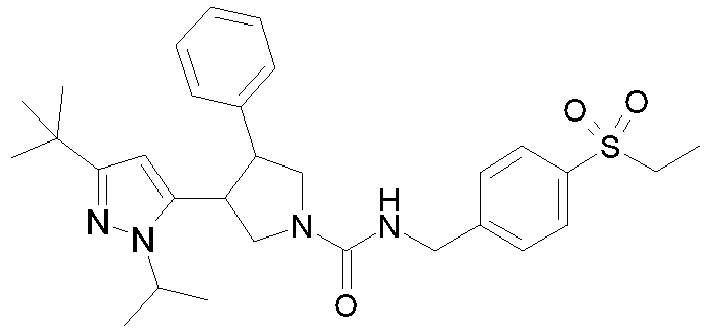
11 
39 
12 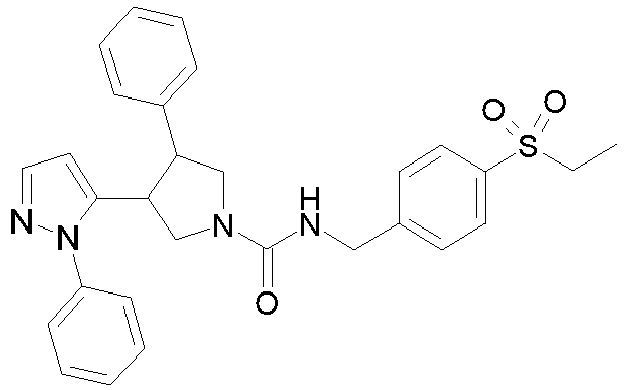
40 
13 
41 
14 
42 
15 
43 
16A 
44 
16B 
45 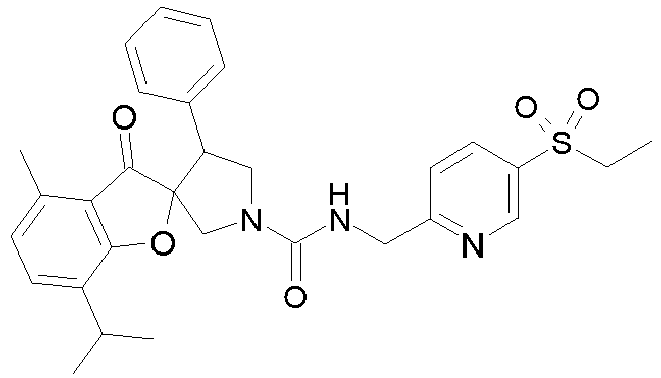
16C 
46 
17 
47 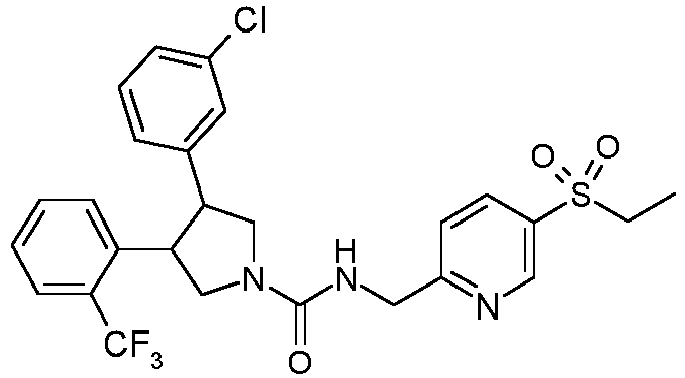
18 
48 
19 
49 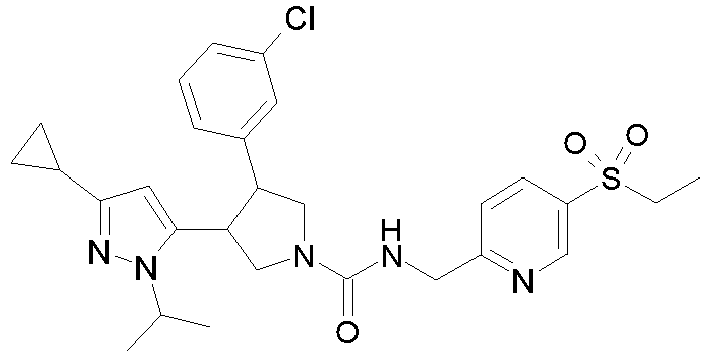
20 
50 
21 
51 
22 
52 
23 
53 
24 
54 
25 
55 
26 
56 
27 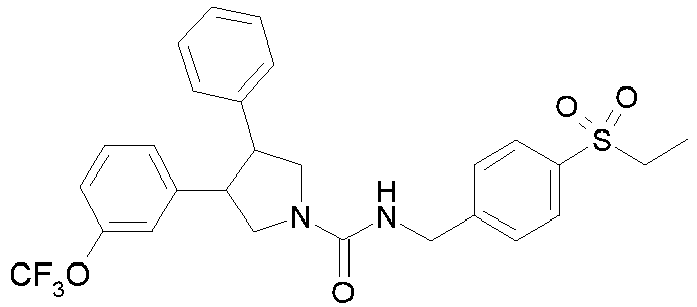
57 
28 
- In one embodiment, the invention relates to compounds 1-57 depicted in Table 1 above, the enantiomers thereof and the pharmaceutically acceptable salts thereof.
- Unless specifically indicated, throughout the specification and the appended claims, a given chemical formula or name shall encompass tautomers and all stereo, optical and geometrical isomers (e.g. enantiomers, diastereomers, E/Z isomers, etc.) and racemates thereof as well as mixtures in different proportions of the separate enantiomers, mixtures of diastereomers, or mixtures of any of the foregoing forms where such isomers and enantiomers exist, as well as salts, including pharmaceutically acceptable salts thereof and solvates thereof such as for instance hydrates including solvates of the free compounds or solvates of a salt of the compound.
- Some of the compounds of formula (I) can exist in more than one tautomeric form. The invention includes methods for using all such tautomers.
- Compounds of the invention also include their isotopically-labelled forms. An isotopically-labelled form of an active agent of a combination of the present invention is identical to said active agent but for the fact that one or more atoms of said active agent have been replaced by an atom or atoms having an atomic mass or mass number different from the atomic mass or mass number of said atom which is usually found in nature. Examples of isotopes which are readily available commercially and which can be incorporated into an active agent of a combination of the present invention in accordance with well established procedures, include isotopes of hydrogen, carbon, nitrogen, oxygen, phosphorous, fluorine and chlorine, e.g., 2H, 3H, 13C, 14C, 15N, 18O, 17O, 31P, 32P, 35S, 18F, and 36Cl, respectively. An active agent of a combination of the present invention, a prodrug thereof, or a pharmaceutically acceptable salt of either which contains one or more of the above-mentioned isotopes and/or other isotopes of other atoms is contemplated to be within the scope of the present invention.
- The invention includes pharmaceutically acceptable derivatives of compounds of formula (I). A "pharmaceutically acceptable derivative" refers to any pharmaceutically acceptable salt or ester, or any other compound which, upon administration to a patient, is capable of providing (directly or indirectly) a compound useful for the invention, or a pharmacologically active metabolite or pharmacologically active residue thereof. A pharmacologically active metabolite shall be understood to mean any compound of the invention capable of being metabolized enzymatically or chemically. This includes, for example, hydroxylated or oxidized derivative compounds of the formula (I).
- As used herein, "pharmaceutically acceptable salts" refer to derivatives of the disclosed compounds wherein the parent compound is modified by making acid or base salts thereof. Examples of pharmaceutically acceptable salts include, but are not limited to, mineral or organic acid salts of basic residues such as amines; alkali or organic salts of acidic residues such as carboxylic acids; and the like. For example, such salts include acetates, ascorbates, benzenesulfonates, benzoates, besylates, bicarbonates, bitartrates, bromides/hydrobromides, edetates, camsylates, carbonates, chlorides/hydrochlorides, citrates, edisylates, ethane disulfonates, estolates esylates, fumarates, gluceptates, gluconates, glutamates, glycolates, glycollylarsnilates, hexylresorcinates, hydrabamines, hydroxymaleates, hydroxynaphthoates, iodides, isothionates, lactates, lactobionates, malates, maleates, mandelates, methanesulfonates, methylbromides, methylnitrates, methylsulfates, mucates, napsylates, nitrates, oxalates, pamoates, pantothenates, phenylacetates, phosphates/diphosphates, polygalacturonates, propionates, salicylates, stearates, subacetates, succinates, sulfamides, sulfates, tannates, tartrates, teoclates, toluenesulfonates, triethiodides, ammonium, benzathines, chloroprocaines, cholines, diethanolamines, ethylenediamines, meglumines and procaines. Further pharmaceutically acceptable salts can be formed with cations from metals like aluminium, calcium, lithium, magnesium, potassium, sodium, zinc and the like. (also see Pharmaceutical salts, Berge, S.M. et al., J. Pharm. Sci., (1977), 66, 1-19).
- The pharmaceutically acceptable salts of the present invention can be synthesized from the parent compound which contains a basic or acidic moiety by conventional chemical methods. Generally, such salts can be prepared by reacting the free acid or base forms of these compounds with a sufficient amount of the appropriate base or acid in water or in an organic diluent like ether, ethyl acetate, ethanol, isopropanol, or acetonitrile, or a mixture thereof
- Salts of other acids than those mentioned above which for example are useful for purifying or isolating the compounds of the present invention (e.g. trifluoro acetate salts) also comprise a part of the invention.
- The compounds of the invention are only those which are contemplated to be 'chemically stable' as will be appreciated by those skilled in the art. For example, peroxides or a compound which would have a 'dangling valency', or a 'carbanion' are not compounds contemplated by the inventive methods disclosed herein.
- For all compounds disclosed hereinabove in this application, in the event the nomenclature is in conflict with the structure, it shall be understood that the compound is defined by the structure. All terms as used herein in this specification, unless otherwise stated, shall be understood in their ordinary meaning as known in the art. For example, "C1-4alkyl" is a saturated aliphatic hydrocarbon monovalent radical containing 1-4 carbons such as methyl, ethyl, n-propyl, 1-methylethyl (isopropyl), n-butyl or t-butyl; "C1-4 alkoxy" is a C1-4 alkyl with a terminal oxygen, such as methoxy, ethoxy, propoxy, butoxy. All alkyl, alkenyl and alkynyl groups shall be understood as being branched or unbranched, cyclized or uncyclized where structurally possible and unless otherwise specified. Other more specific definitions are as follows:
The term "C1-n-alkyl", wherein n is an integer from 2 to n, either alone or in combination with another radical denotes an acyclic, saturated, branched or linear hydrocarbon radical with 1 to n C atoms. For example the term C1-5-alkyl embraces the radicals H3C-, H3C-CH2-, H3C-CH2-CH2-, H3C-CH(CH3)-, H3C-CH2-CH2-CH2-, H3C-CH2-CH(CH3)-, H3C-CH(CH3)-CH2-, H3C-C(CH3)2-, H3C-CH2-CH2-CH2-CH2-, H3C-CH2-CH2-CH(CH3)-, H3C-CH2-CH(CH3)-CH2-, H3C-CH(CH3)-CH2-CH2-, H3C-CH2-C(CH3)2-, H3C-C(CH3)2-CH2-, H3C-CH(CH3)-CH(CH3)- and H3C-CH2-CH(CH2CH3)-. - The term "C1-n-alkylene" wherein n is an integer 1 to n, either alone or in combination with another radical, denotes an acyclic, straight or branched chain divalent alkyl radical containing from 1 to n carbon atoms. For example the term C1-4-alkylene includes -(CH2)-, -(CH2-CH2)-, -(CH(CH3))-, -(CH2-CH2-CH2)-, -(C(CH3)2)-, -(CH(CH2CH3))-, -(CH(CH3)-CH2)-, -(CH2-CH(CH3))-, -(CH2-CH2-CH2-CH2)-, -(CH2-CH2-CH(CH3))-, -(CH(CH3)-CH2-CH2)-, -(CH2-CH(CH3)-CH2)-, -(CH2-C(CH3)2)-, -(C (CH3)2-CH2)-, -(CH(CH3)-CH(CH3))-, -(CH2-CH(CH2CH3))-, -(CH(CH2CH3)-CH2)-, -(CH(CH2CH2CH3))-, -(CHCH(CH3)2)- and -C(CH3)(CH2CH3)-.
- The term "C3-n-cycloalkyl", wherein n is an integer 3 to n, either alone or in combination with another radical denotes a cyclic, saturated, unbranched hydrocarbon radical with 3 to n C atoms. For example the term C3-7-cycloalkyl includes cyclopropyl, cyclobutyl, cyclopentyl, cyclohexyl and cycloheptyl.
- The term "heteroatom" as used herein shall be understood to mean atoms other than carbon such as O, N, S and P.
- In all alkyl groups or carbon chains one or more carbon atoms can be optionally replaced by heteroatoms: O, S or N, it shall be understood that if N is not substituted then it is NH, it shall also be understood that the heteroatoms may replace either terminal carbon atoms or internal carbon atoms within a branched or unbranched carbon chain. Such groups can be substituted as herein above described by groups such as oxo to result in definitions such as but not limited to: alkoxycarbonyl, acyl, amido and thioxo.
- The term "aryl" as used herein, either alone or in combination with another radical, denotes a carbocyclic aromatic monocyclic group containing 6 carbon atoms which may be further fused to a second 5- or 6-membered carbocyclic group which may be aromatic, saturated or unsaturated. Aryl includes, but is not limited to, phenyl, indanyl, indenyl, naphthyl, anthracenyl, phenanthrenyl, tetrahydronaphthyl and dihydronaphthyl.
- The term "heteroaryl" means an aromatic 5 to 6-membered monocyclic heteroaryl or an aromatic 7 to 11-membered heteroaryl bicyclic ring where at least one of the rings is aromatic, wherein the heteroaryl ring contains 1-4 heteroatoms such as N, O and S. Non-limiting examples of 5 to 6-membered monocyclic heteroaryl rings include furanyl, oxazolyl, isoxazolyl, oxadiazolyl, thiazolyl, pyrazolyl, pyrrolyl, imidazolyl, tetrazolyl, triazolyl, thienyl, thiadiazolyl, pyridinyl, pyrimidinyl, pyridazinyl, pyrazinyl, triazinyl, and purinyl. Non-limiting examples of 7 to 11-membered heteroaryl bicyclic heteroaryl rings include benzimidazolyl, quinolinyl, dihydro-2H-quinolinyl, tetrahydroquinolinyl, isoquinolinyl, quinazolinyl, indazolyl, thieno[2,3-d]pyrimidinyl, indolyl, isoindolyl, benzofuranyl, dihydrobenzofuranyl, benzopyranyl, benzodioxolyl, benzoxazolyl and benzothiazolyl.
- The term "heterocyclyl" means a stable nonaromatic 4-8 membered monocyclic heterocyclic radical or a stable nonaromatic 6 to 11-membered fused bicyclic, bridged bicyclic or spirocyclic heterocyclic radical. The 5 to 11 -membered heterocycle consists of carbon atoms and one or more, preferably from one to four heteroatoms chosen from nitrogen, oxygen and sulfur. The heterocycle may be either saturated or partially unsaturated. Non-limiting examples of nonaromatic 4-8 membered monocyclic heterocyclic radicals include tetrahydrofuranyl, azetidinyl, pyrrolidinyl, pyranyl, tetrahydropyranyl, dioxanyl, thiomorpholinyl, 1,1-dioxo-1λ6-thiomorpholinyl, morpholinyl, piperidinyl, piperazinyl, and azepinyl. Non-limiting examples of nonaromatic 6 to 11-membered fused bicyclic radicals include octahydroindolyl, octahydrobenzofuranyl, and octahydrobenzothiophenyl. Non-limiting examples of nonaromatic 6 to 11-membered bridged bicyclic radicals include 2-azabicyclo[2.2.1]heptanyl, 3-azabicyclo[3.1.0]hexanyl, and 3-azabicyclo[3.2.1]octanyl. Non-limiting examples of nonaromatic 6 to 11-membered spirocyclic heterocyclic radicals include 7-aza-spiro[3,3]heptanyl, 7-spiro[3,4]octanyl, and 7-aza-spiro[3,4]octanyl. The term "heterocyclyl" or is intended to include all the possible isomeric forms.
- The term "halogen" as used in the present specification shall be understood to mean bromine, chlorine, fluorine or iodine. The definitions "halogenated", "partially or fully halogenated"; partially or fully fluorinated; "substituted by one or more halogen atoms", includes for example, mono, di or tri halo derivatives on one or more carbon atoms. For alkyl, non-limiting examples would be -CH2CHF2, -CF3 etc.
- Each alkyl, cycloalkyl, heterocycle, aryl or heteroaryl, or the analogs thereof, described herein shall be understood to be optionally partially or fully halogenated.
- As used herein, "nitrogen" or N and "sulfur" or S includes any oxidized form of nitrogen and sulfur and the quaternized form of any basic nitrogen. For example, for an -S-C1-6 alkyl radical, unless otherwise specified, this shall be understood to include -S(O)-C1-6 alkyl and -S(O)2-C1-6 alkyl, likewise, -S-Ra may be represented as phenyl-S(O)m- when Ra is phenyl and where m is 0, 1 or 2.
- The compounds of the invention may be prepared by the methods and examples presented below and methods known to those of ordinary skill in the art. The methods that are described here are intended as an illustration and for the enablement of the instant invention without restricting the scope of its subject matter, the claimed compounds, and the examples. In the methods of synthesis and examples described hereinafter, the substituents R1, R2, R3, R4, R5, X, Y and A shall have the meanings defined hereinbefore in the detailed description of the compounds of formula I. Optimum reaction conditions and reaction times may vary depending on the particular reactants used. Unless otherwise specified, solvents, temperatures, pressures, and other reaction conditions may be readily selected by one of ordinary skill in the art. Specific procedures are provided below. Intermediates used in the syntheses below are either commercially available or easily prepared by methods known to those skilled in the art. Reaction progress may be monitored by conventional methods such as thin layer chromatography (TLC) or high pressure liquid chromatography-mass spec (HPLC-MS). Intermediates and products may be purified by methods known in the art, including column chromatography, HPLC, preparative TLC or recrystallization. Discrete enantiomers may be obtained by resolution of racemic products using chiral HPLC.
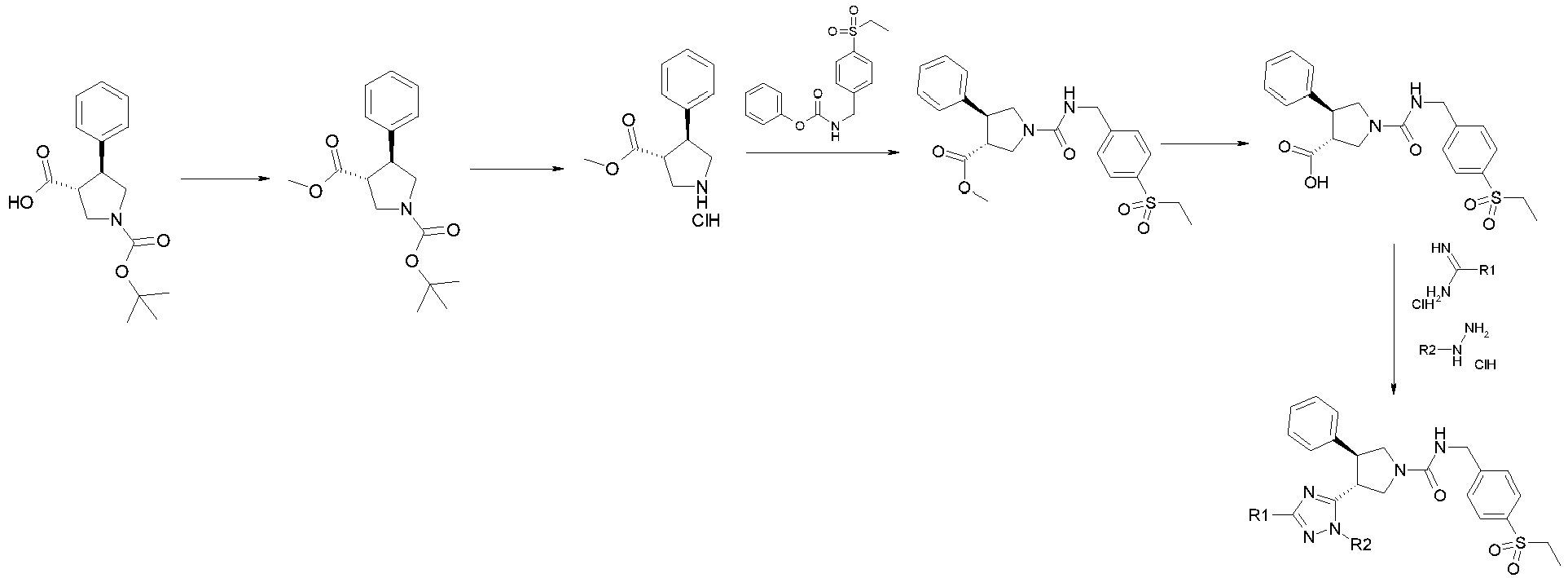
List of abbreviations used in synthetic examples: Ac Acetyl ACN Acetonitrile AcOH Acetic acid aq Aqueous Bu Butyl Boc2O Di-tert-butyl dicarbonate DCM Dichloromethane DIEA N,N-diisopropylethylamine DMAP 4-Dimethylaminopyridine DMF N,N-Dimethylformamide dppf 1.1'-bis(diphenylphosphino)ferrocene ES+ Electron spray positive ionization Et Ethyl EtOAc Ethyl acetate EtOH Ethanol h hour(s) HPLC High performance liquid chromatography i Iso LC Liquid chromatography Me Methyl MeOH Methanol min Minutes MS Mass spectrometry NMP N-Methylpyrrolidinone Pd/C Palladium on carbon Ph Phenyl PPh3 Triphenylphosphine Pr Propyl RaNi Raney Nickel RT Retention time (HPLC) rt Ambient temperature SFC Supercritical Fluid Chromatography t Tertiary tert Tertiary Tf Triflate TEA Triethylamine TFA Trifluoroacetic acid THF Tetrahydrofuran UPLC Ultra Performance Liquid Chromatography - The general synthetic routes for the examples are outlined below. Most of the examples were synthesized by general route 1 with the substituted pyrrolidines as the key intermediates. The majority of the pyrrolidine intermediates were prepared from olefins via two types of 3+2 cycloadditions followed by the deprotection of benzyl or methyl groups, respectively. The substituted pyrrolidines react with carbamates to form the ureas as the final products in most of cases while some examples require further transformation after this step. For a set of triazole analogues, the triazole formation was conducted after urea formation in order to do synthesis in a parallel fashion as shown in the general synthetic route 2.
-

-
-

- A mixture of A-1 (750 mg, 4.93 mmol), A-2 (0.46 mL, 7.39 mmol) and K2CO3 (2.72 g, 19.71 mmol) in 10 mL DMF is heated at 85 °C for 3 hours. The reaction mixture is diluted with EtOAc, washed with water, brine, dried over Na2SO4, concentrated in vacuo. The residue is purified by column chromatography on silica gel eluting with 10-100% EtOAc in heptane to yield Intermediates A and B as a 10:1 mixture by 1HNMR
- The following intermediate is prepared in a similar fashion:
Intermediate Structure C 
-
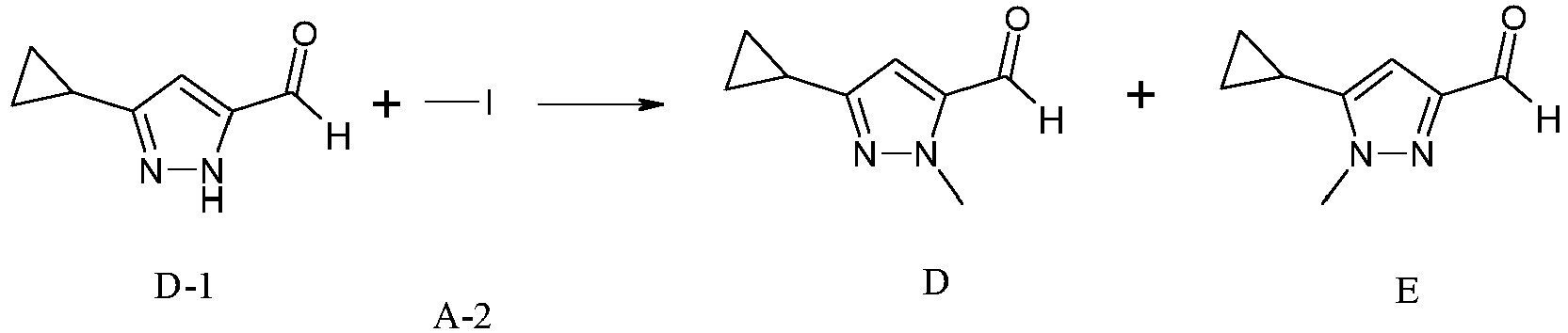
- To a suspension of D 1 (500 mg, 3.67 mmol) in DMF (10 mL) is added A-2 (1.14 mL, 18.36 mmol) and K2CO3 (2.538 g, 18.36 mmol). The reaction mixture is heated at 80 °C overnight. The reaction mixture is diluted with EtOAc, washed with water, brine, dried over Na2SO4, concentrated in vacuo. The residue is purified by column chromatography on silica gel eluting with EtOAc in heptane to yield Intermediates D and E.
- The following intermediates are prepared in similar fashion:
Intermediate Structure F 
G 
H 
-

- To a solution of 1-1 (500 mg, 2.81 mmol) and I-2 (0.62 mL, 2.81 mmol) in THF (10 mL) in a water bath is added dropwise t-BuOK (1M in THF, 6.73 mL, 6.73 mmol). The reaction mixture is stirred at room temperature for 2 hours. The reaction mixture is quenched with water and extracted with EtOAc twice. The organics are combined and washed with brine, dried over Na2SO4, filtered and concentrated. The residue is purified by column chromatography on silica gel eluting with EtOAc in heptane to yield Intermediate I.
- The following intermediates are prepared in similar fashion:
Intermediate Structure J 
K 
L 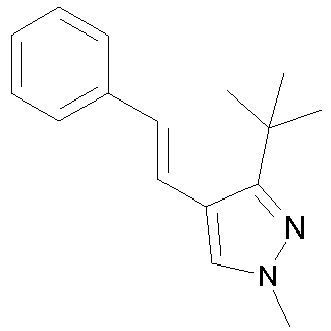
M 
N 
O 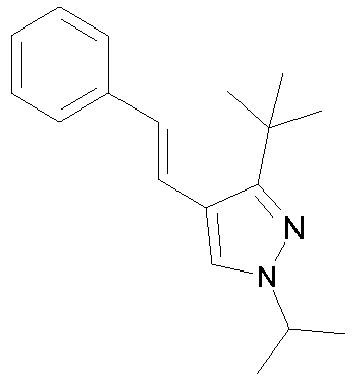
P 
Q 
R 
S 
T 
U 
V 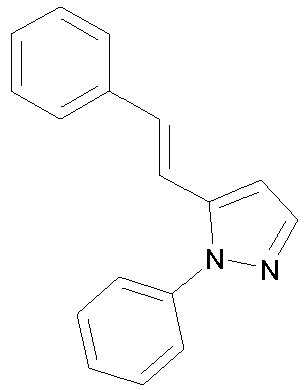
W 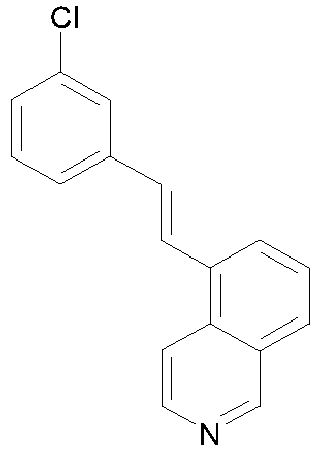
X 
Y 
Z 
AA 
BB 
CC 
DD 
-

- To a stirred solution of EE-1 (10 g, 144.79 mmol) in water (100 mL) is added EE-2 (13.73 g, 173.75 mmol) dropwise at 0 °C and the reaction mixture is stirred at 0 °C for 7 hours. The reaction mixture is filtered and extracted with diethyl ether. The combined organics are concentrated in vacuo to yield EE-3.
- To a stirred solution of EE-3 (10 g, 44.08 mmol) in DMF (60 mL) is added K2CO3 (9.158 g, 66.12 mmol) at room temperature then the reaction mixture is stirred at room temperature for 1 hour. EE-4 (5.422 g, 44.08 mmol) is added and the reaction mixture is stirred at room temperature for 12 hours. The reaction mixture is quenched with water then extracted with EtOAc twice. The organics are combined and concentrated. The residue is purified by column chromatography on silica gel eluting with EtOAc in heptane to yield Intermediate EE-5.
- To a stirred solution of EE-5 (200 mg, 0.74 mmol) in Dioxane (5 mL) is added EE-6 (110 mg, 0.74 mmol) and K2CO3 (154 mg, 1.12 mmol). The mixture is degassed for 20 minutes then Pd2(dppf)Cl2 (61 mg, 0.074 mmol) is added and the reaction mixture is heated at 100 °C for 12 hours. The reaction mixture is quenched with water then extracted with EtOAc twice. The combined organics are concentrated and the residue is purified by column chromatography on silica gel eluting with EtOAc in heptane to yield Intermediate EE-7.
- To a stirred solution of EE-7 (10 g, 34.23 mmol) in 1,4-dioxane (70 mL) is added EE-8 (6.23 g, 34.23 mmol) and K2CO3 (7.11 g, 51.34 mmol). The mixture is degassed for 20 minutes then Pd2(dppf)Cl2 (2.79 g, 3.42 mmol) is added and the reaction mixture is heated at 100°C for 12 hours. The reaction mixture is quenched with water and extracted with EtOAc twice. The combined organics are concentrated. The residue is purified by column chromatography on silica gel eluting with EtOAc in heptane to yield Intermediate EE.
-

- A solution of copper acetate (133 mg, 0.73 mmol) and 2,2'-dipyridyl (114 mg, 0.73 mmol) is warmed to 70 °C and then added dropwise to a suspension of FF-1 (138 mg, 0.61 mmol), FF-2 (131 mg, 1.52 mmol) and sodium carbonate (162 mg, 1.52 mmol) in DCE (6 mL) at room temperature. The reaction mixture is heated at 70 °C overnight. After this time, the reaction mixture is quenched with saturated NH4Cl aqueous solution then extracted with DCM twice. The organics are combined and washed with brine, dried over Na2SO4, filtered and concentrated. The residue is purified by column chromatography on silica gel eluting with EtOAc in heptane to yield Intermediate FF.
- The following intermediates are prepared in similar fashion:
Intermediate Structure GG 
-

- The mixture of HH-1 (500mg, 1.76 mmol), HH-2 (0.81 mL, 7.04 mmol), N,N-dicyclohexylmethylamine (447 mg, 2.29 mmol), tri-tert-butylphosphonium tetrafluoroborate (26 mg, 0.09 mmol), Pd2(dba)3 (81 mg, 0.09 mmol) and lithium chloride (224 mg, 5.28 mmol) in dioxane (15 mL) is flushed with Ar, sealed then heated at 75 °C for 1.5 hours. The reaction mixture is filtered through diatomaceous earth then washed with EtOAc. The filtrate is concentrated then purified by column chromatography on silica gel eluting with EtOAc in heptane to yield Intermediate HH
-

- To a vigorously stirred solution of II-1 (320 mg, 1.68 mmol) in DCM (12 ml) is added II-2 (0.19 ml, 2.1 mmol) and Al2O3 basic (5.1 g). The mixture is heated in a microwave reactor at 100°C for 26 minutes. The reaction mixture is filtered and the solid residue is washed with DCM. The filtrate is concentrated to give alight yellow oil. The crude product is purified by column chromatography on silica gel eluting with EtOAc/Heptane to give Intermediate II.
-

- To a stirred solution of II-1 (600 mg, 3.15 mmol) in ethanol (10 ml) is added JJ-1 (335 mg, 3.15 mmol) and piperidine (0.031 ml, 0.315 mmol) at RT . The reaction mixture is stirred at 65°C for 3 hours. The reaction mixture is then cooled down. The precipitates are collected by filtration and washed with EtOH and MTBE to give Intermediate JJ.
-

- To a solution of I (752 mg, 2.62 mmol) in toluene (6 mL) is added TFA (0.015 mL) and KK-1 (1.61 mL, 6.29 mmol). The reaction mixture is stirred at room temperature for 2 hours. The reaction mixture is quenched with saturated NaHCO3 aqueous solution then extracted with EtOAc twice. The organics are combined and washed with brine, dried over Na2SO4, filtered and concentrated. The residue is purified by column chromatography on silica gel eluting with EtOAc in heptane to yield Intermediate KK
- The following intermediates are prepared in similar fashion:
Intermediate Structure LL 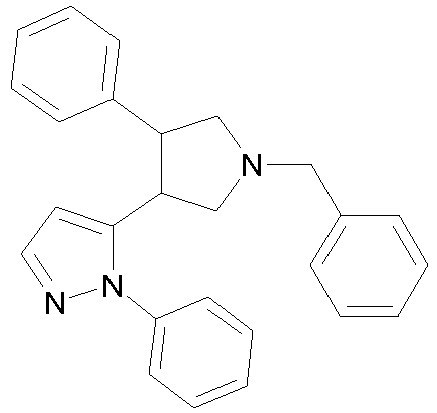
MM 
NN 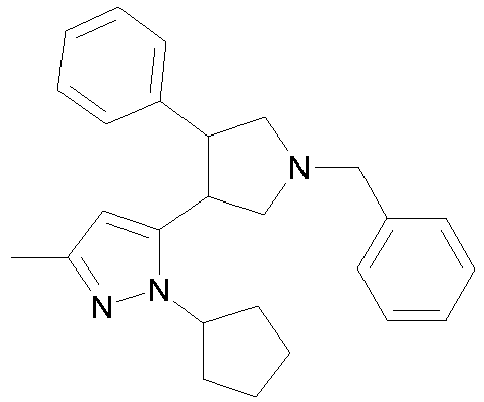
OO 
PP 
QQ 
RR 
SS 
TT 
UU 
VV 
WW 
XX 
YY 
ZZ 
AAA 
-

- To a suspension of K (367 mg, 1.39 mmol) and BBB-1 (156.4 mg, 2.08 mmol) in THF (12 mL) at 0 °C is added LDA solution (2M in THF/ethyl benzene/heptane, 3.12 mL, 6.25 mmol). The reaction mixture is stirred at 0 °C for 30 minutes. The reaction mixture is quenched with water then extracted with EtOAc twice. The organics are combined and washed with brine, dried over Na2SO4, filtered and concentrated. The residue is purified by column chromatography on silica gel eluting with EtOAc in heptane to yield Intermediate BBB.
- The following intermediates are prepared in similar fashion:
Intermediate Structure CCC 
DDD 
EEE 
FFF 
GGG 
HHH 
III 
JJJ 
KKK 
-
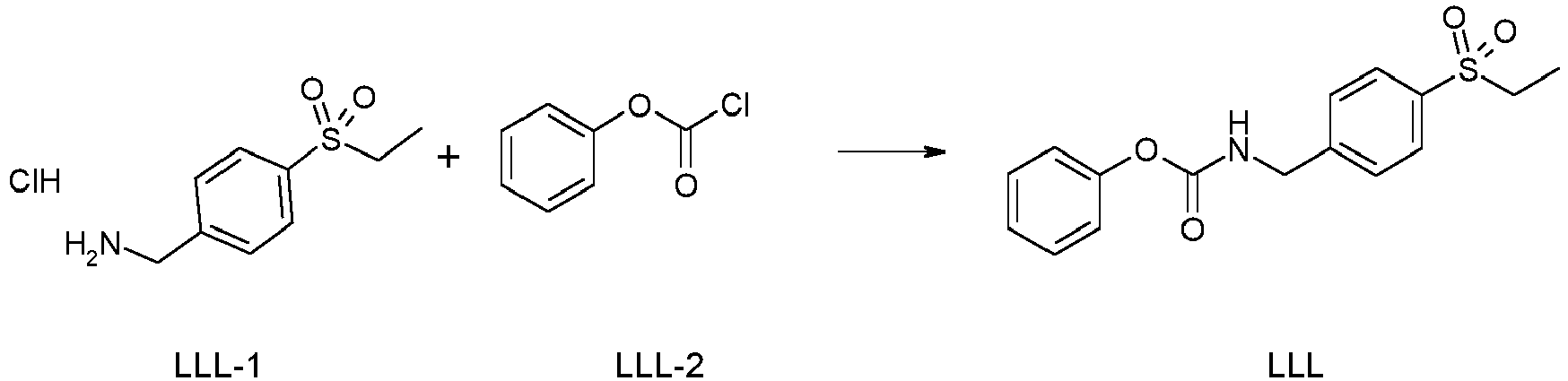
- To a solution of LLL-1 (4 g, 16.97 mmol) in DMF (50 mL) at 0 °C is added pyridine (5.49 mL, 67.87 mmol) and followed by dropwise addition of LLL-2 (2.35 mL, 18.67 mmol). The reaction mixture is stirred at 0 °C for 1 hour. After this time, the reaction mixture is quenched with water and extracted with EtOAc twice. The organics are combined and washed with brine, dried over Na2SO4, filtered and concentrated. The residue is purified by column chromatography on silica gel eluting with EtOAc in heptane to yield Intermediate LLL. MS (ES+): m/z 320.5 [M+H]+.
- The following intermediates are synthesized in a similar fashion
Intermediate Structure MMM 
NNN 
OOO 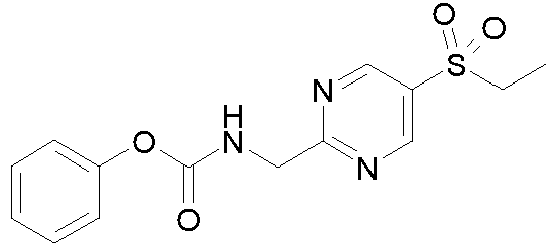
PPP 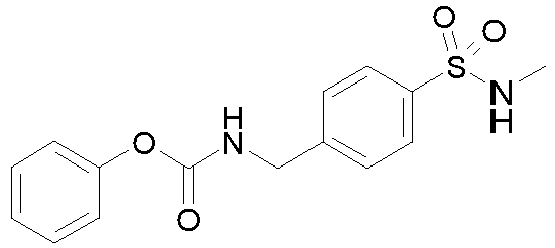
-

- To a solution of QQQ (50 mg, 0.22 mmol) in 1 ml DMSO is added TEA (0.06 ml, 0.45 mmol) followed by LLL (75 mg, 0.24 mmol). The mixture is heated at 60 °C for 2 hours. The reaction mixture is purified on preparative HPLC to give Example 1. MS (ES+): m/z 320.5 [M+H]+.
-

- To a solution of KK (907 mg, 2.16 mmol) in DCE (10 mL) is added RRR (0.71 mL, 6.48 mmol) and the reaction mixture is heated at 80 °C for 3 hours. The reaction mixture is quenched with MeOH and loaded onto silica gel then purified by column chromatography on silica gel eluting with MeOH in DCM (with NH3) to yield Intermediate SSS. MS (ES+): m/z 330.1 [M+H]+. 102940-045, 102940-047.
- To a solution of SSS (188 mg, 0.57 mmol) in DMSO (2.5 mL) is added TEA (0.24 mL, 1.71 mmol) and LLL (219 mg, 0.69 mmol). The reaction mixture is heated at 60 °C for 1 hour. After this time, the reaction mixture is quenched with water then extracted with EtOAc twice. The combined organics are washed with brine, dried over Na2SO4, filtered and concentrated. The residue is purified by column chromatography on silica gel eluting with MeOH in DCM to yield Example 48. MS (ES+): m/z 556.1 [M+H]+.
- The following Examples are synthesized in a similar fashion:
Example 4, 5, 7, 8, 10, 11, 12, 14, 15, 16, 17, 18, 20, 24, 32, 43, 45, 46, 48, 49, 53, 54 and 55. -

- ChiralPak IC, 21x250mm, 30%(1:1:1MeOH:EtOH:iPA):CO2, 90ml/min, 120bar, 35°C
- The absolute configuration of Compound 16C was determined as 1R,2S-enantiomer by vibrational circular dichroism (VCD) experiment.
- All VCD measurements were performed on a ChiralIR spectrometer (BioTools, FL, USA). The sample (Example 16C) was dissolved in CDCl3 solution at the concentration of 30 mg/mL. Spectra were collected for 4 hours in a 200 µm path length cell. The final VCD spectra were corrected by subtracting the solvent spectra (CDCl3) measured in the same conditions. The experimental VCD is in good agreement with 1R,2S-ennatiomer.
-

- A solution of BBB (315 mg, 0.98 mmol) in neat RRR (3 mL) is heated in microwave reactor at 170 °C for 30 minutes. The reaction mixture is quenched with MeOH and loaded onto silica gel then purified by column chromatography on silica gel eluting with MeOH in DCM (with NH3) to yield Intermediate TTT. MS (ES+): m/z 308.2 [M+H]+. 102940-064
- Example 28 is synthesized in a similar fashion as to Step 2 of Method 13. MS (ES+): m/z 533.4 [M+H]+.
- The following Examples are synthesized in a similar fashion:
Example 6, 9, 19, 23, 28, 29, 31, 32, 33, 34, 35, 38, 39, 41, 42, 56 and 57. -

- To a solution of Example 48 (100 mg, 0.18 mmol), FF-2 (46.4 mg, 0.54 mmol) and aqueous Na2CO3 solution (2M, 0.27 mL, 0.54 mmol) in Dioxane (1.5 mL) is added UUU (25.5 mg, 0.036 mmol). The reaction mixture is purged with Ar then sealed and heated at 130 °C for 1.5 hours. After this time, the reaction mixture is quenched with water then extracted with EA twice. The organics are combined and washed with brine, dried over Na2SO4, filtered and concentrated. The residue is purified by pre-HPLC to yield Example 50. MS (ES+): m/z 561.1 [M+H]+.
- The following compound, Example 54, was synthesized in a similar fashion
Example Structure m/z[M+H]+ HPLC Method 52 
562.4 A -

- The mixture of VVV-1 (100 mg, 0.31 mmol) and VVV-3 (54.7 mg, 0.34 mmol) in dioxane (2 mL) is heated at 60 °C for 1 hour then VVV-2 (31 mg, 0.31 mmol) is added and the reaction mixture is heated at 110 °C overnight. The reaction mixture is quenched with water and extracted with EA twice. The organics are combined and washed with brine, dried over Na2SO4, filtered and concentrated. The residue is purified by chromatography on silica gel eluting with EtOAc in heptane to give VVV-4.
- To a solution of VVV-4 (44 mg, 0.11 mmol) in DCM (1.5 mL) is added 4 N HCl in dioxane (0.28 mL, 1.1 mmol). The reaction mixture is stirred at RT for 2 hours. The reaction mixture is concentrated in vacuo to yield VVV.
-

- To a solution of WWW-1 (100 mg, 0.31 mmol) in DMF (1.5 mL) is added HATU (146 mg, 0.38 mmol), TEA (0.17 mL, 1.23 mmol) and WWW-2 (73 mg, 0.92 mmol). The reaction mixture is stirred at room temperature for 2 hours. The reaction mixture is quenched with water and extracted with EtOAc twice. The organics are combined and washed with brine, dried over Na2SO4, filtered and concentrated to yield WWW-3 which is used without purification.
- To a solution of WWW-3 (100 mg, 0.31 mmol) in THF (3 mL) is added Lawesson's reagent (93 mg, 0.23 mmol) and the reaction mixture is heated at 80 °C for 4.5 hours. The reaction mixture is quenched with water and extracted with EtOAc twice. The organics are combined and washed with brine, dried over Na2SO4, filtered and concentrated. The residue is purified by chromatography on silica gel eluting with EtOAc in heptane to give WWW-4.
- WWW-4 (42 mg, 0.12 mmol) and WWW-5 (20 mg, 0.12 mmol) are mixed in EtOH (1 mL) and the mixture is heated at 80 °C over the weekend. More CK-5 (40 mg, 0.24 mmol) is added followed by pyridine (0.03 mL) and the reaction mixture is heated at 80 °C overnight. The reaction mixture is concentrated and purified by chromatography on silica gel eluting with EtOAc in heptane to give WWW-6.
- To a solution of WWW-6 (12 mg, 0.03 mmol) in DCM (1 mL) is added HCl (4N in dioxane, 0.074 mL, 0.3 mmol) and the reaction mixture is stirred at room temperature for 2 hours. The reaction mixture is concentrated to give Intermediate WWW.
-

- Example 13 is synthesized in a similar fashion as to Step 2 of Method 13. MS (ES+): m/z 515.2 [M-H]+.
-

- To a mixture of XXX-1 (200 mg, 0.686 mmol), XXX-2 (124.2 mg, 1.030 mmol), and HATU (287 mg, 0.755 mmol) is added DMF (8mL) and DIEA (0.36 ml, 2.059 mmol). The reaction mixture is stirred at rt for 3 hours. To this solution is added XXX-3 (113.9 mg, 1.030 mmol) and AcOH (393.3 uL 10 eq.). The reaction mixture is heated to 80°C and allowed to stir for an additional 3 hours. The solution is concentrated and purified to give XXX-4.
- XXX-4 (150 mg, 0.378 mmol) is dissolved in DCM (8 mL) and to the resulting solution is added 4N HCl in Dioxane (0.5 mL). The solution is stirred at rt for 1 hour. The solution is concentrated and purified via HPLC to give XXX-5.
- Example 22 is synthesized in a similar fashion as Step 2 of Method 13.
-

- To a solution of XXX-1 (9.300 g, 31.9 mmol) in N,N-dimethylformamide (30 mL) is added NaH in mineral oil (60%, 2.553 g, 63.8 mmol) and the suspension is stirred at 0°C for 10 min then MeI (6 mL, 95.8 mmol) is added and stirred for 1 hr. The reaction mixture is quenched with water and extracted with EtOAc,. The organics are combined, washed with brine, and dried over MgSO4, filtered and concentrated. The residue is purified by flash chromatography on silica gel eluting with EtOAc/Hex (0-30%) to give YYY-1.
- To a solution of YYY-1 (9.5 g, 31.1 mmol) in DCM (100 ml) is added 4N HCl in dioxane (38.9 mL, 155.6 mmol) and the reaction mixture is stirred at RT overnight. The reaction mixture is concentrated in vacuo to obtain YYY-2.
- To a YYY-2 (7.5 g, 31.0 mmol) in dimethylsulfoxide (50.000 ml) is added triethylamine (13 mL, 93.1 mmol;) and LLL (9.9 g, 31.0 mmol). The reaction mixture is heated and stirred at 60 °C for 1 hour. The reaction is quenched with water and extracted with EtOAc twice. The organics are combined and washed with water then brine, dried over Na2SO4, filtered and concentrated. The residue is purified by chromatography using 100% EtOAc then MeOH/DCM (0-5%) to obtain YYY-3.
- To a solution of YYY-3 (8.5 g, 19.7 mmol) in MeOH (60.000 ml) is added 3N NaOH aqueous solution (26.3 ml, 79 mmol) and the resulting solution is stirred atRT for 2 hours. Reaction mixture is concentrated in vacuo then diluted with water and 1N HCl aqueous solution is added to adjust pH to ∼ 1 then the mixture is extracted with ethyl acetate. The organics are combined, dried over Mg2SO4, filtered and concentrated to obtain YYY-4.
- YYY-4 (40 mg, 0.096 mmol) is dissolved in N,N-dimethylacetamide (1 ml). HATU (40.3 mg, 0.106 mmol) is added and the mixture is stirred to result a solution. To the resulting solution is added to cyclopropanecarboximidamide hydrochloride (17.4 mg, 144 µmol), followed by diisopropylamine (51.830 µL, 0.288 mmol). The mixture is then shaken at rt for 3 hours.
- A solution of t-butylhydrazine hydrochloride (18 mg, 144 µmol) in DMA (0.5 mL) is added followed by acetic acid (55 µL, 0.960 mmol). The mixture is shaken at 80 °C for 3 hours. The reaction mixture is purified by reverse phase HPLC to obtain Example 36.
- YYY-4 (40 mg, 0.096 mmol) is dissolved in N,N-dimethylacetamide (1 ml). HATU (40.3 mg, 0.106 mmol) is added and the mixture is stirred to result in a solution. To the resulting solution is added 2-methylpropanimidamide hydrochloride (17.7 mg, 144 µmol), followed by diisopropylamine (51.830 µL, 0.288 mmol). The mixture is then shaken at rt for 3 hours.
- A solution of t-butylhydrazine hydrochloride (18 mg, 144 µmol) in DMA (0.5 mL) is added followed by acetic acid (55 µL, 0.960 mmol). The mixture is shaken at 80 °C for 3 hours. The reaction mixture is purified by reverse phase HPLC to obtain Example 42.
- YYY-4 (40 mg, 0.096 mmol) is dissolved in N,N-dimethylacetamide (1 ml). HATU (40.3 mg, 0.106 mmol) is added and the mixture is stirred to result a solution. To the resulting solution is added 2-methylpropanimidamide hydrochloride (17.7 mg, 144 µmol), followed by diisopropylamine (51.830 µL, 0.288 mmol). The mixture is then shaken at rt for 3 hours.
- A solution of cyclopropylhydrazine (10.4 mg, 144 µmol) in DMA (0.5 mL) is added followed by acetic acid (55 µL, 0.960 mmol). The mixture is shaken at 80 °C for 3 hours. The reaction mixture is purified by reverse phase HPLC to obtain Example 21.
-
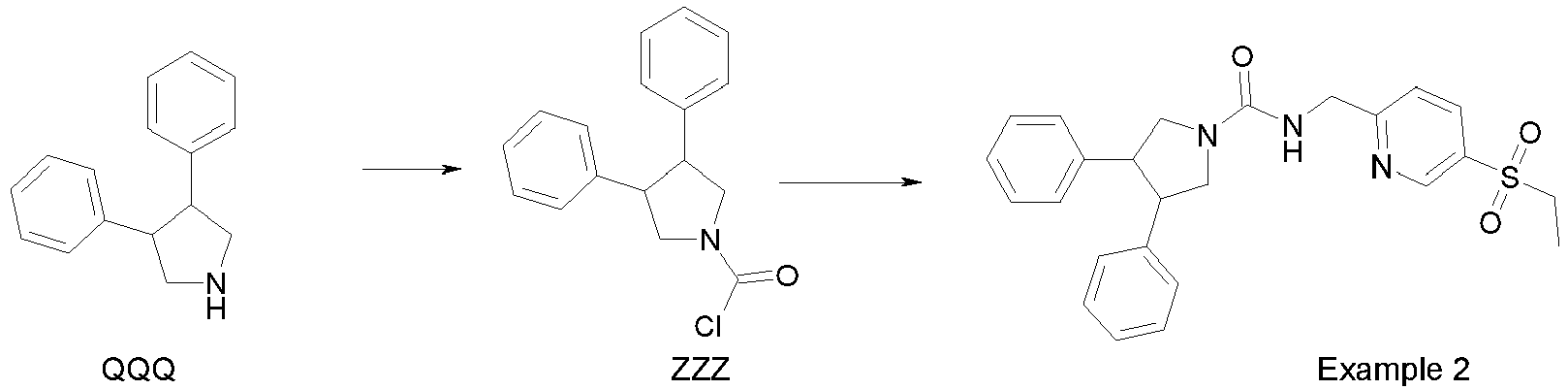
- To a solution of QQQ (1.3 g, 5.8 mmol) in dichloromethane (32.5 ml) was added NaHCO3 (saturated solution) (32.500 ml) followed by phosgene (20% in toluene) (7.7 ml, 14.6 mmol). The mixture was stirred for 40 min before it was diluted with water. The layers separated and organic was concentrated to give trans-3,4-diphenylpyrrolidine-1-carbonyl chloride, which was used directly without further purification.
- A solution of ZZZ (42 mg, 0.147 mmol) in N,N-dimethylacetamide (0.8 ml) is added to MMM (52.2 mg, 220 µmol) followed by diisopropylethylamine (106 µL, 0.588 mmol). The mixture is shaken at room temperature overnight, and then purified by reverse phase preparative HPLC to obtain Example 2.
- Example 3 is prepared in the same way as described for Example 2.
- The compounds of the present invention have activity as modulators of RORγ (retinoid acid receptor-related orphan receptor γ).
- A nuclear receptor transactivation assay is performed to quantitate the ability of test compounds to inhibit RORγ transactivation of a luciferase reporter. A similar assay is described in: Khan et al., Bioorganic & Medicinal Chemistry Letters 23 (2013), 532-536. The system uses transiently transfected HEK 293 cells cotransfected with two plasmids (pGL4.3, luc2P/GAL4UAS/Hygro, and pBIND, Gal4DBD hRORC LBD1-3). The positive control is co-transiently transfected with both plasmids, and the negative control contains the pGL4.3 promoter sequence. Assays are assembled in 384 well plates where transiently transfected cells and test compound at varying concentrations are incubated for 20-24 h. The next day, assays plates are taken out and equilibrated at RT for 20-30 minutes. Bright-Glo™ Luciferase Assay System is used to detect Luciferase production. After addition of Bright GLO detection reagent, the plates are incubated at RT for 20 minutes. The plates are read on an Envision plate reader to measure luminescence signal. The RLU signal is converted to POC relative to control and blank wells.
- RPMI 1640-Invitrogen #11875135), 2.5% FBS-Invitrogen # 26140, 1xPenicillin-Streptomycin-Gibco # 15140
-
- IX HBSS-Invitrogen #14025126
- Assay Plates: Greiner #781080-020
- Bright Glo Luciferase Assay System: Promega #E2620
- Thaw lysis buffer provided in kit, add 100 mL lysis buffer to substrate powder.
- Table 2 presents the results obtained when the compounds of the present invention were tested in the above assay, demonstrating their activity as modulators of RORγ.
Table 2 Example RGA IC50 (nM) Example RGA IC50 (nM) 1 2400 29 830 2 5000 30 5200 3 7900 31 2200 4 3900 32 1200 5 2800 33 510 6 2600 34 1300 7 1015 35 1900 8 1750 36 2600 9 1550 37 440 10 275 38 780 11 620 39 965 12 2100 40 1300 13 19000 41 1450 14 1000 42 1950 15 565 43 149 16A 625 44 1150 16B 925 45 260 16C 1250 46 3200 17 2300 47 1400 18 2500 48 775 19 4100 49 1750 20 5500 50 545 21 7400 51 810 22 8700 52 1485 23 6200 53 1550 24 13000 54 5200 25 4900 55 1500 26 850 56 865 27 2400 57 1050 28 1060 - RP-HPLC purification methods used anywhere from 0-100% acetonitrile in water containing 0.1% formic acid or 0.1% TFA and used one of the following columns:
- a) Waters Sunfire OBD C18 5 µM 30x150 mm column
- b) Waters XBridge OBD C18 5 µM 30x150 mm column
- c) Waters ODB C8 5 µM 19x150 mm column
- d) Waters Atlantis ODB C18 5 µM 19x50 mm column
- e) Waters Atlantis T3 OBD 5 µM 30x100 mm column
- f) Phenomenex Gemini Axia C18 5 µM 30x100 mm column
- Analytical UPLC/MS Analysis Method A:
Column: Waters CSH 2.1x50mm C18 1.7um columnGradient: Time(min) 0.05% Formic Acid in Water 0.05% Formic Acid in ACN Flow(mL/min) 0 90 10 0.8 1.19 0 100 0.8 1.77 0 100 0.8 - Analytical LC/MS Analysis Method B:
Column: Waters BEH 2.1x50mm C18 1.7um columnGradient: Time(min) 0.05% Formic Acid in Water 0.05% Formic Acid in ACN Flow(mL/min) 0 90 10 0.8 4.45 0 100 0.8 4.58 0 100 0.8 - Analytical LC/MS Analysis Method C:
Column: Waters BEH 2.1x50mm C18 1.7um columnGradient: Time(min) 95% Water, 5% ACN with 2.5mM Ammonium Bicarbonate 100% ACN Flow(mL/min) 0 90 10 0.8 1.19 5 95 0.8 1.77 5 95 0.8 - Table 3 shows the retention times, m/z and LC/MS method used for compounds 1-57.
Table 3 Example Retention time m/z LC MS method 1 0.93 449.6 A 2 0.92 450.3 A 3 0.92 450.3 A 4 0.70 466.9 A 5 0.89 490.0 A 6 0.84 493.5 A 7 1.07 505.2 A 8 0.93 507.3 A 9 1.01 509.4 A 10 2.98 513.3 B 11 2.81 514.2 B 12 1.87 515.2 B 13 1.01 515.2 M-1 A 14 0.97 518.1 A 15 0.94 521.3 A 16A 2.06 521.3 B 16B 0.88 521.4 A 16C 0.85 521.7 A 17 0.87 522.4 A 18 0.88 522.3 A 19 1.09 522.3 A 20 0.86 522.7 A 21 0.86 522.5 A 22 0.85 522.5 A 23 1.03 523.3 A 24 1.85 523.1 B 25 1.03 530.5 A 26 1.20 533.2 A 27 1.05 533.2 A 28 1.18 533.4 A 29 1.14 533.6 A 30 1.01 534.2 A 31 1.13 534.4 A 32 0.74 534.2 A 33 1.13 535.1 A 34 1.00 536.3 A 35 0.98 536.3 A 36 0.94 536.6 A 37 1.00 536.9 A 38 1.25 537.0 A 39 1.04 538.3 A 40 0.95 538.3 A 41 1.20 538.3 A 42 0.99 538.6 A 43 1.10 547.1 A 44 1.01 548.2 A 45 1.05 548.1 A 46 1.24 550.2 A 47 0.99 551.6 A 48 1.05 556.1 A 49 0.96 557.2 A 50 2.58 561.1 B 51 0.93 564.4 A 52 1.25 562.4 A 53 1.02 563.3 A 54 1.90 564.3 B 55 1.10 576.3 A 56 0.98 576.4 A 57 1.06 578.3 A - On the basis of their biological properties the compounds of formula (I) according to the invention, or their tautomers, racemates, enantiomers, diastereomers, mixtures thereof and the salts of all the above-mentioned forms are suitable for treating autoimmune and allergic disorders in that they exhibit good modulatory effect upon RORγ.
- The present invention is therefore directed to compounds of general formula (I), and the pharmaceutically acceptable salts thereof, and all tautomers, racemates, enantiomers, diastereomers, mixtures thereof, which are useful in the treatment of a disease and/or condition wherein the activity of RORγ modulators is of therapeutic benefit, including but not limited to the treatment of autoimmune or allergic disorders.
- Such disorders that may be treated by the compounds of the invention include for example: rheumatoid arthritis, psoriasis, systemic lupus erythromatosis, lupus nephritis, systemic sclerosis, vasculitis, scleroderma, asthma, allergic rhinitis, allergic eczema, multiple sclerosis, juvenile rheumatoid arthritis, juvenile idiopathic arthritis, type I diabetes, Crohn's disease, ulcerative colitis, graft versus host disease, psoriatic arthritis, reactive arthritis, ankylosing spondylitis, atherosclerosis, uveitis and non-radiographic spondyloarthropathy.
- Accordingly, a compound of formula I according to any of the embodiments described herein or a pharmaceutically acceptable salt thereof may be used for the preparation of a medicament for treating a disease or disorder mediated by aldosterone synthase, including diabetic nephropathy, glomerulosclerosis, glomerulonephritis, IGA nephropathy, nephritic syndrome focal segmental glomerulosclerosis (FSGS), hypertension, pulmonary arterial hypertension, Conn's syndrome, systolic heart failure, diastolic heart failure, left ventricular dysfunction, left ventricular stiffness and fibrosis, left ventricular filing abnormalities, arterial stiffness, atherosclerosis and cardiovascular morbidity associated with primary or secondary hyperaldosteronism, adrenal hyperplasia and primary and secondary hyperaldosteronism.
- For therapeutic use, the compounds of the invention may be administered via a pharmaceutical composition in any conventional pharmaceutical dosage form in any conventional manner.
- Conventional dosage forms typically include a pharmaceutically acceptable carrier suitable to the particular dosage form selected. Routes of administration include, but are not limited to, intravenously, intramuscularly, subcutaneously, intrasynovially, by infusion, sublingually, transdermally, orally, topically or by inhalation. The preferred modes of administration are oral and intravenous.
- The compounds of this invention may be administered alone or in combination with adjuvants that enhance stability of the inhibitors, facilitate administration of pharmaceutical compositions containing them in certain embodiments, provide increased dissolution or dispersion, increase inhibitory activity, provide adjunct therapy, and the like, including other active ingredients. In one embodiment, for example, multiple compounds of the present invention can be administered.
- Advantageously, such combination therapies utilize lower dosages of the conventional therapeutics, thus avoiding possible toxicity and adverse side effects incurred when those agents are used as monotherapies. Compounds of the invention may be physically combined with the conventional therapeutics or other adjuvants into a single pharmaceutical composition.
- Advantageously, the compounds may then be administered together in a single dosage form. In some embodiments, the pharmaceutical compositions comprising such combinations of compounds contain at least about 5%, but more preferably at least about 20%, of a compound of formula (I) (w/w) or a combination thereof. The optimum percentage (w/w) of a compound of the invention may vary and is within the purview of those skilled in the art. Alternatively, the compounds of the present invention and the conventional therapeutics or other adjuvants may be administered separately (either serially or in parallel). Separate dosing allows for greater flexibility in the dosing regime.
- As mentioned above, dosage forms of the compounds of this invention may include pharmaceutically acceptable carriers and adjuvants known to those of ordinary skill in the art and suitable to the dosage form. These carriers and adjuvants include, for example, ion exchangers, alumina, aluminum stearate, lecithin, serum proteins, buffer substances, water, salts or electrolytes and cellulose-based substances. Preferred dosage forms include tablet, capsule, caplet, liquid, solution, suspension, emulsion, lozenges, syrup, reconstitutable powder, granule, suppository and transdermal patch. Methods for preparing such dosage forms are known (see, for example, H.C. Ansel and N.G. Popovish, Pharmaceutical Dosage Forms and Drug Delivery Systems, 5th ed., Lea and Febiger (1990)). Dosage levels and requirements for the compounds of the present invention may be selected by those of ordinary skill in the art from available methods and techniques suitable for a particular patient. In some embodiments, dosage levels range from about 1-1000 mg/dose for a 70 kg patient. Although one dose per day may be sufficient, up to 5 doses per day may be given. For oral doses, up to 2000 mg/day may be required. As the skilled artisan will appreciate, lower or higher doses may be required depending on particular factors.
- For instance, specific dosage and treatment regimens will depend on factors such as the patient's general health profile, the severity and course of the patient's disorder or disposition thereto, and the judgment of the treating physician.
Claims (8)
- A compound of formula I
 R2' is H; andR1 is selected from phenyl or pyridyl;R2 is selected from benzothiophen-3-yl, isoquinolinyl, [1,2,4]-oxadiazolyl, phenyl, pyrazolyl, pyridyl, thiazolyl, 1H-[1,2,4]triazolyl and 2H-[1,2,3]triazolyl;
orR2 and R2' form a spiro benzofuran-3-one ring; andR1 is selected from C1-6alkyl, phenyl, pyridyl;wherein R1 and R2 are each optionally substituted by one to two groups independently selected from C1-4alkyl, C3-5cycloalkyl, cyclopropylmethyl, -CF3, halogen, -OCF3, -OH, -OCH3 and phenyl;R3 is selected from phenyl, pyridyl and pyrimidinyl;wherein R3 is substituted with a group selected from -SO2C1-3alkyl and -SO2NHC1-3alkyl;or an enantiomer or a salt thereof. - The compound of formula (I) according to claim 1, wherein
R2' is H; and
R1 is selected from phenyl, 2- and 3-pyridyl;
R2 is selected from benzothiophen-3-yl, isoquinolin-5-yl, [1,2,4]-oxadiazol-5-yl, phenyl, 4- and 5-pyrazolyl, 2- and 3-pyridyl, thiazol-2-yl, 1H-[1,2,4]triazol-5-yl and 2H-[1,2,3]triazol-5-yl; or
R2 and R2' may form a spiro benzofuran-3-one ring; and
R1 is selected from isopropyl, phenyl, 2- and 3-pyridyl;
wherein R1 and R2 are each optionally substituted by one to two groups independently selected from C1-4alkyl, C3-5cycloalkyl, cyclopropylmethyl, -CF3, Cl, -OCF3, -OH, -OCH3 and phenyl; R3 is selected from phenyl, 2- and 3-pyridyl and 2-pyrimidinyl;
wherein R3 is substituted with a group selected from -SO2CH2CH3 and -SO2NHCH3;
or an enantiomer or a salt thereof. - The compound of formula (I) according to claim 1, wherein
R2' is H; and
R1 is selected from phenyl and 2-pyridyl;
R2 is selected from benzothiophen-3-yl, isoquinolin-5-yl, phenyl, 4- and 5-pyrazolyl, 2-pyridyl and 1H-[1,2,4]triazol-5-yl;
or
R2 and R2' may form a spiro benzofuran-3-one ring; and
R1 is selected from isopropyl, phenyl and 2-pyridyl;
wherein R1 and R2 are each optionally substituted by one to two groups independently selected from C1-4alkyl, C3-5cycloalkyl, cyclopropylmethyl, -CF3, Cl, -OCF3, -OH and -OCH3;
R3 is selected from phenyl and 2-pyridyl;
wherein R3 is substituted with a group selected from -SO2CH2CH3 and -SO2NHCH3;
or an enantiomer or a salt thereof. - The compound of formula (I) according to claim 1, wherein
R2' is H; and
R1 is selected from isopropyl, phenyl and 2-pyridyl;
R2 is selected from isopropyl, phenyl, 4- and 5-pyrazolyl and 2-pyridyl;
or
R2 and R2' may form a spiro benzofuran-3-one ring; and
R1 is selected from isopropyl and phenyl;
wherein R1 and R2 are each optionally substituted by one to two groups independently selected from methyl, isopropyl, tert-butyl, cyclopropyl, cyclopentyl, -CF3, Cl and -OCF3;
R3 is selected from phenyl and 2-pyridyl;
wherein R3 is substituted with a group selected from -SO2CH2CH3 and -SO2NHCH3;
or an enantiomer or a salt thereof. - The compound according to claim 1 selected from the group consisting of
1 
29 
2 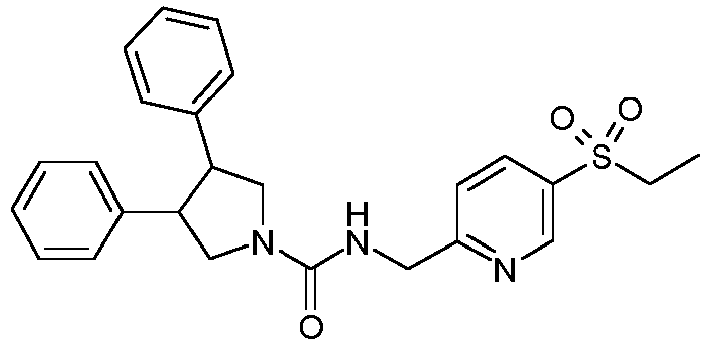
30 
3 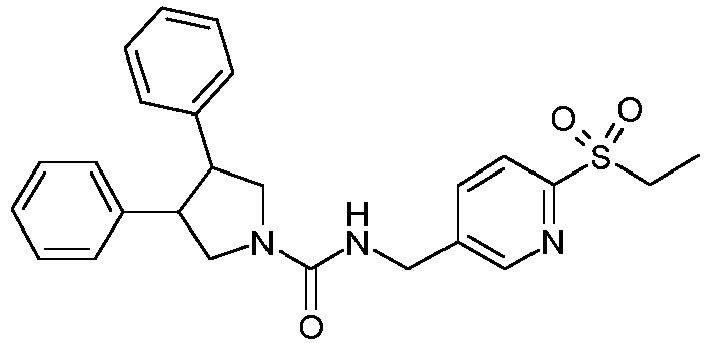
31 
4 
32 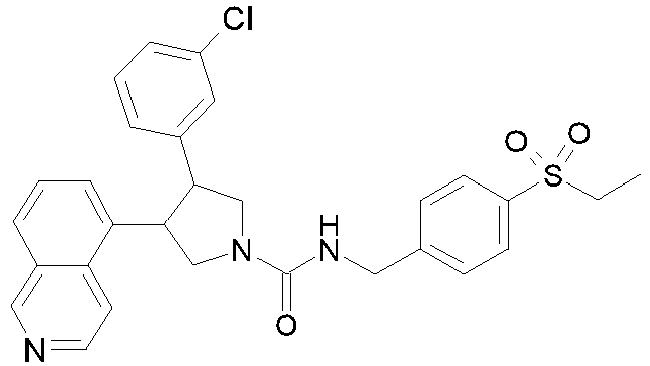
5 
33 
6 
34 
7 
35 
8 
36 
9 
37 
10 
38 
11 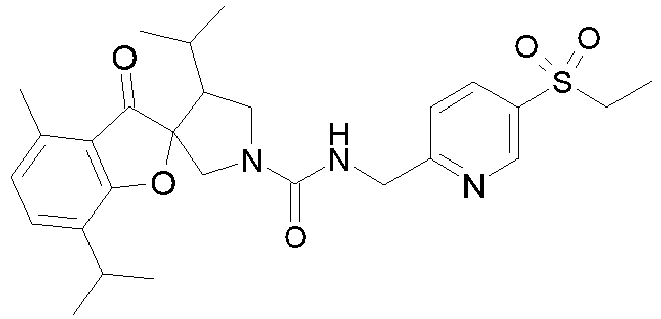
39 
12 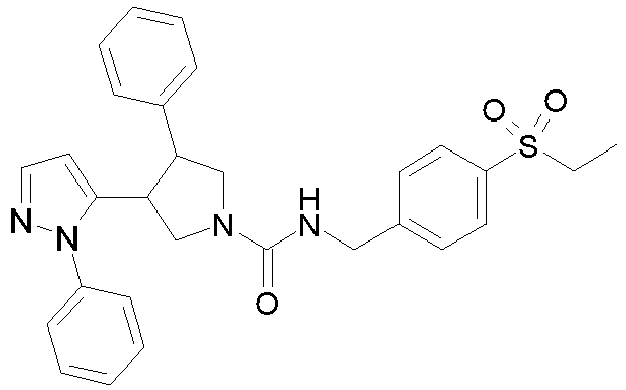
40 
13 
41 
14 
42 
15 
43 
16A 
44 
16B 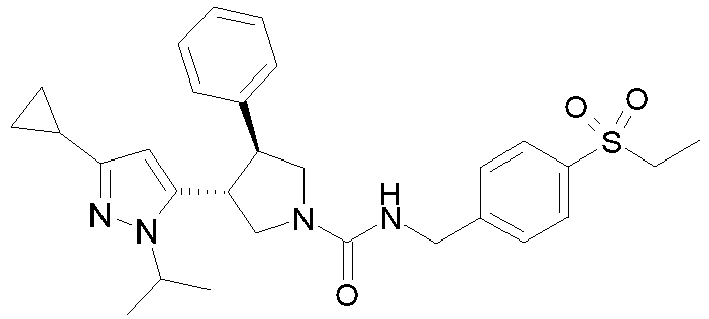
45 
16C 
46 
17 
47 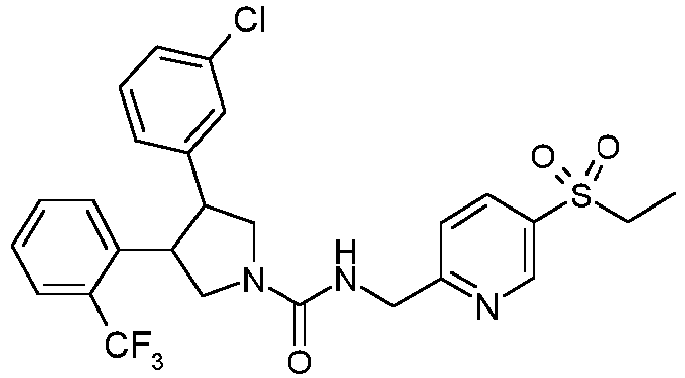
18 
48 
19 
49 
20 
50 
21 
51 
22 
52 
23 
53 
24 
54 
25 
55 
26 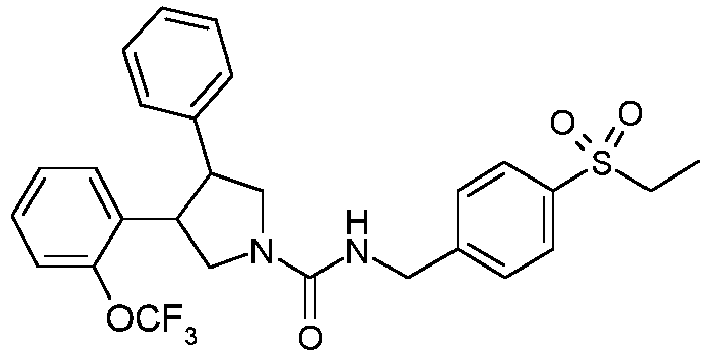
56 
27 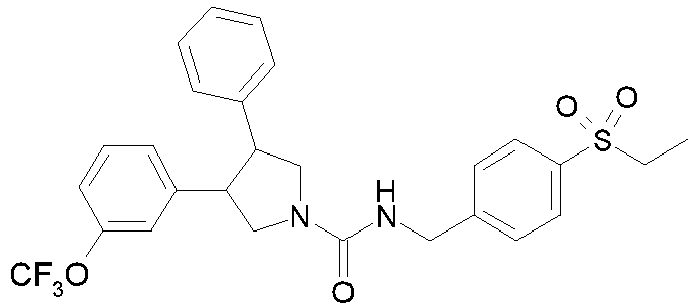
57 
28 
- A pharmaceutical composition comprising a compound according to claim 1 and a pharmaceutically acceptable excipient or carrier.
- A compound according to one of the claims 1 to 5 for use as a medicament for the treatment of an autoimmune disease or allergic disorder.
- A compound according to one of the claims 1 to 5 for use as a medicament for the treatment of an autoimmune disease or allergic disorder, wherein the autoimmune disease or allergic disorder is selected from rheumatoid arthritis, psoriasis, systemic lupus erythromatosis, lupus nephritis, scleroderma, asthma, allergic rhinitis, allergic eczema, multiple sclerosis, juvenile rheumatoid arthritis, juvenile idiopathic arthritis, type I diabetes, inflammatory bowel disease, graft versus host disease, psoriatic arthritis, reactive arthritis, ankylosing spondylitis, Crohn's disease, ulcerative colitis, uveitis and non-radiographic spondyloarthropathy.
Applications Claiming Priority (2)
| Application Number | Priority Date | Filing Date | Title |
|---|---|---|---|
| US201662433268P | 2016-12-13 | 2016-12-13 | |
| PCT/US2017/065699 WO2018111803A1 (en) | 2016-12-13 | 2017-12-12 | Compounds as modulators of ror gamma |
Publications (2)
| Publication Number | Publication Date |
|---|---|
| EP3555065A1 EP3555065A1 (en) | 2019-10-23 |
| EP3555065B1 true EP3555065B1 (en) | 2021-02-24 |
Family
ID=60888693
Family Applications (1)
| Application Number | Title | Priority Date | Filing Date |
|---|---|---|---|
| EP17822927.4A Active EP3555065B1 (en) | 2016-12-13 | 2017-12-12 | Compounds as modulators of ror gamma |
Country Status (5)
| Country | Link |
|---|---|
| US (1) | US10954215B2 (en) |
| EP (1) | EP3555065B1 (en) |
| JP (1) | JP7014795B2 (en) |
| CN (1) | CN110072859B (en) |
| WO (1) | WO2018111803A1 (en) |
Families Citing this family (4)
| Publication number | Priority date | Publication date | Assignee | Title |
|---|---|---|---|---|
| KR102698413B1 (en) | 2020-05-05 | 2024-08-26 | 뉴베일런트, 아이엔씨. | Heteroaromatic macrocyclic ether chemotherapeutic agent |
| IL297832A (en) | 2020-05-05 | 2023-01-01 | Nuvalent Inc | Heteroaromatic macrocyclic ether chemotherapeutic agents |
| WO2022095971A1 (en) * | 2020-11-06 | 2022-05-12 | 上海医药集团股份有限公司 | Spiro heterocyclic compound, preparation method therefor and use thereof |
| IL311444A (en) | 2021-10-01 | 2024-05-01 | Nuvalent Inc | Solid forms, pharmaceutical preparations and preparation of macrocyclic heteroaromatic ether compounds |
Family Cites Families (5)
| Publication number | Priority date | Publication date | Assignee | Title |
|---|---|---|---|---|
| CA2643859A1 (en) * | 2006-03-10 | 2007-09-20 | Boehringer Ingelheim International Gmbh | Soluble epoxide hydrolase inhibitors and methods of using same |
| WO2012100732A1 (en) | 2011-01-24 | 2012-08-02 | Glaxo Group Limited | Retinoid-related orphan receptor gamma modulators, composition containing them and uses thereof |
| WO2013029338A1 (en) | 2011-09-01 | 2013-03-07 | Glaxo Group Limited | Novel compounds |
| WO2013171729A2 (en) * | 2013-01-08 | 2013-11-21 | Glenmark Pharmaceuticals S.A. | Aryl and heteroaryl amide compounds as rorgamat modulator |
| EP3538522A1 (en) * | 2016-11-10 | 2019-09-18 | Bristol-Myers Squibb Company | Ror gamma modulators |
-
2017
- 2017-12-12 EP EP17822927.4A patent/EP3555065B1/en active Active
- 2017-12-12 JP JP2019531265A patent/JP7014795B2/en active Active
- 2017-12-12 US US16/469,075 patent/US10954215B2/en active Active
- 2017-12-12 CN CN201780076448.3A patent/CN110072859B/en active Active
- 2017-12-12 WO PCT/US2017/065699 patent/WO2018111803A1/en not_active Ceased
Non-Patent Citations (1)
| Title |
|---|
| None * |
Also Published As
| Publication number | Publication date |
|---|---|
| JP2020502098A (en) | 2020-01-23 |
| JP7014795B2 (en) | 2022-02-01 |
| US10954215B2 (en) | 2021-03-23 |
| CN110072859A (en) | 2019-07-30 |
| US20200071298A1 (en) | 2020-03-05 |
| WO2018111803A1 (en) | 2018-06-21 |
| CN110072859B (en) | 2022-10-11 |
| EP3555065A1 (en) | 2019-10-23 |
Similar Documents
| Publication | Publication Date | Title |
|---|---|---|
| TWI827785B (en) | Substituted pyrrolidine amides iii | |
| AU2021273566A1 (en) | Imidazopyrrolopyridine as inhibitors of the JAK family of kinases | |
| TW202039435A (en) | Substituted 3-((3-aminophenyl)amino)piperidine-2,6-dione compounds, compositions thereof, and methods of treatment therewith | |
| RS59522B1 (en) | Naphthyridine compounds as jak kinase inhibitors | |
| EP3555065B1 (en) | Compounds as modulators of ror gamma | |
| CN106103432B (en) | Substituted thiazole or oxazole P2X7 receptor antagonists | |
| EP3634956B1 (en) | Aryl heterocyclic piperidinone formyl peptide 2 receptor and formyl peptide 1 receptor agonists | |
| CA3082156A1 (en) | Heterocyclic compound as a protein kinase inhibitor | |
| CA2737038A1 (en) | Amide compounds, compositions and uses thereof | |
| EP3414234A1 (en) | Bruton's tyrosine kinase inhibitors | |
| WO2014026329A1 (en) | N-alkylated indole and indazole compounds as rorgammat inhibitors and uses thereof | |
| CA2890983A1 (en) | Heteroaryl substituted pyridyl compounds useful as kinase modulators | |
| BR112019012927A2 (en) | COMPOUND, USE OF A COMPOUND, COMBINATION OF A COMPOUND, PHARMACEUTICAL COMPOSITION AND DEVICE | |
| AU2016219183B2 (en) | Substituted pyrazole compounds as RORgammaT inhibitors and uses thereof | |
| KR20180095598A (en) | Hydroxyalkylamine- and hydroxycycloalkylamine-substituted diamine-arylsulfonamide compounds having selective activity in voltage-gated sodium channels | |
| KR101866706B1 (en) | 1-alkyl-6-oxo-1,6-dihydropyridin-3-yl compounds and use as sgrm modulators | |
| AU2005262330A1 (en) | Piperidine derivatives as NK1 antagonists | |
| TW201728577A (en) | Novel substituted cyanoporphyrin derivatives as NIK inhibitors | |
| CN114805361B (en) | Amino substituted aromatic heterocyclic pyrazole compound, preparation method and application | |
| EP3512837B1 (en) | Pyridine and pyrazine compounds as inhibitors of ripk2 | |
| EP3250569B1 (en) | Aldosterone synthase inhibitors | |
| JP2025523524A (en) | Imidazo[4,5-b]pyridine and pyrazolo[1,5-a]pyrimidine derivatives as SIK modulators for the treatment of rheumatoid arthritis - Patents.com | |
| EP3894410A1 (en) | Substituted xanthine derivatives | |
| EP3507287A1 (en) | Substituted n-[2-(4-phenoxypiperidin-1-yl)-2-(1,3-thiazol-5-yl)ethyl]benzamide and n-[2-(4-benzyloxypiperidin-1-yl)-2-(1,3-thiazol-5-yl)ethyl]benzamide derivatives p2x7 receptor antagonists | |
| CN117881675A (en) | 2,4-Dihydro-3H-1,2,4-triazol-3-one P2X7 antagonist |
Legal Events
| Date | Code | Title | Description |
|---|---|---|---|
| STAA | Information on the status of an ep patent application or granted ep patent |
Free format text: STATUS: UNKNOWN |
|
| STAA | Information on the status of an ep patent application or granted ep patent |
Free format text: STATUS: THE INTERNATIONAL PUBLICATION HAS BEEN MADE |
|
| PUAI | Public reference made under article 153(3) epc to a published international application that has entered the european phase |
Free format text: ORIGINAL CODE: 0009012 |
|
| STAA | Information on the status of an ep patent application or granted ep patent |
Free format text: STATUS: REQUEST FOR EXAMINATION WAS MADE |
|
| 17P | Request for examination filed |
Effective date: 20190715 |
|
| AK | Designated contracting states |
Kind code of ref document: A1 Designated state(s): AL AT BE BG CH CY CZ DE DK EE ES FI FR GB GR HR HU IE IS IT LI LT LU LV MC MK MT NL NO PL PT RO RS SE SI SK SM TR |
|
| AX | Request for extension of the european patent |
Extension state: BA ME |
|
| DAV | Request for validation of the european patent (deleted) | ||
| DAX | Request for extension of the european patent (deleted) | ||
| STAA | Information on the status of an ep patent application or granted ep patent |
Free format text: STATUS: EXAMINATION IS IN PROGRESS |
|
| 17Q | First examination report despatched |
Effective date: 20200612 |
|
| GRAP | Despatch of communication of intention to grant a patent |
Free format text: ORIGINAL CODE: EPIDOSNIGR1 |
|
| STAA | Information on the status of an ep patent application or granted ep patent |
Free format text: STATUS: GRANT OF PATENT IS INTENDED |
|
| INTG | Intention to grant announced |
Effective date: 20201027 |
|
| GRAS | Grant fee paid |
Free format text: ORIGINAL CODE: EPIDOSNIGR3 |
|
| GRAA | (expected) grant |
Free format text: ORIGINAL CODE: 0009210 |
|
| STAA | Information on the status of an ep patent application or granted ep patent |
Free format text: STATUS: THE PATENT HAS BEEN GRANTED |
|
| AK | Designated contracting states |
Kind code of ref document: B1 Designated state(s): AL AT BE BG CH CY CZ DE DK EE ES FI FR GB GR HR HU IE IS IT LI LT LU LV MC MK MT NL NO PL PT RO RS SE SI SK SM TR |
|
| REG | Reference to a national code |
Ref country code: CH Ref legal event code: EP |
|
| REG | Reference to a national code |
Ref country code: AT Ref legal event code: REF Ref document number: 1364285 Country of ref document: AT Kind code of ref document: T Effective date: 20210315 |
|
| REG | Reference to a national code |
Ref country code: IE Ref legal event code: FG4D |
|
| REG | Reference to a national code |
Ref country code: DE Ref legal event code: R096 Ref document number: 602017033478 Country of ref document: DE |
|
| REG | Reference to a national code |
Ref country code: LT Ref legal event code: MG9D |
|
| REG | Reference to a national code |
Ref country code: NL Ref legal event code: MP Effective date: 20210224 |
|
| PG25 | Lapsed in a contracting state [announced via postgrant information from national office to epo] |
Ref country code: HR Free format text: LAPSE BECAUSE OF FAILURE TO SUBMIT A TRANSLATION OF THE DESCRIPTION OR TO PAY THE FEE WITHIN THE PRESCRIBED TIME-LIMIT Effective date: 20210224 Ref country code: FI Free format text: LAPSE BECAUSE OF FAILURE TO SUBMIT A TRANSLATION OF THE DESCRIPTION OR TO PAY THE FEE WITHIN THE PRESCRIBED TIME-LIMIT Effective date: 20210224 Ref country code: GR Free format text: LAPSE BECAUSE OF FAILURE TO SUBMIT A TRANSLATION OF THE DESCRIPTION OR TO PAY THE FEE WITHIN THE PRESCRIBED TIME-LIMIT Effective date: 20210525 Ref country code: NO Free format text: LAPSE BECAUSE OF FAILURE TO SUBMIT A TRANSLATION OF THE DESCRIPTION OR TO PAY THE FEE WITHIN THE PRESCRIBED TIME-LIMIT Effective date: 20210524 Ref country code: PT Free format text: LAPSE BECAUSE OF FAILURE TO SUBMIT A TRANSLATION OF THE DESCRIPTION OR TO PAY THE FEE WITHIN THE PRESCRIBED TIME-LIMIT Effective date: 20210624 Ref country code: BG Free format text: LAPSE BECAUSE OF FAILURE TO SUBMIT A TRANSLATION OF THE DESCRIPTION OR TO PAY THE FEE WITHIN THE PRESCRIBED TIME-LIMIT Effective date: 20210524 Ref country code: LT Free format text: LAPSE BECAUSE OF FAILURE TO SUBMIT A TRANSLATION OF THE DESCRIPTION OR TO PAY THE FEE WITHIN THE PRESCRIBED TIME-LIMIT Effective date: 20210224 |
|
| REG | Reference to a national code |
Ref country code: AT Ref legal event code: MK05 Ref document number: 1364285 Country of ref document: AT Kind code of ref document: T Effective date: 20210224 |
|
| PG25 | Lapsed in a contracting state [announced via postgrant information from national office to epo] |
Ref country code: RS Free format text: LAPSE BECAUSE OF FAILURE TO SUBMIT A TRANSLATION OF THE DESCRIPTION OR TO PAY THE FEE WITHIN THE PRESCRIBED TIME-LIMIT Effective date: 20210224 Ref country code: NL Free format text: LAPSE BECAUSE OF FAILURE TO SUBMIT A TRANSLATION OF THE DESCRIPTION OR TO PAY THE FEE WITHIN THE PRESCRIBED TIME-LIMIT Effective date: 20210224 Ref country code: PL Free format text: LAPSE BECAUSE OF FAILURE TO SUBMIT A TRANSLATION OF THE DESCRIPTION OR TO PAY THE FEE WITHIN THE PRESCRIBED TIME-LIMIT Effective date: 20210224 Ref country code: LV Free format text: LAPSE BECAUSE OF FAILURE TO SUBMIT A TRANSLATION OF THE DESCRIPTION OR TO PAY THE FEE WITHIN THE PRESCRIBED TIME-LIMIT Effective date: 20210224 Ref country code: SE Free format text: LAPSE BECAUSE OF FAILURE TO SUBMIT A TRANSLATION OF THE DESCRIPTION OR TO PAY THE FEE WITHIN THE PRESCRIBED TIME-LIMIT Effective date: 20210224 |
|
| PG25 | Lapsed in a contracting state [announced via postgrant information from national office to epo] |
Ref country code: IS Free format text: LAPSE BECAUSE OF FAILURE TO SUBMIT A TRANSLATION OF THE DESCRIPTION OR TO PAY THE FEE WITHIN THE PRESCRIBED TIME-LIMIT Effective date: 20210624 |
|
| PG25 | Lapsed in a contracting state [announced via postgrant information from national office to epo] |
Ref country code: CZ Free format text: LAPSE BECAUSE OF FAILURE TO SUBMIT A TRANSLATION OF THE DESCRIPTION OR TO PAY THE FEE WITHIN THE PRESCRIBED TIME-LIMIT Effective date: 20210224 Ref country code: EE Free format text: LAPSE BECAUSE OF FAILURE TO SUBMIT A TRANSLATION OF THE DESCRIPTION OR TO PAY THE FEE WITHIN THE PRESCRIBED TIME-LIMIT Effective date: 20210224 Ref country code: SM Free format text: LAPSE BECAUSE OF FAILURE TO SUBMIT A TRANSLATION OF THE DESCRIPTION OR TO PAY THE FEE WITHIN THE PRESCRIBED TIME-LIMIT Effective date: 20210224 Ref country code: AT Free format text: LAPSE BECAUSE OF FAILURE TO SUBMIT A TRANSLATION OF THE DESCRIPTION OR TO PAY THE FEE WITHIN THE PRESCRIBED TIME-LIMIT Effective date: 20210224 |
|
| REG | Reference to a national code |
Ref country code: DE Ref legal event code: R097 Ref document number: 602017033478 Country of ref document: DE |
|
| PG25 | Lapsed in a contracting state [announced via postgrant information from national office to epo] |
Ref country code: RO Free format text: LAPSE BECAUSE OF FAILURE TO SUBMIT A TRANSLATION OF THE DESCRIPTION OR TO PAY THE FEE WITHIN THE PRESCRIBED TIME-LIMIT Effective date: 20210224 Ref country code: DK Free format text: LAPSE BECAUSE OF FAILURE TO SUBMIT A TRANSLATION OF THE DESCRIPTION OR TO PAY THE FEE WITHIN THE PRESCRIBED TIME-LIMIT Effective date: 20210224 Ref country code: SK Free format text: LAPSE BECAUSE OF FAILURE TO SUBMIT A TRANSLATION OF THE DESCRIPTION OR TO PAY THE FEE WITHIN THE PRESCRIBED TIME-LIMIT Effective date: 20210224 |
|
| PLBE | No opposition filed within time limit |
Free format text: ORIGINAL CODE: 0009261 |
|
| STAA | Information on the status of an ep patent application or granted ep patent |
Free format text: STATUS: NO OPPOSITION FILED WITHIN TIME LIMIT |
|
| PG25 | Lapsed in a contracting state [announced via postgrant information from national office to epo] |
Ref country code: AL Free format text: LAPSE BECAUSE OF FAILURE TO SUBMIT A TRANSLATION OF THE DESCRIPTION OR TO PAY THE FEE WITHIN THE PRESCRIBED TIME-LIMIT Effective date: 20210224 Ref country code: ES Free format text: LAPSE BECAUSE OF FAILURE TO SUBMIT A TRANSLATION OF THE DESCRIPTION OR TO PAY THE FEE WITHIN THE PRESCRIBED TIME-LIMIT Effective date: 20210224 |
|
| 26N | No opposition filed |
Effective date: 20211125 |
|
| PG25 | Lapsed in a contracting state [announced via postgrant information from national office to epo] |
Ref country code: SI Free format text: LAPSE BECAUSE OF FAILURE TO SUBMIT A TRANSLATION OF THE DESCRIPTION OR TO PAY THE FEE WITHIN THE PRESCRIBED TIME-LIMIT Effective date: 20210224 |
|
| PG25 | Lapsed in a contracting state [announced via postgrant information from national office to epo] |
Ref country code: IT Free format text: LAPSE BECAUSE OF FAILURE TO SUBMIT A TRANSLATION OF THE DESCRIPTION OR TO PAY THE FEE WITHIN THE PRESCRIBED TIME-LIMIT Effective date: 20210224 |
|
| PG25 | Lapsed in a contracting state [announced via postgrant information from national office to epo] |
Ref country code: IS Free format text: LAPSE BECAUSE OF FAILURE TO SUBMIT A TRANSLATION OF THE DESCRIPTION OR TO PAY THE FEE WITHIN THE PRESCRIBED TIME-LIMIT Effective date: 20210624 |
|
| PG25 | Lapsed in a contracting state [announced via postgrant information from national office to epo] |
Ref country code: MC Free format text: LAPSE BECAUSE OF FAILURE TO SUBMIT A TRANSLATION OF THE DESCRIPTION OR TO PAY THE FEE WITHIN THE PRESCRIBED TIME-LIMIT Effective date: 20210224 |
|
| REG | Reference to a national code |
Ref country code: CH Ref legal event code: PL |
|
| REG | Reference to a national code |
Ref country code: BE Ref legal event code: MM Effective date: 20211231 |
|
| PG25 | Lapsed in a contracting state [announced via postgrant information from national office to epo] |
Ref country code: LU Free format text: LAPSE BECAUSE OF NON-PAYMENT OF DUE FEES Effective date: 20211212 Ref country code: IE Free format text: LAPSE BECAUSE OF NON-PAYMENT OF DUE FEES Effective date: 20211212 |
|
| PG25 | Lapsed in a contracting state [announced via postgrant information from national office to epo] |
Ref country code: BE Free format text: LAPSE BECAUSE OF NON-PAYMENT OF DUE FEES Effective date: 20211231 |
|
| PG25 | Lapsed in a contracting state [announced via postgrant information from national office to epo] |
Ref country code: LI Free format text: LAPSE BECAUSE OF NON-PAYMENT OF DUE FEES Effective date: 20211231 Ref country code: CH Free format text: LAPSE BECAUSE OF NON-PAYMENT OF DUE FEES Effective date: 20211231 |
|
| PG25 | Lapsed in a contracting state [announced via postgrant information from national office to epo] |
Ref country code: CY Free format text: LAPSE BECAUSE OF FAILURE TO SUBMIT A TRANSLATION OF THE DESCRIPTION OR TO PAY THE FEE WITHIN THE PRESCRIBED TIME-LIMIT Effective date: 20210224 |
|
| PG25 | Lapsed in a contracting state [announced via postgrant information from national office to epo] |
Ref country code: HU Free format text: LAPSE BECAUSE OF FAILURE TO SUBMIT A TRANSLATION OF THE DESCRIPTION OR TO PAY THE FEE WITHIN THE PRESCRIBED TIME-LIMIT; INVALID AB INITIO Effective date: 20171212 |
|
| PG25 | Lapsed in a contracting state [announced via postgrant information from national office to epo] |
Ref country code: MK Free format text: LAPSE BECAUSE OF FAILURE TO SUBMIT A TRANSLATION OF THE DESCRIPTION OR TO PAY THE FEE WITHIN THE PRESCRIBED TIME-LIMIT Effective date: 20210224 |
|
| PG25 | Lapsed in a contracting state [announced via postgrant information from national office to epo] |
Ref country code: MT Free format text: LAPSE BECAUSE OF FAILURE TO SUBMIT A TRANSLATION OF THE DESCRIPTION OR TO PAY THE FEE WITHIN THE PRESCRIBED TIME-LIMIT Effective date: 20210224 |
|
| PG25 | Lapsed in a contracting state [announced via postgrant information from national office to epo] |
Ref country code: TR Free format text: LAPSE BECAUSE OF FAILURE TO SUBMIT A TRANSLATION OF THE DESCRIPTION OR TO PAY THE FEE WITHIN THE PRESCRIBED TIME-LIMIT Effective date: 20210224 |
|
| PGFP | Annual fee paid to national office [announced via postgrant information from national office to epo] |
Ref country code: DE Payment date: 20251211 Year of fee payment: 9 |
|
| PGFP | Annual fee paid to national office [announced via postgrant information from national office to epo] |
Ref country code: GB Payment date: 20251219 Year of fee payment: 9 |
|
| PGFP | Annual fee paid to national office [announced via postgrant information from national office to epo] |
Ref country code: FR Payment date: 20251229 Year of fee payment: 9 |