EP3554178B1 - Base station and method for controlling same in wireless communication system - Google Patents
Base station and method for controlling same in wireless communication system Download PDFInfo
- Publication number
- EP3554178B1 EP3554178B1 EP18738765.9A EP18738765A EP3554178B1 EP 3554178 B1 EP3554178 B1 EP 3554178B1 EP 18738765 A EP18738765 A EP 18738765A EP 3554178 B1 EP3554178 B1 EP 3554178B1
- Authority
- EP
- European Patent Office
- Prior art keywords
- packet
- base station
- tti
- channel sensing
- completed
- Prior art date
- Legal status (The legal status is an assumption and is not a legal conclusion. Google has not performed a legal analysis and makes no representation as to the accuracy of the status listed.)
- Active
Links
Images











Classifications
-
- H—ELECTRICITY
- H04—ELECTRIC COMMUNICATION TECHNIQUE
- H04W—WIRELESS COMMUNICATION NETWORKS
- H04W74/00—Wireless channel access
- H04W74/08—Non-scheduled access, e.g. ALOHA
- H04W74/0808—Non-scheduled access, e.g. ALOHA using carrier sensing, e.g. carrier sense multiple access [CSMA]
- H04W74/0816—Non-scheduled access, e.g. ALOHA using carrier sensing, e.g. carrier sense multiple access [CSMA] with collision avoidance
-
- H—ELECTRICITY
- H04—ELECTRIC COMMUNICATION TECHNIQUE
- H04W—WIRELESS COMMUNICATION NETWORKS
- H04W74/00—Wireless channel access
- H04W74/08—Non-scheduled access, e.g. ALOHA
- H04W74/0808—Non-scheduled access, e.g. ALOHA using carrier sensing, e.g. carrier sense multiple access [CSMA]
-
- H—ELECTRICITY
- H04—ELECTRIC COMMUNICATION TECHNIQUE
- H04W—WIRELESS COMMUNICATION NETWORKS
- H04W28/00—Network traffic management; Network resource management
- H04W28/02—Traffic management, e.g. flow control or congestion control
-
- H—ELECTRICITY
- H04—ELECTRIC COMMUNICATION TECHNIQUE
- H04W—WIRELESS COMMUNICATION NETWORKS
- H04W28/00—Network traffic management; Network resource management
- H04W28/02—Traffic management, e.g. flow control or congestion control
- H04W28/0205—Traffic management, e.g. flow control or congestion control at the air interface
-
- H—ELECTRICITY
- H04—ELECTRIC COMMUNICATION TECHNIQUE
- H04W—WIRELESS COMMUNICATION NETWORKS
- H04W74/00—Wireless channel access
- H04W74/08—Non-scheduled access, e.g. ALOHA
-
- H—ELECTRICITY
- H04—ELECTRIC COMMUNICATION TECHNIQUE
- H04W—WIRELESS COMMUNICATION NETWORKS
- H04W88/00—Devices specially adapted for wireless communication networks, e.g. terminals, base stations or access point devices
- H04W88/08—Access point devices
-
- H—ELECTRICITY
- H04—ELECTRIC COMMUNICATION TECHNIQUE
- H04W—WIRELESS COMMUNICATION NETWORKS
- H04W74/00—Wireless channel access
- H04W74/08—Non-scheduled access, e.g. ALOHA
- H04W74/0833—Random access procedures, e.g. with 4-step access
- H04W74/0841—Random access procedures, e.g. with 4-step access with collision treatment
- H04W74/085—Random access procedures, e.g. with 4-step access with collision treatment collision avoidance
-
- H—ELECTRICITY
- H04—ELECTRIC COMMUNICATION TECHNIQUE
- H04W—WIRELESS COMMUNICATION NETWORKS
- H04W74/00—Wireless channel access
- H04W74/08—Non-scheduled access, e.g. ALOHA
- H04W74/0866—Non-scheduled access, e.g. ALOHA using a dedicated channel for access
- H04W74/0891—Non-scheduled access, e.g. ALOHA using a dedicated channel for access for synchronized access
Definitions
- the disclosure relates to a wireless communication system and, more particularly, to a base station that occupies an unlicensed band and transmits a data packet in the unlicensed band and a control method therefor.
- 5G or pre-5G communication systems are also called “beyond 4G network” or “post LTE system”.
- 5G communication systems consider utilization of the mmWave band (e.g., 60GHz band).
- various technologies including beamforming, massive multiple-input multiple-output (massive MIMO), full dimensional MIMO (FD-MIMO), array antennas, analog beamforming, and large scale antennas are considered for 5G communication systems.
- cloud RANs cloud radio access networks
- D2D device-to-device
- wireless backhaul moving networks
- cooperative communication coordinated multi-points (CoMP), reception interference cancellation, and the like.
- CoMP coordinated multi-points
- ACM advanced coding and modulation
- FQAM hybrid FSK and QAM modulation
- SWSC sliding window superposition coding
- FBMC filter bank multi carrier
- NOMA non-orthogonal multiple access
- SCMA sparse code multiple access
- US 2015055541A1 relates to broadcasting signal transmission using a number of nodes in an unlicensed spectrum.
- KR 2016 0121406A relates to a 5G or a pre-5G communication system provided to support a data transmission rate higher than that of a 4G communication system like LTE.
- the disclosure has been made in view of the above need. Accordingly, the disclosure is to provide a method and apparatus that, when devices transmit data packets over an unlicensed band in a wireless communication system, can maximize packet transmission efficiency during the maximum occupancy time including the time to perform channel sensing such as LBT (listen before talk) and the time to transmit a reserved signal.
- LBT listen before talk
- the transmission efficiency when a device transmits a data packet over an unlicensed band, the transmission efficiency can be increased.
- blocks of a flowchart (or sequence diagram) and a combination of flowcharts may be represented and executed by computer program instructions.
- These computer program instructions may be loaded on a processor of a general purpose computer, special purpose computer, or programmable data processing equipment. When the loaded program instructions are executed by the processor, they create a means for carrying out functions described in the flowchart.
- the computer program instructions may be stored in a computer readable memory that is usable in a specialized computer or a programmable data processing equipment, it is also possible to create articles of manufacture that carry out functions described in the flowchart.
- the computer program instructions may be loaded on a computer or a programmable data processing equipment, when executed as processes, they may carry out steps of functions described in the flowchart.
- a block of a flowchart may correspond to a module, a segment or a code containing one or more executable instructions implementing one or more logical functions, or to a part thereof.
- functions described by blocks may be executed in an order different from the listed order. For example, two blocks listed in sequence may be executed at the same time or executed in reverse order.
- unit may refer to a software component or hardware component such as an FPGA or ASIC capable of carrying out a function or an operation.
- unit or the like is not limited to hardware or software.
- a unit or the like may be configured so as to reside in an addressable storage medium or to drive one or more processors.
- Units or the like may refer to software components, object-oriented software components, class components, task components, processes, functions, attributes, procedures, subroutines, program code segments, drivers, firmware, microcode, circuits, data, databases, data structures, tables, arrays, or variables.
- a function provided by a component and unit may be a combination of smaller components and units, and it may be combined with others to compose large components and units.
- Components and units may be configured to drive a device or one or more processors in a secure multimedia card.
- the terminal can generally include a mobile terminal and can indicate a device that is subscribed to a mobile communication system and receives a service from the mobile communication system.
- the mobile terminal may be, but not limited to, a smart device such as a smartphone or a tablet PC.
- a communication device using an unlicensed band needs to perform channel sensing before transmitting a data packet in order to share a frequency channel with other devices.
- Channel sensing may be an operation of determining whether a wireless channel is being used by another device.
- an LBT (listen before talk) technique may be used for channel sensing. The LBT technique is to identify whether the channel is being used by another device first before using the frequency channel and then transmit a communication signal when the channel is unused (idle) for a preset time.
- the 3GPP Rel-13 licensed assisted access (LAA) specification is a standard for combining frequency resources in the licensed and unlicensed bands, and has introduced the LBT function in the unlicensed band.
- the channel should be sensed to be idle for a defer period T d and a random backoff time of 9us ⁇ N (times).
- the defer period T d may indicate a certain waiting time due to the radio delay and transmission priority.
- the range of T d and N may vary according to the transmission priority of the data packet.
- the maximum channel occupancy time (MCOT) T mcot that can be continuously occupied by one LBT operation is regulated. For example, the maximum channel occupancy time can be variously determined according to the country and transmission priority.
- Table 1 illustrates values for transmission priority P, defer period T d , CW range N, and channel occupancy time T mcot defined in the 3GPP standard.
- the maximum channel occupancy time of 10ms may mean that the corresponding band is guaranteed not to be used by another technology for a long time. In Japan, it is prescribed to transmit for 4ms after LBT operation and then transmit again for 4ms if the channel is sensed to be idle for 34 ⁇ s.
- the CW value may be dynamically changed within the CW range according to the HARQ result.
- resources can be basically allocated in units of subframes of 1ms.
- the unlicensed band LBT can operate in units of us (microseconds).
- the LAA base station cannot know the end point of LBT operation, the time synchronization between the PCell and the SCell may be misaligned. Hence, timing alignment may be required. For example, even if the channel is sensed to be idle as a result of LBT operation, the device wishing to transmit data in the unlicensed band may have to wait until the boundary of the next subframe to transmit data.
- the device e.g., base station
- frame structure type 3 is introduced to shorten the time to transmit a reserved signal and increase the efficiency of the maximum channel occupancy time.
- data transmission can be started on a slot basis.
- data transmission can also be started in the second slot.
- data transmission can be ended on a symbol basis. For example, in the last subframe of data transmission, the transmission may be ended at ⁇ 3, 6, 9, 10, 11, 12 ⁇ symbols.
- the device after successful LBT operation, the device should wait for transmission until the next subframe or slot boundary by sending a reserved signal.
- several milliseconds may be additionally required depending on the processing of data. Specifically, as shown in FIG. 1A , it may additionally take a few milliseconds to process the data received from the higher layer through the RLC layer, the MAC layer, and the PHY layer and to transmit the processed data via a radio channel.
- FIG. 1B depicts data transmission in an unlicensed band, including a process in which the device performs LBT operation and generates a packet containing transmission data.
- FIG. 1D depicts a situation in which the device performs LBT operation and transmits data in an unlicensed band when the channel occupancy time T mcot is limited to 4ms.
- the maximum channel occupancy time T mcot is limited to 4ms.
- the device can transmit successively for up to 4ms in the initial transmission after successful LBT, and transmit again for up to 4ms if the channel is unused for 34ps.
- the terminal fails to receive the packet 1 at TTI (n+2), and makes an ARQ retransmission request for the RLC PDU (protocol data unit) corresponding to the packet (1) when the ARQ timer expires (e.g., several tens of ms).
- the ARQ timer expires (e.g., several tens of ms).
- the disclosure proposes a method for improving the network transmission efficiency and transmission opportunity in an unlicensed frequency band.
- the disclosure can be applied to increase the efficient utilization of network resources when unlicensed frequency resources are used in combination with Rel-13 LAA.
- the disclosure can also be applied to techniques for combining unlicensed frequency resources such as LTE-U and Rel-14 eLAA, and to techniques utilizing unlicensed frequency resources independently such as MuLTEfire.
- FIG. 2 depict a packet transmission scheme in an unlicensed band according to embodiment 1 of the disclosure.
- embodiment 1 of the disclosure is to improve the network transmission efficiency and transmission opportunity in an unlicensed frequency band, where the base station attempts LBT operation in accordance with the transmission time of a specific subframe.
- the packet (1) to be transmitted at TTI (n+2) may be generated from TTI (n).
- LBT operation starting at TTI (n+1) is delayed and the packet (1) cannot be transmitted.
- the base station can immediately know that the packet (1) cannot be transmitted due to the LBT delay at TTI (n+2).
- the base station can immediately initiate a virtual feedback process to perform the retransmission procedure.
- performing a virtual feedback process may mean that the base station assumes a specific feedback process for the packet that has not been transmitted due to the LBT delay and performs an ARQ or HARQ operation thereon. Performing the ARQ or HARQ operation will be described with reference to the following specific embodiments.
- the base station can start at TTI (n) to generate a packet (1) to be transmitted at TTI (n+2).
- the base station can start at TTI (n+1) to generate a packet 2 to be transmitted at TTI (n+3).
- the base station can start at TTI (n+2) to generate a packet 3 to be transmitted at TTI (n+4).
- the base station may transmit a reserved signal until TTI (n+2) ends.
- the base station cannot transmit the generated packet 1 at TTI (n+2).
- the base station upon determining that LBT operation is not completed at TTI (n+2), the base station can determine that a NACK signal by the virtual feedback process has been received. As a result, the base station can reprocess the packet 1 at TTI (n+2) and generate a packet (1)' from TTI (n+3) so as to transmit the packet 1 at TTI (n+5).
- the base station can transmit at TTI (n+3) the packet (2) generated for transmission at TTI (n+3), and transmit at TTI (n+4) the packet (3) generated for transmission at TTI (n+4). Then, the base station can transmit at TTI (n+5) the packet (1)' generated for transmission at TTI (n+5).
- the base station regenerates and transmits the missing packet before receiving an ARQ retransmission request from the corresponding terminal receiving packets, thereby improving the transmission efficiency and the user experience.
- the base station may assume a feedback process for the corresponding packet and perform an ARQ/HARQ operation. For example, upon determining that LBT operation is not completed at TTI (n+2), the base station can determine to perform retransmission by using a virtual feedback process related to the corresponding packet.
- determining to perform retransmission using a virtual feedback process may be, for example, assuming that the base station has received a NACK signal from the corresponding terminal in a virtual feedback process.
- the base station may determine that the virtual feedback process is in a state such as DTX (discontinuous transmission), NACK/DTX, or no transmission.
- reprocessing of the packet 1 can be performed immediately. Accordingly, the transmission efficiency in the unlicensed band can be improved and the user experience on the terminal can be improved.
- FIG. 3 depicts a variant of embodiment 1, where the delay of LBT operation is long.
- the base station cannot transmit the generated packet 1 at TTI (n+2).
- the base station can determine to perform retransmission using a virtual feedback process related to the corresponding packet.
- determining to perform retransmission using a virtual feedback process may be assuming that the base station has received a NACK signal from the corresponding terminal in a virtual feedback process, or determining that the virtual feedback process is in a state such as DTX, NACK/DTX, or no transmission.
- the base station can determine that a NACK signal is received in the virtual feedback process. Hence, the base station can reprocess the packet 1 at TTI (n+2) and generate a packet (1)' from TTI (n+3) so as to transmit the packet 1 at TTI (n+5).
- the base station cannot transmit the generated packet (2) and packet 3 respectively at TTI (n+3) and TTI (n+4) due to the delay of LBT operation.
- the base station can determine that a NACK signal by a virtual feedback process has been received respectively at TTI (n+3) and TTI (n+4).
- the base station can reprocess the packet 2 at TTI (n+3) and generate a packet 2' from TTI (n+4) so as to transmit the packet 2 at TTI (n+6).
- the base station can reprocess the packet 3 at TTI (n+4) and generate a packet 3' from TTI (n+5) so as to transmit the packet (3) at TTI (n+7).
- the base station can again determine that a NACK signal by a virtual feedback process has been received. Then, the base station can reprocess the packet 1' at TTI (n+5) and generate a packet 1" from TTI (n+6) so as to transmit the packet (1)' at TTI (n+8).
- the base station may continuously determine that a NACK signal by a virtual feedback process is received until LBT operation is completed.
- the terminal can determine that the transmission is started from TTI (n+6) where data is received for the first time.
- FIG. 4 is a flowchart of a packet transmission scheme in an unlicensed band according to embodiment 1 of the disclosure.
- the base station may generate a first packet including data to be transmitted to the terminal in the unlicensed band.
- the first packet may be generated before or simultaneously with channel sensing for occupying the unlicensed band.
- the base station can determine whether channel sensing for using the unlicensed band is completed at the completion time of generating the first packet. Upon determining that channel sensing for using the unlicensed band is not completed at the completion time of generating the first packet, at step S420, the base station may omit transmission of the first packet. Specifically, upon determining that channel sensing is not completed at the completion time of generating the first packet, the base station may determine to initiate retransmission using a virtual feedback process (e.g., the base station may determine that a NACK signal is received from the terminal in the corresponding feedback process). Hence, the base station can continuously reprocess the packet (1) and generate a packet 1' .
- a virtual feedback process e.g., the base station may determine that a NACK signal is received from the terminal in the corresponding feedback process.
- the base station may transmit the first packet.
- FIG. 5 depicts a packet transmission scheme in an unlicensed band according to embodiment 2-1 of the disclosure. Specifically, in embodiment 2-1, data packets corresponding to plural transmission times (TTIs) are generated at the same time to prepare for packet transmission failure due to the LBT delay.
- TTIs transmission times
- the base station can generate from TTI (n) a packet (1) to be transmitted at TTI (n+2) and TTI (n+3) .
- the base station may transmit a reserved signal until TTI (n+2) ends.
- the base station cannot transmit the packet 1 corresponding to TTI (n+2). However, the base station can transmit the packet 1 corresponding to TTI (n+3). Hence, the base station can transmit at TTI (n+3) the packet 1 corresponding to TTI (n+3).
- the packet 1 is generated from TTI (n) for transmission at TTI (n+2) and TTI (n+3).
- the base station may further generate from TTI (n) the packet 1 for transmission at plural TTIs after TTI (n+2).
- the base station can generate from TTI (n+1) a packet 2 to be transmitted at TTI (n+3) and TTI (n+4).
- TTI (n+1) a packet 2 to be transmitted at TTI (n+3) and TTI (n+4).
- the packet 1 corresponding to TTI (n+3) is transmitted at TTI (n+3)
- the packet 2 to be transmitted at TTI (n+3) cannot be transmitted.
- the base station can transmit at TTI (n+4) the packet 2 for transmission at TTI (n+4).
- the packet 2 is generated from TTI (n+1) for transmission at TTI (n+3) and TTI (n+4).
- the base station may further generate from TTI (n+1) the packet (2) for transmission at plural TTIs after TTI (n+3).
- the base station can transmit a data packet while minimizing the transmission time of a reserved signal depending on the LBT result.
- FIG. 6 is a flowchart of a packet transmission scheme in an unlicensed band according to embodiment 2-1 of the disclosure.
- the base station can perform channel sensing to use the unlicensed band.
- Channel sensing may be performed using LBT operation.
- the base station can generate a plurality of packets to be transmitted at different time intervals.
- the base station may generate plural packets including the same data for transmission at different time intervals (TTIs).
- TTIs time intervals
- the base station can determine whether channel sensing is completed at a time interval immediately after completion of packet generation. For example, if a plurality of packets corresponding to TTIs (2) to (5) are generated until TTI (1), the base station may identify whether channel sensing is completed at TTI (2).
- the base station may transmit at the time interval the first packet generated for transmission at the time interval. For example, the base station may transmit at TTI (2) a packet corresponding to TTI (2) among the plurality of generated packets.
- the base station may omit transmission of the first packet generated for transmission at the time interval. For example, the base station may omit transmission of the packet corresponding to TTI (2).
- the base station can determine whether channel sensing is completed at the next time interval. For example, the base station may identify whether channel sensing is completed at TTI (3).
- the base station may transmit the second packet generated for transmission at the next time interval. For example, upon determining that channel sensing is completed at TTI (3), the base station may transmit the packet corresponding to TTI (3) among the plurality of generated packets.
- FIG. 7 depicts a packet transmission scheme in an unlicensed band according to embodiment 2-2 of the disclosure.
- the base station can generate a plurality of packets including the same data corresponding to different transmission intervals to prepare for the LBT delay.
- the base station can generate from TTI (n) a packet (1) to be transmitted at TTI (n+2).
- the base station can generate from TTI (n+1) the packet (1) and a packet 2 for transmission at TTI (n+3).
- the base station can generate from TTI (n+2) the packet 1, packet 2 and packet 3 for transmission at TTI (n+4).
- the base station may transmit a reserved signal until TTI (n+2) ends.
- the base station cannot transmit the packet 1 generated corresponding to TTI (n+2). However, the base station can transmit the packet 1 corresponding to TTI (n+3). Hence, the base station can transmit at TTI (n+3) the packet 1 corresponding to TTI (n+3). However, the base station cannot transmit the packet (2) generated corresponding to TTI (n+3).
- the base station can generate from TTI (n+3) a packet 2, packet 3, and packet 4 for transmission at TTI (n+5).
- the base station can transmit the packet 2 corresponding to TTI (n+4).
- the base station can transmit the packet 3 corresponding to TTI (n+5).
- the base station can transmit a data packet while minimizing the transmission time of a reserved signal depending on the LBT result.
- FIG. 8 is a flowchart of a packet transmission scheme in an unlicensed band according to embodiment 2-2 of the disclosure.
- the base station can perform channel sensing to use the unlicensed band.
- Channel sensing may be performed using LBT operation.
- the base station may generate plural packets including different data for transmission at a specific time interval. For example, the base station may generate multiple packets including different data (e.g., data 1 to data n) for transmission at a given time interval (e.g., TTI).
- a given time interval e.g., TTI
- the base station can determine whether channel sensing is completed at a time interval immediately after completion of packet generation. For example, if a plurality of packets with data 1 to data n are generated corresponding to a specific time interval, the base station may identify whether channel sensing is completed at the time interval.
- the base station may transmit at the time interval a packet including the first data among the plural packets generated corresponding to the time interval. For example, upon determining that channel sensing is completed at TTI (1), the base station may transmit a packet including the first data among the plural packets corresponding to TTI (1).
- the base station may omit transmission of the packet including the first data generated corresponding to the time interval.
- the base station can determine whether channel sensing is completed at the next time interval.
- the base station may transmit the packet including the first data generated corresponding to the next time interval. For example, upon determining that channel sensing is completed at TTI (2), the base station may transmit the packet corresponding to TTI (2) among the plurality of generated packets.
- FIG. 9 depicts a packet transmission scheme in an unlicensed band according to embodiment 3-1 of the disclosure.
- the base station may generate a random backoff counter in advance (e.g., before 2ms) to improve transmission efficiency.
- the random backoff counter is a constant for waiting for a random time to prevent collision between plural devices using the unlicensed band.
- the maximum occupancy time of the unlicensed band is 8ms, and frame structure type 3 is used.
- the base station can generate packets in sequence before the maximum occupancy time expires and transmit the generated packet at the corresponding time interval.
- the base station can generate the random backoff counter of the next transmission period in advance before the current transmission period expires.
- the random backoff counter can be a random integer with a uniform distribution between 0 and CW p .
- the allowed CW p size may be ⁇ 15, 31, 63 ⁇ .
- the allowed CW p size may be changed according to the HARQ result.
- T d may be 43ps.
- the base station may not transmit packets for a duration corresponding to a number of symbols including the channel sensing time (T d + N x 9 us) for the next transmission period in the last subframe of the maximum occupancy time.
- the base station can transmit data packets for a duration corresponding to the number of symbols (N s ) satisfying Equation 1 in the last subframe. 1000 ⁇ T d + N ⁇ 9 ⁇ s > T s ⁇ N s
- T d indicates a defer duration or defer period and is a randomly determined value between 25 to 79 ⁇ s according to the channel access priority.
- N is a random backoff counter as described above.
- T s is the length of one symbol and is, for example, 1000/14 ⁇ s in a system transmitting data in the unlicensed band.
- N s may indicate the number of symbols scheduled by the base station for data transmission in the last subframe of the occupancy time.
- the base station needs to perform LBT operation for 88 ⁇ s (43+5 ⁇ 9 ps).
- the length of one symbol may be 1000/14 ⁇ s (about 71.43us).
- the base station requires at least two symbols to perform LBT operation.
- the base station may transmit data packets through twelve symbols in the last subframe.
- the base station may transmit data packets through twelve symbols, transmit a reserved signal through the remaining two symbols, and perform LBT operation for 88ps (43+5x9ps).
- the base station can utilize the maximum occupancy time.
- FIG. 10 is a flowchart of a packet transmission scheme in an unlicensed band according to embodiment 3-1 of the disclosure.
- the base station may generate a random backoff counter (N) corresponding to the second period before the first period for occupying the unlicensed band expires.
- the base station can identify the number of symbols corresponding to the time length given by T d + 9 x N (ps) .
- the base station may determine the time length for transmitting a reserved signal (RS) by subtracting the time length given by T d + 9 x N ( ⁇ s) from the time length corresponding to the number of the identified symbols.
- RS reserved signal
- the base station may transmit the RS for the determined time length through the identified number of symbols immediately before the first period expires.
- the base station may perform channel sensing for the time length given by T d + 9 x N ( ⁇ s) to occupy the second period.
- FIGS. 11 to 13 depict a packet transmission scheme in an unlicensed band according to embodiments 3-2 to 3-4 of the disclosure.
- FIG. 11 depicts a packet transmission scheme of the base station when the maximum channel occupancy time T mcot is limited to 4ms.
- the base station can transmit data without using one symbol of the subframe in the first period based on frame structure type 3. If the reserved signal is transmitted for about 37.4 ⁇ s of the one unused symbol (about 71.4us) and the channel is sensed to be idle for remaining 34 ⁇ s, the base station may occupy 4ms in full in the second period.
- FIG. 12 depicts a packet transmission scheme of the base station with simultaneous application of embodiment 1 and embodiment 3 described above.
- the base station may generate from TTI (n) the packet (1) to be transmitted at TTI (n+2). However, LBT operation starting at TTI (n+1) is delayed and the packet (1) cannot be transmitted. Here, the base station can immediately know at TTI (n+2) that the packet (1) cannot be transmitted due to the LBT delay. Hence, the base station can immediately initiate an ARQ or HARQ process to perform the retransmission procedure.
- the base station can generate from TTI (n) a packet (1) to be transmitted at TTI (n+2).
- the base station can generate from TTI (n+1) a packet 2 to be transmitted at TTI (n+3).
- the base station can generate from TTI (n+2) a packet 3 to be transmitted at TTI (n+4).
- the base station may transmit a reserved signal until TTI (n+2) ends.
- the base station cannot transmit the generated packet 1 at TTI (n+2).
- the base station upon determining that LBT operation is not completed at TTI (n+2), the base station can determine to initiate retransmission by using a feedback process associated with the corresponding packet. For example, upon determining that LBT operation is not completed at TTI (n+2), the base station can determine that a NACK signal has been received through a virtual feedback process from the terminal so as to initiate retransmission. As a result, the base station can reprocess the packet 1 at TTI (n+2) and generate a packet (1)' from TTI (n+3) so as to transmit the packet 1 at TTI (n+5).
- the base station can transmit at TTI (n+3) the packet (2) generated for transmission at TTI (n+3), and transmit at TTI (n+4) the packet (3) generated for transmission at TTI (n+4). Then, the base station can transmit at TTI (n+5) the packet 1' generated for transmission at TTI (n+5).
- the base station can transmit data without using one symbol of the subframe based on frame structure type 3. If the reserved signal is transmitted for about 37.4ps of the one unused symbol (about 71.4us) and the channel is sensed to be idle for remaining 34 ⁇ s, the base station may occupy 4ms in full in the second transmission period.
- FIG. 13 depicts a variant of embodiment 3-1 described above when the maximum channel occupancy time T mcot is limited to 4ms.
- the base station may generate a random backoff counter in advance before the first period of 4ms expires (e.g., before 2ms).
- FIG. 13 shows a case where the maximum channel occupancy time T mcot is 4ms and frame structure type 3 is used. As shown in FIG. 13 , the base station can generate packets in sequence before the maximum occupancy time expires and transmit the generated packets at the corresponding time interval.
- the base station can generate the random backoff counter of the next transmission period in advance before the current transmission period expires.
- the random backoff counter can be a random integer with a uniform distribution between 0 and CW p.
- the allowed CW p size may be changed according to the HARQ result.
- the base station needs to perform channel sensing (e.g., LBT operation) for T d + N x 9 us to occupy the next transmission period.
- the value of T d may be determined according to the channel access priority P.
- the base station may not transmit packets for a duration corresponding to a number of symbols including the channel sensing time (T d + N x 9 us) for the next transmission period in the last subframe of the maximum occupancy time.
- the base station needs to perform LBT operation for 88 ⁇ s (43+5 ⁇ 9 ⁇ s).
- the length of one symbol may be 1000/14 ⁇ s (about 71.43us).
- the base station requires at least two symbols to perform LBT operation.
- the base station may transmit data packets through 12 symbols in the last subframe.
- the base station may transmit data packets through 12 symbols, transmit a reserved signal through the remaining two symbols, and perform LBT operation for 88us (43+5 ⁇ 9 ⁇ s).
- the base station may generate and transmit data packets for the second transmission period of 4ms.
- FIG. 14 is a block diagram of a device 1400 capable of transmitting data packets in an unlicensed band according to the control method of the disclosure.
- the device 1400 may be, but not limited to, a base station that transmits data packets in the above-described embodiments.
- the device 1400 may include a transceiver 1410 and a controller 1420.
- the transceiver 1410 is a component for transmitting and receiving signals.
- the controller 1420 is a component for controlling the overall operation of the device 1400.
- the controller 1420 may be a circuit, an application-specific integrated circuit (ASIC), or at least one processor.
- ASIC application-specific integrated circuit
- the controller 1420 may generate a first packet including data to be transmitted to the terminal in the unlicensed band. When the generation of the first packet is completed, the controller 1420 may determine whether channel sensing for using the unlicensed band is completed. If channel sensing for using the unlicensed band is not completed, the controller 1420 skips transmission of the first packet.
- Determining whether channel sensing is completed indicates determining whether LBT (listen-before-talk) operation for identifying whether the unlicensed band is occupied by another device is completed.
- the controller 1420 upon determining that channel sensing for using the unlicensed band is not completed, the controller 1420 initiates an ARQ/HARQ operation by assuming a virtual feedback process for the packet to be transmitted. For example, upon determining that LBT operation is not completed at TTI (n+2), the controller 1420 determines to retransmit the corresponding packet via the virtual feedback process.
- determining to perform retransmission using a virtual feedback process is assuming that the controller 1420 has received a NACK signal from the corresponding terminal in a virtual feedback process.
- the controller 1420 may determine that the virtual feedback process is in a state such as DTX (discontinuous transmission), NACK/DTX, or no transmission.
- the controller 1420 determines that a NACK signal by a virtual feedback process has been received, and generate a second packet including the data.
- the controller 1420 performs channel sensing for using the unlicensed band and generates plural packets to be transmitted at different time intervals.
- the controller 1420 determines a packet to be transmitted at a time interval immediately after packet generation among the plural packets based on whether channel sensing is completed.
- the controller 1420 skips transmission of the first packet generated corresponding to the first time interval.
- the controller 1420 transmits the second packet generated corresponding to the second time interval.
- the first packet and the second packet include the same data and are generated for transmission in different time intervals.
- the controller 1420 may generate a plurality of packets including different data and to be transmitted in a specific time interval.
- the controller 1420 can determine a packet to be transmitted in the specific time interval after completion of channel sensing based on the transmission sequence of the plural packets.
- the controller 1420 may generate a random backoff counter (N) corresponding to the second period before the first period, in which the base station occupies the unlicensed band, expires.
- the controller 1420 may identify the number of symbols based on the random backoff counter. Based on the random backoff counter and the determined number of symbols, the controller 1420 may determine the transmission length for a reserved signal (RS) to be transmitted through the determined number of symbols. Through the determined number of symbols immediately before expiration of the first period, the controller 1420 may transmit the RS for the determined transmission length and perform channel sensing to occupy the second period.
- RS reserved signal
- the controller 1420 may identify the number of symbols including or covering the length corresponding to the sum of the defer period (T d ) and 9( ⁇ s) x N (i.e., T d + 9 x N (ps)), and may determine the RS transmission length to be the time value obtained by subtracting the sum of T d and 9(ps) x N from the time value corresponding to the identified number of symbols.
- the transmission efficiency in the unlicensed band can be improved and the user experience on the terminal can be improved.
- the controller of the device may include a non-volatile memory such as a flash memory.
- the non-volatile memory may store a program for enabling the function of the controller.
- controller of the device may be implemented to include a CPU and a RAM (random access memory).
- the CPU of the controller may copy the above program stored in the non-volatile memory into the RAM, and then execute the copied program to perform the functions of the device as described above.
- the controller is responsible for the control of the device.
- the term “controller” may be used interchangeably with the term “central processor”, “microprocessor”, “processor”, or “operating system”. Also, the controller may be implemented as a single-chip system (system-on-a-chip, SOC or SoC) together with other functional units such as a communication module included in the device.
- control method of the device can be coded as software and stored in a non-transitory readable medium.
- non-transitory readable media can be used in various devices.
- a non-transitory readable medium is not a medium that stores data for a short period of time, such as a register, cache or memory, but a medium that semi-permanently stores data and is readable by an apparatus.
- the non-transitory readable medium may be a CD, a DVD, a hard disk, a Blu-ray disk, a USB, a memory card, a ROM, or the like.
Landscapes
- Engineering & Computer Science (AREA)
- Computer Networks & Wireless Communication (AREA)
- Signal Processing (AREA)
- Mobile Radio Communication Systems (AREA)
Description
- The disclosure relates to a wireless communication system and, more particularly, to a base station that occupies an unlicensed band and transmits a data packet in the unlicensed band and a control method therefor.
- Since the commercial deployment of 4G communication systems, efforts have been made to develop improved 5G or pre-5G communication systems to meet the ever increasing demand for wireless data traffic. As such, 5G or pre-5G communication systems are also called "beyond 4G network" or "post LTE system".
- To achieve higher data rates, 5G communication systems consider utilization of the mmWave band (e.g., 60GHz band). To decrease path loss and increase the transmission distance in the mmWave band, various technologies including beamforming, massive multiple-input multiple-output (massive MIMO), full dimensional MIMO (FD-MIMO), array antennas, analog beamforming, and large scale antennas are considered for 5G communication systems.
- To improve system networks in 5G communication systems, technology development is under way regarding evolved small cells, advanced small cells, cloud radio access networks (cloud RANs), ultra-dense networks, device-to-device (D2D) communication, wireless backhaul, moving networks, cooperative communication, coordinated multi-points (CoMP), reception interference cancellation, and the like.
- In addition, advanced coding and modulation (ACM) schemes such as hybrid FSK and QAM modulation (FQAM) and sliding window superposition coding (SWSC), and advanced access technologies such as filter bank multi carrier (FBMC), non-orthogonal multiple access (NOMA), and sparse code multiple access (SCMA) are also under development for 5G communication systems.
- Meanwhile, when devices occupy an unlicensed band and transmit data packets over the unlicensed band, there is a need for a method to increase the transmission efficiency.
US 2015055541A1 relates to broadcasting signal transmission using a number of nodes in an unlicensed spectrum.KR 2016 0121406A - The disclosure has been made in view of the above need. Accordingly, the disclosure is to provide a method and apparatus that, when devices transmit data packets over an unlicensed band in a wireless communication system, can maximize packet transmission efficiency during the maximum occupancy time including the time to perform channel sensing such as LBT (listen before talk) and the time to transmit a reserved signal.
- The invention is set out in the appended set of claims.
- According to an embodiment of the disclosure, when a device transmits a data packet over an unlicensed band, the transmission efficiency can be increased.
-
-
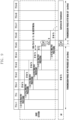
FIGS. 1A to 1F illustrate schemes for channel sensing in an unlicensed band and packet transmission after channel sensing according to an embodiment of the disclosure. -
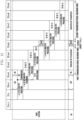
FIGS. 2 and3 depict a packet transmission scheme in an unlicensed band according toembodiment 1 of the disclosure. -
FIG. 4 is a flowchart of a packet transmission scheme in an unlicensed band according toembodiment 1 of the disclosure. -
FIG. 5 depicts a packet transmission scheme in an unlicensed band according to embodiment 2-1 of the disclosure. -
FIG. 6 is a flowchart of a packet transmission scheme in an unlicensed band according to embodiment 2-1 of the disclosure. -
FIG. 7 depicts a packet transmission scheme in an unlicensed band according to embodiment 2-2 of the disclosure. -
FIG. 8 is a flowchart of a packet transmission scheme in an unlicensed band according to embodiment 2-2 of the disclosure. -
FIG. 9 depicts a packet transmission scheme in an unlicensed band according to embodiment 3-1 of the disclosure. -
FIG. 10 is a flowchart of a packet transmission scheme in an unlicensed band according to embodiment 3-1 of the disclosure. -
FIGS. 11 to 13 depict a packet transmission scheme in an unlicensed band according to embodiments 3-2 to 3-4 of the disclosure. -
FIG. 14 is a block diagram of a device capable of transmitting data packets in an unlicensed band according to the control method of the disclosure. - Hereinafter, embodiments of the disclosure are described in detail with reference to the accompanying drawings.
- Descriptions of functions and structures well known in the art and not directly related to the disclosure may be omitted for clarity and conciseness without obscuring the subject matter of the disclosure.
- In the drawings, some elements are exaggerated, omitted, or only outlined in brief, and thus may be not drawn to scale. The same or similar reference symbols are used throughout the drawings to refer to the same or like parts.
- The aspects, features, and advantages of certain embodiments of the disclosure will be more apparent from the following detailed description taken in conjunction with the accompanying drawings. The description of the various embodiments is to be construed as exemplary only and does not describe every possible instance of the disclosure. It should be apparent to those skilled in the art that the following description is provided for illustrative purposes only and not for the purpose of limiting the disclosure as defined by the appended claims and their equivalents. The same reference symbols are used throughout the description to refer to the same parts.
- Meanwhile, it is known to those skilled in the art that blocks of a flowchart (or sequence diagram) and a combination of flowcharts may be represented and executed by computer program instructions. These computer program instructions may be loaded on a processor of a general purpose computer, special purpose computer, or programmable data processing equipment. When the loaded program instructions are executed by the processor, they create a means for carrying out functions described in the flowchart. As the computer program instructions may be stored in a computer readable memory that is usable in a specialized computer or a programmable data processing equipment, it is also possible to create articles of manufacture that carry out functions described in the flowchart. As the computer program instructions may be loaded on a computer or a programmable data processing equipment, when executed as processes, they may carry out steps of functions described in the flowchart.
- A block of a flowchart may correspond to a module, a segment or a code containing one or more executable instructions implementing one or more logical functions, or to a part thereof. In some cases, functions described by blocks may be executed in an order different from the listed order. For example, two blocks listed in sequence may be executed at the same time or executed in reverse order.
- In the description, the word "unit", "module", or the like may refer to a software component or hardware component such as an FPGA or ASIC capable of carrying out a function or an operation. However, "unit" or the like is not limited to hardware or software. A unit or the like may be configured so as to reside in an addressable storage medium or to drive one or more processors. Units or the like may refer to software components, object-oriented software components, class components, task components, processes, functions, attributes, procedures, subroutines, program code segments, drivers, firmware, microcode, circuits, data, databases, data structures, tables, arrays, or variables. A function provided by a component and unit may be a combination of smaller components and units, and it may be combined with others to compose large components and units. Components and units may be configured to drive a device or one or more processors in a secure multimedia card.
- In the description, the terminal can generally include a mobile terminal and can indicate a device that is subscribed to a mobile communication system and receives a service from the mobile communication system. The mobile terminal may be, but not limited to, a smart device such as a smartphone or a tablet PC.
- A communication device using an unlicensed band needs to perform channel sensing before transmitting a data packet in order to share a frequency channel with other devices. Channel sensing may be an operation of determining whether a wireless channel is being used by another device. For example, an LBT (listen before talk) technique may be used for channel sensing. The LBT technique is to identify whether the channel is being used by another device first before using the frequency channel and then transmit a communication signal when the channel is unused (idle) for a preset time.
- The 3GPP Rel-13 licensed assisted access (LAA) specification is a standard for combining frequency resources in the licensed and unlicensed bands, and has introduced the LBT function in the unlicensed band.
- To transmit data due to LBT, the channel should be sensed to be idle for a defer period Td and a random backoff time of 9us × N (times). The defer period Td may indicate a certain waiting time due to the radio delay and transmission priority. The range of Td and N (contention window (CW)) may vary according to the transmission priority of the data packet. The maximum channel occupancy time (MCOT) Tmcot that can be continuously occupied by one LBT operation is regulated. For example, the maximum channel occupancy time can be variously determined according to the country and transmission priority. Table 1 illustrates values for transmission priority P, defer period Td, CW range N, and channel occupancy time Tmcot defined in the 3GPP standard.
[Table 1]  (P)
(P) (T d)
(T d)
 Tmcot,p
CW (CWp )
1 25us 2 ms {3,7} 2 25us 3 ms {7,15} 3 43us 8 or 10 ms 115,31,631 4 79us 8 or 10 ms {15,31,63,127,255,511,1023} - In Table 1, the maximum channel occupancy time of 10ms may mean that the corresponding band is guaranteed not to be used by another technology for a long time. In Japan, it is prescribed to transmit for 4ms after LBT operation and then transmit again for 4ms if the channel is sensed to be idle for 34µs. The CW value may be dynamically changed within the CW range according to the HARQ result.
- In the LTE communication system, resources can be basically allocated in units of subframes of 1ms. On the other hand, the unlicensed band LBT can operate in units of us (microseconds). As the LAA base station cannot know the end point of LBT operation, the time synchronization between the PCell and the SCell may be misaligned. Hence, timing alignment may be required. For example, even if the channel is sensed to be idle as a result of LBT operation, the device wishing to transmit data in the unlicensed band may have to wait until the boundary of the next subframe to transmit data. Here, the device (e.g., base station) may transmit a reserved signal to prevent other devices from occupying the channel. The time to send a reserved signal is included in the maximum channel occupancy time of the device.
- Therefore, in the 3GPP Rel-13 LAA standard,
frame structure type 3 is introduced to shorten the time to transmit a reserved signal and increase the efficiency of the maximum channel occupancy time. Inframe structure type 3, data transmission can be started on a slot basis. For example, data transmission can also be started in the second slot. Also, inframe structure type 3, data transmission can be ended on a symbol basis. For example, in the last subframe of data transmission, the transmission may be ended at {3, 6, 9, 10, 11, 12} symbols. - Meanwhile, in 3GPP Rel-13 LAA, after successful LBT operation, the device should wait for transmission until the next subframe or slot boundary by sending a reserved signal. In addition, after successful LBT operation, several milliseconds may be additionally required depending on the processing of data. Specifically, as shown in
FIG. 1A , it may additionally take a few milliseconds to process the data received from the higher layer through the RLC layer, the MAC layer, and the PHY layer and to transmit the processed data via a radio channel. -
FIG. 1B depicts data transmission in an unlicensed band, including a process in which the device performs LBT operation and generates a packet containing transmission data. -
FIG. 1B shows an example (without using frame structure type 3) when the RLC/MAC/PHY processing time to generate one data packet is about 2ms and the transmission priority is 3 (p = 3). As shown inFIG. 1B , as the device transmits a reserved signal during the time required to generate a packet, about 3ms of the typical maximum channel occupancy time of 8ms cannot be used for data transmission. In other words, the transmission opportunity during the same time is reduced compared with the licensed band (transmission efficiency = about 5/8). - On the other hand, as shown in
FIG. 1C , when RLC/MAC/PHY processing is performed through resource allocation on a slot basis and resources are allocated in units of symbols in the last subframe by usingframe structure type 3, it is possible to increase the transmission opportunity by up to 0.86ms. However, even in the example shown inFIG. 1C , the device cannot use about 2ms for data transmission. -
FIG. 1D depicts a situation in which the device performs LBT operation and transmits data in an unlicensed band when the channel occupancy time Tmcot is limited to 4ms. - For example, in Japan, the maximum channel occupancy time Tmcot is limited to 4ms. In this case, the device can transmit successively for up to 4ms in the initial transmission after successful LBT, and transmit again for up to 4ms if the channel is unused for 34ps.
- As shown in
FIG. 1D , although the device has obtained a transmission opportunity of about 8ms in one LBT operation, data transmission is possible for 4ms (transmission efficiency = 4/8). In this case, even ifframe structure type 3 is used, the transmission opportunity will improve by about 1ms. - Meanwhile, as shown in
FIG. 1E , to increase the network resource efficiency (i.e., to improve the transmission opportunity), it is possible to prepare a data packet to be transmitted at a specific subframe first and to perform LBT operation at a time point close to the transmission time of the corresponding subframe. In this case, as the time to send a reserved signal can be reduced compared with the scheme shown inFIG. 1B or1C , the transmission opportunity can be somewhat improved. - However, although the scheme shown in
FIG. 1F is utilized, if another device uses the same band and LBT operation is delayed, it is not possible to transmit thepacket ① prepared in anticipation of TTI (n+2) as shown inFIG. 1F . In this case, the terminal fails to receive thepacket ① at TTI (n+2), and makes an ARQ retransmission request for the RLC PDU (protocol data unit) corresponding to the packet (1) when the ARQ timer expires (e.g., several tens of ms). As a result, the user experience may deteriorate when the terminal has requested a small size or latency-sensitive packet. - To solve the problems described above, the disclosure proposes a method for improving the network transmission efficiency and transmission opportunity in an unlicensed frequency band.
- For example, the disclosure can be applied to increase the efficient utilization of network resources when unlicensed frequency resources are used in combination with Rel-13 LAA. The disclosure can also be applied to techniques for combining unlicensed frequency resources such as LTE-U and Rel-14 eLAA, and to techniques utilizing unlicensed frequency resources independently such as MuLTEfire.
-
FIG. 2 depict a packet transmission scheme in an unlicensed band according toembodiment 1 of the disclosure. - Specifically,
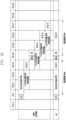
embodiment 1 of the disclosure is to improve the network transmission efficiency and transmission opportunity in an unlicensed frequency band, where the base station attempts LBT operation in accordance with the transmission time of a specific subframe. - In
embodiment 1 of the disclosure, as shown inFIG. 2 , the packet (1) to be transmitted at TTI (n+2) may be generated from TTI (n). However, LBT operation starting at TTI (n+1) is delayed and the packet (1) cannot be transmitted. Here, the base station can immediately know that the packet (1) cannot be transmitted due to the LBT delay at TTI (n+2). Hence, the base station can immediately initiate a virtual feedback process to perform the retransmission procedure. Here, performing a virtual feedback process may mean that the base station assumes a specific feedback process for the packet that has not been transmitted due to the LBT delay and performs an ARQ or HARQ operation thereon. Performing the ARQ or HARQ operation will be described with reference to the following specific embodiments. - To be more specific, the base station can start at TTI (n) to generate a packet (1) to be transmitted at TTI (n+2). The base station can start at TTI (n+1) to generate a
packet ② to be transmitted at TTI (n+3). The base station can start at TTI (n+2) to generate apacket ③ to be transmitted at TTI (n+4). - However, if LBT operation starting from TTI (n+1) is delayed and the unlicensed frequency band is occupied from a specific point in the middle of TTI (n+2), to transmit a data packet on a subframe basis, the base station may transmit a reserved signal until TTI (n+2) ends.
- Hence, the base station cannot transmit the generated
packet ① at TTI (n+2). In this case, upon determining that LBT operation is not completed at TTI (n+2), the base station can determine that a NACK signal by the virtual feedback process has been received. As a result, the base station can reprocess thepacket ① at TTI (n+2) and generate a packet (1)' from TTI (n+3) so as to transmit thepacket ① at TTI (n+5). - In addition, the base station can transmit at TTI (n+3) the packet (2) generated for transmission at TTI (n+3), and transmit at TTI (n+4) the packet (3) generated for transmission at TTI (n+4). Then, the base station can transmit at TTI (n+5) the packet (1)' generated for transmission at TTI (n+5).
- Based on the scheme described above, the base station regenerates and transmits the missing packet before receiving an ARQ retransmission request from the corresponding terminal receiving packets, thereby improving the transmission efficiency and the user experience.
- As described in
FIG. 2 , upon determining that LBT operation is not completed at TTI (n+2), the base station may assume a feedback process for the corresponding packet and perform an ARQ/HARQ operation. For example, upon determining that LBT operation is not completed at TTI (n+2), the base station can determine to perform retransmission by using a virtual feedback process related to the corresponding packet. - Here, determining to perform retransmission using a virtual feedback process may be, for example, assuming that the base station has received a NACK signal from the corresponding terminal in a virtual feedback process. As another example, the base station may determine that the virtual feedback process is in a state such as DTX (discontinuous transmission), NACK/DTX, or no transmission.
- As such, upon determining that a NACK signal by the virtual feedback process has been received, reprocessing of the
packet ① can be performed immediately. Accordingly, the transmission efficiency in the unlicensed band can be improved and the user experience on the terminal can be improved. -
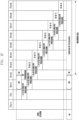
FIG. 3 depicts a variant ofembodiment 1, where the delay of LBT operation is long. When LBT operation is performed from TTI (n+1) to the middle of TTI (n+5) as shown inFIG. 3 , the base station cannot transmit the generatedpacket ① at TTI (n+2). In this case, upon determining that LBT operation is not completed at TTI (n+2), the base station can determine to perform retransmission using a virtual feedback process related to the corresponding packet. Here, determining to perform retransmission using a virtual feedback process may be assuming that the base station has received a NACK signal from the corresponding terminal in a virtual feedback process, or determining that the virtual feedback process is in a state such as DTX, NACK/DTX, or no transmission. - For example, upon determining that LBT operation is not completed at TTI (n+2), the base station can determine that a NACK signal is received in the virtual feedback process. Hence, the base station can reprocess the
packet ① at TTI (n+2) and generate a packet (1)' from TTI (n+3) so as to transmit thepacket ① at TTI (n+5). - Additionally, the base station cannot transmit the generated packet (2) and
packet ③ respectively at TTI (n+3) and TTI (n+4) due to the delay of LBT operation. Hence, the base station can determine that a NACK signal by a virtual feedback process has been received respectively at TTI (n+3) and TTI (n+4). Upon determining that the NACK signal has been received, the base station can reprocess thepacket ② at TTI (n+3) and generate a packet ②' from TTI (n+4) so as to transmit thepacket ② at TTI (n+6). Then, the base station can reprocess thepacket ③ at TTI (n+4) and generate a packet ③' from TTI (n+5) so as to transmit the packet (3) at TTI (n+7). - If the packet ①' generated via reprocessing for transmission at TTI (n+5) is not transmitted, the base station can again determine that a NACK signal by a virtual feedback process has been received. Then, the base station can reprocess the packet ①' at TTI (n+5) and generate a
packet ①" from TTI (n+6) so as to transmit the packet (1)' at TTI (n+8). - In other words, the base station may continuously determine that a NACK signal by a virtual feedback process is received until LBT operation is completed. Here, as the base station does not transmit data during the LBT operation time, the terminal can determine that the transmission is started from TTI (n+6) where data is received for the first time.
-
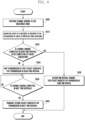
FIG. 4 is a flowchart of a packet transmission scheme in an unlicensed band according toembodiment 1 of the disclosure. At step S400, the base station may generate a first packet including data to be transmitted to the terminal in the unlicensed band. The first packet may be generated before or simultaneously with channel sensing for occupying the unlicensed band. - At step S410, the base station can determine whether channel sensing for using the unlicensed band is completed at the completion time of generating the first packet. Upon determining that channel sensing for using the unlicensed band is not completed at the completion time of generating the first packet, at step S420, the base station may omit transmission of the first packet. Specifically, upon determining that channel sensing is not completed at the completion time of generating the first packet, the base station may determine to initiate retransmission using a virtual feedback process (e.g., the base station may determine that a NACK signal is received from the terminal in the corresponding feedback process). Hence, the base station can continuously reprocess the packet (1) and generate a packet ①' .
- Upon determining that channel sensing for using the unlicensed band is completed at the completion time of generating the first packet, at step S430, the base station may transmit the first packet.
-
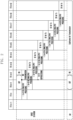
FIG. 5 depicts a packet transmission scheme in an unlicensed band according to embodiment 2-1 of the disclosure. Specifically, in embodiment 2-1, data packets corresponding to plural transmission times (TTIs) are generated at the same time to prepare for packet transmission failure due to the LBT delay. - As shown in
FIG. 5 , the base station can generate from TTI (n) a packet (1) to be transmitted at TTI (n+2) and TTI (n+3) . - If LBT operation starting from TTI (n+1) is delayed and the unlicensed frequency band is occupied from a specific point in the middle of TTI (n+2), to transmit a data packet on a subframe basis, the base station may transmit a reserved signal until TTI (n+2) ends.
- Due to the LBT delay, the base station cannot transmit the
packet ① corresponding to TTI (n+2). However, the base station can transmit thepacket ① corresponding to TTI (n+3). Hence, the base station can transmit at TTI (n+3) thepacket ① corresponding to TTI (n+3). - Meanwhile, in
FIG. 5 , thepacket ① is generated from TTI (n) for transmission at TTI (n+2) and TTI (n+3). This is only an example, and the base station may further generate from TTI (n) thepacket ① for transmission at plural TTIs after TTI (n+2). - The base station can generate from TTI (n+1) a
packet ② to be transmitted at TTI (n+3) and TTI (n+4). However, as thepacket ① corresponding to TTI (n+3) is transmitted at TTI (n+3), thepacket ② to be transmitted at TTI (n+3) cannot be transmitted. Hence, the base station can transmit at TTI (n+4) thepacket ② for transmission at TTI (n+4). - Meanwhile, in
FIG. 5 , thepacket ② is generated from TTI (n+1) for transmission at TTI (n+3) and TTI (n+4). This is only an example, and the base station may further generate from TTI (n+1) the packet (2) for transmission at plural TTIs after TTI (n+3). - By using the above-described scheme, the base station can transmit a data packet while minimizing the transmission time of a reserved signal depending on the LBT result.
-
FIG. 6 is a flowchart of a packet transmission scheme in an unlicensed band according to embodiment 2-1 of the disclosure. - At step S600, the base station can perform channel sensing to use the unlicensed band. Channel sensing may be performed using LBT operation.
- At step S610, the base station can generate a plurality of packets to be transmitted at different time intervals. For example, the base station may generate plural packets including the same data for transmission at different time intervals (TTIs).
- At step S620, the base station can determine whether channel sensing is completed at a time interval immediately after completion of packet generation. For example, if a plurality of packets corresponding to TTIs (2) to (5) are generated until TTI (1), the base station may identify whether channel sensing is completed at TTI (2).
- Upon determining that channel sensing is completed at the time interval, at step S630, the base station may transmit at the time interval the first packet generated for transmission at the time interval. For example, the base station may transmit at TTI (2) a packet corresponding to TTI (2) among the plurality of generated packets.
- Upon determining that channel sensing is not completed at the time interval, at step S640, the base station may omit transmission of the first packet generated for transmission at the time interval. For example, the base station may omit transmission of the packet corresponding to TTI (2).
- At step S650, the base station can determine whether channel sensing is completed at the next time interval. For example, the base station may identify whether channel sensing is completed at TTI (3).
- Upon determining that channel sensing is completed at the next time interval, at step S660, the base station may transmit the second packet generated for transmission at the next time interval. For example, upon determining that channel sensing is completed at TTI (3), the base station may transmit the packet corresponding to TTI (3) among the plurality of generated packets.
-
FIG. 7 depicts a packet transmission scheme in an unlicensed band according to embodiment 2-2 of the disclosure. In embodiment 2-2, the base station can generate a plurality of packets including the same data corresponding to different transmission intervals to prepare for the LBT delay. - As shown in
FIG. 7 , the base station can generate from TTI (n) a packet (1) to be transmitted at TTI (n+2). The base station can generate from TTI (n+1) the packet (1) and apacket ② for transmission at TTI (n+3). The base station can generate from TTI (n+2) thepacket ①,packet ② andpacket ③ for transmission at TTI (n+4). - If LBT operation starting from TTI (n+1) is delayed and the unlicensed frequency band is occupied from a specific point in the middle of TTI (n+2), to transmit a data packet on a subframe basis, the base station may transmit a reserved signal until TTI (n+2) ends.
- Due to the LBT delay, the base station cannot transmit the
packet ① generated corresponding to TTI (n+2). However, the base station can transmit thepacket ① corresponding to TTI (n+3). Hence, the base station can transmit at TTI (n+3) thepacket ① corresponding to TTI (n+3). However, the base station cannot transmit the packet (2) generated corresponding to TTI (n+3). - Thereafter, as the packet (1) is transmitted at TTI (n+3), the base station can generate from TTI (n+3) a
packet ②,packet ③, andpacket ④ for transmission at TTI (n+5). - Then, at TTI (n+4), the base station can transmit the
packet ② corresponding to TTI (n+4). At TTI (n+5), the base station can transmit thepacket ③ corresponding to TTI (n+5). - By using the above-described scheme, the base station can transmit a data packet while minimizing the transmission time of a reserved signal depending on the LBT result.
-
FIG. 8 is a flowchart of a packet transmission scheme in an unlicensed band according to embodiment 2-2 of the disclosure. - At step S800, the base station can perform channel sensing to use the unlicensed band. Channel sensing may be performed using LBT operation.
- At step S810, the base station may generate plural packets including different data for transmission at a specific time interval. For example, the base station may generate multiple packets including different data (e.g.,
data 1 to data n) for transmission at a given time interval (e.g., TTI). - At step S820, the base station can determine whether channel sensing is completed at a time interval immediately after completion of packet generation. For example, if a plurality of packets with
data 1 to data n are generated corresponding to a specific time interval, the base station may identify whether channel sensing is completed at the time interval. - Upon determining that channel sensing is completed at the time interval, at step S830, the base station may transmit at the time interval a packet including the first data among the plural packets generated corresponding to the time interval. For example, upon determining that channel sensing is completed at TTI (1), the base station may transmit a packet including the first data among the plural packets corresponding to TTI (1).
- Upon determining that channel sensing is not completed at the time interval, at step S640, the base station may omit transmission of the packet including the first data generated corresponding to the time interval.
- Thereafter, at step S850, the base station can determine whether channel sensing is completed at the next time interval.
- Upon determining that channel sensing is completed at the next time interval, at step S860, the base station may transmit the packet including the first data generated corresponding to the next time interval. For example, upon determining that channel sensing is completed at TTI (2), the base station may transmit the packet corresponding to TTI (2) among the plurality of generated packets.
-
FIG. 9 depicts a packet transmission scheme in an unlicensed band according to embodiment 3-1 of the disclosure. In embodiment 3-1, the base station may generate a random backoff counter in advance (e.g., before 2ms) to improve transmission efficiency. The random backoff counter is a constant for waiting for a random time to prevent collision between plural devices using the unlicensed band. - In this example, the maximum occupancy time of the unlicensed band is 8ms, and
frame structure type 3 is used. As shown inFIG. 9 , the base station can generate packets in sequence before the maximum occupancy time expires and transmit the generated packet at the corresponding time interval. - The base station can generate the random backoff counter of the next transmission period in advance before the current transmission period expires. For example, the random backoff counter can be a random integer with a uniform distribution between 0 and CWp. When the channel access priority P is 3, the allowed CWp size may be {15, 31, 63}. The allowed CWp size may be changed according to the HARQ result.
- If the random backoff counter is N, the base station needs to perform channel sensing (e.g., LBT operation) for Td + N x 9 us to occupy the next transmission period. When the channel access priority P is 3, Td may be 43ps.
- Hence, when
frame structure type 3 is used, the base station may not transmit packets for a duration corresponding to a number of symbols including the channel sensing time (Td + N x 9 us) for the next transmission period in the last subframe of the maximum occupancy time. In other words, the base station can transmit data packets for a duration corresponding to the number of symbols (Ns)satisfying Equation 1 in the last subframe.

- In
Equation 1, Td indicates a defer duration or defer period and is a randomly determined value between 25 to 79µs according to the channel access priority. N is a random backoff counter as described above. Ts is the length of one symbol and is, for example, 1000/14µs in a system transmitting data in the unlicensed band. Ns may indicate the number of symbols scheduled by the base station for data transmission in the last subframe of the occupancy time. - For example, if the random backoff counter (N) is determined to be 5, the base station needs to perform LBT operation for 88µs (43+5×9 ps). When 14 symbols are included in one subframe, the length of one symbol may be 1000/14µs (about 71.43us). Hence, the base station requires at least two symbols to perform LBT operation. The base station may transmit data packets through twelve symbols in the last subframe.
- In
FIG. 9 , at TTI (n+5) being the last subframe of the current occupancy time, the base station may transmit data packets through twelve symbols, transmit a reserved signal through the remaining two symbols, and perform LBT operation for 88ps (43+5x9ps). - Therefore, when the new occupancy period starts, the base station can utilize the maximum occupancy time.
-
FIG. 10 is a flowchart of a packet transmission scheme in an unlicensed band according to embodiment 3-1 of the disclosure. - At step S1000, the base station may generate a random backoff counter (N) corresponding to the second period before the first period for occupying the unlicensed band expires.
- At step S1010, the base station can identify the number of symbols corresponding to the time length given by Td + 9 x N (ps) . At step S1020, the base station may determine the time length for transmitting a reserved signal (RS) by subtracting the time length given by Td + 9 x N (µs) from the time length corresponding to the number of the identified symbols.
- At step S1030, the base station may transmit the RS for the determined time length through the identified number of symbols immediately before the first period expires. After RS transmission, at step S1040, the base station may perform channel sensing for the time length given by Td + 9 x N (µs) to occupy the second period.
-
FIGS. 11 to 13 depict a packet transmission scheme in an unlicensed band according to embodiments 3-2 to 3-4 of the disclosure. -
FIG. 11 depicts a packet transmission scheme of the base station when the maximum channel occupancy time Tmcot is limited to 4ms. - For example, in countries like Japan, it is prescribed to transmit for 4ms after successful LBT operation and then transmit again for 4ms if the channel is sensed to be idle for 34ps. Here, if
embodiment 3 described above is applied with some modification, the base station can transmit data without using one symbol of the subframe in the first period based onframe structure type 3. If the reserved signal is transmitted for about 37.4µs of the one unused symbol (about 71.4us) and the channel is sensed to be idle for remaining 34µs, the base station may occupy 4ms in full in the second period. -
FIG. 12 depicts a packet transmission scheme of the base station with simultaneous application ofembodiment 1 andembodiment 3 described above. - The base station may generate from TTI (n) the packet (1) to be transmitted at TTI (n+2). However, LBT operation starting at TTI (n+1) is delayed and the packet (1) cannot be transmitted. Here, the base station can immediately know at TTI (n+2) that the packet (1) cannot be transmitted due to the LBT delay. Hence, the base station can immediately initiate an ARQ or HARQ process to perform the retransmission procedure.
- Specifically, the base station can generate from TTI (n) a packet (1) to be transmitted at TTI (n+2). The base station can generate from TTI (n+1) a
packet ② to be transmitted at TTI (n+3). The base station can generate from TTI (n+2) apacket ③ to be transmitted at TTI (n+4). - However, if LBT operation starting from TTI (n+1) is delayed and the unlicensed frequency band is occupied from a specific point in the middle of TTI (n+2), to transmit a data packet on a subframe basis, the base station may transmit a reserved signal until TTI (n+2) ends.
- Hence, the base station cannot transmit the generated
packet ① at TTI (n+2). In this case, upon determining that LBT operation is not completed at TTI (n+2), the base station can determine to initiate retransmission by using a feedback process associated with the corresponding packet. For example, upon determining that LBT operation is not completed at TTI (n+2), the base station can determine that a NACK signal has been received through a virtual feedback process from the terminal so as to initiate retransmission. As a result, the base station can reprocess thepacket ① at TTI (n+2) and generate a packet (1)' from TTI (n+3) so as to transmit thepacket ① at TTI (n+5). - In addition, the base station can transmit at TTI (n+3) the packet (2) generated for transmission at TTI (n+3), and transmit at TTI (n+4) the packet (3) generated for transmission at TTI (n+4). Then, the base station can transmit at TTI (n+5) the packet ①' generated for transmission at TTI (n+5).
- However, if the maximum transmission period after successful LBT operation is 4ms, the base station can transmit data without using one symbol of the subframe based on
frame structure type 3. If the reserved signal is transmitted for about 37.4ps of the one unused symbol (about 71.4us) and the channel is sensed to be idle for remaining 34µs, the base station may occupy 4ms in full in the second transmission period. -
FIG. 13 depicts a variant of embodiment 3-1 described above when the maximum channel occupancy time Tmcot is limited to 4ms. - The base station may generate a random backoff counter in advance before the first period of 4ms expires (e.g., before 2ms).
-
FIG. 13 shows a case where the maximum channel occupancy time Tmcot is 4ms andframe structure type 3 is used. As shown inFIG. 13 , the base station can generate packets in sequence before the maximum occupancy time expires and transmit the generated packets at the corresponding time interval. - The base station can generate the random backoff counter of the next transmission period in advance before the current transmission period expires. For example, the random backoff counter can be a random integer with a uniform distribution between 0 and CWp. The allowed CWp size may be changed according to the HARQ result.
- If the random backoff counter is N, the base station needs to perform channel sensing (e.g., LBT operation) for Td + N x 9 us to occupy the next transmission period. The value of Td may be determined according to the channel access priority P.
- Hence, when
frame structure type 3 is used, the base station may not transmit packets for a duration corresponding to a number of symbols including the channel sensing time (Td + N x 9 us) for the next transmission period in the last subframe of the maximum occupancy time. - For example, if the random backoff counter (N) is determined to be 5, the base station needs to perform LBT operation for 88µs (43+5×9 µs). When 14 symbols are included in one subframe of 1ms, the length of one symbol may be 1000/14µs (about 71.43us). Hence, the base station requires at least two symbols to perform LBT operation. The base station may transmit data packets through 12 symbols in the last subframe.
- As shown in
FIG. 13 , at TTI (n+3) being the last subframe of the current transmission period, the base station may transmit data packets through 12 symbols, transmit a reserved signal through the remaining two symbols, and perform LBT operation for 88us (43+5×9µs). - After LBT operation, the base station may generate and transmit data packets for the second transmission period of 4ms.
-
FIG. 14 is a block diagram of adevice 1400 capable of transmitting data packets in an unlicensed band according to the control method of the disclosure. Thedevice 1400 may be, but not limited to, a base station that transmits data packets in the above-described embodiments. As shown inFIG. 14 , thedevice 1400 may include atransceiver 1410 and acontroller 1420. - The
transceiver 1410 is a component for transmitting and receiving signals. Thecontroller 1420 is a component for controlling the overall operation of thedevice 1400. - The
controller 1420 may be a circuit, an application-specific integrated circuit (ASIC), or at least one processor. - The
controller 1420 may generate a first packet including data to be transmitted to the terminal in the unlicensed band. When the generation of the first packet is completed, thecontroller 1420 may determine whether channel sensing for using the unlicensed band is completed. If channel sensing for using the unlicensed band is not completed, thecontroller 1420 skips transmission of the first packet. - Determining whether channel sensing is completed indicates determining whether LBT (listen-before-talk) operation for identifying whether the unlicensed band is occupied by another device is completed.
- Specifically, upon determining that channel sensing for using the unlicensed band is not completed, the
controller 1420 initiates an ARQ/HARQ operation by assuming a virtual feedback process for the packet to be transmitted. For example, upon determining that LBT operation is not completed at TTI (n+2), thecontroller 1420 determines to retransmit the corresponding packet via the virtual feedback process. - Here, determining to perform retransmission using a virtual feedback process is assuming that the
controller 1420 has received a NACK signal from the corresponding terminal in a virtual feedback process. As another example, thecontroller 1420 may determine that the virtual feedback process is in a state such as DTX (discontinuous transmission), NACK/DTX, or no transmission. - As such, the
controller 1420 determines that a NACK signal by a virtual feedback process has been received, and generate a second packet including the data. - In another embodiment, the
controller 1420 performs channel sensing for using the unlicensed band and generates plural packets to be transmitted at different time intervals. Thecontroller 1420 determines a packet to be transmitted at a time interval immediately after packet generation among the plural packets based on whether channel sensing is completed. - For example, when channel sensing is not completed in a first time interval, the
controller 1420 skips transmission of the first packet generated corresponding to the first time interval. - When channel sensing is completed in a second time interval, the
controller 1420 transmits the second packet generated corresponding to the second time interval. - Here, the first packet and the second packet include the same data and are generated for transmission in different time intervals.
- Meanwhile, the
controller 1420 may generate a plurality of packets including different data and to be transmitted in a specific time interval. Here, thecontroller 1420 can determine a packet to be transmitted in the specific time interval after completion of channel sensing based on the transmission sequence of the plural packets. - In another embodiment, the
controller 1420 may generate a random backoff counter (N) corresponding to the second period before the first period, in which the base station occupies the unlicensed band, expires. Thecontroller 1420 may identify the number of symbols based on the random backoff counter. Based on the random backoff counter and the determined number of symbols, thecontroller 1420 may determine the transmission length for a reserved signal (RS) to be transmitted through the determined number of symbols. Through the determined number of symbols immediately before expiration of the first period, thecontroller 1420 may transmit the RS for the determined transmission length and perform channel sensing to occupy the second period. - Here, the
controller 1420 may identify the number of symbols including or covering the length corresponding to the sum of the defer period (Td) and 9(µs) x N (i.e., Td + 9 x N (ps)), and may determine the RS transmission length to be the time value obtained by subtracting the sum of Td and 9(ps) x N from the time value corresponding to the identified number of symbols. - Through the device described above, the transmission efficiency in the unlicensed band can be improved and the user experience on the terminal can be improved.
- The components of the device described above can be implemented in software. For example, the controller of the device may include a non-volatile memory such as a flash memory. The non-volatile memory may store a program for enabling the function of the controller.
- In addition, the controller of the device may be implemented to include a CPU and a RAM (random access memory). The CPU of the controller may copy the above program stored in the non-volatile memory into the RAM, and then execute the copied program to perform the functions of the device as described above.
- The controller is responsible for the control of the device. The term "controller" may be used interchangeably with the term "central processor", "microprocessor", "processor", or "operating system". Also, the controller may be implemented as a single-chip system (system-on-a-chip, SOC or SoC) together with other functional units such as a communication module included in the device.
- Meanwhile, the control method of the device according to various embodiments described above can be coded as software and stored in a non-transitory readable medium. Such non-transitory readable media can be used in various devices.
- A non-transitory readable medium is not a medium that stores data for a short period of time, such as a register, cache or memory, but a medium that semi-permanently stores data and is readable by an apparatus. Specifically, the non-transitory readable medium may be a CD, a DVD, a hard disk, a Blu-ray disk, a USB, a memory card, a ROM, or the like.
Claims (6)
- A method performed by a base station, the method comprising:performing channel sensing for using an unlicensed band;generating (S400) a first packet including data to be transmitted to a terminal on an unlicensed band;determining (S410), after generation of the first packet, whether channel sensing, for using the unlicensed band, associated with the first packet is completed;skipping (S420) a transmission of the first packet, in case that the channel sensing, for using the unlicensed band, associated with the first packet is not completed;characterized inperforming a virtual feedback process associated with the first packet in case that the channel sensing, for using the unlicensed band, associated with the first packet is not completed, wherein the virtual feedback process is to generate a second packet including same data as the first packet by assuming that the base station has received a NACK signal from the terminal; andtransmitting, to the terminal, the second packet in case that the channel sensing, for using the unlicensed band, associated with the second packet is completed.
- The method of claim 1, the method further comprising:
generating a plurality of packets to be transmitted at different time intervals, wherein each of the plurality of packets includes same data;determining the first packet among the plurality of packets to be transmitted in a second time interval after a first time interval, based on whether channel sensing is completed; andskipping a transmission of a first packet generated in the first time interval in case that channel sensing is not completed in the second time interval. - The method of claim 2, further comprising:determining the second packet among the plurality of packets to be transmitted in a third time interval after the second time interval, based on whether channel sensing is completed, andtransmitting the second packet generated in the first time interval in case that channel sensing is completed in the second time interval.
- A base station (1400), comprising:a transceiver (1410) configured to transmit and receive signals; anda controller (1420) configured to:transmit, to the terminal, the second packet in case that the channel sensing for using the unlicensed band associated with the second packet is completed.perform channel sensing for using an unlicensed band;generate a first packet including data to be transmitted to a terminal on an unlicensed band,determine, after generation of the first packet, whether channel sensing, for using the unlicensed band, associated with the first packet is completed,skip a transmission of the first packet, in case that the channel sensing, for using the unlicensed band, associated with the first packet is not completed,characterized inperform a virtual feedback process associated with the first packet in case that the channel sensing, for using the unlicensed band, associated with the first packet is not completed, wherein the virtual feedback process is to generate a second packet including same data as the first packet by assuming that the base station has received a NACK signal from the terminal, and
- The base station (1400) of claim 4, wherein
the controller (1420) is further configured to:generate a plurality of packets to be transmitted at different time intervals, wherein each of the plurality of packets includes same data.perform channel sensing to use an unlicensed band,determine the first packet among the plurality of packets to be transmitted in a second time interval after a first time interval, based on whether channel sensing is completed, and
skip a transmission of a first packet generated in the first time interval in case that channel sensing is not completed in the second time interval. - The base station of claim 5, the controller is further configured to:determine the second packet among the plurality of packets to be transmitted in a third time interval after the second time interval, based on whether channel sensing is completed, andtransmit the second packet generated in the first time interval in case that channel sensing is completed in the second time interval.
Applications Claiming Priority (2)
| Application Number | Priority Date | Filing Date | Title |
|---|---|---|---|
| KR1020170006304A KR102450962B1 (en) | 2017-01-13 | 2017-01-13 | Base station and control method thereof in wireless communication system |
| PCT/KR2018/000299 WO2018131845A1 (en) | 2017-01-13 | 2018-01-05 | Base station and method for controlling same in wireless communication system |
Publications (3)
| Publication Number | Publication Date |
|---|---|
| EP3554178A1 EP3554178A1 (en) | 2019-10-16 |
| EP3554178A4 EP3554178A4 (en) | 2020-03-11 |
| EP3554178B1 true EP3554178B1 (en) | 2023-12-13 |
Family
ID=62840477
Family Applications (1)
| Application Number | Title | Priority Date | Filing Date |
|---|---|---|---|
| EP18738765.9A Active EP3554178B1 (en) | 2017-01-13 | 2018-01-05 | Base station and method for controlling same in wireless communication system |
Country Status (5)
| Country | Link |
|---|---|
| US (1) | US11076426B2 (en) |
| EP (1) | EP3554178B1 (en) |
| KR (1) | KR102450962B1 (en) |
| CN (1) | CN110199563B (en) |
| WO (1) | WO2018131845A1 (en) |
Families Citing this family (1)
| Publication number | Priority date | Publication date | Assignee | Title |
|---|---|---|---|---|
| WO2021162373A1 (en) * | 2020-02-11 | 2021-08-19 | 엘지전자 주식회사 | Multi-link edca information sharing |
Family Cites Families (25)
| Publication number | Priority date | Publication date | Assignee | Title |
|---|---|---|---|---|
| US8774209B2 (en) * | 2009-12-02 | 2014-07-08 | Qualcomm Incorporated | Apparatus and method for spectrum sharing using listen-before-talk with quiet periods |
| US9565593B2 (en) | 2013-05-20 | 2017-02-07 | Qualcomm Incorporated | Techniques for selecting subframe type or for interleaving signals for wireless communications over unlicensed spectrum |
| US9893852B2 (en) | 2013-08-19 | 2018-02-13 | Qualcomm Incorporated | Coordination of clear channel assessment across component carriers in an unlicensed or shared spectrum |
| US10313079B2 (en) | 2013-08-23 | 2019-06-04 | Qualcomm Incorporated | Common HARQ processes |
| US9398563B2 (en) * | 2013-08-23 | 2016-07-19 | Qualcomm Incorporated | LTE based multicast in unlicensed spectrum |
| US20150223075A1 (en) | 2014-01-31 | 2015-08-06 | Intel IP Corporation | Systems, methods and devices for channel reservation |
| US9949315B2 (en) * | 2014-02-24 | 2018-04-17 | Qualcomm Incorporated | Techniques for enabling asynchronous transmissions in an unlicensed radio frequency spectrum band |
| US9917676B2 (en) | 2014-06-11 | 2018-03-13 | Samsung Electronics Co., Ltd. | Harq procedure and frame structure for LTE cells on unlicensed spectrum |
| US9392614B2 (en) | 2014-06-30 | 2016-07-12 | Intel IP Corporation | Listen before talk for cellular in unlicensed band |
| KR20160004626A (en) * | 2014-07-03 | 2016-01-13 | 삼성전자주식회사 | An method and a apparatus for operating of a base station and a terminal in the wireless communication system using unlicensed frequency band |
| US10356807B2 (en) * | 2014-08-22 | 2019-07-16 | Qualcomm Incorporated | Techniques for transmitting and receiving channel occupancy identifiers over an unlicensed radio frequency spectrum band |
| WO2016048798A1 (en) | 2014-09-25 | 2016-03-31 | Nokia Technologies Oy | Listen before talk arrangement for a multi-operator scenario |
| WO2016045107A1 (en) * | 2014-09-26 | 2016-03-31 | 宇龙计算机通信科技(深圳)有限公司 | Data transmission method and system, and device having base station function |
| CN104363657B (en) * | 2014-11-06 | 2019-10-11 | 东莞宇龙通信科技有限公司 | Data transmission method, system and device with base station function |
| ES2899904T3 (en) * | 2015-03-17 | 2022-03-15 | Ericsson Telefon Ab L M | Listen-Before-Speak for multi-carrier operation in unlicensed spectrum |
| EP3272174B1 (en) | 2015-03-17 | 2019-12-18 | Telefonaktiebolaget LM Ericsson (publ) | A communication device and a method therein for determining a contention window size in a communication network |
| RU2698420C2 (en) * | 2015-04-06 | 2019-08-26 | Фудзицу Лимитед | Base station, terminal, wireless communication system, base station control method and terminal control method |
| KR102658360B1 (en) * | 2015-04-09 | 2024-04-17 | 삼성전자주식회사 | Method and apparatus for resource assignment for cellular network using unlicensed band |
| US10104691B2 (en) | 2015-04-15 | 2018-10-16 | Mediatek Inc. | Methods of listen-before-talk mechanism for opportunistic spectrum access |
| KR102278519B1 (en) * | 2015-04-22 | 2021-07-16 | 삼성전자주식회사 | Apparatus and method for transmitting and receiving data in a wireless communication system supporting unlicensed band |
| US10349446B2 (en) * | 2015-05-22 | 2019-07-09 | Lg Electronics Inc. | Channel sensing in wireless communication system, transmission method based on same, and device therefor |
| JP6165201B2 (en) * | 2015-08-05 | 2017-07-19 | 株式会社Nttドコモ | Wireless base station, user terminal, and wireless communication method |
| CN106455117B (en) * | 2015-08-07 | 2021-07-23 | 中兴通讯股份有限公司 | A contention access method and device |
| GB2542172A (en) * | 2015-09-10 | 2017-03-15 | Nec Corp | Communication system |
| KR20250026415A (en) * | 2016-01-20 | 2025-02-25 | 주식회사 윌러스표준기술연구소 | Unlicensed band channel access method, apparatus, and system |
-
2017
- 2017-01-13 KR KR1020170006304A patent/KR102450962B1/en active Active
-
2018
- 2018-01-05 WO PCT/KR2018/000299 patent/WO2018131845A1/en not_active Ceased
- 2018-01-05 CN CN201880006758.2A patent/CN110199563B/en active Active
- 2018-01-05 US US16/476,430 patent/US11076426B2/en active Active
- 2018-01-05 EP EP18738765.9A patent/EP3554178B1/en active Active
Also Published As
| Publication number | Publication date |
|---|---|
| US11076426B2 (en) | 2021-07-27 |
| US20190380150A1 (en) | 2019-12-12 |
| WO2018131845A1 (en) | 2018-07-19 |
| EP3554178A1 (en) | 2019-10-16 |
| CN110199563A (en) | 2019-09-03 |
| CN110199563B (en) | 2023-03-17 |
| KR102450962B1 (en) | 2022-10-05 |
| KR20180083704A (en) | 2018-07-23 |
| EP3554178A4 (en) | 2020-03-11 |
Similar Documents
| Publication | Publication Date | Title |
|---|---|---|
| US11438107B2 (en) | Systems and methods for allocation of uplink control channel resources in unlicensed spectrum | |
| JP7390387B2 (en) | System and method for transmission of uplink control information over multiple carriers in an unlicensed spectrum | |
| CN110366248B (en) | Uplink transmission, communication method, device, base station, terminal, storage medium | |
| US11470640B2 (en) | Downlink and uplink transmission methods and devices, base station, terminal, and storage medium | |
| KR20200036797A (en) | Random access method and apparatus in wireless communication system | |
| EP4287753A2 (en) | Random access method, device, and equipment | |
| US12167460B2 (en) | Resource indication in random access | |
| CN113630897A (en) | Method and apparatus for random access with contention resolution message repetition | |
| CN113383597A (en) | User equipment and base station for implementing repetition based on micro time slot | |
| CN111295923A (en) | Method and apparatus for random access design for unlicensed NR | |
| EP3316644B1 (en) | Transmission device, receiving device and method for uplink data | |
| JP7551137B2 (en) | Resource allocation method for transmission in unlicensed bands and device using same | |
| CN108352975A (en) | Communication method in a network supporting licensed and unlicensed frequency bands | |
| CN109890076B (en) | A data transmission method, device and storage medium on unlicensed spectrum | |
| JP7388774B2 (en) | Channel access method for transmitting in unlicensed band and device using same | |
| KR102780453B1 (en) | Method for transmitting and receiving physical channel and signals on basis of bandwidth part (bwp) in unlicensed band, and device using same | |
| CN114586440A (en) | User equipment, base station and signaling for enhanced uplink transmission | |
| CN111865501B (en) | Data retransmission method, receiving method, terminal and network device | |
| US20240097859A1 (en) | Communication apparatus and communication method for multi-ap synchronous transmission | |
| US20230413329A1 (en) | Systems and methods for new radio sidelink procedures in unlicensed spectrums | |
| US20230309113A1 (en) | User equipments, base stations, and methods | |
| EP3554178A1 (en) | Base station and method for controlling same in wireless communication system | |
| KR20250003654A (en) | Method and device for transmitting signals in a wireless communication system | |
| EP3414967B1 (en) | Client and access point communication devices allocating indicated portion of uplink frame for multiple types of control data | |
| EP4183209A1 (en) | Terminal devices, base stations, and communication methods |
Legal Events
| Date | Code | Title | Description |
|---|---|---|---|
| STAA | Information on the status of an ep patent application or granted ep patent |
Free format text: STATUS: THE INTERNATIONAL PUBLICATION HAS BEEN MADE |
|
| PUAI | Public reference made under article 153(3) epc to a published international application that has entered the european phase |
Free format text: ORIGINAL CODE: 0009012 |
|
| STAA | Information on the status of an ep patent application or granted ep patent |
Free format text: STATUS: REQUEST FOR EXAMINATION WAS MADE |
|
| 17P | Request for examination filed |
Effective date: 20190711 |
|
| AK | Designated contracting states |
Kind code of ref document: A1 Designated state(s): AL AT BE BG CH CY CZ DE DK EE ES FI FR GB GR HR HU IE IS IT LI LT LU LV MC MK MT NL NO PL PT RO RS SE SI SK SM TR |
|
| AX | Request for extension of the european patent |
Extension state: BA ME |
|
| RIC1 | Information provided on ipc code assigned before grant |
Ipc: H04W 28/02 20090101ALI20191105BHEP Ipc: H04W 74/08 20090101AFI20191105BHEP Ipc: H04W 88/08 20090101ALI20191105BHEP |
|
| A4 | Supplementary search report drawn up and despatched |
Effective date: 20200212 |
|
| RIC1 | Information provided on ipc code assigned before grant |
Ipc: H04W 74/08 20090101AFI20200206BHEP Ipc: H04W 88/08 20090101ALI20200206BHEP Ipc: H04W 28/02 20090101ALI20200206BHEP |
|
| DAV | Request for validation of the european patent (deleted) | ||
| DAX | Request for extension of the european patent (deleted) | ||
| STAA | Information on the status of an ep patent application or granted ep patent |
Free format text: STATUS: EXAMINATION IS IN PROGRESS |
|
| 17Q | First examination report despatched |
Effective date: 20200924 |
|
| GRAP | Despatch of communication of intention to grant a patent |
Free format text: ORIGINAL CODE: EPIDOSNIGR1 |
|
| STAA | Information on the status of an ep patent application or granted ep patent |
Free format text: STATUS: GRANT OF PATENT IS INTENDED |
|
| GRAS | Grant fee paid |
Free format text: ORIGINAL CODE: EPIDOSNIGR3 |
|
| GRAA | (expected) grant |
Free format text: ORIGINAL CODE: 0009210 |
|
| STAA | Information on the status of an ep patent application or granted ep patent |
Free format text: STATUS: THE PATENT HAS BEEN GRANTED |
|
| INTG | Intention to grant announced |
Effective date: 20231018 |
|
| AK | Designated contracting states |
Kind code of ref document: B1 Designated state(s): AL AT BE BG CH CY CZ DE DK EE ES FI FR GB GR HR HU IE IS IT LI LT LU LV MC MK MT NL NO PL PT RO RS SE SI SK SM TR |
|
| REG | Reference to a national code |
Ref country code: GB Ref legal event code: FG4D |
|
| REG | Reference to a national code |
Ref country code: CH Ref legal event code: EP |
|
| REG | Reference to a national code |
Ref country code: DE Ref legal event code: R096 Ref document number: 602018062577 Country of ref document: DE |
|
| REG | Reference to a national code |
Ref country code: IE Ref legal event code: FG4D |
|
| REG | Reference to a national code |
Ref country code: NL Ref legal event code: FP |
|
| PG25 | Lapsed in a contracting state [announced via postgrant information from national office to epo] |
Ref country code: GR Free format text: LAPSE BECAUSE OF FAILURE TO SUBMIT A TRANSLATION OF THE DESCRIPTION OR TO PAY THE FEE WITHIN THE PRESCRIBED TIME-LIMIT Effective date: 20240314 |
|
| REG | Reference to a national code |
Ref country code: LT Ref legal event code: MG9D |
|
| PG25 | Lapsed in a contracting state [announced via postgrant information from national office to epo] |
Ref country code: LT Free format text: LAPSE BECAUSE OF FAILURE TO SUBMIT A TRANSLATION OF THE DESCRIPTION OR TO PAY THE FEE WITHIN THE PRESCRIBED TIME-LIMIT Effective date: 20231213 |
|
| PG25 | Lapsed in a contracting state [announced via postgrant information from national office to epo] |
Ref country code: ES Free format text: LAPSE BECAUSE OF FAILURE TO SUBMIT A TRANSLATION OF THE DESCRIPTION OR TO PAY THE FEE WITHIN THE PRESCRIBED TIME-LIMIT Effective date: 20231213 |
|
| PG25 | Lapsed in a contracting state [announced via postgrant information from national office to epo] |
Ref country code: LT Free format text: LAPSE BECAUSE OF FAILURE TO SUBMIT A TRANSLATION OF THE DESCRIPTION OR TO PAY THE FEE WITHIN THE PRESCRIBED TIME-LIMIT Effective date: 20231213 Ref country code: GR Free format text: LAPSE BECAUSE OF FAILURE TO SUBMIT A TRANSLATION OF THE DESCRIPTION OR TO PAY THE FEE WITHIN THE PRESCRIBED TIME-LIMIT Effective date: 20240314 Ref country code: ES Free format text: LAPSE BECAUSE OF FAILURE TO SUBMIT A TRANSLATION OF THE DESCRIPTION OR TO PAY THE FEE WITHIN THE PRESCRIBED TIME-LIMIT Effective date: 20231213 Ref country code: BG Free format text: LAPSE BECAUSE OF FAILURE TO SUBMIT A TRANSLATION OF THE DESCRIPTION OR TO PAY THE FEE WITHIN THE PRESCRIBED TIME-LIMIT Effective date: 20240313 |
|
| REG | Reference to a national code |
Ref country code: AT Ref legal event code: MK05 Ref document number: 1641564 Country of ref document: AT Kind code of ref document: T Effective date: 20231213 |
|
| PG25 | Lapsed in a contracting state [announced via postgrant information from national office to epo] |
Ref country code: SE Free format text: LAPSE BECAUSE OF FAILURE TO SUBMIT A TRANSLATION OF THE DESCRIPTION OR TO PAY THE FEE WITHIN THE PRESCRIBED TIME-LIMIT Effective date: 20231213 Ref country code: RS Free format text: LAPSE BECAUSE OF FAILURE TO SUBMIT A TRANSLATION OF THE DESCRIPTION OR TO PAY THE FEE WITHIN THE PRESCRIBED TIME-LIMIT Effective date: 20231213 Ref country code: NO Free format text: LAPSE BECAUSE OF FAILURE TO SUBMIT A TRANSLATION OF THE DESCRIPTION OR TO PAY THE FEE WITHIN THE PRESCRIBED TIME-LIMIT Effective date: 20240313 Ref country code: LV Free format text: LAPSE BECAUSE OF FAILURE TO SUBMIT A TRANSLATION OF THE DESCRIPTION OR TO PAY THE FEE WITHIN THE PRESCRIBED TIME-LIMIT Effective date: 20231213 Ref country code: HR Free format text: LAPSE BECAUSE OF FAILURE TO SUBMIT A TRANSLATION OF THE DESCRIPTION OR TO PAY THE FEE WITHIN THE PRESCRIBED TIME-LIMIT Effective date: 20231213 |
|
| PG25 | Lapsed in a contracting state [announced via postgrant information from national office to epo] |
Ref country code: IS Free format text: LAPSE BECAUSE OF FAILURE TO SUBMIT A TRANSLATION OF THE DESCRIPTION OR TO PAY THE FEE WITHIN THE PRESCRIBED TIME-LIMIT Effective date: 20240413 |
|
| PG25 | Lapsed in a contracting state [announced via postgrant information from national office to epo] |
Ref country code: AT Free format text: LAPSE BECAUSE OF FAILURE TO SUBMIT A TRANSLATION OF THE DESCRIPTION OR TO PAY THE FEE WITHIN THE PRESCRIBED TIME-LIMIT Effective date: 20231213 Ref country code: CZ Free format text: LAPSE BECAUSE OF FAILURE TO SUBMIT A TRANSLATION OF THE DESCRIPTION OR TO PAY THE FEE WITHIN THE PRESCRIBED TIME-LIMIT Effective date: 20231213 |
|
| PG25 | Lapsed in a contracting state [announced via postgrant information from national office to epo] |
Ref country code: SK Free format text: LAPSE BECAUSE OF FAILURE TO SUBMIT A TRANSLATION OF THE DESCRIPTION OR TO PAY THE FEE WITHIN THE PRESCRIBED TIME-LIMIT Effective date: 20231213 |
|
| PG25 | Lapsed in a contracting state [announced via postgrant information from national office to epo] |
Ref country code: SM Free format text: LAPSE BECAUSE OF FAILURE TO SUBMIT A TRANSLATION OF THE DESCRIPTION OR TO PAY THE FEE WITHIN THE PRESCRIBED TIME-LIMIT Effective date: 20231213 Ref country code: SK Free format text: LAPSE BECAUSE OF FAILURE TO SUBMIT A TRANSLATION OF THE DESCRIPTION OR TO PAY THE FEE WITHIN THE PRESCRIBED TIME-LIMIT Effective date: 20231213 Ref country code: RO Free format text: LAPSE BECAUSE OF FAILURE TO SUBMIT A TRANSLATION OF THE DESCRIPTION OR TO PAY THE FEE WITHIN THE PRESCRIBED TIME-LIMIT Effective date: 20231213 Ref country code: IT Free format text: LAPSE BECAUSE OF FAILURE TO SUBMIT A TRANSLATION OF THE DESCRIPTION OR TO PAY THE FEE WITHIN THE PRESCRIBED TIME-LIMIT Effective date: 20231213 Ref country code: IS Free format text: LAPSE BECAUSE OF FAILURE TO SUBMIT A TRANSLATION OF THE DESCRIPTION OR TO PAY THE FEE WITHIN THE PRESCRIBED TIME-LIMIT Effective date: 20240413 Ref country code: EE Free format text: LAPSE BECAUSE OF FAILURE TO SUBMIT A TRANSLATION OF THE DESCRIPTION OR TO PAY THE FEE WITHIN THE PRESCRIBED TIME-LIMIT Effective date: 20231213 Ref country code: CZ Free format text: LAPSE BECAUSE OF FAILURE TO SUBMIT A TRANSLATION OF THE DESCRIPTION OR TO PAY THE FEE WITHIN THE PRESCRIBED TIME-LIMIT Effective date: 20231213 Ref country code: AT Free format text: LAPSE BECAUSE OF FAILURE TO SUBMIT A TRANSLATION OF THE DESCRIPTION OR TO PAY THE FEE WITHIN THE PRESCRIBED TIME-LIMIT Effective date: 20231213 |
|
| PG25 | Lapsed in a contracting state [announced via postgrant information from national office to epo] |
Ref country code: PL Free format text: LAPSE BECAUSE OF FAILURE TO SUBMIT A TRANSLATION OF THE DESCRIPTION OR TO PAY THE FEE WITHIN THE PRESCRIBED TIME-LIMIT Effective date: 20231213 Ref country code: PT Free format text: LAPSE BECAUSE OF FAILURE TO SUBMIT A TRANSLATION OF THE DESCRIPTION OR TO PAY THE FEE WITHIN THE PRESCRIBED TIME-LIMIT Effective date: 20240415 |
|
| PG25 | Lapsed in a contracting state [announced via postgrant information from national office to epo] |
Ref country code: PT Free format text: LAPSE BECAUSE OF FAILURE TO SUBMIT A TRANSLATION OF THE DESCRIPTION OR TO PAY THE FEE WITHIN THE PRESCRIBED TIME-LIMIT Effective date: 20240415 Ref country code: PL Free format text: LAPSE BECAUSE OF FAILURE TO SUBMIT A TRANSLATION OF THE DESCRIPTION OR TO PAY THE FEE WITHIN THE PRESCRIBED TIME-LIMIT Effective date: 20231213 |
|
| REG | Reference to a national code |
Ref country code: CH Ref legal event code: PL |
|
| PG25 | Lapsed in a contracting state [announced via postgrant information from national office to epo] |
Ref country code: LU Free format text: LAPSE BECAUSE OF NON-PAYMENT OF DUE FEES Effective date: 20240105 |
|
| REG | Reference to a national code |
Ref country code: DE Ref legal event code: R097 Ref document number: 602018062577 Country of ref document: DE |
|
| PG25 | Lapsed in a contracting state [announced via postgrant information from national office to epo] |
Ref country code: LU Free format text: LAPSE BECAUSE OF NON-PAYMENT OF DUE FEES Effective date: 20240105 Ref country code: MC Free format text: LAPSE BECAUSE OF FAILURE TO SUBMIT A TRANSLATION OF THE DESCRIPTION OR TO PAY THE FEE WITHIN THE PRESCRIBED TIME-LIMIT Effective date: 20231213 |
|
| PG25 | Lapsed in a contracting state [announced via postgrant information from national office to epo] |
Ref country code: DK Free format text: LAPSE BECAUSE OF FAILURE TO SUBMIT A TRANSLATION OF THE DESCRIPTION OR TO PAY THE FEE WITHIN THE PRESCRIBED TIME-LIMIT Effective date: 20231213 |
|
| PG25 | Lapsed in a contracting state [announced via postgrant information from national office to epo] |
Ref country code: BE Free format text: LAPSE BECAUSE OF NON-PAYMENT OF DUE FEES Effective date: 20240131 |
|
| PLBE | No opposition filed within time limit |
Free format text: ORIGINAL CODE: 0009261 |
|
| STAA | Information on the status of an ep patent application or granted ep patent |
Free format text: STATUS: NO OPPOSITION FILED WITHIN TIME LIMIT |
|
| PG25 | Lapsed in a contracting state [announced via postgrant information from national office to epo] |
Ref country code: CH Free format text: LAPSE BECAUSE OF NON-PAYMENT OF DUE FEES Effective date: 20240131 |
|
| PG25 | Lapsed in a contracting state [announced via postgrant information from national office to epo] |
Ref country code: SI Free format text: LAPSE BECAUSE OF FAILURE TO SUBMIT A TRANSLATION OF THE DESCRIPTION OR TO PAY THE FEE WITHIN THE PRESCRIBED TIME-LIMIT Effective date: 20231213 |
|
| PG25 | Lapsed in a contracting state [announced via postgrant information from national office to epo] |
Ref country code: SI Free format text: LAPSE BECAUSE OF FAILURE TO SUBMIT A TRANSLATION OF THE DESCRIPTION OR TO PAY THE FEE WITHIN THE PRESCRIBED TIME-LIMIT Effective date: 20231213 Ref country code: DK Free format text: LAPSE BECAUSE OF FAILURE TO SUBMIT A TRANSLATION OF THE DESCRIPTION OR TO PAY THE FEE WITHIN THE PRESCRIBED TIME-LIMIT Effective date: 20231213 Ref country code: CH Free format text: LAPSE BECAUSE OF NON-PAYMENT OF DUE FEES Effective date: 20240131 Ref country code: BE Free format text: LAPSE BECAUSE OF NON-PAYMENT OF DUE FEES Effective date: 20240131 |
|
| REG | Reference to a national code |
Ref country code: BE Ref legal event code: MM Effective date: 20240131 |
|
| 26N | No opposition filed |
Effective date: 20240916 |
|
| PG25 | Lapsed in a contracting state [announced via postgrant information from national office to epo] |
Ref country code: FR Free format text: LAPSE BECAUSE OF NON-PAYMENT OF DUE FEES Effective date: 20240213 |
|
| PG25 | Lapsed in a contracting state [announced via postgrant information from national office to epo] |
Ref country code: IE Free format text: LAPSE BECAUSE OF NON-PAYMENT OF DUE FEES Effective date: 20240105 |
|
| PG25 | Lapsed in a contracting state [announced via postgrant information from national office to epo] |
Ref country code: IE Free format text: LAPSE BECAUSE OF NON-PAYMENT OF DUE FEES Effective date: 20240105 Ref country code: FR Free format text: LAPSE BECAUSE OF NON-PAYMENT OF DUE FEES Effective date: 20240213 |
|
| PG25 | Lapsed in a contracting state [announced via postgrant information from national office to epo] |
Ref country code: CY Free format text: LAPSE BECAUSE OF FAILURE TO SUBMIT A TRANSLATION OF THE DESCRIPTION OR TO PAY THE FEE WITHIN THE PRESCRIBED TIME-LIMIT; INVALID AB INITIO Effective date: 20180105 |
|
| PG25 | Lapsed in a contracting state [announced via postgrant information from national office to epo] |
Ref country code: HU Free format text: LAPSE BECAUSE OF FAILURE TO SUBMIT A TRANSLATION OF THE DESCRIPTION OR TO PAY THE FEE WITHIN THE PRESCRIBED TIME-LIMIT; INVALID AB INITIO Effective date: 20180105 |
|
| PG25 | Lapsed in a contracting state [announced via postgrant information from national office to epo] |
Ref country code: FI Free format text: LAPSE BECAUSE OF FAILURE TO SUBMIT A TRANSLATION OF THE DESCRIPTION OR TO PAY THE FEE WITHIN THE PRESCRIBED TIME-LIMIT Effective date: 20231213 |
|
| PG25 | Lapsed in a contracting state [announced via postgrant information from national office to epo] |
Ref country code: TR Free format text: LAPSE BECAUSE OF FAILURE TO SUBMIT A TRANSLATION OF THE DESCRIPTION OR TO PAY THE FEE WITHIN THE PRESCRIBED TIME-LIMIT Effective date: 20231213 |
|
| PGFP | Annual fee paid to national office [announced via postgrant information from national office to epo] |
Ref country code: GB Payment date: 20251222 Year of fee payment: 9 |
|
| PGFP | Annual fee paid to national office [announced via postgrant information from national office to epo] |
Ref country code: NL Payment date: 20251223 Year of fee payment: 9 |
|
| PGFP | Annual fee paid to national office [announced via postgrant information from national office to epo] |
Ref country code: DE Payment date: 20251222 Year of fee payment: 9 |