EP3550783A1 - Internet of things device burning verification method and apparatus, and identity authentication method and apparatus - Google Patents
Internet of things device burning verification method and apparatus, and identity authentication method and apparatus Download PDFInfo
- Publication number
- EP3550783A1 EP3550783A1 EP17876168.0A EP17876168A EP3550783A1 EP 3550783 A1 EP3550783 A1 EP 3550783A1 EP 17876168 A EP17876168 A EP 17876168A EP 3550783 A1 EP3550783 A1 EP 3550783A1
- Authority
- EP
- European Patent Office
- Prior art keywords
- recording
- iot
- identity
- private key
- identity authentication
- Prior art date
- Legal status (The legal status is an assumption and is not a legal conclusion. Google has not performed a legal analysis and makes no representation as to the accuracy of the status listed.)
- Granted
Links
Images




Classifications
-
- G—PHYSICS
- G06—COMPUTING OR CALCULATING; COUNTING
- G06F—ELECTRIC DIGITAL DATA PROCESSING
- G06F21/00—Security arrangements for protecting computers, components thereof, programs or data against unauthorised activity
- G06F21/30—Authentication, i.e. establishing the identity or authorisation of security principals
- G06F21/44—Program or device authentication
-
- G—PHYSICS
- G06—COMPUTING OR CALCULATING; COUNTING
- G06F—ELECTRIC DIGITAL DATA PROCESSING
- G06F7/00—Methods or arrangements for processing data by operating upon the order or content of the data handled
- G06F7/58—Random or pseudo-random number generators
- G06F7/588—Random number generators, i.e. based on natural stochastic processes
-
- H—ELECTRICITY
- H04—ELECTRIC COMMUNICATION TECHNIQUE
- H04L—TRANSMISSION OF DIGITAL INFORMATION, e.g. TELEGRAPHIC COMMUNICATION
- H04L63/00—Network architectures or network communication protocols for network security
- H04L63/04—Network architectures or network communication protocols for network security for providing a confidential data exchange among entities communicating through data packet networks
- H04L63/0428—Network architectures or network communication protocols for network security for providing a confidential data exchange among entities communicating through data packet networks wherein the data content is protected, e.g. by encrypting or encapsulating the payload
- H04L63/0442—Network architectures or network communication protocols for network security for providing a confidential data exchange among entities communicating through data packet networks wherein the data content is protected, e.g. by encrypting or encapsulating the payload wherein the sending and receiving network entities apply asymmetric encryption, i.e. different keys for encryption and decryption
-
- H—ELECTRICITY
- H04—ELECTRIC COMMUNICATION TECHNIQUE
- H04L—TRANSMISSION OF DIGITAL INFORMATION, e.g. TELEGRAPHIC COMMUNICATION
- H04L63/00—Network architectures or network communication protocols for network security
- H04L63/06—Network architectures or network communication protocols for network security for supporting key management in a packet data network
-
- H—ELECTRICITY
- H04—ELECTRIC COMMUNICATION TECHNIQUE
- H04L—TRANSMISSION OF DIGITAL INFORMATION, e.g. TELEGRAPHIC COMMUNICATION
- H04L63/00—Network architectures or network communication protocols for network security
- H04L63/08—Network architectures or network communication protocols for network security for authentication of entities
- H04L63/083—Network architectures or network communication protocols for network security for authentication of entities using passwords
-
- H—ELECTRICITY
- H04—ELECTRIC COMMUNICATION TECHNIQUE
- H04L—TRANSMISSION OF DIGITAL INFORMATION, e.g. TELEGRAPHIC COMMUNICATION
- H04L63/00—Network architectures or network communication protocols for network security
- H04L63/08—Network architectures or network communication protocols for network security for authentication of entities
- H04L63/0876—Network architectures or network communication protocols for network security for authentication of entities based on the identity of the terminal or configuration, e.g. MAC address, hardware or software configuration or device fingerprint
-
- H—ELECTRICITY
- H04—ELECTRIC COMMUNICATION TECHNIQUE
- H04L—TRANSMISSION OF DIGITAL INFORMATION, e.g. TELEGRAPHIC COMMUNICATION
- H04L63/00—Network architectures or network communication protocols for network security
- H04L63/08—Network architectures or network communication protocols for network security for authentication of entities
- H04L63/0884—Network architectures or network communication protocols for network security for authentication of entities by delegation of authentication, e.g. a proxy authenticates an entity to be authenticated on behalf of this entity vis-à-vis an authentication entity
-
- H—ELECTRICITY
- H04—ELECTRIC COMMUNICATION TECHNIQUE
- H04L—TRANSMISSION OF DIGITAL INFORMATION, e.g. TELEGRAPHIC COMMUNICATION
- H04L67/00—Network arrangements or protocols for supporting network services or applications
- H04L67/01—Protocols
- H04L67/12—Protocols specially adapted for proprietary or special-purpose networking environments, e.g. medical networks, sensor networks, networks in vehicles or remote metering networks
-
- H—ELECTRICITY
- H04—ELECTRIC COMMUNICATION TECHNIQUE
- H04L—TRANSMISSION OF DIGITAL INFORMATION, e.g. TELEGRAPHIC COMMUNICATION
- H04L9/00—Cryptographic mechanisms or cryptographic arrangements for secret or secure communications; Network security protocols
- H04L9/08—Key distribution or management, e.g. generation, sharing or updating, of cryptographic keys or passwords
- H04L9/0894—Escrow, recovery or storing of secret information, e.g. secret key escrow or cryptographic key storage
- H04L9/0897—Escrow, recovery or storing of secret information, e.g. secret key escrow or cryptographic key storage involving additional devices, e.g. trusted platform module [TPM], smartcard or USB
-
- H—ELECTRICITY
- H04—ELECTRIC COMMUNICATION TECHNIQUE
- H04W—WIRELESS COMMUNICATION NETWORKS
- H04W12/00—Security arrangements; Authentication; Protecting privacy or anonymity
- H04W12/04—Key management, e.g. using generic bootstrapping architecture [GBA]
- H04W12/043—Key management, e.g. using generic bootstrapping architecture [GBA] using a trusted network node as an anchor
- H04W12/0431—Key distribution or pre-distribution; Key agreement
-
- H—ELECTRICITY
- H04—ELECTRIC COMMUNICATION TECHNIQUE
- H04W—WIRELESS COMMUNICATION NETWORKS
- H04W12/00—Security arrangements; Authentication; Protecting privacy or anonymity
- H04W12/06—Authentication
- H04W12/069—Authentication using certificates or pre-shared keys
-
- H—ELECTRICITY
- H04—ELECTRIC COMMUNICATION TECHNIQUE
- H04W—WIRELESS COMMUNICATION NETWORKS
- H04W12/00—Security arrangements; Authentication; Protecting privacy or anonymity
- H04W12/30—Security of mobile devices; Security of mobile applications
- H04W12/35—Protecting application or service provisioning, e.g. securing SIM application provisioning
-
- H—ELECTRICITY
- H04—ELECTRIC COMMUNICATION TECHNIQUE
- H04W—WIRELESS COMMUNICATION NETWORKS
- H04W4/00—Services specially adapted for wireless communication networks; Facilities therefor
- H04W4/70—Services for machine-to-machine communication [M2M] or machine type communication [MTC]
-
- H—ELECTRICITY
- H04—ELECTRIC COMMUNICATION TECHNIQUE
- H04W—WIRELESS COMMUNICATION NETWORKS
- H04W12/00—Security arrangements; Authentication; Protecting privacy or anonymity
- H04W12/04—Key management, e.g. using generic bootstrapping architecture [GBA]
-
- H—ELECTRICITY
- H04—ELECTRIC COMMUNICATION TECHNIQUE
- H04W—WIRELESS COMMUNICATION NETWORKS
- H04W12/00—Security arrangements; Authentication; Protecting privacy or anonymity
- H04W12/04—Key management, e.g. using generic bootstrapping architecture [GBA]
- H04W12/041—Key generation or derivation
-
- H—ELECTRICITY
- H04—ELECTRIC COMMUNICATION TECHNIQUE
- H04W—WIRELESS COMMUNICATION NETWORKS
- H04W12/00—Security arrangements; Authentication; Protecting privacy or anonymity
- H04W12/12—Detection or prevention of fraud
- H04W12/121—Wireless intrusion detection systems [WIDS]; Wireless intrusion prevention systems [WIPS]
- H04W12/122—Counter-measures against attacks; Protection against rogue devices
-
- H—ELECTRICITY
- H04—ELECTRIC COMMUNICATION TECHNIQUE
- H04W—WIRELESS COMMUNICATION NETWORKS
- H04W12/00—Security arrangements; Authentication; Protecting privacy or anonymity
- H04W12/60—Context-dependent security
- H04W12/69—Identity-dependent
- H04W12/71—Hardware identity
Definitions
- the present disclosure relates to the technical field of data processing of Internet of Things, and particularly to recording and verification methods and apparatuses of Internet of Things devices, and identity authentication methods and apparatuses.
- the Internet of Things is an interconnection network in which things are interconnected. Therefore, the core and foundation of the Internet of Things is the Internet, and is a network that is extended and expanded from the Internet. Moreover, a user end of the Internet of Things extends and expands to any objects for conducting information exchanges and communications, i.e., things meet.
- IoT users use IoT devices for conducting information exchanges.
- each IoT device needs to use an identity to uniquely identify itself.
- the identity and a private key used by the IoT device during communications are pre-recorded in the IoT device.
- identities and private keys may be maliciously stolen easily because certain types of associations exist between the IoT devices and because the identities and the private keys are directly recorded in storage spaces of the IoT devices. Furthermore, when subsequent communications are conducted between the IoT devices, a situation in which another device pretends to be an IoT device to request services from an Internet of Things service platform may occur. This cannot guarantee the security of the Internet of Things services and secure operations of the server platform side.
- the inventors have discovered that the legality of a recording production line is first verified by a recording and verification apparatus before identities and device private keys are recorded.
- the identities and the device private keys are allocated to IoT devices by the recording and verification apparatus in a centralized manner upon successful verification, and the identities and device private keys are directly recorded into a trusted execution environment when recording is performed on the IoT devices. Therefore, on the one hand, the recording and verification apparatus assigns the identities and the device private keys in a centralized manner after verifying the recording production line, and on the other hand, the identities and the device private keys are also recorded in the trusted execution environment to ensure the security of the identities and the device private keys.
- an authorization code is generated using the IoT device.
- the authorization code includes not only a device private key recorded in a trusted execution environment, but also a random number generated by an identity authentication apparatus of a platform side. This ensures that only an IoT device that initiates an IoT service request can pass an identity authentication of the platform side, thus improving the security of IoT services and ensuring secure operations of the platform side.
- the present application provides a recording and verification method of IoT identity information and an authentication method for an identity of an IoT device, which use a recording and verification apparatus to assign identity identifiers and public and private keys to IoT devices, and distribute the identity identifiers and the public and private keys to a recording production line to facilitate recording under trusted execution environments of the IoT devices in a centralized manner, thereby reducing the risk and possibility of the identity identifiers and the device private keys being stolen.
- an identity authentication apparatus on a platform side can verify an identity of the IoT device through an authorization code generated by the IoT device, and can also enhance the security of IoT identity authentication.
- the present application also provides a recording and verification apparatus, an identity authentication apparatus, and an identity authentication system for ensuring implementations and applications of the above method in practice.
- the present application discloses a method for verifying and recording of an Internet of Things device, which is applied to a recording and verification apparatus.
- the method includes: a recording and verification apparatus receiving a recording request sent by a recording production line, the recording request being used for requesting the recording and verification apparatus to assign an identity identifier and a device key to an IoT device to be recorded, and the device key including a device private key and a device public key; the recording and verification apparatus verifying whether the recording request is legitimate, and assigning the identity identifier and the device key to the IoT device to be recorded if affirmative; and the recording and verification apparatus sending the identity identifier and the device private key to the recording production line, so that the recording production line records the identity identifier and the device private key into the IoT device.
- the device key includes the device private key and the device public key.
- the method further includes: the recording and verification apparatus receiving a recording result returned by the recording production line, wherein the recording result is used for indicating a correspondence relationship between the IoT device and the identity identifier and the device private key that are recorded; and the recording and verification apparatus sending the recording result to an identity authentication apparatus, so that the identity authentication apparatus verifies whether the device private key of the IoT device is legitimate based on the recording result when authenticating the IoT device.
- the recording and verification apparatus sending the identity identifier and the device private key to the recording production line, so that the recording production line records the identity identifier and the device private key into the IoT device includes the recording and verification apparatus sending the identity identifier and the device private key to the recording production line, so that recording production line records the identity identifier and the device private key into the IoT device in a trusted execution environment, wherein the IoT device has a separate storage space that acts as the trusted execution environment.
- the present application discloses a method for recording an Internet of Things device, which is applied to a recording production line.
- the method includes sending a recording request to a recording and verification apparatus, wherein the recording request is used for requesting the recording and verification apparatus to assign an identity identifier and a device key to an IoT device to be recorded, and the device key includes a device private key and a device public key; recording the identity identifier and the device private key into the IoT device in response to the identity identifier and the device key sent by the recording and verification apparatus; and returning a recording result to the recording and verification apparatus, the recording result being used for indicating a correspondence relationship between the IoT device and the identity identifier and the device private key that are recorded.
- the present application discloses an identity authentication method for an Internet of Things device.
- the method is applied to an identity authentication apparatus in an identity authentication platform.
- the identity authentication platform is located in an identity authentication system, and the identity authentication system further includes an Internet of Things service platform and an Internet of Things device.
- the IoT service platform is used for providing an IoT service to the IoT device.
- the method includes the identity authentication apparatus generating a random number according to a request identifier in a request for random number generation in response to the request for random number generation sent by the IoT device to the identity authentication apparatus, the IoT device having an independent storage space which acts as a trusted execution environment, and a device private key and an identity identifier of the IoT device being recorded in the trusted execution environment; the identity authentication apparatus sending the random number to the IoT device, so that the IoT device generates an authorization code based on the random number and the device private key, and initiates a service request to an IoT service platform, the service request including a service content and the authorization code; the identity authentication apparatus verifying whether the authorization code is legitimate in response to the authorization code sent by the IoT service platform to the identity authentication apparatus; and the identity authentication apparatus confirming that an identity of the IoT device is legitimate if affirmative, and the identity authentication apparatus confirming that the identity of the IoT device is illegitimate if not.
- the authorization code includes the device private key and the random number
- the identity authentication apparatus verifying whether the authorization code is legitimate in response to the authorization code sent by the IoT service platform to the identity authentication apparatus includes the identity authentication apparatus verifying whether the random number in the authorization code sent by the IoT service platform is consistent with the generated random number, and whether the device private key is the device private key included in a recording result sent by a recording and verification apparatus.
- the method further includes the identity authentication apparatus sending a session key generation instruction to the IoT service platform, wherein the session key generation instruction is used for instructing the IoT service platform to generate a session key; and the identity authentication apparatus sending the session key returned by the IoT service platform to the IoT device, so that the IoT server platform and the IoT device conduct communications using the session key.
- the method further includes the identity authentication apparatus deleting the recording result related to the identity identifier or the device private key that is leaked in an event that the identity identifier or the device private key is leaked from the trusted execution environment.
- the method further includes the identity authentication apparatus deleting the identity identifier and the device private key recorded in the IoT device in an event that the identity identifier or the device private key is leaked from the trusted execution environment.
- the present application further includes a recording and verification apparatus for an Internet of Things device.
- the recording and verification apparatus includes a first receiving unit configured to receive a recording request sent by a recording production line, the recording request being used for requesting the recording and verification apparatus to assign an identity identifier and a device key to an IoT device to be recorded, and the device key including a device private key and a device public key; a license verification unit configured to verify whether the recording request is legitimate; an allocation unit configured to the identity identifier and the device key to the IoT device to be recorded if a result of the license verification unit is affirmative; and a first sending unit configured to send the identity identifier and the device private key to the recording production line, so that the recording production line records the identity identifier and the device private key into the IoT device.
- the apparatus further includes a second receiving unit configured to a recording result returned by the recording production line, wherein the recording result is used for indicating a correspondence relationship between the IoT device and the identity identifier and the device private key that are recorded; and a second sending unit configured to send the recording result to an identity authentication apparatus, so that the identity authentication apparatus verifies whether the device private key of the IoT device is legitimate based on the recording result when authenticating the IoT device.
- the first sending unit is specifically configured to send the identity identifier and the device private key to the recording production line, so that recording production line records the identity identifier and the device private key into the IoT device in a trusted execution environment, wherein the IoT device has a separate storage space that acts as the trusted execution environment.
- the present application also includes a recording apparatus for an Internet of Things device.
- the apparatus includes a third sending unit configured to send a recording request to a recording and verification apparatus, wherein the recording request is used for requesting the recording and verification apparatus to assign an identity identifier and a device key to an IoT device to be recorded, and the device key includes a device private key and a device public key; a recording unit configured to record the identity identifier and the device private key into the IoT device in response to the identity identifier and the device key sent by the recording and verification apparatus; and a result returning unit configured to return a recording result to the recording and verification apparatus, the recording result being used for indicating a correspondence relationship between the IoT device and the identity identifier and the device private key that are recorded.
- the present application further includes an identity authentication apparatus for the Internet of Things device.
- the identity authentication apparatus is integrated into an identity authentication platform, and the identity authentication platform is located in an identity authentication system.
- the identity authentication system further includes an IoT service platform and an IoT device.
- the IoT service platform is configured to provide an IoT service to the IoT device.
- the identity authentication apparatus includes a random number generation unit configured to generate a random number according to a request identifier in a request for random number generation in response to the request for random number generation sent by the IoT device to the identity authentication apparatus, the IoT device having an independent storage space which acts as a trusted execution environment, and a device private key and an identity identifier of the IoT device being recorded in the trusted execution environment; a random number sending unit configured to send the random number to the IoT device, so that the IoT device generates an authorization code based on the random number and the device private key, and initiates a service request to an IoT service platform, the service request including a service content and the authorization code; an authorization code verification unit configured to verify whether the authorization code is legitimate in response to the authorization code sent by the IoT service platform to the identity authentication apparatus; a first confirmation unit configured to confirm that an identity of the IoT device is legitimate if a result of the authorization code verification unit is positive; and a second confirmation unit configured to confirm that the identity of the I
- the authorization code verification unit includes a verification subunit configured to verify whether the random number in the authorization code sent by the IoT service platform is consistent with the generated random number, and whether the device private key is the device private key included in a recording result sent by a recording and verification apparatus.
- the apparatus further includes a fourth sending unit configured to send a session key generation instruction to the IoT service platform, wherein the session key generation instruction is used for instructing the IoT service platform to generate a session key; and a fifth sending unit configured to send the session key returned by the IoT service platform to the IoT device, so that the IoT server platform and the IoT device conduct communications using the session key.
- a fourth sending unit configured to send a session key generation instruction to the IoT service platform, wherein the session key generation instruction is used for instructing the IoT service platform to generate a session key
- a fifth sending unit configured to send the session key returned by the IoT service platform to the IoT device, so that the IoT server platform and the IoT device conduct communications using the session key.
- the apparatus further includes a first deletion unit configured to delete the recording result related to the identity identifier or the device private key that is leaked in an event that the identity identifier or the device private key is leaked from the trusted execution environment.
- the apparatus further includes a second deletion unit configured to delete the identity identifier and the device private key recorded in the IoT device in an event that the identity identifier or the device private key is leaked from the trusted execution environment.
- the present application further includes an identity authentication system for an Internet of Things device.
- the identity authentication system includes an identity authentication platform, an Internet of Things device, and an Internet of Things service platform.
- the identity authentication platform includes the foregoing recording and verification apparatus, and the foregoing identity authentication apparatus.
- the present application includes the following advantages.
- a production license of a recording production line is first verified by a recording and verification apparatus before the recording production line records an IoT device. If the verification is passed, the IoT device is then assigned with an identity identifier, corresponding device public key and device private key. The identity identifier and the device private key are both recorded in a trusted execution environment of the IoT device. As such, the security of the recorded IoT device is greatly increased.
- the recording production line can also request identity identifiers and device public and private keys of IoT devices in batches from the recording and verification apparatus, thereby improving the efficiency of recording.
- the recording identity apparatus sends a recording result to an identity authentication apparatus for storage, thereby registering the recorded IoT device. This allows a subsequent identity verification to be successful only for a registered IoT device, and improve the security of a subsequent process of identity authentication of the IoT device.
- a request identifier of an IoT service request is first generated before an IoT device initiates the service request.
- An identity authentication apparatus then generates a random number based on the request identifier.
- the IoT device generates a unique authorization code based on the random number returned by the identity authentication apparatus, thereby ensuring that only the IoT device that initiates the IoT request can pass the verification of the identity authentication apparatus. Therefore, the security of identity verification is also improved, ensuring the security of the IoT service is thereby guaranteed.
- An Internet of Things device refers to a device that interacts with information in the Internet of Things (IoT), such as a smart appliance.
- IoT Internet of Things
- An identity identifier of an IoT device can uniquely identify the IoT device in the Internet of Things.
- a Trusted Execution Environment is a secure area on a main processor of an IoT device that guarantees the security, confidentiality, and integrity of codes and data stored in the secure area.
- a device key includes a device public key and a device private key, with the device public key and the device private key being used symmetrically.
- a server side uses the device public key to decrypt the data. Otherwise, when the server side encrypts data using the device public key, the IoT device decrypts the data using the device private key.
- FIG. 1 is a framework diagram of a scenario of a recording and verification method of an Internet of Things device in a practical application according to the embodiments of the present application.
- a recording manufacturer needs to record device information of an IoT device when producing the IoT device.
- an assembly line used by the recording manufacturer to record the IoT device is called a recording production line.
- the recording production line 102 in FIG. 1 can send a recording license that is pre-agreed with a recording and verification apparatus 101 in FIG. 1 to the recording and verification apparatus through a recording request, requesting the recording and verification apparatus 101 to assign an identity identifier, a device public key, and a device private key to an IoT device 103 to be recorded.
- the identity identifier can uniquely identify the IoT device in the Internet of Things, and the device public key and the device private key are used symmetrically.
- a server side uses the device public key to decrypt the data. Otherwise, when the server side encrypts data using the device public key, the IoT device decrypts the data using the device private key.
- the recording and verification apparatus then verifies the recording license. If legitimate, the recording and verification apparatus assigns an identity identifier, a device public key and a device private key to the IoT device to be recorded, and send thereof to the recording production line.
- the recording production line records the identity identifier and the device private key into the IoT device.
- a logistics network device will return a recording result, for example, what information of device private key is recorded in which IoT device, to the recording production line.
- the recording production line then sends the recording result to the recording and verification apparatus 101.
- the recording and verification apparatus 101 can also transmit the recording result to an identity authentication apparatus 104 to register the successfully-recorded IoT device in the identity authentication apparatus 104.
- FIG. 2 shows a flowchart of an embodiment of a method for verifying and recording of an Internet of Things device of the present application.
- the present embodiment may include the following steps.
- Step 201 A recording production line sends a recording request to a recording and verification apparatus.
- the recording license can be included in a recording request and sent to a recording and verification apparatus.
- the recording request is used for requesting the recording and verification apparatus to assign an identity identifier, and a pair of device public key and a device private key to an IoT device to be recorded.
- the recording license is a serial number for a recording manufacturer authorizes the recording production line to record into the IoT device.
- the serial number can be composed of characters and/or numbers, for example, "AKJ20151012", etc.
- "AKJ” can represent the recording manufacturer's code, and "20151012" is used for indicating a time, etc.
- the recording and verification apparatus can pre-store a legitimate recording license "AKJ1234" of the recording production line, so as to verify the legitimacy of a received recording license.
- a recording request may be an application for allocation of identity identifiers and device keys to a plurality of IoT devices in batch at one time.
- an allocation of IoT devices in batch can be implemented under a circumstance that the number of communications between the recording and verification apparatus and the recording production line is reduced.
- a recording request can apply for an allocation of identity identifier and a device key to a single IoT device.
- Step 202 The recording and verification apparatus verifies whether the recording request is legitimate, and the process proceeds to step 203 if affirmative.
- the recording and verification apparatus can implement verification of the legitimacy of the recording request by verifying the legitimacy of a recording license in the recording request. For example, a received recording license that is sent by the recording production line can be compared based on a pre-stored recording license. The recording license in the recording request is considered to be legitimate if they are consistent, and is considered to be illegitimate if not.
- the recording and verification apparatus can use a separate database to store recording licenses, for example, storing correspondence relationships between each manufacturer and respective recording license(s) permitted thereby. For example, a recording license number extracted from a recording request by the recording and verification apparatus is "AKJ1234", and the recording request is sent by a recording production line of a recording manufacturer having a code of "AKJ".
- the recording and verification apparatus can find a recording license number corresponding to "AKJ" from the database as "AKJ1234". In this case, it is considered to be legitimate. If they are not consistent, it is considered to be illegitimate, and the recording and verification apparatus can deny the recording request sent by the recording production line, and no longer assign any identity identifier, device public key and private key to the IoT device to be recorded.
- Step 203 The recording and verification apparatus assigns an identity identifier and device keys to the IoT device to be recorded.
- the recording and verification apparatus then assigns a unique identity identifier to the IoT device to be recorded, and a pair of device keys which include a device public key and a device private key.
- the recording and verification apparatus may randomly generate a different serial number for each IoT device according to a method for producing unique serial numbers, or assign a different serial number to each IoT device according to a preset manner.
- the recording and verification apparatus may maintain an identity information table in which a batch of identity identifiers to be assigned and respective device keys (including a device public key and a device private key) corresponding to each identity identifier. The recording and verification apparatus can sequentially obtain an identity identifier and device keys from the information table to be allocated to the IoT device.
- the recording production line can send the recording request to the recording and verification apparatus by means of a digital signature.
- the recording and verification apparatus can also verify the signature after receiving the recording request of digital signature, and consider the recording license to be legitimate only if the signature is valid.
- Step 204 The recording and verification apparatus sends the identity identifier and a device private key to the recording production line.
- the recording and verification apparatus After assigning the identity identifier, the device public key, and the device private key are assigned, the recording and verification apparatus sends the identity identifier and the device private key to the recording production line.
- Step 205 The recording production line records the identity identifier and the device private key to the corresponding IoT device.
- the recording production line can record the identity identifier and device private key into the IoT device.
- the recording and verification apparatus can record the identity identifier and the device private key to a place that is set aside as a trusted execution environment in the IoT device.
- the Trusted Execution Environment is a security zone on a main processor of the IoT device, which can ensure the security, confidentiality and integrity of codes and data that are loaded in the security zone.
- TEE can provide an isolated execution environment, and security features that are provided include isolated execution, integrity of trusted applications, confidentiality of trusted data, and secure storage, etc.
- Step 206 The recording production line sends a recording result to the recording and verification apparatus.
- a recording result of which identity identifier and device private key is recorded in which IoT device is sent to the recording and verification apparatus can be, for example, an identity of identifier ("123456789") recorded in the IoT device A, and the private key ("XKNHJH”) of the device.
- Step 207 The recording and verification apparatus sends the recording result to the identity authentication apparatus.
- the recording and verification apparatus then sends the recording result to the identity authentication apparatus, and the identity authentication apparatus stores the recording result, thereby registering the successfully-recorded IoT device on a platform side.
- a production license of a recording production line is first verified by a recording and verification apparatus before the recording production line records an IoT device. If the verification is passed, the IoT device is then assigned with an identity identifier, corresponding device public key and device private key. The identity identifier and the device private key are both recorded in a trusted execution environment of the IoT device. As such, the security of the recorded IoT device is greatly increased.
- the recording production line can also request identity identifiers and device public and private keys of IoT devices in batches from the recording and verification apparatus, thereby improving the efficiency of recording.
- the recording identity apparatus sends a recording result to an identity authentication apparatus for storage, thereby registering the recorded IoT device. This allows a subsequent identity verification to be successful only for a registered IoT device, and improve the security of a subsequent process of identity authentication of the IoT device.
- an identity authentication system may include an IoT service platform 301 and an identity authentication platform 302, and an IoT device 303.
- the identity authentication platform 302 may include an identity authentication apparatus 104 and a recording and verification apparatus 101.
- a plurality of IoT devices 103 may exist. After recording a device private key and an identity identifier to the IoT device 103, the device verification key 101 sends a recording result to the identity authentication apparatus 104, so that the successfully-recorded IoT device 103 is registered in the identity authentication apparatus 104.
- the identity authentication apparatus 104 can store the recording result.
- the IoT service platform 301 may be a third-party platform capable of providing Internet of Things (IoT) services to the IoT device 103, for example, a shopping platform capable of communicating with the IoT device 103 to implement online ordering of the IoT device 103, a manufacturer, etc.
- the IoT device 103 may be a smart home appliance produced by a smart home appliance manufacturer, such as a smart refrigerator, etc., and may initiate a service request for online ordering of a certain food to the IoT service platform 301 in response to detecting a lack of the food in the refrigerator.
- the identity authentication platform 302 verifies an identity of the IoT device 103 when the IoT device 303 requests an IoT service from the IoT service platform 301, and allows the IoT service platform 301 to provide the IoT service to the IoT devices if the identity is legitimate.
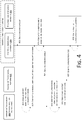
- FIG. 4 shows a flowchart of an embodiment of a method for identity authentication of an Internet of Things device.
- the method is applied to an identity authentication apparatus in an identity authentication platform.
- the authentication platform is located in an identity authentication system, and the identity authentication system further includes an Internet of Things service platform and an Internet of Things device.
- the Internet of Things service platform is used for providing Internet of Things services to the Internet of Things device.
- the embodiment may include the following step.
- Step 400 The identity verification device stores a correspondence relationship between the IoT device and an identity identifier and a device private key that are recorded in response to a recording result sent by the recording and verification apparatus.
- the recording and verification apparatus in response to receiving a recording result returned by a recording production line, sends the recording result to the identity verification device connected thereto.
- the identity verification device can store the recording result.
- the recording result includes an identity identifier of an IoT device and a correspondence relationship between device private keys recorded in the IoT device.
- this step can also be performed at any step before the identity verification device performs verification on the IoT device at step 408, and an order thereof does not affect implementations of the present embodiment.
- Step 401 The IoT device reads the identity identifier from a trusted execution environment, and generates a request identifier for identifying a current IoT service request of the IoT device.
- the IoT device reads the recorded identity identifier from the trusted execution environment, to allow a subsequent generation of an authorization code corresponding to the identity identifier therefor.
- the IoT device can generate a request identifier (sid) for an IoT service request.
- the request identifier can uniquely identify the IoT service request initiated by the IoT device, for example, a string or a serial number consisting of letters and/or numbers, etc.
- Step 402 The IoT device sends a request for random number generation to the identity authentication apparatus in the identity authentication platform, wherein the random number request includes the request identifier.
- the IoT device puts the generated request identifier into the request for random number generation, which is sent to the identity authentication apparatus in the identity authentication platform.
- the request for random number generation is simultaneously used for requesting the identity authentication apparatus to generate a random number for the current IoT service request.
- Step 403 The identity authentication apparatus generates a random number according to the request identifier.
- the identity authentication apparatus After receiving the request for random number generation sent by the IoT device, the identity authentication apparatus generates a random number for the IoT device according to the request identifier. Specifically, the random number may be generated using a clock and the request identifier + a timestamp.
- An example is AJKBJ010-20160508, in which "AJKBJ010" is a request identifier used for uniquely identifying an IoT request initiated by one device, and "20160508" is the time.
- Step 404 The identity authentication apparatus sends the generated random number to the IoT device.
- the identity authentication apparatus sends the generated random number to the IoT device.
- Step 405 The IoT device generates an authorization code corresponding to the identity identifier according to the random number and the device private key.
- the IoT device generates an authorization code for the IoT service request based on the received random number and the device private key read from the trusted execution environment.
- the authorization code includes information of the device private key, the request identifier, and the random number, and can be used for identifying the legitimacy of the IoT device that currently initiates the IoT service request.
- Step 406 The IoT device initiates a service request to the IoT service platform, wherein the service request may include service content and the authorization code.
- the IoT device After the authorization code is generated, the IoT device initiates a service request to the IoT service platform, wherein the service request includes service content that is needed from the IoT service platform, and the generated authorization code.
- the authorization code may be transmitted after being digitally signed by a public key of the IoT service platform.
- the service content is used for indicating a IoT service that the IoT device needs to be provided by the IoT service platform. For example, a certain smart refrigerator may request an online product shopping service from the IoT service platform.
- Step 407 The IoT service platform sends the authorization code in the service request to the identity authentication apparatus.
- the IoT service platform can decrypt the service request using its own private key upon receiving the service request to obtain the authorization code and the service content.
- the authorization code needs to be sent to the identity authentication apparatus for identity authentication of the IoT device.
- Step 408 The identity authentication apparatus verifies whether the authorization code is legitimate. If affirmative, the process proceeds to step 409. If not, the process proceeds to step 410.
- the identity authentication apparatus After receiving the authorization code, the identity authentication apparatus verifies information such as a device private key, a random number, and a request identifier included in the authorization code. Specifically, for the device private key, the identity authentication apparatus may check whether the device private key is a device private key that has been sent by the recording and verification apparatus and corresponds to the identity of the IoT device, i.e., whether the IoT device corresponding to the device private key is previously registered in the identity authentication apparatus. For the random number, the identity authentication apparatus verifies whether it is consistent with the random number generated at step 403. For the request identifier, the identity authentication apparatus verifies whether it is consistent with the received request identifier that is sent by the IoT device at step 402.
- Step 409 The identity authentication apparatus confirms that an identity of the IoT device is legitimate.
- step 409 is performed when verification of the device private key, the random number, and the request identifier is passed.
- Step 410 The identity authentication apparatus confirms that an identity of the IoT device is illegitimate.
- the identity of the IoT device is illegitimate.
- verification of one of the device private key, the random number, or the request identifier fails, the identity of the IoT device can be determined to be illegitimate. As such, the security of identity authentication can be further improved.
- the method may further include:
- Step B The identity authentication apparatus sends a session key generation instruction to the IoT service platform, wherein the session key generation instruction is used for instructing the IoT service platform to generate a session key.
- the identity authentication apparatus After verifying that the identity of the IoT device is legitimate, the identity authentication apparatus sends an instruction to the IoT service platform for generating a session key, triggers the IoT service platform to generate a session key.
- the session key can be used for subsequent secure communications between IoT devices.
- Step C The identity authentication apparatus sends the session key returned by the IoT service platform to the IoT device.
- the IoT service platform sends the session key to the identity authentication apparatus.
- the identity authentication apparatus then sends the session key to the IoT device of which the legitimacy of the identity has been successful verified.
- the identity authentication apparatus may encrypt the session key using the device public key of the IoT device and then send the encrypted session key.
- Step D The IoT device and the IoT service platform conduct communications using the session key.
- the IoT device decrypts the encrypted session key with its own device private key, thereby obtaining the session key for conducting communications with the IoT service platform.
- the IoT service platform can provide a requested IoT service thereof to the IoT device through a secure communication that has been established.
- the present embodiment may further include: after step 409 or step 410:
- Step F If the identity identifier or the device private key is leaked from the trusted execution environment, the identity authentication apparatus deletes a recording result related to the recorded identity identifier or the recorded device private key.
- the identity authentication apparatus deletes a recording result related to the leaked identity identifier or device private key that is stored.
- the present embodiment may further include: after step 409 or step 410: Step G: If the identity identifier or the device private key is leaked from the trusted execution environment, the identity authentication apparatus deletes the identity and the device private key recorded in the IoT device.
- the identity authentication apparatus may also delete the leaked identity identifier and device private key that are recorded in the IoT device.
- an IoT device before initiating a current IoT service request, first generates a request identifier of the service request, and then requests an identity authentication apparatus to generate a random number according to the request identifier. The IoT device then generates a unique authorization code based on the random number returned by the identity authentication apparatus. This therefore ensures that only the IoT device that initiates the IoT request can pass the verification of the identity authentication apparatus, thereby improving the security of identity authentication as compared with the existing technologies, and ensuring the security of IoT services.
- the present application further provides an embodiment of an apparatus of recording and verification of an IoT device.
- the recording and verification apparatus can include a receiving unit 501 configured to receive a recording request sent by a recording production line, wherein the recording request is used for requesting the recording and verification apparatus to assign an identity identifier and a device key to an IoT device to be recorded, the device key including a device private key and a device public key; a license verification unit 502 configured to verify whether the recording request is legitimate; an allocation unit 503 configured to allocate the identity identifier and the device key to the IoT device to be recorded if a result of the license verification unit is affirmative; and a first sending unit 504 configured to send the identity identifier and the device private key to the recording production line, so that the recording production line records the identity identifier and the device private key into the corresponding Internet of Things device.
- the recording and verification apparatus may further include a second sending unit 505 configured to send a recording result returned by the recording production line to an identity authentication apparatus, wherein the recording result is used for indicating a correspondence relationship between the IoT device and the identity identifier and the device private key that are recorded.
- a second sending unit 505 configured to send a recording result returned by the recording production line to an identity authentication apparatus, wherein the recording result is used for indicating a correspondence relationship between the IoT device and the identity identifier and the device private key that are recorded.
- the recording and verification apparatus before the recording production line performs recording on the IoT device, the recording and verification apparatus first performs verification on a production license of the recording production line. If the verification is passed, the identity identifier, the device public key, and the device private key are allocated to the IoT device. The identity identifier and the device private key are recorded in a trusted execution environment of the IoT device, which greatly increases the security of the recorded IoT device. Furthermore, the recording production line can also request identity identifiers of IoT devices and device public and private keys in batch from the recording and verification apparatus, thus improving the efficiency of recording.
- the recording and verification apparatus sends a recording result to the identity authentication apparatus for storage, thereby registering the recorded IoT device. This allows only the registered IoT device to pass a subsequent identity authentication, thus improving the security of a subsequent process of identity authentication of the IoT device.
- the present application further provides another embodiment of a recording apparatus for an Internet of Things device.
- the recording apparatus may be integrated into a recording production line, and the recording apparatus may include a third sending unit configured to send a recording request to a recording and verification apparatus, wherein the recording request is used for requesting the recording and verification apparatus to assign an identity identifier and a device key to an IoT device to be recorded, and the device key includes a device private key and a device public key; a recording unit configured to record the identity identifier and the device private key into the IoT device in response to the identity identifier and the device key sent by the recording and verification apparatus; and a result returning unit configured to return a recording result to the recording and verification apparatus, the recording result being used for indicating a correspondence relationship between the IoT device and the identity identifier and the device private key that are recorded.
- the present application further provides an identity authentication apparatus for an Internet of Things device.
- the identity authentication apparatus is integrated into an identity authentication platform.
- the identity authentication platform is located in an identity authentication system.
- the identity authentication system further includes an Internet of Things service platform and an Internet of Things device.
- the Internet of Things service platform is used for providing Internet of Things services to the IoT device.
- the identity authentication apparatus may include a random number generation unit 601 configured to generate a random number according to a request identifier in a request for random number generation in response to the request for random number generation sent by the IoT device to the identity authentication apparatus, the IoT device having an independent storage space which acts as a trusted execution environment, and a device private key and an identity identifier of the IoT device being recorded in the trusted execution environment; a random number sending unit 602 configured to send the random number to the IoT device, so that the IoT device generates an authorization code based on the random number and the device private key, and initiates a service request to an IoT service platform, the service request including a service content and the authorization code; and an authorization code verification unit 603 configured to verify whether the authorization code is legitimate in response to the authorization code sent by the IoT service platform to the identity authentication apparatus.
- a random number generation unit 601 configured to generate a random number according to a request identifier in a request for random number generation in response to the request for random
- the authorization code verification unit 603 may include a verification subunit configured to verify whether the random number in the authorization code sent by the IoT service platform is consistent with the generated random number, and whether the device private key is the device private key included in a recording result sent by a recording and verification apparatus.
- a first confirmation unit 604 is configured to confirm that an identity of the IoT device is legitimate if a result of the authorization code verification unit is positive.
- a second confirmation unit 605 is configured to confirm that the identity of the IoT device is illegitimate if the result of the authorization code verification unit is negative.
- the identity authentication apparatus may further include a fourth sending unit configured to send a session key generation instruction to the IoT service platform, wherein the session key generation instruction is used for instructing the IoT service platform to generate a session key; and a fifth sending unit configured to send the session key returned by the IoT service platform to the IoT device, so that the IoT server platform and the IoT device conduct communications using the session key.
- a fourth sending unit configured to send a session key generation instruction to the IoT service platform, wherein the session key generation instruction is used for instructing the IoT service platform to generate a session key
- a fifth sending unit configured to send the session key returned by the IoT service platform to the IoT device, so that the IoT server platform and the IoT device conduct communications using the session key.
- the identity authentication apparatus may further include a first deletion unit configured to delete the recording result related to the identity identifier or the device private key that is leaked in an event that the identity identifier or the device private key is leaked from the trusted execution environment.
- the identity authentication apparatus may further include a second deletion unit configured to delete the identity identifier and the device private key recorded in the IoT device in an event that the identity identifier or the device private key is leaked from the trusted execution environment.
- an IoT device before initiating a current IoT service request, first generates a request identifier of the service request, and then requests an identity authentication apparatus to generate a random number according to the request identifier. The IoT device then generates a unique authorization code based on the random number returned by the identity authentication apparatus. This therefore ensures that only the IoT device that initiates the IoT request can pass the verification of the identity authentication apparatus, thereby improving the security of identity authentication as compared with the existing technologies, and ensuring the security of IoT services.
- the embodiments of the present application further provide an identity authentication system for an Internet of Things device.
- the identity authentication system may include an identity authentication platform, an Internet of Things device, and an Internet of Things service platform.
- the identity authentication platform includes the recording and verification apparatus as shown in FIG. 5 and the identity authentication apparatus as shown in FIG. 6 .
- the IoT service platform sends an authorization code in the service request to the identity authentication platform.
- the identity authentication apparatus in the identity authentication platform performs verification on the authorization code to verify whether an identity of the IoT device is legitimate, and notifies a verification result to the IoT service platform if being legitimate, so that the IoT service platform provides an IoT service to the IoT device. Therefore, compared with the existing technologies, the present embodiment realizes identity authentication of the IoT device using the authorization code, and the authorization code is generated by the IoT device based on a device private key recorded in a trusted execution environment and a random number generated by the identity authentication apparatus. Therefore, the likelihood of being maliciously copied is greatly reduced, thereby improving the security of identity authentication of the IoT device and the security of the IoT service.
- relational terms such as first and second in the present text are used merely for distinguishing one entity or operation from another entity or operation, and do not necessarily require or imply any existence of such type of relationship or order between these entities or operations.
- the term “including” or “containing” or any other variations thereof is intended to cover a non-exclusive inclusion, such that a process, method, article, or device that includes a series of elements includes not only those elements but also other elements that are not explicitly listed, or elements that are inherent to such process, method, article, or device.
- an element defined by a phrase "comprising a " does not exclude a presence of other equivalent elements in a process, method, article, or device that includes the element.
Landscapes
- Engineering & Computer Science (AREA)
- Computer Networks & Wireless Communication (AREA)
- Signal Processing (AREA)
- Computer Security & Cryptography (AREA)
- Computing Systems (AREA)
- General Engineering & Computer Science (AREA)
- Computer Hardware Design (AREA)
- Health & Medical Sciences (AREA)
- General Health & Medical Sciences (AREA)
- Medical Informatics (AREA)
- Theoretical Computer Science (AREA)
- Physics & Mathematics (AREA)
- Power Engineering (AREA)
- General Physics & Mathematics (AREA)
- Pure & Applied Mathematics (AREA)
- Computational Mathematics (AREA)
- Mathematical Analysis (AREA)
- Mathematical Optimization (AREA)
- Software Systems (AREA)
- Computer And Data Communications (AREA)
- Management, Administration, Business Operations System, And Electronic Commerce (AREA)
- Storage Device Security (AREA)
- Telephonic Communication Services (AREA)
- Stored Programmes (AREA)
- Lock And Its Accessories (AREA)
- Signal Processing For Digital Recording And Reproducing (AREA)
Abstract
Description
- The present application claims priority to Chinese Application No.
201611111241.9, filed on 2 December, 2016 - The present disclosure relates to the technical field of data processing of Internet of Things, and particularly to recording and verification methods and apparatuses of Internet of Things devices, and identity authentication methods and apparatuses.
- The Internet of Things (IoT) is an interconnection network in which things are interconnected. Therefore, the core and foundation of the Internet of Things is the Internet, and is a network that is extended and expanded from the Internet. Moreover, a user end of the Internet of Things extends and expands to any objects for conducting information exchanges and communications, i.e., things meet.
- IoT users use IoT devices for conducting information exchanges. In a process of information exchange between any IoT devices, each IoT device needs to use an identity to uniquely identify itself. In general, the identity and a private key used by the IoT device during communications are pre-recorded in the IoT device.
- When recording is performed in loT devices, identities and private keys may be maliciously stolen easily because certain types of associations exist between the IoT devices and because the identities and the private keys are directly recorded in storage spaces of the IoT devices. Furthermore, when subsequent communications are conducted between the IoT devices, a situation in which another device pretends to be an IoT device to request services from an Internet of Things service platform may occur. This cannot guarantee the security of the Internet of Things services and secure operations of the server platform side.
- During research, however, the inventors have discovered that the legality of a recording production line is first verified by a recording and verification apparatus before identities and device private keys are recorded. The identities and the device private keys are allocated to IoT devices by the recording and verification apparatus in a centralized manner upon successful verification, and the identities and device private keys are directly recorded into a trusted execution environment when recording is performed on the IoT devices. Therefore, on the one hand, the recording and verification apparatus assigns the identities and the device private keys in a centralized manner after verifying the recording production line, and on the other hand, the identities and the device private keys are also recorded in the trusted execution environment to ensure the security of the identities and the device private keys.
- Furthermore, when performing identity authentication of an Internet of Things device, an authorization code is generated using the IoT device. The authorization code includes not only a device private key recorded in a trusted execution environment, but also a random number generated by an identity authentication apparatus of a platform side. This ensures that only an IoT device that initiates an IoT service request can pass an identity authentication of the platform side, thus improving the security of IoT services and ensuring secure operations of the platform side.
- Based thereupon, the present application provides a recording and verification method of IoT identity information and an authentication method for an identity of an IoT device, which use a recording and verification apparatus to assign identity identifiers and public and private keys to IoT devices, and distribute the identity identifiers and the public and private keys to a recording production line to facilitate recording under trusted execution environments of the IoT devices in a centralized manner, thereby reducing the risk and possibility of the identity identifiers and the device private keys being stolen. Moreover, when an IoT device initiates an IoT service, an identity authentication apparatus on a platform side can verify an identity of the IoT device through an authorization code generated by the IoT device, and can also enhance the security of IoT identity authentication.
- The present application also provides a recording and verification apparatus, an identity authentication apparatus, and an identity authentication system for ensuring implementations and applications of the above method in practice.
- In order to solve the above problem, the present application discloses a method for verifying and recording of an Internet of Things device, which is applied to a recording and verification apparatus. The method includes: a recording and verification apparatus receiving a recording request sent by a recording production line, the recording request being used for requesting the recording and verification apparatus to assign an identity identifier and a device key to an IoT device to be recorded, and the device key including a device private key and a device public key; the recording and verification apparatus verifying whether the recording request is legitimate, and assigning the identity identifier and the device key to the IoT device to be recorded if affirmative; and the recording and verification apparatus sending the identity identifier and the device private key to the recording production line, so that the recording production line records the identity identifier and the device private key into the IoT device.
- The device key includes the device private key and the device public key. After the recording production line records the identity identifier and the device private key into the IoT device, the method further includes: the recording and verification apparatus receiving a recording result returned by the recording production line, wherein the recording result is used for indicating a correspondence relationship between the IoT device and the identity identifier and the device private key that are recorded; and the recording and verification apparatus sending the recording result to an identity authentication apparatus, so that the identity authentication apparatus verifies whether the device private key of the IoT device is legitimate based on the recording result when authenticating the IoT device.
- The recording and verification apparatus sending the identity identifier and the device private key to the recording production line, so that the recording production line records the identity identifier and the device private key into the IoT device, includes the recording and verification apparatus sending the identity identifier and the device private key to the recording production line, so that recording production line records the identity identifier and the device private key into the IoT device in a trusted execution environment, wherein the IoT device has a separate storage space that acts as the trusted execution environment.
- The present application discloses a method for recording an Internet of Things device, which is applied to a recording production line. The method includes sending a recording request to a recording and verification apparatus, wherein the recording request is used for requesting the recording and verification apparatus to assign an identity identifier and a device key to an IoT device to be recorded, and the device key includes a device private key and a device public key; recording the identity identifier and the device private key into the IoT device in response to the identity identifier and the device key sent by the recording and verification apparatus; and returning a recording result to the recording and verification apparatus, the recording result being used for indicating a correspondence relationship between the IoT device and the identity identifier and the device private key that are recorded.
- The present application discloses an identity authentication method for an Internet of Things device. The method is applied to an identity authentication apparatus in an identity authentication platform. The identity authentication platform is located in an identity authentication system, and the identity authentication system further includes an Internet of Things service platform and an Internet of Things device. The IoT service platform is used for providing an IoT service to the IoT device. The method includes the identity authentication apparatus generating a random number according to a request identifier in a request for random number generation in response to the request for random number generation sent by the IoT device to the identity authentication apparatus, the IoT device having an independent storage space which acts as a trusted execution environment, and a device private key and an identity identifier of the IoT device being recorded in the trusted execution environment; the identity authentication apparatus sending the random number to the IoT device, so that the IoT device generates an authorization code based on the random number and the device private key, and initiates a service request to an IoT service platform, the service request including a service content and the authorization code; the identity authentication apparatus verifying whether the authorization code is legitimate in response to the authorization code sent by the IoT service platform to the identity authentication apparatus; and the identity authentication apparatus confirming that an identity of the IoT device is legitimate if affirmative, and the identity authentication apparatus confirming that the identity of the IoT device is illegitimate if not.
- The authorization code includes the device private key and the random number, and the identity authentication apparatus verifying whether the authorization code is legitimate in response to the authorization code sent by the IoT service platform to the identity authentication apparatus includes the identity authentication apparatus verifying whether the random number in the authorization code sent by the IoT service platform is consistent with the generated random number, and whether the device private key is the device private key included in a recording result sent by a recording and verification apparatus.
- When the identity of the IoT device is legitimate, the method further includes the identity authentication apparatus sending a session key generation instruction to the IoT service platform, wherein the session key generation instruction is used for instructing the IoT service platform to generate a session key; and the identity authentication apparatus sending the session key returned by the IoT service platform to the IoT device, so that the IoT server platform and the IoT device conduct communications using the session key.
- The method further includes the identity authentication apparatus deleting the recording result related to the identity identifier or the device private key that is leaked in an event that the identity identifier or the device private key is leaked from the trusted execution environment.
- The method further includes the identity authentication apparatus deleting the identity identifier and the device private key recorded in the IoT device in an event that the identity identifier or the device private key is leaked from the trusted execution environment.
- The present application further includes a recording and verification apparatus for an Internet of Things device. The recording and verification apparatus includes a first receiving unit configured to receive a recording request sent by a recording production line, the recording request being used for requesting the recording and verification apparatus to assign an identity identifier and a device key to an IoT device to be recorded, and the device key including a device private key and a device public key; a license verification unit configured to verify whether the recording request is legitimate; an allocation unit configured to the identity identifier and the device key to the IoT device to be recorded if a result of the license verification unit is affirmative; and a first sending unit configured to send the identity identifier and the device private key to the recording production line, so that the recording production line records the identity identifier and the device private key into the IoT device.
- The apparatus further includes a second receiving unit configured to a recording result returned by the recording production line, wherein the recording result is used for indicating a correspondence relationship between the IoT device and the identity identifier and the device private key that are recorded; and a second sending unit configured to send the recording result to an identity authentication apparatus, so that the identity authentication apparatus verifies whether the device private key of the IoT device is legitimate based on the recording result when authenticating the IoT device.
- The first sending unit is specifically configured to send the identity identifier and the device private key to the recording production line, so that recording production line records the identity identifier and the device private key into the IoT device in a trusted execution environment, wherein the IoT device has a separate storage space that acts as the trusted execution environment.
- The present application also includes a recording apparatus for an Internet of Things device. The apparatus includes a third sending unit configured to send a recording request to a recording and verification apparatus, wherein the recording request is used for requesting the recording and verification apparatus to assign an identity identifier and a device key to an IoT device to be recorded, and the device key includes a device private key and a device public key; a recording unit configured to record the identity identifier and the device private key into the IoT device in response to the identity identifier and the device key sent by the recording and verification apparatus; and a result returning unit configured to return a recording result to the recording and verification apparatus, the recording result being used for indicating a correspondence relationship between the IoT device and the identity identifier and the device private key that are recorded.
- The present application further includes an identity authentication apparatus for the Internet of Things device. The identity authentication apparatus is integrated into an identity authentication platform, and the identity authentication platform is located in an identity authentication system. The identity authentication system further includes an IoT service platform and an IoT device. The IoT service platform is configured to provide an IoT service to the IoT device. The identity authentication apparatus includes a random number generation unit configured to generate a random number according to a request identifier in a request for random number generation in response to the request for random number generation sent by the IoT device to the identity authentication apparatus, the IoT device having an independent storage space which acts as a trusted execution environment, and a device private key and an identity identifier of the IoT device being recorded in the trusted execution environment; a random number sending unit configured to send the random number to the IoT device, so that the IoT device generates an authorization code based on the random number and the device private key, and initiates a service request to an IoT service platform, the service request including a service content and the authorization code; an authorization code verification unit configured to verify whether the authorization code is legitimate in response to the authorization code sent by the IoT service platform to the identity authentication apparatus; a first confirmation unit configured to confirm that an identity of the IoT device is legitimate if a result of the authorization code verification unit is positive; and a second confirmation unit configured to confirm that the identity of the IoT device is illegitimate if the result of the authorization code verification unit is negative.
- The authorization code verification unit includes a verification subunit configured to verify whether the random number in the authorization code sent by the IoT service platform is consistent with the generated random number, and whether the device private key is the device private key included in a recording result sent by a recording and verification apparatus.
- The apparatus further includes a fourth sending unit configured to send a session key generation instruction to the IoT service platform, wherein the session key generation instruction is used for instructing the IoT service platform to generate a session key; and a fifth sending unit configured to send the session key returned by the IoT service platform to the IoT device, so that the IoT server platform and the IoT device conduct communications using the session key.
- The apparatus further includes a first deletion unit configured to delete the recording result related to the identity identifier or the device private key that is leaked in an event that the identity identifier or the device private key is leaked from the trusted execution environment.
- The apparatus further includes a second deletion unit configured to delete the identity identifier and the device private key recorded in the IoT device in an event that the identity identifier or the device private key is leaked from the trusted execution environment.
- The present application further includes an identity authentication system for an Internet of Things device. The identity authentication system includes an identity authentication platform, an Internet of Things device, and an Internet of Things service platform. The identity authentication platform includes the foregoing recording and verification apparatus, and the foregoing identity authentication apparatus.
- Compared with existing technologies, the present application includes the following advantages.
- In the embodiments of the present application, a production license of a recording production line is first verified by a recording and verification apparatus before the recording production line records an IoT device. If the verification is passed, the IoT device is then assigned with an identity identifier, corresponding device public key and device private key. The identity identifier and the device private key are both recorded in a trusted execution environment of the IoT device. As such, the security of the recorded IoT device is greatly increased. At the same time, the recording production line can also request identity identifiers and device public and private keys of IoT devices in batches from the recording and verification apparatus, thereby improving the efficiency of recording. Furthermore, after the IoT device is recorded, the recording identity apparatus sends a recording result to an identity authentication apparatus for storage, thereby registering the recorded IoT device. This allows a subsequent identity verification to be successful only for a registered IoT device, and improve the security of a subsequent process of identity authentication of the IoT device.
- In addition, a request identifier of an IoT service request is first generated before an IoT device initiates the service request. An identity authentication apparatus then generates a random number based on the request identifier. The IoT device generates a unique authorization code based on the random number returned by the identity authentication apparatus, thereby ensuring that only the IoT device that initiates the IoT request can pass the verification of the identity authentication apparatus. Therefore, the security of identity verification is also improved, ensuring the security of the IoT service is thereby guaranteed.
- Apparently, any products implementing the present application do not necessarily need to achieve all of the foregoing advantages at the same time.
- In order to more clearly describe technical solutions in the embodiments of the present application, drawings used in the description of the embodiments will be briefly described herein. Apparently, the drawings in the following description represent only some embodiments of the present application. Based on these drawings, one of ordinary skill can obtain other drawings without making any inventive effort.
-
FIG. 1 is an architectural diagram of a scenario of recording identity information of an Internet of Things device of the present application. -
FIG. 2 is a flowchart of an embodiment of a method for recording and verification of an Internet of Things device of the present application. -
FIG. 3 is an architectural diagram of a scenario of an identity authentication of an Internet of Things device of the present application. -
FIG. 4 is a flowchart of an embodiment of an identity authentication method of an Internet of Things device of the present application. -
FIG. 5 is a structural block diagram of an embodiment of a recording and verification apparatus of the present application. -
FIG. 6 is a structural block diagram of an identity authentication apparatus of the present application. - The technical solutions in the embodiments of the present application are clearly and completely described hereinafter with reference to the drawings in the embodiments of the present application. Apparently, the described embodiments represent only some and not all of the embodiments of the present application. All other embodiments obtained by one of ordinary skill in the art based on the embodiments of the present application without making any inventive effort shall fall within the scope of protection of the present application.
- An Internet of Things device refers to a device that interacts with information in the Internet of Things (IoT), such as a smart appliance.
- An identity identifier of an IoT device can uniquely identify the IoT device in the Internet of Things.
- A Trusted Execution Environment (TEE) is a secure area on a main processor of an IoT device that guarantees the security, confidentiality, and integrity of codes and data stored in the secure area.
- A device key includes a device public key and a device private key, with the device public key and the device private key being used symmetrically. When an IoT device encrypts data using the device private key, a server side uses the device public key to decrypt the data. Otherwise, when the server side encrypts data using the device public key, the IoT device decrypts the data using the device private key.
- In the embodiments of the present application,
FIG. 1 is a framework diagram of a scenario of a recording and verification method of an Internet of Things device in a practical application according to the embodiments of the present application. - A recording manufacturer needs to record device information of an IoT device when producing the IoT device. Generally, an assembly line used by the recording manufacturer to record the IoT device is called a recording production line. The
recording production line 102 inFIG. 1 can send a recording license that is pre-agreed with a recording and verification apparatus 101 inFIG. 1 to the recording and verification apparatus through a recording request, requesting the recording and verification apparatus 101 to assign an identity identifier, a device public key, and a device private key to anIoT device 103 to be recorded. The identity identifier can uniquely identify the IoT device in the Internet of Things, and the device public key and the device private key are used symmetrically. When the IoT device encrypts data using the device private key, a server side uses the device public key to decrypt the data. Otherwise, when the server side encrypts data using the device public key, the IoT device decrypts the data using the device private key. The recording and verification apparatus then verifies the recording license. If legitimate, the recording and verification apparatus assigns an identity identifier, a device public key and a device private key to the IoT device to be recorded, and send thereof to the recording production line. The recording production line records the identity identifier and the device private key into the IoT device. After successful recording, a logistics network device will return a recording result, for example, what information of device private key is recorded in which IoT device, to the recording production line. The recording production line then sends the recording result to the recording and verification apparatus 101. The recording and verification apparatus 101 can also transmit the recording result to an identity authentication apparatus 104 to register the successfully-recorded IoT device in the identity authentication apparatus 104. - A recording process in the embodiments of the present application is described in detail hereinafter based on the framework diagram of the recording scenario introduced in
FIG. 1 .FIG. 2 shows a flowchart of an embodiment of a method for verifying and recording of an Internet of Things device of the present application. The present embodiment may include the following steps. - Step 201: A recording production line sends a recording request to a recording and verification apparatus.
- In this step, after a recording production line obtains a recording license, the recording license can be included in a recording request and sent to a recording and verification apparatus. The recording request is used for requesting the recording and verification apparatus to assign an identity identifier, and a pair of device public key and a device private key to an IoT device to be recorded. The recording license is a serial number for a recording manufacturer authorizes the recording production line to record into the IoT device. The serial number can be composed of characters and/or numbers, for example, "AKJ20151012", etc. "AKJ" can represent the recording manufacturer's code, and "20151012" is used for indicating a time, etc. The recording and verification apparatus can pre-store a legitimate recording license "AKJ1234" of the recording production line, so as to verify the legitimacy of a received recording license.
- It can be understood that, in practical applications, a recording request may be an application for allocation of identity identifiers and device keys to a plurality of IoT devices in batch at one time. As such, an allocation of IoT devices in batch can be implemented under a circumstance that the number of communications between the recording and verification apparatus and the recording production line is reduced. Apparently, a recording request can apply for an allocation of identity identifier and a device key to a single IoT device.
- Step 202: The recording and verification apparatus verifies whether the recording request is legitimate, and the process proceeds to step 203 if affirmative.
- The recording and verification apparatus can implement verification of the legitimacy of the recording request by verifying the legitimacy of a recording license in the recording request. For example, a received recording license that is sent by the recording production line can be compared based on a pre-stored recording license. The recording license in the recording request is considered to be legitimate if they are consistent, and is considered to be illegitimate if not. The recording and verification apparatus can use a separate database to store recording licenses, for example, storing correspondence relationships between each manufacturer and respective recording license(s) permitted thereby. For example, a recording license number extracted from a recording request by the recording and verification apparatus is "AKJ1234", and the recording request is sent by a recording production line of a recording manufacturer having a code of "AKJ". The recording and verification apparatus can find a recording license number corresponding to "AKJ" from the database as "AKJ1234". In this case, it is considered to be legitimate. If they are not consistent, it is considered to be illegitimate, and the recording and verification apparatus can deny the recording request sent by the recording production line, and no longer assign any identity identifier, device public key and private key to the IoT device to be recorded.
- Step 203: The recording and verification apparatus assigns an identity identifier and device keys to the IoT device to be recorded.
- The recording and verification apparatus then assigns a unique identity identifier to the IoT device to be recorded, and a pair of device keys which include a device public key and a device private key. Specifically, the recording and verification apparatus may randomly generate a different serial number for each IoT device according to a method for producing unique serial numbers, or assign a different serial number to each IoT device according to a preset manner. For example, the recording and verification apparatus may maintain an identity information table in which a batch of identity identifiers to be assigned and respective device keys (including a device public key and a device private key) corresponding to each identity identifier. The recording and verification apparatus can sequentially obtain an identity identifier and device keys from the information table to be allocated to the IoT device.
- In practical applications, the recording production line can send the recording request to the recording and verification apparatus by means of a digital signature. In this case, the recording and verification apparatus can also verify the signature after receiving the recording request of digital signature, and consider the recording license to be legitimate only if the signature is valid.
- Step 204: The recording and verification apparatus sends the identity identifier and a device private key to the recording production line.
- After assigning the identity identifier, the device public key, and the device private key are assigned, the recording and verification apparatus sends the identity identifier and the device private key to the recording production line.
- Step 205: The recording production line records the identity identifier and the device private key to the corresponding IoT device.
- The recording production line can record the identity identifier and device private key into the IoT device. Specifically, the recording and verification apparatus can record the identity identifier and the device private key to a place that is set aside as a trusted execution environment in the IoT device. The Trusted Execution Environment (TEE) is a security zone on a main processor of the IoT device, which can ensure the security, confidentiality and integrity of codes and data that are loaded in the security zone. TEE can provide an isolated execution environment, and security features that are provided include isolated execution, integrity of trusted applications, confidentiality of trusted data, and secure storage, etc.
- Step 206: The recording production line sends a recording result to the recording and verification apparatus.
- A recording result of which identity identifier and device private key is recorded in which IoT device is sent to the recording and verification apparatus. The recording result can be, for example, an identity of identifier ("123456789") recorded in the IoT device A, and the private key ("XKNHJH") of the device.
- Step 207: The recording and verification apparatus sends the recording result to the identity authentication apparatus.
- The recording and verification apparatus then sends the recording result to the identity authentication apparatus, and the identity authentication apparatus stores the recording result, thereby registering the successfully-recorded IoT device on a platform side.
- As can be seen, in the embodiments of the present application, a production license of a recording production line is first verified by a recording and verification apparatus before the recording production line records an IoT device. If the verification is passed, the IoT device is then assigned with an identity identifier, corresponding device public key and device private key. The identity identifier and the device private key are both recorded in a trusted execution environment of the IoT device. As such, the security of the recorded IoT device is greatly increased. At the same time, the recording production line can also request identity identifiers and device public and private keys of IoT devices in batches from the recording and verification apparatus, thereby improving the efficiency of recording. Furthermore, after the IoT device is recorded, the recording identity apparatus sends a recording result to an identity authentication apparatus for storage, thereby registering the recorded IoT device. This allows a subsequent identity verification to be successful only for a registered IoT device, and improve the security of a subsequent process of identity authentication of the IoT device.
- Referring to
FIG. 3 , a framework diagram of a scenario of an Internet of Things identity authentication method in a practical application according to the present application is shown. InFIG. 3 , an identity authentication system may include anIoT service platform 301 and anidentity authentication platform 302, and an IoT device 303. Theidentity authentication platform 302 may include an identity authentication apparatus 104 and a recording and verification apparatus 101. A plurality ofIoT devices 103 may exist. After recording a device private key and an identity identifier to theIoT device 103, the device verification key 101 sends a recording result to the identity authentication apparatus 104, so that the successfully-recordedIoT device 103 is registered in the identity authentication apparatus 104. The identity authentication apparatus 104 can store the recording result. - The
IoT service platform 301 may be a third-party platform capable of providing Internet of Things (IoT) services to theIoT device 103, for example, a shopping platform capable of communicating with theIoT device 103 to implement online ordering of theIoT device 103, a manufacturer, etc. TheIoT device 103 may be a smart home appliance produced by a smart home appliance manufacturer, such as a smart refrigerator, etc., and may initiate a service request for online ordering of a certain food to theIoT service platform 301 in response to detecting a lack of the food in the refrigerator. Theidentity authentication platform 302 verifies an identity of theIoT device 103 when the IoT device 303 requests an IoT service from theIoT service platform 301, and allows theIoT service platform 301 to provide the IoT service to the IoT devices if the identity is legitimate. - Based on the scenario framework diagram shown in
FIG. 3 ,FIG. 4 shows a flowchart of an embodiment of a method for identity authentication of an Internet of Things device. The method is applied to an identity authentication apparatus in an identity authentication platform. The authentication platform is located in an identity authentication system, and the identity authentication system further includes an Internet of Things service platform and an Internet of Things device. The Internet of Things service platform is used for providing Internet of Things services to the Internet of Things device. The embodiment may include the following step. - Step 400: The identity verification device stores a correspondence relationship between the IoT device and an identity identifier and a device private key that are recorded in response to a recording result sent by the recording and verification apparatus.
- In the present embodiment, in response to receiving a recording result returned by a recording production line, the recording and verification apparatus sends the recording result to the identity verification device connected thereto. The identity verification device can store the recording result. The recording result includes an identity identifier of an IoT device and a correspondence relationship between device private keys recorded in the IoT device.
- Apparently, this step can also be performed at any step before the identity verification device performs verification on the IoT device at
step 408, and an order thereof does not affect implementations of the present embodiment. - Step 401: The IoT device reads the identity identifier from a trusted execution environment, and generates a request identifier for identifying a current IoT service request of the IoT device.
- In the present embodiment, the IoT device reads the recorded identity identifier from the trusted execution environment, to allow a subsequent generation of an authorization code corresponding to the identity identifier therefor. First, the IoT device can generate a request identifier (sid) for an IoT service request. Specifically, the request identifier can uniquely identify the IoT service request initiated by the IoT device, for example, a string or a serial number consisting of letters and/or numbers, etc.
- Step 402: The IoT device sends a request for random number generation to the identity authentication apparatus in the identity authentication platform, wherein the random number request includes the request identifier.
- The IoT device puts the generated request identifier into the request for random number generation, which is sent to the identity authentication apparatus in the identity authentication platform. The request for random number generation is simultaneously used for requesting the identity authentication apparatus to generate a random number for the current IoT service request.
- Step 403: The identity authentication apparatus generates a random number according to the request identifier.
- After receiving the request for random number generation sent by the IoT device, the identity authentication apparatus generates a random number for the IoT device according to the request identifier. Specifically, the random number may be generated using a clock and the request identifier + a timestamp. An example is AJKBJ010-20160508, in which "AJKBJ010" is a request identifier used for uniquely identifying an IoT request initiated by one device, and "20160508" is the time.
- Step 404: The identity authentication apparatus sends the generated random number to the IoT device.
- The identity authentication apparatus sends the generated random number to the IoT device.
- Step 405: The IoT device generates an authorization code corresponding to the identity identifier according to the random number and the device private key.
- The IoT device generates an authorization code for the IoT service request based on the received random number and the device private key read from the trusted execution environment. Specifically, the authorization code may be, for example, information obtained by digitally signing the device private key and the random number. Since the random number is generated by the request identifier, a frame of the authorization code can be obtained by the following method: authorization code = signature function (device private key, random number + request identifier). The authorization code includes information of the device private key, the request identifier, and the random number, and can be used for identifying the legitimacy of the IoT device that currently initiates the IoT service request.
- Step 406: The IoT device initiates a service request to the IoT service platform, wherein the service request may include service content and the authorization code.
- After the authorization code is generated, the IoT device initiates a service request to the IoT service platform, wherein the service request includes service content that is needed from the IoT service platform, and the generated authorization code. Specifically, the authorization code may be transmitted after being digitally signed by a public key of the IoT service platform. The service content is used for indicating a IoT service that the IoT device needs to be provided by the IoT service platform. For example, a certain smart refrigerator may request an online product shopping service from the IoT service platform.
- Step 407: The IoT service platform sends the authorization code in the service request to the identity authentication apparatus.
- The IoT service platform can decrypt the service request using its own private key upon receiving the service request to obtain the authorization code and the service content. In the present embodiment, before the IoT service platform provides the IoT service represented by the service content to the IoT device, the authorization code needs to be sent to the identity authentication apparatus for identity authentication of the IoT device.
- Step 408: The identity authentication apparatus verifies whether the authorization code is legitimate. If affirmative, the process proceeds to step 409. If not, the process proceeds to step 410.
- After receiving the authorization code, the identity authentication apparatus verifies information such as a device private key, a random number, and a request identifier included in the authorization code. Specifically, for the device private key, the identity authentication apparatus may check whether the device private key is a device private key that has been sent by the recording and verification apparatus and corresponds to the identity of the IoT device, i.e., whether the IoT device corresponding to the device private key is previously registered in the identity authentication apparatus. For the random number, the identity authentication apparatus verifies whether it is consistent with the random number generated at
step 403. For the request identifier, the identity authentication apparatus verifies whether it is consistent with the received request identifier that is sent by the IoT device atstep 402. - Step 409: The identity authentication apparatus confirms that an identity of the IoT device is legitimate.
- If the device private key is registered and the random number and the request identifier are also consistent, the identity of the IoT device is legitimate. In practical applications, in order to ensure the security and accuracy of a verification result, step 409 is performed when verification of the device private key, the random number, and the request identifier is passed.
- Step 410: The identity authentication apparatus confirms that an identity of the IoT device is illegitimate.
- If the device private key is not registered, or the random number or request identifier is not consistent, then the identity of the IoT device is illegitimate. In practical applications, if verification of one of the device private key, the random number, or the request identifier fails, the identity of the IoT device can be determined to be illegitimate. As such, the security of identity authentication can be further improved.
- In practical applications, if the identity of the IoT device is legitimate, after step 409, the method may further include:
- Step B: The identity authentication apparatus sends a session key generation instruction to the IoT service platform, wherein the session key generation instruction is used for instructing the IoT service platform to generate a session key.
- After verifying that the identity of the IoT device is legitimate, the identity authentication apparatus sends an instruction to the IoT service platform for generating a session key, triggers the IoT service platform to generate a session key. The session key can be used for subsequent secure communications between IoT devices.
- Step C: The identity authentication apparatus sends the session key returned by the IoT service platform to the IoT device.
- After the session key is produced, the IoT service platform sends the session key to the identity authentication apparatus. The identity authentication apparatus then sends the session key to the IoT device of which the legitimacy of the identity has been successful verified. Specifically, the identity authentication apparatus may encrypt the session key using the device public key of the IoT device and then send the encrypted session key.
- Step D: The IoT device and the IoT service platform conduct communications using the session key.
- The IoT device decrypts the encrypted session key with its own device private key, thereby obtaining the session key for conducting communications with the IoT service platform. The IoT service platform can provide a requested IoT service thereof to the IoT device through a secure communication that has been established.
- In practical applications, the present embodiment may further include: after step 409 or step 410:
- Step F: If the identity identifier or the device private key is leaked from the trusted execution environment, the identity authentication apparatus deletes a recording result related to the recorded identity identifier or the recorded device private key.
- In practical applications, situations in which the identity identifier or the device private key recorded in the IoT device is leaked may occur. In this case, the identity identifier and the device private key are no longer secure. Therefore, the identity authentication apparatus deletes a recording result related to the leaked identity identifier or device private key that is stored.
- In practical applications, the present embodiment may further include: after step 409 or step 410:
Step G: If the identity identifier or the device private key is leaked from the trusted execution environment, the identity authentication apparatus deletes the identity and the device private key recorded in the IoT device. - In addition, if the identity identifier or the device private key recorded in the Internet IoT device is leaked, the identity authentication apparatus may also delete the leaked identity identifier and device private key that are recorded in the IoT device.
- In the present embodiment, before initiating a current IoT service request, an IoT device first generates a request identifier of the service request, and then requests an identity authentication apparatus to generate a random number according to the request identifier. The IoT device then generates a unique authorization code based on the random number returned by the identity authentication apparatus. This therefore ensures that only the IoT device that initiates the IoT request can pass the verification of the identity authentication apparatus, thereby improving the security of identity authentication as compared with the existing technologies, and ensuring the security of IoT services.
- For the sake of simple description, the foregoing method embodiments are all expressed as a series of action combinations. One skilled in the art should understand, however, that the present application is not limited by the described orders of actions, because these steps can be performed in other orders or in parallel according to the present application. Moreover, one skilled in the art should also understand that the embodiments described in the specification are all preferred embodiments, and actions and modules involved therein may not be necessarily required by the present application.
- Corresponding to the method provided by the method embodiment of recording and verification of an Internet of Things device of the present application, referring to
FIG. 5 , the present application further provides an embodiment of an apparatus of recording and verification of an IoT device. In the present embodiment, the recording and verification apparatus can include a receivingunit 501 configured to receive a recording request sent by a recording production line, wherein the recording request is used for requesting the recording and verification apparatus to assign an identity identifier and a device key to an IoT device to be recorded, the device key including a device private key and a device public key; alicense verification unit 502 configured to verify whether the recording request is legitimate; anallocation unit 503 configured to allocate the identity identifier and the device key to the IoT device to be recorded if a result of the license verification unit is affirmative; and afirst sending unit 504 configured to send the identity identifier and the device private key to the recording production line, so that the recording production line records the identity identifier and the device private key into the corresponding Internet of Things device. - In practical applications, the recording and verification apparatus may further include a
second sending unit 505 configured to send a recording result returned by the recording production line to an identity authentication apparatus, wherein the recording result is used for indicating a correspondence relationship between the IoT device and the identity identifier and the device private key that are recorded. - In the present embodiment, before the recording production line performs recording on the IoT device, the recording and verification apparatus first performs verification on a production license of the recording production line. If the verification is passed, the identity identifier, the device public key, and the device private key are allocated to the IoT device. The identity identifier and the device private key are recorded in a trusted execution environment of the IoT device, which greatly increases the security of the recorded IoT device. Furthermore, the recording production line can also request identity identifiers of IoT devices and device public and private keys in batch from the recording and verification apparatus, thus improving the efficiency of recording. Moreover, after recording is performed on the IoT device, the recording and verification apparatus sends a recording result to the identity authentication apparatus for storage, thereby registering the recorded IoT device. This allows only the registered IoT device to pass a subsequent identity authentication, thus improving the security of a subsequent process of identity authentication of the IoT device.
- Corresponding to the method provided by the method embodiment of recording an Internet of Things device of the present application, the present application further provides another embodiment of a recording apparatus for an Internet of Things device. In the present embodiment, the recording apparatus may be integrated into a recording production line, and the recording apparatus may include a third sending unit configured to send a recording request to a recording and verification apparatus, wherein the recording request is used for requesting the recording and verification apparatus to assign an identity identifier and a device key to an IoT device to be recorded, and the device key includes a device private key and a device public key; a recording unit configured to record the identity identifier and the device private key into the IoT device in response to the identity identifier and the device key sent by the recording and verification apparatus; and a result returning unit configured to return a recording result to the recording and verification apparatus, the recording result being used for indicating a correspondence relationship between the IoT device and the identity identifier and the device private key that are recorded.
- Corresponding to the method provided by the method embodiment for authenticating an Internet of Things device of the present application, as shown in
FIG. 6 , the present application further provides an identity authentication apparatus for an Internet of Things device. In the present embodiment, the identity authentication apparatus is integrated into an identity authentication platform. The identity authentication platform is located in an identity authentication system. The identity authentication system further includes an Internet of Things service platform and an Internet of Things device. The Internet of Things service platform is used for providing Internet of Things services to the IoT device. - The identity authentication apparatus may include a random
number generation unit 601 configured to generate a random number according to a request identifier in a request for random number generation in response to the request for random number generation sent by the IoT device to the identity authentication apparatus, the IoT device having an independent storage space which acts as a trusted execution environment, and a device private key and an identity identifier of the IoT device being recorded in the trusted execution environment; a randomnumber sending unit 602 configured to send the random number to the IoT device, so that the IoT device generates an authorization code based on the random number and the device private key, and initiates a service request to an IoT service platform, the service request including a service content and the authorization code; and an authorizationcode verification unit 603 configured to verify whether the authorization code is legitimate in response to the authorization code sent by the IoT service platform to the identity authentication apparatus. - The authorization
code verification unit 603 may include a verification subunit configured to verify whether the random number in the authorization code sent by the IoT service platform is consistent with the generated random number, and whether the device private key is the device private key included in a recording result sent by a recording and verification apparatus. - A
first confirmation unit 604 is configured to confirm that an identity of the IoT device is legitimate if a result of the authorization code verification unit is positive. - A
second confirmation unit 605 is configured to confirm that the identity of the IoT device is illegitimate if the result of the authorization code verification unit is negative. - In another embodiment, the identity authentication apparatus may further include a fourth sending unit configured to send a session key generation instruction to the IoT service platform, wherein the session key generation instruction is used for instructing the IoT service platform to generate a session key; and a fifth sending unit configured to send the session key returned by the IoT service platform to the IoT device, so that the IoT server platform and the IoT device conduct communications using the session key.
- In another embodiment, the identity authentication apparatus may further include a first deletion unit configured to delete the recording result related to the identity identifier or the device private key that is leaked in an event that the identity identifier or the device private key is leaked from the trusted execution environment.
- In another embodiment, the identity authentication apparatus may further include a second deletion unit configured to delete the identity identifier and the device private key recorded in the IoT device in an event that the identity identifier or the device private key is leaked from the trusted execution environment.
- In the present embodiment, before initiating a current IoT service request, an IoT device first generates a request identifier of the service request, and then requests an identity authentication apparatus to generate a random number according to the request identifier. The IoT device then generates a unique authorization code based on the random number returned by the identity authentication apparatus. This therefore ensures that only the IoT device that initiates the IoT request can pass the verification of the identity authentication apparatus, thereby improving the security of identity authentication as compared with the existing technologies, and ensuring the security of IoT services.
- The embodiments of the present application further provide an identity authentication system for an Internet of Things device. The identity authentication system may include an identity authentication platform, an Internet of Things device, and an Internet of Things service platform. The identity authentication platform includes the recording and verification apparatus as shown in
FIG. 5 and the identity authentication apparatus as shown inFIG. 6 . In the identity authentication system, after the IoT device initiates an IoT service request to the IoT service platform, the IoT service platform sends an authorization code in the service request to the identity authentication platform. The identity authentication apparatus in the identity authentication platform performs verification on the authorization code to verify whether an identity of the IoT device is legitimate, and notifies a verification result to the IoT service platform if being legitimate, so that the IoT service platform provides an IoT service to the IoT device. Therefore, compared with the existing technologies, the present embodiment realizes identity authentication of the IoT device using the authorization code, and the authorization code is generated by the IoT device based on a device private key recorded in a trusted execution environment and a random number generated by the identity authentication apparatus. Therefore, the likelihood of being maliciously copied is greatly reduced, thereby improving the security of identity authentication of the IoT device and the security of the IoT service. - It should be noted that various embodiments in the specification are described in a progressive manner, and each embodiment focuses on aspects that are different from those of other embodiments. The same and similar parts between the embodiments are referenced to each other. Due to their basic similarities to the method embodiments, the description of the apparatus embodiments is relatively simple, and relevant parts can be referenced to the description of the method embodiments.
- Finally, it should also be noted that relational terms such as first and second in the present text are used merely for distinguishing one entity or operation from another entity or operation, and do not necessarily require or imply any existence of such type of relationship or order between these entities or operations. Furthermore, the term "including" or "containing" or any other variations thereof is intended to cover a non-exclusive inclusion, such that a process, method, article, or device that includes a series of elements includes not only those elements but also other elements that are not explicitly listed, or elements that are inherent to such process, method, article, or device. Without further limitation, an element defined by a phrase "comprising a ..." does not exclude a presence of other equivalent elements in a process, method, article, or device that includes the element.
- The methods and apparatuses for recording and identity authentication of an Internet of Things device provided by the present application are described in detail above. The present text uses specific examples for illustrating principles and implementations of the present application. The description of the foregoing embodiments is only meant to facilitate understanding of the methods and core ideas of the present application. Furthermore, for those skilled in the art, there will be changes in the specific implementations and the scope of application based on the ideas of the present application. In short, the content of the present specification should be construed as limitations of the present application.
Claims (19)
- A method for verifying and recording an Internet of Things (IoT) device, which is applied to a recording and verification apparatus, the method comprising:a recording and verification apparatus receiving a recording request sent by a recording production line, the recording request being used for requesting the recording and verification apparatus to assign an identity identifier and a device key to an IoT device to be recorded, and the device key comprising a device private key and a device public key;the recording and verification apparatus verifying whether the recording request is legitimate, and assigning the identity identifier and the device key to the IoT device to be recorded if affirmative; andthe recording and verification apparatus sending the identity identifier and the device private key to the recording production line, so that the recording production line records the identity identifier and the device private key into the IoT device.
- The method of claim 1, wherein the device key comprises the device private key and the device public key, and after the recording production line records the identity identifier and the device private key into the IoT device, the method further comprises:the recording and verification apparatus receiving a recording result returned by the recording production line, wherein the recording result is used for indicating a correspondence relationship between the IoT device and the identity identifier and the device private key that are recorded; andthe recording and verification apparatus sending the recording result to an identity authentication apparatus, so that the identity authentication apparatus verifies whether the device private key of the IoT device is legitimate based on the recording result when authenticating the IoT device.
- The method of claim 1, wherein the recording and verification apparatus sending the identity identifier and the device private key to the recording production line, so that the recording production line records the identity identifier and the device private key into the IoT device, comprises:
the recording and verification apparatus sending the identity identifier and the device private key to the recording production line, so that recording production line records the identity identifier and the device private key into the IoT device in a trusted execution environment, wherein the IoT device has a separate storage space that acts as the trusted execution environment. - A method for recording an Internet of Things (IoT) device, which is applied to a recording production line, the method comprising:sending a recording request to a recording and verification apparatus, wherein the recording request is used for requesting the recording and verification apparatus to assign an identity identifier and a device key to an IoT device to be recorded, and the device key includes a device private key and a device public key;recording the identity identifier and the device private key into the IoT device in response to the identity identifier and the device key sent by the recording and verification apparatus; andreturning a recording result to the recording and verification apparatus, the recording result being used for indicating a correspondence relationship between the IoT device and the identity identifier and the device private key that are recorded.
- An identity authentication method for an Internet of Things (IoT) device, wherein the method is applied to an identity authentication apparatus in an identity authentication platform, the identity authentication platform is located in an identity authentication system, the identity authentication system further comprises an IoT service platform and an IoT device, the IoT service platform is used for providing an IoT service to the IoT device, and the method comprises:the identity authentication apparatus generating a random number according to a request identifier in a request for random number generation in response to the request for random number generation sent by the IoT device to the identity authentication apparatus, the IoT device having an independent storage space which acts as a trusted execution environment, and a device private key and an identity identifier of the IoT device being recorded in the trusted execution environment;the identity authentication apparatus sending the random number to the IoT device, so that the IoT device generates an authorization code based on the random number and the device private key, and initiates a service request to an IoT service platform, the service request including a service content and the authorization code;the identity authentication apparatus verifying whether the authorization code is legitimate in response to the authorization code sent by the IoT service platform to the identity authentication apparatus; andthe identity authentication apparatus confirming that an identity of the IoT device is legitimate if affirmative, and the identity authentication apparatus confirming that the identity of the IoT device is illegitimate if not.
- The method of claim 5, wherein the authorization code comprises the device private key and the random number, and the identity authentication apparatus verifying whether the authorization code is legitimate in response to the authorization code sent by the IoT service platform to the identity authentication apparatus comprises:
the identity authentication apparatus verifying whether the random number in the authorization code sent by the IoT service platform is consistent with the generated random number, and whether the device private key is the device private key included in a recording result sent by a recording and verification apparatus. - The method of claim 5, wherein: when the identity of the IoT device is legitimate, the method further comprises:the identity authentication apparatus sending a session key generation instruction to the IoT service platform, wherein the session key generation instruction is used for instructing the IoT service platform to generate a session key; andthe identity authentication apparatus sending the session key returned by the IoT service platform to the IoT device, so that the IoT server platform and the IoT device conduct communications using the session key.
- The method of claim 5, further comprising the identity authentication apparatus deleting the recording result related to the identity identifier or the device private key that is leaked in an event that the identity identifier or the device private key is leaked from the trusted execution environment.
- The method of claim 5, further comprising the identity authentication apparatus deleting the identity identifier and the device private key recorded in the IoT device in an event that the identity identifier or the device private key is leaked from the trusted execution environment.
- A recording and verification apparatus for an Internet of Things (IoT) device, the recording and verification apparatus comprising:a first receiving unit configured to receive a recording request sent by a recording production line, the recording request being used for requesting the recording and verification apparatus to assign an identity identifier and a device key to an IoT device to be recorded, and the device key including a device private key and a device public key;a license verification unit configured to verify whether the recording request is legitimate;an allocation unit configured to the identity identifier and the device key to the IoT device to be recorded if a result of the license verification unit is affirmative; anda first sending unit configured to send the identity identifier and the device private key to the recording production line, so that the recording production line records the identity identifier and the device private key into the IoT device.
- The apparatus of claim 10, further comprising:a second receiving unit configured to a recording result returned by the recording production line, wherein the recording result is used for indicating a correspondence relationship between the IoT device and the identity identifier and the device private key that are recorded; anda second sending unit configured to send the recording result to an identity authentication apparatus, so that the identity authentication apparatus verifies whether the device private key of the IoT device is legitimate based on the recording result when authenticating the IoT device.
- The apparatus of claim 10, wherein first sending unit is specifically configured to send the identity identifier and the device private key to the recording production line, so that recording production line records the identity identifier and the device private key into the IoT device in a trusted execution environment, wherein the IoT device has a separate storage space that acts as the trusted execution environment.
- A recording apparatus for an Internet of Things (IoT) device, the apparatus comprising:a third sending unit configured to send a recording request to a recording and verification apparatus, wherein the recording request is used for requesting the recording and verification apparatus to assign an identity identifier and a device key to an IoT device to be recorded, and the device key includes a device private key and a device public key;a recording unit configured to record the identity identifier and the device private key into the IoT device in response to the identity identifier and the device key sent by the recording and verification apparatus; anda result returning unit configured to return a recording result to the recording and verification apparatus, the recording result being used for indicating a correspondence relationship between the IoT device and the identity identifier and the device private key that are recorded.
- An identity authentication apparatus for the Internet of Things (IoT) device, wherein the identity authentication apparatus is integrated into an identity authentication platform, the identity authentication platform is located in an identity authentication system, the identity authentication system further comprises an IoT service platform and an IoT device, the IoT service platform is configured to provide an IoT service to the IoT device, and the identity authentication apparatus comprises:a random number generation unit configured to generate a random number according to a request identifier in a request for random number generation in response to the request for random number generation sent by the IoT device to the identity authentication apparatus, the IoT device having an independent storage space which acts as a trusted execution environment, and a device private key and an identity identifier of the IoT device being recorded in the trusted execution environment;a random number sending unit configured to send the random number to the IoT device, so that the IoT device generates an authorization code based on the random number and the device private key, and initiates a service request to an IoT service platform, the service request including a service content and the authorization code;an authorization code verification unit configured to verify whether the authorization code is legitimate in response to the authorization code sent by the IoT service platform to the identity authentication apparatus;a first confirmation unit configured to confirm that an identity of the IoT device is legitimate if a result of the authorization code verification unit is positive; anda second confirmation unit configured to confirm that the identity of the IoT device is illegitimate if the result of the authorization code verification unit is negative.
- The apparatus of claim 14, wherein the authorization code verification unit comprises a verification subunit configured to verify whether the random number in the authorization code sent by the IoT service platform is consistent with the generated random number, and whether the device private key is the device private key included in a recording result sent by a recording and verification apparatus.
- The apparatus of claim 14, further comprising:a fourth sending unit configured to send a session key generation instruction to the IoT service platform, wherein the session key generation instruction is used for instructing the IoT service platform to generate a session key; anda fifth sending unit configured to send the session key returned by the IoT service platform to the IoT device, so that the IoT server platform and the IoT device conduct communications using the session key.
- The apparatus of claim 14, further comprising a first deletion unit configured to delete the recording result related to the identity identifier or the device private key that is leaked in an event that the identity identifier or the device private key is leaked from the trusted execution environment.
- The apparatus of claim 14, further comprising a second deletion unit configured to delete the identity identifier and the device private key recorded in the IoT device in an event that the identity identifier or the device private key is leaked from the trusted execution environment.
- An identity authentication system for an Internet of Things (IoT) device, the identity authentication system comprising an identity authentication platform, an IoT device, and an IoT platform, wherein he identity authentication platform comprises the recording and verification apparatus of claims 10-12, and the identity authentication apparatus of any one of claims 14-18.
Applications Claiming Priority (2)
| Application Number | Priority Date | Filing Date | Title |
|---|---|---|---|
| CN201611111241.9A CN108156126B (en) | 2016-12-02 | 2016-12-02 | Method and device for programming and verification of Internet of Things equipment, and method and device for identity authentication |
| PCT/CN2017/111803 WO2018099285A1 (en) | 2016-12-02 | 2017-11-20 | Internet of things device burning verification method and apparatus, and identity authentication method and apparatus |
Publications (3)
| Publication Number | Publication Date |
|---|---|
| EP3550783A1 true EP3550783A1 (en) | 2019-10-09 |
| EP3550783A4 EP3550783A4 (en) | 2020-09-23 |
| EP3550783B1 EP3550783B1 (en) | 2023-04-19 |
Family
ID=62241204
Family Applications (1)
| Application Number | Title | Priority Date | Filing Date |
|---|---|---|---|
| EP17876168.0A Active EP3550783B1 (en) | 2016-12-02 | 2017-11-20 | Internet of things device burning verification method and apparatus |
Country Status (8)
| Country | Link |
|---|---|
| US (1) | US11050750B2 (en) |
| EP (1) | EP3550783B1 (en) |
| JP (1) | JP7175269B2 (en) |
| KR (1) | KR102437841B1 (en) |
| CN (1) | CN108156126B (en) |
| AU (1) | AU2017367926A1 (en) |
| TW (2) | TWI759322B (en) |
| WO (1) | WO2018099285A1 (en) |
Families Citing this family (50)
| Publication number | Priority date | Publication date | Assignee | Title |
|---|---|---|---|---|
| US11025416B1 (en) | 2018-03-09 | 2021-06-01 | Wells Fargo Bank, N.A. | Systems and methods for quantum session authentication |
| US10855454B1 (en) | 2018-03-09 | 2020-12-01 | Wells Fargo Bank, N.A. | Systems and methods for quantum session authentication |
| US11343087B1 (en) | 2018-03-09 | 2022-05-24 | Wells Fargo Bank, N.A. | Systems and methods for server-side quantum session authentication |
| US10812258B1 (en) | 2018-03-09 | 2020-10-20 | Wells Fargo Bank, N.A. | Systems and methods for quantum session authentication |
| US10728029B1 (en) | 2018-03-09 | 2020-07-28 | Wells Fargo Bank, N.A. | Systems and methods for multi-server quantum session authentication |
| JP2019213085A (en) * | 2018-06-06 | 2019-12-12 | ルネサスエレクトロニクス株式会社 | Data communication system |
| US10855457B1 (en) | 2018-08-20 | 2020-12-01 | Wells Fargo Bank, N.A. | Systems and methods for single chip quantum random number generation |
| US10855453B1 (en) | 2018-08-20 | 2020-12-01 | Wells Fargo Bank, N.A. | Systems and methods for time-bin quantum session authentication |
| US10552120B1 (en) * | 2018-08-20 | 2020-02-04 | Wells Fargo Bank, N.A. | Systems and methods for single chip quantum random number generation |
| US11240013B1 (en) | 2018-08-20 | 2022-02-01 | Wells Fargo Bank, N.A. | Systems and methods for passive quantum session authentication |
| US10540146B1 (en) | 2018-08-20 | 2020-01-21 | Wells Fargo Bank, N.A. | Systems and methods for single chip quantum random number generation |
| US11095439B1 (en) | 2018-08-20 | 2021-08-17 | Wells Fargo Bank, N.A. | Systems and methods for centralized quantum session authentication |
| US11190349B1 (en) | 2018-08-20 | 2021-11-30 | Wells Fargo Bank, N.A. | Systems and methods for providing randomness-as-a-service |
| US10868667B2 (en) * | 2018-11-06 | 2020-12-15 | GM Global Technology Operations LLC | Blockchain enhanced V2X communication system and method |
| CN109464075A (en) * | 2018-12-07 | 2019-03-15 | 江苏美的清洁电器股份有限公司 | Cleaning control method and device for sweeping robot and sweeping robot |
| CN111416791B (en) * | 2019-01-04 | 2022-06-14 | 华为技术有限公司 | Data transmission method, equipment and system |
| CN110113164B (en) * | 2019-04-24 | 2024-10-29 | 深圳前海微众银行股份有限公司 | IOT equipment management method and device based on blockchain |
| CN112560118A (en) | 2019-09-26 | 2021-03-26 | 杭州中天微系统有限公司 | Configuration device and configuration method for providing resettable identifiers |
| CN110856170B (en) * | 2019-11-18 | 2022-12-06 | 中国联合网络通信集团有限公司 | Data transmission method, device and Internet of things communication system |
| CN111131167B (en) * | 2019-11-29 | 2022-04-05 | 中科曙光(南京)计算技术有限公司 | Internet of things identity verification method and device based on HIBE |
| CN111246396B (en) * | 2020-01-06 | 2021-11-09 | 杭州涂鸦信息技术有限公司 | Complete machine burning method and system based on UDP local area network |
| US11258602B2 (en) | 2020-02-26 | 2022-02-22 | Amera IoT Inc. | Method and apparatus for secure private key storage on IoT device |
| US11271911B2 (en) * | 2020-02-26 | 2022-03-08 | Amera Lot Inc. | Method and apparatus for imprinting private key on IoT |
| US11256783B2 (en) | 2020-02-26 | 2022-02-22 | Amera IoT Inc. | Method and apparatus for simultaneous key generation on device and server for secure communication |
| US12225125B2 (en) | 2020-02-26 | 2025-02-11 | Amera IoT Inc. | Method and apparatus for using a picture and shared secret to create replicable high quality pools of entropy for keys for encryption, authentication and one time pads for images, data and message encoding |
| US10817590B1 (en) | 2020-02-26 | 2020-10-27 | Amera IoT Inc. | Method and apparatus for creating and using quantum resistant keys |
| CN111400673B (en) * | 2020-04-29 | 2021-06-11 | 广州紫为云科技有限公司 | Off-line authorization method and device for SDK deployment and electronic equipment |
| CN111783068B (en) * | 2020-06-03 | 2024-05-07 | 中移(杭州)信息技术有限公司 | Device authentication method, system, electronic device and storage medium |
| KR102252863B1 (en) * | 2020-06-30 | 2021-05-14 | 윤성민 | Things identity authentication system and method thereof |
| CN114079566B (en) * | 2020-08-05 | 2024-09-20 | 阿里巴巴集团控股有限公司 | Internet of Things device authentication method, device and storage medium |
| CN112034807B (en) * | 2020-09-11 | 2022-08-30 | 上海庆科信息技术有限公司 | Module burning authorization tracking system, module burning method and device |
| CN112114828A (en) * | 2020-09-11 | 2020-12-22 | 上海庆科信息技术有限公司 | Burning production line expansion method, device, burning management platform and storage medium |
| CN112114829A (en) * | 2020-09-11 | 2020-12-22 | 上海庆科信息技术有限公司 | A burning management method, device, platform and storage medium |
| CN112994893B (en) * | 2021-02-08 | 2021-12-14 | 无锡众星微系统技术有限公司 | Secret key burning method in chip production test stage |
| CN115515012B (en) * | 2021-06-07 | 2024-08-16 | 广州视源电子科技股份有限公司 | Key burning method, device, electronic equipment board and storage medium |
| US11627465B2 (en) * | 2021-06-10 | 2023-04-11 | Cisco Technology, Inc. | Token-based access for internet-of-things devices in wireless wide area networks |
| EP4114050A1 (en) * | 2021-06-30 | 2023-01-04 | Siemens Aktiengesellschaft | Licence verification for use of at least one feature in an internet of things (iot) device |
| CN113676330B (en) * | 2021-08-10 | 2023-08-01 | 上海瓶钵信息科技有限公司 | Digital certificate application system and method based on secondary secret key |
| CN113886801B (en) * | 2021-09-07 | 2025-05-27 | 深圳数字电视国家工程实验室股份有限公司 | Equipment quantity counting method, identification processing method, device and storage medium |
| CN113865023B (en) * | 2021-09-26 | 2023-05-30 | 青岛海信日立空调系统有限公司 | A multi-connected air conditioning system |
| CN113949583B (en) * | 2021-10-26 | 2022-12-23 | 重庆忽米网络科技有限公司 | Security verification method for access of Internet of things equipment |
| CN114024757B (en) * | 2021-11-09 | 2024-02-02 | 国网山东省电力公司电力科学研究院 | Power Internet of Things edge terminal access method and system based on identification password algorithm |
| CN114205140B (en) * | 2021-12-09 | 2023-04-11 | 四川启睿克科技有限公司 | Block chain-based credible unified identification generation method for Internet of things equipment |
| CN114297685B (en) * | 2021-12-29 | 2025-12-09 | 深圳市汇川技术股份有限公司 | Product key burning method, system, device, terminal equipment and storage medium |
| CN114598501B (en) * | 2022-02-11 | 2025-06-27 | 阿里云计算有限公司 | A data processing method and device based on the Internet of Things |
| CN115297469B (en) * | 2022-06-28 | 2024-03-22 | 青岛海尔科技有限公司 | Communication verification method and system |
| CN115277199B (en) * | 2022-07-27 | 2024-12-24 | 启明信息技术股份有限公司 | A private protocol transmission system and method based on security for driving recorders |
| CN115208698B (en) * | 2022-09-15 | 2022-12-09 | 中国信息通信研究院 | Block chain-based Internet of things identity authentication method and device |
| US12574254B2 (en) * | 2023-07-10 | 2026-03-10 | Dediprog Technology Co., Ltd. | Secure programming system and operating method thereof |
| CN117411718B (en) * | 2023-11-22 | 2024-08-09 | 西南石油大学 | Anonymous access control method based on digital oil-gas field system platform |
Family Cites Families (43)
| Publication number | Priority date | Publication date | Assignee | Title |
|---|---|---|---|---|
| US5960085A (en) | 1997-04-14 | 1999-09-28 | De La Huerga; Carlos | Security badge for automated access control and secure data gathering |
| US8380630B2 (en) | 2000-07-06 | 2013-02-19 | David Paul Felsher | Information record infrastructure, system and method |
| WO2002005061A2 (en) | 2000-07-06 | 2002-01-17 | David Paul Felsher | Information record infrastructure, system and method |
| US20060015904A1 (en) | 2000-09-08 | 2006-01-19 | Dwight Marcus | Method and apparatus for creation, distribution, assembly and verification of media |
| JP4599812B2 (en) | 2003-06-30 | 2010-12-15 | ソニー株式会社 | Service providing system, service providing server, device authentication program, storage medium, terminal device, device authentication server, and public key confirmation information update program |
| JP2005038411A (en) | 2003-06-30 | 2005-02-10 | Sony Corp | Device authentication information embedded system, terminal device, device authentication information processing method, device authentication information processing program, providing server, device authentication information providing method, device authentication information providing program, and storage medium |
| US9712486B2 (en) * | 2006-09-25 | 2017-07-18 | Weaved, Inc. | Techniques for the deployment and management of network connected devices |
| US20100241852A1 (en) | 2009-03-20 | 2010-09-23 | Rotem Sela | Methods for Producing Products with Certificates and Keys |
| CN102036235A (en) * | 2009-09-28 | 2011-04-27 | 西门子(中国)有限公司 | Device and method for identity authentication |
| US9832019B2 (en) * | 2009-11-17 | 2017-11-28 | Unho Choi | Authentication in ubiquitous environment |
| CN101873587B (en) * | 2010-05-27 | 2013-06-26 | 大唐微电子技术有限公司 | Wireless communication device and method for realizing service security thereof |
| CN101924794B (en) * | 2010-08-18 | 2015-07-15 | 厦门雅迅网络股份有限公司 | Internet based method for monitoring total software operation quantity in real time |
| CN102571702B (en) * | 2010-12-22 | 2014-11-05 | 中兴通讯股份有限公司 | Key generation method, system and equipment in Internet of things |
| CN102065430B (en) * | 2010-12-28 | 2013-07-24 | 上海华御信息技术有限公司 | Method for realizing safe access of terminal of internet of thing |
| CN102833066B (en) * | 2011-06-15 | 2017-02-08 | 中兴通讯股份有限公司 | Three-party authentication method and device as well as intelligent card supporting two-way authentication |
| CN103581153A (en) * | 2012-08-08 | 2014-02-12 | 中国移动通信集团公司 | Encryption method and device in system of Internet of Things |
| US10374863B2 (en) | 2012-12-05 | 2019-08-06 | Origin Wireless, Inc. | Apparatus, systems and methods for event recognition based on a wireless signal |
| US10164966B2 (en) * | 2013-02-25 | 2018-12-25 | Lockstep Technologies Pty Ltd | Decoupling identity from devices in the internet of things |
| CN103281189B (en) * | 2013-05-23 | 2016-08-17 | 无锡昶达信息技术有限公司 | A kind of lightweight security protocol verification system and method for radio frequency identification equipment |
| KR101452124B1 (en) * | 2013-08-01 | 2014-10-16 | 덕성여자대학교 산학협력단 | Method for Device Authentication and Session Key Generation Based on Encryption in Internet of Things |
| KR102169947B1 (en) * | 2013-10-17 | 2020-10-26 | 에이알엠 아이피 리미티드 | Method of establishing a trusted identity for an agent device |
| CN103532963A (en) * | 2013-10-22 | 2014-01-22 | 中国联合网络通信集团有限公司 | IOT (Internet of Things) based equipment authentication method, device and system |
| EP2903204A1 (en) * | 2014-02-03 | 2015-08-05 | Tata Consultancy Services Limited | A computer implemented system and method for lightweight authentication on datagram transport for internet of things |
| US9536060B2 (en) * | 2014-05-03 | 2017-01-03 | Clevx, Llc | Network information system with license registration and method of operation thereof |
| TW201543253A (en) * | 2014-05-06 | 2015-11-16 | Qatar Foundation | An authentication system and method |
| US9882877B2 (en) | 2014-05-12 | 2018-01-30 | Michael C. Wood | Transparent traffic control device and method for securing internet-connected devices |
| CN105407111A (en) * | 2014-06-13 | 2016-03-16 | 加一联创电子科技有限公司 | Earphone recognition data processing method and system |
| US20160128043A1 (en) * | 2014-10-30 | 2016-05-05 | Qualcomm Incorporated | Dynamic mobile ad hoc internet of things (iot) gateway |
| GB2533348B (en) * | 2014-12-17 | 2021-07-07 | Arm Ip Ltd | Management of relationships between a device and a service provider |
| US9762556B2 (en) * | 2015-01-09 | 2017-09-12 | Verisign, Inc. | Registering, managing, and communicating with IOT devices using domain name system processes |
| TWI556618B (en) * | 2015-01-16 | 2016-11-01 | Univ Nat Kaohsiung 1St Univ Sc | Network Group Authentication System and Method |
| CN104598285A (en) * | 2015-02-11 | 2015-05-06 | 北京京东方多媒体科技有限公司 | Burning method and burning system |
| US10083291B2 (en) * | 2015-02-25 | 2018-09-25 | Verisign, Inc. | Automating internet of things security provisioning |
| CN104778383A (en) * | 2015-04-17 | 2015-07-15 | 浪潮电子信息产业股份有限公司 | A Hardware Encryption Method Based on Domestic Processor Blade Server Management Subcard |
| US10097529B2 (en) * | 2015-05-01 | 2018-10-09 | Samsung Electronics Co., Ltd. | Semiconductor device for controlling access right to server of internet of things device and method of operating the same |
| US10063374B2 (en) * | 2015-05-31 | 2018-08-28 | Massachusetts Institute Of Technology | System and method for continuous authentication in internet of things |
| CN105162772B (en) * | 2015-08-04 | 2019-03-15 | 三星电子(中国)研发中心 | A method and device for authentication and key agreement of Internet of Things equipment |
| CN105468935A (en) * | 2015-11-13 | 2016-04-06 | 福州瑞芯微电子股份有限公司 | Method, sending end, tool end and burning end for guaranteeing safe burning of KEY |
| US9849364B2 (en) | 2016-02-02 | 2017-12-26 | Bao Tran | Smart device |
| US10252145B2 (en) | 2016-05-02 | 2019-04-09 | Bao Tran | Smart device |
| US10887397B2 (en) * | 2016-07-28 | 2021-01-05 | Citrix Systems, Inc. | System and method for controlling internet of things devices using namespaces |
| US10949722B2 (en) | 2017-10-24 | 2021-03-16 | 0Chain, LLC | Systems and methods of sustainability protocol using distributed blockchain application with IoT sensors |
| JP7006345B2 (en) | 2018-02-09 | 2022-02-10 | 富士通株式会社 | Communication control method, communication control device and communication control program |
-
2016
- 2016-12-02 CN CN201611111241.9A patent/CN108156126B/en active Active
-
2017
- 2017-08-11 TW TW106127342A patent/TWI759322B/en active
- 2017-08-11 TW TW111102779A patent/TWI818423B/en active
- 2017-11-20 AU AU2017367926A patent/AU2017367926A1/en not_active Abandoned
- 2017-11-20 KR KR1020197015085A patent/KR102437841B1/en active Active
- 2017-11-20 WO PCT/CN2017/111803 patent/WO2018099285A1/en not_active Ceased
- 2017-11-20 EP EP17876168.0A patent/EP3550783B1/en active Active
- 2017-11-20 JP JP2019528911A patent/JP7175269B2/en active Active
-
2019
- 2019-05-31 US US16/428,060 patent/US11050750B2/en active Active
Also Published As
| Publication number | Publication date |
|---|---|
| TWI818423B (en) | 2023-10-11 |
| CN108156126A (en) | 2018-06-12 |
| EP3550783A4 (en) | 2020-09-23 |
| CA3043259A1 (en) | 2018-06-07 |
| EP3550783B1 (en) | 2023-04-19 |
| JP2020511016A (en) | 2020-04-09 |
| CN108156126B (en) | 2020-12-08 |
| TWI759322B (en) | 2022-04-01 |
| KR102437841B1 (en) | 2022-08-31 |
| TW201822014A (en) | 2018-06-16 |
| KR20190088048A (en) | 2019-07-25 |
| AU2017367926A1 (en) | 2019-05-30 |
| WO2018099285A1 (en) | 2018-06-07 |
| JP7175269B2 (en) | 2022-11-18 |
| US20190289006A1 (en) | 2019-09-19 |
| TW202223675A (en) | 2022-06-16 |
| US11050750B2 (en) | 2021-06-29 |
Similar Documents
| Publication | Publication Date | Title |
|---|---|---|
| EP3550783B1 (en) | Internet of things device burning verification method and apparatus | |
| US9529985B2 (en) | Global authentication service using a global user identifier | |
| CN113553572B (en) | Resource information acquisition method, device, computer equipment and storage medium | |
| JP7744424B2 (en) | Data acquisition method, device, equipment and storage medium | |
| CN108768988A (en) | Block chain access control method, equipment and computer readable storage medium | |
| WO2017028593A1 (en) | Method for making a network access device access a wireless network access point, network access device, application server, and non-volatile computer readable storage medium | |
| EP4242891A2 (en) | Systems and methods for securing login access | |
| CN107426235A (en) | Purview certification method, apparatus and system based on device-fingerprint | |
| KR102137122B1 (en) | Security check method, device, terminal and server | |
| CN108347428A (en) | Accreditation System, the method and apparatus of application program based on block chain | |
| WO2018196686A1 (en) | Service response method and middleware thereof | |
| CN108667791A (en) | authentication method | |
| CN106130971A (en) | Identity identifying method and certificate server | |
| CN106331003A (en) | A method and device for accessing an application portal system on a cloud desktop | |
| CN110719292A (en) | Connection authentication method and system between edge computing equipment and central cloud platform | |
| CN108718323A (en) | A kind of identity identifying method and system | |
| CN109460647B (en) | Multi-device secure login method | |
| WO2018099407A1 (en) | Account authentication login method and device | |
| WO2014180431A1 (en) | Network management security authentication method, device and system, and computer storage medium | |
| CN113569210A (en) | Distributed identity authentication method, device access method and device | |
| CN106714158B (en) | A kind of WiFi access method and device | |
| US20250202869A1 (en) | Offline multi-factor authentication | |
| CN111404680A (en) | Password management method and device | |
| CA3043259C (en) | Internet of things device burning verification method and apparatus, and identity authentication method and apparatus | |
| JP2023010223A (en) | INFORMATION MANAGEMENT SYSTEM, INFORMATION MANAGEMENT METHOD, SERVER DEVICE, AND PROGRAM |
Legal Events
| Date | Code | Title | Description |
|---|---|---|---|
| STAA | Information on the status of an ep patent application or granted ep patent |
Free format text: STATUS: THE INTERNATIONAL PUBLICATION HAS BEEN MADE |
|
| PUAI | Public reference made under article 153(3) epc to a published international application that has entered the european phase |
Free format text: ORIGINAL CODE: 0009012 |
|
| STAA | Information on the status of an ep patent application or granted ep patent |
Free format text: STATUS: REQUEST FOR EXAMINATION WAS MADE |
|
| 17P | Request for examination filed |
Effective date: 20190528 |
|
| AK | Designated contracting states |
Kind code of ref document: A1 Designated state(s): AL AT BE BG CH CY CZ DE DK EE ES FI FR GB GR HR HU IE IS IT LI LT LU LV MC MK MT NL NO PL PT RO RS SE SI SK SM TR |
|
| AX | Request for extension of the european patent |
Extension state: BA ME |
|
| DAV | Request for validation of the european patent (deleted) | ||
| DAX | Request for extension of the european patent (deleted) | ||
| RIC1 | Information provided on ipc code assigned before grant |
Ipc: H04L 29/06 20060101AFI20200514BHEP Ipc: H04L 29/08 20060101ALI20200514BHEP Ipc: G06F 21/00 20130101ALI20200514BHEP |
|
| A4 | Supplementary search report drawn up and despatched |
Effective date: 20200820 |
|
| RIC1 | Information provided on ipc code assigned before grant |
Ipc: H04L 29/08 20060101ALI20200814BHEP Ipc: H04L 29/06 20060101AFI20200814BHEP Ipc: G06F 21/00 20130101ALI20200814BHEP |
|
| STAA | Information on the status of an ep patent application or granted ep patent |
Free format text: STATUS: EXAMINATION IS IN PROGRESS |
|
| 17Q | First examination report despatched |
Effective date: 20220120 |
|
| REG | Reference to a national code |
Ref country code: DE Ref legal event code: R079 Ref document number: 602017067938 Country of ref document: DE Free format text: PREVIOUS MAIN CLASS: H04L0029060000 Ipc: H04L0067120000 |
|
| GRAP | Despatch of communication of intention to grant a patent |
Free format text: ORIGINAL CODE: EPIDOSNIGR1 |
|
| STAA | Information on the status of an ep patent application or granted ep patent |
Free format text: STATUS: GRANT OF PATENT IS INTENDED |
|
| RIC1 | Information provided on ipc code assigned before grant |
Ipc: H04W 12/30 20210101ALI20221027BHEP Ipc: H04W 12/069 20210101ALI20221027BHEP Ipc: H04W 12/0431 20210101ALI20221027BHEP Ipc: H04W 12/04 20090101ALI20221027BHEP Ipc: H04W 4/70 20180101ALI20221027BHEP Ipc: G06F 21/44 20130101ALI20221027BHEP Ipc: H04L 67/12 20220101AFI20221027BHEP |
|
| INTG | Intention to grant announced |
Effective date: 20221110 |
|
| GRAS | Grant fee paid |
Free format text: ORIGINAL CODE: EPIDOSNIGR3 |
|
| GRAA | (expected) grant |
Free format text: ORIGINAL CODE: 0009210 |
|
| STAA | Information on the status of an ep patent application or granted ep patent |
Free format text: STATUS: THE PATENT HAS BEEN GRANTED |
|
| AK | Designated contracting states |
Kind code of ref document: B1 Designated state(s): AL AT BE BG CH CY CZ DE DK EE ES FI FR GB GR HR HU IE IS IT LI LT LU LV MC MK MT NL NO PL PT RO RS SE SI SK SM TR |
|
| REG | Reference to a national code |
Ref country code: GB Ref legal event code: FG4D |
|
| REG | Reference to a national code |
Ref country code: DE Ref legal event code: R096 Ref document number: 602017067938 Country of ref document: DE |
|
| REG | Reference to a national code |
Ref country code: CH Ref legal event code: EP |
|
| REG | Reference to a national code |
Ref country code: IE Ref legal event code: FG4D |
|
| REG | Reference to a national code |
Ref country code: AT Ref legal event code: REF Ref document number: 1562051 Country of ref document: AT Kind code of ref document: T Effective date: 20230515 |
|
| P01 | Opt-out of the competence of the unified patent court (upc) registered |
Effective date: 20230418 |
|
| REG | Reference to a national code |
Ref country code: LT Ref legal event code: MG9D |
|
| REG | Reference to a national code |
Ref country code: NL Ref legal event code: MP Effective date: 20230419 |
|
| REG | Reference to a national code |
Ref country code: AT Ref legal event code: MK05 Ref document number: 1562051 Country of ref document: AT Kind code of ref document: T Effective date: 20230419 |
|
| PG25 | Lapsed in a contracting state [announced via postgrant information from national office to epo] |
Ref country code: NL Free format text: LAPSE BECAUSE OF FAILURE TO SUBMIT A TRANSLATION OF THE DESCRIPTION OR TO PAY THE FEE WITHIN THE PRESCRIBED TIME-LIMIT Effective date: 20230419 |
|
| PG25 | Lapsed in a contracting state [announced via postgrant information from national office to epo] |
Ref country code: SE Free format text: LAPSE BECAUSE OF FAILURE TO SUBMIT A TRANSLATION OF THE DESCRIPTION OR TO PAY THE FEE WITHIN THE PRESCRIBED TIME-LIMIT Effective date: 20230419 Ref country code: PT Free format text: LAPSE BECAUSE OF FAILURE TO SUBMIT A TRANSLATION OF THE DESCRIPTION OR TO PAY THE FEE WITHIN THE PRESCRIBED TIME-LIMIT Effective date: 20230821 Ref country code: NO Free format text: LAPSE BECAUSE OF FAILURE TO SUBMIT A TRANSLATION OF THE DESCRIPTION OR TO PAY THE FEE WITHIN THE PRESCRIBED TIME-LIMIT Effective date: 20230719 Ref country code: ES Free format text: LAPSE BECAUSE OF FAILURE TO SUBMIT A TRANSLATION OF THE DESCRIPTION OR TO PAY THE FEE WITHIN THE PRESCRIBED TIME-LIMIT Effective date: 20230419 Ref country code: AT Free format text: LAPSE BECAUSE OF FAILURE TO SUBMIT A TRANSLATION OF THE DESCRIPTION OR TO PAY THE FEE WITHIN THE PRESCRIBED TIME-LIMIT Effective date: 20230419 |
|
| PG25 | Lapsed in a contracting state [announced via postgrant information from national office to epo] |
Ref country code: RS Free format text: LAPSE BECAUSE OF FAILURE TO SUBMIT A TRANSLATION OF THE DESCRIPTION OR TO PAY THE FEE WITHIN THE PRESCRIBED TIME-LIMIT Effective date: 20230419 Ref country code: PL Free format text: LAPSE BECAUSE OF FAILURE TO SUBMIT A TRANSLATION OF THE DESCRIPTION OR TO PAY THE FEE WITHIN THE PRESCRIBED TIME-LIMIT Effective date: 20230419 Ref country code: LV Free format text: LAPSE BECAUSE OF FAILURE TO SUBMIT A TRANSLATION OF THE DESCRIPTION OR TO PAY THE FEE WITHIN THE PRESCRIBED TIME-LIMIT Effective date: 20230419 Ref country code: LT Free format text: LAPSE BECAUSE OF FAILURE TO SUBMIT A TRANSLATION OF THE DESCRIPTION OR TO PAY THE FEE WITHIN THE PRESCRIBED TIME-LIMIT Effective date: 20230419 Ref country code: IS Free format text: LAPSE BECAUSE OF FAILURE TO SUBMIT A TRANSLATION OF THE DESCRIPTION OR TO PAY THE FEE WITHIN THE PRESCRIBED TIME-LIMIT Effective date: 20230819 Ref country code: HR Free format text: LAPSE BECAUSE OF FAILURE TO SUBMIT A TRANSLATION OF THE DESCRIPTION OR TO PAY THE FEE WITHIN THE PRESCRIBED TIME-LIMIT Effective date: 20230419 Ref country code: GR Free format text: LAPSE BECAUSE OF FAILURE TO SUBMIT A TRANSLATION OF THE DESCRIPTION OR TO PAY THE FEE WITHIN THE PRESCRIBED TIME-LIMIT Effective date: 20230720 Ref country code: AL Free format text: LAPSE BECAUSE OF FAILURE TO SUBMIT A TRANSLATION OF THE DESCRIPTION OR TO PAY THE FEE WITHIN THE PRESCRIBED TIME-LIMIT Effective date: 20230419 |
|
| PG25 | Lapsed in a contracting state [announced via postgrant information from national office to epo] |
Ref country code: FI Free format text: LAPSE BECAUSE OF FAILURE TO SUBMIT A TRANSLATION OF THE DESCRIPTION OR TO PAY THE FEE WITHIN THE PRESCRIBED TIME-LIMIT Effective date: 20230419 |
|
| PG25 | Lapsed in a contracting state [announced via postgrant information from national office to epo] |
Ref country code: SK Free format text: LAPSE BECAUSE OF FAILURE TO SUBMIT A TRANSLATION OF THE DESCRIPTION OR TO PAY THE FEE WITHIN THE PRESCRIBED TIME-LIMIT Effective date: 20230419 |
|
| REG | Reference to a national code |
Ref country code: DE Ref legal event code: R097 Ref document number: 602017067938 Country of ref document: DE |
|
| PG25 | Lapsed in a contracting state [announced via postgrant information from national office to epo] |
Ref country code: SM Free format text: LAPSE BECAUSE OF FAILURE TO SUBMIT A TRANSLATION OF THE DESCRIPTION OR TO PAY THE FEE WITHIN THE PRESCRIBED TIME-LIMIT Effective date: 20230419 Ref country code: SK Free format text: LAPSE BECAUSE OF FAILURE TO SUBMIT A TRANSLATION OF THE DESCRIPTION OR TO PAY THE FEE WITHIN THE PRESCRIBED TIME-LIMIT Effective date: 20230419 Ref country code: RO Free format text: LAPSE BECAUSE OF FAILURE TO SUBMIT A TRANSLATION OF THE DESCRIPTION OR TO PAY THE FEE WITHIN THE PRESCRIBED TIME-LIMIT Effective date: 20230419 Ref country code: EE Free format text: LAPSE BECAUSE OF FAILURE TO SUBMIT A TRANSLATION OF THE DESCRIPTION OR TO PAY THE FEE WITHIN THE PRESCRIBED TIME-LIMIT Effective date: 20230419 Ref country code: DK Free format text: LAPSE BECAUSE OF FAILURE TO SUBMIT A TRANSLATION OF THE DESCRIPTION OR TO PAY THE FEE WITHIN THE PRESCRIBED TIME-LIMIT Effective date: 20230419 Ref country code: CZ Free format text: LAPSE BECAUSE OF FAILURE TO SUBMIT A TRANSLATION OF THE DESCRIPTION OR TO PAY THE FEE WITHIN THE PRESCRIBED TIME-LIMIT Effective date: 20230419 |
|
| PLBE | No opposition filed within time limit |
Free format text: ORIGINAL CODE: 0009261 |
|
| STAA | Information on the status of an ep patent application or granted ep patent |
Free format text: STATUS: NO OPPOSITION FILED WITHIN TIME LIMIT |
|
| 26N | No opposition filed |
Effective date: 20240122 |
|
| PG25 | Lapsed in a contracting state [announced via postgrant information from national office to epo] |
Ref country code: SI Free format text: LAPSE BECAUSE OF FAILURE TO SUBMIT A TRANSLATION OF THE DESCRIPTION OR TO PAY THE FEE WITHIN THE PRESCRIBED TIME-LIMIT Effective date: 20230419 |
|
| PG25 | Lapsed in a contracting state [announced via postgrant information from national office to epo] |
Ref country code: SI Free format text: LAPSE BECAUSE OF FAILURE TO SUBMIT A TRANSLATION OF THE DESCRIPTION OR TO PAY THE FEE WITHIN THE PRESCRIBED TIME-LIMIT Effective date: 20230419 Ref country code: IT Free format text: LAPSE BECAUSE OF FAILURE TO SUBMIT A TRANSLATION OF THE DESCRIPTION OR TO PAY THE FEE WITHIN THE PRESCRIBED TIME-LIMIT Effective date: 20230419 |
|
| REG | Reference to a national code |
Ref country code: CH Ref legal event code: PL |
|
| PG25 | Lapsed in a contracting state [announced via postgrant information from national office to epo] |
Ref country code: MC Free format text: LAPSE BECAUSE OF FAILURE TO SUBMIT A TRANSLATION OF THE DESCRIPTION OR TO PAY THE FEE WITHIN THE PRESCRIBED TIME-LIMIT Effective date: 20230419 |
|
| PG25 | Lapsed in a contracting state [announced via postgrant information from national office to epo] |
Ref country code: LU Free format text: LAPSE BECAUSE OF NON-PAYMENT OF DUE FEES Effective date: 20231120 |
|
| PG25 | Lapsed in a contracting state [announced via postgrant information from national office to epo] |
Ref country code: CH Free format text: LAPSE BECAUSE OF NON-PAYMENT OF DUE FEES Effective date: 20231130 |
|
| PG25 | Lapsed in a contracting state [announced via postgrant information from national office to epo] |
Ref country code: MC Free format text: LAPSE BECAUSE OF FAILURE TO SUBMIT A TRANSLATION OF THE DESCRIPTION OR TO PAY THE FEE WITHIN THE PRESCRIBED TIME-LIMIT Effective date: 20230419 Ref country code: LU Free format text: LAPSE BECAUSE OF NON-PAYMENT OF DUE FEES Effective date: 20231120 Ref country code: CH Free format text: LAPSE BECAUSE OF NON-PAYMENT OF DUE FEES Effective date: 20231130 |
|
| REG | Reference to a national code |
Ref country code: BE Ref legal event code: MM Effective date: 20231130 |
|
| REG | Reference to a national code |
Ref country code: IE Ref legal event code: MM4A |
|
| PG25 | Lapsed in a contracting state [announced via postgrant information from national office to epo] |
Ref country code: IE Free format text: LAPSE BECAUSE OF NON-PAYMENT OF DUE FEES Effective date: 20231120 |
|
| PG25 | Lapsed in a contracting state [announced via postgrant information from national office to epo] |
Ref country code: BE Free format text: LAPSE BECAUSE OF NON-PAYMENT OF DUE FEES Effective date: 20231130 |
|
| PG25 | Lapsed in a contracting state [announced via postgrant information from national office to epo] |
Ref country code: IE Free format text: LAPSE BECAUSE OF NON-PAYMENT OF DUE FEES Effective date: 20231120 Ref country code: BE Free format text: LAPSE BECAUSE OF NON-PAYMENT OF DUE FEES Effective date: 20231130 |
|
| PG25 | Lapsed in a contracting state [announced via postgrant information from national office to epo] |
Ref country code: BG Free format text: LAPSE BECAUSE OF FAILURE TO SUBMIT A TRANSLATION OF THE DESCRIPTION OR TO PAY THE FEE WITHIN THE PRESCRIBED TIME-LIMIT Effective date: 20230419 |
|
| PG25 | Lapsed in a contracting state [announced via postgrant information from national office to epo] |
Ref country code: BG Free format text: LAPSE BECAUSE OF FAILURE TO SUBMIT A TRANSLATION OF THE DESCRIPTION OR TO PAY THE FEE WITHIN THE PRESCRIBED TIME-LIMIT Effective date: 20230419 |
|
| PG25 | Lapsed in a contracting state [announced via postgrant information from national office to epo] |
Ref country code: CY Free format text: LAPSE BECAUSE OF FAILURE TO SUBMIT A TRANSLATION OF THE DESCRIPTION OR TO PAY THE FEE WITHIN THE PRESCRIBED TIME-LIMIT; INVALID AB INITIO Effective date: 20171120 |
|
| PG25 | Lapsed in a contracting state [announced via postgrant information from national office to epo] |
Ref country code: HU Free format text: LAPSE BECAUSE OF FAILURE TO SUBMIT A TRANSLATION OF THE DESCRIPTION OR TO PAY THE FEE WITHIN THE PRESCRIBED TIME-LIMIT; INVALID AB INITIO Effective date: 20171120 |
|
| PG25 | Lapsed in a contracting state [announced via postgrant information from national office to epo] |
Ref country code: TR Free format text: LAPSE BECAUSE OF FAILURE TO SUBMIT A TRANSLATION OF THE DESCRIPTION OR TO PAY THE FEE WITHIN THE PRESCRIBED TIME-LIMIT Effective date: 20230419 |
|
| PGFP | Annual fee paid to national office [announced via postgrant information from national office to epo] |
Ref country code: DE Payment date: 20251124 Year of fee payment: 9 |
|
| PGFP | Annual fee paid to national office [announced via postgrant information from national office to epo] |
Ref country code: GB Payment date: 20251126 Year of fee payment: 9 |
|
| PGFP | Annual fee paid to national office [announced via postgrant information from national office to epo] |
Ref country code: FR Payment date: 20251126 Year of fee payment: 9 |