EP3549580B1 - Endoplasmic reticulum-targeting nanovehicles - Google Patents
Endoplasmic reticulum-targeting nanovehicles Download PDFInfo
- Publication number
- EP3549580B1 EP3549580B1 EP19156311.3A EP19156311A EP3549580B1 EP 3549580 B1 EP3549580 B1 EP 3549580B1 EP 19156311 A EP19156311 A EP 19156311A EP 3549580 B1 EP3549580 B1 EP 3549580B1
- Authority
- EP
- European Patent Office
- Prior art keywords
- curcumin
- disease
- poly
- inhibitor
- polymer
- Prior art date
- Legal status (The legal status is an assumption and is not a legal conclusion. Google has not performed a legal analysis and makes no representation as to the accuracy of the status listed.)
- Active
Links
Images



Classifications
-
- A—HUMAN NECESSITIES
- A61—MEDICAL OR VETERINARY SCIENCE; HYGIENE
- A61K—PREPARATIONS FOR MEDICAL, DENTAL OR TOILETRY PURPOSES
- A61K9/00—Medicinal preparations characterised by special physical form
- A61K9/48—Preparations in capsules, e.g. of gelatin, of chocolate
- A61K9/50—Microcapsules having a gas, liquid or semi-solid filling; Solid microparticles or pellets surrounded by a distinct coating layer, e.g. coated microspheres, coated drug crystals
- A61K9/51—Nanocapsules; Nanoparticles
- A61K9/5107—Excipients; Inactive ingredients
- A61K9/513—Organic macromolecular compounds; Dendrimers
- A61K9/5146—Organic macromolecular compounds; Dendrimers obtained otherwise than by reactions only involving carbon-to-carbon unsaturated bonds, e.g. polyethylene glycol, polyamines, polyanhydrides
- A61K9/5153—Polyesters, e.g. poly(lactide-co-glycolide)
-
- A—HUMAN NECESSITIES
- A61—MEDICAL OR VETERINARY SCIENCE; HYGIENE
- A61K—PREPARATIONS FOR MEDICAL, DENTAL OR TOILETRY PURPOSES
- A61K47/00—Medicinal preparations characterised by the non-active ingredients used, e.g. carriers or inert additives; Targeting or modifying agents chemically bound to the active ingredient
- A61K47/50—Medicinal preparations characterised by the non-active ingredients used, e.g. carriers or inert additives; Targeting or modifying agents chemically bound to the active ingredient the non-active ingredient being chemically bound to the active ingredient, e.g. polymer-drug conjugates
- A61K47/69—Medicinal preparations characterised by the non-active ingredients used, e.g. carriers or inert additives; Targeting or modifying agents chemically bound to the active ingredient the non-active ingredient being chemically bound to the active ingredient, e.g. polymer-drug conjugates the conjugate being characterised by physical or galenical forms, e.g. emulsion, particle, inclusion complex, stent or kit
- A61K47/6921—Medicinal preparations characterised by the non-active ingredients used, e.g. carriers or inert additives; Targeting or modifying agents chemically bound to the active ingredient the non-active ingredient being chemically bound to the active ingredient, e.g. polymer-drug conjugates the conjugate being characterised by physical or galenical forms, e.g. emulsion, particle, inclusion complex, stent or kit the form being a particulate, a powder, an adsorbate, a bead or a sphere
- A61K47/6925—Medicinal preparations characterised by the non-active ingredients used, e.g. carriers or inert additives; Targeting or modifying agents chemically bound to the active ingredient the non-active ingredient being chemically bound to the active ingredient, e.g. polymer-drug conjugates the conjugate being characterised by physical or galenical forms, e.g. emulsion, particle, inclusion complex, stent or kit the form being a particulate, a powder, an adsorbate, a bead or a sphere the form being a microcapsule, nanocapsule, microbubble or nanobubble
-
- A—HUMAN NECESSITIES
- A01—AGRICULTURE; FORESTRY; ANIMAL HUSBANDRY; HUNTING; TRAPPING; FISHING
- A01K—ANIMAL HUSBANDRY; AVICULTURE; APICULTURE; PISCICULTURE; FISHING; REARING OR BREEDING ANIMALS, NOT OTHERWISE PROVIDED FOR; NEW BREEDS OF ANIMALS
- A01K67/00—Rearing or breeding animals, not otherwise provided for; New or modified breeds of animals
- A01K67/027—New or modified breeds of vertebrates
- A01K67/0275—Genetically modified vertebrates, e.g. transgenic
-
- A—HUMAN NECESSITIES
- A01—AGRICULTURE; FORESTRY; ANIMAL HUSBANDRY; HUNTING; TRAPPING; FISHING
- A01K—ANIMAL HUSBANDRY; AVICULTURE; APICULTURE; PISCICULTURE; FISHING; REARING OR BREEDING ANIMALS, NOT OTHERWISE PROVIDED FOR; NEW BREEDS OF ANIMALS
- A01K67/00—Rearing or breeding animals, not otherwise provided for; New or modified breeds of animals
- A01K67/027—New or modified breeds of vertebrates
- A01K67/0275—Genetically modified vertebrates, e.g. transgenic
- A01K67/0276—Knock-out vertebrates
-
- A—HUMAN NECESSITIES
- A01—AGRICULTURE; FORESTRY; ANIMAL HUSBANDRY; HUNTING; TRAPPING; FISHING
- A01K—ANIMAL HUSBANDRY; AVICULTURE; APICULTURE; PISCICULTURE; FISHING; REARING OR BREEDING ANIMALS, NOT OTHERWISE PROVIDED FOR; NEW BREEDS OF ANIMALS
- A01K67/00—Rearing or breeding animals, not otherwise provided for; New or modified breeds of animals
- A01K67/027—New or modified breeds of vertebrates
- A01K67/0275—Genetically modified vertebrates, e.g. transgenic
- A01K67/0278—Knock-in vertebrates, e.g. humanised vertebrates
-
- A—HUMAN NECESSITIES
- A61—MEDICAL OR VETERINARY SCIENCE; HYGIENE
- A61K—PREPARATIONS FOR MEDICAL, DENTAL OR TOILETRY PURPOSES
- A61K31/00—Medicinal preparations containing organic active ingredients
- A61K31/045—Hydroxy compounds, e.g. alcohols; Salts thereof, e.g. alcoholates
- A61K31/05—Phenols
-
- A—HUMAN NECESSITIES
- A61—MEDICAL OR VETERINARY SCIENCE; HYGIENE
- A61K—PREPARATIONS FOR MEDICAL, DENTAL OR TOILETRY PURPOSES
- A61K31/00—Medicinal preparations containing organic active ingredients
- A61K31/12—Ketones
-
- A—HUMAN NECESSITIES
- A61—MEDICAL OR VETERINARY SCIENCE; HYGIENE
- A61K—PREPARATIONS FOR MEDICAL, DENTAL OR TOILETRY PURPOSES
- A61K31/00—Medicinal preparations containing organic active ingredients
- A61K31/12—Ketones
- A61K31/122—Ketones having the oxygen directly attached to a ring, e.g. quinones, vitamin K1, anthralin
-
- A—HUMAN NECESSITIES
- A61—MEDICAL OR VETERINARY SCIENCE; HYGIENE
- A61K—PREPARATIONS FOR MEDICAL, DENTAL OR TOILETRY PURPOSES
- A61K31/00—Medicinal preparations containing organic active ingredients
- A61K31/33—Heterocyclic compounds
- A61K31/335—Heterocyclic compounds having oxygen as the only ring hetero atom, e.g. fungichromin
- A61K31/365—Lactones
-
- A—HUMAN NECESSITIES
- A61—MEDICAL OR VETERINARY SCIENCE; HYGIENE
- A61K—PREPARATIONS FOR MEDICAL, DENTAL OR TOILETRY PURPOSES
- A61K31/00—Medicinal preparations containing organic active ingredients
- A61K31/33—Heterocyclic compounds
- A61K31/395—Heterocyclic compounds having nitrogen as a ring hetero atom, e.g. guanethidine or rifamycins
- A61K31/40—Heterocyclic compounds having nitrogen as a ring hetero atom, e.g. guanethidine or rifamycins having five-membered rings with one nitrogen as the only ring hetero atom, e.g. sulpiride, succinimide, tolmetin, buflomedil
- A61K31/407—Heterocyclic compounds having nitrogen as a ring hetero atom, e.g. guanethidine or rifamycins having five-membered rings with one nitrogen as the only ring hetero atom, e.g. sulpiride, succinimide, tolmetin, buflomedil condensed with other heterocyclic ring systems, e.g. ketorolac, physostigmine
-
- A—HUMAN NECESSITIES
- A61—MEDICAL OR VETERINARY SCIENCE; HYGIENE
- A61K—PREPARATIONS FOR MEDICAL, DENTAL OR TOILETRY PURPOSES
- A61K31/00—Medicinal preparations containing organic active ingredients
- A61K31/33—Heterocyclic compounds
- A61K31/395—Heterocyclic compounds having nitrogen as a ring hetero atom, e.g. guanethidine or rifamycins
- A61K31/55—Heterocyclic compounds having nitrogen as a ring hetero atom, e.g. guanethidine or rifamycins having seven-membered rings, e.g. azelastine, pentylenetetrazole
-
- A—HUMAN NECESSITIES
- A61—MEDICAL OR VETERINARY SCIENCE; HYGIENE
- A61K—PREPARATIONS FOR MEDICAL, DENTAL OR TOILETRY PURPOSES
- A61K31/00—Medicinal preparations containing organic active ingredients
- A61K31/56—Compounds containing cyclopenta[a]hydrophenanthrene ring systems; Derivatives thereof, e.g. steroids
- A61K31/58—Compounds containing cyclopenta[a]hydrophenanthrene ring systems; Derivatives thereof, e.g. steroids containing heterocyclic rings, e.g. danazol, stanozolol, pancuronium or digitogenin
-
- A—HUMAN NECESSITIES
- A61—MEDICAL OR VETERINARY SCIENCE; HYGIENE
- A61K—PREPARATIONS FOR MEDICAL, DENTAL OR TOILETRY PURPOSES
- A61K31/00—Medicinal preparations containing organic active ingredients
- A61K31/70—Carbohydrates; Sugars; Derivatives thereof
- A61K31/7042—Compounds having saccharide radicals and heterocyclic rings
- A61K31/7048—Compounds having saccharide radicals and heterocyclic rings having oxygen as a ring hetero atom, e.g. leucoglucosan, hesperidin, erythromycin, nystatin, digitoxin or digoxin
-
- A—HUMAN NECESSITIES
- A61—MEDICAL OR VETERINARY SCIENCE; HYGIENE
- A61K—PREPARATIONS FOR MEDICAL, DENTAL OR TOILETRY PURPOSES
- A61K36/00—Medicinal preparations of undetermined constitution containing material from algae, lichens, fungi or plants, or derivatives thereof, e.g. traditional herbal medicines
- A61K36/06—Fungi, e.g. yeasts
-
- A—HUMAN NECESSITIES
- A61—MEDICAL OR VETERINARY SCIENCE; HYGIENE
- A61K—PREPARATIONS FOR MEDICAL, DENTAL OR TOILETRY PURPOSES
- A61K36/00—Medicinal preparations of undetermined constitution containing material from algae, lichens, fungi or plants, or derivatives thereof, e.g. traditional herbal medicines
- A61K36/18—Magnoliophyta (angiosperms)
- A61K36/185—Magnoliopsida (dicotyledons)
- A61K36/22—Anacardiaceae (Sumac family), e.g. smoketree, sumac or poison oak
-
- A—HUMAN NECESSITIES
- A61—MEDICAL OR VETERINARY SCIENCE; HYGIENE
- A61K—PREPARATIONS FOR MEDICAL, DENTAL OR TOILETRY PURPOSES
- A61K36/00—Medicinal preparations of undetermined constitution containing material from algae, lichens, fungi or plants, or derivatives thereof, e.g. traditional herbal medicines
- A61K36/18—Magnoliophyta (angiosperms)
- A61K36/185—Magnoliopsida (dicotyledons)
- A61K36/23—Apiaceae or Umbelliferae (Carrot family), e.g. dill, chervil, coriander or cumin
-
- A—HUMAN NECESSITIES
- A61—MEDICAL OR VETERINARY SCIENCE; HYGIENE
- A61K—PREPARATIONS FOR MEDICAL, DENTAL OR TOILETRY PURPOSES
- A61K36/00—Medicinal preparations of undetermined constitution containing material from algae, lichens, fungi or plants, or derivatives thereof, e.g. traditional herbal medicines
- A61K36/18—Magnoliophyta (angiosperms)
- A61K36/88—Liliopsida (monocotyledons)
- A61K36/906—Zingiberaceae (Ginger family)
- A61K36/9062—Alpinia, e.g. red ginger or galangal
-
- A—HUMAN NECESSITIES
- A61—MEDICAL OR VETERINARY SCIENCE; HYGIENE
- A61K—PREPARATIONS FOR MEDICAL, DENTAL OR TOILETRY PURPOSES
- A61K36/00—Medicinal preparations of undetermined constitution containing material from algae, lichens, fungi or plants, or derivatives thereof, e.g. traditional herbal medicines
- A61K36/18—Magnoliophyta (angiosperms)
- A61K36/88—Liliopsida (monocotyledons)
- A61K36/906—Zingiberaceae (Ginger family)
- A61K36/9066—Curcuma, e.g. common turmeric, East Indian arrowroot or mango ginger
-
- A—HUMAN NECESSITIES
- A61—MEDICAL OR VETERINARY SCIENCE; HYGIENE
- A61K—PREPARATIONS FOR MEDICAL, DENTAL OR TOILETRY PURPOSES
- A61K45/00—Medicinal preparations containing active ingredients not provided for in groups A61K31/00 - A61K41/00
-
- A—HUMAN NECESSITIES
- A61—MEDICAL OR VETERINARY SCIENCE; HYGIENE
- A61K—PREPARATIONS FOR MEDICAL, DENTAL OR TOILETRY PURPOSES
- A61K45/00—Medicinal preparations containing active ingredients not provided for in groups A61K31/00 - A61K41/00
- A61K45/06—Mixtures of active ingredients without chemical characterisation, e.g. antiphlogistics and cardiaca
-
- A—HUMAN NECESSITIES
- A61—MEDICAL OR VETERINARY SCIENCE; HYGIENE
- A61K—PREPARATIONS FOR MEDICAL, DENTAL OR TOILETRY PURPOSES
- A61K47/00—Medicinal preparations characterised by the non-active ingredients used, e.g. carriers or inert additives; Targeting or modifying agents chemically bound to the active ingredient
- A61K47/06—Organic compounds, e.g. natural or synthetic hydrocarbons, polyolefins, mineral oil, petrolatum or ozokerite
- A61K47/24—Organic compounds, e.g. natural or synthetic hydrocarbons, polyolefins, mineral oil, petrolatum or ozokerite containing atoms other than carbon, hydrogen, oxygen, halogen, nitrogen or sulfur, e.g. cyclomethicone or phospholipids
-
- A—HUMAN NECESSITIES
- A61—MEDICAL OR VETERINARY SCIENCE; HYGIENE
- A61K—PREPARATIONS FOR MEDICAL, DENTAL OR TOILETRY PURPOSES
- A61K47/00—Medicinal preparations characterised by the non-active ingredients used, e.g. carriers or inert additives; Targeting or modifying agents chemically bound to the active ingredient
- A61K47/30—Macromolecular organic or inorganic compounds, e.g. inorganic polyphosphates
- A61K47/32—Macromolecular compounds obtained by reactions only involving carbon-to-carbon unsaturated bonds, e.g. carbomers, poly(meth)acrylates, or polyvinyl pyrrolidone
-
- A—HUMAN NECESSITIES
- A61—MEDICAL OR VETERINARY SCIENCE; HYGIENE
- A61K—PREPARATIONS FOR MEDICAL, DENTAL OR TOILETRY PURPOSES
- A61K47/00—Medicinal preparations characterised by the non-active ingredients used, e.g. carriers or inert additives; Targeting or modifying agents chemically bound to the active ingredient
- A61K47/30—Macromolecular organic or inorganic compounds, e.g. inorganic polyphosphates
- A61K47/34—Macromolecular compounds obtained otherwise than by reactions only involving carbon-to-carbon unsaturated bonds, e.g. polyesters, polyamino acids, polysiloxanes, polyphosphazines, copolymers of polyalkylene glycol or poloxamers
-
- A—HUMAN NECESSITIES
- A61—MEDICAL OR VETERINARY SCIENCE; HYGIENE
- A61K—PREPARATIONS FOR MEDICAL, DENTAL OR TOILETRY PURPOSES
- A61K47/00—Medicinal preparations characterised by the non-active ingredients used, e.g. carriers or inert additives; Targeting or modifying agents chemically bound to the active ingredient
- A61K47/30—Macromolecular organic or inorganic compounds, e.g. inorganic polyphosphates
- A61K47/36—Polysaccharides; Derivatives thereof, e.g. gums, starch, alginate, dextrin, hyaluronic acid, chitosan, inulin, agar or pectin
-
- A—HUMAN NECESSITIES
- A61—MEDICAL OR VETERINARY SCIENCE; HYGIENE
- A61K—PREPARATIONS FOR MEDICAL, DENTAL OR TOILETRY PURPOSES
- A61K47/00—Medicinal preparations characterised by the non-active ingredients used, e.g. carriers or inert additives; Targeting or modifying agents chemically bound to the active ingredient
- A61K47/30—Macromolecular organic or inorganic compounds, e.g. inorganic polyphosphates
- A61K47/42—Proteins; Polypeptides; Degradation products thereof; Derivatives thereof, e.g. albumin, gelatin or zein
-
- A—HUMAN NECESSITIES
- A61—MEDICAL OR VETERINARY SCIENCE; HYGIENE
- A61K—PREPARATIONS FOR MEDICAL, DENTAL OR TOILETRY PURPOSES
- A61K47/00—Medicinal preparations characterised by the non-active ingredients used, e.g. carriers or inert additives; Targeting or modifying agents chemically bound to the active ingredient
- A61K47/50—Medicinal preparations characterised by the non-active ingredients used, e.g. carriers or inert additives; Targeting or modifying agents chemically bound to the active ingredient the non-active ingredient being chemically bound to the active ingredient, e.g. polymer-drug conjugates
- A61K47/51—Medicinal preparations characterised by the non-active ingredients used, e.g. carriers or inert additives; Targeting or modifying agents chemically bound to the active ingredient the non-active ingredient being chemically bound to the active ingredient, e.g. polymer-drug conjugates the non-active ingredient being a modifying agent
- A61K47/56—Medicinal preparations characterised by the non-active ingredients used, e.g. carriers or inert additives; Targeting or modifying agents chemically bound to the active ingredient the non-active ingredient being chemically bound to the active ingredient, e.g. polymer-drug conjugates the non-active ingredient being a modifying agent the modifying agent being an organic macromolecular compound, e.g. an oligomeric, polymeric or dendrimeric molecule
- A61K47/59—Medicinal preparations characterised by the non-active ingredients used, e.g. carriers or inert additives; Targeting or modifying agents chemically bound to the active ingredient the non-active ingredient being chemically bound to the active ingredient, e.g. polymer-drug conjugates the non-active ingredient being a modifying agent the modifying agent being an organic macromolecular compound, e.g. an oligomeric, polymeric or dendrimeric molecule obtained otherwise than by reactions only involving carbon-to-carbon unsaturated bonds, e.g. polyureas or polyurethanes
- A61K47/593—Polyesters, e.g. PLGA or polylactide-co-glycolide
-
- A—HUMAN NECESSITIES
- A61—MEDICAL OR VETERINARY SCIENCE; HYGIENE
- A61K—PREPARATIONS FOR MEDICAL, DENTAL OR TOILETRY PURPOSES
- A61K47/00—Medicinal preparations characterised by the non-active ingredients used, e.g. carriers or inert additives; Targeting or modifying agents chemically bound to the active ingredient
- A61K47/50—Medicinal preparations characterised by the non-active ingredients used, e.g. carriers or inert additives; Targeting or modifying agents chemically bound to the active ingredient the non-active ingredient being chemically bound to the active ingredient, e.g. polymer-drug conjugates
- A61K47/51—Medicinal preparations characterised by the non-active ingredients used, e.g. carriers or inert additives; Targeting or modifying agents chemically bound to the active ingredient the non-active ingredient being chemically bound to the active ingredient, e.g. polymer-drug conjugates the non-active ingredient being a modifying agent
- A61K47/62—Medicinal preparations characterised by the non-active ingredients used, e.g. carriers or inert additives; Targeting or modifying agents chemically bound to the active ingredient the non-active ingredient being chemically bound to the active ingredient, e.g. polymer-drug conjugates the non-active ingredient being a modifying agent the modifying agent being a protein, peptide or polyamino acid
- A61K47/64—Drug-peptide, drug-protein or drug-polyamino acid conjugates, i.e. the modifying agent being a peptide, protein or polyamino acid which is covalently bonded or complexed to a therapeutically active agent
-
- A—HUMAN NECESSITIES
- A61—MEDICAL OR VETERINARY SCIENCE; HYGIENE
- A61K—PREPARATIONS FOR MEDICAL, DENTAL OR TOILETRY PURPOSES
- A61K9/00—Medicinal preparations characterised by special physical form
- A61K9/0012—Galenical forms characterised by the site of application
- A61K9/0053—Mouth and digestive tract, i.e. intraoral and peroral administration
- A61K9/0056—Mouth soluble or dispersible forms; Suckable, eatable, chewable coherent forms; Forms rapidly disintegrating in the mouth; Lozenges; Lollipops; Bite capsules; Baked products; Baits or other oral forms for animals
-
- A—HUMAN NECESSITIES
- A61—MEDICAL OR VETERINARY SCIENCE; HYGIENE
- A61P—SPECIFIC THERAPEUTIC ACTIVITY OF CHEMICAL COMPOUNDS OR MEDICINAL PREPARATIONS
- A61P1/00—Drugs for disorders of the alimentary tract or the digestive system
-
- A—HUMAN NECESSITIES
- A61—MEDICAL OR VETERINARY SCIENCE; HYGIENE
- A61P—SPECIFIC THERAPEUTIC ACTIVITY OF CHEMICAL COMPOUNDS OR MEDICINAL PREPARATIONS
- A61P1/00—Drugs for disorders of the alimentary tract or the digestive system
- A61P1/16—Drugs for disorders of the alimentary tract or the digestive system for liver or gallbladder disorders, e.g. hepatoprotective agents, cholagogues, litholytics
-
- A—HUMAN NECESSITIES
- A61—MEDICAL OR VETERINARY SCIENCE; HYGIENE
- A61P—SPECIFIC THERAPEUTIC ACTIVITY OF CHEMICAL COMPOUNDS OR MEDICINAL PREPARATIONS
- A61P11/00—Drugs for disorders of the respiratory system
-
- A—HUMAN NECESSITIES
- A61—MEDICAL OR VETERINARY SCIENCE; HYGIENE
- A61P—SPECIFIC THERAPEUTIC ACTIVITY OF CHEMICAL COMPOUNDS OR MEDICINAL PREPARATIONS
- A61P17/00—Drugs for dermatological disorders
-
- A—HUMAN NECESSITIES
- A61—MEDICAL OR VETERINARY SCIENCE; HYGIENE
- A61P—SPECIFIC THERAPEUTIC ACTIVITY OF CHEMICAL COMPOUNDS OR MEDICINAL PREPARATIONS
- A61P19/00—Drugs for skeletal disorders
- A61P19/08—Drugs for skeletal disorders for bone diseases, e.g. rachitism, Paget's disease
-
- A—HUMAN NECESSITIES
- A61—MEDICAL OR VETERINARY SCIENCE; HYGIENE
- A61P—SPECIFIC THERAPEUTIC ACTIVITY OF CHEMICAL COMPOUNDS OR MEDICINAL PREPARATIONS
- A61P21/00—Drugs for disorders of the muscular or neuromuscular system
-
- A—HUMAN NECESSITIES
- A61—MEDICAL OR VETERINARY SCIENCE; HYGIENE
- A61P—SPECIFIC THERAPEUTIC ACTIVITY OF CHEMICAL COMPOUNDS OR MEDICINAL PREPARATIONS
- A61P25/00—Drugs for disorders of the nervous system
-
- A—HUMAN NECESSITIES
- A61—MEDICAL OR VETERINARY SCIENCE; HYGIENE
- A61P—SPECIFIC THERAPEUTIC ACTIVITY OF CHEMICAL COMPOUNDS OR MEDICINAL PREPARATIONS
- A61P25/00—Drugs for disorders of the nervous system
- A61P25/28—Drugs for disorders of the nervous system for treating neurodegenerative disorders of the central nervous system, e.g. nootropic agents, cognition enhancers, drugs for treating Alzheimer's disease or other forms of dementia
-
- A—HUMAN NECESSITIES
- A61—MEDICAL OR VETERINARY SCIENCE; HYGIENE
- A61P—SPECIFIC THERAPEUTIC ACTIVITY OF CHEMICAL COMPOUNDS OR MEDICINAL PREPARATIONS
- A61P27/00—Drugs for disorders of the senses
- A61P27/02—Ophthalmic agents
-
- A—HUMAN NECESSITIES
- A61—MEDICAL OR VETERINARY SCIENCE; HYGIENE
- A61P—SPECIFIC THERAPEUTIC ACTIVITY OF CHEMICAL COMPOUNDS OR MEDICINAL PREPARATIONS
- A61P29/00—Non-central analgesic, antipyretic or antiinflammatory agents, e.g. antirheumatic agents; Non-steroidal antiinflammatory drugs [NSAID]
-
- A—HUMAN NECESSITIES
- A61—MEDICAL OR VETERINARY SCIENCE; HYGIENE
- A61P—SPECIFIC THERAPEUTIC ACTIVITY OF CHEMICAL COMPOUNDS OR MEDICINAL PREPARATIONS
- A61P3/00—Drugs for disorders of the metabolism
- A61P3/06—Antihyperlipidemics
-
- A—HUMAN NECESSITIES
- A61—MEDICAL OR VETERINARY SCIENCE; HYGIENE
- A61P—SPECIFIC THERAPEUTIC ACTIVITY OF CHEMICAL COMPOUNDS OR MEDICINAL PREPARATIONS
- A61P3/00—Drugs for disorders of the metabolism
- A61P3/08—Drugs for disorders of the metabolism for glucose homeostasis
- A61P3/10—Drugs for disorders of the metabolism for glucose homeostasis for hyperglycaemia, e.g. antidiabetics
-
- A—HUMAN NECESSITIES
- A61—MEDICAL OR VETERINARY SCIENCE; HYGIENE
- A61P—SPECIFIC THERAPEUTIC ACTIVITY OF CHEMICAL COMPOUNDS OR MEDICINAL PREPARATIONS
- A61P35/00—Antineoplastic agents
-
- A—HUMAN NECESSITIES
- A61—MEDICAL OR VETERINARY SCIENCE; HYGIENE
- A61P—SPECIFIC THERAPEUTIC ACTIVITY OF CHEMICAL COMPOUNDS OR MEDICINAL PREPARATIONS
- A61P37/00—Drugs for immunological or allergic disorders
-
- A—HUMAN NECESSITIES
- A61—MEDICAL OR VETERINARY SCIENCE; HYGIENE
- A61P—SPECIFIC THERAPEUTIC ACTIVITY OF CHEMICAL COMPOUNDS OR MEDICINAL PREPARATIONS
- A61P37/00—Drugs for immunological or allergic disorders
- A61P37/02—Immunomodulators
-
- A—HUMAN NECESSITIES
- A61—MEDICAL OR VETERINARY SCIENCE; HYGIENE
- A61P—SPECIFIC THERAPEUTIC ACTIVITY OF CHEMICAL COMPOUNDS OR MEDICINAL PREPARATIONS
- A61P43/00—Drugs for specific purposes, not provided for in groups A61P1/00-A61P41/00
-
- A—HUMAN NECESSITIES
- A61—MEDICAL OR VETERINARY SCIENCE; HYGIENE
- A61P—SPECIFIC THERAPEUTIC ACTIVITY OF CHEMICAL COMPOUNDS OR MEDICINAL PREPARATIONS
- A61P5/00—Drugs for disorders of the endocrine system
- A61P5/06—Drugs for disorders of the endocrine system of the anterior pituitary hormones, e.g. TSH, ACTH, FSH, LH, PRL, GH
-
- A—HUMAN NECESSITIES
- A61—MEDICAL OR VETERINARY SCIENCE; HYGIENE
- A61P—SPECIFIC THERAPEUTIC ACTIVITY OF CHEMICAL COMPOUNDS OR MEDICINAL PREPARATIONS
- A61P5/00—Drugs for disorders of the endocrine system
- A61P5/14—Drugs for disorders of the endocrine system of the thyroid hormones, e.g. T3, T4
-
- A—HUMAN NECESSITIES
- A61—MEDICAL OR VETERINARY SCIENCE; HYGIENE
- A61P—SPECIFIC THERAPEUTIC ACTIVITY OF CHEMICAL COMPOUNDS OR MEDICINAL PREPARATIONS
- A61P7/00—Drugs for disorders of the blood or the extracellular fluid
-
- A—HUMAN NECESSITIES
- A61—MEDICAL OR VETERINARY SCIENCE; HYGIENE
- A61P—SPECIFIC THERAPEUTIC ACTIVITY OF CHEMICAL COMPOUNDS OR MEDICINAL PREPARATIONS
- A61P7/00—Drugs for disorders of the blood or the extracellular fluid
- A61P7/04—Antihaemorrhagics; Procoagulants; Haemostatic agents; Antifibrinolytic agents
-
- A—HUMAN NECESSITIES
- A61—MEDICAL OR VETERINARY SCIENCE; HYGIENE
- A61P—SPECIFIC THERAPEUTIC ACTIVITY OF CHEMICAL COMPOUNDS OR MEDICINAL PREPARATIONS
- A61P7/00—Drugs for disorders of the blood or the extracellular fluid
- A61P7/06—Antianaemics
-
- A—HUMAN NECESSITIES
- A61—MEDICAL OR VETERINARY SCIENCE; HYGIENE
- A61P—SPECIFIC THERAPEUTIC ACTIVITY OF CHEMICAL COMPOUNDS OR MEDICINAL PREPARATIONS
- A61P7/00—Drugs for disorders of the blood or the extracellular fluid
- A61P7/10—Antioedematous agents; Diuretics
-
- A—HUMAN NECESSITIES
- A61—MEDICAL OR VETERINARY SCIENCE; HYGIENE
- A61P—SPECIFIC THERAPEUTIC ACTIVITY OF CHEMICAL COMPOUNDS OR MEDICINAL PREPARATIONS
- A61P7/00—Drugs for disorders of the blood or the extracellular fluid
- A61P7/12—Antidiuretics, e.g. drugs for diabetes insipidus
-
- A—HUMAN NECESSITIES
- A61—MEDICAL OR VETERINARY SCIENCE; HYGIENE
- A61P—SPECIFIC THERAPEUTIC ACTIVITY OF CHEMICAL COMPOUNDS OR MEDICINAL PREPARATIONS
- A61P9/00—Drugs for disorders of the cardiovascular system
-
- A—HUMAN NECESSITIES
- A61—MEDICAL OR VETERINARY SCIENCE; HYGIENE
- A61P—SPECIFIC THERAPEUTIC ACTIVITY OF CHEMICAL COMPOUNDS OR MEDICINAL PREPARATIONS
- A61P9/00—Drugs for disorders of the cardiovascular system
- A61P9/10—Drugs for disorders of the cardiovascular system for treating ischaemic or atherosclerotic diseases, e.g. antianginal drugs, coronary vasodilators, drugs for myocardial infarction, retinopathy, cerebrovascula insufficiency, renal arteriosclerosis
-
- A—HUMAN NECESSITIES
- A61—MEDICAL OR VETERINARY SCIENCE; HYGIENE
- A61P—SPECIFIC THERAPEUTIC ACTIVITY OF CHEMICAL COMPOUNDS OR MEDICINAL PREPARATIONS
- A61P9/00—Drugs for disorders of the cardiovascular system
- A61P9/14—Vasoprotectives; Antihaemorrhoidals; Drugs for varicose therapy; Capillary stabilisers
-
- A—HUMAN NECESSITIES
- A01—AGRICULTURE; FORESTRY; ANIMAL HUSBANDRY; HUNTING; TRAPPING; FISHING
- A01K—ANIMAL HUSBANDRY; AVICULTURE; APICULTURE; PISCICULTURE; FISHING; REARING OR BREEDING ANIMALS, NOT OTHERWISE PROVIDED FOR; NEW BREEDS OF ANIMALS
- A01K2207/00—Modified animals
- A01K2207/15—Humanized animals
-
- A—HUMAN NECESSITIES
- A01—AGRICULTURE; FORESTRY; ANIMAL HUSBANDRY; HUNTING; TRAPPING; FISHING
- A01K—ANIMAL HUSBANDRY; AVICULTURE; APICULTURE; PISCICULTURE; FISHING; REARING OR BREEDING ANIMALS, NOT OTHERWISE PROVIDED FOR; NEW BREEDS OF ANIMALS
- A01K2217/00—Genetically modified animals
- A01K2217/07—Animals genetically altered by homologous recombination
- A01K2217/072—Animals genetically altered by homologous recombination maintaining or altering function, i.e. knock in
-
- A—HUMAN NECESSITIES
- A01—AGRICULTURE; FORESTRY; ANIMAL HUSBANDRY; HUNTING; TRAPPING; FISHING
- A01K—ANIMAL HUSBANDRY; AVICULTURE; APICULTURE; PISCICULTURE; FISHING; REARING OR BREEDING ANIMALS, NOT OTHERWISE PROVIDED FOR; NEW BREEDS OF ANIMALS
- A01K2217/00—Genetically modified animals
- A01K2217/07—Animals genetically altered by homologous recombination
- A01K2217/075—Animals genetically altered by homologous recombination inducing loss of function, i.e. knock out
-
- A—HUMAN NECESSITIES
- A01—AGRICULTURE; FORESTRY; ANIMAL HUSBANDRY; HUNTING; TRAPPING; FISHING
- A01K—ANIMAL HUSBANDRY; AVICULTURE; APICULTURE; PISCICULTURE; FISHING; REARING OR BREEDING ANIMALS, NOT OTHERWISE PROVIDED FOR; NEW BREEDS OF ANIMALS
- A01K2217/00—Genetically modified animals
- A01K2217/20—Animal model comprising regulated expression system
- A01K2217/206—Animal model comprising tissue-specific expression system, e.g. tissue specific expression of transgene, of Cre recombinase
-
- A—HUMAN NECESSITIES
- A01—AGRICULTURE; FORESTRY; ANIMAL HUSBANDRY; HUNTING; TRAPPING; FISHING
- A01K—ANIMAL HUSBANDRY; AVICULTURE; APICULTURE; PISCICULTURE; FISHING; REARING OR BREEDING ANIMALS, NOT OTHERWISE PROVIDED FOR; NEW BREEDS OF ANIMALS
- A01K2227/00—Animals characterised by species
- A01K2227/10—Mammal
- A01K2227/105—Murine
-
- A—HUMAN NECESSITIES
- A01—AGRICULTURE; FORESTRY; ANIMAL HUSBANDRY; HUNTING; TRAPPING; FISHING
- A01K—ANIMAL HUSBANDRY; AVICULTURE; APICULTURE; PISCICULTURE; FISHING; REARING OR BREEDING ANIMALS, NOT OTHERWISE PROVIDED FOR; NEW BREEDS OF ANIMALS
- A01K2267/00—Animals characterised by purpose
- A01K2267/03—Animal model, e.g. for test or diseases
- A01K2267/0306—Animal model for genetic diseases
-
- A—HUMAN NECESSITIES
- A01—AGRICULTURE; FORESTRY; ANIMAL HUSBANDRY; HUNTING; TRAPPING; FISHING
- A01K—ANIMAL HUSBANDRY; AVICULTURE; APICULTURE; PISCICULTURE; FISHING; REARING OR BREEDING ANIMALS, NOT OTHERWISE PROVIDED FOR; NEW BREEDS OF ANIMALS
- A01K2267/00—Animals characterised by purpose
- A01K2267/03—Animal model, e.g. for test or diseases
- A01K2267/0331—Animal model for proliferative diseases
-
- A—HUMAN NECESSITIES
- A01—AGRICULTURE; FORESTRY; ANIMAL HUSBANDRY; HUNTING; TRAPPING; FISHING
- A01K—ANIMAL HUSBANDRY; AVICULTURE; APICULTURE; PISCICULTURE; FISHING; REARING OR BREEDING ANIMALS, NOT OTHERWISE PROVIDED FOR; NEW BREEDS OF ANIMALS
- A01K2267/00—Animals characterised by purpose
- A01K2267/03—Animal model, e.g. for test or diseases
- A01K2267/035—Animal model for multifactorial diseases
- A01K2267/0387—Animal model for diseases of the immune system
Definitions
- CCD Chronic granulomatous disease
- NOX2 nicotinamide adenine dinucleotide phosphate oxidase 2
- NOX2 is composed of membrane-bound subunits gp91 phox and p22 phox , as well as cytosolic components p40 phox , p47 phox , p67 phox , and small GTPase Rac1/2.
- CGD patients carrying a mutation in a gene encoding one of the NOX2 component proteins are susceptible to various infections and certain autoimmune diseases due to lack of NOX2-mediated reactive oxygen species (ROS) production by activated leukocytes.
- ROS reactive oxygen species
- a CGD patient has been identified with a point mutation in the Cybb gene, which encodes gp91 phox .
- the mutated Cybb gene Cybb C1024T produces a mutant gp91 phox protein containing a single amino acid change, designated as H338Y-gp91 phox .
- H338Y-gp91 phox exists in an immature form that is retained in the endoplasmic reticulum (ER) and subsequently degraded by the protein quality control machinery in the ER. See Id.
- a sarcoplasmic/endoplasmic reticulum calcium ATPase (SERCA) inhibitor namely, thapsigargin
- SERCA sarcoplasmic/endoplasmic reticulum calcium ATPase
- Curcumin also a SERCA inhibitor, has been shown to partially correct aberrant ER protein retention in cystic fibrosis. See Egan et al. 2004, Science 304:600-602 .
- curcumin has cytotoxic side effects including ER stress and apoptosis. See Gupta et al. 2013, Mol. Nutr. Food Res. 57:1510-1528 ; Liu et al. 2016, Evid. Based Complement. Alternat. Med. 2016:7831282 ; and Reuter et al. 2008, Biochemical Pharmacology 76:1340-1351 .
- a method for treating a disease caused by protein retention in the endoplasmic reticulum.
- the method is carried out by obtaining a sarcoplasmic/endoplasmic reticulum calcium ATPase (SERCA) pump inhibitor encapsulated in a polymer nanoparticle and administering an effective amount of the inhibitor to a subject suffering from the disease.
- SERCA sarcoplasmic/endoplasmic reticulum calcium ATPase
- the polymer nanoparticle is surface-modified such that it is targeted to the endoplasmic reticulum (ER). Further, the effective amount of the inhibitor reduces protein retention in the ER, and the encapsulation lowers side effects of the inhibitor, e.g., cytotoxicity, as compared to administering the inhibitor without encapsulation.
- ER endoplasmic reticulum
- the pharmaceutical composition contains a SERCA pump inhibitor encapsulated in a polymer nanoparticle and a pharmaceutically acceptable carrier.
- the polymer nanoparticle is surface-modified such that it is targeted to the endoplasmic reticulum.
- the inhibitor is a dietary polyphenolic compound.
- the compound can be, but is not limited to curcumin, thapsigargin, cyclopiazonic acid, 2, 5-di-tert-butylhydroquinone, gingerol, CGP37157, tert-butylhydroquinone, paxilline, and saikosaponin-d. Combinations of one or more of these compounds can also be used.
- the dietary polyphenolic compound is curcumin.
- the SERCA pump inhibitor is encapsulated in a polymer nanoparticle.
- exemplary polymers that can be used to form the nanoparticle include poly(lactic-co-glycolic acid), poly(lactide), poly(amino acids), poly( ⁇ -caprolactone), polyalkylcyanoacrylate, alginate, gelatin, lecithin-chitosan, albumin, and chitosan. Mixtures of these polymers can also be used.
- the polymer is formed of poly(lactic-co-glycolic acid).
- the polymer nanoparticle mentioned above is surface-modified to target it to the ER.
- the surface modification can be an ER targeting peptide conjugated to the polymer.
- One or more ER targeting peptide e.g., KDEL (SEQ ID NO: 1), KKXX (SEQ ID NO: 2), or an arginine-based RXR-type ER-retention/ retrieval signal peptide, can be conjugated to the polymer.
- KDEL is used as the ER targeting peptide in an exemplary method.
- the SERCA pump inhibitor encapsulated in the polymer nanoparticle is administered to the subject suffering from the ER retention-mediated disease in an amount effective for treating the disease.
- the effective amount of the inhibitor reduces protein retention in the ER, and the encapsulation lowers side effects of the inhibitor, as compared to administering the inhibitor without encapsulation.
- the side effects that are reduced can be cytotoxicity, e.g., ER stress and apoptosis.
- the effective amount of SERCA pump inhibitor can enhance reactive oxygen species generation by leukocytes in the subject, and enhance peritoneal bacterial clearance mediated by the leukocytes.
- the method described herein, as set forth above, is used for treating a disease caused by protein retention in the endoplasmic reticulum.
- diseases are chronic granulomatous disease, cystic fibrosis, hereditary emphysema, hereditary hemochromatosis, oculocutaneous albinism, protein C deficiency, type I hereditary angioedema, Fabry disease, Tay-Sachs disease, congenital sucrase-isomaltase deficiency, Crigler-Najjar type 2, diabetes mellitus, Laron syndrome, primary hypothyroidism, congenital long QT syndrome, thyroxine binding globulin deficiency, ⁇ -thalassemia/Hb E disease, familial hypercholesterolemia, familial chylomicronemia, abeta-lipoproteinemia, congenital hypothyroidism, osteogenesis imperfecta, osteopetrosis, hereditary hypofibrinogenemia, nephrogenic
- the disease is chronic granulomatous disease
- the dietary polyphenolic compound is curcumin
- the polymer is poly(lactic-co-glycolic acid)
- the surface modification includes ER targeting peptide KDEL conjugated to the polymer.
- a pharmaceutical composition has the components mentioned above, together with a pharmaceutically acceptable carrier. More specifically, the composition includes a SERCA pump inhibitor encapsulated in a polymer nanoparticle, wherein the polymer nanoparticle is surface-modified such that it is targeted to the endoplasmic reticulum.
- the polymer nanoparticle is formed of one or more of poly(lactic-co-glycolic acid), poly(lactide), poly (amino acids), poly ( ⁇ -caprolactone), polyalkylcyanoacrylate, alginate, gelatin, lecithin-chitosan, albumin, or chitosan.
- the SERCA pump inhibitor is a dietary polyphenolic compound selected from the group consisting of curcumin, thapsigargin, cyclopiazonic acid, 2,5-di-tert-butylhydroquinone, gingerol, CGP37157, tert-butylhydroquinone, paxilline, and saikosaponin-d, or a combination thereof.
- the surface modification includes an ER targeting peptide conjugated to the polymer and the ER targeting peptide is KDEL, KKXX, or an arginine-based RXR-type ER-retention/ retrieval signal.
- An exemplary pharmaceutical composition contains curcumin encapsulated in a poly(lactic-co-glycolic acid) nanoparticle surface-modified with KDEL together with a pharmaceutically acceptable carrier.
- a transgenic mouse model for chronic granulomatous disease (CGD) caused by H338Y mutant gp91 phox was established in a Cybb knock-out background as follows.
- a bacterial artificial chromosome (BAC) containing the murine Cybb gene (clone number RP23-210P9) was obtained from the BACPAC resource center at Children's Hospital Oakland Research Institute (Oakland, CA USA).
- the BAC was modified to contain the mutant Cybb C1024T using Counter Selection BAC Modification Kit (Gene Bridges, GmbH).
- the resultant Cybb C1024T BAC transgene was introduced via pronuclear injection into ova isolated from Cybb targeted mutant B6.129S- Cybb tm1Din /J mice (Jackson Labs Cat. No. 002365) using standard techniques. Founders and progenies carrying the BAC transgene were identified by PCR from tail DNA and by direct DNA sequencing. Expression of full-length mutant Cybb C1024T was confirmed by Western blot analysis. The transgenic mice were further backcrossed with the Cybb knockout mice to generate the Cybb C1024T transgenic mice on a Cybb knockout background.
- C57BL/6 mice were used as wild-type (WT) mice and purchased from Animal Center, National Cheng Kung University (NCKU), Tainan, Taiwan. All mice were routinely backcrossed to the C57BL/6 background and underwent genome-wide genotyping to confirm the genetic background. Mice were housed in the animal facility of the Laboratory Animal Center at NCKU. All procedures were approved by the Institutional Animal Care and Use Committee of NCKU.
- H338Y-gp91 phox protein in neutrophils from the Cybb C1024T transgenic Cybb - / - mice was examined by SDS-PAGE and Western blotting with an anti-gp91 phox antibody.
- mice were injected intraperitoneally with 3 ml of 3% thioglycollate to elicit peritoneal neutrophils.
- the mice were sacrificed, and the peritoneal cavity was washed twice with 5 ml of Hanks buffered salt solution (HBSS) with 2 mM ethylene glycol tetraacetic acid to collect the elicited peritoneal neutrophils.
- HBSS Hanks buffered salt solution
- Peritoneal neutrophils were then washed with PBS before use.
- W1 was added to O and mixed with a probe-type ultrasonic vibrator to form a first emulsion.
- the first emulsion i.e., W1/O
- W1/O polyvinyl alcohol
- W2 1% polyvinyl alcohol
- W1/O/W2 1% polyvinyl alcohol
- the second emulsion was then degassed under vacuum to remove the organic solvents, and any free curcumin and PVA remaining were removed by centrifugation.
- the PLGA nanoparticles were analyzed for average loading capacity by measuring optical density at 435 nm using a NanoDrop 1000 TM (NanoDrop Technologies, LLC, USA).
- the curcumin-loaded PLGA nanoparticles produced as described in the preceding paragraph were conjugated to an ER-targeting peptide as follows.
- the curcumin-loaded PLGA nanoparticles were incubated in an ethyldimethylaminopropyl carbodiimide/ N-hydroxysuccinimide solution for 1 h and then removed from the solution.
- the curcumin-loaded PLGA nanoparticles were suspended in H 2 O together with a 10-fold molar excess of the ER-targeting peptide KDEL and incubated for 18 hours, after which excess peptide was removed by centrifugation.
- the labeled nanoparticles were redispersed in a phosphate-buffered saline (PBS) solution.
- PBS phosphate-buffered saline
- Curcumin-loaded PLGA nanoparticles with or without the ER-targeting KDEL peptide were tested for their effects on the expression and maturation of H338Y-gp91 phox protein in Cybb C1024T transgenic Cybb - / - mice. Briefly, mice were untreated or treated separately with free curcumin, curcumin-loaded PLGA nanoparticles, or curcumin-loaded ER-targeted PLGA nanoparticles for 24 hours in amounts corresponding to 20 mg/kg of curcumin. Neutrophils from the mice were elicited, isolated, and analyzed for expression of H338Y-gp91 phox protein as described above.
- mice treated with free curcumin did not show any change in the amount of glycosylated H338Y-gp91 phox expressed as compared to untreated mice.
- mice treated with curcumin-loaded PLGA nanoparticles showed a 1.3-fold increase in expression of glycosylated H338Y-gp91 phox as compared to untreated mice.
- mice treated with curcumin-loaded ER-targeted PLGA nanoparticles expressed 1.7-fold more glycosylated H338Y-gp91 phox as compared to untreated mice.
- a similar result was obtained upon analyzing the ratios of glycosylated versus under-glycosylated H338Y-gp91 phox in the same samples. See Fig. 1A .
- ROS reactive oxygen species
- Peritoneal neutrophils from Cybb C1024T transgenic Cybb -/- mice were elicited and isolated as described above.
- the neutrophils were washed with 1X HBSS and 5% FBS three times and then incubated with 10 ⁇ M 2',7'-dichlorodihydrofluorescein diacetate at 37 °C for 30 min.
- Cells were then incubated with 100 ng/ml phorbol myristate 13-acetate (Sigma) at 37 °C for 15 min. to induce ROS production.
- Fluorescence in PMA-treated cells was detected by flow cytometry using a FACSCalibur instrument (BD Biosciences) and the data was analyzed with Flowing Software 2 software. The results are shown in Fig. 1B .
- ROS production by neutrophils isolated from Cybb C1024T transgenic Cybb -/- mice treated with curcumin-loaded ER-targeted PLGA nanoparticles was significantly higher than that isolated from free curcumin-treated animals.
- NOX2 function is also necessary to clear bacterial infections. Bacterial clearance was examined by intraperitoneal injection of bacteria, i.e., S. aureus, into untreated Cybb C1024T transgenic Cybb -/- mice, transgenic mice treated with curcumin, and transgenic mice treated with PLGA-encapsulated curcumin.
- S. aureus (ATCC No.25923) was cultured overnight at 37 °C on a tryptic soy agar plate with 10% sheep blood. A single colony was picked from the plate and sub-cultured in Luria-Bertani medium (LB) at 37 °C for 16 h. The bacterial culture was diluted 1:50 with 5 mL LB and incubated at 37 °C for 6 h. Colony forming units (CFU) in the S. aureus culture was determined by spreading a 10 ⁇ l drop of the culture on a TSA plate, incubating the plate overnight, and counting the number of colonies.
- LB Luria-Bertani medium
- Cybb C1024T transgenic Cybb - / - mice were left untreated or were treated for 24 h with 20 mg/kg free curcumin, curcumin-loaded PLGA nanoparticles, or curcumin-loaded ER-targeted PLGA nanoparticles as set forth above.
- Mice were injected intraperitoneally with 1 ⁇ 10 7 CFU of S. aureus in 100 ⁇ l PBS. After 4 h, mice were sacrificed and peritoneal cells were harvested via lavage with 5 ml of PBS. CFU of S. aureus in the lavage fluid was determined by plating a 50 ⁇ l drop of lavage fluid on TSA plates and counting S.aureus colonies growing after an overnight incubation.
- mice treated with curcumin-loaded ER-targeted PLGA nanoparticles were significantly lower than that in untreated mice, and were also lower than that in mice treated with free curcumin or with non-targeted curcumin-loaded PLGA nanoparticles.
- Example 8 Quantification of ER targeting of PLGA nanoparticles
- Intracellular distribution in cells treated with curcumin-loaded PLGA nanoparticles with or without ER-targeting peptide decoration was measured by immunostaining and co-localization in differentiated HL-60 cells, which have many characteristics of neutrophils.
- HL-60 cells were cultured at 37 °C in RPMI 1640 supplemented with 10% heat-inactivated fetal bovine serum. Cells at a density of 3 ⁇ 10 5 cells/ml were treated with 1.3% dimethyl sulfoxide (Sigma-Aldrich) to induce differentiation. After 4 days of incubation, differentiated cells were harvested, and dead cells were removed by centrifugation through Ficoll-Hypaque.
- HL-60 cells Differentiated HL-60 cells were seeded on 8-well slides and then labeled with ER-Tracker, a cell-permeant fluorescent dye that localizes to the ER. Labeled cells were then treated with 10 ⁇ M curcumin-loaded PLGA nanoparticles or with 10 ⁇ M curcumin-loaded ER-targeted PLGA nanoparticles.
- Time-lapse fluorescence images were captured by confocal microscopy using excitation wavelengths of 488 nm and 374 nm, wavelengths that stimulates fluorescence of curcumin and the ER-Tracker dye, respectively.
- the degree of co-localization of the ER-tracker dye with the curcumin nanoparticles was calculated by Pearson's correlation method from the time-lapse images. The results are shown in Fig. 2 .
- the data showed that the ER-targeted nanoparticles were significantly localized to the ER within 4 min. of addition to the cells, as compared to non-targeted nanoparticles. See Fig. 2 . This significant difference in localization increased over a 20 min. time period after addition of the nanoparticles. The results confirmed that the ER-targeted nanoparticles were indeed preferentially localized with the ER in living cells.
- SERCA inhibitors such as curcumin cause an increase in intracellular calcium release from the ER.
- the ability of curcumin to induce calcium release was compared to that of PLGA nanoparticle-encapsulated curcumin.
- Differentiated HL-60 cells were seeded on 8-well slides in calcium-free medium and loaded with the intracellular calcium-sensitive indicator dye Fluo-4AM.
- Cells were treated with thapsigargin (positive control) or treated with 0.5, 1, or 10 ⁇ M curcumin, curcumin-loaded PLGA nanoparticles, or curcumin-loaded ER-targeted PLGA nanoparticles.
- Fluorescence intensity over time was measured in treated cells by confocal microscopy and analyzed using ImageJ software. The change in fluorescence intensity over time divided by the baseline fluorescence intensity prior to calcium addition ( ⁇ F/F0) was plotted versus time.
- Treatment of cells with 10 ⁇ M free curcumin induced a significantly higher level of calcium release at a faster rate, as compared to treatment with 0.5 ⁇ M and 1 ⁇ M free curcumin. More specifically, the calcium levels in cells 40, 50, and 60 s after treatment with 10 ⁇ M free curcumin were significantly higher than those at the same time points in the cells treated with 0.5 ⁇ M or 1 ⁇ M free curcumin.
- curcumin-loaded PLGA nanoparticles and ER-targeting curcumin-loaded PLGA nanoparticles at 0.5 ⁇ M were capable of elevating the intracellular calcium levels to the same level of thapsigargin treatment.
- Increasing the curcumin nanoparticle concentration to 10 ⁇ M did not further increase the peak level or rate of increase in intracellular calcium level in the treated cells.
- Extracellular calcium influx which is triggered by the depletion of ER calcium stores, was measured in cells treated with free curcumin or treated with curcumin-loaded nanoparticles as follows.
- Differentiated HL-60 cells were pretreated with free curcumin (10 ⁇ M), curcumin-loaded PLGA nanoparticles (0.5 ⁇ M), and curcumin-loaded ER-targeted PLGA nanoparticles (0.5 ⁇ M) at 37 °C overnight.
- Cells were washed with calcium-free HBSS, seeded on poly-lysine coated 8-well slides (ibidi, Planegg, Germany) at a density of 1 ⁇ 10 6 cells/ml, and incubated at 37 °C for 30 min.
- Cells were labeled with 2 ⁇ M of the calcium-sensitive fluorescent dye Fluo-4 AM and 1 ⁇ M of ER-tracker at 37 °C for 30 min. Labeled cells were treated with 1.25 mM CaCl 2 .
- Fluorescence images were captured by confocal microscopy every 10 s for 5 min. following the addition of CaCl 2 . Fluorescence intensities in these images were analyzed using ImageJ software. The change in fluorescence intensity over time divided by the baseline fluorescence intensity prior to calcium addition ( ⁇ F/F0) was plotted versus time, and the rate of calcium level increase ( ⁇ F/F/s) was derived from that plot. The overall calcium flux was calculated as the area under the curve (AUC) of a ⁇ F/F/s versus time curve. The results are shown in Fig. 4 .
- Free curcumin at 10 ⁇ M induced early extracellular calcium influx similar to that induced by thapsigargin.
- extracellular calcium entry induced by 0.5 ⁇ M curcumin-loaded PLGA nanoparticles and 0.5 ⁇ M curcumin-loaded ER-targeted PLGA nanoparticles was only detected 60 seconds after treatment with these nanoparticles.
- curcumin is cytotoxic, as it induces ER stress and apoptosis.
- the cytotoxicity of free curcumin was compared to that of encapsulated curcumin by measuring in treated cells mitochondrial membrane potential (one measure of cytotoxicity), apoptotic markers, and ER stress-related protein expression.
- HL-60 cells Differentiated HL-60 cells were treated with 0.5 ⁇ M or 10 ⁇ M free curcumin, curcumin-loaded PLGA nanoparticles, or curcumin-loaded ER-targeted PLGA nanoparticles for 24 hours.
- Treated cells were labeled with 250 nM of the mitochondrial membrane potential indicator dye tetramethylrhodamine (TMRM) at 37 °C for 30 min.
- TMRM-labeled cells were analyzed by flow cytometry and their mitochondrial membrane potentials quantified using the Flowing Software 2 software package.
- the levels of ER stress markers Bip and phosphorylated ERK, as well as the level of cleaved Caspase-3, a marker of apoptosis were quantified by Western blot analysis of cells treated with 10 ⁇ M curcumin or encapsulated curcumin.
- treated cells were lysed in 100 ⁇ l of lysis buffer (1% Triton-X100, 150 mM NaCl, 10 mM Tris base, 1 mM EDTA, 1 mMEGTA, 50 ⁇ protease inhibitor cocktail, pH 7.4). Lysed samples were subjected to 10 % SDS-PAGE and transferred to membranes for Western Blot analysis using antibodies that bind to Bip, phospho-ERK, total ERK, cleaved caspase-3, and ⁇ -actin. Binding of these antibodies was visualized using commercially available enhanced chemiluminescence reagents. Chemiluminescent signals were quantified from images using ImageJ software.
- curcumin-loaded ER-targeted PLGA nanoparticles by inhibiting SERCA, successfully releases H338Y-gp91 phox sequestered in the ER, thereby recovering NOX2 function without excessive damage to cell viability.
- HSCs human peripheral blood hematopoietic cells
- Human CD34 + HSCs were cultured in Iscove's modified Dulbecco medium containing 15% heat-inactivated fetal calf serum, 2 U/ml of recombinant human erythropoietin, 20 ng/ml of stem cell factor, and 10 ng/ml of interleukin-3 (IL-3). On day 4, the medium was replaced with fresh medium without IL-3 and the HSCs were cultured for another 5 days.
- Iscove's modified Dulbecco medium containing 15% heat-inactivated fetal calf serum, 2 U/ml of recombinant human erythropoietin, 20 ng/ml of stem cell factor, and 10 ng/ml of interleukin-3 (IL-3).
- IL-3 interleukin-3
- the maturation of erythroblasts was analyzed by detecting the surface expression of CD71 and CD235a with flow cytometry. The results are shown in Fig. 6A .
- the data showed that free curcumin and ER-targeting curcumin-loaded PLGA nanoparticles significantly enhanced the percentages of more mature CD71 low , CD235 high cells in treated HSCs.
- Annexin V-positive cells revealed that ER-targeting PLGA nanoparticle-encapsulated curcumin induced significantly less apoptosis in treated HSC, as compared to treatment with free curcumin. See Fig. 6B .
- treating HSCs with ER-targeting curcumin-loaded PLGA nanoparticles promotes erythroblast maturation and, at the same time, prevents curcumin-induced apoptosis.
Landscapes
- Health & Medical Sciences (AREA)
- Life Sciences & Earth Sciences (AREA)
- Chemical & Material Sciences (AREA)
- Veterinary Medicine (AREA)
- General Health & Medical Sciences (AREA)
- Animal Behavior & Ethology (AREA)
- Pharmacology & Pharmacy (AREA)
- Public Health (AREA)
- Medicinal Chemistry (AREA)
- Engineering & Computer Science (AREA)
- Epidemiology (AREA)
- Bioinformatics & Cheminformatics (AREA)
- General Chemical & Material Sciences (AREA)
- Chemical Kinetics & Catalysis (AREA)
- Organic Chemistry (AREA)
- Nuclear Medicine, Radiotherapy & Molecular Imaging (AREA)
- Natural Medicines & Medicinal Plants (AREA)
- Diabetes (AREA)
- Biotechnology (AREA)
- Environmental Sciences (AREA)
- Hematology (AREA)
- Mycology (AREA)
- Zoology (AREA)
- Alternative & Traditional Medicine (AREA)
- Microbiology (AREA)
- Botany (AREA)
- Medical Informatics (AREA)
- Animal Husbandry (AREA)
- Biodiversity & Conservation Biology (AREA)
- Proteomics, Peptides & Aminoacids (AREA)
- Molecular Biology (AREA)
- Biomedical Technology (AREA)
- Inorganic Chemistry (AREA)
- Neurology (AREA)
- Immunology (AREA)
- Endocrinology (AREA)
- Physical Education & Sports Medicine (AREA)
- Neurosurgery (AREA)
- Cardiology (AREA)
- Heart & Thoracic Surgery (AREA)
Description
- Chronic granulomatous disease (CGD) is a primary immunodeficiency disease caused by defects in nicotinamide adenine dinucleotide phosphate oxidase 2 (NOX2) in leukocytes. See, e.g., Holland 2013, Hematol. Oncol. Clin. North Am. 27:89-99; O'Neill et al. 2015, Redox Biol. 6:135-156; and Roos 2016, Br. Med. Bull. 118:50-63(Roos). NOX2 is composed of membrane-bound subunits gp91phox and p22phox, as well as cytosolic components p40phox, p47phox, p67phox, and small GTPase Rac1/2. See Roos. CGD patients carrying a mutation in a gene encoding one of the NOX2 component proteins are susceptible to various infections and certain autoimmune diseases due to lack of NOX2-mediated reactive oxygen species (ROS) production by activated leukocytes. See Huang et al. 2016, Inflamm. Bowel Dis. 22:2794-280.; Huang et al. 2015, Antioxid. Redox Signal. 23:973-984; and Nguyen et al. 2017, Front. Cell Infect. Microbiol. 7:373.
- A CGD patient has been identified with a point mutation in the Cybb gene, which encodes gp91phox. See Lin et al. 2002, Biochim. Biophys. Acta 1586:275-286 (Lin). The mutated Cybb gene Cybb C1024T produces a mutant gp91phox protein containing a single amino acid change, designated as H338Y-gp91phox. H338Y-gp91phox exists in an immature form that is retained in the endoplasmic reticulum (ER) and subsequently degraded by the protein quality control machinery in the ER. See Id.
- A sarcoplasmic/endoplasmic reticulum calcium ATPase (SERCA) inhibitor, namely, thapsigargin, has been previously shown to rescue ER retention of H338Y-gp91phox in CGD leukocytes and restore leukocyte function. See Huang et al. 2009, Free Radical Biol. Med. 47:932-940. Curcumin, also a SERCA inhibitor, has been shown to partially correct aberrant ER protein retention in cystic fibrosis. See Egan et al. 2004, Science 304:600-602. Yet, curcumin has cytotoxic side effects including ER stress and apoptosis. See Gupta et al. 2013, Mol. Nutr. Food Res. 57:1510-1528; Liu et al. 2016, Evid. Based Complement. Alternat. Med. 2016:7831282; and Reuter et al. 2008, Biochemical Pharmacology 76:1340-1351.
- International patent application
WO03/049717 - The need exists to develop pharmaceutical compositions and methods for treating diseases of ER retention that have greater efficacy and fewer side-effects.
- To meet the need discussed above, a method is disclosed for treating a disease caused by protein retention in the endoplasmic reticulum. The method is carried out by obtaining a sarcoplasmic/endoplasmic reticulum calcium ATPase (SERCA) pump inhibitor encapsulated in a polymer nanoparticle and administering an effective amount of the inhibitor to a subject suffering from the disease.
- The polymer nanoparticle is surface-modified such that it is targeted to the endoplasmic reticulum (ER). Further, the effective amount of the inhibitor reduces protein retention in the ER, and the encapsulation lowers side effects of the inhibitor, e.g., cytotoxicity, as compared to administering the inhibitor without encapsulation.
- Also disclosed is a pharmaceutical composition that can be used for carrying out the method above. The pharmaceutical composition contains a SERCA pump inhibitor encapsulated in a polymer nanoparticle and a pharmaceutically acceptable carrier. As mentioned above, the polymer nanoparticle is surface-modified such that it is targeted to the endoplasmic reticulum.
- The details of one or more embodiments of the invention are set forth in the description below. Other features, objects, and advantages of the invention will be apparent from the description, the drawings, and from the claims.
- The description below refers to the accompanying drawings, of which:
-
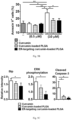
Fig. 1A is a bar graph showing the ratio between glycosylated and under-glycosylated forms of gp91phox in Cybb C1024T transgenic mice on a Cybb -/- background ("TG mice") determined by Western Blot analysis of neutrophils isolated from untreated mice (-), mice treated with free curcumin, or treated with the indicated curcumin-loaded PLGA nanoparticles (n=4; *: p<0.05); -
Fig. 1B , is a bar graph showing reactive oxygen species (ROS) generation in neutrophils isolated from TG mice treated with free curcumin or with ER-targeting curcumin-loaded PLGA nanoparticles (n=4; **: p<0.01); -
Fig. 1C is a bar graph showing bacterial load as colony forming units (CFU) in TG mice untreated (-) and treated as indicated. (n=4; *: p<0.05; **: p<0.01); -
Fig. 2 is a bar graph quantifying co-localization over time of ER-targeting curcumin PLGA nanoparticles to the ER, as compared to non-targeted curcumin-loaded PLGA nanoparticles (*: p<0.05; **: p<0.01; ***: p<0.001); -
Fig. 3 is a bar graph showing calcium flux in differentiated HL60 cells treated as indicated calculated as area under the curve (AUC) from plots of intracellular calcium release rates versus time (n=4; *: p<0.05; **: p<0.01; ***: p<0.001); -
Fig. 4 is a bar graph showing calcium flux in differentiated HL60 cells treated as indicated calculated as area under the curve (AUC) from plots of extracellular calcium uptake rates versus time (n=3; *: p<0.05); -
Fig. 5A is a bar graph of mitochondrial membrane potential determined with a fluorescent dye in differentiated HL60 cells treated as indicated (n=4; *: p<0.05; **: p<0.01); -
Fig. 5B is a bar graph of the percentage of annexin V positive cells determined by flow cytometry of differentiated HL60 cell populations treated as indicated (n=4; *: p<0.05; **: p<0.01); -
Fig. 5C shows bar graphs of relative intensity of Bip (left panel), phosphorylated ERK (center panel), and cleaved caspase-3 (right panel), measured from Western Blot analysis of protein extracted from differentiated HL60 cells treated as indicated (n=4; *: p<0.05); -
Fig. 6A is a bar graph showing numbers of CD71low CD235ahigh cells as a percentage of untreated determined by flow cytometry of human peripheral blood hematopoietic cells (HSC) untreated (-) and treated as indicated (n=3; *: p<0.05; **: p<0.01); and -
Fig. 6B is a bar graph of the percentage of annexin V positive cells determined by flow cytometry of HSC treated as indicated (n=3; **: p<0.01; ***: p<0.001). - As mentioned above, a method is disclosed for treating a disease caused by protein retention in the endoplasmic reticulum with a SERCA pump inhibitor. The inhibitor is a dietary polyphenolic compound. The compound can be, but is not limited to curcumin, thapsigargin, cyclopiazonic acid, 2, 5-di-tert-butylhydroquinone, gingerol, CGP37157, tert-butylhydroquinone, paxilline, and saikosaponin-d. Combinations of one or more of these compounds can also be used. In a specific method, the dietary polyphenolic compound is curcumin.
- The SERCA pump inhibitor is encapsulated in a polymer nanoparticle. Exemplary polymers that can be used to form the nanoparticle include poly(lactic-co-glycolic acid), poly(lactide), poly(amino acids), poly(ε-caprolactone), polyalkylcyanoacrylate, alginate, gelatin, lecithin-chitosan, albumin, and chitosan. Mixtures of these polymers can also be used. In one particular method, the polymer is formed of poly(lactic-co-glycolic acid).
- The polymer nanoparticle mentioned above is surface-modified to target it to the ER. The surface modification can be an ER targeting peptide conjugated to the polymer. One or more ER targeting peptide, e.g., KDEL (SEQ ID NO: 1), KKXX (SEQ ID NO: 2), or an arginine-based RXR-type ER-retention/ retrieval signal peptide, can be conjugated to the polymer. KDEL is used as the ER targeting peptide in an exemplary method.
- The SERCA pump inhibitor encapsulated in the polymer nanoparticle is administered to the subject suffering from the ER retention-mediated disease in an amount effective for treating the disease. The effective amount of the inhibitor reduces protein retention in the ER, and the encapsulation lowers side effects of the inhibitor, as compared to administering the inhibitor without encapsulation. The side effects that are reduced can be cytotoxicity, e.g., ER stress and apoptosis.
- The effective amount of SERCA pump inhibitor can enhance reactive oxygen species generation by leukocytes in the subject, and enhance peritoneal bacterial clearance mediated by the leukocytes.
- The method described herein, as set forth above, is used for treating a disease caused by protein retention in the endoplasmic reticulum. Such diseases are chronic granulomatous disease, cystic fibrosis, hereditary emphysema, hereditary hemochromatosis, oculocutaneous albinism, protein C deficiency, type I hereditary angioedema, Fabry disease, Tay-Sachs disease, congenital sucrase-isomaltase deficiency, Crigler-Najjar type 2, diabetes mellitus, Laron syndrome, primary hypothyroidism, congenital long QT syndrome, thyroxine binding globulin deficiency, β-thalassemia/Hb E disease, familial hypercholesterolemia, familial chylomicronemia, abeta-lipoproteinemia, congenital hypothyroidism, osteogenesis imperfecta, osteopetrosis, hereditary hypofibrinogenemia, nephrogenic diabetes insipidus, neurohypophyseal diabetes insipidus, Charcot-Marie-Tooth disease, Pelizaeus-Merzbacher disease, Alzheimer's disease, von Willebrand disease type IIA, Tangier disease, and hereditary hemorrhagic telangiectasia (HHT) type 2 with ALK1 missense mutation. In a particular method, the disease is chronic granulomatous disease.
- In yet another specific method, the disease is chronic granulomatous disease, the dietary polyphenolic compound is curcumin, the polymer is poly(lactic-co-glycolic acid), and the surface modification includes ER targeting peptide KDEL conjugated to the polymer.
- To carry out the above method, a pharmaceutical composition is provided. The pharmaceutical composition has the components mentioned above, together with a pharmaceutically acceptable carrier. More specifically, the composition includes a SERCA pump inhibitor encapsulated in a polymer nanoparticle, wherein the polymer nanoparticle is surface-modified such that it is targeted to the endoplasmic reticulum.
- Further, the polymer nanoparticle is formed of one or more of poly(lactic-co-glycolic acid), poly(lactide), poly (amino acids), poly (ε-caprolactone), polyalkylcyanoacrylate, alginate, gelatin, lecithin-chitosan, albumin, or chitosan. The SERCA pump inhibitor is a dietary polyphenolic compound selected from the group consisting of curcumin, thapsigargin, cyclopiazonic acid, 2,5-di-tert-butylhydroquinone, gingerol, CGP37157, tert-butylhydroquinone, paxilline, and saikosaponin-d, or a combination thereof. The surface modification includes an ER targeting peptide conjugated to the polymer and the ER targeting peptide is KDEL, KKXX, or an arginine-based RXR-type ER-retention/ retrieval signal.
- An exemplary pharmaceutical composition contains curcumin encapsulated in a poly(lactic-co-glycolic acid) nanoparticle surface-modified with KDEL together with a pharmaceutically acceptable carrier.
- The specific examples below are to be construed as merely illustrative, and not limitative of the remainder of the disclosure in any way whatsoever. Without further elaboration, it is believed that one skilled in the art can, based on the description herein, utilize the present disclosure to its fullest extent.
- A transgenic mouse model for chronic granulomatous disease (CGD) caused by H338Y mutant gp91phox was established in a Cybb knock-out background as follows. A bacterial artificial chromosome (BAC) containing the murine Cybb gene (clone number RP23-210P9) was obtained from the BACPAC resource center at Children's Hospital Oakland Research Institute (Oakland, CA USA). The BAC was modified to contain the mutant Cybb C1024T using Counter Selection BAC Modification Kit (Gene Bridges, GmbH). The resultant Cybb C1024T BAC transgene was introduced via pronuclear injection into ova isolated from Cybb targeted mutant B6.129S-Cybbtm1Din /J mice (Jackson Labs Cat. No. 002365) using standard techniques. Founders and progenies carrying the BAC transgene were identified by PCR from tail DNA and by direct DNA sequencing. Expression of full-length mutant Cybb C1024T was confirmed by Western blot analysis. The transgenic mice were further backcrossed with the Cybb knockout mice to generate the Cybb C1024T transgenic mice on a Cybb knockout background.
- C57BL/6 mice were used as wild-type (WT) mice and purchased from Animal Center, National Cheng Kung University (NCKU), Tainan, Taiwan. All mice were routinely backcrossed to the C57BL/6 background and underwent genome-wide genotyping to confirm the genetic background. Mice were housed in the animal facility of the Laboratory Animal Center at NCKU. All procedures were approved by the Institutional Animal Care and Use Committee of NCKU.
- The expression of H338Y-gp91phox protein in neutrophils from the Cybb C1024T transgenic Cybb -/- mice was examined by SDS-PAGE and Western blotting with an anti-gp91phox antibody. To isolate neutrophils, mice were injected intraperitoneally with 3 ml of 3% thioglycollate to elicit peritoneal neutrophils. Four hours later, the mice were sacrificed, and the peritoneal cavity was washed twice with 5 ml of Hanks buffered salt solution (HBSS) with 2 mM ethylene glycol tetraacetic acid to collect the elicited peritoneal neutrophils. Peritoneal neutrophils were then washed with PBS before use.
- The results indicated that neutrophils isolated from Cybb C1024T transgenic Cybb -/- mice produced the under-glycosylated form of H338Y-gp91phox. The levels of the glycosylated form of H338Y-gp91phox protein were significantly lower in Cybb C1024T transgenic Cybb -/- mice as compared to wild-type mice. As expected, gp91phox expression in Cybb -/- mice was not detected. These results indicate that a murine model of CGD was successfully established carrying the Cybb C1024T mutation and demonstrating trafficking-defective H338Y-gp91phox protein expression that mimics that seen in human CGD patients.
- Curcumin-loaded poly(lactic-co-glycolic acid) (PLGA) nanoparticles were prepared with a modified approach of double emulsification (W1/O/W2 emulsion; see Zhong et al. 2010, J. Nanobiotechnology 8:6). Briefly, curcumin was dissolved in 500 µL of alcohol (W1) while PLGA (PLA:PGA = 50:50, MW = 60,000) was dispersed in dichloromethane (O). W1 was added to O and mixed with a probe-type ultrasonic vibrator to form a first emulsion. The first emulsion, i.e., W1/O, was added to a 1% polyvinyl alcohol (PVA) aqueous solution (W2) and agitated to form a second emulsion (W1/O/W2) containing PLGA nanoparticles. The second emulsion was then degassed under vacuum to remove the organic solvents, and any free curcumin and PVA remaining were removed by centrifugation. The PLGA nanoparticles were analyzed for average loading capacity by measuring optical density at 435 nm using a NanoDrop 1000™ (NanoDrop Technologies, LLC, USA).
- The curcumin-loaded PLGA nanoparticles produced as described in the preceding paragraph were conjugated to an ER-targeting peptide as follows. The curcumin-loaded PLGA nanoparticles were incubated in an ethyldimethylaminopropyl carbodiimide/ N-hydroxysuccinimide solution for 1 h and then removed from the solution. The curcumin-loaded PLGA nanoparticles were suspended in H2O together with a 10-fold molar excess of the ER-targeting peptide KDEL and incubated for 18 hours, after which excess peptide was removed by centrifugation. The labeled nanoparticles were redispersed in a phosphate-buffered saline (PBS) solution.
- Curcumin-loaded PLGA nanoparticles with or without the ER-targeting KDEL peptide were tested for their effects on the expression and maturation of H338Y-gp91phox protein in Cybb C1024T transgenic Cybb -/- mice. Briefly, mice were untreated or treated separately with free curcumin, curcumin-loaded PLGA nanoparticles, or curcumin-loaded ER-targeted PLGA nanoparticles for 24 hours in amounts corresponding to 20 mg/kg of curcumin. Neutrophils from the mice were elicited, isolated, and analyzed for expression of H338Y-gp91phox protein as described above.
- Statistical analyses were carried out with Prism software (GraphPad Software). The mean values from each group are presented as mean ± SEM and compared by using one-way analysis of variance (ANOVA) followed by a post hoc least significant difference test or two-way ANOVA followed by Bonferroni post hoc test. In all experiments, p-values of less than 0.05 were considered statistically significant.
- The results showed that all treated and untreated Cybb C1024T transgenic Cybb -/- mice expressed the under-glycosylated form of H338Y-gp91phox. Mice treated with free curcumin did not show any change in the amount of glycosylated H338Y-gp91phox expressed as compared to untreated mice. On the other hand, mice treated with curcumin-loaded PLGA nanoparticles showed a 1.3-fold increase in expression of glycosylated H338Y-gp91phox as compared to untreated mice. Further, mice treated with curcumin-loaded ER-targeted PLGA nanoparticles expressed 1.7-fold more glycosylated H338Y-gp91phox as compared to untreated mice. A similar result was obtained upon analyzing the ratios of glycosylated versus under-glycosylated H338Y-gp91phox in the same samples. See
Fig. 1A . - These data show that delivering curcumin to the ER via an ER-targeted PLGA nanoparticle in Cybb C1024T transgenic Cybb -/- mice facilitates the maturation of mutant H338Y-gp91phox protein in neutrophils.
- As mentioned above, production of reactive oxygen species (ROS) by NOX2 activity in neutrophils, which is essential for bacterial clearance, is compromised in CGD patients as a result of the sequestration of gp91phox in the ER. NOX2 function in Cybb C1024T transgenic Cybb-/-mice was examined by measuring ROS production in neutrophils from these mice treated with free curcumin or treated with curcumin-loaded ER-targeted PLGA nanoparticles.
- Peritoneal neutrophils from Cybb C1024T transgenic Cybb-/-mice were elicited and isolated as described above. The neutrophils were washed with 1X HBSS and 5% FBS three times and then incubated with 10 µM 2',7'-dichlorodihydrofluorescein diacetate at 37 °C for 30 min. Cells were then incubated with 100 ng/ml phorbol myristate 13-acetate (Sigma) at 37 °C for 15 min. to induce ROS production. Fluorescence in PMA-treated cells was detected by flow cytometry using a FACSCalibur instrument (BD Biosciences) and the data was analyzed with Flowing Software 2 software. The results are shown in
Fig. 1B . - ROS production by neutrophils isolated from Cybb C1024T transgenic Cybb-/-mice treated with curcumin-loaded ER-targeted PLGA nanoparticles was significantly higher than that isolated from free curcumin-treated animals. These data show that delivering curcumin to the ER via an ER-targeted PLGA nanoparticle in Cybb C1024T transgenic Cybb -/- mice restores NOX2 function in neutrophils and correlates with the ability of ER-delivered curcumin to facilitate maturation of mutant H338Y-gp91phox protein in neutrophils.
- NOX2 function is also necessary to clear bacterial infections. Bacterial clearance was examined by intraperitoneal injection of bacteria, i.e., S. aureus, into untreated Cybb C1024T transgenic Cybb-/-mice, transgenic mice treated with curcumin, and transgenic mice treated with PLGA-encapsulated curcumin.
- S. aureus (ATCC No.25923) was cultured overnight at 37 °C on a tryptic soy agar plate with 10% sheep blood. A single colony was picked from the plate and sub-cultured in Luria-Bertani medium (LB) at 37 °C for 16 h. The bacterial culture was diluted 1:50 with 5 mL LB and incubated at 37 °C for 6 h. Colony forming units (CFU) in the S. aureus culture was determined by spreading a 10 µl drop of the culture on a TSA plate, incubating the plate overnight, and counting the number of colonies.
- Cybb C1024T transgenic Cybb -/- mice were left untreated or were treated for 24 h with 20 mg/kg free curcumin, curcumin-loaded PLGA nanoparticles, or curcumin-loaded ER-targeted PLGA nanoparticles as set forth above. Mice were injected intraperitoneally with 1×10⁷ CFU of S. aureus in 100 µl PBS. After 4 h, mice were sacrificed and peritoneal cells were harvested via lavage with 5 ml of PBS. CFU of S. aureus in the lavage fluid was determined by plating a 50 µl drop of lavage fluid on TSA plates and counting S.aureus colonies growing after an overnight incubation.
- The results, shown in
Fig. 1C , indicated that the bacterial load in mice treated with curcumin-loaded ER-targeted PLGA nanoparticles were significantly lower than that in untreated mice, and were also lower than that in mice treated with free curcumin or with non-targeted curcumin-loaded PLGA nanoparticles. - Following above procedures, it was determined that there were no significant differences in the percentages of thioglycollate-elicited neutrophils in peritoneal exudates isolated from mice treated with free curcumin, curcumin-loaded PLGA nanoparticles, or curcumin-loaded ER-targeted PLGA nanoparticles.
- These findings, taken together, show that delivering curcumin to the ER via an ER-targeted PLGA nanoparticle in Cybb C1024T transgenic Cybb -/- mice restores the antibacterial function of neutrophils.
- Intracellular distribution in cells treated with curcumin-loaded PLGA nanoparticles with or without ER-targeting peptide decoration, was measured by immunostaining and co-localization in differentiated HL-60 cells, which have many characteristics of neutrophils.
- HL-60 cells were cultured at 37 °C in RPMI 1640 supplemented with 10% heat-inactivated fetal bovine serum. Cells at a density of 3×10⁵ cells/ml were treated with 1.3% dimethyl sulfoxide (Sigma-Aldrich) to induce differentiation. After 4 days of incubation, differentiated cells were harvested, and dead cells were removed by centrifugation through Ficoll-Hypaque.
- Differentiated HL-60 cells were seeded on 8-well slides and then labeled with ER-Tracker, a cell-permeant fluorescent dye that localizes to the ER. Labeled cells were then treated with 10 µM curcumin-loaded PLGA nanoparticles or with 10 µM curcumin-loaded ER-targeted PLGA nanoparticles. Time-lapse fluorescence images were captured by confocal microscopy using excitation wavelengths of 488 nm and 374 nm, wavelengths that stimulates fluorescence of curcumin and the ER-Tracker dye, respectively. The degree of co-localization of the ER-tracker dye with the curcumin nanoparticles was calculated by Pearson's correlation method from the time-lapse images. The results are shown in
Fig. 2 . - The data showed that the ER-targeted nanoparticles were significantly localized to the ER within 4 min. of addition to the cells, as compared to non-targeted nanoparticles. See
Fig. 2 . This significant difference in localization increased over a 20 min. time period after addition of the nanoparticles. The results confirmed that the ER-targeted nanoparticles were indeed preferentially localized with the ER in living cells. - SERCA inhibitors such as curcumin cause an increase in intracellular calcium release from the ER. The ability of curcumin to induce calcium release was compared to that of PLGA nanoparticle-encapsulated curcumin.
- Differentiated HL-60 cells were seeded on 8-well slides in calcium-free medium and loaded with the intracellular calcium-sensitive indicator dye Fluo-4AM. Cells were treated with thapsigargin (positive control) or treated with 0.5, 1, or 10 µM curcumin, curcumin-loaded PLGA nanoparticles, or curcumin-loaded ER-targeted PLGA nanoparticles. Fluorescence intensity over time was measured in treated cells by confocal microscopy and analyzed using ImageJ software. The change in fluorescence intensity over time divided by the baseline fluorescence intensity prior to calcium addition (ΔF/F0) was plotted versus time.
- Treatment of cells with 10 µM free curcumin induced a significantly higher level of calcium release at a faster rate, as compared to treatment with 0.5 µM and 1 µM free curcumin. More specifically, the calcium levels in
cells 40, 50, and 60 s after treatment with 10 µM free curcumin were significantly higher than those at the same time points in the cells treated with 0.5 µM or 1 µM free curcumin. The rate of intracellular calcium increase, derived from fluorescence versus time curves, was also highest in cells treated with 10 µM free curcumin, as compared to cells treated with lower concentrations of free curcumin. - Calcium release was also measured in cells treated with curcumin-loaded PLGA nanoparticles and curcumin-loaded ER-targeted PLGA nanoparticles. The data showed that treating differentiated HL-60 cells with 0.5 µM and 1 µM of either of these nanoparticles induced an elevation of intracellular calcium level and a rate of increase similar to those induced by 10 µM free curcumin treatment. The overall calcium flux indicated as area under the curves (AUC) is shown in
Fig. 3 . - The results show that curcumin-loaded PLGA nanoparticles and ER-targeting curcumin-loaded PLGA nanoparticles at 0.5 µM were capable of elevating the intracellular calcium levels to the same level of thapsigargin treatment. Increasing the curcumin nanoparticle concentration to 10 µM did not further increase the peak level or rate of increase in intracellular calcium level in the treated cells.
- Extracellular calcium influx, which is triggered by the depletion of ER calcium stores, was measured in cells treated with free curcumin or treated with curcumin-loaded nanoparticles as follows.
- Differentiated HL-60 cells were pretreated with free curcumin (10 µM), curcumin-loaded PLGA nanoparticles (0.5 µM), and curcumin-loaded ER-targeted PLGA nanoparticles (0.5 µM) at 37 °C overnight. Cells were washed with calcium-free HBSS, seeded on poly-lysine coated 8-well slides (ibidi, Planegg, Germany) at a density of 1×10⁶ cells/ml, and incubated at 37 °C for 30 min. Cells were labeled with 2 µM of the calcium-sensitive fluorescent dye Fluo-4 AM and 1 µM of ER-tracker at 37 °C for 30 min. Labeled cells were treated with 1.25 mM CaCl2.
- Fluorescence images were captured by confocal microscopy every 10 s for 5 min. following the addition of CaCl2. Fluorescence intensities in these images were analyzed using ImageJ software. The change in fluorescence intensity over time divided by the baseline fluorescence intensity prior to calcium addition (ΔF/F0) was plotted versus time, and the rate of calcium level increase (ΔF/F/s) was derived from that plot. The overall calcium flux was calculated as the area under the curve (AUC) of a ΔF/F/s versus time curve. The results are shown in
Fig. 4 . - The addition of 1.25 mM extracellular calcium did not induce significant calcium influx in untreated cells. Thapsigargin, a SERCA inhibitor used as a positive control, induced calcium influx within 10 s after addition.
- Free curcumin at 10 µM induced early extracellular calcium influx similar to that induced by thapsigargin. By contrast, extracellular calcium entry induced by 0.5 µM curcumin-loaded PLGA nanoparticles and 0.5 µM curcumin-loaded ER-targeted PLGA nanoparticles was only detected 60 seconds after treatment with these nanoparticles.
- Measurement of rates of fluorescence intensity increase revealed that treatment of cells with free curcumin induced a more significant calcium influx at an earlier time point, as compared to curcumin-loaded nanoparticles. In particular, the calcium influx rate 20 s after treatment with 10 µM of free curcumin was significantly higher than that in cells treated with 0.5 µM of curcumin-loaded PLGA nanoparticles or with 0.5 µM of curcumin-loaded ER-targeted.
- The delay in extracellular calcium entry induced by PLGA nanoparticle-encapsulated curcumin reduced the overall calcium influx in comparison with the extracellular calcium influx induced by free curcumin. See
Fig. 4 . This result was unexpected, in view of the fact that free curcumin induced similar levels of ER calcium depletion as compared to curcumin loaded in PLGA nanoparticles. As pointed out above, depletion of ER calcium triggers extracellular calcium influx. - As mentioned above, it has been shown that curcumin is cytotoxic, as it induces ER stress and apoptosis. The cytotoxicity of free curcumin was compared to that of encapsulated curcumin by measuring in treated cells mitochondrial membrane potential (one measure of cytotoxicity), apoptotic markers, and ER stress-related protein expression.
- Differentiated HL-60 cells were treated with 0.5 µM or 10 µM free curcumin, curcumin-loaded PLGA nanoparticles, or curcumin-loaded ER-targeted PLGA nanoparticles for 24 hours. Treated cells were labeled with 250 nM of the mitochondrial membrane potential indicator dye tetramethylrhodamine (TMRM) at 37 °C for 30 min. TMRM-labeled cells were analyzed by flow cytometry and their mitochondrial membrane potentials quantified using the Flowing Software 2 software package.
- The results revealed that cells treated with 10 µM free curcumin showed a significant reduction in mitochondrial membrane potential as compared to control untreated cells. See
Fig. 5A . By contrast, mitochondrial membrane potential in cells treated with 10 µM curcumin-loaded PLGA nanoparticles or 10 µM curcumin-loaded ER-targeted PLGA nanoparticles was not different from control untreated cells and was significantly higher when compared to free curcumin-treated cells. See Id. - Cells treated as above with free or encapsulated curcumin were washed with ice-cold phosphate-buffered saline and stained with phycoerythrin-Annexin V and 7 amino-actinomycin D (7-AAD) at room temperature for 15 min. Annexin V binds to the surface of cells undergoing apoptosis, and 7-AAD only enters and stains apoptotic cells. Stained cells were subjected to flow cytometry analysis and the results analyzed using the Flowing Software 2 analysis package.
- The results showed a significant increase in the number of apoptotic cells after treatment with 10 µM free curcumin, as measured by Annexin V binding to the cell surface. See
Fig. 5B . Cells treated with the same concentration of curcumin-loaded PLGA nanoparticles or curcumin-loaded ER-targeted PLGA nanoparticles showed significantly lower numbers of apoptotic cells. See Id. - To determine whether the activation of the ER stress response is involved in curcumin-induced apoptosis, the levels of ER stress markers Bip and phosphorylated ERK, as well as the level of cleaved Caspase-3, a marker of apoptosis, were quantified by Western blot analysis of cells treated with 10 µM curcumin or encapsulated curcumin.
- Briefly, treated cells were lysed in 100 µl of lysis buffer (1% Triton-X100, 150 mM NaCl, 10 mM Tris base, 1 mM EDTA, 1 mMEGTA, 50×protease inhibitor cocktail, pH 7.4). Lysed samples were subjected to 10 % SDS-PAGE and transferred to membranes for Western Blot analysis using antibodies that bind to Bip, phospho-ERK, total ERK, cleaved caspase-3, and β-actin. Binding of these antibodies was visualized using commercially available enhanced chemiluminescence reagents. Chemiluminescent signals were quantified from images using ImageJ software.
- The data showed that treatment of cells with free curcumin and curcumin-loaded PLGA nanoparticles increased Bip expression and ERK phosphorylation, as compared to untreated control cells. Unexpectedly, Bip expression and ERK phosphorylation in cells treated with curcumin-loaded ER targeted PLGA nanoparticles was significantly lower than in free curcumin-treated cells. See
Fig. 5C , left and center panels. - Measurements of caspase-3 cleavage revealed that PLGA nanoparticle-encapsulated curcumin induced significantly less caspase-3 cleavage as compared to treatment with free curcumin. See
Fig. 5C , right panel. - In sum, the findings set forth in the examples, supra, indicate that free curcumin at a concentration that can inhibit SERCA, i.e., 10 µM, induces a rapid calcium influx, leading to mitochondrial damage, ER, and induction of apoptosis. PLGA nanoparticle-encapsulated curcumin having equivalent SERCA inhibitory activity induces delayed calcium influx and protects cells from mitochondrial damage, ER stress, and apoptosis.
- Further, curcumin-loaded ER-targeted PLGA nanoparticles, by inhibiting SERCA, successfully releases H338Y-gp91phox sequestered in the ER, thereby recovering NOX2 function without excessive damage to cell viability.
- Erythroblast differentiation was measured in human peripheral blood hematopoietic cells (HSCs) treated with free curcumin or treated with curcumin-loaded nanoparticles as follows.
- Human CD34+ HSCs were cultured in Iscove's modified Dulbecco medium containing 15% heat-inactivated fetal calf serum, 2 U/ml of recombinant human erythropoietin, 20 ng/ml of stem cell factor, and 10 ng/ml of interleukin-3 (IL-3). On
day 4, the medium was replaced with fresh medium without IL-3 and the HSCs were cultured for another 5 days. - The maturation of erythroblasts was analyzed by detecting the surface expression of CD71 and CD235a with flow cytometry. The results are shown in
Fig. 6A . The data showed that free curcumin and ER-targeting curcumin-loaded PLGA nanoparticles significantly enhanced the percentages of more mature CD71low, CD235high cells in treated HSCs. - Measurement of Annexin V-positive cells revealed that ER-targeting PLGA nanoparticle-encapsulated curcumin induced significantly less apoptosis in treated HSC, as compared to treatment with free curcumin. See
Fig. 6B . - In sum, treating HSCs with ER-targeting curcumin-loaded PLGA nanoparticles promotes erythroblast maturation and, at the same time, prevents curcumin-induced apoptosis.
Claims (10)
- A sarcoplasmic/endoplasmic reticulum calcium ATPase (SERCA) pump inhibitor for use in treating a disease caused by protein retention in the endoplasmic reticulum, wherein the inhibitor is encapsulated in a polymer nanoparticle that is surface-modified such that it is targeted to the endoplasmic reticulum (ER), and wherein the disease is chronic granulomatous disease, cystic fibrosis, hereditary emphysema, hereditary hemochromatosis, oculocutaneous albinism, protein C deficiency, type I hereditary angioedema, Fabri disease, Tay-Sachs disease, congenital sucrase-isomaltase deficiency, Crigler-Najjar type 2, diabetes mellitus, Laron syndrome, primary hypothyroidism, congenital long QT syndrome, thyroxine binding globulin deficiency, β-thalassemia/Hb E disease, familial hypercholesterolemia, familial chylomicronemia, abeta-lipoproteinema, congenital hypothyroidism, osteogenesis imperfecta, osteopetrosis, hereditary hypofibrinogenemia, nephrogenic diabetes insipidus, neurohypophyseal diabetes insipidus, Charcot-Marie-Tooth disease, Pelizaeus-Merzbacher disease, Alzheimer's disease, von Willebrand disease type IIA, Tangier disease, or hereditary hemorrhagic telangiectasia (HHT) type 2 with ALK1 missense mutation.
- The inhibitor for use according to claim 1, wherein the inhibitor is a dietary polyphenolic compound selected from the group consisting of curcumin, thapsigargin, cyclopiazonic acid, 2,5-di-tert-butylhydroquinone, gingerol, CGP37157, tert-butylhydroquinone, paxilline, and saikosaponin-d, or a combination thereof.
- The inhibitor for use according to claim 1 or 2, wherein the polymer is poly(lactic-co-glycolic acid), poly(lactide), poly (amino acids), poly (ε-caprolactone), polyalkylcyanoacrylate, alginate, gelatin, lecithin-chitosan, albumin, or chitosan.
- The inhibitor for use according to claim 3, wherein the dietary polyphenolic compound is curcumin and the polymer is poly(lactic-co-glycolic acid).
- The inhibitor for use according to any of claims 1 to 4, wherein the surface modification includes an ER targeting peptide conjugated to the polymer and the ER targeting peptide is KDEL (SEQ ID NO: 1), KKXX (SEQ ID NO: 2), or an arginine-based RXR-type ER-retention/ retrieval signal.
- The inhibitor for use according to any of claims 1 to 5, wherein the disease is chronic granulomatous disease, the dietary polyphenolic compound is curcumin, the polymer is poly(lactic-co-glycolic acid), and the surface modification includes ER targeting peptide KDEL (SEQ ID NO: 1) conjugated to the polymer.
- A pharmaceutical composition, comprising a SERCA pump inhibitor encapsulated in a polymer nanoparticle and a pharmaceutically acceptable carrier, wherein the polymer nanoparticle is surface-modified such that it is targeted to the endoplasmic reticulum.
- The composition of claim 7, wherein the polymer nanoparticle is formed of one or more of poly(lactic-co-glycolic acid), poly(lactide), poly (amino acids), poly (ε-caprolactone), polyalkylcyanoacrylate, alginate, gelatin, lecithin-chitosan, albumin, or chitosan and the SERCA pump inhibitor is a dietary polyphenolic compound selected from the group consisting of curcumin, thapsigargin, cyclopiazonic acid, 2,5-di-tert-butylhydroquinone, gingerol, CGP37157, tert-butylhydroquinone, paxilline, and saikosaponin-d, or a combination thereof.
- The composition of claim 8, wherein the dietary polyphenolic compound is curcumin and the polymer is poly(lactic-co-glycolic acid).
- The composition of any of claims 7 to 9, wherein the surface modification includes an ER targeting peptide conjugated to the polymer and the ER targeting peptide is KDEL (SEQ ID NO: 1), KKXX (SEQ ID NO: 2), or an arginine-based RXR-type ER-retention/ retrieval signal.
Applications Claiming Priority (1)
| Application Number | Priority Date | Filing Date | Title |
|---|---|---|---|
| US201862652502P | 2018-04-04 | 2018-04-04 |
Publications (4)
| Publication Number | Publication Date |
|---|---|
| EP3549580A2 EP3549580A2 (en) | 2019-10-09 |
| EP3549580A3 EP3549580A3 (en) | 2019-12-25 |
| EP3549580B1 true EP3549580B1 (en) | 2024-06-26 |
| EP3549580C0 EP3549580C0 (en) | 2024-06-26 |
Family
ID=65365912
Family Applications (1)
| Application Number | Title | Priority Date | Filing Date |
|---|---|---|---|
| EP19156311.3A Active EP3549580B1 (en) | 2018-04-04 | 2019-02-08 | Endoplasmic reticulum-targeting nanovehicles |
Country Status (10)
| Country | Link |
|---|---|
| US (1) | US10912843B2 (en) |
| EP (1) | EP3549580B1 (en) |
| JP (1) | JP2019182834A (en) |
| KR (1) | KR102751024B1 (en) |
| CN (1) | CN110368494A (en) |
| AU (1) | AU2019200903B2 (en) |
| CA (1) | CA3034162A1 (en) |
| ES (1) | ES2987900T3 (en) |
| NZ (1) | NZ750542A (en) |
| TW (1) | TW202002773A (en) |
Families Citing this family (6)
| Publication number | Priority date | Publication date | Assignee | Title |
|---|---|---|---|---|
| JP7150682B2 (en) * | 2019-10-03 | 2022-10-11 | 株式会社三共 | game machine |
| JP7143267B2 (en) * | 2019-10-03 | 2022-09-28 | 株式会社三共 | game machine |
| CN113171450A (en) * | 2021-04-20 | 2021-07-27 | 浙江大学 | Construction and application of nanocarriers for regulating adaptive cellular and humoral immunity |
| CN116251177A (en) * | 2023-04-23 | 2023-06-13 | 复旦大学 | A kind of nano-vaccine derived from tumor cells and its preparation method and application |
| CN116785256B (en) * | 2023-06-21 | 2025-08-19 | 南开大学 | Nanoparticle material capable of inducing cell immune death and preparation method and application thereof |
| CN119564606B (en) * | 2024-10-18 | 2025-09-05 | 华中科技大学同济医学院附属协和医院 | A micellar mixed system for enhancing the therapeutic effect of irreversible electroporation on pancreatic cancer and its preparation method |
Family Cites Families (7)
| Publication number | Priority date | Publication date | Assignee | Title |
|---|---|---|---|---|
| US20030149113A1 (en) | 2001-10-12 | 2003-08-07 | Caplan Michael J. | Conductance of improperly folded proteins through the secretory pathway and related methods for treating disease |
| AU2008240155B2 (en) | 2007-04-13 | 2012-09-20 | University Of North Texas Health Science Center At Fort Worth | Formulation of active agent loaded activated PLGA nanoparticles for targeted cancer nano-therapeutics |
| US20130045162A1 (en) | 2011-08-15 | 2013-02-21 | Morehouse School Of Medicine | Delivery system for specifically targeting cancer cells and method of use thereof |
| KR20130028576A (en) | 2011-09-09 | 2013-03-19 | 삼성전자주식회사 | Image forming apparatus and method for inputting e-mail thereof |
| AT515178A5 (en) * | 2012-08-31 | 2015-07-15 | Univ North Texas | CURCUMIN-ER, A NANOCURCUMIN FROM LIPOSOMAL PLGA WITH CONTINUED RELEASE TO MINIMIZE QT EXTENSION TO CANCER THERAPY |
| US9168307B2 (en) | 2012-09-04 | 2015-10-27 | University Of Iowa Research Foundation | Mitochondrial-targeted cationic nanoparticles comprising CaMKII inhibitors and uses thereof for treating and preventing diseases and disorders associated with CaMKII activity |
| US10695288B2 (en) | 2014-11-19 | 2020-06-30 | Vanderbilt University | Reactive oxygen species (ROS)-responsive compositions and methods thereof |
-
2019
- 2019-01-31 US US16/263,618 patent/US10912843B2/en active Active
- 2019-02-08 EP EP19156311.3A patent/EP3549580B1/en active Active
- 2019-02-08 ES ES19156311T patent/ES2987900T3/en active Active
- 2019-02-08 NZ NZ750542A patent/NZ750542A/en unknown
- 2019-02-08 AU AU2019200903A patent/AU2019200903B2/en active Active
- 2019-02-12 JP JP2019022300A patent/JP2019182834A/en active Pending
- 2019-02-13 KR KR1020190016873A patent/KR102751024B1/en active Active
- 2019-02-19 CA CA3034162A patent/CA3034162A1/en active Pending
- 2019-02-20 TW TW108105637A patent/TW202002773A/en unknown
- 2019-03-14 CN CN201910194401.8A patent/CN110368494A/en active Pending
Also Published As
| Publication number | Publication date |
|---|---|
| EP3549580A2 (en) | 2019-10-09 |
| KR20190116905A (en) | 2019-10-15 |
| US20190307894A1 (en) | 2019-10-10 |
| AU2019200903B2 (en) | 2024-07-04 |
| JP2019182834A (en) | 2019-10-24 |
| AU2019200903A1 (en) | 2019-10-24 |
| EP3549580A3 (en) | 2019-12-25 |
| CN110368494A (en) | 2019-10-25 |
| EP3549580C0 (en) | 2024-06-26 |
| NZ750542A (en) | 2026-03-27 |
| KR102751024B1 (en) | 2025-01-09 |
| US10912843B2 (en) | 2021-02-09 |
| ES2987900T3 (en) | 2024-11-18 |
| TW202002773A (en) | 2020-01-16 |
| CA3034162A1 (en) | 2019-10-04 |
Similar Documents
| Publication | Publication Date | Title |
|---|---|---|
| US10912843B2 (en) | Endoplasmic reticulum-targeting nanovehicles and methods for use thereof | |
| Waterborg et al. | Protective role of the MER tyrosine kinase via efferocytosis in rheumatoid arthritis models | |
| Blos et al. | Organ‐specific and stage‐dependent control of Leishmania major infection by inducible nitric oxide synthase and phagocyte NADPH oxidase | |
| JP5476297B2 (en) | Biofilm treatment | |
| Hauschildt et al. | Activation of bone marrow‐derived mouse macrophages by bacterial lipopeptide: cytokine production, phagocytosis and Ia expression | |
| Wu et al. | Enhanced alleviation of aGVHD by TGF‐β1‐modified mesenchymal stem cells in mice through shifting MΦ into M2 phenotype and promoting the differentiation of Treg cells | |
| US12433934B2 (en) | Methods and compositions for preventing and treating atherosclerosis and related diseases | |
| Santana-Krímskaya et al. | IMMUNEPOTENT CRP plus doxorubicin/cyclophosphamide chemotherapy remodel the tumor microenvironment in an air pouch triple-negative breast cancer murine model | |
| Giuliano et al. | CRISPR-based functional profiling of the Toxoplasma gondii genome during acute murine infection | |
| Jin et al. | ANGPTL4 suppresses clear cell renal cell carcinoma via inhibition of lysosomal acid lipase | |
| Zhao et al. | Innate immune checkpoint SIRPα/CD47 blockade ameliorates silica-induced pulmonary fibrosis by modulating macrophage immunity | |
| Han et al. | NADPH oxidase 4-mediated alveolar macrophage recruitment to lung attenuates neutrophilic inflammation in Staphylococcus aureus infection | |
| EP4284518A1 (en) | Fibroblast activation protein modulation to alter immune cell migration and tumor infiltration | |
| Godard | Investigating ineffective erythropoiesis in sickle cell disease and its impact on the erythroid niche | |
| Schofield | Great Adaptations: Mitochondrial Changes During Cancer Cell Stress | |
| Zeng | The role of polyamine metabolism in remodeling | |
| Stoppa | The Role of ICOS/OPN/ICOSL System in Wound Healing, Sepsis and Cancer | |
| JP2020164484A (en) | Mesenchymal stem cell or bone marrow cell proliferation promoting composition | |
| CN114788877B (en) | Genetically engineered hematopoietic stem cell drug delivery system and preparation method and application thereof | |
| Alam et al. | Apolipoprotein C3 facilitates internalization of cationic lipid nanoparticles into terminally differentiated bone marrow-derived mouse mast cells | |
| WO2024145168A1 (en) | Compositions and methods for treating cancer | |
| Buratti | ROLE OF FERROPORTIN-MEDIATED IRON RELEASE FROM MACROPHAGES IN TISSUE HOMEOSTASIS AND REPAIR | |
| KR20240087587A (en) | Pharmaceutical composition for preventing or treating colitis containing as an active ingredient an agent that inhibits the interaction between CD82 and BRCC3 or NLRP3 | |
| Chicca | Development and application of a novel high-throughput technique for screening neutrophil extracellular traps | |
| Guida | An RNAi screen identifies TLR2/6 as mediators of a novel inflammatory pathway for rapid hepcidin-independent hypoferremia |
Legal Events
| Date | Code | Title | Description |
|---|---|---|---|
| PUAI | Public reference made under article 153(3) epc to a published international application that has entered the european phase |
Free format text: ORIGINAL CODE: 0009012 |
|
| STAA | Information on the status of an ep patent application or granted ep patent |
Free format text: STATUS: THE APPLICATION HAS BEEN PUBLISHED |
|
| AK | Designated contracting states |
Kind code of ref document: A2 Designated state(s): AL AT BE BG CH CY CZ DE DK EE ES FI FR GB GR HR HU IE IS IT LI LT LU LV MC MK MT NL NO PL PT RO RS SE SI SK SM TR |
|
| AX | Request for extension of the european patent |
Extension state: BA ME |
|
| PUAL | Search report despatched |
Free format text: ORIGINAL CODE: 0009013 |
|
| AK | Designated contracting states |
Kind code of ref document: A3 Designated state(s): AL AT BE BG CH CY CZ DE DK EE ES FI FR GB GR HR HU IE IS IT LI LT LU LV MC MK MT NL NO PL PT RO RS SE SI SK SM TR |
|
| AX | Request for extension of the european patent |
Extension state: BA ME |
|
| RIC1 | Information provided on ipc code assigned before grant |
Ipc: A61K 31/05 20060101ALI20191119BHEP Ipc: A61K 45/06 20060101ALI20191119BHEP Ipc: A01K 67/027 20060101ALI20191119BHEP Ipc: A61K 31/58 20060101ALI20191119BHEP Ipc: A61P 43/00 20060101ALI20191119BHEP Ipc: A61K 31/365 20060101ALI20191119BHEP Ipc: A61K 31/55 20060101ALI20191119BHEP Ipc: A61K 31/12 20060101AFI20191119BHEP Ipc: A61K 31/407 20060101ALI20191119BHEP Ipc: A61K 31/7048 20060101ALI20191119BHEP |
|
| STAA | Information on the status of an ep patent application or granted ep patent |
Free format text: STATUS: REQUEST FOR EXAMINATION WAS MADE |
|
| 17P | Request for examination filed |
Effective date: 20200608 |
|
| RBV | Designated contracting states (corrected) |
Designated state(s): AL AT BE BG CH CY CZ DE DK EE ES FI FR GB GR HR HU IE IS IT LI LT LU LV MC MK MT NL NO PL PT RO RS SE SI SK SM TR |
|
| GRAP | Despatch of communication of intention to grant a patent |
Free format text: ORIGINAL CODE: EPIDOSNIGR1 |
|
| STAA | Information on the status of an ep patent application or granted ep patent |
Free format text: STATUS: GRANT OF PATENT IS INTENDED |
|
| INTG | Intention to grant announced |
Effective date: 20240201 |
|
| RAP3 | Party data changed (applicant data changed or rights of an application transferred) |
Owner name: NATIONAL CHENG KUNG UNIVERSITY |
|
| GRAS | Grant fee paid |
Free format text: ORIGINAL CODE: EPIDOSNIGR3 |
|
| GRAA | (expected) grant |
Free format text: ORIGINAL CODE: 0009210 |
|
| STAA | Information on the status of an ep patent application or granted ep patent |
Free format text: STATUS: THE PATENT HAS BEEN GRANTED |
|
| AK | Designated contracting states |
Kind code of ref document: B1 Designated state(s): AL AT BE BG CH CY CZ DE DK EE ES FI FR GB GR HR HU IE IS IT LI LT LU LV MC MK MT NL NO PL PT RO RS SE SI SK SM TR |
|
| REG | Reference to a national code |
Ref country code: GB Ref legal event code: FG4D |
|
| REG | Reference to a national code |
Ref country code: CH Ref legal event code: EP |
|
| REG | Reference to a national code |
Ref country code: DE Ref legal event code: R096 Ref document number: 602019054067 Country of ref document: DE |
|
| U01 | Request for unitary effect filed |
Effective date: 20240725 |
|
| U07 | Unitary effect registered |
Designated state(s): AT BE BG DE DK EE FI FR IT LT LU LV MT NL PT SE SI Effective date: 20240806 |
|
| PG25 | Lapsed in a contracting state [announced via postgrant information from national office to epo] |
Ref country code: HR Free format text: LAPSE BECAUSE OF FAILURE TO SUBMIT A TRANSLATION OF THE DESCRIPTION OR TO PAY THE FEE WITHIN THE PRESCRIBED TIME-LIMIT Effective date: 20240626 |
|
| PG25 | Lapsed in a contracting state [announced via postgrant information from national office to epo] |
Ref country code: GR Free format text: LAPSE BECAUSE OF FAILURE TO SUBMIT A TRANSLATION OF THE DESCRIPTION OR TO PAY THE FEE WITHIN THE PRESCRIBED TIME-LIMIT Effective date: 20240927 |
|
| PG25 | Lapsed in a contracting state [announced via postgrant information from national office to epo] |
Ref country code: NO Free format text: LAPSE BECAUSE OF FAILURE TO SUBMIT A TRANSLATION OF THE DESCRIPTION OR TO PAY THE FEE WITHIN THE PRESCRIBED TIME-LIMIT Effective date: 20240926 Ref country code: HR Free format text: LAPSE BECAUSE OF FAILURE TO SUBMIT A TRANSLATION OF THE DESCRIPTION OR TO PAY THE FEE WITHIN THE PRESCRIBED TIME-LIMIT Effective date: 20240626 Ref country code: GR Free format text: LAPSE BECAUSE OF FAILURE TO SUBMIT A TRANSLATION OF THE DESCRIPTION OR TO PAY THE FEE WITHIN THE PRESCRIBED TIME-LIMIT Effective date: 20240927 Ref country code: RS Free format text: LAPSE BECAUSE OF FAILURE TO SUBMIT A TRANSLATION OF THE DESCRIPTION OR TO PAY THE FEE WITHIN THE PRESCRIBED TIME-LIMIT Effective date: 20240926 |
|
| REG | Reference to a national code |
Ref country code: ES Ref legal event code: FG2A Ref document number: 2987900 Country of ref document: ES Kind code of ref document: T3 Effective date: 20241118 |
|
| PG25 | Lapsed in a contracting state [announced via postgrant information from national office to epo] |
Ref country code: PL Free format text: LAPSE BECAUSE OF FAILURE TO SUBMIT A TRANSLATION OF THE DESCRIPTION OR TO PAY THE FEE WITHIN THE PRESCRIBED TIME-LIMIT Effective date: 20240626 |
|
| PG25 | Lapsed in a contracting state [announced via postgrant information from national office to epo] |
Ref country code: IS Free format text: LAPSE BECAUSE OF FAILURE TO SUBMIT A TRANSLATION OF THE DESCRIPTION OR TO PAY THE FEE WITHIN THE PRESCRIBED TIME-LIMIT Effective date: 20241026 |
|
| PG25 | Lapsed in a contracting state [announced via postgrant information from national office to epo] |
Ref country code: CZ Free format text: LAPSE BECAUSE OF FAILURE TO SUBMIT A TRANSLATION OF THE DESCRIPTION OR TO PAY THE FEE WITHIN THE PRESCRIBED TIME-LIMIT Effective date: 20240626 |
|
| PG25 | Lapsed in a contracting state [announced via postgrant information from national office to epo] |
Ref country code: SK Free format text: LAPSE BECAUSE OF FAILURE TO SUBMIT A TRANSLATION OF THE DESCRIPTION OR TO PAY THE FEE WITHIN THE PRESCRIBED TIME-LIMIT Effective date: 20240626 Ref country code: RO Free format text: LAPSE BECAUSE OF FAILURE TO SUBMIT A TRANSLATION OF THE DESCRIPTION OR TO PAY THE FEE WITHIN THE PRESCRIBED TIME-LIMIT Effective date: 20240626 |
|
| PG25 | Lapsed in a contracting state [announced via postgrant information from national office to epo] |
Ref country code: SM Free format text: LAPSE BECAUSE OF FAILURE TO SUBMIT A TRANSLATION OF THE DESCRIPTION OR TO PAY THE FEE WITHIN THE PRESCRIBED TIME-LIMIT Effective date: 20240626 |
|
| PG25 | Lapsed in a contracting state [announced via postgrant information from national office to epo] |
Ref country code: SM Free format text: LAPSE BECAUSE OF FAILURE TO SUBMIT A TRANSLATION OF THE DESCRIPTION OR TO PAY THE FEE WITHIN THE PRESCRIBED TIME-LIMIT Effective date: 20240626 Ref country code: SK Free format text: LAPSE BECAUSE OF FAILURE TO SUBMIT A TRANSLATION OF THE DESCRIPTION OR TO PAY THE FEE WITHIN THE PRESCRIBED TIME-LIMIT Effective date: 20240626 Ref country code: RO Free format text: LAPSE BECAUSE OF FAILURE TO SUBMIT A TRANSLATION OF THE DESCRIPTION OR TO PAY THE FEE WITHIN THE PRESCRIBED TIME-LIMIT Effective date: 20240626 Ref country code: PL Free format text: LAPSE BECAUSE OF FAILURE TO SUBMIT A TRANSLATION OF THE DESCRIPTION OR TO PAY THE FEE WITHIN THE PRESCRIBED TIME-LIMIT Effective date: 20240626 Ref country code: IS Free format text: LAPSE BECAUSE OF FAILURE TO SUBMIT A TRANSLATION OF THE DESCRIPTION OR TO PAY THE FEE WITHIN THE PRESCRIBED TIME-LIMIT Effective date: 20241026 Ref country code: CZ Free format text: LAPSE BECAUSE OF FAILURE TO SUBMIT A TRANSLATION OF THE DESCRIPTION OR TO PAY THE FEE WITHIN THE PRESCRIBED TIME-LIMIT Effective date: 20240626 |
|
| U20 | Renewal fee for the european patent with unitary effect paid |
Year of fee payment: 7 Effective date: 20250227 |
|
| PLBE | No opposition filed within time limit |
Free format text: ORIGINAL CODE: 0009261 |
|
| STAA | Information on the status of an ep patent application or granted ep patent |
Free format text: STATUS: NO OPPOSITION FILED WITHIN TIME LIMIT |
|
| 26N | No opposition filed |
Effective date: 20250327 |
|
| PG25 | Lapsed in a contracting state [announced via postgrant information from national office to epo] |
Ref country code: MC Free format text: LAPSE BECAUSE OF FAILURE TO SUBMIT A TRANSLATION OF THE DESCRIPTION OR TO PAY THE FEE WITHIN THE PRESCRIBED TIME-LIMIT Effective date: 20240626 |
|
| REG | Reference to a national code |
Ref country code: CH Ref legal event code: PL |
|
| PG25 | Lapsed in a contracting state [announced via postgrant information from national office to epo] |
Ref country code: CH Free format text: LAPSE BECAUSE OF NON-PAYMENT OF DUE FEES Effective date: 20250228 |
|
| PG25 | Lapsed in a contracting state [announced via postgrant information from national office to epo] |
Ref country code: IE Free format text: LAPSE BECAUSE OF NON-PAYMENT OF DUE FEES Effective date: 20250208 |
|
| U20 | Renewal fee for the european patent with unitary effect paid |
Year of fee payment: 8 Effective date: 20260227 |
|
| PGFP | Annual fee paid to national office [announced via postgrant information from national office to epo] |
Ref country code: GB Payment date: 20260227 Year of fee payment: 8 |
|
| PGFP | Annual fee paid to national office [announced via postgrant information from national office to epo] |
Ref country code: ES Payment date: 20260302 Year of fee payment: 8 |