EP3549304B1 - Protecting usage of key store content - Google Patents
Protecting usage of key store content Download PDFInfo
- Publication number
- EP3549304B1 EP3549304B1 EP17837851.9A EP17837851A EP3549304B1 EP 3549304 B1 EP3549304 B1 EP 3549304B1 EP 17837851 A EP17837851 A EP 17837851A EP 3549304 B1 EP3549304 B1 EP 3549304B1
- Authority
- EP
- European Patent Office
- Prior art keywords
- key
- user device
- given user
- key store
- materials
- Prior art date
- Legal status (The legal status is an assumption and is not a legal conclusion. Google has not performed a legal analysis and makes no representation as to the accuracy of the status listed.)
- Active
Links
Images



Classifications
-
- G—PHYSICS
- G06—COMPUTING OR CALCULATING; COUNTING
- G06F—ELECTRIC DIGITAL DATA PROCESSING
- G06F21/00—Security arrangements for protecting computers, components thereof, programs or data against unauthorised activity
- G06F21/30—Authentication, i.e. establishing the identity or authorisation of security principals
- G06F21/45—Structures or tools for the administration of authentication
-
- G—PHYSICS
- G06—COMPUTING OR CALCULATING; COUNTING
- G06F—ELECTRIC DIGITAL DATA PROCESSING
- G06F21/00—Security arrangements for protecting computers, components thereof, programs or data against unauthorised activity
- G06F21/60—Protecting data
- G06F21/62—Protecting access to data via a platform, e.g. using keys or access control rules
- G06F21/6209—Protecting access to data via a platform, e.g. using keys or access control rules to a single file or object, e.g. in a secure envelope, encrypted and accessed using a key, or with access control rules appended to the object itself
-
- G—PHYSICS
- G06—COMPUTING OR CALCULATING; COUNTING
- G06F—ELECTRIC DIGITAL DATA PROCESSING
- G06F21/00—Security arrangements for protecting computers, components thereof, programs or data against unauthorised activity
- G06F21/60—Protecting data
- G06F21/62—Protecting access to data via a platform, e.g. using keys or access control rules
- G06F21/6218—Protecting access to data via a platform, e.g. using keys or access control rules to a system of files or objects, e.g. local or distributed file system or database
-
- G—PHYSICS
- G06—COMPUTING OR CALCULATING; COUNTING
- G06F—ELECTRIC DIGITAL DATA PROCESSING
- G06F21/00—Security arrangements for protecting computers, components thereof, programs or data against unauthorised activity
- G06F21/60—Protecting data
- G06F21/62—Protecting access to data via a platform, e.g. using keys or access control rules
- G06F21/6218—Protecting access to data via a platform, e.g. using keys or access control rules to a system of files or objects, e.g. local or distributed file system or database
- G06F21/6281—Protecting access to data via a platform, e.g. using keys or access control rules to a system of files or objects, e.g. local or distributed file system or database at program execution time, where the protection is within the operating system
-
- H—ELECTRICITY
- H04—ELECTRIC COMMUNICATION TECHNIQUE
- H04L—TRANSMISSION OF DIGITAL INFORMATION, e.g. TELEGRAPHIC COMMUNICATION
- H04L9/00—Cryptographic mechanisms or cryptographic arrangements for secret or secure communications; Network security protocols
- H04L9/08—Key distribution or management, e.g. generation, sharing or updating, of cryptographic keys or passwords
- H04L9/0861—Generation of secret information including derivation or calculation of cryptographic keys or passwords
-
- H—ELECTRICITY
- H04—ELECTRIC COMMUNICATION TECHNIQUE
- H04L—TRANSMISSION OF DIGITAL INFORMATION, e.g. TELEGRAPHIC COMMUNICATION
- H04L9/00—Cryptographic mechanisms or cryptographic arrangements for secret or secure communications; Network security protocols
- H04L9/08—Key distribution or management, e.g. generation, sharing or updating, of cryptographic keys or passwords
- H04L9/088—Usage controlling of secret information, e.g. techniques for restricting cryptographic keys to pre-authorized uses, different access levels, validity of crypto-period, different key- or password length, or different strong and weak cryptographic algorithms
-
- H—ELECTRICITY
- H04—ELECTRIC COMMUNICATION TECHNIQUE
- H04L—TRANSMISSION OF DIGITAL INFORMATION, e.g. TELEGRAPHIC COMMUNICATION
- H04L9/00—Cryptographic mechanisms or cryptographic arrangements for secret or secure communications; Network security protocols
- H04L9/30—Public key, i.e. encryption algorithm being computationally infeasible to invert or user's encryption keys not requiring secrecy
-
- H—ELECTRICITY
- H04—ELECTRIC COMMUNICATION TECHNIQUE
- H04W—WIRELESS COMMUNICATION NETWORKS
- H04W12/00—Security arrangements; Authentication; Protecting privacy or anonymity
- H04W12/04—Key management, e.g. using generic bootstrapping architecture [GBA]
-
- H—ELECTRICITY
- H04—ELECTRIC COMMUNICATION TECHNIQUE
- H04W—WIRELESS COMMUNICATION NETWORKS
- H04W12/00—Security arrangements; Authentication; Protecting privacy or anonymity
- H04W12/30—Security of mobile devices; Security of mobile applications
- H04W12/35—Protecting application or service provisioning, e.g. securing SIM application provisioning
Definitions
- the present disclosure relates to systems for protecting usage of key store content at user devices of end users, for example, to data security systems that are reliant upon using key materials to achieve data security. Moreover, the present disclosure also relates to methods of protecting usage of key store content at user devices of end users. Furthermore, the present disclosure also relates to computer program products comprising a non-transitory computer-readable storage medium having computer-readable instructions stored thereon, the computer-readable instructions being executable by a computerized device comprising processing hardware to execute the aforementioned methods.
- the AndroidTM eco-system platform is contemporarily much in public focus, because there are numerous examples of mobile devices worldwide, for example tablet-like computing devices, that utilize the AndroidTM eco-system platform.
- the AndroidTM Keystore system stores cryptographic keys in a container to make it more difficult to extract from a given Android-compatible device.
- the AndroidTM Keystore system is most advanced amongst contemporarily available key store systems in security matters, but still unfortunately lacks very important functionalities needed to provide an efficient security solution in contemporary devices that are sold in large numbers in the market.
- the AndroidTM Keystore offers a substantially complete set of security algorithms, for example, such as crypto, key generator, key factory, key pair generator, mac, and signature. All of these services run inside hardware that is backed by the key store system to make it efficient and convenient to use, but there is not taken into account real world cryptographic requirements.
- SoC System on Chip
- the AndroidTM Keystore is not designed to import thousands or millions of secret keys (namely, key materials), but has been designed to maintain only a few secret keys.
- the AndroidTM Keystore has been designed for a scenario where the same key(s) are used for encryption purposes again and again.
- the AndroidTM Keystore supports importing only one plain raw key at a time, which is potentially exposed to malicious parties. This is because the security of the AndroidTM Keystore is based on asymmetric encryption, which is a very slow computation process.
- BC software-based key store solutions
- ASN.1 Abstract Syntax Notation One
- BC supports key store import functionality for protected key materials in Abstract Syntax Notation One (ASN.1) format, which can import securely more than one key at a time into the key store.
- ASN.1 Abstract Syntax Notation One
- the main problem with BC is that, the key material is not completely protected against extraction prevention, because the key material is requested from outside of the key store and is provided to another software application that then uses the key material. This makes it possible for a malicious third party to retrieve a key material from the key store in connection with an authenticated request.
- the key materials are not indexed in a given BC's key store, which potentially forces revealing the sensitive key materials to malicious parties.
- the method includes creating of a CSV file consisting of serial key text to be distributed among customers.
- the created CSV file is then imported to WooCommerce Serial Key dashboard. Once imported, the CSV file is validated and information of how many serial keys have been imported and ones that are skipped is shown in a table.
- the present disclosure seeks to provide an improved system for protecting usage of key store content at a given user device of an end user.
- the present disclosure seeks to provide an improved method of protecting usage of key store content at a given user device of an end user.
- a further aim of the present disclosure is to at least partially overcome at least some of the problems of the prior art, as discussed above.
- embodiments of the present disclosure provide a method of protecting usage of key store content at a given user device of an end user, characterized in that the method includes steps of:
- Embodiments of the present disclosure are of advantage in that complete protection of the key store content against unauthorized access is facilitated by employing a complete end-to-end process from the key service provider to the given user device of the end user, wherein the key materials of the key store content are never exposed or treated unsafely at any step in the process, are non-exportable once stored at the protected key store of the given user device, and are accessible for use by the services that are integrated with the protected key store, via the key references only.
- embodiments of the present disclosure provide a computer program product comprising a non-transitory computer-readable storage medium having computer-readable instructions stored thereon, the computer-readable instructions being executable by a computerized device comprising processing hardware to execute the method pursuant to the aforementioned first aspect.
- embodiments of the present disclosure provide a system for protecting usage of key store content at a given user device of an end user, characterized in that the system is operable to:
- an underlined number is employed to represent an item over which the underlined number is positioned or an item to which the underlined number is adjacent.
- the non-underlined number is used to identify a general item at which the arrow is pointing.
- embodiments of the present disclosure provide a method of protecting usage of key store content at a given user device of an end user, characterized in that the method includes steps of:
- the protected key store also includes information about the end user and/or a group of end users that are authorized to use the key materials stored at the protected key store. Additionally or alternatively, optionally, the protected key store includes other information relevant for usage of the key materials.
- end user encompasses a human user as well as a machine.
- the end user could be a registered relay machine. This is particularly beneficial for cases where the aforementioned method is used to recognize and verify servers that perform machine-to-machine communication.
- the key store is protected only for its usage by the end user, namely against unauthorized usage by anyone other than the authorized end user, and such protection of the key store is not related to the encryption of the imported key materials.
- the key materials are encrypted using one or more different secret keys, for example, such as one or more pre-shared keys.
- the key materials are received at the step (i) in a symmetrically-encrypted form.
- the key materials are encrypted using symmetric keys.
- the method includes, internally within the protected key store of the given user device, decrypting one or more of the key materials to be used by the one or more key store integrated services of the given user device.
- key reference generally refers to a given reference that refers to and identifies a given key material stored at the protected key store.
- key material for example, a key or a certificate
- location of the protected key store the key material to be used is located.
- the key material itself is never extracted from the key store.
- the key references are implemented by way of indices of the key materials.
- the indices are ordinal numbers of the key materials in an order of their occurrence.
- the method includes receiving, within the key store content, the indices to be used for referencing the key materials via the key references.
- the method includes generating, at the given user device, the indices to be used for referencing the key materials via the key references.
- the indices may be generated in a consecutive manner corresponding to an order in which the key materials are included in the key store content. The indices can be generated, for example, at an initial registration of the given user device to the key service provider or during the decryption of the key materials.
- the key references are implemented by way of offsets based upon which the key materials are to be identified. It will be appreciated that a given offset refers to and identifies a given key material stored at the protected key store. Some examples of the offsets have been provided later for illustration purposes.
- complete protection of the key store content against unauthorized access is facilitated by employing a complete end-to-end process from the key service provider to the given user device of the end user, wherein the key materials of the key store content are never exposed or treated unsafely at any step in the process.
- the key store content is created and delivered to the given user device in the encrypted form. This potentially prevents eavesdropping by third parties.
- the key store content is imported to the key store of the given user device at one go.
- the key store content is received as a single list containing all the key materials (hereafter referred to as the "key code list", for the sake of convenience only).
- the key store content is received as a plurality of key code lists. It will be appreciated that the plurality of key code lists can be imported simultaneously. Irrespective of the form in which different key code lists, namely the key materials, are encrypted, all the key materials are imported at one go.
- the key store content is imported to the given user device as a single data file.
- the number of key materials included within the key store content can be as large as thousands, potentially millions.
- importing the key store content as a single data file has several advantages, as compared to conventional key store techniques.
- a key code list comprises eight different 128-bit keys; this key code list consumes 128 bytes of a storage space. As the smallest unit size is one byte, which represents eight bits, a 128-bit key consumes 16 bytes of the storage space. It will be appreciated that the keys typically represent highest-possible entropy, thereby strengthening the protection achieved therefrom, and therefore these keys cannot be compressed with traditional compression techniques.
- An example key code list may be represented as follows:
- the importing at one go is made by "compressing” the keys to be delivered.
- “compressing” the keys to be delivered There are at least two different ways, namely options 1) " B “ and “ C “, and 2) " D " to implement this:
- a first 128-bit key from a bit offset " 0 " is:
- this technique when compared to the original keys, this technique is capable of generating 128 times more keys with the same amount of key materials.
- 65535 keys are expanded in device memory of the given user device, for example, as follows:
- the key materials may be used for various purposes, for example, such as cryptography, data protection (for example, encryption and decryption), signing, integrity, verification, authentication, authorization and similar.
- the key materials are made accessible for use, internally within the protected key store, to the key store integrated services, which access the key materials for use via the key references only. In other words, the key materials are not accessible by software applications or ecosystem processes from outside of the key store.
- an exception is optionally raised.
- the key store is implemented on AndroidTM and technical interfaces are built using Java, where a technical implementation of security solutions is mixed between Sun Microsystem®'s Java and Google AndroidTM's Java, the key store should support exactly required interfaces defined in Google AndroidTM developer's reference, so that the technical implementation may be done using already existing Java Application Programming Interface (API).
- API Java Application Programming Interface
- the technical implementation of the key store does not allow to access, evaluate or debug a key material referenced by a given key reference.
- the key store content is created by the key service provider, in the aforementioned format, namely in the format that is compatible with the given user device, so as to be compliant with an import function of the key store of the given user device.
- the key store content is created by the key service provider in a format that is compliant with a key-store import function of a wide spectrum of user devices; for example, the user devices employ various types of proprietary secure key stores implemented in hardware, such as aforementioned TEE, and employ a software-supported interface to provide a portal of standardized functionality presented by the secure key store to a received encrypted key store content file sent by the key service provider.
- the key store content is individually customized to be compatible with various different types of user devices.
- Examples of such user devices include, but are not limited to, mobile phones, smart telephones, Mobile Internet Devices (MIDs), tablet computers, Ultra-Mobile Personal Computers (UMPCs), phablet computers, Personal Digital Assistants (PDAs), web pads, Personal Computers (PCs), handheld PCs, laptop computers, desktop computers, and interactive entertainment devices, such as game consoles, Television (TV) sets and Set-Top Boxes (STBs).
- MIDs Mobile Internet Devices
- UMPCs Ultra-Mobile Personal Computers
- PDAs Personal Digital Assistants
- PCs Personal Computers
- handheld PCs handheld PCs
- laptop computers desktop computers
- interactive entertainment devices such as game consoles, Television (TV) sets and Set-Top Boxes (STBs).
- TV Television
- STBs Set-Top Boxes
- the key store of the given user device may be either hardware-based or software-based, for example implemented using hardware as in TEE (" trusted execution environment "), that prevents export of data therefrom after initial importing and loading of the key store content to the protected key store of the given user device.
- TEE trusted execution environment
- the key store is hardware-based.
- the importing at the step (ii) includes binding the key materials stored at the hardware-based key store to a secure area of processing hardware of the given user device. Subsequently, in use, key materials stored in the key store are accessed for use, via use of their references, but are not exportable from the key store.
- a pointer is used to transfer a key reference of a key material to be used by a key store integrated service.
- One or more trusted software applications for example encryption algorithms and/or decryption algorithms that require use of the key materials in the key store are protected in operation by a kernel layer of the given user device.
- the kernel layer of the given user device for example, is implemented in a mixture of hardware and software, and is often proprietary to the given user device, for example proprietary to a manufacturer of the given user device.
- the trusted software applications interface to other software applications supported in other software layers supported in operation on the given user device.
- the one or more trusted software applications are downloaded in encrypted form from a trusted software service provider.
- the key service provider and the trusted software service provider are the same party.
- the key service provider and the trusted software service provider are mutually different parties.
- a kernel layer and one or more software layers hosted in the device there is also a kernel layer and one or more software layers hosted in the device.
- Software applications can be imported and then executed in the one or more software layers.
- other trusted software applications provided by the trusted software service provider can be executed in the kernel layer, in which case the trusted software applications are protected by security provisions of the kernel layer that are generally more secure than the one or more software layers; the software applications protected by security provisions of the kernel layer are referred to as " key store integrated services " for purposes of the present disclosure.
- key store integrated services for purposes of the present disclosure.
- the secure area of the processing hardware is implemented by way of dedicated hardware that is configured to disallow externally-loaded software applications or programs, namely in the aforementioned one or more software layers, to operate on the dedicated hardware. It will be appreciated that such externally-loaded software applications or programs could be maliciously loaded by hostile third parties. More optionally, the secure area of the processing hardware is implemented by way of Trusted Execution Environment (TEE; see reference [1]), for example as aforementioned.
- TEE Trusted Execution Environment
- the method facilitates a solid and strong integration between software and security hardware of the given user device.
- the "key materials” include at least one of:
- the one or more key generators are used to generate the keys reproducibly. In other words, each time a same input is used, a same key is generated by a given key generator.
- one or more of the key materials are individually protected with additional encryption. This is particularly beneficial for certain security applications.
- the key materials include disposable keys that are to be used only once and are to be discarded after use. Such disposable keys may, for example, be used for signing-in to a given service. Additionally or alternatively, optionally, at least some of the keys are reusable encryption keys.
- the key store is capable of acting as a key generator, and is capable of generating new keys reproducibly.
- the method includes integrating, with the key store, one or more trusted software applications or ecosystem processes hosted at the given user device that are authorized to use the key store of the given user device.
- integrated software applications or ecosystem processes are referred to as " key store integrated services " throughout the present disclosure, as aforementioned.
- key store integrated services include, but are not limited to, data delivery services, content delivery services, banking services, and financial transaction services; such services typically involve encrypting and/or decrypting data using one or more keys.
- the method includes importing, from the trusted software service provider, the one or more trusted software applications for providing key store integrated services, wherein the one or more trusted software applications when executed at the given user device are operable to provide one or more key store integrated services and are provided with protection from a kernel of the given user device.
- the key materials are encrypted using symmetric encryption that is compliant with the hardware-based key store.
- the method includes encrypting the key materials, at the key service provider, by employing symmetric Advanced Encryption Standard (AES; see reference [2]) encryption, for example, using a 128-bit key or a 256-bit key.
- AES symmetric Advanced Encryption Standard
- the key store content is encrypted using asymmetric encryption that is compliant with the software-based key store.
- the encryption credentials used during encryption must be known to the given user device. It will be appreciated that it is not relevant in embodiments of the present disclosure, which encryption algorithm or which kind of encryption credentials are used to encrypt the key store content, because different device vendors and ecosystem providers may implement multiple different security solutions, which may then be implemented by multiple different security service providers on different platforms with their own hardware-based or software-based key stores.
- the encryption credentials that were used to encrypt the key materials are compatible with the given user device.
- Such compatible encryption credentials may be provided by the given user device or by the key service provider.
- the method includes encrypting the key store content, at the key service provider, using encryption key data provided by the given user device or by the key service provider.
- the method includes protecting the key store, at the given user device, using a token of the end user's bio-credential.
- the end user's bio-credential includes at least one of: a fingerprint of the end user, facial features of the end user, a DNA profile of the end user, iris recognition of the end user, a walking manner of the end user, a writing manner of the end user, a heartbeat pattern of the end user.
- the end user's bio-credential used for protecting the key store are provided by way of hardware-based functionalities of the end user's device. These hardware-based functionalities may, for example, be implemented by way of TEE.
- the facial features of the end user could be captured using a camera of the end user's device and verified against a reference template using image correlation or use of neural network algorithms. It will be appreciated that the end user's bio-credential may alternatively correspond to any other type of biometrical verification feasible in the future.
- the method includes protecting the key store, at the given user device, using a personal identification code (PIN) associated with the end user.
- PIN personal identification code
- the method includes protecting the key store, at the given user device, using an application-specific identification (ID).
- ID is provided by way of the hardware-based functionalities of the end user's device.
- the application-specific ID is provided by way of platform-based functionalities.
- the application-specific ID is an instance identifier (namely, instanceID).
- the key store content is received at the step (i) via unsecured transportation.
- the encrypted key store content can be communicated via non-secured public Internet connection, because when properly-protected the encrypted key store content does not reveal any user-sensitive data. This is possible because the key materials are protected using encryption, and therefore, the transportation of the key materials is not necessary to be protected.
- embodiments of the present disclosure provide a computer program product comprising a non-transitory computer-readable storage medium having computer-readable instructions stored thereon, the computer-readable instructions being executable by a computerized device comprising processing hardware to execute the method pursuant to the aforementioned first aspect.
- the computer-readable instructions are downloadable from a software application store, for example, from an " App store " to the computerized device.
- embodiments of the present disclosure provide a system for protecting usage of key store content at a given user device of an end user, characterized in that the system is operable to:
- the protected key store also includes information about the end user and/or a group of end users that are authorized to use the key materials stored at the protected key store. Additionally or alternatively, optionally, the protected key store includes other information relevant for usage of the key materials.
- the key materials are received at (i) in a symmetrically-encrypted form.
- the system is operable to, internally within the protected key store of the given user device, decrypt one or more of the key materials to be used by the one or more key store integrated services of the given user device.
- the key references are implemented by way of indices of the key materials.
- the system is operable to receive, within the key store content, the indices to be used for referencing the key materials via the key references.
- the system is operable to generate, at the given user device, the indices to be used for referencing the key materials via the key references.
- the indices may be generated in a consecutive manner corresponding to an order in which the key materials are included in the key store content.
- the indices can be generated, for example, at an initial registration of the given user device to the key service provider or during the decryption of the key materials.
- the key references are implemented by way of offsets based upon which the key materials are to be identified.
- the system when importing at (ii), is operable to import the key store content to the given user device as a single data file.
- embodiments of the present disclosure are suitable for various different types of user devices.
- user devices include, but are not limited to, mobile phones, smart telephones, MIDs, tablet computers, UMPCs, phablet computers, PDAs, web pads, PCs, handheld PCs, laptop computers, desktop computers, and interactive entertainment devices, such as game consoles, TV sets and STBs.
- the key store is hardware-based.
- the system when importing at (ii), the system is operable to bind the key materials stored at the hardware-based key store to a secure area of processing hardware of the given user device.
- the secure area of the processing hardware is implemented by way of dedicated hardware that is configured to disallow externally-loaded software applications or programs to operate on the dedicated hardware; for example software applications that are externally loaded are operable to interface via key store integrated services provided by trusted software applications that are protected by the kernel layer of the end user's device, wherein the key store integrated services shield the key store from direct access by the externally loaded software applications.
- key store integrated services are implemented using trusted software applications provided from a trusted software service provider, as aforementioned.
- the secure area of the processing hardware is implemented by way of TEE (see reference [1]).
- the "key materials” include at least one of:
- the system is operable to integrate, with the key store, one or more trusted software applications or ecosystem processes hosted at the given user device that are authorized to use the key store of the given user device.
- key store integrated services include, but are not limited to, data delivery services, content delivery services, banking services, and financial transaction services.
- the system is operable to import, from a trusted software service provider, the one or more trusted software applications for providing key store integrated services, wherein the one or more trusted software applications when executed at the given user device are operable to provide one or more key store integrated services and are provided with protection from a kernel of the given user device.
- the key service provider is operable to encrypt the key store content using encryption key data provided by the given user device or by the key service provider.
- the key store is protected at the given user device using a token of the end user's bio-credential.
- the end user's bio-credential includes at least one of: a fingerprint of the end user, facial features of the end user, a DNA profile of the end user, iris recognition of the end user, a walking manner of the end user, a writing manner of the end user, a heartbeat pattern of the end user.
- the end user's bio-credential may alternatively correspond to any other type of biometrical verification feasible in the future.
- the key store is protected at the given user device using a PIN associated with the end user.
- the key store is protected at the given user device using an application-specific ID.
- the key service provider is operable to encrypt the key materials by employing symmetric AES encryption (see reference [2]), for example, using a 128-bit key or a 256-bit key.
- the system when receiving at (i), is operable to receive the key store content via unsecured transportation.
- FIG. 1A there is provided a schematic illustration of a system 100 for protecting usage of key store content 102, in accordance with an embodiment of the present disclosure.
- the system 100 includes a key service provider 104 and a given user device 106 of an end user, wherein the key service provider 104 and the given user device 106 are coupled in communication via a data communication arrangement.
- the key service provider 104 creates the key store content 102 in a format that is compatible with the given user device 106, encrypts key materials included in the key store content 102, and sends the key store content 102 to the given user device 106.
- the key store content 102 is importable to a protected key store 108 of the given user device 106 as a single data file.
- the key store content 102 (namely, all the key materials) is imported to the protected key store 108 of the given user device 106 at one go, wherein the key materials are stored in the encrypted form and in a manner that the key materials are non-exportable from the protected key store 108, and are accessible for use by key store integrated services via key references only.
- the key references may be implemented by way of indices or offsets.
- the indices are received in the key store content 102; alternatively, optionally, the indices are generated at the given user device 106, for example in a consecutive manner corresponding to an order in which the key materials are included in the key store content 102.
- a trusted software service provider 120 provides one or more trusted software applications 122 that are imported in encrypted form to the protected key store 108 of the given user device 106, wherein the one or more trusted software applications 122 are executable upon the given user device 106 in a manner that is protected by a kernel 124, for example a kernel layer, of the given user device 106.
- the one or more trusted software applications 122 are operable to use the key references to access the key materials of the key store 108 for various purposes, for example encryption, decryption, verification, authentication, but are prevented from divulging the key materials to other software applications that are supported in one or more software layers of the given user device 106.
- the key materials are stored in the encrypted form, the key materials are required to be decrypted prior to use.
- the encrypted key materials are decrypted securely within the key store 108, when loading the key materials to the key store 108.
- the trusted software service provider 120 is a same party as the key service provider 104. Alternatively, optionally, the trusted software service provider 120 is a mutually different party to the key service provider 104.
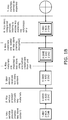
- FIG. 1B there is provided a schematic illustration of a complete end-to-end process flow of protecting the usage of the key store content 102 at the given user device 106, in accordance with an embodiment of the present disclosure.
- FIG. 1C there is provided a schematic illustration of how the key store content 102 is imported and loaded to the protected key store 108, in accordance with an embodiment of the present disclosure.
- the encrypted key materials included therein are imported to the protected key store 108 of the user device 106 at one go.
- the key materials may be provided as a single key code list or as a plurality of different key code lists. It will be appreciated that different key code lists can be imported simultaneously. Irrespective of the form in which different key code lists, namely the key materials, are encrypted, all the key materials are imported at one go.
- the encrypted key materials are then decrypted securely within the key store 108, when the key materials are loaded at the key store 108.
- FIGs. 1A , 1B and 1C are merely examples, which should not unduly limit the scope of the claims herein. It is to be understood that the specific designation for the system 100 is provided as an example and is not to be construed as limiting the system 100 to specific numbers, types, or arrangements of service providers and user devices; specifically, a single user device has been shown for the sake of simplicity only. A person skilled in the art will recognize many variations, alternatives, and modifications of embodiments of the present disclosure.
- FIGs. 1B and 1C show the indices of the key materials
- the key references are not necessarily always implemented by way of such indices.
- the key references can be implemented using offsets, as described earlier.
- FIG. 2 there is provided a flow chart depicting steps of a method of protecting usage of key store content at a given user device of an end user, in accordance with an embodiment of the present disclosure.
- the method is depicted as a collection of steps in a logical flow diagram, which represents a sequence of steps that can be implemented in hardware, software, or a combination thereof, for example as aforementioned.
- the key store content is received at the given user device.
- the key store content includes key materials that are encrypted using encryption credentials compatible with the given user device.
- the key store content is created by and received from a key service provider in a format that is compatible with the given user device.
- the encrypted key materials of the key store content are imported to a protected key store of the given user device at one go, and the key materials are stored at the protected key store in the encrypted form.
- the key store content is stored at the protected key store in a manner that the key materials are non-exportable from the key store.
- one or more key store integrated services of the given user device are allowed to access the non-exportable key materials for use, via key references only.
- integrated services are provided by executable software that is run within protection of the kernel layer, for example a kernel structure, of the given user device.
- the kernel structure includes hardware, for achieving an enhanced degree of security.
Landscapes
- Engineering & Computer Science (AREA)
- Computer Security & Cryptography (AREA)
- Theoretical Computer Science (AREA)
- Computer Networks & Wireless Communication (AREA)
- Signal Processing (AREA)
- Computer Hardware Design (AREA)
- General Physics & Mathematics (AREA)
- General Engineering & Computer Science (AREA)
- Physics & Mathematics (AREA)
- Software Systems (AREA)
- Bioethics (AREA)
- General Health & Medical Sciences (AREA)
- Health & Medical Sciences (AREA)
- Databases & Information Systems (AREA)
- Computing Systems (AREA)
- Storage Device Security (AREA)
Description
- The present disclosure relates to systems for protecting usage of key store content at user devices of end users, for example, to data security systems that are reliant upon using key materials to achieve data security. Moreover, the present disclosure also relates to methods of protecting usage of key store content at user devices of end users. Furthermore, the present disclosure also relates to computer program products comprising a non-transitory computer-readable storage medium having computer-readable instructions stored thereon, the computer-readable instructions being executable by a computerized device comprising processing hardware to execute the aforementioned methods.
- There often arises a need to store user-sensitive data on user devices, because there are presently available various services and functionalities that are designed to run as software applications on user devices, for example software applications for making payments. As a first example, there are presently available multiple applications for banking and payment services, wherein the multiple applications require secure arrangements for maintaining strong protection for customers when using the banking and payment services in order to try to avoid malicious third parties from hacking into such services for stealing money. As a second example, a user may need to store secret or private keys to access protected e-mails. For these and many other reasons, it is very desirable to provide a robust solution for handling key store pertaining to key materials.
- There are many security service providers that are accessible via multiple "eco-system" platforms, whose key stores are based on software. For example, the Android™ eco-system platform is contemporarily much in public focus, because there are numerous examples of mobile devices worldwide, for example tablet-like computing devices, that utilize the Android™ eco-system platform. Referring to Google documents, the Android™ Keystore system stores cryptographic keys in a container to make it more difficult to extract from a given Android-compatible device. The Android™ Keystore system is most advanced amongst contemporarily available key store systems in security matters, but still unfortunately lacks very important functionalities needed to provide an efficient security solution in contemporary devices that are sold in large numbers in the market. The Android™ Keystore offers a substantially complete set of security algorithms, for example, such as crypto, key generator, key factory, key pair generator, mac, and signature. All of these services run inside hardware that is backed by the key store system to make it efficient and convenient to use, but there is not taken into account real world cryptographic requirements.
- Moreover, in only a few years, there have recently been a huge increase in the use of mobile phones, and there are multiple vendors with different sets of device models, which are powered by different eco-systems, for example, such as Google® Android™, Apple® iOS™, Microsoft® Windows®, and so on. There arises an issue from a security perspective in that every eco-system has its own security solutions to protect user-sensitive data in hardware-based or software-based key stores. This makes it very difficult for application developers to understand security related implementations even theoretically, although it is understood at a basic level. Almost every eco-system has its own key store solution, but from a point of current urgent need, it is desired to focus on mobile platforms, because almost every human will soon have some kind of smartphone and a great amount of different applications that require properly implemented key stores for holding user-sensitive key materials inside. On paper, key stores almost fulfill any known security issues, but in reality, their software implementations do not meet the solid solutions with the System on Chip (SoC) hardware design.
- Firstly, the Android™ Keystore is not designed to import thousands or millions of secret keys (namely, key materials), but has been designed to maintain only a few secret keys. The Android™ Keystore has been designed for a scenario where the same key(s) are used for encryption purposes again and again. Secondly, the Android™ Keystore supports importing only one plain raw key at a time, which is potentially exposed to malicious parties. This is because the security of the Android™ Keystore is based on asymmetric encryption, which is a very slow computation process.
- Moreover, there are some conventionally-known software-based key store solutions, from which "Bouncy Castle" alias "BC" is the most known provider. When compared to the hardware-based Android™ Keystore, BC supports key store import functionality for protected key materials in Abstract Syntax Notation One (ASN.1) format, which can import securely more than one key at a time into the key store. The main problem with BC is that, the key material is not completely protected against extraction prevention, because the key material is requested from outside of the key store and is provided to another software application that then uses the key material. This makes it possible for a malicious third party to retrieve a key material from the key store in connection with an authenticated request. In particular, the key materials are not indexed in a given BC's key store, which potentially forces revealing the sensitive key materials to malicious parties.
- In a published United States patent document
US 2014/0208100 A1 (H. Richard Kendall ; "Provisioning an App on a Device and Implementing a Keystore"), there is described a method of installing a keystore in a mobile app. The app prompts a user to enter a passphrase to create an app keystore. The Keystore has a user section and a Table of Contents (TOC). The files in the Keystore are hashed, creating "first" key store hash values. The first keystore hash values are stored in the TOC. The TOC is hashed to create a TOC hash value. The passphrase entered by the user is then combined with the TOC hash value. This creates a "first" master passphrase for the keystore. The keystore is then transmitted to the device where it is installed in generic (non-provisioned) wrapped app. - In a published technical document (Woo Commerce: "How to Import Serial Keys from CSV file - StoreApps", 21 April2016 (2016-04-21), XP055461145), a technical overview of an import of serial keys from a CSV file is described.
- The method includes creating of a CSV file consisting of serial key text to be distributed among customers. The created CSV file is then imported to WooCommerce Serial Key dashboard. Once imported, the CSV file is validated and information of how many serial keys have been imported and ones that are skipped is shown in a table.
- In another published technical document (Mohamed Sabt et al; "Breaking into the KeyStore: A Practical Forgery Attack Against Android KeyStore"), a technical overview of security of an Android KeyStore is described. The document proves that use of non-provably secure cryptographic schemes in complex architectures could cause severe consequences. The document further proves the Authenticated Encryption (AE) scheme Hash-then-CBC-Encrypt does not provide authenticity regardless of the used hash function. Document also presents a selective forgery attack where an adversary exploits this weakness to substantially reduce the length of the symmetric keys protected by the KeyStore.
- The present disclosure seeks to provide an improved system for protecting usage of key store content at a given user device of an end user.
- Moreover, the present disclosure seeks to provide an improved method of protecting usage of key store content at a given user device of an end user.
- A further aim of the present disclosure is to at least partially overcome at least some of the problems of the prior art, as discussed above.
- In a first aspect, embodiments of the present disclosure provide a method of protecting usage of key store content at a given user device of an end user, characterized in that the method includes steps of:
- (i) receiving, at the given user device, the key store content including key materials that are encrypted using encryption credentials compatible with the given user device, the key store content being created by and received from a key service provider in a format that is compatible with the given user device, wherein the key materials are provided as a key code list;
- (ii) importing the encrypted key materials of the key store content to a protected key store of the given user device and storing the key materials at the protected key store in the encrypted form, wherein all the encrypted key materials of the key store content are imported at one go, wherein the key store content is stored at the key store in a manner that the key materials are non-exportable from the key store, and wherein the importing comprises:
- decrypting the encrypted key materials to obtain the key code list, and
- generating keys by choosing the keys from the key code list based upon key offsets, byte offsets and/or bit offsets; and
- (iii) internally within the protected key store of the given user device, allowing one or more key store integrated services of the given user device to access the non-exportable key materials for use via key references only.
- Embodiments of the present disclosure are of advantage in that complete protection of the key store content against unauthorized access is facilitated by employing a complete end-to-end process from the key service provider to the given user device of the end user, wherein the key materials of the key store content are never exposed or treated unsafely at any step in the process, are non-exportable once stored at the protected key store of the given user device, and are accessible for use by the services that are integrated with the protected key store, via the key references only.
- In a second aspect, embodiments of the present disclosure provide a computer program product comprising a non-transitory computer-readable storage medium having computer-readable instructions stored thereon, the computer-readable instructions being executable by a computerized device comprising processing hardware to execute the method pursuant to the aforementioned first aspect.
- In a third aspect, embodiments of the present disclosure provide a system for protecting usage of key store content at a given user device of an end user, characterized in that the system is operable to:
- (i) receive, at the given user device (106), the key store content (102) including key materials that are encrypted using encryption credentials compatible with the given user device (106), the key store content (102) being created by and received from a key service provider (104) in a format that is compatible with the given user device (106), wherein the key materials are provided as a key code list;
- (ii) import the encrypted key materials of the key store content (102) to a protected key store (108) of the given user device (106) and store the key materials at the protected key store (108) in the encrypted form, wherein all the key encrypted materials of the key store content (102) are imported at one go, wherein the key store content (102) is stored at the key store in a manner that the key materials are non-exportable from the key store, and wherein the importing com prises:
- decrypting the encrypted key materials to obtain the key code list, and
- generating keys by choosing the keys from the key code list based upon key offsets, byte offsets and/or bit offsets; and
- (iii) internally within the protected key store (108) of the given user device (106), allow one or more key store integrated services of the given user device (106) to access the non-exportable key materials for use via key references only.
- Additional aspects, advantages, features and objects of the present disclosure would be made apparent from the drawings and the detailed description of the illustrative embodiments construed in conjunction with the appended claims that follow.
- It will be appreciated that features of the present disclosure are susceptible to being combined in various combinations without departing from the scope of the present disclosure as defined by the appended claims.
- The summary above, as well as the following detailed description of illustrative embodiments, is better understood when read in conjunction with the appended drawings. For the purpose of illustrating the present disclosure, exemplary constructions of the disclosure are shown in the drawings. However, the present disclosure is not limited to specific methods and apparatus disclosed herein. Moreover, those in the art will understand that the drawings are not to scale. Wherever possible, like elements have been indicated by identical numbers.
- Embodiments of the present disclosure will now be described, by way of example only, with reference to the following diagrams wherein:
- FIG. 1A
- is a schematic illustration of a system for protecting usage of key store content at a given user device of an end user, in accordance with an embodiment of the present disclosure;
- FIG. 1B
- is a schematic illustration of a complete end-to-end process flow of protecting the usage of the key store content at the given user device, in accordance with an embodiment of the present disclosure;
- FIG. 1C
- is a schematic illustration of how the key store content is imported and loaded to a protected key store of the given user device, in accordance with an embodiment of the present disclosure; and
- FIG. 2
- is a flow chart depicting steps of a method of protecting usage of key store content at a given user device of an end user, in accordance with an embodiment of the present disclosure.
- In the accompanying drawings, an underlined number is employed to represent an item over which the underlined number is positioned or an item to which the underlined number is adjacent. When a number is non-underlined and accompanied by an associated arrow, the non-underlined number is used to identify a general item at which the arrow is pointing.
- The following detailed description illustrates embodiments of the present disclosure and ways in which they can be implemented. Although some modes of carrying out the present disclosure have been disclosed, those skilled in the art would recognize that other embodiments for carrying out or practising the present disclosure are also possible.
- In a first aspect, embodiments of the present disclosure provide a method of protecting usage of key store content at a given user device of an end user, characterized in that the method includes steps of:
- (i) receiving, at the given user device, the key store content including key materials that are encrypted using encryption credentials compatible with the given user device, the key store content being created by and received from a key service provider in a format that is compatible with the given user device, wherein the key materials are provided as a key code list;
- (ii) importing the encrypted key materials of the key store content to a protected key store of the given user device and storing the key materials at the protected key store in the encrypted form, wherein all the encrypted key materials of the key store content are imported at one go, wherein the key store content is stored at the key store in a manner that the key materials are non-exportable from the key store, and wherein the importing comprises:
- decrypting the encrypted key materials to obtain the key code list, and
- generating keys by choosing the keys from the key code list based upon key offsets, byte offsets and/or bit offsets; and
- (iii) internally within the protected key store of the given user device, allowing one or more key store integrated services of the given user device to access the non-exportable key materials for use via key references only.
- Optionally, in addition to the key materials, the protected key store also includes information about the end user and/or a group of end users that are authorized to use the key materials stored at the protected key store. Additionally or alternatively, optionally, the protected key store includes other information relevant for usage of the key materials.
- Throughout the present disclosure, the term "end user" encompasses a human user as well as a machine. As an example, the end user could be a registered relay machine. This is particularly beneficial for cases where the aforementioned method is used to recognize and verify servers that perform machine-to-machine communication.
- It will be appreciated that the key store is protected only for its usage by the end user, namely against unauthorized usage by anyone other than the authorized end user, and such protection of the key store is not related to the encryption of the imported key materials. In other words, the key materials are encrypted using one or more different secret keys, for example, such as one or more pre-shared keys.
- Optionally, the key materials are received at the step (i) in a symmetrically-encrypted form. Optionally, in this regard, the key materials are encrypted using symmetric keys.
- Optionally, the method includes, internally within the protected key store of the given user device, decrypting one or more of the key materials to be used by the one or more key store integrated services of the given user device.
- Throughout the present disclosure, the term "key reference" generally refers to a given reference that refers to and identifies a given key material stored at the protected key store. In other words, with a given key reference, it is known which key material (for example, a key or a certificate) is to be used, and optionally, in which location of the protected key store the key material to be used is located. Pursuant to embodiments of the present disclosure, the key material itself is never extracted from the key store.
- According to an embodiment, the key references are implemented by way of indices of the key materials. Optionally, the indices are ordinal numbers of the key materials in an order of their occurrence. Optionally, the method includes receiving, within the key store content, the indices to be used for referencing the key materials via the key references. Alternatively, optionally, the method includes generating, at the given user device, the indices to be used for referencing the key materials via the key references. As an example, the indices may be generated in a consecutive manner corresponding to an order in which the key materials are included in the key store content. The indices can be generated, for example, at an initial registration of the given user device to the key service provider or during the decryption of the key materials.
- According to another embodiment, the key references are implemented by way of offsets based upon which the key materials are to be identified. It will be appreciated that a given offset refers to and identifies a given key material stored at the protected key store. Some examples of the offsets have been provided later for illustration purposes.
- Pursuant to embodiments of the present disclosure, complete protection of the key store content against unauthorized access is facilitated by employing a complete end-to-end process from the key service provider to the given user device of the end user, wherein the key materials of the key store content are never exposed or treated unsafely at any step in the process. The key store content is created and delivered to the given user device in the encrypted form. This potentially prevents eavesdropping by third parties. At the given user device, the key store content is imported to the key store of the given user device at one go.
- The key store content is received as a single list containing all the key materials (hereafter referred to as the "key code list", for the sake of convenience only). Alternatively, optionally, the key store content is received as a plurality of key code lists. It will be appreciated that the plurality of key code lists can be imported simultaneously. Irrespective of the form in which different key code lists, namely the key materials, are encrypted, all the key materials are imported at one go.
- Optionally, at the step (ii), the key store content is imported to the given user device as a single data file. It will be appreciated that the number of key materials included within the key store content can be as large as thousands, potentially millions. In such a case, importing the key store content as a single data file has several advantages, as compared to conventional key store techniques.
- For illustration purposes only, there will now be considered an example implementation of the aforementioned system with Gurulogic Microsystem Oy's proprietary product "Starwindow®". In such an implementation, once the key store content is received at the given user device, a "Load" function provided by a key store of the "Starwindow®" product is used to import all the key materials to the key store at one go. Optionally, the "Load" function also decrypts the key materials securely within the key store to enable fast usage thereof. It will be appreciated that the "Load" function can be used to import all the key materials at one go, even when there are millions of key materials included in the key store content.
- The aforementioned importing of a huge amount of key materials simultaneously is enabled by different implementation solutions, for example, such as the following options:
- A key code list comprises eight different 128-bit keys; this key code list consumes 128 bytes of a storage space. As the smallest unit size is one byte, which represents eight bits, a 128-bit key consumes 16 bytes of the storage space. It will be appreciated that the keys typically represent highest-possible entropy, thereby strengthening the protection achieved therefrom, and therefore these keys cannot be compressed with traditional compression techniques.
- An example key code list may be represented as follows:
        KeyCodeListA : array [0..7] of array [0..15] of UInt8 =
 (0x4B, 0xDA, 0x72, 0x44, 0xB3, 0x12, 0x07, 0x43, 0x6F, 0x65, 0x83,
 0x8C, 0xF5, 0x3F, 0xF1, 0x08, //key1
 0xCA, 0x1E, 0x7F, 0xDF, 0x5C, 0x7F, 0x78, 0x0C, 0x55, 0x88, 0x96, 0x0B,
 0xA9, 0xD9, 0x22, 0x6F, //key2
 0xB6, 0x43, 0x73, 0x84, 0x57, 0x86, 0x66, 0xF8, 0x79, 0xB0, 0xCC, 0xA0,
 0x16, 0x13, 0x42, 0xDF, //key3
 0xF0, 0x6B, 0x2B, 0xF8, 0x68, 0x5A, 0x31, 0xCF, 0x9A, 0x65, 0xF1, 0xC7,
 0x94, 0x62, 0xDD, 0x9B, //key4
 0xB1, 0x28, 0x68, 0xEE, 0x1B, 0x4D, 0x43, 0x07, 0xE4, 0x97, 0xFF, 0x00,
 0x01, 0xFF, 0x00, 0xE0, //key5
 0xEE, 0x1F, 0xFD, 0xA9, 0x69, 0xE5, 0xFF, 0x00, 0xDF, 0x67, 0x67, 0xF7
 0xB0, 0xB9, 0xAA, 0x77, //key6
 0x9E, 0x55, 0xAC, 0xE3, 0xFE, 0x16, 0x27, 0xD9, 0xED, 0xE1, 0x2B, 0xFF
 0x00, 0x13, 0xFF, 0x00, //key7
 0xB5, 0xE2, 0x28, 0x56, 0x2D, 0xBF, 0xE9, 0x39, 0x1F, 0xF0, 0x74, 0x9F,
 0x95, 0x19, 0x05, 0x07, //key8);
, wherein consecutive sequences of 16 bytes each represent the keys. In this example, the keys are generated based upon key offsets, namely by increasing the offsets by the size of the keys (which is 16 bytes in this exam ple).
        KeyCodeListB : array [0..127] of Ulnt8 =
 (0x4B, 0xDA, 0x72, 0x44, 0xB3, 0x12, 0x07, 0x43, 0x6F, 0x65, 0x83,
 0x8C, 0xF5, 0x3F, 0xF1, 0x08, // key1 from a byte offset "0"
 (0xDA, 0x72, 0x44, 0xB3, 0x12, 0x07, 0x43, 0x6F, 0x65, 0x83, 0x8C,
 0xF5, 0x3F, 0xF1, 0x08, 0xCA // key2 from a byte offset "1"
 (0x72, 0x44, 0xB3, 0x12, 0x07, 0x43, 0x6F, 0x65, 0x83, 0x8C, 0xF5, 0x3F,
 0xF1, 0x08, 0xCA, 0x1 E, // key3 from a byte offset "2"
It will be appreciated that the keys can be generated by selecting an offset in any predefined order, and is not necessarily always generated by increasing the offset by one as illustrated in the abovementioned example for the example key code list provided in the option "A".
        0100 1011 1101 1010 0111 0010 0100 0100 1011 0011 0001 0010
        0000 0111 0100 0011
        0110 1111 0110 0101 1000 0011 1000 1100 1111 0101 0011 1111
        1111 0001 0000 1000
        1101 1010 0111 0010 0100 0100 1011 0011 0001 0010 0000 0111
        0100 0011 0110 1111
        0110 0101 1000 0011 1000 1100 1111 0101 0011 1111 1111 0001
        0000 1000 1100 1010
        0111 0010 0100 0100 1011 0011 0001 0010 0000 0111 0100 0011
        0110 1111 0110 0101
        1000 0011 1000 1100 1111 0101 0011 1111 1111 0001 0000 1000
        1100 1010 0001 1110
        0100 1011 1101 1010 0111 0010 0100 0100 1011 0011 0001 0010
        0000 0111 0100 0011
        0110 1111 0110 0101 1000 0011 1000 1100 1111 0101 0011 1111
        1111 0001 0000 1000
and a second 128-bit key from a bit offset "1" is:
        1001 0111 1011 0100 1110 0100 1000 1001 0110 0110 0010 0100
        0000 1110 1000 0110
        1101 1110 1100 1011 0000 0111 0001 1001 1110 1010 0111 1111
        1110 0010 0001 0001
and a third 128-bit key from a bit offset "2" is:
        0010 1111 0110 1001 1100 1001 0001 0010 1100 1100 0100 1000
        0001 1101 0000 1101
        1011 1101 1001 0110 0000 1110 0011 0011 1101 0100 1111 1111
        1100 0100 0010 0011
- (a) a 128-bit key is expanded to, for example, a 352-bit key;
- (b) a 192-bit key is expanded to, for example, a 432-bit key; and
- (c) a 256-bit key is expanded to, for example, a 512-bit key.
- (a) secret keys for symmetric data encryption,
- (b) private keys and public keys for a Public Key Infrastructure (PKI)-equivalent usage,
- (c) certificates to be used for cryptography, signing, integrity, verification, authentication, authorization and similar,
- (d) one or more key generators for generating keys.
- (i) receive, at the given user device (106), the key store content (102) including key materials that are encrypted using encryption credentials compatible with the given user device (106), the key store content (102) being created by and received from a key service provider (104) in a format that is compatible with the given user device (106), wherein the key materials are provided as a key code list;
- (ii) import the encrypted key materials of the key store content (102) to a protected key store (108) of the given user device (106) and store the key materials at the protected key store (108) in the encrypted form, wherein all the key encrypted materials of the key store content (102) are imported at one go, wherein the key store content (102) is stored at the key store in a manner that the key materials are non-exportable from the key store, and wherein the importing com prises:
- decrypting the encrypted key materials to obtain the key code list, and
- generating keys by choosing the keys from the key code list based upon key offsets, byte offsets and/or bit offsets; and
- (iii) internally within the protected key store (108) of the given user device (106), allow one or more key store integrated services of the given user device (106) to access the non-exportable key materials for use via key references only.
- (a) secret keys for symmetric data encryption,
- (b) private keys and public keys for a PKI-equivalent usage,
- (c) certificates to be used for cryptography, signing, integrity, verification, authentication, authorization and similar,
- (d) one or more key generators for generating keys.
- Step 1: The
key service provider 104 creates thekey store content 102 in the format that is compatible with the givenuser device 106. - Step 2: The
key service provider 104 encrypts the key materials included in thekey store content 102. - Step 3: The given
user device 106 receives thekey store content 102 from thekey service provider 104. - Step 4: The encrypted key materials are imported to the protected
key store 108 of the givenuser device 106. Optionally, thekey store 108 is protected using encryption credentials from the end user. - Step 5: The key materials are loaded to the key store, wherein the key materials are decrypted securely within the key store, in order to enable easy and fast usage thereof.
- Step 6: The key store integrated
services 122 access the key materials, internally within the protected key store, via key references only. - Prohibited step 7: The key materials are non-exportable, and cannot be exported from the
key store 108.
- [1] Trusted execution environment - Wikipedia, the free encyclopedia (accessed November 28, 2016); URL: https://en.wikipedia.org/wiki/Trusted_execution_environment
- [2] Advanced Encryption Standard - Wikipedia, the free encyclopedia (accessed November 28, 2016); URL: https://en.wikipedia.org/wiki/Advanced_Encryption_Standard
Claims (18)
- A method of protecting usage of key store content (102) at a given user device (106) of an end user, the method includes steps of:(i) receiving, at the given user device (106), the key store content (102) including key materials that are encrypted using encryption credentials compatible with the given user device (106), the key store content (102) being created by and received from a key service provider (104) in a format that is compatible with the given user device (106), wherein the key materials are provided as a key code list;(ii) importing the encrypted key materials of the key store content (102) to a protected key store (108) of the given user device (106) and storing the key materials at the protected key store (108) in the encrypted form, wherein all the encrypted key materials of the key store content (102) are imported at one go, wherein the key store content (102) is stored at the key store in a manner that the key materials are non-exportable from the key store, and wherein the importing comprises:- decrypting the encrypted key materials to obtain the key code list, and- generating keys by choosing the keys from the key code list based upon key offsets, byte offsets and/or bit offsets; and(iii) internally within the protected key store (108) of the given user device (106), allowing one or more key store integrated services of the given user device (106) to access the non-exportable key materials for use via key references only.
- A method of claim 1, characterized in that at the step (ii), the key store content (102) is imported as a single data file.
- A method of claim 1 or 2, characterized in that the method includes receiving, within the key store content (102), indices to be used for referencing the key materials via the key references.
- A method of claim 1 or 2, characterized in that the method includes generating, at the given user device (106), indices to be used for referencing the key materials via the key references.
- A method of any one of claims 1 to 4, characterized in that the key store is hardware-based, and the importing at the step (ii) includes binding the key materials stored at the hardware-based key store to a secure area of processing hardware of the given user device (106).
- A method of any one claims claim 1 to 5, characterized in that the method includes integrating, with the key store, one or more trusted software applications (122) or ecosystem processes hosted at the given user device (106) that are authorized to use the key store of the given user device (106).
- A method of claim 6, characterized in that the method includes importing, from a trusted software service provider (120), the one or more trusted software applications (122) for providing key store integrated services, wherein the one or more trusted software applications (122) when executed at the given user device (106) are operable to provide one or more key store integrated services and are provided with protection from a kernel (124) of the given user device (106).
- A method of any one of claims 1 to 7, characterized in that the method includes protecting the key store, at the given user device (106), using a token of the end user's bio-credential.
- A method of any one of claims 1 to 8, characterized in that the key materials are received at the given user device (106) at the step (i) in a symmetrically-encrypted form.
- A method of any one of claims 1 to 9, characterized in that the key materials include at least one of:(a) secret keys for symmetric data encryption,(b) private keys and public keys for a Public Key Infrastructure (PKI)-equivalent usage,(c) certificates to be used for cryptography, signing, integrity, verification, authentication, authorization,(d) one or more key generators for generating keys.
- A computer program product comprising a non-transitory computer-readable storage medium having computer-readable instructions stored thereon, the computer-readable instructions being executable by a computerized device comprising processing hardware to execute a method of any one of claims 1 to 10.
- A system (100) for protecting usage of key store content (102) at a given user device (106) of an end user, the system (100) is operable to:(i) receive, at the given user device (106), the key store content (102) including key materials that are encrypted using encryption credentials compatible with the given user device (106), the key store content (102) being created by and received from a key service provider (104) in a format that is compatible with the given user device (106), wherein the key materials are provided as a key code list;(ii) import the encrypted key materials of the key store content (102) to a protected key store (108) of the given user device (106) and store the key materials at the protected key store (108) in the encrypted form, wherein all the key encrypted materials of the key store content (102) are imported at one go, wherein the key store content (102) is stored at the key store in a manner that the key materials are non-exportable from the key store, and wherein the importing com prises:- decrypting the encrypted key materials to obtain the key code list, and- generating keys by choosing the keys from the key code list based upon key offsets, byte offsets and/or bit offsets; and(iii) internally within the protected key store (108) of the given user device (106), allow one or more key store integrated services of the given user device (106) to access the non-exportable key materials for use via key references only.
- A system (100) of claim 12, characterized in that the system (100) is operable to receive, within the key store content (102), indices to be used for referencing the key materials via the key references.
- A system (100) of claim 12, characterized in that the system (100) is operable to generate, at the given user device (106), indices to be used for referencing the key materials via the key references.
- A system (100) of any one of claims 12 to 14, characterized in that the key store is hardware-based, and when importing at (ii), the system (100) is operable to bind the key materials stored at the hardware-based key store to a secure area of processing hardware of the given user device (106).
- A system (100) of any one of claims 12 to 15, characterized in that the system (100) is operable to integrate, with the key store, one or more trusted software applications (122) or ecosystem processes hosted at the given user device (106) that are authorized to use the key store of the given user device (106).
- A system (100) of claim 16, characterized in that the system (100) is operable to import, from a trusted software service provider (120), the one or more trusted software applications (122) for providing key store integrated services, wherein the one or more trusted software applications (122) when executed at the given user device (106) are operable to provide one or more key store integrated services and are provided with protection from a kernel (124) of the given user device (106).
- A system (100) of any one of claims 12 to 17, characterized in that the key store is protected at the given user device (106) using a token of the end user's bio-credential.
Applications Claiming Priority (2)
| Application Number | Priority Date | Filing Date | Title |
|---|---|---|---|
| GB1620553.6A GB2556638B (en) | 2016-12-02 | 2016-12-02 | Protecting usage of key store content |
| PCT/EP2017/025349 WO2018099606A1 (en) | 2016-12-02 | 2017-12-01 | Protecting usage of key store content |
Publications (2)
| Publication Number | Publication Date |
|---|---|
| EP3549304A1 EP3549304A1 (en) | 2019-10-09 |
| EP3549304B1 true EP3549304B1 (en) | 2020-09-23 |
Family
ID=58159702
Family Applications (1)
| Application Number | Title | Priority Date | Filing Date |
|---|---|---|---|
| EP17837851.9A Active EP3549304B1 (en) | 2016-12-02 | 2017-12-01 | Protecting usage of key store content |
Country Status (6)
| Country | Link |
|---|---|
| US (1) | US11424919B2 (en) |
| EP (1) | EP3549304B1 (en) |
| CN (1) | CN109983732B (en) |
| GB (1) | GB2556638B (en) |
| RU (1) | RU2740298C2 (en) |
| WO (1) | WO2018099606A1 (en) |
Families Citing this family (7)
| Publication number | Priority date | Publication date | Assignee | Title |
|---|---|---|---|---|
| EP3598689B1 (en) * | 2018-07-17 | 2022-01-05 | Assa Abloy AB | Managing central secret keys of a plurality of user devices associated with a single public key |
| GB2576755B (en) | 2018-08-31 | 2021-01-06 | Gurulogic Microsystems Oy | System and method for providing protected data storage in a data memory |
| CN114762290B (en) * | 2019-12-06 | 2024-04-19 | 三星电子株式会社 | Method and electronic device for managing digital key |
| US11205003B2 (en) | 2020-03-27 | 2021-12-21 | Intel Corporation | Platform security mechanism |
| EP3930254B1 (en) * | 2020-06-23 | 2023-12-20 | Nxp B.V. | Method for setting permissions for cryptographic keys, computer program and cryptographic processing system |
| CN111859428B (en) * | 2020-07-22 | 2022-07-19 | 成都安恒信息技术有限公司 | Containerization-based secret key storage method and system |
| US12261950B2 (en) * | 2022-02-01 | 2025-03-25 | Okta, Inc. | Implementing enhanced computer security standard for secure cryptographic key storage using a software-based keystore |
Family Cites Families (18)
| Publication number | Priority date | Publication date | Assignee | Title |
|---|---|---|---|---|
| US6704871B1 (en) * | 1997-09-16 | 2004-03-09 | Safenet, Inc. | Cryptographic co-processor |
| US20040247116A1 (en) * | 2002-11-20 | 2004-12-09 | Boren Stephen Laurence | Method of generating a stream cipher using multiple keys |
| US8284942B2 (en) * | 2004-08-24 | 2012-10-09 | Microsoft Corporation | Persisting private/public key pairs in password-encrypted files for transportation to local cryptographic store |
| US8504849B2 (en) * | 2004-12-21 | 2013-08-06 | Sandisk Technologies Inc. | Method for versatile content control |
| TW201017514A (en) * | 2004-12-21 | 2010-05-01 | Sandisk Corp | Memory system with versatile content control |
| US20070168292A1 (en) * | 2004-12-21 | 2007-07-19 | Fabrice Jogand-Coulomb | Memory system with versatile content control |
| US7639819B2 (en) * | 2005-06-16 | 2009-12-29 | Oracle International Corporation | Method and apparatus for using an external security device to secure data in a database |
| US8014418B2 (en) * | 2006-09-25 | 2011-09-06 | Intel Corporation | Allocating burst data units to available time-slots |
| US20090067624A1 (en) * | 2007-09-11 | 2009-03-12 | Patricio Lucas Cobelo | System and method of protecting content of an electronic file using a computer |
| US8301912B2 (en) * | 2007-12-31 | 2012-10-30 | Sandisk Technologies Inc. | System, method and memory device providing data scrambling compatible with on-chip copy operation |
| US8688622B2 (en) | 2008-06-02 | 2014-04-01 | The Boeing Company | Methods and systems for loading data into a temporal data warehouse |
| US20120137137A1 (en) * | 2010-11-30 | 2012-05-31 | Brickell Ernest F | Method and apparatus for key provisioning of hardware devices |
| US9396325B2 (en) * | 2011-03-21 | 2016-07-19 | Mocana Corporation | Provisioning an app on a device and implementing a keystore |
| US8983067B2 (en) * | 2011-08-17 | 2015-03-17 | Nxp B.V. | Cryptographic circuit and method therefor |
| US8761399B2 (en) * | 2012-10-19 | 2014-06-24 | Oracle International Corporation | Keystore management system |
| US8726342B1 (en) * | 2012-10-31 | 2014-05-13 | Oracle International Corporation | Keystore access control system |
| US10469477B2 (en) * | 2015-03-31 | 2019-11-05 | Amazon Technologies, Inc. | Key export techniques |
| US20170331795A1 (en) * | 2016-05-13 | 2017-11-16 | Ford Global Technologies, Llc | Vehicle data encryption |
-
2016
- 2016-12-02 GB GB1620553.6A patent/GB2556638B/en active Active
-
2017
- 2017-12-01 RU RU2019116964A patent/RU2740298C2/en active
- 2017-12-01 EP EP17837851.9A patent/EP3549304B1/en active Active
- 2017-12-01 CN CN201780072591.5A patent/CN109983732B/en active Active
- 2017-12-01 WO PCT/EP2017/025349 patent/WO2018099606A1/en not_active Ceased
- 2017-12-01 US US16/464,454 patent/US11424919B2/en active Active
Non-Patent Citations (1)
| Title |
|---|
| None * |
Also Published As
| Publication number | Publication date |
|---|---|
| CN109983732B (en) | 2022-04-08 |
| RU2019116964A3 (en) | 2021-01-11 |
| RU2740298C2 (en) | 2021-01-13 |
| GB2556638A (en) | 2018-06-06 |
| WO2018099606A1 (en) | 2018-06-07 |
| US11424919B2 (en) | 2022-08-23 |
| US20190379537A1 (en) | 2019-12-12 |
| CN109983732A (en) | 2019-07-05 |
| GB2556638B (en) | 2018-12-12 |
| GB201620553D0 (en) | 2017-01-18 |
| RU2019116964A (en) | 2021-01-11 |
| EP3549304A1 (en) | 2019-10-09 |
Similar Documents
| Publication | Publication Date | Title |
|---|---|---|
| RU2740298C2 (en) | Protection of usage of key store content | |
| EP2698756B1 (en) | Local Trusted Service Manager | |
| GB2538052B (en) | Encoder, decoder, encryption system, encryption key wallet and method | |
| AU2015334634B2 (en) | Transaction messaging | |
| KR20220117211A (en) | Contactless Card Personal Identification System | |
| EP2251810B1 (en) | Authentication information generation system, authentication information generation method, and authentication information generation program utilizing a client device and said method | |
| CN106454528A (en) | Service processing method based on trusted execution environment and client side | |
| AU2010314480B2 (en) | Method for securely interacting with a security element | |
| WO2008024559A2 (en) | Method and apparatus for authenticating applications to secure services | |
| TWI893362B (en) | Authentication information manager computer program product and device based on cyber-physical integration multiparty multifactor dynamic strong encryption authentication | |
| CN103546289A (en) | USB (universal serial bus) Key based secure data transmission method and system | |
| EP2908493B1 (en) | Secure communication systems | |
| Griffin | Telebiometric authentication objects | |
| CN103516524A (en) | Security authentication method and system | |
| US20180218363A1 (en) | Payment instrument management with key tokenization | |
| WO2025227758A1 (en) | Data sharing method, device and system | |
| AU2024364804A1 (en) | Systems and methods for automatically locking a contactless card | |
| EP3292654A1 (en) | A security approach for storing credentials for offline use and copy-protected vault content in devices | |
| US20090235083A1 (en) | System and method for preventing unauthorized access to information | |
| CN107729760B (en) | CSP implementation method based on Android system and intelligent terminal | |
| US20240095724A1 (en) | Techniques to provide secure cryptographic authentication of contactless cards by distributed entities | |
| US20180218357A1 (en) | Export high value material based on ring 1 evidence of ownership | |
| CN114173327B (en) | Authentication method and terminal based on private network in 5G industry | |
| CN106789074B (en) | A Java Card Application Identity Verification Method and Verification System | |
| CN106919846B (en) | Message middleware processing method and system |
Legal Events
| Date | Code | Title | Description |
|---|---|---|---|
| STAA | Information on the status of an ep patent application or granted ep patent |
Free format text: STATUS: UNKNOWN |
|
| STAA | Information on the status of an ep patent application or granted ep patent |
Free format text: STATUS: THE INTERNATIONAL PUBLICATION HAS BEEN MADE |
|
| PUAI | Public reference made under article 153(3) epc to a published international application that has entered the european phase |
Free format text: ORIGINAL CODE: 0009012 |
|
| STAA | Information on the status of an ep patent application or granted ep patent |
Free format text: STATUS: REQUEST FOR EXAMINATION WAS MADE |
|
| 17P | Request for examination filed |
Effective date: 20190621 |
|
| AK | Designated contracting states |
Kind code of ref document: A1 Designated state(s): AL AT BE BG CH CY CZ DE DK EE ES FI FR GB GR HR HU IE IS IT LI LT LU LV MC MK MT NL NO PL PT RO RS SE SI SK SM TR |
|
| AX | Request for extension of the european patent |
Extension state: BA ME |
|
| DAV | Request for validation of the european patent (deleted) | ||
| DAX | Request for extension of the european patent (deleted) | ||
| GRAP | Despatch of communication of intention to grant a patent |
Free format text: ORIGINAL CODE: EPIDOSNIGR1 |
|
| STAA | Information on the status of an ep patent application or granted ep patent |
Free format text: STATUS: GRANT OF PATENT IS INTENDED |
|
| INTG | Intention to grant announced |
Effective date: 20200617 |
|
| GRAS | Grant fee paid |
Free format text: ORIGINAL CODE: EPIDOSNIGR3 |
|
| GRAA | (expected) grant |
Free format text: ORIGINAL CODE: 0009210 |
|
| STAA | Information on the status of an ep patent application or granted ep patent |
Free format text: STATUS: THE PATENT HAS BEEN GRANTED |
|
| AK | Designated contracting states |
Kind code of ref document: B1 Designated state(s): AL AT BE BG CH CY CZ DE DK EE ES FI FR GB GR HR HU IE IS IT LI LT LU LV MC MK MT NL NO PL PT RO RS SE SI SK SM TR |
|
| REG | Reference to a national code |
Ref country code: GB Ref legal event code: FG4D |
|
| REG | Reference to a national code |
Ref country code: CH Ref legal event code: EP |
|
| REG | Reference to a national code |
Ref country code: IE Ref legal event code: FG4D |
|
| REG | Reference to a national code |
Ref country code: AT Ref legal event code: REF Ref document number: 1317497 Country of ref document: AT Kind code of ref document: T Effective date: 20201015 Ref country code: DE Ref legal event code: R096 Ref document number: 602017024352 Country of ref document: DE |
|
| REG | Reference to a national code |
Ref country code: FI Ref legal event code: FGE |
|
| PG25 | Lapsed in a contracting state [announced via postgrant information from national office to epo] |
Ref country code: BG Free format text: LAPSE BECAUSE OF FAILURE TO SUBMIT A TRANSLATION OF THE DESCRIPTION OR TO PAY THE FEE WITHIN THE PRESCRIBED TIME-LIMIT Effective date: 20201223 Ref country code: GR Free format text: LAPSE BECAUSE OF FAILURE TO SUBMIT A TRANSLATION OF THE DESCRIPTION OR TO PAY THE FEE WITHIN THE PRESCRIBED TIME-LIMIT Effective date: 20201224 Ref country code: NO Free format text: LAPSE BECAUSE OF FAILURE TO SUBMIT A TRANSLATION OF THE DESCRIPTION OR TO PAY THE FEE WITHIN THE PRESCRIBED TIME-LIMIT Effective date: 20201223 Ref country code: SE Free format text: LAPSE BECAUSE OF FAILURE TO SUBMIT A TRANSLATION OF THE DESCRIPTION OR TO PAY THE FEE WITHIN THE PRESCRIBED TIME-LIMIT Effective date: 20200923 Ref country code: HR Free format text: LAPSE BECAUSE OF FAILURE TO SUBMIT A TRANSLATION OF THE DESCRIPTION OR TO PAY THE FEE WITHIN THE PRESCRIBED TIME-LIMIT Effective date: 20200923 |
|
| REG | Reference to a national code |
Ref country code: AT Ref legal event code: MK05 Ref document number: 1317497 Country of ref document: AT Kind code of ref document: T Effective date: 20200923 |
|
| PG25 | Lapsed in a contracting state [announced via postgrant information from national office to epo] |
Ref country code: LV Free format text: LAPSE BECAUSE OF FAILURE TO SUBMIT A TRANSLATION OF THE DESCRIPTION OR TO PAY THE FEE WITHIN THE PRESCRIBED TIME-LIMIT Effective date: 20200923 Ref country code: RS Free format text: LAPSE BECAUSE OF FAILURE TO SUBMIT A TRANSLATION OF THE DESCRIPTION OR TO PAY THE FEE WITHIN THE PRESCRIBED TIME-LIMIT Effective date: 20200923 |
|
| REG | Reference to a national code |
Ref country code: NL Ref legal event code: MP Effective date: 20200923 |
|
| REG | Reference to a national code |
Ref country code: LT Ref legal event code: MG4D |
|
| PG25 | Lapsed in a contracting state [announced via postgrant information from national office to epo] |
Ref country code: LT Free format text: LAPSE BECAUSE OF FAILURE TO SUBMIT A TRANSLATION OF THE DESCRIPTION OR TO PAY THE FEE WITHIN THE PRESCRIBED TIME-LIMIT Effective date: 20200923 Ref country code: SM Free format text: LAPSE BECAUSE OF FAILURE TO SUBMIT A TRANSLATION OF THE DESCRIPTION OR TO PAY THE FEE WITHIN THE PRESCRIBED TIME-LIMIT Effective date: 20200923 Ref country code: CZ Free format text: LAPSE BECAUSE OF FAILURE TO SUBMIT A TRANSLATION OF THE DESCRIPTION OR TO PAY THE FEE WITHIN THE PRESCRIBED TIME-LIMIT Effective date: 20200923 Ref country code: PT Free format text: LAPSE BECAUSE OF FAILURE TO SUBMIT A TRANSLATION OF THE DESCRIPTION OR TO PAY THE FEE WITHIN THE PRESCRIBED TIME-LIMIT Effective date: 20210125 Ref country code: RO Free format text: LAPSE BECAUSE OF FAILURE TO SUBMIT A TRANSLATION OF THE DESCRIPTION OR TO PAY THE FEE WITHIN THE PRESCRIBED TIME-LIMIT Effective date: 20200923 Ref country code: EE Free format text: LAPSE BECAUSE OF FAILURE TO SUBMIT A TRANSLATION OF THE DESCRIPTION OR TO PAY THE FEE WITHIN THE PRESCRIBED TIME-LIMIT Effective date: 20200923 |
|
| PG25 | Lapsed in a contracting state [announced via postgrant information from national office to epo] |
Ref country code: IS Free format text: LAPSE BECAUSE OF FAILURE TO SUBMIT A TRANSLATION OF THE DESCRIPTION OR TO PAY THE FEE WITHIN THE PRESCRIBED TIME-LIMIT Effective date: 20210123 Ref country code: PL Free format text: LAPSE BECAUSE OF FAILURE TO SUBMIT A TRANSLATION OF THE DESCRIPTION OR TO PAY THE FEE WITHIN THE PRESCRIBED TIME-LIMIT Effective date: 20200923 Ref country code: ES Free format text: LAPSE BECAUSE OF FAILURE TO SUBMIT A TRANSLATION OF THE DESCRIPTION OR TO PAY THE FEE WITHIN THE PRESCRIBED TIME-LIMIT Effective date: 20200923 Ref country code: AT Free format text: LAPSE BECAUSE OF FAILURE TO SUBMIT A TRANSLATION OF THE DESCRIPTION OR TO PAY THE FEE WITHIN THE PRESCRIBED TIME-LIMIT Effective date: 20200923 Ref country code: AL Free format text: LAPSE BECAUSE OF FAILURE TO SUBMIT A TRANSLATION OF THE DESCRIPTION OR TO PAY THE FEE WITHIN THE PRESCRIBED TIME-LIMIT Effective date: 20200923 |
|
| REG | Reference to a national code |
Ref country code: DE Ref legal event code: R097 Ref document number: 602017024352 Country of ref document: DE |
|
| PG25 | Lapsed in a contracting state [announced via postgrant information from national office to epo] |
Ref country code: SK Free format text: LAPSE BECAUSE OF FAILURE TO SUBMIT A TRANSLATION OF THE DESCRIPTION OR TO PAY THE FEE WITHIN THE PRESCRIBED TIME-LIMIT Effective date: 20200923 |
|
| PLBE | No opposition filed within time limit |
Free format text: ORIGINAL CODE: 0009261 |
|
| REG | Reference to a national code |
Ref country code: CH Ref legal event code: PL |
|
| STAA | Information on the status of an ep patent application or granted ep patent |
Free format text: STATUS: NO OPPOSITION FILED WITHIN TIME LIMIT |
|
| PG25 | Lapsed in a contracting state [announced via postgrant information from national office to epo] |
Ref country code: MC Free format text: LAPSE BECAUSE OF FAILURE TO SUBMIT A TRANSLATION OF THE DESCRIPTION OR TO PAY THE FEE WITHIN THE PRESCRIBED TIME-LIMIT Effective date: 20200923 Ref country code: DK Free format text: LAPSE BECAUSE OF FAILURE TO SUBMIT A TRANSLATION OF THE DESCRIPTION OR TO PAY THE FEE WITHIN THE PRESCRIBED TIME-LIMIT Effective date: 20200923 Ref country code: SI Free format text: LAPSE BECAUSE OF FAILURE TO SUBMIT A TRANSLATION OF THE DESCRIPTION OR TO PAY THE FEE WITHIN THE PRESCRIBED TIME-LIMIT Effective date: 20200923 |
|
| 26N | No opposition filed |
Effective date: 20210624 |
|
| REG | Reference to a national code |
Ref country code: BE Ref legal event code: MM Effective date: 20201231 |
|
| PG25 | Lapsed in a contracting state [announced via postgrant information from national office to epo] |
Ref country code: IE Free format text: LAPSE BECAUSE OF NON-PAYMENT OF DUE FEES Effective date: 20201201 Ref country code: LU Free format text: LAPSE BECAUSE OF NON-PAYMENT OF DUE FEES Effective date: 20201201 Ref country code: IT Free format text: LAPSE BECAUSE OF FAILURE TO SUBMIT A TRANSLATION OF THE DESCRIPTION OR TO PAY THE FEE WITHIN THE PRESCRIBED TIME-LIMIT Effective date: 20200923 |
|
| PG25 | Lapsed in a contracting state [announced via postgrant information from national office to epo] |
Ref country code: CH Free format text: LAPSE BECAUSE OF NON-PAYMENT OF DUE FEES Effective date: 20201231 Ref country code: LI Free format text: LAPSE BECAUSE OF NON-PAYMENT OF DUE FEES Effective date: 20201231 |
|
| PG25 | Lapsed in a contracting state [announced via postgrant information from national office to epo] |
Ref country code: TR Free format text: LAPSE BECAUSE OF FAILURE TO SUBMIT A TRANSLATION OF THE DESCRIPTION OR TO PAY THE FEE WITHIN THE PRESCRIBED TIME-LIMIT Effective date: 20200923 Ref country code: MT Free format text: LAPSE BECAUSE OF FAILURE TO SUBMIT A TRANSLATION OF THE DESCRIPTION OR TO PAY THE FEE WITHIN THE PRESCRIBED TIME-LIMIT Effective date: 20200923 Ref country code: CY Free format text: LAPSE BECAUSE OF FAILURE TO SUBMIT A TRANSLATION OF THE DESCRIPTION OR TO PAY THE FEE WITHIN THE PRESCRIBED TIME-LIMIT Effective date: 20200923 |
|
| PG25 | Lapsed in a contracting state [announced via postgrant information from national office to epo] |
Ref country code: MK Free format text: LAPSE BECAUSE OF FAILURE TO SUBMIT A TRANSLATION OF THE DESCRIPTION OR TO PAY THE FEE WITHIN THE PRESCRIBED TIME-LIMIT Effective date: 20200923 |
|
| PG25 | Lapsed in a contracting state [announced via postgrant information from national office to epo] |
Ref country code: BE Free format text: LAPSE BECAUSE OF NON-PAYMENT OF DUE FEES Effective date: 20201231 |
|
| GBPC | Gb: european patent ceased through non-payment of renewal fee |
Effective date: 20211201 |
|
| PG25 | Lapsed in a contracting state [announced via postgrant information from national office to epo] |
Ref country code: GB Free format text: LAPSE BECAUSE OF NON-PAYMENT OF DUE FEES Effective date: 20211201 |
|
| PG25 | Lapsed in a contracting state [announced via postgrant information from national office to epo] |
Ref country code: NL Free format text: LAPSE BECAUSE OF NON-PAYMENT OF DUE FEES Effective date: 20200923 |
|
| P01 | Opt-out of the competence of the unified patent court (upc) registered |
Effective date: 20230605 |
|
| PGFP | Annual fee paid to national office [announced via postgrant information from national office to epo] |
Ref country code: FI Payment date: 20251222 Year of fee payment: 9 |
|
| PGFP | Annual fee paid to national office [announced via postgrant information from national office to epo] |
Ref country code: FR Payment date: 20251223 Year of fee payment: 9 |
|
| PGFP | Annual fee paid to national office [announced via postgrant information from national office to epo] |
Ref country code: DE Payment date: 20251229 Year of fee payment: 9 |