EP3547309A1 - Radar enabled location based keyword activation for voice assistants - Google Patents
Radar enabled location based keyword activation for voice assistants Download PDFInfo
- Publication number
- EP3547309A1 EP3547309A1 EP19162537.5A EP19162537A EP3547309A1 EP 3547309 A1 EP3547309 A1 EP 3547309A1 EP 19162537 A EP19162537 A EP 19162537A EP 3547309 A1 EP3547309 A1 EP 3547309A1
- Authority
- EP
- European Patent Office
- Prior art keywords
- location
- radar
- person
- sound
- specific
- Prior art date
- Legal status (The legal status is an assumption and is not a legal conclusion. Google has not performed a legal analysis and makes no representation as to the accuracy of the status listed.)
- Granted
Links
Images






Classifications
-
- G—PHYSICS
- G01—MEASURING; TESTING
- G01S—RADIO DIRECTION-FINDING; RADIO NAVIGATION; DETERMINING DISTANCE OR VELOCITY BY USE OF RADIO WAVES; LOCATING OR PRESENCE-DETECTING BY USE OF THE REFLECTION OR RERADIATION OF RADIO WAVES; ANALOGOUS ARRANGEMENTS USING OTHER WAVES
- G01S3/00—Direction-finders for determining the direction from which infrasonic, sonic, ultrasonic or electromagnetic waves, or particle emission, not having a directional significance, are being received
- G01S3/80—Direction-finders for determining the direction from which infrasonic, sonic, ultrasonic or electromagnetic waves, or particle emission, not having a directional significance, are being received using ultrasonic, sonic or infrasonic waves
-
- G—PHYSICS
- G01—MEASURING; TESTING
- G01H—MEASUREMENT OF MECHANICAL VIBRATIONS OR ULTRASONIC, SONIC OR INFRASONIC WAVES
- G01H17/00—Measuring mechanical vibrations or ultrasonic, sonic or infrasonic waves, not provided for in the other groups of this subclass
-
- G—PHYSICS
- G01—MEASURING; TESTING
- G01S—RADIO DIRECTION-FINDING; RADIO NAVIGATION; DETERMINING DISTANCE OR VELOCITY BY USE OF RADIO WAVES; LOCATING OR PRESENCE-DETECTING BY USE OF THE REFLECTION OR RERADIATION OF RADIO WAVES; ANALOGOUS ARRANGEMENTS USING OTHER WAVES
- G01S13/00—Systems using the reflection or reradiation of radio waves, e.g. radar systems; Analogous systems using reflection or reradiation of waves whose nature or wavelength is irrelevant or unspecified
- G01S13/02—Systems using reflection of radio waves, e.g. primary radar systems; Analogous systems
- G01S13/06—Systems determining position data of a target
-
- G—PHYSICS
- G01—MEASURING; TESTING
- G01S—RADIO DIRECTION-FINDING; RADIO NAVIGATION; DETERMINING DISTANCE OR VELOCITY BY USE OF RADIO WAVES; LOCATING OR PRESENCE-DETECTING BY USE OF THE REFLECTION OR RERADIATION OF RADIO WAVES; ANALOGOUS ARRANGEMENTS USING OTHER WAVES
- G01S13/00—Systems using the reflection or reradiation of radio waves, e.g. radar systems; Analogous systems using reflection or reradiation of waves whose nature or wavelength is irrelevant or unspecified
- G01S13/02—Systems using reflection of radio waves, e.g. primary radar systems; Analogous systems
- G01S13/50—Systems of measurement based on relative movement of target
- G01S13/52—Discriminating between fixed and moving objects or between objects moving at different speeds
- G01S13/56—Discriminating between fixed and moving objects or between objects moving at different speeds for presence detection
-
- G—PHYSICS
- G01—MEASURING; TESTING
- G01S—RADIO DIRECTION-FINDING; RADIO NAVIGATION; DETERMINING DISTANCE OR VELOCITY BY USE OF RADIO WAVES; LOCATING OR PRESENCE-DETECTING BY USE OF THE REFLECTION OR RERADIATION OF RADIO WAVES; ANALOGOUS ARRANGEMENTS USING OTHER WAVES
- G01S13/00—Systems using the reflection or reradiation of radio waves, e.g. radar systems; Analogous systems using reflection or reradiation of waves whose nature or wavelength is irrelevant or unspecified
- G01S13/86—Combinations of radar systems with non-radar systems, e.g. sonar, direction finder
-
- G—PHYSICS
- G10—MUSICAL INSTRUMENTS; ACOUSTICS
- G10L—SPEECH ANALYSIS TECHNIQUES OR SPEECH SYNTHESIS; SPEECH RECOGNITION; SPEECH OR VOICE PROCESSING TECHNIQUES; SPEECH OR AUDIO CODING OR DECODING
- G10L15/00—Speech recognition
- G10L15/22—Procedures used during a speech recognition process, e.g. man-machine dialogue
-
- G—PHYSICS
- G10—MUSICAL INSTRUMENTS; ACOUSTICS
- G10L—SPEECH ANALYSIS TECHNIQUES OR SPEECH SYNTHESIS; SPEECH RECOGNITION; SPEECH OR VOICE PROCESSING TECHNIQUES; SPEECH OR AUDIO CODING OR DECODING
- G10L17/00—Speaker identification or verification techniques
- G10L17/22—Interactive procedures; Man-machine interfaces
- G10L17/24—Interactive procedures; Man-machine interfaces the user being prompted to utter a password or a predefined phrase
-
- G—PHYSICS
- G06—COMPUTING OR CALCULATING; COUNTING
- G06F—ELECTRIC DIGITAL DATA PROCESSING
- G06F16/00—Information retrieval; Database structures therefor; File system structures therefor
- G06F16/20—Information retrieval; Database structures therefor; File system structures therefor of structured data, e.g. relational data
- G06F16/24—Querying
- G06F16/242—Query formulation
- G06F16/243—Natural language query formulation
-
- G—PHYSICS
- G06—COMPUTING OR CALCULATING; COUNTING
- G06F—ELECTRIC DIGITAL DATA PROCESSING
- G06F3/00—Input arrangements for transferring data to be processed into a form capable of being handled by the computer; Output arrangements for transferring data from processing unit to output unit, e.g. interface arrangements
- G06F3/16—Sound input; Sound output
- G06F3/167—Audio in a user interface, e.g. using voice commands for navigating, audio feedback
-
- G—PHYSICS
- G10—MUSICAL INSTRUMENTS; ACOUSTICS
- G10L—SPEECH ANALYSIS TECHNIQUES OR SPEECH SYNTHESIS; SPEECH RECOGNITION; SPEECH OR VOICE PROCESSING TECHNIQUES; SPEECH OR AUDIO CODING OR DECODING
- G10L15/00—Speech recognition
- G10L15/08—Speech classification or search
- G10L2015/088—Word spotting
-
- G—PHYSICS
- G10—MUSICAL INSTRUMENTS; ACOUSTICS
- G10L—SPEECH ANALYSIS TECHNIQUES OR SPEECH SYNTHESIS; SPEECH RECOGNITION; SPEECH OR VOICE PROCESSING TECHNIQUES; SPEECH OR AUDIO CODING OR DECODING
- G10L15/00—Speech recognition
- G10L15/22—Procedures used during a speech recognition process, e.g. man-machine dialogue
- G10L2015/223—Execution procedure of a spoken command
-
- G—PHYSICS
- G10—MUSICAL INSTRUMENTS; ACOUSTICS
- G10L—SPEECH ANALYSIS TECHNIQUES OR SPEECH SYNTHESIS; SPEECH RECOGNITION; SPEECH OR VOICE PROCESSING TECHNIQUES; SPEECH OR AUDIO CODING OR DECODING
- G10L21/00—Speech or voice signal processing techniques to produce another audible or non-audible signal, e.g. visual or tactile, in order to modify its quality or its intelligibility
- G10L21/02—Speech enhancement, e.g. noise reduction or echo cancellation
- G10L21/0208—Noise filtering
- G10L21/0216—Noise filtering characterised by the method used for estimating noise
- G10L2021/02161—Number of inputs available containing the signal or the noise to be suppressed
- G10L2021/02166—Microphone arrays; Beamforming
Definitions
- the present invention relates generally to a system and method for radar enabled location based keyword activation for voice assistants.
- Voice assistants interact with a user's voice commands to create calendar entries, create shopping lists, provide requested information, and to perform numerous other tasks such as activating smart appliances or playing music.
- voice assistants typically only process a user's voice commands after the receipt of a predefined wakeup keyword.
- a predefined wakeup keyword is an effective approach for ensuring that a command is actually being given by the user, what is desired by some users is to eliminate the use of a spoken keyword in order to enable a more natural conversation and interaction with the voice assistant.
- one problem to be solved by the invention described herein can be seen as how to enable a more natural conversation and interaction with a voice assistant.
- a method of operation for a voice assistant includes detecting the presence of a person and sound in a general location, detecting whether the person is in a specific location of the general location, and if the person is in the specific location, initiating operation of the voice assistant with a predefined specific command other than a global keyword.
- a corresponding system for implementing the embodiment method includes a radar MMIC coupled to a microphone array coupled together with a microprocessor in communication with the voice assistant.
- the radar MMIC is a FMCW radar MMIC and is coupled to an oscillator.
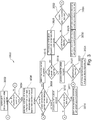
- a flow chart 1000 of an embodiment method is shown in Fig. 1 .
- a system for performing the embodiment method (the system is explained in further detail below with respect to Fig. 9 ) is initiated, including sound detection and radar portions at step 1002.
- the system being successfully initiated is designated in the flow chart 1000 by a capital "A" in a circle as is shown in Fig. 1 .
- Step 1004 interrogates whether sound is detected, with a person being present in the room. If no, the method returns to initiation location "A”. If yes, then the method advances to step 1006.
- the positions of the various people in the room are determined from the radar data, and the method advances to step 1008.
- Step 1008 interrogates whether any detected person is in a predefined segment of the room.
- step 1016 the method proceeds to step 1010, wherein sounds in the room are processed for the presence of a global keyword.
- Step 1012 interrogates whether or not the global keyword is detected in the processed sound. In no, the method returns to initiation location "A”. If yes, then the voice assistant begins normal processing using a global keyword procedure at step 1014.
- Step 1018 interrogates whether or not a global keyword has been detected in the processed sound. If yes, then the voice assistant begins normal processing using a global keyword procedure at step 1020. If no, the method continues to step 1022, which interrogates whether or not a location specific command is detected. If no, the method returns to initiation location "A”. If yes, then the voice assistant begins processing using the detected specific command at step 1024.
- a flow chart 2000 of an embodiment method is shown in Fig. 2 , wherein the sound in the room is processed for the global key word before determining if any person is in a predefined segment.
- the system for performing the embodiment method is initiated, including sound detection and radar portions at step 2002.
- Step 2004 interrogates whether sound is detected, with a person being present in the room. If no, the method returns to initiation location "A". If yes, then the method advances to step 2006 to process the sound in the room the presence of the global keyword.
- Step 2008 interrogates whether or not the global keyword is detected. If yes, the method proceeds to step 2010, wherein the voice assistant begins processing using the normal global keyword procedure. In no, then the positions of the persons in the room are determined from radar data at step 2012.
- step 2014 interrogates whether are not any of the persons in the room are in a predefined segment. If no, then the method returns to initiation location "A”. If yes, then the method continues to step 2016 where the sound in the room is processed for location specific commands. The method then proceeds to step 2018, which interrogates whether or not a location specific command is detected. If no, then the method returns to initiation location "A”. If yes, then the voice assistant begins processing using the detected specific command at step 2020.
- a flow chart 3000 of an embodiment method is shown in Fig. 3 , wherein the positions of the persons in the room are determined before processing the sound for the presence of the global keyword.
- the system for performing the embodiment method is initiated, including sound detection and radar portions at step 3002.
- Step 3004 interrogates whether sound is detected with a person being in the room. If no, the method returns to initiation location "A". If yes, the method continues to step 3006, which determines the positions of persons in the room from radar data, and determines the direction and/or approximate position of the source of the sound using the beamforming microphone array 9008 best shown in Fig. 9 .
- Step 3008 interrogates whether or not the source of the sound is consistent with the position of one of the detected persons. If no, then the method returns to initiation location "A".
- Step 3012 interrogates whether or not the global keyword is detected in the processed sound. If no, then the method returns to initiation location "A”. If yes, the voice assistant begins processing using the normal global keyword procedure at step 3014.
- step 3008 if the source of the sound is consistent with the position of one of the detected persons, then the detected person is designated as an operator at step 3016.
- Step 3018 interrogates whether or not the operator is in a predefined step. If no, the sound in the room is processed for the global keyword at step 3020.
- Step 3022 interrogates whether or not the global keyword is detected. If no, the method returns to initiation location "A”. If yes, the voice assistant begins processing with the normal global keyword procedure at step 3024.
- Step 3028 interrogates whether or not the global keyword is detected. If no, the voice assistant uses the global keyword procedure at step 3030. If no, then step 3032 interrogates whether or not the location specific command is detected. If no, then the method returns to initiation location "A”. If yes, then the voice assistant begins processing according to the detected specific command at step 3034.
- a flow chart 4000 of another embodiment method is shown in Fig. 4 , wherein the positions of the persons in the room are determined before processing the sound for the presence of the global keyword.
- the system for performing the embodiment method is initiated, including sound detection and radar portions at step 4002.
- Step 4004 interrogates whether sound is detected with a person being in the room. If no, the method returns to initiation location "A". If yes, the method continues to step, which determines that one person is an operator according to predefined criteria, which is discussed in further detail below.
- Step 4008 performs sound detection with beam steering on the operator.
- Step 4010 interrogates whether or not sound has been detected. If no, the method returns to initiation location "A”. If yes, the positions of persons in the room are determined at step 4012.
- Step 4014 then interrogates whether or not the operator is in the predefined segment. If no, then the sound is processed for the presence of the global keyword at step 4016. Step 4018 interrogates whether or not the global keyword has been detected. If no, the method returns to initiation location "A”. If yes, then the voice assistant begins processing with the global keyword procedure at step 4020.
- the operator if the operator is in a predefined segment, then the sound is processed for the global keyword and location specific commands at step 4022. If the global keyword is detected at step 4024, then the voice assistant begins processing with the global keyword at step 4026. If not, then the presence of the location specific command is detected at step 4028. If no, then the method returns to initiation location "A”. If yes, then the voice assistant begins processing using the detected specific command at step 4030.
- the predefined criteria could include determining that the person is in a predefined location segment, or is above a certain size or height. Thus, it is possible using radar to determine the person is an adult, a child or even a pet. Therefore the method can be pre-defined to only allow adults to give instructions, in an embodiment method.
- "beam steering" is used in step 4008. Many types of sound beam steering are known to those in the art, and the microphone array 9008 of Fig. 9 is adapted to use one of these known sound beam steering methods, in an embodiment.
- the flow chart 5000 of a first start up sequence simply turns on the system at step 5004, starts up the system at step 5006, and then initiates the radar detection and sound detection portions without the presence or not of any radar or sound data.
- the flow chart 5002 of a second start up sequence turns on the system at step 5010, starts up the system at step 5012, and then initiates the radar detection at step 5014.
- Step 5016 then interrogates whether or not a person is in the room. If not, the method is in an idle mode until a person is actually detected. Once a person has been detected, then sound detection is initiated at step 5018. Either start up sequence can be used as preferred for a specific application.
- the radar system can detect a person and her location by combining presence detection as well as distance measurement and angle of arrival measurement using the range Doppler methodology.
- Radar is capable of detecting slight movements even up to a person's heartbeat. If the system does not recognize a person using this technique, voice is not picked up, in an embodiment.
- the user can configure the system to react to user specific key words if she is in a specific location (+/- 5 degrees and +/-50cm for flexibility).
- the radar system can therefore divide a room into segments.
- the system can learn automatically if a user uses a specific functionality on a regular basis in a specific location. If this happens, the system proposes the user that this functionality could now be applied without her mentioning the global keyword.
- the number of instances of a "turn on the coffee maker” command is given in a specific location (for example, a location including the coffee maker) could be counted by the system.
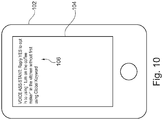
- a message 106 could be sent to the display 104 user's smartphone 102 with an "opt-in" request to use the "turn on the coffee maker” command in the specific location in the future without the first use of the global keyword.
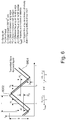
- the radar MMIC 9004 uses frequency modulated continuous wave (FMCW) to detect the Doppler signal in order to detect presence of a person in the room. If the Doppler frequency is zero, no one is in the room and the device should not react to any voice command at all, in an embodiment.
- FMCW frequency modulated continuous wave
- the transmitter signal 6002, and the received signal 6004, as well as the all of the pertinent constants and equations for calculating the Doppler frequency are shown in Fig.
- the object's distance and angle is calculated as described below.
- Figure 7 shows a diagram for detecting the location of a person using the FMCW radar according to an embodiment, including a receiver 7002 including a first receiver portion coupled to a first antenna 7008, and a second receiver portion coupled to a second antenna 7010.
- the first and second antennas 7008 and 7010 are spaced apart by the distance "d", and the angle ⁇ is shown in Fig. 7 according to the above equation.
- the user 8006 of the device has predefined areas 8006 in the room 8002 in which words or entire sentences are used as keywords for direct actions, in an embodiment.
- a (moving) object is in the predefined area (defined in terms of distance and angle away from the device) as described above, the device will be activated for the respective keyword(s), in an embodiment.
- the system 9000 according to an embodiment for use with a voice assistant is shown in Fig. 9 , including an oscillator 9002 coupled to a radar MMIC 9004.
- the radar MMIC is coupled to a microprocessor 9006, and a beam forming/finding microphone array 9008.
- Radar MMIC 9004 contains Tx and Rx antennas, Phase Locked Look (“PLL”), Finite State Machine (“FSM”) and memory, in an embodiment.
- PLL Phase Locked Look
- FSM Finite State Machine
- the microprocessor 9006 is coupled to the internet and/or the voice assistant in an embodiment.
- Other system implementations are possible including additional components as required for a specific application.
Landscapes
- Engineering & Computer Science (AREA)
- Radar, Positioning & Navigation (AREA)
- Remote Sensing (AREA)
- Physics & Mathematics (AREA)
- General Physics & Mathematics (AREA)
- Computer Networks & Wireless Communication (AREA)
- Human Computer Interaction (AREA)
- Health & Medical Sciences (AREA)
- Audiology, Speech & Language Pathology (AREA)
- Acoustics & Sound (AREA)
- Multimedia (AREA)
- Computational Linguistics (AREA)
- Radar Systems Or Details Thereof (AREA)
- User Interface Of Digital Computer (AREA)
Abstract
Description
- The present invention relates generally to a system and method for radar enabled location based keyword activation for voice assistants.
- Voice assistants interact with a user's voice commands to create calendar entries, create shopping lists, provide requested information, and to perform numerous other tasks such as activating smart appliances or playing music. However, voice assistants typically only process a user's voice commands after the receipt of a predefined wakeup keyword. Although the use of a predefined wakeup keyword is an effective approach for ensuring that a command is actually being given by the user, what is desired by some users is to eliminate the use of a spoken keyword in order to enable a more natural conversation and interaction with the voice assistant. In view of the above, one problem to be solved by the invention described herein can be seen as how to enable a more natural conversation and interaction with a voice assistant.
- The above-mentioned problem can be solved by the method of claim 1 or claim 7 as well as by the voice assistant according to claim 12. Various embodiments and further developments are covered by the dependent claims and the following description.
- According to one embodiment, a method of operation for a voice assistant includes detecting the presence of a person and sound in a general location, detecting whether the person is in a specific location of the general location, and if the person is in the specific location, initiating operation of the voice assistant with a predefined specific command other than a global keyword.
- A corresponding system for implementing the embodiment method includes a radar MMIC coupled to a microphone array coupled together with a microprocessor in communication with the voice assistant. In an embodiment, the radar MMIC is a FMCW radar MMIC and is coupled to an oscillator.
- For a more complete understanding of the present invention, and the advantages thereof, reference is now made to the following descriptions taken in conjunction with the accompanying drawings, in which:
-
Figures 1-4 show flow charts of embodiment methods for interacting with a voice assistant; -
Figures 5A and 5B show flow charts of embodiment methods for start-up processing of a voice assistant; -
Figure 6 shows a diagram for detection of movement using a frequency modulated continuous wave ("FMCW") radar; -
Figure 7 shows a diagram for detecting the location of a person using the FMCW radar according to an embodiment; -
Figure 8 shows a diagram of a person being detected in a predefined area of a room, according to an embodiment; -
Figure 9 shows a block diagram of an embodiment system capable of performing embodiment methods for interacting with a voice assistant; and -
Figure 10 shows a smart phone receiving an "opt in" request for allowing the use of a specific command based on a user's repeated use of the specific command and in a specific location. - A
flow chart 1000 of an embodiment method is shown inFig. 1 . A system for performing the embodiment method (the system is explained in further detail below with respect toFig. 9 ) is initiated, including sound detection and radar portions atstep 1002. The system being successfully initiated is designated in theflow chart 1000 by a capital "A" in a circle as is shown inFig. 1 .Step 1004 interrogates whether sound is detected, with a person being present in the room. If no, the method returns to initiation location "A". If yes, then the method advances to step 1006. Atstep 1006, the positions of the various people in the room are determined from the radar data, and the method advances tostep 1008.Step 1008 interrogates whether any detected person is in a predefined segment of the room. If yes, the method proceeds tostep 1016, which is described in further detail below. If no, the method proceeds to step 1010, wherein sounds in the room are processed for the presence of a global keyword.Step 1012 interrogates whether or not the global keyword is detected in the processed sound. In no, the method returns to initiation location "A". If yes, then the voice assistant begins normal processing using a global keyword procedure atstep 1014. Returning tostep 1016, the sound in the room is processed for a global keyword and location specific commands.Step 1018 interrogates whether or not a global keyword has been detected in the processed sound. If yes, then the voice assistant begins normal processing using a global keyword procedure atstep 1020. If no, the method continues to step 1022, which interrogates whether or not a location specific command is detected. If no, the method returns to initiation location "A". If yes, then the voice assistant begins processing using the detected specific command atstep 1024. - A
flow chart 2000 of an embodiment method is shown inFig. 2 , wherein the sound in the room is processed for the global key word before determining if any person is in a predefined segment. The system for performing the embodiment method is initiated, including sound detection and radar portions atstep 2002.Step 2004 interrogates whether sound is detected, with a person being present in the room. If no, the method returns to initiation location "A". If yes, then the method advances to step 2006 to process the sound in the room the presence of the global keyword.Step 2008 interrogates whether or not the global keyword is detected. If yes, the method proceeds tostep 2010, wherein the voice assistant begins processing using the normal global keyword procedure. In no, then the positions of the persons in the room are determined from radar data atstep 2012. The method then proceeds tostep 2014, which interrogates whether are not any of the persons in the room are in a predefined segment. If no, then the method returns to initiation location "A". If yes, then the method continues to step 2016 where the sound in the room is processed for location specific commands. The method then proceeds tostep 2018, which interrogates whether or not a location specific command is detected. If no, then the method returns to initiation location "A". If yes, then the voice assistant begins processing using the detected specific command atstep 2020. - A
flow chart 3000 of an embodiment method is shown inFig. 3 , wherein the positions of the persons in the room are determined before processing the sound for the presence of the global keyword. The system for performing the embodiment method is initiated, including sound detection and radar portions atstep 3002.Step 3004 interrogates whether sound is detected with a person being in the room. If no, the method returns to initiation location "A". If yes, the method continues to step 3006, which determines the positions of persons in the room from radar data, and determines the direction and/or approximate position of the source of the sound using thebeamforming microphone array 9008 best shown inFig. 9 .Step 3008 interrogates whether or not the source of the sound is consistent with the position of one of the detected persons. If no, then the method returns to initiation location "A". If "indifferent" (meaning the direction of the sound is inconsistent with the position of the detected person, but operation of the voice assistant will still be allowed with the global keyword in a mode of operation) then the sound in the room is processed for presence of the global keyword atstep 3010.Step 3012 interrogates whether or not the global keyword is detected in the processed sound. If no, then the method returns to initiation location "A". If yes, the voice assistant begins processing using the normal global keyword procedure atstep 3014. Returning now, to step 3008, if the source of the sound is consistent with the position of one of the detected persons, then the detected person is designated as an operator atstep 3016.Step 3018 interrogates whether or not the operator is in a predefined step. If no, the sound in the room is processed for the global keyword atstep 3020.Step 3022 interrogates whether or not the global keyword is detected. If no, the method returns to initiation location "A". If yes, the voice assistant begins processing with the normal global keyword procedure atstep 3024. Returning now to step 3018, if the operator is in a predefined segment, then the sound in the room is processed for the global keyword and location specific commands atstep 3026.Step 3028 interrogates whether or not the global keyword is detected. If no, the voice assistant uses the global keyword procedure atstep 3030. If no, then step 3032 interrogates whether or not the location specific command is detected. If no, then the method returns to initiation location "A". If yes, then the voice assistant begins processing according to the detected specific command atstep 3034. - A
flow chart 4000 of another embodiment method is shown inFig. 4 , wherein the positions of the persons in the room are determined before processing the sound for the presence of the global keyword. The system for performing the embodiment method is initiated, including sound detection and radar portions atstep 4002.Step 4004 interrogates whether sound is detected with a person being in the room. If no, the method returns to initiation location "A". If yes, the method continues to step, which determines that one person is an operator according to predefined criteria, which is discussed in further detail below.Step 4008 performs sound detection with beam steering on the operator.Step 4010 interrogates whether or not sound has been detected. If no, the method returns to initiation location "A". If yes, the positions of persons in the room are determined atstep 4012.Step 4014 then interrogates whether or not the operator is in the predefined segment. If no, then the sound is processed for the presence of the global keyword atstep 4016.Step 4018 interrogates whether or not the global keyword has been detected. If no, the method returns to initiation location "A". If yes, then the voice assistant begins processing with the global keyword procedure atstep 4020. Returning now to step 4014, if the operator is in a predefined segment, then the sound is processed for the global keyword and location specific commands atstep 4022. If the global keyword is detected atstep 4024, then the voice assistant begins processing with the global keyword atstep 4026. If not, then the presence of the location specific command is detected atstep 4028. If no, then the method returns to initiation location "A". If yes, then the voice assistant begins processing using the detected specific command atstep 4030. - In
Fig. 4 , determining the operator by "predefined criteria" atstep 4006. The predefined criteria could include determining that the person is in a predefined location segment, or is above a certain size or height. Thus, it is possible using radar to determine the person is an adult, a child or even a pet. Therefore the method can be pre-defined to only allow adults to give instructions, in an embodiment method. Further, in the method shown inFig. 4 , "beam steering" is used instep 4008. Many types of sound beam steering are known to those in the art, and themicrophone array 9008 ofFig. 9 is adapted to use one of these known sound beam steering methods, in an embodiment. - Two startup sequences according to embodiments are shown in
Fig. 5 . Theflow chart 5000 of a first start up sequence simply turns on the system atstep 5004, starts up the system atstep 5006, and then initiates the radar detection and sound detection portions without the presence or not of any radar or sound data. Theflow chart 5002 of a second start up sequence turns on the system atstep 5010, starts up the system atstep 5012, and then initiates the radar detection atstep 5014.Step 5016 then interrogates whether or not a person is in the room. If not, the method is in an idle mode until a person is actually detected. Once a person has been detected, then sound detection is initiated atstep 5018. Either start up sequence can be used as preferred for a specific application. - The radar system according to embodiments (implemented as a radar Monolithic Microwave Integrated Circuit ("MMIC")) 9004 shown in
Fig. 9 ) can detect a person and her location by combining presence detection as well as distance measurement and angle of arrival measurement using the range Doppler methodology. Radar is capable of detecting slight movements even up to a person's heartbeat. If the system does not recognize a person using this technique, voice is not picked up, in an embodiment. The user can configure the system to react to user specific key words if she is in a specific location (+/- 5 degrees and +/-50cm for flexibility). The radar system can therefore divide a room into segments. The system can learn automatically if a user uses a specific functionality on a regular basis in a specific location. If this happens, the system proposes the user that this functionality could now be applied without her mentioning the global keyword. - For example, in an embodiment the number of instances of a "turn on the coffee maker" command is given in a specific location (for example, a location including the coffee maker) could be counted by the system. Once the number of "turn on the coffee maker" commands reaches a predefined minimum number of commands, then as is shown
Fig. 10 , amessage 106 could be sent to thedisplay 104 user'ssmartphone 102 with an "opt-in" request to use the "turn on the coffee maker" command in the specific location in the future without the first use of the global keyword. - The operation of the
radar MMIC 9004 is described in further detail below with respect toFig. 6 . During normal operation, the radar uses frequency modulated continuous wave (FMCW) to detect the Doppler signal in order to detect presence of a person in the room. If the Doppler frequency is zero, no one is in the room and the device should not react to any voice command at all, in an embodiment. Thetransmitter signal 6002, and the receivedsignal 6004, as well as the all of the pertinent constants and equations for calculating the Doppler frequency are shown inFig. 6 , including the bandwidth B, chirp period T, speed of light "c", delay time between rising edges Δt1, delay time between falling edges Δt2, the difference frequency at the rising edge Δf1, the difference frequency at the falling edge Δf2, frequency as a measure of distance fmeas, fD Doppler frequency as a measure of velocity, and df/dt frequency shift per unit of time, which is also equal to B/T. The fmeas and fD equations are also reproduced below:
- Once a moving object is detected via Doppler signal, the object's distance and angle is calculated as described below.
- The distance of an object is calculated using the following equation:

- The angle of an object is being calculated using the following equation:

-
Figure 7 shows a diagram for detecting the location of a person using the FMCW radar according to an embodiment, including areceiver 7002 including a first receiver portion coupled to afirst antenna 7008, and a second receiver portion coupled to asecond antenna 7010. The first andsecond antennas Fig. 7 according to the above equation. - As is shown in
FIG. 8 , theuser 8006 of the device haspredefined areas 8006 in theroom 8002 in which words or entire sentences are used as keywords for direct actions, in an embodiment. Once a (moving) object is in the predefined area (defined in terms of distance and angle away from the device) as described above, the device will be activated for the respective keyword(s), in an embodiment. - The
system 9000 according to an embodiment for use with a voice assistant is shown inFig. 9 , including anoscillator 9002 coupled to aradar MMIC 9004. The radar MMIC is coupled to amicroprocessor 9006, and a beam forming/findingmicrophone array 9008.Radar MMIC 9004 contains Tx and Rx antennas, Phase Locked Look ("PLL"), Finite State Machine ("FSM") and memory, in an embodiment. Themicroprocessor 9006 is coupled to the internet and/or the voice assistant in an embodiment. Other system implementations are possible including additional components as required for a specific application. - Below some exemplary embodiments described above are summarized. It is emphasized, however, that the following enumeration, which includes 20 items, is not an exhaustive but rather a summary of exemplary embodiment included in the above description:
- Example 1: A first example relates to a method of operation for a voice assistant, the method comprising:
- detecting the presence of a person and sound in a general location;
- detecting whether the person is in a specific location of the general location; and
- if the person is in the specific location, initiating operation of the voice assistant with a predefined specific command other than a global keyword.
- Example 2: The method of example 1, wherein the predefined specific command is associated with an activity performed in the specific location.
- Example 3: The method of example 1 or 2, wherein the predefined specific command is learned by repeated utterances of the command by a user in the specific location.
- Example 4: The method of example 3, wherein the user can opt in to using the predefined specific command.
- Example 5: The method of any of examples 1 to 4, wherein the predefined specific command comprises a single word or sentence other than the global keyword.
- Example 6: According to a further example the method of operation for a voice assistant comprises:
- determining positions of persons in a general location and determining a source of sound in the general location;
- determining whether the source of the sound is consistent with the position a detected person and, if the sound is consistent, designating the detected person as an operator of the voice assistant;
- determining whether the operator is in a specific location of the general location; and
- if the person is in the specific location, initiating operation of the voice assistant with a predefined specific command other than a global keyword.
- Example 7: The method of example 6, wherein the predefined specific command is associated with an activity performed in the specific location.
- Example 8: The method of example 6, wherein the predefined specific command is learned by repeated utterances of the command by a user in the specific location.
- Example 9: The method of example 8, wherein the user can opt in to using the predefined specific command.
- Example 10: The method of example 6, wherein the predefined specific command comprises a single word or sentence other than the global keyword.
- Example 11: A method of operation for a voice assistant comprising:
- radar detecting a plurality of persons in a general location;
- determining one of the detected persons as an operator according to predefined criteria;
- performing beam steering sound detection on the operator;
- determining whether the operator is in a specific location of the general location; and
- if the person is in the specific location, initiating operation of the voice assistant with a predefined specific command other than a global keyword.
- Example 12: The method of example 11, wherein the predefined criteria comprises a size or height of the operator.
- Example 13: The method of example 11 or 12, wherein the predefined criteria comprises a location of the operator.
- Example 14: The method of any of examples 11 to 13, wherein the beam steering sound detection is performed by a microphone array.
- Example 15. The method of any of examples 11 to 14, wherein the radar detecting is performed by a radar MMIC.
- Example 16: A further example relates to a voice assistant that comprises:
- a radar;
- a microphone array; and
- a microprocessor coupled between the radar and microphone array, the microprocessor configured for directly processing specific command information from the microphone array if consistent with operator position information from the radar.
- Example 17: The system of example 16, wherein the radar comprises a radar MMIC.
- Example 18: The system of example 16 or 17, wherein the radar comprises an FMWC radar.
- Example 19: The system of any of examples 16 to 18, wherein microphone array comprises a beam forming microphone array.
- Example 20. The system of any of examples 16 to 19, further comprising an oscillator coupled to the radar.
- While this invention has been described with reference to illustrative embodiments, this description is not intended to be construed in a limiting sense. Various modifications and combinations of the illustrative embodiments, as well as other embodiments of the invention, will be apparent to persons skilled in the art upon reference to the description. It is therefore intended that the appended claims encompass any such modifications or embodiments.
Claims (15)
- A method of operation for a voice assistant comprising:detecting the presence of a person and sound in a general location;detecting whether the person is in a specific location of the general location; andif the person is in the specific location, initiating operation of the voice assistant with a predefined specific command other than a global keyword.
- The method according to claim 1, wherein the predefined specific command is associated with an activity performed in the specific location.
- The method according to claim 1 or 2, wherein the predefined specific command is learned by repeated utterances of the command by a user in the specific location.
- The method according to claim 3, wherein the user can opt in to using the predefined specific command.
- The method according to any of claims 1 to 4, wherein the predefined specific command comprises a single word or sentence other than the global keyword.
- The method according to any of claims 1 to 5,
wherein detecting the presence of a person and sound in a general location comprises determining positions of persons in a general location and determining a source of sound in the general location;
wherein the method further comprises determining whether the source of the sound is consistent with the position of a detected person and, if the sound is consistent, designating the detected person as an operator of the voice assistant;
wherein detecting whether the person is in a specific location of the general location comprises determining whether the operator is in a specific location of the general location. - The method according to any of claims 1 to 6,
wherein detecting the presence of a person and sound in a general location includes radar detecting a plurality of persons in a general location, determining one of the detected persons as an operator according to predefined criteria, and performing beam steering sound detection on the operator; and
wherein detecting whether the person is in a specific location of the general location comprises determining whether the operator is in a specific location of the general location. - The method according to claim 7, wherein the predefined criteria comprises a size or height of the operator.
- The method according to claim 7 or 8, wherein the predefined criteria comprises a location of the operator.
- The method according to any of claims 7 to 9, wherein the beam steering sound detection is performed by a microphone array.
- The method according to any of claims 7 to 10, wherein the radar detecting is performed by a radar MMIC.
- A voice assistant comprising:a radar;a microphone array; anda microprocessor coupled between the radar and microphone array, the microprocessor configured to directly process specific command information from the microphone array if consistent with operator position information from the radar.
- The system according to claim 12, wherein the radar comprises a radar MMIC.
- The system according to claim 12 or 13, wherein microphone array comprises a beam forming microphone array.
- The system according to any of claims 12 to 14, further comprising an oscillator coupled to the radar.
Applications Claiming Priority (1)
| Application Number | Priority Date | Filing Date | Title |
|---|---|---|---|
| US15/936,922 US10948563B2 (en) | 2018-03-27 | 2018-03-27 | Radar enabled location based keyword activation for voice assistants |
Publications (2)
| Publication Number | Publication Date |
|---|---|
| EP3547309A1 true EP3547309A1 (en) | 2019-10-02 |
| EP3547309B1 EP3547309B1 (en) | 2024-02-28 |
Family
ID=65801996
Family Applications (1)
| Application Number | Title | Priority Date | Filing Date |
|---|---|---|---|
| EP19162537.5A Active EP3547309B1 (en) | 2018-03-27 | 2019-03-13 | Radar enabled location based keyword activation for voice assistants |
Country Status (3)
| Country | Link |
|---|---|
| US (1) | US10948563B2 (en) |
| EP (1) | EP3547309B1 (en) |
| CN (1) | CN110310649B (en) |
Cited By (1)
| Publication number | Priority date | Publication date | Assignee | Title |
|---|---|---|---|---|
| US20190302219A1 (en) * | 2018-03-27 | 2019-10-03 | Infineon Technologies Ag | Radar Enabled Location Based Keyword Activation for Voice Assistants |
Families Citing this family (1)
| Publication number | Priority date | Publication date | Assignee | Title |
|---|---|---|---|---|
| CN119007717B (en) * | 2023-05-19 | 2026-01-09 | 荣耀终端股份有限公司 | Interaction methods, devices, electronic devices and readable storage media |
Citations (4)
| Publication number | Priority date | Publication date | Assignee | Title |
|---|---|---|---|---|
| US20090055180A1 (en) * | 2007-08-23 | 2009-02-26 | Coon Bradley S | System and method for optimizing speech recognition in a vehicle |
| WO2015106134A1 (en) * | 2014-01-09 | 2015-07-16 | Google Inc. | Audio triggers based on context |
| EP3067884A1 (en) * | 2015-03-13 | 2016-09-14 | Samsung Electronics Co., Ltd. | Speech recognition system and speech recognition method thereof |
| US20170243578A1 (en) * | 2016-02-18 | 2017-08-24 | Samsung Electronics Co., Ltd. | Voice processing method and device |
Family Cites Families (9)
| Publication number | Priority date | Publication date | Assignee | Title |
|---|---|---|---|---|
| DE3830992A1 (en) * | 1988-09-12 | 1990-03-22 | Messerschmitt Boelkow Blohm | RADAR ALTIMETER |
| DE102012202007A1 (en) * | 2012-02-10 | 2013-08-14 | Robert Bosch Gmbh | radar sensor |
| US9026176B2 (en) * | 2013-05-12 | 2015-05-05 | Shyh-Jye Wang | Message-triggered voice command interface in portable electronic devices |
| US9240182B2 (en) * | 2013-09-17 | 2016-01-19 | Qualcomm Incorporated | Method and apparatus for adjusting detection threshold for activating voice assistant function |
| CN105677004A (en) * | 2014-11-18 | 2016-06-15 | 中兴通讯股份有限公司 | Terminal processing method and terminal |
| CN106603878B (en) * | 2016-12-09 | 2019-09-06 | 奇酷互联网络科技(深圳)有限公司 | Voice localization method, device and system |
| CN107195304A (en) * | 2017-06-30 | 2017-09-22 | 珠海格力电器股份有限公司 | Voice control circuit and method for electrical equipment |
| US10948563B2 (en) * | 2018-03-27 | 2021-03-16 | Infineon Technologies Ag | Radar enabled location based keyword activation for voice assistants |
| US10775493B2 (en) * | 2018-03-28 | 2020-09-15 | Infineon Technologies Ag | System and method for controlling access to a trunk of a vehicle using a radar sensor |
-
2018
- 2018-03-27 US US15/936,922 patent/US10948563B2/en not_active Expired - Fee Related
-
2019
- 2019-03-13 EP EP19162537.5A patent/EP3547309B1/en active Active
- 2019-03-20 CN CN201910212900.5A patent/CN110310649B/en active Active
Patent Citations (4)
| Publication number | Priority date | Publication date | Assignee | Title |
|---|---|---|---|---|
| US20090055180A1 (en) * | 2007-08-23 | 2009-02-26 | Coon Bradley S | System and method for optimizing speech recognition in a vehicle |
| WO2015106134A1 (en) * | 2014-01-09 | 2015-07-16 | Google Inc. | Audio triggers based on context |
| EP3067884A1 (en) * | 2015-03-13 | 2016-09-14 | Samsung Electronics Co., Ltd. | Speech recognition system and speech recognition method thereof |
| US20170243578A1 (en) * | 2016-02-18 | 2017-08-24 | Samsung Electronics Co., Ltd. | Voice processing method and device |
Cited By (2)
| Publication number | Priority date | Publication date | Assignee | Title |
|---|---|---|---|---|
| US20190302219A1 (en) * | 2018-03-27 | 2019-10-03 | Infineon Technologies Ag | Radar Enabled Location Based Keyword Activation for Voice Assistants |
| US10948563B2 (en) * | 2018-03-27 | 2021-03-16 | Infineon Technologies Ag | Radar enabled location based keyword activation for voice assistants |
Also Published As
| Publication number | Publication date |
|---|---|
| US10948563B2 (en) | 2021-03-16 |
| CN110310649B (en) | 2024-07-02 |
| US20190302219A1 (en) | 2019-10-03 |
| CN110310649A (en) | 2019-10-08 |
| EP3547309B1 (en) | 2024-02-28 |
Similar Documents
| Publication | Publication Date | Title |
|---|---|---|
| US20240345212A1 (en) | Detecting a Frame-of-Reference Change in a Smart-Device-Based Radar System | |
| US9384679B2 (en) | System, method and computer program product to assist the visually impaired in navigation | |
| JP4392409B2 (en) | Radar equipment | |
| US11740327B2 (en) | High resolution and computationally efficient radar techniques | |
| CN110749868B (en) | Radar system control method and device, electronic equipment and readable storage medium | |
| US12468025B2 (en) | Systems and methods for doppler-enhanced radar tracking | |
| WO2011104673A1 (en) | Gesture control | |
| EP3547309B1 (en) | Radar enabled location based keyword activation for voice assistants | |
| KR20150005187A (en) | Frequency modulated continuous wave radar detecting device, and method thereof for detecting a material object using a continuous wave | |
| KR20090003365A (en) | Wireless positioning device and method | |
| JP7229254B2 (en) | User authentication control using ultrasound | |
| GB2447347A (en) | Single-transmitting and multi-receiving method of detecting obstacles and parking sensor apparatus using the same | |
| US20170021836A1 (en) | Device and method for determining drowsiness and non-transitory storage medium | |
| CN115981173A (en) | Device control method, terminal device, and storage medium | |
| Ustalli et al. | MirrorSAR concept: Phase synchronization analysis | |
| CN117321604A (en) | Radar-based gesture detection in ambient computer environments using machine learning modules | |
| TWI646344B (en) | Electronic device, ultrasonic distance measuring device and method | |
| JP2003028949A (en) | Transmitter / receiver and radar device | |
| JP2020153876A (en) | Object detector | |
| JP2005091174A (en) | Radar equipment | |
| JP7748391B2 (en) | Ship monitoring system, ship monitoring method, information processing device, and program | |
| JP2972630B2 (en) | Wake detector | |
| JP2021196253A (en) | Operation supporting device | |
| US20240402327A1 (en) | Methods and apparatuses for velocity measurement with radar sensors | |
| KR102448004B1 (en) | Distance measuring system between time-synchronized car and device |
Legal Events
| Date | Code | Title | Description |
|---|---|---|---|
| PUAI | Public reference made under article 153(3) epc to a published international application that has entered the european phase |
Free format text: ORIGINAL CODE: 0009012 |
|
| STAA | Information on the status of an ep patent application or granted ep patent |
Free format text: STATUS: THE APPLICATION HAS BEEN PUBLISHED |
|
| AK | Designated contracting states |
Kind code of ref document: A1 Designated state(s): AL AT BE BG CH CY CZ DE DK EE ES FI FR GB GR HR HU IE IS IT LI LT LU LV MC MK MT NL NO PL PT RO RS SE SI SK SM TR |
|
| AX | Request for extension of the european patent |
Extension state: BA ME |
|
| STAA | Information on the status of an ep patent application or granted ep patent |
Free format text: STATUS: REQUEST FOR EXAMINATION WAS MADE |
|
| 17P | Request for examination filed |
Effective date: 20200401 |
|
| RBV | Designated contracting states (corrected) |
Designated state(s): AL AT BE BG CH CY CZ DE DK EE ES FI FR GB GR HR HU IE IS IT LI LT LU LV MC MK MT NL NO PL PT RO RS SE SI SK SM TR |
|
| STAA | Information on the status of an ep patent application or granted ep patent |
Free format text: STATUS: EXAMINATION IS IN PROGRESS |
|
| 17Q | First examination report despatched |
Effective date: 20210723 |
|
| GRAP | Despatch of communication of intention to grant a patent |
Free format text: ORIGINAL CODE: EPIDOSNIGR1 |
|
| STAA | Information on the status of an ep patent application or granted ep patent |
Free format text: STATUS: GRANT OF PATENT IS INTENDED |
|
| INTG | Intention to grant announced |
Effective date: 20231102 |
|
| GRAS | Grant fee paid |
Free format text: ORIGINAL CODE: EPIDOSNIGR3 |
|
| GRAA | (expected) grant |
Free format text: ORIGINAL CODE: 0009210 |
|
| STAA | Information on the status of an ep patent application or granted ep patent |
Free format text: STATUS: THE PATENT HAS BEEN GRANTED |
|
| P01 | Opt-out of the competence of the unified patent court (upc) registered |
Effective date: 20240109 |
|
| AK | Designated contracting states |
Kind code of ref document: B1 Designated state(s): AL AT BE BG CH CY CZ DE DK EE ES FI FR GB GR HR HU IE IS IT LI LT LU LV MC MK MT NL NO PL PT RO RS SE SI SK SM TR |
|
| REG | Reference to a national code |
Ref country code: GB Ref legal event code: FG4D |
|
| REG | Reference to a national code |
Ref country code: CH Ref legal event code: EP |
|
| REG | Reference to a national code |
Ref country code: DE Ref legal event code: R096 Ref document number: 602019047175 Country of ref document: DE |
|
| REG | Reference to a national code |
Ref country code: IE Ref legal event code: FG4D |
|
| REG | Reference to a national code |
Ref country code: LT Ref legal event code: MG9D |
|
| PG25 | Lapsed in a contracting state [announced via postgrant information from national office to epo] |
Ref country code: IS Free format text: LAPSE BECAUSE OF FAILURE TO SUBMIT A TRANSLATION OF THE DESCRIPTION OR TO PAY THE FEE WITHIN THE PRESCRIBED TIME-LIMIT Effective date: 20240628 |
|
| REG | Reference to a national code |
Ref country code: NL Ref legal event code: MP Effective date: 20240228 |
|
| PG25 | Lapsed in a contracting state [announced via postgrant information from national office to epo] |
Ref country code: LT Free format text: LAPSE BECAUSE OF FAILURE TO SUBMIT A TRANSLATION OF THE DESCRIPTION OR TO PAY THE FEE WITHIN THE PRESCRIBED TIME-LIMIT Effective date: 20240228 |
|
| PG25 | Lapsed in a contracting state [announced via postgrant information from national office to epo] |
Ref country code: GR Free format text: LAPSE BECAUSE OF FAILURE TO SUBMIT A TRANSLATION OF THE DESCRIPTION OR TO PAY THE FEE WITHIN THE PRESCRIBED TIME-LIMIT Effective date: 20240529 |
|
| PG25 | Lapsed in a contracting state [announced via postgrant information from national office to epo] |
Ref country code: HR Free format text: LAPSE BECAUSE OF FAILURE TO SUBMIT A TRANSLATION OF THE DESCRIPTION OR TO PAY THE FEE WITHIN THE PRESCRIBED TIME-LIMIT Effective date: 20240228 Ref country code: NL Free format text: LAPSE BECAUSE OF FAILURE TO SUBMIT A TRANSLATION OF THE DESCRIPTION OR TO PAY THE FEE WITHIN THE PRESCRIBED TIME-LIMIT Effective date: 20240228 Ref country code: RS Free format text: LAPSE BECAUSE OF FAILURE TO SUBMIT A TRANSLATION OF THE DESCRIPTION OR TO PAY THE FEE WITHIN THE PRESCRIBED TIME-LIMIT Effective date: 20240528 |
|
| PG25 | Lapsed in a contracting state [announced via postgrant information from national office to epo] |
Ref country code: ES Free format text: LAPSE BECAUSE OF FAILURE TO SUBMIT A TRANSLATION OF THE DESCRIPTION OR TO PAY THE FEE WITHIN THE PRESCRIBED TIME-LIMIT Effective date: 20240228 |
|
| PG25 | Lapsed in a contracting state [announced via postgrant information from national office to epo] |
Ref country code: RS Free format text: LAPSE BECAUSE OF FAILURE TO SUBMIT A TRANSLATION OF THE DESCRIPTION OR TO PAY THE FEE WITHIN THE PRESCRIBED TIME-LIMIT Effective date: 20240528 Ref country code: NO Free format text: LAPSE BECAUSE OF FAILURE TO SUBMIT A TRANSLATION OF THE DESCRIPTION OR TO PAY THE FEE WITHIN THE PRESCRIBED TIME-LIMIT Effective date: 20240528 Ref country code: NL Free format text: LAPSE BECAUSE OF FAILURE TO SUBMIT A TRANSLATION OF THE DESCRIPTION OR TO PAY THE FEE WITHIN THE PRESCRIBED TIME-LIMIT Effective date: 20240228 Ref country code: LT Free format text: LAPSE BECAUSE OF FAILURE TO SUBMIT A TRANSLATION OF THE DESCRIPTION OR TO PAY THE FEE WITHIN THE PRESCRIBED TIME-LIMIT Effective date: 20240228 Ref country code: IS Free format text: LAPSE BECAUSE OF FAILURE TO SUBMIT A TRANSLATION OF THE DESCRIPTION OR TO PAY THE FEE WITHIN THE PRESCRIBED TIME-LIMIT Effective date: 20240628 Ref country code: HR Free format text: LAPSE BECAUSE OF FAILURE TO SUBMIT A TRANSLATION OF THE DESCRIPTION OR TO PAY THE FEE WITHIN THE PRESCRIBED TIME-LIMIT Effective date: 20240228 Ref country code: GR Free format text: LAPSE BECAUSE OF FAILURE TO SUBMIT A TRANSLATION OF THE DESCRIPTION OR TO PAY THE FEE WITHIN THE PRESCRIBED TIME-LIMIT Effective date: 20240529 Ref country code: FI Free format text: LAPSE BECAUSE OF FAILURE TO SUBMIT A TRANSLATION OF THE DESCRIPTION OR TO PAY THE FEE WITHIN THE PRESCRIBED TIME-LIMIT Effective date: 20240228 Ref country code: ES Free format text: LAPSE BECAUSE OF FAILURE TO SUBMIT A TRANSLATION OF THE DESCRIPTION OR TO PAY THE FEE WITHIN THE PRESCRIBED TIME-LIMIT Effective date: 20240228 Ref country code: BG Free format text: LAPSE BECAUSE OF FAILURE TO SUBMIT A TRANSLATION OF THE DESCRIPTION OR TO PAY THE FEE WITHIN THE PRESCRIBED TIME-LIMIT Effective date: 20240228 |
|
| PG25 | Lapsed in a contracting state [announced via postgrant information from national office to epo] |
Ref country code: PT Free format text: LAPSE BECAUSE OF FAILURE TO SUBMIT A TRANSLATION OF THE DESCRIPTION OR TO PAY THE FEE WITHIN THE PRESCRIBED TIME-LIMIT Effective date: 20240628 Ref country code: PL Free format text: LAPSE BECAUSE OF FAILURE TO SUBMIT A TRANSLATION OF THE DESCRIPTION OR TO PAY THE FEE WITHIN THE PRESCRIBED TIME-LIMIT Effective date: 20240228 |
|
| REG | Reference to a national code |
Ref country code: AT Ref legal event code: MK05 Ref document number: 1661988 Country of ref document: AT Kind code of ref document: T Effective date: 20240228 |
|
| PG25 | Lapsed in a contracting state [announced via postgrant information from national office to epo] |
Ref country code: SE Free format text: LAPSE BECAUSE OF FAILURE TO SUBMIT A TRANSLATION OF THE DESCRIPTION OR TO PAY THE FEE WITHIN THE PRESCRIBED TIME-LIMIT Effective date: 20240228 Ref country code: PT Free format text: LAPSE BECAUSE OF FAILURE TO SUBMIT A TRANSLATION OF THE DESCRIPTION OR TO PAY THE FEE WITHIN THE PRESCRIBED TIME-LIMIT Effective date: 20240628 Ref country code: PL Free format text: LAPSE BECAUSE OF FAILURE TO SUBMIT A TRANSLATION OF THE DESCRIPTION OR TO PAY THE FEE WITHIN THE PRESCRIBED TIME-LIMIT Effective date: 20240228 Ref country code: LV Free format text: LAPSE BECAUSE OF FAILURE TO SUBMIT A TRANSLATION OF THE DESCRIPTION OR TO PAY THE FEE WITHIN THE PRESCRIBED TIME-LIMIT Effective date: 20240228 |
|
| PG25 | Lapsed in a contracting state [announced via postgrant information from national office to epo] |
Ref country code: DK Free format text: LAPSE BECAUSE OF FAILURE TO SUBMIT A TRANSLATION OF THE DESCRIPTION OR TO PAY THE FEE WITHIN THE PRESCRIBED TIME-LIMIT Effective date: 20240228 |
|
| PG25 | Lapsed in a contracting state [announced via postgrant information from national office to epo] |
Ref country code: SM Free format text: LAPSE BECAUSE OF FAILURE TO SUBMIT A TRANSLATION OF THE DESCRIPTION OR TO PAY THE FEE WITHIN THE PRESCRIBED TIME-LIMIT Effective date: 20240228 |
|
| PG25 | Lapsed in a contracting state [announced via postgrant information from national office to epo] |
Ref country code: EE Free format text: LAPSE BECAUSE OF FAILURE TO SUBMIT A TRANSLATION OF THE DESCRIPTION OR TO PAY THE FEE WITHIN THE PRESCRIBED TIME-LIMIT Effective date: 20240228 Ref country code: CZ Free format text: LAPSE BECAUSE OF FAILURE TO SUBMIT A TRANSLATION OF THE DESCRIPTION OR TO PAY THE FEE WITHIN THE PRESCRIBED TIME-LIMIT Effective date: 20240228 |
|
| PG25 | Lapsed in a contracting state [announced via postgrant information from national office to epo] |
Ref country code: AT Free format text: LAPSE BECAUSE OF FAILURE TO SUBMIT A TRANSLATION OF THE DESCRIPTION OR TO PAY THE FEE WITHIN THE PRESCRIBED TIME-LIMIT Effective date: 20240228 |
|
| PG25 | Lapsed in a contracting state [announced via postgrant information from national office to epo] |
Ref country code: SK Free format text: LAPSE BECAUSE OF FAILURE TO SUBMIT A TRANSLATION OF THE DESCRIPTION OR TO PAY THE FEE WITHIN THE PRESCRIBED TIME-LIMIT Effective date: 20240228 |
|
| PG25 | Lapsed in a contracting state [announced via postgrant information from national office to epo] |
Ref country code: SM Free format text: LAPSE BECAUSE OF FAILURE TO SUBMIT A TRANSLATION OF THE DESCRIPTION OR TO PAY THE FEE WITHIN THE PRESCRIBED TIME-LIMIT Effective date: 20240228 Ref country code: SK Free format text: LAPSE BECAUSE OF FAILURE TO SUBMIT A TRANSLATION OF THE DESCRIPTION OR TO PAY THE FEE WITHIN THE PRESCRIBED TIME-LIMIT Effective date: 20240228 Ref country code: RO Free format text: LAPSE BECAUSE OF FAILURE TO SUBMIT A TRANSLATION OF THE DESCRIPTION OR TO PAY THE FEE WITHIN THE PRESCRIBED TIME-LIMIT Effective date: 20240228 Ref country code: EE Free format text: LAPSE BECAUSE OF FAILURE TO SUBMIT A TRANSLATION OF THE DESCRIPTION OR TO PAY THE FEE WITHIN THE PRESCRIBED TIME-LIMIT Effective date: 20240228 Ref country code: DK Free format text: LAPSE BECAUSE OF FAILURE TO SUBMIT A TRANSLATION OF THE DESCRIPTION OR TO PAY THE FEE WITHIN THE PRESCRIBED TIME-LIMIT Effective date: 20240228 Ref country code: CZ Free format text: LAPSE BECAUSE OF FAILURE TO SUBMIT A TRANSLATION OF THE DESCRIPTION OR TO PAY THE FEE WITHIN THE PRESCRIBED TIME-LIMIT Effective date: 20240228 Ref country code: AT Free format text: LAPSE BECAUSE OF FAILURE TO SUBMIT A TRANSLATION OF THE DESCRIPTION OR TO PAY THE FEE WITHIN THE PRESCRIBED TIME-LIMIT Effective date: 20240228 |
|
| REG | Reference to a national code |
Ref country code: CH Ref legal event code: PL |
|
| PG25 | Lapsed in a contracting state [announced via postgrant information from national office to epo] |
Ref country code: LU Free format text: LAPSE BECAUSE OF NON-PAYMENT OF DUE FEES Effective date: 20240313 |
|
| PG25 | Lapsed in a contracting state [announced via postgrant information from national office to epo] |
Ref country code: MC Free format text: LAPSE BECAUSE OF FAILURE TO SUBMIT A TRANSLATION OF THE DESCRIPTION OR TO PAY THE FEE WITHIN THE PRESCRIBED TIME-LIMIT Effective date: 20240228 |
|
| PG25 | Lapsed in a contracting state [announced via postgrant information from national office to epo] |
Ref country code: MC Free format text: LAPSE BECAUSE OF FAILURE TO SUBMIT A TRANSLATION OF THE DESCRIPTION OR TO PAY THE FEE WITHIN THE PRESCRIBED TIME-LIMIT Effective date: 20240228 Ref country code: LU Free format text: LAPSE BECAUSE OF NON-PAYMENT OF DUE FEES Effective date: 20240313 |
|
| REG | Reference to a national code |
Ref country code: DE Ref legal event code: R097 Ref document number: 602019047175 Country of ref document: DE |
|
| PG25 | Lapsed in a contracting state [announced via postgrant information from national office to epo] |
Ref country code: IT Free format text: LAPSE BECAUSE OF FAILURE TO SUBMIT A TRANSLATION OF THE DESCRIPTION OR TO PAY THE FEE WITHIN THE PRESCRIBED TIME-LIMIT Effective date: 20240228 |
|
| REG | Reference to a national code |
Ref country code: BE Ref legal event code: MM Effective date: 20240331 |
|
| PG25 | Lapsed in a contracting state [announced via postgrant information from national office to epo] |
Ref country code: IT Free format text: LAPSE BECAUSE OF FAILURE TO SUBMIT A TRANSLATION OF THE DESCRIPTION OR TO PAY THE FEE WITHIN THE PRESCRIBED TIME-LIMIT Effective date: 20240228 |
|
| PLBE | No opposition filed within time limit |
Free format text: ORIGINAL CODE: 0009261 |
|
| STAA | Information on the status of an ep patent application or granted ep patent |
Free format text: STATUS: NO OPPOSITION FILED WITHIN TIME LIMIT |
|
| PG25 | Lapsed in a contracting state [announced via postgrant information from national office to epo] |
Ref country code: BE Free format text: LAPSE BECAUSE OF NON-PAYMENT OF DUE FEES Effective date: 20240331 |
|
| PG25 | Lapsed in a contracting state [announced via postgrant information from national office to epo] |
Ref country code: IE Free format text: LAPSE BECAUSE OF NON-PAYMENT OF DUE FEES Effective date: 20240313 |
|
| PG25 | Lapsed in a contracting state [announced via postgrant information from national office to epo] |
Ref country code: IE Free format text: LAPSE BECAUSE OF NON-PAYMENT OF DUE FEES Effective date: 20240313 Ref country code: BE Free format text: LAPSE BECAUSE OF NON-PAYMENT OF DUE FEES Effective date: 20240331 Ref country code: CH Free format text: LAPSE BECAUSE OF NON-PAYMENT OF DUE FEES Effective date: 20240331 |
|
| 26N | No opposition filed |
Effective date: 20241129 |
|
| PG25 | Lapsed in a contracting state [announced via postgrant information from national office to epo] |
Ref country code: SI Free format text: LAPSE BECAUSE OF FAILURE TO SUBMIT A TRANSLATION OF THE DESCRIPTION OR TO PAY THE FEE WITHIN THE PRESCRIBED TIME-LIMIT Effective date: 20240228 |
|
| PGFP | Annual fee paid to national office [announced via postgrant information from national office to epo] |
Ref country code: FR Payment date: 20250326 Year of fee payment: 7 |
|
| PGFP | Annual fee paid to national office [announced via postgrant information from national office to epo] |
Ref country code: GB Payment date: 20250324 Year of fee payment: 7 |
|
| PGFP | Annual fee paid to national office [announced via postgrant information from national office to epo] |
Ref country code: DE Payment date: 20250521 Year of fee payment: 7 |
|
| PG25 | Lapsed in a contracting state [announced via postgrant information from national office to epo] |
Ref country code: CY Free format text: LAPSE BECAUSE OF FAILURE TO SUBMIT A TRANSLATION OF THE DESCRIPTION OR TO PAY THE FEE WITHIN THE PRESCRIBED TIME-LIMIT; INVALID AB INITIO Effective date: 20190313 |
|
| PG25 | Lapsed in a contracting state [announced via postgrant information from national office to epo] |
Ref country code: HU Free format text: LAPSE BECAUSE OF FAILURE TO SUBMIT A TRANSLATION OF THE DESCRIPTION OR TO PAY THE FEE WITHIN THE PRESCRIBED TIME-LIMIT; INVALID AB INITIO Effective date: 20190313 |
|
| PG25 | Lapsed in a contracting state [announced via postgrant information from national office to epo] |
Ref country code: TR Free format text: LAPSE BECAUSE OF FAILURE TO SUBMIT A TRANSLATION OF THE DESCRIPTION OR TO PAY THE FEE WITHIN THE PRESCRIBED TIME-LIMIT Effective date: 20240228 |