EP3546621A1 - Titanium plating solution production method and titanium plated product production method - Google Patents
Titanium plating solution production method and titanium plated product production method Download PDFInfo
- Publication number
- EP3546621A1 EP3546621A1 EP17874375.3A EP17874375A EP3546621A1 EP 3546621 A1 EP3546621 A1 EP 3546621A1 EP 17874375 A EP17874375 A EP 17874375A EP 3546621 A1 EP3546621 A1 EP 3546621A1
- Authority
- EP
- European Patent Office
- Prior art keywords
- titanium
- plating solution
- potential
- titanium plating
- preparing
- Prior art date
- Legal status (The legal status is an assumption and is not a legal conclusion. Google has not performed a legal analysis and makes no representation as to the accuracy of the status listed.)
- Withdrawn
Links
Images


Classifications
-
- C—CHEMISTRY; METALLURGY
- C25—ELECTROLYTIC OR ELECTROPHORETIC PROCESSES; APPARATUS THEREFOR
- C25D—PROCESSES FOR THE ELECTROLYTIC OR ELECTROPHORETIC PRODUCTION OF COATINGS; ELECTROFORMING; APPARATUS THEREFOR
- C25D21/00—Processes for servicing or operating cells for electrolytic coating
- C25D21/12—Process control or regulation
- C25D21/14—Controlled addition of electrolyte components
-
- C—CHEMISTRY; METALLURGY
- C25—ELECTROLYTIC OR ELECTROPHORETIC PROCESSES; APPARATUS THEREFOR
- C25D—PROCESSES FOR THE ELECTROLYTIC OR ELECTROPHORETIC PRODUCTION OF COATINGS; ELECTROFORMING; APPARATUS THEREFOR
- C25D3/00—Electroplating: Baths therefor
- C25D3/66—Electroplating: Baths therefor from melts
-
- C—CHEMISTRY; METALLURGY
- C25—ELECTROLYTIC OR ELECTROPHORETIC PROCESSES; APPARATUS THEREFOR
- C25D—PROCESSES FOR THE ELECTROLYTIC OR ELECTROPHORETIC PRODUCTION OF COATINGS; ELECTROFORMING; APPARATUS THEREFOR
- C25D21/00—Processes for servicing or operating cells for electrolytic coating
- C25D21/12—Process control or regulation
Definitions
- the present disclosure relates to a method for preparing a titanium plating solution and a method for manufacturing a titanium plated product.
- the present application claims the benefit of priority to Japanese Patent Application No. 2016-227050 filed on November 22, 2016 , the entire contents of which are incorporated herein by reference.
- Titanium is a metal that is excellent in corrosion resistance, heat resistance and specific strength.
- titanium is costly to manufacture and difficult to smelt and work, which hampers the wide use of titanium.
- Dry deposition such as chemical vapor deposition (CVD) and physical vapor deposition (PVD)
- CVD chemical vapor deposition
- PVD physical vapor deposition
- the dry deposition cannot be applied to a complex-shaped substrate.
- electrodeposition of titanium in a molten salt may be adopted.
- Japanese Patent Laying-open No. 2015-193899 (PTL 1) describes that an alloy film of Fe and Ti is formed on a Fe wire surface by using a molten salt bath of KF-KCl to which K 2 TiF 6 or TiO 2 is added.
- a method for preparing a titanium plating solution includes measuring a titanium plating solution containing fluorine and titanium by cyclic voltammetry under the following conditions, and adding titanium to the titanium plating solution so that the potential difference between the spontaneous potential and the Ti3 + /Ti 4+ redox potential is 0.75 V or more, conditions: when the temperature of the titanium plating solution is 650°C or more and 850°C or less and when glassy carbon is used as a working electrode, platinum is used as a pseudo-reference electrode and titanium is used as a counter electrode, the potential scanning is repeatedly performed on the working electrode for at least five times at a scanning speed of 1 mV/sec or more and 500 mV/sec or less between a lower potential limit which is the immersion potential of the working electrode and an upper potential limit which is a potential that is 2 V to 4 V higher than the lower potential limit.
- an alloy film of Fe and Ti can be electrodeposited on the surface of a cathode used in the molten salt electrolysis by the method described in PTL 1, a metal Ti film cannot be electrodeposited by the method. Specifically, the alloy film of Fe and Ti is stable in the molten salt bath, whereas the metal Ti dissolves in the molten salt bath due to a comproportionation reaction.
- the present disclosure it is possible to provide a method for preparing a titanium plating solution in which the concentration ratio between Ti 3+ and Ti 4+ in the titanium plating solution is monitored so that the concentration of Ti 3+ is maintained sufficiently high.
- the method for manufacturing a titanium plated product may be used to continuously and stably produce a titanium plated product with a smooth titanium plating film formed on its surface.
- a titanium plating solution containing fluorine and titanium is prepared. Then, the titanium plating solution is measured by cyclic voltammetry (hereinafter, abbreviated to "CV" where necessary), and titanium is added to the titanium plating solution so that the potential difference between the spontaneous potential and the Ti3 + /Ti 4+ redox potential is 0.75 V or more.
- CV cyclic voltammetry
- the CV measurement may be carried out in a non-oxidizing atmosphere which does not react with titanium to form a compound.
- the CV measurement may be carried out in an inert gas atmosphere such as argon gas.
- the CV measurement may be carried out under such a condition that the temperature is set to 650°C or more and 850°C or less so as to maintain the titanium plating solution in liquid state and the scanning speed of the potential scanning is set at 1 mV/sec or more and 500 mV/sec or less.
- the temperature of the titanium plating solution is more preferably 650°C or more and 850°C or less, and further preferably 650°C or more and 750°C or less.
- the scanning speed of the potential scanning is more preferably 50 mV/sec or more and 300 mV/sec or less, and further preferably 100 mV/sec or more and 200 mV/sec or less.
- the working electrode may be, for example, graphite, glassy carbon or the like.
- the reference electrode may be, for example, Pt, Ni or the like.
- the counter electrode may be, for example, titanium, glassy carbon, graphite or the like.
- the potential scanning is repeatedly performed on the working electrode for at least five times between a lower potential limit which is the immersion potential of the working electrode and an upper potential limit which is a potential that is 2 V to 4 V higher than the lower potential limit.
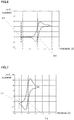
- Fig. 1 illustrates the CV measurement result of a titanium plating solution.
- the vertical axis represents the current (mA) and the horizontal axis represents the potential (V) of the reference electrode.
- the spontaneous potential 1 refers to a potential difference between the working electrode and the reference electrode when no current is flowing therethrough.
- the Ti3 + /Ti 4+ redox potential 4 refers to a midpoint potential between the peak potential 2 resulting from the oxidation of Ti 3+ to Ti 4+ and the peak potential 3 resulting from the reduction of Ti 4+ to Ti 3+ .
- the peak potential 2 resulting from the oxidation of Ti 3+ to Ti 4+ is an average value of the potentials obtained by repeating the potential scanning on the working electrode for at least five times.
- the peak potential 3 resulting from the reduction of Ti 4+ to Ti 3+ is an average value of the potentials obtained by repeating the potential scanning on the working electrode for at least five times.
- a titanium plating solution has a potential difference between the spontaneous potential 1 and the Ti 3+ /Ti 4+ redox potential 4 of 0.75 V or more
- the concentration of Ti 3+ in the titanium plating solution is much greater than the concentration of Ti 4+ . Therefore, if the molten salt electrolysis is carried out by using a titanium plating solution having a potential difference between the spontaneous potential 1 and the Ti 3+ /Ti 4+ redox potential 4 of 0.75 V or more, a titanium plating film which is silvery white and highly smooth can be formed on the surface of the cathode.
- the potential difference between the spontaneous potential 1 and the Ti 3+ /Ti 4+ redox potential 4 is more preferably 1.0 V or more, and further preferably 1.1 V or more.
- the titanium plating solution before the CV measurement may be a molten salt containing fluorine and titanium.
- the titanium plating solution may be a molten salt obtained by dissolving K 2 TiF 6 in KF-KCl, a molten salt obtained by dissolving K 2 TiF 6 in LiF-KCl, or a molten salt obtained by dissolving K 2 TiF 6 in NaF-KCl.
- the titanium compound to be dissolved in the molten salt is not limited to K 2 TiF 6 , it may be TiCl 4 or the like.
- the molten salt obtained by dissolving K 2 TiF 6 in KF-KCl is preferable.
- the molten salt obtained by dissolving K 2 TiF 6 in KF-KCl is a titanium plating solution that may be used to form a smooth titanium plating film.
- the molar mixing ratio between KF and KCl is preferably 10:90 to 90:10. If the content ratio of KF in KF-KCl is 10 mol% or more, a smooth titanium plating film may be electrodeposited on the surface of the cathode. If the content ratio of KF in KF-KCl is 90 mol% or less, the melting point may be made lower than that of the molten salt of KF alone. From these viewpoints, the molar mixing ratio between KF and KCl is more preferably 20:80 to 80:20, and further preferably 40:60 to 60:40.
- titanium should be added to the titanium plating solution so that the potential difference between the spontaneous potential 1 and the Ti 3+ /Ti 4+ redox potential 4 is 0.75 V or more.
- titanium sponge titanium powder which is processed as fine as possible or the like. Since titanium sponge has a higher porosity, the specific surface area is larger, which makes it easier to be dissolved in the molten salt bath. Thus, the porosity of titanium sponge to be used is more preferably 20% or more, and further preferably 40% or more. Using titanium sponge which has a higher porosity may facilitate the progress of the comproportionation reaction in the titanium plating solution.
- the titanium plating solution obtained by the method for preparing a titanium plating solution according to an embodiment of the present disclosure is used to carry out the molten salt electrolysis, it is possible to manufacture a titanium plated product with a smooth titanium plating film having a small thickness distribution on its surface.
- a method for manufacturing a titanium plated product according to an embodiment of the present disclosure includes an electrolyzing step of carrying out a molten salt electrolysis by using a cathode and an anode provided in the titanium plating solution which is obtained according to the method for preparing a titanium plating solution described in the above embodiment so as to electrodeposit titanium on the surface of the cathode.
- a titanium plating film will be formed on the surface of the cathode.
- a material suitable for forming the titanium plating film on the surface may be used as the cathode.
- a metal, a conductive sintered body or the like may be given.
- nickel, iron, SUS304, molybdenum, tungsten, copper, carbon or the like may be preferably used.
- the base material used as the cathode is simply required to be conductive at least at its surface. If the base material is made of a material to be alloyed with titanium, a titanium alloy layer may be formed on the cathode side of the titanium plating film. On the other hand, if a high-purity titanium plating film is to be formed without a titanium alloy layer, a material that cannot be alloyed with Ti in the titanium plating solution may be used as the cathode.
- the anode is not particularly limited, and it may be made of any conductive material such as glassy carbon or titanium, for example. From the viewpoint of stably and continuously producing the titanium plating film, the anode is preferably made of Ti.
- the atmosphere in which the molten salt electrolysis is carried out may be vacuum or a non-oxidative atmosphere that does not form a compound with titanium.
- the molten salt electrolysis may be carried out in a glove box filled or circulated with an inert gas such as argon gas.
- the current density for carrying out the molten salt electrolysis is not particularly limited, and it may be, for example, 10 mA/cm 2 or more and 500 mA/cm 2 or less.
- the current density is more preferably 50 mA/cm 2 or more and 250 mA/cm 2 or less, and further preferably 100 mA/cm 2 or more and 200 mA/cm 2 or less.
- the temperature of the titanium plating solution is preferably 650°C or more and 850°C or less. If the temperature of the titanium plating solution is set to 650°C or more, it is possible to maintain the titanium plating solution in liquid state so as to carry out the molten salt electrolysis stably. If the temperature of the titanium plating solution is set to 850°C or less, it is possible to prevent the titanium plating solution from becoming unstable due to the evaporation of the components in the titanium plating solution. From these viewpoints, the temperature of the titanium plating solution is more preferably 650°C or more and 750°C or less, and further preferably 650°C or more and 700°C or less.
- the time for carrying out the molten salt electrolysis is not particularly limited, and it may be carried out for a period of time in which the target titanium plating film is sufficiently formed on the surface of the cathode.
- the titanium plating solution is measured regularly or irregularly by cyclic voltammetry and the potential difference between the spontaneous potential and the Ti 3+ /Ti 4+ redox potential is controlled to be 0.75 V or more.
- the titanium ions may be oxidized from Ti 3+ to Ti 4+ , and thereby a smooth titanium plating film may not be formed. Further, when an electrode other than the titanium electrode is used as the anode, the concentration of the titanium ions in the titanium plating solution may change at anytime.
- the titanium plating solution is subjected to CV measurement regularly or irregularly and controlled so that the potential difference between the spontaneous potential and the Ti 3+ /Ti 4+ redox potential is 0.75 V or more, which makes it possible to stably and continuously form a smooth titanium plating film on the surface of the cathode.
- the conditions for the CV measurement are the same as those for the CV measurement in the method for preparing a titanium plating solution according to the embodiment of the present disclosure described above.
- the potential difference between the spontaneous potential and the Ti 3+ /Ti 4+ redox potential of the titanium plating solution determined by the CV measurement becomes less than 0.75 V, for example, titanium sponge or the like may be added and dissolved in the titanium plating solution.
- a smooth titanium plating film having a small film thickness distribution refers to such a film that either the maximum thickness or the minimum thickness of the titanium plating film measured at any of arbitrary five spots is preferably within ⁇ 50% of the average film thickness.
- Fig. 2 is a conceptual diagram for illustrating a method for measuring the average film thickness.
- the titanium plated product with a titanium plating film formed on its surface is arbitrarily and equally divided into areas, and five spots (area A to area E) are selected as measurement spots.
- the cross section of the titanium plating film in each area is observed with a scanning electron microscope (SEM).
- SEM scanning electron microscope
- the magnifying power of the SEM is set in such a manner that the entire titanium plating film can be observed in the thickness direction and is enlarged in the thickness direction as much as possible in one field of view.
- the maximum thickness and the minimum thickness of the titanium plating film in each area are measured at three points by changing the field of view, and the average value is defined as the average film thickness of the titanium plating film.
- Fig. 2 illustrates a schematic view of a titanium plated product 21 with a titanium plating film formed on the surface of a substantially square-shaped base material, in which four corners are defined as areas A to D, and a central portion is defined as an area E.
- Fig. 3 illustrates a conceptual view of a field of view (i) when the area A of the titanium plated product 21 illustrated in Fig. 2 is observed by SEM.
- Fig. 4 illustrates a conceptual view of a field of view (ii) of the area A
- Fig. 5 illustrates a conceptual view of a field of view (iii) of the area A.
- the maximum thickness of the titanium plating film 23 (the maximum thickness A(i), the maximum thickness A(ii), and the maximum thickness A(iii)) and the minimum thickness of the titanium plating film 23 (the minimum thickness a(i), the minimum thickness a(ii), and the minimum thickness a(iii)) are measured.
- the thickness of the titanium plating film 23 is defined as the length of the titanium plating film 23 extending in the vertical direction from the base material 22.
- the thickness of the titanium plating film 23 is defined as the total length of the titanium alloy layer and the titanium plating film extending in the vertical direction from the base material 22.
- the maximum thickness A(i) to A(iii) and the minimum thickness a(i) to a(iii) are determined in three fields of view.
- the areas B, C, D and E the maximum thickness and the minimum thickness of the titanium plating film are measured in three fields of view in the same manner as the area A.
- the average of the maximum thickness A(i) to A(iii), B(i) to B(iii), C(i) to C(iii), D(i) to D(iii) and E(i) to E(iii) and the minimum thickness a(i) to a(iii), b(i) to b(iii), c(i) to c(iii), d(i) to d(iii) and e(i) to e(iii) of the titanium plating film measured as described above are averaged, and the average value is defined as the average film thickness of the titanium plating film.
- KCl, KF and K 2 TiF 6 were mixed so that the molar mixing ratio between KCl and KF was 55: 45 and the concentration of K 2 TiF 6 was 0.1 mol%, and were heated to 650°C to prepare a titanium plating solution.
- the CV measurement was carried out at a potential scanning speed of 200 mV/sec under an atmosphere in which argon gas was circulated.
- a graphite rod with a diameter of 3 mm was used as a working electrode
- a Pt wire with a diameter of 1 mm was used as a reference electrode
- a titanium rod with a diameter of 3 mm was used as a counter electrode.
- the potential scanning was repeatedly performed on the working electrode for five times.
- the potential difference between the spontaneous potential and the Ti 3+ /Ti 4+ redox potential of the titanium plating solution was 0.65 V.
- titanium sponge 0.3 mg per 1 g of the titanium plating solution was added to the titanium plating solution, and sufficiently dissolved therein.
- the used titanium sponge has a porosity of 50%.
- the titanium plating solution was subjected to the CV measurement under the same conditions, and the potential difference between the spontaneous potential and the Ti 3+ /Ti 4+ redox potential was 0.75 V.
- This titanium plating solution was used as the titanium plating solution No. 1.
- a cathode and an anode were provided in the titanium plating solution No. 1, and the molten salt electrolysis was carried out for 40 minutes.
- the molten salt electrolysis was carried out in a glove box under an argon flow atmosphere.
- a Ni plate of 0.5 cm ⁇ 2.5 cm ⁇ 0.1 mm was used as the cathode, and a Ti rod was used as the anode.
- a Pt wire was used as a pseudo-reference electrode.
- the current density was set to 25 mA/cm 2 .
- the potential of the pseudo-reference electrode was calibrated with the potential (K + /K potential) of metallic potassium electrochemically deposited on the Pt wire.
- the titanium plated product was washed with water.
- the salt that adhered to the surface of the titanium plated product was highly soluble in water and was easily removed.
- the titanium plated product No. 1 with a titanium plating film formed on its surface was obtained.
- Titanium plating solution No. 2 was prepared in the same manner as Example 1 except that the amount of titanium sponge added to the titanium plating solution after the CV measurement in Example 1 was modified to 0.5 mg of titanium sponge per 1 g of the titanium plating solution.
- Titanium plated product No. 2 was manufactured in the same manner as Example 1 except that the titanium plating solution No. 2 was used in place of the titanium plating solution No. 1 of Example 1.
- Titanium plating solution No. 3 was prepared in the same manner as Example 1 except that the amount of titanium sponge added to the titanium plating solution after the CV measurement in Example 1 was modified to 1 mg of titanium sponge per 1 g of the titanium plating solution.
- Titanium plated product No. 3 was manufactured in the same manner as Example 1 except that the titanium plating solution No. 3 was used in place of the titanium plating solution No. 1 of Example 1.
- Titanium plating solution No. 4 was prepared in the same manner as Example 1 except that the amount of titanium sponge added to the titanium plating solution after the CV measurement in Example 1 was modified to 1.2 mg of titanium sponge per 1 g of the titanium plating solution.
- Fig. 6 illustrates the result of the CV measurement (the result of the fifth potential scanning) for the titanium plating solution No. 4.
- the vertical axis represents the current (mA)
- the horizontal axis represents the potential (V) of the reference electrode.
- Titanium plated product No. 4 was manufactured in the same manner as Example 1 except that the titanium plating solution No. 4 was used in place of the titanium plating solution No. 1 of Example 1.
- Titanium plating solution No. A was prepared in the same manner as Example 1 except that titanium sponge was not added to the titanium plating solution after the CV measurement in Example 1.
- the titanium plating solution No. A was subjected to the CV measurement under the same conditions as Example 1, and the potential difference between the spontaneous potential and the Ti 3+ /Ti 4+ redox potential was 0.67 V.
- Fig. 7 illustrates the result of the CV measurement (the result of the fifth potential scanning) for the titanium plating solution No. A.
- the vertical axis represents the current (mA)
- the horizontal axis represents the potential (V) of the reference electrode.
- Titanium plated product No. A was manufactured in the same manner as Example 1 except that the titanium plating solution No. A was used in place of the titanium plating solution No. 1 of Example 1.
- Titanium plating solution No. B was prepared in the same manner as Example 1 except that the amount of titanium sponge added to the titanium plating solution after the CV measurement in Example 1 was modified to 0.2 mg of titanium sponge per 1 g of the titanium plating solution.
- Titanium plated product No. B was manufactured in the same manner as Example 1 except that the titanium plating solution No. B was used in place of the titanium plating solution No. 1 of Example 1.
- the ratio between the concentration of Ti 3+ and the concentration of Ti 4+ (Ti 3+ concentration/Ti 4+ concentration) in each of the titanium plating solution No. 1 obtained in Example 1, the titanium plating solution No. 2 obtained in Example 2, the titanium plating solution No. 3 obtained in Example 3, the titanium plating solution No. 4 obtained in Example 4, the titanium plating solution No. A obtained in Comparative Example 1, and the titanium plating solution No. B obtained in Comparative Example 2 was calculated by using the Nernst equation. The results are listed in Table 1.
Landscapes
- Chemical & Material Sciences (AREA)
- Engineering & Computer Science (AREA)
- Chemical Kinetics & Catalysis (AREA)
- Electrochemistry (AREA)
- Materials Engineering (AREA)
- Metallurgy (AREA)
- Organic Chemistry (AREA)
- Automation & Control Theory (AREA)
- Electroplating And Plating Baths Therefor (AREA)
- Electroplating Methods And Accessories (AREA)
- Electrodes For Compound Or Non-Metal Manufacture (AREA)
Abstract
Description
- The present disclosure relates to a method for preparing a titanium plating solution and a method for manufacturing a titanium plated product. The present application claims the benefit of priority to Japanese Patent Application No.
2016-227050 filed on November 22, 2016 - Titanium is a metal that is excellent in corrosion resistance, heat resistance and specific strength. However, titanium is costly to manufacture and difficult to smelt and work, which hampers the wide use of titanium. Dry deposition, such as chemical vapor deposition (CVD) and physical vapor deposition (PVD), is now partially used in industry as one of the methods that take advantage of high corrosion resistance, high strength, and other properties of titanium and titanium compounds. However, the dry deposition cannot be applied to a complex-shaped substrate. As a method for depositing titanium that would solve this problem, electrodeposition of titanium in a molten salt may be adopted.
- For example, Japanese Patent Laying-open No.
2015-193899 - PTL 1: Japanese Patent Laying-open No.
2015-193899 - A method for preparing a titanium plating solution according to an embodiment of the present disclosure includes measuring a titanium plating solution containing fluorine and titanium by cyclic voltammetry under the following conditions, and adding titanium to the titanium plating solution so that the potential difference between the spontaneous potential and the Ti3+/Ti4+ redox potential is 0.75 V or more, conditions: when the temperature of the titanium plating solution is 650°C or more and 850°C or less and when glassy carbon is used as a working electrode, platinum is used as a pseudo-reference electrode and titanium is used as a counter electrode, the potential scanning is repeatedly performed on the working electrode for at least five times at a scanning speed of 1 mV/sec or more and 500 mV/sec or less between a lower potential limit which is the immersion potential of the working electrode and an upper potential limit which is a potential that is 2 V to 4 V higher than the lower potential limit.
-
-
Fig. 1 is a graph schematically illustrating a measurement result of a titanium plating solution by cyclic voltammetry; -
Fig. 2 is a schematic view illustrating an example of defining areas A to E on a titanium plated product in a method of measuring an average film thickness of a titanium plating film on the titanium plated product; -
Fig. 3 is a conceptual diagram illustrating an example of a field of view (i) when the area A of the titanium plated product illustrated inFig. 2 is observed with a scanning electron microscope. -
Fig. 4 is a conceptual diagram illustrating an example of a field of view (ii) when the area A of the titanium plated product illustrated inFig. 2 is observed with a scanning electron microscope; -
Fig. 5 is a conceptual diagram illustrating an example of a field of view (iii) when the area A of the titanium plated product illustrated inFig. 2 is observed with a scanning electron microscope. -
Fig. 6 is a graph schematically illustrating a measurement result by cyclic voltammetry of a titanium plating solution No. 4 prepared in Example 4; and -
Fig. 7 is a graph schematically illustrating a measurement result by cyclic voltammetry of a titanium plating solution No. A prepared in Comparative Example 4. - According to the studies conducted by the inventors of the present disclosure, although an alloy film of Fe and Ti can be electrodeposited on the surface of a cathode used in the molten salt electrolysis by the method described in
PTL 1, a metal Ti film cannot be electrodeposited by the method. Specifically, the alloy film of Fe and Ti is stable in the molten salt bath, whereas the metal Ti dissolves in the molten salt bath due to a comproportionation reaction. - After further studies, the inventors of the present disclosure have found that it is effective to carry out the molten salt electrolysis by adding titanium to a titanium plating solution which is a molten salt containing KF, KCl and K2TiF6 in at least a minimum amount necessary for converting Ti4+ to Ti3+ according to the comproportionation reaction represented by the following formula (A):
Formula (A): 3Ti4+ + metal Ti → 4Ti3+
- According to the above method, it is possible to form a smooth titanium plating film on the surface of the cathode used in the molten salt electrolysis.
- However, since it is impossible to confirm whether or not the comproportionation reaction has sufficiently progressed in the above method, it is necessary to wait longer than the time required for the molten salt electrolysis to finish after titanium is added to the titanium plating solution. In addition, if oxygen is mixed into the titanium plating solution from the external environment for some reasons, the titanium ions may be oxidized from Ti3+ to Ti4+, and thereby it is impossible to know whether or not Ti3+ is sufficiently present in the titanium plating solution.
- In view of the above problems, it is an object of the present disclosure to provide a method for preparing a titanium plating solution in which the concentration ratio between Ti3+ and Ti4+ in the titanium plating solution is monitored so that the concentration of Ti3+ is maintained sufficiently high.
- According to the present disclosure, it is possible to provide a method for preparing a titanium plating solution in which the concentration ratio between Ti3+ and Ti4+ in the titanium plating solution is monitored so that the concentration of Ti3+ is maintained sufficiently high.
- First, embodiments of the present disclosure are enumerated hereinafter.
-
- (1) A method for preparing a titanium plating solution according to one embodiment of the present disclosure includes: measuring a titanium plating solution containing fluorine and titanium by cyclic voltammetry under the following conditions; and adding titanium to the titanium plating solution so that the potential difference between the spontaneous potential and the Ti3+/Ti4+ redox potential is 0.75 V or more, conditions: when the temperature of the titanium plating solution is 650°C or more and 850°C or less and when glassy carbon is used as a working electrode, platinum is used as a pseudo-reference electrode and titanium is used as a counter electrode, the potential scanning is repeatedly performed on the working electrode for at least five times at a scanning speed of 1 mV/sec or more and 500 mV/sec or less between a lower potential limit which is the immersion potential of the working electrode and an upper potential limit which is a potential that is 2 V to 4 V higher than the lower potential limit.
According to the embodiment described in the above (1), it is possible to provide a method for preparing a titanium plating solution in which the concentration ratio between Ti3+ and Ti4+ in the titanium plating solution is monitored so that the concentration of Ti3+ is maintained sufficiently high. - (2) In the method for preparing a titanium plating solution described in the above (1), it is preferable that the titanium plating solution is obtained by dissolving titanium in a molten salt of potassium fluoride and potassium chloride.
- (3) In the method for preparing a titanium plating solution described in the above (1) or (2), it is preferable that the titanium plating solution is obtained by dissolving K2TiF6 in a molten salt of potassium fluoride and potassium chloride.
According to the embodiment described in the above (2) or (3), it is possible to provide a titanium plating solution that can be maintained in liquid state at a temperature lower than a titanium plating solution which is obtained by dissolving titanium in potassium fluoride. - (4) In the method for preparing a titanium plating solution described in the above (3), it is preferable that the content of the K2TiF6 in the titanium plating solution is 0.1 mol% or more.
According to the embodiment described in the above (4), it is possible to provide a titanium plating solution enabling the titanium plating to be carried out stably. - (5) In the method for preparing a titanium plating solution described in any one of the above (2) to (4), it is preferable that the molar mixing ratio between potassium fluoride and potassium chloride is 10:90 to 90:10.
According to the embodiment described in the above (5), it is possible to provide a titanium plating solution enabling the formation of a smooth titanium plating film. - (6) In the method for preparing a titanium plating solution described in any one of the above (1) to (5), it is preferable that the titanium added to the titanium plating solution is titanium sponge.
According to the embodiment described in the above (6), it is possible to facilitate the progress of the comproportionation reaction of titanium in the titanium plating solution.
Note that the titanium sponge refers to a porous metal titanium having a porosity of 1% or more. The porosity of the titanium sponge is calculated by the following formula:
- (7) A method for manufacturing a titanium plated product according to one embodiment of the present disclosure includes an electrolyzing step of carrying out a molten salt electrolysis by using a cathode and an anode provided in a titanium plating solution containing fluorine and titanium so as to electrodeposit titanium on the surface of the cathode, and the titanium plating solution is prepared by the method for preparing a titanium plating solution according to any one of the above (1) to (6).
According to the embodiment described in the above (7), the method for manufacturing a titanium plated product may be used to produce a titanium plated product with a smooth titanium plating film formed on its surface. - (8) In the method for manufacturing a titanium plated product described in the above (7), the titanium plating solution used in the electrolyzing step is measured by cyclic voltammetry under the following conditions, and the potential difference between the spontaneous potential and the Ti3+/Ti4+ redox potential is controlled to be 0.75 V or more,
conditions: when the temperature of the titanium plating solution is 650°C or more and 850°C or less and when glassy carbon is used as a working electrode, platinum is used as a pseudo-reference electrode and titanium is used as a counter electrode, the potential scanning is repeatedly performed on the working electrode for at least five times at a scanning speed of 1 mV/sec or more and 500 mV/sec or less between a lower potential limit which is the immersion potential of the working electrode and an upper potential limit which is a potential that is 2 V to 4 V higher than the lower potential limit. - According to the embodiment described in the above (8), the method for manufacturing a titanium plated product may be used to continuously and stably produce a titanium plated product with a smooth titanium plating film formed on its surface.
- Specific examples of the method for preparing a titanium plating solution and the method for manufacturing a titanium plated product according to an embodiment of the present disclosure will be described hereinafter in more detail. It should be noted that the present invention is not limited to the specific examples but defined by the scope of the claims, and it is intended that the present invention encompasses all modifications equivalent in meaning and scope to the claims.
- In the method for preparing a titanium plating solution according to an embodiment of the present disclosure, first, a titanium plating solution containing fluorine and titanium is prepared. Then, the titanium plating solution is measured by cyclic voltammetry (hereinafter, abbreviated to "CV" where necessary), and titanium is added to the titanium plating solution so that the potential difference between the spontaneous potential and the Ti3+/Ti4+ redox potential is 0.75 V or more.
- The CV measurement may be carried out in a non-oxidizing atmosphere which does not react with titanium to form a compound. For example, the CV measurement may be carried out in an inert gas atmosphere such as argon gas. The CV measurement may be carried out under such a condition that the temperature is set to 650°C or more and 850°C or less so as to maintain the titanium plating solution in liquid state and the scanning speed of the potential scanning is set at 1 mV/sec or more and 500 mV/sec or less. From the viewpoint of preventing the conductivity of the titanium plating solution from decreasing, the temperature of the titanium plating solution is more preferably 650°C or more and 850°C or less, and further preferably 650°C or more and 750°C or less. From the viewpoint of shortening the measurement time or increasing the measurement accuracy, the scanning speed of the potential scanning is more preferably 50 mV/sec or more and 300 mV/sec or less, and further preferably 100 mV/sec or more and 200 mV/sec or less.
- The working electrode may be, for example, graphite, glassy carbon or the like.
- The reference electrode may be, for example, Pt, Ni or the like.
- The counter electrode may be, for example, titanium, glassy carbon, graphite or the like.
- In the CV measurement, the potential scanning is repeatedly performed on the working electrode for at least five times between a lower potential limit which is the immersion potential of the working electrode and an upper potential limit which is a potential that is 2 V to 4 V higher than the lower potential limit.
-
Fig. 1 illustrates the CV measurement result of a titanium plating solution. InFig. 1 , the vertical axis represents the current (mA) and the horizontal axis represents the potential (V) of the reference electrode. - The
spontaneous potential 1 refers to a potential difference between the working electrode and the reference electrode when no current is flowing therethrough. - The Ti3+/Ti4+ redox potential 4 refers to a midpoint potential between the
peak potential 2 resulting from the oxidation of Ti3+ to Ti4+ and thepeak potential 3 resulting from the reduction of Ti4+ to Ti3+. Thepeak potential 2 resulting from the oxidation of Ti3+ to Ti4+ is an average value of the potentials obtained by repeating the potential scanning on the working electrode for at least five times. Likewise, thepeak potential 3 resulting from the reduction of Ti4+ to Ti3+ is an average value of the potentials obtained by repeating the potential scanning on the working electrode for at least five times. - When a titanium plating solution has a potential difference between the
spontaneous potential 1 and the Ti3+/Ti4+ redox potential 4 of 0.75 V or more, the concentration of Ti3+ in the titanium plating solution is much greater than the concentration of Ti4+. Therefore, if the molten salt electrolysis is carried out by using a titanium plating solution having a potential difference between thespontaneous potential 1 and the Ti3+/Ti4+ redox potential 4 of 0.75 V or more, a titanium plating film which is silvery white and highly smooth can be formed on the surface of the cathode. On the other hand, when the molten salt electrolysis is carried out by using a titanium plating solution having a potential difference between thespontaneous potential 1 and the Ti3+/Ti4+ redox potential 4 of less than 0.75 V, a titanium plating film cannot be formed on the surface of the cathode. From the viewpoint of forming a smooth titanium plating film, the potential difference between thespontaneous potential 1 and the Ti3+/Ti4+ redox potential 4 is more preferably 1.0 V or more, and further preferably 1.1 V or more. - If the potential difference between the
spontaneous potential 1 and the Ti3+/Ti4+ redox potential 4 is known, the ratio between the concentration of Ti3+ and the concentration of Ti4+ in the titanium plating solution may be calculated by using the Nernst equation represented by the following formula (B):
- When using the Nernst equation to calculate the ratio between the concentration of Ti3+ and the concentration of Ti4+, it is assumed that the electrode potential E in the formula (B) is dominantly affected by a reaction of oxidizing Ti3+ to Ti4+ and a reaction of reducing Ti4+ to Ti3+, and it is also assumed that the ratio between the activity of Ti3+ and the activity of Ti4+ (Ti3+ activity/Ti4+ activity) is the same as the ratio between the concentration of Ti3+ and the concentration of Ti4+ (Ti3+ concentration/Ti4+ concentration).
- The titanium plating solution before the CV measurement may be a molten salt containing fluorine and titanium. For example, the titanium plating solution may be a molten salt obtained by dissolving K2TiF6 in KF-KCl, a molten salt obtained by dissolving K2TiF6 in LiF-KCl, or a molten salt obtained by dissolving K2TiF6 in NaF-KCl. The titanium compound to be dissolved in the molten salt is not limited to K2TiF6, it may be TiCl4 or the like. Among the molten salts mentioned above, the molten salt obtained by dissolving K2TiF6 in KF-KCl is preferable. The molten salt obtained by dissolving K2TiF6 in KF-KCl is a titanium plating solution that may be used to form a smooth titanium plating film.
- When KF-KCl is used in the molten salt, the molar mixing ratio between KF and KCl is preferably 10:90 to 90:10. If the content ratio of KF in KF-KCl is 10 mol% or more, a smooth titanium plating film may be electrodeposited on the surface of the cathode. If the content ratio of KF in KF-KCl is 90 mol% or less, the melting point may be made lower than that of the molten salt of KF alone. From these viewpoints, the molar mixing ratio between KF and KCl is more preferably 20:80 to 80:20, and further preferably 40:60 to 60:40.
- When carrying out the CV measurement on the titanium plating solution made of the molten salt, if the potential difference between the
spontaneous potential 1 and the Ti3+/Ti4+ redox potential 4 is less than 0.75 V, titanium should be added to the titanium plating solution so that the potential difference between thespontaneous potential 1 and the Ti3+/Ti4+ redox potential 4 is 0.75 V or more. - Although the form of Ti to be added to the titanium plating solution is not particularly limited, it is preferable to use titanium sponge, titanium powder which is processed as fine as possible or the like. Since titanium sponge has a higher porosity, the specific surface area is larger, which makes it easier to be dissolved in the molten salt bath. Thus, the porosity of titanium sponge to be used is more preferably 20% or more, and further preferably 40% or more. Using titanium sponge which has a higher porosity may facilitate the progress of the comproportionation reaction in the titanium plating solution.
- If the titanium plating solution obtained by the method for preparing a titanium plating solution according to an embodiment of the present disclosure is used to carry out the molten salt electrolysis, it is possible to manufacture a titanium plated product with a smooth titanium plating film having a small thickness distribution on its surface.
- A method for manufacturing a titanium plated product according to an embodiment of the present disclosure includes an electrolyzing step of carrying out a molten salt electrolysis by using a cathode and an anode provided in the titanium plating solution which is obtained according to the method for preparing a titanium plating solution described in the above embodiment so as to electrodeposit titanium on the surface of the cathode.
- In the electrolyzing step, a titanium plating film will be formed on the surface of the cathode. Thus, a material suitable for forming the titanium plating film on the surface may be used as the cathode. As an example, a metal, a conductive sintered body or the like may be given. Specifically, nickel, iron, SUS304, molybdenum, tungsten, copper, carbon or the like may be preferably used.
- The base material used as the cathode is simply required to be conductive at least at its surface. If the base material is made of a material to be alloyed with titanium, a titanium alloy layer may be formed on the cathode side of the titanium plating film. On the other hand, if a high-purity titanium plating film is to be formed without a titanium alloy layer, a material that cannot be alloyed with Ti in the titanium plating solution may be used as the cathode.
- The anode is not particularly limited, and it may be made of any conductive material such as glassy carbon or titanium, for example. From the viewpoint of stably and continuously producing the titanium plating film, the anode is preferably made of Ti.
- The atmosphere in which the molten salt electrolysis is carried out may be vacuum or a non-oxidative atmosphere that does not form a compound with titanium. For example, the molten salt electrolysis may be carried out in a glove box filled or circulated with an inert gas such as argon gas.
- The current density for carrying out the molten salt electrolysis is not particularly limited, and it may be, for example, 10 mA/cm2 or more and 500 mA/cm2 or less. By setting the current density to 10 mA/cm2 or more, it is possible to stably form a titanium plating film on the surface of the cathode. By setting the current density to 500 mA/cm2 or less, the diffusion of titanium ions in the titanium plating solution is not a rate-limiting factor, and thus the resulting titanium plating film can be prevented from becoming black. From these viewpoints, the current density is more preferably 50 mA/cm2 or more and 250 mA/cm2 or less, and further preferably 100 mA/cm2 or more and 200 mA/cm2 or less.
- In the electrolyzing step, the temperature of the titanium plating solution is preferably 650°C or more and 850°C or less. If the temperature of the titanium plating solution is set to 650°C or more, it is possible to maintain the titanium plating solution in liquid state so as to carry out the molten salt electrolysis stably. If the temperature of the titanium plating solution is set to 850°C or less, it is possible to prevent the titanium plating solution from becoming unstable due to the evaporation of the components in the titanium plating solution. From these viewpoints, the temperature of the titanium plating solution is more preferably 650°C or more and 750°C or less, and further preferably 650°C or more and 700°C or less.
- The time for carrying out the molten salt electrolysis is not particularly limited, and it may be carried out for a period of time in which the target titanium plating film is sufficiently formed on the surface of the cathode.
- In the electrolyzing step, it is preferable that the titanium plating solution is measured regularly or irregularly by cyclic voltammetry and the potential difference between the spontaneous potential and the Ti3+/Ti4+ redox potential is controlled to be 0.75 V or more.
- If oxygen or water is mixed into the titanium plating solution from the external environment for some reasons during the electrolyzing step, the titanium ions may be oxidized from Ti3+ to Ti4+, and thereby a smooth titanium plating film may not be formed. Further, when an electrode other than the titanium electrode is used as the anode, the concentration of the titanium ions in the titanium plating solution may change at anytime.
- Even under these circumstances, the titanium plating solution is subjected to CV measurement regularly or irregularly and controlled so that the potential difference between the spontaneous potential and the Ti3+/Ti4+ redox potential is 0.75 V or more, which makes it possible to stably and continuously form a smooth titanium plating film on the surface of the cathode.
- The conditions for the CV measurement are the same as those for the CV measurement in the method for preparing a titanium plating solution according to the embodiment of the present disclosure described above. When the potential difference between the spontaneous potential and the Ti3+/Ti4+ redox potential of the titanium plating solution determined by the CV measurement becomes less than 0.75 V, for example, titanium sponge or the like may be added and dissolved in the titanium plating solution.
- According to the method for manufacturing a titanium plated product according to the embodiment of the present disclosure, it is possible to manufacture a titanium plated product with a smooth titanium plating film having a small thickness distribution on its surface. A smooth titanium plating film having a small film thickness distribution refers to such a film that either the maximum thickness or the minimum thickness of the titanium plating film measured at any of arbitrary five spots is preferably within ±50% of the average film thickness.
- The average film thickness of the titanium plating film is measured in the following manner.
Fig. 2 is a conceptual diagram for illustrating a method for measuring the average film thickness. - First, the titanium plated product with a titanium plating film formed on its surface is arbitrarily and equally divided into areas, and five spots (area A to area E) are selected as measurement spots. Then, the cross section of the titanium plating film in each area is observed with a scanning electron microscope (SEM). The magnifying power of the SEM is set in such a manner that the entire titanium plating film can be observed in the thickness direction and is enlarged in the thickness direction as much as possible in one field of view. The maximum thickness and the minimum thickness of the titanium plating film in each area are measured at three points by changing the field of view, and the average value is defined as the average film thickness of the titanium plating film.
- As an example,
Fig. 2 illustrates a schematic view of a titanium platedproduct 21 with a titanium plating film formed on the surface of a substantially square-shaped base material, in which four corners are defined as areas A to D, and a central portion is defined as an area E.Fig. 3 illustrates a conceptual view of a field of view (i) when the area A of the titanium platedproduct 21 illustrated inFig. 2 is observed by SEM. Similarly,Fig. 4 illustrates a conceptual view of a field of view (ii) of the area A, andFig. 5 illustrates a conceptual view of a field of view (iii) of the area A. - In each field of view (i) to (iii) for the area A of the titanium plated
product 21 observed by SEM, the maximum thickness of the titanium plating film 23 (the maximum thickness A(i), the maximum thickness A(ii), and the maximum thickness A(iii)) and the minimum thickness of the titanium plating film 23 (the minimum thickness a(i), the minimum thickness a(ii), and the minimum thickness a(iii)) are measured. The thickness of thetitanium plating film 23 is defined as the length of thetitanium plating film 23 extending in the vertical direction from thebase material 22. In the case where a titanium alloy layer made of titanium and a base metal is formed between thetitanium plating film 23 and thebase material 22, the thickness of thetitanium plating film 23 is defined as the total length of the titanium alloy layer and the titanium plating film extending in the vertical direction from thebase material 22. Thus, in the area A, the maximum thickness A(i) to A(iii) and the minimum thickness a(i) to a(iii) are determined in three fields of view. Regarding the areas B, C, D and E, the maximum thickness and the minimum thickness of the titanium plating film are measured in three fields of view in the same manner as the area A. - Thus, the average of the maximum thickness A(i) to A(iii), B(i) to B(iii), C(i) to C(iii), D(i) to D(iii) and E(i) to E(iii) and the minimum thickness a(i) to a(iii), b(i) to b(iii), c(i) to c(iii), d(i) to d(iii) and e(i) to e(iii) of the titanium plating film measured as described above are averaged, and the average value is defined as the average film thickness of the titanium plating film.
- Hereinafter, the present disclosure will be described in more detail by examples. It should be noted that the examples are illustrative, and the method for preparing a titanium plating solution and the method for manufacturing a titanium plated product of the present invention are not limited to the examples. The scope of the present invention is defined by the scope of the claims, and encompasses all modifications equivalent in meaning and scope to the claims.
- KCl, KF and K2TiF6 were mixed so that the molar mixing ratio between KCl and KF was 55: 45 and the concentration of K2TiF6 was 0.1 mol%, and were heated to 650°C to prepare a titanium plating solution.
- While the obtained titanium plating solution was maintained at 650°C, the CV measurement was carried out at a potential scanning speed of 200 mV/sec under an atmosphere in which argon gas was circulated. A graphite rod with a diameter of 3 mm was used as a working electrode, a Pt wire with a diameter of 1 mm was used as a reference electrode, and a titanium rod with a diameter of 3 mm was used as a counter electrode. The potential scanning was repeatedly performed on the working electrode for five times.
- According to the CV measurement, the potential difference between the spontaneous potential and the Ti3+/Ti4+ redox potential of the titanium plating solution was 0.65 V.
- Therefore, 0.3 mg of titanium sponge per 1 g of the titanium plating solution was added to the titanium plating solution, and sufficiently dissolved therein. The used titanium sponge has a porosity of 50%.
- Again, the titanium plating solution was subjected to the CV measurement under the same conditions, and the potential difference between the spontaneous potential and the Ti3+/Ti4+ redox potential was 0.75 V. This titanium plating solution was used as the titanium plating solution No. 1.
- A cathode and an anode were provided in the titanium plating solution No. 1, and the molten salt electrolysis was carried out for 40 minutes.
- The molten salt electrolysis was carried out in a glove box under an argon flow atmosphere. A Ni plate of 0.5 cm × 2.5 cm × 0.1 mm was used as the cathode, and a Ti rod was used as the anode. A Pt wire was used as a pseudo-reference electrode. The current density was set to 25 mA/cm2. The potential of the pseudo-reference electrode was calibrated with the potential (K+/K potential) of metallic potassium electrochemically deposited on the Pt wire.
- As a result, titanium was electrodeposited on the surface of the Ni plate serving as the cathode, and a titanium plated product with a titanium plating film formed on the surface was obtained.
- After the molten salt electrolyzing step, the titanium plated product was washed with water. The salt that adhered to the surface of the titanium plated product was highly soluble in water and was easily removed. Through the above-described operation, the titanium plated product No. 1 with a titanium plating film formed on its surface was obtained.
- Titanium plating solution No. 2 was prepared in the same manner as Example 1 except that the amount of titanium sponge added to the titanium plating solution after the CV measurement in Example 1 was modified to 0.5 mg of titanium sponge per 1 g of the titanium plating solution. The titanium plating solution No. 2, to which titanium sponge was added, was subjected to the CV measurement under the same conditions as Example 1, and the potential difference between the spontaneous potential and the Ti3+/Ti4+ redox potential was 0.85 V.
- Titanium plated product No. 2 was manufactured in the same manner as Example 1 except that the titanium plating solution No. 2 was used in place of the titanium plating solution No. 1 of Example 1.
- Titanium plating solution No. 3 was prepared in the same manner as Example 1 except that the amount of titanium sponge added to the titanium plating solution after the CV measurement in Example 1 was modified to 1 mg of titanium sponge per 1 g of the titanium plating solution. The titanium plating solution No. 3, to which titanium sponge was added, was subjected to the CV measurement under the same conditions as Example 1, and the potential difference between the spontaneous potential and the Ti3+/Ti4+ redox potential was 1.00 V.
- Titanium plated product No. 3 was manufactured in the same manner as Example 1 except that the titanium plating solution No. 3 was used in place of the titanium plating solution No. 1 of Example 1.
- Titanium plating solution No. 4 was prepared in the same manner as Example 1 except that the amount of titanium sponge added to the titanium plating solution after the CV measurement in Example 1 was modified to 1.2 mg of titanium sponge per 1 g of the titanium plating solution. The titanium plating solution No. 4, to which titanium sponge was added, was subjected to the CV measurement under the same conditions as Example 1, and the potential difference between the spontaneous potential and the Ti3+/Ti4+ redox potential was 1.10 V.
-
Fig. 6 illustrates the result of the CV measurement (the result of the fifth potential scanning) for the titanium plating solution No. 4. InFig. 6 , the vertical axis represents the current (mA), and the horizontal axis represents the potential (V) of the reference electrode. - Titanium plated product No. 4 was manufactured in the same manner as Example 1 except that the titanium plating solution No. 4 was used in place of the titanium plating solution No. 1 of Example 1.
- Titanium plating solution No. A was prepared in the same manner as Example 1 except that titanium sponge was not added to the titanium plating solution after the CV measurement in Example 1. The titanium plating solution No. A was subjected to the CV measurement under the same conditions as Example 1, and the potential difference between the spontaneous potential and the Ti3+/Ti4+ redox potential was 0.67 V.
Fig. 7 illustrates the result of the CV measurement (the result of the fifth potential scanning) for the titanium plating solution No. A. InFig. 7 , the vertical axis represents the current (mA), and the horizontal axis represents the potential (V) of the reference electrode. - Titanium plated product No. A was manufactured in the same manner as Example 1 except that the titanium plating solution No. A was used in place of the titanium plating solution No. 1 of Example 1.
- Titanium plating solution No. B was prepared in the same manner as Example 1 except that the amount of titanium sponge added to the titanium plating solution after the CV measurement in Example 1 was modified to 0.2 mg of titanium sponge per 1 g of the titanium plating solution. The titanium plating solution No. B, to which titanium sponge was added, was subjected to the CV measurement under the same conditions as Example 1, and the potential difference between the spontaneous potential and the Ti3+/Ti4+ redox potential was 0.70 V.
- Titanium plated product No. B was manufactured in the same manner as Example 1 except that the titanium plating solution No. B was used in place of the titanium plating solution No. 1 of Example 1.
- The ratio between the concentration of Ti3+ and the concentration of Ti4+ (Ti3+ concentration/Ti4+ concentration) in each of the titanium plating solution No. 1 obtained in Example 1, the titanium plating solution No. 2 obtained in Example 2, the titanium plating solution No. 3 obtained in Example 3, the titanium plating solution No. 4 obtained in Example 4, the titanium plating solution No. A obtained in Comparative Example 1, and the titanium plating solution No. B obtained in Comparative Example 2 was calculated by using the Nernst equation. The results are listed in Table 1.
- In addition, the surface condition of each of the titanium plated product No. 1 obtained in Example 1, the titanium plated product No. 2 obtained in Example 2, the titanium plated product No. 3 obtained in Example 3, the titanium plated product No. 4 obtained in Example 4, the titanium plated product No. A obtained in Comparative Example 1, and the titanium plated product No. B obtained in Comparative Example 2 was visually observed. The results are listed in Table 1.
- The current efficiency of the cathode in the electrolyzing step of each of Examples 1 to 4 and Comparative Examples 1 and 2 was calculated by using the following formula (C). The results are listed in Table 1.

[Table 1] Titanium plating solution Titanium plated product No. Difference (V) between spontaneous potential and Ti3+/Ti4+ redox potential Ti3+/Ti4+ Concentration ratio No. Surface condition of titanium plating film Current efficiency of cathode (%) 1 0.75 10000 1 silvery white 20 2 0.85 40000 2 silvery white 30 3 1.00 290000 3 silvery white 90 4 1.10 1000000 4 silvery white 90 A 0.67 3500 A black plating impossible B 0.70 7000 B black plating impossible - As listed in Table 1, when the molten salt electrolysis was carried out by using the titanium plating solutions No. 1 to No. 4 having a potential difference between the spontaneous potential and the Ti3+/Ti4+ redox potential of 0.75 V or more, it is possible to obtain the titanium plated products No. 1 to No. 4 each with a silvery white and smooth titanium plating film formed on its surface. In particular, when the titanium plating solution No. 3 or No. 4 having a potential difference between the spontaneous potential and the Ti3+/Ti4+ redox potential of 1.00 V or more was used, the current efficiency of the cathode could be improved to 90% or more.
- On the other hand, when the molten salt electrolysis was carried out by using the titanium plating solution No. A or No. B having a potential difference between the spontaneous potential and the Ti3+/Ti4+ redox potential of less than 0.75 V, a titanium plating film could not be successfully formed on the cathode surface, and the electrodeposited film was black.
- 1: spontaneous potential; 2: peak potential resulting from the oxidation of Ti3+ to Ti4+; 3: peak potential resulting from the reduction of Ti4+ to Ti3+; 4: Ti3+/Ti4+ redox potential; A: arbitrary area on titanium plated product; B: arbitrary area on titanium plated product; C: arbitrary area on titanium plated product; D: arbitrary area on titanium plated product; E: arbitrary area on titanium plated product; 21: titanium plated product; 22: base material; 23: titanium plating film; 61: spontaneous potential; 64: Ti3+/Ti4+ redox potential; 71: spontaneous potential; 74: Ti3+/Ti4+ redox potential
Claims (8)
- A method for preparing a titanium plating solution comprising:measuring a titanium plating solution containing fluorine and titanium by cyclic voltammetry under the following conditions; andadding titanium to the titanium plating solution so that a potential difference between the spontaneous potential and the Ti3+/Ti4+ redox potential is 0.75 V or more, conditions: when the temperature of the titanium plating solution is 650°C or more and 850°C or less and when glassy carbon is used as a working electrode, platinum is used as a pseudo-reference electrode and titanium is used as a counter electrode, the potential scanning is repeatedly performed on the working electrode for at least five times at a scanning speed of 1 mV/sec or more and 500 mV/sec or less between a lower potential limit which is the immersion potential of the working electrode and an upper potential limit which is a potential that is 2 V to 4 V higher than the lower potential limit.
- The method for preparing a titanium plating solution according to claim 1, wherein the titanium plating solution is obtained by dissolving titanium in a molten salt of potassium fluoride and potassium chloride.
- The method for preparing a titanium plating solution according to claim 1 or 2, wherein the titanium plating solution is obtained by dissolving K2TiF6 in a molten salt of potassium fluoride and potassium chloride.
- The method for preparing a titanium plating solution according to claim 3, wherein the content of K2TiF6 in the titanium plating solution is 0.1 mol% or more.
- The method for preparing a titanium plating solution according to any one of claims 2 to 4, wherein the molar mixing ratio between potassium fluoride and potassium chloride is 10:90 to 90:10.
- The method for preparing a titanium plating solution according to any one of claims 1 to 5, wherein the titanium added to the titanium plating solution is titanium sponge.
- A method for manufacturing a titanium plated product which includes an electrolyzing step of carrying out a molten salt electrolysis by using a cathode and an anode provided in a titanium plating solution containing fluorine and titanium so as to electrodeposit titanium on the surface of the cathode,
the titanium plating solution being prepared by the method for preparing a titanium plating solution according to any one of claims 1 to 6. - The method for manufacturing a titanium plated product according to claim 7, wherein the titanium plating solution used in the electrolyzing step is measured by cyclic voltammetry under the following conditions, and a potential difference between the spontaneous potential and the Ti3+/Ti4+ redox potential is controlled to be 0.75 V or more,
conditions: when the temperature of the titanium plating solution is 650°C or more and 850°C or less and when glassy carbon is used as a working electrode, platinum is used as a pseudo-reference electrode and titanium is used as a counter electrode, the potential scanning is repeatedly performed on the working electrode for at least five times at a scanning speed of 1 mV/sec or more and 500 mV/sec or less between a lower potential limit which is the immersion potential of the working electrode and an upper potential limit which is a potential that is 2 V to 4 V higher than the lower potential limit.
Applications Claiming Priority (2)
| Application Number | Priority Date | Filing Date | Title |
|---|---|---|---|
| JP2016227050 | 2016-11-22 | ||
| PCT/JP2017/032796 WO2018096769A1 (en) | 2016-11-22 | 2017-09-12 | Titanium plating solution production method and titanium plated product production method |
Publications (2)
| Publication Number | Publication Date |
|---|---|
| EP3546621A1 true EP3546621A1 (en) | 2019-10-02 |
| EP3546621A4 EP3546621A4 (en) | 2020-08-05 |
Family
ID=62195781
Family Applications (1)
| Application Number | Title | Priority Date | Filing Date |
|---|---|---|---|
| EP17874375.3A Withdrawn EP3546621A4 (en) | 2016-11-22 | 2017-09-12 | TITANIUM PLATE SOLUTION MANUFACTURING METHOD AND TITANIUM PLATED PRODUCT MANUFACTURING METHOD |
Country Status (6)
| Country | Link |
|---|---|
| US (1) | US20200063281A1 (en) |
| EP (1) | EP3546621A4 (en) |
| JP (1) | JP6889447B2 (en) |
| KR (1) | KR20190082802A (en) |
| CN (1) | CN110023544A (en) |
| WO (1) | WO2018096769A1 (en) |
Families Citing this family (2)
| Publication number | Priority date | Publication date | Assignee | Title |
|---|---|---|---|---|
| WO2018216320A1 (en) * | 2017-05-22 | 2018-11-29 | 住友電気工業株式会社 | Molten salt titanium plating solution composition and method for manufacturing titanium-plated member |
| JP7207411B2 (en) * | 2018-07-18 | 2023-01-18 | 住友電気工業株式会社 | Method for evaluating electrolyte for titanium plating and method for manufacturing titanium-plated member using electrolyte for titanium plating |
Family Cites Families (11)
| Publication number | Priority date | Publication date | Assignee | Title |
|---|---|---|---|---|
| JPS5537600B2 (en) * | 1974-09-30 | 1980-09-29 | ||
| JPS5817269B2 (en) * | 1976-12-17 | 1983-04-06 | ソニー株式会社 | Electrodeposition method of titanium or titanium alloy |
| US4411762A (en) * | 1981-11-09 | 1983-10-25 | Diamond Shamrock Corporation | Titanium clad copper electrode and method for making |
| JP2002371397A (en) * | 2001-06-14 | 2002-12-26 | Kuniaki Murase | Metal deposition method using room temperature molten salt |
| JP3901133B2 (en) * | 2003-06-24 | 2007-04-04 | 住友電気工業株式会社 | Molten salt bath for electroforming and method for producing metal product using the same |
| EP1943374A2 (en) * | 2005-09-09 | 2008-07-16 | University of Nevada, Reno | Preparation of nano-tubular titania substrate with oxygen vacancies and their use in photo-electrolysis of water |
| WO2007092398A2 (en) * | 2006-02-06 | 2007-08-16 | E. I. Du Pont De Nemours And Company | Method for electrolytic production of titanium and other metal powders |
| CN103060862B (en) * | 2012-12-26 | 2015-08-12 | 广东电网公司电力科学研究院 | Titanium coating and preparation method thereof |
| CN103320822A (en) * | 2013-06-27 | 2013-09-25 | 中国铝业股份有限公司 | Method for electroplating titanium on surface of metal |
| JP6405199B2 (en) * | 2013-11-19 | 2018-10-17 | 住友電気工業株式会社 | Electrodeposition electrolyte and method for producing metal film |
| JP6487258B2 (en) * | 2014-05-16 | 2019-03-20 | アイ’エムセップ株式会社 | Method for forming a porous layer on the surface of a metal substrate |
-
2017
- 2017-09-12 EP EP17874375.3A patent/EP3546621A4/en not_active Withdrawn
- 2017-09-12 JP JP2018552427A patent/JP6889447B2/en active Active
- 2017-09-12 KR KR1020197014215A patent/KR20190082802A/en not_active Withdrawn
- 2017-09-12 CN CN201780072232.XA patent/CN110023544A/en active Pending
- 2017-09-12 US US16/462,618 patent/US20200063281A1/en not_active Abandoned
- 2017-09-12 WO PCT/JP2017/032796 patent/WO2018096769A1/en not_active Ceased
Also Published As
| Publication number | Publication date |
|---|---|
| WO2018096769A1 (en) | 2018-05-31 |
| US20200063281A1 (en) | 2020-02-27 |
| EP3546621A4 (en) | 2020-08-05 |
| JPWO2018096769A1 (en) | 2019-10-17 |
| JP6889447B2 (en) | 2021-06-18 |
| CN110023544A (en) | 2019-07-16 |
| KR20190082802A (en) | 2019-07-10 |
Similar Documents
| Publication | Publication Date | Title |
|---|---|---|
| US11757101B2 (en) | Metal porous body and method for producing metal porous body | |
| EP3633079A1 (en) | Composite metal porous body and method for producing composite metal porous body | |
| Elterman et al. | Electrodeposition of aluminium from the chloroaluminate ionic liquid 1-ethyl-3-methylimidazolium chloride | |
| Jucken et al. | Study of Cu-Ni-Fe alloys as inert anodes for Al production in low-temperature KF-AlF3 electrolyte | |
| Krstajić et al. | Non-noble metal composite cathodes for hydrogen evolution. Part II: The Ni–MoO2 coatings electrodeposited from nickel chloride–ammonium chloride bath containing MoO2 powder particles | |
| Msindo et al. | Electrochemical and physical characterisation of lead-based anodes in comparison to Ti–(70%) IrO2/(30%) Ta2O5 dimensionally stable anodes for use in copper electrowinning | |
| Bai et al. | Effect of fluoride-ion on the electrochemical behavior of tantalum ion in NaCl-KCl molten salt | |
| Wang et al. | Electrochemical behavior of B (iii) on a molybdenum electrode in NaCl–KCl eutectic molten salt | |
| JP6802255B2 (en) | Conductive material and its manufacturing method | |
| US20200063281A1 (en) | Method for preparing titanium plating solution and method for manufacturing titanium plated product | |
| EP3633076A1 (en) | Molten salt titanium plating solution composition and method for manufacturing titanium-plated member | |
| JP7086172B2 (en) | Titanium-plated member manufacturing method and titanium-plated member | |
| Cai et al. | Electrochemical behaviour of tin in a LiCl-KCl eutectic melt | |
| Krastev et al. | A cyclic voltammetric study of ferrocyanide-thiocyanate silver electrodeposition electrolyte | |
| Malyshev et al. | Electroreduction of tungsten oxide (VI) in molten salts with added metaphosphate | |
| Machado et al. | A novel procedure in the galvanic deposition of Zn alloys for the preparation of large area Ni and Ni-Co surfaces | |
| Massot et al. | Electrocrystallisation of tantalum in molten fluoride media | |
| Yapontseva et al. | Electrdeposition of CoWRe alloys from polyligand citrate-pyrophosphate electrolyte | |
| JP6763542B2 (en) | Iron nitride material and method for manufacturing iron nitride material | |
| JP7575445B2 (en) | Titanium plating electrolyte and method for manufacturing titanium-plated member using the titanium plating electrolyte | |
| Dimitrova et al. | Electrodeposition of silver-indium alloys from non-cyanide electrolytes | |
| Malyshev et al. | Influence of Electrolysis Parameters on Mo and W Coatings Electrodeposited from Tungstate, Molybdate and Tungstate-Molybdate Melts | |
| Nenastina et al. | Technological parameters of galvanichemical processes of formation of cobalt-based metal oxide composites | |
| Lee et al. | Temperature and Concentration Dependencies of LiF-NaF-K2TaF7 Phase Equilibria and Effects on Ta Electrodeposition Layer | |
| Ulu et al. | Electrochemical formation of brazing alloys on metal substrates |
Legal Events
| Date | Code | Title | Description |
|---|---|---|---|
| STAA | Information on the status of an ep patent application or granted ep patent |
Free format text: STATUS: THE INTERNATIONAL PUBLICATION HAS BEEN MADE |
|
| PUAI | Public reference made under article 153(3) epc to a published international application that has entered the european phase |
Free format text: ORIGINAL CODE: 0009012 |
|
| STAA | Information on the status of an ep patent application or granted ep patent |
Free format text: STATUS: REQUEST FOR EXAMINATION WAS MADE |
|
| 17P | Request for examination filed |
Effective date: 20190429 |
|
| AK | Designated contracting states |
Kind code of ref document: A1 Designated state(s): AL AT BE BG CH CY CZ DE DK EE ES FI FR GB GR HR HU IE IS IT LI LT LU LV MC MK MT NL NO PL PT RO RS SE SI SK SM TR |
|
| AX | Request for extension of the european patent |
Extension state: BA ME |
|
| DAV | Request for validation of the european patent (deleted) | ||
| DAX | Request for extension of the european patent (deleted) | ||
| A4 | Supplementary search report drawn up and despatched |
Effective date: 20200707 |
|
| RIC1 | Information provided on ipc code assigned before grant |
Ipc: C25D 3/66 20060101AFI20200701BHEP Ipc: C25D 21/14 20060101ALI20200701BHEP |
|
| STAA | Information on the status of an ep patent application or granted ep patent |
Free format text: STATUS: THE APPLICATION IS DEEMED TO BE WITHDRAWN |
|
| 18D | Application deemed to be withdrawn |
Effective date: 20210604 |