EP3544333A1 - Communication device, communication processing method, and program - Google Patents
Communication device, communication processing method, and program Download PDFInfo
- Publication number
- EP3544333A1 EP3544333A1 EP17871646.0A EP17871646A EP3544333A1 EP 3544333 A1 EP3544333 A1 EP 3544333A1 EP 17871646 A EP17871646 A EP 17871646A EP 3544333 A1 EP3544333 A1 EP 3544333A1
- Authority
- EP
- European Patent Office
- Prior art keywords
- communication
- signal strength
- received signal
- layer
- communication processor
- Prior art date
- Legal status (The legal status is an assumption and is not a legal conclusion. Google has not performed a legal analysis and makes no representation as to the accuracy of the status listed.)
- Withdrawn
Links
- 230000006854 communication Effects 0.000 title claims abstract description 303
- 238000004891 communication Methods 0.000 title claims abstract description 301
- 238000003672 processing method Methods 0.000 title claims description 14
- 238000000034 method Methods 0.000 claims abstract description 159
- 230000005540 biological transmission Effects 0.000 claims description 63
- 238000012544 monitoring process Methods 0.000 description 14
- 230000007423 decrease Effects 0.000 description 6
- 238000010586 diagram Methods 0.000 description 4
- 230000006978 adaptation Effects 0.000 description 1
- 238000012937 correction Methods 0.000 description 1
- 230000003247 decreasing effect Effects 0.000 description 1
- 230000006866 deterioration Effects 0.000 description 1
- 238000012986 modification Methods 0.000 description 1
- 230000004048 modification Effects 0.000 description 1
- 238000012545 processing Methods 0.000 description 1
- 238000001228 spectrum Methods 0.000 description 1
- 230000001360 synchronised effect Effects 0.000 description 1
Images



Classifications
-
- H—ELECTRICITY
- H04—ELECTRIC COMMUNICATION TECHNIQUE
- H04W—WIRELESS COMMUNICATION NETWORKS
- H04W52/00—Power management, e.g. Transmission Power Control [TPC] or power classes
- H04W52/04—Transmission power control [TPC]
- H04W52/30—Transmission power control [TPC] using constraints in the total amount of available transmission power
- H04W52/36—Transmission power control [TPC] using constraints in the total amount of available transmission power with a discrete range or set of values, e.g. step size, ramping or offsets
-
- H—ELECTRICITY
- H04—ELECTRIC COMMUNICATION TECHNIQUE
- H04W—WIRELESS COMMUNICATION NETWORKS
- H04W76/00—Connection management
- H04W76/30—Connection release
- H04W76/32—Release of transport tunnels
-
- H—ELECTRICITY
- H04—ELECTRIC COMMUNICATION TECHNIQUE
- H04B—TRANSMISSION
- H04B17/00—Monitoring; Testing
- H04B17/30—Monitoring; Testing of propagation channels
- H04B17/309—Measuring or estimating channel quality parameters
- H04B17/318—Received signal strength
- H04B17/327—Received signal code power [RSCP]
-
- H—ELECTRICITY
- H04—ELECTRIC COMMUNICATION TECHNIQUE
- H04L—TRANSMISSION OF DIGITAL INFORMATION, e.g. TELEGRAPHIC COMMUNICATION
- H04L1/00—Arrangements for detecting or preventing errors in the information received
- H04L1/12—Arrangements for detecting or preventing errors in the information received by using return channel
- H04L1/16—Arrangements for detecting or preventing errors in the information received by using return channel in which the return channel carries supervisory signals, e.g. repetition request signals
- H04L1/18—Automatic repetition systems, e.g. Van Duuren systems
- H04L1/1829—Arrangements specially adapted for the receiver end
-
- H—ELECTRICITY
- H04—ELECTRIC COMMUNICATION TECHNIQUE
- H04L—TRANSMISSION OF DIGITAL INFORMATION, e.g. TELEGRAPHIC COMMUNICATION
- H04L1/00—Arrangements for detecting or preventing errors in the information received
- H04L1/12—Arrangements for detecting or preventing errors in the information received by using return channel
- H04L1/16—Arrangements for detecting or preventing errors in the information received by using return channel in which the return channel carries supervisory signals, e.g. repetition request signals
- H04L1/18—Automatic repetition systems, e.g. Van Duuren systems
- H04L1/1829—Arrangements specially adapted for the receiver end
- H04L1/1848—Time-out mechanisms
-
- H—ELECTRICITY
- H04—ELECTRIC COMMUNICATION TECHNIQUE
- H04M—TELEPHONIC COMMUNICATION
- H04M1/00—Substation equipment, e.g. for use by subscribers
-
- H—ELECTRICITY
- H04—ELECTRIC COMMUNICATION TECHNIQUE
- H04W—WIRELESS COMMUNICATION NETWORKS
- H04W28/00—Network traffic management; Network resource management
- H04W28/02—Traffic management, e.g. flow control or congestion control
- H04W28/04—Error control
-
- H—ELECTRICITY
- H04—ELECTRIC COMMUNICATION TECHNIQUE
- H04W—WIRELESS COMMUNICATION NETWORKS
- H04W52/00—Power management, e.g. Transmission Power Control [TPC] or power classes
- H04W52/02—Power saving arrangements
- H04W52/0209—Power saving arrangements in terminal devices
- H04W52/0225—Power saving arrangements in terminal devices using monitoring of external events, e.g. the presence of a signal
- H04W52/0229—Power saving arrangements in terminal devices using monitoring of external events, e.g. the presence of a signal where the received signal is a wanted signal
-
- H—ELECTRICITY
- H04—ELECTRIC COMMUNICATION TECHNIQUE
- H04W—WIRELESS COMMUNICATION NETWORKS
- H04W52/00—Power management, e.g. Transmission Power Control [TPC] or power classes
- H04W52/02—Power saving arrangements
- H04W52/0209—Power saving arrangements in terminal devices
- H04W52/0225—Power saving arrangements in terminal devices using monitoring of external events, e.g. the presence of a signal
- H04W52/0241—Power saving arrangements in terminal devices using monitoring of external events, e.g. the presence of a signal where no transmission is received, e.g. out of range of the transmitter
-
- H—ELECTRICITY
- H04—ELECTRIC COMMUNICATION TECHNIQUE
- H04W—WIRELESS COMMUNICATION NETWORKS
- H04W52/00—Power management, e.g. Transmission Power Control [TPC] or power classes
- H04W52/04—Transmission power control [TPC]
- H04W52/18—TPC being performed according to specific parameters
- H04W52/24—TPC being performed according to specific parameters using SIR [Signal to Interference Ratio] or other wireless path parameters
- H04W52/241—TPC being performed according to specific parameters using SIR [Signal to Interference Ratio] or other wireless path parameters taking into account channel quality metrics, e.g. SIR, SNR, CIR or Eb/lo
-
- H—ELECTRICITY
- H04—ELECTRIC COMMUNICATION TECHNIQUE
- H04W—WIRELESS COMMUNICATION NETWORKS
- H04W52/00—Power management, e.g. Transmission Power Control [TPC] or power classes
- H04W52/04—Transmission power control [TPC]
- H04W52/18—TPC being performed according to specific parameters
- H04W52/24—TPC being performed according to specific parameters using SIR [Signal to Interference Ratio] or other wireless path parameters
- H04W52/245—TPC being performed according to specific parameters using SIR [Signal to Interference Ratio] or other wireless path parameters taking into account received signal strength
-
- H—ELECTRICITY
- H04—ELECTRIC COMMUNICATION TECHNIQUE
- H04W—WIRELESS COMMUNICATION NETWORKS
- H04W52/00—Power management, e.g. Transmission Power Control [TPC] or power classes
- H04W52/04—Transmission power control [TPC]
- H04W52/30—Transmission power control [TPC] using constraints in the total amount of available transmission power
- H04W52/36—Transmission power control [TPC] using constraints in the total amount of available transmission power with a discrete range or set of values, e.g. step size, ramping or offsets
- H04W52/367—Power values between minimum and maximum limits, e.g. dynamic range
-
- H—ELECTRICITY
- H04—ELECTRIC COMMUNICATION TECHNIQUE
- H04W—WIRELESS COMMUNICATION NETWORKS
- H04W52/00—Power management, e.g. Transmission Power Control [TPC] or power classes
- H04W52/04—Transmission power control [TPC]
- H04W52/38—TPC being performed in particular situations
-
- H—ELECTRICITY
- H04—ELECTRIC COMMUNICATION TECHNIQUE
- H04W—WIRELESS COMMUNICATION NETWORKS
- H04W76/00—Connection management
- H04W76/20—Manipulation of established connections
- H04W76/28—Discontinuous transmission [DTX]; Discontinuous reception [DRX]
-
- H—ELECTRICITY
- H04—ELECTRIC COMMUNICATION TECHNIQUE
- H04W—WIRELESS COMMUNICATION NETWORKS
- H04W76/00—Connection management
- H04W76/30—Connection release
-
- H—ELECTRICITY
- H04—ELECTRIC COMMUNICATION TECHNIQUE
- H04W—WIRELESS COMMUNICATION NETWORKS
- H04W84/00—Network topologies
- H04W84/02—Hierarchically pre-organised networks, e.g. paging networks, cellular networks, WLAN [Wireless Local Area Network] or WLL [Wireless Local Loop]
- H04W84/10—Small scale networks; Flat hierarchical networks
-
- Y—GENERAL TAGGING OF NEW TECHNOLOGICAL DEVELOPMENTS; GENERAL TAGGING OF CROSS-SECTIONAL TECHNOLOGIES SPANNING OVER SEVERAL SECTIONS OF THE IPC; TECHNICAL SUBJECTS COVERED BY FORMER USPC CROSS-REFERENCE ART COLLECTIONS [XRACs] AND DIGESTS
- Y02—TECHNOLOGIES OR APPLICATIONS FOR MITIGATION OR ADAPTATION AGAINST CLIMATE CHANGE
- Y02D—CLIMATE CHANGE MITIGATION TECHNOLOGIES IN INFORMATION AND COMMUNICATION TECHNOLOGIES [ICT], I.E. INFORMATION AND COMMUNICATION TECHNOLOGIES AIMING AT THE REDUCTION OF THEIR OWN ENERGY USE
- Y02D30/00—Reducing energy consumption in communication networks
- Y02D30/70—Reducing energy consumption in communication networks in wireless communication networks
Definitions
- the disclosures herein generally relate to a communication apparatus that performs communication in accordance with a hierarchical communication protocol, and specifically relate to a communication apparatus that performs communication via Bluetooth (registered trademark).
- BT Bluetooth
- SCO circuit-switched synchronous connection-oriented
- ACL storage-switched asynchronous connectionless link.
- the SCO is used to transmit data that requires immediacy (such as voice data during a call) and the ACL is used to transmit data (such as music data during playback) that requires no information to be missing.
- An ACL packet is retransmitted when no acknowledgment has been received from a counterpart apparatus due to a communication failure or other failures. If no acknowledgment is received for a certain period of time after the packet is retransmitted, the connection with the counterpart apparatus is automatically terminated.
- BT a packet error is detected in the Link Manager, which is a layer below the Host Controller Interface (HCI).
- HCI Host Controller Interface
- a packet "ARQN" "NAK” is returned to the transmitter, and the same packet is retransmitted again.
- the same packet is endlessly retransmitted from the transmitter (hereinafter referred to as an "infinite loop").
- an "infinite loop” In a protocol having an error correction function using frame retransmission, when a packet fails to be transmitted successfully, a pointer of a transmission queue does not move to the next address. Thus, when a packet is repeatedly retransmitted, the packet remains in the queue, preventing subsequent packets from being transmitted. As a result, the transmitter cannot accept a command and cannot send a request for disconnection.
- the state of a packet retransmission process performed in the Link Manager is not indicated to a higher layer according to the BT specification. Therefore, the higher layer cannot determine whether the packet retransmission process is in the above-described infinite loop based on a notification from the Link Manager. Accordingly, in the event of an infinite loop, a packet cannot be transmitted or received unless the user forcibly performs an operation such as turning the power on again, and such an undesirable condition cannot be autonomously avoided.
- a communication apparatus that communicates with a counterpart apparatus in accordance with a hierarchical communication protocol including a first layer and a second layer higher than the first layer.
- the communication apparatus includes a first communication processor configured to perform processes in the first layer, and a second communication processor configured to perform a process in the second layer.
- the processes performed in the first layer include a packet retransmission process for, when an error in a packet is detected in the communication apparatus on a receiving side, sending a request to retransmit the same packet from the communication apparatus on the receiving side to the counterpart apparatus on a transmitting side, and to retransmit the same packet from the counterpart apparatus on the transmitting side in response to the request, a received signal strength obtaining process to obtain the received signal strength in response to a first command from the second layer, and a disconnection process to terminate the connection with the counterpart apparatus in response to a second command from the second layer.
- the second communication processor is configured to measure a continuous period of time during which a notification, to be sent from the first layer to the second layer while the communication apparatus is connected to the counterpart apparatus, is not output from the first communication processor; repeat a received signal strength checking process a plurality of times at intervals of a second duration in a case where the measured period of time has reached a first duration; and input the second command into the first communication processor, in a case where the received signal strength is below the threshold in the received signal strength checking process repeated the plurality of times, and where the notification is not sent from the first communication processor in at least a predetermined period of time that includes a period of time during which the received signal strength checking process is repeated the plurality of times, wherein, in the received signal strength checking process repeated the plurality of times, the first command is input into the first communication processor, and is compared, to a threshold, received signal strength that is obtained by the first communication processor in response to the first command.
- a communication processing method for performing a process in the second layer by a computer, in a communication apparatus that communicates with a counterpart apparatus in accordance with a hierarchical communication protocol that includes a first layer and a second layer higher than the first layer.
- the communication apparatus includes a communication processing unit configured to perform processes in the first layer.
- the processes performed in the first layer include a packet retransmission process for, when an error in a packet is detected in the communication apparatus on a receiving side, sending a request to retransmit the same packet from the communication apparatus on the receiving side to the counterpart apparatus on a transmitting side, and retransmitting the same packet from the counterpart apparatus on the transmitting side in response to the request, a received signal strength obtaining process for obtaining received signal strength in response to a first command from the second layer, and a disconnection process for terminating connection with the counterpart apparatus in response to a second command from the second layer.
- the communication processing method includes measuring a continuous period of time during which a notification, to be sent from the first layer to the second layer while the communication apparatus is connected to the counterpart apparatus, is not output from the first communication processor; repeating a received signal strength checking process a plurality of times at intervals of a second duration in a case where the measured period of time reached a first duration; in the received signal strength checking process repeated the plurality of times, inputting the first command into the first communication processor, and comparing, to a threshold, received signal strength that is obtained by the first communication processor in response to the first command; and inputting the second command into the first communication processor, in a case where the received signal strength is below the threshold in the received signal strength checking process repeated the plurality of times, and where the notification is not sent from the first communication processor in at least a predetermined period of time that includes a period of time during which the received signal strength checking process is repeated the plurality of times.
- a process performed in a higher layer of a hierarchical communication protocol eliminates a situation in which retransmission of a packet is endlessly repeated in a lower layer.
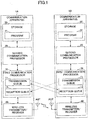
- FIG. 1 is a diagram illustrating example configurations of communication apparatuses (1A and 1B) according to an embodiment of the present invention.
- a communication apparatus 1A and a communication apparatus 1B wirelessly communicate with each other in accordance with a BT communication protocol.
- each of the communication apparatus 1A and the communication apparatus 1B includes a first communication processor 10, a second communication processor 20, a storage 30, a wireless transmitter/receiver 40, and an antenna ANT.
- the communication apparatus 1A and the communication apparatus 1B may be, if not distinguished, referred to as "communication apparatuses 1". Further, when viewed from one communication apparatus 1, the other communication apparatus 1" may be referred to as a "counterpart apparatus.”
- FIG. 2 is a diagram illustrating a hierarchical communication function of each of the communication apparatuses according to the embodiment.
- the BT protocol stack is illustrated.
- layers such as a link manager and a baseband
- layers such as a logical link control and adaptation protocol (L2CAP)
- L2CAP logical link control and adaptation protocol
- the wireless transmitter/receiver 40 communicates over the 2.4 GHz wireless band in accordance with a BT communication scheme. More specifically, the wireless transmitter/receiver 40 performs wireless communication by using frequency-hopping spread spectrum in which frequency hopping is performed for each slot (for every 625 ⁇ seconds).
- the first communication processor 10 performs communication processes in the first layer.
- the processes performed in the first layer include a packet retransmission process, a transmission power control process, a received signal strength obtaining process, a disconnection process, and an operation mode switching process.
- the packet retransmission process is a process for requesting, when a packet error is detected in a receiving-side communication apparatus 1, retransmission of the same packet from the receiving-side communication apparatus 1 to a transmitting-side communication apparatus 1, and retransmitting the packet in response to the request from the transmitting-side communication apparatus 1.
- "NAK" is set as a value of "ARQN” in a packet returned to the transmitting-side communication apparatus 1.
- the value of ARQN in the packet is "NAK"
- the same packet is retransmitted from the transmitting-side communication apparatus 1.
- the transmission power control process is a process for requesting a change in transmission power from the receiving-side communication apparatus 1 to the transmitting-side communication apparatus 1 (hereinafter may be described as "from the receiving-side communication apparatus" to a counterpart apparatus), such that received signal strength at the receiving-side communication apparatus 1 falls within a target range, and changing the transmission power at the transmitting-side communication apparatus 1 (hereinafter may be referring to as a counterpart apparatus) in response to the request. More specifically, in order to increase the transmission power, an "LMP_incr_power_req" command is transmitted from the receiving-side communication apparatus 1 to the transmitting-side communication apparatus 1. Upon receiving the command, the transmitting-side communication apparatus 1 responds by increasing the transmission power by a predetermined level.
- an "LMP_decr_power_req" command is transmitted from the receiving-side communication apparatus 1 to the transmitting-side communication apparatus 1.
- the transmitting-side communication apparatus 1 responds by decreasing the transmission power by a predetermined level.
- the received signal strength obtaining process is a process for obtaining the current received signal strength in response to a command (a first command) from the second layer, which is the higher layer, and indicating the obtained received signal strength to the higher layer.
- a command a first command
- received signal strength is obtained.
- the disconnection process is a process for terminating the connection with a connected counterpart apparatus, in response to a command (a second command) from the second layer. More specifically, HCI_Disconnect is the second command that is transmitted from the higher layer, and when HCI_Disconnect is transmitted, an "LMP_detach" command is transmitted from the first layer to the connected counterpart apparatus. Then, the connection with the connected counterpart apparatus is terminated.
- the operation mode switching process is a process for switching operation modes of communication frequency in response to a command from the higher layer.
- the operation modes to be switched in the operation mode switching process include a normal mode that does not limit communication frequency and a power saving mode that limits communication frequency to suppress power consumption.
- the operation modes are controlled by the higher layer.
- the first communication processor 10 includes a transmission queue 11 that stores packets waiting to be transmitted, and a reception queue 12 that stores packets waiting to be received. Packets stored in a corresponding queue are processed in order of input into the queue.
- the second communication processor 20 performs a communication process in the second layer that is higher than the first layer.
- the second communication processor 20 includes a computer (such as a microprocessor) that executes an instruction based on a program 31 stored in the storage 30.
- the second communication processor 20 may cause the computer to perform all the processes, or may cause a dedicated logic circuit to perform at least some of the processes.
- the second communication processor 20 of the communication apparatus 1 monitors a notification to be sent from the first layer to the second layer while being connected to the counterpart apparatus, and measures the period of time during which the notification (hereinafter may be referred to as a "monitoring target notification") is not output from the first communication processor 10 in normal mode.
- a monitoring target notification measures the period of time during which the notification (hereinafter may be referred to as a "monitoring target notification") is not output from the first communication processor 10 in normal mode.
- the second communication processor 20 performs a received signal strength checking process at intervals of a second duration T2 (at intervals of five seconds, for example) repeatedly N times (five times, for example).
- the second communication processor 20 inputs the first command (HCI_RSSI) into the first communication processor 10, and compares, to a threshold Sth, received signal strength obtained by the first communication processor 10 in response to the first command.
- the second communication processor 20 inputs the second command to terminate the connection with the transmitting-side communication apparatus 1.
- FIG. 3 is a flowchart illustrating a transmission power control process performed by a first communication processor 10 of the receiving-side communication apparatus 1.
- the first communication processor 10 performs the process illustrated in FIG. 3 at predetermined timings (for example, at predetermined time intervals).
- the first communication processor 10 obtains signal strength of the latest packet received from a connected counterpart apparatus (ST100). Then, the first communication processor 10 compares the obtained signal strength to a predetermined minimum value Smin and to a predetermined maximum value Smax (ST105 and ST110). When the received signal strength is less than the minimum value Smin (yes in ST105), the first communication processor 10 transmits the "LMP_incr_power_req” command for requesting an increase in transmission power to the connected counterpart apparatus (ST115). Conversely, when the received signal strength is greater than the maximum value Smax (yes in ST110), the first communication processor 10 transmits the "LMP_decr_power_req" command for requesting a decrease in transmission power to the connected counterpart apparatus (ST120).
- FIG. 4 and FIG. 5 are flowcharts illustrating a transmission power control process performed by a first communication processor 10 of the transmitting-side communication apparatus 1.
- the first communication processor 10 performs the process illustrated in FIG. 4 and FIG. 5 at predetermined timings (for example, at predetermined time intervals).
- the first communication processor 10 determines whether the "LMP_incr_power_req" command for requesting an increase in transmission power is included in the received packet (ST205). If the "LMP_incr_power_req" command is included in the received packet (yes in ST205), the first communication processor 10 further determines whether the current transmission power level has reached the predetermined maximum value (ST210). If the current transmission power level is less than the maximum value (no in ST210), the first communication processor 10 increases the transmission power level by a predetermined level (ST215), and transmits an acknowledgement of the request for an increase in transmission power to the connected counterpart apparatus (ST220). If the current transmission power level has reached the maximum value (yes in ST210), the first communication processor 10 transmits a negative acknowledgement of the request for an increase in transmission power to the connected counterpart apparatus (ST225).
- the first communication processor 10 determines whether the "LMP_decr_power_req" command for requesting a decrease in transmission power is included in the received packet (ST230). If the "LMP_decr_power_req" command is included in the received packet (yes in ST230), the first communication processor 10 further determines whether the current transmission power level has reached the predetermined minimum value (ST235). If the current transmission power level is larger than the maximum value (no in ST235), the first communication processor 10 decreases the transmission power level by a predetermined level (ST240), and transmits an acknowledgement of the request for a decrease in transmission power to the connected counterpart apparatus (ST245). If the current transmission power level has reached the minimum value (yes in ST235), the first communication processor 10 transmits a negative acknowledgement of the request for a decrease in transmission power to the connected counterpart apparatus (ST250)
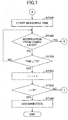
- FIG. 6 and FIG. 7 are flowcharts illustrating a disconnection process performed by a second communication processor 20 of the receiving-side communication apparatus 1.
- the second communication processor 20 performs the process illustrated in FIG. 6 and FIG. 7 when there is a connected counterpart apparatus.
- the second communication processor 20 When the current operation mode is the power saving mode (yes in ST300), the second communication processor 20 starts measuring a period of time (ST305), and monitors the output of the first communication processor 10 until the period of time elapsing from step ST305 reaches the first duration T1 (ST310 and ST315). When the first communication processor 10 outputs the monitoring target notification (yes in ST310), the second communication processor 20 returns to step ST300 and repeats the above-described steps.
- the second communication processor 20 When the period of time elapsing from step ST305 has reached the first duration T1 without the monitoring target notification being output (yes in ST315), the second communication processor 20 resets a value of variable i, indicating the number of times received signal strength is obtained, to "0" (ST320). Then, the second communication processor 20 inputs the first command (HCI_RSSI) for requesting the first communication processor 10 to obtain received signal strength into the first communication processor 10, and obtains the received signal strength from the first communication processor 10 (ST325). The second communication processor 20 compares the received signal strength obtained from the first communication processor 10 to the threshold Sth (ST330). If the received signal strength has reached the threshold Sth (no in ST330), the second communication processor 20 returns to ST300, and repeats the above-described steps.
- HCI_RSSI first command
- the second communication processor 20 If the received signal strength is below the threshold Sth (yes in ST330), the second communication processor 20 starts measuring a period of time again (ST340). The second communication processor 20 monitors the output of the first communication processor 10 until the period of time elapsing from step ST340 reaches the second duration T2 (ST345 and ST350). If the monitoring target notification is output from the first communication processor 10 (yes in ST345), the second communication processor 20 returns to step ST320, resets the variable i to "0", and repeats the steps as of ST325.
- step ST340 When the time elapsing from step ST340 has reached the second duration T2 without the monitoring target notification being output (yes in ST350), the second communication processor 20 adds "1" to the variable i (ST355) . If the variable i to which "1" has been added, does not reach N (no in ST360), the second communication processor 20 returns to step ST325, and repeats the steps as of step ST325.
- the monitoring target notification to be sent from the first layer to the second layer is not output.
- the second communication processor 20 performs the received signal strength checking process (ST325 and ST360) N times at intervals of the second duration T2.
- the first command is input into the first communication processor 10.
- received signal strength obtained by the first communication processor 10 is compared to the threshold Sth.
- the monitoring target notification is output from the first communication processor 10 in the predetermined period of time that includes the period of time in which the received signal strength checking process is repeated N times, there is a high possibility that a situation in which a packet is repeatedly retransmitted is eliminated ( FIGS. 3 through 5 ). Thus, the connection with the counterpart apparatus is maintained in this case as well.
- the received signal strength is below the threshold Sth in the received signal strength checking process repeated N times, and also the monitoring target notification is not output from the first communication processor 10 in at least the predetermined period of time that includes the period of time in which the received signal strength checking process is repeated N times, there is a high possibility that the packet retransmission process is in an infinite loop.
- the second command is input into the first communication processor 10, thereby terminating the connection with the counterpart apparatus. Accordingly, the process performed in the second layer, which is higher than the first layer, eliminates a situation in which a packet is repeatedly retransmitted. Thus, an undesirable condition such as requiring turning the power on again can be avoided.
- the operation mode is the power saving mode
- the connection with the counterpart apparatus is not terminated even when the monitoring target notification is not continuously output. Therefore, while avoiding repeated retransmission of a packet in normal mode, it is possible to stably maintain the power saving mode in which the output of the monitoring target notification becomes infrequent.
- FIG. 8 is a flowchart illustrating a variation of the disconnection process, in which step ST335 is added between steps ST330 and ST340 of the flowchart illustrated in FIG. 7 .
- the received signal strength is compared with the threshold Sth.
- the second communication processor 20 inputs, into the first communication processor 10, a predetermined command for requesting a connected counterpart apparatus to increase transmission power in ST335.
- the first communication processor 10 transmits the LMP_incr_power_req" command to the connected counterpart apparatus. If the received signal strength is below the threshold Sth, the transmission power of the counterpart apparatus is increased in this variation as well. Accordingly, when it is verified that the received signal strength has reached the threshold Sth in the received signal strength checking process, it is assumed that the transmission power control process is functioning effectively. Thus, the connection with the counterpart apparatus is maintained.
- a communication apparatus that communicates with a counterpart apparatus in accordance with a hierarchical communication protocol that includes a first layer and a second layer higher than the first layer is provided.
- the communication apparatus may include a first communication processor configured to perform processes in the first layer, and a second communication processor configured to perform a process in the second layer.
- the processes performed in the first layer may include a packet retransmission process for, when an error in a packet is detected in the communication apparatus on a receiving side, sending a request to retransmit the same packet from the communication apparatus on the receiving side to the counterpart apparatus on a transmitting side, and retransmitting the same packet from the counterpart apparatus on the transmitting side in response to the request, a received signal strength obtaining process for obtaining received signal strength in response to a first command from the second layer, and a disconnection process for terminating connection with the counterpart apparatus in response to a second command from the second layer.
- the second communication processor may be configured to measure a period of time during which a notification, to be sent from the first layer to the second layer while the communication apparatus is connected to the counterpart apparatus, is not output from the first communication processor; repeat a received signal strength checking process a plurality of times at intervals of a second duration in a case where the measured period of time has reached a first duration; in the received signal strength checking process repeated the plurality of times, input the first command into the first communication processor, and compare, to a threshold, received signal strength that is obtained by the first communication processor in response to the first command; and input the second command into the first communication processor, in a case where the received signal strength is below the threshold in the received signal strength checking process repeated the plurality of times, and where the notification is not sent from the first communication processor in at least a predetermined period of time that includes a period of time during which the received signal strength checking process is repeated the plurality of times.
- the notification which is to be sent from the first layer to the second layer while the communication apparatus is connected to the counterpart apparatus, is not output from the first communication processor.
- a received signal strength checking process is repeated the plurality of times at intervals of the second duration.
- the first command is input into the first communication processor, and the received signal strength, which is obtained by the first communication processor in response to the first command, is compared to the threshold.
- the notification is sent from the first communication processor in at least the predetermined period of time that includes the period of time during which the received signal strength checking process is repeated the plurality of times, there is a high possibility that a situation in which the packet is repeatedly retransmitted is eliminated.
- the connection with the counterpart apparatus is maintained in this case as well.
- the process performed in the second layer autonomously eliminates a situation in which a packet is repeatedly retransmitted.
- the processes performed in the first layer may include a transmission power control process for sending a request for a change in transmission power from the communication apparatus on the receiving side to the counterpart apparatus on the transmitting side, such that the received signal strength at the communication apparatus on the receiving side falls within a target range, and changing the transmission power of the counterpart apparatus on the transmitting side in response to the request.
- a transmission power control process for sending a request for a change in transmission power from the communication apparatus on the receiving side to the counterpart apparatus on the transmitting side, such that the received signal strength at the communication apparatus on the receiving side falls within a target range, and changing the transmission power of the counterpart apparatus on the transmitting side in response to the request.
- the transmission power of the counterpart apparatus is changed in the first layer such that received signal strength falls within the target range.
- the transmission power control process is functioning effectively.
- An effectively functioning transmission power control process makes it easier to eliminate a situation in which a packet is repeatedly retransmitted.
- the processes performed in the first layer may include a transmission power control process for sending a request for an increase in transmission power from the communication apparatus on the receiving side to the counterpart apparatus on the transmitting side in response to a third command.
- the second communication processor is configured to, in the received signal strength checking process repeated the plurality of times, input the first command into the first communication processor, make a comparison between the threshold and received signal strength that is obtained by the first communication processor in response to the first command, and input the third command into the first communication processor in a case where the received signal strength is below the threshold based on the comparison.
- the first command is input into the first communication processor, and received signal strength that is obtained by the first communication processor in response to the first command is compared to the threshold. Based on the comparison, the third command is input into the first communication processor in a case where the received signal strength is below the threshold.
- the received signal strength has reached the threshold while the received signal strength checking process is repeated the plurality of times, it is assumed that control of the transmission power of the counterpart apparatus in accordance with the third command is functioning effectively.
- the connection with the counterpart apparatus is maintained.
- the processes performed in the first layer may include an operation mode switching process for switching operation modes of communication frequency between a normal mode that does not limit the communication frequency and a power saving mode that limits the communication frequency.
- the period of time measured by the second communication processor includes a continuous period of time during which the notification is not output from the first communication processor and the operation mode is the normal mode.
- the connection with the counterpart apparatus is not terminated even if the notification is not continuously output from the first communication processor.
- a communication processing method for performing a process in the second layer by a computer, in a communication apparatus that communicates with a counterpart apparatus in accordance with a hierarchical communication protocol that may include a first layer and a second layer higher than the first layer.
- the communication apparatus includes a communication processor configured to perform processes in the first layer.
- the processes performed in the first layer may include a packet retransmission process for, when an error in a packet is detected in the communication apparatus on a receiving side, sending a request to retransmit the same packet from the communication apparatus on the receiving side to the counterpart apparatus on a transmitting side, and retransmitting the same packet from the counterpart apparatus on the transmitting side in response to the request, a received signal strength obtaining process for obtaining received signal strength in response to a first command from the second layer, and a disconnection process for terminating connection with the counterpart apparatus in response to a second command from the second layer.
- the communication processing method may include measuring a continuous period of time during which a notification, to be sent from the first layer to the second layer while the communication apparatus is connected to the counterpart apparatus, is not output from the first communication processor, and repeating a received signal strength checking process a plurality of times at intervals of a second duration in a case where the measured period of time has reached a first duration.
- the communication processing method may include, in the received signal strength checking process repeated the plurality of times, inputting the first command into the first communication processor, and comparing, to a threshold, received signal strength that is obtained by the first communication processor in response to the first command, and inputting the second command into the first communication processor, in a case where the received signal strength is below the threshold in the received signal strength checking process repeated the plurality of times, and where the notification is not sent from the first communication processor in at least a predetermined period of time that includes a period of time during which the received signal strength checking process is repeated the plurality of times.
- the processes performed in the first layer may include a transmission power control process for sending a request for a change in transmission power from the communication apparatus on the receiving side to the counterpart apparatus on the transmitting side, such that received signal strength on the receiving side falls within a target range, and changing the transmission power on the transmitting side in response to the request.
- a transmission power control process for sending a request for a change in transmission power from the communication apparatus on the receiving side to the counterpart apparatus on the transmitting side, such that received signal strength on the receiving side falls within a target range, and changing the transmission power on the transmitting side in response to the request.
- the processes performed in the first layer may include a transmission power control process for sending a request for an increase in transmission power from the communication apparatus on the receiving side to the counterpart apparatus on the transmitting side in response to a third command.
- the second communication processor is configured to, in the received signal strength checking process repeated the plurality of times, input the first command into the first communication processor, make a comparison between the threshold and received signal strength that is obtained by the first communication processor in response to the first command, and input the third command into the first communication processor in a case where the received signal strength is below the threshold based on the comparison.
- the processes performed in the first layer may include an operation mode switching process for switching operation modes of communication frequency between a normal mode that does not limit the communication frequency and a power saving mode that limits the communication frequency.
- the measuring of the period of time includes measuring a period of time during which the notification is not output from the first communication processor and the operation mode is the normal mode.
- a non-transitory recording medium storing a program for causing the computer to execute the communication processing method according to the second aspect is provided.
Landscapes
- Engineering & Computer Science (AREA)
- Signal Processing (AREA)
- Computer Networks & Wireless Communication (AREA)
- Quality & Reliability (AREA)
- Physics & Mathematics (AREA)
- Electromagnetism (AREA)
- Mobile Radio Communication Systems (AREA)
- Telephone Function (AREA)
- Communication Control (AREA)
Abstract
Description
- This application is a continuation of International Application No.
PCT/JP2017/038395 filed on October 24, 2017 2016-222474 filed on November 15, 2016 - The disclosures herein generally relate to a communication apparatus that performs communication in accordance with a hierarchical communication protocol, and specifically relate to a communication apparatus that performs communication via Bluetooth (registered trademark).
- Conventionally, in wireless communication, various measures have been taken to overcome communication failures such as interference with external radio waves and deterioration in propagation of radio waves. For example, in a data communication apparatus described in
Patent Document 1 below, when a communication path status determining means determines that a communication failure has occurred, transmission power is increased. In addition, in a communication terminal described inPatent Document 2 below, a packet is retransmitted when an acknowledgment package has not been received, and retransmission of the packet is stopped when the number of times of retransmission reaches the upper limit. -
- [PATENT DOCUMENT 1] Japanese Laid-open Patent Publication No.
2007-13538 - [PATENT DOCUMENT 2] Japanese Laid-open Patent Publication No.
2015-19230 - In Bluetooth (hereinafter may be abbreviated to "BT"), there are two packet communication links: a circuit-switched synchronous connection-oriented (SCO) link and a storage-switched asynchronous connectionless (ACL) link. The SCO is used to transmit data that requires immediacy (such as voice data during a call) and the ACL is used to transmit data (such as music data during playback) that requires no information to be missing. An ACL packet is retransmitted when no acknowledgment has been received from a counterpart apparatus due to a communication failure or other failures. If no acknowledgment is received for a certain period of time after the packet is retransmitted, the connection with the counterpart apparatus is automatically terminated.
- Conversely, even if a packet itself can be received, data in the packet may be partially corrupted. In BT, a packet error is detected in the Link Manager, which is a layer below the Host Controller Interface (HCI). When a packet error is detected in the Link Manager, "NAK" indicating a negative acknowledgement is set as a value of "automatic repeat request number (ARQN)" in the header of the packet returned to a transmitter. If the value of "ARQN" is "NAK", the transmitter retransmits the same packet.
- If an error is again detected in the retransmitted packet, a packet "ARQN" = "NAK" is returned to the transmitter, and the same packet is retransmitted again. Namely, as long as a packet error is detected in the transmitter, the same packet is endlessly retransmitted from the transmitter (hereinafter referred to as an "infinite loop"). In a protocol having an error correction function using frame retransmission, when a packet fails to be transmitted successfully, a pointer of a transmission queue does not move to the next address. Thus, when a packet is repeatedly retransmitted, the packet remains in the queue, preventing subsequent packets from being transmitted. As a result, the transmitter cannot accept a command and cannot send a request for disconnection. In addition, the state of a packet retransmission process performed in the Link Manager is not indicated to a higher layer according to the BT specification. Therefore, the higher layer cannot determine whether the packet retransmission process is in the above-described infinite loop based on a notification from the Link Manager. Accordingly, in the event of an infinite loop, a packet cannot be transmitted or received unless the user forcibly performs an operation such as turning the power on again, and such an undesirable condition cannot be autonomously avoided.
- In order to solve the above-described problem, it is conceived that a process for automatically detecting an infinite loop and terminating the connection is performed in the lower layer (Link Manager). However, because lower layer processes are generally performed in dedicated hardware, it is difficult to perform additional processes that are not included in the basic BT specification in the lower layer.
- It is an object of the present invention to provide a communication apparatus, a communication processing method, and a recording medium, in which a process performed in a higher layer can eliminate endlessly repeated packet retransmission in a lower layer.
- According to at least one embodiment, a communication apparatus that communicates with a counterpart apparatus in accordance with a hierarchical communication protocol including a first layer and a second layer higher than the first layer is provided. The communication apparatus includes a first communication processor configured to perform processes in the first layer, and a second communication processor configured to perform a process in the second layer. The processes performed in the first layer include a packet retransmission process for, when an error in a packet is detected in the communication apparatus on a receiving side, sending a request to retransmit the same packet from the communication apparatus on the receiving side to the counterpart apparatus on a transmitting side, and to retransmit the same packet from the counterpart apparatus on the transmitting side in response to the request, a received signal strength obtaining process to obtain the received signal strength in response to a first command from the second layer, and a disconnection process to terminate the connection with the counterpart apparatus in response to a second command from the second layer. The second communication processor is configured to measure a continuous period of time during which a notification, to be sent from the first layer to the second layer while the communication apparatus is connected to the counterpart apparatus, is not output from the first communication processor; repeat a received signal strength checking process a plurality of times at intervals of a second duration in a case where the measured period of time has reached a first duration; and input the second command into the first communication processor, in a case where the received signal strength is below the threshold in the received signal strength checking process repeated the plurality of times, and where the notification is not sent from the first communication processor in at least a predetermined period of time that includes a period of time during which the received signal strength checking process is repeated the plurality of times, wherein, in the received signal strength checking process repeated the plurality of times, the first command is input into the first communication processor, and is compared, to a threshold, received signal strength that is obtained by the first communication processor in response to the first command.
- According to at least one embodiment, there is provided a communication processing method for performing a process in the second layer by a computer, in a communication apparatus that communicates with a counterpart apparatus in accordance with a hierarchical communication protocol that includes a first layer and a second layer higher than the first layer. The communication apparatus includes a communication processing unit configured to perform processes in the first layer. The processes performed in the first layer include a packet retransmission process for, when an error in a packet is detected in the communication apparatus on a receiving side, sending a request to retransmit the same packet from the communication apparatus on the receiving side to the counterpart apparatus on a transmitting side, and retransmitting the same packet from the counterpart apparatus on the transmitting side in response to the request, a received signal strength obtaining process for obtaining received signal strength in response to a first command from the second layer, and a disconnection process for terminating connection with the counterpart apparatus in response to a second command from the second layer. The communication processing method includes measuring a continuous period of time during which a notification, to be sent from the first layer to the second layer while the communication apparatus is connected to the counterpart apparatus, is not output from the first communication processor; repeating a received signal strength checking process a plurality of times at intervals of a second duration in a case where the measured period of time reached a first duration; in the received signal strength checking process repeated the plurality of times, inputting the first command into the first communication processor, and comparing, to a threshold, received signal strength that is obtained by the first communication processor in response to the first command; and inputting the second command into the first communication processor, in a case where the received signal strength is below the threshold in the received signal strength checking process repeated the plurality of times, and where the notification is not sent from the first communication processor in at least a predetermined period of time that includes a period of time during which the received signal strength checking process is repeated the plurality of times.
- Other objects and further features of the present invention will be apparent from the following detailed description when read in conjunction with the accompanying drawings.
-
-
FIG. 1 is a diagram illustrating example configurations of communication apparatuses according to an embodiment of the present invention; -
FIG. 2 is a diagram illustrating a hierarchical communication function of each of the communication apparatuses according to the embodiment; -
FIG. 3 is a flowchart illustrating a transmission power control process performed by a first communication processor of a receiving-side communication apparatus; -
FIG. 4 is a first flowchart illustrating a transmission power control process performed by a first communication processor of a transmitting-side communication apparatus; -
FIG. 5 is a second flowchart illustrating the transmission power control process performed by the first communication processor of the transmitting-side communication apparatus; -
FIG. 6 is a first flowchart illustrating a disconnection process performed by a second communication processor of the receiving-side communication apparatus; -
FIG. 7 is a second flowchart illustrating the disconnection process performed by the second communication processor of the receiving-si.de communication apparatus; and -
FIG. 8 is a flowchart illustrating a variation of the disconnection process performed by the second communication processor of the receiving-side communication apparatus. - According to one embodiment, a process performed in a higher layer of a hierarchical communication protocol eliminates a situation in which retransmission of a packet is endlessly repeated in a lower layer.
- In the following, embodiments of the present invention will be described with reference to the accompanying drawings.
FIG. 1 is a diagram illustrating example configurations of communication apparatuses (1A and 1B) according to an embodiment of the present invention. In the present embodiment, acommunication apparatus 1A and acommunication apparatus 1B wirelessly communicate with each other in accordance with a BT communication protocol. As illustrated inFIG. 1 , each of thecommunication apparatus 1A and thecommunication apparatus 1B includes afirst communication processor 10, asecond communication processor 20, astorage 30, a wireless transmitter/receiver 40, and an antenna ANT. In the following description, thecommunication apparatus 1A and thecommunication apparatus 1B may be, if not distinguished, referred to as "communication apparatuses 1". Further, when viewed from onecommunication apparatus 1, theother communication apparatus 1" may be referred to as a "counterpart apparatus." -
FIG. 2 is a diagram illustrating a hierarchical communication function of each of the communication apparatuses according to the embodiment. InFIG. 2 , the BT protocol stack is illustrated. In the following description, layers (such as a link manager and a baseband) lower than the Host Controller Interface (HCI) are referred to as a "first layer", and layers (such as a logical link control and adaptation protocol (L2CAP)) higher than the HCI are referred to as a "second layer". - The wireless transmitter/
receiver 40 communicates over the 2.4 GHz wireless band in accordance with a BT communication scheme. More specifically, the wireless transmitter/receiver 40 performs wireless communication by using frequency-hopping spread spectrum in which frequency hopping is performed for each slot (for every 625 µ seconds). - In the BT communication protocol, the
first communication processor 10 performs communication processes in the first layer. In the present embodiment, the processes performed in the first layer include a packet retransmission process, a transmission power control process, a received signal strength obtaining process, a disconnection process, and an operation mode switching process. - The packet retransmission process is a process for requesting, when a packet error is detected in a receiving-
side communication apparatus 1, retransmission of the same packet from the receiving-side communication apparatus 1 to a transmitting-side communication apparatus 1, and retransmitting the packet in response to the request from the transmitting-side communication apparatus 1. To be more specific, when a packet error is detected in the receiving-side communication apparatus 1, "NAK" is set as a value of "ARQN" in a packet returned to the transmitting-side communication apparatus 1. When the value of ARQN in the packet is "NAK", the same packet is retransmitted from the transmitting-side communication apparatus 1. - The transmission power control process is a process for requesting a change in transmission power from the receiving-
side communication apparatus 1 to the transmitting-side communication apparatus 1 (hereinafter may be described as "from the receiving-side communication apparatus" to a counterpart apparatus), such that received signal strength at the receiving-side communication apparatus 1 falls within a target range, and changing the transmission power at the transmitting-side communication apparatus 1 (hereinafter may be referring to as a counterpart apparatus) in response to the request. More specifically, in order to increase the transmission power, an "LMP_incr_power_req" command is transmitted from the receiving-side communication apparatus 1 to the transmitting-side communication apparatus 1. Upon receiving the command, the transmitting-side communication apparatus 1 responds by increasing the transmission power by a predetermined level. In order to decrease the transmission power, an "LMP_decr_power_req" command is transmitted from the receiving-side communication apparatus 1 to the transmitting-side communication apparatus 1. Upon receiving the command, the transmitting-side communication apparatus 1 responds by decreasing the transmission power by a predetermined level. - The received signal strength obtaining process is a process for obtaining the current received signal strength in response to a command (a first command) from the second layer, which is the higher layer, and indicating the obtained received signal strength to the higher layer. To be more specific, when "HCI_RSSI" that is the first command is transmitted from the higher layer, received signal strength is obtained.
- The disconnection process is a process for terminating the connection with a connected counterpart apparatus, in response to a command (a second command) from the second layer. More specifically, HCI_Disconnect is the second command that is transmitted from the higher layer, and when HCI_Disconnect is transmitted, an "LMP_detach" command is transmitted from the first layer to the connected counterpart apparatus. Then, the connection with the connected counterpart apparatus is terminated.
- The operation mode switching process is a process for switching operation modes of communication frequency in response to a command from the higher layer. The operation modes to be switched in the operation mode switching process include a normal mode that does not limit communication frequency and a power saving mode that limits communication frequency to suppress power consumption. The operation modes are controlled by the higher layer.
- As illustrated in
FIG. 1 , thefirst communication processor 10 includes atransmission queue 11 that stores packets waiting to be transmitted, and areception queue 12 that stores packets waiting to be received. Packets stored in a corresponding queue are processed in order of input into the queue. - The
second communication processor 20 performs a communication process in the second layer that is higher than the first layer. Thesecond communication processor 20 includes a computer (such as a microprocessor) that executes an instruction based on aprogram 31 stored in thestorage 30. Thesecond communication processor 20 may cause the computer to perform all the processes, or may cause a dedicated logic circuit to perform at least some of the processes. - The
second communication processor 20 of thecommunication apparatus 1 monitors a notification to be sent from the first layer to the second layer while being connected to the counterpart apparatus, and measures the period of time during which the notification (hereinafter may be referred to as a "monitoring target notification") is not output from thefirst communication processor 10 in normal mode. When the measured period of time has reached a first duration T1 (5 seconds, for example), thesecond communication processor 20 performs a received signal strength checking process at intervals of a second duration T2 (at intervals of five seconds, for example) repeatedly N times (five times, for example). In the received signal strength checking process repeated N times, thesecond communication processor 20 inputs the first command (HCI_RSSI) into thefirst communication processor 10, and compares, to a threshold Sth, received signal strength obtained by thefirst communication processor 10 in response to the first command. In the received signal strength checking process repeated N times, if the received signal strength does not reach the threshold Sth and the monitoring target notification is not output from thefirst communication processor 10 in at least a predetermined period of time that includes a period of time in which the received signal strength checking process is repeated N times (for example, T2 × N or more), thesecond communication processor 20 inputs the second command to terminate the connection with the transmitting-side communication apparatus 1. When thefirst communication processor 10 receives the second command, "LMP_detach" is input into thetransmission queue 11, and "LMP_detach" is transmitted to thereception queue 12 of the receiving-side communication apparatus 1. - Operations of the
communication apparatuses 1 with the above-described configuration according to the embodiment will be described with reference to flowcharts illustrated inFIGS. 3 through 7 . -
FIG. 3 is a flowchart illustrating a transmission power control process performed by afirst communication processor 10 of the receiving-side communication apparatus 1. Thefirst communication processor 10 performs the process illustrated inFIG. 3 at predetermined timings (for example, at predetermined time intervals). - The
first communication processor 10 obtains signal strength of the latest packet received from a connected counterpart apparatus (ST100). Then, thefirst communication processor 10 compares the obtained signal strength to a predetermined minimum value Smin and to a predetermined maximum value Smax (ST105 and ST110). When the received signal strength is less than the minimum value Smin (yes in ST105), thefirst communication processor 10 transmits the "LMP_incr_power_req" command for requesting an increase in transmission power to the connected counterpart apparatus (ST115). Conversely, when the received signal strength is greater than the maximum value Smax (yes in ST110), thefirst communication processor 10 transmits the "LMP_decr_power_req" command for requesting a decrease in transmission power to the connected counterpart apparatus (ST120). -
FIG. 4 andFIG. 5 are flowcharts illustrating a transmission power control process performed by afirst communication processor 10 of the transmitting-side communication apparatus 1. Thefirst communication processor 10 performs the process illustrated inFIG. 4 andFIG. 5 at predetermined timings (for example, at predetermined time intervals). - When the
first communication processor 10 receives a packet from a connected counterpart apparatus (yes in ST200), thefirst communication processor 10 determines whether the "LMP_incr_power_req" command for requesting an increase in transmission power is included in the received packet (ST205). If the "LMP_incr_power_req" command is included in the received packet (yes in ST205), thefirst communication processor 10 further determines whether the current transmission power level has reached the predetermined maximum value (ST210). If the current transmission power level is less than the maximum value (no in ST210), thefirst communication processor 10 increases the transmission power level by a predetermined level (ST215), and transmits an acknowledgement of the request for an increase in transmission power to the connected counterpart apparatus (ST220). If the current transmission power level has reached the maximum value (yes in ST210), thefirst communication processor 10 transmits a negative acknowledgement of the request for an increase in transmission power to the connected counterpart apparatus (ST225). - Further, when the
first communication processor 10 receives the packet from the connected counterpart apparatus (yes in ST200), thefirst communication processor 10 determines whether the "LMP_decr_power_req" command for requesting a decrease in transmission power is included in the received packet (ST230). If the "LMP_decr_power_req" command is included in the received packet (yes in ST230), thefirst communication processor 10 further determines whether the current transmission power level has reached the predetermined minimum value (ST235). If the current transmission power level is larger than the maximum value (no in ST235), thefirst communication processor 10 decreases the transmission power level by a predetermined level (ST240), and transmits an acknowledgement of the request for a decrease in transmission power to the connected counterpart apparatus (ST245). If the current transmission power level has reached the minimum value (yes in ST235), thefirst communication processor 10 transmits a negative acknowledgement of the request for a decrease in transmission power to the connected counterpart apparatus (ST250) -
FIG. 6 andFIG. 7 are flowcharts illustrating a disconnection process performed by asecond communication processor 20 of the receiving-side communication apparatus 1. Thesecond communication processor 20 performs the process illustrated inFIG. 6 andFIG. 7 when there is a connected counterpart apparatus. - When the current operation mode is the power saving mode (yes in ST300), the
second communication processor 20 starts measuring a period of time (ST305), and monitors the output of thefirst communication processor 10 until the period of time elapsing from step ST305 reaches the first duration T1 (ST310 and ST315). When thefirst communication processor 10 outputs the monitoring target notification (yes in ST310), thesecond communication processor 20 returns to step ST300 and repeats the above-described steps. - When the period of time elapsing from step ST305 has reached the first duration T1 without the monitoring target notification being output (yes in ST315), the
second communication processor 20 resets a value of variable i, indicating the number of times received signal strength is obtained, to "0" (ST320). Then, thesecond communication processor 20 inputs the first command (HCI_RSSI) for requesting thefirst communication processor 10 to obtain received signal strength into thefirst communication processor 10, and obtains the received signal strength from the first communication processor 10 (ST325). Thesecond communication processor 20 compares the received signal strength obtained from thefirst communication processor 10 to the threshold Sth (ST330). If the received signal strength has reached the threshold Sth (no in ST330), thesecond communication processor 20 returns to ST300, and repeats the above-described steps. - If the received signal strength is below the threshold Sth (yes in ST330), the
second communication processor 20 starts measuring a period of time again (ST340). Thesecond communication processor 20 monitors the output of thefirst communication processor 10 until the period of time elapsing from step ST340 reaches the second duration T2 (ST345 and ST350). If the monitoring target notification is output from the first communication processor 10 (yes in ST345), thesecond communication processor 20 returns to step ST320, resets the variable i to "0", and repeats the steps as of ST325. - When the time elapsing from step ST340 has reached the second duration T2 without the monitoring target notification being output (yes in ST350), the
second communication processor 20 adds "1" to the variable i (ST355) . If the variable i to which "1" has been added, does not reach N (no in ST360), thesecond communication processor 20 returns to step ST325, and repeats the steps as of step ST325. - If received signal strength remains below the threshold Sth (yes in ST330) and the monitoring target notification is not output from the first communication processor 10 (no in ST345), the
second communication processor 20 repeats steps ST325 to ST355 N times. If the variable i reaches N after the steps are repeated (yes in ST360), thesecond communication processor 20 inputs the second command to terminate the connection with the counterpart apparatus into the first communication processor 10 (ST365). - As described above, if the same packet is continuously retransmitted in the packet retransmission process in the first layer, the monitoring target notification to be sent from the first layer to the second layer is not output. According to the present embodiment, when a period of time during which the monitoring target notification is not output reaches the first duration T1, the
second communication processor 20 performs the received signal strength checking process (ST325 and ST360) N times at intervals of the second duration T2. - In the received signal strength checking process repeated N times, the first command is input into the
first communication processor 10. In response to the first command, received signal strength obtained by thefirst communication processor 10 is compared to the threshold Sth. - While the received signal strength checking process is repeated N times, transmission power of the transmitting-side apparatus is changed in the first layer such that received signal strength falls within the target range (
FIGS. 3 through 5 ). When it is verified that the received signal strength has reached the threshold Sth in the received signal strength checking process, it is assumed that the transmission power control process is functioning effectively. Thus, the connection with the counterpart apparatus is maintained. - Further, when the monitoring target notification is output from the
first communication processor 10 in the predetermined period of time that includes the period of time in which the received signal strength checking process is repeated N times, there is a high possibility that a situation in which a packet is repeatedly retransmitted is eliminated (FIGS. 3 through 5 ). Thus, the connection with the counterpart apparatus is maintained in this case as well. - Conversely, when the received signal strength is below the threshold Sth in the received signal strength checking process repeated N times, and also the monitoring target notification is not output from the
first communication processor 10 in at least the predetermined period of time that includes the period of time in which the received signal strength checking process is repeated N times, there is a high possibility that the packet retransmission process is in an infinite loop. In this case, in order to eliminate a situation in which a packet is repeatedly retransmitted, the second command is input into thefirst communication processor 10, thereby terminating the connection with the counterpart apparatus. Accordingly, the process performed in the second layer, which is higher than the first layer, eliminates a situation in which a packet is repeatedly retransmitted. Thus, an undesirable condition such as requiring turning the power on again can be avoided. - Further, according to the present embodiment, when the operation mode is the power saving mode, the connection with the counterpart apparatus is not terminated even when the monitoring target notification is not continuously output. Therefore, while avoiding repeated retransmission of a packet in normal mode, it is possible to stably maintain the power saving mode in which the output of the monitoring target notification becomes infrequent.
- Although the embodiment of the present invention has been described above, the present invention is not limited thereto, and various variations may be made.
- In the above-described embodiment, the transmission power control process of the first layer is used to perform the disconnection process of the second layer. However, in other embodiments of the present invention, the disconnection process of the second layer may be performed without using the transmission power control process of the first layer.
FIG. 8 is a flowchart illustrating a variation of the disconnection process, in which step ST335 is added between steps ST330 and ST340 of the flowchart illustrated inFIG. 7 . - In ST330, the received signal strength is compared with the threshold Sth. As a result, if the received signal strength is below the threshold Sth, the
second communication processor 20 inputs, into thefirst communication processor 10, a predetermined command for requesting a connected counterpart apparatus to increase transmission power in ST335. In response to the input of the command from thesecond communication processor 20, thefirst communication processor 10 transmits the LMP_incr_power_req" command to the connected counterpart apparatus. If the received signal strength is below the threshold Sth, the transmission power of the counterpart apparatus is increased in this variation as well. Accordingly, when it is verified that the received signal strength has reached the threshold Sth in the received signal strength checking process, it is assumed that the transmission power control process is functioning effectively. Thus, the connection with the counterpart apparatus is maintained. - Various aspects of the subject-matter described herein may be set out non-exhaustively below.
- A communication apparatus that communicates with a counterpart apparatus in accordance with a hierarchical communication protocol that includes a first layer and a second layer higher than the first layer is provided. The communication apparatus may include a first communication processor configured to perform processes in the first layer, and a second communication processor configured to perform a process in the second layer. The processes performed in the first layer may include a packet retransmission process for, when an error in a packet is detected in the communication apparatus on a receiving side, sending a request to retransmit the same packet from the communication apparatus on the receiving side to the counterpart apparatus on a transmitting side, and retransmitting the same packet from the counterpart apparatus on the transmitting side in response to the request, a received signal strength obtaining process for obtaining received signal strength in response to a first command from the second layer, and a disconnection process for terminating connection with the counterpart apparatus in response to a second command from the second layer. The second communication processor may be configured to measure a period of time during which a notification, to be sent from the first layer to the second layer while the communication apparatus is connected to the counterpart apparatus, is not output from the first communication processor; repeat a received signal strength checking process a plurality of times at intervals of a second duration in a case where the measured period of time has reached a first duration; in the received signal strength checking process repeated the plurality of times, input the first command into the first communication processor, and compare, to a threshold, received signal strength that is obtained by the first communication processor in response to the first command; and input the second command into the first communication processor, in a case where the received signal strength is below the threshold in the received signal strength checking process repeated the plurality of times, and where the notification is not sent from the first communication processor in at least a predetermined period of time that includes a period of time during which the received signal strength checking process is repeated the plurality of times.
- When the same packet is repeatedly retransmitted in the packet retransmission process, the notification, which is to be sent from the first layer to the second layer while the communication apparatus is connected to the counterpart apparatus, is not output from the first communication processor. According to the communication apparatus with the above configuration, when the period of time during which the notification is not output reaches the first duration, a received signal strength checking process is repeated the plurality of times at intervals of the second duration.
- In the received signal strength checking process repeated the plurality of times, the first command is input into the first communication processor, and the received signal strength, which is obtained by the first communication processor in response to the first command, is compared to the threshold.
- If it is determined that the received signal strength has reached the threshold in the received signal strength checking process repeated the plurality of times, the connection with the counterpart apparatus is maintained.
- In addition, when the notification is sent from the first communication processor in at least the predetermined period of time that includes the period of time during which the received signal strength checking process is repeated the plurality of times, there is a high possibility that a situation in which the packet is repeatedly retransmitted is eliminated. Thus, the connection with the counterpart apparatus is maintained in this case as well.
- When the received signal strength is below the threshold in the received signal strength checking process repeated the plurality of times, and also the monitoring target notification is not output from the
first communication processor 10 in at least the predetermined period of time that includes the period of time in which the received signal strength checking process is repeated the plurality of times, the second command is input into the first communication processor, thereby terminating the connection with the counterpart apparatus. Accordingly, the process performed in the second layer autonomously eliminates a situation in which a packet is repeatedly retransmitted. - Preferably, the processes performed in the first layer may include a transmission power control process for sending a request for a change in transmission power from the communication apparatus on the receiving side to the counterpart apparatus on the transmitting side, such that the received signal strength at the communication apparatus on the receiving side falls within a target range, and changing the transmission power of the counterpart apparatus on the transmitting side in response to the request.
- According to the above configuration, while the received signal strength checking process is repeated the plurality of times, the transmission power of the counterpart apparatus is changed in the first layer such that received signal strength falls within the target range. In a case where the received signal strength has reached the threshold while the received signal strength checking process is repeated the plurality of times, it is assumed that the transmission power control process is functioning effectively. Thus, the connection with the counterpart apparatus is maintained. An effectively functioning transmission power control process makes it easier to eliminate a situation in which a packet is repeatedly retransmitted.
- Preferably, the processes performed in the first layer may include a transmission power control process for sending a request for an increase in transmission power from the communication apparatus on the receiving side to the counterpart apparatus on the transmitting side in response to a third command. The second communication processor is configured to, in the received signal strength checking process repeated the plurality of times, input the first command into the first communication processor, make a comparison between the threshold and received signal strength that is obtained by the first communication processor in response to the first command, and input the third command into the first communication processor in a case where the received signal strength is below the threshold based on the comparison.
- According to the above configuration, in the received signal strength checking process repeated the plurality of times, the first command is input into the first communication processor, and received signal strength that is obtained by the first communication processor in response to the first command is compared to the threshold. Based on the comparison, the third command is input into the first communication processor in a case where the received signal strength is below the threshold. In a case where the received signal strength has reached the threshold while the received signal strength checking process is repeated the plurality of times, it is assumed that control of the transmission power of the counterpart apparatus in accordance with the third command is functioning effectively. Thus, the connection with the counterpart apparatus is maintained. By causing control of the transmission power of the counterpart apparatus in accordance with the third command to effectively function, it becomes possible to easily eliminate a situation in which a packet is repeatedly retransmitted.
- Preferably, the processes performed in the first layer may include an operation mode switching process for switching operation modes of communication frequency between a normal mode that does not limit the communication frequency and a power saving mode that limits the communication frequency. The period of time measured by the second communication processor includes a continuous period of time during which the notification is not output from the first communication processor and the operation mode is the normal mode.
- According to the above configuration, when the operation mode is the power saving mode, the connection with the counterpart apparatus is not terminated even if the notification is not continuously output from the first communication processor.
- According to a second aspect of the present invention, there is provided a communication processing method for performing a process in the second layer by a computer, in a communication apparatus that communicates with a counterpart apparatus in accordance with a hierarchical communication protocol that may include a first layer and a second layer higher than the first layer. The communication apparatus includes a communication processor configured to perform processes in the first layer. The processes performed in the first layer may include a packet retransmission process for, when an error in a packet is detected in the communication apparatus on a receiving side, sending a request to retransmit the same packet from the communication apparatus on the receiving side to the counterpart apparatus on a transmitting side, and retransmitting the same packet from the counterpart apparatus on the transmitting side in response to the request, a received signal strength obtaining process for obtaining received signal strength in response to a first command from the second layer, and a disconnection process for terminating connection with the counterpart apparatus in response to a second command from the second layer. The communication processing method may include measuring a continuous period of time during which a notification, to be sent from the first layer to the second layer while the communication apparatus is connected to the counterpart apparatus, is not output from the first communication processor, and repeating a received signal strength checking process a plurality of times at intervals of a second duration in a case where the measured period of time has reached a first duration. Further, the communication processing method may include, in the received signal strength checking process repeated the plurality of times, inputting the first command into the first communication processor, and comparing, to a threshold, received signal strength that is obtained by the first communication processor in response to the first command, and inputting the second command into the first communication processor, in a case where the received signal strength is below the threshold in the received signal strength checking process repeated the plurality of times, and where the notification is not sent from the first communication processor in at least a predetermined period of time that includes a period of time during which the received signal strength checking process is repeated the plurality of times.
- Preferably, the processes performed in the first layer may include a transmission power control process for sending a request for a change in transmission power from the communication apparatus on the receiving side to the counterpart apparatus on the transmitting side, such that received signal strength on the receiving side falls within a target range, and changing the transmission power on the transmitting side in response to the request.
- Preferably, the processes performed in the first layer may include a transmission power control process for sending a request for an increase in transmission power from the communication apparatus on the receiving side to the counterpart apparatus on the transmitting side in response to a third command. The second communication processor is configured to, in the received signal strength checking process repeated the plurality of times, input the first command into the first communication processor, make a comparison between the threshold and received signal strength that is obtained by the first communication processor in response to the first command, and input the third command into the first communication processor in a case where the received signal strength is below the threshold based on the comparison.
- Preferably, in the second aspect, the processes performed in the first layer may include an operation mode switching process for switching operation modes of communication frequency between a normal mode that does not limit the communication frequency and a power saving mode that limits the communication frequency. The measuring of the period of time includes measuring a period of time during which the notification is not output from the first communication processor and the operation mode is the normal mode.
- According to a third aspect of the present invention, a non-transitory recording medium storing a program for causing the computer to execute the communication processing method according to the second aspect is provided.
- In the above-described embodiments, an example in which the present invention is applied to BT communication has been described; however, the present invention may be applied to various other communication schemes.
- Further, although the present invention has been described with reference to the embodiments, the present invention is not limited to the above-described embodiments. Various variations and modifications may be made without departing from the scope of the present invention.
Claims (9)
- A communication apparatus that communicates with a counterpart apparatus in accordance with a hierarchical communication protocol that includes a first layer and a second layer higher than the first layer, the communication apparatus comprising:a first communication processor configured to perform processes in the first layer; anda second communication processor configured to perform a process in the second layer,wherein the processes performed in the first layer include
when an error in a packet is detected in the communication apparatus on a receiving side, sending a request to retransmit the same packet from the communication apparatus on the receiving side to the counterpart apparatus on a transmitting side, and retransmitting the same packet from the counterpart apparatus on the transmitting side in response to the request,
obtaining received signal strength in response to a first command from the second layer, and
terminating connection with the counterpart apparatus in response to a second command from the second layer, andwherein the second communication processor is configured to
measure a continuous period of time during which a notification, to be sent from the first layer to the second layer while the communication apparatus is connected to the counterpart apparatus, is not output from the first communication processor,
repeat a received signal strength checking process a plurality of times at intervals of a second duration in a case where the measured period of time has reached a first duration, and
input the second command into the first communication processor, in a case where the received signal strength is below the threshold in the received signal strength checking process repeated the plurality of times, and the notification is not sent from the first communication processor in at least a predetermined period of time that includes a period of time during which the received signal strength checking process is repeated the plurality of times,
wherein, in the received signal strength checking process repeated the plurality of times, the first command is input into the first communication processor, and is compared, to a threshold, received signal strength that is obtained by the first communication processor in response to the first command. - The communication apparatus according to claim 1, wherein the processes performed in the first layer include sending another request for a change in transmission power from the communication apparatus on the receiving side to the counterpart apparatus on the transmitting side, such that received signal strength on the receiving side falls within a target range, and changing the transmission power on the transmitting side in response to said another request.
- The communication apparatus according to claim 1, wherein the processes performed in the first layer include sending another request to increase transmission power from the communication apparatus on the receiving side to the counterpart apparatus on the transmitting side in response to a third command,
wherein the second communication processor is configured to, in the received signal strength checking process repeated the plurality of times, input the first command into the first communication processor, make a comparison between the threshold and received signal strength that is obtained by the first communication processor in response to the first command, and input the third command into the first communication processor in a case where the received signal strength is below the threshold based on the comparison. - The communication apparatus according to claim 1, wherein the processes performed in the first layer further include an operation mode switching process for switching operation modes of communication frequency between a normal mode that does not limit the communication frequency and a power saving mode that limits the communication frequency, and
wherein the continuous period of time to be measured by the second communication processor includes a period of time during which the notification is not output from the first communication processor and the operation mode is the normal mode. - A communication processing method for performing a process in the second layer by a computer, in a communication apparatus that communicates with a counterpart apparatus in accordance with a hierarchical communication protocol that includes a first layer and a second layer higher than the first layer,
wherein the communication apparatus includes a communication processor configured to perform processes in the first layer, and
wherein the processes performed in the first layer include
a packet retransmission process for, when an error in a packet is detected in the communication apparatus on a receiving side, sending a request to retransmit the same packet from the communication apparatus on the receiving side to the counterpart apparatus on a transmitting side, and retransmitting the same packet from the counterpart apparatus on the transmitting side in response to the request,
a received signal strength obtaining process for obtaining received signal strength in response to a first command from the second layer, and
a disconnection process for terminating connection with the counterpart apparatus in response to a second command from the second layer, and
the communication processing method comprising:measuring a continuous period of time during which a notification, to be sent from the first layer to the second layer while the communication apparatus is connected to the counterpart apparatus, is not output from the first communication processor,repeating a received signal strength checking process a plurality of times at intervals of a second duration in a case where the measured period of time has reached a first duration, andinputting the second command into the first communication processor, in a case where the received signal strength is below the threshold in the received signal strength checking process repeated the plurality of times, and where the notification is not sent from the first communication processor in at least a predetermined period of time that includes a period of time during which the received signal strength checking process is repeated the plurality of times,wherein, in the received signal strength checking process repeated the plurality of times, the first command is input into the first communication processor, and is compared, to a threshold, received signal strength that is obtained by the first communication processor in response to the first command. - The communication processing method according to claim 5, wherein the processes performed in the first layer include a transmission power control process for sending another request to change transmission power from the communication apparatus on the receiving side to the counterpart apparatus on the transmitting side, such that received signal strength on the receiving side falls within a target range, and changing the transmission power on the transmitting side in response to said another request.
- The communication processing method according to claim 5, wherein the processes performed in the first layer include a transmission power control process to send another request to increase transmission power from the communication apparatus on the receiving side to the counterpart apparatus on the transmitting side in response to a third command,
wherein the second communication processor is configured to, in the received signal strength checking process repeated the plurality of times, input the first command into the first communication processor, compare the threshold with received signal strength that is obtained by the first communication processor in response to the first command, and input the third command into the first communication processor in a case where the received signal strength is below the threshold based on the comparison. - The communication processing method according to claim 5, wherein the processes performed in the first layer include an operation mode switching process for switching operation modes of communication frequency between a normal mode that does not limit the communication frequency and a power saving mode that limits the communication frequency, and
wherein the period of time to be measured includes a period of time during which the notification is not output from the first communication processor and the operation mode is the normal mode. - A non-transitory recording medium storing a program for causing the computer to execute the communication processing method according to claim 5.
Applications Claiming Priority (2)
| Application Number | Priority Date | Filing Date | Title |
|---|---|---|---|
| JP2016222474 | 2016-11-15 | ||
| PCT/JP2017/038395 WO2018092530A1 (en) | 2016-11-15 | 2017-10-24 | Communication device, communication processing method, and program |
Publications (2)
| Publication Number | Publication Date |
|---|---|
| EP3544333A1 true EP3544333A1 (en) | 2019-09-25 |
| EP3544333A4 EP3544333A4 (en) | 2020-07-01 |
Family
ID=62146365
Family Applications (1)
| Application Number | Title | Priority Date | Filing Date |
|---|---|---|---|
| EP17871646.0A Withdrawn EP3544333A4 (en) | 2016-11-15 | 2017-10-24 | Communication device, communication processing method, and program |
Country Status (5)
| Country | Link |
|---|---|
| US (1) | US10609658B2 (en) |
| EP (1) | EP3544333A4 (en) |
| JP (1) | JP6669889B2 (en) |
| CN (1) | CN109983800A (en) |
| WO (1) | WO2018092530A1 (en) |
Family Cites Families (7)
| Publication number | Priority date | Publication date | Assignee | Title |
|---|---|---|---|---|
| KR100401191B1 (en) * | 1999-02-13 | 2003-10-10 | 삼성전자주식회사 | Apparatus and method for controlling transmission of reverse link in cdma comminication system |
| US7855973B2 (en) | 2004-07-14 | 2010-12-21 | Sony Ericsson Mobile Communications Ab | Apparatus, methods and computer program products for transmission of data over an adjustable synchronous radio channel |
| US7787391B2 (en) * | 2005-01-28 | 2010-08-31 | Sharp Kabushiki Kaisha | Communication device, communication system, communication method, communication program, and communication circuit |
| JP2007013538A (en) | 2005-06-30 | 2007-01-18 | Matsushita Electric Ind Co Ltd | Data communication method and data communication apparatus |
| CN102571153B (en) * | 2010-12-22 | 2014-06-04 | 深圳市云通时代科技开发有限公司 | Short-distance wireless mobile terminal method and system |
| JP2015019230A (en) | 2013-07-10 | 2015-01-29 | パナソニックIpマネジメント株式会社 | Communication terminal and program |
| CN106416386B (en) * | 2014-06-05 | 2020-07-07 | 夏普株式会社 | Terminal device and method |
-
2017
- 2017-10-24 WO PCT/JP2017/038395 patent/WO2018092530A1/en not_active Ceased
- 2017-10-24 JP JP2018551545A patent/JP6669889B2/en not_active Expired - Fee Related
- 2017-10-24 CN CN201780070525.4A patent/CN109983800A/en not_active Withdrawn
- 2017-10-24 EP EP17871646.0A patent/EP3544333A4/en not_active Withdrawn
-
2019
- 2019-05-08 US US16/406,239 patent/US10609658B2/en not_active Expired - Fee Related
Also Published As
| Publication number | Publication date |
|---|---|
| WO2018092530A1 (en) | 2018-05-24 |
| EP3544333A4 (en) | 2020-07-01 |
| CN109983800A (en) | 2019-07-05 |
| JPWO2018092530A1 (en) | 2019-06-27 |
| JP6669889B2 (en) | 2020-03-18 |
| US10609658B2 (en) | 2020-03-31 |
| US20190268860A1 (en) | 2019-08-29 |
Similar Documents
| Publication | Publication Date | Title |
|---|---|---|
| EP2340629B1 (en) | Cooperative transmission in wireless communication system | |
| US10498361B2 (en) | Methods and apparatuses for group transmissions | |
| KR102141389B1 (en) | Method and apparatus for sending radio link control status report for sending in a communication system based on a multi-radio access technologies | |
| EP1768296A2 (en) | Method and apparatus for transmitting signaling data messages in a wireless communications system | |
| JPH08307330A (en) | Wireless communication device | |
| US7664062B2 (en) | Method for adjusting transmission rate of wireless communication system | |
| JP2008017492A (en) | Method and apparatus for processing transmission error in wireless communication system | |
| WO2011146399A2 (en) | Remote control of transmitter-side rate adaptation | |
| US7363046B2 (en) | Clear channel assessment | |
| EP2086273A2 (en) | Communication apparatus and method for controlling communication channel used | |
| US20100037105A1 (en) | Method and Apparatus for Using Physical Layer Error Control to Direct Media Access Layer Error Control | |
| US20020111178A1 (en) | Wireless communication apparatus, method thereof and wireless communication system employing the same | |
| US20120201151A1 (en) | Layer 2 ACK And NACK Status Reporting | |
| US20090181703A1 (en) | Method and Apparatus for Triggering Status Report in a Wireless Communications System | |
| WO2017076460A1 (en) | Communication device | |
| JP6471624B2 (en) | Wireless communication device | |
| CN101827439B (en) | Time alignment timer adjustment method, and related device and system | |
| US10609658B2 (en) | Communication apparatus, communication processing method, and recording medium | |
| US11638317B2 (en) | Electronic apparatus and method | |
| US8503570B2 (en) | System and method for transmitting seamless wireless data in real time | |
| JPH09261273A (en) | Data packet transmitter and its method | |
| JP2003174435A (en) | Automatic retransmission request data transmission method and apparatus | |
| JP2013038738A (en) | Radio device, method for suppressing transmission power consumption, and program | |
| US20230291239A1 (en) | Continuous packet transmission for wireless charging | |
| JP2004015349A (en) | Communication control system and communication system |
Legal Events
| Date | Code | Title | Description |
|---|---|---|---|
| STAA | Information on the status of an ep patent application or granted ep patent |
Free format text: STATUS: THE INTERNATIONAL PUBLICATION HAS BEEN MADE |
|
| PUAI | Public reference made under article 153(3) epc to a published international application that has entered the european phase |
Free format text: ORIGINAL CODE: 0009012 |
|
| STAA | Information on the status of an ep patent application or granted ep patent |
Free format text: STATUS: REQUEST FOR EXAMINATION WAS MADE |
|
| 17P | Request for examination filed |
Effective date: 20190514 |
|
| AK | Designated contracting states |
Kind code of ref document: A1 Designated state(s): AL AT BE BG CH CY CZ DE DK EE ES FI FR GB GR HR HU IE IS IT LI LT LU LV MC MK MT NL NO PL PT RO RS SE SI SK SM TR |
|
| AX | Request for extension of the european patent |
Extension state: BA ME |
|
| DAV | Request for validation of the european patent (deleted) | ||
| DAX | Request for extension of the european patent (deleted) | ||
| A4 | Supplementary search report drawn up and despatched |
Effective date: 20200602 |
|
| RIC1 | Information provided on ipc code assigned before grant |
Ipc: H04W 28/04 20090101AFI20200526BHEP Ipc: H04W 84/10 20090101ALI20200526BHEP Ipc: H04W 76/28 20180101ALI20200526BHEP Ipc: H04M 1/00 20060101ALI20200526BHEP Ipc: H04W 52/02 20090101ALI20200526BHEP Ipc: H04W 76/30 20180101ALI20200526BHEP |
|
| STAA | Information on the status of an ep patent application or granted ep patent |
Free format text: STATUS: THE APPLICATION HAS BEEN WITHDRAWN |
|
| 18W | Application withdrawn |
Effective date: 20200806 |