EP3544253A1 - Acquisition of files from an srtp-stream - Google Patents
Acquisition of files from an srtp-stream Download PDFInfo
- Publication number
- EP3544253A1 EP3544253A1 EP18163602.8A EP18163602A EP3544253A1 EP 3544253 A1 EP3544253 A1 EP 3544253A1 EP 18163602 A EP18163602 A EP 18163602A EP 3544253 A1 EP3544253 A1 EP 3544253A1
- Authority
- EP
- European Patent Office
- Prior art keywords
- webrtc
- audio
- endpoints
- srtp
- stream
- Prior art date
- Legal status (The legal status is an assumption and is not a legal conclusion. Google has not performed a legal analysis and makes no representation as to the accuracy of the status listed.)
- Granted
Links
Images



Classifications
-
- H—ELECTRICITY
- H04—ELECTRIC COMMUNICATION TECHNIQUE
- H04L—TRANSMISSION OF DIGITAL INFORMATION, e.g. TELEGRAPHIC COMMUNICATION
- H04L65/00—Network arrangements, protocols or services for supporting real-time applications in data packet communication
- H04L65/80—Responding to QoS
-
- H—ELECTRICITY
- H04—ELECTRIC COMMUNICATION TECHNIQUE
- H04L—TRANSMISSION OF DIGITAL INFORMATION, e.g. TELEGRAPHIC COMMUNICATION
- H04L43/00—Arrangements for monitoring or testing data switching networks
- H04L43/08—Monitoring or testing based on specific metrics, e.g. QoS, energy consumption or environmental parameters
- H04L43/0805—Monitoring or testing based on specific metrics, e.g. QoS, energy consumption or environmental parameters by checking availability
- H04L43/0817—Monitoring or testing based on specific metrics, e.g. QoS, energy consumption or environmental parameters by checking availability by checking functioning
-
- H—ELECTRICITY
- H04—ELECTRIC COMMUNICATION TECHNIQUE
- H04L—TRANSMISSION OF DIGITAL INFORMATION, e.g. TELEGRAPHIC COMMUNICATION
- H04L65/00—Network arrangements, protocols or services for supporting real-time applications in data packet communication
- H04L65/60—Network streaming of media packets
- H04L65/65—Network streaming protocols, e.g. real-time transport protocol [RTP] or real-time control protocol [RTCP]
-
- H—ELECTRICITY
- H04—ELECTRIC COMMUNICATION TECHNIQUE
- H04L—TRANSMISSION OF DIGITAL INFORMATION, e.g. TELEGRAPHIC COMMUNICATION
- H04L65/00—Network arrangements, protocols or services for supporting real-time applications in data packet communication
- H04L65/60—Network streaming of media packets
- H04L65/75—Media network packet handling
- H04L65/765—Media network packet handling intermediate
Definitions
- the invention refers to acquiring means for acquiring files containing degraded audio signals from a Secure Real-Time Transport Protocol (SRTP) -stream, the files being acquired for an objective audio quality assessment method, wherein traffic with the SRTP stream is transmitted during a successfully established Web Real-Time Communication (WebRTC) audio media call between at least two WebRTC endpoints and transmitted by at least one network element different from the WebRTC endpoints via a WebRTC audio media transmission path.
- SRTP Secure Real-Time Transport Protocol
- WebRTC Web Real-Time Communication
- the invention also refers to a system comprising the acquiring means and a method for acquiring files containing degraded audio signals from the SRTP-stream.
- WebRTC is standardized by two major standardization bodies where the World Wide Web Consortium (W3C) is responsible for the JavaScript Application Programming Interface (API) and the Internet Engineering Task Force (IETF), and in particular for the corresponding protocols.
- WWC World Wide Web Consortium
- API JavaScript Application Programming Interface
- IETF Internet Engineering Task Force
- WebRTC enables Internet Protocol (IP) and browser-based real-time communication using audio, video and auxiliary data without the necessity of additional plugins or software installation.
- IP Internet Protocol
- WebRTC native application so called “non-browsers” are preferable over WebRTC browsers. These WebRTC non-browsers do not need to implement the JavaScript API, but must comply with the specifications of the WebRTC protocol.
- an object of the present invention is to provide means and a method which allow determining at which segment or segments in the network data traffic is disturbed.
- acquiring means comprising receiving means for receiving information about the WebRTC endpoints and/or reference information, wherein the information about the WebRTC endpoints and/or the reference information comprises at least one of: an encryption key, a cipher suite, a Session Description Protocol (SDP)-message; reading means for reading at least one audio stream from at least one previously captured SRTP traffic file, wherein the at least one previously captured SRTP traffic file containing the at least one audio stream is captured from at least one previous WebRTC audio media call; parsing means for parsing the information about the WebRTC endpoints and/or the reference information; filtering means for receiving traffic and for filtering an SRTP stream from the traffic, wherein the filtering means is configured to filter the SRTP stream according to a Synchronization Source (SSRC) identifier obtained from the information about the WebRTC endpoints and/or the reference information, particularly from the at least one SDP message, and according to a simulation of behavior of a
- SSRC Synchron
- a system for acquiring files containing degraded audio signals from an SRTP -stream, the files being acquired for an objective audio quality assessment method;
- the system comprising at least two end points, wherein the at least two endpoints are network elements of a network, wherein the endpoints are configured to be used as WebRTC end points, wherein the endpoints are configured to transmit traffic, comprising SRTP streams, during a successfully established WebRTC audio media call, wherein the SRTP streams are transmitted via a WebRTC audio media transmission path between a sending endpoint of the at least two endpoints and a receiving endpoint of the at least two endpoints; at least one further network element, wherein the at least one further network element is configured to transmit the SRTP stream of the WebRTC audio media call, wherein the at least one further network element is located at the WebRTC audio media transmission path;
- the system comprising acquiring means, the acquiring means comprising receiving means for receiving information about the endpoints and/or reference information, wherein the information
- a method for acquiring files containing degraded audio signals from an SRTP stream, the files being acquired for an objective audio quality assessment method; wherein traffic with the SRTP stream is transmitted during a successfully established WebRTC audio media call between at least two WebRTC endpoints and transmitted by at least one network element different from the WebRTC endpoints via a WebRTC audio media transmission path; the method comprising receiving information about the WebRTC endpoints and/or reference information, wherein the information about the WebRTC endpoints and/or the reference information comprises at least one of: an encryption key, a cipher suite, an SDP message; reading at least one previously captured audio stream, wherein the at least one previously captured audio stream is captured from at least one previous WebRTC audio media call; parsing the information about the WebRTC endpoints and/or the reference information; receiving traffic and filtering SRTP stream from the traffic, wherein the filtering comprises filtering the SRTP stream according to a SSRC identifier obtained from the information about the
- the acquiring means, system and method according to the invention allow encrypted audio streams of a WebRTC call, utilizing SRTP, to be preprocessed such that quality of transmitted audio files comprised by the streams can be determined by objective audio assessment.
- the invention can be adapted to different quality assessment methods, such as Perceptual Evaluation of Speech Quality (PESQ), Perceptual Objective Listening Quality Assessment (POLQA) and ITU-Telecommunication Standardization Sector (ITU-T) recommendation P.563 (05/2004) including Erratum 1 (10/2007).
- the invention is independent of the device and platform, such as operating system or WebRTC implementation, on the receiving endpoint.
- the invention can be adapted to various audio codecs, too. Particularly, it is provided that a standalone decoder is available for adapting the invention to the different audio codecs.
- the invention further allows assessing the audio quality at different network segments within the whole network transmission path including the receiving endpoint.
- the invention particularly allows acquiring data being captured from different points of the network.
- ADC Analog to Digital Conversion
- DAC Digital to Analog Conversion
- the invention allows determining the segment or the segments in the network at which the data traffic is disturbed.
- the behavior of the WebRTC endpoint comprises behavior of packet reordering and/or packet timeout and/or playout behavior.
- the traffic is received from the at least one network element different from the WebRTC endpoints.
- the traffic is received from a capturing tool in the receiving endpoint, e.g. the capturing tool being/using Wireshark or tcpdump.
- the at least one network element is a network node.
- the preparing means is configured to split the decoded PCM audio streams such that a length of each of the at least one degraded PCM audio sample corresponds to a length of a reference audio file being sent from the WebRTC sending end point.
- audio samples with sound may be identified by detecting sequences of silence of a certain length in an audio stream, and split the audio stream at a corresponding point, e.g. such that the sequences of silences are separated from the sequences with sound.
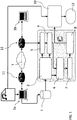
- Figure 1 shows a first exemplary embodiment of the present invention. It illustrates the acquisition of degraded audio samples by capturing the network traffic at a network node 11, e.g. a router, in-between the transmission path T with subsequent full-reference quality assessment using Perceptual Objective Listening Quality Analysis (POLQA) as described in the T-REC P.863 of the ITU-T of September 2014.
- POLQA Perceptual Objective Listening Quality Analysis
- the network node 11 from which the network traffic is captured is close to the receiving endpoint 1b.
- the network node 11 can be at any other place of the network transmission path T. Acquiring the data traffic from the network node 11 in the transmission path T is especially useful, if traffic capturing is not possible or feasible to be performed by the WebRTC receiving endpoint 1b or if the quality of the endpoint, as if it was located at the capturing node, is of interest.
- the capturing of the traffic is ideally established before the call is set up and should last until the call is terminated.
- the traffic may be preferably captured in the transmission path T using a switch with a mirroring port functionality.
- the switch may be or may not be comprised in the network node 11.
- Port mirroring is used on the network switch to send a copy of network packets transmitted via one switch port or an entire Virtual Local Area Network (VLAN) to a network monitoring connection on another switch port.
- the traffic has to be captured with a third device connected to the mirroring port.
- VLAN Virtual Local Area Network
- devices for capturing data traffic have enough processing power to handle the traffic including the SRTP stream of the call as well as the capturing simultaneously in order to prevent negative effects, such as packet loss.
- a WebRTC call is established.
- a reference audio file is injected into the WebRTC sending endpoint 1a, where it can be looped in order to provide several test samples during one call.
- the reference audio file is encoded and transmitted over the network by the WebRTC sending endpoint 1a, whilst at the same time the traffic is captured at the network node 11.
- logged reference information is provided to the parsing means 2 and the captured traffic is provided to the filtering means 3.
- the WebRTC sending endpoint 1a provides reference information.
- the reference information can be received from the receiving endpoint 1b.
- the acquiring means is suitable for acquiring files containing degraded audio signals from the captured SRTP-stream.
- the acquiring means comprises receiving means (not being depicted) for receiving WebRTC endpoint and/or reference information I, wherein the information about the WebRTC endpoints 1a, 1b and/or the reference information comprises at least one of: an encryption key, a cipher suite, a Session Description Protocol (SDP) -message.
- SDP Session Description Protocol
- the acquiring means further comprises reading means (not depicted) for reading at least one audio stream from at least one previously captured SRTP traffic file, wherein the at least one previously captured SRTP traffic file containing the at least one audio stream is captured from at least one previous WebRTC audio media call.
- the encryption key, cipher suite and Session Description Protocol (SDP) messages is obtained from the WebRTC endpoint 1a, i.e. the sending endpoint.
- SDP Session Description Protocol
- the acquiring means further comprises parsing means 2 for parsing the information about the WebRTC endpoints 1a and/or 1b given by the reference information and filtering means 3 for receiving the captured traffic from the network node 11 and for filtering the SRTP stream from the traffic.
- the filtering means 3 is configured to filter the SRTP stream according to a Synchronization Source (SSRC) identifier obtained from the information about the WebRTC endpoints 1a, 1b and/or the reference information, particularly from the at least one SDP message, and according to a simulation of behavior of a jitter buffer of the WebRTC receiving endpoint 1b.
- SSRC Synchronization Source
- a traffic filtering function of the filtering means 3 is configured to filter the SRTP stream from the traffic, which was transmitted from the WebRTC sending endpoint 1a to the WebRTC receiving endpoint 1b, according to information acquired from the SDP message by an information parsing function.
- the information used for filtering the SRTP stream may be the SSRC identifier of the SRTP stream obtained by the information parsing function from the at least one SDP message.
- traffic filtering particularly incorporates the jitter buffer, wherein the functionality of the jitter buffer, e.g., resembles a jitter buffer functionality of the WebRTC receiving endpoint 1b.
- the acquiring means also comprises decryption means 4 for performing SRTP decryption with the encryption key and/or the cipher suite in order to generate decrypted Real-Time Transport Protocol (RTP) packets and extracting means 6 for extracting RTP payload from the decrypted RTP packets, wherein the RTP payload contains an encoded, degraded audio signal.
- decryption means 4 for performing SRTP decryption with the encryption key and/or the cipher suite in order to generate decrypted Real-Time Transport Protocol (RTP) packets
- extracting means 6 for extracting RTP payload from the decrypted RTP packets, wherein the RTP payload contains an encoded, degraded audio signal.
- RTP Real-Time Transport Protocol
- the filtered SRTP stream is provided to an SRTP decryption function of the decryption means 4, which uses the key and cipher suite to decrypt the SRTP stream and produce an RTP stream corresponding to the decrypted RTP packets.
- the acquiring means comprises decoding means 7 for decoding the encoded, degraded audio signal, wherein the decoding means 7 comprises an audio decoder configured to produce decoded Pulse Code Modulation (PCM) -audio streams.
- PCM Pulse Code Modulation
- an encoded audio stream corresponding to the encoded, degraded audio signal is decoded using an audio decoding function of the decoding means 7.
- an output of the Audio decoding function may be a concatenation of degraded audio files.
- the acquiring means comprises preparing means 8 for preparing the decoded PCM audio streams according to requirements of an objective audio quality assessment method, wherein the preparing means 8 is configured to split the decoded PCM audio streams into multiple decoded PCM audio samples.
- the concatenation may be split into multiple degraded audio samples such that at least one of the degraded samples has the same length as a reference audio file.
- Splitting is accomplished by an audio manipulation function of the preparing means 8, which produces multiple degraded samples.
- the preparing means 8 is configured to split the decoded PCM audio streams such that a length of each of the at least one degraded PCM audio sample corresponds to a length of the reference audio file being sent from the WebRTC sending end point 1a.
- the acquiring means also comprises output means (not depicted) for outputting at least one decoded PCM audio sample of the multiple decoded PCM audio samples in a file format, wherein the file format is appropriate to the requirements of the objective audio quality assessment method applied by an assessment means 10.
- the assessment means 10 may utilize the full reference quality assessment method POLQA in order to produce Mean Opinion Score (MOS)-Listening Quality Objective - Super-Wideband (LQOsw) values 12.
- MOS Mean Opinion Score
- LQOsw Low-Wideband
- the behavior of the WebRTC endpoint 1b comprises behavior of packet reordering and/or packet timeout and/or playout behavior.
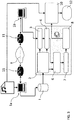
- Figure 2 shows a second exemplary embodiment where the traffic is captured at two network elements, i.e. a network node 11 closer to the sending endpoint 1a and a network node 11 closer to the receiving endpoint 1b.
- the number of network elements is not limited to the number of two but the traffic may also be captured at more than two network elements.
- the SRTP stream is sent from the WebRTC sending endpoint 1a to the receiving endpoint 1b.
- the traffic is captured at the first network node closer to the sending endpoint 1a and processed as in the first exemplary embodiment.
- the corresponding traffic of the same call is also captured at the second network node closer to the receiving endpoint 1b and also processed as in the first exemplary embodiment.
- the degraded audio samples can be acquired from the captured traffic at different points of the transmission path T, so that a quality assessment of a single WebRTC call from different positions at the transmission path T can be conducted. This would help identifying network segments that have the biggest influence on the quality.
- Figure 3 shows a third exemplary embodiment of the present invention.
- the quality is assessed as perceived at endpoint 1b.
- the degraded audio signals are acquired by capturing the traffic at the WebRTC receiving endpoint 1b .
- a capturing tool within the endpoint 1b can be used, e.g. Wireshark or tcpdump, for capturing the traffic including the SRTP stream.
- the captured traffic is then sent to the acquiring means and subsequent processing of the captured traffic and the traffic filtering is performed as in the first embodiment.
- the whole path can be assessed, i.e. up to the receiving endpoint. It is understood to the skilled person that the capturing at the receiving endpoint 1b can be combined with the capturing and processing shown in the first and second embodiments.
- FIG. 4 shows a fourth embodiment of the present invention.
- the acquisition of degraded audio samples is performed by capturing the network traffic at the receiving endpoint with subsequent single-ended quality assessment, e.g. using ITU-T P.563 in order to produce Mean Opinion Score (MOS)-Listening Quality Objective (LQO) values 12.
- MOS Mean Opinion Score
- LQO Quality Objective
- the audio quality can be assessed without a reference sample.
- this quality assessment is also called no-reference quality assessment.
- no reference audio file has to be injected into the sending endpoint 1a.
- the reference information is received from the receiving endpoint 1b.
- the traffic is captured at the receiving endpoint 1b using a capturing tool.
- capturing the traffic at one or more network elements e.g. network nodes 11, as illustrated in Figures 1 and 2 are possible.
- FIG. 5 shows a conceptual view of a WebRTC architecture.
- the architecture comprises two communication paths which are signaling paths S between a web- / signaling server 9 or servers and each client and the transmission path T, which is a WebRTC audio media transmission path in the present case, for transmitting data traffic between communication parties using the clients.
- the web and signaling servers 9 provide a web application which can be downloaded by the client.
- the web and signaling servers 9 control the WebRTC connection management, through the exchange of signaling messages, between the clients and the web and signaling servers 9.
- signaling protocols are applied.
- the signaling protocols are not standardized.
- Various protocols, including standards-based or proprietary ones, for example protocols provided by the servers, can be used.
- the WebRTC media negotiations are capable of representing the SDP offer/answer semantics according to RFC 3264.
- the clients in a WebRTC call are the WebRTC endpoints 1a, 1b.
- the data traffic with the SRTP streams is transmitted during a successfully established Web Real-Time Communication (WebRTC) audio media call between the at least two WebRTC endpoints 1a, 1b.
- WebRTC Web Real-Time Communication
- the traffic is transmitted by at least one network element (not depicted) different from the WebRTC endpoints 1a, 1b via the WebRTC audio media transmission path.
- the WebRTC endpoints 1a, 1b can be either WebRTC browsers or WebRTC non-browsers.
- P2P Peer-to-Peer
- the transmission path T is directly established between the two WebRTC endpoints 1a, 1b.
- NAT Network Address Translation
- TURN Traversal Using Relays around NAT
- SRTP Secure Real-Time Transport Protocol
- the WebRTC endpoint 1a, 1b is depicted in a WebRTC call context.
- the WebRTC endpoint 1a, 1b comprises a WebRTC client 20.
- the WebRTC client 20 comprises at least one Web application 21, such as JavaScript, HTML and Cascading Style Sheets (CSS), Application Programming Interfaces (APIs), and at least one browser 23 including browser functions, such as a browser Real Time Communication (RTC) function 24.
- the browser RTC function 24 includes an engine for transport, video and voice.
- the Application Programming Interfaces (APIs) include, e.g., WebRTC APIs, such as WebRTC JavaScript APIs 22.
- the web and signaling server 9 provides a web application including a JavaScript code for signaling functionalities.
- the Web application 21 and the Web and signaling server 9 communicate via the signaling path S, e.g. via Hypertext Transfer Protocol (HTTP).
- HTTP Hypertext Transfer Protocol
- the JavaScript API allows the browser 23 to interact with media devices and functions, such as microphone, camera, loud speakers or audio and video codecs.
- the WebRTC endpoint 1a, 1b comprises APIs 25 for network input/output (I/O) 25a of the WebRTC endpoint 1a, 1b and audio as well as video capturing (AV-Capture) 25b.
- a Hardware Abstraction Layer (HAL) 26 isolates a software layer of an operating system (OS) from hardware of the WebRTC endpoint 1a, 1b.
- OS operating system
- G.711 referring to Pulse code modulation (PCM) of voice frequencies (including versions of G.711 (11/88), Amendment 1 (08/09), Amendment 2 (11/09), Appendix I (09/99) and Appendix II (02/00) of the ITU) and Opus (corresponding to IETF RFC 6716) are used.
- PCM Pulse code modulation
- a multi-functional Fullband (FB)-codec Opus is used as default audio codec.
- the Opus codec can adapt to multiple use cases in regard to, for example, bitrates, frequency ranges or a number of channels.
- the Opus codec allows speech as well as music coding. It supports all relevant audio bandwidths from Narrowband (NB) to FB with delay times from 5 ms to 66.5 ms.
- NB Narrowband
- the Opus codec is capable of low-delay speech as well as high-quality music coding including multichannel music.
- the objective quality assessment method may be a full reference, reduced reference or no reference quality assessment method.
- Full reference methods compare a degraded audio signal with a high quality reference audio signal in order to determine a quality rating.
- An example for full reference quality assessment is Perceptual Objective Listening Quality Analysis (POLQA) (corresponding to ITU-T Rec. P.863 (09/14), including the implementer's Guides P.Imp 863 (01/16)), which calculates MOS-Listening Quality Objective (LQO) on a 5-point scale.
- POLQA Perceptual Objective Listening Quality Analysis
- Reduced reference and no reference methods do not need a high quality reference audio signal, but if the assessment method is signal-based, the degraded audio signal must also be available.
- the no reference method is referred to as single-ended above.
- the acquiring method according to the invention provides degraded audio files for signal-based assessment methods. Therefore, for the acquiring of degraded audio files according to the invention, audio streams being transmitted during a WebRTC-based audio call, may be captured by capturing means 30 (see Figure 6 ) at a position being close to the receiving endpoint and/or at the receiving endpoint, but outside of the WebRTC Client 20 and/or or at another measurement point in the network which is between the WebRTC endpoints 1a, 1b.
- the invention also refers to a method for acquiring files containing degraded audio signals from the SRTP stream, wherein the files are acquired for the objective audio quality assessment method, wherein the method according to the invention comprises method steps according to features of the before-described acquiring means and/or the before-described system.
Landscapes
- Engineering & Computer Science (AREA)
- Multimedia (AREA)
- Computer Networks & Wireless Communication (AREA)
- Signal Processing (AREA)
- Environmental & Geological Engineering (AREA)
- Telephonic Communication Services (AREA)
- Data Exchanges In Wide-Area Networks (AREA)
Abstract
Description
- The invention refers to acquiring means for acquiring files containing degraded audio signals from a Secure Real-Time Transport Protocol (SRTP) -stream, the files being acquired for an objective audio quality assessment method, wherein traffic with the SRTP stream is transmitted during a successfully established Web Real-Time Communication (WebRTC) audio media call between at least two WebRTC endpoints and transmitted by at least one network element different from the WebRTC endpoints via a WebRTC audio media transmission path. The invention also refers to a system comprising the acquiring means and a method for acquiring files containing degraded audio signals from the SRTP-stream.
- Actually, WebRTC is standardized by two major standardization bodies where the World Wide Web Consortium (W3C) is responsible for the JavaScript Application Programming Interface (API) and the Internet Engineering Task Force (IETF), and in particular for the corresponding protocols. WebRTC enables Internet Protocol (IP) and browser-based real-time communication using audio, video and auxiliary data without the necessity of additional plugins or software installation. Merely a browser that follows specifications of the WebRTC protocol and implements the JavaScript API, defined by the W3C, is necessary. In some cases, WebRTC native application, so called "non-browsers", are preferable over WebRTC browsers. These WebRTC non-browsers do not need to implement the JavaScript API, but must comply with the specifications of the WebRTC protocol.
- During a successfully established WebRTC audio media call between at least two WebRTC endpoints data traffic is transmitted via a network between the WebRTC endpoints. However, when transmission of data traffic is impaired, it is difficult to determine at which segment or segments in the network the data traffic is disturbed and why transmission of data traffic is disturbed, there.
- Accordingly, an object of the present invention is to provide means and a method which allow determining at which segment or segments in the network data traffic is disturbed.
- According to the invention, there is provided acquiring means comprising receiving means for receiving information about the WebRTC endpoints and/or reference information, wherein the information about the WebRTC endpoints and/or the reference information comprises at least one of: an encryption key, a cipher suite, a Session Description Protocol (SDP)-message; reading means for reading at least one audio stream from at least one previously captured SRTP traffic file, wherein the at least one previously captured SRTP traffic file containing the at least one audio stream is captured from at least one previous WebRTC audio media call; parsing means for parsing the information about the WebRTC endpoints and/or the reference information; filtering means for receiving traffic and for filtering an SRTP stream from the traffic, wherein the filtering means is configured to filter the SRTP stream according to a Synchronization Source (SSRC) identifier obtained from the information about the WebRTC endpoints and/or the reference information, particularly from the at least one SDP message, and according to a simulation of behavior of a jitter buffer of a WebRTC receiving endpoint of the at least two WebRTC endpoints; decryption means for performing SRTP decryption with the encryption key and/or the cipher suite in order to generate decrypted Real-Time Transport Protocol (RTP) packets; extracting means for extracting RTP payload from the decrypted RTP packets, wherein the RTP payload contains an encoded, degraded audio signal; decoding means for decoding the encoded, degraded audio signal, wherein the decoding means comprises an audio decoder configured to produce decoded Pulse Code Modulation (PCM) -audio streams; preparing means for preparing the decoded PCM audio streams according to requirements of an objective audio quality assessment method, wherein the preparing means is configured to split the decoded PCM audio streams into multiple decoded PCM audio samples; output means for outputting at least one decoded PCM audio sample of the multiple decoded PCM audio samples in a file format, wherein the file format is appropriate to the requirements of the objective audio quality assessment method.
- According to the invention a system is also provided for acquiring files containing degraded audio signals from an SRTP -stream, the files being acquired for an objective audio quality assessment method; the system comprising at least two end points, wherein the at least two endpoints are network elements of a network, wherein the endpoints are configured to be used as WebRTC end points, wherein the endpoints are configured to transmit traffic, comprising SRTP streams, during a successfully established WebRTC audio media call, wherein the SRTP streams are transmitted via a WebRTC audio media transmission path between a sending endpoint of the at least two endpoints and a receiving endpoint of the at least two endpoints; at least one further network element, wherein the at least one further network element is configured to transmit the SRTP stream of the WebRTC audio media call, wherein the at least one further network element is located at the WebRTC audio media transmission path; the system comprising acquiring means, the acquiring means comprising receiving means for receiving information about the endpoints and/or reference information, wherein the information about the endpoints and/or the reference information comprises at least one of: an encryption key, a cipher suite, an SDP message; reading means for reading at least one previously captured audio stream, wherein the at least one previously captured audio stream is captured from at least one previous WebRTC audio media call; parsing means for parsing the information about the endpoints and/or the reference information; filtering means for receiving traffic and for filtering an SRTP stream from the traffic, wherein the filtering means is configured to filter the SRTP stream according to a SSRC identifier obtained from the information about the endpoints and/or the reference information, particularly from the at least one SDP message, and according to a simulation of behavior of a jitter buffer of the receiving endpoint; decryption means for performing SRTP decryption with the encryption key and the cipher suite in order to generate decrypted RTP packets; extracting means for extracting RTP payload from the decrypted RTP packets, wherein the RTP payload contains an encoded, degraded audio signal; decoding means for decoding the encoded, degraded audio signal, wherein the decoding means comprises an audio decoder configured to produce decoded PCM audio streams; preparing means for preparing the decoded PCM audio streams according to requirements of an objective audio quality assessment method, wherein the preparing means is configured to decode the PCM audio streams into multiple decoded PCM audio samples; output means for outputting at least one decoded PCM audio sample of the multiple decoded PCM audio samples in a file format, wherein the file format is appropriate to the requirements of the objective audio quality assessment method.
- According to the invention a method is also provided for acquiring files containing degraded audio signals from an SRTP stream, the files being acquired for an objective audio quality assessment method; wherein traffic with the SRTP stream is transmitted during a successfully established WebRTC audio media call between at least two WebRTC endpoints and transmitted by at least one network element different from the WebRTC endpoints via a WebRTC audio media transmission path; the method comprising receiving information about the WebRTC endpoints and/or reference information, wherein the information about the WebRTC endpoints and/or the reference information comprises at least one of: an encryption key, a cipher suite, an SDP message; reading at least one previously captured audio stream, wherein the at least one previously captured audio stream is captured from at least one previous WebRTC audio media call; parsing the information about the WebRTC endpoints and/or the reference information; receiving traffic and filtering SRTP stream from the traffic, wherein the filtering comprises filtering the SRTP stream according to a SSRC identifier obtained from the information about the WebRTC endpoints and/or the reference information, particularly from the at least one SDP message, and according to a simulation of behavior of a jitter buffer of a WebRTC receiving endpoint of the at least two WebRTC endpoints; performing SRTP decryption with the encryption key and the cipher suite in order to generate decrypted RTP packets; extracting RTP payload from the decrypted RTP packets, wherein the RTP payload contains an encoded, degraded audio signal; decoding the encoded, degraded audio signal, wherein decoding comprises producing decoded PCM audio streams; preparing the decoded PCM audio streams according to requirements of an objective audio quality assessment method, wherein the preparing comprises splitting the decoded PCM audio streams into multiple decoded PCM audio samples; outputting at least one decoded PCM audio sample of the multiple decoded PCM audio samples in a file format, wherein the file format is appropriate to the requirements of the objective audio quality assessment method.
- The acquiring means, system and method according to the invention allow encrypted audio streams of a WebRTC call, utilizing SRTP, to be preprocessed such that quality of transmitted audio files comprised by the streams can be determined by objective audio assessment. The invention can be adapted to different quality assessment methods, such as Perceptual Evaluation of Speech Quality (PESQ), Perceptual Objective Listening Quality Assessment (POLQA) and ITU-Telecommunication Standardization Sector (ITU-T) recommendation P.563 (05/2004) including Erratum 1 (10/2007).
- The invention is independent of the device and platform, such as operating system or WebRTC implementation, on the receiving endpoint. The invention can be adapted to various audio codecs, too. Particularly, it is provided that a standalone decoder is available for adapting the invention to the different audio codecs.
- The invention further allows assessing the audio quality at different network segments within the whole network transmission path including the receiving endpoint. The invention particularly allows acquiring data being captured from different points of the network.
- Furthermore, due to the invention, additional degradations due to Analog to Digital Conversion (ADC) and Digital to Analog Conversion (DAC), which may be introduced by the capturing method, as well as perturbations, such as interferences through radio waves, do not occur.
- Thus, by providing audio files to objective audio assessment from any position of the network, provided that the audio file was sent from a WebRTC sending endpoint of the at least two endpoints, the invention allows determining the segment or the segments in the network at which the data traffic is disturbed.
- Preferably, the behavior of the WebRTC endpoint, more particularly of the jitter buffer, comprises behavior of packet reordering and/or packet timeout and/or playout behavior.
- Preferably, the traffic is received from the at least one network element different from the WebRTC endpoints. Alternatively or in addition, the traffic is received from a capturing tool in the receiving endpoint, e.g. the capturing tool being/using Wireshark or tcpdump. Preferably, the at least one network element is a network node.
- Preferably, the preparing means is configured to split the decoded PCM audio streams such that a length of each of the at least one degraded PCM audio sample corresponds to a length of a reference audio file being sent from the WebRTC sending end point. For example, audio samples with sound may be identified by detecting sequences of silence of a certain length in an audio stream, and split the audio stream at a corresponding point, e.g. such that the sequences of silences are separated from the sequences with sound.
-
- FIG. 1
- shows a first exemplary embodiment of the present invention,
- FIG. 2
- shows a second exemplary embodiment of the present invention,
- FIG. 3
- shows a third exemplary embodiment of the present invention,
- FIG. 4
- shows a fourth exemplary embodiment of the present invention,
- FIG. 5
- is a schematic view of an exemplary WebRTC architecture, and
- FIG. 6
- is a schematic view of a WebRTC endpoint with Java Script API and RTC functioning.
-
Figure 1 shows a first exemplary embodiment of the present invention. It illustrates the acquisition of degraded audio samples by capturing the network traffic at anetwork node 11, e.g. a router, in-between the transmission path T with subsequent full-reference quality assessment using Perceptual Objective Listening Quality Analysis (POLQA) as described in the T-REC P.863 of the ITU-T of September 2014. - In the embodiment shown in
Figure 1 , thenetwork node 11 from which the network traffic is captured is close to thereceiving endpoint 1b. However, it is understood by the skilled person that the present invention is not limited to this and thenetwork node 11 can be at any other place of the network transmission path T. Acquiring the data traffic from thenetwork node 11 in the transmission path T is especially useful, if traffic capturing is not possible or feasible to be performed by theWebRTC receiving endpoint 1b or if the quality of the endpoint, as if it was located at the capturing node, is of interest. - The capturing of the traffic is ideally established before the call is set up and should last until the call is terminated.
- In this embodiment, the traffic may be preferably captured in the transmission path T using a switch with a mirroring port functionality. The switch may be or may not be comprised in the
network node 11. Port mirroring is used on the network switch to send a copy of network packets transmitted via one switch port or an entire Virtual Local Area Network (VLAN) to a network monitoring connection on another switch port. The traffic has to be captured with a third device connected to the mirroring port. - For this but also for the other embodiments of the present invention, it has to be ensured, that devices for capturing data traffic have enough processing power to handle the traffic including the SRTP stream of the call as well as the capturing simultaneously in order to prevent negative effects, such as packet loss.
- After a capturing process is started, a WebRTC call is established. During the call, a reference audio file is injected into the WebRTC sending
endpoint 1a, where it can be looped in order to provide several test samples during one call. Thereafter, the reference audio file is encoded and transmitted over the network by the WebRTC sendingendpoint 1a, whilst at the same time the traffic is captured at thenetwork node 11. After the call has finished, logged reference information is provided to the parsing means 2 and the captured traffic is provided to thefiltering means 3. Particularly, the WebRTC sendingendpoint 1a provides reference information. However, it is understood by the skilled person that the present invention is not limited to this. In particular, the reference information can be received from thereceiving endpoint 1b. - The acquiring means is suitable for acquiring files containing degraded audio signals from the captured SRTP-stream. The acquiring means comprises receiving means (not being depicted) for receiving WebRTC endpoint and/or reference information I, wherein the information about the
WebRTC endpoints - The acquiring means further comprises reading means (not depicted) for reading at least one audio stream from at least one previously captured SRTP traffic file, wherein the at least one previously captured SRTP traffic file containing the at least one audio stream is captured from at least one previous WebRTC audio media call.
- According to the present embodiment as shown in
Figure 1 , the encryption key, cipher suite and Session Description Protocol (SDP) messages is obtained from the WebRTCendpoint 1a, i.e. the sending endpoint. - The acquiring means further comprises parsing means 2 for parsing the information about the
WebRTC endpoints 1a and/or 1b given by the reference information and filtering means 3 for receiving the captured traffic from thenetwork node 11 and for filtering the SRTP stream from the traffic. Thefiltering means 3 is configured to filter the SRTP stream according to a Synchronization Source (SSRC) identifier obtained from the information about theWebRTC endpoints WebRTC receiving endpoint 1b. - Particularly, a traffic filtering function of the filtering means 3 is configured to filter the SRTP stream from the traffic, which was transmitted from the WebRTC sending
endpoint 1a to theWebRTC receiving endpoint 1b, according to information acquired from the SDP message by an information parsing function. The information used for filtering the SRTP stream may be the SSRC identifier of the SRTP stream obtained by the information parsing function from the at least one SDP message. Additionally, traffic filtering particularly incorporates the jitter buffer, wherein the functionality of the jitter buffer, e.g., resembles a jitter buffer functionality of theWebRTC receiving endpoint 1b. - The acquiring means also comprises decryption means 4 for performing SRTP decryption with the encryption key and/or the cipher suite in order to generate decrypted Real-Time Transport Protocol (RTP) packets and extracting
means 6 for extracting RTP payload from the decrypted RTP packets, wherein the RTP payload contains an encoded, degraded audio signal. - Particularly, the filtered SRTP stream is provided to an SRTP decryption function of the decryption means 4, which uses the key and cipher suite to decrypt the SRTP stream and produce an RTP stream corresponding to the decrypted RTP packets.
- Furthermore, the acquiring means comprises decoding means 7 for decoding the encoded, degraded audio signal, wherein the decoding means 7 comprises an audio decoder configured to produce decoded Pulse Code Modulation (PCM) -audio streams.
- Particularly, an encoded audio stream corresponding to the encoded, degraded audio signal is decoded using an audio decoding function of the decoding means 7. In the case that a reference audio file is looped throughout the communication session by the
WebRTC sending endpoint 1 a, an output of the Audio decoding function may be a concatenation of degraded audio files. - The acquiring means comprises preparing
means 8 for preparing the decoded PCM audio streams according to requirements of an objective audio quality assessment method, wherein the preparingmeans 8 is configured to split the decoded PCM audio streams into multiple decoded PCM audio samples. - For example in the case of a concatenation of audio samples, the concatenation may be split into multiple degraded audio samples such that at least one of the degraded samples has the same length as a reference audio file. Splitting is accomplished by an audio manipulation function of the preparing
means 8, which produces multiple degraded samples. In other words, the preparingmeans 8 is configured to split the decoded PCM audio streams such that a length of each of the at least one degraded PCM audio sample corresponds to a length of the reference audio file being sent from the WebRTC sendingend point 1a. - The acquiring means also comprises output means (not depicted) for outputting at least one decoded PCM audio sample of the multiple decoded PCM audio samples in a file format, wherein the file format is appropriate to the requirements of the objective audio quality assessment method applied by an assessment means 10.
- For example, the assessment means 10 may utilize the full reference quality assessment method POLQA in order to produce Mean Opinion Score (MOS)-Listening Quality Objective - Super-Wideband (LQOsw) values 12.
- Particularly, the behavior of the
WebRTC endpoint 1b, more particularly of the jitter buffer, comprises behavior of packet reordering and/or packet timeout and/or playout behavior. -
Figure 2 shows a second exemplary embodiment where the traffic is captured at two network elements, i.e. anetwork node 11 closer to the sendingendpoint 1a and anetwork node 11 closer to the receivingendpoint 1b. However, it is understood that the number of network elements is not limited to the number of two but the traffic may also be captured at more than two network elements. - The SRTP stream is sent from the
WebRTC sending endpoint 1a to the receivingendpoint 1b. The traffic is captured at the first network node closer to the sendingendpoint 1a and processed as in the first exemplary embodiment. The corresponding traffic of the same call is also captured at the second network node closer to the receivingendpoint 1b and also processed as in the first exemplary embodiment. Thus, the degraded audio samples can be acquired from the captured traffic at different points of the transmission path T, so that a quality assessment of a single WebRTC call from different positions at the transmission path T can be conducted. This would help identifying network segments that have the biggest influence on the quality. -
Figure 3 shows a third exemplary embodiment of the present invention. The main difference to the first embodiment and the second embodiment is that the quality is assessed as perceived atendpoint 1b. In other words, the degraded audio signals are acquired by capturing the traffic at theWebRTC receiving endpoint 1b . According to this embodiment, a capturing tool within theendpoint 1b can be used, e.g. Wireshark or tcpdump, for capturing the traffic including the SRTP stream. The captured traffic is then sent to the acquiring means and subsequent processing of the captured traffic and the traffic filtering is performed as in the first embodiment. With the embodiment as shown inFigure 3 , the whole path can be assessed, i.e. up to the receiving endpoint. It is understood to the skilled person that the capturing at the receivingendpoint 1b can be combined with the capturing and processing shown in the first and second embodiments. -
Figure 4 shows a fourth embodiment of the present invention. In said embodiment, the acquisition of degraded audio samples is performed by capturing the network traffic at the receiving endpoint with subsequent single-ended quality assessment, e.g. using ITU-T P.563 in order to produce Mean Opinion Score (MOS)-Listening Quality Objective (LQO) values 12. In this embodiment the audio quality can be assessed without a reference sample. Thus, this quality assessment is also called no-reference quality assessment. In particular, no reference audio file has to be injected into the sendingendpoint 1a. In the embodiment shown inFigure 4 , the reference information is received from the receivingendpoint 1b. In addition, according to this embodiment, the traffic is captured at the receivingendpoint 1b using a capturing tool. However, it is understood by the skilled person that the invention is not limited to this. In particular, capturing the traffic at one or more network elements,e.g. network nodes 11, as illustrated inFigures 1 and2 are possible. -
Figure 5 shows a conceptual view of a WebRTC architecture. The architecture comprises two communication paths which are signaling paths S between a web- /signaling server 9 or servers and each client and the transmission path T, which is a WebRTC audio media transmission path in the present case, for transmitting data traffic between communication parties using the clients. - The web and
signaling servers 9 provide a web application which can be downloaded by the client. The web andsignaling servers 9 control the WebRTC connection management, through the exchange of signaling messages, between the clients and the web andsignaling servers 9. For establishing the transmission path T for the data traffic, signaling protocols are applied. The signaling protocols are not standardized. Various protocols, including standards-based or proprietary ones, for example protocols provided by the servers, can be used. The WebRTC media negotiations are capable of representing the SDP offer/answer semantics according to RFC 3264. - The clients in a WebRTC call are the
WebRTC endpoints WebRTC endpoints WebRTC endpoints - The
WebRTC endpoints WebRTC endpoints - In
Figure 6 , theWebRTC endpoint WebRTC endpoint WebRTC client 20. TheWebRTC client 20 comprises at least oneWeb application 21, such as JavaScript, HTML and Cascading Style Sheets (CSS), Application Programming Interfaces (APIs), and at least onebrowser 23 including browser functions, such as a browser Real Time Communication (RTC)function 24. Thebrowser RTC function 24 includes an engine for transport, video and voice. The Application Programming Interfaces (APIs) include, e.g., WebRTC APIs, such asWebRTC JavaScript APIs 22. It is clear for the skilled person that the present invention is not limited to browser based WebRTC clients/RTC clients. Also WebRTC/RTC clients which are otherwise implemented, e.g. as standalone applications or embedded applications of an operating system can be used in accordance with the present invention. - The web and signaling server 9 (see also
Figure 5 ) provides a web application including a JavaScript code for signaling functionalities. TheWeb application 21 and the Web and signalingserver 9 communicate via the signaling path S, e.g. via Hypertext Transfer Protocol (HTTP). The JavaScript API allows thebrowser 23 to interact with media devices and functions, such as microphone, camera, loud speakers or audio and video codecs. - The
WebRTC endpoint APIs 25 for network input/output (I/O) 25a of theWebRTC endpoint WebRTC endpoint - Particularly, a multi-functional Fullband (FB)-codec Opus is used as default audio codec. The Opus codec can adapt to multiple use cases in regard to, for example, bitrates, frequency ranges or a number of channels. The Opus codec allows speech as well as music coding. It supports all relevant audio bandwidths from Narrowband (NB) to FB with delay times from 5 ms to 66.5 ms. Thus, the Opus codec is capable of low-delay speech as well as high-quality music coding including multichannel music.
- For assessment of WebRTC-based audio calls, several objective quality assessment methods can be utilized. The objective quality assessment method may be a full reference, reduced reference or no reference quality assessment method. Full reference methods compare a degraded audio signal with a high quality reference audio signal in order to determine a quality rating. An example for full reference quality assessment is Perceptual Objective Listening Quality Analysis (POLQA) (corresponding to ITU-T Rec. P.863 (09/14), including the implementer's Guides P.Imp 863 (01/16)), which calculates MOS-Listening Quality Objective (LQO) on a 5-point scale. Reduced reference and no reference methods do not need a high quality reference audio signal, but if the assessment method is signal-based, the degraded audio signal must also be available. The no reference method is referred to as single-ended above.
- The acquiring method according to the invention provides degraded audio files for signal-based assessment methods. Therefore, for the acquiring of degraded audio files according to the invention, audio streams being transmitted during a WebRTC-based audio call, may be captured by capturing means 30 (see
Figure 6 ) at a position being close to the receiving endpoint and/or at the receiving endpoint, but outside of theWebRTC Client 20 and/or or at another measurement point in the network which is between theWebRTC endpoints - The invention also refers to a method for acquiring files containing degraded audio signals from the SRTP stream, wherein the files are acquired for the objective audio quality assessment method, wherein the method according to the invention comprises method steps according to features of the before-described acquiring means and/or the before-described system.
- The foregoing description has merely described the technical concept of the present disclosure in an exemplary manner, and it will be apparent to those skilled in this art that various changes, modifications and substitutions may be made thereto without departing from the gist of the present disclosure. Furthermore, it should be noted that the embodiments and accompanying drawings disclosed in the present disclosure are only illustrative and not limitative to the technical concept of the present disclosure, and the scope of the technical concept of the present disclosure is not limited by those embodiments. The scope protected by the present disclosure should be construed by the accompanying claims, and all the technical concept within the equivalent scope of the invention should be construed to be included in the scope of the right of the present disclosure.
-
- 1a
- WebRTC sending endpoint
- 1b
- WebRTC sending endpoint
- 2
- parsing means
- 3
- filtering means
- 4
- decryption means
- 6
- payload extraction means
- 7
- decoding means
- 8
- preparing means
- 9
- Web and signaling server
- 10
- objective audio quality assessing means
- 11
- network node
- 12
- MOS LQO
- 20
- WebRTC Client
- 21
- Web application
- 22
- WebRTC-JavaScript APIs
- 23
- browser
- 24
- browser RTC function
- 25
- operating system
- 25a
- network input/output
- 25b
- video capturing
- 26
- Hardware Abstraction Layer
- 30
- capturing means
- I
- WebRTC endpoint and/or reference information
- S
- signaling path
- T
- transmission path
Claims (14)
- Acquiring means for acquiring files containing degraded audio signals from a Secure Real-Time Transport Protocol, SRTP, -stream, the files being acquired for an objective audio quality assessment method,
wherein traffic with the SRTP stream is transmitted during a successfully established Web Real-Time Communication, WebRTC, audio media call between at least two WebRTC endpoints (1a, 1b) and transmitted by at least one network element different from the WebRTC endpoints (1a, 1b) via a WebRTC audio media transmission path,
the acquiring means comprising:receiving means for receiving information about the WebRTC endpoints and/or reference information,
wherein the information about the WebRTC endpoints (1a, 1b) and/orthe reference information comprises at least one of: an encryption key, a cipher suite, a Session Description Protocol, SDP, -message;reading means for reading at least one audio stream from at least one previously captured SRTP traffic file,
wherein the at least one previously captured SRTP traffic file containing the at least one audio stream is captured from at least one previous WebRTC audio media call;parsing means (2) for parsing the information about the WebRTC endpoints (1a, 1b) and/or the reference information;filtering means (3) for receiving traffic and for filtering an SRTP stream from the traffic,wherein the filtering means (3) is configured to filter the SRTP stream according to a SSRC identifier obtained from the information about the WebRTC endpoints (1a, 1b) and/or the reference information, particularly from the at least one SDP message, and according to a simulation of behavior of a jitter buffer of a WebRTC receiving endpoint (1b) of the at least two WebRTC endpoints (1a, 1b);decryption means (4) for performing SRTP decryption with the encryption key and/or the cipher suite in order to generate decrypted Real-Time Transport Protocol, RTP, packets;extracting means (6) for extracting RTP payload from the decrypted RTP packets,
wherein the RTP payload contains an encoded, degraded audio signal;decoding means (7) for decoding the encoded, degraded audio signal,
wherein the decoding means (7) comprises an audio decoder configured to produce decoded Pulse Code Modulation, PCM, -audio streams;preparing means (8) for preparing the decoded PCM audio streams according to requirements of an objective audio quality assessment method,
wherein the preparing means (8) is configured to split the decoded PCM audio streams into multiple decoded PCM audio samples;output means for outputting at least one decoded PCM audio sample of the multiple decoded PCM audio samples in a file format,
wherein the file format is appropriate to the requirements of the objective audio quality assessment method. - The acquiring means according to claim 1, wherein the filtering means (3) is configured to receive traffic from the at least one network element different from the WebRTC endpoints (1a, 1b).
- The acquiring means according to claim 1 or 2, wherein the filtering means (3) is configured to receive the traffic from a capturing tool in the receiving WebRTC endpoint (1b).
- The acquiring means according to any one of claims 1 to 3, wherein the behavior of the jitter buffer comprises behavior of packet reordering and/or packet timeout and/or playout behavior.
- The acquiring means according to any one of claims 1 to 4, wherein the preparing means (8) is configured to split the decoded PCM audio streams such that a length of each of the at least one degraded PCM audio sample corresponds to a length of a reference audio file being sent from the sending end point.
- System for acquiring files containing degraded audio signals from a Secure Real-Time Transport Protocol, SRTP, -stream, the files being acquired for an objective audio quality assessment method;
the system comprising:at least two end points,wherein the at least two endpoints are network elements of a network,wherein the endpoints are configured to be used as WebRTC end points (1a, 1b),wherein the endpoints are configured to transmit traffic, comprising SRTP streams, during a successfully established Web Real-Time Communication, WebRTC, audio media call,wherein the SRTP streams are transmitted via a WebRTC audio media transmission path between a sending endpoint of the at least two endpoints and a receiving endpoint of the at least two endpoints;at least one further network element,wherein the at least one further network element is configured to transmit the SRTP stream of the WebRTC audio media call,wherein the at least one further network element is located at the WebRTC audio media transmission path;the system comprising acquiring means, the acquiring means comprising:receiving means for receiving information about the endpoints and/or reference information,
wherein the information about the endpoints and/or the reference information comprises at least one of: an encryption key, a cipher suite, a Session Description Protocol, SDP, message;reading means for reading at least one previously captured audio stream,
wherein the at least one previously captured audio stream is captured from at least one previous WebRTC audio media call;parsing means (2) for parsing the information about the endpoints and/or the reference information;filtering means (3) for receiving traffic and for filtering SRTP stream from the traffic,
wherein the filtering means (3) is configured to filter the SRTP stream according to a SSRC identifier obtained from the information about the endpoints and/or the reference information, particularly from the at least one SDP message, and according to a simulation of behavior of a jitter buffer of the receiving endpoint;decryption means (4) for performing SRTP decryption with the encryption key and the cipher suite in order to generate decrypted Real-Time Transport Protocol, RTP, packets;extracting means (6) for extracting RTP payload from the decrypted RTP packets,
wherein the RTP payload contains an encoded, degraded audio signal;decoding means for decoding the encoded, degraded audio signal,
wherein the decoding means (7) comprises an audio decoder configured to produce decoded Pulse Code Modulation, PCM, audio streams;preparing means (8) for preparing the decoded PCM audio streams according to requirements of an objective audio quality assessment method,
wherein the preparing means (8) is configured to decode the PCM audio streams into multiple decoded PCM audio samples;output means for outputting at least one decoded PCM audio sample of the multiple decoded PCM audio samples in a file format,
wherein the file format is appropriate to the requirements of the objective audio quality assessment method. - The system according to claim 6, comprising the features of any of claims 2 to 5.
- Method for acquiring files containing degraded audio signals from a Secure Real-Time Transport Protocol, SRTP, stream, the files being acquired for an objective audio quality assessment method;
wherein traffic with the SRTP stream is transmitted during a successfully established Web Real-Time Communication, WebRTC, audio media call between at least two WebRTC endpoints (1a, 1b) and transmitted by at least one network element different from the WebRTC endpoints (1a, 1b) via a WebRTC audio media transmission path;
the method comprising:receiving information about the WebRTC endpoints (1a, 1b) and/or reference information,
wherein the information about the WebRTC endpoints (1a, 1b) and/orthe reference information comprises at least one of: an encryption key, a cipher suite, a Session Description Protocol, SDP, message;reading at least one previously captured audio stream,
wherein the at least one previously captured audio stream is captured from at least one previous WebRTC audio media call;parsing the information about the WebRTC endpoints (1a, 1b) and/or the reference information;receiving traffic and filtering SRTP stream from the traffic,
wherein the filtering comprises filtering the SRTP stream according to a SSRC identifier obtained from the information about the WebRTC endpoints (1a, 1b) and/or the reference information, particularly from the at least one SDP message, and according to a simulation of behavior of a jitter buffer of a WebRTC receiving endpoint (1b) of the at least two WebRTC endpoints (1a, 1b);performing SRTP decryption with the encryption key and the cipher suite in order to generate decrypted Real-Time Transport Protocol, RTP, packets;extracting RTP payload from the decrypted RTP packets,
wherein the RTP payload contains an encoded, degraded audio signal;decoding the encoded, degraded audio signal,
wherein decoding comprises producing decoded Pulse Code Modulation, PCM, audio streams;preparing the decoded PCM audio streams according to requirements of an objective audio quality assessment method,
wherein the preparing comprises splitting the decoded PCM audio streams into multiple decoded PCM audio samples;outputting at least one decoded PCM audio sample of the multiple decoded PCM audio samples in a file format,
wherein the file format is appropriate to the requirements of the objective audio quality assessment method. - The method according to claim 8, wherein the traffic is received from the at least one network element different from the WebRTC endpoints (1a, 1b).
- The method according to claim 8 or 9, wherein the traffic is received from a capturing tool in the receiving WebRTC endpoint (1b).
- The method according to any one of claims 8 to 10, wherein the behavior of the jitter buffer comprises behavior of packet reordering and/or packet timeout and/or playout behavior.
- The method according to any one of claims 8 to 11, wherein the decoded PCM audio streams is split such that a length of each of the at least one degraded PCM audio sample corresponds to a length of a reference audio file being sent from the sending end point.
- The method according to any one of claims 8 to 12, wherein the acquired SRTP stream is sent from a WebRTC sending endpoint (la) of the at least two WebRTC endpoints (1a, 1b) at a point of time T1 at at least one position of the network which is between the WebRTC end points (1a, 1b), and wherein particularly the at least one position in the network is a network node.
- The method according to any one of claims 8 to 13, wherein the acquired SRTP stream is sent from a WebRTC sending endpoint (1a) of the at least two WebRTC endpoints (1a, 1b) at a point of time T1 at the WebRTC receiving endpoint (1b).
Priority Applications (2)
| Application Number | Priority Date | Filing Date | Title |
|---|---|---|---|
| ES18163602T ES2801853T3 (en) | 2018-03-23 | 2018-03-23 | Acquiring files from an SRTP stream |
| EP18163602.8A EP3544253B1 (en) | 2018-03-23 | 2018-03-23 | Acquisition of files from an srtp-stream |
Applications Claiming Priority (1)
| Application Number | Priority Date | Filing Date | Title |
|---|---|---|---|
| EP18163602.8A EP3544253B1 (en) | 2018-03-23 | 2018-03-23 | Acquisition of files from an srtp-stream |
Publications (2)
| Publication Number | Publication Date |
|---|---|
| EP3544253A1 true EP3544253A1 (en) | 2019-09-25 |
| EP3544253B1 EP3544253B1 (en) | 2020-05-20 |
Family
ID=61801859
Family Applications (1)
| Application Number | Title | Priority Date | Filing Date |
|---|---|---|---|
| EP18163602.8A Active EP3544253B1 (en) | 2018-03-23 | 2018-03-23 | Acquisition of files from an srtp-stream |
Country Status (2)
| Country | Link |
|---|---|
| EP (1) | EP3544253B1 (en) |
| ES (1) | ES2801853T3 (en) |
Cited By (1)
| Publication number | Priority date | Publication date | Assignee | Title |
|---|---|---|---|---|
| CN120658719A (en) * | 2025-07-09 | 2025-09-16 | 成都华瑞数鑫科技有限公司 | Method and system for parallel P2P file transmission of Web client WebRTC real-time communication protocol |
Citations (2)
| Publication number | Priority date | Publication date | Assignee | Title |
|---|---|---|---|---|
| US20160134659A1 (en) * | 2014-11-10 | 2016-05-12 | Cisco Technology, Inc. | Inspection of data channels and recording of media streams |
| US20170054769A1 (en) * | 2015-08-21 | 2017-02-23 | Avaya Inc. | Webrtc call recording at the edge of an enterprise network |
-
2018
- 2018-03-23 ES ES18163602T patent/ES2801853T3/en active Active
- 2018-03-23 EP EP18163602.8A patent/EP3544253B1/en active Active
Patent Citations (2)
| Publication number | Priority date | Publication date | Assignee | Title |
|---|---|---|---|---|
| US20160134659A1 (en) * | 2014-11-10 | 2016-05-12 | Cisco Technology, Inc. | Inspection of data channels and recording of media streams |
| US20170054769A1 (en) * | 2015-08-21 | 2017-02-23 | Avaya Inc. | Webrtc call recording at the edge of an enterprise network |
Cited By (1)
| Publication number | Priority date | Publication date | Assignee | Title |
|---|---|---|---|---|
| CN120658719A (en) * | 2025-07-09 | 2025-09-16 | 成都华瑞数鑫科技有限公司 | Method and system for parallel P2P file transmission of Web client WebRTC real-time communication protocol |
Also Published As
| Publication number | Publication date |
|---|---|
| ES2801853T3 (en) | 2021-01-14 |
| EP3544253B1 (en) | 2020-05-20 |
Similar Documents
| Publication | Publication Date | Title |
|---|---|---|
| CA2697926C (en) | Method for analyzing coded data streams simultaneously transmitted in ip networks | |
| US7742916B2 (en) | Method and devices for evaluating transmission times and for processing a voice signal received in a terminal connected to a packet network | |
| US12250260B2 (en) | Supporting quality of service for media communications | |
| CA2697799C (en) | Method for analyzing simultaneously transmitted, encoded data streams | |
| CN101188525A (en) | A voice stream processing method and device | |
| US8054969B2 (en) | Transmission of a digital message interspersed throughout a compressed information signal | |
| CN102255906B (en) | Data transmission and receiving methods, equipment and systems | |
| JP4456601B2 (en) | Audio data receiving apparatus and audio data receiving method | |
| JP5242683B2 (en) | Improvements in or related to monitoring in the Internet Protocol (IP) domain | |
| Ganguly et al. | VoIP: wireless, P2P and new enterprise voice over IP | |
| US20170163609A1 (en) | Encrypted audio streams transceiving portable device and associated method | |
| EP3544253B1 (en) | Acquisition of files from an srtp-stream | |
| CA2619811C (en) | Signal watermarking in the presence of encryption | |
| EP3039848B1 (en) | Methods and apparatus for conducting internet protocol telephony communications | |
| US9456089B2 (en) | Method and receiving unit for synchronizing a packet-oriented reception with a calculated tone signal | |
| US8917639B2 (en) | Eliminating false audio associated with VoIP communications | |
| Meszaros et al. | Quartcs: A tool enabling end-to-any speech quality assessment of webrtc-based calls | |
| Roselinkiruba et al. | Secure steganography in audio using inactive frames of voip streams | |
| KR20060032539A (en) | Method and apparatus for processing voice data in packet communication network with encryption for efficient bandwidth usage | |
| Jokisch | QuARTCS: A Tool Enabling End-to-Any Speech Quality Assessment of WebRTC-Based Calls | |
| Troegeler et al. | Steganographic Transports: A Vector for Hidden Secret Internets? | |
| JP2009147825A (en) | RTP packet transmitter and RTP packet receiver | |
| CN117859313A (en) | Supports Quality of Service for media communications | |
| JP4491448B2 (en) | Call transfer method and call transfer system | |
| KR20160067232A (en) | A Mirroring Service System that can extract playable voice data from VoIP dat packet |
Legal Events
| Date | Code | Title | Description |
|---|---|---|---|
| PUAI | Public reference made under article 153(3) epc to a published international application that has entered the european phase |
Free format text: ORIGINAL CODE: 0009012 |
|
| STAA | Information on the status of an ep patent application or granted ep patent |
Free format text: STATUS: REQUEST FOR EXAMINATION WAS MADE |
|
| 17P | Request for examination filed |
Effective date: 20190206 |
|
| AK | Designated contracting states |
Kind code of ref document: A1 Designated state(s): AL AT BE BG CH CY CZ DE DK EE ES FI FR GB GR HR HU IE IS IT LI LT LU LV MC MK MT NL NO PL PT RO RS SE SI SK SM TR |
|
| AX | Request for extension of the european patent |
Extension state: BA ME |
|
| GRAP | Despatch of communication of intention to grant a patent |
Free format text: ORIGINAL CODE: EPIDOSNIGR1 |
|
| STAA | Information on the status of an ep patent application or granted ep patent |
Free format text: STATUS: GRANT OF PATENT IS INTENDED |
|
| INTG | Intention to grant announced |
Effective date: 20191203 |
|
| RAP1 | Party data changed (applicant data changed or rights of an application transferred) |
Owner name: DEUTSCHE TELEKOM AG |
|
| GRAS | Grant fee paid |
Free format text: ORIGINAL CODE: EPIDOSNIGR3 |
|
| GRAA | (expected) grant |
Free format text: ORIGINAL CODE: 0009210 |
|
| STAA | Information on the status of an ep patent application or granted ep patent |
Free format text: STATUS: THE PATENT HAS BEEN GRANTED |
|
| AK | Designated contracting states |
Kind code of ref document: B1 Designated state(s): AL AT BE BG CH CY CZ DE DK EE ES FI FR GB GR HR HU IE IS IT LI LT LU LV MC MK MT NL NO PL PT RO RS SE SI SK SM TR |
|
| REG | Reference to a national code |
Ref country code: GB Ref legal event code: FG4D |
|
| REG | Reference to a national code |
Ref country code: CH Ref legal event code: EP |
|
| REG | Reference to a national code |
Ref country code: DE Ref legal event code: R096 Ref document number: 602018004708 Country of ref document: DE |
|
| REG | Reference to a national code |
Ref country code: AT Ref legal event code: REF Ref document number: 1273384 Country of ref document: AT Kind code of ref document: T Effective date: 20200615 |
|
| REG | Reference to a national code |
Ref country code: NL Ref legal event code: FP |
|
| REG | Reference to a national code |
Ref country code: LT Ref legal event code: MG4D |
|
| PG25 | Lapsed in a contracting state [announced via postgrant information from national office to epo] |
Ref country code: LT Free format text: LAPSE BECAUSE OF FAILURE TO SUBMIT A TRANSLATION OF THE DESCRIPTION OR TO PAY THE FEE WITHIN THE PRESCRIBED TIME-LIMIT Effective date: 20200520 Ref country code: GR Free format text: LAPSE BECAUSE OF FAILURE TO SUBMIT A TRANSLATION OF THE DESCRIPTION OR TO PAY THE FEE WITHIN THE PRESCRIBED TIME-LIMIT Effective date: 20200821 Ref country code: NO Free format text: LAPSE BECAUSE OF FAILURE TO SUBMIT A TRANSLATION OF THE DESCRIPTION OR TO PAY THE FEE WITHIN THE PRESCRIBED TIME-LIMIT Effective date: 20200820 Ref country code: PT Free format text: LAPSE BECAUSE OF FAILURE TO SUBMIT A TRANSLATION OF THE DESCRIPTION OR TO PAY THE FEE WITHIN THE PRESCRIBED TIME-LIMIT Effective date: 20200921 Ref country code: SE Free format text: LAPSE BECAUSE OF FAILURE TO SUBMIT A TRANSLATION OF THE DESCRIPTION OR TO PAY THE FEE WITHIN THE PRESCRIBED TIME-LIMIT Effective date: 20200520 Ref country code: IS Free format text: LAPSE BECAUSE OF FAILURE TO SUBMIT A TRANSLATION OF THE DESCRIPTION OR TO PAY THE FEE WITHIN THE PRESCRIBED TIME-LIMIT Effective date: 20200920 Ref country code: FI Free format text: LAPSE BECAUSE OF FAILURE TO SUBMIT A TRANSLATION OF THE DESCRIPTION OR TO PAY THE FEE WITHIN THE PRESCRIBED TIME-LIMIT Effective date: 20200520 |
|
| PG25 | Lapsed in a contracting state [announced via postgrant information from national office to epo] |
Ref country code: HR Free format text: LAPSE BECAUSE OF FAILURE TO SUBMIT A TRANSLATION OF THE DESCRIPTION OR TO PAY THE FEE WITHIN THE PRESCRIBED TIME-LIMIT Effective date: 20200520 Ref country code: LV Free format text: LAPSE BECAUSE OF FAILURE TO SUBMIT A TRANSLATION OF THE DESCRIPTION OR TO PAY THE FEE WITHIN THE PRESCRIBED TIME-LIMIT Effective date: 20200520 Ref country code: BG Free format text: LAPSE BECAUSE OF FAILURE TO SUBMIT A TRANSLATION OF THE DESCRIPTION OR TO PAY THE FEE WITHIN THE PRESCRIBED TIME-LIMIT Effective date: 20200820 Ref country code: RS Free format text: LAPSE BECAUSE OF FAILURE TO SUBMIT A TRANSLATION OF THE DESCRIPTION OR TO PAY THE FEE WITHIN THE PRESCRIBED TIME-LIMIT Effective date: 20200520 |
|
| REG | Reference to a national code |
Ref country code: AT Ref legal event code: MK05 Ref document number: 1273384 Country of ref document: AT Kind code of ref document: T Effective date: 20200520 |
|
| PG25 | Lapsed in a contracting state [announced via postgrant information from national office to epo] |
Ref country code: AL Free format text: LAPSE BECAUSE OF FAILURE TO SUBMIT A TRANSLATION OF THE DESCRIPTION OR TO PAY THE FEE WITHIN THE PRESCRIBED TIME-LIMIT Effective date: 20200520 |
|
| REG | Reference to a national code |
Ref country code: ES Ref legal event code: FG2A Ref document number: 2801853 Country of ref document: ES Kind code of ref document: T3 Effective date: 20210114 |
|
| PG25 | Lapsed in a contracting state [announced via postgrant information from national office to epo] |
Ref country code: SM Free format text: LAPSE BECAUSE OF FAILURE TO SUBMIT A TRANSLATION OF THE DESCRIPTION OR TO PAY THE FEE WITHIN THE PRESCRIBED TIME-LIMIT Effective date: 20200520 Ref country code: EE Free format text: LAPSE BECAUSE OF FAILURE TO SUBMIT A TRANSLATION OF THE DESCRIPTION OR TO PAY THE FEE WITHIN THE PRESCRIBED TIME-LIMIT Effective date: 20200520 Ref country code: CZ Free format text: LAPSE BECAUSE OF FAILURE TO SUBMIT A TRANSLATION OF THE DESCRIPTION OR TO PAY THE FEE WITHIN THE PRESCRIBED TIME-LIMIT Effective date: 20200520 Ref country code: RO Free format text: LAPSE BECAUSE OF FAILURE TO SUBMIT A TRANSLATION OF THE DESCRIPTION OR TO PAY THE FEE WITHIN THE PRESCRIBED TIME-LIMIT Effective date: 20200520 Ref country code: DK Free format text: LAPSE BECAUSE OF FAILURE TO SUBMIT A TRANSLATION OF THE DESCRIPTION OR TO PAY THE FEE WITHIN THE PRESCRIBED TIME-LIMIT Effective date: 20200520 Ref country code: AT Free format text: LAPSE BECAUSE OF FAILURE TO SUBMIT A TRANSLATION OF THE DESCRIPTION OR TO PAY THE FEE WITHIN THE PRESCRIBED TIME-LIMIT Effective date: 20200520 Ref country code: IT Free format text: LAPSE BECAUSE OF FAILURE TO SUBMIT A TRANSLATION OF THE DESCRIPTION OR TO PAY THE FEE WITHIN THE PRESCRIBED TIME-LIMIT Effective date: 20200520 |
|
| REG | Reference to a national code |
Ref country code: DE Ref legal event code: R097 Ref document number: 602018004708 Country of ref document: DE |
|
| PG25 | Lapsed in a contracting state [announced via postgrant information from national office to epo] |
Ref country code: SK Free format text: LAPSE BECAUSE OF FAILURE TO SUBMIT A TRANSLATION OF THE DESCRIPTION OR TO PAY THE FEE WITHIN THE PRESCRIBED TIME-LIMIT Effective date: 20200520 Ref country code: PL Free format text: LAPSE BECAUSE OF FAILURE TO SUBMIT A TRANSLATION OF THE DESCRIPTION OR TO PAY THE FEE WITHIN THE PRESCRIBED TIME-LIMIT Effective date: 20200520 |
|
| PLBE | No opposition filed within time limit |
Free format text: ORIGINAL CODE: 0009261 |
|
| STAA | Information on the status of an ep patent application or granted ep patent |
Free format text: STATUS: NO OPPOSITION FILED WITHIN TIME LIMIT |
|
| 26N | No opposition filed |
Effective date: 20210223 |
|
| PG25 | Lapsed in a contracting state [announced via postgrant information from national office to epo] |
Ref country code: MC Free format text: LAPSE BECAUSE OF FAILURE TO SUBMIT A TRANSLATION OF THE DESCRIPTION OR TO PAY THE FEE WITHIN THE PRESCRIBED TIME-LIMIT Effective date: 20200520 |
|
| REG | Reference to a national code |
Ref country code: CH Ref legal event code: PL |
|
| REG | Reference to a national code |
Ref country code: DE Ref legal event code: R079 Ref document number: 602018004708 Country of ref document: DE Free format text: PREVIOUS MAIN CLASS: H04L0029060000 Ipc: H04L0065000000 |
|
| REG | Reference to a national code |
Ref country code: BE Ref legal event code: MM Effective date: 20210331 |
|
| PG25 | Lapsed in a contracting state [announced via postgrant information from national office to epo] |
Ref country code: CH Free format text: LAPSE BECAUSE OF NON-PAYMENT OF DUE FEES Effective date: 20210331 Ref country code: LU Free format text: LAPSE BECAUSE OF NON-PAYMENT OF DUE FEES Effective date: 20210323 Ref country code: IE Free format text: LAPSE BECAUSE OF NON-PAYMENT OF DUE FEES Effective date: 20210323 Ref country code: LI Free format text: LAPSE BECAUSE OF NON-PAYMENT OF DUE FEES Effective date: 20210331 |
|
| PG25 | Lapsed in a contracting state [announced via postgrant information from national office to epo] |
Ref country code: BE Free format text: LAPSE BECAUSE OF NON-PAYMENT OF DUE FEES Effective date: 20210331 |
|
| PG25 | Lapsed in a contracting state [announced via postgrant information from national office to epo] |
Ref country code: CY Free format text: LAPSE BECAUSE OF FAILURE TO SUBMIT A TRANSLATION OF THE DESCRIPTION OR TO PAY THE FEE WITHIN THE PRESCRIBED TIME-LIMIT Effective date: 20200520 |
|
| PG25 | Lapsed in a contracting state [announced via postgrant information from national office to epo] |
Ref country code: HU Free format text: LAPSE BECAUSE OF FAILURE TO SUBMIT A TRANSLATION OF THE DESCRIPTION OR TO PAY THE FEE WITHIN THE PRESCRIBED TIME-LIMIT; INVALID AB INITIO Effective date: 20180323 |
|
| PG25 | Lapsed in a contracting state [announced via postgrant information from national office to epo] |
Ref country code: SI Free format text: LAPSE BECAUSE OF FAILURE TO SUBMIT A TRANSLATION OF THE DESCRIPTION OR TO PAY THE FEE WITHIN THE PRESCRIBED TIME-LIMIT Effective date: 20200520 |
|
| PG25 | Lapsed in a contracting state [announced via postgrant information from national office to epo] |
Ref country code: MK Free format text: LAPSE BECAUSE OF FAILURE TO SUBMIT A TRANSLATION OF THE DESCRIPTION OR TO PAY THE FEE WITHIN THE PRESCRIBED TIME-LIMIT Effective date: 20200520 |
|
| PG25 | Lapsed in a contracting state [announced via postgrant information from national office to epo] |
Ref country code: MT Free format text: LAPSE BECAUSE OF FAILURE TO SUBMIT A TRANSLATION OF THE DESCRIPTION OR TO PAY THE FEE WITHIN THE PRESCRIBED TIME-LIMIT Effective date: 20200520 |
|
| PG25 | Lapsed in a contracting state [announced via postgrant information from national office to epo] |
Ref country code: TR Free format text: LAPSE BECAUSE OF FAILURE TO SUBMIT A TRANSLATION OF THE DESCRIPTION OR TO PAY THE FEE WITHIN THE PRESCRIBED TIME-LIMIT Effective date: 20200520 |
|
| PGFP | Annual fee paid to national office [announced via postgrant information from national office to epo] |
Ref country code: GB Payment date: 20260317 Year of fee payment: 9 |
|
| PGFP | Annual fee paid to national office [announced via postgrant information from national office to epo] |
Ref country code: DE Payment date: 20260320 Year of fee payment: 9 |
|
| PGFP | Annual fee paid to national office [announced via postgrant information from national office to epo] |
Ref country code: NL Payment date: 20260323 Year of fee payment: 9 |
|
| PGFP | Annual fee paid to national office [announced via postgrant information from national office to epo] |
Ref country code: FR Payment date: 20260325 Year of fee payment: 9 |
|
| PGFP | Annual fee paid to national office [announced via postgrant information from national office to epo] |
Ref country code: ES Payment date: 20260420 Year of fee payment: 9 |