EP3544018A1 - Multiple infusion channel data graphical user interface - Google Patents
Multiple infusion channel data graphical user interface Download PDFInfo
- Publication number
- EP3544018A1 EP3544018A1 EP19153530.1A EP19153530A EP3544018A1 EP 3544018 A1 EP3544018 A1 EP 3544018A1 EP 19153530 A EP19153530 A EP 19153530A EP 3544018 A1 EP3544018 A1 EP 3544018A1
- Authority
- EP
- European Patent Office
- Prior art keywords
- infusion
- data
- events
- patient
- medication
- Prior art date
- Legal status (The legal status is an assumption and is not a legal conclusion. Google has not performed a legal analysis and makes no representation as to the accuracy of the status listed.)
- Granted
Links
Images




Classifications
-
- A—HUMAN NECESSITIES
- A61—MEDICAL OR VETERINARY SCIENCE; HYGIENE
- A61M—DEVICES FOR INTRODUCING MEDIA INTO, OR ONTO, THE BODY; DEVICES FOR TRANSDUCING BODY MEDIA OR FOR TAKING MEDIA FROM THE BODY; DEVICES FOR PRODUCING OR ENDING SLEEP OR STUPOR
- A61M5/00—Devices for bringing media into the body in a subcutaneous, intra-vascular or intramuscular way; Accessories therefor, e.g. filling or cleaning devices, arm-rests
- A61M5/14—Infusion devices, e.g. infusing by gravity; Blood infusion; Accessories therefor
- A61M5/142—Pressure infusion, e.g. using pumps
- A61M5/14212—Pumping with an aspiration and an expulsion action
- A61M5/14228—Pumping with an aspiration and an expulsion action with linear peristaltic action, i.e. comprising at least three pressurising members or a helical member
-
- G—PHYSICS
- G16—INFORMATION AND COMMUNICATION TECHNOLOGY [ICT] SPECIALLY ADAPTED FOR SPECIFIC APPLICATION FIELDS
- G16H—HEALTHCARE INFORMATICS, i.e. INFORMATION AND COMMUNICATION TECHNOLOGY [ICT] SPECIALLY ADAPTED FOR THE HANDLING OR PROCESSING OF MEDICAL OR HEALTHCARE DATA
- G16H40/00—ICT specially adapted for the management or administration of healthcare resources or facilities; ICT specially adapted for the management or operation of medical equipment or devices
- G16H40/60—ICT specially adapted for the management or administration of healthcare resources or facilities; ICT specially adapted for the management or operation of medical equipment or devices for the operation of medical equipment or devices
- G16H40/63—ICT specially adapted for the management or administration of healthcare resources or facilities; ICT specially adapted for the management or operation of medical equipment or devices for the operation of medical equipment or devices for local operation
-
- G—PHYSICS
- G06—COMPUTING OR CALCULATING; COUNTING
- G06F—ELECTRIC DIGITAL DATA PROCESSING
- G06F16/00—Information retrieval; Database structures therefor; File system structures therefor
- G06F16/40—Information retrieval; Database structures therefor; File system structures therefor of multimedia data, e.g. slideshows comprising image and additional audio data
- G06F16/44—Browsing; Visualisation therefor
- G06F16/447—Temporal browsing, e.g. timeline
-
- G—PHYSICS
- G06—COMPUTING OR CALCULATING; COUNTING
- G06F—ELECTRIC DIGITAL DATA PROCESSING
- G06F3/00—Input arrangements for transferring data to be processed into a form capable of being handled by the computer; Output arrangements for transferring data from processing unit to output unit, e.g. interface arrangements
- G06F3/01—Input arrangements or combined input and output arrangements for interaction between user and computer
- G06F3/048—Interaction techniques based on graphical user interfaces [GUI]
- G06F3/0481—Interaction techniques based on graphical user interfaces [GUI] based on specific properties of the displayed interaction object or a metaphor-based environment, e.g. interaction with desktop elements like windows or icons, or assisted by a cursor's changing behaviour or appearance
-
- G—PHYSICS
- G06—COMPUTING OR CALCULATING; COUNTING
- G06F—ELECTRIC DIGITAL DATA PROCESSING
- G06F3/00—Input arrangements for transferring data to be processed into a form capable of being handled by the computer; Output arrangements for transferring data from processing unit to output unit, e.g. interface arrangements
- G06F3/01—Input arrangements or combined input and output arrangements for interaction between user and computer
- G06F3/048—Interaction techniques based on graphical user interfaces [GUI]
- G06F3/0484—Interaction techniques based on graphical user interfaces [GUI] for the control of specific functions or operations, e.g. selecting or manipulating an object, an image or a displayed text element, setting a parameter value or selecting a range
-
- G—PHYSICS
- G16—INFORMATION AND COMMUNICATION TECHNOLOGY [ICT] SPECIALLY ADAPTED FOR SPECIFIC APPLICATION FIELDS
- G16H—HEALTHCARE INFORMATICS, i.e. INFORMATION AND COMMUNICATION TECHNOLOGY [ICT] SPECIALLY ADAPTED FOR THE HANDLING OR PROCESSING OF MEDICAL OR HEALTHCARE DATA
- G16H20/00—ICT specially adapted for therapies or health-improving plans, e.g. for handling prescriptions, for steering therapy or for monitoring patient compliance
- G16H20/10—ICT specially adapted for therapies or health-improving plans, e.g. for handling prescriptions, for steering therapy or for monitoring patient compliance relating to drugs or medications, e.g. for ensuring correct administration to patients
- G16H20/17—ICT specially adapted for therapies or health-improving plans, e.g. for handling prescriptions, for steering therapy or for monitoring patient compliance relating to drugs or medications, e.g. for ensuring correct administration to patients delivered via infusion or injection
-
- G—PHYSICS
- G16—INFORMATION AND COMMUNICATION TECHNOLOGY [ICT] SPECIALLY ADAPTED FOR SPECIFIC APPLICATION FIELDS
- G16H—HEALTHCARE INFORMATICS, i.e. INFORMATION AND COMMUNICATION TECHNOLOGY [ICT] SPECIALLY ADAPTED FOR THE HANDLING OR PROCESSING OF MEDICAL OR HEALTHCARE DATA
- G16H40/00—ICT specially adapted for the management or administration of healthcare resources or facilities; ICT specially adapted for the management or operation of medical equipment or devices
- G16H40/60—ICT specially adapted for the management or administration of healthcare resources or facilities; ICT specially adapted for the management or operation of medical equipment or devices for the operation of medical equipment or devices
- G16H40/67—ICT specially adapted for the management or administration of healthcare resources or facilities; ICT specially adapted for the management or operation of medical equipment or devices for the operation of medical equipment or devices for remote operation
-
- A—HUMAN NECESSITIES
- A61—MEDICAL OR VETERINARY SCIENCE; HYGIENE
- A61M—DEVICES FOR INTRODUCING MEDIA INTO, OR ONTO, THE BODY; DEVICES FOR TRANSDUCING BODY MEDIA OR FOR TAKING MEDIA FROM THE BODY; DEVICES FOR PRODUCING OR ENDING SLEEP OR STUPOR
- A61M5/00—Devices for bringing media into the body in a subcutaneous, intra-vascular or intramuscular way; Accessories therefor, e.g. filling or cleaning devices, arm-rests
- A61M5/14—Infusion devices, e.g. infusing by gravity; Blood infusion; Accessories therefor
- A61M5/142—Pressure infusion, e.g. using pumps
- A61M2005/14208—Pressure infusion, e.g. using pumps with a programmable infusion control system, characterised by the infusion program
-
- A—HUMAN NECESSITIES
- A61—MEDICAL OR VETERINARY SCIENCE; HYGIENE
- A61M—DEVICES FOR INTRODUCING MEDIA INTO, OR ONTO, THE BODY; DEVICES FOR TRANSDUCING BODY MEDIA OR FOR TAKING MEDIA FROM THE BODY; DEVICES FOR PRODUCING OR ENDING SLEEP OR STUPOR
- A61M2205/00—General characteristics of the apparatus
- A61M2205/35—Communication
- A61M2205/3546—Range
- A61M2205/3553—Range remote, e.g. between patient's home and doctor's office
-
- A—HUMAN NECESSITIES
- A61—MEDICAL OR VETERINARY SCIENCE; HYGIENE
- A61M—DEVICES FOR INTRODUCING MEDIA INTO, OR ONTO, THE BODY; DEVICES FOR TRANSDUCING BODY MEDIA OR FOR TAKING MEDIA FROM THE BODY; DEVICES FOR PRODUCING OR ENDING SLEEP OR STUPOR
- A61M2205/00—General characteristics of the apparatus
- A61M2205/35—Communication
- A61M2205/3576—Communication with non implanted data transmission devices, e.g. using external transmitter or receiver
- A61M2205/3584—Communication with non implanted data transmission devices, e.g. using external transmitter or receiver using modem, internet or Bluetooth®
-
- A—HUMAN NECESSITIES
- A61—MEDICAL OR VETERINARY SCIENCE; HYGIENE
- A61M—DEVICES FOR INTRODUCING MEDIA INTO, OR ONTO, THE BODY; DEVICES FOR TRANSDUCING BODY MEDIA OR FOR TAKING MEDIA FROM THE BODY; DEVICES FOR PRODUCING OR ENDING SLEEP OR STUPOR
- A61M2205/00—General characteristics of the apparatus
- A61M2205/35—Communication
- A61M2205/3576—Communication with non implanted data transmission devices, e.g. using external transmitter or receiver
- A61M2205/3592—Communication with non implanted data transmission devices, e.g. using external transmitter or receiver using telemetric means, e.g. radio or optical transmission
-
- A—HUMAN NECESSITIES
- A61—MEDICAL OR VETERINARY SCIENCE; HYGIENE
- A61M—DEVICES FOR INTRODUCING MEDIA INTO, OR ONTO, THE BODY; DEVICES FOR TRANSDUCING BODY MEDIA OR FOR TAKING MEDIA FROM THE BODY; DEVICES FOR PRODUCING OR ENDING SLEEP OR STUPOR
- A61M2205/00—General characteristics of the apparatus
- A61M2205/50—General characteristics of the apparatus with microprocessors or computers
- A61M2205/502—User interfaces, e.g. screens or keyboards
-
- A—HUMAN NECESSITIES
- A61—MEDICAL OR VETERINARY SCIENCE; HYGIENE
- A61M—DEVICES FOR INTRODUCING MEDIA INTO, OR ONTO, THE BODY; DEVICES FOR TRANSDUCING BODY MEDIA OR FOR TAKING MEDIA FROM THE BODY; DEVICES FOR PRODUCING OR ENDING SLEEP OR STUPOR
- A61M2205/00—General characteristics of the apparatus
- A61M2205/50—General characteristics of the apparatus with microprocessors or computers
- A61M2205/502—User interfaces, e.g. screens or keyboards
- A61M2205/505—Touch-screens; Virtual keyboard or keypads; Virtual buttons; Soft keys; Mouse touches
-
- A—HUMAN NECESSITIES
- A61—MEDICAL OR VETERINARY SCIENCE; HYGIENE
- A61M—DEVICES FOR INTRODUCING MEDIA INTO, OR ONTO, THE BODY; DEVICES FOR TRANSDUCING BODY MEDIA OR FOR TAKING MEDIA FROM THE BODY; DEVICES FOR PRODUCING OR ENDING SLEEP OR STUPOR
- A61M2205/00—General characteristics of the apparatus
- A61M2205/50—General characteristics of the apparatus with microprocessors or computers
- A61M2205/502—User interfaces, e.g. screens or keyboards
- A61M2205/507—Head Mounted Displays [HMD]
Definitions
- the subject matter described herein relates to graphical user interfaces for displaying infusion related data characterizing infusions for a patient by way of two or more infusion channels.
- IV intravenous
- patient controlled analgesia patient controlled analgesia
- syringe therapies patients undergoing complex or prolonged medical care often receive multiple medications that are infused via various mechanisms including, for example, intravenous (IV) therapies, patient controlled analgesia, and syringe therapies.
- IV intravenous
- patient controlled analgesia patient controlled analgesia
- syringe therapies As the number of infusions for a particular patient, so does the complexity from a caregiver perspective. The caregiver needs to know when and what new medications are due, what specimens have been collected, when lab results are ready, the indications from the lab results, and the like. Furthermore, with large number of infusions, difficulties can also arise with regard to complete and accurate charge capture.
- data is received that characterizes infusions administered to a patient among each of a plurality of infusion channels. Thereafter, a plurality of infusion events and respective event times are identified based on the received data. A temporal view of the infusion events can then be displayed in a graphical user interface and/or the temporal view of the infusion events can form part of a report. The temporal view segregates each channel into a separate swim lane with each swim lane visualizing infusion events for the corresponding channel at the respective event times.
- the events can be of event types such as infusion start time, infusion end time, infusion paused, medication container change.
- Each event type can have a different visual indicator in the graphical user interface.
- At least a portion of the received data can be received, via a computer network, from at least one infusion module that automatically infuses medication to the patient.
- the received data can be received in real-time as the data is generated by at least one infusion module.
- the received data can include historical data or lab data. In other variations, the received data includes a combination of at least two of: real-time data, historical data, and lab data.
- a rules engine and a plurality of pre-defined infusion event rules can be used to determine whether the received data comprises at least one infusion event.
- the graphical user interface can also display, concurrent with the temporal view of the infusion events, a view characterizing at least one manually administered medication.
- the infusion events visualized in each swim lane can include bars extending from a starting time point at which an infusion begins on the corresponding channel until an ending time point at which the infusion on the channel ends.
- the data generated for the graphical user interface can be loaded into memory, transmitted to a remote computing system and/or stored in memory or other persistent storage.
- Computer program products are also described that comprise non-transitory computer readable media storing instructions, which when executed one or more data processor of one or more computing systems, causes at least one data processor to perform operations herein.
- computer systems are also described that may include one or more data processors and a memory coupled to the one or more data processors. The memory may temporarily or permanently store instructions that cause at least one processor to perform one or more of the operations described herein.
- methods can be implemented by one or more data processors either within a single computing system or distributed among two or more computing systems.
- Such computing systems can be connected and can exchange data and/or commands or other instructions or the like via one or more connections, including but not limited to a connection over a network (e.g. the Internet, a wireless wide area network, a local area network, a wide area network, a wired network, or the like), via a direct connection between one or more of the multiple computing systems, etc.
- a network e.g. the Internet, a wireless wide area network, a local area network,
- the graphical user interfaces as described and illustrated herein allow caregivers and/or pharmacists to readily identify what infusions have been provided over which infusion channels and over what time periods.
- the graphical user interfaces as described and illustrated herein are advantageous in that they enable billing specialists to have an accurate and complete view of various infusions given to a patient so that they may be coded and correctly charged.
- FIG. 1 is a system diagram illustrating a computing landscape 100 within a healthcare environment such as a hospital.
- Various devices and systems can interact via at least one computing network 105.
- This computing network 105 can provide any form or medium of digital communication connectivity (i.e., wired or wireless) amongst the various devices and systems. Examples of communication networks include a local area network ("LAN”), a wide area network (“WAN”), and the Internet.
- LAN local area network
- WAN wide area network
- the Internet the Internet.
- one or more of the various devices and systems can interact directly via peer-to-peer coupling (either via a hardwired connection or via a wireless protocol such as Bluetooth or WiFi).
- one or more of the devices and systems communicate via a cellular data network.
- aspects of the computing landscape 100 can be implemented in a computing system that includes a back-end component (e.g., as a data server 110), or that includes a middleware component (e.g., an application server 115), or that includes a front-end component (e.g., a client computer 120 having a graphical user interface or a Web browser through which a user may interact with an implementation of the subject matter described herein), or any combination of such back-end, middleware, or front-end components.
- Client 120 and servers 110, 115 are generally remote from each other and typically interact through the communications network 105. The relationship of the clients 120 and servers 110, 115 arises by virtue of computer programs running on the respective computers and having a client-server relationship to each other.
- Clients 120 can be any of a variety of computing platforms that include local applications for providing various functionality within the healthcare environment.
- Example clients 120 include, but are not limited to, desktop computers, laptop computers, tablets, and other computers / devices with touch-screen interfaces.
- the local applications can be self-contained in that they do not require network connectivity and/or they can interact with one or more of the servers 110, 115 (e.g., a web browser).
- a variety of applications can be executed on the various devices and systems within the computing landscape such as electronic health record applications, medical device monitoring, operation, and maintenance applications, scheduling applications, billing applications and the like.
- the network 105 can be coupled to one or more data storage systems 125.
- the data storage systems 125 can include databases providing physical data storage within the healthcare environment or within a dedicated facility.
- the data storage systems 125 can include cloud-based systems providing remote storage of data in, for example, a multi-tenant computing environment.
- the data storage systems 125 can also comprise non-transitory computer readable media.
- MCDs 130 can also form part of the computing landscape 100.
- the MCDs 130 can communicate directly via the network 105 and/or they can communicate with the network 105 via an intermediate network such as a cellular data network.
- Various types of communication protocols can be used by the MCDs 130 including, for example, messaging protocols such as SMS and MMS.
- the landscape can include comprise various systems / units for delivering fluid (including medication) to a patient.
- One particular type of medical device 140 is an infusion module 140A.
- the infusion modules 140A can include various types of infusion pumps including peristaltic infusion pumps, large volume infusion pumps, patient controlled analgesia, and syringe pumps.
- the infusion modules 140A can be directly coupled to the network 105 and/or they can be coupled to a medical device 140 which is, in turn, coupled to the network 140.
- the medical devices 140 can comprise, unless otherwise specified, any type of device or system with a communications interface that characterizes one or more physiological measurements of a patient and/or that characterize treatment of a patient.
- the medical devices 140 communicate via peer to peer wired or wireless communications with another medical device 140 (as opposed to communicating with the network 105).
- the medical device 140 can comprise a bedside vital signs monitor that is connected to other medical devices 140, namely a wireless pulse oximeter and to a wired blood pressure monitor.
- One or more operational parameters of the medical devices 140 can be locally controlled by a clinician, controlled via a clinician via the network 105, and/or they can be controlled by one or more of a server 115, 120, a client 125, a MCD 130, and/or another medical device 140.
- the computing landscape 100 can provide various types of functionality as may be required within a healthcare environment such as a hospital.
- the medical devices 140 can provide data characterizing one or more physiological measurements of a patient and/or treatment of a patient (e.g., medical device 140 can be an infusion management system, etc.).
- the data generated by the medical devices 140 can be communicated to other medical devices 140, the servers 115, 120, the clients 120, the MCDs 125, and/or stored in the data storage systems 125.
- the computing landscape 100 can also include at least one medication ordering system 145 (which can include any variety of feeds that relate to medication orders in a hospital environment).
- the medication ordering system 145 can be coupled to the network and enable orders (e.g., prescriptions, etc.) to be generated and monitored.
- the medication order system 145 can be accessed, for example, via the one of the clients 120 and MCDs 130 via the application server 115.
- the medication ordering system 145 can specify a plurality of medications and/or other fluids to be infused into a patient over a pre-defined period of time and according to a pre-defined sequence via at least one infusion module 140A.
- One more of the medical devices 140 can monitor an amount of fluid (e.g., medication, etc.) delivered to a patient. Fluids delivered to patients are referred to herein as infusions. Unless otherwise specified, references herein to medications should also be construed to include non-medication fluids (e.g., blood, saline, etc.) for delivery to a patient via an infusion module 140A.
- fluid e.g., medication, etc.
- a software-implemented infusion management platform 150 can be provided that includes a graphical user interface for tracking and monitoring infusions for one or more patients (as will be described in further detail below).
- the infusion management platform 150 can communicate with the infusion modules 140A via the network 105.
- the infusion modules 140A can directly or indirectly provide data comprising / characterizing various attributes relating to a particular infusion to the infusion management platform 150 (e.g., patient identifier, medication container identifier, medication type, rate of medication administration, infusion module identifier, etc.). Such attributes can be provided, for example, via messages sent from the infusion modules 140A.
- the infusion management platform 150 receives medication orders from the medication ordering system 145 and then associates such orders with particular infusion modules 140A and/or particular patients (who are later associated with the infusion modules 140A).
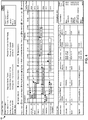
- FIG. 2 is a view 200 of a graphical user interface generated by the infusion management platform 150 that temporally displays infusion data for a patient derived from two or more infusion channels.
- FIGs. 3 and 4 show alternate views 300, 400 of the graphical user interface generated by the infusion management platform 150. These views are left without specific markings to further illustrate the various aspects of the graphical user interface.
- the graphical user interface can include a patient information section 205, a patient location section 210, an infusion timeline section 215, an infusion table 220, and overlapping infusions section 225. It will be appreciated that sections 205-225 may be displayed in different positions, in different relative sizes, and/or omitted depending on the desired implementation.
- the patient information section 205 can provide various information about the patient receiving infusions such as a patient identifier, a diagnosis, a caregiver / physician name (and identifiers for same), data of birth, admission and discharge times.
- the patient location section 210 can provide information characterizing / identifying a location of the patient.
- the infusion timeline section 215, as will be described in further detail below, can provide a view of temporal infusion events across multiple infusion channels.
- the infusion table 220 can provide further details regarding various infusion events including those illustrated in the timeline section 215 as well as any manually administered infusions that are separate from the infusion modules 140A.
- the overlapping infusions section 225 can group data identifying infusion events that occurred concurrently. Such grouping can be helpful to identify courses of treatment involving multiple infusions (e.g., treatments having multiple infusions that are only reimbursable via a single billing code, etc.).
- the infusion timeline section 215 can include a plurality of swim lanes 230 that each display data characterizing infusion events across different infusion channels. While the swim lanes 230 are illustrated as having a horizontal orientation, it will be appreciated that a vertical orientation can be also be implemented. Further, it will be appreciated that the spacing and/or width of the swim lanes can be uniform or they can vary based on, for example, infusion types (with more important infusion types being more prominently displayed).
- the infusion timeline section 215 can include a time span section 232 with various time demarcations (e.g., two hour intervals, etc.).
- the infusion timeline section 215 can include other complementary information relating to the visualizations in the swim lanes including an infusion event key 234 that corresponds certain infusion events with specific visualizations.
- the infusion event key 234 comprises a series of graphical icons 234A-234E that correspond to infusion events such as infusion paused / stopped 234A, new medication container (e.g., IV bag, etc.) 234B, start time 234C, stop time 234D, and infusion continued into the next day 234E.
- An infusion type key 236 can be displayed that associates visualizations with types of infusions.
- the infusion type key 236 comprises different color coding for infusion types such as hydration 236A, therapeutic drugs 236B, and chemotherapy 236C.
- each swim lane 230 there can be bars 238 (which in this example, are horizontally arranged) indicating a time period during which an infusion is administered (using, for example, the time span section 232). It will be appreciated that other types of visualizations can be utilized including dotted lines, continuous elements (e.g., circles, etc.) and the like.
- an infusion of Paclitaxel is initiated at 9:15 via a particular infusion channel as indicated by the beginning of the corresponding bar 238-4.
- the bar 238-4 can have a graphical icon 234A (in this case a triangular shape) that corresponds to the start time of the infusion and that can be placed immediately above the beginning of bar 238-4.
- a time stamp can also be provided above the bar 238-4.
- the bar 238-4 continues until 11:00 where the visualization indicates (via a graphical icon 234A showing an interruption of the bar 238-4) that Paclitaxel infusion was stopped until 11:45 at which time a new medication container was connected to the infusion channel (and as indicated by the new medication container graphical element 234).
- the Paclitaxel infusion can then continue (as indicated by the bar 238-4) until 14:45 at which point there was a pause in the infusion (as indicated by the graphical icon 234A above the bar 238-4).
- the Paclitaxel infusion continues at 15:15 (as indicated by the bar 238-4) until it terminates at 16:20 (as can be indicated by both a stop time graphical icon 234D and by a time stamp).
- the bar in the swim lane 230-4 can be colored according to the chemotherapy coloring scheme (as indicated by the infusion type key 236 and also be indicated by the parenthetical (C)).
- the graphical user interface can permit a user to obtain further information about a particular infusion over a particular channel.
- the graphical user interface can include a series of graphical user interface elements which, which activated, causes complementary information to be displayed in one or more of the patient information section 205, the patient location section 210, the infusion timeline section 215, the infusion table 220, and the overlapping infusions section 225.
- Activating, in this regard can include any type of user interaction with such graphical user interface elements including clicking, hovering, and/or various touch-screen interface gestures.
- additional information can be temporarily displayed on or adjacent to the bar 238-4 that characterizes the infusion and/or data associated with the Paclitaxel infusion can be prominently displayed in one or more of the infusion table section 220 and the overlapping infusions section 225.
- the subject matter described herein can be applied to any of a variety of use cases.
- the current subject matter can provide a timeline view of patient status: orders, labs, administered medication and IV services.
- Pop up / overlaid elements or other forms of graphical representation involving sequentiality of data can be displayed.
- the timeline view can also be used to identify medication order mismatch.
- the timeline can show where there is a mismatch that may potentially be of concern.
- the timeline can show relevant pump parameters (e.g., with a mouse-over) when a point of interest on the timeline is addressed. Pump parameters can be shown at that specific time.
- a pop up can open to show the values of the same parameter over a wider temporal window to allow a better understanding of the trend of that parameter.
- the logistic status of the medication container can be made available.
- This status indicator can cover the entire process from the order status to the floor location where the medication is available. This status is how the user knows where the next medication is in the process.
- the timeline can shows upcoming medication milestones from the medication order in association with the lab milestones.
- the timeline can show that lab results are ready and a marker can be dropped on the timeline to show the exact point in time.
- the timeline can show lab exceptions that could be potentially dangerous for the patient and that can affect the treatment outcome.
- FIG. 5 is a diagram 500 showing a different view of FIG. 1 in which the infusion modules 140A are connected to the infusion management platform 150 (either directly or indirectly as described above) via the network 105.
- the infusion management platform 150 comprises a rules engine 510 that includes a set of rules (at least some of which are user configurable) that define how the infusion events are identified / characterized from the data generated by the infusion modules 140A and what actions to take in relation to such events.
- the rules engine 510 can also track and/or maintain the times for identified infusion events so that they can be properly displayed in the graphical user interface at the correct time point.
- the rules engine 510 can be incorporated into the infusion management platform 150 and/or it can be remote and accessed via a web service by the infusion management platform 150.
- Various types of rules can be utilized by the rules engine 510 including those described in co-pending application U.S. Pat. App. Ser. No. 13/802,277 filed on March 13, 2013 , and entitled: "Infusion Management Platform for Medication Container Volume Tracking".
- FIG. 6 is a process flow diagram 600 in which, at 610, data is received that characterizes infusions administered to a patient among each of a plurality of infusion channels. Thereafter, at 620, a plurality of infusion events and respective event times are identified based on the received data. Subsequently, a temporal view of the infusion events are displayed, at 630, in a graphical user interface. The temporal view segregates each channel into a separate swim lane that each visualize infusion events for the corresponding channel at the respective event times.
- the data represented in the graphical user interfaces can comprise real-time or near real-time data obtained from an infusion module.
- the data represents historical infusions.
- a combination of real-time / near real-time and historical data can be viewed.
- future events / predicted events can also be rendered in the graphical user interface.
- the current subject matter can also be used to generate reports that comprise one or more aspects rendered in the graphical user interfaces such as the timeline. These reports can be in addition or in lieu of the rendering of the graphical user interface.
- One or more aspects or features of the subject matter described herein may be realized in digital electronic circuitry, integrated circuitry, specially designed ASICs (application specific integrated circuits), computer hardware, firmware, software, and/or combinations thereof.
- ASICs application specific integrated circuits
- These various implementations may include implementation in one or more computer programs that are executable and/or interpretable on a programmable system including at least one programmable processor, which may be special or general purpose, coupled to receive data and instructions from, and to transmit data and instructions to, a storage system, at least one input device (e.g., mouse, touch screen, etc.), and at least one output device.
- machine-readable signal refers to any signal used to provide machine instructions and/or data to a programmable processor.
- the machine-readable medium can store such machine instructions non-transitorily, such as for example as would a non-transient solid state memory or a magnetic hard drive or any equivalent storage medium.
- the machine-readable medium can alternatively or additionally store such machine instructions in a transient manner, such as for example as would a processor cache or other random access memory associated with one or more physical processor cores.
- the subject matter described herein can be implemented on a computer having a display device, such as for example a cathode ray tube (CRT) or a liquid crystal display (LCD) monitor for displaying information to the user and a keyboard and a pointing device, such as for example a mouse or a trackball, by which the user may provide input to the computer.
- a display device such as for example a cathode ray tube (CRT) or a liquid crystal display (LCD) monitor for displaying information to the user and a keyboard and a pointing device, such as for example a mouse or a trackball, by which the user may provide input to the computer.
- CTR cathode ray tube
- LCD liquid crystal display
- a keyboard and a pointing device such as for example a mouse or a trackball
- Other kinds of devices can be used to provide for interaction with a user as well.
- feedback provided to the user can be any form of sensory feedback, such as for example visual feedback, auditory feedback, or tactile feedback
- touch screens or other touch-sensitive devices such as single or multi-point resistive or capacitive trackpads, voice recognition hardware and software, optical scanners, optical pointers, digital image capture devices and associated interpretation software, and the like.
- the present invention also relates to the following items:
Landscapes
- Engineering & Computer Science (AREA)
- Health & Medical Sciences (AREA)
- Biomedical Technology (AREA)
- Public Health (AREA)
- General Health & Medical Sciences (AREA)
- Theoretical Computer Science (AREA)
- Epidemiology (AREA)
- Medical Informatics (AREA)
- Primary Health Care (AREA)
- General Engineering & Computer Science (AREA)
- General Business, Economics & Management (AREA)
- Business, Economics & Management (AREA)
- General Physics & Mathematics (AREA)
- Physics & Mathematics (AREA)
- Human Computer Interaction (AREA)
- Medicinal Chemistry (AREA)
- Chemical & Material Sciences (AREA)
- Bioinformatics & Cheminformatics (AREA)
- Veterinary Medicine (AREA)
- Heart & Thoracic Surgery (AREA)
- Anesthesiology (AREA)
- Vascular Medicine (AREA)
- Animal Behavior & Ethology (AREA)
- Life Sciences & Earth Sciences (AREA)
- Hematology (AREA)
- Multimedia (AREA)
- Data Mining & Analysis (AREA)
- Databases & Information Systems (AREA)
- Medical Treatment And Welfare Office Work (AREA)
- Infusion, Injection, And Reservoir Apparatuses (AREA)
- User Interface Of Digital Computer (AREA)
Abstract
Description
- This application claims priority to
U.S. Patent Application Serial No. 13/802,339, filed on March 13, 2013 - The subject matter described herein relates to graphical user interfaces for displaying infusion related data characterizing infusions for a patient by way of two or more infusion channels.
- Patients undergoing complex or prolonged medical care often receive multiple medications that are infused via various mechanisms including, for example, intravenous (IV) therapies, patient controlled analgesia, and syringe therapies. As the number of infusions for a particular patient, so does the complexity from a caregiver perspective. The caregiver needs to know when and what new medications are due, what specimens have been collected, when lab results are ready, the indications from the lab results, and the like. Furthermore, with large number of infusions, difficulties can also arise with regard to complete and accurate charge capture.
- In one aspect, data is received that characterizes infusions administered to a patient among each of a plurality of infusion channels. Thereafter, a plurality of infusion events and respective event times are identified based on the received data. A temporal view of the infusion events can then be displayed in a graphical user interface and/or the temporal view of the infusion events can form part of a report. The temporal view segregates each channel into a separate swim lane with each swim lane visualizing infusion events for the corresponding channel at the respective event times.
- The events can be of event types such as infusion start time, infusion end time, infusion paused, medication container change. Each event type can have a different visual indicator in the graphical user interface. There can be pluralities of infusion types and, optionally, each infusion type can have a different visual indicator in the graphical user interface.
- At least a portion of the received data can be received, via a computer network, from at least one infusion module that automatically infuses medication to the patient. The received data can be received in real-time as the data is generated by at least one infusion module. The received data can include historical data or lab data. In other variations, the received data includes a combination of at least two of: real-time data, historical data, and lab data.
- A rules engine and a plurality of pre-defined infusion event rules can be used to determine whether the received data comprises at least one infusion event.
- In some variations, the graphical user interface can also display, concurrent with the temporal view of the infusion events, a view characterizing at least one manually administered medication.
- The infusion events visualized in each swim lane can include bars extending from a starting time point at which an infusion begins on the corresponding channel until an ending time point at which the infusion on the channel ends.
- The data generated for the graphical user interface can be loaded into memory, transmitted to a remote computing system and/or stored in memory or other persistent storage.
- Computer program products are also described that comprise non-transitory computer readable media storing instructions, which when executed one or more data processor of one or more computing systems, causes at least one data processor to perform operations herein. Similarly, computer systems are also described that may include one or more data processors and a memory coupled to the one or more data processors. The memory may temporarily or permanently store instructions that cause at least one processor to perform one or more of the operations described herein. In addition, methods can be implemented by one or more data processors either within a single computing system or distributed among two or more computing systems. Such computing systems can be connected and can exchange data and/or commands or other instructions or the like via one or more connections, including but not limited to a connection over a network (e.g. the Internet, a wireless wide area network, a local area network, a wide area network, a wired network, or the like), via a direct connection between one or more of the multiple computing systems, etc.
- The subject matter described herein provides many advantages. For example, the graphical user interfaces as described and illustrated herein allow caregivers and/or pharmacists to readily identify what infusions have been provided over which infusion channels and over what time periods. Furthermore, the graphical user interfaces as described and illustrated herein are advantageous in that they enable billing specialists to have an accurate and complete view of various infusions given to a patient so that they may be coded and correctly charged.
- The details of one or more variations of the subject matter described herein are set forth in the accompanying drawings and the description below. Other features and advantages of the subject matter described herein will be apparent from the description and drawings, and from the claims.
-
-
FIG. 1 is a system diagram illustrating a computing landscape within a healthcare environment; -
FIG. 2 is a first diagram illustrating a view of a graphical user interface displaying infusion related data over multiple infusion channels; -
FIG. 3 is a second diagram illustrating a view of a graphical user interface displaying infusion related data over multiple infusion channels; -
FIG. 4 is a third diagram illustrating a view of a graphical user interface displaying infusion related data over multiple infusion channels; -
FIG. 5 is a diagram illustrating an aspect of the computing landscape ofFIG. 1 ; and -
FIG. 6 is a process flow diagram illustrating a method for displaying the infusion related data in the graphical user interface. -
FIG. 1 is a system diagram illustrating acomputing landscape 100 within a healthcare environment such as a hospital. Various devices and systems, both local to the healthcare environment and remote from the healthcare environment, can interact via at least onecomputing network 105. Thiscomputing network 105 can provide any form or medium of digital communication connectivity (i.e., wired or wireless) amongst the various devices and systems. Examples of communication networks include a local area network ("LAN"), a wide area network ("WAN"), and the Internet. In some cases, one or more of the various devices and systems can interact directly via peer-to-peer coupling (either via a hardwired connection or via a wireless protocol such as Bluetooth or WiFi). In addition, in some variations, one or more of the devices and systems communicate via a cellular data network. - In particular, aspects of the
computing landscape 100 can be implemented in a computing system that includes a back-end component (e.g., as a data server 110), or that includes a middleware component (e.g., an application server 115), or that includes a front-end component (e.g., aclient computer 120 having a graphical user interface or a Web browser through which a user may interact with an implementation of the subject matter described herein), or any combination of such back-end, middleware, or front-end components.Client 120 andservers communications network 105. The relationship of theclients 120 andservers Clients 120 can be any of a variety of computing platforms that include local applications for providing various functionality within the healthcare environment.Example clients 120 include, but are not limited to, desktop computers, laptop computers, tablets, and other computers / devices with touch-screen interfaces. The local applications can be self-contained in that they do not require network connectivity and/or they can interact with one or more of theservers 110, 115 (e.g., a web browser). - A variety of applications can be executed on the various devices and systems within the computing landscape such as electronic health record applications, medical device monitoring, operation, and maintenance applications, scheduling applications, billing applications and the like.
- The
network 105 can be coupled to one or moredata storage systems 125. Thedata storage systems 125 can include databases providing physical data storage within the healthcare environment or within a dedicated facility. In addition, or in the alternative, thedata storage systems 125 can include cloud-based systems providing remote storage of data in, for example, a multi-tenant computing environment. Thedata storage systems 125 can also comprise non-transitory computer readable media. - Mobile communications devices (MCDs) 130 can also form part of the
computing landscape 100. TheMCDs 130 can communicate directly via thenetwork 105 and/or they can communicate with thenetwork 105 via an intermediate network such as a cellular data network. Various types of communication protocols can be used by theMCDs 130 including, for example, messaging protocols such as SMS and MMS. - Various types of
medical devices 140 can be used as part of thecomputing landscape 100. For example, the landscape can include comprise various systems / units for delivering fluid (including medication) to a patient. One particular type ofmedical device 140 is aninfusion module 140A. Theinfusion modules 140A can include various types of infusion pumps including peristaltic infusion pumps, large volume infusion pumps, patient controlled analgesia, and syringe pumps. Theinfusion modules 140A can be directly coupled to thenetwork 105 and/or they can be coupled to amedical device 140 which is, in turn, coupled to thenetwork 140. - The
medical devices 140 can comprise, unless otherwise specified, any type of device or system with a communications interface that characterizes one or more physiological measurements of a patient and/or that characterize treatment of a patient. In some cases, themedical devices 140 communicate via peer to peer wired or wireless communications with another medical device 140 (as opposed to communicating with the network 105). For example, themedical device 140 can comprise a bedside vital signs monitor that is connected to othermedical devices 140, namely a wireless pulse oximeter and to a wired blood pressure monitor. One or more operational parameters of themedical devices 140 can be locally controlled by a clinician, controlled via a clinician via thenetwork 105, and/or they can be controlled by one or more of aserver client 125, aMCD 130, and/or anothermedical device 140. - The
computing landscape 100 can provide various types of functionality as may be required within a healthcare environment such as a hospital. For themedical devices 140 can provide data characterizing one or more physiological measurements of a patient and/or treatment of a patient (e.g.,medical device 140 can be an infusion management system, etc.). The data generated by themedical devices 140 can be communicated to othermedical devices 140, theservers clients 120, theMCDs 125, and/or stored in thedata storage systems 125. - The
computing landscape 100 can also include at least one medication ordering system 145 (which can include any variety of feeds that relate to medication orders in a hospital environment). Themedication ordering system 145 can be coupled to the network and enable orders (e.g., prescriptions, etc.) to be generated and monitored. Themedication order system 145 can be accessed, for example, via the one of theclients 120 andMCDs 130 via theapplication server 115. Themedication ordering system 145 can specify a plurality of medications and/or other fluids to be infused into a patient over a pre-defined period of time and according to a pre-defined sequence via at least oneinfusion module 140A. These orders can be stored in thedata storage 125 and/or pushed out toother clients 120, anMCD 130, and/or one or more of themedical devices 140. In some cases, caregivers alter the timing and sequence of such medication delivery based on reactions from the patient (as measured by various physiological sensors, etc.). - One more of the medical devices 140 (such as
infusion modules 140A) can monitor an amount of fluid (e.g., medication, etc.) delivered to a patient. Fluids delivered to patients are referred to herein as infusions. Unless otherwise specified, references herein to medications should also be construed to include non-medication fluids (e.g., blood, saline, etc.) for delivery to a patient via aninfusion module 140A. - As noted above, containers housing fluids such as medication often vary from the volumes ordered by a pharmacist / clinician. A software-implemented
infusion management platform 150 can be provided that includes a graphical user interface for tracking and monitoring infusions for one or more patients (as will be described in further detail below). Theinfusion management platform 150 can communicate with theinfusion modules 140A via thenetwork 105. Theinfusion modules 140A can directly or indirectly provide data comprising / characterizing various attributes relating to a particular infusion to the infusion management platform 150 (e.g., patient identifier, medication container identifier, medication type, rate of medication administration, infusion module identifier, etc.). Such attributes can be provided, for example, via messages sent from theinfusion modules 140A. In some cases, theinfusion management platform 150 receives medication orders from themedication ordering system 145 and then associates such orders withparticular infusion modules 140A and/or particular patients (who are later associated with theinfusion modules 140A). -
FIG. 2 is aview 200 of a graphical user interface generated by theinfusion management platform 150 that temporally displays infusion data for a patient derived from two or more infusion channels.FIGs. 3 and4 showalternate views infusion management platform 150. These views are left without specific markings to further illustrate the various aspects of the graphical user interface. With reference to diagram 300 ofFIG. 3 , the graphical user interface can include a patient information section 205, a patient location section 210, an infusion timeline section 215, an infusion table 220, and overlappinginfusions section 225. It will be appreciated that sections 205-225 may be displayed in different positions, in different relative sizes, and/or omitted depending on the desired implementation. The patient information section 205 can provide various information about the patient receiving infusions such as a patient identifier, a diagnosis, a caregiver / physician name (and identifiers for same), data of birth, admission and discharge times. The patient location section 210 can provide information characterizing / identifying a location of the patient. The infusion timeline section 215, as will be described in further detail below, can provide a view of temporal infusion events across multiple infusion channels. The infusion table 220 can provide further details regarding various infusion events including those illustrated in the timeline section 215 as well as any manually administered infusions that are separate from theinfusion modules 140A. The overlappinginfusions section 225 can group data identifying infusion events that occurred concurrently. Such grouping can be helpful to identify courses of treatment involving multiple infusions (e.g., treatments having multiple infusions that are only reimbursable via a single billing code, etc.). - The infusion timeline section 215 can include a plurality of
swim lanes 230 that each display data characterizing infusion events across different infusion channels. While theswim lanes 230 are illustrated as having a horizontal orientation, it will be appreciated that a vertical orientation can be also be implemented. Further, it will be appreciated that the spacing and/or width of the swim lanes can be uniform or they can vary based on, for example, infusion types (with more important infusion types being more prominently displayed). The infusion timeline section 215 can include a time span section 232 with various time demarcations (e.g., two hour intervals, etc.). - The infusion timeline section 215 can include other complementary information relating to the visualizations in the swim lanes including an infusion event key 234 that corresponds certain infusion events with specific visualizations. In one variation, the infusion event key 234 comprises a series of
graphical icons 234A-234E that correspond to infusion events such as infusion paused / stopped 234A, new medication container (e.g., IV bag, etc.) 234B, starttime 234C,stop time 234D, and infusion continued into thenext day 234E. - An
infusion type key 236 can be displayed that associates visualizations with types of infusions. In one variation, theinfusion type key 236 comprises different color coding for infusion types such ashydration 236A,therapeutic drugs 236B, andchemotherapy 236C. - As illustrated in
FIG. 2 , within eachswim lane 230 there can be bars 238 (which in this example, are horizontally arranged) indicating a time period during which an infusion is administered (using, for example, the time span section 232). It will be appreciated that other types of visualizations can be utilized including dotted lines, continuous elements (e.g., circles, etc.) and the like. Using the third swim lane 230-4 as an example, an infusion of Paclitaxel is initiated at 9:15 via a particular infusion channel as indicated by the beginning of the corresponding bar 238-4. The bar 238-4 can have agraphical icon 234A (in this case a triangular shape) that corresponds to the start time of the infusion and that can be placed immediately above the beginning of bar 238-4. In addition, a time stamp can also be provided above the bar 238-4. The bar 238-4 continues until 11:00 where the visualization indicates (via agraphical icon 234A showing an interruption of the bar 238-4) that Paclitaxel infusion was stopped until 11:45 at which time a new medication container was connected to the infusion channel (and as indicated by the new medication container graphical element 234). The Paclitaxel infusion can then continue (as indicated by the bar 238-4) until 14:45 at which point there was a pause in the infusion (as indicated by thegraphical icon 234A above the bar 238-4). The Paclitaxel infusion continues at 15:15 (as indicated by the bar 238-4) until it terminates at 16:20 (as can be indicated by both a stop timegraphical icon 234D and by a time stamp). Furthermore, the bar in the swim lane 230-4 can be colored according to the chemotherapy coloring scheme (as indicated by theinfusion type key 236 and also be indicated by the parenthetical (C)). - Various aspects of the graphical user interface can permit a user to obtain further information about a particular infusion over a particular channel. For example, in some variations, the graphical user interface can include a series of graphical user interface elements which, which activated, causes complementary information to be displayed in one or more of the patient information section 205, the patient location section 210, the infusion timeline section 215, the infusion table 220, and the overlapping
infusions section 225. Activating, in this regard, can include any type of user interaction with such graphical user interface elements including clicking, hovering, and/or various touch-screen interface gestures. For example, by activating a graphical user interface element corresponding to the bar 238-4 in the Paclitaxel swim lane 230-4 additional information can be temporarily displayed on or adjacent to the bar 238-4 that characterizes the infusion and/or data associated with the Paclitaxel infusion can be prominently displayed in one or more of theinfusion table section 220 and the overlappinginfusions section 225. - The subject matter described herein can be applied to any of a variety of use cases. For example, the current subject matter can provide a timeline view of patient status: orders, labs, administered medication and IV services. Pop up / overlaid elements or other forms of graphical representation involving sequentiality of data can be displayed.
- The timeline view can also be used to identify medication order mismatch. The timeline can show where there is a mismatch that may potentially be of concern.
- The timeline can show relevant pump parameters (e.g., with a mouse-over) when a point of interest on the timeline is addressed. Pump parameters can be shown at that specific time. In addition, and optionally, a pop up can open to show the values of the same parameter over a wider temporal window to allow a better understanding of the trend of that parameter.
- The logistic status of the medication container can be made available. This status indicator can cover the entire process from the order status to the floor location where the medication is available. This status is how the user knows where the next medication is in the process.
- The timeline can shows upcoming medication milestones from the medication order in association with the lab milestones.
- The timeline can show that lab results are ready and a marker can be dropped on the timeline to show the exact point in time.
- The timeline can show lab exceptions that could be potentially dangerous for the patient and that can affect the treatment outcome.
-
FIG. 5 is a diagram 500 showing a different view ofFIG. 1 in which theinfusion modules 140A are connected to the infusion management platform 150 (either directly or indirectly as described above) via thenetwork 105. Theinfusion management platform 150 comprises a rules engine 510 that includes a set of rules (at least some of which are user configurable) that define how the infusion events are identified / characterized from the data generated by theinfusion modules 140A and what actions to take in relation to such events. The rules engine 510 can also track and/or maintain the times for identified infusion events so that they can be properly displayed in the graphical user interface at the correct time point. The rules engine 510 can be incorporated into theinfusion management platform 150 and/or it can be remote and accessed via a web service by theinfusion management platform 150. Various types of rules can be utilized by the rules engine 510 including those described in co-pending applicationU.S. Pat. App. Ser. No. 13/802,277 filed on March 13, 2013 -
FIG. 6 is a process flow diagram 600 in which, at 610, data is received that characterizes infusions administered to a patient among each of a plurality of infusion channels. Thereafter, at 620, a plurality of infusion events and respective event times are identified based on the received data. Subsequently, a temporal view of the infusion events are displayed, at 630, in a graphical user interface. The temporal view segregates each channel into a separate swim lane that each visualize infusion events for the corresponding channel at the respective event times. - It will be appreciated that the data represented in the graphical user interfaces can comprise real-time or near real-time data obtained from an infusion module. In some cases, the data represents historical infusions. In other cases, a combination of real-time / near real-time and historical data can be viewed. Further, future events / predicted events can also be rendered in the graphical user interface.
- The current subject matter can also be used to generate reports that comprise one or more aspects rendered in the graphical user interfaces such as the timeline. These reports can be in addition or in lieu of the rendering of the graphical user interface.
- One or more aspects or features of the subject matter described herein may be realized in digital electronic circuitry, integrated circuitry, specially designed ASICs (application specific integrated circuits), computer hardware, firmware, software, and/or combinations thereof. These various implementations may include implementation in one or more computer programs that are executable and/or interpretable on a programmable system including at least one programmable processor, which may be special or general purpose, coupled to receive data and instructions from, and to transmit data and instructions to, a storage system, at least one input device (e.g., mouse, touch screen, etc.), and at least one output device.
- These computer programs, which can also be referred to as programs, software, software applications, applications, components, or code, include machine instructions for a programmable processor, and can be implemented in a high-level procedural language, an object-oriented programming language, a functional programming language, a logical programming language, and/or in assembly/machine language. As used herein, the term "machine-readable medium" refers to any computer program product, apparatus and/or device, such as for example magnetic discs, optical disks, memory, and Programmable Logic Devices (PLDs), used to provide machine instructions and/or data to a programmable processor, including a machine-readable medium that receives machine instructions as a machine-readable signal. The term "machine-readable signal" refers to any signal used to provide machine instructions and/or data to a programmable processor. The machine-readable medium can store such machine instructions non-transitorily, such as for example as would a non-transient solid state memory or a magnetic hard drive or any equivalent storage medium. The machine-readable medium can alternatively or additionally store such machine instructions in a transient manner, such as for example as would a processor cache or other random access memory associated with one or more physical processor cores.
- To provide for interaction with a user, the subject matter described herein can be implemented on a computer having a display device, such as for example a cathode ray tube (CRT) or a liquid crystal display (LCD) monitor for displaying information to the user and a keyboard and a pointing device, such as for example a mouse or a trackball, by which the user may provide input to the computer. Other kinds of devices can be used to provide for interaction with a user as well. For example, feedback provided to the user can be any form of sensory feedback, such as for example visual feedback, auditory feedback, or tactile feedback; and input from the user may be received in any form, including, but not limited to, acoustic, speech, or tactile input. Other possible input devices include, but are not limited to, touch screens or other touch-sensitive devices such as single or multi-point resistive or capacitive trackpads, voice recognition hardware and software, optical scanners, optical pointers, digital image capture devices and associated interpretation software, and the like.
- The subject matter described herein can be embodied in systems, apparatus, methods, and/or articles depending on the desired configuration. The implementations set forth in the foregoing description do not represent all implementations consistent with the subject matter described herein. Instead, they are merely some examples consistent with aspects related to the described subject matter. Although a few variations have been described in detail above, other modifications or additions are possible. In particular, further features and/or variations can be provided in addition to those set forth herein. For example, the implementations described above can be directed to various combinations and subcombinations of the disclosed features and/or combinations and subcombinations of several further features disclosed above. In addition, the logic flow(s) depicted in the accompanying figures and/or described herein do not necessarily require the particular order shown, or sequential order, to achieve desirable results. Other implementations may be within the scope of the claims.
- The present invention also relates to the following items:
- 1. A computer-implemented method comprising:
- receiving data characterizing infusions administered to a patient among each of a plurality of infusion channels;
- identifying, based on the received data, a plurality of infusion events and respective event times; and
- displaying, in a graphical user interface, a temporal view of the infusion events, the temporal view segregating each channel into a separate swim lane, each swim lane visualizing infusion events for the corresponding channel at the respective event times.
- 2. A method as in
item 1, wherein the events are of event types selected from a group consisting of: infusion start time, infusion end time, infusion paused, medication container change. - 3. A method as in item 2, wherein each event type has a different visual indicator in the graphical user interface.
- 4. A method as in any of the preceding items, wherein there are pluralities of infusion types, and wherein each infusion type has a different visual indicator in the graphical user interface.
- 5. A method as in any of the preceding items, wherein at least a portion of the received data is received, via a computer network, from at least one infusion module that automatically infuses medication to the patient.
- 6. A method as in item 5, wherein the received data is received in real-time as the data is generated by the at least one infusion module.
- 7. A method as in item 5 or 6, wherein the received data comprises historical data or lab data.
- 8. A method as in any of items 5 to 7, wherein the received data comprises a combination of at least two of: real-time data, historical data, and lab data.
- 9. A method as in any of the preceding items, wherein the identifying comprises:
determining, using a rules engine and a plurality of pre-defined infusion event rules, whether the received data comprises at least one infusion event. - 10. A method as in any of the preceding items further comprising:
displaying, in the graphical user interface concurrent with the temporal view of the infusion events, a view characterizing at least one manually administered medication. - 11. A method as in any of the preceding items, wherein the infusion events visualized in each swim lane comprise bars extending from a starting time point at which an infusion begins on the corresponding channel until an ending time point at which the infusion on the channel ends.
- 12. A method as in any of the preceding items, wherein the receiving, identifying, and displaying are implemented by at least one data processor forming part of at least one computing system.
- 13. A method as in any of the preceding items, further comprising at least one of:
- loading data characterizing the identified events;
- transmitting data to a remote computing system characterizing the identified events; and
- storing data characterizing the identified events.
- 14. A computer-implemented method comprising:
- receiving data characterizing infusions administered to a patient among each of a plurality of infusion channels;
- identifying, based on the received data, a plurality of infusion events and respective event times; and
- generating a report comprising a temporal view of the infusion events, the temporal view segregating each channel into a separate swim lane, each swim lane visualizing infusion events for the corresponding channel at the respective event times.
- 15. A non-transitory computer program product storing instructions, which when executed by at least one data processor of at least one computing system, result in operations to implement a method as in any of the preceding items.
- 16. A system comprising:
- at least one data processor; and
- memory storing instructions which, when executed by the at least one data processor, result in a method as specified by any of
items 1 to 14.
Claims (15)
- A computer-implemented method comprising:receiving data characterizing infusions administered to a patient among each of a plurality of infusion channels;identifying, based on the received data, a plurality of infusion events and respective event times, and a medication information;generating data representing a temporal view of the infusion events to form a graphical user interface, the temporal view segregating each channel into a separate swim lane (230), each swim lane (230) being positioned separate from each other swim lane (230) and visualizing infusion events for the corresponding channel at the respective event times, wherein each event type has a different visual indicator (234) in the graphical user interface; andtransmitting the generated data via a computing network to be stored and accessed,characterized in thatthe event types represented by a respective visual indicator comprise infusion start time, infusion end time, infusion paused, and medication container change,the method further comprising identifying a medication order mismatch, wherein the generating of data comprises generating a medication order mismatch event, if a medication order mismatch is identified.
- A method as in claim 1, further comprising:
monitoring of the delivery of infusions by at least one infusion module based on the infusion events. - A method as in claim 2, further comprising:
receiving a physiological measurement of a patient and/or a treatment of a patient, wherein the monitoring of the delivery of infusions and/or the identifying of a medication order mismatch is furthermore based on the received physiological measurement of a patient and/or the received treatment of a patient. - A method as claimed in any of the preceding claims, wherein at least a portion of the received data is received, via the computing network, from at least one infusion module that automatically infuses medication to the patient and wherein the received data is received in real-time as the data is generated by the at least one infusion module.
- A method as claimed in any of the preceding claims, wherein the visual indicator comprises a graphical icon (234A,...,234E) and wherein there are pluralities of infusion types, and wherein each infusion type has an infusion type key (236) in the graphical user interface.
- A method as claimed in any of the preceding claims, wherein the received data comprises historical data or lab data.
- A method as claimed in any of the preceding claims, wherein the received data comprises a combination of at least two of: real-time data, historical data, and lab data.
- A method as in any of the preceding claims, wherein the identifying comprises:
determining, using a rules engine (510) and a plurality of pre-defined infusion event rules, whether the received data comprises at least one infusion event. - A method as in any of the preceding claims further comprising:
generating data representing a view characterizing at least one manually administered medication concurrent with generating data representing the temporal view of the infusion events. - A method as in any of the preceding claims, wherein the infusion events visualized in each swim lane (230) comprise bars (238) extending from a starting time point at which an infusion begins on the corresponding channel until an ending time point at which the infusion on the channel ends.
- A method as in any of the preceding claims, wherein the receiving, identifying, generating, and transmitting are implemented by at least one data processor forming part of at least one computing system.
- A method as in any of the preceding claims, further comprising at least one of:loading data characterizing the identified events;transmitting data to a remote computing system characterizing the identified events; andstoring data characterizing the identified events.
- A non-transitory computer program product storing instructions, which when executed by at least one data processor of at least one computing system, result in operations to implement a method as in any of the preceding claims.
- A system comprising:at least one data processor; andmemory storing instructions which, when executed by the at least one data processor, result in a method as specified by any of claims 1 to 12.
- A system according to claim 14, comprising at least one infusion module (140a), wherein the data processor and the memory storing instructions are implemented in the infusion module (140a).
Applications Claiming Priority (3)
| Application Number | Priority Date | Filing Date | Title |
|---|---|---|---|
| US13/802,339 US9177108B2 (en) | 2013-03-13 | 2013-03-13 | Multiple infusion channel data graphical user interface |
| EP14713323.5A EP2973092A1 (en) | 2013-03-13 | 2014-03-05 | Multiple infusion channel data graphical user interface |
| PCT/US2014/020889 WO2014164155A1 (en) | 2013-03-13 | 2014-03-05 | Multiple infusion channel data graphical user interface |
Related Parent Applications (1)
| Application Number | Title | Priority Date | Filing Date |
|---|---|---|---|
| EP14713323.5A Division EP2973092A1 (en) | 2013-03-13 | 2014-03-05 | Multiple infusion channel data graphical user interface |
Publications (3)
| Publication Number | Publication Date |
|---|---|
| EP3544018A1 true EP3544018A1 (en) | 2019-09-25 |
| EP3544018C0 EP3544018C0 (en) | 2023-06-07 |
| EP3544018B1 EP3544018B1 (en) | 2023-06-07 |
Family
ID=50389526
Family Applications (2)
| Application Number | Title | Priority Date | Filing Date |
|---|---|---|---|
| EP19153530.1A Active EP3544018B1 (en) | 2013-03-13 | 2014-03-05 | Multiple infusion channel data graphical user interface |
| EP14713323.5A Ceased EP2973092A1 (en) | 2013-03-13 | 2014-03-05 | Multiple infusion channel data graphical user interface |
Family Applications After (1)
| Application Number | Title | Priority Date | Filing Date |
|---|---|---|---|
| EP14713323.5A Ceased EP2973092A1 (en) | 2013-03-13 | 2014-03-05 | Multiple infusion channel data graphical user interface |
Country Status (9)
| Country | Link |
|---|---|
| US (6) | US9177108B2 (en) |
| EP (2) | EP3544018B1 (en) |
| JP (1) | JP6469642B2 (en) |
| CN (1) | CN105247522B (en) |
| AU (1) | AU2014249666B2 (en) |
| BR (1) | BR112015022241A2 (en) |
| CA (1) | CA2902515A1 (en) |
| ES (1) | ES2949622T3 (en) |
| WO (1) | WO2014164155A1 (en) |
Families Citing this family (17)
| Publication number | Priority date | Publication date | Assignee | Title |
|---|---|---|---|---|
| US9190010B2 (en) | 2011-01-10 | 2015-11-17 | CareFushion 303, Inc. | Displaying visual elements on a medical device |
| AU2013201566B2 (en) | 2012-08-31 | 2014-11-27 | Gambro Lundia Ab | Dialysis apparatus with versatile user interface and method and computer program therefor |
| EP3014563A4 (en) * | 2013-06-27 | 2017-03-01 | Smiths Medical ASD, Inc. | Infusion planning system |
| US20170372441A1 (en) * | 2014-12-22 | 2017-12-28 | Smiths Medical Asd, Inc. | Infusion planning system with clinical decision support |
| US10071202B2 (en) * | 2015-08-14 | 2018-09-11 | Baxter International Inc. | Medical device data integration apparatus and methods |
| US10892054B2 (en) * | 2016-12-06 | 2021-01-12 | Fresenius Vial Sas | Control station for outputting information relating to a multiplicity of infusion systems to a user |
| US20180197242A1 (en) * | 2017-01-10 | 2018-07-12 | Bgc Partners, L.P. | Graphical user interface for order transmission |
| CN108272464A (en) * | 2018-01-02 | 2018-07-13 | 沈阳东软医疗系统有限公司 | Scan aid in treatment method, apparatus, electronic equipment and storage medium |
| JP7124453B2 (en) * | 2018-05-29 | 2022-08-24 | オムロンヘルスケア株式会社 | Medication management device, medication management method and medication management program |
| US20200022657A1 (en) * | 2018-07-18 | 2020-01-23 | General Electric Company | Minimally invasive procedure analysis and review system and method |
| EP3912166B1 (en) | 2019-01-18 | 2024-08-07 | CareFusion 303, Inc. | Medication tracking system |
| USD938466S1 (en) | 2020-02-28 | 2021-12-14 | Smiths Medical Asd, Inc. | Display screen or portion thereof with graphical user interface |
| USD938467S1 (en) | 2020-02-28 | 2021-12-14 | Smiths Medical Asd, Inc. | Display screen or portion thereof with graphical user interface |
| CN113946247A (en) * | 2021-10-15 | 2022-01-18 | 珠海市美瑞华医用科技有限公司 | Graphical user interface generation method, terminal device and storage medium for infusion system |
| USD1024093S1 (en) * | 2021-10-15 | 2024-04-23 | Roche Molecular Systems, Inc. | Display screen or portion thereof with graphical user interface for patient timeline navigation |
| CN115475305B (en) * | 2022-09-22 | 2024-08-16 | 深圳麦科田生物医疗技术股份有限公司 | Liquid medicine infusion control method, infusion system and infusion pump |
| USD1066406S1 (en) * | 2023-10-05 | 2025-03-11 | Amba Health and Care Limited | Display screen or portion thereof with transitional graphical user interface |
Citations (2)
| Publication number | Priority date | Publication date | Assignee | Title |
|---|---|---|---|---|
| US20060229557A1 (en) * | 2005-04-11 | 2006-10-12 | Fathallah Marwan A | User interface improvements for medical devices |
| US20120323090A1 (en) * | 2011-06-20 | 2012-12-20 | Cerner Innovation, Inc. | Ambient sensing of patient discomfort |
Family Cites Families (50)
| Publication number | Priority date | Publication date | Assignee | Title |
|---|---|---|---|---|
| US5713856A (en) * | 1995-03-13 | 1998-02-03 | Alaris Medical Systems, Inc. | Modular patient care system |
| US6671563B1 (en) * | 1995-05-15 | 2003-12-30 | Alaris Medical Systems, Inc. | System and method for collecting data and managing patient care |
| US5781442A (en) * | 1995-05-15 | 1998-07-14 | Alaris Medical Systems, Inc. | System and method for collecting data and managing patient care |
| US7647237B2 (en) | 1998-04-29 | 2010-01-12 | Minimed, Inc. | Communication station and software for interfacing with an infusion pump, analyte monitor, analyte meter, or the like |
| JP2000042103A (en) * | 1998-07-29 | 2000-02-15 | Terumo Corp | Medicinal solution injection system and readable memory therefor |
| WO2002015121A1 (en) | 2000-08-16 | 2002-02-21 | Webb Richard M | Scannable barcode display and methods for using the same |
| US7262685B2 (en) | 2000-12-11 | 2007-08-28 | Asap Automation, Llc | Inventory system with barcode display |
| US20050010447A1 (en) * | 2001-07-06 | 2005-01-13 | Katsuyuki Miyasaka | Patient information management apparatus and method |
| JP4495962B2 (en) * | 2001-07-31 | 2010-07-07 | スコット・ラボラトリーズ・インコーポレイテッド | Apparatus and method for titrating drug delivery |
| EP1421505A1 (en) * | 2001-08-22 | 2004-05-26 | Koninklijke Philips Electronics N.V. | Timeline display apparatus |
| US8775196B2 (en) | 2002-01-29 | 2014-07-08 | Baxter International Inc. | System and method for notification and escalation of medical data |
| US20030140928A1 (en) * | 2002-01-29 | 2003-07-31 | Tuan Bui | Medical treatment verification system and method |
| US7698156B2 (en) | 2002-01-29 | 2010-04-13 | Baxter International Inc. | System and method for identifying data streams associated with medical equipment |
| US20030141981A1 (en) | 2002-01-29 | 2003-07-31 | Tuan Bui | System and method for operating medical devices |
| US20030144878A1 (en) | 2002-01-29 | 2003-07-31 | Wilkes Gordon J. | System and method for providing multiple units of measure |
| US20030140929A1 (en) | 2002-01-29 | 2003-07-31 | Wilkes Gordon J. | Infusion therapy bar coding system and method |
| US20040176667A1 (en) | 2002-04-30 | 2004-09-09 | Mihai Dan M. | Method and system for medical device connectivity |
| US20050065817A1 (en) | 2002-04-30 | 2005-03-24 | Mihai Dan M. | Separation of validated information and functions in a healthcare system |
| US20040167804A1 (en) | 2002-04-30 | 2004-08-26 | Simpson Thomas L.C. | Medical data communication notification and messaging system and method |
| US20050055242A1 (en) | 2002-04-30 | 2005-03-10 | Bryan Bello | System and method for medical data tracking, analysis and reporting for healthcare system |
| US8234128B2 (en) | 2002-04-30 | 2012-07-31 | Baxter International, Inc. | System and method for verifying medical device operational parameters |
| US20040172301A1 (en) | 2002-04-30 | 2004-09-02 | Mihai Dan M. | Remote multi-purpose user interface for a healthcare system |
| US20040167465A1 (en) | 2002-04-30 | 2004-08-26 | Mihai Dan M. | System and method for medical device authentication |
| US20050055244A1 (en) | 2003-07-18 | 2005-03-10 | Janet Mullan | Wireless medical communication system and method |
| US20050197865A1 (en) | 2004-03-05 | 2005-09-08 | Desmond Jordan | Physiologic inference monitor |
| US8961461B2 (en) | 2004-05-27 | 2015-02-24 | Baxter International Inc. | Multi-state alarm system for a medical pump |
| US8359338B2 (en) * | 2004-07-30 | 2013-01-22 | Carefusion 303, Inc. | System and method for managing medical databases for patient care devices |
| CN101116077A (en) * | 2005-02-11 | 2008-01-30 | 卡迪纳尔健康303公司 | Identification systems and methods for medication administration |
| US8391161B1 (en) * | 2009-05-07 | 2013-03-05 | Jasper Wireless, Inc. | Virtual diagnostic system for wireless communications network systems |
| US8014576B2 (en) * | 2005-11-23 | 2011-09-06 | The Medipattern Corporation | Method and system of computer-aided quantitative and qualitative analysis of medical images |
| US20070145137A1 (en) | 2005-12-27 | 2007-06-28 | Mrowiec Zbigniew R | Systems and methods for processing measurement data |
| JP4384691B2 (en) | 2006-07-13 | 2009-12-16 | ワイズ・ソリューション株式会社 | Medical information management system, terminal device used therefor, medical information management program, program for terminal device |
| US8435206B2 (en) | 2006-08-03 | 2013-05-07 | Smiths Medical Asd, Inc. | Interface for medical infusion pump |
| US7999810B1 (en) * | 2006-08-30 | 2011-08-16 | Boice Gina L | System and method for animated computer visualization of historic events |
| US8025634B1 (en) | 2006-09-18 | 2011-09-27 | Baxter International Inc. | Method and system for controlled infusion of therapeutic substances |
| US20080086333A1 (en) | 2006-10-06 | 2008-04-10 | Cerner Innovation, Inc. | Documentation of medication activities in context of mar |
| CA2571666A1 (en) | 2006-12-12 | 2008-06-12 | Diversinet Corp. | Secure identity and personal information storage and transfer |
| US9026370B2 (en) * | 2007-12-18 | 2015-05-05 | Hospira, Inc. | User interface improvements for medical devices |
| US9501619B2 (en) * | 2008-11-13 | 2016-11-22 | Cerner Innovation, Inc. | Integrated medication and infusion monitoring system |
| US8271106B2 (en) * | 2009-04-17 | 2012-09-18 | Hospira, Inc. | System and method for configuring a rule set for medical event management and responses |
| US8172798B2 (en) | 2009-05-12 | 2012-05-08 | Sigma International General Medical Apparatus LLC | System and method for managing infusion therapies |
| US8291337B2 (en) * | 2009-09-22 | 2012-10-16 | Cerner Innovation, Inc. | Infusion management |
| US8894631B2 (en) | 2010-03-24 | 2014-11-25 | Baxter International Inc. | Multiple drug infusion system and method |
| JP5600578B2 (en) * | 2010-12-14 | 2014-10-01 | アクトーム総合研究所株式会社 | Project management information generation device, project management information generation program, and electronic medical record information generation device |
| KR20130108640A (en) * | 2010-12-16 | 2013-10-04 | 소니 모빌 커뮤니케이션즈 에이비 | A calendar application for communication devices |
| WO2013028497A1 (en) * | 2011-08-19 | 2013-02-28 | Hospira, Inc. | Systems and methods for a graphical interface including a graphical representation of medical data |
| CN102387217A (en) * | 2011-11-16 | 2012-03-21 | 乌维磊 | Wireless fidelity (WiFi) medical monitoring management system |
| US20130151285A1 (en) * | 2011-12-09 | 2013-06-13 | Jeffrey Lee McLaren | System for automatically populating medical data |
| US20140068487A1 (en) | 2012-09-05 | 2014-03-06 | Roche Diagnostics Operations, Inc. | Computer Implemented Methods For Visualizing Correlations Between Blood Glucose Data And Events And Apparatuses Thereof |
| US20140276560A1 (en) | 2013-03-13 | 2014-09-18 | Carefusion 303, Inc. | Infusion Management Platform For Medication Container Volume Tracking |
-
2013
- 2013-03-13 US US13/802,339 patent/US9177108B2/en active Active
-
2014
- 2014-03-05 JP JP2016500683A patent/JP6469642B2/en active Active
- 2014-03-05 BR BR112015022241A patent/BR112015022241A2/en not_active IP Right Cessation
- 2014-03-05 EP EP19153530.1A patent/EP3544018B1/en active Active
- 2014-03-05 EP EP14713323.5A patent/EP2973092A1/en not_active Ceased
- 2014-03-05 ES ES19153530T patent/ES2949622T3/en active Active
- 2014-03-05 WO PCT/US2014/020889 patent/WO2014164155A1/en not_active Ceased
- 2014-03-05 CN CN201480014272.5A patent/CN105247522B/en active Active
- 2014-03-05 AU AU2014249666A patent/AU2014249666B2/en active Active
- 2014-03-05 CA CA2902515A patent/CA2902515A1/en active Pending
-
2015
- 2015-08-26 US US14/835,964 patent/US10625015B2/en active Active
-
2020
- 2020-04-07 US US16/842,119 patent/US12121696B2/en active Active
-
2021
- 2021-08-12 US US17/400,779 patent/US11324880B2/en active Active
-
2024
- 2024-01-11 US US18/410,780 patent/US12144960B2/en active Active
- 2024-10-15 US US18/916,357 patent/US20250065038A1/en active Pending
Patent Citations (2)
| Publication number | Priority date | Publication date | Assignee | Title |
|---|---|---|---|---|
| US20060229557A1 (en) * | 2005-04-11 | 2006-10-12 | Fathallah Marwan A | User interface improvements for medical devices |
| US20120323090A1 (en) * | 2011-06-20 | 2012-12-20 | Cerner Innovation, Inc. | Ambient sensing of patient discomfort |
Also Published As
| Publication number | Publication date |
|---|---|
| JP6469642B2 (en) | 2019-02-13 |
| US20210369955A1 (en) | 2021-12-02 |
| EP2973092A1 (en) | 2016-01-20 |
| US12121696B2 (en) | 2024-10-22 |
| US10625015B2 (en) | 2020-04-21 |
| WO2014164155A1 (en) | 2014-10-09 |
| US20150359962A1 (en) | 2015-12-17 |
| BR112015022241A2 (en) | 2017-07-18 |
| CA2902515A1 (en) | 2014-10-09 |
| AU2014249666B2 (en) | 2019-07-11 |
| US20240139410A1 (en) | 2024-05-02 |
| CN105247522A (en) | 2016-01-13 |
| US9177108B2 (en) | 2015-11-03 |
| CN105247522B (en) | 2018-08-07 |
| EP3544018C0 (en) | 2023-06-07 |
| US12144960B2 (en) | 2024-11-19 |
| US20250065038A1 (en) | 2025-02-27 |
| ES2949622T3 (en) | 2023-10-02 |
| US11324880B2 (en) | 2022-05-10 |
| JP2016520885A (en) | 2016-07-14 |
| US20200297921A1 (en) | 2020-09-24 |
| EP3544018B1 (en) | 2023-06-07 |
| US20140282170A1 (en) | 2014-09-18 |
| AU2014249666A1 (en) | 2015-09-17 |
Similar Documents
| Publication | Publication Date | Title |
|---|---|---|
| US12144960B2 (en) | Multiple infusion channel data graphical user interface | |
| JP2019071084A (en) | Infusion planning system | |
| US20140276560A1 (en) | Infusion Management Platform For Medication Container Volume Tracking | |
| US20230258489A1 (en) | Infusion management platform with infusion data grouping logic | |
| US20140330241A1 (en) | Infusion system with rapid access to code medication information |
Legal Events
| Date | Code | Title | Description |
|---|---|---|---|
| PUAI | Public reference made under article 153(3) epc to a published international application that has entered the european phase |
Free format text: ORIGINAL CODE: 0009012 |
|
| STAA | Information on the status of an ep patent application or granted ep patent |
Free format text: STATUS: THE APPLICATION HAS BEEN PUBLISHED |
|
| AC | Divisional application: reference to earlier application |
Ref document number: 2973092 Country of ref document: EP Kind code of ref document: P |
|
| AK | Designated contracting states |
Kind code of ref document: A1 Designated state(s): AL AT BE BG CH CY CZ DE DK EE ES FI FR GB GR HR HU IE IS IT LI LT LU LV MC MK MT NL NO PL PT RO RS SE SI SK SM TR |
|
| STAA | Information on the status of an ep patent application or granted ep patent |
Free format text: STATUS: REQUEST FOR EXAMINATION WAS MADE |
|
| 17P | Request for examination filed |
Effective date: 20200324 |
|
| RBV | Designated contracting states (corrected) |
Designated state(s): AL AT BE BG CH CY CZ DE DK EE ES FI FR GB GR HR HU IE IS IT LI LT LU LV MC MK MT NL NO PL PT RO RS SE SI SK SM TR |
|
| RAP1 | Party data changed (applicant data changed or rights of an application transferred) |
Owner name: CAREFUSION 303, INC. |
|
| STAA | Information on the status of an ep patent application or granted ep patent |
Free format text: STATUS: EXAMINATION IS IN PROGRESS |
|
| 17Q | First examination report despatched |
Effective date: 20210222 |
|
| REG | Reference to a national code |
Ref country code: DE Ref legal event code: R079 Ref document number: 602014087305 Country of ref document: DE Free format text: PREVIOUS MAIN CLASS: G16H0040630000 Ipc: G16H0020170000 |
|
| GRAP | Despatch of communication of intention to grant a patent |
Free format text: ORIGINAL CODE: EPIDOSNIGR1 |
|
| STAA | Information on the status of an ep patent application or granted ep patent |
Free format text: STATUS: GRANT OF PATENT IS INTENDED |
|
| RIC1 | Information provided on ipc code assigned before grant |
Ipc: G16H 40/63 20180101ALI20221104BHEP Ipc: G16H 40/67 20180101ALI20221104BHEP Ipc: G16H 20/17 20180101AFI20221104BHEP |
|
| INTG | Intention to grant announced |
Effective date: 20221202 |
|
| GRAS | Grant fee paid |
Free format text: ORIGINAL CODE: EPIDOSNIGR3 |
|
| GRAA | (expected) grant |
Free format text: ORIGINAL CODE: 0009210 |
|
| STAA | Information on the status of an ep patent application or granted ep patent |
Free format text: STATUS: THE PATENT HAS BEEN GRANTED |
|
| AC | Divisional application: reference to earlier application |
Ref document number: 2973092 Country of ref document: EP Kind code of ref document: P |
|
| AK | Designated contracting states |
Kind code of ref document: B1 Designated state(s): AL AT BE BG CH CY CZ DE DK EE ES FI FR GB GR HR HU IE IS IT LI LT LU LV MC MK MT NL NO PL PT RO RS SE SI SK SM TR |
|
| REG | Reference to a national code |
Ref country code: GB Ref legal event code: FG4D |
|
| REG | Reference to a national code |
Ref country code: CH Ref legal event code: EP Ref country code: AT Ref legal event code: REF Ref document number: 1577420 Country of ref document: AT Kind code of ref document: T Effective date: 20230615 |
|
| REG | Reference to a national code |
Ref country code: DE Ref legal event code: R096 Ref document number: 602014087305 Country of ref document: DE |
|
| U01 | Request for unitary effect filed |
Effective date: 20230703 |
|
| U07 | Unitary effect registered |
Designated state(s): AT BE BG DE DK EE FI FR IT LT LU LV MT NL PT SE SI Effective date: 20230711 |
|
| REG | Reference to a national code |
Ref country code: LT Ref legal event code: MG9D |
|
| REG | Reference to a national code |
Ref country code: ES Ref legal event code: FG2A Ref document number: 2949622 Country of ref document: ES Kind code of ref document: T3 Effective date: 20231002 |
|
| PG25 | Lapsed in a contracting state [announced via postgrant information from national office to epo] |
Ref country code: NO Free format text: LAPSE BECAUSE OF FAILURE TO SUBMIT A TRANSLATION OF THE DESCRIPTION OR TO PAY THE FEE WITHIN THE PRESCRIBED TIME-LIMIT Effective date: 20230907 |
|
| PG25 | Lapsed in a contracting state [announced via postgrant information from national office to epo] |
Ref country code: RS Free format text: LAPSE BECAUSE OF FAILURE TO SUBMIT A TRANSLATION OF THE DESCRIPTION OR TO PAY THE FEE WITHIN THE PRESCRIBED TIME-LIMIT Effective date: 20230607 Ref country code: HR Free format text: LAPSE BECAUSE OF FAILURE TO SUBMIT A TRANSLATION OF THE DESCRIPTION OR TO PAY THE FEE WITHIN THE PRESCRIBED TIME-LIMIT Effective date: 20230607 Ref country code: GR Free format text: LAPSE BECAUSE OF FAILURE TO SUBMIT A TRANSLATION OF THE DESCRIPTION OR TO PAY THE FEE WITHIN THE PRESCRIBED TIME-LIMIT Effective date: 20230908 |
|
| PG25 | Lapsed in a contracting state [announced via postgrant information from national office to epo] |
Ref country code: SK Free format text: LAPSE BECAUSE OF FAILURE TO SUBMIT A TRANSLATION OF THE DESCRIPTION OR TO PAY THE FEE WITHIN THE PRESCRIBED TIME-LIMIT Effective date: 20230607 |
|
| PG25 | Lapsed in a contracting state [announced via postgrant information from national office to epo] |
Ref country code: IS Free format text: LAPSE BECAUSE OF FAILURE TO SUBMIT A TRANSLATION OF THE DESCRIPTION OR TO PAY THE FEE WITHIN THE PRESCRIBED TIME-LIMIT Effective date: 20231007 |
|
| PG25 | Lapsed in a contracting state [announced via postgrant information from national office to epo] |
Ref country code: SM Free format text: LAPSE BECAUSE OF FAILURE TO SUBMIT A TRANSLATION OF THE DESCRIPTION OR TO PAY THE FEE WITHIN THE PRESCRIBED TIME-LIMIT Effective date: 20230607 Ref country code: SK Free format text: LAPSE BECAUSE OF FAILURE TO SUBMIT A TRANSLATION OF THE DESCRIPTION OR TO PAY THE FEE WITHIN THE PRESCRIBED TIME-LIMIT Effective date: 20230607 Ref country code: RO Free format text: LAPSE BECAUSE OF FAILURE TO SUBMIT A TRANSLATION OF THE DESCRIPTION OR TO PAY THE FEE WITHIN THE PRESCRIBED TIME-LIMIT Effective date: 20230607 Ref country code: IS Free format text: LAPSE BECAUSE OF FAILURE TO SUBMIT A TRANSLATION OF THE DESCRIPTION OR TO PAY THE FEE WITHIN THE PRESCRIBED TIME-LIMIT Effective date: 20231007 Ref country code: CZ Free format text: LAPSE BECAUSE OF FAILURE TO SUBMIT A TRANSLATION OF THE DESCRIPTION OR TO PAY THE FEE WITHIN THE PRESCRIBED TIME-LIMIT Effective date: 20230607 |
|
| PG25 | Lapsed in a contracting state [announced via postgrant information from national office to epo] |
Ref country code: PL Free format text: LAPSE BECAUSE OF FAILURE TO SUBMIT A TRANSLATION OF THE DESCRIPTION OR TO PAY THE FEE WITHIN THE PRESCRIBED TIME-LIMIT Effective date: 20230607 |
|
| REG | Reference to a national code |
Ref country code: DE Ref legal event code: R097 Ref document number: 602014087305 Country of ref document: DE |
|
| U20 | Renewal fee for the european patent with unitary effect paid |
Year of fee payment: 11 Effective date: 20240220 |
|
| PLBE | No opposition filed within time limit |
Free format text: ORIGINAL CODE: 0009261 |
|
| STAA | Information on the status of an ep patent application or granted ep patent |
Free format text: STATUS: NO OPPOSITION FILED WITHIN TIME LIMIT |
|
| 26N | No opposition filed |
Effective date: 20240308 |
|
| REG | Reference to a national code |
Ref country code: CH Ref legal event code: PL |
|
| PG25 | Lapsed in a contracting state [announced via postgrant information from national office to epo] |
Ref country code: MC Free format text: LAPSE BECAUSE OF FAILURE TO SUBMIT A TRANSLATION OF THE DESCRIPTION OR TO PAY THE FEE WITHIN THE PRESCRIBED TIME-LIMIT Effective date: 20230607 |
|
| PG25 | Lapsed in a contracting state [announced via postgrant information from national office to epo] |
Ref country code: MC Free format text: LAPSE BECAUSE OF FAILURE TO SUBMIT A TRANSLATION OF THE DESCRIPTION OR TO PAY THE FEE WITHIN THE PRESCRIBED TIME-LIMIT Effective date: 20230607 |
|
| PG25 | Lapsed in a contracting state [announced via postgrant information from national office to epo] |
Ref country code: IE Free format text: LAPSE BECAUSE OF NON-PAYMENT OF DUE FEES Effective date: 20240305 |
|
| PG25 | Lapsed in a contracting state [announced via postgrant information from national office to epo] |
Ref country code: IE Free format text: LAPSE BECAUSE OF NON-PAYMENT OF DUE FEES Effective date: 20240305 Ref country code: CH Free format text: LAPSE BECAUSE OF NON-PAYMENT OF DUE FEES Effective date: 20240331 |
|
| U1N | Appointed representative for the unitary patent procedure changed after the registration of the unitary effect |
Representative=s name: MOLNIA, DAVID; DE |
|
| U20 | Renewal fee for the european patent with unitary effect paid |
Year of fee payment: 12 Effective date: 20250210 |
|
| PGFP | Annual fee paid to national office [announced via postgrant information from national office to epo] |
Ref country code: ES Payment date: 20250401 Year of fee payment: 12 |
|
| PG25 | Lapsed in a contracting state [announced via postgrant information from national office to epo] |
Ref country code: CY Free format text: LAPSE BECAUSE OF FAILURE TO SUBMIT A TRANSLATION OF THE DESCRIPTION OR TO PAY THE FEE WITHIN THE PRESCRIBED TIME-LIMIT; INVALID AB INITIO Effective date: 20140305 |
|
| PG25 | Lapsed in a contracting state [announced via postgrant information from national office to epo] |
Ref country code: HU Free format text: LAPSE BECAUSE OF FAILURE TO SUBMIT A TRANSLATION OF THE DESCRIPTION OR TO PAY THE FEE WITHIN THE PRESCRIBED TIME-LIMIT; INVALID AB INITIO Effective date: 20140305 |
|
| PG25 | Lapsed in a contracting state [announced via postgrant information from national office to epo] |
Ref country code: TR Free format text: LAPSE BECAUSE OF FAILURE TO SUBMIT A TRANSLATION OF THE DESCRIPTION OR TO PAY THE FEE WITHIN THE PRESCRIBED TIME-LIMIT Effective date: 20230607 |
|
| U20 | Renewal fee for the european patent with unitary effect paid |
Year of fee payment: 13 Effective date: 20260219 |
|
| PGFP | Annual fee paid to national office [announced via postgrant information from national office to epo] |
Ref country code: GB Payment date: 20260220 Year of fee payment: 13 |