EP3544010A1 - Audio processing system and method using push to talk (ptt) audio attributes - Google Patents
Audio processing system and method using push to talk (ptt) audio attributes Download PDFInfo
- Publication number
- EP3544010A1 EP3544010A1 EP19163576.2A EP19163576A EP3544010A1 EP 3544010 A1 EP3544010 A1 EP 3544010A1 EP 19163576 A EP19163576 A EP 19163576A EP 3544010 A1 EP3544010 A1 EP 3544010A1
- Authority
- EP
- European Patent Office
- Prior art keywords
- ptt
- audio
- segment
- audio stream
- event
- Prior art date
- Legal status (The legal status is an assumption and is not a legal conclusion. Google has not performed a legal analysis and makes no representation as to the accuracy of the status listed.)
- Granted
Links
Images



Classifications
-
- H—ELECTRICITY
- H04—ELECTRIC COMMUNICATION TECHNIQUE
- H04W—WIRELESS COMMUNICATION NETWORKS
- H04W4/00—Services specially adapted for wireless communication networks; Facilities therefor
- H04W4/06—Selective distribution of broadcast services, e.g. multimedia broadcast multicast service [MBMS]; Services to user groups; One-way selective calling services
- H04W4/10—Push-to-Talk [PTT] or Push-On-Call services
-
- G—PHYSICS
- G06—COMPUTING OR CALCULATING; COUNTING
- G06F—ELECTRIC DIGITAL DATA PROCESSING
- G06F3/00—Input arrangements for transferring data to be processed into a form capable of being handled by the computer; Output arrangements for transferring data from processing unit to output unit, e.g. interface arrangements
- G06F3/01—Input arrangements or combined input and output arrangements for interaction between user and computer
- G06F3/048—Interaction techniques based on graphical user interfaces [GUI]
-
- G—PHYSICS
- G10—MUSICAL INSTRUMENTS; ACOUSTICS
- G10L—SPEECH ANALYSIS TECHNIQUES OR SPEECH SYNTHESIS; SPEECH RECOGNITION; SPEECH OR VOICE PROCESSING TECHNIQUES; SPEECH OR AUDIO CODING OR DECODING
- G10L25/00—Speech or voice analysis techniques not restricted to a single one of groups G10L15/00 - G10L21/00
- G10L25/48—Speech or voice analysis techniques not restricted to a single one of groups G10L15/00 - G10L21/00 specially adapted for particular use
- G10L25/51—Speech or voice analysis techniques not restricted to a single one of groups G10L15/00 - G10L21/00 specially adapted for particular use for comparison or discrimination
-
- H—ELECTRICITY
- H04—ELECTRIC COMMUNICATION TECHNIQUE
- H04B—TRANSMISSION
- H04B7/00—Radio transmission systems, i.e. using radiation field
- H04B7/14—Relay systems
- H04B7/15—Active relay systems
- H04B7/185—Space-based or airborne stations; Stations for satellite systems
- H04B7/18502—Airborne stations
- H04B7/18506—Communications with or from aircraft, i.e. aeronautical mobile service
-
- H—ELECTRICITY
- H04—ELECTRIC COMMUNICATION TECHNIQUE
- H04R—LOUDSPEAKERS, MICROPHONES, GRAMOPHONE PICK-UPS OR LIKE ACOUSTIC ELECTROMECHANICAL TRANSDUCERS; ELECTRIC HEARING AIDS; PUBLIC ADDRESS SYSTEMS
- H04R3/00—Circuits for transducers
-
- G—PHYSICS
- G10—MUSICAL INSTRUMENTS; ACOUSTICS
- G10L—SPEECH ANALYSIS TECHNIQUES OR SPEECH SYNTHESIS; SPEECH RECOGNITION; SPEECH OR VOICE PROCESSING TECHNIQUES; SPEECH OR AUDIO CODING OR DECODING
- G10L15/00—Speech recognition
- G10L15/04—Segmentation; Word boundary detection
-
- G—PHYSICS
- G10—MUSICAL INSTRUMENTS; ACOUSTICS
- G10L—SPEECH ANALYSIS TECHNIQUES OR SPEECH SYNTHESIS; SPEECH RECOGNITION; SPEECH OR VOICE PROCESSING TECHNIQUES; SPEECH OR AUDIO CODING OR DECODING
- G10L25/00—Speech or voice analysis techniques not restricted to a single one of groups G10L15/00 - G10L21/00
- G10L25/78—Detection of presence or absence of voice signals
- G10L2025/783—Detection of presence or absence of voice signals based on threshold decision
-
- G—PHYSICS
- G10—MUSICAL INSTRUMENTS; ACOUSTICS
- G10L—SPEECH ANALYSIS TECHNIQUES OR SPEECH SYNTHESIS; SPEECH RECOGNITION; SPEECH OR VOICE PROCESSING TECHNIQUES; SPEECH OR AUDIO CODING OR DECODING
- G10L25/00—Speech or voice analysis techniques not restricted to a single one of groups G10L15/00 - G10L21/00
- G10L25/03—Speech or voice analysis techniques not restricted to a single one of groups G10L15/00 - G10L21/00 characterised by the type of extracted parameters
- G10L25/06—Speech or voice analysis techniques not restricted to a single one of groups G10L15/00 - G10L21/00 characterised by the type of extracted parameters the extracted parameters being correlation coefficients
-
- G—PHYSICS
- G10—MUSICAL INSTRUMENTS; ACOUSTICS
- G10L—SPEECH ANALYSIS TECHNIQUES OR SPEECH SYNTHESIS; SPEECH RECOGNITION; SPEECH OR VOICE PROCESSING TECHNIQUES; SPEECH OR AUDIO CODING OR DECODING
- G10L25/00—Speech or voice analysis techniques not restricted to a single one of groups G10L15/00 - G10L21/00
- G10L25/03—Speech or voice analysis techniques not restricted to a single one of groups G10L15/00 - G10L21/00 characterised by the type of extracted parameters
- G10L25/18—Speech or voice analysis techniques not restricted to a single one of groups G10L15/00 - G10L21/00 characterised by the type of extracted parameters the extracted parameters being spectral information of each sub-band
-
- H—ELECTRICITY
- H04—ELECTRIC COMMUNICATION TECHNIQUE
- H04R—LOUDSPEAKERS, MICROPHONES, GRAMOPHONE PICK-UPS OR LIKE ACOUSTIC ELECTROMECHANICAL TRANSDUCERS; ELECTRIC HEARING AIDS; PUBLIC ADDRESS SYSTEMS
- H04R2430/00—Signal processing covered by H04R, not provided for in its groups
Definitions
- the present invention generally relates to audio processing systems, and more particularly relates to audio processing methods and systems that identify utterances using push to talk (PTT) audio attributes.
- PTT push to talk
- Air traffic control ATC
- pilots may have to ask the controller at air traffic control (ATC) to repeat commands and information again, to clarify any confusion.
- a transcription aid that identifies the tail number of a referenced aircraft in an ATC message would quickly allow a pilot to distinguish between the ATC messages meant for the ownship and the ones meant for neighboring traffic.
- Such transcription aids may increase certainty on a clearance, aid memory, and help pilots adhere accurately to ATC instructions.
- an ATC transcription system may operate on a communication radio channel tapped from the aircraft audio panel.
- the communication radio channel may comingle ATC communication with various audio signals, such as, traffic pilot conversation, co-pilot, intercom, Morse code, aural alerts/warning from cockpit system, ATIS, and the like.
- the method is performed in a control module, and comprises the steps of: initializing a data storage location defined as a current buffer; receiving, from an audio panel, an audio stream; responsive to receiving the audio stream, repeating the steps of: storing, in real time, the audio stream in the current buffer; identifying a push-to-talk (PTT) event by processing the audio stream based on (PTT) audio attribute, a PTT event defined as determining that a PTT button was released,; and responding to the identified PTT event by, (i) closing the current buffer, (ii) opening a new data storage location, and (iii) defining the new data storage location as the current buffer.
- PTT push-to-talk
- a system for audio processing comprising: an audio panel for providing an audio stream comprising two or more utterances; and a control module comprising a processor and a memory, the control module configured to, receive the audio stream; store, in real time, the audio stream in a current buffer in memory; break the audio stream into a plurality of time segments of equal size; and for each time segment of the plurality of time segments, process the time segment with a push-to-talk (PTT) audio attribute to look for a PTT event, a PTT event defined as a PTT button is released; and upon identifying the PTT event, respond to the identified PTT event by, (i) closing the current buffer, (ii) opening a new data storage location, and (iii) defining the new data storage location as the current buffer.
- PTT push-to-talk
- the ATC transcription module comprising: a processor and a memory, the processor configured to, receive an audio stream comprising an ATC utterance; store, in real time, the audio stream in a current buffer in memory; break the audio stream into a plurality of time segments of equal size; and for each time segment of the plurality of time segments, generate a complex modulus (CM) segment by performing a fast Fourier transform (FFT) and a complex modulus on the time segment; process the CM segment with a push-to-talk (PTT) audio attribute to look for a PTT event, a PTT defined as a PTT button is released; and upon identifying the PTT event, respond to the identified PTT event by, (i) closing the current buffer, (ii) opening a new data storage location in memory, and (iii) defining the new data storage location as the current buffer.
- CM complex modulus
- FFT fast Fourier transform
- PTT push-to-talk
- Exemplary embodiments of the novel disclosed audio processing system provide a technologically improved audio processing system and method for identifying utterances within an audio stream ( FIG. 1 , 107) in real-time.
- "real-time” is interchangeable with current and instantaneous.
- the audio stream 107 is expected to be complex, i.e., comprising multiple analog audio signals comingled, each of the audio signals being from a different audio source.
- the audio processing system 102 employs a model in which a push to talk (PTT) button is pressed to begin an utterance, an utterance occurs, and then the PTT button is released at the end of an utterance (as used herein, a PTT event is defined as an occurrence of a PTT button being released). In this manner, the audio processing system 102 uses PTT events to distinguish between utterances.
- PTT push to talk
- buffering means storing data in a data storage location referred to as a buffer.
- the disclosed audio processing system 102 generally buffers a received audio stream 107, as data, in real-time as it is received.
- the buffering action is responsive to PTT events, such that each section of audio stream 107 between two PTT events is stored or buffered into a new buffer 166. Therefore, the content of each buffer 166 corresponds to a single respective utterance.
- a program ( Fig.
- the audio processing system 102 (also referred to herein as “system” 102) is generally located in a mobile platform 100.
- the mobile platform 100 is an aircraft, and is referred to as aircraft 100.
- the audio processing system 102 embodies an air traffic control (ATC) transcription module 104 (also referred to herein as “control module” 104).
- the control module 104 may be separate from, or integrated within, a preexisting mobile platform management system, avionics system, cockpit display system (CDS), flight controls system (FCS), aircraft flight management system (FMS), or electronic flight bag (EFB).
- CDS cockpit display system
- FCS flight controls system
- FMS aircraft flight management system
- EFB electronic flight bag
- the control module 104 is configured to receive and process the audio stream 107.
- the audio stream 107 is provided by an audio panel 106.
- the control module 104 may additionally be operatively coupled to a user interface 116, and a database 114.
- the control module 104 selectively transmits buffer 166 ( FIG. 2 ) contents, via signal 109, for further processing and use by external post-processing systems 118.
- an audio panel 106 generates the audio stream 107 based on input received from a variety of audio input sources 108.
- inputs to the audio panel 106 have been signal processed and prepared for use by the audio panel 106.
- the audio panel 106 has integrated therewith a communications system configured to receive the various input signals and signal process them accordingly, for use by the audio panel 106.
- the integrated communications system supports communications between the external audio input source(s) 112 and the audio panel 106, as well as from the on-board audio input sources 110 and the audio panel 106.
- External source(s) 112 operatively coupled to the audio panel 106 may comprise any combination of the following: air traffic control (ATC), neighboring aircraft, sources of weather information, a Morse code generator, automatic terminal information service (ATIS), and other suitable command centers and ground locations. Data received from the external source(s) 112 is understood to be instantaneous (i.e., real time or current). Accordingly, the audio panel 106 may include a data link system, automatic dependent surveillance broadcast system (ADS-B), a communication management function (CMF) uplink, a terminal wireless local area network (LAN) unit (TWLU), or any other suitable radio communication system that supports communications between the aircraft 100 and the various external source(s) 112.
- On-board audio input sources 110 may comprise avionics systems, sensor systems, environmental detection systems, and the like.
- the user interface 116 may include a user input device.
- the user interface 116 and the control module 104 are cooperatively configured to allow a user (e.g., a pilot, co-pilot, or crew member) to interact with the audio panel 106.
- the user interface 116 may be realized as a keypad, touchpad, keyboard, mouse, touch panel (or touchscreen), joystick, knob, line select key or another suitable device adapted to receive input from a user.
- the user interface 116 is configured as a touchpad or touchscreen, it may be integrated with a display system.
- the audio panel 106 may be integrated with the user interface 116.
- the optional data storage element or database DB 114 may maintain relevant platform 100 information, such as terrain data, airport-specific data, and aircraft-specific data. Information in the DB 114 may be used in generating various alerts that are on-board or external in nature. As such, DB 114 may be involved in the generation of terrain, obstacle, and traffic alerts, as well as aircraft system alerts.
- the PTT library FIG. 2 , 156 ) is integrated into the DB 114.
- control module 104 performs the functions of the system 102.
- module refers to any hardware, software, firmware, electronic control component, processing logic, and/or processor device, individually or in any combination, configured as a means for facilitating communications and/or interaction between the elements of the audio processing system 102 and performing additional processes, tasks and/or functions to support operation of the audio processing system 102, as described herein.
- the control module FIG. 1
- 1 , 104 may be implemented or realized with a general purpose processor (shared, dedicated, or group) controller, microprocessor, or microcontroller, and memory that executes one or more software or firmware programs; a content addressable memory; a digital signal processor; an application specific integrated circuit (ASIC), a field programmable gate array (FPGA); any suitable programmable logic device; combinational logic circuit including discrete gates or transistor logic; discrete hardware components and memory devices; and/or any combination thereof, designed to perform the functions described herein.
- a general purpose processor shared, dedicated, or group
- microprocessor or microcontroller
- memory that executes one or more software or firmware programs
- a content addressable memory a digital signal processor
- ASIC application specific integrated circuit
- FPGA field programmable gate array
- any suitable programmable logic device combinational logic circuit including discrete gates or transistor logic; discrete hardware components and memory devices; and/or any combination thereof, designed to perform the functions described herein.
- a processor 150 and a memory 152 form a novel processing engine or unit that performs the processing activities of the system 102.
- the processor 150 may comprise any type of processor or multiple processors, single integrated circuits such as a microprocessor, or any suitable number of integrated circuit devices and/or circuit boards working in cooperation to carry out the described operations, tasks, and functions by manipulating electrical signals representing data bits at memory locations in the system memory, as well as other processing of signals.
- the memory 152 is a data storage element that maintains data bits and may be utilized by the processor 150 as storage and/or a scratch pad.
- the memory 152 may be located on and/or co-located on the same computer chip as the processor 150.
- the memory 152 stores instructions and applications 160 and one or more configurable variables in stored variables 164.
- Buffer 166 represents data storage for storing portions of an audio stream as described herein. Information in the memory 152 may be organized and/or imported from an external data source 140 during an initialization step of a process; it may also be programmed via the user interface 116.
- a novel program 162 is embodied in the memory 152 (e.g., RAM memory, ROM memory, flash memory, registers, a hard disk, or the like) or another suitable non-transitory short or long term storage media capable of storing computer-executable programming instructions or other data for execution.
- the program 162 includes rules and instructions which, when executed, cause the audio processing system 102 to perform the functions, techniques, and processing tasks associated with the operation of the audio processing system 102 described herein.
- the processor 150 loads and executes one or more programs, algorithms and rules embodied as instructions and applications 160 contained within the memory 152 and, as such, controls the general operation of the control module 104 as well as the system 102. In executing the process described herein, the processor 150 specifically loads and executes the instructions embodied in the program 162. Additionally, the processor 150 is configured to, in accordance with the program 162: process received inputs (selectively, any combination of input from the audio panel 106 and the user interface 116); reference any of the databases; perform audio processing and PTT identification; and, transmit buffer 166 contents.
- the processor/memory unit of the control module 104 may be communicatively coupled (via a bus 155 ) to an input/output (I/O) interface 154, and a database 156.
- the bus 155 serves to transmit programs, data, status and other information or signals between the various components of the control module 104.
- the bus 155 can be any suitable physical or logical means of connecting computer systems and components. This includes, but is not limited to, direct hard-wired connections, fiber optics, infrared and wireless bus technologies.
- the I/O interface 154 enables communications between the control module 104 and other system 102 components, as well as with other external data sources 112 not already addressed herein, and as well as within the control module 104.
- the I/O interface 154 can include one or more network interfaces to communicate with other systems or components.
- the I/O interface 154 can be implemented using any suitable method and apparatus.
- the I/O interface 154 supports communication from a system driver and/or another computer system.
- the I/O interface 154 obtains data from external data source(s) 140 directly.
- the I/O interface 154 may also include one or more network interfaces to communicate with technicians, and/or one or more storage interfaces for direct connection to storage apparatuses, such as the database 156.
- the control module 104 employs a PTT library comprising a plurality of (PTT) audio attributes.
- the PTT library may reside within the database 156 or within memory 152.
- Each audio attribute of the plurality of audio attributes includes an energy spectral frequency output of a respective push to talk (PTT) equipment during operation, specifically, during release.
- the audio attributes are from prerecorded samples.
- the audio attributes are used to separate out various voice communications (which includes voice communication from ATC). In operation, the audio attributes are used in a cross correlation step ( FIG. 4 , 412 ) in the identification of a PTT event.
- the control module 104 may, during processing of the audio attribute, consider a PTT event to include a respective predetermined and configurable amount of silence after each occurrence of the energy spectral frequency output associated with an individual PTT button release.
- the database 156 also includes an aircraft-specific parameters database (comprising aircraft-specific parameters for a variety of aircrafts). In some embodiments, the database 156 is part of the memory 152. In various embodiments, the database 156 and the database 114 are integrated, either within the control module 104 or external to the control module 104. The PTT library and other database 156 contents may be uploaded and stored during an initialization step ( FIG. 3 , 302 ).
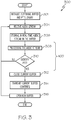
- the audio processing system 102 may be used to implement a method 300, as shown in the flow charts of FIG. 3 and FIG. 4 .
- method 300 may refer to elements mentioned above in connection with FIGS. 1-2 .
- portions of method 300 may be performed by different components of the described system.
- method 300 may include any number of additional or alternative tasks, the tasks shown in FIG. 3 and FIG. 4 need not be performed in the illustrated order, and method 300 may be incorporated into a more comprehensive procedure or method having additional functionality not described in detail herein.
- one or more of the tasks shown in FIG. 3 and FIG. 4 could be omitted from an embodiment of the method 300 as long as the intended overall functionality remains intact.
- Initialization generally comprises uploading or updating instructions and applications 160 as required for operation of the audio processing system 102. This may include: the executable program 162; contents of the DB 114; contents of the PTT library in DB 156; and, any associated stored variables 164 (examples of variables for storage include: a first threshold, a second threshold, a segment size, etc.). Also part of initialization, at 302, a data storage location defined as a current buffer is initialized (the current buffer, and other buffers described herein are collectively located in buffer(s) 166 ). At 304, the audio stream 107 is received. As mentioned, the audio stream may be received from the audio panel 106.
- the audio stream 107 may include a plurality of utterances, wherein each utterance is an individual voice communication.
- the audio stream 107 is buffered or stored in the current buffer in buffer(s) 166; the buffering is performed in real-time.
- the audio stream 107 is processed, and, at 310 the method 300 determines, based on the processing, whether it has identified a PTT event.
- the tasks of processing the audio stream at 308 and identifying a PTT event at 310 are expanded and further described in connection with FIG. 4 , tasks 400.
- the current buffer is closed; as mentioned earlier, this represents the completion of an utterance.
- an utterance in the audio stream 107 is stored in the current buffer.
- the contents of the current buffer are transmitted externally at 314 (via signal 109 ).
- the buffer contents transmitted at 314 may include a predetermined and configurable amount of silence following the identified audio attribute, the signal 109 includes the transmitted buffer contents.
- the signal 109 is received by a post processing system 118 and further signal processed to tag or identify utterances to associate them with individuals and/or with ATC.
- the post processing system 118 may be on-board the platform 100 or external, and may include various speech recognition engines and/or speech to text engines to generate and display alphanumeric information.
- a new data storage location is opened and defined as the current buffer.
- the "current buffer” is a location in the larger data storage element buffer(s) 166, identified by a pointer, that pointer moves to a new location in buffer(s) 166 each time an utterance is determined completed (based on the identification of a PTT at 310 ).
- the method 300 may return to receiving the audio stream 107 at 304, or end. Each cycle through the tasks 304 to 316 results in the buffering of another utterance.
- the received audio stream 107 is broken into a plurality of time segments having a predetermined size.
- the audio stream 107 is broken into time segments of equal size.
- the audio stream 107 is broken into time segments of two or more sizes.
- the one or more predetermined sizes are configurable variables stored in stored variables 164.
- the segment size is 200 milliseconds.
- each time segment of the plurality of time segments is processed to look for a PTT event, as follows.
- a fast Fourier transform (FFT) is performed on each segment of the plurality of time segments, generating a plurality of FFT segments.
- FFT fast Fourier transform
- a complex modulus is calculated, generating a plurality of CM segments.
- a power spectral density comparison is made to a first threshold in order to determine whether a PTT event is suspected at 410.
- the first threshold is another configurable variable that is predetermined and stored in stored variables 164.
- the method proceeds to 402 to analyze another segment. If, at 410, a PTT is suspected in the CM segment, the CM segment is cross correlated with entries in the PTT library in database 156. As mentioned, the PTT library includes audio attributes or energy spectral frequency outputs of various push to talk PTT equipment.
- the cross correlation is performed against a second threshold at 414.
- the second threshold is another configurable variable that is predetermined and stored in stored variables 164. In various embodiments, the second threshold is substantially 70 percent. If the cross correlation results exceed the second threshold, it is considered to have met a predefined accuracy threshold and the PTT event is considered identified, and the method proceed to 312. If the cross correlation results do not exceed the second threshold, the predefined accuracy threshold is not met, and the method 300 may proceed to 402 to segment and process another segment, or to 304 for continued receipt of the audio stream 107.
- the exemplary embodiments described above provide a technologically improved audio processing system 102 and method that processes a complex audio stream 107, and monitor it for utterances.
- Utterances are determined to be portions of the audio stream 107 between sequential PTT events.
- Each PTT event serves to close a current buffer and begin a new one, thereby storing one utterance per buffer.
- the PTT events are thereby used to separate utterances.
- a PTT library in database 156 stores multiple device-specific PTT audio attributes, enabling the system 102 to further identify and tag individual speakers, such as ATC and a pilot.
- the presented system may be expanded beyond PTT events, and employ other unique audio attributes to distinguish utterances.
Landscapes
- Engineering & Computer Science (AREA)
- Signal Processing (AREA)
- Physics & Mathematics (AREA)
- Computer Networks & Wireless Communication (AREA)
- Multimedia (AREA)
- General Physics & Mathematics (AREA)
- Human Computer Interaction (AREA)
- Acoustics & Sound (AREA)
- General Engineering & Computer Science (AREA)
- Theoretical Computer Science (AREA)
- Astronomy & Astrophysics (AREA)
- Aviation & Aerospace Engineering (AREA)
- Audiology, Speech & Language Pathology (AREA)
- Health & Medical Sciences (AREA)
- Computational Linguistics (AREA)
- Telephonic Communication Services (AREA)
Abstract
Description
- The present invention generally relates to audio processing systems, and more particularly relates to audio processing methods and systems that identify utterances using push to talk (PTT) audio attributes.
- In some scenarios, communication between air traffic control (ATC) and a pilot may be inefficient. Example scenarios include noisy environments, accents, distractions, and other cockpit noises. In these scenarios pilots may have to ask the controller at air traffic control (ATC) to repeat commands and information again, to clarify any confusion.
- As a result, real-time transcription aids which help the pilot understand the ATC audio content carried by the communication radios are desirable. For example, a transcription aid that identifies the tail number of a referenced aircraft in an ATC message would quickly allow a pilot to distinguish between the ATC messages meant for the ownship and the ones meant for neighboring traffic. Such transcription aids may increase certainty on a clearance, aid memory, and help pilots adhere accurately to ATC instructions.
- However, an ATC transcription system may operate on a communication radio channel tapped from the aircraft audio panel. As the audio panel is used for all sorts of voice communication, the communication radio channel may comingle ATC communication with various audio signals, such as, traffic pilot conversation, co-pilot, intercom, Morse code, aural alerts/warning from cockpit system, ATIS, and the like. These technological challenges make performing reliable and accurate real-time ATC transcription difficult.
- Accordingly, improved audio processing methods and systems are desired. Furthermore, other desirable features and characteristics of the present disclosure will become apparent from the subsequent Detailed Description and the appended claims, taken in conjunction with the accompanying drawings and this Background.
- This summary is provided to describe select concepts in a simplified form that are further described in the Detailed Description. This summary is not intended to identify key or essential features of the claimed subject matter, nor is it intended to be used as an aid in determining the scope of the claimed subject matter.
- Provided is a method for audio processing. The method is performed in a control module, and comprises the steps of: initializing a data storage location defined as a current buffer; receiving, from an audio panel, an audio stream; responsive to receiving the audio stream, repeating the steps of: storing, in real time, the audio stream in the current buffer; identifying a push-to-talk (PTT) event by processing the audio stream based on (PTT) audio attribute, a PTT event defined as determining that a PTT button was released,; and responding to the identified PTT event by, (i) closing the current buffer, (ii) opening a new data storage location, and (iii) defining the new data storage location as the current buffer.
- In another aspect, a system for audio processing is provided. The system comprising: an audio panel for providing an audio stream comprising two or more utterances; and a control module comprising a processor and a memory, the control module configured to, receive the audio stream; store, in real time, the audio stream in a current buffer in memory; break the audio stream into a plurality of time segments of equal size; and for each time segment of the plurality of time segments, process the time segment with a push-to-talk (PTT) audio attribute to look for a PTT event, a PTT event defined as a PTT button is released; and upon identifying the PTT event, respond to the identified PTT event by, (i) closing the current buffer, (ii) opening a new data storage location, and (iii) defining the new data storage location as the current buffer.
- Also provided is an Air Traffic Control (ATC) transcription module. The ATC transcription module comprising: a processor and a memory, the processor configured to, receive an audio stream comprising an ATC utterance; store, in real time, the audio stream in a current buffer in memory; break the audio stream into a plurality of time segments of equal size; and for each time segment of the plurality of time segments, generate a complex modulus (CM) segment by performing a fast Fourier transform (FFT) and a complex modulus on the time segment; process the CM segment with a push-to-talk (PTT) audio attribute to look for a PTT event, a PTT defined as a PTT button is released; and upon identifying the PTT event, respond to the identified PTT event by, (i) closing the current buffer, (ii) opening a new data storage location in memory, and (iii) defining the new data storage location as the current buffer.
- Furthermore, other desirable features and characteristics of the system and method will become apparent from the subsequent detailed description and the appended claims, taken in conjunction with the accompanying drawings and the preceding background.
- The present invention will hereinafter be described in conjunction with the following drawing figures, wherein like numerals denote like elements, and
-
FIG. 1 is a block diagram of an audio processing system, in accordance with an exemplary embodiment; -
FIG. 2 is a block diagram of an ATC transcription module for an audio processing system, in accordance with an exemplary embodiment; -
FIG. 3 is a flow chart for a method for audio processing, in accordance with an exemplary embodiment; and -
FIG. 4 is a flow chart providing more detail to the method shown inFIG. 3 , in accordance with an exemplary embodiment. - The following detailed description is merely illustrative in nature and is not intended to limit the embodiments of the subject matter or the application and uses of such embodiments. As used herein, the word "exemplary" means "serving as an example, instance, or illustration." Thus, any embodiment described herein as "exemplary" is not necessarily to be construed as preferred or advantageous over other embodiments. All of the embodiments described herein are exemplary embodiments provided to enable persons skilled in the art to make or use the invention and not to limit the scope of the invention that is defined by the claims. Furthermore, there is no intention to be bound by any theory presented in the preceding background or the following detailed description.
- Exemplary embodiments of the novel disclosed audio processing system (
FIG. 1 , 102) provide a technologically improved audio processing system and method for identifying utterances within an audio stream (FIG. 1 , 107) in real-time. As used herein, "real-time" is interchangeable with current and instantaneous. Theaudio stream 107 is expected to be complex, i.e., comprising multiple analog audio signals comingled, each of the audio signals being from a different audio source. Theaudio processing system 102 employs a model in which a push to talk (PTT) button is pressed to begin an utterance, an utterance occurs, and then the PTT button is released at the end of an utterance (as used herein, a PTT event is defined as an occurrence of a PTT button being released). In this manner, theaudio processing system 102 uses PTT events to distinguish between utterances. - As used herein, "buffering" means storing data in a data storage location referred to as a buffer. The disclosed
audio processing system 102 generally buffers a receivedaudio stream 107, as data, in real-time as it is received. The buffering action is responsive to PTT events, such that each section ofaudio stream 107 between two PTT events is stored or buffered into anew buffer 166. Therefore, the content of eachbuffer 166 corresponds to a single respective utterance. A program (Fig. 2 , 162) executed by theaudio processing system 102 variously utilizes fast Fourier transforms (FFT), complex modulus calculations, and a pre-defined library of audio attributes associated with activation of PTT devices in identifying that a PTT event has occurred, and informs the buffering of theaudio stream 107 based thereon. The disclosedaudio processing system 102 and methods are described in more detail below. - Turning now to
FIG. 1 , in an embodiment, the audio processing system 102 (also referred to herein as "system" 102) is generally located in amobile platform 100. In various embodiments, themobile platform 100 is an aircraft, and is referred to asaircraft 100. Theaudio processing system 102 embodies an air traffic control (ATC) transcription module 104 (also referred to herein as "control module" 104). Thecontrol module 104 may be separate from, or integrated within, a preexisting mobile platform management system, avionics system, cockpit display system (CDS), flight controls system (FCS), aircraft flight management system (FMS), or electronic flight bag (EFB). - The
control module 104 is configured to receive and process theaudio stream 107. In various embodiments, theaudio stream 107 is provided by anaudio panel 106. Thecontrol module 104 may additionally be operatively coupled to auser interface 116, and adatabase 114. During operation, thecontrol module 104 selectively transmits buffer 166 (FIG. 2 ) contents, viasignal 109, for further processing and use byexternal post-processing systems 118. These functional blocks, and their interaction, are described in more detail below. - In various embodiments, an
audio panel 106 generates theaudio stream 107 based on input received from a variety ofaudio input sources 108. In some embodiments, inputs to theaudio panel 106 have been signal processed and prepared for use by theaudio panel 106. In other embodiments, theaudio panel 106 has integrated therewith a communications system configured to receive the various input signals and signal process them accordingly, for use by theaudio panel 106. In those embodiments, the integrated communications system supports communications between the external audio input source(s) 112 and theaudio panel 106, as well as from the on-boardaudio input sources 110 and theaudio panel 106. - External source(s) 112 operatively coupled to the
audio panel 106 may comprise any combination of the following: air traffic control (ATC), neighboring aircraft, sources of weather information, a Morse code generator, automatic terminal information service (ATIS), and other suitable command centers and ground locations. Data received from the external source(s) 112 is understood to be instantaneous (i.e., real time or current). Accordingly, theaudio panel 106 may include a data link system, automatic dependent surveillance broadcast system (ADS-B), a communication management function (CMF) uplink, a terminal wireless local area network (LAN) unit (TWLU), or any other suitable radio communication system that supports communications between theaircraft 100 and the various external source(s) 112. On-boardaudio input sources 110 may comprise avionics systems, sensor systems, environmental detection systems, and the like. - The
user interface 116 may include a user input device. Theuser interface 116 and thecontrol module 104 are cooperatively configured to allow a user (e.g., a pilot, co-pilot, or crew member) to interact with theaudio panel 106. Depending on the embodiment, theuser interface 116 may be realized as a keypad, touchpad, keyboard, mouse, touch panel (or touchscreen), joystick, knob, line select key or another suitable device adapted to receive input from a user. When theuser interface 116 is configured as a touchpad or touchscreen, it may be integrated with a display system. In embodiments having anaudio panel 106, theaudio panel 106 may be integrated with theuser interface 116. - The optional data storage element or
database DB 114 may maintainrelevant platform 100 information, such as terrain data, airport-specific data, and aircraft-specific data. Information in theDB 114 may be used in generating various alerts that are on-board or external in nature. As such,DB 114 may be involved in the generation of terrain, obstacle, and traffic alerts, as well as aircraft system alerts. In addition, in various embodiments, the PTT library (FIG. 2 , 156) is integrated into theDB 114. - As mentioned, the
control module 104 performs the functions of thesystem 102. As used herein, the term "module" refers to any hardware, software, firmware, electronic control component, processing logic, and/or processor device, individually or in any combination, configured as a means for facilitating communications and/or interaction between the elements of theaudio processing system 102 and performing additional processes, tasks and/or functions to support operation of theaudio processing system 102, as described herein. Depending on the embodiment, the control module (FIG. 1 , 104) may be implemented or realized with a general purpose processor (shared, dedicated, or group) controller, microprocessor, or microcontroller, and memory that executes one or more software or firmware programs; a content addressable memory; a digital signal processor; an application specific integrated circuit (ASIC), a field programmable gate array (FPGA); any suitable programmable logic device; combinational logic circuit including discrete gates or transistor logic; discrete hardware components and memory devices; and/or any combination thereof, designed to perform the functions described herein. - In an embodiment of the
control module 104, depicted inFIG. 2 , aprocessor 150 and amemory 152 form a novel processing engine or unit that performs the processing activities of thesystem 102. Theprocessor 150 may comprise any type of processor or multiple processors, single integrated circuits such as a microprocessor, or any suitable number of integrated circuit devices and/or circuit boards working in cooperation to carry out the described operations, tasks, and functions by manipulating electrical signals representing data bits at memory locations in the system memory, as well as other processing of signals. Thememory 152 is a data storage element that maintains data bits and may be utilized by theprocessor 150 as storage and/or a scratch pad. Thememory 152 may be located on and/or co-located on the same computer chip as theprocessor 150. In the depicted embodiment, thememory 152 stores instructions andapplications 160 and one or more configurable variables in storedvariables 164.Buffer 166 represents data storage for storing portions of an audio stream as described herein. Information in thememory 152 may be organized and/or imported from an external data source 140 during an initialization step of a process; it may also be programmed via theuser interface 116. - A
novel program 162 is embodied in the memory 152 (e.g., RAM memory, ROM memory, flash memory, registers, a hard disk, or the like) or another suitable non-transitory short or long term storage media capable of storing computer-executable programming instructions or other data for execution. Theprogram 162 includes rules and instructions which, when executed, cause theaudio processing system 102 to perform the functions, techniques, and processing tasks associated with the operation of theaudio processing system 102 described herein. - During operation, the
processor 150 loads and executes one or more programs, algorithms and rules embodied as instructions andapplications 160 contained within thememory 152 and, as such, controls the general operation of thecontrol module 104 as well as thesystem 102. In executing the process described herein, theprocessor 150 specifically loads and executes the instructions embodied in theprogram 162. Additionally, theprocessor 150 is configured to, in accordance with the program 162: process received inputs (selectively, any combination of input from theaudio panel 106 and the user interface 116); reference any of the databases; perform audio processing and PTT identification; and, transmitbuffer 166 contents. - In various embodiments, the processor/memory unit of the
control module 104 may be communicatively coupled (via a bus 155) to an input/output (I/O)interface 154, and adatabase 156. Thebus 155 serves to transmit programs, data, status and other information or signals between the various components of thecontrol module 104. Thebus 155 can be any suitable physical or logical means of connecting computer systems and components. This includes, but is not limited to, direct hard-wired connections, fiber optics, infrared and wireless bus technologies. - The I/
O interface 154 enables communications between thecontrol module 104 andother system 102 components, as well as with otherexternal data sources 112 not already addressed herein, and as well as within thecontrol module 104. The I/O interface 154 can include one or more network interfaces to communicate with other systems or components. The I/O interface 154 can be implemented using any suitable method and apparatus. For example, the I/O interface 154 supports communication from a system driver and/or another computer system. In one embodiment, the I/O interface 154 obtains data from external data source(s) 140 directly. The I/O interface 154 may also include one or more network interfaces to communicate with technicians, and/or one or more storage interfaces for direct connection to storage apparatuses, such as thedatabase 156. - The
control module 104 employs a PTT library comprising a plurality of (PTT) audio attributes. The PTT library may reside within thedatabase 156 or withinmemory 152. Each audio attribute of the plurality of audio attributes includes an energy spectral frequency output of a respective push to talk (PTT) equipment during operation, specifically, during release. The audio attributes are from prerecorded samples. The audio attributes are used to separate out various voice communications (which includes voice communication from ATC). In operation, the audio attributes are used in a cross correlation step (FIG. 4 , 412) in the identification of a PTT event. In many cases, the release of a PTT button is followed by silence; therefore, in order to more closely match an operating experience, thecontrol module 104 may, during processing of the audio attribute, consider a PTT event to include a respective predetermined and configurable amount of silence after each occurrence of the energy spectral frequency output associated with an individual PTT button release. - In various embodiments, the
database 156 also includes an aircraft-specific parameters database (comprising aircraft-specific parameters for a variety of aircrafts). In some embodiments, thedatabase 156 is part of thememory 152. In various embodiments, thedatabase 156 and thedatabase 114 are integrated, either within thecontrol module 104 or external to thecontrol module 104. The PTT library andother database 156 contents may be uploaded and stored during an initialization step (FIG. 3 , 302). - As mentioned, the
audio processing system 102 may be used to implement amethod 300, as shown in the flow charts ofFIG. 3 andFIG. 4 . For illustrative purposes, the following description ofmethod 300 may refer to elements mentioned above in connection withFIGS. 1-2 . In practice, portions ofmethod 300 may be performed by different components of the described system. It should be appreciated thatmethod 300 may include any number of additional or alternative tasks, the tasks shown inFIG. 3 andFIG. 4 need not be performed in the illustrated order, andmethod 300 may be incorporated into a more comprehensive procedure or method having additional functionality not described in detail herein. Moreover, one or more of the tasks shown inFIG. 3 andFIG. 4 could be omitted from an embodiment of themethod 300 as long as the intended overall functionality remains intact. - The method starts, and at 302 the
audio processing system 102 is initialized. Initialization generally comprises uploading or updating instructions andapplications 160 as required for operation of theaudio processing system 102. This may include: theexecutable program 162; contents of theDB 114; contents of the PTT library inDB 156; and, any associated stored variables 164 (examples of variables for storage include: a first threshold, a second threshold, a segment size, etc.). Also part of initialization, at 302, a data storage location defined as a current buffer is initialized (the current buffer, and other buffers described herein are collectively located in buffer(s) 166). At 304, theaudio stream 107 is received. As mentioned, the audio stream may be received from theaudio panel 106. Theaudio stream 107 may include a plurality of utterances, wherein each utterance is an individual voice communication. At 306, theaudio stream 107 is buffered or stored in the current buffer in buffer(s) 166; the buffering is performed in real-time. - At 308, the
audio stream 107 is processed, and, at 310 themethod 300 determines, based on the processing, whether it has identified a PTT event. The tasks of processing the audio stream at 308 and identifying a PTT event at 310 are expanded and further described in connection withFIG. 4 ,tasks 400. At 312, responsive to identifying a PTT event, the current buffer is closed; as mentioned earlier, this represents the completion of an utterance. At 312, therefore, an utterance in theaudio stream 107 is stored in the current buffer. The contents of the current buffer are transmitted externally at 314 (via signal 109). As mentioned earlier, the buffer contents transmitted at 314 may include a predetermined and configurable amount of silence following the identified audio attribute, thesignal 109 includes the transmitted buffer contents. In an embodiment, thesignal 109 is received by apost processing system 118 and further signal processed to tag or identify utterances to associate them with individuals and/or with ATC. Thepost processing system 118 may be on-board theplatform 100 or external, and may include various speech recognition engines and/or speech to text engines to generate and display alphanumeric information. - At 316, a new data storage location is opened and defined as the current buffer. In this manner, the "current buffer" is a location in the larger data storage element buffer(s) 166, identified by a pointer, that pointer moves to a new location in buffer(s) 166 each time an utterance is determined completed (based on the identification of a PTT at 310). After 316, the
method 300 may return to receiving theaudio stream 107 at 304, or end. Each cycle through thetasks 304 to 316 results in the buffering of another utterance. - Turning now to
FIG. 4 , thetasks 400 are described in more detail. At 402 the receivedaudio stream 107 is broken into a plurality of time segments having a predetermined size. In various embodiments, theaudio stream 107 is broken into time segments of equal size. In other embodiments, theaudio stream 107 is broken into time segments of two or more sizes. The one or more predetermined sizes are configurable variables stored in storedvariables 164. In one embodiment, the segment size is 200 milliseconds. From 402, each time segment of the plurality of time segments is processed to look for a PTT event, as follows. At 404, a fast Fourier transform (FFT) is performed on each segment of the plurality of time segments, generating a plurality of FFT segments. At 406, for each FFT segment of the plurality of FFT segments, a complex modulus is calculated, generating a plurality of CM segments. At 408, for each CM segment of the plurality of CM segments, a power spectral density comparison is made to a first threshold in order to determine whether a PTT event is suspected at 410. The first threshold is another configurable variable that is predetermined and stored in storedvariables 164. - If, at 410, a PTT is not suspected in the CM segment, the method proceeds to 402 to analyze another segment. If, at 410, a PTT is suspected in the CM segment, the CM segment is cross correlated with entries in the PTT library in
database 156. As mentioned, the PTT library includes audio attributes or energy spectral frequency outputs of various push to talk PTT equipment. The cross correlation is performed against a second threshold at 414. The second threshold is another configurable variable that is predetermined and stored in storedvariables 164. In various embodiments, the second threshold is substantially 70 percent. If the cross correlation results exceed the second threshold, it is considered to have met a predefined accuracy threshold and the PTT event is considered identified, and the method proceed to 312. If the cross correlation results do not exceed the second threshold, the predefined accuracy threshold is not met, and themethod 300 may proceed to 402 to segment and process another segment, or to 304 for continued receipt of theaudio stream 107. - Accordingly, the exemplary embodiments described above provide a technologically improved
audio processing system 102 and method that processes acomplex audio stream 107, and monitor it for utterances. Utterances are determined to be portions of theaudio stream 107 between sequential PTT events. Each PTT event serves to close a current buffer and begin a new one, thereby storing one utterance per buffer. The PTT events are thereby used to separate utterances. A PTT library indatabase 156 stores multiple device-specific PTT audio attributes, enabling thesystem 102 to further identify and tag individual speakers, such as ATC and a pilot. The presented system may be expanded beyond PTT events, and employ other unique audio attributes to distinguish utterances. - While at least one exemplary embodiment has been presented in the foregoing detailed description of the invention, it should be appreciated that a vast number of variations exist. It should also be appreciated that the exemplary embodiment or exemplary embodiments are only examples, and are not intended to limit the scope, applicability, or configuration of the invention in any way. Rather, the foregoing detailed description will provide those skilled in the art with a convenient road map for implementing an exemplary embodiment of the invention. It being understood that various changes may be made in the function and arrangement of elements described in an exemplary embodiment without departing from the scope of the invention as set forth in the appended claims.
Claims (14)
- A method for audio processing, comprising the steps of:at a control module,
initializing a data storage location defined as a current buffer;
receiving, from an audio panel, an audio stream;
responsive to receiving the audio stream, repeating the steps of:storing, in real time, the audio stream in the current buffer;identifying a push-to-talk (PTT) event by processing the audio stream based on (PTT) audio attribute, a PTT event defined as determining that a PTT button was released,; andresponding to the identified PTT event by, (i) closing the current buffer, (ii) opening a new data storage location, and (iii) defining the new data storage location as the current buffer. - The method of claim 1, wherein the audio stream comprises comingled audio signals from at least two different sources.
- The method of claim 2, wherein signal processing the audio stream comprises breaking the audio stream into a plurality of time segments of equal size.
- The method of claim 3, wherein signal processing the audio stream further comprises:
for each time segment of the plurality of time segments,
generating a complex modulus (CM) segment by performing a fast Fourier transform (FFT) and a complex modulus on the time segment. - The method of claim 4, wherein identifying a PTT event further comprises:
for each CM segment,comparing a power spectral density (PSD) of the CM segment to a first threshold; andidentifying a suspected PTT event in a CM segment when the PSD of the CM segment exceeds the first threshold. - The method of claim 5, wherein identifying a PTT event further comprises:
responsive to identifying a suspected PTT event in a CM segment,cross correlating the CM segment with an audio attribute in a PTT library; anddetermining that the cross correlation meets a predefined accuracy threshold. - The method of claim 4, further comprising, subsequent to identifying a PTT event, transmitting contents of the current buffer to a post processor.
- A system for audio processing, comprising:an audio panel for providing an audio stream comprising two or more utterances; anda control module comprising a processor and a memory, the control module configured to,receive the audio stream;store, in real time, the audio stream in a current buffer in memory;break the audio stream into a plurality of time segments of equal size; andfor each time segment of the plurality of time segments, process the time segment with a push-to-talk (PTT) audio attribute to look for a PTT event, a PTT event defined as a PTT button is released; andupon identifying the PTT event, respond to the identified PTT event by, (i) closing the current buffer, (ii) opening a new data storage location, and (iii) defining the new data storage location as the current buffer.
- The system of claim 8, wherein the control module is further configured to:
for each time segment of the plurality of time segments, generate a complex modulus (CM) segment by performing a fast Fourier transform (FFT) and a complex modulus on the time segment. - The system of claim 9, wherein the control module is further configured to:
for each CM segment,compare a power spectral density (PSD) of the CM segment to a first threshold; andidentify a suspected PTT event in a CM segment when the PSD of the CM segment exceeds the first threshold. - The system of claim 10, wherein the control module is further configured to:responsive to identifying a suspected PTT event in a CM segment,identify the PTT event by (i) cross correlating the CM segment with a PTT audio attribute, and (ii)determining that the cross correlation meets a predefined accuracy threshold.
- The system of claim 11, further comprising, subsequent to identifying the PTT event, transmitting contents of the current buffer.
- The system of claim 12, wherein the push to talk (PTT) audio attribute is one of a plurality of PTT attributes, and the PTT attributes are prerecorded from the audio panel.
- The system of claim 13, wherein the transmitted contents of the current buffer include a respective predetermined amount of silence.
Applications Claiming Priority (1)
| Application Number | Priority Date | Filing Date | Title |
|---|---|---|---|
| US15/926,115 US10278034B1 (en) | 2018-03-20 | 2018-03-20 | Audio processing system and method using push to talk (PTT) audio attributes |
Publications (2)
| Publication Number | Publication Date |
|---|---|
| EP3544010A1 true EP3544010A1 (en) | 2019-09-25 |
| EP3544010B1 EP3544010B1 (en) | 2021-12-22 |
Family
ID=65818395
Family Applications (1)
| Application Number | Title | Priority Date | Filing Date |
|---|---|---|---|
| EP19163576.2A Active EP3544010B1 (en) | 2018-03-20 | 2019-03-18 | Audio processing system and method using push to talk (ptt) audio attributes |
Country Status (3)
| Country | Link |
|---|---|
| US (1) | US10278034B1 (en) |
| EP (1) | EP3544010B1 (en) |
| CN (1) | CN110312186B (en) |
Families Citing this family (2)
| Publication number | Priority date | Publication date | Assignee | Title |
|---|---|---|---|---|
| CN114944165B (en) * | 2022-05-25 | 2025-09-23 | 煤炭科学技术研究院有限公司 | Mine belt fault diagnosis system based on audio analysis technology |
| US12464282B2 (en) * | 2024-04-11 | 2025-11-04 | Guangzhou Opsmen Tech Co., Ltd | Dual-purpose circuit for sound emission and sound pickup applied to individual speaker unit |
Citations (1)
| Publication number | Priority date | Publication date | Assignee | Title |
|---|---|---|---|---|
| US20070288128A1 (en) * | 2006-06-09 | 2007-12-13 | Garmin Ltd. | Automatic speech recognition system and method for aircraft |
Family Cites Families (14)
| Publication number | Priority date | Publication date | Assignee | Title |
|---|---|---|---|---|
| KR100652645B1 (en) * | 2004-07-23 | 2006-12-06 | 엘지전자 주식회사 | Speaking rights management device and method using voice detection and recognition in push-to-talk type mobile communication terminal |
| US7245940B2 (en) * | 2004-10-19 | 2007-07-17 | Kyocera Wireless Corp. | Push to talk voice buffering systems and methods in wireless communication calls |
| US20060178159A1 (en) * | 2005-02-07 | 2006-08-10 | Don Timms | Voice activated push-to-talk device and method of use |
| US8041376B2 (en) * | 2005-07-15 | 2011-10-18 | Research In Motion Limited | Methods and apparatus for providing PTT data buffering support indications from mobile devices and PTT data buffering control by wireless networks |
| US8117032B2 (en) * | 2005-11-09 | 2012-02-14 | Nuance Communications, Inc. | Noise playback enhancement of prerecorded audio for speech recognition operations |
| EP2103155A4 (en) * | 2006-12-22 | 2010-08-11 | Motorola Inc | Method and device for data capture for push over cellular |
| CN101119540A (en) * | 2007-09-24 | 2008-02-06 | 中兴通讯股份有限公司 | A method and device for realizing a push-to-talk PTT function on a mobile terminal |
| JP2010232751A (en) * | 2009-03-26 | 2010-10-14 | Kyocera Corp | Electronic equipment and information processing program |
| EP2534854B1 (en) * | 2010-02-12 | 2017-08-09 | Sonova AG | Wireless sound transmission system and method |
| CN101916565A (en) | 2010-06-24 | 2010-12-15 | 北京华安天诚科技有限公司 | Voice recognition method and voice recognition device in air traffic control system |
| US9026065B2 (en) * | 2012-03-21 | 2015-05-05 | Raytheon Company | Methods and apparatus for resource sharing for voice and data interlacing |
| US9281890B2 (en) | 2013-03-15 | 2016-03-08 | Inaccess Networks S.A. | System and method for conveying aeronautical radio voice and signaling over a satellite IP network |
| JP6306175B2 (en) | 2013-10-31 | 2018-04-04 | フラウンホッファー−ゲゼルシャフト ツァ フェルダールング デァ アンゲヴァンテン フォアシュンク エー.ファオ | Audio decoder for providing decoded audio information using error concealment based on time domain excitation signal and method for providing decoded audio information |
| US9430949B1 (en) | 2015-03-25 | 2016-08-30 | Honeywell International Inc. | Verbal taxi clearance system |
-
2018
- 2018-03-20 US US15/926,115 patent/US10278034B1/en active Active
-
2019
- 2019-03-08 CN CN201910179226.5A patent/CN110312186B/en active Active
- 2019-03-18 EP EP19163576.2A patent/EP3544010B1/en active Active
Patent Citations (1)
| Publication number | Priority date | Publication date | Assignee | Title |
|---|---|---|---|---|
| US20070288128A1 (en) * | 2006-06-09 | 2007-12-13 | Garmin Ltd. | Automatic speech recognition system and method for aircraft |
Non-Patent Citations (2)
| Title |
|---|
| NAMGOOK CHO ET AL: "Enhanced voice activity detection using acoustic event detection and classification", IEEE TRANSACTIONS ON CONSUMER ELECTRONICS, IEEE SERVICE CENTER, NEW YORK, NY, US, vol. 57, no. 1, 1 February 2011 (2011-02-01), pages 196 - 202, XP011478020, ISSN: 0098-3063, DOI: 10.1109/TCE.2011.5735502 * |
| ZE-PING XIAO ET AL: "A Novel Speaker Segmentation Method Fused with Acoustic Event Information", COMPUTER SCIENCE AND TECHNOLOGY: PROCEEDINGS OF THE INTERNATIONAL CONFERENCE (CST2016), 1 January 2017 (2017-01-01), pages 898 - 905, XP055612112, Retrieved from the Internet <URL:https://www.worldscientific.com/doi/abs/10.1142/9789813146426_0101> [retrieved on 20190809] * |
Also Published As
| Publication number | Publication date |
|---|---|
| US10278034B1 (en) | 2019-04-30 |
| CN110312186B (en) | 2022-06-24 |
| EP3544010B1 (en) | 2021-12-22 |
| CN110312186A (en) | 2019-10-08 |
Similar Documents
| Publication | Publication Date | Title |
|---|---|---|
| CN105469646B (en) | System and method for converting taxiway voice commands to taxiway text commands | |
| CN103489334B (en) | For the equipment in aviation field subsidiary communications | |
| US12198699B2 (en) | System and method for displaying radio communication transcription | |
| EP3467729A1 (en) | Systems and methods for continuously providing operational-efficiency data in real-time onboard an aircraft | |
| EP3244402A1 (en) | Methods and systems for determining and using a confidence level in speech systems | |
| US9646470B1 (en) | Aircraft systems and methods with operator monitoring | |
| EP4064645B1 (en) | Interface system for flight deck communications | |
| US11676496B2 (en) | Methods and systems for querying for parameter retrieval | |
| JP2013150315A (en) | Methods and systems for communicating audio captured onboard aircraft | |
| EP3544010B1 (en) | Audio processing system and method using push to talk (ptt) audio attributes | |
| EP3855428A1 (en) | Aircraft speech recognition systems and methods | |
| US11955012B2 (en) | Transcription systems and message fusion methods | |
| EP3564131B1 (en) | Systems and methods for providing dynamic voice-prompt dialogue for situational awareness onboard an aircraft | |
| EP3547284A1 (en) | Method and system for generating an alert for an aircraft potentially exceeding speed limits in restricted airspace | |
| US20230115227A1 (en) | Systems and methods for indicating communication efficiency or compliance with atc phraseology | |
| US12322410B2 (en) | System and method for handling unsplit segments in transcription of air traffic communication (ATC) | |
| US12008908B2 (en) | Systems and methods for providing radio transcription text in a limited display area | |
| EP4280185A1 (en) | System and method for processing audio data of aircraft cabin environment | |
| EP4120222B1 (en) | Transcription systems and message fusion methods | |
| EP4270384A1 (en) | System and method for handling unsplit segments in transcription of air traffic communication (atc) | |
| EP4152296A1 (en) | Systems and methods for providing radio transcription text in a limited display area | |
| EP4167211B1 (en) | Systems and methods for indicating communication efficiency or compliance with atc phraseology | |
| EP4113510A1 (en) | System and method for displaying radio communication transcription | |
| US20250239256A1 (en) | Computer-implemented methods and systems for displaying textual information in a native mobile application | |
| EP4287179A1 (en) | System and method for merging and splitting of messages with user input in air traffic communication (atc) transcription |
Legal Events
| Date | Code | Title | Description |
|---|---|---|---|
| PUAI | Public reference made under article 153(3) epc to a published international application that has entered the european phase |
Free format text: ORIGINAL CODE: 0009012 |
|
| STAA | Information on the status of an ep patent application or granted ep patent |
Free format text: STATUS: THE APPLICATION HAS BEEN PUBLISHED |
|
| AK | Designated contracting states |
Kind code of ref document: A1 Designated state(s): AL AT BE BG CH CY CZ DE DK EE ES FI FR GB GR HR HU IE IS IT LI LT LU LV MC MK MT NL NO PL PT RO RS SE SI SK SM TR |
|
| AX | Request for extension of the european patent |
Extension state: BA ME |
|
| STAA | Information on the status of an ep patent application or granted ep patent |
Free format text: STATUS: REQUEST FOR EXAMINATION WAS MADE |
|
| 17P | Request for examination filed |
Effective date: 20191004 |
|
| RBV | Designated contracting states (corrected) |
Designated state(s): AL AT BE BG CH CY CZ DE DK EE ES FI FR GB GR HR HU IE IS IT LI LT LU LV MC MK MT NL NO PL PT RO RS SE SI SK SM TR |
|
| GRAP | Despatch of communication of intention to grant a patent |
Free format text: ORIGINAL CODE: EPIDOSNIGR1 |
|
| STAA | Information on the status of an ep patent application or granted ep patent |
Free format text: STATUS: GRANT OF PATENT IS INTENDED |
|
| RIC1 | Information provided on ipc code assigned before grant |
Ipc: G10L 25/51 20130101AFI20210624BHEP Ipc: H04W 4/10 20090101ALI20210624BHEP Ipc: H04B 7/185 20060101ALI20210624BHEP Ipc: G10L 25/06 20130101ALN20210624BHEP Ipc: G10L 25/18 20130101ALN20210624BHEP Ipc: G10L 15/04 20130101ALN20210624BHEP Ipc: G10L 25/78 20130101ALN20210624BHEP |
|
| RIC1 | Information provided on ipc code assigned before grant |
Ipc: G10L 25/51 20130101AFI20210701BHEP Ipc: H04W 4/10 20090101ALI20210701BHEP Ipc: H04B 7/185 20060101ALI20210701BHEP Ipc: G10L 25/06 20130101ALN20210701BHEP Ipc: G10L 25/18 20130101ALN20210701BHEP Ipc: G10L 15/04 20130101ALN20210701BHEP Ipc: G10L 25/78 20130101ALN20210701BHEP |
|
| INTG | Intention to grant announced |
Effective date: 20210714 |
|
| GRAS | Grant fee paid |
Free format text: ORIGINAL CODE: EPIDOSNIGR3 |
|
| GRAA | (expected) grant |
Free format text: ORIGINAL CODE: 0009210 |
|
| STAA | Information on the status of an ep patent application or granted ep patent |
Free format text: STATUS: THE PATENT HAS BEEN GRANTED |
|
| AK | Designated contracting states |
Kind code of ref document: B1 Designated state(s): AL AT BE BG CH CY CZ DE DK EE ES FI FR GB GR HR HU IE IS IT LI LT LU LV MC MK MT NL NO PL PT RO RS SE SI SK SM TR |
|
| REG | Reference to a national code |
Ref country code: GB Ref legal event code: FG4D |
|
| REG | Reference to a national code |
Ref country code: CH Ref legal event code: EP |
|
| REG | Reference to a national code |
Ref country code: DE Ref legal event code: R096 Ref document number: 602019010181 Country of ref document: DE |
|
| REG | Reference to a national code |
Ref country code: AT Ref legal event code: REF Ref document number: 1457593 Country of ref document: AT Kind code of ref document: T Effective date: 20220115 |
|
| REG | Reference to a national code |
Ref country code: IE Ref legal event code: FG4D |
|
| REG | Reference to a national code |
Ref country code: LT Ref legal event code: MG9D |
|
| PG25 | Lapsed in a contracting state [announced via postgrant information from national office to epo] |
Ref country code: RS Free format text: LAPSE BECAUSE OF FAILURE TO SUBMIT A TRANSLATION OF THE DESCRIPTION OR TO PAY THE FEE WITHIN THE PRESCRIBED TIME-LIMIT Effective date: 20211222 Ref country code: LT Free format text: LAPSE BECAUSE OF FAILURE TO SUBMIT A TRANSLATION OF THE DESCRIPTION OR TO PAY THE FEE WITHIN THE PRESCRIBED TIME-LIMIT Effective date: 20211222 Ref country code: FI Free format text: LAPSE BECAUSE OF FAILURE TO SUBMIT A TRANSLATION OF THE DESCRIPTION OR TO PAY THE FEE WITHIN THE PRESCRIBED TIME-LIMIT Effective date: 20211222 Ref country code: BG Free format text: LAPSE BECAUSE OF FAILURE TO SUBMIT A TRANSLATION OF THE DESCRIPTION OR TO PAY THE FEE WITHIN THE PRESCRIBED TIME-LIMIT Effective date: 20220322 |
|
| REG | Reference to a national code |
Ref country code: NL Ref legal event code: MP Effective date: 20211222 |
|
| REG | Reference to a national code |
Ref country code: AT Ref legal event code: MK05 Ref document number: 1457593 Country of ref document: AT Kind code of ref document: T Effective date: 20211222 |
|
| PG25 | Lapsed in a contracting state [announced via postgrant information from national office to epo] |
Ref country code: SE Free format text: LAPSE BECAUSE OF FAILURE TO SUBMIT A TRANSLATION OF THE DESCRIPTION OR TO PAY THE FEE WITHIN THE PRESCRIBED TIME-LIMIT Effective date: 20211222 Ref country code: NO Free format text: LAPSE BECAUSE OF FAILURE TO SUBMIT A TRANSLATION OF THE DESCRIPTION OR TO PAY THE FEE WITHIN THE PRESCRIBED TIME-LIMIT Effective date: 20220322 Ref country code: LV Free format text: LAPSE BECAUSE OF FAILURE TO SUBMIT A TRANSLATION OF THE DESCRIPTION OR TO PAY THE FEE WITHIN THE PRESCRIBED TIME-LIMIT Effective date: 20211222 Ref country code: HR Free format text: LAPSE BECAUSE OF FAILURE TO SUBMIT A TRANSLATION OF THE DESCRIPTION OR TO PAY THE FEE WITHIN THE PRESCRIBED TIME-LIMIT Effective date: 20211222 Ref country code: GR Free format text: LAPSE BECAUSE OF FAILURE TO SUBMIT A TRANSLATION OF THE DESCRIPTION OR TO PAY THE FEE WITHIN THE PRESCRIBED TIME-LIMIT Effective date: 20220323 |
|
| PG25 | Lapsed in a contracting state [announced via postgrant information from national office to epo] |
Ref country code: NL Free format text: LAPSE BECAUSE OF FAILURE TO SUBMIT A TRANSLATION OF THE DESCRIPTION OR TO PAY THE FEE WITHIN THE PRESCRIBED TIME-LIMIT Effective date: 20211222 |
|
| PG25 | Lapsed in a contracting state [announced via postgrant information from national office to epo] |
Ref country code: SM Free format text: LAPSE BECAUSE OF FAILURE TO SUBMIT A TRANSLATION OF THE DESCRIPTION OR TO PAY THE FEE WITHIN THE PRESCRIBED TIME-LIMIT Effective date: 20211222 Ref country code: SK Free format text: LAPSE BECAUSE OF FAILURE TO SUBMIT A TRANSLATION OF THE DESCRIPTION OR TO PAY THE FEE WITHIN THE PRESCRIBED TIME-LIMIT Effective date: 20211222 Ref country code: RO Free format text: LAPSE BECAUSE OF FAILURE TO SUBMIT A TRANSLATION OF THE DESCRIPTION OR TO PAY THE FEE WITHIN THE PRESCRIBED TIME-LIMIT Effective date: 20211222 Ref country code: PT Free format text: LAPSE BECAUSE OF FAILURE TO SUBMIT A TRANSLATION OF THE DESCRIPTION OR TO PAY THE FEE WITHIN THE PRESCRIBED TIME-LIMIT Effective date: 20220422 Ref country code: ES Free format text: LAPSE BECAUSE OF FAILURE TO SUBMIT A TRANSLATION OF THE DESCRIPTION OR TO PAY THE FEE WITHIN THE PRESCRIBED TIME-LIMIT Effective date: 20211222 Ref country code: EE Free format text: LAPSE BECAUSE OF FAILURE TO SUBMIT A TRANSLATION OF THE DESCRIPTION OR TO PAY THE FEE WITHIN THE PRESCRIBED TIME-LIMIT Effective date: 20211222 Ref country code: CZ Free format text: LAPSE BECAUSE OF FAILURE TO SUBMIT A TRANSLATION OF THE DESCRIPTION OR TO PAY THE FEE WITHIN THE PRESCRIBED TIME-LIMIT Effective date: 20211222 |
|
| PG25 | Lapsed in a contracting state [announced via postgrant information from national office to epo] |
Ref country code: PL Free format text: LAPSE BECAUSE OF FAILURE TO SUBMIT A TRANSLATION OF THE DESCRIPTION OR TO PAY THE FEE WITHIN THE PRESCRIBED TIME-LIMIT Effective date: 20211222 Ref country code: AT Free format text: LAPSE BECAUSE OF FAILURE TO SUBMIT A TRANSLATION OF THE DESCRIPTION OR TO PAY THE FEE WITHIN THE PRESCRIBED TIME-LIMIT Effective date: 20211222 |
|
| REG | Reference to a national code |
Ref country code: DE Ref legal event code: R097 Ref document number: 602019010181 Country of ref document: DE |
|
| PG25 | Lapsed in a contracting state [announced via postgrant information from national office to epo] |
Ref country code: IS Free format text: LAPSE BECAUSE OF FAILURE TO SUBMIT A TRANSLATION OF THE DESCRIPTION OR TO PAY THE FEE WITHIN THE PRESCRIBED TIME-LIMIT Effective date: 20220422 |
|
| PLBE | No opposition filed within time limit |
Free format text: ORIGINAL CODE: 0009261 |
|
| STAA | Information on the status of an ep patent application or granted ep patent |
Free format text: STATUS: NO OPPOSITION FILED WITHIN TIME LIMIT |
|
| PG25 | Lapsed in a contracting state [announced via postgrant information from national office to epo] |
Ref country code: MC Free format text: LAPSE BECAUSE OF FAILURE TO SUBMIT A TRANSLATION OF THE DESCRIPTION OR TO PAY THE FEE WITHIN THE PRESCRIBED TIME-LIMIT Effective date: 20211222 Ref country code: DK Free format text: LAPSE BECAUSE OF FAILURE TO SUBMIT A TRANSLATION OF THE DESCRIPTION OR TO PAY THE FEE WITHIN THE PRESCRIBED TIME-LIMIT Effective date: 20211222 Ref country code: AL Free format text: LAPSE BECAUSE OF FAILURE TO SUBMIT A TRANSLATION OF THE DESCRIPTION OR TO PAY THE FEE WITHIN THE PRESCRIBED TIME-LIMIT Effective date: 20211222 |
|
| REG | Reference to a national code |
Ref country code: CH Ref legal event code: PL |
|
| 26N | No opposition filed |
Effective date: 20220923 |
|
| REG | Reference to a national code |
Ref country code: BE Ref legal event code: MM Effective date: 20220331 |
|
| PG25 | Lapsed in a contracting state [announced via postgrant information from national office to epo] |
Ref country code: LU Free format text: LAPSE BECAUSE OF NON-PAYMENT OF DUE FEES Effective date: 20220318 Ref country code: LI Free format text: LAPSE BECAUSE OF NON-PAYMENT OF DUE FEES Effective date: 20220331 Ref country code: IE Free format text: LAPSE BECAUSE OF NON-PAYMENT OF DUE FEES Effective date: 20220318 Ref country code: CH Free format text: LAPSE BECAUSE OF NON-PAYMENT OF DUE FEES Effective date: 20220331 |
|
| PG25 | Lapsed in a contracting state [announced via postgrant information from national office to epo] |
Ref country code: SI Free format text: LAPSE BECAUSE OF FAILURE TO SUBMIT A TRANSLATION OF THE DESCRIPTION OR TO PAY THE FEE WITHIN THE PRESCRIBED TIME-LIMIT Effective date: 20211222 Ref country code: BE Free format text: LAPSE BECAUSE OF NON-PAYMENT OF DUE FEES Effective date: 20220331 |
|
| PG25 | Lapsed in a contracting state [announced via postgrant information from national office to epo] |
Ref country code: IT Free format text: LAPSE BECAUSE OF FAILURE TO SUBMIT A TRANSLATION OF THE DESCRIPTION OR TO PAY THE FEE WITHIN THE PRESCRIBED TIME-LIMIT Effective date: 20211222 |
|
| P01 | Opt-out of the competence of the unified patent court (upc) registered |
Effective date: 20230525 |
|
| GBPC | Gb: european patent ceased through non-payment of renewal fee |
Effective date: 20230318 |
|
| PG25 | Lapsed in a contracting state [announced via postgrant information from national office to epo] |
Ref country code: GB Free format text: LAPSE BECAUSE OF NON-PAYMENT OF DUE FEES Effective date: 20230318 |
|
| PG25 | Lapsed in a contracting state [announced via postgrant information from national office to epo] |
Ref country code: GB Free format text: LAPSE BECAUSE OF NON-PAYMENT OF DUE FEES Effective date: 20230318 |
|
| PG25 | Lapsed in a contracting state [announced via postgrant information from national office to epo] |
Ref country code: MK Free format text: LAPSE BECAUSE OF FAILURE TO SUBMIT A TRANSLATION OF THE DESCRIPTION OR TO PAY THE FEE WITHIN THE PRESCRIBED TIME-LIMIT Effective date: 20211222 Ref country code: CY Free format text: LAPSE BECAUSE OF FAILURE TO SUBMIT A TRANSLATION OF THE DESCRIPTION OR TO PAY THE FEE WITHIN THE PRESCRIBED TIME-LIMIT Effective date: 20211222 |
|
| PG25 | Lapsed in a contracting state [announced via postgrant information from national office to epo] |
Ref country code: HU Free format text: LAPSE BECAUSE OF FAILURE TO SUBMIT A TRANSLATION OF THE DESCRIPTION OR TO PAY THE FEE WITHIN THE PRESCRIBED TIME-LIMIT; INVALID AB INITIO Effective date: 20190318 |
|
| PG25 | Lapsed in a contracting state [announced via postgrant information from national office to epo] |
Ref country code: TR Free format text: LAPSE BECAUSE OF FAILURE TO SUBMIT A TRANSLATION OF THE DESCRIPTION OR TO PAY THE FEE WITHIN THE PRESCRIBED TIME-LIMIT Effective date: 20211222 |
|
| PG25 | Lapsed in a contracting state [announced via postgrant information from national office to epo] |
Ref country code: MT Free format text: LAPSE BECAUSE OF FAILURE TO SUBMIT A TRANSLATION OF THE DESCRIPTION OR TO PAY THE FEE WITHIN THE PRESCRIBED TIME-LIMIT Effective date: 20211222 |
|
| PGFP | Annual fee paid to national office [announced via postgrant information from national office to epo] |
Ref country code: DE Payment date: 20260320 Year of fee payment: 8 |
|
| PGFP | Annual fee paid to national office [announced via postgrant information from national office to epo] |
Ref country code: FR Payment date: 20260323 Year of fee payment: 8 |