EP3543679A1 - Method for analyzing diffusion coefficient of solvent molecules in polymer material - Google Patents
Method for analyzing diffusion coefficient of solvent molecules in polymer material Download PDFInfo
- Publication number
- EP3543679A1 EP3543679A1 EP18846713.8A EP18846713A EP3543679A1 EP 3543679 A1 EP3543679 A1 EP 3543679A1 EP 18846713 A EP18846713 A EP 18846713A EP 3543679 A1 EP3543679 A1 EP 3543679A1
- Authority
- EP
- European Patent Office
- Prior art keywords
- solvents
- solvent molecules
- polymer materials
- solvent
- acetate
- Prior art date
- Legal status (The legal status is an assumption and is not a legal conclusion. Google has not performed a legal analysis and makes no representation as to the accuracy of the status listed.)
- Granted
Links
Images

Classifications
-
- G—PHYSICS
- G01—MEASURING; TESTING
- G01N—INVESTIGATING OR ANALYSING MATERIALS BY DETERMINING THEIR CHEMICAL OR PHYSICAL PROPERTIES
- G01N15/00—Investigating characteristics of particles; Investigating permeability, pore-volume or surface-area of porous materials
- G01N15/08—Investigating permeability, pore-volume, or surface area of porous materials
- G01N15/082—Investigating permeability by forcing a fluid through a sample
-
- G—PHYSICS
- G01—MEASURING; TESTING
- G01N—INVESTIGATING OR ANALYSING MATERIALS BY DETERMINING THEIR CHEMICAL OR PHYSICAL PROPERTIES
- G01N15/00—Investigating characteristics of particles; Investigating permeability, pore-volume or surface-area of porous materials
- G01N15/08—Investigating permeability, pore-volume, or surface area of porous materials
-
- G—PHYSICS
- G06—COMPUTING OR CALCULATING; COUNTING
- G06F—ELECTRIC DIGITAL DATA PROCESSING
- G06F17/00—Digital computing or data processing equipment or methods, specially adapted for specific functions
- G06F17/10—Complex mathematical operations
-
- G—PHYSICS
- G06—COMPUTING OR CALCULATING; COUNTING
- G06F—ELECTRIC DIGITAL DATA PROCESSING
- G06F17/00—Digital computing or data processing equipment or methods, specially adapted for specific functions
- G06F17/10—Complex mathematical operations
- G06F17/11—Complex mathematical operations for solving equations, e.g. nonlinear equations, general mathematical optimization problems
-
- G—PHYSICS
- G16—INFORMATION AND COMMUNICATION TECHNOLOGY [ICT] SPECIALLY ADAPTED FOR SPECIFIC APPLICATION FIELDS
- G16C—COMPUTATIONAL CHEMISTRY; CHEMOINFORMATICS; COMPUTATIONAL MATERIALS SCIENCE
- G16C60/00—Computational materials science, i.e. ICT specially adapted for investigating the physical or chemical properties of materials or phenomena associated with their design, synthesis, processing, characterisation or utilisation
-
- G—PHYSICS
- G01—MEASURING; TESTING
- G01N—INVESTIGATING OR ANALYSING MATERIALS BY DETERMINING THEIR CHEMICAL OR PHYSICAL PROPERTIES
- G01N15/00—Investigating characteristics of particles; Investigating permeability, pore-volume or surface-area of porous materials
- G01N15/08—Investigating permeability, pore-volume, or surface area of porous materials
- G01N2015/086—Investigating permeability, pore-volume, or surface area of porous materials of films, membranes or pellicules
Definitions
- the present invention relates to a method for analyzing diffusion coefficients of residual solvent molecules in polymer materials for the preparation of a polymer film by a solution process.
- the preparation of polymer films, e.g., a color conversion film, by using a solution process needs a drying procedure for removing solvents, thereby minimizing the amounts of residual solvents in the polymer films, in order to enhance the durability of the polymer films.
- the solvent molecules should have high mobility ( see Wong et al, Polymer, 2004, 45, 5151 ; Schabel et al, Chem. Eng. Sci., 2007, 62, 2254 ).
- polymer materials used in pharmaceutical and electronic products need not to absorb moisture, oxygen, carbon dioxide and the like. To do this, it is necessary to analyze the permeability of polymer films.
- the permeability of polymer films is greatly influenced by the solubility and diffusion of the polymer materials ( see Luan et al, Comp. Mat. Sci., 2006, 37, 454 ). Thus, it is necessary to analyze a gas diffusion coefficient for each polymer material for the durability enhancement of polymer films and the transmittance analysis of the final products.
- the known method for analyzing diffusion coefficients of solvent molecules is to measure diffusion coefficients of solvent molecules in polymer materials through the experiments using magnetic suspension balance (MSB) and sorption equilibrium (see Mamaliga et al, Chem. Eng. & Proc., 2004, 43, 753 ).
- MSB magnetic suspension balance
- sorption equilibrium see Mamaliga et al, Chem. Eng. & Proc., 2004, 43, 753 .
- such method needs a Flory-Huggins parameter between the polymers and the solvents and it is difficult to reproduce the experiments.
- the object of the present invention is to provide a method for analyzing diffusion coefficients of solvent molecules in polymer materials by using a computer simulation model analyzed from descriptors related to solvent properties.
- the present provides a method for analyzing diffusion coefficients of solvent molecules in polymer materials for the preparation of polymer films by using a solution process.
- the diffusion coefficients (ln D pred ) of solvent molecules calculated from the diffusion coefficient analysis model of Equation 1 are in correlation with the diffusion coefficients (ln D md ) of solvent molecules analyzed via molecular dynamics by applying an NPT isothermal-isobaric ensemble, and the value R 2 of root mean square deviation (RMSD) for the correlation may range from 0.6 to 0.99.
- RMSD root mean square deviation
- the diffusion coefficient analysis model of Equation 1 may be obtained by analyzing the diffusion coefficients (ln D md ) of various kinds of solvent molecules on certain polymer materials under the specific temperature and pressure conditions measuring the diffusion coefficients via molecular dynamics; and performing multi-linear regression by using descriptors of the ME, EV, NB and MV related in the solvents in order to give the adjustment factors for the diffusion coefficient analysis model of Equation 1.
- the diffusion coefficient analysis model may be used to predict the diffusion coefficients analyzed via molecular dynamics using descriptors related to the solvents.
- the present invention can provide optimum solvents when it is necessary to screen solvents suitable for drying process in the preparation of polymer films by using a solvent process or it is necessary to analyze the permeability of polymer materials used in the final products by effectively analyzing diffusion coefficients of solvent molecules.
- the present invention is to analyze diffusion coefficients of solvent molecules in order to minimize the amounts of residual solvents in polymer films after the preparation of the polymer films or detect the permeability of the polymer films, and provides a computer simulation model to analyze the diffusion coefficients of solvent molecules by using descriptors related to solvent properties.
- the present invention provides a method for analyzing diffusion coefficients of solvent molecules in polymer materials for the preparation of polymer films by using a solution process and it is applicable in analyzing the permeability of the polymer films.
- the ME of the solvents and the polymers may be obtained by the COSMO-RS theory.
- the model of analyzing the diffusion coefficients of solvent molecules for polymer materials e.g., polymer binders or polymer resins may be obtained as follows.
- the diffusion coefficients of various kinds of solvents e.g., 50 or more kinds of solvents as shown in FIG. 1
- the molecular dynamic programs are used in the specific temperature and pressure conditions (e.g., 150°C and 1 atm), and the diffusion coefficient (ln D md ) of each solvent may be analyzed by applying an NPT isothermal-isobaric ensemble.
- Examples of the molecular dynamic programs may include FORCITE, GROMACS, LAMMPS, etc.
- a multi-linear regression may be performed by using 4 descriptors, i.e., ME, EV, NB and MV in order to give the adjustment factors for the diffusion coefficient analysis model of Equation 1, and the diffusion coefficients (ln D pred ) of the solvent may be calculated from such an analysis model.
- the values of the 4 descriptors may be used for effectively analyzing the diffusion coefficients of solvent molecules in polymer materials by using the diffusion coefficient analysis model of Equation 1, even though the molecular dynamic analysis is not applied.
- the present invention can more efficiently select solvents suitable for the preparation of polymers and the improvement of the properties the final products, such as durability and permeability.
- the diffusion coefficients (ln D pred ) of solvent molecules calculated by using the diffusion coefficient analysis model of Equation 1 are in correlation with the diffusion coefficients (ln D md ) of solvent molecules analyzed via molecular dynamics by applying the NPT isothermal-isobaric ensemble.
- the value R of root mean square deviation (RMSD) for the correlation of the ln D pred and the ln D md may range from 0.6 to 0.99, for example 0.64 to 0.8.
- the solvents suitable in such analysis model are not particularly limited if they are generally used in the preparation of products from polymer materials.
- the solvents may be selected from the group consisting of xylene, acetone, chloroform, methyl ethyl ketone (MEK), methyl isobutyl ketone (MIBK), ethyl acetate (EA), butyl acetate, cyclohexanone, propylene glycol methyl ethyl acetate (PGMEA), dioxane, N-methylpyrrolidone (NMP), dimethylformamide (DMF), N,N-dimethylacetamide, dimethylsulfoxide, cyclopentanone, N,N-dimethylpropanamide, N,N-diethylformamide, 1-ethyl-2-pyrrolidinone, tetramethylurea, nitrobenzene, pyridine,y-butyrolactone, 2-methylpyridine, 1,2-
- the polymer materials suitable in such analysis model may be a polymer binder or a polymer resin having thermoplastic or thermosetting properties, for example, polyolefins, acrylates, polyurethanes, polyethers, polyesters, polyamides, formaldehyde and silicone polymers, or copolymers obtained from two or more monomers contained these polymers. These may be used alone or in combination of two or more.
- polymers may include polyethylene (PE), polyvinyl fluoride (PVF), polyvinyl chloride (PVC), polyvinylidene fluoride (PVDF), polyvinylidene chloride (PVDC), polychlorotrifluoroethylene (PCTFE), polytetrafluoroethylene (PTFE), polypropylene (PP), ethylene vinyl acetate (EVA), polymethyl methacrylate (PMMA), poly(1-butene), poly(4-methylpentene), polystyrene, polyvinylpyridine, polybutadiene, polyisoprene, polychloroprene, styrene-acrylonitrile copolymer (SAN), acrylonitrile-butadiene-styrene terpolymer, ethylene-methacrylic acid copolymer, styrene-butadiene rubber, nitrile rubber, tetrafluoroethylene copolymer, polyacrylate,
- PE
- the diffusion coefficient analysis may be performed at a temperature of 10°C to 200°C and a pressure of 1 atm to 3 atms.
- the diffusion coefficients of solvent molecules in a polymer binder were analyzed for the purpose of minimizing residual solvents in a film during drying procedure for the preparation of the film, as follows.
- the diffusion coefficients of the solvent molecules obtained by using the diffusion coefficient analysis model according to the present invention can be confirmed to be highly accurate as there was little difference between the diffusion coefficients analyzed by the present invention and those analyzed via the molecular dynamics. Accordingly, the diffusion coefficient analysis model of the present invention can be used to efficiently select solvents suitable in the field of displays, backlight units and illuminator devices which need the improvement of polymer properties, even though the molecular dynamic analysis is not applied.
Landscapes
- Engineering & Computer Science (AREA)
- Physics & Mathematics (AREA)
- General Physics & Mathematics (AREA)
- Theoretical Computer Science (AREA)
- Chemical & Material Sciences (AREA)
- Mathematical Physics (AREA)
- Data Mining & Analysis (AREA)
- Life Sciences & Earth Sciences (AREA)
- Computational Mathematics (AREA)
- Mathematical Analysis (AREA)
- Mathematical Optimization (AREA)
- Pure & Applied Mathematics (AREA)
- Health & Medical Sciences (AREA)
- General Health & Medical Sciences (AREA)
- Pathology (AREA)
- Dispersion Chemistry (AREA)
- Immunology (AREA)
- Analytical Chemistry (AREA)
- Biochemistry (AREA)
- Software Systems (AREA)
- Computing Systems (AREA)
- Databases & Information Systems (AREA)
- General Engineering & Computer Science (AREA)
- Algebra (AREA)
- Bioinformatics & Cheminformatics (AREA)
- Operations Research (AREA)
- Bioinformatics & Computational Biology (AREA)
- Investigating Strength Of Materials By Application Of Mechanical Stress (AREA)
- Sampling And Sample Adjustment (AREA)
- Manufacture Of Macromolecular Shaped Articles (AREA)
- Processes Of Treating Macromolecular Substances (AREA)
Abstract
Description
- This application claims the benefit of priority to Korean Patent Application No.
10-2017-0104326, filed on August 17, 2017 - The present invention relates to a method for analyzing diffusion coefficients of residual solvent molecules in polymer materials for the preparation of a polymer film by a solution process.
- The preparation of polymer films, e.g., a color conversion film, by using a solution process needs a drying procedure for removing solvents, thereby minimizing the amounts of residual solvents in the polymer films, in order to enhance the durability of the polymer films. For this, the solvent molecules should have high mobility (see Wong et al, Polymer, 2004, 45, 5151; Schabel et al, Chem. Eng. Sci., 2007, 62, 2254).
- Also, polymer materials used in pharmaceutical and electronic products need not to absorb moisture, oxygen, carbon dioxide and the like. To do this, it is necessary to analyze the permeability of polymer films. The permeability of polymer films is greatly influenced by the solubility and diffusion of the polymer materials (see Luan et al, Comp. Mat. Sci., 2006, 37, 454). Thus, it is necessary to analyze a gas diffusion coefficient for each polymer material for the durability enhancement of polymer films and the transmittance analysis of the final products.
- The known method for analyzing diffusion coefficients of solvent molecules is to measure diffusion coefficients of solvent molecules in polymer materials through the experiments using magnetic suspension balance (MSB) and sorption equilibrium (see Mamaliga et al, Chem. Eng. & Proc., 2004, 43, 753). However, such method needs a Flory-Huggins parameter between the polymers and the solvents and it is difficult to reproduce the experiments. In addition, there is a limit of calculation time and the like in the measurement of diffusion coefficients of solvent molecules by using molecular dynamics.
- Accordingly, it needs to develop an effective model for analyzing diffusion coefficients of solvent molecules for analysis of the drying property of solvents during the preparation of polymer films, and the gas permeability of polymer films.
- The object of the present invention is to provide a method for analyzing diffusion coefficients of solvent molecules in polymer materials by using a computer simulation model analyzed from descriptors related to solvent properties.
- In order to accomplish the object of the present invention, the present provides a method for analyzing diffusion coefficients of solvent molecules in polymer materials for the preparation of polymer films by using a solution process. Specifically, the method comprises analyzing the diffusion coefficients of solvent molecules in polymer materials by using the diffusion coefficient analysis model of the following Equation 1:

- ME, EV, NB and MV are each descriptor related to the solvent molecules,
- ME is the mixing energy (kcal/mol) of the solvents and the polymers,
- EV is the enthalpy of vaporization (kcal/mol) of the solvents,
- NB is the number of chemical bonds between solvent elements,
- MV is the molar volume (cm3/mol) of the solvents,
- c1 is an adjustment factor of 0 to 1, which is a value adjusted according to experiment conditions,
- c2 is an adjustment factor of -10 to 0, which is a value related to EV weight of the solvents and adjusted according to the polymer materials,
- c3 is an adjustment factor of -10 to 0, which is a value related to the NB between solvent elements and adjusted according to the polymer materials,
- c4 is an adjustment factor of -1 to 1, which is a value related to the MV of the solvents and adjusted according to the polymer materials,
- c5 is an adjustment factor of -10 to 10, which is a value used when weighing drying-relevant properties including heat of vaporization and solvent volume as compared with the solubility between the solvents and the polymers, and adjusted according to the polymer materials.
- In one embodiment, the diffusion coefficients (lnDpred ) of solvent molecules calculated from the diffusion coefficient analysis model of
Equation 1 are in correlation with the diffusion coefficients (lnDmd ) of solvent molecules analyzed via molecular dynamics by applying an NPT isothermal-isobaric ensemble, and the value R2 of root mean square deviation (RMSD) for the correlation may range from 0.6 to 0.99. - In one embodiment, the diffusion coefficient analysis model of
Equation 1 may be obtained by analyzing the diffusion coefficients (lnDmd ) of various kinds of solvent molecules on certain polymer materials under the specific temperature and pressure conditions measuring the diffusion coefficients via molecular dynamics; and performing multi-linear regression by using descriptors of the ME, EV, NB and MV related in the solvents in order to give the adjustment factors for the diffusion coefficient analysis model ofEquation 1. According to the above, the diffusion coefficient analysis model may be used to predict the diffusion coefficients analyzed via molecular dynamics using descriptors related to the solvents. - The present invention can provide optimum solvents when it is necessary to screen solvents suitable for drying process in the preparation of polymer films by using a solvent process or it is necessary to analyze the permeability of polymer materials used in the final products by effectively analyzing diffusion coefficients of solvent molecules.
-
-
FIG. 1 shows the analysis results for mixing energy (ME) of solvents-polymers obtained by the COSMO-RS theory. -
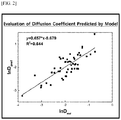
FIG. 2 is a graph showing correlation of the diffusion coefficients of the solvent molecules analyzed via molecular dynamics and the diffusion coefficients of the solvent molecules calculated by using the diffusion coefficient analysis model ofEquation 1. - The present invention may have various variations and embodiments, and the present invention will be described in detail referring to specific working examples and figures. However, it should be understood that the description proposed herein is just a preferable example for the purpose of illustrations only, not intended to limit the scope of the invention, so it should be understood that other equivalents and modifications could be made thereto without departing from the spirit and scope of the invention. Meanwhile, the description of the well-known functions or constructions may be omitted if it would obscure the subject matter of the present invention.
- The present invention is to analyze diffusion coefficients of solvent molecules in order to minimize the amounts of residual solvents in polymer films after the preparation of the polymer films or detect the permeability of the polymer films, and provides a computer simulation model to analyze the diffusion coefficients of solvent molecules by using descriptors related to solvent properties.
- Specifically, the present invention provides a method for analyzing diffusion coefficients of solvent molecules in polymer materials for the preparation of polymer films by using a solution process and it is applicable in analyzing the permeability of the polymer films. The method comprises analyzing diffusion coefficients of the solvent molecules in the polymer materials by using the diffusion coefficient analysis model of the following Equation 1:

- ME, EV, NB and MV are each descriptor related to the solvent molecules,
- ME is the mixing energy (kcal/mol) of the solvents and the polymers,
- EV is the enthalpy of vaporization (kcal/mol) of the solvents,
- NB is the number of chemical bonds between solvent elements,
- MV is the molar volume (cm3/mol) of the solvents,
- c1 is an adjustment factor of 0 to 1, which is a value adjusted according to experiment conditions,
- c2 is an adjustment factor of -10 to 0, which is a value related to EV weight of the solvents and adjusted according to the polymer materials,
- c3 is an adjustment factor of -10 to 0, which is a value related to the NB between solvent elements and adjusted according to the polymer materials,
- c4 is an adjustment factor of -1 to 1, which is a value related to the MV of the solvents and adjusted according to the polymer materials,
- c5 is an adjustment factor of -10 to 10, which is a value used when weighing drying-relevant properties including heat of vaporization and solvent volume as compared with the solubility between the solvents and the polymers, and adjusted according to the polymer materials.
- In one embodiment, the ME of the solvents and the polymers may be obtained by the COSMO-RS theory.
- In the present invention, the model of analyzing the diffusion coefficients of solvent molecules for polymer materials, e.g., polymer binders or polymer resins may be obtained as follows.
- First, the diffusion coefficients of various kinds of solvents, e.g., 50 or more kinds of solvents as shown in
FIG. 1 , on certain polymer materials are analyzed via molecular dynamic programs that are high-level calculation methods. The molecular dynamic programs are used in the specific temperature and pressure conditions (e.g., 150°C and 1 atm), and the diffusion coefficient (lnDmd ) of each solvent may be analyzed by applying an NPT isothermal-isobaric ensemble. Examples of the molecular dynamic programs may include FORCITE, GROMACS, LAMMPS, etc. - With respect to the diffusion coefficients of solvents analyzed by molecular dynamics, a multi-linear regression may be performed by using 4 descriptors, i.e., ME, EV, NB and MV in order to give the adjustment factors for the diffusion coefficient analysis model of
Equation 1, and the diffusion coefficients (lnD pred) of the solvent may be calculated from such an analysis model. - Then, the values of the 4 descriptors may be used for effectively analyzing the diffusion coefficients of solvent molecules in polymer materials by using the diffusion coefficient analysis model of
Equation 1, even though the molecular dynamic analysis is not applied. By using such an analysis model, the present invention can more efficiently select solvents suitable for the preparation of polymers and the improvement of the properties the final products, such as durability and permeability. - The diffusion coefficients (lnDpred ) of solvent molecules calculated by using the diffusion coefficient analysis model of
Equation 1 are in correlation with the diffusion coefficients (lnDmd ) of solvent molecules analyzed via molecular dynamics by applying the NPT isothermal-isobaric ensemble. In one embodiment, the value R of root mean square deviation (RMSD) for the correlation of the lnDpred and the lnDmd may range from 0.6 to 0.99, for example 0.64 to 0.8. - In one embodiment, the solvents suitable in such analysis model are not particularly limited if they are generally used in the preparation of products from polymer materials. For example, the solvents may be selected from the group consisting of xylene, acetone, chloroform, methyl ethyl ketone (MEK), methyl isobutyl ketone (MIBK), ethyl acetate (EA), butyl acetate, cyclohexanone, propylene glycol methyl ethyl acetate (PGMEA), dioxane, N-methylpyrrolidone (NMP), dimethylformamide (DMF), N,N-dimethylacetamide, dimethylsulfoxide, cyclopentanone, N,N-dimethylpropanamide, N,N-diethylformamide, 1-ethyl-2-pyrrolidinone, tetramethylurea, nitrobenzene, pyridine,y-butyrolactone, 2-methylpyridine, 1,2-dimethoxyethane, 3-methyl-2-oxazolidone, 4-methylpyridine, cyclohexanone, 2-methylpyrazine, 1-vinyl-2-pyrrolidinone, 1,2-diaminoethane, 1-methylimidazole, thiazole, n-propyl acetate, 4,6-dimethylpyrimidine, isopropyl acetate, pyrimidine, aniline, 3-pyridinecarboxaldehyde, 2-(dimethylamino)-ethanol, isobutyl nitrate, 2,4-dimethylpyridine, phenyl methyl acetate, benzonitrile, 1,4-butanediamine, n-butyl acetate, benzyl alcohol, 1-methyl-1H-indole, N, N-diethyl-m-toluamide, 2-methyl-quinoline, 1H-indene, n-pentyl acetate, 1-indanol, toluene, 1-methoxynaphthalene, propanol, ethoxybenzene, 1-methylnaphthalene, 2-butoxyethanol, 1,4-dimethylbenzene, 1,2-dimethylnaphthalene, 1-butanol, indan, 3-phenoxy toluene, 3-pentanol, and a mixture of two or more thereof.
- In one embodiment, the polymer materials suitable in such analysis model may be a polymer binder or a polymer resin having thermoplastic or thermosetting properties, for example, polyolefins, acrylates, polyurethanes, polyethers, polyesters, polyamides, formaldehyde and silicone polymers, or copolymers obtained from two or more monomers contained these polymers. These may be used alone or in combination of two or more. Specific examples of the polymers may include polyethylene (PE), polyvinyl fluoride (PVF), polyvinyl chloride (PVC), polyvinylidene fluoride (PVDF), polyvinylidene chloride (PVDC), polychlorotrifluoroethylene (PCTFE), polytetrafluoroethylene (PTFE), polypropylene (PP), ethylene vinyl acetate (EVA), polymethyl methacrylate (PMMA), poly(1-butene), poly(4-methylpentene), polystyrene, polyvinylpyridine, polybutadiene, polyisoprene, polychloroprene, styrene-acrylonitrile copolymer (SAN), acrylonitrile-butadiene-styrene terpolymer, ethylene-methacrylic acid copolymer, styrene-butadiene rubber, nitrile rubber, tetrafluoroethylene copolymer, polyacrylate, polymethacrylate, polyacrylamide, polyvinyl acetate, polyvinyl alcohol, polyvinyl butyral, polyvinyl ether, polyvinyl pyrrolidone, polyvinyl carbazole, polyurethane, polyacetal, polyethylene glycol, polypropylene glycol, epoxy resins, polyphenylene oxide, polyethylene terephthalate, polybutylene terephthalate, polydihydroxymethyl cyclohexyl terephthalate, cellulose ester, polycarbonate, polyamide, polyimide, polyarylene, etc., but the present invention is not limited thereto.
- In one embodiment, the diffusion coefficient analysis may be performed at a temperature of 10°C to 200°C and a pressure of 1 atm to 3 atms.
- Hereinafter, the present invention will be described in more detail with reference to Examples. It will be apparent to those skilled in the art that the following examples are intended to be illustrative of the present invention and not to be construed as limiting the scope of the invention.
- The diffusion coefficients of solvent molecules in a polymer binder were analyzed for the purpose of minimizing residual solvents in a film during drying procedure for the preparation of the film, as follows.
- (1) The diffusion coefficients (lnDmd ) at room temperature of 50 kinds of solvents as shown in
FIG. 1 on polymethyl methacrylate (PMMA) as a polymer binder were analyzed via molecular dynamic programs (packages of FORCITE, GROMACS, LAMMPS) that are high-level calculation methods. - (2) The dynamic programs produced a simulation box in which the solvent molecules were each optionally positioned and were used in an amount of 20 wt% based on the weight of the polymer binder.
- (3) An NPT isothermal-isobaric ensemble was applied under the conditions of 150°C and 1 atm to analyze the diffusion coefficient of each solvent.
- (4) A multi-linear regression was performed by using 4 descriptors, i.e., ME, EV, NB and MV of the diffusion coefficient analysis model of
Equation 1 to give the adjustment factors (c1, c2, c3, c4 and c5), specifically c1:0.881, c2: -1.643, c3: -2.069, c4: 0.896 and c5: 5.639. The mixing energy (ME) of each solvent and the polymer was obtained by using the COSMO-RS theory. The results thereof were shown inFIG. 1 - The correlation of the diffusion coefficients (lnD pred) of the solvent molecules analyzed in the above and the diffusion coefficients (lnDmd ) of the solvent molecules analyzed via molecular dynamics was shown in
FIG. 2 . The correlation of the lnDpred and the lnDmd was represented by the followingEquation 2, and the value R2 of RMSD for the correlation of the lnDpred and the lnDmd was 0.644
- From the value of RMSD, the diffusion coefficients of the solvent molecules obtained by using the diffusion coefficient analysis model according to the present invention can be confirmed to be highly accurate as there was little difference between the diffusion coefficients analyzed by the present invention and those analyzed via the molecular dynamics. Accordingly, the diffusion coefficient analysis model of the present invention can be used to efficiently select solvents suitable in the field of displays, backlight units and illuminator devices which need the improvement of polymer properties, even though the molecular dynamic analysis is not applied.
- While the present invention has been particularly shown and described with reference to figures and embodiments thereof, it will be understood by those of ordinary skill in the art that the scope of the present invention is not limited thereby and that various changes and modifications may be made therein. Therefore, the actual scope of the present invention will be defined by the appended claims and their equivalents.
Claims (6)
- A method for analyzing diffusion coefficients of solvent molecules in polymer materials for the preparation of polymer films by using a solution process, which comprises analyzing the diffusion coefficients of the solvent molecules in the polymer materials by using the diffusion coefficient analysis model of the following Equation 1:
 ME, EV, NB and MV are each descriptor related to the solvent molecules,ME is the mixing energy (kcal/mol) of the solvents and the polymers,EV is the enthalpy of vaporization (kcal/mol) of the solvents,NB is the number of chemical bonds between solvent elements,MV is the molar volume (cm3/mol) of the solvents,c1 is an adjustment factor of 0 to 1, which is a value adjusted according to experiment conditions,c2 is an adjustment factor of -10 to 0, which is a value related to EV weight of the solvents and adjusted according to the polymer materials,c3 is an adjustment factor of -10 to 0, which is a value related to the NB between solvent elements and adjusted according to the polymer materials,c4 is an adjustment factor of -1 to 1, which is a value related to the MV of the solvents and adjusted according to the polymer materials,c5 is an adjustment factor of -10 to 10, which is a value used when weighing drying-relevant properties including heat of vaporization and solvent volume as compared with the solubility between the solvents and the polymers, and adjusted according to the polymer materials.
 - The method of claim 1, wherein the diffusion coefficients (lnD pred) of the solvent molecules calculated from the diffusion coefficient analysis model of Equation 1 is in correlation with the diffusion coefficients (lnDmd ) of the solvent molecules analyzed via molecular dynamics by applying an NPT isothermal-isobaric ensemble, and the value R2 of root mean square deviation (RMSD) for the correlation ranges from 0.6 to 0.99.
- The method of claim 1, wherein the diffusion coefficient analysis model of Equation 1 is obtained by analyzing the diffusion coefficients (lnDmd ) of various kinds of solvent molecules on polymer materials under the temperature and pressure conditions measuring the diffusion coefficients via molecular dynamics; and performing multi-linear regression by using descriptors of the ME, EV, NB and MV related to the solvents in order to give the adjustment factors for the diffusion coefficient analysis model of Equation 1.
- The method of claim 1, wherein the solvents are selected from the group consisting of xylene, acetone, chloroform, methyl ethyl ketone (MEK), methyl isobutyl ketone (MIBK), ethyl acetate (EA), butyl acetate, cyclohexanone, propylene glycol methyl ethyl acetate (PGMEA), dioxane, N-methylpyrrolidone (NMP), dimethylformamide (DMF), N,N-dimethylacetamide, dimethylsulfoxide, cyclopentanone, N,N-dimethylpropanamide, N,N-diethylformamide, 1-ethyl-2-pyrrolidinone, tetramethylurea, nitrobenzene, pyridine, γ-butyrolactone, 2-methylpyridine, 1,2-dimethoxyethane, 3-methyl-2-oxazolidone, 4-methylpyridine, cyclohexanone, 2-methylpyrazine, 1-vinyl-2-pyrrolidinone, 1,2-diaminoethane, 1-methylimidazole, thiazole, n-propyl acetate, 4,6-dimethylpyrimidine, isopropyl acetate, pyrimidine, aniline, 3-pyridinecarboxaldehyde, 2-(dimethylamino)-ethanol, isobutyl nitrate, 2,4-dimethylpyridine, phenyl methyl acetate, benzonitrile, 1,4-butanediamine, n-butyl acetate, benzyl alcohol, 1-methyl-1H-indole, N,N-diethyl-m-toluamide, 2-methyl-quinoline, IH-indene, n-pentyl acetate, 1-indanol, toluene, 1-methoxynaphthalene, propanol, ethoxybenzene, 1-methylnaphthalene, 2-butoxyethanol, 1,4-dimethylbenzene, 1,2-dimethylnaphthalene, 1-butanol, indan, 3-phenoxy toluene, 3-pentanol, and a mixture of two or more thereof.
- The method of claim 1, wherein the polymer materials are selected from the group consisting of polyethylene (PE), polyvinyl fluoride (PVF), polyvinyl chloride (PVC), polyvinylidene fluoride (PVDF), polyvinylidene chloride (PVDC), polychlorotrifluoroethylene (PCTFE), polytetrafluoroethylene (PTFE), polypropylene (PP), ethylene vinyl acetate (EVA), polymethyl methacrylate (PMMA), poly(1-butene), poly(4-methylpentene), polystyrene, polyvinylpyridine, polybutadiene, polyisoprene, polychloroprene, styrene-acrylonitrile copolymer (SAN), acrylonitrile-butadiene-styrene terpolymer, ethylene-methacrylic acid copolymer, styrene-butadiene rubber, nitrile rubber, tetrafluoroethylene copolymer, polyacrylate, polymethacrylate, polyacrylamide, polyvinyl acetate, polyvinyl alcohol, polyvinyl butyral, polyvinyl ether, polyvinyl pyrrolidone, polyvinyl carbazole, polyurethane, polyacetal, polyethylene glycol, polypropylene glycol, epoxy resins, polyphenylene oxide, polyethylene terephthalate, polybutylene terephthalate, polydihydroxymethyl cyclohexyl terephthalate, cellulose ester, polycarbonate, polyamide, polyimide, and polyarylene,
- The method of claim 1, which is performed at a temperature of 10°C to 200°C and a pressure of 1 atm to 3 atms.
Applications Claiming Priority (2)
| Application Number | Priority Date | Filing Date | Title |
|---|---|---|---|
| KR1020170104326A KR102070488B1 (en) | 2017-08-17 | 2017-08-17 | Analysis mehtod for diffusion coefficient of solvent molecules comprised in polymeric materials |
| PCT/KR2018/008898 WO2019035585A1 (en) | 2017-08-17 | 2018-08-06 | Method for analyzing diffusion coefficient of solvent molecules in polymer material |
Publications (3)
| Publication Number | Publication Date |
|---|---|
| EP3543679A1 true EP3543679A1 (en) | 2019-09-25 |
| EP3543679A4 EP3543679A4 (en) | 2020-01-22 |
| EP3543679B1 EP3543679B1 (en) | 2025-10-01 |
Family
ID=65362568
Family Applications (1)
| Application Number | Title | Priority Date | Filing Date |
|---|---|---|---|
| EP18846713.8A Active EP3543679B1 (en) | 2017-08-17 | 2018-08-06 | Method for analyzing diffusion coefficient of solvent molecules in polymer material |
Country Status (6)
| Country | Link |
|---|---|
| US (1) | US11480511B2 (en) |
| EP (1) | EP3543679B1 (en) |
| JP (1) | JP6821899B2 (en) |
| KR (1) | KR102070488B1 (en) |
| CN (1) | CN109937357B (en) |
| WO (1) | WO2019035585A1 (en) |
Cited By (1)
| Publication number | Priority date | Publication date | Assignee | Title |
|---|---|---|---|---|
| US11480511B2 (en) | 2017-08-17 | 2022-10-25 | Lg Chem, Ltd. | Method for analyzing diffusion coefficient of solvent molecules in polymer material |
Families Citing this family (9)
| Publication number | Priority date | Publication date | Assignee | Title |
|---|---|---|---|---|
| KR102242549B1 (en) | 2019-03-07 | 2021-04-20 | 주식회사 엘지화학 | Composition for optical film, optical film and display apparatus comprising the same |
| WO2020180109A1 (en) * | 2019-03-07 | 2020-09-10 | 주식회사 엘지화학 | Composition for optical film, optical film and display apparatus comprising the same |
| KR102895232B1 (en) * | 2019-04-25 | 2025-12-03 | 현대자동차주식회사 | molecular dynamics simulation based polymer membrane gas permeability evaluation method |
| CN110556168B (en) * | 2019-09-11 | 2022-07-05 | 江西省科学院能源研究所 | Simulation method for analyzing diffusion property of water-soluble monomer in gel film |
| KR102795457B1 (en) * | 2019-09-11 | 2025-04-11 | 주식회사 엘지화학 | Characteristic evaluation method of polymer |
| CN111192628B (en) * | 2020-02-27 | 2023-03-24 | 西安理工大学 | Oxygen diffusion coefficient calculation method of polydimethylsiloxane |
| KR102894832B1 (en) * | 2021-02-19 | 2025-12-02 | 주식회사 엘지화학 | Method for predicting phase separation quality of polymeric separation membrane |
| CN113327649B (en) * | 2021-06-30 | 2023-06-16 | 青岛科技大学 | Analysis method of hemicellulose dissolution mechanism based on molecular dynamics |
| CN118180121B (en) * | 2024-03-29 | 2025-08-26 | 中山大学 | A method for removing ethylene-vinyl acetate copolymer from solar panels using an organic solvent system |
Family Cites Families (11)
| Publication number | Priority date | Publication date | Assignee | Title |
|---|---|---|---|---|
| US5627329A (en) | 1995-09-13 | 1997-05-06 | Occidental Chemical Corporation | Determination of diffusion coefficient |
| AU6068300A (en) * | 1999-07-06 | 2001-01-22 | Caliper Technologies Corporation | Microfluidic systems and methods for determining modulator kinetics |
| JP5006235B2 (en) * | 2008-03-19 | 2012-08-22 | 富士フイルム株式会社 | Method for producing functional film |
| KR101106260B1 (en) | 2009-07-23 | 2012-01-18 | 한국과학기술원 | Diffusion coefficient measuring device and method |
| CN101907549B (en) * | 2010-07-06 | 2013-03-13 | 南京工业大学 | Test method and test device for simultaneously obtaining saturation solubility and diffusion coefficient of solid solute in liquid phase |
| FR2986616B1 (en) * | 2012-02-06 | 2014-11-21 | Arkema France | METHOD FOR MODELING PERMEATION TO THE ESSENCES OF A MULTILAYER POLYMER STRUCTURE |
| JP6243287B2 (en) | 2014-04-24 | 2017-12-06 | 日本電信電話株式会社 | Diffusion coefficient measuring method and diffusion coefficient measuring apparatus |
| KR20170104326A (en) | 2016-03-07 | 2017-09-15 | 엄용길 | jewel box |
| CN106198594B (en) | 2016-06-20 | 2018-07-27 | 中国科学院长春应用化学研究所 | A kind of characterizing method of polymer molecular weight |
| CN106501130B (en) | 2016-10-18 | 2019-08-16 | 西安理工大学 | A kind of organic coating device for testing diffusion coefficient and the test method based on the device |
| KR102070488B1 (en) | 2017-08-17 | 2020-01-28 | 주식회사 엘지화학 | Analysis mehtod for diffusion coefficient of solvent molecules comprised in polymeric materials |
-
2017
- 2017-08-17 KR KR1020170104326A patent/KR102070488B1/en active Active
-
2018
- 2018-08-06 JP JP2019516573A patent/JP6821899B2/en active Active
- 2018-08-06 EP EP18846713.8A patent/EP3543679B1/en active Active
- 2018-08-06 CN CN201880004327.2A patent/CN109937357B/en active Active
- 2018-08-06 WO PCT/KR2018/008898 patent/WO2019035585A1/en not_active Ceased
- 2018-08-06 US US16/476,478 patent/US11480511B2/en active Active
Cited By (1)
| Publication number | Priority date | Publication date | Assignee | Title |
|---|---|---|---|---|
| US11480511B2 (en) | 2017-08-17 | 2022-10-25 | Lg Chem, Ltd. | Method for analyzing diffusion coefficient of solvent molecules in polymer material |
Also Published As
| Publication number | Publication date |
|---|---|
| CN109937357B (en) | 2022-03-25 |
| EP3543679A4 (en) | 2020-01-22 |
| WO2019035585A1 (en) | 2019-02-21 |
| JP6821899B2 (en) | 2021-01-27 |
| EP3543679B1 (en) | 2025-10-01 |
| US20200056976A1 (en) | 2020-02-20 |
| KR102070488B1 (en) | 2020-01-28 |
| JP2020507743A (en) | 2020-03-12 |
| KR20190019437A (en) | 2019-02-27 |
| CN109937357A (en) | 2019-06-25 |
| US11480511B2 (en) | 2022-10-25 |
Similar Documents
| Publication | Publication Date | Title |
|---|---|---|
| US11480511B2 (en) | Method for analyzing diffusion coefficient of solvent molecules in polymer material | |
| Schlögl et al. | Entanglement effects in elastomers: macroscopic vs microscopic properties | |
| Milano et al. | Mapping atomistic simulations to mesoscopic models: A systematic coarse-graining procedure for vinyl polymer chains | |
| Sun et al. | Chain collapse and revival thermodynamics of poly (N-isopropylacrylamide) hydrogel | |
| Suzuki et al. | Heterogeneities at the onset of reaction acceleration during bulk polymerization of methyl methacrylate investigated by small-angle neutron scattering | |
| Bal et al. | Relaxation of ultrathin polystyrene films hyperswollen in supercritical carbon dioxide | |
| Hoeher et al. | Heating rate sensitive multi-shape memory polypropylene: A predictive material | |
| Rust et al. | A degradation study of isotactic virgin and recycled polypropylene used in lead acid battery casings | |
| Stragliotto et al. | Optimization of UV-induced graft polymerization of acrylic acid on polypropylene films using CdS as light sensor | |
| KR20220042168A (en) | Copolymer and its manufacturing method, copolymer mixture, dope resin composition, and resin molded object and its manufacturing method | |
| KR102543074B1 (en) | Method for screening a solvent and method for preparing a composition using the same | |
| Yu et al. | Prediction of solubility parameters for polymers by a QSPR model | |
| Zhang et al. | Moisture absorption and hydrothermal aging of phenylethynyl-terminated pyromellitic dianhydride-type asymmetric polyimide and composites | |
| Coote et al. | Copolymerization propagation kinetics of para-substituted styrenes: a critical test of the implicit penultimate model | |
| Barendswaard et al. | Crystallinity and microstructure of plasticized poly (vinyl chloride). A 13C and 1H solid state NMR study | |
| Pin et al. | Exploration of polymer calorimetric glass transition phenomenology by two-dimensional correlation analysis | |
| KR102894832B1 (en) | Method for predicting phase separation quality of polymeric separation membrane | |
| Santiago et al. | Thermomechanical Properties and Shape‐Memory Behavior of Bisphenol A Diacrylate‐Based Shape‐Memory Polymers | |
| Wang et al. | Improvement of mechanical properties of anisotropic glassy polystyrene by introducing heat-labile reversible bonds | |
| Zhu et al. | Viscosity dependence of polystyrene local dynamics in dilute solution | |
| Aoki | A preparation method of thermoreversible poly (vinyl chloride) gels | |
| Izadpanah et al. | Graft Copolymerization of Styrene‐Maleic Anhydride Onto Poly (Vinyl Chloride) and Its Cross‐linking by Toluene Diisocyanate: Characterization, Thermal, and Mechanical Properties | |
| Shinozaki et al. | Influence of processing parameters and molecular weight on the mechanical properties of PVC | |
| Aminabhavi et al. | Interaction of some highly aggressive solvents and effect of temperature on the transport characteristics of polyurethane | |
| Kommoji et al. | Studies on the stretching behaviour of medium gauge high impact polystyrene sheets during positive thermoforming |
Legal Events
| Date | Code | Title | Description |
|---|---|---|---|
| STAA | Information on the status of an ep patent application or granted ep patent |
Free format text: STATUS: THE INTERNATIONAL PUBLICATION HAS BEEN MADE |
|
| PUAI | Public reference made under article 153(3) epc to a published international application that has entered the european phase |
Free format text: ORIGINAL CODE: 0009012 |
|
| STAA | Information on the status of an ep patent application or granted ep patent |
Free format text: STATUS: REQUEST FOR EXAMINATION WAS MADE |
|
| 17P | Request for examination filed |
Effective date: 20190618 |
|
| AK | Designated contracting states |
Kind code of ref document: A1 Designated state(s): AL AT BE BG CH CY CZ DE DK EE ES FI FR GB GR HR HU IE IS IT LI LT LU LV MC MK MT NL NO PL PT RO RS SE SI SK SM TR |
|
| AX | Request for extension of the european patent |
Extension state: BA ME |
|
| A4 | Supplementary search report drawn up and despatched |
Effective date: 20200102 |
|
| RIC1 | Information provided on ipc code assigned before grant |
Ipc: G01N 15/08 20060101AFI20191217BHEP Ipc: G06F 17/10 20060101ALI20191217BHEP |
|
| DAV | Request for validation of the european patent (deleted) | ||
| DAX | Request for extension of the european patent (deleted) | ||
| STAA | Information on the status of an ep patent application or granted ep patent |
Free format text: STATUS: EXAMINATION IS IN PROGRESS |
|
| 17Q | First examination report despatched |
Effective date: 20220221 |
|
| GRAP | Despatch of communication of intention to grant a patent |
Free format text: ORIGINAL CODE: EPIDOSNIGR1 |
|
| STAA | Information on the status of an ep patent application or granted ep patent |
Free format text: STATUS: GRANT OF PATENT IS INTENDED |
|
| INTG | Intention to grant announced |
Effective date: 20250618 |
|
| GRAS | Grant fee paid |
Free format text: ORIGINAL CODE: EPIDOSNIGR3 |
|
| GRAA | (expected) grant |
Free format text: ORIGINAL CODE: 0009210 |
|
| STAA | Information on the status of an ep patent application or granted ep patent |
Free format text: STATUS: THE PATENT HAS BEEN GRANTED |
|
| AK | Designated contracting states |
Kind code of ref document: B1 Designated state(s): AL AT BE BG CH CY CZ DE DK EE ES FI FR GB GR HR HU IE IS IT LI LT LU LV MC MK MT NL NO PL PT RO RS SE SI SK SM TR |
|
| REG | Reference to a national code |
Ref country code: GB Ref legal event code: FG4D Ref country code: CH Ref legal event code: F10 Free format text: ST27 STATUS EVENT CODE: U-0-0-F10-F00 (AS PROVIDED BY THE NATIONAL OFFICE) Effective date: 20251001 |
|
| REG | Reference to a national code |
Ref country code: DE Ref legal event code: R096 Ref document number: 602018086089 Country of ref document: DE |
|
| REG | Reference to a national code |
Ref country code: IE Ref legal event code: FG4D |
|
| REG | Reference to a national code |
Ref country code: NL Ref legal event code: MP Effective date: 20251001 |
|
| REG | Reference to a national code |
Ref country code: AT Ref legal event code: MK05 Ref document number: 1842923 Country of ref document: AT Kind code of ref document: T Effective date: 20251001 |
|
| PG25 | Lapsed in a contracting state [announced via postgrant information from national office to epo] |
Ref country code: NL Free format text: LAPSE BECAUSE OF FAILURE TO SUBMIT A TRANSLATION OF THE DESCRIPTION OR TO PAY THE FEE WITHIN THE PRESCRIBED TIME-LIMIT Effective date: 20251001 |
|
| PG25 | Lapsed in a contracting state [announced via postgrant information from national office to epo] |
Ref country code: ES Free format text: LAPSE BECAUSE OF FAILURE TO SUBMIT A TRANSLATION OF THE DESCRIPTION OR TO PAY THE FEE WITHIN THE PRESCRIBED TIME-LIMIT Effective date: 20251001 |
|
| REG | Reference to a national code |
Ref country code: LT Ref legal event code: MG9D |
|
| PG25 | Lapsed in a contracting state [announced via postgrant information from national office to epo] |
Ref country code: NO Free format text: LAPSE BECAUSE OF FAILURE TO SUBMIT A TRANSLATION OF THE DESCRIPTION OR TO PAY THE FEE WITHIN THE PRESCRIBED TIME-LIMIT Effective date: 20260101 |
|
| PG25 | Lapsed in a contracting state [announced via postgrant information from national office to epo] |
Ref country code: AT Free format text: LAPSE BECAUSE OF FAILURE TO SUBMIT A TRANSLATION OF THE DESCRIPTION OR TO PAY THE FEE WITHIN THE PRESCRIBED TIME-LIMIT Effective date: 20251001 Ref country code: FI Free format text: LAPSE BECAUSE OF FAILURE TO SUBMIT A TRANSLATION OF THE DESCRIPTION OR TO PAY THE FEE WITHIN THE PRESCRIBED TIME-LIMIT Effective date: 20251001 Ref country code: HR Free format text: LAPSE BECAUSE OF FAILURE TO SUBMIT A TRANSLATION OF THE DESCRIPTION OR TO PAY THE FEE WITHIN THE PRESCRIBED TIME-LIMIT Effective date: 20251001 |
|
| PG25 | Lapsed in a contracting state [announced via postgrant information from national office to epo] |
Ref country code: RS Free format text: LAPSE BECAUSE OF FAILURE TO SUBMIT A TRANSLATION OF THE DESCRIPTION OR TO PAY THE FEE WITHIN THE PRESCRIBED TIME-LIMIT Effective date: 20260101 |
|
| PG25 | Lapsed in a contracting state [announced via postgrant information from national office to epo] |
Ref country code: IS Free format text: LAPSE BECAUSE OF FAILURE TO SUBMIT A TRANSLATION OF THE DESCRIPTION OR TO PAY THE FEE WITHIN THE PRESCRIBED TIME-LIMIT Effective date: 20260201 |
|
| PG25 | Lapsed in a contracting state [announced via postgrant information from national office to epo] |
Ref country code: CZ Free format text: LAPSE BECAUSE OF FAILURE TO SUBMIT A TRANSLATION OF THE DESCRIPTION OR TO PAY THE FEE WITHIN THE PRESCRIBED TIME-LIMIT Effective date: 20251001 Ref country code: PT Free format text: LAPSE BECAUSE OF FAILURE TO SUBMIT A TRANSLATION OF THE DESCRIPTION OR TO PAY THE FEE WITHIN THE PRESCRIBED TIME-LIMIT Effective date: 20260202 |
|
| PG25 | Lapsed in a contracting state [announced via postgrant information from national office to epo] |
Ref country code: PL Free format text: LAPSE BECAUSE OF FAILURE TO SUBMIT A TRANSLATION OF THE DESCRIPTION OR TO PAY THE FEE WITHIN THE PRESCRIBED TIME-LIMIT Effective date: 20251001 |
|
| PG25 | Lapsed in a contracting state [announced via postgrant information from national office to epo] |
Ref country code: LV Free format text: LAPSE BECAUSE OF FAILURE TO SUBMIT A TRANSLATION OF THE DESCRIPTION OR TO PAY THE FEE WITHIN THE PRESCRIBED TIME-LIMIT Effective date: 20251001 |
|
| PG25 | Lapsed in a contracting state [announced via postgrant information from national office to epo] |
Ref country code: BG Free format text: LAPSE BECAUSE OF FAILURE TO SUBMIT A TRANSLATION OF THE DESCRIPTION OR TO PAY THE FEE WITHIN THE PRESCRIBED TIME-LIMIT Effective date: 20251001 |