EP3543345A2 - Method for preparing d-psicose using microorganisms of genus kaistia - Google Patents
Method for preparing d-psicose using microorganisms of genus kaistia Download PDFInfo
- Publication number
- EP3543345A2 EP3543345A2 EP17872289.8A EP17872289A EP3543345A2 EP 3543345 A2 EP3543345 A2 EP 3543345A2 EP 17872289 A EP17872289 A EP 17872289A EP 3543345 A2 EP3543345 A2 EP 3543345A2
- Authority
- EP
- European Patent Office
- Prior art keywords
- kaistia
- psicose
- present
- microorganism
- fructose
- Prior art date
- Legal status (The legal status is an assumption and is not a legal conclusion. Google has not performed a legal analysis and makes no representation as to the accuracy of the status listed.)
- Pending
Links
Images


Classifications
-
- C—CHEMISTRY; METALLURGY
- C12—BIOCHEMISTRY; BEER; SPIRITS; WINE; VINEGAR; MICROBIOLOGY; ENZYMOLOGY; MUTATION OR GENETIC ENGINEERING
- C12Y—ENZYMES
- C12Y501/00—Racemaces and epimerases (5.1)
- C12Y501/03—Racemaces and epimerases (5.1) acting on carbohydrates and derivatives (5.1.3)
-
- C—CHEMISTRY; METALLURGY
- C12—BIOCHEMISTRY; BEER; SPIRITS; WINE; VINEGAR; MICROBIOLOGY; ENZYMOLOGY; MUTATION OR GENETIC ENGINEERING
- C12P—FERMENTATION OR ENZYME-USING PROCESSES TO SYNTHESISE A DESIRED CHEMICAL COMPOUND OR COMPOSITION OR TO SEPARATE OPTICAL ISOMERS FROM A RACEMIC MIXTURE
- C12P19/00—Preparation of compounds containing saccharide radicals
- C12P19/02—Monosaccharides
-
- C—CHEMISTRY; METALLURGY
- C12—BIOCHEMISTRY; BEER; SPIRITS; WINE; VINEGAR; MICROBIOLOGY; ENZYMOLOGY; MUTATION OR GENETIC ENGINEERING
- C12N—MICROORGANISMS OR ENZYMES; COMPOSITIONS THEREOF; PROPAGATING, PRESERVING, OR MAINTAINING MICROORGANISMS; MUTATION OR GENETIC ENGINEERING; CULTURE MEDIA
- C12N1/00—Microorganisms; Compositions thereof; Processes of propagating, maintaining or preserving microorganisms or compositions thereof; Processes of preparing or isolating a composition containing a microorganism; Culture media therefor
- C12N1/20—Bacteria; Culture media therefor
-
- C—CHEMISTRY; METALLURGY
- C12—BIOCHEMISTRY; BEER; SPIRITS; WINE; VINEGAR; MICROBIOLOGY; ENZYMOLOGY; MUTATION OR GENETIC ENGINEERING
- C12P—FERMENTATION OR ENZYME-USING PROCESSES TO SYNTHESISE A DESIRED CHEMICAL COMPOUND OR COMPOSITION OR TO SEPARATE OPTICAL ISOMERS FROM A RACEMIC MIXTURE
- C12P19/00—Preparation of compounds containing saccharide radicals
- C12P19/24—Preparation of compounds containing saccharide radicals produced by the action of an isomerase, e.g. fructose
-
- C—CHEMISTRY; METALLURGY
- C12—BIOCHEMISTRY; BEER; SPIRITS; WINE; VINEGAR; MICROBIOLOGY; ENZYMOLOGY; MUTATION OR GENETIC ENGINEERING
- C12N—MICROORGANISMS OR ENZYMES; COMPOSITIONS THEREOF; PROPAGATING, PRESERVING, OR MAINTAINING MICROORGANISMS; MUTATION OR GENETIC ENGINEERING; CULTURE MEDIA
- C12N1/00—Microorganisms; Compositions thereof; Processes of propagating, maintaining or preserving microorganisms or compositions thereof; Processes of preparing or isolating a composition containing a microorganism; Culture media therefor
- C12N1/20—Bacteria; Culture media therefor
- C12N1/205—Bacterial isolates
-
- C—CHEMISTRY; METALLURGY
- C12—BIOCHEMISTRY; BEER; SPIRITS; WINE; VINEGAR; MICROBIOLOGY; ENZYMOLOGY; MUTATION OR GENETIC ENGINEERING
- C12R—INDEXING SCHEME ASSOCIATED WITH SUBCLASSES C12C - C12Q, RELATING TO MICROORGANISMS
- C12R2001/00—Microorganisms ; Processes using microorganisms
- C12R2001/01—Bacteria or Actinomycetales ; using bacteria or Actinomycetales
Definitions
- the following disclosure relates to a method for preparing a D-psicose using a microorganism of the genus Kaistia.
- D-psicose (hereinafter referred to as "psicose”) is a monosaccharide known as a rare sugar present in the natural world in a very small amount. It has almost zero calorie while having nearly 70% sweetness of sugar and has received a lot of attention as a new food ingredient due to its functionalities such as inhibition of blood glucose, and inhibition of lipid synthesis, etc.
- psicose is considered to be used as a sweetener substitute for sugar in various foods.
- psicose is considered to be used as a sweetener substitute for sugar in various foods.
- a known method for preparing psicose comprises a method for utilizing catalysis of molybdate ions ( Bilik, V., Tihlarik, K., 1973, Reaction of Saccharides Catalyzed by Molybdate Ions. IX. Epimerization of Ketohexoses. Chem. Zvesti. 28:106-109 ), A Chemical Method for Preparing Psicose from D-Fructose by Heating Ethanol and Triethylamine Together ( Doner, L.W., 1979, Isomerization of D-Fructose by Base: Liquid-Chromatographic Evaluation and The Isolation of D-Psicose. Carbohydr. Res.
- the present inventors have made a lot of effort to develop a new microorganism being able to produce psicose, and as a result, confirmed that when the microorganism of the genus Kaistia was used, psicose can be produced from D-fructose and completed the present invention.
- An embodiment of the present invention is directed to providing a composition for preparing psicose comprising a microorganism of the genus Kaistia.
- Another embodiment of the present invention is directed to providing a method for preparing psicose comprising: contacting the microorganism of the genus Kaistia or the composition for preparing psicose comprising the microorganism of the genus Kaistia with D-fructose.
- Another embodiment of the present invention is directed to providing a microorganism of the genus Kaistia useful for preparation of psicose.
- composition for preparing psicose comprising: a microorganism of the genus Kaistia.
- the microorganism of the genus Kaistia of the present invention may comprise any microorganism without limitation as long as it has an ability to convert D-fructose to D-psicose.
- the microorganism of the genus Kaistia of the present invention may be at least one microorganism of the genus Kaistia selected from the group consisting of Kaistia granuli, Kaistia defluvii, Kaistia adipata, Kaistia geumhonensis, Kaistia dalseonensis, Kaistia hirudinis, Kaistia soli and Kaistia terrae.
- the microorganism of the genus Kaistia of the present invention may be at least one microorganism of the genus Kaistia selected from the group consisting of Kaistia granuli LIS1 (accession number KCCM11916P), Kaistia defluvii LIS2 (accession number KCCM12020P), Kaistia granuli KCTC12575, Kaistia defluvii KCTC23766, Kaistia adipata KCTC12095, Kaistia geumhonensis KCTC 12849, Kaistia dalseonensis KCTC 12850, Kaistia hirudinis DSM25966, Kaistia soli DSM 19436 and Kaistia terrae DSM21341.
- the microorganism of the genus Kaistia of the present invention may be a strain itself, a culture thereof, or a disruption of the microorganism.
- the culture or disruption of the microorganism of the genus Kaistia of the present invention may comprise a D-psicose-3-epimerase prepared from the microorganism of the genus Kaistia.
- the culture of the microorganism of the genus Kaistia of the present invention may or may not include the microorganism.
- the disruption of the microorganism of the genus Kaistia of the present invention may be a disruption obtained by disrupting a microorganism of the genus Kaistia or a culture thereof, or a supernatant obtained by centrifuging the disruption.
- composition for preparing psicose of the present invention may further comprise: D-fructose.
- the microorganism of the genus Kaistia of the present invention may be immobilized on a carrier to be used.
- a carrier to be used.
- An example of the carrier that is able to be used in the present invention includes, but is not limited to, agar, agarose, k-carrageenan, alginate or chitosan.
- the composition for preparing the D-psicose of the present invention may further comprise a metal.
- the metal of the present invention may be at least one metal selected from the group consisting of manganese, calcium, magnesium, iron, lithium and sodium.
- the metal may be a metal ion or a metal salt, and more specifically, the metal salt may be at least one metal salt selected from the group consisting of LiCl, Na 2 SO 4 , MgCl 2 , NaCl, FeSO 4 , MgSO 4 , MnCl 2 , MnSO 4 , and CaCl 2 .
- the metal ion or the metal salt of the present invention may have a concentration of 0.1 mM to 10 mM, 0.1 mM to 7 mM, 0.1 mM to 4 mM, 0.5 mM to 10 mM, 0.5 mM to 7 mM, 0.5 mM to 4 mM, 1 mM to 10 mM, 1 mM to 7 mM, 1 mM to 4 mM, 2 mM to 10 mM, 2 mM to 7 mM or 2 mM to 4 mM.
- a method for preparing psicose comprising: contacting a microorganism of the genus Kaistia or the composition for preparing psicose described in the present invention with D-fructose.
- the contacting of the present invention may be performed at pH of 5.0 to 9.0, at 40 to 90°C, and/or for 0.5 to 48 hours.
- the contacting of the present invention may be performed at pH 6.0 to 9.0, pH 7.0 to 9.0, pH 7.5 to 9.0, pH 6.0 to 8.5, pH 7.0 to 8.5, or pH 7.5 to 8.5.
- the contacting of the present invention may also be performed at a temperature of 40°C to 80°C, 40°C to 75°C, 40°C to 65°C, 50°C to 90°C, 50°C to 80°C, 50°C to 75°C, 50°C to 65°C, 55°C to 90°C, 55°C to 80°C, 55°C to 75°C, 55°C to 65°C, 60°C to 90°C, 60°C to 80°C, 60°C to 75°C, 60°C to 65°C, 65°C to 90°C, 65°C to 80°C or 65°C to 75°C.
- the contacting of the present invention may be performed for 0.5 hour or more, 1 hour or more, 3 hours or more, 4 hours or more, 5 hours or more, or 6 hours or more, and/or 48 hours or less, 36 hours or less, 24 hours or less, 18 hours or less, 12 hours or less, 9 hours or less.
- a weight ratio of the microorganism of the genus Kaistia to D-fructose of the present invention may be 1 : 1 to 1 : 5.
- the weight ratio may be 1 : 1 to 1 : 4, 1 : 1 to 1 : 3, 1 : 2 to 1 : 5, 1 : 2 to 1 : 4, 1 : 2 to 1 : 3, or 1 : 2.5.
- the preparation method of the present invention may further comprise: before, after or simultaneously with the contacting with the D-fructose, adding a metal.
- the preparation method of the present invention may further comprise, after the contacting the D-fructose or the adding of the metal, isolating and/or purifying the psicose.
- the isolating and/or purifying of the present invention is not particularly limited, and may be performed by using a method generally used in the technical field of the present invention.
- the isolating and/or purifying may be performed by one or more known methods such as dialysis, precipitation, adsorption, electrophoresis, ion exchange chromatography and fractional crystallization, etc., but is not limited thereto.
- the preparation method of the present invention may further comprise, before or after the isolating and/or purifying, performing decoloration and/or desalination, respectively.
- performing the decolorization and/or desalination it is possible to obtain more refined psicose without impurities.
- the preparation method of the present invention may further comprise, after the contacting with the D-fructose, the adding of the metal, the isolating and/or purifying, or the performing of the decoloration and/or the desalination, crystallizing the D-psicose.
- the crystallization may be performed by using a crystallization method which is conventionally used.
- the crystallization may be performed by using a cooling crystallization method.
- the preparation method of the present invention may further comprise, before the crystallizing, concentrating the psicose.
- the concentration may increase a crystallization efficiency.
- the preparation method of the present invention may further comprise, after the isolating and/or purifying, contacting an unreacted D-fructose with the microorganism of the genus Kaistia, or may further comprise, after the crystallizing, re-using a mother liquor from which crystallization is isolated in the isolating and/or purifying, or a combination thereof.
- the psicose may be obtained in a higher yield and an amount of D-fructose to be discarded may be reduced, thereby providing economic benefits.
- the conversion rate from D-fructose to psicose according to the preparation method of the present invention may be 5% to 50%, 10% to 50%, 20% to 50%, 25% to 50%, 30% to 50% %, 5% to 40%, 10% to 40%, 20% to 40%, 25% to 40%, 30% to 40%, 5% to 35%, 10% to 35%, 20% to 35%, 25% to 35% or 30% to 35% based on weight.
- microorganism of the genus Kaistia, the D-fructose, the psicose, the metal and the carrier described in the method for preparing the psicose of the present invention are the same as described in the above-described exemplary embodiments.
- the microorganism of the genus Kaistia according to the present invention can convert D-fructose to psicose, at the same time has a thermal stability at a temperature of 50 °C or more, thereby making it possible to produce psicose on an industrial scale. Therefore, in case the microorganism of the genus Kaistia uses in production of psicose, psicose can be economically provided.
- % used to denote a concentration of a specific material refers to a solid/solid (weight/weight) %, a solid/liquid (weight/volume) %, and a liquid/liquid (volume/volume) %.
- Example 1 Isolation of soil-born microorganism that convert D-fructose to psicose
- a minimal medium KH 2 PO 4 of 2.4 g/L, K 2 HPO 4 of 5.6 g/L, (NH 4 ) 2 SO 4 of 2.6 g/L, 3 mM MnSO 4 , 7H 2 O of 0.1 g/L, yeast extract of 1 g/L) to which 1 %(w/v) psicose was added was used.
- 1 g of rhizosphere soil was suspended in 10 mL of 0.85%(w/v) NaCl, and 100 ⁇ l of the suspension was plated on an agar medium and cultured at 30°C.
- Colonies having different shapes and sizes were selected among the colonies formed in the agar medium, and each colony was inoculated into the minimal medium (KH 2 PO 4 of 2.4 g/L, K 2 HPO 4 of 5.6 g/L, (NH 4 ) 2 SO 4 of 2.6 g/L, 3 mM MnSO 4 , 7H 2 O of 0.1 g/L, yeast extract of 1 g/L) and subjected to shaking culture at 30°C for 24 hours, followed by centrifugation to recover only the cells.
- the minimal medium KH 2 PO 4 of 2.4 g/L, K 2 HPO 4 of 5.6 g/L, (NH 4 ) 2 SO 4 of 2.6 g/L, 3 mM MnSO 4 , 7H 2 O of 0.1 g/L, yeast extract of 1 g/L
- the recovered cells were washed with 0.85%(w/v) NaCl, and then, allowed to float by adding 50 mM Tris-Cl buffer (pH 8.0) in which 50 %(w/w) D-fructose and 3 mM MnSO 4 were added in 20 %(w/w) of cell concentration, followed by reaction with the cells at 55°C for 2 hours.
- the reaction product was centrifuged to remove the cells from the reaction solution, and preparation of the psicose was confirmed by HPLC of the supernatant.
- HPLC analysis was performed using HPLC (Agilent, USA) Refractive Index Detector (Agilent 1260 RID) equipped with Aminex HPX-87C column (BIO-RAD), wherein a mobile phase solvent was water, a temperature was 80°C, and a flow rate was 0.6 ml/min.
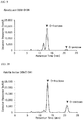
- Two kinds of strains LIS1 and LIS2 that prepared psicose from the D-fructose the most were selected by HPLC analysis ( FIGS. 1 and 2 ).
- Base sequences (5' to 3') of the 16s ribosomal DNA of the selected strains LIS1 and LIS2 are as shown in SEQ ID NOs: 1 and 2, respectively.
- SEQ ID NO: 1 showed about 99% homology with the 16s ribosomal DNA sequence (SEQ ID NO: 3) of Kaistia granuli Ko04
- SEQ ID NO: 2 showed about 99% homology with the 16s ribosomal DNA sequence (SEQ ID NO: 4) of Kaistia defluvii B6-12.
- the strain LIS1 was identified as of Kaistia granuli
- the strain LIS2 was identified as Kaistia defluvii, respectively, and named Kaistia granuli LIS1 and Kaistia defluvii LIS2, respectively.
- the two strains were deposited in the Korean Culture Center of Microorganisms (KCCM) which is an international depository under the Budapest Treaty, wherein the Kaistia granuli LIS1 was deposited on October 20, 2016, and granted accession number KCCM11916P, and the Kaistia defluvii LIS2 strain was deposited on April 24, 2017, and granted accession number KCCM12020P.
- KCCM Korean Culture Center of Microorganisms
- the psicose could be prepared by the Kaistia granuli LIS 1, the Kaistia defluvii LIS2, other strains of the same species, and a different kind of strain of the genus Kaistia was confirmed.
- K. granuli KCTC 12575 and K. defluvii KCTC23766 additional microorganisms (same species: K. granuli KCTC 12575 and K. defluvii KCTC23766; different species: Kaistia geumhonensis KCTC12849; K. dalseonensis KCTC 12850, K. hirudinis DSM25966, K. soli DSM 19436 and K.
- terrae DSM21341 were purchased from the Korean Collection for Type Cultures (KTCT) and Deutsche Sammlung von Mikroorganismen und Zellkulturen inoculated into normal medium (glucose 1 g/L, peptone 15 g/L, NaCl 6 g/L, yeast extract 3 g/L) and subjected to shaking culture at 30 °C for 24 hours, followed by centrifugation to recover only the cells.
- the recovered cells were washed with 0.85% (w/v) NaCl and then reacted with 50% (w/w) D-fructose under the same condition as in Example 1 in which the cell concentration was 20% (w/w).
Landscapes
- Chemical & Material Sciences (AREA)
- Organic Chemistry (AREA)
- Life Sciences & Earth Sciences (AREA)
- Engineering & Computer Science (AREA)
- Health & Medical Sciences (AREA)
- Wood Science & Technology (AREA)
- Zoology (AREA)
- Bioinformatics & Cheminformatics (AREA)
- Genetics & Genomics (AREA)
- Biotechnology (AREA)
- Biochemistry (AREA)
- General Health & Medical Sciences (AREA)
- General Engineering & Computer Science (AREA)
- Microbiology (AREA)
- Tropical Medicine & Parasitology (AREA)
- Biomedical Technology (AREA)
- Virology (AREA)
- Medicinal Chemistry (AREA)
- Chemical Kinetics & Catalysis (AREA)
- General Chemical & Material Sciences (AREA)
- Molecular Biology (AREA)
- Preparation Of Compounds By Using Micro-Organisms (AREA)
- Micro-Organisms Or Cultivation Processes Thereof (AREA)
- Medicines Containing Material From Animals Or Micro-Organisms (AREA)
Abstract
Description
- The following disclosure relates to a method for preparing a D-psicose using a microorganism of the genus Kaistia.
- D-psicose (hereinafter referred to as "psicose") is a monosaccharide known as a rare sugar present in the natural world in a very small amount. It has almost zero calorie while having nearly 70% sweetness of sugar and has received a lot of attention as a new food ingredient due to its functionalities such as inhibition of blood glucose, and inhibition of lipid synthesis, etc.
- Due to these characteristics, psicose is considered to be used as a sweetener substitute for sugar in various foods. However, there is an increasing need for a method for efficiently preparing psicose since it exists in a very small amount in the natural world.
- A known method for preparing psicose comprises a method for utilizing catalysis of molybdate ions (Bilik, V., Tihlarik, K., 1973, Reaction of Saccharides Catalyzed by Molybdate Ions. IX. Epimerization of Ketohexoses. Chem. Zvesti. 28:106-109), A Chemical Method for Preparing Psicose from D-Fructose by Heating Ethanol and Triethylamine Together (Doner, L.W., 1979, Isomerization of D-Fructose by Base: Liquid-Chromatographic Evaluation and The Isolation of D-Psicose. Carbohydr. Res. 70:209-216), and A Biological Method for Preparing Psicose from D-Fructose Using a Microorganism that Produces D-Psicose 3-Epimerase (Korean Patent Laid-Open Publication No.
10-2011-0035805 - Under these circumstances, the present inventors have made a lot of effort to develop a new microorganism being able to produce psicose, and as a result, confirmed that when the microorganism of the genus Kaistia was used, psicose can be produced from D-fructose and completed the present invention.
- An embodiment of the present invention is directed to providing a composition for preparing psicose comprising a microorganism of the genus Kaistia.
- Another embodiment of the present invention is directed to providing a method for preparing psicose comprising: contacting the microorganism of the genus Kaistia or the composition for preparing psicose comprising the microorganism of the genus Kaistia with D-fructose.
- Another embodiment of the present invention is directed to providing a microorganism of the genus Kaistia useful for preparation of psicose.
- According to an exemplary embodiment of the present invention, there is provided a composition for preparing psicose comprising: a microorganism of the genus Kaistia.
- The microorganism of the genus Kaistia of the present invention may comprise any microorganism without limitation as long as it has an ability to convert D-fructose to D-psicose. In an exemplary embodiment of the present invention, the microorganism of the genus Kaistia of the present invention may be at least one microorganism of the genus Kaistia selected from the group consisting of Kaistia granuli, Kaistia defluvii, Kaistia adipata, Kaistia geumhonensis, Kaistia dalseonensis, Kaistia hirudinis, Kaistia soli and Kaistia terrae. Specifically, the microorganism of the genus Kaistia of the present invention may be at least one microorganism of the genus Kaistia selected from the group consisting of Kaistia granuli LIS1 (accession number KCCM11916P), Kaistia defluvii LIS2 (accession number KCCM12020P), Kaistia granuli KCTC12575, Kaistia defluvii KCTC23766, Kaistia adipata KCTC12095, Kaistia geumhonensis KCTC 12849, Kaistia dalseonensis KCTC 12850, Kaistia hirudinis DSM25966, Kaistia soli DSM 19436 and Kaistia terrae DSM21341.
- In an exemplary embodiment, the microorganism of the genus Kaistia of the present invention may be a strain itself, a culture thereof, or a disruption of the microorganism. The culture or disruption of the microorganism of the genus Kaistia of the present invention may comprise a D-psicose-3-epimerase prepared from the microorganism of the genus Kaistia. In addition, the culture of the microorganism of the genus Kaistia of the present invention may or may not include the microorganism. Further, the disruption of the microorganism of the genus Kaistia of the present invention may be a disruption obtained by disrupting a microorganism of the genus Kaistia or a culture thereof, or a supernatant obtained by centrifuging the disruption.
- In another exemplary embodiment of the present invention, the composition for preparing psicose of the present invention may further comprise: D-fructose.
- In another exemplary embodiment of the present invention, the microorganism of the genus Kaistia of the present invention may be immobilized on a carrier to be used. An example of the carrier that is able to be used in the present invention includes, but is not limited to, agar, agarose, k-carrageenan, alginate or chitosan.
- The composition for preparing the D-psicose of the present invention may further comprise a metal. More specifically, the metal of the present invention may be at least one metal selected from the group consisting of manganese, calcium, magnesium, iron, lithium and sodium. More specifically, the metal may be a metal ion or a metal salt, and more specifically, the metal salt may be at least one metal salt selected from the group consisting of LiCl, Na2SO4, MgCl2, NaCl, FeSO4, MgSO4, MnCl2, MnSO4, and CaCl2. The metal ion or the metal salt of the present invention may have a concentration of 0.1 mM to 10 mM, 0.1 mM to 7 mM, 0.1 mM to 4 mM, 0.5 mM to 10 mM, 0.5 mM to 7 mM, 0.5 mM to 4 mM, 1 mM to 10 mM, 1 mM to 7 mM, 1 mM to 4 mM, 2 mM to 10 mM, 2 mM to 7 mM or 2 mM to 4 mM.
- According to another exemplary embodiment of the present invention, there is provided a method for preparing psicose, comprising: contacting a microorganism of the genus Kaistia or the composition for preparing psicose described in the present invention with D-fructose.
- In an exemplary embodiment, the contacting of the present invention may be performed at pH of 5.0 to 9.0, at 40 to 90°C, and/or for 0.5 to 48 hours.
- Specifically, the contacting of the present invention may be performed at pH 6.0 to 9.0, pH 7.0 to 9.0, pH 7.5 to 9.0, pH 6.0 to 8.5, pH 7.0 to 8.5, or pH 7.5 to 8.5.
- In addition, the contacting of the present invention may also be performed at a temperature of 40°C to 80°C, 40°C to 75°C, 40°C to 65°C, 50°C to 90°C, 50°C to 80°C, 50°C to 75°C, 50°C to 65°C, 55°C to 90°C, 55°C to 80°C, 55°C to 75°C, 55°C to 65°C, 60°C to 90°C, 60°C to 80°C, 60°C to 75°C, 60°C to 65°C, 65°C to 90°C, 65°C to 80°C or 65°C to 75°C.
- In addition, the contacting of the present invention may be performed for 0.5 hour or more, 1 hour or more, 3 hours or more, 4 hours or more, 5 hours or more, or 6 hours or more, and/or 48 hours or less, 36 hours or less, 24 hours or less, 18 hours or less, 12 hours or less, 9 hours or less.
- In another exemplary embodiment of the present invention, a weight ratio of the microorganism of the genus Kaistia to D-fructose of the present invention may be 1 : 1 to 1 : 5. Specifically, the weight ratio may be 1 : 1 to 1 : 4, 1 : 1 to 1 : 3, 1 : 2 to 1 : 5, 1 : 2 to 1 : 4, 1 : 2 to 1 : 3, or 1 : 2.5.
- In another exemplary embodiment of the present invention, the preparation method of the present invention may further comprise: before, after or simultaneously with the contacting with the D-fructose, adding a metal.
- In another exemplary embodiment of the present invention, the preparation method of the present invention may further comprise, after the contacting the D-fructose or the adding of the metal, isolating and/or purifying the psicose. The isolating and/or purifying of the present invention is not particularly limited, and may be performed by using a method generally used in the technical field of the present invention. For example, the isolating and/or purifying may be performed by one or more known methods such as dialysis, precipitation, adsorption, electrophoresis, ion exchange chromatography and fractional crystallization, etc., but is not limited thereto.
- Further, the preparation method of the present invention may further comprise, before or after the isolating and/or purifying, performing decoloration and/or desalination, respectively. By performing the decolorization and/or desalination, it is possible to obtain more refined psicose without impurities.
- In another exemplary embodiment of the present invention, the preparation method of the present invention may further comprise, after the contacting with the D-fructose, the adding of the metal, the isolating and/or purifying, or the performing of the decoloration and/or the desalination, crystallizing the D-psicose. The crystallization may be performed by using a crystallization method which is conventionally used. For example, the crystallization may be performed by using a cooling crystallization method.
- In still another exemplary embodiment of the present invention, the preparation method of the present invention may further comprise, before the crystallizing, concentrating the psicose. The concentration may increase a crystallization efficiency.
- In still another embodiment of the present invention, the preparation method of the present invention may further comprise, after the isolating and/or purifying, contacting an unreacted D-fructose with the microorganism of the genus Kaistia, or may further comprise, after the crystallizing, re-using a mother liquor from which crystallization is isolated in the isolating and/or purifying, or a combination thereof. Through the additional steps, the psicose may be obtained in a higher yield and an amount of D-fructose to be discarded may be reduced, thereby providing economic benefits.
- The conversion rate from D-fructose to psicose according to the preparation method of the present invention may be 5% to 50%, 10% to 50%, 20% to 50%, 25% to 50%, 30% to 50% %, 5% to 40%, 10% to 40%, 20% to 40%, 25% to 40%, 30% to 40%, 5% to 35%, 10% to 35%, 20% to 35%, 25% to 35% or 30% to 35% based on weight.
- The microorganism of the genus Kaistia, the D-fructose, the psicose, the metal and the carrier described in the method for preparing the psicose of the present invention are the same as described in the above-described exemplary embodiments.
- According to still another exemplary embodiment of the present invention, there is provided a Kaistia granuli LIS1 strain deposited with Accession number KCCM11916P.
- According to still another exemplary embodiment of the present invention, there is provided a Kaistia defluvii LIS2 strain deposited with Accession number KCCM12020P.
- The microorganism of the genus Kaistia according to the present invention can convert D-fructose to psicose, at the same time has a thermal stability at a temperature of 50 °C or more, thereby making it possible to produce psicose on an industrial scale. Therefore, in case the microorganism of the genus Kaistia uses in production of psicose, psicose can be economically provided.
-
-
FIG. 1 is HPLC analytical data showing that it is possible to prepare psicose from D-fructose using Kaistia granuli LIS1, according to an exemplary embodiment of the present invention. -
FIG. 2 is HPLC analytical data showing that it is possible to prepare psicose from D-fructose using Kaistia defluvii LIS2, according to an exemplary embodiment of the present invention. -
FIG. 3 is HPLC analytical data showing that it is possible to prepare psicose from D-fructose using Kaistia granuli KCTC12575, according to an exemplary embodiment of the present invention. -
FIG. 4 is HPLC analytical data showing that it is possible to prepare psicose from D-fructose using Kaistia defluvili KCTC23766, according to an exemplary embodiment of the present invention. -
FIG. 5 is HPLC analytical data showing that it is possible to prepare psicose from D-fructose using Kaistia geumhonensis KCTC 12849, according to an exemplary embodiment of the present invention. -
FIG. 6 is HPLC analytical data showing that it is possible to prepare psicose from D-fructose using Kaistia adipata KCTC 12095, according to an exemplary embodiment of the present invention. -
FIG. 7 is HPLC analytical data showing that it is possible to prepare psicose from D-fructose using Kaistia dalseonensis KCTC12850, according to an exemplary embodiment of the present invention. -
FIG. 8 is HPLC analytical data showing that it is possible to prepare psicose from D-fructose using Kaistia hirudinis DSM25966, according to an exemplary embodiment of the present invention. -
FIG. 9 is HPLC analytical data showing that it is possible to prepare psicose from D-fructose using Kaistia soli DSM19436, according to an exemplary embodiment of the present invention. -
FIG. 10 is HPLC analytical data showing that it is possible to prepare psicose from D-fructose using Kaistia terrae DSM21341, according to an exemplary embodiment of the present invention. - Hereinafter, the present invention will be described in more detail by the following Examples. However, the present invention is not limited to Examples below, and it should be understood that various modifications and changes may be made by those skilled in the art within the scope and spirit of the present invention.
- Throughout the specification of the present invention, unless otherwise noted, "%" used to denote a concentration of a specific material refers to a solid/solid (weight/weight) %, a solid/liquid (weight/volume) %, and a liquid/liquid (volume/volume) %.
- To isolate the microorganism that convert D-fructose to psicose, a minimal medium (KH2PO4 of 2.4 g/L, K2HPO4 of 5.6 g/L, (NH4)2SO4 of 2.6 g/L, 3 mM MnSO4, 7H2O of 0.1 g/L, yeast extract of 1 g/L) to which 1 %(w/v) psicose was added was used. 1 g of rhizosphere soil was suspended in 10 mL of 0.85%(w/v) NaCl, and 100 µl of the suspension was plated on an agar medium and cultured at 30°C. Colonies having different shapes and sizes were selected among the colonies formed in the agar medium, and each colony was inoculated into the minimal medium (KH2PO4 of 2.4 g/L, K2HPO4 of 5.6 g/L, (NH4)2SO4 of 2.6 g/L, 3 mM MnSO4, 7H2O of 0.1 g/L, yeast extract of 1 g/L) and subjected to shaking culture at 30°C for 24 hours, followed by centrifugation to recover only the cells. The recovered cells were washed with 0.85%(w/v) NaCl, and then, allowed to float by adding 50 mM Tris-Cl buffer (pH 8.0) in which 50 %(w/w) D-fructose and 3 mM MnSO4 were added in 20 %(w/w) of cell concentration, followed by reaction with the cells at 55°C for 2 hours. The reaction product was centrifuged to remove the cells from the reaction solution, and preparation of the psicose was confirmed by HPLC of the supernatant. The HPLC analysis was performed using HPLC (Agilent, USA) Refractive Index Detector (Agilent 1260 RID) equipped with Aminex HPX-87C column (BIO-RAD), wherein a mobile phase solvent was water, a temperature was 80°C, and a flow rate was 0.6 ml/min. Two kinds of strains (LIS1 and LIS2) that prepared psicose from the D-fructose the most were selected by HPLC analysis (
FIGS. 1 and 2 ). - Base sequences (5' to 3') of the 16s ribosomal DNA of the selected strains LIS1 and LIS2 are as shown in SEQ ID NOs: 1 and 2, respectively. As a result of the sequence homology analysis, SEQ ID NO: 1 showed about 99% homology with the 16s ribosomal DNA sequence (SEQ ID NO: 3) of Kaistia granuli Ko04, and SEQ ID NO: 2 showed about 99% homology with the 16s ribosomal DNA sequence (SEQ ID NO: 4) of Kaistia defluvii B6-12. Accordingly, the strain LIS1 was identified as of Kaistia granuli, and the strain LIS2 was identified as Kaistia defluvii, respectively, and named Kaistia granuli LIS1 and Kaistia defluvii LIS2, respectively. The two strains were deposited in the Korean Culture Center of Microorganisms (KCCM) which is an international depository under the Budapest Treaty, wherein the Kaistia granuli LIS1 was deposited on October 20, 2016, and granted accession number KCCM11916P, and the Kaistia defluvii LIS2 strain was deposited on April 24, 2017, and granted accession number KCCM12020P.
- Whether the psicose could be prepared by the Kaistia granuli LIS 1, the Kaistia defluvii LIS2, other strains of the same species, and a different kind of strain of the genus Kaistia was confirmed.
- Specifically, eight additional microorganisms (same species: K. granuli KCTC 12575 and K. defluvii KCTC23766; different species: Kaistia geumhonensis KCTC12849; K. dalseonensis KCTC 12850, K. hirudinis DSM25966, K. soli DSM 19436 and K. terrae DSM21341) were purchased from the Korean Collection for Type Cultures (KTCT) and Deutsche Sammlung von Mikroorganismen und Zellkulturen inoculated into normal medium (glucose 1 g/L, peptone 15 g/L, NaCl 6 g/L, yeast extract 3 g/L) and subjected to shaking culture at 30 °C for 24 hours, followed by centrifugation to recover only the cells. The recovered cells were washed with 0.85% (w/v) NaCl and then reacted with 50% (w/w) D-fructose under the same condition as in Example 1 in which the cell concentration was 20% (w/w). After completion of the reaction, the reaction supernatant was analyzed by HPLC to confirm a preparation amount of the psicose. The HPLC analysis was performed in the same manner as in Example 1. Psicose conversion rate was calculated by the ratio of weight amount of produced psicose after reaction to weight amount of d-fructose before reaction.
- As a result, it was confirmed that all of the eight strains of the genus Kaistia prepared the psicose from the D-fructose, and this shows that all kinds microorganism of the genus Kaistia can produce psicose from D-fructose at a high temperature (table 1,
FIGS. 3 to 10 ).[table 1] Strain Conversion rate(%) K. granuli LIS 1 28 K. granuli KCTC12575 25 K. defluvii LIS2 28 K. defluvii KCTC23766 23 K. geumhonensis KCTC12849 11 K. aditapa KCTC12095 4 K. dαlseonensis KCTC 12850 1 K. hirudinis DSM25966 10 K. soli DSM19436 4 K. terrae DSM21341 23 - From the above description, it will be understood by those skilled in the art that the present invention can be made in other specific forms without modifying a technical idea or essential characteristics thereof. In this regard, it should be understood that the embodiments described above are illustrative in all aspects and not restrictive. The scope of the present invention should be interpreted to cover all modifications or variations derived from the meaning and scope of the appended claims and their equivalents rather than the detailed description.


Claims (7)
- A composition for preparing D-psicose comprising: a microorganism of the genus Kaistia.
- The composition of claim 1, wherein the microorganism of the genus Kaistia is at least one microorganism of the genus Kaistia selected from the group consisting of Kaistia granuli, Kaistia defluvii, and Kaistia geumhonensis, Kaistia adipata, Kaistia dalseonensis, Kaistia hirudinis, Kaistia soli and Kaistia terrae.
- The composition of claim 1 or 2, further comprising: D-fructose.
- A method for preparing D-psicose, comprising: contacting a microorganism of the genus Kaistia with D-fructose.
- The method of claim 4, wherein the contacting is performed at pH of 5.0 to 9.0, at a temperature of 40°C to 90°C, or for 0.5 to 48 hours.
- A Kaistia granuli LIS1 strain deposited with Accession number KCCM11916P.
- A Kaistia defluvii LIS2 strain deposited with Accession number KCCM12020P.
Applications Claiming Priority (2)
| Application Number | Priority Date | Filing Date | Title |
|---|---|---|---|
| KR20160152948 | 2016-11-16 | ||
| PCT/KR2017/012971 WO2018093154A2 (en) | 2016-11-16 | 2017-11-15 | Method for preparing d-psicose using microorganisms of genus kaistia |
Publications (2)
| Publication Number | Publication Date |
|---|---|
| EP3543345A2 true EP3543345A2 (en) | 2019-09-25 |
| EP3543345A4 EP3543345A4 (en) | 2020-07-29 |
Family
ID=62146607
Family Applications (1)
| Application Number | Title | Priority Date | Filing Date |
|---|---|---|---|
| EP17872289.8A Pending EP3543345A4 (en) | 2016-11-16 | 2017-11-15 | Method for preparing d-psicose using microorganisms of genus kaistia |
Country Status (10)
| Country | Link |
|---|---|
| US (1) | US11414685B2 (en) |
| EP (1) | EP3543345A4 (en) |
| JP (1) | JP6758499B2 (en) |
| KR (1) | KR101899061B1 (en) |
| CN (1) | CN111164217B (en) |
| AR (1) | AR110094A1 (en) |
| RU (1) | RU2727845C1 (en) |
| TW (1) | TWI659105B (en) |
| UA (1) | UA125652C2 (en) |
| WO (1) | WO2018093154A2 (en) |
Families Citing this family (2)
| Publication number | Priority date | Publication date | Assignee | Title |
|---|---|---|---|---|
| US11174475B2 (en) * | 2016-11-16 | 2021-11-16 | Cj Cheiljedang Corporation | D-psicose 3-epimerase and method for preparing D-psicose using the same |
| KR102138862B1 (en) * | 2019-03-08 | 2020-07-30 | 씨제이제일제당 주식회사 | Allulose-producing Staphylococcus microorganism and method for producing allulose using the same |
Family Cites Families (14)
| Publication number | Priority date | Publication date | Assignee | Title |
|---|---|---|---|---|
| JP2876416B2 (en) * | 1990-01-31 | 1999-03-31 | 株式会社林原生物化学研究所 | Method for producing D-psicose |
| JP3711296B2 (en) * | 1995-08-25 | 2005-11-02 | 株式会社林原生物化学研究所 | Method for producing L-psicose |
| WO2007058086A1 (en) * | 2005-11-15 | 2007-05-24 | Kabushiki Kaisha Hayashibara Seibutsu Kagaku Kenkyujo | Ketose 3-epimerase, process for production thereof, and use thereof |
| TW200819540A (en) * | 2006-07-11 | 2008-05-01 | Genelux Corp | Methods and compositions for detection of microorganisms and cells and treatment of diseases and disorders |
| KR100832339B1 (en) * | 2006-12-11 | 2008-05-26 | 솔젠트 (주) | Novel Shinorizobium spp. Converting fructose to psychose and method for producing psychose |
| KR20110035805A (en) | 2009-09-30 | 2011-04-06 | 씨제이제일제당 (주) | Immobilization of Pseudomonas-Epimerase and Method for Producing Psychos using the Same |
| JP4966429B1 (en) * | 2011-01-07 | 2012-07-04 | 日本食品化工株式会社 | Sugar condensate and production method and use thereof |
| WO2013005800A1 (en) * | 2011-07-06 | 2013-01-10 | 松谷化学工業株式会社 | Enzyme produced by arthrobacter globiformis |
| KR101318422B1 (en) | 2013-04-09 | 2013-10-15 | 주식회사 삼양제넥스 | D-psicose epimerase and method for producing psicose using the same |
| KR101539097B1 (en) * | 2013-12-26 | 2015-07-23 | 주식회사 삼양제넥스 | Polynucleotide encoding psicose epimerase and method of producing psicos using the same |
| KR102044957B1 (en) * | 2014-12-31 | 2019-11-14 | 주식회사 삼양사 | Method for producing psicose using the same |
| WO2016134311A1 (en) * | 2015-02-19 | 2016-08-25 | Synthetic Genomics, Inc. | High efficiency method for algal transformation |
| US10550414B2 (en) * | 2015-12-23 | 2020-02-04 | Cj Cheiljedang Corporation | Composition for producing D-psicose comprising D-psicose 3-epimerase and salt and method for producing D-psicose using same |
| CN105802897B (en) * | 2016-05-26 | 2019-02-12 | 江南大学 | A kind of D-psicose-3-epimerase production strain and its application |
-
2017
- 2017-11-15 UA UAA201905221A patent/UA125652C2/en unknown
- 2017-11-15 US US16/461,308 patent/US11414685B2/en active Active
- 2017-11-15 CN CN201780079630.4A patent/CN111164217B/en active Active
- 2017-11-15 RU RU2019115461A patent/RU2727845C1/en active
- 2017-11-15 WO PCT/KR2017/012971 patent/WO2018093154A2/en not_active Ceased
- 2017-11-15 KR KR1020170152621A patent/KR101899061B1/en active Active
- 2017-11-15 EP EP17872289.8A patent/EP3543345A4/en active Pending
- 2017-11-15 JP JP2019526318A patent/JP6758499B2/en active Active
- 2017-11-16 TW TW106139731A patent/TWI659105B/en active
- 2017-11-16 AR ARP170103191A patent/AR110094A1/en unknown
Also Published As
| Publication number | Publication date |
|---|---|
| US20200032307A1 (en) | 2020-01-30 |
| TW201825682A (en) | 2018-07-16 |
| JP2019537448A (en) | 2019-12-26 |
| US11414685B2 (en) | 2022-08-16 |
| AR110094A1 (en) | 2019-02-20 |
| WO2018093154A2 (en) | 2018-05-24 |
| KR20180055737A (en) | 2018-05-25 |
| CN111164217A (en) | 2020-05-15 |
| WO2018093154A3 (en) | 2018-08-09 |
| KR101899061B1 (en) | 2018-09-14 |
| CN111164217B (en) | 2023-11-14 |
| UA125652C2 (en) | 2022-05-11 |
| EP3543345A4 (en) | 2020-07-29 |
| TWI659105B (en) | 2019-05-11 |
| RU2727845C1 (en) | 2020-07-24 |
| JP6758499B2 (en) | 2020-09-23 |
Similar Documents
| Publication | Publication Date | Title |
|---|---|---|
| JP7145922B2 (en) | Microbacterium strain and method for producing psicose using the same | |
| KR101944027B1 (en) | Enzyme produced by arthrobacter globiformis | |
| EP3088515B1 (en) | Ensifer sp. strain and method for producing psicose using same | |
| KR102132381B1 (en) | Ketose 3-epimerase produced by arthrobacter globiformis | |
| CN113166788B (en) | A novel ketose 3-epimerase | |
| EP3633023B1 (en) | Strain in microbacterium and method for producing psicose using same | |
| KR102044957B1 (en) | Method for producing psicose using the same | |
| US11414685B2 (en) | Method for preparing D-psicose using microorganism of genus Kaistia | |
| US8227232B2 (en) | Thermostable L-ribose isomerase and method for producing same and use of same | |
| KR102054961B1 (en) | Strain of microbacterium genus and method for producing psicose using the same | |
| KR102068752B1 (en) | Strain of Microbacterium genus and method for producing psicose using the same | |
| WO2022114207A1 (en) | Novel l-rhamnose isomerase |
Legal Events
| Date | Code | Title | Description |
|---|---|---|---|
| STAA | Information on the status of an ep patent application or granted ep patent |
Free format text: STATUS: THE INTERNATIONAL PUBLICATION HAS BEEN MADE |
|
| PUAI | Public reference made under article 153(3) epc to a published international application that has entered the european phase |
Free format text: ORIGINAL CODE: 0009012 |
|
| STAA | Information on the status of an ep patent application or granted ep patent |
Free format text: STATUS: REQUEST FOR EXAMINATION WAS MADE |
|
| 17P | Request for examination filed |
Effective date: 20190528 |
|
| AK | Designated contracting states |
Kind code of ref document: A2 Designated state(s): AL AT BE BG CH CY CZ DE DK EE ES FI FR GB GR HR HU IE IS IT LI LT LU LV MC MK MT NL NO PL PT RO RS SE SI SK SM TR |
|
| AX | Request for extension of the european patent |
Extension state: BA ME |
|
| DAV | Request for validation of the european patent (deleted) | ||
| DAX | Request for extension of the european patent (deleted) | ||
| A4 | Supplementary search report drawn up and despatched |
Effective date: 20200626 |
|
| RIC1 | Information provided on ipc code assigned before grant |
Ipc: C12N 1/20 20060101ALI20200622BHEP Ipc: C12P 19/24 20060101ALI20200622BHEP Ipc: C12P 19/02 20060101AFI20200622BHEP Ipc: C12R 1/01 20060101ALI20200622BHEP |
|
| P01 | Opt-out of the competence of the unified patent court (upc) registered |
Effective date: 20230606 |