EP3542624A1 - Method for alleviating symptom of degenerative disease of drosophila by using low-dose radiation - Google Patents
Method for alleviating symptom of degenerative disease of drosophila by using low-dose radiation Download PDFInfo
- Publication number
- EP3542624A1 EP3542624A1 EP17872128.8A EP17872128A EP3542624A1 EP 3542624 A1 EP3542624 A1 EP 3542624A1 EP 17872128 A EP17872128 A EP 17872128A EP 3542624 A1 EP3542624 A1 EP 3542624A1
- Authority
- EP
- European Patent Office
- Prior art keywords
- disease
- drosophila
- alzheimer
- low
- dose radiation
- Prior art date
- Legal status (The legal status is an assumption and is not a legal conclusion. Google has not performed a legal analysis and makes no representation as to the accuracy of the status listed.)
- Pending
Links
Images

Classifications
-
- A—HUMAN NECESSITIES
- A01—AGRICULTURE; FORESTRY; ANIMAL HUSBANDRY; HUNTING; TRAPPING; FISHING
- A01K—ANIMAL HUSBANDRY; AVICULTURE; APICULTURE; PISCICULTURE; FISHING; REARING OR BREEDING ANIMALS, NOT OTHERWISE PROVIDED FOR; NEW BREEDS OF ANIMALS
- A01K67/00—Rearing or breeding animals, not otherwise provided for; New or modified breeds of animals
- A01K67/60—New or modified breeds of invertebrates
- A01K67/61—Genetically modified invertebrates, e.g. transgenic or polyploid
- A01K67/65—Genetically modified arthropods
- A01K67/68—Genetically modified insects
-
- A—HUMAN NECESSITIES
- A01—AGRICULTURE; FORESTRY; ANIMAL HUSBANDRY; HUNTING; TRAPPING; FISHING
- A01K—ANIMAL HUSBANDRY; AVICULTURE; APICULTURE; PISCICULTURE; FISHING; REARING OR BREEDING ANIMALS, NOT OTHERWISE PROVIDED FOR; NEW BREEDS OF ANIMALS
- A01K67/00—Rearing or breeding animals, not otherwise provided for; New or modified breeds of animals
- A01K67/30—Rearing or breeding invertebrates
-
- A—HUMAN NECESSITIES
- A61—MEDICAL OR VETERINARY SCIENCE; HYGIENE
- A61N—ELECTROTHERAPY; MAGNETOTHERAPY; RADIATION THERAPY; ULTRASOUND THERAPY
- A61N5/00—Radiation therapy
- A61N5/10—X-ray therapy; Gamma-ray therapy; Particle-irradiation therapy
-
- A—HUMAN NECESSITIES
- A61—MEDICAL OR VETERINARY SCIENCE; HYGIENE
- A61P—SPECIFIC THERAPEUTIC ACTIVITY OF CHEMICAL COMPOUNDS OR MEDICINAL PREPARATIONS
- A61P25/00—Drugs for disorders of the nervous system
- A61P25/28—Drugs for disorders of the nervous system for treating neurodegenerative disorders of the central nervous system, e.g. nootropic agents, cognition enhancers, drugs for treating Alzheimer's disease or other forms of dementia
-
- A—HUMAN NECESSITIES
- A01—AGRICULTURE; FORESTRY; ANIMAL HUSBANDRY; HUNTING; TRAPPING; FISHING
- A01K—ANIMAL HUSBANDRY; AVICULTURE; APICULTURE; PISCICULTURE; FISHING; REARING OR BREEDING ANIMALS, NOT OTHERWISE PROVIDED FOR; NEW BREEDS OF ANIMALS
- A01K2207/00—Modified animals
- A01K2207/30—Animals modified by surgical methods
-
- A—HUMAN NECESSITIES
- A01—AGRICULTURE; FORESTRY; ANIMAL HUSBANDRY; HUNTING; TRAPPING; FISHING
- A01K—ANIMAL HUSBANDRY; AVICULTURE; APICULTURE; PISCICULTURE; FISHING; REARING OR BREEDING ANIMALS, NOT OTHERWISE PROVIDED FOR; NEW BREEDS OF ANIMALS
- A01K2207/00—Modified animals
- A01K2207/35—Animals modified by environmental factors, e.g. temperature, O2
-
- A—HUMAN NECESSITIES
- A01—AGRICULTURE; FORESTRY; ANIMAL HUSBANDRY; HUNTING; TRAPPING; FISHING
- A01K—ANIMAL HUSBANDRY; AVICULTURE; APICULTURE; PISCICULTURE; FISHING; REARING OR BREEDING ANIMALS, NOT OTHERWISE PROVIDED FOR; NEW BREEDS OF ANIMALS
- A01K2227/00—Animals characterised by species
- A01K2227/70—Invertebrates
- A01K2227/706—Insects, e.g. Drosophila melanogaster, medfly
-
- A—HUMAN NECESSITIES
- A01—AGRICULTURE; FORESTRY; ANIMAL HUSBANDRY; HUNTING; TRAPPING; FISHING
- A01K—ANIMAL HUSBANDRY; AVICULTURE; APICULTURE; PISCICULTURE; FISHING; REARING OR BREEDING ANIMALS, NOT OTHERWISE PROVIDED FOR; NEW BREEDS OF ANIMALS
- A01K2267/00—Animals characterised by purpose
- A01K2267/03—Animal model, e.g. for test or diseases
- A01K2267/0306—Animal model for genetic diseases
- A01K2267/0312—Animal model for Alzheimer's disease
-
- A—HUMAN NECESSITIES
- A01—AGRICULTURE; FORESTRY; ANIMAL HUSBANDRY; HUNTING; TRAPPING; FISHING
- A01K—ANIMAL HUSBANDRY; AVICULTURE; APICULTURE; PISCICULTURE; FISHING; REARING OR BREEDING ANIMALS, NOT OTHERWISE PROVIDED FOR; NEW BREEDS OF ANIMALS
- A01K2267/00—Animals characterised by purpose
- A01K2267/03—Animal model, e.g. for test or diseases
- A01K2267/0306—Animal model for genetic diseases
- A01K2267/0318—Animal model for neurodegenerative disease, e.g. non- Alzheimer's
Definitions
- the present invention relates to a degenerative disease Drosophila model, and more particularly to a technique for alleviating the phenotypes of a degenerative disease of Drosophila.
- Alzheimer's disease is the disease with the highest rate of incidence among neurodegenerative diseases, and thorough research is ongoing into onset mechanisms of Alzheimer's disease and therapies therefor, but complete treatment thereof is still impossible.
- Alzheimer's disease is well known as a neurodegenerative disease caused by blocking neurotransmissions due to accumulation, in the brain, of amyloid beta 42 (A ⁇ 42) protein abnormally produced in vivo.
- a ⁇ 42 amyloid beta 42
- Alzheimer's disease mainly include administration of drugs for inhibiting the accumulation of A ⁇ 42, but have a long administration period and merely decrease the rate of progression of degenerative disease, rather than provide a cure.
- radiation therapy has emerged as new neurological therapeutic methods for treating Alzheimer's disease, and low-dose radiation has already been actively used for cancer treatment.
- Drosophila is well established as an in-vivo model for Alzheimer's disease, and may induce tissue-specific overexpression of A ⁇ 42, a representative protein of Alzheimer's disease pathology, in neurons and eyes via elav-GAL4 and GMR-GAL4, respectively, using the UAS-GAL4 system, and has been used as an in-vivo model in place of humans in studies on the onset mechanism of Alzheimer's disease and the therapeutic effect thereon ( Ijima et al., 2004, PNAS ; Hong et al., 2012, BBRC ; Lee et al., 2016, Dis Model Mech ; Park et al., 2013 Biol Pharm Bull ).
- An objective of the present invention is to provide a method of alleviating the phenotypes of a degenerative disease of a degenerative disease Drosophila model.
- an objective of the present invention is to provide a degenerative disease Drosophila model, in which the phenotypes of a degenerative disease are alleviated.
- an objective of the present invention is to provide a therapeutic method through exposure to low-dose radiation as therapeutic methods for treating a neurodegenerative disease using a degenerative disease Drosophila model.
- the present invention provides a method of alleviating the phenotypes of a degenerative disease of Drosophila using low-dose radiation, the method comprising collecting a Drosophila embryo and treating low-dose radiation to the Drosophila embryo.
- Drosophila may be an Alzheimer's disease Drosophila model.
- the Alzheimer's disease Drosophila model may be GMR>A ⁇ 42 or elav>A ⁇ 42.
- the low-dose radiation may be applied so that a cumulative dose thereof is 0.05 to 0.1 Gy.
- the degenerative disease may be Alzheimer's disease.
- the phenotypes of the neurodegenerative disease may be decreased climbing ability or the induction of apoptosis.
- the present invention provides a degenerative disease Drosophila model, in which the phenotypes of a degenerative disease are alleviated by treating low-dose radiation to a Drosophila embryo.
- a method of alleviating the phenotypes of a degenerative disease by treating low-dose radiation to a degenerative disease Drosophila model can be provided.
- a degenerative disease Drosophila model in which the phenotypes of a degenerative disease are alleviated by treating low-dose radiation to a degenerative disease Drosophila model can be provided.
- a degenerative disease Drosophila model can be analyzed with regard to apoptosis and climbing ability using low-dose radiation, and thereby can be used as a more advanced in-vivo model than a conventional Drosophila model, which enables confirmation only through genetic differences.
- the present invention suggests an appropriate dose for alleviating phenotypes such as decreased climbing ability and induction of apoptosis in the degenerative disease Drosophila model and can thus be used as a basis for the therapeutic effect of low-dose radiation.
- the present invention is effective in providing an in-vivo model system that is useful in verifying the therapeutic effect of low-dose radiation before clinical study, as methods for treating Alzheimer's disease among degenerative diseases.
- An embodiment of the present invention pertains to a method of alleviating the phenotypes of a degenerative disease of Drosophila using low-dose radiation, the method comprising collecting a Drosophila embryo and treating low-dose radiation to the Drosophila embryo.
- Drosophila is an Alzheimer's disease Drosophila model.
- the Alzheimer's disease Drosophila model is GMR>A ⁇ 42 or elav>A ⁇ 42.
- GMR>A ⁇ 42 and elav>A ⁇ 42 are Alzheimer's disease Drosophila models and are Drosophila models able to induce tissue-specific overexpression of A ⁇ 42, a representative protein of Alzheimer's disease pathology, in the neurons and eyes using the UAS-GAL4 system.
- the low-dose radiation is preferably applied so that the cumulative dose thereof is 0.05 to 0.1 Gy ( 137 Cs, 0.8 Gy/min), and more preferably 0.05 Gy.
- the degenerative disease is Alzheimer's disease.
- Alzheimer's disease is one of the main causes of senile dementia.
- the cause of Alzheimer's disease has been found to be highly associated with beta-amyloid protein.
- beta amyloid When beta amyloid is excessively produced in the body and accumulates in the brain, the function of the neurons deteriorates and thus Alzheimer's disease develops.
- Beta amyloid paralyzes or deteriorates the function of mitochondria in the neurons, thereby increasing the amount of reactive oxygen species released from the mitochondria. The reactive oxygen species increased makes a fatal wound on intracellular protein or DNA, which in turn results in damage or apoptosis of neurons in brain.
- the phenotypes of the degenerative disease include decreased climbing ability and induction of apoptosis.
- Another embodiment of the present invention pertains to a neurodegenerative disease Drosophila model, in which the phenotypes of the degenerative disease are alleviated by treating low-dose radiation to a Drosophila embryo.
- Drosophila is an Alzheimer's disease Drosophila model.
- the Alzheimer's disease Drosophila model is GMR>A ⁇ 42 or elav>A ⁇ 42.
- the low-dose radiation is preferably applied so that a cumulative dose thereof is 0.05 to 0.1 Gy ( 137 Cs, 0.8 Gy/min), and more preferably 0.05 Gy.
- the degenerative disease is Alzheimer's disease.
- the phenotypes of the neurodegenerative disease include decreased climbing ability and induction of apoptosis.
- an Alzheimer's disease Drosophila model (GMR>A ⁇ 42) ( Crowther et al., 2003, Neuroscience ; Finelli et al., 2004, Mol. Cell. Neurosci. ), exhibiting a rough eye phenotype by overexpressing A ⁇ 42, a causative protein of Alzheimer's disease, specifically in the eyes through GMR-GAL4, was used.
- GMR-GAL4 a causative protein of Alzheimer's disease, specifically in the eyes through GMR-GAL4
- Drosophila having only GMR-GAL4 was used, and all Drosophila samples were cultured in an incubator at a temperature of 25°C and a humidity of 60%.
- Respective embryos were collected from control Drosophila (GMR-GAL4) and Alzheimer's disease Drosophila model (GMR>A ⁇ 42) for 6 hr.
- the embryos of the Alzheimer's disease Drosophila model (GMR>A ⁇ 42) were divided into five groups, four groups of which were irradiated respectively at doses of 0.05 Gy, 0.1 Gy, 0.2 Gy, and 4 Gy ( 137 Cs, 0.8 Gy/min). After irradiation of the low-dose radiation, these embryos were grown in an incubator until adulthood, and the eyes of individual adult Drosophila groups were observed using a microscope.
- the Drosophila eye microscopy images for confirming the effect of alleviating the rough eye phenotype of the Alzheimer's disease Drosophila model (GMR>A ⁇ 42) using low-dose radiation are shown in FIG. 1 .
- the rough eye phenotype of the Alzheimer's disease Drosophila model (GMR>A ⁇ 42) was confirmed to be alleviated at cumulative doses of 0.05 Gy and 0.1 Gy, and the phenotype alleviation effect was insignificant at 0.2 Gy.
- Respective embryos were collected from control Drosophila (GMR-GAL) and the Alzheimer's disease Drosophila model (GMR>A ⁇ 42) for 6 hr in the same manner as in Example 1.
- the embryos of the Alzheimer's disease Drosophila model (GMR>A ⁇ 42) were divided into three groups, two groups of which were irradiated respectively at doses of 0.05 Gy and 4 Gy ( 137 Cs, 0.8 Gy/min). After irradiation of the low-dose radiation, the embryos were grown in an incubator until they became 3 rd instar larvae, and the larval eye discs were dissected, stained with acridine orange (AO), and then observed with a fluorescence microscope.
- AO acridine orange
- FIG. 2 The results of observation with a fluorescence microscope for confirming the effect of reducing the apoptosis of Alzheimer's disease Drosophila model (GMR>A ⁇ 42) using low-dose radiation are shown in FIG. 2 .
- apoptosis (the portion stained black in FIG. 2 ), known to be induced due to overexpression of A ⁇ 42 in the Alzheimer's disease Drosophila model (GMR>A ⁇ 42), was confirmed to be reduced by low-dose radiation of 0.05 Gy, whereas high-dose radiation of 4 Gy was found to increase apoptosis.
- an Alzheimer's disease Drosophila model (elav>A ⁇ 42), exhibiting a decreased climbing ability phenotype through overexpression of the A ⁇ 42 protein specifically in neurons through elav-GAL4, was used.
- Drosophila having only elav-GAL4 was used, and all Drosophila samples were cultured under incubation conditions of a temperature of 25°C and a humidity of 60%.
- Respective embryos were collected from control Drosophila (elav-GAL4) and the Alzheimer's disease Drosophila model (elav>A ⁇ 42) for 6 hr.
- the embryos of the Alzheimer's disease Drosophila model (elav>A ⁇ 42) were divided into three groups, two groups of which were irradiated respectively at cumulative doses of 0.05 Gy and 4 Gy ( 137 Cs, 0.8 Gy/min). After irradiation of the low-dose radiation, these embryos were grown in an incubator until adulthood, and male Drosophila samples were collected on the third day of adulthood, and the climbing ability of Drosophila groups was tested. The climbing ability test was performed in the same manner as in Hwang et al., (2013) PLoS Genetics .
- FIG. 3 The results of evaluation of the effect of alleviating the decreased climbing ability phenotype of the Alzheimer's disease Drosophila model (elav>A ⁇ 42) using low-dose radiation are shown in FIG. 3 . Based on this result, the climbing ability was improved in the Alzheimer's disease Drosophila model (elav>A ⁇ 42) at a cumulative dose of 0.05 Gy, and was significantly degraded by high-dose radiation of 4 Gy.
- Respective embryos were collected from control Drosophila (elav-GAL4) and the Alzheimer's disease Drosophila model (elav>A ⁇ 42) for 6 hr in the same manner as in Example 3, and the embryos of the Alzheimer's disease Drosophila model (elav>A ⁇ 42) were divided into three groups, two groups of which were irradiated respectively at cumulative doses of 0.05 Gy and 4 Gy ( 137 Gy, 0.8 Gy/min). After irradiation of the low-dose radiation, the embryos were grown in an incubator until they became larvae, and the brains of the larvae were dissected, stained with acridine orange (AO), and then observed with a fluorescence microscope.
- AO acridine orange
- FIG. 4 The results of observation with a fluorescence microscope for confirming the effect of reducing apoptosis of the Alzheimer's disease Drosophila model (elav>A ⁇ 42) using low-dose radiation are shown in FIG. 4 . Based on this result, apoptosis (the portion stained black in the image) induced due to overexpression of A ⁇ 42 in the Alzheimer's disease Drosophila model (elav>A ⁇ 42) was confirmed to be reduced by low-dose radiation of 0.05 Gy, and high-dose radiation of 4 Gy was found to further induce apoptosis.
Landscapes
- Life Sciences & Earth Sciences (AREA)
- Health & Medical Sciences (AREA)
- Environmental Sciences (AREA)
- Animal Behavior & Ethology (AREA)
- Engineering & Computer Science (AREA)
- Biomedical Technology (AREA)
- Animal Husbandry (AREA)
- Biodiversity & Conservation Biology (AREA)
- Zoology (AREA)
- Neurosurgery (AREA)
- Veterinary Medicine (AREA)
- Public Health (AREA)
- Nuclear Medicine, Radiotherapy & Molecular Imaging (AREA)
- General Health & Medical Sciences (AREA)
- Neurology (AREA)
- Bioinformatics & Cheminformatics (AREA)
- Pharmacology & Pharmacy (AREA)
- Organic Chemistry (AREA)
- Medicinal Chemistry (AREA)
- General Chemical & Material Sciences (AREA)
- Pathology (AREA)
- Radiology & Medical Imaging (AREA)
- Chemical Kinetics & Catalysis (AREA)
- Chemical & Material Sciences (AREA)
- Psychiatry (AREA)
- Hospice & Palliative Care (AREA)
- Investigating Or Analysing Biological Materials (AREA)
- Pharmaceuticals Containing Other Organic And Inorganic Compounds (AREA)
- Biotechnology (AREA)
- Medicines Containing Plant Substances (AREA)
Abstract
Description
- The present invention relates to a degenerative disease Drosophila model, and more particularly to a technique for alleviating the phenotypes of a degenerative disease of Drosophila.
- Alzheimer's disease is the disease with the highest rate of incidence among neurodegenerative diseases, and thorough research is ongoing into onset mechanisms of Alzheimer's disease and therapies therefor, but complete treatment thereof is still impossible.
- Alzheimer's disease is well known as a neurodegenerative disease caused by blocking neurotransmissions due to accumulation, in the brain, of amyloid beta 42 (Aβ42) protein abnormally produced in vivo.
- Currently, methods of treating Alzheimer's disease mainly include administration of drugs for inhibiting the accumulation of Aβ42, but have a long administration period and merely decrease the rate of progression of degenerative disease, rather than provide a cure. Recently, radiation therapy has emerged as new neurological therapeutic methods for treating Alzheimer's disease, and low-dose radiation has already been actively used for cancer treatment.
- However, there is currently controversy about the therapeutic effect of low-dose radiation on Alzheimer's disease. Although there are prior studies that suggest the therapeutic effect of low-dose radiation on Alzheimer's disease through a mouse model (Wei et al., 2012, Curr. Alzheimer Res.; Lowe et al., 2009, Radiat. Res.), only a series of gene groups is checked, and the effect of alleviating symptoms has not been verified. On the contrary, the scientific basis for proving the therapeutic effect on Alzheimer's disease using low-dose radiation of 100 mSv or less is insufficient, as reported in a paper (Wang et al., Journal of Radiation research, 2014) that suggests that there is no therapeutic effect of radiation. Therefore, it is necessary to construct an in-vivo model that is able to test the therapeutic effect of low-dose radiation before clinical study.
- Drosophila is well established as an in-vivo model for Alzheimer's disease, and may induce tissue-specific overexpression of Aβ42, a representative protein of Alzheimer's disease pathology, in neurons and eyes via elav-GAL4 and GMR-GAL4, respectively, using the UAS-GAL4 system, and has been used as an in-vivo model in place of humans in studies on the onset mechanism of Alzheimer's disease and the therapeutic effect thereon (Ijima et al., 2004, PNAS; Hong et al., 2012, BBRC; Lee et al., 2016, Dis Model Mech; Park et al., 2013 Biol Pharm Bull).
- An objective of the present invention is to provide a method of alleviating the phenotypes of a degenerative disease of a degenerative disease Drosophila model.
- In addition, an objective of the present invention is to provide a degenerative disease Drosophila model, in which the phenotypes of a degenerative disease are alleviated.
- In addition, an objective of the present invention is to provide a therapeutic method through exposure to low-dose radiation as therapeutic methods for treating a neurodegenerative disease using a degenerative disease Drosophila model.
- In order to accomplish the above objectives, the present invention provides a method of alleviating the phenotypes of a degenerative disease of Drosophila using low-dose radiation, the method comprising collecting a Drosophila embryo and treating low-dose radiation to the Drosophila embryo.
- Here, Drosophila may be an Alzheimer's disease Drosophila model. Also, the Alzheimer's disease Drosophila model may be GMR>Aβ42 or elav>Aβ42.
- The low-dose radiation may be applied so that a cumulative dose thereof is 0.05 to 0.1 Gy.
- The degenerative disease may be Alzheimer's disease.
- The phenotypes of the neurodegenerative disease may be decreased climbing ability or the induction of apoptosis.
- In addition, the present invention provides a degenerative disease Drosophila model, in which the phenotypes of a degenerative disease are alleviated by treating low-dose radiation to a Drosophila embryo.
- According to the present invention, a method of alleviating the phenotypes of a degenerative disease by treating low-dose radiation to a degenerative disease Drosophila model can be provided.
- Also, a degenerative disease Drosophila model in which the phenotypes of a degenerative disease are alleviated by treating low-dose radiation to a degenerative disease Drosophila model can be provided.
- Also, a degenerative disease Drosophila model can be analyzed with regard to apoptosis and climbing ability using low-dose radiation, and thereby can be used as a more advanced in-vivo model than a conventional Drosophila model, which enables confirmation only through genetic differences.
- Also, the present invention suggests an appropriate dose for alleviating phenotypes such as decreased climbing ability and induction of apoptosis in the degenerative disease Drosophila model and can thus be used as a basis for the therapeutic effect of low-dose radiation.
- Also, the present invention is effective in providing an in-vivo model system that is useful in verifying the therapeutic effect of low-dose radiation before clinical study, as methods for treating Alzheimer's disease among degenerative diseases.
-
-
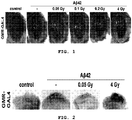
FIG. 1 shows the effect of alleviating the rough eye phenotypem of an Alzheimer's disease Drosophila model (GMR>Aβ42) using low-dose radiation; -
FIG. 2 shows the effect of reducing apoptosis of the Alzheimer's disease Drosophila model (GMR>Aβ42) using low-dose radiation; -
FIG. 3 shows the effect of alleviating the decreased climbing ability phenotype of an Alzheimer's disease Drosophila model (elav>Aβ42) using low-dose radiation; and -
FIG. 4 shows the effect of reducing apoptosis of the Alzheimer's disease Drosophila model (elav>Aβ42) using low-dose radiation. - Hereinafter, a detailed description will be given of the present invention.
- An embodiment of the present invention pertains to a method of alleviating the phenotypes of a degenerative disease of Drosophila using low-dose radiation, the method comprising collecting a Drosophila embryo and treating low-dose radiation to the Drosophila embryo.
- Here, Drosophila is an Alzheimer's disease Drosophila model. The Alzheimer's disease Drosophila model is GMR>Aβ42 or elav>Aβ42. GMR>Aβ42 and elav>Aβ42 are Alzheimer's disease Drosophila models and are Drosophila models able to induce tissue-specific overexpression of Aβ42, a representative protein of Alzheimer's disease pathology, in the neurons and eyes using the UAS-GAL4 system.
- The low-dose radiation is preferably applied so that the cumulative dose thereof is 0.05 to 0.1 Gy (137Cs, 0.8 Gy/min), and more preferably 0.05 Gy.
- The degenerative disease is Alzheimer's disease. Alzheimer's disease is one of the main causes of senile dementia. The cause of Alzheimer's disease has been found to be highly associated with beta-amyloid protein. When beta amyloid is excessively produced in the body and accumulates in the brain, the function of the neurons deteriorates and thus Alzheimer's disease develops. Beta amyloid paralyzes or deteriorates the function of mitochondria in the neurons, thereby increasing the amount of reactive oxygen species released from the mitochondria. The reactive oxygen species increased makes a fatal wound on intracellular protein or DNA, which in turn results in damage or apoptosis of neurons in brain.
- The phenotypes of the degenerative disease include decreased climbing ability and induction of apoptosis.
- Another embodiment of the present invention pertains to a neurodegenerative disease Drosophila model, in which the phenotypes of the degenerative disease are alleviated by treating low-dose radiation to a Drosophila embryo.
- Here, Drosophila is an Alzheimer's disease Drosophila model. Also, the Alzheimer's disease Drosophila model is GMR>Aβ42 or elav>Aβ42.
- The low-dose radiation is preferably applied so that a cumulative dose thereof is 0.05 to 0.1 Gy (137Cs, 0.8 Gy/min), and more preferably 0.05 Gy.
- The degenerative disease is Alzheimer's disease.
- The phenotypes of the neurodegenerative disease include decreased climbing ability and induction of apoptosis.
- A better understanding of the present invention will be given through the following examples. These examples are merely set forth to illustrate the present invention but are not to be construed as limiting the scope of the present invention, as is apparent to those skilled in the art.
- In order to evaluate the effect of alleviating the phenotype of Alzheimer's disease using low-dose radiation, an Alzheimer's disease Drosophila model (GMR>Aβ42) (Crowther et al., 2003, Neuroscience; Finelli et al., 2004, Mol. Cell. Neurosci.), exhibiting a rough eye phenotype by overexpressing Aβ42, a causative protein of Alzheimer's disease, specifically in the eyes through GMR-GAL4, was used. As a control, Drosophila having only GMR-GAL4 was used, and all Drosophila samples were cultured in an incubator at a temperature of 25°C and a humidity of 60%.
- Respective embryos were collected from control Drosophila (GMR-GAL4) and Alzheimer's disease Drosophila model (GMR>Aβ42) for 6 hr. To evaluate the phenotype alleviation effect of cumulative doses, the embryos of the Alzheimer's disease Drosophila model (GMR>Aβ42) were divided into five groups, four groups of which were irradiated respectively at doses of 0.05 Gy, 0.1 Gy, 0.2 Gy, and 4 Gy (137Cs, 0.8 Gy/min). After irradiation of the low-dose radiation, these embryos were grown in an incubator until adulthood, and the eyes of individual adult Drosophila groups were observed using a microscope.
- The Drosophila eye microscopy images for confirming the effect of alleviating the rough eye phenotype of the Alzheimer's disease Drosophila model (GMR>Aβ42) using low-dose radiation are shown in
FIG. 1 . Based on this result, the rough eye phenotype of the Alzheimer's disease Drosophila model (GMR>Aβ42) was confirmed to be alleviated at cumulative doses of 0.05 Gy and 0.1 Gy, and the phenotype alleviation effect was insignificant at 0.2 Gy. - Respective embryos were collected from control Drosophila (GMR-GAL) and the Alzheimer's disease Drosophila model (GMR>Aβ42) for 6 hr in the same manner as in Example 1. The embryos of the Alzheimer's disease Drosophila model (GMR>Aβ42) were divided into three groups, two groups of which were irradiated respectively at doses of 0.05 Gy and 4 Gy (137Cs, 0.8 Gy/min). After irradiation of the low-dose radiation, the embryos were grown in an incubator until they became 3rd instar larvae, and the larval eye discs were dissected, stained with acridine orange (AO), and then observed with a fluorescence microscope.
- The results of observation with a fluorescence microscope for confirming the effect of reducing the apoptosis of Alzheimer's disease Drosophila model (GMR>Aβ42) using low-dose radiation are shown in
FIG. 2 . Based on this result, apoptosis (the portion stained black inFIG. 2 ), known to be induced due to overexpression of Aβ42 in the Alzheimer's disease Drosophila model (GMR>Aβ42), was confirmed to be reduced by low-dose radiation of 0.05 Gy, whereas high-dose radiation of 4 Gy was found to increase apoptosis. - In order to evaluate the effect of alleviating the phenotype of Alzheimer's disease using low-dose radiation, an Alzheimer's disease Drosophila model (elav>Aβ42), exhibiting a decreased climbing ability phenotype through overexpression of the Aβ42 protein specifically in neurons through elav-GAL4, was used. As a control, Drosophila having only elav-GAL4 was used, and all Drosophila samples were cultured under incubation conditions of a temperature of 25°C and a humidity of 60%.
- Respective embryos were collected from control Drosophila (elav-GAL4) and the Alzheimer's disease Drosophila model (elav>Aβ42) for 6 hr. The embryos of the Alzheimer's disease Drosophila model (elav>Aβ42) were divided into three groups, two groups of which were irradiated respectively at cumulative doses of 0.05 Gy and 4 Gy (137Cs, 0.8 Gy/min). After irradiation of the low-dose radiation, these embryos were grown in an incubator until adulthood, and male Drosophila samples were collected on the third day of adulthood, and the climbing ability of Drosophila groups was tested. The climbing ability test was performed in the same manner as in Hwang et al., (2013) PLoS Genetics.
- The results of evaluation of the effect of alleviating the decreased climbing ability phenotype of the Alzheimer's disease Drosophila model (elav>Aβ42) using low-dose radiation are shown in
FIG. 3 . Based on this result, the climbing ability was improved in the Alzheimer's disease Drosophila model (elav>Aβ42) at a cumulative dose of 0.05 Gy, and was significantly degraded by high-dose radiation of 4 Gy. - Respective embryos were collected from control Drosophila (elav-GAL4) and the Alzheimer's disease Drosophila model (elav>Aβ42) for 6 hr in the same manner as in Example 3, and the embryos of the Alzheimer's disease Drosophila model (elav>Aβ42) were divided into three groups, two groups of which were irradiated respectively at cumulative doses of 0.05 Gy and 4 Gy (137Gy, 0.8 Gy/min). After irradiation of the low-dose radiation, the embryos were grown in an incubator until they became larvae, and the brains of the larvae were dissected, stained with acridine orange (AO), and then observed with a fluorescence microscope.
- The results of observation with a fluorescence microscope for confirming the effect of reducing apoptosis of the Alzheimer's disease Drosophila model (elav>Aβ42) using low-dose radiation are shown in
FIG. 4 . Based on this result, apoptosis (the portion stained black in the image) induced due to overexpression of Aβ42 in the Alzheimer's disease Drosophila model (elav>Aβ42) was confirmed to be reduced by low-dose radiation of 0.05 Gy, and high-dose radiation of 4 Gy was found to further induce apoptosis. - Although specific embodiments of the present invention have been disclosed in detail as described above, it will be obvious to those skilled in the art that such description is merely of preferable exemplary embodiments and is not to be construed to limit the scope of the present invention. Therefore, the substantial scope of the present invention will be defined by the appended claims and equivalents thereof.
Claims (12)
- A method of alleviating a phenotype of a neurodegenerative disease of Drosophila using low-dose radiation, the method comprising treating low-dose radiation to a Drosophila embryo.
- The method of claim 1, wherein the Drosophila is an Alzheimer's disease Drosophila model.
- The method of claim 2, wherein the Alzheimer's disease Drosophila model is GMR>Aβ42 or elav>Aβ42.
- The method of claim 1, wherein the low-dose radiation is applied so that a cumulative dose thereof is 0.05 to 0.1 Gy.
- The method of claim 1, wherein the degenerative disease is Alzheimer's disease.
- The method of claim 1, wherein the phenotype of the degenerative disease is decreased mobility or induction of apoptosis.
- A neurodegenerative disease Drosophila model, in which a phenotype of a degenerative disease is alleviated by treating low-dose radiation to a Drosophila embryo.
- The neurodegenerative disease Drosophila model of claim 7, wherein the Drosophila is an Alzheimer's disease Drosophila model.
- The neurodegenerative disease Drosophila model of claim 8, wherein the Alzheimer's disease Drosophila model is GMR>Aβ42 or elav>Aβ42.
- The neurodegenerative disease Drosophila model of claim 7, wherein the low-dose radiation is applied so that a cumulative dose thereof is 0.05 to 0.1 Gy.
- The neurodegenerative disease Drosophila model of claim 7, wherein the degenerative disease is Alzheimer's disease.
- The neurodegenerative disease Drosophila model of claim 7, wherein the phenotype of the neurodegenerative disease is decreased mobility or induction of apoptosis.
Applications Claiming Priority (2)
| Application Number | Priority Date | Filing Date | Title |
|---|---|---|---|
| KR1020160152491A KR20180055091A (en) | 2016-11-16 | 2016-11-16 | Method for mitigating condition of drosophila degenerative diseases using low-dose radiation |
| PCT/KR2017/013008 WO2018093166A1 (en) | 2016-11-16 | 2017-11-16 | Method for alleviating symptom of degenerative disease of drosophila by using low-dose radiation |
Publications (2)
| Publication Number | Publication Date |
|---|---|
| EP3542624A1 true EP3542624A1 (en) | 2019-09-25 |
| EP3542624A4 EP3542624A4 (en) | 2020-04-15 |
Family
ID=62146664
Family Applications (1)
| Application Number | Title | Priority Date | Filing Date |
|---|---|---|---|
| EP17872128.8A Pending EP3542624A4 (en) | 2016-11-16 | 2017-11-16 | METHOD FOR RELIEVING A SYMPTOM OF DEGENERATIVE DROSOPHILIC DISEASE USING LOW DOSE RADIATION |
Country Status (6)
| Country | Link |
|---|---|
| US (1) | US11553699B2 (en) |
| EP (1) | EP3542624A4 (en) |
| JP (1) | JP6874134B2 (en) |
| KR (1) | KR20180055091A (en) |
| CN (1) | CN109963464A (en) |
| WO (1) | WO2018093166A1 (en) |
Families Citing this family (4)
| Publication number | Priority date | Publication date | Assignee | Title |
|---|---|---|---|---|
| KR102093498B1 (en) * | 2018-05-16 | 2020-04-23 | 한국수력원자력 주식회사 | Biomarkers to confirm treatment of degenerative diseases of fruit flies using low-dose radiation |
| KR102251463B1 (en) * | 2019-04-02 | 2021-05-12 | 한국수력원자력 주식회사 | A biomarker specific to low dose radiation involved in the antioxidative reaction of fruit files model and a screening method using the same |
| KR102311238B1 (en) | 2019-04-29 | 2021-10-13 | 한국수력원자력 주식회사 | A method of alleviating the symptoms of parkinson's disease in drosophila parkinson's disease model using low dose radiation |
| WO2025013994A1 (en) * | 2023-07-13 | 2025-01-16 | 주식회사 레디큐어 | Low-dose radiation treatment system for treating dementia and chronic inflammation using different photon energy levels |
Family Cites Families (6)
| Publication number | Priority date | Publication date | Assignee | Title |
|---|---|---|---|---|
| EP1309727B1 (en) * | 2000-01-24 | 2010-01-06 | Neurosciences Research Foundation Inc. | Method for functional mapping of the gene network of Alzheimer's disease |
| KR100500584B1 (en) * | 2002-08-12 | 2005-07-12 | 경희대학교 산학협력단 | Composition comprising the extract of Cistanche deserticola Y.C.MA showing enhancing activity of the neurite outgrowth and neurotrophic effects |
| KR20140079248A (en) * | 2009-09-21 | 2014-06-26 | 엔시아 바이오사이언스 인크 | Vitamin d2 enriched mushrooms and fungi for treatment of oxidative stress, alzheimer's disease and associated disease states |
| KR101192983B1 (en) * | 2010-09-28 | 2012-10-19 | 건국대학교 산학협력단 | Drosophila alzheimer's disease model mutants and the method of manufacturing the double mutants |
| WO2015026831A1 (en) * | 2013-08-19 | 2015-02-26 | Genesys Research Institute | Compositons and methods for the treatment of radiation exposure |
| KR20160063469A (en) * | 2014-11-26 | 2016-06-07 | 동국대학교 경주캠퍼스 산학협력단 | The pharmaceutical composition for the prevention or treatment of the symptoms in the Alzheimer's disease comprising the extracts from Sorbus commixta |
-
2016
- 2016-11-16 KR KR1020160152491A patent/KR20180055091A/en not_active Ceased
-
2017
- 2017-11-16 EP EP17872128.8A patent/EP3542624A4/en active Pending
- 2017-11-16 CN CN201780070743.8A patent/CN109963464A/en active Pending
- 2017-11-16 WO PCT/KR2017/013008 patent/WO2018093166A1/en not_active Ceased
- 2017-11-16 US US16/461,089 patent/US11553699B2/en active Active
- 2017-11-16 JP JP2019524211A patent/JP6874134B2/en active Active
Also Published As
| Publication number | Publication date |
|---|---|
| CN109963464A (en) | 2019-07-02 |
| US20200053994A1 (en) | 2020-02-20 |
| EP3542624A4 (en) | 2020-04-15 |
| US11553699B2 (en) | 2023-01-17 |
| KR20180055091A (en) | 2018-05-25 |
| JP2019535259A (en) | 2019-12-12 |
| JP6874134B2 (en) | 2021-05-19 |
| WO2018093166A1 (en) | 2018-05-24 |
Similar Documents
| Publication | Publication Date | Title |
|---|---|---|
| Ravelli et al. | Intracerebroventricular streptozotocin as a model of Alzheimer’s disease: neurochemical and behavioral characterization in mice | |
| Mary et al. | Mitophagy in Alzheimer’s disease: Molecular defects and therapeutic approaches | |
| Rüb et al. | Degeneration of the Cerebellum in H untington's Disease (HD): Possible Relevance for the Clinical Picture and Potential Gateway to Pathological Mechanisms of the Disease Process | |
| Carreras et al. | Dual dose-dependent effects of fingolimod in a mouse model of Alzheimer’s disease | |
| Braak et al. | Pathological TDP-43 changes in Betz cells differ from those in bulbar and spinal α-motoneurons in sporadic amyotrophic lateral sclerosis | |
| US11553699B2 (en) | Method for alleviating phenotype of degenerative disease Drosophila model by using low-dose radiation | |
| De Filippis et al. | Modulation of RhoGTPases improves the behavioral phenotype and reverses astrocytic deficits in a mouse model of Rett syndrome | |
| Spencer et al. | Reducing endogenous α-synuclein mitigates the degeneration of selective neuronal populations in an Alzheimer's disease transgenic mouse model | |
| Li et al. | Enduring elevations of hippocampal amyloid precursor protein and iron are features of β-amyloid toxicity and are mediated by tau | |
| Hou et al. | Smart Soup, a traditional Chinese medicine formula, ameliorates amyloid pathology and related cognitive deficits | |
| Kim et al. | The role of cell type-specific mitochondrial dysfunction in the pathogenesis of Alzheimer’s disease | |
| Ren et al. | Downregulated nuclear factor E2-related factor 2 (Nrf2) aggravates cognitive impairments via neuroinflammation and synaptic plasticity in the senescence-accelerated mouse prone 8 (SAMP8) mouse: a model of accelerated senescence | |
| Lu et al. | The mitochondrion: a potential therapeutic target for Alzheimer’s disease | |
| Pham et al. | Cinnamaldehyde improves lifespan and healthspan in Drosophila melanogaster models for Alzheimer’s disease | |
| Pickrell et al. | The role of cytochrome c oxidase deficiency in ROS and amyloid plaque formation | |
| Oh et al. | Central Role of Hypothalamic Circuits for Acupuncture's Anti‐Parkinsonian Effects | |
| Kuhn et al. | Amyloid-α peptide formed through alternative processing of the amyloid precursor protein attenuates Alzheimer’s amyloid-β toxicity via cross-chaperoning | |
| Ong et al. | Senescence accelerated mouse-prone 8: a model of neuroinflammation and aging with features of sporadic Alzheimer’s disease | |
| CN107929270A (en) | A kind of spermidine is preparing the application in treating neural cell injury medicine | |
| KR102002913B1 (en) | Method for mitigating condition of drosophila degenerative diseases using low-dose radiation | |
| Tang et al. | Rhodiola rosea L extract shows protective activity against Alzheimer’s disease in 3xTg-AD mice | |
| Kimura et al. | Repetitive mild traumatic brain injury with the closed-head impact model of engineered rotational acceleration (CHIMERA) promotes tau pathology in tau transgenic mice and its propagation in brains injected with tau fibrils | |
| Ohtani et al. | Brain stem hemorrhage due to cerebral amyloid angiopathy: the autopsy of a patient with Alzheimer’s disease at a young age | |
| US20210238685A1 (en) | Biomarker for confirming degenerative disease treatment of drosophila using low-dose radiation | |
| Hiramoto et al. | Long‐term UVA eye irradiation causes decreased learning ability in mice |
Legal Events
| Date | Code | Title | Description |
|---|---|---|---|
| STAA | Information on the status of an ep patent application or granted ep patent |
Free format text: STATUS: THE INTERNATIONAL PUBLICATION HAS BEEN MADE |
|
| PUAI | Public reference made under article 153(3) epc to a published international application that has entered the european phase |
Free format text: ORIGINAL CODE: 0009012 |
|
| STAA | Information on the status of an ep patent application or granted ep patent |
Free format text: STATUS: REQUEST FOR EXAMINATION WAS MADE |
|
| 17P | Request for examination filed |
Effective date: 20190520 |
|
| AK | Designated contracting states |
Kind code of ref document: A1 Designated state(s): AL AT BE BG CH CY CZ DE DK EE ES FI FR GB GR HR HU IE IS IT LI LT LU LV MC MK MT NL NO PL PT RO RS SE SI SK SM TR |
|
| AX | Request for extension of the european patent |
Extension state: BA ME |
|
| DAV | Request for validation of the european patent (deleted) | ||
| DAX | Request for extension of the european patent (deleted) | ||
| A4 | Supplementary search report drawn up and despatched |
Effective date: 20200318 |
|
| RIC1 | Information provided on ipc code assigned before grant |
Ipc: A01K 67/033 20060101AFI20200312BHEP |
|
| STAA | Information on the status of an ep patent application or granted ep patent |
Free format text: STATUS: EXAMINATION IS IN PROGRESS |
|
| 17Q | First examination report despatched |
Effective date: 20230227 |