EP3539964A1 - Base acetamide glycerin ether molecule, chemical synthesis method therefor, and applications thereof in field of gene therapy - Google Patents
Base acetamide glycerin ether molecule, chemical synthesis method therefor, and applications thereof in field of gene therapy Download PDFInfo
- Publication number
- EP3539964A1 EP3539964A1 EP16920991.3A EP16920991A EP3539964A1 EP 3539964 A1 EP3539964 A1 EP 3539964A1 EP 16920991 A EP16920991 A EP 16920991A EP 3539964 A1 EP3539964 A1 EP 3539964A1
- Authority
- EP
- European Patent Office
- Prior art keywords
- base
- formula
- acetamide
- glycerin ether
- represented
- Prior art date
- Legal status (The legal status is an assumption and is not a legal conclusion. Google has not performed a legal analysis and makes no representation as to the accuracy of the status listed.)
- Granted
Links
Images

Classifications
-
- C—CHEMISTRY; METALLURGY
- C07—ORGANIC CHEMISTRY
- C07D—HETEROCYCLIC COMPOUNDS
- C07D239/00—Heterocyclic compounds containing 1,3-diazine or hydrogenated 1,3-diazine rings
- C07D239/02—Heterocyclic compounds containing 1,3-diazine or hydrogenated 1,3-diazine rings not condensed with other rings
- C07D239/24—Heterocyclic compounds containing 1,3-diazine or hydrogenated 1,3-diazine rings not condensed with other rings having three or more double bonds between ring members or between ring members and non-ring members
- C07D239/28—Heterocyclic compounds containing 1,3-diazine or hydrogenated 1,3-diazine rings not condensed with other rings having three or more double bonds between ring members or between ring members and non-ring members with hetero atoms or with carbon atoms having three bonds to hetero atoms with at the most one bond to halogen, directly attached to ring carbon atoms
- C07D239/46—Two or more oxygen, sulphur or nitrogen atoms
- C07D239/47—One nitrogen atom and one oxygen or sulfur atom, e.g. cytosine
-
- A—HUMAN NECESSITIES
- A61—MEDICAL OR VETERINARY SCIENCE; HYGIENE
- A61K—PREPARATIONS FOR MEDICAL, DENTAL OR TOILETRY PURPOSES
- A61K47/00—Medicinal preparations characterised by the non-active ingredients used, e.g. carriers or inert additives; Targeting or modifying agents chemically bound to the active ingredient
- A61K47/06—Organic compounds, e.g. natural or synthetic hydrocarbons, polyolefins, mineral oil, petrolatum or ozokerite
- A61K47/22—Heterocyclic compounds, e.g. ascorbic acid, tocopherol or pyrrolidones
-
- A—HUMAN NECESSITIES
- A61—MEDICAL OR VETERINARY SCIENCE; HYGIENE
- A61K—PREPARATIONS FOR MEDICAL, DENTAL OR TOILETRY PURPOSES
- A61K9/00—Medicinal preparations characterised by special physical form
- A61K9/10—Dispersions; Emulsions
- A61K9/127—Synthetic bilayered vehicles, e.g. liposomes or liposomes with cholesterol as the only non-phosphatidyl surfactant
- A61K9/1271—Non-conventional liposomes, e.g. PEGylated liposomes or liposomes coated or grafted with polymers
-
- A—HUMAN NECESSITIES
- A61—MEDICAL OR VETERINARY SCIENCE; HYGIENE
- A61K—PREPARATIONS FOR MEDICAL, DENTAL OR TOILETRY PURPOSES
- A61K9/00—Medicinal preparations characterised by special physical form
- A61K9/10—Dispersions; Emulsions
- A61K9/127—Synthetic bilayered vehicles, e.g. liposomes or liposomes with cholesterol as the only non-phosphatidyl surfactant
- A61K9/1271—Non-conventional liposomes, e.g. PEGylated liposomes or liposomes coated or grafted with polymers
- A61K9/1272—Non-conventional liposomes, e.g. PEGylated liposomes or liposomes coated or grafted with polymers comprising non-phosphatidyl surfactants as bilayer-forming substances, e.g. cationic lipids or non-phosphatidyl liposomes coated or grafted with polymers
-
- C—CHEMISTRY; METALLURGY
- C07—ORGANIC CHEMISTRY
- C07D—HETEROCYCLIC COMPOUNDS
- C07D239/00—Heterocyclic compounds containing 1,3-diazine or hydrogenated 1,3-diazine rings
- C07D239/02—Heterocyclic compounds containing 1,3-diazine or hydrogenated 1,3-diazine rings not condensed with other rings
- C07D239/24—Heterocyclic compounds containing 1,3-diazine or hydrogenated 1,3-diazine rings not condensed with other rings having three or more double bonds between ring members or between ring members and non-ring members
- C07D239/28—Heterocyclic compounds containing 1,3-diazine or hydrogenated 1,3-diazine rings not condensed with other rings having three or more double bonds between ring members or between ring members and non-ring members with hetero atoms or with carbon atoms having three bonds to hetero atoms with at the most one bond to halogen, directly attached to ring carbon atoms
- C07D239/46—Two or more oxygen, sulphur or nitrogen atoms
- C07D239/52—Two oxygen atoms
- C07D239/54—Two oxygen atoms as doubly bound oxygen atoms or as unsubstituted hydroxy radicals
-
- C—CHEMISTRY; METALLURGY
- C12—BIOCHEMISTRY; BEER; SPIRITS; WINE; VINEGAR; MICROBIOLOGY; ENZYMOLOGY; MUTATION OR GENETIC ENGINEERING
- C12N—MICROORGANISMS OR ENZYMES; COMPOSITIONS THEREOF; PROPAGATING, PRESERVING, OR MAINTAINING MICROORGANISMS; MUTATION OR GENETIC ENGINEERING; CULTURE MEDIA
- C12N15/00—Mutation or genetic engineering; DNA or RNA concerning genetic engineering, vectors, e.g. plasmids, or their isolation, preparation or purification; Use of hosts therefor
- C12N15/09—Recombinant DNA-technology
- C12N15/87—Introduction of foreign genetic material using processes not otherwise provided for, e.g. co-transformation
-
- C—CHEMISTRY; METALLURGY
- C12—BIOCHEMISTRY; BEER; SPIRITS; WINE; VINEGAR; MICROBIOLOGY; ENZYMOLOGY; MUTATION OR GENETIC ENGINEERING
- C12N—MICROORGANISMS OR ENZYMES; COMPOSITIONS THEREOF; PROPAGATING, PRESERVING, OR MAINTAINING MICROORGANISMS; MUTATION OR GENETIC ENGINEERING; CULTURE MEDIA
- C12N2310/00—Structure or type of the nucleic acid
- C12N2310/10—Type of nucleic acid
- C12N2310/11—Antisense
Definitions
- the invention relates to a base acetamide glycerin ether molecule and a chemical synthesis method thereof.
- the invention also relates to the application of such base acetamide glycerin ether molecules in the field of gene transfer.
- Such molecular structures have potential application prospects in the fields of biological materials and gene therapy.
- the invention belongs to the field of novel biological materials.
- nucleic acid drugs can regulate related physiological activities and behaviors at the genetic level, thereby fundamentally achieving the treatment and prevention of diseases.
- nucleic acid drugs such as antisense nucleic acids, siRNAs, nucleic acid aptamers, etc.
- gene therapy associated with them has been favored in recent decades.
- nucleic acid drugs have great potential and application prospects, their obvious defects (poor stability, off-target effects, difficulty in transmembrane transport, etc.) hinder the further clinical application of nucleic acid drugs. Therefore, designing and constructing a system of nucleic acid drug delivery vehicles has become one of the focuses of current research.
- Vectors that have been used for transmembrane transport of genes can be divided into two classes: viral vectors and non-viral vectors.
- Viral vectors are highly efficient in transfecting genes, but their preparations are difficult and may result in mutation or even canceration of the body cells, and toxic side effects are difficult to control.
- Most of the non-viral vectors are artificially synthesized. Although the transfection efficiency is relatively poor, but their variety is numerous and the structural performance is controllable, it is widely used in gene delivery.
- Non-viral vectors that have been used for gene delivery include cationic liposomes, cationic polymers, nanoparticles, and the like ( Chem. Rev. 2009, 109, 259-302 ).
- Cationic liposome is the most widely used non-viral gene carrier. It consists of an amphiphilic moiety. The cationic group acts as a polar head and the aliphatic long chain acts as a non-polar tail, relying on the Coulomb force between positive and negative charges.
- the combination of nucleic acids enables efficient encapsulation of nucleic acids.
- cationic liposomes have high cytotoxicity and serum toxicity due to the negative charge on the surface of the cell membrane and the large amount of electronegative proteins in the serum.
- due to the strong electrical effect cationic liposomes bind tightly to nucleic acids and are difficult to release effectively after transmembrane transport ( Biomaterials 2008, 29, 3477-3496 ). In order to avoid the defects of cationic liposome, it is very important to construct a novel carrier and use other forces instead of electrical effects to realize the binding of liposomes to nucleic acids.
- One of the objects of the present invention is to provide a class of base acetamide glycerin ether molecules;
- the second object of the present invention is to provide a chemical synthesis method for the above-mentioned base acetamide glycerin ether molecule;
- the third object of the present invention is to provide the use of the above base acetamide glycerin ether molecule in the field of gene therapy.
- formula (I) A base acetamide glycerin ether molecule having an amphiphilic structure represented by formula (I), that is, a base 1-acetic acid is used as a polar head and a 2, 3-dialkoxyl-1-propylamine is used as a non-polar tail, and the two parts are linked by an amide bond to form an amphiphilic structure which is both hydrophilic and lipophilic.
- the base contained in the above base acetamide glycerin ether molecule is a common natural purine- or pyrimidine base, i.e, adenine, guanine, hypoxanthine, cytosine, thymus, pyrimidine and uracil.
- the long chain aliphatic contained in the above base acetamide glycerin ether molecule that is, the R group in the formula (I), is a saturated or unsaturated aliphatic carbon chain, having between 8 to 25 carbons in length.
- a chemical synthesis method for preparing the above-mentioned base-acetamide glycerin ether molecule wherein a base-1-acetic acid activated derivative represented by formula (II) and 2,3-dialkoxy-1-propylamine represented by formula (III) are raw materials, they react in an organic solvent to obtain a base acetamide glycerin ether molecule.
- the R groups are saturated or unsaturated aliphatic carbon chains having a length of between 8- and 25 carbons.
- the above chemical synthesis method comprises the steps of: (i) commercially purchasing or preparing from simple materials the base-1-acetic acid activated derivative represented by the formula (II), and2, 3-dialkoxyl-1-propylamine represented by formula (III); (ii) carrying out the reaction between the base-1-acetic acid activating derivative as shown in formula (II), and 2,3-dialkoxy-1-propylamine as shown in formula (III) directly in an organic solvent, or by adding a base or an ester condensation catalyst to obtain a target product as shown in the formula (I).
- the base-1-acetic acid-activated derivative represented by the formula (II) is gradually synthesized from a base; preferably, the carboxyl group is activated by N-hydroxysuccinimide.
- the 2,3-dialkoxy-1-propylamine represented by the formula (III) is gradually synthesized from glycerin and a long-chain aliphatic alcohol or a long-chain aliphatic alkyl bromide, and the synthesis route is shown in FIG 2 .
- the solvent used in the step (ii) is acetonitrile, N , N -dimethylformamide, N -methylpyrrolidine, dichloromethane, dichloroethane, tetrahydrofuran, benzene, or other aprotic solvent; preferably, N , N -dimethylformamide is used as a solvent.
- Addition of 4-dimethylaminopyridine, triethylamine, pyridine, potassium hydroxide, or sodium hydroxide may be required for the reaction.
- 4-dimethylaminopyridine is added as a catalyst, and pyridine or triethylamine is added as an organic base.
- the application of the base acetamide glycerin ether molecule in the preparation of a substance having a supramolecular structure preferably, the supramolecular structure is a liposome.
- Supramolecular structure is formed by the above-mentioned base acetamide glycerin ether molecules in an aqueous phase solvent.
- the molecules can be assembled into a supramolecular structure such as a liposome by a certain preparation method.
- the above base acetamide glycerin ether molecules are used in the field of gene therapy, particularly in the preparation of transfection reagents for gene therapy.
- the compounds of the invention have no significant cytotoxicity.
- the compound contains a base in its head, which can bind to the nucleic acid by hydrogen bonding and electron cloud ⁇ - ⁇ stacking.
- These compounds have a hydrophilic and lipophilic amphiphilic structure, can be assembled into a supramolecular structure such as a liposome in an aqueous solution. They have a transmembrane ability, and can be used as a gene carrier to carry a nucleic acid drug into a cell membrane. Therefore, it can become a highly efficient biomaterial for agglomerating, trapping, bearing, carrying nucleic acid drugs, or mediating transmembrane transportation of nucleic acid drugs, thereby having broad application prospects in the field of gene therapy.
- the present invention can achieve the following advantages: providing a class of base acetamide glycerin ether molecules, they are amphiphilic and capable of forming a liposome structure in an aqueous solution.
- the molecules have a base in their heads, which can bind nucleic acid through hydrogen bonding and electron cloud ⁇ - ⁇ stacking, and carries a nucleic acid across the membrane, so it is a highly efficient biological material with great potential.
- the raw materials used in the synthesis method provided by the invention are cheap and easy to obtain, and the synthesis method is simple and efficient.
- Such molecules have no obvious cytotoxicity, can form a liposome structure in an aqueous phase solvent, are simple to prepare. They have good capability to carry nucleic acids through cell membrane and have potential drug development prospects.
- the invention is further illustrated by the synthesis route of the compounds of the formula (I) according to the invention, and the various supramolecular structures formed thereof, in combination with specific embodiments, without limiting the scope of the invention.
- the aqueous layer was extracted with ethyl acetate (150 mL ⁇ 3), the organic phases were pooled and desiccated with anhydrous Na 2 SO 4 . After the solvent evaporated to dryness, the residue was separated on a silica chromatographic column to obtain the target product 6.1 g, yield: 31%. Besides, 3.7 g 1-triphenylmethoxy-3-oleyl ether-glycerol-2-ol was obtained at a yield of 27%. The target product was a pale yellow liquid.
- the desiccant was removed by filtration, and the solvent was evaporated to dryness.
- Triethylamine (0.54 mL, 3.91 mmol), 1,2-dioleyl ether-glycerol-3-ol (1.932 g, 3.26 mmol) were added into a 25 mL single-neck bottle, added with dry dichloromethane (5 ml) The mixture was dissolved under magnetic stirring, the reaction system was subsequently cooled to 0°C in an ice water bath. methanesulfonyl chloride (0.3 mL, 3.91 mmol) was added dropwise, the reaction was continued at 0°C for 2 hours. The reaction mixture was added into saturated NaHCO 3 solution (50 mL).
- the dried compound 1,2-dioleyl ether-glycerol-3-methanesulfonate (970 mg, 1.44 mmol) was added to a 25 mL single-necked flask, added with dry DMF (8 mL), dissolved with magnetic stirring.
- NaN 3 (188 mg, 2.88 mmol) was added under argon protection, the reaction mixture was heated to 70°C for 15 hours, and was subsequently cooled to room temperature, diluted with acetone (30 mL), the reaction liquid was filter using diatomaceous earth, the filtrate was evaporated to dryness under reduced pressure.
- 1,2-dioleyl ether-glycerol-3-azide (309 mg, 0.5 mmol) was added into dry THF (10 ml), dissolving with magnetic stirring, the solution was cooled to 0°C, added with LiAlH 4 (95 mg, 2.5 mmol) under argon gas protection, after reacting for 45 min, the solution was warmed to room temperature, the reaction was continued for 2.5 h, subsequently quenched by the addition of saturated Na 2 SO 4 (0.7 mL) solution. The mixture was filtered over celite, the filtrate evaporated to dryness under reduced pressure.
- Thymine (10.0 g, 79.3 mmol) was suspended in H 2 O (150 mL), with aqueous KOH (50 mL, 3.6 M) solution added. After the mixture being stirred at room temperature for 10 min, the solution gradually became clear. Subsequently, chloroacetic acid (15.0 g, 159 mmol) was added thereto, and the reaction solution was heated to reflux for 90 min. After the reaction solution was cooled to room temperature, it was acidified to pH 3 with concentrated hydrochloric acid, subsequently stood at 4°C overnight to obtain a white crystalline precipitate. The white crystalline precipitate was obtained by filtration, and dried in vacuo to obtain 4.5 g target product (yield 31%).
- the organic phase was then desiccated with anhydrous sodium sulfate.
- the desiccant was then removed by filtration, the filtrate was evaporated to dryness under reduced pressure.
- the reaction mixture was subject to rotate evaporation to dryness.
- the residue was resuspended into H 2 O (100 mL) and stirred for 4 hr and subject to filtration, the filtrate was washed with H 2 O (4 ⁇ 150 mL) and dried to obtain cytosine-1-benzylacetic acid (20.6 g, 82 mmol, 1.0 eq), the latter was dissolved in DMF (160 mL) added with N , N '-carbonyldiimidazole (21.25g, 131.25 mmol, 1.6 eq).
- the reaction mixture was dried with rotate evaporation to dryness, the residue was recrystallized successively with ethanol and methanol to obtain (4- N -(Diphenylmethoxycarbonyl)-cytosine)-1-acetate (29.35 g, 62.5 mmol, 1.0 eq).
- the product was added into acetonitrile: MeOH:H 2 O:EtOH (2:2:1:1, 350mL) mixed solvent system, heated up the mixture to facilitate solution, then the mixture was cooled to 0°C, an aqueous solution (196.8 mL) of LiOH (25.5 g, 0.61 mol, 9.7 eq) was added.
- 1,2,-Di(Olefinyl)-glycero-3-amine-(4- N -(diphenylmethoxycarbonyl)-cytosine)-acetyl ester (476 mg, 0.5 mmol) was dissolved in CH 2 Cl 2 (20 mL) containing 5% TFA. The mixture was stirred at room temperature for 0.5 hour. The mixture was extracted with DCM (30 mL) and water (30 mL). The aqueous phase was re-extracted with DCM (2 ⁇ 30 mL), the organic phase was pooled.
- the base-acetamide glycerin ether molecule has an amphiphilic structure and can be prepared into a supramolecular structure such as a liposome.
- DNTA DNTA
- methanol 1 mL
- DNTA methanol solution 12.8 ⁇ L
- PBS 100 ⁇ L
- vortexed 10 s
- TEM transmission electron microscope
- base acetamide glycerin ether molecules should be used as novel biomaterials in the field of gene therapy, they must have good biocompatibility.
- Two base acetamide glycerin ether compounds (DOCA and DOTA) were studied for cytotoxicity using CCK-8 kit. The results showed that the two compounds (DNTA, DNCA) had no obvious cytotoxicity.
- the cell survival rate was close to 100%, indicating good biocompatibility ( Fig. 6 ).
- FAM-labeled polyA/G was used as a template to study the nucleic acid transfection abilities of thymine base acetamide glycerin ethers.
- the specific coating and transfection process is as follows: DNTA or DNCA liposomes were formulated as mixed solutions with FAM-polyA or FAM-polyG at a base ratios of 5/1. The mixturex were heated to 96°C, then gradually reduced to 4°C (annealing), and placed at 4°C for 2 days. The cells used in the transfection experiments were Hela cells.
- Figure 7 shows the transfection results of DNTA- and DNCA liposomes against FAM-polyA/G.
- the experimental results show that DNTA- as well as DNCA liposomes can successfully transport FAM-polyA into cells.
- the procedure was the same as the transfection experiments of DNCA- and DNTA-packed PolyG/PolyA (using DOCA and DOTA as controls), the cell line was selected from MCF-7 cell line.
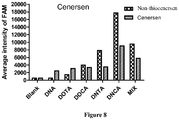
- Figure 8 shows the effects of DNTA- and DNCA liposomes on the uptake of antisense nucleic acid Cenersen by MCF-7 cells.
- the experimental results showed that DNTA- and DNCA liposome could significantly increase the uptake ability of MCF-7 cells to antisense nucleic acid Cenersen compared with the blank group and DOCA/DOTA liposome groups.
Landscapes
- Chemical & Material Sciences (AREA)
- Health & Medical Sciences (AREA)
- Organic Chemistry (AREA)
- Life Sciences & Earth Sciences (AREA)
- Genetics & Genomics (AREA)
- General Health & Medical Sciences (AREA)
- Engineering & Computer Science (AREA)
- Animal Behavior & Ethology (AREA)
- Epidemiology (AREA)
- Pharmacology & Pharmacy (AREA)
- Medicinal Chemistry (AREA)
- Public Health (AREA)
- Veterinary Medicine (AREA)
- Biotechnology (AREA)
- General Engineering & Computer Science (AREA)
- Wood Science & Technology (AREA)
- Biomedical Technology (AREA)
- Biophysics (AREA)
- Bioinformatics & Cheminformatics (AREA)
- Dispersion Chemistry (AREA)
- Zoology (AREA)
- Molecular Biology (AREA)
- Plant Pathology (AREA)
- Microbiology (AREA)
- Biochemistry (AREA)
- Physics & Mathematics (AREA)
- Chemical Kinetics & Catalysis (AREA)
- General Chemical & Material Sciences (AREA)
- Oil, Petroleum & Natural Gas (AREA)
- Medicinal Preparation (AREA)
- Organic Low-Molecular-Weight Compounds And Preparation Thereof (AREA)
Abstract
Description
- The invention relates to a base acetamide glycerin ether molecule and a chemical synthesis method thereof. The invention also relates to the application of such base acetamide glycerin ether molecules in the field of gene transfer. Such molecular structures have potential application prospects in the fields of biological materials and gene therapy. The invention belongs to the field of novel biological materials.
- Compared with traditional protein-targeted small molecule drugs, nucleic acid drugs can regulate related physiological activities and behaviors at the genetic level, thereby fundamentally achieving the treatment and prevention of diseases. With the rapid development of research on nucleic acid drugs (such as antisense nucleic acids, siRNAs, nucleic acid aptamers, etc.), gene therapy associated with them has been favored in recent decades. Although nucleic acid drugs have great potential and application prospects, their obvious defects (poor stability, off-target effects, difficulty in transmembrane transport, etc.) hinder the further clinical application of nucleic acid drugs. Therefore, designing and constructing a system of nucleic acid drug delivery vehicles has become one of the focuses of current research.
- Vectors that have been used for transmembrane transport of genes can be divided into two classes: viral vectors and non-viral vectors. Viral vectors are highly efficient in transfecting genes, but their preparations are difficult and may result in mutation or even canceration of the body cells, and toxic side effects are difficult to control. Most of the non-viral vectors are artificially synthesized. Although the transfection efficiency is relatively poor, but their variety is numerous and the structural performance is controllable, it is widely used in gene delivery. Non-viral vectors that have been used for gene delivery include cationic liposomes, cationic polymers, nanoparticles, and the like (Chem. Rev. 2009, 109, 259-302).
- Cationic liposome is the most widely used non-viral gene carrier. It consists of an amphiphilic moiety. The cationic group acts as a polar head and the aliphatic long chain acts as a non-polar tail, relying on the Coulomb force between positive and negative charges. The combination of nucleic acids enables efficient encapsulation of nucleic acids. However, cationic liposomes have high cytotoxicity and serum toxicity due to the negative charge on the surface of the cell membrane and the large amount of electronegative proteins in the serum. In addition, due to the strong electrical effect, cationic liposomes bind tightly to nucleic acids and are difficult to release effectively after transmembrane transport (Biomaterials 2008, 29, 3477-3496). In order to avoid the defects of cationic liposome, it is very important to construct a novel carrier and use other forces instead of electrical effects to realize the binding of liposomes to nucleic acids.
- In recent years, the use of hydrogen bonding to construct gene transfer vectors has received increasing attention. Milani et al. (J. Am. Chem. Soc. 2007, 129, 11664-11665) constructed a nucleotide phospholipid molecule using adenosine as a polar head and a phosphate bond at the 5'-hydroxyl position. The fatty acid glyceride binding via the phosphate bond acts as a non-polar tail. The nucleotide phospholipid molecule is capable of forming an ordered two-layered membrane-like structure in an aqueous solution, encapsulating the polyuracil nucleic acid strand by hydrogen bonding. Toth et al. (Chem. Commun. 2010, 46, 3140-3142) reported a novel molecule with a base as the head and a fatty chain as the tail, confirming its hydrogen bonding with the nucleic acid single strand. Chabaud et al. (Bioconjugate Chem. 2006, 17, 466-472) reported a class of cationic liposomes with nucleoside structures that have better gene transport effects. The authors believe that this effect is due to the hydrogen bonding between the base and the nucleic acid. Moreau et al. (J. Am. Chem. Soc. 2004, 126, 7533-7539) also reported a series of neutral nucleoside phospholipid molecules that form a gel structure in aqueous solution, having a effect of trapping DNA. No reports of transmembrane transport of liposome-encapsulated nucleic acids that rely on hydrogen bonding have been reported to date.
- One of the objects of the present invention is to provide a class of base acetamide glycerin ether molecules;
The second object of the present invention is to provide a chemical synthesis method for the above-mentioned base acetamide glycerin ether molecule;
The third object of the present invention is to provide the use of the above base acetamide glycerin ether molecule in the field of gene therapy. - The above objects of the present invention are achieved by the following technical solutions:
A base acetamide glycerin ether molecule having an amphiphilic structure represented by formula (I), that is, a base 1-acetic acid is used as a polar head and a 2, 3-dialkoxyl-1-propylamine is used as a non-polar tail, and the two parts are linked by an amide bond to form an amphiphilic structure which is both hydrophilic and lipophilic.
- The base contained in the above base acetamide glycerin ether molecule, that is, the base group in the formula (I), is a common natural purine- or pyrimidine base, i.e, adenine, guanine, hypoxanthine, cytosine, thymus, pyrimidine and uracil.
- The long chain aliphatic contained in the above base acetamide glycerin ether molecule, that is, the R group in the formula (I), is a saturated or unsaturated aliphatic carbon chain, having between 8 to 25 carbons in length.
- A chemical synthesis method for preparing the above-mentioned base-acetamide glycerin ether molecule, wherein a base-1-acetic acid activated derivative represented by formula (II) and 2,3-dialkoxy-1-propylamine represented by formula (III) are raw materials, they react in an organic solvent to obtain a base acetamide glycerin ether molecule. A base-1-acetic acid activated derivative represented by formula (II), wherein the R' group is an activated structure such as chlorine or N-oxy-succinimide. In another material, 2,3-dialkoxyl-1-propylamine shown in formula (III), the R groups are saturated or unsaturated aliphatic carbon chains having a length of between 8- and 25 carbons.

- The above chemical synthesis method comprises the steps of: (i) commercially purchasing or preparing from simple materials the base-1-acetic acid activated derivative represented by the formula (II), and2, 3-dialkoxyl-1-propylamine represented by formula (III); (ii) carrying out the reaction between the base-1-acetic acid activating derivative as shown in formula (II), and 2,3-dialkoxy-1-propylamine as shown in formula (III) directly in an organic solvent, or by adding a base or an ester condensation catalyst to obtain a target product as shown in the formula (I).
- In the step (ii) of the above chemical synthesis method, preferably, the base-1-acetic acid-activated derivative represented by the formula (II) is gradually synthesized from a base; preferably, the carboxyl group is activated by N-hydroxysuccinimide. The 2,3-dialkoxy-1-propylamine represented by the formula (III) is gradually synthesized from glycerin and a long-chain aliphatic alcohol or a long-chain aliphatic alkyl bromide, and the synthesis route is shown in
FIG 2 . - In the above synthesis method, the solvent used in the step (ii) is acetonitrile, N,N-dimethylformamide, N-methylpyrrolidine, dichloromethane, dichloroethane, tetrahydrofuran, benzene, or other aprotic solvent; preferably, N,N-dimethylformamide is used as a solvent. Addition of 4-dimethylaminopyridine, triethylamine, pyridine, potassium hydroxide, or sodium hydroxide may be required for the reaction. Preferably, 4-dimethylaminopyridine is added as a catalyst, and pyridine or triethylamine is added as an organic base.
- According to any one of the above description, the application of the base acetamide glycerin ether molecule in the preparation of a substance having a supramolecular structure, preferably, the supramolecular structure is a liposome.
- Supramolecular structure is formed by the above-mentioned base acetamide glycerin ether molecules in an aqueous phase solvent. The molecules can be assembled into a supramolecular structure such as a liposome by a certain preparation method.
- The above base acetamide glycerin ether molecules are used in the field of gene therapy, particularly in the preparation of transfection reagents for gene therapy. Experiments have shown that the compounds of the invention have no significant cytotoxicity. The compound contains a base in its head, which can bind to the nucleic acid by hydrogen bonding and electron cloud π-π stacking. These compounds have a hydrophilic and lipophilic amphiphilic structure, can be assembled into a supramolecular structure such as a liposome in an aqueous solution. They have a transmembrane ability, and can be used as a gene carrier to carry a nucleic acid drug into a cell membrane. Therefore, it can become a highly efficient biomaterial for agglomerating, trapping, bearing, carrying nucleic acid drugs, or mediating transmembrane transportation of nucleic acid drugs, thereby having broad application prospects in the field of gene therapy.
- The present invention can achieve the following advantages: providing a class of base acetamide glycerin ether molecules, they are amphiphilic and capable of forming a liposome structure in an aqueous solution. The molecules have a base in their heads, which can bind nucleic acid through hydrogen bonding and electron cloud π-π stacking, and carries a nucleic acid across the membrane, so it is a highly efficient biological material with great potential. The raw materials used in the synthesis method provided by the invention are cheap and easy to obtain, and the synthesis method is simple and efficient. Such molecules have no obvious cytotoxicity, can form a liposome structure in an aqueous phase solvent, are simple to prepare. They have good capability to carry nucleic acids through cell membrane and have potential drug development prospects.
-
-
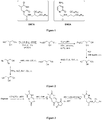
Figure 1 Chemical structures of two base acetamide glycerin ether molecules; -
Figure 2 Synthesis route of 2, 3-dialkoxyl-1-propylamine; -
Figure 3 Synthesis route of the base acetamide glycerin ether molecule DNTA; -
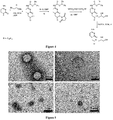
Figure 4 Synthesis route of the base acetamide glycerin ether molecule DNCA; -
Figure 5 Scanning electron microscope images of DNTA (c, d) and DNCA (a, b) liposomes; -
Figure 6 The growth inhibition rates of CCK8 cells caused by the base glycerol ether ester molecules DNCA and DNTA within 24 hour (left) and 72 hours (right); -
Figure 7 Results of FAM-polyA and FAM-polyG transfection by DNTA and DNCA liposomes into cells; -
Figure 8 Results of uptake of the antisense nucleic acid Cenersen by MCF-7 cells. - The invention is further illustrated by the synthesis route of the compounds of the formula (I) according to the invention, and the various supramolecular structures formed thereof, in combination with specific embodiments, without limiting the scope of the invention.
- Oleyl alcohol (50 g,
purity 85%, 158 mmol), Et3N (40 mL, 286 mmol) was added into a 1 L round bottom flask, subsequently DCM (500 mL) was added, stirred sufficiently on ice bath, causing temperature to drop to 0°C. Adding methanesulfonyl chloride (16 mL, 206 mmol) slowly thereto via a syringe, the solution became cloudy. Subsequently, remove the ice bath, and warm the reaction solution slowly to room temperature with continuous stirring for 12 h. The reaction was quenched by adding water (250 mL), and then separated the organic phase using a separation funnel. Back extract the aqueous phase with DCM (250 mL×2), pool the organic phases. Washed the pooled organic phases successively with IN aqueous hydrochloric acid (250 mL), 10% aqueous NaHCO3 (250 mL) and brine (250 mL). The organic layer was evaporated to dryness under reduced pressure. The residue was separated with silica chromatographic column (the eluting agent: petroleum ether/ethyl acetate =20/1, Rf=0.3) to obtain pale yellow oily liquid 44.3g, yield: 81%. 1H NMR (400 MHz, CDCl3): δ 5.30-5.43 (m, 2H), 4.22 (t, J = 6.6 Hz, 2H), 3.00 (s, 3H), 1.90-2.10 (m, 4H), 1.70-1.80 (m, 2H), 1.20-1.40 (m, 22H), 0.88 (t, J = 6.8 Hz, 3H); 13C NMR (100 MHz, CDCl3): δ130.2, 129.9, 70.3 , 37.5, 32.0, 29.90, 29.83, 29.66, 29.46, 29.29, 29.26, 29.15, 27.36, 27.30, 25.6, 22.8, 14.3; IR (neat) 292 2925.5, 2854.5, 1463.6, 1355.9, 1175.4, 974.8, 947.8, 831.7, 721.6, 528.8; MS (ESI-TOF+) for C19H38O3SNa [M+Na]+ found 369.2315, calcd 369.2434; Anal. calcd for C19H38O3S: C 65.85, H 11.05, Found: C 65.63, H 10.98. - Glycerin (40 g, 435 mmol), triphenylchloromethane (30 g, 107 mmol), DMAP (300 mg, 2.46 mmol) was placed in a dry 500 mL round bottom flask, THF (80 mL) and Et3N (18 mL) were subsequently added, stirred at room temperature for 12 h. Water (100 mL) was added to the reaction mixture to quench the reaction, the mixture was then diluted with ethyl acetate (150 mL). After sufficient shaking, the mixture was transferred to a separating funnel, the organic phase was discarded. The aqueous phase was extracted with ethyl acetate (100 mL×2), the organic phase was pooled. The pooled organic phases were washed successively with saturated NaHCO3 water solution (200 mL), water (200 mL) and saturated brine (200 mL). After filtration, the solvent was evaporated to dryness to obtain yellow oily material. The material was dissolved in toluene/n-hexane (200 mL, v/v = 1/1) and allowed to stand at room temperature for 24 h, crystallized into a white solid 29 g, yield: 85%. 1H NMR (400 MHz, CDCl3): δ 7.38-7.48 (m, 6H), 7.20-7.35 (m, 9H), 3.84 (s, 1H), 3.63-3.71 (m, 1H), 3.53- 3.63 (m, 1H), 3.20-3.28 (m, 2H), 2.74 (brs, 1H), 2.35 (brs, 1H); 13C NMR (100 MHz, CDCl3): δ 143.8, 128.7, 128.0, 127.3, 87.1, 71.3, 65.1, 64.4; IR (film, KBr) 338 3380.8, 3058.1, 2920.0, 2866.8, 1490.0, 1447.8, 1081.5, 1028.5, 699.8; MS (EI) for C22H22O3 [M]+ found 334.5, calcd 334.2 ; Anal. calcd for C22H22O3: C 79.02, H 6.63, Found: C 79.26, H 6.49.
- 1-Triphenylmethoxy-glycerol-2,3-diol (8 g, 23.1 mmol), KOH (3.3 g, 58.9 mmol) and oleyl p-methylsulfonyl ester (19.2 g, 55.42 mmol) was mixed and dissolved in dry benzene (150 mL), added into a soxhlet extractor, heated to 80°C, and refluxed for 32 hours. 100 mL of ethyl acetate and 150 mL of water were subsequently added thereto, the organic phase was then separated. The aqueous layer was extracted with ethyl acetate (150 mL×3), the organic phases were pooled and desiccated with anhydrous Na2SO4. After the solvent evaporated to dryness, the residue was separated on a silica chromatographic column to obtain the target product 6.1 g, yield: 31%. Besides, 3.7 g 1-triphenylmethoxy-3-oleyl ether-glycerol-2-ol was obtained at a yield of 27%. The target product was a pale yellow liquid. 1H NMR (400 MHz, CDCl3): δ 7.40-7.50 (m, 6H), 7.18-7.32 (m, 9H), 5.26-5.43 (m, 4H), 3.50-3.60 (m, 5H), 3.35-3.45 (m, 2H), 3.12-3.20 (m, 2H), 1.92-2.08 (m, 8H), 1.50-1.58 (m, 4H), 1.26 (brs, 44H), 0.88 (t, J = 6.6 Hz, 6H); 13C NMR (100 MHz, CDCl3): δ 144.31, 130.07, 130.00, 128.90, 127.85, 127.02, 86.64, 78.45, 71.76, 71.33, 70.84, 63.73, 32.77, 32.06, 30.28 , 29.94, 29.93, 29.85, 29.82, 29.72, 29.68, 29.65, 29.47, 27.37, 27.06, 26.31, 26.25, 22.84, 14.27; IR (film, KBr) v 3004.4, 2925.3, 2854.1, 1742.6, 1597.7, 1490.7, 1450.0, 1220.6, 1118.7, 763.9, 745.0, 704.1, 632.8 cm-1; MS (ESI-TOF+) for C58H90O3Na [M+Na]+ found 857.9059, calcd 857.6782; Anal. calcd for C58H90O3: C 83.39, H 10.86, Found: C 83.10, H 10.62.
- 1-Triphenylmethyl-2,3-dioleyl ether-glycerol (8.34 g, 10 mmol) was suspended in a mixed solution of methanol-tetrahydrofuran (100 mL, v/v = 1/1), added with concentrated hydrochloric acid (2 mL, 12 M), stirred at room temperature for 2 h. After TLC test showed exhaustion of the starting material, the solvent was evaporated under reduced pressure. The residue was added with ethyl acetate (50 mL) and water (100 mL). The aqueous phase was extracted with EtOAc (3×100 mL), the organic phases were pooled and the pooled phase was desiccated with anhydrous Na2SO4. The desiccant was removed by filtration, and the solvent was evaporated to dryness. The residue was separated with silica chromatographic column(the eluting agent: petroleum ether/ethyl acetate =20/1, Rf=0.2) to obtain the target product 3.7g, yield: 62%, pale yellow oily liquid. 1H NMR (400 MHz, CDCl3): δ 5.30-5.45 (m, 4 H), 3.40-3.75 (m, 9 H), 2.18 (s, 1 H), 1.90-2.10 (m, 8 H), 1.55- 1.65 (m, 4 H), 1.25-1.40 (brs, 44 H), 0.88 (t, J = 6.4 Hz, 6 H); 13C NMR (100 MHz, CDCl3): δ 130.10, 129.97, 78.39, 72.00, 71.07 70.54, 63.27, 32.06, 30.23, 29.92, 29.85, 29.81, 29.77, 29.67, 29.65, 29.60, 29.47, 29.41, 27.36, 26.25, 22.83, 14.25; IR (film, KBr) 347 3470.1, 3004.4, 2925.4, 2854.0, 1651.2, 1463.2, 1376.2, 1117.5, 1041.3, 968.0, 721.9 cm-1; MS (ESI-TOF+) for C39H76O3Na [M+Na]+ found 615.7213, calcd 615.5687; Anal. calcd for C39H76O3: C 78.99, H 12.92, Found: C 78.72, H 12.68.
- Triethylamine (0.54 mL, 3.91 mmol), 1,2-dioleyl ether-glycerol-3-ol (1.932 g, 3.26 mmol) were added into a 25 mL single-neck bottle, added with dry dichloromethane (5 ml) The mixture was dissolved under magnetic stirring, the reaction system was subsequently cooled to 0°C in an ice water bath. methanesulfonyl chloride (0.3 mL, 3.91 mmol) was added dropwise, the reaction was continued at 0°C for 2 hours. The reaction mixture was added into saturated NaHCO3 solution (50 mL). The organic phase was discarded, the water phase was extracted with CH2Cl2 (2×50 mL), pooled the organic phases, the poled organic phase was desiccated with anhydrous Na2SO4 over night, the desiccating agent was removed by filtration, the solvent was subsequently evaporated under reduce pressure to dryness, the residue was separated using a silica chromatographic column (elution phase: petroleum ether/methanol= 120/1) to obtain 2.02 mg target product(yield: 92.6%). 1H NMR (400 MHz, CDCl3) δ 5.37 (s, 4H), 4.40 (d, J = 10.9 Hz, 1H), 4.27 (d, J = 10.7, 5.8 Hz, 1H), 3.54 (d, J = 29.7, 27.4, 20.6 Hz, 8H), 3.06 (s, 3H), 2.03 (d, J = 5.2 Hz, 7H), 1.58 (s, 4H), 1.29 (d, J = 10.6 Hz, 44H), 0.90 (t, J = 6.1 Hz, 6H).13C NMR (101 MHz, CDCl3) δ 127.93, 127.27, 77.34, 77.22, 77.02, 76.70, 76.38, 71.90, 70.83, 69.08, 37.40, 32.62, 31.92, 29.95, 29.78, 29.71, 29.59 , 29.54, 29.52, 29.33, 29.28, 27.23, 26.08, 26.02, 22.70, 14.13. MS (EI) for C40H78O5S [M+Na]+ found 693.36, calcd 693.55;
- The dried compound 1,2-dioleyl ether-glycerol-3-methanesulfonate (970 mg, 1.44 mmol) was added to a 25 mL single-necked flask, added with dry DMF (8 mL), dissolved with magnetic stirring. NaN3 (188 mg, 2.88 mmol) was added under argon protection, the reaction mixture was heated to 70°C for 15 hours, and was subsequently cooled to room temperature, diluted with acetone (30 mL), the reaction liquid was filter using diatomaceous earth, the filtrate was evaporated to dryness under reduced pressure. The residue was separated using a silica chromatographic column (eluting phase: petroleum ether/ ethyl acetate =200/1) to obtain 345.5 mg colorless oily target product (yield: 56%). 1H NMR (400 MHz, CDCl3) δ 5.37 (s, 4H), 3.60∼3.36 (m, 9H), 2.31 (s, 1H), 2.07∼1.95 (m, 8H), 1.59 (d, J = 8.3 Hz, 4H), 1.30 (d, J = 10.8 Hz, 44H), 0.90 (s, 6H). 13C NMR (101 MHz, CDCl3) δ 129.89 (d, J = 10.6 Hz), 77.90 (s), 77.45∼76.95 (m), 76.95∼76.86 (m), 76.70 (s), 71.79 (s), 70.66 (s), 70.11 (s), 52.08 (s), 32.62 (s), 31.92 (s), 30.38∼29.54 (m), 29.37 (t, J = 11.7 Hz), 27.22 (s), 26.07 (d, J = 7.5 Hz), 22.70 (s), 14.13 (s). MS (EI) for C39H75N3O2 [M+Na]+ found 640.49, calcd 640.58.
- 1,2-dioleyl ether-glycerol-3-azide (309 mg, 0.5 mmol) was added into dry THF (10 ml), dissolving with magnetic stirring, the solution was cooled to 0°C, added with LiAlH4 (95 mg, 2.5 mmol) under argon gas protection, after reacting for 45 min, the solution was warmed to room temperature, the reaction was continued for 2.5 h, subsequently quenched by the addition of saturated Na2SO4 (0.7 mL) solution. The mixture was filtered over celite, the filtrate evaporated to dryness under reduced pressure. The residue was subjected to silica gel column chromatography (elution phase: methylene chloride/methanol = 50/1) to obtain 233.5 mg light yellow oily target product (yield: 79%). 1H NMR (400 MHz, CDCl3): δ = 5.30-5.45 (m, 4H), 3.40-3.75 (m, 9H), 2.18 (s, 1H), 1.90-2.10 (m, 8H), 1.55 -1.65 (m, 4H), 1.25-1.40 (brs, 44H), 0.88 (t, J = 6.4 Hz, 6H); 13C NMR (100 MHz, CDCl3): δ = 130.10, 129.97, 78.39, 72.00, 71.07, 70.54, 63.27, 32.06, 30.23, 29.92, 29.85, 29.81, 29.77, 29.67, 29.65, 29.60, 29.47, 29.41, 27.36, 26.25, 22.83, 14.25; MS (ESI-TOF+) for C39H77NO2, [MH]- found 590.75, calcd 591.60;
- Thymine (10.0 g, 79.3 mmol) was suspended in H2O (150 mL), with aqueous KOH (50 mL, 3.6 M) solution added. After the mixture being stirred at room temperature for 10 min, the solution gradually became clear. Subsequently, chloroacetic acid (15.0 g, 159 mmol) was added thereto, and the reaction solution was heated to reflux for 90 min. After the reaction solution was cooled to room temperature, it was acidified to pH 3 with concentrated hydrochloric acid, subsequently stood at 4°C overnight to obtain a white crystalline precipitate. The white crystalline precipitate was obtained by filtration, and dried in vacuo to obtain 4.5 g target product (yield 31%). 1H NMR (400 MHz, DMSO-d6): δ 13.11 (s, 1H), 11.34 (s, 1H), 7.50 (s, 1H), 4.37 (s, 2H), 1.75 (s, 3H); 13C NMR (100 MHz, DMSO-d6): δ 169.6, 164.4, 151.0, 141.8, 108.4, 48.4, 11.9; IR (film, KBr) 318 3180.2, 3076.2, 3027.0, 2962.3, 2835.8, 1737.7, 1708.4, 1664.8 , 1631.9, 1418.3, 1356.3, 1201.7, 1147.0, 829.8, 566.9 cm-1; MS (EI): m/z (%): 184.1 (39) [M+], 95.9 (100); Anal. Calcd for C7H8N2O4: C 45.66, H 4.38, N 15.21, Found: C 45.59, H 4.40, N 15.25.
- To a dry 25 mL eggplant bottle, (thymidine-1-yl)-acetic acid (3 g, 16.3 mmol) and dry DMF (30 mL) were added and stirred to dissolve. Subsequently, N-hydroxysuccinimide (2.38 g, 21 mmol) and N,N'-dicyclohexylcarbodiimide (DCC, 3.36 g, 16.3 mmol) were added thereto. After stirring at room temperature overnight, a large amount of a white precipitate was reaped. The precipitate was removed by filtration, the filtrate was evaporated to dryness and the latter dissolved into DMF (5 mL). Anhydrous diethyl ether (30 mL) was added thereto to precipitate a white solid. The solid was obtained by filtration and dried in vacuo to yield 4.6 g target product (yield: 61%). White solid. 1H NMR (400 MHz, DMSO-d6): δ 11.52 (s, 1H), 7.63 (s, 1H), 4.96 (s, 2H), 2.83 (brs, 4H), 1.77 (s, 3H); 13C NMR (100 MHz, DMSO-d6): δ 169.8, 165.0, 164.2, 150.7, 140.8, 109.3, 46.4, 25.5, 11.9; IR (film, KBr) v 3154.4, 3003.4, 2830.5, 1827.4, 1785.4, 1739.8 , 1697.2, 1467.8, 1422.8, 1382.8, 1358.6, 1213.7, 1106.8, 1065.1, 793.9, 651.3 cm-1; MS (ESI-TOF+) for C11H11N3O6Na [M+Na]+ found 304.0489, calcd 304.0540; Anal. Calcd for C11H11N3O6: C 46.98, H 3.94, N 14.94, Found: C 46.75, H 3.96, N 14.95.
- The synthesis route of DNTA is shown in
Figure 3 . - (Thymine-1-yl)-acetyl-(N-hydroxysuccinimide)-ester (280 mg, 1.0 mmol), 1,2,-bis(oleyl)-glycerol-3-amine (709 mg, 1.2 mmol), DMPA (14.6 mg, 0.1 mmol), pyridine (0.4 mL) and dry DMF (20 mL) were mixed. Under argon protection, the mixture was stirred overnight. Ethyl acetate (200 mL) was added thereto, the mixture was diluted with EtOAc (200mL) and removed to a separating funnel. The organic phase was washed with dilute hydrochloric acid (0.1M), saturated NaHCO3 water solution, water and saturated NaCl solution, successively. The organic phase was then desiccated with anhydrous sodium sulfate. The desiccant was then removed by filtration, the filtrate was evaporated to dryness under reduced pressure. The residue was subjected to silica column chromatography (elution phase: methane dichloride/methanol=50/1) to obtain 537.5 mg target product (yield: 71%). Light yellow oily. 1H NMR (400 MHz, CDCl3) δ 8.12 (s, 1H), 7.09 (s, 1H), 6.43 (s, 1H), 5.38 (d, J = 18.8 Hz, 4H), 4.31 (s, 2H), 3.58 (s, 1H), 3.52-3.42 (m, 6H), 2.05-1.94 (m, 10H), 1.60 (s, 4H), 1.29 (d, J = 11.7 Hz, 45H), 0.89 (d, J = 6.7 Hz, 6H). (ESI-MS) for C46H83N3O5 [MH]- found 756.61, calcd. 757.23. 13C NMR (100 MHz, CDCl3): δ = 167.54, 163.69, 150.61, 140.18, 130.13, 129.98, 111.38, 76.35, 72.03, 70.89, 69.97, 65.77, 48.60, 32.06, 29.93, 29.78, 29.67, 29.61, 29.48, 27.37, 26.19, 14.25, 12.45; (ESI-MS) for C46H83N3O5 [MH]- found 756.61, calcd. 757.23.
- Cytosine (10.3 g, 90 mmol, 1.0 eq) was dissolved in DMF (90 mL) added with potassium t-butoxide (11.6 g, 103.5 mmol, 1.15 eq), the reaction mixture was heated to 100°C for 2 hours, and was subsequently cooled to 10°C, 2-bromoacetic acid benzyl ester (16.05 mL, 101 mmol, 1.12 eq) was added dropwise thereto over 30 minutes. After the addition was completed, the reaction system was warmed to room temperature and the reaction was continued for 12 hours. Acetic acid (5.9 mL, 103.5 mmol, 1.2 eq) was added into the reaction system to quench the reaction. The reaction mixture was subject to rotate evaporation to dryness. The residue was resuspended into H2O (100 mL) and stirred for 4 hr and subject to filtration, the filtrate was washed with H2O (4×150 mL) and dried to obtain cytosine-1-benzylacetic acid (20.6 g, 82 mmol, 1.0 eq), the latter was dissolved in DMF (160 mL) added with N,N'-carbonyldiimidazole (21.25g, 131.25 mmol, 1.6 eq). After the TLC detection showed that the reaction was completed, methanol was added, stirring was continued for 1.5 hours, and diphenylmethanol (19.65 g, 106.5 mmol, 1.3 eq) was added. The reaction system was heated to 60°C, and then two portions of diphenylmethanol (1.825 g each, 2×9.9 mmol, 2×0.12 eq) were added at an interval of a hour, the reaction was continued for 6 hours. Heating was stopped for 12 hours and quenched by the addition of methanol (4.65 g, 115 mmol, 1.4 eq). The reaction mixture was dried with rotate evaporation to dryness, the residue was recrystallized successively with ethanol and methanol to obtain (4-N-(Diphenylmethoxycarbonyl)-cytosine)-1-acetate (29.35 g, 62.5 mmol, 1.0 eq). The product was added into acetonitrile: MeOH:H2O:EtOH (2:2:1:1, 350mL) mixed solvent system, heated up the mixture to facilitate solution, then the mixture was cooled to 0°C, an aqueous solution (196.8 mL) of LiOH (25.5 g, 0.61 mol, 9.7 eq) was added. After TLC detection showed completion of the reaction, quenched the reaction by adding citric acid (58.5 g, 303.5, 4.9 eq) aqueous solution (290 mL). 22.1 g of [4-N-(diphenylmethoxycarbonyl)-cytosine]-1-acetic acid was obtained. 1H NMR (400 MHz, D6-DMSO, 25°C) δ 8.03-8.01 (d, J = 7.5, 1H, C6), 7.46 (d, J = 7.5, 4H, Ph), 7.38 (t, J = 7.5 , 4H, Ph), 7.3 (d, J = 7.5, 2H, Ph), 6.96 (d, J = 7.5, 1H, C5), 6.82 (s, 1H, CH-(C6H5)2), 4.50 (s, 2H, N-CH2-CO); 13C NMR (100 MHz, D6-DMSO, 25 °C) δ 169.9, 163.5, 155.5, 152.8, 151.1, 140.8, 129.0, 128.3, 126.9, 94.2, 71.9, 51.3; (ESI) calculated for C20H17N3O5: (M+Na+): 402.1060, found: 402.1010.
- (4-N-(Diphenylmethoxycarbonyl)-cytosine)-1-acetic acid (3.29 g, 10 mmol) and dry DMF (30 mL) were added to a dry 25 mL eggplant flask and stirred to complete dissolution. Then, N-hydroxysuccinimide (14.73 g, 13 mmol) and N,N'-dicyclohexylcarbodiimide (DCC, 2.06 g, 10 mmol) were added thereto. After stirring at room temperature overnight, a large amount of a white precipitate was found. The precipitate was removed by filtration, and then the filtrate was evaporated to dryness. Anhydrous diethyl ether (30 mL) was added thereto to precipitate a white solid. The solid was reaped by filtration and dried in vacuo to give 2.62 g target product (yield:55%). White solid. (4-N-(Diphenylmethoxycarbonyl)-cytosine)-(N-hydroxysuccinimide)-ester (476 mg, 1.0 mmol), 1,2,-di(oleyl)-glycerol 3-Amine (910 mg, 1.2 mmol), DMPA (14.6 mg, 0.1 mmol), pyridine (0.4 mL) and dry DMF (20 mL) were mixed. The mixture stirred at the room temperature under argon protection overnight, ethyl acetate (200 mL) was added to dilute the mixture, then the mixture removed to a separation funnel, washed successively with diluted hydrochloric acid (01.M), saturated NaHCO3 water solution, water and saturated NaCl, solution. The organic phase was desiccated with anhydrous sodium sulfate, the desiccant was removed by filtration, then the filtrate was evaporated to dryness. The residue was separated with silica chromatographic column (elution phase: dichloromethane/methanol=50/1) to obtain 485.5 mg target product (yield 51%). 1,2,-Di(Olefinyl)-glycero-3-amine-(4-N-(diphenylmethoxycarbonyl)-cytosine)-acetyl ester (476 mg, 0.5 mmol) was dissolved in CH2Cl2(20 mL) containing 5% TFA. The mixture was stirred at room temperature for 0.5 hour. The mixture was extracted with DCM (30 mL) and water (30 mL). The aqueous phase was re-extracted with DCM (2×30 mL), the organic phase was pooled. The pooled organic phase was washed successively with 10% NaHCO3 (200 mL), water (200 mL) and brine (200 mL) and subsequently desiccated with anhydrous sodium sulfate overnight. The organic solvent was evaporated to dryness, the residue was separated with a silica chromatographic column (elution phase: CH2Cl2/methanol=50/1) to obtain the target product 345 mg (yield: 93%), DNCA:1H NMR (400 MHz, CDCl3) δ 7.44-7.29 (m, 4H), 5.80 (d, J = 3.8 Hz, 1H), 5.37 (dd, J = 12.0, 7.4 Hz, 4H), 4.45 (s, 2H), 3.59-3.40 (m, 7H), 2.11-1.91 (m, 8H), 1.55 (s, 4H), 1.44-1.10 (m, 45H), 0.90 (t, J = 6.4 Hz, 6H). (ESI-MS) for C45H82N4O4 [M+H]+ found 743.50, [M+Na]+ found 756.44. calcd. 742.21.
- The base-acetamide glycerin ether molecule has an amphiphilic structure and can be prepared into a supramolecular structure such as a liposome. Taking DNTA as an example, the preparation method of liposome is as follows: DNTA (1.18 mg, 1.56 µmol) is dissolved in methanol (1 mL), vortexed to fully dissolve, after centrifugation, DNTA methanol solution (12.8 µL) is measured out and adding to a 200 µL centrifuge tube, added with PBS (100 µL), vortexed (10 s) to mix well. The solution was placed in a PCR program for annealing. Procedure: Heating at 95°C for 10 minutes, cool down 5°C every 5 minutes until 15°C, then store at 4°C. After annealing was completed, the centrifuge tube was incubated at 40°C for 30 min for the complete evaporation of methanol to obtain the liposome solution.
- Under transmission electron microscope (TEM), it can be seen that the neutral base lipid carrier molecules DNCA and DNTA can form stable and uniform nanoparticles in aqueous solution. The size of the DNTA molecules assembled in water is around 150 nm. The size of the liposome formed by self-assembly of DNCA carrier molecules in water is around 180 nm (
Fig. 5 ). - When base acetamide glycerin ether molecules should is to be used as novel biomaterials in the field of gene therapy, they must have good biocompatibility. Two base acetamide glycerin ether compounds (DOCA and DOTA) were studied for cytotoxicity using CCK-8 kit. The results showed that the two compounds (DNTA, DNCA) had no obvious cytotoxicity. After 72 hours of addition of the base acetamide glycerin ether compound at a concentration of 60 µM, the cell survival rate was close to 100%, indicating good biocompatibility (
Fig. 6 ). - Taking DNTA and DNCA as examples, FAM-labeled polyA/G was used as a template to study the nucleic acid transfection abilities of thymine base acetamide glycerin ethers. The specific coating and transfection process is as follows:
DNTA or DNCA liposomes were formulated as mixed solutions with FAM-polyA or FAM-polyG at a base ratios of 5/1. The mixturex were heated to 96°C, then gradually reduced to 4°C (annealing), and placed at 4°C for 2 days. The cells used in the transfection experiments were Hela cells. - (1) Plating: 300,000 cells were added to the six-well plate, and the volume per well was 1.8 mL;
- (2) After 18-24 h, the samples were diluted in an appropriate amount of opti-MEM, blowing and suction with a pipette to mix well, 20 µL of the mixed solutions were added to each well to make a final concentrations of FAM-polyA or FAM-polyG of 100 nM. The DNA-free and DNA-only wells were used as two negative controls, and the transfection reagent Lipofectamine 2000-DNA complex (the method of addition of transfection reagent and DNA group according to the protocol) was added as a positive control;
- (3) Washing three times with 500 µL PBS;
- (4) After 4 hours, the liquids in the culture wells were aspirated, after adding 250 µL of 5% trypsin each, they were placed in 1.5 mL EP tubes, the cells were fixed with 4% paraformaldehyde for 15 min;
- (5) Centrifuging, discarding the supernatant, adding 400 µL PBS in each tube;
- (6) Fluorescence intensity was measured by using flow cytometry;
-
Figure 7 shows the transfection results of DNTA- and DNCA liposomes against FAM-polyA/G. The experimental results show that DNTA- as well as DNCA liposomes can successfully transport FAM-polyA into cells. - The procedure was the same as the transfection experiments of DNCA- and DNTA-packed PolyG/PolyA (using DOCA and DOTA as controls), the cell line was selected from MCF-7 cell line.
-
Figure 8 shows the effects of DNTA- and DNCA liposomes on the uptake of antisense nucleic acid Cenersen by MCF-7 cells. The experimental results showed that DNTA- and DNCA liposome could significantly increase the uptake ability of MCF-7 cells to antisense nucleic acid Cenersen compared with the blank group and DOCA/DOTA liposome groups. - The information provided and described in detail in the present invention is sufficient to achieve the above objects of the present invention, and thus preferred embodiments of the present invention represent the subject matter of the present invention, which is broadly covered by the present invention. The scope of the present invention is fully defined by the scope of the present invention, and the scope of the present invention is not limited by the scope of the appended claims, unless otherwise specified. The singular form of the element applied does not mean "one and only" but "one or more". For ordinary technician of this field, the structure, composition, and functional equivalents of the above-described preferred embodiments and additional embodiments of the present invention are hereby incorporated by reference, it is also intended to be covered by the claims of the invention.
- In addition, some apparatus or method is not required to express each of the problems solved by the present invention, as they are all included in the claims of the present invention. In addition, whether or not all the parts, components, or method steps in the present disclosure are specifically described in the claims, they do not contribute to the public. However, it will be apparent to ordinary technicians in this field, it is apparent that various changes and modifications can be made in the form, the reagents and the details of the synthesis without departing from the spirit and scope of the invention as set forth in the appended claims.
Claims (10)
- A base acetamide glycerin ether molecule which is characterized by an amphiphilic structure represented by formula (I), that is, with a base-1-acetic acid as polar head and a 2, 3-dialkoxyl-1-propylamine as non-polar tail, the two parts being linked by an amide bond to form the amphiphilic structure possessing both hydrophilicity and lipophilicity:

- The base-acetamide glycerin ether molecule according to claim 1, wherein the base contained therein, that is, the base group in Formula (I), is a common natural purine and pyrimidine base, that is, adenine, Guanine, hypoxanthine, cytosine, thymine and uracil.
- The base-acetamide glycerin ether molecule according to claim 1, wherein the long chain aliphatic contained therein, that is, the R group in formula (I), is a saturated or unsaturated aliphatic carbon chain having between 8- and 25 carbons in length.
- A chemical synthesis method for preparing a base-acetamide glycerin ether molecule according to any one of claims 1 to 3, wherein the base-1-acetic acid activated derivative represented by formula (II) is reacted with 2, 3-dialkoxyl-1-propylamine represented by (III), to obtain a base acetamide glycerin ether molecule represented by formula (I) demonstrated in any one of claims 1 to 3;

- The chemical synthesis method according to claim 4, wherein a base-1-acetic acid activated derivative represented by formula (II) is used, wherein the R' group is chlorine or N-oxy-succinimide; to react with 2,3-dialkoxy-1-propylamine represented by formula (III), wherein the R group is a saturated or unsaturated aliphatic carbon chain with a length of between 8- and 25-carbons.
- The chemical synthesis method according to claim 4 or 5, which comprises the steps of: (i) commercially purchasing, or, preparing from simple starting materials, the activated derivative of base-1-acetic acid represented by formula (II), and 2,3-dialkoxy-1-propylamine represented by formula (III); (ii) the base-1-acetic acid-activated derivative represented by formula (II), is reacted with the 2,3-dialkoxy-1-propylamine represented by formula (III) in an organic solvent, or reacted with addition of a base or ester condensation catalyst to obtain a target product represented by formula (I).
- The chemical synthesis method according to claim 6, wherein the organic solvent used in the step (ii) is selected from the group consisting of acetonitrile, N,N-dimethylformamide, N-methylpyrrolidine, dichloromethane, and dichloroethane, a mixture of one or several of tetrahydrofuran, benzene or other aprotic solvents.
- The chemical synthesis method according to claim 6 or 7, wherein one or several of 4-dimethylaminopyridine, triethylamine, pyridine, potassium hydroxide or sodium hydroxide are added in the step (ii) as additives, preferably, 4-dimethylaminopyridine is added as a catalyst, and pyridine or triethylamine is added as an organic base.
- The use of base acetamide glycerin ether molecule said in any one of claims 1 to 3 for the preparation of a substance having a supramolecular structure, preferably, the supramolecular structure is a liposome.
- The use of base acetamide glycerin ether molecule said in any one of claims 1 to 3 for the preparation of a transfection reagent for gene therapy.
Applications Claiming Priority (2)
| Application Number | Priority Date | Filing Date | Title |
|---|---|---|---|
| CN201611002249.1A CN108059619B (en) | 2016-11-09 | 2016-11-09 | A base acetamide glyceryl ether molecule, its chemical synthesis method and its application in the field of gene therapy |
| PCT/CN2016/000712 WO2018085962A1 (en) | 2016-11-09 | 2016-12-27 | Base acetamide glycerin ether molecule, chemical synthesis method therefor, and applications thereof in field of gene therapy |
Publications (3)
| Publication Number | Publication Date |
|---|---|
| EP3539964A1 true EP3539964A1 (en) | 2019-09-18 |
| EP3539964A4 EP3539964A4 (en) | 2020-05-27 |
| EP3539964B1 EP3539964B1 (en) | 2021-11-10 |
Family
ID=62108980
Family Applications (1)
| Application Number | Title | Priority Date | Filing Date |
|---|---|---|---|
| EP16920991.3A Active EP3539964B1 (en) | 2016-11-09 | 2016-12-27 | Base acetamide glycerin ether molecule, chemical synthesis method therefor, and applications thereof in field of gene therapy |
Country Status (3)
| Country | Link |
|---|---|
| EP (1) | EP3539964B1 (en) |
| CN (1) | CN108059619B (en) |
| WO (1) | WO2018085962A1 (en) |
Families Citing this family (6)
| Publication number | Priority date | Publication date | Assignee | Title |
|---|---|---|---|---|
| CN110003031B (en) * | 2019-04-28 | 2020-06-02 | 大连理工大学 | Amphiphilic molecule containing o-nitrobenzyl ester photodegradation group and synthetic method thereof |
| CN112826808B (en) * | 2021-01-18 | 2022-03-25 | 北京大学 | Neutral/cation mixed lipid nano preparation of cyclic dinucleotide or analogue thereof and application thereof |
| CN113583069B (en) * | 2021-09-09 | 2023-06-06 | 北京大学 | Nucleoside phospholipid compounds, chemical synthesis method thereof and application thereof in nucleic acid delivery |
| CN114933565A (en) * | 2022-05-12 | 2022-08-23 | 深圳厚存纳米药业有限公司 | Nucleobase derivative nanoparticles and composition thereof |
| CN118059265A (en) * | 2024-01-09 | 2024-05-24 | 西安电子科技大学 | A nonionic gene carrier based on hydrogen bond donor group and its preparation method and application |
| CN118994513B (en) * | 2024-09-27 | 2025-03-25 | 广东省广业检验检测集团有限公司 | Supramolecular cages for targeted recognition of macrolide pollutants and their preparation and application |
Family Cites Families (3)
| Publication number | Priority date | Publication date | Assignee | Title |
|---|---|---|---|---|
| CN102925487B (en) * | 2012-10-11 | 2014-10-15 | 北京大学 | Positive ion nanostructure lipid carrier, manufacturing method and application thereof |
| CN103232510B (en) * | 2012-11-23 | 2015-12-23 | 北京大学 | 5 '-amino-2 ', 5 '-dideoxy nucleotide phospholipid molecule and its preparation method and application |
| CN103242243B (en) * | 2013-01-08 | 2015-08-19 | 北京大学 | A kind of base triacetin ether-ether molecule, its chemical synthesis process and the application in field of gene thereof |
-
2016
- 2016-11-09 CN CN201611002249.1A patent/CN108059619B/en active Active
- 2016-12-27 WO PCT/CN2016/000712 patent/WO2018085962A1/en not_active Ceased
- 2016-12-27 EP EP16920991.3A patent/EP3539964B1/en active Active
Also Published As
| Publication number | Publication date |
|---|---|
| CN108059619A (en) | 2018-05-22 |
| EP3539964B1 (en) | 2021-11-10 |
| EP3539964A4 (en) | 2020-05-27 |
| WO2018085962A1 (en) | 2018-05-17 |
| CN108059619B (en) | 2019-10-25 |
Similar Documents
| Publication | Publication Date | Title |
|---|---|---|
| EP3539964B1 (en) | Base acetamide glycerin ether molecule, chemical synthesis method therefor, and applications thereof in field of gene therapy | |
| JP4467084B2 (en) | Compounds for introducing nucleic acids into cells, their production and their use | |
| CN108478807B (en) | Nucleic acid drug delivery system and application thereof | |
| CN116199646B (en) | A Tris-based ionizable lipid and its preparation method and application | |
| CN109369621B (en) | Macrocyclic polyamine [12]aneN3 compound based on TPA-BI and its preparation method and use | |
| WO1998039359A1 (en) | Dimeric cationic lipids on dicystine basis | |
| CN103232510B (en) | 5 '-amino-2 ', 5 '-dideoxy nucleotide phospholipid molecule and its preparation method and application | |
| CN105541799B (en) | [12] aneN containing targeting group and fluorophor3Cationoid lipid, transgene carrier and preparation method thereof | |
| CN106432203A (en) | Tetravinyl-based Gemini type amphiphilic compound as well as preparation method and application thereof | |
| CN102161688B (en) | Cholesterol-structure-fragment-containing biocompatible synthesis liposomes as well as preparation method and application thereof | |
| CN101870719B (en) | Organic functional compound having disulfide chemical bond and steroids skeleton, preparation method thereof and use thereof | |
| CN120330265A (en) | Transfection reagent based on blank lipid nanoparticles, preparation method and application thereof | |
| CN103242243B (en) | A kind of base triacetin ether-ether molecule, its chemical synthesis process and the application in field of gene thereof | |
| CN105985386A (en) | Sucrose ester-type cation genetic vector and preparation method thereof | |
| CN116947680B (en) | Cationic lipid compound, preparation method and application thereof | |
| CN101709073B (en) | Nucleotide phospholipid molecule and lipidosome and preparation method and application thereof | |
| CN117257965A (en) | A kind of nucleic acid delivery carrier composition and its application | |
| CN116803995B (en) | A class of aminoamide lipid compounds and preparation methods and applications thereof | |
| CN110003185B (en) | Macrocyclic polyamine amphiphilic compound based on green fluorescent protein chromophore BI and preparation method and application thereof | |
| Biswas et al. | Syntheses, transfection efficacy and cell toxicity properties of novel cholesterol-based gemini lipids having hydroxyethyl head group | |
| CN116143707A (en) | A base ionizable lipid and its preparation method and application | |
| CN101732730B (en) | Cation lipid containing imidazolium salt and macrocyclic polyamines, transgenetic vector and method for preparing same | |
| HK40009316A (en) | Base acetamide glycerin ether molecule, chemical synthesis method therefor, and applications thereof in field of gene therapy storage system vehicle | |
| HK40009316B (en) | Base acetamide glycerin ether molecule, chemical synthesis method therefor, and applications thereof in field of gene therapy | |
| CN103214541A (en) | Organic functional molecule containing natural cholesterol and lysine lipid cations, lipidosome thereof, as well as preparation method and application for lipidosome |
Legal Events
| Date | Code | Title | Description |
|---|---|---|---|
| STAA | Information on the status of an ep patent application or granted ep patent |
Free format text: STATUS: THE INTERNATIONAL PUBLICATION HAS BEEN MADE |
|
| PUAI | Public reference made under article 153(3) epc to a published international application that has entered the european phase |
Free format text: ORIGINAL CODE: 0009012 |
|
| STAA | Information on the status of an ep patent application or granted ep patent |
Free format text: STATUS: REQUEST FOR EXAMINATION WAS MADE |
|
| 17P | Request for examination filed |
Effective date: 20190605 |
|
| AK | Designated contracting states |
Kind code of ref document: A1 Designated state(s): AL AT BE BG CH CY CZ DE DK EE ES FI FR GB GR HR HU IE IS IT LI LT LU LV MC MK MT NL NO PL PT RO RS SE SI SK SM TR |
|
| AX | Request for extension of the european patent |
Extension state: BA ME |
|
| DAV | Request for validation of the european patent (deleted) | ||
| DAX | Request for extension of the european patent (deleted) | ||
| A4 | Supplementary search report drawn up and despatched |
Effective date: 20200430 |
|
| RIC1 | Information provided on ipc code assigned before grant |
Ipc: C07D 239/54 20060101ALI20200423BHEP Ipc: C07D 239/47 20060101ALI20200423BHEP Ipc: C07D 473/18 20060101ALI20200423BHEP Ipc: A61K 48/00 20060101ALI20200423BHEP Ipc: C12N 15/88 20060101ALI20200423BHEP Ipc: A61K 9/127 20060101ALI20200423BHEP Ipc: C07D 473/34 20060101AFI20200423BHEP |
|
| REG | Reference to a national code |
Ref country code: HK Ref legal event code: DE Ref document number: 40009316 Country of ref document: HK |
|
| RAP1 | Party data changed (applicant data changed or rights of an application transferred) |
Owner name: BEIJING INTELLIGENE BIOTECH LIMITED CO. |
|
| GRAP | Despatch of communication of intention to grant a patent |
Free format text: ORIGINAL CODE: EPIDOSNIGR1 |
|
| STAA | Information on the status of an ep patent application or granted ep patent |
Free format text: STATUS: GRANT OF PATENT IS INTENDED |
|
| INTG | Intention to grant announced |
Effective date: 20210609 |
|
| GRAS | Grant fee paid |
Free format text: ORIGINAL CODE: EPIDOSNIGR3 |
|
| GRAA | (expected) grant |
Free format text: ORIGINAL CODE: 0009210 |
|
| STAA | Information on the status of an ep patent application or granted ep patent |
Free format text: STATUS: THE PATENT HAS BEEN GRANTED |
|
| AK | Designated contracting states |
Kind code of ref document: B1 Designated state(s): AL AT BE BG CH CY CZ DE DK EE ES FI FR GB GR HR HU IE IS IT LI LT LU LV MC MK MT NL NO PL PT RO RS SE SI SK SM TR |
|
| REG | Reference to a national code |
Ref country code: GB Ref legal event code: FG4D |
|
| REG | Reference to a national code |
Ref country code: AT Ref legal event code: REF Ref document number: 1445997 Country of ref document: AT Kind code of ref document: T Effective date: 20211115 Ref country code: CH Ref legal event code: EP |
|
| REG | Reference to a national code |
Ref country code: DE Ref legal event code: R096 Ref document number: 602016066204 Country of ref document: DE |
|
| REG | Reference to a national code |
Ref country code: IE Ref legal event code: FG4D |
|
| REG | Reference to a national code |
Ref country code: LT Ref legal event code: MG9D |
|
| REG | Reference to a national code |
Ref country code: NL Ref legal event code: MP Effective date: 20211110 |
|
| REG | Reference to a national code |
Ref country code: AT Ref legal event code: MK05 Ref document number: 1445997 Country of ref document: AT Kind code of ref document: T Effective date: 20211110 |
|
| PG25 | Lapsed in a contracting state [announced via postgrant information from national office to epo] |
Ref country code: RS Free format text: LAPSE BECAUSE OF FAILURE TO SUBMIT A TRANSLATION OF THE DESCRIPTION OR TO PAY THE FEE WITHIN THE PRESCRIBED TIME-LIMIT Effective date: 20211110 Ref country code: LT Free format text: LAPSE BECAUSE OF FAILURE TO SUBMIT A TRANSLATION OF THE DESCRIPTION OR TO PAY THE FEE WITHIN THE PRESCRIBED TIME-LIMIT Effective date: 20211110 Ref country code: FI Free format text: LAPSE BECAUSE OF FAILURE TO SUBMIT A TRANSLATION OF THE DESCRIPTION OR TO PAY THE FEE WITHIN THE PRESCRIBED TIME-LIMIT Effective date: 20211110 Ref country code: BG Free format text: LAPSE BECAUSE OF FAILURE TO SUBMIT A TRANSLATION OF THE DESCRIPTION OR TO PAY THE FEE WITHIN THE PRESCRIBED TIME-LIMIT Effective date: 20220210 Ref country code: AT Free format text: LAPSE BECAUSE OF FAILURE TO SUBMIT A TRANSLATION OF THE DESCRIPTION OR TO PAY THE FEE WITHIN THE PRESCRIBED TIME-LIMIT Effective date: 20211110 |
|
| PG25 | Lapsed in a contracting state [announced via postgrant information from national office to epo] |
Ref country code: IS Free format text: LAPSE BECAUSE OF FAILURE TO SUBMIT A TRANSLATION OF THE DESCRIPTION OR TO PAY THE FEE WITHIN THE PRESCRIBED TIME-LIMIT Effective date: 20220310 Ref country code: SE Free format text: LAPSE BECAUSE OF FAILURE TO SUBMIT A TRANSLATION OF THE DESCRIPTION OR TO PAY THE FEE WITHIN THE PRESCRIBED TIME-LIMIT Effective date: 20211110 Ref country code: PT Free format text: LAPSE BECAUSE OF FAILURE TO SUBMIT A TRANSLATION OF THE DESCRIPTION OR TO PAY THE FEE WITHIN THE PRESCRIBED TIME-LIMIT Effective date: 20220310 Ref country code: PL Free format text: LAPSE BECAUSE OF FAILURE TO SUBMIT A TRANSLATION OF THE DESCRIPTION OR TO PAY THE FEE WITHIN THE PRESCRIBED TIME-LIMIT Effective date: 20211110 Ref country code: NO Free format text: LAPSE BECAUSE OF FAILURE TO SUBMIT A TRANSLATION OF THE DESCRIPTION OR TO PAY THE FEE WITHIN THE PRESCRIBED TIME-LIMIT Effective date: 20220210 Ref country code: NL Free format text: LAPSE BECAUSE OF FAILURE TO SUBMIT A TRANSLATION OF THE DESCRIPTION OR TO PAY THE FEE WITHIN THE PRESCRIBED TIME-LIMIT Effective date: 20211110 Ref country code: LV Free format text: LAPSE BECAUSE OF FAILURE TO SUBMIT A TRANSLATION OF THE DESCRIPTION OR TO PAY THE FEE WITHIN THE PRESCRIBED TIME-LIMIT Effective date: 20211110 Ref country code: HR Free format text: LAPSE BECAUSE OF FAILURE TO SUBMIT A TRANSLATION OF THE DESCRIPTION OR TO PAY THE FEE WITHIN THE PRESCRIBED TIME-LIMIT Effective date: 20211110 Ref country code: GR Free format text: LAPSE BECAUSE OF FAILURE TO SUBMIT A TRANSLATION OF THE DESCRIPTION OR TO PAY THE FEE WITHIN THE PRESCRIBED TIME-LIMIT Effective date: 20220211 Ref country code: ES Free format text: LAPSE BECAUSE OF FAILURE TO SUBMIT A TRANSLATION OF THE DESCRIPTION OR TO PAY THE FEE WITHIN THE PRESCRIBED TIME-LIMIT Effective date: 20211110 |
|
| PG25 | Lapsed in a contracting state [announced via postgrant information from national office to epo] |
Ref country code: SM Free format text: LAPSE BECAUSE OF FAILURE TO SUBMIT A TRANSLATION OF THE DESCRIPTION OR TO PAY THE FEE WITHIN THE PRESCRIBED TIME-LIMIT Effective date: 20211110 Ref country code: SK Free format text: LAPSE BECAUSE OF FAILURE TO SUBMIT A TRANSLATION OF THE DESCRIPTION OR TO PAY THE FEE WITHIN THE PRESCRIBED TIME-LIMIT Effective date: 20211110 Ref country code: RO Free format text: LAPSE BECAUSE OF FAILURE TO SUBMIT A TRANSLATION OF THE DESCRIPTION OR TO PAY THE FEE WITHIN THE PRESCRIBED TIME-LIMIT Effective date: 20211110 Ref country code: EE Free format text: LAPSE BECAUSE OF FAILURE TO SUBMIT A TRANSLATION OF THE DESCRIPTION OR TO PAY THE FEE WITHIN THE PRESCRIBED TIME-LIMIT Effective date: 20211110 Ref country code: DK Free format text: LAPSE BECAUSE OF FAILURE TO SUBMIT A TRANSLATION OF THE DESCRIPTION OR TO PAY THE FEE WITHIN THE PRESCRIBED TIME-LIMIT Effective date: 20211110 Ref country code: CZ Free format text: LAPSE BECAUSE OF FAILURE TO SUBMIT A TRANSLATION OF THE DESCRIPTION OR TO PAY THE FEE WITHIN THE PRESCRIBED TIME-LIMIT Effective date: 20211110 |
|
| REG | Reference to a national code |
Ref country code: DE Ref legal event code: R097 Ref document number: 602016066204 Country of ref document: DE |
|
| PG25 | Lapsed in a contracting state [announced via postgrant information from national office to epo] |
Ref country code: MC Free format text: LAPSE BECAUSE OF FAILURE TO SUBMIT A TRANSLATION OF THE DESCRIPTION OR TO PAY THE FEE WITHIN THE PRESCRIBED TIME-LIMIT Effective date: 20211110 |
|
| PLBE | No opposition filed within time limit |
Free format text: ORIGINAL CODE: 0009261 |
|
| STAA | Information on the status of an ep patent application or granted ep patent |
Free format text: STATUS: NO OPPOSITION FILED WITHIN TIME LIMIT |
|
| REG | Reference to a national code |
Ref country code: BE Ref legal event code: MM Effective date: 20211231 |
|
| 26N | No opposition filed |
Effective date: 20220811 |
|
| PG25 | Lapsed in a contracting state [announced via postgrant information from national office to epo] |
Ref country code: LU Free format text: LAPSE BECAUSE OF NON-PAYMENT OF DUE FEES Effective date: 20211227 Ref country code: AL Free format text: LAPSE BECAUSE OF FAILURE TO SUBMIT A TRANSLATION OF THE DESCRIPTION OR TO PAY THE FEE WITHIN THE PRESCRIBED TIME-LIMIT Effective date: 20211110 |
|
| PG25 | Lapsed in a contracting state [announced via postgrant information from national office to epo] |
Ref country code: SI Free format text: LAPSE BECAUSE OF FAILURE TO SUBMIT A TRANSLATION OF THE DESCRIPTION OR TO PAY THE FEE WITHIN THE PRESCRIBED TIME-LIMIT Effective date: 20211110 Ref country code: BE Free format text: LAPSE BECAUSE OF NON-PAYMENT OF DUE FEES Effective date: 20211231 |
|
| PG25 | Lapsed in a contracting state [announced via postgrant information from national office to epo] |
Ref country code: IT Free format text: LAPSE BECAUSE OF FAILURE TO SUBMIT A TRANSLATION OF THE DESCRIPTION OR TO PAY THE FEE WITHIN THE PRESCRIBED TIME-LIMIT Effective date: 20211110 |
|
| PG25 | Lapsed in a contracting state [announced via postgrant information from national office to epo] |
Ref country code: CY Free format text: LAPSE BECAUSE OF FAILURE TO SUBMIT A TRANSLATION OF THE DESCRIPTION OR TO PAY THE FEE WITHIN THE PRESCRIBED TIME-LIMIT Effective date: 20211110 |
|
| PG25 | Lapsed in a contracting state [announced via postgrant information from national office to epo] |
Ref country code: HU Free format text: LAPSE BECAUSE OF FAILURE TO SUBMIT A TRANSLATION OF THE DESCRIPTION OR TO PAY THE FEE WITHIN THE PRESCRIBED TIME-LIMIT; INVALID AB INITIO Effective date: 20161227 |
|
| PGFP | Annual fee paid to national office [announced via postgrant information from national office to epo] |
Ref country code: GB Payment date: 20231221 Year of fee payment: 8 |
|
| PGFP | Annual fee paid to national office [announced via postgrant information from national office to epo] |
Ref country code: IE Payment date: 20231120 Year of fee payment: 8 Ref country code: FR Payment date: 20231220 Year of fee payment: 8 Ref country code: DE Payment date: 20231208 Year of fee payment: 8 |
|
| PG25 | Lapsed in a contracting state [announced via postgrant information from national office to epo] |
Ref country code: MK Free format text: LAPSE BECAUSE OF FAILURE TO SUBMIT A TRANSLATION OF THE DESCRIPTION OR TO PAY THE FEE WITHIN THE PRESCRIBED TIME-LIMIT Effective date: 20211110 |
|
| PGFP | Annual fee paid to national office [announced via postgrant information from national office to epo] |
Ref country code: CH Payment date: 20240101 Year of fee payment: 8 |
|
| PG25 | Lapsed in a contracting state [announced via postgrant information from national office to epo] |
Ref country code: MT Free format text: LAPSE BECAUSE OF FAILURE TO SUBMIT A TRANSLATION OF THE DESCRIPTION OR TO PAY THE FEE WITHIN THE PRESCRIBED TIME-LIMIT Effective date: 20211110 |
|
| REG | Reference to a national code |
Ref country code: DE Ref legal event code: R119 Ref document number: 602016066204 Country of ref document: DE |
|
| REG | Reference to a national code |
Ref country code: CH Ref legal event code: PL |
|
| GBPC | Gb: european patent ceased through non-payment of renewal fee |
Effective date: 20241227 |
|
| PG25 | Lapsed in a contracting state [announced via postgrant information from national office to epo] |
Ref country code: DE Free format text: LAPSE BECAUSE OF NON-PAYMENT OF DUE FEES Effective date: 20250701 |
|
| PG25 | Lapsed in a contracting state [announced via postgrant information from national office to epo] |
Ref country code: GB Free format text: LAPSE BECAUSE OF NON-PAYMENT OF DUE FEES Effective date: 20241227 |
|
| PG25 | Lapsed in a contracting state [announced via postgrant information from national office to epo] |
Ref country code: FR Free format text: LAPSE BECAUSE OF NON-PAYMENT OF DUE FEES Effective date: 20241231 |
|
| PG25 | Lapsed in a contracting state [announced via postgrant information from national office to epo] |
Ref country code: CH Free format text: LAPSE BECAUSE OF NON-PAYMENT OF DUE FEES Effective date: 20241231 |
|
| PG25 | Lapsed in a contracting state [announced via postgrant information from national office to epo] |
Ref country code: IE Free format text: LAPSE BECAUSE OF NON-PAYMENT OF DUE FEES Effective date: 20241227 |
|
| PG25 | Lapsed in a contracting state [announced via postgrant information from national office to epo] |
Ref country code: TR Free format text: LAPSE BECAUSE OF FAILURE TO SUBMIT A TRANSLATION OF THE DESCRIPTION OR TO PAY THE FEE WITHIN THE PRESCRIBED TIME-LIMIT Effective date: 20211110 |